This last week has been devastating, but also incredible and historic. The relationship between Indigenous nations and the colonial state is changing before our eyes as indigenous people across Turtle Island rise up with power, determination, and leverage. As Indigenous people rise, racialized people, indigenous peoples displaced from their territory that now reside on Turtle Island, and Canadian settlers are joining in solidarity. Solidarity actions keep going at remarkable pace and spreading far and wide continuing to demand that the RCMP leave Wet’suwet’en lands and that Wet’suwet’en law be respected. Today actions happened all over so called Canada, including Indigenous youth successfully shutting down the BC government in Victoria, mass protests in downtown Toronto, and the rail lines being shut down by in Chiliwack BC! While not a Wet’suwet’en action, the deeply related 29th annual Women’s Memorial March in the Downtown Eastside saw thousands of people march to honor lost loved ones, including far too many missing and murdered Indigenous women, and commit themselves to justice. This movement is powerful and shows no sign of slowing down. Seize the moment! You all are making history and standing on the side of justice. Photo from today’s powerful Women’s Memorial March in the Downtown East Side EVENTS VANCOUVER Saturday at 10 AM at John Hendry Park Trout Lake at 10 AM TORONTO Saturday at 10 AM sharp at Matt Cohen Park. Emergency Action to Stop RCMP Invasion of Wet’suwet’en Territory! VICTORIA Saturday at 11:30: Stolen Sisters Memorial March (Not a Wet’suwet’en action but another important march to honor Missing and Murdered Indigenous Women) SEATTLE Sunday at Noon at Seattle Center Main Stage
Love and Rage, Unist’ot’en Camp Unist’ot’en Solidarity Brigade
University of Windsor students staged a protest on Thursday in support of the Wet’suwet’en nation in British Columbia currently embroiled in a natural gas pipeline conflict. Approximately 50 university students walked out of classes, marching throughout Windsor’s downtown core. They were joined by university faculty and staff members. The protest was organized by University of Windsor law students after they received emails and other messages from general students asking what can be done to support Wet’suwet’en protestors across the country. “This literally was born overnight,” said Valeria Kuri, president of the Shkawbewisag Student Law Society at the University of Windsor. “A few nights ago, we released an official statement on behalf of Shkawbewisag Student Law Society and the response has been pretty overwhelming.” Kuri added that a number of professors also cancelled classes in support of Thursday’s protest. For her part, University of Windsor assistant law professor Beverly Jacobs said she was proud of her students for taking a stand and protesting. “They’re learning Canadian law, and Canada isn’t following its own law,” she said. “It’s happening everywhere. It’s happening around the world. So it’s time for all of us to stand up.” Michelle Nahdee, coordinator of Indigenous Legal Studies at the university’s Faculty of Law, said she took part in Thursday’s protest to support students who organized the march. “I see our future lawyers as decision-makers,” she said. “Seeing more and more come in and being open-minded and respectful of Indigenous legal orders shows that there could be change within the system.” “We have many students within our faculty that have open minds … and they are accepting and very knowledgeable of Indigenous legal orders themselves — even if they’re not Indigenous.”
UWindsor students stage walkout in support of Wet’suwet’en protesters. University students were joined by faculty and staff. CBC News · Feb 13, 2020
BREAKING NEWS: Yonge and Dundas just shut down and occupied in Toronto in solidarity with Wet’suwet’en! One of the busiest intersections in all of Canada shut down by activists in solidarity with Wet’suwet”en happened this evening in Toronto. Here’s the exclusive video captured by Occupy Canada. No arrests reported. Wet’suwet’en solidarity protest shuts down Yonge and Dundas CP24 http://bit.ly/37uUzQp Occupy Canada
Demonstrators gathered outside the Legislative Assembly of British Columbia in Victoria on Feb. 11 as John Horgan, the province’s premier, delivered a throne speech. (Photo: UBCIC/Twitter)
"Because clearly then approaching to wet'suwet'en and talking in good faith, they choose to use violence." – Kolin Sutherland-Wilson, Indigenous Youth for Wet’suwet’en #wetsuwentenstrongpic.twitter.com/dbOx1EicYr
Protests across Canada continued Wednesday in solidarity with Wet’suwet’en First Nation hereditary chiefs and land defenders fighting against a fracked gas pipeline that would cut through their unceded territory in northern British Columbia. For more than a year, Royal Canadian Mounted Police (RCMP) raids on camps established by Indigenous people to protest construction of TC Energy’s Coastal GasLink pipeline have garnered global headlines and inspired solidarity actions around the world. Such demonstrations in Canada have ramped up over the past week since police launched a violent pre-dawn raid targeting land defenders last Thursday. The RCMP raids have come in response to injunctions against Wet’suwet’en blockades granted by Canadian courts. In recent days, Indigenous protesters and their allies have gathered at government buildings and Coastal GasLink offices and shut down ports, railways, streets, and Vancouver’s Granville Street Bridge to support Wet’suwet’en hereditary chiefs who say that the pipeline company is trespassing on their land. “We’ve been resisting for 500 years and we’ll be resisting for 500 more if that’s what it takes to earn the respect and have a real nation-to-nation relationship,” Cricket Guest, an Anishinaabekwe Métis who demonstrated with Indigenous youth and climate change activists in Toronto Tuesday, told The Toronto Star. Guest called the traffic and shipping disruptions in multiple provinces “absolutely necessary” to draw attention to how the Canadian police and government have treated the Wet’suwet’en land defenders, declaring that “reconciliation is dead and we will shut down Canada until Canada pays attention and listens to and meets our demands.” Demonstrators’ demands, according to the Star, “include implementing the United Nations Declaration on the Rights of Indigenous Peoples at the federal level, suspending the court injunction against blockades of the Coastal GasLink, and calling on the RCMP in the region to stand down.”
Protests Continue Across Canada in Solidarity With Wet’suwet’en Land Defenders Fighting Fracked Gas Pipeline. Demonstrations over the past week have halted traffic in downtown Vancouver and shut down railways throughout the country. byJessica Corbett, Common Dreams, 2.13.2020
Last night in Ottawa. Blockades, occupations and protests are happening all across the country in solidarity with the #Wetsuweten. https://t.co/xsMpjdOXvF
As RCMP raided the last #Wetsuweten camp yesterday, protests erupted across Canada. THOUSANDS of people blocked all 16 entrances to the B.C. legislature.
I am grateful to the Unist’ot’en Solidarity Brigade for many of the updates I write about.
CALL OUT FOR KNOWN OR VOUCHED FOR SUPPORTERS AT UNIST’OT’EN CAMP
People who are known to camp or vouched for by known long term supporters who can stay for at least 2 weeks are needed at Unist’ot’en. Unist’ot’en Camp seeks visitors who can give hands-on support and commit to working in solidarity with the camp. Before planning your trip to the camp, please read our pages about the call to action and preparing for your visit. Fill out this Registration Form if you fit this description and can head to camp in the near future.
Picket Lines are shutting down BC Government Buildings Across Victoria Now! Call for Public Employees to Join Them!
Gidimt’en Media Statement FOR IMMEDIATE RELEASE February 12, 2020
Wet’suwet’en Camps Reoccupied, Heavy RCMP Presence is Ongoing
WET’SUWET’EN TERRITORIES – Reconciliation is dead. The events of the past week on Wet’suwet’en territories have been an extreme demonstration of colonial violence, approved in contravention of Wet’suwet’en, Canadian and international law.
RCMP arrested 28 land defenders and matriarchs during the enforcement of the interlocatory injunction approved by Justice Church, who also approved the TMX pipeline on February 4, 2020. One person, refusing to acknowledge colonial law, remains in custody and will be appearing in court on February 21st, 2020 in Prince George. Charges are pending as CGL has requested Crown intervention. The rest of the land defenders are to appear before the Supreme Court in Prince George in late April 2020.
In response to discretionary, unreasonable and unjustified police action, the BCCLA has launched a policy complaint and public interest investigation aimed at RCMP conduct. The RCMP illegally arrested people encamped outside of the injunction zone, and people hiding from officers with assault rifles off the roads mentioned in the injunction. The blatant disregard and disrespect shown by the RCMP to Wet’suwet’en, Canadian and international law is now the subject of investigation.
While the admittedly illegal exclusion zones have been lifted, there is still an extreme RCMP presence on Wet’suwet’en land. We expect them to heavily guard and facilitate CGL access to unceded territories without Free, Prior and Informed consent from the Hereditary Chiefs. The eviction notice to CGL given on January 4th, 2020 still stands and will continue to be enforced with the full power and jurisdiction under Wet’suwet’en law.
We encourage all supporters to stand strong in solidarity with this struggle. It is far from over.
Media Contact: Jennifer Wickham Media Coordinator for Gidim’ten Camp (778) 210 0067 yintahaccess@gmail.com yintahaccess.com
CN Rail says it will be forced to shut down its eastern network, which will effectively stop all cross-country freight trains. The stoppage will also affect passenger trains nationwide, which use CN tracks. More than 150 routes had been cancelled previously amid protests against the Coastal GasLink pipeline. Blockades against the proposed pipeline, which Prime Minister Justin Trudeau’s government says invigorate natural gas exports in British Columbia, began last week. Its route cuts through indigenous Canadian land. Some 5 million Canadian commuters use the intercity passenger services of Via Rail on tracks mostly owned by CN. Thousands have already been forced to find alternative means of travel.
VANCOUVER — Hereditary chiefs of the Wet’suwet’en Nation are pledging to continue fighting a natural gas pipeline through their traditional territory, days after 28 of their supporters were arrested for blocking access to a work site in northern British Columbia. Na’moks, one of five clan chiefs, said the First Nation’s members and supporters should return to the land and remain peaceful. “We’re not giving in, we’re home, we’re looking after our home,” said Na’moks, one of five Wet’suwet’en hereditary clan chiefs who assert title to a vast 22,000-square-kilometre area because they have never signed a treaty ceding their traditional territories.
‘We’re not giving in,’ Wet’suwet’en hereditary chief says in wake of arrests. ManaimoNews, 2.12.2020
(TORONTO, ON) – The Ontario Federation of Labour (OFL) affirms its solidarity with the Wet’suwet’en Nation, as they steadfastly defend their territories, and with those who are actively supporting Indigenous sovereignty through protests and blockades across Ontario and Canada. The recent arrests of land defenders is yet another shameful example of Canada’s failure to implement the Truth and Reconciliation Commission’s Calls to Action and the United Nations Declaration on the Rights of Indigenous People. The Wet’suwet’en Nation has the inherent right to self-determination, which includes the right to defend their lands. The OFL encourages the RCMP, Coastal Gaslink, and all levels of government to engage in true reconciliation – not just through words, but in meaningful actions that reflect and create a strong nation-to-nation relationship. Government actions that continue to perpetuate Canada’s ongoing legacy of colonialism and cultural genocide must stop. Here in Ontario, the Ford government, like settler governments before them, have failed to take action towards reconciliation, even acting to reverse progress. The reality is that Indigenous peoples still do not have access to clean drinking water, shelter, and food security in this province. Further, the Conservative government has halted curriculum development for elementary and secondary students on Indigenous culture, history, and contributions; cut the Indigenous Culture Fund; and dismantled the Anti-Racism Directorate’s subcommittee to combat anti-Indigenous racism, placing Ontario even further behind. We all share a collective responsibility for reconciliation. Demonstrate your solidarity with the Wet’suwet’en Nation by joining Toronto’s Family Day March on February 17 at 2pm and by signing up for updates at http://unistoten.camp/. The Ontario Federation of Labour represents 54 unions and one million workers in Ontario. For information, visit http://www.OFL.ca and follow @OFLabour on Facebook and Twitter.
UPDATE: This solidarity statement was originally sent around and signed in February 2019. But in February 2020 it started circulating again and is gaining many more new signatories in response to the RCMP raid on Wet’suwet’en territory which has happened in the past weeks. Hundreds more academics are signing daily.
WE ARE WRITING TO EXPRESS DEEP GRATITUDE TO THE WET’SUWET’EN PEOPLE who have been acting with formidable vision and strength to defend their people and territories from pipeline development, and have been facing violent incursions from RCMP and industry for doing so. They have been holding this line for years and caring for the lands and waters for countless generations. For us and for many others, the Unist´ot´en camp represents resurgence, reconnection, creativity, and relationship to the land. The long-term struggle of the Wet´suwet´en is a legitimate, legally sanctioned struggle for rights, autonomy and sovereignty on their unceded territories. These efforts benefit all Canadians. We send our deepest thanks.
WE ARE ALSO WRITING TO DENOUNCE THE ACTIONS OF THE FEDERAL GOVERNMENT, THE BC GOVERNMENT AND THE RCMP. We ask that the illegal work on Unist’ot’en territory by Coastal Gas Link be immediately stopped. We request that the federal and provincial governments respect Indigenous rights as outlined in our constitution, in countless court rulings, as well as the United Nations Declaration of the Rights of Indigenous people (UNDRIP) and ‘Anuc niwh’it’en (Wet’suwet’en law). We ask that Canadian leaders and politicians stop militarization, stop communicating false or biased information, and stop dividing communities. We reject the current campaign of disinformation, particularly statements that claim that all communities have signed on to the pipeline, which disregard the very important question of disputes over jurisdiction of territories between band councils and hereditary governance. In the Delgamuukw trial, the hereditary chiefs of the Wet´suwet´en were recognized as the rightful title holders, and their underlying sovereignty over the territory was established by Canada´s highest court. We urge both federal and provincial governments to understand the crucial distinction between consultation and consent, and to act accordingly.
We firmly oppose the Trans-Canada pipeline project and other extreme energy projects being developed that are threatening Indigenous lands. According to the latest scientific evidence there is still some possibility that catastrophic climate change can be slowed or arrested, but this goal requires an immediate phase-out of fossil fuel infrastructure (Millar et al., 2017, Smith et al., 2019). And we request the Governments heed the call of scientists who have made it clear that new fossil fuel infrastructure present the source of the world’s most threatening emissions, and would carry us toward dramatic increases in global temperature (Davis et al., 2010).
This applies to natural gas production and transport, because it also locks in fossil fuel use. The world needs to move straight to renewable energy sources, and as quickly as possible. Natural gas must not be seen as a transition fuel that will “bridge the gap” between high and low-carbon energy systems (Stephenson et al. 2012). Shale gas development and its related infrastructure will have very serious impacts not only on the territories of the Indigenous peoples that inhabit the province of British Columbia, but on areas of extraction in the northeast, along the territories and watersheds the pipeline will cross, and particularly on coastal communities, salmon habitat in rivers, and the remaining marine life in the Salish Sea and K̲andaliig̲wii (the Hecate Straight), that all will be impacted by increased tanker traffic.
Current governance processes have failed to adequately protect environment and treaty rights (Garvie & Shaw, 2016). To meet Canada’s climate targets and Canada’s commitments to reconciliation, the Canadian government needs to stop forcing gas pipelines violently through Indigenous lands.
WE ARE ALSO WRITING TO ENCOURAGE ALL CANADIANS TO ACTIVELY SUPPORT THE WET’SUWET’EN PEOPLE as they continue to demonstrate their commitment to protect their lands and waters. The most recent Intergovernmental Panel on Climate Change report has warned that we have only 12 years to meet the challenge of limiting increasing temperatures to 1.5 degrees (IPCC, 2018). Even at this historic juncture, we see no sign that our existing governments are capable of dealing with the current challenges all Canadians face. The twin crises of climate chaos and rising inequality are getting worse, not better. Research shows that substantial and swift transformation of our societies will be necessary in order to meet our climate and reconciliation goals (Scoones et al., 2015); however, our current economic and political systems are failing to heed these calls and move us towards a sustainable and just future. This is because these very economic and political systems facilitate the accumulation of wealth through the continued seizure of Indigenous land and the pillaging of the natural world. We cannot leave it to these failing systems to guide us.
What is needed is inspired visions and new systems that are able to guide us towards a much more just and sustainable future. The Wet’suwet’en people, and other communities defending their lands and waters across the world, are showing us better systems of decision making, along with better ways of living together and with the land. Our best hope for justice and sustainability in Canada lies with communities like the Wet’suwet’en nation, who take their relationship and responsibilities to their lands and waters so seriously that they will risk all they have to defend it. Our hope also lies with the many Canadians respecting and actively supporting the rights of these Indigenous communities to take care of their territories.
The Unist’ot’en camp houses a healing center, envisioned as a space to heal from the trauma suffered by so many First Nations in Canada due to colonial and extractivist violence. Projects such as the Trans-Canada pipeline perpetuate this violence. To invade this camp, to disrupt this space of healing, is particularly unconscionable. Canadians have pledged to work towards reconciliation to try to heal the injustices borne by Indigenous peoples; and this healing must also include the lands which we all inhabit. To begin to heal these relationships, the kind of violence seen recently in BC must end.
This statement was written by Dr. Jen Gobby, Dr Leah Temper, Holly Dressel, and Dr. Julia Freeman. Contact: jengobby@gmail.com
SOURCES Davis, S. J., Caldeira, K., & Matthews, H. D. (2010). Future CO2 emissions and climate change from existing energy infrastructure. Science, 329(5997), 1330-1333. Garvie, K.H. and Shaw, K., 2016. Shale gas development and community response: perspectives from Treaty 8 territory, British Columbia. Local Environment, 21(8), pp.1009-1028. Millar, R.J., Fuglestvedt, J.S., Friedlingstein, P., Rogelj, J., Grubb, M.J., Matthews, H.D., Skeie, R.B., Forster, P.M., Frame, D.J. and Allen, M.R. (2017) Emission budgets and pathways consistent with limiting warming to 1.5 C. Nature Geoscience, 10(10), p.741. Scoones, I., Leach, M., & Newell, P. (Eds.). (2015). The politics of green transformations. Routledge. Smith, C.J., Forster, P.M., Allen, M., Fuglestvedt, J., Millar, R.J., Rogelj, J. and Zickfeld, K., (2019). Current fossil fuel infrastructure does not yet commit us to 1.5° C warming. Nature Communications, 10(1), p.101 Stephenson, E., Doukas, A. and Shaw, K., (2012). Greenwashing gas: Might a ‘transition fuel’ label legitimize carbon-intensive natural gas development?. Energy Policy, 46, pp.452-459. IPCC (2018 )
Economics for the Anthropocene, REGROUNDING THE HUMAN-EARTH RELATIONSHIP. Over 4000 Professors and Scholars from across Canada and around the world sign “Statement of Solidarity with the Wet’suwet’en people of British Columbia” BY JENNIFER GOBBY FEBRUARY 11, 2020
Dozens of protesters rallied outside various government buildings in Victoria on Friday morning as an injunction barring people from blocking access, roadways and doors to the B.C. Legislature came into effect. Supporters of the Wet’suwet’en hereditary chiefs who oppose the construction of the Coastal GasLink pipeline through their traditional territory in northern B.C. have pledged to disrupt government operations across the provincial capital. Gatherings witnessed by CBC reporters at four separate locations were low key, with protesters holding signs and banners while chanting, singing and waving at passing cars. Workers in the buildings appeared to be coming and going as normal. No protesters were seen at the legislature buildings. The legislature injunction order was granted Thursday in B.C. Supreme Court in response to an application from Speaker of the House Darryl Plecas. It followed a demonstration earlier this week that saw dozens of people block the entrances to the legislature. The order gives the officers who provide security at the legislature the power to arrest and remove anyone who is “interfering, disturbing or disrupting … [the legislature’s] business … and proper functioning,” including on public roads. Before the injunction was issued, activists said they would attempt to shut down the bulk of the provincial civil service for the day, but promised the protests would be peaceful.
Protesters gather in Victoria amid plans to shut down B.C. government buildings. Activists supporting Wet’suwet’en hereditary chiefs aiming to shut down bulk of B.C. civil service Friday. CBC News · Posted: Feb 14, 2020
From the occupied Palestinian territory, we stand in solidarity with the Wet’suwet’en nation and land defenders at the Unist’ot’en Camp and Gidimt’en who continue to resist Canada’s colonial incursions of their unceded territories.
The Palestinian BDS National Committee (BNC), the largest coalition in Palestinian civil society that leads the global BDS movement, sends a message of support to your struggle.
We call on the Palestine solidarity movement in Turtle Island and elsewhere to stand with the Wet’suwet’en nation.
As Palestinians, we have firsthand experience with a colonial power, Israel’s regime of occupation, colonization and apartheid, that systemically works to dispossess, divide and strip us of our lands and resources.
We know too well, from our own experience, that the TransCanada Coastal Gaslink pipeline aims to steal Wet’suwet’en land, use resource extraction to solidify control over Indigenous territories, destroy the environment and violate Indigenous laws. We also know that the Royal Canadian Mounted Police (RCMP) attacks, sanctioned by the Trudeau government, against the Hereditary Wet’suwet’en leadership, matriarchs and land defenders, are used to violate Indigenous sovereignty. The RCMP is employing tactics and equipment similar to Israel’s government, including Caterpillar bulldozers, to seize indigenous lands.
We are deeply grateful for the Wet’suwet’en people for their indomitable spirit, and their tireless defence of the land and water resources. We stand firmly with you in your struggle for your land and ancestral rights.
Palestinians owe the Indigenous peoples of Turtle Island a great debt for teaching us how to resist settler colonialism generation after generation through your powerful resistance, grace and indomitable spirit.
The BNC is committed to building stronger ties of solidarity between our peoples and movements, and we will work with our partners in Turtle Island to make this a reality.
From Palestine to Wet’suwet’en, we stand united with you in the struggle against settler colonialism, racism, corporate criminality and your inalienable rights for justice and self-determination.
We would be honoured to welcome you in Palestine, when the time is right.
Palestinians stand in solidarity with the Wet’suwet’en nation. The TransCanada Coastal Gaslink pipeline aims to steal Wet’suwet’en land, use resource extraction to solidify control over Indigenous territories, destroy the environment and violate Indigenous laws, By Palestinian BDS National Committee (BNC), February 13, 2020
I’ve been thinking a lot about what is going on in Canada related to the “war” between the Wet’suwet’in peoples and we supporters of them, versus, I guess you’d say, the status quo. I imagine many people in Canada share feelings similar to those expressed in the following Facebook post. I’m sure many more people in Canada will be increasingly upset as the railroad and highway blockades continue. It sounds like most rail service in Canada is being halted by blockades in support of the Wet’suwet’en..
From an Anti – protester pipeline thoughts i read this morning – “Quick figuring on the cost of rail stoppage goods and exports….. 1.4 million per day. Take this directly out of any money earmarked for first Nations people. Wonder how they would like that restitution??? Day 8 with refer running in my front yard, sympathy is now at zero….”
I came across this article, Why Protests Are Necessary, Even When They Inconvenience People, that provides a great discussion of this issue. Following are some excerpts.
We associate civility with being polite, but at its heart civility is deeply concerned with justice. To be civil is to care for your community, for your neighbour, for people you don’t know. To be civil is to be concerned with true equality, which means one must also to be invested in the work of dismantling racism, homophobia, the patriarchy, ableism, economic inequality, corruption, persecution of Indigenous peoples, violence and more.
Advocating for the environment is fundamental to these issues because the marginalised are the first to be hurt by climate breakdown.
We know that polite dialogue alone does not create change, because marginalised communities have been talking about these issues for decades, their voices largely ignored. Oppressed people are already hurt by climate breakdown both globally and locally, and so the notion of what it means to be a good citizen must evolve with this knowledge.
Protest is public and disruptive by nature, which normally leads it to be unpopular at the time it is happening. But it is important to remember that these protests have always been concerned with making the world a fairer, safer, and kinder place for everyone. With the benefit of hindsight we see these protests for what they really are: ordinary people doing extraordinary things to improve the world around them. Every advancement of society and human rights has been fought for and hard-won, and these fights have often inconvenienced bystanders at the times they took place. Society still has a long way to go, which means inconveniences must continue. But, as time continues on, we will remember these moments differently when we look back on them.
By kneeling silently, Kaepernick was acting in the same dignified way civil rights demonstrators did in the 1960s: Students sitting quietly at lunchroom counters until they were dragged away, matrons shoved into police wagons, children being fire-hosed: All were quietly resisting what they believed was a societal wrong…
I want to be really clear on this: protestors do not want to be protesting. People who protest are people who want their voices to be heard and action and reform to happen. Groups that organise protests are doing so in response to the fact that nothing is being done to dismantle injustice. They have tried other tactics, they have tried dialogue. Protest is an option that is resorted to because people are desperate for change, and those in power are blatantly ignoring them.
Ultimately, I know protests may make your life more of a hassle. But please try to remember that protestors know this too, and they are only acting because they want you to be able to live in a thriving world. The fight for human rights is always messy, but people are trying their best.
Right now we’re in urgent times, and we have to act like it.
Why Protests Are Necessary, Even When They Inconvenience People By: FRANCESCA WILLOW, Ethical Unicorn, sustainable living and social justice,October 08, 2019
A fundamental question now is what are we fighting for? Where do we go from here? We should acknowledge Indigenous rights to deny building pipelines. But much more than that, we should see this opportunity to upend the status quo and build just communities for us all.
I’m really glad to have met Ronnie James when he joined us for a vigil in Des Moines, Iowa, in support of the Wet’suwet’en people. He gave me permission to share the following. He was writing about a dual welfare system. But the last two paragraphs apply to any of our status quo systems, which is really important to consider at this moment. Something I’ve written about many times myself.
The widely documented existence of the dual welfare system is a debate I see too often. It usually stems from not having knowledge of it, but spirals into defending it because of the “benefits” to society, and it’s proof of working hard to gain positions of power that you use to make legislative level challenges to protect that position. “It’s only natural” they say.
That thinking depends on the flip side of the coin being that social safety net systems are there only for those that don’t work hard enough to get positions in the system to tailor it to their needs.
Both positions ignore generational wealth, as was lectured in class, as well as systemic racism, classism, and sexism.
I’m of the firm opinion that a system that was built by stolen bodies on stolen land for the benefit of a few is a system that is not repairable. It is operating as designed, and small changes (which are the result of huge efforts) to lessen the blow on those it was not designed for are merely half measures that can’t ever fully succeed.
So the question is now, where do we go from here? Do we continue to make incremental changes while the wealthy hoard more wealth and the climate crisis deepens, or do we do something drastic that has never been done before? Can we envision and create a world where a class war from above isn’t a reality anymore?”
Ronnie James
To this day we have not come to grips with fundamental injustices our country was built on, the cultural genocide and theft of land from Native Americans, the enslavement of African Americans and the legal justifications of bestowing rights and privileges on white land-owning men. The consequences of these injustices continue to plague our society today. And will continue to impact us until we do what is necessary to bring these injustices to light and find ways to heal these wounds.
Canada invades. Invades on behalf of industry. Invades during ceremony. Canada tears us from our land. Tears us from our families, from our homes. Takes our drums away. Takes our women away. Jails us for protecting the land, for being in ceremony, for honouring our ancestors.
On February 10, RCMP invaded unceded Unist’ot’en territory, arresting and forcibly removing Freda Huson (Chief Howilhkat), Brenda Michell (Chief Geltiy), Dr. Karla Tait, and four Indigenous land defenders from our yintah. They were arrested in the middle of a ceremony to honour the ancestors. Police tore down the red dresses that were hung to hold the spirits of missing and murdered Indigenous women, girls, and two spirit people.
They extinguished our sacred fire.
We have had enough. Enough dialogue, discussion, negotiation at the barrel of a gun. Canada comes to colonize. Reconciliation is dead. It is time to fight for our land, our lives, our children, our future. Revolution lives.
Sub.Media In the days following the RCMP invasion of Wet’suwet’en territories and arrest of Unist’ot’en matriarchs, solidarity actions have spread all across so-called Canada, clearly demonstrating the potential for groups of determined individuals to #ShutDownCanada through a series of decentralized rail, bridge, port and highway blockades. #WetsuwetenStrong#ReconciliationIsDead Want to get involved but don’t know where to begin? Check out this useful toolkit at: http://unistoten.camp/supportertoolkit2020/
Politicians in Canada say they support the right to protest, but everyone has to respect the rule of law.
But whose law? The Wet’suwet’en hereditary chiefs and supporters say the unceded territory means their ancient uncodified laws — passed down through oral traditions and history — must prevail.
Internal emails, memos and confidential briefing notes also show that, immediately after the Delgamuukw decision came down from the Supreme Court of Canada on Dec. 11, 1997, B.C. government officials discussed tactics to fight land rights with legal challenges, to curb direct action or litigation by First Nations and to use federal money intended for the healing of residential school survivors to make treaty negotiations more attractive.
The Trudeau and Horgan governments have introduced an array of new policy mechanisms and “reconciliation” agreements, but Hagwilnegh said they promote essentially the same end result and remain unacceptable to the Wet’suwet’en.
“The government never likes it when we bring up Delgamuukw,” he said. “They clam up. And on those occasions when we have been able to educate government officials, the next day, poof, we get new officials sent to us.
CN Rail and Via Rail are shutting down huge sections of their railway networks as Indigenous blockades continue to cripple the country’s transportation systems. Via Rail is temporarily ending most passenger services nationwide, expanding an earlier work stoppage that restricted train cancellations to the Toronto-Ottawa-Montreal corridor. “Via Rail has no other option but to cancel all of its services on the network, with the exception of Sudbury-White River (CP Rail) and Churchill-The Pas (Hudson Bay Railway), until further notice,” the rail operator said in a media statement. CN Rail, the country’s largest railway, is “initiating a progressive and orderly shutdown of its Eastern Canadian network” because Tyendinaga Mohawk protesters near Belleville, Ont. have so far refused to dismantle their blockade. “With over 400 trains cancelled during the last week and new protests that emerged at strategic locations on our mainline, we have decided that a progressive shutdown of our Eastern Canadian operations is the responsible approach to take for the safety of our employees and the protestors,” J.J. Ruest, the president and CEO of CN, said in a media statement. “This situation is regrettable … these protests are unrelated to CN’s activities and beyond our control. Our shutdown will be progressive and methodical to ensure that we are well set up for recovery, which will come when the illegal blockades end completely.” Last weekend, CN Rail obtained a court injunction to end the illegal Mohawk demonstration. The injunction has been ignored by the protesters. Activists also ignored a request from the on-reserve Tyendinaga Police for them to voluntarily dismantle the blockade. The injunction forbids any continued interference with the rail line under the threat of arrest. The Ontario Provincial Police has not yet enforced the injunction. The federal government, which has jurisdictional authority over railways, has so far refused to intervene. Indigenous Services Minister Marc Miller has agreed to meet with the Mohawks on Saturday. The Mohawk activists have said they won’t end their demonstration until the RCMP leaves the traditional territory of the Wet’suwet’en in northern B.C. Wet’suwet’en hereditary leaders had been blocking road access to a construction site for the Coastal GasLink pipeline, a key part of a $40-billion LNG Canada liquefied natural gas export project.
Via Rail cancels most trains nationwide, CN closes Eastern Canadian network as Indigenous protests continue. Passenger rail service says it has ‘no other option,’ while CN warns of temporary layoffs. John Paul Tasker · CBC News · Feb 13, 2020
Protesters are shutting down railways, bridges, ports, and offices. They’ve taken to the streets in solidarity with the Wet’suwet’en people opposing a gas pipeline in northern B.C. It’s an extraordinary flow of events that have fused popular sentiment about Indigenous rights, the environment, and social justice. For a Vancouver Island-based Mohawk scholar Gerald Taiaiake Alfred, Canada is witnessing no less than a revolutionary moment. “I can remember saying 15, 20 years ago, that if we ever had a development in our movement where the power of Indigenous nationhood and Indigenous rights could be melded and brought together with the power of young Canadians who are committed to the environment and social justice, it would be revolutionary,” Alfred told the Georgia Straight in a phone interview Thursday (February 13). “And I think that that’s what we’re witnessing,” Alfred said.
Lock down inside Bank of Montreal in Nelson BC that began yesterday!
Actions at Canadian Consulates and Embassies are happening around the world!
Indigenous Youth Preparing to Peacefully Shut Down all Government Buildings in Vicotria Tomorrow.
This action will take place on the traditional lands of the Lkwungen. In conversation with people from local nations we wish to relay the request that supporters “continue walking with good minds and hearts”.
EVENT DETAILS: On Friday, February 14th, from 8AM till Noon, we invite one and all to join us in a shutdown of the BC Government. At the suggestion of Indigenous Youth, we call on settlers to help take responsibility for the colonial institutions causing violence against Wet’suwet’en land and people by picketing BC government buildings. We will especially be inviting BCGEU workers to turn their union’s supportive statements for Wet’suwet’en into meaningful action.
Videos from the Wet’suwet’en territories show the spiritual power and ceremonies of the people the Royal Canadian Mounted Police (RCMP) are trying to remove from their lands on behalf of the fossil fuel corporations.
Reconciliation is Dead: Unist’ot’en Women Arrested in CeremonyFeb. 10
Canada invades. Invades on behalf of industry. Invades during ceremony. Canada tears us from our land. Tears us from our families, from our homes. Takes our drums away. Takes our women away. Jails us for protecting the land, for being in ceremony, for honouring our ancestors.
On February 10, RCMP invaded unceded Unist’ot’en territory, arresting and forcibly removing Freda Huson (Chief Howilhkat), Brenda Michell (Chief Geltiy), Dr. Karla Tait, and four Indigenous land defenders from our yintah. They were arrested in the middle of a ceremony to honour the ancestors. Police tore down the red dresses that were hung to hold the spirits of missing and murdered Indigenous women, girls, and two spirit people. They extinguished our sacred fire.
We have had enough. Enough dialogue, discussion, negotiation at the barrel of a gun. Canada comes to colonize. Reconciliation is dead.
It is time to fight for our land, our lives, our children, our future. Revolution lives.
All This for Four Land Defenders February 8th 2020:
Day two of the RCMP raid on Wet’suwet’en land defenders. Military police invaded Gidimt’en territory to arrest four indigenous land defenders.
This will be a long and costly struggle judging by the fact that 13 months after the first RCMP raid to supposedly uphold a provincial court order which is meant to disposess the Wet’suwet’en of their unceded land.
Millions of dollars were spent forcibly removing 4 peaceful indigenous land defenders off of sovereign Wet’suwet’en territory in one day alone.
Donate to the three Clans camps as we continue to collaborate with local and long distance supporters, everyone upstream and downstream of this proposed energy corridor nightmare.
PRINCE GEORGE – With the forced shut down of parts of significant portions of its Canadian network, the economic implications are quickly being felt across the country. The blockades have been set up on CN’s northern mainline between Prince George and Prince Rupert, as well as blockades near Belleville, ON, on CN’s only eastern link between Western Canada and Eastern Canada and between Eastern Canada and the US Mid-West. “We have obtained court injunctions for both locations and we are working with local enforcement agencies to enforce the orders,” said JJ Ruest, president and CEO of CN Rail. “We have also engaged with customers, industry associations as well as officials in Ottawa and across Canada to explain to them the consequences and material impact that shutting down the railroad will have on their constituents.” The head of international trade with the Forest Products Association of Canada says the shutdown of rail lines in Ontario and B.C. is causing a crisis for the industry as protests continue against the Coastal GasLink pipeline. Joel Neuheimer says wood, pulp and paper producers have lost tens of millions of dollars so far. UNBC lecturer Charles Scott told CKPG that he’s worried. “This is an asset of national strategic importance that can not to be allowed to be disrupted. I don’t see this being allowed to go on for much longer. Do we really want to have national scaled resource development stopped because a handful of people don’t like it? I worry about where that leads us.” Todd Doherty, Cariboo-Prince George MP and Shadow Minister for Transport says he’s frustrated with the events unfolding as it pertains to the transportation of goods across Canada, as well as the CGL pipeline.
TYENDINAGA MOHAWK TERRITORY – The Royal Canadian Mounted Police invaded Wet’suwet’en territory in British Columbia on February 5th, 2020 to enforce a court injunction to remove the Wet’suwet’en from their own land. The injunction was obtained by the Coastal GasLink corporation (CGL) in order to force their 670-kilometer long natural gas pipeline project through traditional unceded Wet’suwet’en territory. This development poses deep and significant threats to human and non-human life in a culturally and environmentally important region, and goes against the Canadian government’s supposed process of “Peace and Reconciliation” with First Nations peoples. In response to this colonial aggression against the Wet’suwet’en, Tyendinaga Mohawks have set-up an encampment alongside the CN railway and issued their demand: no trains should pass the tracks until the RCMP has left Wet’suwet’en territory. As a result, all train traffic along the Toronto-Montreal corridor passing through Tyendinaga Mohawk Territory, has come to a halt with the economic toll to Canada steadily rising. Within a few days of the beginning of the railway stoppage, CN rail succeeded in getting a court-ordered injunction, and the Ontario Provincial Police delivered the injunction demanding the Tyendinaga land defenders to leave and allow rail traffic to resume. The response from the people of Tyendinaga is unwavering: “In regards to the “Injunction” served on the people of Tyendinaga, We the people refuse to have the laws of the Canadian nation-state imposed upon us. We have, and have always had our own laws and customs, prior to, during and after Canada’s attempts at genocide and assimilation. A paper ordering us to vacate our own land, and or allow passage of foreign goods through our territory is meaningless. We will stand our ground, and as stated, not leave until the RCMP pull out of Wet’suwet’en traditional territories.”
Longest Railway Shutdown in Canadian History Entering it’s 8th day, Real People’s Media, February 13, 2020
For Immediate Release – Occupation of Office of Attorney General David Eby in Support of Wet’suwet’en Nation
FOR IMMEDIATE RELEASE OCCUPATION OF OFFICE OF MLA & ATTORNEY GENERAL DAVID EBY IN SUPPORT OF WET’SUWET’EN NATION
February 13, 2020 Coast Salish Territories / Vancouver BC: Urban Indigenous sovereigntists and supporters of the Wet’suwet’en Hereditary Chiefs are occupying the office of MLA and Attorney General David Eby to demand the immediate withdrawal of the RCMP and Coastal GasLink from unceded Wet’suwet’en territory.
The past seven days have seen daily civil disobedience actions in Vancouver including blockades of the Port of Vancouver and Deltaport as well as rail lines and the Granville Bridge. Hundreds of supporters of Indigenous sovereignty have joined urban Indigenous sovereigntists in the streets to express solidarity with the Wet’suwet’en Nation.
Herb Varley, Haida,,Nisga’a, Tlingit, and Nuu-chah-nulth organizer of Vancouver solidarity actions states: “The Wet’suwet’en Hereditary Chiefs are practicing Anuk Nu’at’en (Wet’suwet’en Law) in opposition to the colonial Canadian legal system. We are disrupting business as usual in David Eby’s office to highlight his hand in the ongoing genocide of Indigenous peoples required by the Canadian colonial project.” Natalie Knight, Yurok and Navajo organizer asserts:“It was only a few decades ago that Indigenous peoples in Canada were not legally allowed to assemble in groups of more than three, seek legal representation, or in Coastal Salish territories, practice the potlatch ceremony. Today’s crisis between Wet’suwet’en and the Canadian government is yet another flashpoint that reveals the inherent injustice embedded in the uneven and unequal relationship between the Canadian government and Indigenous Nations.” The group of Wet’suwet’en supporters are occupying the office until David Eby meets the following demands:
Revoke all permits associated with LNG Canada and Coastal Gas Link’s $40 billion fracked gas projects until the projects meet the standards of free, prior, and informed consent under Anuk Nu’at’en and UNDRIP, the full principles of which your government made into law at the end of November, 2019.
Use your power as an Executive Council member to intervene in the injunction and enforcement order against the Wet’suwet’en Hereditary Chiefs. This order clearly violates and criminalizes the right of the Wet’suwet’en to occupy, manage, and maintain their lands.
If you are unable to uphold your responsibility to Anuk Nu’at’en as well as the principles of UNDRIP, we demand that you resign from the Executive Council immediately.
Ayendri Riddell – 604 787 6560 Raquel Park (778) 988-8143
OTTAWA—The federal government insists it has no role in the resolution of a pipeline construction dispute in British Columbia, even as the resulting Indigenous protest movement disrupts travel and commerce across the country. Ottawa argues the Coastal GasLink pipeline project’s standoff with certain Wet’suwet’en activists is an issue for the company and the B.C. government to resolve. After the company got another injunction from B.C. Superior Court, and the RCMP moved in to enforce it and take down the barricades, the Wet’suwet’en hereditary chiefs issued a national call for solidarity protests. Cross-country demonstrations — by other First Nations groups and climate change activists — sprang up in sympathy with the B.C. Indigenous protesters, and are fast spiralling into a national test of wills. For now, federal and provincial governments — and the prime minister — have urged dialogue and calm. Prime Minister Justin Trudeau, speaking from Senegal, said, “We recognize the important democratic right — and will always defend it — of peaceful protest.” “But we are also a country of the rule of law, and we need to make sure those laws are respected.” But whose law? The Wet’suwet’en hereditary chiefs and supporters say the unceded territory means their ancient uncodified laws — passed down through oral traditions and history — must prevail.
Ottawa says it won’t interfere in the dispute between Wet’suwet’en chiefs and Coastal GasLink. So, what’s next? By Tonda MacCharles, Ottawa Bureau, The Star, Wed., Feb. 12, 2020
The legal issues related to the rights of the Wet’suwet’en people’s territory are complex. It is important to try to understand because this is at the root of what is going on in Canada, the United States, everywhere a conflict exists between the rights of Indigenous peoples and the laws of settler colonialism. On top of what is covered here, the United Nations Declaration on the Rights of Indigenous Peoples (UNDRIP) is another important topic.
The conflict playing out in British Columbia can be traced back to the Doctrine of Discovery, “laws that invalidate or ignore the rights, sovereignty, and humanity of indigenous peoples.”
The Doctrine of Discovery is a principle of international law dating from the late 15th century. It has its roots in a papal decree issued by Pope Nicholas V in 1452 that specifically sanctioned and promoted the conquest, colonization, and exploitation of non-Christian territories and peoples. Hundreds of years of decisions and laws continuing right up to our own time can ultimately be traced back to the Doctrine of Discovery—laws that invalidate or ignore the rights, sovereignty, and humanity of indigenous peoples in the United States and around the world.
As an Indigenous woman, I feel the heavy weight of history. At Standing Rock, the dual traumas of colonization and the exploitation of Grandmother Earth have collided in our battles against oil extraction and pipelines. I cannot thank you enough for your support—and I ask you to stay with us through November’s hearing on DAPL’s expansion and the planned construction of Keystone XL in 2020. Pipeline resistance must and will remain our top priority for the foreseeable future. As Native activists, our work to reclaim our own history is also critical. That’s why we’re challenging the root legal argument behind the subjugation of so many Indigenous people, both here and around the world. The Doctrine of Discovery, a papal declaration from the 15th century, was used as a basis for Manifest Destiny and continues to haunt my people today. It was cited by a Supreme Court justice as recently as 2005.
Phyllis Young, Standing Rock Organizer, The Lakota People’s Law Project. She links the “dual traumas of colonization and the exploitation of Grandmother Earth”.
Now you have ecological systems and collapse, the die-off of all the insects, you have the sixth extinction that’s what’s happening right now. You have Fukushima, all the radiation from that. You know you can go on and list a whole litany of all the different symptoms and effects and consequences of domination and dehumanization. But most people don’t name it as that and now these people are living in the wreckage of that psychological dysfunction and these other people that caused that act blameless, they bear no responsibility. So how do we get rid of the domination system that afflicts the planet at this time? It has been afflicting it for so many centuries, thousands of years? That’s the real challenge.
What I hear when Prime Minister Justin Trudeau “call on all sides to resolve their differences but insisted that protesters must honour Canadian law”, when I hear Premier Brian Pallister say “as much as we will always respect the right of protesters to have a voice, they don’t have a veto and … they don’t have the right to put their rights ahead of everyone else and to disregard the laws of our province and country”, I hear the Doctrine of Discovery invalidating the rights of Indigenous peoples.
Two hereditary chiefs from a British Columbia First Nation at the heart of a wave of national protests launched a constitutional challenge of fossil fuel projects on Wednesday as Prime Minister Justin Trudeau called for demonstrators to observe the rule of law. The challenge calls on the Federal Court to declare that Canada is constitutionally obliged to meet international climate change targets, which the chiefs contend would cancel approvals for a natural gas pipeline that runs through traditional Wet’suwet’en territory in northern B.C. “If Canada is allowed to continue approving infrastructure for fracked gas projects on a 40-year timeline, our territories will become a wasteland before the project licenses expire,” Chief Lho’imggin, who also goes by Alphonse Gagnon, said in a statement. Speaking in Senegal on Wednesday, Trudeau called on all sides to resolve their differences but insisted that protesters must honour Canadian law. “We recognize the important democratic right — and will always defend it — of peaceful protest,” Trudeau said during a news conference with Senegal President Macky Sall. “But we are also a country of the rule of law, and we need to make sure those laws are respected.” Trudeau’s remarks, echoed by Canada’s transportation and finance ministers throughout the day, drew scorn from Indigenous protesters backing the Wet’suet’en hereditary chiefs. In Manitoba, Premier Brian Pallister said the Justice Department will seek an injunction to end a rail blockade west of Winnipeg and have it enforced within a few days. “As much as we will always respect the right of protesters to have a voice, they don’t have a veto and … they don’t have the right to put their rights ahead of everyone else and to disregard the laws of our province and country,” he said in an interview. Tekarontake, a Kahnawake Mohawk, said the conflict is the result of a failure by governments and others to accept that the land belongs to the people who continue to adhere to the ways of their ancestors. “That’s whose land this is, we have never disconnected ourselves from our mother. This land is our mother,” he said. “We haven’t abandoned her, we still love her, we care for her and we will defend her to the best of our ability.”
Amid the backdrop of nationwide protests, blockades, and arrests, Wet’suwet’en hereditary chiefs on the front lines of the fight to stop a pipeline in their traditional territories are pointing to a Supreme Court case from the 1990s that underscores their authority over the land. The decision in Delgamuukw vs. British Columbia was delivered on Dec. 11, 1997, affirming Aboriginal land title and setting a precedent for how it is understood in Canadian courts. “The Supreme Court established that Wet’suwet’en had never extinguished title to our territories,” said Molly Wickham, a governance director at the Office of the Wet’suwet’en, on CBC’s The Early Edition. “Within Western law, they have acknowledged that we still have title to our territories — and this is an issue about title.” The Delgamuukw decision stemmed from a 1984 case launched by the leaders of the Gitxsan and Wet’suwet’en First Nations, who took the provincial government to court to establish jurisdiction over 58,000 square kilometres of land and water in northwest British Columbia. In 1991, B.C.’s Supreme Court ruled that any rights the First Nations may have had over the land were legally extinguished when British Columbia became part of Canada in 1871. The First Nations appealed and eventually the case made its way into the Supreme Court of Canada, which found Aboriginal title could not be extinguished, confirmed oral testimony is a legitimate form of evidence and stated Indigenous title rights include not only land, but the right to extract resources from the land. Representatives from 20 First Nations — including the elected chiefs of the Wet’suwet’en — signed agreements with Coastal GasLink consenting to the project. The pipeline was subsequently approved by the provincial government. However, hereditary leaders have not consented to the project which runs through their territories. In the Delgamuukw case, Wet’suwet’en hereditary chiefs established that the Indigenous nation had a system of law that predates the days of elected band councils enacted under Canada’s Indian Act. Under traditional Wet’suwet’en law, hereditary chiefs are responsible for decisions regarding ancestral lands. In the current dispute, hereditary chiefs say the decision to approve a pipeline in their ancestral lands without consent is an infringement of their Aboriginal title and rights. Aboriginal title and rights are protected under the constitution. In the Delgamuukw decision, Chief Justice Antonio Lamer outlined that aboriginal title “encompasses the right to exclusive use and occupation of the land.” However, the decision also notes that Aboriginal rights could justifiably be infringed for the development of agriculture, forestry, mining, and “the general economic development of the interior of British Columbia.” Lamar determined the issue should be examined on a case-by-case basis. According to a 2014 judgment, infringements can only take place only when there’s adequate consultation, and “the benefit to the public is proportionate to any adverse effect on the Aboriginal interest.”
‘We still have title’: How a landmark B.C. court case set the stage for Wet’suwet’en protests.Delgamuukw vs. British Columbia underscores First Nations’ authority over their land by Jon Hernandez · CBC News · Posted: Feb 13, 2020
Indigenous youth and their supporters blocked all the entrances to the British Columbia legislature earlier this week to support the Wet’suwet’en people, and plans are being made to shut down the government tomorrow. The youth are insisting Indigenous rights must be respected.
This action will take place on the traditional lands of the Lkwungen. In conversation with people from local nations we wish to relay the request that supporters “continue walking with good minds and hearts”.
EVENT DETAILS: On Friday, February 14th, from 8AM till Noon, we invite one and all to join us in a shutdown of the BC Government. At the suggestion of Indigenous Youth, we call on settlers to help take responsibility for the colonial institutions causing violence against Wet’suwet’en land and people by picketing BC government buildings. We will especially be inviting BCGEU workers to turn their union’s supportive statements for Wet’suwet’en into meaningful action.
We will be hosting two information sessions on Wednesday for people who want to participate in this action. From 4.30-6PM we will be at Vertigo in the Student Union Building at UVic, and from 7.00-8.30 we will be downtown at Trees (546 Yates St). These info sessions are *not* mandatory but we will discuss the strategy, tactic, roles and goals of the action.
IMPORTANT: If you plan to participate in the action, we ask that you sign up so we can anticipate numbers. Please visit https://docs.google.com/spreadsheets/d/1L0Rdzw6goj2OMD9l6hrWuCdusnA1Tp9t1DKwKfwOSZs/edit?usp=sharing to see action sites and numbers needed, then email feb14bcgovtshutdown@gmail.com to confirm what building you will be at (and if you are coming with others, total number). Note that that email is only being used for action site signups, and messages sent there will not be responded to (post questions here instead).
Information on meet-up spots and times, prior to initiating our pickets, will be added to this event page following the info sessions. And do check this page for updates. If you would like to anchor a site that does not yet have an anchor listed, please contact Seb (jsbonet@gmail.com).
CONTEXT:
On Tuesday, following unprecedented mobilization of Indigenous Youth and settler supporters, the ceremonial procession of the Speech from the Throne was cancelled for the first time. The first sitting of the Legislature was cancelled along with it. And yet, the NDP government persists in its perpetuation of colonial violence, removing Indigenous people, including matriarchs, from their land through a massive RCMP invasion.
Unlike the colonial government, we are listening to the five hereditary chiefs of the Wet’suwet’en and continuing to amplify the call for the RCMP to stand down and for CGL to leave the Wet’suwet’en Yintah forever. As so many Indigenous leaders have been saying, we are living through a historic moment in the history of settler colonialism and Indigenous Resurgence. We are asking people to put heart and hands to work for decolonization.
When I saw the horrible video that is included at the end of this, I recognized the names of the two land defenders on the tower who were threatened by guns pointing at them by the Royal Canadian Mounted Police (RCMP). Denzel Sutherland-Wilson (Gitxsan) and Anne Spice (Tlingit).
The strength of social media is the powerful ways we can share our stories. I enjoyed hearing and seeing Eve Saint, Anne Spice and Denzel Sutherland-Wilson talk about their culture and what the land means to them. Hear them laugh when talking about evicting a 6 billion dollar pipeline. Whisper “land back.”
It’s like we get to know them just a little. It hit me very hard when I heard Denzel tell the RCMP they didn’t need to point guns at him. I was thinking “how could they possibly do that to someone who obviously loves the land he is on so much? The land he is defending with his very life?” He was so brave.
Our culture and our tradition is the land. We are directly connected to the land. It’s our spirituality. We cannot be forced to be away from our land.
Nine days since we took the land back.
It feels like something you don’t normally do. (laughter) Its revolutionary, right?
I don’t think anyone’s ever really evicted like a 6 billion dollar pipeline before. People get confused about what we want as Native people. Like “what do you want?”
Just like, “land back!”. Don’t need any reconciliation, don’t want money, like I don’t want programs or funding or whatever.
(whispers “land back”)
Funny though, when I said that to my Dad, Wet’suwet’en people, if you tell them about LANDBACK, they’re like “we never lost the land, anyway.” Which is true.
Wet’suwet’en have never given up title to their 22,000 square kilometer territory.
Canada is ready to kill us. Reconciliation is dead.
[ WARNING: This video contains graphic images of an armed threat on the lives of land defenders Denzel Sutherland-Wilson (Gitxsan) and Anne Spice (Tlingit). It may be traumatic for many to see. But we feel strongly that it should be available to witness. Denzel, Anne, and all the land defenders are now safe. These events took place during the RCMP raid on unceded Wet’suwet’en territory on February 7, 2020. The video was filmed by Gitxsan land defender Denzel Sutherland-Wilson from atop this tower. ]
When Canada is ready to kill us, reconciliation is dead. They deployed over 50 police officers, tactical teams, automatic weapons, dogs, snowmobiles, helicopters, and snipers to remove four unarmed Indigenous land defenders from unceded Wet’suwet’en territory. Canada has us in its sights. They bring lethal force because they are afraid of our power. We have the land, and all the ancestors, and dozens of indigenous nations standing behind us. Our land defenders were arrested, but they are free and safe. The land is still under siege. Rise up.
For the Week of Action, January 7-12, 2020, you answered the call for solidarity with the Wet’suwet’en nation. You organized rallies, marches, and rolling blockades. You put pressure on the government and industry. You raised funds, called your representatives, and disrupted “business as usual” all over the continent and the globe!
All of our supporters helped us achieve the major victory of evicting Coastal GasLink from our unceded lands. Now, in the face of increasing RCMP threats of violence and intimidation, we need you to KEEP GOING – continue showing up and shutting it down. The time is NOW to recognize indigenous sovereignty around the world! We are asking for folks to harness the power of this catalyzing moment to create sustained action in solidarity. For ideas and information, check out our updated Supporter Toolkit.
• ───────────────── •
We call for solidarity actions from Indigenous and non-Indigenous communities who uphold Indigenous sovereignty and recognize the urgency of stopping resource extraction projects that threaten the lives of future generations.
• ───────────────── •
Remember to take good photos and videos to share with the world.
• ───────────────── •
Unceded and sovereign Wet’suwet’en land is under attack. On December 31, 2019, BC Supreme Court Justice Marguerite Church granted an injunction against members of the Wet’suwet’en nation who have been stewarding and protecting our traditional territories from the destruction of multiple pipelines, including Coastal GasLink’s (CGL) liquified natural gas (LNG) pipeline. Hereditary Chiefs of all five Wet’suwet’en clans have rejected Church’s decision, which criminalizes Anuk ‘nu’at’en (Wet’suwet’en law), and have issued and enforced an eviction of CGL’s workers from the territory. The last CGL contractor was escorted out by Wet’suwet’en Chiefs on Saturday, January 4, 2020.
We watched communities across Canada and worldwide rise up with us in January 2019 when the RCMP violently raided our territories and criminalized us for upholding our responsibilities towards our land. Our strength to act today comes from the knowledge that our allies across Canada and around the world will again rise up with us, as they did for Oka, Gustafsen Lake, and Elsipogtog, shutting down rail lines, ports, and industrial infrastructure and pressuring elected government officials to abide by UNDRIP. The state needs to stop violently supporting those members of the 1% who are stealing our resources and condemning our children to a world rendered uninhabitable by climate change.
Light your sacred fires and come to our aid as the RCMP prepares again to enact colonial violence against Wet’suwet’en people.
We ask that all actions taken in solidarity are conducted peacefully and according to the laws of the Indigenous nation(s) of that land.
Canada is ready to kill us. Reconciliation is dead.
[ WARNING: This video contains graphic images of an armed threat on the lives of land defenders Denzel Sutherland-Wilson (Gitxsan) and Anne Spice (Tlingit). It may be traumatic for many to see. But we feel strongly that it should be available to witness. Denzel, Anne, and all the land defenders are now safe. These events took place during the RCMP raid on unceded Wet’suwet’en territory on February 7, 2020. The video was filmed by Gitxsan land defender Denzel Sutherland-Wilson from atop this tower. ]
When Canada is ready to kill us, reconciliation is dead. They deployed over 50 police officers, tactical teams, automatic weapons, dogs, snowmobiles, helicopters, and snipers to remove four unarmed Indigenous land defenders from unceded Wet’suwet’en territory. Canada has us in its sights. They bring lethal force because they are afraid of our power. We have the land, and all the ancestors, and dozens of indigenous nations standing behind us. Our land defenders were arrested, but they are free and safe. The land is still under siege. Rise up.
WARNING: This video contains graphic images of an armed threat on the lives of land defenders Denzel Sutherland-Wilson (Gitxsan) and Anne Spice (Tlingit).
There is so much going on. This is a small summary.
Simon RatcliffeAnn Cognito (yes, I get the pun) Extinction RebellionExtinction Rebellion Vancouver 2.12.2020
Sakura Saunders 2.10.22at 3:33 PM Today, we held a rail and port blockade for almost 5 hours in solidarity with the #Wetsuweten and #Unistoten From Unist’ot’en to Mi’kma’ki Respect Indigenous Sovereignty! This is not reconciliation We support the Wet’suwet’en Nation! #ShutCanadaDown #shutdowncanada
Critics of the RCMP’s conduct in northern B.C. were among the protesters who were marching in Winnipeg in solidarity with the Wet’suwet’en hereditary chiefs and others. (Ian Froese/CBC)
Hundreds of protesters spilled onto Winnipeg’s downtown streets Monday to defend land thousands of kilometres away in northern B.C. where Wet’suwet’en hereditary chiefs and supporters are trying to stop construction of a natural gas pipeline. “When I say land, you say back!” the shout emanated from Portage and Main, as protesters hollered their approval. They locked arms in a round dance while blocking traffic at three intersections early Monday evening, in solidarity with the Wet’suwet’en people’s fight against the pipeline and RCMP enforcement actions. Anger boiled over last week after the RCMP began arresting people trying to prevent the construction of the Coastal GasLink pipeline. Marches in solidarity with the protesters were held across the country on Monday. The epicentre of the battle may be far away, but protesters in Winnipeg carried the displeasure of the Wet’suwet’en hereditary chiefs with them as they congregated at Portage Place mall before splitting off. “We’re trying to let the world know that we aren’t going to back down and we’re going to keep this up as long as we have to,” said Kimberley Kostiuk, a member of Long Plain First Nation, clutching an eagle feather and sweet grass. ‘Destroyed just over money’ “I don’t appreciate the corporate greed — pipeline people wanting to destroy and rape our land,” she said. “Our people live out there, they fish, they hunt, this is their way of life. And it’s getting destroyed just over money, it’s just not worth it.”
Hundreds gathering at Portage and Main in Winnipeg to support the Wet’suwet’en’s defense of their land against a pipeline. #cbcmbpic.twitter.com/2h9WlFJUVT
Coun. Ben Isitt (left) joined activists who oppose the Coastal GasLink pipeline at the B.C. legislature Tuesday. (CTV News)
VICTORIA — Among hundreds of pipeline protesters who descended upon and helped block the doors of B.C.’s legislature Tuesday were two Victoria city councillors. Long-time councillor Ben Isitt and newcomer Sharmarke Dubow both joined activists who oppose the Coastal GasLink pipeline. “I was there to show support for the Indigenous leaders and youth who issued a call to action today,” Isitt told CTV News Vancouver Island. “And to act as an observer to make sure everyone was safe.”
UPDATE: Bay Street bridge has been cleared for traffic as of 6:37 p.m. Protestors started to move off of Johnson Street bridge and head back towards the legislature at around 7:05 p.m. Earlier: Both of Victoria’s main bridges, the Johnson Street bridge and the Point Ellice or Bay Street bridge have been closed since approximately 5:30 p.m. by demonstrators who had previously been gathered at the BC Legislature building. They plan to continue their shutdown of the two bridges in and out of the city until around 7 or 8 p.m.
Signage at the Unist’ot’en camp near Houston, B.C., on Wednesday, January 9, 2019 (Photo: Canadian Press)
If you’ve been online or watched the news over the past few days, it’s impossible that you haven’t heard about the conflict on Wet’suwet’en territory. On February 6, in the early hours of the morning, RCMP officials outside of Houston, B.C., conducted a pre-dawn raid on one of three camps set up on the territory. These camps are occupied by Indigenous land defenders who are blocking construction of the Coastal GasLink pipeline in Northern B.C. Since the initial raid, the RCMP have reportedly arrested 28 unarmed people, with officers reportedly even going so far as to drag a naked woman out of her vehicle. It’s important that Canadians pay attention to what’s happening in Northern B.C. But if you’re anything like us, you probably have a few questions about what exactly is happening, why it’s happening and why it’s so problematic. Here’s what you need to know. What is the Wet’suwet’en territory? Wet’suwet’en territory is a large traditional territory about 300 kilometres west of Prince George, in Northern British Columbia, that is occupied by members of the Wet’suwet’en Nation, which comprises five clans. According to the Vancouver Sun, the territory is about 22,000 square kilometres. The nation is unceded territory, meaning it is not covered by treaty, and according to lawyer Dr. Pamela D. Palmater, the Wet’suwet’en people have been living on and governing those lands under their laws for generations. “[They’ve decided] through their system of hereditary governance and talking to the people that they don’t want any pipelines or any projects on their territory that could possibly contaminate water or the land or make people sick,” she says. “So they made that decision, [and] they’ve been successful in keeping other pipeline projects out of their territory.” That is until now.
In this segment, Jacquie and Sean are joined by Molly Wickham, spokesperson of the Gidimt’en Clan of the Wet’suwet’en Nation, to talk about the Canadian government’s decision to enforce an injunction by Coastal GasLink to raid a Wet’suwet’en resistance camp and allow construction of a gas pipeline through ancestral territory, how misleading headlines about the supposed withdrawal of police from Wet’suwet’en territory today gloss over the reality that land defenders still face an eviction order, why a corporate PR campaign employing a handful of indigenous voices is complicating the media narrative, what this moment reveals about the power of indigenous and working-class people as they #ShutDownCanada from coast-to-coast, how native traditions and perspectives impact the strategy of the resistance movement, and what supporters can do to stand with the land defenders in the protracted fight against corporate extraction.
UPDATE: Rail Blockades Break Out in Listuguj and Halifax –Tyendinaga, Kahnawake & other Blockades/Occupations Continue Across “Canada” support of the Wet’suwet’en – #CALLforSUPPORT!
**See map of current rail blockades across the territory below
[Feb 11th]–Land defenders across the continent are calling for support in sustaining the many actions in solidarity with the Wet’suwet’en, which continue this hour. As militarized RCMP raid and attempt to lock down Wet’suwet’en territory–arresting Unis’tot’en matriarchs yesterday afternoon–dozens of blockades and occupations have continued to break out across so-called “Canada.” At this time A TOTAL OF 6 RAIL BLOCKADES are ongoing continue to shut down “significant” sections of the Canadian rail network, which CN Rail says will force the closure of adjacent lines immenently. Calls for solidarity have been made across Turtle Island, to COME OUT to the front lines with their physical presence, and/or help supply them. The following are a list of going actions in solidarity with the Wet’suwet’en at this hour: RAIL BLOCKADES:
TYENDINAGA: Mohawk Land Defenders continue blocking all rail traffic between Toronto, Ottawa and Montreal on DAY 6 of the action and are in URGENT need of supplies (full list here: https://www.amazon.ca/hz/wishlist/ls/1IK8OV2ZN98WF)
KAHNAWAKE: Mohawk Land Defenders continue to block the CN Candiac commuter rail line, where service has been suspended since Feb 8th in Montreal. *More information on support pending
LISTUGUJ: Mik’maq Land Defenders have blocked all rail traffic across Listuguj Mik’maq territory near so-called Gaspé Quebec, which is ongoing at this hour. * More information on support pending
NEW HAZELTON: Gitxsan land defenders have blocked all rail traffic between Prince Rupert and Prince George, and is ongoing until RCMP leave the territory. * More information on support pending
SQUAMISH: Tsleil-Waututh and Musqueam land defenders have also blocked all CN rail traffic into the Vancouver ports. * More information on support pending
HALIFAX: Mik’maq Land Defenders and supporters have blocked CN rail and shut down the Halifax Port as of this morning. Land defenders ended the blockade at 5PM AST OCCUPATIONS:
OTTAWA: Indigenous youth and land defenders continue to occupy the federal Ministry of Justice at 284 Wellington, demanding an end to the militarization of Wet’suwet’en territory and lifting all charges against land defenders. Land defenders are calling for people to come down and help hold the space, as well as legal observers. TORONTO: Indigenous youth and defenders who had been occupying the constituency office of Liberal MP Carolyn Bennett, the federal Minister of Crown-Indigenous Relations have now been removed by RCMP. VICTORIA: Indigenous youth and land defenders lock down the BC legislature to disrupt Throne Speech and continue to occupy the steps of the British Columbia legislature. Land defenders are calling on people to come down to the front lines to help keep the lock down running. ROAD BLOCKS
WINNEPEG: Over 400 indigenous Land Defenders and supporters shut down Portage and Main during the evening rush hour, and call for active support at this hour (3:33PM CST). COMOX VALLEY, VICTORIA ISLAND: Land defenders have blocked Highway 119 as of this morning. * More information on support pending *ALL EYES ON WET’SUWET’EN! OIL & GAS OUT OF WET’SUWET’EN LAND! AMULEPE TAIÑ WEICHAN! #ShutDownCanada #WetsuwetenStrong #RCMPOut
Tensions and actions throughout Canada to support the Wet’suwet’en peoples are escalating and spreading. It appears a growing number Canadian citizens are not happy as these actions impact their daily lives.
This powerful video of the press conference by Indigenous Youth who were arrested for a sit-in 3 weeks ago brought me to tears.
These are the youth who blocked access to the British Columbia legislature yesterday and are organizing to shutdown of the government this Friday.
Indigenous Youth For Wetsuweten #indigenousyouthforwetsuweten
In Canada, police arrested 12 indigenous youth activists early Wednesday morning, ending their day-long sit-in occupation of the offices of the Ministry of Energy, Mines and Petroleum Resources in British Columbia. Their protest was the latest among dozens of solidarity actions taken in support of the Wet’suwet’en First Nation, which is resisting the $6.6 billion Coastal GasLink fracked gas pipeline. Earlier this month, Wet’suwet’en leaders evicted construction workers from the territory and set up a road blockade that cut off access to a Coastal GasLink worksite. The Royal Canadian Mounted Police have since set up a checkpoint nearby, raising fears of a raid. This is First Nations activist Ta’Kaiya Blaney, one of the 12 arrested on Wednesday.
Ta’Kaiya Blaney: “Because what indigenous people remember and Canada has forgot is that we have a sacred obligation to this land. As human beings, we all have a responsibility to that which gives us life. And as indigenous peoples who have safeguarded and stewarded these territories since time immemorial, it is crucial that our sovereignty be respected for our collective climate future.”
Indigenous Youth in Victoria have declared victory in their effort to shut down the BC legislature on the day of John Horgan’s throne speech! The action was incredibly powerful and is shaking the political establishment!
They are now regrouping and calling for people to join mass organizing meetings Wednesday to shut down the government Friday!
Rail blockades and office occupations continue! The powers that be are shook and our power is only growing! You’re making history and standing on the side of justice!”
Vancouver Press Conference and March today at 10 AM Outside the Supreme Court.
Victoria Mass Meetings to Shut Down the Government Friday Happening Wed at 4:30 and 7 PM
Unist’ot’en Solidarity Brigade
Politicians turned away from BC Legislature this morning by picket lines at every entrance to the building.
#IndigenousYouthForWet’suwet’en Have put a callout to shut down all government buildings in Victoria Friday Morning! Come to an organizing meeting to plug in!
Feburary 12th at 10 AM Urban Indigenous Sovereigntists Natalie Knight, Herb Varley, and Geneva Stowell will be speaking at a press conference announcing the filing of a challenge to the court injunction against Land Defenders. We will then march to a nearby location so please come down to 800 Smithe (BC Supreme Court) and show your support! Please Share Widely!
Additional types of action to support the Wet’suwet’en peoples are occurring all across Canada. At several places the rail lines are blocked, halting train travel. Interactive map of Canada’s rail system. Map of Wet’suwet’en support rail blockadges
Nearly 400 protesters in Toronto responded to the Wet’suwet’en call to shut down Canada by blocking a rail line. Protestors chanted, “when justice fails, block the rails” and “shut down Canada!” as they forced CP Rail trains to turn back. Vanessa Gray of Idle No More told Spring Magazine: “We are here to shut down the tracks in solidarity with everyone else shutting down Canada today. We demand that the RCMP stands down. We need to keep taking action until we can assert the hereditary chiefs’ demands and ensure that our land defenders are safe.” The Wet’suwet’en Nation has opposed the Coastal GasLink project running through their unceded territory. On December 31, the BC Supreme Court granted Coastal GasLink an expanded injunction. The Wet’suwet’en responded by issuing an eviction notice against TC Energy in early January.


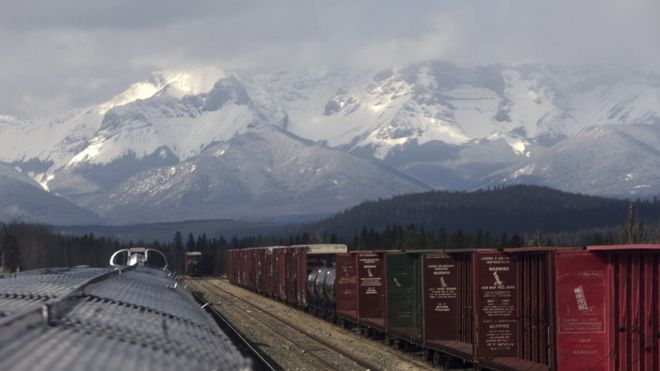
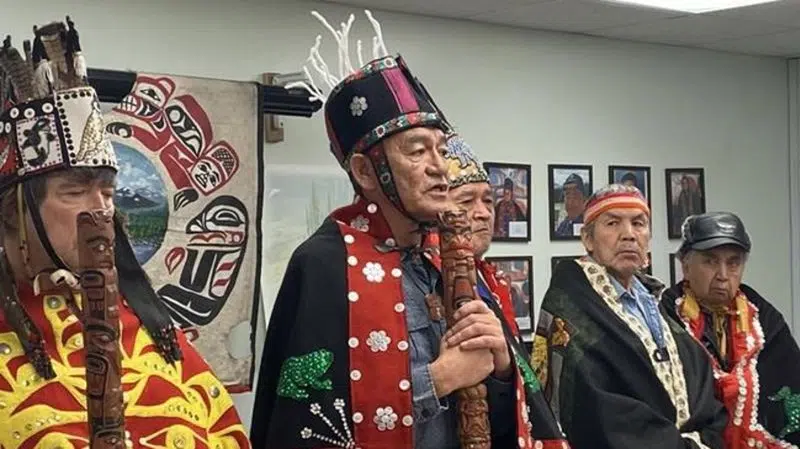



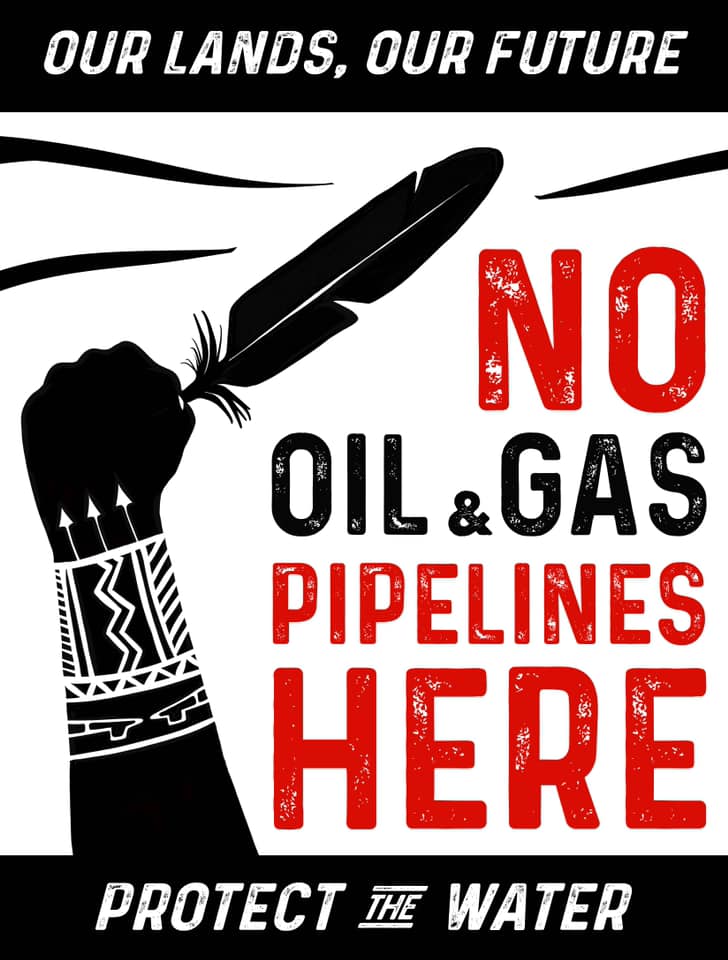


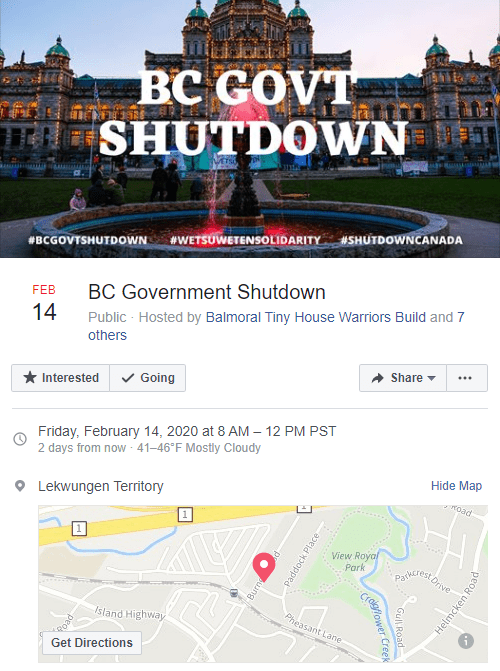
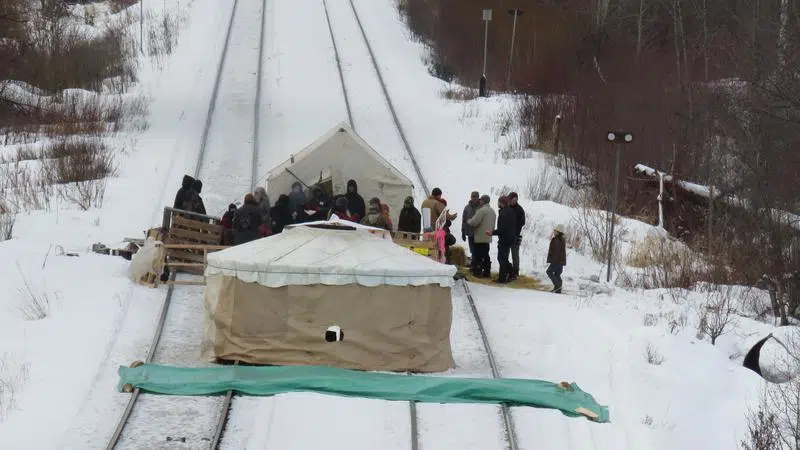


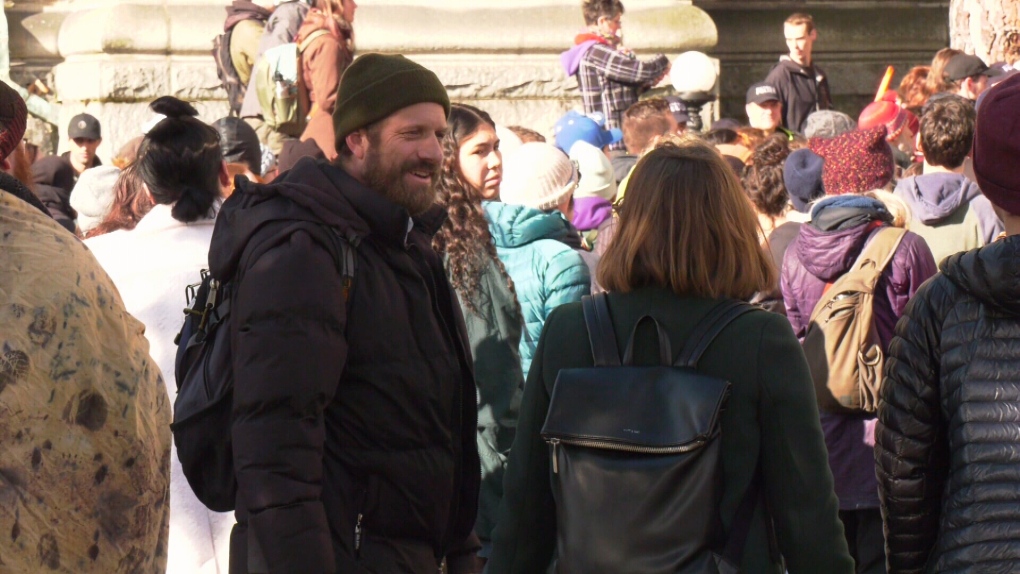


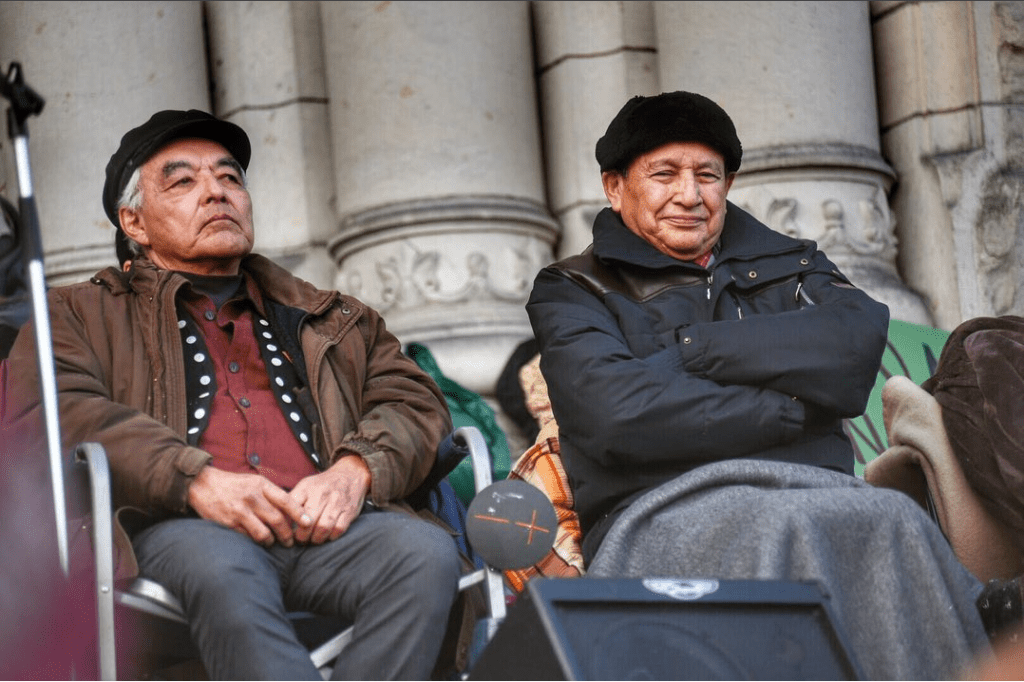
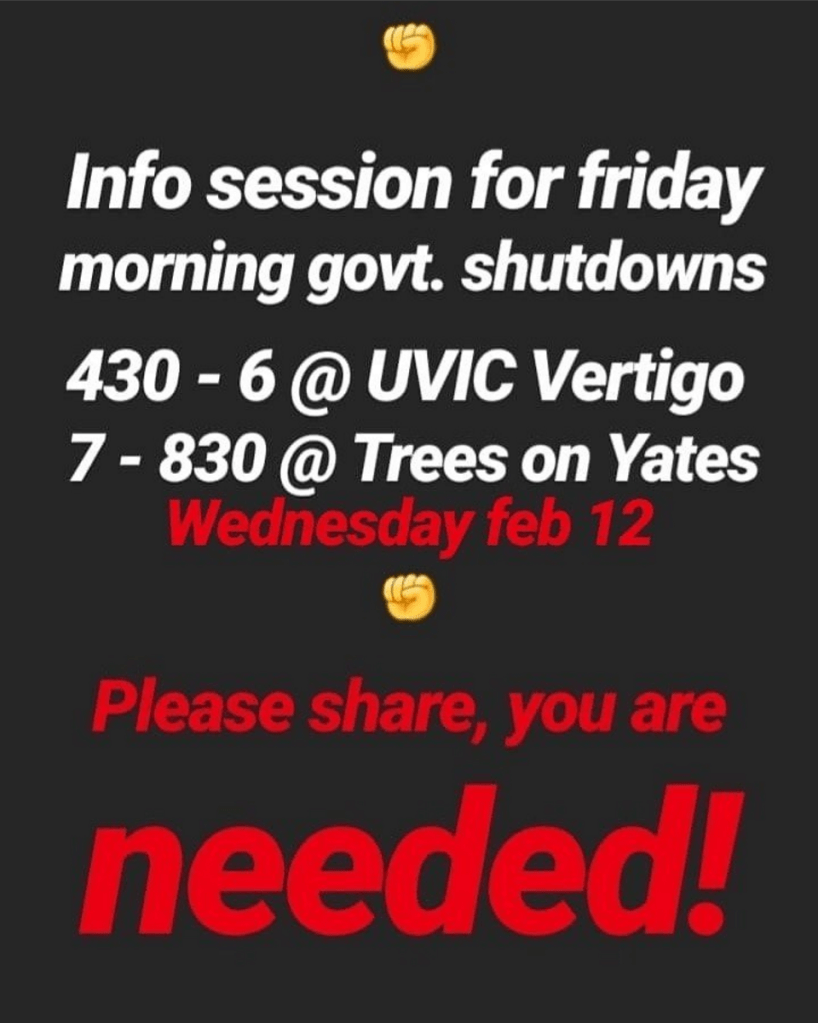
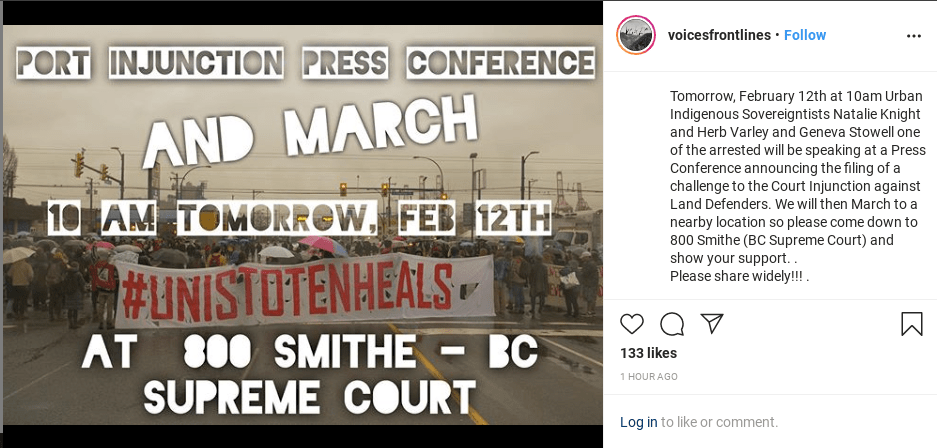
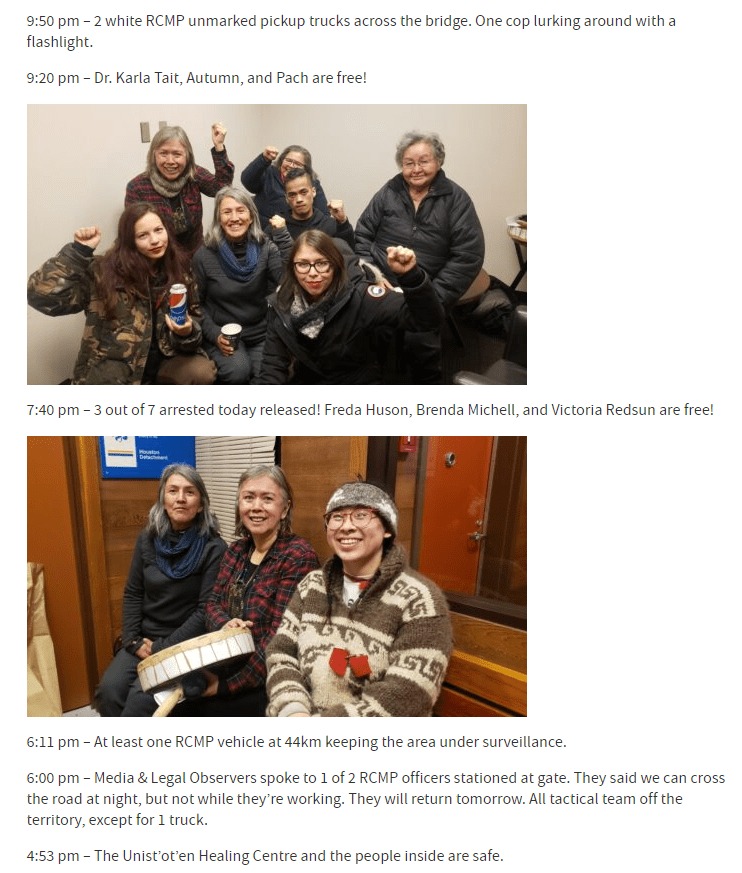

 Quakers, social justice and revolution