
Sun-chul Kim to We Support the Unist’ot’en and the Wet’suwet’en Grassroots Movement
22 hrs
Greetings from Korea. I am sharing a statement of solidarity with the Wet’suwet’en struggle issued by Green Party Korea. Please know you have allies on the other side of the world.
Wet’suwet’en Solidarity Statement from Green Party Korea
We are hearing about the struggles of our Wet’suwet’en sisters and brothers against the forced construction of Coastal GasLink’s (CGL) gas pipeline with a heavy heart.
We find it unfathomable that the British Columbia government is pursuing fossil fuel when the entire world is making great efforts to move away from it. We find it abominable that the British Columbia Supreme Court granted GCL access to Wet’suwet’en land, which justified police violence on Wet’suwet’en activists and their allies.
We are particularly concerned that the pipeline construction is being pushed ahead against the calls by the United Nation Committee on the Elimination of Racial Discrimination and despite the legislative recognition of the United Nation’s Declaration on the Rights of Indigenous People.
We urge the Horgan administration to respect the natural and legal rights of the Wet’suwet’en and stop the construction of the pipeline immediately. We also call for the unconditional and immediate release of all arrestees.
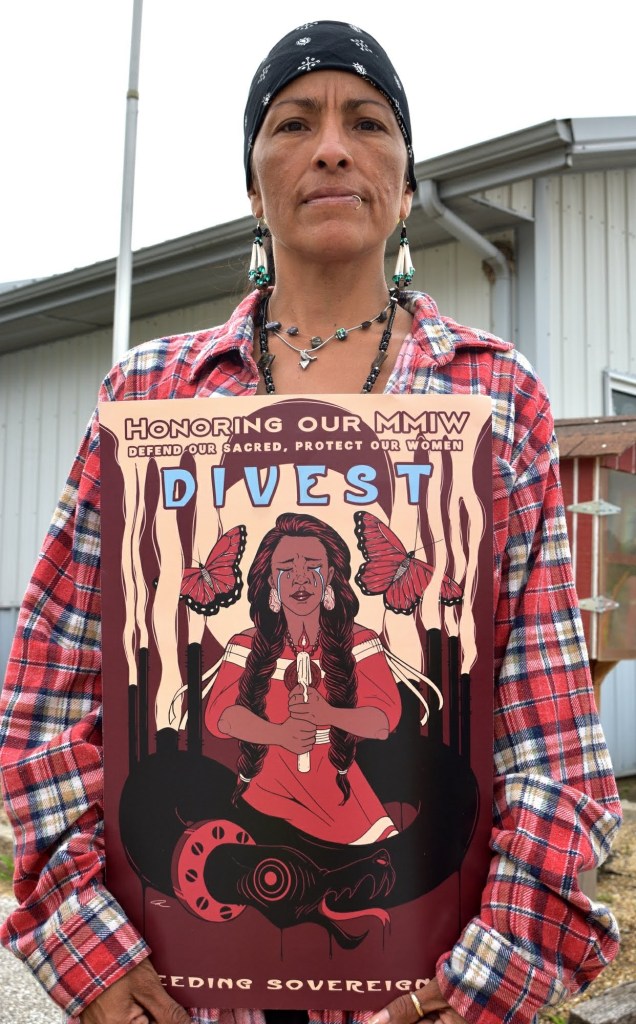
We grimly recognize the South Korean National Pension Service (NPS) has significant equity interest in the GCL project. We have demanded that the NPS divest from CGL, and will continue to press the NPS to do so.
We have vivid memories of joining hands in the years-long struggle by rural Miryang residents in South Korea against forced construction of high-voltage power transmission towers in their communities. We understand what it feels like to be ignored, bullied, and arrested simply because we wanted to protect our communities and rights. We know why the Wet’suwet’en have to win.
We extend our solidarity to the Wet’suwet’en.
2020.03.02
Green Party Korea
http://www.kgreens.org/commentary/논평-캐나다-생태계와-원주민-공동체-파괴하는-브리/

For this instalment of In the Streets, we spoke with Jennifer Wickham, media coordinator for the Gidimt’en Camp on Wet’suwet’en territory. We spoke about the Wet’suwet’en struggle for their territory, the recent raids by Canadian police, and the Indigenous-led Shut Down Canada uprising that’s emerged in solidarity. [Note: This episode was recorded on Feb 27th 2020]
Thanks to Kevin Lo and LOKI Design for the art that we’re using for this episode.

JOCKO POINT— People came and went, the convenience store owner made up coffees for folks when they got cold, one man brought rabbit stew, kwewok (women) sang and drummed. The fire started small, but as more people brought more wood, it got brighter and hotter.
The gathering, a Solidarity Fire for Nipissing First Nation and allies to support the Wet’suwet’en, was announced on Facebook but organized by community members working in consultation with their Chief and Council. The organizer, Nipissing First Nation member Aylan Couchie, recalled when she decided to put something together.
“The night after the [Ontario Provincial Police] raided the Mohawks and the [Royal Canadian Mounted Police] raided Unist’ot’en, Gitxsan people blockaded the highway and I watched the RCMP haul away Elders in regalia.”
The sight brought Couchie, no stranger to the history or current realities of Canada/Indigenous relations, to tears.
“I wanted us to show solidarity, like the Gitxsan, even though we are not their neighbours.”
Nipissing First Nation lights the fires for Wet’suwet’en By Catherine Murton Stoehr. Posted on February 29, 2020 In Anishinabek, News

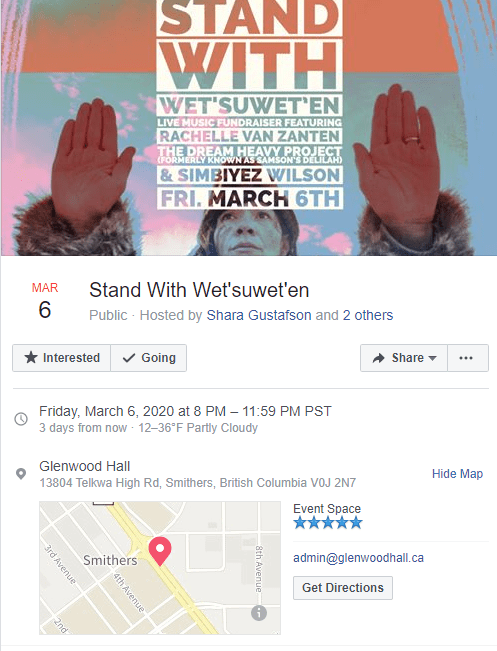
Dr. Joe Gosnell gave an inspired speech in Gitlaxt’aamiks (New Aiyansh, BC) at Hobiyee 2020.
He spoke about the history of Hobiyee.
His opinion of Canadian History.
Also about the 2020 situation with the Wet’suwet’en in British Columbia.
We are CFNR. Canada’s First Nations Radio.
Your Nation Your Station | http://www.cfnrfm.ca


Actions by and in support of the Wet’suwet’en land defenders are as much about government failure to resolve issues around Indigenous rights and title as they are about pipelines and gas.
Some Wet’suwet’en hereditary chiefs and their people are defending their rights to traditional practices, clean air and water and a healthy environment. They say the Coastal GasLink pipeline threatens those rights. The $6-billion pipeline, to ship fracked gas 670 kilometres from Dawson Creek to Kitimat for liquefying and export, is part of a heavily subsidized, $40-billion LNG Canada project owned by Royal Dutch Shell, Mitsubishi Corporation, and state-owned Petronas (Malaysia), PetroChina and Korea Gas Corporation.
The hereditary chiefs suggested an alternative route, but the pipeline company nixed it as too costly. The company and government point to support from elected chiefs and councils along the pipeline route, many of which have signed benefit-sharing agreements as a way to gain much-needed money for their communities.
But, as Judith Sayers (Kekinusuqs), University of Victoria adjunct professor from the Hupačasath First Nation, writes in the Tyee, “Neither the elected chief and band councils that support the pipeline, nor the federal or provincial governments, nor Coastal GasLink ever obtained the consent of the Wet’suwet’en hereditary chiefs and their supporters.”
That’s partly because governments have failed to resolve issues around Indigenous rights and title, unless forced to after lengthy court battles, as with the 1997 Delgamuukw decision and the 2014 Tsilhqot’in decision, which recognized Indigenous title over unceded territories.
Perhaps governments are afraid that Indigenous rights and title would infringe on massive resource development schemes, although, under the previous decisions, they can still approve such projects as long as they can justify them and engage meaningfully with Indigenous titleholders.
If the principles set out in the Truth and Reconciliation report, the UN Declaration on the Rights of Indigenous Peoples and court decisions are to have meaning, both levels of government must resolve issues around Indigenous rights and title and respect for Indigenous law.
One complication is that few people truly understand Indigenous governance systems. As Sayers writes, “The Wet’suwet’en were never defeated in a war, never surrendered their lands and never entered into a treaty.” Hereditary chiefs have jurisdiction over traditional territories, whereas elected chiefs and councils have authority on reserves. Elected band councils are an outcome of the 1876 Indian Act (and its precursors), enacted in part to destroy traditional governance systems and laws.
Some see the hereditary systems through a colonial lens—as monarchy or divine right—but they’re much more representative and consensus-based than many realize.
Now that actions have spread across the country, blocking rail lines, bridges, roads and ports, complaints about inconvenience and disruption are rife. But colonial society has been inconveniencing and disrupting Indigenous lives for hundreds of years. Now the RCMP, acting on behalf of extractive industries and government, are forcing Wet’suwet’en off their own territory.
Politicians rant about “protesters holding the economy hostage.” But Canada has held Indigenous people hostage up until the last residential school closed in 1996 – and longer through an unfair foster care system.
Recent actions are also calling attention to rapidly expanding fossil fuel development during a climate crisis, and the problems that come with giant resource projects, including violence against women. The Inquiry into Missing and Murdered Indigenous Women and Girls found direct links between extractive industries, “man camps” and increased violence against Indigenous women.
They also put a spotlight on society’s failure to respect the knowledge, laws and traditions of the people who have been here since time immemorial.
All Canadians should learn about Indigenous history and culture. We need to move beyond our narrow, extractivist, endless-growth mindset. The colonial worldview is failing us. We’re in a climate crisis, yet governments and industry are hell-bent on tearing up the landscape with fracking, immense oilsands mines, seismic lines, access roads and forestry to reap quick profits by selling it all to other countries. We need to realize that we have more to learn from Indigenous Peoples than they from us.
Governments must work with Indigenous Peoples to resolve issues around rights and title where treaties haven’t been signed and honour the treaties that have been. Until then, major resource projects that potentially infringe on these should be put on hold.
David Suzuki is a scientist, broadcaster, author, and cofounder of the David Suzuki Foundation. Written with contributions from foundation senior editor and writer Ian Hanington.
David Suzuki: Pipeline actions signal need for true reconciliation by David Suzuki, Straight.com on February 25th, 2020
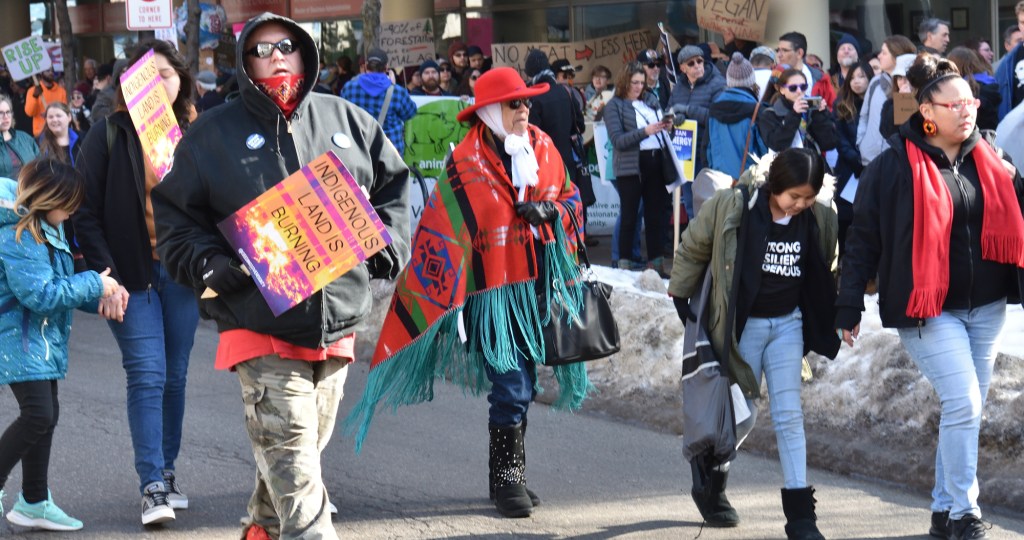
More than 100 people protested outside a mining convention Sunday in downtown Toronto, where they blocked traffic on multiple roads and stood in front of entrances to the event.
Organizers said they were demonstrating against the harmful effects of resource extraction to the environment and to Indigenous lands.
At one point, protesters attempted to enter the convention but were stopped by police.
“We want to make our voices heard and our presence seen because there are communities that this conference is directly impacting,” said Vanessa Gray, a protest organizer who’s Anishinaabe Kwe.
“The industry is doing more harm than good for our future, our environment.”
Daniel Huizenga, who attended the protest with his son, said the issue has been in the spotlight due to recent demonstrations in solidarity with Wet’suwet’en hereditary chiefs in British Columbia, who oppose a pipeline project in their traditional territory.
Hundreds protest mining convention block streets in downtown Toronto By Salmaan Farooqui, Canada’s National Observer, March 2nd 2020
Prime Minister Justin Trudeau is calling on industries, citizens, and Indigenous groups to help shape the future of Canada’s climate policy.
Speaking at a major mining conference in Toronto, Trudeau says the government will soon launch a formal initiative to see input from a range of groups on how Canada will get to the goal of net-zero carbon emissions by 2050.
“In the coming year, we want to hear from you on how Canada should innovate and transform our economy to keep good jobs here and create new ones,” said Trudeau.
He says a clear way forward is crucial for both the planet and for business to provide certainty and adapt to the changing reality.
Taking carbon pollution out of the environment, and the economy, will be crucial for Canada’s prosperity, he said.
“This is a big project, and not one any of us can do on our own. We all need to roll up our sleeves and pitch in. Government, businesses, civil society, Indigenous communities, and all Canadians. The only way we create a better future is if we do it together.”
Trudeau wants input from industry, citizens, Indigenous groups on climate By The Canadian Press, Canada’s National Observer, March 3rd 2020
The virus is not the “vote once every four years for those who will rule over you” kind of democracy.
Rather, it’s a grassroots, community-based, decentralized democracy based on people self-organizing, making decisions about their lives and their futures because the system was never designed to represent our voices. No matter who you vote for, government has always acted as a colonial power that engages in perpetual violence against Indigenous nations on behalf of extractive industries and others who make a living off exploitation.
The ongoing puncturing of Canada’s mythology as benevolent and progressive has been a most welcome sight, and the explosion of participatory democracy leading to creative solidarity actions is a phenomenon that cannot be swept back under the rug. Indeed, the federal Liberal regime, its provincial NDP counterpart in B.C. and their state security agencies have been shaken to the core by the occupations, blockades, endless marches and, perhaps most powerful of all, a loving solidarity in which people across the land are prepared to take risks in support of those whose sovereign Indigenous territories were violently invaded, and which remain illegally occupied.
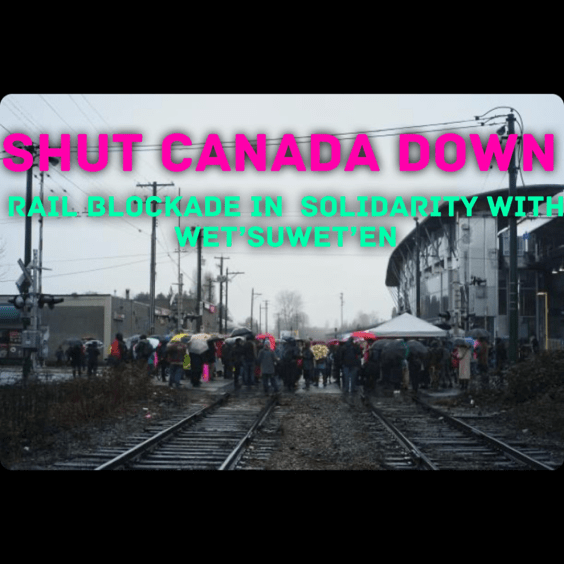
To the horror of those who think they run the show, it has not taken millions marching in the streets to #ShutCanadaDown. Rather, widely scattered, modest-sized groups acting in solidarity have demonstrated how fragile the Canadian state actually is, a lesson that, once learned, cannot be unlearned. As even Public Safety Minister Bill Blair has frankly acknowledged, there just aren’t enough police in this land to watch every inch of railway track.
THE VIRUS ‘THREATENING’ CANADA STARTS WITH A D, NOT A C By Matthew Behrens, Rabble.ca, March 2, 2020 | STRATEGIZE!































 Quakers, social justice and revolution