#noDAPL as Revolutionary Act

I’ve written a lot about how working with others who love the Earth, and especially Native Americans this past year related to the Dakota Access Pipeline resistance has profoundly deepened and broadened my spiritual life.

As I begin to try to wrap my mind around Chris Moore-Backman’s concept of the Last Revolutionary Act being to turn off the lights, I realize how this is related to #noDAPL and Native lifestyles.  Native Americans never turned the lights on in the first place.

In a similar manner, the Kheprw Institute (KI) also embodies this concept, as they have built vibrant community with no capitalistic resources.


This is also related to the Quaker testimonies related to simplicity in our lives.

Personal Responsibility

Advice and Queries from Iowa Yearly Meeting (Conservative)

Honesty and simplicity are essential parts of personal responsibility. We manifest our commitment to Truth in all we do. We can have joy and beauty in our lives without allowing material things to dominate them. We need to free ourselves from distractions that interfere with our search for inner peace, and accept with thanksgiving all that promotes fullness and aids in service to the divine Center.

  • How do we center our lives in the awareness of God the’ Spirit, so that all things may take their rightful places? 
  • How do we structure our individual lives in order to keep them uncluttered with things and activities? How does Meeting help us examine our personal lives for simplicity?
  • How do we ensure that we act with fairness and integrity?


Posted in #NDAPL, civil disobedience, Indigenous, Quaker Meetings, Uncategorized | Tagged | Leave a comment

Last Revolutionary Act

Although living without a car has involved fundamental lifestyle changes, and daily (what many would consider) inconveniences, I’ve always been aware that wasn’t nearly enough.  Those living in the United States consume energy and materials at a rate many times greater that can be sustained or justified.

We have to go much deeper and further.  The following from The Gandhian Iceberg states it clearly:

The last true revolutionary act left to human beings in the twenty-first century is to turn out the lights.  Other acts are possible—acts we may call revolutionary—but they do not meet the criteria of the word as it must necessarily be interpreted today.  Nothing short of turning out the lights will lead to an overturning of the endgame global system that now has us in its thrall…
Turn out the lights—and leave them off—and we will experience a consciousness our minds have never known but our bodies still remember.  Leave them on, and it scarcely matters what else we do or leave undone.  We will not significantly alter our path through time.  Nor will we alter the path of our species, which has taken a collective detour leading nowhere but oblivion and extinction.  We persist perpetually in making all of this seem more complicated than it is…
Let there be darkness
Chris Moore-Backman
The Gandhian Iceberg
A Nonviolence Manifesto for the Age of the Great Turning
Posted in #NDAPL, climate change, revolution, Uncategorized | Tagged , , , | Leave a comment

Quaker Social Change Ministry Review

This Sunday, North Meadow Friends will be discussing our past year’s experience with implementing the American Friends Service Committee’s (AFSC) new program, Quaker Social Change Ministry (QSCM).

To many of us who have been participating in QSCM, we have come to feel this is a more spiritual, effective, and meaningful way to approach our peace and social justice work.  We have had several discussions, actually, about how the meeting’s peace and social concerns committee, and QSCM might work more closely together, or whether we even still need both.

In preparation for that discussion, I’m including several blog articles that I’ve written about this.

KI and North Meadow Friends

4/18/2016

Last night’s meeting of North Meadow Friends at the Kheprw Institute (KI) with Imhotep, Pambana, Miss Fair and Alvin was a dream come true for me.  I am realizing I’ve known people in both groups for nearly the same amount of time, actually.  Lucy Duncan (AFSC) recently asked what it was that gave us hope, and this collaboration does that for me.

Alvin often asks the question what does such and such actually accomplish, and too often the answer hasn’t been any kind of lasting change.

I think one of the few ways to affect change is by changing one person at a time, and the way you change people is by listening to them, and seeing what it is in them you can connect to, and create a space for sharing that allows everyone to feel comfortable examining themselves, and an atmosphere of exploring ideas together, instead of a confrontation and unyielding expression of position.  As Imhotep often says, conversation is undervalued.  One of the real geniuses of KI’s work has been to refine community conversations for this purpose, led by the community’s youth.

In fact, this resulted in a unique situation last night when Indy10 was also holding a meeting at KI at the same time as this meeting with North Meadow Friends.  The experience of a number of Friends with Indy10 had a lot to do with us getting to this point.  Indy10 refers to a group of 10 young people who didn’t know each other before they met via social media at the time of Michael Brown’s killing.  One of the ten was one of a North Meadow couple, who both became involved with the activities of this group as they tried to address similar issues in Indianapolis, as did I peripherally.  There were probably a number of reasons involved, but after several months of intensely working together, the Friends in the group had to leave, with a good deal of trauma.  It’s really disappointing when something that ignites your passion somehow goes wrong.  It continues to be difficult because Indy10 is really working hard in a way, and on issues that we continue to care deeply about.  When others in the meeting (North Meadow Friends meeting) became aware of how traumatized we were by that experience, Evalyn and JT offered to meet with Erin, Kevin and I to try to work through this.  Which we did monthly over the past winter and spring, and found to be very helpful.

So when I heard about AFSC’s new program, Quaker Social Change Ministry (QSCM), I immediately recognized it as an implementation of what our meeting has been doing with the post Indy10 meetings, in combination with the various relationships several members of the meeting had developed with KI over the past couple of years.  The two main concepts of QSCM are to focus on the spiritual dimensions of our social justice work, and to do more effective work by finding an organization impacted by injustice to work with, and actually spending time and doing work with them.  The emphasis is on trying to avoid the mistakes of the past, where Friends tend to try to take charge and solve problems.  Instead, we should recognize that those who are experiencing injustice are the ones who know both what the situation really is, and what they need to try to deal with it.  I don’t think I would have considered getting involved in QSCM if it wasn’t for already knowing about KI, and how they fit into this model so well, and that many Friends already had a relationship with KI.

And KI had other experiences with Quakers.  Several years ago one of the KI youth interns created a video at KI that won the “If I Had a Trillion Dollars” contest sponsored by AFSC.  AFSC’s Erin Polley was involved in the contest, and the trip to Washington, DC, that was one of the prizes.  Erin, who attends North Meadow, was at last night’s meeting.

It was very interesting to hear people from KI reflect on their work, and on spirituality.

We didn’t come up with much in the way of specific plans.  It was more a meeting of hearts than of minds, in a way.  But I think we all felt we would like to continue to find ways to work together.  And I think this will actually give us some answers to Alvin’s question of did anything really get accomplished.  This gives me hope.

Quaker Social Change Ministry at North Meadow Friends

2/2/2016

This is the story of the experiences of North Meadow Circle of Friends, an unprogrammed meeting in downtown Indianapolis, that were triggered by the killing of Michael Brown August 9, 2014, in Ferguson, Missouri, and where that has led us.

A group of ten young people, who became known as Indy10, discovered each other via social media, as people who wanted to do something in response to the plight of the Ferguson community and the excessive, militarized police response.  They arranged to meet and took food and water to Ferguson, and spent some time with the people in the community there.  The experience radicalized them, and they were determined to do what they could to address similar issues in Indianapolis.  One of Indy10 attends North Meadow Friends.  Her partner also became involved, and the meeting was aware of this work.

Unfortunately, after several months of frequent (3 times/week), intense meetings and some street protesting, conflict erupted, and the Friends left the Indy10 group.   That indicates how difficult this work can be.  It was especially disappointing because it had seemed real progress was being made after significant personal investment.  It became apparent that those in the North Meadow Meeting who had been involved were traumatized by the experience.  Fortunately some other Friends in the Meeting recognized this, and offered to meet to work through it.   Five of us, the three meeting members who had been involved with Indy10 and several of the Meeting’s spiritual elders, began meeting monthly over the winter last year (2014-2015), and found the meetings to be very helpful.  (I was the third, but more distant Indy10 member from North Meadow).

You might imagine our surprise, and excitement, when we learned that the American Friends Service Committee (AFSC) was looking for Friends Meetings that would be interested in participating in a pilot of a program called Quaker Social Change Ministry (QSCM), because that program seemed to reflect this process that we had started to deal with social justice work.

The Quaker Social Change Ministry program has two broad, connected goals.  One is to bring a more intentional spiritual focus to a Meeting’s social justice work, as well as to encourage people in our Meetings who don’t usually see themselves as activists, to become one.  It is common for meetings to have a number of people very involved in social justice and peace work.  But I think it is a little unusual to find that meetings do much more than support the individual in many cases.  They often don’t get involved, themselves, in that person’s work.  But just imagine what it would be like if the whole meeting found a way to participate in such work together.  Imagine how such work could flourish with the attention of more Friends, and how the spiritual life of the meeting would benefit by this shared work.

The second goal is to get Friends out of the Meetinghouse and into the community.  The idea of accompaniment is for the Meeting to find a group of people who are dealing with injustice now, and to learn from them what we might do to help.  Most of us are familiar with Friend’s history of jumping into situations and trying to provide leadership which often ends up not being what the impacted community needed.  This can end up causing more harm than good, and is why activists so find themselves discouraged, often giving up the work entirely.  QSCM helps Friends change the focus to the impacted community, because the people there are the ones who know the factors and people who are impacting their situation.  The impacted community has a better idea of what the driving issues are, and thus know what solutions are needed, and probably have a good idea of how to create those solutions.  Our role is to be ready to do what we are asked to do, when we are asked to do it.

To put it bluntly, white Quakers are simply ignorant about many issues facing people of color. You know nothing until you realize that.  King Samuel Benson.   Until three years ago, I was as ignorant as most other white people I knew.  Now I know some things you can easily learn yourself, once you are aware of whatever the issue at hand is.  I have been very fortunate, but often saddened to have been able to see how different my new friends’ lives are from mine.  But this is the only way I see to begin to solve this problem.  Once individuals reconnect as fellow human beings, the problems then belong to all of us, and working together we solve those problems for all of us.  But I still have a great, great deal more to learn.

Ignorance can be corrected, as long as one is open to learning new things.  One of the problems of ignorance is that one simply doesn’t know what it is one does not know, or realize which historical narratives represent history that has been rewritten, to cover up injustices and atrocities.  I personally do not think you can be successful in this work if you do not start with the assumption of your own ignorance.  Friends in particular have a great deal of difficulty with this.  They are used to being well informed about social issues, and seen as leaders in social justice and peace work.

I know of the dangers of generalization, but what I have learned leads me to believe that if you are white, you do not understand, and you cannot understand what is happening to people of color until you have spent time with, and become friends with people of color.  These things cannot be learned intellectually, they are only taught by experience, informed by the heart and soul.

The community your Meeting partners with is doing you a favor by helping you correct your ignorance.  But be aware of this possible first misstep.  It actually adds insult to injury when (usually white) people expect those experiencing injustice to teach them (white people) what they (white people) need to know.   How would you feel if, after experiencing years of injustice, some of the very people who were involved in that injustice, even if they were unaware of doing so, came to you expecting you to teach them what the problem is and what they should do about it?

This was what really excited us at North Meadow regarding QSCM.  Several of us, in our own separate ways, had already established a relationship with just such a community which is not far from the meetinghouse.  The Kheprw Institute (KI) is a small (four main adult leaders) community that came into being over a decade ago to mentor young (teenage) children of color.  KI has become one of the most active social justice organizations in Indianapolis.  They are very generous in making their meeting facilities available for different groups working on all sorts of issues.  Because of the excellent training they are able to provide their interns (kids), KI is more and more providing technical support for other social justice organizations and meetings.  At a recent NAACP Environmental Justice presentation, KI provided live streaming of the event.  But most of their work is done at KI, where the youth learn about (by taking care of) the garden, aquaponics system, composting, web design, and social networking and programming.

Over 30 years ago Imhotep Adisa, KI’s Director, and JT, a North Meadow Friend who was involved in the original post-Ferguson group, and is now active in QSCM, went to the local University together.   It was about three years ago that I found KI when I attended an event there that was listed on an environmental organization’s website.  Kevin has helped with some construction and wood working.  Erin Polley, Indiana’s AFSC staff person, helped with the trip to Washington, DC, when one of the KI youth won the “If I Had a Trillion Dollars” video contest.  So we had the good fortune of a history of acquaintance and shared work.

For a number of years after KI first started, they tended to keep to themselves, forming a protected community for their youth, in a manner similar to how Friends used to maintain their own schools.  When I first met with them, I didn’t realize just how small and self-contained KI was.  My experience during that first meeting at KI was really amazing to me.  I describe that in detail here

(https://kislingjeff.wordpress.com/2016/01/05/importance-of-stories/).

 As I should have expected (but didn’t), that first meeting was actually an interview to see if I was someone who might fit into their community.  I mention this because I think Friends should be very cautious during their first meetings.  I hope you approach your meetings with the attitude that you are a seeker, wanting to learn about this new community, and, over time, growing into knowing one another, and remain open to what might be asked of you.  Remember, at least in my experience, it is better if you wait until you are asked for something, or to do something with or for the community.  Try to pay especially close attention, and listen for opportunities that may be somewhat subtle.  You might hear “we are having an event”, which is an invitation to you to attend.

Especially knowing how constrained KI’s resources are, I was committed to making sure we did our best to minimize what we asked of KI for this program.  Our goal was to help, not add to the burden of the KI community.  We were fortunate, again, this time for the wisdom of KI’s approach to community building.  For several years KI has held book discussions that are open to the community.  These events have a number of benefits, and have been key to KI’s spreading involvement in the Indianapolis activist community, as well as a perfect mechanism for North Meadow Friends to begin to accompany KI and their work.  Stimulating books are chosen, which have included “The New Jim Crow”, “The Pedagogy of the Oppressed”, “This Changes Everything”, “Animal, Vegetable, Miracle”, and the upcoming “Indigenous Peoples’ History of the United States”.  Last year the KI interns led the discussions of “The New Jim Crow”, which spanned several months of one a month meetings.  Rasul and Keenan would read a couple of chapters, and then each write a blog post about what they had read.  The community could then read those blog posts ahead of the discussion.  Then Rasul and Keenan led the public discussion.  They developed skills in critical thinking, public speaking, and leading group discussions.

Besides all of those good things, these discussions brought a wide diversity of people to KI to discuss ideas in a respectful and civilized manner.  The KI leaders, Imhotep, Miss Fair, Pambana and Alvin have created an atmosphere for the interns and all who come to KI that is based upon mutual respect, acceptance, and challenging each other’s ideas.  In his often subtle and humorous way, Imhotep helps people clarify their thoughts so everyone understands what they are trying to say.  And he gently leads the discussion back on track when it, fairly often, goes astray.  And helps summarize things.  People really enjoy these meetings because of the interesting topics, interesting participants, and welcoming, and yet challenging atmosphere.

More and more North Meadow Friends are attending these book discussions.  During our QSCM meetings we identified this as our first endeavor with KI, which would allow us all to get to know each other over several months’ time.  And it is also great in not adding a burden to KI in order for us to get this benefit.

So this is where we are with North Meadow Friends, KI, and the Quaker Social Change Ministry.  I think our participation in the book discussions at KI is appreciated.  And those at North Meadow who are involved (around a dozen) are finding QSCM and time at KI, and time together processing all of this to be very invigorating.  It does seem like we have had a unique set of circumstances leading to this point.  But I hope this program becomes widely used by Friends.

Additional information:

Quaker Social Change Ministry program                                     http://www.afsc.org/document/small-group-social-justice-ministry-model

Importance of stories

1/5/2016

I’ve been thinking about the title of a group I’ve recently become engaged with, called “Quakers ENGAGE to End Racism”.  I love the word ENGAGE.  That taps into “actions speak louder than words”.  So, what actions can Quakers take to end racism?

I can only speak of my own experience, so I’ll tell you a story.  But first a short bit about stories.  In a kind of circular manner, stories are the words describing, most commonly, actions.  A body of shared stories shapes the history of the community.  In Iowa Yearly Meeting (Conservative) we have an effort to gather the stories of our community.  We’ve actually created a website to allow us to share our gradually increasing library of stories with each other and the world:  Quaker Stories Project.

Another reason I feel stories are so important is because that has become one of the primary ways my local Friends meeting has found to become ENGAGED with one particular community of people of color here in Indianapolis, the Kheprw Institute (KI).  This link  provides a nice description of the KI community.  One of the many, many things KI does is hold open, public monthly book discussions, which provide a number of invaluable benefits.  KI is totally focused on youth development.  These community discussions are usually LED by the KI youth.  Last year one of the books discussed was “The New Jim Crow” by Michelle Alexander.   Over a period of several months, the youth would read a few chapters, and then write and publish a blog post about what they read.  The public could read those blog posts prior to the community discussion.  Then those same youth would lead the discussion itself.

The tone of these discussions feels like worship sharing.  People are very respectful of each other and what we say.  People actually listen to each other, and silence is appreciated.  People speak of their own experiences.  They tell their own STORIES.  Thus we all ENGAGE with each other.  A number of North Meadow Friends have participated in these discussions, and we have identified this as one of our first “actions” in our participation in the Quaker Social Change Ministry program.

The story I’d like to share is of my first meeting with the folks at KI.

I had long been struggling with the knowledge that simply through the circumstances of the family I was born into, my life was significantly better in many ways than that of a great many others in America and the world.   This was a spiritual problem for me.

God (finally) provided me with a way to begin to learn about that. Nearly three years ago the environmental group 350.org organized a national day for environmental education/actions. Only one event was listed in Indiana that day, and it was at the KI Eco Center, which was how I found out about KI.   The day of the event, I arrived at the run down building that had once been a convenience store.  But it was full of kids excited to show us the work they were doing, including their aquaponics system, and the rain barrels they created and sold.

I was intrigued, and wanted to see if I could become involved with this group.  So we arranged a meeting.  On a dark, rainy night I rode my bicycle to the KI building.  The adult leaders, Imhotep, Pambana, Paulette and Alvin, and about a dozen young people from the Eco Center were here.  I had thought we were going to discuss working on some computer software projects together, which is another area KI works with the youth in.

But Imhotep began asking me a series of questions about myself. I don’t talk a lot about myself, but Imhotep, I’ve come to learn, is very good at drawing stories out of people.   I should have anticipated this, but I soon realized I was basically being interviewed so they could determine if I was someone they felt comfortable working with, or not.  So I began to talk about Quakerism. When Imhotep asked me to talk more about that, I said something like, “Quakers believe there is that of God in everyone, and that includes you, and you.” The very first time, I think I hesitated slightly as I was asking myself, “Ok, we Friends always say this, but do you really believe this of a group that is different from you?” And I’m really glad the answer was an immediate and emphatic YES, but it also seemed to reaffirm that by exploring it consciously and publicly. At that point I remember smiling at the thought, and the young person whose eyes I was looking into saw it, too, I think. Each person smiled at me as I said that to them, and I had the impression they were thinking, “of course”.   I strongly felt the presence of the Spirit.

That seemed to satisfy the questions for the evening, and they have welcomed me into their community ever since.

I was not used to speaking about faith in public outside Quaker circles, and this was a lesson that it is important to do so. From the beginning, my experience at the Eco Center has been a shared, spiritual one.

Posted in #NDAPL, Black Lives, Quaker Meetings, Quaker Social Change Ministry, race, spiritual seekers, Uncategorized | Leave a comment

My draft resistance story

I have recently been sharing the stories of Quaker draft resisters.  I struggled with what to do about the Selective Service System quite a bit.  I was keeping a journal at the time, and attending Scattergood Friends School, then a year at Earlham College during the following:

Struggling with my decision related to registering for the draft triggered a deep look into my spiritual life and how to express that in the rest of my life.

“Received order to report for civilian work on February 1. As I approach the decision, its revelation, and the consequences, I draw back in fear.” Journal 1/25/1972

At last the draft issue was coming to a head. I left Earlham knowing I would lose my student deferment and be eligible for induction. I was reclassified 1-0 (conscientious objector to do alternative service) in October, 1971, I think. I looked for jobs in hospitals, and accepted the one at Methodist partially because I knew, if I did decide to do alternative service, such a job would qualify.

Up to this point I still had alternatives. Now the ‘official’ order had come. It didn’t matter that I would continue to work at the hospital or even that I would receive credit for what work I had done. What did matter was whether I would acknowledge that I was actually doing alternative service. I enjoyed my work at the hospital and felt called to continue with it, whether the government approved or not. But I had to decide whether I would accept the work on their terms or mine.

I’ve already indicated how much reading, thought, and worry I put into the draft decision. I thought I would suddenly receive the answer some day during Meeting for worship. It didn’t happen exactly that way. I remember one meeting in the fall of my senior year at Scattergood when I knew it would be wrong to cooperate with the Selective Service System. I knew with certainty yet the time wasn’t yet right to act on that knowledge. My grandmother (Lorene Standing) says the will of God is most often revealed in a series of small steps.

I think my task was first to prepare for the decision, its consequences and the reaction to it; and to prepare my family and those close to me for the decision. Then I would act.
I had done what I could to prepare myself and others. Now the time had come.
The first of February I returned to Earlham to visit friends and to get support before going ahead with my decision.

“Took bus to Richmond. Bright clear day—snow on ground. Beautiful walk to Earlham from downtown. Seems like coming home. Good to see Jan. After spaghetti lunch, walked downtown to YWCA where Jan had swimming lesson. Al Inglis picked us up there at 3:00 pm. Went back to Earlham and talked.

4:00 pm. Went to Meeting for worship. Jan, Al, Dav Nagle, Marggie Schutz, Margaret and Lewis Taylor, Becky Gibson, Jim Bay, Ruby, and several others attended.

Al had read my letter to the draft board and my statement on the draft earlier, and asked if I would let him read it during Meeting. I told him that would be alright, so he did.
Into the Meeting, Al spoke of support and the future and how God spoke through me. I would hope that would be true, but felt unworthy.

Margaret Taylor spoke of Iowa Friends who had always spoken against war and done what they felt right. She spoke of her support for me.

Becky Gibson spoke, very movingly, about finding who you are, and how important it is to do what is right.

Then Dav spoke, also very movingly. He is certainly an able minister—one of the people I love and respect very much. He seems always to be close to the center. He said severing ties with Selective Service is a major decision—but ALL decisions are major when they deal with principle and the Spirit. All, each of our decisions must be integral. “Severing ties with Selective Service is not an isolated act in this life of Jeff’s.”

After a good while I felt moved to speak. When confronted with a decision, we are told to do God‘s will. But God’s will is so difficult to discern among many influences—people, law, self (selfishness and pride). Realizing this, Thomas A’ Beckett said, “I am loathsome.” This was how I felt at times. But after he said that, he heard what he believed to be the voice of God saying “Nevertheless, I love.”

Later, I shook hands with Jan to break meeting. There was much tender, loving discussion and support afterward. Here I received such strength as I could find nowhere else. Is there any other way to wrestle with and be led to a decision? I am amazed at the power and bond of love. May I strengthen and spread it.”
Journal 1/30/1972
I received a letter from Ron Ellyson, a classmate of mine at Scattergood and close friend (Member of Iowa Conservative Friends):
“As for your decision to not cooperate with the desires of Selective Service, I think it is fine. It is a choice which you made after years, actually, of thought and deliberation and certainly you should have enough faith in your judgment to stay with that decision through all the hassles it will cause you.” Ron Ellyson.
2/6/1972 First Day
I mailed the following to the draft board today, along with my registration certificate and classification (1-0) card:
Dear members and clerk of the draft board:
I have received an order to report for civilian work February 1, 1972.
I want to thank you for your concerned questions at my personal appearance, when we were considering my position as a conscientious objector. I have appreciated Mrs. Landon’s kindness and consideration, even when I returned my draft cards. Thank you for giving me more time to consider this decision. I hadn’t realized what a powerful affect that action would have on some people. The extra time gave them, and me, a chance to come to grips with the decision and its consequences. However, my beliefs have remained basically the same and the time has come to act accordingly.
I am sure none of us really want war. Many are convinced that war is a ‘necessary evil’—the only way to achieve peace. I think I can understand that, and I do respect those who sincerely believe it—their sacrifice has been very great.
But I do not believe war is the way to peace. True peace is a personal, internal, spiritual matter. When we come to know and love ourselves and our God, then and only then do we have peace. From this point, peace and love will flow from us and should engulf those we live and work with. This is the only way to find and promote peace.
In this matter, war has no place.
The enclosed attempts to illustrate my beliefs in relation to the Selective Service System. I hope this will help you to understand why I feel I cannot cooperate with the Selective Service System. I want it to be clearly understood that I am not doing alternative service. It is not my choice. There is nothing else I can do.
Love,
Jeff Kisling
Letter to my draft board
I write concerning my relationship with the Selective Service System. There are many alternatives. In fact, someone once said the only alternative not open to a young man facing the draft is that of being left alone. I explored several of these. I applied for and was granted conscientious objector status (1-0). Then I had a student deferment, which made me very uneasy. I am now doing work which should qualify as alternative service, but for reasons I will attempt to explain herein, I find this alternative to be unacceptable.
I find it difficult to understand why one young man must explain his decision to do civilian work for a non-profit organization while another need make no explanation, indeed is encouraged to fight and perhaps kill other human beings. But it is one’s duty to explain one’s actions in order that others might understand, and perhaps follow. Noncooperation is less understood than conscientious objection, so I feel all the more compelled to try to present an explanation. I must try to explain, to spare my family the burden of doing so, for they neither clearly understand nor agree with my decision. (Note: they fully supported alternative service, but didn’t want to see me imprisoned).
This decision grew out of my experience as a member of the Society of Friends. Meetings of the Society of Friends can be a source of strength and guidance as one begins and continues to search for meaning in life. Quakers have always believed that there is that of God in every man, that each of us has the ability to communicate with that of God in us, and the responsibility to respond to that of God in everyone. It is evident that Jesus had communion with God—evident in the actions of his life and in his teachings—culminating in “not as I will, but as thou wilt.” This is the essence of Jesus’ teaching—that God’s will can be discerned and should be obeyed even at the cost of doubt and persecution. Quakers readily accept Jesus as an exceptional person and try to live up to the principles he gave us to live by. But we are even more concerned that we obey that Inner Light to which He was so sensitive, so we can have personal contact with and guidance from God. Thus, Quakers try to minimize distractions from “this (secular) world” in order to discern the will of God in their hearts and His presence in their midst. They gather together in a simple room and settle down together, searching in silence—each contributing to the spirit of the meeting as a whole. There are times when a member feels he has been ‘moved by the spirit’ to share with the group, in which case the meeting considers the message in further silence.
There is a spirit which comes from the silence which gives direction to life. The spirit is often difficult to discern because of our ties to ‘this world.’ We are afraid or too proud to give up our desire to ‘reason through’ decisions. Thus we develop a system of beliefs and guidelines composed of traditional beliefs, our own reasoning, and as much guidance from the Inner Light as we are willing to seek and accept. Thus our decisions, being not entirely grounded upon our faith, may not always be ‘right’. But we can do no more, nor should we do less, than follow our conscience as occasions arise—always seeking to become more attuned to the spirit.
Adolescence is that period when one begins to seriously consider ‘who he is’ and his purpose in the world. It is a time when one has so many question and so few answers. The extent to which a young person searches for, and finds answers to these questions is dependent upon guidance given by parents, peers, school and church; the decree to which this guidance corresponds to his own experience and needs; and his own self-discipline and desire to continue the search. Too often the leadership and resources are not available; he is ‘turned off’ by inconsistencies or shallowness or insincerity on the part of those he looks to for guidance and example; or materialistic demands distract from the search.
The draft requires fundamental moral decisions at this time in life. This may not be bad in itself, but tremendous pressure is brought to bear to influence the decision—tradition, parental and peer pressure, the law, etc. The Selective Service System tries to attract men to the armed forces by relying on these pressures and by not making alternatives widely known.
The pressures in this case are for action which is contrary to the experience and desires of most young men—frustrating, anguishing when one is searching for truth, honesty and integrity. This type of experience stifles personal growth and leads to the loss of a spirit of idealism and faith in the goodness of men. Can there be a graver crime than that of destroying the spirit and dreams of the young? Only that of destroying life itself, and the Selective Service System is directly implicated in both.
Most of us agree that conscription and war are unjust-evil. The question is, how do we deal with evil? ‘Resist not evil’—a phrase widely known but little understood and less obeyed. ‘Do not set yourself against one who wrongs you’ (NEB) is a better way to put it, I think. In setting ourselves against those who harm us, we look, to some extent, for some way to hurt, or at least hinder them. We look for the worst in others and play upon their weaknesses rather than looking for the best and trying to fortify it. Out task is to overcome evil by doing good.
The time we spend ‘resisting evil’ could be better spent in trying to find out where we can do better ourselves. You do not change others by opposing them—rather, by respecting and trying to understand and learn from them, you can both benefit and move nearer the truth. A life of example—showing the possibilities and fruits of a life lived in love and concern for others, is the only way to overcome evil.
I do not want my example to be alliance with evil. Thus, I cannot serve with the Selective Service System. However, I will not set myself against it. I will break my ties with Selective Service, and concentrate on the difficult task of working for peace in whatever way I can.
Letter to Bear Creek Monthly Meeting
Homer Moffitt, Clerk
Bear Creek Monthly Meeting
Dear Friends,
I am thankful for your kind letters and encouragement concerning my work in Indianapolis. I am learning much about love, and as I respond to the love of others, and they to mine, we are all amazed at how it grows.
I am enclosing a statement I have written concerning conscription, and my decision not to cooperate with the Selective Service System any more. I sent a copy of that statement, along with my draft cards, to my draft board.
Again, I tried very hard to follow the leading of the inner light. If I alone were making the decision, this would probably not be my choice. Thomas a’ Beckett, torn between his obligations to the Church and those to the State, was searching for guidance. When he realized all the forces that influence him—selfish desires for power and personal gain, fear of punishment or displeasing people, etc., he said. “I am loathsome.” But then he heard what he believed to be the voice of God saying, “Nevertheless, I love.”
I, too, feel shamed when I realize the factors that often influence my decisions and actions. On this matter, I have tried very hard to be sensitive to the will of God, and hope to do so in the times to come. Still somewhat uncertain that my choice is right, I am comforted in knowing that He still loves.
Love,
Jeff Kisling
In reply:
Dear Jeff,
We have found your statement explaining your relationship to the Selective Service System very moving. Several of us are aware that your decision on this has been a difficult and lonely one. We want to assure you of our love and support as you meet the events which result from your courageous stand.
On behalf of the Peace Committee of Bear Creek Monthly Meeting
The conclusion to the draft story is that I was drafted at a time when men were not being drafted for the armed forces. A Supreme Court case declared this to be illegal, so my order to report for civilian service was invalidated and I wasn’t prosecuted.  I did finish my two years with Friends Volunteer Service Mission in Indianapolis.


Posted in civil disobedience, peace, Quaker Meetings, Uncategorized | Tagged | Leave a comment

John Griffith’s draft resistance

I’ve written several things recently related to Quakers and military conscription.   Yesterday I shared the stories of Don Laughlin and Roy Knight, Iowa Yearly Meeting (Conservative) Friends, who served time in prison for draft resistance.

John Griffith, clerk of Iowa Yearly Meeting (Conservative) from 1984 to 1989, wrote in his paper (1996) “War Resistance in World War II”  the following:

An Amendment to the Selective Training and service act of 1940, approved December 20, 1941, required the registration of all male citizens of the USA between the ages of 18 and 65.  Nineteen years old at the time, with a registration date of June 30, 1942, I wrote a registered letter on June 29, 1942, to General H. B.  Springs, head of Selective Service in South Carolina.
In this letter I wrote:
“I take this opportunity to inform you of my position.  I am conscientiously opposed to war, for any cause whatever, and shall refuse to comply with this act, or any act in the future which I feel to be a contradiction of Christian teachings, democratic liberty and individual freedom.”
More of John’s story is included in the book,  A Few Small Candles: War Resisters of World War II Tell Their Stories.
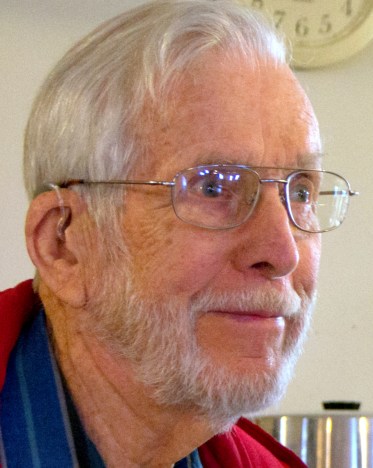
KONICA MINOLTA DIGITAL CAMERA

John Griffith

Posted in civil disobedience, peace, Quaker Meetings, Uncategorized | Tagged , | Leave a comment

Draft Resister Stories

I recently posted a copy of An Epistle to Friends Concerning Military Conscription.  Two of the men who signed that letter, which explains why those Quakers felt they could not cooperate with the draft (Selective Service System), were Don Laughlin and Roy Knight.  Both were members of Iowa Yearly Meeting (Conservative) Friends (Quakers).  They were  both arrested for refusing to cooperate with the draft.  Their stories below explain their experiences as a result.

DON LAUGHLIN’S STORY

I spent two years–May 1944 to August 1946–in California Quaker CPS camps under the Forest Service.  During that time I made two trips to Europe, under the United Nations Relief Administration.  One trip took cattle to Danzig and the other horses to Trieste. During this time I accepted a CO classification under the draft.

    I was on the staff at Scattergood School at the time of the 1948 peace time military draft and felt differently about the governments right to impose such. On my twenty-fifth birthday in December, 1948, I became illegal.  Shortly after that an FBI agent showed up. We drew up a statement of my position which I signed.
     Harold Burnham, teacher at Scattergood School, and I had our trials together in Waterloo, Iowa. We made the trip there on a cold February day, accompanied by Leanore Goodenow, Scattergood Head, and my wife, Lois, and our six-month-old son, David. Leanore spoke as a “friend of the court” asking that we be given probation, rather than a prison sentence, since we were essential to the operation of the school.  We both got eighteen month sentences instead. We were offered the opportunity to go home and “settle our affairs” and return in a month to start our sentences, but we were prepared to  start that day. Our tearful good-byes were said then and Hal and I were were escorted to the Waterloo County jail.
     Following is the letter I wrote to the U.S. Attorney General:
August 30, 1948
Mr. Tom Clark,  Attorney General
Washington, D.C.
Dear Mr. Clark;
At a time like the present when international relations are so upset, in the
interests of world peace we need to be indicating in every way possible that
we are a peaceful people; our expanding military program and peacetime draft are indicating exactly the opposite of this.
Military training is the poorest kind of training for citizens of a democracy.
The best soldier, the man who is willing to do the least critical thinking
and accept the orders from higher officials makes the best citizen of a
totalitarian society and the poorest citizen of a democracy.
In the eyes of other nations we are getting stronger and stronger and are
becoming a nation to be feared, thus encouraging the armament race among all nations.  I believe any government or political philosophy  whether democratic or totalitarian that maintains its support through military might is violating the laws of God and therefore I cannot support its military policy.  I feel that if we are to secure the world from destruction we must have faith in man and God and repeal our expanding military program before it even gets under way.  Jesus said, “Blessed are the peacemakers for they shall be called the children of God.”
Because I believe the military program of the United States government to be a violation of the laws of God I feel I cannot take any part in such a program, even to the extent of registering. So I did not register on August 30, as required by law,  and will be at my home in West Branch in case a government official wishes to talk with me.
Sincerely,
Donald E. Laughlin
West Branch, Iowa
don5

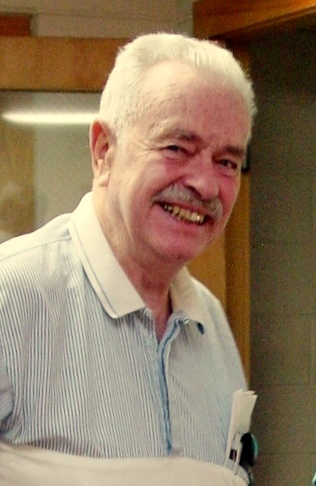
Don Laughlin

ROY KNIGHT”S STORY
PRISON CAMP      #3236
Written by Roy Paul Knight   (1989)
Earlham,  Iowa
Born   June  26,    1928
In the summer of 1948 there were  a few liberal young Quaker men, who were pondering how to respond to the U.S. government’s decision to draft men into military service.  Living, with wife and baby son, in a rural Quaker community in Northwest Iowa, I was among a number of such  young men. Several were nearly beyond draft age and had already spent time in Civilian Public Service Camps for conscientious objectors, supposedly to do civilian work of National importance.   Mostly the reality of such camps was a place for the government to hide from public view these objector to military service.  Part of the work was made up and irrelevant.
The feeling that we wanted no part of any alternative service work of any kind, and that we wanted to absolutely say to the U.S.A. that the military draft and reliance on military power was in opposition to our Christian pacifist belief in the Power of Love, pushed about twenty of us in Iowa to refuse to register for the draft. I wrote my area draft board and the U.S. Attorney General’s office telling of my plan not to register.  There was no reply from the draft board, and the Attorney General’s office sent a note of warning that refusal to sign up for the selective service was punishable by 5 years in prison and a $10,000 fine.
Then came a period of waiting for the Justice Department to move.  As I recall the F.B.I. showed up in about 6 weeks with an invitation to appear before a Federal Judge, who tried to persuade us to register to avoid being prosecuted.  Since we had decided that taking the penalty was the route to go, we were soon given a sentence of 18 months in prison and hauled off to Springfield, Mo. Federal Medical Canter.
Sometimes we were handcuffed, sometimes not.  We soon learned that the Springfield Prison was a place where prisoners with serious physical and mental problems were housed;  however, it had a small farm and vegetable production facility for helping them make use of the few able minimum custody inmates.  After three weeks of being locked up on individual quarantine cells for the purpose of being checked over, we were assigned jobs in various parts of the prison and quartered in a prison camp bunkhouse dormitory.  About 20 of us non-registrant types had bunk beds fairly close together. We quickly adjusted to being treated as potential escapees, with being counted several times each day, being frisked going out to work and coming back in, and being usually confined within high fences or lock-ups.
The prison farm manager used to good advantage the farm skills among us; the business office made use of those who could be of help to them;  the prison basketball and softball teams appreciated the athletes in the group.  We also developed a choral group, which sang on the radio from the prison.
As religious objectors to the war machine, most of us were spiritual seekers, so we established an early morning time and place for meditation and worship.  Which was a time of refreshment in the midst of confinement. We were fortunate to have each other to lean on when various tensions developed in prison and in our back home scenes.
We had some famous Quaker leader visitors, some of whom applauded our position, others who thought we were wasting out time.  One disappointment to me was to find that our own Iowa Yearly Meeting Conservative, as well as several local Meetings gave no support to non-registrants.  I believe it was widely felt by Quaker groups that we should accept some kind of alternate civilian service, which would have been available to us had we signed up for the draft, and would avoid the stigma of a prison record.  My Father and Father-in-law had both served under the American Friends Service Committee in France doing reconstruction work right after World War I as an alternative to military service.
Generally we were all paroled after eight months in lock up and were happy to return to our families and to get on with our lives.  I turned to carpentry and woodworking  as a vocation and within a few years became a self-employed building contractor.  I have had a kind of paranoia about people disapproving of my prison record, but mostly have blended into the American mainstream.
My civil rights were taken away as a felon, so I am not allowed to vote and do not speak out politically.  A presidential pardon for this felony has been granted to some, and no doubt would have to me. . . . I don’t want to tell the Government that I’m sorry, so have not applied for a pardon.
IYM 020

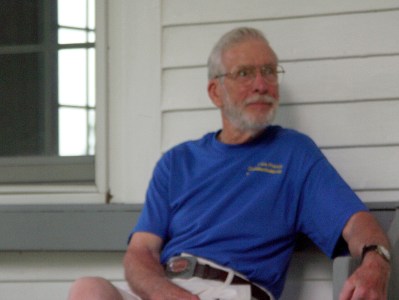
Roy Knight

Posted in civil disobedience, peace, Quaker Meetings, Uncategorized | Tagged | Leave a comment

Reese Visits North Meadow Friends

I previously wrote about Reese Hamilton, an 8 year old young man who has been acting on things about our society that bother him.  When murder occurred near his home last year, he was deeply affected by the violence and concerned about the safety of his family, friends and neighbors.  He wrote a letter about that to Indianapolis Mayor Joe Hogsett, who spoke about that letter in front of the crowd at the recent Kennedy-King Memorial celebration.  Reese was given the Trailblazer Award at that event.

Quakers have always worked for these things, too.  North Meadow Friends, several of which were in the audience at the Kennedy-King event, wanted to be involved with, and support the work of this young peacemaker.

We were really glad that Reese and his family could join us last night, as North Meadow Friends held their monthly meeting of Quaker Social  Change Ministry, a program of the American Friends Service Committee (AFSC) to help Quaker Meetings become engaged in community social justice work.  The Kheprw Institute (KI) is our community building partner.  We told Reese and his family about the great work being done at KI, and are anxious to help them make that connection.

We heard of several things Reese has planned, including some more neighborhood peace walks, and ways to help those with little or no resources.  We plan to share Reese’s story and work with KI, our local AFSC, the Peace Learning Center, the Indianapolis Peace and Justice Center, and our Peace and Social Concerns Committee.

You can help support Reese’s work here.

Posted in Kheprw Institute, Quaker Meetings, Quaker Social Change Ministry, Uncategorized | Tagged , | Leave a comment

An Epistle to Friends Concerning Military Conscription

Although yesterday’s post was intended to be about privilege, the context was war and conscription, specifically the Vietnam War.

I was reminded of a letter to Friends on the same subject, that was published earlier than the Richmond Declaration of 1968, I think.

Roy Knight and Don Laughlin were members of Iowa Yearly Meeting (Conservative) and both were prosecuted and served time in Federal prison because of their draft resistance stand.

An Epistle to Friends Concerning Military Conscription

Dear Friends,
It has long been clear to most of us who are called Friends that war is contrary to the spirit of Christ and that we cannot participate in it.  The refusal to participate in war begins with a refusal to bear arms.  Some Friends choose to serve as noncombatants within the military.  For most of us, however, refusal to participate in war also involves refusal to be part of the military itself, as an institution set up to wage war.  Many, therefore, become conscientious objectors doing alternative service as civilians, or are deferred as students and workers in essential occupations.
Those of us who are joining in this epistle believe that cooperating with the draft, even as a recognized conscientious objector, makes one part of the power which forces our brothers into the military and into war.  If we Friends believe that we are special beings and alone deserve to be exempted from war, we find that doing civilian service with conscription or keeping deferments as we pursue our professional careers are acceptable courses of action.   But if we Friends really believe that war is wrong, that no man should become the executioner or victim of his brothers, then we will find it impossible to collaborate with the Selective Service System.  We will risk being put in prison before we help turn men into murderers.
It matters little what men say they believe when their actions are inconsistent with their words.  Thus we Friends may say that all war is wrong, but as long as Friends continue to collaborate in a system that forces men into war, our Peace Testimony will fail to speak to mankind.
Let our lives speak for our convictions.  Let our lives show that we oppose not only our own participation in war, but any man’s participation in it.  We can stop seeking deferments and exemptions, we can stop filling out Selective Service forms, we can refuse to obey induction and civilian work orders.  We can refuse to register, or send back draft cards if we’ve already registered.
In our early history we Friends were known for our courage in living according to our convictions.  At times during the 1600’s thousands of Quakers were in jails for refusing to pay any special respect to those in power, for worshiping in their own way, and for following the leadings of conscience.  But we Friends need not fear we are alone today in our refusal to support mass murder.  Up to three thousand Americans severed their relations with the draft at nation-wide draft card turn-ins during 1967 and 1968.  There may still be other mass returns of cards, and we can always set our own dates.
We may not be able to change our government’s terrifying policy in Vietnam.  But we can try to change our own lives.  We must be ready to accept the sacrifices involved if we hope to make a real testimony for Peace.  We must make Pacifism a way of life in a violent world.
We remain, in love of the Spirit, your Friends and brothers,

Don Laughlin
Roy Knight
Jeremy Mott
Ross Flanagan
Richard Boardman
James Brostol
George Lakey
Stephen Tatum
Herbert Nichols
Christopher Hodgkin
Jay Harker
Bob Eaton
Bill Medlin
Alan & Peter Blood

KONICA MINOLTA DIGITAL CAMERA

Don Laughlin

IYM 020

Roy Knight

Posted in civil disobedience, peace, Quaker Meetings, Uncategorized | Tagged , | 3 Comments

Another Privilege

The following statement was the result of a conference held at Earlham College in 1968, at the time of the Viet Nam War.  I was a student at Scattergood Friends School at the time, and was able to attend this conference.  I’m sharing this now, because it highlights another form of privilege, and the dangers of privileges.

I struggled with my own draft decision while at Scattergood.  Although I did apply for, and was granted conscientious objector status while I was trying to make a final decision, in the end I decided I could not cooperate with the draft, and returned my draft cards.  A related Supreme Court case resulted in me not being prosecuted for that.

Friends Coordinating Committee on Peace has announced a national conference on the draft and conscription to be held at Earlham College (Richmond, Indiana), October 11th through 13th. It is primarily planned as a working conference, with about 180 representatives from Yearly Meetings, Friends schools and other Friends’ organizations and seventy to a hundred additional Friends appointed at large. A detailed program and other information may be obtained from FCCP, 1520 Race Street, Philadelphia, 19102.   Friends Journal 8/15/1968

1968 Richmond Declaration on the Draft and Conscription

We call on Friends everywhere to recognize the oppressive burden of militarism and conscription. We acknowledge our complicity in these evils in ways sometimes silent and subtle, at times painfully apparent. We are under obligation as Children of God and members of the Religious Society of Friends to break the yoke of that complicity.

As Friends we have for many years been granted privileged status within the draft system. This has often blinded us to the evil of the draft itself, and the treatment of those not so privileged. We are grateful for all those who by resolutely resisting the draft have quickened our conscience. We are called into the community of all who suffer for their refusal to perform unconscionable acts.

We reaffirm the “Advices on Conscription and War” adopted at Richmond in 1948. We realize in 1968 that our testimony against conscription is strengthened by refusing to comply with the Selective Service law. We also recognize that the problem of paying war taxes has intensified; this compels us to find realistic ways to refuse to pay these taxes.

We recognize the evil nature of all forms of conscription, and its inconsistency with the teachings and example of Christ. Military conscription in the United States today undergirds the aggressive foreign policies and oppressive domestic policies which rely on easy availability of military manpower. Conscription threatens the right and responsibility of every person to make decisions in matters of conscience. Friends opposing war should refuse any kind of military service; Friends opposing conscription should refuse to cooperate with the Selective Service System.

We call for the abolition of the Selection Service System and commit ourselves to work with renewed dedication to abolish it. We shall oppose attempts to perpetuate or extend conscription, however constructive the alleged purpose, by such a system as National Service. We do not support efforts at draft reform; the issue is not equal treatment under compulsion, but freedom from compulsion.

We recognize how difficult it is to work through these complex issues, and to bear the burden of decision and action. We hold in love and respect each member of our Society as he follows where conscience leads. We know there are spiritual resources available to those who would be faithful.

Friends Are Urged to:

  1. Commit our energies and resources in substantial measure to launch a concerted campaign to end the draft. Friends can serve as a catalyst in this effort, in cooperation with groups representing a cross-section of American life.
  2. Prepare for Monthly Meetings three sets of queries designed to:
  3. clarify the responsibility of the Meeting to all young men of draft age.
  4. help young Friends think through their alternatives.
  5. assist Friends not directly subject to the draft to decide what actions they should take.
  6. Appoint in each Monthly Meeting a Clearness Committee to assist all its young men in their search for clarity as they face the draft.
  7. Set up procedures for called Meetings for Worship to share the affirmation of young men who engage in such acts of resistance as refusing to register, or disaffiliating from Selective Service or the Armed Forces.
  8. Establish Meetings for Sufferings to provide for such needs of resisters as:
  9. jobs for those awaiting sentence
  10. help for families
  11. bail and legal aid
  12. meeting places for groups of resisters
  13. hospitality and shelter
  14. formation of a Resisters Service and Action Corps for those who choose to witness in this way.
  15. Consider engaging in corporate acts of support for resisters in Friends schools, colleges and organizations, even when such acts involve conflict with man-made laws.
  16. Provide draft information and counseling centers in the local community, supported by their Meetings, schools, colleges or organizations.
  17. Respond to the needs of young men whose conscientious resistance to conscription and military service leads them to courses of action other than open disaffiliation. Included are some men in such situations as these:
  18. those who may become refugees in other lands for conscience sake
  19. AWOL military personnel
  20. men still on active military duty.

Affirmation of Action

We commit ourselves to validate our witness by visible changes in our lives, though they may involve personal jeopardy. We cannot rest until we achieve a truly corporate witness in the effort to oppose and end conscription. Let us hold each other in the Light which both reveals our weaknesses and strengthens us to overcome them.

[Friends Coordinating Committee on Peace organized a Friends National Conference on the Draft and Conscription, held in Richmond, Indiana, Oct. 11-13, 1968. This declaration was used by many Friends who took the noncooperator position at their trials. It was reprinted in Quakers and the Draft, Charles Walker, editor: 1969.]

jeff_blm1

Posted in civil disobedience, peace, Quaker Meetings, Uncategorized | Tagged , , | Leave a comment

100 Days

As the political world focuses on what the new Republican administration has and has not accomplished in its first 100 days, I’m reposting something I wrote last May, during the primary election season, as my own benchmark.  There were a couple of comments at that time that were well said.  https://kislingjeff.wordpress.com/2016/05/31/privileged-trump/

One reason I wanted to revisit this today is because of the proposed budget and tax cuts.  We have heard over and over again that cutting taxes on the wealthy and corporations will stimulate economic growth, when the reality has ALWAYS been, instead, decreasing or no funds for services government should be providing.

The combination of slashing corporate taxes and significantly increasing a tremendously wasteful military budget mean the things we expect from our government, like protection of the environment, funding for research, infrastructure, and social safety nets, will not be possible.

I would rather not write about Donald Trump…
The truth is that he has no integrity.  He does not have a political or social philosophy, other than amassing wealth and power for himself.  He uses people’s fears to promote conflict between groups of people, then offers himself as the solution to any problem.  But he never says what the solution is.  I don’t believe he has the knowledge or desire to do the work necessary to come up with solutions.  Continuing to promote conflict serves his personal agenda.
He promotes distrust between different groups of people, rather than trying to remove the barriers between them.  
He is obviously ignorant of how government actually functions.
He promotes the idea that government should be run as a business.  Therefore a businessman, such as himself, would be a good President.
That is a fundamentally flawed argument.  We don’t pay taxes so the government can make money.
We pay taxes to provide the common services needed by all.  For infrastructure construction, and services such as public education, emergency services, food, water and drug safety, etc.  These are not intended to make money, and should not be characterized as subsidizing the poor.

Posted in #NDAPL, Arts, Black Lives, climate change, Indiana Moral Mondays, race, Uncategorized | Leave a comment