Report from Rezadad Mohammadi and Christine Ashley (FCNL), Washington, DC
America has traditionally been a country of immigrants. For many, the U.S. is known as a global “melting pot” due to its mixture of diverse cultures, ethnicities, and nationalities. That’s what makes America special. However, due to recent changes in policies regarding immigrants and asylum seekers, many have a different perception about that now.
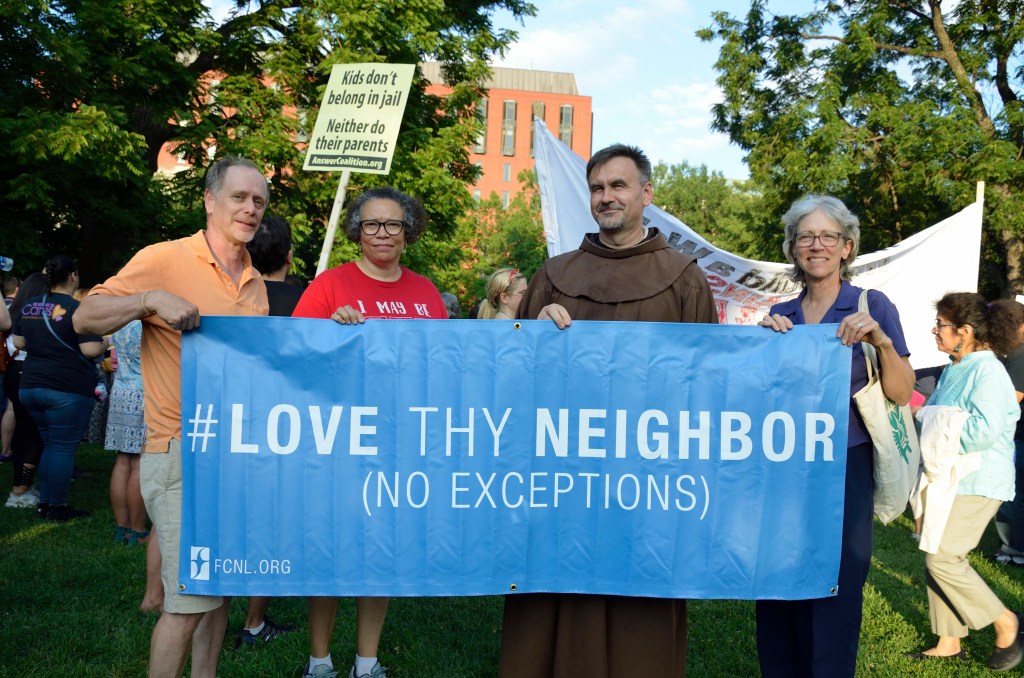
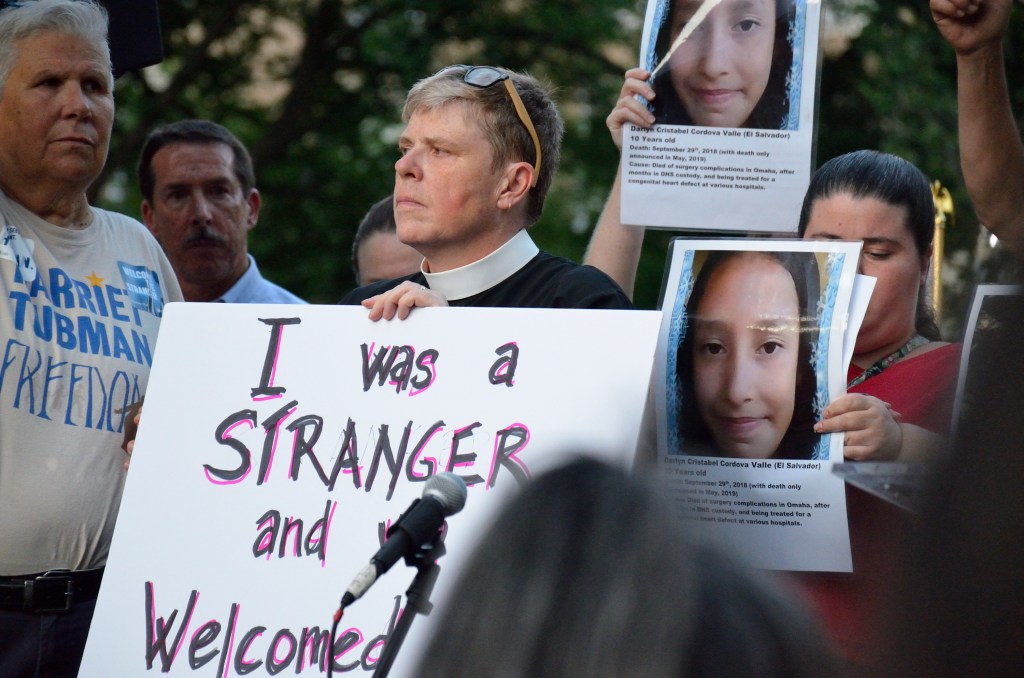
On Friday night, thousands of Americans across the nation came out to express their opposition to policies that are inhumanly treating asylum seekers and putting them in detention centers. At Lafayette Square near the White House in Washington, hundreds of people gathered at a “Lights for Liberty” demonstration to raise awareness of the current condition of Immigrants and were demanding the immigration services such as Border Patrol facilities and detention centers to be closed.
The spirit at the vigil was strong
Speakers from different organizations and faith leaders also shared their concern and support for immigrants.
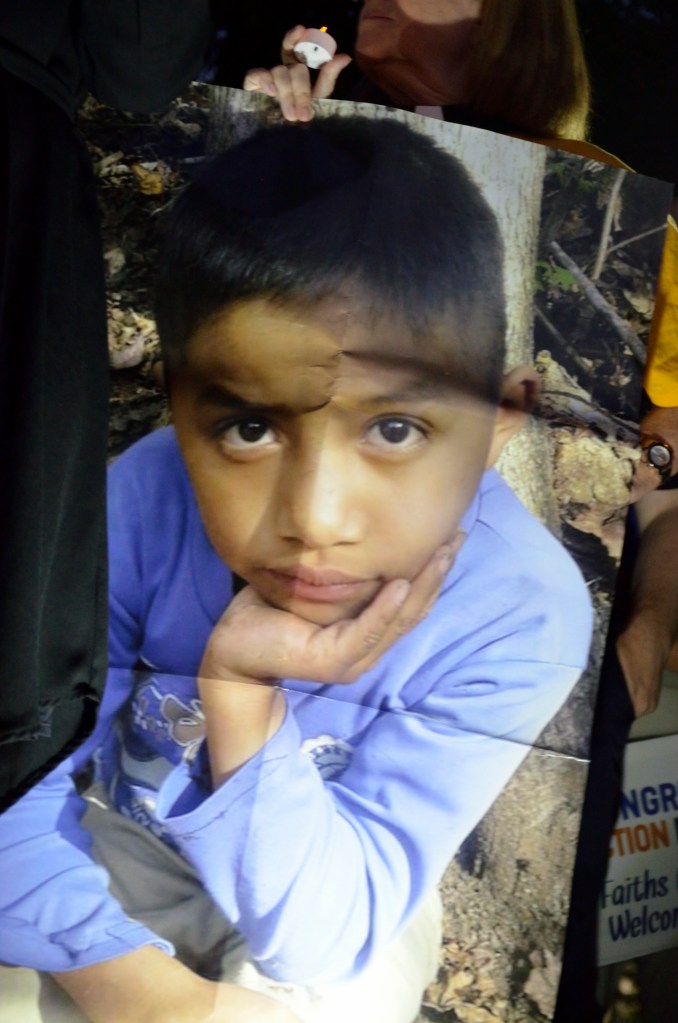
Christine and I attended after work (Friends Committee on National Legislation – FCNL), joining the vigil Friday to lift up support to end the evil policies that are imprisoning children and families, policies holding our neighbors in cages instead of policies that welcome those fleeing persecution, violence and war, poverty, pervasive hunger, injustice. We cannot stand by while this immorality continues.
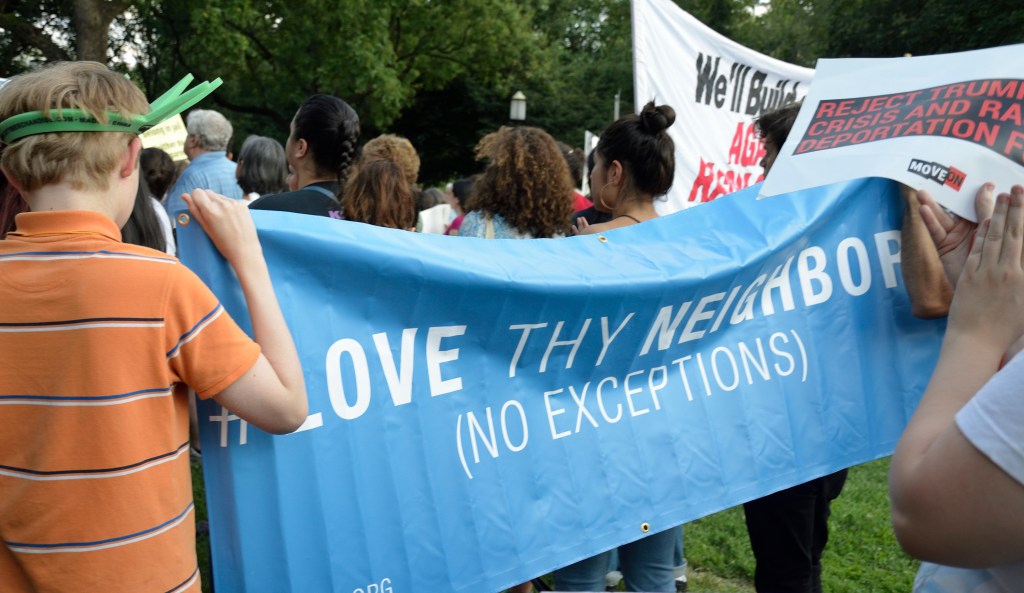
Look at all who showed up: families, people of all ages, races, faiths.
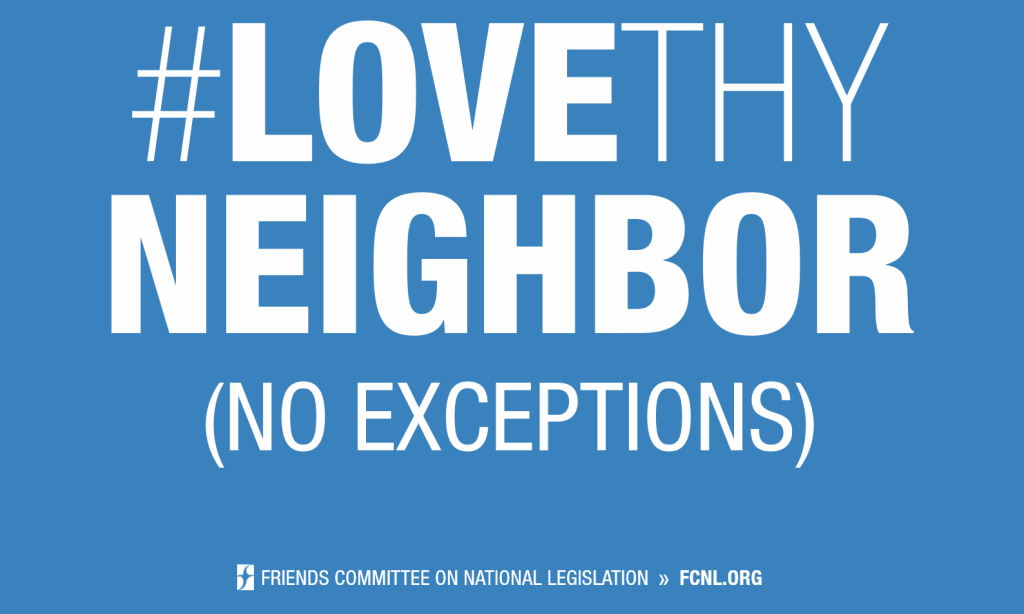
While we were there, we tried to personally meet people, and support this movement for all to take our message of lovethyneighbor (No Exceptions) to our members of Congress. @Friends Committee on National Legislation can help fcnl.org.
We gave away 75 signs and invited many to pick up a corner of the banner and pose with us. I think this was great Outreach and we did it after a long week because we feel so strongly about this.
–We must not forget that It is our duty to stand for justice and spread the word of love–
Rezadad Mohammadi, Friends Committee on National Legislation (FCNL)
The elevated sea surface and air temperatures result in larger amounts of water added to the atmosphere, which then falls as significant amounts of rainfall. Over 10 inches of rain have fallen so far in New Orleans.
The Mississippi River was already above flood levels, barely contained by river levees. It looks like the river level will not overtop the levees despite the addition of water from the heavy rainfall and storm surge.
In addition to these affects, other problems have been developing for some time, including disappearing wetland, algae blooms and growing dead zones.
Coastal wetlands in the Mississippi Delta are disappearing. Many factors contribute to the stress placed on wetlands, including the massive oil spill in the Gulf of Mexico in the summer of 2010. But natural forces are at work as well—local sinking of the ground and accelerating rates of sea-level rise,2,4 which scientists expect to further accelerate due to climate change
Other problems related to climate change are the algae blooms and growing dead zones in the Gulf Waters. It is dangerous to even wade in the water of much of the coast.
Just off the coast of Louisiana, where the Mississippi River lets out into the Gulf of Mexico, an enormous algae bloom, fueled by fertilizer from Midwestern farm fields and urban sewage, creates an area so devoid of oxygen it’s uninhabitable to most marine life every summer.
Nutrients like nitrogen from fertilizer and phosphorus from sewage act as a catalyst for algae growth. While algae are the base of the food chain for some fish, when these green plumes proliferate beyond what fish are capable of eating, their decomposition consumes much of the oxygen in the water.
This year, historic rains and flooding in the Midwest have roiled farm fields and overwhelmed sewer systems, flushing a tremendous amount of nutrients into the Mississippi River and into the Gulf, spurring a remarkable amount of algae. While the agricultural runoff from farms — exempted under the Clean Water Act — is the main driver of the Gulf dead zone, Chicago’s sewage is the largest single source of phosphorus pollution.
And yet we have a Republican administration that not only denies climate change, but has eviscerated regulations from the Environmental Protection Agency that will result in increased pollution of land, air and water.
Harjo, Joy. Conflict Resolution for Holy Beings: Poems (p. 28). W. W. Norton & Company. Kindle Edition. MVSKOVE TRANSLATION BY ROSEMARY MCCOMBS MAXEY
“Grown men can learn from very little children—for the hearts of little children are pure. Therefore, the Great Spirit may show them many things that older people miss.” –Black Elk
“The Lakota call children wakanyeja. ‘Wakan’ means sacred. To us, children are not only blessings, but are meant to be the principal focus of each tiospaye (extended family group). They are sacred of their own accord.
We believe that before a baby is born, its soul specifically chooses its mother and father. It is understood that children are more than miniature versions of ourselves; they are spiritual beings in their own right, with their own voices, gifts, talents, and purposes.”
I am so grateful for the thousands of people who have gone, and will continue to go into the streets to demand the concentration camps be closed and children removed from cages. This can not stand.
Seeing Vice President Pence standing before these cages with no reaction, intentionally ignoring the men locked up before him is a sad but accurate representation of the intentional cruelty of this administration. We cannot wait until the election next year to change the administration. We must press for the impeachment of the president for these high crimes now.
I was so glad to see this video of my friends Rezadad Mohammadi and Christine Ashley from the Friends Committee on National Legislation (FCNL) on their way to the Lights for Liberty protest in front of the White House last night.
My friend Judy Plank, who has been involved with migrant issues for many years and lived near the border in Arizona, sent the following information about ways to help.
My friend Janice Pulliam, A Quaker friend from Arizona, sent this to me a few days ago, regarding the migrant situation on the AZ border, with groups and places she is involved with where our supplies and funds are needed. It’s good to know where to donate that will go directly to those in need. The terrible treatment of migrant families and their children is horrible. I am very distraught with our government’s inhumane actions.
Friends, As many of you know, I am on the board of Voices from the Border, a 501c3 organization founded in January 2017 to work for human and civil rights and environmental justice in the border regions of Arizona, US and Sonora, Mex. Last summer began a huge influx of legal asylum seekers at the border town of Nogales–AZ and Son. We began taking food, water, clothing and supplies (diapers, toiletries, shoes & socks, toys etc.) to the people waiting at the gate in Mexico to enter and claim asylum. We have continued to do that as the numbers of refugees has increased. We have also worked with a nurse, Pancho Olachea Martin, who works with these migrants and with the extremely poor citizens of Nogales, Sonora. We support him with money for his ambulance and medical supplies. He guides us as to what items are most needed and helps us distribute them. We have met many asylum seekers at the border and when feasible we have helped them get settled in their sponsoring families and communities throughout the USA. We have helped them get legal assistance–although we do not pay lawyers fees, we link refugees with those who can, if we can. Anyway, the work continues, as you know from news headlines these days. You may want to connect with Voices from the Border on FaceBook, if you use it, to see what we are doing.
Once someone is admitted through Nogales, they may be sent to the shelter Casa Alitas in Tucson, AZ where refugees are housed and fed until they can be sent to their sponsors elsewhere, where they will wait for their hearing dates. Casa Alitas is run totally by volunteers and is situated in an old convent/monastery building. An email letter from them is forwarded below, an update on their current situation.
If you scroll to the bottom of this email, you can find several ways to donate to Casa Alitas. They really do need funds. I am planning to volunteer there myself once I digest all the info about how to volunteer there and take the training. After seeing and reading about what has been happening in Texas, I felt like going there with truckloads of toiletries and saying to ICE, “Hey, you say you don’t have funds to give kids toothbrushes and soap. Well I do and here they are!” But of course that is ridiculously impractical and impossible for too many reasons. Yet I know many of you have been feeling that same way. What can I do to help? Donations of money are extremely helpful for both Casa Alitas and Voices from the Border. You may also want to donate to ACLU, Amnesty, No More Deaths, Derechos Humanos, or RAICES—you can find their websites and donate online. They are all working to alleviate the suffering of and injustices done to asylum seekers and other migrants.
However, sometimes we want to do something concrete, palpable to help asylum seekers. Perhaps the following will appeal to you or your group. I’m sending this email to several friends, so ignore if the following does not apply to you:
There is a list at the bottom of this email of practical items that Casa Alitas shelter needs. Most of these are also needs of the asylum seekers waiting at the border whom Voices from the Border helps. One idea I had is for friends of mine from around the country who want to do something but feel helpless because you’re so far away—get together a group of friends or people from your religious group who are interested in helping, take a trip together to Walmart or another place you prefer to shop, buy up a bunch of the needed items (toothbrushes, travel sizes of tooth paste and soap, lip balm, flip flops, underwear, etc. whatever you want to focus on), and send all your purchases in one package together (like “if it fits it ships” at the US Post Office) to save postage. Share the costs. After your trip to the P.O., go have a lemonade together and know that the recipients will be extremely grateful! Maybe you have a school class or Sunday school class that might want to do this project together.
You may mail items and checks (IRS tax deductible) to Voices at: Voices from the Border c/o Linda Hirsch PO Box 7 Patagonia, AZ 85624
Keep the Faith! Love is stronger than death. Janice Pulliam / JLC Pulliam
Every week since my last update I have meant to write another, but each week the big picture of what we do and with whom changes. In the past month the shelter went from 200+ guests to 500, then back down, with a few with what we now call “slow days” of 50-60 new guests. Then just as suddenly occupancy surged by over 150 guests per day. In addition to those guests that ICE drops off at the Monastery, Border Patrol now has added to our numbers, dropping of families earlier and later than usual, and with less documentation and detail. These cycles of rapid expansion followed by sudden drops in the numbers of families seemed daunting at first, but as one kitchen volunteer exclaimed on a particularly busy day, “Let them come! We can handle anything.”
Well, almost. Our eighty-year old building groans under the weight of so many guests. Water that rises on the second floor cascades through the ceiling of the first. Electric malfunctions led to the shutting down of critical equipment. We had to empty the shelter for twenty-four hours to do some electrical and plumbing repairs. Perhaps the old building heaved a sigh of relief to get a respite from the wear and tear on old pipes and electrical circuits, just as we appreciated the brief break.
Our work together, yours with us, has taken on graver tones as the political rhetoric over an emergency at the border continues to simmer. Yes, there is a crisis at the border, a human-rights crisis, a moral crisis, a hemorrhage of human potential from the south to the north, the suffering of families. This week as our late night drivers accompanied guests to the bus station, they found sixteen stranded parents with children who had been put on the bus in Phoenix, and who, upon arriving at the Tucson station to change buses, found that their next bus had been canceled. Without food, water, or any money, they were told they had to wait for the next opportunity to leave – the next day or the next. Our dedicated drivers gathered them up and brought them to the Monastery shelter where they bathed, slept, and arranged for drivers for their next leg of the journey. Another family of five from El Salvador arrived yesterday with a baby born in detention. Their sponsor could not manage a family of five or pay for their tickets. They were stranded and alone, until a volunteer began networking with her home church to sponsor the family.
As I write, two of our children and one adult had to be hospitalized after the latest surge and resulting Mexican crackdowns on safer routes through Mexico meant that families were forced to once again make the perilous trip on the top or sides of trains and other dangerous routes. We were able to get immediate medical attention for these three and someone is always with them in the hospital.
Some of our stories have happy endings while others do not. Director, Teresa Cavandish tells of the first time she saw the father who lost a leg below the knee and arm below the elbow when he became dizzy and fell from the top of a train, being wheeled into the monastery with his incredibly traumatized son. She described their meeting, “They were exhausted and broken, and the dad now has a post amputation infection and is back in the hospital.” “I will never ever be the same after seeing this,” she said.
Horrified at human cruelty and the suffering it causes, we are also encouraged and inspired by our comings together. We will never ever be the same. Truly, it is something of a miracle that people do make it through to their sponsors. Our super power in the midst of chaos is our volunteers, who step in at all times of the day and night to figure out the next right step in complicated situations. Physicians, ministers, scientists, teachers, call center operators, home-makers, artists, students, interpreters, computer experts, cooks, drivers . . . people from all walks of life come together because, as we tell our new guests, “We believe that a better world is possible.”
As I arrived one morning one very young dad was sitting in the courtyard, sobbing into his hands. I sat down next to him as asked what was wrong. His crying intensified as he shook his head “no.” I went to the kitchen and got a cookie and took it back to him. Sitting beside him, breaking the cookie, I said the words of my faith tradition, “This is my body . . .” He began to talk, punctuated by more tears. His sponsor couldn’t afford the bus tickets for he and his son. He said they would die if they were returned to Guatemala. I told him that there are so many of you who care what happens to him. I learned there is a donor who will pay for people who can’t afford their tickets. As he held so tightly on to me he wept and said, “I never imagined that there would be such good and kind people . . .” Miracle or simply connecting those who can help with those who need it? That is what we do best.
Our guests’ suffering is not over once they reach us. This is the sharp edge to what we do. We cannot fix the situations that our guests face, but we will move heaven and earth to accompany them faithfully, generously, kindly, and with dignity. We can love them up and send them off to you, where you will do your best to help them take their next right step.
Thank you for your generous support, for your prayers, monetary and in-kind donations, and for sharing the good news our shelter is for our volunteers, guests, and larger community. Please feel free to share this letter with others who might be interested in learning more about our important work, and/or who would also like to offer financial support. Your support makes our work possible. Together, we provide help, create hope, and serve all. Your gift strengthens children, families, adults, and communities. Donations can be made directly to CCS at https://www.ccs-soaz.org/donate or through our GoFundMe page https://www.gofundme.com/casa-alitas-for-migrant-families.
Peace on your way,
Rev. Delle McCormick Monastery Shelter Volunteer
Donation requests:
(Please keep in mind that we go through large volumes of 100+ of each of these items daily.)
Clothing
• Men’s underwear, ALL SIZES (high priority)
• Boy’s underwear, ALL SIZES (high priority)
• Girls’ and women’s underwear, ALL SIZES
• Shoes, especially smaller sizes for men and women
• Belts
• Boys’ and men’s pants and shorts (especially S/M for the men’s)
• Men’s shirts (S/M – boys’ size 14+ work perfectly too)
• Men’s small long sleeve shirts/fleece types
• Women’s dresses
• Leggings for girls and women
• Girls shirts and pants all sizes
• Girls underwear, all sizes
• Shoelaces
Toiletries
• Travel size body lotion
• Chapstick
• Nail clippers
• Large bottles of shampoo (3-in-1: shampoo/conditioner/body gel)
• Combs/hair brushes
The Spirit created the opportunity for Paula Palmer to be with us in Iowa and Nebraska recently. Supported by Boulder Friends Meeting, the resources for Toward Right Relationships with Native Peoples can be found here: https://www.boulderfriendsmeeting.org/ipc-right-relationship-2/
My leading started with a nudge four years ago and grew into a ministry called Toward Right Relationship with Native Peoples. This ministry has grown in depth and breadth under the loving care of the Boulder (Colo.) Meeting. Working in partnership with Native American educators, I learned about their efforts to bring healing to the Native people, families, and communities that continue to suffer illness, despair, suicide, violence, and many forms of dysfunction that they trace to the Indian boarding school experience.
Native American organizations are asking churches to join in a Truth and Reconciliation process to bring about healing for Native American families that continue to suffer the consequences of the Indian boarding schools. With support from Pendle Hill (the Cadbury scholarship), Friends Historical Library (the Moore Fellowship), the Native American Rights Fund, and other Friendly sources, Paula Palmer researched the role that Friends played in implementing the federal government’s policy of forced assimilation of Native children. For a link to her 50-minute slide presentation and other resources, please see www.boulderfriendsmeeting.org/ipc-boarding-school-research
Paula Palmer’s ministry, “Toward Right Relationship with Native Peoples,” is under the care of Boulder Friends Meeting. Please contact her atpaulaRpalmer@gmail.com
The links below are to a number of blog posts about Paula’s workshops and presentations.
The film “Two Rivers” was shown at Des Moines Valley Friends Meeting and was followed by a discussion.
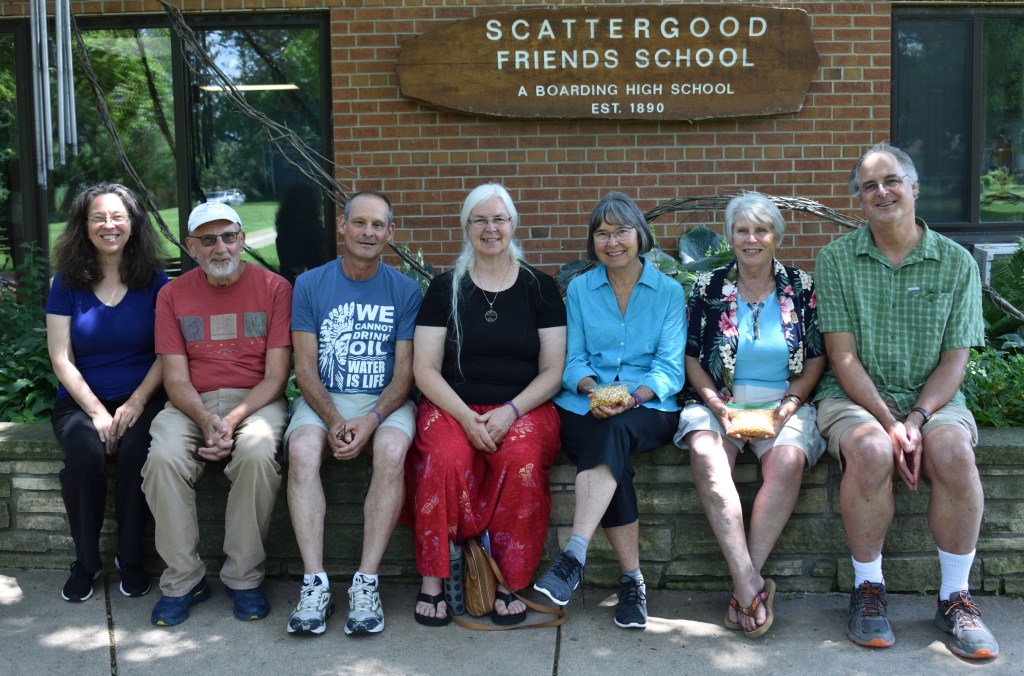
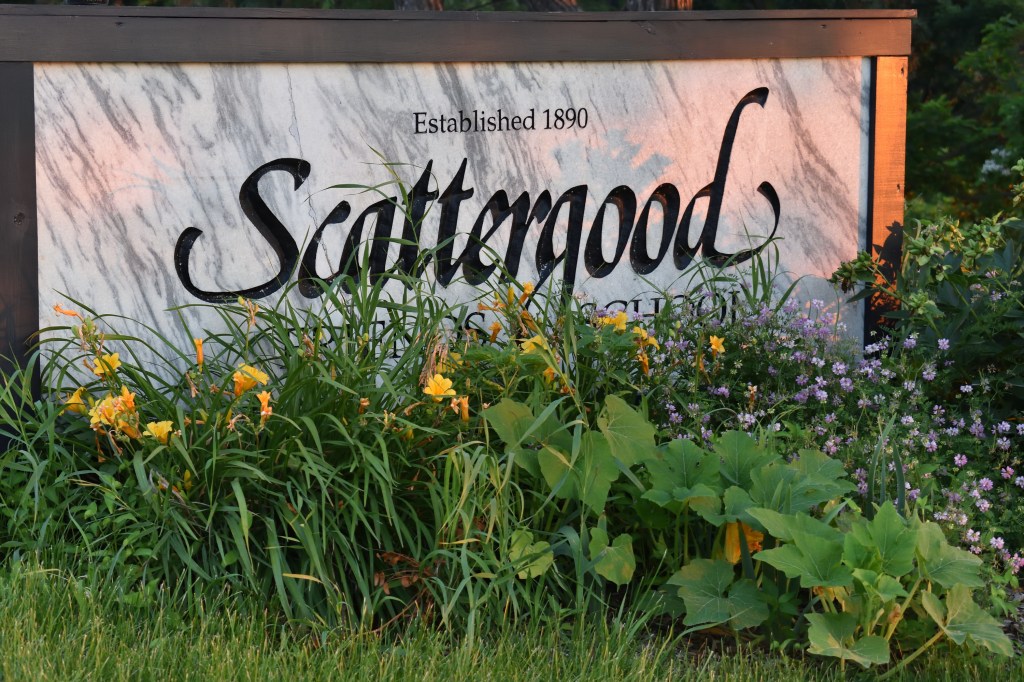
Perhaps the most upsetting discussion was about the Quaker Indian Boarding Schools, which was held at Scattergood Friends School and Farm, a Quaker Boarding School.
One of the significant benefits of Paula’s visit was bringing together people who care about building right relationships among white and Native people, who hadn’t known each other prior to this. Several of the workshops had around 60 participants. But it is important that many more white people learn about this tragic history, so that, hopefully, we can seek reconciliation for the past, and move forward together now.
This is especially urgent now, because we need Native people to lead the way as we move deeper into environmental chaos. Native people have a deep connection to Mother Earth and all who live on her. Spirituality is fundamental to their culture and needs to be more central to white people’s culture as we live through increasingly turbulent times ahead. A Green New Deal is essential. And it is essential that a Green New Deal be indigenous led. Christine Nobiss has created a campaign related to this named SHIFT, Seeding the Hill with Indigenous Free Thinkers.
As the name Right Relationship Iowa suggests, we plan to build on the work that Paula did here. The purpose of this blog post is to invite you to be involved in how this work moves forward. Right Relationship Iowa at the moment is essentially a list of people who have attended Paula’s workshops and presentations, and have indicated they are interested in participating.
This is an invitation for anyone interested in building right relationships among Native and white people. Contact me at jakislin@outlook.com
There is no organizational structure for Right Relationship Iowa at the moment. We just want to know who is interested in moving forward with this. Please share this opportunity with others you think might be interested.
It is so frustrating to those of us who have for years done everything we could think of to curtail the use of fossil fuels. To now see climate chaos unfolding before our eyes. We knew the climate chaos we are living in now was going to occur if nothing was done to radically reduce the use of fossil fuels. Obviously we were unsuccessful in those efforts.
Increasingly frequent, severe, and widespread climate catastrophes are upending the lives of many and will continue to do so.
When the Climate Mobilization was founded at the People’s Climate March in 2014, there was no climate group publicly organizing around the need for WWII-scale emergency speed transition. We built and launched the Climate Emergency campaign in the United States and have worked with grassroots activists, political leaders, and organizations around the world to pass local Climate Emergency Declarations: the #ClimateEmergency movement has won over 740 so far. We’ve been working with our partners to build momentum upwards and outwards around the climate emergency and a massive-scale climate mobilization to match.
The Climate Emergency Declaration expresses the need for a “economically just and managed phase-out” of fossil fuels and calls for a “national, social, industrial, and economic mobilization” to “halt, reverse, mitigate, and prepare” for the climate crisis and save our world
Resolution in Congress to declare a climate emergency
Progressive lawmakers are pushing a resolution to declare a climate emergency in the U.S., demanding “a massive-scale mobilization to halt, reverse, and address” climate change.
Sponsored by Reps. Alexandria Ocasio-Cortez (D-N.Y.) and Earl Blumenauer (D-Ore.) in the House and Sen. Bernie Sanders (I-Vt.) in the Senate, the resolution calls climate change the result of human activity that requires “a national, social, industrial, and economic mobilization of the resources and labor of the United States.”
“This is a political crisis of inaction. It’s going to take political will, political courage in order for us to treat this issue with the urgency that the next generation needs,” Ocasio-Cortez said on a call with reporters to discuss the resolution.
We are in a climate and ecological emergency. We urgently need a massive effort to reverse global warming and protect humanity and the natural world from collapse. It’s time for Congress to join over 740 local governments in 16 countries around the world in telling the truth about the climate. I urge you to sign on as a sponsor of the Climate Emergency Declaration.
I urge Congress to Declare a Climate and Ecological Emergency and:
– Mobilize people, resources, and companies on a scale larger than that of World War II to reverse global warming and prevent further catastrophe. This must be a wide-scale, inclusive, and equitable transformation and rebuilding of our society to one based on renewable energy, dignified employment, and economic opportunity.
– Democratically transition to a zero greenhouse gas emissions economy in ten years or less. This must be a just transition for workers and frontline communities that keeps fossil fuels in the ground.
– Hold a national People’s Assembly on the climate emergency
– Protect the entire web of life by working to end the sixth mass extinction. Protection of biodiversity is critical to our survival.
– Prioritize funding to repair the damage caused by fossil fuel and other extractive industries, so that Indigenous tribal communities, communities of color, and rural communities hit hardest by environmental injustice can have clean land, air and water.
Declare a Climate Emergency and protect all Americans, all humanity, and all living things, so that we can be safe for generations to come!
Note: Extinction Rebellion US demands a zero greenhouse gas emissions and zero fossil fuel economy by 2025.
We have been so blessed to have had Paula Palmer bring her ministry related to “Toward Right Relationships with Native Peoples” to Iowa and Nebraska over the past several days. Supported by Boulder Friends Meeting, the resources for Toward Right Relationships with Native Peoples can be found here: https://www.boulderfriendsmeeting.org/ipc-right-relationship-2/
My leading started with a nudge four years ago and grew into a ministry called Toward Right Relationship with Native Peoples. This ministry has grown in depth and breadth under the loving care of the Boulder (Colo.) Meeting. Working in partnership with Native American educators, I learned about their efforts to bring healing to the Native people, families, and communities that continue to suffer illness, despair, suicide, violence, and many forms of dysfunction that they trace to the Indian boarding school experience.
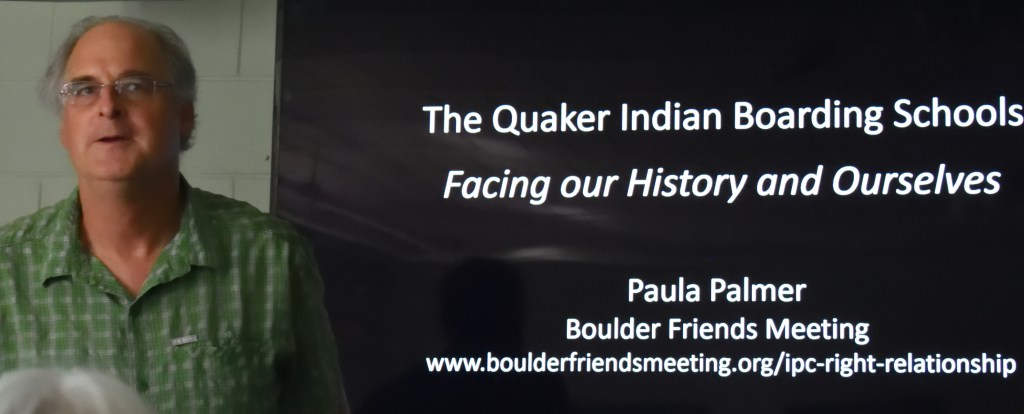
Paula spoke on the topic of “Quaker Indian Boarding Schools–Facing Our History and Ourselves” at Scattergood Friends School and Farm, a Quaker boarding school, on July 7. That presentation was followed by Quaker meeting for worship at Scattergood. https://kislingjeff.wordpress.com/2019/07/08/good-intentions/
On July 10, Paula showed the film “Two Rivers” at Des Moines Valley Friends Meeting. The film shows how white people in a rural community in Washington state found Native people who helped them find ways to build bridges between Native people who live in the area and the townspeople. The film shows how relationships began to develop, and more Native and non Native people were drawn into the process. This video is helpful for those who would like to begin to create their own relationships with Native people. https://kislingjeff.wordpress.com/2019/07/09/two-rivers-film-discussion/
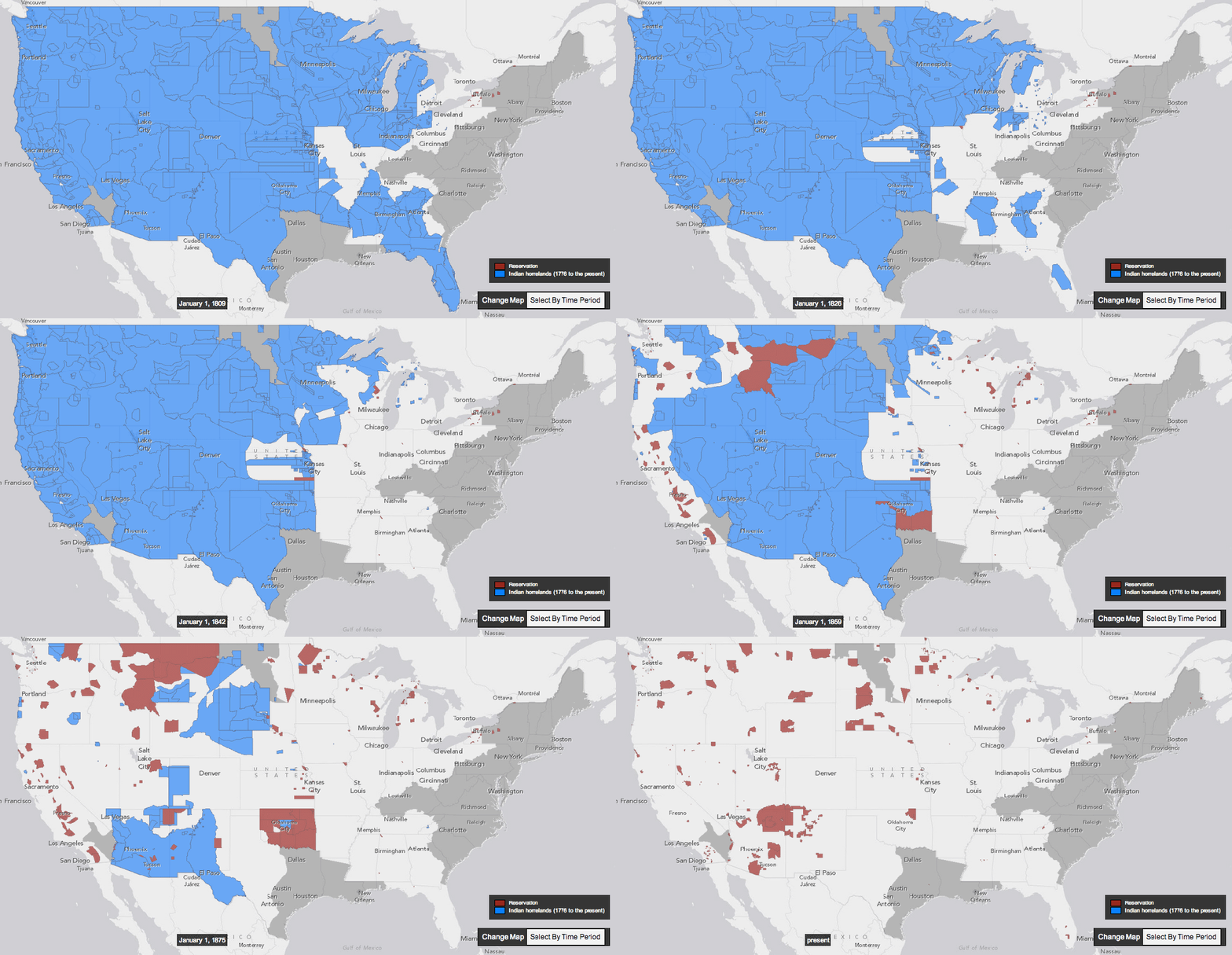
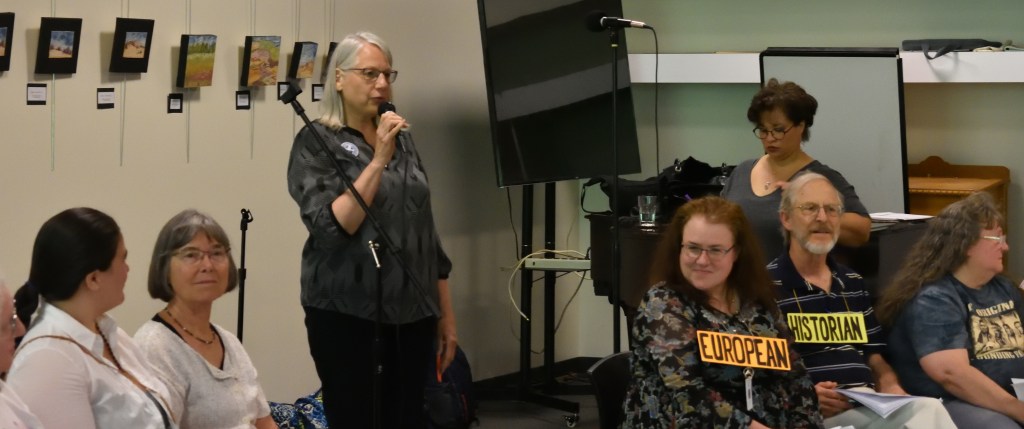
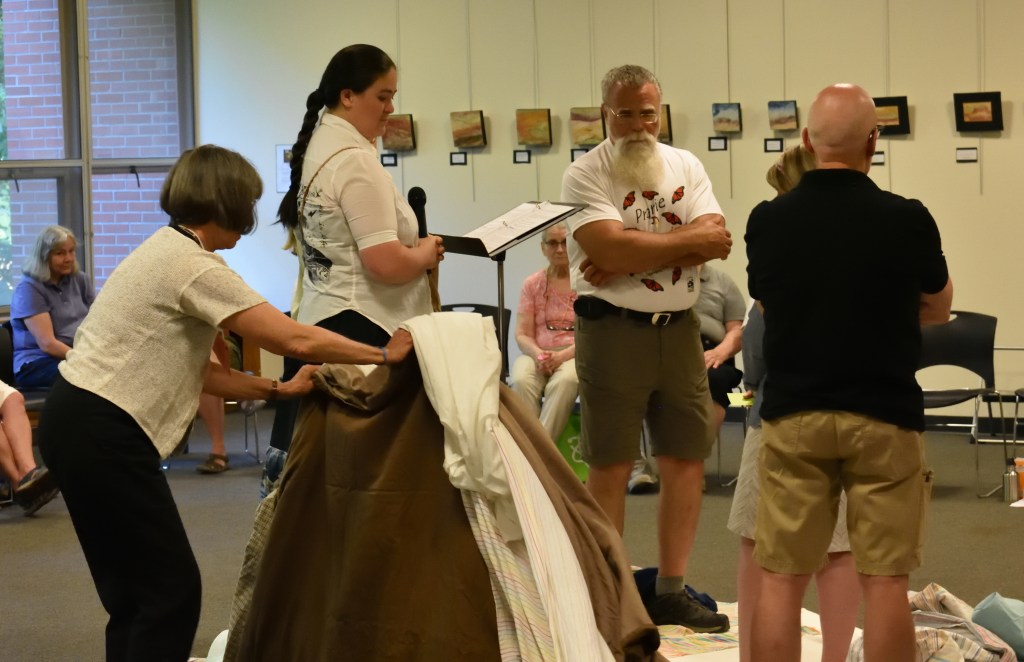
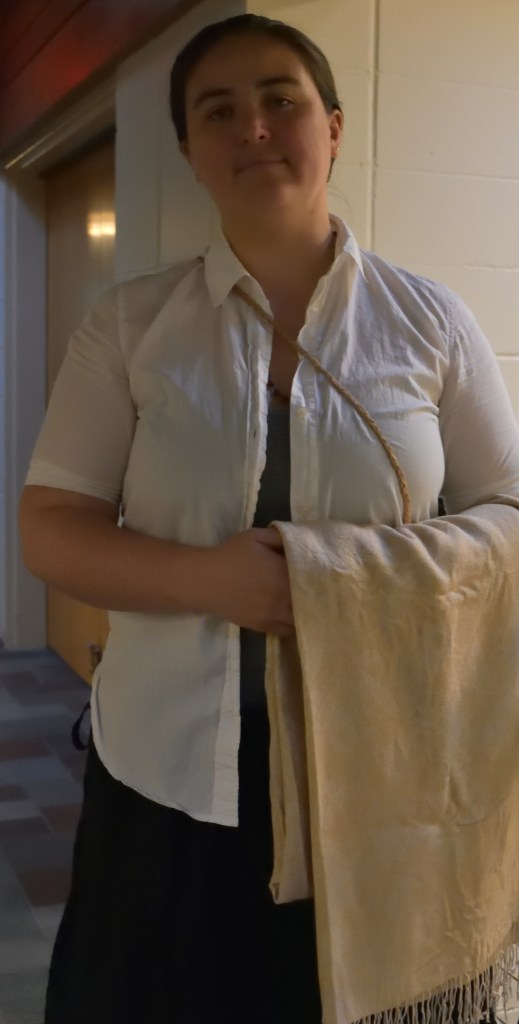
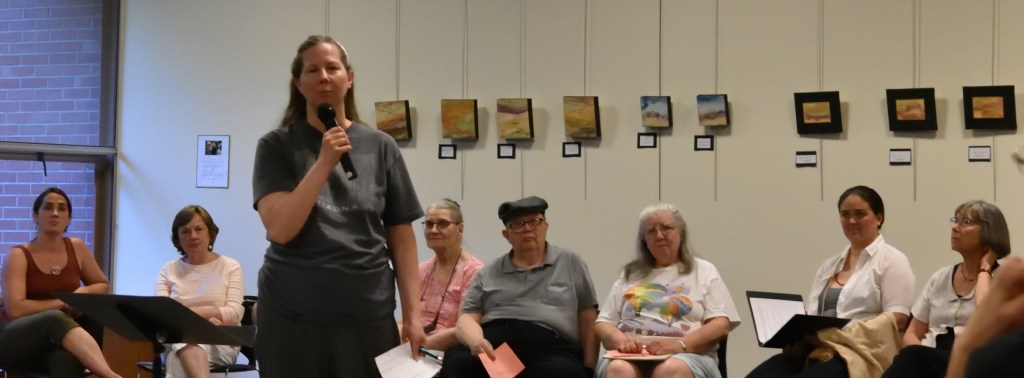
Paula led the workshop “Roots of Injustice, Seeds of Change” several times, including in Lincoln, Nebraska, West Branch, Iowa, and last night at the First Unitarian Church in Des Moines. This workshop uses a script Paula and Native educators developed to visually show how Native land and population was decimated during the westward expansion of white settlers. Several people filled the roles of facilitator, narrator, Native American, historian and European. Last night those roles were filled by:
Kate Allen, European Colonist
Lyra Halsten, Narrator
Chancy Bittner: Historian
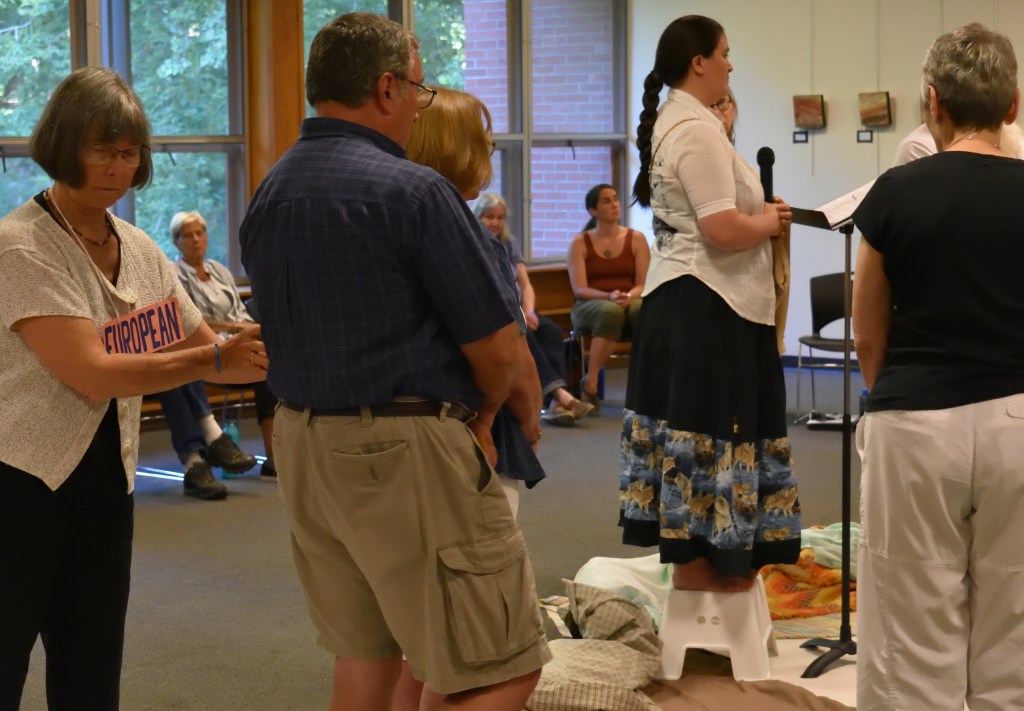
Nikira Hernandez – Evans, Native Speaker, associate minister at Plymouth Congregational Church
Paula Palmer Facilitator
Kate, Lyra, and Chancy are members of First Unitarian. Following is a brief video of the speakers reading parts of the script.
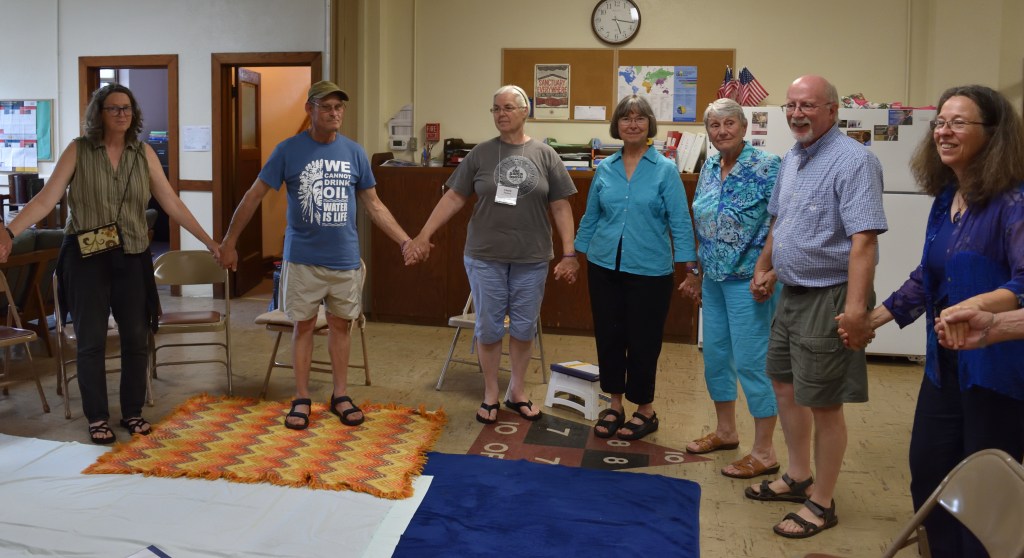
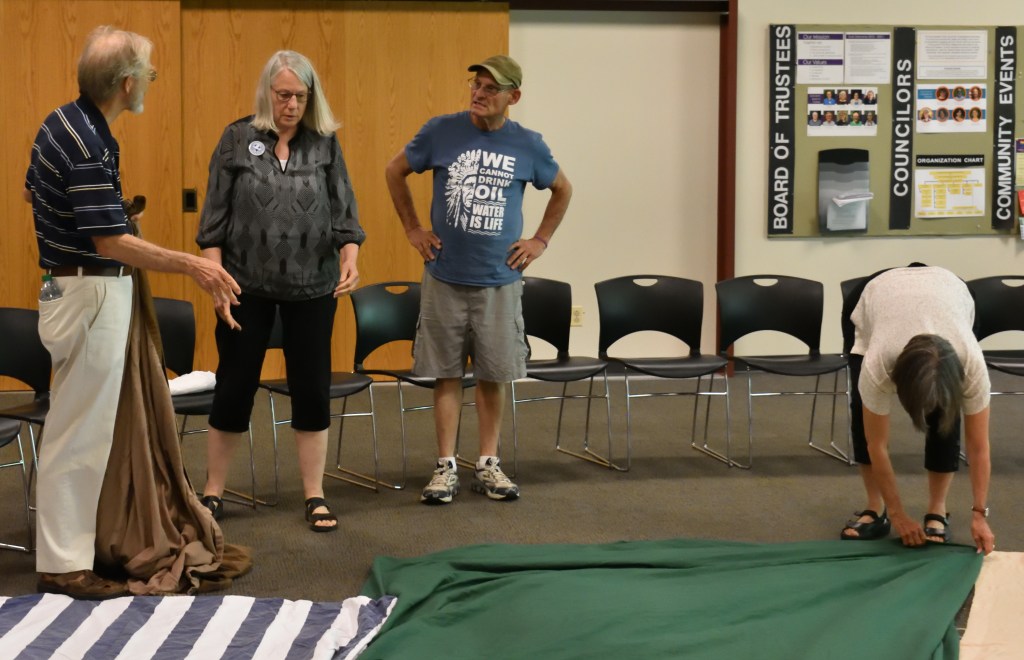
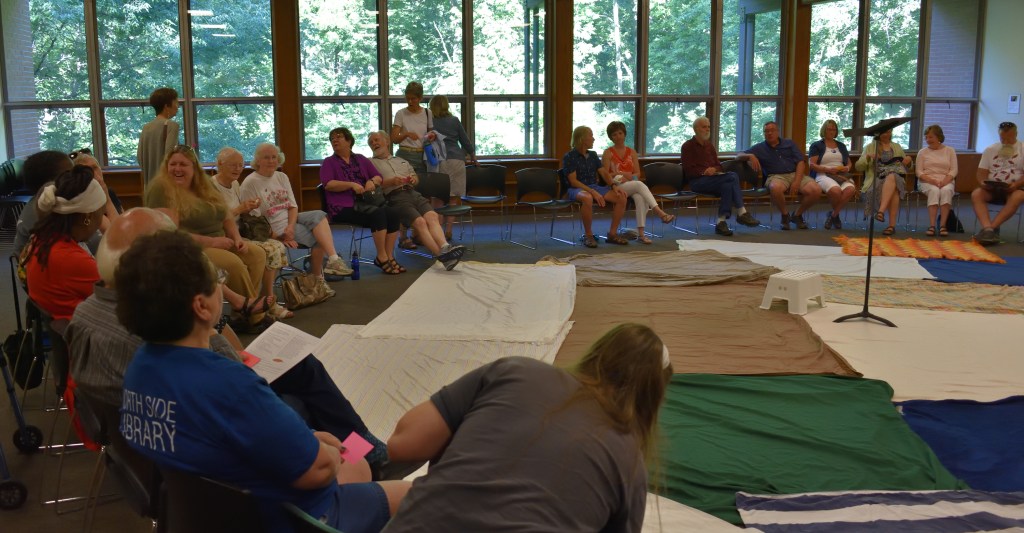
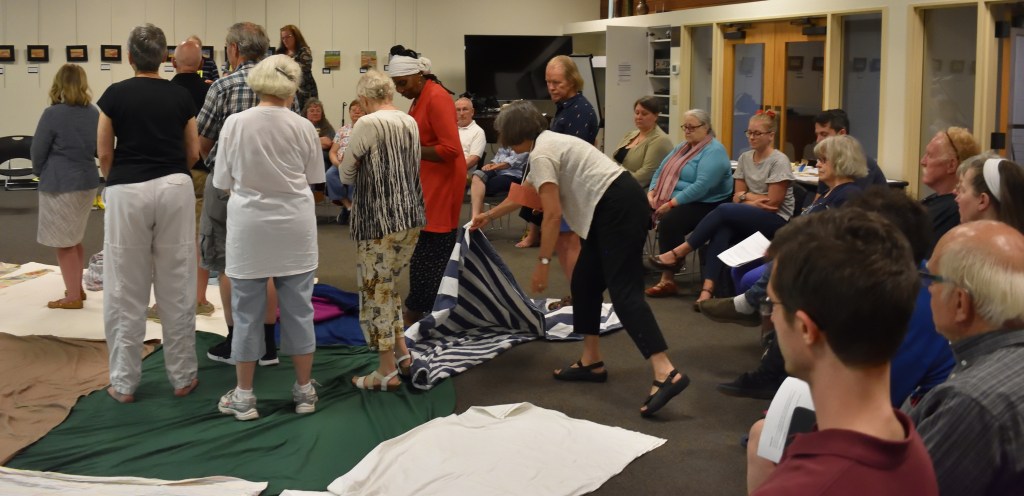
One of the reasons I think this workshop is so powerful is because the audience participates. People stand on rugs that represent the area of Native land, and are given a piece of paper, the color of which indicates their role. As the narrator describes an historical event that represents either the loss of Native lives, or land, the people holding the color of card that represents that event, leave the circle. For example, the kidnapping of Native children to go to an Indian Boarding School might be related to the color yellow. When that part of the script is read, the people holding the yellow card leave the circle. Every time one of these events occurs, a period of silence is asked for, and everyone in the room reflects on that event.
When the event is about the death or loss of Native people, the number of people left in the circle gets smaller. When the event is about the theft of Native land, the rugs people are standing on, are removed or rolled up, leaving less room for the participants to stand on. The series of photos below show how that process evolves.
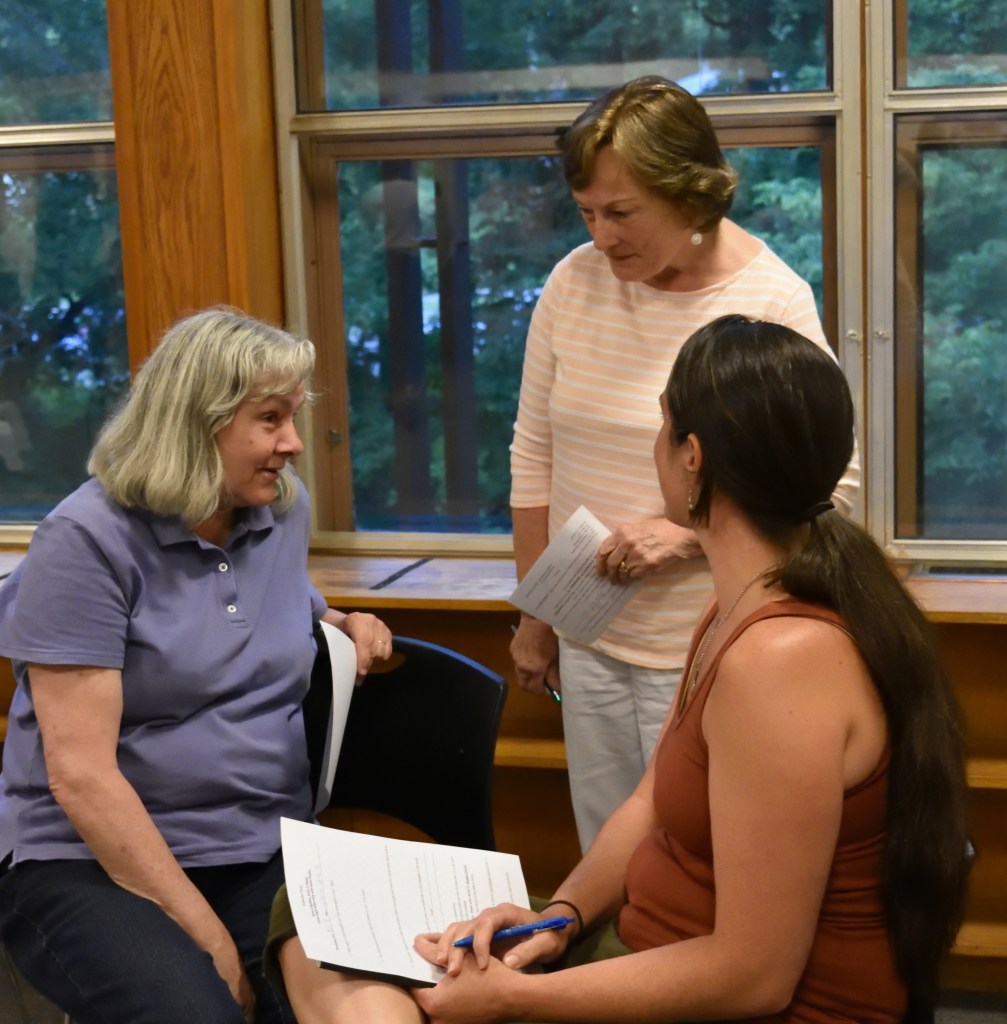
At the conclusion of the “rug” exercise, people are invited to share how they felt about the experience.
The following animation is another way to visualize the theft of Native land:
Be sure to look at the “Doables” for many references and resources for things you might do next to work toward right relationships with Native peoples.
Last night the film “Two Rivers” was shown at the Des Moines Valley Friends meeting. This is another tool Paula Palmer uses as she teaches us about how to work “Toward Right Relationships with Native People”. Attendees were from Des Moines Valley Friends and Bear Creek Friends meetings and the Women’s International League for Peace and Freedom (WILPF).
Those who want to begin to build relationships with Native People usually don’t know how to begin to do so. The film “Two Rivers” does an excellent job of showing how a rural community in Washington state begin doing that, as described below. A non Native couple sees nearly everyone in the town is white, and they don’t believe that is healthy. So they seek out a Native person who can help them find ways to build bridges between Native people who live in the area and the townspeople. The film shows how relationships began to develop, and more Native and non Native people are drawn into the process.
The key concept was for everyone to “speak from their heart”.
The discussion afterward was about what opportunities there might be for the people in the room to begin to develop similar relationships with Native people. Attending the Meskwaki Powwow is one possibility. David Wanatee from the Meskwaki Nation has been helpful regarding these past several days of workshops on “Toward Right Relationships with Native People” by reviewing the Acknowledgement Statement below. He asked us to let people know about the Meskwaki powwow, and sent us brochures about that which we have been distributing.
Dallas County Conservation Board’s 21st annual Prairie Awakening– Prairie Awoke Celebration will be on Saturday, September 7, at the Kuehn Conservation Area, from 3 to 9 pm. This year’s Celebration theme is “Much can be learned by watching children at play.”- a reflection on the words of Black Elk, the Lakota Elder, – “Grown men can learn from very little children for the hearts of the little children are pure. Therefore, the Great Spirit may show to them many things which older people miss.” Last year’s celebration honored our elders, with the planting of the four directions bur oaks in the arena, we remembered the Celebration’s and our families’ elders. Our legacy oaks are thriving in the arena and remind us of last year’s lessons. They give us pause, as we consider the shade and comfort they will provide future Celebration participants. The lessons of the elders have been awakened in us, and in the prairies at Kuehn.
This year’s Celebration invites you to explore what we might learn from the children. What lessons might we be missing that are known to these young– pure at heart? DCCB is teaming with the Meskwaki Nation, inviting their children to come and share their lessons in the arena. As stated on Meskwaki Settlement’s website- “Today’s tribal leaders were once the children of the community and will be its elders tomorrow. Native youth provide a special perspective on the world, and have an unique power and motivation to make a difference…” –National Congress of American Indians Together in the arena carved into the restored tallgrass prairie we will celebrate the lessons of the children. The Youth Drum, from the Meskwaki Settlement, will be featured as they share their drumming and songs. These Meskwaki youth will explain the traditions of the drum and the importance of their work to carry these lessons forward. Celebration participants will be encouraged to sing with the youth drummers, and a contingency of local Dallas County youth will join in and drum with the Youth Drum.
Additionally, Meskwaki youth will be performing in regalia some of the Tribe’s traditional dances. The Meskwaki youth will utilize this event to promote cultural unity and friendship as they interpret these dances and share the importance of these traditions for their Tribe. Celebration participants will be invited to join the Meskwaki youth, dancing in the arena.
As traditions direct, we will sit together, in the tallgrass prairie arena at Kuehn. Bring your lawn chair for seating. The event is free. Concessions will be available on site.
Another opportunity would be to become engaged with the Sunrise Movement. Iowa Citizens for Community Improvement (ICCI) is the Sunrise Hub for central Iowa. When the Green New Deal Tour came to Des Moines recently, Trisha and Lakasha were on the program to talk about how important it is that a Green New Deal be indigenous led.
IOWA ACKNOWLEDGEMENT STATEMENT
We begin by acknowledging that the Land between Two Rivers, where we sit and stand today, has been the traditional homeland for many independent nations. These include the Ioway and the Otoe, who were here since before recorded time. The Omaha and the Ponca were here, moving to new lands before white settlers arrived. The Pawnee used this land for hunting grounds. The Sioux, Sauk and Meskwaki were here long before European settlers came. Members of many different Indigenous nations have lived on these plains. Let us remember that we occupy their homeland and that this land was taken by force. Today, only the Meskwaki Nation, the Red Earth People, maintain their sovereignty on their land in the state of Iowa. They persevered and refused to be dispossessed of their home. Place names all over our state recognize famous Meskwaki chiefs of the 1800s like Poweshiek, Wapello, Appanoose, and Taiomah or Tama. We honor the Meskwaki Nation for their courage, and for maintaining their language, culture and spirituality. May our time together bring respectful new openings for right relationship to grow.
My friend Alton Onefeather was telling me about the sale of some land, and I was impressed with his eloquent statement here, which he gave me permission to share.
The land being sold is around bear butte it is a sacred place to the natives yes it will affect my heart n spirit knowing people are gonna be putting biker bars n clubs close or around it
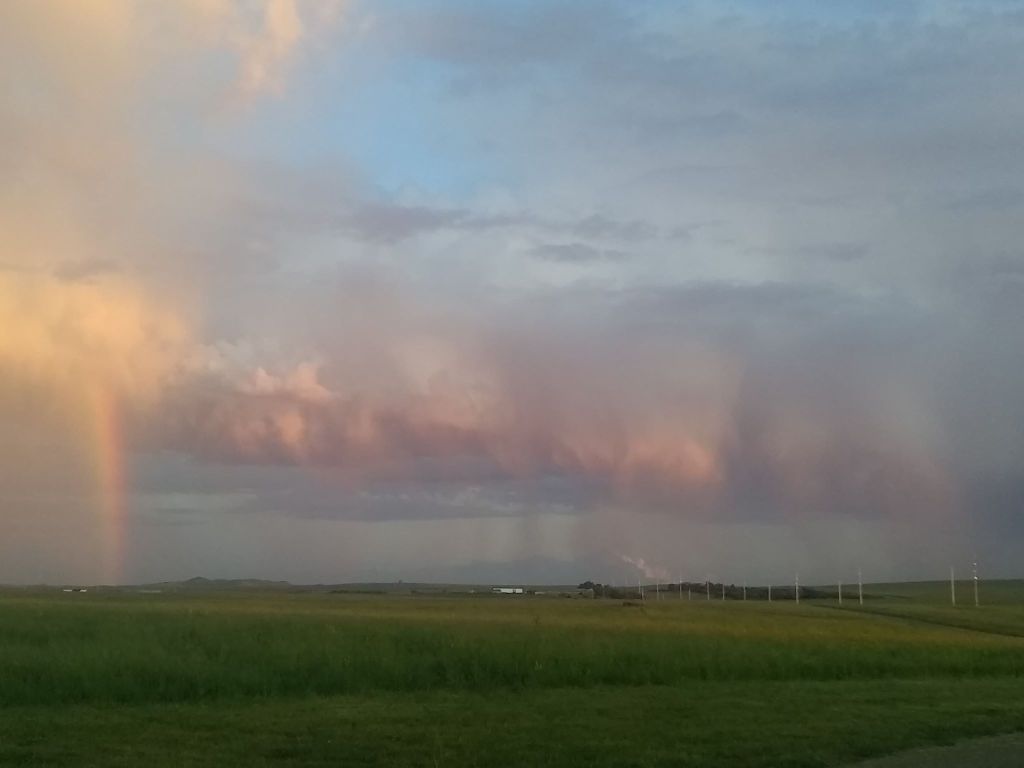
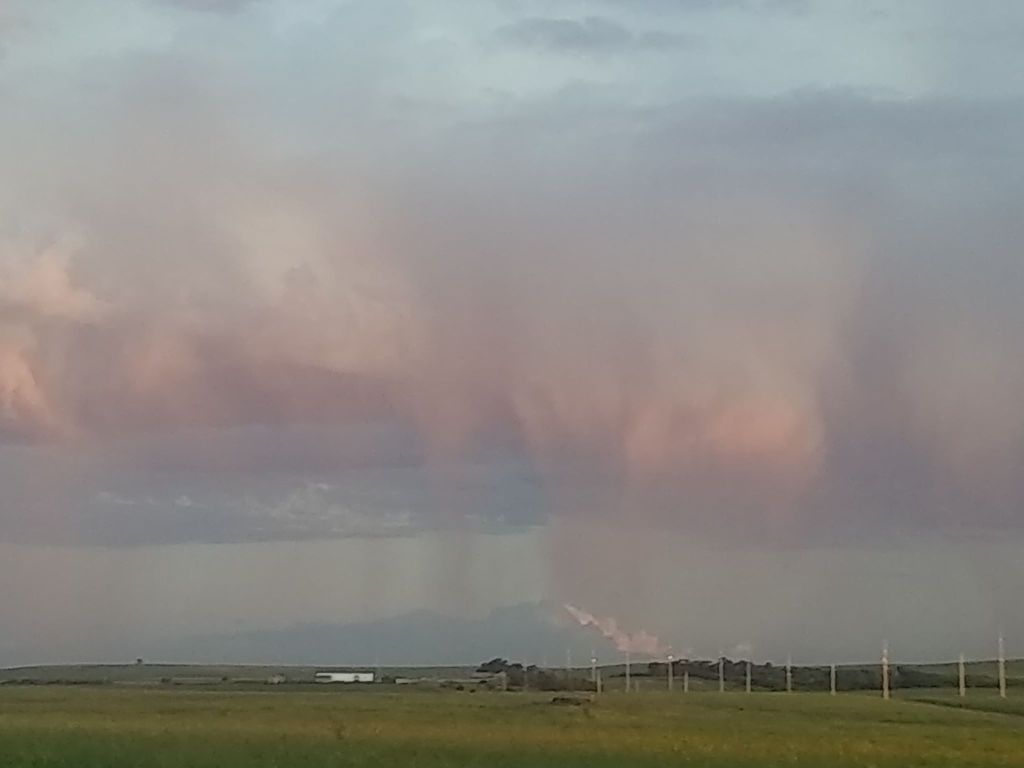
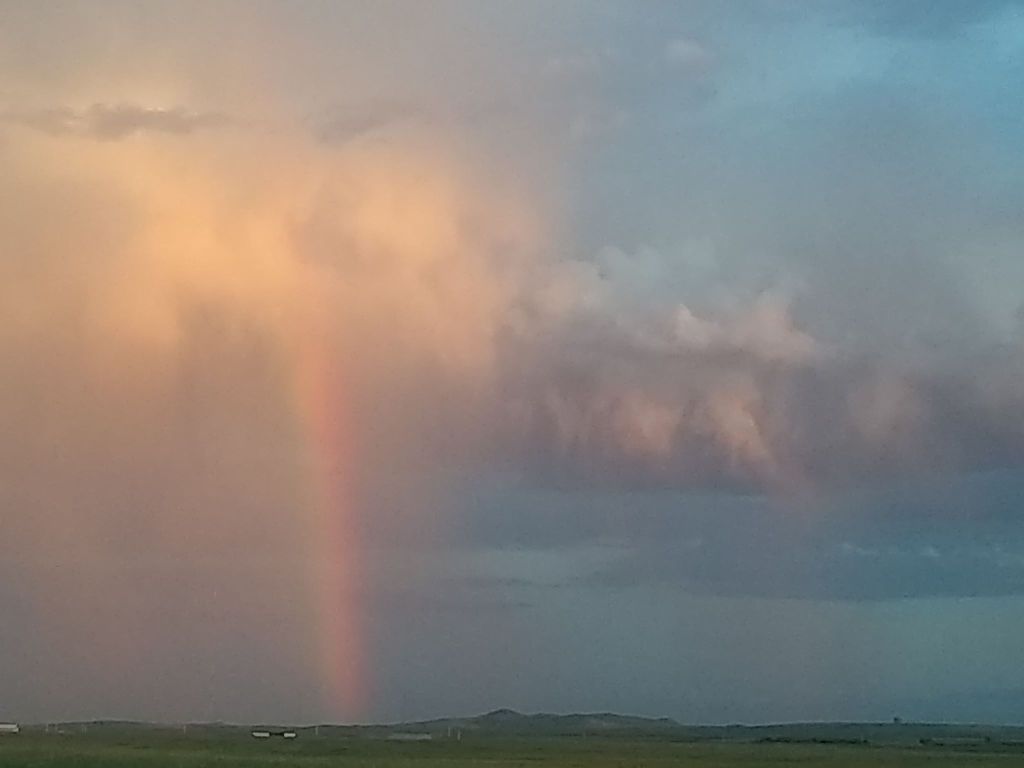
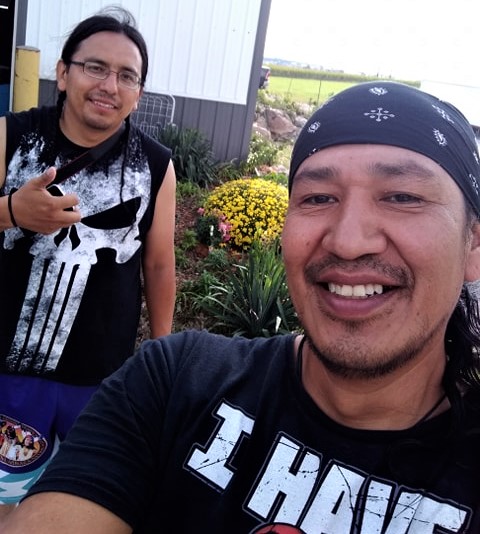
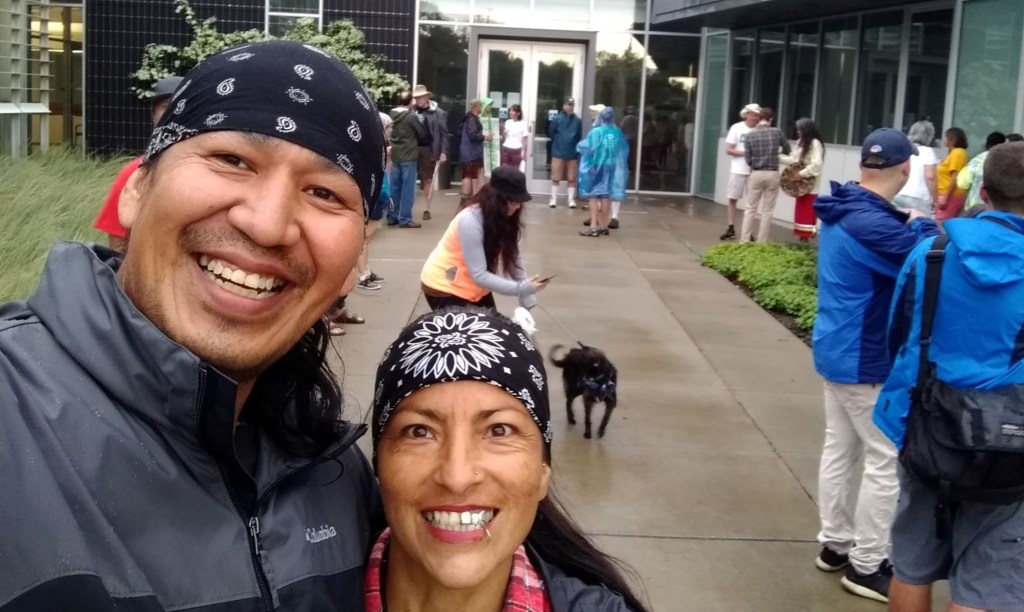
We have a common interested in photography. He is really good at taking selfies. Below are some recent photos he took and said I could share. Interesting rainbows. He is pictured in the photos below with his wife, Foxy. Both were on the First Nation-Farmer Climate Unity March with me.
Alton took this video of Foxy walking with Ed Fallon during that March.
Paula Palmer spoke on the topic of “Quaker Indian Boarding Schools–Facing Our History and Ourselves” at Scattergood Friends School and Farm, a Quaker boarding school, yesterday.
Native American organizations are asking churches to join in a Truth and Reconciliation process to bring about healing for Native American families that continue to suffer the consequences of the Indian boarding schools. With support from Pendle Hill (the Cadbury scholarship), Friends Historical Library (the Moore Fellowship), the Native American Rights Fund, and other Friendly sources, Paula Palmer researched the role that Friends played in implementing the federal government’s policy of forced assimilation of Native children. For a link to her 50-minute slide presentation and other resources, please see www.boulderfriendsmeeting.org/ipc-boarding-school-research
Paula Palmer’s ministry, “Toward Right Relationship with Native Peoples,” is under the care of Boulder Friends Meeting. Please contact her at paulaRpalmer@gmail.com
Paula wrote an article on this subject in Friends Journal, published in October, 2016.
My leading started with a nudge four years ago and grew into a ministry called Toward Right Relationship with Native Peoples. This ministry has grown in depth and breadth under the loving care of the Boulder (Colo.) Meeting. Working in partnership with Native American educators, I learned about their efforts to bring healing to the Native people, families, and communities that continue to suffer illness, despair, suicide, violence, and many forms of dysfunction that they trace to the Indian boarding school experience.
More than 100,000 Native children suffered the direct consequences of the federal government’s policy of forced assimilation by means of Indian boarding schools during the nineteenth and twentieth centuries. Their bereft parents, grandparents, siblings, and entire communities also suffered. As adults, when the former boarding school students had children, their children suffered, too. Now, through painful testimony and scientific research, we know how trauma can be passed from generation to generation. The multigenerational trauma of the boarding school experience is an open wound in Native communities today
Quaker Indian Boarding Schools; Facing Our History and Ourselves”, Paula Palmer, Friends Journal, October, 2016.
My experience, with an admittedly small sample size, is that many Friends know little if anything about the Quaker Indian Boarding Schools. Those that do assume those involved with those schools acted with the good intentions, and documents from that time support this. As it shows above, though, good intentions can cause very significant, multigenerational damage.
Very early in my work for social justice, I was actually taught that we should assume our allies are working with the best of intentions. A F/friend challenged me about that, but it took me a some time and experience to see how often good intentions result in harm. That is actually implied by that phrase. It is used, in a way, to excuse something that actually, unintentionally, caused harm.
The other thing assumed by intention is that the act or idea is the result of someone’s thinking. All too often our thinking is biased, often unconsciously. Our thinking is based upon our knowledge, which may be limited or even wrong. And in the case of thinking about a different culture, I think it safe to say our understanding is guaranteed to be inadequate.
Quakers are supposed to find direction from what is revealed to them by the Spirit, i.e. not thinking in the sense of coming up with a plan yourself. Rather seek what God is asking you to do.
As Paula says, we should not demonize people and their actions from the past. But the first step in healing these wounds is truth telling. “Facing Our History and Ourselves”. That is the purpose of Paula’s work and workshops. What is important now is to begin to answer Paula’s query:
Query:
What does this history and its impact on Native communities mean for Friends
today?
This is just an introduction to Quaker Indian Boarding Schools. More to follow.
Thomas Weber, Peter Clay, Linda Lemon, Jim Glasson and I have been working to prepare for several workshops Paula Palmer will be leading in Iowa relation to “Toward Right Relationship with Native People”, led by Paula Palmer.
Following is a letter to faith communities that explains the purpose of these workshops.
Dear Friends in Faith Communities,
A call to faith communities has been issued by two very different organizations: the United Nations Permanent Forum on Indigenous Issues, and the World Council of Churches. Indigenous and religious leaders are urging all people Of faith to take a deep look at the Doctrine of Discovery, the 15th century papal edict that authorized European Christian nations to “invade, capture, vanquish, and subdue all.. .pagans and other enemies of Christ.. .to reduce their persons to perpetual slavery …and.. .to take away all their possessions and property” (Pope Nicholas V)
Why do we need to dredge up the Doctrine of Discovery now, more than 500 years later? Because over the centuries, the Doctrine has been embedded in a world view of European superiority and domination and in the legal codes of the lands the Europeans colonized. It continues to be cited by courts in our country and others as justification for denying Indigenous Peoples their rights. The notion of European superiority and domination has been perpetuated by our schools and other institutions. The consequences can be seen in the disproportionate poverty and ill health of Native American people today. How much has it influenced our own thoughts and actions?
At the Boulder, Colorado, Quaker meeting, the Indigenous Peoples Concerns (IPC) Committee responded to the call from Indigenous and religious leaders by undertaking a study of the Doctrine of Discovery and of the UN Declaration on the Rights of Indigenous Peoples. The Declaration, approved by the UN General Assembly in 2007, is an effective antidote to the Doctrine of Discovery because it defines Indigenous Peoples’ inalienable rights, which the Doctrine of Discovery systematically violates. Boulder’s IPC committee asked itself, “How can we help educate Friends and other faith communities about these issues and encourage them to answer the call to repudiate the Doctrine of Discovery and support implementation of the UN Declaration on the Rights of Indigenous Peoples?”
With the guidance and encouragement of Native American educators, we developed a 2-hour participatory workshop and a Resource Kit, and we presented these to the Boulder Friends meeting. Our meeting was led to approve a minute repudiating the Doctrine of Discovery and endorsing the UN Declaration on the Rights of Indigenous Peoples. Our minute now stands with similar statements that have been issued by various church bodies in Canada and the U.S.
In October 2013, the Boulder Friends Meeting established the Toward Right Relationship project to carry this work to the wider community. By now, we have presented our workshops more than 80 times in 16 states, at the invitation Of churches, schools, colleges, universities, and civic organizations. Our goal IS to raise awareness and concern about our broken relationships with the Indigenous peoples Of our land, and to set our feet on a path toward right relationship.
Paula Palmer is a sociologist, writer, and activist for human rights, social justice, and environmental protection. As director of Toward Right Relationship with Native Peoples, a project of the Indigenous Peoples Concerns committee of the Boulder Friends Meeting (Quakers), she created and facilitates workshops titled, “Roots of Injustice, Seeds of Change: Toward Right Relationship with America’s Native Peoples” (for adults) and “Re-Discovering America: Understanding Colonization” (for middle schools and high schools).
The Toward Right Relationship project of the Boulder
Friends Meeting (Quakers) offers this workshop in response to calls from
Indigenous leaders and the World Council of Churches. The 2-hour exercise
traces the historic and ongoing impacts of the Doctrine of Discovery, the
15th-century justification for European subjugation of non-Christian peoples.
Our goal is to raise our level of knowledge and concern about these
impacts, recognize them in ourselves and our institutions, and explore how we
can begin to take actions toward “right relationship.” We provide a Resource
Kit with suggestions for continued study, reflection, and action.
In the Doctrine of Discovery, we find the roots of injustice. In the U.N. Declaration on the Rights of Indigenous Peoples, we find the seeds of change. How can we nurture these seeds to bring forth the fruits of right relationship among all peoples?
One part of this process is to acknowledge whose land it is that we are meeting on. Several people worked on the following acknowledgement statement, which was shared with the Meskwaki Nation to check the accuracy of the statement.
IOWA ACKNOWLEDGEMENT STATEMENT We begin by acknowledging that the Land between Two Rivers, where we sit and stand today, has been the traditional homeland for many independent nations. These include the Ioway and the Otoe, who were here since before recorded time. The Omaha and the Ponca were here, moving to new lands before white settlers arrived. The Pawnee used this land for hunting grounds. The Sioux, Sauk and Meskwaki were here long before European settlers came. Members of many different Indigenous nations have lived on these plains. Let us remember that we occupy their homeland and that this land was taken by force. Today, only the Meskwaki Nation, the Red Earth People, maintain their sovereignty on their land in the state of Iowa. They persevered and refused to be dispossessed of their home. Place names all over our state recognize famous Meskwaki chiefs of the 1800s like Poweshiek, Wapello, Appanoose, and Taiomah or Tama. We honor the Meskwaki Nation for their courage, and for maintaining their language, culture and spirituality. May our time together bring respectful new openings for right relationship to grow.
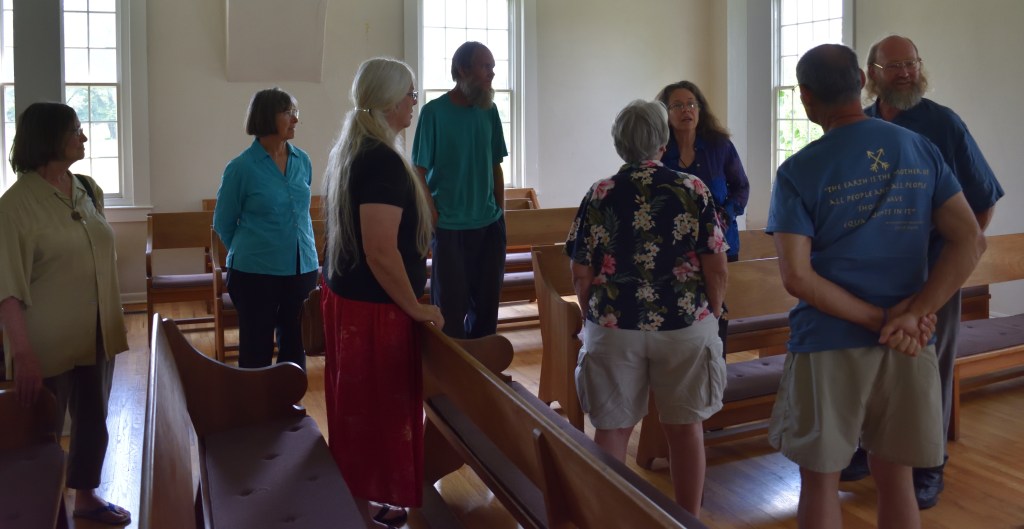
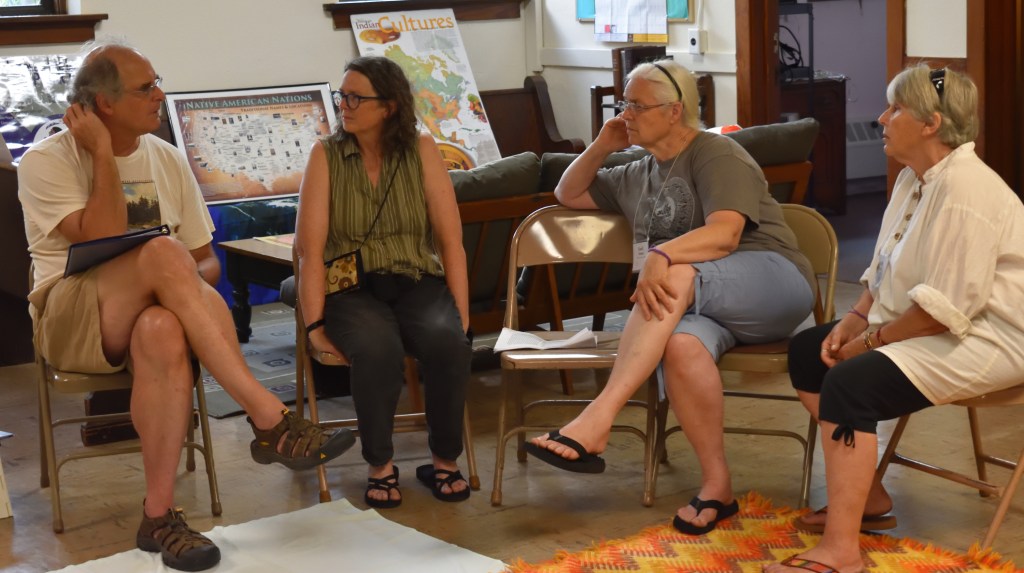
The first workshop, “Roots of Injustice, Seeds of Change” was held at the West Branch Friends Church with the help of Jim Glasson who attends there. Photos from the workshop appear below. I’ll be talking more about my experience later, but this introduction is becoming long enough for today.
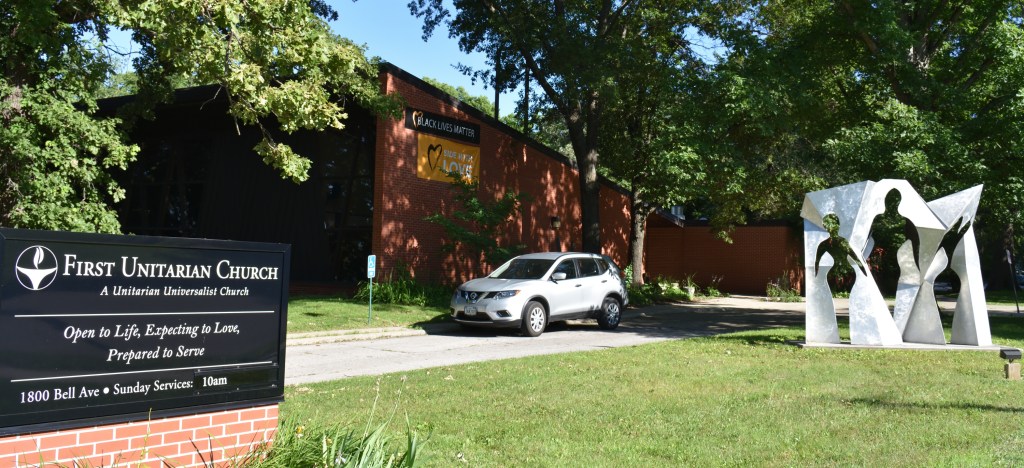
I would definitely encourage you to attend the next presentation of “Roots of Injustice, Seeds of Change” workshop that will be held in Des Moines this Tuesday, July 9, 2019 6:30 to 8:30 p.m. at the First Unitarian Church of Des Moines 1800 Bell Ave. Des Moines Iowa. To register, please contact Linda Lemons lemonslin@gmail.com or 515-229-1404 For more information, visit boulderfriendsmeeting.org/ipc-right-relationship
This morning I awoke to a beautiful morning at Scattergood Friends School and Farm, near West Branch. This morning Paula will lead the workshop “Quaker Indian Boarding Schools–Facing Our History and Ourselves”.
Native American organizations are asking churches to join in a Truth and Reconciliation process to bring about healing for Native American families that continue to suffer the consequences of the Indian boarding schools. With support from Pendle Hill (the Cadbury scholarship), Friends Historical Library (the Moore Fellowship), the Native American Rights Fund, and other Friendly sources, Paula Palmer researched the role that Friends played in implementing the federal government’s policy of forced assimilation of Native children. For a link to her 50-minute slide presentation and other resources, please see: www.boulderfriendsmeeting.org/ipc-boarding-school-research.
I was a little familiar with some of this, but found what I knew was just the surface of a deep and troubling history. I’ve been led to study this more deeply ever since learning this workshop would occur here at Scattergood. Paula will begin with the presentation at 9:00 am, followed by an hour of discussion. That will be followed by meeting for worship at 11:00.
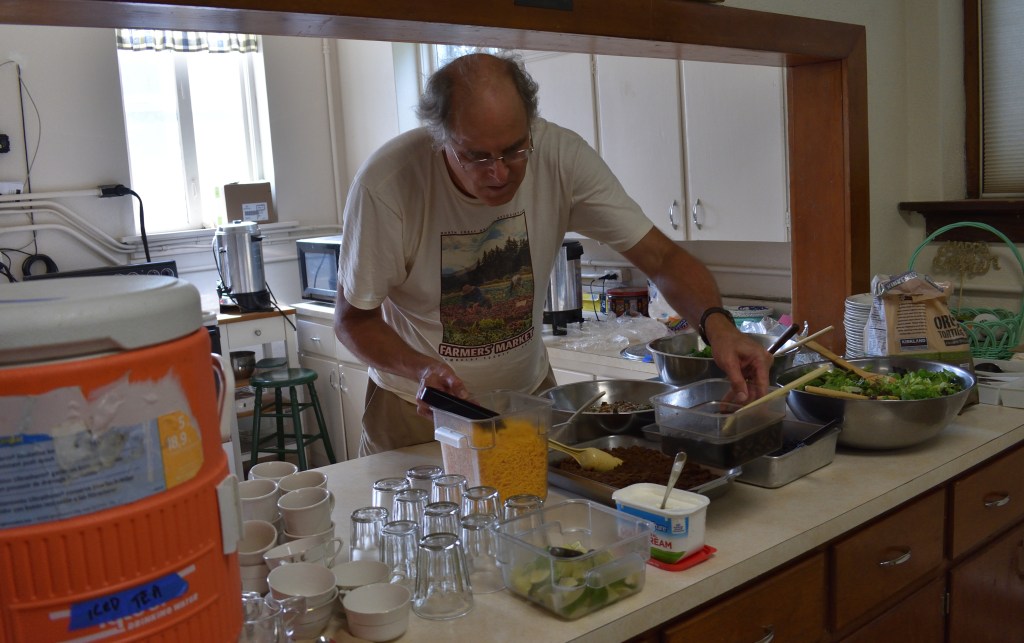
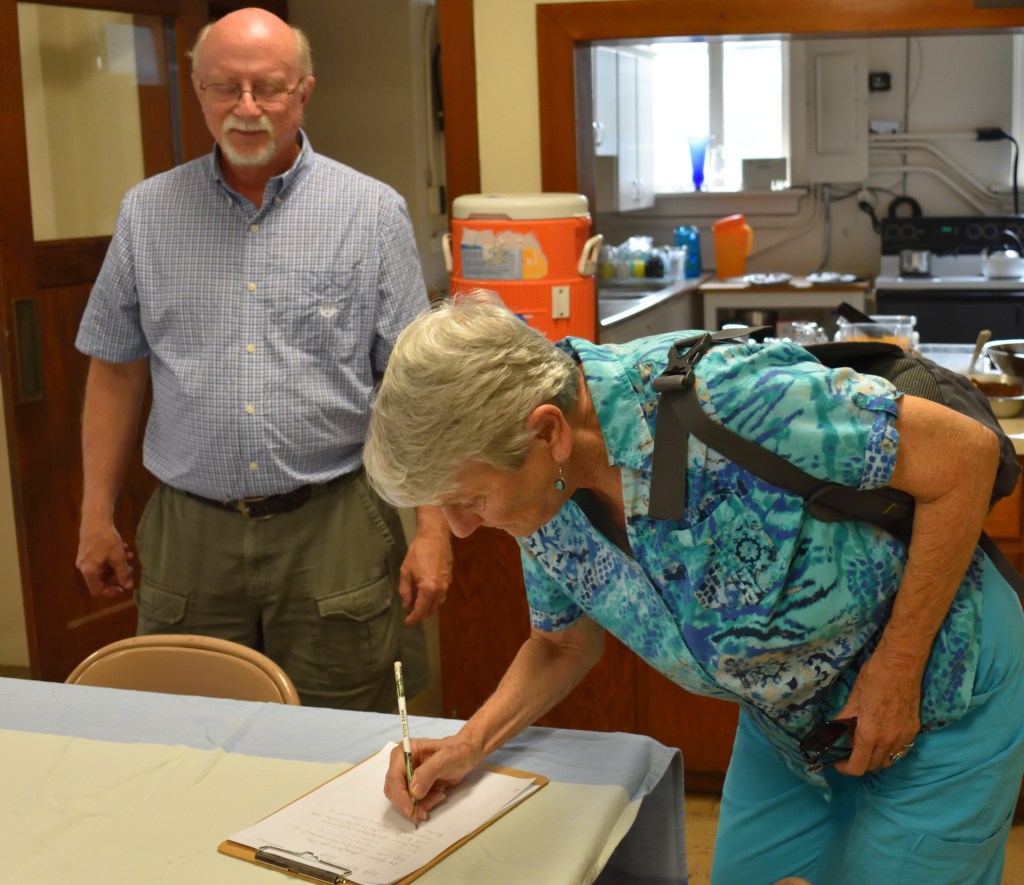
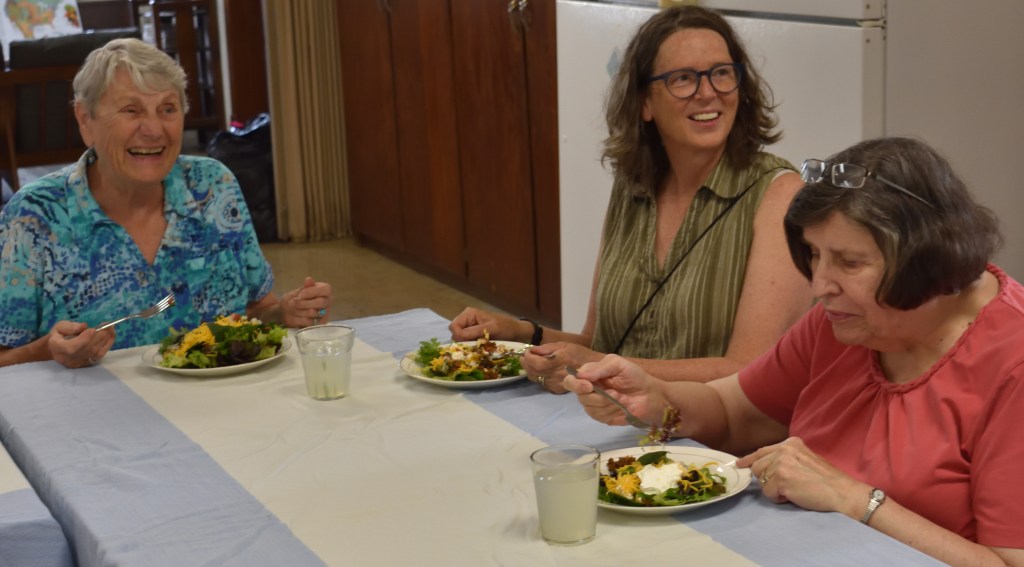
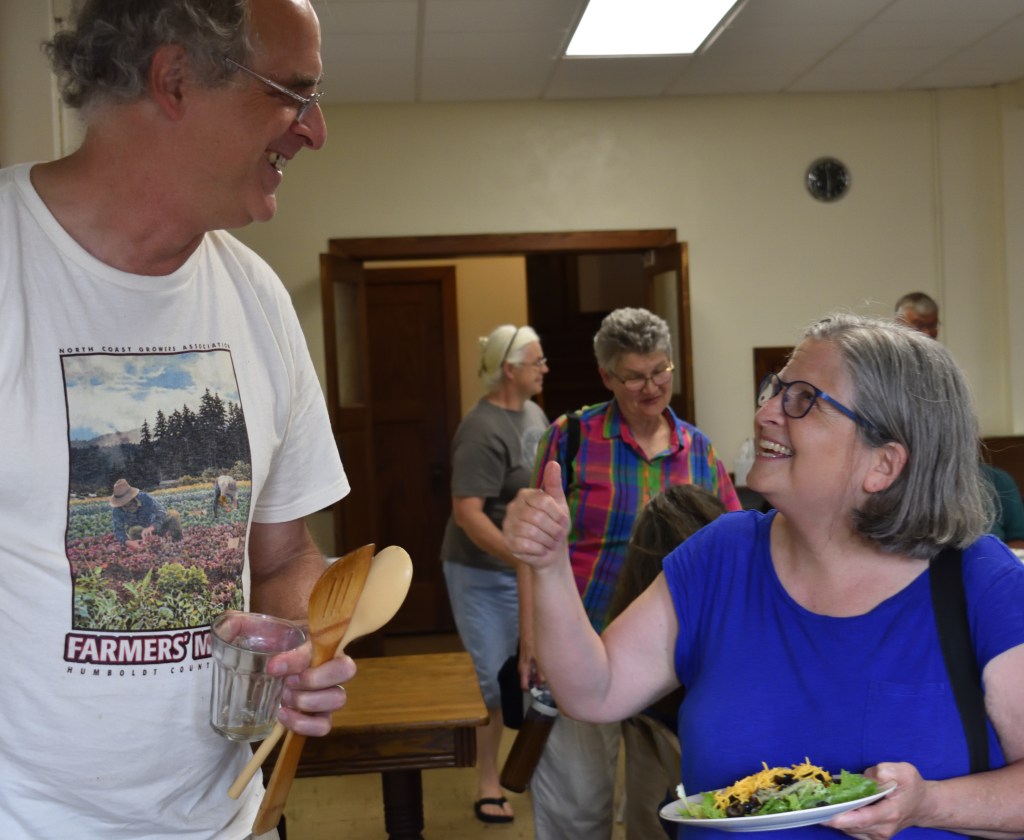
Thanks to Scattergood Friends School for the hospitality, and to Irving Treadway from the School who provided an excellent meal last night at the West Branch Friends Church. And to Jim Glasson and the West Branch Friends Church for graciously hosting last night’s workshop.












































 Quakers, social justice and revolution