Concepts of race, property and value

I found this video by Sonya Renee Taylor to be very thought provoking. “When capital is more valuable than black bodies, capital must be disrupted.”

I continue to be uplifted by the masses of people going to the streets to demand that we confront the issues of racism, including abuse and death from the police.

I used to be disappointed when looting occurred because I saw that as a way for those who disagree with the underlying issue being protested to dismiss it. Its not that I advocate for violence and property destruction now, but I recognize the White privilege that informs that for me. I recently wrote a lot about my view of what is valued in the post “Of so little value”.

I remember the first time I realized my life might be considered of less value than property. I was running when a truck turned right in front of me, forcing me to abruptly stop. I slapped the side of the truck out of anger, but also to send a message to the driver. He got the message, jumping out of the truck and yelling at me to come back. Instead, I continued to run (a little faster). Thinking as I continued to run, at first I thought if there was a question of value, my life would be considered more important than potential damage to the truck (of which there was none, of course). But I was shocked to consider the possibility that someone else might think the truck was more important than me. Of course this is nothing compared to the possibility of being shot to death merely for the color of my skin.

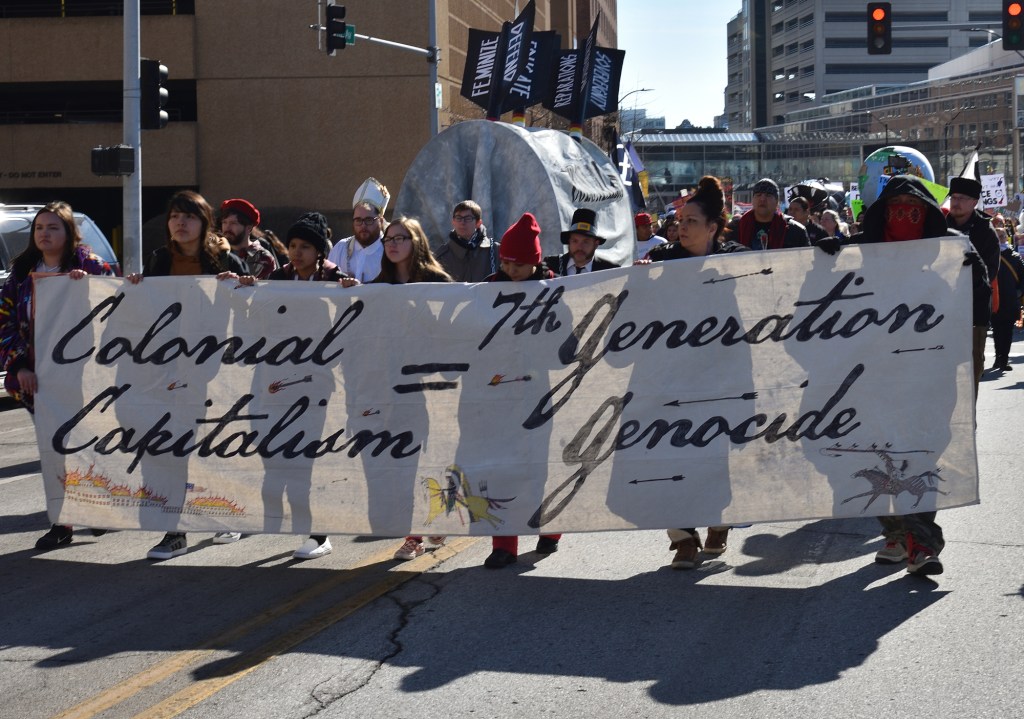
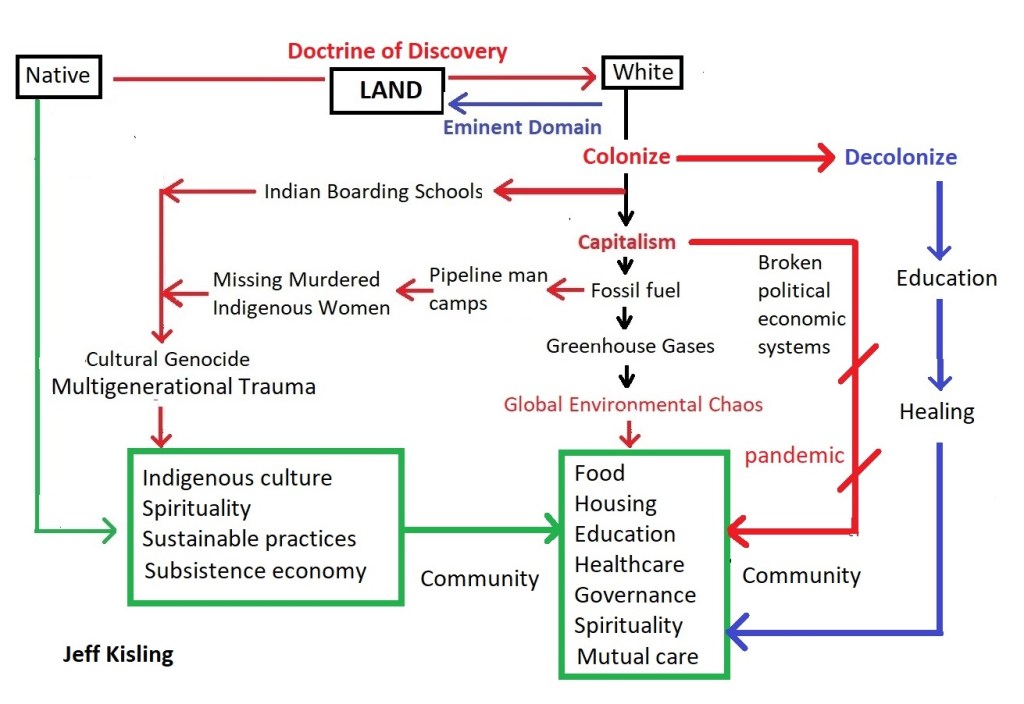
The problem I have with capitalism is it places a monetary value on everything, including things that can’t rightfully be owned. The most extreme being the idea that people could be purchased. That also extends to the idea that the commons can be “owned”. That natural resources can be owned and the owner allowed to do anything they want with “their” property. The idea that a company can own land with tar sands, and devastate the earth and water to mine them. Even as the burning of fossil fuels is killing Mother Earth and ourselves. The idea that a company should do anything it can to increase the profit of its shareholders regardless of the damage those policies might do. It is a system without morals. A system where success is defined by how much wealth you accumulate. Native peoples were living for thousands of years without a system like capitalism. So yes, I believe capitalism is a “bad” system.

According to my friend Christine Nobiss, Decolonizer with Seeding Sovereignty, “Capitalism is the pandemic because, though we face COVID-19 together, the heightened economic imbalance is further exposing the deep racial divide in this country. Black, Latino/Latina, Indigenous, and immigrant communities are experiencing higher morbidity rates of COVID-19 due to pre-existing conditions created by the long-term global pandemic of colonial-capitalism. These communities face strained and genocidal relationships with the American government and live with elevated rates of poverty, violence, unemployment, chronic illness, incarceration, deportation, water crises, inadequate housing, and food deserts—creating a perfect storm for mass infection.”

Seeding Sovereignty organized having an airplane pull a banner “Capitalism is the Pandemic” over New York City, a center of capitalism.

With this action, we demand an end the colonial-capitalist economy supported by institutionalized white supremacist and heteropatriarchal systems that have devastated our lands, climate, and peoples through ceaseless resource extraction, land occupation, border imperialism, misogyny, homophobia, enslavement, and genocide. This viral pandemic is part of a much larger problem as explained by Buffalo-based media artist, Jason Livingston, who conceived this action, “The crisis began before the virus, and the crisis will continue beyond the vaccine.”

https://seedingsovereignty.org/capitalism-is-the-pandemic

I was very glad to come upon the video below and guidelines related to anti-oppression and decolonization. Interview recorded at PowerShift Canada 2012, Oct 28 in Ottawa on unceded Algonquin territory.

This gets to the fundamental question of whether anyone can “own” the land.

We share these points of unity to guide our allyship and activism:

  • All people not indigenous to North America who are living on this continent are settlers on stolen land. We acknowledge that Canada, the United States of America, Mexico, and Central & South America were founded through genocide and colonization of indigenous peoples–which continues today and from which settlers directly benefit.
  • All settlers do not benefit equally from the settler-colonial state, nor did all settlers emigrate here of their own free will. Specifically, we see slavery, hetero-patriarchy, white supremacy, market imperialism, and capitalist class structures as among the primary tools of colonization. These tools divide communities and determine peoples’ relative access to power. Therefore, anti-oppression solidarity between settler communities is necessary for decolonization. We work to build anti-colonial movements that actively combat all forms of oppression.
  • We acknowledge that settlers are not entitled to live on this land. We accept that decolonization means the revitalization of indigenous sovereignty, and an end to settler domination of life, lands, and peoples in all territories of the so-called “Americas.” All decisions regarding human interaction with this land base, including who lives on it, are rightfully those of the indigenous nations.
  • As settlers and non-native people (by which we mean non-indigenous to this hemisphere) acting in solidarity, it is our responsibility to proactively challenge and dismantle colonialist thought and behavior in the communities we identify ourselves to be part of. As people within communities that maintain and benefit from colonization, we are intimately positioned to do this work.
  • We understand that allies cannot be self-defined; they must be claimed by the people they seek to ally with. We organize our solidarity efforts around direct communication, responsiveness, and accountability to indigenous people fighting for decolonization and liberation.
  • We are committed to dismantling all systems of oppression, whether they are found in institutional power structures, interpersonal relationships, or within ourselves. Individually and as a collective, we work compassionately to support each other through these processes. Participation in struggle requires each of us to engage in both solidarity and our own liberation: to be accountable for all privileges carried, while also struggling for liberation from internalized and/or experienced oppression. We seek to build a healthy culture of resistance, accountability, and sustenance.

As my friend Ronnie James writes:

I’m of the firm opinion that a system that was built by stolen bodies on stolen land for the benefit of a few is a system that is not repairable. It is operating as designed, and small changes (which are the result of huge efforts) to lessen the blow on those it was not designed for are merely half measures that can’t ever fully succeed.

So the question is now, where do we go from here? Do we continue to make incremental changes while the wealthy hoard more wealth and the climate crisis deepens, or do we do something drastic that has never been done before? Can we envision and create a world where a class war from above isn’t a reality anymore?”

Ronnie James
Posted in Black Lives, decolonize, enslavement, Indigenous, Native Americans, race, Seeding Sovereignty, solidarity, Uncategorized | Leave a comment

Two national Quaker organizations on racism

Racism and Whiteness

Our hearts are broken as the fault lines of racism continue to be starkly exposed in the violence that ended the lives of George Floyd, Breonna Taylor, Ahmaud Arbery and uncounted numbers of African Americans, not only in recent years but since Africans were first brought to this country as enslaved people.

We continue to live with this poisonous legacy which manifests itself in white supremacy, institutional racism, and oppression. Over generations, white supremacy has shaped our public policies, causing injustice in our institutions and racial bias that in its mildest forms taints daily life for people with brown and black skin. As we were reminded this month, white supremacy continues to kill African Americans in cold blood almost with impunity. We understand that the occupation of our urban communities and militarized policing is one part of protecting “whiteness” in our society.

We reject the president’s call for an occupation by the U.S. military of the streets of our communities to suppress legitimate protests guaranteed by the U.S. constitution. Law and order have for too long been used as a cover for racist oppression and slavery. This needs to stop.

But we cannot address the racism and white privilege in our society without addressing the systems of oppression—in policing, in healthcare, in the justice system or in access to quality education. The fault lines of whiteness that make true equality in our society a lie run deep and touch every one of us.

We have seen the fault lines in the disproportionate deaths from COVID-19 in the African American community. We have seen the fault lines in the destructiveness of police brutality of our African American siblings. Until everyone in this country, particularly white people, dedicate themselves to radically address racial inequality, we will remain a broken society.

As we stand with protesters throughout the country calling for radical social transformation, we affirm that Black Lives Matter. We know that those of us who are white must confront racism in ourselves and in the institutions we care about—our faith communities, our schools, our neighborhoods, our families, our Congress.

We stubbornly remain hopeful that we can change policies that perpetuate racist structures and build a society with equity and justice for all.

Racism and Whiteness By Diane Randall, General Secretary, Friends Committee on National Legislation (FCNL), June 1, 2020


We Won’t Stop Until We Dismantle the Whole Racist System

George Floyd should be alive today. So should Eric Garner, Sandra Bland, Philando Castile, Breonna Taylor, Tony McDade, and many other people killed by police in the United States of America. The fact that they are not alive now is a testament to the deep need for change.

The U.S. was founded on slavery and genocide and has yet to fully reckon with that tragic legacy. A good place to start is by identifying and uprooting the system of white supremacy that devalues Black, Brown, Asian, and Indigenous lives. As a Quaker organization, the American Friends Service Committee (AFSC) is inspired by the fundamental truth that there is human dignity in every single person. In order to live those values, we need to change our economies, schools, health care systems, and every institution in our society. 

Perhaps no institutions play a more crucial role in upholding white supremacy today than the police and the criminal legal system. In cities and counties across the country, police encounters end the lives of people of color and trans and gender nonconforming people. The pattern is well-documented and indisputable. It is tragic. And it clearly has no place in our society or any society that values life and freedom. 

In communities across the country, we witness how police harass, cage, and kill people with impunity. We see our loved ones and community members—disproportionately Black and Brown people—growing old and dying behind bars because of unjust sentencing policies. Our demand for real and lasting change will not be satisfied if one or a few perpetrators are held accountable in our broken criminal legal system, because the real perpetrator is the system itself.

An institution that justifies brutality and racism cannot be tolerated. Our failure to directly confront the brutality of the system has led to a president and an administration openly inciting police violence, threatening military force against protesters, and repeatedly using racist language and enacting racist policies. We need to work in solidarity to address the sickness of white supremacy – and all systems of oppression—in our society. We need our government and leaders in all walks of life to work quickly and conscientiously toward racial justice and equity, not continue to divide us or try to stifle voices who call for change.

In 2016, AFSC signed onto the Movement for Black Lives Platform. Now, four years later, we recommit ourselves to the struggle for equity and justice. 

  • We won’t stop until… our local, state, and federal governments stop investing in police and incarceration and instead invest in education, health care, and transformative forms of justice that are centered in community and address the root causes of harm. 
  • We won’t stop until… our leaders are reflective of the communities they serve, and work for substantive inclusion rather than dividing us by race, nationality, religion, class, sexuality, or gender identity.
  • We won’t stop until… Congress offers proper reparations for the generations of trauma and deprivation imposed by slavery, genocide, segregation, and ongoing systemic racism.  
  • We won’t stop until… our leaders mobilize quickly to protect public health—not to suppress protest using police in riot gear, the National Guard, or the military.   
  • We won’t stop until… communities have the power to determine for themselves what systemic change in our society can look like. 
  • We won’t stop until institutions built on the bedrock of white supremacy have been dismantled or fundamentally transformed. We will work to rebuild our society based on the concepts of respect, equity, and human dignity, so that everyone can live in safety and peace. 

And we will not do it alone. 

In the past week, we have received messages of support and expressions of solidarity from every corner of the world. From Latin America, Asia, Africa, the Middle East, and Europe to communities across the U.S., people are standing and kneeling together, linking struggles for liberation and justice. Our hearts swell to see this outpouring of global solidarity. It is a beacon of hope.  

AFSC stands with those who have taken to the streets to lift up the cry for justice. We stand with those who are behind the scenes making phone calls, providing childcare, offering legal support, and participating in mutual aid efforts. We stand with those behind bars who are still finding ways to lend their voices and actions to this struggle. We honor these courageous actions as important and necessary for building a changed world.

Together, we will win. We won’t stop until we do.

We Won’t Stop Until We Dismantle the Whole Racist System. In this moment of truth, we cannot lose focus on what’s important: Black Lives Matter. American Friends Service Committee (AFSC) Jun 4, 2020


Resources from the American Friends Service Committee

We won’t stop until we dismantle the whole racist system: In this moment of truth, we cannot lose focus on what’s important: Black Lives Matter. As a Quaker organization, AFSC is committed to working in solidarity with communities to end white supremacy and uphold the human dignity in of every person.  

6 reasons why we must defund the police: U.S. cities collectively spend $100 billion a year on policing, while investments in education, health care, housing, and other critical programs go underfunded, particularly in poor communities and communities of color, writes AFSC’s Mary Zerkel.

We need to stand up for protesters—and say NO to Trump’s militarized response: These tactics are the result of a decades-long escalation in the domestic use of militarized tactics and gear, and we cannot allow them to become normalized. 

Sentenced to life as teens, they fear getting COVID-19 before getting a second chance: “These are people who walked into adult prison as children—and they are saying that what they are facing right now is more scary than that,” says AFSC’s Jacqueline Williams. (NBC)

Letter from Birmingham City Jail: What would Dr. King say today?: “As we take this difficult journey, we must expect tension and embrace it in order to grow,” wrote Quaker Victoria Greene in this 2015 reflection. “There will be no peace, no order until there is justice for all.”

Note to self: White people taking part in Black Lives Matter protests: Quaker activist Vonn New reminds white people: “Remember that you are there as support and in solidarity—it’s not about you


Posted in American Friends Service Committee, enslavement, Friends Committee on National Legislation, Quaker, race, Uncategorized | Leave a comment

Racism and Policing

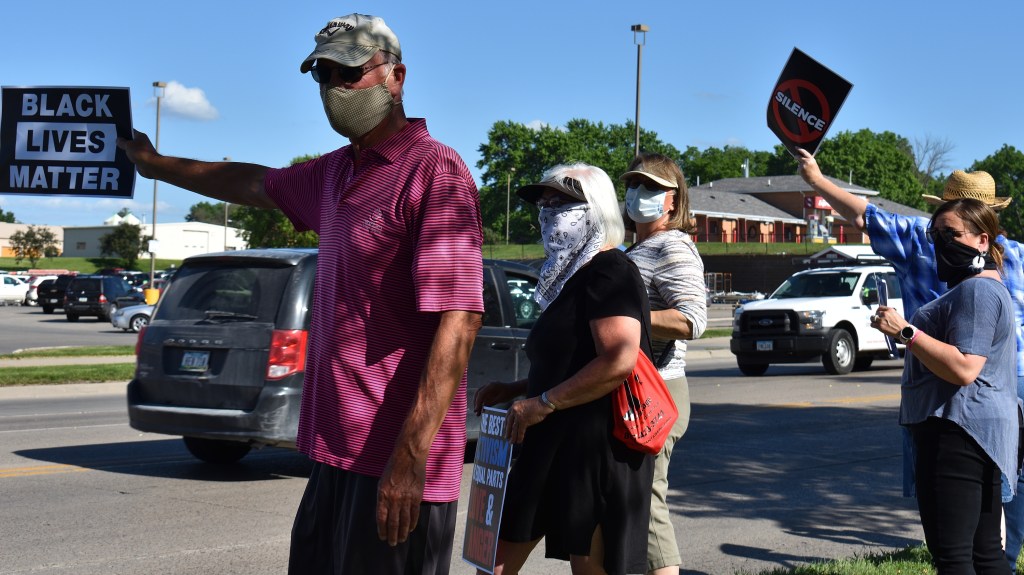
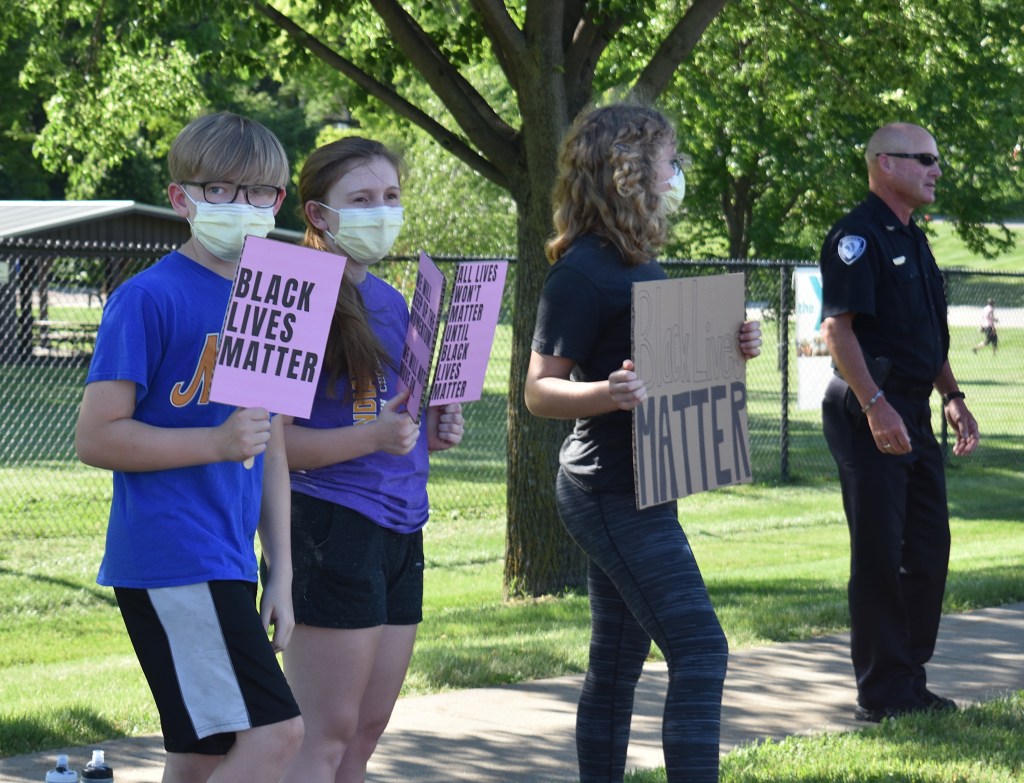
It is amazing to see thousands of people who have gathered together, marched together to demand the end to structural racism and White superiority that leads to the violence against, the killing of people of color by police. Diverse crowds have turned out daily since the public lynching of George Floyd in Minneapolis, on May 25, 2020. These sustained demonstration are occurring not only in large cities, but smaller cities and towns. Around 100 people demonstrated in Indianola, Iowa, where I live last night. Indianola has a population of almost 17,000 with a black population of one tenth of one percent (0.10 %).

This support in small cities and towns is crucial because that is where many of the changes in policing and criminal justice need to take place.

Education, mainly of white people, is an important part of creating change. Yesterday the Friends Committee on National Legislation (FCNL) held a ZOOM meeting described below along with the recording of that meeting.

There will be no justice until our country confronts the destructiveness of white supremacy that devalues black lives. George Floyd’s murder by the police and the protests happening all over the country and world cry out for urgent action. This week, FCNL’s José Woss, lead lobbyist for criminal justice and election integrity, and co-chair of the Interfaith Criminal Justice Coalition, will join Diane Randall to discuss racism and policing in America.

Friends Committee on National Legislation (FCNL)

White people need to

  • Educate ourselves
  • Listen to black people
  • Show up at protests
  • Have conversations with other White people

At the local level changes in policing can include evaluating training of police officers, policies related to use of force and explicit bias training.


Following are actions to be taken at the Federal level.

America needed police reform before November 22, 2014 when Tamir Rice was shot in his front yard while he was playing with a toy gun. America needed police reform before May 25, 2020 when George Floyd was killed when a police officer knelt on his neck for more than eight minutes. America needs police reform now!

Write your member of congress and ask them to take swift action in response to ongoing fatal and racist police killings and other violence against Black people across our country. Urge them to cosponsor :

  • The End Racial and Religious Profiling Act (S. 2355): Bans federal, state, local, and tribal law enforcement agencies from using race or religion to influence police stops, searches, and immigration proceedings.
  • The PEACE Act (H.R. 4359): Establishes a national “necessary” use of force standard to prevent police officers from using lethal force unless all non-lethal methods have been exhausted.
  • The Eric Garner Excessive Force Prevention Act (H.R. 4408): Makes it illegal for police to use any hold or grip that blocks the throat or windpipe. The sort of choke holds that police used to kill Eric Garner and George Floyd.
  • The Stop Militarizing Law Enforcement Act (H.R. 1714): Would stop military hardware from flowing into the hands of civilian law enforcement agencies by ending the 1033 program.

Urge your members of congress to cosponsor these bills and be a champion for racial justice and equitable policing.


There is a tool at this website that helps you compose a letter about these issues, and will then send your letter to your Senators and Congressperson.

https://fcnl.quorum.us/campaign/25330/

This is what your letter will look like. You can make any changes you want.


Help Demilitarize Law Enforcement

I am deeply concerned by the death of George Floyd, and so many Black Americans at the hands of the police. Our country and our community needs police reform now.

Please take swift action in response to ongoing fatal police killings and other violence against Black people across our country. There are a number of bills before Congress right now that can begin to address the broken American policing system:

  • The End Racial and Religious Profiling Act (S. 2355), proposed by Sen. Ben Cardin, bans federal, state, local, and tribal law enforcement agencies from using race or religion to influence police stops, searches, and immigration proceedings.
  • The PEACE Act (H.R. 4359), proposed by Rep. Ro Khanna (CA-17), would establish a national “necessary” use of force standard. This would prevent police officers from using lethal force unless all non-lethal methods have been exhausted.
  • The Eric Garner Excessive Force Prevention act (H.R. 4408), proposed by Rep. Hakeem Jeffries, would make it illegal for police to use any hold or grip that blocks the throat or windpipe. The sort of choke holds that police used to kill Eric Garner and George Floyd.
  • The Stop Militarizing Law Enforcement Act (H.R. 1714), proposed by Rep. Henry Johnson (GA-4), would stop military hardware from flowing into the hands of civilian law enforcement agencies by ending the 1033 program.

I urge you to cosponsor these bills and others like them. We must stand together against racial injustice and work with all levels of government to build systems that repair the damage these broken policies have caused and create a new system based on equality.

Based on your address, your letter will then be emailed to your Congressional representatives. So far 7,060 such letters have been sent.


Posted in Black Lives, Quaker, race, Uncategorized | Tagged | Leave a comment

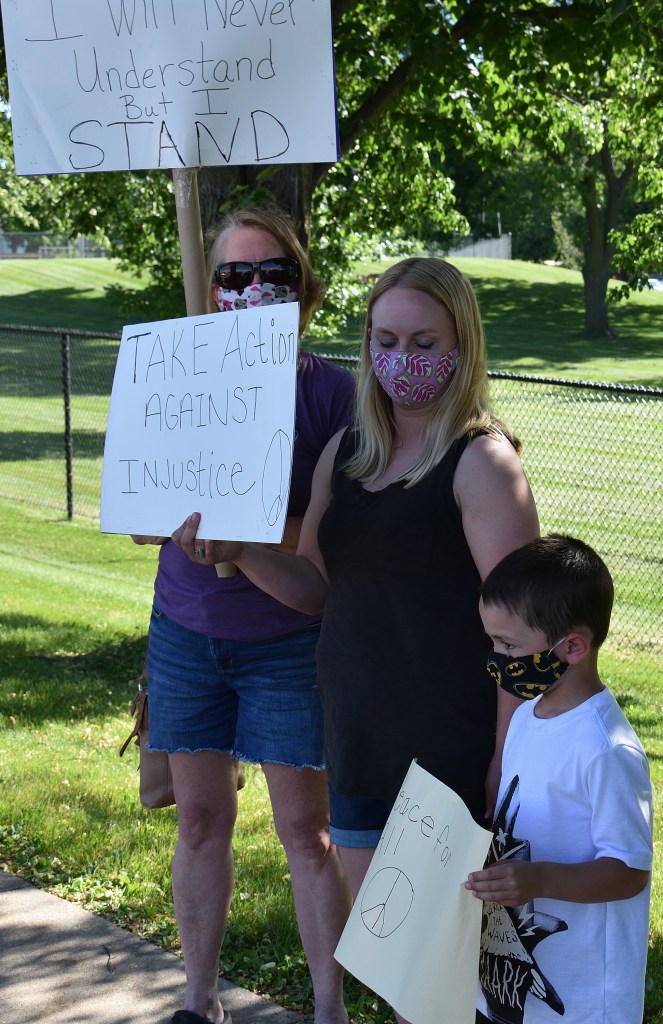
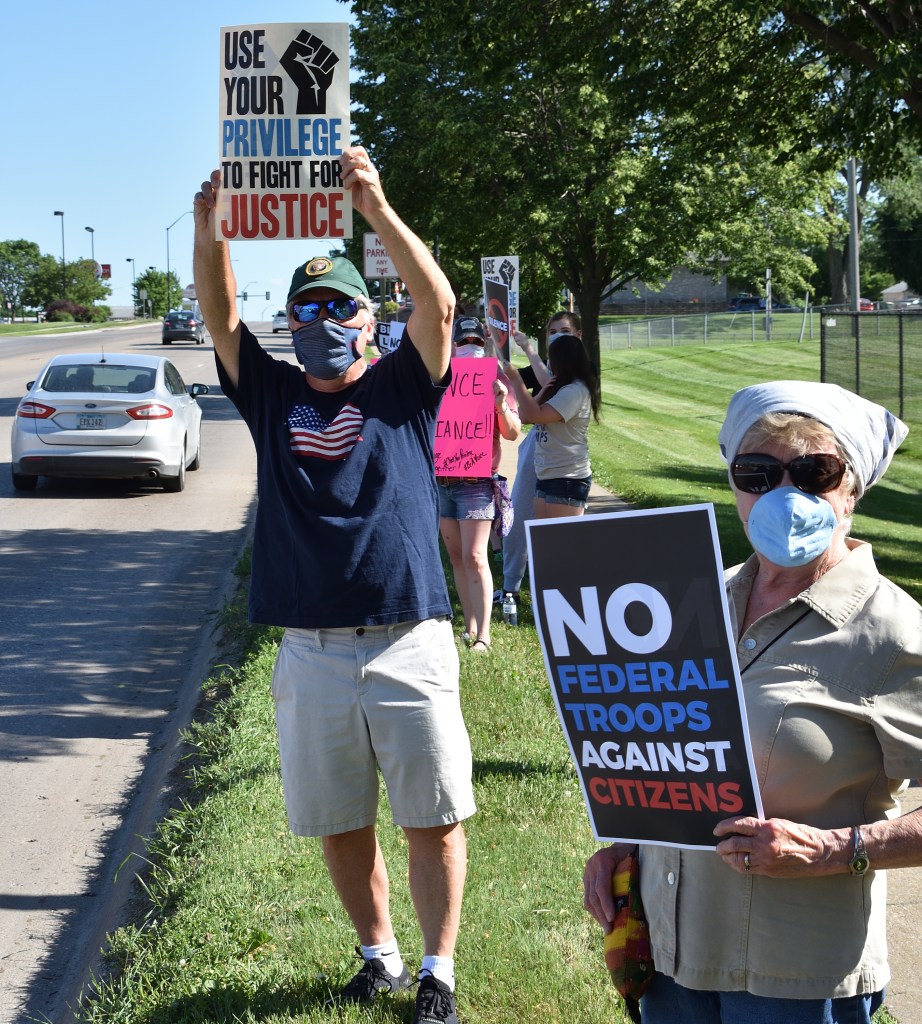
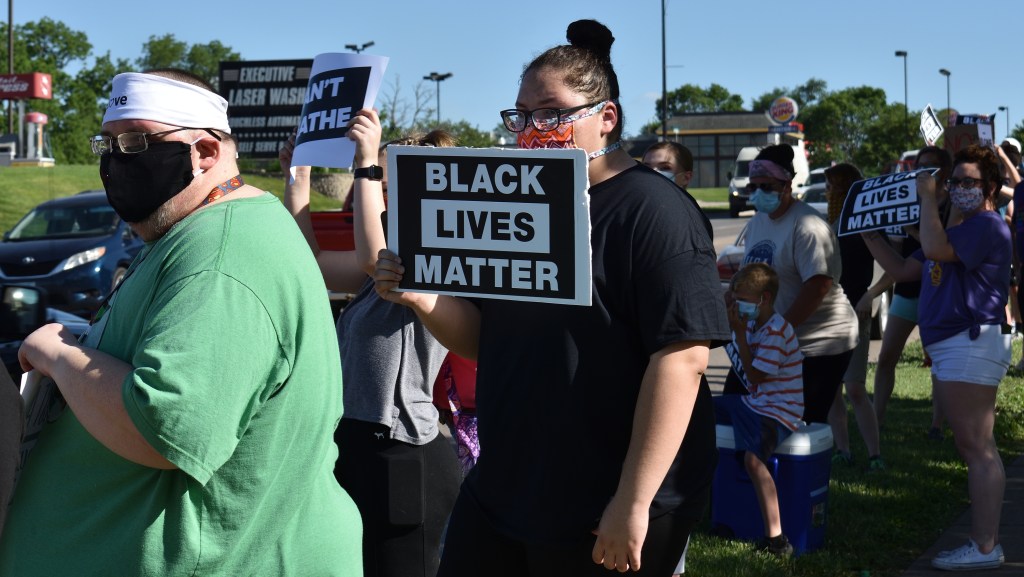
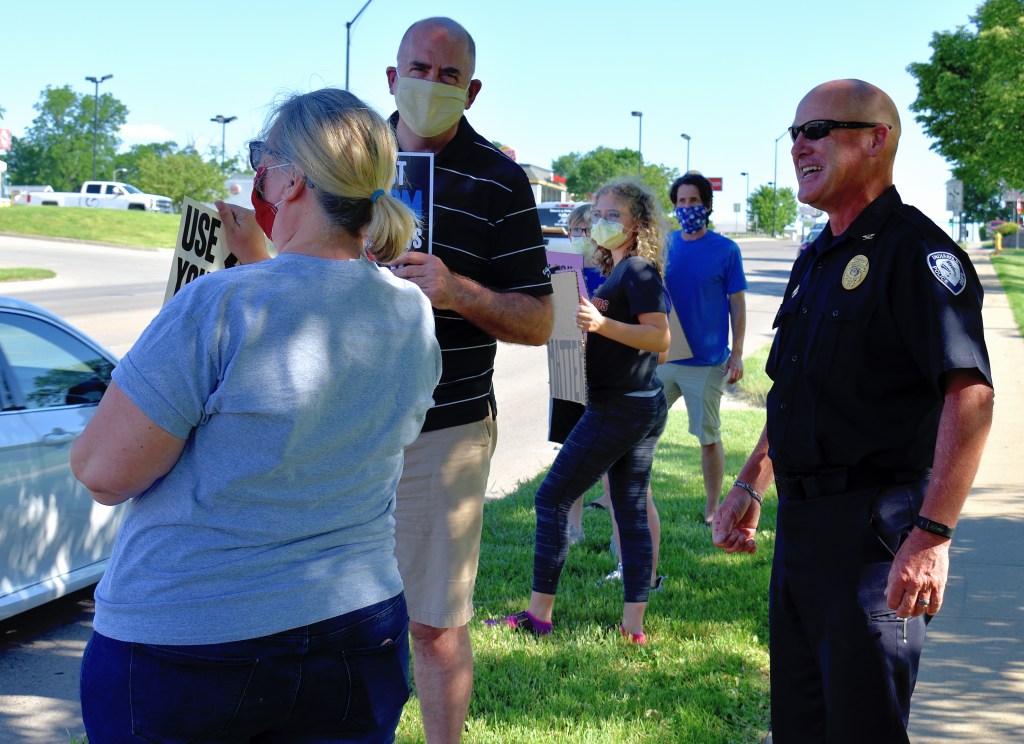
Support for racial justice comes to Indianola, Iowa

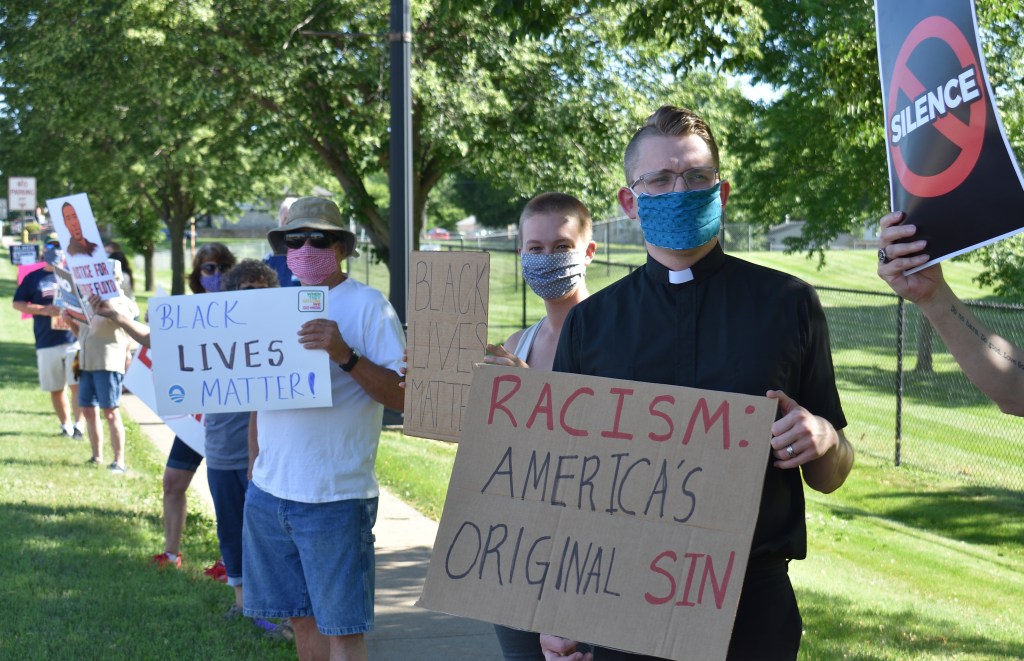
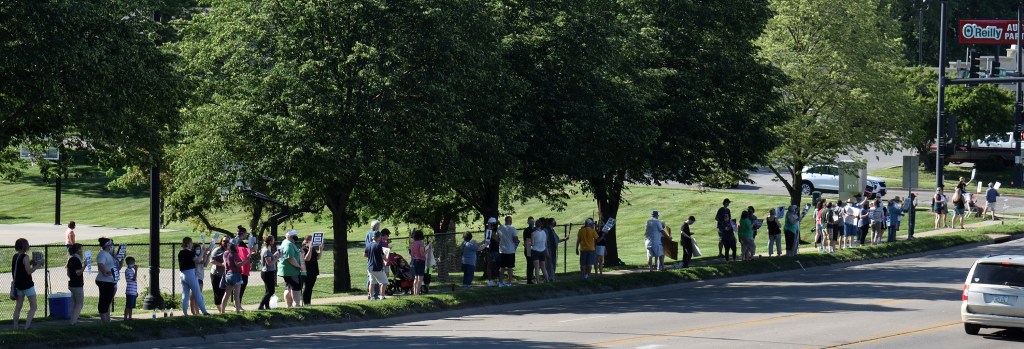
It is amazing to see thousands of people who have gathered together, marched together to demand the end to structural racism and White superiority that leads to the violence against, the killing of people of color by police. People have turned out daily since the public lynching of George Floyd in Minneapolis, on May 25, 2020.

At the same time the increasing authoritarianism of the president and Republican party has seen a variety of tactics to deny the demonstrators their First Amendment rights.

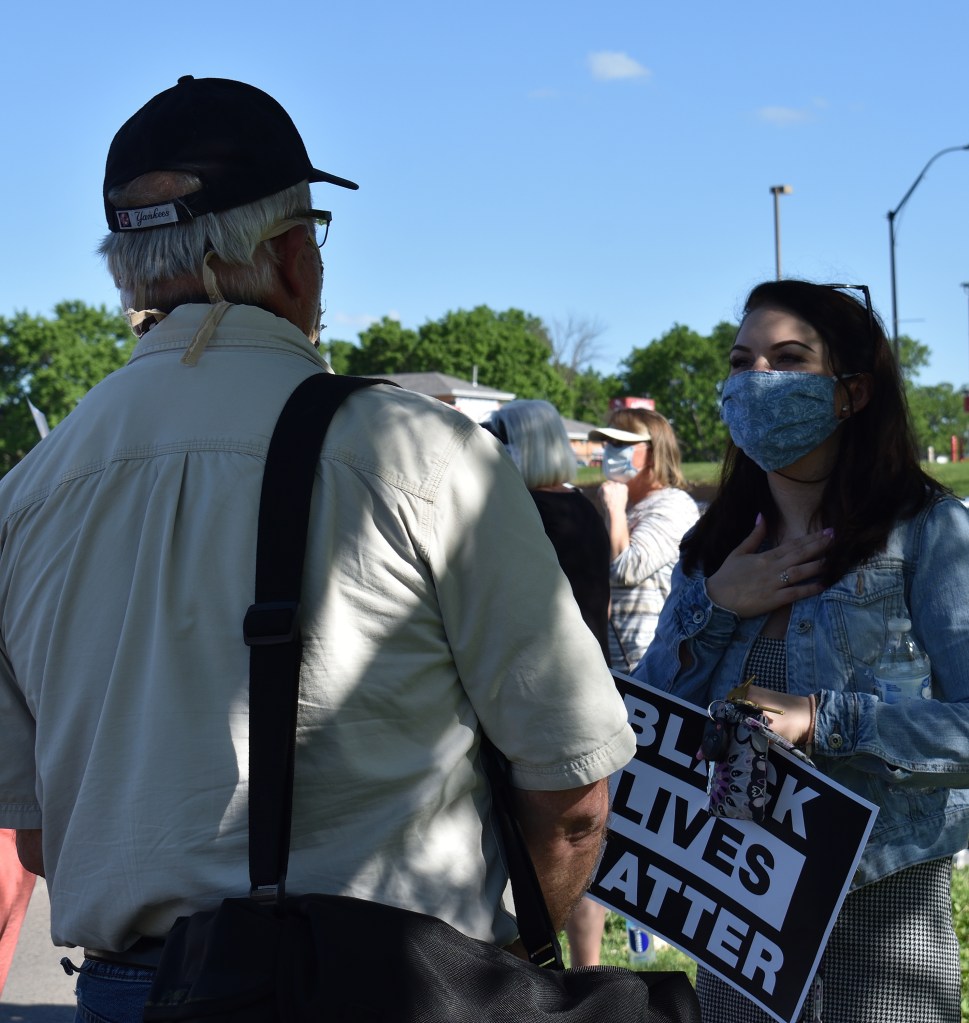
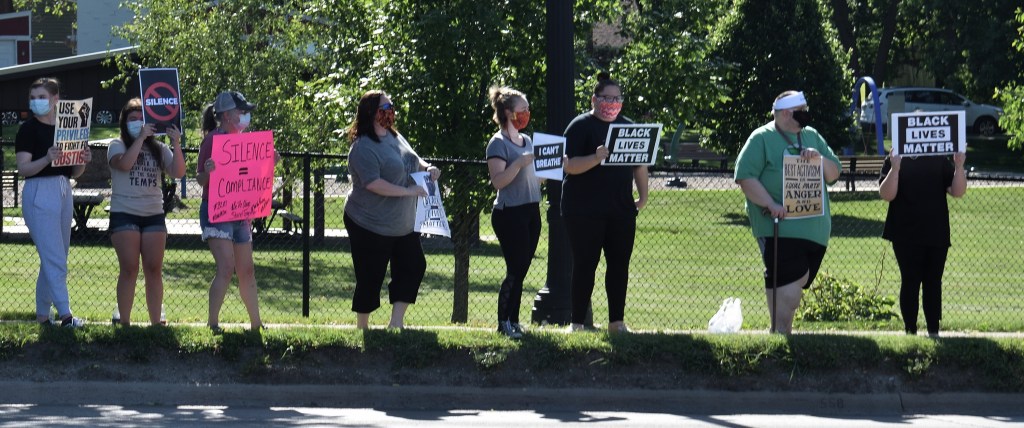
This evening nearly 100 of us gathered on the streets of Indianola, Iowa. Organized by Indivisible Warren County. Indianola has a population of almost 17,000, 0.10% of whom are black.

More photos I took today can be seen here: https://1drv.ms/u/s!Avb9bFhezZpPiqBEZnvVTZXLiS-l7A?e=xeXhXO


{Addendum] I have written lately about the tension I had been feeling about participating in demonstrations like this. At first, I wrote I felt rather than do so, I should concentrate on my work with indigenous people I have established relationships/friendships with over the past three years. There was a factor I hadn’t written about before involved with that decision, which is I restrict how often and far I travel by car for environmental reasons. I haven’t owned a car for most of my adult life. I was able to walk to this demonstration today, taking care of that objection.

Posted in Black Lives, decolonize, Uncategorized | Leave a comment

Environmental news

While our attention is focused on police violence, authoritarianism, and the coronavirus pandemic, environmental disasters continue.

Waterways near Russia’s Siberian city of Norilsk have been rapidly polluted by a spill last Friday of more than 20,000 tons of diesel fuel. On Wednesday Russian President Vladimir Putin declared a state of emergency.

A diesel tank ruptured at a thermal power plant, according to a statement by the city’s main employer, metals miner Nornickel.

Melting permafrost from abnormally warm temperatures is believed to have caused a collapse of a structure that had been supporting the tank, the company said. How ironic is this, that a new environmental disaster was caused by warming air temperatures from greenhouse gas emissions?

Melting permafrost will continue to damage infrastructure. In addition, vast quantities of carbon dioxide and methane are being released as permafrost melts. This will increase the rate of rising global air temperatures.

In other news, construction of the Keystone XL pipeline is occurring even as permits for it to cross waterways have been invalidated.

WASHINGTON (Reuters) – A U.S. appeals court in California on Thursday declined to suspend a lower court’s ruling that canceled a national environmental permit, in a decision likely to delay pipeline projects, including the Keystone XL oil pipeline.

The U.S. Court of Appeals for the 9th Circuit said in the ruling that the appellants, the Army Corps of Engineers and TC Energy Corp (TRP.TO), “have not demonstrated a sufficient likelihood of success on the merits and probability of irreparable harm to warrant a stay pending appeal.”

The Army Corps and TC Energy had sought a stay of an April 15 ruling by Chief U.S. District Judge Brian Morris of the District Court in Montana that canceled the so-called Nationwide Permit 12, which allows dredging work on pipelines across water bodies.

Morris said then that the Army Corps did not adequately consult with the U.S. Fish and Wildlife Service on risks to endangered species and habitat when it renewed the permit in 2017. To allow the agency to continue authorizing new pipeline construction “could seriously injure projected species and critical habitat,” Morris said in the decision.

It was the latest setback for the Keystone XL pipeline, which has been pending since 2008. Keystone would take heavy Canadian oil from Alberta to refineries and ports on the Gulf of Mexico via connections in the U.S. Midwest.

Keystone XL pipeline likely to face delays after U.S. court denies stay by Timothy Gardner and Rod Nickel, Reuters, May 28, 2020

NOTE: An excellent source of news related to pipelines, the Facebook group Pipeline Watchdogs: Monitoring Constructions and Operations is constantly updated by Mahmud Fitil , who walked with us during the First Nation-Farmer Climate Unity March, September, 2018.

#ClimateEmergency
#DefendTheSacred
#StopTransCanada
#WithTheseHands
#NoManCamps
#Decolonize
#CancelKXL
#MníWičóni
#NotMeUs
#NoKXL
#MMIW

The struggles of the Wet’suwet’en peoples in British Columbia to stop the construction of pipelines on their territories continues.

The RCMP were scheduled to vacate the Community Industry Safety Office (CISO) in March of this year.

Removal of the temporary detachment (CISO) was a precondition for discussions between the Hereditary Chiefs and the provincial and federal governments.

They have continued to trespass and not act in good faith while facilitating genocide on our territories.

We expect them to remove the detachment as they have proven clearly they cannot be responsible for the safety of our territory and our people.

Wet’suwet’en Access Point on Gidimt’en Territory 6/2/2020

#EvictRCMP #WetsuwetenStrong #NoTrespass #WedzinKwah

Meanwhile there has been a diesel oil spill at the construction site, where activity was supposed to stop pending discussions with the Hereditary Chieft.

Posted in Uncategorized, Wet’suwet’en | Leave a comment

Inactive Activist

This past week has me questioning what I should be doing. I guess I’ve been feeling I was on the right path for me for some time, and it’s disconcerting to not be so sure now. I know times of conflict, times when mistakes are made are the times when we grow. But I almost wish I could jump across this uncertainty to the other side. This floundering in the uncertainty is what is required though. There aren’t shortcuts for these struggles. Rather, the only shortcut is to not engage in the struggle, to the detriment of your Spirit.

The combination of my love of photography and activism has been a creative inspiration for many years. For me photography often expresses justice concepts and actions in ways words cannot. And photography is a way for me to contribute to the work of communities I would like to become part of. I’ve learned it is essential for me to listening deeply, and take the lead from those experiencing injustice. Photojournalism is a gift I can offer without inserting myself. The photos can be welcome, or not. I have learned it is important to be aware of the concept of cultural appropriation, though. Not to use images in ways not welcome.

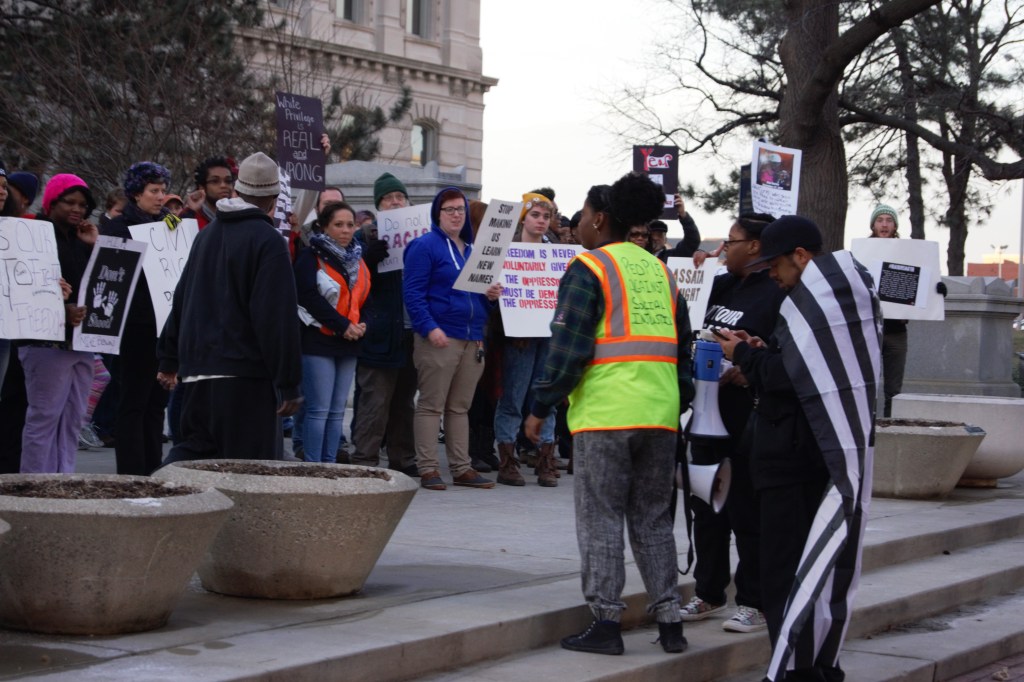
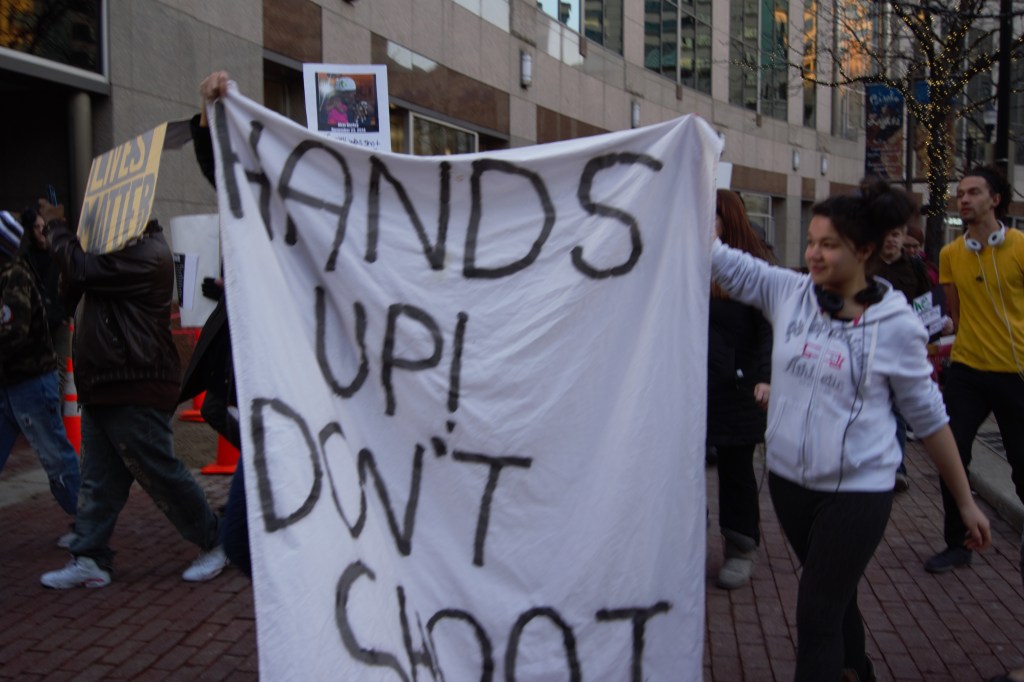
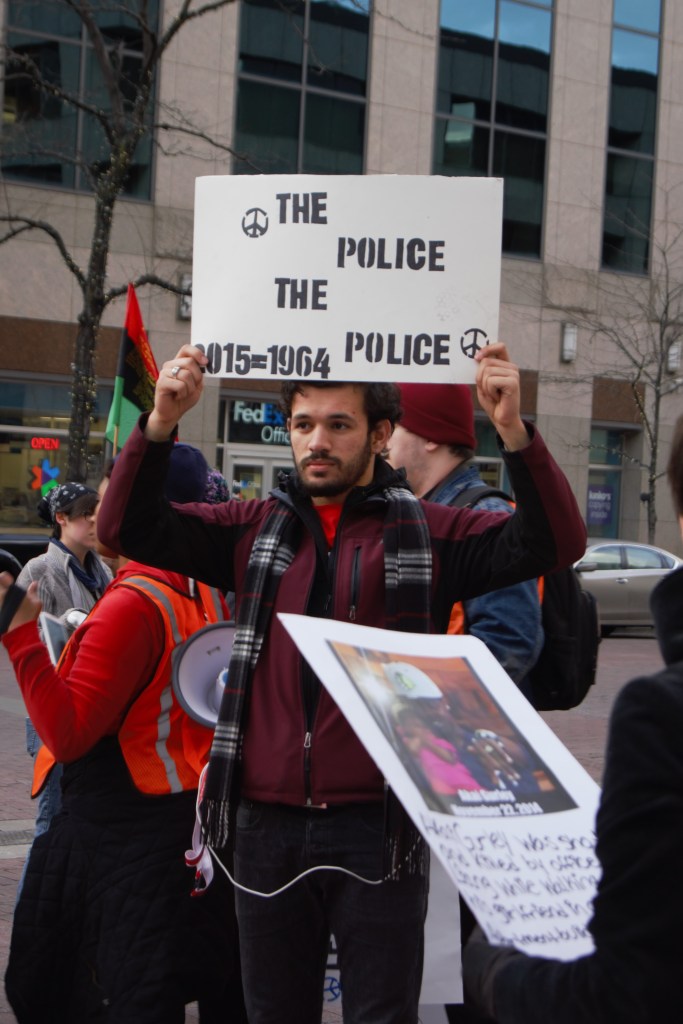
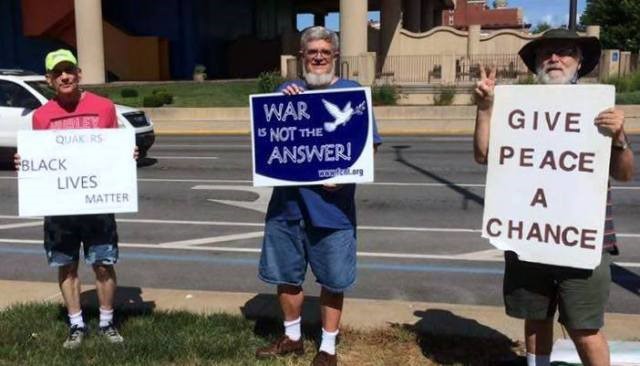
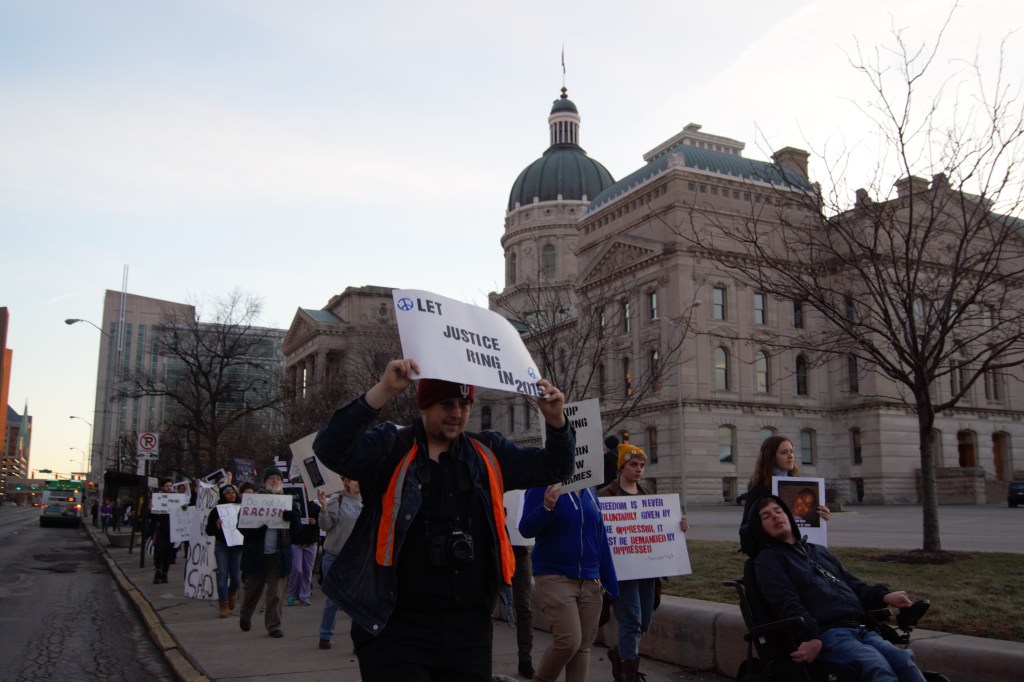
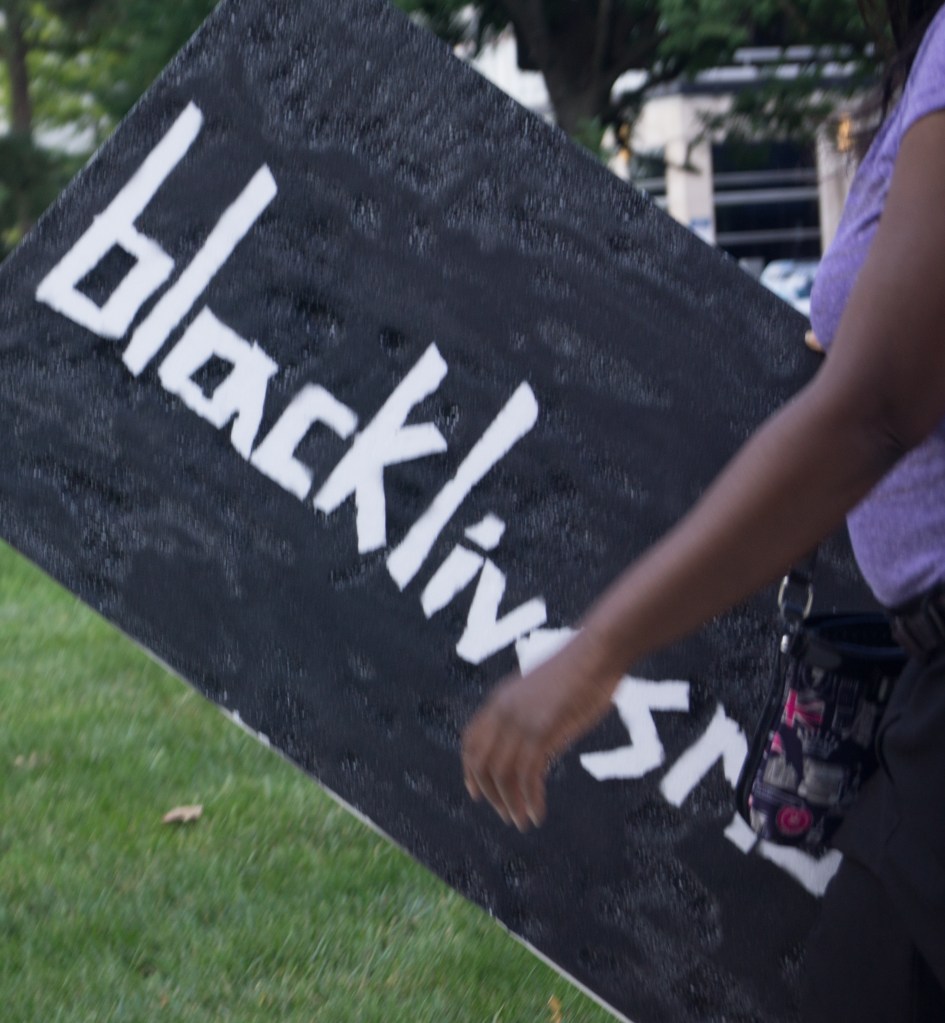
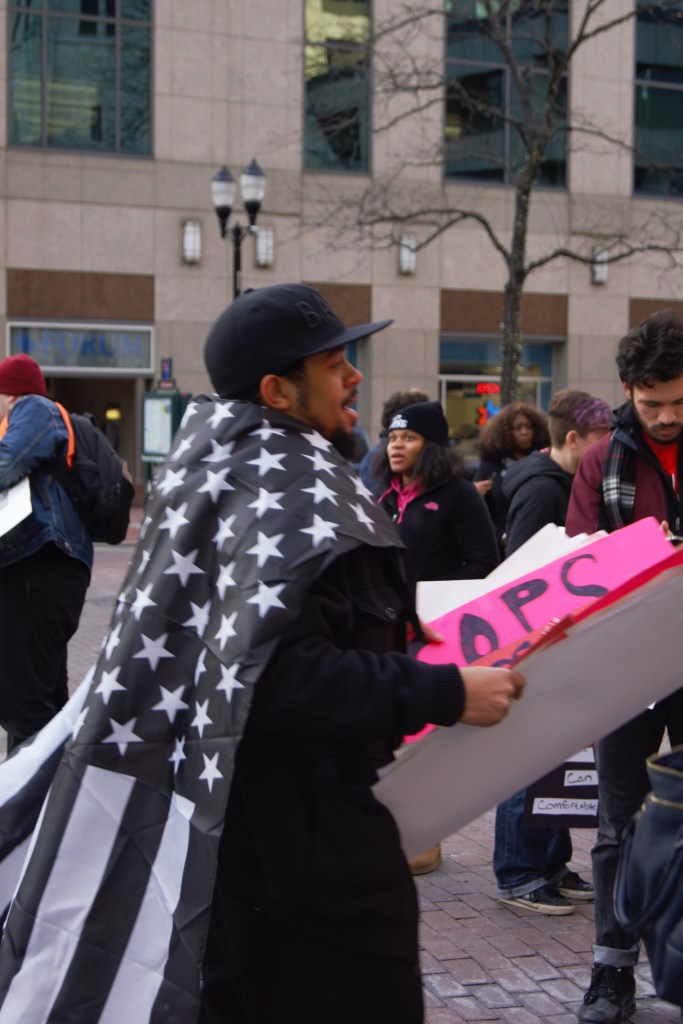
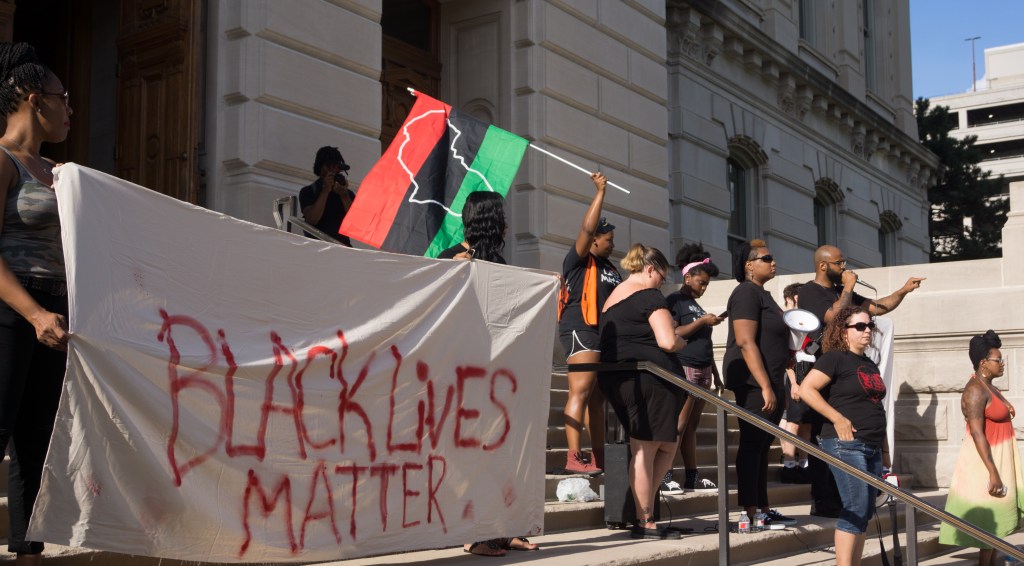
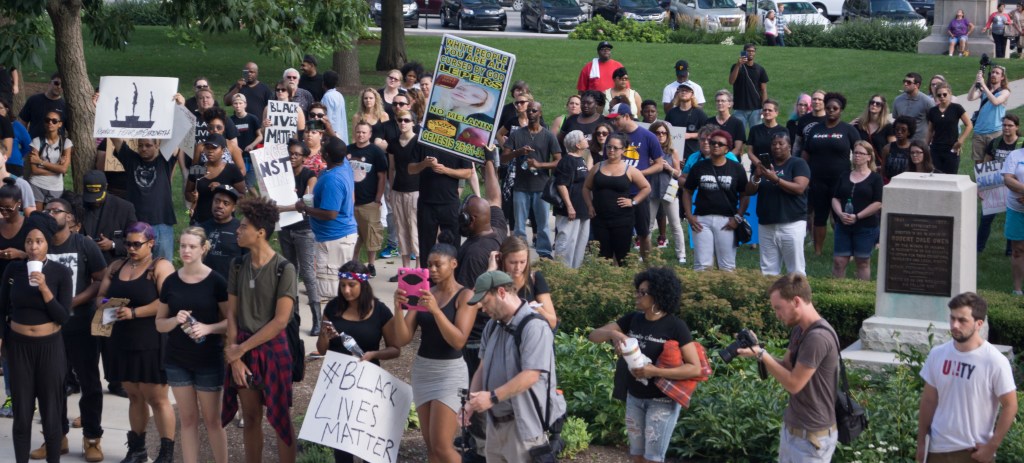
In the past, if there was a public justice event, I would be there, taking photos and doing whatever else was asked of me by those in the lead. I feel this strong urge to go to Des Moines to participate in, and photograph the Black Lives Matter/police violence rallies. At the end of this are photos I took at Black Lives Matter actions in Indianapolis several years ago. Then I was peripherally involved with Indy10, the Black Lives Matter group in Indianapolis. At the end there is also a story about taking a “Quakers-Black Lives Matter” sign to a weekly peace vigil in Indianapolis.

I think the demonstrations now are even more consequential because they confront the increasingly authoritarian actions of the president and Republicans. These days I often think of the concentration camps, the killing of six million Jewish people, that happened because the German citizenry didn’t stop the Nazis. I hope the massive demonstrations occurring now can turn back the authoritarianism here.

The other challenge with activism is where does change happen? I believe most often it happens with years of struggle. A good Quaker friend has actually been working for years on racial and policing issues in Minneapolis. I would like to think all that work helped create the possibilities for the changes that might happen now as a result of the killing of George Floyd. One thing about activism is you might never know the effect of something you have done.

Likewise, I’ve spent the last four or five years leaning about/from indigenous peoples. It has been a slow but very rewarding process to build these connections and friendships. This is the work I’m called to do these days.

I guess the question is whether we can or should concentrate on our individual work, and/or also join the larger public actions. My mind is saying go to the demonstrations, but my Spirit is saying maintain your focus on the decolonizing work. If the authoritarianism gets much worse, I think that might change. The title “Inactive Activist” might really mean where to focus your activism. Part of this might also relate to how much energy you have, and the best way to use that energy.

My friend Kathy Byrnes has written an excellent article related to these ideas and the killing of George Floyd: Officers kneel with protestors at George Floyd action.


6/11/2016

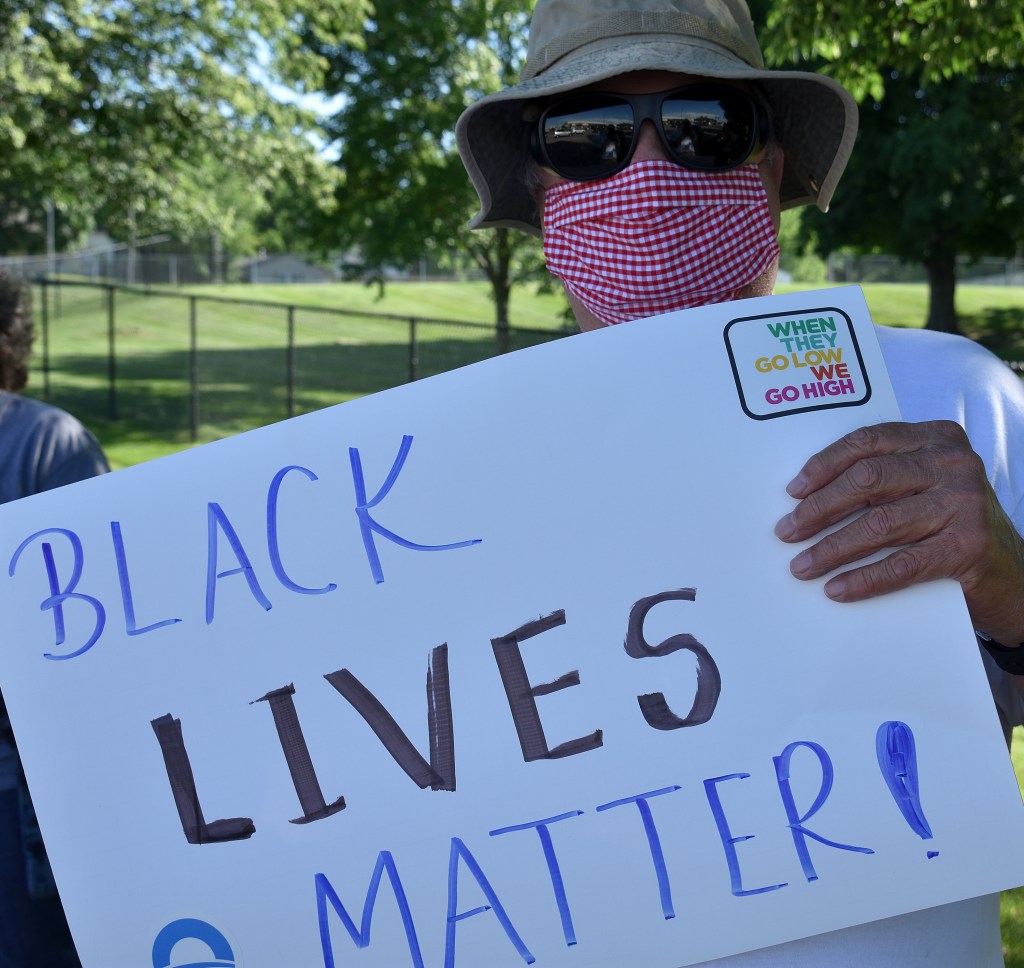
I had a more recent experience that was uncomfortable when I began to take a Black Lives Matter sign to our weekly peace vigil in downtown Indianapolis.

Taking that sign out in public renewed those old feelings of discomfort. I was really unsure of what the reaction of either white people or people of color would be. But I had no question about being led to make and display the sign. I know because I tried to talk myself out of it, and every time the spirit said ‘no, you have to do this.’ The second time I used the sign, I ended up in the middle of thousands of Black people who were downtown for the annual Black Expo event. I thought I really should turn around that day, but again the spirit said ‘keep going.’ I was really unsure of how that would turn out, but was surprised by the numerous indications of support from those in the crowd. The more common reaction were puzzled looks.

At the vigil, I was surprised at the number of times people driving past would honk their horns, or people would shout support and wave their hands. Many took pictures with their phones.

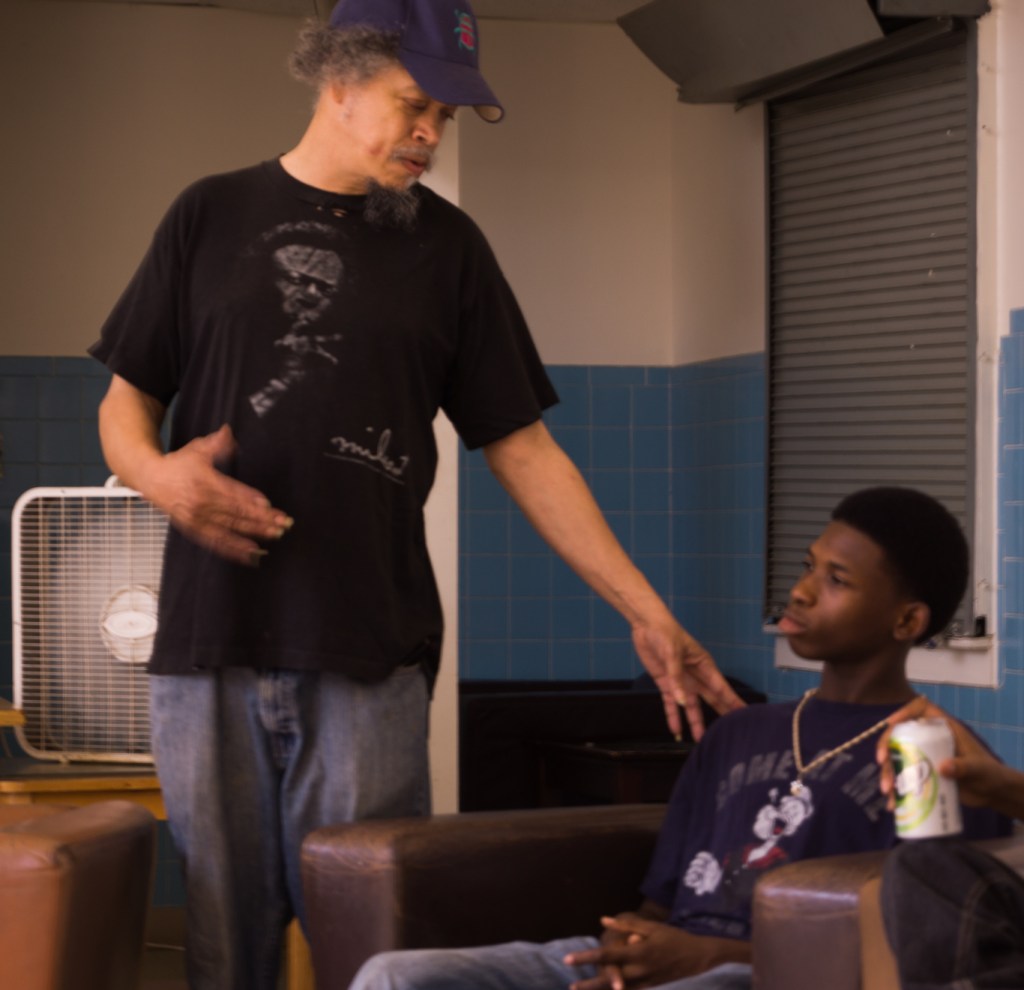
Once a young Black man stopped and said “a white man holding a Black Lives Matter sign”. I said, “yes, a white man holding a Black Lives Matter Sign”. He started to go away, but returned and asked “why are you doing it?” I told him about the Kheprw Institute (KI) that mentors Black youth that I had been involved with for several years now. And how those kids had become friends of mine. And I want a better life for them. He nodded, then said it was a brave thing to do. I only mention this to show how other people might see what you do in public. He went on to say how he felt justice had to be grounded in faith, and I agreed with him.

That exchange brings up questions of why you would participate in a vigil. In the case above about Black Lives Matter, I felt the implied question, directed at white people, was “do you think Black lives matter?” when people of color held those signs or said that in public.

I felt it was important that white people answer that question, publicly. Where else these days do we have opportunities to discuss these things? You rarely see such stories on television or in newspapers.

https://kislingjeff.wordpress.com/2018/06/11/activism/

Posted in Black Lives, Kheprw Institute, Uncategorized | Tagged | 2 Comments

Lessons from Digital Smoke Signals

Myron Dewey of Digital Smoke Signals offers excellent advice regarding using social media on the front lines. He shares his experience from Standing Rock. Offers support for those on the streets and using social media related to the uprisings resulting from the killing of George Floyd.

He says some of tribal leaders are afraid of making the White man mad. The last time the authorities came to his land, they shot an killed his cousin.

Escalation at Standing Rock. As soon as Tiger Swan came, things changed. The frequency that was coming into Standing Rock, the spiritual power, made it easy to identify infiltrators.

In the Black Live Matters today you will also have infiltrators, who incite violence. Things are being set on fire.

If it feels like the peak of escalation now, it’s not. The president does not have the tools to deal with this because of his ego. The White Supremacists have already infiltrated the movement.

What you will see as more infiltrators arrive is they will gradual move to the front, pushing the peaceful protesters further and further away. They will remove their names from their uniforms.

When he was crossing the border from Mexico I was detained and questioned for nine hours in El Paso. They lied, brought other interrogators in. They kept his phone. So there was no accountability for them.

There was a woman who wanted to show solidarity, to help but she was bound by her, position and afraid.

This is what will happen to you if they have the time. They will abuse their position and abuse the Western courts.

Standing Rock was very unique because they could highlight what was wrong. The violated the treaty at Standing Rock. They violated the sacred burial sites. This culture has no honor in their forefather’s promises.

Then if we go into court, go in for protecting the water, then it is the Western law. They don’t protect the water, they don’t protect the sacred, the earth in that court. As he walked into the court he knew he would get no justice because the judge and jury were no native. His lawyer was non native. His charge there was documenting the hired Dakota Access mercenaries, Tiger Swan. His charge was stalking infiltrators.

They will come after you. They will surge, chase you, and you will have to run. You have to be creative in the way you document them,

They will take your camera, take the SD card, take and damage or lose your phone. And don’t think if your phone is locked that it is safe. They have a “gray key” to get authentication keys.

They also have Sting Ray technology. You may see a van or look above at the towers. The technology downloads your phone texts.

There is law that looks like it will pass in the Senate to allow the capture of your geolocation for contact tracing related to COVID, but will also be used to track you.

Have a phone number written on your arm to call a contact so you can get representation if you are detained. They will take you to jails hundreds of miles away, you won’t know where you are. They do these things to wear you down.

We had world support, helping the people on the ground. They are going to be protected when they do harm, like the officer who did harm to Floyd.

You have to be mindful of where you are, of your surroundings. Don’t let you ego get ahead of your smarts. You’re there to document the injustice, but also the beauty.

Posted in #NDAPL, Arts, Indigenous, Uncategorized | Leave a comment

What can I do?

I am glad to have received the following email message this morning.

I’ve been struggling. I was wondering if you were going to write anything about the recent protests and being Quaker? I obviously support BLM but I am struggling to justify the violence happening in cities. I understand the reasoning behind it but I don’t know what to do. I’m a nontheist quaker. And was raised nontheist quaker and so I don’t have any prayers to believe in as your most recent post suggests. Do you have any suggestions for me?

I’ll try to answer these questions.

Some years ago I was able to hear the indigenous spiritual leader, Arkan Lushwala, speak. He eloquently expressed what I, too, believe.

“Everywhere people ask, “what can we do?”
The question, what can we do, is the second question.
The first question is “what can we be?”
Because what you can do is a consequence of who you are.
Once you know what you can be, you know what you can do.”

I’m going to try to explain how I’ve answered these questions in my life.

The person who sent the email above says she is a nontheist quaker. I believe in the Spirit and always seek guidance from God. Hopefully how I put that guidance into practice might be helpful to those who don’t believe in God.

The first question is what can we be, who am I?

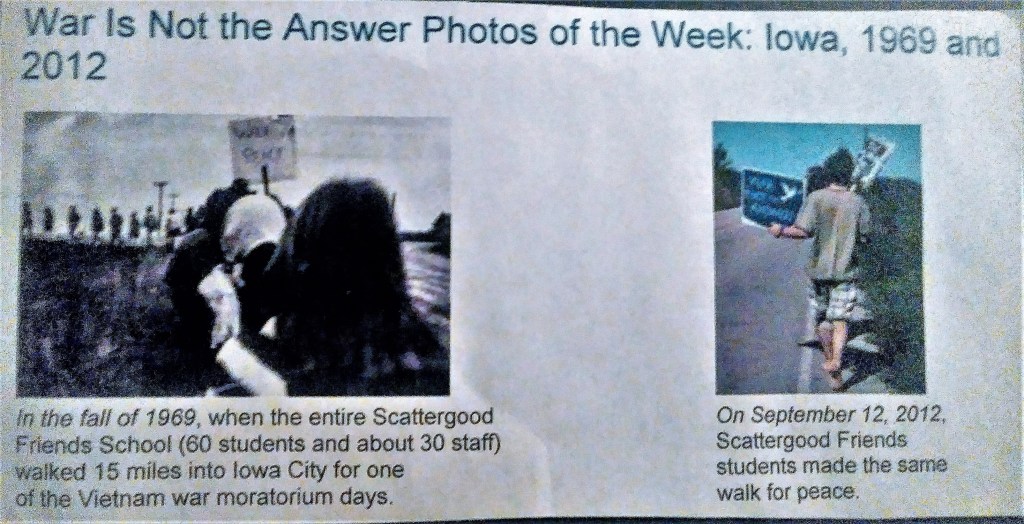
I am a white Quaker, born into a rural Quaker community in Iowa. I was greatly influenced by the Quaker men who went to prison because of their refusal to participate in a peacetime draft. That taught me that it is crucial to act according to your beliefs, despite the consequences. When I came of age, I became a draft resister.

Another piece of who I am is rooted in protection of our environment. Raised on farms gave me a connection to the land. Family vacations in the Rocky Mountains were awe inspiring. I moved to Indianapolis when I was 20 years old (1970) and was horrified by the smog (this before catalytic converters). I had a terrible vision of my beloved mountains hidden behind clouds of smog, which made me refuse to own an automobile for the rest of my life.

I heard stories of Quaker involvement in the Underground Railroad. I witnessed the treatment of people of color during the civil rights struggle. Was inspired by Martin Luther King, Jr.

And learned the terrible history of the genocide of indigenous peoples by White settlers.

The answer to who am is a Quaker, an environmentalist and protector of Mother Earth, a draft resister, someone radicalized to work for peace, racial and indigenous justice.

As Arkan says above, “what you can do is a consequence of who you are.
Once you know what you can be, you know what you can do.

Being a Quaker means working for peace. What I did as a result is turn in my draft cards, and work for peace as the occasions arose. Several years ago I helped arrange for Quakers working in North Korea to come to Iowa to tell us about their work. This built on a visit of North Koreans involved in agriculture who came to our Quaker meeting community some years ago.

Being an environmentalist and protector meant I lived by life without an automobile. And led me to be trained to organize and execute actions against the Keystone XL pipeline. And to use that training to help organize events related to the Dakota Access pipeline. Led to delivering a petition to the Morgan Stanley office in Indianapolis, asking them to stop funding fossil fuel projects. And to defunding Chase bank for the same reason. My meeting in Indianapolis also closed its Chase account. And to participate on the First Nation-Farmer Climate Unity March (more below).

My concerns about racial injustice lead me to join in the work of the Kheprw Institute, a black youth mentoring community.

And for some years now I’ve been building relationships/friendships with indigenous people. Two years ago I marched 94 miles over eight days along the path of the Dakota Access pipeline through central Iowa. Since then I’ve done things to support my native friends. Most recently attending and writing about a program of my friend Christine Nobiss, of Seeding Sovereignty called SHIFT the Narrative.

What can I do?

In these tumultuous times, many who support racial justice, those against police killings, want to express their solidarity. Want to be on the streets. I am grateful to those who are doing so. I am definitely not saying it is not important to participate in these struggles today related to racial justice.

But that isn’t what I am called to do. I am called to continue these past years of work to build relationships with and support native peoples.

Whatever you are wondering about doing, if you haven’t already thought this through, it is important to clearly define who you are. Then you can answer the question, what can I do?


Action is extremely necessary at this time.
This is not a time just to talk about it.
The most spiritual thing now is action.
To do something about what’s happening.
To go help where help is needed.
To stand up when we need to stand up,
and protect what is being damaged.
And still, this action needs to be born
from a place in ourselves that has real talent,
real intelligence, real power,
real connection to the heart of the Earth,
to universal wisdom,
so our actions are not a waste of time.
So our actions are precise,
our actions are in harmony with the movement,
the sacred movement,
of that force that wants to renew life here on Earth
and make it better for the following generations.

Arkan Lushwala

Posted in Uncategorized | Leave a comment

Believe in my prayers

This has been a week of uprising against failed political and economic systems. Against systemic racism.

For years I have been led to spend time learning from black and native people who have become my dear friends.

My spiritual life has grown in new and profound ways as a result.

I continue to believe, and have witnessed, that sharing our stories with each other is how change happens. That often takes a lot of time. And requires us to be vulnerable, because that is the only way we can expose our heart to others. As we see their heart as they share their vulnerability.

I understand the frustration of those who say we don’t need thoughts and prayers. A friend mentioned that calls for peace are often taken to mean return to normal. Calls for thoughts and prayers might be interpreted the same way. I have been working for, writing, and talking about our failed political and economic systems and racism for years. I definitely do not want a return to normal.

Listening to a discussion among indigenous women recently I heard “I believe in my prayers.”

I realize there have been times when I did not believe in my prayers. I’m paying attention to that now. Working on believing my prayers for the creation of Beloved communities, out of the current chaos, will help bring that about.

My friend Imhotep Adisa, of the Kheprw Institute in Indianapolis recently said:

“First and foremost, all of us, every last one of us, must engage others in our work, home and play spaces to have honest, open and authentic conversations around the issue of inequity. Some of us, particularly those in positions of power, must have the courage and strength to look more deeply at the inequitable structures that exist within their own organizations and institutions.”


Posted in Indigenous, Kheprw Institute, Uncategorized | Leave a comment

Sorrow

I’m feeling a deep sadness this morning. And uncertain about what to do about it. This is one of the times I’m perhaps writing mainly for myself.

I don’t believe we can make any progress on justice issues until we confront the enslavement of black peoples, the genocide of native peoples, and the ongoing oppression and racism.

These days of rage triggered by the public execution of George Floyd are an eruption of the anger from centuries of the continued enslavement of people of color in this country. Iron shackles have been replaced with political and economic systems designed to continue enslavement by these means.

Following is a story I wrote yesterday.

I would really rather stay out of this but that would be the kind of silence that is complicit with not confronting racism. I will only speak from my own experience. I sought out, and built relationships with my friends at the Kheprw Institute when in Indianapolis. Those relationships involved spiritual connections from the first meeting.

I would spend at least one Sunday a week there for several years. The first time I began to really get even a tiny insight into what it is like to live as a black person in the U.S. white society was when I was in a discussion with a woman who broke down in tears and could barely speak about how terrified she was every time a child of hers left the house. How terrified she was until they returned. And it was obvious that every single person of color in that group knew exactly what she was saying/feeling, shared that terror themselves.

That was a visceral blow to me. Even from my privilege as a white person, I never felt the same after that experience.

White people get upset about violence in terms of rioting, etc, but that is mainly about physical violence to material objects.

But that relentless, second by second terror for the safety of your loved ones is a terrible thing to bear. A terrible violence.

ALL THAT WE ARE IS STORY

From the moment we are born to the time we continue on our spirit journey, we are involved in the creation of the story of our time here. It is what we arrive with. It is all we leave behind. We are not the things we accumulate. We are not the things we deem important. We are story. All of us. What comes to matter then is the creation of the best possible story we can while we’re here; you, me, us, together. When we can do that and we take the time to share those stories with each other, we get bigger inside, we see each other, we recognize our kinship — we change the world one story at a time.

Richard Wagamese (October 14, 1955-March 10, 2017) Ojibwe from Wabeseemoong Independent Nations, Canada

The fundamental question is, how to we create these stories of change? The only way is to move outside our comfort zone, and build relationships, friendships, with people whose experience is different from our own. Stories of change don’t come from your status quo.

As my friend Ronnie James writes:

I’m of the firm opinion that a system that was built by stolen bodies on stolen land for the benefit of a few is a system that is not repairable. It is operating as designed, and small changes (which are the result of huge efforts) to lessen the blow on those it was not designed for are merely half measures that can’t ever fully succeed.

So the question is now, where do we go from here? Do we continue to make incremental changes while the wealthy hoard more wealth and the climate crisis deepens, or do we do something drastic that has never been done before? Can we envision and create a world where a class war from above isn’t a reality anymore?”

Ronnie James
What follows is written by my friend Imhotep Adisa.

Is equity possible in a world after COVID-19? By IMHOTEP ADISA, Indianapolis Recorder, May 15, 2020

Over the last couple of years, the word equity has become more and more prominent in discussions of how to address growing poverty and inequality along lines of race, class and gender. In light of the coronavirus, equity for those in impoverished communities, mainly those of color, is almost unattainable. 
America’s preexisting conditions

In my view, there are three preexisting conditions that already had a large number of people questioning the morality and sustainability of our social order:

1.     The resurgence of racist ideologies which has made possible the current presidency, which in turn has refueled the resurgence.

2.     The resurgence has re-awakened a segment of society that felt the fight for civil rights had already been won.

3.     The concern that growing wealth disparities will eventually lead to social instability and put the entire social order at risk. 

Faced with unemployment that is probably close to 20%, levels not seen since the Great Depression, the push to make our society more equitable has transcended identity politics and been brought into the mainstream.

Resistance to change

Though there may be a lot of energy and interest in changing our society, in truth, any critical look at past efforts to make America a more equitable society will show that the challenges of doing so are often met with lots of resistance, trickery and violence. Inequitable structural conditions simply change their clothes, as folks attempt to create a more equitable society.

If we’re honest about it, this country has never been equitable. In fact, it was built on inequity and it continues to be fueled by inequitable structures.

Continue to push for something different

How can we create some processes and procedures to mitigate inequity in our social, legal and economic structures? How can we begin some conversations about creating a system that is equitable? What can each of us do in the present to advance equity in our society? And how do we continue to fight for equity during these difficult times?

First and foremost, all of us, every last one of us, must engage others in our work, home and play spaces to have honest, open and authentic conversations around the issue of inequity. Some of us, particularly those in positions of power, must have the courage and strength to look more deeply at the inequitable structures that exist within their own organizations and institutions.

As layoffs and lockdowns free up our time and mental energy, we can put energy daily into building relationships that can birth more equitable ways of being through genuine human connection and opportunities for empowerment, agency, self-determination and rebirth. The old structures and false solutions do not provide the promise of equity. At this moment, we need brave new connections that begin to pave the way for a better path forward.

Imhotep Adisa is the executive director and co-founder of the Kheprw Institute, a nonprofit organization focused on empowering youth and building community wealth in Indianapolis.


I believe Imhotep is correct. “Every one of us must engage with others to have honest, open and authentic conversations around the issue of inequity.” Imhotep and the Kheprw Institute community did that by inviting the public to monthly book discussions of books that were about inequities.

A number of Quakers from North Meadow Circle of Friends came to these discussions and engaged. Often we were the majority of the white people who came.

At one of those discussions I remember Imhotep saying “having these discussions is revolutionary.” And I saw he was right.

Creating these opportunities takes a lot of time and work. There are no quick fixes. But out of those stories we did begin to change the world. I’m not sure there is any other way.


Posted in Black Lives, enslavement, Kheprw Institute, Quaker, race, Uncategorized | Leave a comment