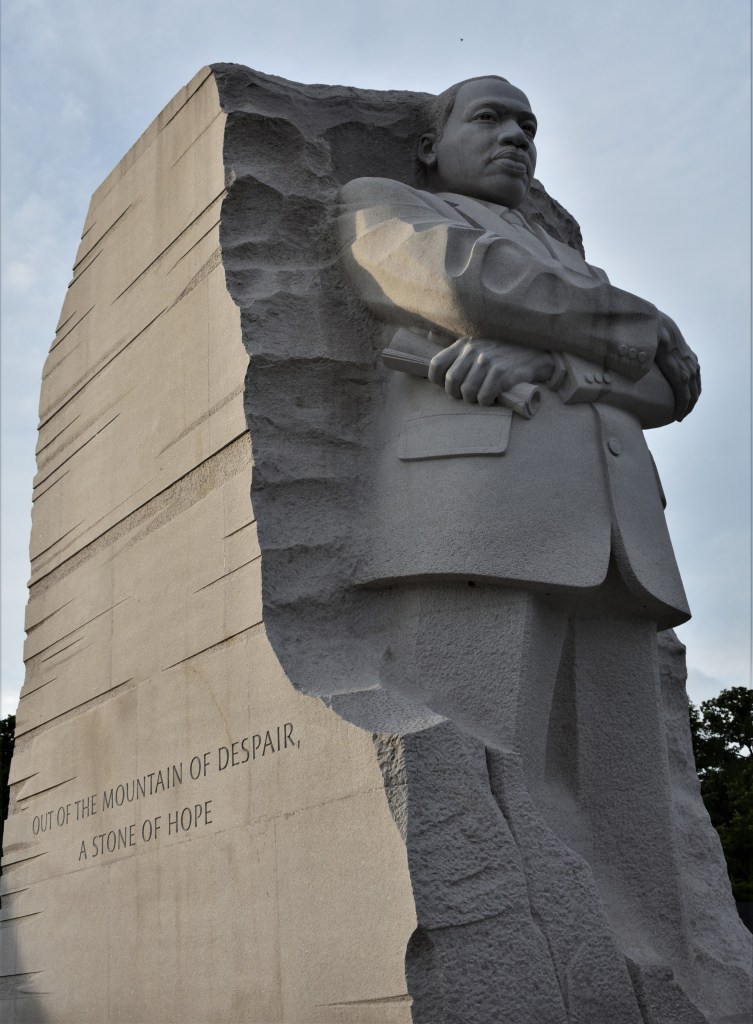
‘A perpetual narrative’

I have tried, so many times, and in so many ways, to understand why people vote the way they do. As most people eventually do, I came to the conclusion that choices are not based on logic.

For example, I was just stunned to hear Alabama Republicans come to the defense of Roy Moore in the 2017 election. I’m not going to itemize the many reasons why he was unfit to be elected to the US Senate. If you looked at his candidacy logically, he never would have been put forward as a candidate in the first place. Despite that, people in his party did, and strongly supported him.

The point I’m trying to make isn’t related to Roy Moore specifically, but to what I heard the governor of Alabama, Kay Ivey say. Which was she would support any Republican candidate, no matter how flawed. Would never vote for a Democrat.

The upside is Roy Moore was, narrowly defeated. The success of his rival, Doug Jones, is attributed to the work and votes of women of color.

I’m thinking of these things, or actually, how could I not be thinking of these things in the face of the continued onslaught of state sponsored violence against Black, Indigenous and other people of color? State sponsored, public lynching?

How could I not be thinking of these things when we’re assaulted daily by an administration and political party intent on oppressing us all, taking away the tools that used to work for redress of grievances? Sabotaging the election, subverting the singular process by which we replace such politicians? Attempting to deny us the nonviolent transfer of power. An administration that failed so badly on the coronavirus pandemic. That alone should guaranteed the defeat of this president. But that is not a sure thing.

So much of this is related to our separateness from each other. So many leave their houses, sealed in a car, work in their sealed offices or stores, return to their sealed up houses. No wonder people can buy in to all kinds of ridiculous stories about ‘others’. Stories that would be discounted if people of diverse race or status spent any time with each other.

First and foremost, all of us, every last one of us, must engage others in our work, home and play spaces to have honest, open and authentic conversations around the issue of inequity.

Imhotep Adisa

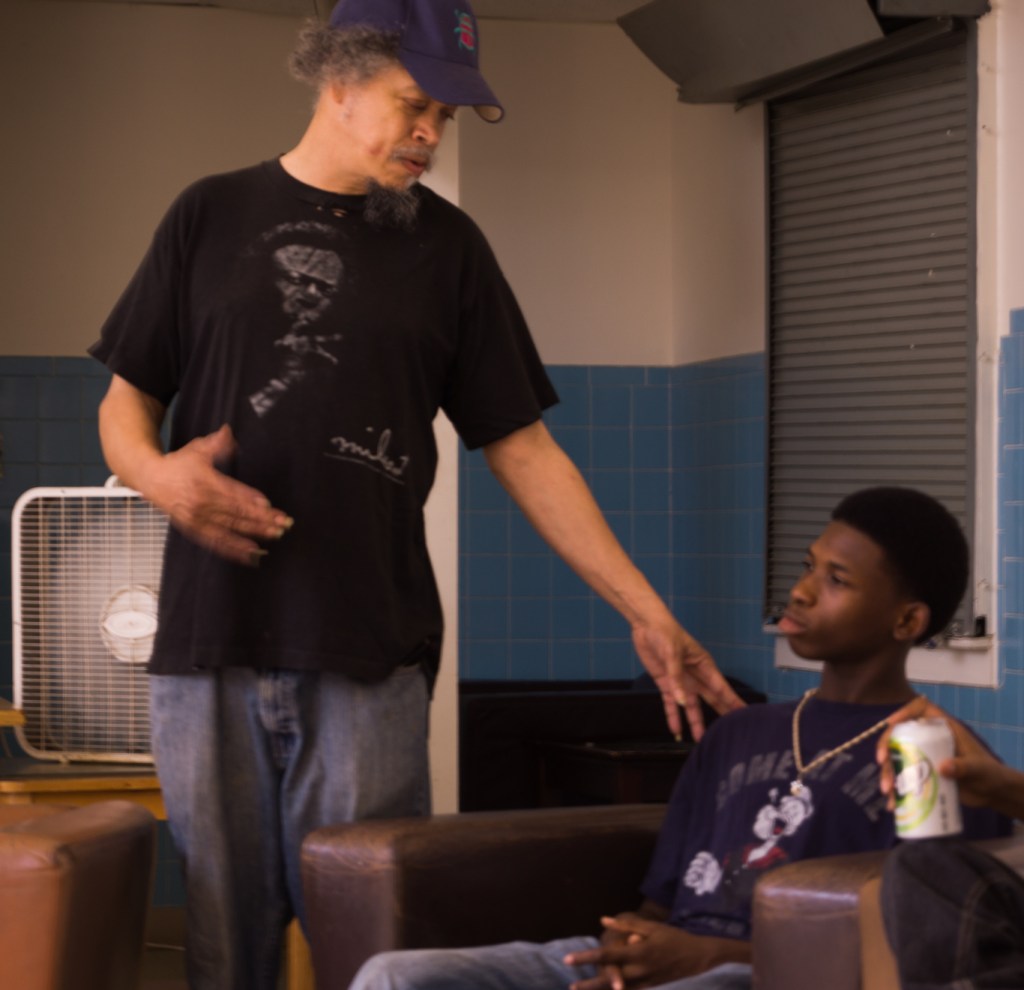
I was truly blessed to have become involved with the Kheprw Institute (KI) in Indianapolis. Monthly, mainly white Quakers from the meeting I attended would participate in book discussions at KI. Once Imhotep Adisa, one of the leaders of KI, said, “these conversations are revolutionary.” I was surprised, but saw that was true. People of color and White people sharing their stories with each other, getting to know each other. Becoming friends.


Continue to push for something different

How can we create some processes and procedures to mitigate inequity in our social, legal and economic structures? How can we begin some conversations about creating a system that is equitable? What can each of us do in the present to advance equity in our society? And how do we continue to fight for equity during these difficult times?

First and foremost, all of us, every last one of us, must engage others in our work, home and play spaces to have honest, open and authentic conversations around the issue of inequity. Some of us, particularly those in positions of power, must have the courage and strength to look more deeply at the inequitable structures that exist within their own organizations and institutions.

Is equity possible in a world after COVID-19? by Imhotep Adisa, Indianapolis Recorder, May 15, 2020

I’ve come to a depressing conclusion: the November election is about one thing  and  one  thing only. The results–and the margin of victory– will tell us  whether  America is finally ready to address the virulent racism that has  infected both our personal  attitudes  and our governing institutions, and say “enough.”

The Election In Black And White by Sheila Kennedy, Sept 7, 2020

When democracy came to America, it was wrapped in white skin and carrying a burning cross. In the early 19th century, the same state constitutional conventions that gave the vote to propertyless white men disenfranchised free Blacks. For the bulk of our republic’s history, racial hierarchy took precedence over democracy. Across the past half century, the U.S. has shed its official caste system, and almost all white Americans have made peace with sharing this polity with people of other phenotypes. But forfeiting de jure supremacy is one thing; handing over de facto ownership of America’s mainstream politics, culture, and history is quite another. And as legal immigration diversifies America’s electorate while the nation’s unpaid debts to its Black population accrue interest and spur unrest, democracy has begun to seek more radical concessions from those who retain an attachment to white identity. A majority of light-skinned Americans may value their republic more than their (tacit) racial dominance. But sometimes, minorities rule.

Many GOP Voters Value America’s Whiteness More Than Its Democracy by Eric Levitz, Intelligencer, SEPT. 2, 2020

During the first night of the 2020 Democratic National Convention, Leon Bridges appeared to perform his single “Sweeter,” in honor of George Floyd and the countless other lives lost to racial profiling and police brutality.

Bridges originally released the song following the death of Floyd and as the Black Lives Matter movement picked up steam around the country in June. The singer told Billboard that he had written the song a year before, and was sad to see that it was still relevant. “It’s a perpetual narrative … but at the same time, I’m still optimistic because it’s been amazing to see everyone come together to fight for equality.”

Leon Bridges Hopes for a ‘Sweeter’ Future at 2020 Democratic National Convention, Leon Bridges Hopes for a ‘Sweeter’ Future at 2020 Democratic National Convention by Stephen Daw, Billboard, 8/17/2020

Leon Bridges – Sweeter (Official Video) ft. Terrace Martin

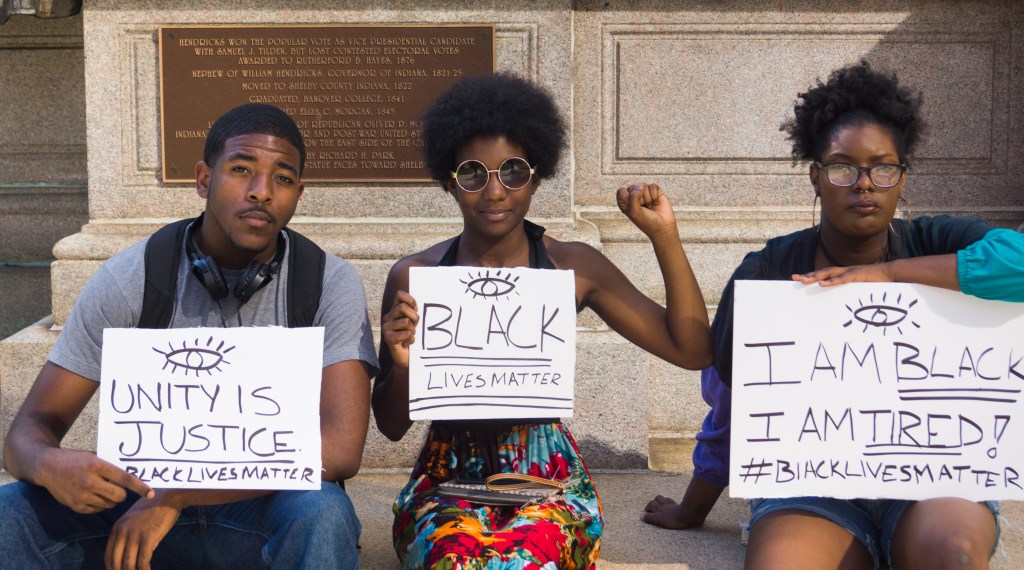
BLACK LIVES MATTER

Hoping for a life more sweeter

Instead I’m just a story repeating

Why do I fear with skin dark as night?

Can’t feel peace with those judging eyes

I thought we moved on from the darker days

Did the words of the King disappear in the air

Like a butterfly?

Somebody should hand you a felony’

Cause you stole from me

My chance to be

Hoping for a life more sweeter

Instead I’m just a story repeating

Why do I fear with skin dark as night?

Can’t feel peace with those judging eyes

The tears of my Mother rain, rain over me

My sisters and my brothers sing, sing over me

And I wish I had another day

But it’s just another day

Hoping for a life more sweeter

Instead I’m just a story repeating

Why do I fear with skin dark as night?

Can’t feel peace with those judging eyes

Hoping for a life more sweeter

Leon Bridges ‘Sweeter’
Posted in Black Lives, Kheprw Institute, Quaker, Quaker Social Change Ministry, race, Uncategorized | Leave a comment

What kind of ancestor do you want to be?

Many of my friends are very discouraged about the condition of the land called the United States. The perversion of our political and economic systems has been happening while we look on. Feeling helpless to stop this deterioration. Feeling hopeless.

These days there are so many things clamoring for our attention, especially related to the upcoming election. The current administration is intentionally creating chaos so they can delegitimize the results. I wish the media would not always fall into the trap of constantly focusing on the latest outrageous thing appearing on twitter.

And seeing our rapidly worsening environmental chaos. I had naively thought the Midwest, where I live, might be one of the better places to be. But we have been suffering extensive flood, which along with draught and increasing air temperatures has been impacting corn production. Then recently a derecho wiped out huge areas of corn. Drinking water supplies are polluted with fertilizer runoff. And river levels in Des Moines are resulting in water use restrictions.

Things no longer seem to make sense. James Allen defines the idea of sensemaking. When things no longer make sense, “the centre cannot hold.” It feels like that is happening now.


…there remains the most existential risk of them all: our diminishing capacity for collective sensemaking. Sensemaking is the ability to generate an understanding of world around us so that we may decide how to respond effectively to it. When this breaks down within the individual, it creates an ineffective human at best and a dangerous one at worst. At the collective level, a loss of sensemaking erodes shared cultural and value structures and renders us incapable of generating the collective wisdom necessary to solve complex societal problems like those described above. When that happens the centre cannot hold.

Pontoon Archipelago or: How I Learned to Stop Worrying and Love Collapse. By James Allen, originally published by Medium
June 18, 2019

I urge us to step back from the chaos and focus on the truth revealed to us. Return to our spiritual foundation. Listen closely to the Spirit/Light within. This is why I was led to read the article, “What kind of ancestor do you want to be?” on the Great Plains Action Society website described below. Rather than reacting to the negative, that question focuses on what is important to us. What the Spirit is asking of us. Keeps us on our path, instead of being drawn into the chaos.

I was born into and raised in Quaker communities. I am grateful to have this framework that has helped me make sense of the world. A framework based on actively seeking and following spiritual guidance. I mourn for the millions of people who don’t. The world today must not be making sense to them.

But White Quakers in the U.S. today must come to terms with our involvement with the injustices of the past. The theft of native lands and cultural genocide that occurred from the forced assimilation that occurred in Quaker Indian residential schools. And with the history of enslavement of Black people. An enslavement that continues today in the form of racial injustice. With the huge differences between White people and Black, Indigenous, and people of color related to economic and political status and distribution of wealth. Because that trauma and damage doesn’t remain there. It is passed from each generation to the next. I would suggest not only the trauma to those who were the victims of the wrongs, but also those who were involved in the execution of them.

And the injustices related to so many things continue to this day. In many areas such as incarceration rates and terrorism by police, environmental injustice, access to housing, education, healthcare, etc.

White Quakers need to do more than educate ourselves and acknowledge what occurred. We have to work to make things right. Become anti-racist.

I originally began to learn as much as I could about Indigenous people for environmental reasons. My entire life I have been appalled by the profligate consumption of fossil fuels, knowing what was to come. Indigenous peoples respect Mother Earth and live within renewable boundaries.

I soon came to see there are so many other reasons to learn about, and follow the leadership of native peoples. One of the most important being their deep spiritual ways of living. The area I thought Quakers were good at. I still believe in Quakerism, but know we have to do much more spiritual work. We have become too involved in society’s materialism, capitalism, and all that comes from that.

All this relates to the question, what kind of ancestor do you want to be?

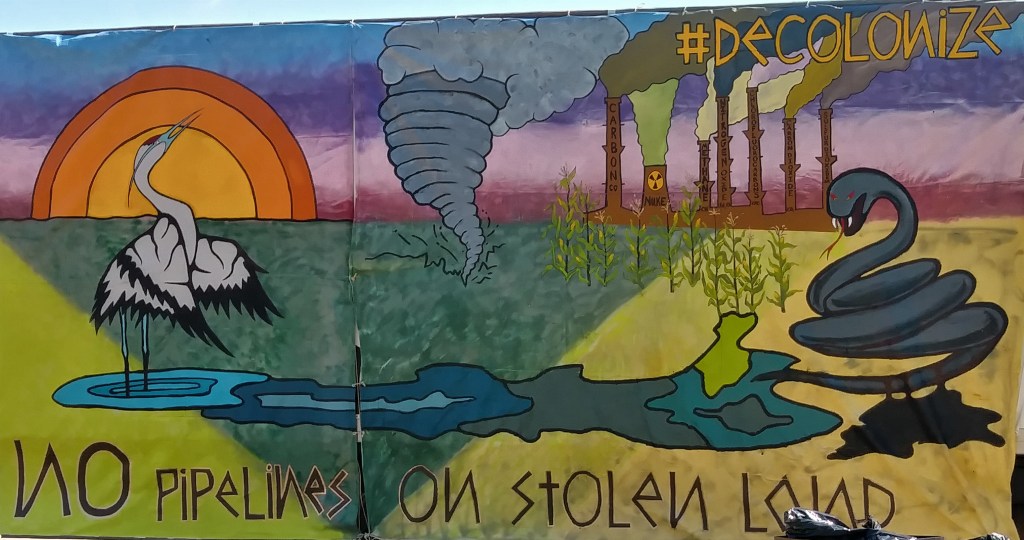
I’ve been working on this diagram to try to organize how I see these things. White people have imposed capitalism on this colonized land and peoples. Capitalism requires massive amounts of fossil fuel consumption, with the associated greenhouse gas emissions. Leading to the accelerating environmental chaos we are living with now, with much worse to come very rapidly.


A number of my friends are part of the Great Plains Action Society. Plains-Indigenous Peoples resisting colonization and Indigenizing the world. Here is their mission statement.

We are a collective of Indigenous organizers of the Great Plains working to resist and Indigenize colonial institutions, ideologies and behaviors. By implementing notions of Indigenous sovereignty and traditional ideologies, we strive for environmental and social justice which are two issues that cannot be separated. As our climate changes, more people will suffer and our mission is to help prevent the atrocities that Indigenous people have already faced. 

Great Plains Action Society

Today, my tribe, along with several other bordering tribes are facing yet another threat by these fat-takers. TransCanada’s Keystone XL pipeline is undergoing the final permit processes to begin constructing the near 2150 mile crude oil route stretching from Hardisty, Alberta Canada on down to Steel City, Nebraska.

How many stolen sisters are projected to end up missing/murdered once these camps are built? How many addicts or drug lords will target our sovereign communities? How much blood will be spilled by the hands of these destructive companies? How long before our children can no longer drink from or swim in the over 220 bodies of water this pipeline plans to snake under? What type of animals or plant life will become extinct once this pipeline breaks? How much longer before this planet becomes too toxic due to this fossil fuel addiction? How many people will care?


We must fight because these battles will never be over. Just like our fallen warrior, Crazy Horse, we must protect all that is sacred so that our future generations can have a shot at life. When asked “why are you on the frontline fighting for climate and social justice?” my answer is simple… To put an end to the ongoing genocide that me and my people have endured since the colonizer stepped foot on these lands. I then ask myself this: What type of ancestor will you be?

It all comes down to what type of ancestor I want to be for my descendants. Do I want to be a regular nobody that did nothing to protect our planet or do I want to be like Crazy Horse who fought and died for the little bit of land that we have left to protect? We have that chance right now to make that decision. This kind of resistance runs through all of our blood because we are the Indigenous Peoples of these lands. It’s at vital choice for the survival of humankind.

What Kind of Ancestor Do you Want to Be? Why I Fight the KXL by TaSina Sapa Win, February 28, 2019

Posted in #NDAPL, decolonize, Indigenous, Quaker, Uncategorized | Leave a comment

Love Thy Neighbor, No Exceptions

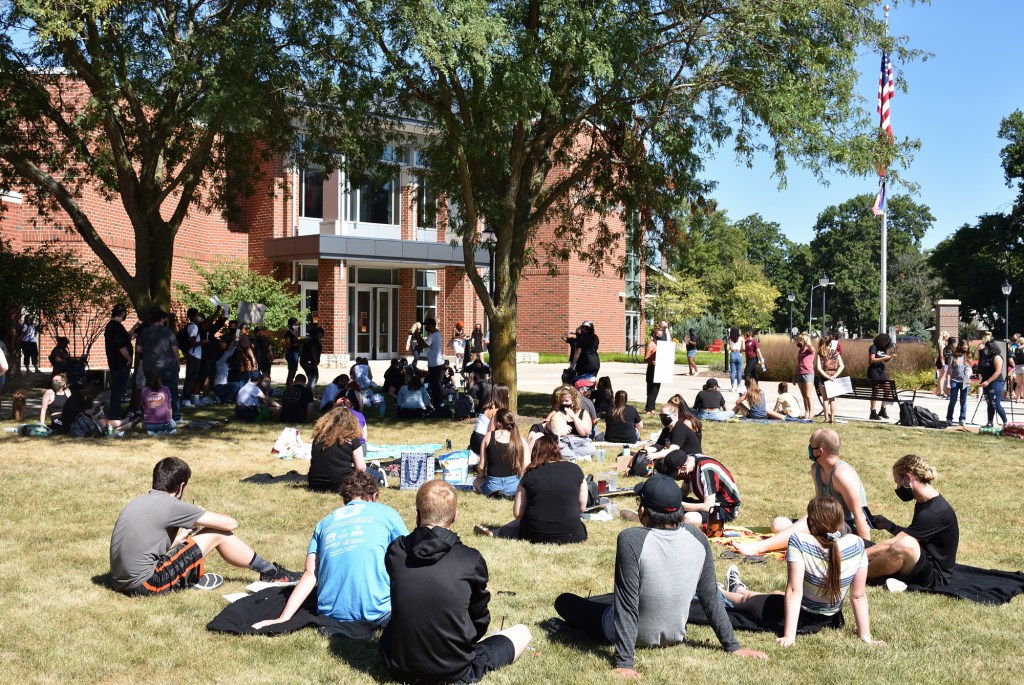
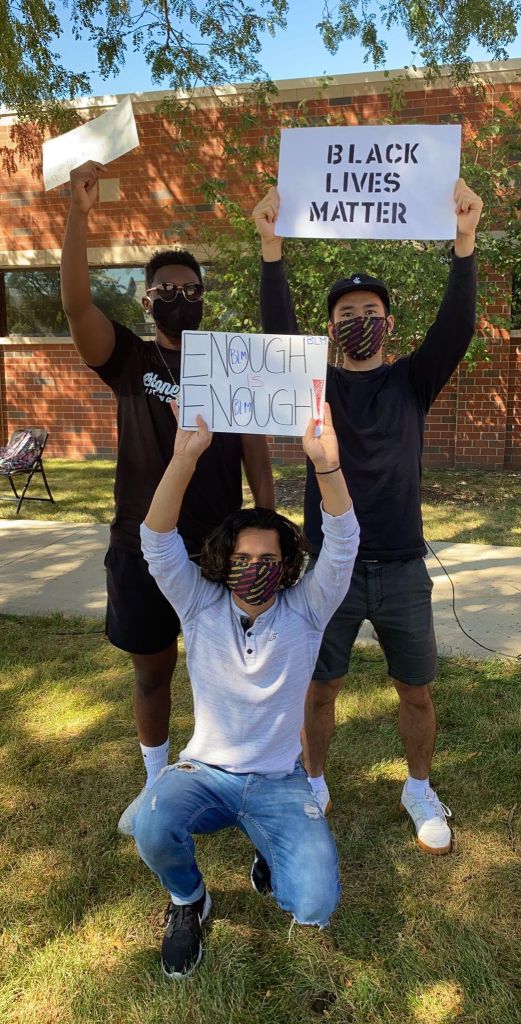
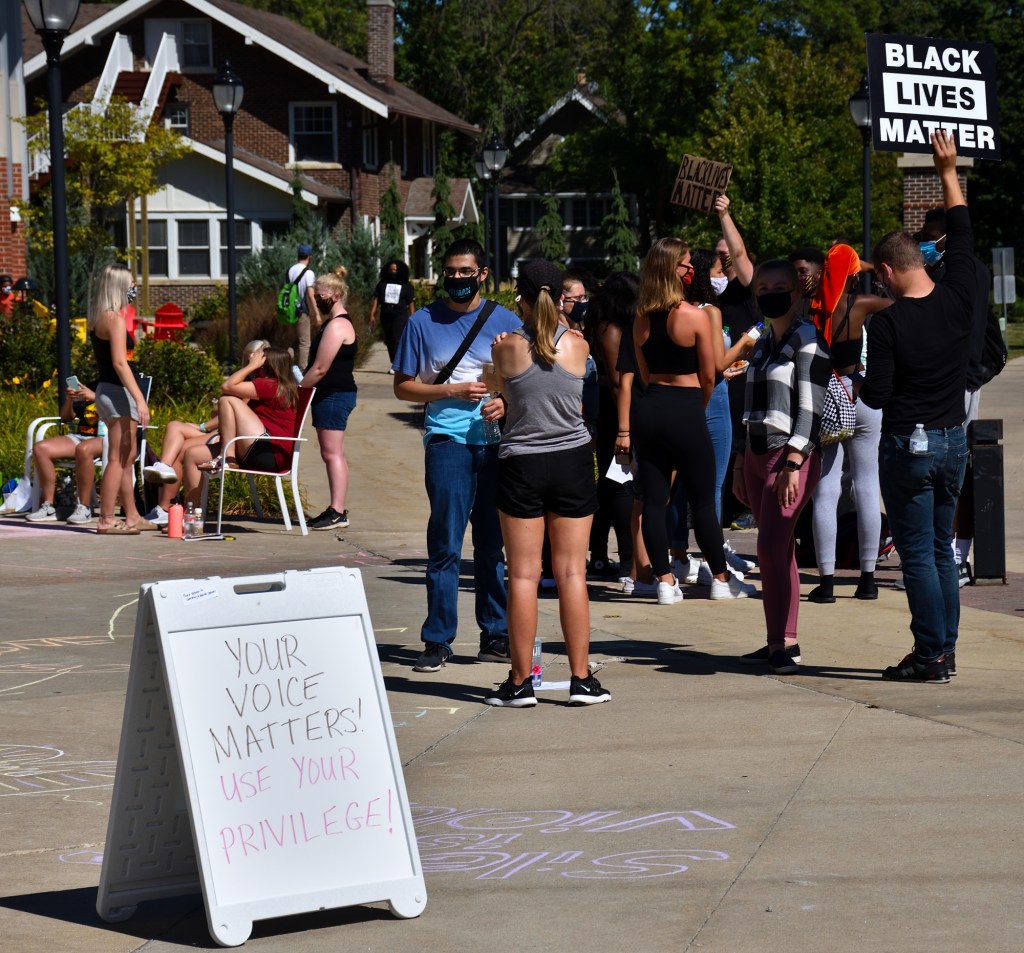
Yesterday I wrote about the student demonstrations for Black Lives Matter at Simpson College.

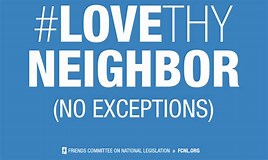
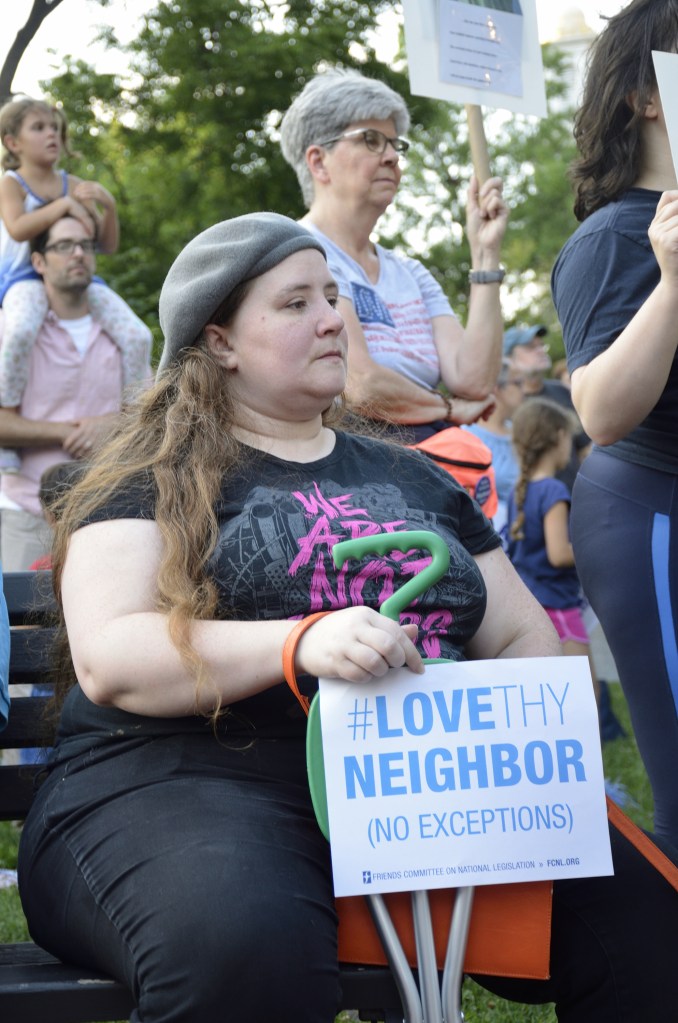
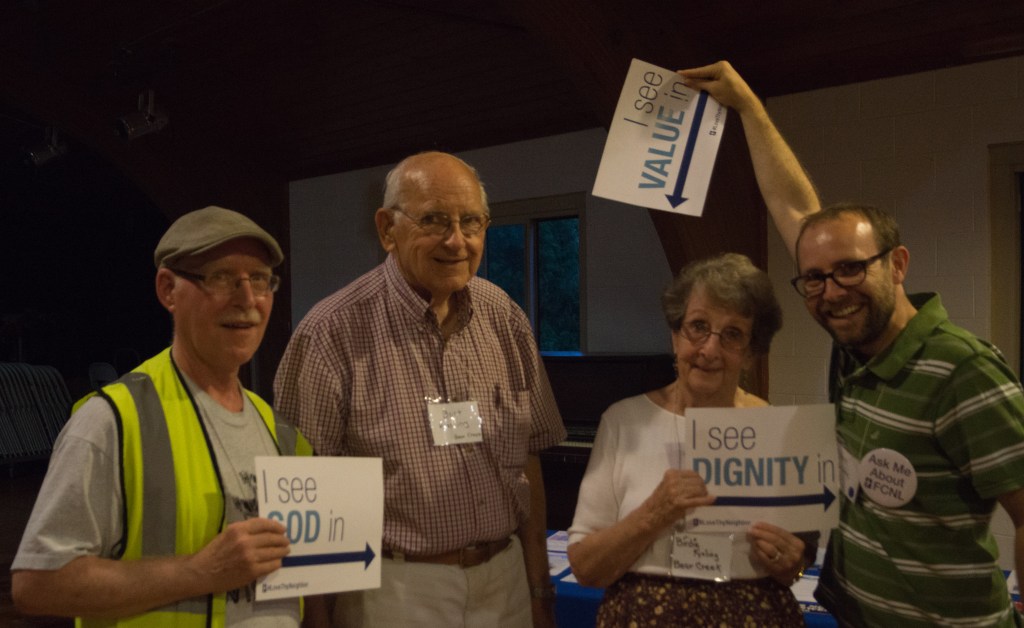
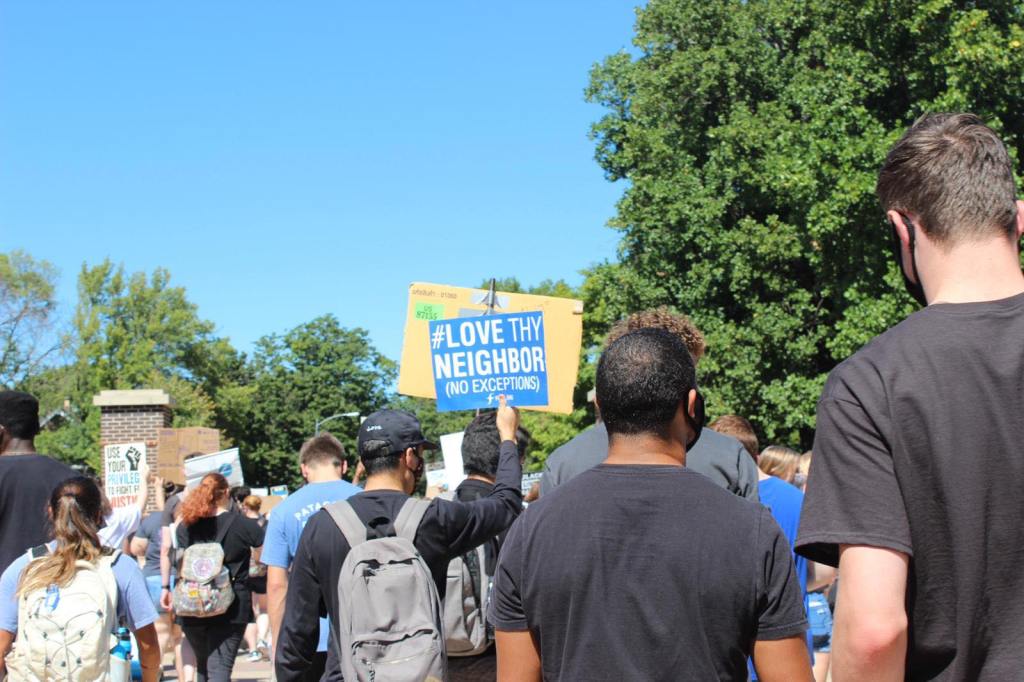
I think it was a great idea of my friend, Rezadad Mohammadi, to bring a #Love Thy Neighbor (No Exceptions) sign to the rally. Those signs are from the Friends Committee on National Legislation (FCNL), the Quaker lobbying organization whose offices are in Washington, DC. When you go to Black Lives Matter and similar events, you might consider taking that sign. (links below to download it).

Photos below of Reza at the Black Lives Matter gathering at Simpson College yesterday.


Our country is struggling with deep divisions. Amid the blame of and attack on those who are different – in political views, race, religion, country of origin, or sexual orientation – it becomes even more urgent to highlight the value we place in one another. FCNL’s #LoveThyNeighbor (No Exceptions) campaign seeks to shift the narrative.

Love is hard, but Scripture is clear. We are called to love our neighbors – all our neighbors – without exception.

Love Thy Neighbor No Exceptions, Friends Committee on National Legislation (FCNL)

Love is hard, but Scripture is clear. We are called to love our neighbors – all our neighbors – without exception.

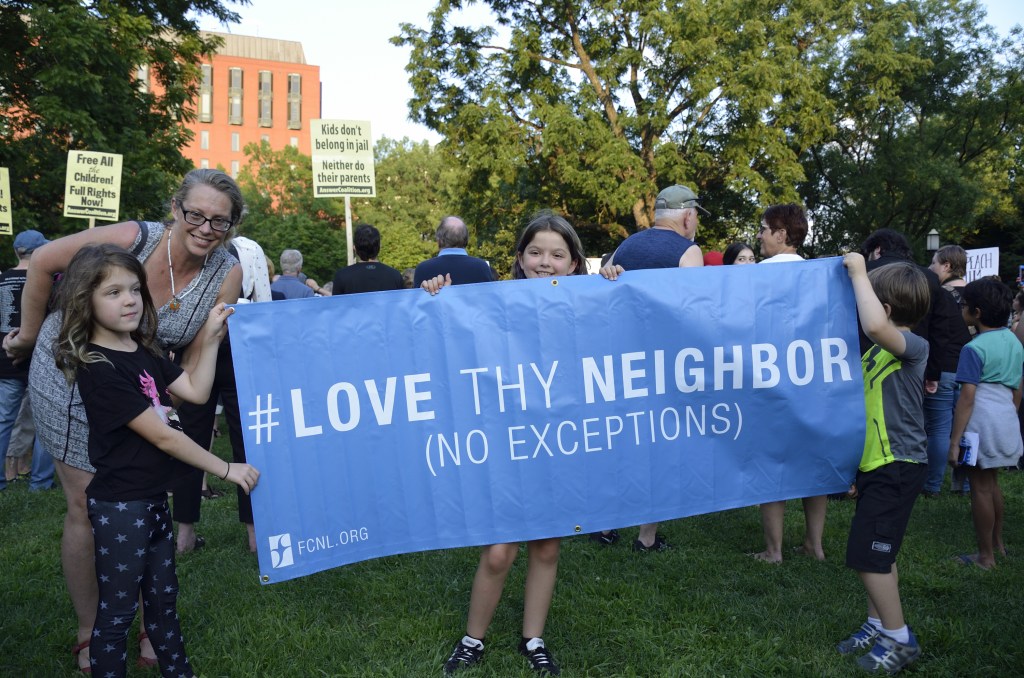
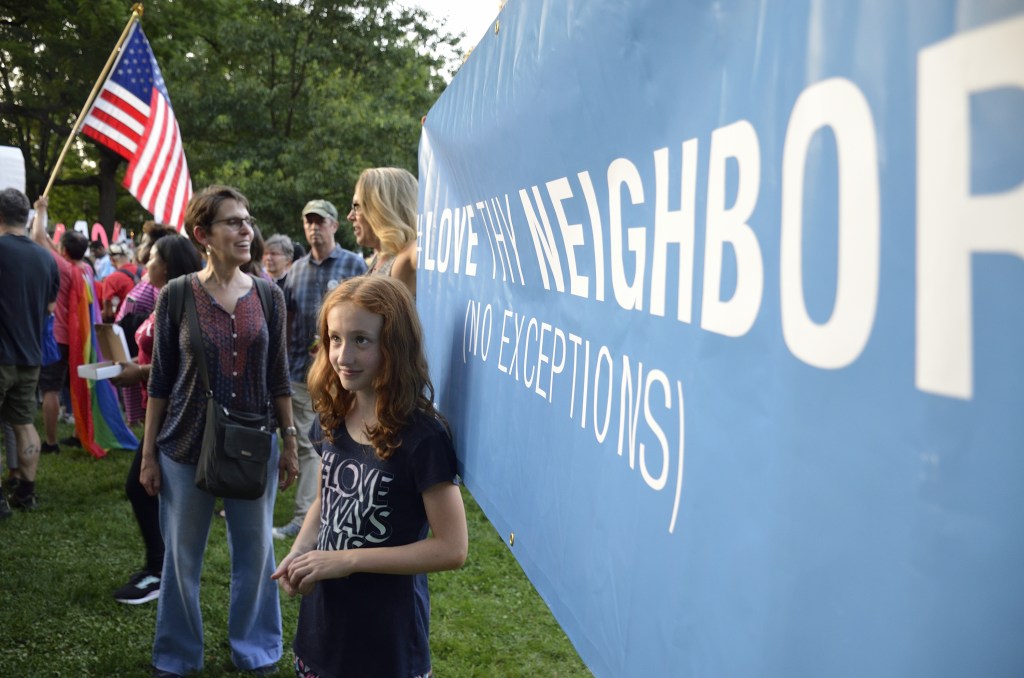
Reza (and I) have been involved in several things with FCNL. He spent last summer there. During that time he and my friend Christine Ashley, who was working at FCNL then, brought the Love Thy Neighbor signs to a vigil in front of the White House. (photos by Rezadad Mohammadi)


Get Your Own Signs, Stickers, or Buttons

FLYERS AND SIGNS TO DOWNLOAD

  1. #LoveMyNeighbor in 2020 (PDF, 339 KB)
  2. Rally Sign: White 8.5×11 (PDF, 405 KB)
  3. Rally Sign: White 11×17 (PDF, 405 KB)
  4. Rally Sign: Blue 8.5×11 (PDF, 401 KB)
  5. Rally Sign: Blue 11×17 (PDF, 401 KB)

Share a photo on social media (Facebook, Twitter, and Instagram), using the hashtag #LoveThyNeighbor.

Love Thy Neighbor, No Exceptions, FCNL


The #LoveThyNeighbor campaign is a conscious effort to “shift the narrative.” It challenges policymakers and voters to think about the moral implications of the actions they are taking on questions of war and peace, inequality and intolerance — at home and abroad. Ultimately, it seeks to bring people of different parties and different ideologies together to work for peace, economic and social justice, and environmental sustainability.

John Nichols, Madison Cap Times


Five Ways to Love Thy Neighbor

By Jim Cason, June 3, 2016

As a country, we need to move from slogans to action. Here are five steps we can all take to help Congress act to make #LoveThyNeighbor more than a hashtag.

#LoveThyNeighbor (No Exceptions)

Order signs and take action.Get involved  ›

The second line that goes with “Love Thy Neighbor” is a Biblical reference. We’re assuming everyone knows that! The banner we put up on the front of our FCNL building this month adds a different second line: no exceptions.

I wish we didn’t have to add no exceptions, but this year the line seems necessary.

Hashtags aren’t enough

I hope you’ll spread this message on social media, put it on your building, write it in the sky and do whatever you can to get the word out. Talk to Friends, talk to your neighbors, talk to people you think you may not agree with (you may be surprised). Langley Hill Friends Meeting recently distributed some ideas on how to do this, maybe you have as well (let us know).

But don’t stop there: Contact Congress.

As a country, we need to move from slogans to action. Here are five steps we can all take to help Congress act to make #LoveThyNeighbor more than a hashtag.

  1. Embrace freedom of religion. Friends have a long history of witness against religious persecution and the Bill of Rights is very direct on this point. Urge your representative to cosponsor the Freedom of Religion Act (H.R. 5207) that would prohibit the U.S. from denying admission to the United States because of a person’s religion.
  2. Reject racism. Our laws have resulted in a system of modern day slavery, where black men serve nearly as much time in for non-violent drug offenses as whites do for violent offenses. Urge your senators to cosponsor and press for passage of the Sentencing Reform and Corrections Act (S. 2123) as a first step toward changing this broken system.
  3. Don’t treat our communities like a war zone. With prodding from FCNL, President Obama released an executive order that places restrictions on a Pentagon program to provide weapons used in war zones to police forces in the United States. Urge your representative to support Rep. Hank Johnson’s legislation, the Stop Militarizing Law Enforcement Act (H.R. 1232), that would turn this executive order into a law.
  4. Fix our broken immigration system. Rather than demonizing immigrants and further militarizing our border, Congress needs comprehensive immigration reform to fix our broken immigration system. Lawmakers could start by supporting the bipartisan Border Enforcement Accountability, Oversight, and Community Engagement Act (H.R. 3576) that would draw on the wisdom of border communities to inform our immigration policies.
  5. War is not working. Much of the public debate in this election year has focused on how U.S. security can be guaranteed by dominating and controlling the rest of the world. But 15 years after Congress wrote the president a blank check to launch new wars, we can look back as a nation and see that war isn’t working. One step in the right direction would be for the Senate to pass the bipartisan Genocide and Atrocities Prevention Act (S. 2551) that would refocus U.S. foreign policy on preventing violent conflicts five years from now rather than fighting wars five days from now. Urge your senator to cosponsor S. 2251.

Five Ways to Love Thy Neighbor, Jim Cason, Friends Committee on National Legislation (FCNL)


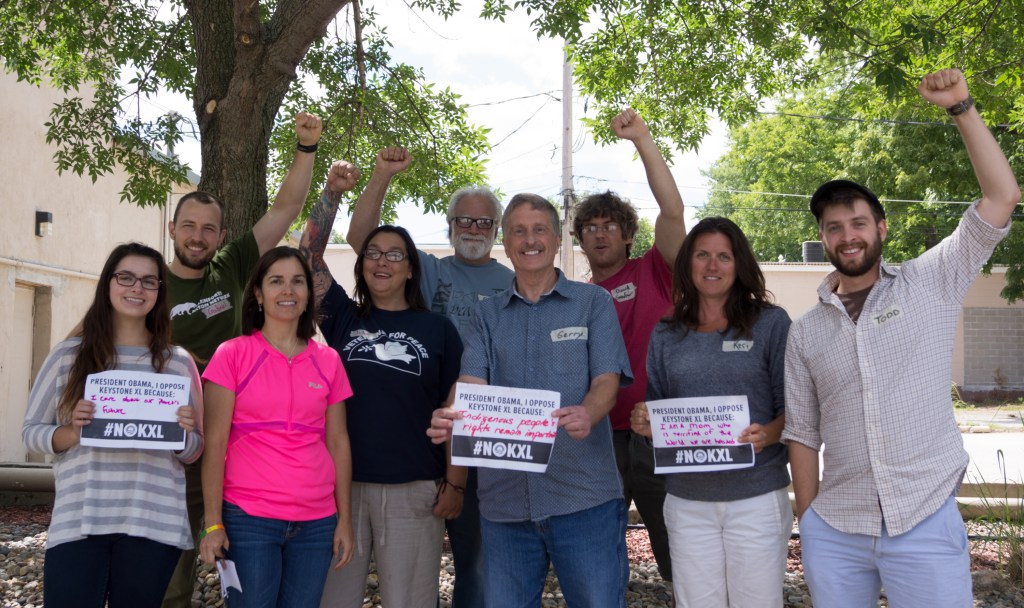
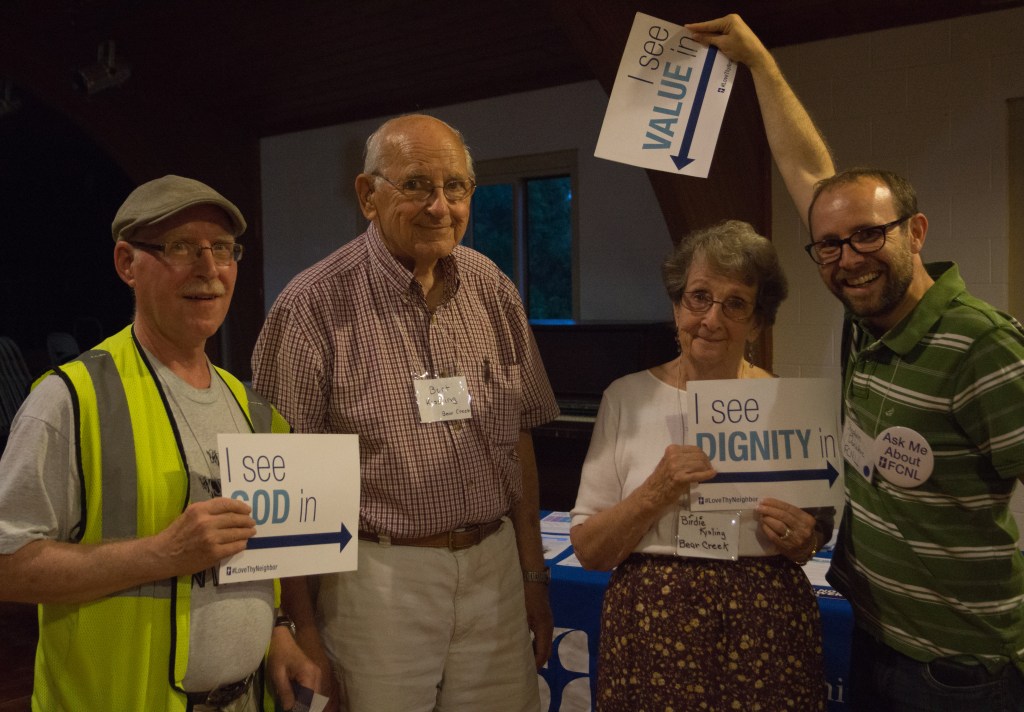
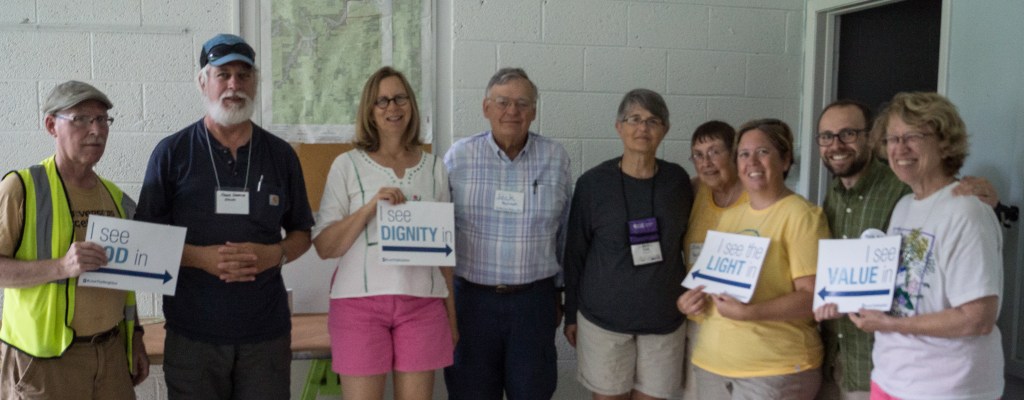
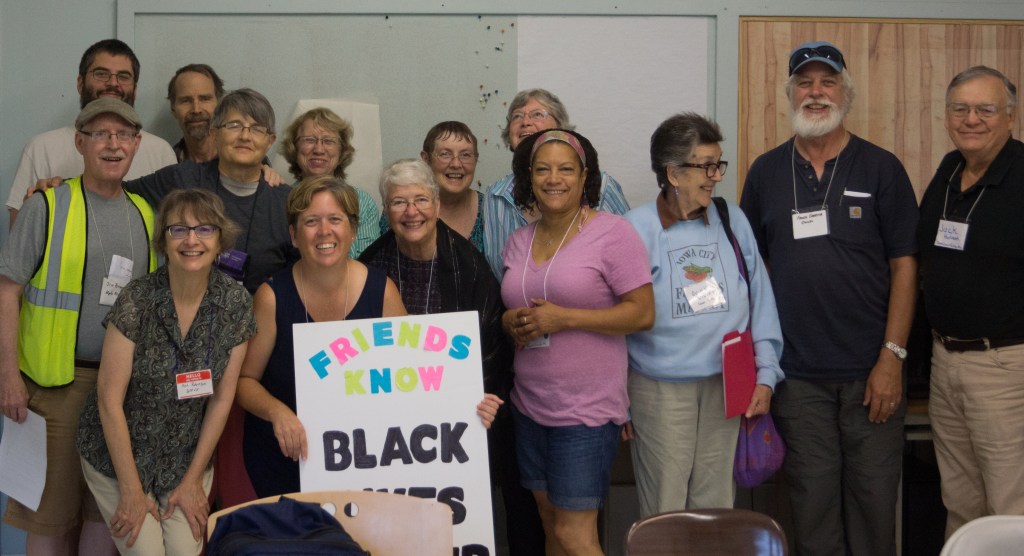
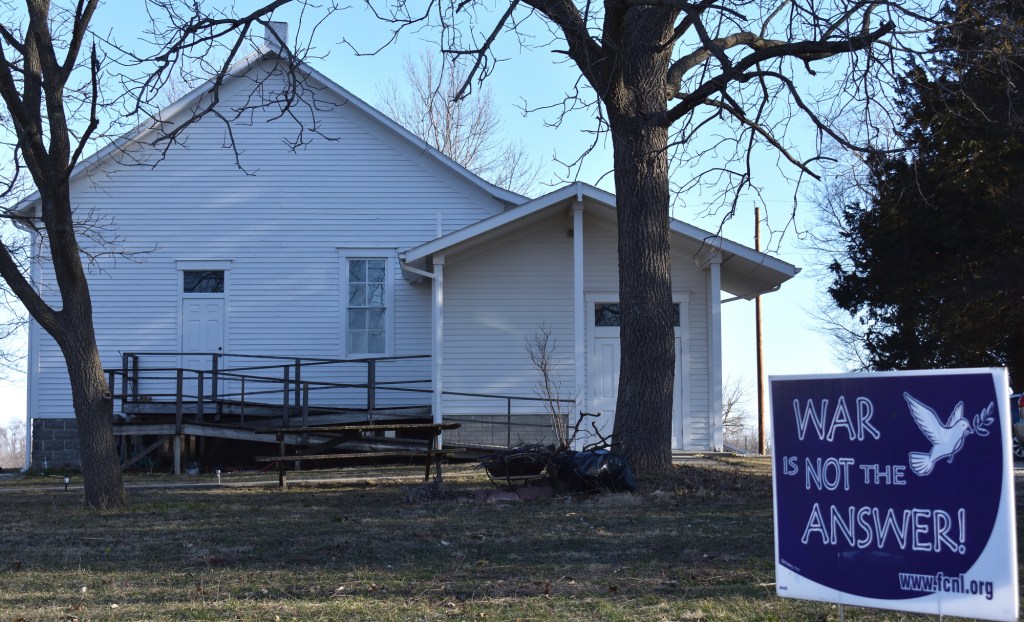
Related to #LoveThyNeighbor are the signs in the photos below, taken at Iowa Yearly Meeting (Conservative). The larger group is the Yearly Meeting’s Peace and Social Concerns Committee. I don’t think those are available any longer.


We’re Not Alone

Effective action delivered to you each week.SIGN UP FOR EMAIL ALERTS

FCNL’s #LoveThyNeighbor banner is getting noticed. Here are some of the people and organizations highlighting the message.


Posted in Arts, Black Lives, Friends Committee on National Legislation, peace, Quaker, solidarity, Uncategorized | Tagged | Leave a comment

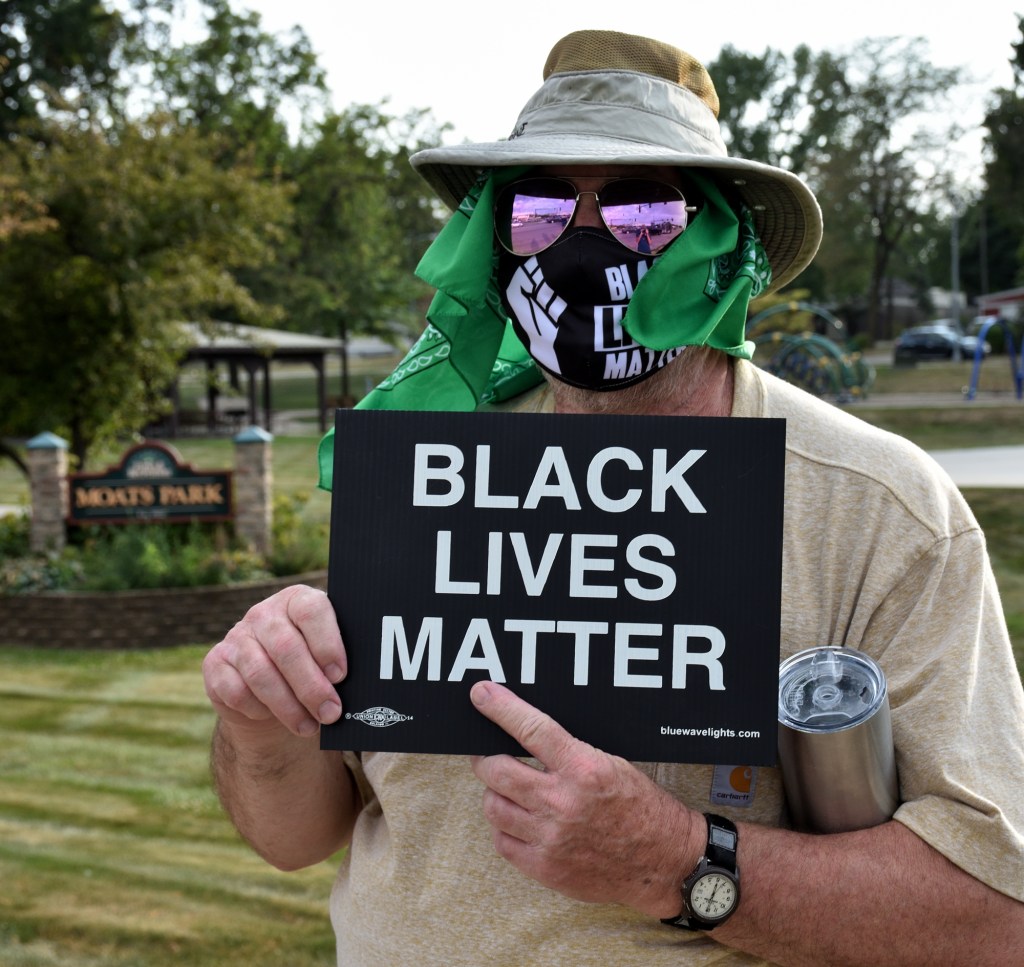
Black Lives Matter in a small Iowa town

When I retired from working in the Infant Pulmonary Function Lab at Riley Hospital for Children in 2017, I moved to Indianola, Iowa. (bottom center of map below). Indianola has a population of around 16,000 and is home to Simpson College, which has a student body of around 1,900.

I had wondered what I might find to get involved with in Indianola. Over the years in Indianapolis I had been blessed to become friends and work with many people/activists. I had been able to work with North Meadow Circle of Friends (Quakers), the Kheprw Institute, Indiana Moral Mondays, Sustainable Indiana, Keystone Pledge of Resistance, and against the Dakota Access pipeline. As I suspect is the case in most cities, the same small group of people are involved in multiple efforts.

I wasn’t sure how to find similar things to work on in Iowa. My Quaker meeting, Bear Creek, and yearly meeting (Iowa Yearly Meeting Conservative) were very active in justice work. Bear Creek meeting had over ten years of experience helping with the Prairie Awakening ceremony, for example.

And as I suspected, once I found a few activists, they helped me connect with others, and I was quickly engaged with many projects in Iowa.

I thought I would have trouble finding friends and organizations related to racial justice. There isn’t a lot of diversity in the state of Iowa. In Indianapolis, I was especially fortunate to be connected with the Kheprw Institute, a small, black youth mentoring and empowerment community.

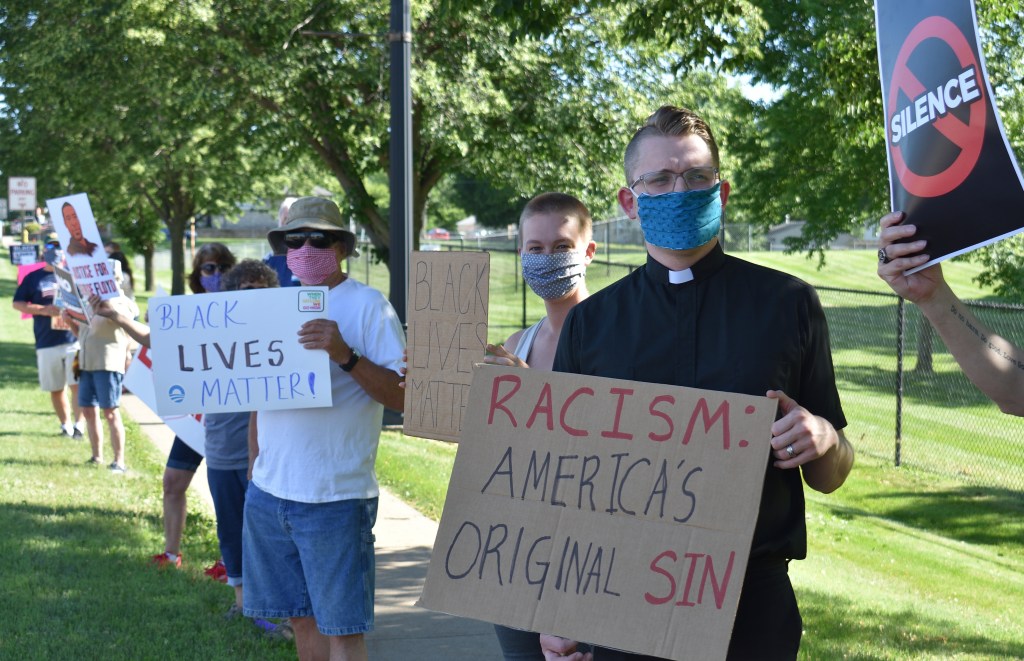
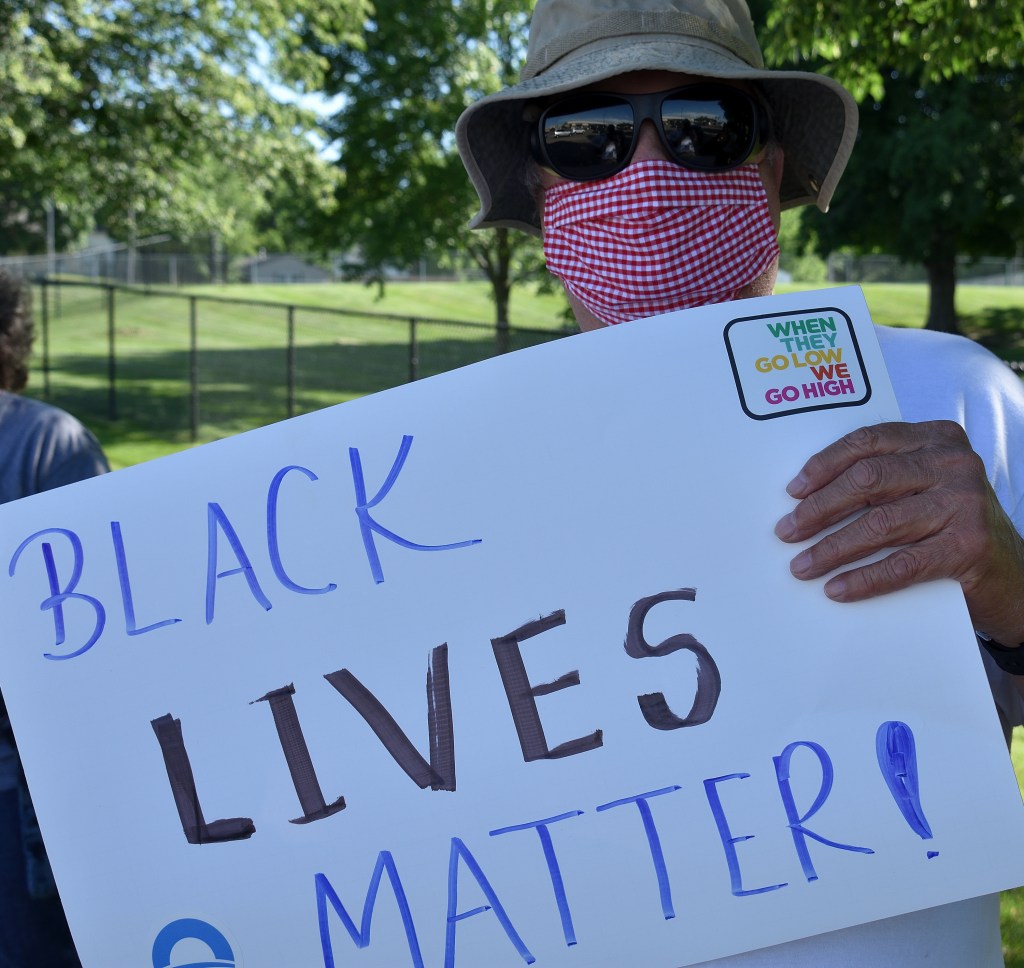
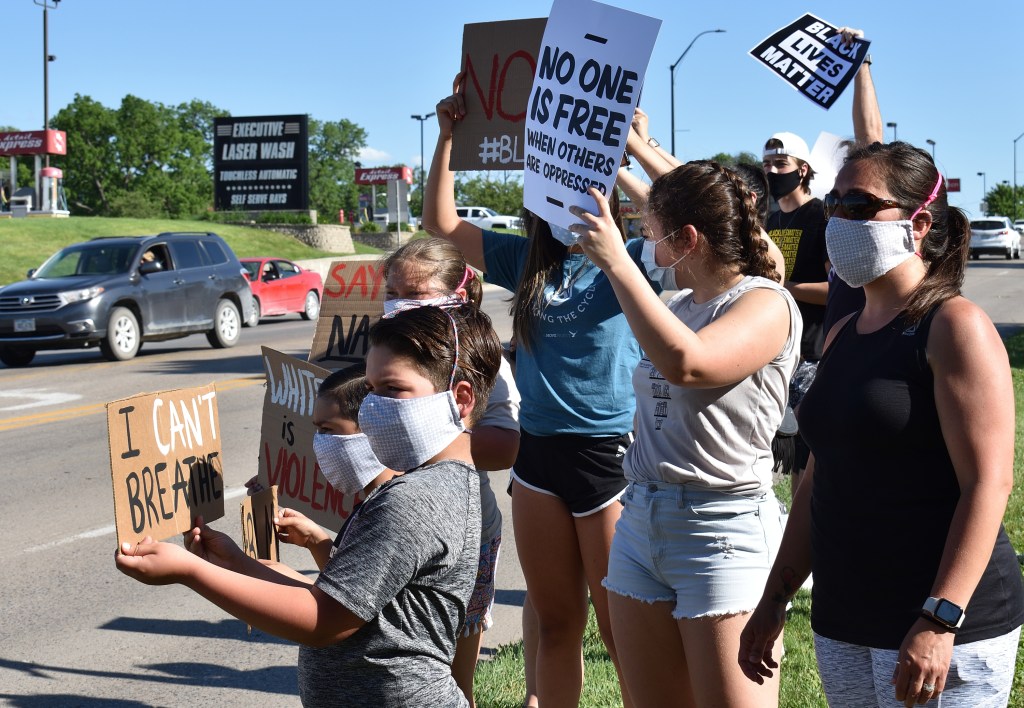
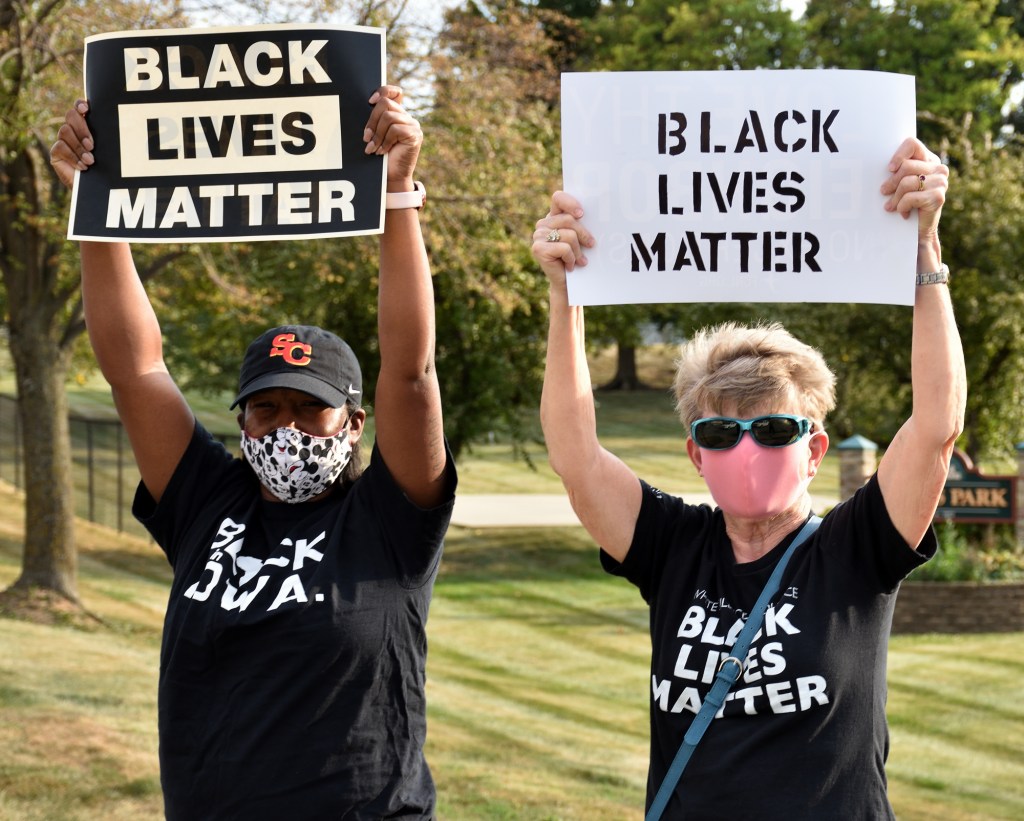
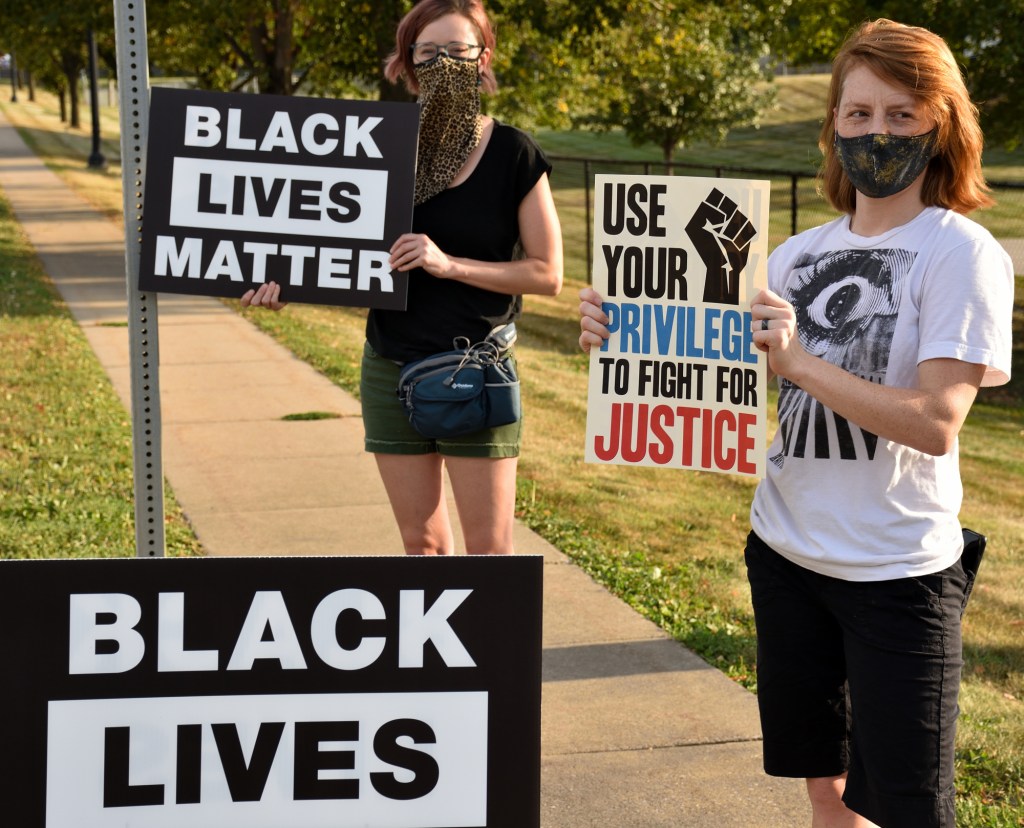
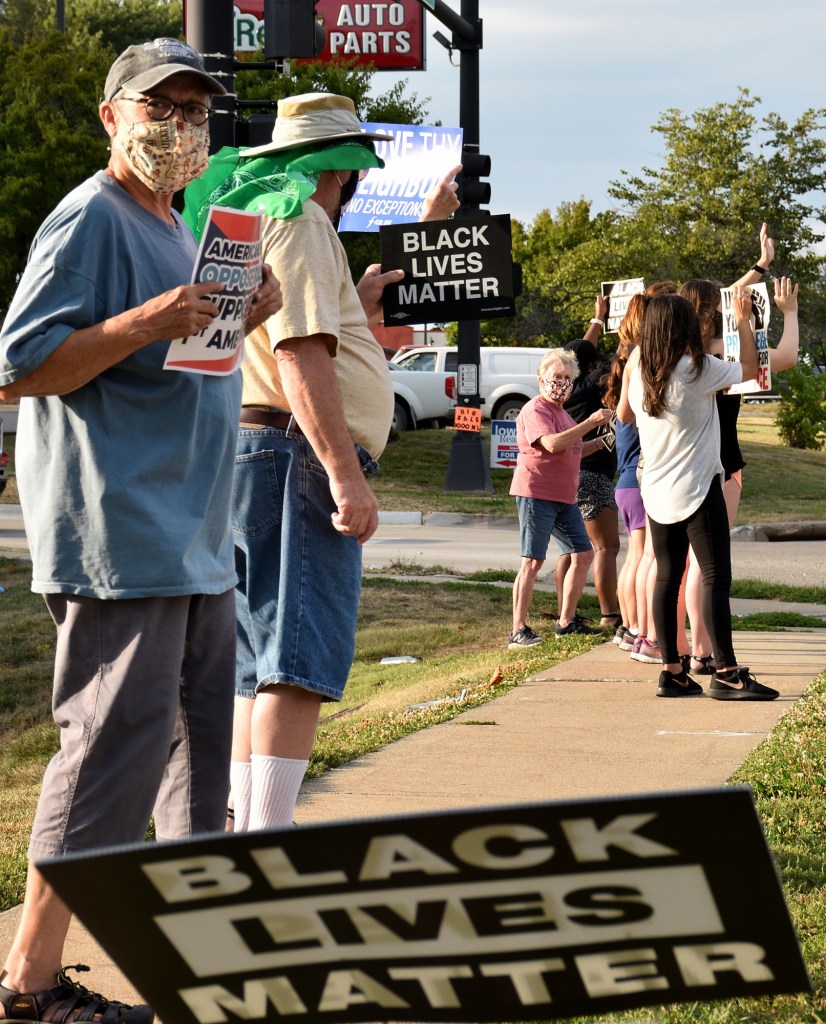
I’m glad Indivisible Warren County and Clemente Love organized some gatherings here related to Black Live Matter, as calls for racial justice spread across the country. I wondered what the reaction of the public would be. This first rally I attended was June 4, 2020. Fortunately there was a generally positive public reaction.


Then Clemente Love organized the rally of August 28, 2020.. She and her family moved to Indianola a year ago. Following George Floyd’s murder, Clemente has been leading Black Lives Matter marches in Indianola. This time there were some indications of disapproval with shouted remarks, revving engines, etc. But still positive overall.


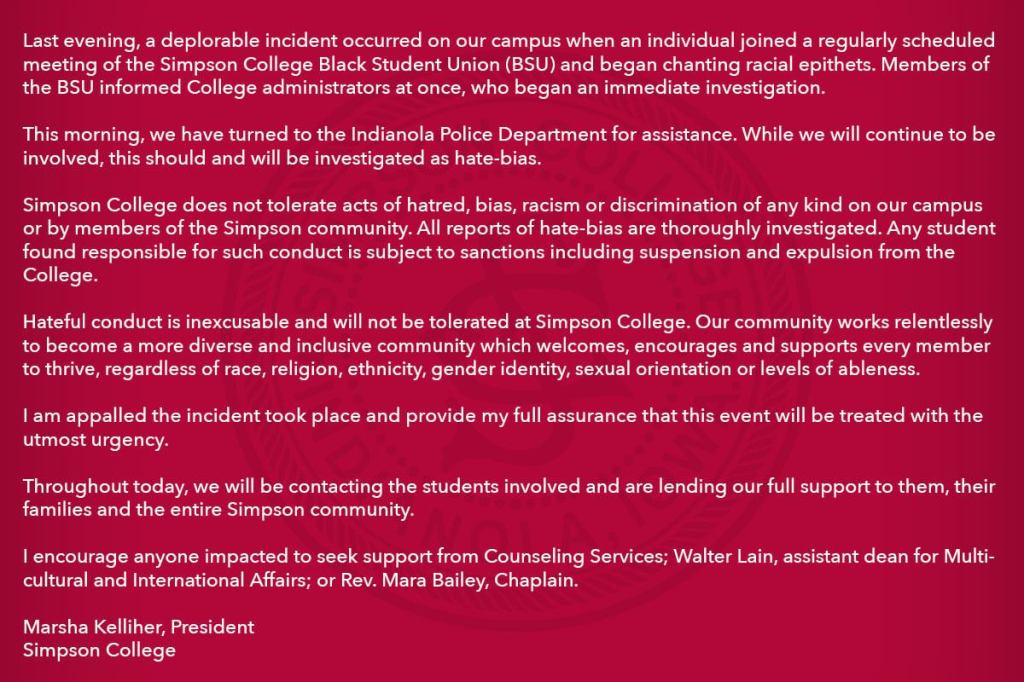
Yesterday, a racial incident occurred at Simpson College.


Image may contain: text that says 'Spread theword! LET'S BRING JUSTICE TO SIMPSON! Protest 2nd ALLDAY FROM Socially masks distanced required! and Bringa sign and Let's show campus this is something! semeihingie.ay! say! NOT tolerated here!'

Because of that incident, classes were cancelled today. My friend Rezadad Mohammadi is attending Simpson College now. Here he is holding an FCNL sign that says Love Thy Neighbor, No Exceptions.


Following are more photos from Simpson College today. Black Lives Matter has obviously come to a small Iowa town and to Simpson College.


Posted in #NDAPL, Black Lives, Kheprw Institute, Quaker, race, Uncategorized | Tagged | Leave a comment

Military Recruitment, Schools, Free Speech and Peace

The article publish yesterday, Military Recruiters Don’t Belong in High Schools reminded me of the remarkable story below. The following video is about the case of Tinker v. Des Moines Independent Community School District. That case was eventually decided by the U.S. Supreme Court. The issue was whether students’ free speech was violated when they were expelled for wearing arm bands with peace symbols to protest the Vietnam War. The court decided in favor of the students, 7-2.

Evidently military recruitment continues, more aggressively, today.

Schools have become contested territory.

For years, getting police officers out of schools has been a central goal of racial justice campaigns. Recently, they’ve won victories in DenverMinneapolisPortlandCharlottesville, and even on many university campuses.

However, there’s another group of outsiders in schools we should be wary of: the U.S. military.

Since the end of the draft in 1973, the U.S. has relied on an all-volunteer service to maintain its 1.3 million-member global police force. Over the years the military has used a number of different recruitment methods, but the target audience has always been the same: high schoolers.

The No Child Left Behind Act of 2001 significantly changed how military recruiters reach teenagers. Section 9528 mandates public high schools give military recruiters the same access to students that college recruiters get, including their personal contact information. Schools became gold mines for recruiting “future soldiers.

Military Recruiters Don’t Belong in High Schools,By Sidney Miralao, Foreign Policy in Focus. September 1, 2020

“You could even say the Tinker decision paved the way for the National School Walkout that took place in schools all across the country.”  (from the video above)

Tinker vs Des Moines and recent school walkout

Also during this time (1970) a group of concerned persons brought a proposal to the Des Moines School Board that draft counseling should be provided by all the Des Moines High Schools. Lynne Howard, a Des Moines Valley Friends Meeting Quaker, tells this story, which can be found at the end of this.   “My peace activism started at Know and, because “all things peace” in Des Moines leads to AFSC and the Friends, I became involved with a group of like-minded students led by FSC staff.  We formed the Des Moines Area Youth Coalition and one of our main goals was to see draft counseling available in all of the Des Moines Public High Schools.  Young Des Moines men were walking down the aisles to receive their diplomas, and then, within months, stepping out of helicopters into the lush green hell that was Viet Nam in the 1960-70’s.  They deserved, at the minimum, some place to hear and discuss options.  We took our proposal to the Des Moines School Board in September of 1970, and to our surprise, it passed!  As a matter of interest, I have attached the proposal.”

For more: Tinker v. Des Moines Independent Community School District


The issue was whether students’ free speech was violated when they were expelled for wearing arm bands with peace symbols to protest the Vietnam War. The Supreme Court decided in favor of the students, 7-2.

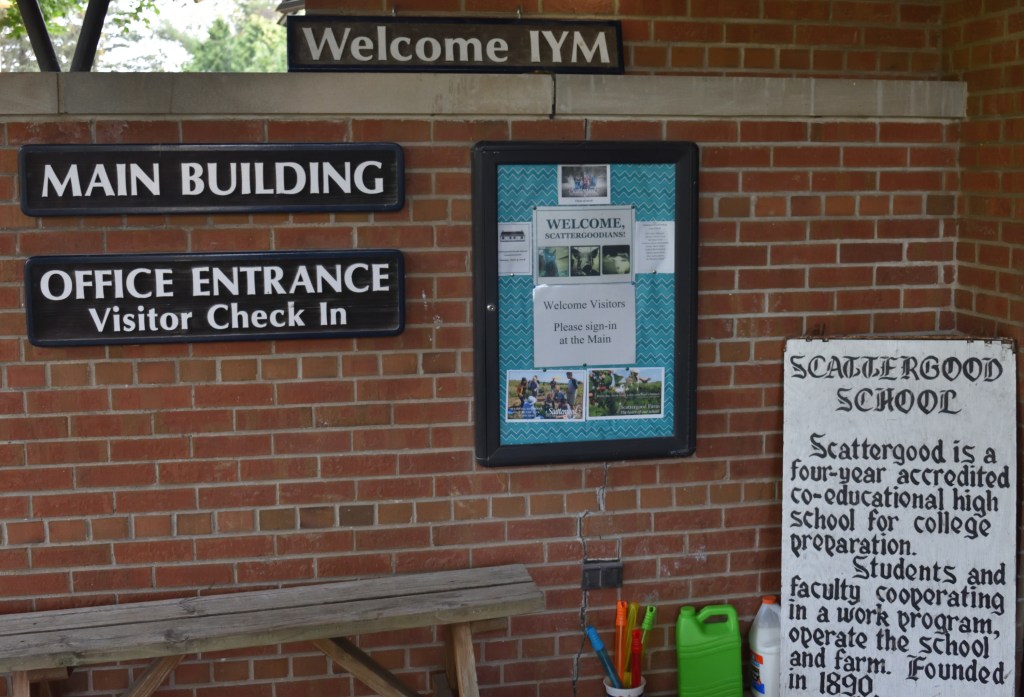
I was a student at Scattergood Friends School at that time. There were several things we did, including  events during several of the National Moratorium Days to End the Vietnam War. October 15, 1969, the entire school body walked in silence from the School into Iowa City.

From the school committee minutes (Oct. 11, 1969):
A group of students attended Committee meeting and explained plans for their participation in the October 15 Moratorium. The Committee wholeheartedly endorses the plans. The following statement will be handed out in answer to any inquiries:

“These students and faculty of Scattergood School are undertaking the twelve mile walk from campus to Iowa City in observance of the October 15 Moratorium. In order not to detract from the purpose of the walk, we have decided to remain silent. You are welcome to join us in this expression of our sorrow and disapproval of the war and loss of life in Vietnam. Please follow the example of the group and accept any heckling or provocation in silence.”

In recent years there were similar Peace Walks.

Peace Scattergood then now
FCNL: Scattergood Peace Marches

During the November Moratorium Day, we held a draft conference at the School.

ScattergoodDraftConference
Draft conference, Scattergood 1969

In April, 1970, Bob Berquist suggested we visit people in the nearby town of West Branch to see how they felt about the Vietnam War. Although we were apprehensive about what would happen, we found everyone we talked to unhappy about the war, and wanting it to end.  https://kislingjeff.wordpress.com/2017/12/02/scattergood-journal-april-19-30-2017/


The Peace Testimony Remains

Lynne Howard

I am an Iowa native—actually a Des Moines native.  I grew up attending Knox Presbyterian Church just two miles from the Des Moines Valley Friends (DMVF) Meeting House.  Although Presbyterian Churches are not typically known as “peace churches”, Knox Presbyterian was an active peace church.  While never having to officially declare himself a conscientious objector during WWII (due to his status as a pastor), our minister, Reverend Keith Delap, was a true follower of the peace testimony.

The 1960-1970’s were an exciting time in which to be a teenager.  Fresh ways of being, thinking and doing were opening.  A truly new world seemed possible.  Under Reverend Dewlap’s pastorship the Know community was challenged to envision a world without war.  More importantly, we were led to understand that we are not merely idle bystanders, but rather, active participants in bringing this new era into fruition.  These were heady and empowering ideas.

My peace activism started at Know and, because “all things peace” in Des Moines leads to AFSC and the Friends, I became involved with a group of like-minded students led by FSC staff.  We formed the Des Moines Area Youth Coalition and one of our main goals was to see draft counseling available in all of the Des Moines Public High Schools.  Young Des Moines men were walking down the aisles to receive their diplomas, and then, within months, stepping out of helicopters into the lush green hell that was Viet Nam in the 1960-70’s.  They deserved, at the minimum, some place to hear and discuss options.  We took our proposal to the Des Moines School Board in September of 1970, and to our surprise, it passed!  As a matter of interest, I have attached the proposal.

Eventually, my spiritual path led to membership at Des Moines Valley Friends Meeting.  It was an ecumenical journey—from my early Presbyterian roots, to Catholicism via the Catholic Worker and Jesuit Volunteer Corps, to Methodism through my husband, Bill.  And then, in my middle years, a Friends who attended DMVF Meeting remarked, “Lynne, you really are a Quaker, you know!”  Yes.  I had found my spiritual home in a place I had known for years.

In closing, while I’ve enjoyed going down memory lane, my real purpose in this piece is to recognize and celebrate the constancy and relevancy of the AFSC and Friends in peace and justice work over the years in central Iowa.  AFSC has provided optimistic leadership on the many complex issues that affect our local community and wider world.  If you want to know what is happening in the peace community, you pass through the doors of the AFSC and the Meeting House.  Other worthwhile groups have come and gone but the Friends Peace Testimony, and the faithfulness it requires of us, remains.

Lynne Howard, member Des Moines Valley Friends Meeting, 2014

September 15, 1970

MEMO TO:  Members of the Des Moines School Board

FROM:  A Group of Concerned Persons in the Des Moines School System (Parents and High School Students)

Many young men are struggling with decisions related to their future in connection with the draft and the war.  Young men must register for the draft at age eighteen, but they come to this important event without any clear understanding of its meaning for them or their country.

It is our feeling that high schools have a responsibility to counsel and educate young men for citizenship in a troubled and divided world, and this responsibility is not fully met unless there are also trained counselors who can help young men with vital decisions related to the draft and military service.

To determine whether or not the Des Moines counselors are presently trained in draft counseling we contacted Mrs. Baal, supervisor of counselors for the Des Moines School District, who said that technically the counselors have no training in draft counseling, but that it would depend on the training they received to become a counselor.  Mrs. Baal went on to tell us that most of the Des Moines counselors were trained at Drake and to find out if they received any draft counseling training we should contact Dr. Tiedeman, one of the men in charge of the counselor training at Drake.  Dr. Tiedeman told us that their training program did not include draft counseling.  The high school counselors of Des Moines are not trained in the area of draft counseling.

The schools need to be counseling young men as t the options available to them.  These options include deferments for students, deferments for pre-ministerial candidates, occupational deferments, dependency deferments, those who are deferred for physical, mental, or moral reasons, and the option of conscientious objection.  But let us also keep in mind that counseling needs to be provided for young men as to the opportunities and options available to them in terms of making one of the services a vocational choice.  What opportunities are available if they are interested within one of the branches of service?

The Des Moines Board of Education has a very important role to play in the future of young people.  For the most part, the high schools in Des Moines do an adequate job in providing counseling for college or in relationship to jobs.  However, they have failed to help young men with decisions concerning at least two years of their lives by not providing adequate counseling.  It was out of a concern with this lack that the Philadelphia School System, along with other schools systems, have already set up objective draft counseling.  Dr. Shedd, the Superintendent of the Philadelphia School System, feels very strongly that schools need to advise students on their legal options and alternatives to the draft.

We believe the Des Moines schools should provide similar counsel to help young men with critical decisions that may affect their entire lives.  Therefore we make the following proposal:

PROPOSAL FOR DRAFT COUNSELING IN THE DES MOINES PUBLIC HIGH SCHOOLS

STATEMENT OF BELIEF:

We believe that all young men in the Des Moines Public High Schools should have access to adequate counseling by qualified counselors in regard to the Selective Service and its alternatives.  Qualified counselors are those persons who:

  1. Have received special draft counseling training
  2. Have a detailed knowledge and experience of the Selective Service Law and the administration thereof
  3. Are sensitive to the moral and spiritual implication of war and peace and individual conscience
  4. Have knowledge of where to refer students if they want counseling on a specific aspect of the Selective Service alternatives and options

We further believe that such counseling should be made available during school hours, similar to other available guidance counseling.

IMPLEMENTATION:

There in light of the above purpose we recommend that one of the following plans be used to implement this counseling program:

  1. That each high school in Des Moines provide adequate training of all guidance counselors in order that they be familiar with the Selective Service Law and its alternatives
  2. That each high school select one guidance counselor who would be specially trained (see above) to counsel and answer questions concerning the draft and its alternatives.  Other guidance counselors in the school could refer their students to this specially trained counselor, if this type of counseling is needed
  3. That each trained counselor would refer persons who need more intensive and specific counseling to appropriate groups.  (Particular religious groups, various branches of the Service, etc.)
Posted in civil disobedience, peace, Quaker Meetings, Uncategorized | Tagged , | Leave a comment

Our brother’s keeper

Today we are assailed from all directions with problems that appear hopeless to resolve. That paralyze us, and add to our burdens the pain of not being able to do what we would like to do to help ourselves and others. Each day we are confronted with escalating violence, perpetrated at home and around the world. Endless war. An increasingly corrupt and authoritarian government.

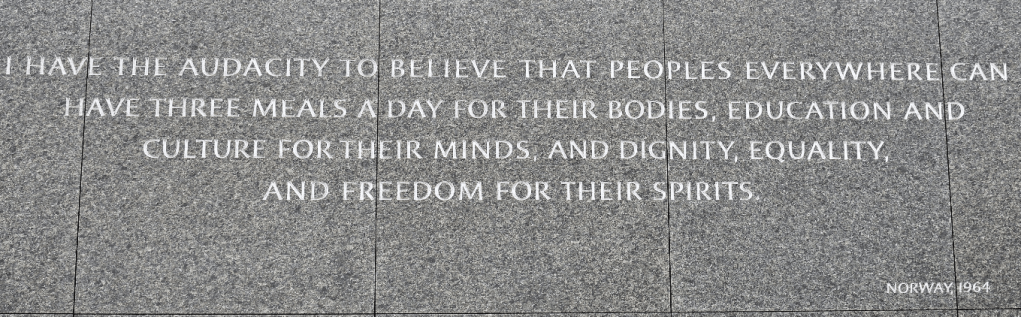
Could we not all agree that every person deserves food, shelter, education, healthcare, safety, and freedom, including the freedom to practice their faith?

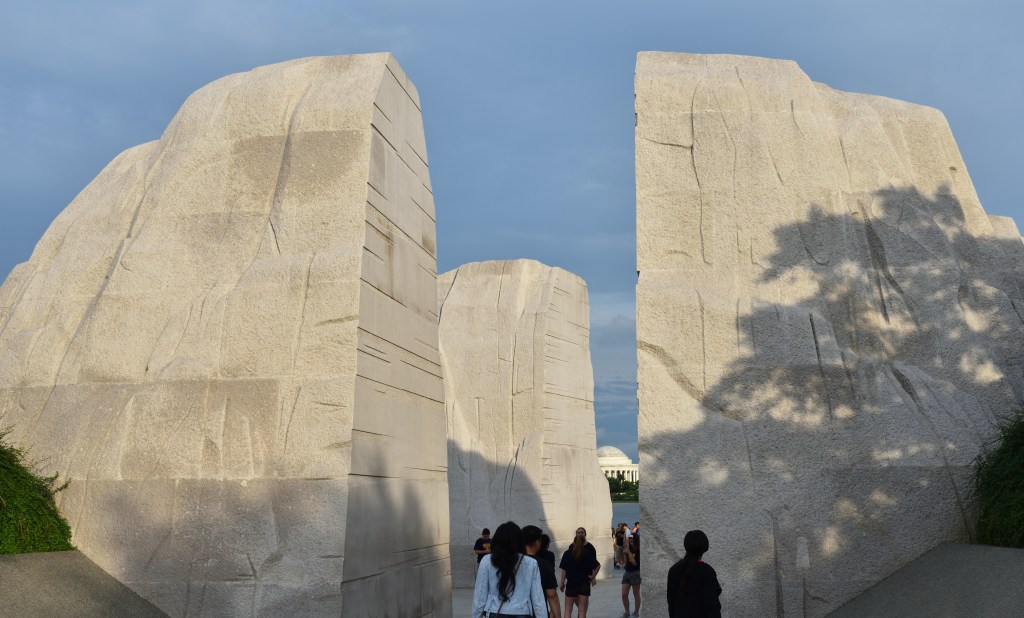
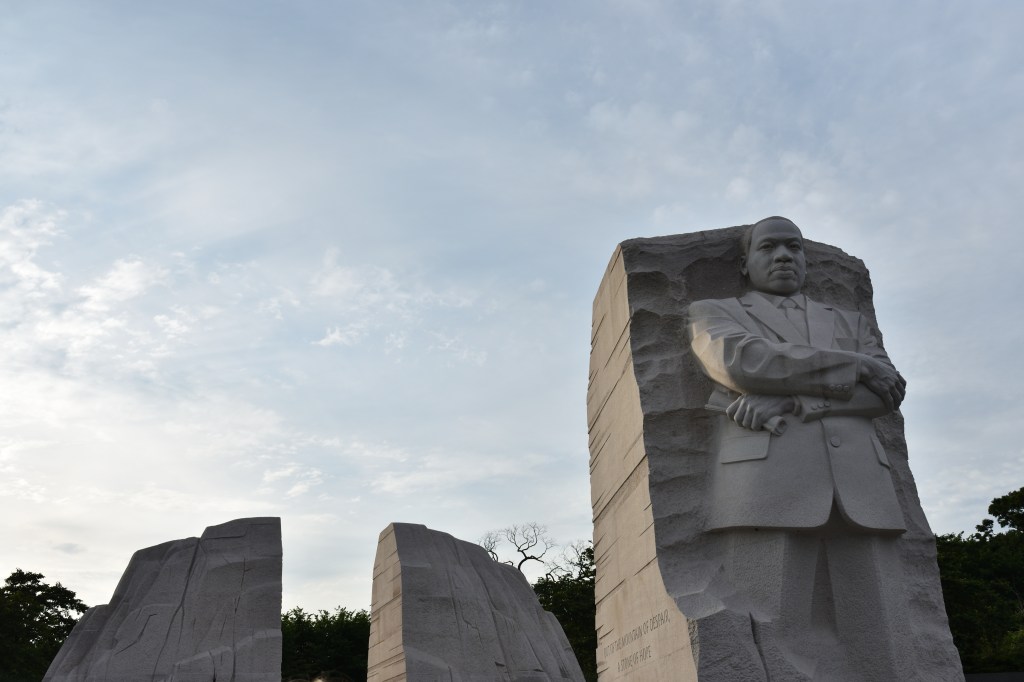
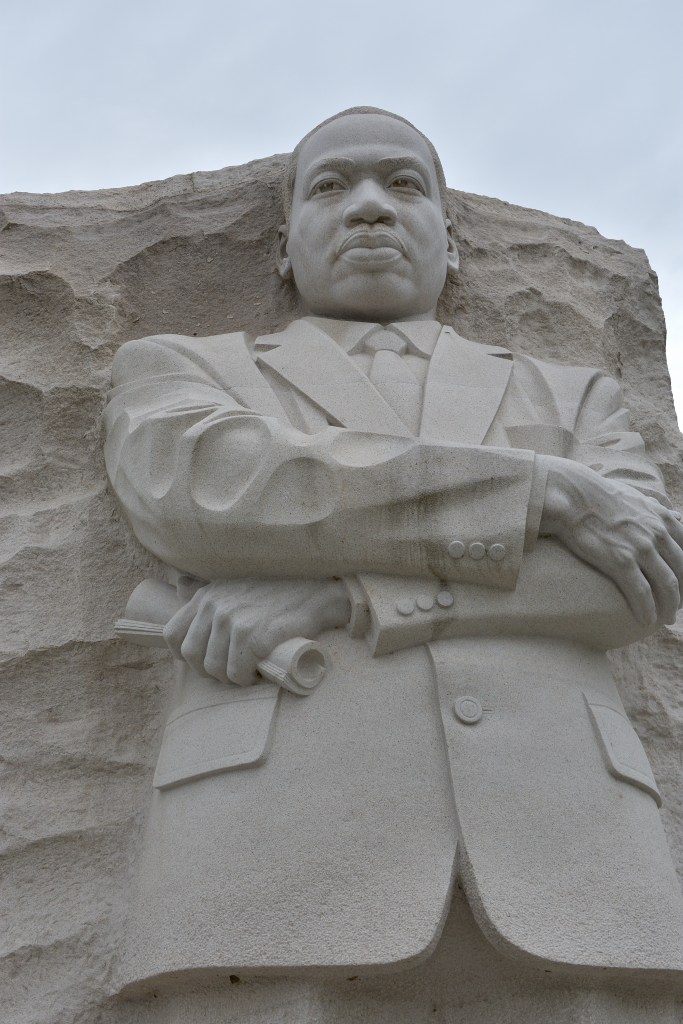
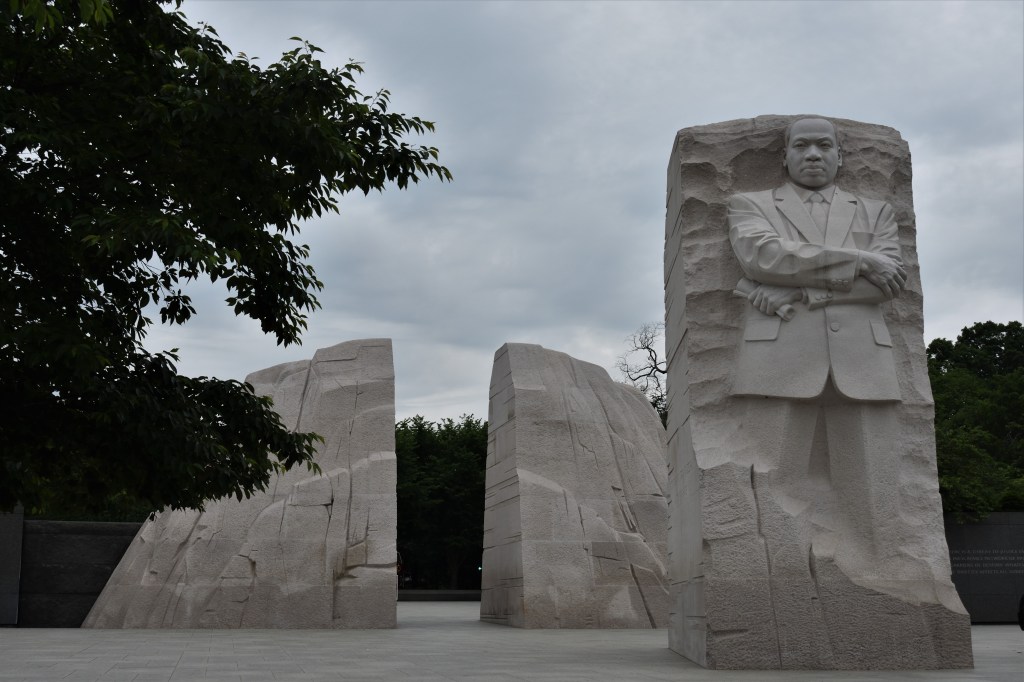
Martin Luther King, Jr.

Those who don’t believe we are our brother’s keeper are skilled at denying these things. Actively do what they can to make these matters worse. Deliberately scheme to turn us against one another. To deflect our attention from the problems they have created and perpetuate.

Who is feeding the poor and helping provide shelter and mental healthcare here in Central Iowa? Who is supporting peaceful protest by raising money for bail and helping those arrested navigate their way through the courts? I feel blessed to have found such a group of people, Des Moines Mutual Aid. See: Des Moines Mutual Aid and Resisting the Police State.

[NOTE: I am NOT saying Des Moines Mutual Aid is advocating to revive the Black Panther Party. Des Moines Mutual Aid is setting an excellent example of continuing one of the Panther’s programs.]

So I work with a dope crew called Des Moines Mutual Aid, and on Saturday mornings we do a food giveaway program that was started by the Panthers as their free breakfast program and has carried on to this day.

Ronnie James

It is time to revive the BPP blueprint for a multiracial network of revolutionary groups to confront capitalism, imperialism and racism in the US.

In the late 60s and 70s, the Black Panther Party (BPP) embodied the vanguard of the revolution and anti-fascist, anti-racist action in the United States. The BPP formed an inclusionary, class-based manifesto, promoted armed self-defense and created an array of community survival programs and services, which included a sophisticated educational platform, free health clinics, breakfast for schoolchildren, teach-ins and more. Further, the BPP utilized art and music, via its newspaper and band, to spread its revolutionary agenda.

In 1969, the BPP recognized the urgent need for alliances between revolutionary groups to confront the pervasive force of American capitalism and imperialism. In the May 31 issue of The Black Panther newspaper, it published an appeal for: “…a front which has a common revolutionary ideology and political program which answers the basic desires and need of all people in fascist, capitalist, racist America.”

The Black Panther Party’s multiracial anti-fascism by Yoav Litvin, ROAR, August 27, 2020

It is time to revive the BPP (Black Panther Party) blueprint for a multiracial network of revolutionary groups to confront capitalism, imperialism and racism in the US.

Yoav Litvin

“What can leaders today learn from the demise of the BPP (Black Panther Party)? How did the state sabotage your organizing?”

The BPP underestimated the enemy opposition and how much force they’d turn against a peaceful group trying to elevate their people; organizing communities for self-reliance, providing health care at dedicated centers and education at schools and teach-ins, and helping to feed each other. Gail Shaw

How do your efforts inform you on today’s protest movement?

It was a very different type of a reality back then, though the issues we faced were much the same as those we face today. The BPP was a disciplined organization with a program, platform and a committed cadre of people which appealed to us. We felt we were engaged in a purpose and agenda. We were not simply reacting to events; the immediate realities of daily oppression, police brutality, economic exploitation and institutionalized racism, but were using our activism for the larger purpose of transforming society and we had a structure within which to do that.

I would encourage younger people who are righteously angered to look at the BPP — not necessarily as a model to be replicated or a perfect organization, but as one piece of history which may have something to offer, an organization with a program and a platform, with the intention of transforming society through concrete actions and organizing.

I also would encourage people to consider the need now for a united front against fascism. I don’t think that the risk of fascism in this country has ever been greater than it is today under the Trump administration. David Levinson

The Black Panther Party’s multiracial anti-fascism by Yoav Litvin, ROAR, August 27, 2020

There is power, beauty and humility to work with an underlying drive towards positive transformation of society.

David Levinson

 In anything you do — music, art, medicine, journalism, education — you can be part of a bigger picture of transforming society.

My experience with the BPP in particular and activism in general has provided me with the center from which I have made choices about my life and in my career as a physician — to try to make what I do part of something bigger and broader. There is power, beauty and humility to work with an underlying drive towards positive transformation of society.

The Black Panther Party’s multiracial anti-fascism by Yoav Litvin, ROAR, August 27, 2020

THE BLACK PANTHER PARTY
Ten Point Platform & Program
October 1966
WHAT WE WANT
WHAT WE BELIEVE


1.   WE WANT freedom. We want power to determine the destiny of our Black Community.

WE BELIEVE that black people will not be free until we are able to determine our destiny.

2.   WE WANT full employment for our people.

WE BELIEVE that the federal government is responsible and obligated to give every man employment or a guaranteed income. We believe that if the white American businessmen will not give full employment, then the means of production should be taken from the businessmen and placed in the community so that the people of the community can organize and employ all of its people and give a high standard of living.

3.   WE WANT an end to the robbery by the CAPITALIST of our Black Community.

WE BELIEVE that this racist government has robbed us and now we are demanding the overdue debt of forty acres and two mules. Forty acres and two mules were promised 100 years ago as restitution for slave labor and mass murder of black people. We will accept the payment in currency, which will be distributed, to our many communities. The Germans are now aiding the Jews in Israel for the genocide of the Jewish people. The Germans murdered six million Jews. The American racist has taken part in the slaughter of over fifty million black people; therefore, we feel that this is a modest demand that we make.

4.   WE WANT decent housing, fit for the shelter of human beings.

WE BELIEVE that if the white landlords will not give decent housing to our black community, then the housing and the land should be made into cooperatives so that our community, with government aid, can build and make decent housing for its people.

5.   WE WANT education for our people that exposes the true nature of this decadent American society. We want education that teaches us our true history and our role in the present-day society.

WE BELIEVE in an educational system that will give to our people knowledge of self. If a man does not have knowledge of himself and his position in society and the world, then he has little chance to relate to anything else.

6.   WE WANT all black men to be exempt from military service.

WE BELIEVE that Black people should not be forced to fight in the military service to defend a racist government that does not protect us. We will not fight and kill other people of color in the world who, like black people, are being victimized by the white racist government of America. We will protect ourselves from the force and violence of the racist police and the racist military, by whatever means necessary.

7.   WE WANT an immediate end to POLICE BRUTALITY and MURDER of black people.

WE BELIEVE we can end police brutality in our black community by organizing black self-defense groups that are dedicated to defending our black community from racist police oppression and brutality. The Second Amendment to the Constitution of the United States gives a right to bear arms. We therefore believe that all black people should arm themselves for self- defense.

8.   WE WANT freedom for all black men held in federal, state, county and city prisons and jails.

WE BELIEVE that all black people should be released from the many jails and prisons because they have not received a fair and impartial trial.

9.   WE WANT all black people when brought to trial to be tried in court by a jury of their peer group or people from their black communities, as defined by the Constitution of the United States.

WE BELIEVE that the courts should follow the United States Constitution so that black people will receive fair trials. The 14th Amendment of the U.S. Constitution gives a man a right to be tried by his peer group. A peer is a person from a similar economic, social, religious, geographical, environmental, historical and racial background. To do this the court will be forced to select a jury from the black community from which the black defendant came. We have been, and are being tried by all-white juries that have no understanding of the “average reasoning man” of the black community.

10.   WE WANT land, bread, housing, education, clothing, justice and peace. And as our major political objective, a United Nations supervised plebiscite to be held throughout the black colony in which only black colonial subjects will be allowed to participate, for the purpose of determining the will of black people as to their national destiny.

   WHEN, in the course of human events, it becomes necessary for one people to dissolve the political bonds which have connected them with another, and to assume, among the powers of the earth, the separate and equal station to which the laws of nature and nature’s God entitle them, a decent respect to the opinions of mankind requires that they should declare the causes which impel them to the separation.

   WE HOLD these truths to be self-evident, that all men are created equal; that they are endowed by their Creator with certain inalienable rights; that among these are life, liberty, and the pursuit of happiness. **That, to secure these rights, governments are instituted among men, deriving their just powers from the consent of the governed; that, whenever any form of government becomes destructive of these ends, it is the right of the people to alter or abolish it, and to institute a new government, laying its foundation on such principles, and organizing its powers in such form, as to them shall seem most likely to effect their safety and happiness. ** Prudence, indeed, will dictate that governments long established should not be changed for light and transient causes; and, accordingly, all experience hath shown, that mankind are more disposed to suffer, while evils are sufferable, than to right themselves by abolishing the forms to which they are accustomed. **But, when a long train of abuses and usurpations, pursuing invariably the same object, evinces a design to reduce them under absolute despotism, it is their right, it is their duty, to throw off such government, and to provide new guards for their future security. **

http://www.itsabouttimebpp.com/home/bpp_program_platform.html

Posted in decolonize, Des Moines Mutual Aid, Uncategorized | Leave a comment

Trust and practicing hope

I refuse to dwell on all that is negative, all around us today, and will instead continue to practice hope.

People often mistake hope for a feeling, but it’s not. It’s a mental discipline, an attentional practice that you can learn. Like any such discipline, it’s work that takes time, which you fail at, succeed, improve, fail at again, and build over years inside yourself.

Hope isn’t just looking at the positive things in this world, or expecting the best. That’s a fragile kind of cheerfulness, something that breaks under the weight of a normal human life. To practice hope is to face hard truths, harder truths than you can face without the practice of hope. You can’t navigate dark places without a light, and hope is that light for humanity’s dark places. Hope lets you study environmental destruction, war, genocide, exploitative relations between peoples. It lets you look into the darkest parts of human history, and even the callous entropy of a universe hell bent on heat death no matter what we do. When you are disciplined in hope, you can face these things because you have learned to put them in context, you have learned to swallow joy and grief together, and wait for peace.

IT IS BITTER TEA THAT INVOLVES YOU SO: A SERMON ON HOPE by Quinn Norton, April 30, 2018

My friend Ronnie James recently told me some of the story of how the organization he helped build, Des Moines Mutual Aid, came into being and the work it does now.

In 2018, four trusted friends decided they needed to find ways to stop the city of Des Moines from evicting a houseless camp during that brutally cold winter. They pooled their knowledge and resources and began to learn how to rapidly respond to people’s needs. Other efforts came to include raising ball money for protesters arrested during demonstrations against racial injustice, supporting a Free Food Store and several other initiatives.

Trust is the key to the group’s success, to any group’s success. His small group of friends who began this work already knew and trusted each other. And their engagement and dedication to the work built necessary trust with the communities they work in and with.

Trust is the key requirement for any community, including several I’ve been blessed to be part of. As part of the Keystone Pledge of Resistance (against the Keystone XL pipeline), four of us were trained as Action Leads in Indianapolis. We quickly came to trust each other as we made plans for civil disobedience direct actions. And those in Indianapolis who wanted to participate began to trust us as we held training sessions in nonviolent direct action, and held rallies and marches. And we trusted the Rainforest Action Network that trained and supported us, including monthly national phone conversations.

“Congratulations on completing your training this past weekend!  As an Action Lead, you are now a living, breathing, nonviolent threat to the Keystone XL Pipeline.  We at Rainforest Action Network are very glad you have stepped up, and ready to support you in your role.  All of us at Rainforest Action Network are honored to be working with you on this historic effort.  You inspire us.”

Rainforest Action Network

As you might imagine, another project required a long time to build trust as the Quaker Meeting I attended in Indianapolis engaged with the small black youth mentoring community, the Kheprw Institute (KI). Monthly book discussions we attended at KI allowed us to learn what we thought about the books we were reading together, revealing parts of ourselves with each other. At one point Imhotep Adisa said, “these discussions are revolutionary.” That surprised me at first, but I quickly decided he was right.

It was several years of being together before I was asked to teach photography during KI’s summer program. These things can really take a lot of time. But I was so happy that trust was being built.

The stated purpose of the First Nation-Farmer Climate Unity March was to begin to build trust among our small group (about 20) of native and nonnative people as we spent hours sharing stories with each other, as we walked and camped for eight days along the path of the Dakota Access pipeline in central Iowa. That was wildly successful in community building, and many of us have worked on a number of projects together since.

These experiences have taught me that developing friendships is what to concentrate on for social justice efforts. Once people become friends, learn to trust each other, they can tackle anything. This is something Ronnie has also written about.

As Ronnie describes the beginning of his recent work, what began with those trusted friends identifying a problem, pooling their knowledge, experience, and resources has become a large collaboration with community provided resources and an ability to rapidly respond to situations.

So I understood what Ronnie was telling me about trust among those doing their work in what they call Des Moines Mutual Aid. And trust between them and the communities they work with.

He says anyone can do this work if they are willing to get in the dirt. That is my experience, too, as I hope my examples above show.

His biggest hope is that their example will lead to more and more Mutual Aid groups to spring up and continue to expand what is possible in grassroots organizing. That is the definition of The Power of The People. It is my hope I might help a Mutual Aid group come in to being.

We each have skills and resources we can utilize towards the abolition project. Some of us can use the halls of the system to make short term change there, others have skills that produce food, provide medical care, or care for our precious youth, some are skilled in the more confrontational tactics needed. Once we envision that world our ancestors want for us, finding our role is natural.

If we are to survive, and more importantly, thrive, we know what we will have to do.

All Power To The People.

Ronnie James, The Police State and Why We Must Resist

“I’m of the firm opinion that a system that was built by stolen bodies on stolen land for the benefit of a few is a system that is not repairable. It is operating as designed, and small changes (which are the result of huge efforts) to lessen the blow on those it was not designed for are merely half measures that can’t ever fully succeed.

So the question is now, where do we go from here? Do we continue to make incremental changes while the wealthy hoard more wealth and the climate crisis deepens, or do we do something drastic that has never been done before? Can we envision and create a world where a class war from above isn’t a reality anymore?” 

Ronnie James

I am a dreamer made real by virtue of the world touching me. This is what I know. I am spirit borne by a body that moves through the dream that is this living, and what it gathers to keep becomes me, shapes me, defines me. The dreamer I am is vivid when I fully inhabit myself—when I allow that. Meditation is not an isolated act of consciousness. It’s connecting to the dream. It’s being still so that the wonder of spirit can flow outward, so that the world touches me and I touch the world. It’s leaving my body and my mind and becoming spirit again, whole and perfect and shining.

Wagamese, Richard. Embers: One Ojibway’s Meditations (pp. 10-11). Douglas and McIntyre (2013) Ltd.. Kindle Edition.

Posted in civil disobedience, Des Moines Black Lives Matter, Des Moines Mutual Aid, Keystone Pledge of Resistance, Kheprw Institute, revolution, Uncategorized | Leave a comment

Chadwick Boseman

I didn’t know why I was so saddened to learn of the death of Chadwick Boseman. But I began to understand why as I listened to so many share their beautiful stories of how he affected them, even those who had never met him. We avidly search for more stories, told by those who did.

I believe what Richard Wagamese wrote.

ALL THAT WE ARE IS STORY

From the moment we are born to the time we continue on our spirit journey, we are involved in the creation of the story of our time here. It is what we arrive with. It is all we leave behind. We are not the things we accumulate. We are not the things we deem important. We are story. All of us. What comes to matter then is the creation of the best possible story we can while we’re here; you, me, us, together. When we can do that and we take the time to share those stories with each other, we get bigger inside, we see each other, we recognize our kinship — we change the world one story at a time.

Richard Wagamese (October 14, 1955-March 10, 2017)
Ojibwe from Wabeseemoong Independent Nations, Canada

Chadwick Boseman was a great storyteller. He was tremendously skilled at sharing his stories, on and off the screen. He helped us see each other and recognize our kinship. Helped us create the best possible story we could while we were here together.

He changed the world one story at a time.

Chadwick Boseman continues on his spirit journey. And I believe he would want us to continue to create the best story we can while we are here; you, me, us, together. Continue to change the world.


Posted in Arts, Uncategorized | Leave a comment

They do not know the world in which they live

Yesterday was the 57th anniversary of the March on Washington. It was heartening to see the large crowds at the Lincoln Memorial, and hear what was being said.

I’m reading the speech “Beyond Vietnam” by Martin Luther King, Jr. today because I am looking into the three dangers he warned us against; racism, militarism and materialism. I had been planning to write about those, which are in this speech. But I guess that will have to wait.

This speech means a lot to me, because I was a teenager at the time, facing what I would do related to the Vietnam war. I was led to resist the draft.

I didn’t remember this quote, “their questions suggest that they do not know the world in which they live.” That was what I was thinking as I watched what I could of the Republican National Convention. They either have no idea of the world we are all living in, or they do and don’t care. I think it is a matter of both. From their isolated distance from our society, what they do see frightens them. It is fear that causes them to turn to a strongman who they think can protect their privileged lives.

But there are signs of changing attitudes and work toward justice.

“Perhaps a new spirit is rising among us. If it is, let us trace its movements and pray that our own inner being may be sensitive to its guidance, for we are deeply in need of a new way beyond the darkness that seems so close around us.”

Beyond Vietnam – A Time to Break Silence by Martin Luther King, Jr. Delivered 4 April 1967, Riverside Church, New York City

I come to this magnificent house of worship tonight because my conscience leaves me no other choice. I join you in this meeting because I’m in deepest agreement with the aims and work of the organization which has brought us together: Clergy and Laymen Concerned About Vietnam. The recent statements of your executive committee are the sentiments of my own heart, and I found myself in full accord when I read its opening lines: “A time comes when silence is betrayal.” And that time has come for us in relation to Vietnam.

The truth of these words is beyond doubt, but the mission to which they call us is a most difficult one. Even when pressed by the demands of inner truth, men do not easily assume the task of opposing their government’s policy, especially in time of war. Nor does the human spirit move without great difficulty against all the apathy of conformist thought within one’s own bosom and in the surrounding world. Moreover, when the issues at hand seem as perplexing as they often do in the case of this dreadful conflict, we are always on the verge of being mesmerized by uncertainty; but we must move on.

And some of us who have already begun to break the silence of the night have found that the calling to speak is often a vocation of agony, but we must speak. We must speak with all the humility that is appropriate to our limited vision, but we must speak. And we must rejoice as well, for surely this is the first time in our nation’s history that a significant number of its religious leaders have chosen to move beyond the prophesying of smooth patriotism to the high grounds of a firm dissent based upon the mandates of conscience and the reading of history. Perhaps a new spirit is rising among us. If it is, let us trace its movements and pray that our own inner being may be sensitive to its guidance, for we are deeply in need of a new way beyond the darkness that seems so close around us.

Over the past two years, as I have moved to break the betrayal of my own silences and to speak from the burnings of my own heart, as I have called for radical departures from the destruction of Vietnam, many persons have questioned me about the wisdom of my path. At the heart of their concerns this query has often loomed large and loud: “Why are you speaking about the war, Dr. King?” “Why are you joining the voices of dissent?” “Peace and civil rights don’t mix,” they say. “Aren’t you hurting the cause of your people,” they ask? And when I hear them, though I often understand the source of their concern, I am nevertheless greatly saddened, for such questions mean that the inquirers have not really known me, my commitment or my calling. Indeed, their questions suggest that they do not know the world in which they live.

My third reason moves to an even deeper level of awareness, for it grows out of my experience in the ghettoes of the North over the last three years — especially the last three summers. As I have walked among the desperate, rejected, and angry young men, I have told them that Molotov cocktails and rifles would not solve their problems. I have tried to offer them my deepest compassion while maintaining my conviction that social change comes most meaningfully through nonviolent action. But they ask — and rightly so — what about Vietnam? They ask if our own nation wasn’t using massive doses of violence to solve its problems, to bring about the changes it wanted. Their questions hit home, and I knew that I could never again raise my voice against the violence of the oppressed in the ghettos without having first spoken clearly to the greatest purveyor of violence in the world today — my own government. For the sake of those boys, for the sake of this government, for the sake of the hundreds of thousands trembling under our violence, I cannot be silent.


Posted in Black Lives, civil disobedience, peace, Uncategorized | Tagged , | Leave a comment

Radicalize the Vote!

Seeding Sovereignty has been working on getting out the vote in Indian Country. One of the programs is SHIFT the Narrative, a live, online interview series that covers different aspects of Indigenous political engagement and current issues in Indian Country through interviews with expert guest speakers. More information about that, including links to past interviews, can be found at: https://seedingsovereignty.org/shift-the-narrative

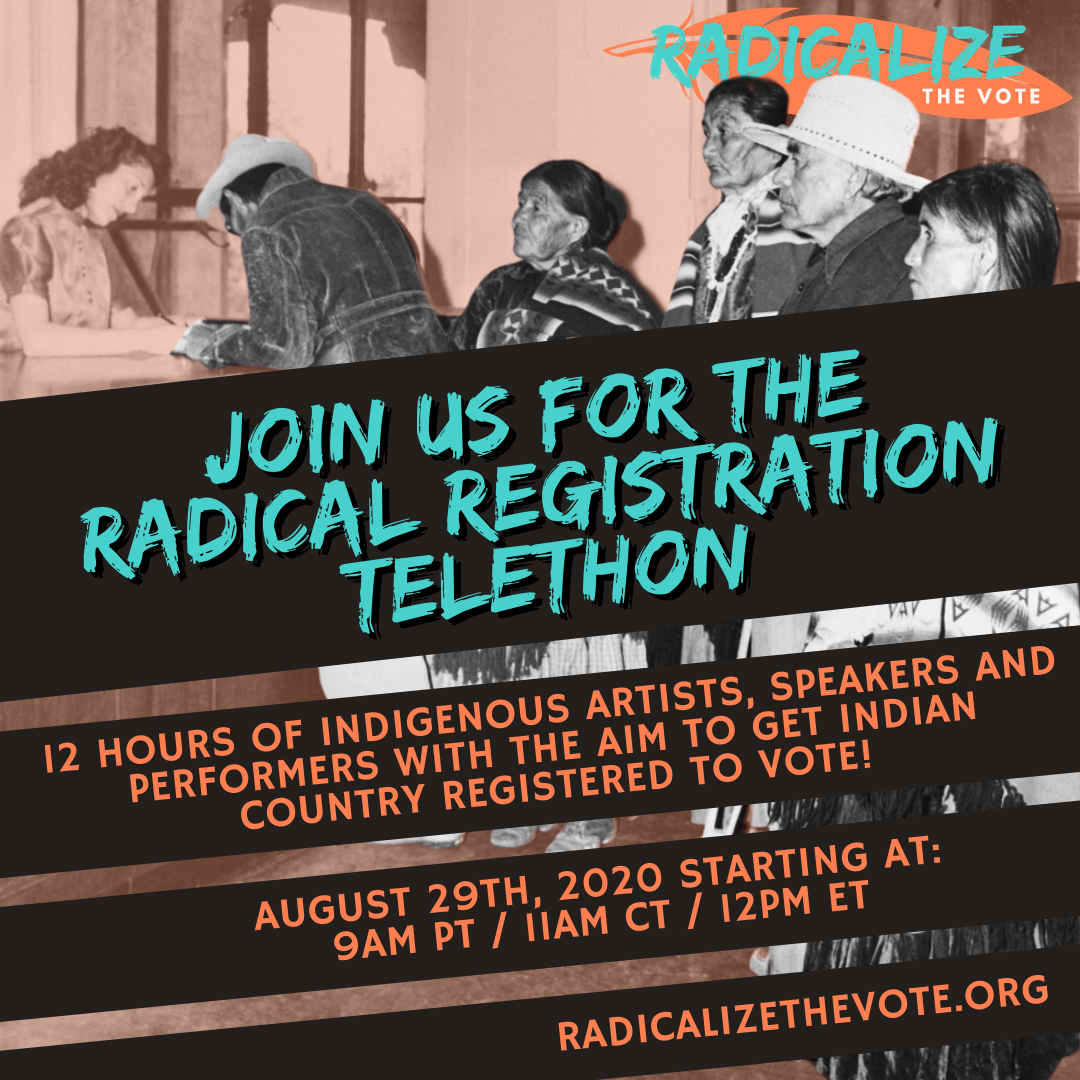
Another Seeding Sovereignty project is Radicalize the Vote. Radicalize The Vote is an effort to encourage and inspire Indigenous folx to register to vote by hosting a 12 hour telethon that is Indigenous led and centred.

Both Indigenous and non-Indigenous folks can register at Radicalize the Vote!

Dear Changemaker,

Seeding Sovereignty has created a national coalition effort to get out the vote in Indian Country in record numbers during COVID-19. Radicalize the Vote brings the power of the frontlines to the polls where Indigenous Peoples have long stood to protect their lands, their bodies, and their sovereignty.

At the center of this campaign is radicalizethevote.org where we are building a centralized Indigenous-led voter registration list.

Both Indigenous and non-Indigenous folks can register at Radicalize the Vote!

REGISTER NOW


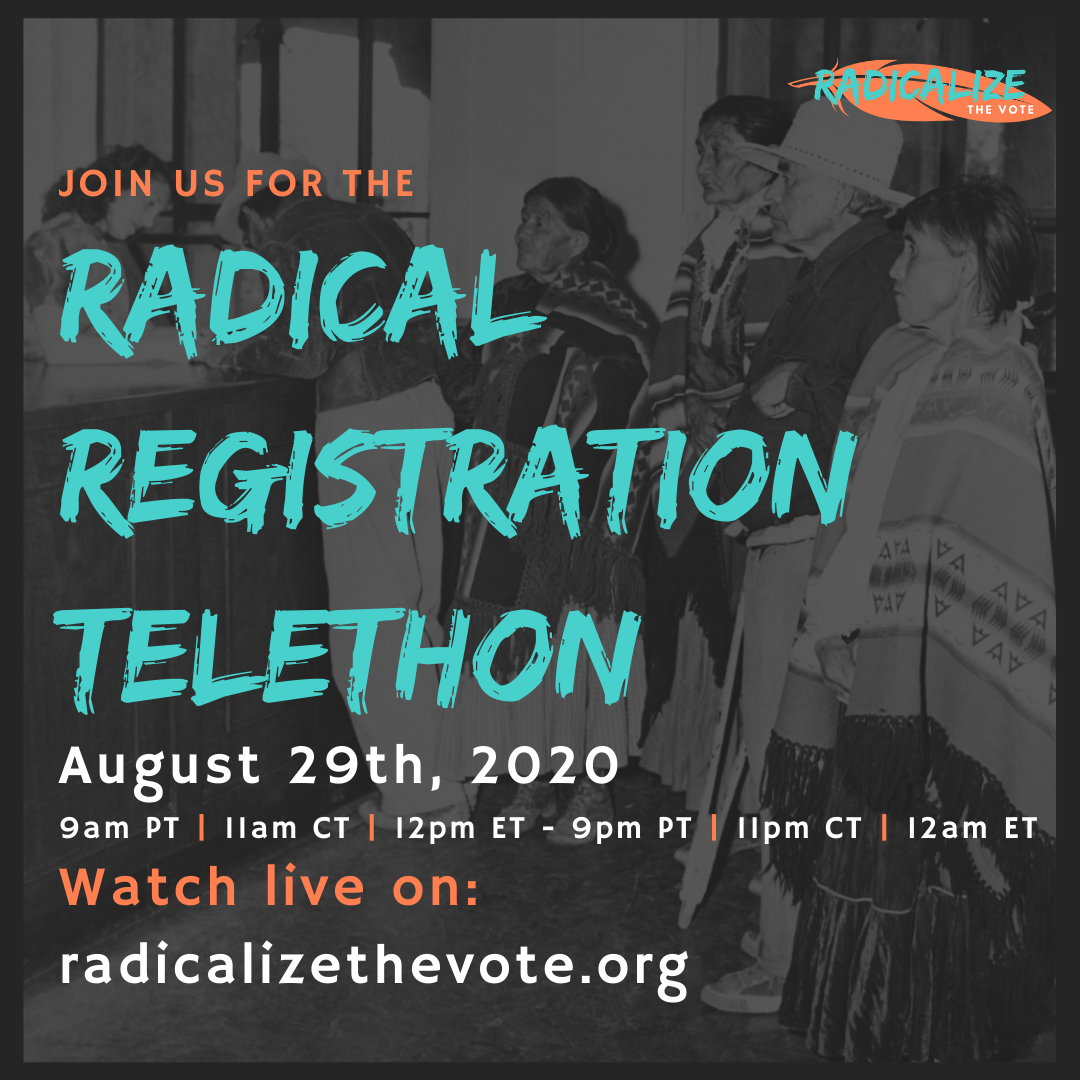
We have organized a 12-hour online Indigenous Radical Registration Telethon scheduled for August 29th (9am PT, 11am CT, 12 ET) at radicalizethevote.org with an amazing line-up of Indigenous leaders, artists, and culture bearers who will virtually attend the event to speak, sing and dance.

Please join us this Saturday, August 29th, at radicalizethevote.org

Radicalize the Vote will make historic change and we invite all Indigenous and ally friends to help with this effort. Beyond getting out the vote in record numbers in 2020, Indigenous voter turnout has the potential to increase political engagement in the country for years to come.  

If you are interested in volunteering, supporting or have questions, please contact shift@seedingsovereignty.org.
   
Ay Hai Kitatamihin / Iheedń / Mvto / Kinanâskomitin / Thank You,  
The Seeding Sovereignty Collective
radicalizethevote.org


radicalizethevote.org
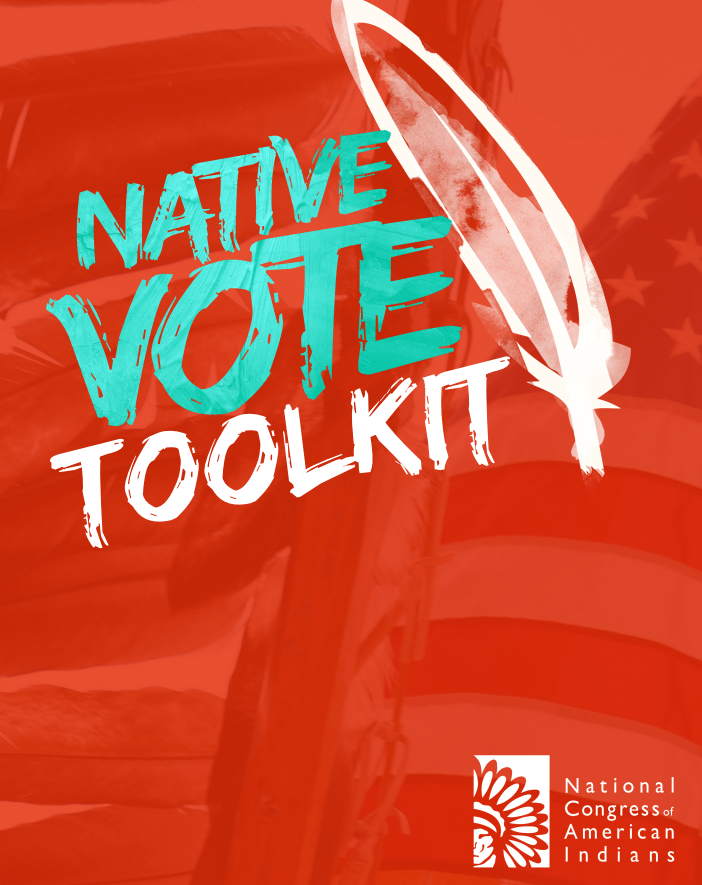
http://www.nativevote.org/wp-content/uploads/2019/08/Native-Vote-Toolkit-8-2019.pdf

#RadicalizeTheVote #RadicalRegistrationTelethon #NativeVote #NativeVote2020


Posted in Arts, Indigenous, Native Americans, Seeding Sovereignty, Uncategorized | Leave a comment