Why Quakerism is not prophetic

“Quakers will only be truly prophetic when they risk a great deal of their accumulated privilege and access to wealth. Prophets cannot have a stake in maintaining the status quo. Any attempt to change a system while benefiting and protecting the benefits received from the system reinforces the system. Quakers as much as anyone not only refuse to reject their white privilege, they fail to reject the benefits they receive from institutionalized racism, trying to make an unjust economy and institutionalized racism and patriarch more fair and equitable in its ability to exploit. One can not simultaneously attack racist and patriarchal institutions and benefit from them at the same time without becoming more reliant upon the benefits and further entrenching the system. Liberalism at its laziest.”      Scott Miller

 https://friendlyfirecollective.wordpress.com/2018/06/05/scott-miller-on-why-quakerism-is-not-prophetic/


That is another way of expressing what I’ve been trying to say lately. For example in A Radical Turning, that our capitalist economy and the political and policing/military systems that enforce it are inherently unjust. Placing little value on resources, including human labor, and siphoning vast wealth to those already rich, leaving millions impoverished. Consuming resources at rates many times greater than they can be replenished. Polluting our land, air and water. Built on white supremacy, militarism, and systemic racism. The triple threats that Martin Luther King, Jr, warned against; racism, militarism and materialism.

As Albert Einstein stated, “We cannot solve our problems with the same thinking we used when we created them.” Think about how profoundly true that is. That is why incremental changes have not worked. We MUST “think outside the box.”

An example is the failure of Quakers to address environmental chaos because most continue to drive cars, fly in airplanes, have homes with air conditioning, and include red meat in their diet. My decision forty years ago to give up having a personal automobile was my attempt to be more true to my environmental concerns. To obey what the Inner Light clearly said to me. Time and time again when I got into discussions about our environment, the first thing someone would say would be along the lines of “well you drive a car, don’t you?” If you can’t say “no I don’t”, you have lost any authority to try to get others to care about our environment. As Scott Miller puts it in the quote above, “Any attempt to change a system while benefiting and protecting the benefits received from the system reinforces the system. ”

My vision of creating diverse, self-sufficient communities with simple living structures, communal kitchens, growing food in surrounding fields is a way to escape the capitalist system. And if everyone is truly welcome to live and work in these communities, which will require much physical labor and energy to create and maintain, that has the potential to avoid systemic racism. A commitment to nonviolence could create more just and peaceful communities without police abuse.

In years past it was easy for people to dismiss these ideas, and believe they would never come about. They would point to the eventual failure of the vast majority of intentional communities. The difference at this point in time is that climate chaos is beginning to overwhelm our economic and political systems. And will increasingly do so in more ways. Many thresholds are being crossed, which trigger destructive feedback mechanisms, that even more severely stress and break these systems.

We will soon be forced to find alternatives to our existing social and political systems. Now is the time to figure out the best alternatives, before environmental and social chaos catches us unprepared. We can also be addressing systemic racism, militarism and materialism in the process. This article discusses ideas for designing and building such communities. https://kislingjeff.wordpress.com/2018/02/22/design-and-build-beloved-community-models/

As Scott Miller says above, “Quakers will only be truly prophetic when they risk a great deal of their accumulated privilege and access to wealth. Prophets cannot have a stake in maintaining the status quo.”

I would contend the reason our Quaker meetings are getting smaller is because most of us are too entrenched in the current, unjust economic and political systems. But I also believe we could speak to these times if we build alternative, Beloved communities.

Posted in climate change, Ethical Transportation, Quaker Meetings, Uncategorized | Tagged , | 2 Comments

Marches for Peace and our Environment

Recently my friend Ed Fallon (Bold Iowa) wrote,

“Often when there’s a crisis, people respond by traveling great distances on foot. Marches often transform the participants, and have changed my life, too. (Stay tuned for the upcoming release of my first book, Marcher, Walker, Pilgrim.)

Most important, marches change history. Consider:

·        The Women’s Suffrage March

·        Gandhi’s Salt March

·        The 1965 March for Voting Rights

·        The 1986 Great Peace March, which mobilized support for a nuclear test ban and citizen diplomacy between Americans and Russians”

I have participated in several marches and agree they can transform the participants. I was a Senior at Scattergood Friends School in 1969 when the entire School walked in silence into Iowa City during the October 15 National Moratorium Against the Vietnam War. The School Committee was told about plans for the Peace March on October 11. From the school committee minutes:

A group of students attended Committee meeting and explained plans for their participation in the October 15 Moratorium. The Committee wholeheartedly endorses the plans. The following statement will be handed out in answer to any inquiries:

“These students and faculty of Scattergood School are undertaking the twelve mile walk from campus to Iowa City in observance of the October 15 Moratorium. In order not to detract from the purpose of the walk, we have decided to remain silent. You are welcome to join us in this expression of our sorrow and disapproval of the war and loss of life in Vietnam. Please follow the example of the group and accept any heckling or provocation in silence.”

I was keeping a Journal at that time, and the entry for October 15 was:

The photo below was one of the first I ever developed. There was a primitive darkroom at the School then.

DSC09398-2

Several years ago the Peace March was held again. The following is from a Friends Committee on National Legislation (FCNL) newsletter:

Peace Scattergood then now

FCNL: Scattergood Peace Marches

In 2013 a Climate Conference was held at Scattergood School. On Saturday there were presentations by people working on environmental concerns. The next day
we had an Earth Walk that followed the same route of the earlier Peace Walks, this time with signs about the environment, and with us picking up trash along the way.  I really wanted to be part of this walk, mainly because of my participation in the 1969 Peace Walk, and came from Indianapolis (by bus) so I could.  Below is a video of photos I took during the walk, with interviews of participants.

The reason I included Ed’s message above is because it was the introduction to information about an upcoming walk, that I plan to participate in, The First Nation – Farmer Climate Unity March.  I hope you might consider joining the walk. More from Ed’s email message:

Bold Iowa is again partnering with Indigenous Iowa to organize this eight-day, 90-mile march. We’ll track the pipeline through Story, Boone, and Webster counties, traveling 10-14 miles each day.  We’ll set up our mobile encampment at farms and parks — a self-contained community of tents and teepees with a kitchen, eco-commodes, solar showers, and a solar collector.

If you’re a good walker, care deeply about justice and our Earth, and are ready for a unique personal growth experience, please consider being part of this important event.”

climate march poster

Posted in #NDAPL, climate change, Indigenous, peace, Quaker Meetings, Uncategorized | Tagged , , | Leave a comment

Robert F. Kennedy

Today is the 50th anniversary of the death of Robert Kennedy. I’ve been thinking about a number of things related to him.

NBC commentator Chris Matthews titled his recent book Bobby Kennedy: A Raging Spirit, an apt description of the man. The book mentions a CBS news program “Town Meeting of the World” in 1967, where Senator Robert Kennedy and Gov. Ronald Reagan take student questions, most of which were about the war in Vietnam.  I found a copy of that on YouTube and it is a fascinating discussion, including their views on the antiwar movement, and legitimacy of the U.S. involvement in the war.  Gov. Reagan mentions his support for conscientious objection based upon religious beliefs, and mentions Quakers.  But besides that, he basically disagrees with protest during war.  Robert Kennedy broadly defends peaceful protest even in times of war.

“KENNEDY: Well, I expect I disagree somewhat with the Governor. I don’t think that we’re automatically correct or automatically right and morality is on our side or God is automatically on our side because were involved in a war. I don’t think that the mere fact that the United States is involved in the use of force with an adversary makes everything that the United States then does absolutely correct. So I–the idea that we’re involved in this kind of a struggle, if there are those within the United States that feel that the struggle could be ended more rapidly with less loss of life, that the terror and the destruction would be less if we took a different course, then I think that they should make their views known. I don’t think they’re less patriotic because they feel that. In fact, I think that they would be less patriotic if they didn’t state their views and give their ideas, just because the United States is involved in this kind of a conflict as we are at the present time. Not to state any opposition, or say that we can’t state an opposition because of the–the fact that we’re involved in a struggle I think is an error. This is a difficult period of time, but the mere fact that we’re shooting one another across the world doesn’t make the United States automatically right. I think it should be examined. It doesn’t make the course that we’re following at the present time automatically right, automatically correct and I think that those who have a different point of view, no matter what their point of view might be and whether they are in favor of using increased force, or in favor of lessening the force, or even some–of pulling out unilaterally–I happen to disagree with that but I think they have a responsibility and a right to state those views, even though we’re in a difficult period of time.”

April 4, 1968, Robert F Kennedy gave several speeches in Indiana as he campaigned for the Democratic nomination for President of the United States. This young white man, as the United States Attorney General, along with his brother the President, had been thrust into the middle of the civil rights struggle. And then his brother was assassinated.

At Notre Dame he spoke about the Vietnam War, and told the students there that college deferments for the draft discriminated against those who could not afford to attend college, and should be eliminated.

After speaking about racism at Ball State, an African American student said, “Your speech implies that you are placing a great deal of faith in white America. Is that faith justified?” Kennedy answered “Yes” and added that “faith in black America is justified, too” although he said there “are extremists on both sides.” Before boarding a plane to fly to Indianapolis, Kennedy learned that Martin Luther King, Jr. had been shot. On the plane, Kennedy told a reporter “You know, it grieves me. . . that I just told that kid this and then walk out and find that some white man has just shot their spiritual leader.”

It wasn’t until the flight had nearly arrived in Indianapolis that he learned Martin Luther King, Jr, had died of his wounds. There wasn’t time to write something to cover this news. The Indianapolis event was to be held at a park in a predominately black neighborhood downtown. The Indianapolis police and city leaders tried to get him to cancel the speech, telling him they couldn’t protect him if there was a riot.

But he insisted. At the park, from the back of a flatbed truck, he said:

Ladies and Gentlemen,

I’m only going to talk to you just for a minute or so this evening, because I have some–some very sad news for all of you — Could you lower those signs, please? — I have some very sad news for all of you, and, I think, sad news for all of our fellow citizens, and people who love peace all over the world; and that is that Martin Luther King was shot and was killed tonight in Memphis, Tennessee.

Martin Luther King dedicated his life to love and to justice between fellow human beings. He died in the cause of that effort. In this difficult day, in this difficult time for the United States, it’s perhaps well to ask what kind of a nation we are and what direction we want to move in. For those of you who are black — considering the evidence evidently is that there were white people who were responsible — you can be filled with bitterness, and with hatred, and a desire for revenge.

We can move in that direction as a country, in greater polarization — black people amongst blacks, and white amongst whites, filled with hatred toward one another. Or we can make an effort, as Martin Luther King did, to understand, and to comprehend, and replace that violence, that stain of bloodshed that has spread across our land, with an effort to understand, compassion, and love.

For those of you who are black and are tempted to fill with — be filled with hatred and mistrust of the injustice of such an act, against all white people, I would only say that I can also feel in my own heart the same kind of feeling. I had a member of my family killed, but he was killed by a white man.

But we have to make an effort in the United States. We have to make an effort to understand, to get beyond, or go beyond these rather difficult times.

My favorite poem, my–my favorite poet was Aeschylus. And he once wrote:

Even in our sleep, pain which cannot forget

falls drop by drop upon the heart,

until, in our own despair, against our will,

comes wisdom through the awful grace of God.

What we need in the United States is not division; what we need in the United States is not hatred; what we need in the United States is not violence and lawlessness, but is love, and wisdom, and compassion toward one another, and a feeling of justice toward those who still suffer within our country, whether they be white or whether they be black.

So I ask you tonight to return home, to say a prayer for the family of Martin Luther King — yeah, it’s true — but more importantly to say a prayer for our own country, which all of us love — a prayer for understanding and that compassion of which I spoke.

We can do well in this country. We will have difficult times. We’ve had difficult times in the past, but we — and we will have difficult times in the future. It is not the end of violence; it is not the end of lawlessness; and it’s not the end of disorder.

But the vast majority of white people and the vast majority of black people in this country want to live together, want to improve the quality of our life, and want justice for all human beings that abide in our land.

And let’s dedicate ourselves to what the Greeks wrote so many years ago: to tame the savageness of man and make gentle the life of this world. Let us dedicate ourselves to that, and say a prayer for our country and for our people.

Thank you very much.

Every year in Indianapolis a ceremony is held on the date that speech was given, the date of the assassination of Rev. Martin Luther King, Jr.

One of my friends from the Kheprw Institute, Chinyelu Mwaafrika, performed a rap song during one of these ceremonies.   https://1drv.ms/v/s!Avb9bFhezZpPhrk9oYkygNciMvWOvw

There is a moving sculpture of Bobby Kennedy and Martin Luther King, Jr, marking that occasion in downtown Indianapolis, something I’ve taken many photos of. This video is a slideshow of some of my photos, displayed while the audio of Martin Luther King’s last speech, and then Bobby Kennedy’s speech can be heard.

PBS produced a documentary of this event called “A Ripple of Hope”.

link to photo gallery


Posted in Kheprw Institute, peace, race, Uncategorized | Tagged , , | Leave a comment

Lessons Learned from the Keystone Pledge of Resistance

It’s hard to believe that five years have passed since I signed the Keystone Pledge of Resistance and was trained as an Action Leader. I learned a great deal, and connected with a large number of people during the years I worked on the Pledge campaign.

The Pledge was an Internet campaign designed to put pressure on President Obama to deny the permit for the Keystone XL pipeline, that would carry the thick tar sands oil from Canada to the refineries on the Gulf of Mexico. Environmentalists were having a difficult time persuading the public and industry to transition away from fossil fuels. The environmental organizations Rainforest  Action Network (RAN), CREDO, and The Other 98% recognized the Keystone decision as an opportunity to both raise awareness about the dangers of tar sands and possibly even stop the construction of the pipeline.

The Pledge was posted on the Internet for people to sign.

“I pledge, if necessary, to join others in my community, and engage in acts of dignified, peaceful civil disobedience that could result in my arrest in order to send the message to President Obama and his administration that they must reject the Keystone XL pipeline.”

97,236 activists signed the Pledge.

The brilliant part was also collecting the contact information of those who signed, creating a grass roots network.


The website also asked if you were willing to lead in organizing an action in your community, which I did. The Rainforest Action Network identified the 25 cities that had the most people who had signed the Pledge, and spent the summer of 2013 going to those cities to train Action Leaders. Indianapolis was not one of those 25, but Des Moines, Iowa, was. Todd and Gabe held our training session at Iowa Citizens for Community Improvement. The syllabus took 8 hours to complete, with discussion about the pipeline, dangers of fossil fuels, theory of nonviolent resistance, legal aspects, all of the necessary roles (media, police liaison, jail support, etc), and how to organize an action and train others to participate. Role playing was another part. The second day of the training involved the participants doing the training we received the day before.

Using the database of contact information from those who signed the Pledge, I connected with the other Action Leaders in Indianapolis, including Jim Poyser and Ted Wolner.

dsc05122

We organized the civil disobedience event we would perform if it looked like President Obama was going to approve the pipeline. We were going to block the doors of the Federal Building in downtown Indianapolis. One part of this whole process was to deliver a letter of intent to the security personnel at the Federal Building, so they would be aware of what we were going to do if the resistance was triggered. We had an interesting conversation. These events would happen all over the country.

Over the next several months we held training session for the local people who had signed the Pledge, eventually training about 50 people. Nationwide about 400 action leaders trained nearly 4,000 people. President Obama was made aware of this nonviolent “army” and its plans. All this was done in the open.

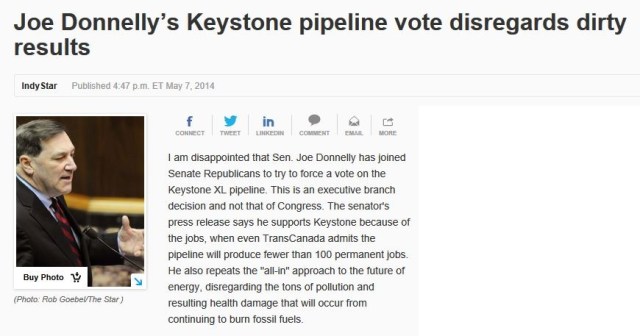
We used other opportunities to raise awareness about the Keystone Pipeline, fossil fuels and the effects of greenhouse gas emissions. The Indianapolis Star published this letter to the editor I wrote. Senator Donnelly had been talking about the jobs the pipeline would create. In reality less the 50 full time jobs would be created. After this editorial, he didn’t talk about jobs again.

donnelly keystone

The Kheprw Institute (KI), a Black youth mentoring community I was involved with, allowed us to hold a public meeting about the Keystone Resistance. Each of the Action Leaders spoke about why we were willing to risk arrest to stop the pipeline.

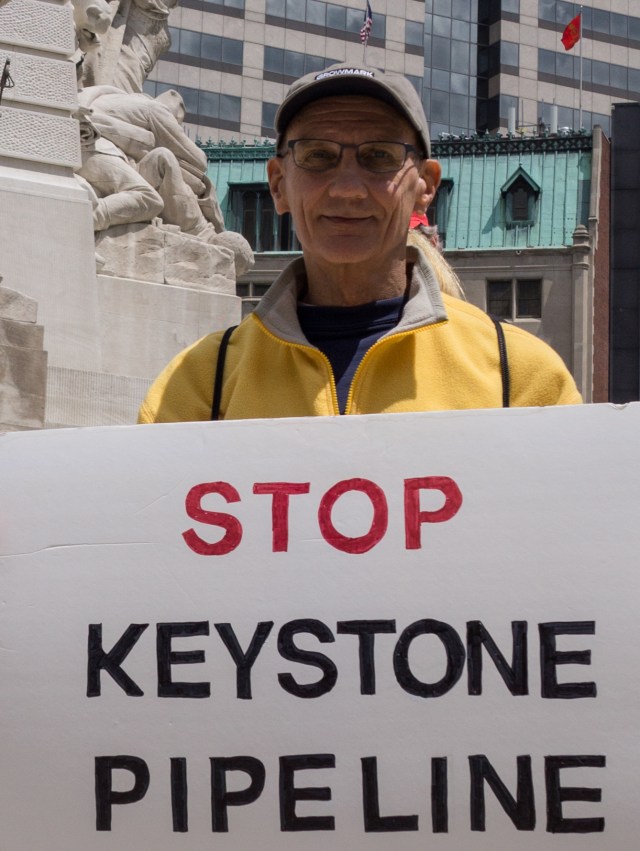
We had numerous public demonstrations in downtown Indianapolis to try to raise awareness. Every week at our peace vigil I held my Stop Keystone Pipeline sign.

North Meadow Circle of Friends, the Quaker meeting I attended, divested their bank account from Chase bank because of its support of pipelines.

I was also connected to Derek Glass, who was looking for video projects for his interns to work on. He and Andrew Burger and I create this video about the Keystone Pledge of Resistance.

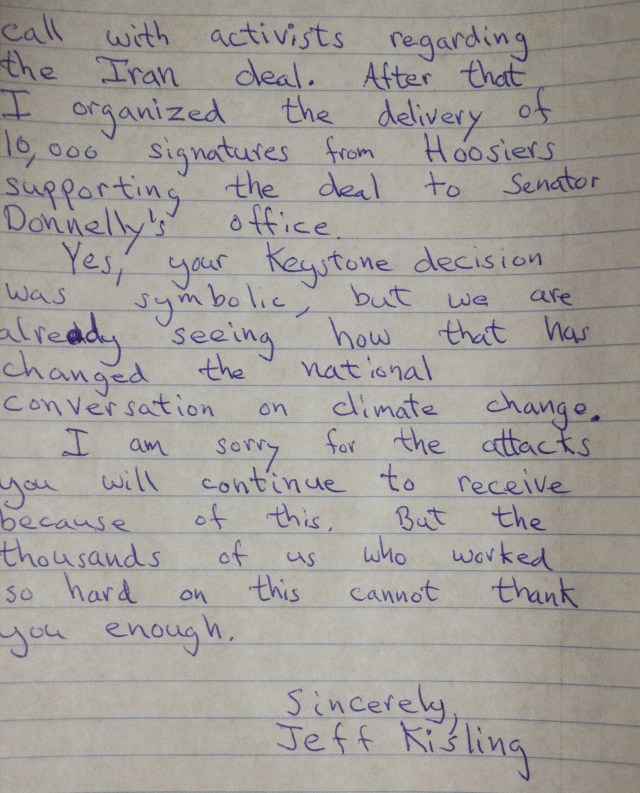
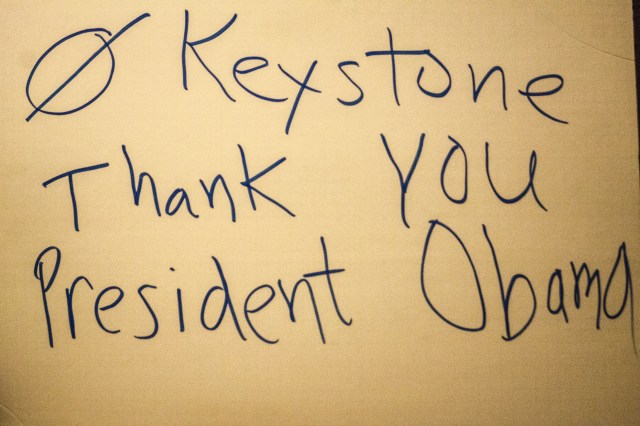
President Obama did finally decide to deny the approval of the Keystone XL pipeline, so we did not have to trigger our civil disobedience actions. Below are letters we exchanged about that. Although President Trump reversed that decision, the pipeline is still not built, and may never be. The main obstacle now is the state of Nebraska requires a different route of the pipeline through the state in order to avoid the sand hills and Ogallala aquifer.

We leaned a great deal about organizing and training for local civil disobedience direct actions. Our work also created a large and diverse network of environmental activists. This was extremely useful when people in Indianapolis wanted to organize to support the water protectors in North Dakota who were trying to stop the Dakota Access Pipeline. Joshua Taflinger and Brandi Heron led these efforts in Indianapolis. They knew Jim Poyser, one of the Keystone Action Leaders, and asked him for help in organizing the #NoDAPL efforts in Indianapolis. He contacted me and the other Keystone Leaders, and we were all happy to help with this. We held numerous public demonstrations, prayer vigils and bank divestment events.

At the Kheprw Institute, Ra Wyse interviewed me about the Dakota Access Pipeline.

Coming full circle in a way, the video below is of me talking about the Keystone Pledge of Resistance at a Dakota Access Pipeline gathering at the Indiana State Capitol.


BarackKeystone
DSC00500
DSC00501
DSC05598-2

DSC02576

Keystone Pipeline Fighter

DSC00132-3DSC00134-2ObamaKeystone

Posted in #NDAPL, civil disobedience, climate change, Indigenous, Keystone Pledge of Resistance, Kheprw Institute, Uncategorized | Leave a comment

A Radical Turning

Yesterday’s post includes the Minute about the intersectionality of problems. It says “only radical turning will save the world.” Radical turning is a phrase some authors have used to express completely changing direction from the current path. I’ve mainly seen this used regarding the need to abruptly stop using fossil fuels, in order to stop adding greenhouse gases to the atmosphere, in order to try to avoid runaway global warming.

As Albert Einstein stated, “We cannot solve our problems with the same thinking we used when we created them.” Think about how profoundly true that is. That is why incremental changes have not worked. We MUST “think outside the box.”

Our current, interrelated problems include social and political systems white European settlers created when they arrived in what is now called the United States. Initially only white men were allowed to vote. White men thought they were superior to others, which allowed them to justify to themselves the enslavement of “African” Americans, taking the land of, and killing, “Native” Americans, and subjugating women.

Industrialization resulted in families leaving rural areas where they were self sufficient and members of supportive communities, to cities, where they were dependent upon wages. Industry required vast amounts of energy, which was provided by fossil fuels because of their energy density, ease of extraction and transport, and initially, huge supplies.

The capitalist economy placed a monetary value on everything, from the value of a person’s labor, to land, water and other natural resources. People and resources are accorded little value. Laws, created by white male legislators, allowed people and resources to be exploited for wealth, regardless of the consequences to people and to our environment. We have seen the economic impacts, and are now seeing the consequences of the unfolding environmental chaos.

The jobs people depended upon disappeared due to automation or by taking advantage of cheap labor in foreign countries, leaving people in poverty, hungry, sick and without dignity, while the rich accumulated vast sums of money. This is artificial wealth that depends upon us continuing to participate in a capitalistic society.

The radical turning that we need now would involve rejecting the capitalistic economy and the political system that enforces it. People can re-learn how to build communities where each person is valued, and which provide the basic necessities for all. This could be done by the migration of people from cities where they are dependent on others for almost everything, to rural areas where they can become self-sufficient once again. Such communities could use little or no fossil fuel.

As basic necessities are taken care of, people could again build communities that value relationships with each other, the land and their spiritual beliefs. Ideally each person would be valued for the skills they have to offer the community. Artificial stratifications of society based upon skin color, gender, age, sexual orientation, socioeconomic status or religion should disappear. Our humanity restored. Systemic racism should not be part of this new system. Indigenous people could teach us how to build such communities, and re-establish right relationships with each other and Mother Earth. We could finally begin to heal the wounds of enslavement and the genocide of indigenous people.

Many may be skeptical about this. This would obviously be a huge disruption. But as our existing political and economic systems are overwhelmed by the increasing environmental chaos, we will be forced to come up with alternatives.

Change will be forced upon us. We would be wise to explore how to do this while we can. I’ve written about possible ways to do that in this blog post:  https://kislingjeff.wordpress.com/2018/02/22/design-and-build-beloved-community-models/

SONY DSC


Posted in climate change, Indigenous, race, revolution, Uncategorized | Leave a comment

Intersectionality

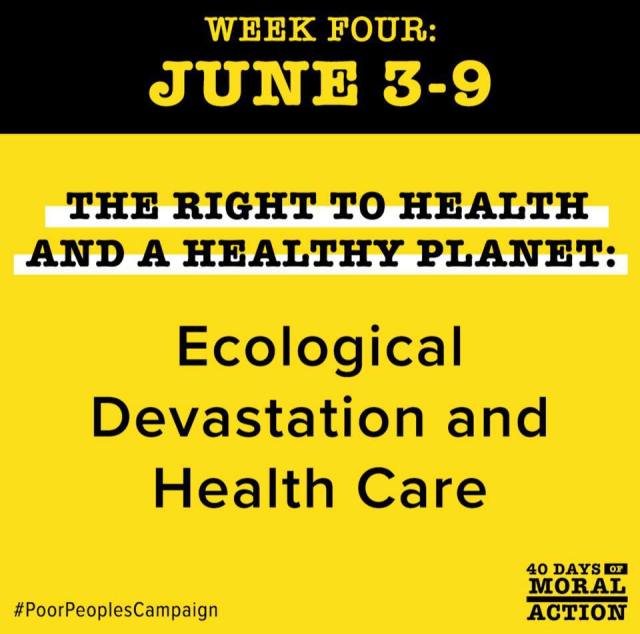
This is the fourth week of the Poor Peoples Campaign, which addresses how injustices are interconnected. The next event in Iowa, “Right to Health and a Healthy Planet” will be tomorrow at 2:00 p.m. at the Iowa State Capitol building.

Intersectionality is an analytic framework which attempts to identify how interlocking systems of power impact those who are most marginalized in society. Intersectionality considers that the various forms of what it sees as social stratification, such as class, race, sexual orientation, age, disability and gender, do not exist separately from each other but are complexly interwoven.” Wikipedia

Minute approved 2016 Iowa Yearly Meeting (Conservative) of Friends (Quakers)
Interconnections Among Dilemmas

We as Quakers, experience the unifying core that animates all peoples and nature. This common experience compels us to work at resolving injustices that separate peoples and people from nature.

American society, in which we live and breathe, is today saturated by greed and violence to the extent that life as we know it veers toward extinction. Maladies that we experience as separate are in reality deeply interconnected.

Examples are legion:

  • Our imperialist foreign policy, which encompasses mass killings of people of color has the same roots as violence within our borders.
  • Gun violence parallels military violence and systemic racism.
  • Domestic violence, sexual assault, and child abuse are directly coupled with military violence and structural poverty.
  • Massive population displacement results from war, climate disruption and economic policy.
  • Climate disruption follows from the unquenchable greed and military dominance that alienates us from each other and the rest of the world.

Only radical turning will save the world. It is both frightening and challenging to consider that a great part of both the problem and the solution lies within U.S. society.

Our hope rests in the spirit of Christ moving within and among us and our attentiveness to its direction. Within Friends, different members bring different gifts of discernment and action.

Artistic creativity opens possibility and inspires broader participation. Those who faithfully lobby lawmakers and insert themselves in democratic processes move us forward. Those who engage in healing and rebuilding our communities provide the basis for peace and stability. Interrupting the racism woven into our culture opens untold possibilities. Alternatives to Violence workers dismantle roots of violence and build bridges. Those who aid in releasing us from the greed endemic to capitalism can do much to save the environment and interrupt rapacious resource exploitation. Spirit-grounded educators ease technological and intellectual barriers to the world we seek. Individuals nearing the end of their life may offer unique wisdom, love and support to those with the energy to continue life on earth.

Quaker Social Change Ministry of AFSC, Advocacy Teams of FCNL, Experiment with Light, and Clearness Committees are among the various Quaker techniques for moving us forward towards the Light and away from fear and despair. How we avail ourselves of them will rest on the particular resources of the communities in which we live and diverse gifts within our meetings.

We have one purpose; a spiritual awakening and creating a peaceful, loving, just and sustainable world. And there are diverse approaches to reach the goal. We act in harmony when we support, appreciate, and speak truth to those whose struggles intersect with ours, even when the paths seem to be different.

PPC week 4

June 4, 2:00 p.m. at the Iowa State Capitol building

https://actionnetwork.org/events/rally-in-the-iowa-state-capital-on-june-4-2?source=facebook&

Posted in climate change, peace, Poor Peoples Campaign, Quaker Meetings, Quaker Social Change Ministry, race, Uncategorized | Leave a comment

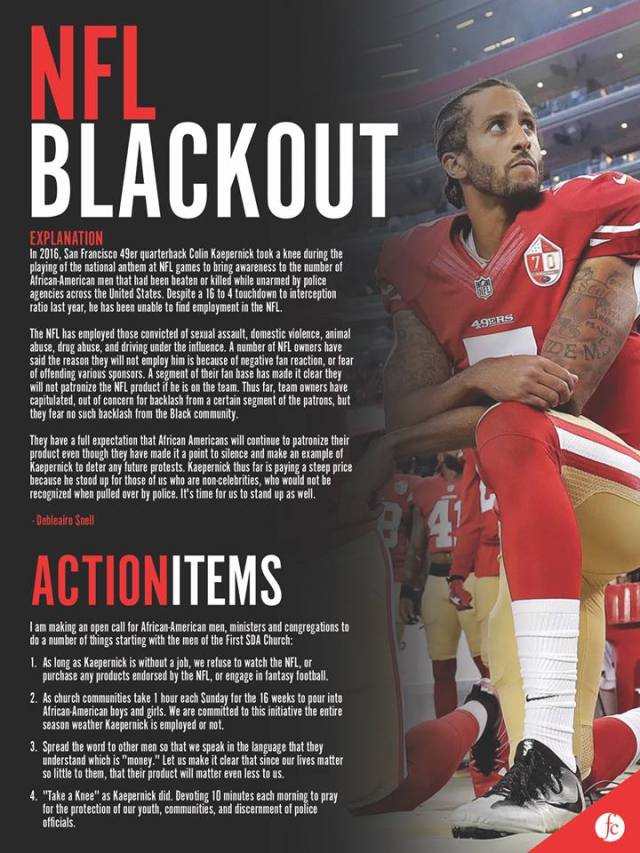
NFL Black0ut

#blackout

“It’s time to Blackout the NFL. They have shown that they do not care about people of color and we must stop spending our time, efforts, energy, money and resources where it is clear that we do not have a voice… Support the movement. Share this video with #blackout.” Thomas Felder

Facebook: https://www.facebook.com/Black0utNow/

Blackout

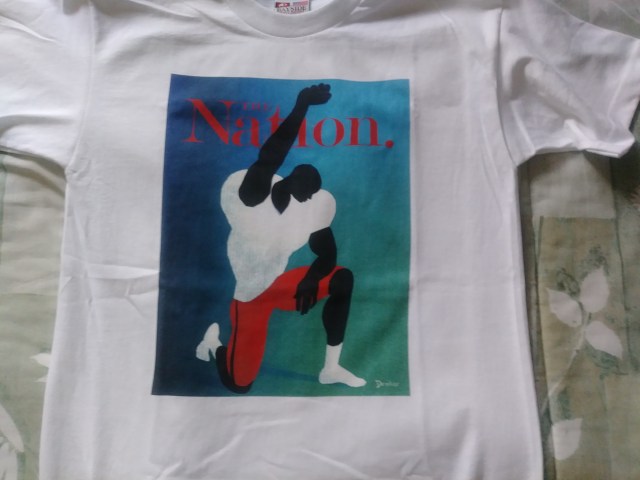
Kneeling Kapernick

A Quaker perspective on Colin Kaepernick and #BlackLivesMatter by Lucy Duncan, American Friends Service Committee

“It’s that white fear and haze of indifference to the life of an unarmed father standing in the road, dead because his SUV broke down and he happens to be Black, or a Black man who is parked when police come looking for a suspect, that is at the root of the shootings themselves. This is the persistent, deadly indifference that 49ers football player Colin Kaepernick is calling out when he sits or kneels when the national anthem is played.”

https://www.afsc.org/blogs/acting-in-faith/quaker-perspective-colin-kaepernick-and-blacklivesmatter

Posted in Black Lives, race, Uncategorized | Leave a comment

Past, present and future

For many years I have been learning about the past and thinking about the future, related to a number of topics. Mainly trying to understand the true history of our country and its cultures. One of the first lessons I learned is the history we were taught in school leaves out a great deal. And what is included has been rewritten to conform to the author/teacher’s worldview. Which leaves out most of what is negative and emphasizes what is positive, again from their viewpoint.

Some of those topics are what the land that is now called the United States was like before the colonization by white European settlers.

What the Indigenous beliefs and practices were, and continue to be. How the land was stolen by white Europeans and how the Doctrine of Discovery was used to try to justify that. How attempts were made to force native children to deny their identities and adopt the settlers’ ways.

And the whole sordid history of capturing and enslaving “African” Americans. The years of creating racial terror by lynching thousands.  Modern day racial terror of police killing of unarmed people of color. Continuing to treat people of color as somehow inferior to so called white people to this day.

On the streets we often say “no justice, no peace.”  I do not believe we can have peace until we confront the injustices of the past and present. People who consider themselves white must get past their fear of confronting these past and current injustices before we can move closer to peace for us all.

The future has long been on my mind because we are on a path toward no future, i.e. extinction of humans, because of the unfolding environmental chaos. Here again we have to get past our fear of what we are facing. We will only be able to work on solutions after we confront our current situation.

One of the reasons I’ve been thinking so much about the past, present and future, is because I have come to believe that our only hope for the future can be found in Indigenous Peoples way of life, that honors the sacred connections between us and Mother Earth, and between each other.

What I appreciate about my Quaker faith is the belief that God continues to be a force today. That if we listen closely we can hear what the Spirit is teaching us, and asking us to do at this moment in time. We have to have the courage to do what the Spirit is telling us. We can’t find the way forward by continuing to live as we are now. The Spirit can lead us in a new way.

Many people have written about the past, present and future:

  • The past, the present, and the future are really one: they are today. Harriet Beecher Stowe
  • The distinction between the past, present and future is only a stubbornly persistent illusion. Albert Einstein
  • If you ae depressed, you are living in the past. If you are anxious, you are living in the future. If you are at peace, you are living in the present.  Lao Tzu
  • Yesterday is history, tomorrow is a mystery, today is a gift of God, which is why we call it present. Bil Keane
  • The past is gone, the future is not yet here, and if we do not go back to ourselves in the present moment, we cannot be in touch with life. Thich Nhat Hanh
  • The past is your lesson. The present is your engine. The future is your motivation.
  • The meeting of two eternities, the past and future… is precisely the present moment. Henry David Thoreau
  • Life is the past, the present and the perhaps. Bette Davis
  • The wise form right judgment of the present from what is past. Sophocles
  • You can’t really live in the past because the present is always present. John Benjamin Hickey
  • The only use of knowledge of the past is to equip us for the present. Alfred North Whitehead
  • The reason people find it so hard to be happy is that they always see the past better than it was and the present worse than it is.  Aysayko
  • The past is behind, learn from it. The future is ahead, prepare for it. The present is here, live it. Thomas S Monson
  • The present is determined by our past actions, and the future by the present. Swami Vivkananda
  • The past is only the present become invisible and mute; and because it is invisible and mute, its memorized glances and its murmurs are infinitely precious. We are tomorrow’s past. Mary Webb
  • The past is never the past. It is always present. And you better recon with it in your life and in your daily experience, or it will get you. It will get you really bad. Bruce Springsteen
  • The past not merely is not fugitive, it remains present. Marcel Proust
  • I always live in the present. The future I can’t know. The past I no longer have. Fernando Pessoa
  • Live in the present and make it so beautiful that it will be worth remembering. Ida Scott Taylor
  • The past is always with us, for it feeds the present. Ruskin Bond
  • History dies without the present. There is no future without the path made to it by the past. Aidan Chambers
  • When the past is forgotten, the present is unforgettable. Martin Amis
  • The past is always a rebuke to the present. Robert Penn Warren
  • The whole past is the procession of the present. Thomas Carlyle
  • The present is the necessary product of all the past, the necessary cause of all the future. Robert Green Ingersoll
  • From your past emerges the present, and from the present is born your future. Muhammad Iqbal
  • The present is our future past, we’ve gotta make this moment last. Sabrina Carpenter
  • Learn the past, watch the present, and create the future. Jess Conrad
  • I don’t have a past. I have a continuous present. The past is part of the present, just as the future is. We exist in time. George Balanchine
  • Nostalgia is like a grammar lesson: you find the present tense, but the past perfect!  Owen Lee Pomeroy
  • Never let the sadness of your past and the fear of your future ruin the happiness of your present.
Posted in #NDAPL, climate change, Indigenous, peace, Quaker Meetings, Uncategorized | Tagged | Leave a comment

Poor People’s Campaign Highlights Consequences of War

Yesterday I summarized the rally of the third week of the Poor People’s Campaign in Des Moines, Iowa. That event was held across the street from North High School because part of this week’s theme is school gun violence.

DSC_7668

Videographer Rodger Routh shares video segments he takes at these events.

Here Robert Nishimwe talks about feeling unsafe at school:


One of the things that I was most affected by was Brian Terrell’s talk about his visits to Afghanistan. He said the median age for the population of the country was 18 years.  That meant half of the population had not been born when the war began.

Rodger Routh video:

I realized that must also mean very large numbers people older than 18 must have been killed in the war. When I asked my friend Rezadad Mohammadi, who comes from Afghanistan, if that was true he indicated that to a large extent it was. He also spoke about how corrupt the government there is, making it hard to create change. When I said I knew he was working for change to occur there, he replied, “not only me, but thousands of others, too.”

DSC_5852_01

“During the war in Afghanistan (2001–present), over 31,000 civilian deaths due to war-related violence have been documented; 29,900 civilians have been wounded. Over 111,000 Afghans, including civilians, soldiers and militants, are estimated to have been killed in the conflict. The Cost of War project estimated that the number who have died through indirect causes related to the war may be as high 360,000 additional people based on a ratio of indirect to direct deaths in contemporary conflicts.”  Wikipedia

You can see Jon Krieg’s (AFSC) photos of the rally here:  http://photos.afsc.org/?c=1938&k=dbc5399e7f

And my photos: https://1drv.ms/f/s!Avb9bFhezZpPiaRhO7n1WLZ-6u_MFQ

Posted in Poor Peoples Campaign, Uncategorized | Tagged , , | Leave a comment

Poor People’s Campaign–Gun violence and militarism

The rally of the third week of the Poor People’s Campaign was held across the street from North High School in Des Moines, Iowa. The themes were gun violence and militarism. People spoke about school gun violence, violence against people of color, being attacked by drones, and Afghanistan. A Veteran for Peace spoke, saying “war is not the answer.”

WE DEMAND:

  • We demand an end to military aggression and war-mongering.
  • We demand a stop to the privatization of the military budget and any increase in military spending.
  • We demand a strong Veterans Administration system that remains public.
  • We demand a ban on assault rifles and a ban on the easy access to firearms.
  • We demand the demilitarization of our communities on the border and the interior.
  • We demand an end to federal programs that send military equipment into local and state communities.
  • We demand that the call to build a wall at the U.S.-Mexico border be ceased.
  • We demand an immigration system that, instead of criminalizing people for trying to raise their families, prioritizes family reunification, keeps families together, and allows us all to build thriving communities in the country we call home.


Posted in Black Lives, peace, Poor Peoples Campaign, Uncategorized | Tagged , , , | Leave a comment