First Nation-Farmer Climate Unity March Begins

The First Nation-Farmer Climate Unity March began on September 1, 2018. I’m looking back on that now, September 20-21, 2018. I had no idea then how trans-formative the March would be, in many different ways.

I think most of us had many questions and concerns about what was about to happen. Most of the people who gradually gathered at Union Park the night before the March began seemed to know some people, but many were strangers to each other. So there were questions about what backgrounds these people came from and what their personalities were. Would we get along or would there be frictions? There were obviously cultural differences between the Native Americans and those who weren’t.

Some of us weren’t experienced campers and had to learn how to put up and take down our tents, prepare for sleep, re-pack and keep everything organized. I was challenged right away with putting up and then taking down my tent in wind and rain, and being in the tent during a severe thunderstorm. Once I found the tent was staying dry and wouldn’t blow away during that first storm, I enjoyed hearing the rain beat down and the thunder and lightning, even though it was 3 a.m.

Although I planned to process photos and write a least a short blog post each day, I found there often wasn’t much free time to do so. I took an average of about 100 photos a day, and didn’t want to get too far behind in processing them. I would edit the photos first, then write the blog post, where the photos helped tell the story. There were some late nights and early mornings doing that. Finding a place to use the laptop and having Internet access was sometimes a challenge. One of the first questions many of us asked at each new site was whether there was Internet service, and what the WiFi password was.

It was interesting to see the reactions, including my own, to not having any Internet or cell phone service when we were at Pilot Mound. The reactions did not include complaining. I began to notice this as the week went on and was really impressed by the lack of complaints. We all took everything in stride. The attitude was that we were here to complete this journey together, difficulties were expected, and complaining wouldn’t help. When I researched smudging with burning sage, I learned the purpose was to remove negative energy and attract positive energy. It worked. The burning sage was offered to each of us and one way we shared and learned about each other. Similarly there were chances to help put up or take down the tipi. I’d never seen that done before.

Keeping the battery of the laptop and phone charged was a challenge as well, though the portable solar system helped. I also had a portable battery pack along. It was disconcerting to awaken a time or two when the phone was dead and not know what time it was.

I imagine I wasn’t the only one who wondered if I had the stamina to walk at least 10 miles a day, day after day, or if I would get blisters. Many of us, including me, did. I also worried about developing migraine headaches, which are often triggered by dehydration and/or inadequate sleep, both of which seemed likely to happen on the March. I was really grateful I didn’t have a single headache during the March. We all seemed to be conscious of the need to drink a lot of water.

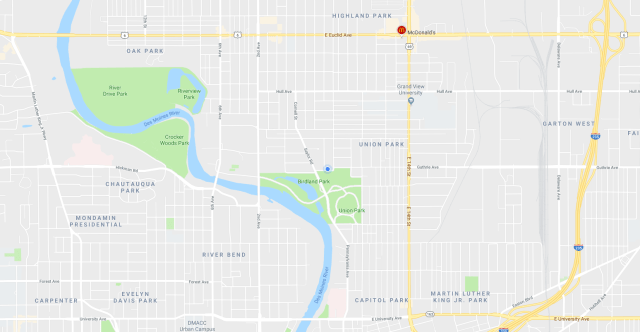
After taking down our tents and getting our gear into the gear truck that first night, a quick breakfast, and packing a lunch, we carpooled to the Iowa Utilities Board (IUB) for the press conference announcing the First Nation-Farmer Climate Unity March. Then we carpooled back to Union Park, and walked a short distance to Birdland Park, on the Des Moines River. The reporter for the Des Moines Register and news crew from WHO TV (NBC) who had been at the IUB came to the park, too. https://www.desmoinesregister.com/story/news/2018/09/01/group-march-100-miles-protest-dakota-access-pipeline/1173974002/

We gathered in a circle. Ed made some remarks about beginning the March, then Ako Abdul-Samad gave a wonderful blessing. Manape LaMere sang. He has a very powerful voice. That, and the song Regina Tsosie sang earlier at the IUB, and the Native dress began my introduction to the lives of the Native Americans I would be with for the next eight days.

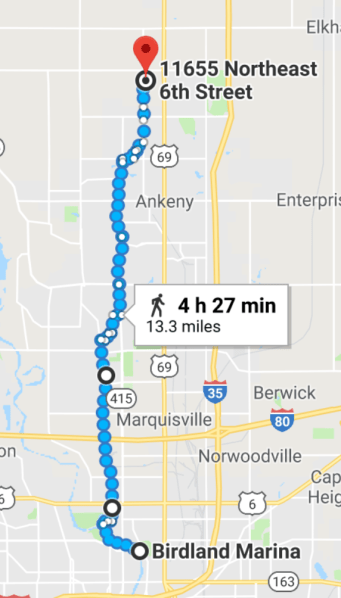
2018-Des-Moines-to-Ankeny-walking

Finally, the March began, going on the trails along the swollen Des Moines River and then into Des Moines and Ankeny neighborhoods.

The sun came out after a couple of hours. With the high humidity from evaporating rain water, the heat index climbed to around 90 degrees.

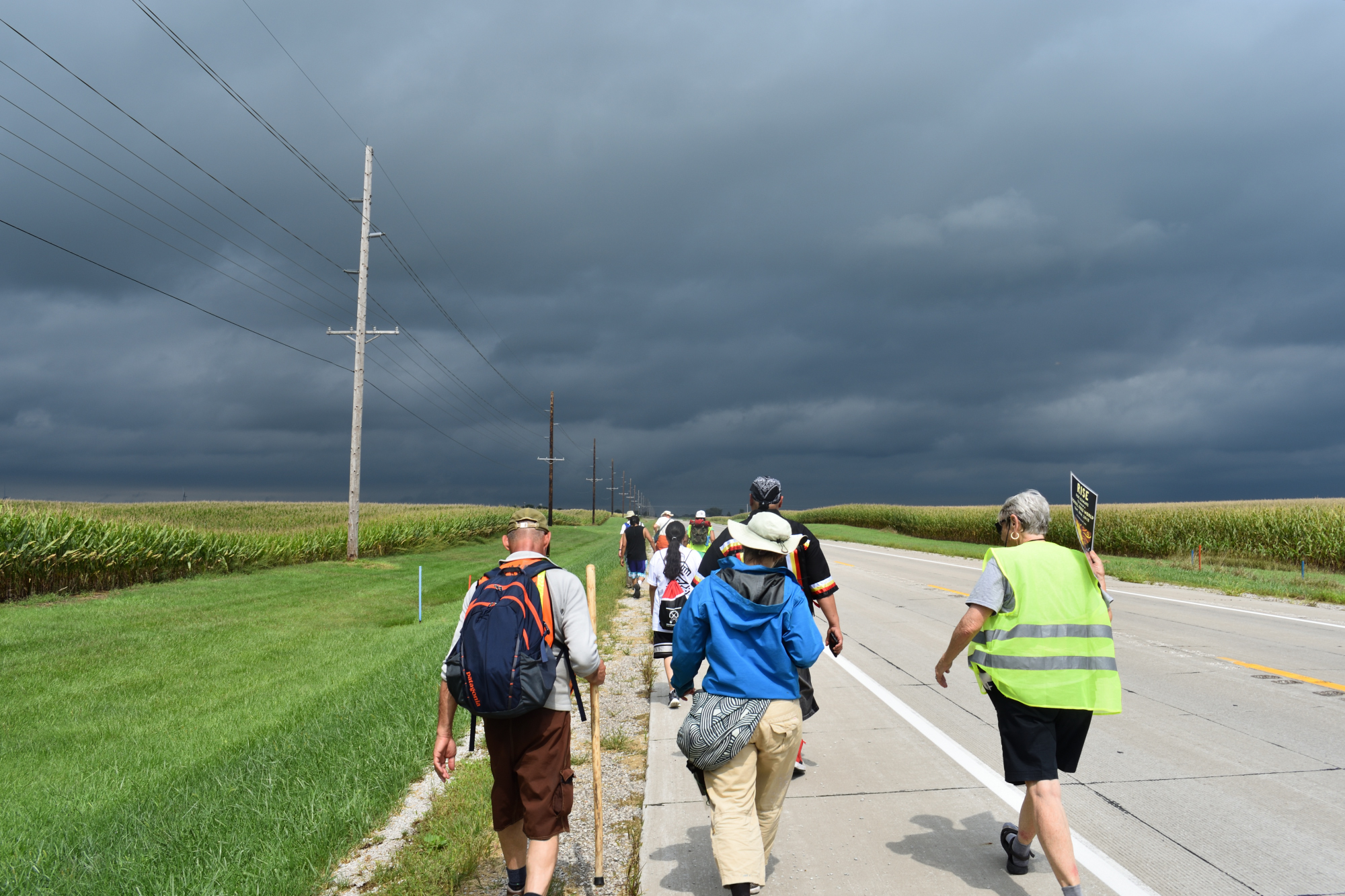
As we walked, we naturally paired off, and began to get to know each other, asking questions and sharing stories. At first these were short, tentative conversations. But as we got used to the flow of this, with the many hours we spent together, these conversations became longer and deeper. And over the days of marching, we began to build on what we had previously learned from each person, getting to know each other better, more deeply. After each stop different groupings of people naturally paired up to talk and listen to each other. With around 12-20 people marching at a time, each of us eventually talked with every other person, and the conversations lasted longer, were deeper and often more animated. We became comfortable enough to inject humor, but also to broach more intense subjects. A few days into the March, my new friend Matt Lone Bear said, “this is a great walk because people actually talk with each other.” These conversations, and walking and working together helped us develop friendships and community.

The first day of 13.3 miles combined with the heat and humidity was challenging. I wonder how many others were sharing my thoughts about how rough this week might turn out to be.


Posted in #NDAPL, First Nation-Farmer Climate Unity March, Indigenous, Uncategorized | Leave a comment

First Nation-Farmer Climate Unity March-Support People and Systems

Not having participated on a multi-day walk, I wasn’t aware of how much work and planning was involved. The organizing partners are listed at the end of this post. My impression (and I apologize if I left anyone out) was the main people involved were Ed Fallon, Kathy Byrnes and Shari Hrdina, Bold Iowa, Christine Nobiss, Indigenous Iowa, Seeding Sovereignty and Donnielle Wanatee.  Sarah Spain was the logistics organizer and was always busy keeping everything organized and moving smoothly.

Fintan Mason created the logo for the March, and the video about this year’s march.

We benefited from the presence of Manape Lamere, Alton Onefeather, and Lakasha Yooxot Likipt in many ways. They provided safety and security during the entire walk. They were often asking each of us how we were doing as we walked, and good at offering encouragement. Manape also sang several times, and spoke to us during our last evening gathering around the bonfire.

Trisha Entringer lead a discussion about decolonization that last evening.

Another person who stepped up to help in a big way was Samantha Kuhn. Sam volunteered to drive the sag wagon at first, and continued to do so for the rest of the March. The sag wagon carried extra equipment such as backpacks that marchers might need along the route but didn’t want to carry on their backs. This was really useful for me, allowing me to have Sam carry my laptop in her car, so that I had easy access to it for processing photos and writing blog posts. Sam also played a major role by finding alternative places for rest stops, and for us to spend the night when the places we had planned to use were flooded by the intense rainfalls we experienced during the March.

Before the March began, shelves had to be built in the rented equipment truck to carry our gear (tents, sleeping bags, etc). Unfortunately about midway through the walk those shelves collapsed. But they were rebuilt and ready for us by the end of that day. The steps up into the truck also had to be built. The gear truck also contained two large containers of drinking water.

The portable solar panel array and batteries accompanied us to supply electricity wherever we camped which was greatly appreciated. There were a lot of cell phones and some laptops in use during the March, with many of us sharing what was happening on the March via social media and blog posts. A media room was setup for us at the Boone Country Fairground stop.

We all appreciated the portable compost toilet and solar shower shed that was parked at every rest stop along the way. Here are the instructions for using the toilet:

At our last stop the collected compost was buried in a trench in the ground.

One of the most appreciated parts of the March was the absolutely wonderful food prepared by Lyssa Wade, https://www.veggiethumper.com/. Her great food went a long way to sustaining us during the hours of marching. Lyssa was up hours before us, preparing breakfast. Lyssa writes:

Why I’m marching: I’m providing the food for this march because conscious cuisine is central to moving beyond the climate crisis and getting people to question what’s in their food and where it comes from.

About me: I run a food bus/truck called “Veggie Thumper.” I raise consciousness through food awareness by providing access to high-quality vegan and vegetarian cuisine. I’m an avid gardener and love to hula-hoop in the backyard in the middle of the night.

Another person who was a great resource was Miriam Kashia, who took care of all our foot blisters. I appreciated her help with a blister I developed. Miriam has a lot of walking experience, having walked 3,000 miles across the United States in 2014 on the Great March for Climate Action, which was also organized by Ed Fallon. Miriam and I walked 12 miles from Scattergood Friends School and Farm to Iowa City in 2013, as part of a climate conference held by Iowa Yearly Meeting (Conservative).

The daily burning of sage and smudging was appreciated.

We were also really grateful for the farmers and churches along the way that provided places to spend the night.  And for those who came to speak with us each evening, including my Scattergood School roommate, Lee Tesdell.

Lee Tesdell

At least three times the tipi was put up. This was a visual symbol of the presence of Native Americans and helped promote the concept of the First Nation-Farmer Climate Unity March.

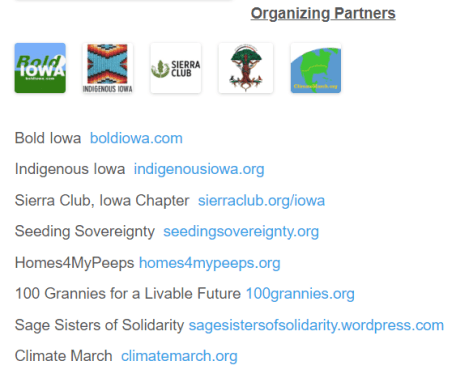
Organizing partners


Posted in #NDAPL, First Nation-Farmer Climate Unity March, Indigenous, Uncategorized | Leave a comment

First Nation-Farmer Climate Unity March and Faith

Before this story finally gets to the March itself, I wanted to try to express some of the ways faith played a role in our journey. I’m sure there were many people, of many faiths who supported us. For example, Gary Clague’s pastor, Debbie Griffin, joined us on the March.

I’d like to share some of the ways we marchers were supported by my friends and Quaker faith community. Although I write from a Quaker faith perspective, I don’t intend to imply that Quakers are any more faithful than others. It’s just that is my faith community and experience. That community (Iowa Quakers) gets tired of hearing me saying we have to stop using fossil fuels, but that’s been one of my main areas of concern for most of my life. And Friends have worked find ways to reduce their reliance on fossil fuels.

It became clear to me as I went out into the world on my own that we could not continue to keep burning fossil fuels, especially from our personal automobiles, without causing severe environmental damage. So although I did have a couple of cars early in life, in the mid 1970’s I was led to believe that I had to give up having a car myself.

During this March, Quakers in my local meeting, Bear Creek, often sent email messages of encouragement, and held us in their prayers.

One of my Quaker friends, Liz Oppenheimer, who lives in Minneapolis, invited people to offer spiritual support for our March in a couple of ways. One was via a telephone conference call every morning we were marching, from 8:30 to 9:00 am. The other way Liz created for others to support us was by creating a Facebook group called “Meeting for Worship: Iowa’s Climate Unity March”. Following are a few of the messages shared on that Facebook page:

I see that Jeff has posted some of his recent writing about the march and its issues. My request is that we return to Jeff’s initial questions— sharing our reactions to the idea behind this march, as well as to the issues of pipelines, indigenous rights, misuse of eminent domain, etc.

As we share our own wonderings, questions, and struggle, I hope we can better accompany Jeff, Peter Clay, and other marchers.

George Fox suggested to us that if we answer that of god in others that we can then walk cheerfully over the earth. As I think about Jeff and Peter and the new sisters and brothers they will meet as they march, I realize that this sentiment works the other way also. As they walk over the earth they will then be able to answer to that of god in others.

This morning on the conference call for worship, we heard a vocal prayer of gratitude to Peter Clay, Jeff Kisling, and the other marchers and organizers of the march. We also heard the joyous hymn “Trees of the Field.” 
After other Friends had left the call, and literally as my finger was about to hit the Hang Up button on my phone just past 9:00 am, another Friend joined the call. It was Jeff!! 
He wants us to know that the marchers and organizers know we are holding them all in prayer and they are very appreciative of our support in this way. When I replied “It’s such a small thing we do,” Jeff reminded me “No, no it’s not.” 
We are so blessed to be connected this way, no matter what form our march and our journey takes. And to those of you who are carving out time each day to hold the Climate Unity March in prayer, regardless of when, where, or how, all of us thank you.

Each morning of the March we gathered in a circle to hear about the route and address any questions. I shared this Quaker support with my fellow Marchers during our circle gathering, who expressed appreciation for this.

How we live our lives reflects (or should reflect) our beliefs. Quakers try to be attentive to what the Spirit is saying to them at all times, though we often lose our focus. But one of the reasons I treasured my early experiences with Native Americans in Indianapolis as we worked to raise awareness about, and to defund the Dakota Access Pipeline, was because I felt an immediate, deep spiritual connection. And from what I could see and learn, Native Americans’ lives do reflect their beliefs. There were occasions when I was able to experience how Indigenous people around the world support the water protectors.

Some of the most powerful experiences I had during the March were times when prayers were offered. Besides those blessings that were given at the beginning of the March, we also stopped for prayers every time we crossed the route of the Dakota Access Pipeline. The path of the March was plotted for us to travel along the pipeline route from Des Moines to Fort Dodge. I was always impressed with Donnielle Wanatee’s prayers during our journey. And the songs Manape LaMere sang. And the prayer Ako Abdul-Samad offered at the beginning of the March. I was honored to be given the opportunity to give prayers at the pipeline crossing just before we reached Pilot Mound. I briefly described Quaker worship, then our circle, holding hands, worshiped in silence for a little while.

One of the most difficult things I have learned, and that I have to keep re-learning, is that faith is not hoping what you want will occur, rather seeking what the Spirit is asking of you. The Spirit asked me to begin this journey, so I did. What happened next was in God’s hands. Perhaps I might have been given a message, likely through my aching, physical body, that I might not finish the March. I am grateful that in the end I was able to finish. Not only to physically complete the March, but also to have had all that time to participate in the close community we built together during the March.

We grow physically, emotionally, mentally, and spiritually when we push our limits. I believe we all have a lot of untapped potential. We don’t know what a limit is until we push up against it. If we push past it, all the better. It wasn’t a limit after all. How many times do we mistakenly believe in untested limits? How often do those turn out not to be limits at all?

Posted in #NDAPL, First Nation-Farmer Climate Unity March, Indigenous, Quaker Meetings, Uncategorized | 4 Comments

First Nation-Farmer Climate Unity March-Public Utilities Board Press Conference

September 1, 2018.  After a night of thunderstorms, we took down our tents in wind and rain, and loaded our duffle bags into the gear truck. I was frantically typing away to try to get a quick blog post published. The first step is to upload the photos from my camera to the computer, and then edit the photos, which are then available to insert into the blog post.

We then carpooled to the Iowa Utilities Board (IUB) for a press conference to announce the First Nation-Farmer Climate Unity March.  One of the primary goals of the March is to call attention to the IUB’s improper approval of eminent domain to force Iowa landowners to allow construction of the Dakota Access Pipeline on their property. The lawsuit by the Sierra Club and landowners against the IUB will be heard in the Iowa Supreme Court September 12.

The Iowa State Patrol kept an eye on us.

Ed Fallon, Bold Iowa, organizer of the March, speaks at the press conference:

Then Regina Tsosie sings a song:

A reporter for the Des Moines Register was at this press conference, and also came to Birdland Park for the beginning of the March. Here is a link to the Register’s story: https://www.desmoinesregister.com/story/news/2018/09/01/group-march-100-miles-protest-dakota-access-pipeline/1173974002/

Reporters from WHO TV, the local NBC news station, were also at the press conference.

Jon Krieg, AFSC, and his wife Pattie McKee joined us at the press conference. Jon hadn’t planned on joining the March, but decided to walk with us this first day. Besides Jon, Peter Clay and I were the Quakers on the March. Later in the week my friend and roommate when we were at Scattergood Friends School, Lee Tesdell, spoke to us about his innovative agricultural practices.

After the press conference we carpooled back to Birdland Park for prayers and to begin the March.

Union park


Posted in #NDAPL, climate change, First Nation-Farmer Climate Unity March, Indigenous, Quaker Meetings, Uncategorized | Leave a comment

First Nation-Farmer Climate Unity March – Preparation

As I’ve recently written my interest in participating in the First Nation-Farmer Climate Unity March seemed a logic next step for a series of life experiences related to environmental activism and beginning connections with Native Americans.

Having just retired from my career at Riley Hospital for Children in Indianapolis, I had the time to walk for eight days. But at 66 years of age, I wondered if I would be physically up to the task. I have been a runner all my life. But I was fortunate a friend of mine, Stan Sanders, urged me to practice walking prior to the March and that turned out to be wise advice. I’m not sure I would have been able to complete the March without those days of training. As he knew, and I quickly found out, walking is more difficult than running. That is probably partly because it takes so much longer to cover the same distance by walking than running.

Then there was the really long packing list that was, thankfully, provided. Not having done much camping in recent years, I had to acquire most of the things on that list. I eventually came up with a tent, sleeping bag, mess kit, wool socks, walking shoes, etc. Everything had to fit into 2 duffel bags (which I had trouble finding–turns out they were in the luggage section in the store).

I set up the tent indoors for practice. I had troubling finding the instructions, eventually discovering they had been sown into the bag that held the tent. Once I found that I was impressed with how easy it was to set up and tear down the tent. I got a lot of practice during the March, often in somewhat difficult circumstances, including in the wind and/or rain, and sometimes in the dark.

Friday evening, August 31, we gathered at Union Park in Des Moines the evening before the March began. Mom, who drove me to the campsite, helped me set the tent up. About an hour later we discovered we had set up in the wrong place and had to move our tents. I learned you could just pick the tent up and carry it to the new location with the help of another person. This was one of the first chances we had to begin to know each other, and come together as a community. Miriam also helped by giving me some material to tie onto the lines of the tent, which weren’t very visible and several of us tripped over.

Over the course of the evening people trickled into the park and set up their tents. Most of us didn’t know each other at this point. I knew Ed Fallon, Peter Clay (another Quaker), and Miriam. Miriam and I had met in 2013 when we walked 12 miles from Scattergood Friends School to Iowa City as part of a Climate Conference. Miriam also walked across the United States on the Great March for Climate Action in 2014, that Ed Fallon had also organized.

In preparation for this March, I read what I could find online about plans for this March, and about the Climate Justice Unity March last year. I discovered that the pipeline company had spread lies about that March, and there was a situation involving harassment of the Marchers that even included some gunshots. That turned out to be a wonderful story about the power of nonviolence as shown in this video:

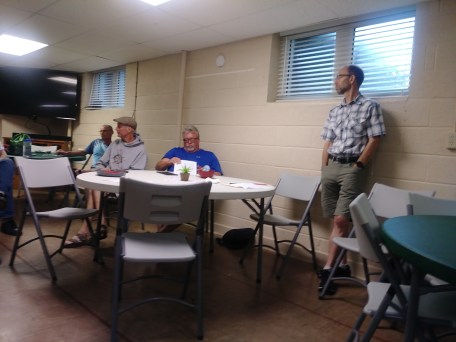
We gathered in the park’s shelter and introduced ourselves to the gathered group. Then had our first meal together. We learned about the gear truck, a large rented box truck with shelves that had been built against one side to hold our gear between campsites. We also learned about the solar panel/battery system that would provide electricity at our stops. Last but not least, we learned about the “shit, shower and shave” shed on wheels that had two compost toilets and two solar showers.

We were then addressed by Manape Lamere, one of the five headsmen at Standing Rock. I imagine because of those incidents during last year’s March, arrangements had been made for Manape, Alton Onefeather, and Lakasha Yooxot Likipt, to provide security for us as we marched. Manape reviewed the code of nonviolence that we had agreed to. He said we should not engage with anyone who was antagonistic during the March, instead to let him deal with the situation. It was a comfort to know about this and we all appreciated the efforts of the security team. Manape drove a truck near us, monitoring traffic, weather and obstructions coming our way. The three communicated with walkie-talkies.

Manape told us they were providing security and safety so that we could accomplish our sacred journey.

Many of the Native Americans who would be marching with us were at Iowa Citizens For Community Improvement creating the art, signs and banners, for the March (example below).

Another lesson I learned was to have everything setup for the night while it is still light out. Our meeting ended around 9:15 by which time it was completely dark. I spent a lot of time searching through the two duffel bags for things.

The weather forecast was for rain every day of the week. Fortunately it cleared up at the end of the week, but the first several days were a true weather challenge. It had been raining off and on during this first evening.  The weather radar showed large areas of strong storms approaching. I fell asleep right away, but was awakened by thunder, lightning and pouring rain about 3 am. I was pleasantly surprised at how well my little two man tent weathered the storm and remained dry inside. I used my cell phone to record the sound of the rain and thunder.

We got up around 6 am, and I had my first experience taking the tent down in wind and rain. It looked like this was going to be an interesting week.


Posted in #NDAPL, First Nation-Farmer Climate Unity March, Indigenous, renewable energy, Uncategorized | Leave a comment

Path to a 94 mile spirit quest

Yesterday I described the series of events that led to joining the First Nation-Farmer Climate Unity March that just concluded. I tried to explain how choices and actions leading up to this March were spiritually guided.

I am grateful to have been raised as a Quaker. To have grown up among a people who base their lives on faith, which is expressed in concern for and care of all people, since God is present in every single being. I was born into a Quaker community that had just experienced the imprisonment of many of its members for refusing to participate in war. Of course this commitment to obey the spirit rather than man-made rules is not limited to Quakers.

My own spiritual life has recently been radicalized by my involvement with two new, for me, communities. One is the Kheprw Institute (KI) in Indianapolis, “a community organization that works to create a more just, equitable, human-centered world by nurturing youth and young adults to be leaders, critical thinkers and doers who see the people in any community as the most valuable assets and are committed to working with marginalized communities to bring about change that leads to empowered self-sustainable communities.”

The other is my experience in many different ways with Indigenous peoples, that began with local involvement in Indianapolis to support the water protectors at Standing Rock in the struggle against the Dakota Access Pipeline. I have been profoundly affected by their deep, spirit led lives, and stunning example of nonviolence in the face of extreme state sponsored violence against them. As Nahko says, nonviolent direct action is the way to a successful revolution.

My first experience with nonviolent resistance was a long, difficult struggle as a teenager that resulted in my decision to become a draft resister during the Vietnam War. Next was my lifelong commitment to refuse to participate in the war on our environment by refusing to own a personal automobile. Then, in 2013, I joined the Keystone Pledge of Resistance, and was trained to organize and carry out acts of nonviolent direct action, including training others in the art of nonviolent civil disobedience.

My interest in learning more about Indigenous people stems from beginning to learn they not only live in the spirit in their relations with one another, but also in relation to Mother Earth–the land, air, water, plants and animals. I have been learning they recognize the spirit even in inanimate objects. This has expanded my own spiritual experience tremendously. The opportunity to learn more from Native Americans was one of the primary reasons I wanted to participate in the First Nation-Farmer Climate Unity March. What I was blessed to experience far exceeded my expectations. We spent our time together learning about each other, to share our stories. And we were always together–walking hours a day together, at meals, and sometimes sleeping in the same space together. We became friends, and were saddened at the end of the march. But looking forward to continue to be connected with one another, and working together again in the future.

In 2016 I began to be heavily engaged with activities to support the water protectors at Standing Rock, including the campaign to defund the pipeline with actions against the banks that are financing it.

All of this has led me to construct the following advices and queries. This is a method Quakers have traditionally used to reflect on various aspects of their lives. The advice is used to introduce the topic, then the queries are questions used to stimulate responses to that. Although individuals can explore these questions, it is a more powerful technique when used in a group,  working on the responses together.

I increasingly feel we need to rapidly and radically respond to two fundamental crises: environmental destruction and the racial economy. Our unfolding environmental disaster will actually accelerate the demise of the racial economy.

Advice:
The environmental damage to the earth is significantly greater than most people understand, and numerous conditions mean dramatic increases in air and water temperatures, rising sea levels, acidification of the oceans, changing precipitation patterns with floods, droughts and massive fires, scarce clean water supplies, migration of disease vectors, strong winds, and significantly decreased food production for many reasons will result in massive death by starvation, dehydration and disease. Mass migrations of people will occur. This will totally breakdown our economic, political and social systems. All of this is occurring now and will get worse at a rapidly accelerating rate.
Queries:
• Are we willing to commit ourselves to addressing our environmental crisis immediately?
• How can we work for the necessary immediate cessation of the use of fossil fuels, and rapid development of locally owned and operated renewable energy systems?
• How do we build local, just, self-sufficient, resilient, Beloved communities?
• How do we recruit, train, and deploy a nonviolent army of spiritual warriors?

Advice:
The economic and political system of the United States is built on racial capitalism. White people, especially males, enjoy privileges based upon land stolen from Indigenous peoples, who experienced genocide and are experiencing ongoing state supported violence and oppression. Racial capitalism is built on a history of slavery and ongoing state supported violence, death, and mass incarceration. Racial capitalism is built on the labor of migrant workers. Racial capitalism disrespects women.
Massive unemployment in this system that requires currency for trade and services is immoral and often intentional.
The rich have exploited all of this to an unconscionable degree with massive inequality in the distribution of wealth. The rich have developed extensive militarized systems to extract resources and protect their wealth, both domestically and abroad. The rich have developed intrusive systems of surveillance, and increasingly suppress civil rights and criminalize dissent.
Queries:
• How can we reject and dismantle racial capitalism?
• How can we personally redistribute our wealth with our immediate neighbors?
• How can we practice, recruit and teach others about radical faith based living?

I believe those who participated on the First Nation-Famer Climate Unity March are examples of Spiritual Warriors.

One night last year I was blessed to hear Arkan Lushwala speak about “Indigenous Ways of Restoring the World” during a call sponsored by the Pachamama Alliance. “Arkan Lushwala is a rare indigenous bridge of the global north and south, carrying spiritual traditions from the Andes in his native Peru as well as being adopted and initiated by the Lakota people of North America.”

He said

“Everywhere people ask, “what can we do?”
The question, what can we do, is the second question.
The first question is “what can we be?”
Because what you can do is a consequence of who you are.
Once you know what you can be, you know what you can do”

This is why we need Spiritual Warriors. Because we ask ourselves the first question, “what can we be?” Knowing that,our actions are precise, our actions are in harmony with the movement, the sacred movement, of that force that wants to renew life here on Earth and make it better for the following generations.”

The beautiful thing we experienced during the First Nation-Farmer Climate Unity March was learning more about what we can be.

The answer to “what can I do?”

Speaking about what is happening on Earth right now,
many of the conditions of life that we used to take for granted,
now are really out of balance.
Hopefully we still have time to get back into balance
so life may continue.
I travel around the world and meet people and talk to people
from all different cultures.
And everywhere people ask, “what can we do?”
The question, what can we do, is the second question.
The first question is “what can we be?”
Because what you can do is a consequence of who you are.
Once you know what you can be, you know what you can do,
and we cannot afford wasting time;
we have little time.
We need to be precise now.
When someone sincerely asks, “what can I do?”
my humble answer,
the only answer that I find in my heart to be sincere is,
“First find out what you can be.”
Action is extremely necessary at this time.
This is not a time just to talk about it.
The most spiritual thing now is action.
To do something about what’s happening.
To go help where help is needed.
To stand up when we need to stand up,
and protect what is being damaged.
And still, this action needs to be born
from a place in ourselves that has real talent,
real intelligence, real power,
real connection to the heart of the Earth,
to universal wisdom,
so our actions are not a waste of time.
So our actions are precise,
our actions are in harmony with the movement,
the sacred movement,
of that force that wants to renew life here on Earth
and make it better for the following generations.

Posted in #NDAPL, civil disobedience, climate change, climate refugees, First Nation-Farmer Climate Unity March, Quaker Meetings, Uncategorized | 1 Comment

The path to walking 94 miles

I am reflecting on my recent experience of walking from Des Moines to Fort Dodge, Iowa, as part of the First Nation-Farmer Climate Unity March. There has been a path throughout my life that led me to join the March.

I grew up on farms in the area of my Bear Creek (Quaker) Meeting community, just north of Earlham, Iowa. Every farmer is intimately connected to the land, and acutely aware of the weather and it’s effects on their daily work and growing crops.

Living as a Quaker, I believe the Spirit, or God, continues to be present in these times, and that each of us can communicate directly with the Spirit. Believing that everyone has that of God in them means we should cherish every single life, and that we are all equal. Waiting in silence to listen for what the Spirit is asking of me, and then trying to do that, is a fundamental part of my life.

I was very fortunate that we went on family camping trips each summer, most often to Rocky Mountain National Park. As others have said, in some ways I felt closer to God in the mountains. Their sheer size helped put my own life in perspective. I also appreciated their majesty, and enjoyed trying to capture that as a beginning photographer.

I moved to Indianapolis in 1971. This was before catalytic converters came into use (around 1975), so the downtown area I lived and worked in was clouded with noxious, smelly smog. I remember having a deep vision of the Rocky Mountains covered in smog, and that broke my heart. I soon decided I could not contribute to that, and decided to live without a car from that point on. I also rented small apartments in order to reduce my carbon footprint.

Living without a car had many influences on my life. I was outdoors much more often than I would have been otherwise. My running improved dramatically because that was one of my main modes of transportation. Learning to observe more closely what was around me improved my photography a great deal. Although I could do more, living without a car made me feel I had some environmental integrity.

Although I would often speak and write about the need to give up personal automobiles, I don’t know of a single person I convinced to do so. I was frustrated that I didn’t find a way to be more effective in sharing that concern. There were indications this example did cause some to think more about their environmental impact.

When I learned about the Keystone Pledge of Resistance campaign in 2013, I was clearly led to become involved with that. Several of us in Indianapolis were trained as Action Leaders. That involved teaching us how to organize people, and plan nonviolent direct actions. An environmental activist community grew out of that. Following is a video about the Keystone Pledge of Resistance created by my friend Derek Glass, Andrew Burger and I.

2013 was also the year that my Quaker organization, Iowa Yearly Meeting (Conservative) held a Climate Conference at the boarding high school I had attended, Scattergood Friends School. (Note: Conservative refers to conserving traditional practices, not political conservative.)  As part of that weekend, a small group of students, staff and others walked about 12 miles from the School into Iowa City, with signs about the environment (video follows). We also picked up trash along the way. This walk was a precursor to the First Nation-Farmer Climate Unity March.

In 2014, Energy Transfer Partners announced plans to build the Dakota Access Pipeline. The original route of the pipeline went near Bismarck, North Dakota. When the people there realized their drinking water would be at risk from the pipeline, the route was moved downstream, right next to Standing Rock. An historic gathering of Native American tribes came to the camp to try to block the pipeline’s construction. And Indigenous people all over the world offered support.

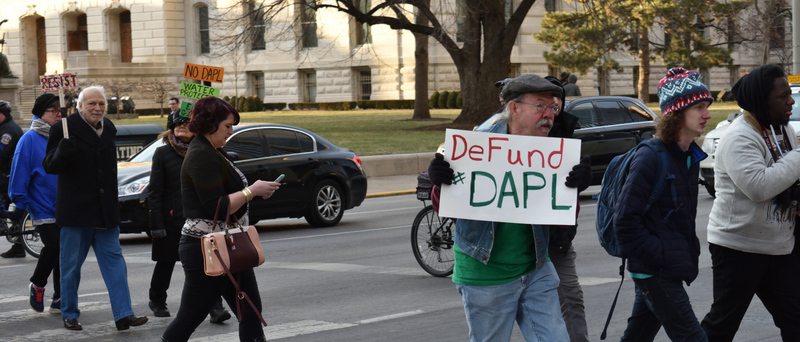
People in Indianapolis, led by Joshua Taflinger and Brandi Herron, of the White Pine Wilderness Academy, among others, wanted to offer support for the water protectors. When those of us who were trained organizers from the Keystone Resistance were contacted to help with the #noDAPL efforts in Indianapolis, we were glad to do so. We held several DAPL awareness gatherings, and several gatherings for prayers. Here is a video of me speaking about the Keystone Pledge of Resistance at one of our #noDAPL gatherings.

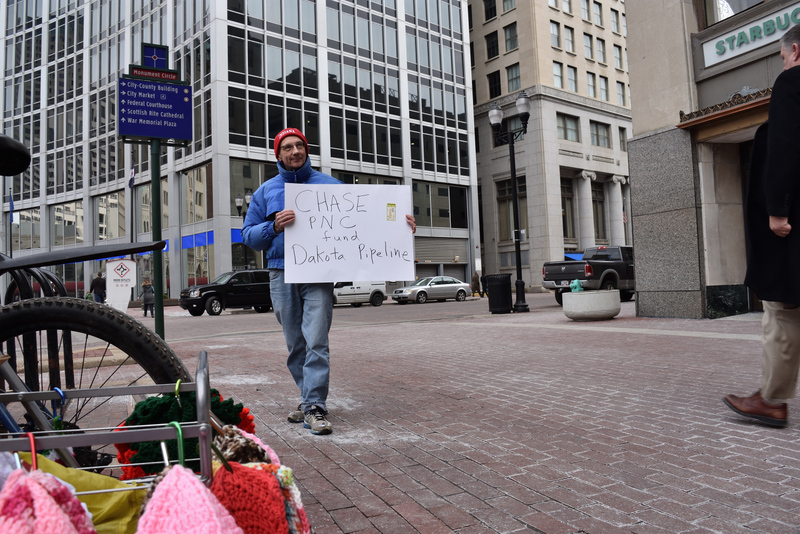
One day in 2017, we also went to the Chase bank, and PNC bank, downtown, and account holders withdrew $110,000 by closing their accounts. I wrote about my own experience in closing my Chase bank account here.

Chase bank Jeff

Fortunately a large number of Native Americans joined us in these efforts. I felt an immediate spiritual connection as we gathered together that profoundly affected me. I recognized there must be similarities between their spirituality and that of Quakers. I wanted to learn more and sought out every opportunity to do so.

My Quaker meeting, Bear Creek Friends, has been involved in supporting the Prairie Awakening/Prairie Awoke native ceremony at the Kuehn Conservation Area for many years. Last year was my first opportunity to attend, and it was a wonderful experience. (I really wanted to attend this year’s ceremony, but it was held one day after we completed the First Nation-Farmer March, and I just couldn’t make it).

The theme of the 2017 annual meeting of Iowa Yearly Meeting (Conservative) was Building Bridges. One evening there was a panel discussion titled Building Bridges with Native Americans. Peter Clay, Donnielle Wanatee, and Christine Nobiss were the panel. That was an excellent opportunity for me to begin to connect with Donnielle and Christine since then.

That evening Donnielle invited us to attend the upcoming annual Meskwaki Powwow at her Meskwaki settlement.  Dad and I did attend the powwow that autumn. I asked for permission to take photos. That permission was granted, along with a request to share them with the powwow organizers, which I was glad to do.

On weekend in September, 2017, there was an event at the State Capitol that was part of a new national campaign called StopETP, Stop Energy Transfer Partners, the company behind the Dakota Access and many other pipelines.  This event involved delivering a petition to the Governor to remove a member from the Iowa Utilities Board (that approves pipelines, etc) who has close ties to the fossil fuel industry, organized by Bold Iowa and Indigenous Iowa.  Several people who were on the First Nation-Farmer March attended that event.

Ed Fallon, Bold Iowa, organized a van to take water protectors to Minneapolis the day before the Super Bowl was held there in February. I recognized this is another opportunity to network with environmental activists in Iowa. In the van were Ed, Kathy Byrnes, and Donnielle Wanatee, among others. And at the event we saw Christine Nobiss.

I also saw Ed Fallon and Christine Nobiss at some of the Poor People’s Campaign events this spring.

I was excited to learn about the First Nation-Farmer Climate Unity March which I knew would provide new opportunities to learn more about the water protector I had begun to get to know. And it was so. I had no trouble hearing the Spirit telling me I should participate on this March.

Posted in #NDAPL, Arts, civil disobedience, climate change, First Nation-Farmer Climate Unity March, Indigenous, Quaker Meetings, Uncategorized | Leave a comment

The commitment is transcending

There are so many things I learned and experienced during the First Nation-Farmer Climate Unity March. I’m having trouble figuring out how to organize all of this to share with you. One of the important goals of the March is to share what we learned as widely as possible.

I really like the response of my friend Diop Adisa when I told him a little about the March. Diop said, “8 days wow. The commitment is transcending.” The one sweatshirt I brought on the March had a Diop logo on it. I like to carry the spirit of my friends with me.

One of the people I spent a lot of time taking with on the March was my new friend, Matthew Lone Bear. The two of us were among those who were documenting the March, and spent hours talking about photography, videography, the use of drones, Quakers, and his family and time on the reservation and at Standing Rock. Matthew’s video gives a good sense of March:

Posted in First Nation-Farmer Climate Unity March, Uncategorized | Leave a comment

Hurricane Florence and Environmental Chaos

The massive hurricane Florence approaches the East coast today, with predictions of up to 40 inches of rainfall in some areas, and storm surges up to 13 feet, with flooding miles inland. Flooding will be both salt water flooding from the storm surges, and fresh water flooding from deluges of rain. Florence is an illustration of the more powerful and frequent storms we will experience as a result of deteriorating environmental conditions.

Unfortunately at a time when we need to dramatically reduce greenhouse gas emissions, the current Republican administration is moving in the opposite direction. This is a perfect example of decades of policies that value corporate profits over the well being of living beings and Mother Earth.

The New York Times summarized 23 environmental rules rolled back by the Republican administration in its first 100 days. Recently the administration announced it would roll back a major Environmental Protection Agency rule that restricts emissions of methane, a more potent greenhouse gas than carbon dioxide. Hopefully the midterm elections will send people to Congress who understand the environmental dangers that threaten us.

I fear the severity of the destruction by Florence will result in thousands of climate refugees, and hasten the collapse of local governments and economies. We are seeing that here in Iowa. In Marshalltown, where I once lived, there is talk of a new ‘normal’ where businesses and residences may never be rebuilt.

We need to be planning to prepare for the millions of people who will become climate refugees. We can start to do so by building communities for the homeless and immigrants now.

https://kislingjeff.wordpress.com/2018/02/22/design-and-build-beloved-community-models/


Posted in #NDAPL, climate change, climate refugees, Uncategorized | Tagged | Leave a comment

Our day in court

This is the day Iowa land owners and the Sierra Club’s oral arguments in the case against the Iowa Public Utilities Board were heard before the Iowa Supreme Court. The landowners and Sierra Club contend that the Public Utilities Board improperly allowed Energy Transfer Partners to use eminent domain to force Iowa landowners to let the Dakota Access Pipeline to be constructed on their land.

One of the main objectives of the First Nation-Farmer Climate Unity March was to call attention to this court case.  We had a large banner saying Stop Eminent Domain Abuse with us on the March.

As some people that I know left the Court, they told me the justices seemed pretty well informed about the issues. The Court’s decision may not come for weeks or months. It is unclear what will happen if the Court decides for the landowners.

I was very glad to see quite a few of my fellow Marchers at the Court this morning.

Posted in #NDAPL, climate change, Indigenous, Uncategorized | Tagged | Leave a comment