Our Road to victory on a Green New Deal

The video at the end explains that although politicians and the fossil fuel industry use the economy as the “go to” excuse for climate inaction, instead, changing to a green economy is the only way we will begin to solve our environmental crises. This is the argument that you can use when you talk to others about the Green New Deal. Talking to others, not just politicians, but your family, friends, neighbors, church, and classmates, is how we build political pressure for the Green New Deal. #NoExcuses

Following is the plan for achieving support for the Green New Deal from the Sunrise Movement.

We need you to help us to this.


Alexandria Ocasio-Cortez has proposed a Select Committee for a Green New Deal, a plan that would transform our economy and society at the scale needed to stop the climate crisis. It’s our fighting chance to actually stop this crisis – for some of us, the first we’ve seen in our whole lives.Read specifics on the Green New Deal Select Committee here

Here is how we win:

  1. Get a critical mass of members of Congress to support a Select Committee for a Green New Deal NOW. We already have 43 in just five weeks.
  2. In January, make sure the next Congress puts the Select Committee in motion.
  3. Use the next year to write the best Green New Deal bill possible, and organize candidates and people across the country to support it.
  4. Join with other movements for change to elect a President and a Congress that will stand up to fossil fuel CEOs and pass a Green New Deal to transform our economy within the coming decade and offer a job to every single American who wants one — no matter the color of your skin, where you live or where your parents are from.
Taking action and raising your voice is how we achieve Step 1 (above).

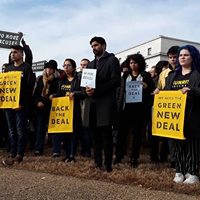
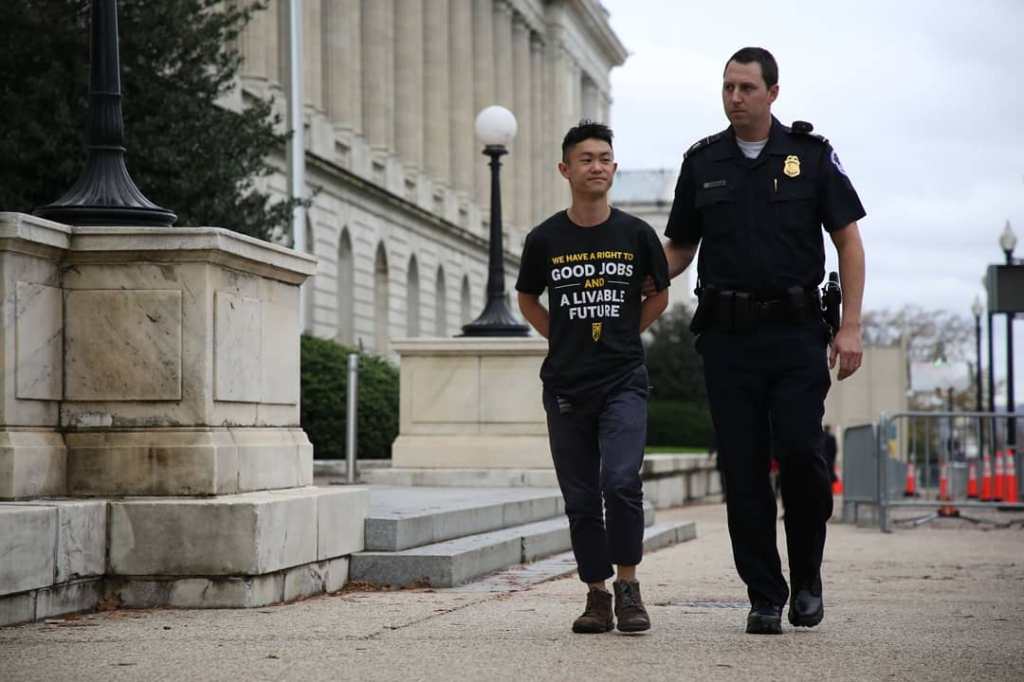
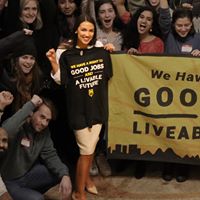
In Boston, Sunrisers visited 4 Congressional Representatives’ offices on the same day.  In California, youth brought the pain and misery of the drought-driven fires that have claimed almost a hundred lives to bear in the offices of Congresspeople. From Virginia to Oregon, Ohio to Colorado, youth are uniting to send a clear message: the time for talk is over. We need action from our leaders.

It’s the best chance we have to fight climate change. Today is the day more than ever before.

Last week, fossil fuel CEOs mobilized some of their strongest allies, who have taken hundreds of thousands of dollars from the industry, to speak out against the Select Committee for a Green New Deal. They are pushing back, hard.

But together, we are more powerful than the wealthiest industry and the slimiest politicians. That’s why we’re so excited about the movement we’re building: because we believe that if we show up and refuse to back down, we are unstoppable.

https://www.sunrisemovement.org/gnd-strategy


Posted in climate change, Green New Deal, Uncategorized | Leave a comment

Climate Grief

This morning NBC News has an article by Avichai Scher titled ‘Climate grief: The growing emotional toll of climate change’ under Mental Health.

When the U.N. released its latest climate report in October, it warned that without “unprecedented” action, catastrophic conditions could arrive by 2040.
For Amy Jordan, 40, of Salt Lake City, a mother of three teenage children, the report caused a “crisis.”
“The emotional reaction of my kids was severe,” she told NBC News. “There was a lot of crying. They told me, ‘We know what’s coming, and it’s going to be really rough.’ “
She struggled too, because there wasn’t much she could do for them. “I want to have hope, but the reports are showing that this isn’t going to stop, so all we can do is cope,” she said.
The increasing visibility of climate change, combined with bleak scientific reports and rising carbon dioxide emissions, is taking a toll on mental health, especially among young people, who are increasingly losing hope for their future. Experts call it “climate grief,” depression, anxiety and mourning over climate change

This may be a relatively new phenomena for most people, those who have been able to at least consciously avoid thinking about the damage to our environment. But as the article says, it is becoming harder to hide from the increasingly visible signs of environmental chaos.

For those of us who have been worried about climate change for most of our lives, I wonder if we have an advanced stage of climate grief, or if we’ve found ways to partially cope, or both.

According to Bill McKibbon, a climate activist for over 30 years, “we can’t just be individuals, we need to join together and be a movement. It makes you less grief-stricken. The best antidote to feeling powerless is activism. It doesn’t make you less sad, but adds hope, solidarity and love.”
Even though the latest U.N. report was a “kick in the stomach” for him, he cautioned that those experiencing existential grief over climate change are not its main victims. “It’s poor communities with flimsy homes that are washing away,” he said.

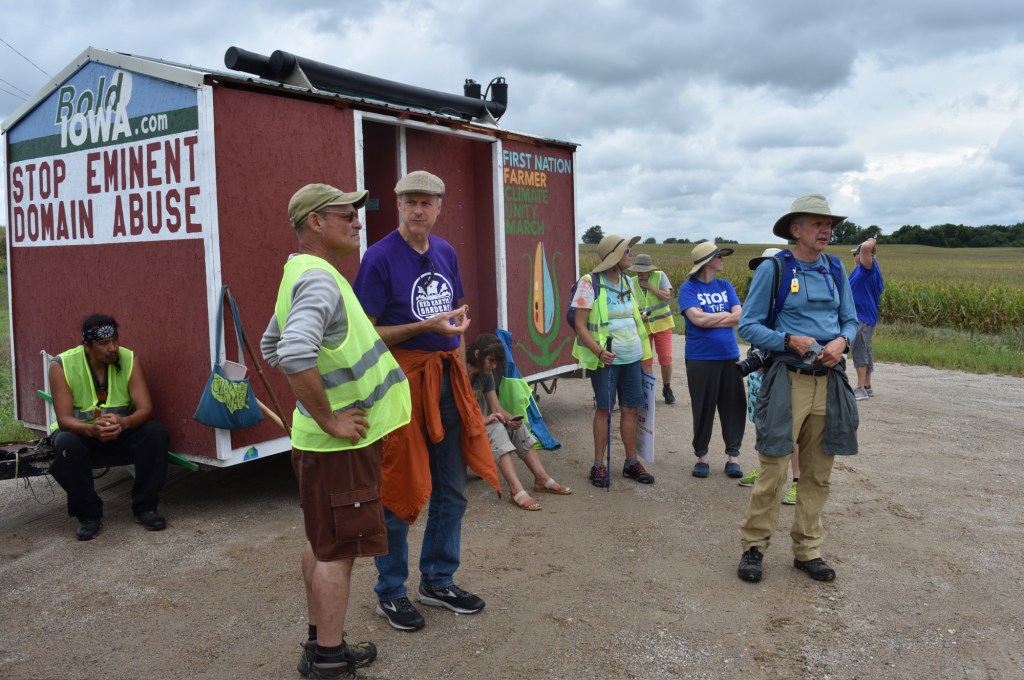
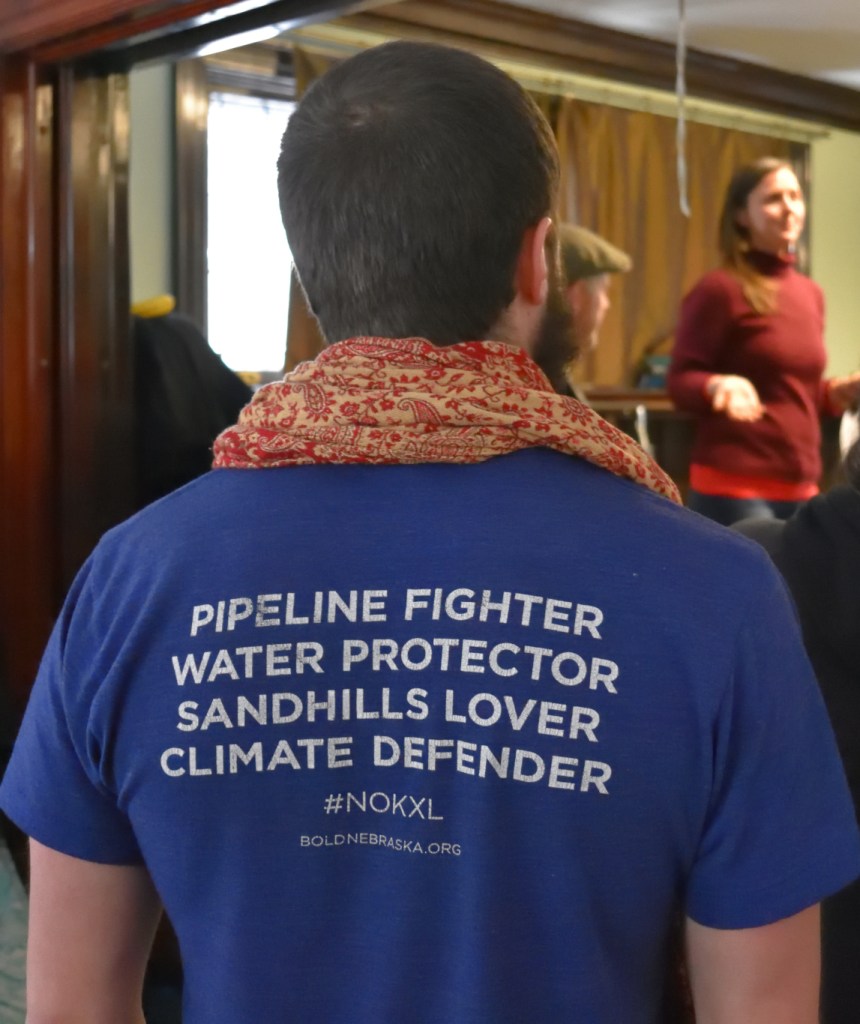
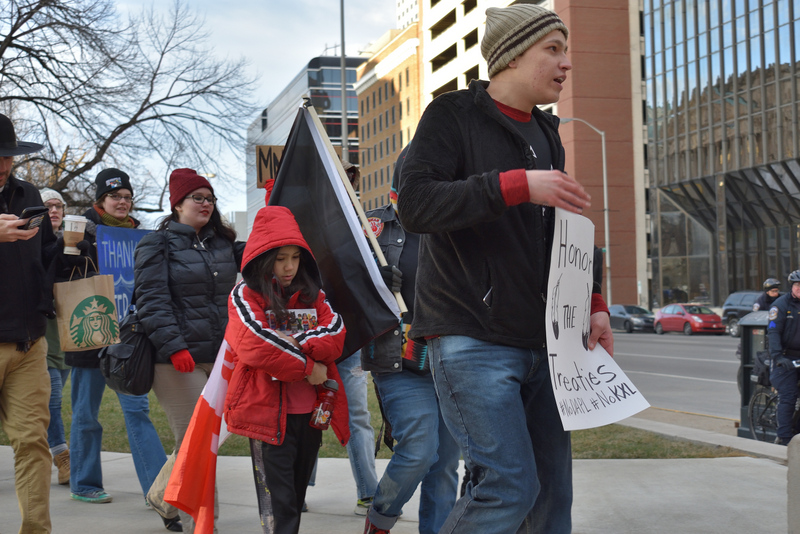
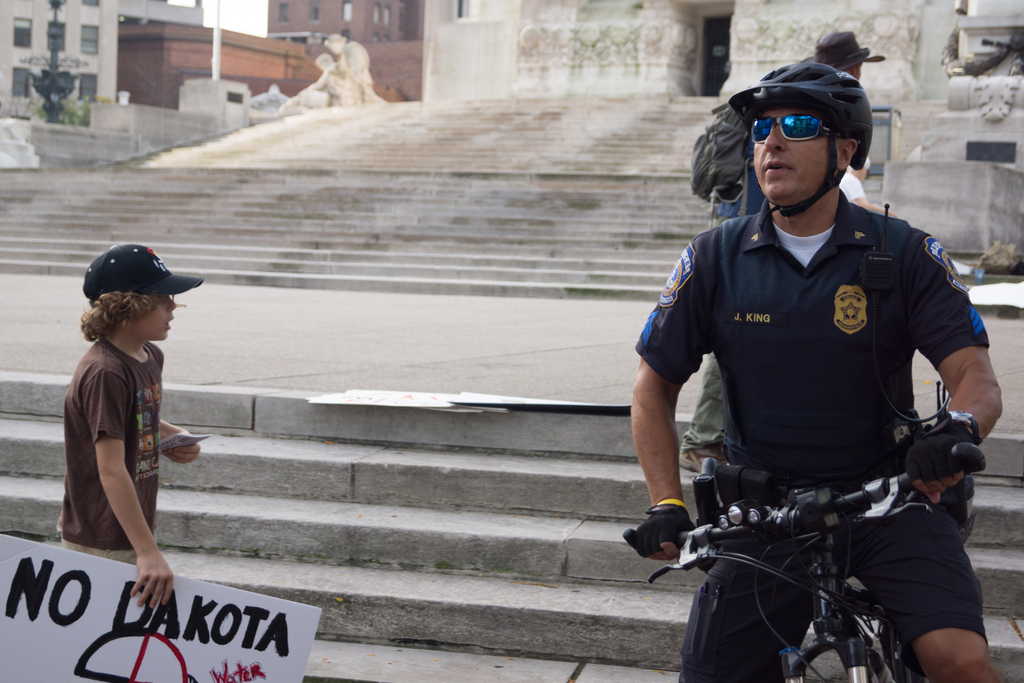
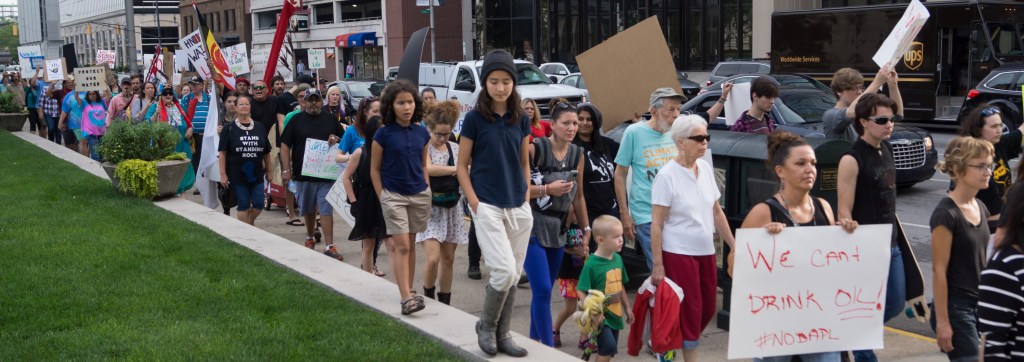
This was what I was trying to say in the blog post yesterday, Movements and Relationships. It was being engaged with others that helped me cope with my knowledge of the dire consequences of fossil fuel use over these past 50 years. The success of the Keystone Pledge of Resistance was the creation of a nation-wide network of people who kept in contact with monthly conference calls. And taught us how to create our own local networks of people who came together multiple times for public awareness events. Other communities that helped me were the Kheprw Institute (KI), White Pine Academy and the #NoDAPL groups, Indiana Moral Mondays, and Quaker meetings. Building community was the purpose of the First-Nation Farmer Climate Unity March, which also led to getting involved with Bold Iowa.

I think this sense of both belonging to a new community as well as being able to actually do something about our endangered planet is why the Sunrise Movement has spread so quickly, and why the kids in it are so passionate, as well as hopeful. (see the passionate video below)

One of the Principles of the Sunrise Movement is: (11) We shine bright. There are hard and sad days, to be sure. This isn’t easy work. But we strive to bring a spirit of positivity and hope to everything we do. Changing the world is a fulfilling and joyful process, and we let that show.

This is yet another reason I urge you, and especially children you know, to get involved with the Sunrise Movement. https://www.sunrisemovement.org/

Jeremy Ornstein, Sunrise Fellow – Teenager and Grandson of Holocaust Survivors Demands Climate Action in this video. He says “I have no choice but to hope.”

Posted in climate change, Green New Deal, Sunrise Movement, Uncategorized | 1 Comment

“Standing Rock” and “Directions” videos

My cousins Nick and Ron Knight released their song “Standing Rock” recently, edited by Greg Knight.


The following video is related to Indigenous People’s Day this year. I had heard Nahko sing “Directions” on several occasions in the past. This version he sings with Hawane:

For the West
For the North
For the East
For the South

Grandfather, I’m calling on you
Need your guidance now
Grandmother, I’m calling on you
Need your guidance now

For the West (hmm)
For the North (hmm)
For the East (hmm)
For the South (hmm)

Grandfather, I’m calling on you
Need your guidance now
Grandmother, I’m calling on you
Need your guidance now

For the West (hmm)
For the North (hmm)
For the East (hmm)
For the South (hmm)

Grandfather, I’m calling on you
Need your guidance now
Grandmother, I’m calling on you
Need your guidance now

HOKA!

For the West (ooo)
For the North (ooo)
For the East (ooo)
For the South (ooo)

Grandfather, I’m calling on you
Need your guidance now
Grandmother, I’m calling on you
Need your guidance now


Posted in #NDAPL, Arts, climate change, Indigenous, Uncategorized | Tagged | Leave a comment

Movements and Relationships

My mind was going in two different directions when I was trying to write the blog post Chaos and Hope recently. The Chaos related to the multiple, deepening, crises of the Republican administration.

As troubling as all that was, I was focused more on feeling pumped up from the amazing online meeting I was blessed to be part of the evening of Dec. 20, 2018, Sunrise 101: Leadership Orientation Series. This was the first of several training sessions to prepare those of us who want to help lead the Sunrise Movement.

The Sunrise Movement is the main organization working to build support for the Green New Deal. “Together, we will change this country and this world, sure as the sun rises each morning.”

Although so much material was covered in the first meeting of the course that I have 6 pages of notes, what I’m reflecting on now is not that, but what the meeting revealed to me about the Movement itself.

I’ve been an organizer in one way or another most of my life. As a High School Senior at Scattergood Friends School I organized a draft conference. (This was in 1969 at the height of the Vietnam War.)

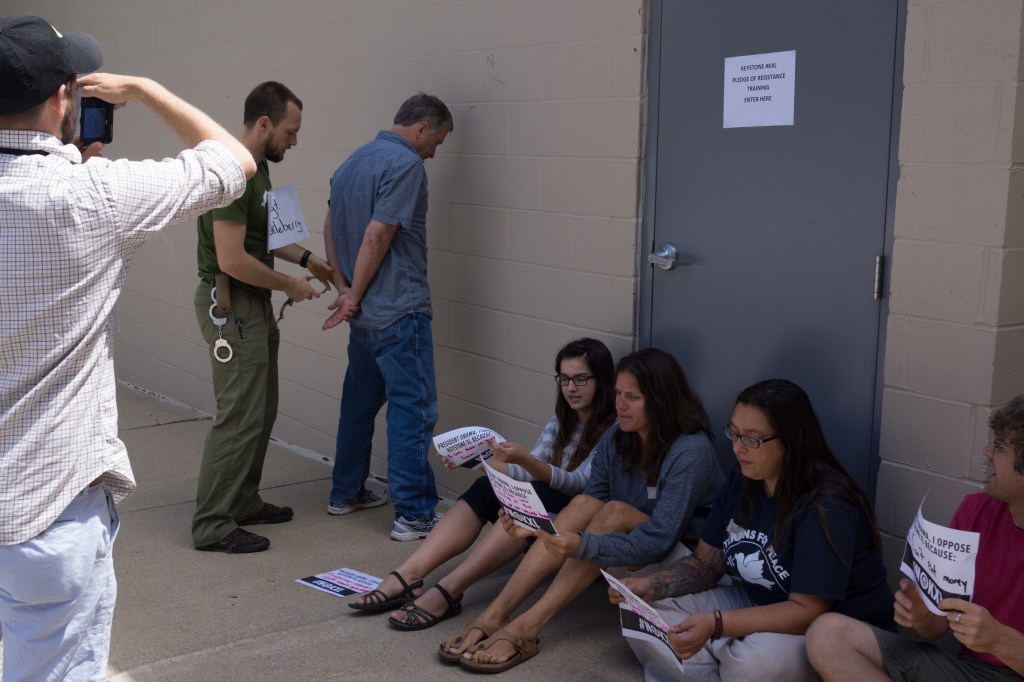
More recently I became involved in community organizing. In 2013 I was trained as an Action Lead in the Keystone Pledge of Resistance. I learned how to use the Internet to build communities of activists and organize actions. I had similar experiences related to the Dakota Access pipeline, both in Indianapolis, and now in Iowa.

The main thing I have learned from these experiences is the strength and resilience of a successful movement is always based on building strong personal relationships. The quality of these relationships ends up being more important than the particular issues you are working on.

This is what Arkan Lushwala is talking about:

“everywhere people ask, “what can we do?”
The question, what can we do, is the second question.
The first question is “what can we be?”
Because what you can do is a consequence of who you are.
Once you know what you can be, you know what you can do”

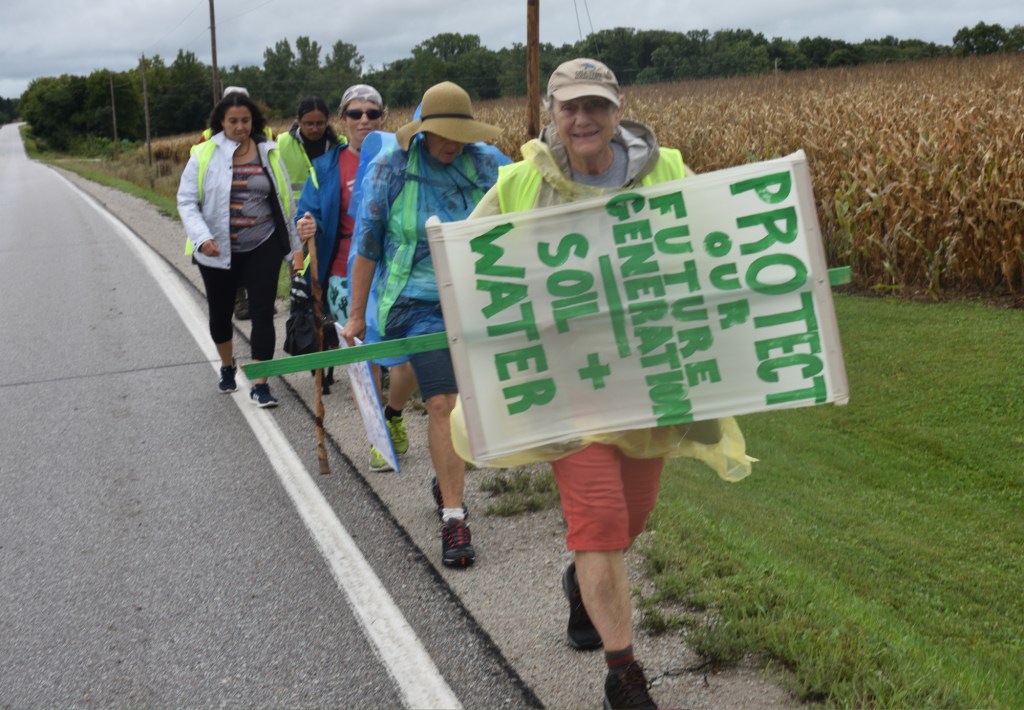
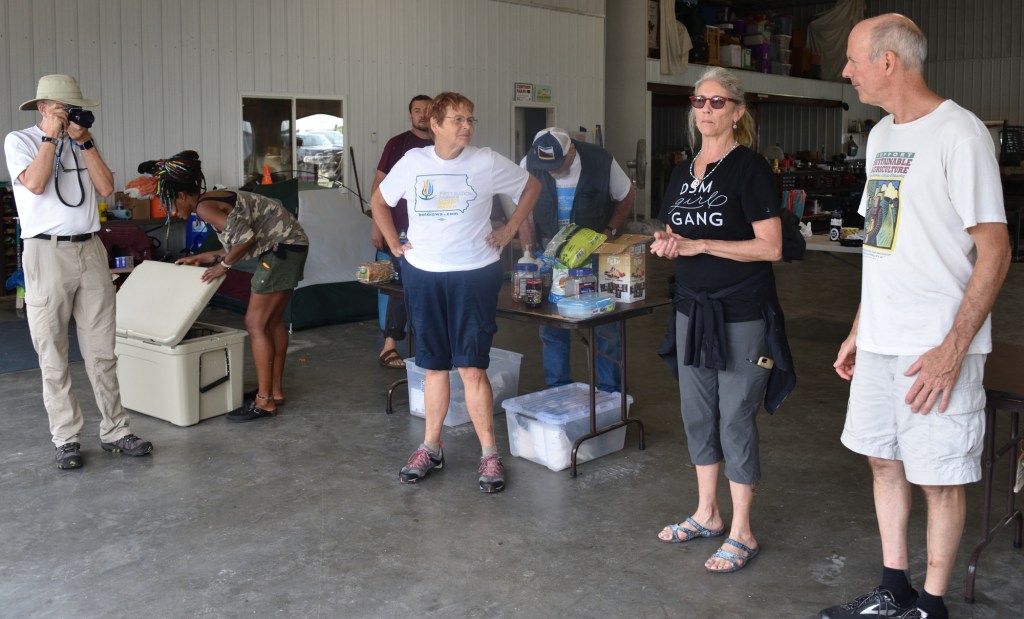
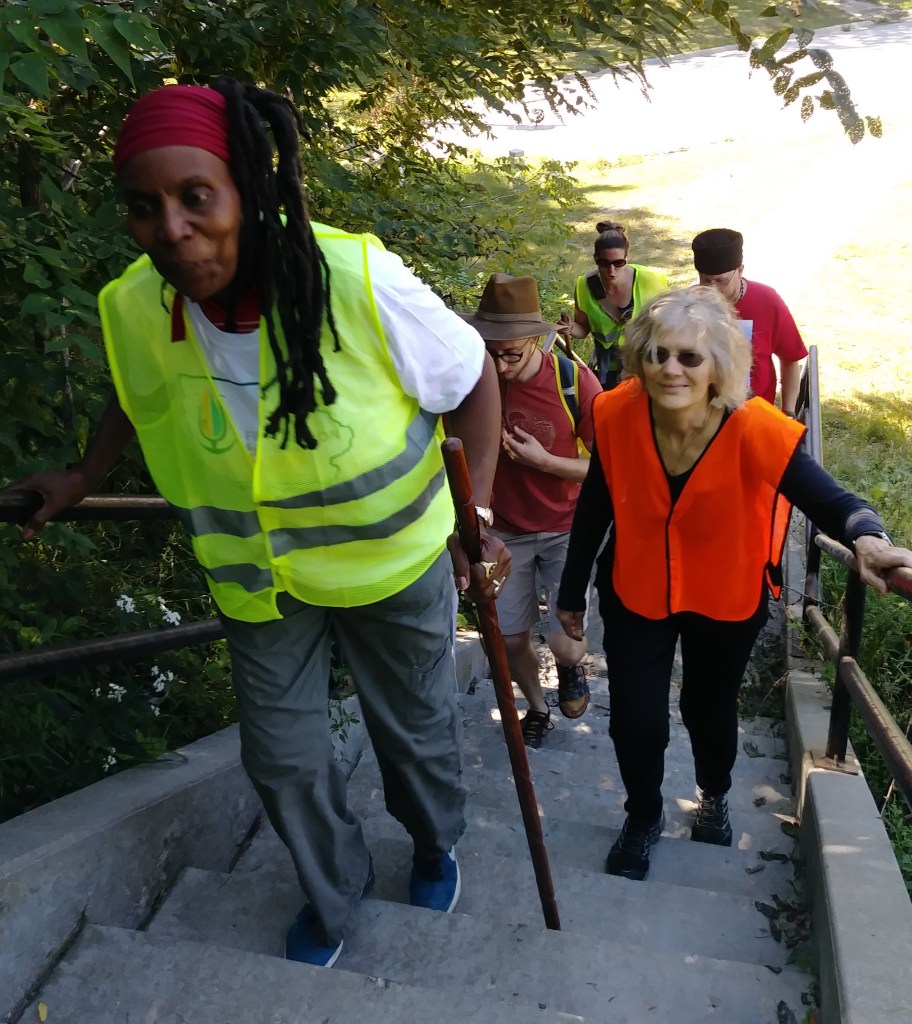
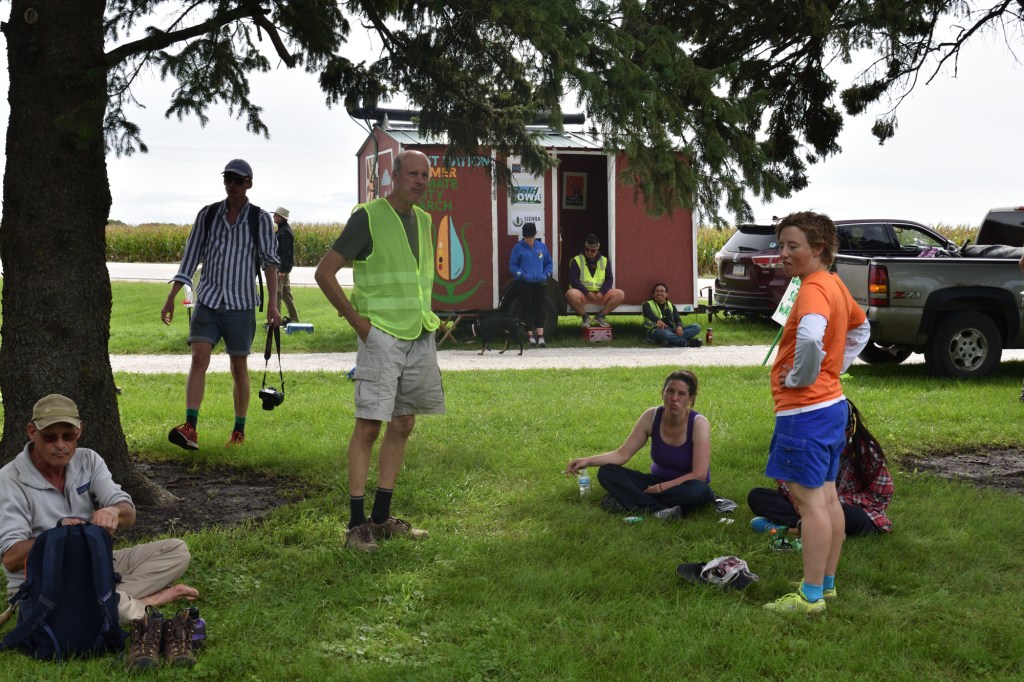
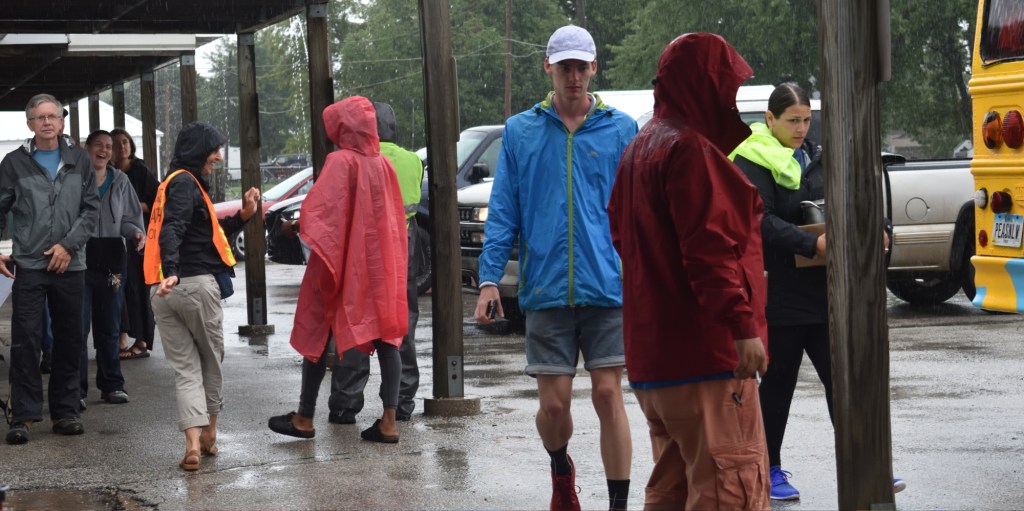
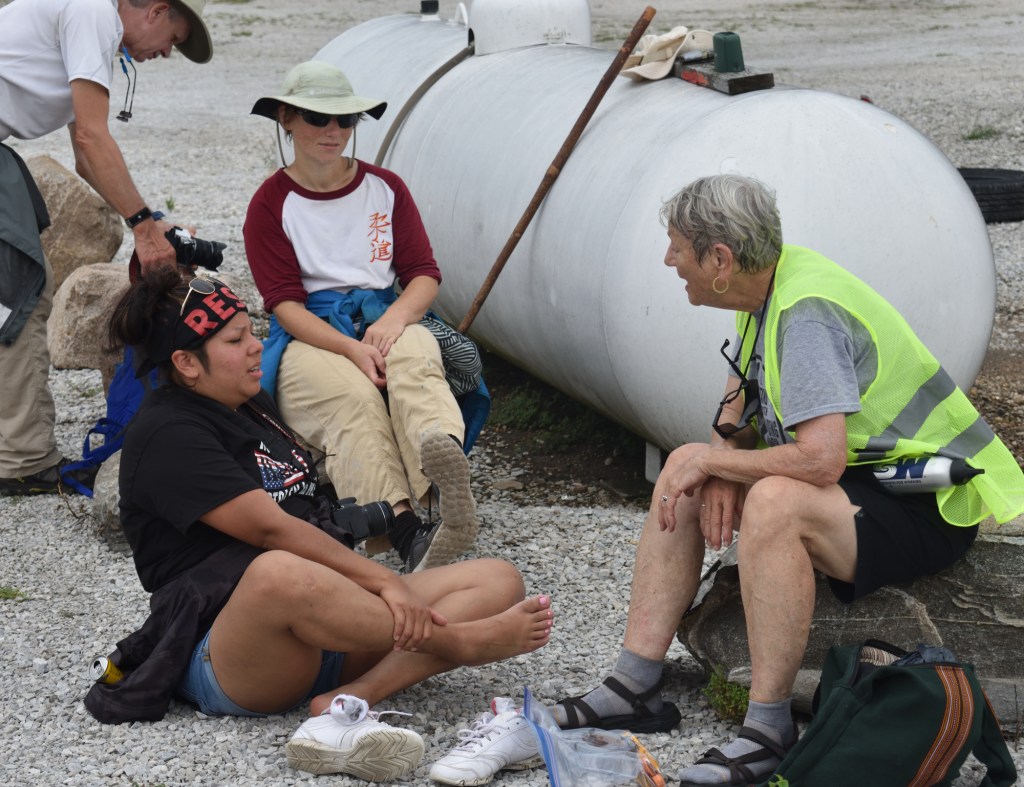
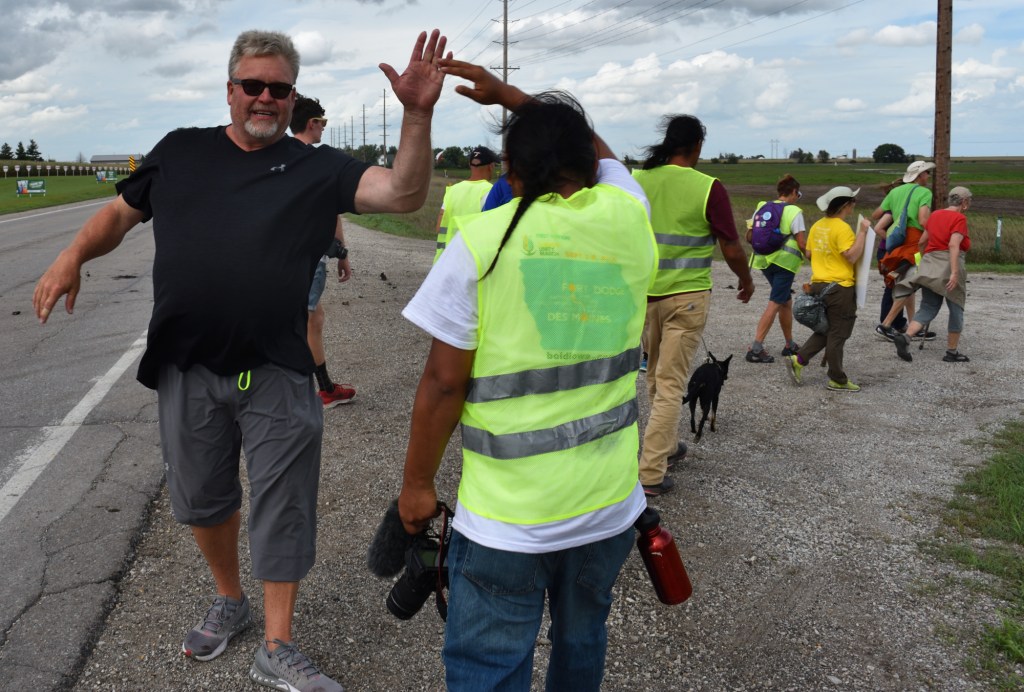
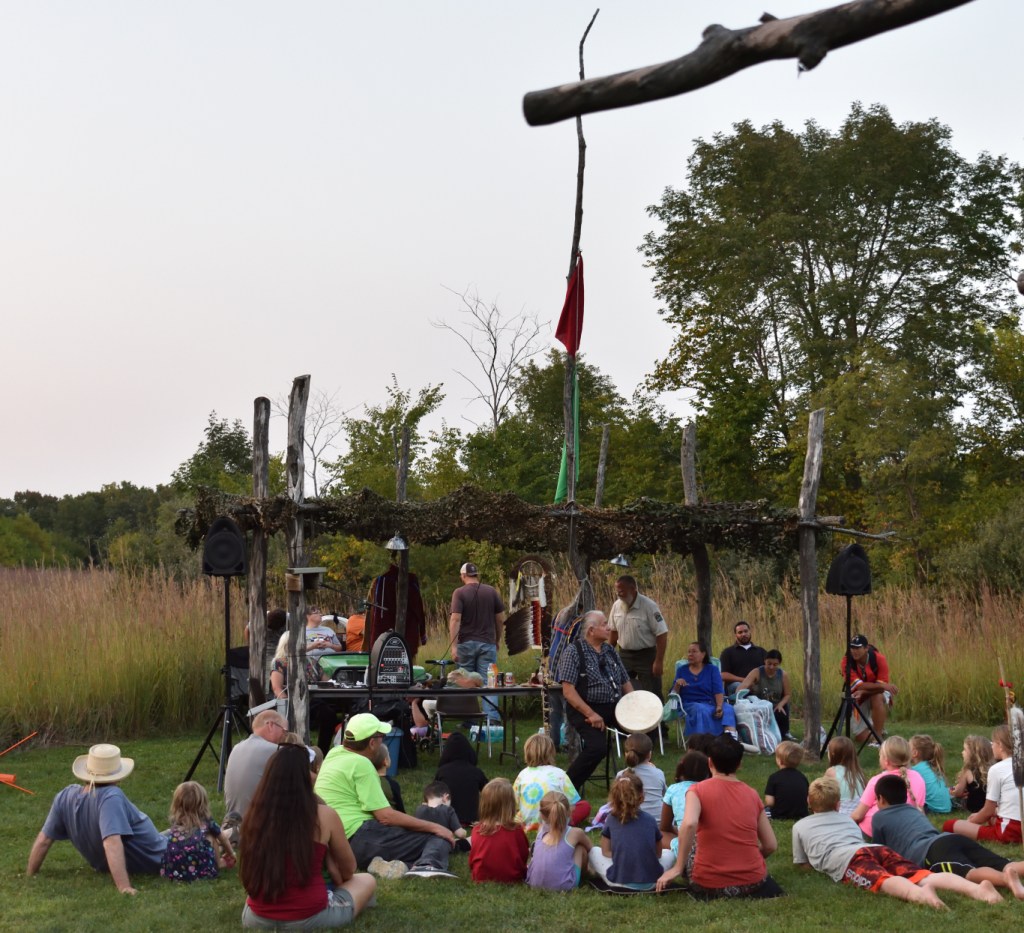
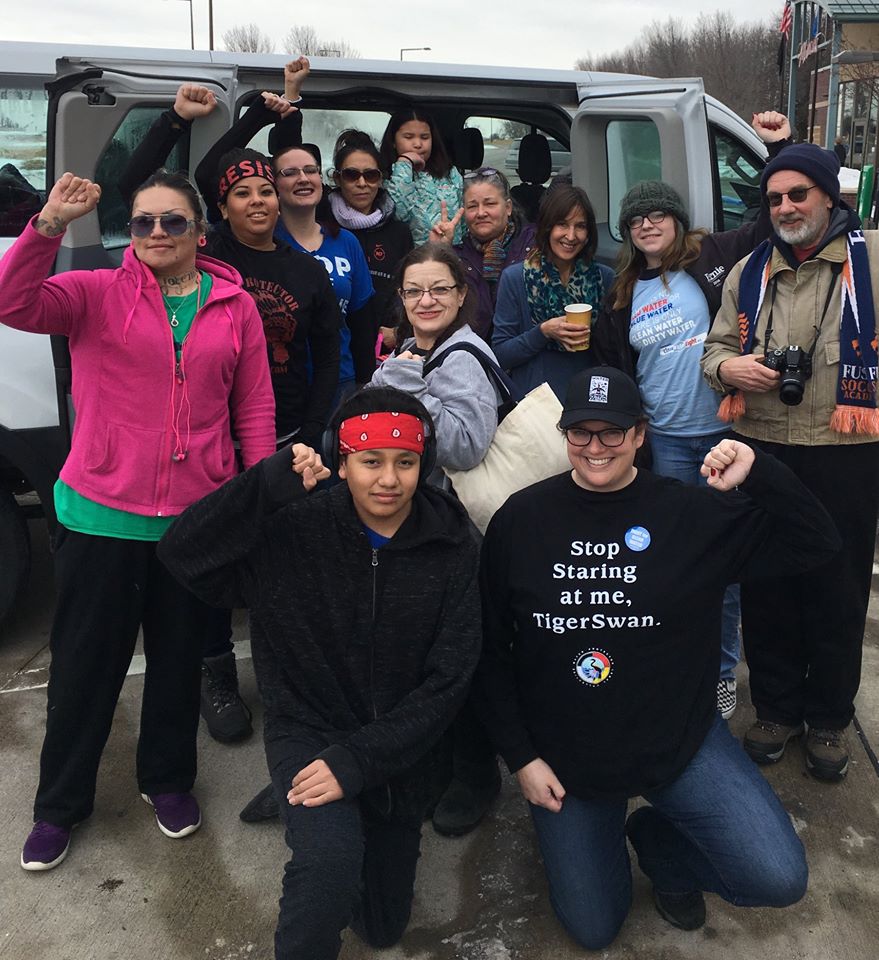
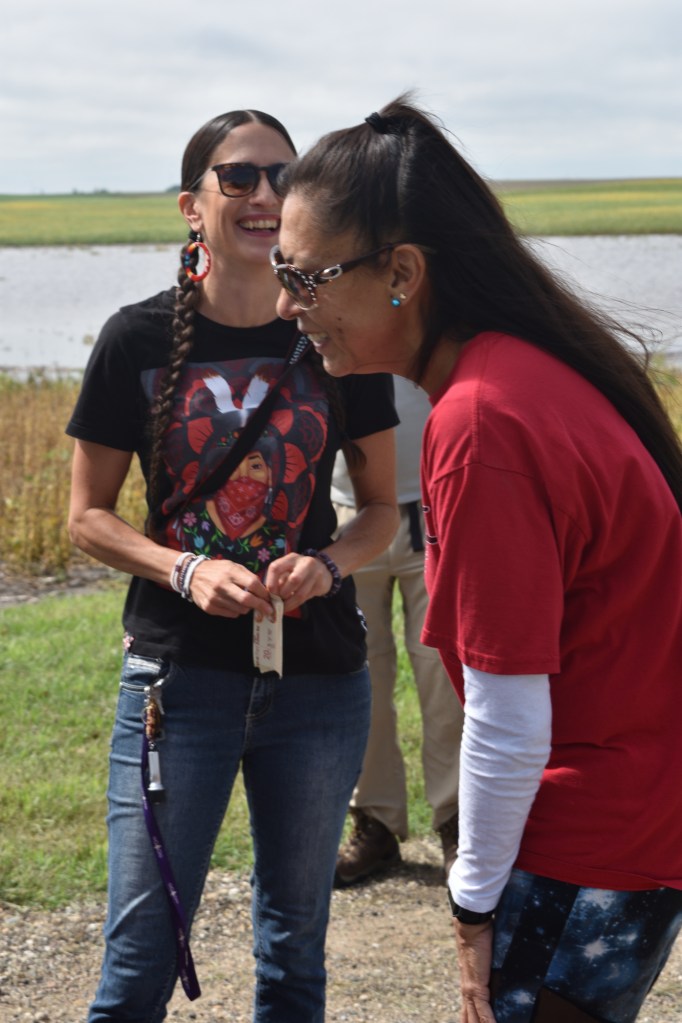
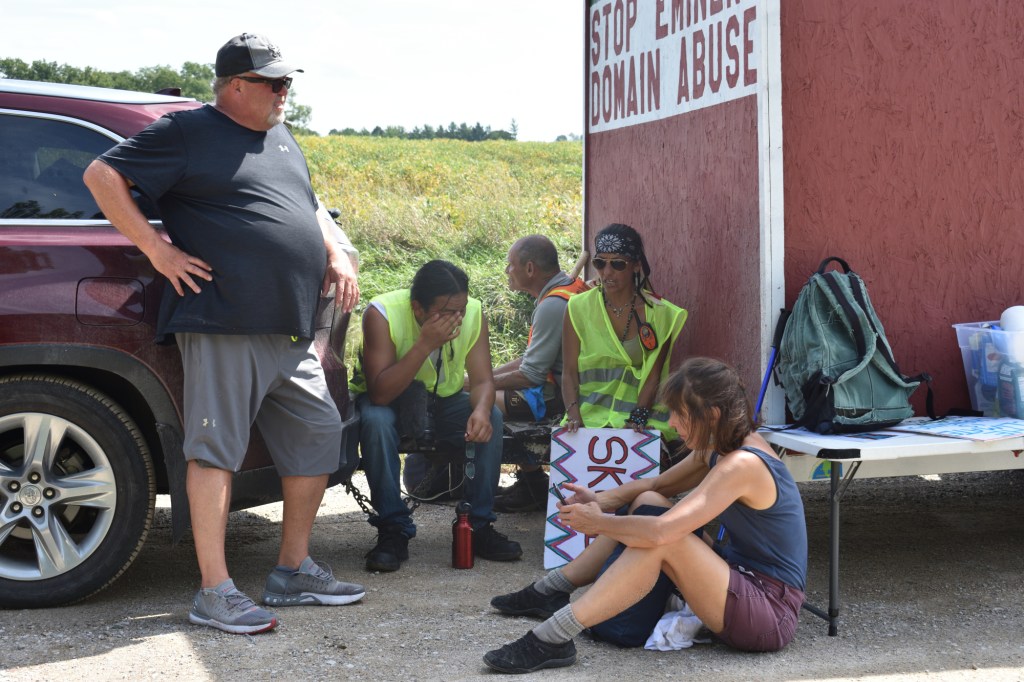
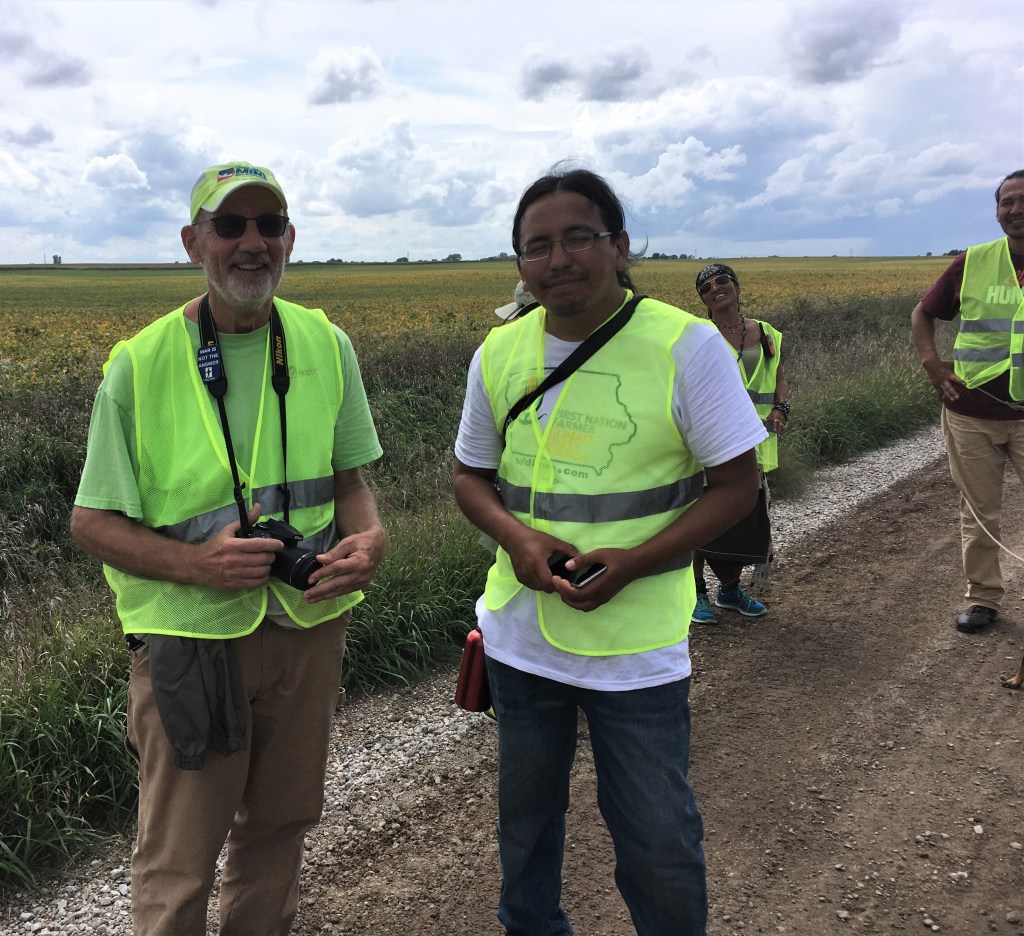
From September 1 – 8 of this year I was part of a group of about 40 Native and non-native people who walked 94 miles, from Des Moines to Fort Dodge, Iowa, along the route of the Dakota Access pipeline. This was the First Nation-Farmer Climate Unity March. As Manape LaMere said during the March, the reason we are marching together is so we can work together in the future. To do that, we need to begin to trust each other. To trust each other we need to understand each other. From all I’ve seen and heard, I believe we did begin to build that understanding and trust.

Returning to the Sunrise Movement, I’m impressed with the breadth and depth of the plan that was developed over a year’s time in 2017. But what makes me most hopeful about the Movement is the emphasis on finding ways for us to get to know each other. I have really been impressed with how using the Zoom application helps. With Zoom everyone can see everyone else (those who have computers with cameras anyway), and everyone has the ability to speak to the whole group.

Several times we were split up into small groups of 3-6 to talk about an assigned topic. Seeing each person’s facial expressions and hearing the tone of their voice really gives you a sense of beginning to know that person. Two others were present in my group when we were asked to tell how climate change had affected us personally. One person had a friend whose home was destroyed by the Paradise fire recently. The other person talked about violent storms causing damage and flooding where he lived on the East coast. I shared about the tornado that hit Marshalltown, and the rains this fall that delayed the corn and bean harvests. Hearing these personal stories is powerful.

One of the Principles of the Sunrise Movement is (5) we tell our stories and we honor each other’s stories. We all have something to lose to climate change, and something to gain in coming together We tell our individual stories to connect with each other and understand the many different ways this crisis impacts us.

I’ve shared this about stories often:

ALL THAT WE ARE IS STORY. From the moment we are born to the time we continue on our spirit journey, we are involved in the creation of the story of our time here. It is what we arrive with. It is all we leave behind. We are not the things we accumulate. We are not the things we deem important. We are story. All of us. What comes to matter then is the creation of the best possible story we can while we’re here; you, me, us, together. When we can do that and we take the time to share those stories with each other, we get bigger inside, we see each other, we recognize our kinship — we change the world one story at a time.
Richard Wagamese (October 14, 1955-March 10, 2017)
Ojibwe from Wabeseemoong Independent Nations, Canada

Another Principle is (2) We grow our power through talking to our communities. We talk to our neighbors, families, religious leaders, classmates, and teachers, in order to spread our word. Our strength and work is rooted in our local communities, and we are always growing in number.

And (8) We embrace experimentation and we learn together. We welcome imperfection, share innovations, and learn through honest mistakes followed by honest conversations that help us move forward together. If we see something we don’t like, we contribute with something we do like, modeling an alternative.

(11) We shine bright. There are hard and sad days, to be sure. This isn’t easy work. But we strive to bring a spirit of positivity and hope to everything we do. Changing the world is a fulfilling and joyful process, and we let that show.

You can see all of the principles and the rest of the plan here: https://drive.google.com/file/d/1lcpb6Tuyh4-mEjGV7aO8b8Hq9zkQ782w/view


Posted in #NDAPL, climate change, First Nation-Farmer Climate Unity March, Green New Deal, Sunrise Movement, Uncategorized | Leave a comment

Life with the Green New Deal

The Green New Deal is such a radical change that it is difficult to concisely explain to people. The fictional account below, With a Green New Deal, Here’s What the World Could Look Like for the Next Generation by Kate Aronoff in The Intercept, Dec. 8, 2018, is the best overview I’ve found so far.

As you read the story, I suspect most older people will be highly skeptical that anything like this could ever happen. Being an older person myself, it took me a while to get used to always reading about “young people” in the documentation about the Green New Deal. My generation has become so cynical about the possibilities of real (positive, anyway) political and/or social change, because there hasn’t been any during most of our lives, at least since the anti-war and civil rights movements we came of age during. Other than increasing political polarization, anyway.

In a similar way, the Sunrise Movement (working for a Green New Deal) also doesn’t ever mention Republicans. There just isn’t time and energy to try to persuade people who aren’t open to change. A hashtag for the Green New Deal is #noexcuses.

Fortunately I’ve found if you engage with the Sunrise Movement, you are welcome, as long as you (literally) support the Movement’s principals. If you want to learn more about the Sunrise Movement, reading those principles is a good way to start. And visiting https://www.sunrisemovement.org/

The reason for this generational gap is that young people are very aware of the evolving environment disaster, and realize water and food insecurity, violent storms, fierce wildfires, flooding and drought will only increase in frequency and intensity unless greenhouse gas emissions end almost immediately. One of the key parts of the Green New Deal is the just transition to 100% renewable energy in 10 years. #noexcuses.

People supporting the Green New Deal understand there will be tremendous costs to implement it. But they also know there will be significantly greater costs if it is not implemented, not only financially, but also with people’s very lives.

It’s the spring of 2043, and Gina is graduating college with the rest of her class. She had a relatively stable childhood. Her parents availed themselves of some of the year of paid family leave they were entitled to, and after that she was dropped off at a free child care program.

Pre-K and K-12 were also free, of course, but so was her time at college, which she began after a year of public service, during which she spent six months restoring wetlands and another six volunteering at a day care much like the one she had gone to.

Now that she’s graduated, it’s time to think about what to do with her life. Without student debt, the options are broad. She also won’t have to worry about health insurance costs, since everyone is now eligible for Medicare. Like most people, she isn’t extraordinarily wealthy, so she can live in public, rent-controlled housing — not in the underfunded, neglected units we’re accustomed to seeing in the United States, but in one of any number of buildings that the country’s top architects have competed for the privilege to design, featuring lush green spaces, child care centers, and even bars and restaurants. Utilities won’t be an issue, either. Broadband and clean water are both free and publicly provisioned, and the solar array that is spread atop the roofs of her housing complex generates all the power it needs and more.

For work, she trained to become a high-level engineer at a solar panel manufacturer, though some of her friends are going into nursing and teaching. All are well-paid, unionized positions, and are considered an essential part of the transition away from fossil fuels, updates about which are broadcast over the nightly news. In any case, she won’t have to spend long looking for a job. At any number of American Job Centers (AJCs) around the country, she can walk in and work with a counselor to find a well-paid position on projects that help make her city better able to deal with rising tides and more severe storms, or oral history projects, or switch careers altogether and receive training toward a union job in the booming clean energy sector.

The AJCs are a small part of the Green New Deal Act of 2021, a compromise plan that was only strengthened in the years that followed. For a brief moment, it looked as if the Supreme Court might strike down large elements of it, but as a plan to expand the size of the court gained popularity with the public, the justices backed down.

Gina might also open her own business. Without having to worry about the cost of day care or health insurance, she can invest everything into making her dream a reality. And the cost of labor for business owners, who no longer have to pick up the health care tab, is reasonable enough that she can afford to pay good wages for the staff that she needs to meet demand.

Whichever she chooses, she’ll work no more than 40 hours a week, and likely far less, leaving ample time to travel via high speed, zero-carbon rail to visit friends elsewhere and go hiking or to the beach; enjoy long, leisurely meals of locally sourced food and drink; and attend concerts in the park, featuring musicians whose careers have been supported by generous public arts grants. As she gets older, paying for health care won’t be a concern, with everything from routine doctor’s visits and screenings, to prescription drugs, to home health aides covered under the public system, as social security continues to furnish her rent, expenses, and entertainment through the end of her life.

Posted in #NDAPL, climate change, First Nation-Farmer Climate Unity March, Green New Deal, Indigenous, Keystone Pledge of Resistance, New Green Deal, renewable energy, Uncategorized | Leave a comment

Chaos and Hope

It seems the most frequently used word in our country on this day, 12/21/2018, is CHAOS. I know one definition is ‘a state of utter confusion or disorder’. But another definition is ‘the infinity of space or formless matter supposed to have preceded the existence of the ordered universe.’

This is one of those posts where I find myself writing in order to try to figure things out for myself. My intention is not to take a political or religious position about the chaotic state of affairs. The chaos is the result of many different factors that have been evolving over many years.

It seems to me that the vast majority of people in this country feel discouraged and hopeless. Feel they have no control over so many things that influence their lives. Recent events have made us feel that even more so.

For those of us who have faith in a greater power, spirit, God, or however you express your spirituality, this is an opportunity to delve more deeply into that. This is also an opportunity to share your spirituality with those who don’t have faith or hope, as long as they are open to what you have to offer. The way that has worked best, in my experience, is to first offer the space for others to express their doubts, fears, or concerns to you. And really listen to what they are saying. Have the attitude that you can learn from listening to others, because you can. Once someone else finds you are really listening, they often eventually reach the point where they begin to ask questions of you, and begin to actually listen to your responses.

ALL THAT WE ARE IS STORY. From the moment we are born to the time we continue on our spirit journey, we are involved in the creation of the story of our time here. It is what we arrive with. It is all we leave behind. We are not the things we accumulate. We are not the things we deem important. We are story. All of us. What comes to matter then is the creation of the best possible story we can while we’re here; you, me, us, together. When we can do that and we take the time to share those stories with each other, we get bigger inside, we see each other, we recognize our kinship — we change the world one story at a time.
Richard Wagamese (October 14, 1955-March 10, 2017)
Ojibwe from Wabeseemoong Independent Nations, Canada

I recently wrote a post I titled “Spiritual Depth” that tells a story about an indigenous man who changed the weather. That story made me realize my faith is sometimes too constrained, and I have work to do to deepen my own faith.

I’ve also written about an article that I read that explains the expression “practicing hope” that I have often used since.

IT IS BITTER TEA THAT INVOLVES YOU SO: A SERMON ON HOPE
April 30, 2018 by Quinn Norton

People often mistake hope for a feeling, but it’s not. It’s a mental discipline, an attentional practice that you can learn. Like any such discipline, it’s work that takes time, which you fail at, succeed, improve, fail at again, and build over years inside yourself.

Hope isn’t just looking at the positive things in this world, or expecting the best. That’s a fragile kind of cheerfulness, something that breaks under the weight of a normal human life. To practice hope is to face hard truths, harder truths than you can face without the practice of hope. You can’t navigate dark places without a light, and hope is that light for humanity’s dark places. Hope lets you study environmental destruction, war, genocide, exploitative relations between peoples. It lets you look into the darkest parts of human history, and even the callous entropy of a universe hell bent on heat death no matter what we do. When you are disciplined in hope, you can face these things because you have learned to put them in context, you have learned to swallow joy and grief together, and wait for peace.

One way we can respond to this chaotic time is to deepen our own spiritual practice. And be especially aware of those who are suffering from hopeless, and when appropriate, share our stories with each other.

I’m practicing hope today.


Posted in Arts, Indigenous, spiritual seekers, Uncategorized | Leave a comment

Criminal Justice Reform Bill

The First Step Act was passed with bi-partisan support in the U.S. Senate and now goes to the House of Representatives, where it is expected to pass. The President has indicated he will sign it.

Iowa Senator Chuck Grassley played an important role in passing the First Step Act.

The bill is urgently needed. We are years into an incarceration crisis that was exacerbated by the “war on drugs”, which mandated years of incarceration for nonviolent and drug-related crimes.

People of color have been, and continue to be targeted. Where 1 in 87 white men are incarcerated, the numbers are 1 in 36 Hispanic men, and 1 in 12 African American men.

“The act would reduce mandatory minimum sentences for a number of drug-related crimes, allow judges to circumvent federal mandatory minimum sentences for non-violent offenders when they see fit, expand rehabilitative opportunities for federal prisoners, and ban some correctional practices criticized as inhumane, such as the shackling of pregnant women. The act would give elderly and terminally ill inmates a path home and invest tens of millions in re-entry programming.

The act would end so-called “three strikes” mandatory life sentences for defendants facing a third drug conviction, except for those with a prior “serious violent felony”. The “stacking” regulations that make it illegal to posses a firearm while committing a crime, even if the firearm is not used, would also no longer come into play.” Criminal justice reform bill passed by Senate in rare bipartisan victory, The Guardian, Dec 19, 2018

But almost everyone agrees this is only the first step. This legislation only pertains to Federal prisons, which contain only 10% of the incarcerated population.

Other concerns are covered in an article in the Washington Post today, “Is this really the best we can do for criminal-justice reform?” by DeAnna R. Hoskins, who is president and chief executive of JustLeadershipUSA, a criminal-justice reform advocacy group. Following are some of the concerns expressed in that article.

“First, the bill opens the door for a greater reliance on correctional control with electronic monitoring that would disproportionately affect black and brown people as well as immigrants. This “e-carceration” threatens to invade the privacy of people released under supervision and could lower the threshold for reincarceration. In promoting this technology, the legislation also creates new opportunities for companies to profit from the expansion of these practices. GEO Group and CoreCivic, two of the country’s largest detention companies, are urging the Senate to pass this legislation, but that’s probably because they can directly profit from this greater reliance on community correctional control.

Second, the bill’s development and implementation of a risk-assessment tool sets a dangerous precedent for how we perceive and treat people before, during and after incarceration. Risk-assessment instruments draw upon a number of static and dynamic factors in a person’s life to determine their level of “risk” to commit a new crime or pose a threat to public safety. We must shift the narrative from one of “risk” to one of “needs” and recognize that in far too many cases, poverty and systemic barriers to economic opportunity and basic necessities drive the conditions that perpetuate the revolving door of incarceration for many in this country.

This may be a “first step,” but in many ways, it is a step in the wrong direction. A better step would be toward building a system that focuses on rehabilitation, reconciliation and dignity.


Posted in Uncategorized | Tagged , | Leave a comment

Text for Establishment of Select Committee for Green New Deal

Following is the text for the establishment of the Select Committee For A Green New Deal.

Several of my friends have wondered what was in this related to tribal nations. You can search the document (draft text) to find the references to tribal nations. Here are those references:

the Plan shall: (a) be prepared in consultation with experts and leaders from business, labor, state and local governments, tribal nations, academia and broadly representative civil society groups and communities; (b) be driven by the federal government, in collaboration, co-creation and partnership with business, labor, state and local governments, tribal nations, research institutions and civil society groups and communities;

protect and enforce sovereign rights and land rights of tribal nations;

A copy that is better formatted can be found here: https://docs.google.com/document/d/1jxUzp9SZ6-VB-4wSm8sselVMsqWZrSrYpYC9slHKLzo/edit

Winona LaDuke spoke about an indigenous led green new deal with Amy Goodman on Democracy NOW. https://kislingjeff.wordpress.com/2018/12/12/indigenous-led-green-new-deal/


DRAFT TEXT FOR PROPOSED ADDENDUM TO HOUSE RULES FOR 116TH CONGRESS OF THE UNITED STATES

SEC. [_]. COMMITTEES, COMMISSIONS, AND HOUSE OFFICES.

(a) Establishment of the Select Committee For A Green New Deal.—
(1) ​E​STABLISHMENT; COMPOSITION.—
(A) ​E​STABLISHMENT.—There is hereby established a Select Committee For A Green New Deal (hereinafter in this section referred to as the “select committee”).
(B) ​C​OMPOSITION.—The select committee shall be composed of 15 members appointed by the Speaker, of whom 6 may be appointed on the recommendation of the Minority Leader. The Speaker shall designate one member of the select committee as its chair. A vacancy in the membership of the select committee shall be filled in the same manner as the original appointment.
(2) ​J​URISDICTION; FUNCTIONS.—
(A) ​L​EGISLATIVE JURISDICTION.—
(i) The select committee shall have authority to develop a detailed national, industrial, economic mobilization plan (hereinafter in this section referred to as the “Plan for a Green New Deal” or the “Plan”) for the transition of the United States economy to become greenhouse gas emissions neutral and to significantly draw down greenhouse gases from the atmosphere and oceans and to promote economic and environmental justice and equality. In furtherance of the foregoing, the Plan shall: (a) be prepared in consultation with experts and leaders from business, labor, state and local governments, tribal nations, academia and broadly representative civil society groups and communities; (b) be driven by the federal government, in collaboration, co-creation and partnership with business, labor, state and local governments, tribal nations, research institutions and civil society groups and communities; (c) be executed in no longer than 10 years from the start of execution of such Plan; (d) provide opportunities for high income work, entrepreneurship and cooperative and public ownership; and (e) additionally, be responsive to, and in accordance with, the goals and guidelines relating to social, economic, racial, regional and gender-based justice and equality set forth in paragraph (6).

(ii) In addition to preparing the Plan as set forth in paragraph (2)(A)(i), the select committee shall prepare draft legislation for the enactment of the Plan (hereinafter in this section referred to as the “draft legislation”), in accordance with this section. Such draft legislation may be prepared concurrently with the development of the Plan, or as the select committee may otherwise deem appropriate, provided that such finalized draft legislation shall be completed in accordance with the timing set forth in paragraph (5)(B)(ii).

(iii) The select committee shall not have legislative jurisdiction and shall have no authority to take legislative action on any bill or resolution, provided that the foregoing shall not affect the select committee’s ability to prepare draft legislation in accordance with paragraph (2)(A)(i) and (2)(A)(ii).
(B) ​I​NVESTIGATIVE JURISDICTION.—In furtherance of the mandate set forth in paragraph (2)(A), the select committee shall have the authority to investigate, study, make findings, convene experts and leaders from industry, academia, local communities, labor, finance, technology and any other industry or group that the select committee deems to be a relevant resource. The select committee may, at its discretion and as its members may deem appropriate, hold public hearings in connection with any aspect of its investigative functions.
(3) ​P​ROCEDURE.—
(A) Except as specified in paragraph (2), the select committee shall have the authorities and responsibilities of, and shall be subject to the same limitations and restrictions as, a standing committee of the House, and shall be deemed a committee of the House for all purposes of law or rule.

(B)(i) Rules [to be confirmed by reference to overall House Rules package] (Organization of Committees) and [to be confirmed by reference to overall House Rules package] (Procedures of Committees and Unfinished Business) shall apply to the select committee where not inconsistent with this resolution.

(ii) Service on the select committee shall not count against the limitations on committee or subcommittee service in Rule [to be confirmed by reference to overall House Rules package] (Organization of Committees).
(4) ​F​UNDING.—To enable the select committee to carry out the purposes of this section—

(A) The select committee may use the services of staff of the House and may, at its discretion and as its members may deem appropriate, use the services of external consultants or experts in furtherance of its mandate;

(B) The select committee shall be eligible for interim funding pursuant to clause [to be confirmed by reference to overall House Rules package] of Rule [to be confirmed by reference to overall House Rules package] (Interim Funding – Organization of Committees); and

(C) Without limiting the foregoing, the select committee may, at any time and from time to time during the course of its mandate, apply to the House for an additional, dedicated budget to carry out its mandate.
(5) INTERIM ​R​EPORTING; SUBMISSION OF THE PLAN FOR A GREEN NEW DEAL; SUBMISSION OF DRAFT LEGISLATION—

(A) The select committee may report to the House or any House Committee it deems appropriate from time to time the results of its investigations and studies, together with such detailed findings and interim recommendations or proposed Plan or draft legislation (or portion thereof) as it may deem advisable.

(B) (i) The select committee shall complete the Plan for a Green New Deal by a date no later than January 1, 2020.

(ii) The select committee shall complete the finalized draft legislation by a date no later than the date that is 90 calendar days after the select committee has completed the Plan in accordance with paragraph (5)(B)(i) and, in any event, no later than March 1, 2020.

(iii) The select committee shall ensure and procure that the Plan and the draft legislation prepared in accordance with this section shall, upon completion in accordance with paragraphs (5)(B)(i) and (ii), be made available to the general public in widely accessible formats (including, without limitation, via at least one dedicated website and a print publication) by a date no later than 30 calendar days following the respective dates for completion set forth in paragraphs (5)(B)(i) and (ii).

(6) SCOPE OF THE PLAN FOR A GREEN NEW DEAL AND THE DRAFT LEGISLATION.—

(A) The Plan for a Green New Deal (and the draft legislation) shall be developed with the objective of reaching the following outcomes within the target window of 10 years from the start of execution of the Plan:

(i) Dramatically expand existing renewable power sources and deploy new production capacity with the goal of meeting 100% of national power demand through renewable sources; (ii) building a national, energy-efficient, “smart” grid; (iii) upgrading every residential and industrial building for state-of-the-art energy efficiency, comfort and safety; (iv) eliminating greenhouse gas emissions from the manufacturing, agricultural and other industries, including by investing in local-scale agriculture in communities across the country; (v) eliminating greenhouse gas emissions from, repairing and improving transportation and other infrastructure, and upgrading water infrastructure to ensure universal access to clean water; (vi) funding massive investment in the drawdown of greenhouse gases; (vii) making “green” technology, industry, expertise, products and services a major export of the United States, with the aim of becoming the undisputed international leader in helping other countries transition to completely greenhouse gas neutral economies and bringing about a global Green New Deal.
(B) The Plan for a ​Green New Deal (and the draft legislation) shall recognize that a national, industrial, economic mobilization of this scope and scale is a historic opportunity to virtually eliminate poverty in the United States and to make prosperity, wealth and economic security available to everyone participating in the transformation. In furtherance of the foregoing, the Plan (and the draft legislation) shall:

(i) provide all members of our society, across all regions and all communities, the opportunity, training and education to be a full and equal participant in the transition, including through a job guarantee program to assure a living wage job to every person who wants one; (ii) diversify local and regional economies, with a particular focus on communities where the fossil fuel industry holds significant control over the labor market, to ensure workers have the necessary tools, opportunities, and economic assistance to succeed during the energy transition; (iii) require strong enforcement of labor, workplace safety, and wage standards that recognize the rights of workers to organize and unionize free of coercion,
intimidation, and harassment, and creation of meaningful, quality, career employment; (iv) ensure a ‘just transition’ for all workers, low-income communities, communities of color, indigenous communities, rural and urban communities and the front-line communities most affected by climate change, pollution and other environmental harm​ ​including by ensuring that local implementation of the transition is led from the community level and by prioritizing solutions that end the harms faced by front-line communities from climate change and environmental pollution; (v) protect and enforce sovereign rights and land rights of tribal nations; (vi) mitigate deeply entrenched racial, regional and gender-based inequalities in income and wealth (including, without limitation, ensuring that federal and other investment will be equitably distributed to historically impoverished, low income, deindustrialized or other marginalized communities in such a way that builds wealth and ownership at the community level); (vii) include additional measures such as basic income programs, universal health care programs and any others as the select committee may deem appropriate to promote economic security, labor market flexibility and entrepreneurism; and (viii) deeply involve national and local labor unions to take a leadership role in the process of job training and worker deployment.

(C) The Plan for a Green New Deal (and the draft legislation) shall recognize that innovative public and other financing structures are a crucial component in achieving and furthering the ​goals and guidelines relating to social, economic, racial, regional and gender-based justice and equality and ​cooperative and public ownership ​set forth in paragraphs (2)(A)(i) and (6)(B). The Plan (and the draft legislation) shall, accordingly, ensure that the majority of financing of the Plan​ shall be accomplished by the federal government, using a combination of the Federal Reserve, a new public bank or system of regional and specialized public banks, public venture funds and such other vehicles or structures that the select committee deems appropriate, in order to ensure that interest and other investment returns generated from public investments made in connection with the Plan will be returned to the treasury, reduce taxpayer burden and allow for more investment.

FREQUENTLY ASKED QUESTIONS

Why do we need a sweeping Green New Deal investment program? Why can’t we just rely on regulations and taxes alone, such as a carbon tax or an eventual ban on fossil
fuels?
● Regulations and taxes can, indeed, change some behavior. It’s certainly ​possible
​ to argue that, if we had put in place targeted regulations and progressively increasing carbon and similar taxes several decades ago, the economy ​could
​ have transformed itself by now. But whether or not that is true, we did not do that, and now time has run out. ● Given the magnitude of the current challenge, the tools of regulation and taxation, used in isolation, will not be enough to quickly and smoothly accomplish the transformation that we need to see. ● Simply put, we don’t need to just stop doing some things we are doing (like using fossil fuels for energy needs); we also need to start doing new things (like overhauling whole industries or retrofitting all buildings to be energy efficient). Starting to do new things requires some upfront investment. In the same way that a company that is trying to change how it does business may need to make big upfront capital investments today in order to reap future benefits (for e.g., building a new factory to increase production or buying new hardware and software to totally modernize its IT system), a country that is trying to change how its economy works will need to make big investments today to jump-start and develop new projects and sectors to power the new economy. ● The draft resolution sets out a (non-exhaustive) list of several major projects that need to be completed fast. These include upgrading virtually every home and building for energy efficiency, building a 100% greenhouse gas neutral power generation system, decarbonizing industry and agriculture and more. These projects will all require investment. ● We’re not saying that there is no place for regulation and taxes (and these will continue to be important tools); we’re saying we need to add some new tools to the toolkit.

Why should the government have a big role in driving and making any required investments? Why not just incentivize the private sector to invest through, for e.g., tax subsidies and such?

● Two main reasons: (1) scale and (2) time. ○ First – scale. The level of investment required will be massive. Even if all the billionaires and companies came together and were willing to pour all the resources at their disposal into this investment, the aggregate value of the investments they could make would not be sufficient. For example, the “$1 trillion over 10 years” plan for investment in the green economy that has been floated by some policy makers has been criticized by climate experts as a wholly inadequate level of investment – $1 trillion is the entire market cap of Amazon, one of the biggest companies of all time (and it is far ahead of its closest competitors in terms of market size). ○ Second – time. The speed of investment required will be massive. Even if all the billionaires and companies could make the investments required, they would not
be able to pull together a coordinated response in the narrow window of time required to jump-start major new projects and major new sectors. ■ Time-horizons matter in another way – by their nature, private companies are wary of making massive investments in unproven research and technologies; the government, however, has the time horizon to be able to patiently make investments in new tech and R&D, without necessarily having a commercial outcome or application in mind at the time the investment is made. Major examples of government investments in “new” tech that subsequently spurred a boom in the private section include DARPA-projects, the creation of the internet – and, perhaps most recently, the government’s investment in Tesla. ● We’ve also seen that merely incentivizing the private sector doesn’t work – e.g. the tax incentives and subsidies given to wind and solar projects have been a valuable spur to growth in the US renewables industry but, even with such investment-promotion subsidies, the present level of such projects is simply inadequate to transition to a fully greenhouse gas neutral economy as quickly as needed. ● Once again, we’re not saying that there isn’t a role for private sector investments; we’re just saying that the level of investment required will need every actor to pitch in and that the government is best placed to be the prime driver.

How will the government pay for these investments?

● Many will say, “Massive government investment! How in the world can we pay for this?” The answer is: in the same ways that we paid for the 2008 bank bailout and extended quantitative easing programs, the same ways we paid for World War II and many other wars. The Federal Reserve can extend credit to power these projects and investments, new public banks can be created (as in WWII) to extend credit and a combination of various taxation tools (including taxes on carbon and other emissions and progressive wealth taxes) can be employed. ● In addition to traditional debt tools, there is also a space for the government to take an equity role in projects, as several government and government-affiliated institutions already do.

Why do we need a select committee? We already have committees with jurisdiction over the subject matter e.g. Energy and Commerce, Natural Resources and Science, Space and Technology. Just creating another committee seems unnecessary.

● This is a big problem with lots of parts to it. The very fact that multiple committees have jurisdiction over parts of the problem means that it’s hard for any one of those existing committees to generate a comprehensive and coherent plan that will actually work to transform America’s economy to become greenhouse gas neutral in the time we have left.
● Not having a full 360° view of, and approach to, the issue (and only having authority over a part of the issue) means that standing committee solutions would be piecemeal, given the size and scope of the problem. A Democratic administration and Congress in 2020 will not have the time to sort through and combine all those solutions in the brief window of opportunity they will have to act. ● Select committees, in the Congressional Research Services’ own words, serve the specific function of “examin[ing] emerging issues that do not fit clearly within existing standing committee jurisdictions or cut across jurisdictional boundaries. ”(see: https://www.senate.gov/CRSpubs/312b4df4-9797-41bf-b623-a8087cc91d74.pdf​) ● The challenges that the Select Committee For A Green New Deal is mandated to meet fit squarely within this space. ● This does not need to be a zero sum proposition between committees. Just as Markey-Waxman was collaborative between the head of the Select Committee and standing Energy & Commerce committee, this can also be collaborative. More is more. A select committee ensures constant focus on climate change as the standing committee deals with that and many other issues of the day — such as ​wild fires in California, Infrastructure, clean water issues, etc​.
Why should we not be satisfied with the same approach the previous select committee used (i.e. the Select Committee on Energy Independence and Global Warming)? Why do we need a new approach?

● The previous select committee did not have a mandate to develop a plan for the transformation of our economy to become carbon neutral. It mainly held hearings to draw attention to the problem of climate change. That was already too little too late in 2007-11 when the committee was active. ● The previous select committee’s work can be summarized as follows (see: https://www.congress.gov/bill/111th-congress/house-resolution/5/text​, the old select committee is established in Section 4 ): ○ The “sole authority” it did have was to “investigate, study, make findings, and develop recommendations on policies, strategies, technologies and other innovations, intended to reduce the dependence of the United States on foreign sources of energy and achieve substantial and permanent reductions in emissions and other activities that contribute to climate change and global warming.” ○ From March 2007 to December 2010 – a full 3.5 years – they did the job that they were tasked to do and held hearings and prepared reports (see: https://www.congress.gov/committee/house-energy-independence-and-global/hlg w00​ and ​https://www.markey.senate.gov/GlobalWarming/index.html​ (in fact, they held 80 hearings and briefings) ○ Per their website, they “engage[d] in oversight and educational activities through hearings, reports, briefings and other means ​intended to highlight the importance
of adopting policies
​ which reduce our dependence on foreign oil and our emissions of global warming pollution.” ● So there has already been a select committee that did the investigating to highlight that it was important to have some action on this issue – it’s now time to move on from investigating and reporting to action. ● The old select committee also had (even within its limited investigative mandate) the limitation that it focused on strategies for reducing foreign energy dependence and reducing emissions – rather than treating climate issues as the integrated social, economic, scientific challenge that it is.

Why does this new select committee need to prepare draft legislation? Isn’t investigation, hearings, briefings and reporting enough?

● The old select committee was mandated merely to investigate and prepare reports for other people and House Committees to read and act on. ● The idea was that (as per the old select committees website) “each Member of the Select Committee sits on legislative committees which process legislation and amendments affecting energy independence and global warming issues in other committees” and presumably, that those members would take the work of the select committee and come up with legislation in their own committees. ● However, this approach did not make a big impact relative to the scale of the problem we face. The one piece of legislation that eventually came out of the old select committees work – the American Clean Energy and Security Act of 2009 (ACES) https://www.markey.senate.gov/GlobalWarming/legislation/index.html​) was a cap-and-trade bill that was wholly insufficient for the scale of the problem. ● The House had a chance (from 2007 to 2010) to try a version of a select committee that investigated an issue and then passed along preparation of legislation to other committees – the result of that process doesn’t inspire any confidence that the same process should be followed again if we wish to draft a plan to tackle the scale of the problem we face. ● The new select committee will also continue to have investigative jurisdiction, so the new proposal isn’t taking anything away from the old one – it is adding things on to make the select committee more effective.

What’s an example of a select committee with abilities to prepare legislation? Does the new Select Committee For A Green New Deal seem to fit on that list?

● Recent examples for select committees in the House include: Ad Hoc Select Committee on the Outer Continental Shelf (94th-95th Congresses), Ad Hoc Select Committee on Energy (95th Congress), Select Committee on Homeland Security (107th Congress), and Select Committee on Homeland Security (108th Congress). ● The Congressional Research Service notes (in discussing these four recent select committees with legislative jurisdiction) that “The principal explanation offered in creating
each of the four select committees with legislative authority was that their creation solved jurisdictional problems. The proponents in each case indicated that multiple committees claimed jurisdiction over a subject and that the House would be unable to legislate, or at least to legislate efficiently, in the absence of a select committee.” (see: https://www.everycrsreport.com/reports/R40233.html#_Toc228679963​) ● The proposed subject matter and mandate for the Select Committee For A Green New Deal sits squarely within this general description for a select committee with the ability and mandate to prepare legislation.

Doesn’t this select committee take away jurisdictional power from the other (standing i.e. permanent) committees that have jurisdiction over at least part of the issue?

● All of the relevant standing committees will be able to provide input to and make their wishes known to the select committee during the creation of both the plan as well as the draft legislation, and then in a future Congress, when it comes to crafting and passing the final legislation, that Congress can take a decision on the best mechanism for bringing that final legislation to a floor vote and passage. ● Allowing the select committee to draft legislation doesn’t take any jurisdiction away from current standing committees, it is entirely additive. ● The legislation developed by the select committee would still need to be referred to and pass through the permanent House Committees that have jurisdiction over parts of the subject matter. ● For example, the legislation drafted by the Select Committee on Homeland Security needed to pass through the permanent committees on Agriculture; Appropriations; Armed Services; Energy and Commerce; Financial Services; Government Reform; Intelligence (Permanent Select); International Relations; Judiciary; Science; Transportation and Infrastructure; Ways and Means (see: https://www.congress.gov/bill/107th-congress/house-bill/5005/committees​) ● The benefit of a select committee in this case would also be that there would be a single forum that could act as a quarterback in working through and resolving any comments or issues brought up by the other House Committees, which would streamline the process of drafting this legislation.

But a select committee only exists for the congressional session that created it! So even if this select committee prepares legislation, it likely won’t get passed in this session by a Republican-held Senate and White House, so why does having a select committee now even matter?

● The proposed new select committee would work in two stages (which wouldn’t necessarily have to be sequential): ○ First, they would put together the overall plan for a Green New Deal – they would have a year to get the plan together, with the plan to be completed by January 1, 2020. The plan itself could be in the form of a report or several reports.
○ Second, they would also put together the draft legislation that actually implements the plan – they could work on the draft legislation concurrently with the plan (after they get an initial outline of the plan going) and would need to complete the draft legislation within 90 days of completing the plan (i.e. by March 1, 2020 at the latest) ○ The select committee is also required to make the plan and the draft legislation publicly accessible within 30 days of completing each part ● The plan and the draft legislation won’t be developed in secret – they are specifically required to be developed with wide and broad consultation and input and the select committee can share drafts or any portions of their work with the other House Committees at any time and from time to time, so their work will be conducted in the open, with lots of opportunities to give input along the way. ● The idea is that between (a) developing the plan and the draft legislation (and holding public hearings and briefings along the way as needed), (b) the plan coming out in Jan 2020 and (c) the draft legislation coming out in March 2020, the relevant permanent House Committees, House members, experts and public will have time to engage with, discuss, revise the draft legislation between March 2020 and the end of the 116th Congress so that, by the end of this congressional term, there is a comprehensive plan and enacting legislation all lined up as soon as the new (Democratic) Congress convenes in January 2021.

What’s wrong with the other proposed legislation on climate change? Can’t we just pass one of the other climate bills that have been introduced in the past? Why prepare a whole new one?

● The shortest and most accurate response is that (1) none of them recognize the extent to which climate and other social and economic issues are deeply interrelated and (2) even if looking at climate as a stand-alone issue, none of them are scaled to the magnitude of the problem. ● Of the other proposed legislation, the OFF Act could be a good starting point


Posted in Green New Deal | Tagged , | Leave a comment
Tips​ ​for​ ​adapting​ ​the​ Sunrise ​message​ ​at​ ​home

The following is from the Sunrise Movement Plan, which I’ve been sharing in this series of posts. It’s a lot of material and I thought breaking it up, and having available online, would help spread the message. This part on adapting the message is really well done, I think. You can find the complete plan here.

You​ ​saw​ ​the​ ​basic​ ​message​ ​here (Mission and Plan).​ ​The​ ​message​ ​is​ ​honest,​ ​straight-forward,​ ​and​ ​if​ ​millions  of​ ​people​ ​hear​ ​it,​ ​we​ ​will​ ​win.​ ​But​ ​America​ ​is​ ​a​ ​big​ ​country,​ ​and​ ​not​ ​everybody​ ​“speaks​ ​the  same​ ​language”​ ​–​ ​both​ ​literally,​ ​and​ ​metaphorically.​ ​So​ ​rather​ ​than​ ​asking​ ​you​ ​to​ ​repeat​ ​the  message​ ​word-for-word​ ​(though​ ​you​ ​can​ ​do​ ​that​ ​if​ ​you​ ​want!),​ ​this​ ​section​ ​helps​ ​you  understand​ ​its​ ​crucial​ ​components​ ​so​ ​you​ ​can​ ​adapt​ ​it​ ​to​ ​your​ ​own​ ​context. 

A​ ​simple,​ ​meaningful,​ ​and​ ​hopeful​ ​message.​​ ​Three​ ​of​ ​the​ ​biggest​ ​reasons​ ​people​ ​don’t​ ​take  action​ ​is​ ​that​ ​they​ ​think​ ​they​ ​don’t​ ​know​ ​enough,​ ​don’t​ ​think​ ​the​ ​issue​ ​matters​ ​to​ ​them,​ ​or  don’t​ ​think​ ​they​ ​can​ ​make​ ​a​ ​difference.​ ​We​ ​need​ ​to​ ​change​ ​this.  

We​ ​keep​ ​our​ ​message​ ​​simple​​ ​by​ ​using​ ​terms​ ​people​ ​are​ ​familiar​ ​with​ ​to​ ​talk​ ​about​ ​what​ ​the  core​ ​problem​ ​is​ ​and​ ​what​ ​we​ ​can​ ​do​ ​to​ ​change​ ​it.​ ​One​ ​of​ ​the​ ​ways​ ​we​ ​keep​ ​it​ ​simple​ ​is​ ​using  this​ ​simple​ ​sequence​ ​that​ ​we’ve​ ​found​ ​effective​ ​in​ ​explaining​ ​this​ ​complex​ ​challenge​ ​honestly  and​ ​clearly:

  1. Climate​ ​change​ ​is​ ​hurting​ ​people​ ​right​ ​now​ ​and​ ​is​ ​getting​ ​worse​ ​every​ ​day 
  2. We​ ​have​ ​the​ ​solutions​ ​to​ ​stop​ ​it​ ​and​ ​create​ ​millions​ ​of​ ​jobs 
  3. But​ ​fossil​ ​fuel​ ​billionaires​ ​are​ ​buying​ ​off​ ​politicians​ ​to​ ​stall​ ​action 
  4. So,​ ​we​ ​need​ ​to​ ​build​ ​people​ ​power​ ​and​ ​elect​ ​honest​ ​leaders​ ​who​ ​will​ ​work​ ​for​ ​us 

We​ ​make​ ​it​ ​​meaningful​ ​​by​ ​connecting​ ​climate​ ​change​ ​to​ ​our​ ​life​ ​and​ ​the​ ​lives​ ​of​ ​people​ ​we  are​ ​talking​ ​to.​ ​People​ ​should​ ​feel​ ​like​ ​this​ ​is​ ​urgent​ ​and​ ​important​ ​enough​ ​for​ ​them​ ​to​ ​take  time​ ​out​ ​of​ ​their​ ​day​ ​to​ ​support. 

Our​ ​message​ ​is​ ​​hopeful​ ​​about​ ​what​ ​we​ ​can​ ​do​ ​if​ ​we​ ​come​ ​together​ ​to​ ​break​ ​our​ ​country​ ​free  from​ ​the​ ​grip​ ​of​ ​fossil​ ​fuel​ ​billionaires​ ​who​ ​are​ ​holding​ ​us​ ​back​ ​from​ ​a​ ​safe​ ​and​ ​prosperous  future.​ ​Climate​ ​change​ ​is​ ​scary,​ ​so​ ​it​ ​is​ ​important​ ​to​ ​remind​ ​people​ ​that​ ​we​ ​can​ ​do​ ​this.

We​ ​talk​ ​about​ ​jobs​ ​and​ ​the​ ​economy.​ ​​If​ ​we​ ​stop​ ​wasting​ ​billions​ ​in​ ​taxpayer​ ​money​ ​giving  handouts​ ​to​ ​oil​ ​and​ ​gas​ ​CEOs​ ​and​ ​instead​ ​put​ ​that​ ​money​ ​to​ ​work​ ​helping​ ​develop​ ​wind​ ​and  solar,​ ​we​ ​can​ ​create​ ​millions​ ​more​ ​jobs​ ​and​ ​lower​ ​energy​ ​prices​ ​America.​ ​It​ ​is​ ​important​ ​that  we​ ​make​ ​this​ ​clear​ ​because​ ​these​ ​issues​ ​matter​ ​a​ ​lot​ ​people​ ​and​ ​fossil​ ​fuel​ ​executives​ ​have  tried​ ​to​ ​deceive​ ​the​ ​public​ ​about​ ​the​ ​economic​ ​opportunity​ ​of​ ​wind​ ​and​ ​solar. 

This​ ​is​ ​about​ ​the​ ​people​ ​and​ ​places​ ​we​ ​love.​ ​​​ ​Our​ ​message​ ​is​ ​most​ ​impactful​ ​when​ ​we​ ​are  talking​ ​about​ ​tangible​ ​things,​ ​not​ ​abstract​ ​ideas​ ​and​ ​figures​ ​(e.g.​ ​how​ ​much​ ​carbon​ ​is​ ​in​ ​the atmosphere).​ ​You​ ​can​ ​do​ ​this​ ​by​ ​sharing​ ​about​ ​what​ ​makes​ ​this​ ​personal​ ​for​ ​you,​ ​or​ ​talking  about​ ​the​ ​local​ ​environmental​ ​and​ ​health​ ​impacts​ ​of​ ​climate​ ​change​ ​and​ ​fossil​ ​fuel  infrastructure.​ ​(Fracking,​ ​pipelines,​ ​asthma​ ​from​ ​refineries,​ ​drought,​ ​sea​ ​level​ ​rise,​ ​etc.)

WE.​ ​​At​ ​the​ ​broadest​ ​level,​ ​we​ ​are​ ​young​ ​people.​ ​You​ ​can​ ​be​ ​as​ ​broad​ ​as​ ​that,​ ​or​ ​get​ ​more  specific​ ​with​ ​it.​ ​Just​ ​remember​ ​–​ ​we​ ​are​ ​building​ ​a​ ​movement​ ​for​ ​all​ ​young​ ​people,​ ​including  people​ ​who​ ​have​ ​never​ ​gotten​ ​involved​ ​in​ ​politics​ ​before​ ​–​ ​so​ ​don’t​ ​describe​ ​Sunrise​ ​in​ ​terms  of​ ​identities​ ​that​ ​your​ ​audience​ ​doesn’t​ ​share,​ ​e.g.​ ​”activists.”​ ​E.g.:  

  • “Sunrise​ ​is​ ​a​ ​movement​ ​of​ ​young​ ​people​ ​here​ ​in​ ​Wisconsin​ ​to…”
  • “I’m​ ​part​ ​of​ ​Sunrise,​ ​and​ ​we’re​ ​connecting​ ​(high​ ​schoolers​ ​/​ ​young​ ​Christians​ ​/​ ​young  Muslims​ ​/​ ​young​ ​immigrants​ ​/​ ​etc…)​ ​here​ ​in​ ​Florida​ ​to…” 

THEM.​ ​“​They”​ ​are​ ​the​ ​wealthy​ ​executives​ ​of​ ​oil,​ ​gas,​ ​and​ ​coal​ ​companies,​ ​who​ ​have​ ​spent  millions​ ​to​ ​deceive​ ​the​ ​public​ ​and​ ​buy​ ​off​ ​politicians.​ ​“They”​ ​are​ ​also​ ​the​ ​politicians​ ​who​ ​have  taken​ ​the​ ​dirty​ ​money​ ​to​ ​let​ ​fossil​ ​fuel​ ​billionaires​ ​craft​ ​their​ ​policy.​ ​“They”​ ​is​ ​not​ ​“the​ ​fossil  fuel​ ​industry”​ ​because​ ​that​ ​includes​ ​fossil​ ​fuel​ ​workers​ ​whose​ ​labor​ ​and​ ​communities​ ​have  been​ ​exploited​ ​by​ ​these​ ​same​ ​executives.​ ​Whenever​ ​possible,​ ​talk​ ​about​ ​direct​ ​collusion  between​ ​politicians​ ​and​ ​executives​ ​–​ ​this​ ​is​ ​a​ ​powerful​ ​message​ ​that​ ​elicits​ ​a​ ​lot​ ​of​ ​anger.  E.g.: 
  • “Corporate​ ​greed​ ​and​ ​complicit​ ​politicians​ ​are​ ​hurting​ ​our​ ​environment.” 
  • “We’re​ ​challenging​ ​Governor​ ​Walker​ ​(politician)​ ​to​ ​put​ ​the​ ​interests​ ​of​ ​Virginia’s  people​ ​over​ ​that​ ​of​ ​Dominion​ ​Resources​ ​(electric​ ​and​ ​gas​ ​company).​
  • “This​ ​decision​ ​by​ ​Trump​ ​is​ ​a​ ​giveaway​ ​to​ ​wealthy​ ​oil​ ​CEO’s.”

This​ ​is​ ​about​ ​a​ ​wealthy​ ​few​ ​vs.​ ​the​ ​rest​ ​of​ ​us.​ ​​Huge​ ​majorities​ ​of​ ​Americans​ ​want​ ​action​ ​to  stop​ ​climate​ ​change,​ ​but​ ​a​ ​small​ ​handful​ ​of​ ​very​ ​wealthy​ ​people​ ​have​ ​bought​ ​out​ ​politicians  of​ ​both​ ​parties​ ​to​ ​hold​ ​back​ ​progress.​ ​It​ ​is​ ​much​ ​more​ ​powerful​ ​if​ ​we​ ​talk​ ​in​ ​these​ ​terms​ ​and  call​ ​out​ ​this​ ​greed​ ​rather​ ​than​ ​use​ ​partisan​ ​rhetoric​ ​the​ ​American​ ​people​ ​are​ ​tired​ ​of.

We​ ​highlight​ ​how​ ​fossil​ ​fuel​ ​billionaires​ ​use​ ​racism​ ​or​ ​classism​ ​to​ ​get​ ​their​ ​way.​ ​​Polluting  facilities​ ​are​ ​often​ ​deliberately​ ​located​ ​in​ ​poor​ ​neighborhoods​ ​and/or​ ​communities​ ​of​ ​color  that​ ​have​ ​less​ ​political​ ​influence​ ​to​ ​stop​ ​them.​ ​These​ ​same​ ​communities​ ​are​ ​less​ ​likely​ ​to​ ​get  government​ ​help​ ​to​ ​protect​ ​them​ ​from​ ​the​ ​effects​ ​of​ ​climate​ ​change.​ ​This​ ​is​ ​messed​ ​up,​ ​and  telling​ ​this​ ​story​ ​can​ ​be​ ​a​ ​very​ ​effective​ ​way​ ​to​ ​connect​ ​with​ ​people​ ​and​ ​get​ ​them​ ​involved. 
Acknowledge​ ​differences​ ​but​ ​focus​ ​on​ ​similarities.​ ​​To​ ​succeed,​ ​our​ ​movement​ ​needs​ ​to  engage​ ​millions​ ​of​ ​people​ ​from​ ​all​ ​walks​ ​of​ ​life.​ ​For​ ​decades,​ ​political​ ​elites​ ​have​ ​tried​ ​to  divide​ ​us​ ​by​ ​our​ ​political​ ​party,​ ​our​ ​skin​ ​color,​ ​and​ ​where​ ​we​ ​live.​ ​We​ ​refuse​ ​to​ ​play​ ​into​ ​their game.​ ​There​ ​are​ ​differences​ ​among​ ​us,​ ​which​ ​we​ ​can​ ​acknowledge​ ​and​ ​celebrate,​ ​but​ ​we  focus​ ​on​ ​what​ ​unites​ ​us:​ ​our​ ​shared​ ​strategy​ ​and​ ​vision​ ​of​ ​an​ ​America​ ​that​ ​works​ ​for​ ​all​ ​us 

Posted in Green New Deal, Uncategorized | Leave a comment

Sunrise Movement: Our Story

I’ve been sharing the Sunrise Movement Plan in pieces so it might be easier to read and share with others. You can find the complete plan here.

From the Sunrise Movement Plan.

Posted in Green New Deal, Uncategorized | Leave a comment