Jussie Smollett

Reading the stories about the recent attack on Jussie Smollett in Chicago made me curious to learn more about the actor, singer, director, and photographer. I learned he stars in the television series “Empire“, which I haven’t seen, yet.

Looking on YouTube for more about Jussie and “Empire“, the first video I found was the following, of the “Empire” cast performing “Chasing the Sky”, that was written by Jussie and James David Washington. I love the title, and what a beautiful performance!

Chasing The Sky

Chasing the Sky

Open your eyes to what you love to hate
You’re up in the sky but you ain’t flying straight
Where do I go when I can’t go home?
Cause you sold it, and you lost yourself in you are just no more
Take every piece, every piece of me
Whatever you need, my mind is changing
And I can’t hide no, but you know where I’ll be
Mother
I know
I said I didn’t need it, I said I wasn’t built for it
But now that I can see it, damn right I really made it for this
Chasing the sky, trying to fly
And now I see
Just why you had to be so hard for me
You’ll hear my roar then fill your legacy
Here to the sky, no choice but to fly, so high, so high, so high
Blood is supposed to be thicker than water is
Nowadays we can’t even stomach the thought of it
It’s like we can’t even get along, who right and who in the wrong?
Too busy pointing fingers like it’s politics
I tell you shut up, you tell me be quiet, too much dysfunction
Cut up like we at a riot, kicking and punching
Ain’t nobody here to mediate it
And you would think that we wasn’t even related
Why are we even throwing blows in the first place?
We fight at cook outs, picnics and birthdays
I tried to give the benefit but in the worst case
You keep on talking smack, you end up with a hurt face
And we tried everything, it’s time for plan B
If Bloods and Crips can reconcile, why can’t we?
I guess I’m ratchet like my mama and my poppa
I’m chasing the sky and I ain’t talking ’bout the vodka, let’s fly
Far from a perfect man
The fights and the lies, I guess you never understand
A mother and father who wanted for you much more than
Life is a slight of hand, if you hate it today
I’ve a lot for you, if there’s one thing that it’s true
Going all alone, I can’t even trust all the people here inside my home
And if you were my brother, then never let it get so wrong
That you turn your back on what we were
Turn your back on me, on your family, no
I know
I said I didn’t need it, I said I wasn’t built for it
But now that I can see it, damn right I really made it for this
Chasing the sky, trying to fly
And now I see
Just why you had to be so hard for me
You’ll hear my roar then fill your legacy
Here to the sky, no choice but to fly, so high, so high, so high

Songwriters: James David Washington / Jussie Smollett
Chasing the Sky lyrics © Reservoir Media Music, BMG Platinum Songs, Fox Film Music Corp., Fox Film Music Corporation, Project Green Music Pub

I learned Jussie came out as gay during a televised interview with Ellen DeGeneres in March 2015. I’m always impressed and grateful when public figures take the chance to do that.

In a 2016 interview with Out magazine, Smollett clarified his sexual orientation by stating “If I had to label myself, I would label myself as a gay man.” However, he stated his belief that openness to love is more important than gender, revealing that “If I fall in love down the road with a woman, I’m going to love that woman.”[22] As a boy, Jussie Smollett had some romantic interest in girls.[23] When Smollett’s gay character Jamal Lyon from Empire engaged in a heterosexual tryst with a female character, Smollett defended the plot development by stating that he and Empire creator Lee Daniels were trying to create a conversation about sexual fluidity in the gay community. Daniels has stated that “Jussie and I both share the same feeling that, yes, even though we are gay, we’re sexual human beings. And we do occasionally want to sleep with a woman.” Daniels stated that “We’re showing life on Empire“, in that both he and Smollett were incorporating their own sexual fluidity as gay men into Empire.[24]

https://en.wikipedia.org/wiki/Jussie_Smollett

Today’s article in USA Today discusses the use of the “noose” placed around Jussie’s neck during the attack.

Search the word “noose” in Google News and 18 pages of returns appear, most describing recent instances where the ominous and iconic hangman’s knotted rope was used to incite fear. The stories have largely remained local news.
That changed Tuesday when assailants in Chicago allegedly attacked “Empire” star Jussie Smollett, yelling racist and homophobic slurs, punching him in the face, pouring bleach on him and wrapping a rope around his neck.
Just as in the less-reported incidents, that rope carried with it a chilling and violent message, hearkening back to more than a hundred years of murder and intimidation as lynching was used to keep African-Americans from claiming their civil rights and even basic human freedoms after the end of slavery in the United States.
The symbolism of the noose has continued to be used by racists, though for a time it became less common. That appears to be changing, with an increase in racist and xenophobic attacks by people who appear emboldened since the election of President Donald Trump, say civil rights groups.
In Smollett’s case, the attackers allegedly yelled, “This is MAGA country,” an allusion to Trump’s campaign slogan “Make America Great Again.”

https://www.usatoday.com/story/news/2019/01/31/attack-empire-star-jussie-smollett-shows-rise-lynching-symbolism/2719869002/

We have a lot of work to do to help stop words and acts of intolerance. A President who relishes verbally attacking and denigrating those who aren’t like him has fueled movement in the wrong direction. The “MAGA” hats seem disturbingly similar to the “Brown Shirts” of Hitler’s Germany.
Posted in Arts, Uncategorized | Leave a comment

Arctic Warming and Polar Vortex

Disclaimer: I am in no way an expert on the polar vortex. This blog post represents what I have discovered as I’ve researched the subject, trying to understand how the extreme cold conditions we are experiencing now occurred.

https://scied.ucar.edu/blog/why-polar-vortex-keeps-breaking-out-arctic

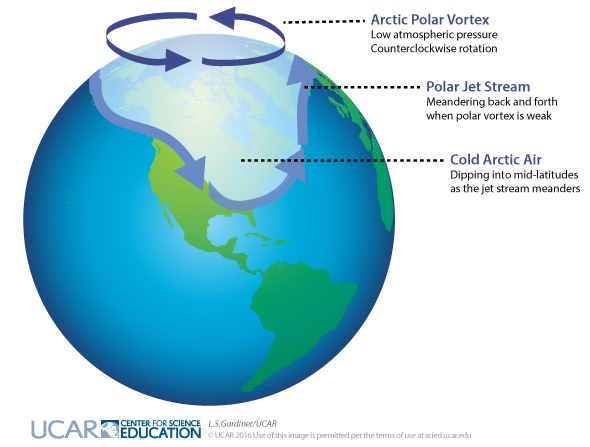
Actually, there are two polar vortices in the Northern Hemisphere, stacked on top of each other. The lower one is usually and more accurately called the jet stream. It’s a meandering river of strong westerly winds around the Northern Hemisphere, about 7 miles above Earth’s surface, near the height where jets fly.
The jet stream exists all year, and is responsible for creating and steering the high- and low-pressure systems that bring us our day-to-day weather: storms and blue skies, warm and cold spells. Way above the jet stream, around 30 miles above the Earth, is the stratospheric polar vortex. This river of wind also rings the North Pole, but only forms during winter, and is usually fairly circular.

https://www.marketwatch.com/story/how-this-brutal-polar-vortex-fits-with-global-warming-2019-01-29

The Science of the Polar Vortex NOAA

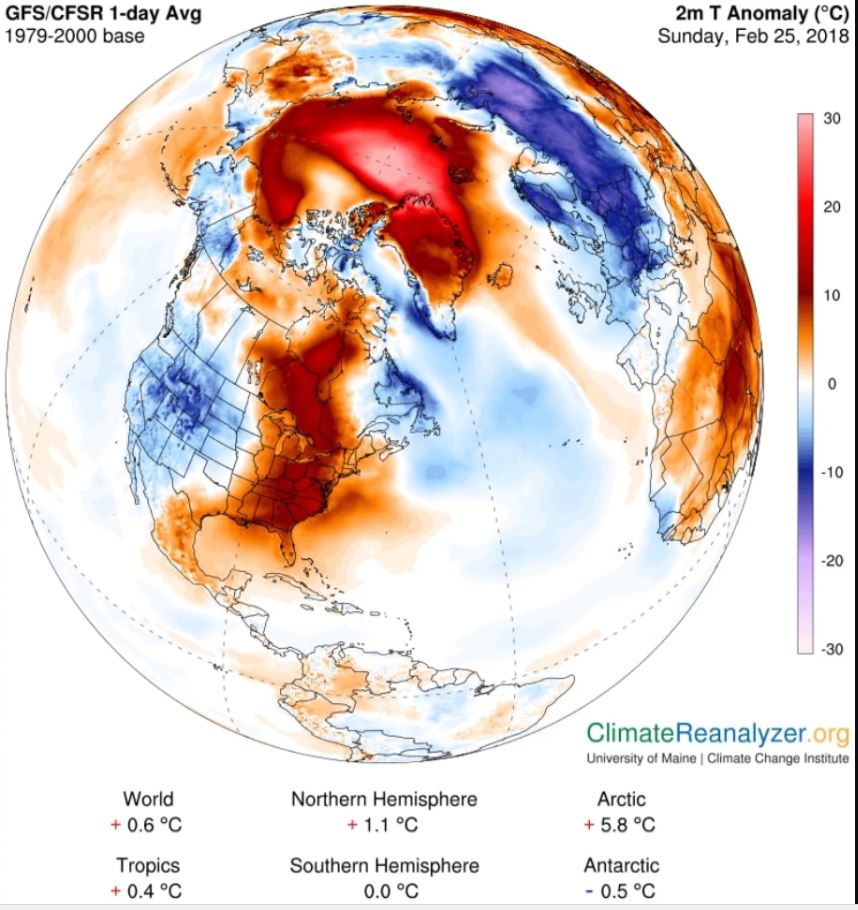
The polar vortex always exists around the North Pole in winter. So what causes the vortex to split, moving frigid arctic air south, away from the pole? It is thought that a Sudden Stratospheric Warming (SSW), i.e. a sudden rise in the arctic temperatures will decrease the difference in air temperatures between the arctic regions and the mid latitudes (Canada, United States). The arctic is warming twice as fast as the rest of the earth, likely because of decreasing areas of sea ice. So although it is counterintuitive, global warming is implicated in the migration of the polar vortex away from the North Pole.

When an SSW occurs, it often influences the Polar Vortex immediately after, and can move the Polar Vortex off the North Pole.
The stratosphere is the layer of the atmosphere just above our main weather atmosphere, the troposphere. Here’s a look at the atmosphere divided into layers.

https://www.mlive.com/weather/2018/12/sudden-stratospheric-warming-to-likely-cause-polar-vortex-disruption-what-it-means-for-us.html

A Sudden Stratospheric Warming is when the stratosphere warms significantly in just a few days. Dr. Judah Cohen from Atmospheric and Environmental Research (AER), says the stratosphere above the North Pole is forecast to warm around 140 degrees in the next few days. Yes you read that correctly – a 140 degree warm-up.
The stratosphere has a circulation generally centered over the North Pole, known as the Polar Vortex. There is also a Polar Vortex in the troposphere, and it usually sits under the stratospheric Polar Vortex. Think of this vortex like the swirly that develops when you drain the bathtub.
Researcher Cohen and others have found that around the time of a SSW event the Polar Vortex is moved off the North Pole, which is called a Polar Vortex displacement. The Polar Vortex may stay in one piece, or split up into two or three pieces.

https://www.mlive.com/weather/2018/12/sudden-stratospheric-warming-to-likely-cause-polar-vortex-disruption-what-it-means-for-us.html

Just above is the forecast showing the SSW between December 24 and December 28. You can envision how warm air developing over the North Pole would force a cold pocket of air off the polar region and to lower latitudes, like southeastern Canada and the eastern U.S.

https://www.mlive.com/weather/2018/12/sudden-stratospheric-warming-to-likely-cause-polar-vortex-disruption-what-it-means-for-us.html
https://www.marketwatch.com/story/how-this-brutal-polar-vortex-fits-with-global-warming-2019-01-29
Posted in climate change, Uncategorized | Leave a comment

1 Picture (Indy Art) : 1,000 Words

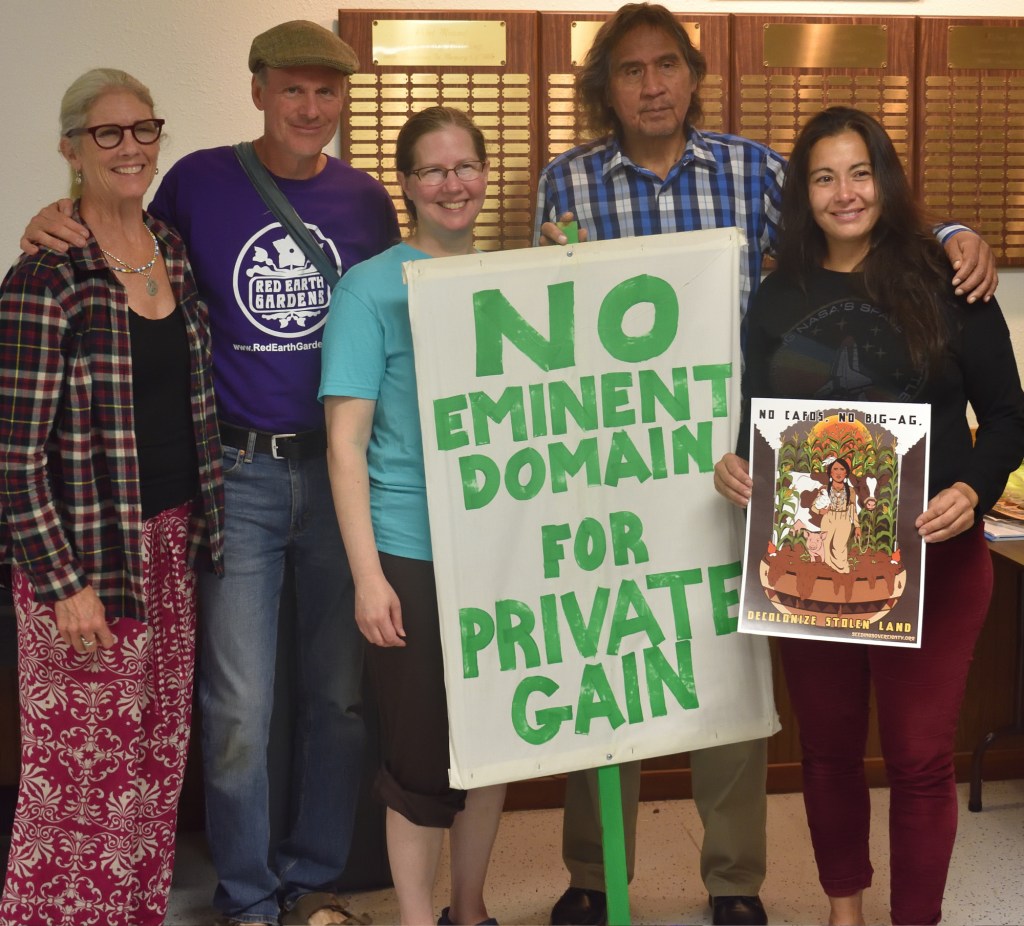
I recently wrote about this blog post:  1:1000, A Picture is Worth 1000 Words written by Julianna Whalen on her site, Streets and Streams. Her idea is to write 1,000 words about one photo. I experimented with that idea with this post (https://kislingjeff.wordpress.com/2019/01/27/1-photo-1000-words/) about a photo taken during the First Nation-Farmer Climate Unity March.

I’d like to try that idea with this more challenging photo.

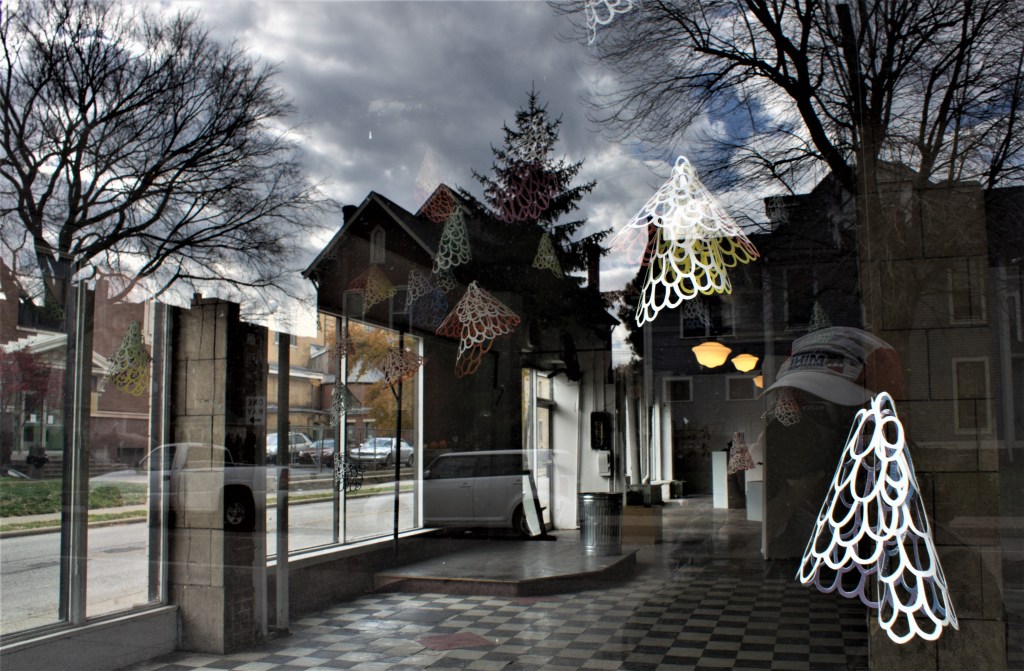
Indy Art building

This is one of a series of photographs I took while walking in my neighborhood on the near North side of Indianapolis. Signs on the building indicated this was the Indy Art building.

I spent a lot of time walking because I refused to own a car for environmental reasons. As a result, I selected places to live that were:

  • on a city bus route
  • close to my work at Riley Hospital for Children in downtown Indianapolis
  • within walking distance of a grocery store
  • had laundry facilities

Those were the reasons I was walking in this neighborhood this day.

I had been a photographer since I was about 14 years old, when I bought an inexpensive 35 mm camera while in downtown Chicago. I was there with a group of Young Leaders, who volunteered as lifeguards at the YMCA in Marshalltown, Iowa. Our reward for a summer of work at the Y was a trip to Racine, Wisconsin, where we learned how to scuba dive in the YMCA swimming pool. We stopped in Chicago on the way home. I just now found the Young Leaders program continues there in Racine: https://ymcaracine.org/sites/default/files/pdfs/YLA/YLA%20TA%20Brochure_0.pdf

I would mail the exposed film off to be processed, and prints made until I learned how to develop film and prints in a darkroom. I first began to learn how to do this when attending Scattergood Friends School, a co-ed, Quaker boarding High School on a working farm near West Branch, Iowa. I was given about half an hour of instruction, and then on my own. I ruined several rolls of film before I began to refine the required skills.

I took a photography course and worked on the Year Book at Marshalltown Community College. I was asked to be a darkroom instructor the following semester but moved back to Indianapolis, instead.

In several apartments I lived in Indianapolis I set up a darkroom in the bathroom, sealing the windows and door as well as I could to prevent light from entering. When I was a member of the Friends Volunteer Service Mission in inner city Indianapolis (early 1970’s), I taught the neighborhood kids how to develop film and prints. We would take cameras with us as we rode bicycles around the city to take photos.

I was really glad for the ‘development’ of digital photography. The first digital cameras had pretty low resolution (3,000 pixels) and slow processor speeds. At first I wasn’t sure digital images would ever have the resolution of silver emulsion film, but digital cameras improved dramatically, with greater resolution and faster processors. Today my digital camera has a resolution of 24 megapixels.

Besides getting away from all the hassles of film and print development in a darkroom, the important thing for me about digital photography was the sudden freedom to take thirty or forty photographs a day, which became common for me. With film, you were very careful about how many photographs you took. There were usually 12 or 24 exposures on a roll, and every time you filled up the roll, you had to process the negatives, and then print them. With a digital camera you can take as many photos as will fit on the camera’s memory card. Those memory cards can be 64 gigabytes or larger and able to hold hundreds of high resolution images.

That meant I could take a lot of shots, experimenting with composition, focus, shutter speed, depth of field, lighting, contrast and color by taking multiple shots of a single scene. The digital camera was a great teaching tool. I could immediately see the results of a photo on the camera itself, and make adjustments right then, and take a new photo. I challenged myself to try to capture difficult images, with challenging lighting or composition, to try to get better at capturing such images. This photograph is an example of experimenting with a complex image.

So, returning to the photograph, I was walking around the neighborhood with a digital camera because I didn’t own a car and I love photography. Those two complement each other. I wouldn’t have nearly the depth of experience with photography if I wasn’t walking all the time. That allowed me to really “see” the world I was walking through, and meant I had the opportunities to actually photograph what I was seeing. There is a creative cycle, where the closer you look, the more you see. Then as how you see improves, that leads you to see even more.

I had walked past the Indy Art building many times. Besides the art display area pictured above, the building also had about 4 floors of apartments for rent. There were often people sitting on the steps of the entry to the apartments.

In the photo you can see the art display area has large windows which provide good light. You can also see the checkerboard tile floor. The art displays changed every couple of weeks.

Looking across the street, through the windows on the left, that building is part of a Catholic Church. On Saturday’s free lunch was provided for the local homeless people.

When I walked past the Indy Art building the morning this photo was taken, I noticed the conical shapes with sides of a circular web pattern suspended in the windows. As I began to try to shoot images of those shapes, I noticed the reflections of the glass changed dramatically as I moved around to capture different aspects of those conical objects.

I began to pay more attention to the shadows and reflections of the windows the conical shapes were suspended behind. The photo above was taken when I noticed extreme differences in the reflections. The bottom half of the photo allows you to see through the window glass. It is transparent. But the position of the camera and the position of the sun caused the upper half of the image to be of reflected light, instead. I like the resulting split-image.

The photo was taken in the late fall, winter, or early spring because the trees don’t have leaves.

Finally, photographers usually try to avoid being in the photo themselves, either from reflections or even their shadows. At the bottom right of the photo is my reflection. I noticed that at the time I took the photo, but thought it added to the reflections that were the statement the photo was making. I see I was wearing one of my Indianapolis Mini Marathon hats. The Mini Marathon is a half marathon (13.1 miles) that is run annually as part of the Indianapolis 500 Festival events. The course begins in downtown Indianapolis, so close to where this image was taken and where I lived then that I would walk to the starting line of the race. And drag myself home after running the 13.1 miles. The course goes out to the Indianapolis 500 track where we run around the racetrack, and then head back downtown. Running the Mini Marathon, as I did 22 times/years, provided a goal for the running I did because I didn’t own a car.

Posted in Arts, climate change, Ethical Transportation, Uncategorized | 2 Comments

Extinction Rebellion

Extinction Rebellion was started in the United Kingdom in 2018. Extinction Rebellion uses nonviolent civil disobedience to attract mainstream media attention on the need for dramatic changes to try to avoid human extinction from environmental chaos. This is another sign that people are beginning to take matters into their own hands since governments are not doing so.

This video of an interview of Rory Varrato by Lee Camp of REDACTED is an excellent introduction to the Extinction Rebellion:


Rebelling Against Human Extinction w/ Rory Varrato

It is interesting to see how similar the ideas of Extinction Rebellion are to the Sunrise Movement. Both emphasize a decentralized structure and the use of nonviolent civil disobedience to get people’s attention, especially because of the corporate control of mainstream media.

Extinction Rebellion

Following are the vision and principles of Extinction Rebellion from it’s website https://rebellion.earth/who-we-are/

Vision: A world where we build thriving connections within our society and environment, bringing hope and enabling us to decide the direction of our lives and futures. An inclusive world, where we work consciously to ensure fair processes of collective decision-making, where creativity is prioritized, and where our diversity of gifts are recognized, celebrated and flourish.

Mission: To spark and sustain a spirit of creative rebellion, which will enable much needed changes in our political, economic and social landscape. We endeavor to mobilize and train organizers to skillfully open up space, so that communities can develop the tools they need to address deeply rooted problems. We work to transform our society into one that is compassionate, inclusive, sustainable, equitable and connected.

Aims: Support and encourage a citizens uprising involving low level and higher risk acts of civil disobedience by some (with others willing to support those that take actions). When ready, create a participatory, democratic process that discusses and improves a draft manifesto for change and a new constitution. This will involve creating a genuine democracy, alongside an economy to maximize well being and minimize harm.

Demands:

  • The Government must tell the truth about the climate and wider ecological emergency, reverse inconsistent policies and work alongside the media to communicate with citizens.
  • The Government must enact legally binding policy measures to reduce carbon emissions to net zero by 2025 and to reduce consumption levels.
  • A national Citizens’ Assembly to oversee the changes, as part of creating a democracy fit for purpose.

Principles and Values:

  1. We have a shared vision of change – creating a world that is fit for generations to come.
  2. We set our mission on what is necessary – mobilizing 3.5% of the population to achieve system change – using ideas such as “momentum-driven organizing” to achieve this.
  3. We need a regenerative culture – creating a culture which is healthy, resilient and adaptable.
  4. We openly challenge ourselves and this toxic system – leaving our comfort zones to take action for change.
  5. We value reflecting and learning – following a cycle of action, reflection, learning, and planning for more action. Learning from other movements and contexts as well as our own experiences.
  6. We welcome everyone and every part of everyone – working actively to create safer and more accessible spaces.
  7. We actively mitigate for power – breaking down hierarchies of power for more equitable participation.
  8. We avoid blaming and shaming – we live in a toxic system, but no one individual is to blame.
  9. We are a non-violent network – using non-violent strategy and tactics as the most effective way to bring about change.
  10. We are based on autonomy and decentralization – we collectively create the structures we need to challenge power. Anyone who follows these core principles and values can take action in the name of RisingUp![10]
Posted in civil disobedience, climate change, revolution, Sunrise Movement, Uncategorized | Leave a comment

1 photo : 1,000 words

In a recent post that was a photo gallery of some pictures I’ve taken this winter, I mentioned the phrase “a picture is worth 1,000 words”.

The WordPress Reader provides links to related blog posts. One caught my attention: 1:1000, A Picture is Worth 1000 Words by Julianna Whalen on her site, Streets and Streams. Her idea is to write 1,000 words about one photo.

This year, I will be sharing the pictures that are truly worth a thousand words. I’ll be sharing the photos that truly take a full thousand words to understand. I’ll be sharing snapshots that even after a thousand words might make you wonder how I could have possibly made a sane and conscious decision to post them. I’m posting the silly snapshots that often seemed like they wouldn’t mean anything in the moment, but in reality encapsulate the spirit of a minute, a day, an entire trip.
These pictures aren’t always pretty and posed. They might be framed awkwardly. It’s possible that the lighting will be uneven. Forgive me for that, because that’s the thing: they still have worth.

Julianna Whalen https://streetsandstreams.com/2019/01/15/1-1000/

I like this idea. Julianna plans to write one such blog post once a month. Although I’m not committing to such a schedule or 1,000 words in each blog post, I’m going to try to do this here, and perhaps continue in the future.


Farm of Craig and LaVon Griffieon on the north side of Ankeny

This photograph was taken as we arrived at our destination for the first day of the First Nation-Farmer Climate Unity March. The elements you see include some people walking away from the camera, a tipi, a grain bin and barn, and a dark, stormy sky. If you look closely you’ll see a small red structure on the middle right of the photo.

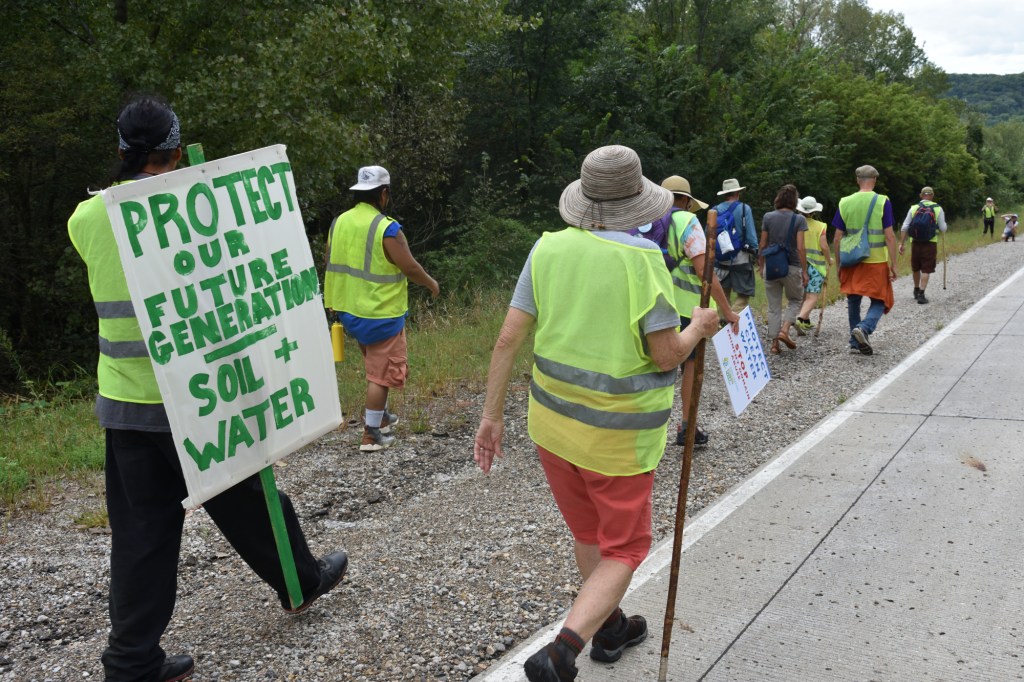
This photo symbolizes the First Nation-Farmer Climate Unity March. One of the purposes of the March was for a group of Native and non-native people to to spend the 8 days it took to walk from Des Moines to Fort Dodge, Iowa, a distance of 94 miles, together. Being together basically 24 hours a day, walking, eating, discussing and sleeping created the opportunities for us to get to know each other. The intention was to build understanding and trust among all of us, so we can work together on subjects of common concern. I’m very happy to say that was accomplished, although each of us got to know certain people better than others. Prior to the March it hadn’t really occurred to me just how much time we would spend together. And, especially, the hours we would be walking side by side, sharing each other’s stories. It seemed like people were talking with each other continuously as we marched. I’ve often shared the statement below, because I think it is the truth. And explains why I think people sharing their stories with each other is one of the most important parts of life.

ALL THAT WE ARE IS STORY. From the moment we are born to the time we continue on our spirit journey, we are involved in the creation of the story of our time here. It is what we arrive with. It is all we leave behind. We are not the things we accumulate. We are not the things we deem important. We are story. All of us. What comes to matter then is the creation of the best possible story we can while we’re here; you, me, us, together. When we can do that and we take the time to share those stories with each other, we get bigger inside, we see each other, we recognize our kinship — we change the world one story at a time.

Richard Wagamese (October 14, 1955-March 10, 2017)
Ojibwe from Wabeseemoong Independent Nations, Canada

Another reason for Native and non-native people to spend this time together is because of a growing awareness that we need Native people to lead us as we try to address our multiple environmental problems. It is increasingly obvious (i.e. hard to “deny”) that we have caused significant damages to our environment. Much of this damage relates to the violent extraction of fossil fuels, destroying the land and polluting vast amounts of water. Other damage occurs when the fossil fuel is burned, increasing greenhouse gas and particulate emissions.

Because indigenous cultures honor Mother Earth, and because of their Spiritual strength, and love of one another, they were not seduced by the fossil fuel based economy. The only way we can heal Mother Earth is to immediately stop the extraction and burning of fossil fuels. We need to learn from indigenous cultures how to return to a pre-fossil fuel way of life.

The reason for focusing on farmers relates to having conversations about agricultural practices. Factory farms in Iowa mainly produce corn and soybeans, not food for human consumption. The overuse of fertilizers is not healthy for the soil or water. We had several evening discussions lead by farmers and Native Americans to talk about how to combine knowledge and practices that uses the best of both worlds, which can be referred to as “two-eyed seeing”.

Two-eyed seeing “recognizes the benefits of seeing from one eye with the strengths of Indigenous ways of knowing, from the other eye the strengths of the Western ways of knowing, and using both of these eyes together to create new forms of understanding and insight.”  

Elder Albert Marshall (Mi’kmaq, Eskasoni First Nation)

The reason for walking from Des Moines to Fort Dodge is to walk along the route of the Dakota Access Pipeline. Although oil is flowing through the pipeline, there is a case that was heard the week after the march in the Iowa Supreme Court related to the abuse of eminent domain to force farmers to allow the pipeline to be built on their land.

The photo was taken at the end of the first day’s march of 13.3 miles. I think most of us were feeling the effects of the walking. I imagine many were wondering if they could complete the entire walk. I know I was. But part of how this community came together involved our shared suffering and encouragement of each other.

Craig and LaVon Griffieon, owners of the farm in the photo, have been fighting the city of Ankeny, that wants to rezone their land, for years. When I mentioned the Griffieon’s to my Bear Creek (Quaker) meeting, people were familiar with the Griffieon’s and their struggles.

After the Griffieon’s shared their story, Regina Tsosie spoke. First she embraced and thanked Craig and LaVon for their hospitality. Then she spoke about the parallels of the attempts to take their farm with the theft of Native lands in the United States.

The small red square structure in the middle of the photo is the portable shower and toilet. It was a compost toilet with wood shavings. The shower was supposed to be heated by the sun, and gravity driven. My experience was a cold shower.

The final important part of this photo is the dark, stormy looking sky. Rain was forecast every day of the march. Although the first four days we did receive a lot of rain, the rest of the march we did not. Observing how my fellow marchers took the rain and miles of marching without complaint was a marvel to me.

I really like what Julianna wrote in her post about this idea of focusing on one photograph. “These pictures aren’t always pretty and posed. They might be framed awkwardly. It’s possible that the lighting will be uneven. Forgive me for that, because that’s the thing: they still have worth.”

Posted in #NDAPL, Arts, climate change, First Nation-Farmer Climate Unity March, Indigenous, Quaker, Quaker Meetings | 2 Comments

Happy Birthday Randy

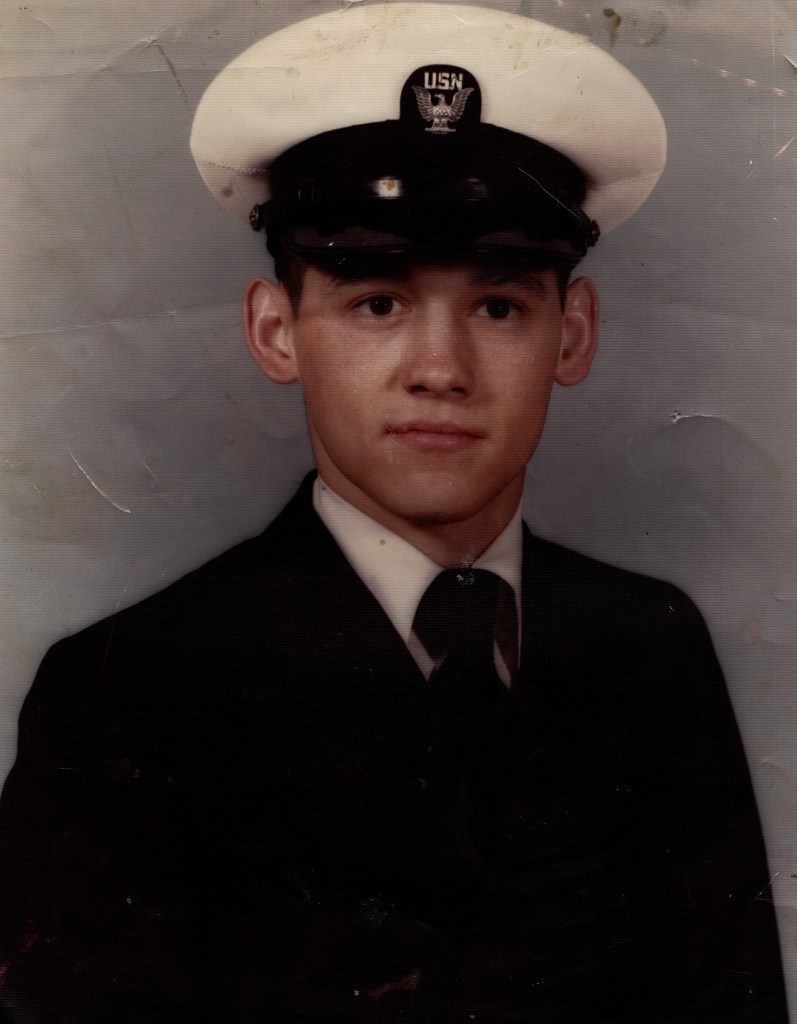
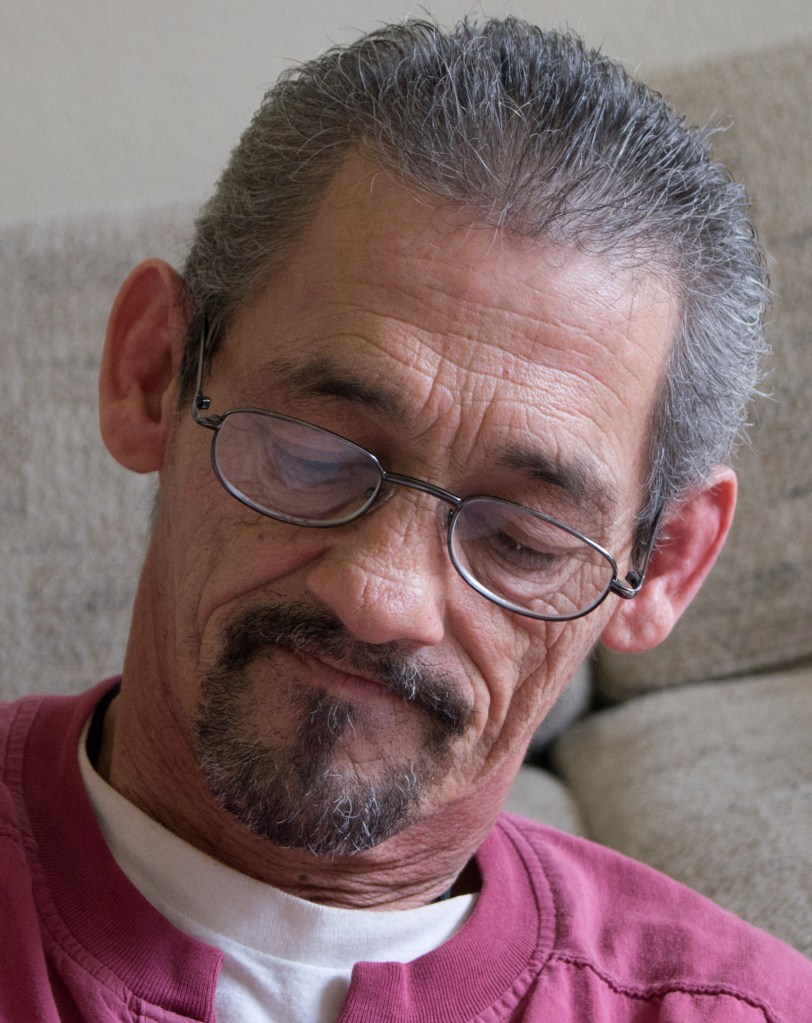
Today is the birthday of my best friend/brother, Randy Gene Porter. My world was turned upside down when he died 7 years ago.

Growing up with and sharing life experiences for forty years, there were times when it felt like we were mixed together, one combined spirit.

I was both surprised and honored when he once asked me why I thought he enjoyed visiting me, and told me it was because he found peace.

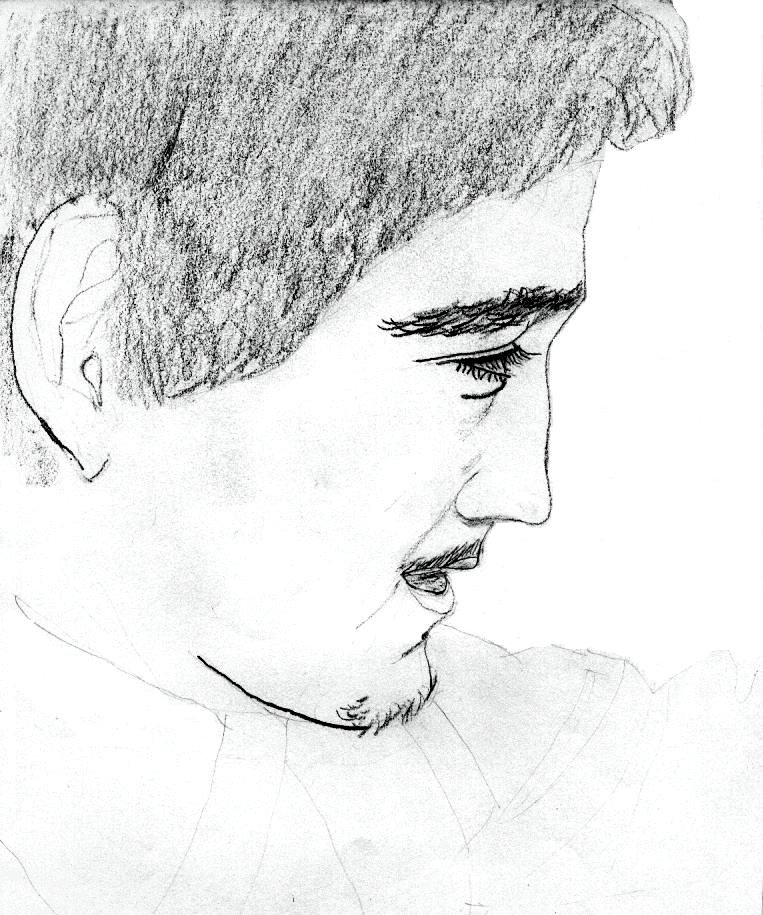
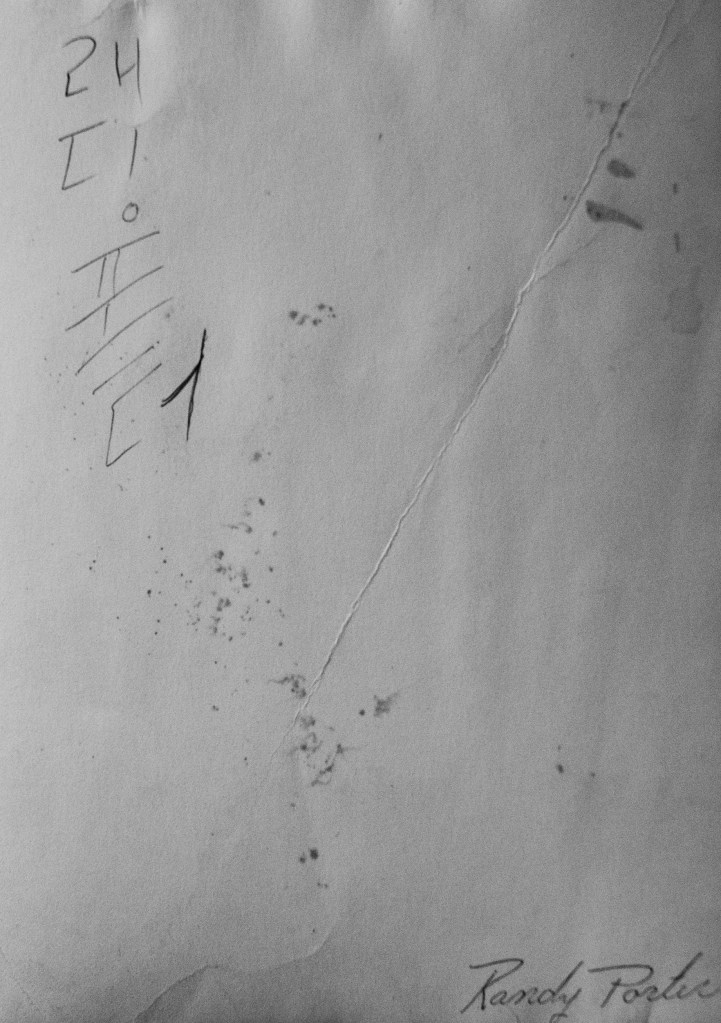
Following is one of the few portraits I’ve ever tried to draw.

When he returned from having spent some time in Japan, I think, when he was in the Navy, he wrote the following that he had asked someone to teach him, which says “friend”.

Posted in Uncategorized | Tagged | 2 Comments

Snow Gallery

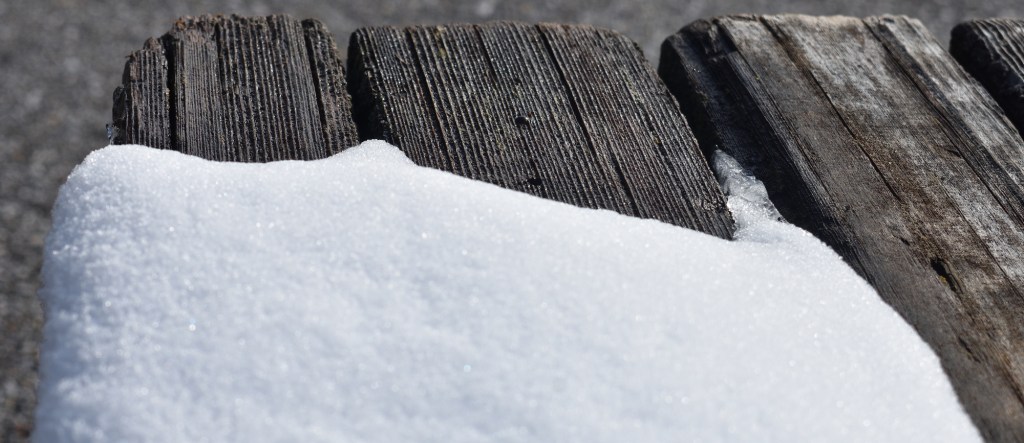
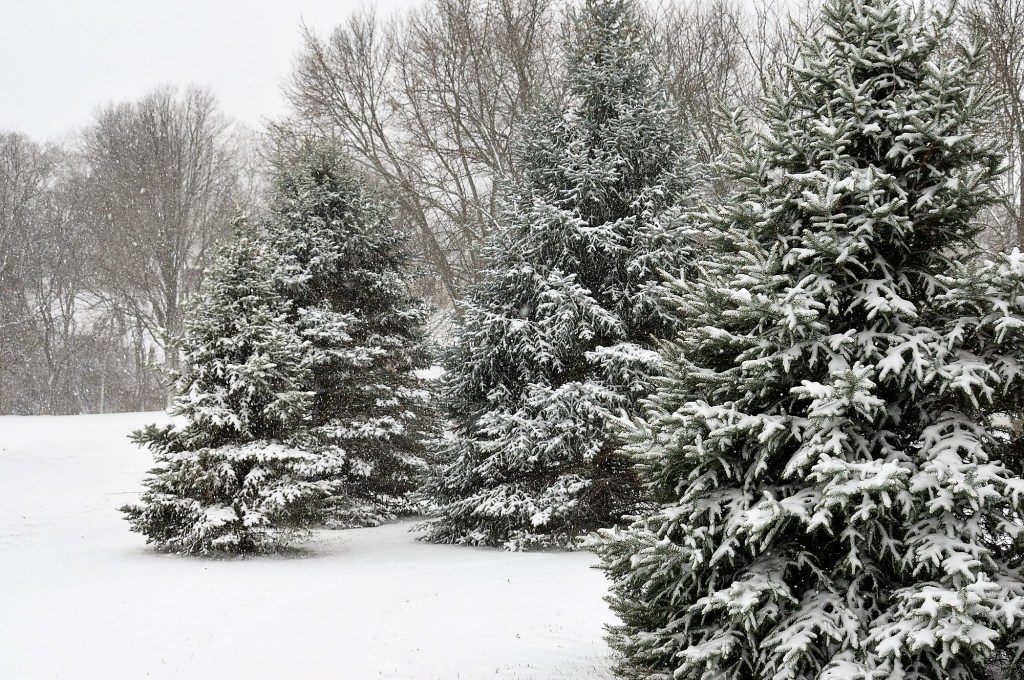
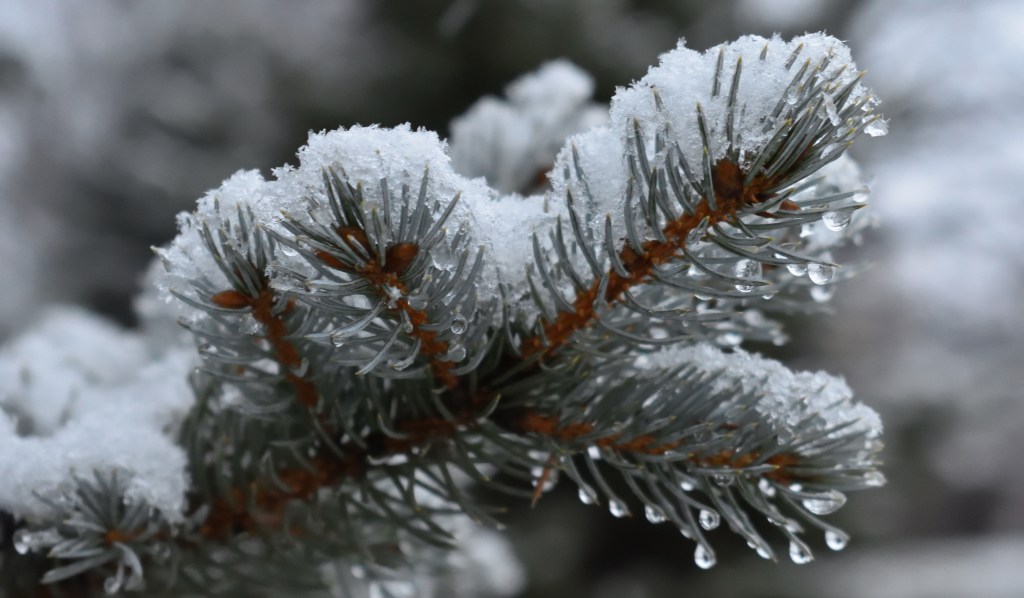
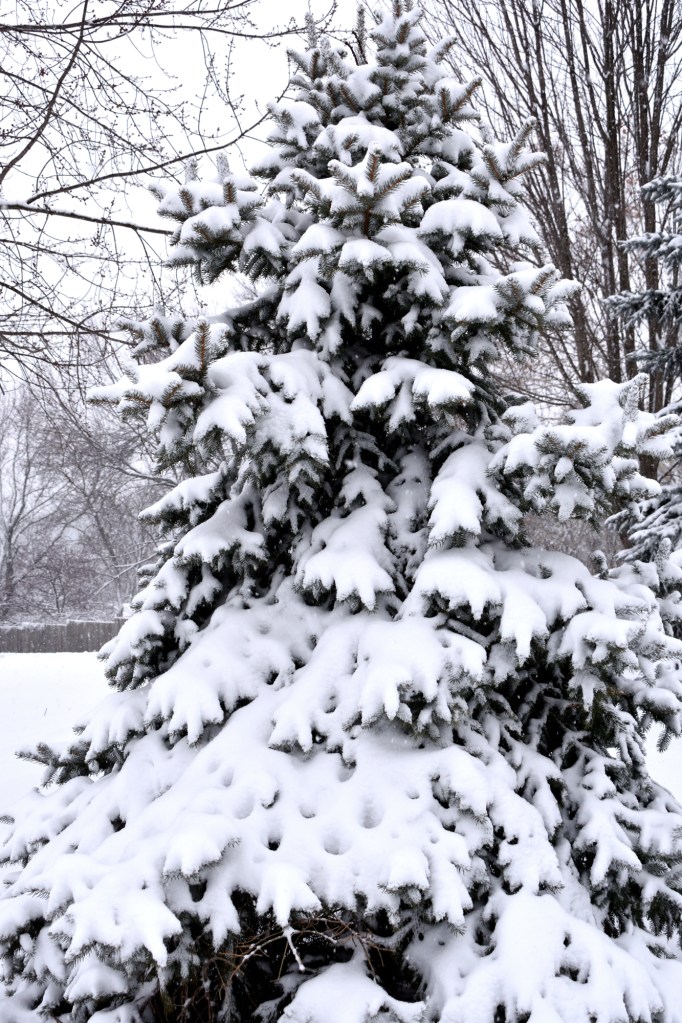
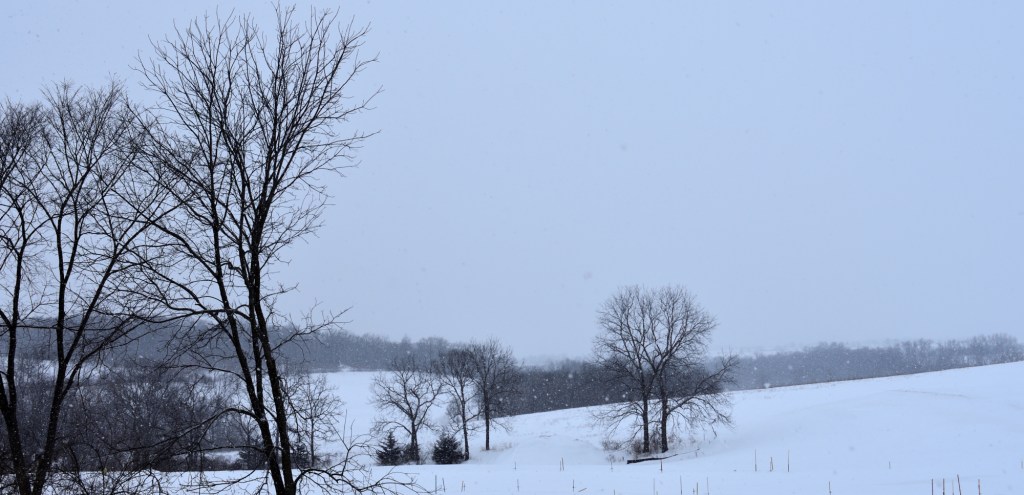
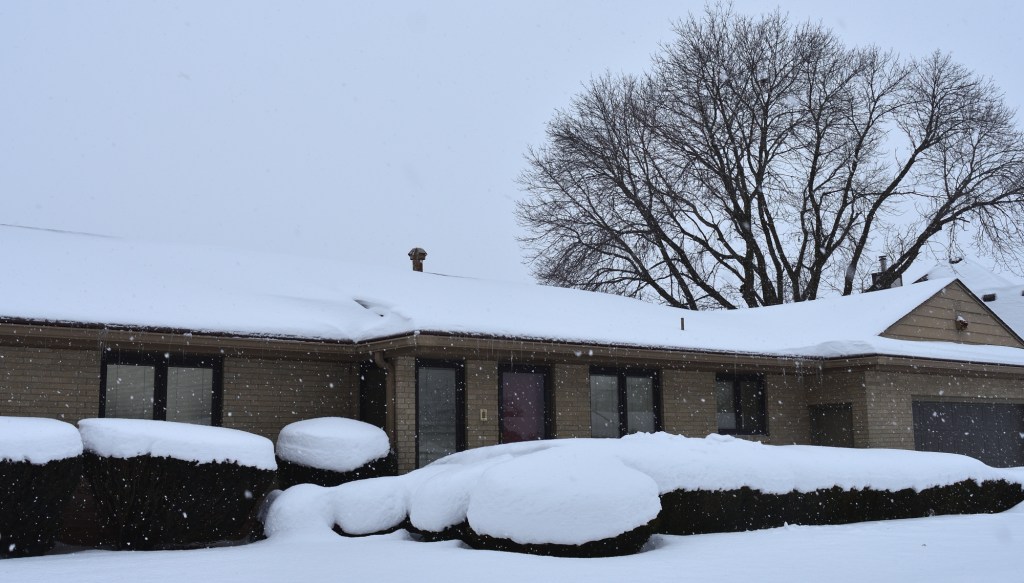
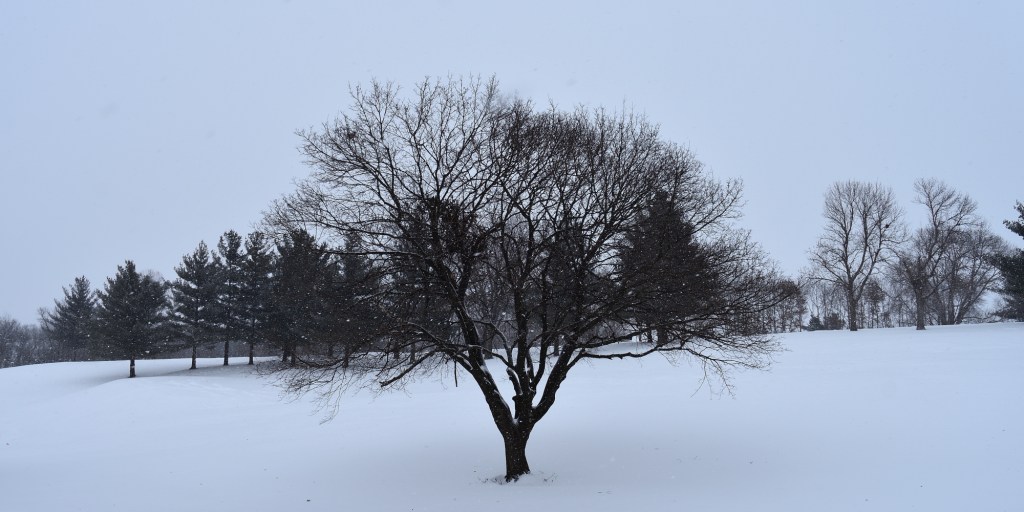
If a picture is worth 1,000 words, this blog post has 15,000.

Posted in Arts | Tagged | 5 Comments

Native Americans, ancestry and DNA

Opinion: Elizabeth Warren’s claim to Cherokee ancestry is a form of violence: Be it by the barrel of a carbine or a mail-order DNA test, the American spirit demands the disappearance of Indigenous people.
BY KIM TALLBEAR, Indian Country Newsletter

This recent opinion piece in the Indian Country Newsletter has some interesting discussion about things I’ve been wanting to understand. At first I thought the DNA ancestry results would help people stop clinging to the idea of white supremacy, when people learn of their diverse ancestry. But, as quoted below, “Ironically, genetic science, which seeks to sample Indigenous people before they vanish into a sea of admixture, actually helps to vanish Indigenous peoples by implying that “mixed” Natives are less Native.”

This most American of family legends (of being “part” Indian) began its journey to the spotlight in national politics when Elizabeth Warren, during her U.S. Senate run in Massachusetts in 2012, claimed to have Cherokee and Delaware ancestry. At the time, when asked if I would vote for her, I said, “Yes,” despite disappointment with her cliché claim to a Native ancestor with “high cheekbones.” These days, however, I can’t answer that question in the same way.

Be it by the barrel of a carbine or a mail-order DNA test, Indigenous people must disappear for the United States to thrive.

In his book, Deloria cites English writer and poet D.H. Lawrence, who wrote that an “essentially ‘unfinished’ and incomplete” American consciousness produced an “unparalleled national identity crisis.” He continued: “No place exerts its full influence upon a newcomer until the old inhabitant is dead or absorbed.” For Lawrence, the “unexpressed spirit of America” could not be fulfilled without Indians being exterminated or assimilated into white America. A few decades later, Spokane author Sherman Alexie echoed these sentiments in the poem “How to Write the Great American Indian Novel,” concluding that “In the Great American Indian novel, when it is finally written, all of the white people will be Indians and all of the Indians will be ghosts.”

In the case of DNA, science now offers a kinder, gentler hand in the disappearing of Native people. The personal genomics industry unwittingly retains older racist and colonial ideas of the unassimilated Native — notions that shape scientists’ search for the supposedly biologically distinct, or “unadmixed,” Native, which privileges the “purer” Native in research in order to gain a better view into an ancient, less-civilized humanity. Living Indigenous people sampled in the course of research become proxies for ancient humans. Ironically, genetic science, which seeks to sample Indigenous people before they vanish into a sea of admixture, actually helps to vanish Indigenous peoples by implying that “mixed” Natives are less Native.

(from the article in the link above)

This summarized what little I have been able to learn so far. That being a member of a tribal nation involves much more than genetics.

In the settler-colonial belief system, genetic ancestry is expressed as a defining trait of what it is to be “Native American,” or even “Scandinavian,” for that matter. Yet Native people’s own notions of belonging, in addition to contentious but vital tribal political definitions of citizenship, emphasize lived social relations, both with human relatives and with our nonhuman relatives in our traditional lands and waters. Genetic ancestry alone is a shallow definition of who we are, as are the human-centric views of settler-colonists that place humans above nonhuman plants and animals.

(from the article in the link above)

I’ve written before about how the shift in my whole worldview changed when I learned the Spirit is in all things, living and inanimate. I began to talk to the trees, flowers, birds and squirrels as I walked among them. This expanded my Quaker faith substantially.

Indigenous analyses run counter to many of these settler-colonial ideas, but are often misunderstood, ignored or framed as being fodder for one political party or another. In the 19th century, for example, settlers accused us of being in the way of “progress” in order to justify land theft, massacres of unarmed Native people, and forced assimilation for those who survived. Today, we are seen as in the way of progress if we resist a pipeline, or genetic research and DNA testing that objectifies us as bodies and identities to be studied and consumed for the benefit of non-Natives. Both then and now, settler states and actors, in the pursuit of private property, profit, individual advancement or self-actualization, do not understand Indigenous world-views, and resort to violence or appropriation instead of collaboration; colonialism instead of kinship. 

(from the article in the link above)
Posted in #NDAPL, climate change, First Nation-Farmer Climate Unity March, Indigenous, Quaker, Uncategorized | Leave a comment

Climate Chaos in Germany

Some of the consequences of climate change are occurring in Germany now. The level of the Rhine River is so low that river shipping is impossible many days.

The water sources for the Rhine are not only rainfall, but vast reserves of water from lakes and glaciers. Those reserves are declining rapidly with the melting of glaciers, decreasing lake levels, and diminished rainfall.

In 2017, 186 million tonnes of goods were transported between Basel in Switzerland and the German-Dutch border — amounting to around half of European river shipping, according to the Strasbourg-based Central Commission for Navigation on the Rhine.
But since the dry spell began, industrial giant Thyssenkrupp has had to cut back production at its Duisburg plant “because a sufficient supply of raw material cannot be assured”, a company spokesman said.

Germany’s iconic Rhine river is at a record low bringing businesses and boats to a standstill. News Corp Australia Network OCTOBER 24, 2018

One of the longest dry spells on record has left parts of the Rhine at record-low levels for months, forcing freighters to reduce their cargo or stop plying the river altogether.
Parts of the Danube and the Elbe — Germany’s other major rivers for transport — are also drying up. Some inland ports are idle, and it is estimated that millions of tons of goods are having to be transported by rail or road.

An exceptionally dry summer has caused havoc across Europe. A trade group in Germany put farmers’ losses at several billion dollars. The German chemical giant BASF had to decrease production at one of its plants over the summer because the Rhine, whose water it uses to cool production, was too low.

The Rhine, a Lifeline of Germany, Is Crippled by Drought. By Christopher F. Schuetze
The New York Times, Nov. 4, 2018

Although much of what was transported by river barges can be carried overland using trains and trucks, more expensively, some large pieces, such as components for wind turbines, cannot. That has stopped construction of the wind farm at Mannheim.

Germany’s industrial southwest, Switzerland and parts of France face a dearth of fuel supplies in the coming weeks just as freezing temperatures threaten to lift demand for heating oil.
A prolonged drought this summer has led to record-low water levels on the Rhine river, closing many parts of the key transport artery to barge traffic. With little relief in sight, the German government is seeking to loosen rules on fuel transports by road to prevent shortages. The logistics bottleneck led to production halts at Covestro AG, contributing to a profit shortfall at the German plastics maker and sending the shares tumbling on Tuesday.

Rhine Drought Threatens Oil Supply as Cold Snap Hits Germany by Vanessa Dezem and Brian Parkin, Bloomberg, November 21, 2018

https://www.bestweatherinc.com/commodities/low-rhine-river-in-germany-causing-chaos-and-will-affect-some-commodities/

The situation in Switzerland, which relies on Europe’s busiest waterway for two-thirds of its diesel supplies and a quarter of its gasoline deliveries, has become “tense,” according to the nation’s EV-UP oil federation.
“We’re watching developments closely,” David Suchet, the Zurich-based group’s spokesman, said Tuesday. Switzerland can draw on refinery and rail supplies and like Germany released a portion of its strategic reserves in October. “November is a pretty dry month, so we don’t expect the situation to ease soon.”

Rhine Drought Threatens Oil Supply as Cold Snap Hits Germany by Vanessa Dezem and Brian Parkin, Bloomberg, November 21, 2018
Posted in #NDAPL, climate change, Uncategorized | Leave a comment

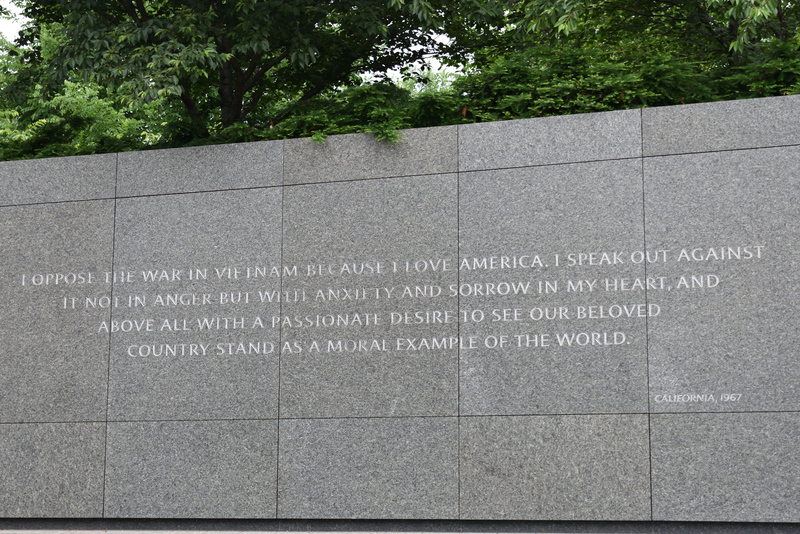
Martin Luther King: His Own Words

It is not enough to say we must not wage war. It is necessary to love peace and sacrifice for it.

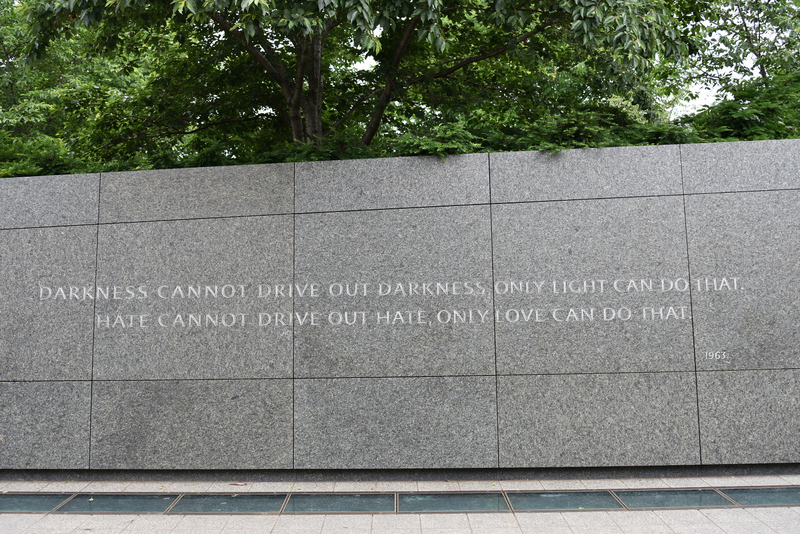
Every man must decide whether he will walk in the light of creative altruism or in the darkness of destructive selfishness.

We must use time creatively, in the knowledge that the time is always ripe to do right

An individual has not started living until he can rise above the narrow confines of his individualistic concerns to the broader concerns of all humanity.

Every man lives in two realms: the internal and the external. The internal is that realm of spiritual ends expressed in art, literature, morals, and religion. The external is that complex of devices, techniques, mechanisms, and instrumentalities by means of which we live.

The quality, not the longevity, of one’s life is what is important.

The past is prophetic in that it asserts loudly that wars are poor chisels for carving out peaceful tomorrows.

A lie cannot live.

Love is the only force capable of transforming an enemy into friend.

We must develop and maintain the capacity to forgive. He who is devoid of the power to forgive is devoid of the power to love. There is some good in the worst of us and some evil in the best of us. When we discover this, we are less prone to hate our enemies

Nonviolence is absolute commitment to the way of love. Love is not emotional bash; it is not empty sentimentalism. It is the active outpouring of one’s whole being into the being of another.

If you can’t fly then run, if you can’t run then walk, if you can’t walk then crawl, but whatever you do you have to keep moving forward.

Only in the darkness can you see the stars.

There comes a time when one must take a position that is neither safe nor politic nor popular, but he must take it because his conscience tells him it is right.

Everybody can be great … because anybody can serve. You don’t have to have a college degree to serve. You don’t have to make your subject and verb agree to serve. You only need a heart full of grace. A soul generated by love.

No one really knows why they are alive until they know what they’d die for.

A man who won’t die for something is not fit to live.

We must accept finite disappointment, but never lose infinite hope.

We must build dikes of courage to hold back the flood of fear.

Those who are not looking for happiness are the most likely to find it, because those who are searching forget that the surest way to be happy is to seek happiness for others.

Lightning makes no sound until it strikes.

No person has the right to rain on your dreams.

Posted in civil disobedience, peace, Uncategorized | Tagged | Leave a comment