The AltEn Environmental Catastrophe in Mead, Nebraska

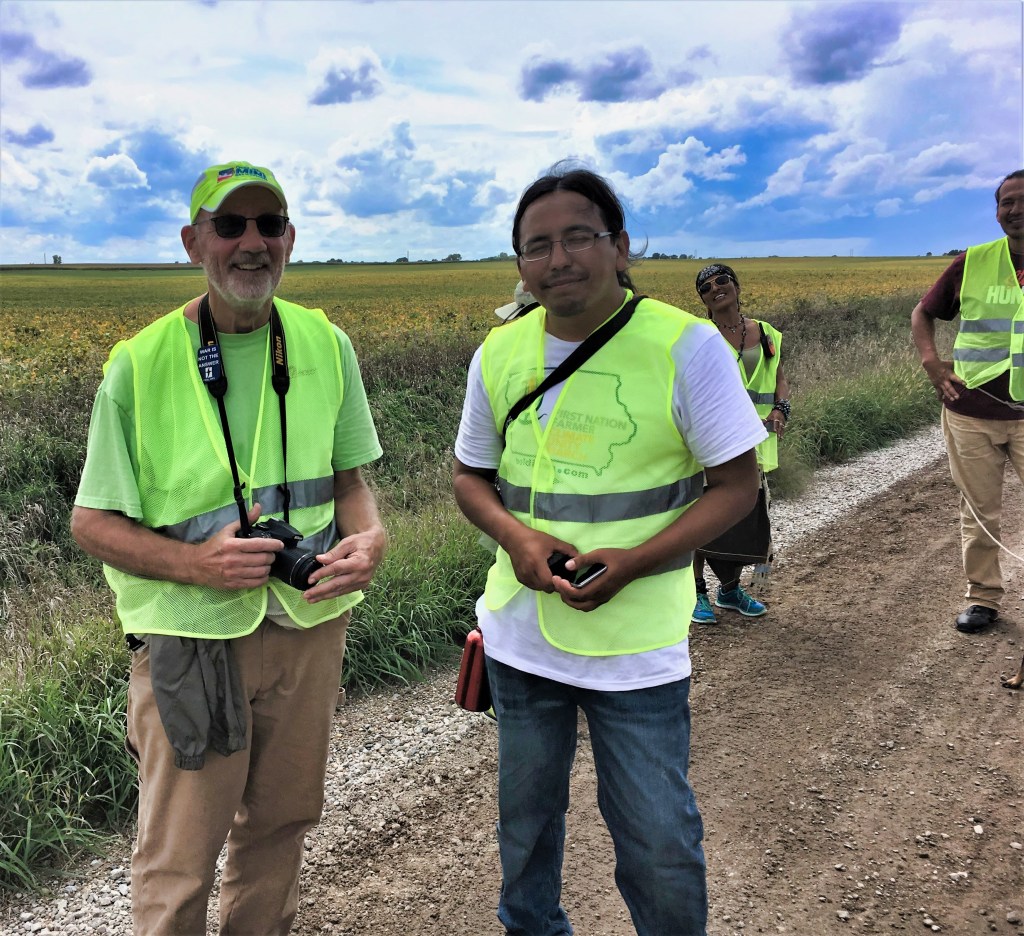
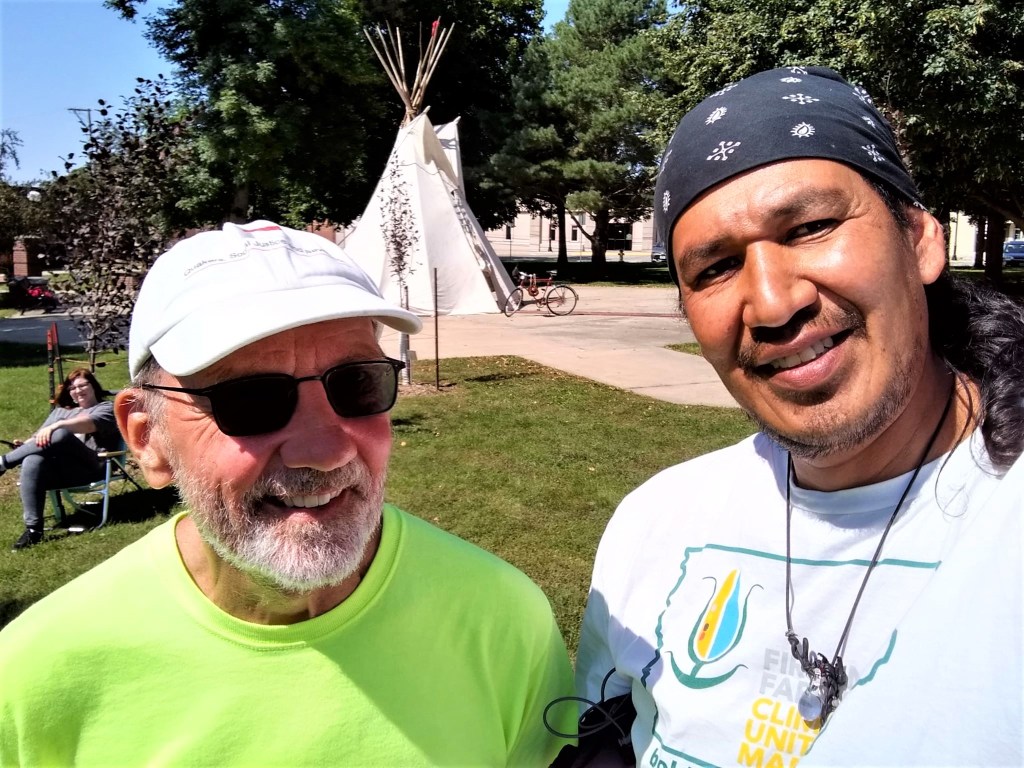
One of the people I met on the First Nation-Farmer Climate Unity March is Mahmud Fitil, who told me stories related to tar sands spills. He said at that time no commercial lab would analyze the water samples from areas of tar sands spills, because they feared repercussions from the government. Mahmud went to the Doon, Iowa, train derailment and oil spill in June, 2018. He said there was little activity related to the cleanup. The smell was worse than that of raw gasoline, causing some to vomit.

This is a photo of Mahmud in front of a valve of the Dakota Access Pipeline I took during the March. He works with, Ní Btháska Stand and Pipeline Watchdogs: Monitoring Construction and Operations, which monitors pipeline construction and operations (see more at the end of this).

Thanks to the work of Mahmud and the pipeline watchdogs, this disastrous environmental catastrophe in Nebraska is now being reported on.
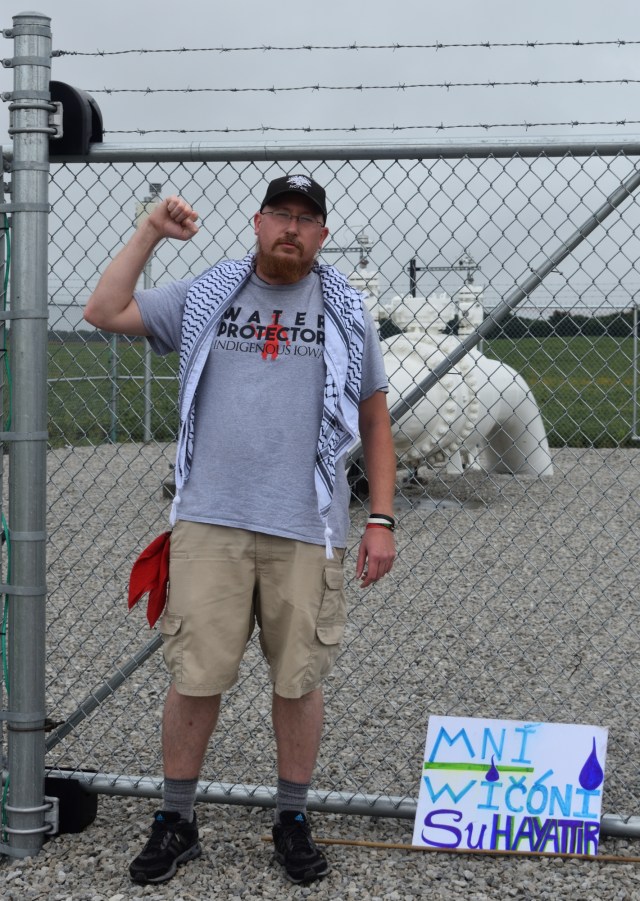
DSC_8591
Mahmud Fitil

The AltEn Ethanol LLC plant just outside of Mead, NE has been using pesticide laden seed corn to create its product. Later it discharged 4 million gallons of pesticide contaminated wastewater generated by the facility when a pipe broke on February 12, 2021.

Great Plains Action Society and Ní Btháska Stand Collective interviewed Mead resident, Jody Weible, who has been actively organizing a resistance to AltEn for years. The Ní Btháska Stand Collective has provided important footage of the site that needs to be seen to be believed. The images are heartbreaking. See the video below.

Conventional ethanol plants utilize field grains as source material, however, AltEn began using seed grains pretreated with pesticide and fungicide. Big-Ag production companies, such as Bayer and Syngenta, have used this plant as a dumping ground for their pesticide-laden toxic waste. The end product after producing ethanol is a toxic solid waste that AltEn has been marketing as ground conditioner until the Nebraska Department of Agriculture issued a cease and desist order. That’s when AltEn began stockpiling tons of this toxic solid waste on their property.

Owner-operators of AltEn Ethanol plant also own and operate Mead Cattle Company on the same premises. Important to note that a Hereford, TX based Champion Feeders acquired a conditional use permit signaling their acquisition of Mead Cattle Company in the beginning of April 2021. The Nebraska Department of Agriculture remains silent on the fact that cattle, intended for human consumption, is most likely grazing on pesticide laden land.

EPA guidelines state that 70 PPB of Neonicotinoids in the environment is a safe level, however surrounding AltEn, the levels measure an outrageous 240,000 PPB.

The breach traveled 4.5 miles over the Todd Valley and Oglala Aquifers, just short of the Platte River where Lincoln’s municipal water intake is located.

The plant began operations in 2015 and local bee colonies started collapsing in 2017. It is estimated that 1.5 – 2.16 million bees have died, just at the University of Nebraska Bee Lab alone.

This catastrophe also occurred after years of serious complaints from local residents about the acrid smell causing nausea, nosebleeds, upper respiratory issues, headaches and discharge from the eyes.

Water is life, but water saturated with hazardous neurotoxic pesticides is a harbinger of death. Tell Nebraska Legislators to pass LB507, which prevents the use of pretreated pesticide-laden grains as source material for the production of ethanol.

Editing and arranging of the following video: Jack Meggers, Anatomical Heart Films

Great Plains Action Society

</p>‘

There’s a red flag here’: how an ethanol plant is dangerously polluting a US village. Situation in Mead, Nebraska, where AltEn has been processing seed coated with fungicides and insecticides, is a warning sign, experts say

The company, called AltEn, is supposed to be helpful to the environment, using high-starch grains such as corn to annually churn out about 25m gallons of ethanol, a practice regulators generally hail as an environmentally friendly source for auto fuel. Ethanol plants typically also produce a byproduct called distillers grains to sell as nutritious livestock feed.

But unlike most of the other 203 US ethanol plants, AltEn has been using seed coated with fungicides and insecticides, including those known as neonicotinoids, or “neonics”, in its production process.

Company officials have advertised AltEn as a “recycling” location where agricultural companies can rid themselves of excess supplies of pesticide-treated seeds, a strategy that gave AltEn free supplies for its ethanol, but also left it with a waste product too pesticide-laden to feed to animals.

Instead, AltEn has been accumulating thousands of pounds of a smelly, lime-green mash of fermented grains, distributing some to farm fields as a “soil conditioner” and accumulating the rest on the grounds of its plant.

It is that waste that some researchers say is dangerously polluting water and soil and probably also posing a health threat to animals and people. They point to testing ordered by state officials that found neonics in AltEn waste at levels many times higher than what is considered safe.

Some of the levels recorded are just off the charts

Dan Raichel

“Some of the levels recorded are just off the charts,” said Dan Raichel, an attorney with the Natural Resources Defense Council (NRDC), which has been working with academics and other environmental protection groups to monitor the situation in Mead. “If I were living in that area with those levels of neonics going into the water and the environment I would be concerned for my own health.”

There’s a red flag here: how an ethanol plant is dangerously polluting a US village by Carey Gillam, The Guardian, January 10, 2021

Report: Spill From Mead Ethanol Plant Likely 4M Gallons
A report by state environmental officials says a frozen underground pipe that burst last week likely spilled 4 million gallons of wastewater from a troubled ethanol plant in eastern Nebraska.
By Associated Press, Wire Service Content Feb. 19, 2021

On Feb. 12, plant officials reported the accidental discharge that happened after a frozen pipe on the side of a large digester tank burst, releasing manure from the nearby feedlot and thin stillage from the ethanol plant.

Because the plant uses treated seed instead of harvested grain, it’s likely the thin stillage is contaminated with pesticides, which have been detected in the plant’s lagoons and other waste byproducts at high concentrations.

Pipeline Watchdogs

We are the watchdogs for pipeline construction and operations. We look for permit violations, leaks and other problems associated with fossil fuel pipelines once they’ve been given the go-ahead by either states or federal government. Once pipelines have been given permits, there is little to no monitoring of construction or operations. It is up to us. Since the state and federal governments refuse to provide real oversight, we have to be the watchdogs to protect water, land and future generations. We created a system of pipeline construction watchdogs in Iowa to monitor Dakota Access’ construction and were able to get evidence of numerous permit violations. We were able to stop construction on several occasions. Similarly, construction on the Rover pipeline (like DAPL, it is owned by Energy Transfer Partners ) and the Mariner East 2 pipeline have been shut down because of drilling fluid spills. If you live near a fossil fuel pipeline, become a watchdog and hold the polluters accountable!

Pipeline Watchdogs: Monitoring Construction and Operations

#WeAllLiveDownstream
#DefendTheSacred
#ProtectTheWater
#ProtectThePlatte
#DefendTheLand
#DefendMead
#WaterIsLife
#MníWičóni
#SuHayattır
#HiFromNE
#HiFromD2
#NEStrong
#AltEnded
#Bees
#NíBtháskaStandCollective
#GreatPlainsAction

Posted in #NDAPL, First Nation-Farmer Climate Unity March, Uncategorized | Leave a comment

What is said and what is left unsaid

It is nearly incomprehensible to wake up this morning and see news of another police shooting of a Black man. Especially in Minneapolis at this time of the trial of Derek Chauvin.

This morning my friend Avis Wanda McClinton wrote to me, and said “I can’t breathe”. Then on a phone call about the following, she told me she was afraid to even get in her car. She has had her own traumatic experiences with police.

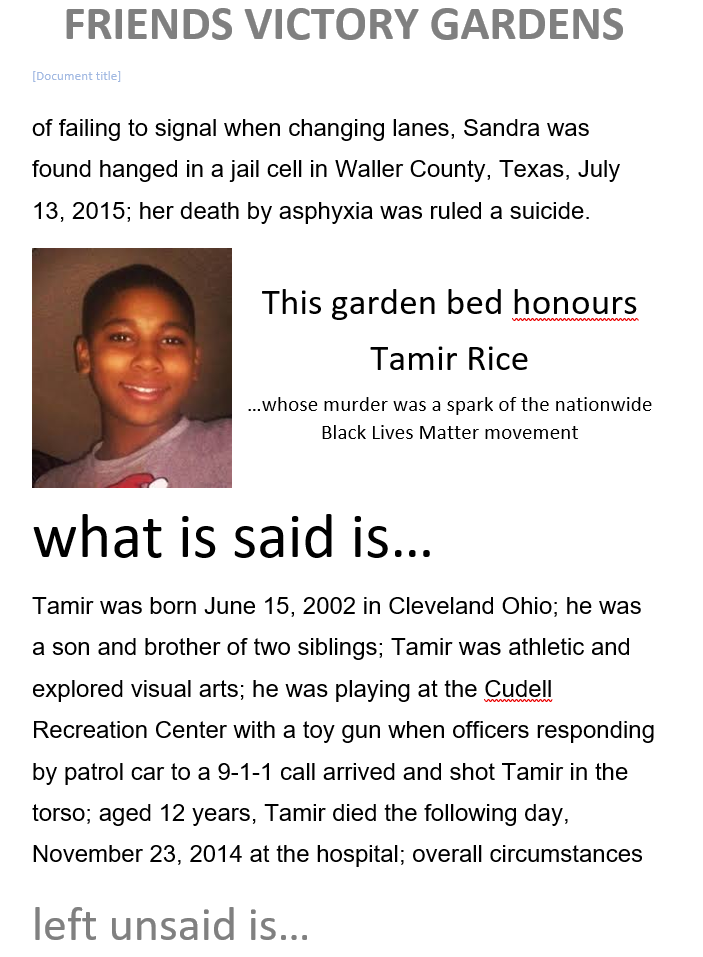
In this QuakerSpeak video Avis Wanda tells the story of her Friends Victory Garden. Following that she tells who each garden box honours. For each she tells what is said… and what is left unsaid… At the end is a photo of the greenhouse that Avis Wanda says is dedicated to the Africans who died on the slave ships carrying them to the Americas on the middle passage. To honour those whose names are unknown.

“I just couldn’t sit in my house and feel scared and powerless,” Avis Wanda McClinton says, thinking back to the early months of the pandemic. “There’s always something to do, you know? I’m a child of God. He gave me these beautiful hands and gave me this big heart, and I know how to grow food.” So that’s what she did.

“When you’re farming, it’s a solitary thing,” Avis Wanda reflects. “Down on my knees, preparing the beds for the plants, I just talked to God as I worked the earth, told him my fears and my worries and what I hope for the future.”

Avis Wanda says this greenhouse is dedicated to the Africans who died on the slave ships carrying them to the Americas on the middle passage. To those whose names are unknown.

Posted in Black Lives, enslavement, race, Uncategorized | Leave a comment

Courts and pipelines

The long fight against fossil fuel pipelines in this country continues. Last year Judge James Boasbert invalidated the permit for the Dakota Access Pipeline because of legitimate environmental concerns of the Standing Rock Sioux tribe. He ruled the pipeline to be emptied within 30 days but that was temporarily overruled.

April 9, 2021

Breaking news: This morning, in a federal district court proceeding in Washington, D.C., the U.S. Army Corps of Engineers balked at stopping the oil flow through the Dakota Access pipeline (DAPL). The Corps officially refrained from taking a position by saying they need more time, which will allow the pipeline to continue operating illegally, without a valid permit.

Today’s decision temporarily kicks the decision back to Judge James Boasberg, who says he intends to make a ruling by April 19 on the matter. We now have at least another 10 days to let the White House know we don’t accept DAPL’s continued operation. So please don’t slow down. Please continue sharing our call to action. Tell Biden: #NODAPL.

Whether Judge Boasberg will pass an injunction against the pipeline is anyone’s guess. There is reason to be at least moderately hopeful: he has already ruled in Standing Rock’s favor once. Last year, after vitiating DAPL’s permit because many of the tribe’s legitimate concerns were never met by the Army Corps or the pipeline’s operators, Boasberg ordered it emptied within 30 days. But he was temporarily overruled by a higher court, which asked him to consider a more stringent test. 

Now, we expect Boasberg will make his final decision on April 19 — unless Biden decides to act first. We can’t take anything for granted with the courts, so let’s keep pushing hard for the political solution. Know that your support is critical to aiding us as we remain vigilant here in Lakota Country. Please continue to spread our petition to President Biden far and wide. It’s now or never! 

Wopila tanka — thank you for fighting to end DAPL’s threat to our sacred lands and water!
Chase Iron Eyes, Co-Director & Lead Counsel, The Lakota People’s Law Project

An official with the Army Corps of Engineers reportedly told critics that the agency won’t be shutting down the Dakota Access pipeline. 

Dallas Goldtooth, an official with the Indigenous Environmental Network, told Bloomberg that Corps official Stacey Jensen said this to people who opposed the pipeline during a call on Thursday. 

The report comes as Biden administration lawyers are expected to detail their position during a court hearing on Friday. 

The hearing comes after an appeals court upheld a lower court decision that an easement that permitted the pipeline’s construction did not undergo a sufficient environmental review. 

The appeals court reversed the lower court’s decision that the pipeline should be shut down and said “it may well be” that the Corps should require “the pipeline to cease operation.” 

Official says feds won’t shut down Dakota Access pipeline BY RACHEL FRAZIN. The Hill, 04/09/21

In a huge blow to the Standing Rock Sioux Tribe, other Tribes and environmental groups, the Biden administration today said that it won’t shut down the illegally constructed Dakota Access Pipeline (DAPL), effectively maintaining the Trump position on the pipeline.

Speaking before a federal judge, representatives of the U.S. Army Corps of Engineers under the Biden administration indicated that the agency will not shutter DAPL, despite the ongoing threats it poses to the Standing Rock Sioux Tribe and the fact that it is operating without a federal permit, according to a statement from Earthjustice and the Tribe.

“Although President Joe Biden recently announced intentions to improve Tribal consultation and initiate long-term action to tackle climate change, his administration took a stance today that was identical to that of former President Trump,” the group and Tribe said.

Standing Rock Sioux Tribe ‘gravely concerned’ about DAPL’s continued operation under Biden by Dan Bacher, Daily Kos, April 9, 2021

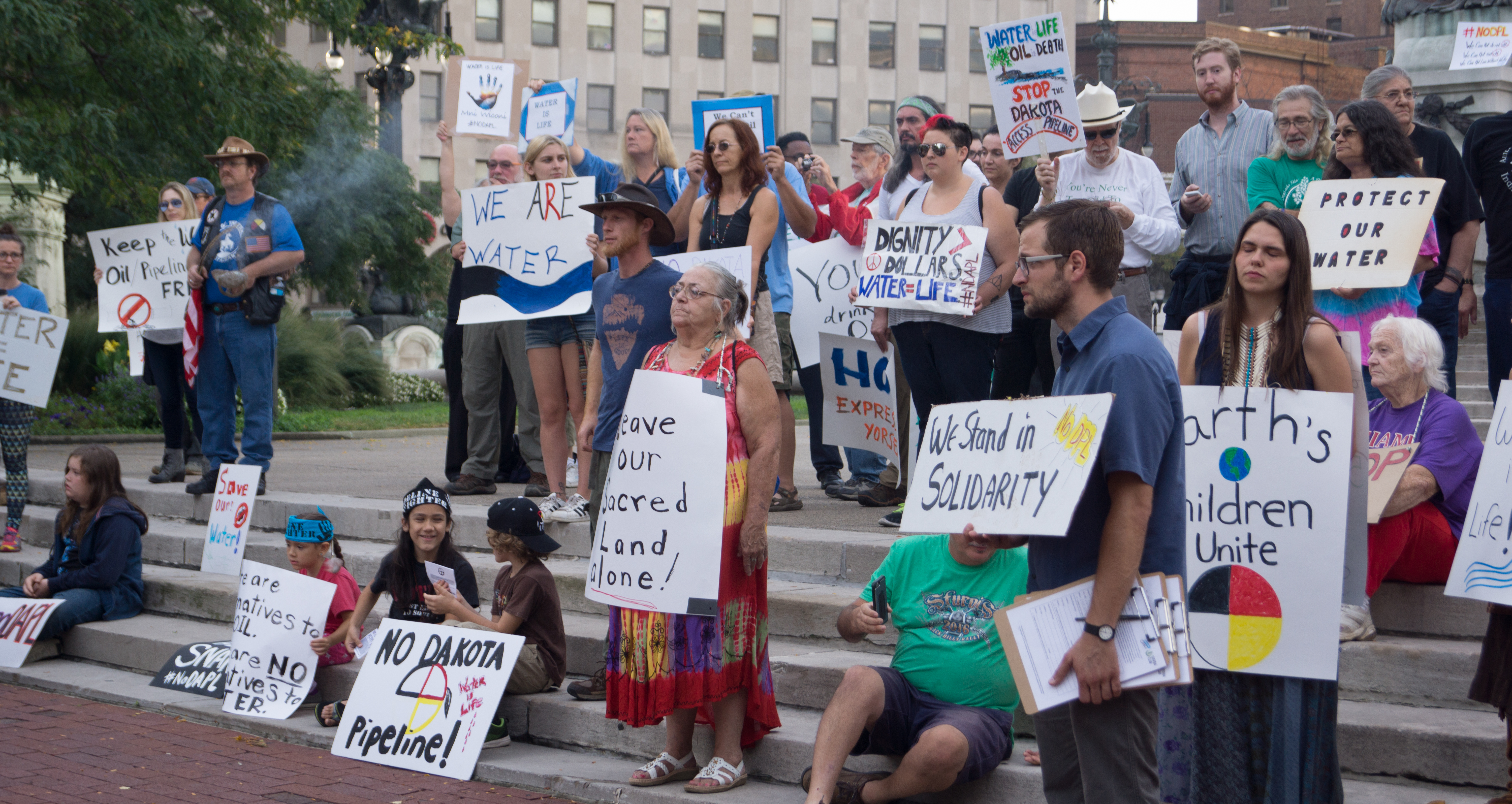
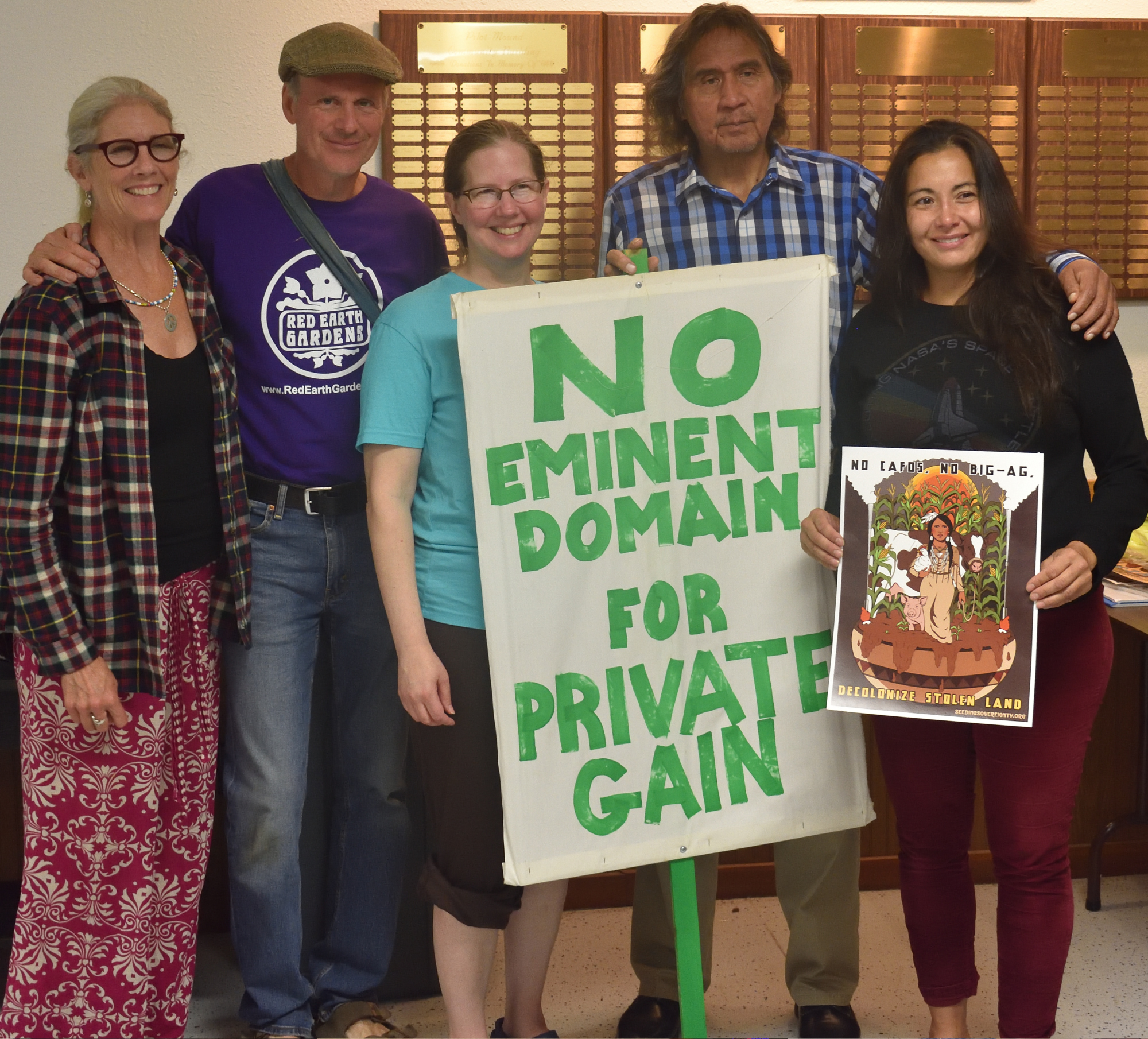
One of the main objectives of the First Nation-Farmer Climate Unity March I participated in was to draw attention to the abuse of eminent domain that was used to force landowners to allow the construction of the Dakota Access Pipeline on their land. The Iowa State Supreme court ruled against us.
Iowa Supreme Court Decision
First Nation-Farmer Unity – First Nation peoples and farmers working together

It is expected that Judge Boasberg will make his final decision on April 19 — unless Biden decides to act first.

This blog post is an overview of the work done in Iowa to oppose the Dakota Access pipeline. NoDAPL in Iowa Since 2014

April 1st, the fifth anniversary of the opening of the Sacred Stone Camp, Native youth runners delivered petitions along with a 200-foot black snake representing the pipelines to the White House, part of a day-long pipeline protest action in the nation’s capital.

Posted in #NDAPL, climate change, Dakota Access Pipeline, First Nation-Farmer Climate Unity March, Indigenous, Keystone Pledge of Resistance, Keystone XL pipeline (KXL), Uncategorized | Leave a comment

Des Moines, Police and Protest

I hadn’t known much about police and protests in Iowa before becoming engaged with Des Moines Mutual Aid (DMMA), which is closely connected to the Des Moines Black Liberation Movement (DesMoinesBLM).

The trial right now of former Minneapolis police officer, Derek Chauvin, has brought national and international attention to how dangerous policing is to so many people and communities.

Chauvin’s public killing of George Floyd sparked sustained protests nationwide, including here in Iowa. Arrests were made at peaceful protests in Iowa City and Des Moines, at least. Des Moines Mutual Aid supports a bail fund for those arrested for protesting. Every activist arrested was bailed out. At the end of this post is information regarding how to support the bail fund and other mutual aid projects.

Last fall DesMoinesBLM declared a Black state of emergency in Iowa.
Black State of Emergency in Iowa #BlackEmergencyIA

Yesterday one person was arrested during a peaceful rally at the Iowa Capitol.

State troopers arrested an 18-year-old activist at the Iowa Capitol Thursday as a group rallied against proposed legislation that would increase qualified immunity for law enforcement officers and heighten penalties for some protest-related offenses.

Activists on Thursday rallied against a handful of proposals this year to raise penalties for crimes like rioting and unlawful assembly while increasing protections for police officers and raising the level of immunity they have against lawsuits. Protesters also gathered in opposition of legislation that would prevent the inclusion of “divisive concepts” in diversity training used by state and local governments, including schools and colleges.

Co-organizer Harold Walehwa said the Iowa bills don’t make sense after last summer’s protests and the push for racial justice in the aftermath of the death of Floyd.

“We’re at literally in the middle of the Derek Chauvin trial, but we’re trying to pass bills to (increase) qualified immunity?” he said.

Walehwa referred to Senate File 476 a bill that would enhance “qualified immunity” protections for police officers who face lawsuits accusing them of violating someone’s rights. The bill has passed the Senate and now sits in the House.

One arrested at Iowa Capitol as group rallies against bills increasing protest-related penalties by Ian Richardson and Andrea May Sahouri
Des Moines Register, April 8, 2021

We will not be intimidated by law enforcement or those seeking to destroy our movement. We will continue to uplift, support and fight for the liberation of ALL Black people.

Des Moines Black Liberation Movement | Facebook

No photo description available.
May be an image of text

Here are some blog posts related to Quakers and the abolition of police and prisons.
abolition | Search Results | Quakers, social justice and revolution (jeffkisling.com)

Following is a message and letter from my friend and fellow Quaker, Peter Clay, shared with his permission.

Please consider joining me to raise your voices in support of the Racial Profiling Ordinance passed last June. While it was a good start there are real reasons to doubt that our leaders are truly committed to both implementing it and strengthening it. 

Many in our community have become alarmed that police officers with a history of violence have been chosen to lead the ordinance-mandated de-escalation training. After speaking at this past Monday’s City Council meeting I decided to write to Mayor Frank Cownie and City Manager Scott Sanders. The forty-five speakers, all on this topic, were only allowed 40 seconds each to speak. City Council is now considering eliminating citizen input during City Council meetings entirely. My letter, which I just sent to the Mayor and City Manager Sanders, is below and it is attached as a Word document as well. 

I hope that some of you will use my letter as inspiration to write your own letters or to call to share your concerns. When more of us speak up and tell the Mayor and the City Manager that we care deeply about addressing issues with policing in our city and eliminating disparate and harmful impacts on communities of color it will help them to listen. We have been hearing since the start of the pandemic that “we are all in this together.” Although I am far less likely than many of my neighbors to be impacted by biased policing I want to use my voice to stand with all the people and all the communities in our city. 

Here are the email addresses for Mayor Cownie and for City Manager Scott Sanders:

Fcownie@dmgov.org for the Mayor and Citymanager@dmgov.org for City Manager Scott Sanders

April 8, 2021
Hon. Frank Cownie, Mayor of the City of Des Moines
Hon. Scott Sanders, City Manager of the City of Des Moines

Dear Mayor Cownie and City Manager Sanders,

In June of last year the Des Moines City Council passed an ordinance that was a good first step towards addressing some of the bias and the inequities of policing in our city. This bias and these inequities are experienced on a regular basis by too many of us and they have profound, real and consequential impact. This ordinance is intended to eliminate racial profiling by members of the Des Moines Police Department as they carry out their jobs to serve and protect all of the communities of our city. A community-based process informed what the people of Des Moines wanted to see included in the ordinance. There were six points that the community asked for. Some of these points were included in the ordinance as passed and some were not. I urge you to lead the full City Council of Des Moines to strengthen the existing racial profiling ordinance by adding provisions establishing a Civilian Review Board and banning all pretextual stops as inherently discriminatory. As the work of the Marijuana Task Force continues I join others in asking you to immediately make simple marijuana possession the lowest level enforcement priority for our city’s police department.

The ordinance as passed mandates additional training for police officers including cultural diversity, cultural competency, implicit bias and de-escalation training. As you are now well aware the community is alarmed and concerned that the team designated to create and implement the de-escalation training includes individuals with significant problematic histories. I share the wider community’s concerns that these officers are not the right people to implement this training. These mandated training components for our police officers must include widely recognized “best practices” and include resources, both personnel and curriculum, drawing from the best available in law enforcement in our country today. Transparency and accountability are legitimate concerns that many citizens have lifted up. I ask you to address these concerns.

Mayor Cownie, when the ordinance was passed unanimously last year you were quoted as saying “This measure should be viewed as an important beginning for our community to work together, make a positive difference and improve our understanding of each other.” I fully agree with you .Moving forward with a good and a productive process requires that something as critical as de-escalation training be done by the most qualified trainers using the best understanding of how to de-escalate situations and using the best available curriculum. How this training is done and who does it matters enormously. The choices made now will establish that both of you, our City Council and the DMPD are truly committed to building on what we all achieved together last June.

With respect,
Peter Clay

No photo description available.
Posted in abolition, Black Lives, Des Moines Black Lives Matter, Des Moines Mutual Aid, Mutual Aid, police, race, Uncategorized | Leave a comment

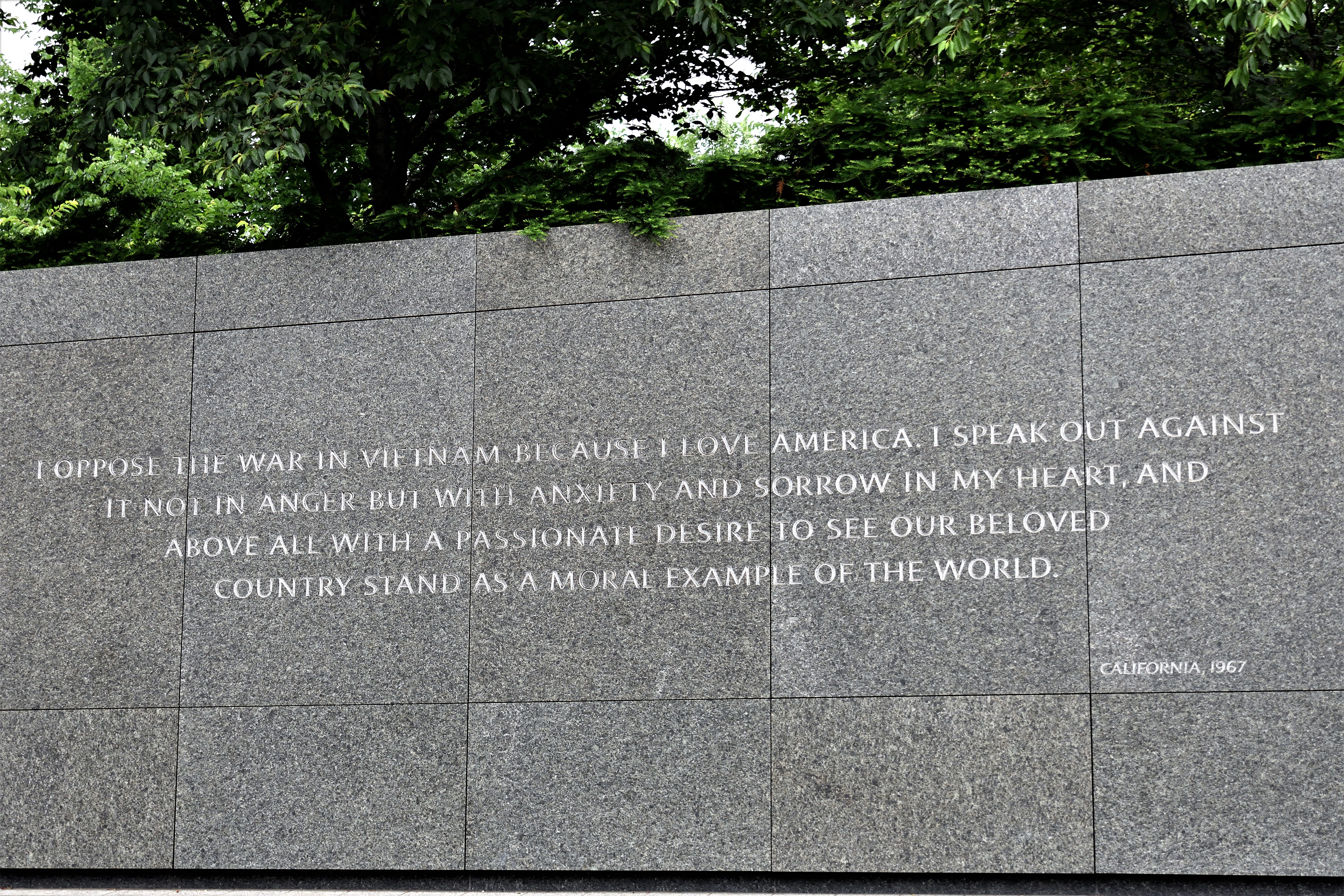
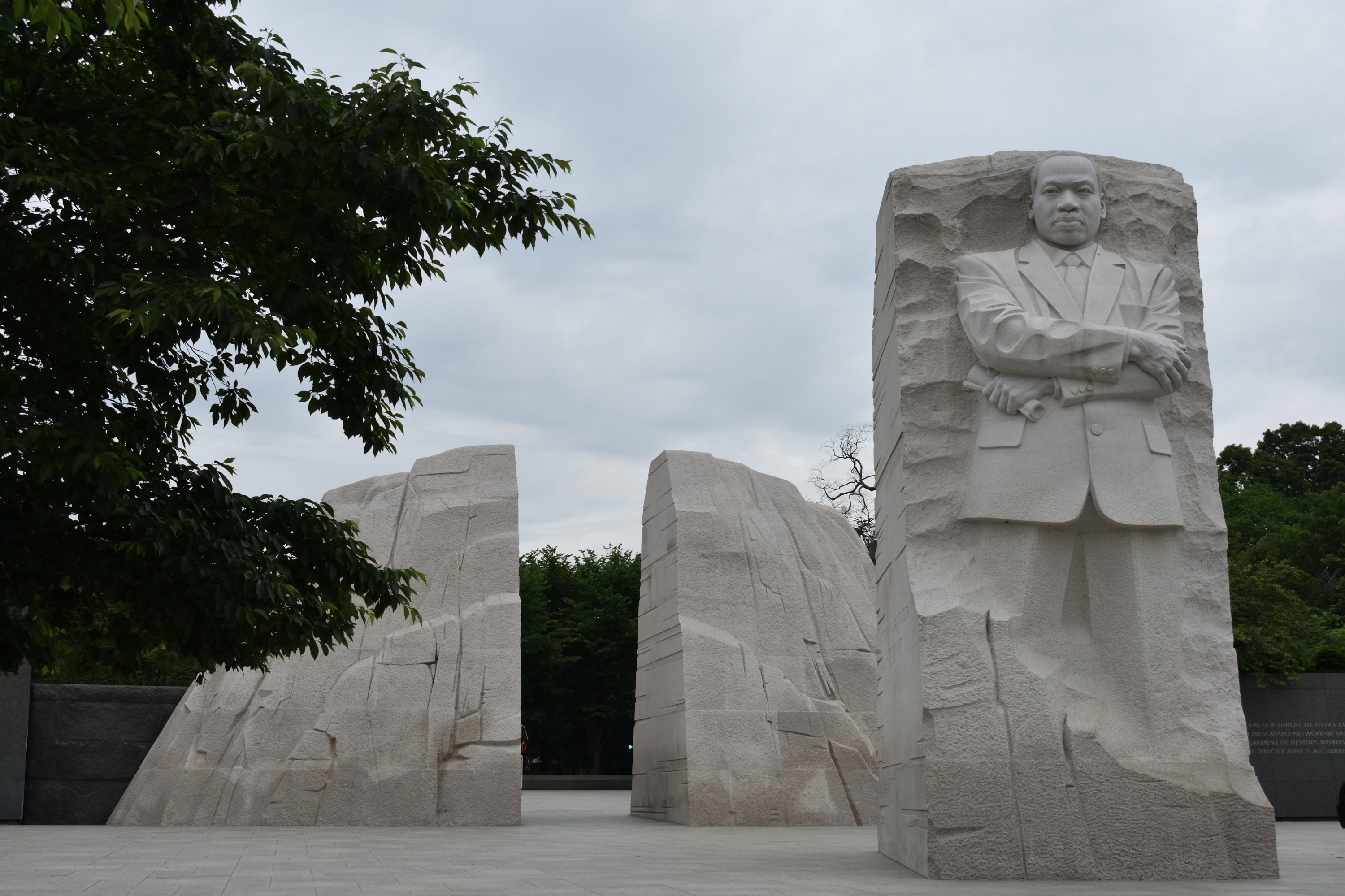
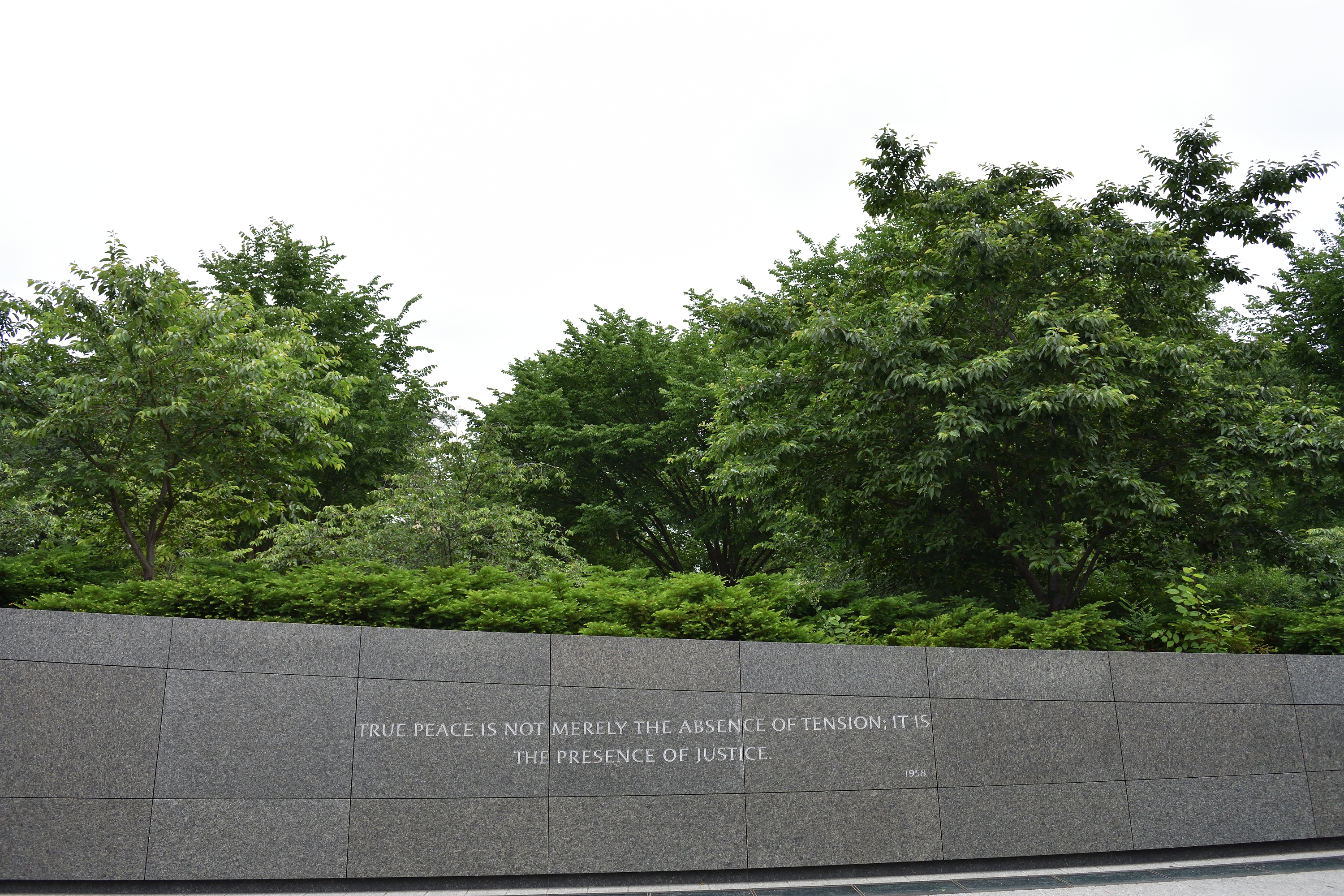
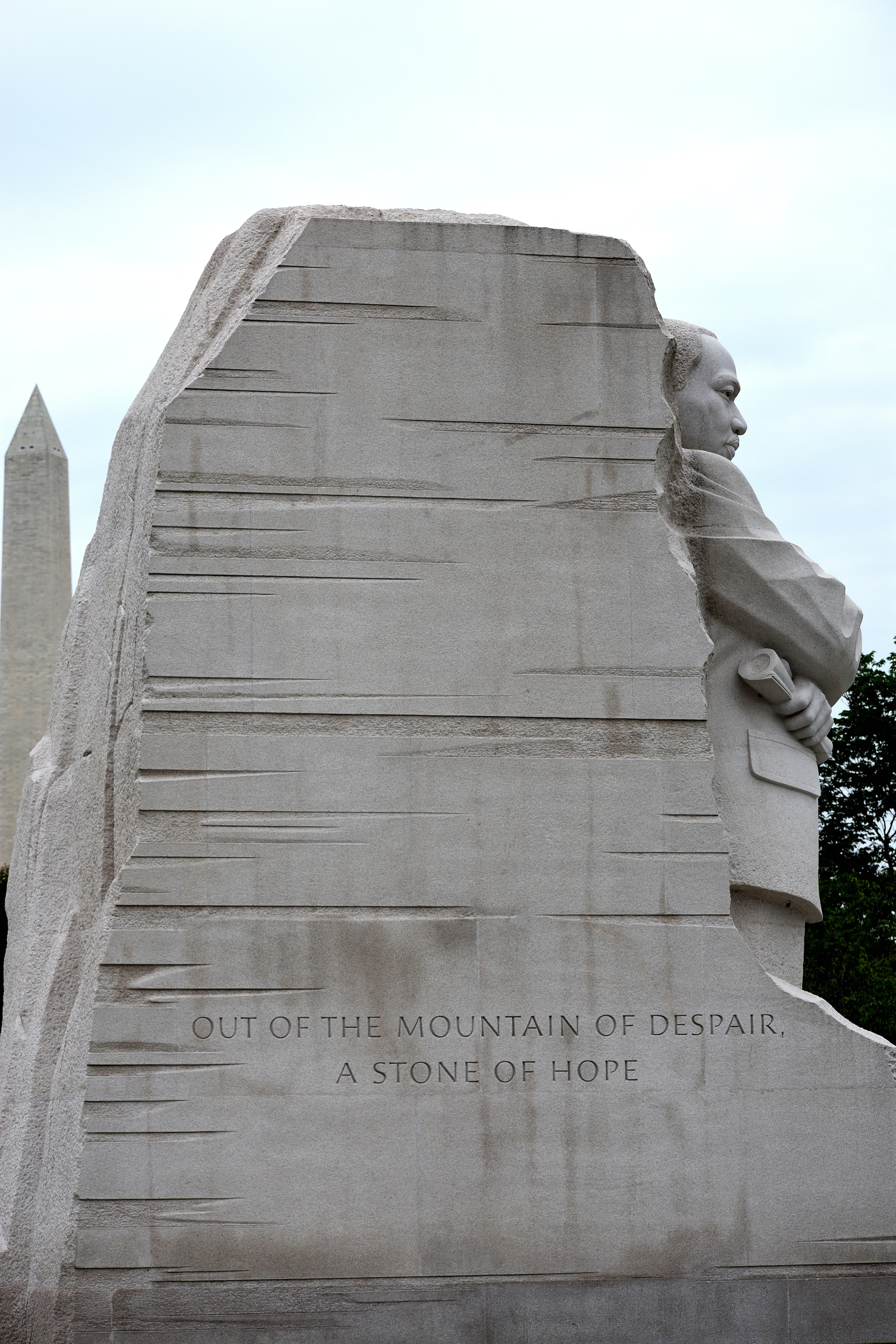
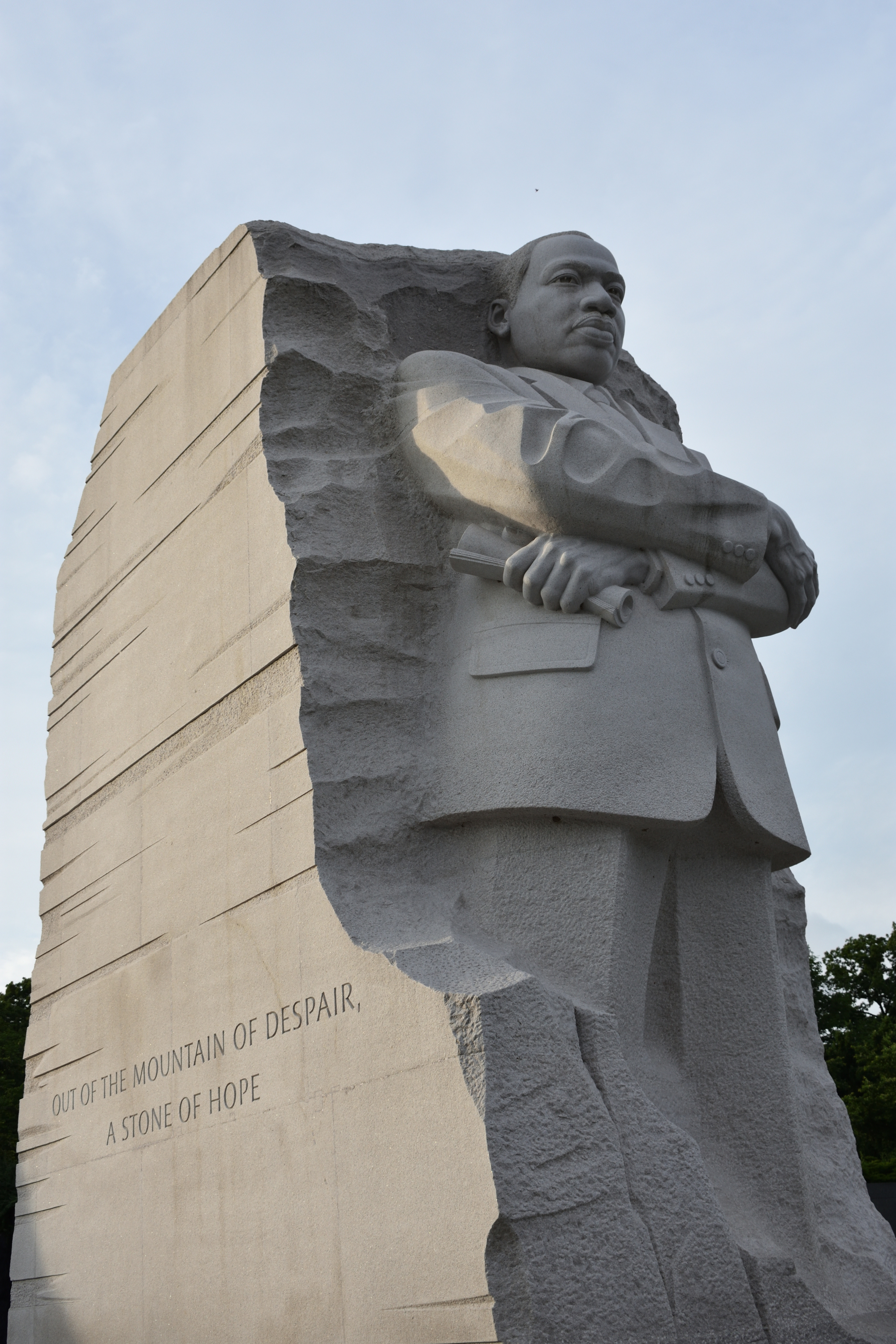
Martin Luther King, “Beyond Vietnam: A Time to Break Silence”

In part because many of the staff of Friends Committee on National Legislation (FCNL) began working from home during the COVID pandemic, Witness Wednesday began to meet using Zoom. This is an opportunity for FCNL and supporters to worship together. You are welcome to attend. See: Witness Wednesday

Someone is designated to offer a subject or quotation for the worship sharing.

Following was yesterday’s prompt for reflection and related query. The quote is from Martin Luther King’s speech, “Why I Am Opposed to the War in Vietnam”

Prompt for Reflection
“Here is the true meaning and value of compassion and nonviolence, when it helps us to see the enemy’s point of view, to hear his questions, to know his assessment of ourselves. For from his view we may indeed see the basic weaknesses of our own condition, and if we are mature, we may learn and grow and profit from the wisdom of [those] who are called the opposition…The world now demands a maturity of America that we may not be able to achieve.” 
–Martin Luther King, Jr.

Query: When you hear the phrase, “it helps us to see the enemy’s point of view, to hear his questions, to know his assessment of ourselves,” what or who comes to mind?

On the anniversary of the date of the assassination of Martin Luther King, Jr, April 4, 1968, I wrote the blog post. What happened in Indianapolis the day Martin Luther King was assassinated

Exactly one year before his death, on April 4, 1967, King delivered a speech at the New York City Riverside Church titled “Beyond Vietnam: A Time to Break Silence.” That is the speech referred to above for worship sharing.

King opposed the Vietnam War because it took money and resources that could have been spent on social welfare at home. The United States Congress was spending more and more on the military and less and less on anti-poverty programs at the same time. He summed up this aspect by saying, “A nation that continues year after year to spend more money on military defense than on programs of social uplift is approaching spiritual death.”[205] He stated that North Vietnam “did not begin to send in any large number of supplies or men until American forces had arrived in the tens of thousands”,[206] and accused the U.S. of having killed a million Vietnamese, “mostly children.”[207] King also criticized American opposition to North Vietnam’s land reforms.[208]

King’s opposition cost him significant support among white allies, including President Johnson, Billy Graham,[209] union leaders and powerful publishers.[210] “The press is being stacked against me”, King said,[211] complaining of what he described as a double standard that applauded his nonviolence at home, but deplored it when applied “toward little brown Vietnamese children.”[212] Life magazine called the speech “demagogic slander that sounded like a script for Radio Hanoi“,[205] and The Washington Post declared that King had “diminished his usefulness to his cause, his country, his people.”[212][213]

Martin Luther King Jr. Wikipedia

Posted in Friends Committee on National Legislation, Martin Luther King Jr, peace, Quaker, race, Uncategorized | Leave a comment

NoDAPL in Iowa Since 2014

Last night Great Plains Action Society livestreamed a remarkable event. The videos highlight the history of the work of so many in Iowa to stop the Dakota Access Pipeline (DAPL). The first video, NoDAPL Iowa – Since 2014 is the livestream from last night. The second video shows some of the many actions that occurred to protect water.

Many of those interviewed spoke about the community that has been built over these years of work together. I am blessed that most of these people have become friends of mine since I returned to Iowa in 2017. In Indiana we developed a similar community as we worked to stop the Keystone XL and Dakota Access pipelines. That work began in 2013. Building an environmental action movement

It’s been almost seven years since folks started resisting the Dakota Access Pipeline in Iowa. With a new colonial presidential power in place, it’s time to rehash this climate atrocity with a few of the pipeline fighters from across the state who went hard to hard to stop it. We can’t let DAPL win or continue to push their toxic capitalist agenda as they are now trying to double the flow through the pipe.

Let’s stand in solidarity with the Standing Rock Nation and the youth runners who are also still fighting.

We are honored to speak with Wally Taylor, Ronnie James, Carolyn Raffensperger, Donnielle Wanatee, Mark Edwards, Trisha Etringer, Faith Spotted Eagle, Alex Cohen, Josephine Ironshield, Mahmud Fitil, Miriam Kashia, Adam Mason, Ahna Kruzic, Keith Puntenney, Sarah Young Bear-Brown and Keely Driscoll. Hosted by Sikowis.

This for all those that stood against the state and colonial-capitalism in Iowa over the past 7 years. I love you all and have a deep respect for all that has been done in the land of the Ioway, Dakota, Meskwaki, Omaha, Winnebago, Kickapoo and so many more. We live on the land between the Great Missouri and the Mighty Mississippi and it deserves our respect and protection. Sikowis
#NoDAPL
#WaterIsLife
#Iowa

Posted in #NDAPL, climate change, Dakota Access Pipeline, First Nation-Farmer Climate Unity March, First Nations, Great Plains Action Society, Indigenous, Native Americans, Uncategorized | Leave a comment

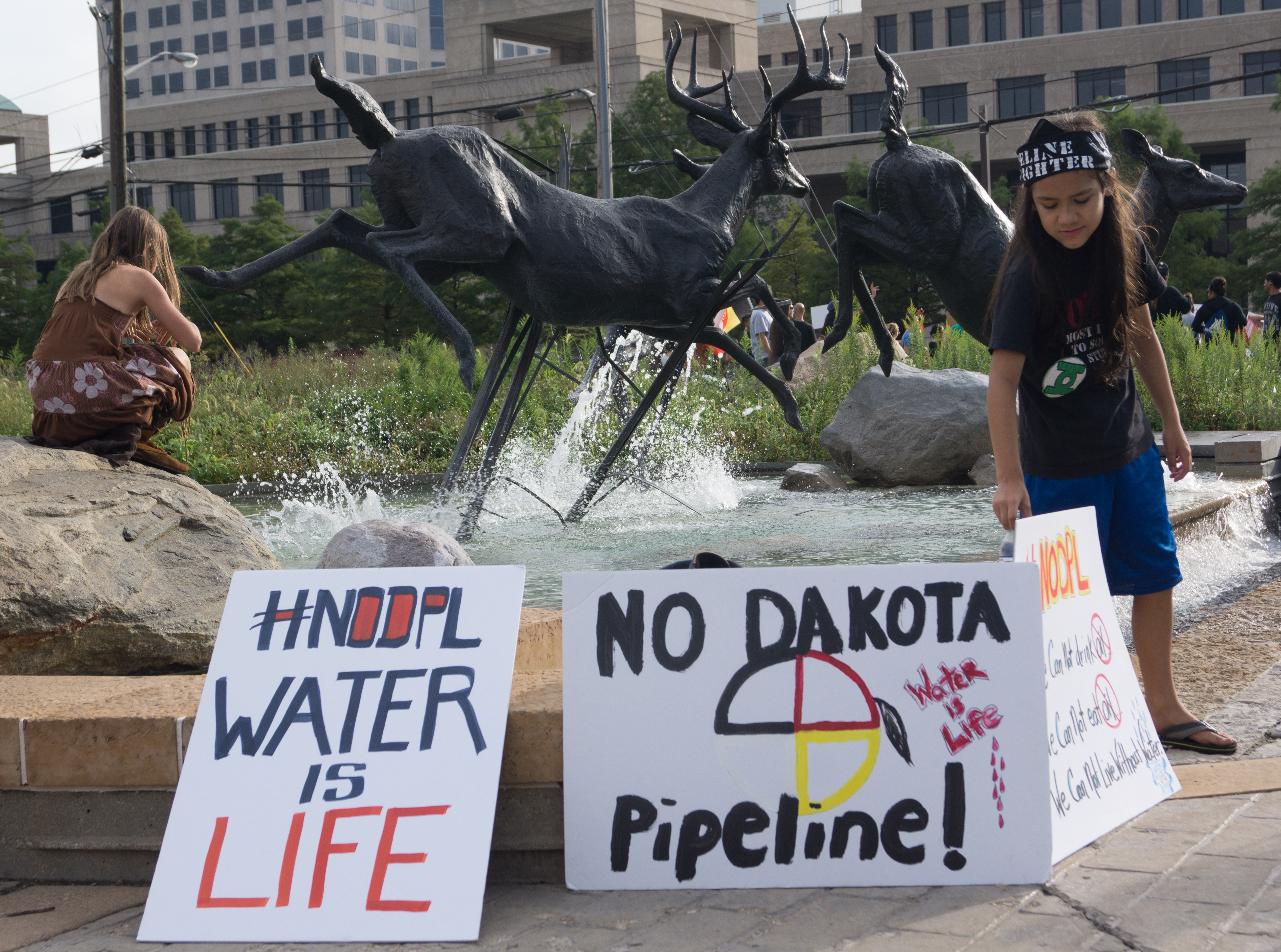
We protected our water, and we did a good job at doing it

It is so traumatic to see the green, contaminate water gushing out of the former Piney Point phosphate processing plant in Florida. That reservoir holds about 800 million gallons of water containing phosphorus and nitrogen. That wastewater will contribute to algae blooms and dead water zones. It brings to mind the Horizon Deep oil disaster.
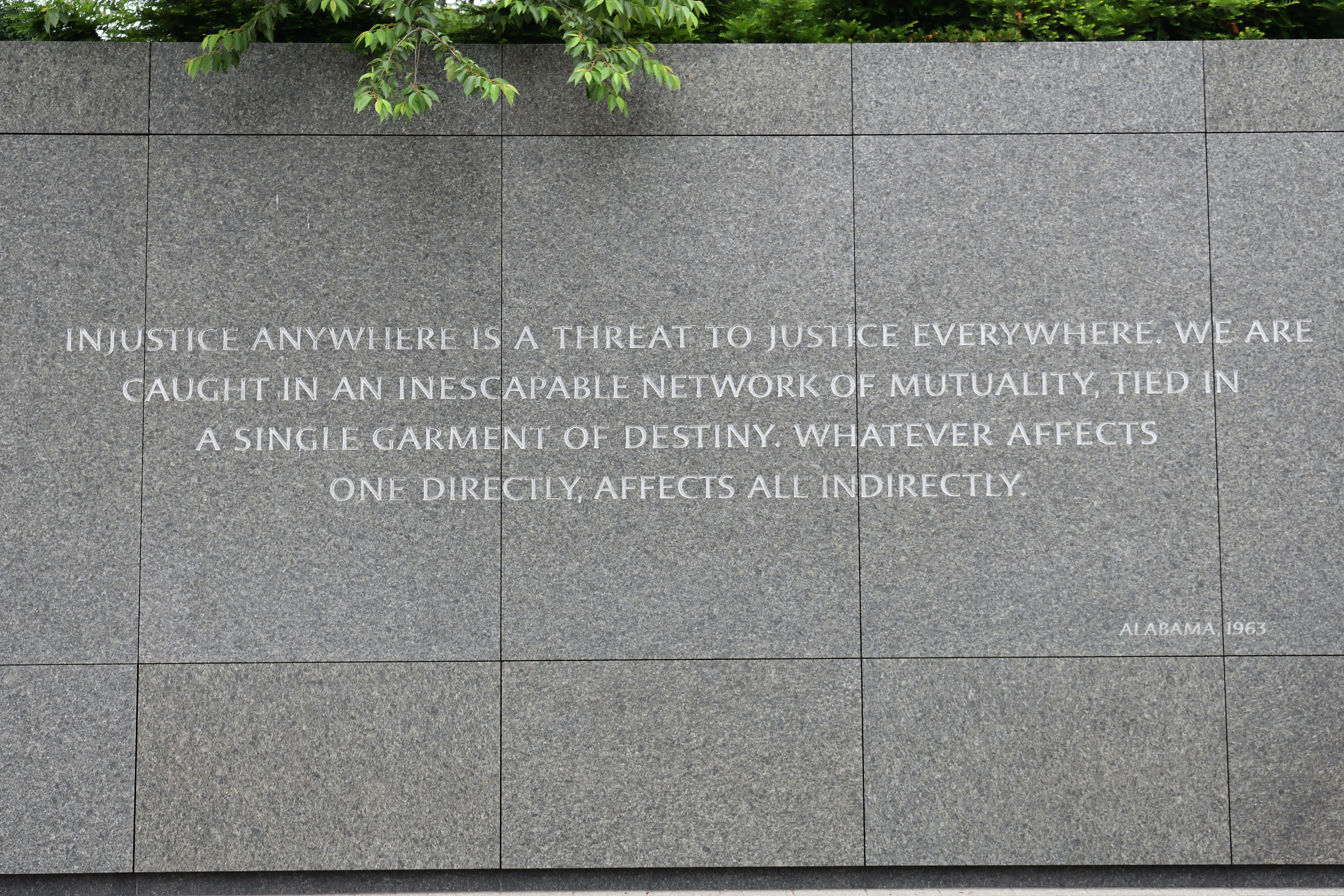
The most important lesson I learned from the beginning of my involvement to cut off the head of the black snake, to stop the Dakota Access Pipeline, is this work is not protest. It is protecting water.

Attempts to commodify water and reduce it simply to an economic good have picked up pace. The outright privatization of drinking water services and sanitation has given way to new forms, including corporatization, of public sector water utilities; bottled water mining has been steadily growing, too. The practice of trading in water (access rights) has continued in the handful of regions where conducive legal framework are in place.

Another newer development is the increase in land and water grabbing (as distinct from older forms of colonization) or at times even green grabbing. While land and water grabbing has happened across all continents, including in the United States, the highest number of incidences have been in the developing countries in Africa, Asia and Latin America.

The real value of water By Shiney Varghese,  Institute for Agriculture and Trade Policy April 5, 2021

It’s time to “warrior up,” stop polluting the planet and give water the same rights and protections as human beings. That’s the message Autumn Peltier, a 13-year-old Canadian, delivered personally to the United Nations General Assembly on Thursday, March 22, 2018.

“Many people don’t think water is alive or has a spirit,” the Anishinaabe girl from Wikwemikong First Nation told the diplomats gathered in New York City in her speech on World Water Day. “My people believe this to be true.

As I see it all around me, the trees are dying out, our water is contaminated, and our air is not good to breathe. Those are the reasons why today I’m trying my best to come back to our ways of thousands of years ago.

We have to come back to the Native way of life. The Native way is to pray for everything. Our Mother Earth is very important. We can’t just misuse her and think she’s going to continue.

We’ve been told to take care of what we’ve got so that we can leave something for the younger generation. We’ve tried to practice that from the beginning of our life, but we forgot our way.

I never have spoken out until lately here, the Spirit coming to me and telling me, ‘Well, you are going to have to give us a hand here.’ It was in a vision, Water said to me, ‘I’m going to look like water, but pretty soon nobody’s going to use me.’

We, the people, are going to have to put our thoughts together to save our planet here. We only have One Water… One Air… One Mother Earth.

Corbin Harney, Spiritual leader of the Western Shoshone Nation, The Way It Is, Blue Dolphin, 1995

This is part of the transcript from the video below of an interview by Amy Goodman of Democracy Now

“On September 3, the Dakota Access pipeline company attacked Native Americans with dogs and pepper spray as they protested against the $3.8 billion pipeline’s construction.”  Amy Goodman, Democracy Now

I got maced twice, I got bit by a dog I was [at the] front line.

Where did you get bit?

I got bit on the ankle over my boots, so I told him they needed to leave, but the the guy didn’t believe me, so he don’t want to listen. He, uh, stuck his hand out, and he maced me, this other guy, and I think he maced a lady, too. Then, they tried getting the dogs on us. I was just standing there, I wasn’t really doing nothing. That dog ran up on me and it bit my – around my ankle.

You pushed them back, though?

Yes.

Why is this such an important fight to you?

Because, water is life. Like I said, without water we all wouldn’t be here, these plants wouldn’t be here, there’d be no oxygen, we’d all die without it. I wish they’d open their eyes and have a heart to realize you know if this happens, we’re not going to be the only ones that’s gonna suffer, they’re gonna suffer too.

What tribe are you with? I’m Oglala Sioux, full blood.

From? Pine Ridge Reservation.

No one owns this land! This land belongs to the earth. We’re only caretakers. We’re caretakers of the earth.

Do you feel like you won today?

We win every day when we stand in unity, we stand and we fight.

How do you feel?

Feel great.

What did you accomplish today?

Protecting our water. That’s what we were here to do, and that’s what we did.

Where are your horses from?

Coal Creek, South Dakota.

And you came from there?

Yes, ma’am. And so, describe the scene to us.

We protected our water, and we did a good job at doing it. Thank you.

Posted in #NDAPL, Dakota Access Pipeline, Indigenous, Native Americans, Uncategorized | Leave a comment

Abolition of police and prisons

I’ve been participating in Zoom discussions of the Quaker Abolition Network, initiated by Mackenzie Barton-Rowledge and Jed Walsh. The following is from an article they wrote for Western Friend.

Mackenzie: Let’s start with: What does being a police and prison abolitionist mean to you?
Jed: The way I think about abolition is first, rejecting the idea that anyone belongs in prison and that police make us safe. The second, and larger, part of abolition is the process of figuring out how to build a society that doesn’t require police or prisons.
Mackenzie: Yes! The next layer of complexity, in my opinion, is looking at systems of control and oppression. Who ends up in jail and prison? Under what circumstances do the police use violence?
As you start exploring these questions, it becomes painfully clear that police and prisons exist to maintain the white supremacist, heteronormative, capitalist status quo.

Abolish the Police by Mackenzie Barton-Rowledge and Jed Walsh, Western Friend, November December, 2020

So if we abolish the police, what’s the alternative? Who do we call? As someone who grew up calling 911, I also shared this concern. I learned this: Just because I did not know an answer didn’t mean that one did not exist. I had to study and join an organization, not just ask questions on social media. I read Rachel Herzing, a co-director of the Center for Political Education, who explains that creating small networks of support for different types of emergencies can make us safer than we are now, and reduce our reliance on police. The Oakland Power Projects trains residents to build alternatives to police by helping residents prevent and respond to harm. San Francisco Mayor London Breed just announced that trained, unarmed professionals will respond to many emergency calls, and Los Angeles city-council members are demanding a similar model. This is the right idea. Rather than thinking of abolition as just getting rid of police, I think about it as an invitation to create and support lots of different answers to the problem of harm in society, and, most exciting, as an opportunity to reduce and eliminate harm in the first place.

How I Became a Police Abolitionist. When people dismiss abolitionists for not caring about victims or safety, they tend to forget that we are those victims, those survivors of violence by Derecka Purnell, Human rights lawyer, The Atlantic, JULY 6, 2020

This is how Abolitionist Futures for social + transformative justice against prisons + policing, answers the question, why abolition?

  • The criminal justice system is violent and harmful
  • The criminal justice system does not reduce social harm
  • We can build a world based on social justice, not criminal justice

After several meetings of the Quaker Abolition Network, we realized we didn’t have a clear idea of how to define and implement the idea of abolition. That will be the purpose of our next meeting.

Purpose: Exploring what it means to continuously co-create a collaborative Quaker network working for abolition in the various spaces/communities/identities we inhabit. Goal is to collect input from folks in attendance to work toward greater clarity in what/who this network is, what it will do, and how it will do it.

Pre-reads:

  1. Transcript of an interview with Angela Davis and Betita Martinez on coalition building, networks, alliances, and more.
  2. This “Continuum of Collaboration” chart that provides a springboard for thinking about the various ways this group might take shape and/or change over time.

Queries to accompany the reading and our time together:

  1. How do we build a network that can take decisive action but also grow and change and split like an amoeba over time?
  2. How can we build unity of purpose while respecting and acknowledging that different communities have different assets and needs?

The following relates to how I see the answers to those two queries. One of the goals of Mutual Aid communities is to help new Mutual Aid groups form. Each Mutual Aid community can have a different focus. Some for food, some for shelter, some related to police and prisons. Some Mutual Aid communities embody several different projects.

Building unity of purpose and acknowledging different needs is what Mutual Aid is about. A fundamental principle of Mutual Aid is the work is done with the people affected. The work is done locally.

It is important related to building community that Mutual Aid groups have a flat, or horizontal hierarchy. That is crucial to empowering the participation of all who come together to do the work in their local communities. This intentional model avoids many of the problems in organizing. Avoids a vertical hierarchy that creates harmful power dynamics.

Another important part of Mutual Aid is how it creates excitement/fulfillment for those involved as they work on immediate solutions to problems. We had to move to sign up sheets for Mutual Aid projects in Des Moines because too many people were showing up.

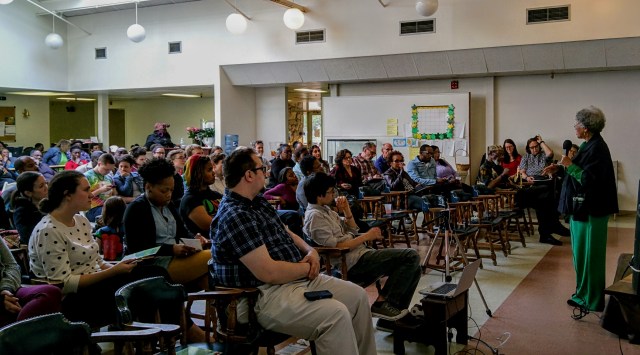
Following is from my friend Ronnie James when he spoke at a Black Lives Matter teach in last summer. Ronnie is an Indigenous organizer and deeply involved in our Des Moines Mutual Aid community.

What we have is each other. We can and need to take care of each other. We may have limited power on the political stage, a stage they built, but we have the power of numbers.

Those numbers represent unlimited amounts of talents and skills each community can utilize to replace the systems that fail us.  The recent past shows us that mutual aid is not only a tool of survival, but also a tool of revolution. The more we take care of each other, the less they can fracture a community with their ways of war. Organized groups like The American Indian Movement and the Black Panther Party for Self Defense showed that we can build not only aggressive security forces for our communities, but they also built many programs that directly responded to the general wellbeing of their communities. This tradition began long before them and continues to this day. Look into the Zapatistas in Southern so-called Mexico for a current and effective example.

These people’s security forces, or the “policing of the police” not only helps to minimize the abuse and trauma they can inflict on us, but it begins to shift the power balance from them to us.

Mutual Aid programs that help our most marginalized or other events that work to maintain our spirits result in stronger communities. A strong community is less vulnerable to police intrusion. 99% of our conflicts can be solved by those affected by them, but only with the support of those around them. Anytime we call on the police to mediate our problems, we are risking ourselves or a loved one from being hurt or worse.

The more we replace the police with organized community response to conflict, the safer we will be. Another powerful benefit is the removal of power from those that take their orders from those that have no interest in your well being, at least past it being useful to amass and increase wealth.

Many communities work to train amongst themselves mental and physical health workers, conflict mediators, and anything else we need, despite the state and it’s soldiers insistence that they are the sole “authority” of these skills, and always with the implied threat of violence.

As we work toward this, and this summer has proven des moines has the heart, desire, and skills to do so, we still have to deal with what’s in front of us.

We each have skills and resources we can utilize towards the abolition project. Some of us can use the halls of the system to make short term change there, others have skills that produce food, provide medical care, or care for our precious youth, some are skilled in the more confrontational tactics needed. Once we envision that world our ancestors want for us, finding our role is natural.

If we are to survive, and more importantly, thrive, we know what we will have to do.

All Power To The People.

Ronnie James

Regarding abolition, I think it is instructive to see that our Mutual Aid (DMMA) community has become so closely connected with Des Moines Black Liberation (DMBL). To the point that it seems the two communities are practically one. The following is what Patrick, with Des Moines Mutual Aid said during a press conference October 13, 2020, when Des Moines Black Liberation declared a Black State of Emergency in Iowa #BlackEmergencyIA

Hi, I’m Patrick Stahl with Des Moines Mutual Aid.

Des Moines Mutual Aid is a collective that does outreach for homeless folks in our community, houseless folks in our community. We also assist BLM with their rent relief fund, and most of the work we’ve done is running the bail fund for the protests over the summer. In the course of that work, we have witnessed firsthand the violence that is done upon people of color, Black people specifically, by the white supremacist forces of the state – in this state, in this city, in this county. There is absolutely a state of emergency for people of color and Black people in Iowa. The state of emergency has been a long time coming. We will support – DMMA will absolutely support any and all efforts of this community – BLM, and the people of color community more generally- to keep themselves safe. Power to the people.

mutual aid is the new economy. mutual aid is community. it is making sure your elderly neighbor down the street has a ride to their doctor’s appointment. mutual aid is making sure the children in your neighborhood have dinner, or a warm coat for the upcoming winter. mutual aid is planting community gardens.

capitalism has violated the communities of marginalized folks. capitalism is about the value of people, property and the people who own property. those who have wealth and property control the decisions that are made. the government comes second to capitalism when it comes to power.

in the name of liberation, capitalism must be reversed and dismantled. meaning that capitalistic practices must be reprogrammed with mutual aid practices.

Des Moines Black Liberation

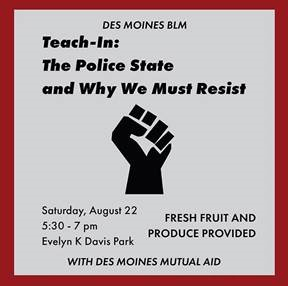
May be an image of text that says 'DES MOINES BLM Teach-In: The Police State and Why We Must Resist Saturday, August 22 5:30-7 pm Evelyn K Davis Park FRESH FRUIT AND PRODUCE PROVIDED WITH DES MOINES MUTUAL AID'

Posted in abolition, Black Lives, civil disobedience, Des Moines Black Lives Matter, Des Moines Mutual Aid, Mutual Aid, police, prison, race, Uncategorized | Leave a comment

The Revolution will not be televised

On this day, April 4, 1968, Rev. Martin Luther King, Jr, was assassinated in Memphis, Tennessee.

Yesterday I wrote about the speech Senator Robert F Kennedy gave to a predominately African American crowd in Indianapolis, announcing King’s death. Those days before social media platforms, the crowd was largely unaware of what had happened in Memphis. What happened in Indianapolis the day Martin Luther King was assassinated

Every year there is a remembrance of what happened that day. Remembering the death of Martin Luther King. And Bobby Kennedy asking the country to work to fulfill King’s dream of racial justice.

I was surprised when I attended this remembrance in 2016 to hear my friend Chinyelu Mwaafrika perform the rap song “The revolution will not be televised” by GIL SCOTT-HERON, 4/5/2016.

My friend, Chinyelu Mwaafrika from the Kheprw Institute, performs part of the rap song, “The revolution will not be televised” by GIL SCOTT-HERON, 4/5/2016

With these lyrics, Heron single-handedly coined what became an early slogan for the Black Power Movement: “The Revolution Will Not Be Televised” became a warning to Americans everywhere hiding behind Saturday night reruns of The Beverly Hillbillies and luxuriating in a society glorifying the white image. The song urges Americans to wake up and realize that the time for change had come, and that no one would be able to remain safe and ignorant behind a television set. This fight was going to take place in the homes and streets of the American people, and there would be no avoiding it or denying it any longer.

The Revolution Will Not Be Televised: Gil Scott Heron and the Power of Poetry by Kaitlin Barker, Black Power in American Memory, April 19, 2017

I knew Chinyelu from the Kheprw Institute. He sometimes led community book discussions. And one of the kids I taught photography.

KI IMG_20160422_1919521
Kheprw Institute, Indianapolis

It didn’t take long for me to became aware of the significance of how KI was building a vibrant community despite having almost no financial resources.  They depended upon their self reliance, continuous study and social experimentation, and community partnerships to become as self-sufficient as they could be. KI is a model of how we need to be creating similar communities everywhere as we move beyond capitalism.

I’d forgotten how long I’ve been writing about the necessity to build an alternative to capitalism. The paragraph above was written in 2018. Nexus of the Kheprw Institute, Indigenous Peoples and Quakers

In a posthumously published essay, Martin Luther King, Jr. pointed out that the “black revolution” had gone beyond the “rights of Negroes.” The struggle, he said, is “forcing America to face all of its interrelated flaws—racism, poverty, militarism and materialism. It is exposing the evils that are rooted deeply in the whole structure of our society. It reveals systemic rather than superficial flaws and suggests that radical reconstruction of society itself is the real issue to be faced.” Martin Luther King’s Radical Anticapitalism – PopularResistance.Org

Activist and prison-industrial complex abolitionist Mariame Kaba celebrated the legacy of Dr. Martin Luther King Jr. by praising NU Community Not Cops and speaking to the importance of mutual aid and political organizing in Wednesday’s MLK Dream Week virtual keynote.

“Abolitionists have a lot to learn from Dr. King,” Kaba said. “If King were alive today… I have no doubt that what he would be addressing in our current historical moment is the violence and destruction of the prison-industrial complex.”

The prison-industrial complex abolition movement hinges on two key principles, Kaba explained: the belief that police perpetuate — not mitigate — harm and the practice of mutual aid. 

Mutual aid — or the extension of community-based assistance, services, funds and care with no requirements or expectations of the recipients — was a core tenant of the Montgomery Bus Boycott, she said. In order to provide boycotters a viable transportation alternative, the community coalesced to create an elaborate rideshare system and provide parking, funds and other forms of support. 

Activist Mariame Kaba talks abolition and mutual aid, condemns campus police in Dream Week keynote by Binah Schatsky, The Daily Northwestern, January 13, 2021

In some ways it is discouraging to think of how little progress has been made for racial and economic justice. And yet, the work of the Kheprw Institute continues in Indianapolis. And for the past year I’ve been learning about and participating in the work of Des Moines Mutual Aid, which is about escaping capitalism and building community.

The following is part of a speech my friend Ronnie James, of Des Moines Mutual Aid, delivered at a teach-in for Des Moines Black Lives Matter.

What we have is each other. We can and need to take care of each other. We may have limited power on the political stage, a stage they built, but we have the power of numbers.

Those numbers represent unlimited amounts of talents and skills each community can utilize to replace the systems that fail us.  The recent past shows us that mutual aid is not only a tool of survival, but also a tool of revolution. The more we take care of each other, the less they can fracture a community with their ways of war. Organized groups like The American Indian Movement and the Black Panther Party for Self Defense showed that we can build not only aggressive security forces for our communities, but they also built many programs that directly responded to the general wellbeing of their communities. This tradition began long before them and continues to this day. Look into the Zapatistas in Southern so-called Mexico for a current and effective example.

These people’s security forces, or the “policing of the police” not only helps to minimize the abuse and trauma they can inflict on us, but it begins to shift the power balance from them to us.

Mutual Aid programs that help our most marginalized or other events that work to maintain our spirits result in stronger communities. A strong community is less vulnerable to police intrusion. 99% of our conflicts can be solved by those affected by them, but only with the support of those around them. Anytime we call on the police to mediate our problems, we are risking ourselves or a loved one from being hurt or worse.

The more we replace the police with organized community response to conflict, the safer we will be.

The police state and why we must resist. Ronnie James

mutual aid is the new economy. mutual aid is community. it is making sure your elderly neighbor down the street has a ride to their doctor’s appointment. mutual aid is making sure the children in your neighborhood have dinner, or a warm coat for the upcoming winter. mutual aid is planting community gardens.

capitalism has violated the communities of marginalized folks. capitalism is about the value of people, property and the people who own property. those who have wealth and property control the decisions that are made. the government comes second to capitalism when it comes to power.

in the name of liberation, capitalism must be reversed and dismantled. meaning that capitalistic practices must be reprogrammed with mutual aid practices.

Des Moines Black Lives Matter

Posted in abolition, Black Lives, capitalism, Des Moines Black Lives Matter, Des Moines Mutual Aid, Kheprw Institute, Martin Luther King Jr, race, Robert F Kennedy, Uncategorized | Leave a comment

What happened in Indianapolis the day Martin Luther King was assassinated

Each year on April 4th, a solemn ceremony takes place in Indianapolis. Two things of historic significance occurred that day in 1968.

Martin Luther King, Jr, was shot and killed in Memphis, Tennessee.

And Senator Robert Francis Kennedy delivered what is considered to be one of the most powerful speeches ever given. A speech in which he asked the people of this country to work together to fulfill Martin Luther King’s dream for racial justice.

Bobby Kennedy’s courage in insisting on speaking to the crowd in Indianapolis, and the power of his speech, are celebrated every year. And tragically, is a reflection on the lives of these two men who gave their lives, fighting for peace and justice.

Indianapolis, Indiana, April 4, 1968

April 4, 1968, Robert F Kennedy gave several speeches in Indiana as he campaigned for the Democratic nomination for President of the United States. This young white man, as the United States Attorney General, along with his brother the President, had been thrust into the middle of the civil rights struggle. And then his brother was assassinated.

At Notre Dame Bobby Kennedy spoke about the Vietnam War, and told the students there that college deferments for the draft discriminated against those who could not afford to attend college, and should be eliminated.

After speaking about racism at Ball State, an African American student said, “Your speech implies that you are placing a great deal of faith in white America. Is that faith justified?” Kennedy answered “Yes” and added that “faith in black America is justified, too” although, he said, there “are extremists on both sides.” Before boarding a plane to fly to Indianapolis, Kennedy learned that Martin Luther King, Jr. had been shot. On the plane, Kennedy told a reporter “You know, it grieves me. . . that I just told that kid this and then walk out and find that some white man has just shot their spiritual leader.”

It wasn’t until the flight had nearly arrived in Indianapolis that he learned Martin Luther King, Jr, had died of his wounds. There wasn’t time to write something to cover this news. The Indianapolis event was to be held at a park in a predominately black neighborhood downtown. The Indianapolis police and city leaders tried to get him to cancel the speech, telling him they couldn’t protect him if there was a riot.

But he insisted. And spoke from the back of a flatbed truck.

Photo credit: Jeff Kisling

Ladies and Gentlemen,

I’m only going to talk to you just for a minute or so this evening, because I have some–some very sad news for all of you — Could you lower those signs, please? — I have some very sad news for all of you, and, I think, sad news for all of our fellow citizens, and people who love peace all over the world; and that is that Martin Luther King was shot and was killed tonight in Memphis, Tennessee.

Martin Luther King dedicated his life to love and to justice between fellow human beings. He died in the cause of that effort. In this difficult day, in this difficult time for the United States, it’s perhaps well to ask what kind of a nation we are and what direction we want to move in. For those of you who are black — considering the evidence evidently is that there were white people who were responsible — you can be filled with bitterness, and with hatred, and a desire for revenge.

We can move in that direction as a country, in greater polarization — black people amongst blacks, and white amongst whites, filled with hatred toward one another. Or we can make an effort, as Martin Luther King did, to understand, and to comprehend, and replace that violence, that stain of bloodshed that has spread across our land, with an effort to understand, compassion, and love.

For those of you who are black and are tempted to fill with — be filled with hatred and mistrust of the injustice of such an act, against all white people, I would only say that I can also feel in my own heart the same kind of feeling. I had a member of my family killed, but he was killed by a white man.

But we have to make an effort in the United States. We have to make an effort to understand, to get beyond, or go beyond these rather difficult times.

My favorite poem, my–my favorite poet was Aeschylus. And he once wrote:

Even in our sleep, pain which cannot forget
falls drop by drop upon the heart,
until, in our own despair,
against our will,
comes wisdom
through the awful grace of God.

What we need in the United States is not division; what we need in the United States is not hatred; what we need in the United States is not violence and lawlessness, but is love, and wisdom, and compassion toward one another, and a feeling of justice toward those who still suffer within our country, whether they be white or whether they be black.

So I ask you tonight to return home, to say a prayer for the family of Martin Luther King — yeah, it’s true — but more importantly to say a prayer for our own country, which all of us love — a prayer for understanding and that compassion of which I spoke.

We can do well in this country. We will have difficult times. We’ve had difficult times in the past, but we — and we will have difficult times in the future. It is not the end of violence; it is not the end of lawlessness; and it’s not the end of disorder.

But the vast majority of white people and the vast majority of black people in this country want to live together, want to improve the quality of our life, and want justice for all human beings that abide in our land.

And let’s dedicate ourselves to what the Greeks wrote so many years ago: to tame the savageness of man and make gentle the life of this world. Let us dedicate ourselves to that, and say a prayer for our country and for our people.

Thank you very much.

Rioting broke out in many cities that day, but not in Indianapolis. Most believe that was because of Bobby Kennedy’s speech.

The text of this speech is displayed at Robert Kennedy’s gravesite in Arlington National Cemetery, Washington, DC.

PBS produced a documentary of this event called “A Ripple of Hope”.

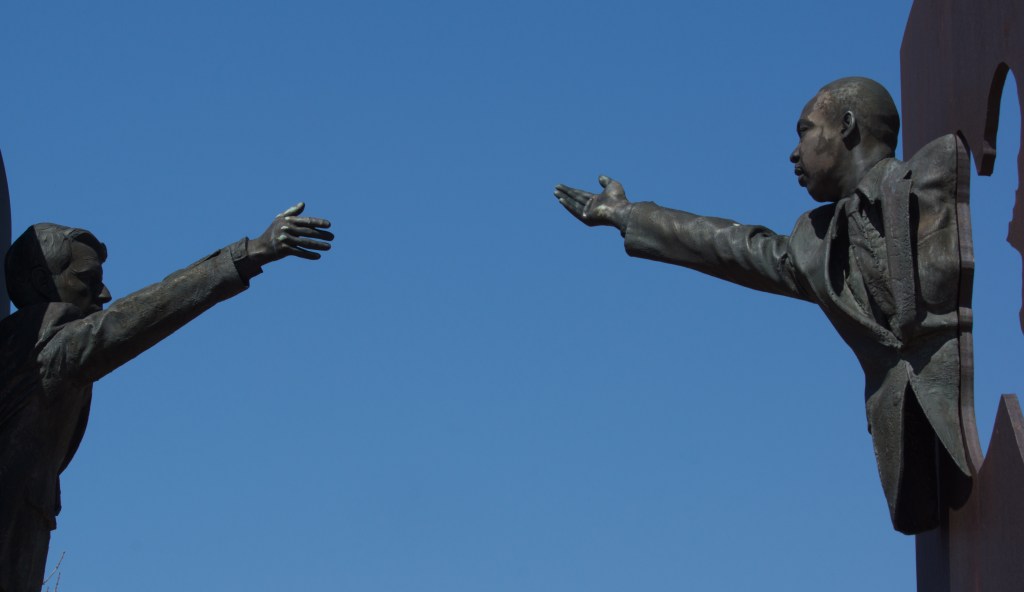
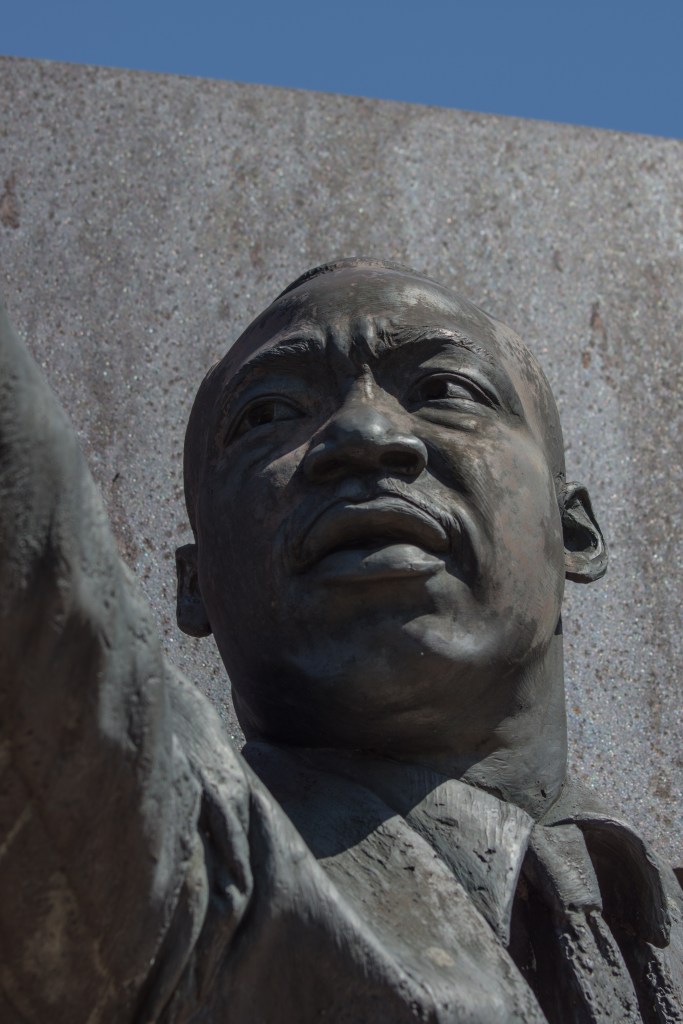
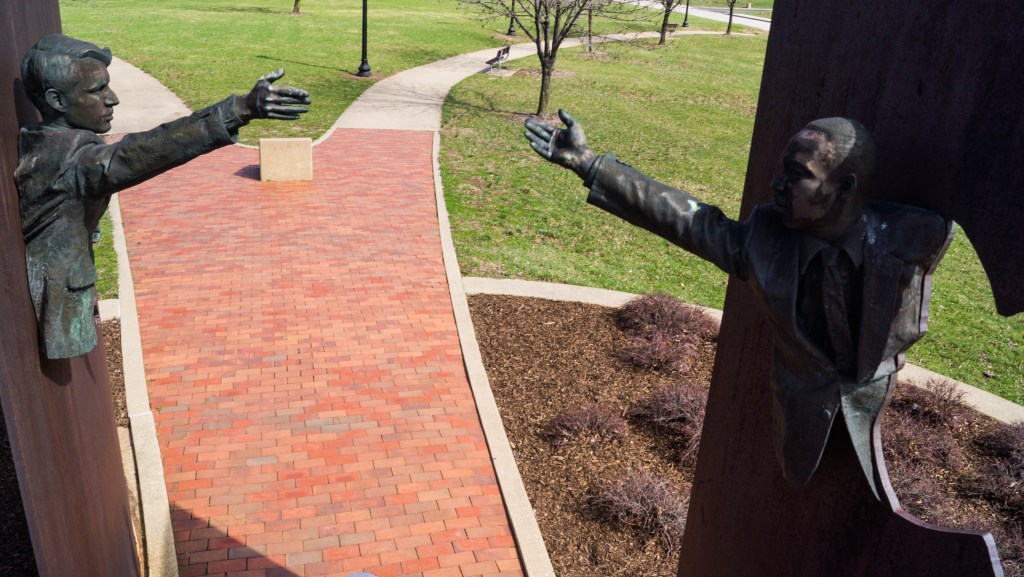
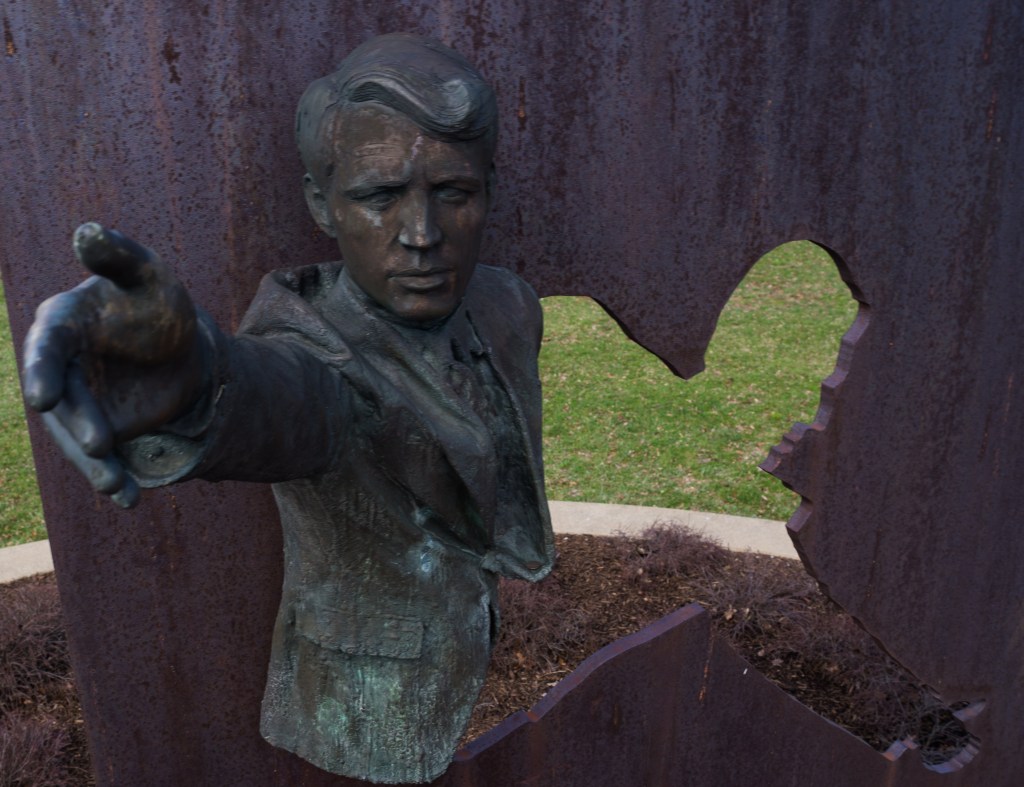
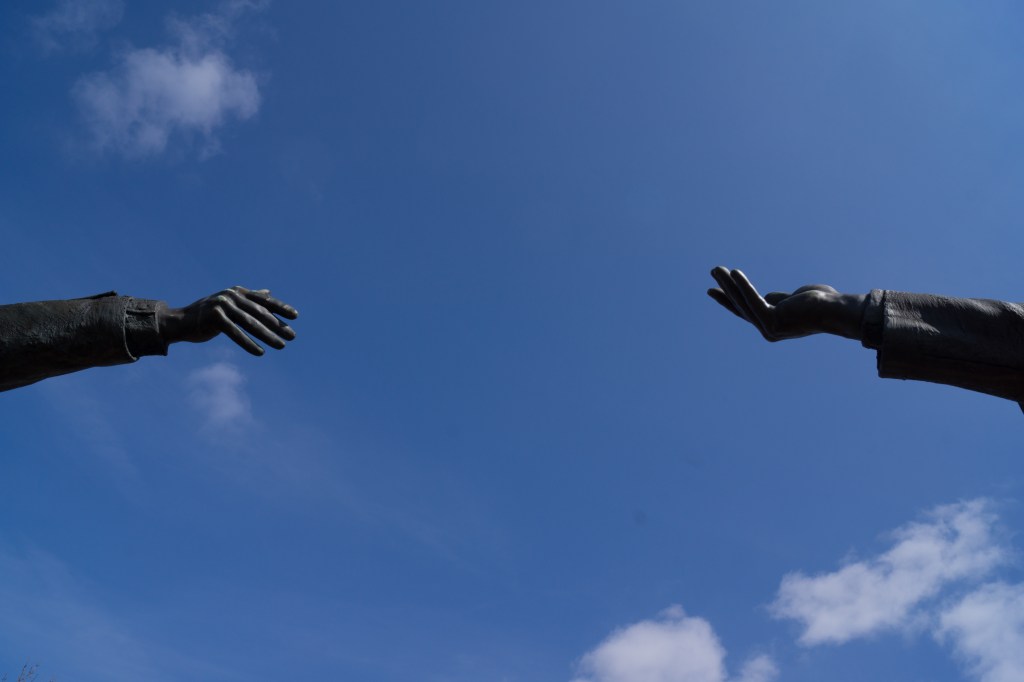
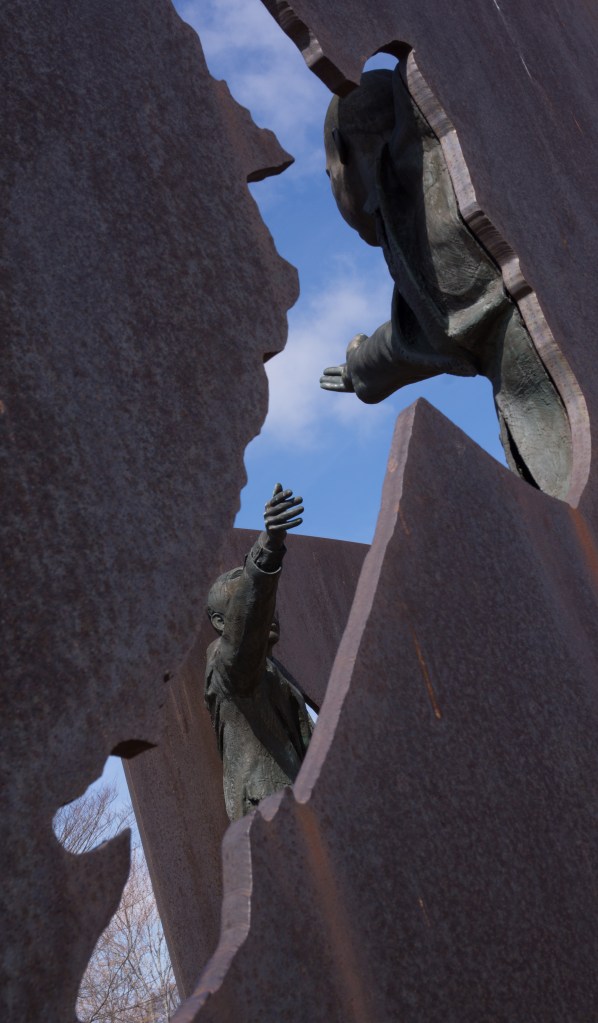
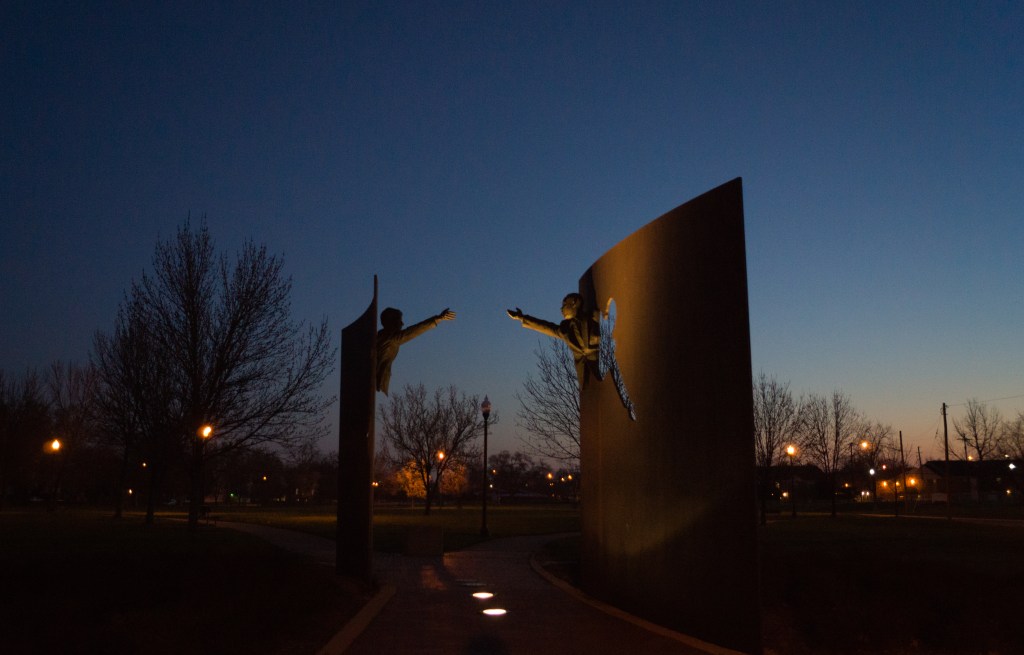
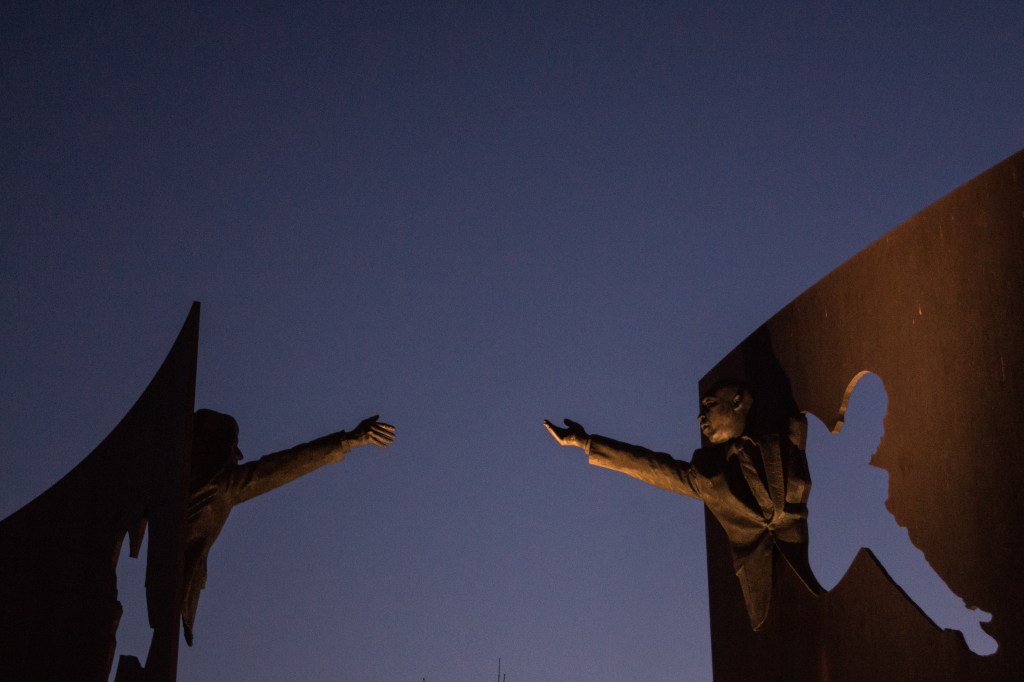
Below are some photos I’ve taken over the years at the Kennedy-King Park, where the speech was delivered.  
link to photo gallery

Posted in Martin Luther King Jr, race, Robert F Kennedy, Uncategorized | Leave a comment