Here is the link to the CLIMATE CHANGE EMPOWERMENT HANDBOOK: Psychological strategies to tackle climate change from the Australian Psychological Society. (Thanks to Lance Foster for posting the link. Social media has become a way to educate each other).
Executive Summary
In this document we put forward eight simple but important “best practice” insights from psychological science to help people come to terms and cope with the profound implications of climate change, so that they can stay engaged with the problem, see where their own behaviour plays a part, and participate in speedy societal change to restore a safe climate.
These eight insights make the acronym A.C.T.I.V.A.T.E. and we hope they will ACTIVATE the public into more effectively engaging with the challenge of climate change!
Acknowledge feelings about climate change to yourself and others and learn ways of managing feelings so you can face and not avoid the reality of climate change.
Create social norms about protecting the environment so that people see that ‘everyone is doing it’ and ‘it’s normal to be green’
Talk about climate change and break the collective silence so that more and more people see it as a risk that requires action
Inspire positive visions of a low-energy, sustainable, zero carbon world so that people know what we are working towards and can identify steps to get there.
Value it – show people how their core values are often linked to other values that are about restoring a safe climate, and that caring about these issues actually reinforces their core values.
Act personally and collectively to contribute to climate change solutions and feel engaged and less despairing.
Time is now. Show people that climate change is here, now and for sure so they see it is timely and relevant to them and impacts the things that they care deeply about.
Engage with nature to restore your spirits and connect with the very places that you are trying to protect.
Introduction
Addressing climate change is an essential and urgent task if we are to have a chance of restoring a safe climate for humans and other species. Because climate change is caused by human behaviour, threatens human health and wellbeing, and requires profound changes in human behaviour to bring about solutions, it is as much a psychological and social problem as it is an environmental or ecological mega-disaster. The insights of psychologists and other social scientists into how people are responding to climate change are therefore critically important. The more we understand the psychology of how people are responding to climate change, the better we can help ourselves and others to overcome barriers of inaction, and get involved in effectively addressing climate change.
This handbook has a lot of useful insights. The point I’ve been struggling with recently is the “Time is now.” Despite the terrifying images from the California wildfires day after day, some people I know refuse to make the connection to rising greenhouse gas concentrations.
I continue spending a lot of time in nature. That is an advantage of not owning and using cars much. I enjoy searching for images to photograph. I’ve begun to wonder, though, if these photos might become a record, in the near future, of what doesn’t exist any longer.
And spending time in nature has become more meaningful as I’ve been more aware of the Spirit’s presence in all things.
One of my favorite songwriters, performers and spiritual warriors is Nahko Bear of Nahko and Medicine for the people. He just released the song “Lifeguard” and tells the story of this song below.
He also speaks of how we can share our intentions and take our power back, together. I pray this will help guide us through perilous times.
Each new and full moon is a time to reflect and reset our intentions. In parallel with these moments, I want to share with you new music.
During this Holy Day season, as we celebrate the Dead and the archetypes of Scorpio, I marvel at the timing of this songs release. I wrote Lifeguard nearly ten years ago after almost drowning in the ocean. It’s incredibly difficult to keep your head above water during these massive shifts in consciousness. My intention is to keep going deeper in my healing, to use my voice, stand up for my needs, and to not feel guilty or obligated to anyone else but me. To challenge myself to face my shadows and embrace my inner child’s need for nurturing and acknowledgment, this is a daily practice that will continue throughout my life.
Lifeguard is about the push and the pull. Give what you can, take what you need.
In my practice of giving what I can and taking what I need, I’ve had to learn how to reserve my energy and take time to recalibrate. I give a lot of energy on the road, every day. It takes a toll and in the past year I’ve had to find ways to protect my spirit when it is weary. I have a high standard of work for myself, but even this year with the touring and recording schedule, I have forced myself to take time at home to recalibrate. The worker bee in me says get back to work, but the Cancer Rising in me says stay home and rest, the world needs you in top shape!
Each new moon and full moon is an opportunity to set intentions, begin new chapters, plant seeds, sow seeds — begin anew. I’m planning to do something very special around each new moon and full moon. Sharing my thoughts, sharing new music, hearing your thoughts, and setting my own intentions and sharing what that means to me.
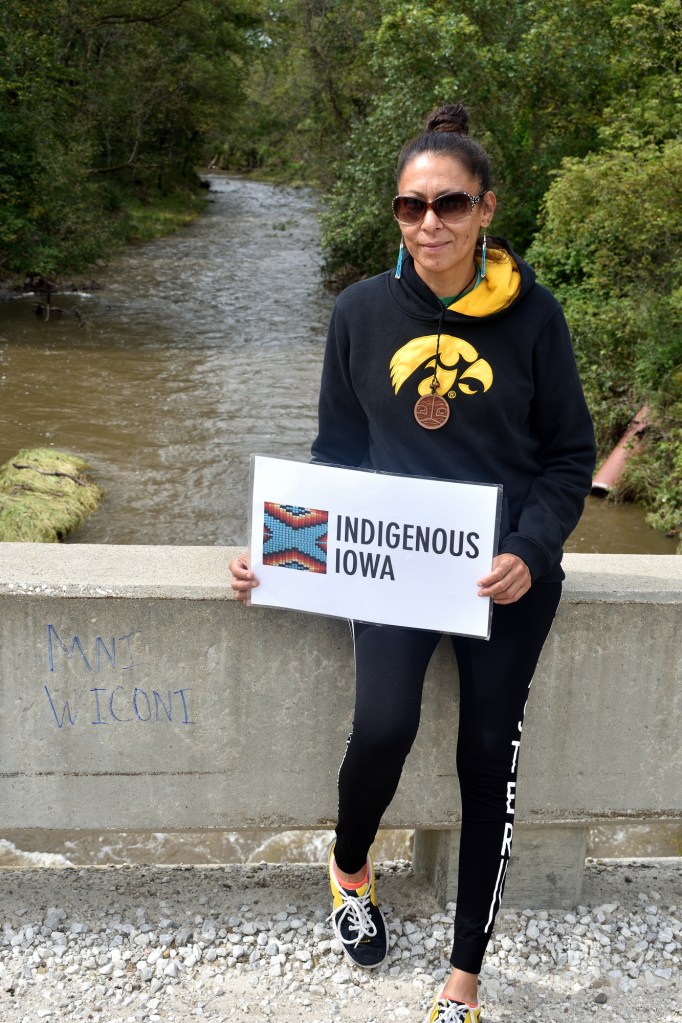
The coming of the Dakota Access and Keystone XL pipelines have fulfilled the Lakota prophecy of a terrible black snake meant to bring harm to the people of Turtle Island. Our Native organizers stand on the front lines every day to protect the sacred systems of Unci Maka, our Grandmother Earth. Mni Wiconi—water is life!
Breaking news: Yesterday, the Keystone pipeline spilled again. This highlights the need to thank those of you who recently wrote to the North Dakota Public Service Commission requesting a public hearing on the potential doubling of oil carried by the Dakota Access pipeline. I am very happy to say that, along with the Standing Rock Tribe’s official intervention, your voice helped compel the Commission to schedule that hearing. It’s coming up next week — on Wednesday, November 13th at 9 a.m. at Emmons County Courthouse in Linton, right across the river from Standing Rock.
Now, particularly in light of yet another pipeline spill, I ask you to join four Great Sioux Nation tribal chairmen and our allies around the world in telling the Commission to VOTE NO on this dangerous DAPL expansion. Even if you can’t make it to North Dakota, you can still be heard! Use this form to send an email to the PSC, show your solidarity, and make sure the commission knows it must not further imperil our sacred lands and water. Please stand again with Standing Rock — wherever you are.
This expansion would be a reckless act of greed. As you’ll see in our video, leaders from the Oglala, Rosebud, and Cheyenne River Nations stand with us against this new danger to our people and Mother Earth. We must not be silenced. We must be strong and united in our message to the PSC: all due diligence should be conducted; the tribes, and allies like you, should be heard; the Earth should be respected.
Wopila tanka and mni wiconi — Thank you. Water is life.
Charles Walker Standing Rock Sioux Tribal Council Via the Lakota People’s Law Project
Join Standing Rock’s call: Send the following message to the North Dakota Public Service Commission, and tell them you say NO to the expansion of the Dakota Access pipeline. This link will send the following letter to them. https://www.lakotalaw.org/our-actions/no-dapl-expansion
Dear Commissioner Brian Kroshus, Thank you for respecting the desires of the nearly 20,000 people who sent you messages three months ago requesting a hearing on the proposed expansion of the Dakota Access pipeline. I write today to ask you to deny that expansion. By doing so, you can demonstrate your concern for the Standing Rock Sioux Tribe, whose intervention in this process signals its desire to prevent further danger to its ancestral lands and sole source of drinking water. Millions of others downstream, in addition to Standing Rock tribal members, also face danger. I would remind the Commission that, at its current flow rate, this pipeline has already leaked at least 11 times. Any additional pressure on the Dakota Access pipeline should be fully vetted. Indeed, U.S. regulators say they don’t have data showing that expansion of pipeline capacity is safe; we have only talking points from the oil industry to rely upon. Moreover, the threat to water is just one downside of this expansion plan. Doubling DAPL’s flow would lead to 97,886,550 more tons of carbon being emitted into the atmosphere each year. At a time when 97 percent of scientists agree that climate change represents an existential threat to the entire planet, we should be shifting to reliance on renewable energy, not expanding dangerous fossil fuel infrastructure. The Commission would be showing a blatant disregard for public health and safety should it greenlight this project without requiring detailed environmental impact and leak safety studies. Please listen to tribal citizens, respect your constituents, and VOTE NO on doubling DAPL’s oil flow.
Keystone pipeline leaks again
BISMARCK, N.D. — A pipeline that carries tar sands oil from Canada through seven states has leaked an unknown amount of crude oil over more than quarter-mile swath in northeastern North Dakota, state environmental regulators said Wednesday. State Environmental Quality Chief Dave Glatt told The Associated Press that regulators were notified late Tuesday night of the leak near Edinburg, in Walsh County. Glatt said pipeline owner TC Energy shut down the pipeline after the leak was detected. The cause of the spill is under investigation. The Calgary, Alberta-based company formerly known as TransCanada did not immediately respond to phone messages seeking comment Wednesday. State regulators were on the scene Wednesday afternoon, and they estimated that the area of the spill was 1,500 feet long by 15 feet wide. Glatt said some wetlands were affected, but not any sources of drinking water.
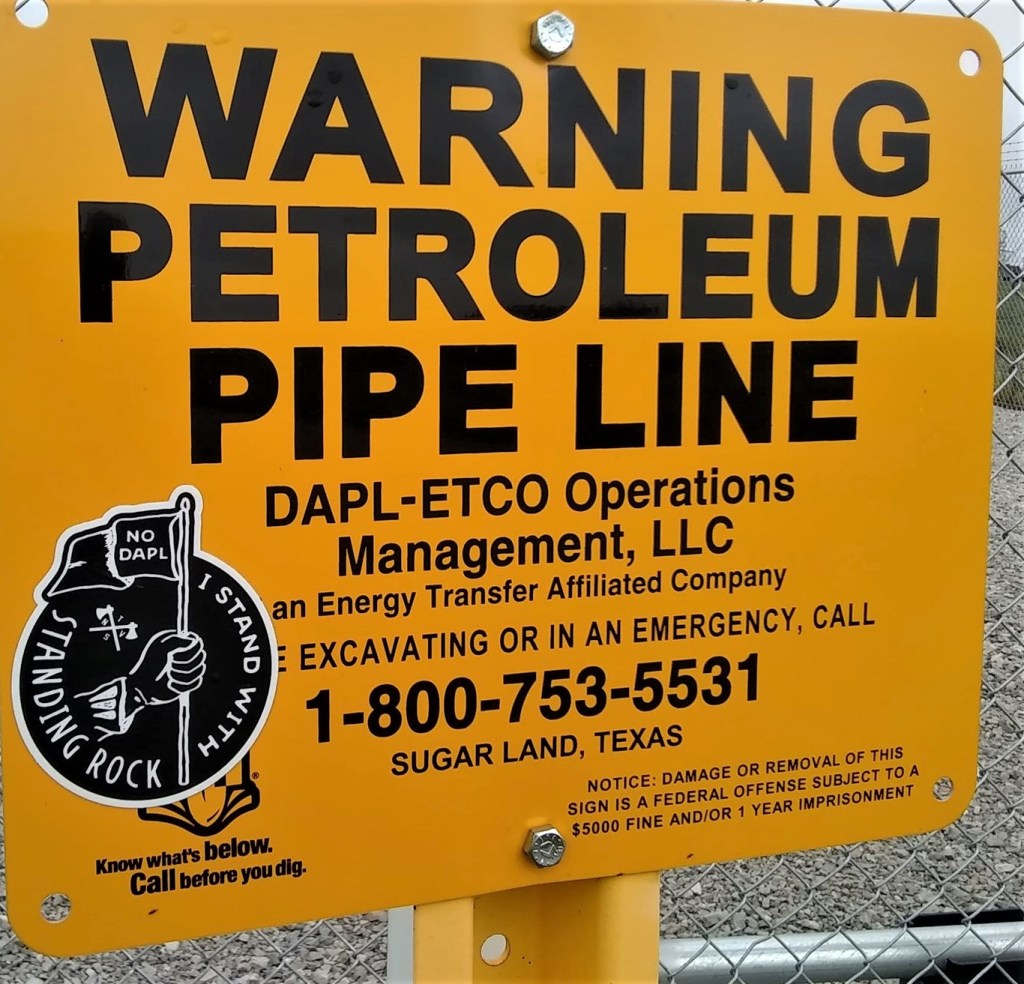
Here in Iowa Dakota Access is proposing increased flow of oil through the Dakota Access Pipeline.
Dakota Access Proposes to Increase Oil Flowing Through Iowa
FOR IMMEDIATE RELEASE
Wednesday, June 13, 2019, 12:00 p.m. CT
Contact: Ed Fallon at (515) 238-6404 or ed@boldiowa.com
Website: www.boldiowa.com
Dakota Access Proposes to Increase Oil Flowing Through Iowa Bold Iowa responds, requesting public hearing in Story County
DES MOINES, IOWA — Dakota Access (DA) announced in a filing yesterday to the Iowa Utilities Board (IUB) that it plans to increase the amount of oil flowing through its pipeline across Iowa by altering the pump station near Cambridge, Iowa, in Story County just north of Des Moines. DA claims it needs no additional authorization from the Iowa Utilities Board (IUB) to proceed. Bold Iowa disagrees and today filed a response, requesting that the IUB schedule a public hearing in Story County.
Bold Iowa’s filing states, “Dakota Access’s proposal raises so many unanswered questions it is not possible for Bold Iowa, the general public, the IUB, nor concerned state and local elected officials to fully grasp the impact of the proposed expansion without adequate time and study. The involvement of landowners along the route, Story County residents, and all Iowans concerned about the broader impacts of the pipeline is essential. Thus, Bold Iowa requests that the IUB hold a public hearing in Story County where DA officials and IUB representatives are available to answer any and all questions from Iowans who have concerns about DA’s proposed expansion.”
The following is from a message sent to those who participated in the Toward Right Relationships with Native Peoples events in July when Paula Palmer was able to be with us here in Iowa and Nebraska. But even if you weren’t able to attend those events, you are still welcome to attend the meeting described here.
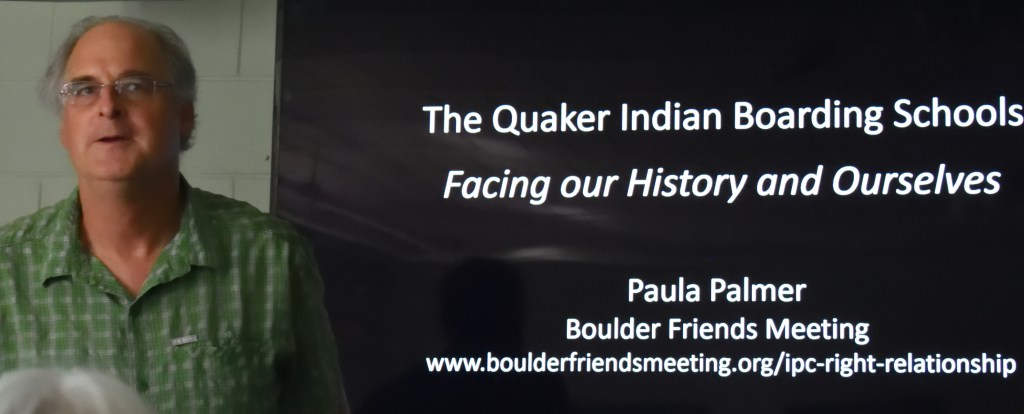
Each of us was surely impacted by participation in the workshop “Roots of Injustice, Seeds of Change,” the film entitled “Two Rivers,” or the presentation on the real consequences of the Indian Boarding Schools which forced assimilation of Native Peoples into dominant white culture and did terrible harm that continues today due to intragenerational trauma.
A few of us have gathered twice since July- once in August and
once in September. You are invited to join us again this coming
Friday, November 1st, from 6 to 8 PM, in the Conference Room on the first floor
of Friends House at 4211 Grand Avenue in Des Moines.
In those two earlier meetings we shared diverse perspectives and
ideas about what the process of building respectful relationships with Native
Nations and Peoples might look like here in Iowa. We also talked about how the
Sunrise Movement and other youth-led (and also indigenous-led) movements and
organizations are working to support the Green New Deal. The focus of the prior
gatherings was to get to know one another better and to create a safe and
respectful space for that to happen.
On Friday of this week the focus will be on deciding if we wish
to continue to meet here in central Iowa. We need to seek clarity and unity of
purpose if we are to continue to gather each month or perhaps every second
month. If we continue, we have decided that our structure would be
non-hierarchical, would allow people to participate at able, and would strive
to acknowledge the gifts and voices of all involved.
Please reflect upon these questions and bring your own questions to share. Do you wish to continue to meet? If so, why? Are you among those who are interested in becoming a facilitator of the TRR programs? If yes, would these gatherings be a way to find new venues for the programs and to also find more support for this work? Do you have other, more divergent ideas on why you would like to continue to periodically gather? Is the creation of a more formal organization seem beneficial or needed? Yes? No? We are all already very engaged with many groups. Paula Palmer has offered the idea of an Iowa-based organization that might be called Right Relationship Iowa.
Here is a link to the newly located website for Towards Right Relationship With Native Peoples, which is now the first North American program of the Quaker organization known as Friends Peace Teams: https://friendspeaceteams.org/trr/
If you are unable to join us on Friday of this week I do urge you to share your thoughts with me.peterclay1@me.com I will report back to everyone on this limited contact list on what the consensus seems to be. Thank you for everything you are already doing to transform and heal the world, our precious Mother Earth!With gratitude, Peter Clay
For days we’ve watched the scenes from the devastating and expanding California wildfires. Apocalyptic images. (describing or prophesying the complete destruction of the world.)
Monday morning dawned smoky across much of California, and it dawned scary – over the weekend winds as high as a hundred miles per hour had whipped wildfires through forests and subdivisions.
It wasn’t the first time this had happened – indeed, it’s happened every year for the last three – and this time the flames were licking against communities destroyed in 2017. Reporters spoke to one family that had moved into their rebuilt home on Saturday, only to be immediately evacuated again.
The spectacle was cinematic: at one point, fire jumped the Carquinez Strait at the end of San Francisco Bay, shrouding the bridge on Interstate 80 in smoke and flame.
Three years in a row feels like – well, it starts to feel like the new, and impossible, normal. That’s what the local newspaper, the San Francisco Chronicle, implied this morning when, in the middle of its account of the inferno, it included the following sentence: the fires had “intensified fears that parts of California had become almost too dangerous to inhabit”. Read that again: the local paper is on record stating that part of the state is now so risky that its citizens might have to leave.
What has hit me the hardest is the description above, “The spectacle was cinematic: at one point, fire jumped the Carquinez Strait at the end of San Francisco Bay, shrouding the bridge on Interstate 80 in smoke and flame.” I’ve written many times of how the vision of Long’s Peak in my beloved Rocky Mountains enshrouded by smog from auto exhaust shook me to my core. And set me on a lifelong journey to try to warn others of the existential threat we would face, now are facing, from greenhouse gas emissions.
Long’s Peak, Rocky Mountain National Park, Colorado
When I recently came across the term sensemaking, this refusal to give up cars began to make sense to me.
sensemaking–the action or process of making sense of or giving meaning to something, especially new developments and experiences.
…there remains the most existential risk of them all: our diminishing capacity for collective sensemaking. Sensemaking is the ability to generate an understanding of world around us so that we may decide how to respond effectively to it. When this breaks down within the individual, it creates an ineffective human at best and a dangerous one at worst. At the collective level, a loss of sensemaking erodes shared cultural and value structures and renders us incapable of generating the collective wisdom necessary to solve complex societal problems like those described above. When that happens the centre cannot hold.
How could we convince lawmakers to pass laws to protect wilderness? Lopez argued that wilderness activists will never achieve the success they seek until they can go before a panel of legislators and testify that a certain river or butterfly or mountain or tree must be saved, not because of its economic importance, not because it has recreational or historical or scientific value, but because it is so beautiful.
His words struck a chord in me. I left the room a changed person, one who suddenly knew exactly what he wanted to do and how to do it. I had known that love is a powerful weapon, but until that moment I had not understood how to use it. What I learned on that long-ago evening, and what I have counted on ever since, is that to save a wilderness, or to be a writer or a cab driver or a homemaker—to live one’s life—one must reach deep into one’s heart and find what is there, then speak it plainly and without shame.
Reid, Robert Leonard. Because It Is So Beautiful: Unraveling the Mystique of the American West . Counterpoint. Kindle Edition.
Everywhere people ask, “what can we do?” The question, what can we do, is the second question. The first question is “what can we be?” Because what you can do is a consequence of who you are. Once you know what you can be, you know what you can do.
Arkan Lushwala
When Robert Reid wrote (above), “I left the room a changed person, one who suddenly knew exactly what he wanted to do and how to do it”, that was what Arkan Lushwala was saying, “what you can do is a consequence of who you are. Once you know what you can be, you know what you can do.”
This means it is important to strive to help people generate an understanding of the world they don’t currently have. That process might involve new experiences, like camping in the mountains. Might involve exposure to all kinds of art, music, prayer, worship and story telling. Sensemaking is the way we can begin to find the way through the dramatic changes coming at us.
ALL THAT WE ARE IS STORY. From the moment we are born to the time we continue on our spirit journey, we are involved in the creation of the story of our time here. It is what we arrive with. It is all we leave behind. We are not the things we accumulate. We are not the things we deem important. We are story. All of us. What comes to matter then is the creation of the best possible story we can while we’re here; you, me, us, together. When we can do that and we take the time to share those stories with each other, we get bigger inside, we see each other, we recognize our kinship — we change the world one story at a time
Richard Wagamese (October 14, 1955-March 10, 2017) Ojibwe from Wabeseemoong Independent Nations, Canada
Protest: a statement or action expressing disapproval of or objection to something.
Demonstrate: take part in a public demonstration. synonyms: protest · rally · march · parade · sit in · vigil
Vigil: a stationary, peaceful demonstration in support of a particular cause, typically without speeches
Protect: keep safe from harm or injury.
Water protectors: activists, organizers, and cultural workers focused on the defense of the world’s water and water systems.
There are a number of stories related to protests and demonstrations in the news lately, although the mainstream media tends to suppress coverage of them.
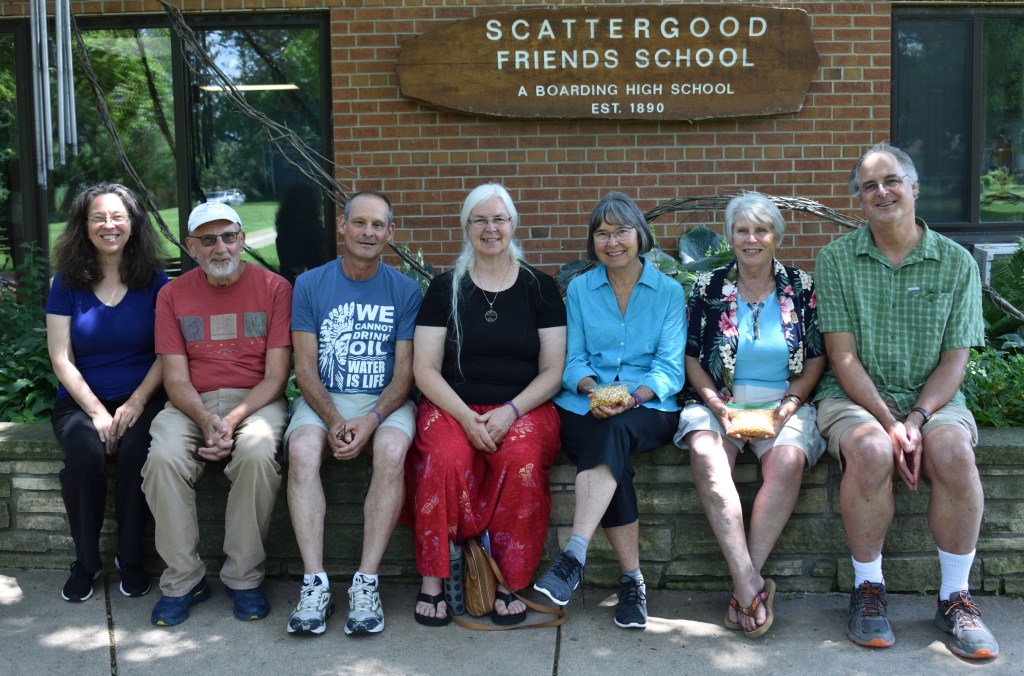
My first experiences with demonstrations or protests (as the definitions above indicate, demonstrations and protests can be synonymous) were during my high school years. The summer before my Senior year (1969) at Scattergood Friends School I worked in Don Laughlin’s medical electronics lab at the University of Iowa. I went with him to the weekly peace vigil in front of the old Capitol building in downtown Iowa City.
I didn’t know how the public would react and was a bit apprehensive at first. But there was little outward response, as you have probably experienced if you have done this yourself. Which might lead to the question of why do this? While there is rarely an outward response from passersby, people do notice you, which might lead to some reflection on their part. One day I was passing through the public library on my way to the weekly peace vigil, carrying my sign. A librarian beckoned me over, and said she appreciated seeing us at our vigil each week.
The other public demonstration I was blessed to be part of was when the entire student body and many faculty of Scattergood walked in silence from the School to Iowa City (about 14 miles) during the Oct. 15, 1969, Moratorium to End the War in Vietnam.
The School had another peace walk in 2012.
Iowa Yearly Meeting (Conservative) and the Friends Committee on National Legislation (FCNL) held a Climate Conference at Scattergood in 2013. Part of that conference was an Earth Walk, from the School into Iowa City. I was very glad to be able to be part of that Walk because of having walked in 1969. The following video is of photos I took, and interviews during the Earth Walk.
Earth Walk 2013 Scattergood Friends School and Farm
Keystone XL Pipeline
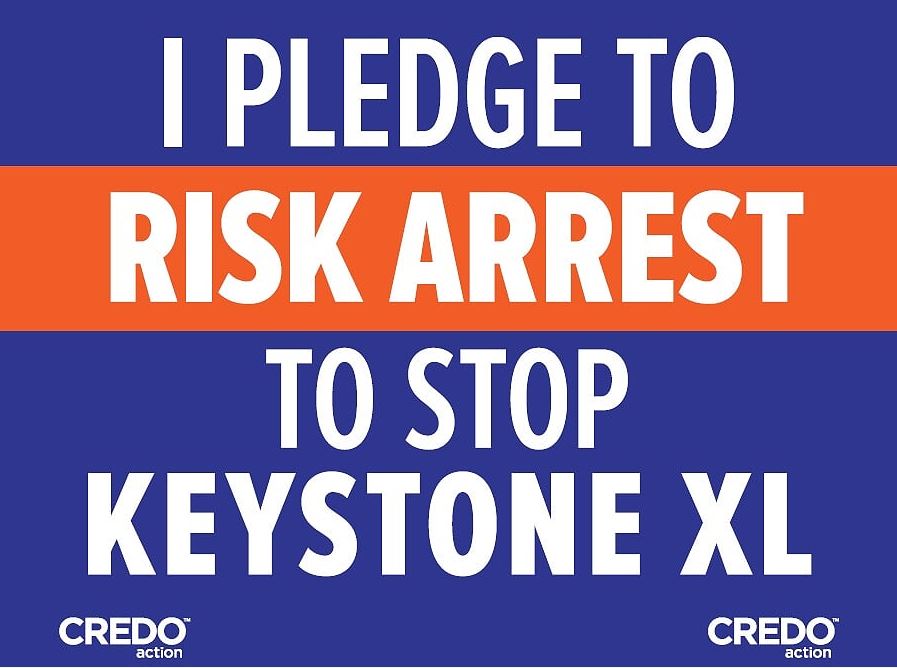
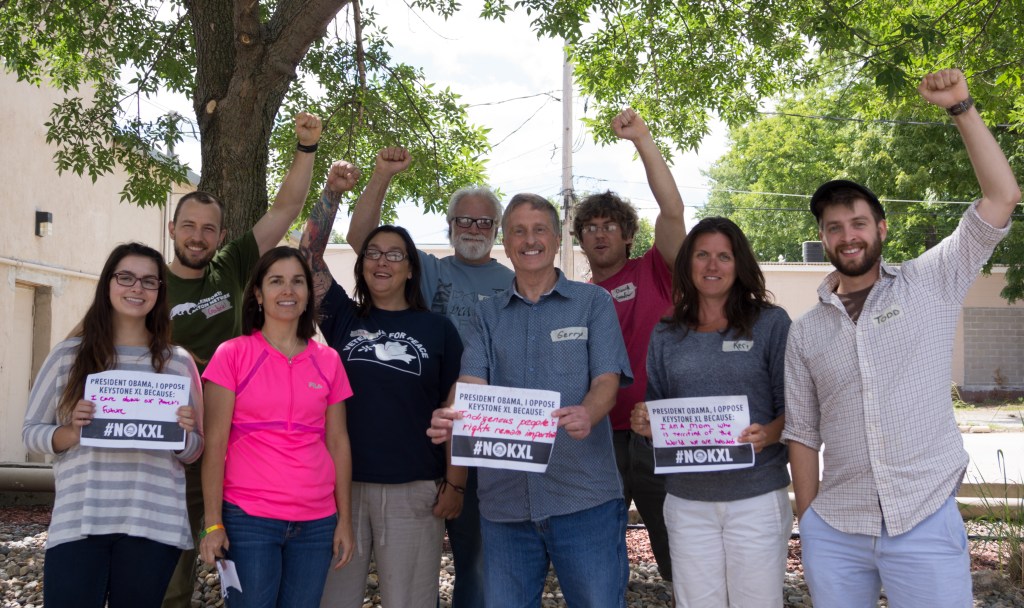
The next time I was involved in demonstrations began in 2013 when the Keystone Pledge of Resistance was organized. CREDO mobile and the Rainforest Action Network created an Internet base campaign to try to stop the construction of the Keystone XL Pipeline. People could become involved by signing the pledge:
“I pledge, if necessary, to join others in my community, and engage in acts of dignified, peaceful civil disobedience that could result in my arrest in order to send the message to President Obama and his administration that they must reject the Keystone XL pipeline.”
Over 97,000 people signed the pledge. What is remarkable about this campaign is that a movement was created from the database that grew from those who signed the pledge. There was also an opportunity to become trained as an Action Lead, in order to teach nonviolence and organize direct action campaigns in you city, which I did. Nationally around 400 Action Leads were trained, who in turn trained around 4,000 people in their local communities.
My friend Derek Glass and Andrew Burger created the following video to teach people in our community about the Keystone Pledge of Resistance.
The struggle against the Keystone Pipeline continues to this day:
Also today is the first day of hearings in Pierre, SD – DENR Water Permit hearing in the matter of Water Permit Application for the TransCanada Keystone Pipeline LP.
Dakota Access Pipeline (DAPL)
Then the Dakota Access Pipeline (DAPL) was going to be built through North and South Dakota, Iowa and Illinois. When residents of Bismarck, ND found that the pipeline would pass under the Missouri River north of the city, they feared their water would be contaminated, and forced the route to be changed. The new route was near the Standing Rock Indian Reservation.
That sparked the amazing gathering of Native Nations to come to Standing Rock, beginning in early 2016. Rather than being a protest, though, the people took on the name of water protector:
The water protector name, analysis and style of activism arose from Indigenous communities in North America, during the Dakota Access Pipeline protests at the Standing Rock Indian Reservation, that began in April, 2016, in North Dakota. However, the concept of protecting the water as a sacred duty is much older. Water protectors are distinguished from other forms of environmental activists by this philosophy and approach that is rooted in an Indigenous cultural perspective that sees water and the land as sacred.
From this perspective, the reasons for protection of water are older, more holistic, and integrated into a larger cultural and spiritual whole than in most modern forms of environmental activism which may be more based in seeing water and other extractive resources as commodities.
This video by Nahko Bear gives us a feeling of what happened at Standing Rock. Nahko and Medicine for the People: Tribe! We present to you our music video for “Love Letters to God” from our album HOKA.
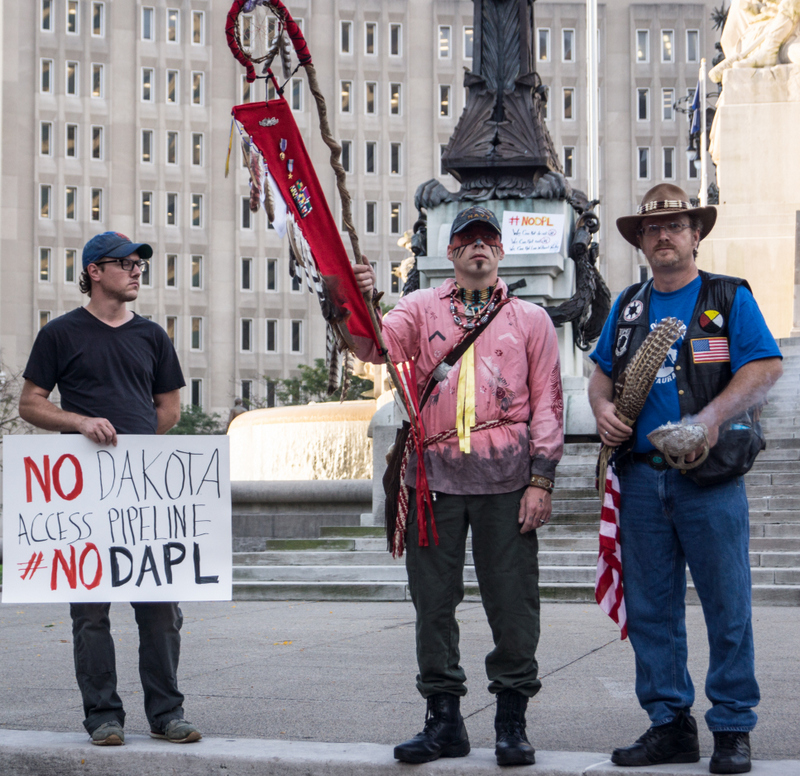
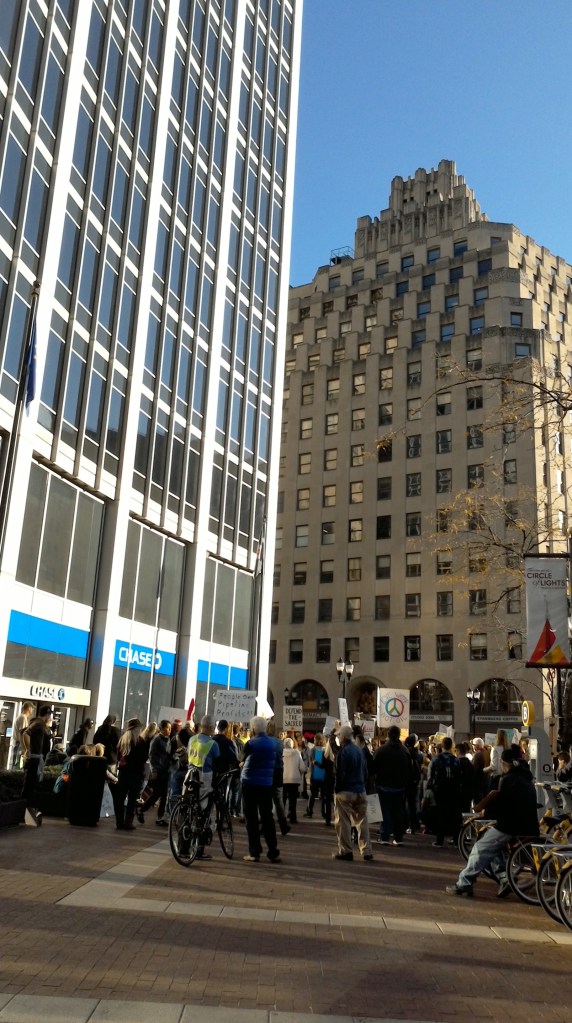
I was so blessed to be part of the #NoDAPL (no Dakota Access Pipeline) gatherings in Indianapolis. A number of Native people came to our gatherings with burning sage and drumming. One day we went through downtown Indianapolis, and stood in silence in front of two of the banks that were funding the pipeline, while those who had accounts in those banks went in an closed their accounts. $110,000 was withdrawn that day. Divestment of funds is another way to protest.
#noDAPL
#noDAPL
#NoDAPL
Jpeg
Jpeg
Jpeg
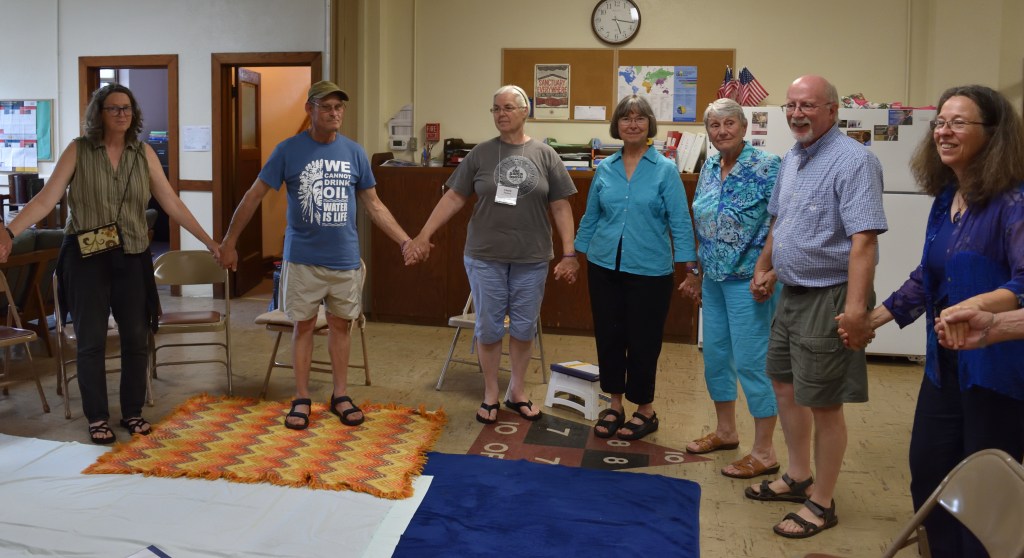
The concept of Water Protector changed the way I feel about public demonstrations. One of our gatherings in Indianapolis was just to come together in a prayer circle (one photo above shows that).
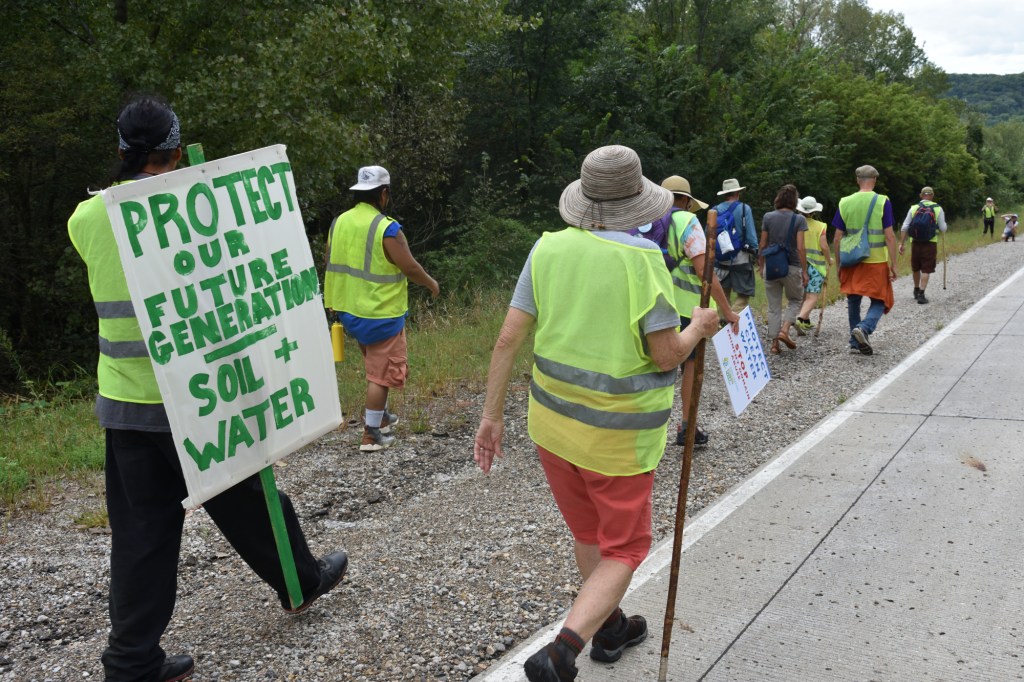
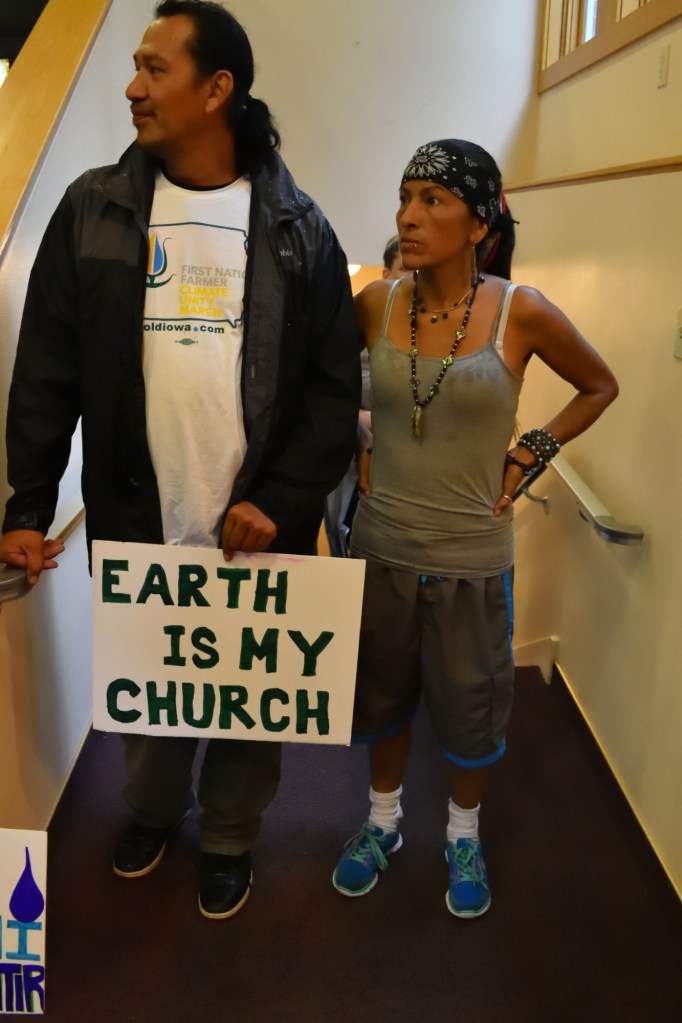
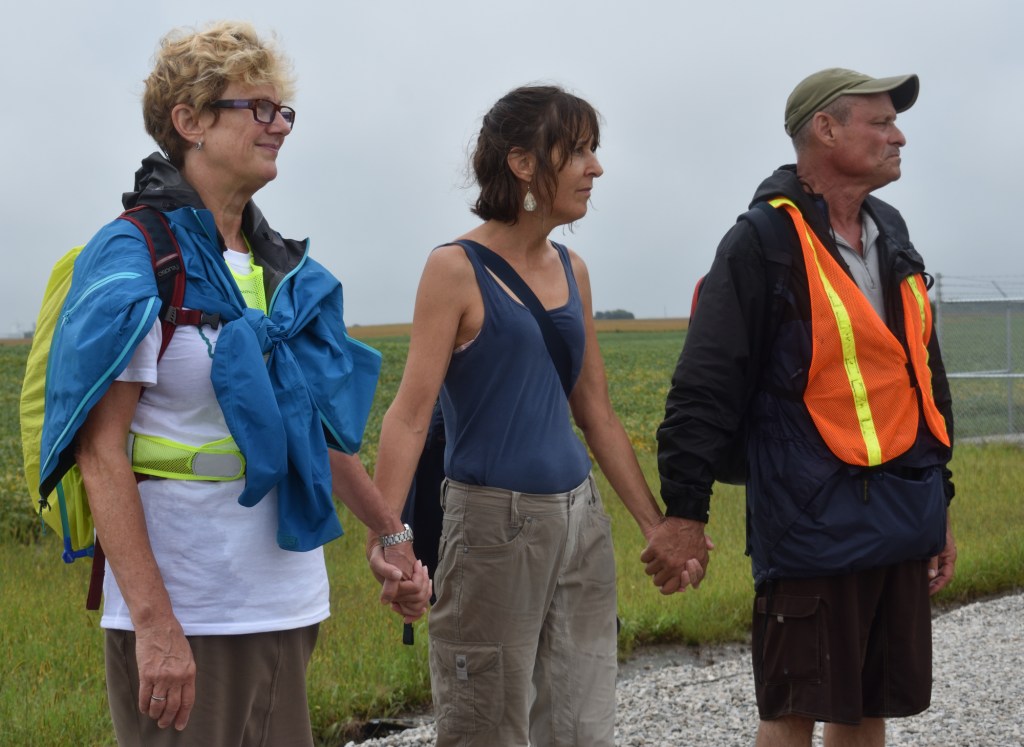
More recently I was so glad to have been able to participate in the First Nation-Climate Unity March. A group of about 40 Native and nonnative people walked along the path of the Dakota Access Pipeline, from Des Moines to Fort Dodge, Iowa. It took 8 days of walking and camping to cover the 94 mile journey.
The March had two goals. One was to bring attention to the abuse of public domain to seize the land to build the pipeline. A case related to this was going to be heard in the Iowa Supreme Court the week after the March. Many of the Marchers attend the court hearing.
The other purpose of the March was to provide the opportunity for Native and nonnative people to get to know each other, so we could work on matters of common cause. That succeeded far beyond what I expected. I am so glad to have a number of Native friends now. I keep trying to think of a way these friendships could be created with other groups (without having to walk 94 miles together).
There have been a number of occasions when groups of us from the March have been able to work together. The November after the March several of us were able to talk with Senator Grassley’s Des Moines office staff about two bills related to Native people.
Visiting Senator Grassley’s Des Moines Office
When the Sunrise Movement’s Green New Deal Tour came to Des Moines this spring, Trisha and Lakasha were on the program and I was glad to see them there.
Trisha, Jeff and Lakasha
Christine Nobiss suggested I attend the first National Network Assembly, August 22-25, 2019, at the Des Moines YMCA Camp near Boone, Iowa. It was a great gathering of community organizers from across the country. Besides Christine I saw Fintan, Donnielle, Regina, Ed and Kathy, all who had been on the March. Each meeting is a chance to deepen our friendships.
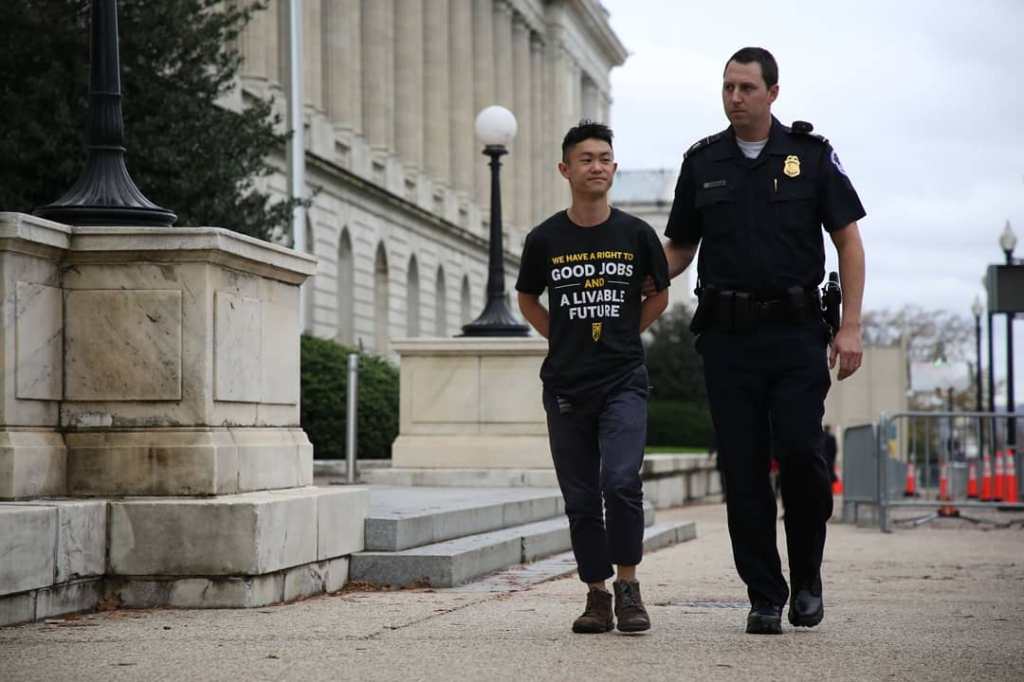
Several of my friends from the March are part of Bold Iowa, which has been doing amazing work in birddogging all the Presidential candidates coming to Iowa, asking them about climate change. Several were arrested when holding the sign below and dressed in “diapers” at a Trump Rally.
Globally there have been large numbers of people demonstrating, like the School Climate Strikes, the Extinction Rebellion and people in Hong Kong. Just today the Prime Minister of Lebanon resigned after tens of thousands of people went into the streets.
Protesters across Lebanon joined hands on Sunday to form a human chain that connected the country’s north and south, a symbolic display of national unity during a period of political turmoil. Lebanese men, women and children link arms to form a 105-mile human chain. The human chain formed on Sunday was inspired by similar chains Lebanese women have formed throughout the revolution to prevent clashes between protesters and armed forces.
There continue to be attempts to suppress and criminalize dissent. https://kislingjeff.wordpress.com/2019/10/24/attempts-to-silence-pipeline-protestors/ It is important to work to preserve ways for people to protest and protect, since there will be increasing conflicts related to migration of climate refugees and for water, oil and other resources.
Recently, I transitioned to the role of Executive Director at RuralOrganizing.org. One of the first projects we’re working on is challenging media stereotypes about rural Americans. A huge piece of this work is making sure undocumented folks in rural America get recognized for their valued places in our families and communities.
So, we’re working with Che Apalache, a bluegrass band with strong ties to North Carolina, Mexico, and South America, and Moisés Serrano, an openly undocumented and queer DACA recipient and rural community leader from North Carolina.
Che Apalache and Moisés Serrano recently collaborated on a beautiful music video highlighting undocumented youth in rural America. We’re helping to make sure their video makes a big splash on social media this week.
Matt Hildreth hildreth.matt@gmail.com
We’re holding a launch party on November 11, 2019 in Sioux Center, Iowa. Join us for some free pizza and a short reception between 4:30 PM and 5:30 PM.
The concert—featuring Che Apalache and The Ruralists—starts at 6 PM and will go until 8 PM or so.
Che Apalache is a bluegrass band that knows what rural America is all about.
The band, featuring three powerhouse Latin American musicians (Franco Martino on guitar and Martin Bobrik on mandolin are from Argentina. Banjoist, Pau Barjau, is from Mexico.) and North Carolina native, Joe Troop, looks more like the true rural America than the simple cliches too often portrayed in the media.
Their most recent single from their latest album, “Rearrange My Heart,” (produced by famed banjo player and cross-genre trailblazer Béla Fleck) features the story of Moisés Serrano, an openly undocumented and queer DACA recipient and community leader from North Carolina and weaves in elements of true stories of undocumented families in across the state who have been torn apart by deportation.
Since coming out as undocumented in 2010, Serrano has relentlessly pursued equality for his community through the sharing of his story. His advocacy has been filmed in the feature length documentary, Forbidden: Undocumented & Queer in Rural America.
Serrano wrote the script and crafted the story for the music video based on real life experiences. The video was shot in and around Hillsborough, North Carolina.
“The song, “The Dreamer”, is for the over one million undocumented youth and DACA recipients who have had to grow up learning how to live and love in a country that is actively trying to deport them,” Serrano said. “The music video, The Dreamer is for the millions of undocumented and immigrant families affected by our racist immigration laws.”
It feels a bit like whiplash, going from yesterday’s post about healing and hope, to today’s about rapidly evolving environmental chaos. But whiplash seems to describe the times we are living in.
A recent article on the Daily Kos, (US Army finds that the ‘military could collapse within twenty years’ thanks to climate breakdown. Daily Kos, Oct. 26, 2019) provided the interesting juxtaposition of the dire environmental analysis in a report just released from the U.S. Army, with a short video exploring why we haven’t found an effective way to talk about climate change, Climate Change: A Cry from the Future. That video and a partial transcript from it are at the end of this post.
Many people object to trying to determine a timeline related to environmental collapse. And many who suspect the collapse to be a real possibility consider it to be counterproductive to dwell on. But when an organization of the size and with the expertise of the U.S. Army creates a report titled “Implications of Climate Change for the U.S. Army“, I think the analysis and warnings should be seriously considered. The military has long been seen as the one part of our government that has taken environmental destruction seriously, because of the threats to military readiness and operations, as well as driving global conflict.
The report, commissioned by the Pentagon, found that the next couple of decades will be so chaotic due to a warming climate that we will be unable to adapt in time. Our inability to change will be the result of years of inaction by ‘leaders’ who have kicked the proverbial can of worms down the road for future generations to solve.
The report predicts that within the next twenty years, our power grid infrastructure will be unable to adapt to the expected extreme temperatures that are bearing down upon us. During this time, people will be hungry, thirsty, and unable to cope with unbearable heat. The PGE crisis provides a glimpse into the future, Millions Of Californians Brace For Power Outages As Wildfires Ravage State.
While I think the analysis found in the report is good, I believe the conclusion reached by the Daily Kos is accurate and very important. “We would be better off dealing with the root cause of the issue skirted over by this report: America’s chronic dependence on the oil and gas driving the destabilization of the planet’s ecosystems.“
In putting this forward, the report inadvertently illustrates what happens when climate is seen through a narrow ‘national security’ lens. Instead of encouraging governments to address root causes through “unprecedented changes in all aspects of society” (in the words of the UN’s IPCC report this time last year), the Army report demands more money and power for military agencies while allowing the causes of climate crisis to accelerate. It’s perhaps no surprise that such dire scenarios are predicted, when the solutions that might avert those scenarios aren’t seriously explored.
Rather than waiting for the US military to step in after climate collapse—at which point the military itself could be at risk of collapsing—we would be better off dealing with the root cause of the issue skirted over by this report: America’s chronic dependence on the oil and gas driving the destabilization of the planet’s ecosystems.
Executive Summary: Implications of Climate Change for the U.S. Army
Sea level rise, changes in water and food security, and more frequent extreme weather events are likely to result in the migration of large segments of the population. Rising seas will displace tens (if not hundreds) of millions of people, creating massive, enduring instability. This migration will be most pronounced in those regions where climate vulnerability is exacerbated by weak institutions and governance and underdeveloped civil society. Recent history has shown that mass human migrations can result in increased propensity for conflict and turmoil as new populations intermingle with and compete against established populations. More frequent extreme weather events will also increase demand for military humanitarian assistance.
Salt water intrusion into coastal areas and changing weather patterns will also compromise or eliminate fresh water supplies in many parts of the world. Additionally, warmer weather increases hydration requirements. This means that in expeditionary warfare, the Army will need to supply itself with more water. This significant logistical burden will be exacerbated on a future battlefield that requires constant movement due to the ubiquity of adversarial sensors and their deep strike capabilities.
A warming trend will also increase the range of insects that are vectors of infectious tropical diseases. This, coupled with large scale human migration from tropical nations, will increase the spread of infectious disease. The Army has tremendous logistical capabilities, unique in the world, in working in austere or unsafe environments. In the event of a significant infectious disease outbreak (domestic or international), the Army is likely to be called upon to assist in the response and containment.
Arctic ice will continue to melt in a warming climate. These Arctic changes present both challenges and opportunities. The decrease in Arctic sea ice and associated sea level rise will bring conflicting claims to newly-accessible natural resources. It will also introduce a new theater of direct military contact between an increasingly belligerent Russia and other Arctic nations, including the U.S. Yet the opening of the Arctic will also increase commercial opportunities. Whether due to increased commercial shipping traffic or expanded opportunities for hydrocarbon extraction, increased economic activity will drive a requirement for increased military expenditures specific to that region. In short, competition will increase.
The increased likelihood of more intense and longer duration drought in some areas, accompanied by greater atmospheric heating, will put an increased strain on the aging U.S. power grid and further spur large scale human migration elsewhere. Power generation in U.S. hydroelectric and nuclear facilities will be affected. This dual attack on both supply and demand could create more frequent, widespread and enduring power grid failures, handicapping the U.S. economy.
In addition to the changing environmental conditions that will contribute to a changing security environment, climate change will likely also result in social, political, and market pressures that may profoundly affect the Army’s (and DoD’s) activities. Studies indicate that global society, including in the U.S., increasingly views climate change as a grave threat to security. As the electorate becomes more concerned about climate change, it follows that elected officials will, as well. This may result in significant restrictions on military activities (in peacetime) that produce carbon emissions. In concert with these changes, consumer demands will drive market adaptation. Businesses will focus on more environmentally sound products and practices to meet demand.
The DoD does not currently possess an environmentally conscious mindset. Political and social pressure will eventually force the military to mitigate its environmental impact in both training and wartime. Implementation of these changes will be costly in effort, time and money. This is likely to occur just as the DoD is adjusting to changes in the security environment previously highlighted.
‘The future has come to meet us’. Ahead of climate strikes started by Greta Thunberg, the FT and the Royal Court collaborate on a short drama exploring inaction on climate change. Actress Nicola Walker, transmitting news from 2050, asks why we ‘never really learnt how to talk about this’. Financial Times
We never found the way to make ourselves do enough, fast enough. I mean, some of us, yes. But doing enough consistently, talking in a way that made this possible to grasp in the quiet parts of life in the times between the times that we all march, no. We needed to make this as everyday as bath time. As graspable as pre-packed sandwiches or your loved one’s hand. And we didn’t. Every time we tried to make the defining statement, we thought, maybe this is the one. Maybe this is the one that gets through. We didn’t need data or heroes. We didn’t even need voices pretending to be from the future. We’re in the same place. It’s not about our children or our grandchildren anymore. The future has come to meet us. Most of the people watching this will be there when it happens. We needed to understand, quietly, every day, that this is the future– now. Every single second. We’re not waiting for the future. We’re not trying to fend it off. We’re living in it. It is now. And it is us.
I appreciate this quote from the “Decolonizing Quakers” website: “the decolonizing that needs to take place, both the educating and the healing, are matters of urgency to the survival of the human species and the health of the Earth as Mother of us All.” There are many resources available for education, but I hadn’t seen much about healing. As I’ve begun to research this, I can already see this is a complex and difficult subject. I hope you’ll bear with me as I try to learn about this. This quote, referenced below, expresses why I am anxious to learn about healing: “when we center healing, we remember that our struggles for social justice are not just about opposing things we do not like, but building the world we would actually like to live in.“Decolonizing Trauma by Andrea Smith, Sojourners, 9/19/2016
In his lectures and his new book, In the Light of Justice: The Rise of Human Rights in Native America and the U.N. Declaration on the Rights of Indigenous Peoples, the Pawnee attorney, Walter Echo-Hawk, draws on many wisdom traditions to offer these five steps toward healing when wrongdoing has occurred and people have been injured by it:
1. Recognize that harm has been done: acknowledge that injury or harm has taken
place
2. A real apology is sincerely made and
forgiveness requested: the person or institution that harmed another
apologizes in a sincere and appropriate way, admits the specific harmful
actions they have committed, and asks for forgiveness
3. Accepting the apology and forgiving the
wrongdoer: the harmed person or community
accepts the apology and forgives
4. Acts of atonement; the process of making
things right: the parties agree on voluntary
acts of atonement by the wrongdoer that will wipe the slate clean
5. Healing and reconciliation: the atonement acts are carried out in a
process that fosters justice and compassion and genuine friendship
Walter Echo-Hawk says completing these steps may take years, decades, or centuries. The important thing is to start with the first step: acknowledge the harm, and commit to working through the next steps toward healing. It is important to take as much time as necessary, involving all the stakeholders, achieving Unity, in order to complete each step. In chapter 10 of his book, Echo-Hawk describes these steps in detail, and explains how the U.N. Declaration on the Rights of Indigenous Peoples opens a path toward national healing.
I’ve watched the video “Dakota 38 + 2” several times. The story is deeply moving and the photography is excellent.
Decolonizing Trauma
These movements have demonstrated that historical trauma impacts us on the individual and collective level. We cannot decolonize without centering the impact of trauma in our organizing. Rather than privatize our traumas, how can we rearticulate trauma as place from which to develop what Million calls “felt theory” – a place from which to understand our social and political conditions?
Many organizing practices we develop will be co-opted in order individualize and domesticate their potential impact on movement-building. But this reality should not make us lose sight of our larger vision of building holistic movements for justice. In the end, the questions we are left with include: What are the organizing practices and strategies for building movements that recognize that settler colonialism, capitalism, white supremacy, and heteropatriarchy have not left us unscathed? How do we create spaces to experiment with different strategies, as well as spaces to openly assess and change these strategies as they inevitably become co-opted? How do we create movements that make us collectively accountable for healing from individual and collective trauma? How do we collectively reduce harm in our intellectual and political spaces? And finally, how can we build healing movements for liberation that can include us as we actually are rather than as the peoples we are supposed to be?
In addition, when we center healing, we remember that our struggles for social justice are not just about opposing things we do not like, but building the world we would actually like to live in. So many people do not join the hard work of organizing because they see only what they might lose and not what they would gain in world without oppression. That’s why the process is as important as our goal of social justice. Instead of waiting for the infinitely deferred “revolution,” we can start living the revolution now so people can have a taste of what a better world can be.
Yesterday I wrote about the new website Decolonizing Quakers. I appreciate this quote from the site: “the decolonizing that needs to take place, both the educating and the healing, are matters of urgency to the survival of the human species and the health of the Earth as Mother of us All.”
After the section labeled “About Us”, which was included in my blog post yesterday, the next section is “Reflections”.
Reflections
One of the reflections is a sermon by Paula Palmer. Paula spent several days with us in Iowa this summer, leading workshops and giving presentations related to her ministry, “Toward Right Relationships with Native Peoples”.
One thing I’ve learned from living and working with Native peoples is to be attentive to place – to the earth beneath our feet, to all the living beings that surround us, and to the humans whose stories are embedded in the land. That’s why we began today’s service by acknowledging the Piscataway people – their history on this land and their continuing presence here today. Native peoples are asking churches and civic organizations around the country to open our services and meetings with acknowledgments like this.(see the land acknowledgement for Iowa below). It’s a way for us to recognize the Native peoples who live here today, and remember those whose ancestors lived and died here – right here. We can connect with them through the land.
Think for a moment about places on this continent that are meaningful to you…
Let your mind travel to one of those places that you know and love.
Close your eyes, picture it.
Now imagine that place as it might have been before you or your ancestors knew it, before colonists from other continents arrived.
Who were the people there, living and moving along the same rivers and shorelines and hills and valleys that you see in your mind’s eye?
The place that is most meaningful to me is the Rocky Mountains.
One of the many things I’m learning from Indigenous ways is the Spirit is in all things, including animals, plants, water, sky and mountains. I felt this deeply when I was in the forests and mountains. I’ve heard others express this in various ways as feeling closer to God, and that was how I felt.
This spiritual connection I developed with the mountains, lakes and forests had profound consequences in my life.
When I moved to Indianapolis in 1971, the city was enveloped in smog. This was before catalytic converters, which began to appear in 1975. When I saw the polluted air, I had a profound spiritual vision of the Rocky Mountains being hidden by clouds of smog. The possibility that I would no longer be able to see the mountains shook me to my core.
I was thinking specifically about the photo below, and how terrible it would be to no longer be able to see Long’s Peak. Although I now have many photos of the same view, I was thinking of this black and white photo specifically when I had that vision. The quality isn’t near what I get now with a digital camera. And I developed the film and the print in a darkroom. But this is the one connected to my vision.
Long’s Peak from Moraine Park, Rocky Mountain National Park, Colorado
Iowa Land Acknowledgement Statement
We begin by acknowledging that the Land between Two Rivers, where we sit and stand today, has been the traditional homeland for many independent nations. These include the Ioway and the Otoe, who were here since before recorded time. The Omaha and the Ponca were here, moving to new lands before white settlers arrived. The Pawnee used this land for hunting grounds. The Sioux, Sauk and Meskwaki were here long before European settlers came. Members of many different Indigenous nations have lived on these plains. Let us remember that we occupy their homeland and that this land was taken by force. Today, only the Meskwaki Nation, the Red Earth People, maintain their sovereignty on their land in the state of Iowa. They persevered and refused to be dispossessed of their home. Place names all over our state recognize famous Meskwaki chiefs of the 1800s like Poweshiek, Wapello, Appanoose, and Taiomah or Tama. We honor the Meskwaki Nation for their courage, and for maintaining their language, culture and spirituality. May our time together bring respectful new openings for right relationship to grow.

























 Quakers, social justice and revolution