Life and Death Struggles Continue Today

Today is the anniversary of one of many incidents of White people and soldiers attacking and killing Native men, women and children. This anniversary is of the Wounded Knee Massacre, December 29, 1890.

In the late nineteenth century, Indian “Ghost Dancers” believed a specific dance ritual would reunite them with the dead and bring peace and prosperity. On December 29, 1890, the U.S. Army surrounded a group of Ghost Dancers at Wounded Knee Creek near the Pine Ridge reservation of South Dakota.

During the ensuing Wounded Knee Massacre, fierce fighting broke out and 150 Indians were slaughtered. The battle was the last major conflict between the U.S. government and the Plains Indians.

By the early 20 century, the American-Indian Wars had effectively ended, but at great cost. Though Indians helped colonial settlers survive in the New World, helped Americans gain their independence and ceded vast amounts of land and resources to pioneers, tens of thousands of Indian and non-Indian lives were lost to war, disease and famine, and the Indian way of life was almost completely destroyed.

Wounded Knee Massacre, American-Indian Wars

Following is an abbreviated summary of many different acts against native peoples. I include this because the first step in healing and reconciliation is to acknowledge the wrong that was done. In my experience almost no White people have any concept of these things.

Stacie Martin states that the United States has not been legally admonished by the international community for genocidal acts against its indigenous population, but many historians and academics describe events such as the Mystic massacre, The Trail of Tears, the Sand Creek Massacre and the Mendocino War as genocidal in nature. Roxanne Dunbar-Ortiz states that US history, as well as inherited Indigenous trauma, cannot be understood without dealing with the genocide that the United States committed against Indigenous peoples. From the colonial period through the founding of the United States and continuing in the twentieth century, this has entailed torture, terror, sexual abuse, massacres, systematic military occupations, removals of Indigenous peoples from their ancestral territories, forced removal of Native American children to military-like boarding schools, allotment, and a policy of termination. The letters of British commander Jeffery Amherst indicated genocidal intent when he authorized the deliberate use of disease-infected blankets as a biological weapon against indigenous populations during the 1763 Pontiac’s Rebellion, saying, “You will Do well to try to Inoculate the Indians by means of Blanketts, as well as to try Every other method that can serve to Extirpate this Execreble Race”, and instructing his subordinates, “I need only Add, I Wish to Hear of no prisoners should any of the villains be met with arms.” When smallpox swept the northern plains of the U.S. in 1837, the U.S. Secretary of War Lewis Cass ordered that no Mandan (along with the Arikara, the Cree, and the Blackfeet) be given smallpox vaccinations, which were provided to other tribes in other areas.

Following the Indian Removal Act of 1830 the American government began forcibly relocating East Coast tribes across the Mississippi. The removal included many members of the Cherokee, Muscogee (Creek), Seminole, Chickasaw, and Choctaw nations, among others in the United States, from their homelands to Indian Territory in eastern sections of the present-day state of Oklahoma. About 2,500–6,000 died along the Trail of Tears.[92] Chalk and Jonassohn assert that the deportation of the Cherokee tribe along the Trail of Tears would almost certainly be considered an act of genocide today. The Indian Removal Act of 1830 led to the exodus. About 17,000 Cherokees, along with approximately 2,000 Cherokee-owned black slaves, were removed from their homes. The number of people who died as a result of the Trail of Tears has been variously estimated. American doctor and missionary Elizur Butler, who made the journey with one party, estimated 4,000 deaths.

Historians such as David Stannard and Barbara Mann have noted that the army deliberately routed the march of the Cherokee to pass through areas of a known cholera epidemic, such as Vicksburg. Stannard estimates that during the forced removal from their homelands, following the Indian Removal Act signed into law by President Andrew Jackson in 1830, 8,000 Cherokee died, about half the total population.

During the American Indian Wars, the American Army carried out a number of massacres and forced relocations of Indigenous peoples that are sometimes considered genocide. The 1864 Sand Creek Massacre, which caused outrage in its own time, has been called genocide. Colonel John Chivington led a 700-man force of Colorado Territory militia in a massacre of 70–163 peaceful Cheyenne and Arapaho, about two-thirds of whom were women, children, and infants. Chivington and his men took scalps and other body parts as trophies, including human fetuses and male and female genitalia.

Genocide of indigenous peoples

The conflict, oppression and deaths continue. The preceding history provides context for modern oppression and targeting of native peoples. The trauma from that history has passed from generation to generation.

And the violent oppression continues. An example is this recent article in The Guardian: “Exclusive: Canada police prepared to shoot Indigenous activists, documents show” by Jaskiran Dhillon in Wet’suwet’en territory and Will Parrish, December 20, 2019.

Canadian police were prepared to shoot Indigenous land defenders blockading construction of a natural gas pipeline in northern British Columbia, according to documents seen by the Guardian.

Notes from a strategy session for a militarized raid on ancestral lands of the Wet’suwet’en nation show that commanders of Canada’s national police force, the Royal Canadian Mounted Police (RCMP), argued that “lethal overwatch is req’d” – a term for deploying snipers.

The RCMP commanders also instructed officers to “use as much violence toward the gate as you want” ahead of the operation to remove a roadblock which had been erected by Wet’suwet’en people to control access to their territories and stop construction of the proposed 670km (416-mile) Coastal GasLink pipeline (CGL).

In a separate document, an RCMP officer states that arrests would be necessary for “sterilizing the site”.

Wet’suwet’en people and their supporters set up the Gidimt’en checkpoint in December 2018 to block construction of the pipeline through this region of mountains and pine forests 750 miles north of Vancouver.

On 7 January, RCMP officers – dressed in military-green fatigues and armed with assault rifles – descended on the checkpoint, dismantling the gate and arresting 14 people.

“Exclusive: Canada police prepared to shoot Indigenous activists, documents show” by Jaskiran Dhillon in Wet’suwet’en territory and Will Parrish, December 20, 2019.

This video by Nahko and JOSUE RIVAS includes video from Standing Rock showing military force used against praying women, children and men.

#MedicineTribe #NahkoAndMedicineForThePeople #HOKA #LoveLettersToGod

Native children continue to this day to be forcibly removed from homes and usually placed with non-native people. This is a continuation of the same practices used in the past to forcibly remove native children from their homes, to attend boarding schools in attempts to assimilate them into White culture with traumatic results, including death. See this blog post about a native home for native children: https://kislingjeff.wordpress.com/2019/12/14/a-place-to-call-home/

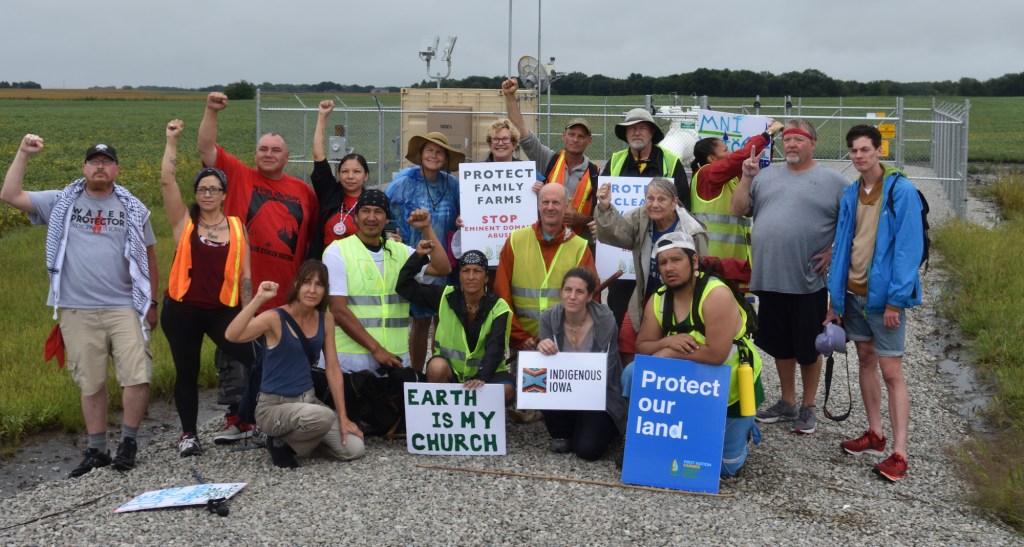
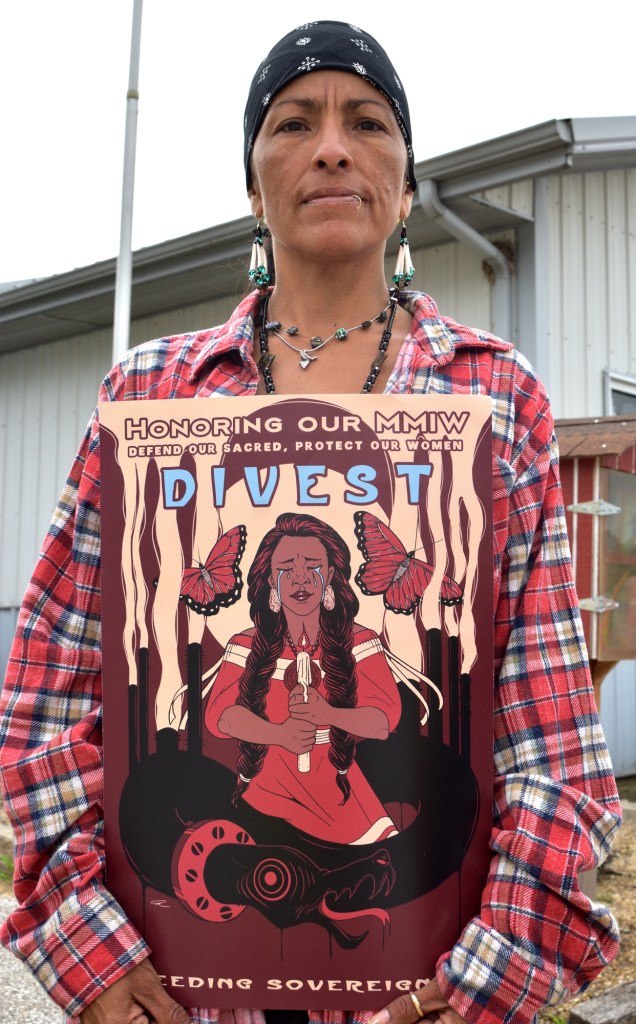
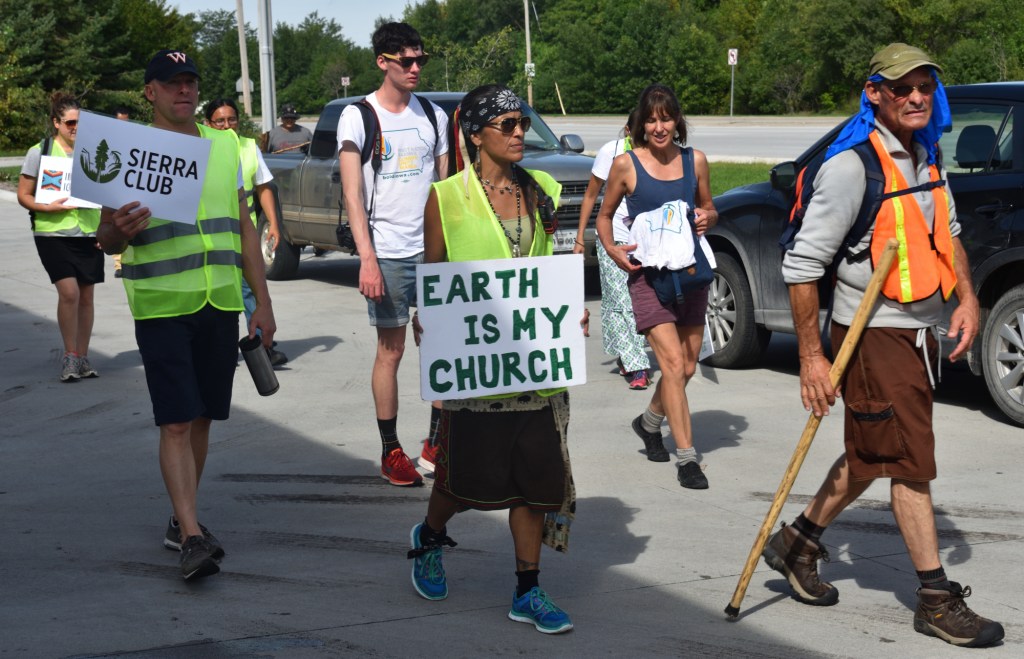
Native peoples continue to be present to protect Mother Earth. The epidemic of Missing and Murdered Indigenous Women (MMIW) is associated with the “man camps” at the pipeline construction sites.

Posted in #NDAPL, civil disobedience, Indigenous, Native Americans, Uncategorized | Tagged | Leave a comment

Plenty Coups

Plenty Coups was the principal chief of the Mountain Crows of the Crow Nation and a visionary leader. He allied the Crow with the whites when the war for the West was being fought, because the Sioux and Cheyenne were the traditional enemies of the Crow. Plenty Coups had also experienced a vision when he was very young that non-Native American people would ultimately take control of his homeland, so he always felt that cooperation would benefit his people much more than opposition. He very much wanted the Crow to survive as a people and their customs and spiritual beliefs to carry on. His efforts on their behalf ensured that this happened, and he led his people peacefully into the 20th century.

https://en.wikipedia.org/wiki/Plenty_Coups

For most of my life I’ve felt immersed in a society that was in many ways foreign to me. Recent studies made me realize I was actually part of a different culture than most of my countrymen. Culture is about the arts, customs, achievements and social institutions of a society. The culture I was raised in was of rural Quakers. The rural part helped me appreciate nature and my relationships with Mother Earth. The Quaker part taught and encouraged my spiritual life, showed me the culture of my faith community. Taught me how to communicate with the Spirit and my responsibility to act on what the Spirit was telling me to do. Framed my values of peace and community. Not values of materialism, militarism, the “other”.

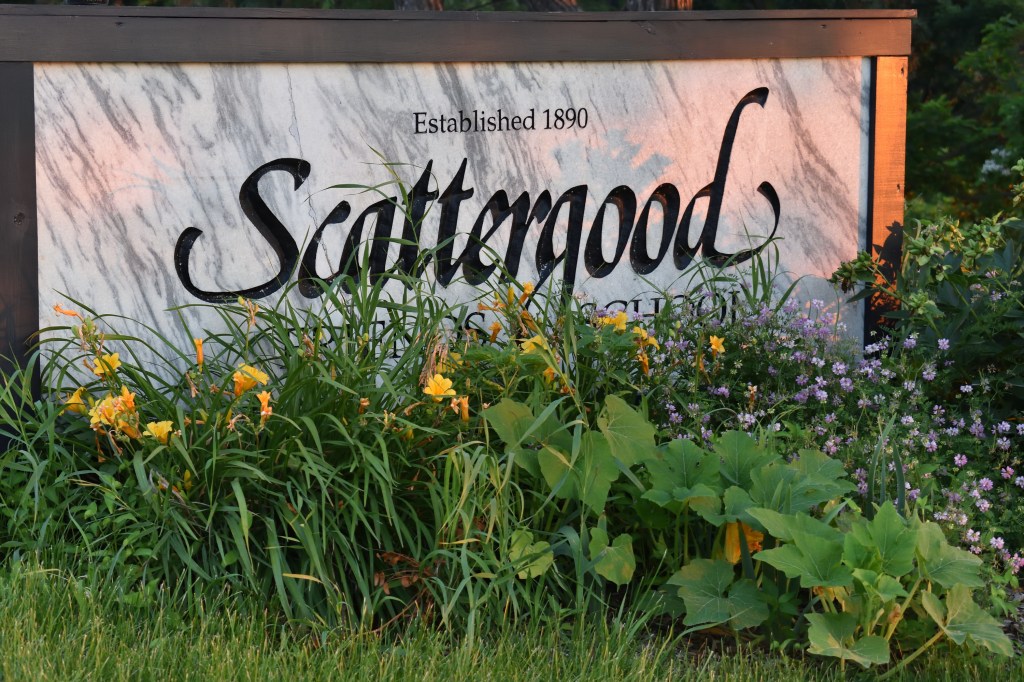
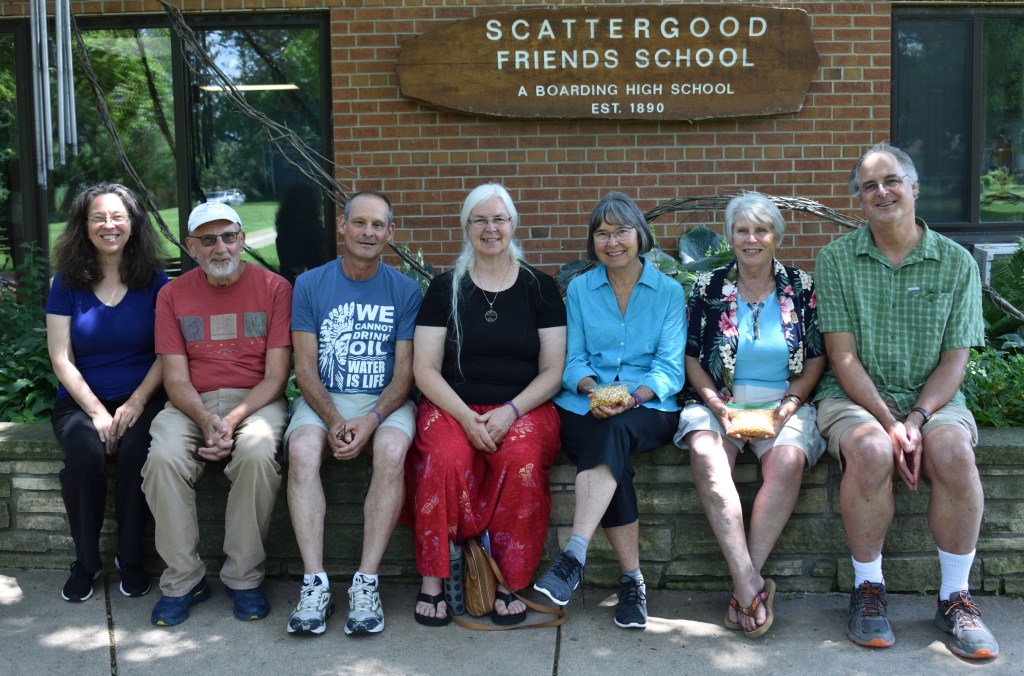
Attending the Quaker boarding high school, Scattergood Friends School and Farm, taught me more about living the faith based life of Quakerism. We knew we were learning things not taught in public schools. I struggled with my first test of faith there as I worked through what it means to stand for peace in a war-like society during the Vietnam War years.

All was not perfect within my faith community. My entire life I agitated against owning personal automobiles to little effect.

I am grateful, though, that I learned to honor the authority of God, or the Spirit, especially in these times of collapse of institutions and services that we have relied on. The fabric of our society will continue to unravel in the face of growing environmental chaos and the rise of militaristic and authoritarian governmental policies and leaders.

Many are feeling hopeless and discouraged with the increasing power and frequency of climate chaos and lack of response from all levels of government.

The mainstream culture built on continuous economic growth and fossil fuel energy is rapidly collapsing as the consequences of the burning of fossil fuels can no longer be ignored. The result is increasing alarm as people realize burning fossil fuels must cease now, but they don’t have a vision for alternatives.
I’ve been writing about “Radical Hope: Ethics in the Face of Cultural Devastation” by Jonathan Lear. He looked for a culture that had experienced cultural collapse to see if that would give us some ideas for how to deal with our own collapse. Knowing native nations in this country had been forced to collapse, he discovered how the last great chief of the Crow Nation, Plenty Coups, guided his people through their collapse.

SHORTLY BEFORE HE DIED, Plenty Coups, the last great chief of the Crow nation, reached out across the “clash of civilizations” and told his story to a white man. Frank B. Linderman had come to Montana in 1885 as a teenager, and he became a trapper, hunter, and cowboy. He lived in a cabin in the woods near Flathead head Lake and was intimately associated with the Crows.
Plenty Coups refused to speak of his life after the passing of the buffalo, so that his story seems to have been broken off, leaving many years unaccounted for. “I have not told you half of what happened when I was young,” he said, when urged to go on. “I can think back and tell you much more of war and horse-stealing. But when the buffalo went away the hearts of my people fell to the ground, and they could not lift them up again. After this nothing happened. There was little singing anywhere.

Jonathan Lear. Radical Hope: Ethics in the Face of Cultural Devastation (Kindle Locations 29-33). Kindle Edition.

I find the image of the hearts of a people fell to the ground so visionary. It looks like the hearts of the people in this country, this culture, have fallen to the ground and they can not lift them up again. It feels like after this nothing happened. Does it feel that way to you?

Humans are by nature cultural animals: we necessarily inhabit a way of life that is expressed in a culture. But our way of life-whatever it is-is vulnerable in various ways. And we, as participants in that way of life, thereby inherit a vulnerability. Should that way of life break down, that is our problem. The suggestion I want to explore in this chapter is that if our way of life collapsed, things would cease to happen. What could this mean? And there is another aspect to our question that I want to explore: What would it be to be a witness to this breakdown? Plenty Coups seems to have become entangled in his culture’s history in an extraordinary way. Obviously, he lived through a period in which the Crow abandoned their traditional nomadic-hunting hunting way of life. But he seems to have become a spokesman from inside that way of life for the death of that way of life. What gave him such authority to speak for the way of life? Did he assume responsibility for it? And if so, how? In virtue of what did he become the designated mourner?

We live at a time of a heightened sense that civilizations are themselves vulnerable. Events around the world-terrorist attacks, violent social upheavals, and even natural catastrophes-have have left us with an uncanny sense of menace. We seem to be aware of a shared vulnerability that we cannot quite name. I suspect that this feeling has provoked the widespread intolerance that we see around us today-from all points on the political spectrum. It as though, without our insistence that our outlook is correct, the outlook itself might collapse. Perhaps if we could give a name to our shared sense of vulnerability, we could find better ways to live with it.

Jonathan Lear. Radical Hope: Ethics in the Face of Cultural Devastation (Kindle Locations 75-85). Kindle Edition.

Next I plan to write what Jonathan Lear learned about how Plenty Coups found a way for his people and culture to adapt to the devastation of their culture that occurred when the buffalo were destroyed.

Posted in climate change, Indigenous, peace, Quaker, revolution, Uncategorized | Leave a comment

Radical Hope Today

There have been a few times when praying and studying have crystallized a vision from what had been disconnected thoughts and ideas. I like the visual of “connecting the dots”.

About forty years ago an image of my beloved Rocky Mountains hidden in a cloud of smog crystallized my unease with the idea of a nation of automobiles, and made it clear I could not own a car myself. I remember feeling a little apprehensive about how to make that work, but everything needed to do so came about effortlessly in its own time, often illuminated by the Inner Light (i.e. by the Spirit).

I’ve been learning about the idea of cultural shift recently. Looking back, being led to live without a car represented a cultural shift for me. I felt I had moved from a “car” culture, to a “no car” culture. That cultural divide likely contributed to my inability to convince anyone in the “car” culture to give up their automobile.

Part of being in the “no car” culture made me sensitive to the environmental impacts of fossil fuel mining and use. Every time I looked at cars, that triggered, again, the vision of our world enveloped in smog and all the other harmful effects of greenhouse gases. But catalytic converters hid the toxic exhaust from those in the “car” culture. And people did not like being reminded of that.
For decades there were few signs of the damage being done to Mother Earth. The ocean waters helped compensate by absorbing huge amounts of carbon dioxide. One cost of that was increasingly acid water which destroyed coral reefs and dissolved the calcium shells of much sea life.

The many harmful effects of increasing greenhouse gases are becoming increasingly apparent. We can no longer ignore the damage being done. Even if our social, economic and political systems were working well, they can not for much longer. They are being overwhelmed by climate chaos, which is rapidly worsening. Increasingly frequent and severe storms, flooding, precipitation, drought, heat and fires are already causing more damage and disruption than communities can recover from. There will be increasing violence and civil unrest as people desperately search for food, water and shelter. We are moving into cultural collapse

What do we do now?

Jonathan Lear looked for an answer by researching a culture that did collapse, and what happened after. He writes about what he learned in “Radical Hope: Ethics in the Face of Cultural Devastation”. The book tells the story of how the Crow Nation dealt with the devastation of their culture. Can we adapt this story, these lessons, to find a way through our own cultural collapse? The ideas in this book have helped crystallize a new way of looking at our current condition.

SHORTLY BEFORE HE DIED, Plenty Coups, the last great chief of the Crow nation, reached out across the “clash of civilizations” and told his story to a white man. Frank B. Linderman had come to Montana in 1885 as a teenager, and he became a trapper, hunter, and cowboy. He lived in a cabin in the woods near Flathead head Lake and was intimately associated with the Crows.

Plenty Coups refused to speak of his life after the passing of the buffalo, so that his story seems to have been broken off, leaving many years unaccounted for. “I have not told you half of what happened when I was young,” he said, when urged to go on. “I can think back and tell you much more of war and horse-stealing. But when the buffalo went away the hearts of my people fell to the ground, and they could not lift them up again. After this nothing happened. There was little singing anywhere.”
Jonathan Lear. Radical Hope: Ethics in the Face of Cultural Devastation (Kindle Locations 29-33). Kindle Edition.

Before going further, I think it is worth spending some thought and prayer on this.

“But when the buffalo went away the hearts of my people fell to the ground, and they could not lift them up again. After this nothing happened. There was little singing anywhere.”

Jonathan Lear. Radical Hope: Ethics in the Face of Cultural Devastation (Kindle Locations 29-33). Kindle Edition.

The way the buffalo went away was by the wanton, senseless slaughter of millions of them by White men. Buffalo were one of the basis of American Indian culture. Food, hide for clothing, blankets and tipis, and spirit. In a short span of time this culture ceased to exist.


The people could not lift their hearts up again.


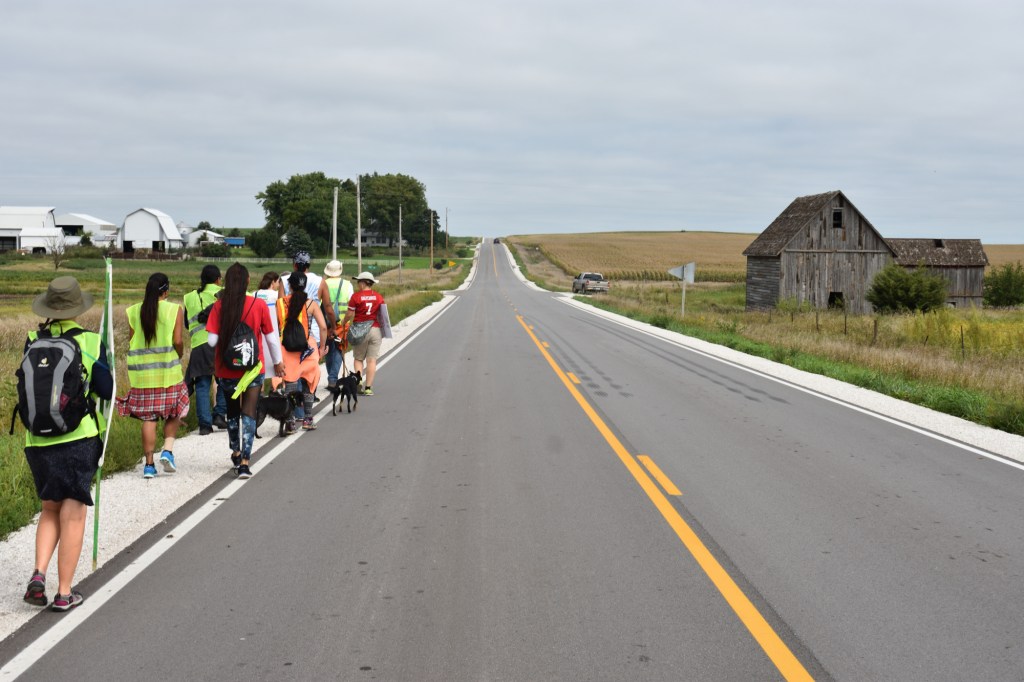
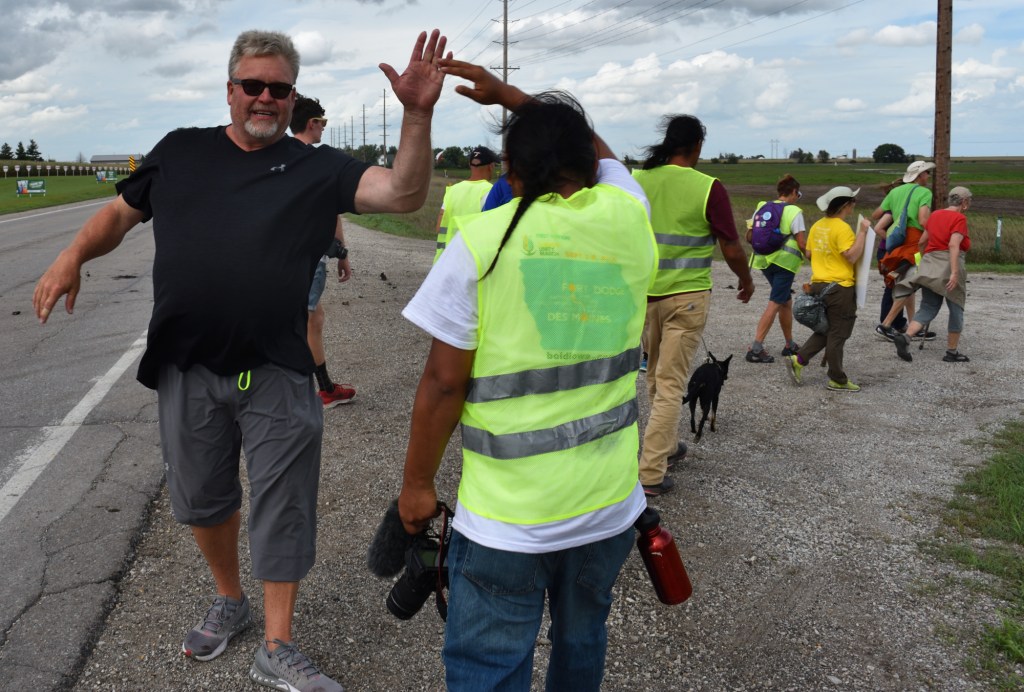
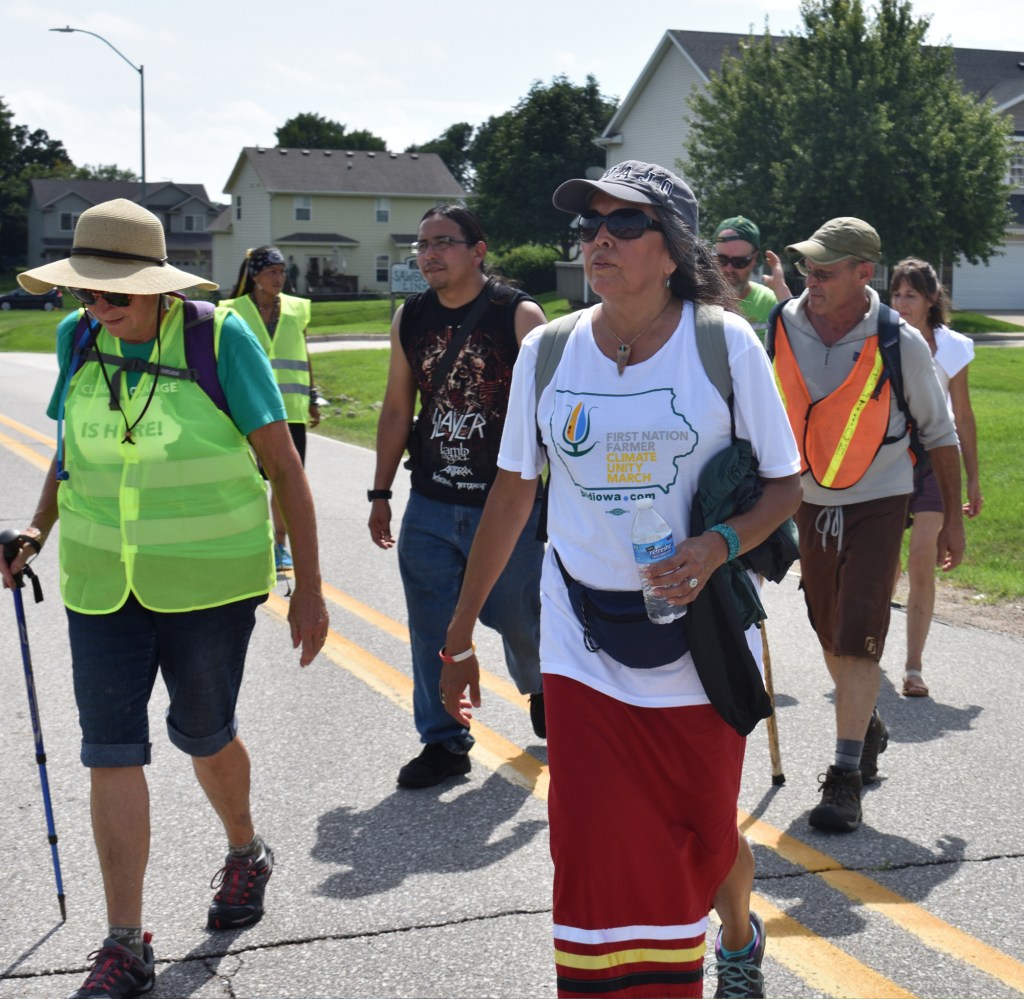
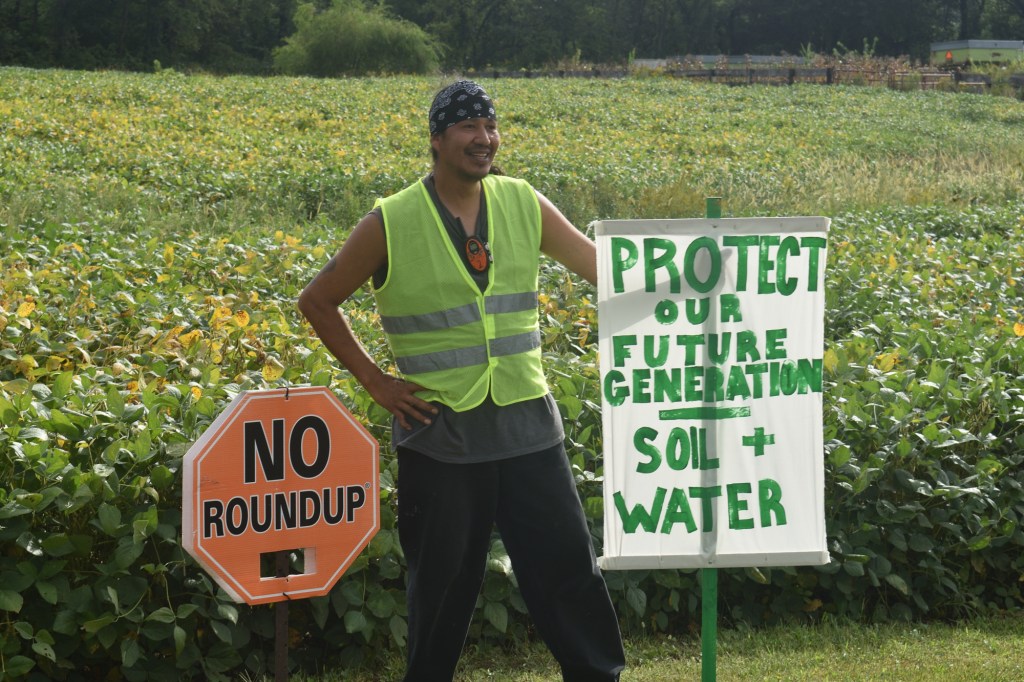
Posted in First Nation-Farmer Climate Unity March, Indigenous, Native Americans, Uncategorized | Tagged | Leave a comment

Mars and the Indianapolis Central Library

This story about the last photo taken by the Opportunity rover from Mars reminds me of using this same technique to photograph the main entrance of the Indianapolis Marion Country Central Library. This Mars photo is composed of 354 images.

This 360-degree panorama is composed of 354 images taken by the Opportunity rover’s Panoramic Camera (Pancam) from May 13 through June 10, 2018, or sols (Martian days) 5,084 through 5,111. This is the last panorama Opportunity acquired before the solar-powered rover succumbed to a global Martian dust storm on the same June 10. This version of the scene is presented in approximate true color.

Opportunity Legacy Pan (True Color) March 12, 2019
Opportunity rover panorama from Mars NASA/JPL-Caltech/Cornell/ASU

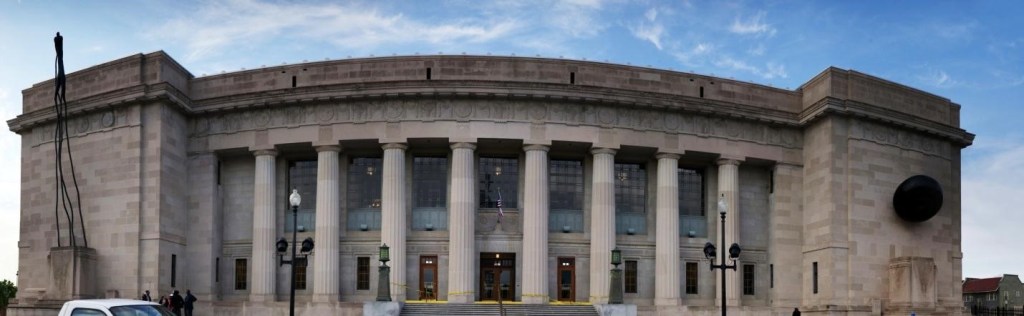
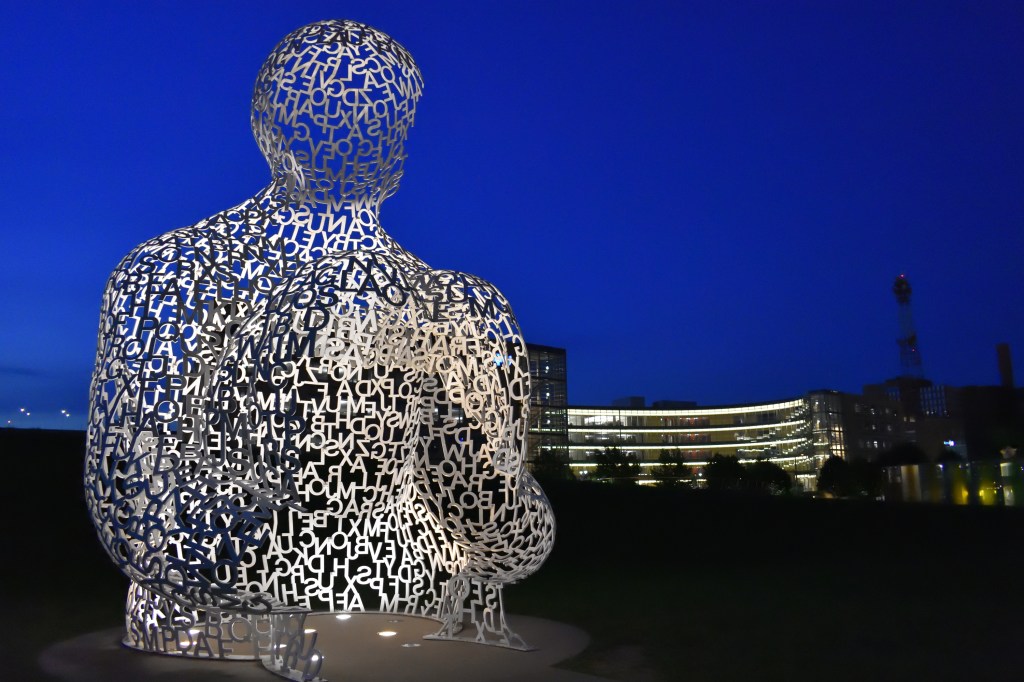
I created a similar panoramic view of the front of the Indianapolis Central Library. I wanted to photograph the new sculpture, thinmanlittlebird that was installed in 2009. I didn’t have a lens that could capture both parts of the sculpture at once. I had read about a Microsoft research project that would “stitch” individual photos together to form a composite whole. The first stitched photo is composed of 43 images. You can see thinman on the left, and littlebird on the right.

43 individual photos stitched together. Indianapolis Marion Country Central Library, 2009

This stitched image gives a better idea of how the photos are put together.

Stitched image, Indianapolis Central Library, 2009. STACKS: A History of the Indianapolis Marion County Public Library By S.L. Berry with Mary Ellen Gadski

The photo above was one of a number of mine that were published in the book STACKS: A History of the Indianapolis Marion County Public Library by S.L. Berry with Mary Ellen Gadski. Following is more of the story I wrote at the time.

April, 2011, the Indianapolis Marion County Public Library Foundation published the book STACKS, A History of the Indianapolis Marion County Public Library.  Just before the manuscript was sent to the printer, I received an email message from the coauthor, Mary Ellen Gadski, an architectural historian.  Apparently she had been trying to contact me about using some of my photographs in the book, but had trouble finding me.  I had already given the library permission to use the photos, but she wanted to let me know about their use specifically for the book, which was a pleasant surprise for me. 

More of the story follows from a letter I wrote to Peter Shelton, the sculptor of thinmanlittlebird.

Dear Peter Shelton,

I had the pleasure of meeting you, briefly, during the installation of thinmanlittlebird, where I was taking pictures of the process.   I have found thinmanlittlebird to be a fascinating subject, photographically.  While I took the photos on the enclosed DVD for my pleasure, I’m offering you copies, hoping you might enjoy some of them.  If you have any use for any of them, you have my permission to use them.   They are also a token of my appreciation of your work, and thanks.

The rest of this is my meandering thoughts, which you can, of course, ignore.

As the photos attest, I’ve spent a LOT of time with thinmanlittlebird, trying to use different lighting and weather conditions to provide different views of it/them (I tend to think of them separately).  When other people are around, I enjoy observing how they look at them, and what they say, and I’m glad the comments I’ve heard have all been positive, or at least questioning.   Some people ask me if I like them, and when I say I do, they then relate that they do, too.  Most often, I overhear kids ask their parents if the bird is real, and, more often than not, the parents say, yes (which supports my view that kids are more observant and curious than adults.  My work as a respiratory therapist at the local children’s hospital goes along with that).  Sometimes I’m asked why the bird is there, and I relate your story that birds will visit littlebird, so you thought you’d beat them to it, which everyone enjoys.   I relayed that to Randy Starks, at the library, and included my observation that the funny thing was that I have yet to see a bird land on littlebird, and he had the same experience.  I do often see birds peering over the roof at it.  I’ve heard littlebird described as a doughnut, a chocolate doughnut, a bagel and a flying saucer.  thinman is either referred to as a man or an alien.

Sculptured bird on littlebird

One of the challenges is fitting both pieces into a single picture.  The picture below accompanied one of the NUVO magazine articles about thinmanlittlebird.  It is a composite of 43 individual pictures.  As a black and white photographer from the old days, I really appreciate the contrast of the black finish of thinmanlittlebird against the granite background.

I must admit that littlebird has been a source of significant frustration.  I don’t, yet, have a long enough lens to get good close-ups of the bird, itself, which may be a good thing, because it has forced me to try to deal with littlebird as a whole.  The camera sometimes has trouble focusing on all the black, so I often have to manually focus.  The lighting contrast with the surroundings also makes it very difficult to capture detail without blanching out the surroundings.  And the symmetry makes it difficult to get a “different” look even when shooting from different angles.  I was hoping night shots might help, but they are even more problematic.  You may notice a number of photos taken in the rain—I had hoped that would help, both with additional texture on the surface and with less contrast with the surrounding light, but the results aren’t dramatically different.  I’ve deleted far more pictures of littlebird than of anything else I’ve ever done.  But in some ways that makes the few pictures I end up saving more rewarding than usual.  So, thank you for the challenge (and the frustration, not so much).

thinman has been a lot more “fun”.  Just the opposite of littlebird, different angles give totally different views.   It’s almost as if the “legs/arms” move as the camera changes position, and seem to twist themselves differently, even though that’s impossible.  I almost think of thinman as alive, sometimes.  When the light is right, the shadows it throws  against the granite wall are very interesting.

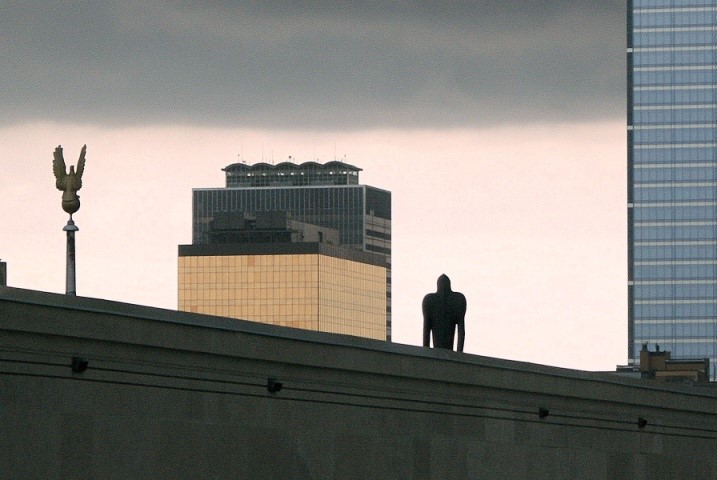
I think it was brilliant to extend the height above the roofline.  After sending Randy Starks the picture below, he wrote:  Thanks — that last one looks as if it could have been a frame from Blade Runner!  Glad to see that thinman is still standing guard.The installation of thinmanlittlebird was one of the most memorable days of my life.  I was very impressed with the grace with which you handled the accident with thinman’s arm.

Sincerely,
Jeff Kisling

I sent a copy of that letter to the major donor for the sculpture, and received a very nice reply.

Dear Jeff,
Your heartfelt letters to my husband Chris and me and to Peter Shelton and your superb photos of thinmanlittlebird are treasures.  We especially appreciate you exquisite eye for framing the sculpture and building as well as the quality of light and texture you captured so well.  Thank you for sharing your marvelous talent with us.
Warm regards,
Ann       

I also sent a copy of the letter to Bret Waller, head of the committee to choose the sculptor. He wrote:

Dear Jeff,
Many thanks for the disk of your great photos of thinmanlittlebird! And thanks, too, for your enthusiastic comments on the project. I’m sure Peter is delighted with both, as are we.
If you haven’t sent a disk to Ann and Chris Stack, I urge you to do so. They were major donors to the project and will be as pleased as we are to have these images that don’t just record appearances, but really interpret the sculptures.
Thanks, again, for the great images
Brett Waller


Posted in Arts, Uncategorized | Tagged | Leave a comment

DAKOTA 38

The day after Christmas, Dec. 26, 1862, President Abraham Lincoln ordered the largest execution in United States history — the hanging of 38 Dakota (Sioux) men.


The Dakota 38 Plus 2 Memorial Ride is a ride that honors the 38 Dakota men who were hung in Mankato in December of 1862. The ride began from the vision of a Dakota elder and warrior. In this vision riders would ride from Crow Creek, SD to Mankato, MN. Ever since then the ride has continued to happen annually from the beginning year December 2005 to present collecting supporters and new riders along the way.

My name is Winona Goodthunder. My Dakota name is Wambde Ho Waste Win, Eagle Woman with a Good Voice. I have ridden in this ride since 2006, the second year. I was in eighth grade when I started. As the years have gone by the riders that we’ve met every year have become a part of a new kind of family. We are all different even though we are all somehow related. Those of us who are from the Lower Sioux region are used to different types of living than those who come from Canada, Nebraska, South Dakota, and other parts of the world. The differences that we have are forgotten when we come to this ride. We get up early in the morning to get our horses ready together. We ride all day together, and we eat together at night. It is then that our differences merge and we teach each other. The thing that seems to bind us the most is the fact that we can laugh. Humor may not be what is expected on a memorial ride, but it is encouraged for it is stressed that this ride is for forgiveness. Although our group goes only for the last four days it is enough to establish that sense of family amongst each other. It is from these riders that I’ve learned most about my culture. I have read books, but they cannot foster the feeling that one gets when they are living in an experience such as the ride.

Winona Goodthunder

In the spring of 2005, Jim Miller, a Native spiritual leader and Vietnam veteran, found himself in a dream riding on horseback across the great plains of South Dakota. Just before he awoke, he arrived at a riverbank in Minnesota and saw 38 of his Dakota ancestors hanged. At the time, Jim knew nothing of the largest mass execution in United States history, ordered by Abraham Lincoln on December 26, 1862. “When you have dreams, you know when they come from the creator… As any recovered alcoholic, I made believe that I didn’t get it. I tried to put it out of my mind, yet it’s one of those dreams that bothers you night and day.”

Now, four years later, embracing the message of the dream, Jim and a group of riders retrace the 330-mile route of his dream on horseback from Lower Brule, South Dakota to Mankato, Minnesota to arrive at the hanging site on the anniversary of the execution. “We can’t blame the wasichus anymore. We’re doing it to ourselves. We’re selling drugs. We’re killing our own people. That’s what this ride is about, is healing.” This is the story of their journey- the blizzards they endure, the Native and Non-Native communities that house and feed them along the way, and the dark history they are beginning to wipe away.

This film was created in line with Native healing practices. In honoring this ceremony, we are screening and distributing “Dakota 38″ as a gift rather than for sale. This film was inspired by one individual’s dream and is not promoting any organization or affiliated with any political or religious groups. It was simply created to encourage healing and reconciliation.

Smooth Feather

My friends Foxy and Alton Onefeather live near Lower Brule, where the ride begins.

Detailed stories and resources are available for this history, sometimes referred to as the Dakota War of 1862 here: http://www.usdakotawar.org/

I have watched this video, “Dakota 38”, many times. My friend and former roommate from Scattergood Friends School, Lee Tesdell, teaches in Mankato, and has spoken about this history with me. Lee also spoke at one of our evening discussions during the First Nation-Farmer Climate Unity March.

Lee Tesdell speaks during First Nation-Farmer Climate Unity March evening program

The photography and, especially the story, are just excellent and very moving. I’ve been learning how trauma is passed from generation to generation. The events shown in the film “Dakota 38” occurred in 1862. “Today, all the people of the region continue to be affected by this traumatic event.” SUNKTANKA

Composers Jay McKay and Jay Parrotta spent three years fusing sound and visuals into a cinematic experience that takes the viewer onto the Northern Plains and through a relentless pounding blizzard. Sound has the ability to transport, and the mix of chants, drums and melody is spellbinding.

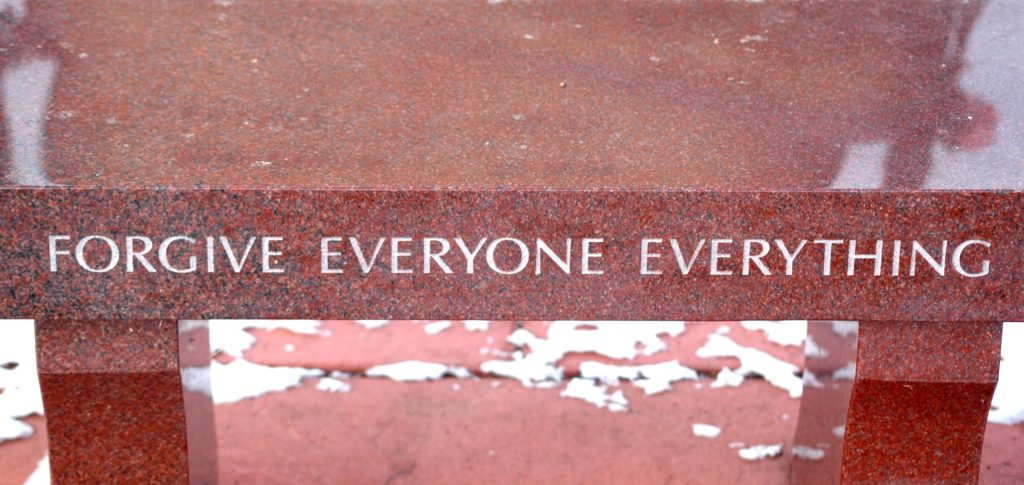
FORGIVE EVERYONE EVERYTHING is inscribed on a bench in Reconciliation Park, Mankato, Minnesota, where the ride ends. The photo of the memorial shows a list of the names of the 38 Dakota men who were all hanged at the same time in what is now Mankato, Minnesota. A raised wooden platform, with 38 nooses along the sides, was constructed. It is said nearly 4,000 people witnessed this, the largest execution in U.S. history, on December 26, 1862. As to who needs to be forgiven, there are many answers to that. At the heart of this is the genocide and land theft of the tribal nations by the white settler-colonialists. More specifically this history came about as the Dakota were forced into smaller and smaller areas of land, to the point they could not sustain themselves.

https://foursquare.com/v/reconciliation-park/4d86396a509137040938a75b

NAMES OF THE EXECUTED INDIANS.
#1 was to be TA-TAY-ME-MA but he was reprieved because of his age and questions related to his innocence

  1. Plan-doo-ta, (Red Otter.)
  2. Wy-a-tah-ta-wa, (His People.)
  3. Hin-hau-shoon-ko-yag-ma-ne, (One who walks clothed in an Owl’s Tail.)
  4. Ma-za-bom-doo, (Iron Blower.)
  5. Wak-pa-doo-ta, (Red Leaf.)
  6. Wa-he-hua, _.
  7. Sua-ma-ne, (Tinkling Walker.)
  8. Ta-tay-me-ma, (Round Wind) — respited.
  9. Rda-in-yan-ka, (Rattling Runner.)
  10. Doo-wau-sa, (The Singer.)
  11. Ha-pau, (Second child of a son.)
  12. Shoon-ka-ska, (White Dog.)
  13. Toon-kau-e-cha-tag-ma-ne, (One who walks by his Grandfather.)
  14. E-tay-doo-tay, (Red Face.)
  15. Am-da-cha, (Broken to Pieces.)
  16. Hay-pe-pau, (Third child of a son.)
  17. Mah-pe-o-ke-na-jui, (Who stands on the Clouds.)
  18. Harry Milord, (Half Breed.)
  19. Chas-kay-dau, (First born of a son.)
  20. Baptiste Campbell, _.
  21. Ta-ta-ka-gay, (Wind Maker.)
  22. Hay-pin-kpa, (The Tips of the Horn.)
  23. Hypolite Auge, (Half-breed.)
  24. Ka-pay-shue, (One who does not Flee.)
  25. Wa-kau-tau-ka, (Great Spirit.)
  26. Toon-kau-ko-yag-e-na-jui, (One who stands clothed with his Grandfather.)
  27. Wa-ka-ta-e-na-jui, (One who stands on the earth.)
  28. Pa-za-koo-tay-ma-ne, (One who walks prepared to shoot.)
  29. Ta-tay-hde-dau, (Wind comes home.)
  30. Wa-she-choon, (Frenchman.)
  31. A-c-cha-ga, (To grow upon.)
  32. Ho-tan-in-koo, (Voice that appears coming.)
  33. Khay-tan-hoon-ka, (The Parent Hawk.)
  34. Chau-ka-hda, (Near the Wood.)
  35. Hda-hin-hday, (To make a rattling voice.)
  36. O-ya-tay-a-kee, (The Coming People.)
  37. Ma-hoo-way-ma, (He comes for me.)
  38. Wa-kin-yan-wa, (Little Thunder.)
Posted in Arts, decolonize, Indigenous, Native Americans, Uncategorized | Leave a comment

Radical Hope: Ethics in the Face of Cultural Devastation

For a long time I’ve been trying to visualize how our (near) future might look. Even if our social, economic and political systems were working well, they can not for much longer. They are being overwhelmed by climate chaos, which is rapidly worsening. Increasingly frequent and severe storms, flooding, precipitation, drought, heat and fires are already causing more death and destruction than communities can recover from. There will be increasing violence and unrest as people desperately search for food, water and shelter. Millions more will be forced to leave their homes, adding to the global number of climate refugees. We are moving into cultural collapse. https://kislingjeff.wordpress.com/2019/12/19/radical-hope-preface/


As I was about finished with this post, I came across the following, that I hope we keep in mind. The reason I wanted to write about “Radical Hope” is because it suggests a positive way forward, instead of giving in to fear.

“Climate fear is turning into a new religion (because what is religion other than a set of behavioral rules we obey because we believe they will make us right in our own eyes, and perhaps those of others and/or a god?) with a brand-new set of 10 commandments: Thou shalt not eat meat or animal products, thou shalt not fly, thou shalt not use any mechanized transportation, thou shalt not have a child – that we then use to persecute any we perceive to be heretics with the zeal of the Spanish Inquisition.

If there is any trend I am most discouraged by this past year, it is this. I used to fear that apathy could doom us – now, I fear that it is our fear that will.

Katharine Hayhoe in The high and low points for climate change in 2019 by Bud Ward, Yale Climate Connections, Dec. 11, 2019

Jonathan Franzen wrote an essay in the New Yorker that resulted in a lot of discussion.

If you care about the planet, and about the people and animals who live on it, there are two ways to think about this. You can keep on hoping that catastrophe is preventable, and feel ever more frustrated or enraged by the world’s inaction. Or you can accept that disaster is coming, and begin to rethink what it means to have hope.

What if We Stopped Pretending the Climate Apocalypse Can Be Stopped? by Jonathan Franzen

James Allen recently wrote:

The problems before us are emergent phenomena with a life of their own, and the causes requiring treatment are obscure. They are what systems scientists call wicked problems: problems that harbour so many complex non-linear interdependencies that they not only seem impossible to understand and solve, but tend to resist our attempts to do so. For such wicked problems, our conventional toolkits — advocacy, activism, conscientious consumerism, and ballot casting — are grossly inadequate and their primary utility may be the self-soothing effect it has on the well-meaning souls who use them.

Most of us lack the stories that help imagine a future where we thrive in the midst of unstoppable ecological catastrophe. We have been propelled to this point by the myths of progress, limitless growth, our separateness from nature and god-like dominion over it.

If we are to find a new kind of good life amid the catastrophes these myths have spawned, then we need to radically rethink the stories we tell ourselves. We need to dig deep into old stories and reveal their wisdom, as well as lovingly nurture the emergence of new stories into being.

Pontoon Archipelago or: How I Learned to Stop Worrying and Love Collapse. By James Allen, originally published by Medium
June 18, 2019

Most of my life I have used the tools of “our conventional toolkits” and have found them “grossly inadequate.” I also agree that “we have been propelled to this point by the myths of progress, limitless growth, our separateness from nature and god-like dominion over it.” This is what I meant when I said capitalism has failed us. https://kislingjeff.wordpress.com/2019/12/23/cultural-collapse/

I think James Allen is correct when he says, “if we are to find a new kind of good life amid the catastrophes these myths have spawned, then we need to radically rethink the stories we tell ourselves. We need to dig deep into old stories and reveal their wisdom, as well as lovingly nurture the emergence of new stories into being.

In recent times I have come to believe more strongly in the importance and power of stories.

ALL THAT WE ARE IS STORY. From the moment we are born to the time we continue on our spirit journey, we are involved in the creation of the story of our time here. It is what we arrive with. It is all we leave behind. We are not the things we accumulate. We are not the things we deem important. We are story. All of us. What comes to matter then is the creation of the best possible story we can while we’re here; you, me, us, together. When we can do that and we take the time to share those stories with each other, we get bigger inside, we see each other, we recognize our kinship — we change the world one story at a time.

Richard Wagamese (October 14, 1955-March 10, 2017)
Ojibwe from Wabeseemoong Independent Nations, Canada

I was fascinated by the title of the book “Radical Hope: Ethics in the Face of Cultural Devastation” by Jonathan Lear. The book tells the story of how the Crow nation dealt with the devastation of their culture. Can we adapt this story, these lessons, to find a way through our own cultural collapse?

SHORTLY BEFORE HE DIED, Plenty Coups, the last great chief of the Crow nation, reached out across the “clash of civilizations” and told his story to a white man. Frank B. Linderman had come to Montana in 1885 as a teenager, and he became a trapper, hunter, and cowboy. He lived in a cabin in the woods near Flathead head Lake and was intimately associated with the Crows.

Plenty Coups refused to speak of his life after the passing of the buffalo, so that his story seems to have been broken off, leaving many years unaccounted for. “I have not told you half of what happened when I was young,” he said, when urged to go on. “I can think back and tell you much more of war and horse-stealing. But when the buffalo went away the hearts of my people fell to the ground, and they could not lift them up again. After this nothing happened. There was little singing anywhere.

Jonathan Lear. Radical Hope: Ethics in the Face of Cultural Devastation (Kindle Locations 29-33). Kindle Edition.

Following is the review of the book, found on Goodreads:

Shortly before he died, Plenty Coups, the last great Chief of the Crow Nation, told his story―up to a certain point. “When the buffalo went away the hearts of my people fell to the ground,” he said, “and they could not lift them up again. After this nothing happened.” It is precisely this point―that of a people faced with the end of their way of life―that prompts the philosophical and ethical inquiry pursued in Radical Hope. In Jonathan Lear’s view, Plenty Coups’s story raises a profound ethical question that transcends his time and challenges us all: how should one face the possibility that one’s culture might collapse?

This is a vulnerability that affects us all insofar as we are all inhabitants of a civilization, and civilizations are themselves vulnerable to historical forces. How should we live with this vulnerability? Can we make any sense of facing up to such a challenge courageously? Using the available anthropology and history of the Indian tribes during their confinement to reservations, and drawing on philosophy and psychoanalytic theory, Lear explores the story of the Crow Nation at an impasse as it bears upon these questions and these questions as they bear upon our own place in the world. His book is a deeply revealing, and deeply moving, philosophical inquiry into a peculiar vulnerability that goes to the heart of the human condition.

Goodreads “Radical Hope: Ethics in the Face of Cultural Devastation”
by Jonathan Lear https://www.goodreads.com/book/show/335357.Radical_Hope
Posted in climate change, climate refugees, immigration, Uncategorized | Leave a comment

Cultural Collapse 2

I’ve loved nature all my life, raised on farms in Iowa, and family camping trips to our National Parks that began at an early age, and continued since. Spending hours most days outside as I walked to work, not having a car, or ran for pleasure and fitness. Learning to pay close attention to the beauty around me by carrying my camera all the time.

Those experiences along with my studies of science, and the horror of experiencing voluminous clouds of smog in the days before catalytic converters all resulted in my lifelong interest and concern for Mother Earth. I hated the waste of the explosion of the number of cars and the miles of travel necessitated by very poorly designed cities. And the extensive and expensive infrastructure needed; roads, bridges, parking lots and garages.

Understanding fossil fuels are nonrenewable, I couldn’t/can’t believe we would wantonly burn them up, polluting the air, land and water in the process and leaving none for future generations.

It was easy to ignore all of this after catalytic converters removed the particulates from exhaust so it was no longer visible. But the heat and greenhouse gases (GHG) continued to pour out. And the environmental damage took years to become noticeable. Now it may be too late to stop, let alone reverse the damage.

Part of the problem is there is as much as a ten year delay between when the greenhouse gas is injected into the air, and when the heating effects are felt. Even if we abruptly stopped contributing greenhouse gases, the effects would continue for years.

Several other problems relate to feedback loops, where the harm being done has the effect of doing more harm. For example, as ice melts, it reflects less heat away from the earth’s surface. The increasing temperature this causes will melt more ice in a vicious cycle. Unfortunately there are a number of such feedback loops.

I’m just trying to explain that I have been praying, studying, thinking and writing about these things for many years. I’ve known we are heading for chaotic times for a long time. And wondering what we can do to prepare, although it has gotten to be a bit late for that. Wondering how we can adapt to an increasingly hostile environment. How we can respond to the breakdown of life as we know it, and at the same time maintain our humanity. Even better, how we can help others adapt. Provide the leadership that will be needed as what we know falls apart. Provide answers to the question we’ve heard again and again after environmental destruction, “what do we do now?”

I’ve been realizing the genius of this quote from Albert Einstein.

“We cannot solve our problems with the same thinking we used when we created them.”

Albert Einstein

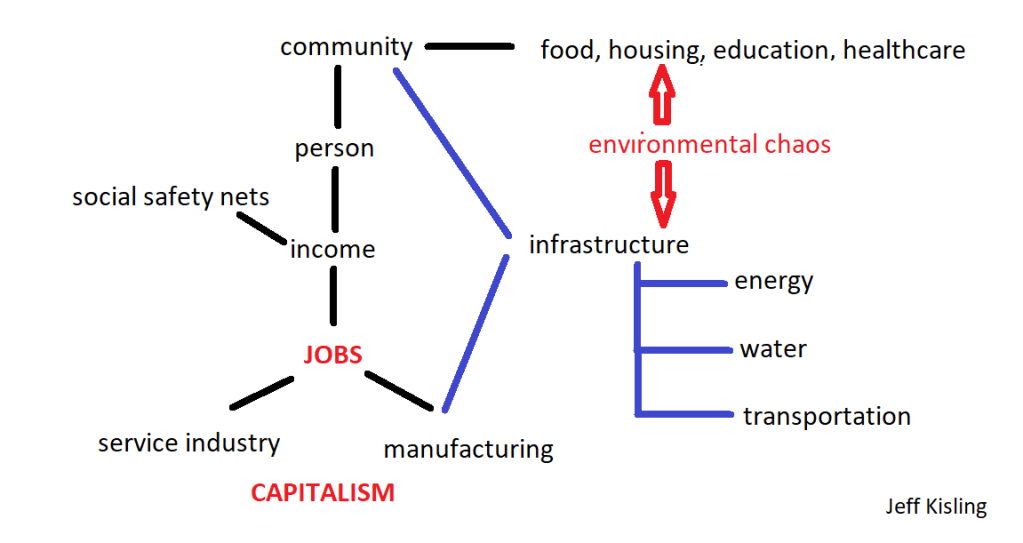
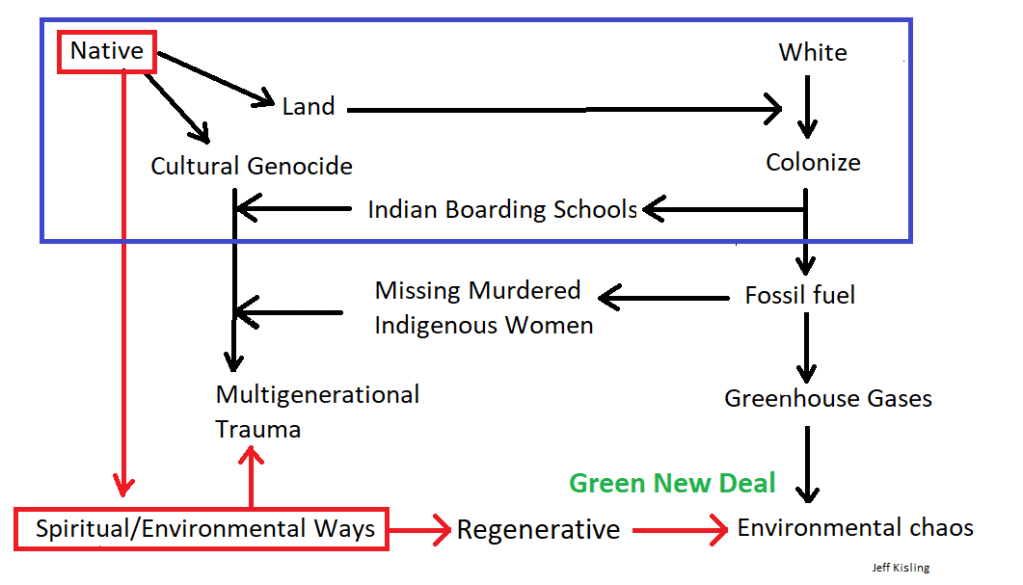
For example, we can no longer use capitalism as our economic model. Capitalism helped create our current crisis. Demanding an ever growing economy and seeing natural and human resources as simply inputs to profitable outputs. Valuing monetary gain about all else. I wrote about this in yesterday’s blog post, https://kislingjeff.wordpress.com/2019/12/23/cultural-collapse/ Since then I’ve started to work on a diagram of those ideas. Capitalism is failing due to lack of jobs with adequate pay and extreme wealth maldistribution.

Secondly, increasing environmental chaos will impact every aspect of our lives: food, housing, education, healthcare, and break down the infrastructures related to water and energy systems needed for both communities and for manufacturing.

For years I spent a lot of time and energy trying to convince others that we needed to reduce fossil fuel use, and what will probably happen if we don’t. Lately I have, instead, been thinking and studying a number of possible ways forward, which I plan to write about next.

Posted in climate change, Uncategorized | Leave a comment

Take Action – Protect Our Land – Paramount Network

Native American voices and perspectives are often missing when discussing issues that impact Native land. To fight this invisibility of Native peoples, Paramount Network and Yellowstone partnered with IllumiNative to share the story of the Fort Belknap Indian Community’s fight against the pipeline that threatens their land, water, and culture. The tribe, along with the Native American Right’s Fund (NARF), have filed to stop the construction of the Keystone Pipeline. Join Gil Birmingham from Yellowstone, as he meets and learns from the tribal leaders and changemakers who are fighting for more than their tribe- they are fighting for all of us.

Take Action | Protect Our Land | Paramount Network

Gil Birmingham, who plays Chairman Thomas Rainwater on Yellowstone, visited the Fort Belknap Indian Community in Montana to learn about the tribe’s efforts to stop the building of the Keystone XL Pipeline through their land. Follow along with his journey, and visit IllumiNative to learn more about how protecting the land and water affects all Americans: https://bit.ly/2lTUtzG

Take Action | Protect Our Land | Paramount Network

TRANSRIPT (partial)

I would like to see some time in the future that
we can all come to some kind of a mutual respect
and understanding for each other’s cultures,
for each other’s histories and stories.
(Peaceful Music)
Gil– God, this is just such beautiful
country out here.
[Andrew]- Yeah. I’m thinking about generations
down the road
protecting this land, you know, like our
former tribal leaders and making sure that
that uh, we’re looking out for our
grandkids and their, their grandkids
Gil: Several generations
[Andrew]: Yeah, that’s exactly right
Gil: You know, it parallels a character I play
in “Yellowstone”, Thomas Rainwater,
using the casino revenues to buy back as much
land as he possibly can because it’s the only
way you can assure protecting it for the way it,
it was before, you know, the colonists came in.
(laughter)
(country music)
[Andrew]: But yeah, you’ll have to make
a run for office, Gil.
Gil: Well hey, I guess I’ll have to.
[Andrew]: I’ll even campaign for you.
(laughter)
You know after this, I’m done with it.
[Andrew]: You never know these, these people
they’ll take a liking to you.
They may adopt you.
(laughter)
You know, after being on “Yellowstone”,
you know, you’ll be real popular.
Gil: You think I’ll be prepped?
[Andrew]: Oh yeah, you’ll be fine
Gil: Just playing one, now I can just be one?
[Andrew]: Yeah! Why not?
(country music)
[Andrew]: So here we are at the powwow
https://youtu.be/I2DDLOWmdPQ

(Native American chanting)
Gil: We made it.
(Native America chanting)
(Native American chanting continued)
[Andrew]- All this work that we do,
it ends up right here
with the people.
That’s why we fight and we stand up for
what’s right for the people that came before us.
For our land, our water, our everything.
Our people, our land, each other it’s,
it’s all we have left.
You know, and so
we’re gonna keep at it.
I appreciate you coming here.
Gil– I’ll support you in anyway we can.
[Andrew]- Thank you brother.

Posted in Indigenous, Native Americans, Uncategorized | Tagged | Leave a comment

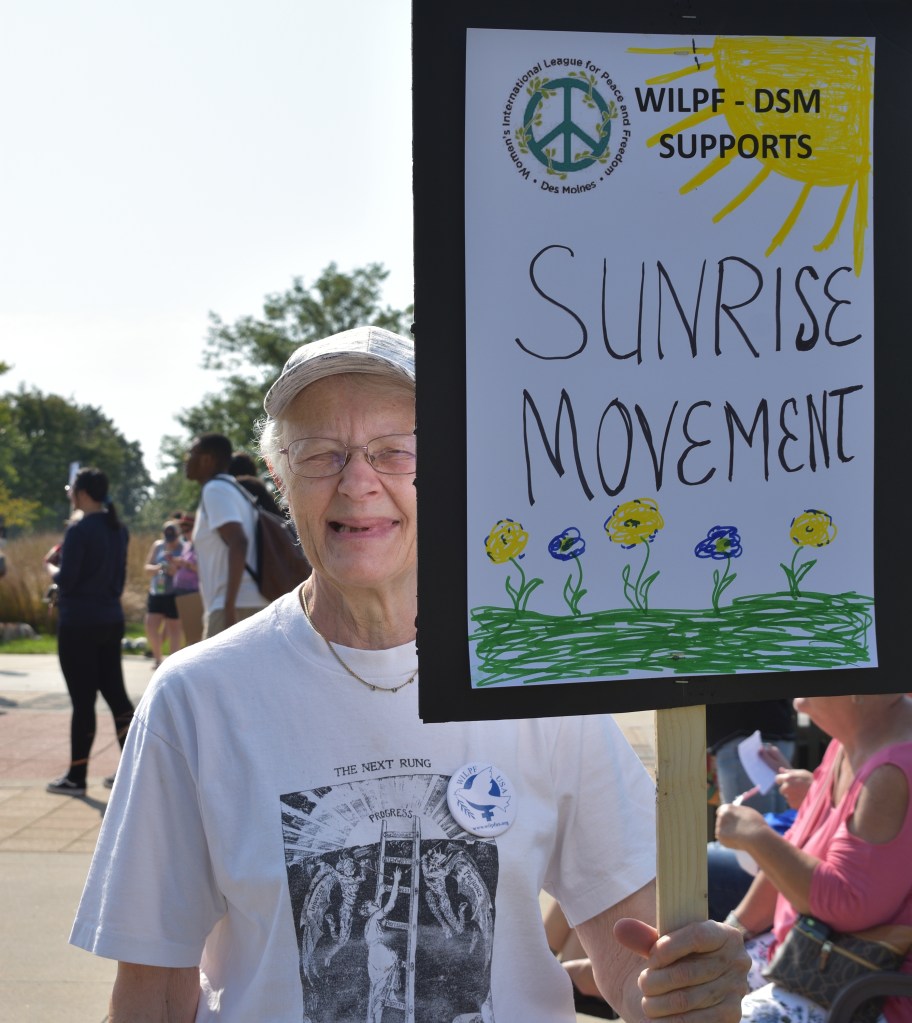
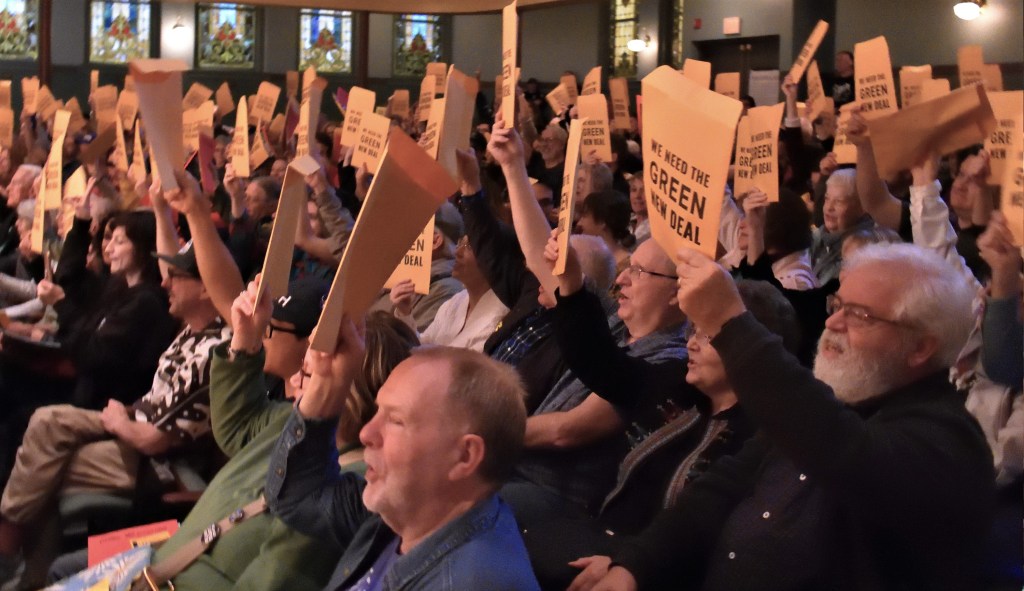
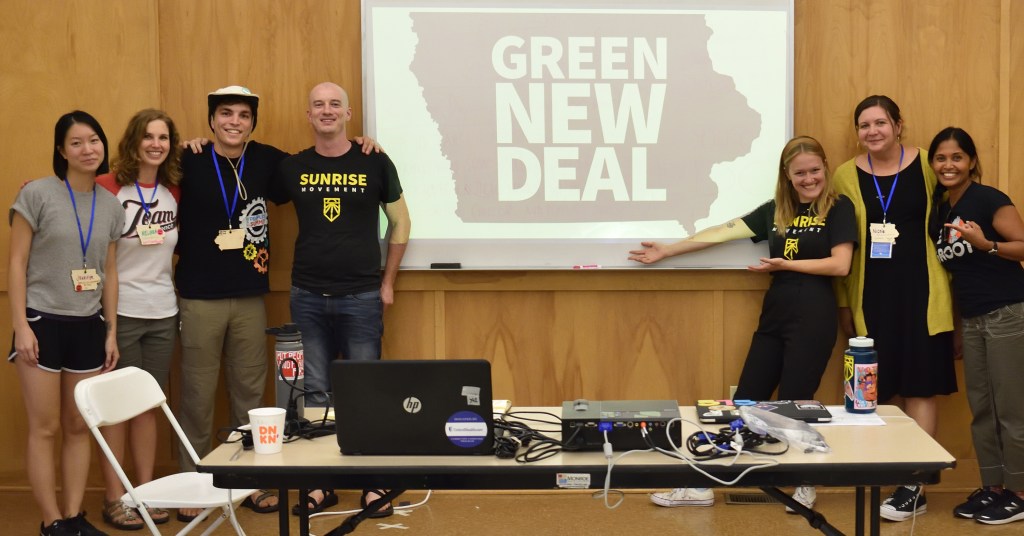
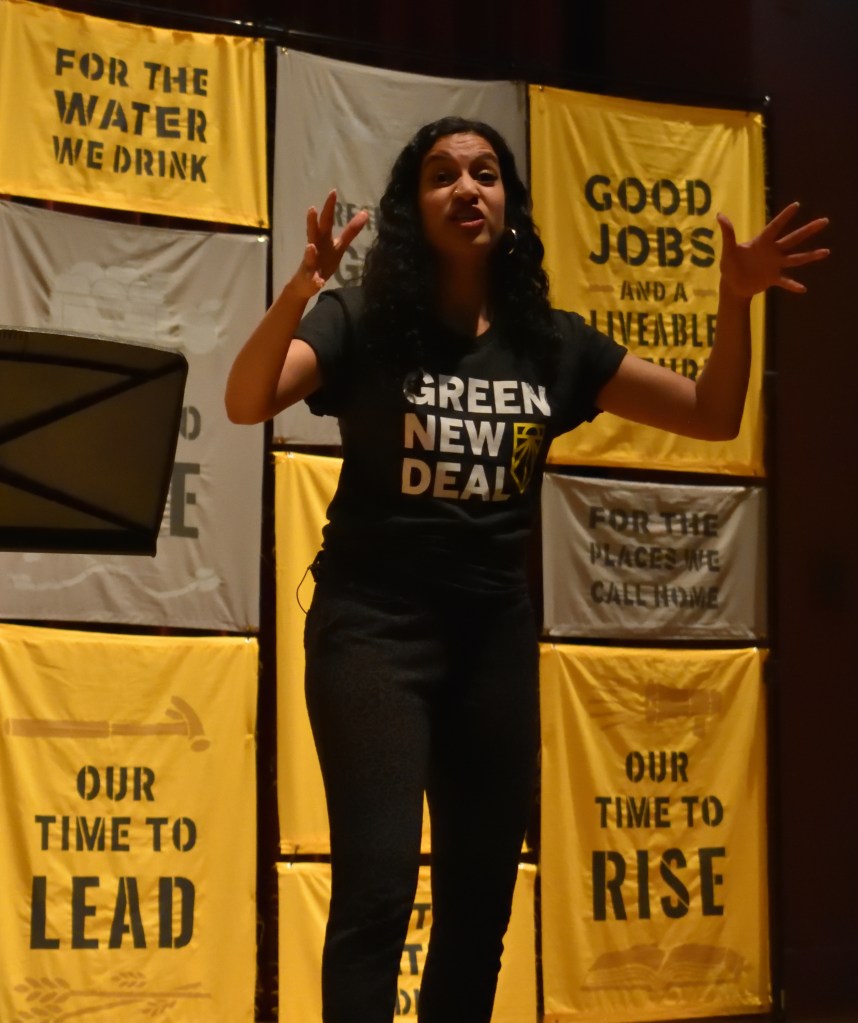
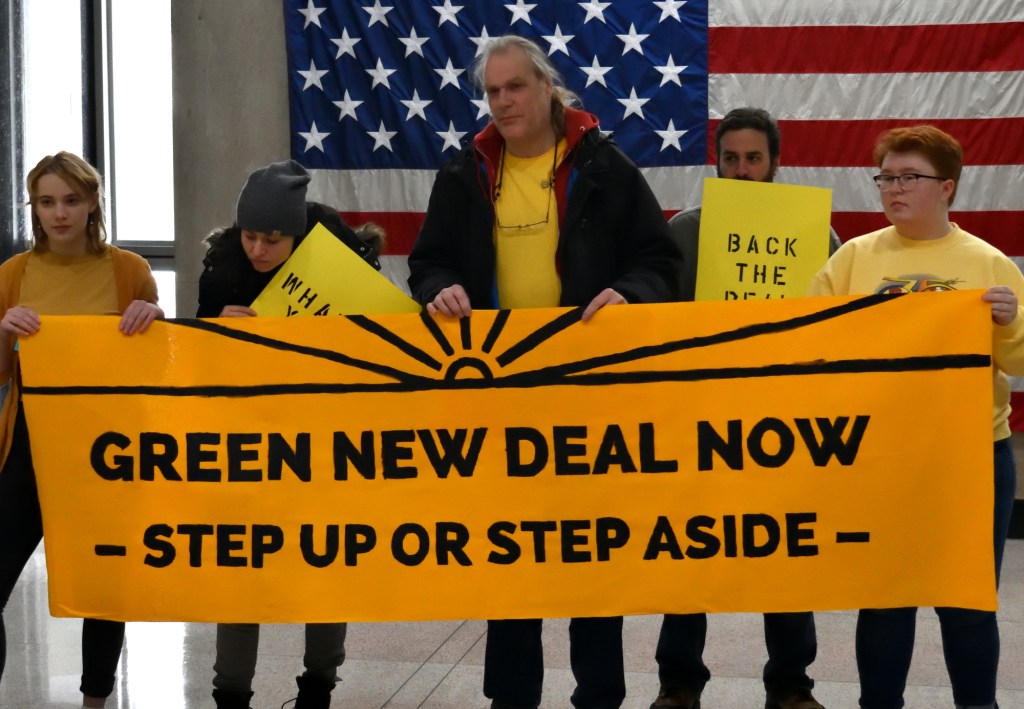
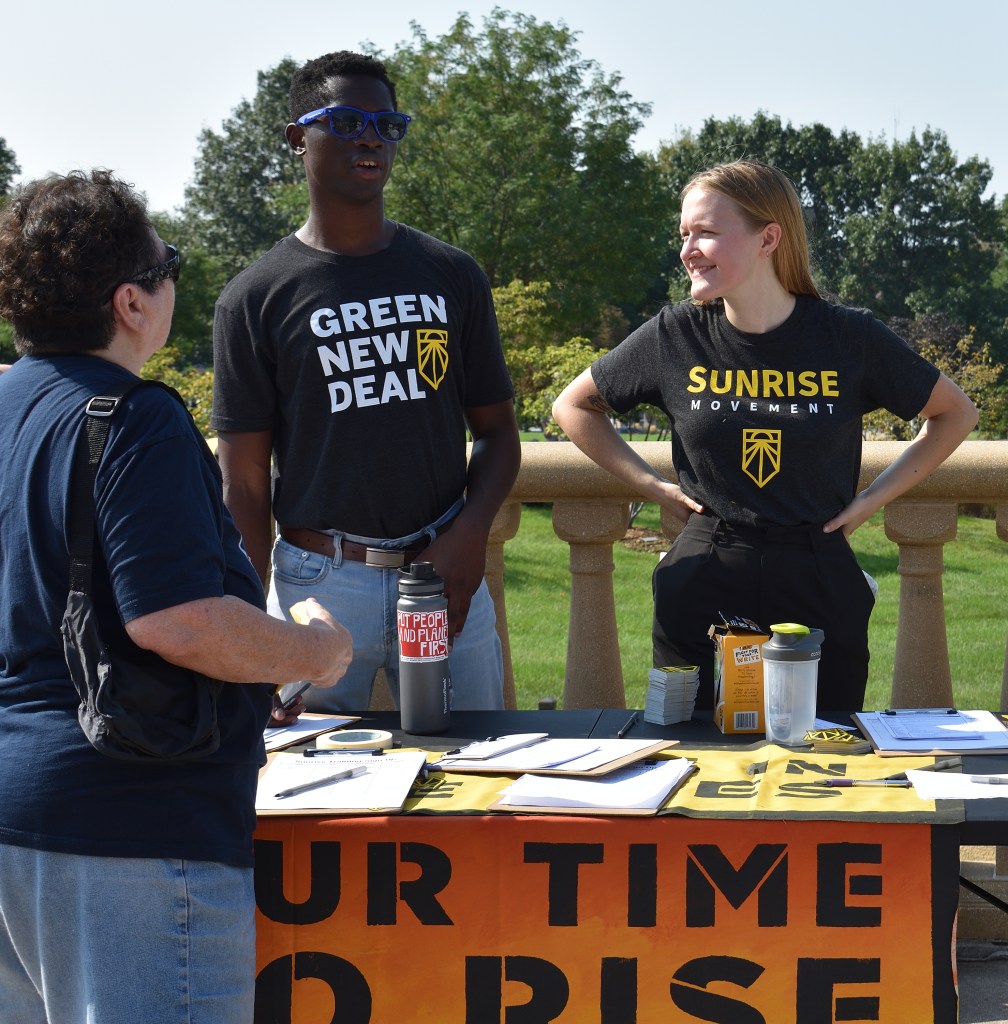
How to talk about the Green New Deal at the dinner table

So you’ve just walked in the door for a holiday dinner—your cousins are arguing, the air smells like baked cinnamon, and some combo of Fox, MSNBC or ESPN is playing in the other room. 

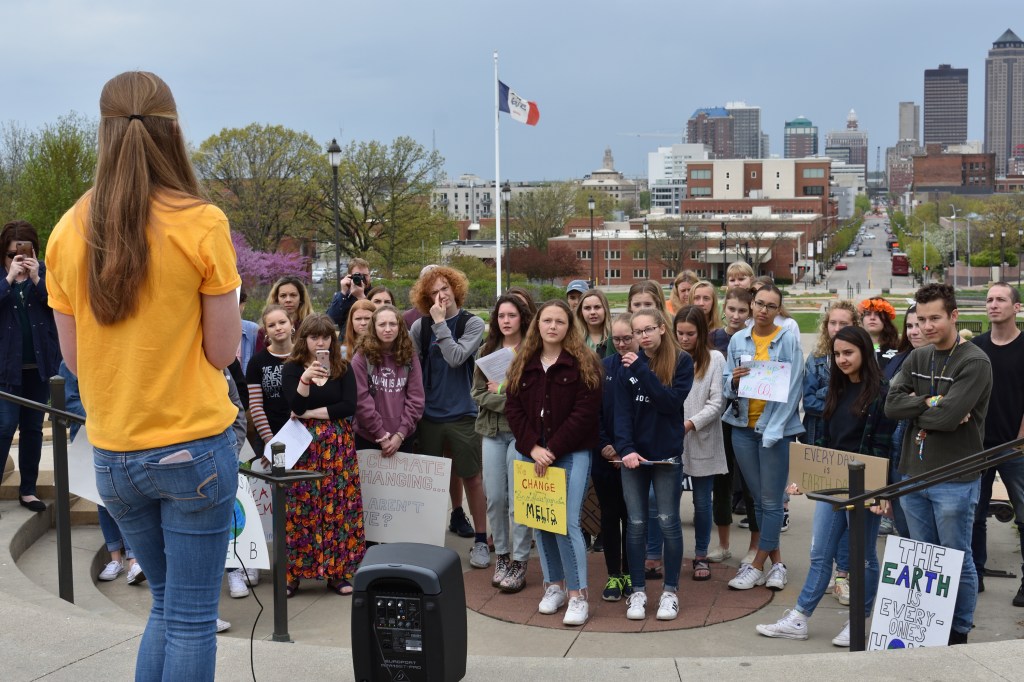
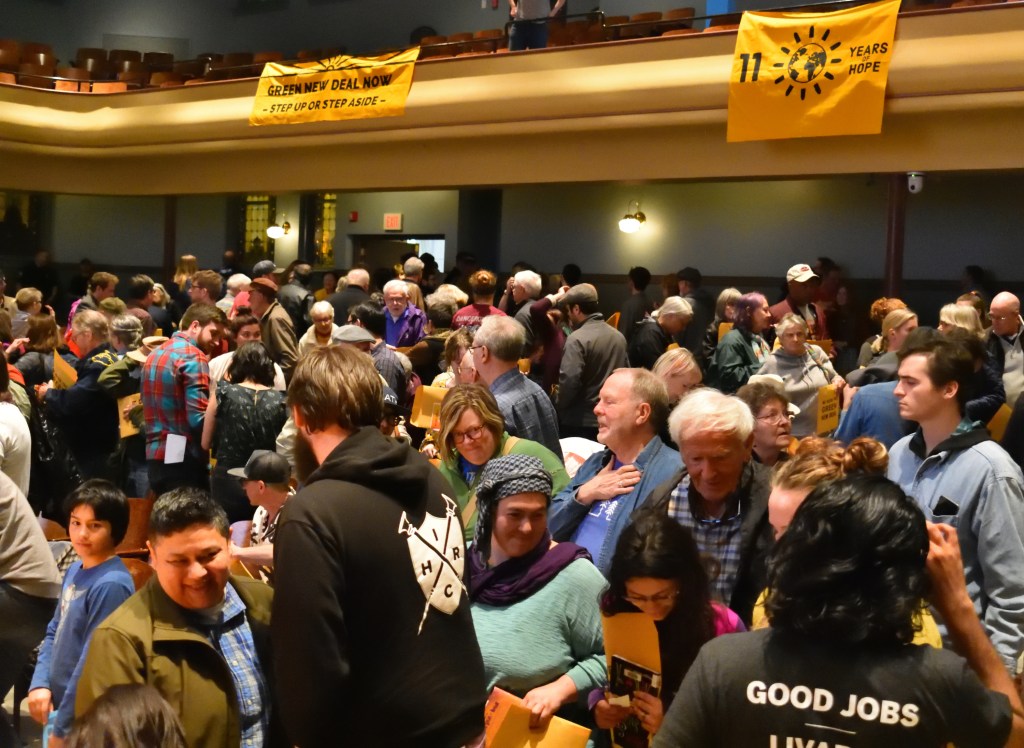
It’s the first time you’ve seen Auntie Z or Uncle P in months, and after asking about school or work, you’d like to talk about all the organizing you’re doing with Sunrise—but you’re not sure how. What’s this about a climate strike? And what the heck is a Green New Deal? 

Or maybe your relatives don’t want to “talk politics” at all. Maybe it’s the norm in your family for young people to stay quiet while the adults do all the talking. 

No matter how comfortable your family is with talking about climate change or how familiar they are with a Green New Deal, here’s a conversational guide to help prepare you to talk about the Green New Deal with your family with confidence. At the end of the day you know your family best, so feel free to adapt and run with these suggestions.

Step 1: Open the conversation 

If your organizing with Sunrise hasn’t come up in your conversation and you want to introduce it, start by catching up with Aunt Z about her job, her kids, or what she’s been reading or watching lately. Union organizers call this “showtime”—a few moments to engage with your conversational partner about their life and yours, before launching into a more structured discussion. 

Don’t jump right into a blow-by-blow pitch for a new decarbonized economy, or describe the need for reparations from the Global North to the Global South—unless Aunt Z is already pretty down, you’ll risk overwhelming her or failing to connect before conversation has even begun. Save those talking points for later.

Step 2: “Read the room”- get a handle on your Aunt/Mom/Cousin’s key issues

No matter what your family currently thinks about the climate crisis, there are probably some changes that she’d like to see made in the economic, social, and political order. Understanding what those changes are is the first step to moving your Aunt, Uncle, or friend to understand the potential of a Green New Deal.

Ask your Aunt Z to identify three things she’d like to change about life in your city, state, or the U.S more broadly. Try and get her to answer specifically about issues or problems that she’d like to see fixed—and hear her out, no matter what the answers are!

Sample Conversation 

Q:  What are three issues facing people who live in Sacramento?

A:  Well, let’s just start with the traffic! We got stuck on the highway for 3 hours driving here. That’s the fault of all those techies in Silicon Valley—plus they’re driving real estate prices right up the wall. And, of course, Uncle B. is really struggling with his fibromyalgia and we really need to hire someone to take care of him full time  but we can’t afford that just now. Then there’s the homeless problem, I guess.

Don’t correct, reframe, or try to interrupt your conversational partner. Try your hardest to let your family member finish speaking and explaining themselves before adding any information to the conversation. Ask clarifying questions and hear them out. Resist making jokes at their expense or commiserating with any sympathetic family members (OK, boomer.)

It’s important to build trust between yourself and your conversational partner to be able to have a more-in depth conversation about both of your values.

Step 3: Reflect back the vision you’ve just heard

Try to reframe the concerns you’ve just heard in a way that identifies them as structural problems, but without language that alienates your family member—you know what works best. Try to avoid jargony, intellectual-sounding or blame-casting language. 

That stuff about building a society that averts climate catastrophe and cares for everyone, no matter the color of their skin or how much money they make? Those are our values. Talk about them! But don’t jump to offering a solution just yet.

Q:  So, it seems like the cost of rent and the influence of big tech billionaires are both on your mind, plus the broken medical system and our inefficient transportation system. Wow.

A:  Yeah, it’s so frustrating. But that’s just how it goes these days, you know. 

Be careful not to over-exaggerate your family member’s concerns—try to reframe them in a careful way that emphasizes your common values.

Step 4: Tell your story and introduce the Green New Deal

Finally—the part you’ve been waiting for. Only AFTER engaging with the first three steps is it time to frame the solution (the Green New Deal). Try telling a story or using personal details to introduce the resolution, and reference those values that we mentioned earlier. 

 For example, I would talk about:

 …..my Grandpa Luis, who relies on VA insurance to cover his diabetes medication and other personal care costs. I’d love for my grandfather to have someone to care for him full-time, so that my aunts and uncles don’t have to spend the night at his place. I’d love for all my baby cousins to be able to go to high school and then choose between college or job-training as they please—and I’d like for them to breathe clean air in a California that doesn’t give bail out big energy companies after they start devastating fires. I’d like my Cousin Leo, who just joined a union building $9,000/month condos in the Bay Area and saw his boss nearly impaled by a beam of steel on his first day, to gain airtight labor protections and bargaining rights protections while building homes that we can all afford to live in. I think all of this is possible in a ten year plan called the Green New Deal, which calls for America to create millions of jobs by investing in union construction jobs, health-care workers, and solar energy engineers, among other things. It’s a plan to end poverty and inequality in America while stopping the climate crisis. What do you think of that?

Step 5: Ask your aunt/ parent what they think

After sharing your vision of a Green New Deal, pause. Stop talking. Give them time for your words to sink in, and then ask your mom, Aunt, or cousin to respond. 

Q: What immediately strikes you about the story or details I’ve just shared? What do you think of that? 

Then, listen to what they’ve got to say. Remember, 70% of this conversation should be them speaking, and you listening, with minimal reframing on your part.

Step 6: Make time to answer questions—but give plenty of time for reflection

Your Aunt/parent/Uncle probably has a lot of questions. There are some talking points below to discuss the toughest ones (Ex: How will we pay for this? Do we all have to stop eating meat? What does a GND have to do with healthcare?) 

It’s OK if some of what they’d like to know is unanswerable! The GND is a 10-year plan to mobilize every aspect of American society to 100% clean and renewable energy by 2030, a guaranteed living-wage job for anyone who needs one, and a just transition for both workers and frontline communities.

The Green New Deal lays out where we need to go: to a just, caring society that averts catastrophic global climate change. 

But…it’s still under construction! People all over the country are experts in their own communities, and it’s up to all of us to come together, demand what we need out of a Green New Deal, and fill in the details for over the next decade. Your dining room table is the perfect place to start.

Step 7: Close out by asking to discuss this—again

Realistically, one conversation probably won’t be enough to convince your dad or Great-Aunt Tonia that we need a just transition of our energy, food, health and economic systems overnight (although it might be enough to sway your teen cousin). That’s ok! The point is that these are your family members—it’s not the last time you’ll see and spend time with them. 


Research has shown that a high number of people changed their minds about a political issue after engaging in a series of non-judgmental conversations [1]. Being able to talk through their fears, associations and assumptions about an issue led to participants’ shifted opinion of an issue.

This article draws from ACE’s structure for facilitating hard conversations from their Climate Conversations Report and Jane McAlevey’s How to Organize Your Friends and Family on Thanksgiving. The guide also owes inspiration to the Dream Defender’s The Underachievers toolkit. All are great resources to level up your holiday conversation!

[1] These scientists can prove it’s possible to reduce prejudice, Vox

Posted in #NDAPL, civil disobedience, climate change, Green New Deal, Sunrise Movement, Uncategorized | Leave a comment

Cultural Collapse

We are facing two major threats to our way of life, and quite possibly our survival.

  • Capitalism has failed because it has created unbelievable maldistribution of wealth, pushing millions into poverty. And at the same time ravages natural resources which are seen as sources of wealth instead of resources to be honored and protected for our own and future generations.
  • Multiple threats of environmental collapse are occurring more rapidly and significantly than anyone expected.

Capitalism

For many years I have been struggling to understand why our society allows life to be such a struggle for so many. Because it is a choice. A small fraction of our military budget, or subsidies to the fossil fuel industry would provide food, shelter and medical care for those in need.

Source: OMB, National Priorities Project

Recent study has led me to think of some things in terms of culture rather than society. Society refers to a group of people in a loosely organized community. Whereas culture is about the arts, customs, achievements and social institutions of a society.

The culture I was raised in was of small communities of people who lived near each other and spent a lot of time in each other’s company. People, not profits, were valued. Growing up in Iowa in the 1960s, people seemed happier, more tolerant, and much more equal economically. Although there was also unrest from the Vietnam War and the civil rights movement, that occurred within a culture that generally tolerated nonviolent protest and working for justice. Civil liberties were protected.

With a significantly smaller population and less automation in those days, there were jobs for almost everyone. Most people had enough income to meet their financial needs, but not much more. Many had gardens as part of their food supply, making them less dependent on earned income. There was little mechanization of farm work. Many people lived and worked in small towns. There weren’t such things as student loan or credit card debt, or bankrupting medical/drug costs. It was just becoming possible for people to begin to own automobiles. There was no Interstate highway system. People rarely flew in airplanes. No smartphones, Internet, virtual reality or even personal computers. No online shopping and services. No Facebook, twitter, Instagram. No bots or algorithms to manipulate how we view the world, pushing toward polarization. It is easy to forget how much has changed in such a short time. We have been living through a cultural shift.

This capitalistic economic system worked fairly well, especially for White males, when there were enough jobs paying adequate salaries. But millions of jobs disappeared as a result of automation, or moving jobs to countries with lower labor costs. People wanted to work, but the jobs disappeared. Unemployment statistics are deceiving because they don’t include those who have given up looking for work.

Our culture has failed to come up with alternatives. The root cause of much of this change has been the failure of our culture to maintain its social contract, which was to provide each family or person with enough money and resources for adequate food, water, shelter, education and healthcare in exchange for work.

It is a moral failure to require money for goods and services, when more and more people no longer have jobs to earn that money.

As a result of that broken contract, of the failure of capitalism, what has developed over the past couple of generations is a culture of increasing isolation, loneliness, poverty and hopelessness. Many don’t have a supportive family or hope for a better future.


Environmental Collapse

The second challenge to our culture is our rapidly deteriorating environment and chaos from fires, heat, drought and storms. The resulting damages are destroying lives and infrastructure. Even if our culture had been functioning well economically, socially and politically, death and destruction from worsening environmental devastation is going to be overwhelming. Those systems will (continue to) collapse.


Cultural Collapse

With this post and those of the past several days, I’ve been trying to articulate how I see our present condition, in preparation for a discussion of the book, Radical Hope: Ethics in the Face of Cultural Devastation by Jonathan Lear. The book is about how we face the possibility that our culture might collapse.

Posted in civil disobedience, climate change, peace, Uncategorized | Tagged | Leave a comment