Indigenous Rights and Environment Rights are Intrinsically Intertwined

[DISCLAIMER: I am blessed to have native friends. I have been learning all I can from them, and doing a lot of research on many things related to the history and outlook of Indigenous cultures, including not only spirituality and ways of seeing the world, but also of oppression and genocide. There is an underlying principle in justice work that those who suffer oppression should not be asked to teach others about that oppression. More bluntly, White people should be working among White people. I take responsibility for errors I make as I learn and write. I would like to check with Indigenous friends about many of these things, but that is often not appropriate. What is appropriate is to listen and learn in any way I can. This is an important time for White people to learn more from Indigenous cultures, so we can help other White people learn and support Indigenous ways to heal Mother Earth, among many other things.]

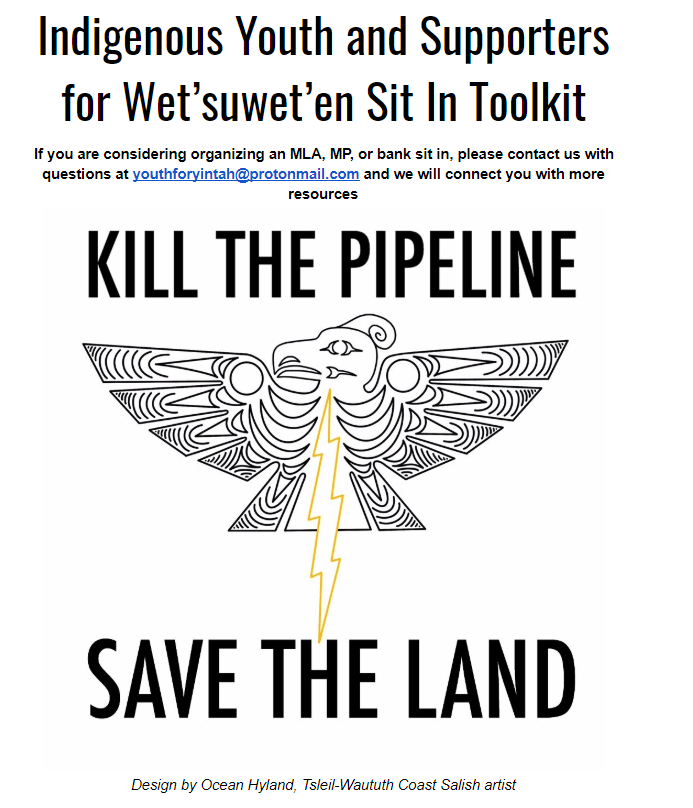
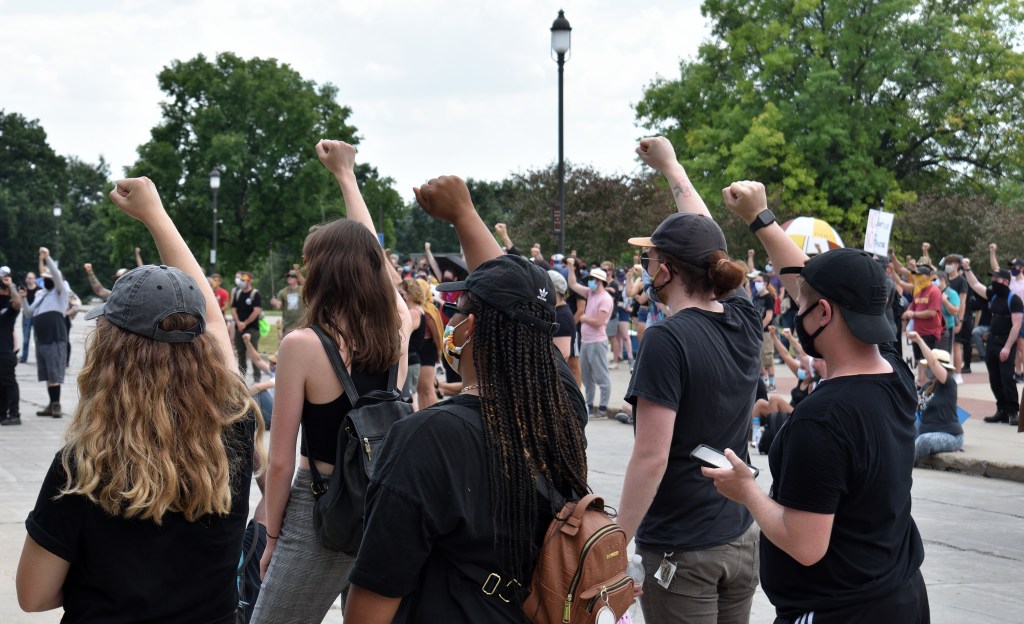
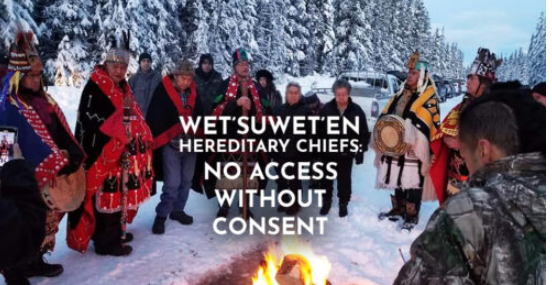
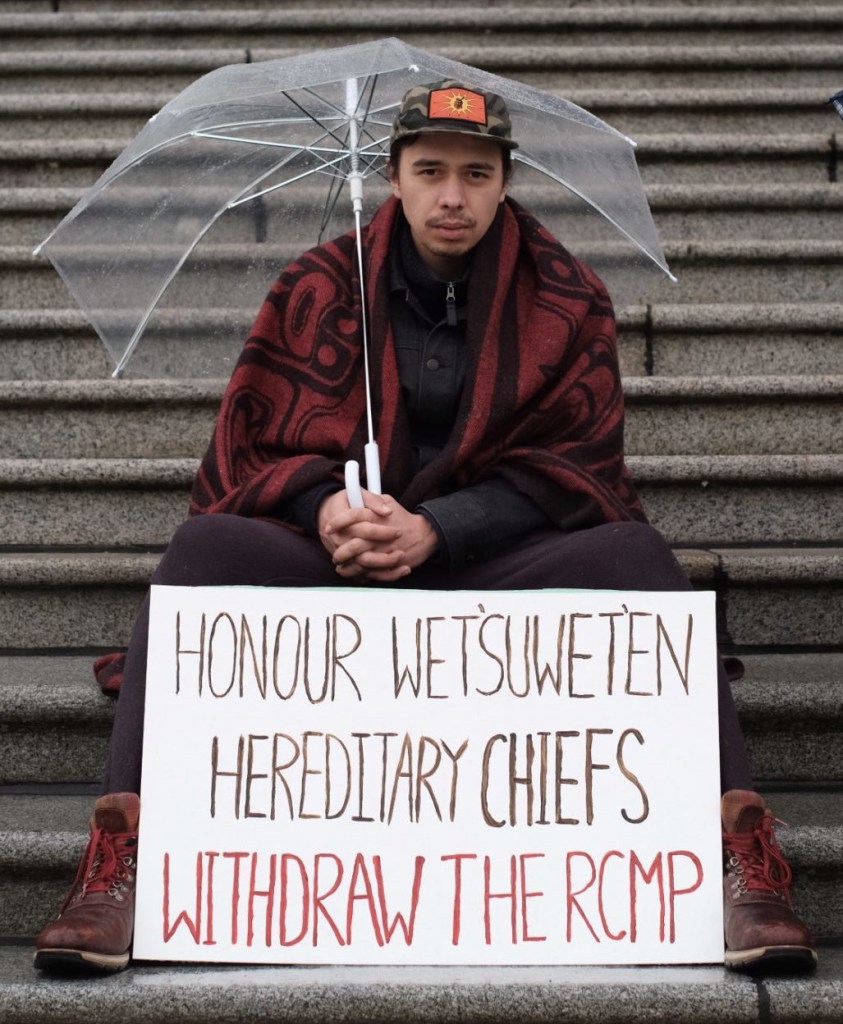
The title of this blog post is by Kolin Sutherland-Wilson, speaking as Indigenous youth rallied in front of the British Columbia Legislature building February, 2020. (https://kislingjeff.wordpress.com/2020/07/12/the-tower/). He was speaking about the RCMP raids on Wet’suwet’en territory in British Columbia.

The same RCMP, that all throughout this country vilify criminalized and dismantled our governance systems in order to facilitate extractive industries and settlement on our territories and that is the legacy, the exact same colonial legacy that we are seeing play out again what’s happening with the Wet’suwet’en.  This is the front line and if we are going to reverse the course of colonialism and genocide if we are going to start building relationships and good faith between peoples, if we are to start upholding each other’s laws,  if we are build a better future in which we have the chance to protect our territories, protect the waters, to stop the extractive processes that threaten our climate.

Indigenous rights and environmental rights are intrinsically intertwined within this country. You can’t separate them. They are both so intrinsically intertwined because for people, indigenous peoples like many of the young indigenous peoples that are standing here with me, that are holding the legislature, our culture, our language, our identity, our history, everything is derived from the land that our ancestors have lived on for centuries. Our knowledge is derived from thousands of years of experiences, of lifetime’s that have been handed down through stories telling, oral history, through laws, through trials, through tribulations, through great catastrophic events, to great victories, We have been here for so long, maintaining these same territories. Like Wet’suwet’en law, many of our laws compel us to protect those territories and so when we stand up for the Wet’suwet’en, we’re standing up for all of our futures. Like a lot of us are saying, a victory for the Wet’suwet’en is a victory for all of us. (see https://youtu.be/JRLDYDWxVsE)

Kolin Sutherland-Wilson at the British Columbia Legislature

The recent Dakota pipeline decision is a part of a broader movement for decolonization that seeks to restore land to Indigenous people.

The recent Dakota pipeline decision is a part of a broader movement for decolonization that seeks to restore land to Indigenous people. The U.S. legal system from the Supreme Court on down delivered a suite of rulings over the past week that have reaffirmed Indigenous land rights and environmental protections. From the Virginias to the Dakotas, they pushed back on the industrial development that would have further imperiled tribal lands and the environment.

On Thursday, the Supreme Court ruled that 3 million acres of eastern Oklahoma — including most of Tulsa — remain American Indian reservation land. Last Monday, the court also denied a Trump administration request to allow the construction of the long-delayed northern leg of the Keystone XL Pipeline, which would carry slurry crude from the Alberta tar sands to Nebraska.

On the same day, a federal judge ordered that oil must stop flowing through the Dakota Access Pipeline, which runs from North Dakota to Illinois, by Aug. 5. And the day before, two of the United States’ largest utility companies — Duke Energy and Dominion Energy — announced that, because of pending lawsuits from environmentalists, they had canceled the Atlantic Coast Pipeline, which would have transported natural gas from Virginia to North Carolina.

These are welcome legal victories. But taken together, they only serve to highlight that Indigenous people can’t merely rely on the courts of the conqueror. Because courts can only protect our land, not expand it, much more is needed. To realize a complete vision of Indigenous sovereignty and environmental justice takes people power — the kind that energized the 2016 Standing Rock protests against the Dakota Access Pipeline but that in fact goes back much further.

“The Supreme Court ruling on Oklahoma was welcome, but Indigenous people deserve more. To realize a complete vision of Indigenous sovereignty and environmental justice takes people power” by By Nick Estes, assistant professor of American Studies at the University of New Mexico, NBC News, July 12, 2020.

Estes then writes about the new Indigenous movement and Black Lives Matter.

That Indigenous movement reawakened in 2016 at Standing Rock, unleashing a cascade of uprisings against fossil fuel projects and winning important legal battles, from victories against pipelines to securing land rights. And it is that momentum we must continue to harness now.

As with Black Lives Matter, the seeds of the new Indigenous movement were sown during the Obama administration and bore fruit during President Donald Trump’s term. Amid the recent George Floyd protests and calls to defund the police, statues of colonizers and symbols of white supremacy have also begun to fall. The changes, however, are more than symbolic. Now the fossil fuel economy — the key driver of global warming, once thought indomitable — appears to be on the ropes despite its recent historic growth.

At the center of it all is Indigenous sovereignty, which is at the forefront of protecting the rights to a clean environment for Indigenous and non-Indigenous people. The recent Dakota pipeline decision is a part of a broader movement for decolonization that seeks to restore land to Indigenous people and implement a much more comprehensive framework for environmental justice.

“The Supreme Court ruling on Oklahoma was welcome, but Indigenous people deserve more. To realize a complete vision of Indigenous sovereignty and environmental justice takes people power” by By Nick Estes, assistant professor of American Studies at the University of New Mexico, NBC News, July 12, 2020.

The demonstration at Mount Rushmore against the visit by the president was also about the Lakota rights to the land of the Black Hills. And about trying to reduce the chances of spreading of COVID-19 from the president’s audience, who were not wearing masks or social distancing.

Lakota people led a protest against Trump’s visit to Mount Rushmore in the sacred Black Hills this month. The action was about more than the president’s visit. It was about the continued dispossession of the Black Hills from the Lakota and the refusal of the U.S. to honor its own Constitution, which says treaties “shall be the supreme law of the land.” A poem was spray-painted on a riot shield as police advanced on the road blockade. It read, “LAND BACK.”

“The Supreme Court ruling on Oklahoma was welcome, but Indigenous people deserve more. To realize a complete vision of Indigenous sovereignty and environmental justice takes people power” by By Nick Estes, assistant professor of American Studies at the University of New Mexico, NBC News, July 12, 2020.

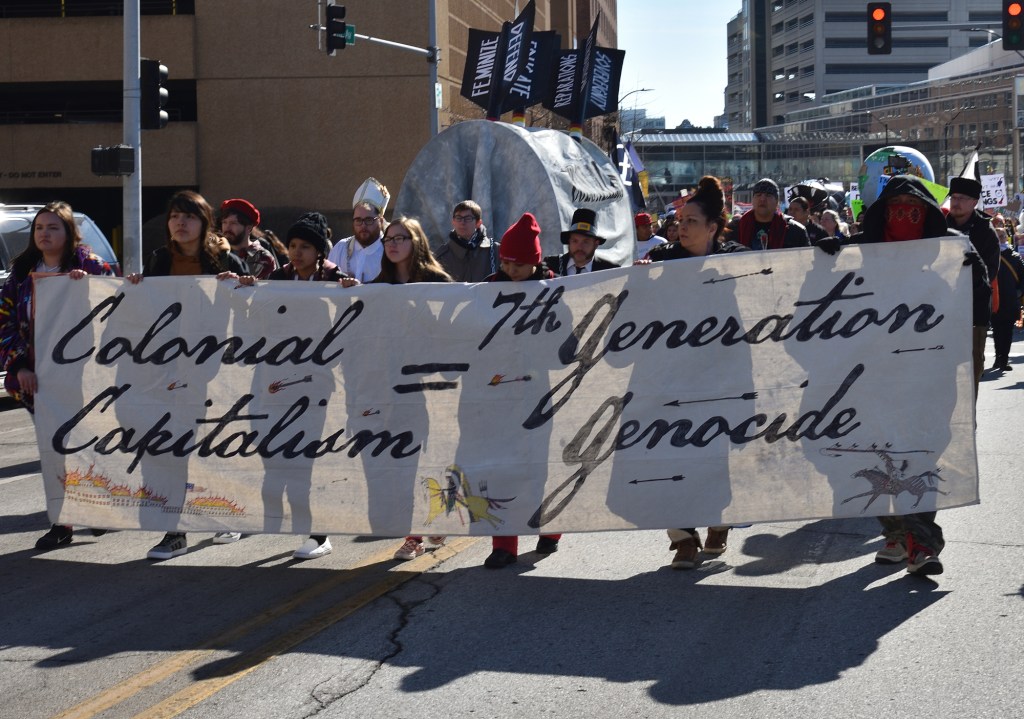
The only way to upend this form of sociopolitical and economic ordering, I argue, is through the reinstatement of Indigenous authority and sovereignty.

We live in a historical moment marked by grave uncertainty about the fate of planet Earth. Our children and grandchildren are inheriting a world almost singularly defined by climate change. Temperatures are rising. Oceans are experiencing acidification. Arctic polar icecaps are melting faster than they should. Small islands states are being swallowed up by rising sea levels. The American Psychological Association is mapping the mental health consequences of what they are calling “eco-anxiety.” And, in the midst of this planet-wide crisis riddled with debates about the Anthropocene, Indigenous peoples and their longstanding resistance to environmental devastation are clear signposts of who should guide us into the future.

Standing Rock, I argue, illustrates that a fight for environmental justice must be framed, first and foremost, as a struggle for Indigenous sovereignty. As I have written elsewhere, the colonial violence that fostered the ruination of the planet has, for the most part, been blurred out of focus in public dialogue. An accurate examination of the social and political causes of climate change requires a close look at the history of genocide, land dispossession, and concerted destruction of Indigenous societies and cultural practices that accompanies the irreversible damage wrought by environmental destruction

Colonial systems of capitalist accumulation, tied directly to the invention of private property, opened the floodgates for “natural resources” to be transported, as Glen Coulthard explains, “from oil and gas fields, refineries, lumber mills, mining operations, and hydro-electric facilities located on the dispossessed lands of Indigenous nations to international markets.” The economic infrastructure in settler colonies, like the United States and Canada, depends on extractive industries. Indeed, Kyle Whyte points out that “in the US settler context, settler colonial laws, policies and programs are ‘both’ a significant factor in opening up Indigenous territories for carbon-intensive economic activities and, at the same time, a significant factor in why Indigenous peoples face heightened climate risks.” DAPL, then, must be viewed as the most recent incarnation of environmental harm that has found its legitimation and footing in colonialism and occupation.

This violent suppression of resistance at Standing Rock raises an essential question: How can we expect the same colonial government that is partnered with an international mercenary security firm enlisted to brutally halt opposition to a pipeline project to work in the service of climate recovery? We can’t. Our strongest chance of restoring balance on the planet and respecting the interconnectedness of all things, human and other-than-human, is to fervently advocate for justice for Indigenous communities and return to them the power of governance—which was violently apprehended through war, genocide, starvation, disease, abuse, the dispossession of land, and forced repression of Indigenous communities on reservations. The only way to upend this form of sociopolitical and economic ordering, I argue, is through the reinstatement of Indigenous authority and sovereignty.

What Standing Rock Teaches Us About Environmental Justice by Jaskiran Dhillon, Social Science Research Council, Dec 5, 2017
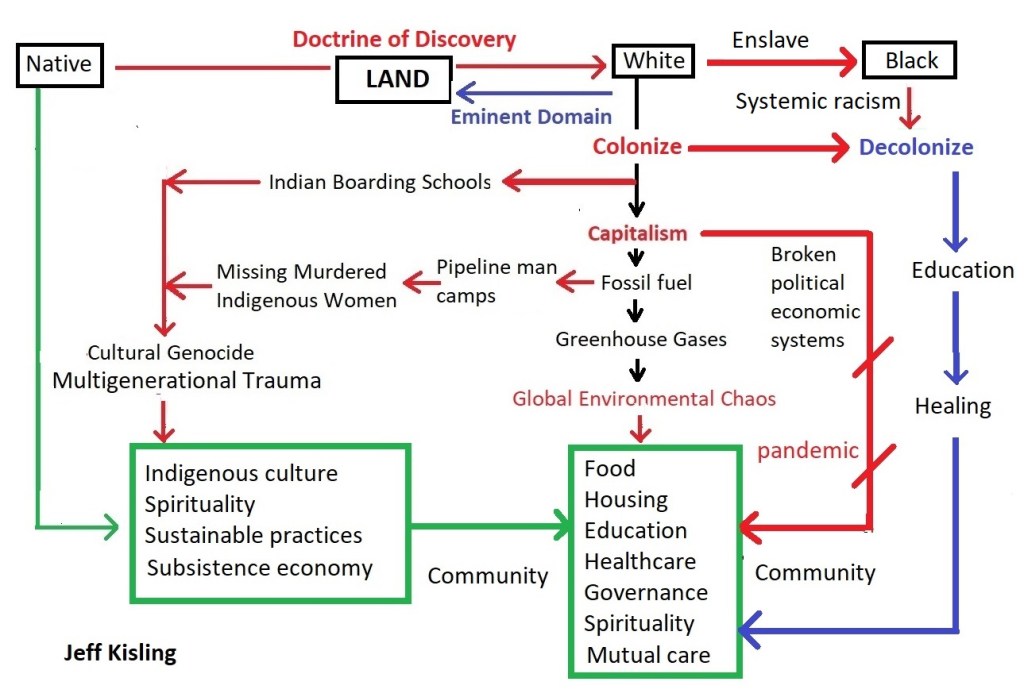
This is the diagram I keep updating as I think and learn more about the interconnections between White settler colonists and Black and Native peoples. Our broken political and economic systems, based on capitalism, are failing dramatically now. The pandemic worsens our situation. We need Indigenous culture, spirituality, sustainable practices and a subsistence economy to build better communities.


Posted in #NDAPL, Black Lives, climate change, decolonize, Indigenous, Indigenous Youth for Wet'suwet'en, Native Americans, Uncategorized | Leave a comment

The Tower

Yesterday was the 30th anniversary of the siege of Kahnasatake, a 78-day standoff between the provincial and federal governments and Mohawks there (Oka).
https://kislingjeff.wordpress.com/2020/07/10/30th-anniversary-of-oka/


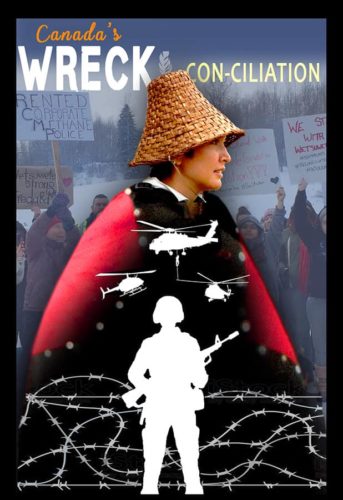
Similar militarized actions by the Royal Canadian Mounted Police against the Wet’suwet’en people and their territory occurred in 2019 and again earlier this year.

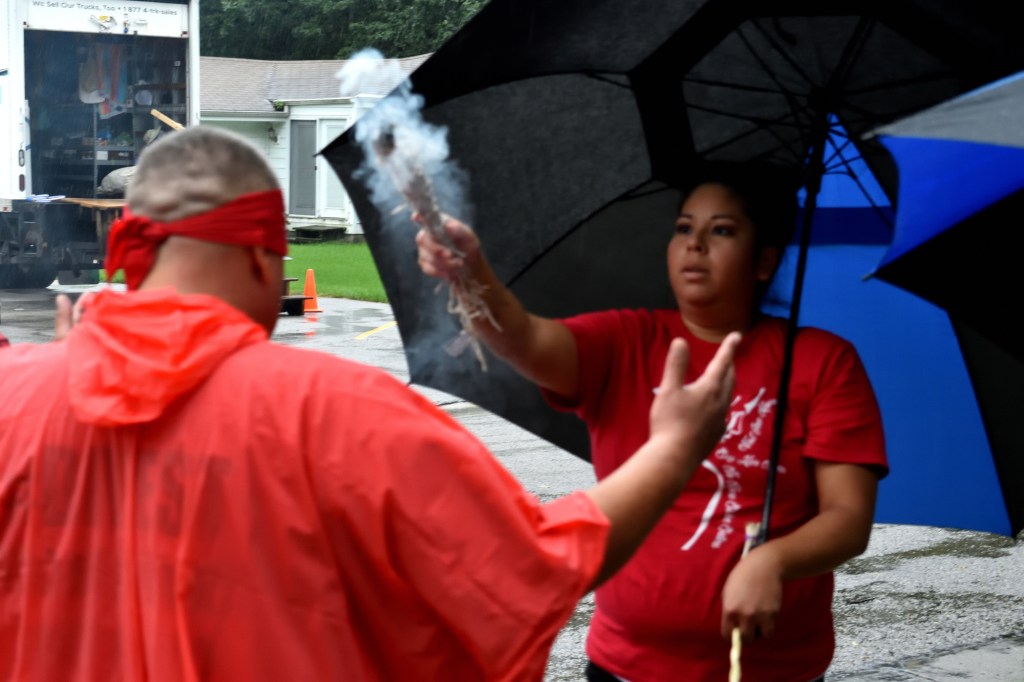
The following describes burning the remains of a tower in a ceremonial fire. The tower where Denzel Southerland-Wilson made a stand during the RCMP invasion this past February (video below).


Sovereign Likhts’amisyu
In 1990 Canada laid siege to sovereign Mohawk territory, in Kanehsatà:ke. With helicopters and tanks and soldiers they showed Indigenous people everywhere how far they will go to steal the land out from under our feet. The Mohawks stood firm and showed the world how strong we are.
It is 30 years since the start of the “Oka Crisis,” and the fires of Indigenous resistance are still burning.
The Mohawks did not start this crisis. It began when the Mohawks were ignored as the true owners of their lands. It continued when the army rolled in with tear gas and rubber bullets. It has continued ever since, every time the state asserts its genocidal force on sovereign Indigenous territories. When we fight back, when we stand up for our lands and our people, we are painted as criminals.
Nothing has changed. Canada is still waging war on Indigenous people.
When we observed the colonial invasion of Wet’suwet’en territory in February 2020, the RCMP took over local communities and transformed them into staging grounds for their siege on our lands. They deployed dozens of militarized police, with dogs, with automatic weapons, with sniper rifles and snow mobiles and helicopters. They spent millions of dollars to arrest a handful of our matriarchs, our relatives, and supporters. They tore down our tower where we stood to bear witness to their violence.
Today we burned the remains of the tower in a ceremonial fire.
We know there is a time to build and a time to burn it down.

30 years ago, the Wet’suwet’en blocked Highway 16 in solidarity with the Mohawks of Kanehsatà:ke. Months ago, the Mohawks stood with us to shut down Canada after our lands were invaded.
We stand united today.
We were born in the fires of resistance, our parents and grandparents and great-grandparents and ancestors fought this fight.
We defend the land for our ancestors, for our children, for future generations.
We will not lose.
To learn more watch Kanehsatake: 270 Years of Resistance: https://www.nfb.ca/film/kanehsatake_270_years_of_resistance/

#OkaCrisis #MohawkResistance #WetsuwetenStrong #Solidarity #ThePines #IndigenousRising #ShutDownCanada


(Partial transcript from video)

Our culture and our tradition is the land. We are directly connected to the land. It’s our spirituality. We cannot be forced to be away from our land.

Nine days since we took the land back.

It feels like something you don’t normally do. (laughter) Its revolutionary, right?

I don’t think anyone’s ever really evicted like a 6 billion dollar pipeline before.
People get confused about what we want as Native people. Like “what do you want?”

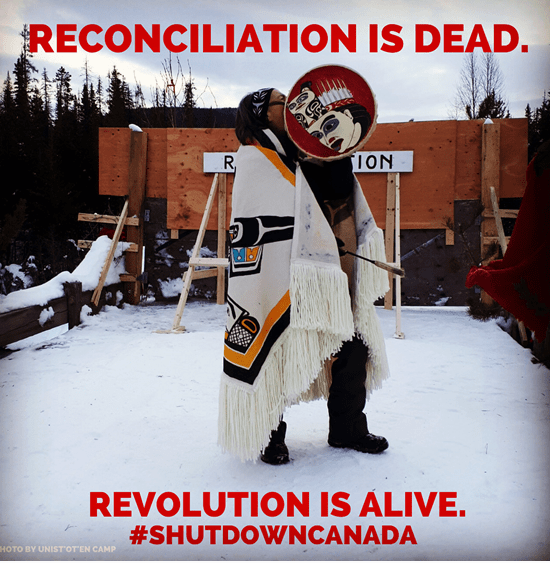
Just like, “land back!”. Don’t need any reconciliation, don’t want money, like I don’t want programs or funding or whatever.

(whispers “land back”)

Funny though, when I said that to my Dad, Wet’suwet’en people, if you tell them about LANDBACK, they’re like “we never lost the land, anyway.” Which is true.

Wet’suwet’en have never given up title to their 22,000 square kilometer territory.

Denzel Sutherland-Wilson


#LANDBACK Land Defenders Risk Their Lives

[ WARNING: This video contains graphic images of an armed threat on the lives of land defenders Denzel Sutherland-Wilson (Gitxsan) and Anne Spice (Tlingit). It may be traumatic for many to see. But we feel strongly that it should be available to witness. Denzel, Anne, and all the land defenders are now safe. These events took place during the RCMP raid on unceded Wet’suwet’en territory on February 7, 2020. The video was filmed by Gitxsan land defender Denzel Sutherland-Wilson from atop this tower. ]


During this time Denzel’s brother Kolin was making a stand at the British Columbia legislature building. In the video below he mentioned loved ones in danger, referring to his brother.


Posted in civil disobedience, decolonize, Indigenous, Uncategorized, Unist'ot'en, Wet’suwet’en | Leave a comment

Bear Witness on the 30th Anniversary of Kanehsatake Resistance

3 ways to bear witness on the 30 year anniversary of the #Kanehsatake Resistance (Oka Crisis). Oka is still criminalizing land defenders standing for their sovereignty & #landback 3 mins w/ @EllenGabriel1https://instagram.com/tv/CCen3q3Bd4_/?igshid=jhh73q5qk5rz

Amy Ede


Posted in Indigenous, race, Uncategorized | Leave a comment

Siege on Kahnasatake

The process of decolonizing involves education and healing.

MONTREAL — July 11 marks the 30th anniversary of the beginning of what became known as the Oka Crisis, a 78-day standoff in Kanesatake between the provincial and federal governments and Mohawks there and in Kahnawake.

The standoff started when Quebec provincial police (Surete du Quebec) moved in on demonstrators in an area called the Pines – a stretch of woods adjacent to the Oka Golf Club that contains a Mohawk cemetery. The demonstrators had been camping out in that area after the village of Oka voted to expropriate the land to expand the public club’s nine-hole golf course.

“I was getting ready for work that morning,” said Kanesatake Council Grand Chief Serge Simon, who was living in Oka at the time. “And it was really early in the morning. I saw the tactical squad start to organize at the base of the hill. When I started seeing them going up, I said to myself, ‘They’re going up there to kill everybody.'”

“They showed up and we kind of said: ‘holy s___ they’re here,” said Ellen Gabriel, one of the Kanesatake Mohawks who was camping in the Pines. The SQ fired tear gas into the area, and then moved in.

Gunfire erupted.

“All I know is that there was a lot of firing going on,” said Randy “Spudwrench” Horne, a Kahnawake Mohawk who was in the Pines at the time. “You could hear it in the trees. And hitting the bark. And I guess some guys got really mad and they start firing back.”

Thirty years later, there are still scars from the Oka Crisis by Billy Shields, CTV News Montreal, 7/6/2020


Today, the 30 year anniversary of the siege on Kahnasatake, is a chance to learn about an incident of attempted colonization known as the Oka Crisis, or siege on Kahnasatake. I wasn’t aware of this struggle until yesterday, other than having seen the dramatic photo of the standoff seen below.

Famous stand-off during the Oka Crisis between Pte. Patrick Cloutier, a ‘Van Doo’ perimeter sentry, and Anishinaabe warrior Brad “Freddy Krueger” Larocque face off. Reference: Tonelli, Carla (July–August 2007). “Oka, 1990: “Our land is our future””This Magazine. Retrieved 2008-05-29. The most memorable photos come from this period, including the nose-to-nose standoff between Private Face to Face (photograph) and Brad “Freddy Krueger” Larocque, often misidentified as Ronald “Lasagna” Cross.”

https://en.wikipedia.org/wiki/Oka_Crisis#/media/File:Oka_stare_down.jpg

The same thing is going on all over Canada. Tar sands, Wet’suwet’en. All these land dispossession are the same, based on the racist Doctrine of Discovery, that Canada has not yet repudiated.

Posted in decolonize, Indigenous, Native Americans, Uncategorized | Leave a comment

30th Anniversary of Oka

**If Tomorrow is too short notice please organize actions throughout the month of July. The Siege on Kahnasatake lasted 78 days

“In 1990, we (Wet’suwet’en community members) held a solidarity blockade, during #Oka. Our youth passed out pamphlets & read them to vehicle occupants.
In February 2020, people #ShutDownCanada – and our extended Mohawk family made a massive impact & calls to action – and people listened. The Gitxsan then responded. All were met with police violence and arrests.

We saw so many other Nations stand up and show their strength, and sooooo many allies become accomplices ❤️✊🏽 Change comes through solidarity. A big part of solidarity is taking the initiative to stand for others, and carrying some of the weight. The outcome of this, will be indicative of how much force the colonial system can use… and they’ve already refused to remove the rcmp from our territories – and nobody knows why they’re here. CGL doesn’t have permission.

We are so grateful to amazing collectives who share info and organize – this is a #repost from @blackpowderpress ✊🏽❤️
• • • • • • •
Call for solidarity! July 11 marks the 30th anniversary of Oka, when the military of the Canadian government attacked unceded indigenous land in order to clear the way for development. Today indigenous communities across Canada and across the globe are still fighting to defend their lands from resource devouring capitalists and the governments that attempt to subdue any resistance to their interests.

The Wet’suwet’en continue to fight for their land, against encroachments by big oil & gas and their dirty pipeline, and the RCMP (federal police) who are there to harass, intimidate, and arrest anyone who gets in the way of industry. The land is unceded, and has been inhabited by the Wet’suwet’en for thousands and thousands of years before Canada even existed. They have never consented to a pipeline being built through this pristine and ecologically sensitive area, and continue to struggle against this invasion.

This July 11, stand in Solidarity with the Wet’suwet’en and their fight for their sovereignty and for their land. If there is no action near you, plan one.”

If you can’t do an action on the 11th plan one for the near future and tell us about it so we can help promote it! Details on upcoming action below

Post from Gidemt’en Checkpoint Instagram

Main article: Oka crisis

Kanesatake

Kanehsatà:ke is the oldest Kanien’kehá:ka community today and existed pre-European contact. It was the first community to accept Kaianera’kó:wa (the Great Law of Peace), and is mentioned in the condolence (Hi Hi) ceremony of a chief and clan mother. The town of Oka developed along the Lake of Two Mountains through the fraudulent sale of land of the Kanien’kehá:ka community of Kanehsatà:ke by the Sulpician order who were ‘blue bloods’ from France. The Sulpicians sold off land to French settlers and were the biggest land owners in the region. Since 1717, with the arrival of Sulpician priests with their Mohawk, Nippising and Algonquin Christian converts, the Mohawk have been contesting the Sulpician land claim, arguing that the King of France, Louis XIV, never owned the land and thus France did not have the right to grant the land to the Sulpician Order .[9] Included in these lands is a pine forest and cemetery long used by the Mohawk which exists today. The Mohawks of Kanehsatake have tried many times to resolve the land dispute (as part of their land claim against the government and Sulpician mission) but were rejected by the Crown on technical issues.[citation needed]

In 1990 the town of Oka unilaterally approved plans to expand their 9-hole golf course to an 18-hole course and build. The Mohawk protested formally, because they considered the land to be sacred. The city persisted in letting the developer proceed in spite of protests from the community and in response, the Mohawk barricaded a secondary dirt road leading in the pines slated for development to prevent the developers from cutting any trees.[7] After 3 injunctions against the barricade and efforts by the Mohawks to place a moratorium on development, the Sureté du Quebec (SQ), raided the barricade in the early morning hours of July 11, 1990. The SQ were joined by a para-military squad composed of Canadian army and Montreal police. This was the beginning of a 78-day standoff between the Mohawk Nation and their allies (both aboriginal and non-aboriginal) against the SQ and Canadians Army. The sister Mohawk community of Kahnawake erected a barricade on the Mercier Bridge on the South shore of Montreal in order to protect the people of Kanehsatà:ke from a second raid. Negotiations between the Mohawk nation and the Quebec and the Canadian government did not resolve the land issue and it was demonstrated by the International Federation of Human Rights, based in Paris, France, that both the provincial and federal government did not act in good faith during negotiations.[citation needed]

Oka requested support from the Sûreté du Québec, who barricaded highway 344 leading to Kanehsatà:ke. In the first days of the confrontation, a police officer was killed in an exchange of gunfire with the protesters. In solidarity, Mohawk in Kahnawake blockaded the approach to the Mercier Bridge over the St. Lawrence River; this route passed through their land. Non-Mohawk residents of the area became enraged about traffic delays in trying to get through this area and across the river.

The Quebec provincial government requested support from the Canadian Army, which sent in 3700 troops.[10] Provincial and national leaders participated in negotiations between the Mohawk and the provincial government. The Mohawk at Kanehsatà:ke were forced by the Canadian army to remove their barricades.[7] Police and military forces pushed the remaining protesters back until they were confined to the Onentokon Treatment Centre and surrounded by the military. Throughout the summer the community of Kanehsatà:ke had their food, medicine and supplies systematically refused and spoiled by the SQ and Canadian Army.[citation needed]

In the end they chose to come out of the treatment centre, although they did not formally surrender.[7] Those who remained at the treatment center were immediately arrested, with the men and women separated and sent to the Farnham army base. Some of these events and history are explored in Alanis Obomsawin‘s documentary film, Kanehsatake: 270 Years of Resistance (1993). All the Mohawks arrested from the Treatment Center regarding the issue of the barricades were acquitted. A separate trial for a number of individual Mohawks were tried and convicted for criminal acts committed before the army moved into the community.

As of 2019, the land dispute continues is still ongoing.

Kanesata

OKA Crisis


Posted in Indigenous, revolution, solidarity, Uncategorized, Wet’suwet’en | Leave a comment

SHIFT – Intergenerational Trauma

I’ve written about Seeding Sovereignty’ fascinating biweekly online interviews (https://kislingjeff.wordpress.com/?s=shift+narrative).

I was especially looking forward to yesterday’s episode about intergenerational trauma which I found extremely informative. “Looking forward to” might not be quite right. I knew this would be a painful discussion. My comments are from the perspective of a White 68 year old Quaker male. Some of the discussion below is specific to White people.

I don’t remember having heard about intergenerational trauma until I began, several years ago, to learn about the Native cultures and the history of how they greatly suffered in so many ways. One of those things you don’t know that you don’t know. Now that I have started to learn about intergenerational trauma, I realize White people cannot begin to understand American Indians until we learn about the trauma that our ancestors were involved with. In part to understand the history of White settler colonization, but also to begin to learn that trauma has been passed to Indigenous peoples today. Who are experiencing that trauma right now.

Another significant trauma is the present, ongoing epidemic of missing and murdered indigenous women (MMIW).

One of the most significant intergenerational traumas relates to the forced assimilation at the Indian Boarding Schools. A number of those residential schools were run by Quakers. Over 100,000 native children were forced to attend those schools, where significant traumas occurred. Attempts were made to strip their culture from them, and force them to try to adopt a foreign culture. There was also significant physical and sexual abuse. Many children died. Those that returned to their native homes had trouble re-entering their culture.

One thing I highlighted below is not enough attention is paid to spirituality. I think that was said in relation to native people struggling to deal with the trauma. And it has always been my contention that not enough attention is paid to spirituality in White culture. Spirituality has an important role to play, to help us all heal from these traumas.

The following is was especially insightful for me (White person). Christine had been talking about her work, and that of other Indigenous people, being driven by their love of their relatives. Then she said what follows:

Christine—talking different religious groups/Quakers/other white people
Tell them to go to their White spaces.
Wouldn’t it be great if White people did the work because they love THEIR relatives? Don’t need to fix natives, instead fix White.  White folks don’t need to be in native spaces. Instead in White spaces.
 I need to go to White communities.  Ask them if they need OUR help in dealing with White supremacists affecting them (White people)
So many White people clueless about their sense of entitlement and don’t question why they have their privileges.

White people doing the work of decolonizing White people is what we (White) people should be doing. As said below, “so many White people are clueless about their sense of entitlement and don’t question why they have their privileges.”

Following is the story of the Two Row Wampum Belt.


The Guswenta: Two Row Wampum Belt is a Symbol of Sovereignty

ONEIDA, Oneida Indian Nation

This belt symbolizes the agreement and conditions under which the Haudenosaunee welcomed the newcomers to this land.
“You say that you are our father and I am your son.”
We say, ‘We will not be like Father and Son, but like Brothers’.”
This wampum belt confirms our words. These two rows will symbolize two paths or two vessels, traveling down the same river together.
One, a birch bark canoe, will be for the Indian People, their laws, their customs and their ways.
We shall each travel the river together, side by side, but in our own boat.
Neither of us will make compulsory laws or interfere in the internal affairs of the other.
Neither of us will try to steer the other’s vessel.

From a 1614 agreement between the Haudenosaunee and representatives of the Dutch government, declaring peaceful coexistence
The agreement has been kept by the Haudenosaunee to this date

ONEIDA, Oneida Indian Nation


Creestah Jackson was the guest in the latest episode of Seeding Sovereignty’s SHIFT the Narrative. She was interviewed by Christine Nobiss and S.A. Lawrence-Welch.

We are interviewing Creestah Jackson, Ottawa Tribe of Oklahoma and professional counselor, about the effects of intergenerational trauma, what our experiences have been working on the frontlines and how we can heal. We will also discuss how folx are navigating this work during the present global pandemic, the climate crisis and heightened emotions through the many uprisings happening all over the country. Does political fatigue make you want to vote or does it make you want to disconnect?

Seeding Sovereignty

https://www.facebook.com/SeedingSovereignty

Join us as we interview Creestah Jackson about the effects of intergenerational trauma, what our experiences have been working on the frontlines and how we can heal. We will also discuss how folx are navigating this work during the present global pandemic, the climate crisis and heightened emotions through the many uprisings happening all over the country. Does political fatigue make you want to vote or does it make you want to disconnect?

Creestah Jackson: Licensed counselor.  Abuse. People on front lines.  Burn out. Fatigue.

Involved in mental health because so many in my community need help but resources not available.
Families in crisis, re-unify with their children.  To keep government out of situation.
New realm of trauma from today’s situations?
Any civil rights movement is going to create some trauma.
COVID-19, protect water, climate change.  In addition, our families. State sanctioned violence seen over and over.
Being Black or Indigenous is like living in a constant state of stress.
People should not have to insist they have a right to live on top of all that.
Trauma jumping through generations.
Intergenerational traumas.  How people traumatized have issues with authority and other stresses.
Everybody is struggling.  Elders might not have modeled the best way to cope.
Younger people get disheartened because elders say calm down.  Worried depressed youth.

Grandparents went to boarding school.
Frontlines–places where conflict occurs. Where people might be carrying out direct action, protest, events.
July 4th.  100 White supremacists triggered  Patriotism is culture for therm.
Different types of protesting for Black and Indigenous peoples on Front Lines. Not institutional.
Spirituality
Trauma
EMDR- processing trauma memories that recur but not dealt with.

Eye movement desensitization and reprocessing is a form of psychotherapy developed by Francine Shapiro from 1988 in which the person being treated is asked to recall distressing images; the therapist then directs the patient in one type of bilateral sensory input, such as side-to-side eye movements or hand tapping. According to the 2013 World Health Organization practice guideline: “This therapy is based on the idea that negative thoughts, feelings and behaviours are the result of unprocessed memories. The treatment involves standardized procedures that include focusing simultaneously on spontaneous associations of traumatic images, thoughts, emotions and bodily sensations and bilateral stimulation that is most commonly in the form of repeated eye movements.”

EMDR is included in several evidence-based guidelines for the treatment of post-traumatic stress disorder (PTSD)

Eye movement desensitization and reprocessing, Wikipedia

Indigenous communities experience PTSD at massive level.  Group of elders split people into groups for ceremony, talking, spiritual aspect, sitting in community together.
Spirituality- often not paid enough attention to.
More cultural sensitivity in therapy work. Therapists and medical professionals from the same culture as those who are being treated.  Train people in the community.
Need to create an online Native American counselor database.
Intergenerational trauma
Trauma that has taken place before the current generations
Epigenetics, trauma passed through genetics
Example: child taken from people, residential school, then returned
Maladapted responses   alcohol/drug

What my trauma experience was I then present in relationships to my children.

So much going on today,
COVID, race, wars, uprisings, social issues.
Climate so huge.  Ongoing environmental chaos, not even part of conversation now.
Will people be too politically fatigued that they won’t vote?
People struggling to just survive.  May be too fatigued to pay attention to politics or vote.
Stress response cycle—can’t think about the future.  No energy.
Disheartening, fatigued.
Voting and current political institutions are the very systems we need to change.

CLIMATE
When you know too much.  A divide between those who really understand current system. Struggle with others in our community that don’t have that understanding. 
So busy just surviving. 

There are children living in cages.  How is that not the most important thing we must all be working on?

The powers that be don’t care about people who are not like them.
Xenophobia.

Idea of animality?
System likes to keep us distracted so don’t pay attention to them (system)

Christine—talking different religious groups/Quakers/other white people
Tell them to go to their White spaces.
Wouldn’t it be great if White people did the work because they love THEIR relatives? Don’t need to fix natives, instead fix White.  White folks don’t need to be in native spaces. Instead in White spaces.
 Christine—I need to go to White communities.  Ask them if they need OUR help in dealing with White supremacists affecting them (White people)
So many White people clueless about their sense of entitlement and don’t question why they have their privileges.

Native activists have learned about White privilege and how to deal with issues.
Normalizing conversation, normalizing dialog.  Come up with some solutions.
Not just about us, also future generations.  Which will be White and Native.

Grounding
stress/response

Take time to deal with our stress and anxiety. Especially when we are on the frontlines.
Community care as well as individual care.
Brain has difficult time between actual danger versus perceived danger,
Pay attention to our body when we realize we are getting stressed out.

How respond to stressful situation?

I was scared of the wind for a few years.  Had many dreams about tornados (don’t have in Winnipeg)
Hide in closet.
As we grow up, society says many things not appropriated.  So it gets bottled up.
Have to convince ourselves we are safe. 
Exercise
Breathing techniques for stress
Affection – hug from someone you trust
Social interaction tells brain safe at moment
CREATIVITY – makes you feel safe.
Big old cry.  Catharsis.
When someone is crying, just let them cry.  Allow space for that.
Practice being able to give people the space they need.
Might feel some immediate relief.  But much more needs to be done.
Book  Burnout  for women.

What is best way for men to be supportive of women who are or have experienced gender-based trauma?
Take time to sit down together.  What can I do for you when you are experiencing the trauma?  Do you want advice or just listen?  Before things escalate, have these conversations.
We ALL know we are not doing it right.  I’m not eating right, not running, etc .(Need to decolonize what we eat, what exercise we do).

Running – most Indigenous thing we can do.  Or other form of exercise. Being present in the moment is what we are supposed to be doing anyway.

How use this to get people out to vote?
If good candidate not running for office, look for those not part of the 2 party system. Instead someone who will help create a government FOR the people.

Voting is something within OUR control. 
Also when politicians see the demographics of who voted, shows who they should pay more attention to.


Posted in climate change, decolonize, Indigenous, Native Americans, Quaker, Seeding Sovereignty, Uncategorized | Leave a comment

“A Dream that Comes True”

We are aware of how difficult it has been to achieve minor progress against the fossil fuel industry, and how relentless that industry has been in fighting back every step along the way. An appeal is expected. An emergency stay of the order was denied temporarily.

A federal judge in Washington D.C. refused to issue a provisional stay of the court’s Monday order to close the Dakota Access Pipeline pending environmental review.

Dakota Access LLC filed a motion on Monday to stay U.S. District Judge James E. Boasberg’s order to empty oil from the pipeline and shut it down pending the production of an Environmental Impact Statement by the U.S. Army Corps of Engineers.

In its motion, Dakota Access LLC said it would be appealing Boasberg’s decision and “seeking a stay pending appeal to permit the Dakota Access Pipeline to continue operating while the D.C. Circuit considers the appeal.” Dakota Access LLC said it would first seek a stay pending appeal from Judge Boasberg, then ask the U.S. Court of Appeals for the District of Columbia Circuit for a stay if Judge Boasberg refused.

Judge Boasberg denied the provisional stay request but said he would set a date for a hearing once he received Dakota Access’s motion for stay.

Federal Judge Refuses Initial Request to Stay Closing of the Dakota Access Pipeline by Rena Paul, MSN News, 7/7/2020


Following years of resistance, the Standing Rock Sioux Tribe and Indigenous organizers across the country scored a massive legal victory Monday when a federal judge ordered the Dakota Access Pipeline to be shut down and emptied of all oil, pending an environmental review. “You ever have a dream, a dream that comes true? That is what it is,” responds LaDonna Brave Bull Allard, an elder of the Standing Rock Sioux Tribe and founder of Sacred Stone Camp, where resistance in 2016 brought tens of thousands of people to oppose the pipeline’s construction on sacred lands. We also speak with Ojibwe lawyer Tara Houska, founder of the Giniw Collective.


[WARNING: Includes video of security forces using dogs to attack peaceful water protectors.]

TRANSCRIPT

AMY GOODMAN: We’re going to turn now to our top story. In a massive win for the Standing Rock Sioux Tribe and Indigenous organizers across the country, a federal judge has ordered the Dakota Access Pipeline shut down and called for it to be emptied of all oil in the next 30 days, pending an environmental review. U.S. District Court Judge James Boasberg issued the decision on Monday, saying the U.S. Army Corps of Engineers violated environmental law when it granted a permit for the pipeline without an extensive environmental assessment. That permit has now been revoked until an environmental review is conducted — a process that could take years.

Standing Rock Sioux Tribe Chairperson Mike Faith called the move “historic” and said in a statement, quote, “This pipeline should have never been built here. We told them that from the beginning,” he said.

Monday’s historic court order comes more than four years after the resistance at Standing Rock began in 2016, bringing tens of thousands of people to North Dakota to oppose the pipeline’s construction on sacred lands. Democracy Now! was there on the ground covering the struggle. On September 3rd, 2016, Labor Day weekend, the Dakota Access Pipeline company unleashed dogs and pepper spray on Native Americans seeking to protect their sacred tribal burial site from destruction.

LADONNA BRAVE BULL ALLARD: You ever have a dream, a dream that comes true? That is what it is when I got up in the morning and seen that. I was overwhelmed. I’m still overwhelmed. If people could understand how much I love my home, how much I love my land and my river, it is the greatest thing in the whole world.

I know that it’s going to be appealed. I know it’s going to be a long journey, but we’re here for the long journey. It is not about who’s right or wrong; it’s about how do we live in the future.

And for me, the last four years have been hard. And so this has been a great blessing. I am so overthankful for the judges, for the Standing Rock Sioux Tribe, for the lawyers and for every water protector that stood up on every frontline, for every keyboard warrior, for the support. Overwhelming is all I can say, and great thanks.


TARA HOUSKA: Yeah, without, I guess, giving away too much of the reaction of the actual lawyers that are on this case, I would say, you know, to me, I see a very clear message to the fossil fuel industry that trying to shove through permits against the will of the nations that are impacted is just not going to work any longer; that, in this particular instance, they tried to push through an environmental assessment, which is a low-level environmental review, of a massive, massive pipeline project, over half a million barrels of oil a day. And yeah, they needed to do an environmental impact statement, which is years of consultation, which is years of review and consideration of sacred sites, cultural sites, all these different properties that have to be considered before approving a project of this size.

LADONNA BRAVE BULL ALLARD: I had no idea that so many people would come and stand up. But after talking to Indigenous people from all over the world, we are all in the same position of extraction industries coming in, destroying water and land and our environments.

Right now we are in the sixth extinction rate of animals. We shouldn’t be here. When I started talking to people from everywhere, one of the things that I understood is it is a time for change. The time is now. We cannot go any further with extraction industries, until we repair and allow the Earth to heal again. That is the most important thing that we have to do to live. We have to have clean water. We have to have clean environments to live. And if you’re putting money before lives, that is unjust.

“A Dream That Comes True”: Standing Rock Elder Hails Order to Shut Down DAPL After Years of Protest, Democracy NOW, July 7, 2020

Posted in #NDAPL, climate change, Indigenous, Native Americans, Uncategorized | Leave a comment

Noncompliance order for Coastal GasLink Pipeline

This has been a rough week for pipelines in the United States. Now the Coastal GasLink pipeline has been forced to stop construction near protected wetlands. A victory for the Wet’suwet’en peoples who have been working to protect their territory in British Columbia from pipeline construction.

After the Unist’ot’en and Gidimt’en Clans of the Wet’suwet’en Nation flagged concerns, the B.C. Environmental Assessment Office found Coastal GasLink failed to follow its wetlands management plan.

Coastal GasLink has been forced to stop pipeline construction near protected wetlands after an inspection by the B.C. Environmental Assessment Office found the company cleared areas without completing the required surveying and planning.

Coastal GasLink was issued two non-compliance orders in June and now has to complete the surveys before the project can proceed in the affected areas.

The 670-kilometre pipeline is planned to transport fracked gas from northeast B.C. to Kitimat, for shipment to markets in Asia. 

Wet’suwet’en Hereditary Chiefs served Coastal GasLink with an eviction notice on Jan. 4, starting a chain of events that led to RCMP enforcing a court-ordered injunction to arrest more than 80 protesters in February, including Elders, Chiefs and matriarchs. On June 5, charges against 22 Wet’suwet’en land defenders and supporters were dropped and many others were never charged.

B.C. orders Coastal GasLink to stop pipeline construction near protected wetland.by Matt Simmons, The Narwhal, July 7, 2020

Noncompliance Order Issued After Coastal GasLink Clears Pipeline Right of Way Through Hundreds of Wetlands Without Environmental Fieldwork

PRESS RELEASE – Noncompliance Order Issued After Coastal GasLink Clears Pipeline Right of Way Through Hundreds of Wetlands Without Environmental Fieldwork

Monday, July 6, 2020 – (Wet’suwet’en Territory): Coastal GasLink (CGL/ TC Energy) has commenced pipeline construction through hundreds of wetlands without first completing required environmental fieldwork, an investigation by BC’s Environmental Assessment Office (BCEAO) has found.

This spring, the Compliance and Enforcement branch of the BCEAO conducted an inspection of Coastal GasLink’s wetland construction planning process for a section of pipeline where Unist’ot’en and Gidim’ten Clans of the Wet’suwet’en Nation had expressed concern over a lack of wetland planning. After finding that wetland construction planning had not been completed in this section of pipeline, the BCEAO inspected the rest of the pipeline route and determined that the wetland construction planning process outlined in Coastal Gaslink’s Wetlands Management Plan has not been followed for any of the protected “ecologically and socio-economically important” wetlands along the pipeline route.

CGL authored the Wetlands Management Plan and cannot claim ignorance of the requirements laid out within it. The vast majority of these protected wetlands – the most sensitive ecological and cultural features considered when conducting industrial activities in forested landscapes – have already been cleared and leveled without having been assessed as required.

There are nearly 300 of these protected wetlands along the pipeline route, and Coastal GasLink’s “Qualified Professionals” have neglected to develop site-specific mitigation for any of them. Nearly 80% of the pipeline right-of-way has been cleared already, affecting most of these protected wetlands.

The BCEAO has issued a “cease and remedy” order for any construction activities within 30m of one of these protected wetlands, and that further assessments must be undertaken for both the damaged wetlands and the wetlands yet to be impacted by construction. Unfortunately, It will be CGL’s same Qualified Professionals who failed to properly assess these wetlands in the first place who will now assess how badly the wetlands have been damaged.

The BCEAO has informed the Wet’suwet’en that it will be Coastal GasLink’s Qualified Professionals who are ensuring that machinery isn’t run within 30m of these wetlands. These are the same Qualified Professionals who authorized machinery to operate through protected wetlands across almost 80% of the route without proper assessments or site specific mitigation plans.

Wet’suwet’en leadership has repeatedly requested that Coastal GasLink provide specific plans for how they plan to cross watercourses and wetlands in the territory, which are used heavily by Unist’ot’en Healing Center clients and Wet’suwet’en members for hunting, trapping, and medicine gathering. Coastal GasLink has been unable to provide these site-specific plans. This recent EAO determination shows Wet’suwet’en leadership that this lack of planning was actually illegal under the Environmental Assessment Act, as it violates Condition 6 of the project’s Environmental Assessment Certificate.

CGL cannot continue to ignore the Environmental Assessment Act in order to meet its construction targets. The BC EAO’s priority should be to protect the public interest, not to ensure that CGL’s construction timelines are met. It is unacceptable that hundreds of wetlands would be damaged before any enforcement action is taken.

Quote from Dr. Karla Tait, Unist’ot’en member and Volunteer Director of Clinical Programming at Unist’ot’en Healing Center:

“The willful disregard and destruction of sensitive ecosystems for a pipeline just goes to show how little CGL respects us or our land. The recent photos of the police with the automatic rifle lurking by the smokehouse at Wedzin Kwa headwaters along with this rampant unchecked destruction and disregard for protective EAO requirements is further proof of systemic racism – violence against us and our land continues to go unchecked to serve colonial interests. Our lives, our culture and our land are all disposable in CGL’s and the Canadian government’s eyes.”

The EAO inspection record and enforcement order is linked below. Additional noncompliance orders have been issued against other conditions of CGL’s Environment Assessment Certificate and are available through the EAO’s EPIC website.

Noncompliance Order Issued After Coastal GasLink Clears Pipeline Right of Way Through Hundreds of Wetlands Without Environmental Fieldwork

EAO INSPECTION RECORD: https://www.projects.eao.gov.bc.ca/…/Coastal%20GasLink%20-%…

EAO ENFORCEMENT ORDER:
https://www.projects.eao.gov.bc.ca/…/Coastal%20GasLink%20-%…

PRESS CONTACT

Wet’suwet’en Technical Support
Anne Spice
aspice@gradcenter.cuny.edu


Posted in #NDAPL, Indigenous, Uncategorized, Unist'ot'en, Wet’suwet’en | Leave a comment

White supremacy and monuments to White supremacy

Some responses to a recent post about the Seeding Sovereignty event HEY! Come Get Your Racist Uncle, Remove Monuments to White Supremacy, were objections to removing Confederate statues because of their (possible) historic value.

I know many White people don’t like the expression “White supremacy”. But we have to be clear about what White supremacy is and where it was/is practiced. So we can learn from those mistakes, do what we can to address those wrongs, and stop those practices now. But as explained below, using public monuments to White supremacy is not the way to do this.

There are nuances in the discussions about monuments to historical figures who accomplished great things for the land called the United States, but who also engaged in practices like the enslavement of Black people or atrocities against Indigenous peoples. The Washington Monument and Lincoln Memorial are recognition of what these men did for the country, not for their acts of White supremacy.

On the other hand, statues to Confederate soldiers are monuments to White supremacy. These White men committed treason by seceding from the United States, and going to war to preserve the institution of slavery. They were clearly saying White culture is superior to all others. They may have a place in museums, but not in public places.

Another campaign of White supremacy was the theft of Native peoples lands and the cultural genocide from forced assimilation of more than 100,000 Indigenous children. This occurred in White run boarding/residential schools and was the epitome of White supremacy. Forcing native children to give up their ways, and try to learn how to fit into White society. Research has shown that the trauma related to forced assimilation affected the children and their relatives at the time the kidnapping occurred. And those traumas have been passed from generation to generation, passed to and felt by those living today.

Systemic racism in the U.S. today is the interconnected web of ways White supremacy continues in our society.

White people often don’t realize we are harmed by White supremacy. We are ignorant of the truths of history when we unquestioningly accept what we are taught in school, usually by White teachers. We try to ignore it, but we are also hurt, knowing of these violations of human rights.

As I have learned more about Indigenous peoples, it is clear to me we would not be in this rapid spiral into deepening climate chaos is we had lived within our ecological boundaries, as Indigenous peoples have always done. Another way we are all suffer because of White supremacy.

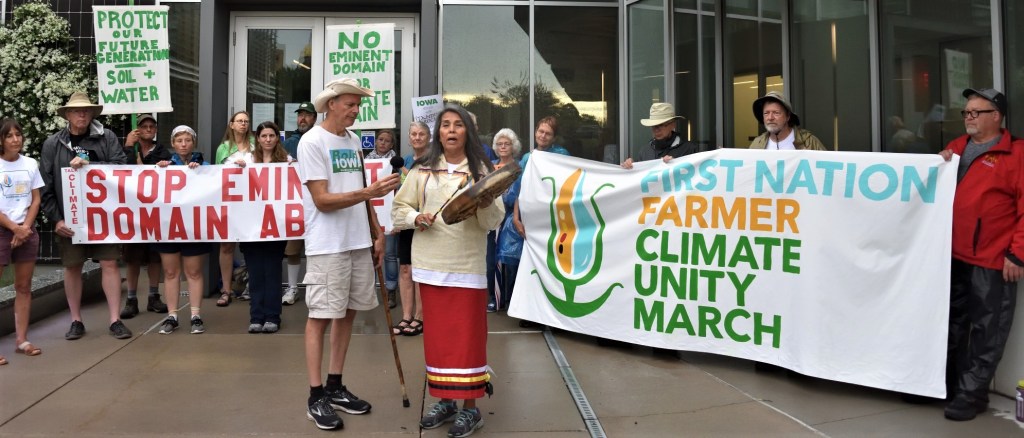
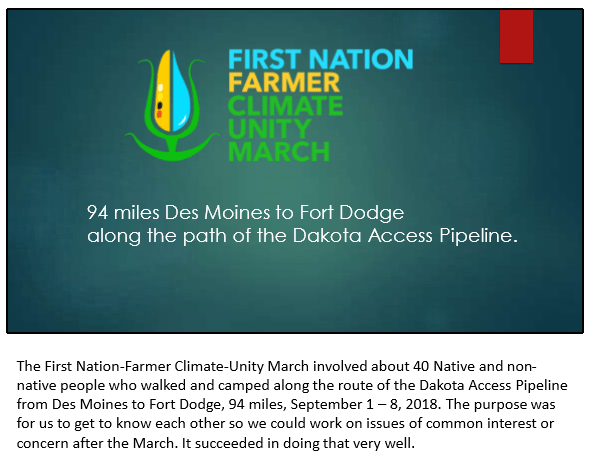
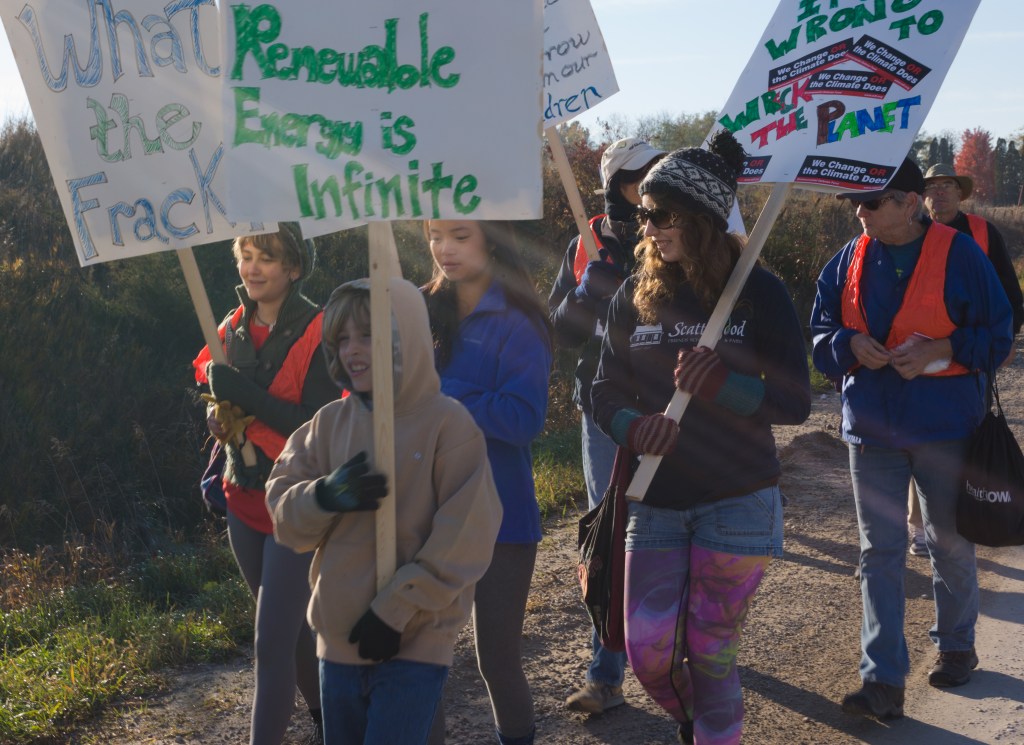
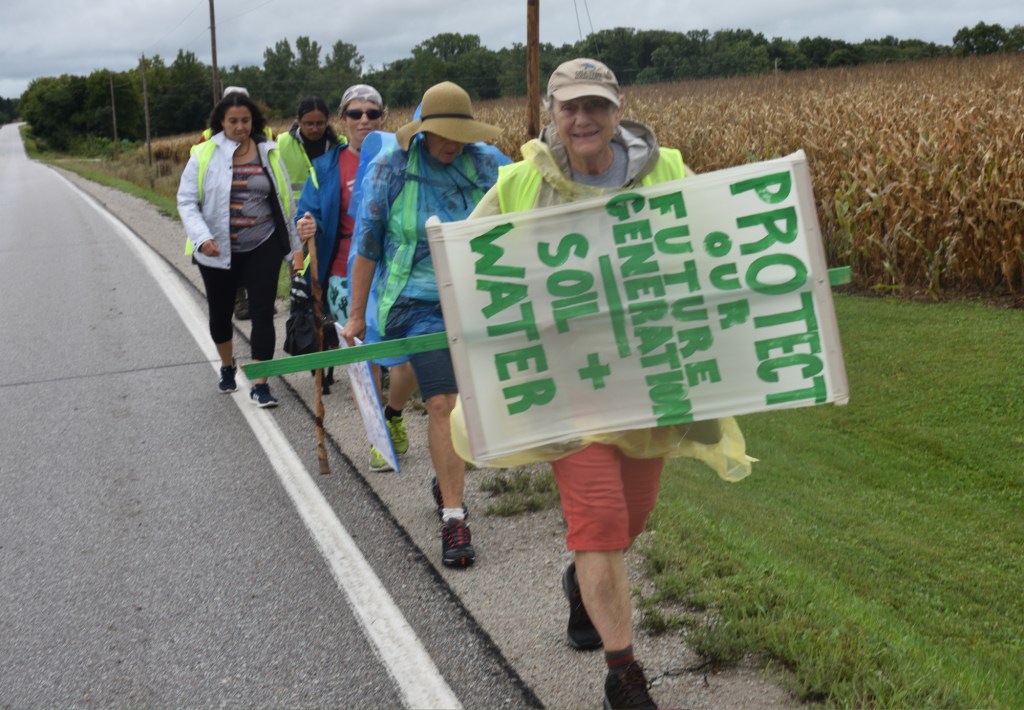
The following video is from the First Nation-Farmer Climate Unity March in September, 2018. The purpose was to create a community of Indigenous people and White settlers working on ways to learn about each other. Begin to trust one another so we could work together.

First Nation-Farmer Climate Unity March, Sept 2018

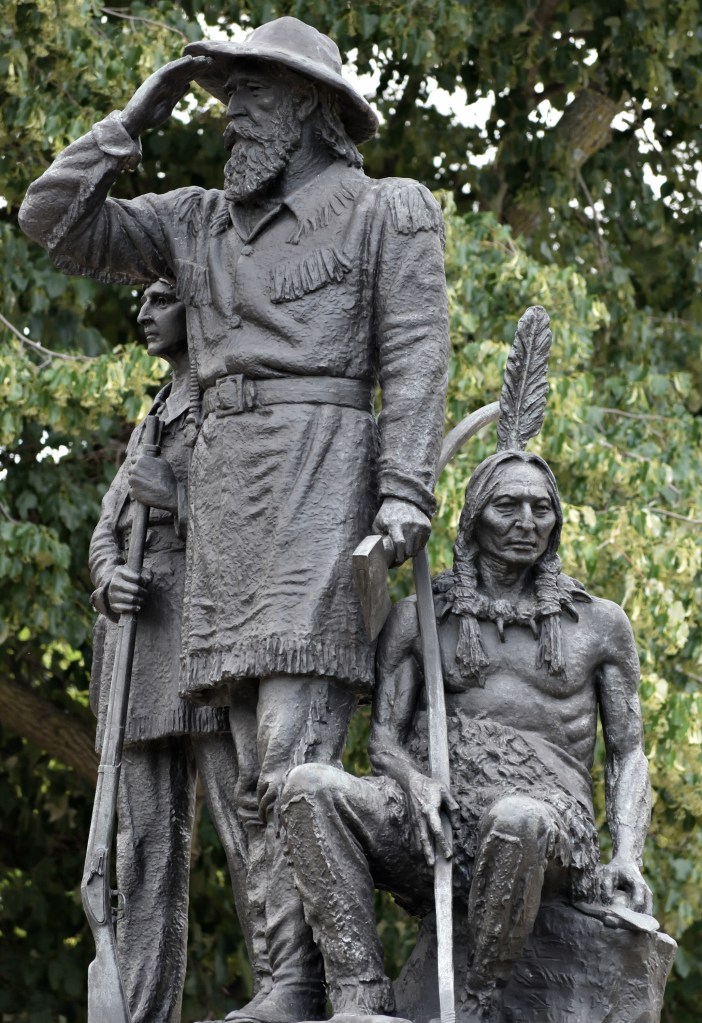
Besides the Confederate statues, pioneer monuments are also displays of White supremacy.

The earliest pioneer monuments were put up in midwestern and western cities such as Des Moines, Iowa and San Francisco, California. They date from the 1890s and early 1900s, as whites settled the frontier and pushed American Indians onto reservations.

Those statues showed white men claiming land and building farms and cities in the West. They explicitly celebrated the dominant white view of the Wild West progressing from American Indian “savagery” to white “civilization.”

Think Confederate monuments are racist? Consider pioneer monuments by Cynthia Prescott, The Conversation.
Pioneer statue, Iowa State Capitol grounds, Des Moines, Iowa

My friends Christine Nobiss and Donnielle Wanatee organized the event at the Iowa State Capitol on July 4th regarding removing the Pioneer statue on the grounds there.

Following is a lengthy video of that gathering. I hope you might listen to the first few minutes, at least. You can hear Christine talk about the purpose of this gathering. And you can hear the wonderful prayers of Donnielle. When we were on the First Nation-Farmer Climate Unity March together, mentioned above, we stopped for prayers every time we walked over the Dakota Access Pipeline. Often it was Donnielle who gave the prayers. They were some of the most significant parts of the March for me.

Seeding Sovereignty
July 5, 2020
We’re proud of the work being done all around the country and by our collective members. Christine Nobiss, organized a powerful event where 250 Iowans showed up. We thank all who attended and spoke. It wasn’t an easy job, considering there were around 100 white supremacists and nationalists who showed up and who also threatened us before the event.


My experience is that we must follow the lead of those who are experiencing injustice, those suffering under the practices of White supremacy today. That is why I find this video from Seeding Sovereignty fascinating.

Following are notes I took from the video.

Christine Nobiss: As an academic, as an Indigenous person, as an organizer railing against monuments to White supremacy, whether they be statues, murals or entire buildings. Spaces
Who came here before genocide and colonization.
White supremacy and monuments to White supremacy.

As an organizer, rail against statues, murals, buildings, spaces
Uprisings George Floyd
Movement to taking these statues down
Uplifting for myself.
Concerns about safety of my people, the safety of black people, people of the world majority when taking statues down.

Trump-retroactively, go after people who have defaced or vandalized pieces of Federal property (his words)

Is it our job to take them down?

In reality, in the best sense of how all this is occurring, the best thing would be that they would just be taken down. The states would see these as human rights violations, symbols of hate speech that leave out and single out portions of the populations and make them feel unwelcoming spaces.

So it wold be the duty of the state and Federal governments to see these as symbols that glorify of slavery, ethnic cleansing, land theft and so many violations of human rights.

But that’s not happening, is it?

So it is, again, up to people on the ground to do it, to make this happen.
But I don’t want people to get hurt.

I would like to see legislation, I would like to see us push for the ancestors of these people who put them up take them down.

They put them up, they should take them down.

S.A. Lawrence-Welch: I have to concur. I believe in the power of the people. We need to start holding the government accountable for the atrocities that have occurred, are still occurring, and these monuments that remind us day after day that this has happened. You know that taking them down we are not erasing history, we are acknowledging the actual stains on our history as a nation.

It is incredibly uplifting to see this uprising happen, but to decentralize the White superiority narrative I think that we need to work as people of the world majority, especially in these United States, to dismantle the government as its known now by influencing and having them follow our lead.

Christine: I am not saying I want to rely on them. I’m saying lets make them do it.
I would love the nation states to recognize all the wrongdoings that are perpetuated and how they are responsible for the daily historical trauma of people that have to look at these and be reminded of what’s happened in this county. And look our whitewashed history because that history is not the truth, that is absolutely not the truth of this country was founded at the point of a gun for the sake of free land and free labor. That little sentence just basically barely describes the amount the violence and terror that people have had to deal with for centuries. All of these statues are monuments to that. They are basically irresponsible acts to put these up. Its not the truth and I believe they are human rights violations. They are symbols of hate speech.
#NoMonumentsToWhiteSupremacy
#SeedingSovereignty


Posted in #NDAPL, Black Lives, decolonize, enslavement, Indigenous, race, Seeding Sovereignty, Uncategorized | Leave a comment

When you believe in your prayers, pipelines end

Listening to a discussion among indigenous women recently I heard “I believe in my prayers.” That made me realize there have been times when I did not believe in my prayers. I’m paying attention to that now. I have no doubt that believing in my prayers, and the prayers of so many of my friends who worked for so long, contributed to the almost overwhelming news of setbacks for several pipelines in just the last few days. This might not be the final word on some of these pipelines, but is feels like such a release of internal tensions so many of us have lived with for so long.

The Atlantic Coast pipeline, that would have crossed the Appalachian Trail, will not be built because of delays and costs. The Keystone XL pipeline is not completely built, and if Biden is elected that should be the end of Keystone. Perhaps the most surprising is the news that permits for the Dakota Access Pipeline have been vacated, and the pipeline must shut down, and oil removed within 30 days.


(BILLINGS, Mont.) — The U.S. Supreme Court handed another setback to the Keystone XL oil sands pipeline from Canada on Monday by keeping in place a lower court ruling that blocked a key environmental permit for the project.

Canadian company TC Energy needs the permit to continue building the long-disputed pipeline across U.S. rivers and streams. Without it, the project that has been heavily promoted by President Donald Trump faces more delay just as work on it had finally begun this year following years of courtroom battles.
Supreme Court Upholds Ruling Blocking Permit for Keystone XL Pipeline by Matthew Brown, Time, July 6, 2020

I have great news: this morning, District Court Judge James Boasberg ordered the Dakota Access Pipeline (DAPL) to be shut down within 30 days! In this momentous ruling, Judge Boasberg found that the Army Corps of Engineers failed to fully consider the environmental impacts of Energy Transfer’s crude oil pipeline, and that there were too many safety concerns to allow its continued operation. While this order only shuts DAPL down for 13 months while the Army Corps completes additional environmental assessments and safety planning, there is a good chance that when the oil is drained in 30 days, that oil will never flow again! 

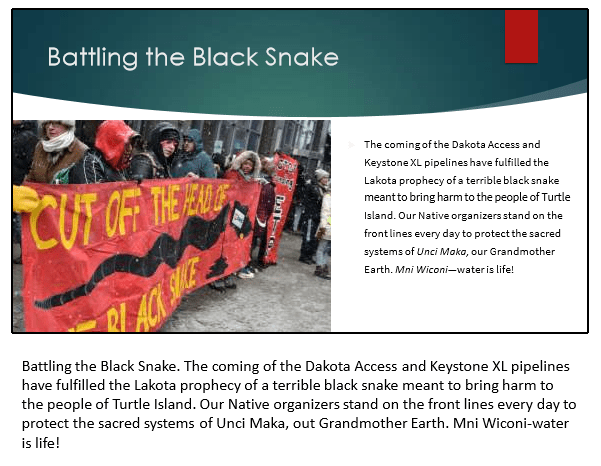
We commend the Standing Rock Sioux Tribe, the Cheyenne River Sioux Tribe, and their legal team at EarthJustice for years of dedication and persistence in this struggle to defang the Black Snake. And we are proud of the amicus brief that our legal team submitted in the lead up to this decision. We’re also elated that Judge Boasberg cited many of the questions we and our allies have raised since the beginning of the NoDAPL struggle. First, that it’s simply wrong to conduct an environmental assessment of a pipeline after it’s already been built. Second, that DAPL’s leak detection abilities are so poor it could be leaking more than 6,000 barrels of oil every day without detection, and Energy Transfer’s abysmal pipeline safety record raises that risk even further. Third, that there is no proper cleanup plan for a wintertime spill, when freezing Dakota winters make response the most difficult. Boasberg even went one step further, concluding that the drop in oil demand due to the COVID-19 pandemic makes shutting down the pipeline now less harmful to North Dakota’s economy.

So what comes next? First, Energy Transfer has to drain and shut down DAPL by August 6th. The Army Corps of Engineers then has 13 months to further study potential pipeline leaks and the dangers they pose. This ruling could still be appealed in the Federal District Court of D.C., but our analysis tells us that such an appeal is unlikely to succeed. 

Thank you to each and every one of you for your tireless support, and for staying with us throughout this journey.

Wopila tanka — Thank you for standing with us to protect our water, our land, and our families!

Madonna Thunder Hawk
Cheyenne River Organizer
The Lakota People’s Law Project

P.S. This has truly been a week of good news: just yesterday the Atlantic Coast Pipeline, slated to run from West Virginia to North Carolina, was canceled. In a joint statement, Dominion Energy and Duke Energy cited ongoing delays, expected cost increases, and legal challenges from environmental and other groups as threats to the project’s viability. The trend away from fossil fuels is becoming stronger with each passing day, thanks to your activism and the support of so many others like you. 


FOR IMMEDIATE RELEASE
Monday, July 6, 2020, 11:30 a.m. CDT
Contact Ed Fallon at (515) 238-6404 or ed@boldiowa.com

Bold Iowa Responds to Court Shutdown of Dakota Access Pipeline
Group will urge Iowa Utilities Board to reconsider approval of expansion

DES MOINES, IOWA – In response to the Standing Rock Sioux Tribe’s lawsuit and a federal judge ordering the shutdown of the Dakota Access Pipeline (DAPL) effective August 5, 2020, Bold Iowa is calling on the Iowa Utilities Board (IUB) to reconsider its decision to allow Energy Transfer (ET) to double the flow of oil through DAPL. ET’s proposal has been approved by regulators in Iowa, South Dakota, and North Dakota, but not yet by the Illinois Commerce Commission.

If the shutdown proceeds as scheduled, no oil will flow through Iowa during what many believe will be a lengthy environmental review by the Army Corps of Engineers.

“This ruling is a huge victory for the coalition of Indigenous communities, landowners, farmers, and environmentalists who have fought this pipeline for six years,” said Ed Fallon, a former state representative who founded Bold Iowa and serves as the organization’s director. “One of our primary goals now is to make sure that the Corps’ review is comprehensive and that it examines DAPL’s impact on water, land, property rights, Indigenous sovereignty, and most urgently on the worsening climate crisis.”

Fallon indicated that his organization is preparing a letter to IUB president, Geri Huser, asking her to reconsider the Board’s recent approval of ET’s proposal to double the flow of oil through the pipeline.

Bold Iowa was founded in 2015 to fight the Dakota Access Pipeline. Bold’s e-mail list is just under 8,000 people, and its stated mission is to (1) build rural-urban coalitions to fight climate change, (2) prevent the abuse of eminent domain, (3) protect Iowa’s soil, air, and water, (4) defend the rights of farmers, landowners, and Indigenous communities, and (5) promote non-industrial renewable energy.


Posted in First Nation-Farmer Climate Unity March, Indigenous, Seeding Sovereignty, Uncategorized | Leave a comment