Richard Wagamese

I’ve often tried to describe writing as a spiritual practice for me. Almost never knowing what I will be led to say as I sit quietly each morning. Occasionally there will be a series related to a difficult, or inspiring subject, so I might know I will need to explore that over several days.

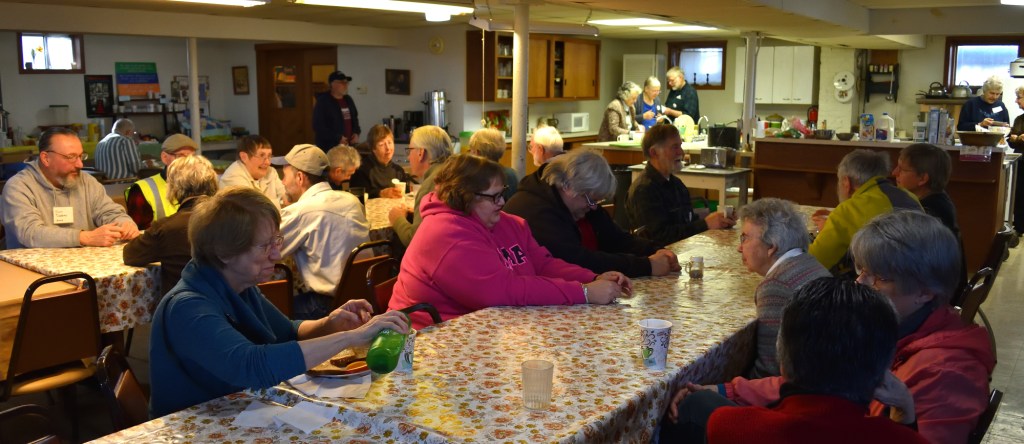
I don’t believe I have put it this way, but it is the same process as Quaker meeting for worship, where everyone in the meeting settles down in quiet for about an hour. It is difficult to describe this group worship, which has a different quality than silence alone. Ineffable, which means unable to express in words.

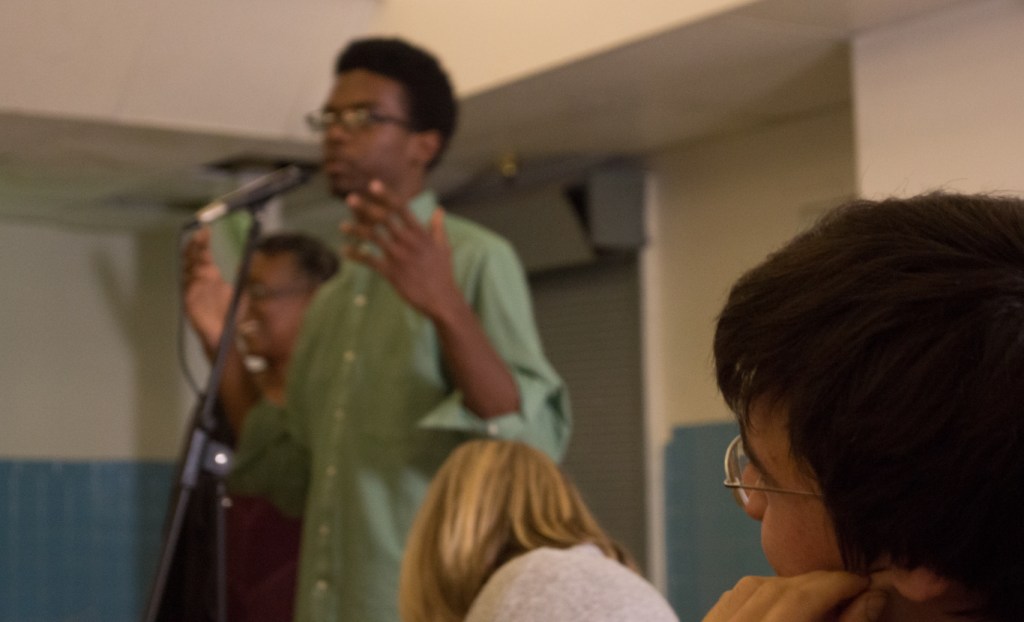
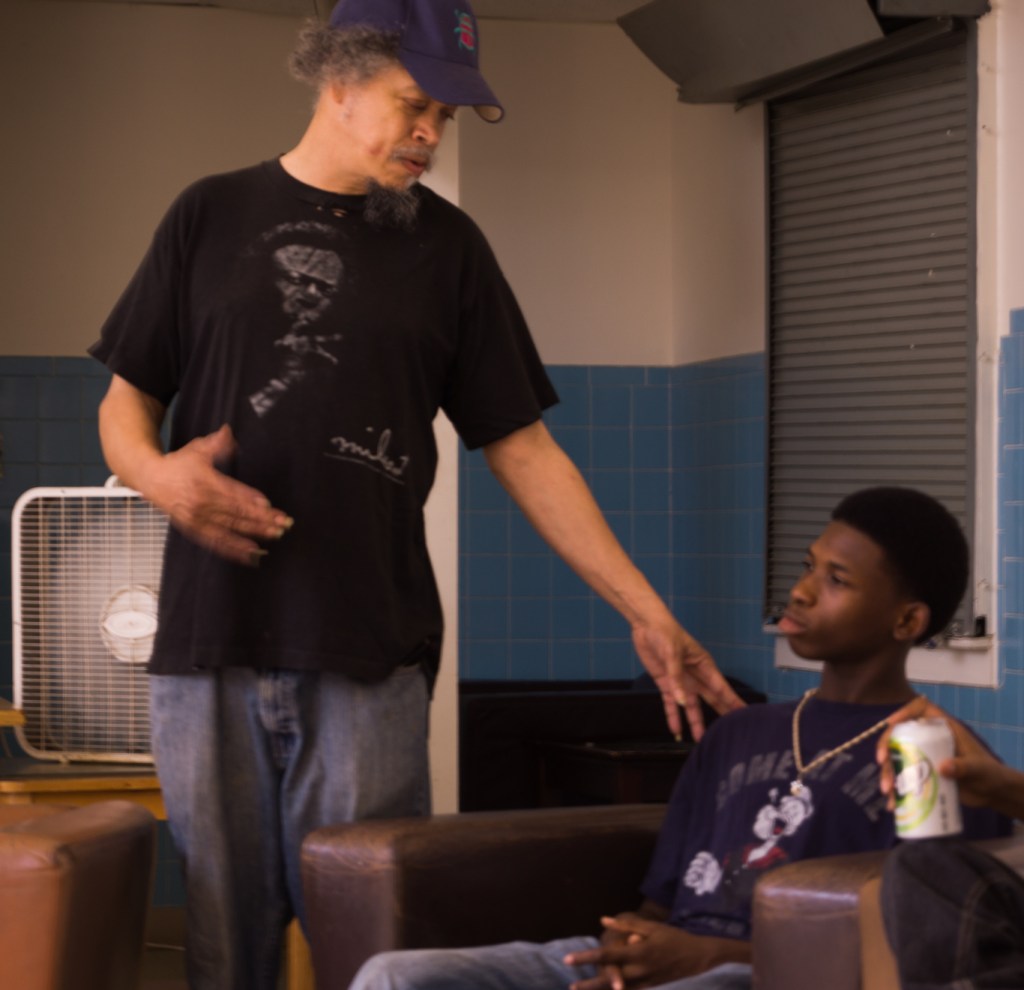
When I lived in Indianapolis, I was blessed to be led to connect with the Kheprw Institute (KI) community. A black youth mentoring and empowerment community. The Quaker meeting I attended there, North Meadow Circle of Friends, established a partnership with KI. One way we connected with each other was through book discussions organized by, and held at KI. This was a brilliant way for us to get to know each. That allowed us all to explore what the book that month meant to us. To tell our stories to each other. The focus was on the subject of the book, rather than each other.

After we had been doing this for more than a year, I was surprised when Imhotep said “these conversations are revolutionary.” But I immediately saw the truth in that.

I often share the following quotation from Richard Wagamese, because it beautifully expresses what I believe about change. Summarizes what I have learned about change, which is basically what my life has been about. So often we go about change in ways that are simply ineffective. Frustrating. Discouraging.

So I was profoundly grateful for the wisdom of these words when I read them several years ago. They define what I have come to know about how change occurs.


ALL THAT WE ARE IS STORY.

From the moment we are born to the time we continue on our spirit journey, we are involved in the creation of the story of our time here. It is what we arrive with. It is all we leave behind. We are not the things we accumulate. We are not the things we deem important. We are story. All of us. What comes to matter then is the creation of the best possible story we can while we’re here; you, me, us, together. When we can do that and we take the time to share those stories with each other, we get bigger inside, we see each other, we recognize our kinship — we change the world one story at a time.

Richard Wagamese (October 14, 1955-March 10, 2017)
Ojibwe from Wabeseemoong Independent Nations, Canada

I don’t know why it took so long to look for other writings by Richard Wagamese. I’m so grateful I finally did. Following is the introduction to his book “Embers”, where he eloquently writes about what I have tried to say.


Mornings have become my table.

At dawn each day, I creep from my bedroom down the hall to the kitchen, where I set my tea to brew and then move to the living room to wait. In the immaculate silence, I watch the world unfurl from shadow. I listen to the sounds of birds, the wind along the eaves, the creak of floorboards and joists and rafters in this small house I call my home.

When the tea is ready, I cradle the cup in my palms and inhale the scent of lavender. I place the cup on the living room table. Then I rise to retrieve the bundle that holds the sacred articles of my ceremonial life. I open it and remove my smudging bowl, my eagle wing fan, my rattle and the four sacred medicines of my people—sage, sweet grass, tobacco and cedar. I put small pinches of each together in the smudging bowl, which I set upon the table. I close my eyes and breathe for a few moments. Then I light the medicines, using a wooden match, and waft the smoke around and over my head and heart and body with the eagle wing fan. When I am finished, I set the fan on the table, too.

There are certain spiritually oriented books I read from each morning. I lift the books from the couch beside me and read from them in turn. Then I place the books on the table as well. I close my eyes and consider what the readings have to tell me that day. When I’m ready, I settle deeper into the burgeoning pool of quietude, and when I feel calm and centred and at peace, I say a prayer of gratitude for all the blessings that are present in my life. I ask to be guided through the day with the memory of this sacred time, this prayer, the smell of these medicines in the air, and the peace and calm in my heart. I pick up the role Creator has asked me to play in this reality.

The small meditations in this book come from my early mornings at that living room table. Later, at the desk in my writing space, I write the meditations as they come to me, before turning to the writing that is my life and passion and career. A meditation doesn’t come every morning. Sometimes one doesn’t arrive for days. But when my connection to those things on the table has been strongest, when I have been joined to those things completely, the meditations rise unbidden and form themselves on the page almost as if I were taking dictation. I believe they have been conjured in me. Everything I have come to know and rely upon as centring, spiritual, real and valid has its place on that table in my living room. The table is like my life: dented, scarred, battered and worn, but rich and full nonetheless, and singing its histories. In that way, mornings themselves have become my table. Enveloped in Ojibway ceremony, protocol and ritual, ringed by strong words on faith, love, resilience, mindfulness and calm, I reclaim myself each morning. I walk out into the world in a position of balance, ready to do what Creator asks of me that day.

The words in this book are embers from the tribal fires that used to burn in our villages. They are embers from the spiritual fires burning in the hearts, minds and souls of great writers on healing and love. They are embers from every story I have ever heard. They are embers from all the relationships that have sustained and defined me. They are heart songs. They are spirit songs. And, shared with you, they become honour songs for the ritual ways that spawned them. Bring these words into your life. Feel them. Sit with them. Use them.

For this is the morning, excellent and fair . . .

Wagamese, Richard. Embers: One Ojibway’s Meditations (pp. 6-7). Douglas and McIntyre (2013) Ltd.. Kindle Edition.

Posted in Kheprw Institute, Quaker, Uncategorized | Leave a comment

Hello Rebels

Hello Rebels,

Death Valley hits 130 degrees Fahrenheit — the hottest August temperature ever recorded on Earth. Fire tornadoes in California; Rare thunderstorms trigger new wildfires that are destroying the world’s largest Joshua Tree forest; A catastrophic derecho devastates Iowa’s corn crop in the middle of a pandemic. America is being slammed by multiple, overlapping emergencies, providing a grim portent of what the climate and ecological crisis has in store for our country.

You’d expect the press to be shouting about it from the rooftops. Instead: silence. Silence about the causes of the devastation. Silence about the solutions we desperately need to stop it. Silence about the fossil fuel criminals that continue to destroy our children’s future.

We’re beginning to wonder whether the corporate press in this country has been bought off. CNN and The Washington Post take money from fossil fuel companies, including Shell and BP. These dirty firms — the world’s worst climate criminals — have spent millions deceiving the public. Sign our petition, and tell CNN and The Washington Post to stop profiting from fossil fuel industry lies.

We are in the midst of a climate and ecological emergency. Our futures — and those of our children — grow bleaker every day. War, disease, and famine lie ahead on a scale that humans have never suffered before. The free press has a moral obligation to Tell the Truth to the public. By refusing to give the climate and ecological crisis the coverage it deserves, and by taking ad revenue from fossil fuel companies, CNN and The Washington Post are failing to inform people about the story of the century. We demand they treat the climate and ecological crisis with the urgency it deserves. Help us demand that they Tell the Truth!

We continue to seek a meeting with CNN and The Washington Post to discuss how they can improve their coverage of the story of the century. They have ignored our requests, so on Monday rebels visited CNN’s office to ask for a meeting. Security guards chased them away, but we’re not giving up:

Stay tuned for updates on actions targeting CNN and The Washington Post.

Masks are required at all XRDC events

Until then, please find this week’s media toolkit here.

Posted in climate change, Extinction Rebellion, Uncategorized | Leave a comment

This just reminds me of the first time that white people came

I haven’t heard much news from the Wet’suwet’en peoples for a while. As has happened to some extent everywhere, things have slowed down because of the pandemic.

One exception are those racing to further rape Mother Earth, to extract fossil fuels. Those building the Coastal GasLink pipeline through Wet’suwet’en territories have defied orders, and continued the devastation there. Racism.

Recently there was the terrible news of arson of a cabin belonging to Gidimt’en Chief Gisday’wa on August 15.

FOR IMMEDIATE RELEASE: Wet’suwet’en Cabin Destroyed By Arsonists August 17 2020, Houston (BC): On Saturday August 15 2020, a cabin belonging to Chief Gisday’wa was burned to the ground by unknown arsonists. The arson took place two days after the Houston Today newspaper ran a front page story which included photographs of Gisday’wa’s cabin site, and falsely claimed that his structures had been “left behind” with “no apparent recent use.”

“This just reminds me of the first time that white people came. They kicked our families out of their territory and then they burnt all their huts and everything else, and put them on their so-called reserves. This is what this reminds me of,” stated Fred Tom, Chief Gisday’wa of the Gidimt’en Clan.

The cabin burnt down on August 15 served as part of a cultural meeting place, built at the request of the Wet’suwet’en Hereditary Chiefs and used by Gidimt’en clan members

The cabin site is located at a major intersection on the Morice Forest Service Road, and is passed shortly after 5am each morning by large convoys of Coastal Gaslink contractors and private security vehicles. The road is patrolled multiple times each day and night by RCMP, who continue to occupy a remote police detachment 2.5km past the site of the arson.

RCMP notified Chief Gisday’wa that they were informed of the fire by an anonymous phone call at 9am. RCMP informed other Gidimt’en clan supporters that they had arrived at the site of the arson at 8:15am. The site was still smoldering when Chief Gisday’wa arrived to find the taped off crime scene where his cabin had stood.

“It’s absolutely racist. I think it’s white supremacists in the local communities. This isn’t the first time that we’ve been burned off the territory. It’s a well known fact and a well known history and experience of Wet’suwet’en people to have been burned out of their homes and out of their cabins off the territory. This happened all throughout the 50s, this has been happening since contact, when the Indian Agents would come in and move people off the territories so that they didn’t have a place to live,” stated Molly Wickham, Sleydo’, spokesperson for the Gidimt’en Checkpoint.

This hate crime is the latest in a long series of arsons undertaken by settlers, industries, and state agents against Wet’suwet’en homesites that have occurred since contact. Dozens of Wet’suwet’en cabins and village sites throughout the 22,000km2 of unceded Wet’suwet’en territory were burned to the ground to make way for Canadian homes and settlements, including Chief Gisday’wa’s childhood home in Smithers, BC which was burnt down in the 1950s.In February of 2020, the RCMP undertook a series of raids and made dozens of arrests to remove a series of Wet’suwet’en checkpoints that controlled access to unceded Wet’suwet’en lands in accordance with Wet’suwet’en law. Since the RCMP have occupied Wet’suwet’en territory, including with a remote police detachment, Wet’suwet’en homesites have been the repeated target of white supremacist violence and intimidation – including instances of gunshots fired near Wet’suwet’en cabins.

.The Wet’suwet’en will continue to occupy our lands, and to fight against the racist and violent premise advanced in newspapers like Houston Today that Wet’suwet’en homes and lands are abandoned and free for the taking.

More info / Ways to support: www.yintahaccess.com
Media Contact:Jennifer Wickham,
Media Coordinator for Gidimt’en Checkpoint:
yintahaccess@gmail.com,
(778) 210-0067

#WetsuwetenStrong

Posted in Gidimt'en Checkpoint, Uncategorized, Wet’suwet’en | Leave a comment

Forget everything

It feels like the world is falling apart. Just last week a derecho smashed everything in its path as it roared through the Midwest. I wrote of my experience of being out running when it hit: https://kislingjeff.wordpress.com/2020/08/11/exhilarated-again/ Successive high temperature records are broken daily across the western U.S., which is also seeing another round of ferocious wildfires. More tropical storms and hurricanes are expected, powered by rising water temperatures.

The U.S. is more profoundly effected by the coronavius pandemic than any other country in the world because of the utter failure of the Federal government to respond. Our capitalist economy is collapsing as a result.

People are wondering what disaster to expect next. Everyone is searching for ways to return to normal. Many are realizing we never will. More and more of us are realizing what was normal was not good for those who were not privileged. That is an understatement.

So many are struggling to find spiritual support. Massive numbers of people are leaving the churches of organized religions. This may be the greatest problem of all, because paying attention to the Spirit is where the answers are.


“Forget everything — reject everything we have ever been taught or heard or seen and work as though this were the first day on earth and our eyes new opened to the world.
Let the spirit guide — all the time — for every move of the brush and every thought that we follow out.”

Olive Rush 1873-1966, Sante Fe Quaker Artist

My adventures after giving up having a car for over forty years might be a microcosm of how to adapt to what we are going through now. I didn’t think of it this way at the time, but it was a rejection of the car culture. An example of needing to adapt to a different way.

That decision was forced upon me by the leadings of the Spirit. Which was a vision of my beloved mountains hidden behind clouds of air pollution. I couldn’t live with myself if I didn’t minimize my contribution to the smog.

Although that resulted in many inconveniences in my life, I came to see that inconvenience is not a bad thing. Those inconveniences just meant that it was more difficult to do things in the context of the old normal. What they did was force me to find different ways, what I feel to be better ways.


“Life sometimes is hard. There are challenges. There are difficulties. There is pain. As a younger man I sought to avoid them and only ever caused myself more of the same. These days I choose to face life head on—and I have become a comet. I arc across the sky of my life and the harder times are the friction that lets the worn and tired bits drop away. It’s a good way to travel; eventually I will wear away all resistance until all there is left of me is light. I can live towards that end.”

Richard Wagamese, Embers

My “eyes new opened to the world.” Without a car life slowed down. I spent more time in nature as I walked, bicycled and ran. Rather than zooming around, enclosed in a car, separated from nature. I was able to interact with people, and commune with all that is not human.

The more I paid attention as I walked, the more I saw. Carrying my camera with me helped me appreciate the beauty around me. The more I looked, the more was revealed.

My Spirit expanded as I moved in the quiet, as I expressed my gratitude for what I was seeing and feeling. I became better at letting “the spirit guide–all the time.”


Looking and listening were for me ways of quieting my mind, teaching it to not think, breaking habits of thought like: what to do? where to go? But after awhile, looking and listening became something much more; I came to see and to hear the world, existence, more and more acutely. The more I watched and listened, the more I saw and heard, more keenly, more distinctly.
Every day I gained more and more pleasure from this listening and looking, always seeing and hearing more clearly. As time went on, I appreciated how glorious and beautiful existence is, living. I saw how busy, preoccupied were most people with doing, making. Existence was already so much to enjoy, so grand and lovely, so exquisite. Just to see, to hear the sights and sounds that were there made me happy and delighted. I was truly happy and at peace. Everywhere. All the time.

A Man Impossible to Classify by Richard Whittaker, Dec 21, 2007

Posted in climate change, Quaker, Uncategorized | Leave a comment

Water, go with the flow

This is one of those mornings where a story doesn’t come to mind. Normally I would go on to other things and wait until tomorrow to try again. This is a bit ironic since I have been asking you to write your own stories.

And then I came across the phrase “go with the flow”. So that’s what I’m doing now. I’m going to just express what comes to mind this morning, disjointed as it probably will be. This is really uncomfortable. I like things to be organized. To have a plan, but that’s where we increasingly find ourselves in these troubled times.

And yet my spiritual practice is to try to be open to leadings of the Spirit at all times. So this is a source of conflict in my life.

As it says below, “go with the flow” is more than a metaphor. It is a spiritual practice and a way of life.”

The theme that is emerging is water.

Perhaps the most important message of water is change itself. “Everything flows,” said Heraclitus, “You can’t step twice into the same river.” The human body, like the body of the earth, consists mostly of water and is therefore in a state of constant flux. The intellect creates an illusion of permanence; we freeze the changing processes of life into concepts. But for health of body and mind, we must learn to flow with life, to ride the currents. We discover that the Buddhist principle of “impermanence” presents not a reason for despair but an opportunity for more sensitive and intelligent living. Taiji Quan can help us to, in the words of the Diamond Sutra, “Awaken the mind without fixing it anywhere.” Through Taiji Quan practice we discover that “Go with the flow” is more than a metaphor. It is a spiritual practice and a way of life.

Taiji Quan: The Wisdom of Water by Kenneth Cohen, syndicated from qigonghealing.com, Aug 17, 2020

Nothing is softer or more flexible than water, yet nothing can resist it.

Lao Tzu

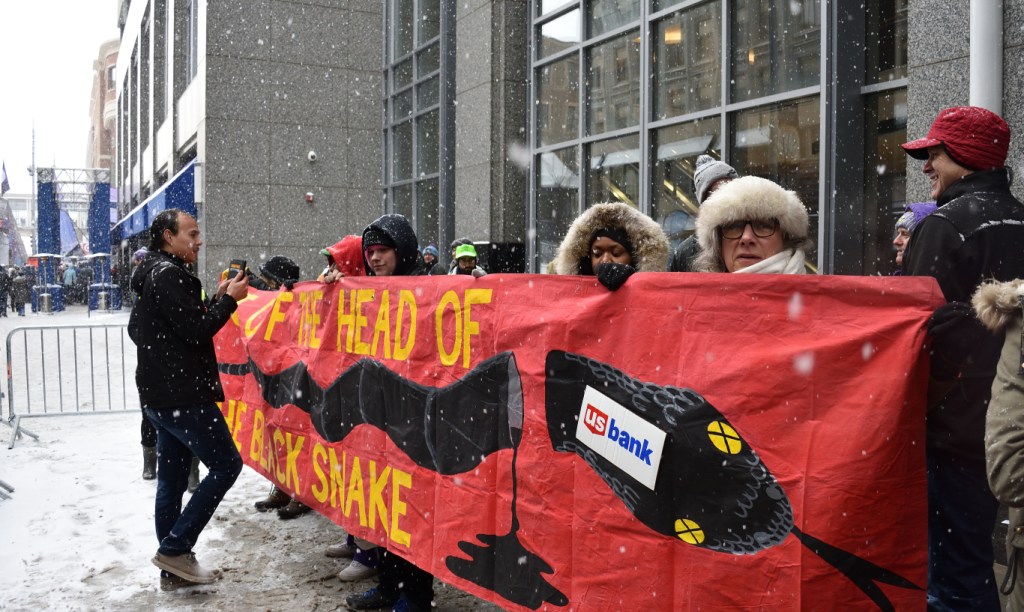
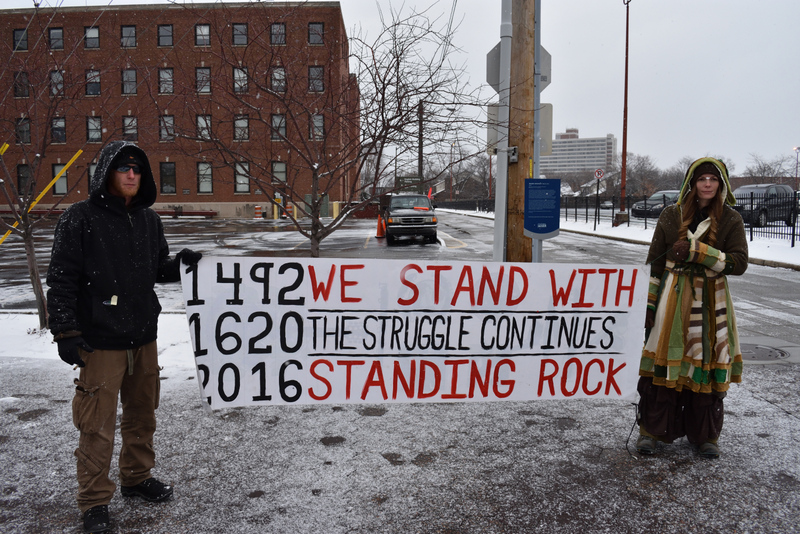
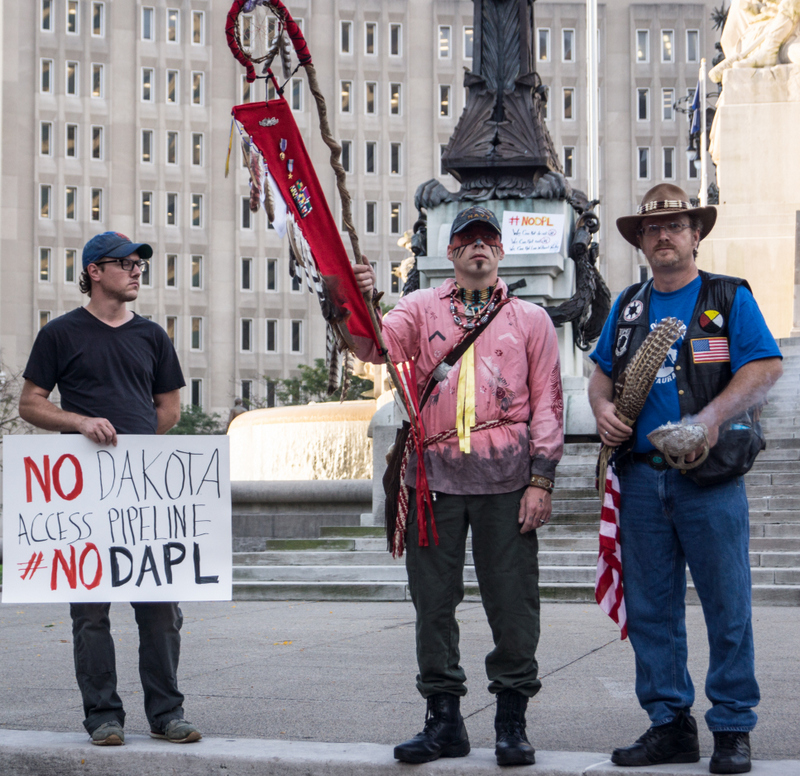
The most important lesson I learned from the beginning of my involvement to cut off the head of the black snake, to stop the Dakota Access Pipeline, is this work is not protest. It is protecting water. This came from those who were praying at Standing Rock.

This is part of the transcript from the video below. As powerful as these words are, the video shows how difficult and dangerous it can be to pray, to protect the water. “We protected our water, and we did a good job at doing it. Thank you”

On September 3, the Dakota Access pipeline company attacked Native Americans with dogs and pepper spray as they protested against the $3.8 billion pipeline’s construction. If completed, the pipeline would carry about 500,000 barrels of crude per day from North Dakota’s Bakken oilfield to Illinois. The project has faced months of resistance from the Standing Rock Sioux tribe and members of nearly 100 more tribes from across the U.S. and Canada.

I got maced twice, I got bit by a dog I was [at the] front line.Where did you get bit? I got bit on the ankle over my boots, so I told him they needed to leave, but the the guy didn’t believe me, so he don’t want to listen. He, uh, stuck his hand out, and he maced me, this other guy, and I think he maced a lady, too.

Then, they tried getting the dogs on us. I was just standing there, I wasn’t really doing nothing. That dog ran up on me and it bit my – around my ankle.

You pushed them back, though? Yes.

Why is this such an important fight to you?

Because, water is life. Like I said, without water we all wouldn’t be here, these plants wouldn’t be here, there’d be no oxygen, we’d all die without it. I wish they’d open their eyes and have a heart to realize you know if this happens, we’re not going to be the only ones that’s gonna suffer, they’re gonna suffer too. What tribe are you with? I’m Oglala Sioux, full blood. From? Pine Ridge Reservation.

No one owns this land! This land belongs to the earth. We’re only caretakers. We’re caretakers of the earth.

Do you feel like you won today?

We win every day when we stand in unity, we stand and we fight.

How do you feel?

Feel great.

What did you accomplish today?

Protecting our water. That’s what we were here to do, and that’s what we did.

Where are your horses from? Coal Creek, South Dakota. And you came from there? Yes, ma’am. And so, describe the scene to us.

We protected our water, and we did a good job at doing it. Thank you.


Katrina Coravos asked that this be shared.

Amidst the turning of violence yesterday, we recognize that we must pray more- we must pray for peace, for truth, for love to prevail. We are behind the warriors here as they stand strong against the machines. WE are behind them with love, prayer, and calling in the ancestors that walk with us to help and guide us.
Make no mistake: the construction company unleashed the dogs on the people. This was an act of violence- both on the people and on the dogs.
So today, we were part of a water ceremony with water drums. We prayed to spirit. We prayed for the women, for the men, and for the unification of the people. We prayed for the construction company to wake up and recognize that this is their water too.
We are coming together. WE must remain in peace and love. No matter what.
Please continue to pray for us here, and for the warriors on the front lines that they do the right things when faced with violence.
Our prayers and our love is our greatest force. May we open inside of ourselves to shine out stronger and stronger…


All natural things curl, swirl, twist, and flow in patterns like flowing water. Thus we sense something similar in clouds, smoke, streams, the wind-blown waves of sand on the beach, the pattern of branches against the sky, the shape of summer grasses, the markings on rocks, the movement of animals. Even solid bones have lines of flow on their exterior and in their spongy interior. Spiders build their webs, caterpillars their cocoons in water-like spirals. The rings in an exposed log look like a whirlpool. And looking up in the night sky we can see a river of stars. Alan Watts once remarked to me, “In nature, the shortest distance between two points is never a straight line, but a wiggle.” One need only follow a deer through the woods to verify this; animal trails meander like dried stream beds.

Taiji Quan: The Wisdom of Water by Kenneth Cohen, syndicated from qigonghealing.com, Aug 17, 2020

“Thanks so much to all who were there! It was beautiful to watch, even from afar. My little baby girl was running around all day once again saying ‘Water Is Life!’ She even guilt tripped me by asking why we weren’t there! I’m finally getting my little sister to divest from US Bank. She just ‘never got around to it’ but got tired of me talking to her about it and after seeing the actions live on Facebook was finally inspired!”

Anonymous response on Facebook related to water protectors going to Minneapolis Super Bowl weekend. From <https://www.facebook.com/groups/StopDAPL/?multi_permalinks=181910842572503&notif_id=1517933115151932&notif_t=group_activity&ref=notif>


Posted in #NDAPL, civil disobedience, climate change, Indigenous, Uncategorized | Leave a comment

Challenging you to publish your radical stories

Recently I’ve written about the power of stories, publishers of the truth, and radically rethinking our stories.

I’ve written a lot about stories over the years: https://kislingjeff.wordpress.com/?s=stories. As Richard Wagamese wrote, “we change the world one story at a time.” That is why I write so much on this blog (1,690 posts seen by over 50,000 readers since I started January 1, 2015). Blog posts are stories. My intention is not to promote myself, but use my experiences to illustrate what I’m trying to say. As my friend Ronnie James says,  Anyways, brag, brag, blah, blah.

I wonder what happens to these stories, these blog posts, when I publish them on the Internet. Rarely does anyone leave a comment about a blog post. Word Press collects some statistics, among the most interesting being the countries where the post was read. I enjoy seeing they are being read in China, Brazil, Germany, France…

I wonder what happens to these stories, if anyone benefits from them. Whether they trigger actions from readers to help build a better world. Its too easy to think those few people who do read them forget as their attention moves on to other things.

In this time of a global pandemic, economic and political collapse and environmental chaos people desperately need new stories to give these times some some meaning and hope. We need stories to help us understand what is happening as the status quo is upended.

That is why I’m challenging you to publish your radical stories. The world needs your story. The disruptions of our lives due to the pandemic mean, for many of us, that we have more free time. You can use that time to write and publish your story and change the world. We have many, free, tools to publish such as Facebook, twitter, Instagram, and blog posts. If you need help learning about these, this is a great opportunity to learn from youth.


Each Warrior of the Light contains within him the spark of God. His destiny is to be with other Warriors , but sometimes he will need to practice the art of the sword alone; this is why, when he is apart from his companions, he behaves like a star. He lights up his allotted part of the Universe and tries to point out galaxies and worlds to all those who gaze up at the sky. The Warrior’s persistence will soon be rewarded. Gradually, other Warriors approach, and they join together to form constellations, each with their own symbols and mysteries.  

Coelho, Paulo. Warrior of the Light: A Manual (p. 89). HarperCollins. Kindle Edition.

If we are to find a new kind of good life amid the catastrophes these myths have spawned, then we need to radically rethink the stories we tell ourselves. We need to dig deep into old stories and reveal their wisdom, as well as lovingly nurture the emergence of new stories into being.

Pontoon Archipelago or: How I Learned to Stop Worrying and Love Collapse. By James Allen, originally published by Medium, June 18, 2019

James Allen’s term, radically rethink, challenges us to find a new way of looking at and expressing stories. As an example, following is a story about how I was challenged to radically rethink the story of Quakers and the underground railroad.


Eight years ago I was struggling for ways to address racism in my own life.  I had become increasingly upset by the privileges I have in our society based solely on the color of my skin, and denied others based on theirs.  The lack of diversity in the Midwest means these issues often seem removed from our daily lives, and is also the reason it can be more of a challenge to address them.  Friends are often bewildered when they are challenged about their privilege.  We have hundreds of years of history of building these privileges into our societies, and being taught that this is how things should be.  This is what systemic racism is.

The Quaker approach is the key to my experiences.  I could not find the answers I was seeking by my usual methods of reading, or from stories other people had to share.  I am now grateful for this, because that forced me to pay much more attention to the Inner Light.  I found what my grandmother, Lorene Standing, said to be true, that God often reveals his will in a series of small steps.  My spiritual orientation changed as I began to depend on the Inner Light to guide me into these new experiences.  My new normal became asking the Light “what do we do now?”.

I found the Inner Light had a lot to say, I just had to pay much closer attention.  One important thing I realized was I often translated what I was hearing into my existing world view.  Since that view was flawed (for example, related to privilege), I was often corrupting the message.  I began to learn to trust what I was hearing and stop making it conform to what I thought I knew.

The path the Inner Light led me down related to racism started about eight years ago.  I was deeply involved in the environmental activist movement, mainly through the Keystone Pledge of Resistance.  At that time various environmental groups would organize national days of education or action to try to raise awareness about our environmental crisis.  These things were organized via the Internet.  When I learned of an upcoming day of action, I looked to see where something in Indiana was occurring, and the only event was at a place I’d never heard of, the Kheprw Institute (KI).  I was led to attend that event.  I found an old building that had previously been a convenience store in an inner city neighborhood in Indianapolis.  But it was full of young kids enthusiastically showing us their aquaponics system and rain barrel making enterprise as ways they were working for the environment.

I was intrigued, and wanted to learn more.  They did have a web page, but the only contact information was an email address.  On the web page I saw one of their projects was “Open Source Activism”, to develop computer applications to support activism.  Being a computer programmer, I thought this would be the way for me to connect with KI.

I sent an email message indicating that I would like to be involved with that, but did not receive a reply.  I was thinking this was not meant to be, but this was one of those times when the Inner Light was not going to let me give up, so after a couple of weeks, I sent another email message.   After some time, I received an offer to meet at KI.  I arrived on my bicycle on a dark, rainy evening, to find the same group of about a dozen kids in their early to late teens, and KI’s leaders, Imhotep, Pambana, Miss Fair, and Alvin.

After some greetings, we all sat down, and I thought we would talk about computer programming languages and projects.  Instead everyone looked at me, and Imhotep said, “Tell us about yourself.”  I talked a little about being concerned about the environment and working with the Keystone Pledge of Resistance, and my work at Riley Children’s Hospital.  “Tell us some more.”  So I mentioned I was a Quaker, and Miss Fair enthusiastically talked about Quakers and the Underground Railroad.  When she stopped, everyone looked at me.  I said something along the lines of how grateful I was that my ancestors had done that work, but Quakers try to not take credit for things they personally hadn’t done.

Which led me to talk more about how Quakers didn’t see religion as something only involving listening to a sermon once a week, and left me at the point where I needed to provide an example from my own life.  Since KI is built on concern for the environment, I spoke of how I had reluctantly purchased a used car for $50 when I moved to Indianapolis, mainly for trips home to Iowa.  Car rental was not common in the early 1970’s.  When my car was totaled several years after that, I decided to see if I could live in the city without a car, and have since then.  I was hoping that would show how Quakers try to translate what they believe, what they feel God is telling them, into how they actually live their lives.  At that point Imhotep, with a smile on his face, said something like “Thirty years?  You are a warrior.”  I had never been called a warrior before.  It seemed a humorous term to use for a pacifist (and I suspect that was his intention now that I know him better) but I liked it.

I have since learned that Imhotep is very good at drawing stories out of people.  So again he said, “OK, tell us some more.”  I finally realized, and should have anticipated, that this was actually an interview to see if I was going to fit in, and the usual surface information wasn’t going to be adequate.  I remember everyone looking expectantly at me, and I wondered what to say next.  I also clearly remember the Inner Light telling me what I needed to do then.   I said “Quakers believe there is that of God in everyone” and I turned to each person and said “that includes you, and you…” The first time, I think I hesitated slightly as I was asking myself, “Ok, we Friends always say this, but do you really believe this of a group that is different from you?” And I’m really glad the answer was an immediate and emphatic YES, but it also seemed to reaffirm that by exploring it intentionally.  At that point I remember smiling at the thought, and the young person whose eyes I was looking into saw it, too, I think. Each person smiled at me as I said that to them, and I had the impression they were thinking, “of course”.   I strongly felt the presence of the Spirit among us.

That finally seemed to satisfy the questioning.  This was a real revelation to me, how it is important to express spiritual matters as well as you are able when the situation calls for it.  (It is also important NOT to do so when the situation does not call for it.)  And to be alert for those possibilities, and how the Inner Light guided me through that evening.  That set the tone for my involvement with KI since that night, for which I am profoundly grateful.

Looking back at this story today, I realize I shouldn’t have had to ask the question of myself “Ok, we Friends always say this, but do you really believe this of a group that is different from you?” This is an example of unexamined White superiority. The idea that change happens one story at a time in this case meant I was who was changed.


Posted in climate change, Kheprw Institute, Quaker, race, Uncategorized | Leave a comment

Publishers of the truth

I often refer to the article written by James Allen, Pontoon Archipelago or: How I learned to Stop Worrying and Love Collapse. Clearly we are living in increasingly chaotic times. Collapse is an apt characterization.

I hadn’t thought of warning you, readers of my blog, that you might not be ready to hear the dire conditions I often think and write about. I think Allen is correct to provide this warning. “I feel obliged to issue a warning that you may find this essay a difficult excursion. If you are already in a vulnerable state of mind, you may consider waiting until you feel more resilient before reading on.” You might not be prepared for what follows here, or in most blog posts I write. That is not a negative reflection on you. Rather an indication of the grave danger we are in, and how unprepared most of us are to respond.


Dear reader

I offer you this essay in the hope that you may find something within it that will keep you buoyed in the years ahead. It reflects my own attempt to understand the converging crises in our near future, and to grapple with the question of what I might be able to offer that will be useful in that future.

It was the birth of my first child that catalysed a sense of urgency to take the idea-threads I had been tracing for some years now and to weave them into a relatively coherent whole. As any conscientious parent will testify, there are few things that will sharpen one’s focus on the future than a deeply felt sense of responsibility for a new being.

Pontoon Archipelago or: How I Learned to Stop Worrying and Love Collapse. By James Allen, originally published by Medium, June 18, 2019

The viability of our civilisation is uncertain. While opening our eyes means we’ll confront darkness, keeping them shut means it’ll stay dark. Let’s dare to look and start building new worlds alongside the old

James Allen

I return again and again to the question of what we can do now. I think there are two broad categories.

  • We have to look deeply into ourselves. As Arkan Lushwala says, “everywhere people ask, “what can we do?” The question, what can we do, is the second question. The first question is “what can we be?” Because what you can do is a consequence of who you are. Once you know what you can be, you know what you can do”
  • James Allen writes “if we are to find a new kind of good life amid the catastrophes these myths have spawned, then we need to radically rethink the stories we tell ourselves. We need to dig deep into old stories and reveal their wisdom, as well as lovingly nurture the emergence of new stories into being.”

Prophets are sometimes misrepresented as fortune-tellers, but it is more accurate to think of them as truth-tellers. As Old Testament scholar, Walter Brueggemann explains,

The prophetic tasks of the church are to tell the truth in a society that lives in illusion, grieve in a society that practices denial, and express hope in a society that lives in despair.

In the seventeenth century, Friends proclaimed themselves as the ‘Publishers of the Truth’. ‘The Lord opened my mouth,’ wrote George Fox, ‘and the everlasting truth was declared amongst them, and the power of the Lord was over them all.

As Robert Lawrence Smith  reminds us, from their beginnings Quakers have held that truth ‘restores our souls and empowers our actions. Truth is our guide and truth is our liberator.’

This links back to the idea of ‘testimony’,  the name we give to Friends’ shared behaviours, located in the sphere of everyday life, which are usually seen to be a challenge to conventional ways of behaving or are reflective of their experience of personal transformation. Individually and collectively, Friends’ testimony asks them to seek out the truth in their lives and to uncover destructive falsehoods. Crucially, they have always recognised that although this can be a cause of discomfort, it often leads to a more meaningful life or deeper sense of inner peace.

The Publishers of Truth

The article contains the story of John Woolman’s vision of oppressed miners.

I was then carried in spirit to the mines where poor oppressed people were digging rich treasures for those called Christians, and heard them blaspheme the name of Christ, at which I was grieved for His Name to me was precious. Then I was informed that these heathens were told that those who oppressed them were the followers of Christ, and they said amongst themselves, ‘If Christ directed them to use us in this sort, then Christ is a cruel tyrant.

Here Woolman enters into the plight of the oppressed and forces his readers to consider both their complicity in this suffering and their response. Like other prophets before him, his tactic is to make those who considered themselves to be righteous confront the discrepancies between their professed faith and their actions in the world.

Publishers of the Truth.  by Woodbrooke.


George Fox understood how the Spirit, in whose presence Quakers wait in worship, can empower people to work for this more just and compassionate world. In his Journal, he wrote:

The Lord had said unto me that if but one man or woman were raised by His power to stand and live in the same Spirit that the prophets and apostles were in who gave forth the scriptures, that man or woman should shake all the country in their profession for ten miles around.

Quakers are not merely prompted into uncovering difficult truths for themselves, but are called to be truth-tellers on behalf of the powerless; even if this is inconvenient, socially embarrassing, or dangerous to do so.

Publishers of the Truth. 24th January 2019 by Woodbrooke.

Yesterday I explored this idea of radically rethinking our stories, not only rethink them, but share them with others. What comes to matter then is the creation of the best possible story we can while we’re here; you, me, us, together. When we can do that and we take the time to share those stories with each other, we get bigger inside, we see each other, we recognize our kinship — we change the world one story at a time.Richard Wagamese.

The mechanisms for sharing our stories are well known, i.e. publishing them on the Internet via various social media platforms. Facebook, twitter, Instagram, etc. And blog posts. It is rather amazing that we have these free tools to share what we write with the whole world, or as much of it that has Internet access.

These are the challenges we continue to face today, to confront the discrepancies between our professed faith and our actions in the world.

And we need to share our stories with each other. To listen deeply. Quakers are not merely prompted into uncovering difficult truths for themselves, but are called to be truth-tellers on behalf of the powerless.


Posted in Quaker, social media, Uncategorized | Leave a comment

Radically rethinking our stories

Yesterday’s blog post about sensemaking included the following quotation.

If we are to find a new kind of good life amid the catastrophes these myths have spawned, then we need to radically rethink the stories we tell ourselves. We need to dig deep into old stories and reveal their wisdom, as well as lovingly nurture the emergence of new stories into being.

Pontoon Archipelago or: How I Learned to Stop Worrying and Love Collapse. By James Allen, originally published by Medium, June 18, 2019

How do we radically rethink the stories we tell ourselves?

And how do we share our radical stories with others? Radical in the sense of a significant departure from the status quo. This is important work, because we change the world one story at a time. That’s the reason I write so much on this blog.


ALL THAT WE ARE IS STORY.

From the moment we are born to the time we continue on our spirit journey, we are involved in the creation of the story of our time here. It is what we arrive with. It is all we leave behind. We are not the things we accumulate. We are not the things we deem important. We are story. All of us. What comes to matter then is the creation of the best possible story we can while we’re here; you, me, us, together. When we can do that and we take the time to share those stories with each other, we get bigger inside, we see each other, we recognize our kinship — we change the world one story at a time.

Richard Wagamese (October 14, 1955-March 10, 2017) Ojibwe from Wabeseemoong Independent Nations, Canada

Social media platforms like Facebook, twitter, Instagram and blogs give each of us ways to share our stories with the world.

One idea is to share stories from earlier times. “We need to dig deep into old stories and reveal their wisdom.” The Quaker Stories Project is an example. https://quakerstories.wordpress.com/

And to re-think those stories. To consider what they say about our world today. To see if they represent something we have lost. Something it might be good to return to.


The following, from my friend Joshua Taflinger, is another example of radically rethinking our stories. Since he wrote this, I have looked at things from the perspective of what I think a spiritual warrior would.

I am inspired to share with you all more directly a post I wrote, because I consider you an established & effective nature/spiritual warrior, and believe that there is a need for the perspectives shared in the attached post to be more common thought in the minds of the many.

If you feel truth from this writing, and are inspired, I highly encourage you to re-write your own version, in your own words/perspectives, and post to your network.

With the intention of helping us all wake up, with awareness, clarity, and direction.

..spreading and weaving reality back into the world….

What has risen to the surface at Standing Rock is a physical/spiritual movement. Learn how to quiet your mind. To find the silent receptive space to receive guidance. To learn to adapt and follow the pull of synchronicity to guide you to where you will find your greatest support and strength.

What I have found in my time praying in the indigenous earth based ways, is that it’s not about putting your hands together and talking to god…. It’s about quieting and connecting with the baseline of creation, of nature. Tuning into the frequency and vibration of the natural world, the nature spirits. The beings and entities that have been in existence, for all of existence, the examples and realities of sustainability and harmony.

It’s about becoming receptive to these things. Being open and flowing with them. The spirit guides us, but we have to make ourselves receptive to feel, sense, and respond to this guidance.

Joshua Taflinger


Another great way to help you and others think of, and rethink stories is by asking questions and writing answers to them.


  • How is Earth’s story calling to you in this time of great change?
  • What opportunities are you offering your community to address the Earth’s (and all earthlings’) current existential predicament?
  • And how are you coping with more immediate losses from climate change close to home?
  • Are your people recovering from fire or flood?
  • Are the plants you love best to grow no longer suitable for your climate zone?

Celebrants & Ceremony in Response to Climate Grieving, Dina Stander, July 26, 2019


Yet another way to radically rethink our stories is to look at photos and imagine the stories they evoke. Then writing those stories and sharing them.


Posted in Uncategorized | Tagged , | Leave a comment

Sensemaking

It is increasingly difficult to make sense of all that is going on today. Its like all the bad things I had anticipated for what I thought would be the future are suddenly happening now. In addition, things I never imagined, like the assaults on truth and science, at a time when they are desperately needed.

sensemaking–the action or process of making sense of or giving meaning to something, especially new developments and experiences.

At the collective level, a loss of sensemaking erodes shared cultural and value structures and renders us incapable of generating the collective wisdom necessary to solve complex societal problems like those described above. When that happens the centre cannot hold.

Threats to sensemaking are manifold. Among the most readily observable sources are the excesses of identity politics, the rapid polarisation of the long-running culture war, the steep and widespread decline in trust in mainstream media and other public institutions, and the rise of mass disinformation technologies, e.g. fake news working in tandem with social media algorithms designed to hijack our limbic systems and erode our cognitive capacities. If these things can confound and divide us both within and between cultures, then we have little hope of generating the coherent dialogue, let alone the collective resolve, that is required to overcome the formidable global-scale problems converging before us.

Pontoon Archipelago or: How I Learned to Stop Worrying and Love Collapse. By James Allen, originally published by Medium
June 18, 2019

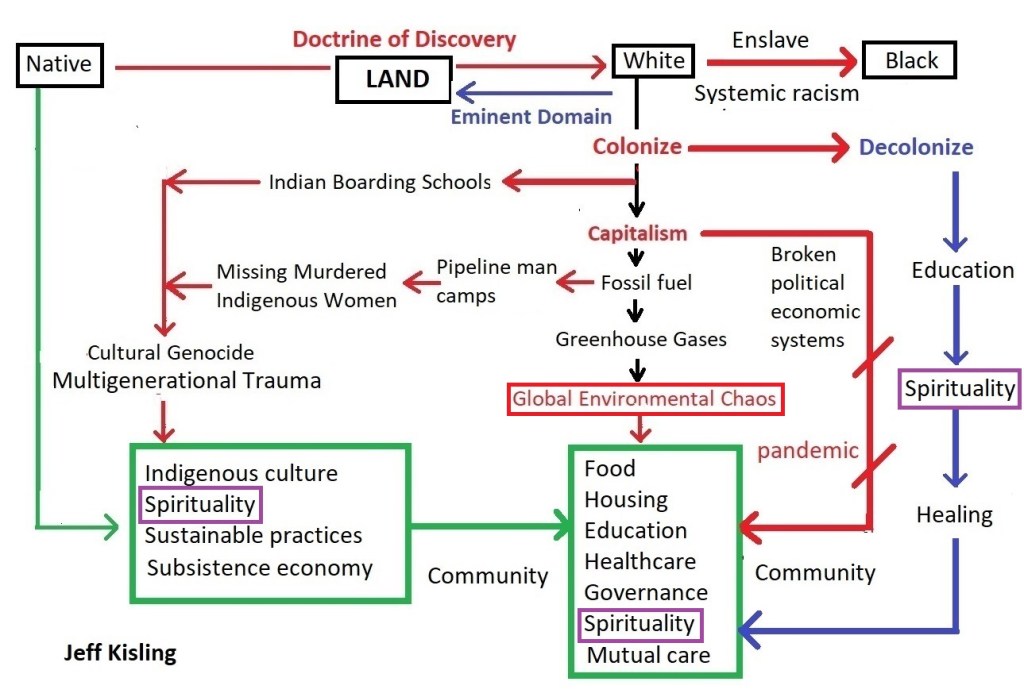
I have been working on this diagram for some time, to help me make sense of what is going on. Much of my life’s work relates to the threats of the profligate burning of fossil fuels. That’s why I was led to live without a car. And to work with others to try to stop construction of pipelines like Keystone XL, Dakota Access and the Coastal GasLink pipelines. To protect water.

Rapidly increasing greenhouse gas emissions are causing global environmental chaos. We are experiencing high temperature records being broken almost each successive day, ferocious wildfires, strong storms, flooding and draught.

The diagram indicates that capitalism and its need for constant growth relies on fossil fuels. The COVID-19 pandemic has exposed the inequities and dysfunction of the capitalist system. Both our political and economic systems are clearly broken.

All this flows from White settler colonialism which, among other things, imposed capitalism on the country.

That colonization had/has devastating effects on Indigenous peoples who lived and thrived here for thousands of years, including the horrific multigenerational trauma from the Indian boarding schools, and the epidemic of missing and murdered Indigenous women (MMIW).

I believe our only hope, for the near term, anyway, is found in decolonizing. That is a huge subject. It requires both education and healing. Some resources for this include Decolonizing Quakers, Seeding Sovereignty and Bold Iowa. Our long term survival is in doubt.


Celebrants have an important part to play in the legacy humanity caries into the future. I suggest that our responsibility as ceremonialists, as humans who help other humans meaningfully connect with the web of life, is to find ways now to help people connect with the story of this world’s beauty, even as the world we love recedes. I believe there is a gift we can bring to our communities, to help people learn the art of losing. To help us all to meet the rising tides.

Celebrants & Ceremony in Response to Climate Grieving, Dina Stander, July 26, 2019

I believe faith communities need to play a crucial role in helping us move through the oncoming, increasingly severe chaos described above. Faith can provide sensemaking for those who have no framework for making sense of our broken systems. People of faith can be celebrants.

Indigenous peoples are celebrants. Their cultures are based upon a timeless connection to Mother Earth and everything that is part of Her/us.


The problems before us are emergent phenomena with a life of their own, and the causes requiring treatment are obscure. They are what systems scientists call wicked problems: problems that harbour so many complex non-linear interdependencies that they not only seem impossible to understand and solve, but tend to resist our attempts to do so. For such wicked problems, our conventional toolkits — advocacy, activism, conscientious consumerism, and ballot casting — are grossly inadequate and their primary utility may be the self-soothing effect it has on the well-meaning souls who use them.

If we are to find a new kind of good life amid the catastrophes these myths have spawned, then we need to radically rethink the stories we tell ourselves. We need to dig deep into old stories and reveal their wisdom, as well as lovingly nurture the emergence of new stories into being.

Pontoon Archipelago or: How I Learned to Stop Worrying and Love Collapse. By James Allen, originally published by Medium
June 18, 2019

As my friend Ronnie James says

I’m of the firm opinion that a system that was built by stolen bodies on stolen land for the benefit of a few is a system that is not repairable. It is operating as designed, and small changes (which are the result of huge efforts) to lessen the blow on those it was not designed for are merely half measures that can’t ever fully succeed.

So the question is now, where do we go from here? Do we continue to make incremental changes while the wealthy hoard more wealth and the climate crisis deepens, or do we do something drastic that has never been done before? Can we envision and create a world where a class war from above isn’t a reality anymore?”

Ronnie James

ALL THAT WE ARE IS STORY. From the moment we are born to the time we continue on our spirit journey, we are involved in the creation of the story of our time here. It is what we arrive with. It is all we leave behind. We are not the things we accumulate. We are not the things we deem important. We are story. All of us. What comes to matter then is the creation of the best possible story we can while we’re here; you, me, us, together. When we can do that and we take the time to share those stories with each other, we get bigger inside, we see each other, we recognize our kinship — we change the world one story at a time.

Richard Wagamese (October 14, 1955-March 10, 2017)
Ojibwe from Wabeseemoong Independent Nations, Canada

Posted in #NDAPL, climate change, decolonize, Indigenous, Native Americans, Seeding Sovereignty, Uncategorized | 2 Comments

Exhilarated again

I say again, because I wrote another story about exhilaration in 2016 (below).

When I was led to give up having a car over forty years ago, I had no idea of some of the consequences of doing that.

I knew I would be spending more time outdoors, but not really how much time that turned out to be. Time waiting for the bus, or walking to work. I didn’t anticipate the impact that would have on my photography. As I was out walking or running, I learned to be much more aware of my surroundings. I began to take my camera with me to capture what I was seeing. Taking the camera more frequently, until I fell into the habit of always bringing it with me. The few times I didn’t, someone would invariably ask where my camera was.

The more attention I paid to my surroundings, the more I saw. Nature was teaching me about herself. I began to have to leave for work earlier and earlier to compensate for the time I spent taking photos along the way.

Running became a frequent mode of transportation. I came to love running more, to the extent that became another habit. I ran almost every day. That was another way to be more aware of my surroundings. I also had to be aware of my body, finding the right pace and adjusting my form to avoid injuries.

I am now reading a wonderful book about running.

“To our people, running is our connective tissue and a form of prayer. But it is not for everyone and the run will quickly teach you that.” There are many obstacles to conquer, mountain slopes to overcome, emotions to rein in. The bad weather, physical pain, and living with scarce comforts. All in order to invoke the spirit inside of us in the ritual of running.

Álvarez, Noé. Spirit Run (pp. 46-47). Catapult. Kindle Edition.

—strong runners who seem deeply in touch with the spirit of the land. They talk openly to it, sing to it. I am eager to learn from them, to see what others see, and be fearless in nature.

Álvarez, Noé. Spirit Run (p. 77). Catapult. Kindle Edition.
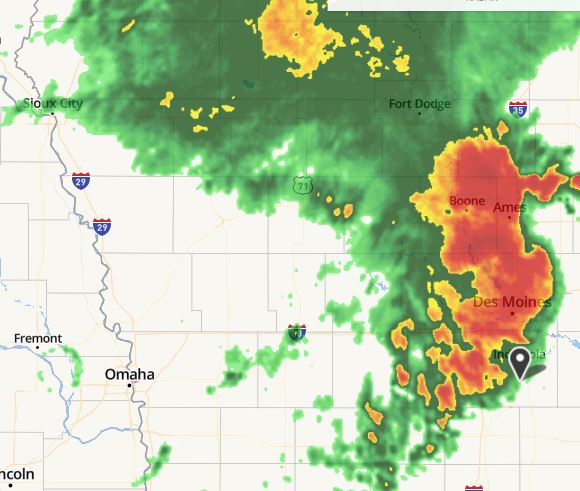
The reason for writing about exhilaration today is related to the powerful derecho yesterday. As you might guess, I was running when it hit. I checked the weather radar before I began to run, since I’d heard there would be thunderstorms later. I could see the storm in western Iowa, and would have had plenty of time to finish my run before it arrived.

The weather report didn’t anticipate the storm turning into a derecho but that’s what happened. So it traveled much more quickly, hitting when I was about a mile from home. The sky suddenly turned black and the winds arrived, nearly blowing me off my feet. The wind was roaring. The trees whipping back and forth. I heard a branch break. There was really no shelter, so I continued to run enveloped in the storm. It is a bit of an understatement to say this was exhilarating.

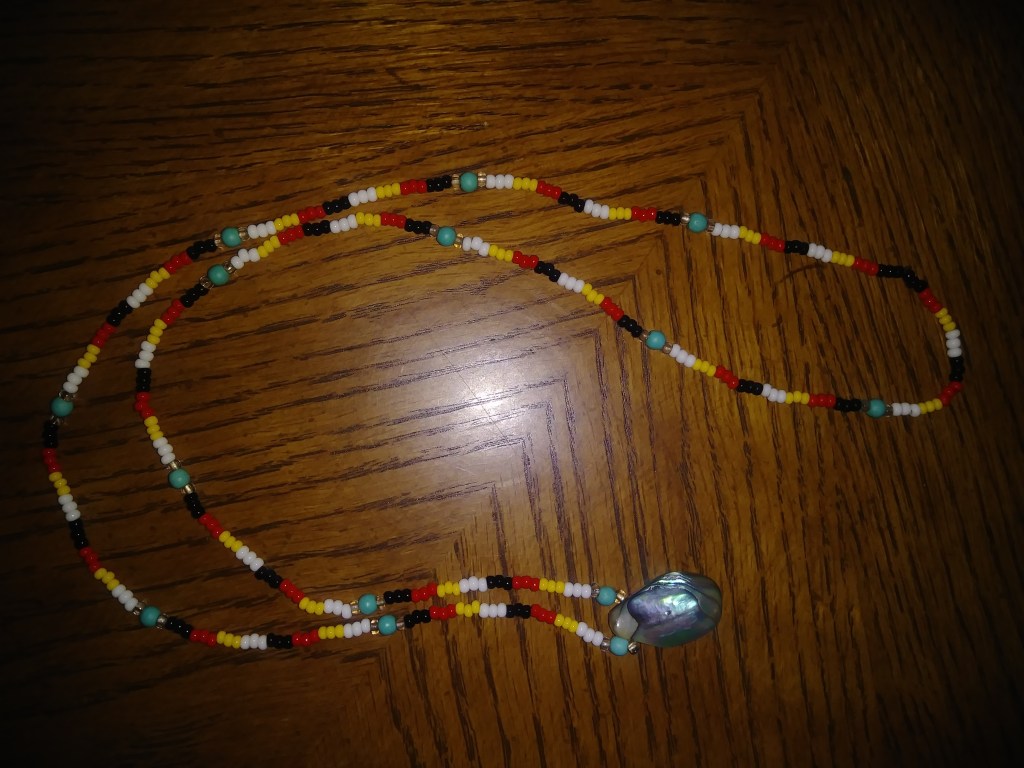
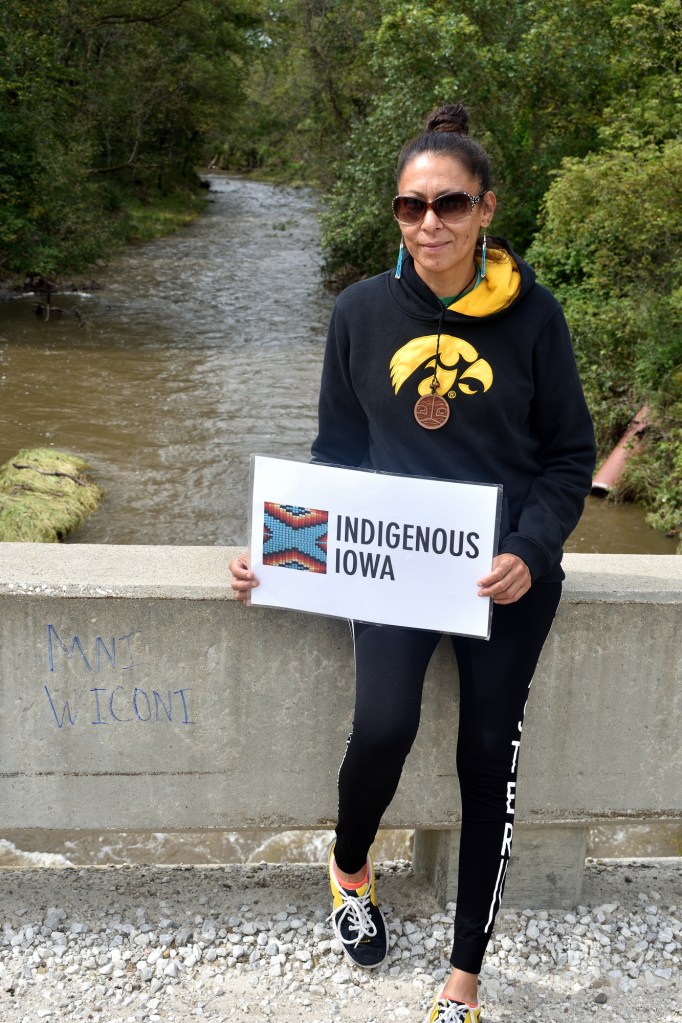
I was thankful I was wearing the necklace Foxy Onefeather made for me. She said it was for protection, and it worked. I was aware of it hanging around my neck. I gave grateful prayers when I arrived safely.

The reason I have this photo of the derecho is because I also carry my camera when I run.

Derecho sky, Indianola, Iowa 8/10/2020
Derecho 8/10/2020
Necklace for protection from Foxy Onefeather

Exhilerated Friday, April 1, 2016

I discovered early in life that I am an adrenaline junkie.  Going up against the Selective Service System as a draft resister was an early clue.  Then the years working in Neonatal Intensive Care, and especially the intense situations in the field when transporting critically ill babies from their local hospital back to Riley Hospital for Children proved the point beyond all doubt.

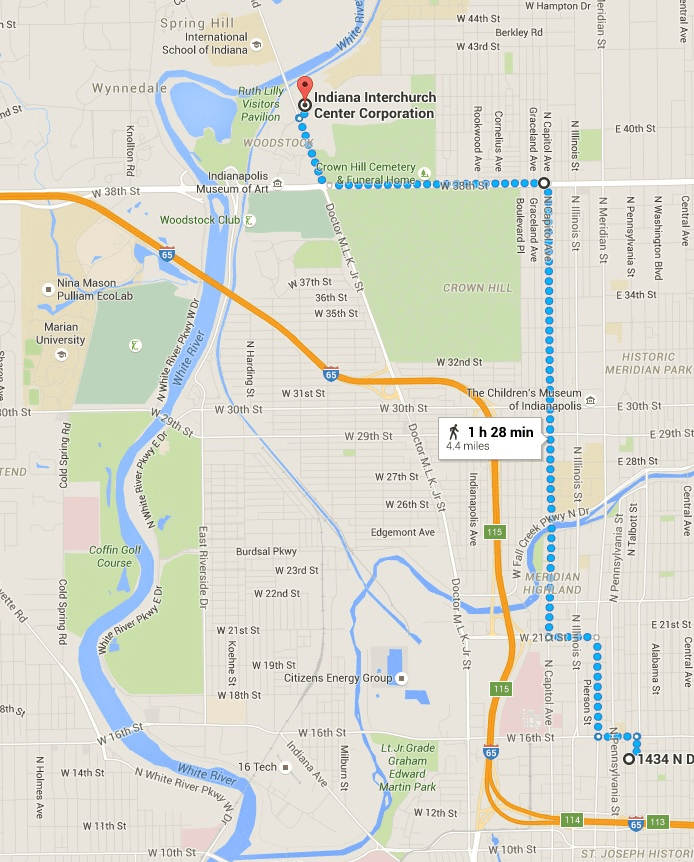
I “enjoyed” a different sort of exhilaration last evening, though I hesitate to tell stories like this for fear it will discourage people from seeking opportunities to reduce their use of cars.  I needed to get to the Interchurch Center for a meeting with local environmental activists to talk about climate mobilization and ALEC.

Although I had planned to ride my bicycle, the tire went flat within a few blocks of my apartment, so I took a city bus to 38th and Meridian (where the route turns left on the map below).  From there it was only 1.7 miles to Interchurch Center.  But within a couple of blocks of leaving the bus, it began to rain.  And then it began to really come down.  Thunder and lightning.  And then the wind began to blow so hard I had to lean way forward just to walk.  And the street began to fill with water, which passing cars threw up in the air, and onto me.

But I was walking past the Crown Hill Cemetery, which was full of trees and plants blooming, and it all looked so awesome in the curtains of rain.  It surprised me that I was enjoying myself so much.

Although I had worn a rain jacket, it wasn’t entirely waterproof, and I was completely soaked, and not sure what to do when I reached the meeting.  John Gibson, of Sustainable Indiana, who I had worked with for years on the Keystone Pledge of Resistance and Indiana Moral Mondays, let me wear his coat.

Then, just as the meeting was about to start, another local activist, Zander Gieryn, appeared, also soaking wet.  I assumed he rode his bicycle to the meeting.  And he was grinning, too–another adrenaline junkie!

I have always appreciated the numerous occasions when my environmentalist friends showed up riding their bicycles, including Jim Poyser and Ted Wolner (both Keystone Pledge of Resistance Action Leaders).

While I always try to avoid imposing on others because of my car-less decision, I was very grateful that John Gibson and Wayne Moss gave me a ride home after the meeting.

Posted in Uncategorized | Tagged | Leave a comment