The Future of Pandemic Solidarity

Having been led to the discovery of something I hadn’t known about, Mutual Aid, and joining in the Des Moines Mutual Aid food giveaway, I’m beginning to see this is how we can find our way through these increasingly chaotic times. Chaotic in terms of both social and environmental collapse.

Regarding environmental collapse, one of the things contributing to our social collapse, I’ve been studying “Beyond Hope: Letting Go of a World in Collapse” by Deb Ozarko. When we talk about the future, we should not waste our energies on hope that somehow we can save our environment.

And so the words that follow are meant to provoke, agitate and shake the very foundation of cultural programming that holds the Soul hostage. I write without apology for the courageous few who are willing to claim their most profound truth by remembering who and what they are, even in‌‌—‌‌especially in‌‌—‌‌a world that is falling apart.

The words that follow shine a spotlight on the collective shadow so it no longer lurks in the moldy, dank darkness of the heavily programmed human mind. This is not a book about saving, fixing or changing the world. It’s much too late for that. This is a book about radical personal evolution for the sake of Earth and the Soul‌‌—‌‌right now.

This book speaks unsparingly to painful truths. It’s written for those who are no longer willing to deny what they already know in their hearts: that we have reached the end of the line. It’s a book written for the warriors of truth who are ready to reclaim the Soul, let go of our broken world, and put love and compassion into action for no other reason than because that is the deepest truth of who they are.

Ozarko, Deb. Beyond Hope: Letting Go of a World in Collapse (p. 15). Deb Ozarko Publishing. Kindle Edition.

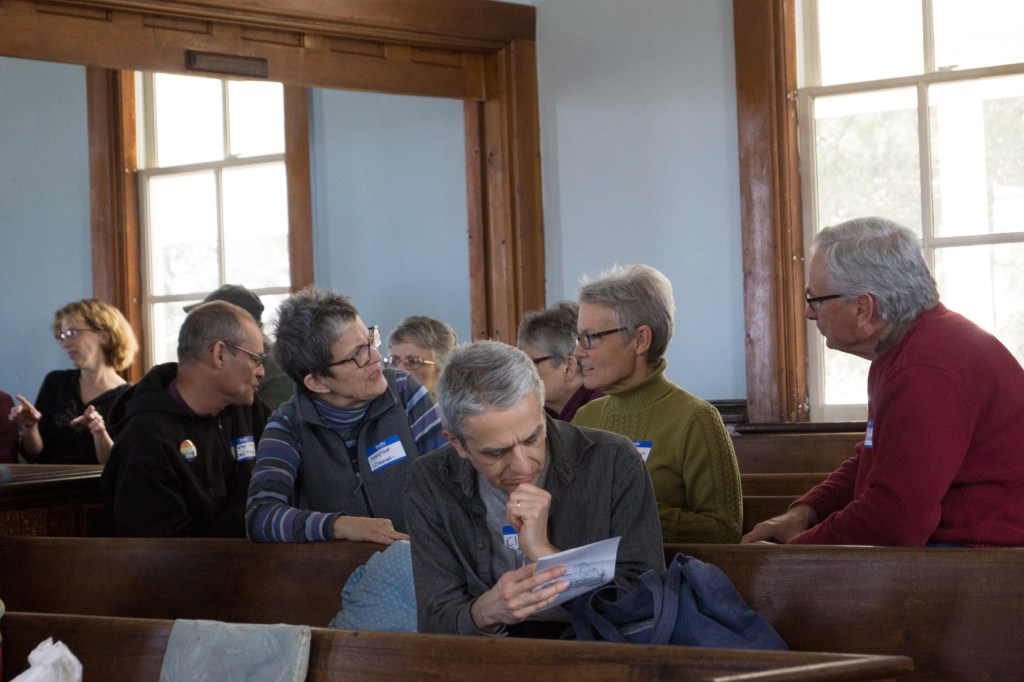
I write without apology for the courageous few who are willing to claim their most profound truth by remembering who and what they are, even in‌‌—‌‌especially in‌‌—‌‌a world that is falling apart.” The native people I’ve come to know, remember who and what they are. As do my new friends of Des Moines Mutual Aid. My friends at the Kheprw Institute in Indianapolis know and remember. Some of my fellow Quakers do, too. We have begun to explore the idea of Mutual Aid in my Quaker meeting.

The title for this post comes from the article, “THE FUTURE OF PANDEMIC SOLIDARITY. The Pandemic Has Channelled Our Collective Rage And Constructed New Visions Of What Is Possible” by Colectiva Sembrar, Red Pepper. Popular Resistance, October 25, 2020

In their recent book Pandemic Solidarity, Colectiva Sembrar (Sowing Seeds Collective) collected first-hand experiences from around the world of people creating their own narratives of solidarity and mutual aid in our time of global crisis. Following are some of those narratives.

Our process for creating Pandemic Solidarity – grounded in love, horizontality, solidarity and mutual aid – reflects our shared vision of global and local socio-political transformation. Mirroring a process of realisation experienced by those engaged in mutual aid practices, our 20-person collective did not know we shared this vision until well into our process. We developed another vision of who we are: an international collective of mostly women, dedicated to facilitating lesser-heard voices, who are collectively creating a new society through their actions. While there are differences in the experiences in the book, we found a great deal of commonality, and it is that which makes this moment so significant.

Not only do many of those we spoke with feel unrepresented by those in power, the pandemic has further demonstrated they have reason to fear their governments. Governments are not only failing people – in most cases they are the reason we’re rooted in such a deep crisis. The pandemic has exacerbated a history of structural inequality rooted in the intersection of colonialism, racism, patriarchy and capitalism. The people are building concrete alternatives to systems of oppression and exploitation, demonstrating that we are capable of creating a new society, prefiguring it with love, life and sustainable change.

THE FUTURE OF PANDEMIC SOLIDARITY. The Pandemic Has Channelled Our Collective Rage And Constructed New Visions Of What Is Possible by Colectiva Sembrar, Red Pepper.
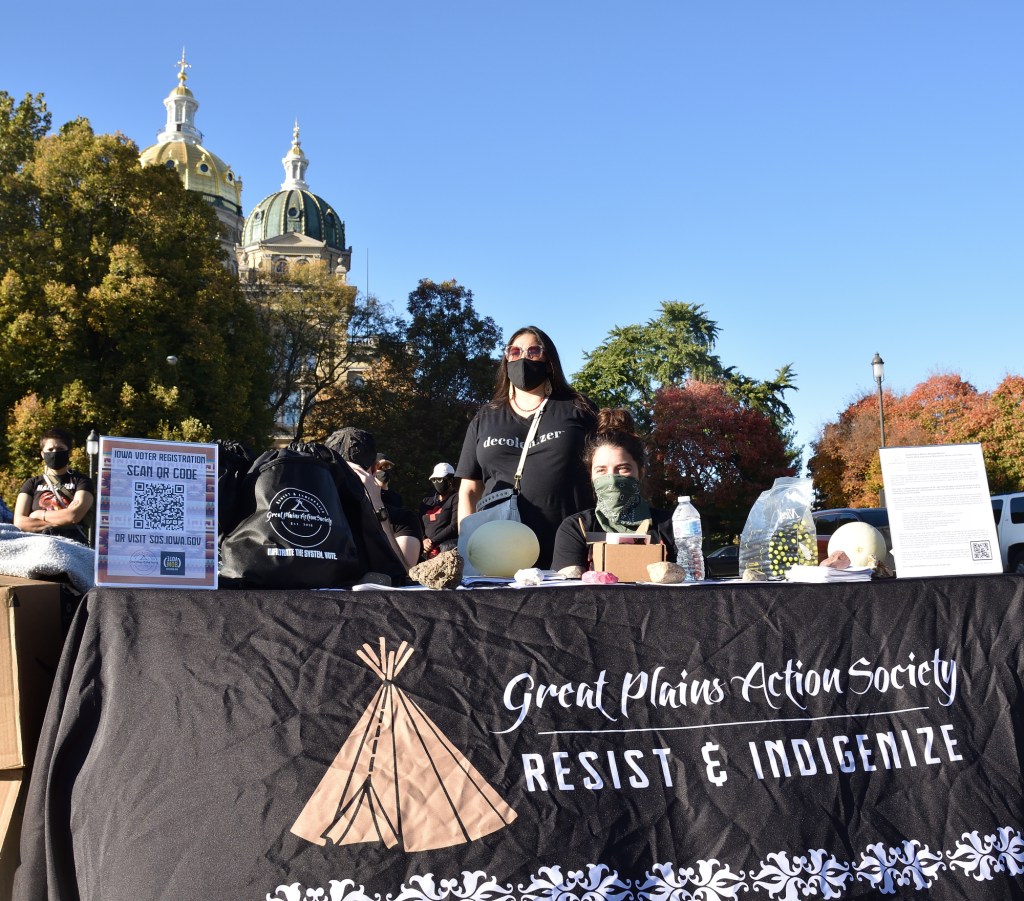
As I’ve begun to talk with Quakers about Mutual Aid, I’ve found it doesn’t take much discussion to get past the initial questions about Mutual Aid, to then find “we did not know we shared this vision until well into our process”.

‘First and foremost, people question the very existence of the state today. If it collects taxes from us, if it erases the debts of big companies at once and for all, and cannot provide the labourers with paid leave in today’s turmoil, and cannot supply basic food and health care, why does it exist? What does the state do other than show us a stick? The links the solidarity networks organise … are seeds for self-organisation in every neighbourhood.’

Kadıköy Solidarity Network in Istanbul

‘Communes are the base unit of the political system that we have been building here. As municipalities we coordinate efforts to respond to the people’s needs by collaborating with communes and councils closely and in a circular way. Communes are made up of local residents who mobilise their neighbours and collect information on their specific needs and demands. Commune members then communicate these issues to neighbourhood and district councils as well as our municipal committee. Policy decisions are made through the feedback that circulates among all these different groups.’

Qamishlo municipality

‘What the pandemic makes evident immediately is that the current economic and social system is based on a structure of patriarchal, racist and classist exploitation, which causes inequalities that the pandemic has only exacerbated … In our political action, we seek to contemplate the way in which different systems of oppression intersect and legitimise each other .. as well as thinking and acting for the construction of dialogues, affinities and collective action with a view to social transformation.’

Oporto (Portugal) based Popular Network for Mutual Support

The state and ruling classes have worked systematically to weave distrust among people but we are seeing that the threads of that distrust were thin and easily broken. Mutual aid is in many of our collective and ancestral memories, we don’t need to learn it, but instead recover it, remember it and enact it. It is through recovering our mutual tendencies that we learn that anything that has been built – even our own subjugation – can be taken down. What we see in these stories today is the emergence and renewal of larger and deeper social bonds that can aid us in creating new worlds, rooted in justice.

We think of the future as an ‘outward spiral’. The stories we’ve heard manifest, in different ways, the sort of society we could have and, in fact, already have. This pandemic is creating small and large fissures, but what we do with these openings is up to us. The new world is already being created. It is up to us to expand this creation, to continue spiralling outwards.

…The question is, how do we deepen and develop these networks to create democratic institutions (see Rojava), creating power from below, and to do so without these institutions being repressed? A fundamental strategic point, learned through mutual aid itself, is that self-organisation helps us to meet our physical and emotional needs, but reimagines these needs and how we frame them. This rarely happens when beginning from a position of demands and a focus on what the state can do.

THE FUTURE OF PANDEMIC SOLIDARITY. The Pandemic Has Channelled Our Collective Rage And Constructed New Visions Of What Is Possible by Colectiva Sembrar, Red Pepper.
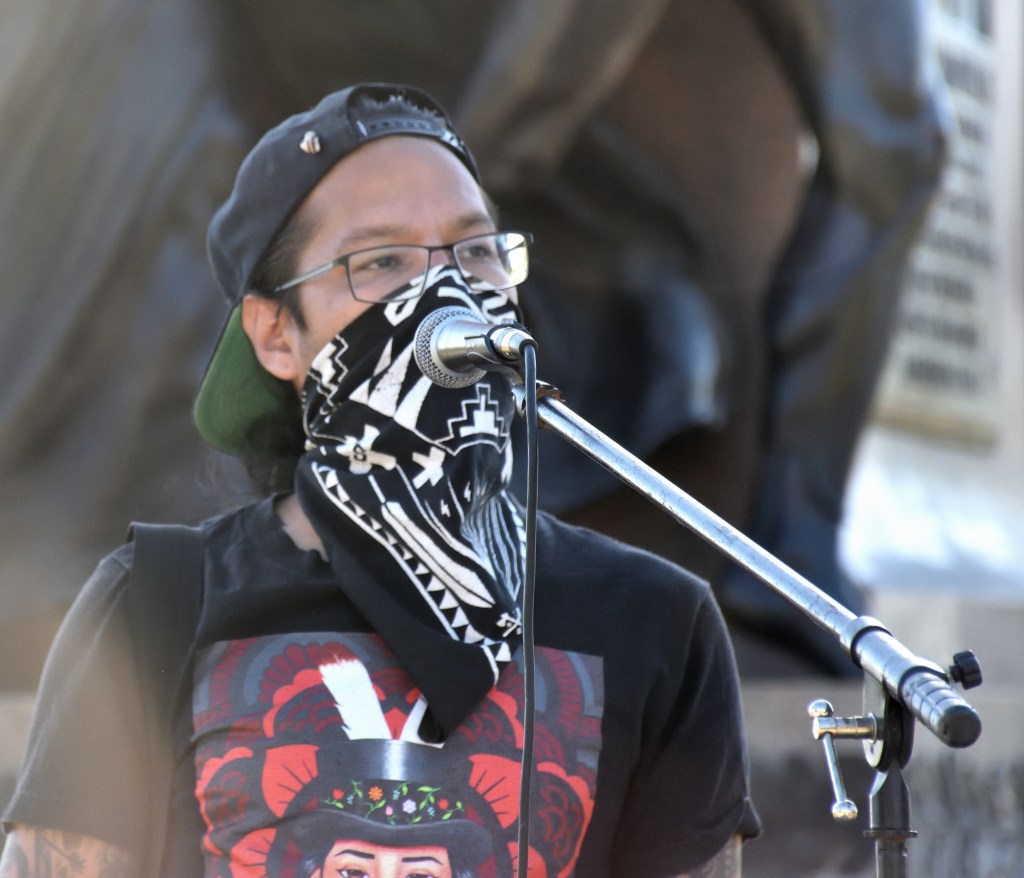
Posted in Black Lives, climate change, Des Moines Mutual Aid, Indigenous, Kheprw Institute, Mutual Aid, Native Americans, Quaker, revolution, solidarity, Uncategorized | Leave a comment

Lobster Fishery and RCMP Inaction

Tensions have been escalating for some time, between fishing rights of the Sipek’nekatik people and commercial fishermen. On October 16, 2020. one Mi’kmaw lobster fishing compound burnt to the ground. Now there are questions concerning the lack of action by the Royal Canadian Mounted Police who have been present during clashes between the two groups.

The chief of the Sipekne’katik First Nation estimates anywhere between 150 and 200 lobster traps were lost on Friday as non-Indigenous commercial fishers cut lines and destroyed buoys.

Chief Michael Sack told media that he received a number of calls on Friday morning that fishing gear belonging to members of the self-regulated Indigenous “moderate livelihood” fishery was about to be removed.

Sipek’nekatik lobster traps sabotaged as week of violence, anger ends By Alexander Quon, Global News, Posted October 16, 2020
Posted in First Nations, Indigenous, Uncategorized | Tagged | Leave a comment

Mutual Aid for Social Concerns

For some time I’ve been praying and thinking about Quaker Peace and Social Concerns Committees .Many Quaker meetings have had such committees for many years. For a long time I’ve been struggling to understand why I’ve felt these committees haven’t seemed to be as effective as they once were. Either we haven’t been identifying issues of injustice adequately, and/or methods and tools we once used no longer work. I am a member of the Peace and Social Concerns Committees of my local Quaker meeting as well as clerk of Iowa Yearly Meeting (Conservative)’s Peace and Social Concerns Committee.

For the past week or so I’ve been writing about justice work I’ve done to evaluate what I’ve learned, and figure out better ways to work for justice now.

What I have been led to believe is Mutual Aid programs are what our Peace and Social Concerns Committees should be today.

It is easy to continue to do what has always been done. In years past there were actual wars and methods of war, such as conscripting people into armed services. There were specific things we could mobilize against. We could refuse to cooperate with the draft. Could refuse to pay the war tax on our phone bill. Demonstrate at weapons production facilities.

And we had some access to our representatives at all levels of government. We could sometimes see the effect of writing letters to, and visiting the offices of these representatives. Letters to the Editor published in our newspapers seemed to sometimes influence our representatives and/or our fellow citizens. Some eighty years ago the Friends Committee on National Legislation (FCNL) began its work of helping Quakers lobby and engage with our Federal Government.

Now with the increasing number of people each representative is to try to serve, and the huge sums of money corporations and other interests give, most of us really have little effect on how our government works, including how money for social services is allocated and used. And stopping the money that goes to the military.

Another consideration is justice work that went so terribly wrong. One of the worst were Indian Boarding Schools, some of which were operated by Quakers. Tens of thousands of children were kidnapped from their families and taken far away to schools that tried to erase their identity and culture and try to teach them how to be assimilated into White society. Besides this being a tragic mistake to learn from, it is important to know the trauma from this has been passed from generation to generation. Native peoples today suffer from the legacy of this intergenerational trauma. It is essential that we acknowledge this if we ever hope to be able to work with Native peoples today.

The COVID-19 pandemic has made it impossible to ignore the failure of the capitalist economic system. The weakness of our healthcare systems and social safety nets are exposed. Suddenly millions are struggling to find basic necessities and to deal with added burdens related to health and with their children at home and needing schooling.

The need for building mutual aid survival programs is now greater than ever.
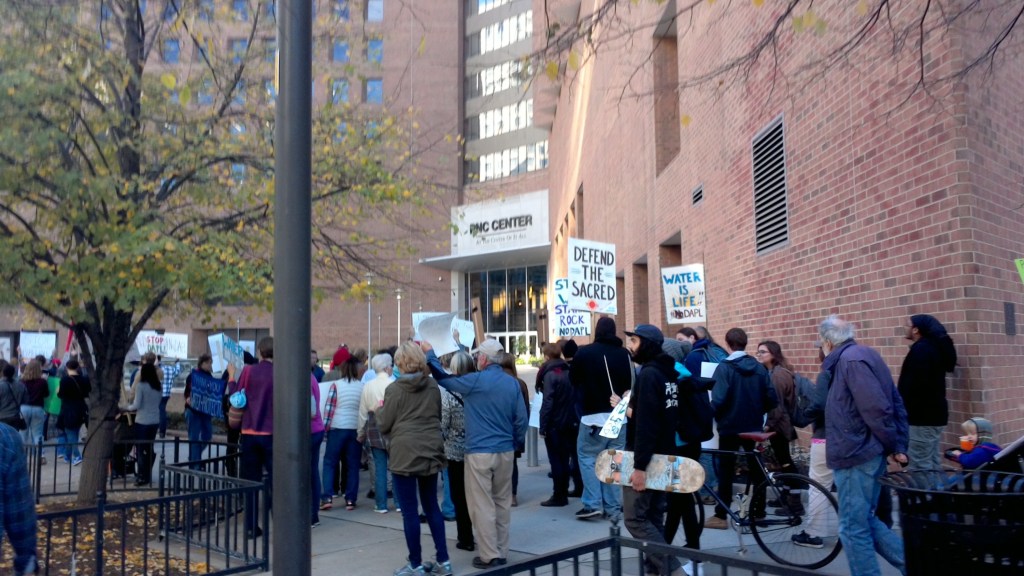
I have been blessed to learn about such Mutual Aid programs that have been operating for some time in Des Moines, Iowa. This morning I am looking forward to participating again in the free food store supported by Des Moines Mutual Aid.

In the speech below my friend Ronnie James recently gave at a Black Lives Matter teach-in, The Police State and Why We Must Resist, he said he represented Des Moines Mutual Aid. I asked him to tell me about that

It started as group of my friends working with the houseless camps some years back. It has now grown into a solid crew that runs a free food store started by the Black Panthers, still work with the camps, we organized a bail fund that has gotten every protester out of jail the last few months, and we just started an eviction relief fund to try to get a head of the coming crisis, in cooperation with Des Moines BLM. We have raised $13,000 since Wednesday and the application to apply for the grants goes live this week.

Ronnie James

Quakers like to ask ourselves questions we refer to as queries. Rather than being told to do something, the questions invite us to focus on what we are or are not doing. I would ask these questions. You might have more.

  • What relationships do you see between your peace and justice work, and the concept of Mutual Aid?
  • What would your justice work look like if you adapted it to the Mutual Aid model?
  • What Mutual Aid groups are in your area?
  • How might faith integrate with Mutual Aid?
  • How could Mutual Aid expand who you do your justice work with? Bring in more Friends in your meeting, youth in your meeting, and other people in your wider community?
  • How can we create ways of meeting our needs, making decisions, and organizing ourselves and solving problems outside of the State structure and the capitalist system?

DM Mutual Aid
https://www.facebook.com/Des-Moines-Mutual-Aid-108955753983592/
DM Rent Relief
https://www.facebook.com/DSMBLMRentRelief/
DM Bail Fund
https://www.facebook.com/dsmbailfund


Teach In 8/22/2020
Des Moines BLM
Ronnie James

The Police State and Why We Must Resist

Hello all, my name is Ronnie James, and I am here representing Des Moines Mutual Aid.

I am descended from numerous peoples of so-called north america.

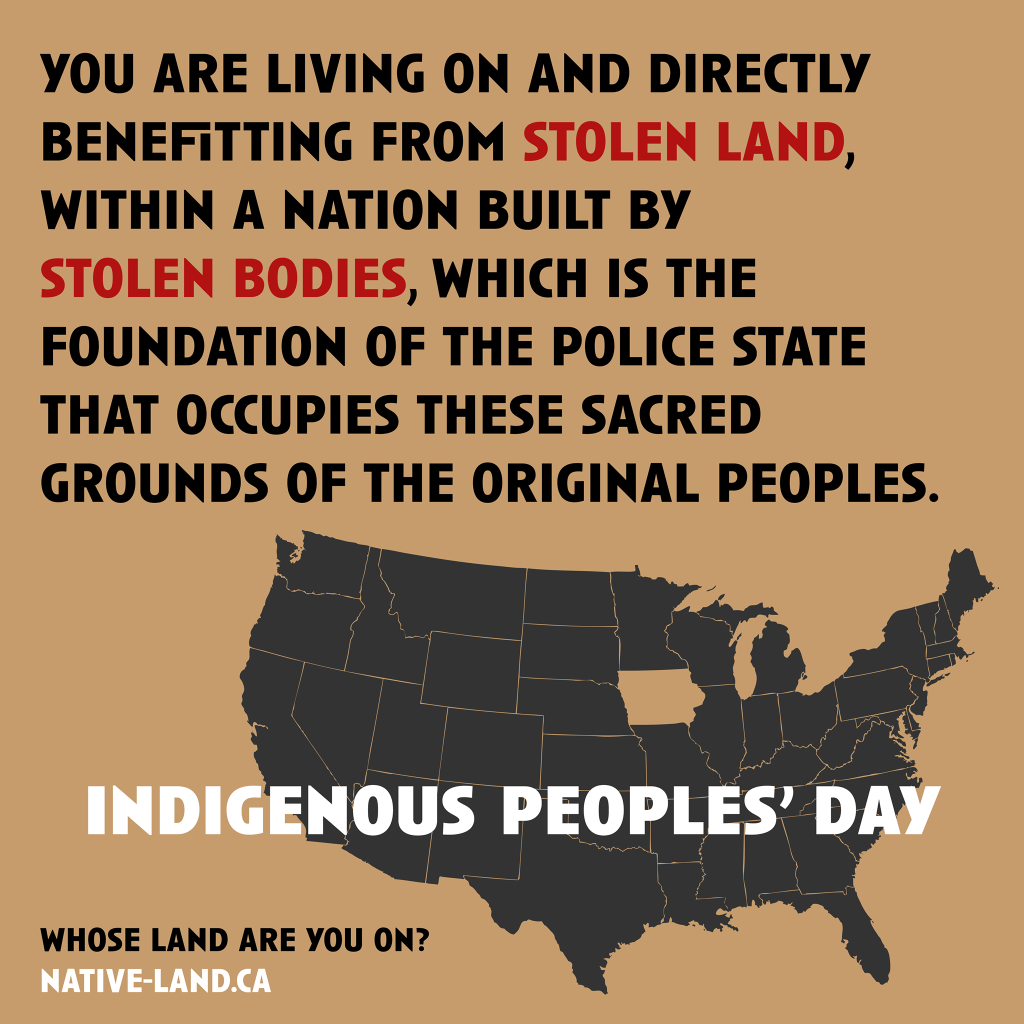
At this point I am supposed to do a land acknowledgment, but I don’t like what those have been distorted into. Instead I will say you are standing on and directly benefiting from stolen land, within a nation built by stolen bodies, which is the foundation of the police state that occupies these sacred grounds of the original peoples.  If you would like to know more of who’s land you are on, there are numerous resources. We are still here, and numerous, just ask us.

Historically, the police and other law enforcement were formed to protect the interests and property of the moneyed classes from the rest of the People. This “property” included the bodies of the enslaved and was the justification for brutally repressing the righteous and inevitable revolts born from the atrocity of slavery. This same philosophy of endless possession was the bloodlust that fueled the “Indian Wars” and the theft of Indigenous land and bodies that continues to this day.   (Wampanoag, 2020)

Today, this same war of conquest, the repression of the many for the benefit of the few, continues. 

Currently, Des Moines Mutual Aid and its many accomplices have been fighting a battle with the city of des moines and it’s foot soldiers trying to repress our houseless population from utilizing unused “property”. The basic universal need of a place to rest and be safe is trumped by the need of the wealthy, and the wannabe wealthy, to control every inch they can possess. It is a war for control, and the pigs have enlisted willingly.

This same war of conquest is currently using the mass incarceration machine to instill fear in the populace, warehouse cheap labor, and destabilize communities that dare to defy a system that would rather see you dead than noncompliant. This is the same war where it’s soldiers will kill a black or brown body, basically instinctively, because our very existence reminds them of all that they have stolen and the possibility of a revolution that can create a new world where conquest is a shameful memory.

As bleak as this is, there is a significant amount of resistance and hope to turn the tide we currently suffer under. We stand on the shoulders of giants that have been doing this work for centuries, and there are many lessons we can learn from.
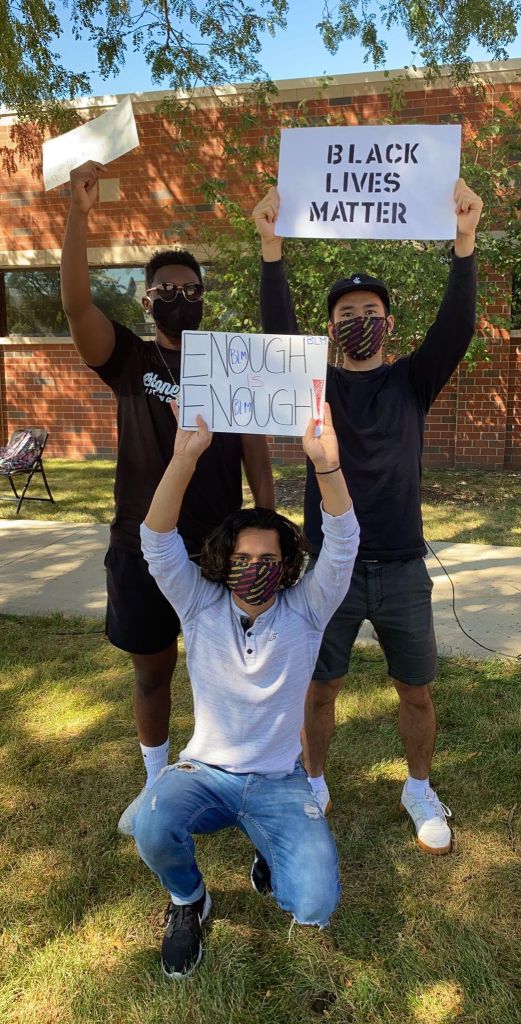
The first, and possibly the most important, is that it was not always this way, which proves it does not have to stay this way.  

What we have is each other. We can and need to take care of each other. We may have limited power on the political stage, a stage they built, but we have the power of numbers.

Those numbers represent unlimited amounts of talents and skills each community can utilize to replace the systems that fail us.  The recent past shows us that mutual aid is not only a tool of survival, but also a tool of revolution. The more we take care of each other, the less they can fracture a community with their ways of war. Organized groups like The American Indian Movement and the Black Panther Party for Self Defense showed that we can build not only aggressive security forces for our communities, but they also built many programs that directly responded to the general wellbeing of their communities. This tradition began long before them and continues to this day. Look into the Zapatistas in Southern so-called Mexico for a current and effective example.

These people’s security forces, or the “policing of the police” not only helps to minimize the abuse and trauma they can inflict on us, but it begins to shift the power balance from them to us.

Mutual Aid programs that help our most marginalized or other events that work to maintain our spirits result in stronger communities. A strong community is less vulnerable to police intrusion. 99% of our conflicts can be solved by those affected by them, but only with the support of those around them. Anytime we call on the police to mediate our problems, we are risking ourselves or a loved one from being hurt or worse.

The more we replace the police with organized community response to conflict, the safer we will be. Another powerful benefit is the removal of power from those that take their orders from those that have no interest in your well-being, at least past it being useful to amass and increase wealth.

Of course, part of this fight of police abolition will be fought on the political stage, but let’s not fool ourselves that the state and the wealthy will ever give up tight control on all resources. We can lobby and vote to have police resources diverted to less dangerous organizations, but they will still be working for the same state and same class that have dispossessed and repressed us for centuries. Every election has the possibility of reversing any policy gain we may won. Some of the fight will be in the government offices, but the majority of it will be us, in the street.

Many communities work to train amongst themselves mental and physical health workers, conflict mediators, and anything else we need, despite the state and it’s soldiers insistence that they are the sole “authority” of these skills, and always with the implied threat of violence.

As we work toward this, and this summer has proven des moines has the heart, desire, and skills to do so, we still have to deal with what’s in front of us.

We each have skills and resources we can utilize towards the abolition project. Some of us can use the halls of the system to make short term change there, others have skills that produce food, provide medical care, or care for our precious youth, some are skilled in the more confrontational tactics needed. Once we envision that world our ancestors want for us, finding our role is natural.

All Power To The People.

Ronnie James

If we are to survive, and more importantly, thrive, we know what we will have to do.


Posted in Black Lives, Des Moines Mutual Aid, Friends Committee on National Legislation, Great Plains Action Society, Indigenous, Mutual Aid, Uncategorized | Leave a comment

Peace and Process

I’ve been praying and thinking about our (Quaker) work for peace and justice. Explored the question of what working for peace means in a culture of violence. Not that violence hasn’t always been part of human societies, but how the methods of violence have evolved. Both with new tools to inflict violence, and new methods to attempt to hide violence in order to reduce resistance to it. And escalating violence and penalties against those who work for justice.

But remember what we’re here for. We’re here to create peace for our Mother. We’re not here to create more violence.

Nahko Bear speaking to youth at Standing Rock

As I think about peace and justice work, I used to think those were separate entities. I thought of physical violence, weapons and war as threats to peace. And things like racism, economic and environment injustice were justice issues. Now I know all forms of injustice are violence. It has been helpful for me to see depictions of the many ways violence can be classified. Charts of structural violence can be found here: https://www.theblackquakerproject.org/structural-violence-charts

How does all this relate to working for peace and justice? As a person of faith, I seek Spiritual guidance to show me what I am meant to work on, and how to go about doing so. I mentioned the reason for doing so at this time is because the Peace and Social Concerns Committee of my Quaker meeting, Bear Creek, is in the process of evaluating what to do now.

Yesterday I wrote about four of the ways I worked for peace and justice thus far in my life and what I learned. Those were the Keystone Pledge of Resistance, Quaker Social Change Ministry, First Nation-Farmer Climate Unity March, and Mutual Aid. Basically, what I’ve learned is:

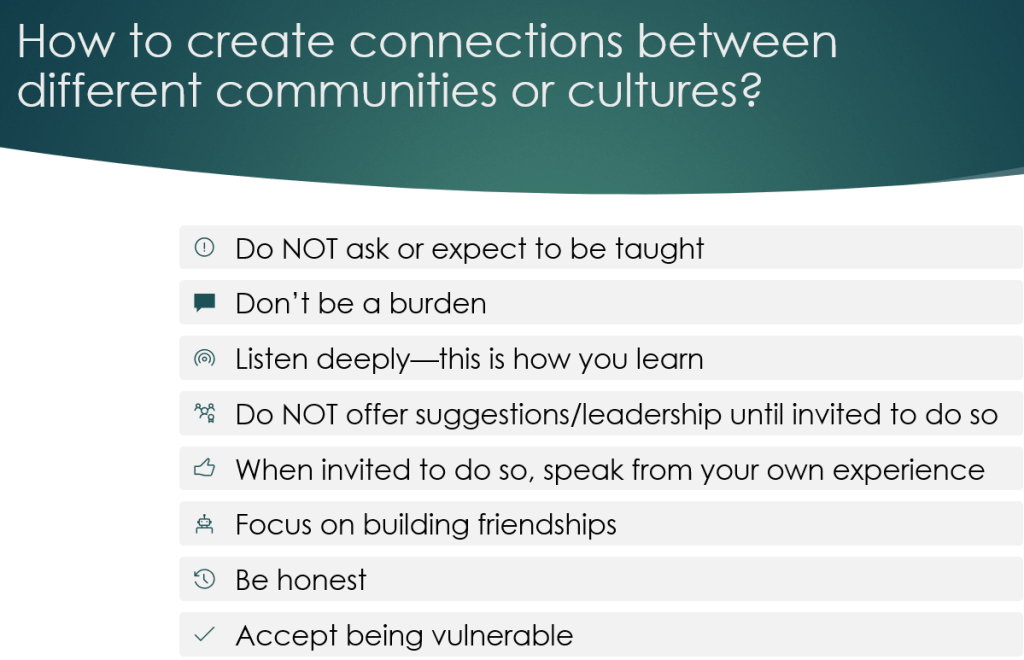
  • Focus on building friendships. This is the most important thing.
  • Find appropriate ways to be present out in the community.
  • When first beginning to work with a new community, listen deeply and don’t offer thoughts or ideas until you are invited to do so.
  • When you are asked something, speak only from your own experiences. Share even when it is difficult.
  • Be honest.
  • Recognize opportunities in what others say, which is often very subtle. Communities appreciate it when you show up at events they hold, assuming it is appropriate for you to be there.
  • Social media platforms provide multiple ways to share of yourself, and connect with others. But be very careful not to be too intrusive
  • Look at what your new friends post on Facebook or Instagram or twitter.
  • When you find things you appreciate on people’s social media, briefly let them know. A simple “like” can be good.
  • When appropriate, share things that aren’t directly related to what you are working on with others. Sharing photography has been helpful in many different ways.

At this point in my life I am so grateful to have discovered Des Moines Mutual Aid. This is a link to what I’ve been learning and writing about that.
https://kislingjeff.wordpress.com/?s=mutual+aid

The following describes how I came to become friends with Ronnie James, and what I’ve been learning about, and doing, related to Des Moines Mutual Aid. (Led to Each Other).

My intention today is to share how Ronnie James and I were led to meet and become friends with each other. I wanted to share this in hopes it might be useful to you to make similar connections you are led to look for. And to share about the very good work he does. Work that I have been led to do begin to do as well.

At the beginning of this year I had begun to learn about the struggles of the Wet’suwet’en peoples to stop the construction of a natural gas pipeline (Coastal GasLink) through their pristine lands in British Columbia. Bear Creek Friends meeting sent a letter to the BC premier in support of the Wet’suwet’en and donated money.

Several of us, including Peter Clay and Linda Lemons, were led to hold a vigil in support of the Wet’suwet’en on February 7, 2020. I posted the event on Facebook, but doubted anyone else would come, because the Wet’suwet’en were never in the news here. But Ronnie James did, saying he was surprised anyone else had heard of the Wet’suwet’en.

We became Facebook friends, and have had many conversations via Facebook. I began to learn of the things he is involved in, and also found him to be an excellent writer. He wrote, for example:

“I’m of the firm opinion that a system that was built by stolen bodies on stolen land for the benefit of a few is a system that is not repairable. It is operating as designed, and small changes (which are the result of huge efforts) to lessen the blow on those it was not designed for are merely half measures that can’t ever fully succeed.

So the question is now, where do we go from here? Do we continue to make incremental changes while the wealthy hoard more wealth and the climate crisis deepens, or do we do something drastic that has never been done before? Can we envision and create a world where a class war from above isn’t a reality anymore?”

Ronnie James

As mentioned above, I’ve written a lot about Mutual Aid that can be found here: https://kislingjeff.wordpress.com/?s=mutual+aid

There are three parts of Des Moines Mutual Aid (DMMA).

DM Mutual Aid https://www.facebook.com/Des-Moines-Mutual-Aid-108955753983592/
DM Rent Relief https://www.facebook.com/DSMBLMRentRelief/
DM Bail Fund https://www.facebook.com/dsmbailfund

As the name says, Mutual Aid is about people helping each other. A lot different than the more usual approach of “us” helping “them”. When I first came to participate in the Saturday morning free food store, I was told I was welcome to take some of the food myself. And the people are really friendly, supporting each other, and enjoying the work. Several different times, different people said working at the free food store was the highlight of their week.

I like how the work of DMMA is done out in the community. In the parts of the community that don’t often have any support. And I like how the work is related to meeting people’s basic needs. Food, shelter (rent relief and evictions), and truly supporting activists who go to jail as a result of their agitation for change.

I also appreciate how Des Moines Mutual Aid supports Des Moines Black Lives Matter/Black Liberation.

That is the process for peace that I am blessed to have been led to join. This is how I believe justice work should be done. Mutual Aid is a global concept and there may be a group near you.


Posted in Des Moines Black Lives Matter, Des Moines Mutual Aid, Mutual Aid, Uncategorized | Leave a comment

Nova Scotia Lobster Dispute

For the past year I’ve been trying to learn about First Nations people in Canada. Some of my friends are from there. I’ve been especially interested in the Wet’suwet’en peoples’ struggles to stop a natural gas pipeline from being built through their beautiful lands. I’ve been impressed with the eloquence of the Indigenous youth. Youth who had sniper rifles aimed at them as they sat on their lands.

I always tried to check what I wrote in my blog posts with multiple sources. And yet I wasn’t always sure I got everything right.

More recently I have made connections with the Canadian Friends Service Committee (CFSC) that does the same kind of work as the American Friends Service Committee (AFSC) that I have worked with in multiple ways. CFSC closely follows what is going on with First Nations people.

As they say, the mistakes in what follows are mine. But I appreciate those at CFSC helping me find the sources they have recommended.

The current escalating tensions are in Nova Scotia, related to native fishing rights and respecting treaties.

A recent escalation of tensions in Nova Scotia resulted in an angry mob damaging two Indigenous (Mi’kmaw) lobster fishing facilities on October 16, 2020. One Mi’kmaw lobster fishing compound burnt to the ground.

Assembly of First Nations (AFN) National Chief Perry Bellegarde on the lobster conflict

(Ottawa, ON) – “This conflict has been steadily escalating for more than a month. It is time for the Royal Canadian Mounted Police, the federal government, and the provincial government to intervene before someone gets badly injured or, possibly, killed.  This has never been a commercial disagreement, and the actions of non-Indigenous fishers are meant to harass and intimidate the First Nations with whom they share the waters and the resources within them.

“The Supreme Court of Canada made it amply clear in its Marshall decision that Indigenous peoples have a right to fish those waters, and First Nations should not be bullied off the water in this thuggish manner.  We expect the federal government to ensure the safety of everyone in Canada and to bring to justice to anyone who threatens violence or deprives others of their rights to food and a modest income.”

“Continued inaction by the police, and the unwillingness of the federal government to intervene directly in this dispute, only serves to increase the risk of racial violence and damage to these communities, which could last for generations.  Justice must be served, and this intimidation must end.”

The AFN is the national organization representing First Nations citizens in Canada.  Follow AFN on Twitter @AFN_Updates.


INDIGENOI 
ASSOCIAT 
ASSOCIATI(

The IBA Denounces Domestic Terrorism Afflicted on Mi’kmaw Fisheries, and Calls Upon The Federal Government to Take Immediate Steps to Ensure The Safety of Mi’kmaw Fisheries in Mi’kma’ki

October 16, 2020
 FOR IMMEDIATE RELEASE

OTTAWA – The Indigenous Bar Association (IBA) in Canada denounces the attack by non-Indigenous fishermen on Mi’kmaw harvesters providing a livelihood and food for their families and community in Mi’kma’ki (what is currently known as Nova Scotia).

The recent violent and disturbing acts of terrorism are directly linked to the federal governments’ failure to uphold the Peace and Friendship Treaties and implement the Supreme Court of Canada’s landmark decisions in R. v. Marshall. This harmful deterioration of the relationship between the Crown and the Mi’kmaw in the region is compounded by the RCMP’s inaction during the attacks.

The IBA stands in solidarity with the Mi’kmaw. As sovereign nations, they have been negotiating with the Department of Fisheries and Oceans Canada for a Mik’maw-managed fishery. The ongoing violence experienced by the Mi’kmaw highlights a reluctance to respect Treaties and obey laws around Mi’kmaw fishing rights, on the part of non-Indigenous businesses and people. Treaty rights are a part of the constitutional fabric of Canada. Canada is a party to the Peace and Friendship Treaties, and a partner with the Mi’kmaw in Confederation. As such, the federal government is obligated to respect the rights embedded within those Treaties, Canadian law. They must enforce the terms of the Treaties by immediately de- escalating tensions between non-Indigenous businesses and Mi’kmaw providers.

The RCMP also has a responsibility to act and de-escalate tension but, IBA President Drew Lafond says “they have once again been unresponsive to the terrorism and violence inflicted upon the Mi’kmaw.”

“As seen far too many times in the last year—and as was also an issue when violence erupted against the Mi’kmaw following the Marshall decision—the RCMP is quick to act against Indigenous people, but slow to step forward and protect Indigenous lives, property or livelihoods,” said IBA President Drew Lafond.

“This inaction undermines any trust that Indigenous peoples have on the RCMP as an institution. It further calls into question their statements and commitment to combating systemic racism within their ranks, and the justice system at large. The RCMP must do better, before this senseless violence creates even more losses for the Mi’kmaw”

The situation unfolding in Mi’kma’ki evokes events earlier this year on Wet’suwet’en Territory, when the RCMP failed to take decisive action to uphold the rule of law. Instead of protecting the right of the Wet’suwet’en to protect their territories, police led a shocking tear-down reconciliation in a moment that will not be forgotten by Indigenous Peoples for generations.

The rule of law, a foundational principle in Canada, means the law applies equally to everyone and no one is above it. The facts of this week’s attack on Mi’kmaw fisheries and their livelihoods shows the one-sided nature of how the rule of law is being upheld and enforced around Indigenous nations in Canada today.

“The unlawful use of violent tactics to coerce, intimidate and pressure the Mi’kmaw providers is boldfaced terrorism, plain and simple. The IBA wholly supports the Sipekne’katik First Nation and other Mi’kmaw in

their fight against unlawful violence. “We offer our support to the Nation in any efforts of peaceful conciliation that they may deem fit,” Lafond furthered.

“The Supreme Court of Canada has already found that the Mi’kmaw have the right to a moderate livelihood in Mi’kma’ki fisheries. Why are we still having this conversation? Over twenty years after the conclusive decision in Marshall, why is implementation and exercise of rights that have been recognized by the Supreme Court of Canada still a live issue? Again, this calls into question Canada’s willingness to deliver on its promises under Treaty or act to uphold the honour of the Crown.”

The IBA is a national non-profit association comprised of Indigenous lawyers (practicing and non- practicing), legal academics and scholars, articling clerks and law students, including graduate and post- graduate law students. Our mandate is to promote the advancement of legal and social justice for Indigenous Peoples in Canada and the reform of laws and policies affecting Indigenous Peoples

For more information, please contact IBA President Drew Lafond (dlafond@indigenousbar.ca) or visit www.indigenousbar.ca


Trudeau defended his government by indicating that it approved additional resources to increase the police presence in the region over the weekend and pledged to work with both the Indigenous and non-Indigenous communities to come up with a resolution.

“We need to have an approach that doesn’t just recognize inherent treaty rights, but implements their spirit and intent,” Trudeau said. “That’s why we will work with commercial fishers and the Canadians to ensure that this is done fairly. I understand that this is challenging, but this isn’t an inconvenience, but an obligation. If we are truly to be the country that we like to think of ourselves as, this is the road we must walk.”

NDP Leader Jagmeet Singh, meanwhile, questioned if the same inaction would be allowed to continue if it had been against a non-Indigenous community and called for immediate action in the matter.

“We want answers today. We want commitments today,” he said.  “This is an emergency because … there is a real threat that this violence will escalate and people will lose their lives and that cannot happen and so we need immediate action right now.”

Among the issues under dispute is the Indigenous people’s right to make a “moderate livelihood” and to fish outside the federally-determined fishing season, rights established in treaties hundreds of years ago and upheld by the Supreme Court in 1999. Some non-Indigenous critics have pointed to a clarification issued by the court that said the rights were to be subject to federal regulations as proof the rights may be reinterpreted.

‘We want answers’: MPs hold emergency debate over handling of N.S. lobster dispute by Ben Cousins and Jonathan Forani, CTVNews.ca, Oct. 19, 2020

“The reckless violence and the racist threats that we have seen do nothing to bring us closer to a resolution. They only serve to divide us,” said Public Safety Minister Bill Blair, adding that RCMP are reviewing a variety of video evidence of violence and that people will be held accountable.

“The violence must come to an end now. It is the only way to give us all an opportunity to find a peaceful, lasting solution.”

Among the issues under dispute is the Indigenous people’s right to make a “moderate livelihood” and to fish outside the federally-determined fishing season, rights established in treaties hundreds of years ago and upheld by the Supreme Court in 1999. Some non-Indigenous critics have pointed to a clarification issued by the court that said the rights were to be subject to federal regulations as proof the rights may be reinterpreted.

On Sunday, Nova Scotia Premier Stephen McNeil said the federal government must define “moderate livelihood” as it relates to an Indigenous fishery, but ministers on Monday were hesitant to agree. Asked if the government would take responsibility for not defining “moderate livelihood” and concede that the clause may have led to the current dispute, Fisheries and Oceans Minister Bernadette Jordan said definitions need to be defined at the negotiating table.

“I don’t think any First Nation wants the federal government to have a top-down approach,” she said, adding there is “no excuse” for the violence. “We cannot, as a government, tell First Nations what a moderate living is. That is up to them to work with us to define.”

CTV News commentator and former Grand Chief for Northern Manitoba Sheila North agreed that the definition is up to the Indigenous people, not the government. North linked what she called repeated rights denials across the country to systemic economic and health issues experienced by Indigenous people, including vulnerability to the COVID-19 pandemic.

“Hunting and livelihoods are at the heart of it. Indigenous people have been denied these rights for many generations. That’s why a lot of people are sick, that’s why we keep calling Indigenous people and communities the most vulnerable during this pandemic time, because they haven’t been given the right and access to live out what they have a treaty right to, living off the land and supporting their families through these practices that have been there for many, many generations,” she said.

‘The violence must come to an end now’: Ministers call for peaceful end to N.S. fishing dispute. Federal ministers condemned acts of violence against Indigenous fishers in Nova Scotia and called Monday for a peaceful end to the dispute with commercial fishermen. JONATHAN FORANI, CTVNEWS.CA, OCT 19, 2020
Posted in Canadian Friends Service Committee, First Nations, Uncategorized | Leave a comment

Out of the Meetinghouse

Yesterday I wrote about Peace in a Culture of Violence, which began ‘this country’s culture of violence has taken dramatically new forms that we haven’t adapted our work to address. ‘ And ended with ‘in light of all this, what does work for peace and justice look like in a culture of violence?‘.

My intention is to share things I’ve learned about peace and social justice work. In part because Bear Creek meeting is re-establishing a Peace and Social Concerns Committee. For a number of years this work was done by the meeting as a whole. So this is an opportunity to take a fresh look at what we might be led to do and, perhaps more importantly, how we do it.

As the title implies, all these efforts involve engaging with our surrounding communities, our neighbors, to make our presence felt beyond the meetinghouse. And to learn about our neighbors and their concerns. I believe many meetings do peace and justice work by supporting FCNL and AFSC, and supporting the work of individuals in the meeting with their concerns. Getting out of the meetinghouse implies what might be a different approach, which I hope to illustrate with stories about my experiences.

As I did yesterday, thinking about peace naturally leads to thinking about violence. I intend to explore violence much more thoroughly soon. There is an excellent classification of the many forms of violence, charts of structural violence, on the BlackQuaker Project website. https://www.theblackquakerproject.org/structural-violence-charts

All these efforts involve engaging with our surrounding communities, our neighbors

But to get to concrete examples from my experience, I will briefly describe:

  • Keystone Pledge of Resistance
  • Quaker Social Change Ministry
  • First Nation-Farmer Climate Unity March
  • Mutual Aid

Keystone Pledge of Resistance

Those of us in the environmental community were frustrated for years because we could not find an effective way to break the grip the fossil fuel industry had on our economy. Then in 2013 construction of the Keystone pipeline was announced. Because the pipeline would cross the Canada-US border, President Obama would have to approve the construction permit.

The Rainforest Action Network (RAN) recognized this as a way to take on the fossil fuel industry. This was a unique opportunity because the decision was solely that of the President, so we had a specific target for our efforts. RAN created the Keystone Pledge of Resistance. There was a website where anyone could sign a petition that stated they would participate in civil disobedience if it looked like the approval was eminent. Over 90,000 signed the Pledge.

The genius of the Pledge was to collect the contact information from those who were willing to provide that. There was also a checkbox to indicate if you would be willing to be a leader in your community. RAN used the list to determine the 25 cities where there was the most interest. Then that summer people from RAN spent a weekend in each city to train those who had indicate they would be leaders on how to organize civil disobedience direct actions in their city. The training was excellent, including role playing. Here is the training guide: https://1drv.ms/w/s!Avb9bFhezZpPhb8k23M8ZVV9JOq9GA?e=rSNae2

There were four of us who were trained as action leaders in Indianapolis. We designed a direct action to block the doors of the Federal Building. We held six training session, training about 60 people. One part of the planning involved going to the target (Federal building in our case) and deliver a description of what we planned to do if the Pledge was triggered. We had a polite discussion with the Federal security officers, and learned all Federal facilities had been alerted to these actions. Which was the plan, to put pressure on the government. There was also someone who knew President Obama, and let him know if the pipeline was approved that would trigger nonviolent direct actions in 40 cities simultaneously.

Lessons learned from the Pledge were

  • How to identify a specific action that has a clear target and a specific trigger
  • How to build a group of participants and organizers
  • How to train leaders how to train local participants to carry out nonviolent direct actions
  • Use multiple ways to let decision makes know what will happen if the actions were triggered
  • Use ongoing rallies and press releases to keep the issue in the public eye

Quaker Social Change Ministry (QSCM)

Quaker Social Change Ministry is an American Friends Service Committee (AFSC) program led by my friend Lucy Duncan. Here is information about QSCM from AFSC: https://1drv.ms/b/s!Avb9bFhezZpPhrAc9U4wO6xyIeic4A?e=sO7jlP

The title of this blog post indicates one of the core objectives of Quaker Social Change Ministry. The key idea is to find a community experiencing oppression to partner with. I’ve written a lot about the experiences of the meeting I was attending in Indianapolis, North Meadow Circle of Friends, and our engagement with the Kheprw Institute (KI), a black youth mentoring and empowerment community: https://atomic-temporary-82209146.wpcomstaging.com/?s=QSCM

The thing that was emphasized over and over again, was it is essential to listen deeply to the community you are engaged with. To refrain from any attempts to guide the decisions and work of that community. To only talk when you are invited to do so, and then only from your own, personal experience. Which might be new ideas for many Friends.

Listening to, and following the lead of that community does several things. First, it shows your respect for the community. It builds trust when you honor what is being said and done. It teaches you so many things you didn’t know about the difficulties the community is dealing with. Teaches you what the community already knows about how to address those issues. It creates the space that is essential if you are ever going to be invited to work together.

It allows you to become friends. What that does is make it possible to move forward in your work together. So many times well meaning people have a specific goal, which may or may not be a goal of the community they are trying to engage with. Whereas if you become friends, you can continue on the journey together, no matter what your original intention was. You have a common vision, and the trust to take on whatever new things come up. I’m thinking of a specific example that is related to the First Nation-Farmer Climate Unity March described in the next section. I thought we would be talking about the pipeline and our environment, which we did. But the subject of Missing and Murdered Indigenous Women came up over and over. This makes sense to me, now that I learned every native person on the March has been impacted in one way or another by that.

If I have learned one thing about justice work, it is essential to establish friendships. Works well with Friends/friends, doesn’t it?

If I have learned one thing about justice work, it is essential to establish friendships


First Nation-Farmer Climate Unity March

Many blog posts, photos and videos of the First Nation-Farmer Climate Unity March are available on this website: https://firstnationfarmer.com/

The First Nation-Farmer Climate Unity March involved a small group of about fifteen native and fifteen non-native people walking and camping together along the route of the Dakota Access pipeline (DAPL). We walked from Des Moines to Fort Dodge, Iowa, a distance of 94 miles that took 8 days to walk, September 1 – 8, 2018.

This March had several objectives. One was to bring attention a case that would be heard at the Iowa Supreme Court about the abuse of eminent domain to force landowners to allow the construction of the pipeline on their land.

The larger purpose was for a group of native and non-native people to get to know and trust each other as we shared our stories as we walked over the many miles of gravel rural roads. As we supported each other through the adversities, including blisters on our feet, and several days of pouring rain. This was very successful in our developing friendships with each other. Since then many of us have worked together on many different things.


Mutual Aid

The most recent work I am doing is a result of the friendships established on the First Nation-Farmer Climate Unity March. That is involvement with Des Moines Mutual Aid (DMMA).

This began when I met Ronnie James as described in many stories here: https://atomic-temporary-82209146.wpcomstaging.com/?s=mutual+aid

Although Ronnie had not participated in the March, he works closely with several people who were, including Christine Nobiss, Trisha Cax-Sep-Gu-Wiga Etringer, and Foxy and Alton Onefeather. They are all involved in the Great Plains Action Society (GPAS).

This year’s Indigenous People’s Day at the State Capitol in Des Moines was organized by GPAS. Christine and Ronnie were there, speaking and otherwise supporting the event. I was glad to be asked to take photos that I then shared with them.

I’m not sure why I hadn’t heard of the idea of Mutual Aid prior to meeting Ronnie. But I’m very grateful for what he has taught me about it. There is a lot to share about what I’ve been learning about Mutual Aid, and this is going to be the focus of my justice work for now. https://atomic-temporary-82209146.wpcomstaging.com/?s=mutual+aid

The fundamental idea is expressed in the name. Mutual aid means helping each other. Not “us” helping “others”. When I first came to the free food store, Patrick told me this really is mutual aid, and encourages anyone doing the work to also take food for themselves.

This quote from Ronnie really resonated with me, and is an accurate depiction of my thoughts, too.

I’m of the firm opinion that a system that was built by stolen bodies on stolen land for the benefit of a few is a system that is not repairable. It is operating as designed, and small changes (which are the result of huge efforts) to lessen the blow on those it was not designed for are merely half measures that can’t ever fully succeed.

So the question is now, where do we go from here? Do we continue to make incremental changes while the wealthy hoard more wealth and the climate crisis deepens, or do we do something drastic that has never been done before? Can we envision and create a world where a class war from above isn’t a reality anymore?”

Ronnie James

He later explained how his work began.

It started as group of my friends working with the houseless camps some years back. It has now grown into a solid crew that runs a free food store started by the Black Panthers, still work with the camps, we organzied a bail fund that has gotten every protester out of jail the last few months, and we just started an eviction relief fund to try to get a head of the coming crisis, in cooperation with Des Moines BLM. We have raised $13,000 since wednesday and the application to apply for the grants goes live this week.

Another time wrote:

So I work with a dope crew called Des Moines Mutual Aid, and on Saturday mornings we do a food giveaway program that was started by the Panthers as their free breakfast program and has carried on to this day. Anyways, brag, brag, blah, blah.

So I get to work and I need to call my boss, who is also a very good old friend, because there is network issues. He remembers and asks about the food giveaway which is cool and I tell him blah blah it went really well. And then he’s like, “hey, if no one tells you, I’m very proud of what you do for the community” and I’m like “hold on hold on. Just realize that everything I do is to further the replacing of the state and destroying western civilization and any remnants of it for future generations.” He says “I know and love that. Carry on.”

Ronnie James

I was really intrigued by all this, especially the free food store. I think we have to be careful about inviting ourselves into things like this. Again, a level of trust needs to develop. Fortunately Ronnie has been very gracious in telling me about this work. Last month I felt comfortable asking if it would be appropriate for me to help with the free food store, and he said “definitely”. So I’ve been spending Saturday mornings in the basement of a church, helping fill about 60 boxes of donated/dated food. Then taking them outside to put in cars as the pulled up. Ronnie said, you work hard for an hour and a half, at the end of which you are tired, sweaty, and feeling good. I found that to be true. On another occasion someone told me Saturdays mornings are the highlight of their week.
https://atomic-temporary-82209146.wpcomstaging.com/2020/10/18/black-panther-party-and-free-breakfast-for-children-program/

Ronnie and Des Moines Mutual Aid now how an office in Friends House, at Des Moines Valley Friends Meeting. I imagine this will lead to further opportunities to get to know each other, and work together.


This is a slide from the PowerPoint presentation that contains a lot of material related to the subjects discussed above. https://1drv.ms/p/s!Avb9bFhezZpPis8FvkD42Cqr6OiOdA?e=MTaxyw


Posted in #NDAPL, American Friends Service Committee, civil disobedience, Des Moines Mutual Aid, First Nation-Farmer Climate Unity March, Friends Committee on National Legislation, Great Plains Action Society, Indigenous, Keystone Pledge of Resistance, Mutual Aid, Quaker, Quaker Meetings, Quaker Social Change Ministry, Uncategorized | Leave a comment

Peace in a culture of violence?

For years Quakers have had Peace and Social Concerns Committees. I’ve been praying and thinking about what that work should entail these days. This country’s culture of violence has taken dramatically new forms that we haven’t adapted our work to address.

This country’s white history and culture of dominance and violence began with the arrival of the first white men, who brought with them the legacy of European wars. And the Doctrine of Discovery that was, and is used as justification for the violence they inflicted on the native peoples. Including purposely killing buffalo to near extinction. And kidnapping native children, to take them to schools for erasure of their culture by forced assimilation. Schools where there was widespread emotional, physical and sexual abuse. And too often, death. The violence of tribal nations being uprooted and forced to move to smaller and smaller areas of land.

And there was the violence of hunting people in Africa for chattel slavery. The journey to this country in horrible conditions on the ships. Then being sold as if they were not human. And treated inhumanely, usually for the rest of their lives. Lives of terror, abuse and often death at the hands of owners and other white people. Though chattel slavery might be gone, BIPOC (Black, Indigenous and other people of color) people continue to be abused and even killed. Even when they are unarmed.

In the last century there were multinational armed conflicts, appropriately called World Wars. The results of those wars didn’t result in peace. It appeared new conflicts were likely. So a standing armed force was organized and equipped. The Selective Service System was created to conscript men for an army, even in peacetime. It is difficult to imagine this country without an army these days.

In the early 1950’s a group of Quakers left the United States because of the increasing militarism. They built the Monteverde community in Costa Rica, a country that has not had an army since 1948.  

In this country, Quakers could be classified as conscientious objectors, and perform two years of alternative service. Other Quakers felt that was simply a tactic to reduce opposition to the draft, and thus refused to cooperate with Selective Service System. Many resisters were imprisoned. Quaker and draft resister, Don Laughlin, collected stories related to this, Young Quaker Men Face War and Conscription.

There was a lot of opposition to the draft and to conflicts. Much of the agitation was blunted when the armed forces implemented an all volunteer army. The Korean War was called a police action instead of a war. The last time the United States passed a declaration of war was World War II. Since then, US military actions have been carried out without a formal declaration, which bypassed the need to get approval from the public.

Today the US carries out armed conflict in many countries, called the “War on Terror”, making that easier for people to accept. Who doesn’t want to stop terrorism? However, such armed tactics cause significant civilian deaths and infrastructure destruction. And results in more people joining the very terrorist groups being targeted.

The final sanitation of armed conflict is to use unmanned, weaponized drones. Now the US can kill by remote control. Ironically this country is now revealed to be engaging in terrorism.

Each step in that progression moved armed conflict further out of public awareness. Each step made it more difficult for peace advocates to oppose the country’s military actions.

Then the armed forces came home in the sense of military equipment and tactics increasingly used to try to quell domestic dissent. It shouldn’t have been surprising to see this natural progression of violence, but I was shocked by military vehicles and police who looked like combat soldiers appearing on the streets of Ferguson, Missouri. This was first seen in response to the killing of unarmed Michael Brown by a white police officer in 2014.

From my blog Ferguson and Militarized Police. https://kislingjeff.wordpress.com/2018/08/09/ferguson-and-militarized-police/

Today is the anniversary of the killing of unarmed 18 year old Michael Brown by a white police officer in Ferguson, Missouri, in 2014.
This was also the first time most of us learned about the militarization of our civilian police departments. We were shocked by the scenes from the streets of Ferguson, and to realize armored vehicles could be rolling down our own streets. We began to see the extent to which the police were seeing us as the enemy. We learned about the Pentagon’s 1033 program, part of the National Defense Authorization Act of 1997, that allowed the Pentagon to donate surplus military equipment to local law enforcement agencies.

From the Friends Committee on National Legislation (FCNL), this article was originally published in September of 2014, following the death of Michael Brown and subsequent protests in Ferguson, Missouri.

“Ferguson is just one of many communities to receive equipment through this program. Towns all over the country now possess Mine-Resistant, Ambush-Protected vehicles (MRAPs) and other equipment designed for a war zone. Police in towns such as Columbia, South Carolina; McLennan County, Texas; Nampa, Idaho; West Lafayette, Indiana; St. Cloud, Minnesota; Yuma, Arizona; Calhoun, Alabama; and at Ohio State University are kitted out to respond to violent extremists with lethal, military force.

The U.S. response to the September 11 attacks is partly behind this dangerous escalation. Suddenly, communities felt they needed to be on high alert at all times, ready to respond to any threat. In this culture of fear, the Pentagon spent billions of dollars on weapons and equipment for war. That equipment went to Afghanistan, Iraq and elsewhere in the Middle East and Africa. As troops came home, surplus equipment went straight to police departments, thanks to the 1033 program.

For a police department like Ferguson’s, the path to becoming a paramilitary force is a short one. After getting this free military gear, law enforcement agents use it. The 1033 program’s regulations require that the police use what they receive within one year.”

“Rolling back the 1033 program is important, but it’s not enough. Through the Department of Homeland Security’s “terrorism grants” program, local police departments have received more than $34 billion to acquire surveillance drones, Army tanks, and other equipment ill-suited for local policing. Like the 1033 program, these grants contribute to militarized policing that damages trust between police officers and community members. We are encouraging members of Congress to roll back this program as well.”

How Tanks got to Main Street

All this has rapidly deteriorated to the present. Now we are used to hearing about, and all too often seeing police police kill unarmed people of color. Used to seeing protesters tear gassed and beaten by militarized, sometimes unidentified, police. Seeing the increasing criminalization of freedom of speech and assembly.

In light of all this, what does work for peace and justice look like in a culture of violence?
(to be continued)


Posted in Black Lives, civil disobedience, Indigenous, Keystone Pledge of Resistance, Native Americans, peace, revolution, solidarity, Uncategorized | Leave a comment

Quakers and Mutual Aid

I’ve been studying mutual aid extensively lately because the concept encapsulates the answer to what I have been praying and thinking about for many years. About the immorality and dangers of the capitalist system. As stated below, “we must mobilize for our own interests, push back, and actually fight. This means demanding not only bread and butter: free housing, access to food, an end to evictions, and clean water: but also building new human relationships, new forms of actual life. This means creating ways of meeting our needs, making decisions, and organizing ourselves and solving problems outside of the State structure and the capitalist system.

I wonder why it took me so long to discover mutual aid. As I’ve begun to share this with other Quakers, I was told Quaker meetings, and other churches have always practiced mutual aid. That may be true of some religious bodies some of the time. Unfortunately, I think too many churches of any denomination use the model of ‘us serving them’ which is the opposite of what mutual aid means. Mutual Aid means what is says, working together to help each other. There is no hierarchy. I believe the ‘us versus them’ thinking is what has driven so many away from ‘organized’ religions.

Part of the reason so many of us have been uniformed about mutual aid is the current political structure knows it is a threat. “On May 15, 1969, in an internal memo, FBI Director J. Edgar Hoover wrote: ‘The Breakfast for Children Program represents the best and most influential activity going for the BPP and, as such, is potentially the greatest threat to efforts by authorities to neutralize the BPP and destroy what it stands for.’” What a remarkable statement.

Another reason mutual aid isn’t more widely known is related to that quote. Since mutual aid groups can be seen as threats to the system, actually are threats, members are targets of police abuse and violence.

I’m really glad to have recently met Ronnie James and that he has been willing to teach me about his Mutual Aid work. Which has become my Mutual Aid work as I’ve been blessed to help with the Des Moines Mutual Aid free food project. I’m including, again, what Ronnie said recently during a Black Lives Matter event in Des Moines, because he talks about this work that is going on now in Des Moines.

Quakers like to ask ourselves questions we refer to as queries. Rather than being ‘told’ to do something, the questions invite us to focus on what we are or are not doing. I would ask these questions. You might have more.

  • What Mutual Aid groups are in your area?
  • What relationships do you see between your peace and justice work, and the concept of Mutual Aid?
  • What would your justice work look like if you adapted it to the Mutual Aid model?
  • How might faith integrate with Mutual Aid?
  • How could Mutual Aid expand who you do your justice work with? Bring in more Friends in your meeting, youth in your meeting, and other people in your wider community?
  • How can we create ways of meeting our needs, making decisions, and organizing ourselves and solving problems outside of the State structure and the capitalist system?

For millions of poor and working people, life in this country is going to change – and change very quickly. Already, many companies are starting to lay off workers as the economy slows and things begin to shut down. Low wage workers, many already living just on the edge of eviction and homelessness, now find themselves with even less money coming in and with young children, recently forced out of school, to watch and feed.

If poor and working people see within the coronavirus not only a pandemic that will possibly leave in its wake a massive death count, but also the very real crisis that is modern industrial capitalism, then we must mobilize for our own interests, push back, and actually fight. This means demanding not only bread and butter: free housing, access to food, an end to evictions, and clean water: but also building new human relationships, new forms of actual life. This means creating ways of meeting our needs, making decisions, and organizing ourselves and solving problems outside of the State structure and the capitalist system.

Towards this end, we are encouraged by the explosion of grassroots and autonomous mutual aid projects that are springing up across the US. Not since the early stages of the Occupy Movement have we seen this growth of spontaneous mobilization in the face of a crisis. These efforts must continue to organize themselves, grow, network, and deepen their connections within working-class and poor neighborhoods.

Autonomous Groups Are Mobilizing Mutual Aid Initiatives To Combat The Coronavirus, It’s Going Down, March 20, 2020

Without a doubt, when we get to the other side, it won’t be thanks to our government or those tasked with cleaning up the messes of their own oppression. It’ll be thanks to mutual aid. It’ll be because folks like Black Trans Blessings are working with, protecting and providing for black and brown TGNC folks in NYC. It’ll be because STL Covid Mutual Aid are making their own hand-washing stations, taping information pamphlets to them and sourcing tents and no-contact thermometers. It’ll be because folks in Florida, DC, LA and elsewhere are taking on the requests from closed-down food banks. It’ll be because our networks are building relationships with local organizations – from farmers to faith-based groups – in order to address the changing and growing needs of our communities. It will be because we do what our system has never done and will never do: work with and for people.

“It [mutual aid] creates millions of paths of support for people to counter the red-tape waterlogged, bottle-necked, dehumanizing and deadly top-down system of which we have lived and died by,” Dezeray says. It puts decision making in the hands of the people those decisions will directly affect, cutting out the avarice and illogic of remote middlemen, politicians and corporate interests.

“The community knows what its needs are,” Amanda Tello, member of STL Covid Mutual Aid in St. Louis says. “It does not matter if you have a social security number, what zip code you live in, or if you are unbanked,” she says.

The rolling and future challenge will be what to do when the fever breaks. It’s certainly no easy task to plan for future fights in the daze of illness. Yet, the work we are doing now is the foundation for that future build. What has been viewed as a localized release valve for specific disasters and the associated specific government failings, mutual aid is now the scrappy DIY welfare system for an entire nation, an entire globe, with no expiration date. As author Arundhati Roy wrote in a recent article, the pandemic is a portal, and “We can choose to walk through it, dragging the carcasses of our prejudice and hatred, our avarice, our data banks and dead ideas, our dead rivers and smoky skies behind us. Or we can walk through lightly, with little luggage, ready to imagine another world. And ready to fight for it.”

DISUNITED STATES: GOVERNMENT FAILURE TO ADDRESS CORONAVIRUS IS SPARKING A MUTUAL AID REVOLUTION By Eleanor Goldfield, intpress News.April 14, 2020

Teach In 8/22/2020
Des Moines BLM
Ronnie James

The Police State and Why We Must Resist

Hello all, my name is Ronnie James, and I am here representing Des Moines Mutual Aid.

I am descended from numerous peoples of so-called north america.

At this point I am supposed to do a land acknowledgment, but I don’t like what those have been distorted into. Instead I will say you are standing on and directly benefiting from stolen land, within a nation built by stolen bodies, which is the foundation of the police state that occupies these sacred grounds of the original peoples.  If you would like to know more of who’s land you are on, there are numerous resources. We are still here, and numerous, just ask us.

Historically, the police and other law enforcement were formed to protect the interests and property of the moneyed classes from the rest of the People. This “property” included the bodies of the enslaved and was the justification for brutally repressing the righteous and inevitable revolts born from the atrocity of slavery. This same philosophy of endless possession was the bloodlust that fueled the “Indian Wars” and the theft of Indigenous land and bodies that continues to this day.   (Wampanoag, 2020)

Today, this same war of conquest, the repression of the many for the benefit of the few, continues. 

Currently, Des Moines Mutual Aid and its many accomplices have been fighting a battle with the city of des moines and it’s foot soldiers trying to repress our houseless population from utilizing unused “property”. The basic universal need of a place to rest and be safe is trumped by the need of the wealthy, and the wannabe wealthy, to control every inch they can possess. It is a war for control, and the pigs have enlisted willingly.

This same war of conquest is currently using the mass incarceration machine to instill fear in the populace, warehouse cheap labor, and destabilize communities that dare to defy a system that would rather see you dead than noncompliant. This is the same war where it’s soldiers will kill a black or brown body, basically instinctively, because our very existence reminds them of all that they have stolen and the possibility of a revolution that can create a new world where conquest is a shameful memory.

As bleak as this is, there is a significant amount of resistance and hope to turn the tide we currently suffer under. We stand on the shoulders of giants that have been doing this work for centuries, and there are many lessons we can learn from.

The first, and possibly the most important, is that it was not always this way, which proves it does not have to stay this way.  

What we have is each other. We can and need to take care of each other. We may have limited power on the political stage, a stage they built, but we have the power of numbers.

Those numbers represent unlimited amounts of talents and skills each community can utilize to replace the systems that fail us.  The recent past shows us that mutual aid is not only a tool of survival, but also a tool of revolution. The more we take care of each other, the less they can fracture a community with their ways of war. Organized groups like The American Indian Movement and the Black Panther Party for Self Defense showed that we can build not only aggressive security forces for our communities, but they also built many programs that directly responded to the general wellbeing of their communities. This tradition began long before them and continues to this day. Look into the Zapatistas in Southern so-called Mexico for a current and effective example.

These people’s security forces, or the “policing of the police” not only helps to minimize the abuse and trauma they can inflict on us, but it begins to shift the power balance from them to us.

Mutual Aid programs that help our most marginalized or other events that work to maintain our spirits result in stronger communities. A strong community is less vulnerable to police intrusion. 99% of our conflicts can be solved by those affected by them, but only with the support of those around them. Anytime we call on the police to mediate our problems, we are risking ourselves or a loved one from being hurt or worse.

The more we replace the police with organized community response to conflict, the safer we will be. Another powerful benefit is the removal of power from those that take their orders from those that have no interest in your well-being, at least past it being useful to amass and increase wealth.

Of course, part of this fight of police abolition will be fought on the political stage, but let’s not fool ourselves that the state and the wealthy will ever give up tight control on all resources. We can lobby and vote to have police resources diverted to less dangerous organizations, but they will still be working for the same state and same class that have dispossessed and repressed us for centuries. Every election has the possibility of reversing any policy gain we may won. Some of the fight will be in the government offices, but the majority of it will be us, in the street.

Many communities work to train amongst themselves mental and physical health workers, conflict mediators, and anything else we need, despite the state and it’s soldiers insistence that they are the sole “authority” of these skills, and always with the implied threat of violence.

As we work toward this, and this summer has proven des moines has the heart, desire, and skills to do so, we still have to deal with what’s in front of us.

We each have skills and resources we can utilize towards the abolition project. Some of us can use the halls of the system to make short term change there, others have skills that produce food, provide medical care, or care for our precious youth, some are skilled in the more confrontational tactics needed. Once we envision that world our ancestors want for us, finding our role is natural.

All Power To The People.

Ronnie James

If we are to survive, and more importantly, thrive, we know what we will have to do.


Posted in Des Moines Black Lives Matter, Des Moines Mutual Aid, Mutual Aid, Quaker, Quaker Meetings, solidarity, Uncategorized | Leave a comment

What is needed in this moment

The article “What is needed in this moment” explores what I’ve been writing lately, that the capitalist system must be replaced. That we are being distracted in this election by which party wins, because either one will continue to operate within the capitalist system. I’ve often wondered why I was led to name this blog Quakers, social justice and revolution. It is becoming clearer what that revolution entails.

Rockhill argues that defining our struggle as liberalism versus fascism misdirects our focus and energies. What we are fighting is end-stage capitalism and both major parties are capitalist parties who will continue the agenda of the power elites no matter who wins. Believing the struggle is about Democrats versus Republicans pits people against each other, dividing and weakening us, which is exactly what serves the power structure’s interests.

We need to work outside their systems, not legitimize them. We need to find our areas of strength and the power holders’ weaknesses and use tactics that build our strengths as we weaken theirs. Throughout history, it is an organized and mobilized people that has won transformational changes. We hold power through our shear numbers. Remember how the Occupy Movement shook the power structure just nine years ago and how much social movements and our skills have grown since then.

President Trump, for all his horribleness, is a manifestation of who and what the United States has been since its founding. Populations that have experienced the ravages of colonization, racism, genocide, capitalism and imperialism know this. Now, as the US empire crumbles and the ruling class steals the last tidbits before it all falls down, more of us, especially the white working and middle classes, are getting a taste of this callous repression.

Hitler used the tactics of the “American Way of War,” as Roxanne Dunbar Ortiz describes in her book, “Indigenous Peoples History of the United States,” by destroying peoples homes and access to necessities such as food, dehumanizing and terrorizing people to drive them off their land and then locking up those who remained in concentration camps, called reservations in the US. Hitler failed where the US succeeded because the US colonizers did so over a longer time frame, in a less-populated land and without the intervention of other nations.

No matter what happens in the November election, capitalism that exploits people and the planet, systemic racism that perpetuates grave inequities and violence, and imperialism that harms people around the world will continue. To stop these, we need to mobilize now and into the years ahead with clear demands, solidarity and courage.

There is something for everyone to do, so find your place by offering your skills whether it is sharing information, mobilizing to take action or supporting those who are mobilizing with food, medical care, legal aid or security or using your creative skills to reach peoples hearts.

WHAT IS NEEDED IN THIS MOMENT By Margaret Flowers, Popular Resistance, October 18, 2020

“The planet is on fire, the viruses are on the march, hunger stalks the land, and yet, even in this mess, we – the vast majority of the people on the planet – have not given up on the possibility of a future. We hope for something better than this, a world beyond profit and privilege, a world beyond capitalism and imperialism, a world singing the song of humanity. Our hearts are bigger than their guns; our love and our struggle will overcome their greed and indifference.

Many seeds are being planted by our movements. We need to water them, to tend to them, to make sure that they bloom. We will build a future that cherishes life rather than profit, a future of fellowship amongst peoples rather than racist wars, a future in which social hierarchies are abolished, and in which we enjoy mutual dignity.

Only when it is dark enough can you see the stars. It is now dark enough.”

Vijay Prashad

Check out the free Popular Resistance School to learn more about how social transformation occurs.

Here are some recommendations:

  1. Recognize this is a class war. As we enter an economic depression with millions more people becoming poor and losing their homes and a worsening pandemic, recognize that a government that cannot protect and provide for the basic needs of its people is a failed state. The wealthy class doesn’t care about the welfare of the majority. They feel secure knowing they will have the best health care if they become sick and they have the resources to move anywhere in the world.
  2. Build solidarity on the left. There is no organized left in the US at present. In this Chris Hedges interview with Slavenka Drakulić, they discuss that what happened in the former Yugoslavia during the 1990s mirrors what is happening here. One of the factors that allowed war to break out was the failure to build an organized left to counter the right wing nationalists. All efforts should be made to build alliances between leftist organizations and find ways to work together. Don’t allow small differences to divide us.
  3. Build international solidarity. Many peoples around the world have been struggling against US imperialism for decades and building successful alternatives to capitalism. People in the United States have much to learn from them. The same tactics the US has employed against people in other countries – dismantling and privatizing essential services, economic warfare and violence – are being used against people in the US. We also share a common vision for a better world.
  4. Promote a common vision. In a time of multiple life-threatening crises, people can unite around a bold vision for that better world. If we look at the platforms of various social movements and left political parties, we find many commonalities such as respecting rights to health care, housing, education and jobs with a living wage, protecting the planet, putting people over profit, supporting self-determination and people’s right to have a say over what happens in their communities and opposing a foreign policy of death and destruction. This is not the time for weak demands. It is a bold agenda that will rally people to the cause. Here is a Peoples Agenda that came out of the Occupy Movement and has been honed since then. People are also designing new systems that value people and the planet such as this ecological economy starting to take hold in the Pacific Islands.
  5. Mobilize in ways that weaken the elites. Sometimes we need to march in the streets to show what we represent and that we have wide support. Sometimes we need to take actions that challenge and interfere with what the power structure is doing. There are many examples of this from individuals to groups of people exposing and blocking injustices. Our greatest power lies in collective actions such as boycotts, strikes and building alternatives that function outside the systems we are working to change. When enough of us take collective action, we have a power that is unstoppable.
  6. Support each other. We are facing difficult times. We need to support and protect each other to get through it. Build networks of mutual aid in your community and start creating what we need now such as solidarity gardens, housing takeovers, health care provision, including emotional care, support for working parents and more.
  7. Stay human. All people have the capacity to do good and to do harm. As we struggle and are faced with hateful, violent people, ground yourself in the values that you want to see in the world we are building. Don’t engage them. Don’t behave like them. Remain nonviolent, which includes your right to protect yourself, and steadfast in your convictions. Treat others with love and respect. This doesn’t mean giving opponents power over you, just recognizing we are all human and that hate and violence are a slippery slope.
  8. Don’t give up. We never know how close we are to victory. Our opponents will seem the most vicious the closer we get as they recognize they are losing power. Find ways to continue to struggle no matter what happens.

Posted in #NDAPL, Black Lives, climate change, decolonize, First Nation-Farmer Climate Unity March, Great Plains Action Society, Indigenous, Native Americans, revolution, Uncategorized | Leave a comment

Black Panther Party and Free Breakfast for Children Program

This morning I’m praying for guidance, to be shown what work to do in these terrible times.

I’m angered and disheartened by the continuous onslaught of negative political advertising. I saw a powerful story about their effect on children who are watching them. And there is the waste of millions of dollars on the ads, and to politicians, to influence their votes.

But more important than all that, this country’s political and economic systems are fundamentally flawed. It makes no (moral) sense for an economic system to require money for all goods and services, and then not to adapt when people’s ability to earn that money is taken away.

We are seeing spectacular failure of these systems to respond to the COVID-19 pandemic. So all of the frenzy related to the upcoming election is essentially beside the point. While there will be benefits by electing a party that better serves the people, whichever party wins will continue the same failed economic system. As I have tried to express visually:


As my friend Ronnie James says:

I’m of the firm opinion that a system that was built by stolen bodies on stolen land for the benefit of a few is a system that is not repairable. It is operating as designed, and small changes (which are the result of huge efforts) to lessen the blow on those it was not designed for are merely half measures that can’t ever fully succeed.

So the question is now, where do we go from here? Do we continue to make incremental changes while the wealthy hoard more wealth and the climate crisis deepens, or do we do something drastic that has never been done before? Can we envision and create a world where a class war from above isn’t a reality anymore?”

Ronnie James

One reason I value my friendship with Ronnie so much is because he is actually doing something about this. He told me about the free food store he is involved with. I’ve been writing about how he helped me join in that work. https://atomic-temporary-82209146.wpcomstaging.com/2020/09/16/be-vulnerable/

It started as group of my friends working with the houseless camps some years back. It has now grown into a solid crew that runs a free food store started by the Black Panthers, still work with the camps, we organzied a bail fund that has gotten every protester out of jail the last few months, and we just started an eviction relief fund to try to get a head of the coming crisis, in cooperation with Des Moines BLM. We have raised $13,000 since wednesday and the application to apply for the grants goes live this week.

Ronnie James

Ronnie recently shared the photo and story below about Bobby Seal, the Black Panther Party (BPP) and their Free Breakfast for Children Program. All Power To All The People!


Bobby Seale

October 10 at 5:56 PM  · The first Survival Programs Survival Programs was the Free Breakfast for Children Program, which began in January 1969 at one small Catholic church in the Fillmore district of San Francisco, and spread to many cities in America where there were Party chapters. Thousands of poor and hungry children were fed free breakfasts every day by the Party under this program. The Program became so popular that by the end of the year, the original Black Panther Party set up kitchens in cities across the nation, feeding over 10,000 children every day before they went to school.

The original Black Panther Party believed that “Children cannot reach their full academic potential if they have empty stomachs.”

The Free Breakfast for Children Program became so effective, it drew the ire of the director of the FBI, J Edgar Hoover who has been quoted as saying that it was not the guns that were the greatest threat but the Party’s Free Children’s Breakfast Program that was the “…greatest threat to the internal security of the United States of America.”

On May 15, 1969, in an internal memo, FBI Director J. Edgar Hoover wrote: “The Breakfast for Children Program represents the best and most influential activity going for the BPP and, as such, is potentially the greatest threat to efforts by authorities to neutralize the BPP and destroy what it stands for.”

The FBI’s director J. Edgar Hoover became involved in stopping the Black Panther Party as the party began to gain prominence because of Survival Programs such as the Free Breakfast for Children Program. As COINTELPRO had been established in 1956 to police “political radicals” within the United States, focus and pressure now came onto the Black Panther Party. On December 15, 1968, J. Edgar Hoover pledged that 1969 would be the last year of the Party’s existence. Under J Edgar Hoover’s reign, the Black Panther Party may have suffered immensely, which resulted in many of its members being assassinated or imprisoned, but the Black Panther Party survived the FBI’s COINTELPRO operations that attempted to disrupt and destroy it. (A lot of people are not aware that the Black Panthers won 95% of their courtroom cases.)

The original Black Panther Party developed a series of social programs to provide needed services to the people. Their intent was to promote “a model for an alternative, more humane social scheme.” These programs, of which there came to be more than 60, were eventually referred to as Survival Programs, and were operated by Black Panther Party members under the slogan “survival pending revolution.”

Many social programs today go back to the Survival Programs of the Black Panther Party. And the struggle for justice for African American and minority youth in the face of police oppression is unfortunately as relevant today as it was when the original Black Panthers Party was established.

Bobby Seale
All Power To All The People!
http://bobbyseale.com/
#blackpantherparty#blackpanthers#bobbyseale#blackhistory


Posted in Black Lives, Des Moines Mutual Aid, revolution, solidarity, Uncategorized | Leave a comment