My Mentor, Sherry Hutchison

Sherry Hutchison would have been 99 years old on January 13th this year.  She died peacefully last Sunday, December 31st, in Des Moines, Iowa.  Sherry was a member of Des Moines Valley Friends Meeting, Iowa Yearly Meeting (Conservative).

Sherry embodied many Quaker values, in particular living according to her beliefs and what God lead her to do, regardless of the consequences. Following is a minute approved by the yearly meeting this past year:

 The death of Don Laughlin, and absence of Sherry Hutchison, are keenly felt at these annual sessions of Iowa Yearly Meeting (Conservative). We have appreciated their life long examples of spiritual integrity and tireless work for peace, social justice and care for our environment and for all those who have been fortunate to have worked with them.  Minute approved by Iowa Yearly Meeting (Conservative) 2017

As the minute indicates, there are Quakers whose lives are an inspiration to us, and that was certainly true of Sherry. As one example, in 2002 she was arrested as an act of civil disobedience during an anti-war demonstration at the National Guard base in Des Moines.  This is a link to the story she wrote about that experience, that she titled Diary of a Jailbird.

While I had always been aware of Sherry and her work, having lived most of my adult life in Indianapolis, I didn’t get to know her very well until five or six years ago.

Despite living in Indiana, there were a number of ways I worked to maintain close ties with Iowa Yearly Meeting (Conservative) and my home meeting, Bear Creek, in the countryside a couple of miles north of the small town of Earlham, Iowa.  There are a number of committees that do the work of the yearly meeting (none of the positions are paid).  One of the ways I remained connected to the yearly meeting was by serving on some of those committees, something made possible with modern technologies like email. For over a decade I was clerk of the Publication Committee, which is responsible for printing the Minutes of the business proceedings of the yearly meeting.  For example, this is a link to the 2009 Minutes.

One of the other yearly meeting committees is the Peace and Social Concerns Committee which, as the name implies, meets to consider matters related to peace and social justice. During the annual gatherings of the yearly meeting, this committee hears about the peace and social justice work being done in each of the local Quaker meetings, and sometimes letters to our Congressional representatives about these matters are written.  Statements on these topics, called Minutes, may also be written.  Sherry had served for many, many years as a co-clerk of this committee, along with some else who was the other co-clerk.

Six or seven years ago, the yearly meeting needed someone to be the co-clerk of the Peace and Social Concerns Committee with Sherry.  I really can’t adequately express how shocked I was when I was asked to do that. I was glad this was done via a phone call, so that AM Fink couldn’t see my face, though my stammering gave him an idea, I’m sure. After I recovered, I asked if I could have some time to think about it, and he agreed.

You see, the people who are members of this committee are Friends with deep convictions, who have done all kinds of work related to peace and social justice during their lives.  We sometimes call these “weighty” Friends, Quakers who have provided wonderful examples to us with the work they have done, i.e. people like Sherry. I didn’t think I measured up.

The other thing was, I was familiar with the wonderful letters and minutes that had come from this committee over the years.  As well as the detailed reports from this committee each year. I wasn’t sure I could do those things.

I thought and thought about this. The one thing I kept coming back to, though, was the chance to learn from Sherry.  I have been concerned about peace and social justice issues all my life, and intended to for the rest of my life.  So I thought, how else to learn how to do more, than to learn from someone like Sherry? I also knew from other such situations, that the way to grow is to take risks like this. Scary as these choices often are, the results are always so much better than expected, if it is something you are really being lead to do.  So I prayed a lot.

After two week, AM called to see how I was doing in considering this. By that time I had decided to say yes, mainly for the opportunity to learn from Sherry.  I remember also saying, “thank you for the opportunity”.

The first meeting of the Peace and Social Concerns Committee after that was actually at Midyear Meeting.  Sherry and I had corresponded a good deal prior to this, so I was as prepared as I could be, thanks to her.  We talked a little at Midyear Meeting prior to the committee meeting, too.  She was very kind and understanding.

I clearly remember how nervous I was. I had planned to take notes, but my hands were shaking so badly, I simply could not write. I faked it by making scribbles on the page! I kept looking at Sherry, and getting visual encouragement.  And asked her a couple of things during the meeting. But we got through it, and things have gotten better since then.

I’ll always be indebted to Sherry for her friendship, and what she taught me. And for giving me the courage to take the chance.

Posted in peace, Quaker Meetings, Uncategorized | Tagged , | Leave a comment

Discovered VSM Photos

I found the following group of photos, that I thought had been lost, online.  They show more of the VSM house, Second Friends Church, the West Indianapolis Neighborhood Congress (WINC) meeting, 4-H Club, and neighborhood kids (1971-1973).  The Friends Volunteer Service Mission story is here:
https://1drv.ms/w/s!Avb9bFhezZpPiOVZNdQvMgW8ZnJ1jA

Posted in Quaker Meetings, Uncategorized | Tagged , | Leave a comment

Government Priorities

I admit to having been stunned and overwhelmed by the last presidential campaign, election, and year of the new administration. I applaud those of you, and the Friends Committee on National Legislation (FCNL), who have stood up for democratic norms and policies to help people, and oppose those that benefit corporations instead.

Even before that, Republicans in Congress opposed President Obama’s efforts. It is especially disheartening that one of the main ways they did so was to demand any increases in funding be offset by decreases somewhere else.  And then to turn around and pass a tax plan that inflates the Federal budget by $1.5 trillion dollars! And to have done so to justify plans to cut social security and medicare.  In addition, Iowa’s Senator Grassley, as head of the Senate Judiciary Committee, refused to fulfill the Senate’s obligation to consider President Obama’s Supreme Court nominee.

It is also disturbing that we are not seeing efforts to prevent Russian interference in future elections.

The extent to which the Republican party has put party over people was embarrassingly on display with the support of Roy Moore in the Senate election in Alabama.

We are all too aware of the current Republican administration’s multiple assaults on democratic norms, environmental and other regulations, and abuse of power to benefit the wealthy and corporations at the expense of the rest of us.

As the Special Counsel’s investigation continues, it is increasingly important that we raise our voices to demand those in power are not protected from the investigations or the charges.  For instance, Senator Grassley should stop blocking the release of testimonies.

As Congress returns, a good post on FCNL’s website, “Congress Left Priorities Unfinished and Went Home”, includes the following:

  1. Passage of the Dream Act
  2. Reauthorization of the Children’s Health Insurance Program (CHIP) and the Special Diabetes Program for Indians (SDPI).
  3. Disaster assistance for those impacted by hurricanes last year
  4. Budget deal

FCNL also lists these additional priorities:

  • Preventing war with North Korea
  • Ending US military support that fuels the humanitarian crisis in Yemen
  • Blocking efforts to pay for the most recent tax bill by cutting essential services for struggling families, such as SNAP (formerly food stamps), Medicaid, and Social Security Disability Insurance
  • Opposing further resources going towards militarizing our border, escalating deportation and detention, and increasing immigration enforcement
Posted in Uncategorized | Tagged , , , | Leave a comment

Volunteer Service Mission Photos

Since completing the Friends Volunteer Service Mission story, I made digital copies of some more photographs from my time there.

https://1drv.ms/w/s!Avb9bFhezZpPiOVZNdQvMgW8ZnJ1jA


Posted in bicycles, Quaker Meetings, Uncategorized | Tagged , , | Leave a comment

More on Carbon Dioxide (CO2)

As often happens, after publishing yesterday’s blog about visualizing carbon dioxide (CO2) emissions, I found more visualizations and ways to show continually rising CO2 concentrations.

One way is to add a widget, which is like a mini-app, to your blog post or web page.  The Show Earth website https://www.show.earth/ has a number of widgets that display CO2 concentrations.  These widgets are usually designed to continue to update with current CO2 levels.

Atmospheric CO2

NASA also has a new 3D model showing CO2 emissions.

The University of California TV hour long program is a very good discussion of the science behind climate change, a lecture by Professor Richard Somerville.  After clearly making the case for the urgent need to reduce greenhouse gas emissions he concludes by saying we need simple messaging, repeated frequently, and repeated frequently by a wide variety of people–this is where we all come in.

Some recommended websites include:

http://www.richardsomerville.com/

climatecommunication.org

realclimate.org

skepticalscience.com

ipcc.ch

Posted in climate change, Uncategorized | Leave a comment

Visualizing CO2 Emissions

Yesterday I wrote about my wish for the new year and beyond, that masses of people would act to reduce fossil fuel use, to decrease environmental damage from the resulting greenhouse gas emissions. I continue to wonder how we can make that happen. If it does not, the extinction of humans is assured, and much sooner than people realize.

The 2013 article in the Washington Post referenced below lists the following steps needed to create change.

How to Create Change in the Workplace, Washington Post

  1. Create a sense of urgency around the need for change.
  2. Form a guiding coalition.
  3. Create a vision for change.
  4. Communicate the vision.
  5. Remove obstacles.
  6. Create short-term wins.
  7. Build on the change.

We have been having trouble making progress with reducing CO2 emissions because we are having trouble creating a sense of urgency, #1 above.  Two reasons for that are

  1. CO2 is invisible, and
  2. The fossil fuel industry has actively suppressed and distorted information about the dangers of greenhouse gas emissions.

There is now a gradually increasing sense of urgency as a result of the emergence of the consequences of increased greenhouse gas emissions, including changing weather patterns like the intense rainfall (Houston), changing patterns of extreme cold, increasing severity of hurricanes, more intense wildfires, large and prolonged areas of drought, rising sea levels,  etc.

I mentioned the difficulty in understanding carbon dioxide (CO2) levels and production, because CO2 is invisible.  This makes it easy for people to ignore the problem of CO2 emissions, and stymies efforts to curtail greenhouse gas emissions.  CO2 is one of the main greenhouse gases in our atmosphere.

The following videos provide ways to visualize CO2 emissions.

We are in a fight for our very survival. It is up to those of us who understand this to educate our friends and neighbors who do not.  Visualizations such as the ones below may help with this.

It is probably best to avoid terms like “global warming” that have become politically charged. We have to use the principles of nonviolence, which are based upon listening to others, and bringing divergent viewpoints together. We have to work to de-escalate how these conversations often go. We have to begin by engaging those we think disagree with us, and listening to why they feel the way they do.

http://www.conservationmagazine.org/2013/06/visualizing-carbon/

http://www.newsweek.com/mesmerizing-nasa-visualization-shows-carbon-dioxide-concentrations-atmosphere-285829


Atmospheric CO2

Posted in climate change, Uncategorized | Tagged , | Leave a comment

New Year

The beginning of a new year is a chance to reflect on what has happened recently, and changes we would like to see for the near future.  Most of us have probably had years when we made resolutions for change, and most have probably not had a great deal of success in following through with those resolutions.

I think about change a lot.  One of the things I appreciate most about Quakerism is the expectation that we are continuously seeking what the Spirit is asking us to do.  The practice of considering specific questions, the Queries, is designed to help this process. We struggle to hear what is being asked of us, and perhaps even more, struggle with actually doing it.

Unless our immediate environment forces it, change seems so difficult.  How does  voluntary change happen?

The biggest change I have been seeking for most of my life is for people to realize how much damage has been done, and continues to be done by extracting and burning fossil fuels.  The fact that carbon dioxide is invisible makes it so easy to ignore. I’ve often thought about the paradox of catalytic converters–that while they do reduce particulate exhaust, and have dramatically reduced visible smog, by doing so they make it easy to ignore the tons of carbon dioxide that is dumped into the air, destroying the systems that support us.

One thing that does seem to cause change is concern for those we love.  If we care about the very survival of future generations, we have to stop burning fossil fuel. If there was a single resolution I would hope millions would make, it would be to stop ignoring how we are killing Mother Earth, and to do what we need to do for the sake of future generations.

Posted in climate change, Uncategorized | Tagged | Leave a comment

Volunteer Service Mission Story-Conclusion

(Note: Thanks for your patience as I re-typed this whole story and posted it in pieces. The complete story is available now at the following link) 

https://1drv.ms/w/s!Avb9bFhezZpPiOVZNdQvMgW8ZnJ1jA

On My Own
I continued to spend time with the kids. Sometimes doing homework. More often they would be over to cook and eat with me and sometimes spend the night.

Dee and Gilbert, Debbie, Gibby, Randy, Lori and Robbie Porter lived on the other side of the double I lived in, so I saw they often, especially the kids. They were always very kind and helpful to me. I mentioned earlier that the first year I was here I became close friends with Dennis Anderson. During the summer, Tony Sergent and I were good friends. Then Tony, too, moved from the neighborhood. The second year, Gibby Porter would be my little brother.

Spending all my time in the neighborhood, I depended on certain of the older kids, Dennis, Tony and Gibby, for two way friendship. During the summer I worked with all the kids, and counted each of them as my friend. But I needed, and felt there was a reciprocal need, to have certain people to share more with. Gibby and I were to have such a friendship during the second year.

Soon after Connie left I began looking for work to do while the kids were in school. I was interested in working on an ambulance or returning to respiratory therapy.

On November 6, 1972, at 8 in the morning I rode my bike the three miles to the Indiana University Medical Center to apply for a position in respiratory therapy. I filled out an application and was told to call back later that morning. Then I started the 10 mile trip across the city to the suburb of Irvington, where I was to get a ride to Richmond with John Kennerly, pastor of Irvington Friends Church. Several miles on my way, I was sitting at a stop sign. A panel truck turned into my street, cutting the corner sharply, heading right for me. As I jumped from the bicycle I heard a crunching sound, looked back to see my crumpled bicycle bounce from beneath the wheelsof the truck. The driver, very apologetic, stopped, asked if I was alright, and gave me the company’s address. Later I would be reimbursed in full for the bicycle.

Shaking, I caught a city bus to Irvington, to get there just before John was ready to leave. I called the Medical Center before we left, and was told I would have to be there by 1:00 that afternoon for an interview if I wanted the job.

I caught the city bus back to the Medical Center. I found an on the job training program for respiratory therapists had begun that day and was to last two months. One of the people originally signed up for the program didn’t show up. Despite my experience at Methodist Hospital, they thought I would benefit from the program. Several of the people in it had college degrees. If I wanted the job I would have to be there the next morning.

A few weeks earlier I had talked to Larry at Scattergood about working there. This day I received his reply, saying it would be fine if I were to come as assistant dorm sponsor and maintenance man. I sort of rejected Scattergood because I wanted to go there after I had my teaching degree and I didn’t really want to leave Indianapolis, yet.

I chose to work at the Medical Center. The training program was excellent, I really benefited from it. I was assigned to the adult hospital. First we had clinical rotations among the four hospitals at the Medical Center. I really enjoyed being at Riley Children’s Hospital during the rotation. I asked if I might work there instead of the new adult hospital, and it worked out that way.

I thoroughly enjoyed working at the Children’s Hospital. The respiratory therapy department itself was special there, with very kind, interested, and fun people. I just loved working with the kids. As I said earlier, on of the unique things about respiratory therapy is that the therapist spends a good deal of time with each patient and has a chance to know some of them well. I took full advantage of this opportunity with the children.

After hours, I spent time with the neighborhood kids. During the winter the younger kids tended to stay indoors at home. But the older kids (10-15) did come over.

Gibby Porter, for example, was the neighborhood leader; organizing all sorts of activities. Gibby almost single handedly organized the construction of the basketball court, lining up materials, etc. He was one of the key people in the 4-H Club. Though a little small for his age, he received the most valuable defensive player award for his school’s undefeated football team, and was on the neighborhood social center’s All Star Basketball Team, as well as a good Little League baseball player.

I didn’t keep very good Journal records during the last part of my time at VSM.

“I think one reason I left college was that I knew I was becoming callous, though I didn’t know why. Now I think it had to do with academic study; the sterile weighing and choice of issues, principles and beliefs; no feeling, no human contact. Someone once said those who fight for principles are fakes, and I think I know what they meant, now. It is easy to say I believe this and I stand for that, and yet avoid people and down to earth problems. Just how much can you care for humanity when you know so few people?

Legislation, external authority, coercion; what does it do, how much effect does it really have? Very little I think. The real work that needs to be done today is to care for our neighbors; people, individuals. To love, to care for, to help, to need, to want real, living, specific persons. This is a one to one process. But if everyone did their one to one thing, we’d have it all together. As it is, it’s a chain reaction. To care for another is to help us care for ourselves, for God, and quite naturally for one another.” Journal 2/1/1973

John Transue, a recent graduate of Wilmington College, joined Second Friends VSM in January of 1973. John had spent a term in inner city Detroit in a project similar to ours. He was thinking of going into an Episcopal seminary.

As warmer weather approached, activity began to pick up. Some of Gibby’s friends, boys in his class, began to come over once in a while. They lived within 3 or 4 blocks of us, but that is considered a different neighborhood in a way. One’s neighborhood generally consists of the people on either side of the street of a city block.

I really enjoyed spending time with these older kids. They are really sharp, and their interests more closely corresponded to mine. Those last two months were perhaps the best I had at VSM.

Kenny Roberts came over frequently, playing basketball and spending the night with Gibby at the house. Kenny’s family came from Kentucky, and they went there to visit occasionally. One of the first kids in the neighborhood to have a ten-speed bicycle, Kenny was well prepared when the ten speed craze hit Indianapolis. His father was good at working with the bike.

Before the ten-speed though, the unicycle had its time in our area. Curtis Shelly Jeff Johnson, Randy Uton and Pat Gorman. I thought it looked fairly easy, but sure didn’t get the hang of it when I tried.

Once Gibby, Curtis, Kenny and I went to the Speedway Shopping Center, where we were going to see a movie. Leaving the neighborhood on the city bus at about 9:30 a.m., we first rode downtown to transfer to the bus that went out 16th Street, past Methodist Hospital, where I once worked, past the Indianapolis 500 Motor Speedway, and arrived at the shopping center about 10:30. Since the stores weren’t open, yet, we played tag, then ate at Burger Chef.

At a large department store we saw some wall ball paddles, which Kenny and Gibby bought, as well as some tennis balls. Wall ball was popular at school at that time; a game somewhat like handball. So we went behind the store, where we played wall ball in the alley, against the back of the store. We didn’t see a movie, but wall ball was more fun.

Leaving VSM
I really liked being with the kids, and I grew to love them very much. A month after leaving VSM and returning to Iowa, I wrote the following.

“One of the several conflicts at the project (VSM) was our relationship with Second Friends Church, a programmed, Protestant congregation with no interest in Quakerism. As far as I was concerned, I handled the conflict by ignoring Second Friends for the most part.

I deeply value the many friends I have there (VSM, Indianapolis) and the many things we have been through together. For the first time, aside from Scattergood School, I really established roots and deep relationships in a community. Overall, I think very highly of my VSM experience.

Why did I leave? The easy, and probably best answer is that VSM is meant to be a two year experience, corresponding to the two year alternative service requirement, and my two years were up.

In a great many ways I was very reluctant to leave. I left a number of close friends. I felt I was involved in meaningful work, work I deeply believe in.

One of the key reasons I left concerned Quakerism. Quakerism means a great deal to me. At Earlham I attended Clear Creek Meeting (unprogrammed) and Earlham Young Friends meeting for worship mid-week. The closest meeting to Indianapolis I was aware of was Lanthorn Meeting at Sugar Grove Meetinghouse south of Plainfield, about 15 miles from us. I enjoyed riding my bicycle there a few times with Connie, but did not get there often. So I did not often share in Quaker meeting for worship, and felt this was a great handicap for me. (I don’t know why I wasn’t aware of North Meadow Circle of Friends in downtown Indianapolis, that I began attending these last several years before returning to Iowa, which was unfortunate. I’ve had great experiences, and made great friends with Friends at North Meadow).

I felt led to VSM and the particular work I did there. But as time went on, I less often sought guidance; the Inner Light was often weak, dim. I was almost constantly involved with either the kids or the hospital, and didn’t take the time for reflection, to seek guidance, which is so essential. I did become able to really see and try to relate to that of God in others, to be honest with myself and others.

One of the great values of my VSM experience was that a number of my head ideas became integrated into my life (some did not). Property did become much less important to me. Human relationships did develop and become very beautiful, meaningful experiences. I did become able to accept others as they were, and as my equal.

Nonetheless, I did need time to reflect, to seek guidance from God, from elders and mature friends. I realized that I put my time and effort into relationships with the kids, and didn’t spend time with my peers or elders, and felt I was missing a lot.

I learned a lot, went through a lot, grew tremendously, and left a lot in Indianapolis. But I felt the time had come when I would very much benefit from Iowa Yearly Meeting (Conservative), relationships with my peers and elders, and further education. I feel I will have more to offer in similar situations in the future if I evaluate the VSM experience, have a better education, and a more refined concept of life and myself. I also wanted to spend more time with my family.

I now have a lot to think about, a lot of experiences to evaluate, confidence in myself now that I have been on my own, and a better idea of what I want to do with my life.”
Marshalltown, Iowa 5/26/1973

I would like to relate a final experience. My last day at the (Riley Children’s) Hospital was April 30. One of the people in the department had bake a farewell cake for me, which we shared. I was really sad to leave the department and the hospital.

I rode my bike home from work that day and was greeted by Gibby and John. We went into the house, where the kids jumped from their hiding places. Evidently all the boys in Gibby’s 8th grad class—Curtis, Kenny, Jeff, Randy and Pat, had skipped school that afternoon (with questionable permission from their teacher) to clean up the house and get ready for the party. There was Coke, chocolate ice cream, and a cake which read FAREWELL JEFF.

Posted in Quaker Meetings, Uncategorized | Tagged | Leave a comment

Volunteer Service Mission Story-Part 5

Continued work in the neighborhood
I continued to work at the hospital and work with the neighborhood kids. I had the equipment to develop film and photo prints in a makeshift darkroom I set up in the bathroom of the VSM house. One of my projects was taking kids around the city to take photos, then showing them how to develop the film and prints.

VSM DennisPhoto

Neighborhood boy on VSM photo trip

Some more passages from my journal give an idea of what was going on.

2/3/1972 Wednesday Developed a lot of pictures, some I had taken at the town meeting, some taken downtown, etc.

2/22/1972 Friday Dennis was here. We took pictures at a wedding. After dinner we went to the Health Center. Had to leave soon after we got there to take Paul to the airport. He was flying to Washington, D.C. for FCNL Annual Meeting.

4/12/1972 We’ve received several notices from the Internal Revenue Service recently about the telephone (war) tax that VSM has been refusing to pay. Paul, Connie and I have begun having meals together followed by worship First day evenings. This has proven to be a very valuable practice. We are beginning to know one another and talk about how we feel and what we’re doing.

5/5/1972 Today an elderly patient I was giving therapy to died. What can I say? There was nothing I could have done, yet I feel badly about it.

Second Year
Connie and I were both wondering what sort of project we might develop in the neighborhood, especially when we were no longer tied down to jobs. We were both drawn to the kids, and summer vacation from school was rapidly approaching. Nick Block had given us permission to use the parsonage garage and churchyard for youth activities.

It is very difficult to be presented with almost unlimited alternatives, to try to select which you will pursue. What criteria does one use to make such decisions? Three questions I considered were:
1. What are the needs of the neighborhood?
2. What are my needs?
3. What resources do I have to work with? (abilities, experiences, material resources)

The problems seemed endless. And there were almost as many organizations as problems. What were the important problems? How effective were the organizations? What is the Quaker approach to social problems? What is simplicity? How does it relate to this multiplicity of problems?

I would eventually answer this questions as a result of my VSM experiences. These answers are a very valuable result of my VSM experience. At this point, though, I didn’t have the answers. I wasn’t at all impressed with social service agencies.

I had some ill formed, uncoordinated thoughts. That of God in everyone, the worth of the individual. Simplicity. Love. Sincerity. Honesty. Spiritual basis of life.

At the time I think I would have put it together something like this: Yes, there are a lot of problems, but they all result from one thing; an unhealthy relationship with self, others and God. Solution to problems: straighten out these basic relationships. But how?

My needs? I guess I needed to feel I was worth something and needed by others. I needed to be with people who were open, searching, trying to live. That’s why I was drawn to the kids. They weren’t yet hung up on life’s problems; materialism, pride, keeping up with the Jones’, etc.

Resources? I think my needs proved to be resources; my need of others. My Quaker background was definitely a resource. We had the parsonage garage and churchyard to work with, and the kids.

So, we sort of spontaneously decided to see what we could do with the garage, churchyard and the kids.

“Connie’s brother and sister (Steve and Nancy), and Mary and Denise have been here this weekend working on the garage. We had a hot dog roast Thursday evening with 34 neighborhood kids; everybody was there. They put in a sand pile, fixed the volleyball poles, cleaned and worked on the garage; putting up paneling, painting hop scotch and 4-square on the floor, and making a blackboard.” Journal 5/6/1972

“I’m about to embark upon the second phase of my work here. I had hoped to work part time at the hospital this summer and spend the rest working in the neighborhood. I enjoy my hospital work and it would be a source of some income. But that didn’t work out, so I had to decide whether to work full time at the hospital, or not at all. At first it seemed a difficult decision. At the time I was reading The Peaceable Kingdom by Jan de Hartog and was impressed and reminded of the early Friends’ struggle to live according to the leading of the inner light. I felt heavily burdened by the claims the hospital had on my time. At this time Ron Ellyson wrote that we were too young to be tied down to jobs, marriage, etc.; looking for security.

At the time, I was also excited about the 4-H Club we were just getting started. I was planning to use this as a way to approach the kids with photography; which I have become much more interested in. I was also waiting for a leading; and felt move to resign my position at the hospital, which I promptly did.

Now, a week later, I can say I am happy with the decision. The 4-H Club is doing quite well, I think, and will probably take a lot of time and effort. As will the garage project. I will also be fairly free to spend some time in Iowa. Journal 5/26/1972

Connie and I both quit our jobs. This was quite a potential financial risk for VSM, but I thought the summer would be important and we should put what we had into it.

HOW?

I was inclined toward having a plan—a program. The 4-H Club was a result of that. Besides photography, Connie did cooking and some sewing with the kids, and Paul dealt with bicycles and bike trips.

I think the 4-H Club was a good thing. The kids liked the idea of belonging to a club, having officers, meetings, etc. 4-H provided good printed material on our subjects. We felt the parents would allow us to work with the kids in an “official” organization, whereas they might be reluctant for us to just start doing things with their kids without a plan.

In short, the 4-H Club provided a base to build on, a way to get to know the kids and their parents. We actually spent little time doing purely 4—H activities. Rather we expanded upon the projects and went into other areas, especially recreation.

“Today Jon (my brother who had come to Indy with me) and I went downtown—tour and bought photo supplies. Spent afternoon in garage. Played 4-square, Old Maid with Mike, hopscotch with Jamie, keep away and kickball, etc.

Had first photography meeting tonight. Developed roll of film Tony Sergent took.
More storm. Tree down in back yard. Just missed house. Power and phone out for a while. Worked with Tony Sergent in darkroom printing the negatives we developed last night. Randy Porter and Donnie L. were also there for a while. Spent most of afternoon with Paul and Gilbert Porter cleaning up tree. Jon took kids for rides on the scooter today. Wrote to Western YM Social Concerns Committee asking for $125 for darkroom and garage.” Journal 6/15/1972

“Got a sunburn playing baseball at Rhodius Park yesterday morning with Timmy, Tony, Mike, Gibby and Jon. Spent afternoon in garage. Things are going pretty well at the garage. Am doing something I think is significant and worthwhile. I feel frustrated and useless when dealing with organizations, bureaucracies, orders from above and dealing with people as anything other than unique human beings. Here that as what we’re trying to do-take the time and patience and love to care about people as unique, special human beings.

This from the Tutor Manual helps explain what wo are trying to do, I think:
He’s got to feel good about himself—to respect and accept himself and see that others also respect and accept him. This is what you tutors should be doing, 2 + 2 can come later. This comes first.” Journal 6/17/1972

“Mike and I joined Jon at Carnine ball park to watch Gibby’s ball game. More from the Tutor Manual:
“The child in the lower working class families is less stimulated by his culture to be fearful and guilty. He also grows up faster in the sense of achieving personal maturity. He is not protected from the crises of life.  These children need, most of all teachers who will encourage them to try, to hope, to believe in their futures, and to believe in their abilities. They are hungry for encouragement, for some reason to have confidence in themselves against the dead weight of the social and economic pressures which drive them down to self—depreciation and sullen resentment.” Journal 6/18/1972

That is a pretty good summary of our goal, to show the kids we are genuinely interested in them and wanted to be with them.

The garage was an initial focus of activity as soon as school was out. We used the garage for meetings before school was out. We planned to use the garage and the churchyard for our recreational activities this summer. But what exactly would we do? I was inclined to have a structure, some plans in mind. That’s why I worked on the 4-H Club. But Connie thought the garage should be unstructured, a ‘wait and see what happens’ approach.

At first I wasn’t too excited about that. I wasn’t sure it would work. First, how would kids know to come there? And if they did, then what?

It DID work! And whatever success VSM had from then on (and I feel it was very successful) resulted from this approach.

So, we opened the garage door, went in and sat down. After a while a few of the younger kids came. We played Old Maid, hopscotch, and four-square. In the afternoon we played in the churchyard. At first business was slow—mainly young girls coming to play with Connie. Playing in the churchyard attracted the older kids. We played dodgeball and whiffle ball.

Within a few days almost all of the boys and girls in the neighborhood (ages 4—15) were playing in the churchyard. At times there were 30 kids playing dodgeball.

Jon and I did laundry today with Gibby, Played croquet, team dodgeball and soccer today. Barefoot. Talked to Karen Thomas on the phone. Helped Tony take another roll of film–of Jon and Gibby playing tennis at the park. Finished up another letter to mimeograph and send to friends:

“I hoped I would be able to be more sensitive to ‘leadings’ and able to follow them, Things haven’t worked out quite as I thought they might, but I have been more successful along these lines. I was thinking more in terms of leadings coming from silent worship. But my work now has been with people as people, and I think leadings come in the guise of demands for love and concern while engaging people; little things like a smile, or hug, going watch someone’s baseball game, etc.
I have said that Quakers believe there is that of God in everyone, that each of us has the ability to communicate with that of Cod in us, and the responsibility to respond to that of God in our fellow man. I think this is our goal—-for us to respond to that of God in the people of this neighborhood, and to help them see that of God in themselves and in others. We want to help each other love ourselves and love others,
and I have certainly learned a great deal about love and God from these supposedly deprived people.”   Journal 6/19/1972

Rearranged the garage so we have a separate area surrounded by bookshelves, with a rug—a kind of quiet room. Developed a roll of Bonna’s film and one of mine. Ron Anderson came by, He has a new (used) car. We are going to the fairgrounds together fifth day evening. Tony and I went to Rhodius Park to take some pictures—I showed him how to use an adjustable 35 mm. camera. After 4-H meeting Connie, Tony, Donnie, Bonna, Beth, Carol and I went to Mary Rigg Neighborhood Center to hear a policeman talk about drugs.   Journal 6/20/1972

First Day. Nick left right after meeting for Washington, D.C. to work with FCNL. During worship I gave him some photographs I, Tony and Ronnie M. had developed (Paul and Connie had taken some). There were pictures of the church, WINC Town Meeting, Southwest Health Center, West Indianapolis, Church picnics, etc.
This afternoon I went to the new swimming pool with Tony, Ronnie, Donnie, Chuck, Kim, Mary, Carol, Timmy and Boo. We just finished meeting for worship at Steve and Kathy Dickeys s home. Also there were Tony, Connie, Paul, John Lamb, Steve Schweitzer, Karen Thomas and Becky. I tried to explain Quaker meeting to Tony. He got a taste of it when he went to Second Friends with me this morning. He fell asleep after about 40 min., but said it was alright. Journal 6/25/1972

Beautiful day. Morning in garage. Lunch with Tony, Connie, Gibby, Mike. Developed film with Chuck, then printed some pictures with Beth. Tony and I went on an hour-long bike trip. Then went to watch Tony at diving practice. Journal 6/26/1972

Last night camped out in back yard with Gibby (and Robbie) . Last night had meeting, Had trouble making plans—kids rowdy. We are planning on going to Eagle Creek Park Thursday. Yesterday morning I was in garage with Tony, Gibby, Mike, Barbara, Beth, Bonna and Rhonda. Journal 6/28/1972

We became more and more involved with the kids. At first we limited our contact with them to the garage and churchyard. Then we would go to Rhodius at times to play baseball or to swim together. Then we would have kids over for meals and to spend the night. We spent a good deal of time in the make-shift darkroom in the bathroom of the house.

This all evolved from Connie’s approach to the garage and the kids—wait and see who comes and what they need and want. As I thought more about this approach, and saw how it worked in practice, I realized how it embodied the basics of Quakerism and its approach to life, people and ‘social work’. To deal with people as whole, unique individuals who have much to offer you, and to gain from you.

This is the essence of simplicity, of being present where you are and relating to that of God in every man. No budgets, schedules, just time to spend with, and honest interest in others. When Tony wanted to take pictures, I had the time to spend with him and enjoyed it. When Gibby wanted to take a trip downtown I had fun going with him.

At last I had found answers to a lot of questions I had been asking. I imagine these two years at VSM will be among the most productive and meaningful of my life.

Of course, there were problems. I wasn’t a very good disciplinarian, there was some jealousy amongst the kids for attention, and I gave special attention to some kids, which had good and bad aspects. There were times when Connie and I felt we were seeing too much of the kids. At times they got on our nerves, But overall, it was a great summer.

Last night Tony and Gibby spent the night. Had quite a 4-H photography meeting in the garage. Tried to line up cameras and film for everyone for the trip to Eagle Creek Park. Twelve people at the meeting. Today went to Park with the 4-H Club. Connie, me, Mrs L., Mrs. M., Don L., Jimi, Sheila, Darlene, Darlene MC, Donnie, Ronnie, Tony, Timmy, Randy, Gibby, Mike, Ricky, Brian, Benny, Beth, Bonna, and Barbara, Used two cars. All in all, turned out well. Swam, went to nature center, had lunch, hiked, swam again. Then it rained. Home now-tired.   Journal 6/29/1972

Last night when we got home from the park, several of the kids stayed at the house as it was stormy out. Sang songs and Tony & Gibby bought pizza mix which we fixed. Good time. Tony and Gibby spent the night. Next morning Timmy came over—really got a kick out of the picture I took of him doing a back dive,
The day before we went to the park I spent almost our last dollar trying to get enough film and cameras for all of the 4-H kids to take to Eagle Creek Park. The kids seemed to enjoy taking pictures. Hope they turn out well. Donnie MC. said, it sure ig nice someone would trust us with this stuff (cameras). While developing film this morning, Beth tried to keep me upstairs. Tony and Gibby had said they would fix my lunch, so I figured that was what was going on. I got downstairs (finally) to find Tony and Gibby had fixed me (us) a brothers day dinner and cake. We had biscuits they had baked with tuna salad they made. Also lettuce they picked from the garden and washed, some corn, iced tea, and gingerbread. It was really, really great.   Journal 6/30/1972

I guess this marks the end of an era. The Western Yearly Meeting Young Friends will be here today and tomorrow for a work camp. We will be digging out an area for a redi-mix concrete company to fill tomorrow so we will have a neighborhood basketball court. Right after the kids leave here Seventh day, I’ll head for Iowa on the bus for Yearly Meeting and visitation, and searching for what the future may hold in store.
Paul will be leaving VSM, Ron will be going into the armed forces, Dennis and Tony have moved, Ron Anderson will be going to Bible College, the kids will be in school, my brother Randy will be a Senior at Scattergood, so many changes.

Well, it’s finished. We dug out the foundation yesterday-it only took about two hours with 20 kids at work. We also picked up the 6” X 18” creosote goal posts and the swing set. Some of the kids worked on the health center survey. A pretty good bunch of kids really. After dinner we went to the Senior citizen’s ice cream social. Then we saw some films and had some discussion. We had silence, then Dave read and talked about Bible verses and talked about opening up, loving others, following the spirit.
Thig morning, despite heavy rain, we poured concrete. It turned out really well. We also cleaned up the churchyard and u the churchyard and put in the swing set.   Journal 8/11-12 /1972

In a sense It was the end of an era. I would rather see it as a great experience in a lifelong effort. When I returned to Indianapolis from my visit to Iowa, I continued to spend my time with the kids when they weren’t in school.

In September I went to Media Pennsylvania for a meeting of Fiends for Human Justice (formerly Friends Committee on Race Relations). I had been asked to be one of our Yearly Meeting’s representatives to FHJ. I had a ride to Pennsylvania from Richmond, Indiana. I decided to ride my bicycle to Richmond from Indianapolis, about 75 miles.

“Wow. At 6:30 this morning I left the house on my bicycle with my sleeping back and a pack with one changes of clothes, a jacket, book, cheese, and some bread and granola I baked yesterday. I was out of Indianapolis at 7 and outside Greenfield now at 8:45. I think I started out too fast; am tired now. I had to take a second look at Cumberland where a sign said no peddling or soliciting. Outside Philadelphia, Indiana, a high school kid gave me a friendly grin and good morning, which helped a lot. Real nice, cool day, so far. Wind from S.E. (oh no). 10 a.m. outside Knightstown. 30 miles to Richmond! Friendly guy at gas station in Charlottesville. I guess I had expected negative reactions from people, so these friendly encounters mean a lot. 2:30 Richmond!! Now collapsed under trees at FUM. It was certainly a worthwhile trip—but painful.” Journal 9/20/1972

When I returned, Connie and I spent a lot of time considering how we would proceed, with the kids in school and neither of us working. We spent a lot of time looking at ourselves, our spiritual condition. We wondered what sort of lifestyle we might develop, especially when we left VSM. We usually looked forward to seeing the kids after school and during the weekend.

In late October, Connie decided to return to her home in Ohio. Several weeks before this Paul had moved to the outskirts of Indianapolis, but continued to work in West Indianapolis as a neighborhood health worker.
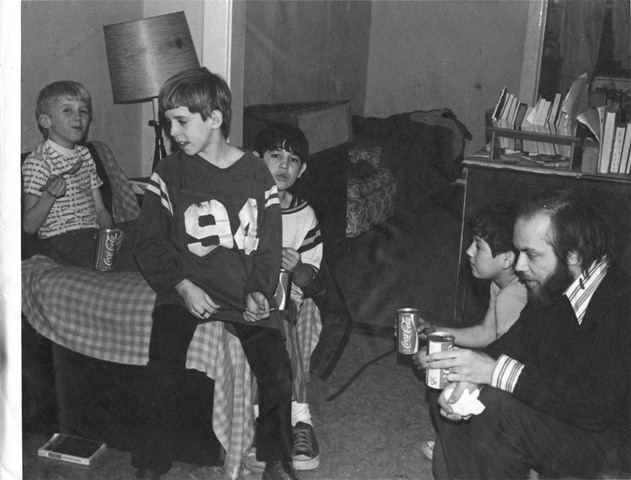
VSM1

Volunteer Service Mission, Second Friends
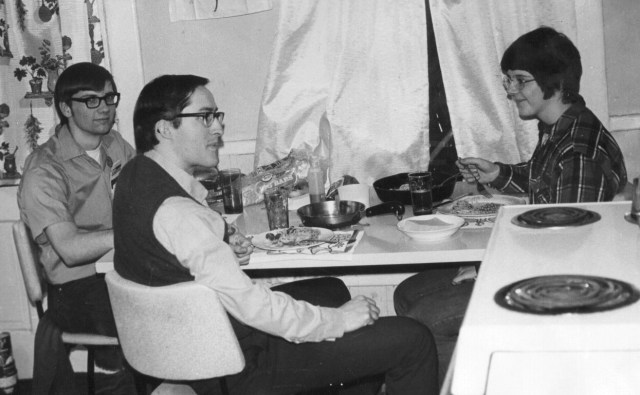
vsm

Jeff, Paul and Connie at Second Friends VSM
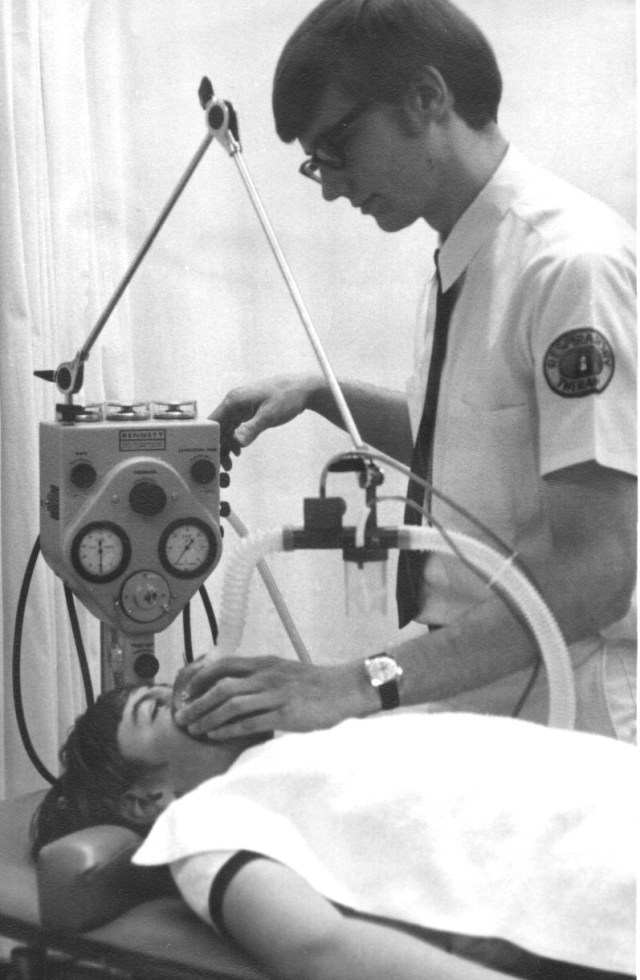
VSM JeffDen

Jeff working as respiratory therapist during VSM
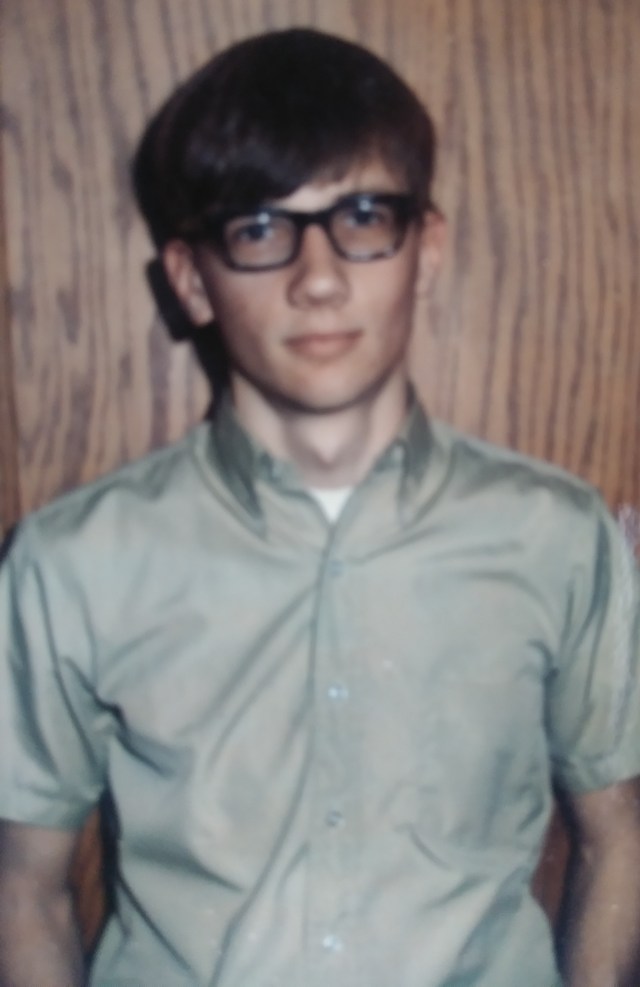
20171107_081609 (2)

Jeff Kisling


Posted in bicycles, Quaker Meetings, Uncategorized | Tagged | Leave a comment

Volunteer Service Mission Story-Part 4

(Note: The following is the continuation of the story of the Friends Volunteer Service Mission (VSM).  This part includes the conclusion of my draft resistance story, which was going on in the middle of my VSM service. I have previously shared that part on this blog, so some of you may have already read that.)

Connie Collett came Second Friends VSM in November. She spent a lot of time working at the grocery store and some time to herself; reading and thinking. She attended some meetings with Paul and worked with IFCL, but tended to feel as I do about organizations and meetings. Tutoring and helping in a neighborhood public school found Connie’s interest.

Paul took a course in peace education at Earlham School of Religion (ESR), and later in crisis (psychiatric) counseling at LaRue Carter (mental) Hospital in Indianapolis. He hoped to be a chaplain working with the new Southwest Health Center.

Southwest Health Center
The Health Center was an interesting development in the neighborhood. Three years of planning finally got Methodist Hospital to agree to staff a neighborhood Health Center, once the first year’s operating costs could be met. Methodist already had two neighborhood Health Centers. Private businessmen were responsible for raising the money. Once open, it was hoped the center would be self-supporting. Fees would be on a sliding scale based on ability to page, but a large volume should help meet financial needs.

Late in the year workmen and volunteers, including neighborhood kids we (VSM) have been working with, began remodeling an old store, to be used for the health center.

“I’ve just returned from taking Dennis to the Southwest Health Center. This is the first week the Health Center has been open. Paul and Dennis did a great deal of work remodeling the building. Friday night when I got home from the hospital, Jan (who was visiting) and I went to the church to mimeograph my letter on the draft. While there, Dennis came over. He had been painting at the Health Center with Paul and Connie. The next morning Paul, Connie, Jan and I went to the Quaker Men meeting. This was the day of the opening of the Health Center. Dennis and I spent most of the morning picking up furniture for the Health Center. He had to help me re-learn how to use a clutch shift.” Journal, 1/12/1971

Jan Cole, from Findlay, Ohio, is a convinced Friends and attended Earlham College while I was there. We were both active in Earlham Young Friends, a small group the met weekly for mid-week meeting for worship (silent). Jan and I became close during the last month I spent there. We wrote a lot and I visited her at Earlham a number of times while I lived in Indianapolis. It was meaningful for me to be able to discuss the draft and work at VSM with her.

The New Year 1972
The New Year begins. Connie has joined us, the Methodist Youth Fellowship continues and the Southwest Health Center opens.

“Received order to report for civilian work on February 1. As I approach the decision, its revelation, and the consequences, I draw back in fear.” Journal 1/25/1972

At last the draft issue was coming to a head. I left Earlham knowing I would lose my student deferment and be eligible for induction. I was reclassified 1-0 (conscientious objector to do alternative service) in October 1971, I think. I looked for jobs in hospitals, and accepted the one at Methodist partially because I knew, if I did decide to do alternative service, such a job would qualify.

Up to this point I still had alternatives. Now the ‘official’ order had come. It didn’t matter that I would continue to work at the hospital or even that I would receive credit for what work I had done. What did matter was whether I would acknowledge that I was actually doing alternative service. I enjoyed my work at the hospital and felt called to continue with it, whether the government approved or not. But I had to decide whether I would accept the work on their terms or mine.

I’ve already indicated how much reading, thought, and worry I put into the draft decision. I thought I would suddenly receive the answer some day during Meeting for worship. It didn’t happen exactly that way. I remember one meeting in the fall of my senior year at Scattergood when I knew it would be wrong to cooperate with the Selective Service System. I knew with certainty, yet the time wasn’t yet right to act on that knowledge. My grandmother (Lorene Standing) says the will of God is most often revealed in a series of small steps.

I think my task was first to prepare for the decision, its consequences and the reaction to it; and to prepare my family and those close to me for the decision. Then I would act. I had done what I could to prepare myself and others. Now the time had come.

The first of February I returned to Earlham to visit friends and to get support before going ahead with my decision.

Took bus to Richmond. Bright clear day—snow on ground. Beautiful walk to Earlham from downtown. Seems like coming home. Good to see Jan. After spaghetti lunch, walked downtown to YWCA where Jan had swimming lesson. Al Inglis picked us up there at 3:00 pm. Went back to Earlham and talked.

4:00 pm. Went to Meeting for worship. Jan, Al, Dav Nagle, Marggie Schutz, Margaret and Lewis Taylor, Becky Gibson, Jim Bay, Ruby, and several others attended.
Al had read my letter to the draft board and my statement on the draft earlier, and asked if I would let him read it during Meeting. I told him that would be alright, so he did.
Into the Meeting, Al spoke of support and the future and how God spoke through me. I would hope that would be true, but felt unworthy.
Margaret Taylor spoke of Iowa Friends who had always spoken against war and done what they felt right. She spoke of her support for me.
Becky Gibson spoke, very movingly, about finding who you are, and how important it is to do what is right.
Then Dav spoke, also very movingly. He is certainly an able minister—one of the people I love and respect very much. He seems always to be close to the center. He said severing ties with Selective Service is a major decision—but ALL decisions are major when they deal with principle and the Spirit. All, each of our decisions must be integral. “Severing ties with Selective Service is not an isolated act in this life of Jeff’s.”
After a good while I felt moved to speak. When confronted with a decision, we are told to do God‘s will. But God’s will is so difficult to discern among many influences—people, law, self (selfishness and pride). Realizing this, Thomas A’ Beckett said, “I am loathsome.” This was how I felt at times. But after he said that, he heard what he believed to be the voice of God saying “Nevertheless, I love.”
Later, I shook hands with Jan to break meeting. There was much tender, loving discussion and support afterward. Here I received such strength as I could find nowhere else. Is there any other way to wrestle with and be led to a decision? I am amazed at the power and bond of love. May I strengthen and spread it.” Journal 1/30/1972

I received a letter from Ron Ellyson, a classmate of mine at Scattergood and close friend (Member of Iowa Conservative Friends):

“As for your decision to not cooperate with the desires of Selective Service, I think it is fine. It is a choice which you made after years, actually, of thought and deliberation and certainly you should have enough faith in your judgment to stay with that decision through all the hassles it will cause you.” Ron Ellyson.

2/6/1972 First Day
I mailed the following to the draft board today, along with my registration certificate and classification (1-0) card:

Dear members and clerk of the draft board:

I have received an order to report for civilian work February 1, 1972.

I want to thank you for your concerned questions at my personal appearance, when we were considering my position as a conscientious objector. I have appreciated Mrs. Landon’s kindness and consideration, even when I returned my draft cards. Thank you for giving me more time to consider this decision. I hadn’t realized what a powerful affect that action would have on some people. The extra time gave them, and me, a chance to come to grips with the decision and its consequences. However, my beliefs have remained basically the same and the time has come to act accordingly.

I am sure none of us really want war. Many are convinced that war is a ‘necessary evil’—the only way to achieve peace. I think I can understand that, and I do respect those who sincerely believe it—their sacrifice has been very great.

But I do not believe war is the way to peace. True peace is a personal, internal, spiritual matter. When we come to know and love ourselves and our God, then and only then do we have peace. From this point, peace and love will flow from us and should engulf those we live and work with. This is the only way to find and promote peace. In this matter, war has no place.

The enclosed attempts to illustrate my beliefs in relation to the Selective Service System. I hope this will help you to understand why I feel I cannot cooperate with the Selective Service System. I want it to be clearly understood that I am not doing alternative service. It is not my choice. There is nothing else I can do.

Love,
Jeff Kisling

Letter to my draft board

I write concerning my relationship with the Selective Service System. There are many alternatives. In fact, someone once said the only alternative not open to a young man facing the draft is that of being left alone. I explored several of these. I applied for and was granted conscientious objector status (1-0). Then I had a student deferment, which made me very uneasy. I am now doing work which should qualify as alternative service, but for reasons I will attempt to explain herein, I find this alternative to be unacceptable.

I find it difficult to understand why one young man must explain his decision to do civilian work for a non-profit organization while another need make no explanation, indeed is encouraged to fight and perhaps kill other human beings. But it is one’s duty to explain one’s actions in order that others might understand, and perhaps follow. Noncooperation is less understood than conscientious objection, so I feel all the more compelled to try to present an explanation. I must try to explain, to spare my family the burden of doing so, for they neither clearly understand nor agree with my decision. (Note: they fully supported alternative service, but didn’t want to see me imprisoned).

This decision grew out of my experience as a member of the Society of Friends. Meetings of the Society of Friends can be a source of strength and guidance as one begins and continues to search for meaning in life. Quakers have always believed that there is that of God in every man, that each of us has the ability to communicate with that of God in us, and the responsibility to respond to that of God in everyone. It is evident that Jesus had communion with God—evident in the actions of his life and in his teachings—culminating in “not as I will, but as thou wilt.” This is the essence of Jesus’ teaching—that God’s will can be discerned and should be obeyed even at the cost of doubt and persecution. Quakers readily accept Jesus as an exceptional person and try to live up to the principles he gave us to live by. But we are even more concerned that we obey that Inner Light to which He was so sensitive, so we can have personal contact with and guidance from God. Thus, Quakers try to minimize distractions from “this (secular) world” in order to discern the will of God in their hearts and His presence in their midst. They gather together in a simple room and settle down together, searching in silence—each contributing to the spirit of the meeting as a whole. There are times when a member feels he has been ‘moved by the spirit’ to share with the group, in which case the meeting considers the message in further silence.

There is a spirit which comes from the silence which gives direction to life. The spirit is often difficult to discern because of our ties to ‘this world.’ We are afraid or too proud to give up our desire to ‘reason through’ decisions. Thus, we develop a system of beliefs and guidelines composed of traditional beliefs, our own reasoning, and as much guidance from the Inner Light as we are willing to seek and accept. Thus our decisions, being not entirely grounded upon our faith, may not always be ‘right’. But we can do no more, nor should we do less, than follow our conscience as occasions arise—always seeking to become more attuned to the spirit.

Adolescence is that period when one begins to seriously consider ‘who he is’ and his purpose in the world. It is a time when one has so many question and so few answers. The extent to which a young person searches for, and finds answers to these questions is dependent upon guidance given by parents, peers, school and church; the decree to which this guidance corresponds to his own experience and needs; and his own self-discipline and desire to continue the search. Too often the leadership and resources are not available; he is ‘turned off’ by inconsistencies or shallowness or insincerity on the part of those he looks to for guidance and example; or materialistic demands distract from the search.

The draft requires fundamental moral decisions at this time in life. This may not be bad in itself, but tremendous pressure is brought to bear to influence the decision—tradition, parental and peer pressure, the law, etc. The Selective Service System tries to attract men to the armed forces by relying on these pressures and by not making alternatives widely known.

The pressures in this case are for action which is contrary to the experience and desires of most young men—frustrating, anguishing when one is searching for truth, honesty and integrity. This type of experience stifles personal growth and leads to the loss of a spirit of idealism and faith in the goodness of men. Can there be a graver crime than that of destroying the spirit and dreams of the young? Only that of destroying life itself, and the Selective Service System is directly implicated in both.

Most of us agree that conscription and war are unjust-evil. The question is, how do we deal with evil? ‘Resist not evil’—a phrase widely known but little understood and less obeyed. ‘Do not set yourself against one who wrongs you’ (NEB) is a better way to put it, I think. In setting ourselves against those who harm us, we look, to some extent, for some way to hurt, or at least hinder them. We look for the worst in others and play upon their weaknesses rather than looking for the best and trying to fortify it. Out task is to overcome evil by doing good.

The time we spend ‘resisting evil’ could be better spent in trying to find out where we can do better ourselves. You do not change others by opposing them—rather, by respecting and trying to understand and learn from them, you can both benefit and move nearer the truth. A life of example—showing the possibilities and fruits of a life lived in love and concern for others, is the only way to overcome evil.

I do not want my example to be alliance with evil. Thus, I cannot serve with the Selective Service System. However, I will not set myself against it. I will break my ties with Selective Service, and concentrate on the difficult task of working for peace in whatever way I can.

Jeff Kisling

Letter to Bear Creek Monthly Meeting

Homer Moffitt, Clerk
Bear Creek Monthly Meeting

Dear Friends,

I am thankful for your kind letters and encouragement concerning my work in Indianapolis. I am learning much about love, and as I respond to the love of others, and they to mine, we are all amazed at how it grows.
I am enclosing a statement I have written concerning conscription, and my decision not to cooperate with the Selective Service System any more. I sent a copy of that statement, along with my draft cards, to my draft board.

Again, I tried very hard to follow the leading of the inner light. If I alone were making the decision, this would probably not be my choice. Thomas a’ Beckett, torn between his obligations to the Church and those to the State, was searching for guidance. When he realized all the forces that influence him—selfish desires for power and personal gain, fear of punishment or displeasing people, etc., he said. “I am loathsome.” But then he heard what he believed to be the voice of God saying, “Nevertheless, I love.”

I, too, feel shamed when I realize the factors that often influence my decisions and actions. On this matter, I have tried very hard to be sensitive to the will of God, and hope to do so in the times to come. Still somewhat uncertain that my choice is right, I am comforted in knowing that He still loves.

Love,
Jeff Kisling

In reply:

Dear Jeff,
We have found your statement explaining your relationship to the Selective Service System very moving. Several of us are aware that your decision on this has been a difficult and lonely one. We want to assure you of our love and support as you meet the events which result from your courageous stand.
On behalf of the Peace Committee of Bear Creek Monthly Meeting

The conclusion to the draft story is that I was drafted at a time when men were not being drafted for the armed forces. A Supreme Court case declared this to be illegal, so my order to report for civilian service was invalidated and I wasn’t prosecuted. I did finish my two years with Friends Volunteer Service Mission in Indianapolis.

Struggling with my decision related to registering for the draft triggered a deep look into my spiritual life and how to express that in the rest of my life.

Posted in civil disobedience, peace, Quaker Meetings, Uncategorized | Tagged , , | Leave a comment