What is our response to environmental chaos?

I imagine you have seen the shocking videos of the flooding of Ellicott City, MD. That is just the latest of a series of alarming environmental changes. The Bering Sea ice is at historic lows. Permafrost is melting and releasing large of amounts of methane. Atmospheric concentrations of CO2 continue to rise at an accelerating rate. The increasing temperature of the atmosphere holds more water vapor, which acts as a greenhouse gas, further increasing air temperatures. We have seen the effects last year in Houston and this year already with tropical storm Alberto creating massive downpours of water and flooding from that increased water vapor in the air. As Alberto moves inland it will continue to dump large amounts of rain with more flooding.

A study published today in the New York Times estimates the death toll from last year’s Hurricane Maria may exceed 4,000.

What is your vision of the future, and do you share these concerns and the urgency of responding? Following is an outline of a plan to build pre-fab communities for people who will become climate refugees, either because of rising sea levels flooding cities, or extreme weather events, or more slowly developing threats such as drought and desertification. Do you think working to build communities for the resulting climate refugees is something we should be working on?


Design and Build Beloved Community Models

In a recent article in Friends Journal, Donald McCormick asks “why is there no vision for the future of Quakerism?” That and the increasing threats from environmental destruction led me to share my vision, which has been evolving over the past several years.

As outlined below, I believe we are already experiencing an environmental catastrophe, the effects of which will be rapidly, increasingly destructive. Much of the increasing heat from increasing greenhouse gas emissions has been absorbed by the oceans. But they are basically heat saturated, so air temperatures will begin to increase more rapidly. The other major danger is the release of methane, a much more potent greenhouse gas than carbon dioxide, as permafrost melts in the artic regions.

The havoc from increasingly violent storms and development of large areas of drought will overwhelm our economic and political systems. Municipal services such as water, power, sewage and trash processing will fail.  Food will no longer be transported to grocery stores. We need to begin to prepare now. Not wait until the day water is no longer flowing from the faucet. Not wait until more of us are left without infrastructure as in the case of Puerto Rico. Not wait until millions are forced to flee coastal cities as the oceans flow into their streets.

Even if you don’t believe these changes will happen, or not happen soon, there are other compelling reasons to design and build new communities. Our economic system has not adapted to the loss of jobs overseas and to automation. There are simply not enough jobs for millions of people, and many of those who do have work are paid at poverty levels. Forced to depend upon increasingly diminishing social safety nets. That is morally wrong. Building small communities in rural areas will give people fulfilling work to do, food to eat, shelter, and a caring community to belong to, restoring their dignity.

Following is a draft of how I see us creating such communities, with the intention of creating a model that can be rapidly replicated all over our country. So the flood of climate refuges have a template to build their own self sufficient communities.

How do we speak to our current and approaching challenges?

  • Environmental disasters
    • Weather extremes
      • Widespread and persistent drought, rising seas and more intense storms and fires
        • Destroyed homes, cities, land
        • Destroyed infrastructure
        • Water, food and energy scarcity
        • Resource wars
        • Collapsing social/political order
        • Climate refugees
    • Militarism and police states
    • Decreasing availability and complexity of health care and medications
    • Spiritual poverty

We are facing, and will increasingly experience failures of our social, economic, energy, health, education, safety, production and distribution systems. This will result in millions of climate refugees. People without stable sources of food, water, lodging, healthcare, education, power, spiritual community, or security.

Urgency

We saw the intense rainfall in Houston, the devastating hurricanes in the Caribbean, the extreme wildfires in the west, melting permafrost and collapse of ice sheets this past year. Cape Town, South Africa, a city of nearly 4 million is on the verge of running out of water. These are just a prelude of things to come.

Climate changes continue to occur much more rapidly than predicted. Feedback mechanisms are accelerating changes.

The UN Refugee Agency estimates that by 2050, up to 250 million people will be displaced by climate change impacts such as rising sea levels, floods, famine, drought, hurricanes, desertification and the negative impacts on ecosystems.

The Midwest

We are faced with two broad problems. How to adapt our own lives to deal with these changes, and what to do about the flood of people who will be migrating to the Midwest.

“Along America’s most fragile shorelines, [thousands] will embark on a great migration inland as their homes disappear beneath the water’s surface.” LA Times, Victoria Herrmann Jan 25, 2016

Since we will soon not be able to depend on municipal water and power, transport of food from distances, schools and hospitals, many will be forced to move to rural areas where they can live and grow their own food.

The Choice

It would seem we have two choices.

  1. One is to narrowly focus on the best we can do to prepare ourselves and immediate community to adapt to the coming changes.
  2. The other is to also work on ways we can help the many people who will be coming to learn, adapt and thrive as well as possible.

Disaster Preparedness

As Friends we will make the second choice, to care for those who will be displaced. This will be like disaster relief work, only on a scale never seen before.

We first need to learn how to adapt to this uncertain future ourselves. Part of that will be to network with others, both to learn from, and to build a network to coordinate the response to the needs of the climate refugees.

Building Communities-The Vision

We need to build model sustainable communities. There have been numerous such experiments in intentional community. But this model must be created with the intention of being replicated many times over with minimal complexity, using locally available materials—a pre-fab community.

Pre-fab components

  • Community hub with housing and other structures
    • Simple housing
      • Straw bale or berm houses
      • Passive solar and solar panels
      • No kitchens, bathrooms or showers (community ones instead)
    • Stores, school, meetinghouse
    • Central kitchen, bathrooms and showers
  • Surrounding fields for food and straw
  • Water supply
    • Wells, cisterns and/or rain barrels
  • Power
    • Solar, wind, hydro, horse
  • Manufacturing
    • 3 D printing
    • Pottery
    • Sawmill
  • Communication
    • Radio, local networks
  • Transportation
    • Bicycles
    • Horses
    • Pedal powered vehicles
  • Medical
    • Stockpile common medications
    • Essential diagnostic and treatment equipment
    • Medical personnel adapt to work in community
  • Spiritual
    • Meeting for worship
    • Meeting for business
    • Religious education

I believe this may be the answer to the question about the future of Quakerism. The future for us all.

https://kislingjeff.wordpress.com/?s=climate+refugee

Posted in climate change, climate refugees, Quaker Meetings, spiritual seekers, Uncategorized | Tagged , | Leave a comment

Kinder Morgan pipeline spill

Kanahus Manuel provides this video related to the Kinder Morgan pipeline spill at the Deerfield Station north of Kamloops, British Columbia on May 27, 2018. She asks to be admitted to the site to monitor the spill, and blocks a truck from bringing in soil evidently intended to cover up the spill.


Crews cleaning up oil spill at Kinder Morgan station north of Kamloops, B.C.
Spill comes days before deadline set by Kinder Morgan for controversial Trans Mountain pipeline project.  The Canadian Press · Posted: May 27, 2018 4:02 PM PT

“The spill comes days before a deadline set by Kinder Morgan for its controversial Trans Mountain pipeline expansion project.

The company suspended all non-essential construction on the project in April, citing opposition from the B.C. government that put the viability of the pipeline in question.

It has set a May 31 deadline for getting assurances it can proceed without delays on the controversial project.

B.C. Trans Mountain opposition remains steadfast as Kinder Morgan suspends ‘non-essential’ pipeline work.   Indigenous leaders, environmentalists say the company finally appreciates intensity of opposition.  CBC News · Posted: Apr 08, 2018 8:57 PM PT

“B.C. politicians, Indigenous leaders and environmentalists say the future of Kinder Morgan’s Trans Mountain pipeline is in doubt.

On Sunday the company announced it would suspend all “non-essential activities” and related spending for the Trans Mountain pipeline project, citing ongoing opposition from the British Columbia government.

“I’m greatly encouraged by this news,” said Grand Chief Stewart Phillip with the Union of B.C. Indian Chiefs.”

Posted in #NDAPL, climate change, Indigenous, Uncategorized | Tagged , , | Leave a comment

Memorial Day

People who gave their lives in service to our country deserve our deep respect.

But as a Quaker and pacifist, these holidays make me very sad. Why did they have to die?  Why did civilians also have to die in those conflicts? Why didn’t diplomacy work? What could we have done to prevent these conflicts?

Are we working as hard and effectively as we can to prevent future deaths from existing and future conflicts? I recently shared stories of draft resisters and conscientious objectors as examples of some ways to work for peace.   https://kislingjeff.wordpress.com/2018/05/25/draft-resistance-and-conscientious-objection/

Another example is the efforts of Iowa Quakers, working with the American Friends Service Committee (AFSC) to try to arrange another visit by North Koreans to Iowa.

Friends Committee on National Legislation (FCNL) works diligently to promote legislation to advance peace.

The current administration’s approach has been to drastically reduce the staff and influence of the State Department, impairing possibilities of diplomacy. And to dramatically increase the already gigantic military budget by billions of dollars. To continually spotlight the military might. Planning a military parade through the streets of the nation’s capitol.

Why did we invade a country, Iraq, for the first time in our country’s history? Why didn’t we stop that conflict when the justification of weapons of mass destruction were never found? How did we let a war on an idea, “terror”, get started? Even if that made sense, how are we supposed to know when that war would end? How could this not be a constant and endless war?

How did we allow weaponized drones to kill “targets”, people that were never given a chance to assert their innocence, and in countries we have not declared war with? Drones that kill so many innocent bystanders. Drones that terrorize the populace as they buzz overhead.

How did we buy our way out of military service with a volunteer army? How could we allow soldiers to sign up for tour after tour of traumatizing service?

Historically Quakers have spoken out against war and knew the causes of war came from the desire to take land or resources from other countries or peoples.

“I told [the Commonwealth Commissioners] I lived in the virtue of that life and power that took away the occasion of all wars… I told them I was come into the covenant of peace which was before wars and strife were.” George Fox

“Oh! that we who declare against wars, and acknowledge our trust to be in God only, may walk in the light, and therein examine our foundation and motives in holding great estates! May we look upon our treasures, and the furniture of our houses, and the garments in which we array ourselves, and try whether the seeds of war have nourishment in these our possessions, or not. Holding treasures in the self-pleasing spirit is a strong plant, the fruit whereof ripens fast.” John Woolman

Today another type of war is waged on a global scale against Mother Earth herself.  Only death can result when the resources our environment depends upon (land, water, air, energy) are excessively consumed, and polluted in the process.

Today we must speak out against this environmental war and find a way to live in the virtue of that life and power to take away the occasion of this ongoing environmental destruction. And take away the occasion for armed conflict.

May we look upon our treasures, the cars we drive, the large homes we heat and cool, the electronic devices we use and try whether the seeds of war have nourishment in these our possessions, or not.

May we have the courage to really listen to what the Inner Light is asking of us, and then do that?


Posted in climate change, peace, Uncategorized | Tagged | 4 Comments

A Miracle

Those who know me know how important running has been in my life.

I first began to run on the track team of Miller Junior High School in Marshalltown, Iowa. Our 440 relay team broke the school record and that stood for years. I got the nickname “rabbit”.

I began long distance running at Scattergood Friends School. During our daily recreation time the boys played soccer and the girls played field hockey.  During my Junior year there I developed significant back problems when my skeletal system grew faster than muscle development. My roommates had to tie my shoes because I couldn’t bend that far. I can still remember that pain. Playing soccer aggravated that.  But for some reason running did not.

So three of us began to run cross country instead of play soccer–Stephen Evans, Kale Williams and I. We’d usually run the sides of a square, one mile each side, which came to close to five miles a day. I fell in love with running then.

I was going to say something about “runner’s high” and endorphins but it seems other chemicals are responsible. For whatever chemical or non-chemical reasons, long distance runners feel really good at some point during and after a “good” run. Yes, there are also “bad” runs.

I’ve often written about my decision to live without a car that I made about forty years ago, and the unexpected benefits of that lifestyle. One of the best was how I ran home from work every day. (I got to work riding the city bus). When I began doing that I lived seven miles from Riley Hospital for Children.

About two years ago I suddenly found I could no longer run, no matter how hard I tried.  Neither pulmonary function nor cardiac stress tests found any reason why.  That was one of the most traumatic events in my life. I truly mourned this loss.

When the weather became nice this spring, I was going to get out my bicycle, the exercise I had been using as an alternative. But first I thought I would try yet again to see if I could run. The miracle I was referring to in the title is that for some reason I am now able to run again! I have been thanking God almost continuously since. When I told my sister Lisa how much I was running, she gently said it is recommended that you don’t run every day, which is what I was doing. I was enjoying my newfound freedom to run so much I did it every day. I know that is a recommendation, but all my adult life I had been running six or seven days a week. When I was keeping a running log I found I was running about 1,100 miles a year.

This dependence on running probably seems extreme if you aren’t a runner. But running is about far more than exercise. Being able to run again makes me aware, again, of those reasons.

One is the healthy feeling you are aware of as all systems work together, and at nearly peak capacities–heart, lungs, circulation, brain and metabolic system. Having a medical background helps visualize all these parts of yourself working like a well-oiled machine. I really have it bad, don’t I?

I realized how much I missed being in nature. The natural beauty of the land, flowers, trees, birds, squirrels, rabbits, even insects. The solar power of the sun landing on your skin. The smells of the earth and flowers. The sound of the wind through the trees, or that generated by you as you flow through the air. As I’ve been learning much more about Indigenous people and their connections to Mother Earth, I am more aware of that now as I run again. It also makes me think one of my ancestors was a running warrior, helping push me forward.

Another part is how you mentally reach a zone that I find similar to that state I often get to in Quaker meeting for worship. All the noise fades away and you become acutely aware of a spiritual presence.

One of my favorite authors, George Sheehan, expresses these things better than I can:

“What running does is allow it to happen. Creativity must be spontaneous. It cannot be forced. Cannot be produced on demand. Running frees me from that urgency, that ambition, those goals. There I can escape from time and passively await the revelation of the way things are.

There, in a lightning flash, I can see truth apprehended whole without thought or reason. There I experience the sudden understanding that comes unmasked, unbidden. I simply rest, rest within myself, rest within the pure rhythm of my running, rest like a hunter in a blind. And wait.

Sometimes it is all fruitless. I lack the patience, the submission, the letting go. There are, after all, things to be done. People waiting. Projects uncompleted. Letters to be answered. Paperwork to do. Planes to be caught. A man can waste just so much time and no more waiting for inspiration.

But I must wait. Wait and listen. That inner stillness is the only way to reach these inner marvels, these inner miracles all of us possess. And when truth strikes, that brief, blinding illumination tells me what every writer comes to know. If you would write the truth, you must first become the truth.

The mystery of all this is that I must let it come to me. If I seek it, it will not be found. If I grasp it, it will escape. Only in not caring and in complete nonattachment, only by existing purely in the present will I find truth. And where truth is will also be the sublime and the beautiful, laughter and tears, joy and happiness. All there waiting also.”

“Running & Being: The Total Experience” by George Sheehan, Kenny Moore

Posted in Uncategorized | Tagged , , | 3 Comments

Each Child is Sacred

For some time the Spirit has led me to think about children.

While I don’t have children of my own, I was strongly connected with the children of my best friend, Randy Porter, at times living in part of the same house. And since his death trying to fulfill the role of “godfather”.

One of my first experiences as an adult was to be part of the Friends Volunteer Service Mission (VSM) where  I had the opportunity to decide how to work in the community full time. I was led to work with the neighborhood youth.


My professional life was spent at Riley Hospital for Children. I began work as a respiratory therapist in the Neonatal Intensive Care Unit. Then the last thirty years doing research in the Infant Pulmonary Function Lab.


I was also blessed to become involved with the Kheprw Institute (KI), a Black youth mentoring and empowerment community.


As I’ve been learning more about Native Americans I’ve learned how important children are to them.

“The ones that matter the most are the children.” Lakota Proverb

“Grown men can learn from very little children—for the hearts of little children are pure. Therefore, the Great Spirit may show them many things that older people miss.” –Black Elk

“The Lakota call children wakanyeja. ‘Wakan’ means sacred. To us, children are not only blessings, but are meant to be the principal focus of each tiospaye (extended family group). They are sacred of their own accord.

We believe that before a baby is born, its soul specifically chooses its mother and father. It is understood that children are more than miniature versions of ourselves; they are spiritual beings in their own right, with their own voices, gifts, talents, and purposes.”  https://indiancountrymedianetwork.com/news/opinions/each-child-is-sacred/

One of the most important concepts in native culture is the Seventh Generation principle. Evidently there are two ways to interpret that. One is to consider what effect any decision will have on seven generations to come.

The alternative, which I like, is to consider the three generations before, your generation, and three generations to come. This is to consider what generations before you have to teach you, as well as care for the current and future generations. In the Lakota Nations a generation is considered to be 100 years.

The main impetus behind these recent leadings are my concerns about the environmental chaos our children are facing as a result of so many things we have done to harm Mother Earth. And the harm we continue to do to our environment. When will we change? What can we say to our children and future generations? As the environmental chaos around us becomes increasingly apparent and severe, how can we justify not making the radical changes necessary now? For their sake?

All of this has been heavy on my heart for a long time.

But last night I learned of the new policy of the government of stealing children from their  parents at our southern border. There is no justification for such evil. I pray that the efforts of the American Civil Liberties Union to stop this are successful, and quickly. I pray God finds a way. 

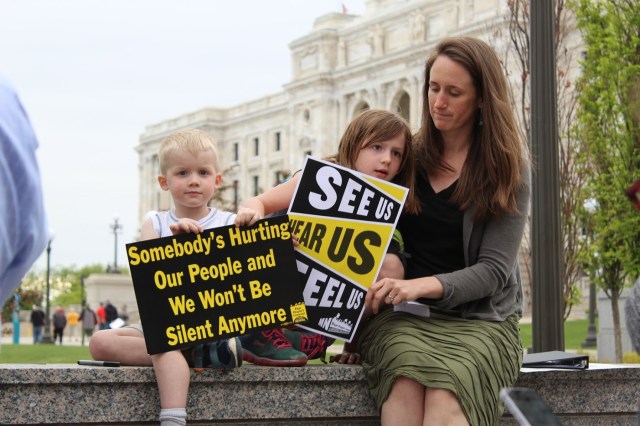
The theme of the Poor People’s Campaign is “somebody’s hurting my people and its gone on far too long, and we won’t be silent anymore.”


Posted in Indigenous, Kheprw Institute, Poor Peoples Campaign, Uncategorized | Tagged , | Leave a comment

Draft resistance and conscientious objection

The Selective Service System still requires males aged 18-25 to register for the Selective Service System.

In addition,The National Commission on Military, National, and Public Service was created by Congress to consider and develop recommendations concerning the need for a military draft, and means by which to foster a greater attitude and ethos of service among American youth. Established on September 19, 2017, the Commission intends to issue its final report no later than March 2020 and conclude its work by September 2020.”

Next week (Tuesday, May 29) the focus of the Iowa Poor People’s Campaign will be on the destructive forces of the war economy.

Quakers have always worked for peace. Following are some resources/stories about that work from a few Quakers of Iowa Yearly Meeting (Conservative).

Don Laughlin, Quaker and Scattergood Friends School teacher, was imprisoned for resisting the draft around 1950. One of his last life’s projects was to collect the stories of Iowa Quakers (Friends) who opposed militarism. I was helping him work on those stories, and you can find the current version of Young Quaker Men Face War and Conscription here.  Below are some of the Iowa Quakers who resisted conscription.

Another Iowa Quaker, John Griffith, wrote his story, War Resistance in World War II.

I was keeping a Journal during my Senior year at Scattergood Friends School. I was struggling to decide whether to apply for conscientious objector status, or to be a draft resister. Although I did apply for, and was granted conscientious objector status while I was trying to make up my mind, in the end I felt I had to resist the draft and turned in my draft cards. The Journal entries related to that are here, Scattergood Journal.

During the time I was trying to decide whether to resist the draft, I joined the Friends Volunteer Service Mission (VSM), located on the near southwest side of Indianapolis. In those days, someone granted conscientious objector status was required to do two years of civilian service. By the time I finally decide to be a draft resister, which meant not doing the two years of alternative service, I was finding the work I was doing with the neighborhood kids so rewarding that I stayed with the VSM project anyway. You can read the story of my Volunteer Service Mission here. Interestingly two of those kids recently connected with me via Facebook and shared their memories of those days.

I’ll end with the Epistle to Friends Concerning Military Conscription that was written around the time of the Vietnam War, and signed by Iowa Yearly Meeting (Conservative) Quakers Don Laughlin and Roy Knight.

An Epistle to Friends Concerning Military Conscription

Dear Friends,

It has long been clear to most of us who are called Friends that war is contrary to the spirit of Christ and that we cannot participate in it.  The refusal to participate in war begins with a refusal to bear arms.  Some Friends choose to serve as noncombatants within the military.  For most of us, however, refusal to participate in war also involves refusal to be part of the military itself, as an institution set up to wage war.  Many, therefore, become conscientious objectors doing alternative service as civilians, or are deferred as students and workers in essential occupations.

Those of us who are joining in this epistle believe that cooperating with the draft, even as a recognized conscientious objector, makes one part of the power which forces our brothers into the military and into war.  If we Friends believe that we are special beings and alone deserve to be exempted from war, we find that doing civilian service with conscription or keeping deferments as we pursue our professional careers are acceptable courses of action.   But if we Friends really believe that war is wrong, that no man should become the executioner or victim of his brothers, then we will find it impossible to collaborate with the Selective Service System.  We will risk being put in prison before we help turn men into murderers.

It matters little what men say they believe when their actions are inconsistent with their words.  Thus we Friends may say that all war is wrong, but as long as Friends continue to collaborate in a system that forces men into war, our Peace Testimony will fail to speak to mankind.

Let our lives speak for our convictions.  Let our lives show that we oppose not only our own participation in war, but any man’s participation in it.  We can stop seeking deferments and exemptions, we can stop filling out Selective Service forms, we can refuse to obey induction and civilian work orders.  We can refuse to register, or send back draft cards if we’ve already registered.

In our early history we Friends were known for our courage in living according to our convictions.  At times during the 1600’s thousands of Quakers were in jails for refusing to pay any special respect to those in power, for worshiping in their own way, and for following the leadings of conscience.  But we Friends need not fear we are alone today in our refusal to support mass murder.  Up to three thousand Americans severed their relations with the draft at nation-wide draft card turn-ins during 1967 and 1968.  There may still be other mass returns of cards, and we can always set our own dates.

We may not be able to change our government’s terrifying policy in Vietnam.  But we can try to change our own lives.  We must be ready to accept the sacrifices involved if we hope to make a real testimony for Peace.  We must make Pacifism a way of life in a violent world.

We remain, in love of the Spirit, your Friends and brothers,

Don Laughlin

Roy Knight

Jeremy Mott

Ross Flanagan

Richard Boardman

James Brostol

George Lakey
Stephen Tatum

Herbert Nichols

Christopher Hodgkin

Jay Harker

Bob Eaton

Bill Medlin

Alan & Peter Blood


Posted in civil disobedience, peace, Quaker Meetings, Uncategorized | Tagged , , | Leave a comment

Poor People’s Campaign Week 2 and Plans for Week 3

This video by Rodger Routh is about week two of the Poor People’s Campaign in Iowa  regarding systemic racial injustice.

WHO-TV Political Reporter Dave Price interviews Stephen Blobaum about the Iowa Poor People’s Campaign:  http://whotv.com/2018/05/20/the-insiders-may-20th-edition-the-iowa-poor-peoples-campaign/

According to Medium.com nearly 321 arrests were made nationally during week two of the Poor People’s Campaign.

The second week’s theme for the Poor People’s Campaign was Linking Systemic Racism and Poverty; Voting Rights, Immigration, Mass Incarceration, Islamophobia and mistreatment of Indigenous Communities. Actions were held inside offices, blocking streets, and blocking entrances to State Houses and Justice Complex Buildings. The Poor People’s Campaign held civil disobedience in 17 states and D.C. during its second out of six weekly actions.

Around 321 people were arrested during the second week of the Poor People’s Campaign. These arrests took place in Washington, D.C. (59) and 17 states, including New York (27), Pennsylvania (24), Tennessee (21), Washington (19), Minnesota (18), Kansas (18), California (18), South Carolina (18), Massachusetts (16), Michigan (16), Vermont (14), North Carolina (13), Alabama (13), New Jersey (12), Louisiana (9), Maryland (4), and Arkansas (2).

Since Monday is Memorial Day, preliminary plans are that next week’s action in Des Moines will occur on Tuesday (5/29) at 2:00 p.m. It is anticipated that the rally will be at Birdland Park near North High School. The theme will be “Stop Killing Children” and the program will focus on three issues:  (1) gun violence in our schools, (2) children being maimed and killed around the world by wars, (3) profiteering from war that uses young people as “cannon fodder.”

More information about the national Poor People’s Campaign can be found here:  https://www.poorpeoplescampaign.org/


Posted in civil disobedience, Poor Peoples Campaign, Uncategorized | Tagged , | Leave a comment

Into the Public Square

I’ve been writing about the new Poor People’s Campaign. It is discouraging that more people haven’t been attending these public events, at least here in Des Moines.

DSC_7505

A couple of years ago I wrote a series of articles about getting into the public square, which are summarized below. There are ongoing discussions about whether people of faith should be involved in public demonstrations. During my life I have been led to participate in public vigils and demonstrations as some ways to express my faith. Sharing our stories is how change happens, I believe. Especially listening deeply to other’s stories. We have to be among people in order to be able to do so.

Rev William Barber has been leading numerous public faith-based actions for years, including the newly launched Poor People’s Campaign.

If you aren’t already involved in this campaign, I encourage you to think and pray about doing so.

Quakers, it’s time to get back into the public square. If you believe that there’s life above the snake line, it’s time to get back in the public square.”  Rev. William Barber, The Third Reconstruction, Friends Journal, September 1, 2016.

More from the article:  “That’s what Quakers were doing when they stood against slavery. They said slavery was below the snake line. Hate is below the snake line. Racism is below the snake line. Homophobia and xenophobia are below the snake line. Greed is below the snake line. Injustice is below the snake line. It’s time for us to raise the moral standard above the snake line.”

I have great respect for Rev. Barber.  I had followed his work with the NAACP and the creation of the Moral Mondays movement in North Carolina.  I was there when he came to spend the weekend with us to launch Indiana Moral Mondays, with the march to the Capitol building and his speech there.  His excellent speech at the Democratic National Convention articulated his call for a moral revolution.  And I was very grateful to get to spend the day with him recently at the MPOLIS (Moral Political Organizing Leadership Institute Summit) to organize faith leaders for the a moral revolution of values.

For this moral revolution to succeed it will take masses of people going to the streets to let the world know that our society needs to move above the snake line.

One of my first experiences with this was standing in front of the old Capitol building with Don Laughlin for the weekly peace vigil during the Vietnam War (1969).  I remember feeling uncomfortable, not knowing what the public reaction might be.  But I also felt grounded in the spirit, and the support of those I was standing with.  It became easier with time.

Sadly, peace vigils are still needed, and I went to our weekly vigil in front of the Federal Building in downtown Indianapolis when I lived there.

jeff_blm1

Weekly peace vigil Indianapolis

I enjoy how Rev. Barber’s article begins. It’s always been one of my great dreams to come and be at a Quaker Friends meeting, even if it meant just sittin’ and bein’ quiet. And that’s because I know enough about history to know about the Religious Society of Friends and the abolition campaigns that began long before the end of slavery in Britain.”

I have been trying to express a spiritual, moral, Quaker voice in public.  I was hoping there might be some ideas there that you might use in your own efforts to speak out in public.  I might not have made it clear enough that I am hoping more of you will speak out more in the public square.

Some of the key issues are how comfortable you are in sharing what you have to say, who your intended audience is, and how we can identify what we are saying as coming from a Quaker viewpoint, if you want to include that.  It is my hope that more of us find ways to identify ourselves in public as being Quaker.  Is it time to bring back plain dress, the broad rimmed hats, and bonnets?

I would encourage the Quaker part for a couple of reasons.  One is that it sets an historic and spiritual context for what you are doing.  Your interested readers/listeners may be led to make a Quaker connection, to answer the spiritual seeking they are doing.  They may not live anywhere near you, but may look for a local Quaker connection as a result of your writing.

I believe a great number of people are trying to find a spiritual home right now, and that Quakerism may be an answer for many of them.  But they need a way to find us.  That means (1) sharing your work in a way that is identified as Quaker, and (2) sharing in places where seekers are looking.

Without overdoing it, you can mention that you are a Quaker when you write things.  When introductions are made at public meetings, you can include that you are a Quaker.  And consider various ways to use graphics/art for Quaker identification, like the ‘Quaker man’ icon I use to identify my blog posts.  Including photos and drawings in your writings often adds interest, and there are many Quaker related images you can use–meetinghouses, peace vigils, gatherings.

Social media seems to be where many seekers and others look for news and interest items.  Facebook is a quick and interactive way to engage.  Besides just following your friends on Facebook, look for Facebook groups, where you can find like minded people to share with.  Type the subject you are interested in in the search box, and a list of related groups will appear.

As I mentioned, I have found writing on a blog to be the best solution for me, thus far.  There are a number of places that will allow you to have your own blog, free of charge.   www.wordpress.com is one of the most popular.

Listen to your inner light.  Are you being led to share?  Don’t hide your light under a bushel.

I had another personal experience with being in the public square at our weekly Peace Vigil in downtown Indianapolis.  During the Keystone Pipeline struggle, the sign I held there read “Stop Keystone Pipeline”.  Lately I’ve been using my new sign, “Quakers – Black Lives Matter”.  I think this is an example of what Rev. Barber is asking us to do.  In this case, how are people who are saying “Black Lives Matter” going to know we support that idea, if we don’t find ways to say so publicly?  Because there is an implied question, which is “do YOU believe Black Lives matter?”

That sign caught the attention of Keith Mitchell-Burnett, who has been working on issues of poverty and unemployment for twenty years.  He said those he works with in the Black community know these problems cannot be solved by Black people alone, and he has been looking for white allies.  So he stopped and we talked for over half an hour about these issues, and his work, and ours.  We gave him permission to do a short video interview of us, to be posted on his organization’s website.  We exchanged contact information, and will see how things develop.

This is why you need to be on the public square in your community.

This is a low time for social justice in the United States.  Conflicts related to racial injustice and human rights, economic injustice, foreign and domestic militarism, environmental injustice, and the infringement on civil liberties meant to protect those who work to address these issues is profoundly discouraging.

Friends recognize how interrelated these things are, and how ineffective it is to try to approach any of those things in an isolated manner.

Friends’ belief that the spirit of God continues to speak to all of us defines our approach.  The more we can express that in the world, the more we are able to connect to others working for peace and justice.  The more we can answer the spiritual longing felt by so many.  The more we can build the Beloved Community to embrace us all.  Those who join the Beloved Community naturally work to improve the conditions of everyone, and all of these separate concerns begin to be addressed from this central, spiritual core.

For this to happen, Friends need to find a public voice.  We need to practice expressing, by words and actions, how we see the spirit working today in the world, among all beings.  And we need to be working side by side with people outside our usual circles of Friends and friends.

It is encouraging to see Friends engage in the struggle against the Dakota Access Pipeline, for example, by visiting the camps of Native Americans and others protecting our water in North Dakota, joining protests and actions against the pipeline in Iowa, Nebraska, Minnesota and Indiana, and gathering resources needed by those at the camps.

I hope you will listen to your Inner Light.  Are there messages there that should be shared publicly?   Is there a still small voice that is encouraging you to speak?  Can your meeting find ways to encourage Friends to speak in public, and support each other in doing so?  If you don’t hold public peace vigils, might this be one way to start?

This series of articles about getting into the public square continues with this post about signs. https://kislingjeff.wordpress.com/2016/10/01/public-square-4-signs/

Then there is the post about vigils and demonstrations.   https://kislingjeff.wordpress.com/2016/10/02/public-square-5-vigils-and-demonstrations/

And the last post in this series is about how we decide which organizations to engage with. https://kislingjeff.wordpress.com/2016/10/29/public-square-6/

Posted in Indiana Moral Mondays, Keystone Pledge of Resistance, peace, Poor Peoples Campaign, Uncategorized | Tagged , , | Leave a comment

Shattering the Silence

Yesterday’s Poor People’s Campaign event focused on working to end racism. Our event in Iowa was a rally at the Shattering Silence sculpture.

The sculpture is adjacent to the building that houses the Iowa Supreme Court and at the top of the hill overlooking the Des Moines skyline. It is in commemoration of the 170th anniversary of the landmark 1839 Iowa Territorial Supreme Court ruling that prohibited slave Ralph Montgomery from being extradited back to Missouri after he failed to raise the $550 he promised to pay to buy his freedom. The Iowa Art Council’s newsletter describes the art as a commemoration of “those moments when Iowa has been at the forefront of breaking the silence of inequality and commemorates those Iowans who refused to stand by silently when they saw injustice.”  https://dsmpublicartfoundation.org/public-artwork/shattering-silence/

The paper below shows what people were saying out loud at the gathering, that “we won’t be silent anymore.” That it is important for each of us to respond to any act of injustice we witness.

DSC_7590


It was good to see Jon Krieg, Patti McKee, Quinn Dilkes and Eloise Cranke there.

These events were taking place all over the country. My friend, Rezadad Mohammadi, attended the Poor People’s Campaign event in Minneapolis. This is his photo.

Reza 1

Poor People’s Campaign, Minneapolis.  Photo by Rezadad Mohammadi

Posted in Arts, Poor Peoples Campaign, race, Uncategorized | Leave a comment

Iowa Schools, Free Speech and Peace

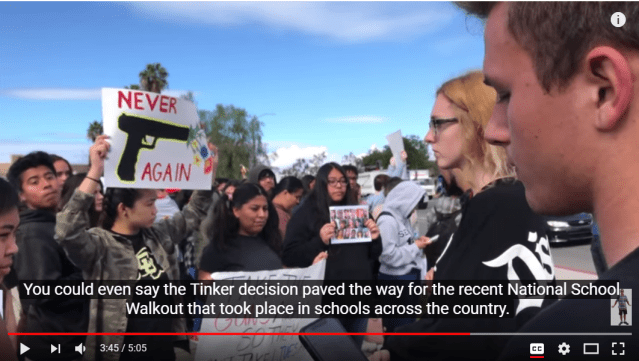
As so often happens, I had no idea I would be writing about this today. I was looking for information about the Shattering Silence sculpture in Des Moines, where today’s Poor People’s Campaign will take place, when I saw this video. The case of Tinker v. Des Moines Independent Community School District was eventually decided by the U.S. Supreme Court. The issue was whether students’ free speech was violated when the students were expelled for wearing arm bands with peace symbols to protest the Vietnam War. The court decided in favor of the students, 7-2.

“You could even say the Tinker decision paved the way for the National School Walkout that took place in schools all across the country.”  (from the video above)

Tinker vs Des Moines and recent school walkout

Also during this time (1970) a group of concerned persons brought a proposal to the Des Moines School Board that draft counseling should be provided by all the Des Moines High Schools. Lynne Howard, a Des Moines Valley Friends Meeting Quaker, tells this story, which is available on the Quaker Story Project blog: The Peace Testimony Remains.   “My peace activism started at Know and, because “all things peace” in Des Moines leads to AFSC and the Friends, I became involved with a group of like-minded students led by FSC staff.  We formed the Des Moines Area Youth Coalition and one of our main goals was to see draft counseling available in all of the Des Moines Public High Schools.  Young Des Moines men were walking down the aisles to receive their diplomas, and then, within months, stepping out of helicopters into the lush green hell that was Viet Nam in the 1960-70’s.  They deserved, at the minimum, some place to hear and discuss options.  We took our proposal to the Des Moines School Board in September of 1970, and to our surprise, it passed!  As a matter of interest, I have attached the proposal.”

I was a student at Scattergood Friends School at that time. There were several things we did, including  events during several of the National Moratorium Days to End the Vietnam War. October 15, 1969, the entire school body walked in silence from the School into Iowa City.

From the school committee minutes (Oct. 11, 1969):
A group of students attended Committee meeting and explained plans for their participation in the October 15 Moratorium. The Committee wholeheartedly endorses the plans. The following statement will be handed out in answer to any inquiries:

“These students and faculty of Scattergood School are undertaking the twelve mile walk from campus to Iowa City in observance of the October 15 Moratorium. In order not to detract from the purpose of the walk, we have decided to remain silent. You are welcome to join us in this expression of our sorrow and disapproval of the war and loss of life in Vietnam. Please follow the example of the group and accept any heckling or provocation in silence.”

In recent years there were similar Peace Walks.

Peace Scattergood then now

FCNL: Scattergood Peace Marches

During the November Moratorium Day, we held a draft conference at the School.

ScattergoodDraftConference

Draft conference, Scattergood 1969

In April, 1970, Bob Berquist suggested we visit people in the nearby town of West Branch to see how they felt about the Vietnam War. Although we were apprehensive about what would happen, we found everyone we talked to unhappy about the war, and wanting it to end.  https://kislingjeff.wordpress.com/2017/12/02/scattergood-journal-april-19-30-2017/

Posted in civil disobedience, peace, Quaker Meetings, Uncategorized | Tagged , | Leave a comment