A Community-Centered Response to Violence Against Asian American Communities

I was glad to find this collective statement by Asian Americans who are suffering this violence. To hear how they are doing and what they are asking us to do to support them. They rightly point out violence against their community is part of a larger system of violence and racism.

This statement supports the abolition of police and prisons. We reject increased police presence or carceral solutions as the answers. And building just communities is what Mutual Aid is all about. In this time of crisis, let’s come together and build just communities, where we are all safe, where all workers are treated with dignity and respect, and where all our loved ones thrive.

Note: It can be difficult to determine which sources are reliable, as in this case where I’m not familiar with the organizations that are involved in anti-Asian violence. I appreciate the daily digest of Popular Resistance, which I have found to be a reliable source of information about justice issues and actions. That’s where I found the following information. Also, the American Friends Service Committee-South Region is one of the signatories.


A Community-Centered Response to Violence Against Asian American Communities — Asian Americans Advancing Justice-Atlanta (advancingjustice-atlanta.org)

Collective Statement

On March 16, eight people were killed at three different spas in North Georgia including six Asian women. We are heartbroken by these murders, which come at a time when Asian American communities are already grappling with the traumatic violence against Asian Americans nationwide, fueled by the United States’ long history of white supremacy, systemic racism, and gender-based violence.

As we collectively grieve and respond to this tragedy, we must lead with the needs of those most directly impacted at the center: the victims and their families. And during this time of broader crisis and trauma in our Asian American communities, we must be guided by a compass of community care that prioritizes assessing and addressing our communities’ immediate needs, including in-language support for mental health, legal, employment, and immigration services.

We must also stand firm in decrying misogyny, systemic violence, and white supremacy. We must invest in long-term solutions that address the root causes of violence and hate in our communities. We reject increased police presence or carceral solutions as the answers.

For centuries, our communities have been frequently scapegoated for issues perpetuated by sexism, xenophobia, capitalism, and colonialism. Asians were brought to the United States to boost the supply of labor and keep wages low, while being silenced by discriminatory laws and policies. From the Chinese Exclusion Act in 1882, to the incarceration of Japanese Americans during World War II, to the forced migration of refugees from U.S.-led military conflict in Southeast Asia, to post-9/11 surveillance targeting Muslim and South Asian communities, to ICE raids on Southeast Asian communities and Asian-owned businesses, Asian American communities have been under attack by white supremacy.

Working class communities of color are disproportionately suffering from the ongoing COVID-19 pandemic. The Trump administration’s relentless scapegoating of Asians for the pandemic has only exacerbated the impact on Asian business owners and frontline workers and inflamed existing racism. The hypersexualization of Asian American women and the broad normalization of violence against women of color, immigrant women, and poor women make Asian American women particularly vulnerable. Hate incidents against Asian Americans rose by nearly 150% in 2020, with Asian American women twice as likely to be targeted.

We are calling on our allies to stand with us in grief and solidarity against systemic racism and gender-based violence. Violence against Asian American communities is part of a larger system of violence and racism against all communities of color, including Black, Brown, and Indigenous communities.

In this time of crisis, let’s come together and build just communities, where we are all safe, where all workers are treated with dignity and respect, and where all our loved ones thrive.

To sign on to the statement as an individual or a group, or make a donation to communities in need, go to https://www.advancingjustice-atlanta.org/aaajcommunitystatement


On March 16, eight people were killed at three different spas in North Georgia. Six of the people killed were Asian American and all but one were women. We are heartbroken by these acts of violence, which come at a time when the AAPI community is already grappling with the trauma of increasing violence against Asian Americans nationwide, fueled by scapegoating around the ongoing COVID-19 pandemic and the United States’ long history of white supremacy and systemic racism.

By signing on to this letter you join us in decrying misogyny, white supremacy, systemic racism that is at the core of violence against Immigrant and Black communities.

As we collectively grieve, process, and respond to this tragedy, we must lead with the needs of those most directly impacted at the center: the victims and their families. And during this time of crisis for our AAPI community, we must be guided by a lens of community care that prioritizes coordinating resources to address those needs.

We thank you for your solidarity and patience as we investigate the best response for the victims and their families.


Asian Americans Advancing Justice-Atlanta
Our Mission

Asian Americans Advancing Justice-Atlanta is the first and only nonprofit legal advocacy organization dedicated to protecting the civil rights of Asian Americans, Native Hawaiians, and Pacific Islanders (AANHPI) in Georgia and the Southeast.

Through our work, we envision a social movement in which communities of color are fully empowered, active in civic life, and working together to promote equity, fair treatment, and self determination for all.

Founded in 2010 as the Asian American Legal Advocacy Center (AALAC), our organization became part of the national Asian Americans Advancing Justice affiliation in 2014. Since then, we have re-organized our focus areas more specifically into four groups: Policy Advocacy, Organizing & Civic Engagement, Impact Litigation, and Legal Services.

Our Mission — Asian Americans Advancing Justice-Atlanta (advancingjustice-atlanta.org)

Posted in abolition, American Friends Service Committee, Mutual Aid, police, race, Uncategorized | Leave a comment

How Is White Supremacy Keeping Us from Hearing God’s Voice?

How Is White Supremacy Keeping Us from Hearing God’s Voice? This will be the topic of discussion this weekend at the Midyear meeting of Iowa Quakers in the Midwest. I really like this title because it puts the emphasis on the core of Quakers’ spirituality, which is to listen for what the Spirit is saying to us, and doing what we are told. It is far too easy for us to fall into a routine, to expect leadings that fit into our lives. To ignore challenges to our status quo.

The following are in no way statements from that group. They are, rather, a sharing of some of my personal experiences related to Quakers, which I am, and race and white supremacy.

I have been working on and publishing a series of articles about White Quakers that provide some detailed stories of my experiences.

1. White Quakers and Native Peoples
Recently I find myself wondering more often, thinking more deeply about what white Quakers, such as myself, were, are and might become. This questioning comes from a variety of experiences over the past fifty years. Being blessed to have become engaged with several communities. Communities of Black, Indigenous and other people of color (BIPOC). Communities where white Quakers don’t generally have a presence. Any presence. Those experiences expanded both my views and wonderment.
2. White Quakers Part 2
I strongly feel there is an urgent need to change the way we live. For one thing, climate change will force changes to our lives. But also because our economic and political systems are not only unjust, but also failing. I’m going to try to explain why I believe we need to reject the capitalist system, abolish police and prisons, and embrace the concepts of Mutual Aid.
3. White Quaker’s Downfall
White Quakers’ continued support of capitalism as a way of life is our downfall.
4. White Quakers and spiritual connections with the Kheprw Institute
One foundational principle of Mutual Aid is people in a local community must come together to work together, spend a lot of time getting to know each other. Build trust with each other. This is about White Quakers engaging with a black youth mentoring community.
5. Quaker Social Change Ministry
A model that teaches us how to make connections with and accompany oppressed communities near us
A Review of the White Quakers series

While there are exceptions, our Quaker meetings in the Midwest tend to lack many types of diversity. This is especially true in our rural meetings. This lack of diversity makes it difficult to recognize our own unintended biases and privileges.

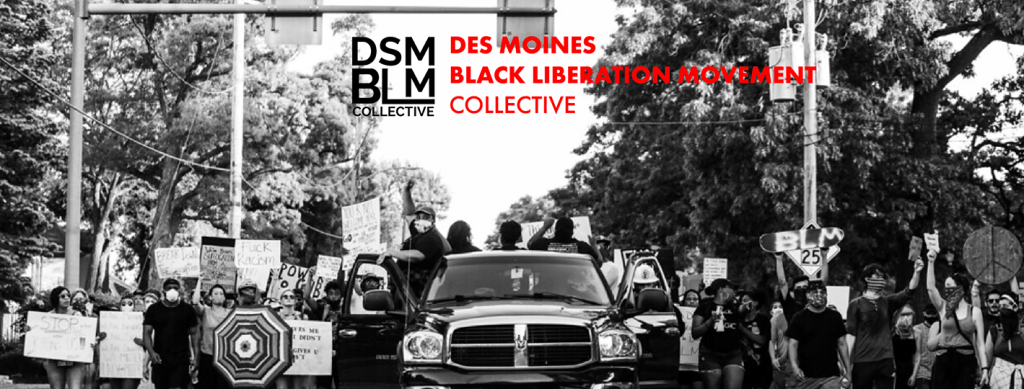
As that series of articles explain, I believe the most important step we White Quakers can take to build relationships with Black, Indigenous and other People of Color (BIPOC) is to find ways to support the work of local BIPOC communities. These communities often use social media to talk about their work. In Des Moines, the name of the group is Des Moines Black Liberation. This is the link to their Facebook page. Des Moines Black Liberation Movement | Facebook

The following are links to some of the articles I’ve written about Des Moines Black Liberation, and Mutual Aid.

Black History Month in Iowa | Quakers, social justice and revolution (jeffkisling.com)
Mutual Aid and Black Liberation | Quakers, social justice and revolution (jeffkisling.com)
M-Muhammad / Matt Bruce talks about the BLM Movement in Iowa | Quakers, social justice and revolution (jeffkisling.com)
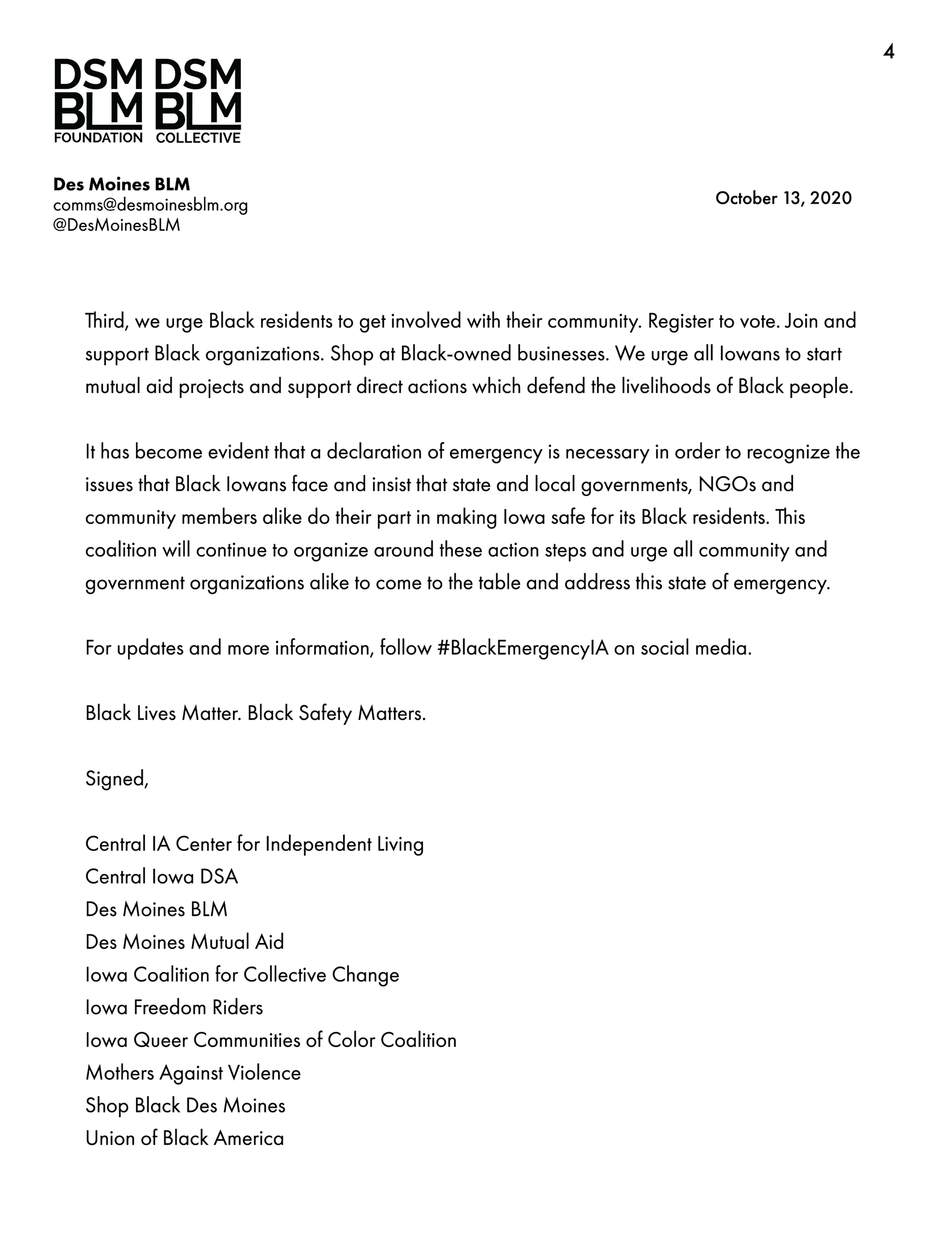
#BlackEmergencyIA Travel Advisory for all Black Iowans | Quakers, social justice and revolution (jeffkisling.com)

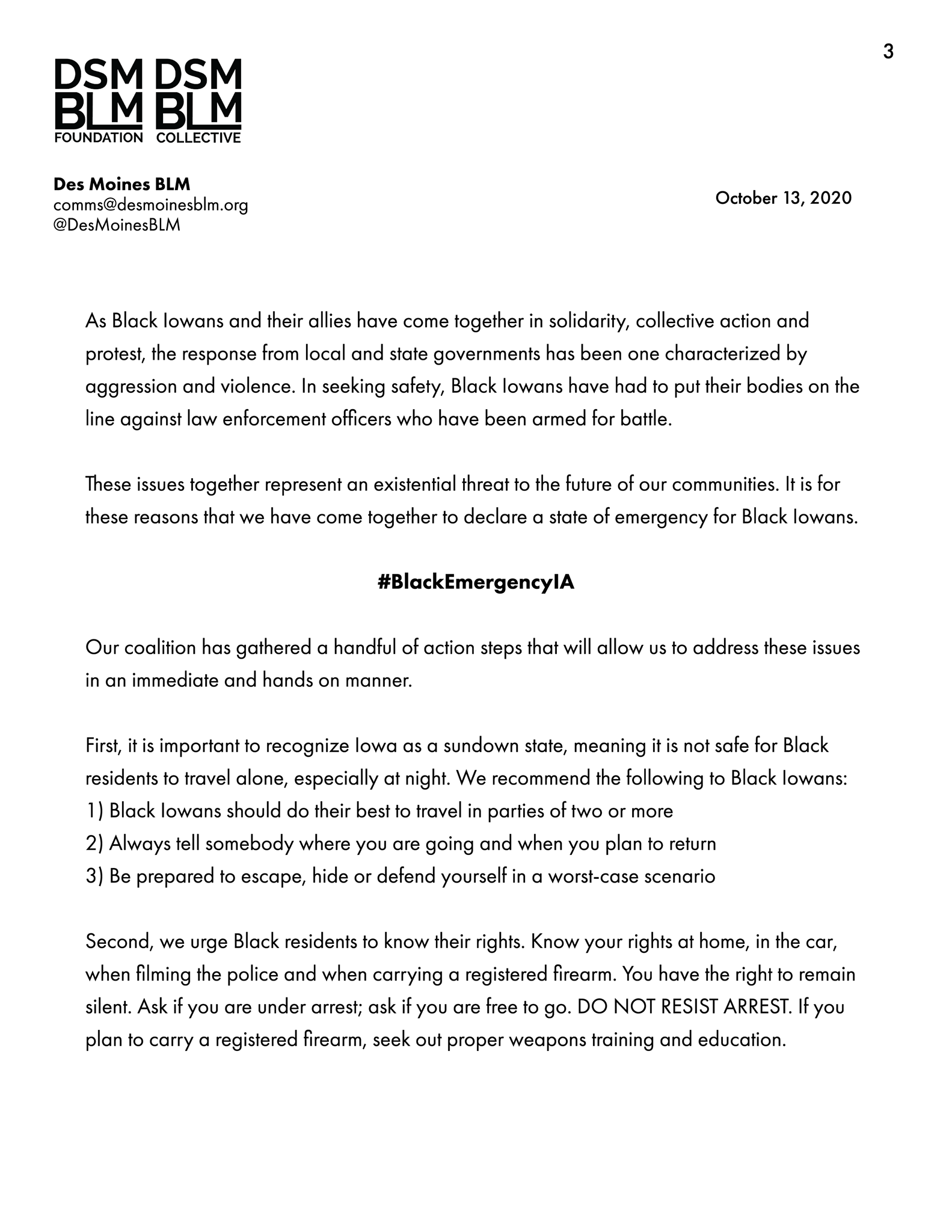
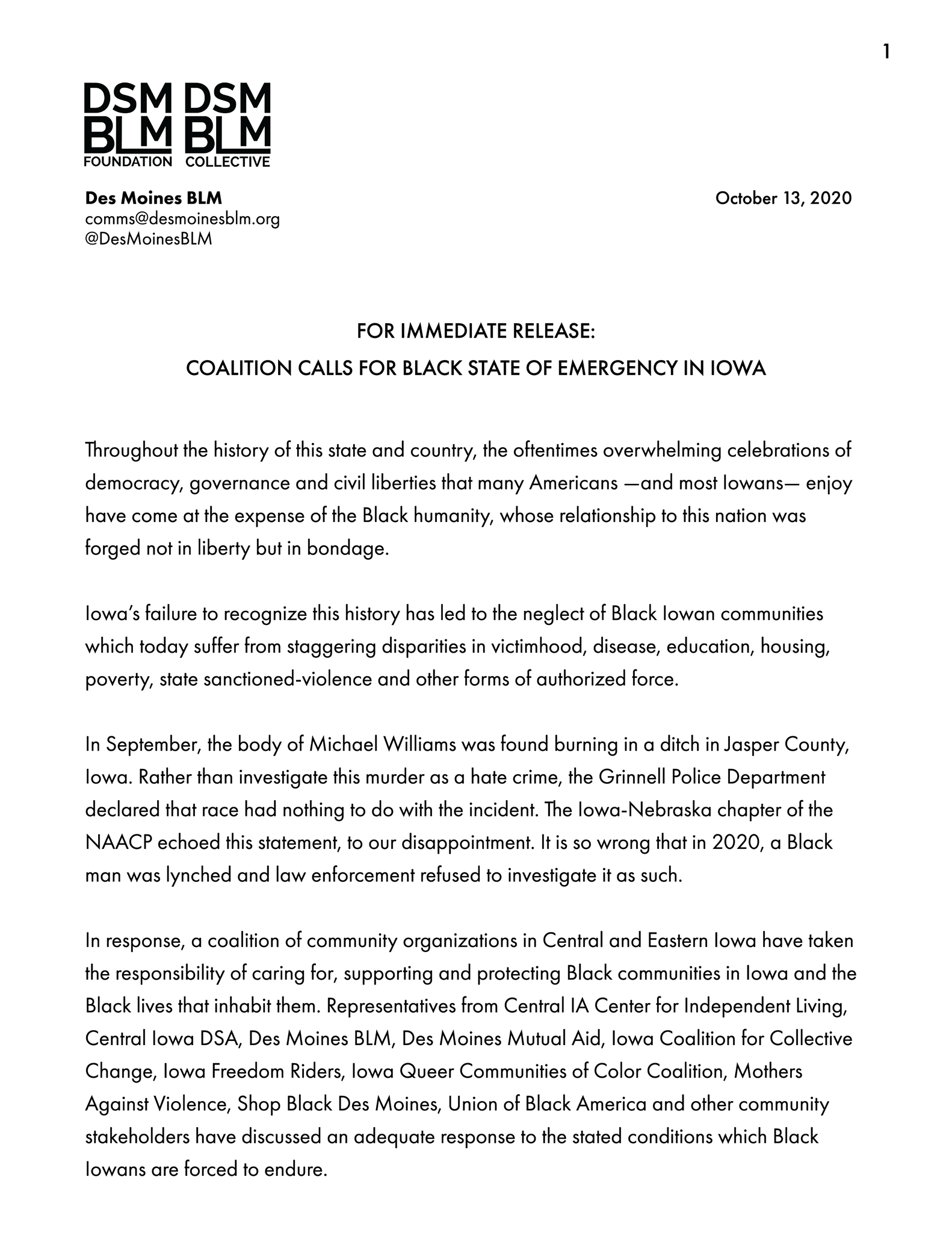
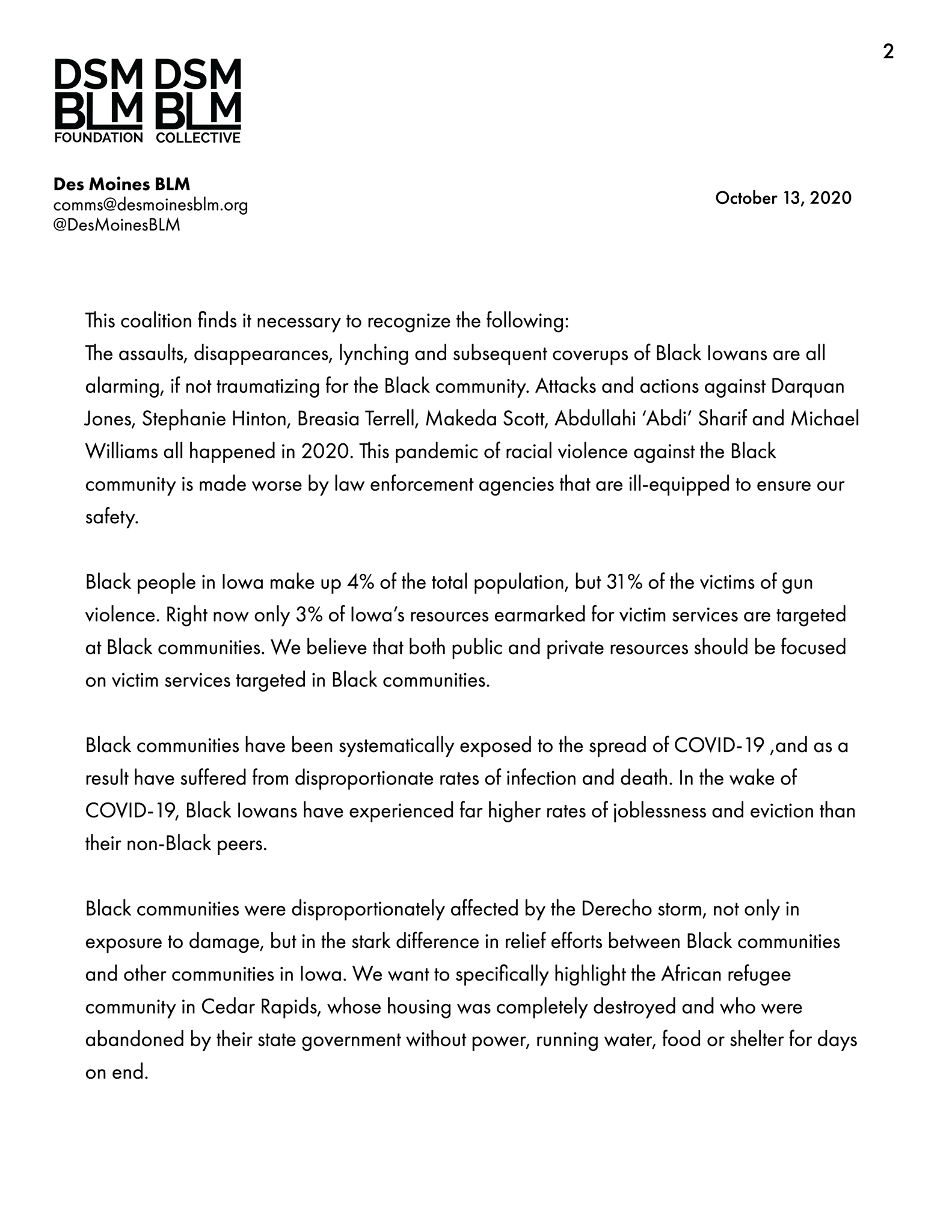
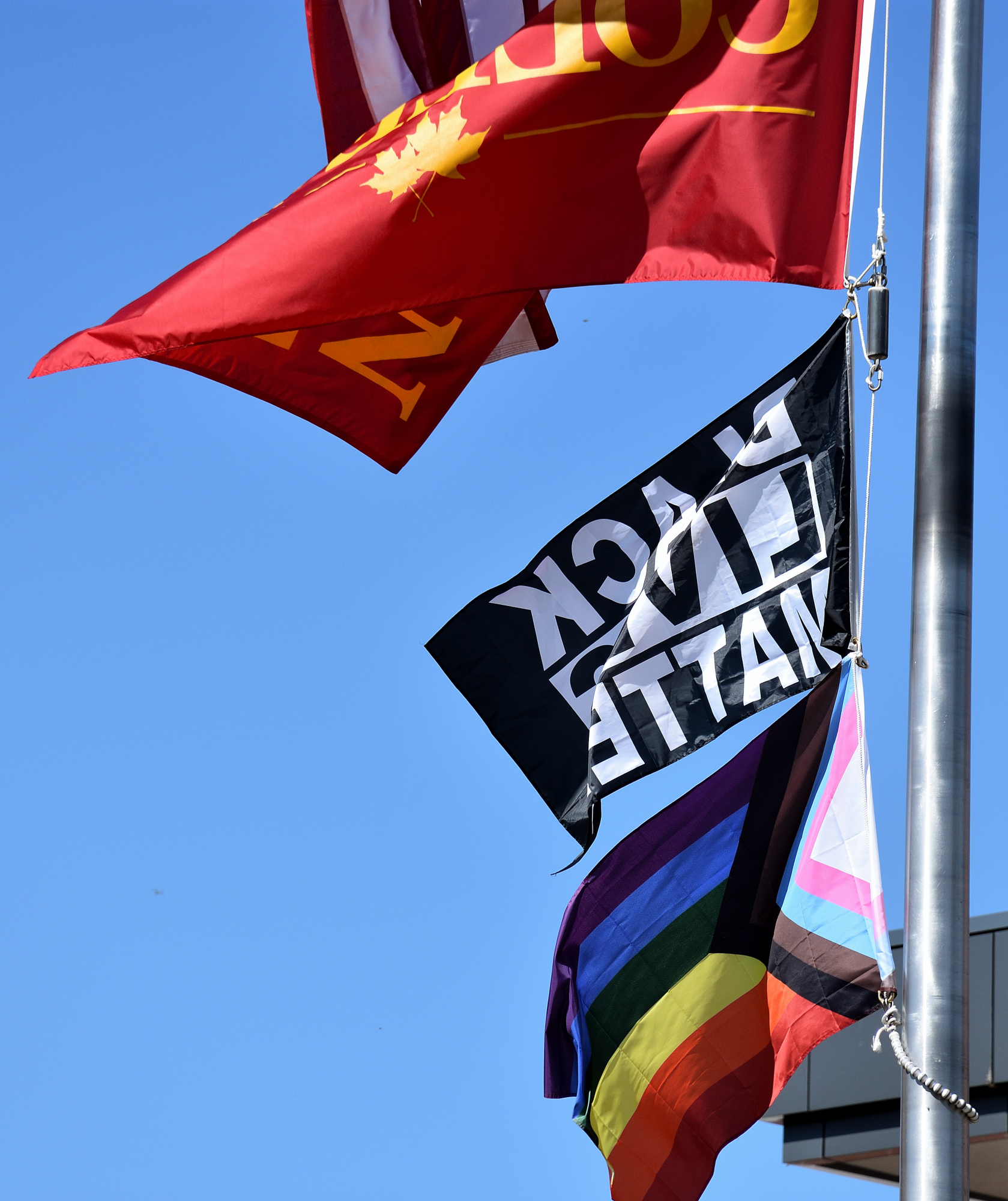
Last year was a very active year for Des Moines Black Lives Matter, as the group was called then. The name now is Des Moines Black Liberation. There were a number of BLM led actions related to the killing of George Floyd and the ongoing police violence against BIPOC people. Leaders of BLM were targeted by police and arrested multiple times. This led Des Moines Black Liberation to declare a state of emergency for black Iowans. #BlackEmergencyIA (see link above)

I feel it is essential to spend time with those you want to support. That is a fundamental principle of the concept of Mutual Aid. I have been blessed to begin working with Des Moines Mutual Aid (DMMA) last year. That is where I spend my time being physically present. It is through DMMA that I have peripheral connection with Des Moines Black Liberation. The two organizations are intimately connected. DMMA has a very successful bail fund that has been able to post bail for every activist arrested over the past year. Most of those arrested were members of Des Moines Black Liberation. Patrick of DMMA spoke at the press conference where Des Moines Black Liberation announced the Black State of Emergency in Iowa, saying Des Moines Mutual Aid absolutely supports Des Moines Black Liberation.

Members of Black Liberation join us at DMMA for our weekly food distribution program. I took winter clothes that were requested by DM Black Liberation.


Revolution and Beatitudes of Black Liberation, by Stacey Walker
“Don’t lecture me or my people about how to protest. Don’t preach about the sanctity of property. Don’t proscribe how a people – upon which unspeakable harms have been visited – should express their pain, one that spans the centuries and, like a tsunami, gains power as the tides of progress continue to recede.”In a video essay expanding on themes presented in his Witching Hour 2020 performance, Stacey Walker (a current Linn County Supervisor) illustrates the state of Black liberation in America, “a new fight with ancient roots,” dissects the opposition to racial justice and shares his own family’s story, including the unsolved murder of his mother.


Posted in abolition, Black Lives, civil disobedience, Des Moines Black Lives Matter, Des Moines Mutual Aid, Mutual Aid, police, Quaker, race, social media, Uncategorized | Leave a comment

This is how our civilization is self destructing

It seems futile to continue to read and share articles about how awful conditions are and how things must change immediately. Similar warnings have been made for decades now, and yet we seem like insects trapped in a spider web we can’t escape.

We’ve all been hearing this for so long, and have witnessed no real change. Most of humanity feels this futility and shares a global hopelessness and despair.

Where I do find hope is in the stories from spiritual leaders, like Arkan Lushwala: It is not what can I do? But how can I be? Be in a state of being. Too often we are in the what. That keeps us from getting to the state of being. Stop asking and just be.

From the article below by Ben Ehrenreich: There are infinite other ways to organize a society, and the fact that we are not widely and urgently discussing them is at this point nothing short of criminal. There are voluminous literatures on degrowth, on circular economies, on mutual aid, and, yes, on socialism, too. There is the living experience of every indigenous community in the United States, and of others around the globe that have been forced to invent ways to resist and survive a system determined to erase them.

I’ve been blessed to have many native friends. And it is a powerful confluence when these friends and others have come together for Mutual Aid work here. This is what I have been experiencing and writing about for the past year:
“mutual aid” | Search Results | Quakers, social justice and revolution (jeffkisling.com)

And my faith community of Quakers continues to seek ways forward as guided by the Spirit.

I agree with umair haque (see below). What I think is badly, badly wrong in our civilisation is the way that we conceptualise and think about the world.  One thing I do when I’m having trouble understanding something, learning about something new, is to create diagrams, such as the following. The red line is supposed to represent the change from the way we conceptualize the world, to one possible new way, Mutual Aid.

It should be plain to see to anyone remotely sane or thoughtful that our civilisation has reached a crisis point. We face a solid three to four decades of escalating catastrophe now. The 2030s, when climate change becomes severe, tearing apart economic and geoplanetary stability, megafires and megafloods and mega hurricanes and drought and famine and shortage become grim daily realities. The 2040s, when mass extinction rips apart the basic systems of our civilisation, from food to water to air to medicine. And the 2050s, the decade of the Long Goodbye, when the final collapse of ecologies leaves a dead planet in its wake, soil turned to dust, oceans to acid, harvests fallow, rivers run dry.

What I think is badly, badly wrong in our civilisation is the way that we conceptualise and think about the world. We do it in an economistic way — we look at “costs” and “benefits.” But costs and benefits were a calculus created for the industrial revolution — not the world of today, of climate change, mass extinction, ecological collapse. Using an obsolete paradigm doesn’t seem to be getting us very far.

This is How Our Civilization is Self-Destructing. The Real Economics of Our Civilization Say It’s Going to Implode by umair haque, Eudaimonia, Mar 7, 2021

As innocuous as it may sound, “growth” should be understood to describe the frenzied ruination of nearly every ecosystem on the planet so that its richest human inhabitants can hold on to their privileges for another generation or two. Rejecting the idolatry of growth means tilting the organization of our societies toward other social goods—health, for instance, and the freedom to exist on a planet that is not on fire. This should not be unimaginable. There are infinite other ways to organize a society, and the fact that we are not widely and urgently discussing them is at this point nothing short of criminal. There are voluminous literatures on degrowth, on circular economies, on mutual aid, and, yes, on socialism, too. There is the 99.999 percent of human history during which we managed to not significantly alter the atmosphere or wipe out such an enormous portion of the species with whom we share the planet. There is the living experience of every indigenous community in the United States, and of others around the globe that have been forced to invent ways to resist and survive a system determined to erase them.

Transportation, health care, housing, education, everything that the Covid-19 outbreak has revealed to be so murderously broken, every aspect of our lives currently controlled by shareholder profits—does that even leave anything out?—must be rethought and rebuilt in the context of terrestrial survival. The white supremacy that threatens to tear the country down while strangling the rest of the globe has proved inseparable from an ecocidal urge to dominate all forms of planetary life. (W.E.B. Du Bois saw it clearly 100 years ago: “whiteness is the ownership of the earth forever and ever.”) It must be confronted head on. A foreign policy constructed to at all costs preserve a hegemony that for most of the last century has hinged on control of the planet’s oil reserves must be radically reconfigured.

If we do actually listen to the science, then we understand what ghastly futures await us and we know how bold we must be to avoid them. Any politics that presumes to be anything other than suicidal must take that knowledge as its starting point.

We’re Hurtling Toward Global Suicide. Why we must do everything differently to ensure the planet’s survival by Ben Ehrenreich, The New Republic, March 18, 2021
Posted in #NDAPL, capitalism, climate change, Des Moines Mutual Aid, First Nations, Indigenous, Mutual Aid, Native Americans, Quaker, Quaker Meetings, Uncategorized | Leave a comment

World Water Day

World Water Day March 22, 2021

It’s World Water Day: a day we celebrate the life that clean, freshwater brings to people, animals, and everything that grows on the planet. Right now, I’m gathered with Anishinaabe leaders from the White Earth Nation in Northern Minnesota, along a river, in prayer for World Water Day.

But as you read this, the Line 3 pipeline is being built and threatening the drinking water of millions of people. That’s because the pipeline would cut directly through the Indigenous lands and waters of the Anishinaabe People without their full consent. It’s not a matter of if but WHEN a spill would pollute those waters.

Tell Chase Executives that as long as they are backing Line 3, you won’t back down. Send a message this World Water Day, and tell Chase to #DefundLine3. 

Rainforest Action Network (RAN)

.
World Water Day celebrates water and raises awareness of the 2.2 billion people living without access to safe water. It is about taking action to tackle the global water crisis. A core focus of World Water Day is to support the achievement of Sustainable Development Goal 6: water and sanitation for all by 2030.

United Nations World Water Day

Click on image below to enlarge and read it

Country (or area) | SDG 6 Data

It’s time to “warrior up,” stop polluting the planet and give water the same rights and protections as human beings. That’s the message Autumn Peltier, a 13-year-old Canadian, delivered personally to the United Nations General Assembly on Thursday, March 22, 2018.

“Many people don’t think water is alive or has a spirit,” the Anishinaabe girl from Wikwemikong First Nation told the diplomats gathered in New York City in her speech on World Water Day. “My people believe this to be true.

Eaglespeaker Publishing

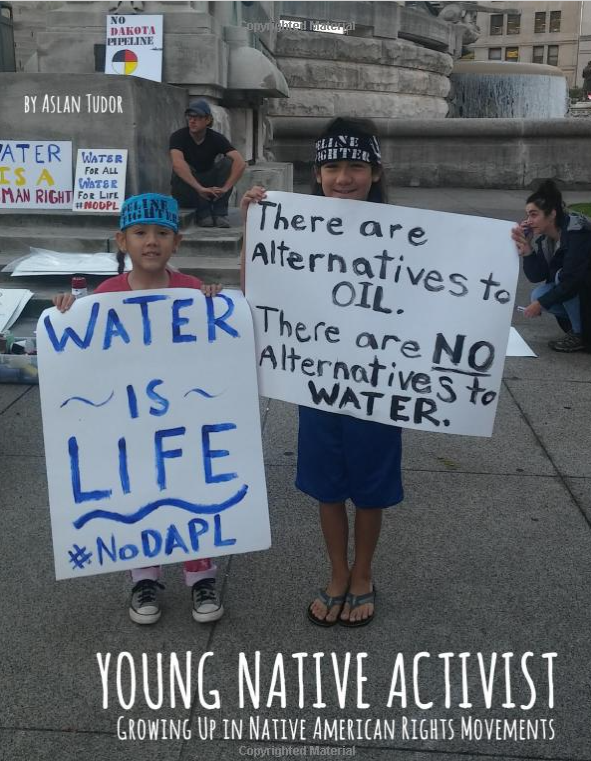
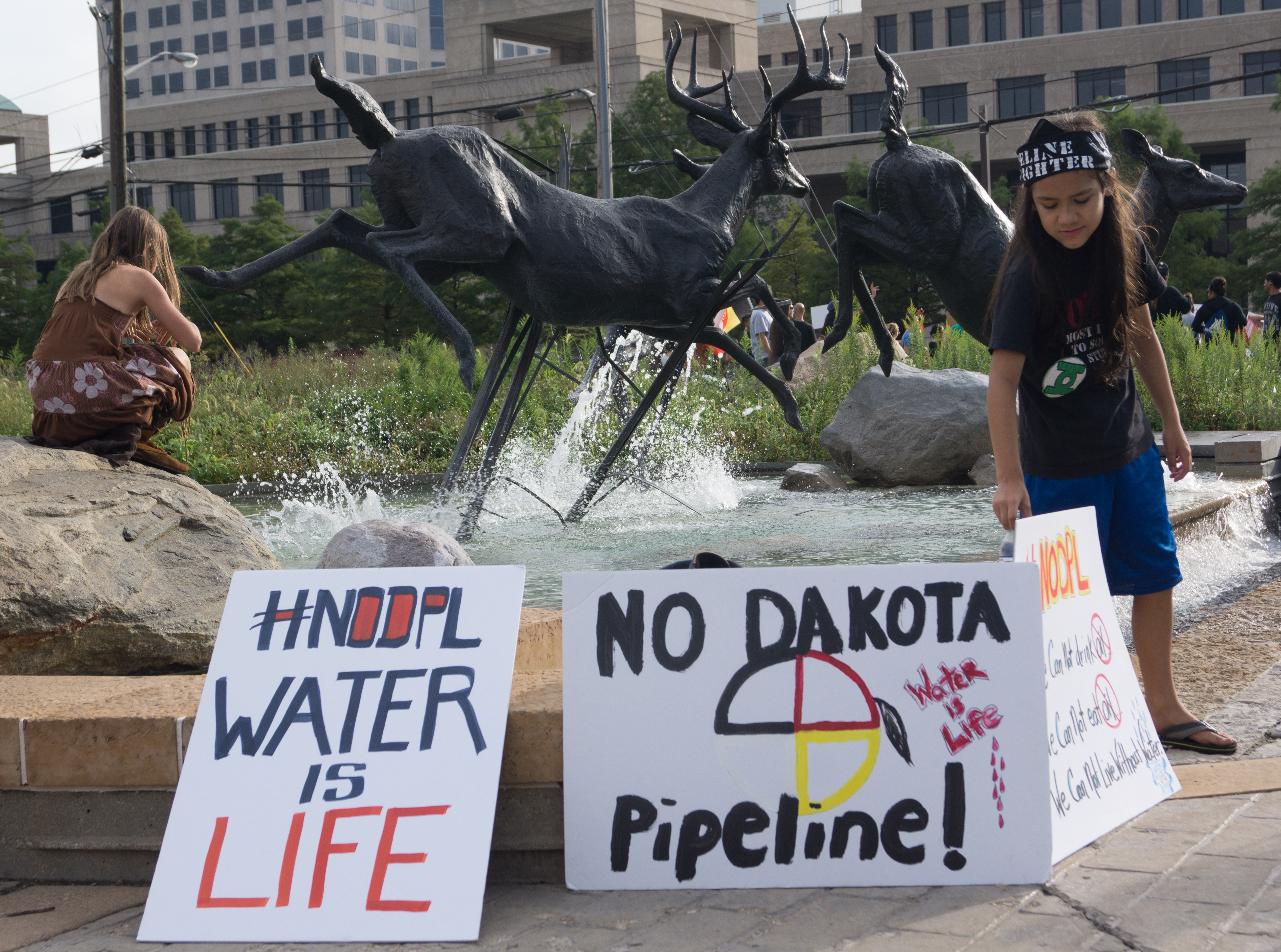
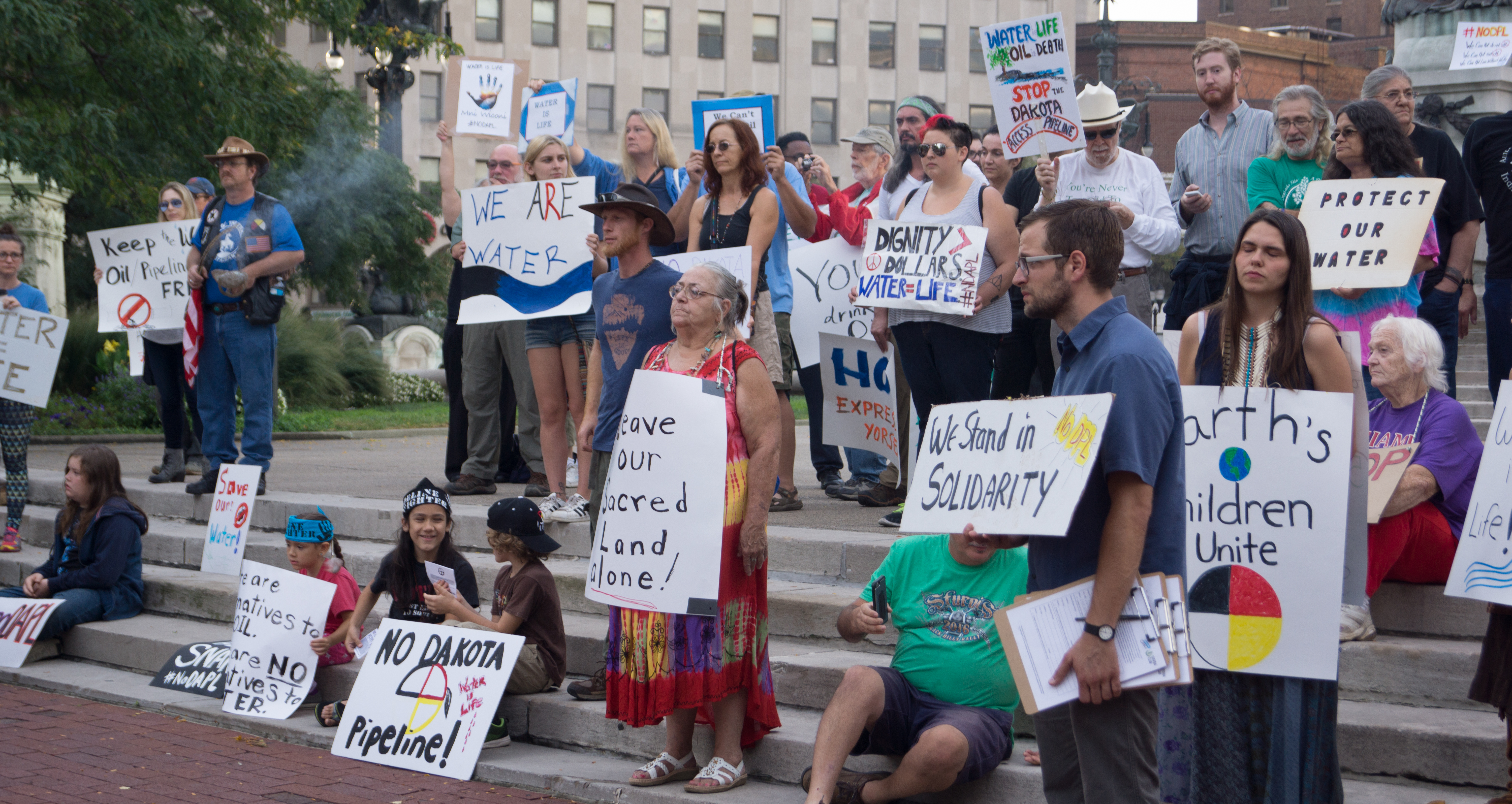
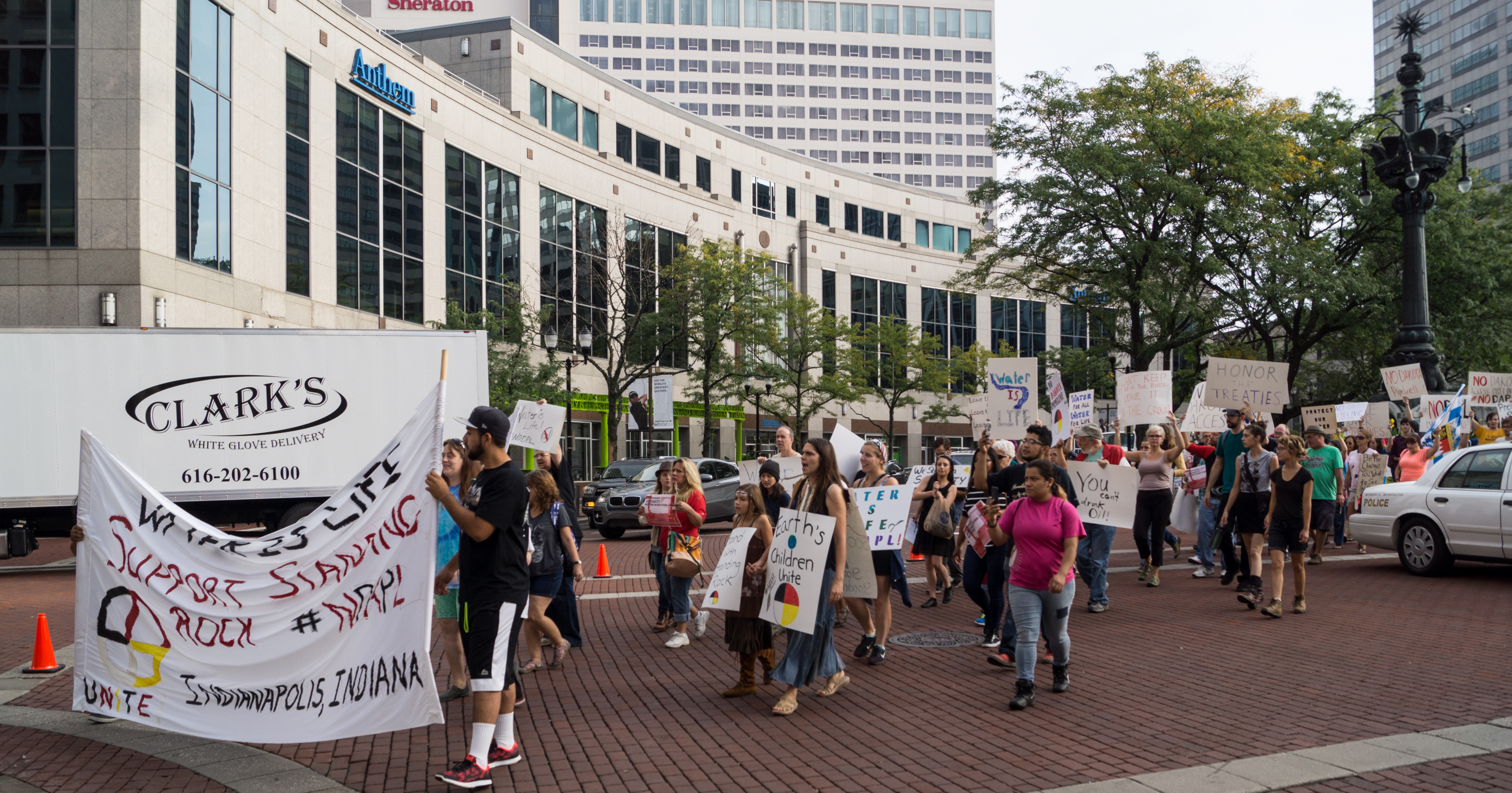
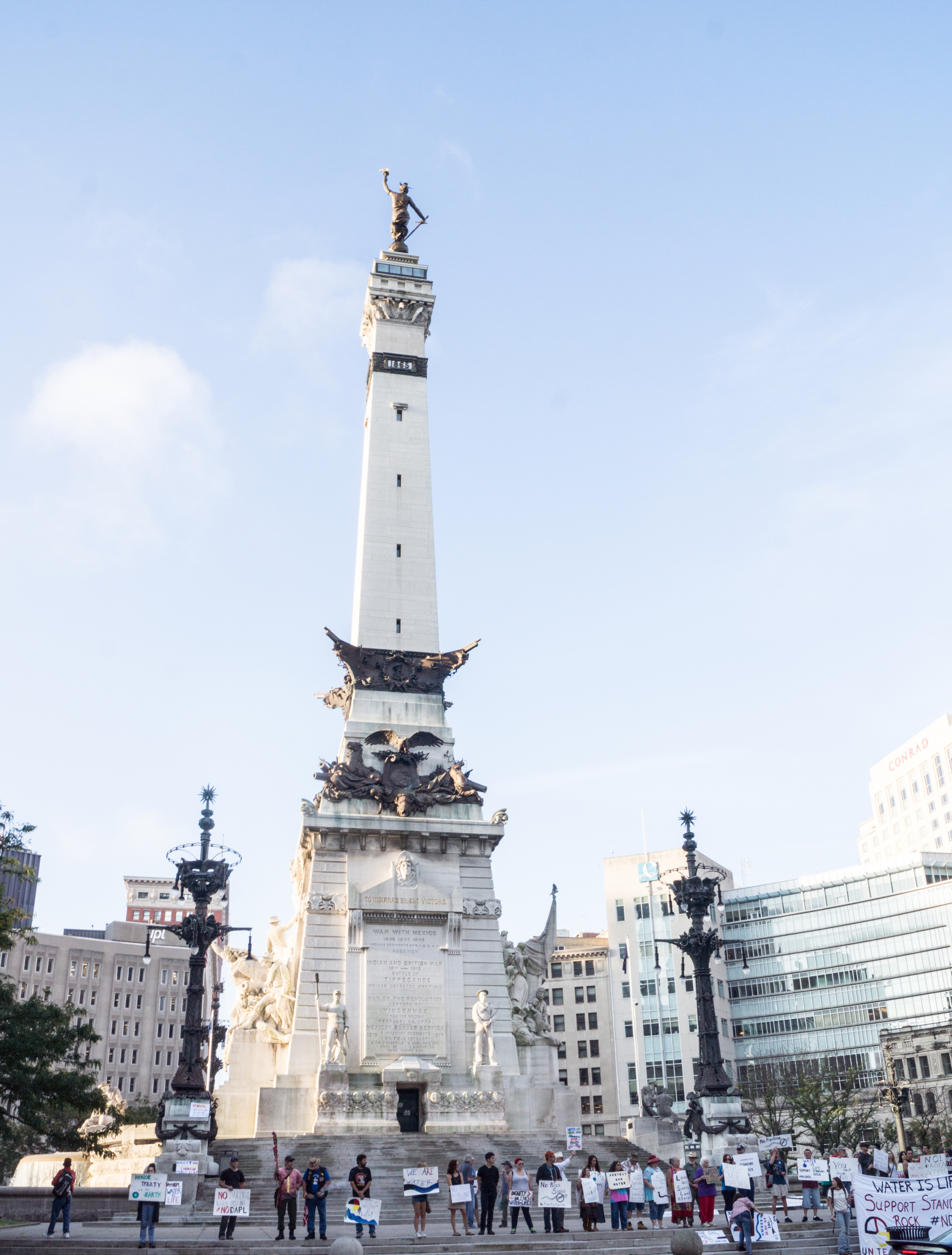
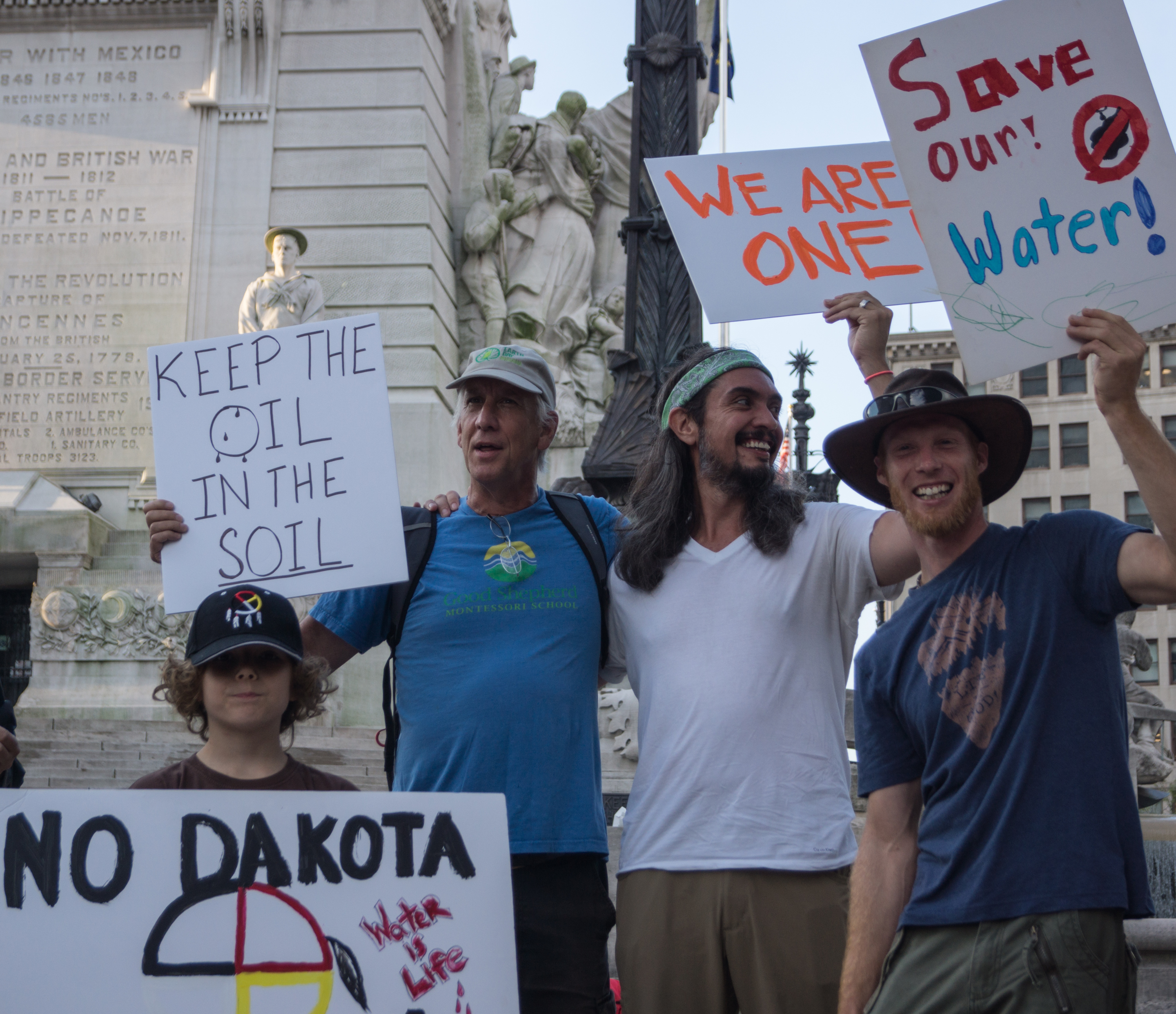
Young Native Activist, Growing Up in Native American Rights Movements, is one of many excellent books available at Eaglespeaker Publishing. The photo of the cover of this book was taken at a vigil against the Dakota Access Pipeline that I attended in downtown Indianapolis. Following are a video and some photos I took at that vigil.

Posted in #NDAPL, climate change, Dakota Access Pipeline, First Nations, Indigenous, Uncategorized | Leave a comment

Honoring the Equinox

Today is the Equinox.

Yesterday the Pachamama Alliance held a Zoom meeting, Honoring the Equinox with Arkan Lushwala, a Peruvian ceremonialist and healer. Nearly 500 people from around the world attended.

The equinox is a time of transition, both of the seasons and of our internal journey, moving towards rebirth in the Northern Hemisphere and harvest in the Southern Hemisphere. Day and night are in equal balance, reminding us to seek balance in our own lives. Society is immersed in transition at this time as well, as the systems of modernity are increasingly out of balance.

Pachamama Alliance

Arkan said the Equinox will be much more powerful this year, because of the great imbalance of the prevailing human culture. A culture that has become too materialistic, which means there is a great disconnect from the universe, from the earth.

We must be prepared to receive the gifts from this especially powerful Equinox. If we are not prepared, we can be harmed.

When we receive this gift today, we must open the gift. What good is a gift if it is not opened? The power carries light. A more gentle gift.

How do we prepare ourselves to open these gifts?

  • Most important is to STOP our normal routines. We must keep opening the gifts we receive. This process interrupts our normal routines.
  • We should experience excitement in receiving these gifts. Practice stop doing what we routinely do. As a gift is open, another gift appears. Keep opening the gifts.

Consciously breathe air and light. We forgot how important it is to receive light.

Arkan said, in a humble way he goes for a walk to be with the people of nature. The animals and plants There we find the expert friends in the natural and spiritual world.

In the heart of all of us we can do ceremonies. Most important is to breathe the light. When we breathe deeply we pull in the light around us. The light enters us. The more light we take in, the more centered we become.

When you want to help someone around you, breathe in the light, then breathe it out toward the other. It is as you are taking in medicine. And feeling really, really good being centered. Nothing feels better. When we are deeply centered, we are in the kingdom of God.

When you have a gift, you can share it.  Haywaricuy  means to hand someone something with tenderness. This is reciprocity. Nourishing the relationship. Which is how we build sacred, spiritual culture.

Arkan said he doesn’t remember never being connected to the natural connection to the spirit. We should teach children to retain connection with the spirit.

It is not what can I do? But how can I be? Be in a state of being. Too often we are in the what. That keeps us from getting to the state of being. Stop asking and just be.

Develop a state of being.

It is not what can I do? But how can I be? Be in a state of being.

Too often we are in the what. That keeps us from getting to the state of being.

Stop asking and just be.

Intention is very powerful. Have intention for the Equinox.


This Morning of the Equinox

Last night I had the intention to receive the gifts of the Equinox. This morning I have been receiving the gifts of the spirit and the light. I feel the gift Arkan shared with me yesterday. Haywaricuy  Nourishing the relationship.

I breathed in the light, and breathed it out. I opened the gifts. On the way to be with my friends as we worked on Mutual Aid, I stopped along the way several times to witness the light in photos (below).

As we worked together to fill the boxes of food we prepared as gifts to those who came, I breathed in the light, then breathed it out to my friends.

My friend Ronnie at Mutual Aid asked me how the presentation by Arkan, Honoring the Equinox, went. I shared the light and gifts with him. Today his son joined us and I could see Ronnie was teaching his son to retain connection with the spirit. Several other native friends shared the light with me.

Posted in Des Moines Mutual Aid, Indigenous, Mutual Aid, Native Americans, Uncategorized | Leave a comment

Arkan Lushwala

Following is information about today’s Pachamama Alliance Zoom presentation, Honoring the Equinox with Arkan Lushwala, a Peruvian ceremonialist and healer.

He is a rare indigenous bridge of the global north and south, carrying spiritual traditions from the Andes in his native Peru as well as being adopted and initiated by the Lakota people of North America.

The equinox is a time of transition, both of the seasons and of our internal journey, moving towards rebirth in the Northern Hemisphere and harvest in the Southern Hemisphere. Day and night are in equal balance, reminding us to seek balance in our own lives. Society is immersed in transition at this time as well, as the systems of modernity are increasingly out of balance. In this conversation, Arkan will share his thoughts on the significance of this moment in the year and in history, and will respond to questions from the audience.

Pachamama Alliance

This equinox observation will take place from 3:00 – 4:00 p.m. PT (UTC-8) on Friday, March 19.
Register here

I have been blessed to have been able to hear Arkan speak on several occasions. May 9, 2018, he spoke about “What Can I Do?” I was excited when I heard the title of his talk. As I’ve been saying the solutions for our environmental chaos must come from a spiritual center.

The root of our unfolding environmental disaster is the dominant view that natural resources are commodities that can be owned and consumed without regard to the consequences. That is fed by an economic model that requires continuous grow, and therefore, consumption of resources, even those that are nonrenewable. That could only have happened by a disconnect from Mother Earth.

The answer to “what can I do?”

Speaking about what is happening on Earth right now, many of the conditions of life that we used to take for granted, now are really out of balance. Hopefully we still have time to get back into balance so life may continue.
I travel around the world and meet people and talk to people from all different cultures.
And everywhere people ask, “what can we do?”
The question, “what can we do?”, is the second question.
The first question is “what can we be?”
Because what you can do is a consequence of who you are.
Once you know what you can be, you know what you can do, and we cannot afford wasting time;
We have little time.
We need to be precise now.
When someone sincerely asks, “what can I do?”
my humble answer, the only answer that I find in my heart to be sincere is,
“First find out what you can be.”
Action is extremely necessary at this time.
This is not a time just to talk about it.
The most spiritual thing now is action.
To do something about what’s happening.
To go help where help is needed.
To stand up when we need to stand up, and protect what is being damaged.
And still, this action needs to be born from a place in ourselves that has real talent,
real intelligence, real power, real connection to the heart of the Earth, to universal wisdom, so our actions are not a waste of time.
So our actions are precise, our actions are in harmony with the movement, the sacred movement, of that force that wants to renew life here on Earth and make it better for the following generations.

Arkan Lushwala

Following are notes I took from Arkan’s presentation that night.

You start praying while you are also listening. I become aware of, remembering, what I pray about at that moment. We need to rely on our own ancient indigenous memory. Stop being isolated. Fully become part of the earth and water and plants and air. This is an immense source of knowledge about these problems.

I am in front of the sacred fire of all who are listening. Let’s say that I am thinking now. I am remembering. The notion of intelligence and to understand refers to memory. Intelligence means learning, but also achieving that state in your mind when you are remembering. The air that we are breathing carries the memories of the ages, the movement of energy. Deepest intelligence in our culture is memory. There are always memories of the ages in all that surrounds us.

The state of being, the prayer, makes us open to receiving. If we are really open, and not blocking ourselves, and connected to what is around us, with our eyes, breath, sensations, and feeling that arrive in our heart, through our antenna, if we are open in this way while we are doing something, our action is being infused with guidance or instructions. There is something there that is watching what you are doing and helping guide you. Sometimes we need the help of the elders or others to understand these experiences.

We ask for help. When we put ourselves in that elevated space, that makes it much easier for us to receive help. Help is always there but we often miss the messages.

If I am open and receptive to other frequencies and the higher state of my being, I’ll have much more help in my work.

The correct way is not to take credit, but the joy is the moment itself, by feeling integrated to life while you are doing the action.

When we sit with others in a circle, when we all change the state of our being together, we move up to the sacred together. Working with others in community, much, much more can be accomplished.

If a person expresses an experience that is from a sacred space of high resonance, I am activated by that. It resonates in my own heart and mind and spirit, and it triggers my memory, too. by the presence of something sacred.

We sit in a circle and witness someone remembering. We receive the same spirit together. Our individual self and agenda slips away. Joining our hearts. Mother Earth is the One, all of us become the One together. A lot of wisdom comes south. We are all impressed by the presence of something sacred.

Throughout my life, it has been an honor to watch my elders make medicine in their mouths and feed the world with their tender sacred speech. Following their example, I want to share the words that make waterfalls, lakes and rivers, and offer some medicine to those who are wondering how we will continue living when the Earth that sustains our lives is so damaged. What I share here, far from being my own creation, is ancient memory that belongs to all of us.

My intention is to share the spiritual depths of a culture that creates individuals like my tayta, ones with a real capacity to have an influence on the health of the Earth. I am one of those who believe all of humanity can regain an ancient way of being that allows us to talk to our Mother Earth to resolve dangerous imbalances of the environment under her guidance. The state of humans and the state of the Earth are completely intertwined, and the full recovery of the best of our human nature will be the healing of Nature.

In the thick of the current environmental crisis, it is useful to know there are still people who have the power to call rain or to move clouds when there is too much rain.

Deer and Thunder, Indigenous Ways of Restoring the World by Arkan Lushwala

My brother talks of a word haywaricuy – which means to hand someone something with tenderness. I hand you this book with tenderness as a loving gesture to mankind, as sacred movement towards that which seems hopeless but is so easy to heal. We can come back together as one loving heartbeat for the good of all living things on this planet. For this, we need to recover our spirit. In spirit, there are no judgments, no words like hate or greed or mine or war. There are no guns; there is no destruction! Spirit will live on even if our precious Earth does not!

We are spirit, and my brother asks you to remember who you are, to wake up to the beauty that is, and to honor the beauty of life at all times just as your ancestors once did a very long time ago.

I stand next to my brother just as I support you in love! As Arkan says over and over: the essence of humanity can be one heartbeat, one movement of sacred direction! When we go against this direction we destroy. When we open to the spirit that we are and surrender to the sacred motion, then we prosper, we thrive, we love, and we live!

Foreward by Jeannie Kerrigan for the book The Time of The Black Jaguar by Arkan Lushwala, Booksurge. Kindle Edition

Posted in climate change, First Nations, Indigenous, Native Americans, Spiritual Warrior, Uncategorized | 1 Comment

A Review of the White Quaker Series

I’m afraid I am not being clear about what I’m trying to do with this series of articles about White Quakers. I say White Quakers because Black, Indigenous and other people of color (BIPOC), including BIPOC Quakers, are the victims of whiteness, of the many problems discussed here. And broadly speaking, White Quakers are complicit in these problems.

I have two goals. One is to convince people that we can’t achieve justice if we try to do the work within an unjust system. And, secondly, that Mutual Aid is a framework that allows us to build just communities and relationships with each other.

It has pained me over my life (of 69 years) to see how often White Quakers have remained within the comfort of the status quo. Too many Quaker men, boys actually, cooperated with the Selective Service System. We haven’t found a way to stop the endless wars. Quakers have accepted living with the capitalist economic system, and a political system controlled by white wealth. Participated in the profligate consumption of fossil fuels, including personal cars, which has led to rapidly evolving environmental chaos. Continue to live on and profit from lands that had been inhabited by Indigenous peoples. Continue to benefit from a materialistic culture. A culture that uses the violence of police forces to protect property even at the expense of human lives. As a White Quaker myself, though I have fought hard to address these things in my own life, I too am complicit in these problems. (People often want to know, especially when they are being criticized, what gives a person the authority to speak about these things, so there is a short biography at the end of this.)

My goal for of this series is to convince White Quakers that we absolutely must find a way to escape the economic system of capitalism which is largely responsible for all of the injustices above. Our efforts to work toward peace and justice are doomed to fail as long as the work is done within the current economic and political systems of the country.

My friend Ronnie James, an Indigenous organizer who has been teaching me about Mutual Aid for the past year, puts it well:

I’m of the firm opinion that a system that was built by stolen bodies on stolen land for the benefit of a few is a system that is not repairable. It is operating as designed, and small changes (which are the result of huge efforts) to lessen the blow on those it was not designed for are merely half measures that can’t ever fully succeed.

So the question is now, where do we go from here? Do we continue to make incremental changes while the wealthy hoard more wealth and the climate crisis deepens, or do we do something drastic that has never been done before? Can we envision and create a world where a class war from above isn’t a reality anymore?”

Quakers will only be truly prophetic when they risk a great deal of their accumulated privilege and access to wealth. Prophets cannot have a stake in maintaining the status quo. Any attempt to change a system while benefiting and protecting the benefits received from the system reinforces the system. Quakers as much as anyone not only refuse to reject their white privilege, they fail to reject the benefits they receive from institutionalized racism, trying to make an unjust economy and institutionalized racism and patriarch more fair and equitable in its ability to exploit. One can not simultaneously attack racist and patriarchal institutions and benefit from them at the same time without becoming more reliant upon the benefits and further entrenching the system. Liberalism at its laziest.

Scott Miller
https://friendlyfirecollective.wordpress.com/2018/06/05/scott-miller-on-why-quakerism-is-not-prophetic/

The alternative is Mutual Aid. That is what this series of articles is about.

Change is hard. In this case a revolutionary change will be required, since engaging with Mutual Aid means giving up the capitalist economic system that has supported the lifestyles of many White people quite well.

These articles are intended to discuss some tools from my experiences that can help White people begin to make honest and authentic connections with non white communities. Mutual Aid absolutely requires White people to be present with non-white people, to do this work together. It is not Mutual Aid if everyone, including White people, are not spending significant amounts of time together, doing their common work. These growing relationships, with developing trust, are essential. I plan to write additional articles about these ideas and tools. Following are the five articles written so far.

1. White Quakers and Native Peoples
Recently I find myself wondering more often, thinking more deeply about what white Quakers, such as myself, were, are and might become. This questioning comes from a variety of experiences over the past fifty years. Being blessed to have become engaged with several communities. Communities of Black, Indigenous and other people of color (BIPOC). Communities where white Quakers don’t generally have a presence. Any presence. Those experiences expanded both my views and wonderment.
2. White Quakers Part 2
I strongly feel there is an urgent need to change the way we live. For one thing, climate change will force changes to our lives. But also because our economic and political systems are not only unjust, but also failing. I’m going to try to explain why I believe we need to reject the capitalist system, abolish police and prisons, and embrace the concepts of Mutual Aid.
3. White Quaker’s Downfall
White Quakers’ continued support of capitalism as a way of life is our downfall.
4. White Quakers and spiritual connections with the Kheprw Institute
One foundational principle of Mutual Aid is people in a local community must come together to work together, spend a lot of time getting to know each other. Build trust with each other. This is about White Quakers engaging with a black youth mentoring community.
5. Quaker Social Change Ministry
A model that teaches us how to make connections with and accompany oppressed communities near us

I have been working on this diagram to help me understand the interrelationships among Indigenous, people of color, and White peoples. And how capitalism is central to all these injustices.


The intersecting crises of income and wealth inequality and climate change, driven by systemic white supremacy and gender inequality, has exposed the frailty of the U.S. economy and democracy. This document was prepared during the COVID-19 pandemic which exacerbated these existing crises and underlying conditions. Democratic processes have been undermined at the expense of people’s jobs, health, safety, and dignity. Moreover, government support has disproportionately expanded and boosted the private sector through policies, including bailouts, that serve an extractive economy and not the public’s interest. Our elected leaders have chosen not to invest in deep, anti-racist democratic processes. They have chosen not to uphold public values, such as fairness and equity, not to protect human rights and the vital life cycles of nature and ecosystems. Rather, our elected leaders have chosen extraction and corporate control at the expense of the majority of the people and the well-being and rights of Mother Earth. Transforming our economy is not just about swapping out elected leaders. We also need a shift in popular consciousness.

A Peoples Guide to a Regenerative Economy

This diagram is about the alternative, which is Mutual Aid. (work in progress). Not depicted is the lack of a vertical hierarchy that is a key of Mutual Aid. That is why there isn’t a governing agency here. And, again, the other key is the people involved all do these things together, must be physically in the presence of each other.


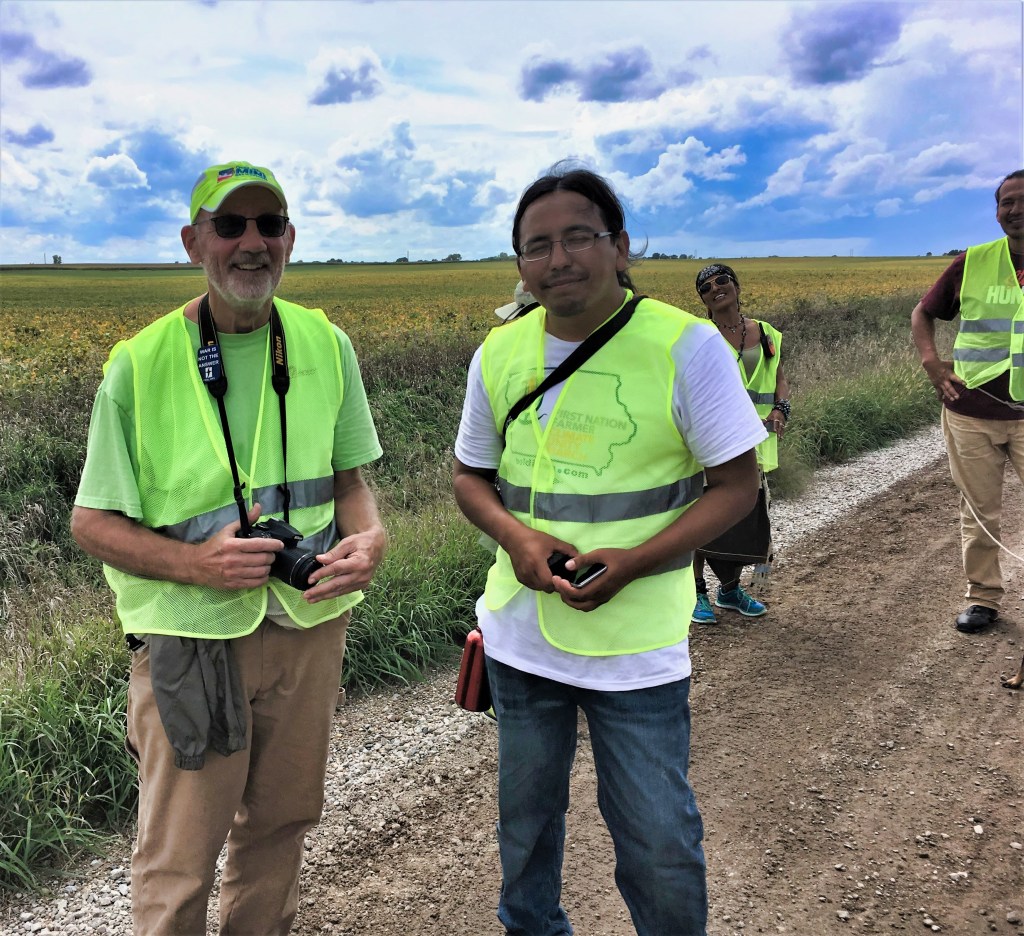
Biography: I was born into a rural Quaker community in Iowa and have remained a Quaker. It is important for me to say my experiences were the result of leadings of the Spirit. Regarding war and the Selective Service System, I was a draft resister at the time of the Vietnam War. In my early twenties (1970) I was led to not have a personal automobile for environmental reasons and lived without a car the rest of my life. Also related to environmental concerns I was trained to design nonviolent direct actions, and train others how to participate. About ten years ago I was led to become involved with a Black youth mentoring community in Indianapolis, the Kheprw Institute. When I retired and moved to Iowa in 2017, I was blessed to become involved with people and organizations working on environmental concerns here. In September, 2018, I joined a small group of native and non-native people as we walked and camped along the path of the Dakota Access pipeline on our sacred journey, for ninety-four miles over eight days. And for the past year I have been truly blessed to be involved with Des Moines Mutual Aid.

Posted in capitalism, decolonize, Des Moines Mutual Aid, Indigenous, Native Americans, peace, Quaker, race, Seeding Sovereignty, Uncategorized, white supremacy | Leave a comment

Tears

I was completely surprised when I started and couldn’t stop crying at the end of the movie, The Trial of the Chicago 7. That’s a really rare occurrence. A lot of buried trauma there it seems.

The trial was related to the antiwar (Vietnam) demonstrations in Chicago during the 1968 Democratic Convention.

I was a senior at Scattergood Friends School when I turned 18 (1969), the age at which all young men were required to register with the Selective Service System.

Although we didn’t watch television at the School, when at home we saw the war play out on the news everyday.

As a Quaker, I applied for and was granted Conscientious Objector status, to give me time to figure out when to turn in my draft cards. Although I wrote a lot about struggling with that decision, I don’t think I ever really doubted I would resist the draft. The struggle was trying to get my parents to accept what I was going to do. They were fine with Conscientious Objector status, but not with the prospect of a prison sentence.

I felt betrayed by their opposition to my decision to resist the draft. Looking back I can be a little more understanding. Ironically, just this evening I heard this: “As a parent, the one thing we can’t do is silence our child’s spirit,” Brandon Boulware said in a speech about his trans daughter. 

At the time I knew how the decision would determine my path through life. If I chose the easy way, I would likely never stand on principle for anything. I still believe that. I finally couldn’t wait any longer, and turned in my draft cards over my parent’s objections.

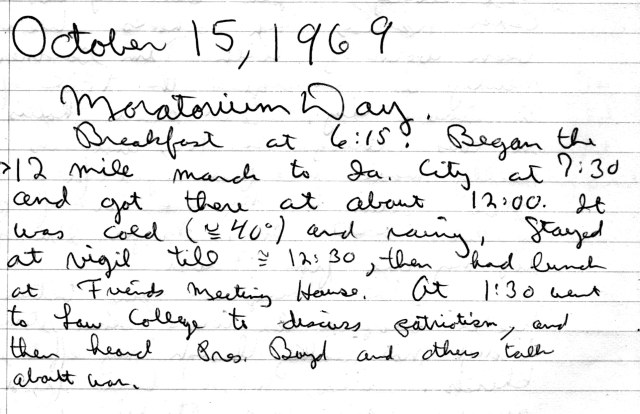
I wrote many blog posts about Vietnam and the draft. I kept a Journal during those years.
vietnam | Search Results | Quakers, social justice and revolution (jeffkisling.com)

[I can’t help but smile at the WordPress link that says “save draft”]

I helped my friend Don Laughlin put together stories he had collected about young Quaker men facing conscription before he died, including his story and mine. Here are those stories:

Young Quaker Men Facing War and Conscription

I think another part of my dismay relates to being more closely connected to and witnessing the injustices, violence and deaths suffered by my native and black friends. Especially the ugly turn of politics and legislation destroying civil rights and liberties and trying to prop up white supremacy.

Slide3
Posted in civil disobedience, Quaker, Quaker Meetings, Uncategorized | 2 Comments

What does abolition look like in Iowa?

I have joined the Quaker Abolition Network, a new national network of Friends working toward the abolition of police and prisons.

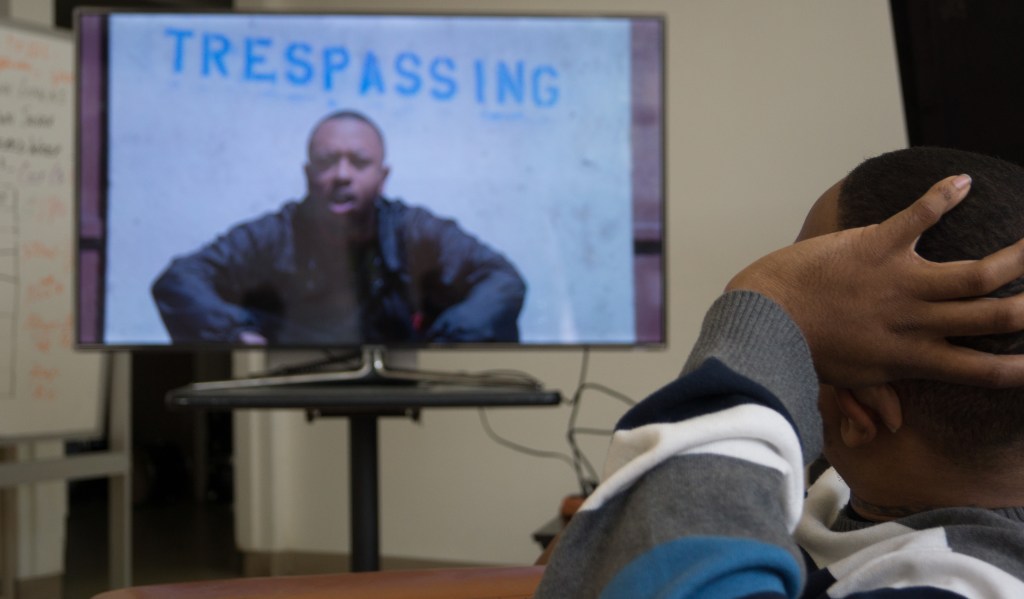
I used to think of abolition in terms of the institution of slavery, the death penalty, or nuclear weapons. But the collapse of social, environmental and economic systems reveal injustices that had remained somewhat hidden from white people beneath a thin veneer of the myth of whiteness. One of the greatest benefits for white people in our country is this protection from police harassment, from knowing any encounter with the police can so easily lead to incarceration or death. From unrelenting fear. I first began to get just a glimmer of what this is like when I saw a black mother break down in tears as she tried to express her constant terror every moment her children were out of the house. A black friend began to explain what should have been a minor interaction with police. Soon after he began he stopped, and it took literally 4-5 minutes before he could continue the story. What happened was outrageous. This pain persists even though the incident took place years before.

I was given permission to take this photo

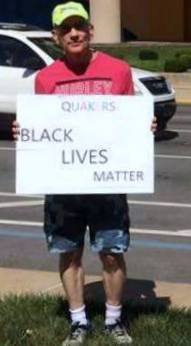
That it should not have to be said that Black lives matter proves their lives often do not in the view of some, and largely in the view of the state. As uprisings in response to racial injustice intensify and spread, the police forces that attempt to quell this unrest become more violent, repressive and militaristic. And the associated, rapid disappearance of civil rights for all of us, move us further along the authoritarian path. Those in the Black Liberation Movement, and Mutual Aid projects, are the vanguard of protecting what few rights we still have.

Here in Iowa the Black Liberation Movement declared a Black state of emergency.
(see more Black State of Emergency in Iowa #BlackEmergencyIA | Quakers, social justice and revolution (jeffkisling.com))

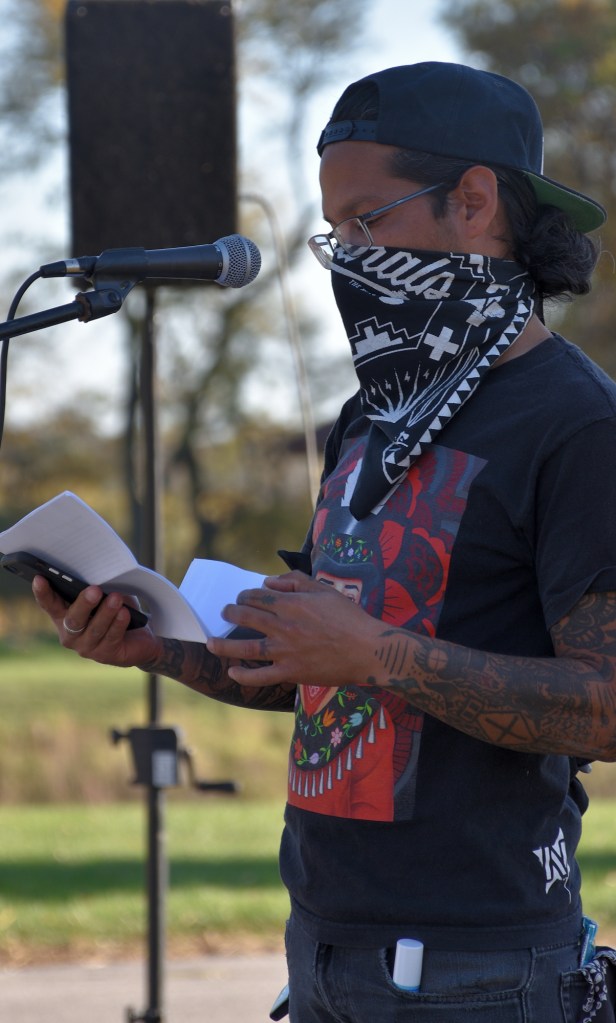
“With this declaration of a state of emergency for Black Iowans, we are also calling on all local elected officials — from city elected officials to state representatives — to Governor Reynolds to our federal elected officials in the congress and the senate — to join with us in recognizing the state of emergency for Black Iowans and reacting with the resources that are necessary to help combat this,” said Jaylen Cavil, an organizer with the Des Moines Black Liberation Movement (BLM).

These remarks were followed with more people speaking. I’m including what Patrick Stahl said, because he is one of the people I know from my engagement with Des Moines Mutual Aid’s food giveaway program.

Patrick: Hi, I’m Patrick Stahl with Des Moines Mutual Aid.

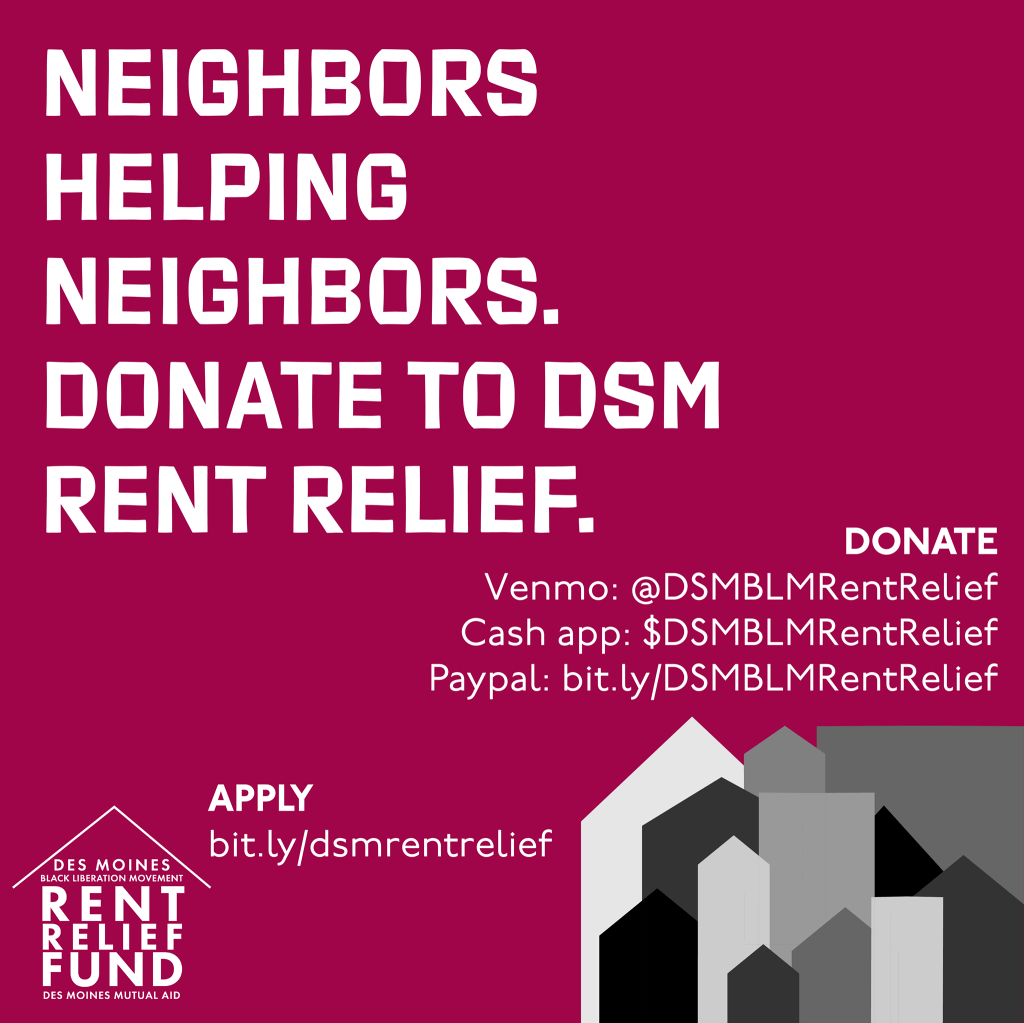
Des Moines Mutual Aid is a collective that does outreach for homeless folks in our community, houseless folks in our community. We also assist BLM with their rent relief fund, and most of the work we’ve done is running the bail fund for the protests over the summer. In the course of that work, we have witnessed firsthand the violence that is done upon people of color, Black people specifically, by the white supremacist forces of the state – in this state, in this city, in this county. There is absolutely a state of emergency for people of color and Black people in Iowa. The state of emergency has been a long time coming. We will support – DMMA will absolutely support any and all efforts of this community – BLM, and the people of color community more generally- to keep themselves safe. Power to the people.

Patrick Stahl

It is these connections between Des Moines Mutual Aid (DMMA) and Des Moines Black Liberation that are leading the abolition movement in central Iowa. One of DMMA’s projects is a bail fund which has been able to post bail for every activist arrested last year, mainly members of Des Moines Black Liberation, during demonstrations for racial justice.

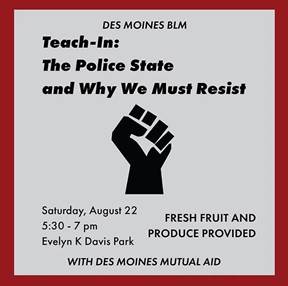
Following is from friend Ronnie James when he spoke at a Black Lives Matter teach in last summer.

What we have is each other. We can and need to take care of each other. We may have limited power on the political stage, a stage they built, but we have the power of numbers.

Those numbers represent unlimited amounts of talents and skills each community can utilize to replace the systems that fail us.  The recent past shows us that mutual aid is not only a tool of survival, but also a tool of revolution. The more we take care of each other, the less they can fracture a community with their ways of war. Organized groups like The American Indian Movement and the Black Panther Party for Self Defense showed that we can build not only aggressive security forces for our communities, but they also built many programs that directly responded to the general wellbeing of their communities. This tradition began long before them and continues to this day. Look into the Zapatistas in Southern so-called Mexico for a current and effective example.

These people’s security forces, or the “policing of the police” not only helps to minimize the abuse and trauma they can inflict on us, but it begins to shift the power balance from them to us.

Mutual Aid programs that help our most marginalized or other events that work to maintain our spirits result in stronger communities. A strong community is less vulnerable to police intrusion. 99% of our conflicts can be solved by those affected by them, but only with the support of those around them. Anytime we call on the police to mediate our problems, we are risking ourselves or a loved one from being hurt or worse.

The more we replace the police with organized community response to conflict, the safer we will be. Another powerful benefit is the removal of power from those that take their orders from those that have no interest in your well being, at least past it being useful to amass and increase wealth.

Of course, part of this fight of police abolition will be fought on the political stage, but let’s not fool ourselves that the state and the wealthy will ever give up tight control on all resources. We can lobby and vote to have police resources diverted to less dangerous organizations, but they will still be working for the same state and same class that have dispossessed and repressed us for centuries. Every election has the possibility of reversing any policy gain we may won.

Some of the fight will be in the government offices, but the majority of it will be us, in the street.

Many communities work to train amongst themselves mental and physical health workers, conflict mediators, and anything else we need, despite the state and it’s soldiers insistence that they are the sole “authority” of these skills, and always with the implied threat of violence.

As we work toward this, and this summer has proven des moines has the heart, desire, and skills to do so, we still have to deal with what’s in front of us.

We each have skills and resources we can utilize towards the abolition project. Some of us can use the halls of the system to make short term change there, others have skills that produce food, provide medical care, or care for our precious youth, some are skilled in the more confrontational tactics needed. Once we envision that world our ancestors want for us, finding our role is natural.

If we are to survive, and more importantly, thrive, we know what we will have to do.

All Power To The People.

Ronnie James

So if we abolish the police, what’s the alternative? Who do we call? As someone who grew up calling 911, I also shared this concern. I learned this: Just because I did not know an answer didn’t mean that one did not exist. I had to study and join an organization, not just ask questions on social media. I read Rachel Herzing, a co-director of the Center for Political Education, who explains that creating small networks of support for different types of emergencies can make us safer than we are now, and reduce our reliance on police. The Oakland Power Projects trains residents to build alternatives to police by helping residents prevent and respond to harm. San Francisco Mayor London Breed just announced that trained, unarmed professionals will respond to many emergency calls, and Los Angeles city-council members are demanding a similar model. This is the right idea. Rather than thinking of abolition as just getting rid of police, I think about it as an invitation to create and support lots of different answers to the problem of harm in society, and, most exciting, as an opportunity to reduce and eliminate harm in the first place.

How I Became a Police Abolitionist. When people dismiss abolitionists for not caring about victims or safety, they tend to forget that we are those victims, those survivors of violence by Derecka Purnell, Human rights lawyer, The Atlantic, JULY 6, 2020

#BlackEmergencyIA

Posted in abolition, Black Lives, civil disobedience, Des Moines Black Lives Matter, Des Moines Mutual Aid, Mutual Aid, police, prison, Quaker, race, Uncategorized, white supremacy | Leave a comment

AFSC Quaker Social Change Ministry

This is the fifth in a series of articles I’m writing that has several goals. One is to tell stories of my experiences with spirit led social justice work. Quakers believe we should speak from our own experiences.

The ultimate aim of these stories is to convince White Quakers of the inherit unjustness of the capitalist economic system. And why I believe embracing the Mutual Aid framework is how we can dismantle systems that create poverty and structures of racism. And build the communities we want for ourselves and our children NOW.

I qualify my use of Quaker by saying White for those of us who are, because Quakers who are Black, Indigenous or other people of color (BIPOC) have been and continue to be oppressed by the injustices I write about.

Yesterday I wrote about White Quakers and spiritual connections with the Kheprw Institute (KI), a Black youth mentoring and empowement community in Indianapolis. Home – Kheprw Institute That article was about my initial connections with the KI community.

I know how blessed I was to be led to the KI community. And such an opportunity might not come to you individually. Though I think there probably similar communities near you.

Since one of my goals is to offer ways White Quakers can build relationships with non-White communities, the following is about what happened next with KI using a model designed to help Quaker meetings make such connections.

Quaker Social Change Ministry

“We can already recognize that today time is split between a present that is already dead and a future that is already living — and the yawning abyss between them is becoming enormous. In time, an event will thrust us like an arrow into that living future. This will be the real political act of love.”

—Antonio Negri

From the Quaker Social Change Ministry manual:

Dear Friends,
We are living in evolutionary and revolutionary times. The old world, the already dead present, is coming apart at the seams and all around us are signs of the groaning of the spiritual birth of creation, a new way of living and being grounded in love and connection, which throws off old ways of living disconnected from each other and the earth. The damage that colonialism, super-charged capitalism, and white supremacy have done to our communities and the earth is so clear and evident, and the need to transform our social relations and systems has never been so urgent.
The good news is that a new way of being is striving, longing, growing, and working to be born. But this new way of living won’t come about without our active participation. God will knit our efforts together, but without many midwives of transformation working for the Beloved Community, creating alternatives, listening carefully to the wisdom of those most impacted by injustice who have learned what else might work, the emergent spiritual reality will likely get stuck, or worse, arrive stillborn. We as a human community are in the throes of a great creative project that could result in real transformation and shifting, but only if we lend our hearts, our minds, our hands to the work before us.
Lucy Duncan, Director of Friends Relations

Available to all Friends who wish to do Spirit-led, social justice work connected to the work of AFSC, Quaker Social Change Ministry is a transformative approach to social justice work that combines Spirit + Action to:

  • Re-enliven and re-imagine corporate witness
  • Follow the leadership of communities most impacted by injustice
  • Build relationships within the meeting, with local organizations, and with AFSC
  • Bring “Mystics” and “Activists” together
  • Participate in a Spirit-led group process
  • Tell our stories and learn in a supportive environment
  • Co-create the Beloved Community

From the Quaker Social Change Ministry website.
Quaker Social Change Ministry | American Friends Service Committee (afsc.org)

Lucy Duncan and I are friends, and she was very helpful for the six Friends meetings that participated in the pilot year of the program. There were monthly conference calls with those of us participating in QSCM.

THE QUAKER SOCIAL CHANGE MINISTRY PROGRAM
Tenets of accompanying for social change
(Adapted from “Implementing Small Group Social Change Ministry,” by Kelly Dignan and Kierstin Homblette.)

Accompaniment is hard work, and it is easy to feel lost, overwhelmed, and hopeless. These tenets, along with your group’s covenant, can help to guide you as you navigate this journey together.

Tenets of accompanying for social change

  1. Building relationships of trust and accountability with people and communities most impacted by injustice by showing up and staying in the relationships for the long haul.
  2. Remembering that the liberation of everyone and everything is inherently connected, and together, we are on a learning journey toward it.
  3. Walking together while navigating differences in a loving, respectful, trusting relationship.
  4. Struggling together and encouraging one another’s spiritual growth.
  5. Contemplating the gifts you are going to receive when accompanying, instead of how you will give, help, teach, tell, or fix.
  6. Acknowledging and unlearning your patterns of dominance, like taking charge, leading. making decisions, etc.
  7. Asking for and lending empathic support.
  8. Moving beyond asking to acting.
  9. Getting out of your comfort zone (materially, emotionally, and physically) and allowing yourself to be changed by this process.
  10. Disrupting the systems and structures of oppression – with integrity and in authentic community with those most impacted, following their leadership.

Quaker Social Change Ministry at North Meadow Friends
2/2/2016

This is the story of the experiences of North Meadow Circle of Friends, an unprogrammed meeting in downtown Indianapolis, that were triggered by the killing of Michael Brown August 9, 2014, in Ferguson, Missouri, and where that has led us.

A group of ten young people, who became known as Indy10, discovered each other via social media, as people who wanted to do something in response to the plight of the Ferguson community and the excessive, militarized police response. They arranged to meet and took food and water to Ferguson, and spent some time with the people in the community there. The experience radicalized them, and they were determined to do what they could to address similar issues in Indianapolis. One of Indy10 attends North Meadow Friends. Her partner also became involved, and the meeting was aware of this work.

Unfortunately, after several months of frequent (3 times/week), intense meetings and some street protesting, conflict erupted, and the Friends left the Indy10 group. That indicates how difficult this work can be. It was especially disappointing because it had seemed real progress was being made after significant personal investment. It became apparent that those in the North Meadow Meeting who had been involved were traumatized by the experience. Fortunately some other Friends in the Meeting recognized this, and offered to meet to work through it. Five of us, the three meeting members who had been involved with Indy10 and several of the Meeting’s spiritual elders, began meeting monthly over the winter last year (2014-2015), and found the meetings to be very helpful. (I was the third, but more distant Indy10 member from North Meadow).

You might imagine our surprise, and excitement, when we learned that the American Friends Service Committee (AFSC) was looking for Friends Meetings that would be interested in participating in a pilot of a program called Quaker Social Change Ministry (QSCM), because that program seemed to reflect this process that we had started to deal with social justice work.

The Quaker Social Change Ministry program has two broad, connected goals. One is to bring a more intentional spiritual focus to a Meeting’s social justice work, as well as to encourage people in our Meetings who don’t usually see themselves as activists, to become one. It is common for meetings to have a number of people very involved in social justice and peace work. But I think it is a little unusual to find that meetings do much more than support the individual in many cases. They often don’t get involved, themselves, in that person’s work. But just imagine what it would be like if the whole meeting found a way to participate in such work together. Imagine how such work could flourish with the attention of more Friends, and how the spiritual life of the meeting would benefit by this shared work.

The second goal is to get Friends out of the Meetinghouse and into the community. The idea of accompaniment is for the Meeting to find a group of people who are dealing with injustice now, and to learn from them what we might do to help. Most of us are familiar with Friend’s history of jumping into situations and trying to provide leadership which often ends up not being what the impacted community needed. This can end up causing more harm than good, and is why activists so find themselves discouraged, often giving up the work entirely. QSCM helps Friends change the focus to the impacted community, because the people there are the ones who know the factors and people who are impacting their situation. The impacted community has a better idea of what the driving issues are, and thus know what solutions are needed, and probably have a good idea of how to create those solutions. Our role is to be ready to do what we are asked to do, when we are asked to do it.

To put it bluntly, white Quakers are simply ignorant about many issues facing people of color. Until three years ago, I was as ignorant as most other white people I knew. Now I know some things you can easily learn yourself, once you are aware of whatever the issue at hand is. I have been very fortunate, but often saddened to have been able to see how different my new friend’s lives are from mine. But this is the only way I see to begin to solve this problem. Once individuals connect as fellow human beings, the problems then belong to all of us, and working together we solve those problems for all of us. But I still have a great deal more to learn.

Ignorance can be corrected, as long as one is open to learning new things. One of the problems of ignorance is that one simply doesn’t know what it is one does not know, or realize which historical narratives represent history that has been rewritten, to cover up injustices and atrocities. I personally do not think you can be successful in this work if you do not start with the assumption of your own ignorance. Friends in particular have a great deal of difficulty with this. They are used to being well informed about social issues, and seen as leaders in social justice and peace work.

I know of the dangers of generalization, but what I have learned leads me to believe that if you are white, you do not understand, and you cannot understand what is happening to people of color until you have spent time with, and become friends with people of color. These things cannot be learned intellectually, they are only taught by experience, informed by the heart and soul.

The community your Meeting partners with is doing you a favor by helping you correct your ignorance. But be aware of this possible first misstep. It actually adds insult to injury when (usually white) people expect those experiencing injustice to teach them (white people) what they (white people) need to know. How would you feel if, after experiencing years of injustice, some of the very people who were involved in that injustice, even if they were unaware of doing so, came to you expecting you to teach them what the problem is and what they should do about it?

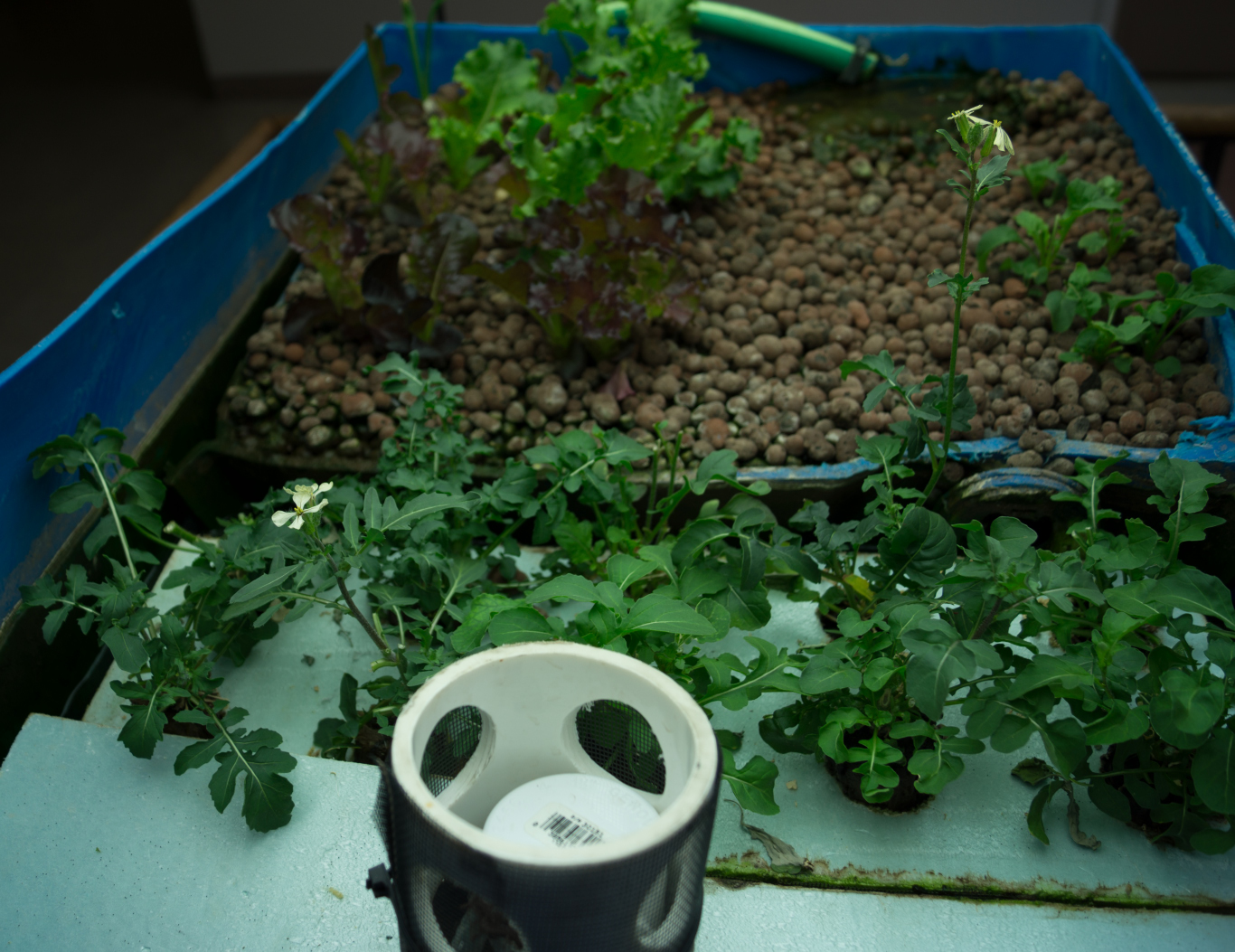
This was what really excited us at North Meadow regarding QSCM. Several of us, in our own separate ways, had already established a relationship with just such a community which is not far from the meetinghouse. The Kheprw Institute (KI) is a small (four main adult leaders) community that came into being over a decade ago to mentor young (teenage) children of color. KI has become one of the most active social justice organizations in Indianapolis. They are very generous in making their meeting facilities available for different groups working on all sorts of issues. Because of the excellent training they are able to provide their interns (kids), KI is more and more providing technical support for other social justice organizations and meetings. At a recent NAACP Environmental Justice presentation, KI provided live streaming of the event. But most of their work is done at KI, where the youth learn about (by taking care of) the garden, aquaponics system, composting, web design, and social networking and programming.

Over 30 years ago Imhotep Adisa, KI’s Director, and JT, a North Meadow Friend who was involved in the original post-Ferguson group, and is now active in QSCM, went to the local University together. It was about three years ago that I found KI when I attended an event there that was listed on an environmental organization’s website. Kevin has helped with some construction and wood working. Erin Polley, Indiana’s AFSC staff person, helped with the trip to Washington, DC, when one of the KI youth won the “If I Had a Trillion Dollars” video contest. So we had the good fortune of a history of acquaintance and shared work.

For a number of years after KI first started, they tended to keep to themselves, forming a protected community for their youth, in a manner similar to how Friends used to maintain their own schools. When I first met with them, I didn’t realize just how small and self-contained KI was.

Especially knowing how constrained KI’s resources are, I was committed to making sure we did our best to minimize what we asked of KI for this program. Our goal was to help, not add to the burden of the KI community. We were fortunate, again, this time for the wisdom of KI’s approach to community building. For several years KI has held book discussions that are open to the community. These events have a number of benefits, and have been key to KI’s spreading involvement in the Indianapolis activist community, as well as a perfect mechanism for North Meadow Friends to begin to accompany KI and their work. Stimulating books are chosen, which have included “The New Jim Crow”, “The Pedagogy of the Oppressed”, “This Changes Everything”, “Animal, Vegetable, Miracle”, and the upcoming “Indigenous Peoples’ History of the United States”. Last year the KI interns led the discussions of “The New Jim Crow”, which spanned several months of one a month meetings. Rasul and Keenan would read a couple of chapters, and then each write a blog post about what they had read. The community could then read those blog posts ahead of the discussion. Then Rasul and Keenan led the public discussion. They developed skills in critical thinking, public speaking, and leading group discussions.

Besides all of those good things, these discussions brought a wide diversity of people to KI to discuss ideas in a respectful and civilized manner. The KI leaders, Imhotep, Miss Fair, Pambana and Alvin have created an atmosphere for the interns and all who come to KI that is based upon mutual respect, acceptance, and challenging each other’s ideas. In his often subtle and humorous way, Imhotep helps people clarify their thoughts so everyone understands what they are trying to say. And he gently leads the discussion back on track when it, fairly often, goes astray. And helps summarize things. People really enjoy these meetings because of the interesting topics, interesting participants, and welcoming, and yet challenging atmosphere.

More and more North Meadow Friends are attending these book discussions. During our QSCM meetings we identified this as our first endeavor with KI, which would allow us all to get to know each other over several months’ time. And it is also great in not adding a burden to KI in order for us to get this benefit.

So this is where we are with North Meadow Friends, KI, and the Quaker Social Change Ministry. I think our participation in the book discussions at KI is appreciated. And those at North Meadow who are involved (around a dozen) are finding QSCM and time at KI, and time together processing all of this to be very invigorating. It does seem like we have had a unique set of circumstances leading to this point. But I hope this program becomes widely used by Friends.


Posted in American Friends Service Committee, Kheprw Institute, Quaker, Quaker Meetings, Quaker Social Change Ministry, Uncategorized | Leave a comment