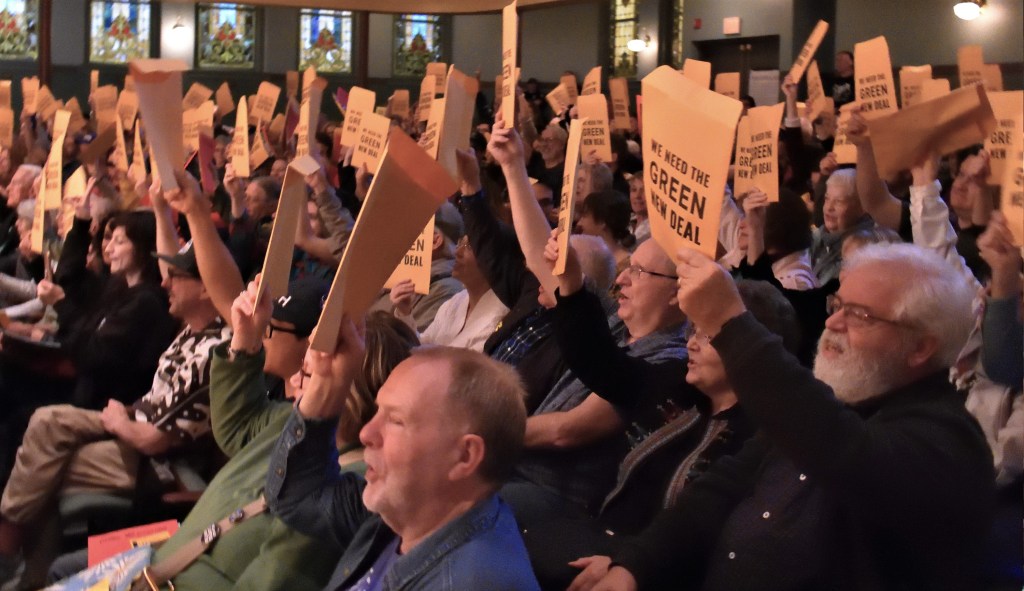
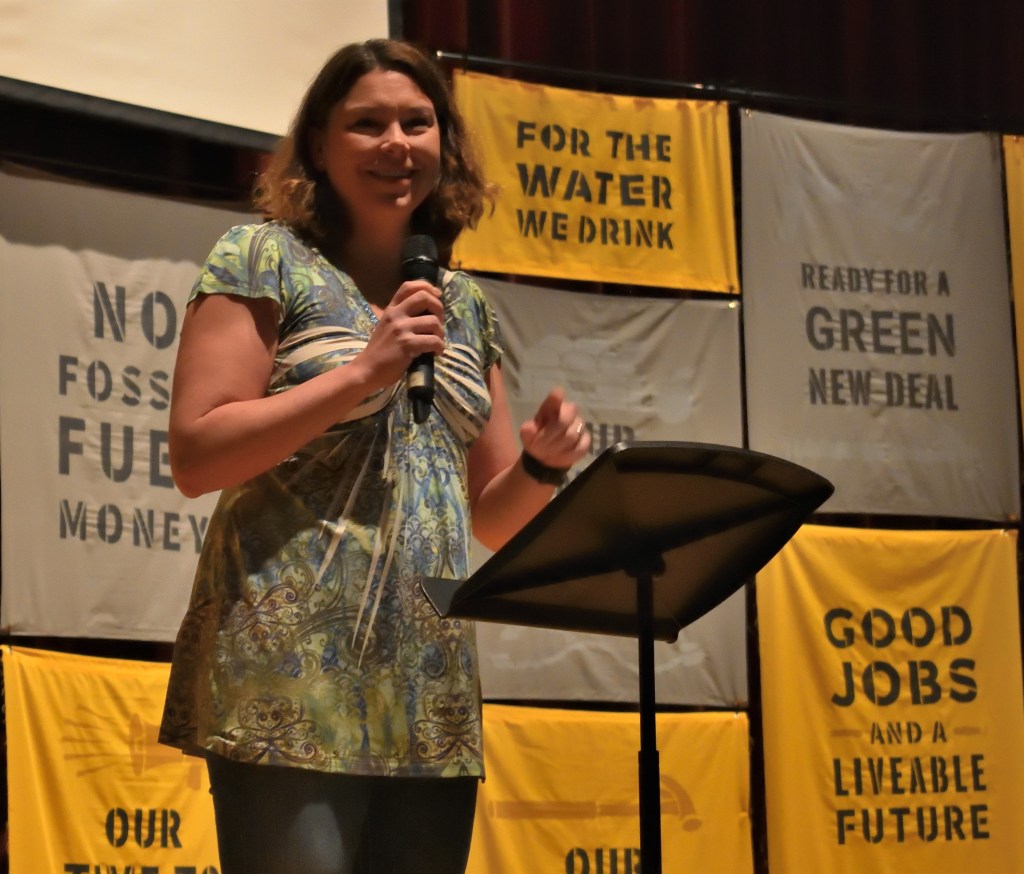
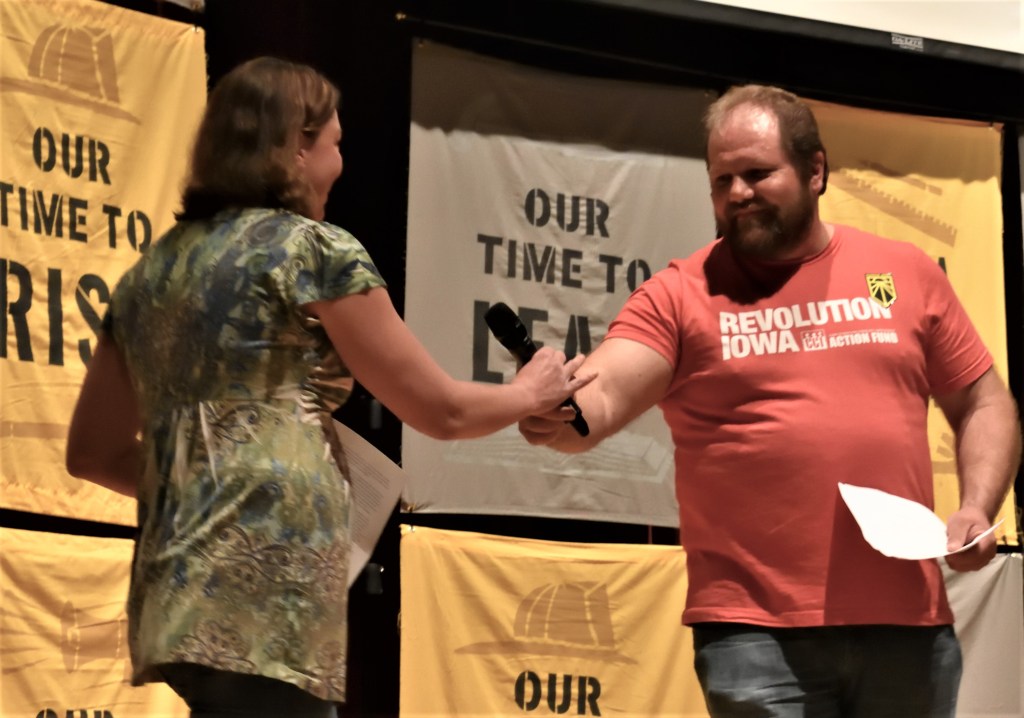
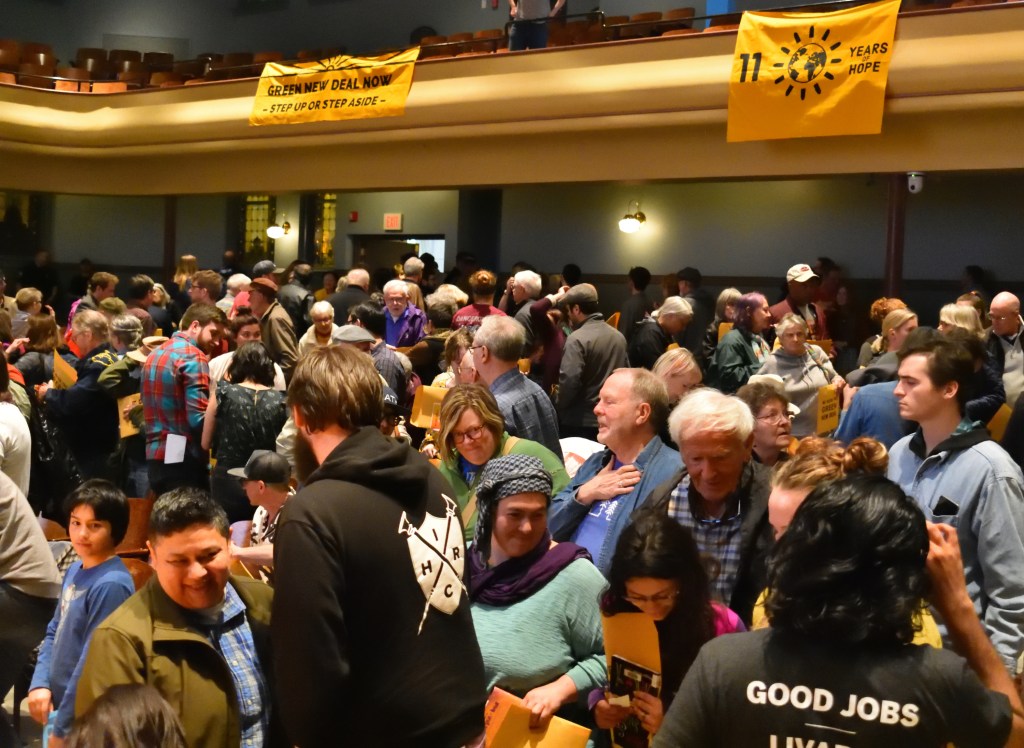
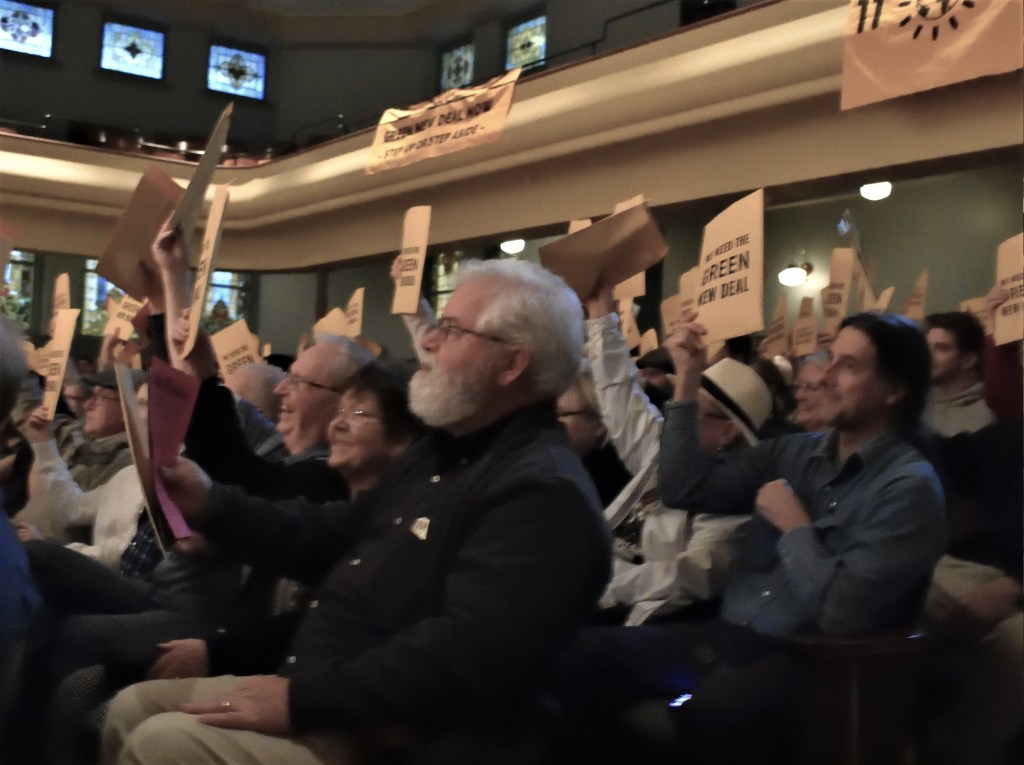
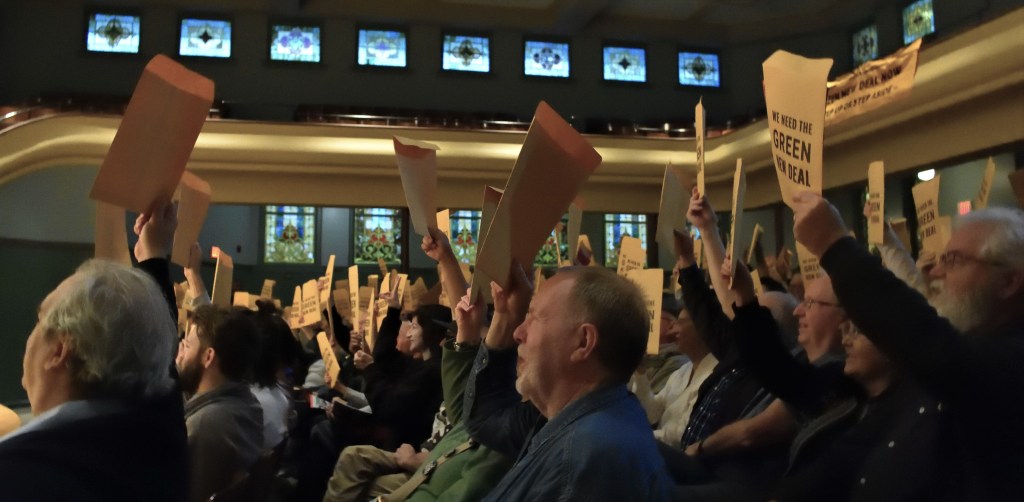
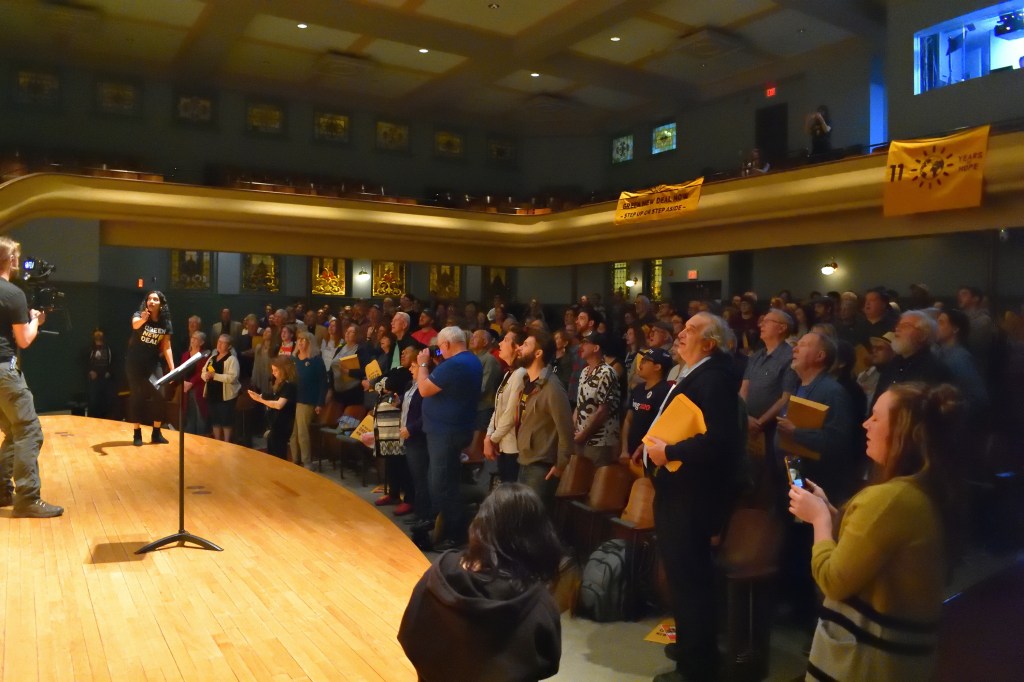
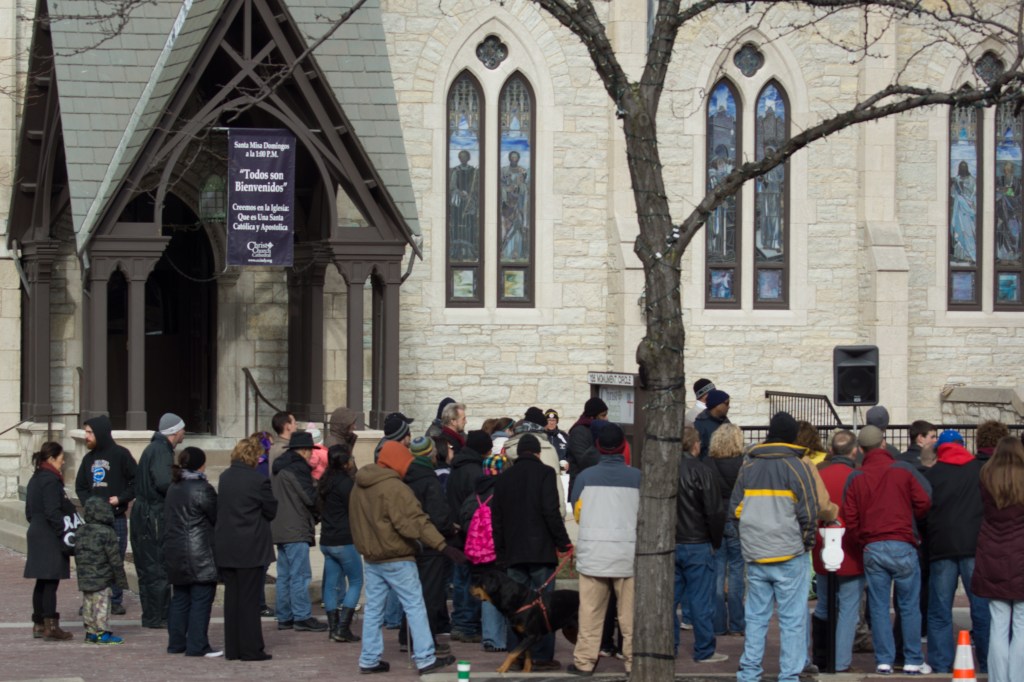
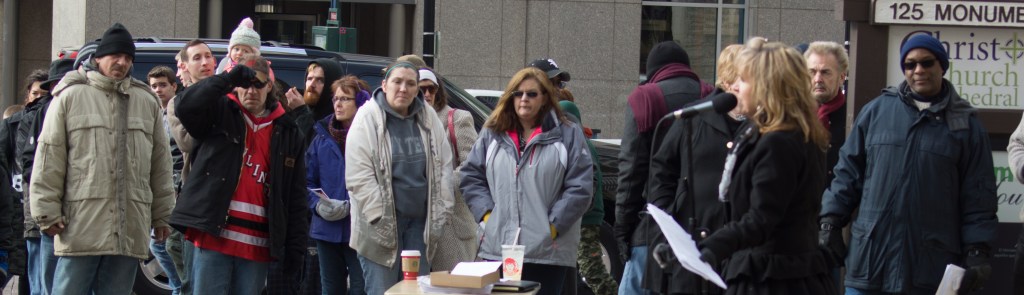
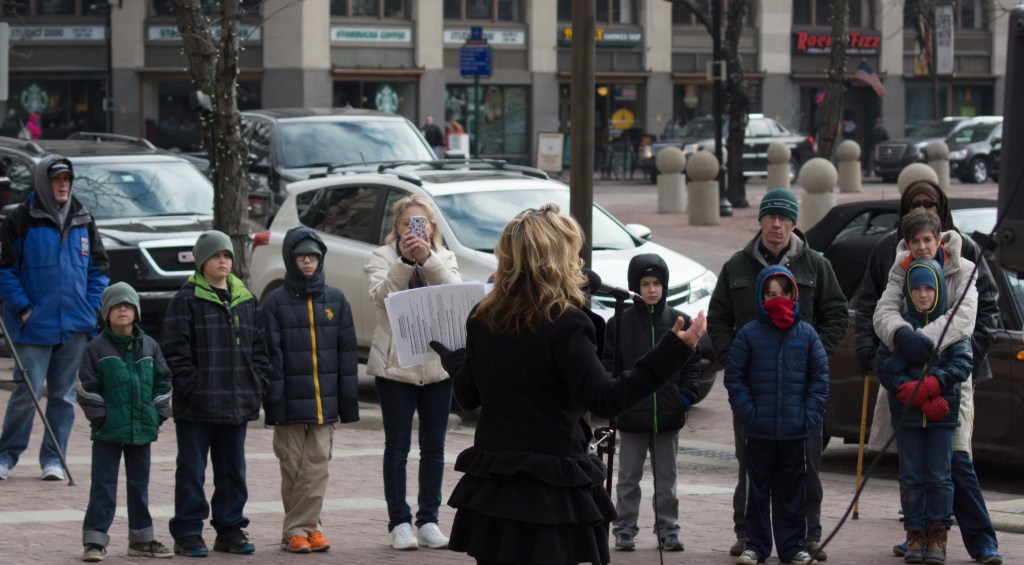
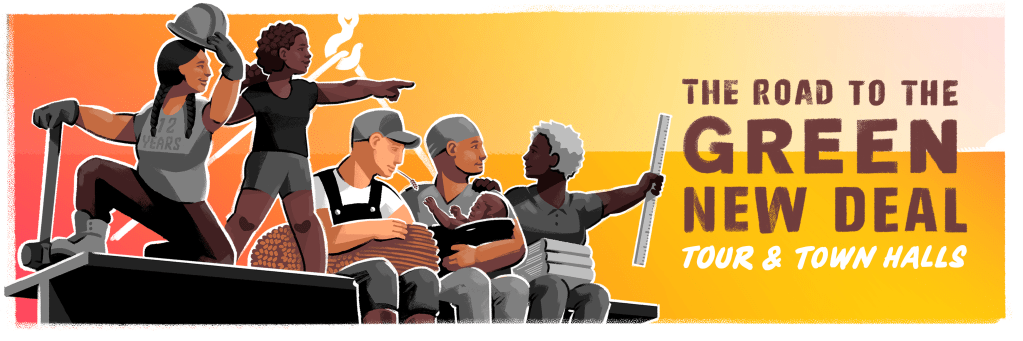
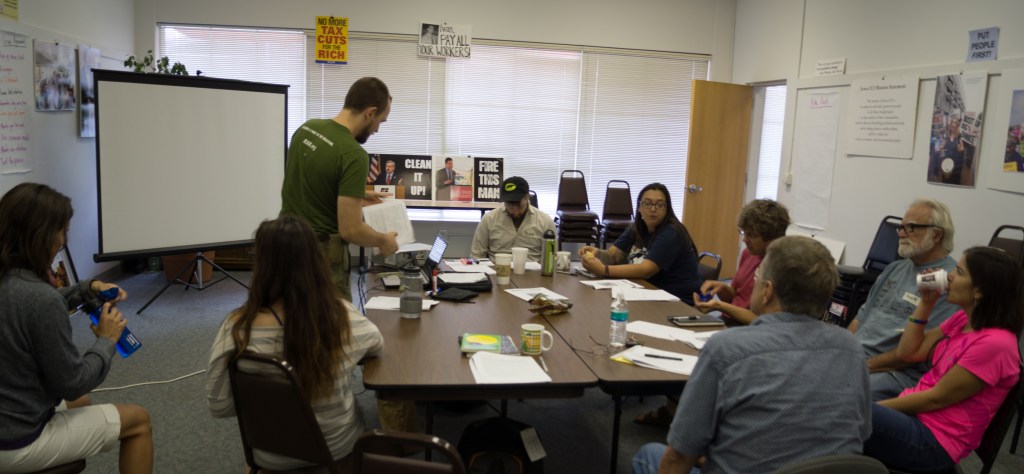
The Iowa CCI / Sunrise Green New Deal Tour Stop in Des Moines was on April 24, 2019. An estimated 450 people attended.
Following are suggested next steps from Iowa CCI:
Call/Email your US Congresspeople and tell them to support the Green New Deal! None of our Senators or Representatives have signed on to support this resolution to take concrete action on climate chaos.
Call your State Rep. and tell them to VOTE NO on SF 583 – the bill to gut Net Metering in Iowa: 515-281-3221 (House Switchboard)
to do in the next 3 weeks…
If you live in Des Moines, contact the city council and tell them to support a climate action plan.
Attend the May 3 Climate Strike led by young people at the Iowa Capitol. 10am-1pm @ Iowa State Capitol, Des Moines.
Every once in a while I’ll wonder why I was led to call this blog “Quakers, social justice, and revolution”. The Quaker and social justice parts are what I often write about. I would occasionally get hints about the “revolution” part, usually related to moving to a more peaceful or just and/or environmentally sound society. But the halting movements in that direction never seemed to coalesce.
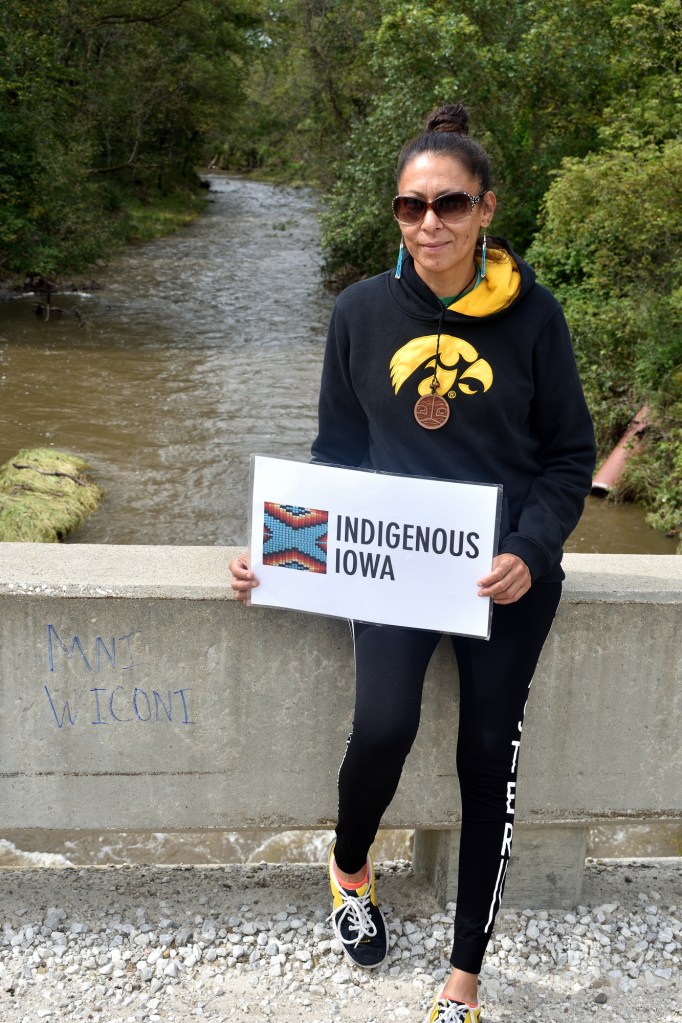
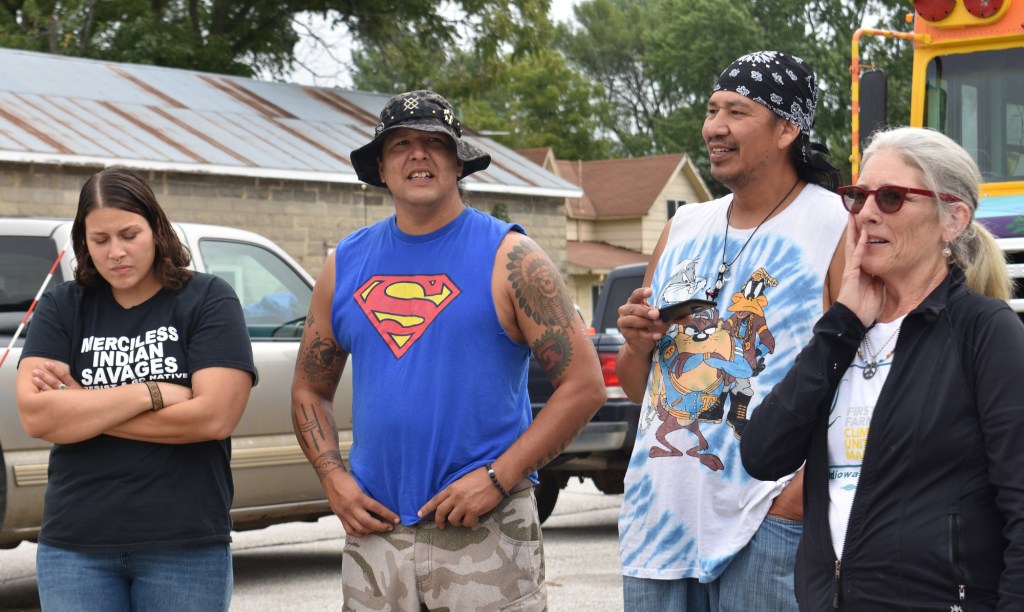
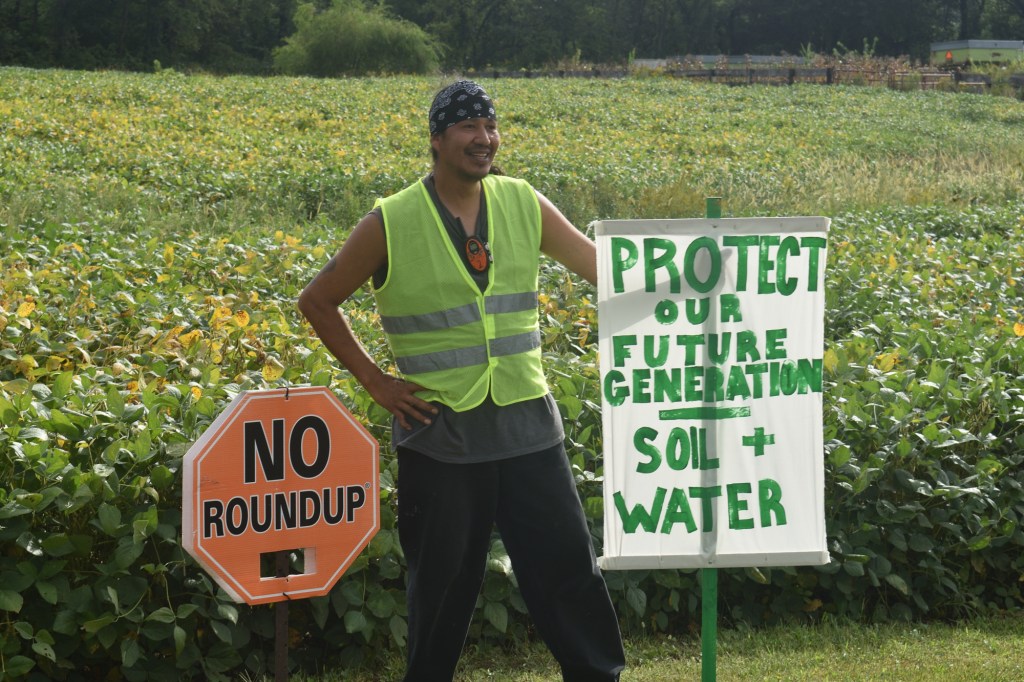
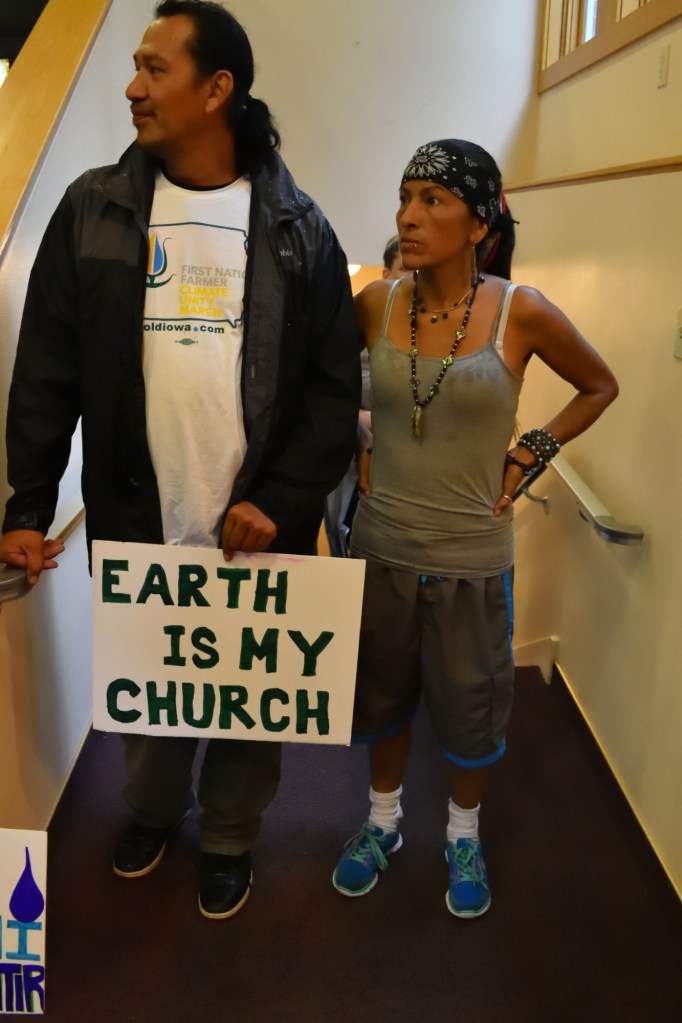
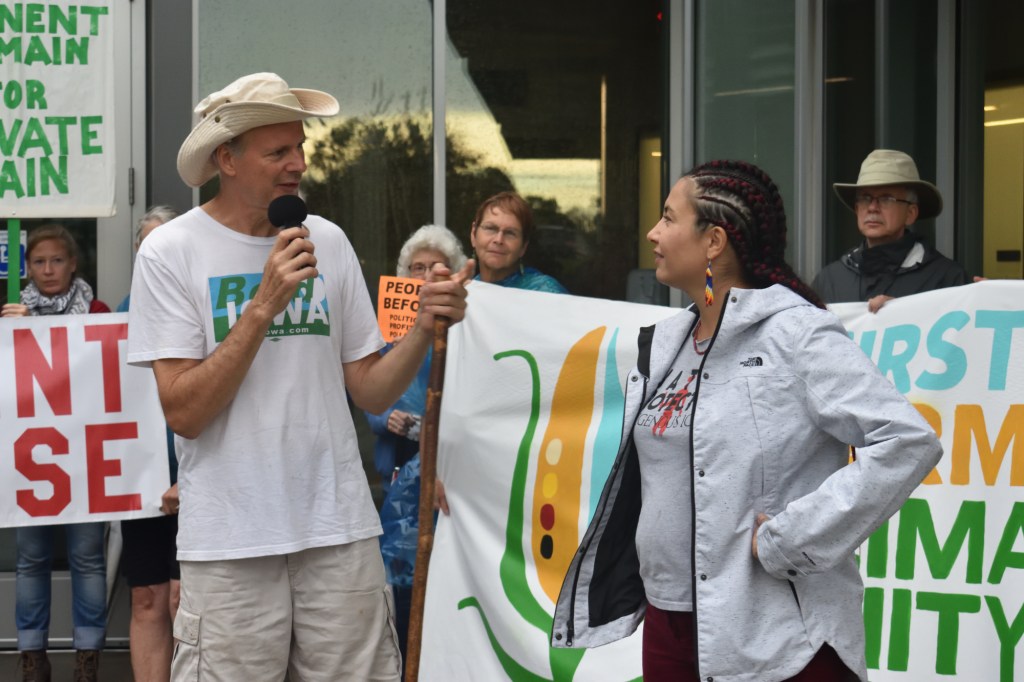
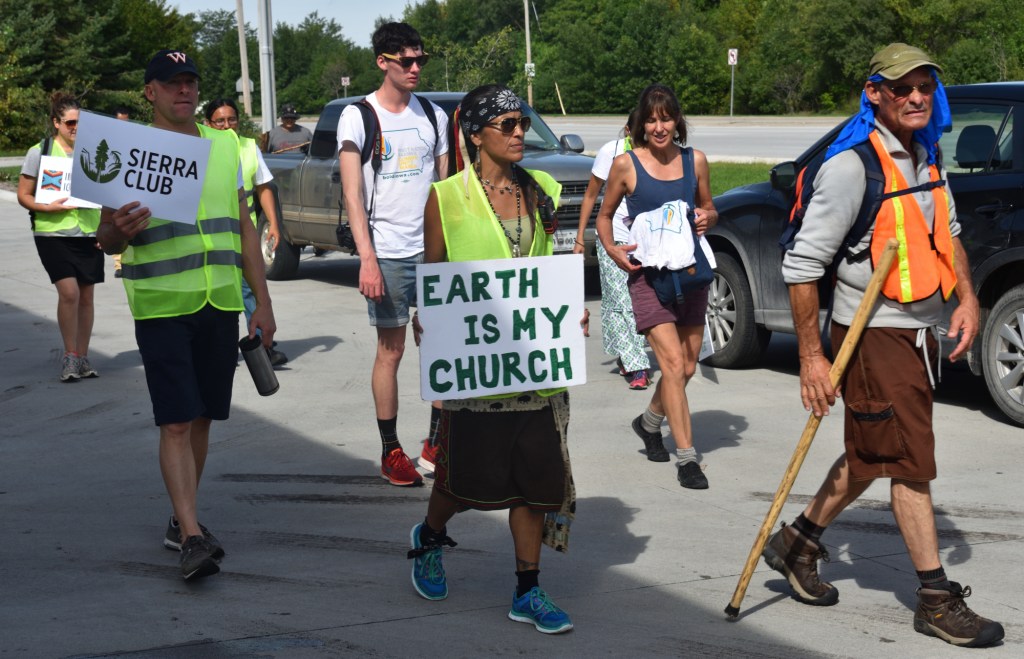
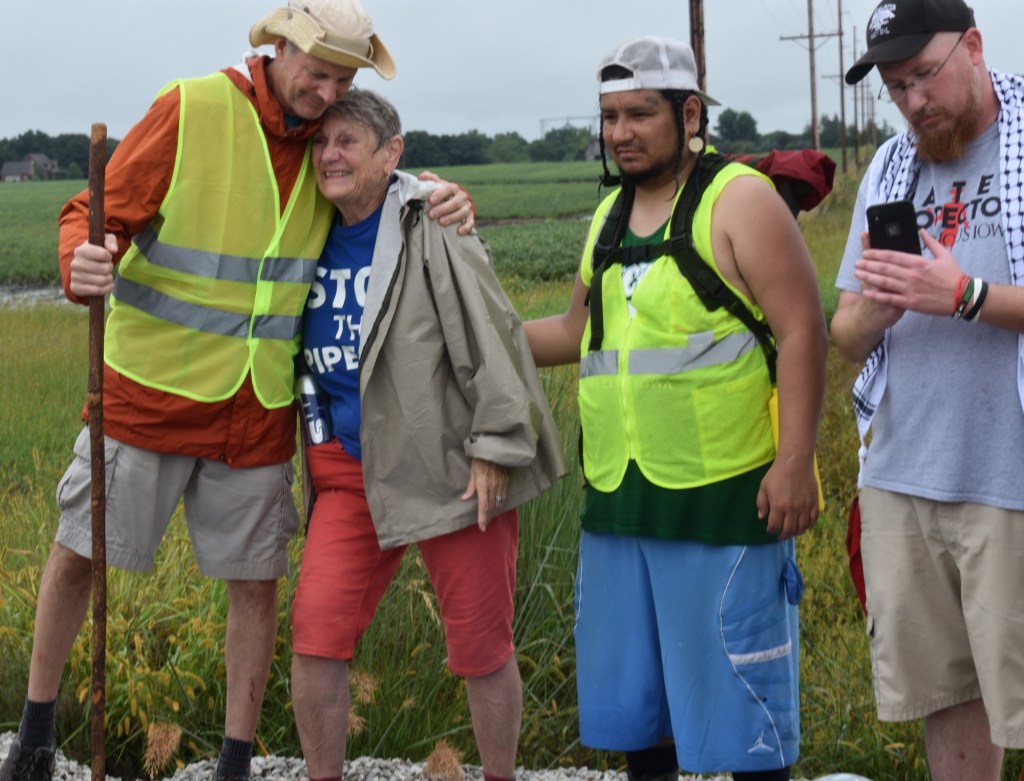
Being part of the First Nation-Farmer Climate Unity March was a promising movement in the right direction. I’d always wanted to make friends with Native Americans. The more discouraged and concerned I became about our environmental chaos, the clearer it was that we had to move away from a capitalistic, extractive society. Indigenous people seemed to have never gotten off the path of cultures that honor Mother Earth and each other. Walking together for 8 days on the March was finally the opportunity I was looking for. Now I have friends who can continue to teach me about Native Americans by suggesting books and movies that accurately depict the native people and their beliefs. And friends I can work with on things like Bold Iowa and the Sunrise Movement.
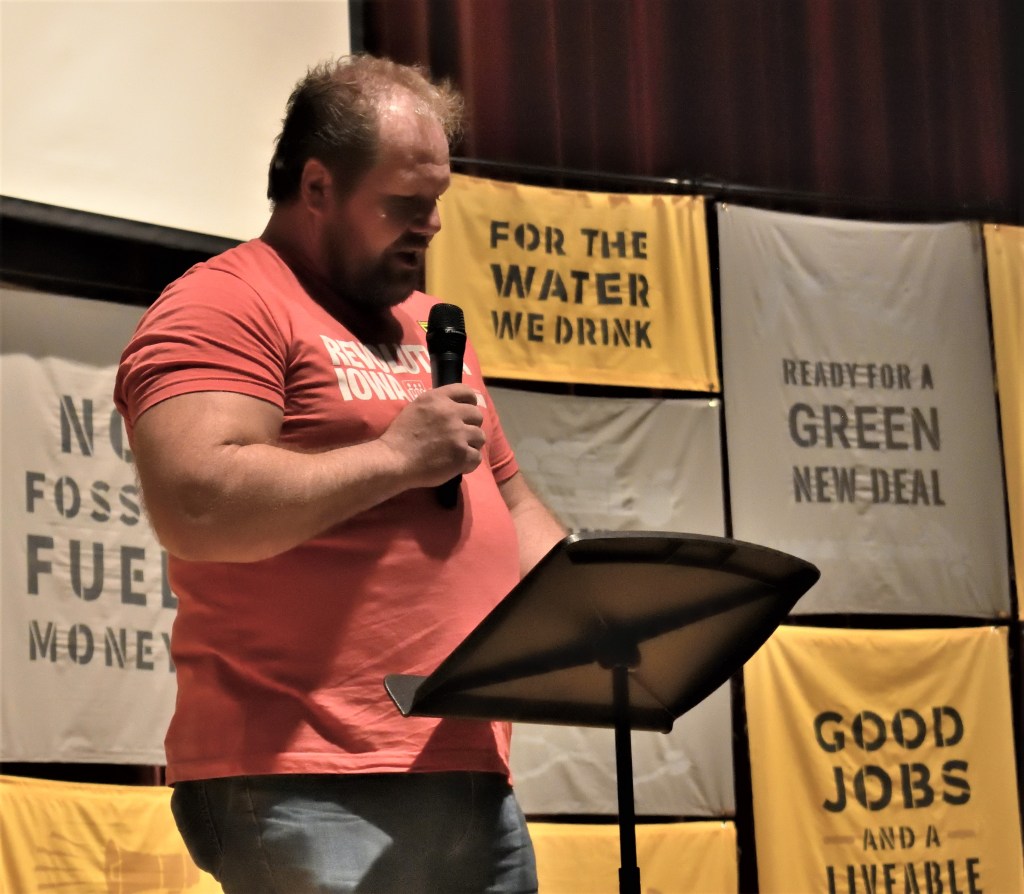
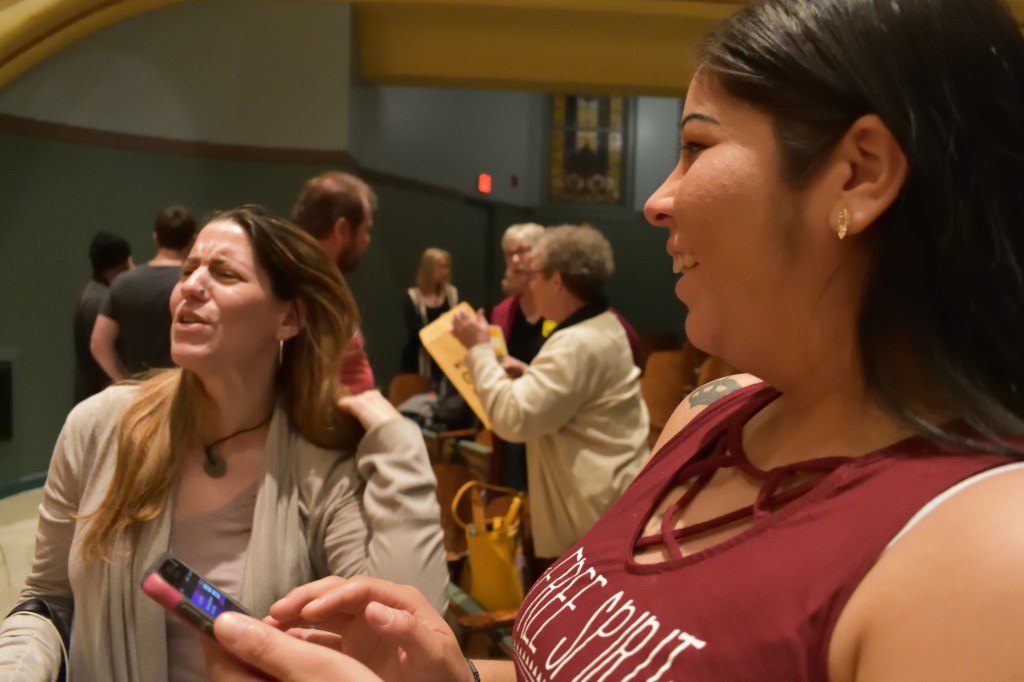
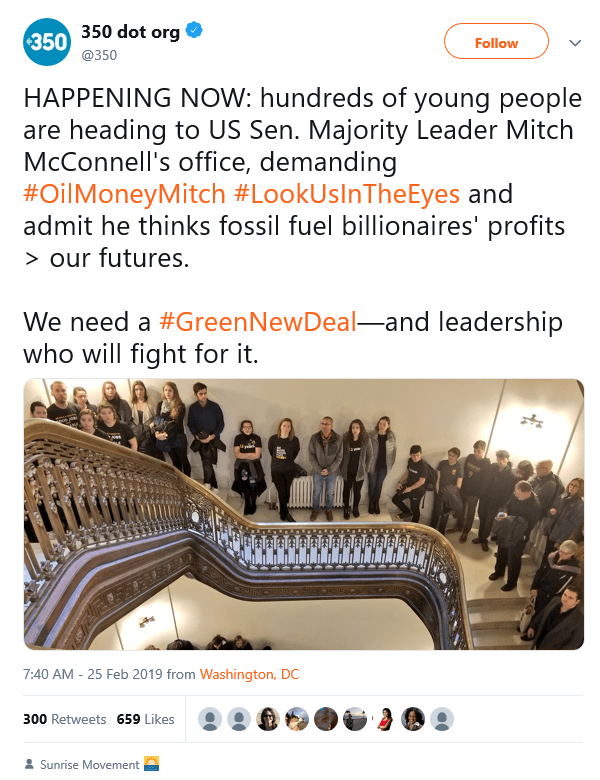
The Sunrise Movement has been fairly quiet for the last few weeks but a LOT has been going on behind the scenes. One of those things was organizing the Green New Deal Tour. Monday, Earth Day 2019, the Tour arrived in Des Moines at the Sheslow Auditorium.
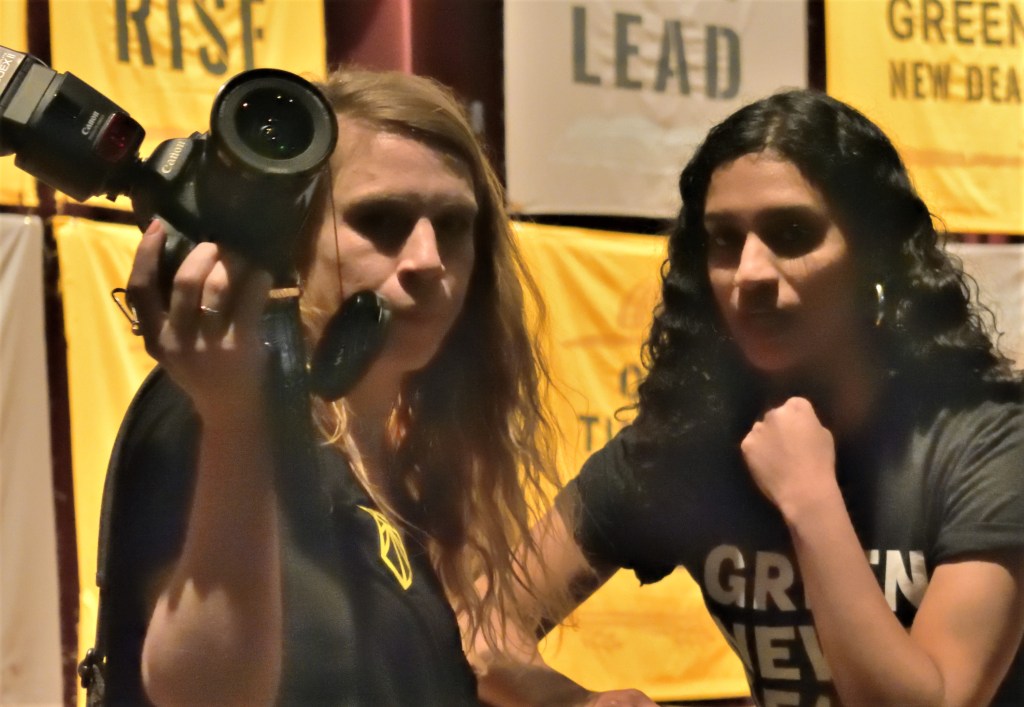
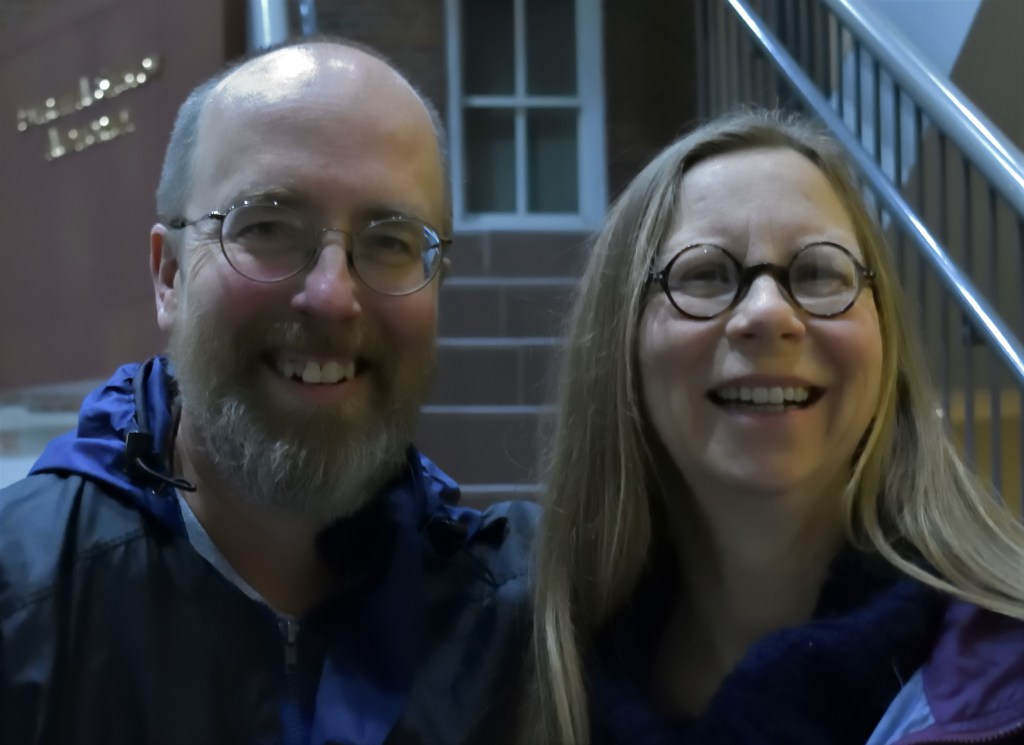
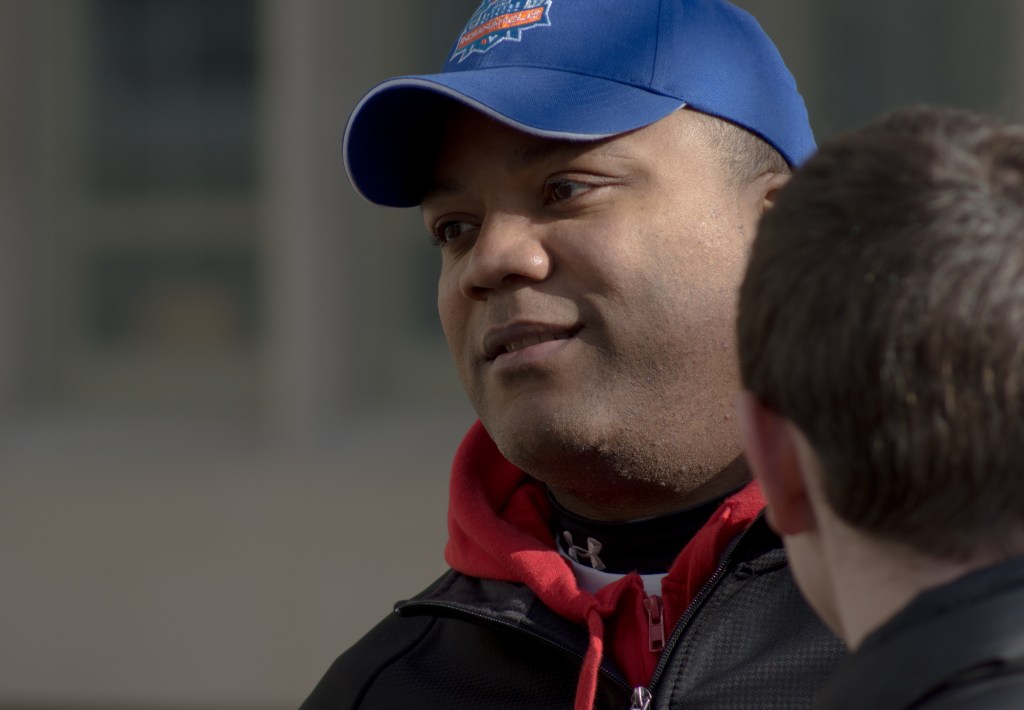
Things got off to a great start when I noticed Jeremy Ornstein walking in front of me. Jeremy has appeared in several Sunrise videos, and ZOOM meetings I attended. As I approached I asked if I could take his picture, and said I had seen several of his videos. With his big smile he said “awesome”!
Jeremy Ornstein
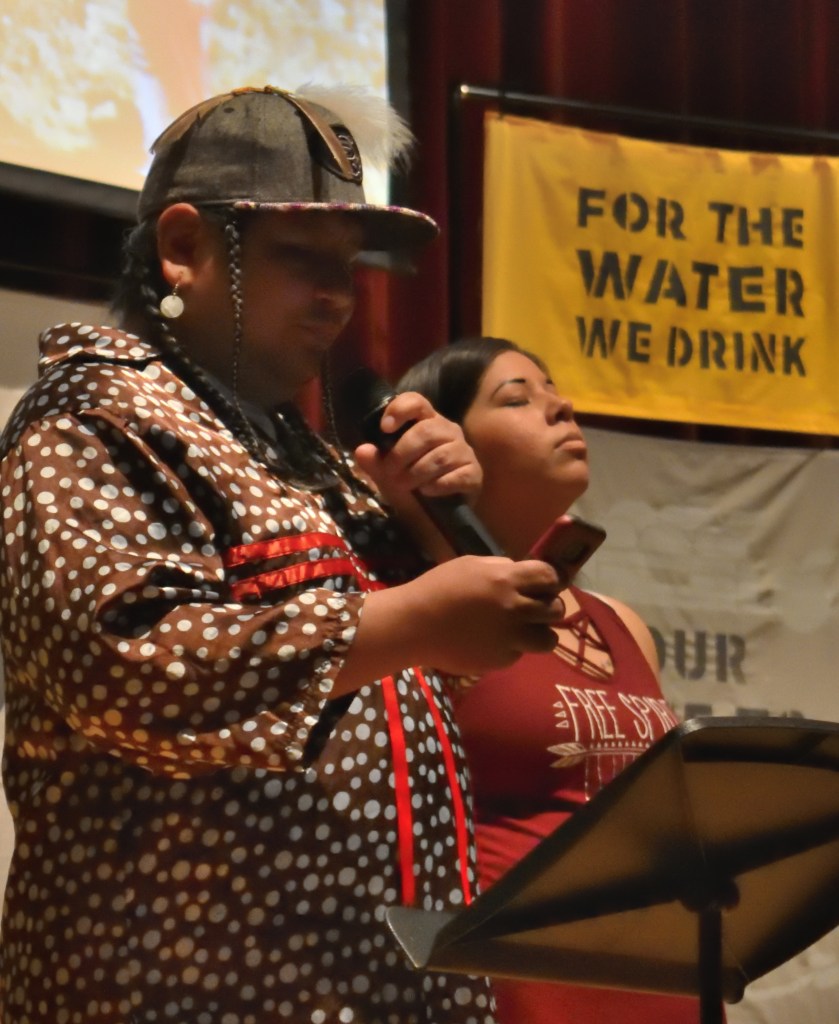
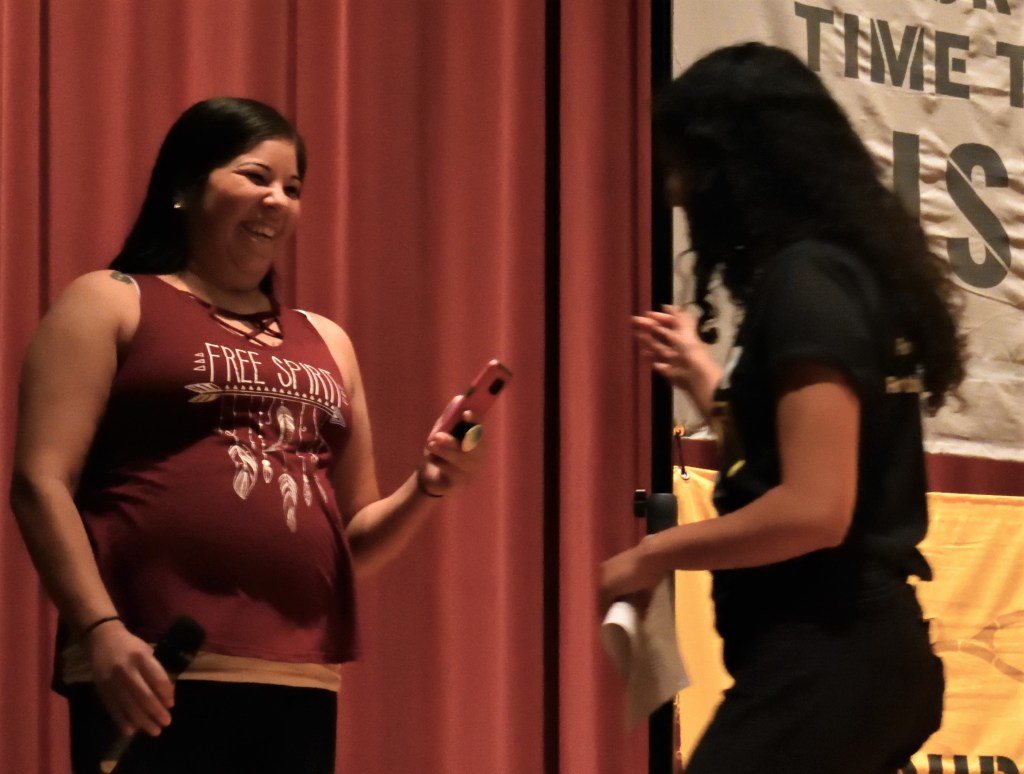
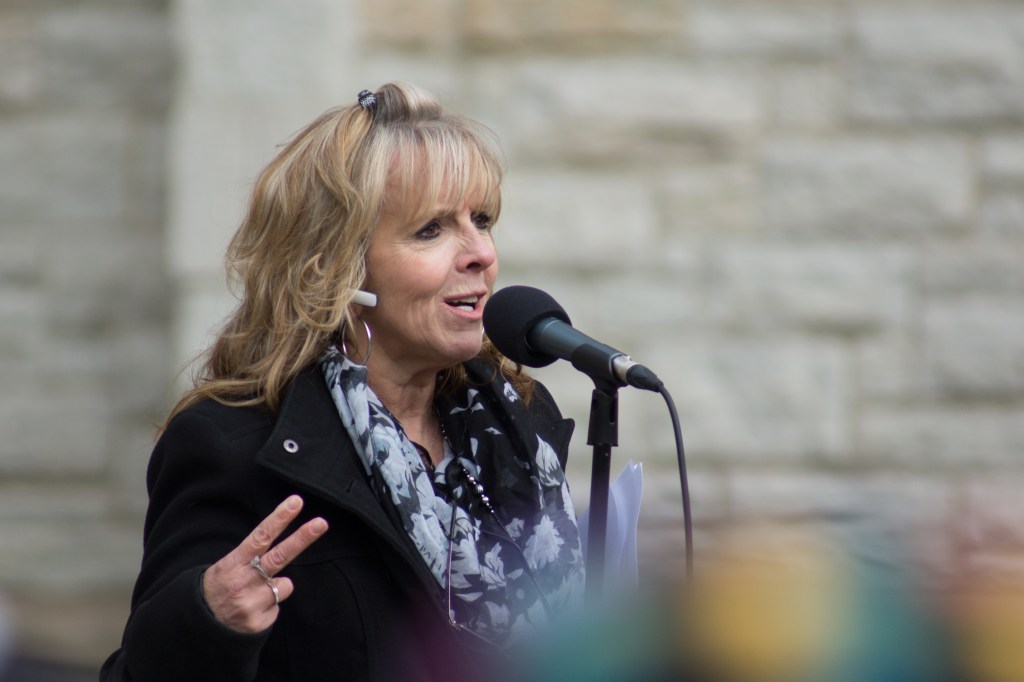
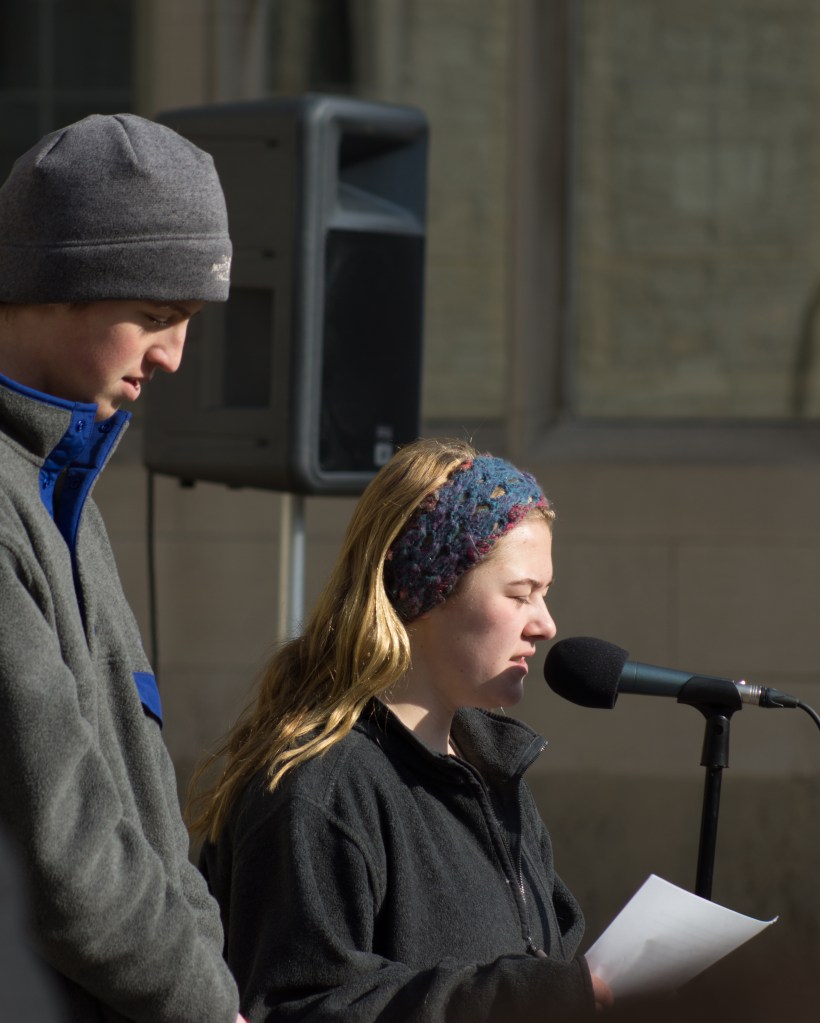
Seeing my friends Trisha and Lakasha on the program is proof that our coming together with the youth of the Sunrise Movement is a revolution that has begun and is rapidly growing. Trisha started to program with a Native prayer. Later she and Lakasha spoke of the need for an Indigenous led Green New Deal.
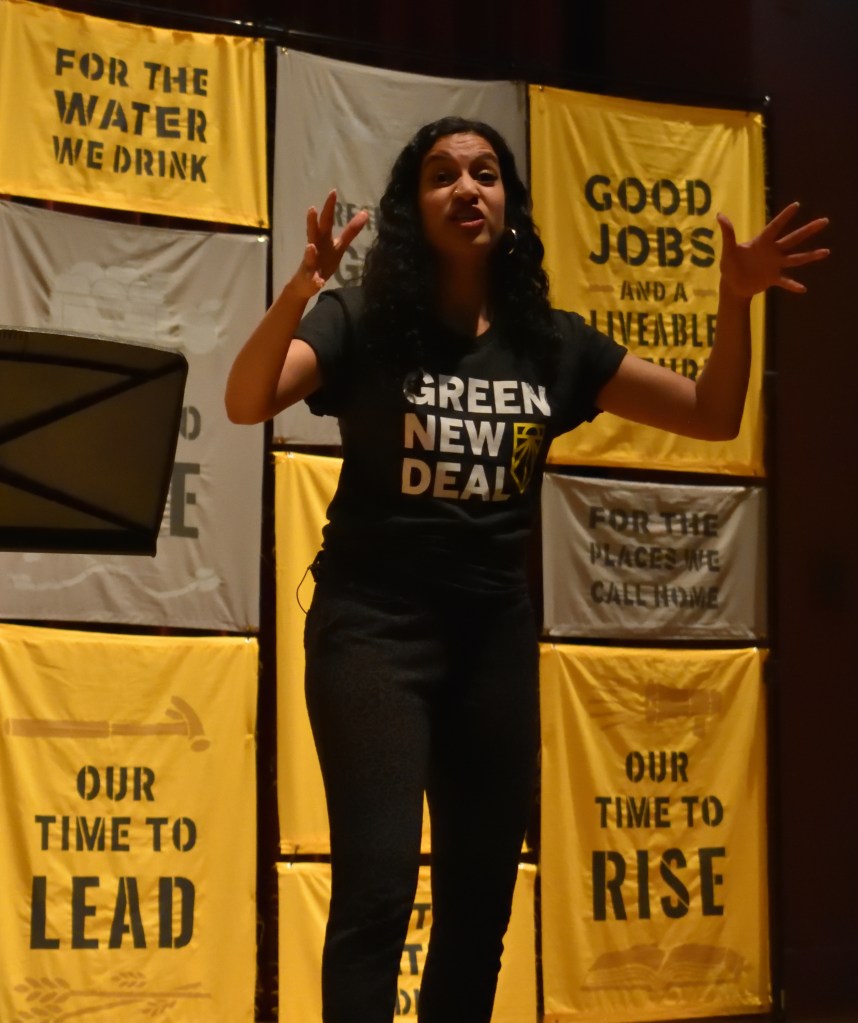
Sunrise leader Varshini Prakash led the evening program. She said sharing stories is always an important part of a Sunrise gathering. The first story was a video of a young man in Chicago, describing growing up in a poor neighborhood around chemical dumps. He described how he tried to hold his breath as long as possible as he walked past the worst areas.
Iowa Citizens for Community improvement (ICCI) is the leading organization supporting the Sunrise Movement in Des Moines. Bold Iowa has been trying to get involved, but things haven’t worked out, yet.
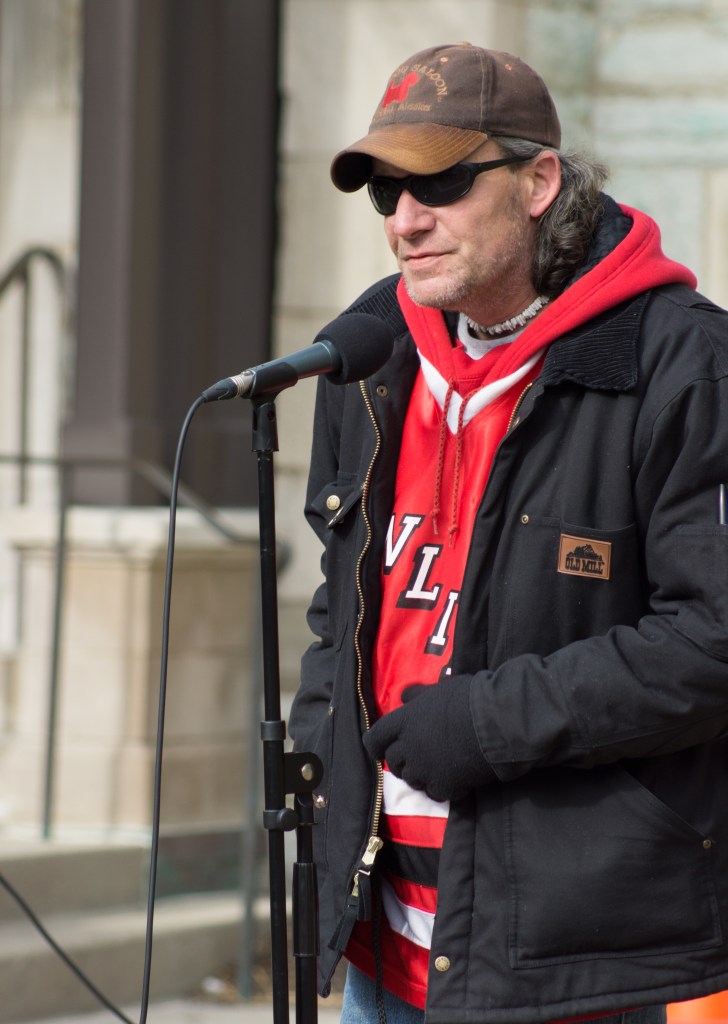
The next stories were told by Iowans who were adversely affected by Consolidated Animal Feeding Operations (CAFO) and by factory farms. Billions of gallons of animal waste are produced yearly, fouling the air and soil, getting into water systems. The large factory farms force small farms out of business, which leads to deserted small towns.
We got a surprise teleconference visit by Bill McKibben. He enthusiastically supported the Sunrise Movement.
Bill McKibben
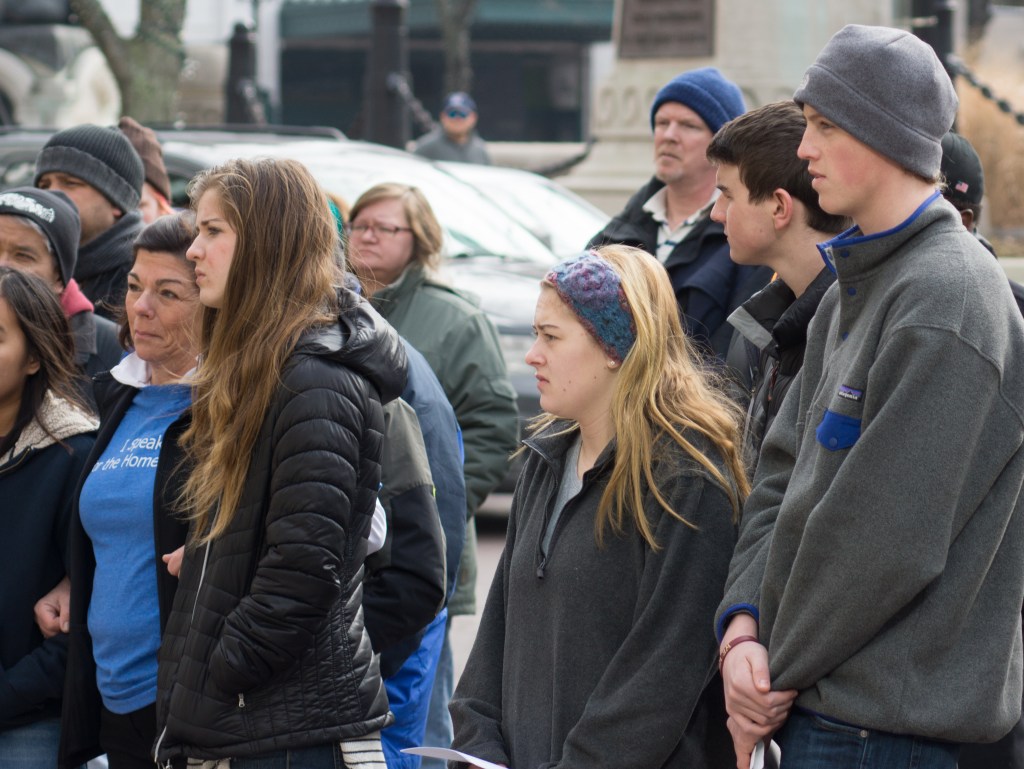
The audience of 450 said we need a Green New Deal.
After talking about next things happening with the Sunrise Movement and Iowa Citizen’s for Community Improvement (more on that later) the evening concluded. I was so happy to see Trisha, Lakasha, Sam, Jon Krieg and Patti McKee as the evening concluded.
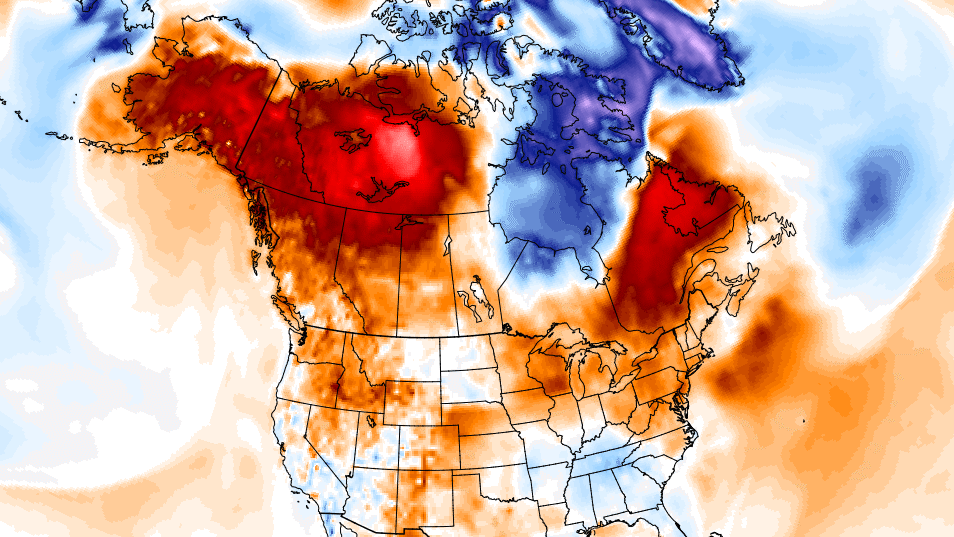
I’m not sure how most people think about Earth Day this year. The recent climate catastrophes, including the massive, intense fires in California, the series of severe storms across the country, melting of huge amounts of ice from the north and south poles, and the massive flooding in the Midwest have surely gotten the attention of most of this country. But many continue to refuse to see these things are all part of our emerging climate catastrophe. News reports of these events often say nothing about the underlying causes being climate change, but that seems to be changing, slowly.
In many ways it is discouraging to look back over the past decades to see how little progress has been made to make people aware, and see the need to address greenhouse gas emissions and other environmental issues.
Today we again face the question of what will make change happen, as opposed to protesting in the streets. Years ago my friend Alvin Sangsuwangul at the Kheprw Institute taught me how important it is to ask, “what actually changed (as a result of a social justice action)?”
I think there are good results that we aren’t aware of sometimes. Like the times we hold vigils about peace or pipelines, etc. Sometimes we hear from someone years later about how they were influenced by observing such things. I was going through the library, on my way to a peace vigil, when a librarian beckoned me over to ask if I was going to that vigil. She said she always likes to see us there as she drives home, and supports our efforts.
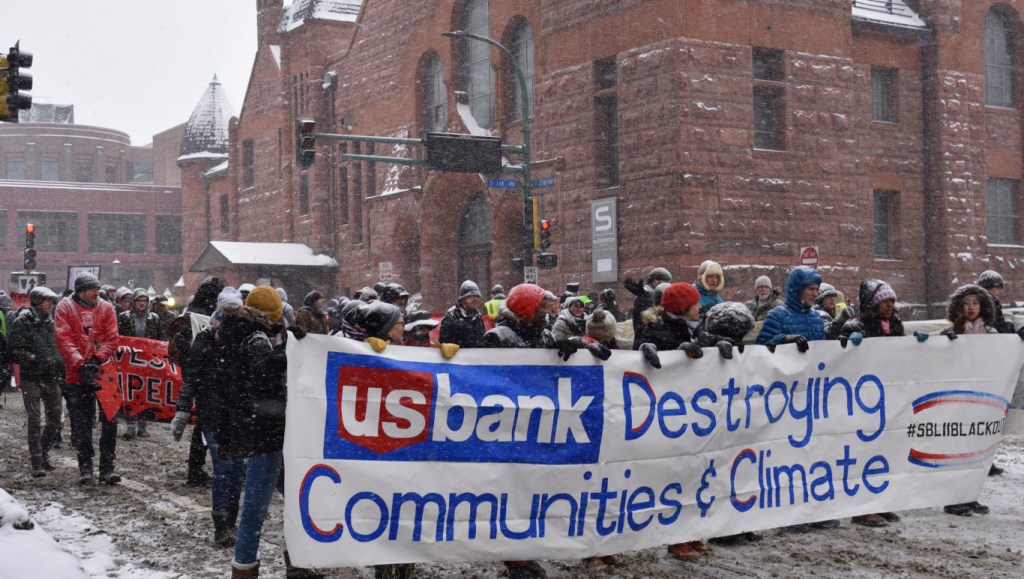
Another time I was in the Chase Bank lobby to close my account because of their funding of fossil fuel projects. Just before going there I was on the street outside with a sign saying “Chase funds Dakota Pipeline”. I brought the sign with me into the bank, because I had walked there and didn’t have any place to leave it. The security officer met me with a smile, and showed me where to wait. People would look at me out of the corner of their eye. When I was shown into a banker’s office, she smiled when she saw the sign and said, “I shouldn’t tell you this, but I support your efforts”. I returned to see her several days later, to leave a copy of the blog post I had written about our visit. When she saw me in the lobby she came out to get me. In her office, she said she and her husband had talked about our previous visit. https://kislingjeff.wordpress.com/2017/02/03/return-to-chase-bank/
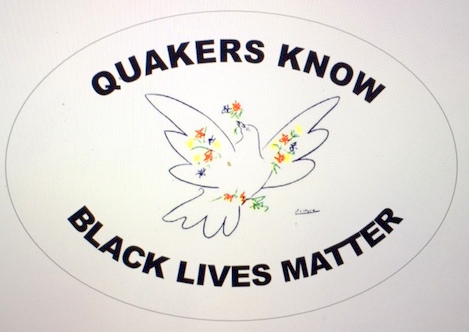
At another time I was at our weekly vigil, this time holding a sign that said, “Quakers Know Black Lives Matter”. A young black man parked his car and came up to me and asked, “Why are you doing this?” His manner was both curious and serious. I said something along the lines that I felt it was important that white people publicly acknowledge they believe this. Especially in a time when multiple police killings seemed to be saying that was not so. After all, who is this message directed at? I assume black people know their lives matter. That seemed to satisfy him. He smiled and shook my hand. But he also said, “this is a brave thing to do.” I only mention that to show how others perceive what we do, and to acknowledge to those of you who are considering doing the same that there is the potential for an aggressive response, although I have never experienced that myself. More about this at: https://kislingjeff.wordpress.com/2017/10/30/what-actually-changed/
Today there are three movements that are mobilizing many, many people to draw attention to climate change: the Sunrise Movement, School Strikes, and Extinction Rebellion.
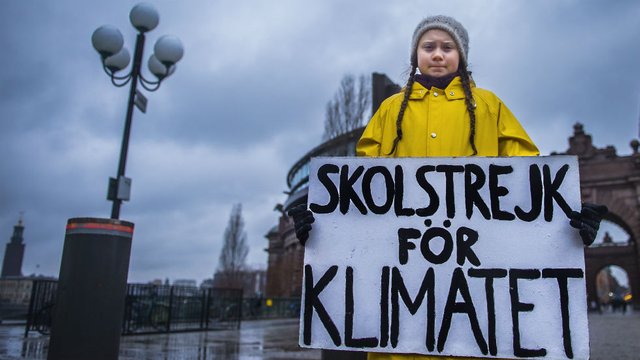
Thousand of students in Europe, and now in the United States, are striking on Fridays. Their message is very clear, about how nothing has been done about climate change, and they are and will continue to be living with multiple and increasingly severe climate disasters. They say they will not longer wait for others to take action.
Recent days have seen massive numbers of people in the streets of London, shutting down traffic. It is interesting that Greta Thunberg, the 16 year old Swede who started the School Climate Strikes, came to London to speak to the Extinction Rebellion demonstrators.
The Extinction Rebellion was one of the topics on Ed Fallon’s radio program last week.
As Britain’s Extinction Rebellion ramps up its colorful campaign of creative nonviolence, moving from the streets of London to cities across the US, that’s the conversation attorney Channing Dutton and I kick around on this week’s Fallon Forum. Are shutting down roads and bridges, disrobing in front of politicians, blockading media conglomerates the kind of actions the climate movement needs? Does posing that question even matter any more? Is it time for an all-out assault on climate apathy?
Fallon Forum, 4/15/2019
I called into the program to say I wasn’t sure what the goal of the Extinction Rebellion (XR) was, and spoke about my own experiences with social change during the anti-war movement in the 1960’s and more recently with anti-pipeline efforts. I wondered about the contrast between XR and the Sunrise Movement. Ed’s guest, Channing Dutton talked about the anti-war movement not having well defined goals when it erupted, but over time changes occurred leading, finally, to the end of the Vietnam War. You can hear a recording of that discussion here: http://fallonforum.com/listen/
Visualizing what the Green New Deal could look like in the future
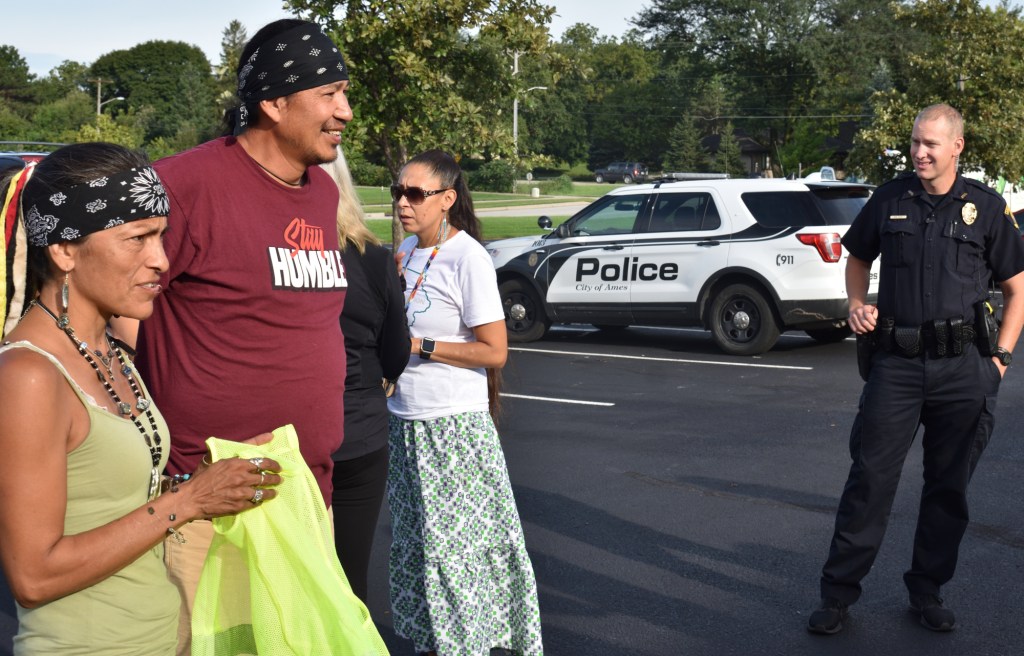
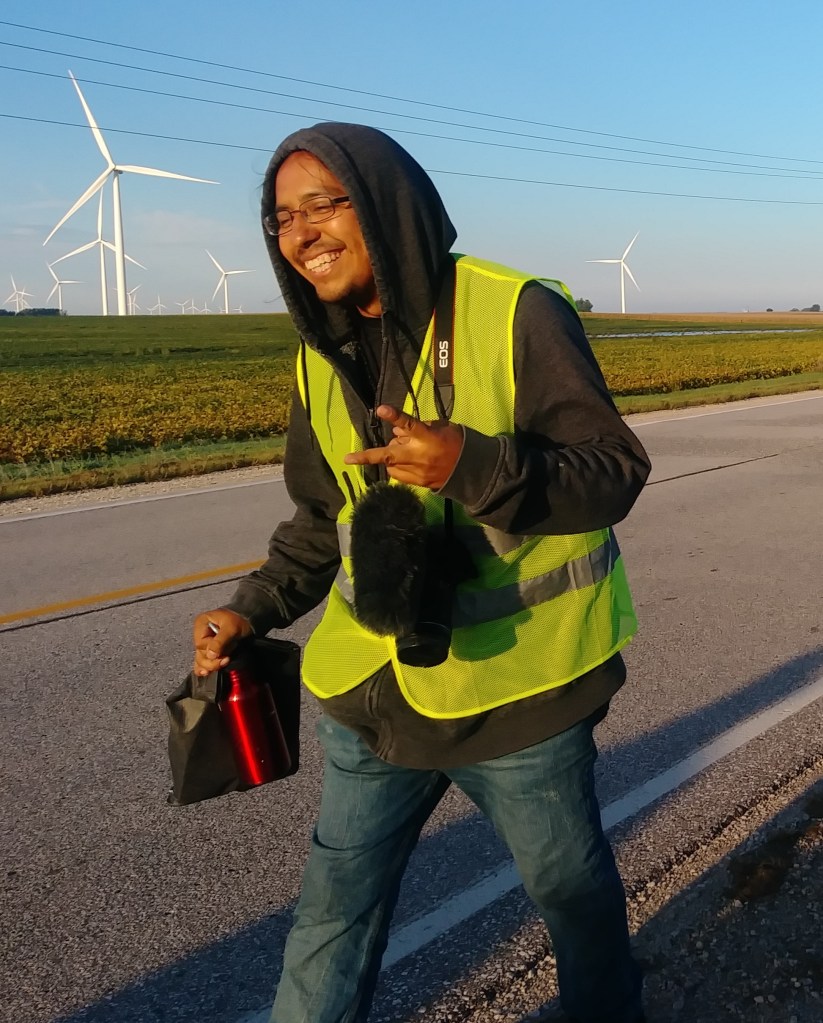
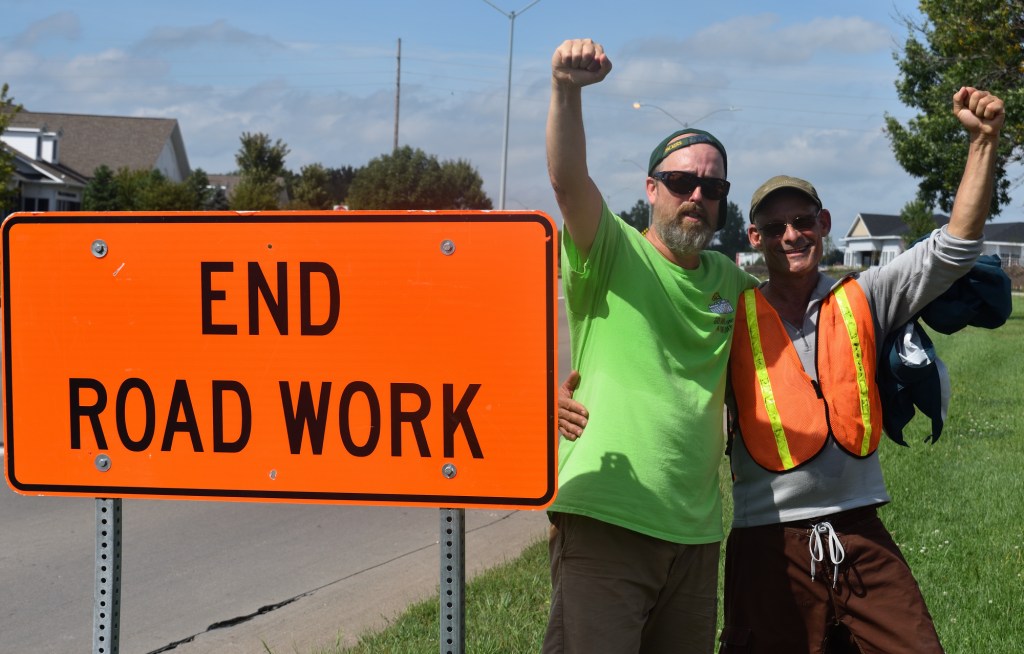
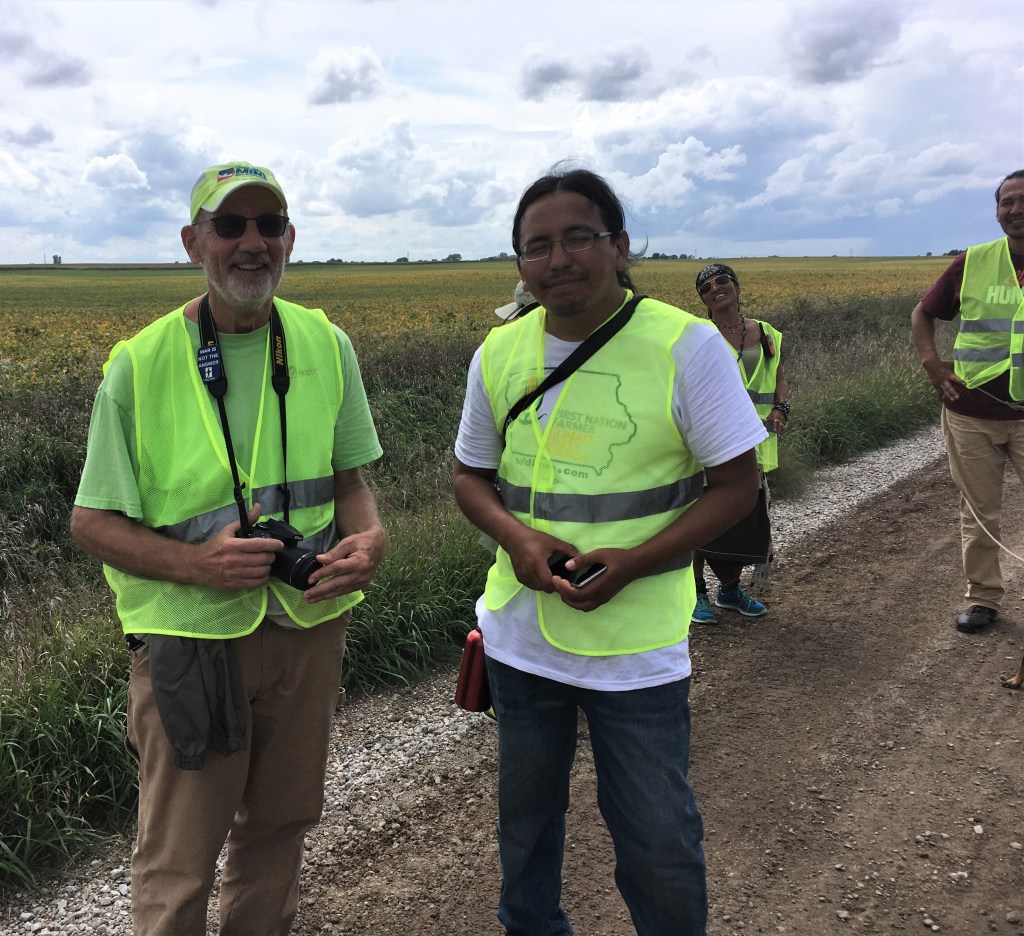
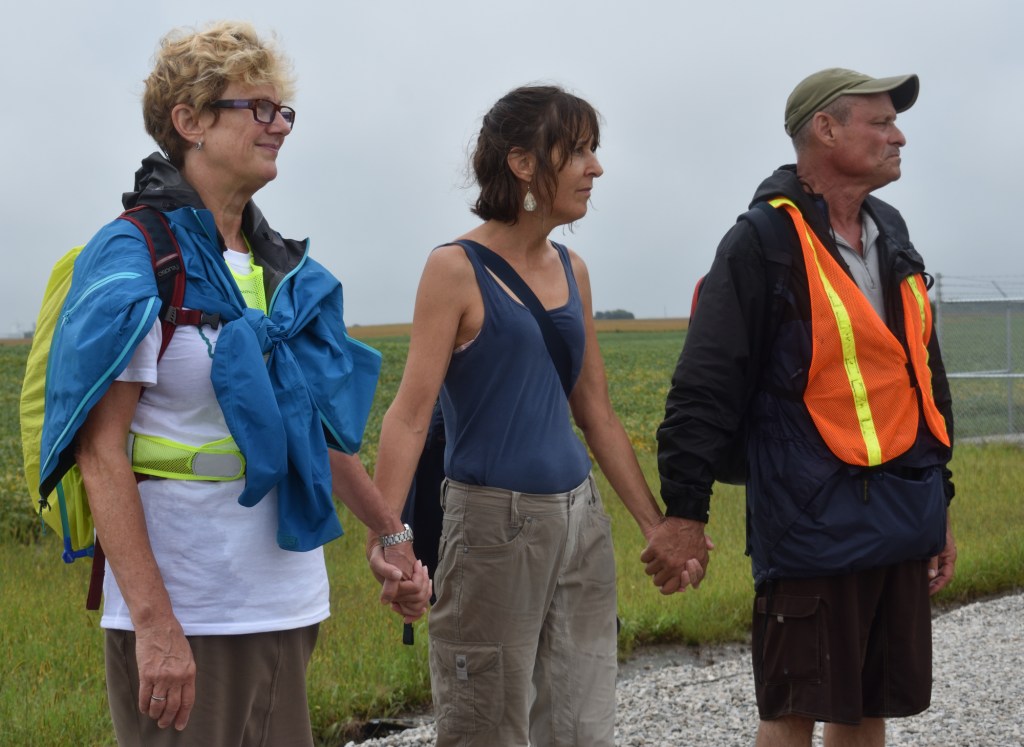
One of the main goals of the First Nation-Farmer Climate Unity March, where a group of about 50 Native and non-native people, and one dog, walked along the path of the Dakota Access Pipeline from Des Moines to Fort Dodge, Iowa, was to build a community of people who got to know each other well enough that we could work on things of common concern.
Alton and Foxy Onefeather have been in Des Moines for the past week to help Peter Clay put siding on his garage. One of the things we learned on the March was about Alton’s experience in supervising construction projects. Alton and Foxy also participated in one of Bold Iowa’s bird dogging events at a Corey Booker event.
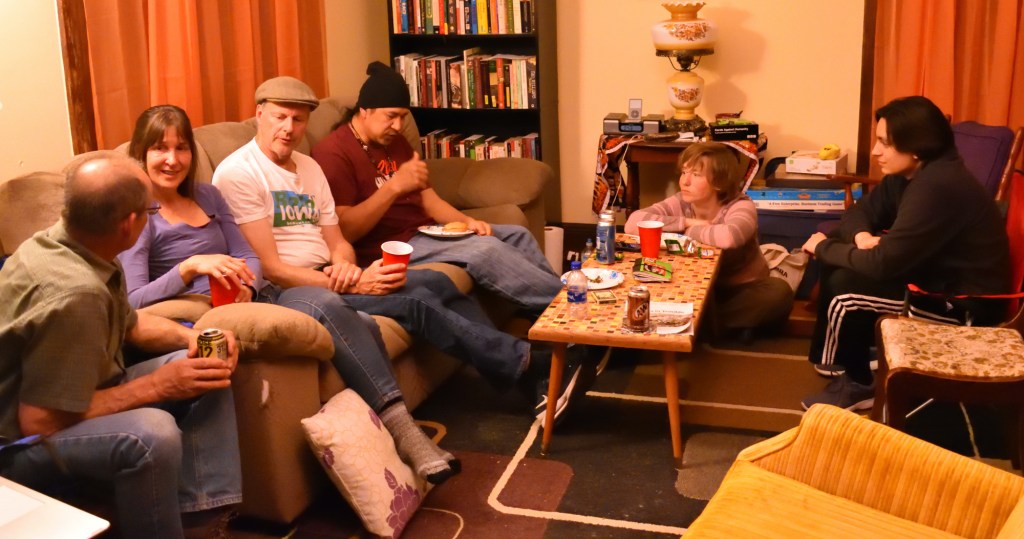
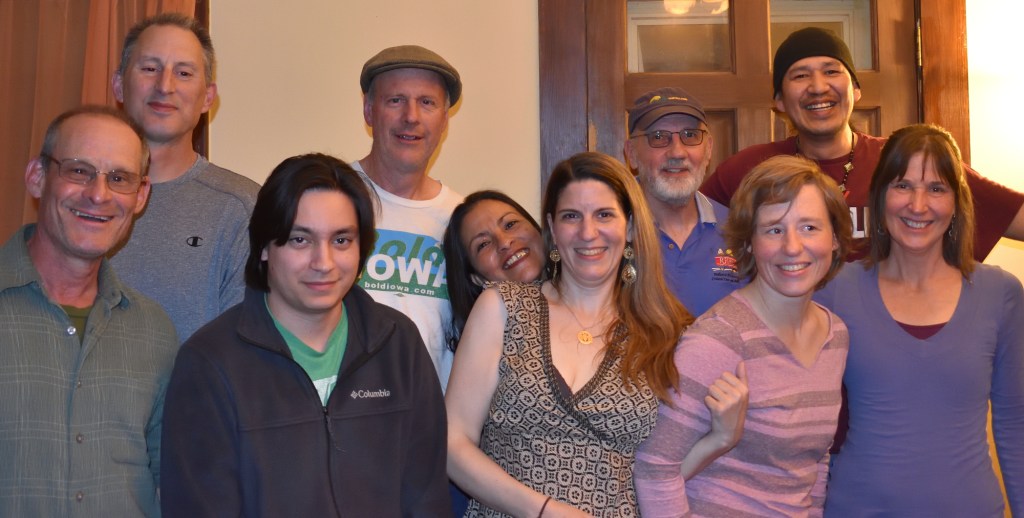
Thanks to Sam Kuhn for arranging a party for this opportunity for a reunion of those marchers who lived close enough to Des Moines. We all wished more would have been able to attend, but I think you can see how much those of us who could come enjoyed each other’s company.
One of most meaningful conversations for me was with Foxy Onefeather. She told me what she thought about a blog post I wrote about the things I had learned from her during the March. She was very graceful as she spoke about how that was the first time she had seen a written version of her story. I asked her if I got it right. She said yes, I had. I then apologized for not checking with her before posting the blog. I have since learned how important it is to check with people before sharing stories like this. She said “yes” that probably would have been best. At first she was a little concerned when she read it. She said she was also surprised because she hadn’t thought I had listened so closely at the time she was telling me her story (as we were walking through Ames, Iowa). I’m glad I had been writing about each day of the march when we stopped for the night, but I still have a vivid memory of her telling her story because it was so moving. One of the main things I remembered was her saying she didn’t experience racism until she moved to the Midwest (she had been living in California, I think).
Foxy decided it was alright to share her story in writing. This relates how indigenous people pay close attention to oral history, so this was new to her.
Foxy also mentioned that she and Alton have been following my blog. They are fairly isolated where they live in South Dakota and so don’t have a lot of contact with the wider world. What they read there helped them realize some non-native people also care for the water, air and earth.
She mentioned she enjoyed the slideshow we were looking at of the (850) photos I had taken on the march, and that she had a number of photos of the March on her phone. Foxy suggested they be added to my photos. I am really excited to see them, and will add them to the March photos.
I still feel badly that I didn’t check with her and Alton about sharing their stories, but some good came from that. Even before Foxy and I talked last night, my Friend Liz Oppenheimer had been making me aware of how important it is to ask for permission before sharing people’s stories.
Why would I post something with explicit language? Because our very survival depends on all of us to wake up now. As the song Earth below says, “we gotta love the earth, we’re being stupid.” If shocking language is what jolts people into action, that’s OK with me. Self righteous comes to mind. It can’t really be a choice between swearing and trying to save the earth, can it?
I’m sure this will resonate with youth today. This song is already being heard around the world because of all the artists that have contributed to it. There have already been 2.6 million views in the 9 hours since it’s release.
For the past three years, Lil Dicky has quietly been creating one of the biggest all-star charity records since “We Are The World” and he’s finally ready to share it. “Earth,” a song about the desperate need to save the environment before it’s too late, was produced by Benny Blanco and Cashmere and features the rapper alongside Justin Bieber, Ariana Grande, Halsey, Zac Brown, Brendon Urie, Hailee Steinfeld, Wiz Khalifa, Snoop Dogg, Kevin Hart, Adam Levine, Shawn Mendes, Charlie Puth, Sia, Miley Cyrus, Lil Jon, Rita Ora, Miguel, Katy Perry, Lil Yachty, Ed Sheeran, Meghan Trainor, Joel Embiid, Tory Lanez, John Legend, Bad Bunny, Psy, Kris Wu, Backstreet Boys and Leonardo DiCaprio.
As I started thinking about my song, I thought, “It’s probably a good thing that all the profits that come from this song go to charities involved in saving the environment.” It was always in my head that this was going to be something that helped raise money for environmental issues, but I didn’t really know the facts. I looked into it and was blown away. I didn’t realize, remotely, that it was such an urgent, dire situation. I didn’t know that we literally have 12 years to completely change how we do so many things on Earth, from a fundamental standpoint, or the damage will be irreversible and in our lifetimes we’re going to experience such drastic impact. Upon realizing that, it went from a silly song about animals to, “Oh my God, this is the most important thing I’ll ever do.”
Recently my sister Lisa encouraged me to share more of my photos. I’ve enjoyed doing so and hearing people’s comments. Once in a while I’ll think about all the time and effort I put into photography, and how that will all disappear when I’m no longer here.
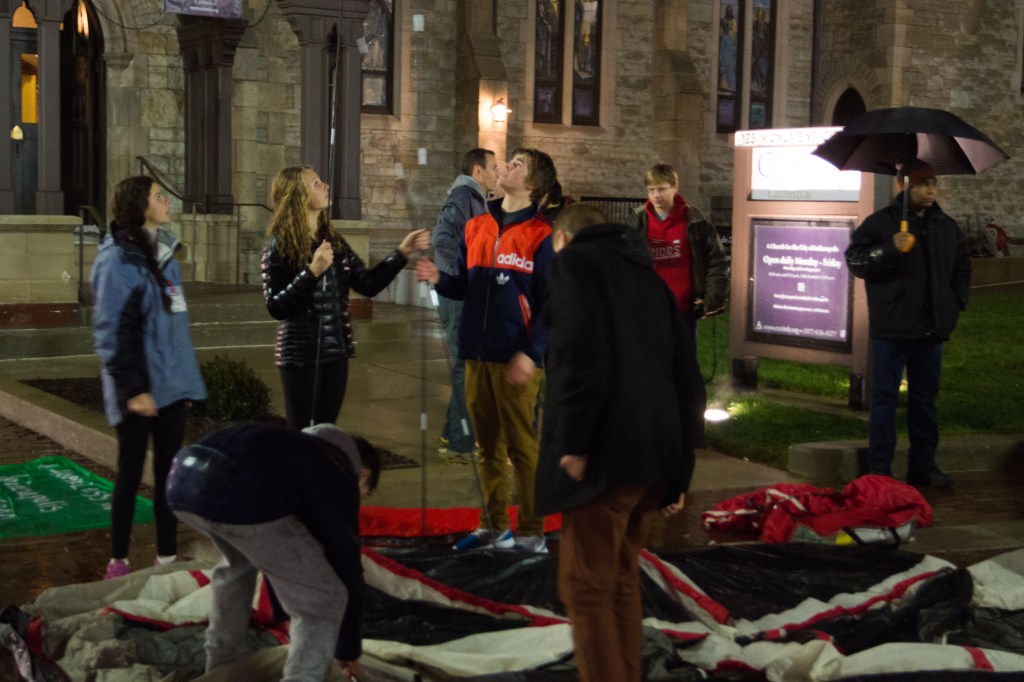
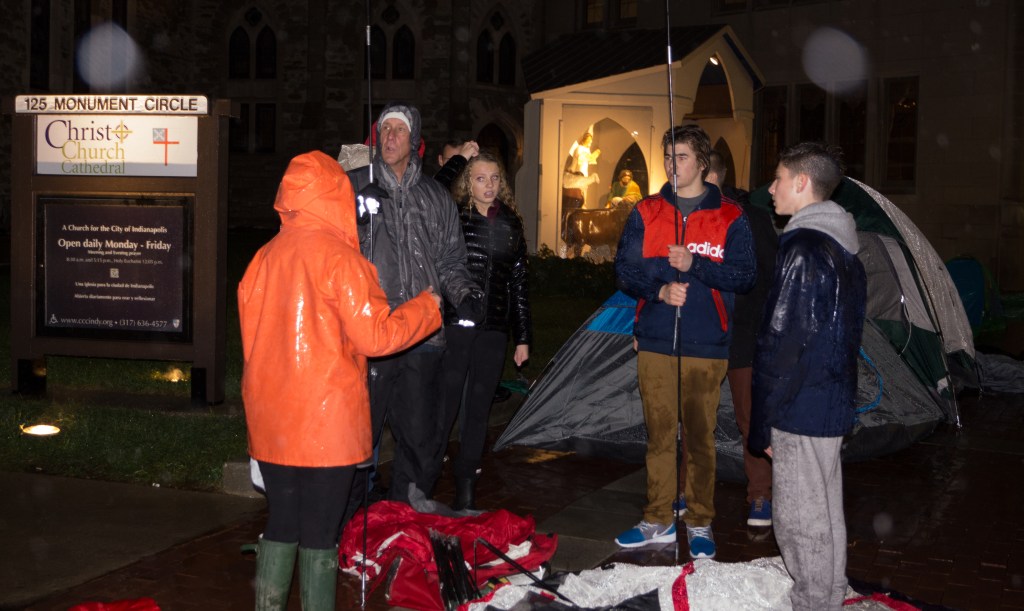
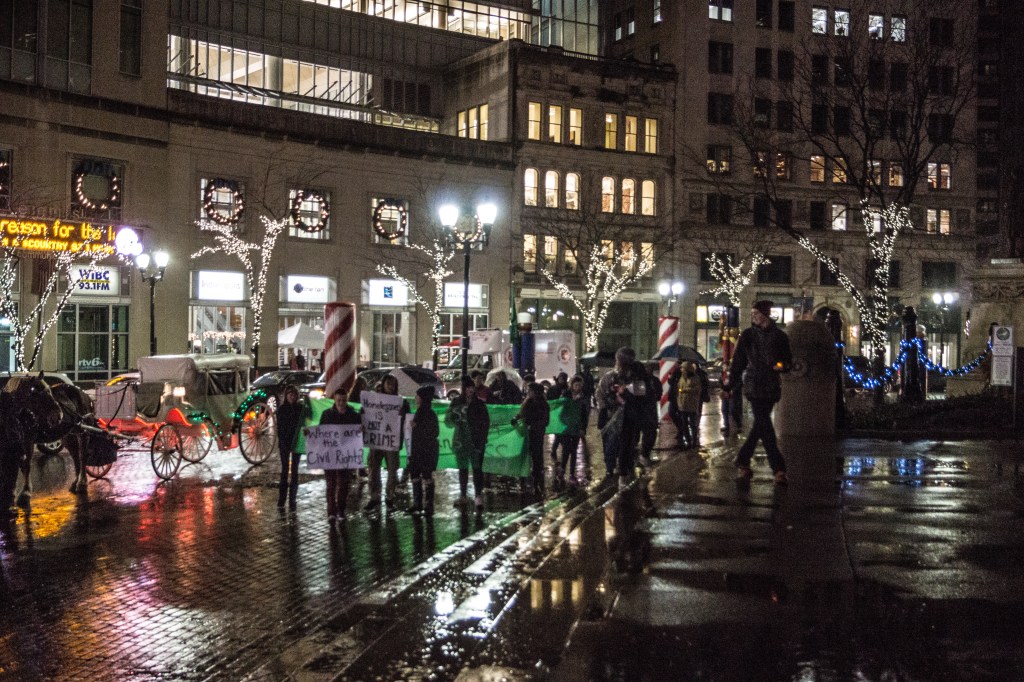
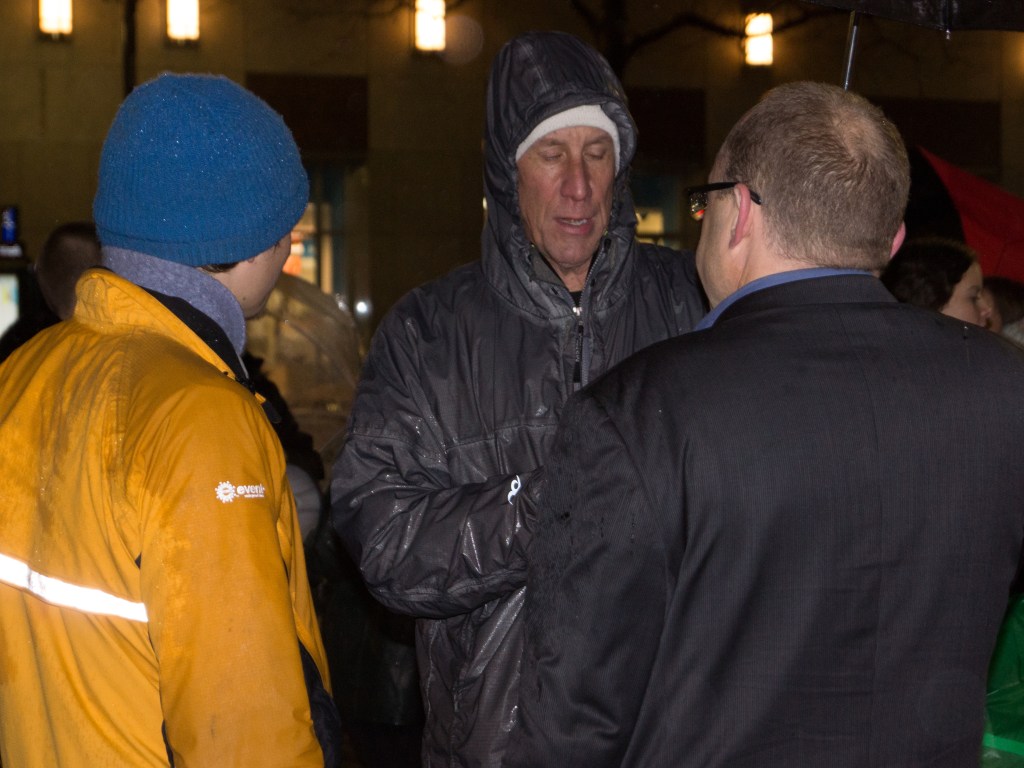
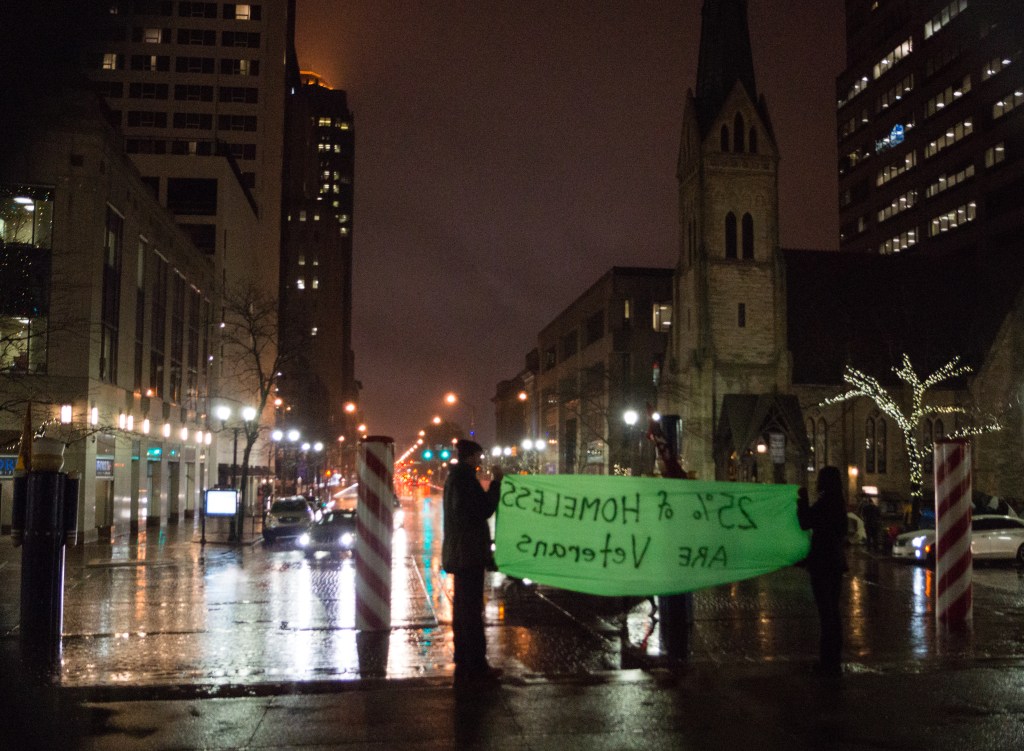
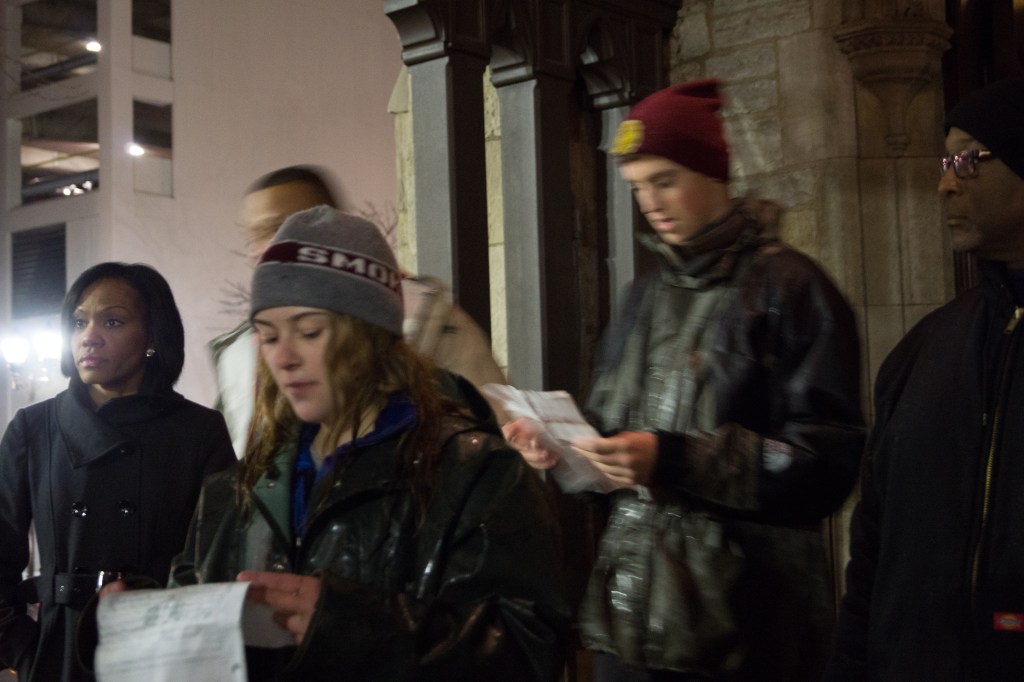
Some great surprises have come from this. Yesterday I was reminded of a series of photos taken on a very rainy night in downtown Indianapolis. My friend Jim Poyser was involved with a group of students from Brebeuf, a Jesuit high school in Indianapolis. The students were concerned about the homeless situation in Indianapolis, and decided to camp out on the Circle in the center of the city to call attention to that. Dana Parker and Parker Herschberger were the student leaders.
Dana Parker and Parker Herschberger
Jim knew I enjoyed taking photos of social justice actions and asked me to attend this gathering. When the evening arrived there was a sustained, heavy rain. I was sure the camp out would be canceled, and I really didn’t want to go out into the rain. I also knew it would be a real challenge to get decent photos in the dark and the rain.
But I had told Jim I would be there. Also, try as I might to talk myself out of going, there was a persistent pressure from my Inner Light that was pushing me to go. So I walked 14 blocks downtown, not expecting to see anything. Instead I was rewarded with the amazing sight pictured below.
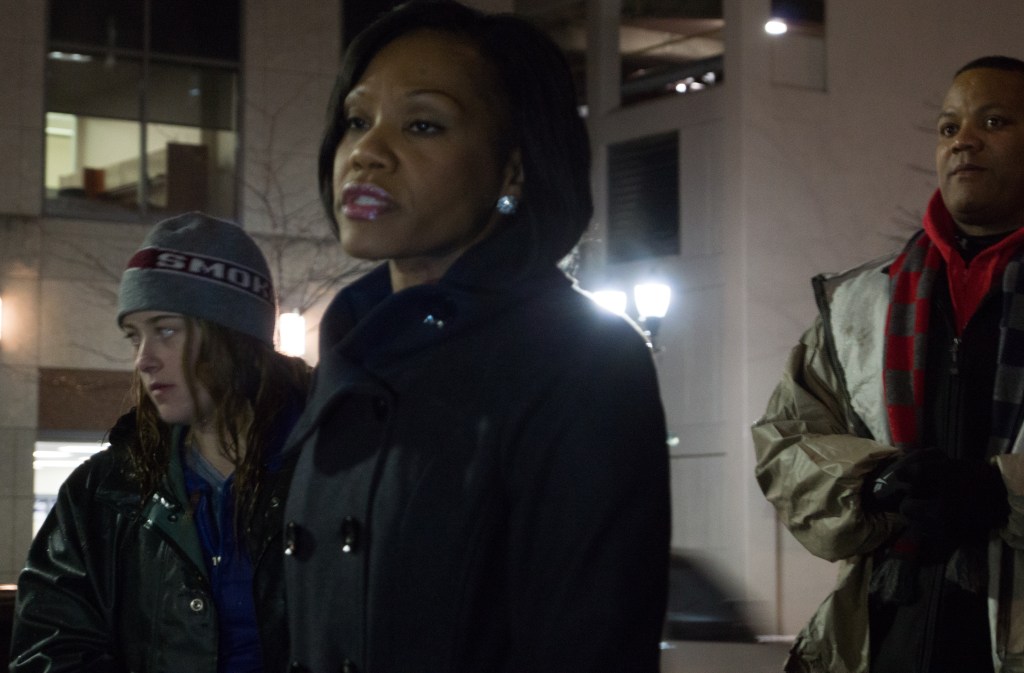
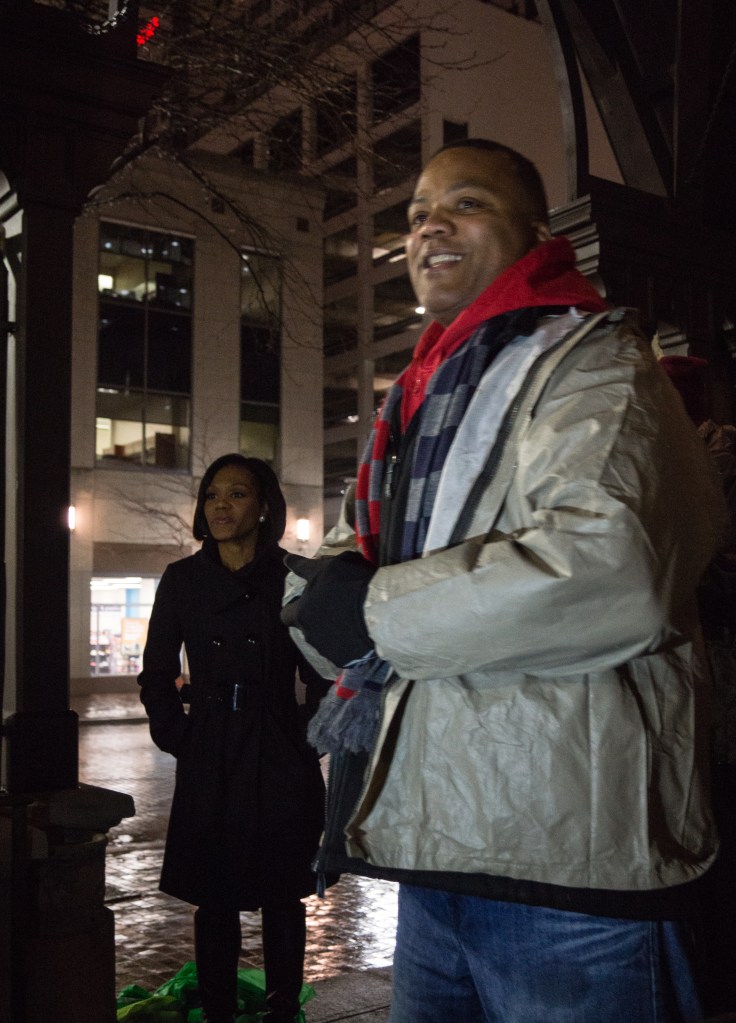
The students held another rally, this time without rain, to continue to bring attention to homelessness. Several city council members were there. And some men who didn’t have homes at the time, also spoke, very movingly. These are two important points about pubic advocacy. Persistence is important. And it is also important to lift up the voices of those who are experiencing the injustice.
This work continued when several months later, during a Martin Luther King, Jr, celebration at the Christian Theological Seminary, both Jim and Dana gave presentations. Dana talked about the homelessness work, including showing some of the photos I had taken that night.
Jim talked about his work in bringing youth to the state legislature to talk to lawmakers about youth’s concerns about the environment.
Last night after posting some of those photos, I received a great message from Dana. “Thank you for remembering this as wonderfully as I do! I’m currently studying at Trinity College in Hartford, CT and recently declared my major as human rights!”
Working on issues of injustice is often difficult, and it can seem not much progress happens. But I enjoy the stories here as examples of how things can unfold. The persistence of these young people, the leadership of Jim Poyser, the inclusion of those experiencing homelessness, and the creativity of their efforts is a story of how this work can succeed.
Watching something that took centuries to develop, something that can never entirely be recreated, disappear in the comparative blink of an eye — that, in slow motion, is going to be the dominant feeling of the 21st century. Only instead of buildings: glaciers, forests, species.
That is one of many things I’ve been reading and thinking about, that contrasts the fire at the Notre Dame Cathedral in Paris to the burning of Mother Earth.
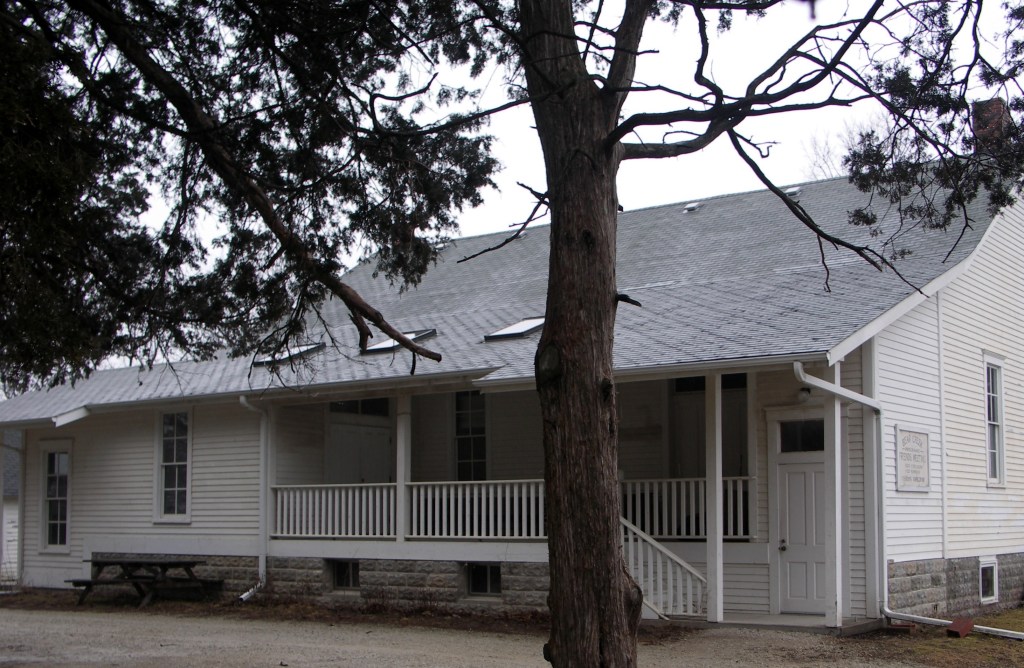
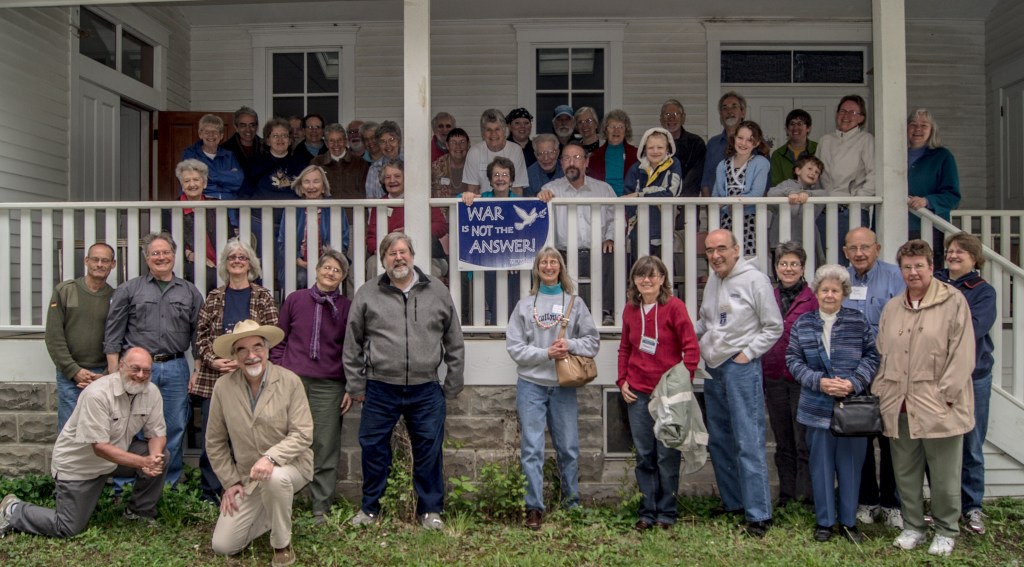
I am saddened by the damage done by the fire. I’ve read how many feel a spiritual presence when they are there. I have what must be similar feelings when I am at my local Quaker meeting, Bear Creek Friends, in the countryside north of Earlham, Iowa. Many other Friends and visitors have spoken about that effect themselves.
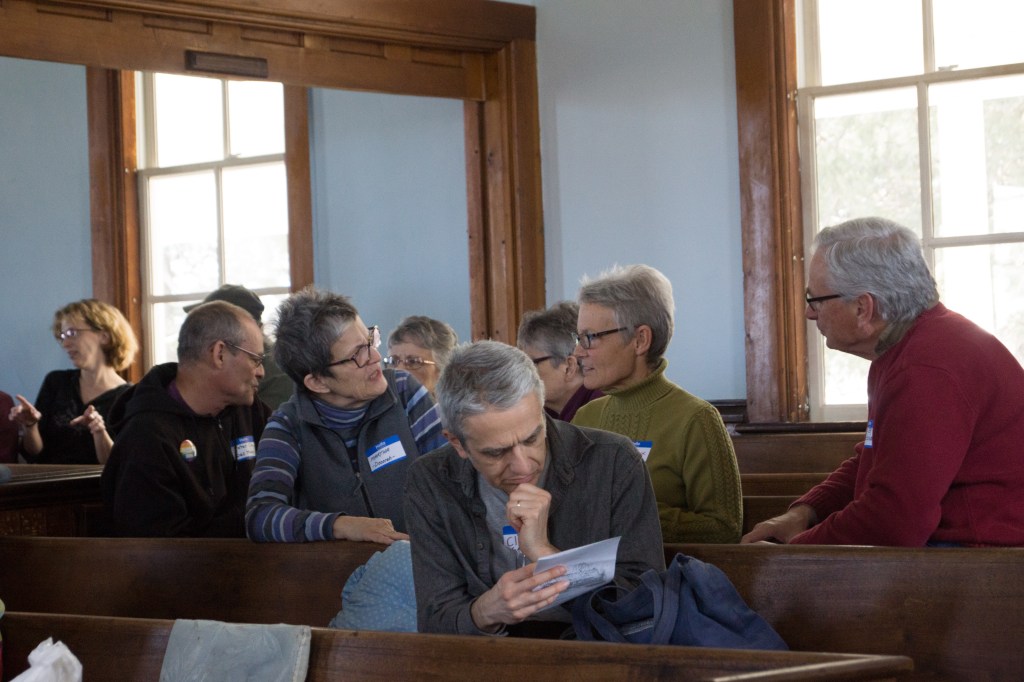
I would feel badly if our meetinghouse was damaged or destroyed by fire or storms. But that would not affect the spiritual essence of our Quaker community. “For where two or three have gathered together in My name, I am there in their midst.” Matthew 18:20. I believe most Quaker meetings began with Friends gathering in each others homes. A physical structure is not needed. When meetinghouses are built, they have a simple design, and are unadorned with steeples, crosses, stained glass windows, or other religious art. Many in the past were built in rural areas because many of the members were involved in farming. Being in a rural setting helps us feel close to nature, connected to Mother Earth. Those that are in rural areas also benefit from the quiet, which is at the heart of our meetings for worship.
Native people don’t even have separate buildings for their spiritual practices, because every moment of everyday, wherever they are, is spiritual.
The natural world is my cathedral, and that of millions of others. No building can compare to the majesty of the mountains, valleys and plains. Or at least that used to be the case before greedy men destroyed much of that with extractive resource practices. I still can’t begin to understand the idea of mountaintop removal.
From a young age I was always troubled by the vast amount of money and resources it took to build these great cathedrals. It seems so unjust to have these enormous buildings filled with organs, gold plated relics and symbols, and stained glass windows in the midst of so many who live in poverty.
I know the argument is such buildings last for centuries, and help with the parishioner’s spiritual lives. Part of my problem with such buildings is “who are the parishioners”? They tend to be wealthy and of the ruling class. I know this is less so for the churches in smaller towns because there aren’t that many of the ruling class there. But I can’t help but see these large cathedrals as concrete symbols of dominant cultures. Too often the clergy were involved in the politics of that dominant culture. And these days the news is filled with stories of sexual assault by clergy. And the news of the extent the church hierarchy has gone to protect the offenders.
So it has been so painful to me to see the outpouring of grief, and the immediate monetary response to the burning of the Notre Dame Cathedral in juxtaposition to the utter lack of response to the burning of Mother Earth, our very home.
And it has been both painful and enraging to see how surprised many people seem to be by the devastating, ongoing flooding here in the Midwest. The span of my life of trying to help others see these things were going to happen is nothing compared to the centuries indigenous people have been doing that.
And yet, even as people are beginning to realize no one is immune to the climate catastrophes that will continue, they fail to understand how our capitalistic system itself, based on resource extraction, has to change now if there is any hope for however few generations may survive.
Yesterday’s blog post about the Extinction Rebellion, and responses to that, has made me realize many people are unclear about how to respond to the urgency of climate catastrophe. While it is good to see people are waking up to the dangers of climate chaos, we are seeing a variety of responses, not all of which are effective or in line with my beliefs about nonviolence.
Prior to the annual sessions of Iowa Yearly Meeting (Conservative) in 2017, I encouraged the members of the Peace and Social Concerns Committee to read the book by Chris Moore-Backman, The Gandhian Iceberg, that calls for a national nonviolent movement. The following is from the report of that committee that was approved by the Yearly Meeting:
We grappled with what it means to be peacemakers in a violent society. U.S. politics have descended into deadlocked ideologies, neglecting real imperatives. Our country has expanded its military operations around the world and militarized its local police. State sanctioned violence has killed unarmed people. Denying basic needs for clean water and air, food, housing, education, safety and medical care is also violence. The witness and commitment of the Water Protectors at Standing Rock inspire us, as does the support for them from Indigenous Peoples all over the world. Nahko Bear, a Native American activist and spiritual leader, told the gathering of youth who had been attacked by dogs the message he was given repeatedly as he traveled around the world: “remember that nonviolent direct action is the way to a successful revolution.” An Iowa Conservative Friend was arrested in nonviolent action protesting the Bakken pipeline in Iowa. Stories collected by Don Laughlin remind us of the witness of Iowa Quakers who were imprisoned for refusing to participate in the military. We seek ways to share these stories with the wider community. Members of our Committee were encouraged to study the new book calling for national nonviolent direct-action, The Gandhian Iceberg, by Chris Moore-Backman, who sent us the following message: I pray that Quakers and others will move to hold bold action far above the careful crafting of right answers. In the end Jesus’ teaching is simple. Letting go of our attachments to our personal status quos is the catch. Intellectual rigor and discernment has its place, of course, but only – I believe – in service to direct, loving action and sacrifice. We accept the admonition of the Rev. William Barber, who called for us to be the moral defibrillators of our time; to shock the nation with love and justice; to remember that Jesus was a brown skinned, Palestinian Jew; to return to the public square. We encourage Friends to provide witness with peace vigils in public squares and to speak out in print and social media and legislators’ offices. In 2006 the Yearly Meeting approved the following Minute: Basic to Quaker belief is the faith that the same Light we recognize in our own hearts illuminates the souls of all other people. This belief leads us to seek nonviolent means of resolving conflicts at all levels— interpersonally, within communities, among nations—and to work for justice as a basis for lasting peace. We find ourselves bound in many ways as citizens of the United States to policies of our government which are abhorrent to us and in violation of our most deeply held beliefs. Our efforts to encourage our government to establish policies that will lead to peace and justice here and around the world have not been adequate to bring about the change which is so urgently needed. The destructive forces unleashed in our world threaten the future of all people and the planet itself. Throughout our history, Quakers have at various times found ourselves called to suffer for beliefs which have placed us in opposition to our government. Based on this history of courageous witness, we challenge Friends to now consider participating in nonviolent civil disobedience. This call is even more urgent today. We encourage Friends to discern how they are called to bear witness for peace and justice and to support each other in doing so.
Peace and Social Concerns Committee Report, Iowa Yearly Meeting (Conservative) 2017.
The above report includes a quote from Nakho Bear. This is more of what he said that evening. “Remember that nonviolent direct action is the way to a successful revolution. And that is a hard one, because they are so bad (chuckles). When they come at us you just want to hit ’em, you know? Just sit with that. I know it’s tough. They’re going to try to do everything they can to instigate you. But remember what we’re here for. We’re here to create peace for our Mother. We’re not here to create more violence.”
A commitment to nonviolence has to begin with the individual for many reasons. Nonviolence has to become the way you experience every moment of your life, before you can effectively engage in the outward parts of nonviolence, which may eventually lead to participating in direct action, or may never.
We each have to discover the many, often insidious threads of violence that are part of our own lives. Our relationships with others, our treatment of our environment, plants and animals, our social and political lives can all have violent aspects that we may be unaware of until we begin to pay close attention to them. As can seen from this list, violence means much more than physical force. A useful term is power in its many forms, which can be used to influence other people and entities in ways that are unwelcome or detrimental.
As we learn more about ourselves, we learn there are always new things to be aware of, which makes us more open to consider new ideas and able to change ourselves. This makes us more tolerant of others, knowing they can engage in these same processes, and we can help others do so, when conditions are appropriate.
This is a core concept of nonviolence, that success is measured by how much progress is made toward justice together, which often involves changing not only those who have been engaging in injustice, but also changing ourselves. It is often the awareness by others that we are willing to change that makes it possible for them to consider changing too. Deeply listening to each other is key.
As I was working on today’s blog post, I got a message from my friend Ed Fallon, that he will be discussing the Extinction Rebellion (XR) on his radio program, the Fallon Forum, today. You can listen to the program from 11:00 am- noon on Mondays here: http://173.193.205.96:7391/stream If you miss it, you can hear the podcast at a later time.
There is an article in a recent issue of The Guardian about the Extinction Rebellion, which started in the United Kingdom, coming to the United States:
“This is a coordinated rebellion that targets industry and government indefinitely, to shut the country down,” Ruiz said. “In my 30 years plus of activism I’ve never seen so many everyday people worried in such a visceral way, for themselves, their children, their grandchildren. It’s unprecedented.” Some activists hope the arrival of Extinction Rebellion will be a watershed moment for the US environmental movement, shifting it from what they see as a tepid response to the cavalcade of disasters threatening the livability of the planet. Extinction Rebellion is aimed at spurring a muscular, punkish outpouring of civil disobedience, snarling cities and frogmarching politicians towards meaningful action. In the UK, Extinction Rebellion members have caused uproar by halting traffic on bridges in central London, stripping naked in parliament and blockading the BBC. Last week, protestors glued themselves to the entrance of a fracking conference.
Extinction Rebellion (U.S.) is calling for this week, April 15-22, to be a week of action.
We invite everyone who hasn’t already to do the painful work of confronting that fact that we only have 12 years to make the necessary changes to avert an unimaginable climate disaster, and to act accordingly. This is a process that can include anger and deep grief. We join you in this anger and grief. Organizing is the antidote to despair. Overall, many of us need more courage than hope. Action is our best hope. We invite everyone to join XR in asking: “How will we become the people we need to be in order to do what’s necessary to stop this destruction of all life while we can? “ We call on everyone who knows we are in a climate emergency to use nonviolent direct action to confront, disrupt or shut down
target local, city, state, federal government buildings
target fossil fuel companies and infrastructure
target local, city, state officials – who gain power and make money while protecting the fossil fuel industry – in their offices or in family friendly protests at their homes and communities
target right wing media outlets like Fox News or Breitbart for lying to the people to protect the fossil fuel industry and to enrich themselves
“Historical studies suggest that it takes 3.5% of a population engaged in sustained nonviolent resistance to topple brutal dictatorships. If that can be true in Chile under Gen Pinochet and Serbia under Milosevic, a few million Americans could prevent their elected government from adopting inhumane, unfair, destructive or oppressive policies – should such drastic measures ever be needed.”
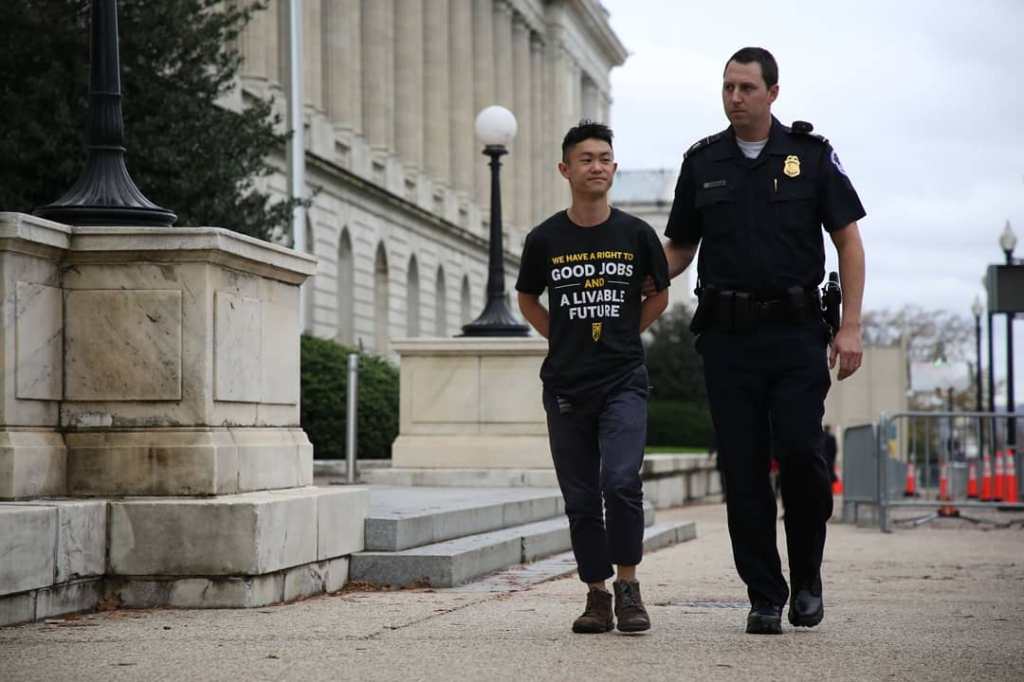
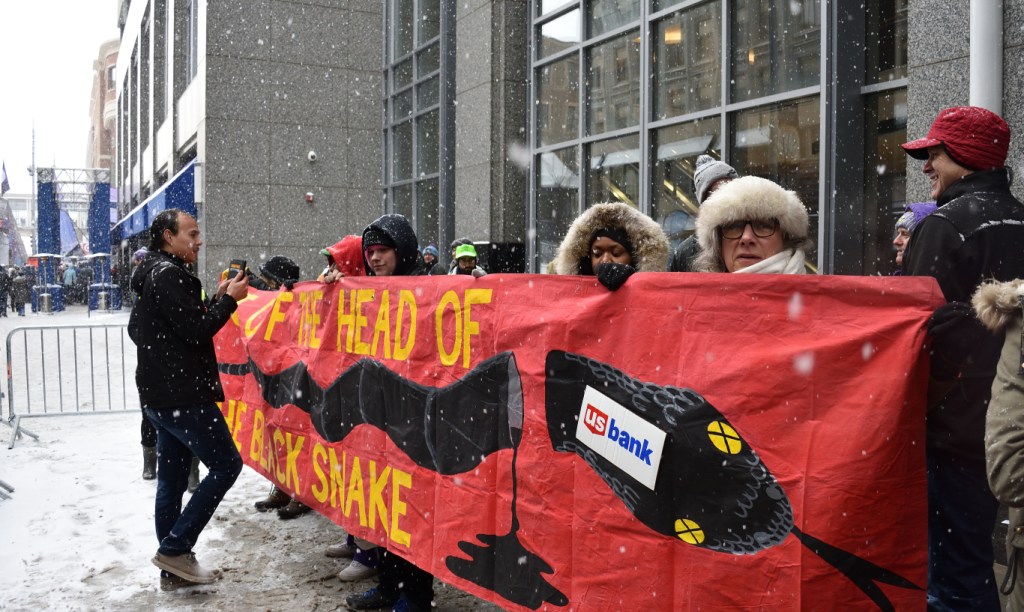
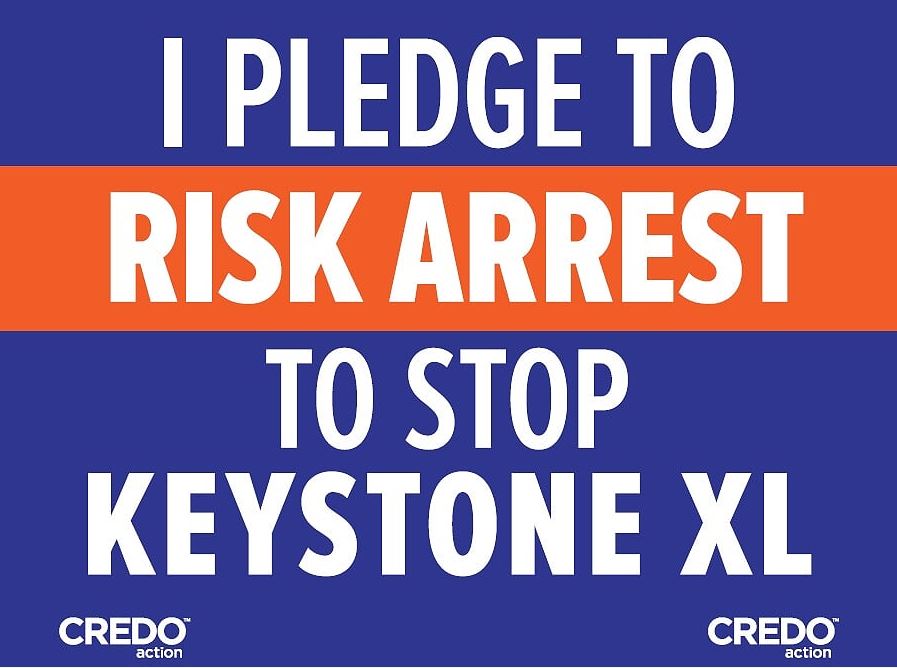
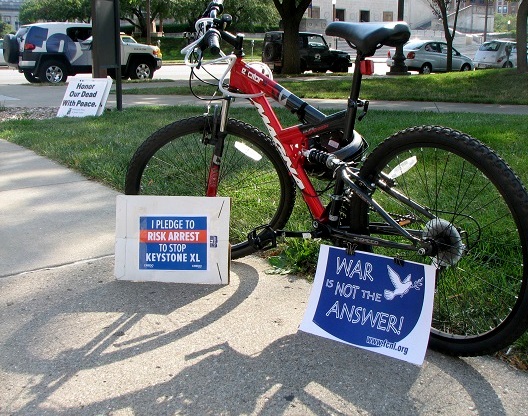
This brings to mind past instances of using nonviolent civil disobedience for change, including the anti-war and civil rights movements of the 1960’s, and more recently actions against the Keystone XL and Dakota Access pipelines. Nonviolent direct action is also a key strategy of the Sunrise Movement that is working for the implementation of a Green New Deal.
Some of the reasons why nonviolent civil disobedience has been so successful are because these actions come from a moral perspective, and build what Martin Luther King calls Beloved Community. As long as people remain constrained by a political system, those in power control what happens. Nonviolence changes who has the power, and builds mutual support among its members.
I am also just learning about another grass roots movement, Symbiosis. “Symbiosis, an expanding network of revolutionary organizers and local initiatives, is assembling a confederation of democratic community institutions.”
It is imperative that any groups or organizations moving in a social or economic sense on the vision we share for a democratic and ecologically sound world not struggle on their own, but instead under a global support system aimed at both dismantling our exploitative socioeconomic system — capitalism — and building a democratic, cooperative system in its place. Symbiosis is in a position to build this support system.
Beyond the shared vision of radical democracy and egalitarianism, what unites these groups is a common political strategy, of building institutions of popular power from below to challenge and replace the governing institutions of capitalist society. This approach is known as “dual power.”
“The problems we face today require a bold and unified response,” said Brian Tokar of the Institute for Social Ecology, a member organization and sponsor of the event. “We face the rising threats of authoritarianism and inequality, structural forms of domination between the haves and the have-nots, and the scapegoating and oppression of immigrants and people of color. And we also know that the destabilization of the climate and the fossil-fueled destruction of the Earth’s life support systems play a central role in all the problems we face.”
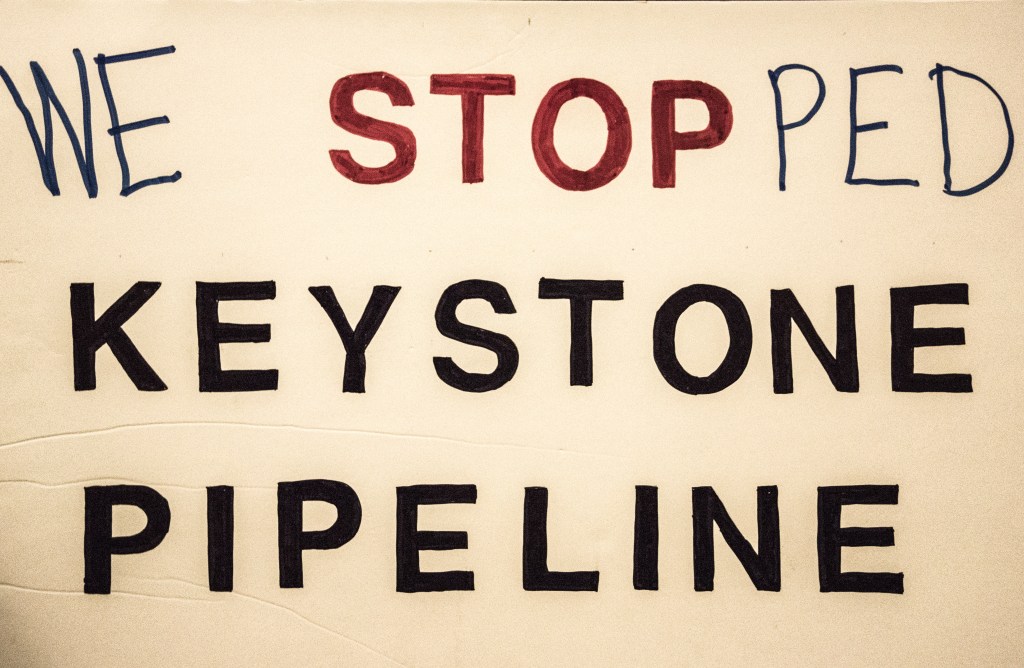
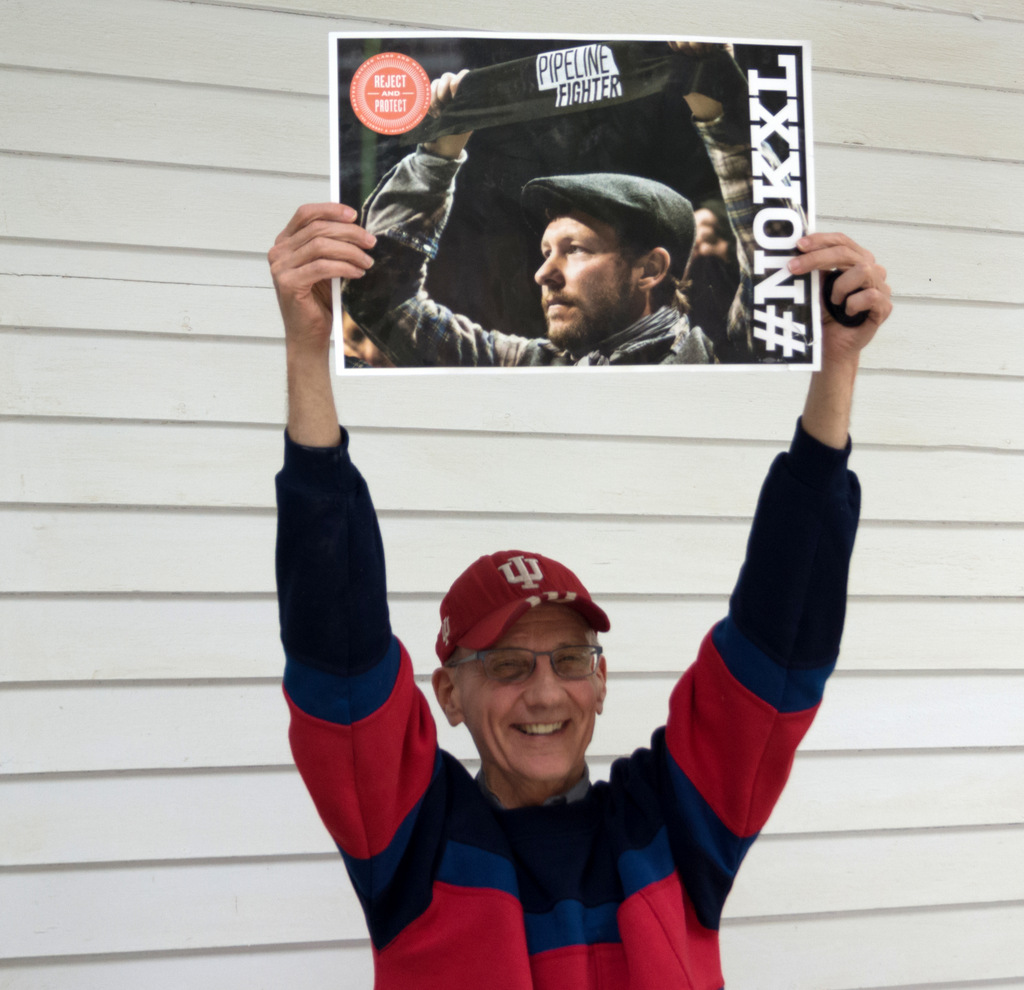
In yet another desperate attempt to prop up the fossil fuel industry, the president has just tried to get around Federal court orders to stop construction of the Keystone XL pipeline until a real environmental assessment is done, as required by law. The problem for the pipeline company is that it is not possible to claim the pipeline will not have disastrous environmental impacts.
Last fall a Federal Judge in Montana temporarily blocked construction of the Keystone XL pipeline.
U.S. District Judge Brian Morris, in Montana, issued a 54-page ruling that found that the State Department had “simply discarded prior factual findings related to climate change” from the Obama administration in its zeal to further Trump’s goal of letting the pipeline move forward. In doing so, the administration ran afoul of the Administrative Procedure Act, which requires “reasoned” explanations for government decisions, particularly when they represent reversals of well-studied actions.
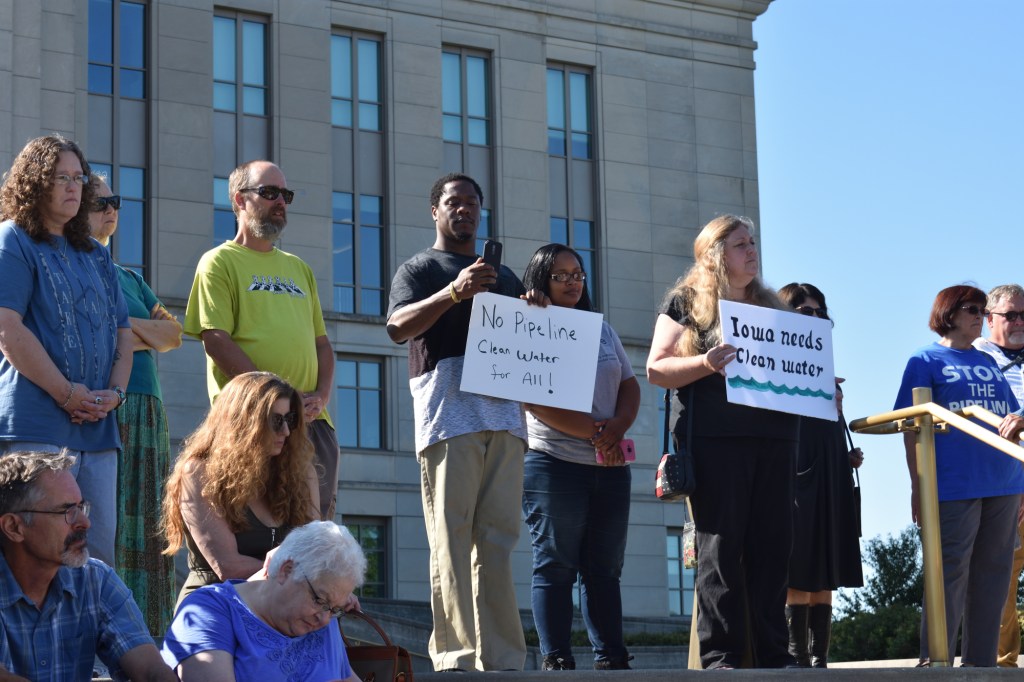
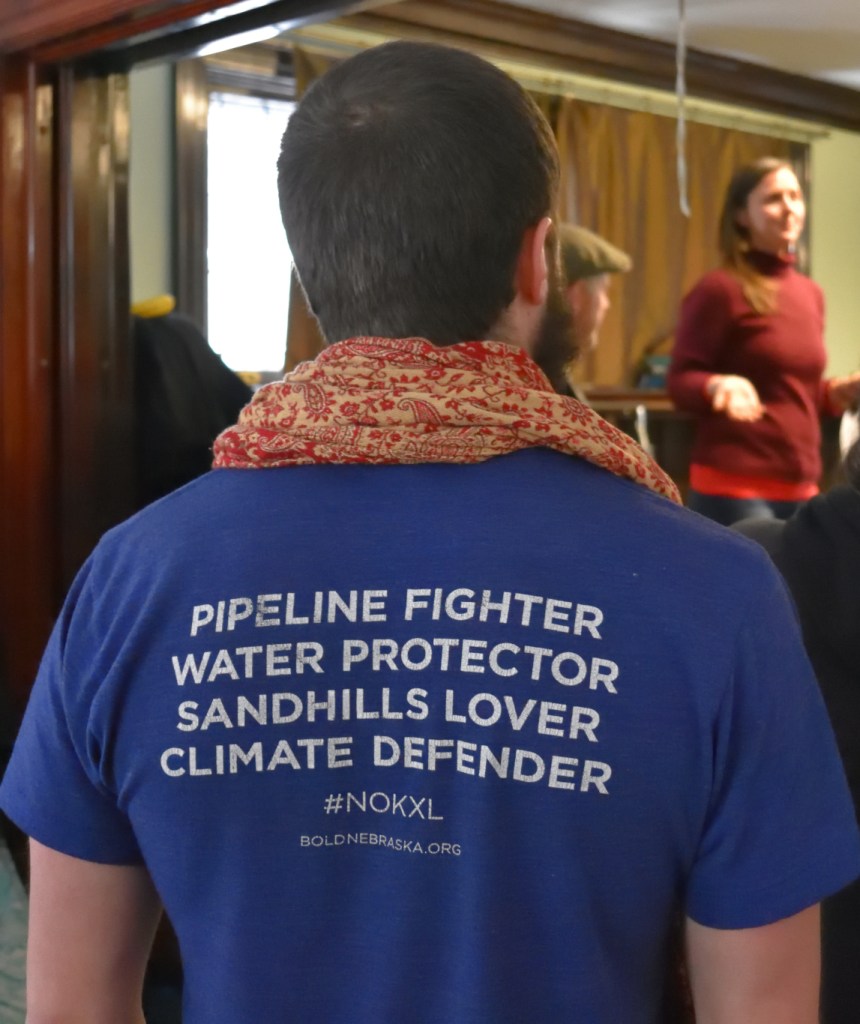
Many of us have worked for years to try to protect Mother Earth from the devastation done by the mining of tar sands oil, coal and fracking. Our youth in particular know how these fossil fuel projects have adversely affected the world they were born into, and threaten the very survival of their children. We cannot build any more fossil fuel infrastructure if there is any hope for future generations.
Where do these perverse actions come from, when fossil fuel energy is now more expensive than the cost of electricity from wind and solar? When thousands of new jobs are being created in renewable energy? When more and more climate catastrophes are impacting the lives of millions, and resulting in billions of dollars of damage? The only possible answer is this continued push is to support just a few fossil fuel investors at the expense of the rest of humanity, and further harm to Mother Earth. This is a more consequential struggle than any military war.
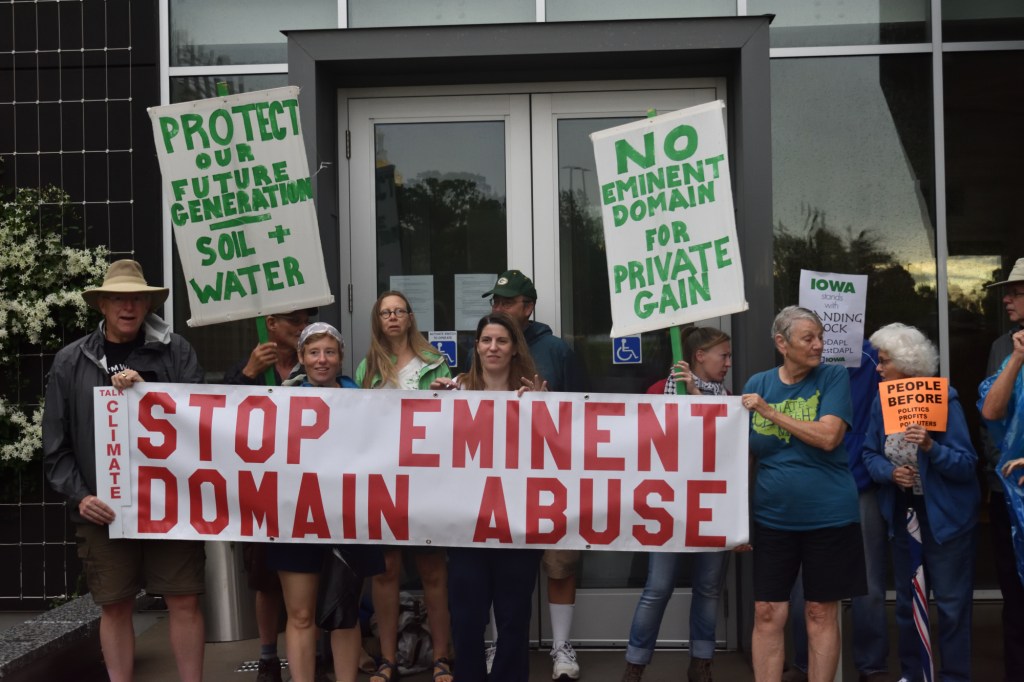
Fortunately, there is still hope from a case before the Nebraska Supreme Court, where landowners have sued the Nebraska Public Utilities Commission over the route of the pipeline. Similarly, there is a case before the Iowa Supreme Court challenging the Iowa Public Utilities Commission’s abuse of eminent domain to force farmers to sell land to build the Dakota Access pipeline.
Please write letters to your Congressional representatives. This link can help you do that: www.lakotalaw.org/kxl
As unusually powerful late winter storms throughout the Midwest highlight the worsening effects of climate change, President Donald Trump continues to sign executive orders expediting the fossil fuel projects that exacerbate the problem. I have worked for years to try to educate the public, and my Congressional representatives, about the dangers of tar sands mining, and the devastating effects of continued greenhouse gas emissions. Please talk to your colleagues on the House Committee on Oversight and Reform and ask them to do everything they can to ensure due process of law, separation of powers among the branches of government, and proper respect and care for our planet. When pipelines like Keystone XL leak, as they inevitably do, the people pay. When storms hit, the people pay again—with their tax dollars and sometimes with their lives. Those most adversely affected are often people of color or poor people living on the front lines of our growing climate catastrophe. Please use the power vested in you by the people to protect them from pipelines and other oil infrastructure with the potential to bring ruin to our nation and the world we share.


































































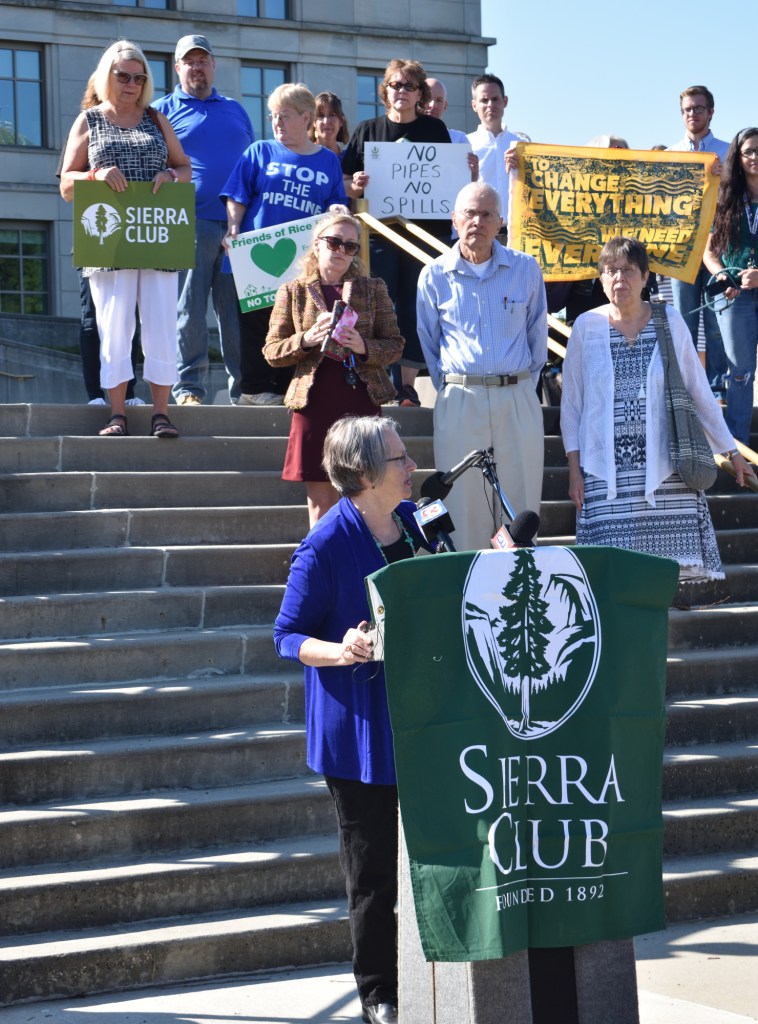

 Quakers, social justice and revolution