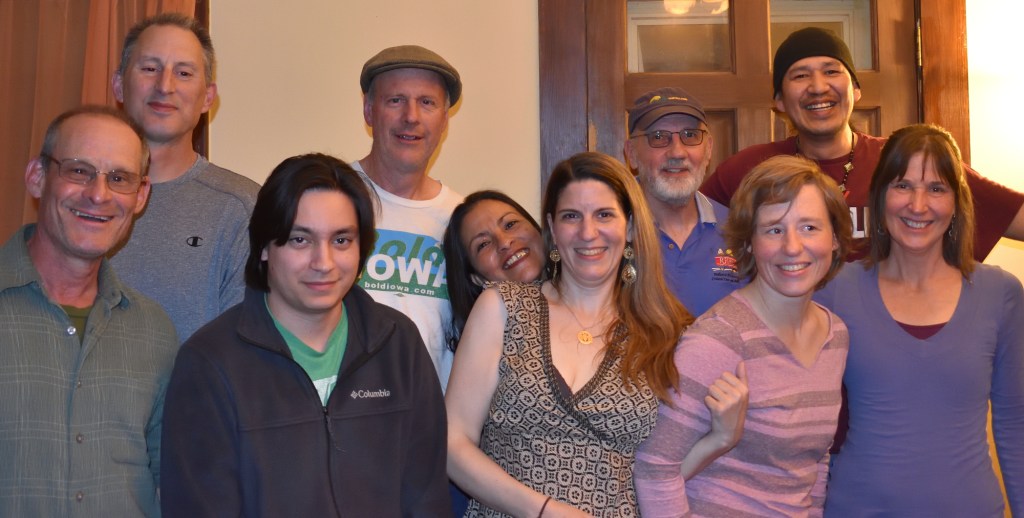
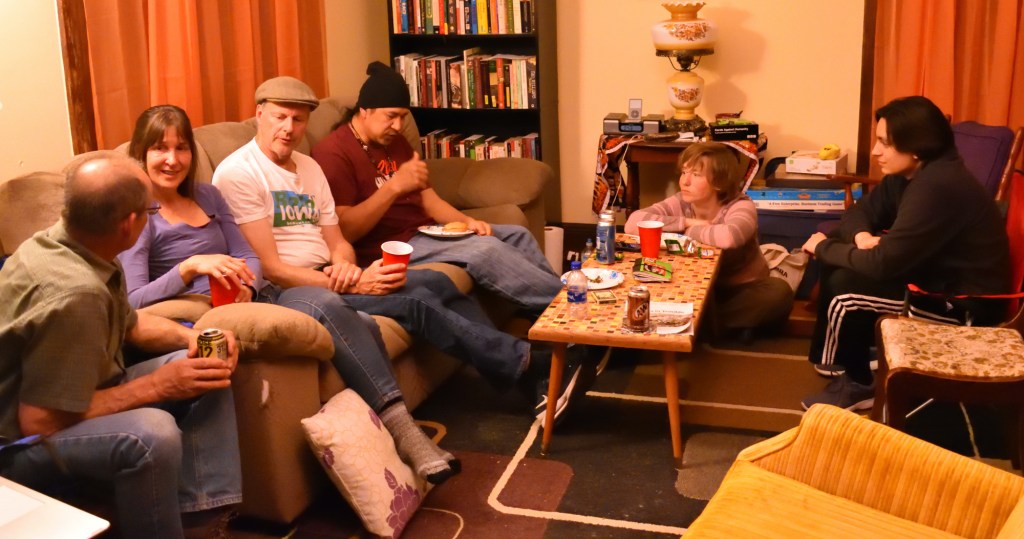
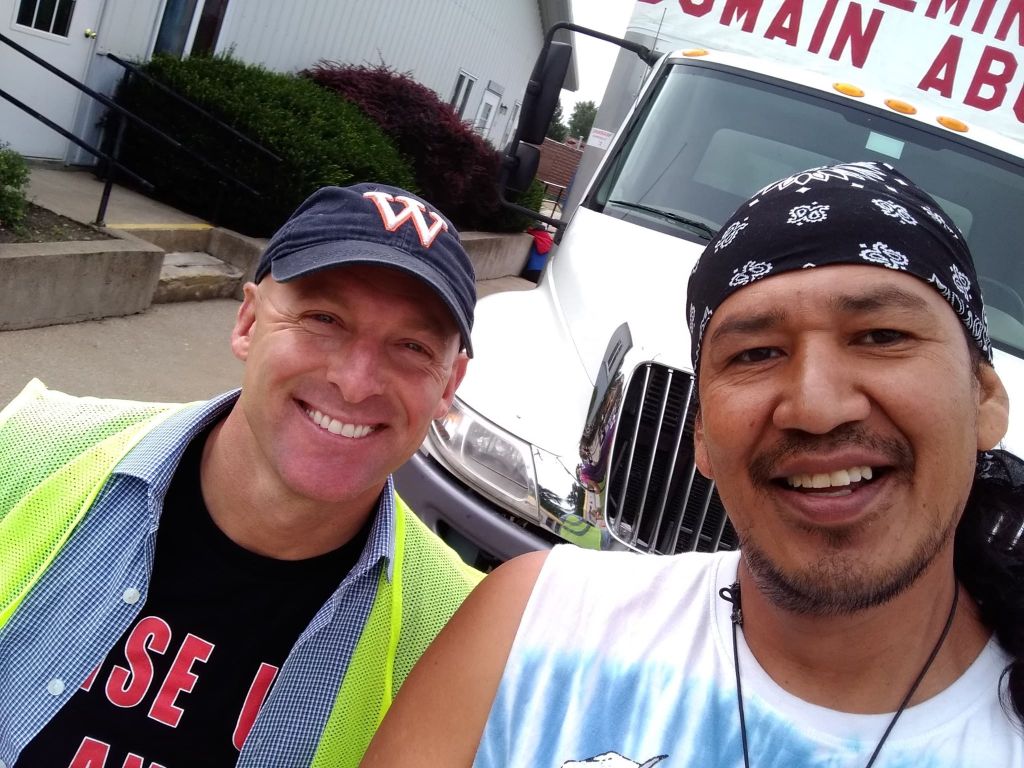
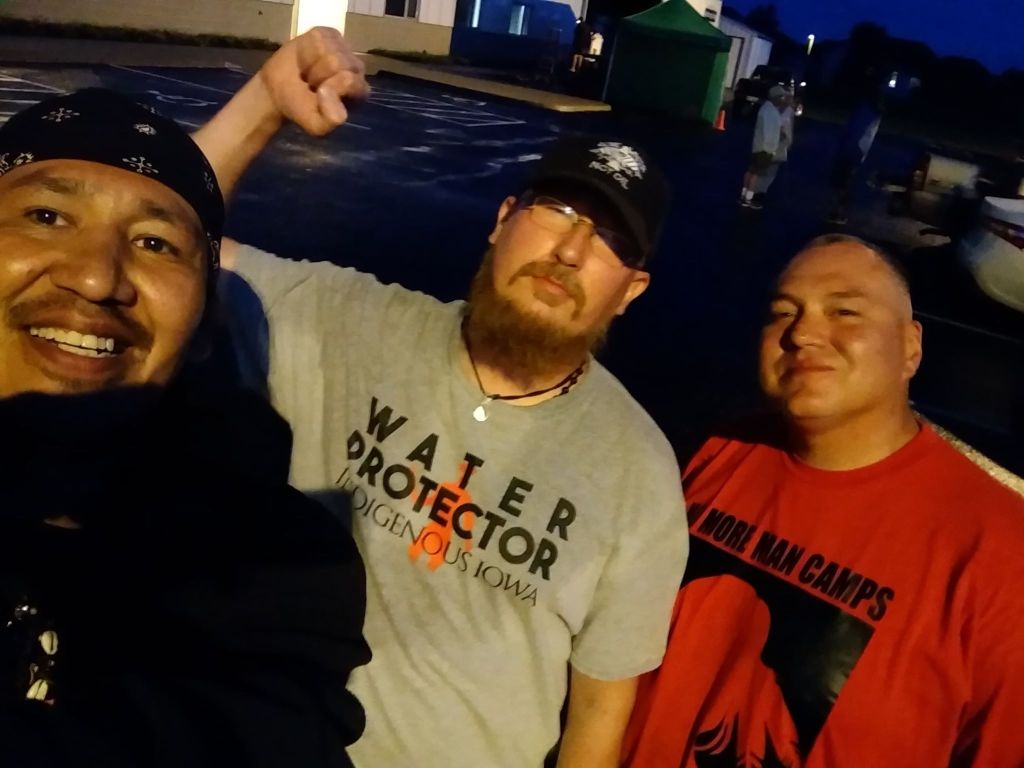
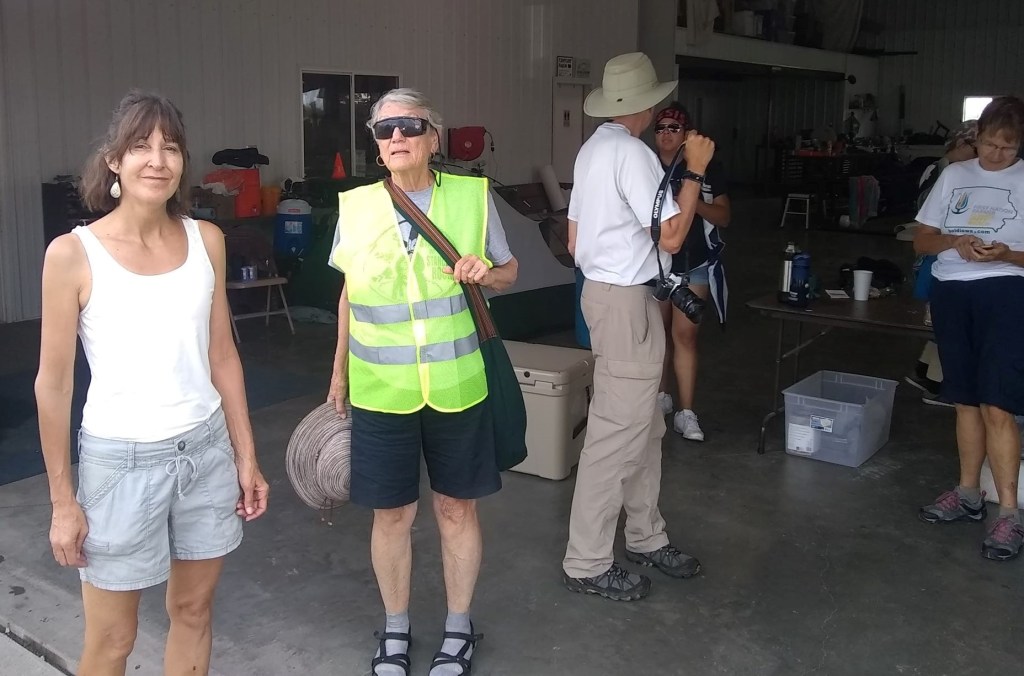
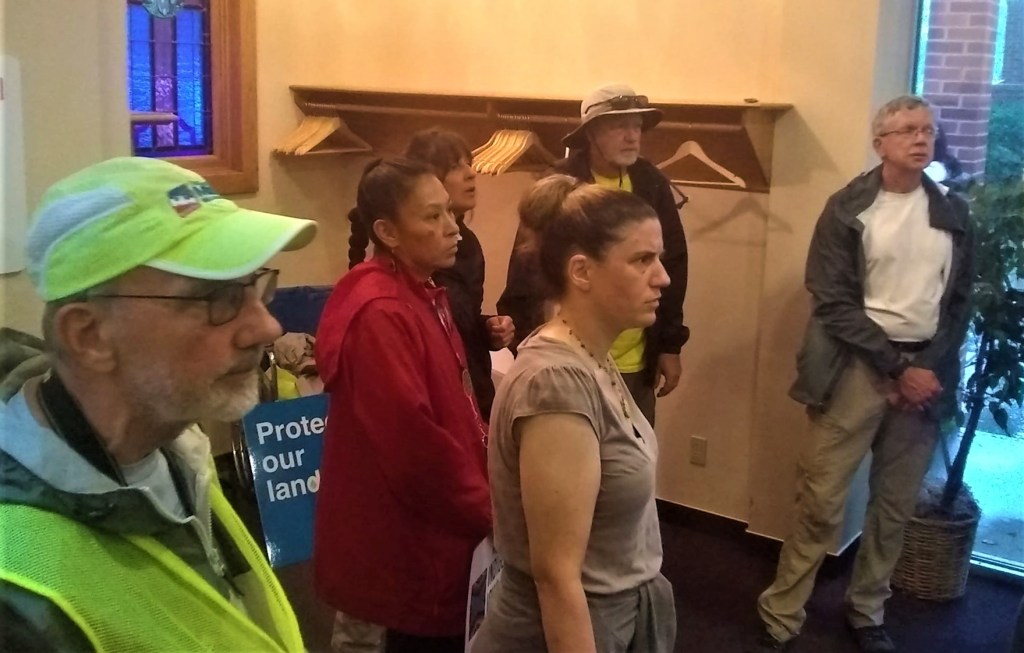
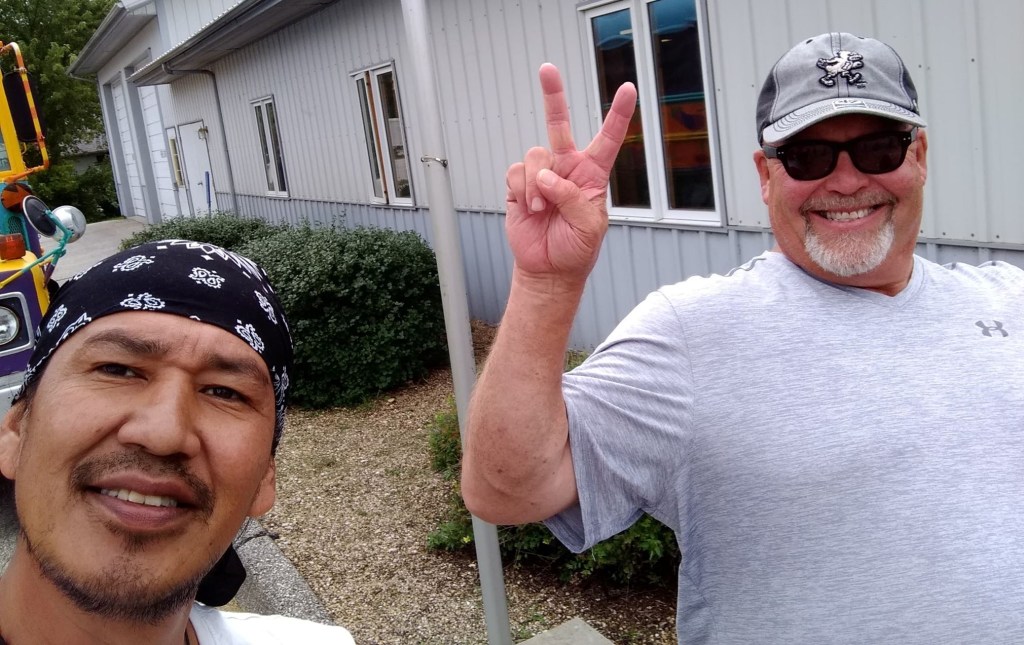
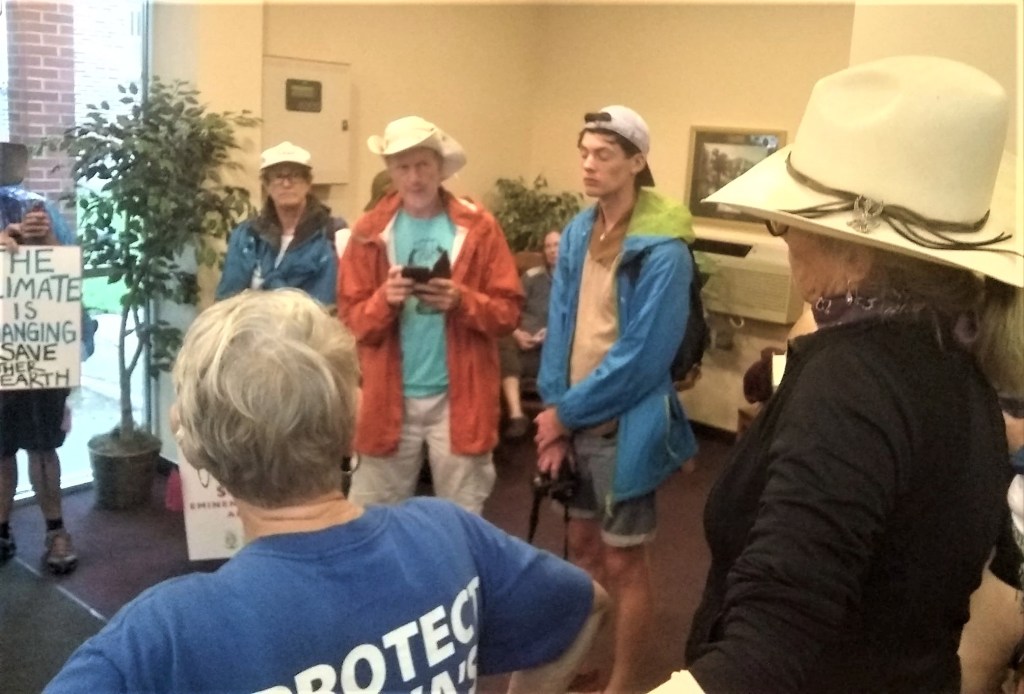
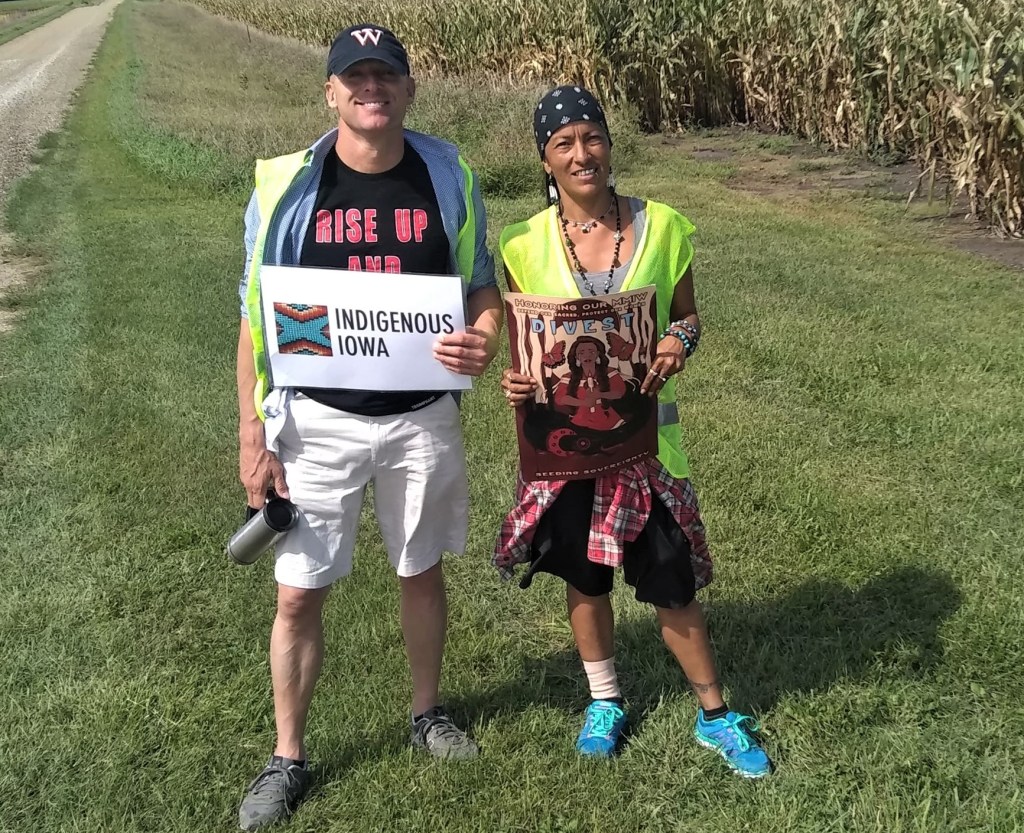
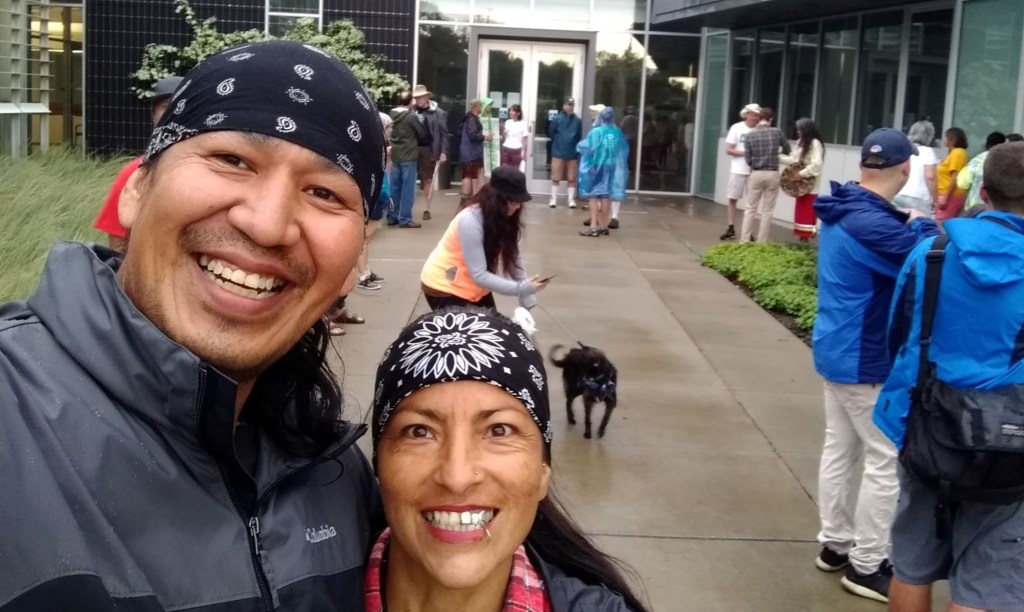
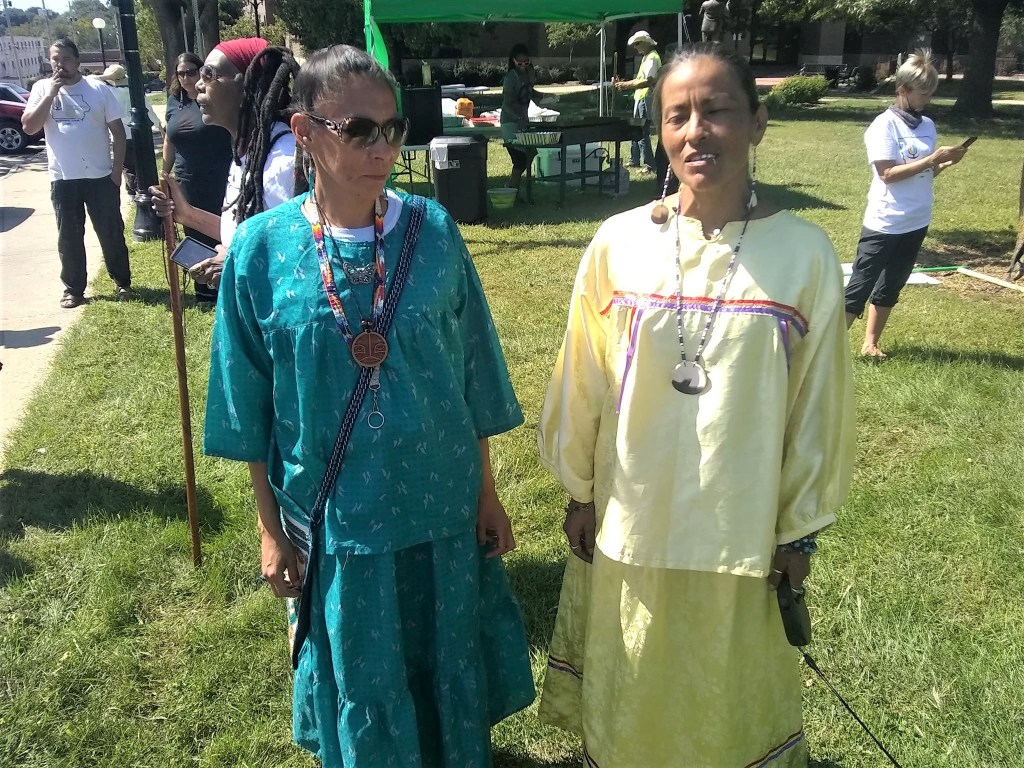
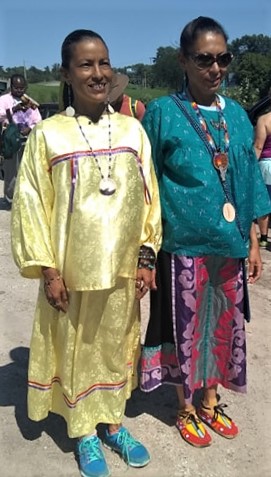
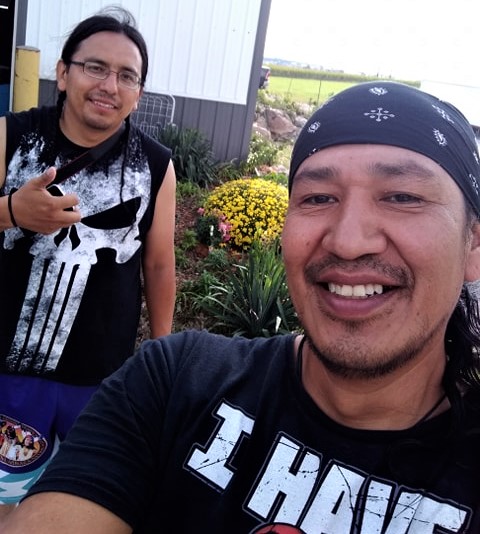
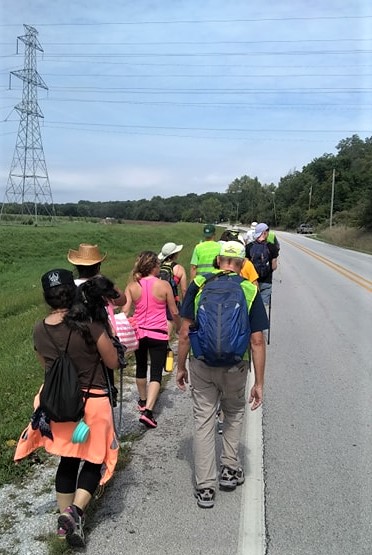
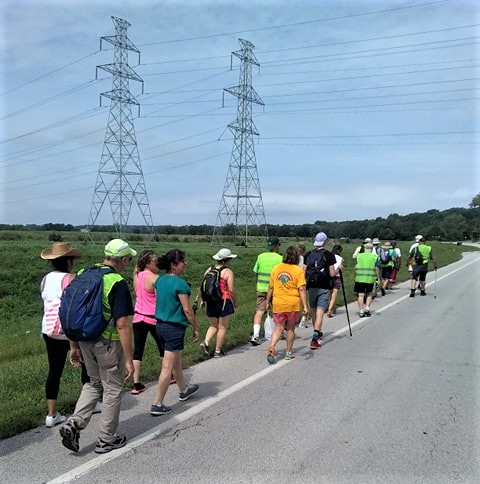
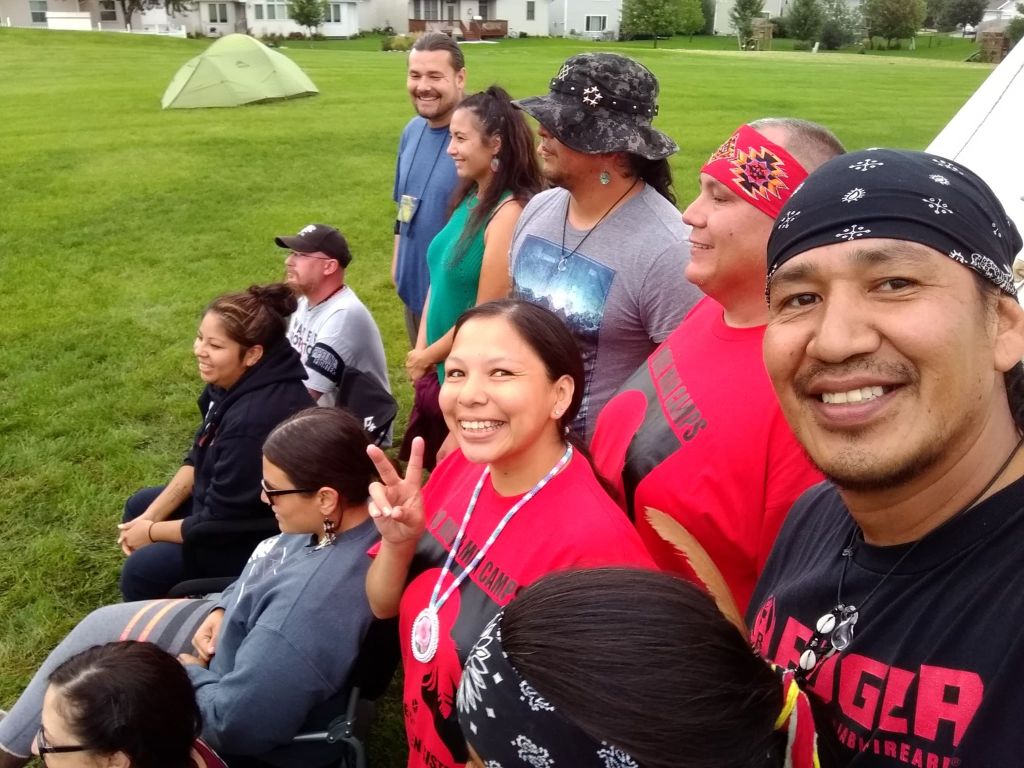
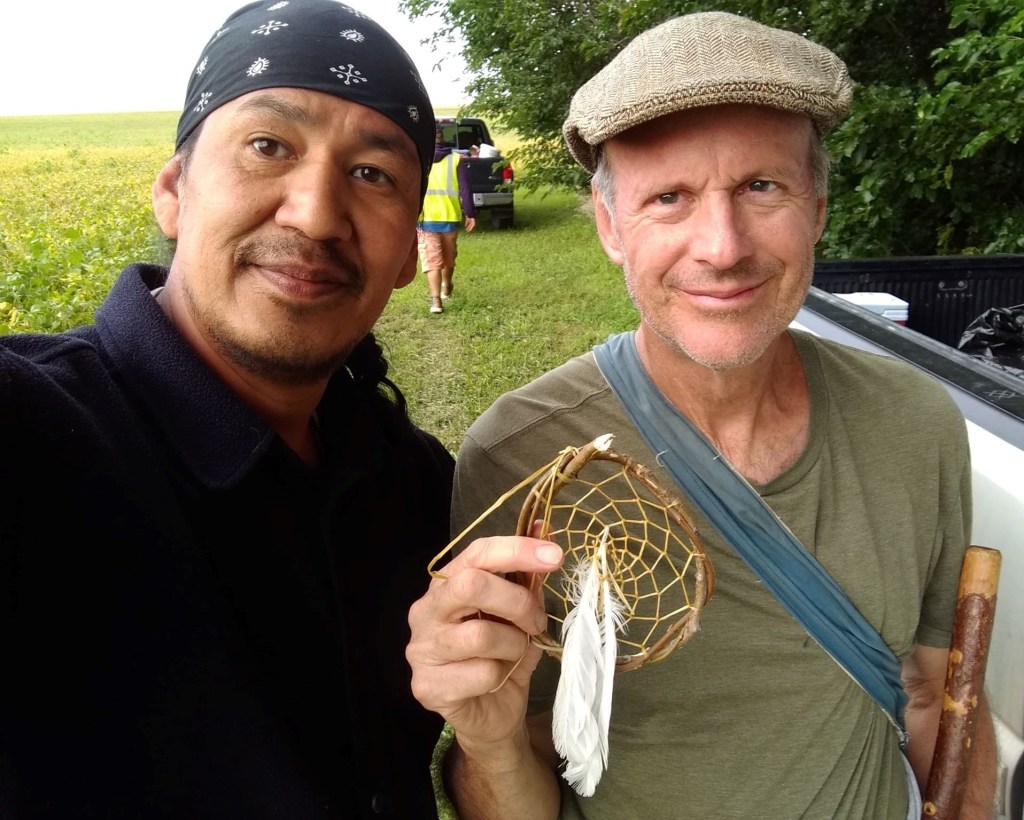
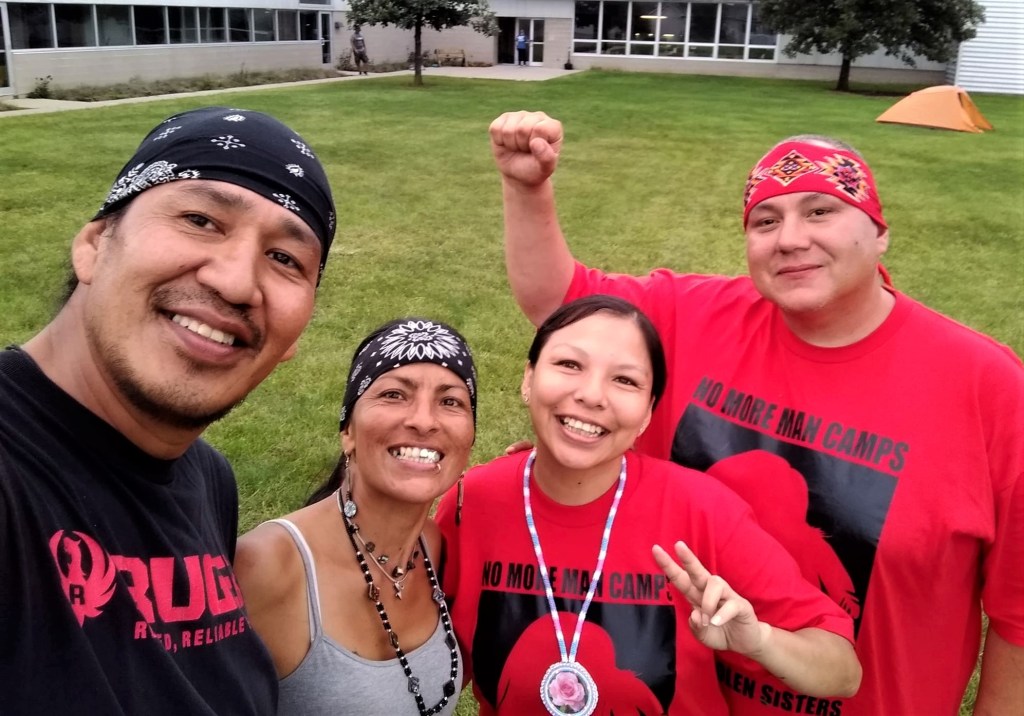
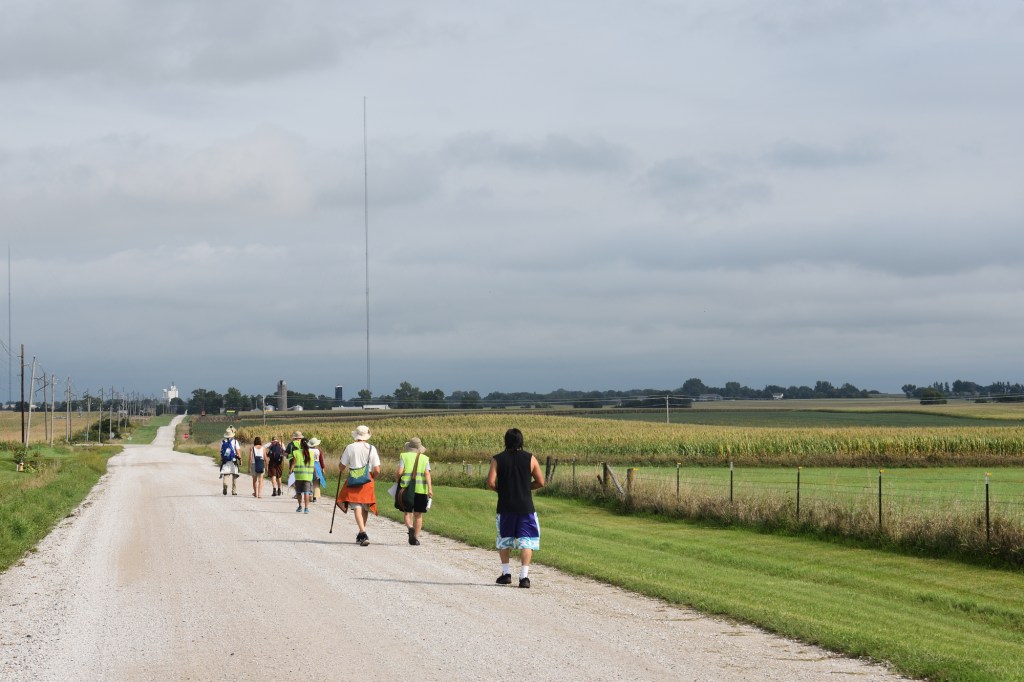
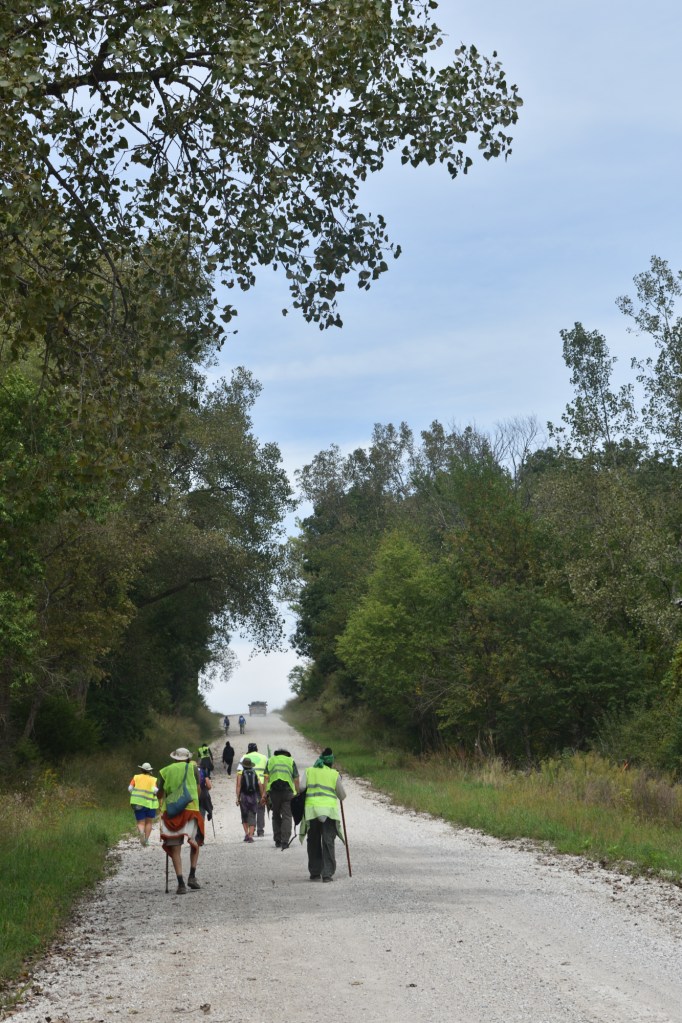
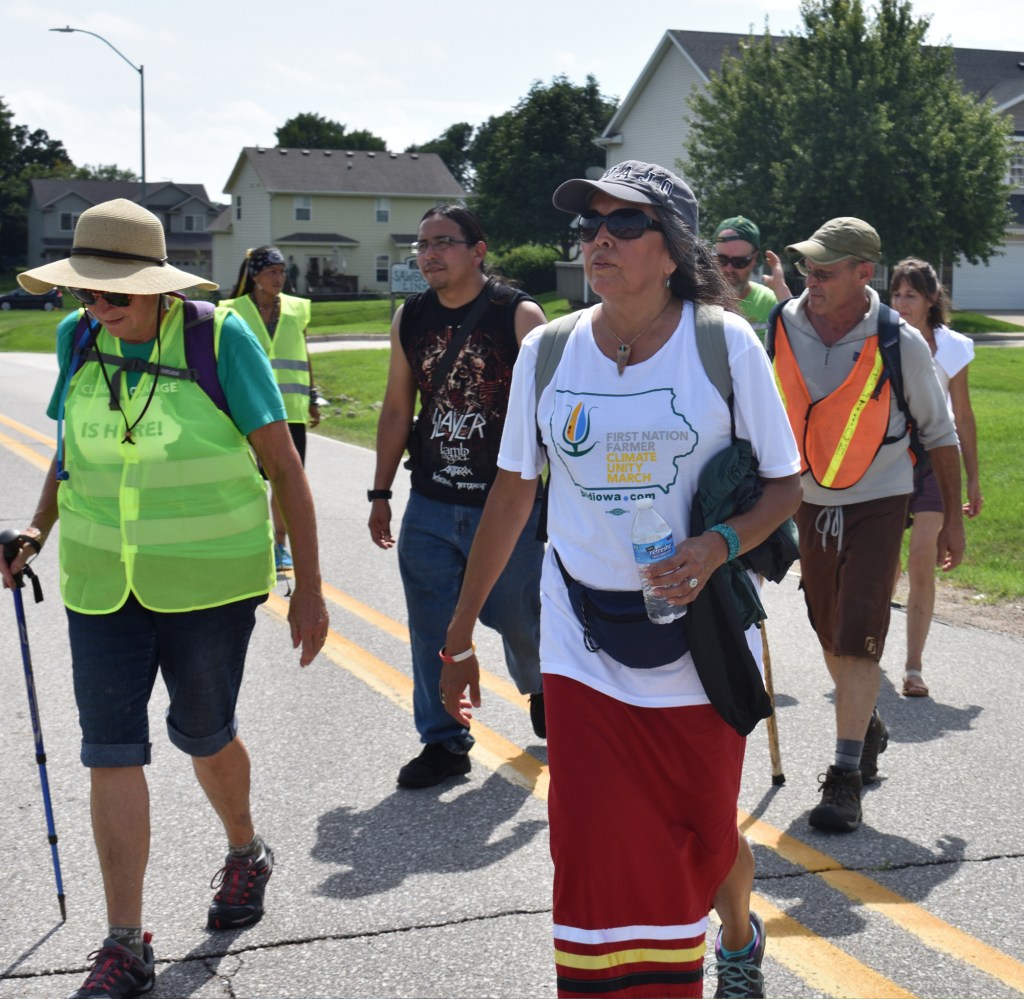
When some of us were fortunate to be able to get together in April for a reunion of the First Nation-Farmer Climate Unity Marchers, Alton and Foxy Onefeather mentioned they had photos from the March, and were willing to share them with me to add to the photo collection.
I’m really glad Alton sent me some of those photos this morning. Alton is the master of the selfie. If you have photos of the March, I’d love to add them to the collection.
Some of you may have heard of, or participated in workshops related to the “Toward Right Relationship with Native Peoples” project. Paula Palmer is the director of this, a project of the Indigenous Peoples Concerns committee of the Boulder Friends Meeting.
Paula will be presenting some of these workshops after Friends General Conference, while she is still in Iowa. The details are still being worked out, but I wanted to let you know when these workshops will be held, so you can keep those dates open. Workshops will be held at Scattergood Friends School and Farm, near West Branch, Iowa, the evening of July 6th and the morning of the 7th. The workshops in Des Moines will be held on July 8 and 9.
The theme of the annual sessions of Iowa Yearly Meeting (Conservative) of Quakers in 2017, was Building Bridges. The first evening was a panel talking about Building Bridges with Native Americans, including Donnielle Wanatee, from the Meskwaki settlement near Tama, Iowa, Christine Nobiss, the founder of Indigenous Iowa, and Peter Clay, who had been to Standing Rock.
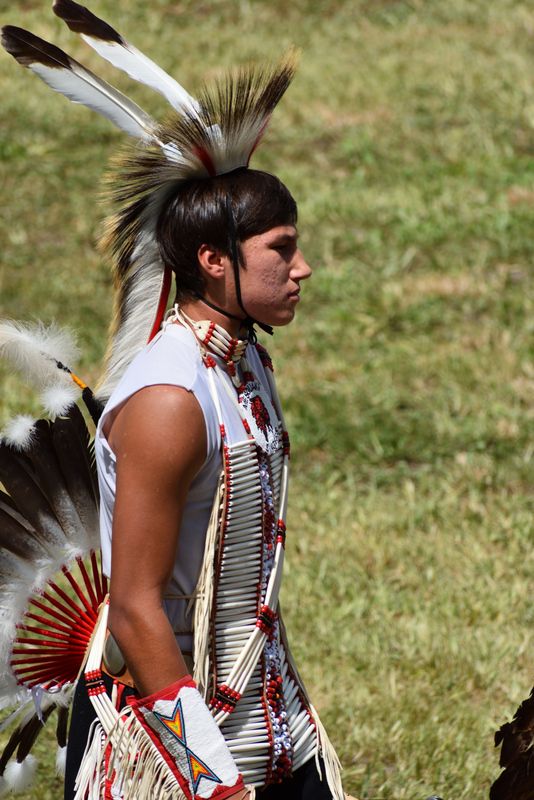
During that panel discussion Donnielle invited us to attend the Meskwaki pow wowthat fall. Seeing this as an opportunity to build bridges, my father and I did attend the pow wow and really enjoyed it. Being aware of cultural appropriation, I contacted the pow wow ahead of time about taking photographs there, and was told it was alright to take photos of the ceremonies, and I was asked to share them with the pow wow, which I did. They are on the pow wow’s Facebook page.
I felt I should check again with David Wanatee, Donnielle’s brother, who had given me permission to take the photos at the 2017 Powwow, to see if it would be permissible to use those photos now, when we will be telling people about the “Toward Right Relationship with Native Peoples” project. He responded:
Sure, I am all for education. Creating a dialogue between cultures is a necessary step for understanding on both sides.
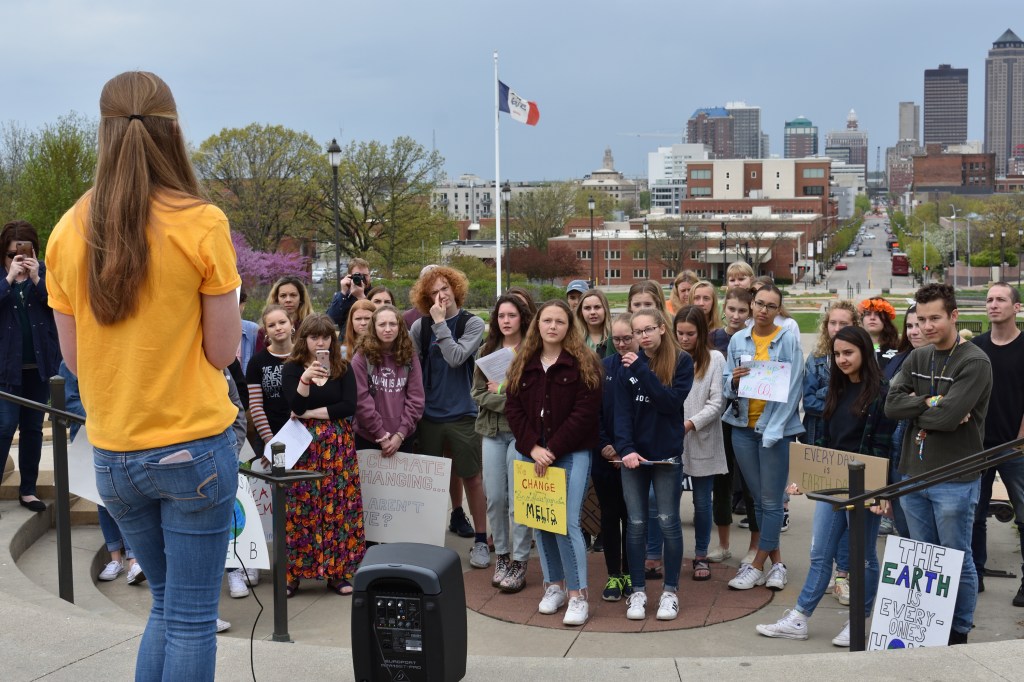
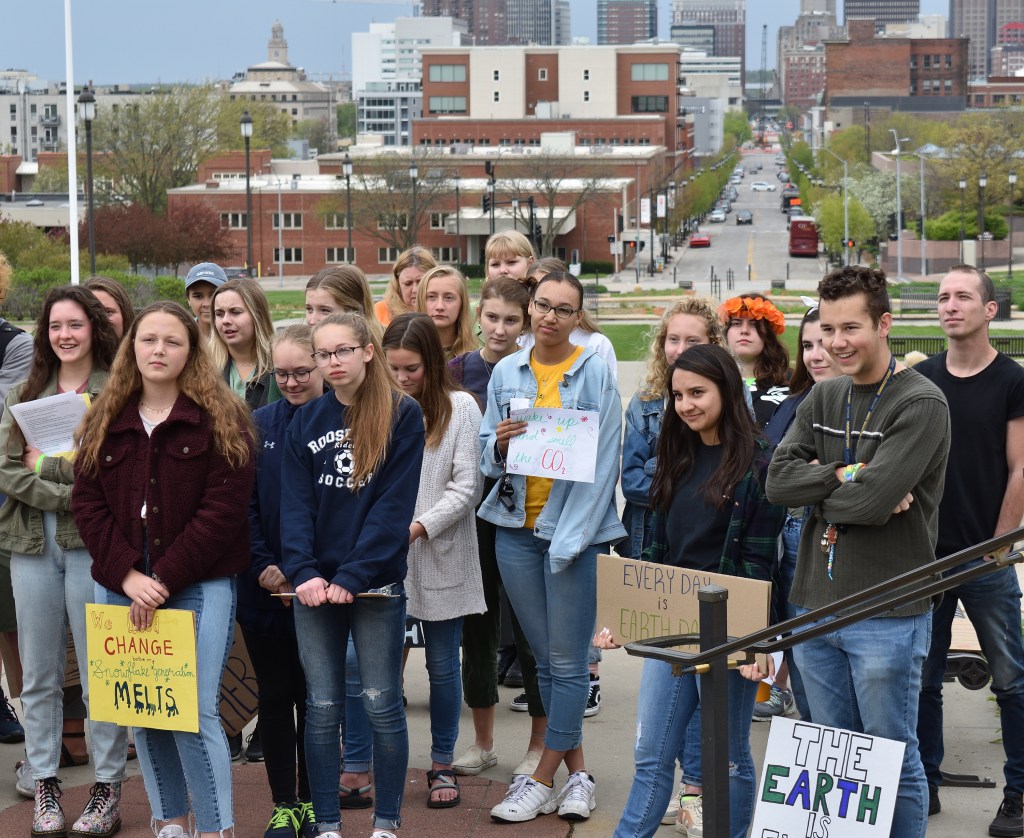
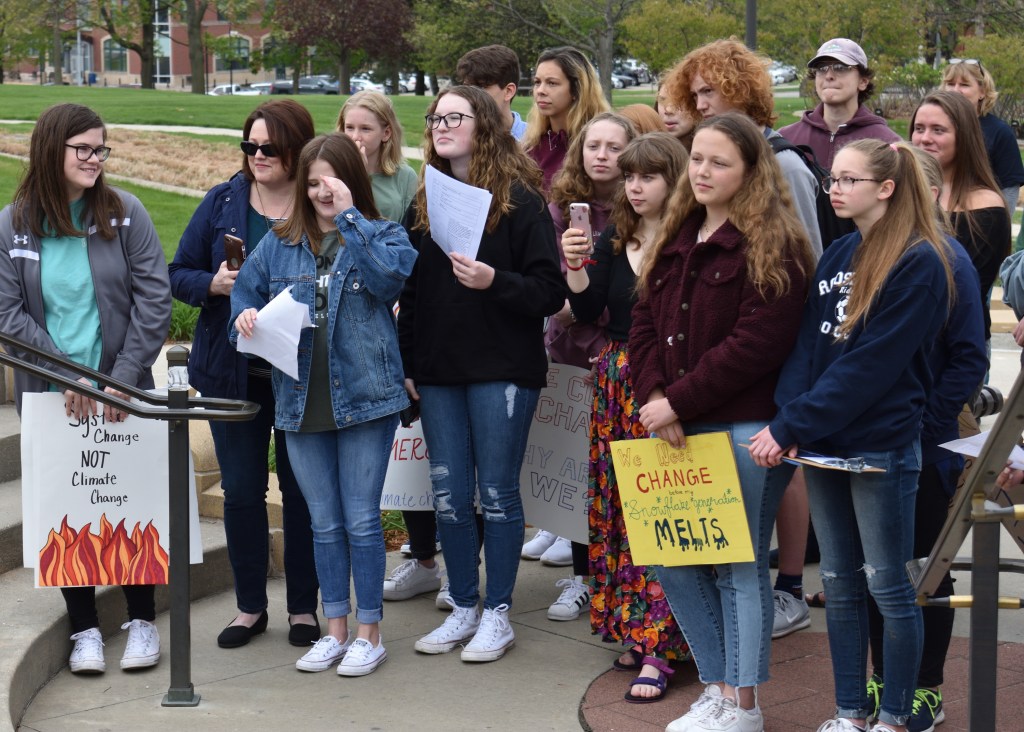
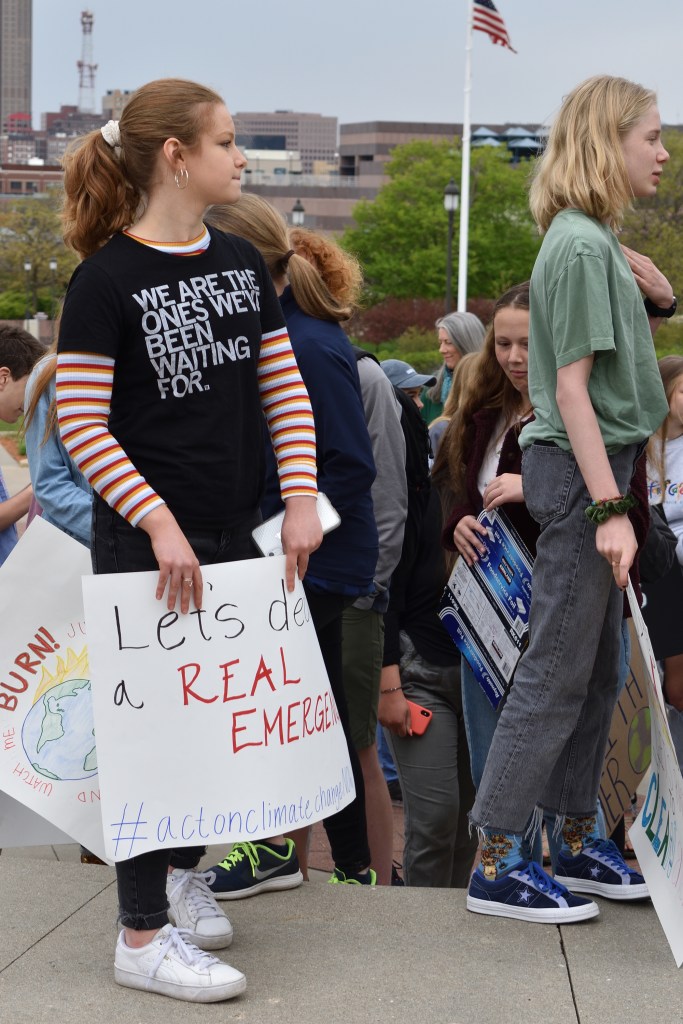
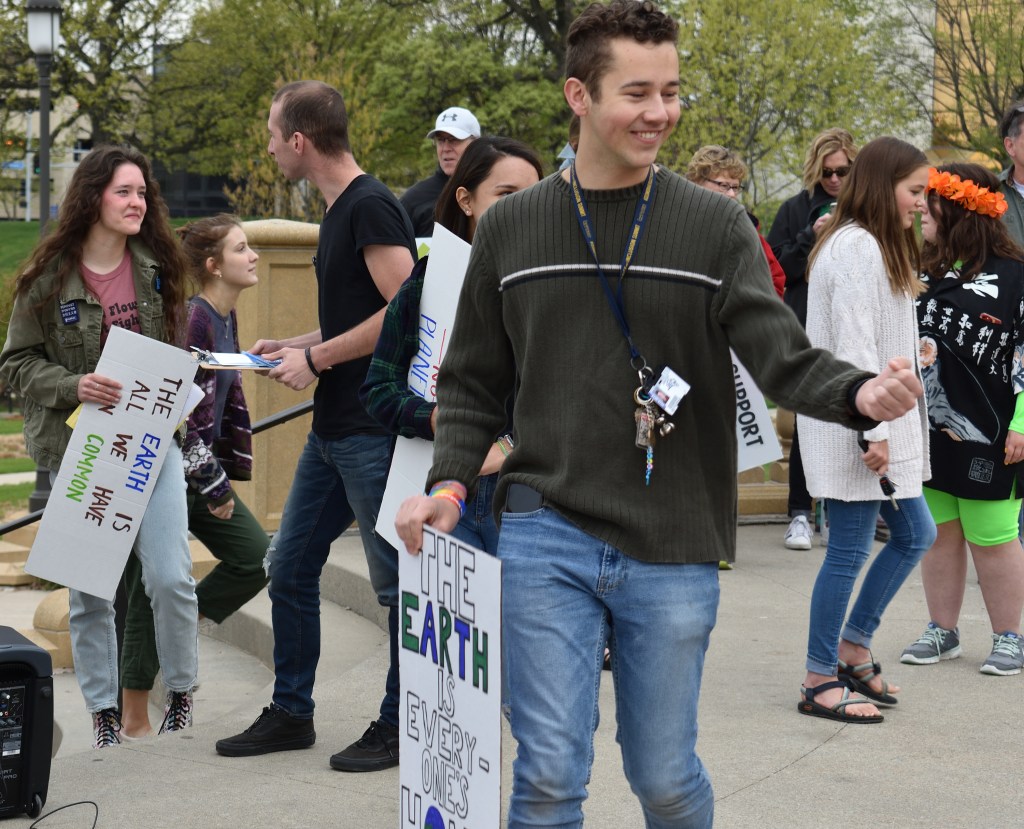
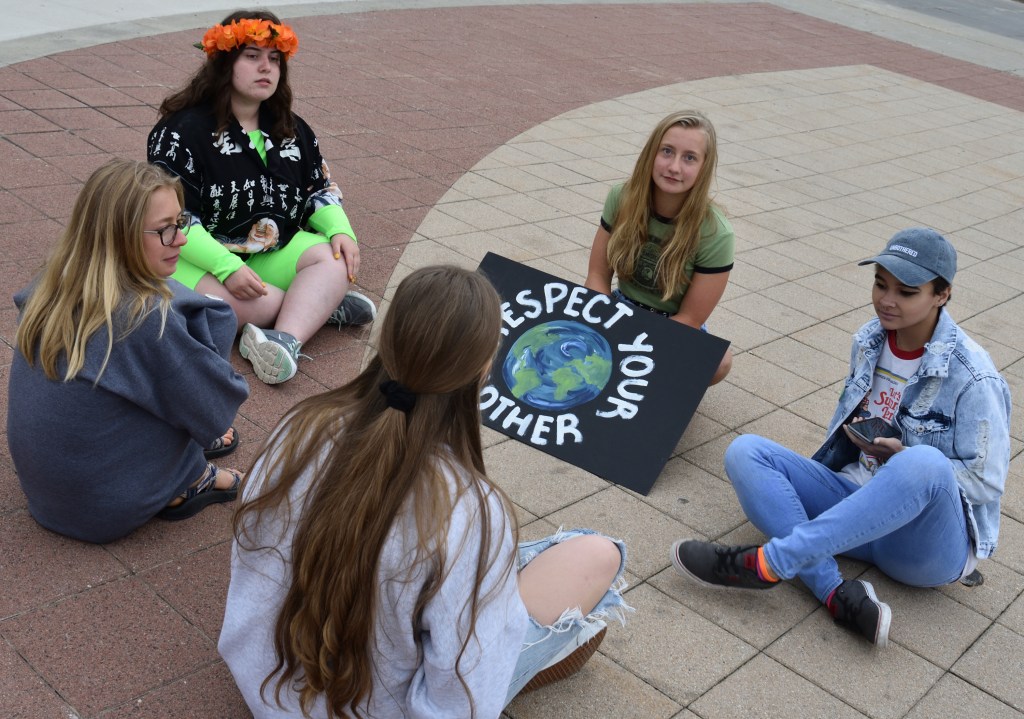
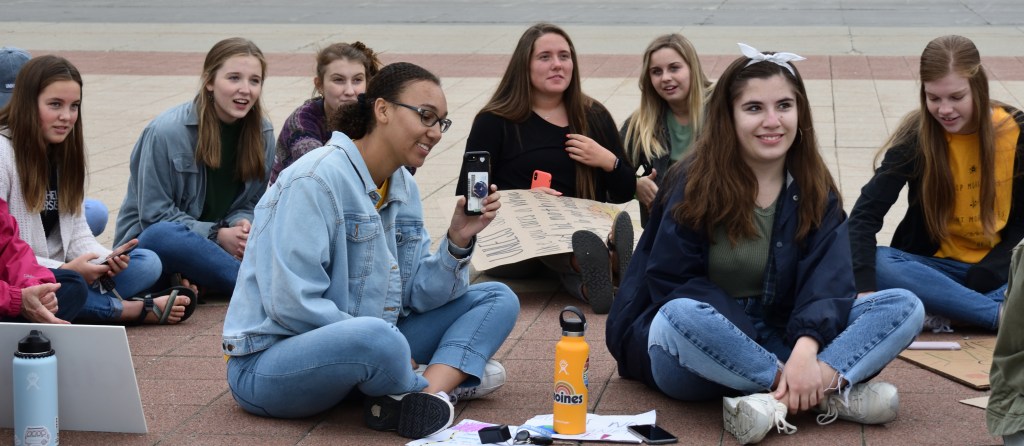
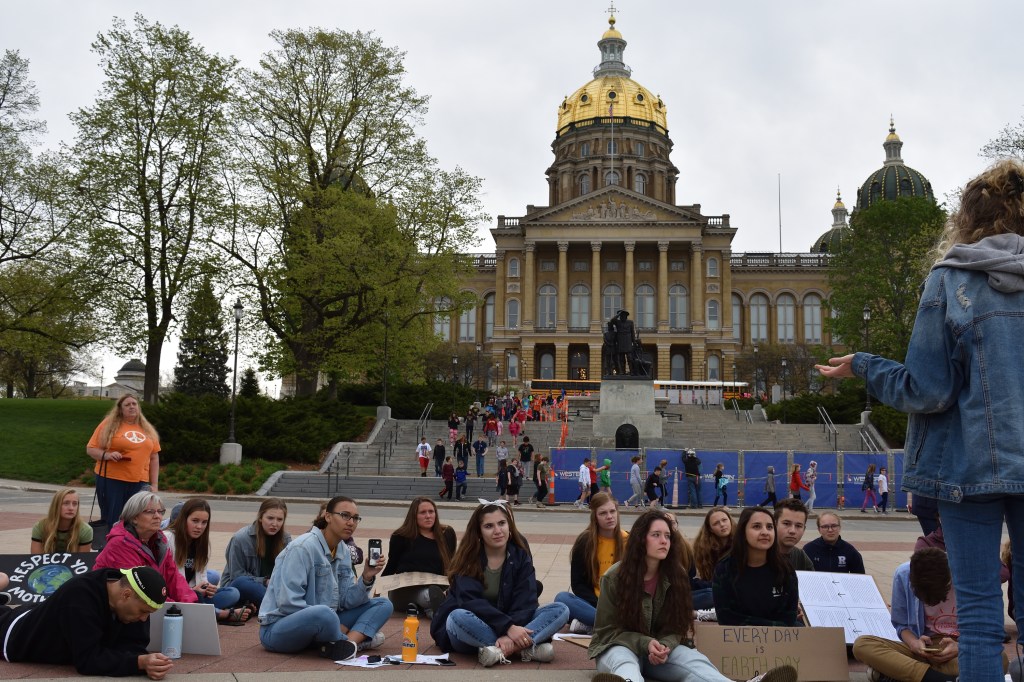
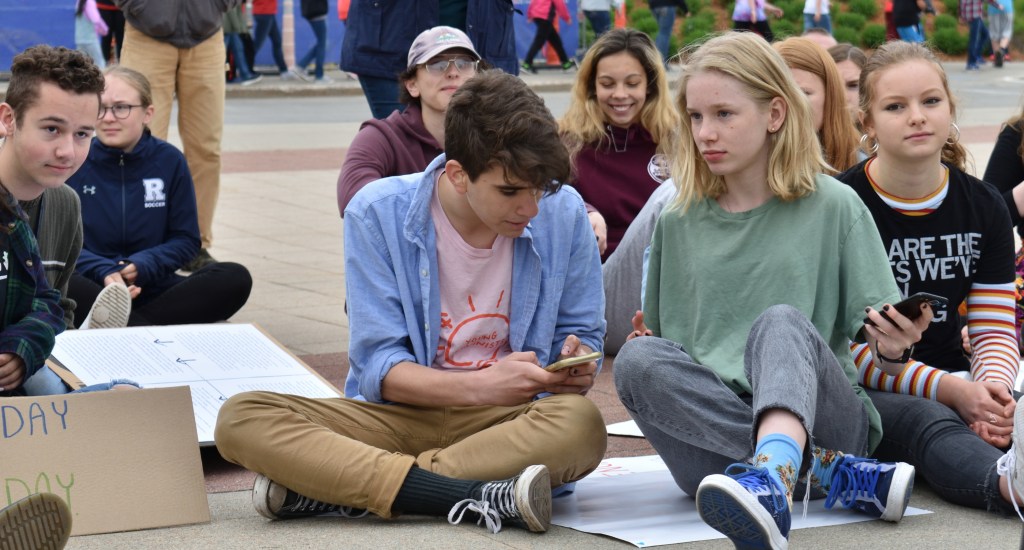
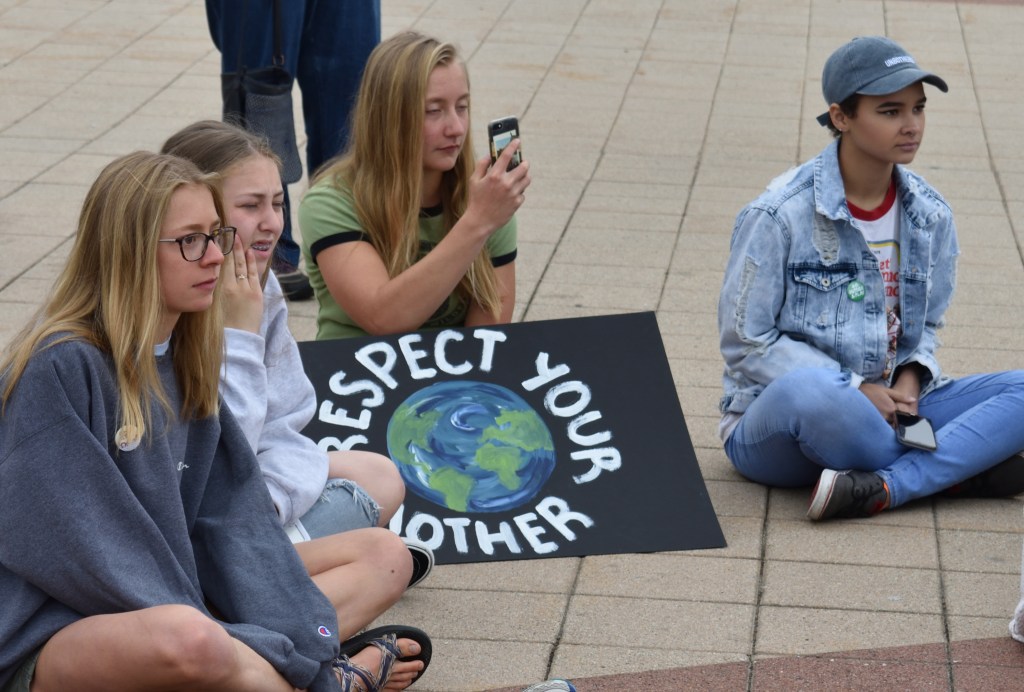
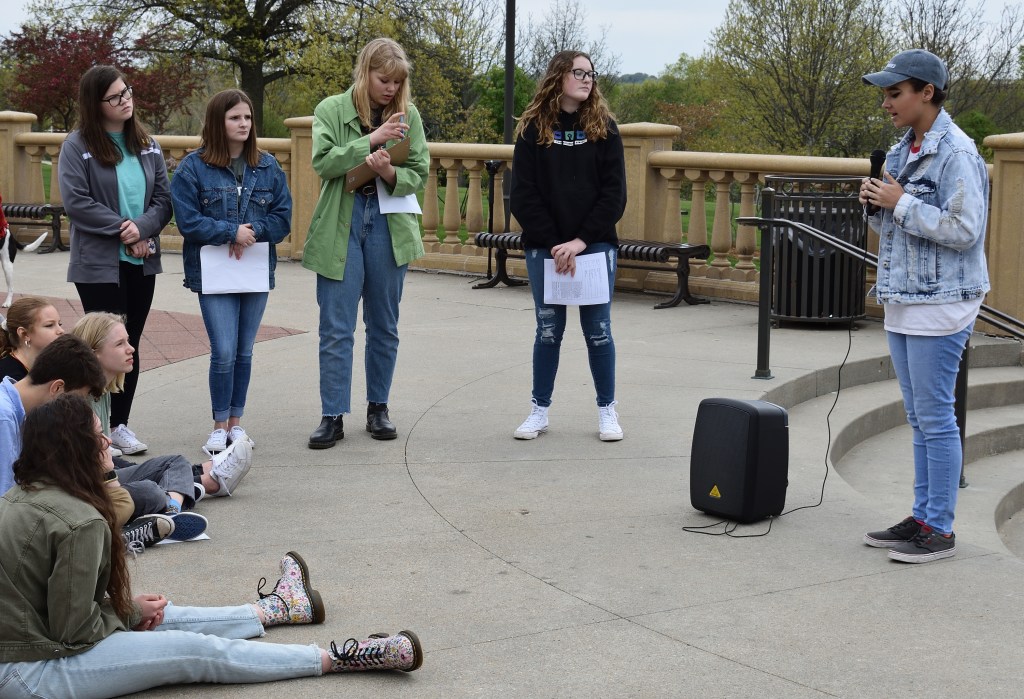
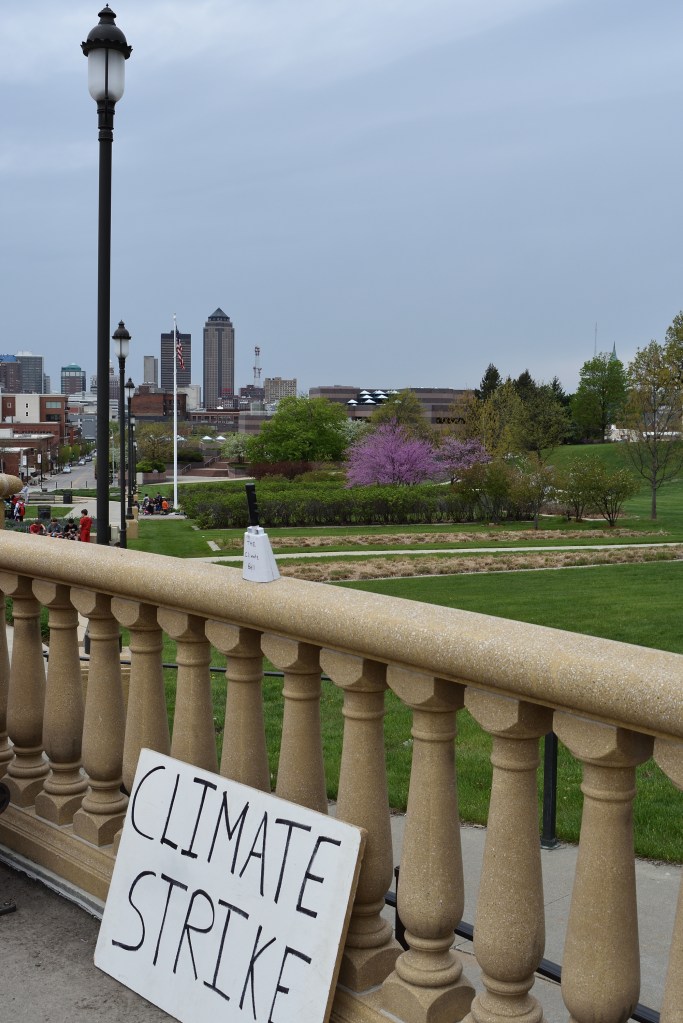
Today a group of around 50 students from Des Moines, Iowa, schools gathered at the state capitol building, striking for climate change. A large number of the students spoke about how urgent climate change is, sharing stories of how this affects them personally.
One student asked why people of faith didn’t speak up against things that cause climate problems. I was tempted to say something, but this was the youth’s event, and I didn’t have much of a response about people of faith, in general, so I didn’t.
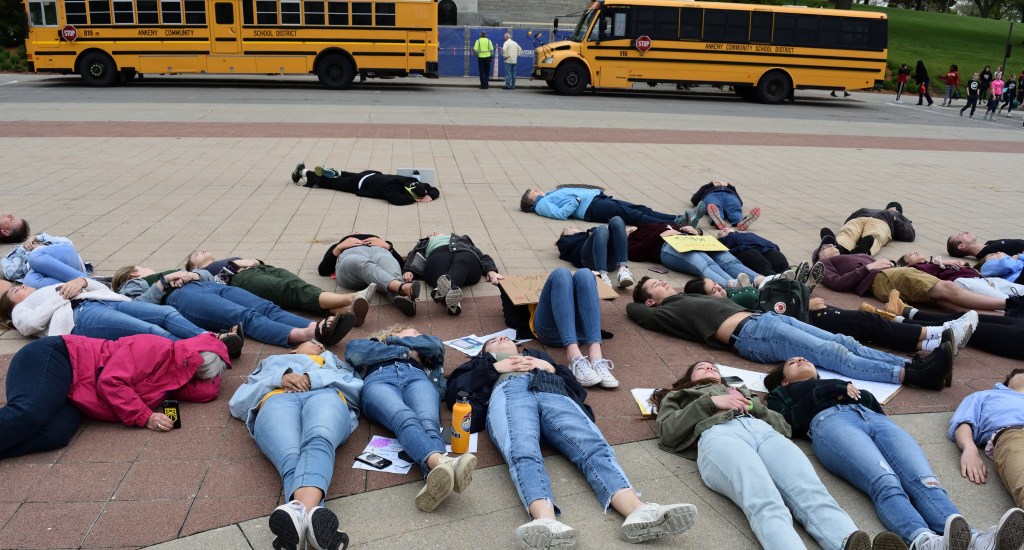
The moving part occurred when the students staged a “die-in”, representing the probable extinction of life on earth if immediate action doesn’t happen. Everyone was asked to set their cell phone alarms to 11:11 am, representing we only have 11 years to turn things around. The reason the students are laughing in this video is because of the vibration of their phones when the alarm went off.
Students awaken after die-in
It was interesting to watch the reactions of the crowds of kids who came to the Capitol on the school buses, not related to the climate strike.
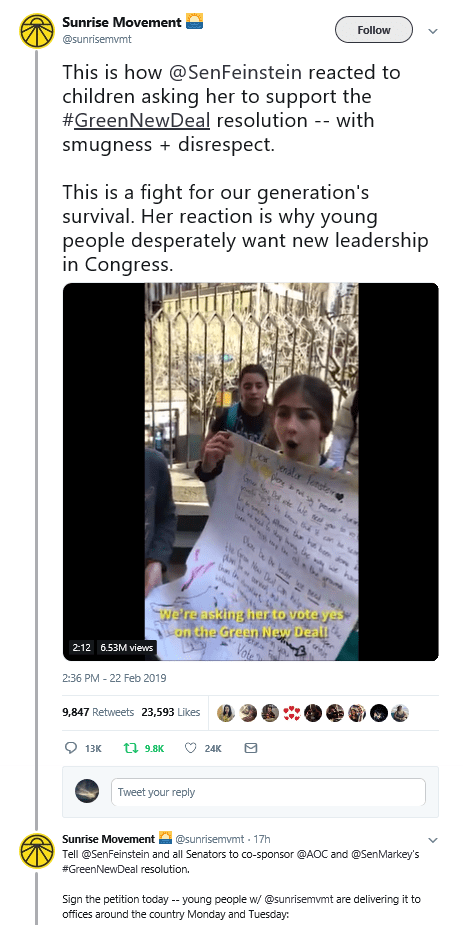
I apologize for the late notice about tomorrow’s Iowa Youth Climate Strike, which will happen on the west side of the Iowa Capitol building on May 3rd from 10 am – 1 pm. Thanks to Roger Routh for producing the excellent video below of three Iowa students talking about the strike and the urgency for addressing climate change. This is a great opportunity to have conversations with young people about how they feel about the state of our environment today. And I hope you will support youth you know who want to participate in the School Strikes (there are a number of different names used). Other ways youth can be involved is by joining the Sunrise Movement, which is working for a Green New Deal.
“Basically if we don’t take care of climate change now, all humans will die because of it.”
May 3rd 10-1 we strike again!! Please share and print these posters to hang up around your schools and towns. If you can’t attend the strike we ask you to wear green and set your alarms to 11:11 in honor of the 11 years remaining until climate change is irreversible. If you can attend the strike make sure you wear green, bring a reusable water bottle, and dress according to the weather!
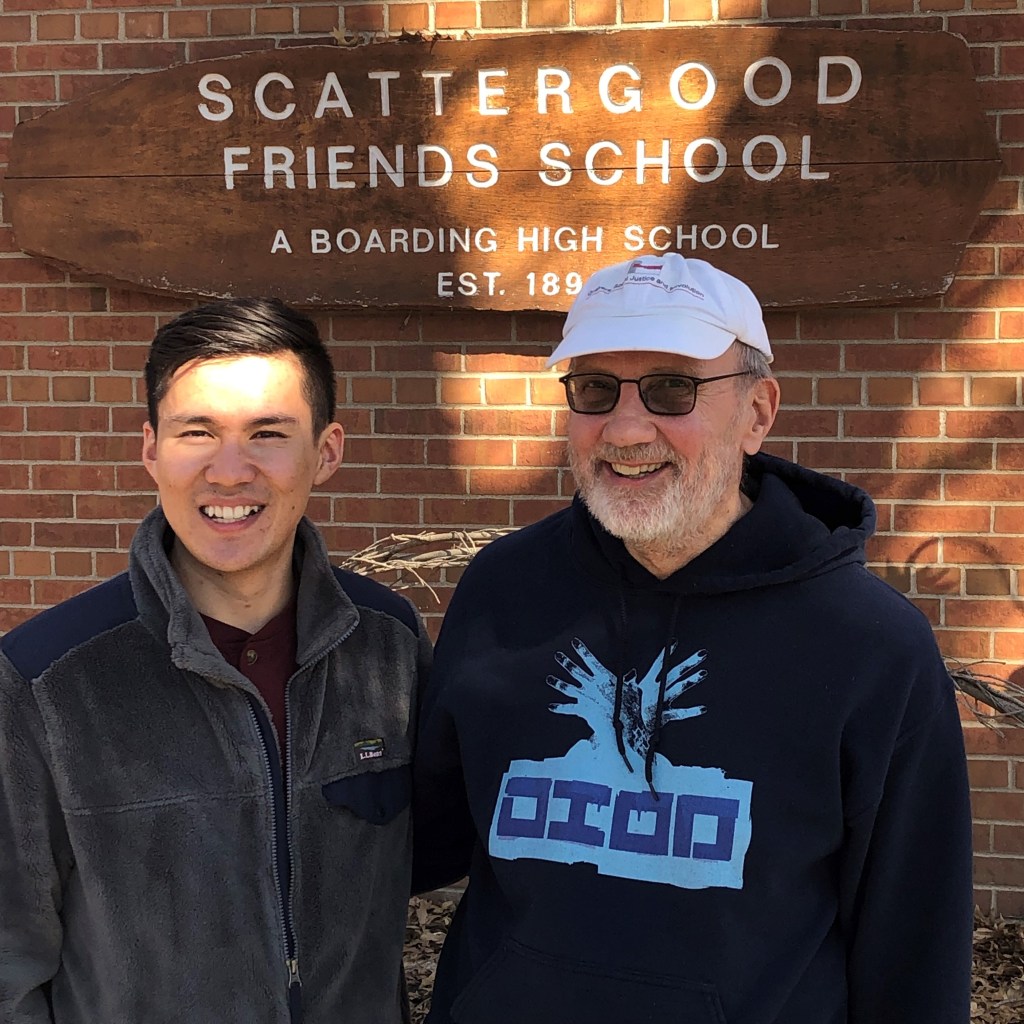
On the day of last month’s youth climate strike, my friend Rezadad Mohammadi and I, who both attended Scattergood Friends School and Farm, traveled to the School so we could talk with the students and teachers there about our experiences related to climate change.
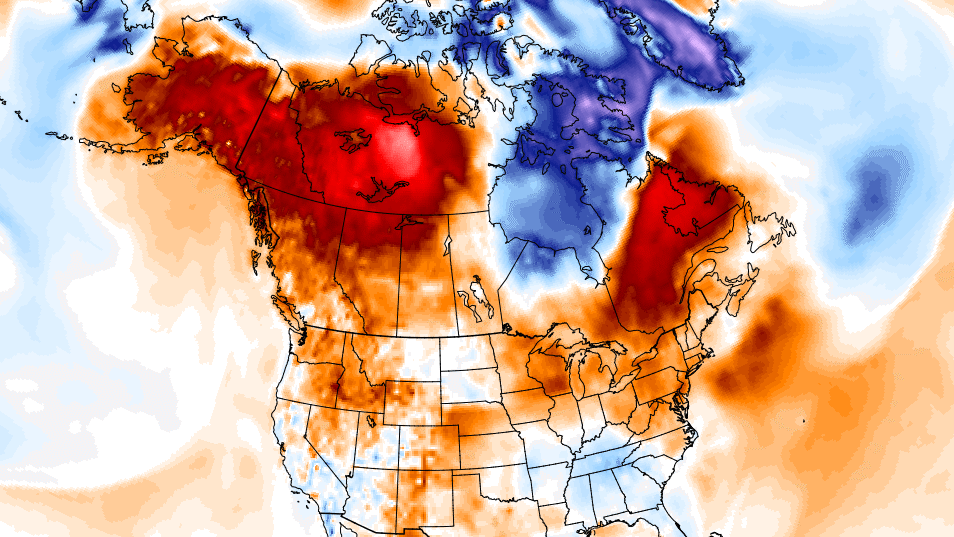
We are in the midst of climate chaos. 25 tornadoes yesterday, the continued massive flooding along the Missouri River, two powerful cyclones in Mozambique, record ice loss, and increasing carbon dioxide and methane levels in the air.
The broken levee has resulted in the Mississippi River flowing through Davenport, Iowa. As much as I have studied and written about environmental collapse, it really hits you when you experience these things yourself. Last Saturday I was on a Burlington Trailways bus. When we arrived in Davenport, the bus station was at the edge of the floodwaters. It was an incredible to see streets covered with water, and that was before the levee broke. The bus station is surely flooded now. Although I was traveling to Des Moines (West of Davenport), when the bus left the station it actually crossed the Mississippi going Eastward. On the Illinois side of the Mississippi we traveled South to reach a highway that was not flooded. The Mississippi was just a few feet below the road we were traveling on. When we reached the next bridge, we went back over the river going Westward and on to Des Moines.
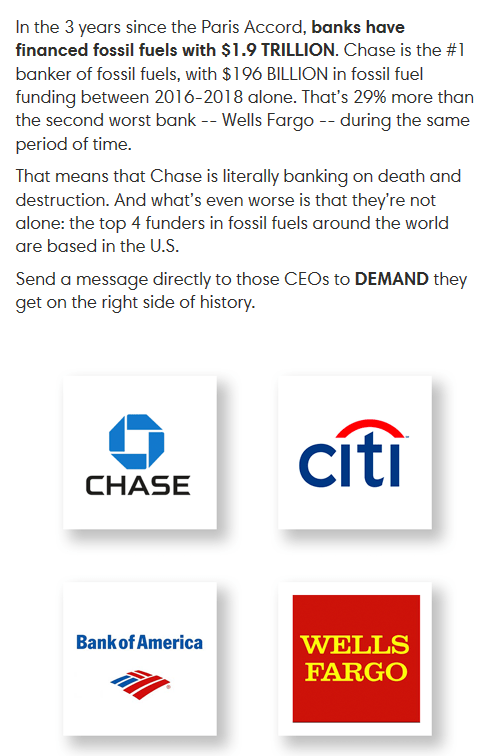
Many people feel overwhelmed and hopeless, and think there isn’t anything they can do. It is generally accepted that change usually happens when social justice efforts begin to impact the profits of the targeted companies. One of the more effective things you can do is, if your bank funds fossil fuel projects, tell your bank why you are closing your account, referred to as divestment.
I have been involved with several divestment actions. The Quaker meeting I attended in Indianapolis, North Meadow Circle of Friends, closed its Chase account.
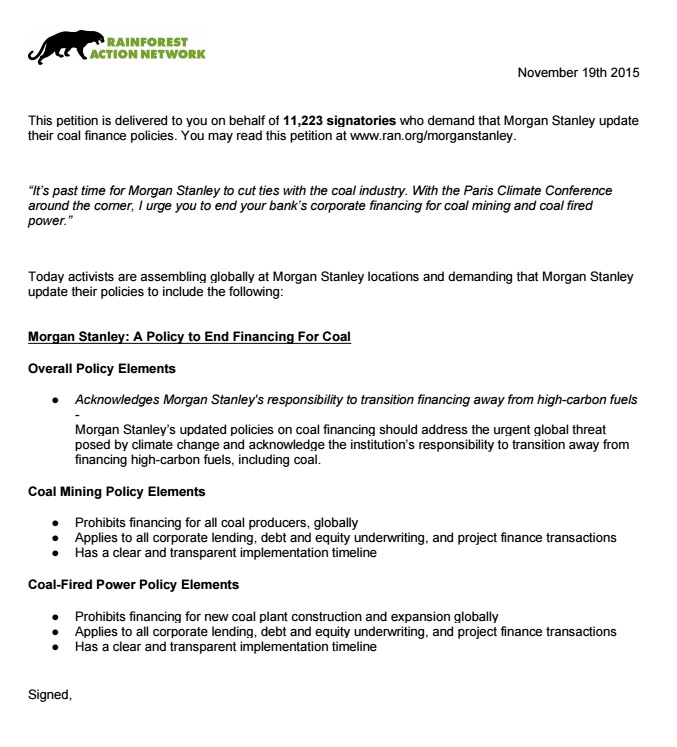
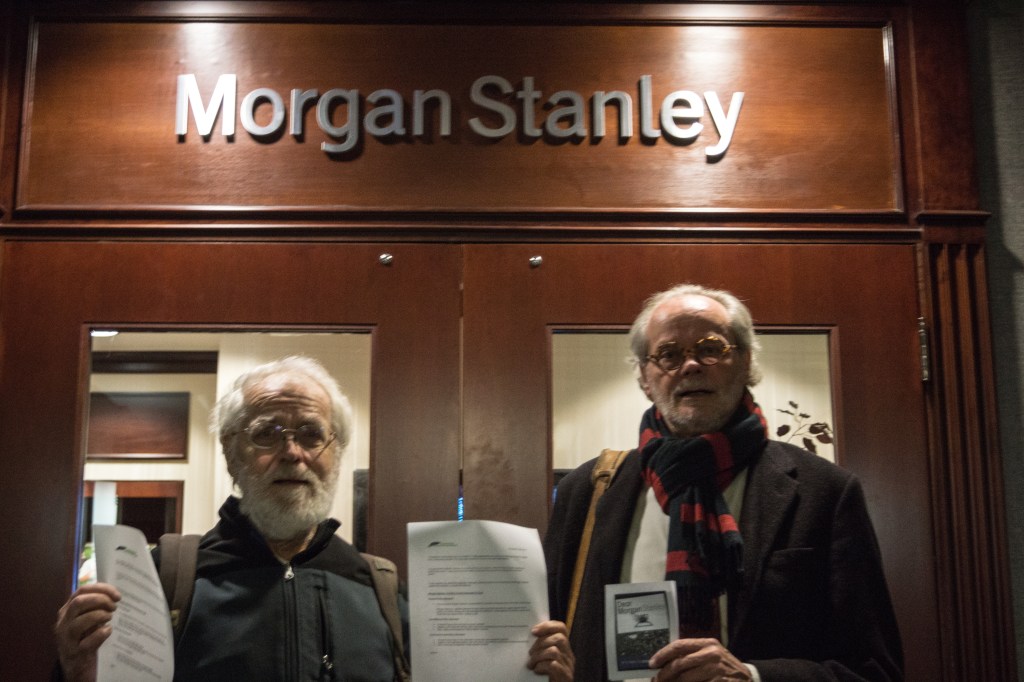
In November, 2015, three of us delivered the following petition to the local Morgan Stanley offices.
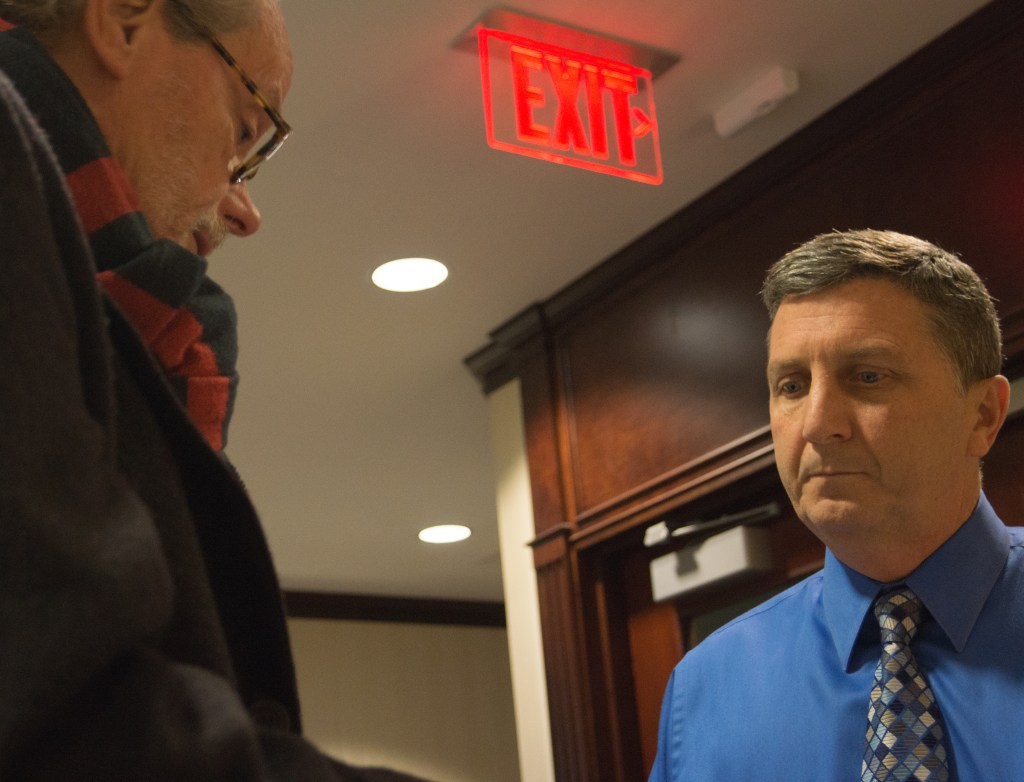
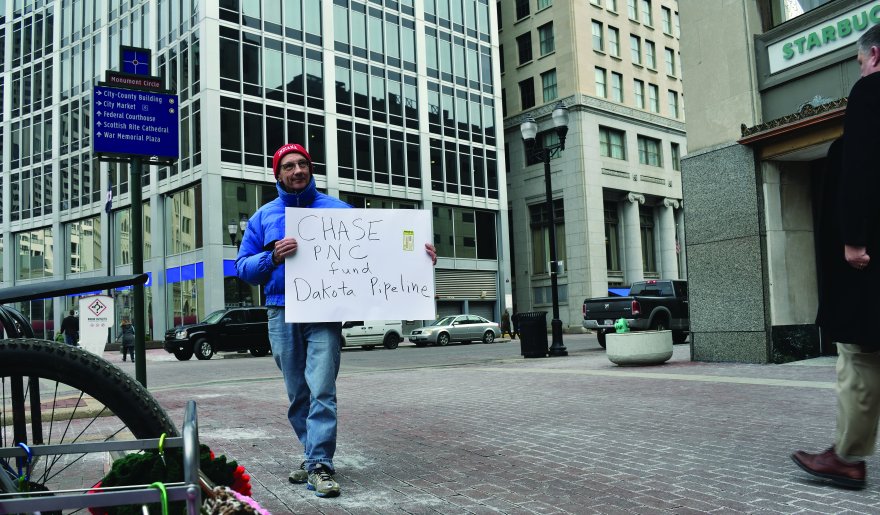
Ted, who I work with in the Keystone Pledge of Resistance, came down from Muncie where he teaches at Ball State. Gilbert, who attends North Meadow Friends and is an activist, joined Ted and I at the Chase Tower downtown this afternoon at 3 pm. Joseph Kelley, the manager, came out to talk with us. He said he had received an email to let him know we might be visiting today. He listened very politely, and said he would get the message to the appropriate people.
A few days after the petition deliveries (at multiple cities) the Rainforest Action Network (RAN) announced that Morgan Stanley and Wells Fargo have taken steps to stop financing fossil fuel development. I called the Indianapolis Morgan Stanley offices and left a message for Joseph Kelley, the branch manager who met with us, thanking him for meeting with us, and Morgan Stanley for changing their policy.
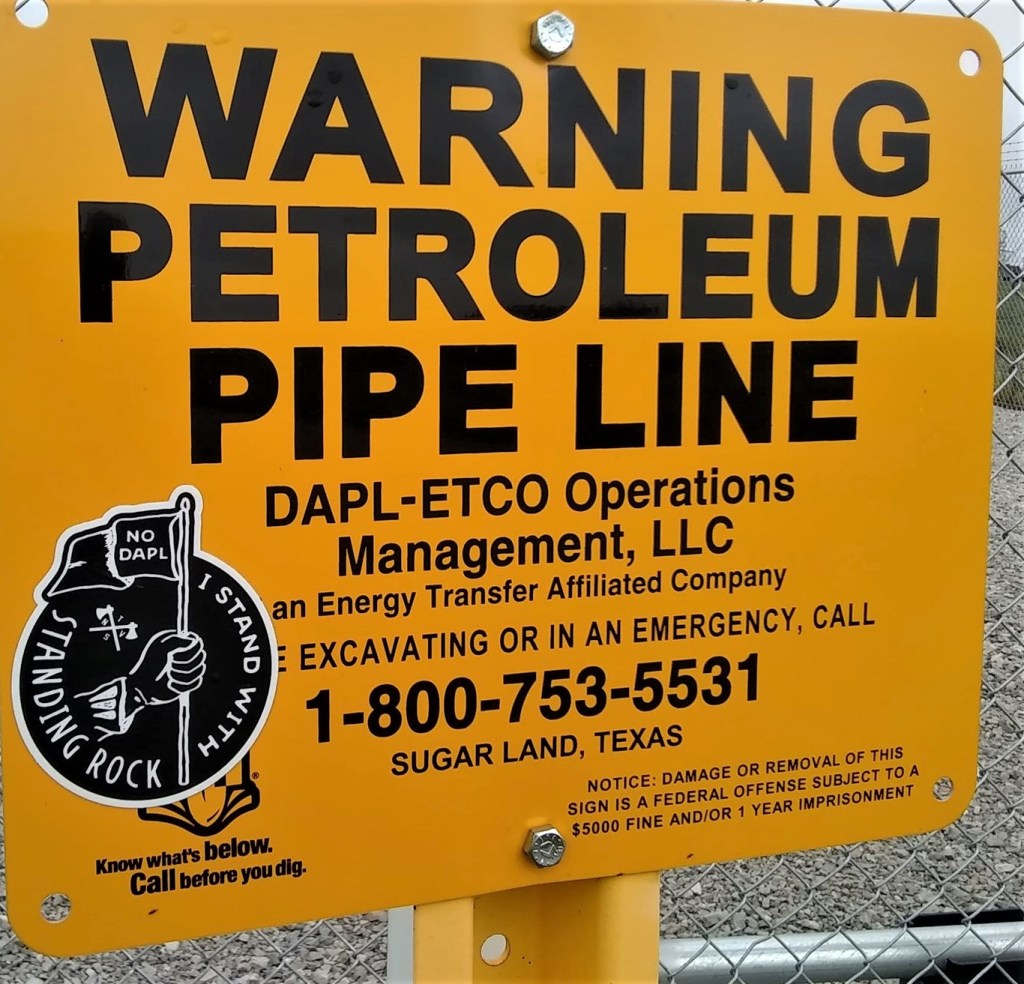
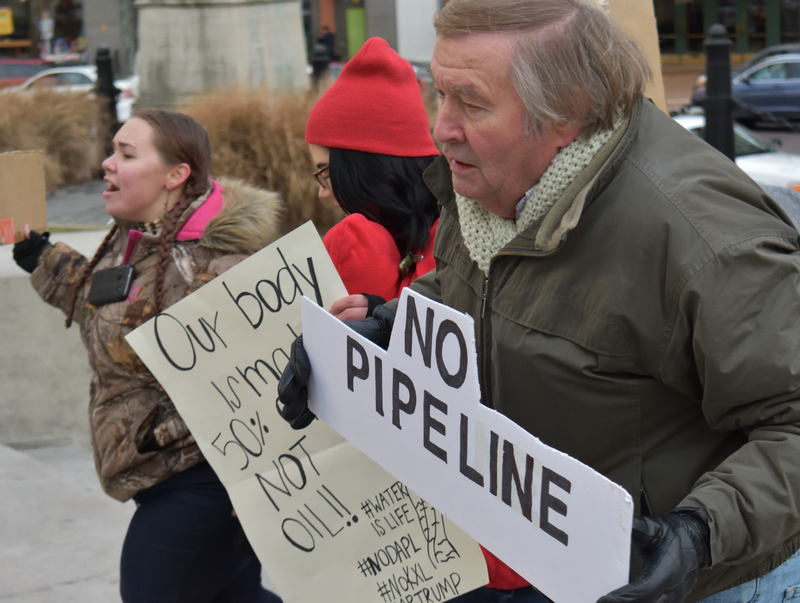
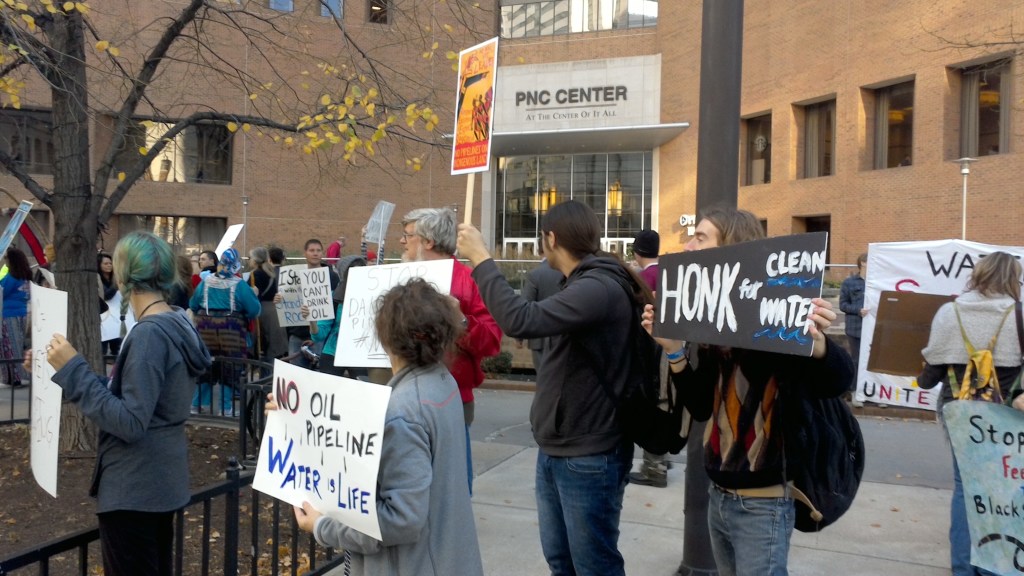
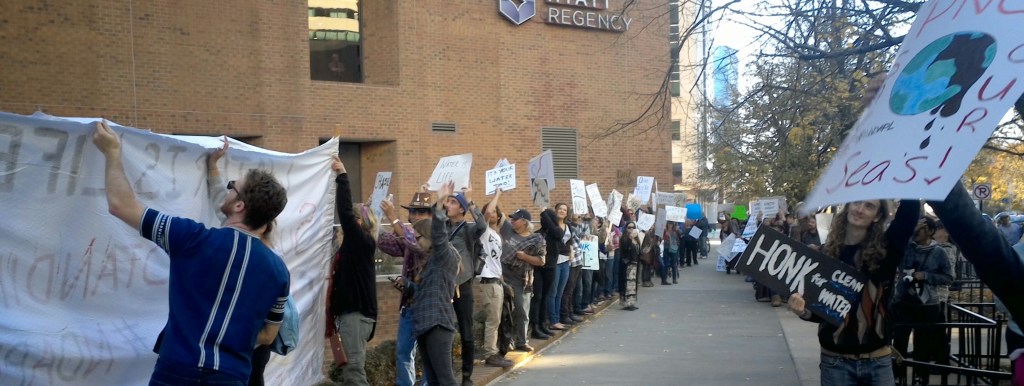
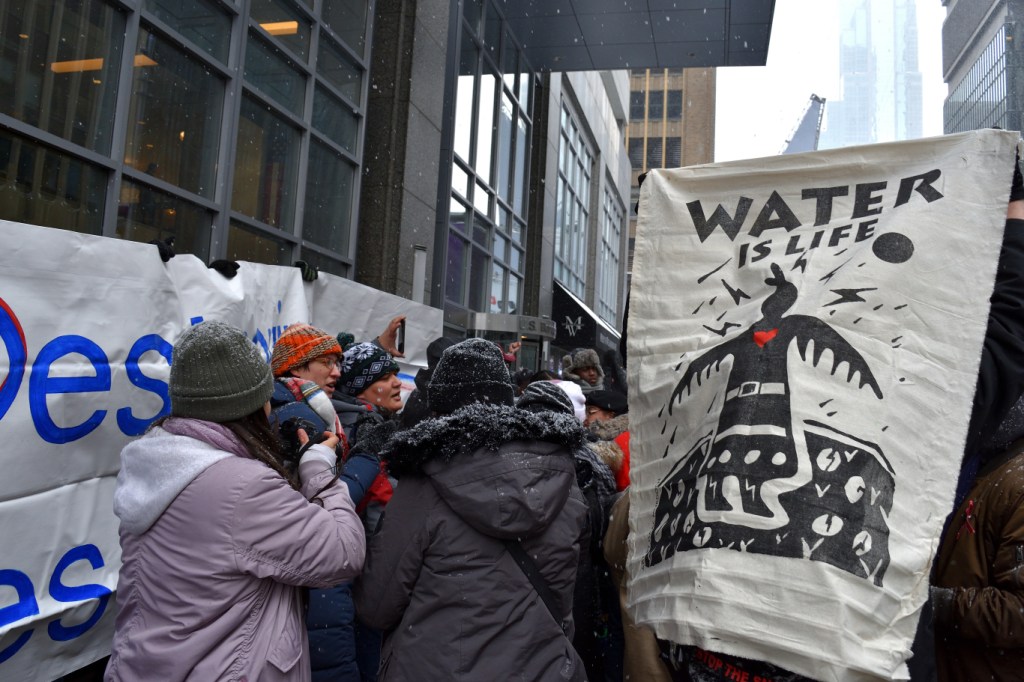
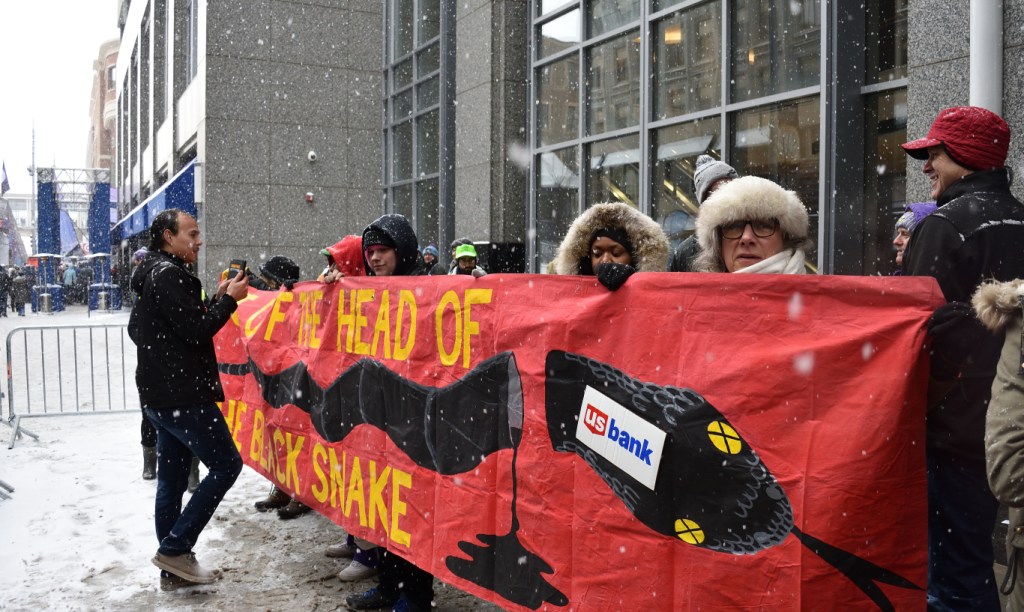
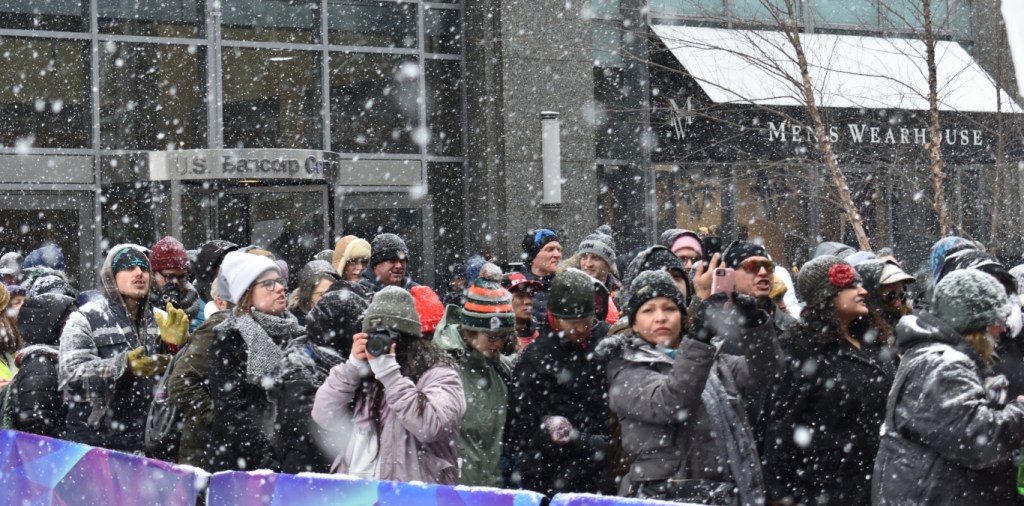
Divestment is one of the tools we used during efforts to stop the Dakota Access Pipeline (#NoDAPL). In October, 2017, those of us in Indianapolis working to stop the DAPL decided to have a gathering related to defunding the pipeline. After gathering at the Eitoljorg Museum, where prayers were given, led by Native Americans, we marched first to the PNC Center, then the Chase bank. At each bank, the group stood in silence while those with accounts went inside to close their accounts. $110,000 was withdrawn that day.
Jpeg
#NoDAPL
Jpeg
Jpeg
#noDAPL
Jpeg
Jpeg
That day that we went to the banks, I was not prepared to close my Chase account, because I hadn’t let my payroll department know of the change in where my direct deposit should go. And I hadn’t set up the bill payments in the new bank account. Once I had done that, I did close my Chase account. That story was published in the Quaker Earthcare Witness (QEW) newsletter, Befriending Creation. https://www.quakerearthcare.org/article/one-dollar-time-defunding-dapl
For the past several days I’ve been writing about Quakers and climate change. And for the past two days about something some of us in Iowa Yearly Meeting (Conservative) have referred to as “ethical transportation”, which is about ways we have tried, and continue to try to stop using fossil fuels for transportation.
Long’s Peak, Rocky Mountain National Park, Colorado
Briefly, my family took many camping vacations, most often to Rocky Mountain National Park. I was immediately enthralled by majestic peaks, lakes and forests. As I began to learn about photography, this was my favorite place to take photos.
In 1971 I moved to Indianapolis and was horrified by clouds of smog from car exhaust. [This was before catalytic converters became widely used in 1975]. I had a nightmarish vision of my beloved mountains hidden behind clouds of smog. Although I owned a couple of cars, I reached a point when I could no longer do so, because of this vision of mountains obscured by smog.
From that moment on I saw cars as evil because of the damage they were doing. I decided I could not be part of that, and have lived without a car since then. I began my lifelong study of environmental science and work to try to bring awareness about the catastrophic damage being done to Mother Earth. Although I give thanks that catalytic converters took care of the visible smog, I knew of the continued damage and consequences of the tons of carbon dioxide and other gases coming from the exhaust of ever increasing numbers of cars.
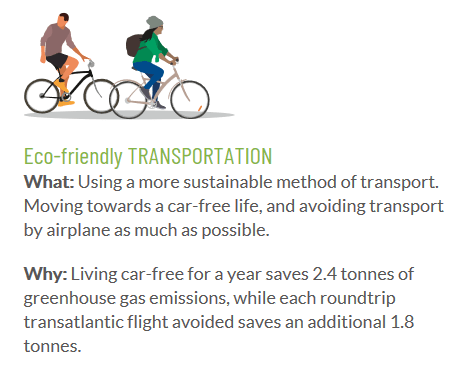
The idea of “ethical transportation” is primarily about finding ways to stop using personal automobiles for transportation.
Yesterday I wrote about the idea of using a system like Uber for transportation, suggesting using electronic vehicles charged by renewable energy. This began some discussion on Facebook. An initial objection was about Uber undercutting unionized taxi drivers. I tried to clarify that by saying we need to replace the taxis with the Uber-like system.
Further comments make me realize people didn’t understand that I meant to get rid of all personal automobiles, and for everyone to use the Uber-like system. It was apparent I still wasn’t getting my point across, at which point I wrote, “Personal automobiles are a luxury, and what got us into our present course toward extinction.” That was challenged, too. But that helped me realize I had not enumerated all the ways I felt personal automobiles had damaged, and continue to damage our societies and Mother Earth.
Personal automobiles are a luxury, and what got us into our present course toward extinction. When I talk with people about not owning personal automobiles, I ask them to remember that generations of our fore-bearers lived without having a car.
Historically Quakers have spoken out against war and knew the causes of war came from the desire to take land or resources from other countries or peoples.
“I told [the Commonwealth Commissioners] I lived in the virtue of that life and power that took away the occasion of all wars… I told them I was come into the covenant of peace which was before wars and strife were.” George Fox
“Oh! that we who declare against wars, and acknowledge our trust to be in God only, may walk in the light, and therein examine our foundation and motives in holding great estates! May we look upon our treasures, and the furniture of our houses, and the garments in which we array ourselves, and try whether the seeds of war have nourishment in these our possessions, or not. Holding treasures in the self-pleasing spirit is a strong plant, the fruit whereof ripens fast.” John Woolman
Since wars have been fought to capture resources such as oil, I don’t see how we can say our lives take away the occasion of all wars when we use personal automobiles. I know some will say we all use fossil fuels, which is true, but if there wasn’t such a gigantic need for so much fuel for personal automobiles, we could meet those needs domestically. There is a big difference between using fossil fuels responsibly, and the wanton use of fossil fuels without regard to the consequences. Homeostasis is the concept of balance, in this case of keeping the use of fossil fuels to be less than the rate at which they can be replenished. We could hardly be more out of balance in that regard today.
I think John Woolman would say there are the seeds of war in our ‘great estates’, i.e. large homes, appliances, and personal automobiles.
While serving transportation demands of people, the combustion of fossil fuels for energy is also a destructive burden on the environment in which all living beings dwell, and the dependence on fossil fuels for our perceived daily needs is a barrier to world peace for which we all aspire.
Today war is waged on a global scale against Mother Earth herself. Only death can result when the resources our environment depends upon (land, water, air, energy) are excessively consumed, and polluted in the process.
Annually there are more than 37,000 deaths and over 3 million injuries from traffic accidents in the United States. While there are deaths and injuries from mass transit, they are miniscule compared to personal auto accidents. (Less than 300 fatalities in 2017). https://www.bts.gov/content/transportation-fatalities-mode
But I see many more types of damage that have been done by the mass production and use of personal cars. Henry Ford’s moving assembly line had several implications. The rate of production of cars increased dramatically, and the cost was reduced. This meant more and more people, and people with less wealth, could purchase their own car.
Thus began the movement toward most middle and upper income families having cars. But people with less income could still not afford their own. An obvious symbol of class and economic status developed, based upon who had their own car. There were also class divisions among those who did own cars. The wealthy could afford much more stylish and luxurious cars.
As more people began to have cars, a more mobile and more urban society developed. As the need for increased auto production expanded, more factories to assemble cars were needed. These factories were built in urban areas, which helped fuel the movement of people away from rural areas to the cities where the factory jobs were.
That movement had it’s own implications. Families and communities began to break up as more people left rural areas and small towns. People who had benefited from family and community support, left that behind. And whereas families who lived in rural areas and small towns were basically self-sufficient, those who moved to urban areas were more dependent on others for food, health care, entertainment, etc. That required a currency system. Thus, those who lost their job slipped into poverty. That would not have occurred in rural areas where people grew their own food.
And urban housing made it more difficult to know one’s neighbors, to have social support systems.
Growing cities and urban areas required more complex systems, many requiring motor transportation, to bring food and goods to the people living there. And more complex infrastructure to bring water, electricity, and natural gas to houses, remove waste, provide roads, traffic signals and parking.
Another classification emerged based upon income. Those who could afford to began to move from the concentrated urban centers to outlying communities. These neighborhoods were poorly designed, with homes, stores, banks, schools etc all built apart from each other. These areas were also not served by public transportation, so each family was dependent upon having at least one car.
Urban jobs, especially those involving assembly lines, tended to be quite unfulfilling.
Another undesired effect of urbanization and sprawl was the long time most commuters spent in their car, often leading to frustration. And being sealed off from nature and other people.
Especially as I have been learning from my Native American friends, this modern urbanization has had significant spiritual costs. Urban people have lost their connection to Mother Earth and supportive communities. And more recently corporate profits have become the driving force for far-reaching decisions, especially related to resource use and exploitation. It became acceptable to make decisions that were obviously detrimental to employees, and to the environment. Value systems were completely upended. For decades corporations knew what the consequences of greenhouse gas emissions would be, but kept that hidden so they could continue to make huge profits.
The rapid depletion of easily accessible, high quality crude oil forced the fossil fuel industry to look for other energy sources, such as tar sands product and natural gas. Widespread underground detonations to access natural gas via fraking occurred, and continued despite the pollution of water sources, and causing earthquakes.
Hundreds of square miles of pristine boreal forests were demolished to reach the low grade, tar sands. Billions of gallons of water were wasted, and poisoned in the process of tar sands mining. The ponds of waste water are so toxic birds die if they land there. The toxic chemicals leach into the groundwater, poisoning drinking water with carcinogens.
These are some of the reasons I say personal automobiles have led us to this point, when we are experiencing increasingly frequent and powerful environmental disasters. And appear to be on the path to extinction.
Yesterday’s post about Quakers and the rising climate movement included the “Ethical Transportation” Minute approved by Iowa Yearly Meeting (Conservative) Quakers in 2017 (see below). Friends (Quakers) in rural areas struggle with ways to reduce fossil fuel use because public transit systems don’t serve those areas. And traveling distances is a given in that farm homes usually sit in the middle of farm land, a good distance from neighbors, towns and cities.
Redesigning rural areas such that farm houses are closer to nearby towns would be helpful, but obviously complicated in terms of land ownership, etc.
A rural transportation system would be good, but, other than school bus routes, not available now. One idea might be to figure out how adults could take advantage of the school bus system themselves. In the meantime, beginning to replace school buses with electrically powered vans would be a good step.
It is not going to be possible to simply replace every gas powered vehicle with an electric one. Having at least one car per family is extremely wasteful since cars are parked 95% of the time.
I had my first experience using Uber last week, and I was really impressed by that system. As a computer software engineer I was very impressed with how well the Uber app is designed and integrated into the vehicle utilization system. As I’ve been thinking about Uber and “ethical transportation” is seems we could quickly move toward decarbonizing part of our transportation systems by using a system like Uber, using electric vehicles powered by renewable sources. That would address the need for every household having a car, and utilize much of the time a car is usually parked.
You don’t have to buy or lease a car of your own if you live in an urban environment.
You don’t have to rent a garage for the car you don’t have.
You don’t have to pay auto insurance on the car you don’t have.
You don’t have to get oil changes, new tires, brakes, etc. for that car either.
When you want a car, it is easy to do, and that car comes with a driver who will take you where you want to go. The car will be clean and in good shape, and the driver will speak English, and will be able to take you where you want to go at a reasonable charge.
You don’t have to carry extra money for the cab driver, since all billing is done via Uber.
You will not have to find a place to park at the restaurant or other event you are going to, nor will you have to pay a parking lot fee.
When you are ready to return home, you will have a driver and a car waiting for you in a few minutes.
Even if you had a couple extra drinks or beers, you will not have to worry about who’s gonna drive home, because Uber is the designated driver.
And the cost, in most cases, will not be more than an equivalent cab ride
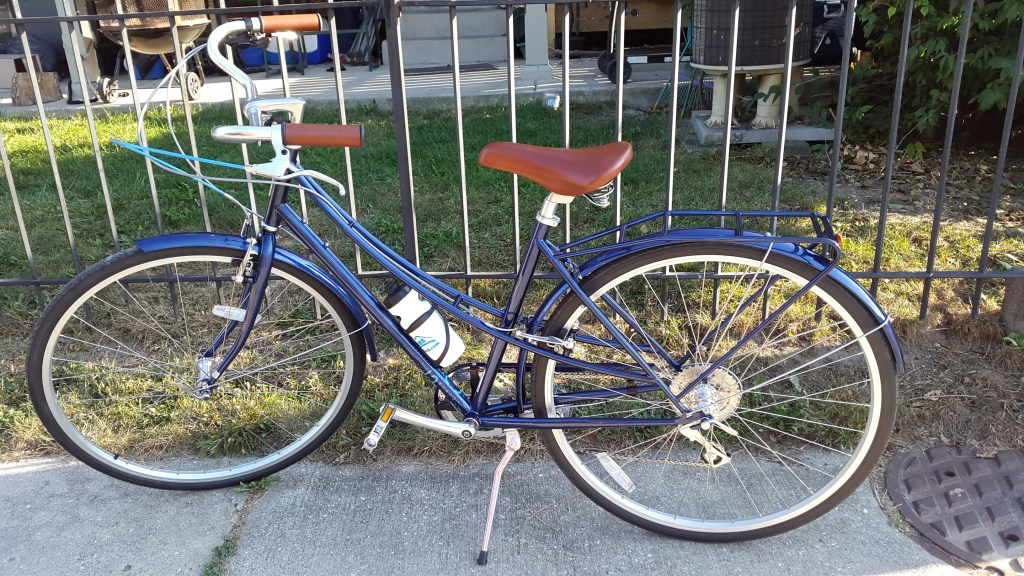
Now that warm weather is coming, we can focus on using bicycles as often as possible, as the following Minute discusses.
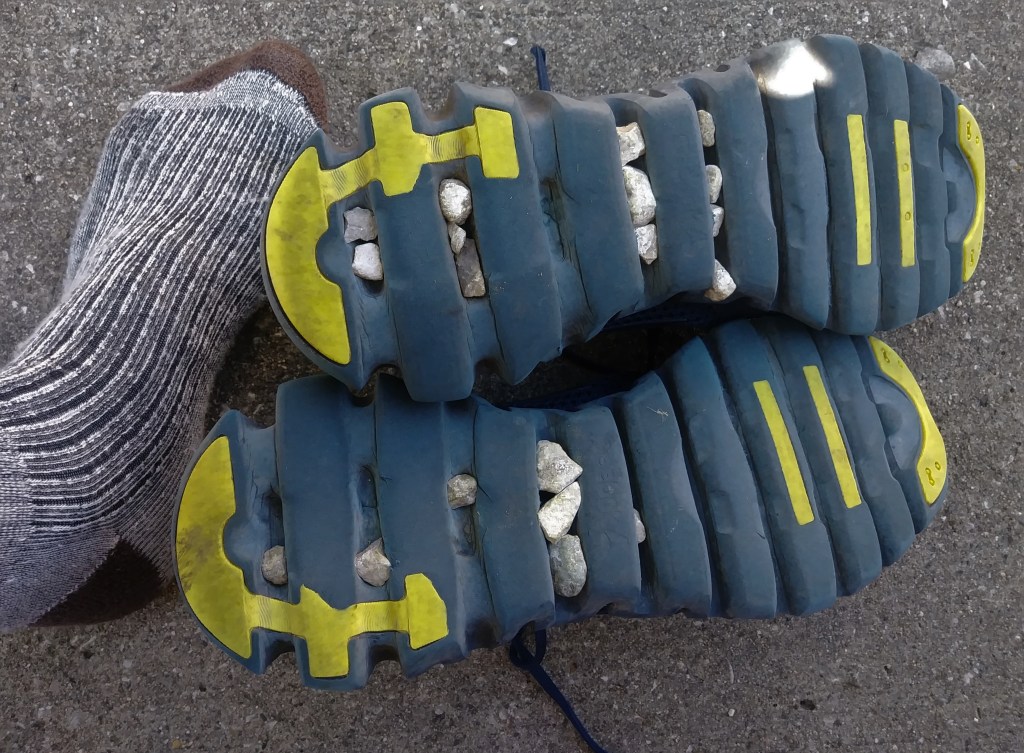
I’ve also been doing a lot of walking, usually at least 5 miles at a time every other day or so. Since walking at least 10 miles a day on the First Nation-Farmer Climate Unity March last September, walking has become something I enjoy doing as often as possible.
Ethical Transportation Minute
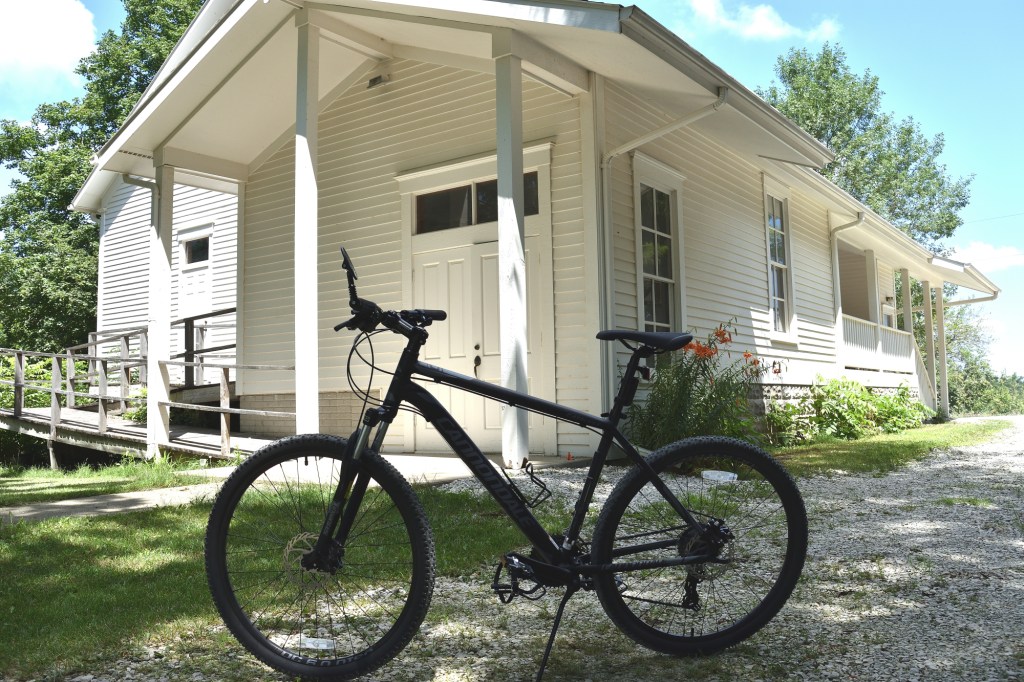
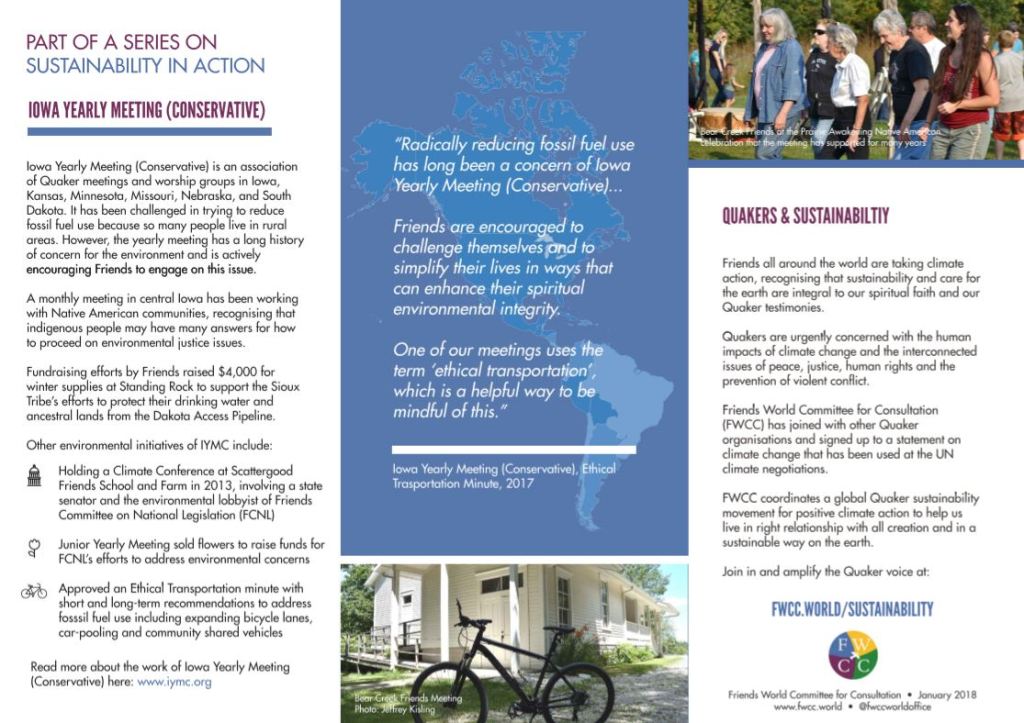
Radically reducing fossil fuel use has long been a concern of Iowa Yearly Meeting (Conservative). A previously approved Minute urged us to reduce our use of personal automobiles. We have continued to be challenged by the design of our communities that makes this difficult. This is even more challenging in rural areas. But our environmental crisis means we must find ways to address this issue quickly. Friends are encouraged to challenge themselves and to simplify their lives in ways that can enhance their spiritual environmental integrity. One of our meetings uses the term “ethical transportation,” which is a helpful way to be mindful of this. Long term, we need to encourage ways to make our communities “walkable”, and to expand public transportation systems. These will require major changes in infrastructure and urban planning. Carpooling and community shared vehicles would help. We can develop ways to coordinate neighbors needing to travel to shop for food, attend meetings, visit doctors, etc. We could explore using existing school buses or shared vehicles to provide intercity transportation. One immediately available step would be to promote the use of bicycles as a visible witness for non-fossil fuel transportation. Friends may forget how easy and fun it can be to travel miles on bicycles. Neighbors seeing families riding their bicycles to Quaker meetings would have an impact on community awareness. This is a way for our children to be involved in this shared witness. We should encourage the expansion of bicycle lanes and paths. We can repair and recycle unused bicycles, and make them available to those who have the need.
Ethical Transportation Minute Approved by Iowa Yearly Meeting (Conservative) 2017
“Quakerism and the rising climate justice movement” is the title of an interesting article from the Quaker Faith in Action newsletter of Britain Yearly Meeting, April 2019.
Climate justice has been on people’s minds this month thanks to the rising climate justice movement. Schoolchildren across the UK took part in the third #YouthStrike4Climate, Extinction Rebellion shut down central London for a week to draw attention to the climate crisis, and Greta Thunberg visited Britain. It will not be a surprise that Quakers have been involved in these important events, with young Quakers taking part in the school strike, two meetings for worship held at Extinction Rebellion’s London shutdown, and Quakers in Britain hosting Greta for a sold-out talk at Friends House. At least seven Quakers have arrested at Extinction Rebellion nonviolent direct actions, with hundreds supporting them online and through prayer. Those arrested include: Peter Griffin; Ian Bray of Brighouse West Yorkshire AM; Leslie Tate of Luton and Leighton AM; Ruth Leonard- Williams of Ashburton Quaker Meeting; Sue Hampton of Berkhamsted Meeting; Jo Robins of Nailsworth meeting; and Jan Scott of Kingsbridge Quaker Meeting.
I was interested that the newsletter encouraged those who were arrested to inform Meeting for Sufferings. Having our own Meting for Sufferings is an idea I have been interested in.
We encourage any other Quakers who were arrested to inform Meeting for Sufferings by emailing the dedicated address, sufferings@quaker.org.uk, with as much accurate information as possible – for example, names, Area Meetings, dates, charges, and sentence.
In 2014, three Quaker organisations (QUNO, FCNL and QEW) published this statement entitled ‘Facing the challenge of climate change’.
“It would go a long way to caution and direct people in their use of the world, that they were better studied and knowing in the Creation of it. For how could [they] find the confidence to abuse it, while they should see the great Creator stare them in the face, in all and every part of it?”
William Penn, 1693
As Quakers, we are called to work for the peaceable Kingdom of God on the whole Earth, in right sharing with all peoples. We recognize a moral duty to cherish Creation for future generations. We call on our leaders to make the radical decisions needed to create a fair, sufficient and effective international climate change agreement. As Quakers, we understand anthropogenic climate change (climate change due to human activities) to be a symptom of a greater challenge: how to live sustainably and justly on this Earth. We recognize that the current rise of greenhouse gas emissions is leading to an unprecedented rate of increase in global average surface temperature of extreme detriment to the Earth’s ecosystems and species, including human beings. We recognize that catastrophic global climate change is not inevitable if we choose to act urgently. We recognize a personal and collective responsibility to ensure that the poorest and most vulnerable peoples now, and all our future generations, do not suffer as a consequence of our actions. We see this as a call to conscience. We recognize the connections between climate change and global economic injustice as well as unprecedented levels of consumption, and question assumptions of unlimited material growth on a planet with limited natural resources. We recognize that most anthropogenic greenhouse gas emissions are created by fossil fuel combustion. We recognize that our increasing population continues to pursue fossil fuel-dependent economic growth. We recognize that the Earth holds more fossil fuel reserves than are safe to burn, and that the vast majority of fossil fuel reserves must remain in the ground if we are to prevent the catastrophic consequences of climate change. We therefore question profoundly the continued investment in, and subsidizing of, fossil fuel extraction. We seek to nurture a global human society that prioritizes the well-being of people over profit, and lives in right relationship with our Earth; a peaceful world with fulfilling employment, clean air and water, renewable energy, and healthy thriving communities and ecosystems. As members of this beautiful human family, we seek meaningful commitments from our leaders and ourselves, to address climate change for our shared future, the Earth and all species, and the generations to come. We see this Earth as a stunning gift that supports life. It is our only home. Let us care for it together.
On that website is a page of Actions from Iowa Yearly Meeting (Conservative). That page should be expanded to included the work of other monthly meetings, such as Decorah’s installation of solar panels.
Following is the Ethical Transportation Minute approved by Iowa Yearly Meeting (Conservative) in 2017.
Radically reducing fossil fuel use has long been a concern of Iowa Yearly Meeting (Conservative). A previously approved Minute urged us to reduce our use of personal automobiles. We have continued to be challenged by the design of our communities that makes this difficult. This is even more challenging in rural areas. But our environmental crisis means we must find ways to address this issue quickly. Friends are encouraged to challenge themselves and to simplify their lives in ways that can enhance their spiritual environmental integrity. One of our meetings uses the term “ethical transportation,” which is a helpful way to be mindful of this. Long term, we need to encourage ways to make our communities “walkable”, and to expand public transportation systems. These will require major changes in infrastructure and urban planning. Carpooling and community shared vehicles would help. We can develop ways to coordinate neighbors needing to travel to shop for food, attend meetings, visit doctors, etc. We could explore using existing school buses or shared vehicles to provide intercity transportation. One immediately available step would be to promote the use of bicycles as a visible witness for non-fossil fuel transportation. Friends may forget how easy and fun it can be to travel miles on bicycles. Neighbors seeing families riding their bicycles to Quaker meetings would have an impact on community awareness. This is a way for our children to be involved in this shared witness. We should encourage the expansion of bicycle lanes and paths. We can repair and recycle unused bicycles, and make them available to those who have the need.
Ethical Transportation Minute Approved by Iowa Yearly Meeting (Conservative) 2017
Yesterday I wrote about the current Republican administration’s environmental injustice, i.e. refusing to fund climate disaster relief for Puerto Rico, Pine Ridge, and other areas. As Julian Bear Runner, Oglala Sioux Tribal President asks:
“Why does President Trump refuse to send needed aid to poor communities of color in the aftermath of natural disasters?”
Julian Bear Runner
Just weeks after the destructive Cyclone Adai struck Mozambique, Cyclone Kenneth has struck the country.
While Cyclone Idai is the seventh such major storm of the Indian Ocean season – more than double the average for this time of year – the long-term trend does not support the idea that these type of events are now more frequent. “The interesting thing for the area is that the frequency of tropical cyclones has decreased ever so slightly over the last 70 years,” said Dr Jennifer Fitchett from the University of the Witwatersrand in South Africa who has studied the question. “Instead, we are getting a much higher frequency of high-intensity storms.” Climate change is also changing a number of factors in the background that are contributing to making the impact of these storms worse. “There is absolutely no doubt that when there is a tropical cyclone like this, then because of climate change the rainfall intensities are higher,” said Dr Friederike Otto, from the University of Oxford, who has carried a number of studies looking at the influence of warming on specific events. “And also because of sea-level rise, the resulting flooding is more intense than it would be without human-induced climate change.”
Poorer people and countries, which have contributed the least to climate change, are also the most vulnerable to its effects. The price paid in lost lives and livelihoods falls disproportionately on them. This is seen not only in Cyclone Idai, but also in the recent flooding in the U.S. Midwest, where Native Americans on the Pine Ridge Reservation are finding recovery far more difficult than farmers in neighboring states.
UN weather experts say it is unprecedented for two cyclones of such intensity to hit Mozambique in the same season. The World Meteorological Organisation (WMO) also said that no previous records show a cyclone striking the region as far north as Kenneth. It said a fact-finding mission would examine the “impact of climate change and sea-level rise on Mozambique’s resilience” to extreme weather.
Amnesty International’s secretary general Kumi Naidoo said the two storms were “exactly what climate scientists warned would happen if we continue to warm our planet beyond its limits”.
“There is one inescapable and burning injustice we cannot stress enough,” he said, adding: “The people of Mozambique are paying the price for dangerous climate change when they have done next to nothing to cause this crisis.”
The video below from the Lakota People’s Law Project shows the disastrous effects of the Midwest flooding continue. The message from Julian Bear Runner, Oglala Sioux President, mentions the U.S. Congress went into recess without providing funding to help the communities in many places that have been devastated by climate catastrophes.
He points out both the common needs, and common lack of response of the Republican administration to Pine Ridge and Puerto Rico, and asks:
“Why does President Trump refuse to send needed aid to poor communities of color in the aftermath of natural disasters?”
Julian Bear Runner
That is a crucial question for our future. We will all be impacted by increasingly frequent and devastating climate catastrophes. Those who believe in peace and justice must put all our efforts into breaking the hold of the privileged few on the resources needed for recovery and survival, of which Pine Ridge and Puerto Rico are the most recent examples. One of the things I love about the Sunrise Movement is the commitment to seeing that resources get to communities of color, those who have borne the brunt of economic and environmental injustice. Everything I have seen about the Sunrise Movement has demonstrated a commitment to inclusion and diversity. The Movement practices what it preaches.
Neither are we alone in our struggle. The US Congress recently went on recess without having decided on an urgently important item: communities throughout the Midwest, California, and Puerto Rico are all still reeling from the fallout of climate-related catastrophes, but the legislature remains gridlocked on providing relief. The hangup? President Donald Trump refuses to endorse any aid package that includes more than a pittance for Puerto Rico.
In the new video from the Lakota People’s Law Project, you’ll see how recent storms have affected our Oglala Nation’s families. I know that many in Puerto Rico still face similar problems. A few weeks back, I watched as Carmen Yulín Cruz, mayor of Puerto Rico’s capital, San Juan, described the ongoing struggles for her island. I was heartened that, even given her own dire situation, she took time to mention the emergency here at Pine Ridge. Our mutual situation makes you wonder: Why does President Trump refuse to send needed aid to poor communities of color in the aftermath of natural disasters?
This week, I will send a formal letter to Mayor Cruz expressing our tribe’s solidarity with Puerto Rico. It’s possible we can work together to increase awareness of our twin emergencies, bolster the chances of federal relief, and provide for our citizens. It is my sincere hope that both Puerto Rico and Pine Ridge will receive all funding needed to rebuild.
Please join us and pray for Congress and FEMA to provide essential aid for underserved communities throughout our country. With compassion and cooperation, we can build together toward a brighter future — for Pine Ridge, for Puerto Rico, and for the world we share.
Wopila tanka, Julian Bear Runner Oglala Sioux Tribal President ℅ Lakota People’s Law Project























































 Quakers, social justice and revolution