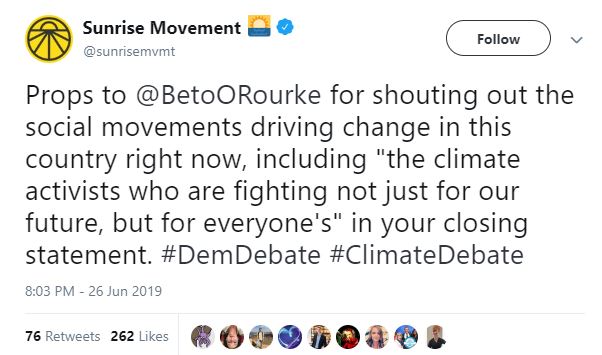
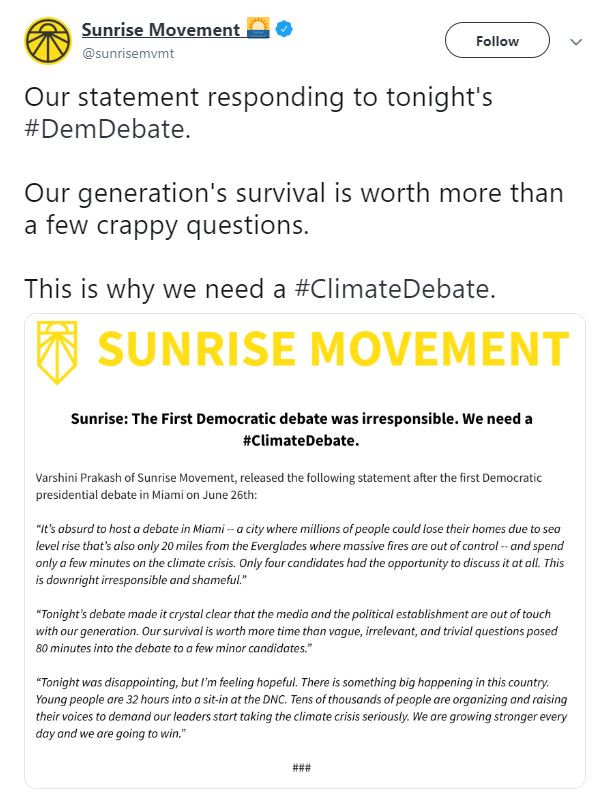
Last night was the first debate with Democratic presidential candidates. Those who understand the rapidly growing, interrelated list of severe consequences of climate chaos had hoped the candidates would speak much more forcefully and fully about climate change were disappointed. Only Governor Jay Inslee used his time on stage to focus on climate chaos. Beto O’Rourke did mention groups such as the Sunrise Movement “who are fighting not just for our future, but for everyone’s.”
“The First Democratic Debate Failed The Planet at a debate held in a sinking city, only four candidates were directly asked about the climate crisis.” by EMILY ATKIN, The New Republic, June 26, 2019
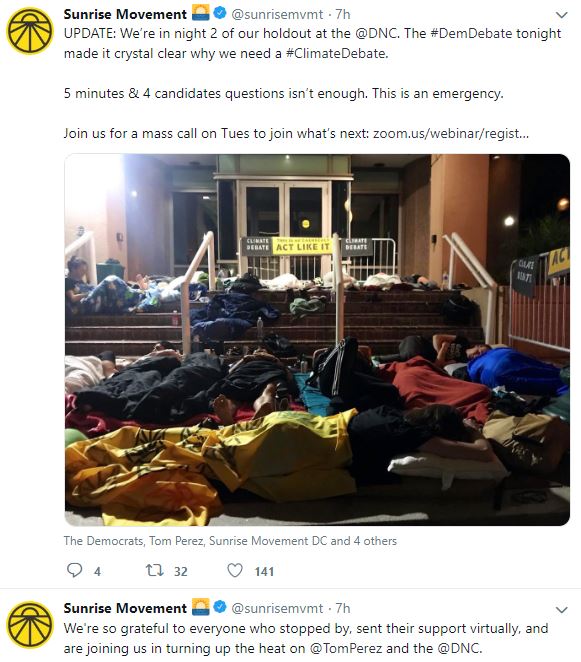
As we feared, our ongoing climate chaos is seen as one issue among so many others. Environmental groups have tried to get the Democratic National Committee (DNC) to hold one debate focused solely on our climate emergency. DNC Chairman Tom Perez has not only refused, but has threatened to punish any candidate who would participate in a climate debate. There is information at the end of this post about where you can sign the petition for the DNC to hold a climate specific debate.
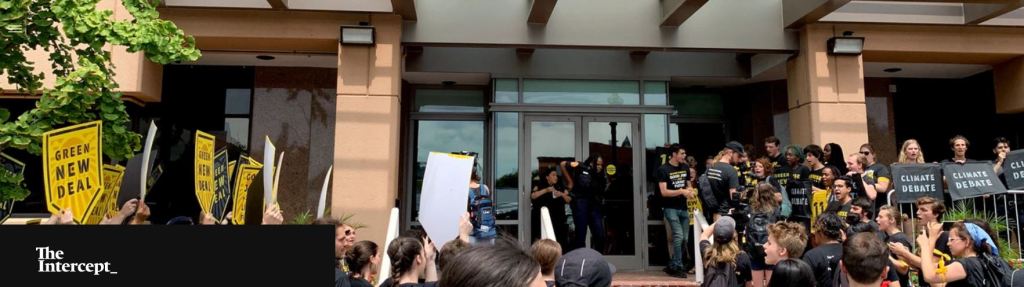
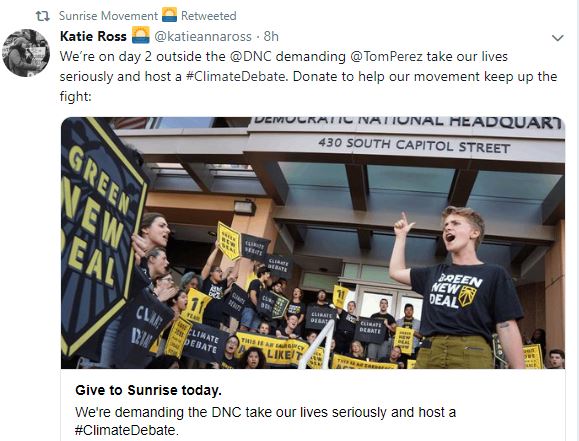
“It’s an emergency, and we need our leaders to act like it,” said Abby Leedy, a protester from Philadelphia, outside the DNC headquarters a few blocks from the U.S. Capitol.
The DNC is not only refusing to hold a debate but threatening to bar any candidates who participate in a third-party climate debate on their own from future DNC debates. DNC Chair Tom Perez said in a Medium post earlier this month that the party would not hold any issue-specific debates because it could not allow individual candidates to dictate the terms of debate. His position came in response to Washington Gov. Jay Inslee, who has made climate change the centerpiece of his presidential campaign and has called for a climate-centric debate.
“If we change our guidelines at the request of one candidate who has made climate change their campaign’s signature issue, how do we say no to the numerous other requests we’ve had?” Perez wrote. “How do we say no to other candidates in the race who may request debates focused on an issue they’ve made central to their own campaigns?”
Sunrise activists rejected Perez’s framing of the issue. “When you say this is a single issue, we know that’s not true,” said Leedy. “We know that this affects every aspect of our lives.”
The @DNC refuses to host a #ClimateDebate. They've called the climate crisis a “single issue” while wildfires, floods and pollution devastate our homes. Apparently the DNC thinks a “single issue” means “an issue not affecting me.”
More than 200,000 signed our petition calling on the Democratic National Committee (DNC) to host a presidential primary debate on climate solutions. But on June 6, DNC Chair Tom Perez said the party won’t host an official climate debate or allow candidates to participate in unofficial debates. The backlash has been fast and fierce. After Perez rejected our demand, over 50 DNC members – more than 10% of the voting membership – submitted their own resolution calling for a debate. Before the DNC’s next meeting on June 29, we need to ramp up the pressure and tell Perez and the rest of party that we need a climate debate.
As I was looking for information about conflict resolution and transformation, I found the latest book of poems by our new poet laureate, Joy Harjo, “Conflict Resolution for Holy Beings: Poems.”
I’m intrigued with the title of the following poem, “For Calling the Spirit Back from Wandering the Earth in Its Human Feet.” The main reason I began writing on this blog several years ago was as a way for me to think through things, especially matters of the Spirit. Also because I felt there was a void to address people’s spiritual life in light of decreasing participation with organized religion, and hope some of these writings might be helpful. Actually , that is what the last line of the poem says we should all try to do.
This resonates with me because I’ve been led to believe we are in a time of great spiritual poverty, just when we are facing potentially existential threats. When our environment is being stressed as never before during the time of humans. When the resulting damages trigger more, often unexpected, destructive processes.
The root of our current woes stems from a decay of our values.
It makes no sense to consume fossil fuels to the extent that we poison our living spaces; air, land and water. And yet fossil fuel consumption continues to increase.
It makes no sense to allow corporations to profit from public land and water.
It makes no sense to fight endless wars on terror, when we act as terrorists, and increase the number of people joining the terrorist groups.
It makes no sense to squander billions of dollars on the military and deny small fractions of that money to actually address the desperate needs of millions struggling for basic necessities.
It makes no sense to distribute the weapons of war to domestic police forces. And for the epidemic of the use of deadly force, including the killing of unarmed people.
The only way these abuses make any sense is from the view that everything and everyone is just a resource for corporate production and wealth of the shareholders.
The way to return to our values of love and care for one another and Mother Earth is to reject the power of corporations and their abuse of us and our environment. To do that we need to return to spiritual beliefs and practices. We can learn from the leadership of Indigenous peoples around the world who have always lived with environmental integrity and stewardship.
Those of us who live Spirit-led lives need to invite others to live this way. That is what the poem below is saying.
I’ve been pondering the image of calling the spirit back from wandering the Earth in its human feet. Religions usually have stories related to the Spirit being embodied by a human, to teach us how a person of God or the Spirit should live in this world. But the title of this poem suggests that each of us has a spirit that wanders the Earth. It also says we need to call the Spirit back. It is time to focus on spiritual ways of being, and teaching this to others.
“Then, you must do this: help the next person find their way through the dark.“
For Calling the Spirit Back from Wandering the Earth in Its Human Feet (excerpts)
Do not hold regrets.
When you find your way to the circle, to the fire kept burning by the keepers of your soul, you will be welcomed.
You must clean yourself with cedar, sage, or other healing plant.
Cut the ties you have to failure and shame.
Let go the pain you are holding in your mind, your shoulders, your heart, all the way to your feet. Let go the pain of your ancestors to make way for those who are heading in our direction.
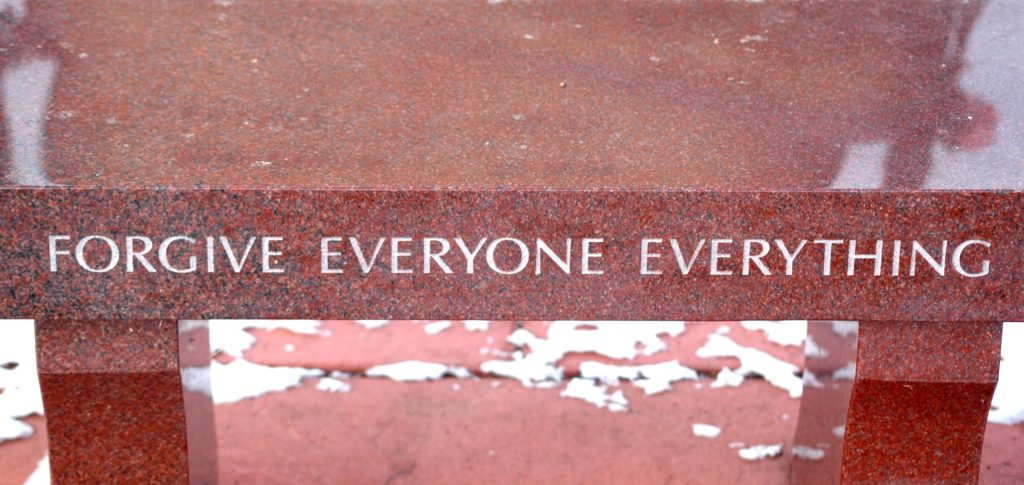
Ask for forgiveness.
Call upon the help of those who love you. These helpers take many forms: animal, element, bird, angel, saint, stone, or ancestor.
Call your spirit back. It may be caught in corners and creases of shame, judgment, and human abuse.
You must call in a way that your spirit will want to return. Speak to it as you would to a beloved child.
Welcome your spirit back from its wandering. It may return in pieces, in tatters. Gather them together. They will be happy to be found after being lost for so long.
Then, you must do this: help the next person find their way through the dark.
Harjo, Joy. Conflict Resolution for Holy Beings: Poems (pp. 5-6). W. W. Norton & Company. Kindle Edition.
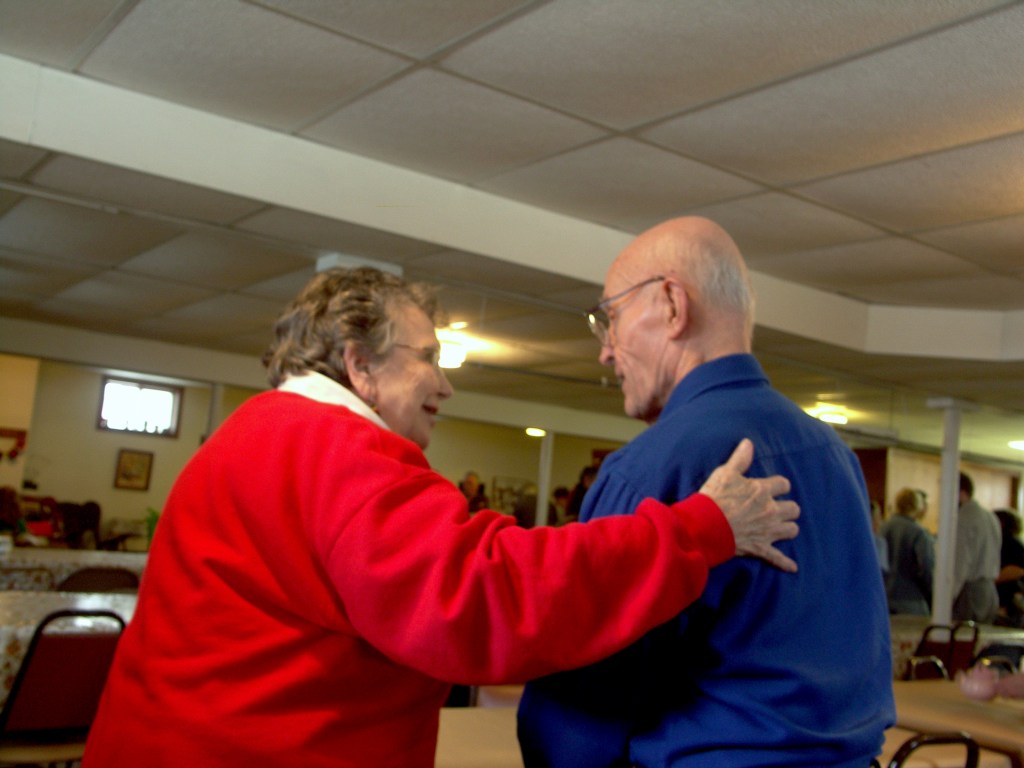
KONICA MINOLTA DIGITAL CAMERA
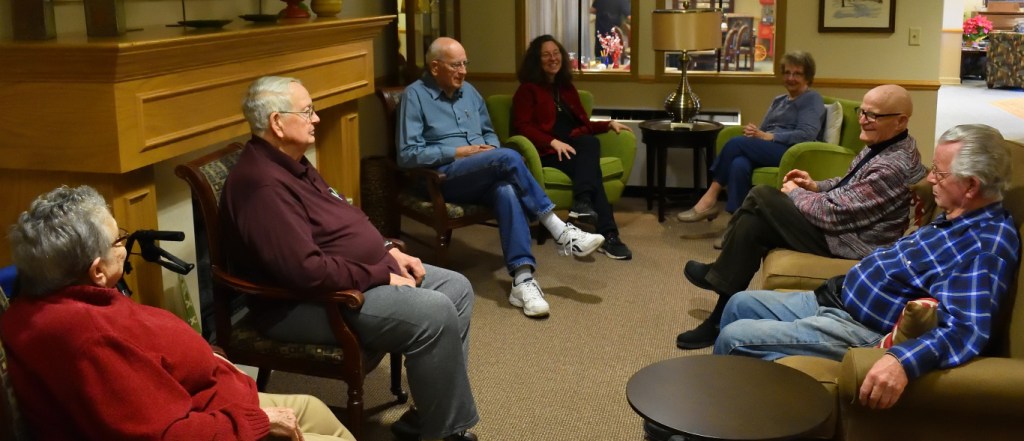
KONICA MINOLTA DIGITAL CAMERA
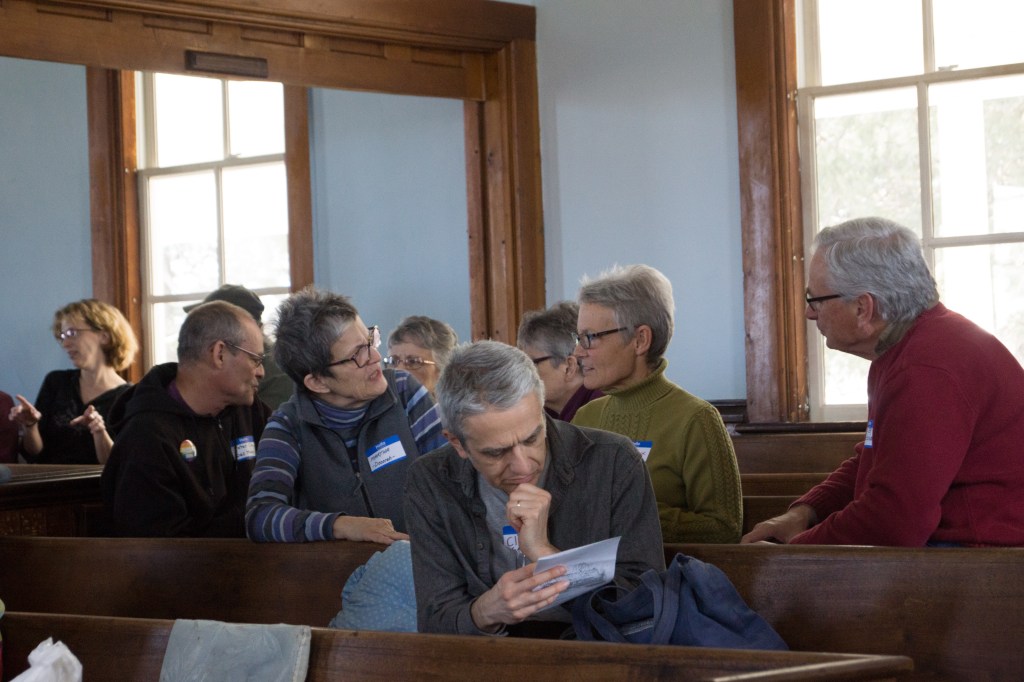
KONICA MINOLTA DIGITAL CAMERA
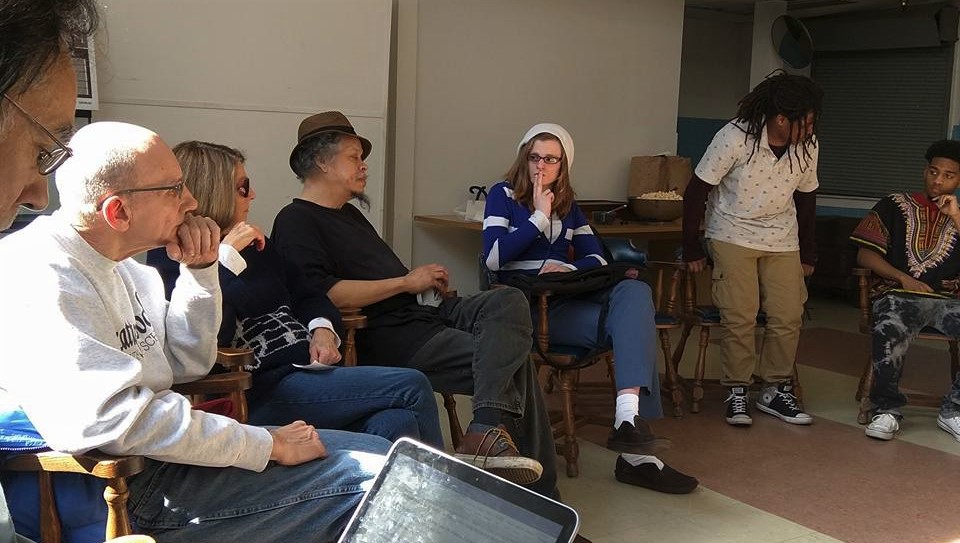
SONY DSC
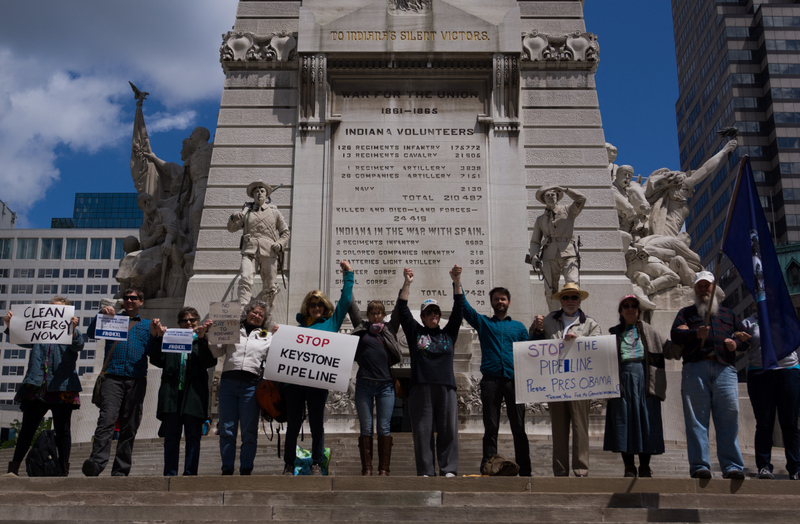
AM Deb Fink Horace Autenreith George Welch Jim Ginger Kenney Mary Autenreight Birdie Kisling Don Nagler
Poet, writer and musician Joy Harjo has been named the country’s 23rd poet laureate. She is a member of the Muscogee Creek Nation and often draws on Native American stories, languages and myths. But she says that she’s not self-consciously trying to bring that material into her work. If anything, it’s the other way around.
“I think the culture is bringing me into it with poetry — that it’s part of me,” Harjo says in an interview with NPR’s Lynn Neary. “I don’t think about it … And so it doesn’t necessarily become a self-conscious thing — it’s just there … When you grow up as a person in your culture, you have your culture and you’re in it, but you’re also in this American culture, and that’s another layer.”
Joy Harjo Becomes The First Native American U.S. Poet Laureate June 19, 2019. Heard on All Things Considered, Lynn Neary and Patrick Jarenwattananon at NPR headquarters in Washington, D.C., May 21, 2019.
What do you most want readers to gain from the experience of reading your poetry?
I’d like for readers to see that poetry is not without a door, or many doors. I loved poetry as a child but not the way it was taught. How were we supposed to know what the poet meant, especially when they were from England of a century or two before (or what felt like a century or two before) and spoke differently? If you tell someone to read a poem the way you’d listen to a song of their favorite music, it might change perception. I’d like to hand them a poetry that would give them the notion that yes, you can write about what you see, hear, know, from their own familial, cultural or historical point of view. And maybe the readers will be motivated to write their own songs, stories and poems.
Although I had seen the announcement for poet laureate, it was during research about conflict resolution/transformation that I came across her book, “Conflict Resolution for Holy Beings: Poems“.
USE EFFECTIVE COMMUNICATION SKILLS THAT DISPLAY AND ENHANCE MUTUAL TRUST AND RESPECT:
If you sign this paper we will become brothers. We will no longer fight. We will give you this land and these waters “as long as the grass shall grow and the rivers run.”
The lands and waters they gave us did not belong to them to give. Under false pretenses we signed. After drugging by drink, we signed. With a mass of gunpower pointed at us, we signed. With a flotilla of war ships at our shores, we signed. We are still signing. We have found no peace in this act of signing.
A casino was raised up over the gravesite of our ancestors. Our own distant cousins pulled up the bones of grandparents, parents, and grandchildren from their last sleeping place. They had forgotten how to be human beings. Restless winds emerged from the earth when the graves were open and the winds went looking for justice.
If you raise this white flag of peace, we will honor it.
At Sand Creek several hundred women, children, and men were slaughtered in an unspeakable massacre, after a white flag was raised. The American soldiers trampled the white flag in the blood of the peacemakers.
There is a suicide epidemic among native children. It is triple the rate of the rest of America. “It feels like wartime,” said a child welfare worker in South Dakota.
If you send your children to our schools we will train them to get along in this changing world. We will educate them.
We had no choice. They took our children. Some ran away and froze to death. If they were found they were dragged back to the school and punished. They cut their hair, took away their language, until they became as strangers to themselves even as they became strangers to us.
If you sign this paper we will become brothers. We will no longer fight. We will give you this land and these waters in exchange “as long as the grass shall grow and the rivers run.”
Put your hand on this bible, this blade, this pen, this oil derrick, this gun and you will gain trust and respect with us. Now we can speak together as one.
We say, put down your papers, your tools of coercion, your false promises, your posture of superiority and sit with us before the fire. We will share food, songs, and stories. We will gather beneath starlight and dance, and rise together at sunrise.
The sun rose over the Potomac this morning, over the city surrounding the white house. It blazed scarlet, a fire opening truth. White House, or Chogo Hvtke, means the house of the peacekeeper, the keepers of justice. We have crossed this river to speak to the white leader for peace many times Since these settlers first arrived in our territory and made this their place of governance. These streets are our old trails, curved to fit around trees.
Harjo, Joy. Conflict Resolution for Holy Beings: Poems (pp. 78-80). W. W. Norton & Company. Kindle Edition.
I’ve been writing about the Quaker Indian boarding schools lately in anticipation of the workshop that will be held about that at the Quaker boarding school I attended, Scattergood Friends School and Farm (July 7, 9-11 am). Often stories provide more powerful lessons than the mere presentation of facts. I’ve been reading Braiding Sweetgrass: Indigenous Wisdom, Scientific Knowledge and the Teachings of Plants by Robin Wall Kimmerer, and came upon the following writings about the Indian boarding schools.
The federal government’s Indian Removal policies wrenched many Native peoples from our homelands. It separated us from our traditional knowledge and lifeways, the bones of our ancestors, our sustaining plants—but even this did not extinguish identity. So the government tried a new tool, separating children from their families and cultures, sending them far away to school, long enough, they hoped, to make them forget who they were.
Throughout Indian Territory there are records of Indian agents being paid a bounty for rounding up kids to ship to the government boarding schools. Later, in a pretense of choice, the parents had to sign papers to let their children go “legally.” Parents who refused could go to jail. Some may have hoped it would give their children a better future than a dust-bowl farm. Sometimes federal rations—weevilly flour and rancid lard that were supposed to replace the buffalo—would be withheld until the children were signed over. Maybe it was a good pecan year that staved off the agents for one more season. The threat of being sent away would surely make a small boy run home half naked, his pants stuffed with food. Maybe it was a low year for pecans when the Indian agent came again, looking for skinny brown kids who had no prospect of supper—maybe that was the year Grammy signed the papers.
Children, language, lands: almost everything was stripped away, stolen when you weren’t looking because you were trying to stay alive. In the face of such loss, one thing our people could not surrender was the meaning of land. In the settler mind, land was property, real estate, capital, or natural resources. But to our people, it was everything: identity, the connection to our ancestors, the home of our nonhuman kinfolk, our pharmacy, our library, the source of all that sustained us. Our lands were where our responsibility to the world was enacted, sacred ground. It belonged to itself; it was a gift, not a commodity, so it could never be bought or sold. These are the meanings people took with them when they were forced from their ancient homelands to new places.
Kimmerer, Robin Wall. Braiding Sweetgrass: Indigenous Wisdom, Scientific Knowledge and the Teachings of Plants (pp. 16-17). Milkweed Editions. Kindle Edition.
I knew that in the long-ago times our people raised their thanks in morning songs, in prayer, and the offering of sacred tobacco. But at that time in our family history we didn’t have sacred tobacco and we didn’t know the songs—they’d been taken away from my grandfather at the doors of the boarding school. But history moves in a circle and here we were, the next generation, back to the loon-filled lakes of our ancestors, back to canoes.
Kimmerer, Robin Wall. Braiding Sweetgrass: Indigenous Wisdom, Scientific Knowledge and the Teachings of Plants (p. 35). Milkweed Editions. Kindle Edition.
A man with long gray braids tells how his mother hid him away when the Indian agents came to take the children. He escaped boarding school by hiding under an overhung bank where the sound of the stream covered his crying. The others were all taken and had their mouths washed out with soap, or worse, for “talking that dirty Indian language.” Because he alone stayed home and was raised up calling the plants and animals by the name Creator gave them, he is here today, a carrier of the language. The engines of assimilation worked well. The speaker’s eyes blaze as he tells us, “We’re the end of the road. We are all that is left. If you young people do not learn, the language will die. The missionaries and the U.S. government will have their victory at last.” A great-grandmother from the circle pushes her walker up close to the microphone. “It’s not just the words that will be lost,” she says. “The language is the heart of our culture; it holds our thoughts, our way of seeing the world. It’s too beautiful for English to explain.” PuhpoweeI
Kimmerer, Robin Wall. Braiding Sweetgrass: Indigenous Wisdom, Scientific Knowledge and the Teachings of Plants (p. 50). Milkweed Editions. Kindle Edition.
Quaker Indian Boarding Schools: Facing our History and Ourselves
July 7, 2019 9 – 11 am, Scattergood Friends School and Farm, 2 miles east of West Branch, Iowa
Native American organizations are asking churches to join in a Truth and Reconciliation process to bring about healing for Native American families that continue to suffer the consequences of the Indian boarding schools. With support from Pendle Hill (the Cadbury scholarship), Friends Historical Library (the Moore Fellowship), the Native American Rights Fund, and other Friendly sources, Paula Palmer researched the role that Friends played in implementing the federal government’s policy of forced assimilation of Native children.
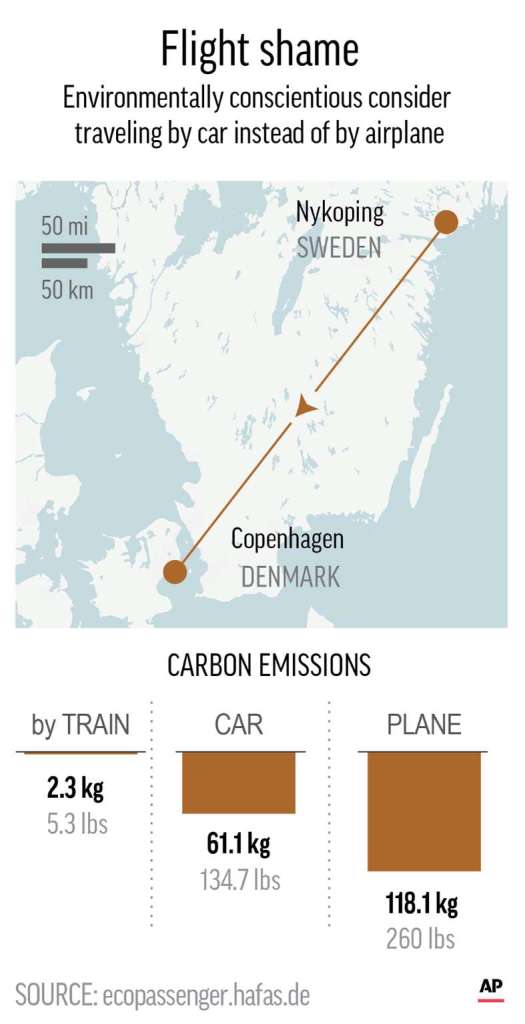
But here’s the peculiar thing: although no other human activity pushes individual emission levels as fast and as high as air travel, most of us don’t stop to think about its carbon impact.
This video tells the story of a Swedish family that came to realize the high carbon cost of flying and instead relied on trains for their vacation travel.
Swedish lawyer Pia Bjorstrand and her family board the first of many trains on a vacation around northern Europe. They are part of a growing movement that’s shunning air travel because it produces high levels of greenhouse gas emissions. AP
Obviously it can be very inconvenient to have to travel distances by means other than flying. Years ago I would need to get to Washington, DC, to attend the annual meetings of the Friends Committee on National Legislation (FCNL). The train was scheduled to leave Indianapolis at midnight, but was often late. It isn’t easy to sleep on the train. Although the trip was scheduled to be 22 hours long, we were often delayed, usually because of freight train traffic.
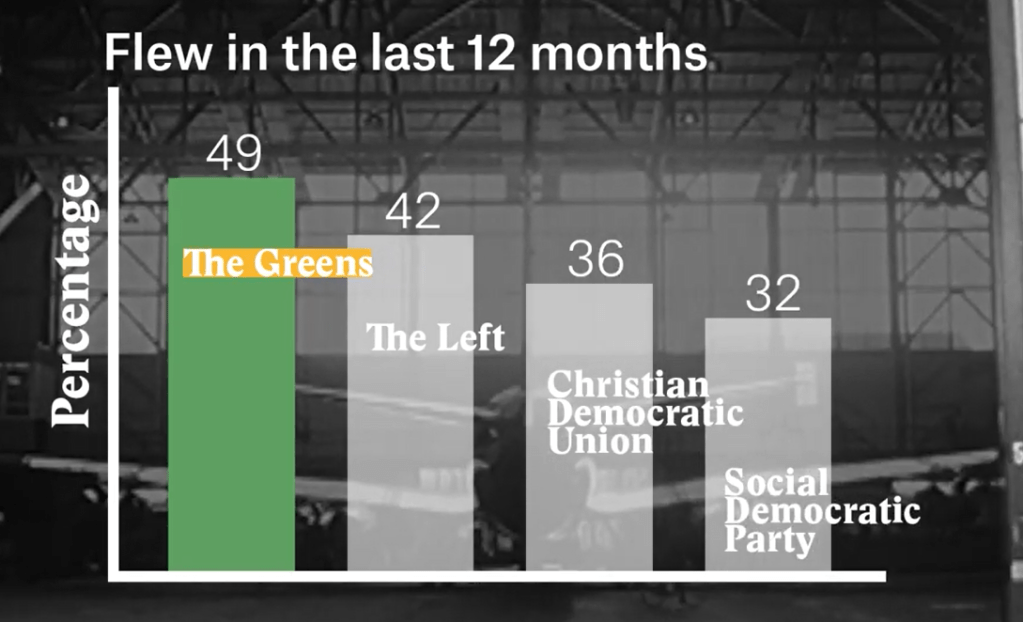
I imagine many of you have shared this observation, this paradox of people who say they care about our environment but fly frequently, often to attend climate meetings!
One of Greenpeace’s most senior executives commutes 250 miles to work by plane, despite the environmental group’s campaign to curb air travel, it has emerged.
Pascal Husting, Greenpeace International’s international programme director, said he began “commuting between Luxembourg and Amsterdam” when he took the job in 2012 and currently made the round trip about twice a month.
But Mr Husting defended the arrangement, telling the Telegraph that while he would “rather not take” the journey it was necessary as it would otherwise be “a twelve hour round trip by train”.
Greenpeace executive flies 250 miles to work, The Telegraph, By Emily Gosden, Energy Editor, 23 Jun 2014
Several studies have found people to be quite ignorant of how their own flying behaviour contributes to climate change. It’s not hard to see why. Research into airline websites shows little mention of environmental impact. Green NGOs are often quiet on the issue, perhaps being reluctant to “preach” to their members to fly less, and concerned over accusations of hypocrisy as their own staff fly around the world to conferences.
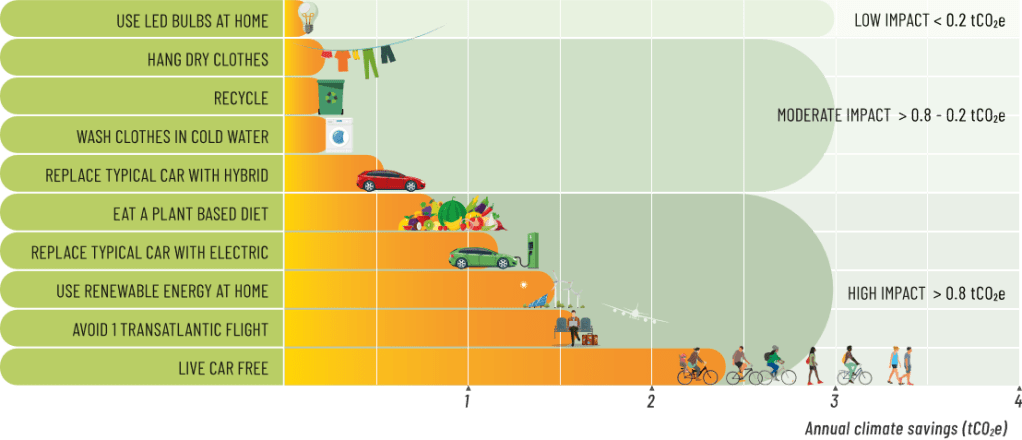
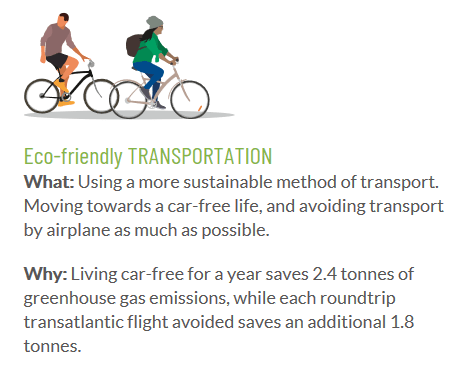
We recommend four widely applicable high-impact (i.e. low emissions) actions with the potential to contribute to systemic change and substantially reduce annual personal emissions: having one fewer child (an average for developed countries of 58.6 tonnes CO2-equivalent (tCO2e) emission reductions per year), living car-free (2.4 tCO2e saved per year), avoiding airplane travel (1.6 tCO2e saved per roundtrip transatlantic flight) and eating a plant-based diet (0.8 tCO2e saved per year). These actions have much greater potential to reduce emissions than commonly promoted strategies like comprehensive recycling.
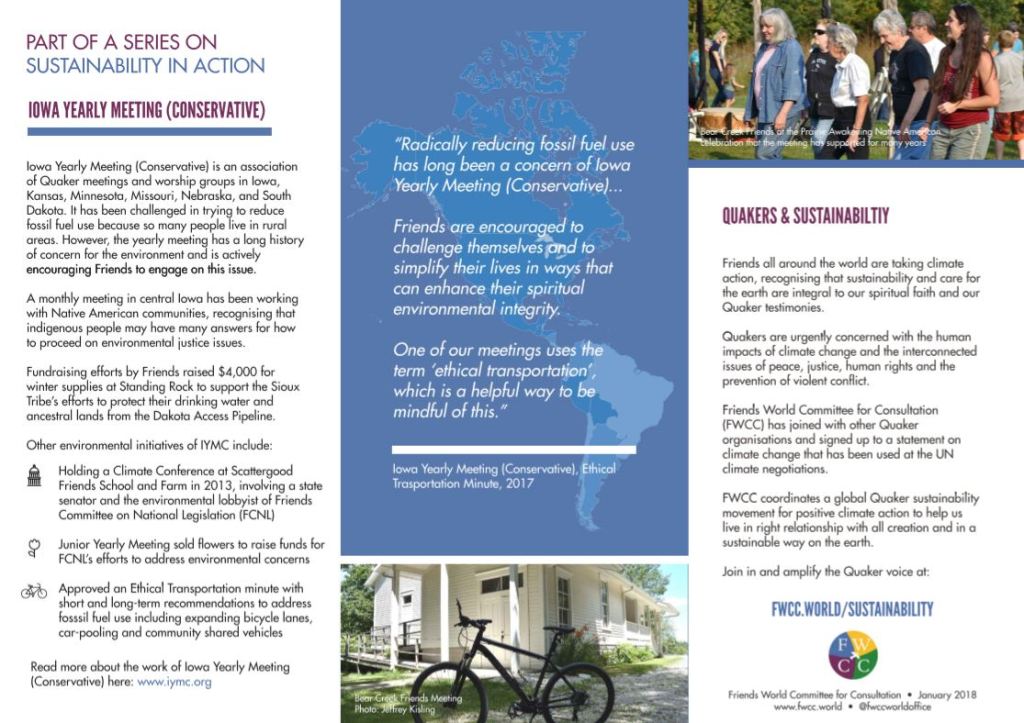
Radically reducing fossil fuel use has long been a concern of Iowa Yearly Meeting (Conservative). A previously approved Minute urged us to reduce our use of personal automobiles. We have continued to be challenged by the design of our communities that makes this difficult. This is even more challenging in rural areas. But our environmental crisis means we must find ways to address this issue quickly.
Friends are encouraged to challenge themselves and to simplify their lives in ways that can enhance their spiritual environmental integrity. One of our meetings uses the term “ethical transportation,” which is a helpful way to be mindful of this.
Long term, we need to encourage ways to make our communities “walkable”, and to expand public transportation systems. These will require major changes in infrastructure and urban planning.
Carpooling and community shared vehicles would help. We can develop ways to coordinate neighbors needing to travel to shop for food, attend meetings, visit doctors, etc. We could explore using existing school buses or shared vehicles to provide intercity transportation.
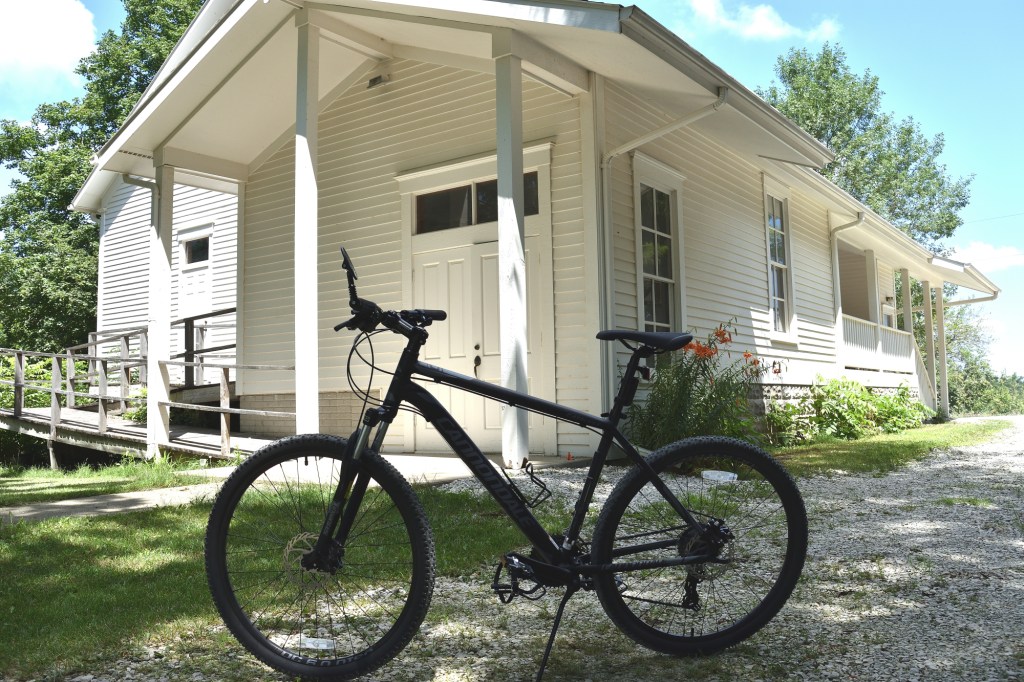
One immediately available step would be to promote the use of bicycles as a visible witness for non-fossil fuel transportation. Friends may forget how easy and fun it can be to travel miles on bicycles. Neighbors seeing families riding their bicycles to Quaker meetings would have an impact on community awareness. This is a way for our children to be involved in this shared witness. We should encourage the expansion of bicycle lanes and paths. We can repair and recycle unused bicycles, and make them available to those who have the need.
Ethical Transportation Minute Approved by Iowa Yearly Meeting (Conservative) 2017
I continue to believe that we will never make real progress in our work for peace and justice in the United States until we, as a nation, confront the historic injustices of (1) the institution of slavery, and (2) the theft of land and cultural genocide of Native Americans.
One part of that is related to reparations to return some of the wealth that was created from the labor of the enslaved, and of the land that was stolen from Native Americans. It is my understanding Native Americans are not interested in receiving monetary reparations, partly because they don’t see land as something someone can own in the first place. And secondly, their relationship with the land defines who they are, and is central to their culture.
More fundamentally we need to dismantle the dominate culture of white superiority the settler colonialists used, and is still used to justify their ongoing massive accumulation of wealth. Today that culture drives global military aggression by the United States. That culture is building concentration camps for migrants and forcibly separating children from their loved ones. That culture is responsible for the school to prison pipeline, for-profit prisons, and greatly disproportionate numbers of people of color incarcerated.
How can we dismantle the dominate culture? Unfortunately I believe we are already seeing, and will increasingly see our political and economic systems overwhelmed by the climate chaos we are already seeing, and that will only become increasingly severe.
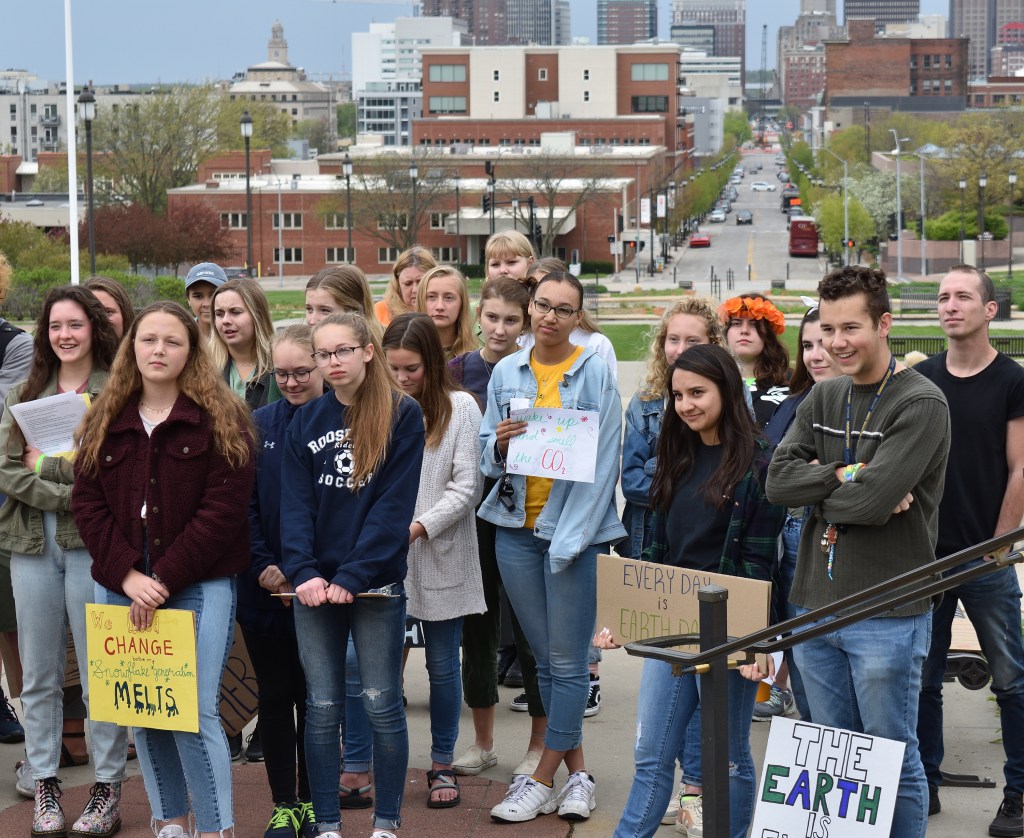
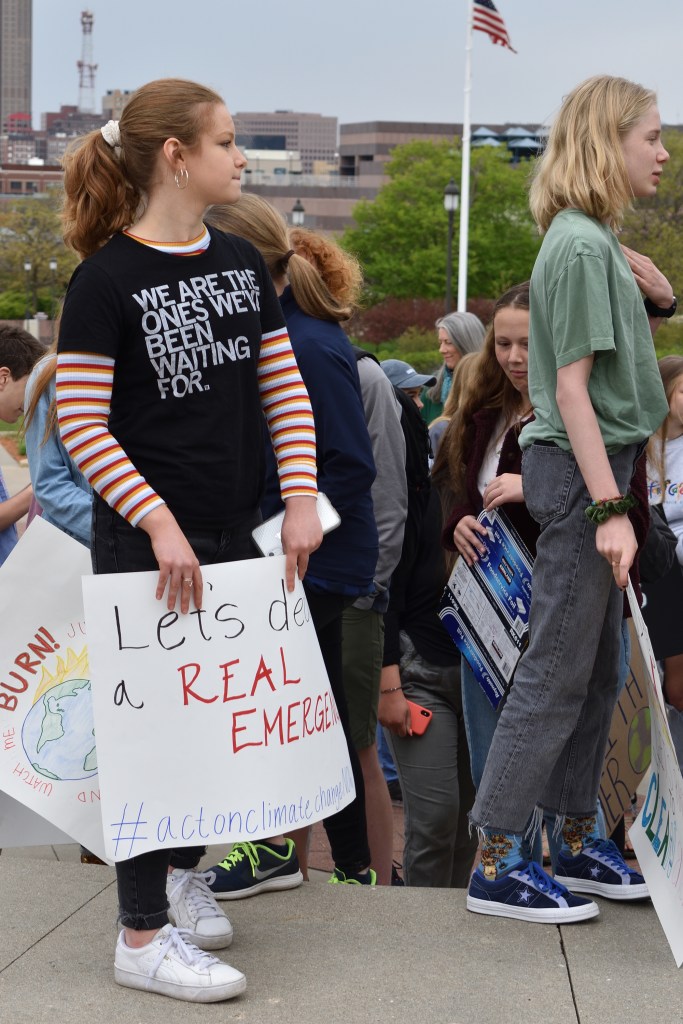
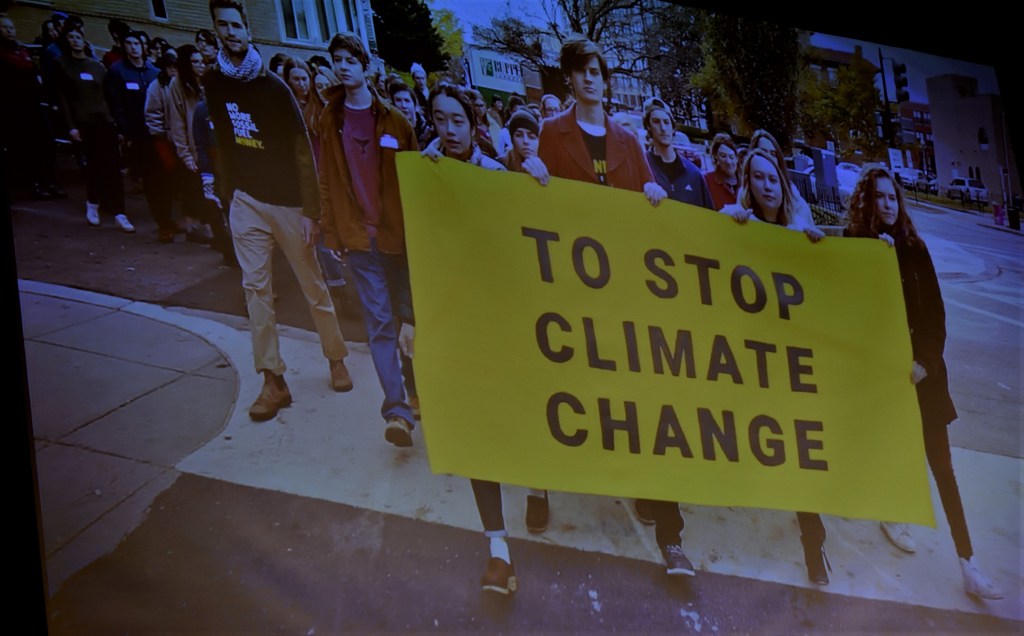
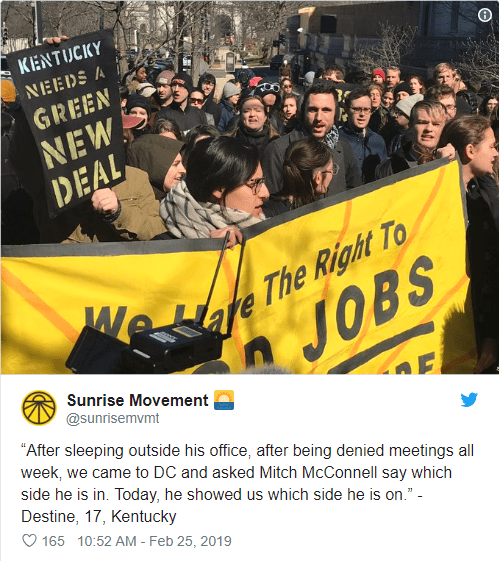
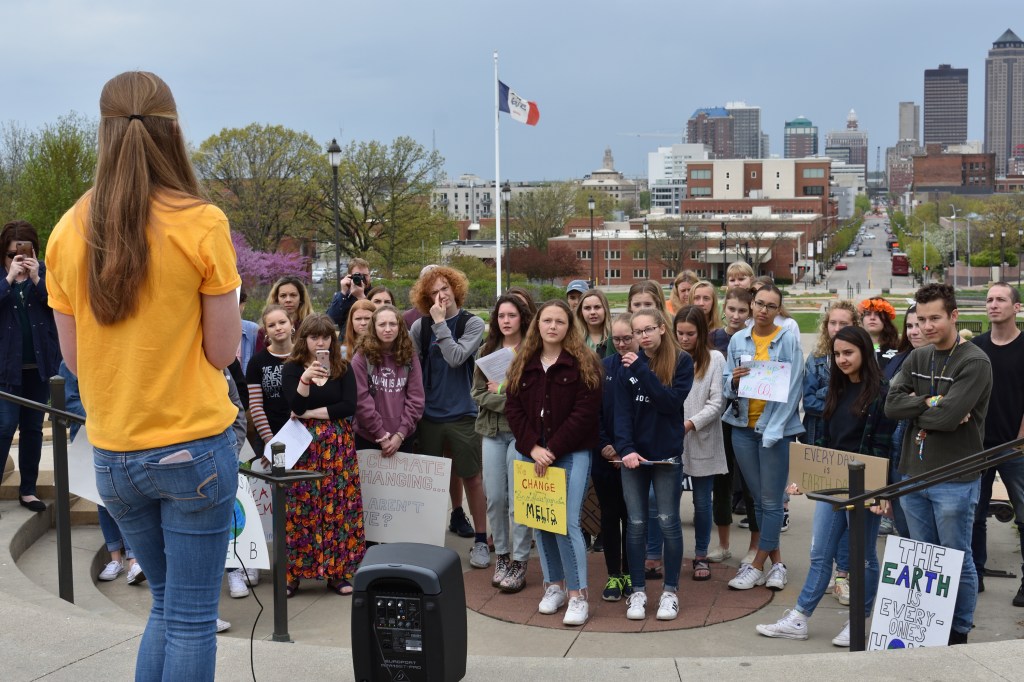
Also the activism of young people concerned about climate disasters, such as those in the Sunrise Movement and School Strikes, are rapidly growing in number and power. The direct actions of the Sunrise Movement in Congressional offices has politicians, finally, talking about climate change. These young people also see the connections between our extractive, growth based economy, and social, racial, environmental and economic justice.
“Juneteenth is an opportunity to take stock of where we are on race issues and how far we still have to go.”
One day in late June, 1865, Union soldiers arrived in Galveston, Texas. They carried some historic news: Legal slavery had ended some two and a half years ago with President Lincoln’s Emancipation Proclamation. And so some of the last enslaved people left in America were freed.
Note: Racism is an ongoing crisis in the United States. Columbus was the founder of the African Slave Trade when he was a governor in the Carribbean in 1501 and the first slave ship to arrive on US shores was in 1619, 150 years before the United States was founded. The end of slavery was followed by a period of the Black Code, a series of laws passed in the South during Reconstruction to put slavery back in place, Then came the Jim Crow era of segregation, the KKK, and lynching. It was not until the successes of the Civil Rights Movement in court decisions in the 1950s and 60s ending segregation and in the passage of Civil Rights Laws in the 60s that the Jim Crow era came to an end. But that was not the end of racism in the United States. We still see a tremendous lack of investment in black communities where people live with a militarized police presence, regular arrests, underfunded schools, lack of housing and lack of jobs.
Juneteenth is an opportunity to take stock of where we are on race issues and how far we still have to go. Mitch McConnell says reparations are not needed because racism is behind us and points to the election of Barack Obama as proof. But, electing black people to political positions does not mean an end of racist policies. Our friends at Black Agenda Report call this political class of blacks “misleaders” because too often they serve the wealth class of developers at the local level and Wall Street and big business at the national level. We still need policies to correct historic and current injustices.
Karlos Hill ( professor of African and African-American studies at the University of Oklahoma) says:
“I recently visited the National Memorial for Peace and Justice as well as the Legacy Museum in Montgomery, Alabama, both created by the Equal Justice Initiative. And what that memorial and that museum try to do is tie the history of slavery to our present. It tries to help us understand the ways in which we as a country have never really dealt with the trauma or the legacy of slavery, and everything connected to slavery. From the perspective of the memorial and museum, our whole racial past is tied up in and connected to slavery.
One of the things that Bryan Stevenson [founder and executive director of the Equal Justice Initiative] has argued is that in order for us to move beyond slavery, its legacy, and the trauma it brought, we have to acknowledge the ways in which slavery generated massive amounts of wealth for white Americans, and how the narratives used to justify slavery are still connected with narratives that are used to oppress African Americans today. He argues that unless we acknowledge all of this, we are going to continue to face the consequences of this legacy.
Through that memorial, and with things like a national Juneteenth holiday, we can begin to really acknowledge and address all of the issues, past and present, tied up in this issue of slavery.
As a nation, as a collective, we’ve never really acknowledged the 250-plus years of slavery, and the depth of it, and the trauma it caused and the wealth it created. We haven’t really had an accounting for that.”
The National Memorial for Peace and Justice, which opened to the public on April 26, 2018, is the nation’s first memorial dedicated to the legacy of enslaved black people, people terrorized by lynching, African Americans humiliated by racial segregation and Jim Crow, and people of color burdened with contemporary presumptions of guilt and police violence.
My attention has recently been focused on the tragic history of the Indian Boarding Schools. Initially this was in preparation for a workshop titled “Quaker Indian Boarding Schools: Facing our History and Ourselves” that will be led by Paula Palmer and held at Scattergood Friends School and Farm, 2 miles east of West Branch, Iowa. This is a free event and the public is welcome.
Whenever I’m learning about an justice, I first learn all I can about it, the good and the bad. The more I learn about the forced assimilation of Native children, the greater my sorrow grows.
Even the U.S. Army concedes “the school’s image shifted with changing American cultural norms.”
In 1879, Carlisle Barracks became the site of the Carlisle Indian Industrial School, operated by the Bureau of Indian Affairs until September 1918. The school educated more than 10,000 Native American children, with representation from nearly 50 Native American Tribes from across the nation. During its 29 years, the school’s image shifted with changing American cultural norms. It began as a relatively progressive concept of providing Indian children with an education and vocational training, but this came at the expense of native cultures and languages.
A stark example of the ongoing trauma related to the boarding schools is a recent story about the third disinterment of Native Americans at Carlisle Barracks, Pennsylvania.
(Carlisle, Pa — June 10, 2019) The U.S. Army will continue its commitment to reunite Native American families with their loved ones through its third disinterment project at Carlisle Barracks beginning June 15.
In 1879, Carlisle Barracks became the site of the Carlisle Indian Industrial School, operated by the Department of the Interior until 1918. The school educated more than 10,000 Native American children, with representation from approximately 50 Native American Tribes across the Nation.
The decedent names are Ophelia Powless (aka Ophelia Powias), Sophia Caulon (aka Sophy Coulon), Jamima Metoxen (aka Jemima Meloxen), Henry Jones, Alice Springer, and Adam McCarty (aka Adam McCarthy). These students died while attending the Carlisle Indian Industrial School.
“The Army’s commitment remains steadfast to these six Native American families whose sacrifice is known to only a few. Our objective is to reunite the families with their children in a manner of utmost dignity and respect,” said Karen Durham-Aguilera, Executive Director of Army National Military Cemeteries.
Repatriation involves a return to one’s own people. In the Native American context, repatriation involves returning Native American human remains and cultural objects back to tribal members or governments centuries after their collection.
Remains and objects are repatriated from museum, university, and government collections that acquired hundreds or even thousands of native remains and objects, and displayed them publicly without tribal consent. Now those remains and objects are, rightfully, returned to tribal hands. Grave protection applies to native remains and objects such as stolen artifacts or remains accidentally unearthed by construction projects. In the past, construction projects have destroyed tribal burial grounds and scattered human remains. Laws now require protection, excavation, and consultation with tribal governments when native remains are discovered. In all cases the bones and objects of Native American’s ancestors are to be treated with respect and returned to the tribe of origin for proper care and reburial.
In 1990, Congress passed the landmark Native American Graves Protection and Repatriation Act (NAGPRA). NAGPRA instituted guidelines for the respectful return of Native American human remains and cultural objects from any collection (museum, university, government, etc.) that received federal funding. The law has “teeth,” i.e., civil and criminal penalties for violation of the law such as knowingly selling or purchasing sacred objects stolen from graves.
Since the passage of NAGPRA in 1990, institutions have cataloged their collections, identified objects and human remains that belong to more than 400 modern-day tribes and repatriated hundreds of thousands of cultural objects and tens of thousands of remains to those appropriate tribes. Tribal members engage in emotional ceremonies that return their long-lost ancestors to the earth with respect and savor the return of their tribal cultural objects. The grave protection section of the law protects accidentally discovered remains by requiring anyone who unearths or finds historic Native American remains or objects to immediately contact federal authorities.
After years of advocacy from the Indian community, the passage of NAGPRA was a prized victory. It helped to establish a model of tribal consultation, which is now incorporated into more and more legislation concerning native peoples. The act enforces criminal sentences for grave robbing, requires anyone who unearths remains or objects on federal or trust land to notify authorities and mandates the return of all identifiable remains and objects held in federally funded collections to their tribe of origin.
Some experts say the bill represents more than just legal code. “This was more than a law; it was a change in the American consciousness,” says Steve Russell of Indiana University, “NAGPRA has helped transform Indian bones from archeological specimens to the remains of human beings.” NAGPRA reinstated basic respect for Native American humanity, which much of American society had lost.
One of the hallmarks of Quakers (Friends) has been to put faith into action. Friends are known as one of the historic peace churches because of their refusal to participate in war. Quakers have acted in accordance with the principles of nonviolence, which much of Jesus’ teaching is about.
Despite this history and these ideals, I often hear of meetings having trouble dealing with conflict within the meeting. In recent years, conflicts among Friends have resulted, again, in some new yearly meetings forming from Quakers who no longer feel they can be part of, or are asked to leave, their yearly meeting.
But New York Yearly Meeting has chosen a different approach: what the Mennonite author and scholar John Paul Lederach terms “conflict transformation.” Resolve the behavior that disrupts the meeting, and the sources of the conflict are temporarily mollified but remain largely unchanged. Use the conflict to prompt a change and transform the Friends meeting into a place better able to acknowledge and deal with conflict in love and integrity, and the body deepens and enhances its own spiritual journey.
The question in conflict resolution is this: How can we get rid of this guy so we can go back to the meeting we used to be when everything was fine? The questions in conflict transformation are these: How can we use this event as an opportunity to change ourselves into a body that is not as susceptible to fostering hurt and anger? How can we advance to a new place in our journey? Resolve the conflict and the disputants cease. Transform the conflict and the disputants change. As John Paul Lederach writes in The Little Book of Conflict Transformation, this approach states the goal of “building healthy relationships and communities, locally and globally. This goal requires real change in our current ways of relating.”
When Conflicts Arise by Peter Phillips and the New York Yearly Meeting Committee on Conflict Resolution, Friends Journal, March 27, 2013
My own monthly meeting, having a small number of members and attenders, most of whom have known each other for years, doesn’t often encounter significant conflicts. Within the past week though, a proposed “Minute on addressing the imbalance in Quaker writings regarding addressing racism” is causing some conflict. This Minute actually responds to a Minute regarding Racial Justice that Iowa Yearly Meeting (Conservative) approved in 2017, which ended with “we urge Friends to speak out and take action against these systemic injustices and violence occurring today.”
One conflict regards whether to put attention on Friends’ history related to racial justice. Some feel we should concentrate on the present, on specific areas such as homelessness, addiction, mental health, etc. Others believe part of healing involves understanding the root causes of injustice, including any role our ancestors or we ourselves might have played. And learning about systemic racism today.
Another part of this conflict is a divide between those who have put a lot of prayer, time and effort into learning about racism and white privilege and those who have not. Unfortunately those with experience with white fragility often sound judgmental when they suggest that others have shortcomings in their beliefs or actions.
Quaker Social Change Ministry (QSCM)
I don’t believe there are easy answers for this type of conflict. But it is important to work toward resolution. It is never healthy to try to ignore these conflicts, because they won’t go away. And might drive some members away if not resolved.
I’d like to share my experience with Quaker Social Change Ministry (QSCM), an American Friends Service Committee (AFSC) program designed to help Quaker meetings become engaged/more engaged with social justice. The goals of QSCM include:
Re-enliven and re-imagine corporate witness
Follow the leadership of communities most impacted by injustice
Build relationships within the meeting, with local organizations, and with AFSC
Bring “Mystics” and “Activists” together
Participate in a Spirit-led group process
Tell our stories and learn in a supportive environment
Co-create the Beloved Community
The basic principles of QSCM are to (1) bring the “mystics” and “activists” together by including the entire meeting in a social justice project, and (2) get Friends out of the meetinghouse and into the community.
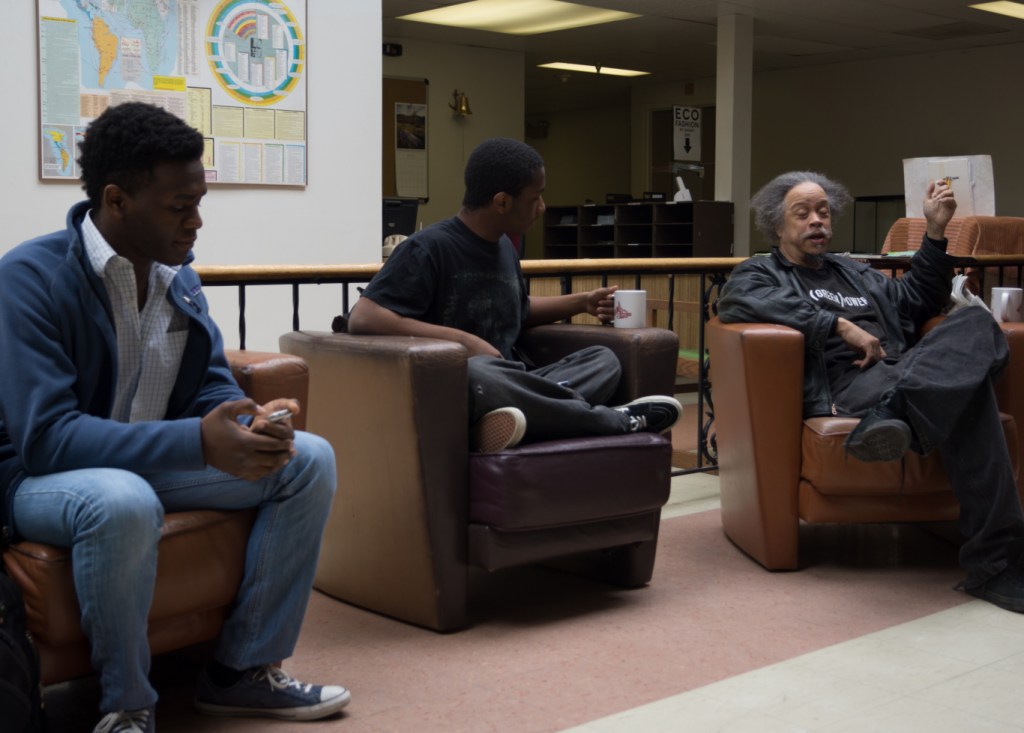
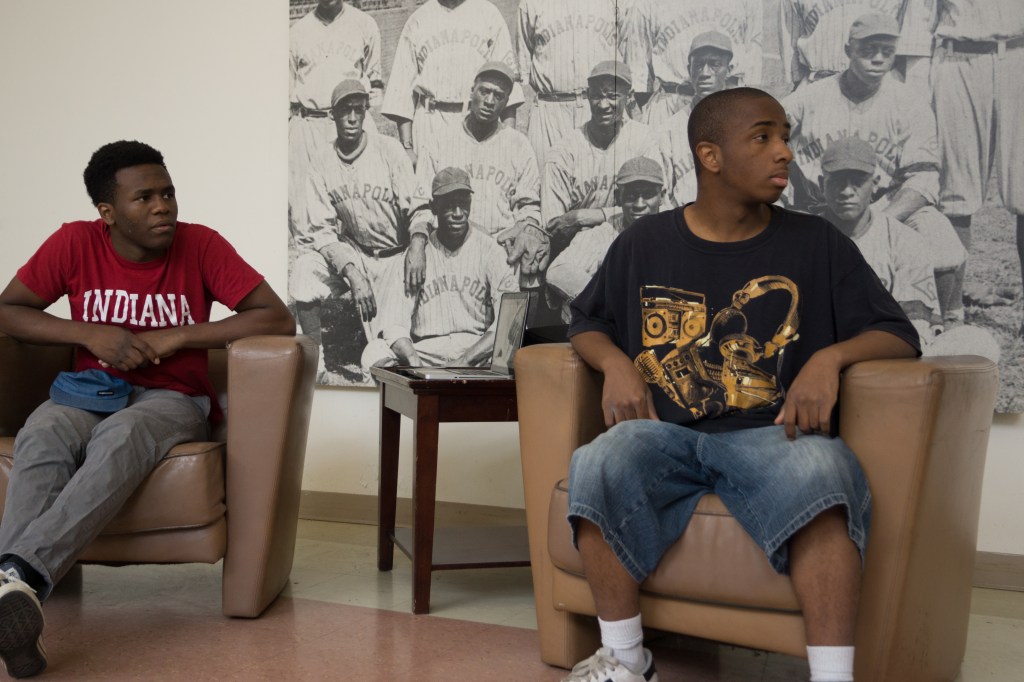
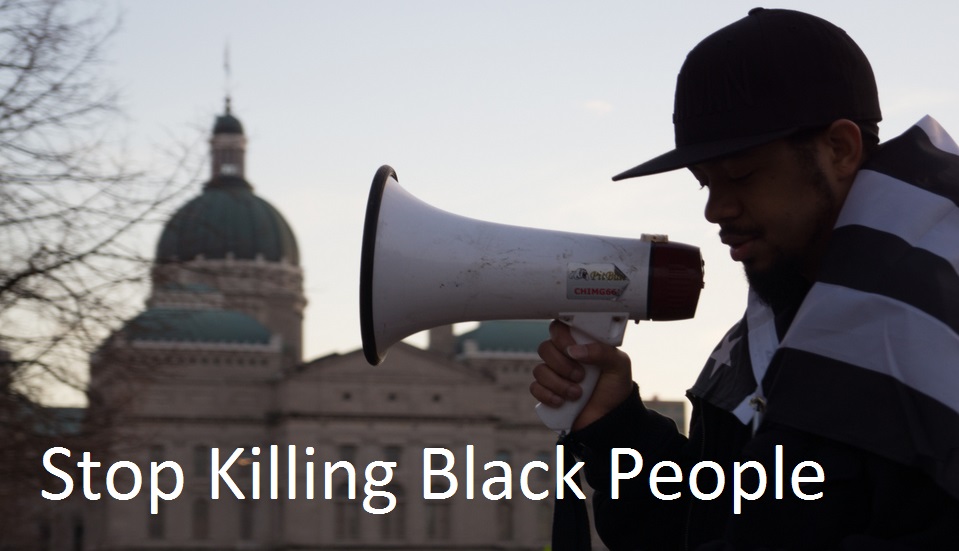
The meeting I was attending several years ago in Indianapolis, North Meadow Circle of Friends, participated in the pilot year of the QSCM program. The meeting as a whole decided to work with a Black youth mentoring community, the Kheprw Institute (KI). This relationship was possible because several members of the meeting already knew some of the KI people, and KI was at a point where they were looking for partners for their work, which is to empower Black youth and develop their leadership in community building.
This was a long term, and I think successful, process. QSCM stresses that we Friends should be very careful to listen closely to what the impacted community, KI in this case, was saying. To be careful not to try to assert any leadership ourselves, and instead wait for KI to ask for what they needed from us.
One way we got to know each other and what we believe was to participate in the monthly book discussions that were led by the KI youth. The books were about social justice issues. We Quakers learned more about each other as well as a great deal from the KI community.
I’ve been gone from Indianapolis for 2 years and I’m very glad to know North Meadow Friends continue to work with KI. This long term commitment between North Meadow and KI is really important. Long term relationships are necessary for successful justice work. I am blessed to be able to continue my friendships with those at KI and North Meadow.
Coming back to conflicts within a meeting, my experience with QSCM indicates that model might provide some help, by getting the meeting to look outside itself. By meeting members learning more about each other as they do this work. And learning a great deal from communities impacted by injustice. One of the concepts of QSCM is that Friends gather regularly to discuss what they are learning from being out in the community, and specifically to express that in terms of their spirituality. Quakerism is defined as experiential, that each of us can experience what the Spirit is saying to us. And we gain experience as we translate what the Spirit is saying into practice.
Spiritual journey
One other practice that I found very valuable at North Meadow Friends was sharing our spiritual journeys with each other. These are powerful experiences that give us a deeper understand of each other’s formative experiences and how we view our own spiritual life. This can be very helpful to know especially when meetings are experiencing conflict.
As it says above, “use the conflict to prompt a change and transform the Friends meeting into a place better able to acknowledge and deal with conflict in love and integrity, and the body deepens and enhances its own spiritual journey.“
Harmony within the meeting
“This is my commandment: Love one another as I have loved you.” John 15:1
ADVICE
It is sometimes difficult to remember that love is a gift of the Divine Spirit and not simply a human emotion. As imperfect human beings, it is not always possible for us to feel loving toward one another, but by opening ourselves to the Light Within, we can receive and give love beyond our human abilities.
Relationships among meeting members take time to evolve. Sometimes misunderstandings develop. When differences arise, they should not be ignored for the sake of superficial unity. We believe disagreements which might divide or disrupt a meeting can be resolved through human effort and divine grace, and may result in a stronger and more creative meeting. True harmony depends upon each persons deep respect of and faithful attention to the Divine Spirit within us all. We endeavor to practice humility, attempting to understand positions of others and being aware of the possibility that we may be mistaken.
It is the responsibility of the Ministry and Oversight Committee to be sensitive to needs which may arise. Others in the meeting may be equally concerned, and because of greater understanding in certain cases, be able to give counsel. In reconciliation of differences, a position not previously considered may prove mutually beneficial. At times it may be necessary to confront individuals whose behavior is disruptive. A clearness committee or professional help may be suggested in some situations. We must always remember the power of holding one another in the Light, and the healing that comes from forgiving ourselves as well as others.
QUERY
What can we do to deepen our relationships with one another? How does gender affect the way we relate to each other?
How does our meeting balance the needs for honesty and kindness? What topics do we avoid for the sake of “unity”?
When in conflict with others, do we cultivate a forgiving spirit? Do we look to that of God in ourselves and seek to address that of God in those with whom we disagree?
Faith and Practice: The Book of Discipline of Iowa Yearly Meeting of Friends (Conservative) Religious Society of Friends, 2011
KONICA MINOLTA DIGITAL CAMERA
KONICA MINOLTA DIGITAL CAMERA
AM Deb Fink Horace Autenreith George Welch Jim Ginger Kenney Mary Autenreight Birdie Kisling Don Nagler
My experience has been there can be no peace without justice. On the streets the chant “no justice, no peace” is often heard. To address an injustice, we need to study its roots and history. If the roots aren’t dealt with the injustice continues to spread.
How we tackle the roots of injustice is a broad, deep and difficult subject. The past two blog posts, “who are you?” and “what can I do?” are intended to begin to answer that question. The first steps in working for justice require each of us taking a look at our lives now, especially our spirituality.
The following explores two parts of addressing injustice.
Were our ancestors involved in injustice? If so, it is important for us to process how that affects us today, both in how we see ourselves, and how others might see us. This needs to be brought out into the light before progress can be made.
Many Quakers today seem to fear certain acts or beliefs of their ancestors might reflect poorly upon themselves today. Believing we must tell the truth means we have to come as close to the truth as we can. That means telling the bad along with the good.
We need to be aware of multigenerational trauma. The consequences of injustice many years ago impacts each succeeding generation
Historical trauma is cumulative and collective. The impact of this type of trauma manifests itself, emotionally and psychologically, in members of different cultural groups (Brave Heart, 2011). As a collective phenomenon, those who never even experienced the traumatic stressor, such as children and descendants, can still exhibit signs and symptoms of trauma.
The two historic injustices that shaped the development of the United States are the institution of slavery and the theft of land from, and the cultural genocide of Native people.
Lately I’ve been led to reflect on the history of the Quaker Indian Boarding Schools because Paula Palmer will be leading a workshop about this at Scattergood Friends School and Farm, a Quaker boarding school, July 7, 2019, 9-11 am.
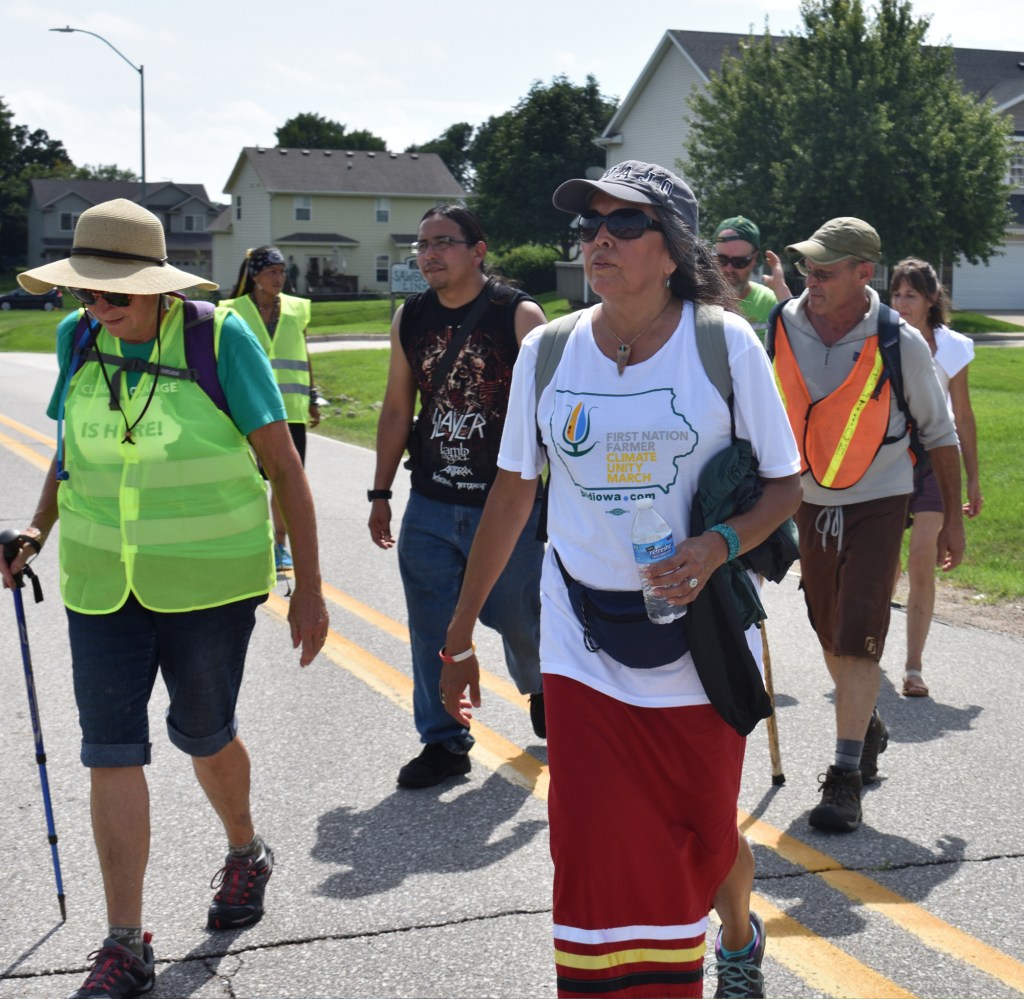
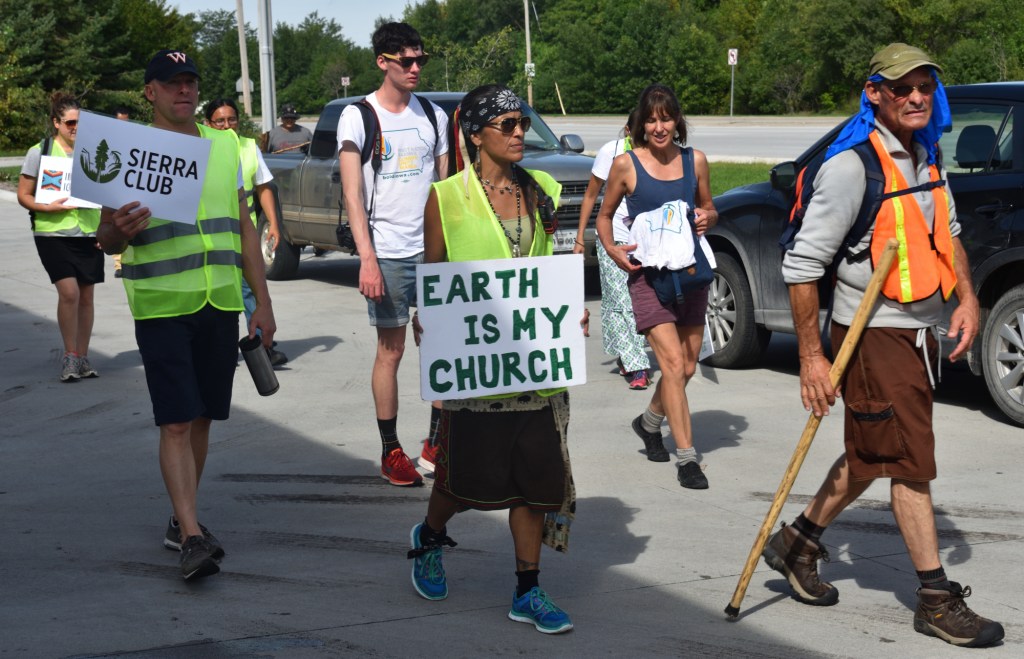
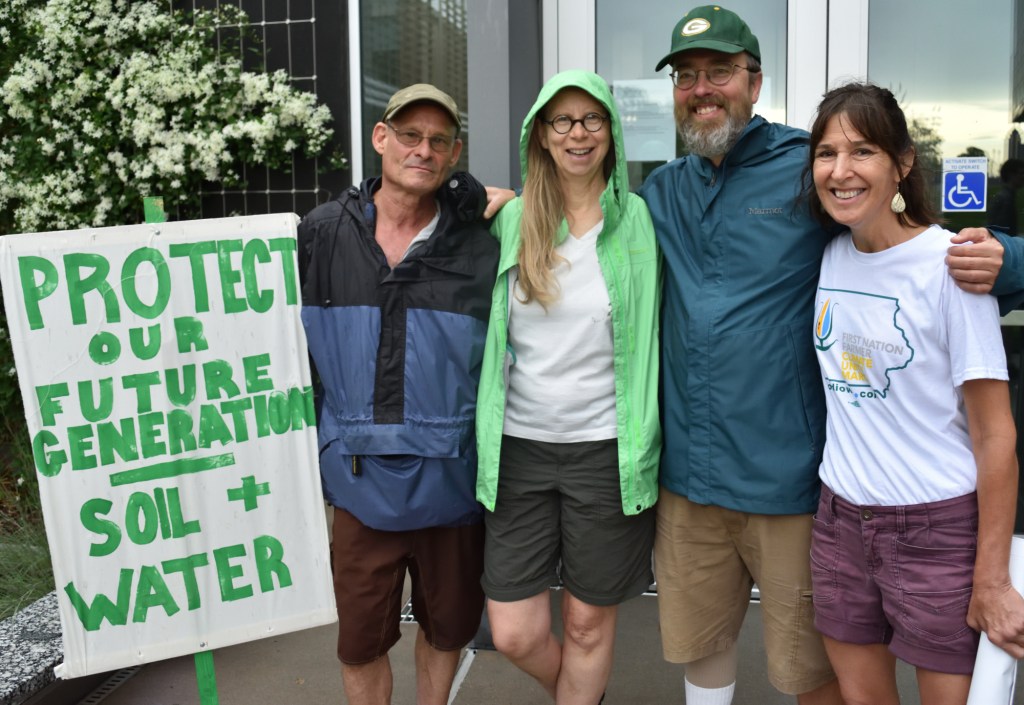
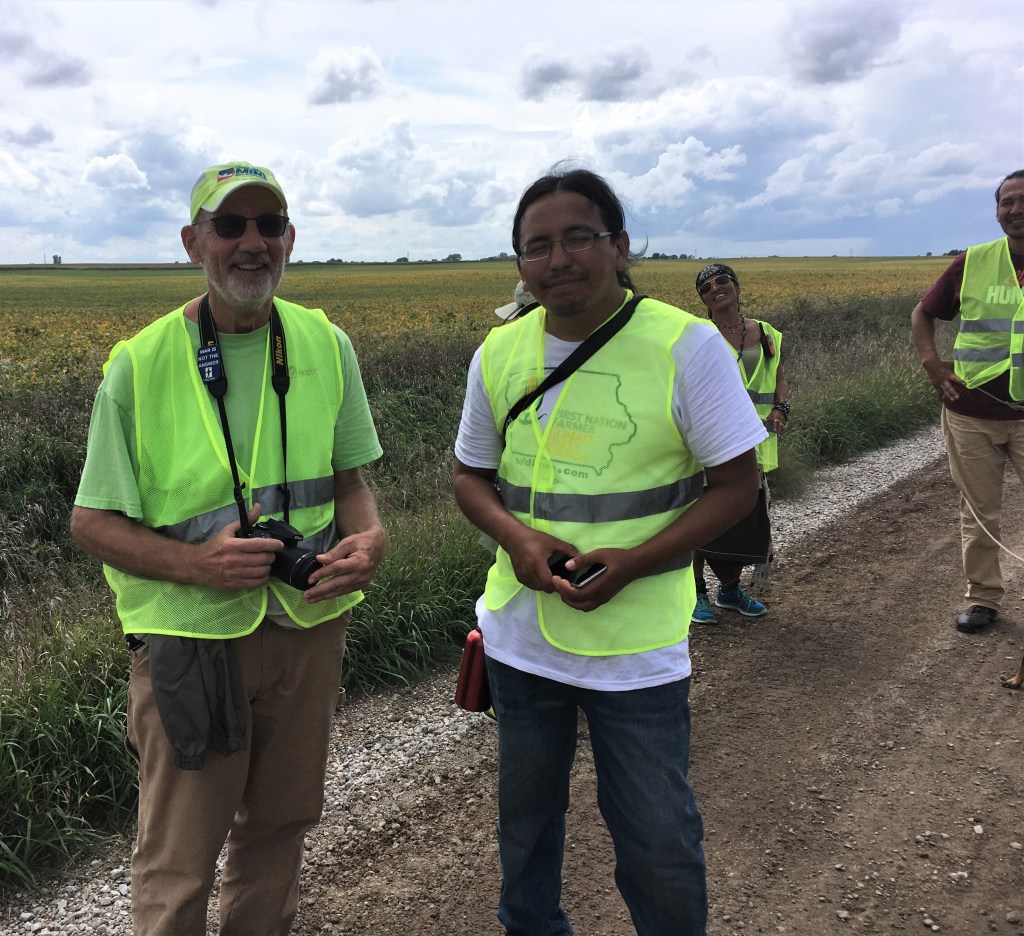
While preparing to participate in the First Nation-Farmer Climate Unity March September 1-8, 2018, I wrote a lot in this blog about Quaker spirituality and shared some of those writings with people who would be marching together. I felt I should offer some stories about Quaker spirituality in return for learning about Native spirituality. We can’t understand each other unless everyone participates.
But one of my first thoughts was, “is it valid for me to speak about my spiritual community, some of whom were proponents of and participated in the Quaker Indian Boarding Schools?” That question lived in my heart, but I hadn’t planned to do anything about it. The Spirit did.
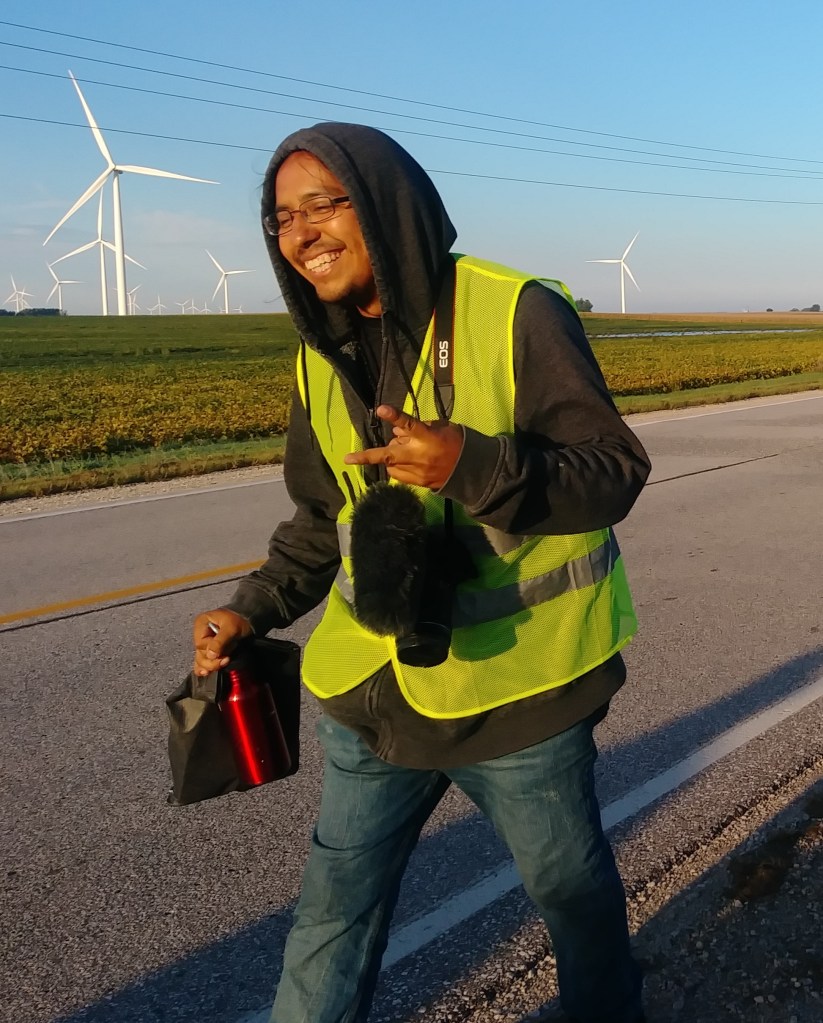
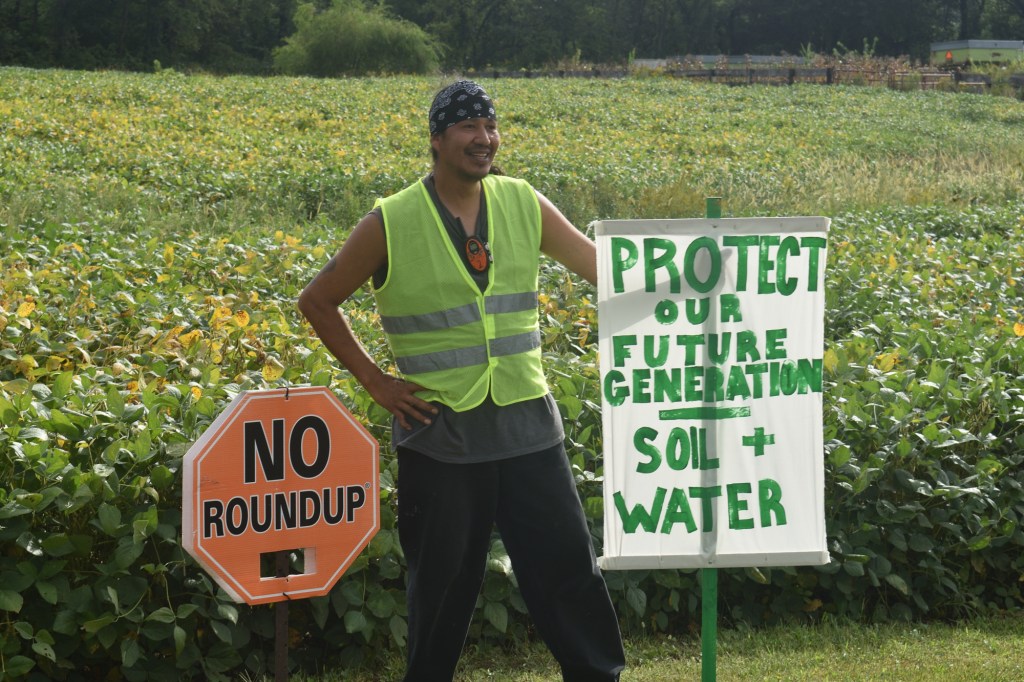
The goal of the March was to provide the time and opportunities for a small group (about 40) of Native and non-Native people to get to know each other. In part so the group can work on things of common interest and concern. I had not appreciated ahead of the March that it was such an incredible opportunity to get to know each other. Walking along empty gravel roads for hours at a time provided endless opportunities to share with one person after another. Little by little we each grew to know each other person on the March to varying degrees.
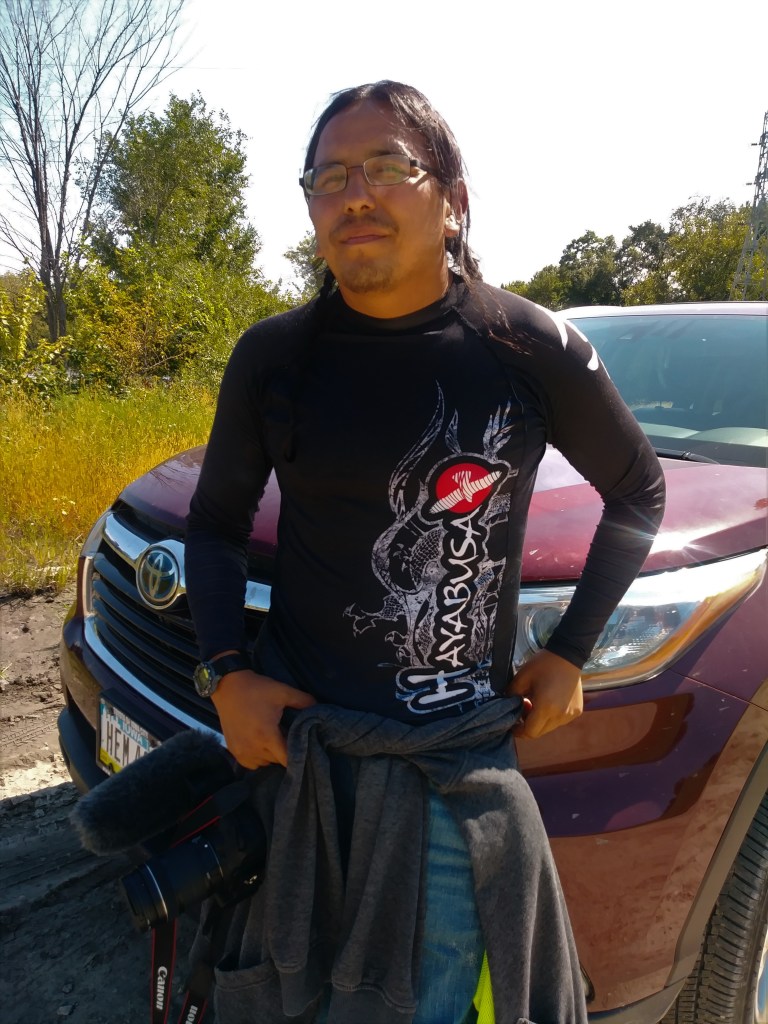
When I mentioned this to Matthew Lone Bear, who I had gotten to know sooner and better than others because of our shared love of photography, he said “yes, this is so much better than other marches. Here people actually talk with each other.” At first the conversations were tentative, but it didn’t take long for people to begin to swap stories, and that’s what happened continuously as we walked.
It didn’t take too many hours of getting to know Matthew when the Spirit led me to say to him, “I know about Quakers’ involvement in the Indian boarding schools. I’m sorry they did that.” I was apprehensive about whether I should have said that, whether that was appropriate or could pull up bad memories. We continued to walk side by side. All I noticed was a slight nod of his head. He always smiles, and that didn’t change.
One of the next times we walked together, Matthew shared a story with me. He had been living at Standing Rock for about six months, when he learned a new rope was needed to ferry people back and forth across a short channel of water. He offered a rope so ferry’s operation could continue. He went on to say his mother called him after she recognized the rope while watching a TV news story. She was very upset because that brought back terrifying memories of how the Native families would try to help their children escape when white men came to kidnap them and take them to a boarding school.
This is an example of what I was trying to say by “The past isn’t.” I think this is one of the main concepts that gets in the way of understanding between Native and non-Native people, and between white people and people of color in general. White people would like to believe that the history of Manifest Destiny in this country is something that happened in the past. Something too late to change, so why keep bringing it up? As it says below, “the multigenerational trauma of the boarding school experience is an open wound in Native communities today.“ A way has to be found to bridge the abyss before any real progress can be made.
Native American organizations are asking churches to join in a Truth and Reconciliation process to bring about healing for Native American families that continue to suffer the consequences of the Indian boarding schools. Paula Palmer researched the role that Friends played in implementing the federal government’s policy of forced assimilation of Native children.
More than 100,000 Native children suffered the direct consequences of the federal government’s policy of forced assimilation by means of Indian boarding schools during the nineteenth and twentieth centuries. Their bereft parents, grandparents, siblings, and entire communities also suffered. As adults, when the former boarding school students had children, their children suffered, too. Now, through painful testimony and scientific research, we know how trauma can be passed from generation to generation. The multigenerational trauma of the boarding school experience is an open wound in Native communities today.
The National Native American Boarding School Healing Coalition says that for healing to occur, the full truth about the boarding schools and the policy of forced assimilation must come to light in our country, as it has in Canada. The first step in a truth, reconciliation, and healing process, they say, is truth telling. A significant piece of the truth about the boarding schools is held by the Christian churches that collaborated with the federal government’s policy of forced assimilation. Quakers were among the strongest promoters of this policy and managed over 30 schools for Indian children, most of them boarding schools, during the nineteenth and early twentieth centuries. The coalition is urging the churches to research our roles during the boarding school era, contribute this research to the truth and reconciliation process, and ask ourselves what this history means to us today.
In a world experiencing unprecedented climatic, ecological, and societal change, many in the Religious Society of Friends are coming to know our own need for newness. We thirst to find and share a clearer sense of the relevance of our beloved tradition to the challenges we face. We yearn to come more fully alive together, to speak and serve today in the Life and Power that generations of our spiritual ancestors knew. Across North America and beyond, Friends are recognizing a shared calling to rediscover and reclaim traditional understandings of who we are and how we are as Friends that will help us continue to travel this Way of Love.
Prophets, Midwives, and Thieves: Reclaiming the Ministry of the Whole, Noah Baker Merrill
Yesterday’s post, “who are you?” was difficult to write. I know, for example, some of us have ancestors who taught in a Quaker Indian Boarding School. I’m sure they did their best to nurture the children in their care.
This gets to what I have found to be a fundamental error in approaches to justice work. Too often the approach was that a justice organization or individual thought they needed to come up with a plan to solve the problems they observed. And then tried to implement that plan. Often with less success than hoped for.
The American Friends Service Committee’s (AFSC) Quaker Social Change Ministry program taught me instead, it is essential to listen deeply to hear what the impacted community feels their needs are, and follow their leadership.
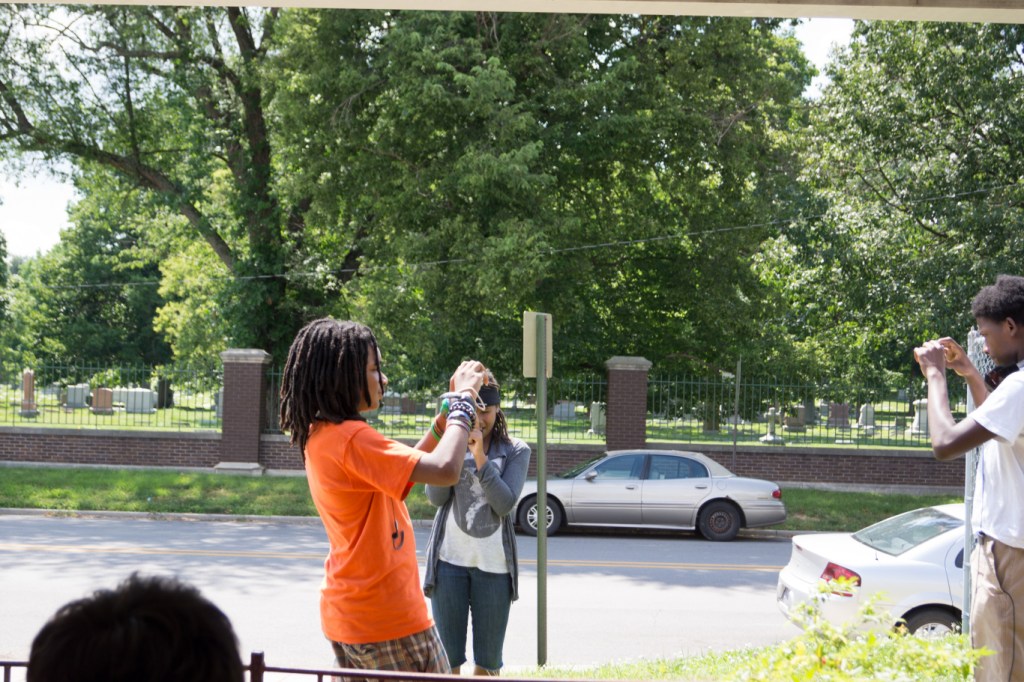
It is important to wait to be asked to do something. It can take a long time for that to happen, but your continued presence allows for developing friendships, which will then make it possible for the community to know who you are, and feel comfortable asking something of you. It took two years of spending time at the Kheprw Institute (KI) before I was asked to provide a photography workshop during summer camp. During those two years I got to know the community members, and they got to know me, including my love of photography. But that time was also needed for me to understand it is a different thing to take children of color out into public to take photos. I was honored by the trust, that I would be aware of what was going on to protect the children.
“If you have come here to help me you are wasting your time, but if you have come because your liberation is bound up with mine, then let us work together.”
Lilla Watson
I was blessed to hear Arkan Lushwala speak about “Indigenous Ways of Restoring the World” during a call sponsored by the Pachamama Alliance. “Arkan Lushwala is a rare indigenous bridge of the global north and south, carrying spiritual traditions from the Andes in his native Peru as well as being adopted and initiated by the Lakota people of North America.”
I was very excited when I heard the title of his talk. As I’ve been saying the solutions for our environmental chaos must come from a spiritual center.
Everywhere people ask, “what can we do?” The question, what can we do, is the second question. The first question is “what can we be?” Because what you can do is a consequence of who you are. Once you know what you can be, you know what you can do.
Arkan Lushwala
This is why we need Spiritual Warriors. Because we ask ourselves the first question, “what can we be?” Knowing that, “our actions are precise, our actions are in harmony with the movement, the sacred movement, of that force that wants to renew life here on Earth and make it better for the following generations.”
The answer to “what can I do?”
Speaking about what is happening on Earth right now, many of the conditions of life that we used to take for granted, now are really out of balance. Hopefully we still have time to get back into balance so life may continue. I travel around the world and meet people and talk to people from all different cultures. And everywhere people ask, “what can we do?” The question, what can we do, is the second question. The first question is “what can we be?” Because what you can do is a consequence of who you are. Once you know what you can be, you know what you can do, and we cannot afford wasting time; we have little time. We need to be precise now. When someone sincerely asks, “what can I do?” my humble answer, the only answer that I find in my heart to be sincere is, “First find out what you can be.” Action is extremely necessary at this time. This is not a time just to talk about it. The most spiritual thing now is action. To do something about what’s happening. To go help where help is needed. To stand up when we need to stand up, and protect what is being damaged. And still, this action needs to be born from a place in ourselves that has real talent, real intelligence, real power, real connection to the heart of the Earth, to universal wisdom, so our actions are not a waste of time. So our actions are precise, our actions are in harmony with the movement, the sacred movement, of that force that wants to renew life here on Earth and make it better for the following generations.


























































 Quakers, social justice and revolution