…fiddle while Rome burns

fiddle while Rome burns. To do something trivial and irresponsible in the midst of an emergency; legend has it that while a fire destroyed the city of Rome, the emperor Nero played his violin, thus revealing his total lack of concern for his people and his empire

https://www.dictionary.com/browse/fiddle-while-rome-burns

Legend has it that Nero played the violin while a great fire ravaged Rome for six days, (July of 64 A.D) destroying 70 percent of the city and leaving half its population homeless.

The phrase is used today to indicate a leader’s ‘total lack of concern for his people and his empire.’

Today, of course, Trump plays golf as not only the nation, but the entire world burns. Ignoring the problems is bad enough, but his administration and his enablers actively do everything they can to roll back environmental regulations, and prop up the failing fossil fuel industry, adding fuel to the fire. Engaging in eco-terrorism.

I have said the continued use of fossil fuels is an act of war against Mother Earth.

International lawmakers should adopt a fifth Geneva convention that recognises damage to nature alongside other war crimes, according to an open letter by 24 prominent scientists.

The legal instrument should incorporate wildlife safeguards in conflict regions, including protections for nature reserves, controls on the spread of guns used for hunting and measures to hold military forces to account for damage to the environment, say the signatories to the letter, published in the journal Nature.

Make environmental damage a war crime, say scientists, by Jonathan Watts, The Guardian, July 24, 2019

“A crime against humanity has been committed against the people of Flint, making them refugees in their own homes. Tell me honestly: if you were living in Flint right now, and you learned that your children had been drinking lead-filled water for two years, and then you discovered that the Governor knew this and the state lied about it – tell me, just how fast would your head be spinning? With your children now poisoned, and with the poisoning continuing… is the word “nonviolence” dominating your thoughts right now? Are you absolutely, stunningly amazed how peaceful the people in Flint have remained? Are you curious how much longer that can last? I hope it does. If you want to help Flint, sign the petition, demand that the federal government take action, and then get involved yourself, wherever you live, so that this doesn’t happen to you – and so that the people we elect know they can no longer break the law as they rule by fiat or indifference. We deserve much better than this.”

For a better world, Michael Moore

The following video is about a massive oil spill in California, now said to have spilled over 1 million gallons of oil and water. It is thought that weakened regulations resulted in fracking taking place too near the pipeline, causing it to rupture.

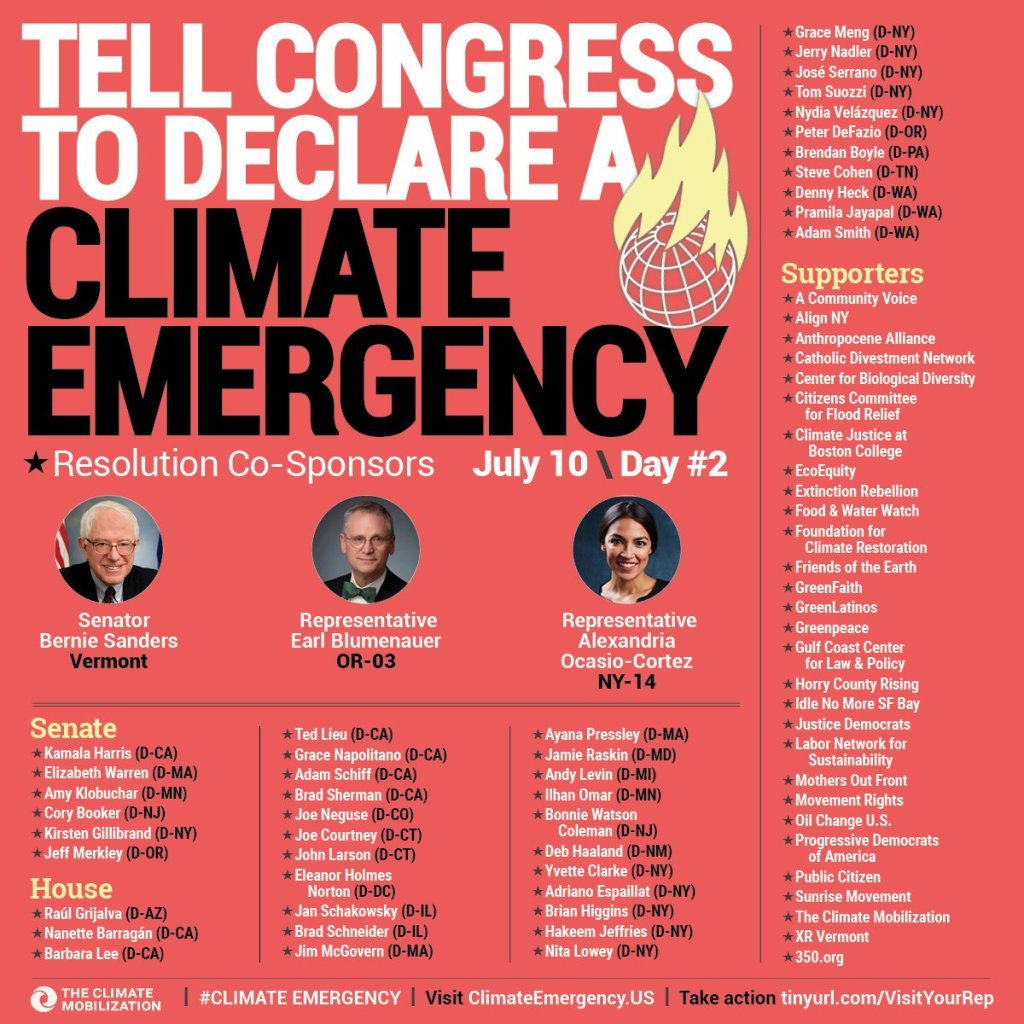
The youth led Sunrise Movement has been calling for a Democratic presidential debate focused solely on climate devastation. “Together, we will change this country and this world, sure as the sun rises each morning.” CNN has responded to that challenge.

CNN will host a Democratic presidential town hall in September focused on the climate crisis.

The event will take place on Wednesday, September 4, in New York City. CNN is inviting candidates who meet the Democratic National Committee’s polling threshold for the September primary debate to participate, meaning they’ve reached at least 2% in four approved polls by August 28.

The most prominent proposal put forth by Democrats and backed by multiple presidential candidates has been the Green New Deal, the renewable-energy infrastructure investment plan proposed by Rep. Alexandria Ocasio-Cortez of New York.

CNN to host climate crisis town hall with 2020 Democratic candidates By Kyle Blaine, CNN, July 25, 2019
Posted in climate change, Green New Deal, Sunrise Movement, Uncategorized | Leave a comment

We Refuse to Sit Idly By

In the United States there once was a taboo about the use of the word FASCIST. As though we could never become a fascist state, so don’t even go there. Terrifyingly, that seems to be the state we are rapidly devolving into. As many have said, fascism would arise even without the current president. He is just the strongman savior described below.

It also used to be taboo to talk about Hitler and Nazis. Now, as they say, ‘it is what it is.’

It is important now to talk about the fascist regime that came into power with the rise of Hitler and the Nazis in order to educate and warn our friends and neighbors of what happened in Nazi Germany. All of the following pieces of fascism are here, now. I would hope that recounting the horrors of the Nazi concentration camps and the extermination of 6 million Jewish people might pull us back from the brink we are rapidly moving toward here, now.

Unfortunately, logic doesn’t create change. Changing hearts does.

The explosion of the number of camps and migrants being incarcerated there, with the outrageous cruelty of the separation of children from their loved ones is unbelievable and intolerable. These truly are concentration camps. Certain people are making a lot of money from this evil.

#CloseTheCamps

Indianola, Iowa

As it says below, “when people are feeling insecure about their status, they can go one of two ways, they can say, ‘We have to work together to make things better.’ But the fascist response is to find scapegoats, and build the idea things will be better if these people are marginalized and dealt with.”

The story below about President Obama saying he’s proud of his former staffers for speaking out against Trump is an example of working together to make things better.

So which wolf will you feed
One makes you strong, one makes you weak
And those who know and those who seek
Amidst the chaos, find your peace (yeah)
I know which wolf I’ll feed

Great Spirit, Nahko

Which wolf will you feed?


What is Fascism?

To find out if America could actually slide into bona fide fascism, I asked a couple political science professors—Indiana University’s Jeffrey Isaac, and Amherst College’s Thomas Dumm—to identify the philosophy’s historical hallmarks. The parallels between then and now, it turns out, aren’t hard to identify.

1. An era of social upheaval–Fascism tends to arise out of a very specific set of circumstances: when a group of people that once felt politically and economically secure suddenly finds themselves feeling marginalized.

2. A Nostalgia for a Lost, Glorious Past–A critical ingredient of fascism, says Dumm, is the ref-framing of a nation’s current struggles as a departure from some glorious, long-lost past.

3. Scapegoating minority groups–Once a group has identified a problem, they must identify a way to fix it. And this, says Dumm, is a key moment in the emergence of fascism. “When people are feeling insecure about their status, they can go one of two ways,” he explains. “They can say, ‘We have to work together to make things better.’ But the fascist response is to find scapegoats, and build the idea things will be better if these people are marginalized and dealt with.”

4. A strongman savior–While accepting his party’s presidential nomination at the Republication National Convention in 2016, Trump declared his own political uniqueness. “Nobody knows the system better than me,” he told attendees, “which is why I alone can fix it.”

5. The stifling of dissent–“If you have a situation where the law is not being enforced because of political intimidation,” Dumm says, “that’s when things start to crumble and fascist power comes in.”

6. Ritualistic Communal Bonding–Rallies are integral to the strength of fascism because they reiterate its core promises: that the nation must be restored to its rightful place in the world, and the leader is solely capable of bringing about that result.

Is America Actually Heading Towards Fascism? GQ Magazine, Jay Willis, July 26, 2019
Obama says he’s ‘proud of’ former staffers who slammed Trump for ‘poisoning our democracy in fiery op-ed, By Aris Folley, The Hill, July 27, 2019

We are proud descendants of immigrants, refugees and the enslaved Africans who built this country while enduring the horrors of its original sin. We stand on the soil they tilled, and march in the streets they helped to pave. We are red-blooded Americans, we are patriots, and we have plenty to say about the direction this country is headed. We decry voter suppression. We demand equitable access to health care, housing, quality schools and employment. We welcome new Americans with dignity and open arms. And we will never stop fighting for the overhaul of a criminal-justice system with racist foundations.

Our love of country lives in these demands, and our commitment to use our voices and our energy to build a more perfect union. We refuse to sit idly by as racism, sexism, homophobia and xenophobia are wielded by the president and any elected official complicit in the poisoning of our democracy. We call on local, state and congressional officials, as well as presidential candidates to articulate their policies and strategies for moving us forward as a strong democracy, through a racial-equity lens that prioritizes people over profit. We will continue to support candidates for local, state and federal office who add more diverse representation to the dialogue and those who understand the importance of such diversity when policymaking here in our country and around the world. We ask all Americans to be a good neighbor by demonstrating anti-racist, environmentally friendly, and inclusive behavior toward everyone in your everyday interactions.

The statesman Frederick Douglass warned, “The life of a nation is secure only while the nation is honest, truthful and virtuous.” This nation has neither grappled with nor healed from the horrors of its origins. It is time to advance that healing process now through our justice, economic, health and political systems.

Expect to hear more from us. We plan to leave this country better than we found it. This is our home.

We are African Americans, we are patriots, and we refuse to sit idly by, Washington Post, July 26, 2019, by Clarence J. Fluker , C. Kinder , Jesse Moore and Khalilah M. Harris
Posted in civil disobedience, immigration, Uncategorized | Tagged , | 2 Comments

Extinction Rebellion vs Congress

Today there are three movements that are mobilizing many, many people to draw attention to climate change: the Sunrise Movement, School Strikes, and Extinction Rebellion.

Thousand of students in Europe, and now in the United States, are striking on Fridays. Their message is very clear, about how nothing has been done about climate change, and they are and will continue to be living with multiple and increasingly severe climate disasters. They say they will not longer wait for others to take action.

Recent days have seen massive numbers of people in the streets of London, shutting down traffic. It is interesting that Greta Thunberg, the 16 year old Swede who started the School Climate Strikes, came to London to speak to the Extinction Rebellion demonstrators.

The Extinction Rebellion was one of the topics on Ed Fallon’s radio program last week.

As Britain’s Extinction Rebellion ramps up its colorful campaign of creative nonviolence, moving from the streets of London to cities across the US, that’s the conversation attorney Channing Dutton and I kick around on this week’s Fallon Forum. Are shutting down roads and bridges, disrobing in front of politicians, blockading media conglomerates the kind of actions the climate movement needs? Does posing that question even matter any more? Is it time for an all-out assault on climate apathy?

Fallon Forum, 4/15/2019

I called into the program to say I wasn’t sure what the goal of the Extinction Rebellion (XR) was, and spoke about my own experiences with social change during the anti-war movement in the 1960’s and more recently with anti-pipeline efforts. I wondered about the contrast between XR and the Sunrise Movement. Ed’s guest, Channing Dutton talked about the anti-war movement not having well defined goals when it erupted, but over time changes occurred leading, finally, to the end of the Vietnam War.

This evening Extinction Rebellion members block entrances to the Capitol from the Rayburn and Cannon office buildings. The Guardian was the only mainstream news source to cover that action.

One protester exclaimed: “DC was under water last week. DC was on fire this weekend. We can’t live much longer like this.” Another said: “I know you’re listening, officers, I know you have children. Do you want them to live in a world that’s burning? … I’ve always wanted to have children. Three weeks ago I broke down in my car because I realised I can’t bring a child into this world.”

Then a chant began: “What do we want? Climate emergency. When do we want it? Now.” Another loud chant followed: “Climate extinction rebellion.”

Extinction Rebellion protesters confront politicians at US Capitol by David Smith, The Guardian, 7/23/2019
On Tuesday evening, members of the Washington, D.C., chapter of Extinction Rebellion superglued themselves to each other and to the passages connecting the Capitol to the Rayburn and Cannon office buildings, where House members have their offices. The protesters, who are part of an international group that uses nonviolent civil disobedience tactics to advocate for action on climate change, aimed to confront House members on their way to floor votes.

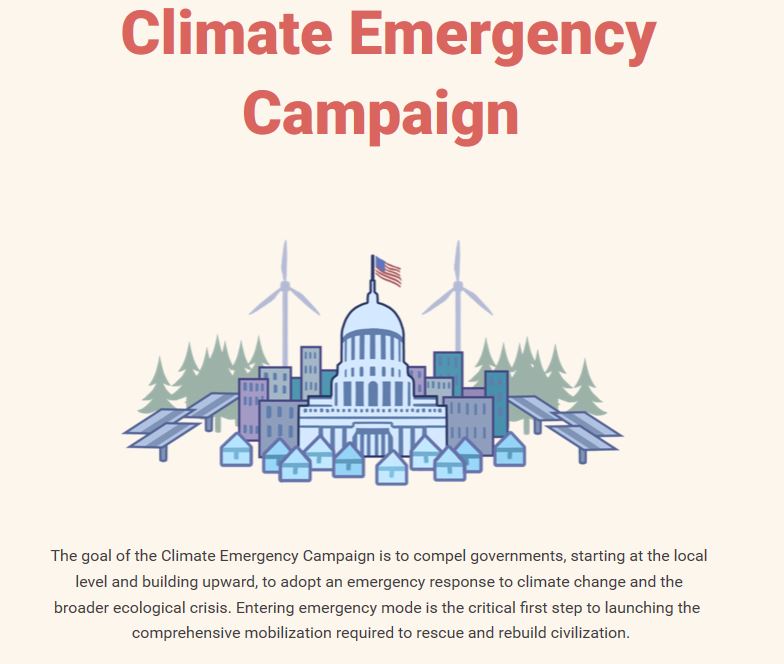
Many of the protesters, who did not expect the protest to last longer than 15 minutes, remained glued for more than two hours, alongside dozens of demonstrators who rallied as a distraction. They wore signs over their shirts that said “Declare Climate Emergency” and chanted: “What do we want? Green New Deal! When do we want it? Now!” Capitol police asked bystanders and reporters to move back and, after three warnings, kicked everyone out — except, of course, those who were glued. They arrested 13 activists, according to Extinction Rebellion, around 8:30 p.m.

Climate Activists from Extinction Rebellion Glued Themselves to the Capitol to Disrupt House Votes. by Aída Chávez. The Intercept,
July 23 2019
Posted in civil disobedience, climate change, Extinction Rebellion, Uncategorized | 1 Comment

Iowa Land Acknowledgement Statement

I’ve written a lot about the workshops and presentations that Quaker Paula Palmer led us through when she was in the Midwest recently. In the following excerpt of her letter to faith communities, she describes some reasons why this became a ministry for her, supported by Boulder Friends Meeting. I believe it was essential that Native American educators were involved in developing these workshops and the resource kit.

Dear Friends in Faith Communities,

A call to faith communities has been issued by two very different organizations: the United Nations Permanent Forum on Indigenous Issues, and the World Council of Churches. Indigenous and religious leaders are urging all people Of faith to take a deep look at the Doctrine of Discovery, the 15th century papal edict that authorized European Christian nations to “invade, capture, vanquish, and subdue all.. .pagans and other enemies of Christ.. .to reduce their persons to perpetual slavery …and.. .to take away all their possessions and property” (Pope Nicholas V)

Why do we need to dredge up the Doctrine of Discovery now, more than 500 years later? Because over the centuries, the Doctrine has been embedded in a world view of European superiority and domination and in the legal codes of the lands the Europeans colonized. It continues to be cited by courts in our country and others as justification for denying Indigenous Peoples their rights. The notion of European superiority and domination has been perpetuated by our schools and other institutions. The consequences can be seen in the disproportionate poverty and ill health of Native American people today. How much has it influenced our own thoughts and actions?

With the guidance and encouragement of Native American educators, we developed a 2-hour participatory workshop and a Resource Kit, and we presented these to the Boulder Friends meeting. Our meeting was led to approve a minute repudiating the Doctrine of Discovery and endorsing the UN Declaration on the Rights of Indigenous Peoples. Our minute now stands with similar statements that have been issued by various church bodies in Canada and the U.S.

https://kislingjeff.wordpress.com/2019/05/13/a-letter-to-faith-communities/

The following comes from the resource kit which provides a great deal of excellent information related to how we move “toward right relationships with Native people”. The resource kit is available here: http://www.boulderfriendsmeeting.org/wp-content/friends9x4Q/2013/06/RESOURCE-KIT-10-1-16.pdf

In his lectures and his new book, In the Light of Justice: The Rise of Human Rights in Native America and the U.N. Declaration on the Rights of Indigenous Peoples, the Pawnee attorney, Walter Echo-Hawk, draws on many wisdom traditions to offer these five steps toward healing when wrongdoing has occurred and people have been injured by it:

1.  Recognize that harm has been done:  acknowledge that injury or harm has taken place

2.  A real apology is sincerely made and forgiveness requested: the person or institution that harmed another apologizes in a sincere and appropriate way, admits the specific harmful actions they have committed, and asks for forgiveness

3.  Accepting the apology and forgiving the wrongdoer:  the harmed person or community accepts the apology and forgives

4.  Acts of atonement; the process of making things right:  the parties agree on voluntary acts of atonement by the wrongdoer that will wipe the slate clean

5.  Healing and reconciliation:  the atonement acts are carried out in a process that fosters justice and compassion and genuine friendship

Walter Echo-Hawk says completing these steps may take years, decades, or centuries. The important thing is to start with the first step: acknowledge the harm, and commit to working through the next steps toward healing.  It is important to take as much time as necessary, involving all the stakeholders, achieving Unity, in order to complete each step. In chapter 10 of his book, Echo-Hawk describes these steps in detail, and explains how the U.N. Declaration on the Rights of Indigenous Peoples opens a path toward national healing.

Recently I’ve had some very good discussions with Quakers about the Iowa Acknowledgement Statement below. This statement was written to begin to address the first step above. Land Acknowledgment Statements will be different for different locations. Several people were involved in writing the statement for Iowa, which was approved by the Meskwaki Nation.

These discussion were very helpful, since they showed me some concerns people might have about the statement. I imagine others may have similar concerns, so I am glad to have the opportunity to address those concerns as I am sharing this Iowa land acknowledgement statement.

To summarize the discussion we had, it seems that this statement gave an idealized picture of Native Americans. That wasn’t the intention, but it is very helpful to hear how people see things differently than intended.

I tried to explain that I didn’t think the statement was meant to portray an idealized or blameless view of Native Americans. Rather that indigenous people occupied the land called the United States prior to the white settlers arriving. And in the end, pretty much were left with only small areas identified as reservations. There are exceptions, including the Meskwaki Nation mentioned in the statement below.

At the root of this is a fundamental difference. Native people don’t have the concept of land as property, as belonging to a land owner. Rather they have a spiritual connection to Mother Earth, that the land is sacred and not something that can be claimed as property by anyone. I believe that myself.

In a slightly different manner, our immigration policies can be viewed in much the same way on a larger scale. Do we have the right to deny anyone who wants to cross our border? Besides indigenous people, we are all immigrants. How can we say we had the right to enter the land called the United States, but today, others who want to do the same cannot? Those policies say we “own” this country and can thus decide who can enter, and who cannot.


IOWA ACKNOWLEDGEMENT STATEMENT

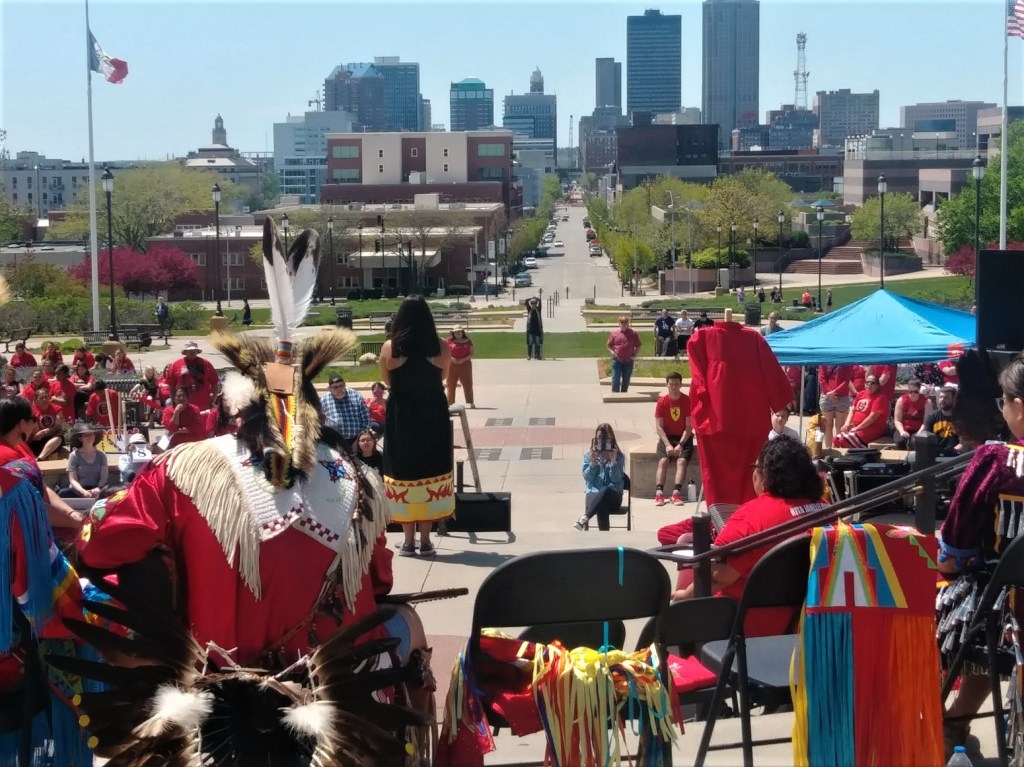
We begin by acknowledging that the Land between Two Rivers, where we sit and stand today, has been the traditional homeland for many independent nations. These include the Ioway and the Otoe, who were here since before recorded time. The Omaha and the Ponca were here, moving to new lands before white settlers arrived. The Pawnee used this land for hunting grounds. The Sioux, Sauk and Meskwaki were here long before European settlers came. Members of many different Indigenous nations have lived on these plains. Let us remember that we occupy their homeland and that this land was taken by force. Today, only the Meskwaki Nation, the Red Earth People, maintain their sovereignty on their land in the state of Iowa. They persevered and refused to be dispossessed of their home. Place names all over our state recognize famous Meskwaki chiefs of the 1800s like Poweshiek, Wapello, Appanoose, and Taiomah or Tama. We honor the Meskwaki Nation for their courage, and for maintaining their language, culture and spirituality. May our time together bring respectful new openings for right relationship to grow.

Posted in #NDAPL, First Nation-Farmer Climate Unity March, Indigenous, Native Americans, Quaker, Quaker Meetings, Toward Right Relationship with Native Peoples, Uncategorized | Leave a comment

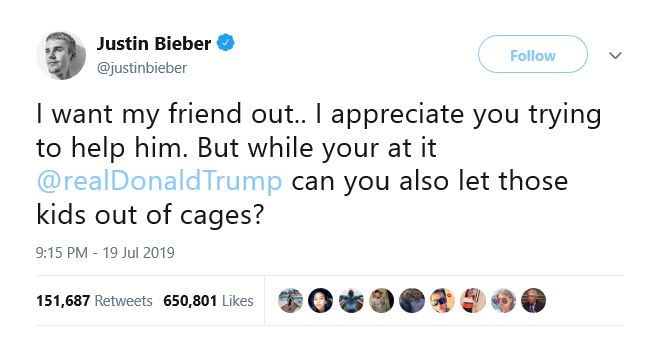
Justin Bieber ‘can you also let those kids out of cages?’

Justin Bieber Calls on President Trump to ‘Let Those Kids Out of Cages,’ While Thanking Him for Helping A$AP Rocky by Josiah Bates, TIME, July 20, 2019

Justin Bieber has weighed in on the border crises and A$AP Rocky’s Swedish incarceration with one tweet.

Feeling like I’m breathing my last breath
Feeling like I’m walking my last steps
Look at all of these tears I’ve wept
Look at all the promises that I’ve kept

I put my all into your hands
Here’s my soul to keep
I let you in with all that I can
You’re not hard to reach

And you bless me with the best gift
That I’ve ever known
You give me purpose
Yeah, you’ve given me purpose

Thinking my journey’s come to an end
Sending out a farewell to my friends, for inner peace
Ask you to forgive me for my sins, oh would you please?

I’m more than grateful for the time we spent, my spirit’s at ease
I put my heart into your hands
Learn the lessons you teach
No matter when, wherever I am
You’re not hard to reach

Purpose, Justin Bieber

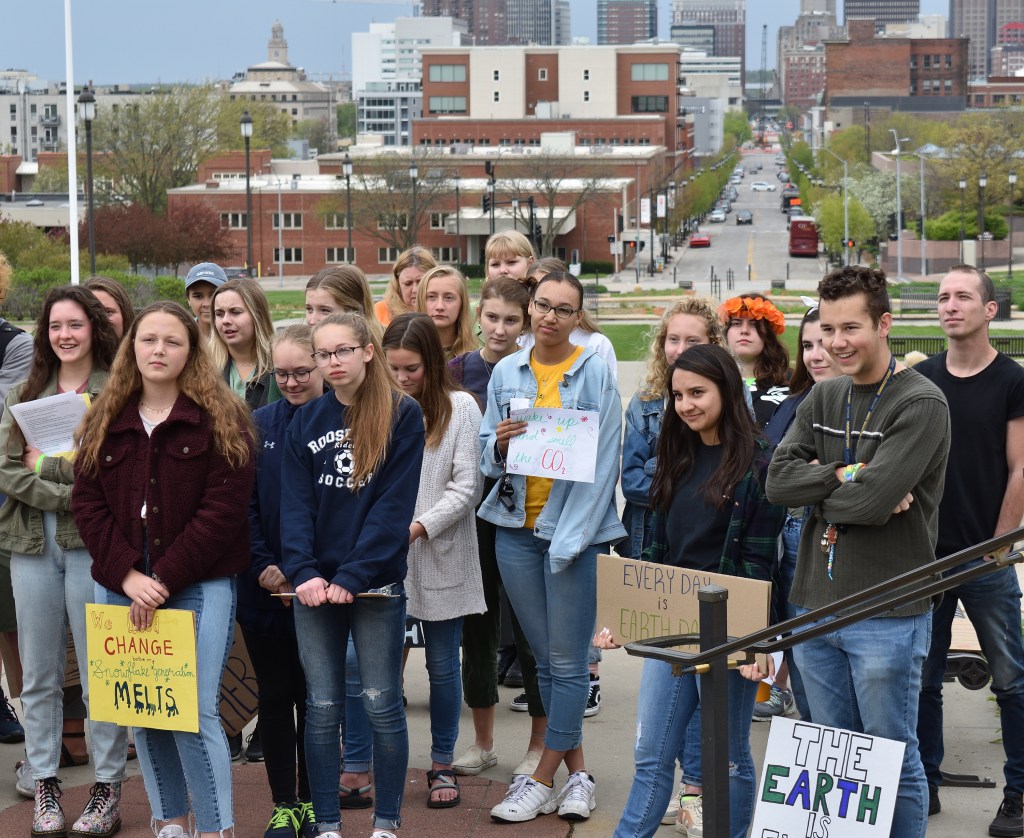
This is just one of many examples of youth speaking out and engaging in justice work and activism. Others include the Sunrise Movement demanding a Green New Deal and the student school climate strikes.

I try to avoid writing too much about Democrats and Republicans. This being Iowa, there are nearly daily presidential candidate events. Political pundits warn of some Democrats moving too far to the left, fearing that will drive away moderate voters and could lead to Republican re-election for the presidency.

Many think the election of Reps. Alexandria Ocasio-Cortez, D-N.Y.; Ilhan Omar, D-Minn.; Ayanna Pressley, D-Mass.; and Rashida Tlaib, D-Mich., was a fluke. I think they were elected because they represent their constituents’ needs instead of corporations. And because of youth engaged with their campaigns.

I believe the real danger for the Democratic party is to ignore youth. Because this generation has “woken up” to the existential threat of climate catastrophe, and will reject anyone who accepts fossil fuel money and who does not support a Green New Deal. Democratic National Committee chairman Tom Perez has enraged the young people by refusing to hold a Democratic presidential debate focused solely on climate change. In response members of the Sunrise Movement camped out in front of DNC headquarter in Washington, DC, for 60 hours. Perez will now allow a vote of the membership regarding a climate only debate.

These youth will not accept a candidate that doesn’t make climate change their top priority. And you might call it ageism, but they see older people as those who failed to address climate change when they could have. Joe Biden has been at the top of the polls, although fading lately. But I don’t believe he has a chance because of his record on fossil fuels and saying these youth are pushing too far to the left.

I hope those of us who agree with the youth can join campaigns for politicians who make addressing climate change their top priority, and who aren’t old white guys. For the sake of winning the election and more importantly, for our future.

Together, we will change this country and this world, sure as the sun rises each morning.


https://www.sunrisemovement.org/https://www.sunrisemovement.org/

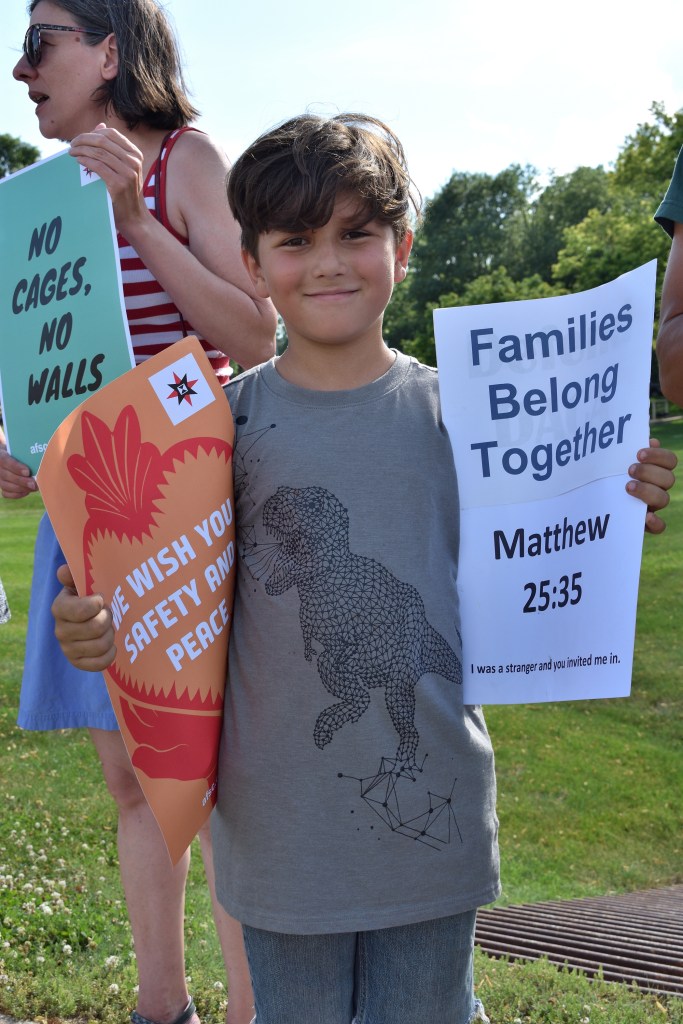
Photos by Rezadad Mohammadi and Jeff Kisling. Parental permission granted for photos of children

Posted in Arts, immigration, Uncategorized | Leave a comment

Silence

I don’t know what I might be led to write when I sit in front of my computer and try to move into a place where I can hear the Inner Light. What I’m hearing this morning seems disjointed, but I’m hearing many voices related to ‘silence’.

I think I am craving silence for renewal during these dark times full of incessant noise.

Worshiping in silence at Quaker meetings for worship is something I’ve done throughout my life.

I hadn’t reflected much on why we sought opportunities to be by ourselves in the mountains. It just seemed a much better experience that way. Now I think it was related to feeling closer to God when we were deep in the quiet of the forests. Having grown up in Quaker communities, I was used to worshiping in silence, as we do so we can hear the whisper of the Spirit. Being enveloped in the silence of the mountains was a natural extension of Quaker worship.

Spirit Walking in Tundra, Quakers, Social justice and Revolution, Jeff Kisling

As I am writing this I’m thinking of two separate meanings of silence. I don’t remember knowing about the terms ‘active’ and ‘passive’ silence but I have always know the concepts they represent. Passive silence relates to not speaking when there is a need to speak out. It is a way of hiding, or not engaging. Active silence relates to creating the conditions that will allow you to hear what the Spirit is saying to you. Silent Quaker meetings for worship, or individual meditation are examples of active silence.

The Silence=Death Project relates to passive silence.

They (Silence = Death Project) created the Silence=Death poster using the title phrase and a pink triangle, which during the 1970s had become a gay pride symbol reclaimed by the gay community from its association with the persecution of homosexuals in Nazi Germany and the Holocaust.[4]

Silence = Death Project

“SILENCE = DEATH” today relates to years of silence related to environmental disaster and its crisis of conscience. We are rapidly heading toward the death of Mother Earth.

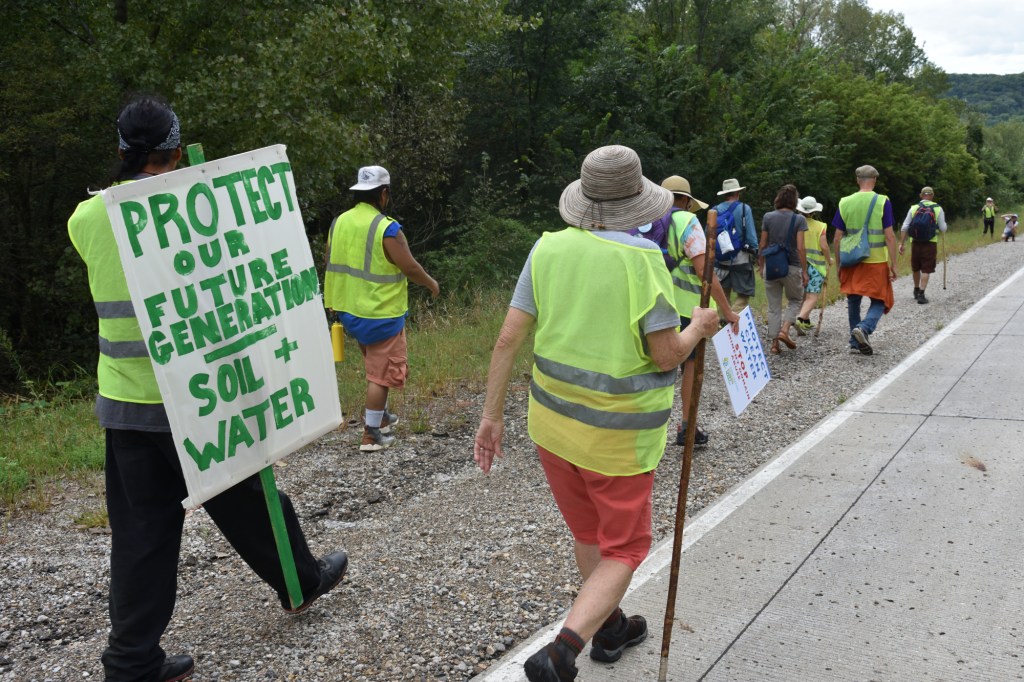
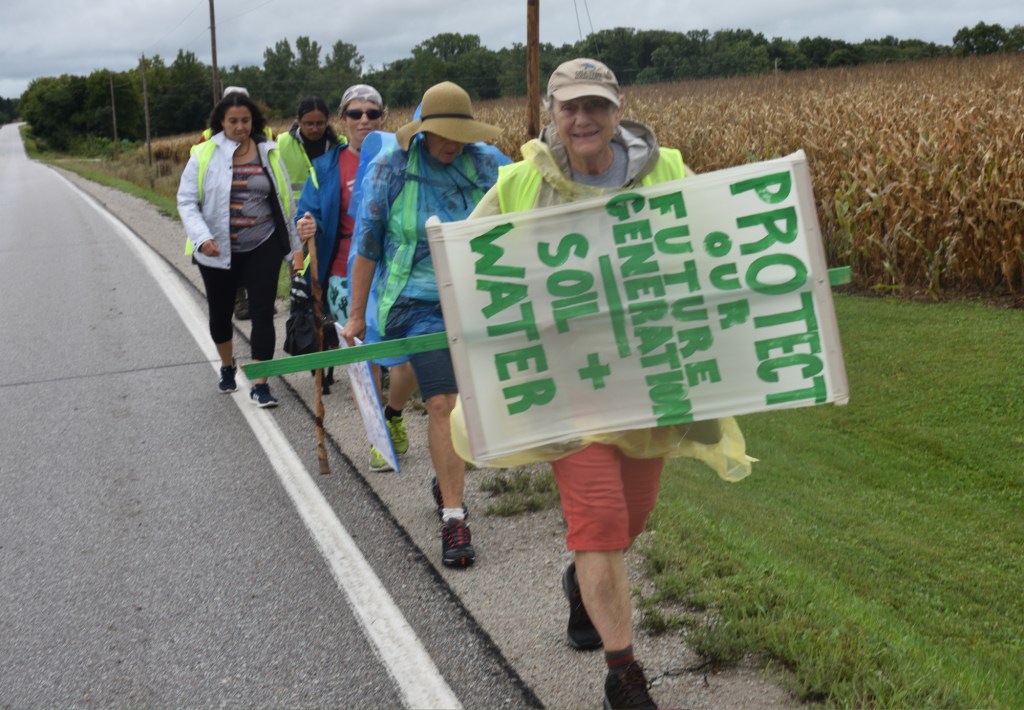
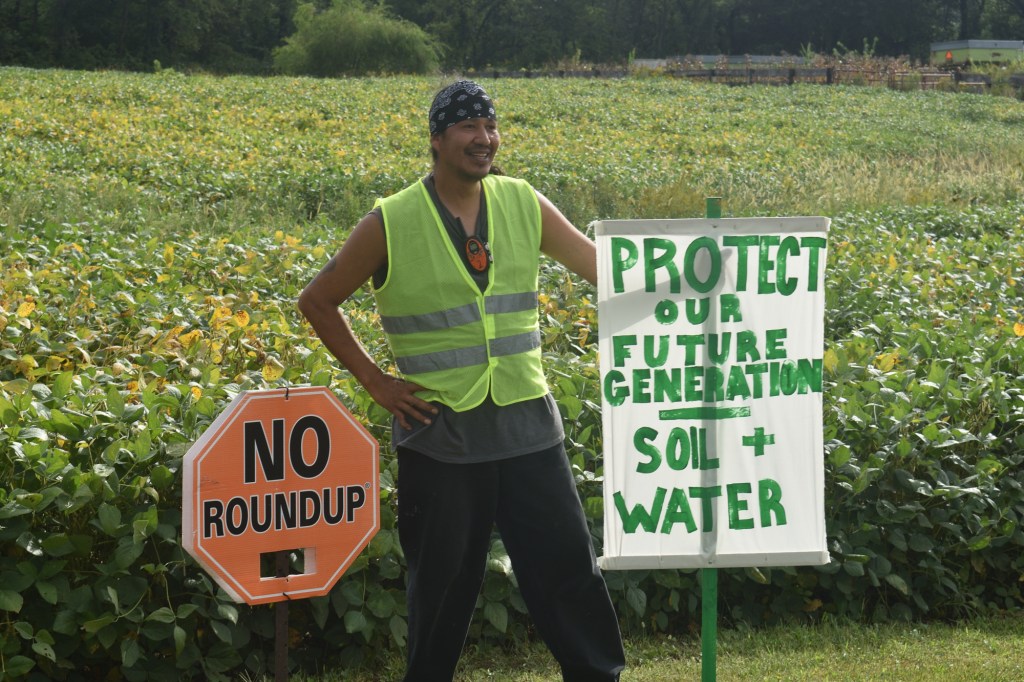
Because active silence is the core of Quaker meeting for worship, I’ve heard about this all my life. But recently I’ve been learning about Native spirituality and culture. That is one of the things I value most from sharing eight days, walking 94 miles, with a small group of Native and non native people, who became my friends. Every time we came to a place where we crossed over the Dakota Access pipeline as we walked together on the First Nation-Farmer Climate Unity March, we would stop and form a circle, and have some silence and prayer.

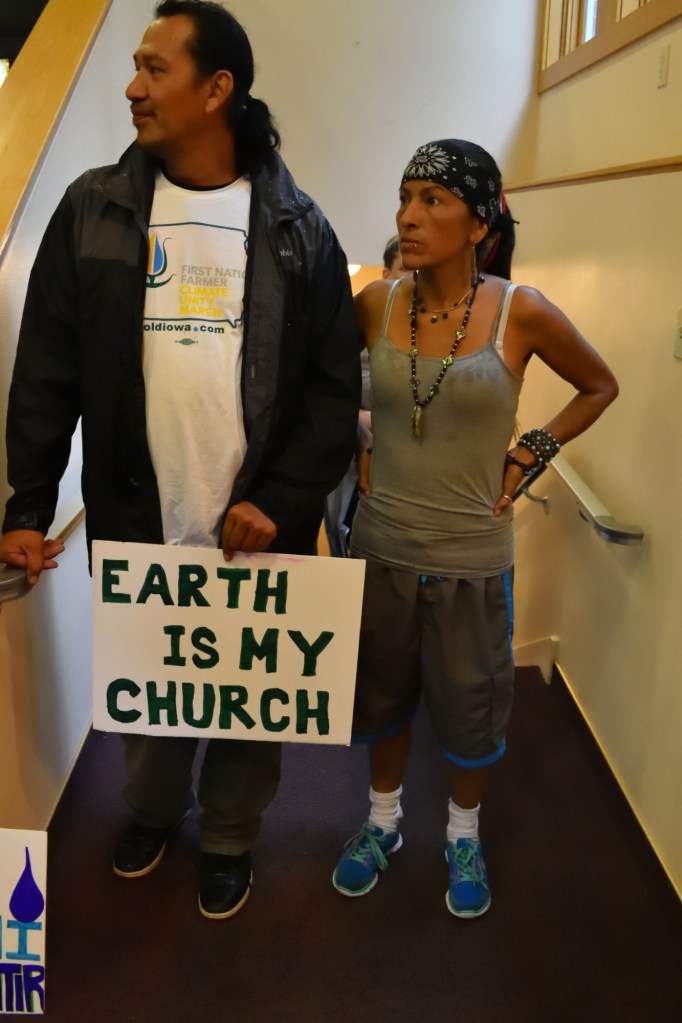
Alton and Foxy Onefeather

This has occasioned discovering new ways of thinking about silence.

But silence teaches in a way that nothing else can. The mind makes deep adjustments in the quiet times. True laughter bubbles up from humor too precious for words–and brings with it a joy that dissolves disappointment.

A Cherokee Feast of Days, Volume Two, March 31, by Joyce Sequichie Hifler

The Warrior of the Light meditates. He sits in a quiet place in his tent and surrenders himself to the divine light. When he does this, he tries not to think about anything; he shuts himself off from the search for pleasure, from challenges and revelations, and allows his gifts and powers to reveal themselves. Even if he does not recognize them then, these gifts and powers will take care of his life and will influence his day-to-day existence. While he meditates, the Warrior is not himself, but a spark from the Soul of the World. Meditation gives him an understanding of his responsibilities and of how he should behave accordingly. A Warrior of the Light knows that in the silence of his heart he will hear an order that will guide him.

Coelho, Paulo. Warrior of the Light: A Manual (pp. 26-27). HarperCollins. Kindle Edition.

I’ve just begun reading “Neither Wolf nor Dog” by Kent Nerburn, which I’m very glad someone recommended. I can see why people value it.

“Your eyes are different, Nerburn,” he said. “You are looking farther.” He didn’t elaborate or say another word, but that phrase, with all its cryptic meaning, buoyed me like nothing else he had ever said.

One day Dan startled me with a full sentence. “You’re getting better with silence,” he said.
“I am?”
“I watch you.”
“I know.”
“You’re learning. I can tell because of your silence.”
I sensed that he had something to say. Dan did not make small talk when he was on his hill.
“We Indians know about silence,” he said. “We aren’t afraid of it. In fact, to us it is more powerful than words.”
I nodded in agreement.

“Our elders were schooled in the ways of silence, and they passed that along to us. Watch, listen, and then act, they told us. This is the way to live.

“Watch the animals to see how they care for their young. Watch the elders to see how they behave. Watch the white man to see what he wants. Always watch first, with a still heart and mind, then you will learn. When you have watched enough, then you can act.”
There was a silence.

“Indians have known this for a long time. We like to use it on you. We know that when you are in a room and it is quiet you get nervous. You have to fill the space with sound. So you talk right away, before you even know what you are going to say.

“Our elders told us this was the best way to deal with white people. Be silent until they get nervous, then they will start talking. They will keep talking, and if you stay silent, they will say too much. Then you will be able to see into their hearts and know what they really mean. Then you will know what to do.”

“You don’t convince anyone by arguing. People make their decisions in their heart. Talk doesn’t touch my heart.

“People should think of their words like seeds. They should plant them, then let them grow in silence. Our old people taught us that the earth is always speaking to us, but that we have to be silent to hear her.

“I try to be that way. I taught my children to be that way.”

He swept his hand out across the panorama in front of us. “Do you hear the sound of the prairie? That is a great sound. But when I’m talking I can’t hear it.

“There are lots of voices besides ours, Nerburn. Lots of voices.”

“Do you know what I do?” he said. “I listen to voices. For me this hill is so full of life I can never be quiet enough to hear all the voices.”

Nerburn, Kent. Neither Wolf nor Dog (p. 64). New World Library. Kindle Edition.
Posted in Arts, climate change, Indigenous, Native Americans, Quaker, Uncategorized | Leave a comment

Accompaniment

Recently I’ve been struggling with ideas of how to bridge the deepening political divide in the United States. The recent rally when the president was in North Carolina was very disturbing, where an all white audience chanted “send her back”. “Her” being Democratic Congressional Representative Ilhan Omar representing a district in Minnesota. It is unbelievable that a sitting president could target women of color, U.S. citizens and duly elected Congresswomen. We are rapidly moving toward a fascist state.

I can’t think of any quick solutions. As I tried to explain in the blog post “the importance of shared memory” I believe we have to work hard to build community, to get beyond the rhetoric and engage people whose views we don’t agree with by personal, face to face meetings.

Next I wrote about “how do you know” how to figure out what you should do to help build community. For people of faith, anyway, we learn what justice work we should do from guidance from the Spirit or God.

The follow is an exercise from the American Friends Service Committee’s (AFSC) project “Knowing Ourselves: Undoing Racism as Spiritual Practice”. It might benefit you to answer these:

  • I am called to work for justice because…
  • This is essential spiritual work because…
  • What I hope to do and become as I do this work is…

At North Meadow Circle of Friends in Indianapolis several years ago, we decided to explore how the new AFSC program, Quaker Social Change Ministry (QSCM), might help our justice work. The two basic parts of QSCM are:

  • Having the whole Quaker meeting working one a justice project. Most commonly Quaker meetings have various people working on their own justice work. To instead have the whole meeting doing this together helps meeting attenders learn more about each other and benefit from ideas from many people instead of doing this alone.
  • Having the meeting spend significant time with people in a community or organization that is experiencing injustice.

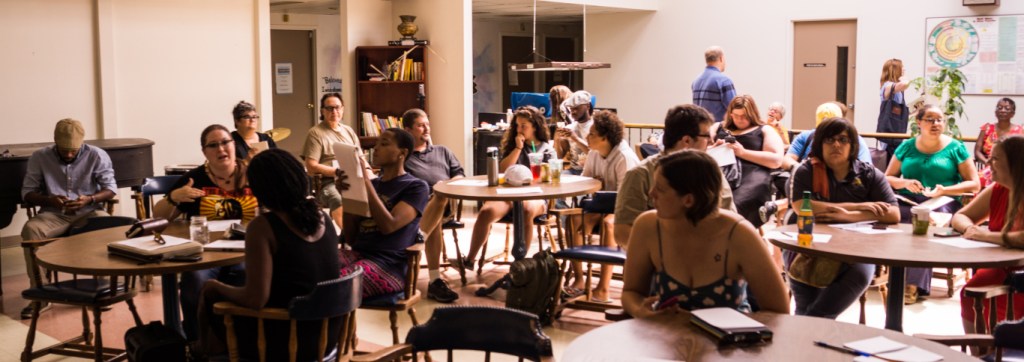
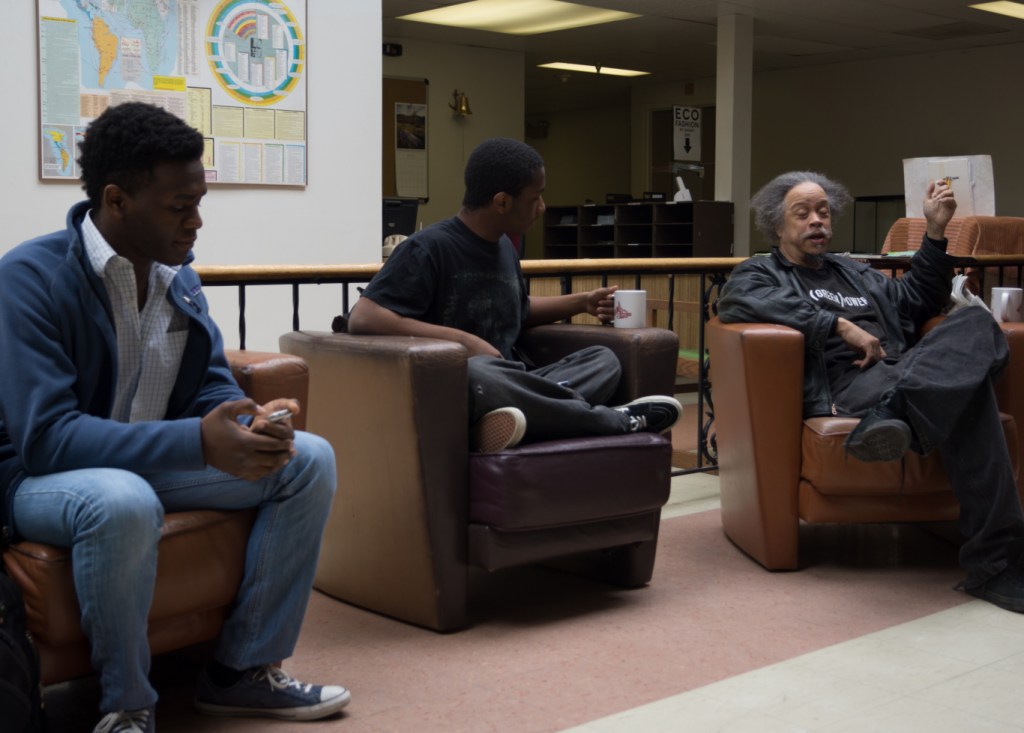
Although I didn’t express that as “creating common memory” at the time, that is what we did when we worked together with a community like the Kheprw Institute (KI), which was the community we worked, and continue to work with at North Meadow Friends.

There is one thing that is critical for making this successful, which is expressed as accompaniment. Accompaniment means those of us who want to work toward justice with an oppressed community must be very careful to resist offering our suggestions or ideas. For this to work, the people in the meeting must listen deeply, and wait for the oppressed community to say what would be helpful for them. It takes a lot of time for the Quakers and the community such as KI to get to know and trust each other. The Quakers have to accept how little they know about the impacted community they want to work with. In my experience at KI it was two years before I was asked to help the community, which in my case was to teach about photography during KI’s summer camp.

In order for a Quaker meeting to begin its relationship with an impacted community, someone has to make the initial contact. What follows is the story of how I first became involved with the KI community.


I had long been struggling with the knowledge that simply through the circumstances of the family I was born into, my life was significantly better in many ways than that of a great many others in America and the world.   This was a spiritual problem for me.

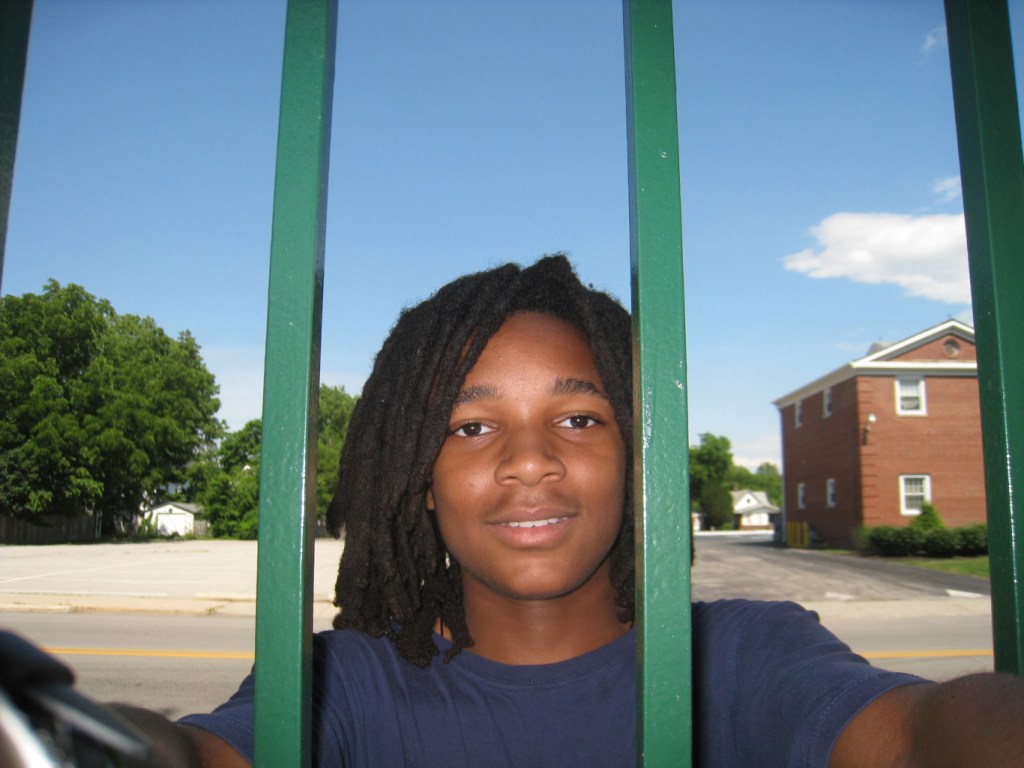
God (finally) provided me with a way to begin to learn about that. Nearly three years ago (2013) the environmental group 350.org organized a national day for environmental education/actions. Only one event was listed in Indiana that day, and it was at the Kheprw Institute, which was how I found out about KI.   The day of the event, I arrived at the run down building that had once been a convenience store.  But it was full of kids excited to show us the work they were doing, including their aquaponics system, and the rain barrels they created and sold.

I was intrigued, and wanted to see if I could become involved with this group.  So we arranged a meeting.  On a dark, rainy night I rode my bicycle to the KI building.  The adult leaders, Imhotep, Pambana, Paulette and Alvin, and about a dozen young people from the KI were here.  I had thought we were going to discuss working on some computer software projects together, which is another area KI works with the youth in.

But Imhotep began asking me a series of questions about myself. I don’t talk a lot about myself, but Imhotep, I’ve come to learn, is very good at drawing stories out of people.   I should have anticipated this, but I soon realized I was basically being interviewed so they could determine if I was someone they felt comfortable working with, or not.  So I began to talk about Quakerism. When Imhotep asked me to talk more about that, I said something like, “Quakers believe there is that of God in everyone, and that includes you, and you…” I said to each of the kids near me. The very first time, I think I hesitated slightly as I was asking myself, “Ok, we Friends always say this, but do you really believe this of a group that is different from you?” And I’m really glad the answer was an immediate and emphatic YES, but it also seemed to reaffirm that by exploring it consciously and publicly. At that point I remember smiling at the thought, and the young person whose eyes I was looking into saw it, too, I think. Each person smiled at me as I said that to them, and I had the impression they were thinking, “of course”.   I strongly felt the presence of the Spirit.

Then Imhotep said, “tell us more”. I thought the story of how I had been led to give up owning a car some 30 years ago would help show Quakers try to live as they are being led. At the end of that story Imhotep smiled at me and said, “30 years. You are a warrior.” Being a Quaker, I had never thought of my self in that way. I could tell this amused Imhotep, because I later found out he already know some about Quakers. After he said that, we all laughed together.

That seemed to satisfy the questions for the evening, and they have welcomed me into their community ever since.

Looking back on this, I see now that my unconscious white privilege led me to even ask the question whether there was that of God in everyone in that room that night.

I was not used to speaking about faith in public outside Quaker circles, and this was a lesson that it is important to do so. From the beginning, my experience at the Kreprw Institute has been a shared, spiritual one.

Posted in Black Lives, climate change, Kheprw Institute, Quaker, Quaker Meetings, Quaker Social Change Ministry, Uncategorized | Leave a comment

Nooses

I want to disclose I am honored to be on the Bold Iowa Team. I appreciate the many good things Bold Iowa has done and continues to do, especially related to climate change. Unfortunately a recent attempt to call attention to the dire threat of environmental collapse was not sensitive to the multigenerational trauma related to nooses in communities of color. I wouldn’t be writing this if I didn’t think it was an example of how those of us who are white need to continually pay close attention to the assumptions we are making, that are shaped by systemic racism and living a culture of supposed white superiority.

I was going to post the video of climate performance art by Bold Iowa. Three people were standing on blocks of melting ice, with nooses around their necks. But some people on the video expressed concerns about nooses and race, and those concerns make sense to me. I do appreciate the underlying message and am sure you can visualize this but the history of lynching in the U.S. means, to me, this is not appropriate.

A friend had this to say about that statement:

When William S. Burroughs’s book *Naked Lunch*, a devastating indictment of the moral bankruptcy of American society, was first published, the city of Boston banned it on account of the language it contained. Canadian philosopher Marshall McLuhan, speaking at the trial in defense of the banned book, likened the offended Boston Brahmins to a man who, on being awakened at two in the morning by a person outside the front door shouting that the house was on fire, criticized the way the person who awakened him was dressed. At two in the morning!

Well, the complaints about the protests sound a whole lot to me like people who, on being told their home is on fire, criticize the way the messengers are dressed.

What a world.

My response to that was:

I strongly disagree. As a well read person I imagine you have read about multigenerational trauma. I don’t know if you have first hand experience with it, though. I’ve been at the Kheprw Institute where mothers will break down in tears describing the terror they feel every time their children leave the house. That terror comes not only from present day police abuses, but from the long, sad history of lynching in this country. Over 4,400 African American men, women and children were “hanged, burned alive, shot, drowned, and beaten to death by white mobs between 1877 and 1950. Millions more fled the South as refugees from racial terrorism, profoundly impacting the entire nation.” https://museumandmemorial.eji.org/

A Native friend told me the story of how upset his mother was when she recognized a rope that was being used to ferry people across a small channel of water at Standing Rock. The rope reminded her of the history of Native children being kidnapped to be taken to Indian boarding schools. The Natives would use a boat with a tow rope to try to save their children. This trauma occurred in the mid 1800’s yet the trauma persists.

I don’t believe we have the right or privilege to use symbols of these traumatic events for our own purposes.

I appreciate that Ed Fallon has issued an apology. I will definitely continue to work with and support Bold Iowa and its good work. Any person or organization that is on the forefront of justice work is guaranteed to make a mistake now and then. Making mistakes is how we learn and grow.

The following is from an article in the (Cedar Rapids) Gazette:

CEDAR RAPIDS — The organizer of a climate change protest at last weekend’s gathering of presidential candidates in NewBo is apologizing for incorporating a symbol evoking America’s violent racial past — a hangman’s noose — into his demonstrations, but that may not be enough to quell the condemnations.

Ed Fallon, a former Democratic state representative and the current leader of the progressive activist group Bold Iowa, apologized Tuesday for a “lapse in judgment.”

“It wasn’t the right call on our part in terms of trying to get the message across,” he said. “I hope people will look beyond that lapse in judgment and understand that we have a tremendous challenge facing us right now” with climate change.

Dedric Doolin, president of the NAACP Cedar Rapids branch, decried the protest using something so emblematic of lynching as insensitive and said it displayed “the lack of understanding about how the symbol of a noose intimidates, terrorizes and puts fear in the hearts of many people, especially African-Americans.”

“They didn’t understand the impact their display had on the community,” Doolin said. A member of NAACP’s national board of directors, Doolin plans to spread word of the protest’s tactics to other NAACP chapters in hopes of curbing any such future protests.

On his Fallon Forum website, Fallon describes the protest as Bold Iowa’s “provocative performance art.”

“We underestimated the way it may trigger folks who either are concerned about the rise in racism in this country, in many respects because of Donald Trump,” Fallon said in an interview. “And also people who were affected by a family member who maybe committed suicide by hanging. … Our focus is to get people to understand just how urgent of a situation climate change is. We really are at a point where human extinction is a possibility.”

Iowa protesters wore nooses to make statement on climate change. Now they are apologizing. Bold Iowa apologizes for protest deemed racially insensitive outside Progress Iowa Corn Feed, The Gazette (Cedar Rapids) July 16, 2019
Posted in #NDAPL, climate change, Green New Deal, race, Uncategorized | Tagged | Leave a comment

How Do You Know?

Yesterday I wrote of why “common memory must be created” and some of my experiences in doing that. I wrote: I encourage you to seek out your own opportunities to experience building new relationships. We need to reconnect with each other. We have so much more in common than we do differences. We have to pull back from the extreme rhetoric and actions. We have to build real community and to do that we have to work together, spend significant amounts of time with each other, building common memory, building real community.

I wrote of two ways I was able to make connections that resulted in building new relationships and community, one being engagement with the Kheprw Institute. The other walking on the First Nation-Farmer Climate Unity March.

But I didn’t write about how you know which new adventures are right for you to engage in. The way you know is when the Spirit or God tells you. Quakers believe God is present in everything, all the time in our world today. We speak of the “Inner Light” as the presence of the Spirit in us, guiding us. But you have to prepare yourself to hear “the still small voice” speaking to you. I Kings 19:12. I think there are so many times when the Spirit is speaking to us but we don’t hear because we are too busy with other things at the time. So caught up in the demands of everyday living that we don’t stop to listen when we hear/feel these small nudges to do what the Spirit is asking us to do. It takes practice to pay attention when we feel/hear the whisper of that small voice.

And those times we do hear the Spirit, we sometimes fear to do what it is asking of us. When I was starting out on my own in life, I kept hearing the Spirit saying “personal automobiles are destroying the environment”. My reaction was wow, that sounds difficult. How could I live without a car? There were so many reasons I could think of. Fortunately the Spirit tends to be persistent, giving you more chances. I did own a few cars early in my life. But when there was an accident that totaled the car, the Spirit said, here is your chance to do what I have been asking of you. I remember how apprehensive I was about not getting another car. I wondered how I could get to work, transport groceries home, what to do during inclement weather?

But I took that “leap of faith” and my life was immediately transformed in so many ways.

Sometimes the Spirit speaks through others. I felt a strong leading to participate in the First Nation-Farmer Climate Unity March. When I learned that involved walking 94 miles over eight days, I wondered if I was physically up to that. Until recently I ran about six days a week. One of the benefits of giving up having a car was my running improved a great deal, since that was substitute transportation for not having a car. When a friend heard I was planning to walk so far, he cautioned me that even though I was a runner, walking was quite different, and suggested I practice that. I was so surprised that walking was so much different from running, and grateful for my friend’s advice.

This also means you should not do something just because you “think” you should, or are bowing to peer pressure. I imagine we have all done this, many times. We feel irritated and unfulfilled to be doing things that we aren’t led to do.

My friend Joshua Taflinger recently wrote “And whether you’re a Christian, Buddhist, Red Road, Muslim, Pagan, Jewish, ect, etc, on and on…. the way to be one/connected/alignment with God/Love is speaking one’s truth, walking ones’ truth, being in one’s truth… because God IS truth.”


REDUCE DEFENSIVENESS AND BREAK THE DEFENSIVENESS CHAIN:

I could hear the light beings as they entered every cell. Every cell is a house of the god of light, they said. I could hear the spirits who love us stomp dancing. They were dancing as if they were here, and then another level of here, and then another, until the whole earth and sky was dancing.

We are here dancing, they said. There was no there.

There was no “I” or “you.”

There was us; there was “we.”

There we were as if we were the music.

You cannot legislate music to lockstep nor can you legislate the spirit of the music to stop at political boundaries— —

Or poetry, or art, or anything that is of value or matters in this world, and the next worlds.

This is about getting to know each other.

We will wind up back at the blues standing on the edge of the flatted fifth about to jump into a fierce understanding together.

Harjo, Joy. Conflict Resolution for Holy Beings: Poems (p. 82). W. W. Norton & Company. Kindle Edition.


Posted in First Nation-Farmer Climate Unity March, Kheprw Institute, Quaker, Uncategorized | Leave a comment

The Importance of Shared Memory

I am discouraged today. Yesterday our political discourse sank to a new low. As usual the press obsesses on the latest attack on “others” by this administration. We get distracted by paying attention to the latest political outrage and often don’t look beyond that.

There is a fundamental problem when we have gotten so polarized, not only in our politics but in our neighborhoods. It is an eerie feeling when I walk through block after block in neighborhoods and see almost no one outside. How many of us interact with people beyond our usual circles? Why do so few people attend meetings related to conflicts or problems?

I think it was Bob Berquist’s idea that those of us who were concerned about the Vietnam War visit with random people in West Branch to find out what they thought about the war.  I remember being very apprehensive about this idea, but Bob seemed to think it was a good idea, so a small group of us did.  I remember walking up to houses and awkwardly saying we were Scattergood students who wanted to know what they thought about the war.  We were stunned to find people were universally unhappy with the war and wanted peace as soon as possible. I remember how much this impressed me, that we shouldn’t have preconceived ideas about people and what they believe.  I wish I had done a better job of remembering that, many times since then.  Another example of the education we received at Scattergood.

From my Journal April 19, 1970


A friend of mine described how they gained enough support to pass a law for marriage equality in Minnesota. Many supporters went from house to house to have face to face conversations.

About seven year ago I had been wondering how I could learn about racial justice. On the Internet I found an environmental event was happening at a place I hadn’t heard of, the Kheprw Institute (KI). There I found about a dozen children, eagerly showing their aquaponics system and the rain barrels they sold. This was the beginning of a long history of being involved with and learning from this community of people of color. Even though I moved from Indianapolis, I still maintain connections with my friends there.

More recently, I was learning the key to moving through our evolving environmental crises was leadership by indigenous people, because they have maintained their relationship with Mother Earth. Once again I began looking for ways to meet and learn from indigenous people. When I saw a poster for the First Nation-Farmer Climate Unity March, I immediately knew I needed to be part of that. Walking along country roads with a small group of Native and white people for 94 miles over 8 days along the path of the Dakota Access Pipeline in Iowa provide so much time, so many experiences for us to learn about each other.

As Manape LeMere said, the reason we were marching together was so we could work together in the future. In order to do that, we needed to trust each other. And to be able to trust each other, we needed to understand each other.

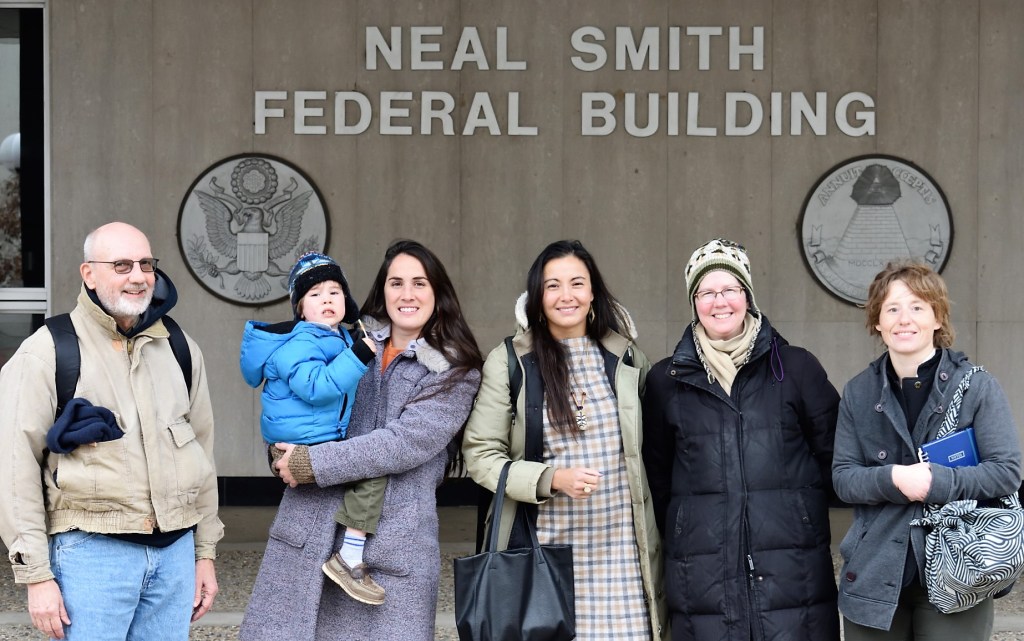
Since the March there have been a number of occasions when we have worked together. The photo below was taken when we went to Senator Chuck Grassley’s office to talk about two bills related to Native concerns.

Jeff, Fox, Shazi, Christine, Shari and Sid

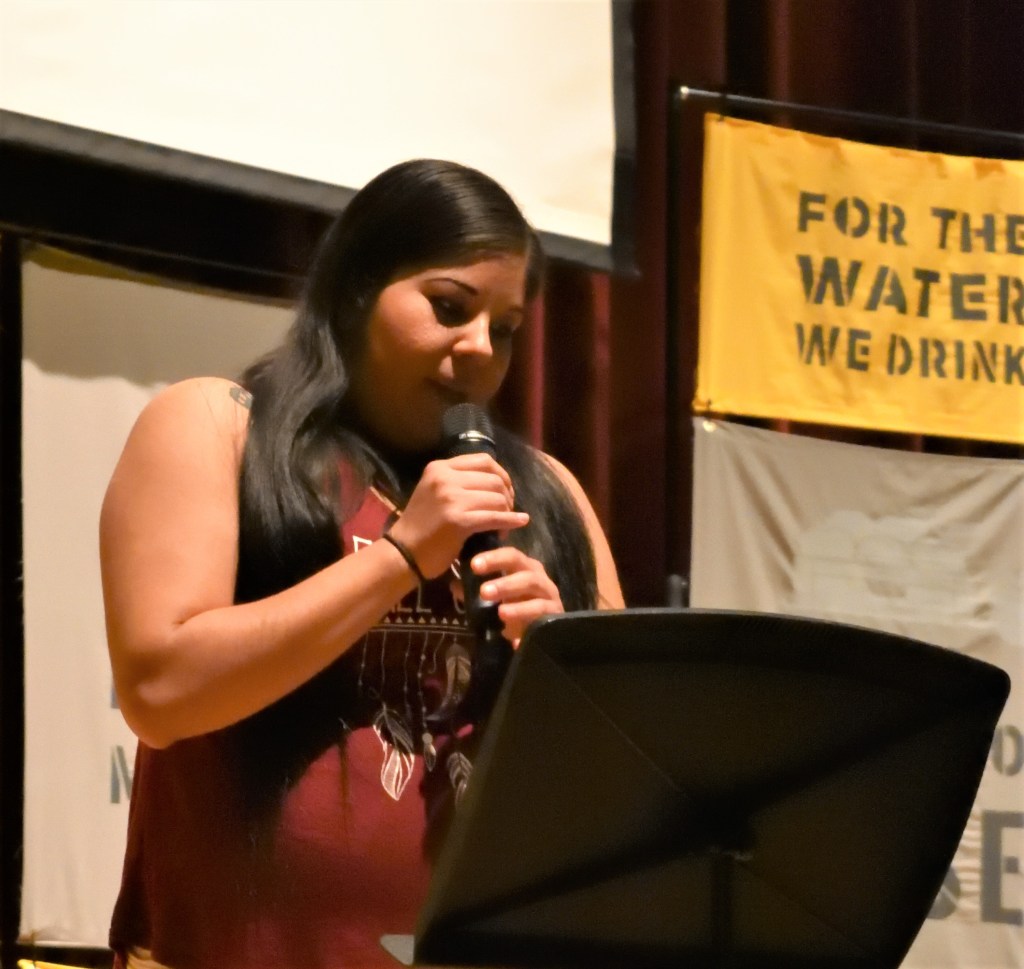
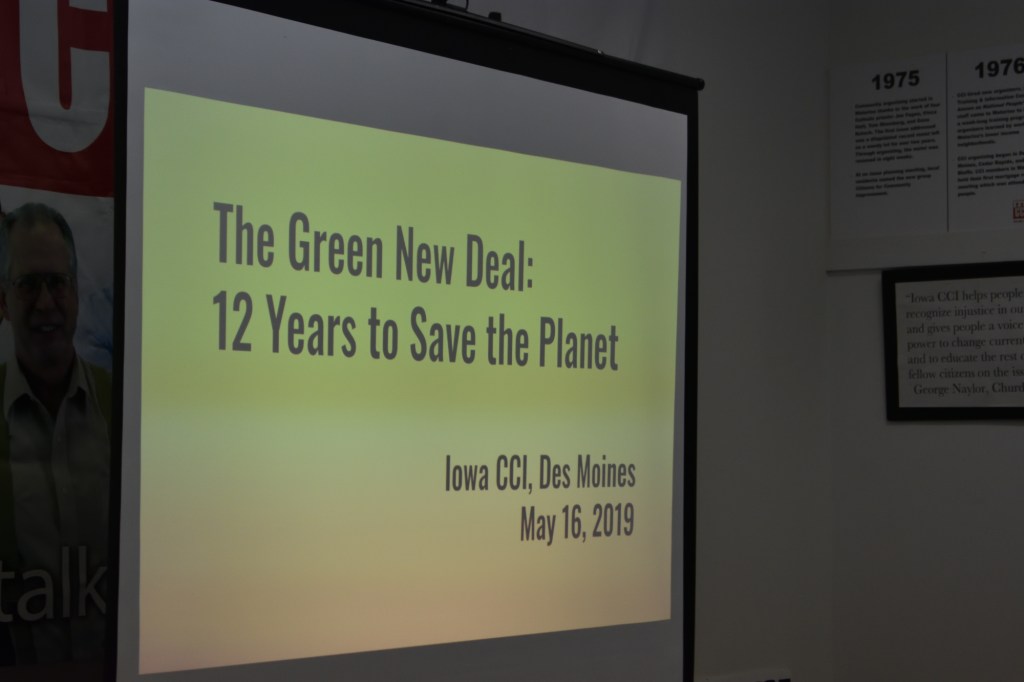
Another occasion was when the Surnise Movement’s Green New Deal tour came to Des Moines. 450 atteded, including my friends from the March, Trisha and Lakasha who were on the program to speak about the importance of a Green New Deal to be led by Native people.

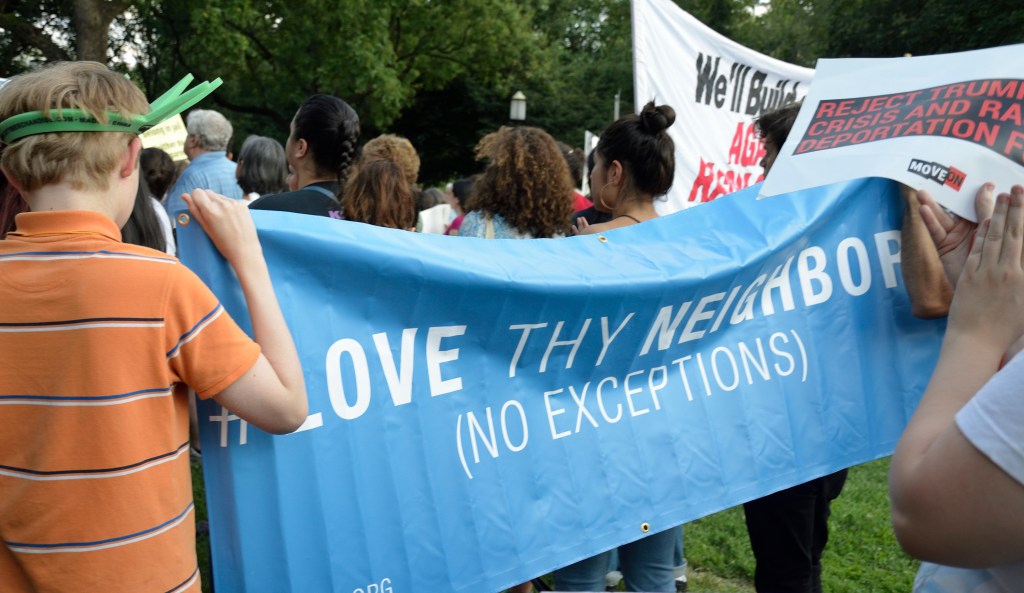
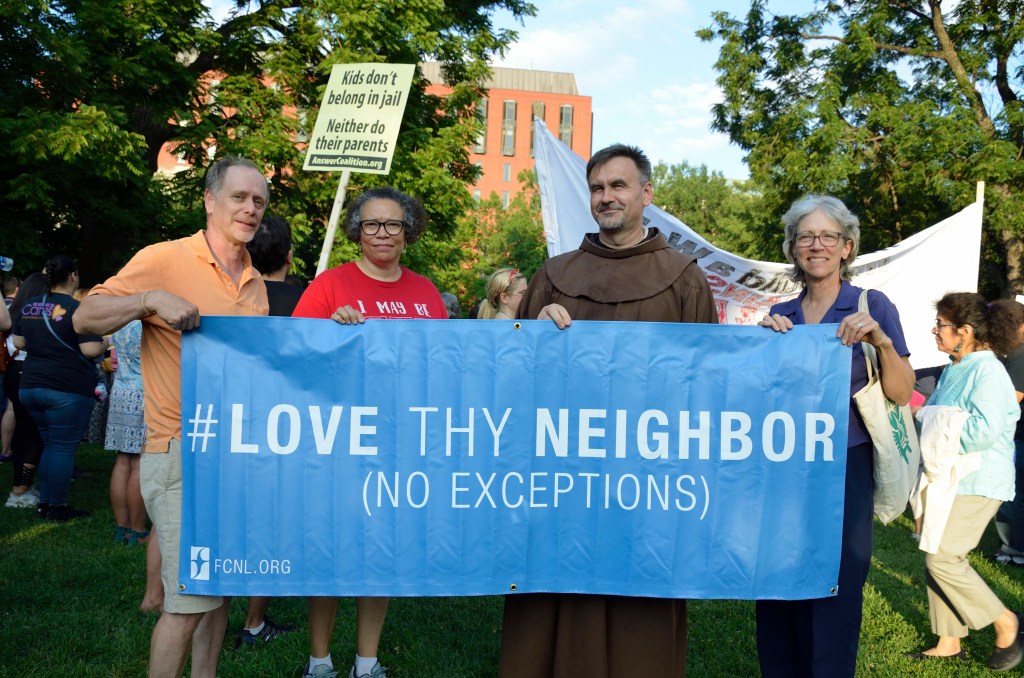
Last Friday my good friends Rezadad Mohammadi and Christine Ashley, of the Friends Committee on National Legislation (FCNL) participated in the Lights for Liberty, a Vigil to End Human Detention Camps, outside the White House. They engaged people in attendance, inviting them to hold the banner “Love Thy Neighbor. No Exceptions”. Engaging with people one on one. (Photos by Rezadad Mohammadi).

Georges Erasmus, an Aboriginal leader from Canada, said, “Where common memory is lacking, where people do not share in the same past, there can be no real community. Where community is to be formed, common memory must be created.”

These are examples of how “common memory must be created”. I encourage you to seek out your own opportunities to experience building new relationships. We need to reconnect with each other. We have so much more in common than we do differences. We have to pull back from the extreme rhetoric and actions. We have to build real community and to do that we have to work together, spend significant amounts of time with each other, building common memory, building real community.


No

We had to keep going. We sang our grief to clean the air of turbulent spirits.

Yes, I did see the terrible black clouds as I cooked dinner. And the messages of the dying spelled there in the ashy sunset. Every one addressed: “mother.”

Yes, the distance was great between your country and mine. Yet our children played in the path between our houses.

No. We had no quarrel with each other.

Harjo, Joy. Conflict Resolution for Holy Beings: Poems (p. 12). W. W. Norton & Company. Kindle Edition.
Posted in #NDAPL, climate change, First Nation-Farmer Climate Unity March, Green New Deal, Indigenous, Kheprw Institute, Sunrise Movement, Toward Right Relationship with Native Peoples, Uncategorized | Leave a comment