Wicked Problems, Sensemaking and Community

Yesterday I wrote about sensemaking.

sensemaking–the action or process of making sense of or giving meaning to something, especially new developments and experiences.

At the collective level, a loss of sensemaking erodes shared cultural and value structures and renders us incapable of generating the collective wisdom necessary to solve complex societal problems like those described above. When that happens the centre cannot hold.

Threats to sensemaking are manifold. Among the most readily observable sources are the excesses of identity politics, the rapid polarisation of the long-running culture war, the steep and widespread decline in trust in mainstream media and other public institutions, and the rise of mass disinformation technologies, e.g. fake news working in tandem with social media algorithms designed to hijack our limbic systems and erode our cognitive capacities. If these things can confound and divide us both within and between cultures, then we have little hope of generating the coherent dialogue, let alone the collective resolve, that is required to overcome the formidable global-scale problems converging before us.

Pontoon Archipelago or: How I Learned to Stop Worrying and Love Collapse. By James Allen, originally published by Medium
June 18, 2019

That same article discusses the concept of wicked problems.

The problems before us are emergent phenomena with a life of their own, and the causes requiring treatment are obscure. They are what systems scientists call wicked problems: problems that harbour so many complex non-linear interdependencies that they not only seem impossible to understand and solve, but tend to resist our attempts to do so. For such wicked problems, our conventional toolkits — advocacy, activism, conscientious consumerism, and ballot casting — are grossly inadequate and their primary utility may be the self-soothing effect it has on the well-meaning souls who use them.

If we are to find a new kind of good life amid the catastrophes these myths have spawned, then we need to radically rethink the stories we tell ourselves. We need to dig deep into old stories and reveal their wisdom, as well as lovingly nurture the emergence of new stories into being.

Pontoon Archipelago or: How I Learned to Stop Worrying and Love Collapse. By James Allen, originally published by Medium
June 18, 2019

It sounds a bit depressing to hear about wicked problems, that are difficult to understand and resist our attempts to solve them. Added to that our diminished sensemaking abilities. Where does that leave us?

The jumping-off point for this essay is a regrettable acceptance that a forthcoming energy descent combined with multiple ecological crises will force massive societal transformation this century. It’s hardly a leap to suggest that, with less abundant cheap energy and the collapse of the complex political and economic infrastructure that supports our present way of life, this transformation is likely to include the contraction and relocalisation of some (if not most) aspects our daily lives.

Community

Something important happens when we gather in pursuit of a common goal. First we form rituals that help us relate to and negotiate each other, everything from a civic tradition that allows anyone with a voice to be respectfully heard, to sharing food and music in the local town hall every Friday night, to a labour system that fairly distributes the burden of work. Then, those rituals that stand the test of time become embedded in daily life. The ritual activities themselves and the good they produce help a community identity take root. As identity strengthens, so too does our sense of connectedness — our sense of affection, responsibility and obligation — to one another. When this happens, we then share a greater capacity for coherence and cooperation. And where we share greater capacity for coherence and cooperation there is also greater resilience: the ability to mobilise skills and resources to support the emergence of collective intelligence in response to crisis, enable rapid adaptation and ensure the continuity of the most important functions and structures of the community. This coherent togetherness and the collective intelligence that emerges out of it is the source of human strength and ingenuity. Within it lies our ability to transition from one evolutionary niche to another, even against the odds.

Pontoon Archipelago or: How I Learned to Stop Worrying and Love Collapse. By James Allen, originally published by Medium
June 18, 2019

I’m sorry to make such extensive use of quotations, but these have helped me better conceptualize why it has been so difficult for so many people to understand our evolving environmental catastrophe and lack of a vision and the will to deal with this.

Celebrants have an important part to play in the legacy humanity caries into the future. I suggest that our responsibility as ceremonialists, as humans who help other humans meaningfully connect with the web of life, is to find ways now to help people connect with the story of this world’s beauty, even as the world we love recedes. I believe there is a gift we can bring to our communities, to help people learn the art of losing. To help us all to meet the rising tides.

Celebrants & Ceremony in Response to Climate Grieving, Dina Stander, July 26, 2019

I believe faith communities need to play a crucial role in helping us all move through the oncoming, increasingly severe consequences of climate disasters. Faith can provide sensemaking for those who have no framework for making sense of climate chaos. People of faith can be the celebrants referred to above.

Other celebrants are indigenous people because their cultures are based upon a timeless connection to Mother Earth and everything that is part of Her.

As it says above, “if we are to find a new kind of good life amid the catastrophes these myths have spawned, then we need to radically rethink the stories we tell ourselves. We need to dig deep into old stories and reveal their wisdom, as well as lovingly nurture the emergence of new stories into being.” People from faith traditions and indigenous people (who are also people of faith) will together build communities to guide us into an uncertain and chaotic future.

Posted in climate change, Uncategorized | Leave a comment

Sensemaking

A lifelong struggle for me has been the frustration that people don’t make the changes needed to address justice, peace, social and environmental problems.
One of the most troubling, for example, is the direct connection between gas burning cars and environmental destruction. It made perfect sense, to me, that we had to greatly reduce the number of cars in use in order to reduce pollution, including greenhouse gas emissions. Did everyone else fail to see the problem, or did they not want to give up their cars because of the inconvenience?

After all these years, with increasing understanding and evidence of environmental destruction from greenhouse gas emissions in the form of increased air and water temperatures, stronger storms, drought, etc., it makes even less sense that people continue to use personal automobiles.

When I recently came across the term sensemaking, this refusal to give up cars began to make sense to me.

sensemaking–the action or process of making sense of or giving meaning to something, especially new developments and experiences.

…there remains the most existential risk of them all: our diminishing capacity for collective sensemaking. Sensemaking is the ability to generate an understanding of world around us so that we may decide how to respond effectively to it. When this breaks down within the individual, it creates an ineffective human at best and a dangerous one at worst. At the collective level, a loss of sensemaking erodes shared cultural and value structures and renders us incapable of generating the collective wisdom necessary to solve complex societal problems like those described above. When that happens the centre cannot hold.

Pontoon Archipelago or: How I Learned to Stop Worrying and Love Collapse. By James Allen, originally published by Medium
June 18, 2019

“The most existential risk of them all: our diminishing capacity for collective sensemaking.” Why is it increasingly difficult for us to make sense of the world around us?

Why did it make sense to me, and lead me to give up having an automobile, when few others did so? “Sensemaking is the ability to generate an understanding of the world around us.” Was there something about the way I understood the world that was different from others’ understanding?

(When I refer to “me” I actually mean everyone who has chosen to give up having a personal automobile).

I believe the answer is “yes”, my understanding of the world is different for very specific reasons. The first is I came to love the Rocky Mountains, where we would go for family vacations. Secondly, I moved to Indianapolis in 1971, prior to the widespread use of catalytic converters. I was affected by the sight of the clouds of smog, and coughed and breathed the car exhaust as I rode my bicycle through the city. I clearly remember seeing an image in my mind of the Rocky Mountains totally obscured by smog, which hurt deeply. I then knew I could not own a car, and contribute to that vision of not being able to see the mountains. That was sensemaking, i.e. “the ability to generate an understanding of the world” for me, which many other people didn’t share because they hadn’t had similar experiences. In this case, those who have never experienced smog from auto exhaust don’t viscerally understand what is coming out of cars.

How could we convince lawmakers to pass laws to protect wilderness? Lopez argued that wilderness activists will never achieve the success they seek until they can go before a panel of legislators and testify that a certain river or butterfly or mountain or tree must be saved, not because of its economic importance, not because it has recreational or historical or scientific value, but because it is so beautiful.

His words struck a chord in me. I left the room a changed person, one who suddenly knew exactly what he wanted to do and how to do it. I had known that love is a powerful weapon, but until that moment I had not understood how to use it. What I learned on that long-ago evening, and what I have counted on ever since, is that to save a wilderness, or to be a writer or a cab driver or a homemaker—to live one’s life—one must reach deep into one’s heart and find what is there, then speak it plainly and without shame.

Reid, Robert Leonard. Because It Is So Beautiful: Unraveling the Mystique of the American West . Counterpoint. Kindle Edition.

That is why I like the following quote so much.

Everywhere people ask, “what can we do?”
The question, what can we do, is the second question.
The first question is “what can we be?”
Because what you can do is a consequence of who you are.
Once you know what you can be, you know what you can do.

Arkan Lushwala

When Robert Reid wrote (above), “I left the room a changed person, one who suddenly knew exactly what he wanted to do and how to do it”, that was what Arkan Lushwala was saying, “what you can do is a consequence of who you are. Once you know what you can be, you know what you can do.”

This means it is important to strive to help people generate an understanding of the world they don’t currently have. That process might involve new experiences, like camping in the mountains. Might involve exposure to all kinds of art, music, prayer, worship and story telling. Sensemaking is something I will keep in mind.

ALL THAT WE ARE IS STORY. From the moment we are born to the time we continue on our spirit journey, we are involved in the creation of the story of our time here. It is what we arrive with. It is all we leave behind. We are not the things we accumulate. We are not the things we deem important. We are story. All of us. What comes to matter then is the creation of the best possible story we can while we’re here; you, me, us, together. When we can do that and we take the time to share those stories with each other, we get bigger inside, we see each other, we recognize our kinship — we change the world one story at a time.

Richard Wagamese (October 14, 1955-March 10, 2017)
Ojibwe from Wabeseemoong Independent Nations, Canada

We change the world one story at a time, because this can influence others’ sensemaking.

Posted in Arts, climate change, peace, Uncategorized | Leave a comment

Indigenous Led Green New Deal Public Photos

Helping bring about an Indigenous Led Green New Deal is my priority project now, for a number of reasons.

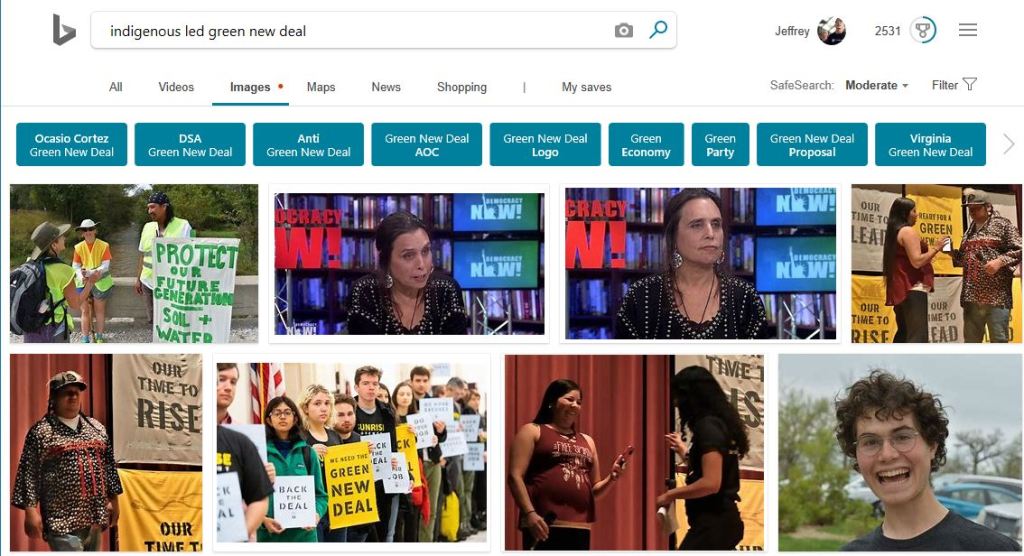
I was surprised today when I did an internet search for information about that, and noticed one of my photos on the search page: Indigenous Led Green New Deal

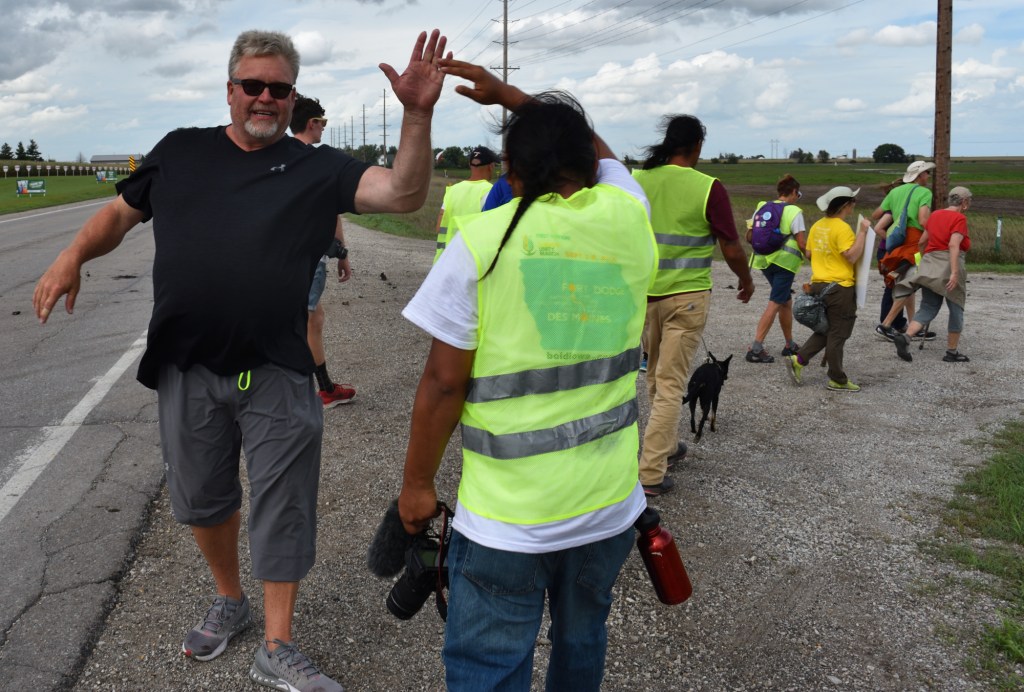
The results page of that search included a link labeled Images of Indigenous Led Green New Deal, which included a thumbnail image of one of the photos I had taken during the First Nation-Farmer Climate Unity March last September (on the far left).

Thumbnail of my photo from the First Nation-Farmer Climate Unity March (far left)

Clicking that link opened a page of Bing images related to Indigenous Led Green New Deal. The following clipping contains 5 of my photos.

Bing images of Indigenous Led Green New Deal

The top left image is from this article: https://kislingjeff.wordpress.com/2019/01/10/indigenous-led-green-new-deal-2/

The rest of the images come from this blog post: https://kislingjeff.wordpress.com/2019/04/24/green-new-deal-tour-comes-to-des-moines/

Another blog post about an Indigenous Led Green New Deal:
https://kislingjeff.wordpress.com/2018/12/12/indigenous-led-green-new-deal/

Posted in #NDAPL, Green New Deal, Indigenous, Uncategorized | Leave a comment

Wicked Problems

A troubled Spirit of late had not given me words to share. Following are some notes along the way of trying to understand where we are today, and how we can move through an increasingly chaotic time.

Whether or not we are acting soon enough to mitigate disasters, act we must. Celebrants have an important part to play in the legacy humanity caries into the future. I suggest that our responsibility as ceremonialists, as humans who help other humans meaningfully connect with the web of life, is to find ways now to help people connect with the story of this world’s beauty, even as the world we love recedes. I believe there is a gift we can bring to our communities, to help people learn the art of losing. To help us all to meet the rising tides.

Celebrants & Ceremony in Response to Climate Grieving, Dina Stander, July 26, 2019
  • How is Earth’s story calling to you in this time of great change?
  • What opportunities are you offering your community to address the Earth’s (and all earthlings’) current existential predicament?
  • And how are you coping with more immediate losses from climate change close to home?
  • Are your people recovering from fire or flood?
  • Are the plants you love best to grow no longer suitable for your climate zone?

Celebrants & Ceremony in Response to Climate Grieving, Dina Stander, July 26, 2019


Most of us lack the stories that help imagine a future where we thrive in the midst of unstoppable ecological catastrophe. James Allen

…there remains the most existential risk of them all: our diminishing capacity for collective sensemaking. Sensemaking is the ability to generate an understanding of world around us so that we may decide how to respond effectively to it. When this breaks down within the individual, it creates an ineffective human at best and a dangerous one at worst. At the collective level, a loss of sensemaking erodes shared cultural and value structures and renders us incapable of generating the collective wisdom necessary to solve complex societal problems like those described above. When that happens the centre cannot hold.

Even after it became clear we were devouring the very substrate upon which our own livelihood depends, we continued just the same. With each mouthful, each purchase, each flight or road-trip and each delayed remedial effort and externalised environmental cost, we collectively and gradually shaved away a host of better futures. Somewhere along the line, we slipped into the orbit of a terrible mass of our own making.

Some of us still grasp for levers to pull, but they are now mostly beyond reach now. We may have been originally responsible for putting the flame to the tinder, but now we are contending with a bushfire beyond our control. The problems before us are emergent phenomena with a life of their own, and the causes requiring treatment are obscure. They are what systems scientists call wicked problems: problems that harbour so many complex non-linear interdependencies that they not only seem impossible to understand and solve, but tend to resist our attempts to do so. For such wicked problems, our conventional toolkits — advocacy, activism, conscientious consumerism, and ballot casting — are grossly inadequate and their primary utility may be the self-soothing effect it has on the well-meaning souls who use them.

If we are to find a new kind of good life amid the catastrophes these myths have spawned, then we need to radically rethink the stories we tell ourselves. We need to dig deep into old stories and reveal their wisdom, as well as lovingly nurture the emergence of new stories into being. This will not be easy. The myths of this age are deeply rooted in our culture.

Pontoon Archipelago or: How I Learned to Stop Worrying and Love Collapse. By James Allen, originally published by Medium
June 18, 2019

Everywhere people ask, “what can we do?”
The question, what can we do, is the second question.
The first question is “what can we be?”
Because what you can do is a consequence of who you are.
Once you know what you can be, you know what you can do.

Arkan Lushwala

What has risen to the surface at Standing Rock is a physical/spiritual movement. Learn how to quiet your mind. To find the silent receptive space to receive guidance. To learn to adapt and follow the pull of synchronicity to guide you to where you will find your greatest support and strength.
What I have found in my time praying in the indigenous earth based ways, is that it’s not about putting your hands together and talking to god…. It’s about quieting and connecting with the baseline of creation, of nature. Tuning into the frequency and vibration of the natural world, the nature spirits. The beings and entities that have been in existence, for all of existence, the examples and realities of sustainability and harmony.
It’s about becoming receptive to these things. Being open and flowing with them. The spirit guides us, but we have to make ourselves receptive to feel, sense, and respond to this guidance.

Joshua Taflinger

I believe we need to radically rethink the stories we tell ourselves.

There once was a frame of reference in this country that said, “Slavery is a reality.  The best we can do is hope to regulate it and work for the just treatment of slaves.”  John Woolman stepped out of that frame of reference and said, “Slavery is wrong.” His vision was to end slavery. Today there is a frame of reference in this country that says, “Illegal immigration is a reality.  The best we can do is regulate immigration. We step out of that frame of reference to say, “All are worthy of a decent life.” Our vision is the recognition of migration as a human right.” 

Iowa Yearly Meeting (Conservative) 2016
Posted in #NDAPL, climate change, climate refugees, immigration, Uncategorized | Leave a comment

Foxy Onefeather’s Photos

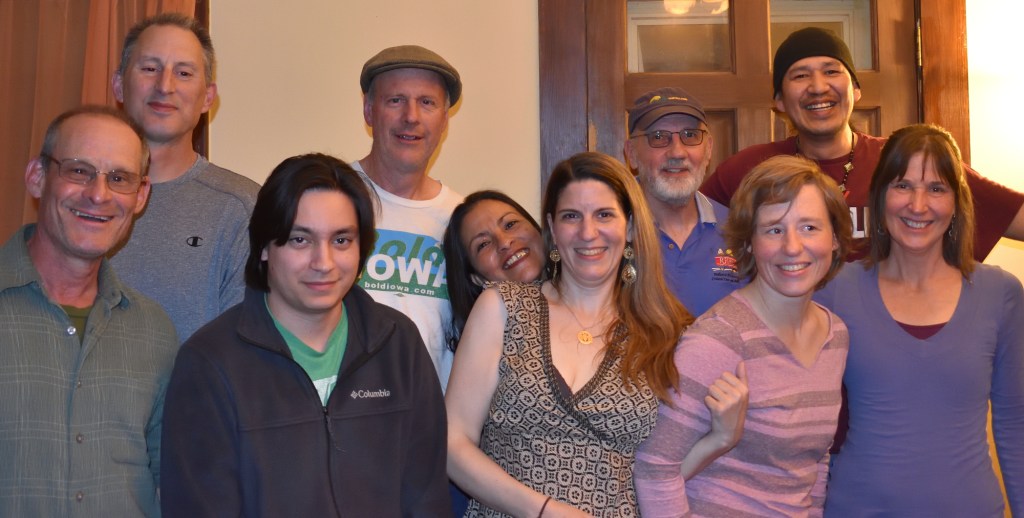
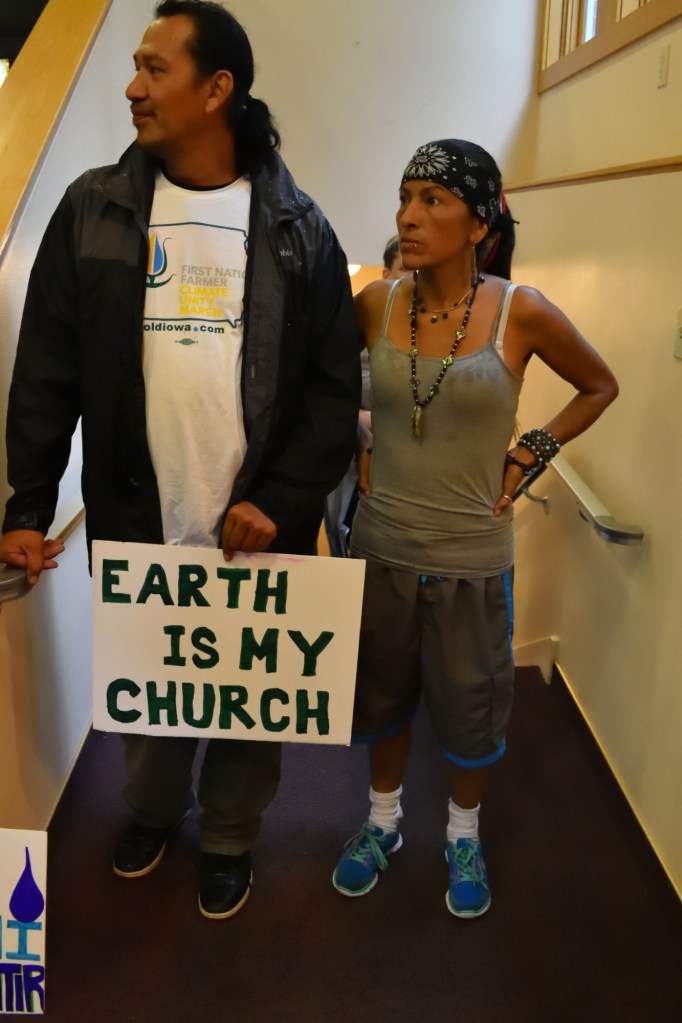
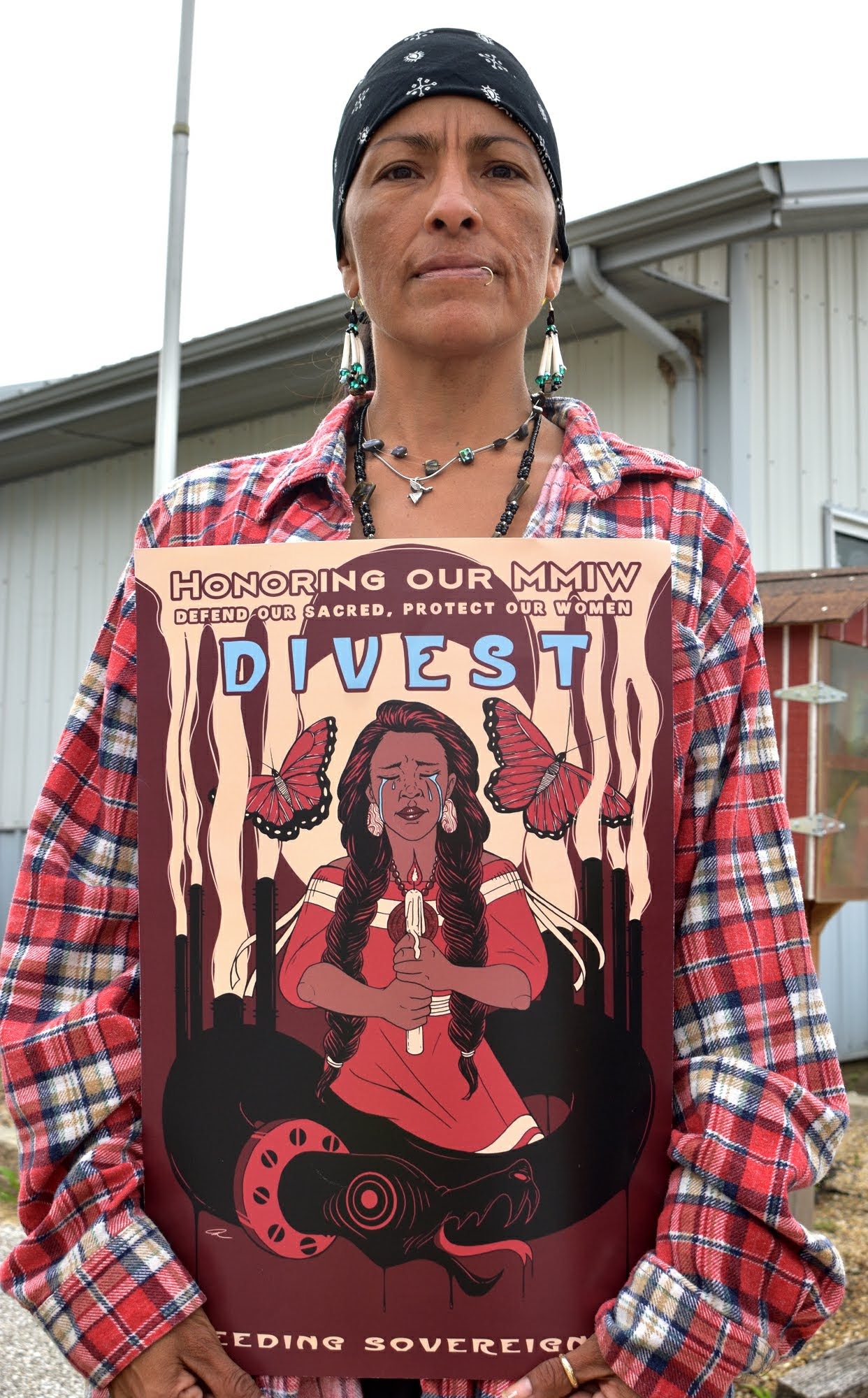
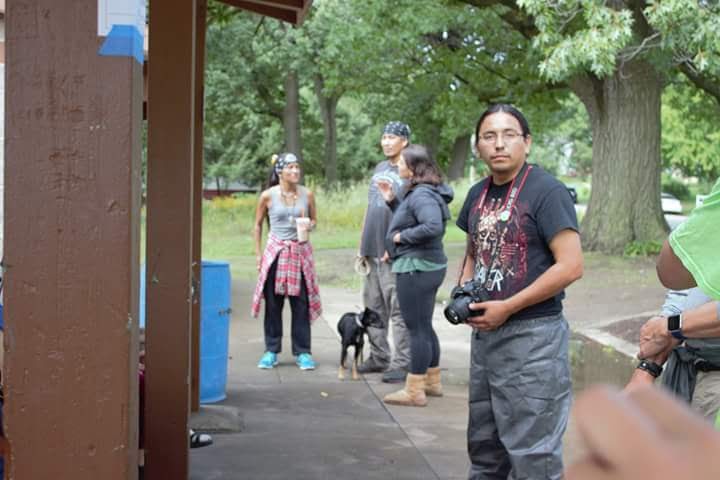
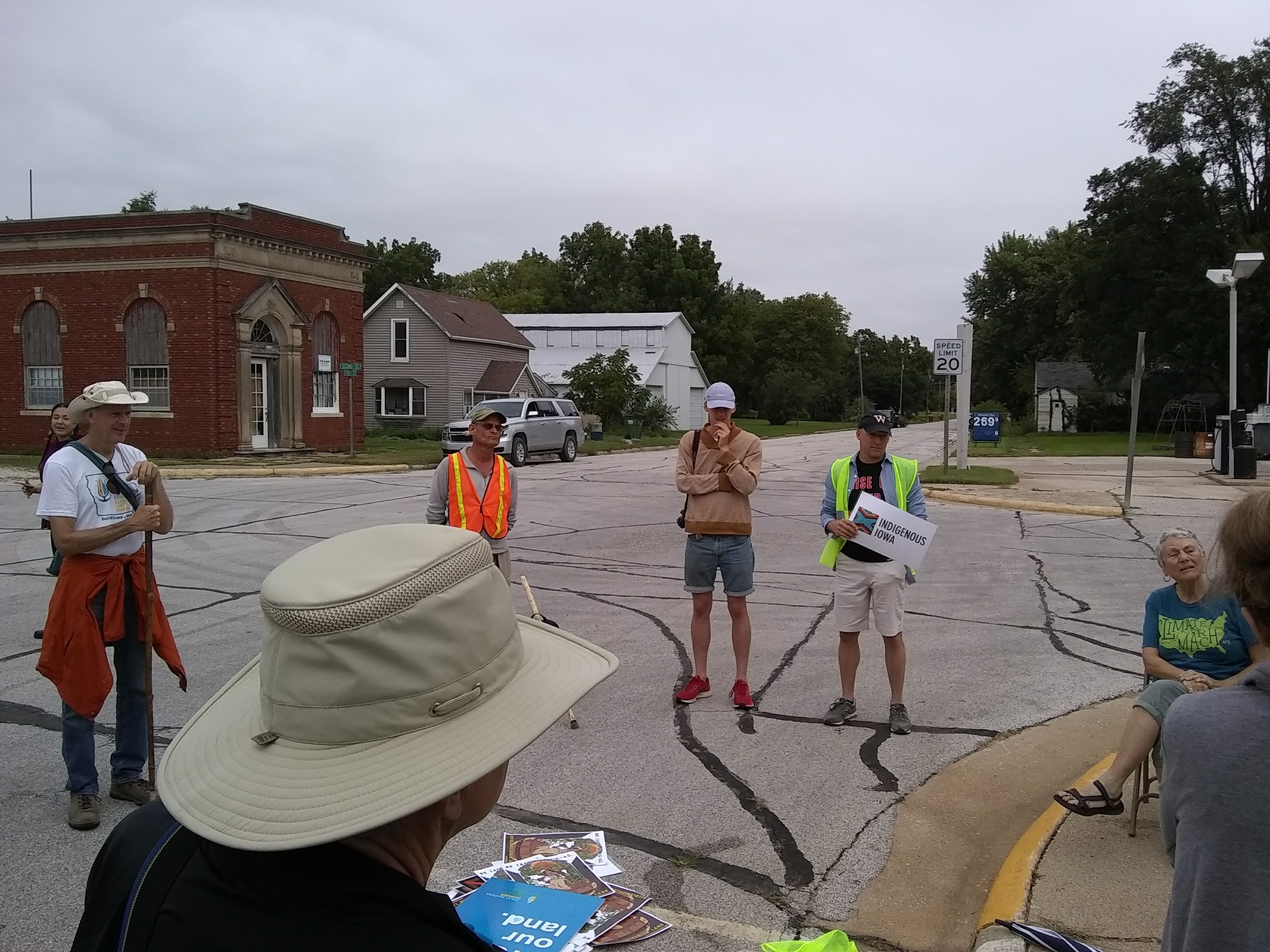
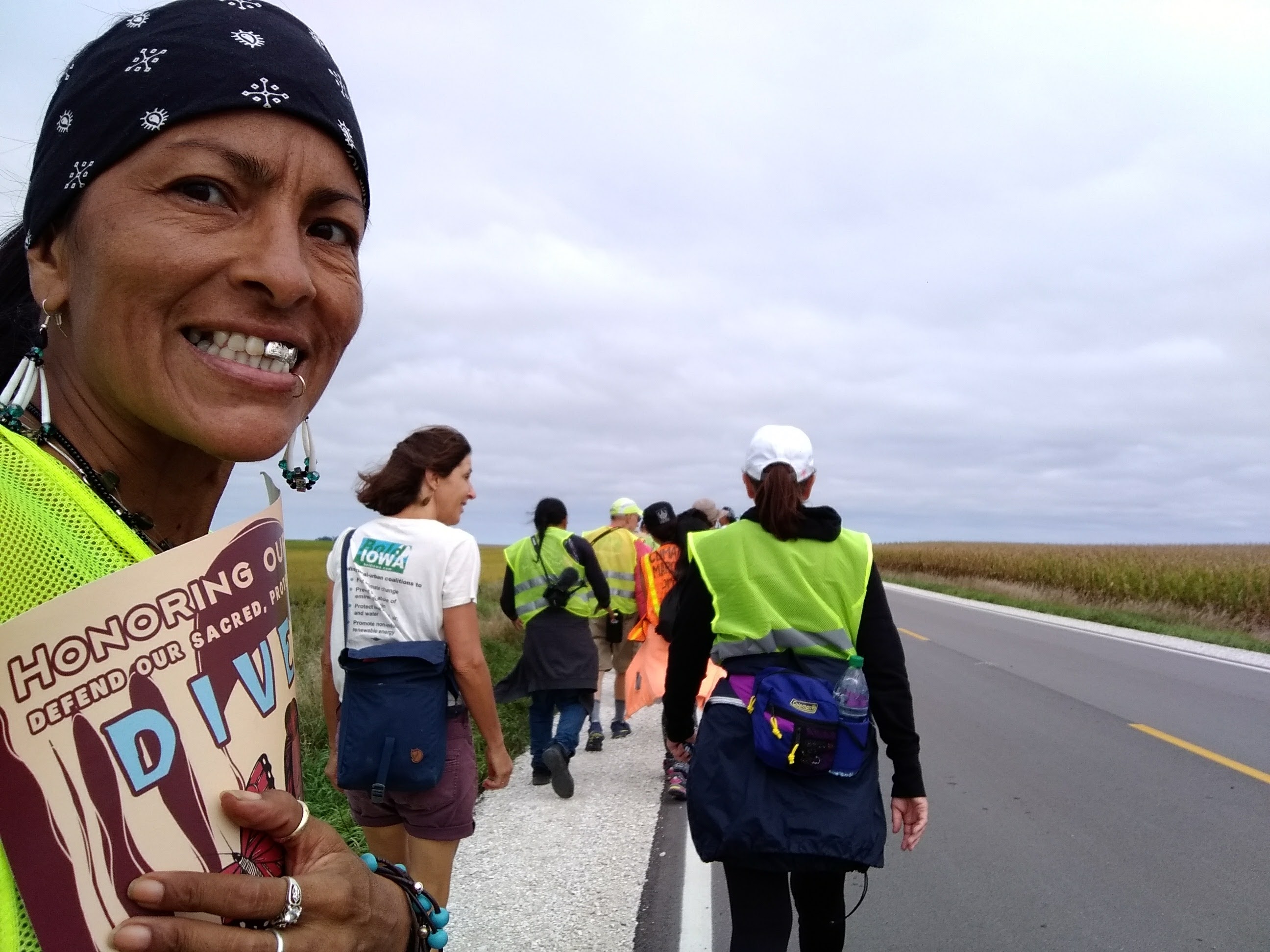
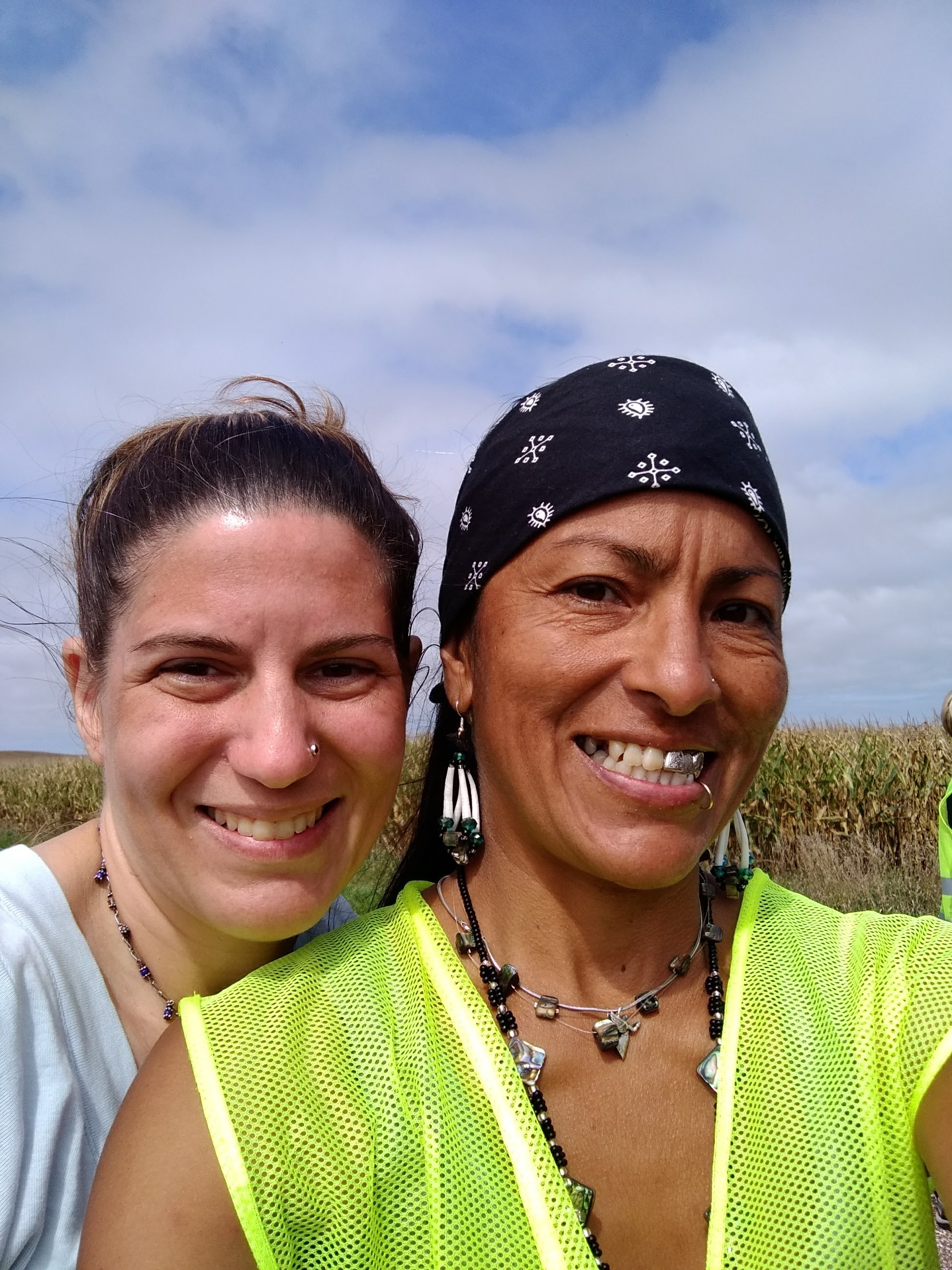
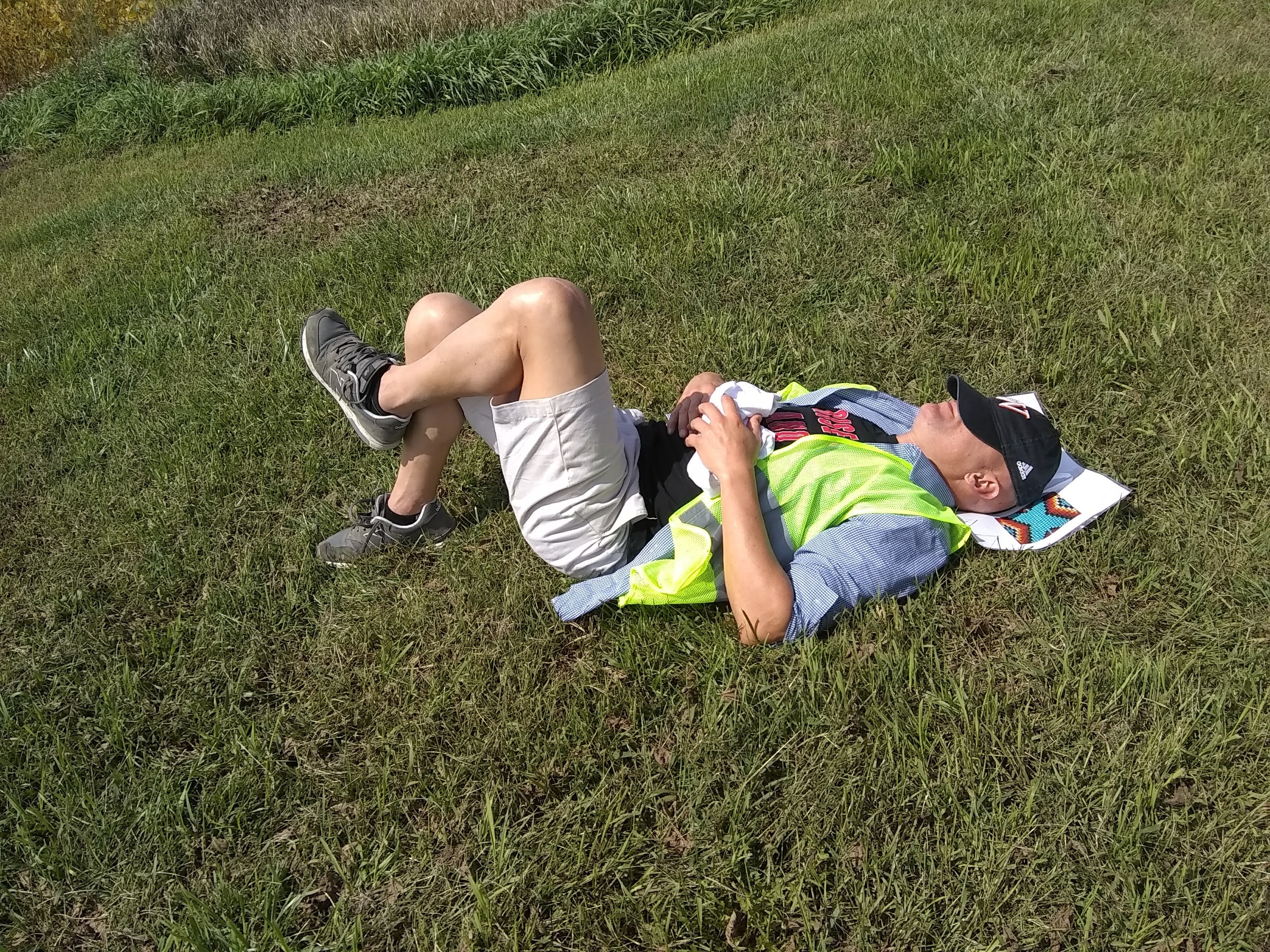
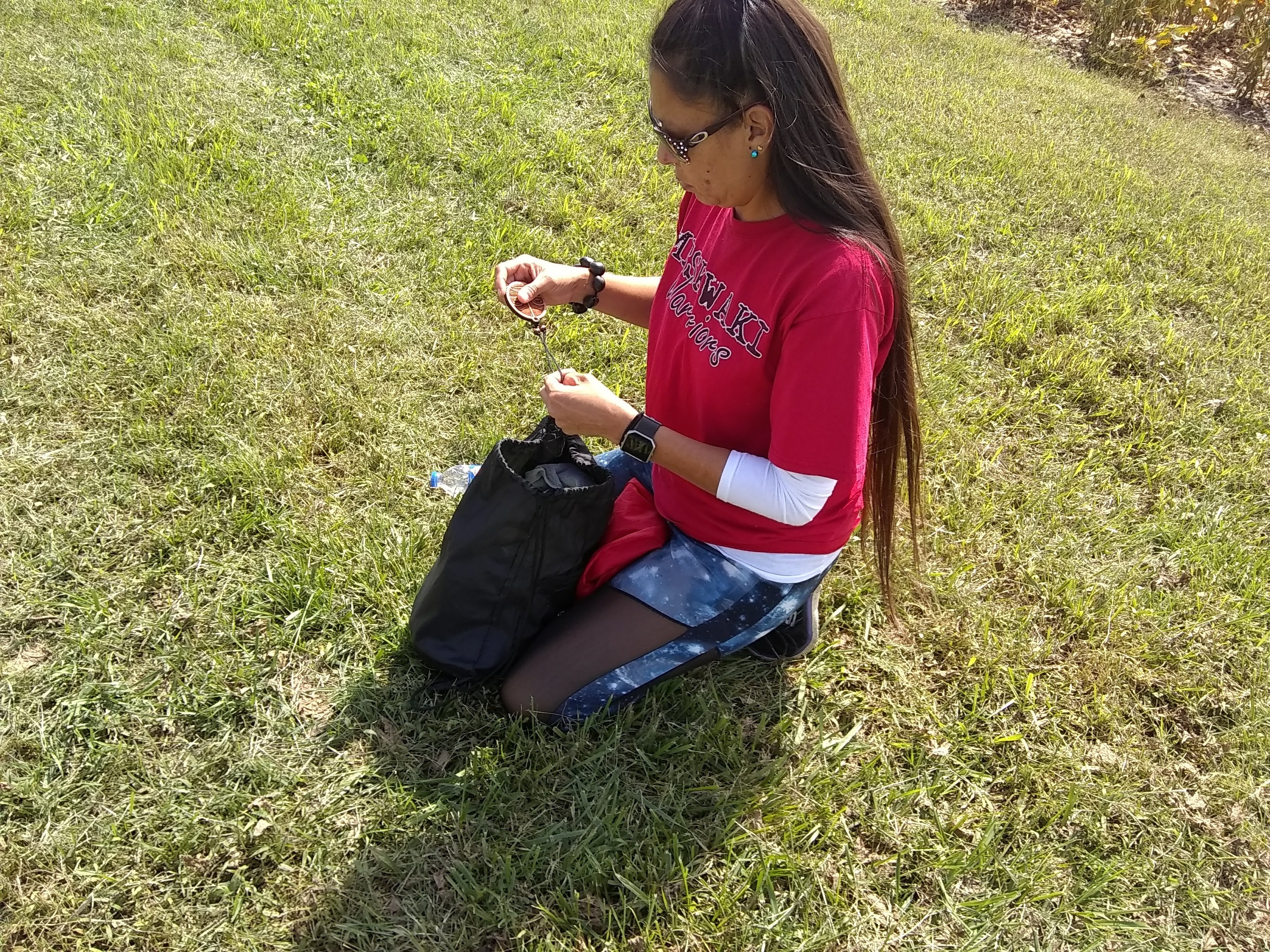
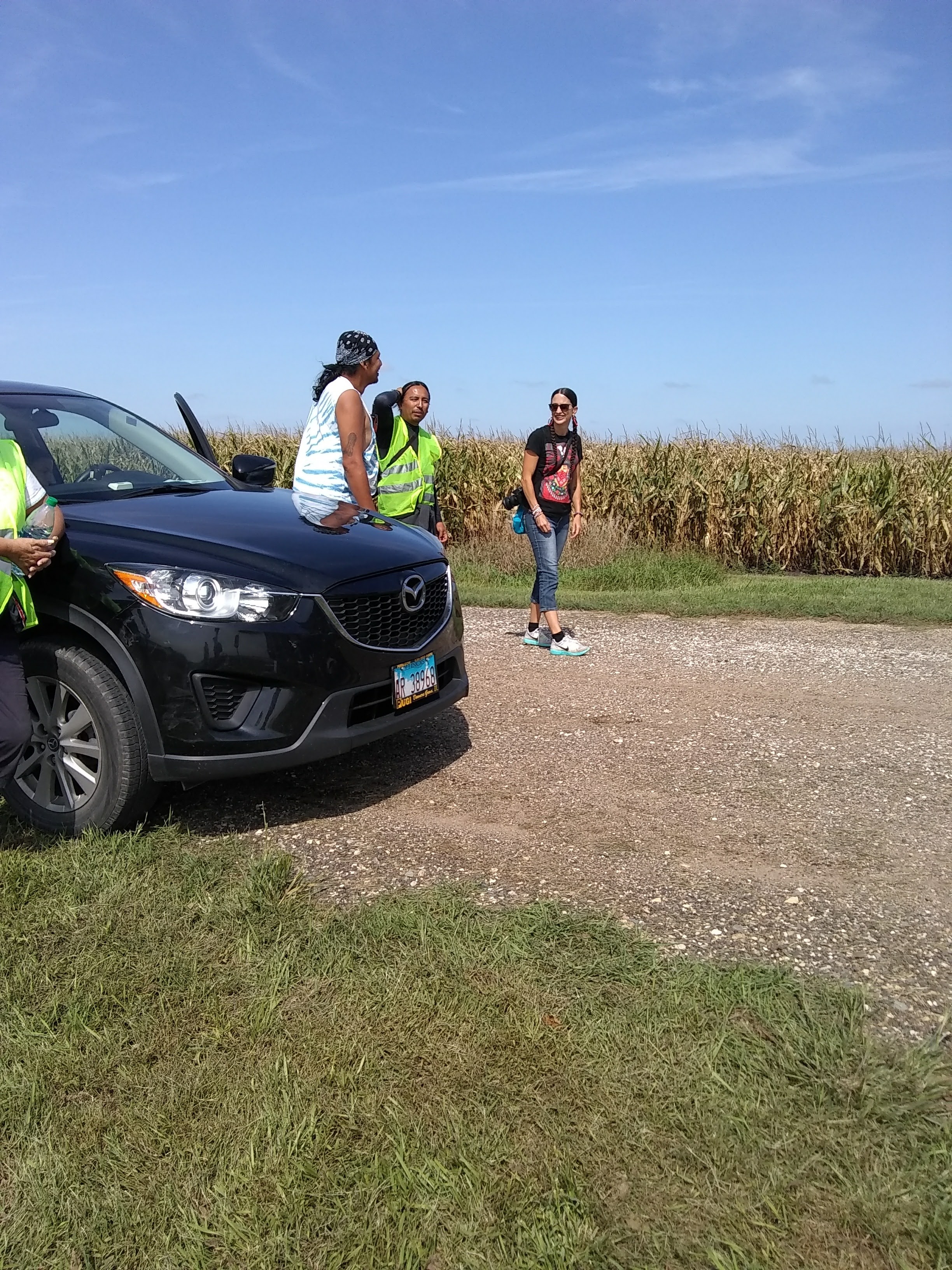
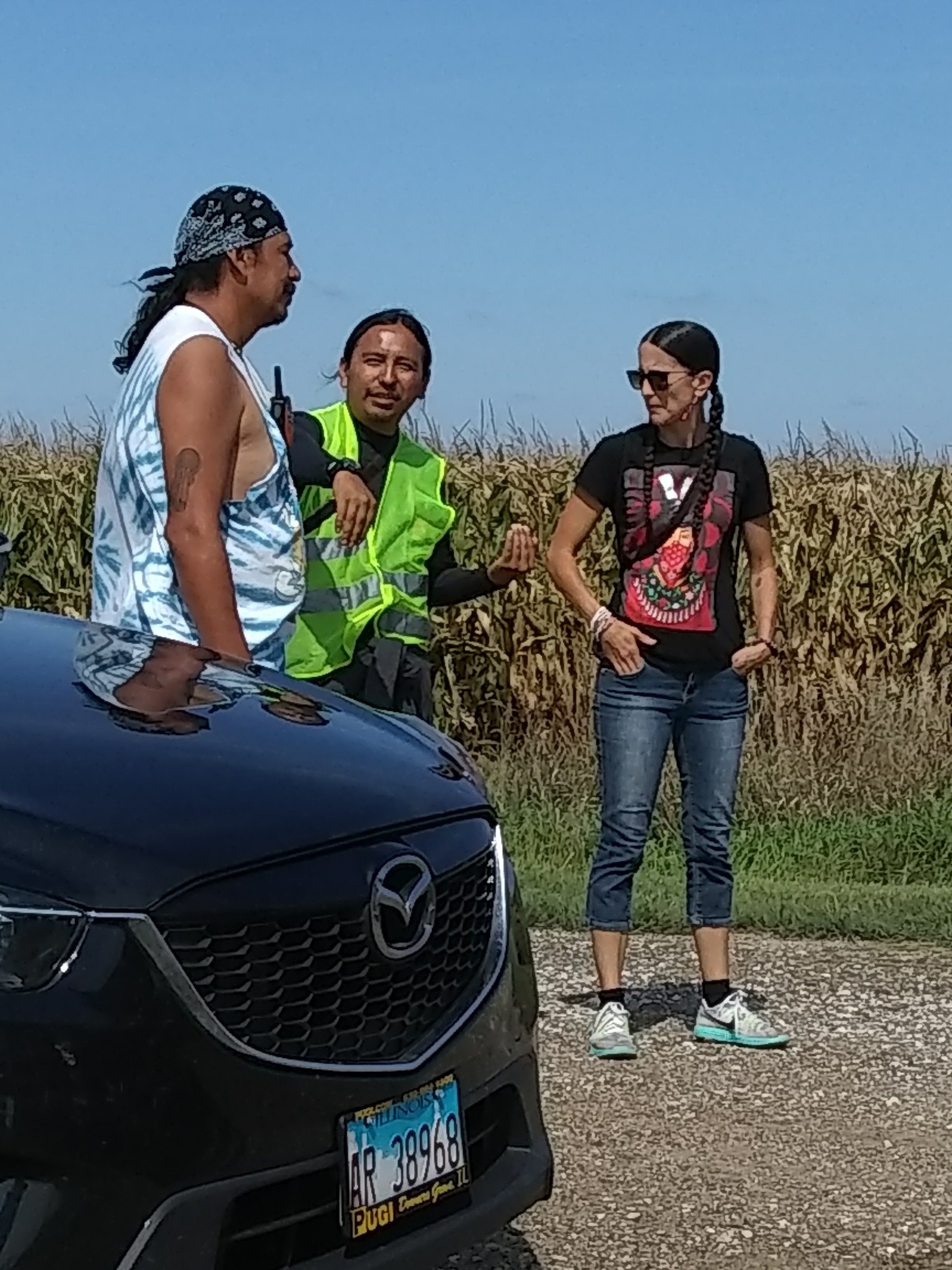
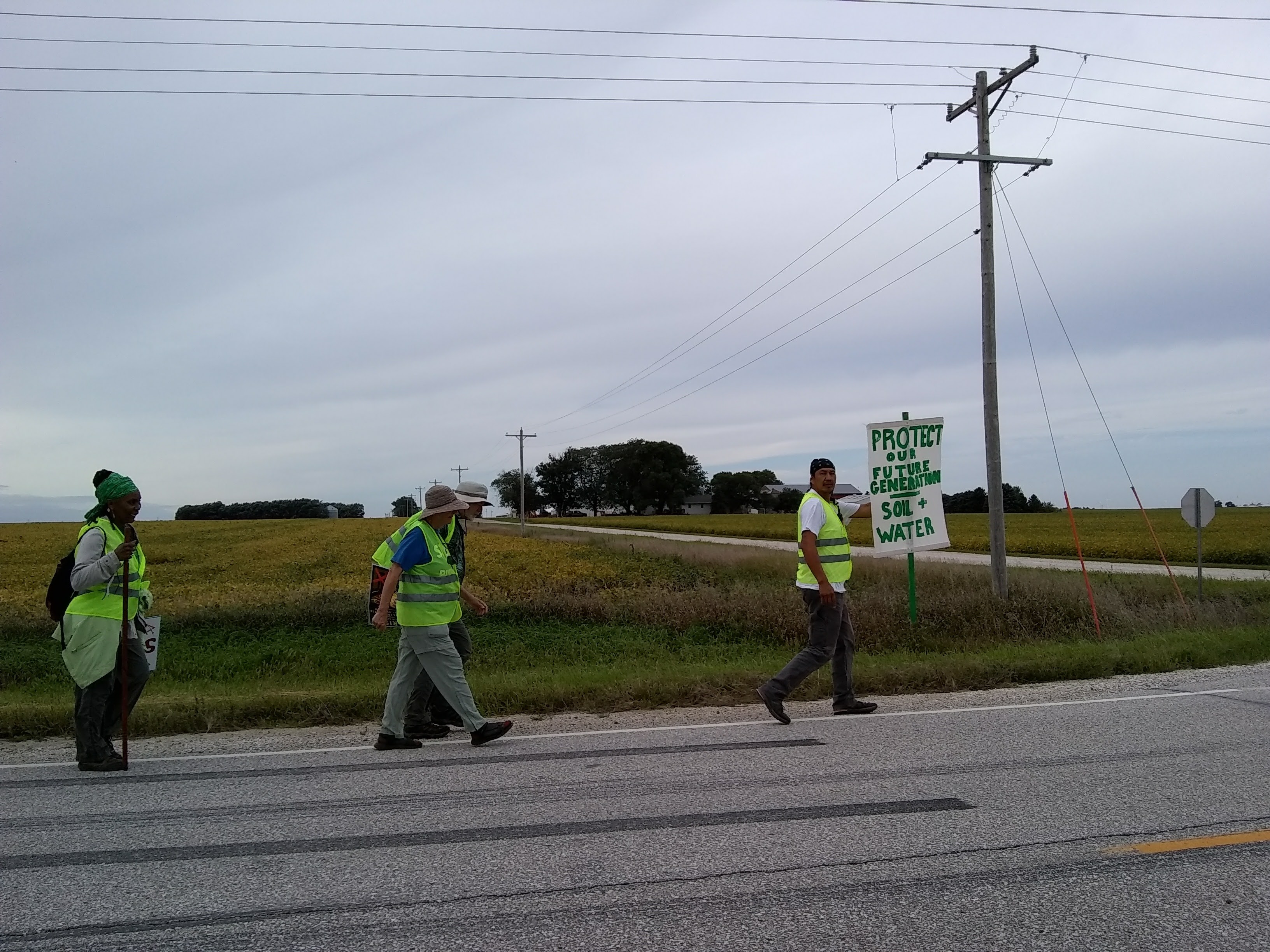
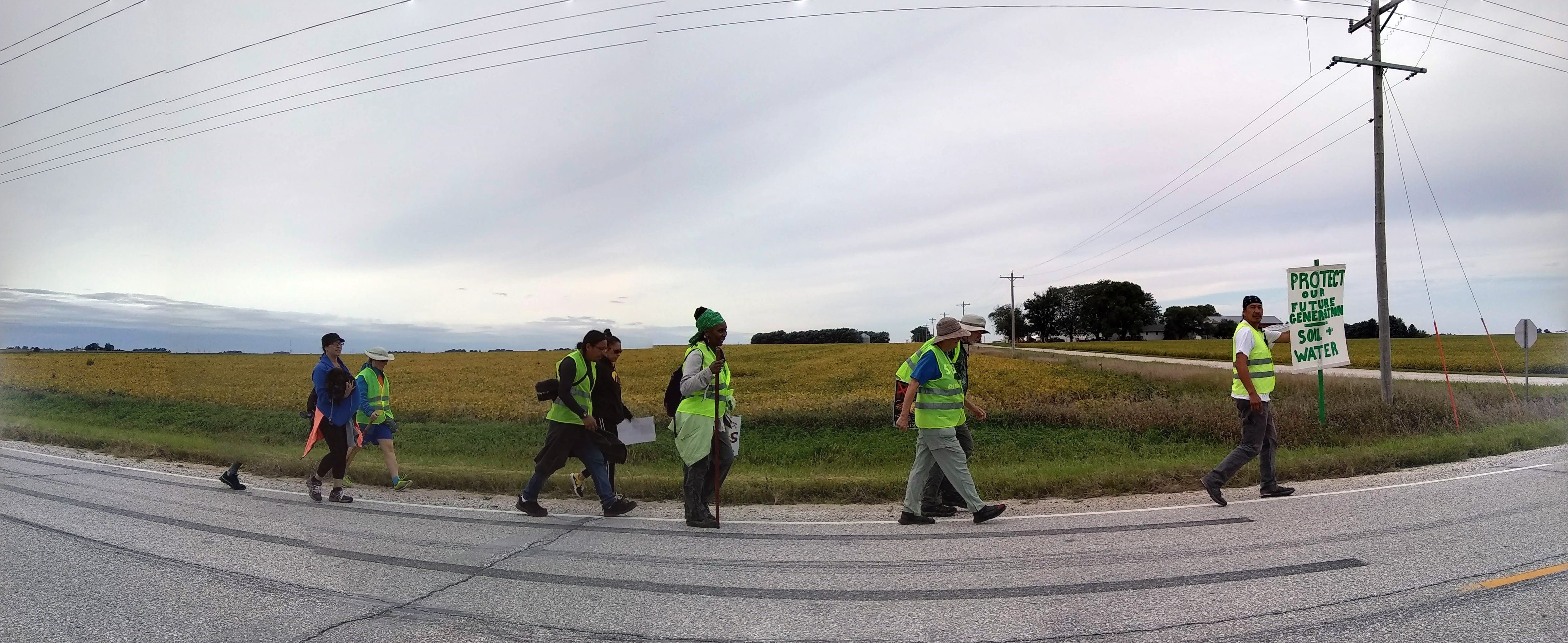
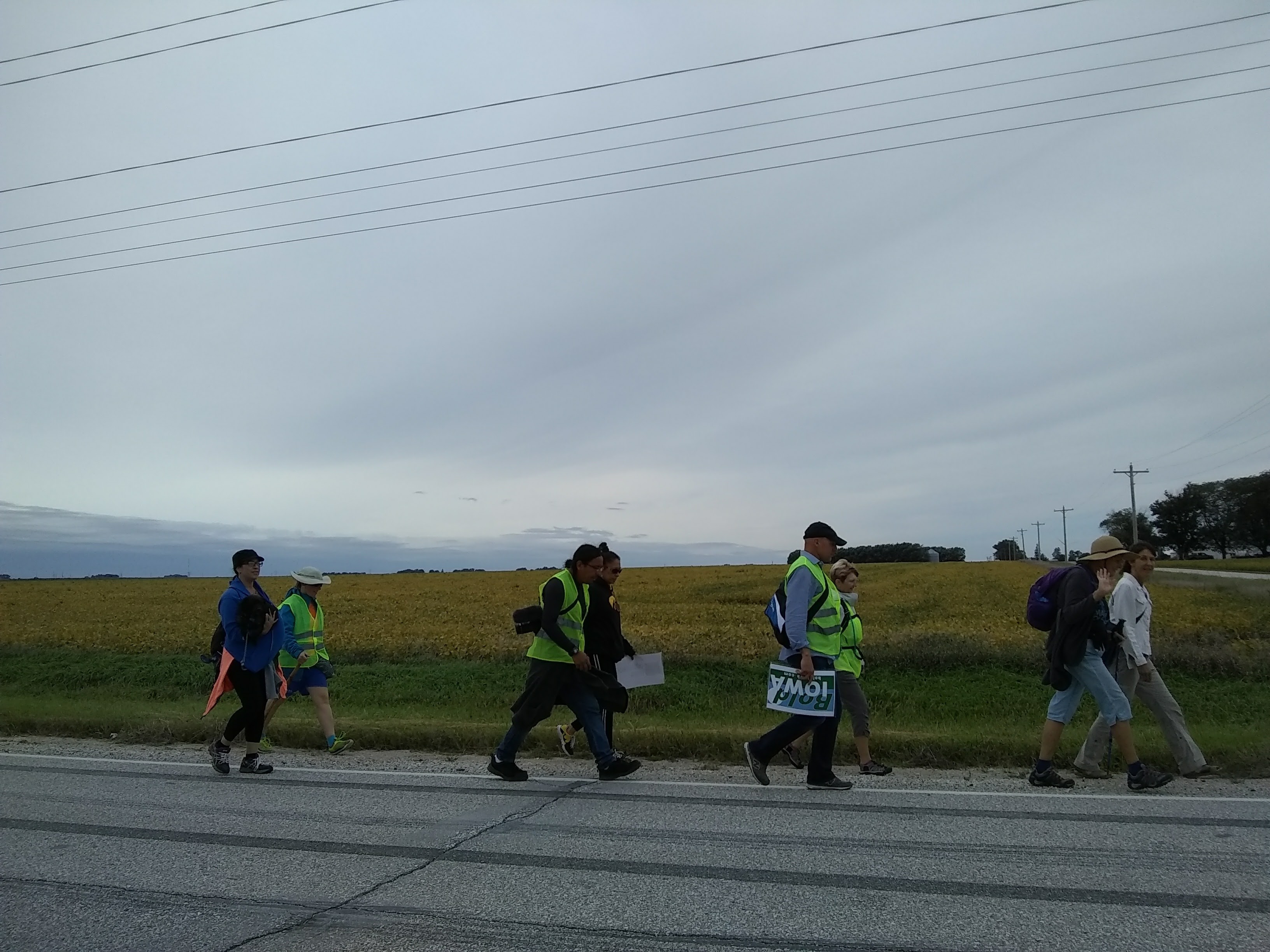
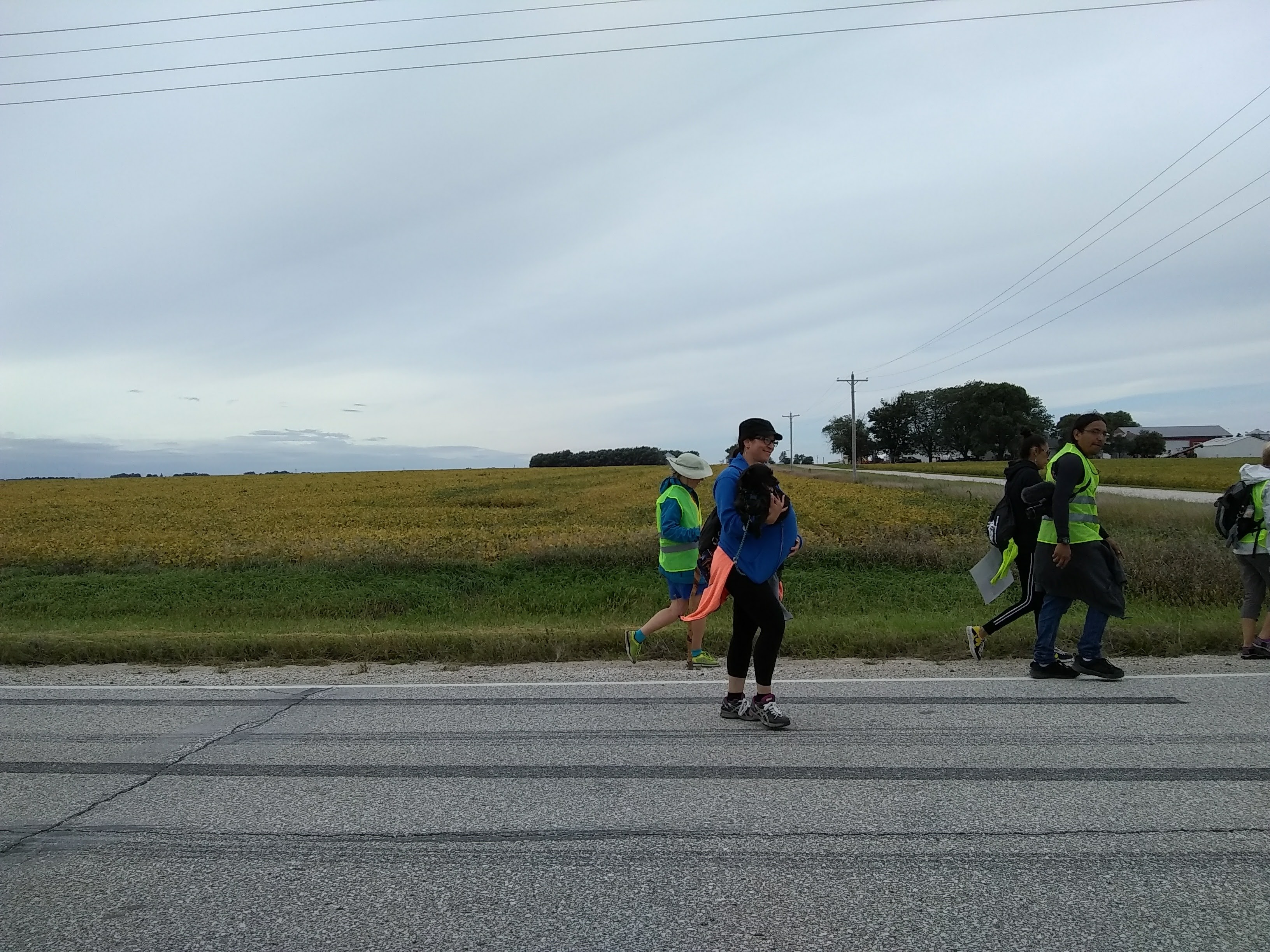
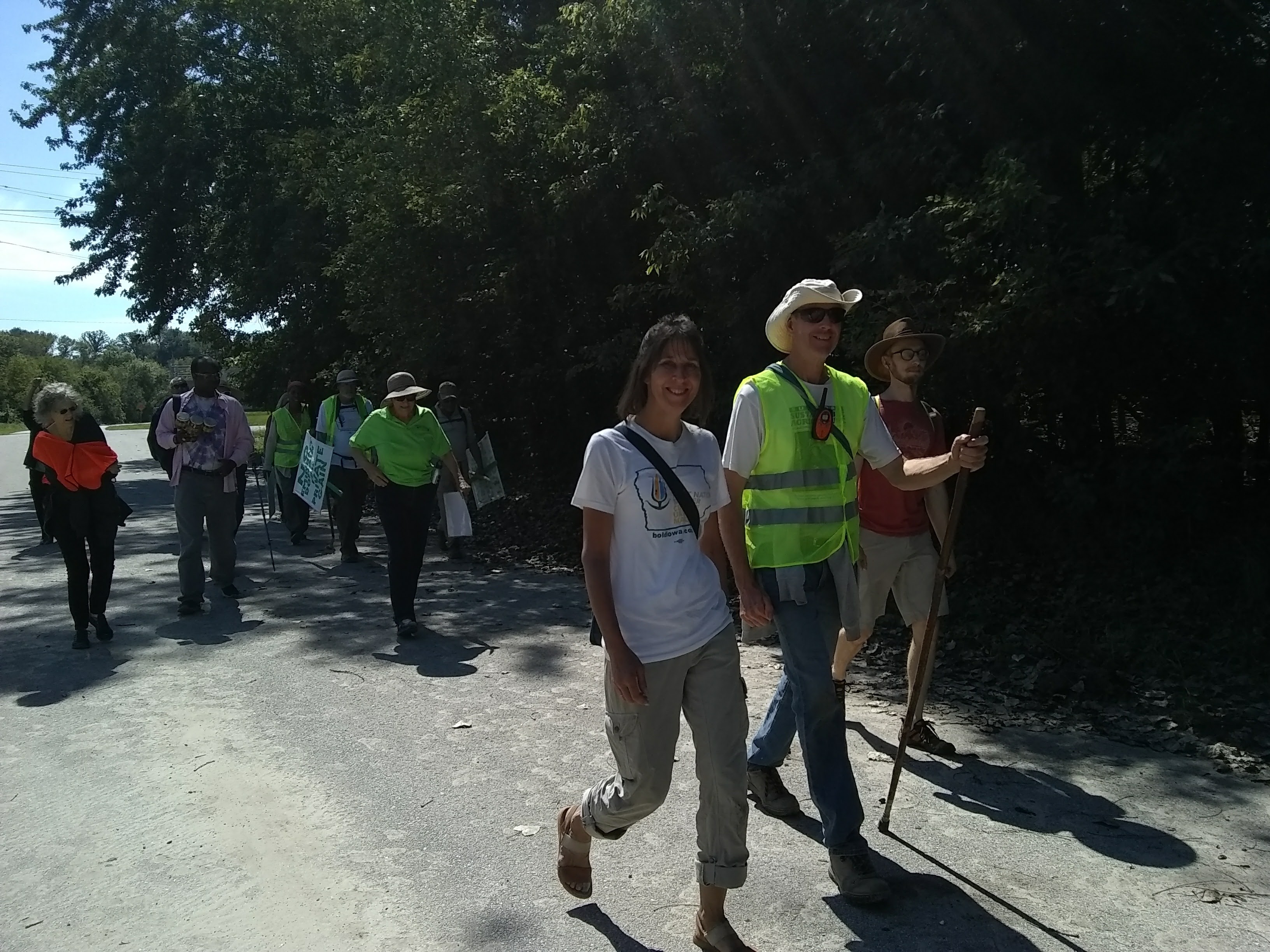
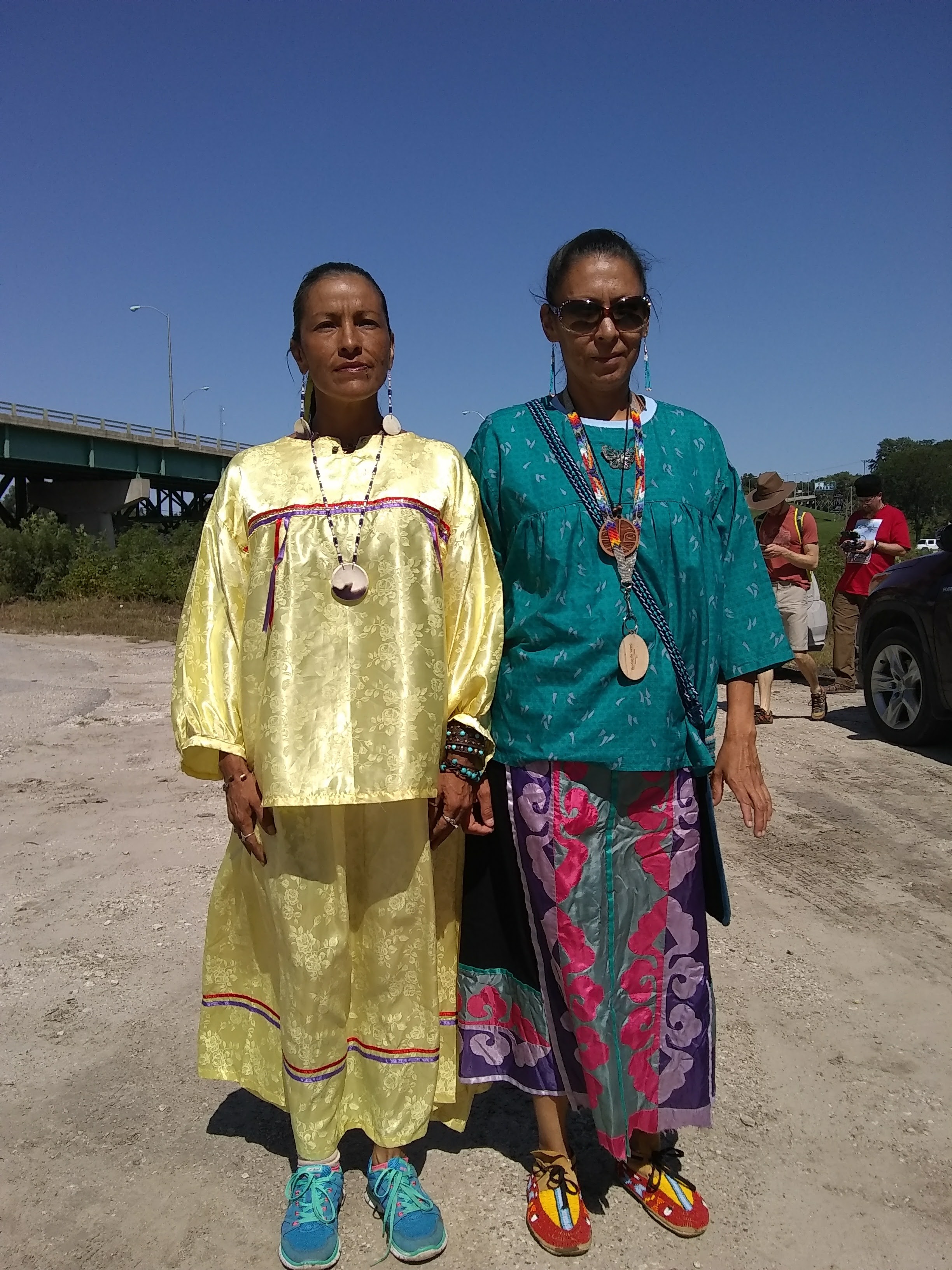
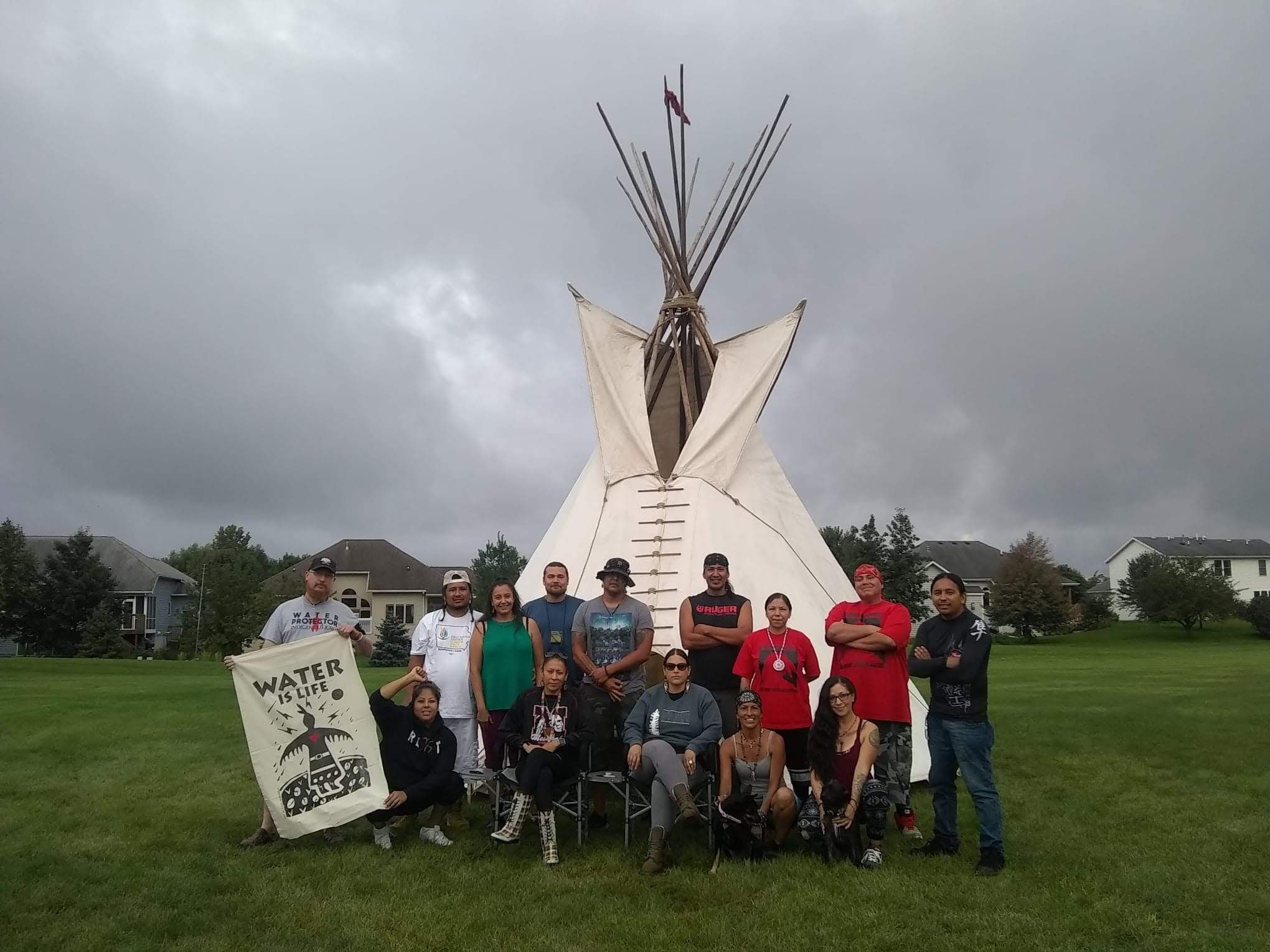
One of my friends who was on the First Nation-Farmer Climate Unity March last September, Foxy Onefeather, just sent some of her photos, many from that March, and gave me permission to share them.

Foxy Onefeather is in front of Ed Fallon (Bold Iowa shirt) and Alton is next to me on the far right back row

One blog post from that March includes some stories she and Alton told me. https://kislingjeff.wordpress.com/2018/09/23/alton-and-foxy-onefeather-married/

Her husband, Alton, had shared his photos a while ago.

Here are Foxy’s photos

Posted in #NDAPL, climate change, First Nation-Farmer Climate Unity March, Uncategorized | Leave a comment

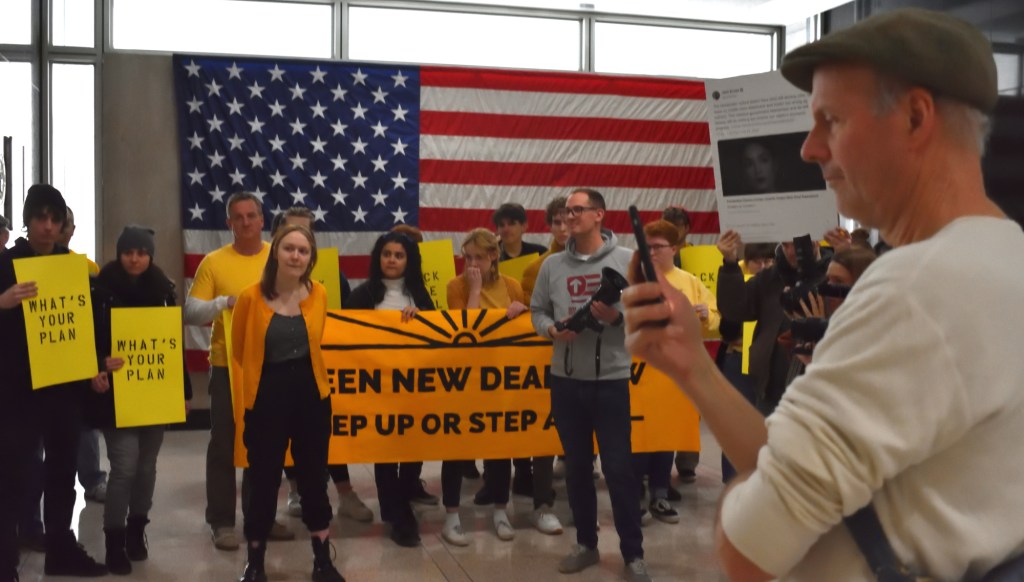
Sunrise Movement Packs the Streets Outside the Detroit Democratic Debate

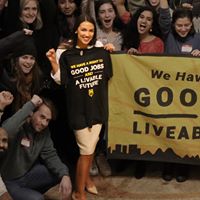
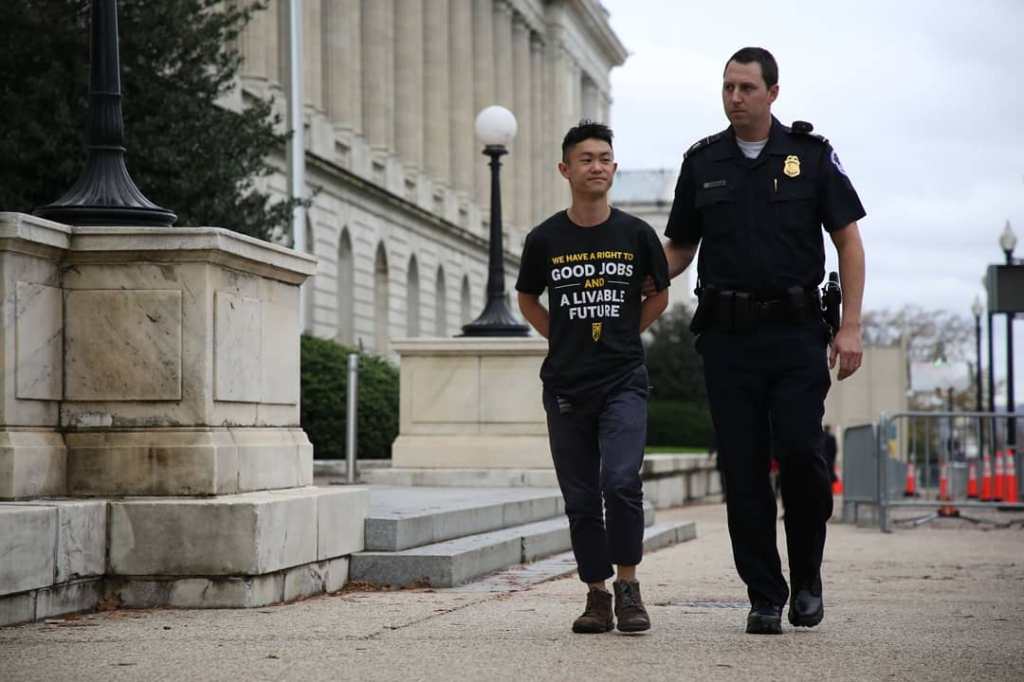
The Sunrise Movement, that I support, has been effective in drawing attention to the need for a Green New Deal. The sit-ins and arrests in Congressional offices last November resulted in Congress finally beginning to talk about climate change.

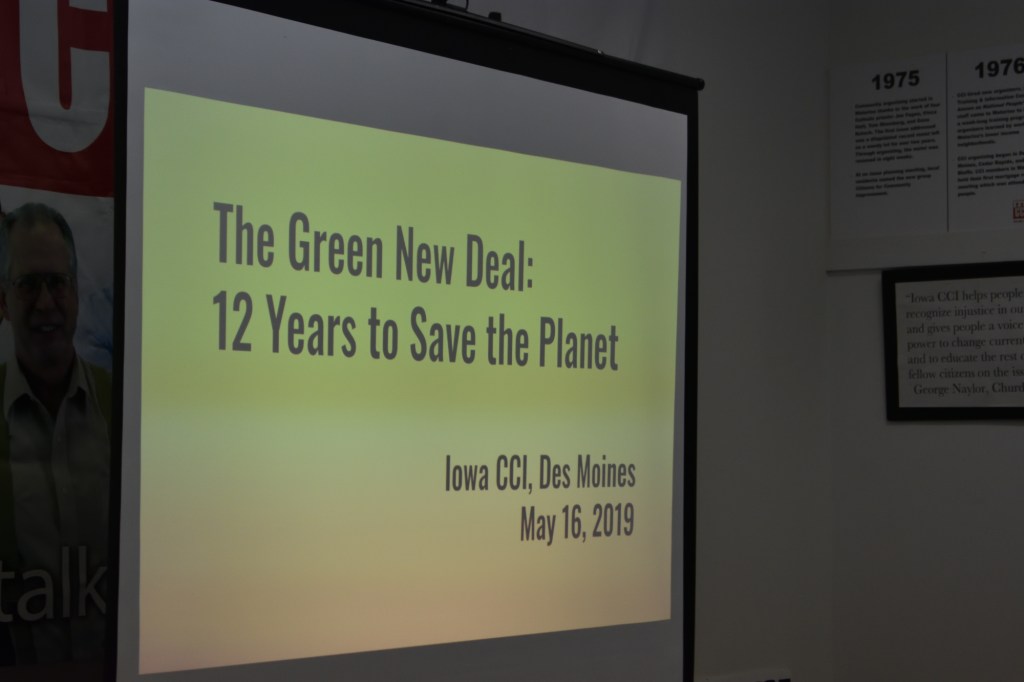
On Earth Day, April 22nd, 2019, the Green New Deal Tour came to Des Moines. 450 attended the event. Two of my friends from the First Nation-Farmer Climate Unity March, Lakasha and Trisha CaxSep GuWiga Etringer were on the program, talking about the importance of the Green New Deal being indigenous led. One of the next steps discussed that night was to work to #ChangeTheDebate, to agitate for a Democratic Presidential Debate focused solely on Climate Chaos. CNN has announced a climate only Democratic presidential debate will be held September 4, in New York City.

DETROIT — Thousands of environmental activists, calling for the Democratic Party to embrace far-reaching plans to curb climate change and address social injustice, gathered for a hard-to-miss rally in Detroit on Tuesday afternoon, hours before the first of two presidential primary debates here.

The rally was organized by a coalition of progressive groups called Frontline Detroit, and included the Sunrise Movement, the climate advocacy group seeking to harness the political power of young people to push for the Green New Deal. That proposal, which sets out a broad vision for significantly reducing planet-warming pollution by 2030 while also guaranteeing millions of new jobs, has become a litmus test in the Democratic primary race.

The demonstration was part of a months long effort by the Sunrise Movement and its allied organizations to pressure Democrats to more forcefully address climate change. That effort began soon after Democrats recaptured the House in last year’s midterm elections. The group orchestrated a sit-in at the office of Nancy Pelosi, who was set to become speaker, and Alexandria Ocasio-Cortez, who had just won a House seat in New York, joined in.

Why Climate Activists Packed the Streets Outside the Democratic Debate by Astead W. Herndon, New York Times, July 30, 2019

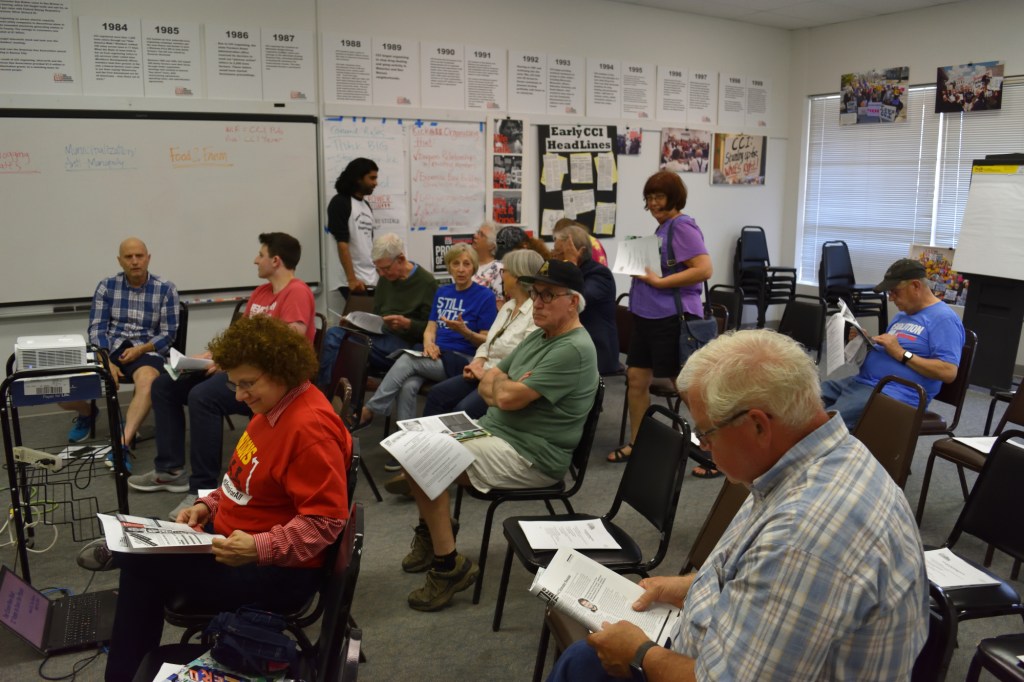
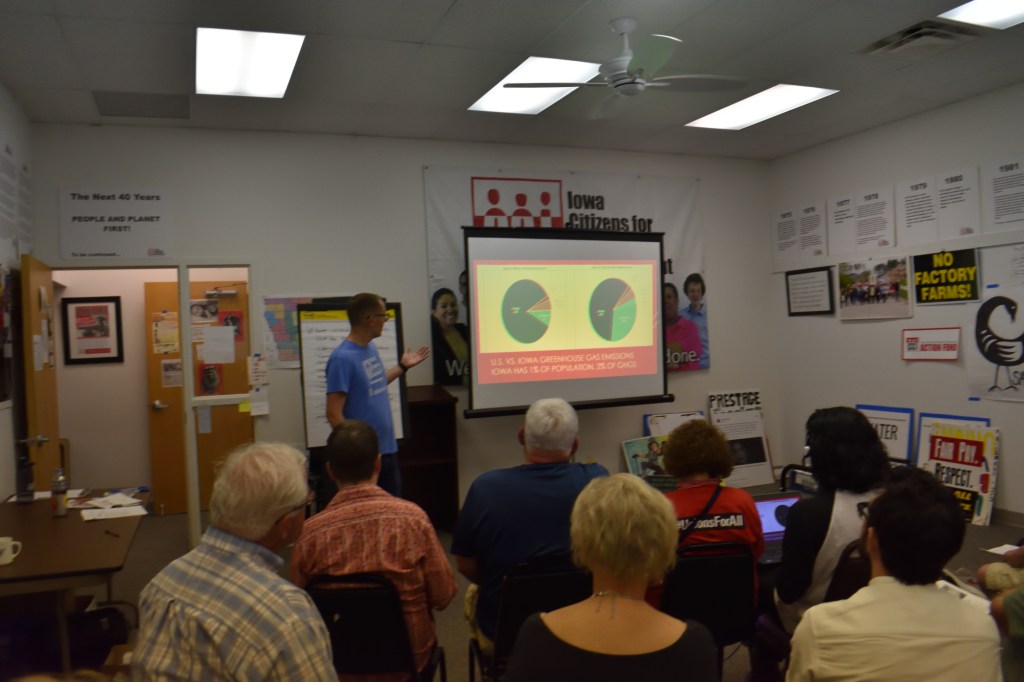
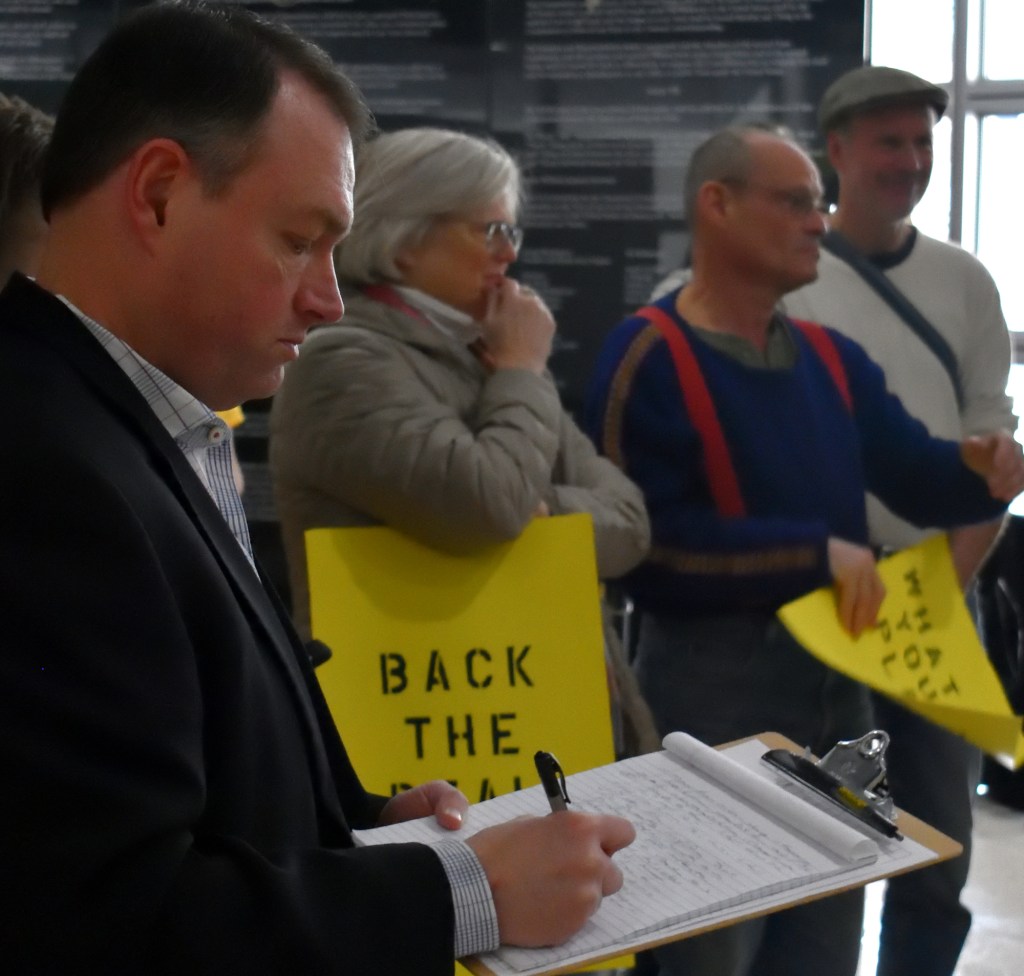
Locally, Iowa Citizens for Community Improvement (ICCI), is the Sunrise Movement hub in Iowa. Sunrise Staff will be moving to Iowa soon.

Sunrise Movement at ICCI (2019)

Sunrise Movement and ICCI meeting with Senator Joni Ernst’s Des Moines staff. (2018)

Sunrise Movement on Capitol Hill (2018)

Posted in #NDAPL, civil disobedience, climate change, Green New Deal, Indigenous, Iowa Citizens for Community Improvement, Native Americans, Sunrise Movement, Uncategorized | Leave a comment

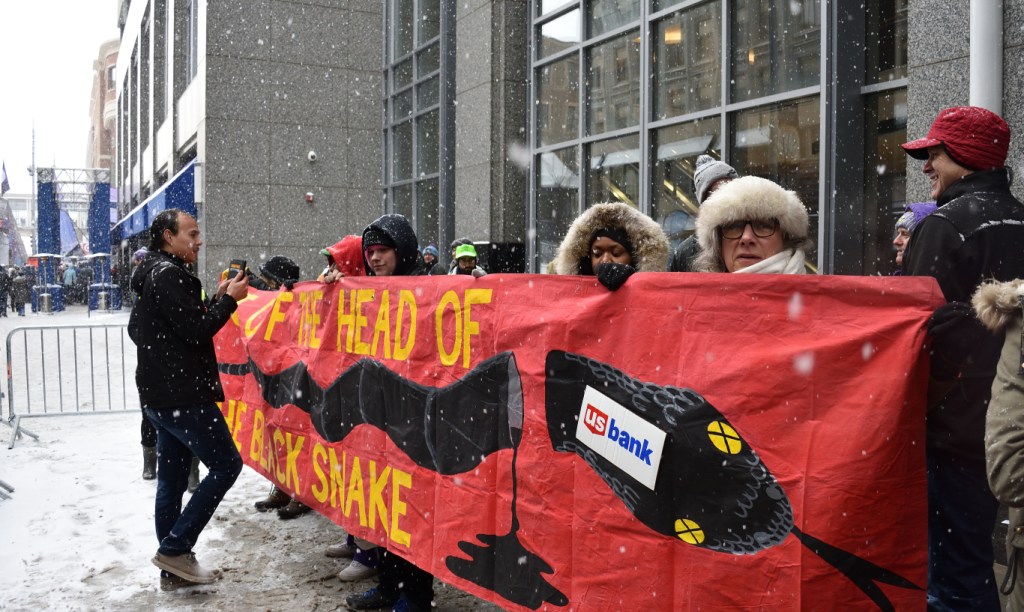
URGENT: Stop Dakota Access Pipeline Expansion

The long struggle against the Black Snake, the Dakota Access Pipeline, is facing new threats.

Your voice is needed. For though the resistance at Standing Rock has been forcibly paused and oil now flows through the Dakota Access pipeline, the struggle to protect the health and safety of the tribe and people downstream isn’t over. Quickly and quietly, Energy Transfer Partners is planning to more than double the amount of oil DAPL carries, to more than a million barrels a day. And they’re doing this — once more — without the consent of the people.

It’s time to stand again with Standing Rock.

Big Oil assures us that increasing oil flow through pipelines isn’t dangerous, but U.S. regulators say their information doesn’t back that claim. And tar sands crude — the type of oil DAPL carries — is a special threat: corrosive to infrastructure, it caused a million-gallon spill into the Kalamazoo River in Michigan not long ago. The United States suffers hundreds of liquid pipeline incidents every year. Why should we trust Big Oil’s word?

Between now and the deadline for input on Aug. 9, we will do everything we can to ensure a public hearing — the first step in stopping DAPL from becoming twice as dangerous. The Black Snake’s presence must not be allowed to fester and grow without pushback from every corner of Turtle Island. Will you stand with us once again to ensure the safety of our people and our sacred land and water?

Wopila Tanka — Thank you for making a difference! Mni Wiconi.

Chase Iron Eyes
Lead Counsel
The Lakota People’s Law Project

Tell the North Dakota Public Service Commission to host a public hearing. The deadline for your feedback is Aug. 9. Wopila for adding your voice! Click here to send your message:

Chase Iron Eyes, Dakota People’s Law Project
Lakota leaders Rosebud Sioux Tribe President Rodney M. Bordeaux, Cheyenne River Sioux Tribe Chairman Harold Frazier, Phyllis Young of LPLP and Standing Rock, and Oglala Sioux Tribe President Julian Bear Runner have come together to call for a public hearing on a proposed expansion to the Dakota Access pipeline.

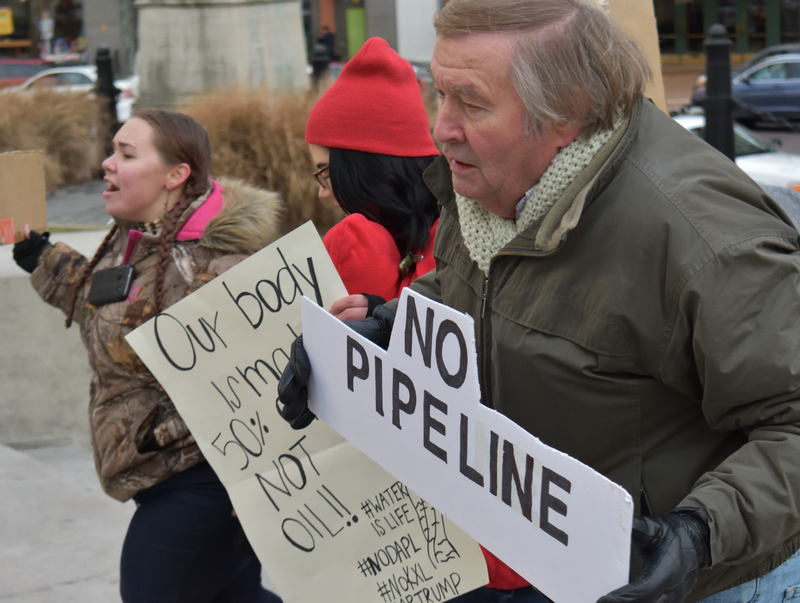
Stopping the proposed expansion of the Dakota Asccess Pipeline is a priority for Bold Iowa.

Bold Iowa is currently focused on two priorities:
(1) Stopping the proposed expansion of the Dakota Access Pipeline, and
(2) Pressuring presidential candidates to promise to declare a climate emergency on Day One of their presidency.

Yes, pressuring, not simply asking. We’re at the point where gently coercing America’s political leadership to embrace small steps isn’t enough.

We need an all-out assault against climate chaos — a Green New Deal. We need bold action, not timid half-measures. It must come from more than a handful of organizations. We need a cascade of people rising, a swell so deep and broad that it won’t simply be written off as a fringe anomaly.

Ed Fallon, Bold Iowa

FOR IMMEDIATE RELEASE

Wednesday, June 13, 2019, 12:00 p.m. CT
Contact: Ed Fallon at (515) 238-6404 or ed@boldiowa.com
Website: http://www.boldiowa.com

Dakota Access Proposes to Increase Oil Flowing Through Iowa
Bold Iowa responds, requesting public hearing in Story County

DES MOINES, IOWA — Dakota Access (DA) announced in a filing yesterday to the Iowa Utilities Board (IUB) that it plans to increase the amount of oil flowing through its pipeline across Iowa by altering the pump station near Cambridge, Iowa, in Story County just north of Des Moines. DA claims it needs no additional authorization from the Iowa Utilities Board (IUB) to proceed. Bold Iowa disagrees and today filed a response, requesting that the IUB schedule a public hearing in Story County.
Bold Iowa’s filing states, “Dakota Access’s proposal raises so many unanswered questions it is not possible for Bold Iowa, the general public, the IUB, nor concerned state and local elected officials to fully grasp the impact of the proposed expansion without adequate time and study. The involvement of landowners along the route, Story County residents, and all Iowans concerned about the broader impacts of the pipeline is essential. Thus, Bold Iowa requests that the IUB hold a public hearing in Story County where DA officials and IUB representatives are available to answer any and all questions from Iowans who have concerns about DA’s proposed expansion.”
http://boldiowa.com/dakota-access-proposes-to-increase-oil-flowing-through-iowa/

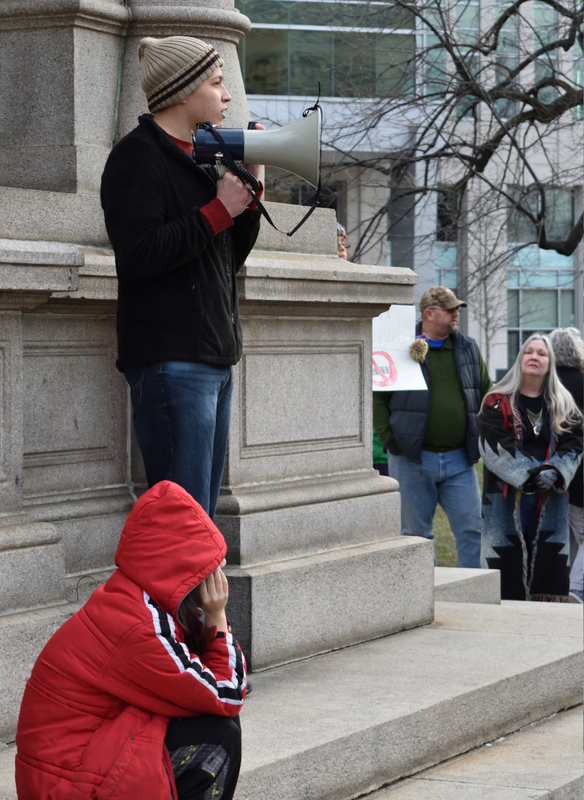
#NoDAPL in Indianapolis, 2016-2018

#NoDAPL Iowa

WYSE Radio: #NoDAPL Indianapolis, interview with Jeff Kisling

Posted in #NDAPL, climate change, Green New Deal, Indigenous, Native Americans, Uncategorized | Tagged , | Leave a comment

Special Envoy of the U.N. High Commissioner for Refugees

Many know Angelina Jolie as an Academy Award winning actor. She is the mother of 6 adopted children. But her work in recent years is as the Special Envoy of he U.N. Commissioner for Refugees. She has published a number of insightful articles related to refugees and immigration policy.

Refugees are men, women and children caught in the fury of war, or the cross hairs of persecution. Far from being terrorists, they are often the victims of terrorism themselves.

Furthermore, only the most vulnerable people are put forward for resettlement in the first place: survivors of torture, and women and children at risk or who might not survive without urgent, specialized medical assistance. I have visited countless camps and cities where hundreds of thousands of refugees are barely surviving and every family has suffered. When the United Nations Refugee Agency identifies those among them who are most in need of protection, we can be sure that they deserve the safety, shelter and fresh start that countries like ours can offer.

And in fact only a minuscule fraction — less than 1 percent — of all refugees in the world are ever resettled in the United States or any other country. There are more than 65 million refugees and displaced people worldwide. Nine out of 10 refugees live in poor and middle-income countries, not in rich Western nations. There are 2.8 million Syrian refugees in Turkey alone. Only about 18,000 Syrians have been resettled in America since 2011.

The lesson of the years we have spent fighting terrorism since Sept. 11 is that every time we depart from our values we worsen the very problem we are trying to contain. We must never allow our values to become the collateral damage of a search for greater security. Shutting our door to refugees or discriminating among them is not our way, and does not make us safer. Acting out of fear is not our way. Targeting the weakest does not show strength.

Angelina Jolie: Refugee Policy Should Be Based on Facts, Not Fear, By Angelina Jolie, The New York Times, Feb. 2, 2017

In the June 19, 2019, article in Time, she talks about what we owe refugees.

At the first sign of armed conflict or persecution, the natural human response is to try to take your children out of harm’s way. Threatened by bombs, mass rape or murder squads, people gather the little they can carry and seek safety. Refugees are people who’ve chosen to leave a conflict. They pull themselves and their families through war, and often help rebuild their countries. These are qualities to be admired.

Today the distinction between refugees and migrants has been blurred and politicized. Refugees have been forced to flee their country because of persecution, war or violence. Migrants have chosen to move, mainly to improve their lives. Some leaders deliberately use the terms refugee and migrant interchangeably, using hostile rhetoric that whips up fear against all outsiders.

What We Owe Refugees by Angelina Jolie, TIME, June 19, 2019

Yesterday TIME published her article “The Crisis We Face at the Border Does Not Require Us to Choose Between Security and Humanity.”

At times I wonder if we are retreating from the ideal of America as a country founded by and for brave, bold, freedom-seeking rebels, and becoming instead inward-looking and fearful.

I suspect many of us will refuse to retreat. We grew up in this beautiful, free country, in all its diversity. We know nothing good ever came of fear, and that our own history — including the shameful mistreatment of Native Americans — should incline us to humility and respect when considering the question of migration.

The first is that this is about more than just one border. Unless we address the factors forcing people to move, from war to economic desperation to climate change, we will face ever-growing human displacement. If you don’t address these problems at their source, you will always have people at your borders. People fleeing out of desperation will brave any obstacle in front of them.

Second, countries producing the migration or refugee flow have the greatest responsibility to take measures to protect their citizens and address the insecurity, corruption and violence causing people to flee. But assisting them with that task is in our interest. Former senior military figures urge the restoration of U.S. aid to Honduras, Guatemala and El Salvador, arguing that helping to build the rule of law, respect for human rights and stability is the only way to create alternatives to migration. The UN Refugee Agency is calling for an urgent summit of governments in the Americas to address the displacement crisis. These seem logical, overdue steps. Our development assistance to other countries is not a bargaining chip, it is an investment in our long-term security. Showing leadership and working with other countries is a measure of strength, not a sign of weakness.

Third, we have a vital interest in upholding international laws and standards on asylum and protection. It is troubling to see our country backing away from these, while expecting other countries, who are hosting millions of refugees and asylum seekers, to adhere to a stricter code.

Fourth, the legal experts I meet suggest there are ways of making the immigration system function much more effectively, fairly and humanely. For instance, by resourcing the immigration courts to address the enormous backlog of cases built up over years. They argue this would help enable prompt determination of who legally qualifies for protection and who does not, and at the same time disincentivize anyone inclined to misuse the asylum system for economic or other reasons. The American Bar Association and other legal scholars and associations are calling for immigration court to be made independent and free from external influence, so that cases can be fairly, efficiently and impartially decided under the law.

The Crisis We Face at the Border Does Not Require Us to Choose Between Security and Humanity by Angelina Jolie, TIME, July 31, 2019.

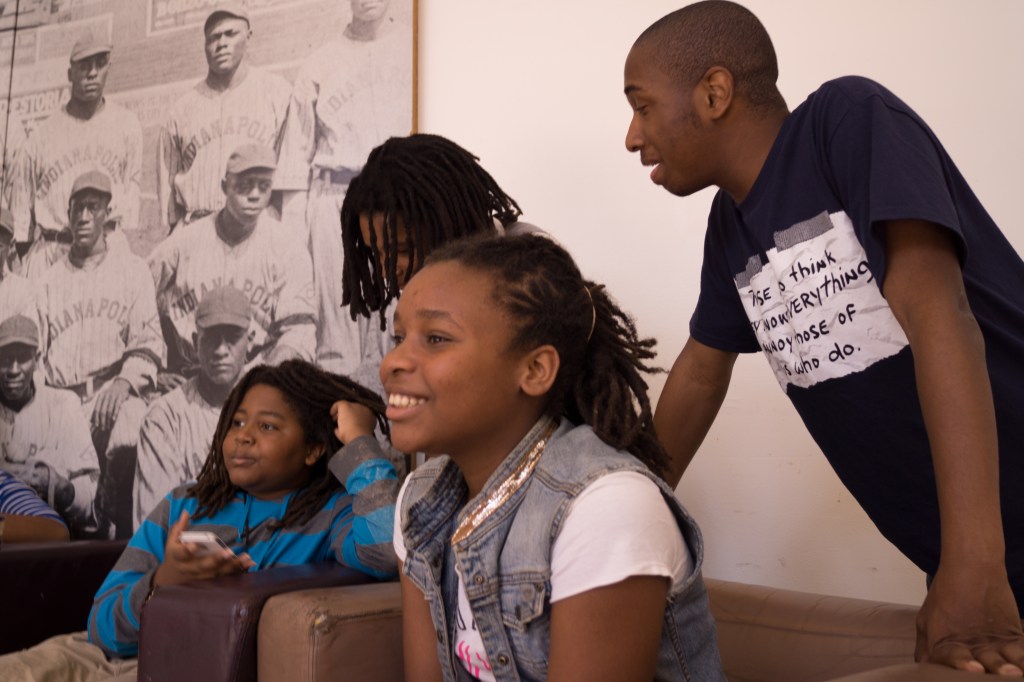
Photos by Rezadad Mohammadi and Jeff Kisling. Permission granted for photo of children.

Posted in immigration, Uncategorized | Leave a comment

And those who know and those who seek. Amidst the chaos, find your peace

I am so discouraged by the vicious and escalating racism of the president, and the enablers of his party who refuse to refute it.

In a recent blog post the characteristics of fascism are articulated.
https://kislingjeff.wordpress.com/2019/07/28/we-refuse-to-sit-idly-by/

Surely we won’t be forced to hear this until the next election? It is bad enough for adults, but I’m really concerned about our children hearing these hateful sound bites.

Below is a clip from Nahko Bear’s performance at the Black Hills Unity Concert, September, 2017, for the Black Hills, the Earth, and all her people.Honoring the sacred. I often listen to Nahko’s songs at times like these.

Where my warriors at?

And so I feel like what has been said many times tonight and I appreciate the sentiment that we can say this now in this time and this generation is that prayer is the most G thing you can do, homey. And I can say that for my life, in the things that have happened in my life, the anger, for the pain, for the hate, that I’ve carried, that forgiveness, and therefore remembering to pray for those that oppressed us, is the most powerful testament to mankind.

Nahko

For the West
For the North
For the East
For the South
 
Grandfather, I’m calling on you
Need your guidance now
Grandmother, I’m calling on you
Need your guidance now

Directions – Nahko Bear

This is the place for all my relations
To bring celebration through meditation
Giving thanks for all of creation
We are so provided for
All of the blessings I have received
How could they have been bestowed upon me?
So I’ll put it all back in the ground
Back in the soil where I am found
It all started
Wakan Tankunl Skan Skan
Something holy moves here on the land
It is my brothers’ and my sisters’ hands
It is the way we make our plans
We don’t make them
Well this is it, what is this?
This is Eden, Eden is
Where I live and where I give
My whole being to the Great Spirit
We are waiting and we’re on our way
Aho Mitakuye Oyasin
This is the place for all my relations
To bring celebration through meditation
Giving thanks for all of creation
We are so provided for

Mitakuye Oyasin – Nahko Bear

We feel that racism and sexism and class separation
That these are desecrations
And we feel that the American flag does not represent
Integrity, honor, justice or truth
 
My country ’tis of thee
Sweet land of poverty
For thee I weep
Land where my mother cried
Land where my father died
Sweet land of genocide
Pride of my heart
 
My country ’tis of thee
Sweet land of industry
We’ll break your back
Clean out your minerals
Fill you with chemicals
We kill for what is profitable
Oh concrete world
 
Our climate’s suffering
All nature feels the sting
Poisoned progress
All of these mouths to feed
All of this land to seed
From sea to shining sea
Gold underground
Our people left to die
Battlefield country-side
Paved-over graves
Suburban privileges make desolate villages
Broken treaties, Broken promises
Conquer, repeat
 
All warriors represent
Remind those who forget
The time is now
To walk in humble pride
Prepare and fortify
Resist comforts of compromise
Pray for guidance
Pray for guidance
Pray for guidance

My Country – Nahko Bear

Maybe I’m not here to be a superstar after all
Maybe I’m here to pray for all those who have lost hope along the way

I’m on the verge of everything
Been lookin’ to be surrendering so honestly
Tiptoe to the edge of my destiny
Free fall backwards, great mystery
Speakin’ to me, the pain of the youth
The confusion of the people and their struggle for truth
Yeah, regroup and renew
Time to regroup, renew the ambition of a nation
Zombies treadin’ on decaying foundation
Wasting, creating hostility among us
Turning our back on our mother
We’re turning our back on our mother

Look at what we’ve done
I remember
I remember
I forgive
I remember
I remember
I remember
I forgive

These people are relentless, senseless, violent and racist
Providing installation in my day-to-day, endless
Positivity can definitely be contagious
Persuasive, cause I’m speaking my truth
I got pennies in my pockets, but I’m picking fresh fruits
Yeah, picking fresh fruits
Got pennies in my pockets, but I’m picking fresh fruits
Yeah, whoa
Cause I live in a land of abundance
Where the rain off my roof is sacred and precious
And (now we get to work and be found[?]) riding horses
And normally with the courage that we like to front
Bringin’ it back to the land when there was food to hunt
And yeah, when there was food to hunt
And yeah, oh

I got one last thing on my mind
I remember
I remember
I forgive
I remember
I remember
I remember
I forgive

I’m learning the language of the planet
We inhabit and stab it with
The chemicals that we practice
And I’ve had it with habits, it’s tragic
This trajectory course that we’re on
Separated from the dirt, from ourselves, from the song
Every robot sings, with his hand to his heart:
“I will kill for God, and I will hit my mark
And I will stand, like a fool, for the cause, the treason”
Nobody’s bombing me, but other countries are weeping
Choppin’ the mountains in half
Can’t you hear the earth screamin’?
Whoaoh, can’t you hear the Earth screamin’?
Oh
Blood oil for dinner, better have an appetite, yeah
Cause we rape, pillage and plunder

So you can heat your house tonight
I remember
I remember
I forgive
I remember
I remember
I remember
I forgive

All my empowered people, put your hands up!
Recognize our tribes are independent and restless
Searching for purpose beneath the rubble and wreckage
The message: Forgiveness starts with me!
Yeah! With me!
Stop blaming other people, take on the responsibility
Of generations to come
May they live in a world without governments and guns
Without governments and guns
Hey, whoaoh
Your people who killed my people
My people kill your people
But our people are all one people
United by compassion for humanity’s sake
We wake and meditate on the light of a new day
New chapter in the book of a thousand tongues
Yeah, a thousand tongues

We shall overcome
I remember
I remember
I forgive

Yeah, we shall overcome
(We shall overcome)

We Shall Overcome – Nahko Bear

So which wolf will you feed
One makes you strong, one makes you weak
And those who know and those who seek
Amidst the chaos, find your peace (yeah)
I know which wolf I’ll feed
 
Great spirit, I’ve had it
Bring me back to the nomadic
Way of weaving through the damage
Mindful, stay mindful
Great spirit, for my sisters
Let me be a flowing river
Flood the banks, the rocks that bind her
Carry, I’ll carry
 
Great, Great Spirit
Oh oo oh
Great, Great Spirit
Oh oo oh
 
Great spirit, for my brothers
Let me be a mountain under
Which he climbs to discover
His process, now that’s progress
Great Spirit, all that hinders
Tie reminders to my fingers
I must speak to you more often
 
Great, Great Spirit
Oh oo oh
Great, Great Spirit
Oh oo oh
 
Great Spirit, for my relations
Give them strength to face racism
In every single situation
Easy now, go on, speak loud
Great Spirit, take me instead
Guide me down the road of red
Tunkashila, I am shamed, Great
 
Oh Tunkashila, yeah
Tunkashila, yeah
Tunkashila, yeah
Tunkashila, oh yeah
 
Great Spirit, system collapsed
Nothing but the Earth will last
And I will be singing sweetly until the darkness
And how life is
Great Spirit, on my tongue
Be still, be still, the time will come
When everyone will sing “All Life is Sacred”
Well, I’m waiting
Great Spirit, my fist is up bringing the power to the people
You’re a reflection of us
Some of you’re people can’t hear it
The cries of the Earth
Some of you’re people can’t feel it
The way that it hurts
And it hurts, Great Spirit
Oh, and it moves, Great Spirit
Interconnected in the wreckage of a paradigm on
Its way out, its way out
Speaking of spiritual lyrical testimonies
A spirited lyricist weaving around false prophecies
A spirit directed and selected with the message I bring
While the ship slowly sinks, I’ve been directed to sing
I’m like a wrecking ball breaking down the walls of the past
I made up a list, living off bliss with the last of my cash
You’re gonna be justified with how you treated the land
You’re gonna be by my side, when I stand and demand a change
Change
 
They know not what they do
Can we forgive them for that too?

Great Spirit – Nahko Bear

We’re a part of something special
It’s a crack in time, a wrinkle
Fallen from the nest, young eagle
I will pull my feathers out
Stay humble
Stay humble
Stay humble
Stay humble
Stay humble

Uncle Mana taught us like an elder
Took us under, older brother
He said
This is powerful country
And we felt like we were returning
To our land rebels
And the shepherds of the sea
Takers are taking what the leavers will leave
So grieve me the black prince cicada
Such a loud voice for a tiny creature, oh
Teach me to let go of all of my pain
I do forgive, I don’t forget these things
We burn the blue gum for a safe passageway
Drink of the earth, smoke of the dirt
And my warpaint was red ochre clay
Hoka hey
My warpaint was red ochre clay
Hoka hey
Red ochre clay
Our prayers igniting, cast out into the shire
And the song of our struggle
Came straight from the fire
It goes:

Holy, holy grandmother, we sing
Wash us clean of our pain and suffering
Give us strength for our new beginnings
In my best thanks I sing

It’ll wash away, it will wash away
Lift ’em up
It’ll wash away, it will wash away
Lift ’em up
It’ll wash away, it will wash away
Lift ’em up
It’ll wash away, it will wash away
Lift ’em up
Ooh lift ’em up (yeah)
Ooh lift ’em up

In my dreams you were an aboriginal man
Gave me your hat
And your past in one hand
You said
You’ve come to be with the rainbow serpent
Red hands, red land, red worship
Just then I heard bush mama crying in the chasms
For a stolen generation
And the children that haven’t
Come home, come home, stay home
My bullets are my words
And my words are my weapons
Chain me to the pipeline
For our rivers and mountains, we scream
Today’s a good day for my ego to die
Spirit, live on in my heart
In my body, my mind
In my body, my mind
Then sister crow came with the murder that day
So we tattooed the bird nation onto our faces
She said, “we sing to let go of all of our pain
We dance the story
To remember when things changed”
Remember when things changed

Holy, holy grandmother, we sing
Wash us clean of our pain and suffering
Give us strength for our new beginnings
In my best thanks I sing

It’ll wash away, it will wash away
Lift ’em up
It’ll wash away, it will wash away
Lift ’em up
It’ll wash away, it will wash away
Lift ’em up
It’ll wash away, it will wash away
Lift ’em up
Ooh lift ’em up (yeah)
Ooh lift ’em up

We danced the ghost dance in two separate countries
To this old song
So familiar to memory
The road will teach you how to love and let go
It can be lonely but it’s the only thing
That we’ve ever known
It can be lonely but it’s the only thing
That we’ve ever known
Our mommas told us
Let go of jealousy
And for vagabonds and vagrants, that won’t come so easy
We’ve come from nothing
Nothing
We have come from nothing
Nothing
So teach me to love you in a different way
Same cuts, same guts, same crazy
I traveled halfway across the country and back
Only to find love undefined
And I’m okay with that
‘Cause I’m gonna be a guardian
Be a man among men
Be a guardian
Be a man among men
Or be a woman
Among women
Be a guardian
Be my friend
Be my friend

We’re a part of something special
It’s a crack in time, a wrinkle
Fallen from the nest, young eagle
I will pull my feathers out
Stay humble
Stay humble
Stay humble
Stay humble
Stay humble

Wash it Away – Nahko Bear
Posted in Indigenous, peace, Spiritual Warrior, Uncategorized | Tagged | Leave a comment

History of Separating Families and Stealing Children

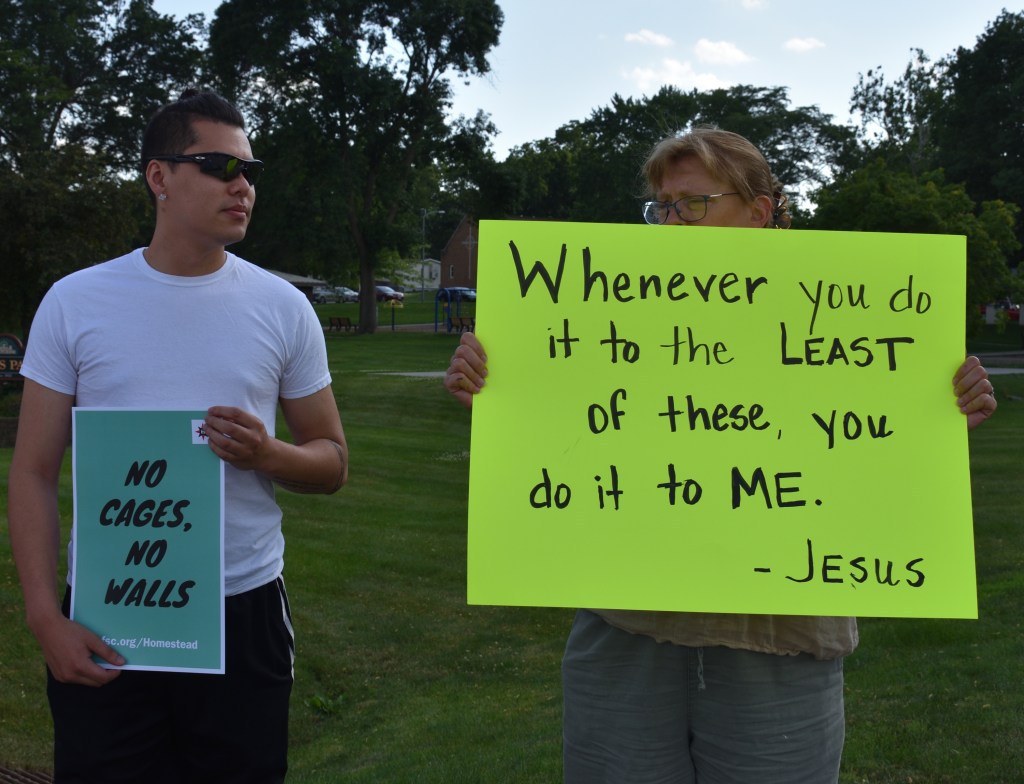
Here, in McAllen, Texas, indigenous people fleeing violence and seeking asylum are, right now, locked in chain-link cages and lying on concrete floors, where the sound of frightened, crying kids and mothers and fathers fearing for their children is eerily audible if you just listen closely.

As Native Americans, we have a unique perspective on such cruel American government policies that rip brown babies from their mothers’ arms and, in some cases, turn them over to white families to raise in the white way.

But this type of evil behavior — separating families and stealing children — is nothing new, says Juan Mancias, the tribal chairman of the Carrizo Comecrudo Tribe of Texas. “They’ve been doing [this] for 500 years,” he said. McAllen is on Mancias’s ancestral territory.

“When [the white people] came we didn’t consider any of them illegal,” he said. “We were open to them. They were two-legged; we knew they were relatives.” But it didn’t take long, he said, before “they began taking our women and children and killing our men. Then we got an idea of who they really were.”

There were no walls or borders or prison camps until the white man came. Now they’re everywhere — and that’s not patriotism, that’s hate.

Trump’s immigration policy is caging indigenous children. This is the America Native people know. By Simon Moya-Smith, NBC News, July 28, 2019

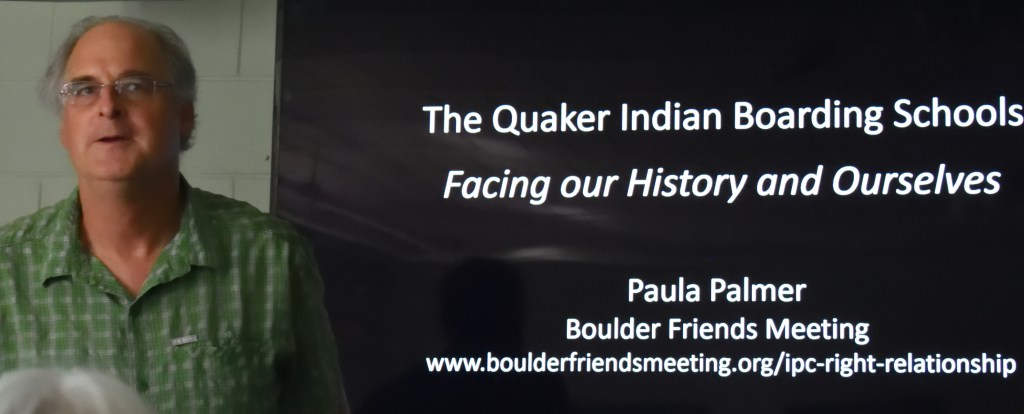
In the late 1800’s a policy to take Indian children from their homes to boarding schools was begun. There were a number of reasons for this, but mainly to train Indian children to adapt to the ways of the white settlers, so they could fit into the culture of the people who were taking over Native lands. But “take” the children is a euphemism for what most often happened, which was taking the children away from their families by force.

Quakers were among other faith communities who were involved with the Indian Boarding schools. My experience is that many Friends know little if anything about the Quaker Indian Boarding Schools. Those that do assume those involved with those schools acted with the good intentions, and documents from that time support this. As it says below, though, good intentions can cause very significant, multigenerational damage.

I know many will be upset by what I am going to say, but I believe it was wrong to participate in this forced assimilation process. If we believe there is that of God in everyone, how could we justify forcing our will on any other person? “Kill the Indian, save the man” was the oft-heard phrase uttered by Captain Richard H. Pratt, a soldier in the U.S. Army and firm believer in the policy of assimilation for Native Americans. This is what happens when we don’t seek spiritual guidance, but rely on what’s in our head instead of our heart.

Although for a different stated purpose today, children are again being forcibly ripped from their parents’ arms. Truth telling is the first step in reconciliation. We need to face the truth about the “forced assimilation.” of the past. If we had done that, perhaps this current tragedy might not be happening.

More than 100,000 Native children suffered the direct consequences of the federal government’s policy of forced assimilation by means of Indian boarding schools during the nineteenth and twentieth centuries. Their bereft parents, grandparents, siblings, and entire communities also suffered. As adults, when the former boarding school students had children, their children suffered, too. Now, through painful testimony and scientific research, we know how trauma can be passed from generation to generation. The multigenerational trauma of the boarding school experience is an open wound in Native communities today

Quaker Indian Boarding Schools; Facing Our History and Ourselves”, Paula Palmer, Friends Journal, October, 2016.

If you send your children to our schools we will train them to get along in this changing world. We will educate them.

We had no choice. They took our children. Some ran away and froze to death. If they were found they were dragged back to the school and punished. They cut their hair, took away their language, until they became strangers to us.

Harjo, Joy. Conflict Resolution for Holy Beings: Poems (p. 78). W. W. Norton & Company. Kindle Edition.
Posted in Indigenous, Quaker, Toward Right Relationship with Native Peoples, Uncategorized | Tagged | Leave a comment