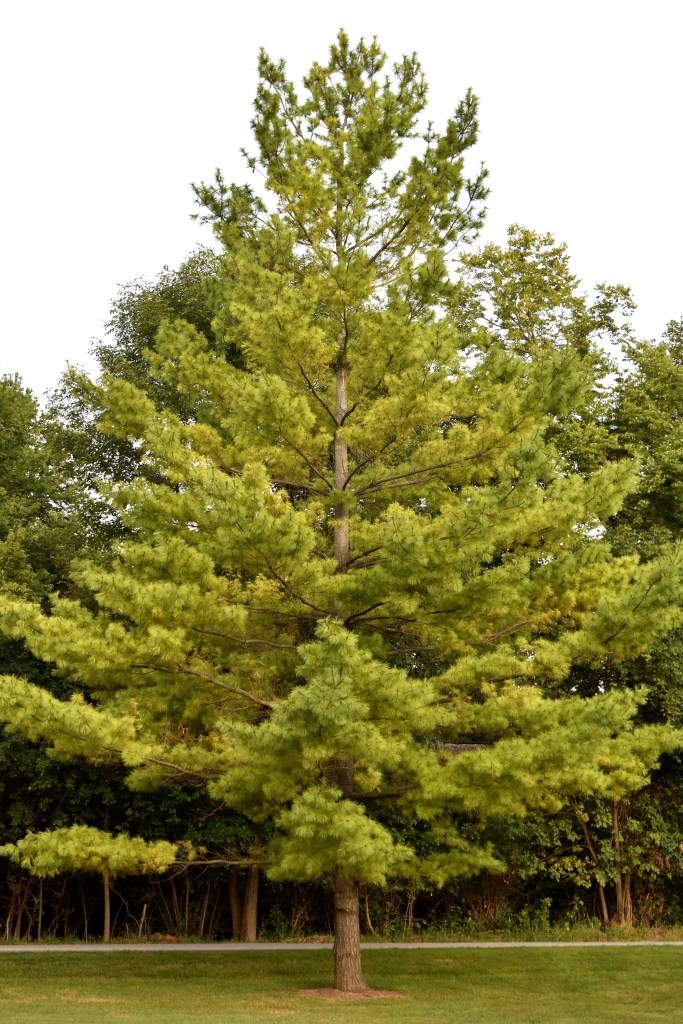
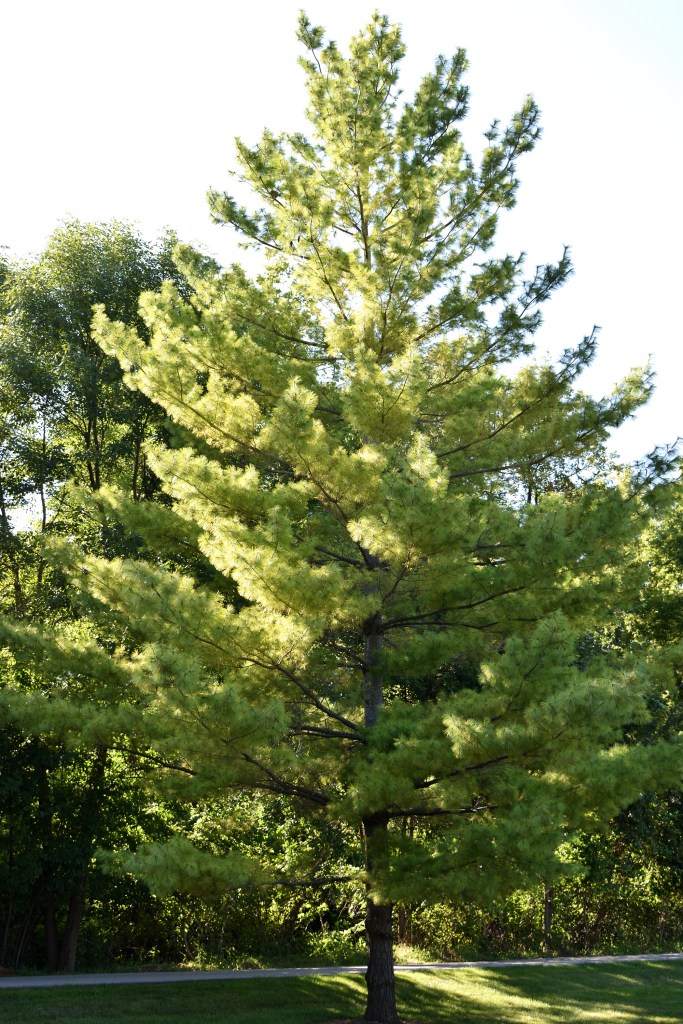
I didn’t know what people would think about my recent blog post, My Tree Friend. For most of my life I thought of spiritual experience mainly in terms of human beings and the Spirit. Vertebrates have nervous systems of various complexities. Dogs, cats, apes, etc. can learn and have memory but I hadn’t thought about them in spiritual terms.
Being trained and having a career in medical science on the one hand strengthened my belief in the Spirit. What else could create such complexity as nature and living organisms? But on the other hand, communicating with a tree didn’t fit science as I understood it.
Being raised as a Quaker I was familiar with worshiping in silence, and the expectation, and experience of the Spirit or Inner Light. And of expectant waiting on the Spirit at all times, not just during Sunday meetings for worship.
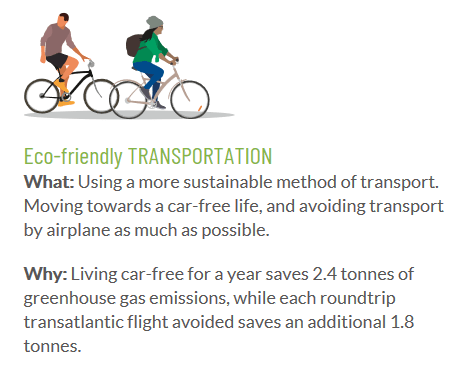
One of the many benefits of living without a car were the vast number of hours I spent in nature as I walked, ran or rode my bicycle. Especially during extreme exercise of long distance running I became acutely aware of how all parts of my body were working together (or not). I enjoyed “runners high” which was a heightened mental/spiritual state. And often near the end of a 13 mile run I would be feverently praying for the strength to make it to the end of the race.
Many days I would spend at least an hour walking and taking photos. I began to notice I was often talking to God. “Wow that is a beautiful flower you created.” I soon learned to stand still in front of something I wanted to create an image of. And I would be soon be shown the angle to stand at, how to compose the image. The longer and more carefully I would listen, the more images would be revealed to me.
So as I began to learn about indigenous spirituality, of how the Spirit is in all things living and non living, that made sense to me because of those experiences of running, photography and Quaker worship. I realized how narrowly constrained my understanding of the Spirit had been.
As I learned these things, I made an effort to be more aware of, and to try to communicate with the birds, animals, flowers, plants, trees, earth and sky as I walked. I got to know squirrels, dogs and hawks as I walked the same paths.
I often think about what my friend Joshua Taflinger once wrote:
What has risen to the surface at Standing Rock is a physical/spiritual movement. Learn how to quiet your mind. To find the silent receptive space to receive guidance. To learn to adapt and follow the pull of synchronicity to guide you to where you will find your greatest support and strength. What I have found in my time praying in the indigenous earth based ways, is that it’s not about putting your hands together and talking to god…. It’s about quieting and connecting with the baseline of creation, of nature. Tuning into the frequency and vibration of the natural world, the nature spirits. The beings and entities that have been in existence, for all of existence, the examples and realities of sustainability and harmony. It’s about becoming receptive to these things. Being open and flowing with them. The spirit guides us, but we have to make ourselves receptive to feel, sense, and respond to this guidance.
Joshua Taflinger
And this:
I am an Indian. I am a Cherokee. And I see God in the clouds and I hear Him in the wind. When I was a child I thought I could hear time, and I knew what the dove and whippoorwill said when they called from the meadows and the woodland. It is the nature of the Indian to hear with the spirit because his life is based on spiritual foundations, immovable foundations that motivate him to worship. Music is a part of this, music from rustling leaves and singing streams, but from gifted people as well. Tears came when I first heard classical music in my youth, for I was being introduced to the angels. It still happens whenever I hear strains of violin music.
“A Cherokee Feast of Days (Volume 2)” by Joyce Sequichie Hifler
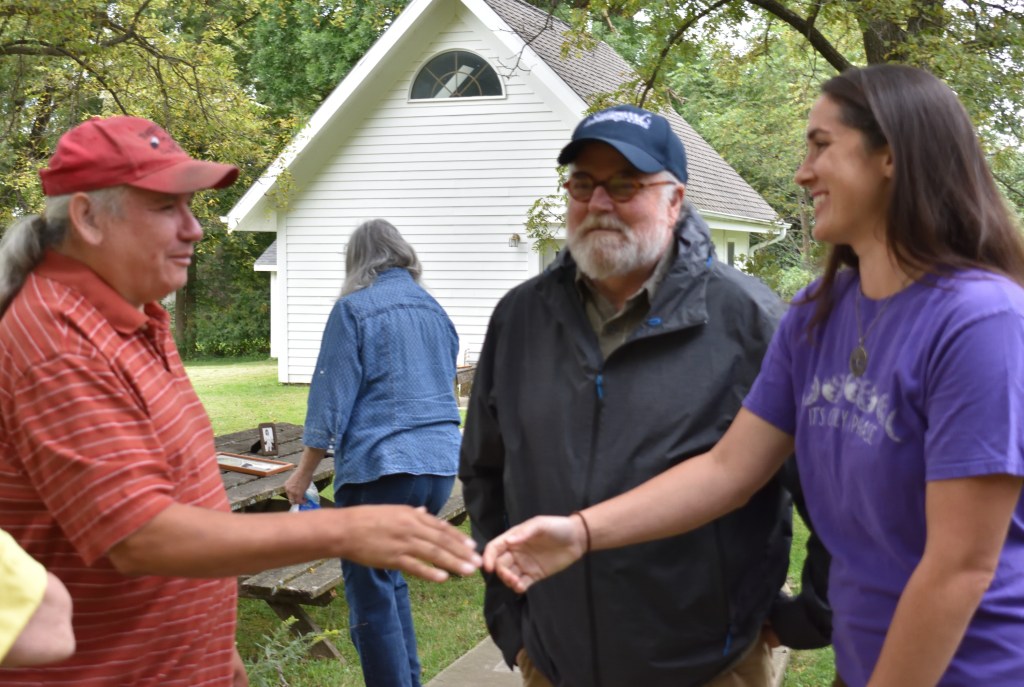
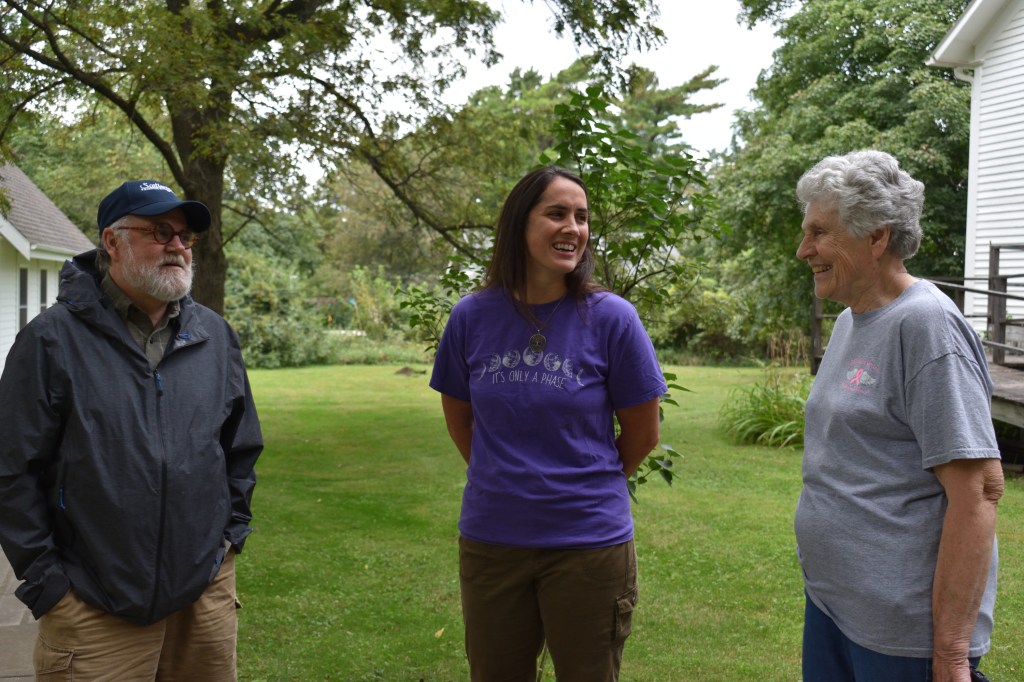
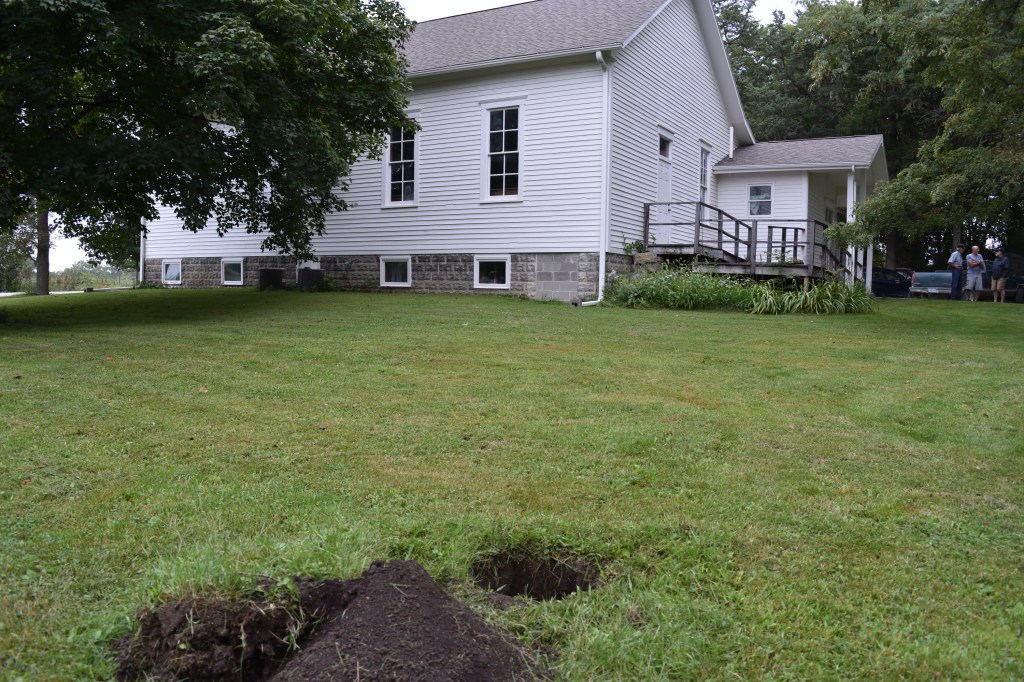
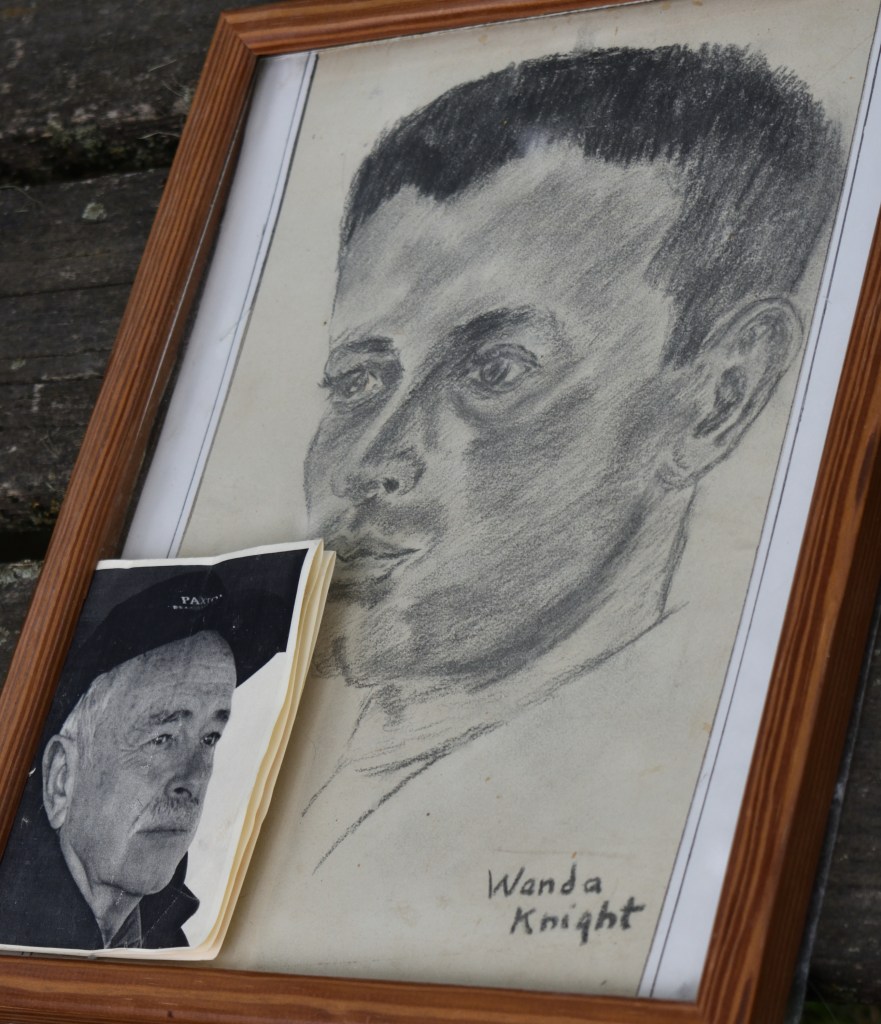
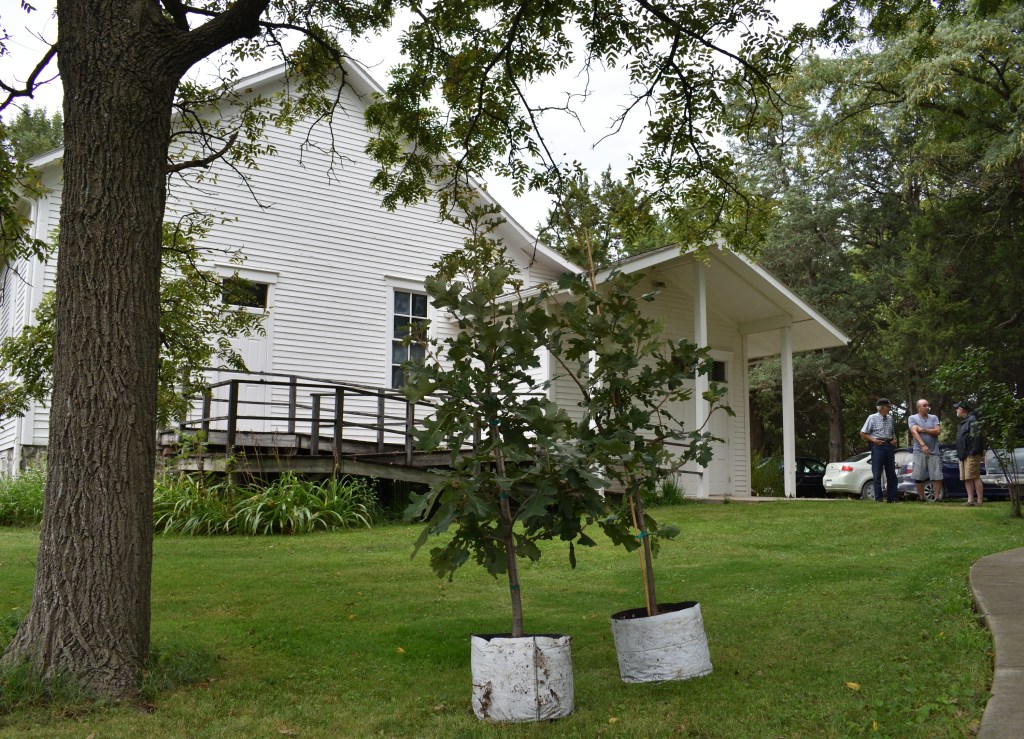
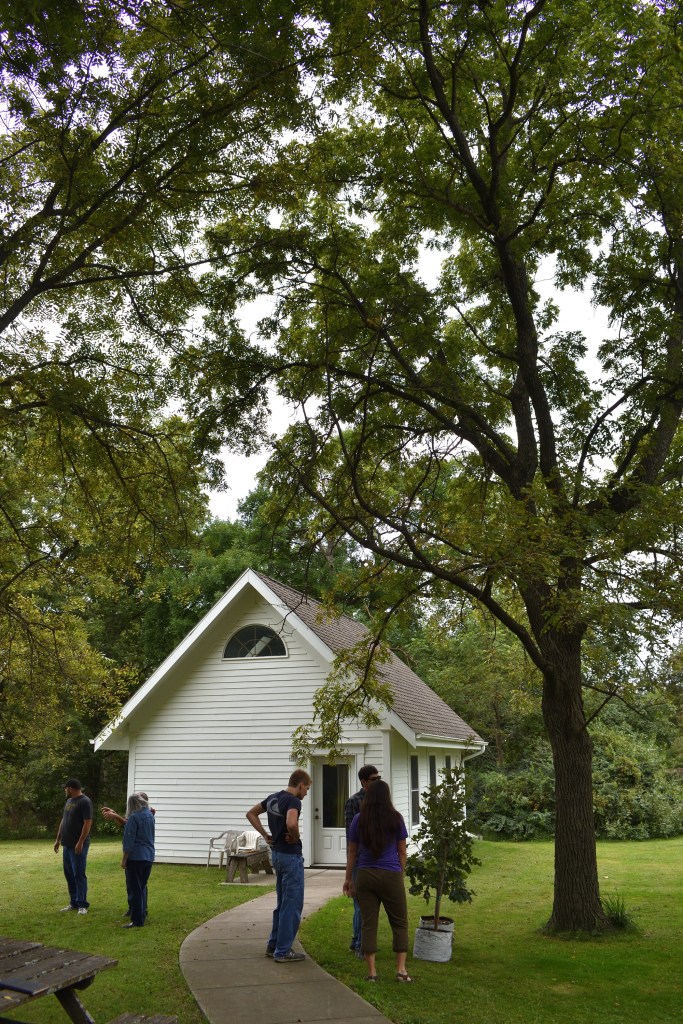
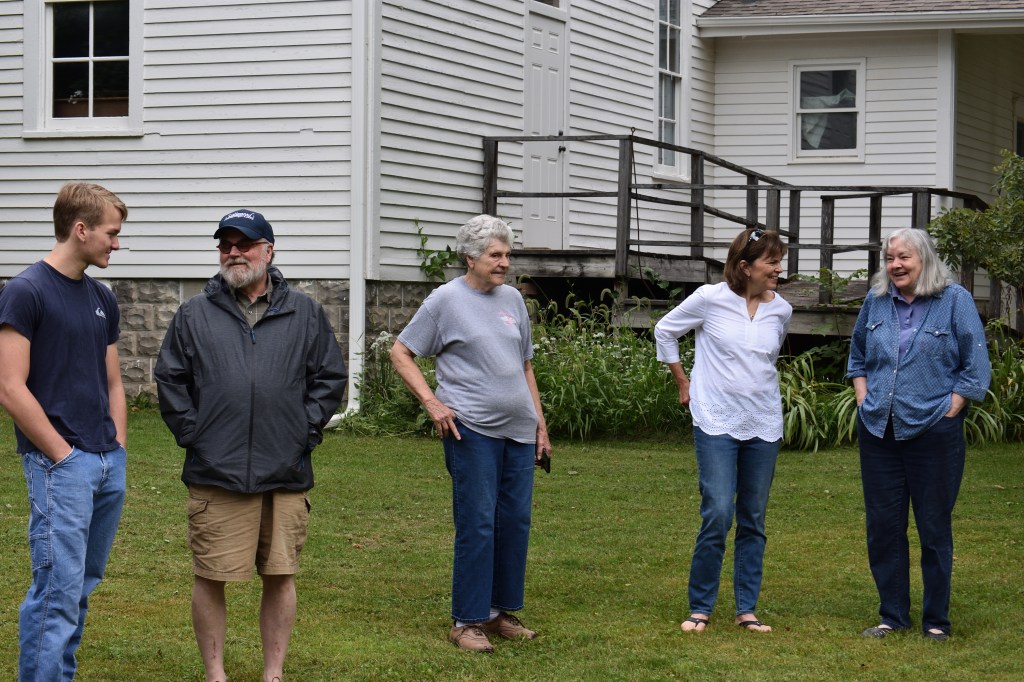
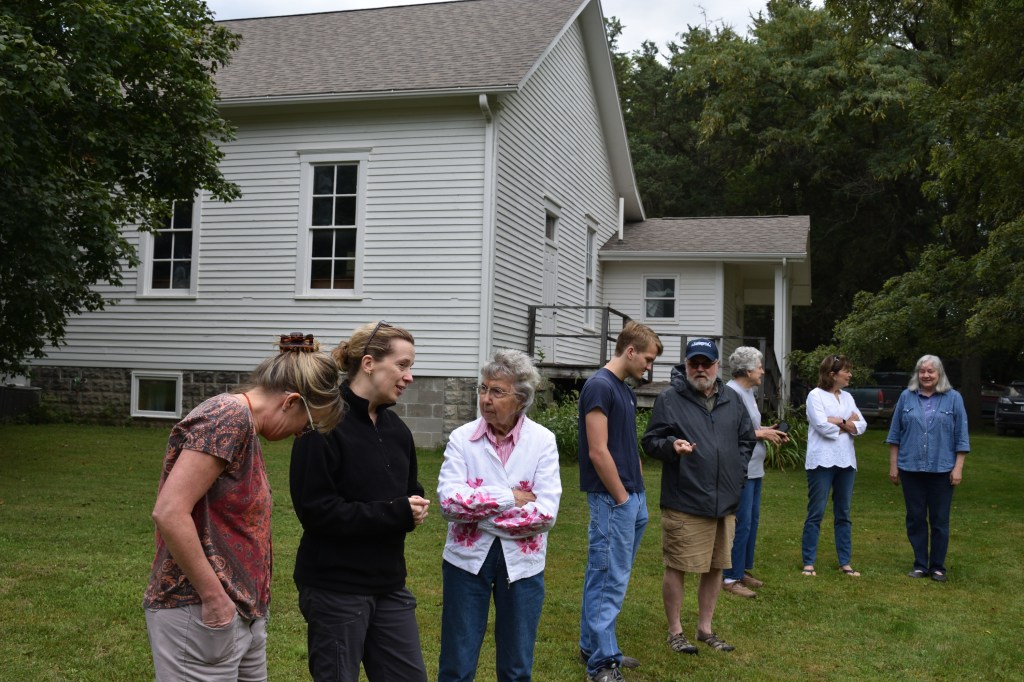
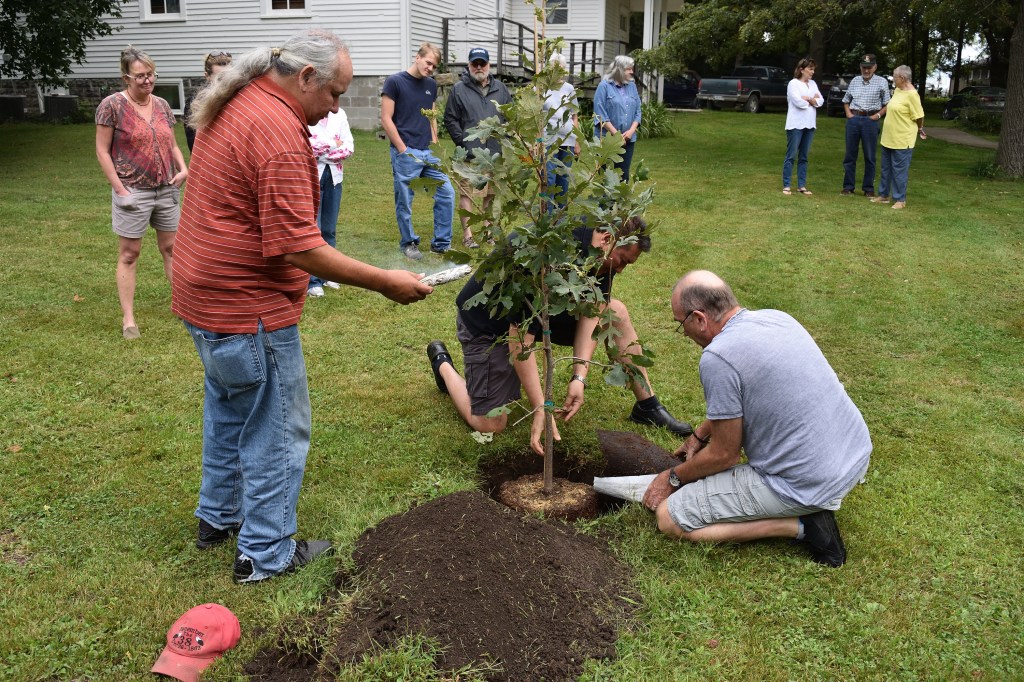
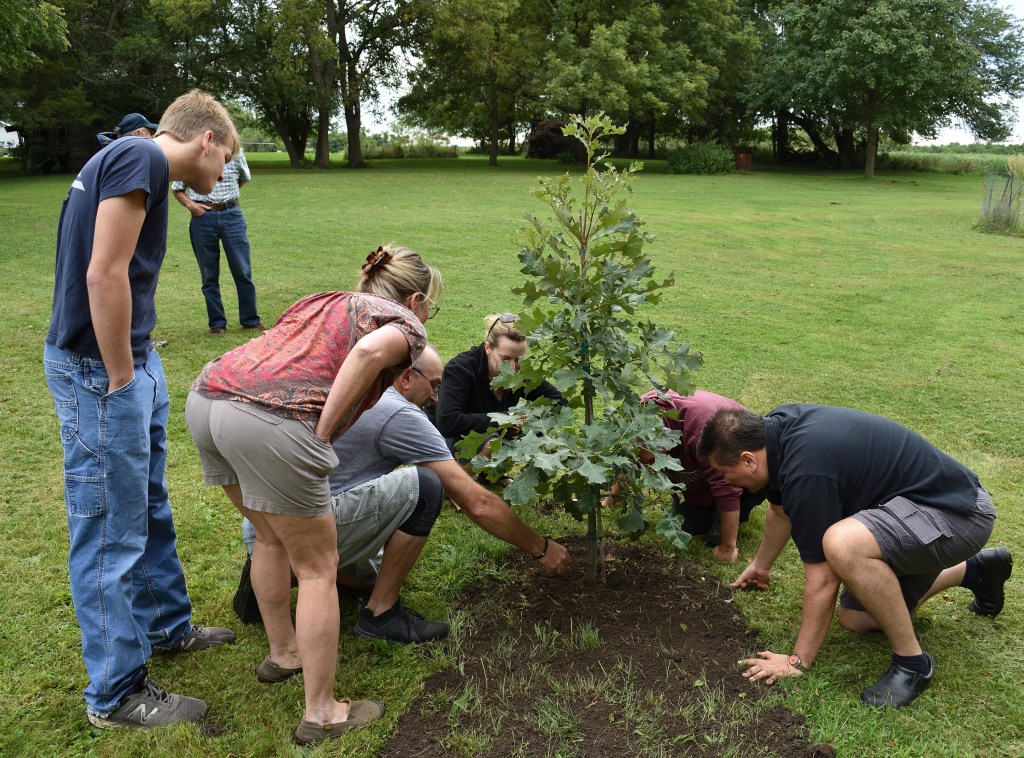
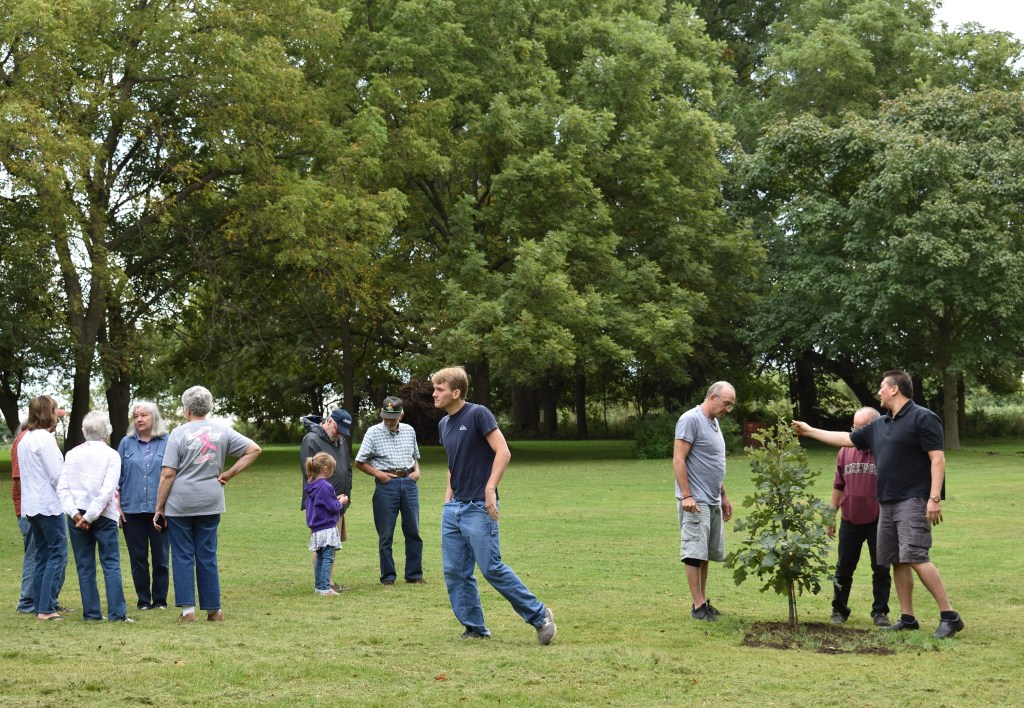
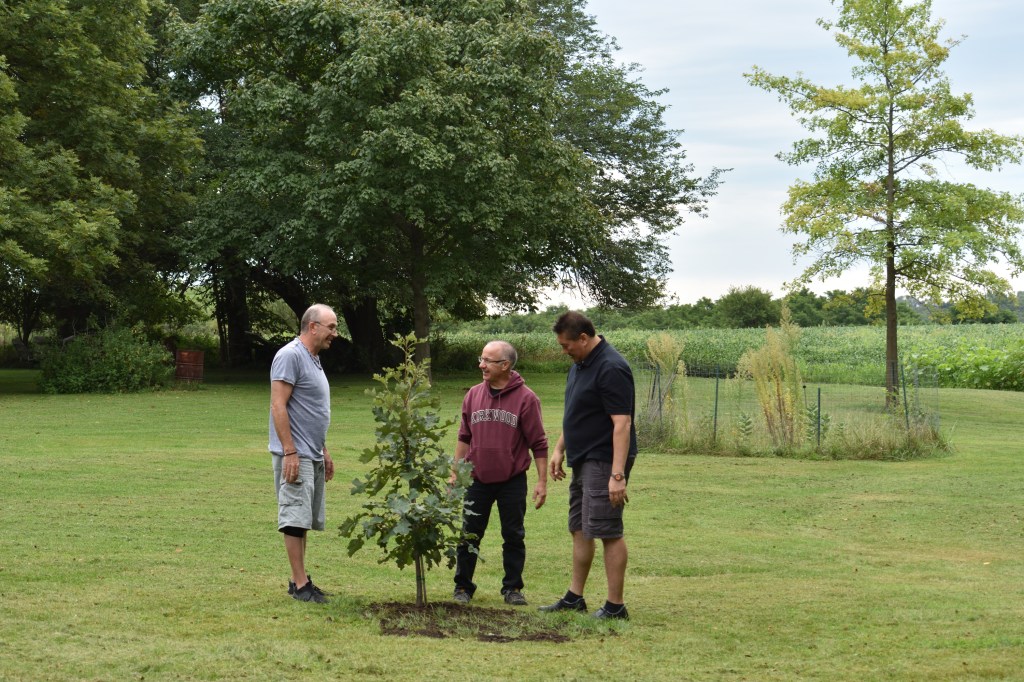
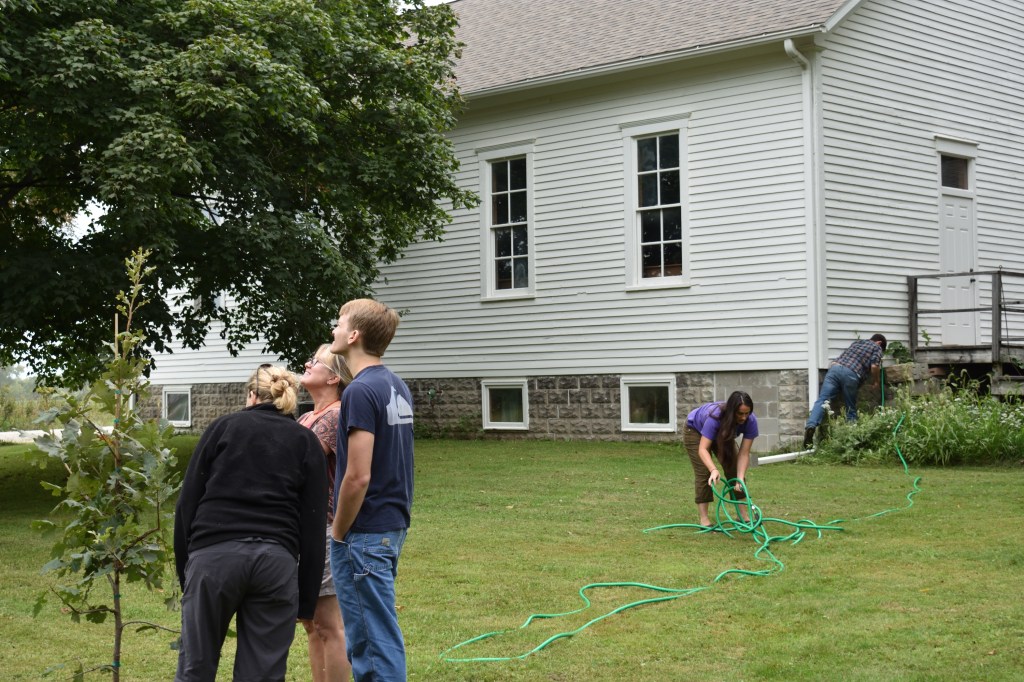
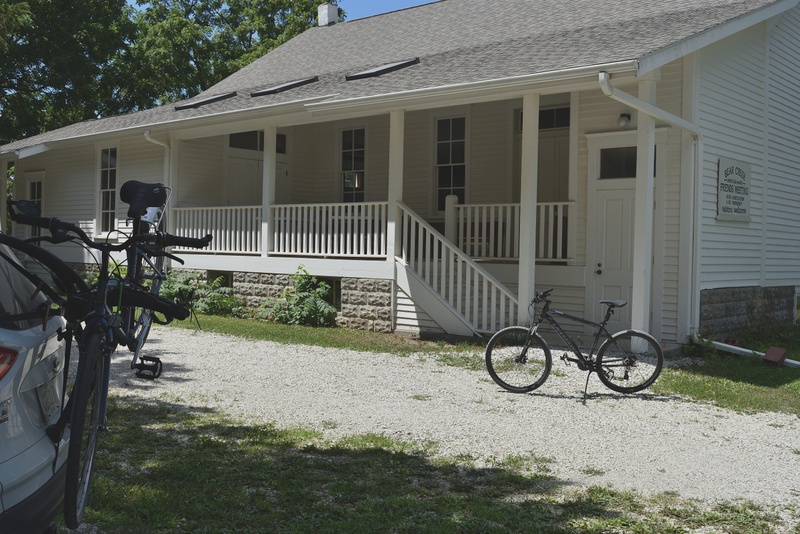
Today was the wonderful ceremony at Bear Creek Friends Meeting, which is in the countryside 2 miles north of Earlham, Iowa. Two trees were planted to honor the memory of longtime members and elders of the meeting, Wanda and Roy Knight.
I am tremendously pleased by 16 year old Greta Thunberg’s decision to travel to the United States via a zero carbon sailboat instead of taking an airplane from Sweden. “This is a fight across borders.”
Asked what she would miss about being in the ocean, the teen reminisced about the quiet. “To sit for hours and just stare at the ocean, not doing anything, that was great,” Thunberg said. “And of course to be in the wilderness, the ocean, and see the beauty of it.”
There is no environmental integrity in flying from one climate conference to another as many have done.
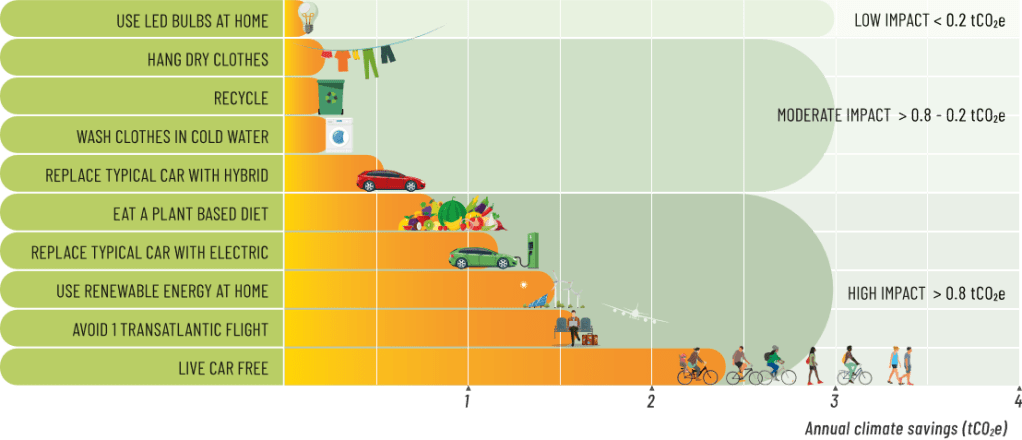
Many of you know I lived my adult life in Indianapolis without a car of my own. Living without a car shaped so many part of my life, including running, photography, activism and spirituality. Having retired and moved to a small town in Iowa to help my mother has created real challenges, conflicts and anguish as I work to use a car as little as possible. I will move to a place where I can live without a car as soon as possible.
There are obviously transportation challenges in rural areas and small towns without public transit systems.
Last year my Scattergood Friends School classmates Dan Mott and Steve Maxwell rode their bicycles across the United States.
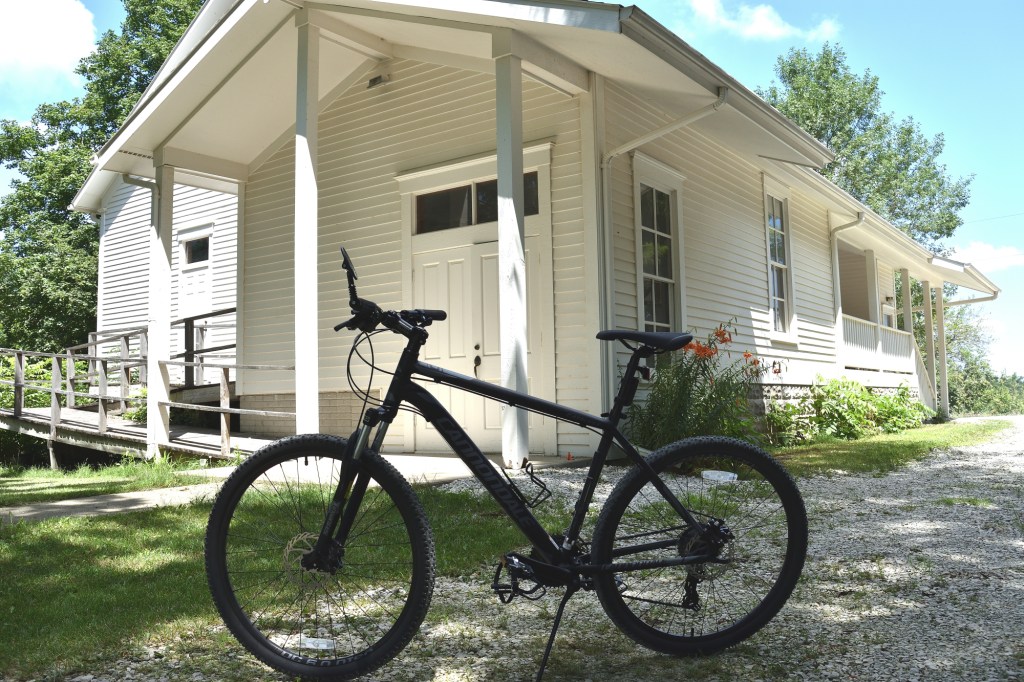
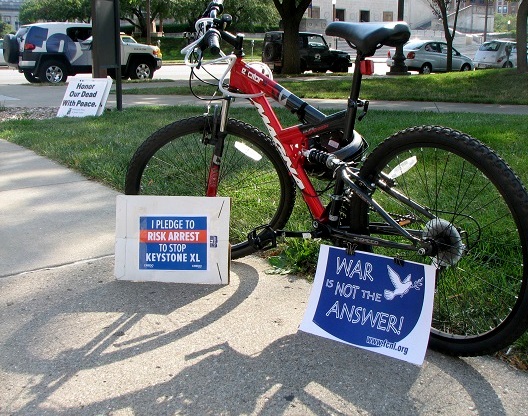
One thing my small, rural Quaker meeting, Bear Creek realized we could do was encourage more use of bicycles, since many members lived close to the meetinghouse just north of Earlham, Iowa. And encourage Friends in urban meetings to use bicycles when possible.
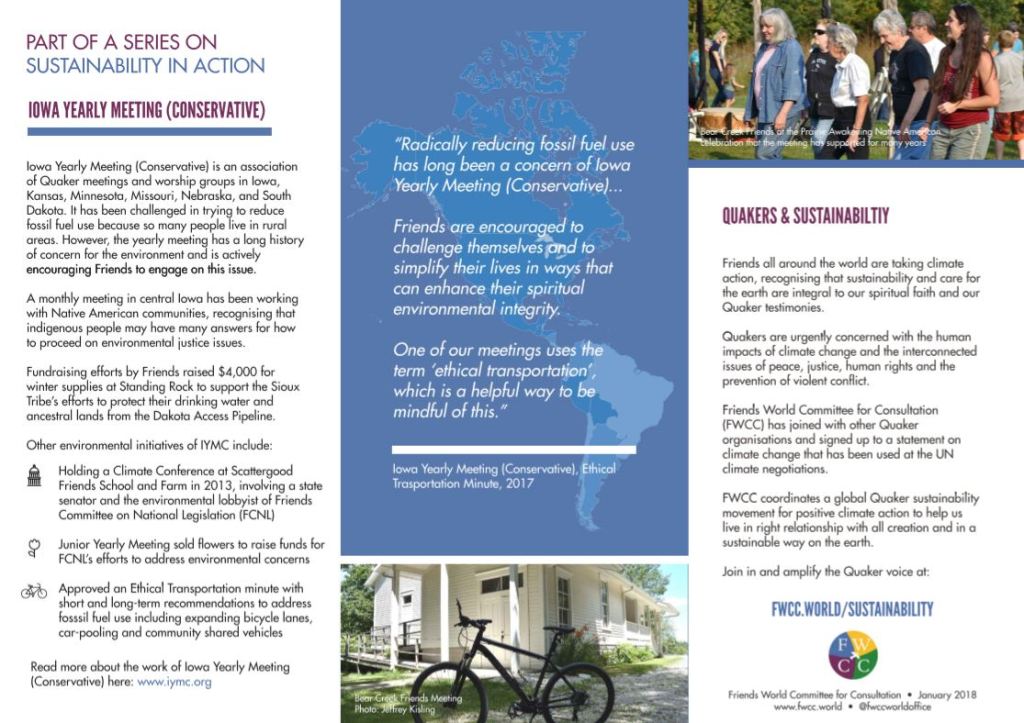
The Minute we wrote, and that was approved by Iowa Yearly Meeting of Friends (Conservative) was referred to as a Minute on “Ethical Transportation”.
Ethical Transportation
Radically reducing fossil fuel use has long been a concern of Iowa Yearly Meeting (Conservative). A previously approved Minute urged us to reduce our use of personal automobiles. We have continued to be challenged by the design of our communities that makes this difficult. This is even more challenging in rural areas. But our environmental crisis means we must find ways to address this issue quickly.
Friends are encouraged to challenge themselves and to simplify their lives in ways that can enhance their spiritual environmental integrity. One of our meetings uses the term “ethical transportation,” which is a helpful way to be mindful of this.
Long term, we need to encourage ways to make our communities “walkable”, and to expand public transportation systems. These will require major changes in infrastructure and urban planning.
Carpooling and community shared vehicles would help. We can develop ways to coordinate neighbors needing to travel to shop for food, attend meetings, visit doctors, etc. We could explore using existing school buses or shared vehicles to provide intercity transportation.
One immediately available step would be to promote the use of bicycles as a visible witness for non-fossil fuel transportation. Friends may forget how easy and fun it can be to travel miles on bicycles. Neighbors seeing families riding their bicycles to Quaker meetings would have an impact on community awareness. This is a way for our children to be involved in this shared witness. We should encourage the expansion of bicycle lanes and paths. We can repair and recycle unused bicycles, and make them available to those who have the need.
Minute approved by Iowa Yearly Meeting (Conservative) 2017
Another just amazing presentation and discussion at the first National Network Assembly was the Keynote on Saturday, August 24, 2019, led by Reyma McCoy McDeid, the Executive Director of Central Iowa Center for Independent Living (CICIL).
Reyma McCoy McDeid, MA, CESP, is the Executive Director of Central Iowa Center for Independent Living. Reyma McCoy-McDeid joined the CICIL family in September of 2015 after she dedicated herself to serving individuals who cannot receive supports anymore. Reyma saw that those persons were left out of the picture when discussing equal opportunity in people with disability. Reyma previously served as the Employment Director for the largest community based organization provider in the State of Iowa known as Candeo. Reyma oversaw the day-to-day operations for the Support Employment department. Reyma’s vocation is supporting fellow individuals on the Autism spectrum to live independent and fulfilling lives. Reyma holds a Master’s degree in Non-Profit Administration with concentrations in Business and Human Services. Reyma is working towards obtaining her Masters of Arts in Education.
EMPOWERING PEOPLE WITH DISABLITITIES TO CONTROL THEIR LIVES
Central Iowa Center for Independent Living (CICIL) is a community based, nonprofit organization whose mission is to empower people with disabilities to control their lives and participate and integrate in their community. Founded in Des Moines in 1990, CICIL is one of six Centers for Independent Living (CILs) currently in operation within the state of Iowa. Our guiding principle at CICIL is the belief that people with disabilities should integrate fully into society, have equal opportunities and maintain control of their lives. The entire community benefits when all citizens live with self-reliance and dignity.
How to Break Down the Wall Between the Movement and Disabled People
Center us as initiatives are being built. Especially multi-marginalized disable people. Outreach after the fact is highly overrated.
Get acquainted with media that centers disabled people. Visibility is everything.
Seek out disabled acquaintances and other connections for yourself, of your own accord.
If you are on a board or taskforce and it has no disabled members, recognize that that is a problem.
Demand that conferences and professional development opportunities feature disabled subject matter experts.
Stop treating typically functioning people as the default setting in progressive spaces.
Now I intend to make a point of seeking out people with disabilities to work with. Reyma pointed out that many disabilities are not obvious/visible. While we should never say anything that would put people on the spot, we should make general statements welcoming everyone, including those who might have a disability. A term I learned was “self declared” for someone who is comfortable making their disability known.
After her presentation we spoke briefly about the Dream Catcher apartments designed for people with disabilities that my Dad, Burt Kisling , Chuck Day and others built in Des Moines.
NOTE: For some reason I didn’t have my notebook or camera with me that morning. But this awful photo shot with my cell phone summarized what Reyma said.
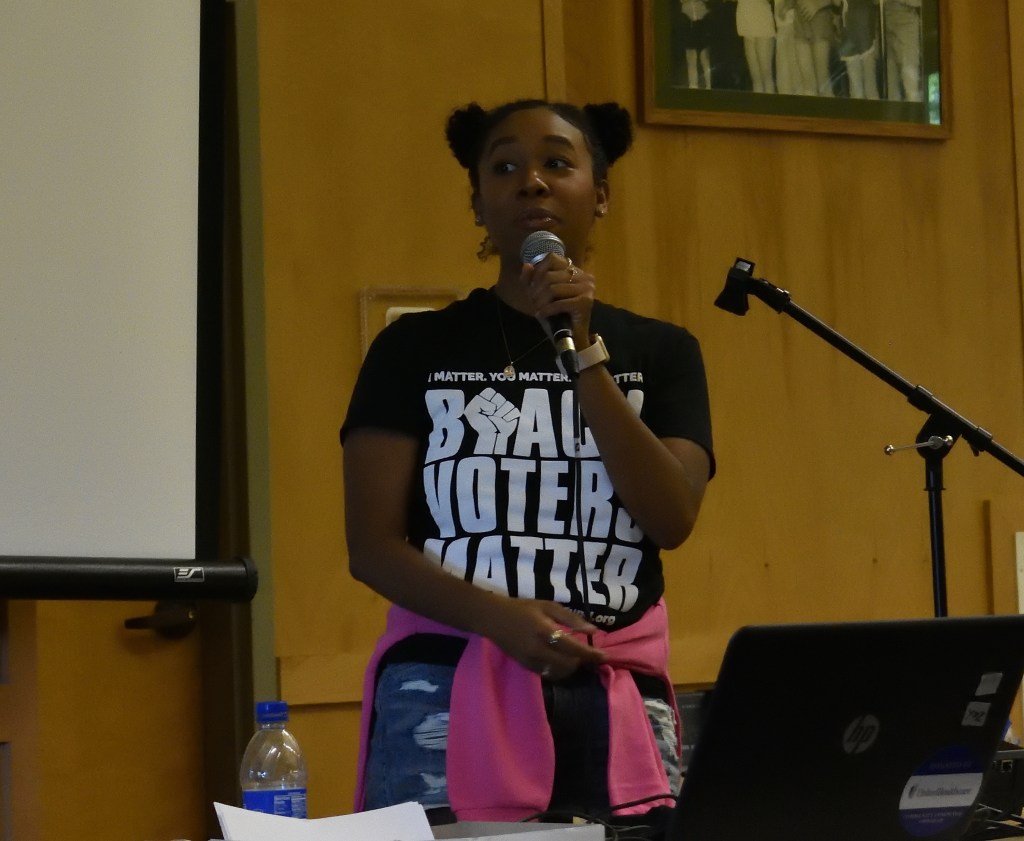
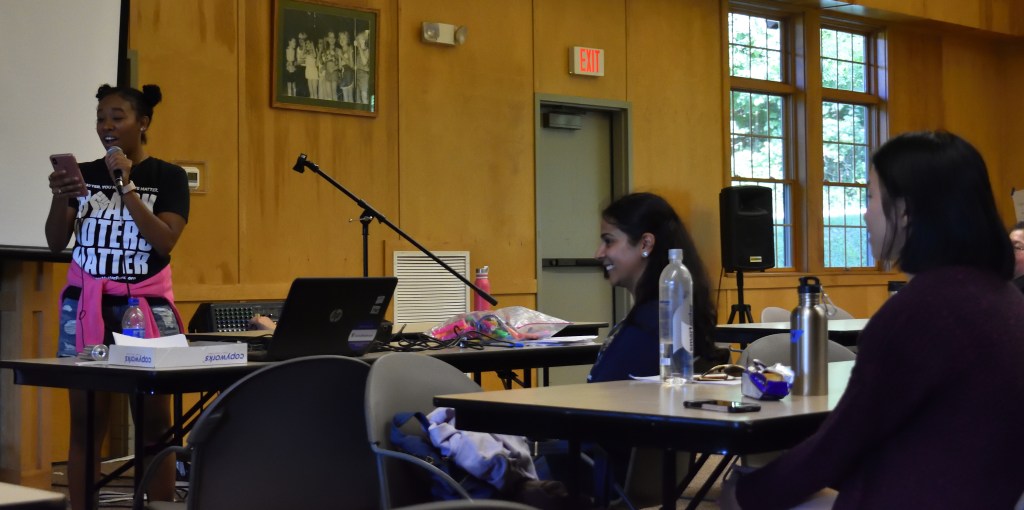
Shanise Williams I, Black Voters Matter Fund, received a standing ovation after her eloquent and passionate keynote presentation at the National Network Assembly (NNA). https://www.facebook.com/ShaniseThe1st
From her bio, “Shanise Williams I is a published poet, entrepreneur, blacktivist, feminist, and founder of the Close Knit Communities Coalition who’s mission is to be the needle that threads love, leadership, and long-lasting change into our local areas by hosting and planning community events, collecting donations for local shelters, and speaking up for rights and respect for all.”
I will do the best I can to do justice to Shanise’s presentation. She spoke in a way that challenged me/us that was illuminating and thought provoking.
The theme of her presentation was honesty and authenticity.
What follows are from the notes I took at the time. I hope they are accurate. They are not exact quotations and any mistakes are mine. The bold, italicized sentences are my best summary of what she said. After that, I share some of my own experiences.
It is not enough to talk about racial injustice. White people must experience, live it. We can only be authentic when we speak from our own experience. I am so grateful I was given the opportunity to spend significant amounts of time in the Kheprw Institute (KI) community, a black youth empowerment organization. That taught me that white people must spend significant amounts of time, in a variety situations, with black people to even begin to understand racial injustice. Developing friendships is essential, before any real work can be done together. Over the four years I was involved with KI, before I left Indianapolis, I spent a minimum of several hours a month there. Often that was to participate in youth-led book discussions, where people were encouraged to respectfully express what they felt about that month’s book.
White people must create space for black people. White people commonly fail to ask to hear black people’s stories. This reminds me of the unfortunate experience that occurred when Indiana Moral Mondays (IMM) was created. My interest is in environmental concerns, so that was the area I worked in regarding IMM. My friend Denise Abdul-Rahman, who was the NAACP Indiana Environmental Climate Justice Chair, was also initially involved with that work. She had a great deal of knowledge and experience to offer. Unfortunately she found her voice wasn’t being heard, and soon stopped attending IMM meetings.
It is good for a white person to ask a black person they know if they are OK. White people should learn that just surviving another day is an accomplishment for a person of color. Should understand that black people, black activists are often targets of violence and death. Thinking back to some of my experiences at KI in Indianapolis I remember the first time I got a sense of how different life was for black people when I witnessed a black mother break down in tears as she told us how scared she was every single time her children left the house.
White people should remove the thought that large crowds of black people are dangerous. Paradoxically, having often lived in predominately white cities, I think of the many times there was only one person of color in the crowd I was in.
White people need to stop finding safety in white communities.
If a white person is working against white supremacy, they need to say so even when no black people are present. White people need to publicly denounce racism everywhere, everytime.
Shanise spent a good amount of time telling us white people that black people deserve trust. White people must stop looking for black people merely to represent a token diversity quota. We must genuinely want the contributions people of color have to offer what we work on together. We will gain so much by working together honestly and authentically. During the last meeting I attended with my friends from KI, I tried to thank them for how much I learned from them. I said I thought I’d received an advanced degree. My friend Alvin said, “we’ll mail you your diploma.” It was nice to leave with that laughter embracing me. I miss my friends a great deal.
This seems an appropriate place to share a new video of my friend, Imhotep Adisa of the Kheprw Institute.
“On August 22, Imhotep Adisa spoke about the 1619 Project of the The New York Times and the importance of looking at the historic roots of where we find ourselves today at the Monumental Luncheon at Newfields.”
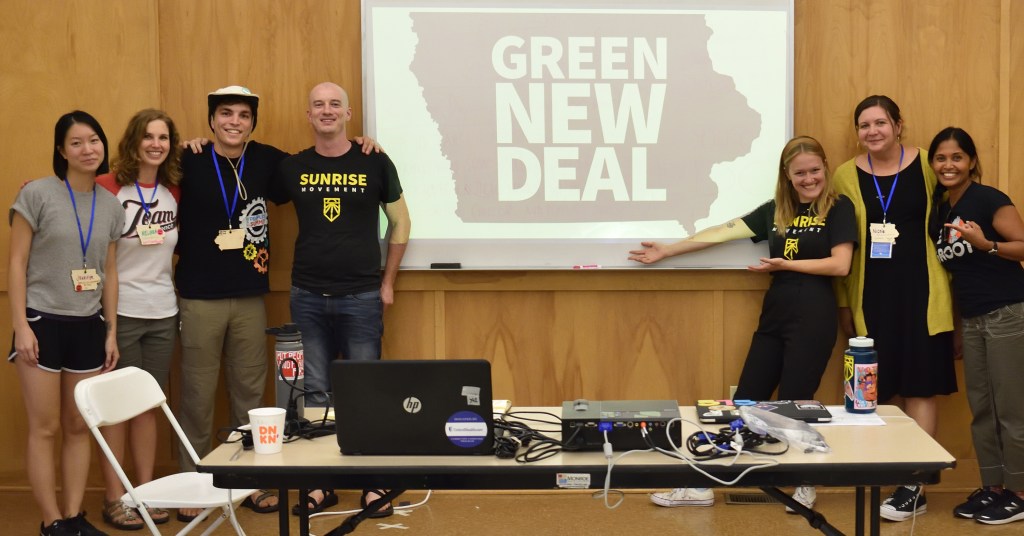
One of the main reasons I wanted to attend the National Network Assembly (NNA) was to see what other organizers might be doing about the climate emergency, the Sunrise Movement, and an Indigenous Led Green New Deal (GND).
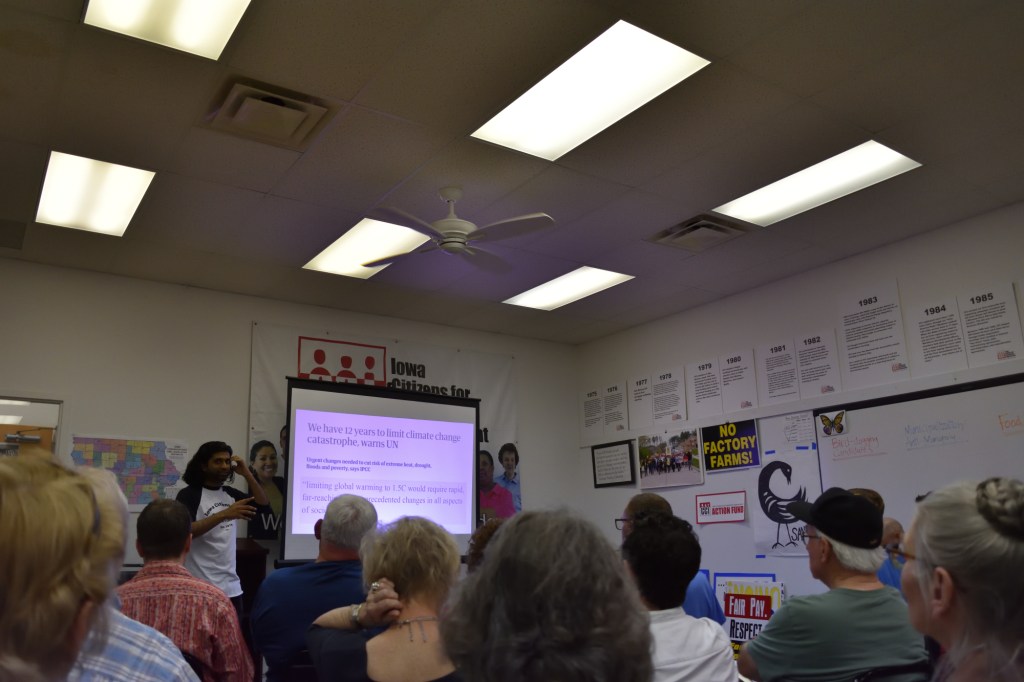
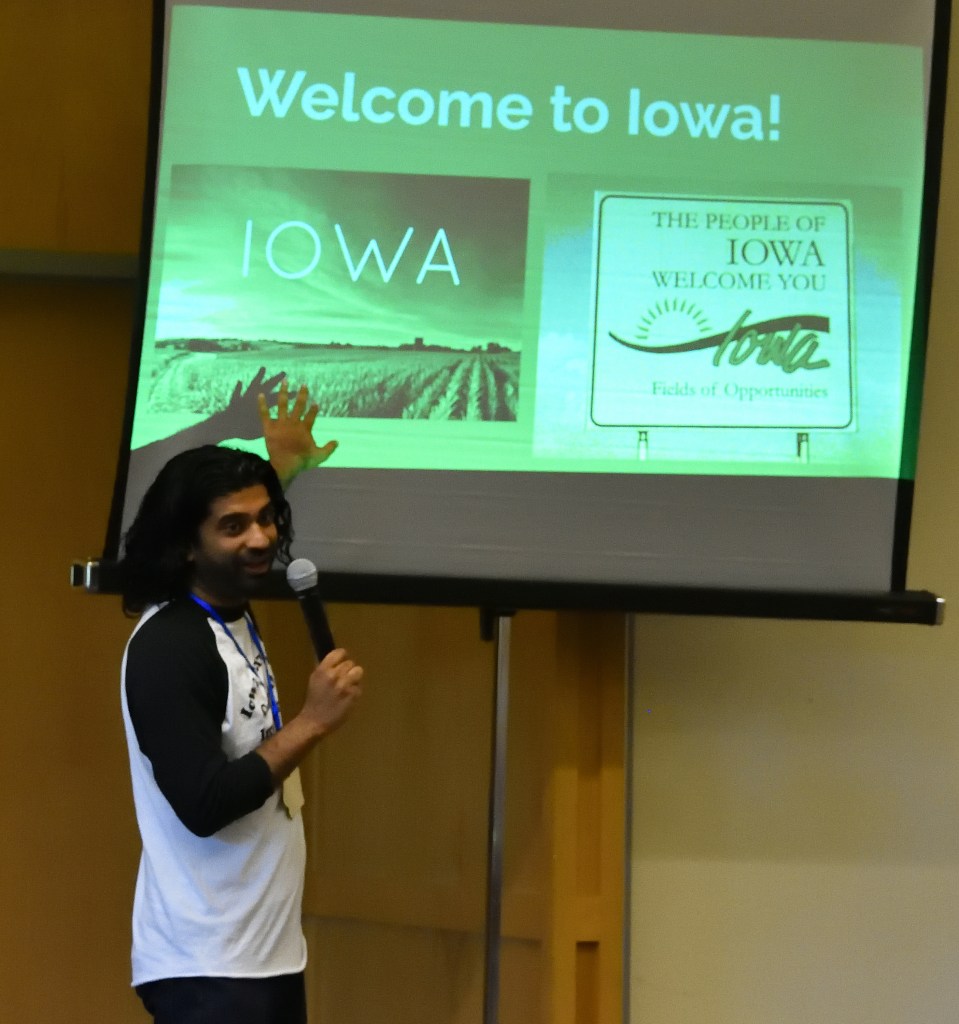
As I mentioned in yesterday’s post, Iowa Citizens for Community Improvement (ICCI) has been leading the Sunrise Movement efforts in Iowa. I had already met Shawn Sebastian, who does this work at ICCI, first when the Sunrise Movement’s Green New Deal Tour came to Des Moines, and later when a Sunrise Movement meeting was held at Iowa Citizens for Community Improvement (ICCI).
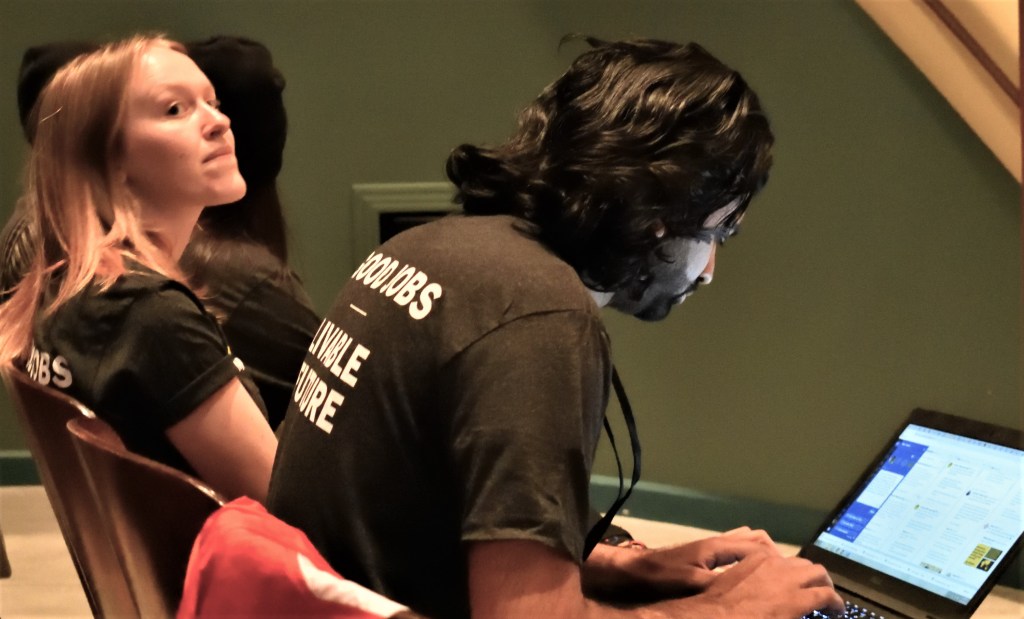
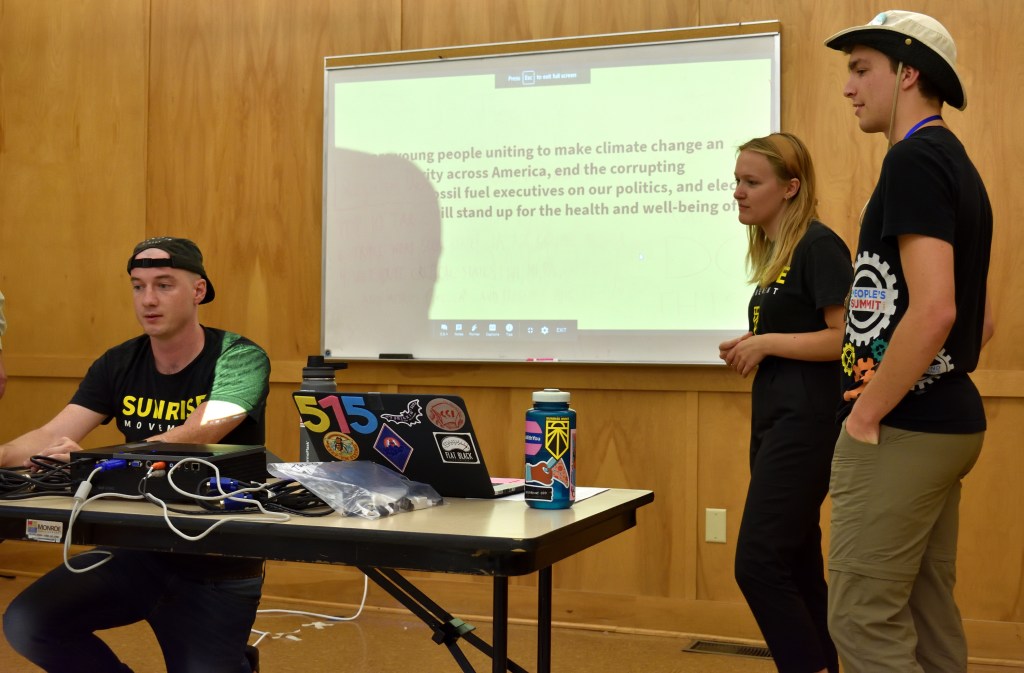
On the schedule we received ahead of the Assembly I was really glad to see “Sunrise Movement: Building an army of young people to stop climate change and create millions of good jobs in the process.” Seth Woody and Catherine Lewin, who are going to be the Sunrise Movement organizers in Iowa now, led the discussion. Paul was also there. I realized I had also seen Catherine at the Green New Deal Tour.
Catherine Lewin and Shawn Sebastian
I’ve read and written a lot about the Sunrise Movement so I was familiar with much of what Catherine and Seth presented. https://kislingjeff.wordpress.com/?s=sunrise+movement. I was glad to hear the plan is to organize a Sunrise Movement house, where young people can live and work on developing the Sunrise Movement in Iowa.
I brought up how important I believe it is for the Green New Deal to be Indigenous led and Catherine spoke about supporting that idea. I was glad my friends Lakasha and Trisha CaxSep GuWiga Etringer were part of the Sunrise Movement Tour in Des Moines this past spring, where they talked about the importance of the Green New Deal being Indigenous led.
My friend Christine Nobiss has also been working on what it means for a Green New Deal to be Indigenous led. Christine told us about all the work she has been doing in another session at the National Network Assembly gathering. I am looking forward to an article she is writing about an Indigenous Led Green New Deal.
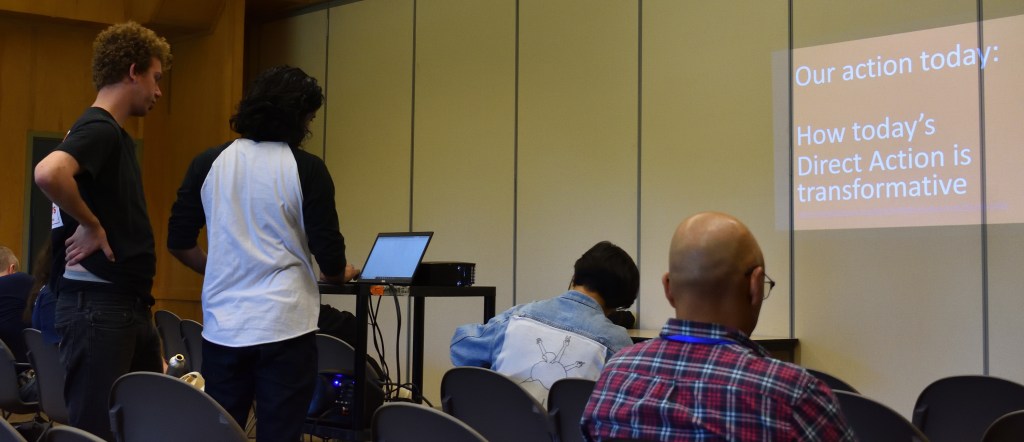
Several of the planned sessions I attended at the National Network Assembly related to direct action. I also participated in the unplanned event.
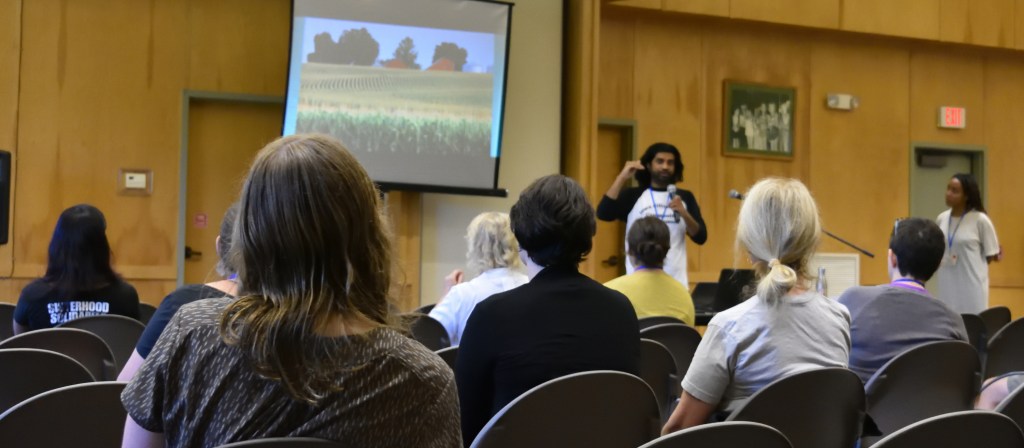
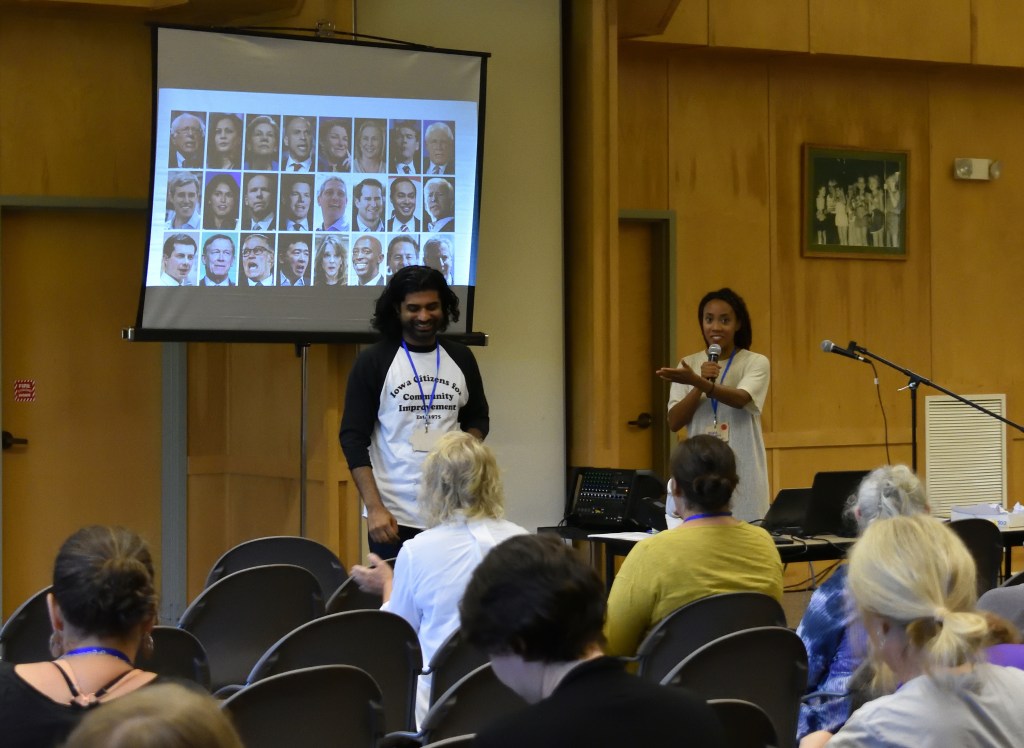
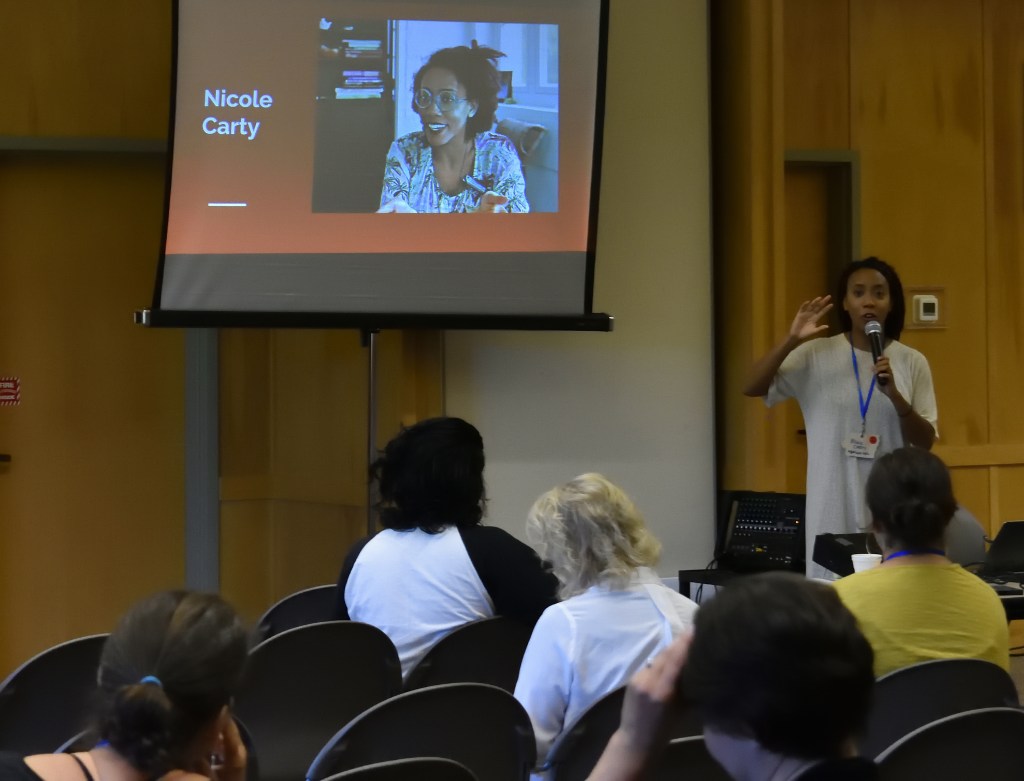
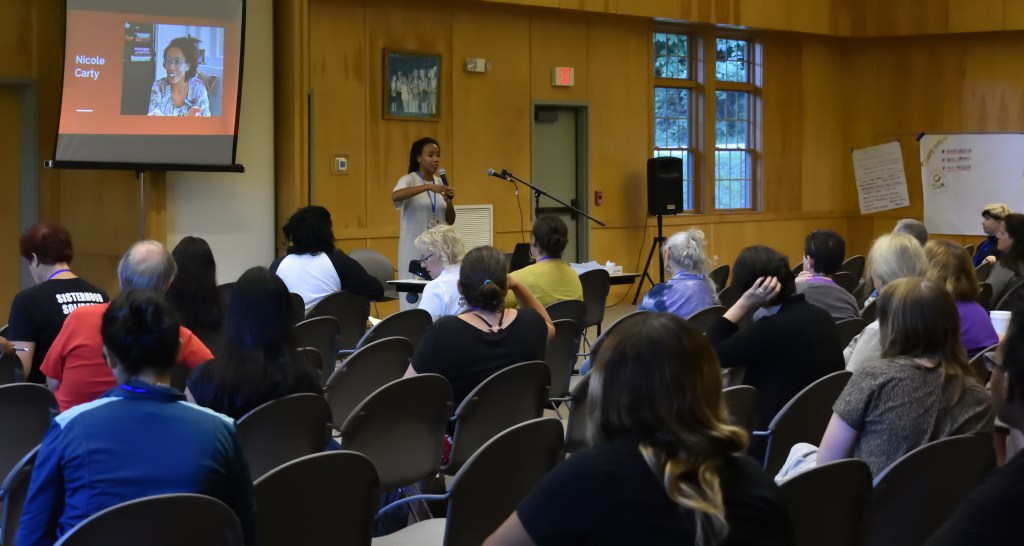
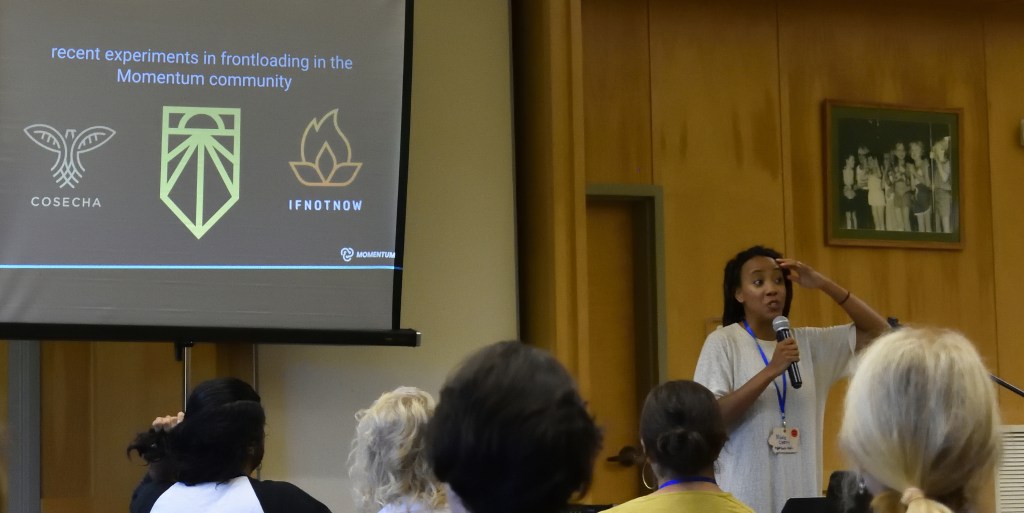
This began Friday (8/23/2019) morning with “Our Story: The Movement Vision and Values Project.” The speakers were Shawn Sebastian and Nicole Carty.
I had met Shawn previously because he is working at Iowa Citizens for Community Improvement (ICCI) in Des Moines. I had seen him at the Sunrise Movement Tour when it came to Des Moines. ICCI is the Sunrise Hub in central Iowa. I also saw him after that when there was a Sunrise Movement meeting at the ICCI offices.
Shawn and Nicole each spoke of the value and effectiveness of stories. Stories are our oldest technology. They are unifying and help others see who we are and where we are going. Stories show our vulnerability, which allows us to connect with others at a deeper level than just providing facts to support our goals. The coherence of stories is more important than facts. “Fact checking” is not useful.
Effective story narratives should include:
Now – describe the current state of the issue your story is about
Problem – clearly define and describe the problem
Us – who we are
Them – name names of the organizations and people that are the problem
Choice – clearly define what the choices are
Vision – describe the vision of what will be the result of people making the choice you are advocating for
Our values are love, freedom, inclusivity, equality, dignity and democracy.
Shawn told the story of watching the 2016 Presidential election returns with a friend who had a debilitating illness. They feared how the Trump administration would affect his friends healthcare, which was costing thousands of dollars a month even with medical insurance. Shawn was living in New York at the time and his parents lived in Iowa. Seeing how all Iowa counties but two voted for Trump, he call his parents, of Indian ancestry, and begged them to leave Iowa, fearing for their safety. But they refused to leave.
When Shawn realized the political importance of Iowa related to presidential primaries he decided to move to Iowa to work at ICCI, to get candidates who would support Medicare for All elected.
The next session I attended was “Direct Action Training” that was presented by Ross Floyd who also works at Iowa Citizens for Community Improvement.
Now – only the wealthy can afford comprehensive health care.
Problem – even those who have medical insurance are often responsible for thousands of dollars of medical costs. Some people can’t afford the cost of their medications
Us – people who aren’t rich and have either inadequate or no health care insurance
Them – medical insurance companies that don’t provide full medical insurance
Choice – Medicare for all versus the current inadequate medical insurance
Vision – every person receives medical care at no cost
Ross used some past direct actions to illustrate components of direct actions, including the multiple roles that need to be assigned, such as police liaison (whose role is to detract police attention from the action), media person and action marshals to maintain discipline.
What we hadn’t expected was to participate in a direct action in Des Moines organized by ICCI related to Medicare for All. We were going to join people in Des Moines to meet at one of the companies that was opposing Medicare for All. The plan was to tape printouts from numerous Go Fund Me sites that had been created to help individuals raise money to cover their medical expenses on the windows of the company’s office. Those pages would be taped to the windows there with band aides.
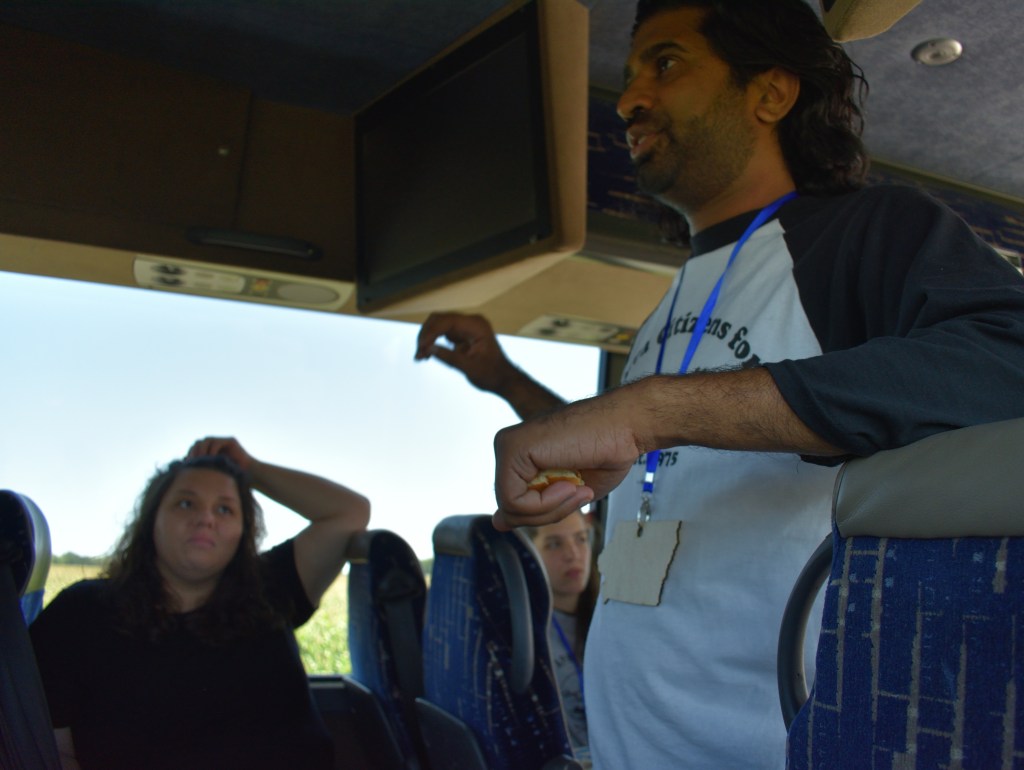
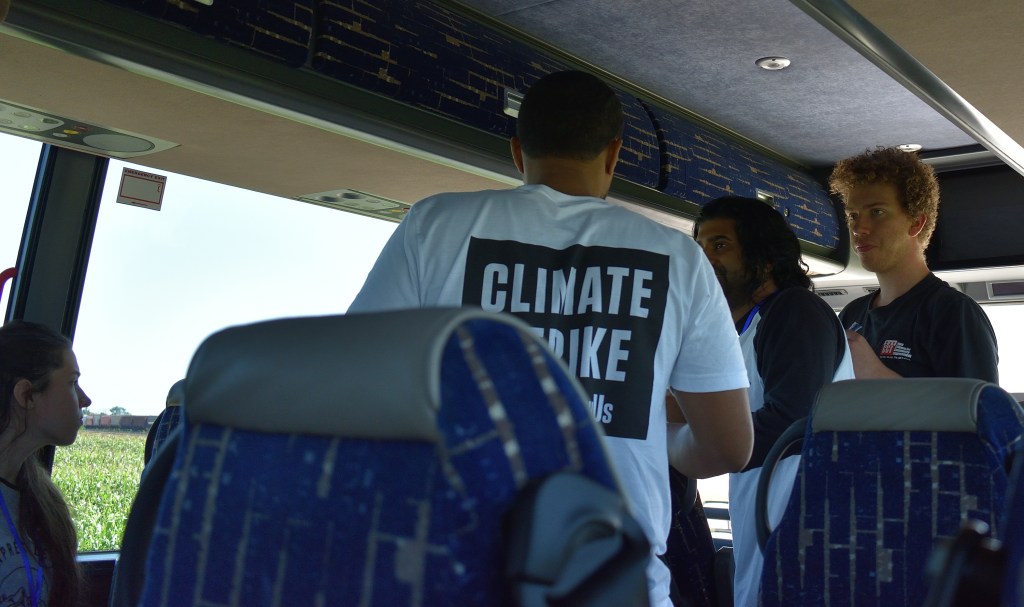
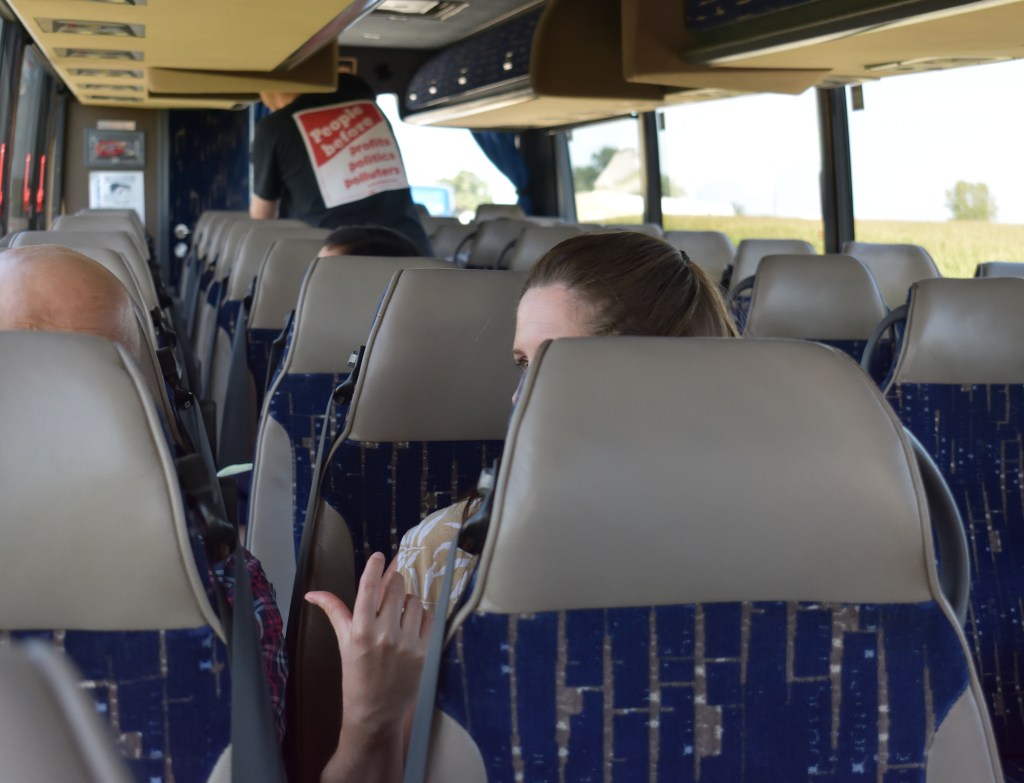
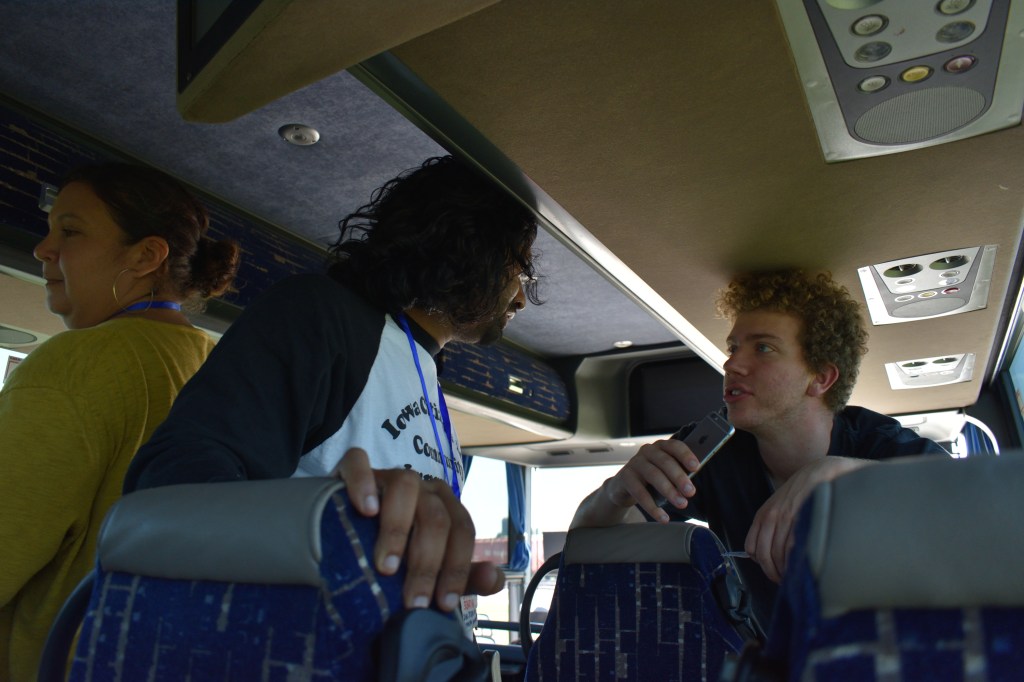
ICCI had arranged for sack lunches and bus transportation from the Y Camp to Des Moines. It was disappointing that only a dozen of us decided to go to the action. We set out for Des Moines, but ran into (not literally) a railroad crossing that was blocked by a train that wasn’t moving. Shawn and Ross were in contact with the ICCI staff in Des Moines. Unfortunately the train was still there after 30 minutes. At that point we couldn’t get to Des Moines in time, so we returned to the Y Camp. We did use the time to talk more about direct action and share some of our stories.
This was a lesson that no matter how much planning you put into organizing a direct action, there can be, and often are unexpected circumstances to deal with.
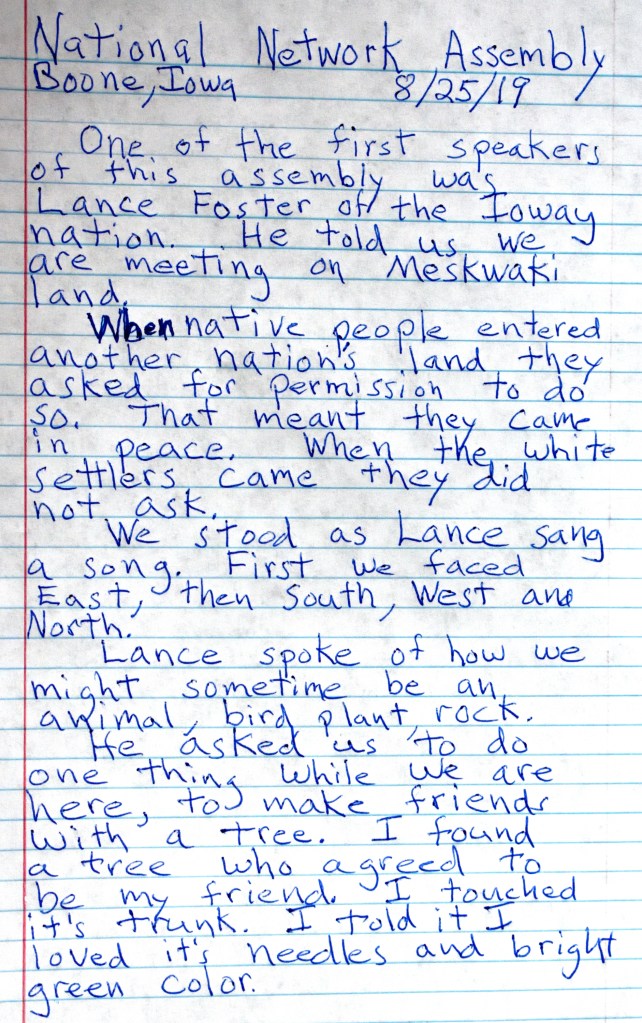
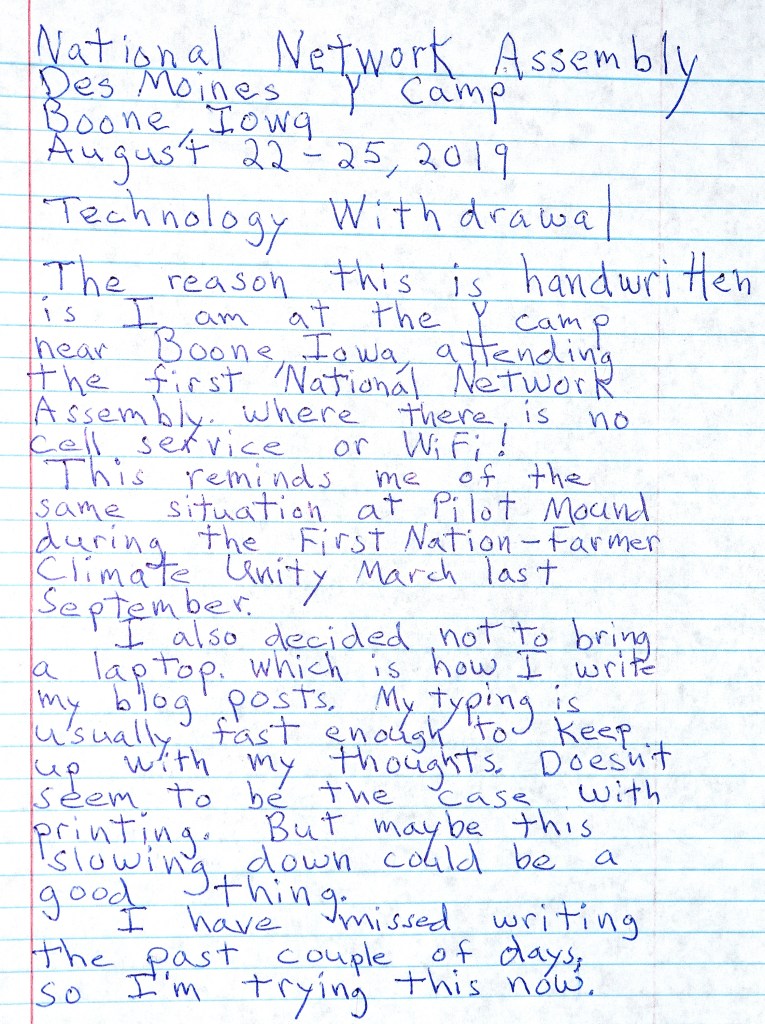
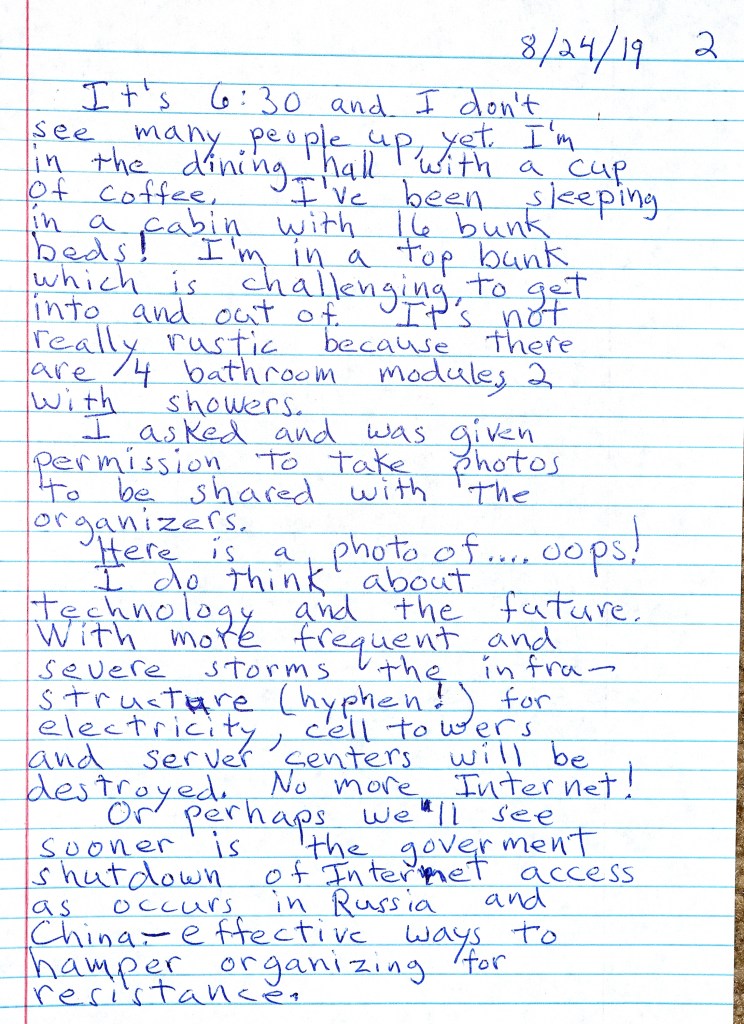
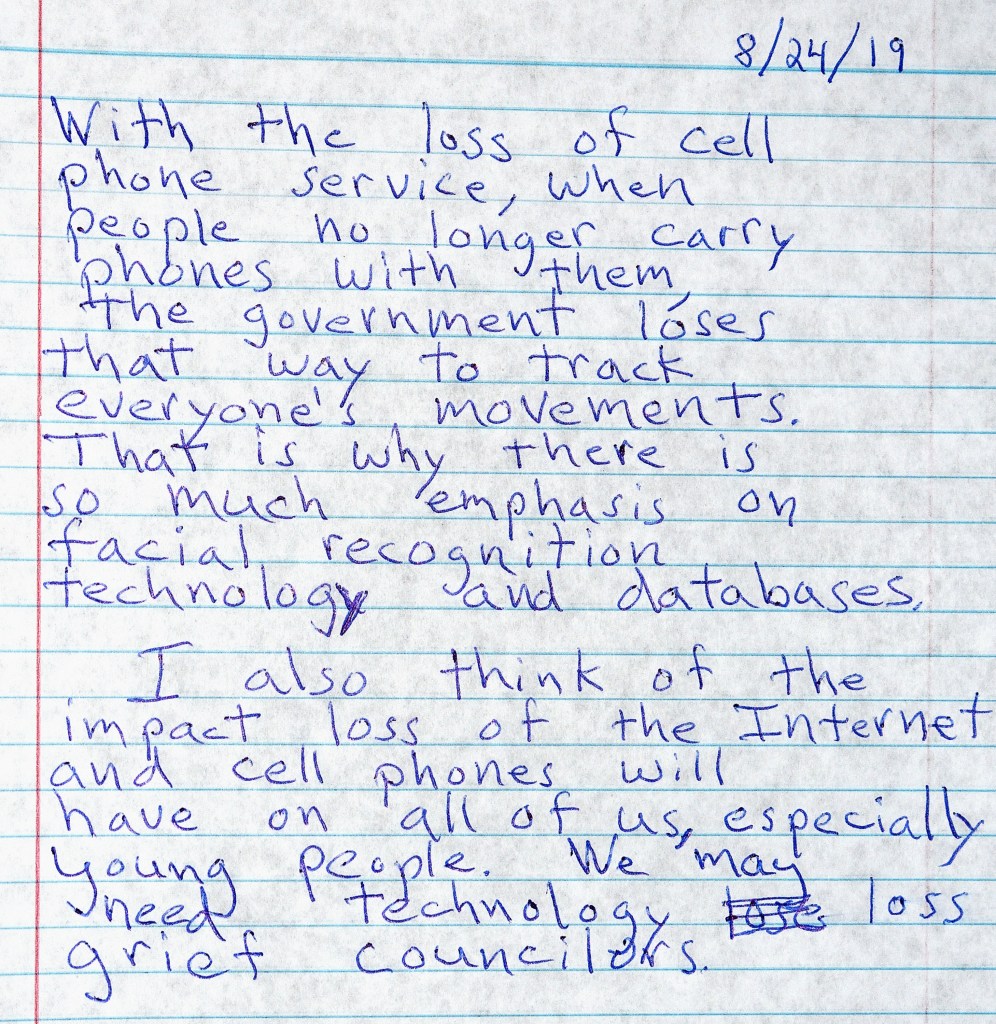
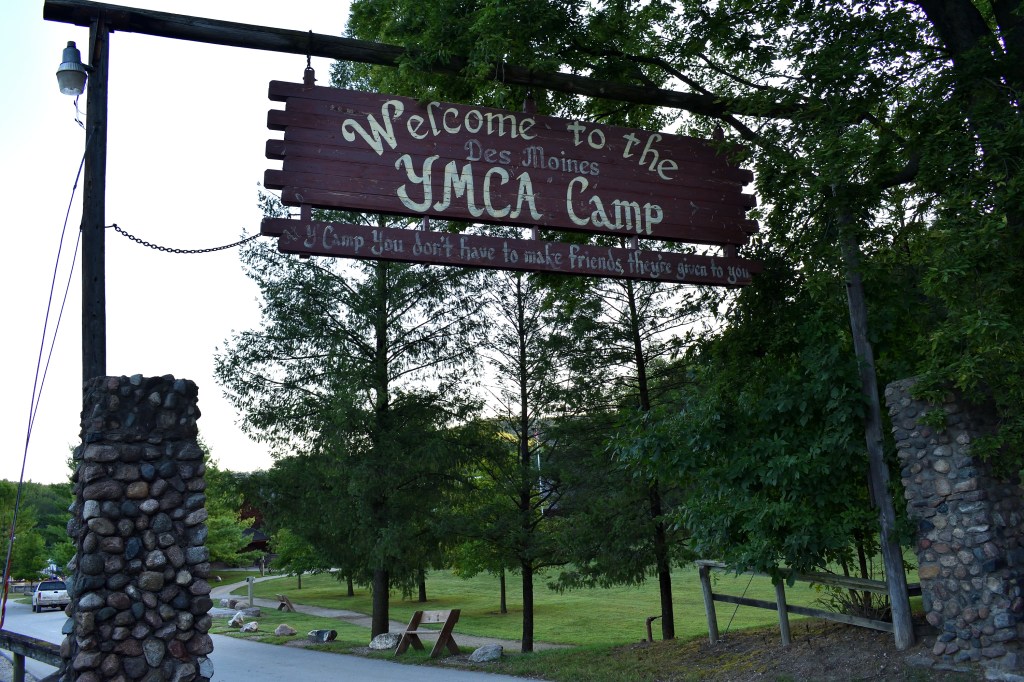
I just returned from an amazing event, the National Network Assembly, held at the Des Moines YMCA Camp near Boone, Iowa. From information about the Assembly we received ahead of time, I knew I wouldn’t have WiFi or cell phone access, so I didn’t even bring my laptop. As I mentioned in yesterday’s post though, there were so many things I wanted to write about and I was missing my (nearly) daily writing, so I wrote two blog posts by hand.
As I sat in Quaker Meeting yesterday, at Bear Creek Friends meeting, which is in a rural setting, surrounded by trees, the image of my tree friend appeared, illuminated by the Inner Light.
One thing we talked about at Meeting yesterday was the upcoming ceremony of the planting of two memorial trees on the grounds of the meetinghouse to honor the memories of a married couple who were members and elders of our community.
#NationalNetworkAssembly
Bear Creek Friends meeting near Earlham, Iowa
Please Note: Since I wrote this, Lance Foster told me the land was Ioway land before the Dakota or Meskwaki were there.
I probably wrote my most recent blog post, Led to Take Risks, with myself in mind. I wrote about my friend Christine Nobiss suggesting I attend the first National Network Assembly at the Des Moines YMCA Camp near Boone, Iowa, August 22-25. So I registered to attend and told her I would be there.
The morning of the first day of the Assembly, Thursday the 22nd, found me thinking I didn’t really want to go, thinking of the hassles that would be involved, figuring out about meals, where to sleep, the schedule, and of being in a crowd of so many strangers, most of whom would be younger than me by about 40 years I assumed. But as usual, I was so glad I went, and many of those strangers became friends.
The sign at the entrance to the camp says “You don’t have to make friends, they are given to you“.
I think one of the most important things we need to do as we are confronted with environmental, economic and social collapse is “find new ways to assemble with people with diverse perspectives who are capable of coming into coherent relationships with each other for long enough to produce something worthwhile.” Pontoon Archipelago or: How I Learned to Stop Worrying and Love Collapse. James Allen, Medium, May 24, 2019. I don’t think it was a coincidence that these meetings would be called the National Network Assembly. That was one of the reasons I felt it important that I attend, and the result far exceeded my expectations.
We were given a helpful packing list. We would be staying in cabins at the YMCA Camp, but is was suggested we bring a sleeping bag. Two shuttles (school buses) provided transportation from the Des Moines Airport to the YMCA Camp. Mom dropped me off at the airport and I looked for the bus. It was impossible to miss once it arrived. So a crowd of about 50 of us boarded the bus, and rode the 70 miles to the Y camp. It seemed everyone was younger than 25 years of age! It was certainly a boisterous and friendly group. It was amusing to see how city kids reacted to rural Iowa. ‘Wow, did you see those cows?’ ‘There sure is a lot of corn.’
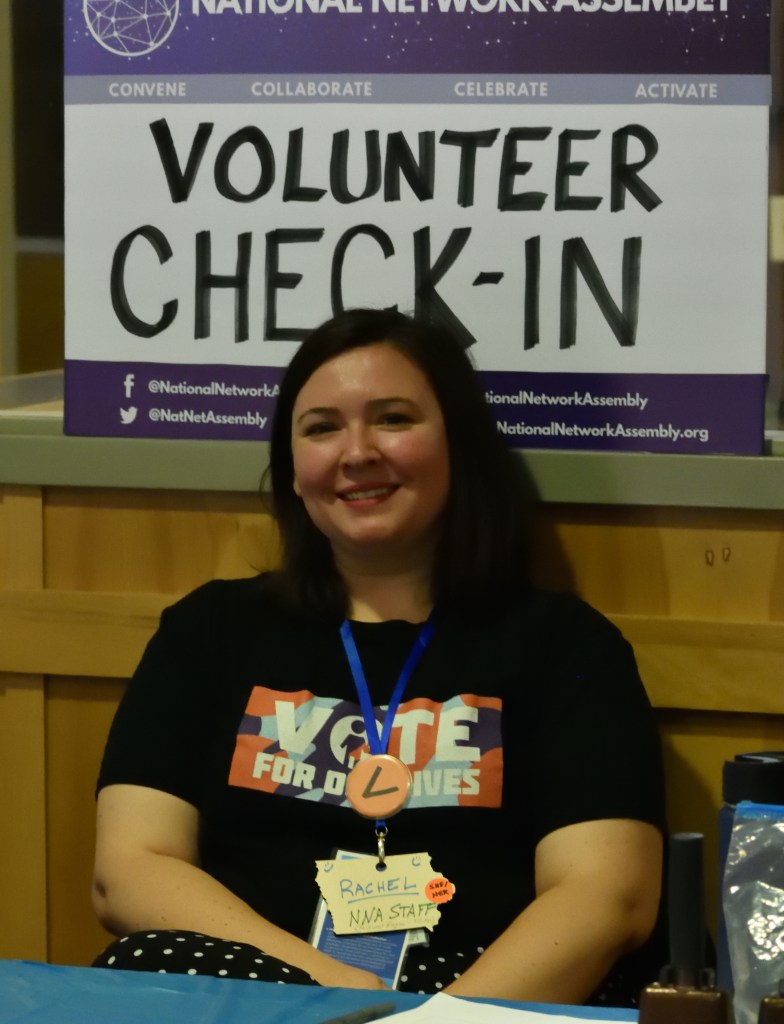
I was a bit confused when one of the event organizers approached me as soon as we arrived at the registration desk, and asked if I was Jeff Kisling? This was Rachel Potucek who was organizing the volunteers. I had emailed her to see if it would be OK for me to take photos of the Assembly, to be shared with the organizers and attendees. She hadn’t responded because, as we were told ahead of time, there was no WiFi and only Verizon cell phones worked at all (which I didn’t have). Rachel was happy to have me take photos, and I was glad to have something to do and contribute.
Rachel Potucek
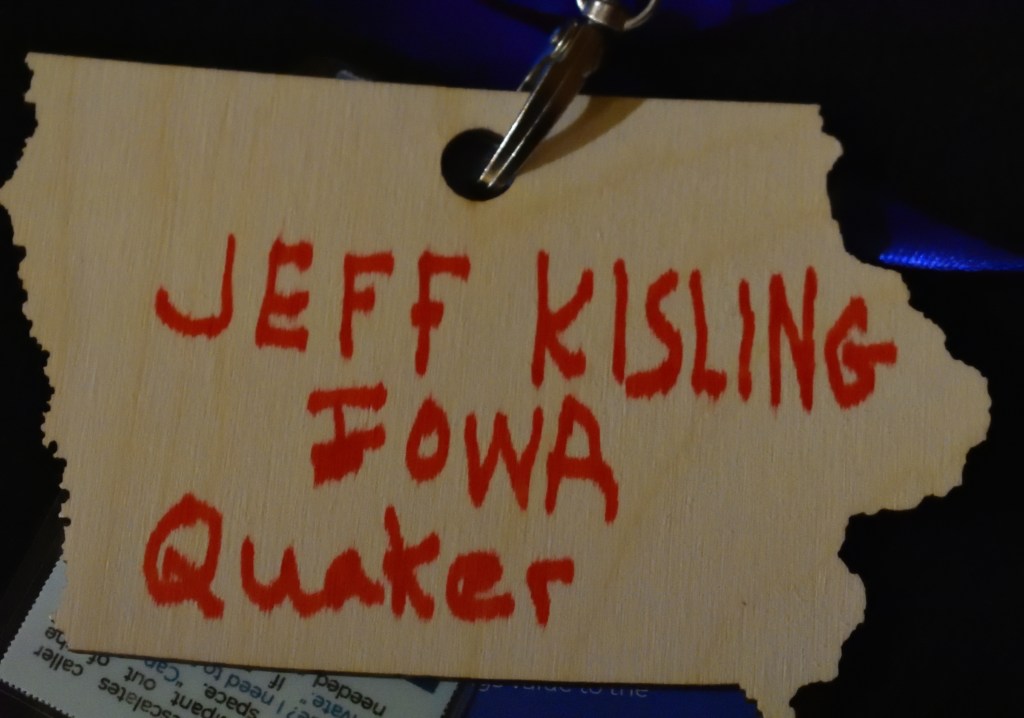
As part of registration we wrote our name, where we are from and the organization we represent on a wooden piece cut in the shape of Iowa. The Native people wrote they were from “Native Land”.
I wasn’t sure what to write for my organization so, as you can see, I wrote “Quaker.” It probably wasn’t the best term to use, but when people asked what organization I was with, I said I was just a “generic Quaker” which always got a laugh. I thought if I just said “Quaker” people would think of a stern and grumpy Puritan. I was surprised that everyone seemed to know something about Quakers. Many people were involved in organizations that met at Quaker meetinghouses.
I spoke at Bear Creek meeting this morning about my organization being “Quaker” represented our approach to justice work. That we usually didn’t work on a specific issue or with one organization, but instead discerned what the Spirit was leading us to do, and then find ways to do that with the support of our Quaker and other communities.
The registration process went well and we learned where we would be sleeping. I was in the cabin named Caribou along with fifteen other guys. Climbing in and out of a top bunk proved a little challenging. The cabin was new and had 4 separate restrooms, two with showers.
My cabin, Caribou is in the middle
We were given the link to an app called Sched that allowed us to pick the sessions we wanted to attend, giving the time and location of each. There were usually multiple things going on simultaneously so we had to make choices. The schedule often needed to be changed because of conflicts with speakers or room assignments. So the following was my initial schedule, but things changed during the Assembly. This gives you an idea of some of the presentation and workshop topics. The presenters were all very articulate and spoke from their own extensive experiences. It was just amazing actually.
It will take a number of bog posts to share what I learned. The next blog post, though, will be one I printed by hand. I didn’t even bring my laptop because I saw we would be very busy and there was no Internet access. But I had so much I wanted to write about, that I hand printed a couple of blog posts that should appear soon.
These blog posts being published on the Internet, I never know who might read them. I appreciate you who do. Despite how it might sometimes sound in what I write, I am a fairly shy person, and usually uncomfortable doing new things. There have been a number of reasons I’ve been pushed to be less withdrawn and take risks.
I recently shared a little about my experience as a neonatal respiratory therapist. In an intensive care unit, being shy is not an option. Split second decisions and actions are routinely required. You often have to tell others what they need to do to help you help your baby. In a teaching hospital like the one I worked in you often had to challenge incorrect orders given by physicians who are learning neonatology.
From an early age I found that I learned most by making mistakes, first related to the idea of experimentation in science, and later with experimentation with photography. To this day I look for challenging conditions related to lighting, focus, contrast, dynamic range, color and/or speed of a photographic subject. I learn a lot trying to capture and edit such images. For example, I took over 1,000 photos of the 18 ft. sculpture “Open Eyes”, in different lighting and weather conditions. https://kislingjeff.wordpress.com/2018/01/27/open-eyes-sculpture/
But what has lead me to take the greatest risks, and to do so most frequently, have been the times I have been led by the Spirit to do something. Most often that is something new for me. Otherwise I wouldn’t need a spiritual message, would I?
An example is how I ended up living without a car. As I’ve written many times, a specific sequence of things occurred. Family camping trips made me fall in love with the mountains. Moving to Indianapolis prior to catalytic converters gave me a nightmarish image of the mountains hidden behind clouds of smog. That began to make me very uncomfortable about owning a car. Then when one of the few cars I owned was involved in an accident, I clearly received messages to not replace the car.
My first reaction was “are you kidding me?” Then I had to try to figure out, immediately, how to live without a car. I’d ridden on the city bus system occasionally, but now I needed to learn which bus to take to wherever I needed to go and what times they operated. I don’t think I had a bicycle at the time, and got one right away. I had always been an avid runner, so running became a major source of transportation. I would take the bus to work, for example, and then run home after. I was living seven miles from the hospital, so my running improved dramatically. Each time I moved, I looked for something closer to the hospital and, definitely, on a city bus route.
I became very selective about the food I would buy, since it would have to fit in my backpack. And things that wouldn’t spoil quickly. So a lot of rice, granola, etc. I also made sure I was living in a place that had a laundromat or where one was near.
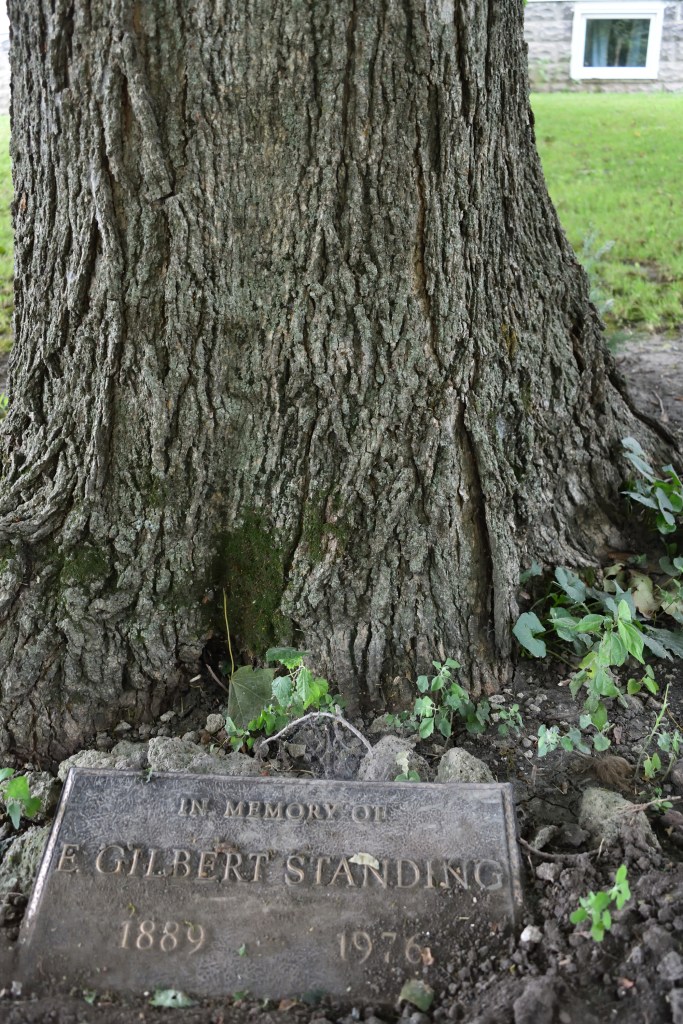
I was led by the spirit for many of these decisions, and/or necessity for others. This is what my grandmother, Lorene Standing said, that the will of God is often revealed in a series of steps.
Other times when leading of the Spirit had a least some influence related to my decision to become a draft resister, to become a respiratory therapist, to live in an inner city neighborhood in Indianapolis, things I’ve written about already.
Other leadings related to becoming engaged with new communities and organizations. One of the first was joining the Friends Volunteer Service Mission in Indianapolis. There I was led to figure out ways to engage with neighborhood kids with things like a 4-H club and photography. I made life-long friends there.
My career at the children’s hospital was the focus for the next several decades.
In 2013 we were all becoming more aware of the dangers of oil pipelines and tar sands extraction. I was led to take the bus from Indianapolis to Des Moines to received excellent training from the Rainforest Action Network on how to design, train others for, and execute nonviolent direct actions. Returning to Indianapolis, I worked with 3 others who had received that training to organize a direct action that would be triggered if it looked like the Obama administration was going to approve the permit for the Keystone XL pipeline. We held six training sessions for about 60 people. That group became the core activist community for many things that occurred after that, including Indiana Moral Mondays and many actions related to the Dakota Access Pipeline.
I’ve also written a lot about being led to be involved with the Kheprw Institute (KI), a black youth mentoring community. There I received innumerable lessons in community building and racial justice. And made more life-long friends.
All those friends in those different communities were difficult to leave two years ago when I retired and moved to Iowa. But having learned those lessons in Indianapolis about community building, I was more sensitized to listening closely to the Spirit, which I was sure would continue to lead me to connect with people and organizations working to build communities in Iowa. Being connected already to Quakers in the Midwest was very helpful.
One thing I was clearly being led to do was find more ways to connect with and learn from indigenous people. I’d had some experiences with Native Americans in Indianapolis related to the Dakota Access Pipeline defunding and prayer meetings. What I had been led to believe was the need for our society to learn how to return to a right relationship with Mother Earth. Industrial societies, based upon fossil fuel energy, was killing the planet.
I’ve also written about the numerous ways I was led to get involved with environmental organizations and Native people in Iowa. When I heard a van full of water protectors was going to Minneapolis to ask US Bank to stop funding fossil fuel projects, I was strongly led to go, even though I didn’t know who else would be in the van. As it turned out, Ed Fallon, Kathy Byrnes and Donnielle Wanatee I had at least met before. Others I would see other times after the van trip.
That is an example of what I had intended to say about being led to take risks. I was a bit apprehensive about riding to Minneapolis with a van full of people I didn’t know, but I was clearly led to do that. And it proved to be an awesome experience and I made new friends.
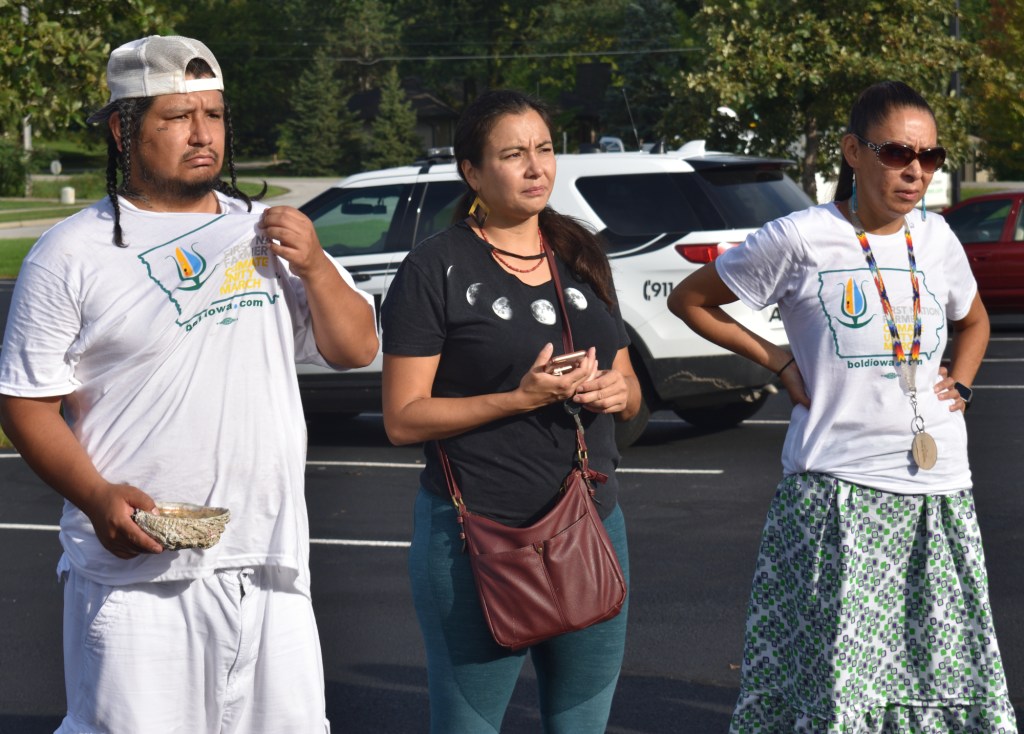
I was also strongly led to join the First Nation-Farmer Climate Unity March last September. This would clearly be a way to finally begin to get to know some Native people. And the experience was much greater than I could have imagined.
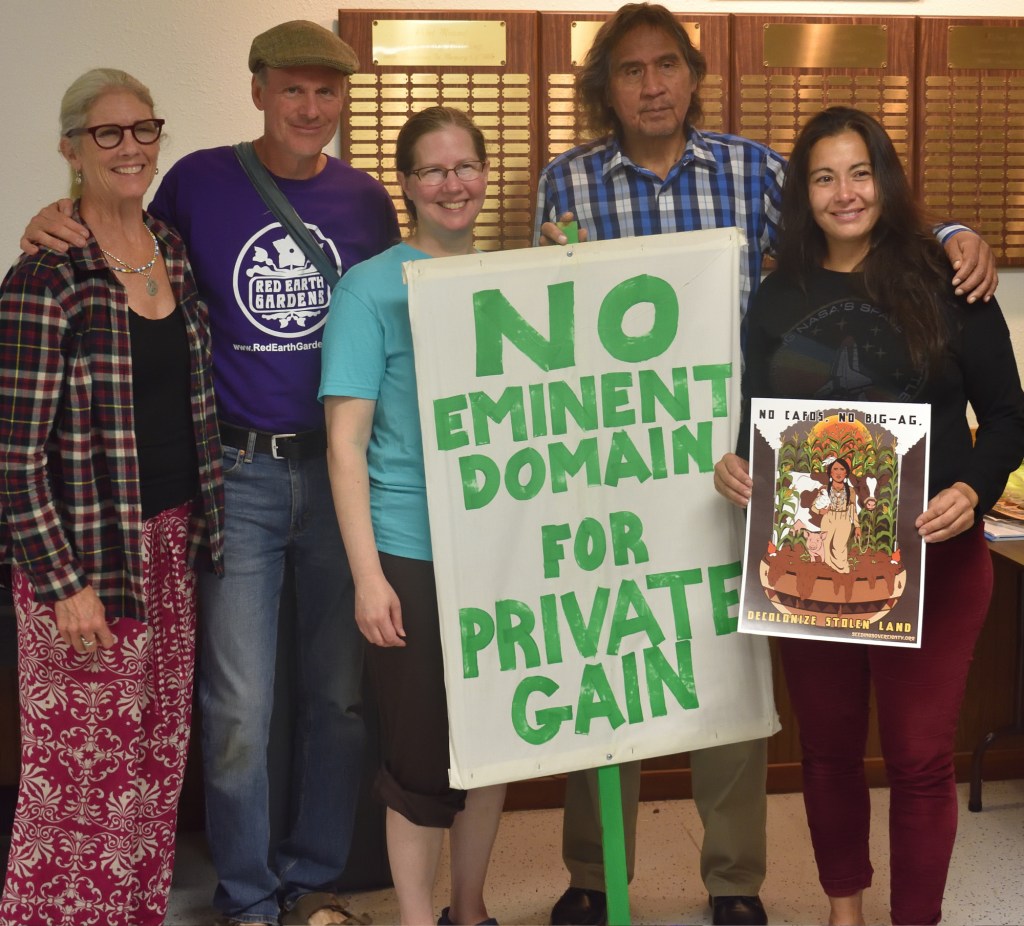
One of the friends I made during the March is Christine Nobiss, who is very active in a number of things, including organizations she has helped create such as Indigenous Iowa and Seeding Sovereignty. She and I and several others went to Senator Chuck Grassley’s Des Moines office to talk with his staff about two bills related to Native people.
I know Christine and many Native people are very interested in building an indigenous led Green New Deal. I really want that to happen, too. My question has been how to find Native people who will be doing that. Recently Christine suggested I attend the National Networking Assembly that will be held in Boone, Iowa, the next four days. She is going to be leading a presentation at the Assembly about this, “A Green New Deal Focused on Decolonization”.
This returns to my being shy. Once again I’m feeling a bit apprehensive about attending the Assembly. But I feel I am being led to do so from the Spirit. Also, if I’m interested in a Native led Green New Deal, this is the first step of a Native leader asking me to follow. As James Allen says in his essay, Pontoon Archipelago or: How I Learned to Stop Worrying and Love Collapse. one of the main things we need to do is listen deeply. In the past I might have given Christine’s suggestion to attend the Assembly a fleeting thought, might have though “that’s a nice idea but not something I see myself doing”. We all really need to practice listening deeply.
One of the things he says we need to do as we move into collapse is:
We don’t know today what things will enable us to solve the problems of tomorrow. Our biggest problems are emergent and non-linear and most won’t be solved with linear thinking. Only emergent collective intelligence can produce non-linear solutions. This requires us to first cultivate our own ability to be present, perceive the world accurately, orient ourselves toward it, and find ways to give creatively. It also requires that we find new ways to assemble with people with diverse perspectives who are capable of coming into coherent relationships with each other for long enough to produce something worthwhile.
I don’t mean to scare you away from things that sound risky. Just the opposite. When you are feeling led to do something that is uncomfortable for you, that is a sign you should definitely do it. My experience has been the result of doing so is so much better than you could have anticipated.
That said, I would still welcome your prayers for this new adventure.




































 Quakers, social justice and revolution