International Rebellion

Yesterday I wrote that silencing protest is crucial for establishing an authoritarian regime, as the current Republican party and administration are doing. As is suppressing media coverage of protests, or delegitimizing what reporting is done as ‘fake’ news.

Today we have proof of the suppression of media coverage of protests. Have you seen any stories in your news sources about the Extinction Rebellion and International Rebellion? I have not. Knowing the International Rebellion was to begin yesterday, I had to do an Internet search to find any news about that.

https://rebellion.earth/international-rebellion/

International Rebellion is here. And it’s bigger and more beautiful than we dared to imagine. This is what mass civil disobedience looks like.
It’s happening. It can’t be ignored. It’s only growing stronger.
It’s a rebellion.

We’re back on the roads – with as much joy, fear, love and courage as ever. We’re shutting down cities – not because it’s fun (though it can be), but because it’s our last option for stopping this toxic system in its tracks. Our world is dying; to save it, we’ll need everyone – wherever and whoever you are – to do your bit.

And though we’re still somewhat short of the shared, global consciousness we need, we’re getting ever closer.

This International Rebellion which began on Monday is so vast it’s almost impossible to take it all in. Thousands of people flood 60 cities across the globe, with over 700 brave rebels arrested as they stand up for their right to life, and that’s just the start.

It’s not just a question of quantity. With every season that passes, we grow more organised, more unified, more creative, more courageous.
Just look at the 11 vibrant sites held around the centre of London, the choir of Amsterdam rebels, the blood poured on the bull statue in Wall Street in New York, the ambition of our banner-hangers, the Red Brigade arriving in Tel Aviv and Istanbul, underwater protest art in Mexico, the boats of every shape and size that we are so desperately trying to keep afloat.

We’re a movement unlike any other.

If you’d like to help, please check out our guide and learn more about XR.

Rebel Daily 1: The Sun Rises on a New Wave of Rebellion by Extinction Rebellion, October 8, 2019

This morning I’m thinking about what my friend Joshua Taflinger recently wrote:

What are you willing to do for your children? Your grandchildren? How far will you go?
What is your truth when it comes to the edge?
Well it’s time to go to your edge, or else your children’s future is over!
Let this be the wake up to take action. In your life. In your community.
Now is all we have and our opportunity to make a difference is slipping by rapidly.
Quit thinking about the change you want to see and just be it! Today! NOW! Later is no longer an option….

Joshua Taflinger

Friday’s climate strike by students across the globe will have no more impact than the mass mobilizations by women following the election of Donald Trump or the hundreds of thousands of protesters who took to the streets to denounce the Iraq War. This does not mean these protests should not have taken place. They should have. But such demonstrations need to be grounded in the bitter reality that in the corridors of power we do not count. If we lived in a democracy, which we do not, our aspirations, rights and demands, especially the demand that we confront the climate emergency, would have an impact. We would be able to vote representatives into power in government to carry out change. We would be able to demand environmental justice from the courts. We would be able to divert resources to the elimination of carbon emissions.

The ruling elites and the corporations they serve are the principal obstacles to change. They cannot be reformed. And this means revolution, which is what Extinction Rebellion seeks in calling for an international rebellion” on Oct. 7, when it will attempt to shut down city centers around the globe in acts of sustained, mass civil disobedience. Power has to be transferred into our hands. And since the elites won’t give up power willingly, we will have to take it through nonviolent action.

 Saving the Planet Means Overthrowing the Ruling Elites by Chris Hedges.

I believe we are now at a crossroads. We need to decide whether to [1] join activist groups like the Extinction Rebellion to try to force urgent political change, or [2] accept we are past the point where we can stop the unfolding environmental catastrophe and work on ways to create community and support each other during the collapse.

The evidence is in — even if we manage to avoid the worst applications of exponential technologies, we are at minimum already committed to an environmental catastrophe at a scale humans have never endured, and whose consequences we cannot fully fathom. The implications, for instance, of findings delivered by the International Panel on Climate Change are that, in order to avoid climate catastrophe we should already be achieving massive reductions in emissions today, and if we fail to make up for lost time by 2030, then we will have passed the point of no return. But we aren’t even in the realm of achieving this. Emissions are at record highs and continue to climb with no sign of meaningful abatement. Even complete compliance with the Paris Accords puts us on track for three degrees of global warming, by which time the thawing of tundra permafrost, disappearance of arctic ice and melting of the Greenland ice sheet are predicted to set in motion a series of self-reinforcing feedback loops that will see warming spiral well beyond our control. That’s only to speak of climate change alone, let alone the myriad of implications of the other ecological and socio-technological crises…

To take the world as you find it, to assume responsibility for that which you can, and to act as if what you do actually matters, is the mark of a mature adult.

My young children need me to be an adult. They are the reason I feel despair so profoundly. Yet they are also the reason I cannot wallow in it, acquiesce to it, or turn away from the horror. This is the reason I have sought to imagine another way, and to find and focus on that which I might do to usher that vision into existence, and to behave as if what I do really matters for their future. They are the reason I have directed my imagination to the multitude of paths only visible once I looked beyond the myths that have clouded much of my thinking. It is up to me show them a way beyond grief to a way of life truly worth living for, even if it isn’t the path I had expected to be showing them.

Pontoon Archipelago or: How I Learned to Stop Worrying and Love Collapse. By James Allen, Medium, May 24, 2019

Many of my friends, even those who are environmental activists, don’t believe we are past the point of no return, and say it is not helpful to talk as if we were. I disagree.

James Allen’s essay above has received a lot of criticism. For a number of reasons I support the second choice, to work on building community and supporting each other through the collapse. Even if I’m wrong about it being too late, we desperately need to be building Beloved communities now. A darker reason for not trying to get governments and institutions to change is because I foresee them collapsing as environmental chaos unfolds, creating political, social and economic collapse.

When you and your community can create its own shine there’s nothing beyond reach. — Diop Adisa

Posted in climate change, Extinction Rebellion, Uncategorized | Leave a comment

Silencing Protest

Silencing protest is crucial for establishing an authoritarian regime, as the current Republican party and administration are doing. As is suppressing media coverage of protests, or delegitimizing what reporting is done as “fake” news.

I remember how shocked I was to see military equipment and police dressed as soldiers on the streets of Ferguson when protests erupted over the killing of Michael Brown in 2014. And to learn of the Federal program to supply domestic police departments with military equipment.

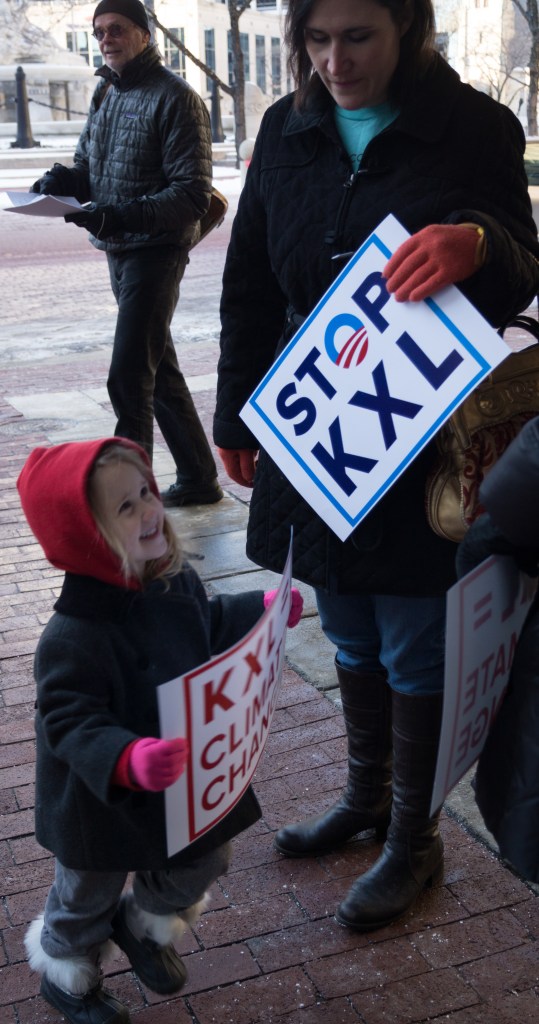
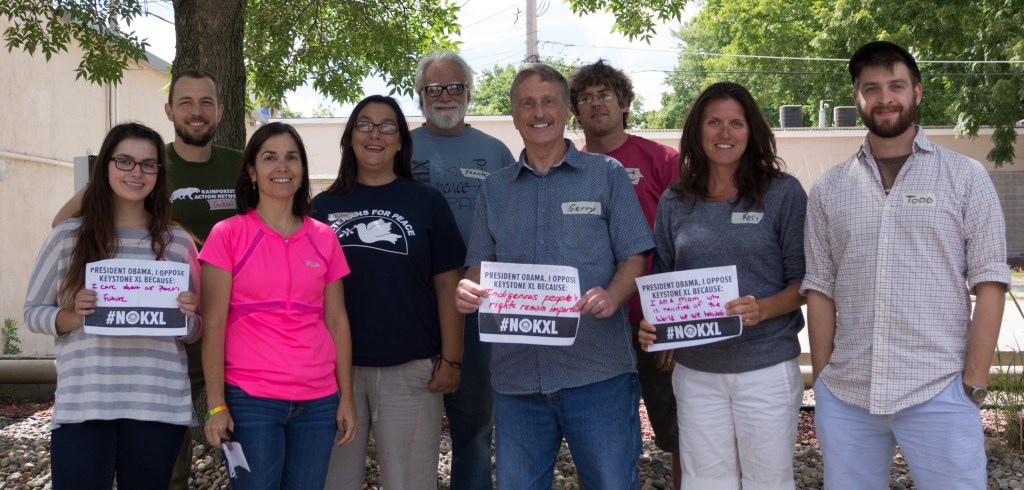
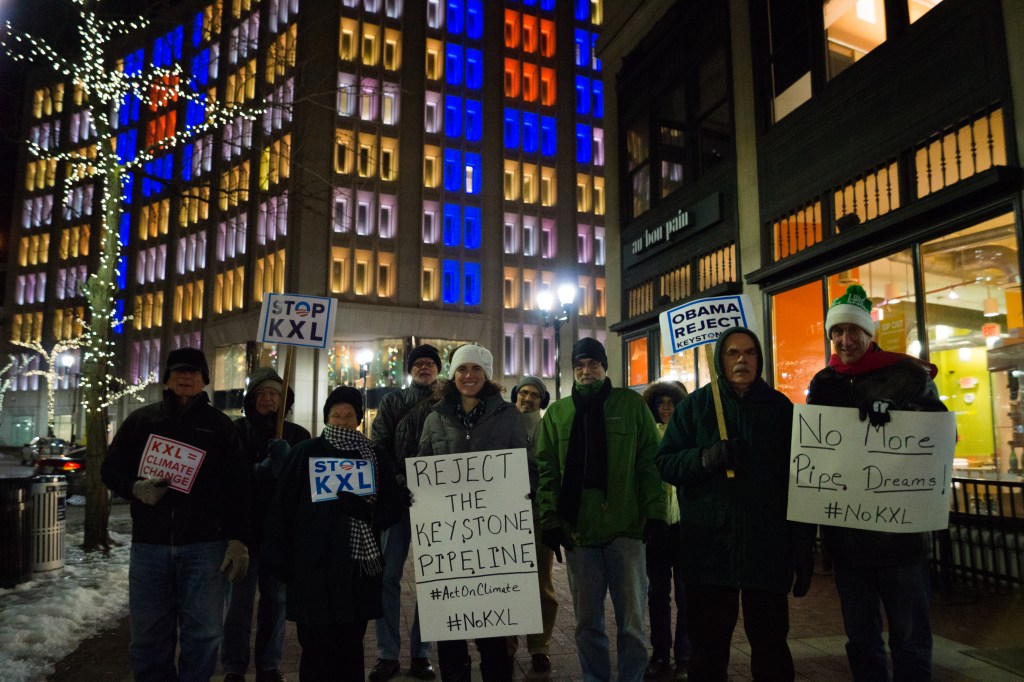
2013 saw the building of a national network of activists to oppose the Keystone XL pipeline. Thousands of people across the country were trained to organize and participate in nonviolent direct actions. The four of us who were trained as Action Leads in Indianapolis planned a direct action, blocking the doors of the Federal Building, if President Obama approved the permit for the Keystone pipeline (which he did not do). We held six local training sessions where around 60 people were taught how to participate in direct action. Nationally around 400 people were trained as Actions Leads, who in turn trained nearly 4,000 people in their local communities.

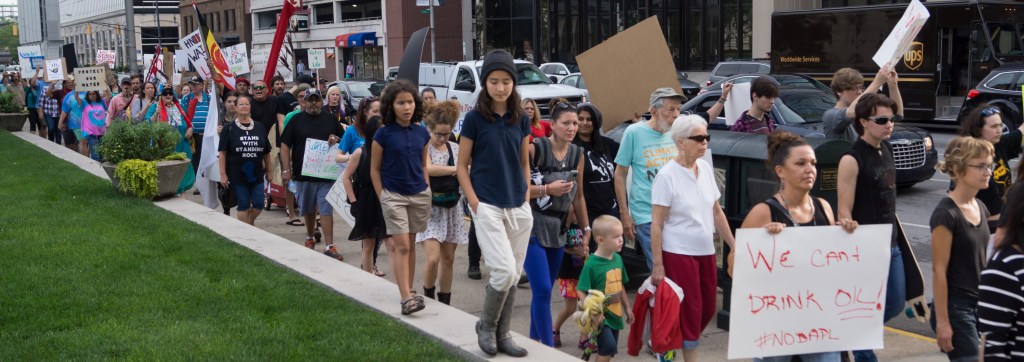
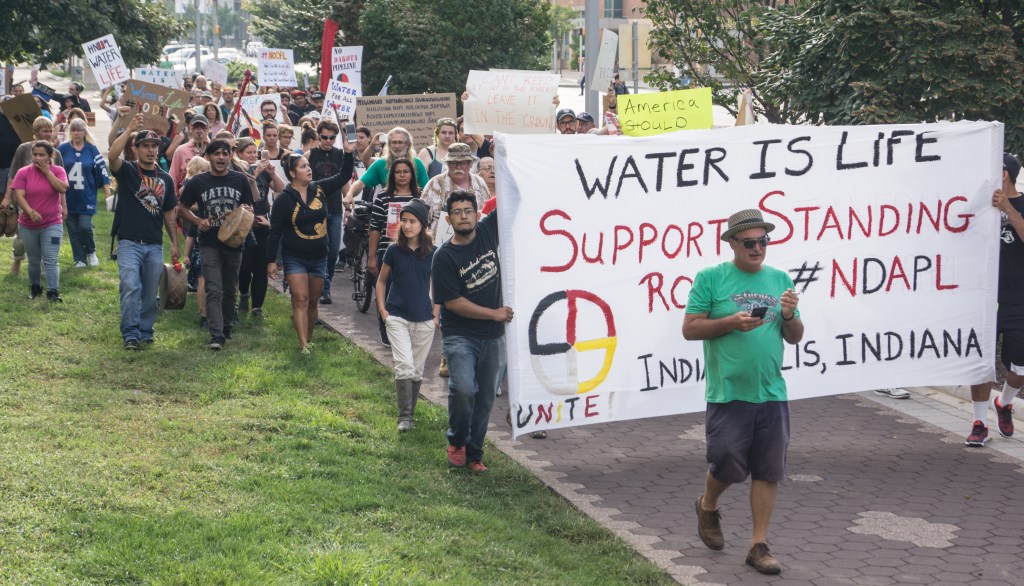
Beginning in 2016 we witnessed the repugnant spectacle of the militarized response to Native men, women, and children praying and peacefully protecting water from the Dakota Access Pipeline. Police shooting projectiles at water protectors, spraying them with water in freezing conditions, and arresting peaceful water protectors with felony charges.

Water protectors at Standing Rock
#NoDAPL

Following are several stories about criminalizing protest.

Nearly three years after two women began allegedly plotting to disrupt the Dakota Access Pipeline, the Department of Justice (DOJ) is charging them with several federal crimes that could land them behind bars for 110 years.

The two women were part of the 2016 Dakota Access Pipeline protests, and are the latest targets in a national effort to punish more environmental activists—especially indigenous peoples—for protesting and taking direct action against fossil fuel projects that they believe sacrifice the future of their water, lands, and planet.

Jessica Reznicek and Ruby Montoya weren’t arrested then, however. They stood in solidarity with the Standing Rock Sioux Tribe, which was spearheading the resistance, by damaging the crude oil pipeline along its Iowa route. The DOJ announced their charges—which include conspiracy to damage an energy facility, use of fire in the commission of a felony, and malicious use of fire—Wednesday. The women claimed these crimes years ago, though, so it’s unclear why the DOJ is charging them now.

Dakota Access Protestors Could Get 110 Years in Prison by Yessenia Funes, GIZMODO, October 4, 2019

Two Iowa activists with a history of arrests for political dissent are claiming responsibility for repeatedly damaging the Dakota Access Pipeline while the four-state, $3.8 billion project was under construction in Iowa.

Jessica Reznicek, 35, and Ruby Montoya, 27, both of Des Moines, held a news conference Monday outside the Iowa Utilities Board’s offices where they provided a detailed description of their deliberate efforts to stop the pipeline’s completion. They were taken into custody by state troopers immediately afterward when they abruptly began using a crowbar and a hammer to damage a sign on state property.

Dakota Access protesters claim responsibility for pipeline sabotage by William Petroski, Des Moines Register, July 24, 2017

They’re also demanding that our legal system recognize who is and isn’t culpable. In more than 20 court cases since 2008, climate protesters have defended themselves against charges of trespass and related offenses by arguing that their civil disobedience is legally and morally justified. Drawing on science and history to make their case — as well as an argument used by protesters since the 1970s called the necessity defense–they’re asserting that climate change has spiraled so out of control, and the political process has become so unresponsive to ordinary Americans, that direct action–say, lying in pipeline trenches to block construction — is not a crime but is necessary to protect people and communities. From the Delta 5 to the Valve Turners, fossil fuel resisters are flipping the script.

Courts in most of these cases have tossed out protest defendants’ evidence before it could be presented to juries. Those decisions have often violated defendants’ legal rights, denied juries their function as fact-finders and voices of the community, and kept expert testimony on climate science, public health, and other subjects out of courtrooms.

But, in an unexpected development, prosecutors in several recent cases have reduced charges to lesser offenses or dropped them entirely. These cases include the 2017 federal prosecution of lawyer and Indigenous activist Chase Iron Eyes for his role in the Standing Rock protests in North Dakota; the 2018 case against the “Montrose Nine” pipeline protesters in New York; and the 2014 prosecution of the “Lobster Boat” protesters in Massachusetts, where the district attorney cited the dangers of climate change in dropping the case.

How Climate Protesters Are Defending Their Civil Disobedience–and Winning in Court; As more protesters use direct action–like blocking pipeline construction with their bodies–they’re winning more court cases by saying the dire nature of climate change justifies their actions, Fast Company, Nov 11, 2018

More than 50 state bills that would criminalize protest, deter political participation, and curtail freedom of association have been introduced across the country in the past two years. These bills are a direct reaction from politicians and corporations to the tactics of some of the most effective protesters in recent history, including Black Lives Matter and the water protectors challenging construction of the Dakota Access Pipeline at Standing Rock.

If they succeed, these legislative moves will suppress dissent and undercut marginalized groups voicing concerns that disrupt current power dynamics.

Efforts vary from state to state, but they have one thing in common: they would punish public participation and mischaracterize advocacy protected by the First Amendment.

For example, bills introduced in Washington and North Carolina would have defined peaceful demonstrations as “economic terrorism.” In Iowa, legislators are currently considering bills that would create the crime of “critical infrastructure sabotage.” Labels like “terrorists” and “saboteurs” have long been misused to sideline already oppressed groups and to vilify their attempts to speak out.

Corporations are already abusing existing laws to silence dissent and shut the public out of decision-making. Now, lawmakers are trying to give corporate interests even more tools to punish people for speaking up for their families and communities. That is an attack on democracy — one our organizations will continue to resist.

The assault on environmental protest by Maggie Ellinger-Locke and Vera Eidelman, The Hill, 3/2/2018

Another way to protest, turning off valves on the Keystone pipeline, is described below. Michael and I exchanged letters while he was imprisoned. I believe he has been released.
https://kislingjeff.wordpress.com/2018/05/04/michael-foster-valve-turner/


Constructive action is the antidote, and I took some. A year ago, I and a handful of likeminded colleagues acted simultaneously in four states to shut off the flow of carbon-intensive tar sands from Canada into the US.

We entered fenced-off areas and closed the emergency valves. I shut off the valve on TransCanada’s Keystone 1 pipeline in North Dakota. We called the pipeline companies in advance to notify them, livestreamed our action to prove it wasn’t a hoax, then peacefully waited for arrest.

Our action was effective. We temporarily halted the flow of all tar sands bitumen in U.S. pipelines, equal to 15 percent of daily US oil consumption. But the pipeline companies and law enforcement didn’t agree that it was constructive. We were charged with felonies carrying many years of jail time.

Why I Turned Off the Keystone Pipeline and Face 22 years in Jail by Michael Foster, Newsweek, 10/3/17

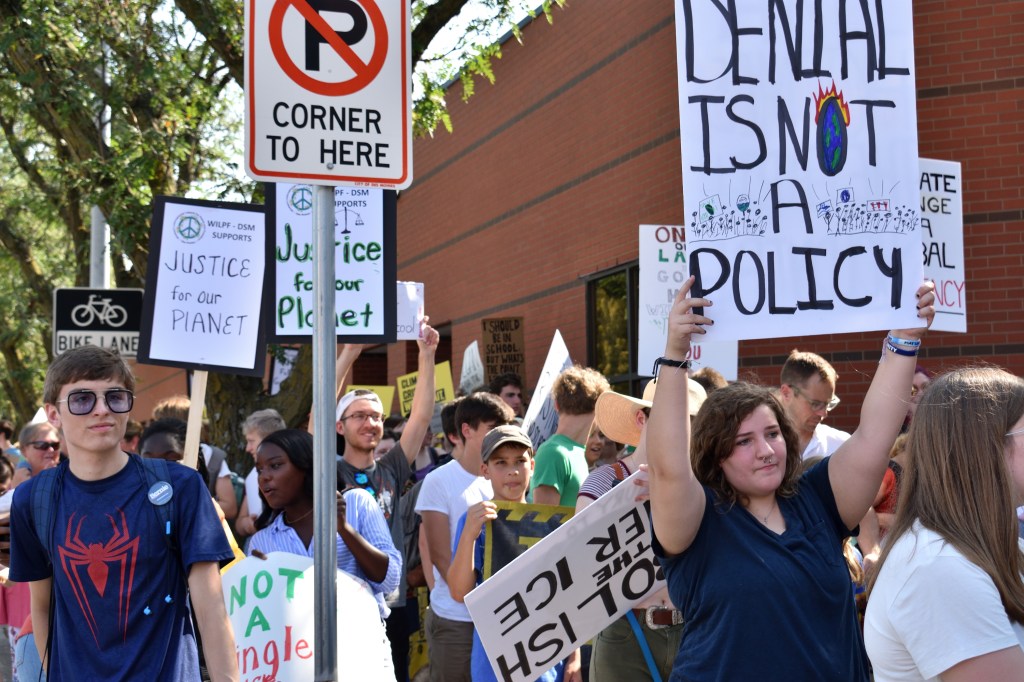
It has been fascinating to see the acts of civil disobedience by the youth of the Sunrise Movement. Those actions last November finally broke the silence about climate change in the US Congress. Likewise it has been inspiring to see the massive global protest of young people participating in climate strikes. I am not aware of arrests related to those demonstrations. And the publicity is very favorable. Young people do have an authentic voice regarding the environment they were born into and the environmental chaos that will significantly affect their lives.


There is very alarming news of preemptive arrests of members of the Extinction Rebellion in London over the weekend.

Activists said they were concerned at the police decision to act pre-emptively against them.

Richard Ecclestone, a former police officer who has joined the group, said: “These tactics are very questionable and are arguably infringing on our rights to peaceful protest, and indeed our efforts to preserve people’s right to life that is currently being jeopardised by the government failing to act on the climate and ecological emergency that they know exists.”

XR said confiscated equipment included portable toilets, kitchen equipment, gazebos and big tents, cooking urns and big thermos flasks, 250-watt solar panels and 12v car batteries, food, waterproofs, umbrellas and hot water bottles.

The group said in a statement: “This escalation of pre-emptive tactics by the government and police is a sign that we are being heard and acknowledged as a significant movement. We ask that the government focus their attention and resources on responding to the climate and ecological emergency which threatens us all.”

London police arrest Extinction Rebellion activists before protest
Officers raid building used by climate activists to store items for Westminster rally by Damien Gayle, The Guardian, Oct 5, 2019

Locally my friends from Bold Iowa will be going to trial this Thursday. Your support by attending the trial and/or contributing toward costs would be appreciated. http://boldiowa.com/risking-arrest-for-our-future/

Earlier this summer, President Trump visited West Des Moines for a GOP fundraiser. Bold Iowa was there to expose the president’s climate denial to the donors who came to support him. Five of us — Todd Steichen, Kathy Byrnes, Miriam Kashia, Martin Monroe, and I — blocked an entrance to the facility’s parking lot. We then carried our banner toward the building and were arrested by West Des Moines police. We were charged with simple misdemeanor trespass.

We risked arrest because it’s important to capture the attention of politicians, the press, and the public. Our message is that climate change threatens our very survival, and a president who denies the problem — whose policies in fact greatly exacerbate the threat — must be called out and challenged.

We knew we had to do something creative. So we settled on holding a sign reading “Climate denier in the White House scare the S#*T outta you? IT DOES US!” To further bring home the urgency, we dressed in black and wore adult diapers.

Bold Iowa, Climate Justification Trial, Thursday at 1:30 PM – 4:30 PM, Polk County Justice Center, 222 5th Ave, Des Moines, Iowa 50309

Risking arrest for our future by Ed Fallon, Bold Iowa, August 29, 2019
Posted in #NDAPL, civil disobedience, climate change, Extinction Rebellion, integral nonviolence, Keystone Pledge of Resistance, Native Americans, revolution, Sunrise Movement, Uncategorized | 2 Comments

Quaker Queries: Outreach

I’ve written a number of times about Quaker’s practice of considering answers to a set of queries. https://kislingjeff.wordpress.com/2017/11/02/advices-and-queries/

This month’s advice and queries are about outreach. My response follows the queries. I left out the last names of the people mentioned since I don’t have explicit permission to share their stories. It is for educational purposes that I’m sharing my responses. You might consider your answers to these queries, either for yourself or with a group. Each Quaker meeting considers these queries together, and a response representing the group’s discussion is written. Thus, my response below would be one part of the combined response for the meeting, i.e. mine is NOT an approved response.

These advices and queries are from the Faith and Practice of Iowa Yearly Meeting (Conservative). There are 12 sets of advices and queries, allowing one set to be considered per month.


ADVICE

Friends believe it is essential to express in words and deeds the faith that sustains us and the convictions that arise from that faith. It is important to speak with integrity and courage ourselves as well as to listen to others with open hearts and minds. We seek fellowship with a branches of Friends and with other seekers of Truth. We recognize the oneness, of humanity in the Spirit and believe that in learning from one another we may come to respect differences. Truth is greater than any of us may know, individually or as a group.

As we work and share with others within our communities, we may find opportunities to invite them to attend our meetings for worship and other meeting activities. A genuine welcome to everyone is consistent with Friends’ testimony of acknowledging the Divine Spirit in each person and of our belief in the dignity and worth of every human being.

QUERY

  • Do we encourage intervisitation within the Yearly Meeting and with other Friends?
  • What are we doing to share our faith with others outside our Friends community? How do we speak truth as we know it and yet remain open to truth as understood by others?
  • In what ways do we cooperate with persons and groups with whom we share concerns? How do we reach out to those with whom we disagree?
  • How do we make the presence of our meeting known to the larger community? Do we invite others to share in our Meetings for Worship and other meeting activities? Do we welcome everyone and appreciate the gifts that differences such as race, creed, economic status, disability, age, gender or sexual orientation may bring to us?


Peter and I continue to build on our relationships with Native and White friends we made during the First Nation-Farmer Climate Unity March last September. Alton and Foxy came to Des Moines to helped Peter put siding on his garage. We held a reunion of Marchers while they were in Des Moines.

I was glad to visit with Trisha and Lakasha, from the March, when they were on the program of the Sunrise Movement’s Green New Deal tour at Drake University this spring.

I attended the first National Network Assembly at the Des Moines YMCA camp near Boone this summer, where I was again able to visit with a number of people from the March who were also attending the Assembly, including Christine, Donnielle, Regina, Fintan, Ed and Kathy.

Peter and I had other opportunities to connect with Native peoples when we helped Paula Palmer give some of her programs related to “toward right relationships with Native peoples” (TRR). I got to know Jim of West Branch Friends Church where one TRR program was presented. And I got to know Linda from the First Unitarian Church where another TRR program was held. Since those TRR sessions, Peter and I have worked with Linda, Virginia and others to work on ways to continue to build right relationships with Native peoples.

Virginia is another person I have gotten to know since I returned to Iowa. Virginia is very involved in the Women’s International League for Peace and Freedom (WILPF), as is Linda. Virginia accepted our invitation to attend Bear Creek meeting. The pre-meeting was sharing about people we know in common, and some of the work Virginia and Bear Creek have been and are engaged in. Virginia joined us for the meeting for worship that followed.

Des Moines Valley Friends invited me to speak about my recent experiences with Native peoples during a second hour gathering.

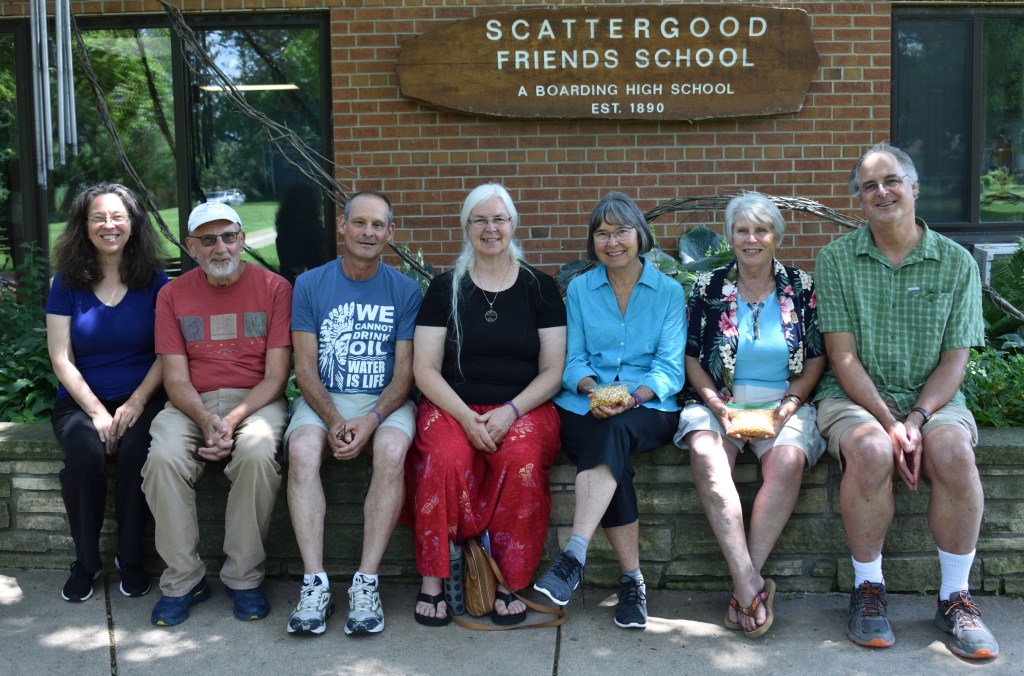
My friend Rezadad and I traveled to Scattergood Friends School on one of the school climate strike days to talk about what we have been working on related to the environment.

Many Bear Creek Friends continue to be involved with the Prairie Awakening ceremony at the Kuehn Conservation Area. Unfortunately this year’s program was curtailed when rain began to fall.

Members of the Knight family, Bear Creek Friends and Rob participated in a sacred ceremony when two trees were planted on the meeting grounds in memory of Roy and Wanda Knight.


SELECTED (APPROVED) RESPONSES

1998

Friends noted that Meadowlarks are joining us for singing, worship, and outlook two weeks from today.  This comprises outreach to other meetings.  Another F/friend talked about our web page as a tool for reaching a broader community and described a business card for the meeting.  It was noted as well that a F/friend had spoken as Quaker at a meeting convened by a local university on the topic of “Women of Faith.”  Her discussion group at the meeting was described as well attended and people were interested in the similarities between the topic “discernment” and Quaker concept of clearness.

We expressed concern about our relations with broad ecumenical groups. Our principal association at the moment is through the Great Plains Religious Media organization which maintains a web page with our meeting listed although they don’t yet have a pointer to our page.  This group is principally small and more liberal religious groups.  We feel it appropriate that we should make efforts to participate in ecumenical groups around our city.

We discussed associations that focus on issues of concern to Quakers in the community such as Nebraskans Against the Death Penalty and Nebraskans for Peace.  We usually support these groups through regular donations and through invitations to speak with our group.  Furthermore, many members of our meeting are active participants in these and similar groups. We discussed outreach to those of divergent beliefs, noting that we feel that regardless of doctrine and dogma there is an ultimate truth in all faiths.  Our belief in the Light Within All argues against the notion of evil people, but we acknowledge that intolerance of beliefs can be a problem.  Quaker religion is primarily a seeking religion rather than a structure.  To a newcomer the silence can be intimidating.  Quakers need to be aware of how they are perceived both by newcomers to a Friends Meeting and by the world at large where we are sometimes confused with Old Order Amish.

2000

Intervisitation through the Eastern Iowa Gathering is most fruitful. Being an active Friend in our jobs, neighborhoods and larger community makes a difference in our lives as well as those whom we touch. Though we are not evangelical, it is often energizing and enlightening to invite friends to join us in our Meetings for worship or other activities.
The practice of private meditation during the week is a good way to remind ourselves of the need for inner peace and to give us strength to be mindful of our presence in all family and community contacts.

2001

Generally, we find it sometimes difficult to visit other meetings even though we think it is a fine idea.  Some meetings in the conference aren’t part of a yearly meeting and need closer involvement with other meetings.  A couple of us have visited various of these.  Another person has visited several, and wants to visit more.  One problem is the distances between us and others, a three- to six-hour drive.

One person suggested that there are millions who might find joy in meeting.  So the question is, how do we let them know?  She added that she was drawn to the Quakers because they do not proselytize.  They share their beliefs through action.  One person does library volunteer work and talked about Quakers to a co-worker.  Another enjoys spirited discussions in his men’s group, where he is the “token liberal.”  In summary, someone suggested that we “be ourselves and recognize that we’re all in this together” and that we should be open to others.

Many of us are members, at least in part, of more than one faith.  One speaks candidly for himself in these various places.  Self-control is important.  Choke back the “you’re wrong,” listen, and only afterward speak. Coming to meeting has made one person more patient.  She has learned from the silence to listen and can now listen to other people without having to be upset, without having to disagree.  Listen, be quiet, and have “something peaceful to say” without forcing it on the other person.

Another, visiting from Miami, mentioned the other Kansas City Quaker meeting.  An attempt to link with them in the past has been unsuccessful.  She also mentioned the Mennonites and getting together with like-minded groups to protest the Iraq bombings.  Someone else reminded us that our reaching out to our neighbor next door has not been successful.  Someone suggested inviting him to a potluck sometime.  Reaching out sometimes succeeds, sometimes doesn’t.  John Woolman was able to gently talk to people with violently opposing views.  It’s sometimes possible to alienate even those with whom one is agreeing, when attempting to reach out.  Even simple listening may not be very loving.  Sometimes you won’t be able to persuade, and listening is all you can do.  “Walk softly.”  One person thinks that society has become more relaxed about differences such as interfaith and interracial dating.  Discussions are “more respectful than they used to be.”

One person wondered that even inside Meeting “how do we be respectful of differences?”  Another suggested that we do well at this.  Someone else mentioned that we leave ourselves open to difference when we say that each has his own truth.  We have to expect disagreement.  There is not enough racial diversity in the Society of Friends in this country, though there are increasingly many African Quakers.  The remaining question is how do we reach out without proselytizing?  Quaker silence is not for everyone.  There may be an occasional person who is interested, or for whom it might be suitable, and one can point the way for them.  One person had a friend who expressed interest in the Meeting.  When she described it to him, though, he said he didn’t think he could sit in silence for an hour.  There was a general feeling that our meeting is good at welcoming all sorts of people.

Posted in First Nation-Farmer Climate Unity March, Green New Deal, Indigenous, Native Americans, Quaker, Quaker Meetings, Toward Right Relationship with Native Peoples, Uncategorized | Tagged , | Leave a comment

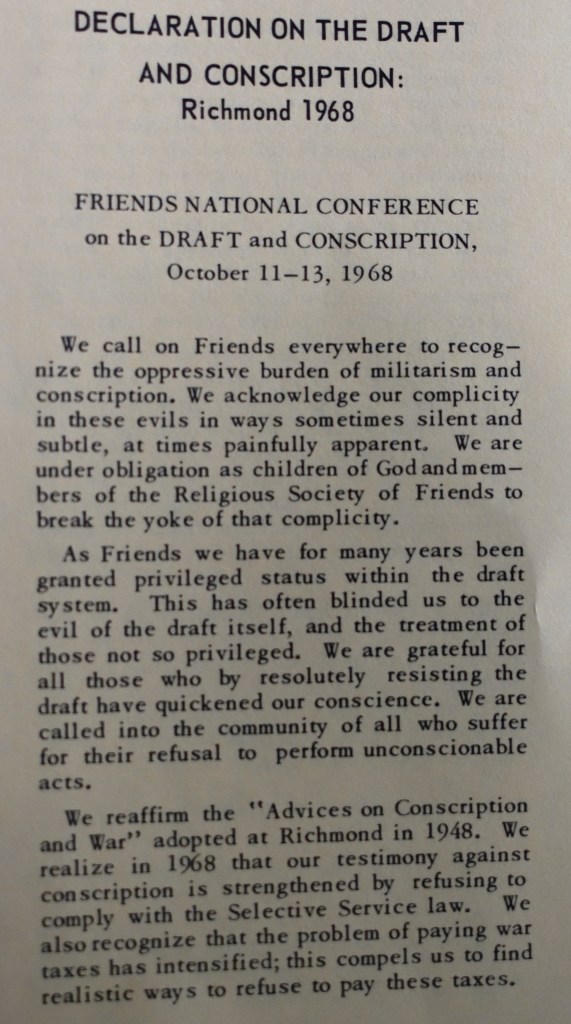
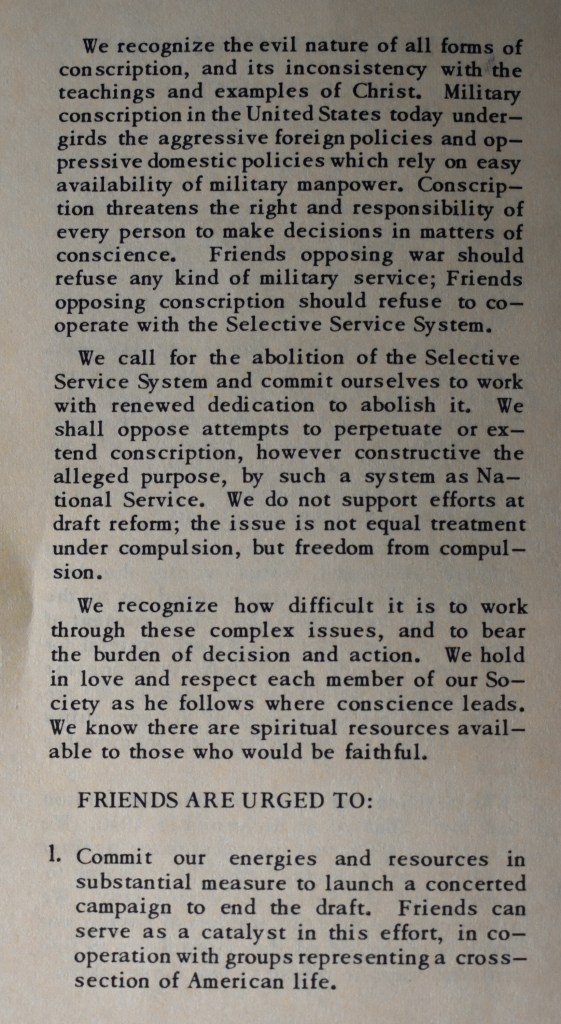
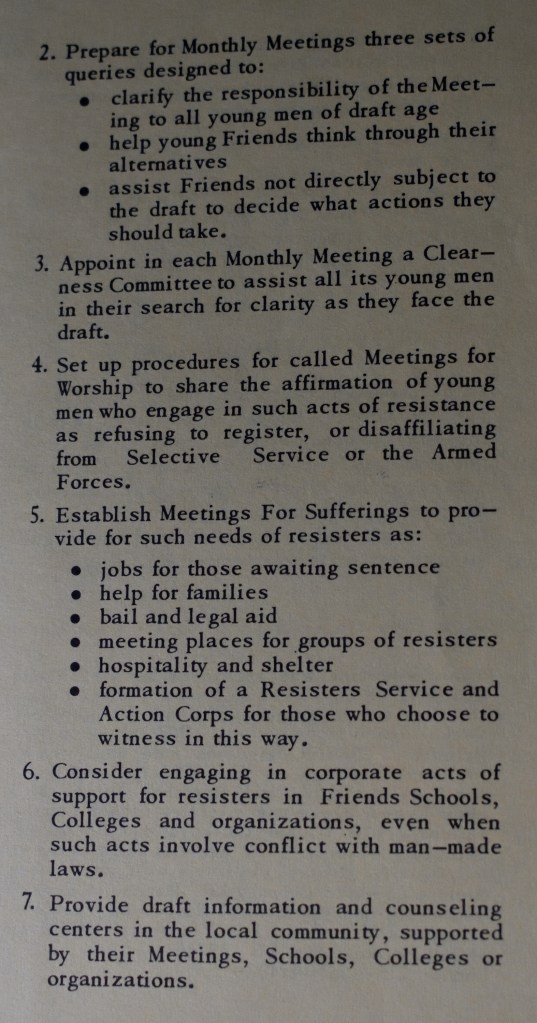
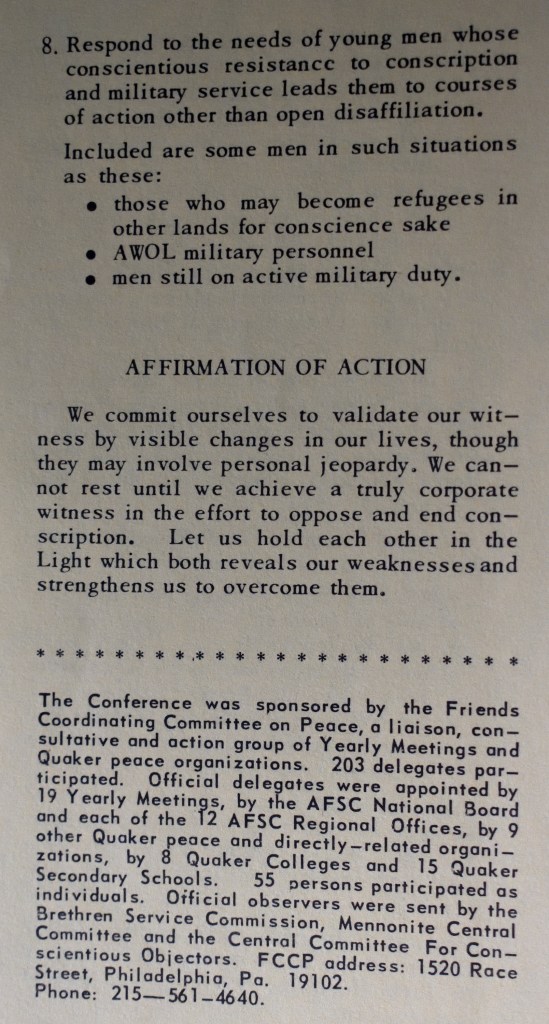
Richmond Declaration on the Draft

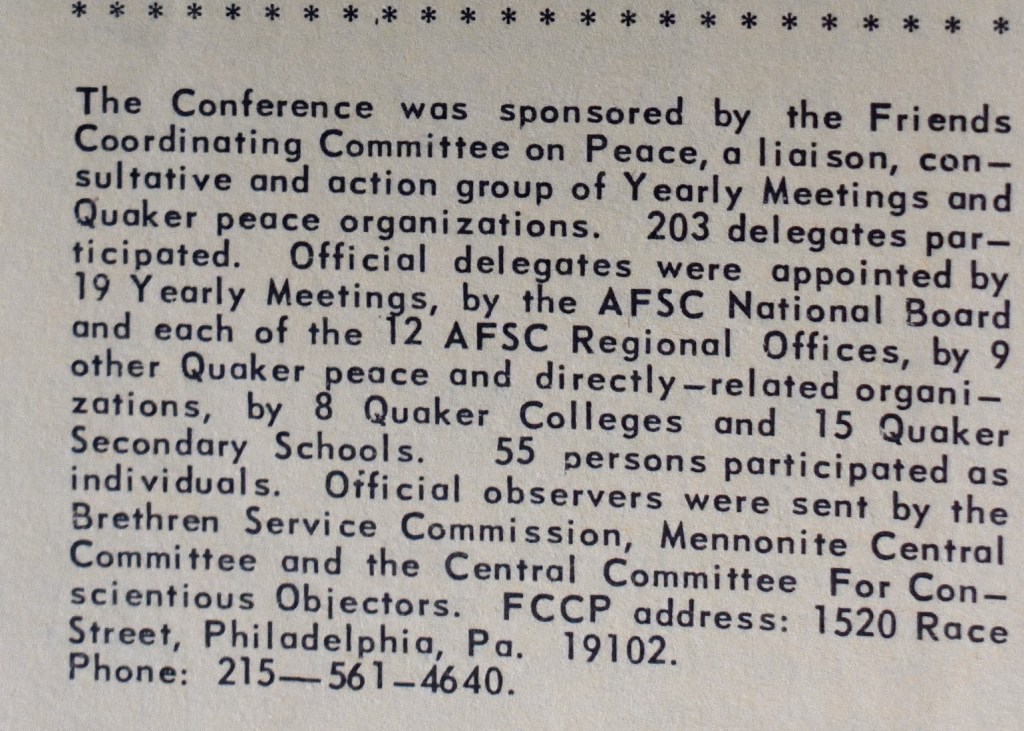
I recently came upon the brochure about the Declaration on the Draft and Conscription: Richmond 1968, held at Earlham College (Richmond, Indiana) October 11 – 13, at the time of the Viet Nam War.

An announcement of the Conference was published in Friends Journal:

Friends Coordinating Committee on Peace has announced a national conference on the draft and conscription to be held at Earlham College (Richmond, Indiana), October 11th through 13th. It is primarily planned as a working conference, with about 180 representatives from Yearly Meetings, Friends schools and other Friends’ organizations and seventy to a hundred additional Friends appointed at large. A detailed program and other information may be obtained from FCCP, 1520 Race Street, Philadelphia, 19102.  

Friends Journal 8/15/1968

[Friends Coordinating Committee on Peace organized a Friends National Conference on the Draft and Conscription, held in Richmond, Indiana, Oct. 11-13, 1968. This declaration was used by many Friends who took the noncooperator position at their trials. It was reprinted in Quakers and the Draft, Charles Walker, editor: 1969.]

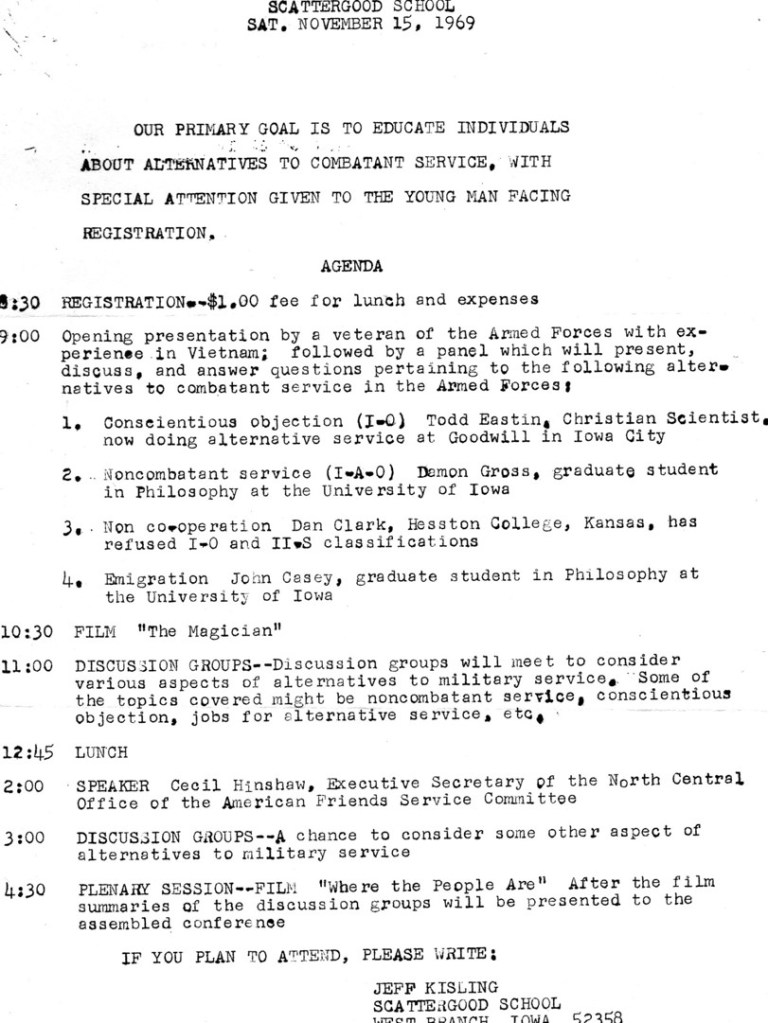
I was a student at Scattergood Friends School at the time, and a classmate and I were able to attend. Scattergood was one of 15 Quaker Secondary Schools represented.


This blog post includes the text of the Declaration. Reprints of the actual brochure follow:

Another powerful statement related to conscription was published around this same time, An Epistle to Friends Concerning Military Conscription.

An Epistle to Friends Concerning Military Conscription

Dear Friends,

It has long been clear to most of us who are called Friends that war is contrary to the spirit of Christ and that we cannot participate in it.  The refusal to participate in war begins with a refusal to bear arms.  Some Friends choose to serve as noncombatants within the military.  For most of us, however, refusal to participate in war also involves refusal to be part of the military itself, as an institution set up to wage war.  Many, therefore, become conscientious objectors doing alternative service as civilians, or are deferred as students and workers in essential occupations.

Those of us who are joining in this epistle believe that cooperating with the draft, even as a recognized conscientious objector, makes one part of the power which forces our brothers into the military and into war.  If we Friends believe that we are special beings and alone deserve to be exempted from war, we find that doing civilian service with conscription or keeping deferments as we pursue our professional careers are acceptable courses of action.   But if we Friends really believe that war is wrong, that no man should become the executioner or victim of his brothers, then we will find it impossible to collaborate with the Selective Service System.  We will risk being put in prison before we help turn men into murderers.

It matters little what men say they believe when their actions are inconsistent with their words.  Thus we Friends may say that all war is wrong, but as long as Friends continue to collaborate in a system that forces men into war, our Peace Testimony will fail to speak to mankind.

Let our lives speak for our convictions.  Let our lives show that we oppose not only our own participation in war, but any man’s participation in it.  We can stop seeking deferments and exemptions, we can stop filling out Selective Service forms, we can refuse to obey induction and civilian work orders.  We can refuse to register, or send back draft cards if we’ve already registered.

In our early history we Friends were known for our courage in living according to our convictions.  At times during the 1600’s thousands of Quakers were in jails for refusing to pay any special respect to those in power, for worshiping in their own way, and for following the leadings of conscience.  But we Friends need not fear we are alone today in our refusal to support mass murder.  Up to three thousand Americans severed their relations with the draft at nation-wide draft card turn-ins during 1967 and 1968.  There may still be other mass returns of cards, and we can always set our own dates.

We may not be able to change our government’s terrifying policy in Vietnam.  But we can try to change our own lives.  We must be ready to accept the sacrifices involved if we hope to make a real testimony for Peace.  We must make Pacifism a way of life in a violent world.

We remain, in love of the Spirit, your Friends and brothers,

Don Laughlin
Roy Knight
Jeremy Mott
Ross Flanagan
Richard Boardman
James Brostol
George Lakey
Stephen Tatum
Herbert Nichols
Christopher Hodgkin
Jay Harker
Bob Eaton
Bill Medlin
Alan & Peter Blood

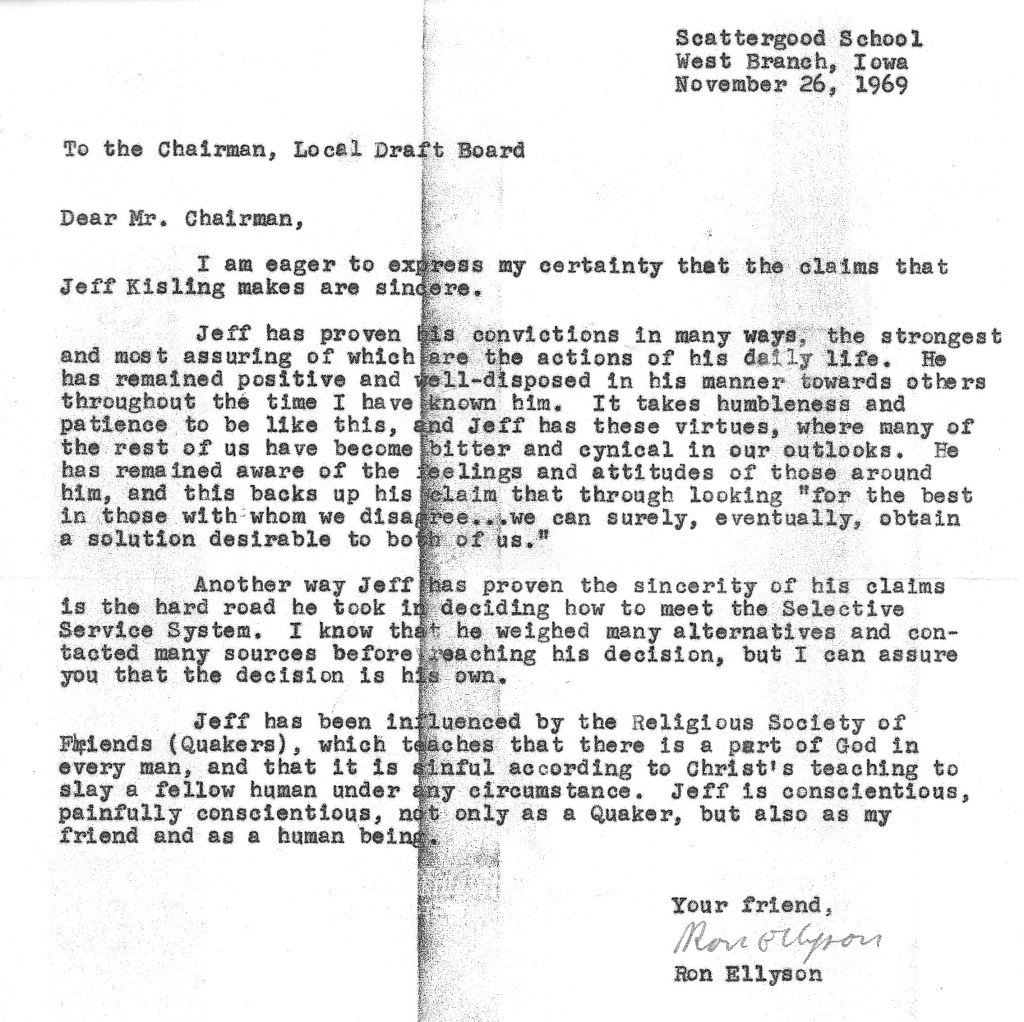
I struggled with my own draft decision while at Scattergood. Although I did apply for, and was granted conscientious objector status while I was trying to make a final decision, in the end I decided I could not cooperate with the Selective Service System, and returned my draft cards. A related Supreme Court case resulted in me not being prosecuted for that.

I’ve written a lot about Quakers, war, peace and the draft: https://kislingjeff.wordpress.com/?s=conscription

Posted in civil disobedience, peace, Quaker, Quaker Meetings, Uncategorized | Tagged , | Leave a comment

Atlantic Coastal Flooding Needs Planned Retreat

On February 24, 2018, I created a Facebook group titled “Overground Railroad” which has only seven members and very few visitors. The description is “a group to explore how to prepare climate refugees to migrate to the Midwest, and how to build communities for them to live in when they arrive.”

In response to one of my first posts concerning how we in the Midwest might deal with the massive inland migration of climate refugees, I received the following interesting response from Jane Peers.

“As a member of the coastal Quakers, I wonder how we Friends, after we find each other, will respond to the non-Quakers who will be fleeing to the same areas. Will we be building high walls? Offering classes in how to emulate our solutions? Something in between?

And, as a coastal dweller, I wonder how well we can adapt as well as how genuinely welcome we might be. We will lack almost all of the skills the new life will require.

This article is very welcome and could provide the basis of new acquaintances across the mountains – before the emergency. Could we share some of our visions – or nightmares – even if they are only small pieces of some larger as-yet-unseen vision? For example, how token warm in winter – skins were an early solution; Raising cotton or sheep and hand-spinning yarn and then learning to weave it and form garments – all this is just one other aspect of this vision.”

Thank you for taking the trouble to write out this well-considered wake-up call.”

Jane Peers

In response I wrote: Thank you Jane. I think it would be a great step forward to begin to build connections with coastal Quakers, completing the circle in a way. Figuring out what those on the coast grapple with, and how they make preparations for the journey would be another part of the way we can all help those who will become climate refugees. We would be building an ‘overground’ railroad.
I think this is a fascinating possibility. I hadn’t considered that connecting with coastal Friends would be an important step in the migration process. As Jane implies, those Friends could be learning needed skills BEFORE they start their journey. And as importantly, they could be teaching those skills to hundreds or thousands of others who would soon become climate refugees.
Such connections between those living on the coast and those in the Midwest could allow time for planning and preparation of the new communities. This could make the massive migration somewhat manageable, instead of the alternative of unexpected arrivals. A new dimension to building a peaceable kingdom.


Another Friend, who lives near San Diego, wrote:

What we’re already experiencing and likely to continue to experience for a long time: enormous loops in the Jet Stream driving Arctic climate southwards in one part of the country while another experiences weather from the tropics.

Water shortages are likely to remain a problem here [which might be mitigated by passive systems extracting water from what will probably be humid air.

But overall, an arrangement which connects communities in widely-spaced locations has clear advantages (as long as food can still be shipped between them. Depends on how well the railroad routes hold up?) So we might not be moving back East as much as trying to hang on wherever that turns out workable…

Forrest Curo, San Diego Meeting

There are various tools that can help visualize the effects of ocean rise. One is NOAA’s Coastal Flood Exposure Mapper. I hadn’t realized how little coastal flooding is predicted on the West coast. https://www.coast.noaa.gov/floodexposure/#-10517221,3754646,5z/eyJoIjoiaGF6YXJkQ29tcG9zaXRlfDF8In0=

NOAA’s Coastal Flood Exposure Mapper

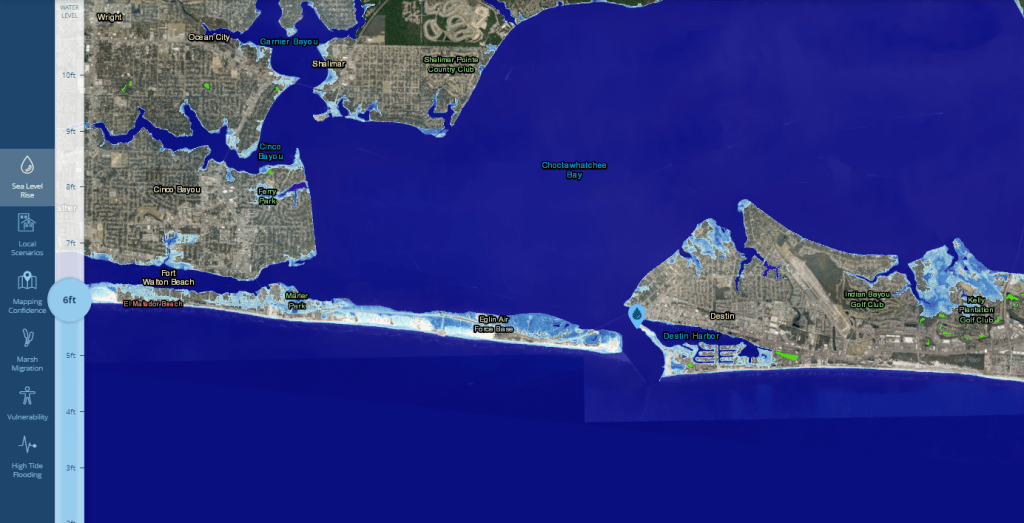
NOAA also has a Sea Level Rise Viewer: https://coast.noaa.gov/slr/# You can set the height of the sea level on the scale on the left, and the simulated sea level rise is shown on the map.

NOAA Sea Level Rise Viewer

For years climate scientists and oceanographers have been warning of ever-greater hazard to Atlantic America. They have warned of ever more torrential rains and the hazards of ever more damaging floods even in disparate cities such as Charleston and Seattle; they have even warned of high tide floods on a daily basis in some cities, and they have proposed that an estimated 13 million Americans could become climate refugees, driven by the advancing seas from their own homes.

All of which is why a trio of researchers argue for the need to accept the inevitable and step back from the sea, and they say so in the journal Science. They argue that the US should start to prepare for retreat by limiting development in the areas most at risk.

Fighting the ocean is a losing battle. The only way to win against water is not to fight. We need to stop picturing our relationship with nature as a war. We’re not winning or losing: we’re adjusting to changes in nature. Sea levels rise, storms surge into floodplains, so we need to move back. We can do that the hard way, by fighting for every inch and losing lives and dollars in the meantime. Or we can do it willingly and thoughtfully and take the opportunity to re-think the way we live on the coasts. This is why retreat needs to be strategic as well as managed. Retreat is a tool that can help achieve societal goals like community revitalization, equity, and sustainability if it is used purposefully.

The case for managed retreat, by A.R. Siders, Miyuki Hino and Katharine Mach, EurekAlert, Stanford University, August 22, 2019

Even if you don’t believe these changes will happen, or not happen soon, there are other compelling reasons to design and build new communities. Our economic system has not adapted to the loss of jobs overseas and to automation. There are simply not enough jobs for millions of people, and many of those who do have work are paid at poverty levels. Forced to depend upon increasingly diminishing social safety nets. That is morally wrong. Building small communities in rural areas will give people fulfilling work to do, food to eat, shelter, and a caring community to belong to, restoring their dignity. More details of how we might do this can be found in one of the first posts I wrote about building Beloved communities: https://kislingjeff.wordpress.com/2018/02/22/design-and-build-beloved-community-models/

Unfortunately as we have seen with the massive flooding of the Missouri River this spring, the Midwest will not be spared from climate chaos.

Posted in climate change, climate refugees, immigration, Uncategorized | Tagged | Leave a comment

Indigenous Lives vs Doctrine of Discovery

Following is some information from Phyllis Young, Standing Rock Organizer, The Lakota People’s Law Project. She links the “dual traumas of colonization and the exploitation of Grandmother Earth”.

As an Indigenous woman, I feel the heavy weight of history. At Standing Rock, the dual traumas of colonization and the exploitation of Grandmother Earth have collided in our battles against oil extraction and pipelines. I cannot thank you enough for your support—and I ask you to stay with us through November’s hearing on DAPL’s expansion and the planned construction of Keystone XL in 2020. Pipeline resistance must and will remain our top priority for the foreseeable future.

As Native activists, our work to reclaim our own history is also critical. That’s why we’re challenging the root legal argument behind the subjugation of so many Indigenous people, both here and around the world. The Doctrine of Discovery, a papal declaration from the 15th century, was used as a basis for Manifest Destiny and continues to haunt my people today. It was cited by a Supreme Court justice as recently as 2005.

I encourage you to watch our new video (below), in which a world-recognized Shawnee and Lenape expert, Steve Newcomb, sits down with us to explore how the Doctrine of Discovery still allows the domination of Indigenous peoples to this day.

Phyllis Young, Standing Rock Organizer, The Lakota People’s Law Project

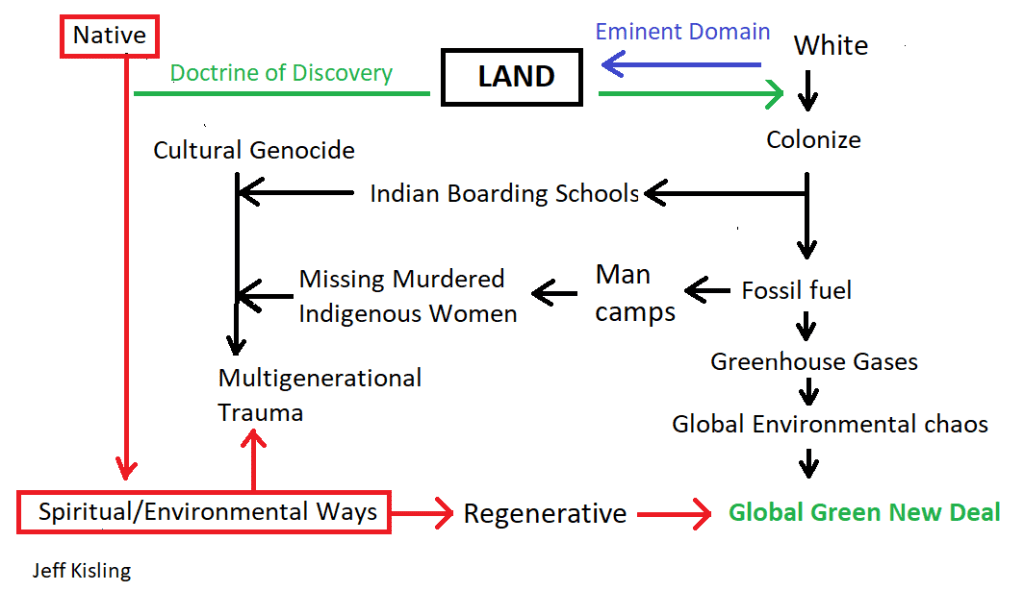
I’ve added the Doctrine of Discovery to the diagram below I’m working on. Pipeline battles these days also affect White people, when their land is stolen via Eminent Domain, so I added Eminent Domain to the diagram. I also changed the Green New Deal to Global Green New Deal, which I wrote about yesterday. https://kislingjeff.wordpress.com/2019/10/02/global-green-new-deal/

Jeff Kisling

Throughout the United States there is a backlash to recent eminent domain decisions. People are dismayed their government has the power to force landowners to surrender their property so that a new owner can utilize the land for a different, arguably better use. This shockwave of vulnerability extends to landowners and legislatures from all political spectrums. Moreover, it is hard to find a demographic group within the United States that is not outraged by recent eminent domain developments, except American Indians.

For centuries, American Indians have seen their lands taken by federal and state governments without consent, and at times, without compensation. Some Indian land takings have fallen squarely within the exercise of eminent domain powers, but takings have routinely occurred under other theories that provide no legal remedy.

BY EMINENT DOMAIN OR SOME OTHER NAME: A TRIBAL PERSPECTIVE ON TAKING LAND by Stacy L. Leeds*, Tulsa Law Review, Fall 2005

Now you have ecological systems and collapse, the die-off of all the insects, you have the sixth extinction. That’s what’s happening right now. You have Fukushima all the radiation. From that you know you can go on and list a whole litany of all the different symptoms and effects and consequences of domination and dehumanization. But most people don’t name it as that and now these people are living in the wreckage of that psychological dysfunction and these other people that caused that act blameless, they bear no responsibility. So how do we get rid of the domination system that afflicts the planet at this time? It has been afflicting it for so many centuries, thousands of years? That’s the rule the real challenge.

Steve Newcomb discusses the Doctrine of Discovery
Posted in #NDAPL, civil disobedience, climate change, Green New Deal, Indigenous, Uncategorized | Tagged , | Leave a comment

Global Green New Deal

This morning I’m writing, as I often do, more to take notes and learn about something I want to better understand. Today the subject is what a global Green New Deal might look like, stimulated by the release of the report from the UN trade, investment and development agency (UNCTAD), Financing a Global Green New Deal. https://unctad.org/en/PublicationsLibrary/tdr2019_en.pdf

Obviously it will take the cooperation of every country to dramatically cut fossil fuel use, which is the only possible way to perhaps avoid runaway global burning. Some countries actually use that as an argument to justify not cutting their own emissions, suggesting their efforts would be negated by other country’s continued reliance on fossil fuels.

The world must dramatically rethink its economic model in order to tackle growing environmental stress, inequality and development challenges, the UN said Wednesday, calling for a “Global Green New Deal”.

In a fresh report, the UN trade, investment and development agency (UNCTAD) called for countries to join forces and enable trillions of dollars in public sector investments to help reboot the global economy and counter climate change.

“Under the current configuration of policies, rules, market dynamics and corporate power, economic gaps are likely to increase and environmental degradation intensify,” warned Richard Kozul-Wright, head of UNCTAD’s globalisation and development strategies division.

“What we need is a Global Green New Deal,” he said, using the terminology proposed by progressive Democrats in the US who want to shift their country away from fossil fuels towards renewable energy with the aim of rapidly zeroing out greenhouse gas emissions.

If such policies were applied globally, they would help rein in rampant climate change, create millions of jobs and pave the way to meeting the UN Sustainable Development Goals (SDGs) for eradicating poverty and boosting human wellbeing by 2030, the report found.

UN calls for ‘Global Green New Deal’ to boost world economy
By Nina LARSON, 24MATINS.UK, 25 September 2019.

PRESS RELEASE

A changing climate is already causing severe damage across the world and posing an existential threat. Decarbonizing the global economy will require a significant rise in public investment especially in clean transport, energy and food systems. This will need to be supported by effective industrial policies, with targeted subsidies, tax incentives, loans and guarantees, as well as accelerated investments in research, development and technology adaptation.

The report argues for a new generation of trade and investment agreements to support these policies along with changes to intellectual property and licensing laws. But more specific measures and dedicated financial support will be required in developing countries to help them leapfrog carbon-intensive development paths.

PRESS RELEASE
UN calls for bold action to finance a global green new deal and meet the SDGs

Bernie Sanders’ Green New Deal is a policy that targets reducing global reliance on fossil fuels.

His Green New Deal includes a pledge to help the world’s poorer countries move rapidly away from fossil fuel use, reducing their greenhouse gas emissions as part of a transition as deep and comprehensive as the one that would simultaneously unfold in the United States. Specifically, he proposes that the US provide $200 billion to the UN’s Green Climate Fund, a program that helps poor countries leave coal, oil, and gas behind in favor of solar and other renewable energy sources. This, he says, would “reduce emissions among less industrialized nations by 36 percent by 2030.” Combine that reduction with the 71 percent drop in US emissions by 2030 that Sanders projects under his Green New Deal, and the net effect, he estimates, would be equivalent to cutting US emissions by 161 percent

Only a Global Green New Deal Can Save the Planet And Bernie Sanders has a plan for that.
By Tom Athanasiou, The Nation, September 17, 2019

Sanders’ plan predictably drew swift opposition. For example, to the enormous cost. This is another thing I’m going to learn more about. One thing I will say is when it comes to cost, there are the billions of dollars in fossil fuel subsidies and in the bloated military budget that would be better spent on funding a Green New Deal.

Posted in climate change, Green New Deal, Uncategorized | Leave a comment

Where you gonna hide from the hell you made?

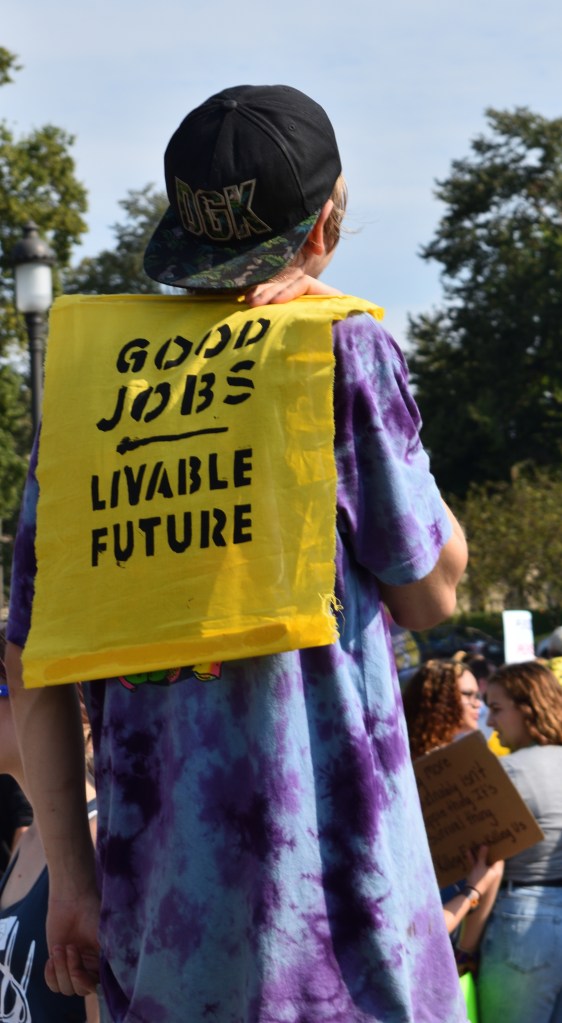
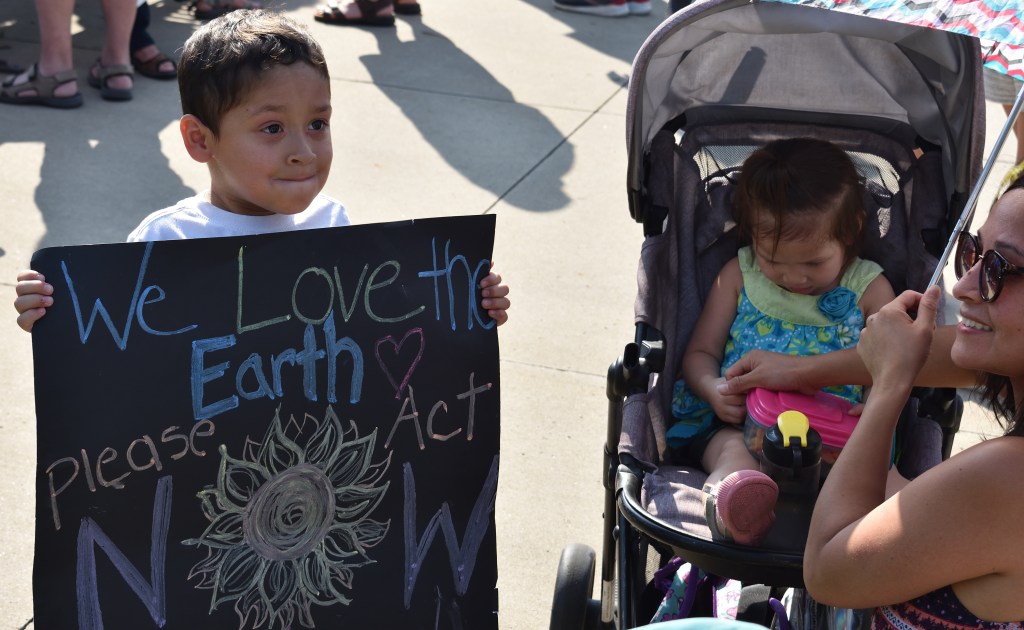
On Friday, my 12-year-old son carried his handmade cardboard protest sign to one of the thousands of climate strikes around the world, along with five of his classmates. His sign read, “Where you gonna hide from the hell you made?” This die-hard rock ’n’ roll fan had tapped an obscure song by his favorite band—Queen—called “White Man,” about the genocide of Native Americans, and picked out the perfect line to describe his rage at our human-made climate crisis.

My angry preteen was one of an estimated 4 million people who marched all over the planet Friday in what is considered the largest climate change-related protest action in history.

The refrain “water is life” came out of the seminal Standing Rock water protection movement aimed at the construction of the Dakota Access pipeline. That movement was a new chapter in Native American activism and was centered on the protection of earth’s resources and climate justice. Haatepeh sees indigenous wisdom as critical to the youth-led climate movement, saying, “We’ve known how to live with our earth in a balanced way without causing too much damage and pollution for thousands of years. … We’ve always known how to work with the land—not domesticate it, but work with it side by side.”

Greta Thunberg Isn’t the Only Voice of Her Generation by Sonali Kolhatkar, truthdig, Sept. 26, 2019

The quote above, “we’ve known how to live with our earth in a balanced way…” perfectly summarizes what I’ve been trying to say with the following diagram I’ve been working on, that Native spiritual and environmental ways can help us regenerate our damaged Mother Earth.

Jeff Kisling

I’ve been writing about why this is, and must be, a youth led movement. https://kislingjeff.wordpress.com/2019/09/18/youth-led-movement/
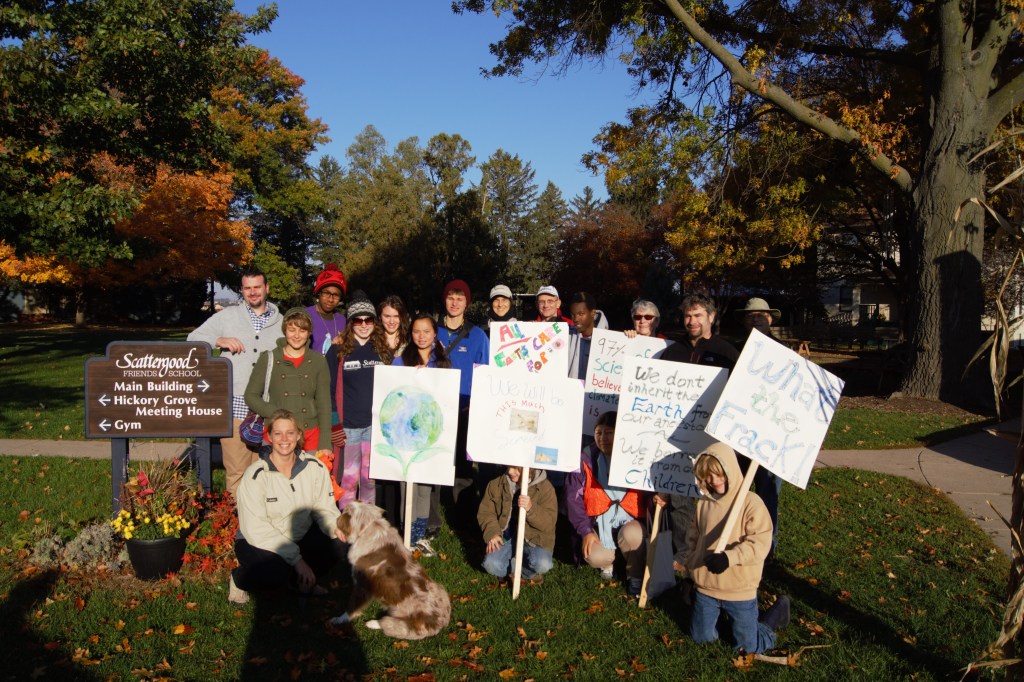
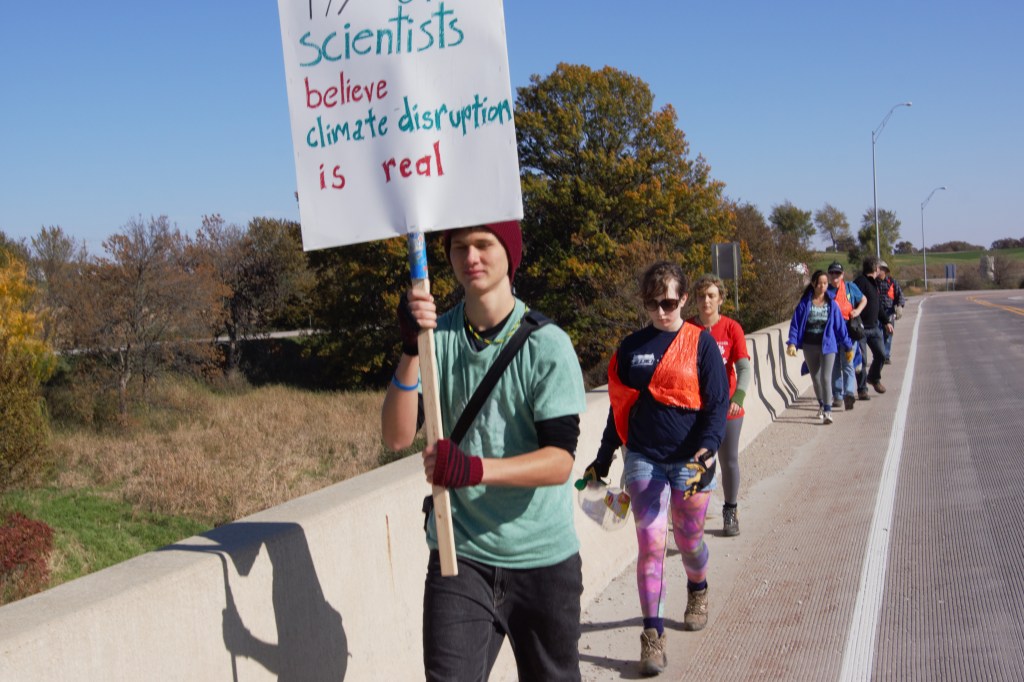
The Sunrise Movement has guidelines explaining this, part of which is found below. This has been an adjustment for me but I’ve quickly come to enjoy being a supporter instead of a leader. This discussion about youth and signs reminds me of the Earth Walk I was blessed to be part of in 2013. After a climate conference at Scattergood Friends School and Farm, some of us, mainly young people carrying signs they had made, walked from the School into Iowa City (about 14 miles).

Following is a video/slideshow of that Earth Walk.

Scattergood Friends School Earth Walk 2013

Sunrise Movement
Principles for Young at Heart Members

●We respect the value of a youth-led movement . While we all have much to lose to climate change, young people are the ones that will face the consequences of our actions today and should be at the forefront of our movement. Young people need youth-led and youth-centered spaces to come into their own as leaders, find their voices and to learn from one another. We trust the knowledge and skills that youth bring to our collective fight and follow their leadership as allies.
●We are guides/supports, rather than leaders . We understand that local and national leadership roles at Sunrise will be held by young people, and we are allies and supporters. We keep the space open for the voices of our youth leaders before we share our own. Our life experiences are valuable and add significant value to the movement but shouldn’t take precedence over the ideas and thoughts of our youth members.
●We are Americans from all walks of life . We are people of all ages coming together for our future and appreciate that some members have many years of organizing experience and others are organizing for the first time. We respect what everyone brings and listen to everyone’s experience.
#YoungAtHeart Guidelines


I’m a simple man
With a simple name
From this soil my people came
In this soil remain
Oh yeah, oh yeah
We made us our shoes
We trod soft on the land
But the immigrant built roads
On our blood and sand
Oh yeah, oh yeah
White man, White man
Don’t you see the light behind your blackened skies
White man, White man
You took away the sight to blind my simple eyes
White man, White man
Where you gonna hide
From the hell you’ve made ?
Oh the Red man knows war
With his hands and his knives
On the bible you swore
Fought your battle with lies
Oh yeah
Leave my body in shame
Leave my soul in disgrace
But by every God’s name
Say your prayers for your race
Oh yeah
White man, White man
Our country was green and all our rivers wide
White man, White man
You came…

White Man by Brian May, performed by Queen
Posted in climate change, Indigenous, Quaker, Sunrise Movement, Uncategorized | Tagged | Leave a comment

Orange Shirt Day

Today, Sept. 30, is Orange Shirt Day, remembering Indigenous children who suffered in residential schools.

If you happen to have an orange shirt in your closet, consider wearing it today (Monday, Sept. 30). Orange Shirt Day is a relatively new effort to raise awareness and remember the indigenous children who suffered in Canada’s residential school system, a system that stripped them of their languages, cultures, spiritual traditions and their very identities.

Residential school survivor Phyllis Jack Webstad provided the inspiration for Orange Shirt Day. During a 2013 school commemoration for St. Joseph Mission residential school in Williams Lake, British Columbia, Webstad shared her story. It’s posted on the Orange Shirt Day website.

Healing Minnesota Stories

I went to the Mission for one school year in 1973/1974. I had just turned 6 years old. I lived with my grandmother on the Dog Creek reserve. We never had very much money, but somehow my granny managed to buy me a new outfit to go to the Mission school. I remember going to Robinson’s store and picking out a shiny orange shirt. It had string laced up in front, and was so bright and exciting – just like I felt to be going to school!

When I got to the Mission, they stripped me, and took away my clothes, including the orange shirt! I never wore it again. I didn’t understand why they wouldn’t give it back to me, it was mine! The color orange has always reminded me of that and how my feelings didn’t matter, how no one cared and how I felt like I was worth nothing. All of us little children were crying and no one cared.

I was 13.8 years old and in grade 8 when my son Jeremy was born. Because my grandmother and mother both attended residential school for 10 years each, I never knew what a parent was supposed to be like. With the help of my aunt, Agness Jack, I was able to raise my son and have him know me as his mother.

I went to a treatment centre for healing when I was 27 and have been on this healing journey since then. I finally get it, that the feeling of worthlessness and insignificance, ingrained in me from my first day at the mission, affected the way I lived my life for many years. Even now, when I know nothing could be further than the truth, I still sometimes feel that I don’t matter. Even with all the work I’ve done!

I am honored to be able to tell my story so that others may benefit and understand, and maybe other survivors will feel comfortable enough to share their stories.

Phyllis (Jack) Webstad’s story in her own words…

I have been studying, thinking and writing about Indian Boarding Schools for some time now. The following graphic I’ve been working on visualizes how I see the relationships among Native people and White people.

Jeff Kisling

As seen in the diagram above, Indian Boarding Schools are part of the history of White colonization. The purpose of those schools was to try to forcefully assimilate Indian children into White society. The more I learned, the more I realized this was not only a tragic part of history, but deep wounds from that forced assimilation continue today. I don’t know of a clearer picture of multigenerational trauma.

It has been a lifelong struggle to convince Quakers and others of the terrible damage being done to Mother Earth because of our profligate use of fossil fuels. As shown above, I believe Native spiritual and environmental ways might help us try to begin to heal Mother Earth, and our relations each other. The First Nation-Farmer Climate Unity March last year finally made it possible for me to develop friendships with some Native people.

But I felt I couldn’t have honest friendships until I brought up the Indian Boarding Schools tragedy. Although none of my new friends brought that up, the moment I did, I found everyone was quite aware of that history. That is a story itself, that you can read here: https://kislingjeff.wordpress.com/2019/06/17/the-past-isnt/

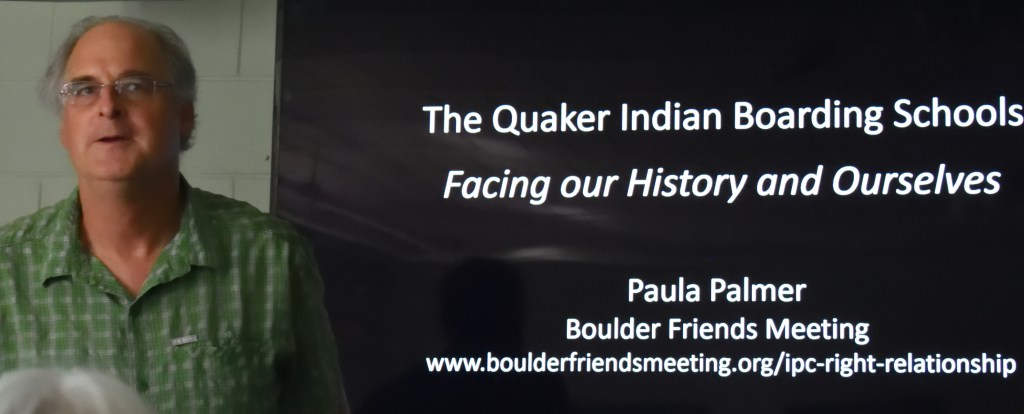
Paula Palmer was in Iowa leading workshops and discussions related to “toward right relationships with Native peoples”. The workshop about “Quaker Indian Boarding Schools; Facing Our History and Ourselves” was presented at Scattergood Friends School and Farm, a Quaker boarding (high) school that I attended many years ago.

A resource I recently found is a graphics novel by Jason Eaglespeaker, UNeducation, Vol 1: A Residential School Graphic Novel (PG) where he describes Indian boarding school experiences. Jason and I had an email exchange last year related to a book he helped publish, Young Water Protectors …A Story About Standing Rock by Aslan Tudor. I didn’t know it at the time I purchased the book, but I had seen Aslan at Dakota Access Pipeline rallies in Indianapolis.

I enjoyed Young Water Protectors. I see Aslan Tudor lives in Indianapolis. I took a lot of photos there during the Stop DAPL rallies, and I think I have a couple of photos of him. I’d be interested to know they are of him. Would you and/or he be interested if I sent them to you? Thanks.

My message to Jason Eaglespeaker 9/13/2018

Hi Jeff,
Sorry for the delay. Thanks so much for reaching out.
Please do send any photos you have of Aslan at the DAPL, that would be absolutely awesome.
If we use them in any promotions, we will be sure to credit you as well
Warmly,
Jason Eaglespeaker

From Jason Eaglespeaker 10/4/2018
Posted in #NDAPL, First Nation-Farmer Climate Unity March, Indigenous, Quaker, Toward Right Relationship with Native Peoples, Uncategorized | Tagged | Leave a comment

Bear Creek Friends and Medicinal Herbs

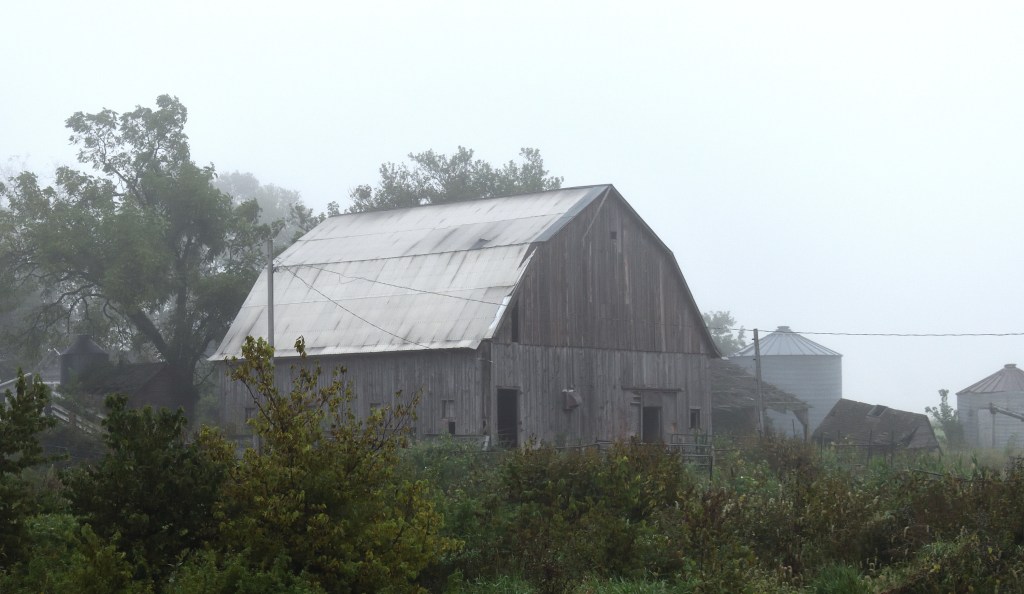
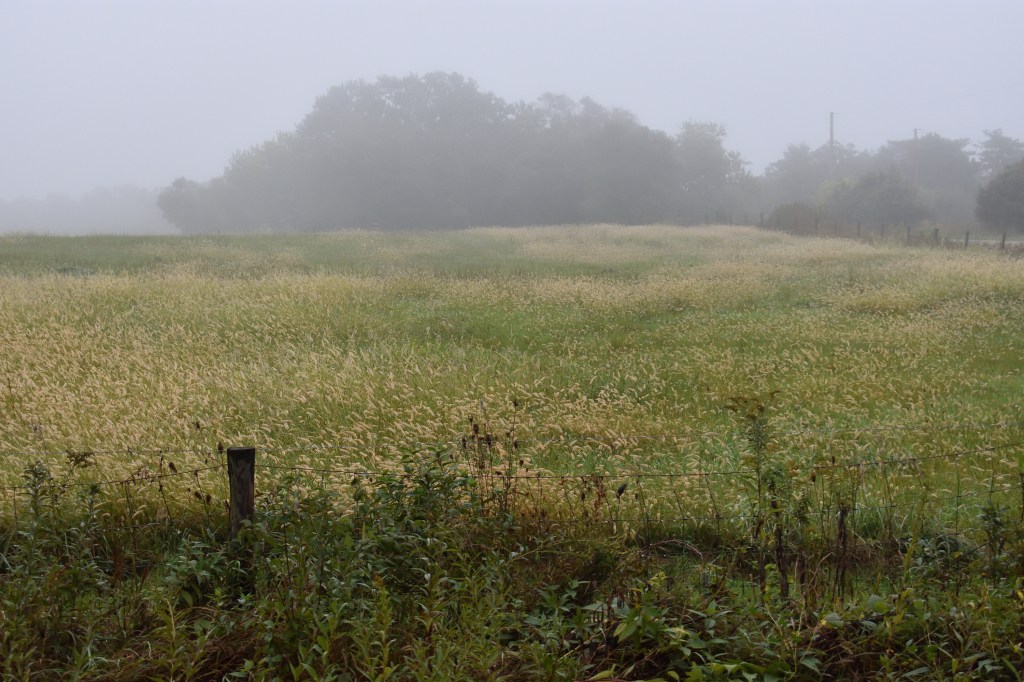
It was a foggy morning as I traveled toward Bear Creek Friends meetinghouse this morning.


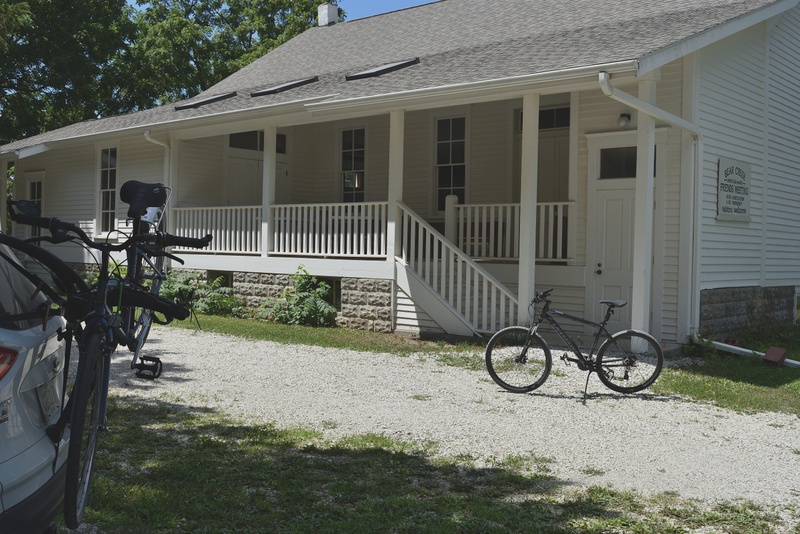
Bear Creek meeting

But instead of going to the meetinghouse, I traveled a couple of miles down Bear Creek Road to the farm of my Aunt Win and Uncle Ellis Standing. Bear Creek meeting was held on their farm this morning. As my cousin Cheri Standing, a pediatrician, explains in the following video, medical herbalist Frank Norman was going to lead a walk around the farm, pointing out herbs and plants and explaining what their medicinal properties were.


Cheri Standing, Shazi Knight and Peter Clay

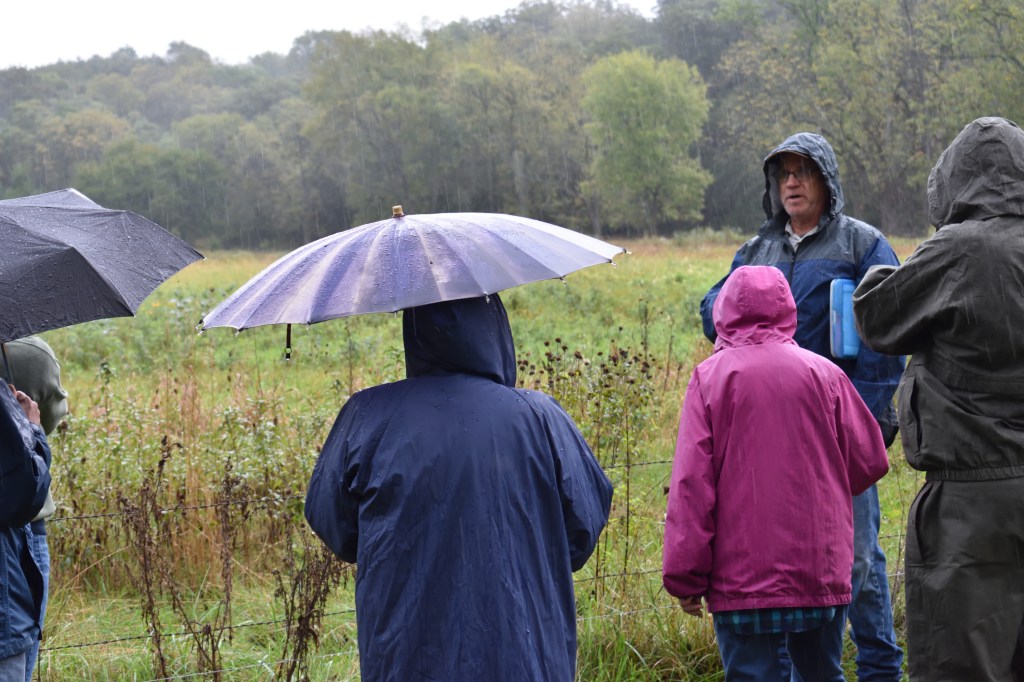
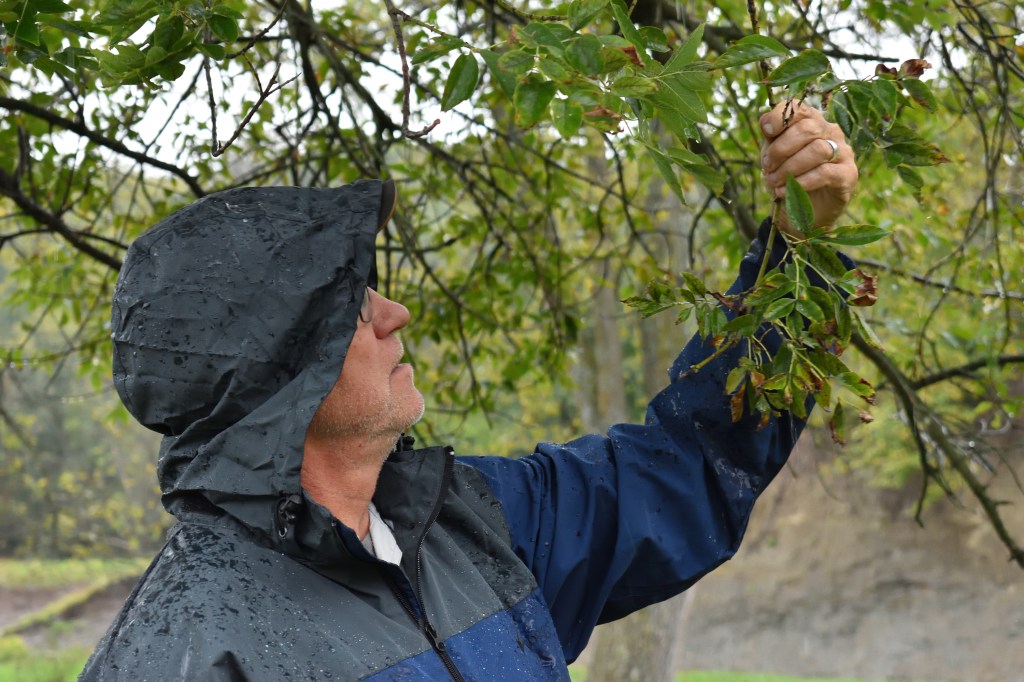
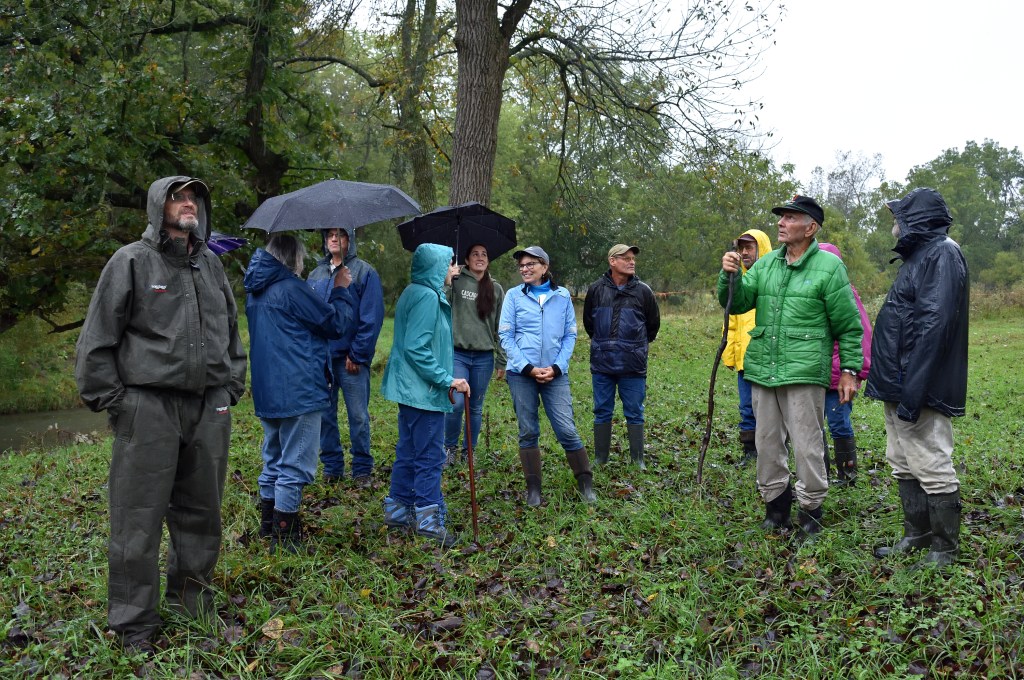
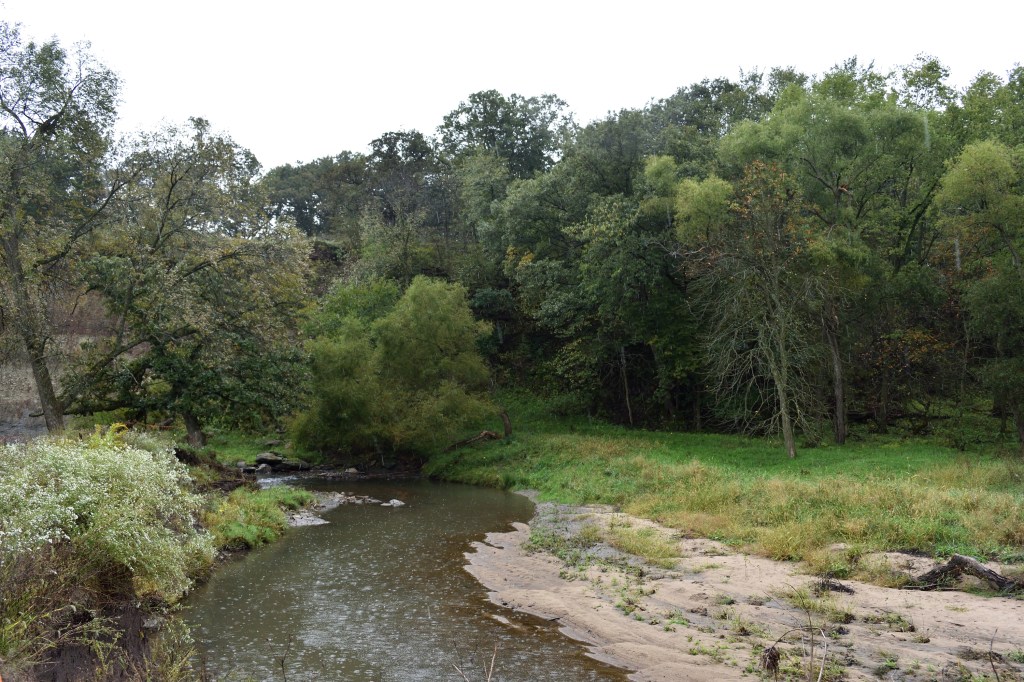
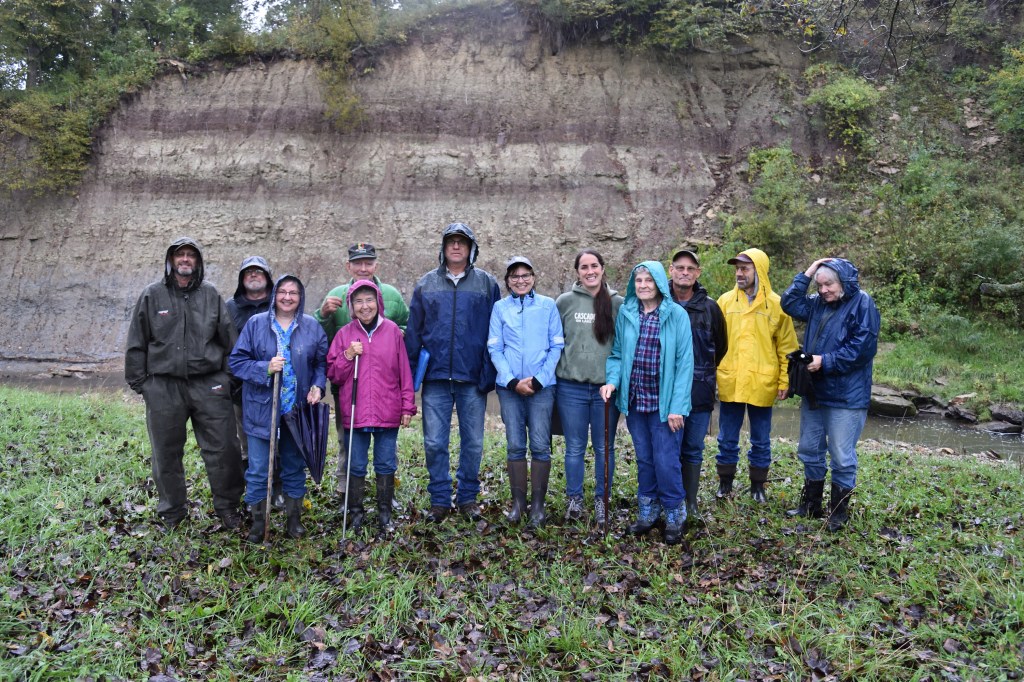
We spent about two hours walking through the field in the rain. It felt like meeting for worship in nature. Following are a few of the herbs and plants we learned about.


Bear Creek Friends at Bear Creek:

Posted in Quaker, Quaker Meetings, Uncategorized | Tagged | Leave a comment