Decolonizing Quakers

For decades I’ve watched the failure of white dominant society to address the increasingly dire threats to Mother Earth.

So I began looking for ways to learn more about Native peoples, who have always known of the sacredness of our environment and relationships with each other. I’ve written extensively about my journey along this path: https://kislingjeff.wordpress.com/?s=native

As it says below, “the decolonizing that needs to take place, both the educating and the healing, are matters of urgency to the survival of the human species and the health of the Earth as Mother of us All.

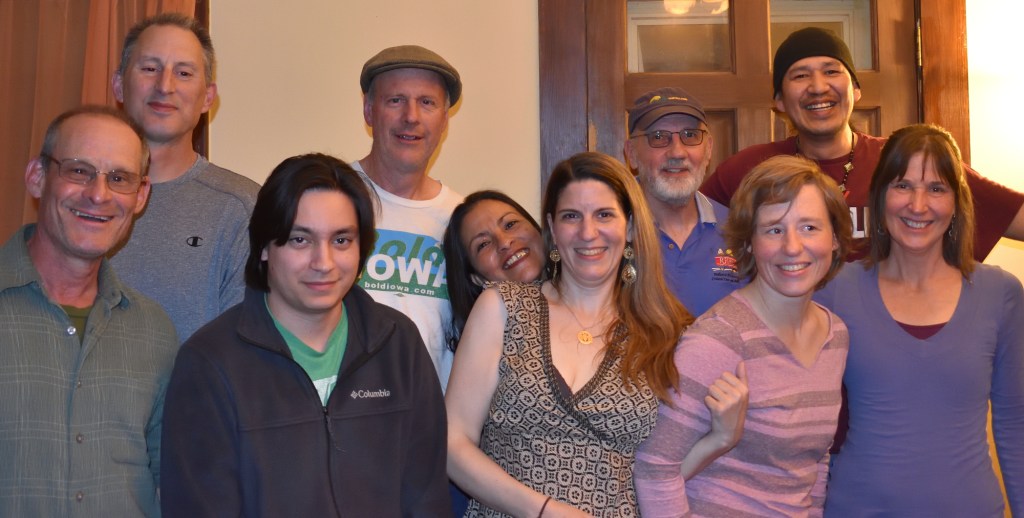
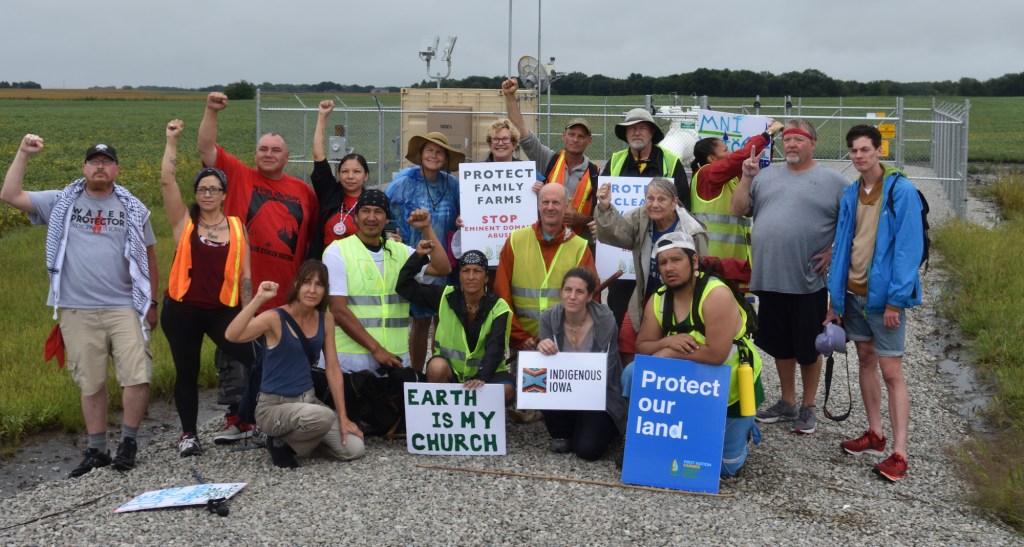
After dinner on the seventh day of the First Nation-Farmer Climate Unity March, Trisha CaxSep GuWign Etringer led a very interesting discussion about decolonization. (Trisha also opened the evening when the Green New Deal Tour came to Des Moines, and spoke about the importance of Indigenous leadership as the Green New Deal begins to take shape).

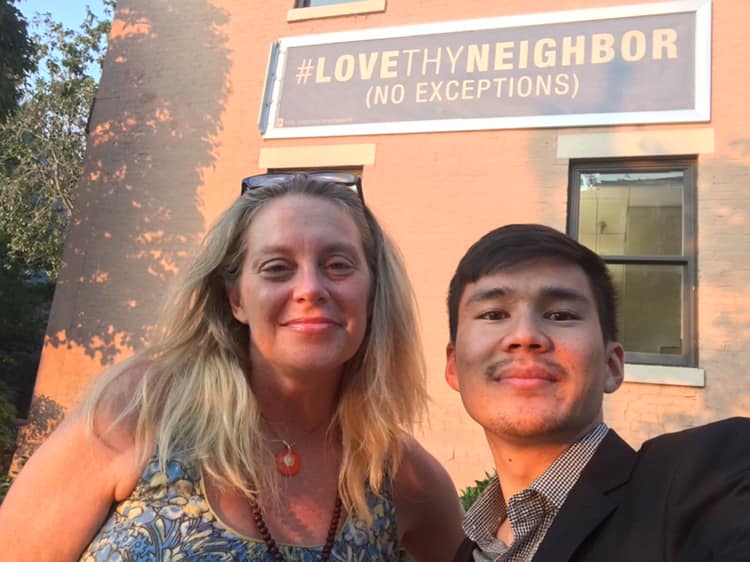
Trisha, me and Lakasha at the Green New Deal Tour

I appreciated the recent presentation from the Friends Committee on National Legislation (FCNL): Celebrating Indigenous Peoples’ Day: The Long Arc of FCNL Advocacy.

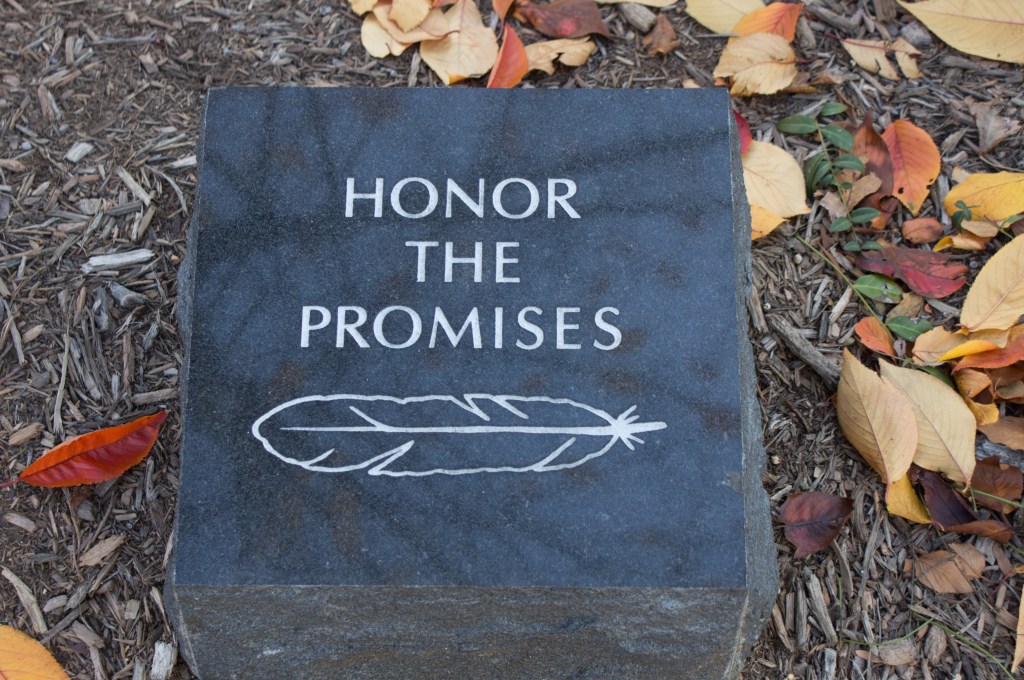
Since 1976, FCNL’s Native American advocacy program has worked to restore and improve U.S. relations with Native nations so that our country honors the promises made in hundreds of treaties with these groups. FCNL provides information to Congressional offices and to national faith groups about the continuing struggles of Native people and advocates in support the resilient and inventive solutions proposed by tribal governments and Native American organizations.

Friends Committee on National Legislation (FCNL)

One of the panelists at the FCNL presentation was my friend Ruth Flower. I had just learned about a new website titled “Decolonizing Quakers: Seeking Right Relationship With Native Peoples“. This shouldn’t be confused with Paula Palmer’s work “Toward Right Relationships with Native Peoples”, which has a similar purpose.

Decolonizing Quakers also has a Facebook group: https://www.facebook.com/DecolonizingQuakers/

I hadn’t known, until the FCNL presentation, that Ruth was very involved in this effort. That’s not surprising since a good deal of her work at FCNL was Native American advocacy.

The following is from the Decolonizing Quakers website.

We Are…

We are a group of North American Quakers of multiple ethnicities and backgrounds seeking to:

  • Learn, receive, own, and act upon the truth of Quaker history with Indigenous Peoples, to explore the wounds resulting from this history for all peoples impacted, learn how to move toward healing those wounds, and engage in actions that recognize the dignity of all those concerned;
  • Support each other practically and spiritually as we work on this concern as individuals, and in our efforts to raise awareness within the broader Quaker community;
  • Offer support, information, and resources for non-Indigenous Quakers to help them discern and develop relationships of greater integrity with Indigenous Peoples, within and beyond the Quaker community;
  • Acknowledge, honor and respect Indigenous ways of knowing that offer non-Western/non-colonial paradigms, including potential approaches to environmental, social, economic and spiritual conditions that threaten us all;
  • Walk respectfully in ways that increase cultural integrity and justice for Indigenous governments, communities, and for the Earth.

We understand our call to be part of a broader call to address the spiritual distortion of racism, the societal heritage of colonization, and the domination paradigm of human beings within the Earth community.

How We Came Together

Decolonizing Quakers is an organization that had its origins in a conference at Pendle Hill in May 2018 entitled “Truth and Healing: Quakers Seeking Right Relationship with Indigenous Peoples,” which involved Quakers of multiple ethnic identities and some indigenous people who did not identify as Quaker. At that conference, Maggie Edmondson felt a leading to organize a North American group of Quakers to continue the work that was identified as ours to do, institutionally and individually as Quakers. A steering committee formed in the months following the conference to discern the way forward.

The steering committee has met monthly since July 2018 and has wrestled with a statement of purpose that has evolved as its members have acknowledged the complex interconnectedness of issues: The North American experience shares commonalities with the dismissal and attempted erasure of Indigenous Peoples worldwide and particularly, with English-colonized countries like Australia, New Zealand, and South Africa. The work of decolonizing the mindsets, patterns, and cultural domination of those who have benefited from colonization and of decolonizing the minds, patterns, and cultural subordination and attempted erasure of those who have suffered from colonization are different, interconnected, and necessary. Some of this work needs to proceed independently without causing further injury to Indigenous Peoples by placing a burden on Native peoples to “educate” European-Americans, and yet has to proceed in relationship with and following the leadership of Native peoples.

The decolonizing that needs to take place, both the educating and the healing, are matters of urgency to the survival of the human species and the health of the Earth as Mother of us All.  Part of our struggle has been to define a mission and purpose that can remain sufficiently focused to be effective and at the same time recognize that it is only a part of a broader vision of healing.

Decolonizing Quakers

There is a great deal of information on the website. For example, Re-Learning is a good place to start.

Re-Learning

Indigenous people and settlers share a history — some of us are survivors of that history, some of us benefited from it, and some of us carry both survival and benefits through our ancestors. This deep historical conflict divides all our relations from one another and ourselves. To heal and move forward from this history, we need to know what happened so that we can better recognize our to decolonize our minds, our hearts, and our actions.
https://www.decolonizingquakers.org/resources/


Posted in First Nation-Farmer Climate Unity March, Green New Deal, Indigenous, Native Americans, Quaker, Toward Right Relationship with Native Peoples, Uncategorized | Tagged | Leave a comment

Attempts to Silence Pipeline Protestors

Silencing protest is crucial for establishing an authoritarian regime, as the current Republican party and administration are doing. As is suppressing media coverage of protests, or delegitimizing what reporting is done as “fake” news.

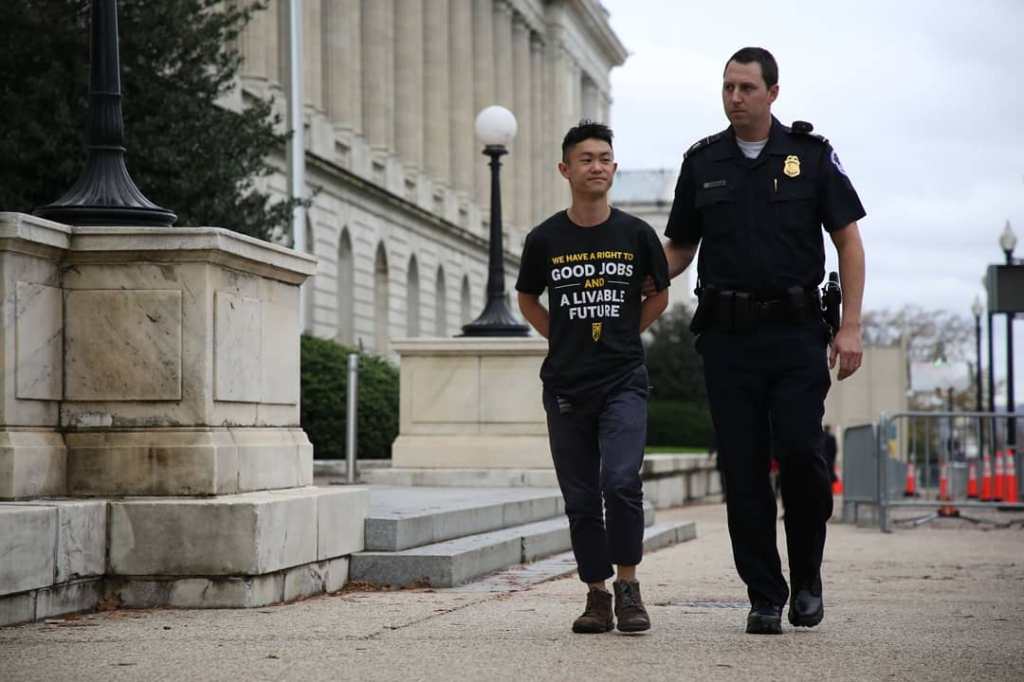
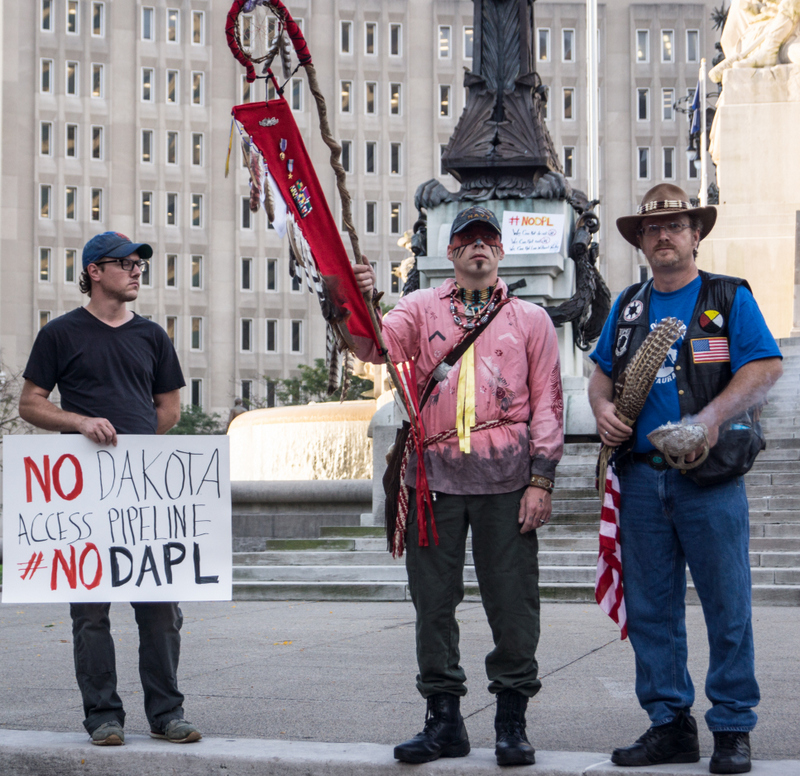
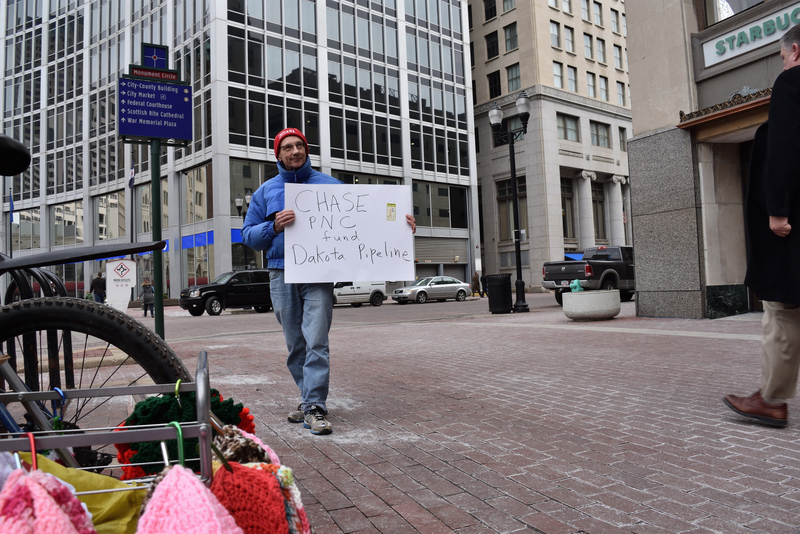
Beginning in 2016 we witnessed the repugnant spectacle of the militarized response to Native men, women, and children praying and peacefully protecting water from the Dakota Access Pipeline. Police shooting projectiles at water protectors, spraying them with water in freezing conditions, and arresting peaceful water protectors with felony charges.

Love Letters to God Nahko

Big Oil continues to push hard for legislation to punish peaceful, non-violent pipeline protesters. Ed Fallon, Bold Iowa

Last week, I (Ed Fallon) spoke to bill drafters with Iowa’s non-partisan Legislative Services Agency — the folks who drafted the “critical infrastructure sabotage” bill that passed the Iowa House and Senate and was signed by Governor Reynolds. Drafters agree that, while Iowa’s law makes it a class B felony if one causes a substantial and widespread “interruption or impairment of a fundamental service” of gas, oil, petroleum, or refined petroleum products, it’s hard to imagine any judge or jury finding any of the protesters in the DAPL fight guilty of such a crime, with the exception of those who damaged pipeline equipment.

Ed Fallon, Bold Iowa, 10/24/2019

From the American Civil Liberties Union (ACLU) today:

South Dakota’s governor and attorney general today backed down from their unconstitutional attempts to silence pipeline protestors. In response to a lawsuit we filed alongside the ACLU of South Dakota and the Robins Kaplan law firm, the state has agreed to never enforce the unconstitutional provisions of several state laws that threatened activists who encourage or organize protests, particularly protests of the Keystone XL pipeline, with fines and criminal penalties of up to 25 years in prison.

The settlement agreement reached today and now headed to the court for approval is an important victory for the right to protest. It comes soon after a federal court temporarily blocked enforcement of the pieces of the laws that infringed on First Amendment protected speech, and makes the court’s temporary block a permanent one.

The laws include the “Riot Boosting” Act, which gave the state the authority to sue individuals and organizations for “riot boosting,” a novel and confusing term. The court warned against the laws’ broad reach, noting that the laws could have prohibited:

  • Sending a supporting email or a letter to the editor in support of a protest
  • Giving a cup of coffee or thumbs up or $10 to protesters
  • Holding up a sign in protest on a street corner
  • Asking someone to protest

    South Dakota Governor Caves on Attempted Efforts to Silence Pipeline Protesters. The state’s quick retreat should serve as a lesson for other legislatures: if you criminalize protest, we will sue. Vera Eidelman, ACLU, Staff Attorney, October 24, 2019

Peaceful demonstrations are a catalyst for the advancement of human rights. Yet around the world governments are criminalizing dissent and suppressing public protest, often as a means to protect corporate interests. In this context, indigenous peoples increasingly find themselves as the subjects of criminal prosecution and police violence when defending the lands they rely upon for their existence and survival from resource extraction.

The United States has failed in its duty to prevent and protect against the use of excessive force and unlawful arrests and to investigate, punish, and provide reparations for these human rights abuses. By condoning the behavior of state law enforcement and private security in this context, the state is normalizing, encouraging, and emboldening state and non-state actors to act similarly in future situations.

We urge the Special Rapporteur to reiterate her requests to the United States to “develop and provide anti-oppression and anti-racism training to federal and state law enforcement agents, and to mandate the Department of Justice to open an investigation into the excessive use of force and militarized response to the water protectors at the Standing Rock Sioux Reservation, including the use of non-lethal weapons.

Report to the United Nations Special Rapporteur on the Rights of Indigenous Peoples

Chase Iron Eyes

Related blog posts:
We Are Not Terrorists
Protest
Indigenous Resistance to the Dakota Access Pipeline: Criminalization of dissent and suppression of protest


#RiotBoosters
#StillNoDAPL
#MníWičóni
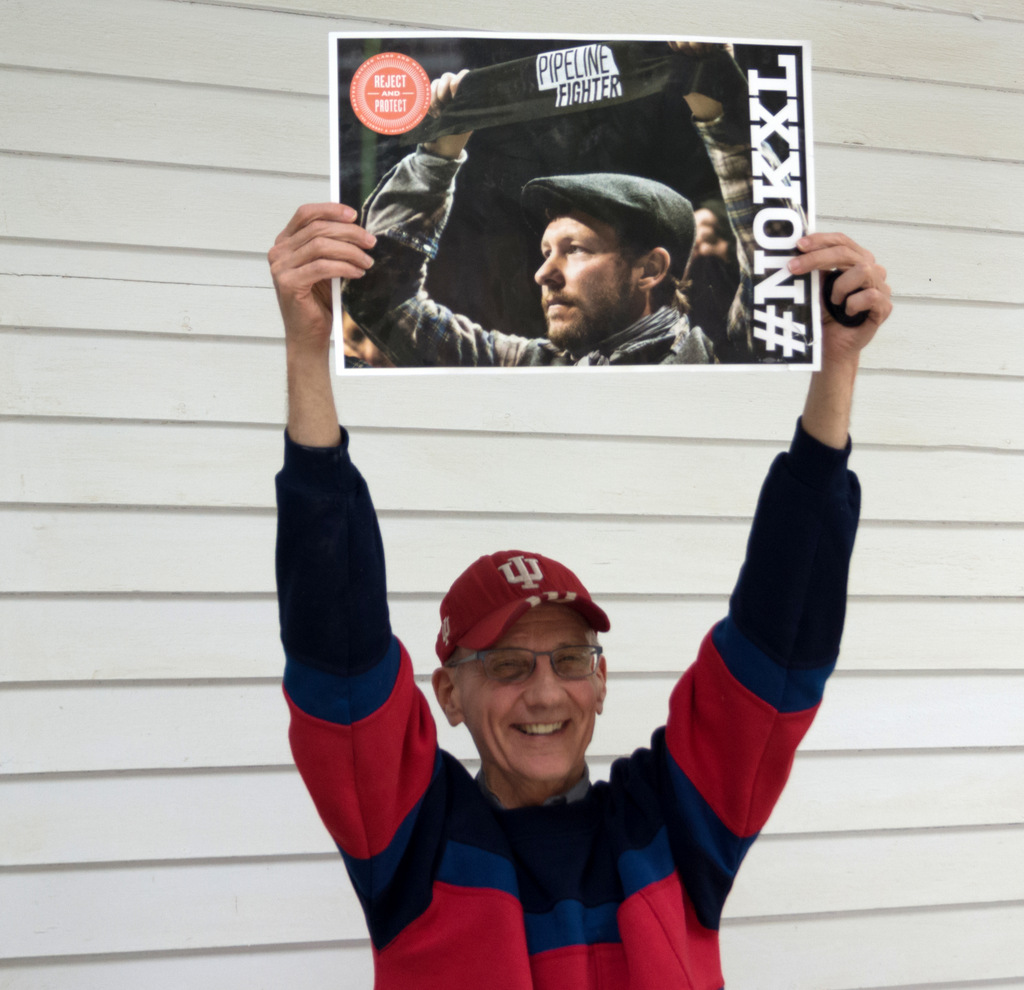
#NoKXL
#NoDAPL

Posted in #NDAPL, civil disobedience, climate change, Indigenous, Uncategorized | Leave a comment

Native Peoples and Friends Committee on National Legislation (FCNL)

Columbus Day overlooks a painful colonial history and minimizes the important contributions made by Indigenous peoples throughout this continent’s history. That’s why FCNL has chosen to celebrate Indigenous Peoples’ Day instead.

I attended (10/23/19) the Friends Committee on National Legislation (FCNL) program Celebrating Indigenous Peoples’ Day: The Long Arc of FCNL Advocacy from the Quaker Welcome Center, which I was able to see via Zoom. Here is a recording of that presentation:

Goals for VAWA 2019 Reauthorization: Expanding Victim Protections

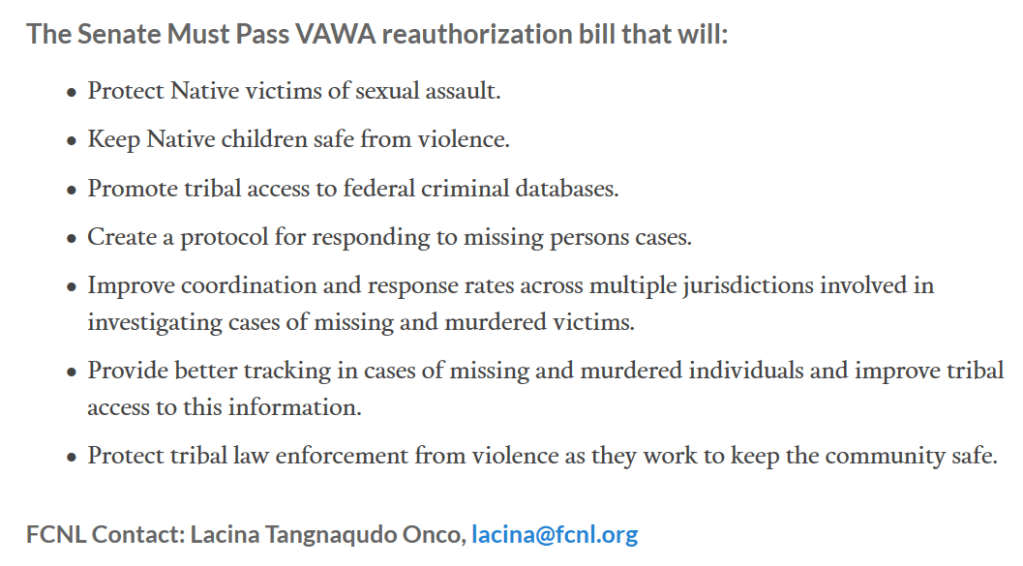
The Violence Against Women Act (VAWA) addresses violence and sexual assault by providing the resources and services necessary for public safety. This bill is especially significant for Native American communities as it restores tribal jurisdiction over non-Indian assailants for crimes of domestic violence. Restoring tribal jurisdiction over these crimes would provide Native communities with the resources they need to bring justice for victims of violence.

The House recently passed H.R. 1585, a VAWA reauthorization bill which included strong provisions protecting Native communities. The Senate must now introduce a reauthorization of VAWA with the same strong tribal provisions as H.R. 1585. This reauthorization should expand the current Special Domestic Violence Criminal Jurisdiction to protect children, tribal law enforcement officers, and victims of all forms of violence including: sexual assault, sex trafficking, stalking, and child abuse

Right now, the Senate Judiciary Committee is negotiating their version of the Violence Against Women Act (VAWA) reauthorization. This is a critical hurdle since the House passed its version (H.R. 1585) a few months ago.

Legislative Ask: Reauthorize the Violence Against Women Act with Strong Provisions for Native Women

Contact your senators today! Tell them that VAWA reauthorization MUST restore tribal jurisdiction over non-Native American perpetrators!

This link will help you write your letter and send it to your Senators: https://cqrcengage.com/fcnl/app/write-a-letter?1&engagementId=499064

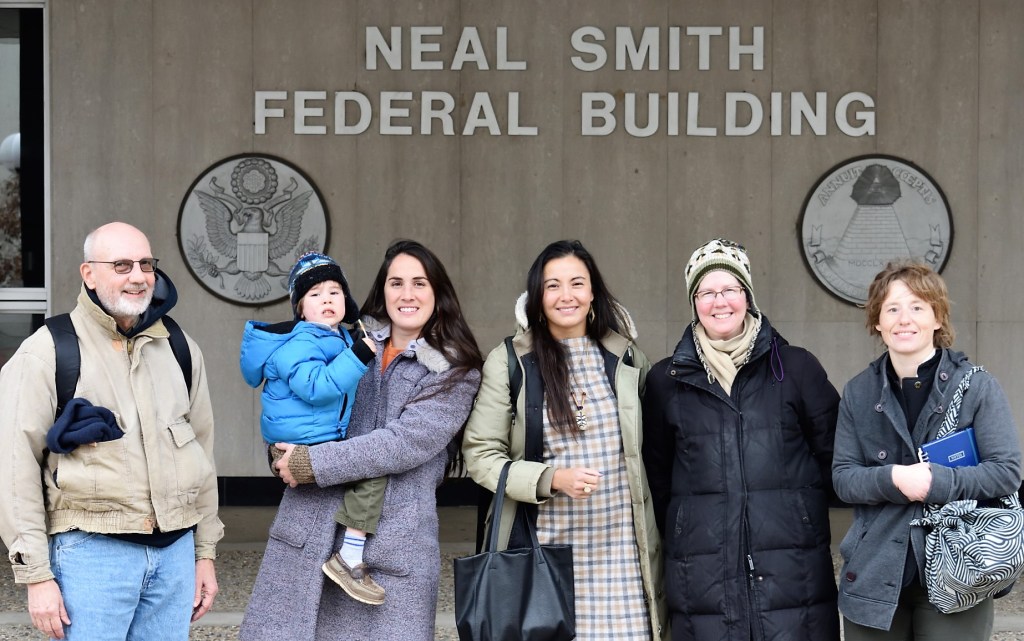
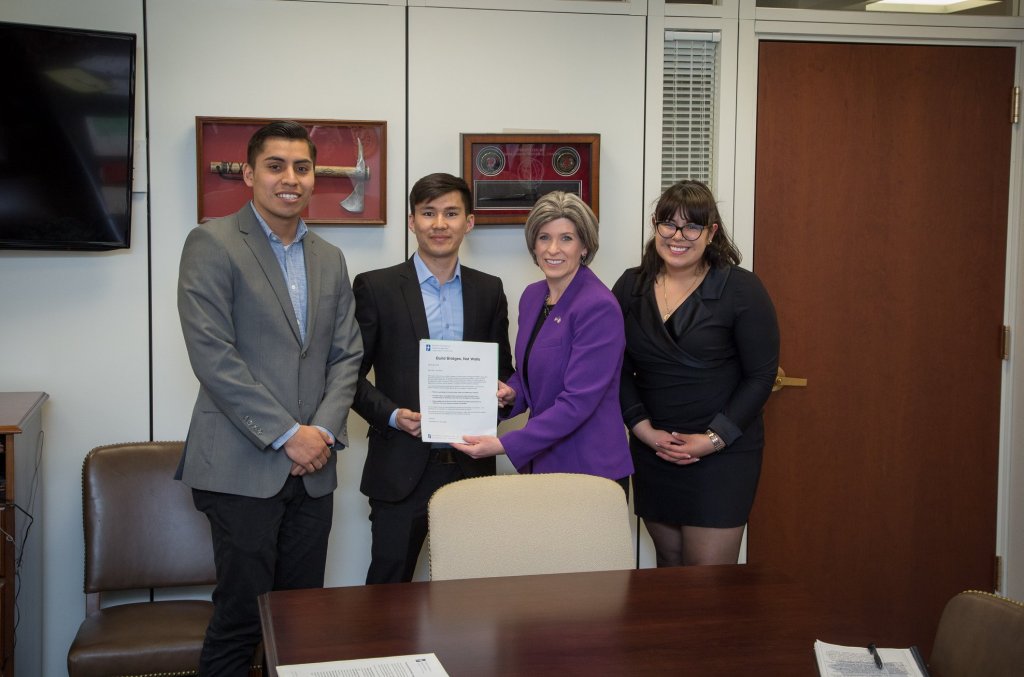
On November 20, 2018, Shari Hrdnia, Sid Barfot, Christine Nobiss, Shazi and Fox Knight, and I met with Carol Olson, Senator Chuck Grassley’s State Director at the Federal Building in Des Moines. Two of Senator Grassley’s staff from Washington, DC, joined us via a conference call. The meeting was a chance for us to get to know each other and find ways we can work with Senator Grassley and others to pass legislation to support Native American communities.

Jeff Kisling, Fox and Shazi Knight, Christine Nobiss, Shari Hrdnia, SId Barfoot

During this meeting, I talked about the Friends Committee on National Legislation and the SURVIVE Act. Christine Nobiss spoke about the racism and violence against Native women and Savanna’s Act. Everyone else then contributed to the discussions.

Posted in Native Americans, Quaker, Uncategorized | Tagged , | Leave a comment

Practicing Hope

I’ve recently written about two people who were mentors for me, Sherry Hutchison and Don Laughlin. And that has led me to pray and wonder about what I have done, and might yet do, that could be a good influence for others. Don’t we all aspire to be mentors?

As a Quaker and person of faith I believe that God continues to be present in the world today. As a scientist, it is looking like we are on the path to runaway global heating which humans might not survive. Perhaps there will yet be some miracle from God to avoid this, or perhaps that is not God’s plan.

What I ask myself, and pray about now is how we can slow down the damage for the sake of our children. I still wonder why we refused to make choices fifty years ago that would have avoided this environmental catastrophe. I fear that same refusal might keep us from grappling with this now.

Is there hope today, and what does that look like?

I came across the following blog post that taught me something about hope. I include the highlighted part of this quotation in my email signature. We should practice hope, and help others learn to practice hope so we can face hard truths, not only about environmental destruction, but so many other things as indicated below.

People often mistake hope for a feeling, but it’s not. It’s a mental discipline, an attentional practice that you can learn. Like any such discipline, it’s work that takes time, which you fail at, succeed, improve, fail at again, and build over years inside yourself.

Hope isn’t just looking at the positive things in this world, or expecting the best. That’s a fragile kind of cheerfulness, something that breaks under the weight of a normal human life. To practice hope is to face hard truths, harder truths than you can face without the practice of hope. You can’t navigate dark places without a light, and hope is that light for humanity’s dark places. Hope lets you study environmental destruction, war, genocide, exploitative relations between peoples. It lets you look into the darkest parts of human history, and even the callous entropy of a universe hell bent on heat death no matter what we do. When you are disciplined in hope, you can face these things because you have learned to put them in context, you have learned to swallow joy and grief together, and wait for peace.

IT IS BITTER TEA THAT INVOLVES YOU SO: A SERMON ON HOPE by Quinn Norton, April 30, 2018

Lately, I keep coming back the question, “are we really listening for that still small voice during our prayers, and meeting for worship? Do we practice hope?” Or do we force what we hear to conform to our current worldview? Do we do a sort of reinterpretation of what we hear? If we heard “give up all your possessions”, would we do so?

Because so often I find people don’t seem to be able to “think outside the box.” For example, when I say we have to stop using personal automobiles, people say “but we have to have a car so we can…”

I have become unsettled lately regarding what my next steps should be. Care for Mother Earth has been the consistent thread of my life. Looking back over the past 40 years I wonder what more I could have done to convince others we had to stop using fossil fuels. It is unnerving now to see the consequences I knew would result are coming into being–the ferocious wildfires in California, massive flooding of the Missouri River, the loss of ice and melting permafrost in the Arctic, the death of sea life as the oceans warm and become acidified, and powerful hurricanes like Dorian. It is scary to have an idea of what the future will look like if significant changes aren’t made immediately.

In addition to defining hope in terms of desire, expectation, and fulfillment, most dictionaries provide a secondary, archaic definition based on faith. This older and much less common meaning is about trusting life, without the expectation of attaining particular outcomes any time soon. This type of hope has a quiet but unshakeable faith in whatever happens and in the human capacity to respond to it constructively. It is a positive, but not necessarily optimistic, attitude to life that does not depend on external conditions or circumstances.

I call this “intrinsic hope” because it comes from deep inside us. Václav Havel, former president of Czechoslovakia, said in Disturbing the Peace that hope “is a dimension of the soul, and it’s not essentially dependent on some particular observation of the world or estimate of the situation.… It is an orientation of the spirit, and orientation of the heart; it transcends the world that is immediately experienced, and is anchored somewhere beyond its horizons.” To me, intrinsic hope is also that of God in everyone; the inner light; the quiet, still voice; and the experience of the Great Mystery.

Intrinsic hope says yes to whatever happens—whether we like it or not—because if we lose hope and give up, then all the gloomy predictions about the future will become a reality. And if we dwell on our extrinsic hopes, we will continue to feel sadness, despair, and anger whenever life does not give us what we want. But if we can live from intrinsic hope, we will be able to stay positive and engaged even in the darkest of times. And in doing so, we can influence whether there will be a viable future for our children, their children, and all future generations of life on earth.

A Quaker Perspective on Hope By Kate Davies, Friends Journal, September 1, 2018

Our country is primed for an overthrow of power within rapidly shifting currents. The land has seen devastation over the winter’s long night, but now sings songs of rebirth inside the blossoms of the cherry tree. At least in this hemisphere. The people…well, we’re all a little worn out thanks to a heavy hitting astrological and planetary realignment. Does anyone else feel like they’ve hardly had a moment to process and catch a breath before Mercury went Gatorade? Again? We’re being tested. Within each survivor is a warrior. Can we captain this ship through unknown waters? Are we braver than our fears? Will we earn a seat at the table, our place as a future ancestor? Oh, hell yes.

Nahko Bear

Naho Bear is an Indigenous song writer, musician and performer, who often shares words of wisdom between songs at his concerts. I’m just realizing he has also become a mentor to me. The Youth Concert below occurred just a few days after praying men, women and children at Standing Rock were attacked by security forces dogs. Some of what he said to those youth that night follows:

Remember that nonviolent direct action is the way to a successful revolution. And that is a hard one, because they are so bad (chuckles). When they come at us you just want to hit ’em, you know? Just sit with that. I know it’s tough. They’re going to try to do everything they can to instigate you.

But remember what we’re here for. We’re here to create peace for our Mother. We’re not here to create more violence.

When you’re feeling bad, when you’re feeling frustrated, put all your prayer into your palms, put them to the ground, put them back to the sky, honor the Father, the Mother, just know it will be alright.

Are you guys feeling proud, are you proud of yourselves? Because the whole world is watching. The whole world is watching. So whatcha gonna do? Gonna show love? Are you gonna be smart? You gonna think before you act? Take care of each other? You’re gonna show ‘em what family does. They don’t know what that’s like.

You gotta put down the weight, gotta get out of your way. Get out of your way and just look around the corner at your real self and look at all the potential that this beautiful Earth and love has to offer you.

Nahko Bear at the Water Protectors Youth Concert

Besides my faith, my mentors, my F/friends, it is the spiritual example of Nahko and these youth that give me hope. It is the example of people like Sherry Hutchison, Don Laughlin, my friends from the First Nation-Farmer Climate Unity March and others that helps me face hard truths, to practice hope, today.

Nahko Bear at Water Protectors Youth Concert
#NODAPL   #MniWiconi #RezpectOurWater #AllNationsYouth
Posted in #NDAPL, civil disobedience, climate change, First Nation-Farmer Climate Unity March, Quaker, Uncategorized | Leave a comment

Another Mentor, Another Quaker Jailbird

Because of recent events involving Turkey and the Kurdish people, yesterday I wrote about my mentor, Sherry Hutchison. I was remembering her civil disobedience related to the Iowa National Guard being sent to the Middle East in 2002.

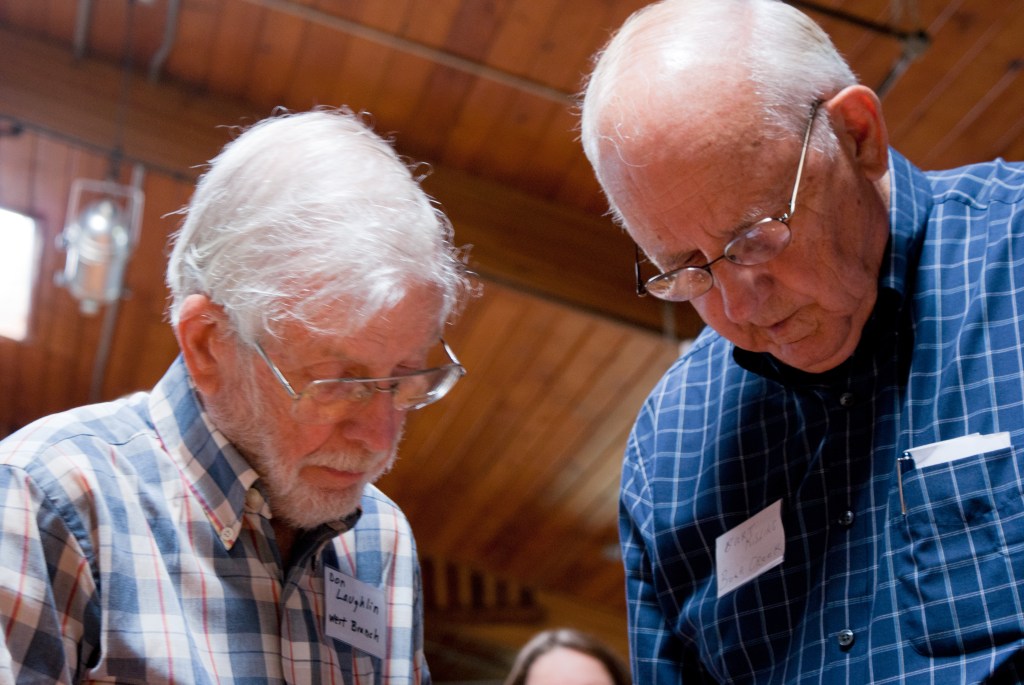
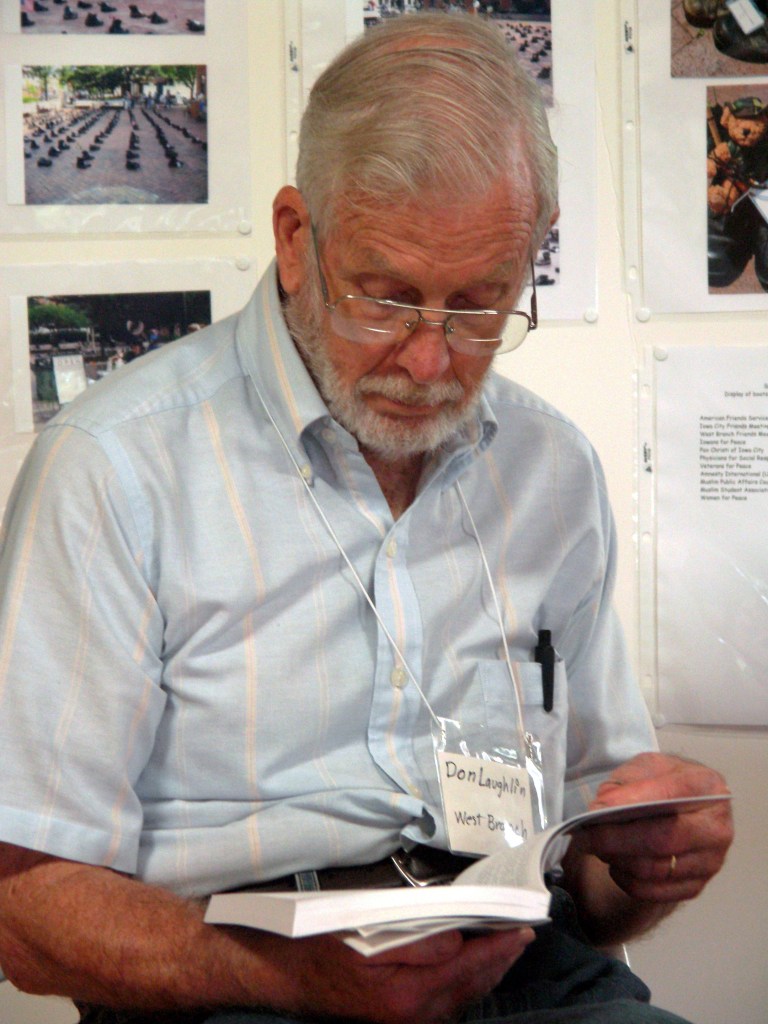
I’ve been blessed, as I hope you have been, to have had several mentors in my life. Don Laughlin was another Quaker mentor for me. Don served a prison sentence for his refusal to register for the military draft as required by the Selective Service System. To this day, any young man living in the United States is required to register with the Selective Service system at 18 years old.

I spent two years–May 1944 to August 1946–in California Quaker CPS camps under the Forest Service. During that time I made two trips to Europe, under the United Nations Relief Administration. One trip took cattle to Danzig and the other horses to Trieste. During this time I accepted a CO classification under the draft.

I was on the staff at Scattergood School at the time of the 1948 peace time military draft and felt differently about the governments right to impose such. On my twenty-fifth birthday in December, 1948, I became illegal. Shortly after that an FBI agent showed up. We drew up a statement of my position which I signed.

Harold Burnham, teacher at Scattergood School, and I had our trials together in Waterloo, Iowa. We made the trip there on a cold February day, accompanied by Leanore Goodenow, Scattergood Head, and my wife, Lois, and our six-month-old son, David. Leanore spoke as a “friend of the court” asking that we be given probation, rather than a prison sentence, since we were essential to the operation of the school. We both got eighteen month sentences instead. We were offered the opportunity to go home and “settle our affairs” and return in a month to start our sentences, but we were prepared to start that day. Our tearful good-byes were said then and Hal and I were escorted to the Waterloo County jail.

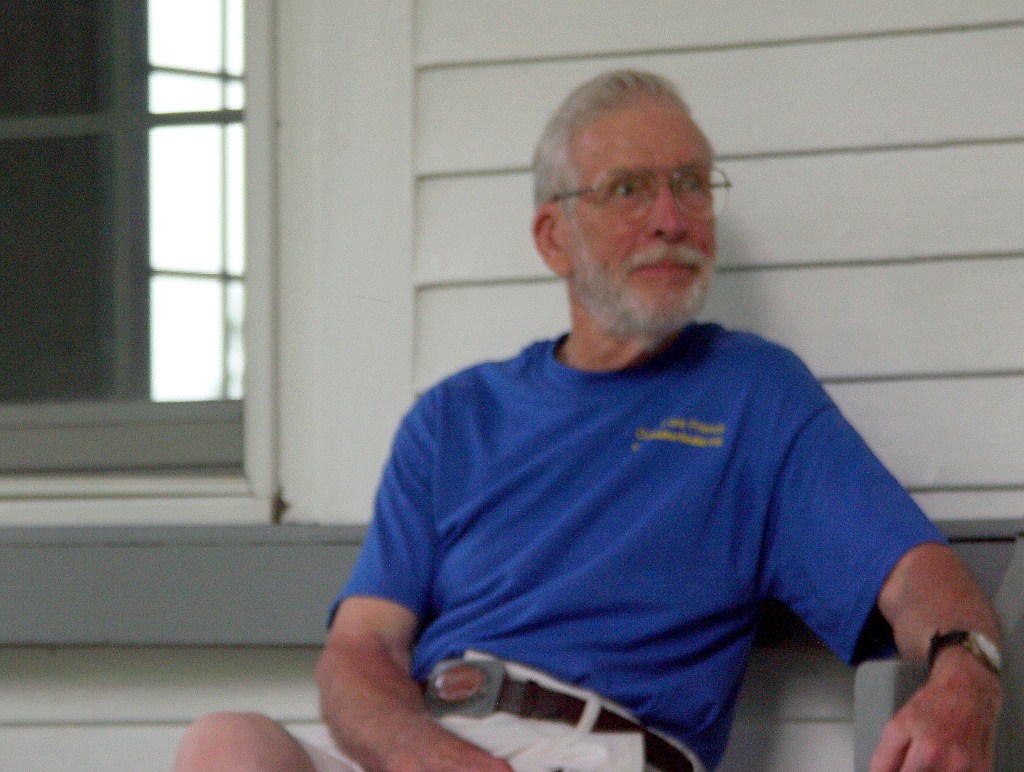
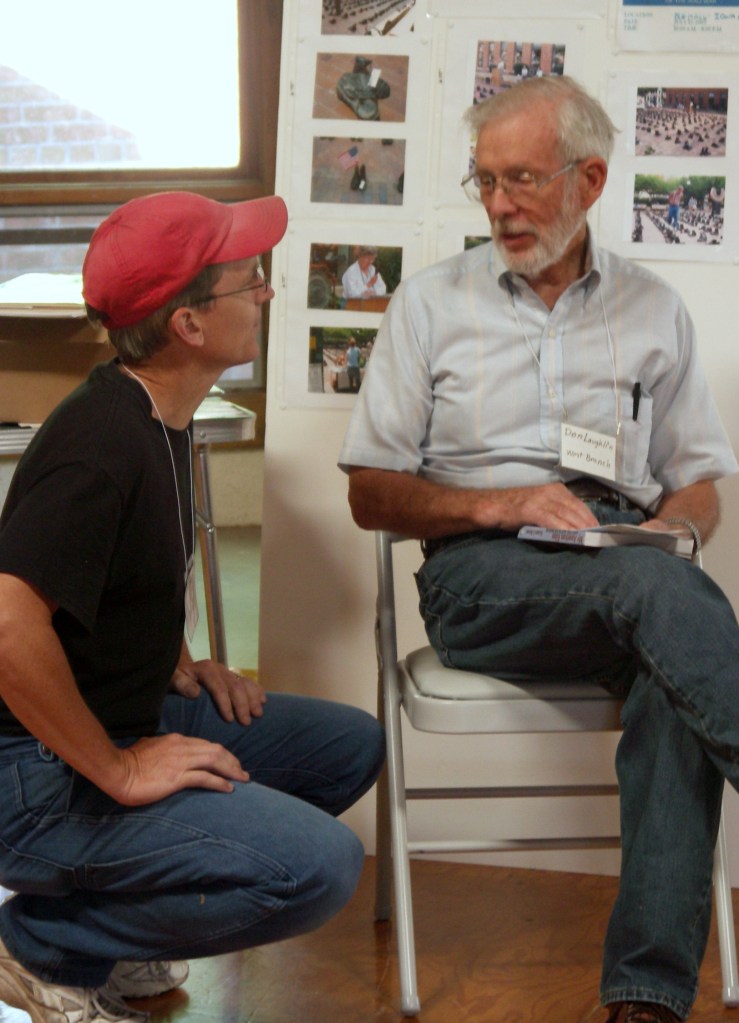
Don Laughlin

My mother was a student at Scattergood Friends School at the time, and remembers when Don and Harold Burnham were sentenced. The loss of these two men impacted the function of the School.

My experiences with Don began when I was a student at Scattergood Friends School (1966-1970). Don and his wife Lois lived just a few miles away from Scattergood.

I spent the summer of 1969 in Iowa City with a group of students who had received grants from the National Science Foundation. My project was to work with Don in his medical engineering lab at the University of Iowa Hospitals. The pulmonary function lab had just purchased one of the first commercially available desktop computers, and I wrote the software to use it to calculate patient predicted values, which were being done by hand. This was before even electronic calculators were widely available. I remember purchasing a slide rule for calculations that summer.

We used a new computer program from IBM, the Electronic Circuit Analysis Program, to design a sensor to be placed on a patient’s chest to detect heart movement, for use in the field in emergency situations. Each time we wanted to analyze a circuit, I had to carry three boxes full of punched computer cards to the computer center, and then come back for the results several hours later. He taught me how to solder components under a microscope as part of that project.

I also remember going to the weekly peace vigil with him, standing on the street in front of the old Capitol building. As I mentioned, Don was a draft resister, and his example, and that of many Iowa Friends, helped me make my own decision to resist the draft. Don wrote this letter to my draft board when I was thinking about applying for conscientious objector status. In the end, though, like him, I decided to become a draft resister instead.

Don Laughlin’s letter for CO application

Don was one of the people who wrote An Epistle to Friends Concerning Military Conscription that is included at the end of this.

Since I spent my adult life in Indianapolis we didn’t see each other that often, but I always looked forward to those opportunities when we could.  We did exchange many email messages.

I sent him a story about a new friend. Don’s comment (June 28, 2016) was “Thanks Jeff, I like your comments and ‘leadings.’  You seem to make contact with spiritually alive people.” I replied,  “I was intrigued by your comment about Tom Korbee being spiritually alive (which I shared with him).  I don’t think I’ve heard that term before.  Did you ‘create’ it?”

Don’s response:  “I haven’t heard that term either so I guess I did ‘create’ it.   But I look around and see so many people so involved in the ‘world’,  with little concern for the spiritual values of love and beauty (which I define as part of God) that I think it must be true,  Your photographs often depict this spirit of beauty.

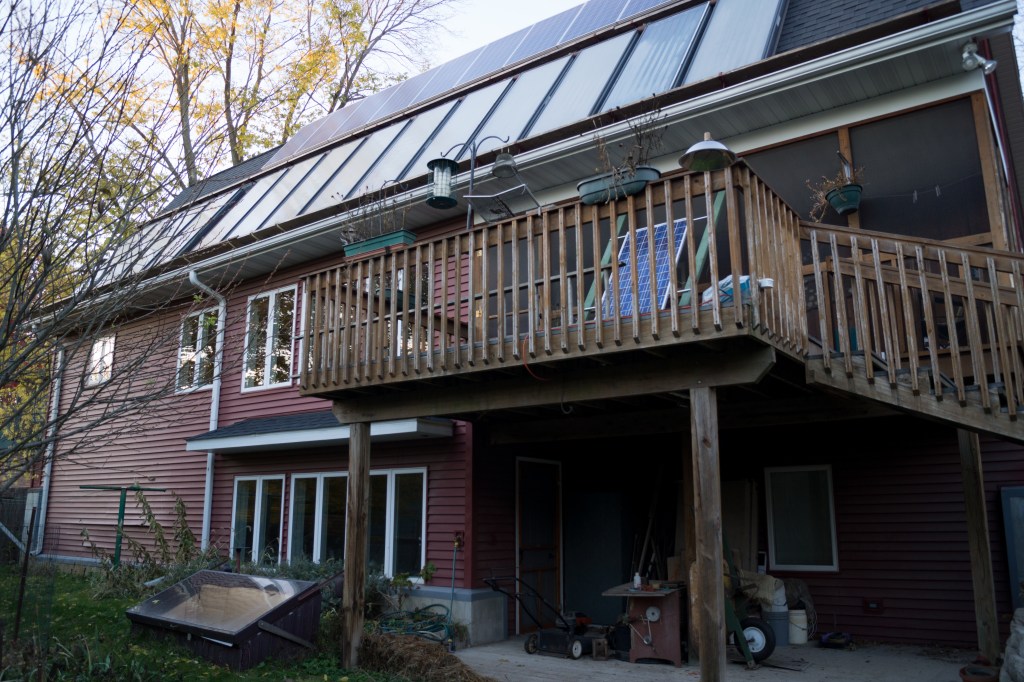
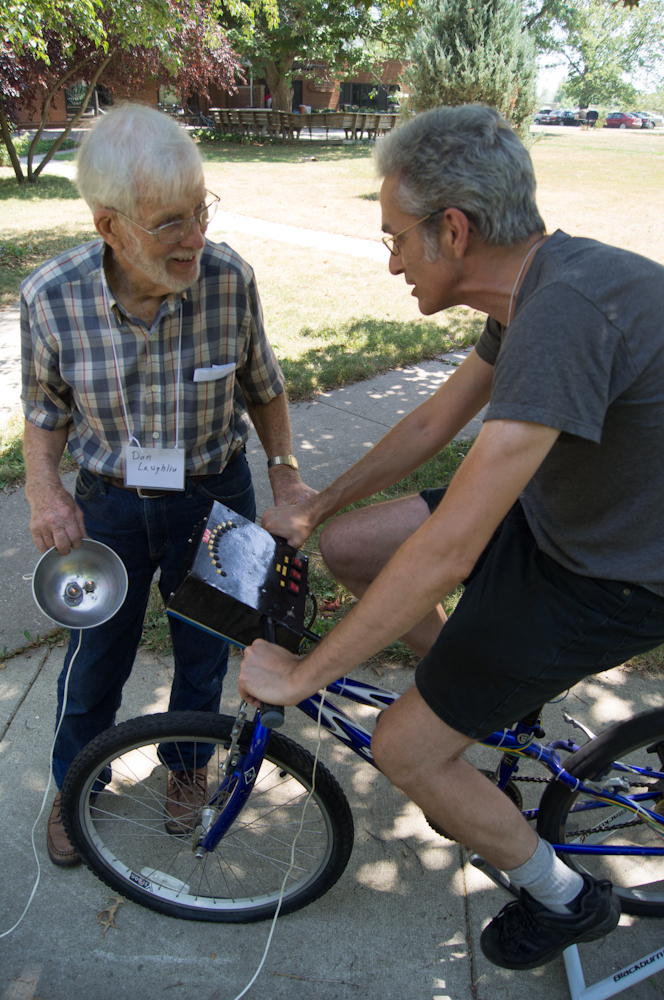
We both shared a deep interest in environmental science, which unavoidably led to profound concerns about increasingly extensive and severe environmental deterioration.  I was finally able to see his environmentally designed home when I attended the climate conference sponsored by Iowa Yearly Meeting (Conservative) and FCNL at Scattergood in 2013.  We stayed up late into the night working on his project related to using LEDs for lighting. Some photos below show Don demonstrating the use of a bicycle to generate power at Yearly Meeting.

One of the thoughts I’ve had–increasingly so–is to envision what kind of a society we would have, in the short term, if we environmentalists were totally successful. Suppose the XL didn’t get built–suppose fracking was abandoned–suppose tar sands mining was abandoned. Obviously we would be in a major social upheaval. How would people in our Meeting, who live ten or more miles from any town get their necessary supplies–food, repairs, etc. Without fracking gas would become extremely expensive. Could we afford to heat our homes?

Sudden change won’t happen, of course, but we need to act as if it would. You made a very significant statement– We have to embrace inconvenience. We have to admit our privilege, and stop taking advantage of it–for a beginning. I find no one embracing inconvenience. Even retired people–who might have time on their hands–travel by flying “to save time.” When will we admit that climate change is, and will, change our standard of living?

Letter from Don Laughlin, 1/29/2015

He was very interested in my involvement with the Kheprw Institute (KI) community in Indianapolis, whose work is mentoring Black youth, and which has a strong environmental focus, with aquaponics, rain barrel production, etc.  We explored the possibility of the KI community producing the solar hot water heating system he had developed, but didn’t get that accomplished in time.  He offered to allow them to keep all of the revenue that would have been generated, another example of his generous heart. His death leaves a large hole in mine.

We were in the middle of our last collaboration when he broke his hip. He had been collecting the stories of (mainly) Quakers who had been conscientious objectors and draft resisters, including one about one of his ancestors, Seth Laughlin, during the Civil War. I was helping put them into form for publication. We both felt these were important stories that shouldn’t be lost. I’m very grateful that Marcia Shaffer was willing and able to work with us to get me those stories Don hadn’t yet sent before his stroke occurred. You can find the collection of all of those stories here:
Young Quaker Men Face War and Conscription.

This project (collection of conscientious objector stories)  has gotten bigger than I could ever have imagined.  I have about 17 stories  now with more to come in. They range in length from a half page to 6 to 8 pages.   The stories are really fascinating to read.  I am amazed at how often young men wrestle with the difference between right and wrong—is it right to register for the draft or is that cooperating with evil.  Is prison a waste of time? It certainly was not for Bob Michener—he found his future professional life in prison.”


Following are reflections from the Ashley Shanahan family. Christine Ashley was Head of Scattergood Friends School:

The Ashley Shanahan family is very sad that we could not be at Don Laughlin’s memorial. Each and every one of us hold special images and memories of our time with Don.
As 6 year olds, twins Kieran and Callum declared Don was “their new best Friend” after he introduced them to his spectacular house and its inner workings.

Don helped Mark, David (Scattergood’s former math teacher) Jim Yi ’16 and Sebastian ’15 put up solar panels and connect them to a rain barrel with the idea of trying out a solar shower on campus for the 125th event on campus.

Don was a big fan of strawberries and always came out to pick on campus donating a great deal to the kitchen. He would also reverse his biodiesel truck on to the campus in one of his many trips to campus to shovel out mulch for the trees and making the young people look relatively in effective. Don was always helping out on the campus and farm and he really loved the students and mission. Anytime the students could experience real time/real life learning , Don was happy.

Don was excited about the most recent addition to the farm, the vegetable packing shed and he helped make way for the new by helping raze the red barn ( which he had helped build, decades before).
Don was always looking to reduce reuse and recycle and his donation of the bike with the generator attached was a thrill for all of us.
This was just a few things the family I were thinking about today as we have thanks for knowing and loving Don. He lives in our hearts.

Christine Mark Sebastian Kieran Callum

An Epistle to Friends Concerning Military Conscription

Dear Friends,

It has long been clear to most of us who are called Friends that war is contrary to the spirit of Christ and that we cannot participate in it.  The refusal to participate in war begins with a refusal to bear arms.  Some Friends choose to serve as noncombatants within the military.  For most of us, however, refusal to participate in war also involves refusal to be part of the military itself, as an institution set up to wage war.  Many, therefore, become conscientious objectors doing alternative service as civilians, or are deferred as students and workers in essential occupations.

Those of us who are joining in this epistle believe that cooperating with the draft, even as a recognized conscientious objector, makes one part of the power which forces our brothers into the military and into war.  If we Friends believe that we are special beings and alone deserve to be exempted from war, we find that doing civilian service with conscription or keeping deferments as we pursue our professional careers are acceptable courses of action.   But if we Friends really believe that war is wrong, that no man should become the executioner or victim of his brothers, then we will find it impossible to collaborate with the Selective Service System.  We will risk being put in prison before we help turn men into murderers.

It matters little what men say they believe when their actions are inconsistent with their words.  Thus we Friends may say that all war is wrong, but as long as Friends continue to collaborate in a system that forces men into war, our Peace Testimony will fail to speak to mankind.
Let our lives speak for our convictions.  Let our lives show that we oppose not only our own participation in war, but any man’s participation in it.  We can stop seeking deferments and exemptions, we can stop filling out Selective Service forms, we can refuse to obey induction and civilian work orders.  We can refuse to register, or send back draft cards if we’ve already registered.

In our early history we Friends were known for our courage in living according to our convictions.  At times during the 1600’s thousands of Quakers were in jails for refusing to pay any special respect to those in power, for worshiping in their own way, and for following the leadings of conscience.  But we Friends need not fear we are alone today in our refusal to support mass murder.  Up to three thousand Americans severed their relations with the draft at nation-wide draft card turn-ins during 1967 and 1968.  There may still be other mass returns of cards, and we can always set our own dates.

We may not be able to change our government’s terrifying policy in Vietnam.  But we can try to change our own lives.  We must be ready to accept the sacrifices involved if we hope to make a real testimony for Peace.  We must make Pacifism a way of life in a violent world.
We remain, in love of the Spirit, your Friends and brothers,

Don Laughlin
Roy Knight
Jeremy Mott
Ross Flanagan
Richard Boardman
James Brostol
George Lakey
Stephen Tatum
Herbert Nichols
Christopher Hodgkin
Jay Harker
Bob Eaton
Bill Medlin
Alan & Peter Blood

Posted in civil disobedience, peace, Quaker, Quaker Meetings, Uncategorized | Tagged , | Leave a comment

My Mentor Was a Quaker Jailbird

As I’ve been studying the consequences of the abrupt withdrawal of U.S. military forces from northern Syria, I came across this fascinating article by Brian Terrell telling of a connection between Iowa Quakers and peace activists and events concerning Turkey and the Kurds in Syria in 2002.

Current events concerning Turkey and the Kurds in Syria remind me of a conversation I had with a US Air Force colonel almost 17 years ago in a courtroom in Des Moines. To refresh my memory, I dug deep into my closet and dusted off the transcript of the case, “STATE OF IOWA, plaintiff vs. CHRISTINE GAUNT et al.,” in which I was a defendant, heard in February, 2003, the month before the US invasion of Iraq. The following quotes from that dialogue are verbatim per the transcript.

The case concerned an alleged trespass at the headquarters of the 132nd Tactical Fighter Wing of the Iowa Air National Guard, based at Des Moines International civilian airport, on October 26, 2002. Activists from around Iowa blocked the gates of the base in protest of the 132nd’s participation in Operation Northern Watch, the no-fly zone over northern Iraq imposed by the US after the Gulf War that lasted until the Iraq War in 2003. Pilots and crews of the Guard’s F-16 fleet went to Turkey to participate in patrolling northern Iraq or to Kuwait to patrol in Operation Southern Watch for a month during most of the years those no-fly zones were in place.

The United States Air Force at Incirlik, Our National “Black Eye”, by Brian Terrell, Voices for Creative Nonviolence, October 18, 2019

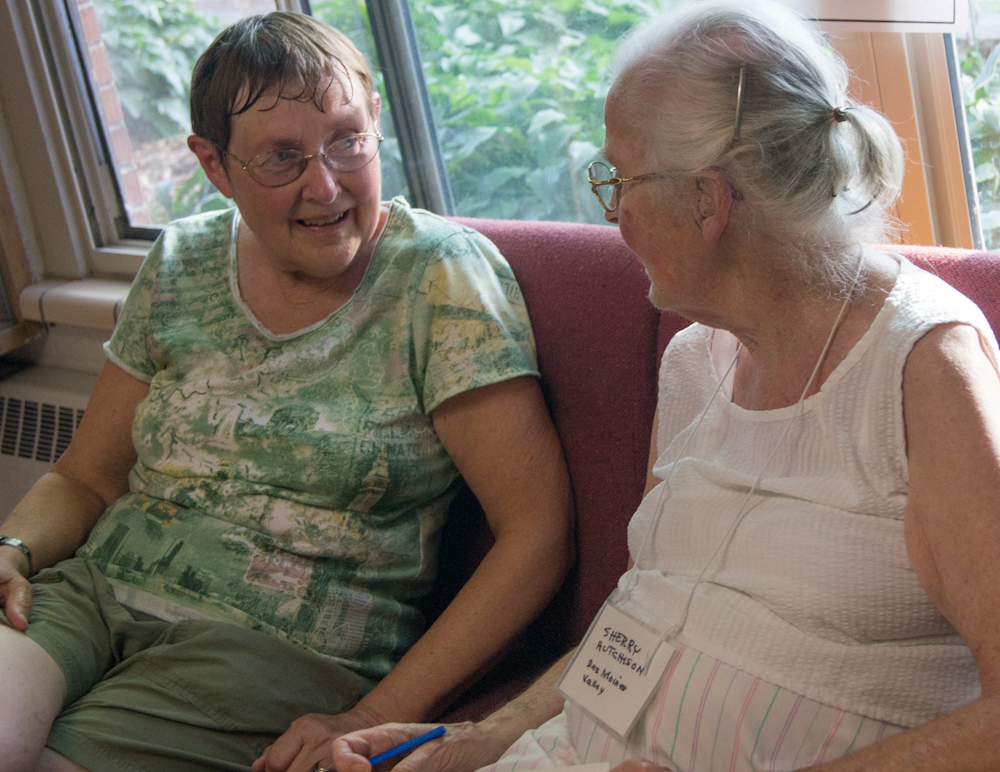
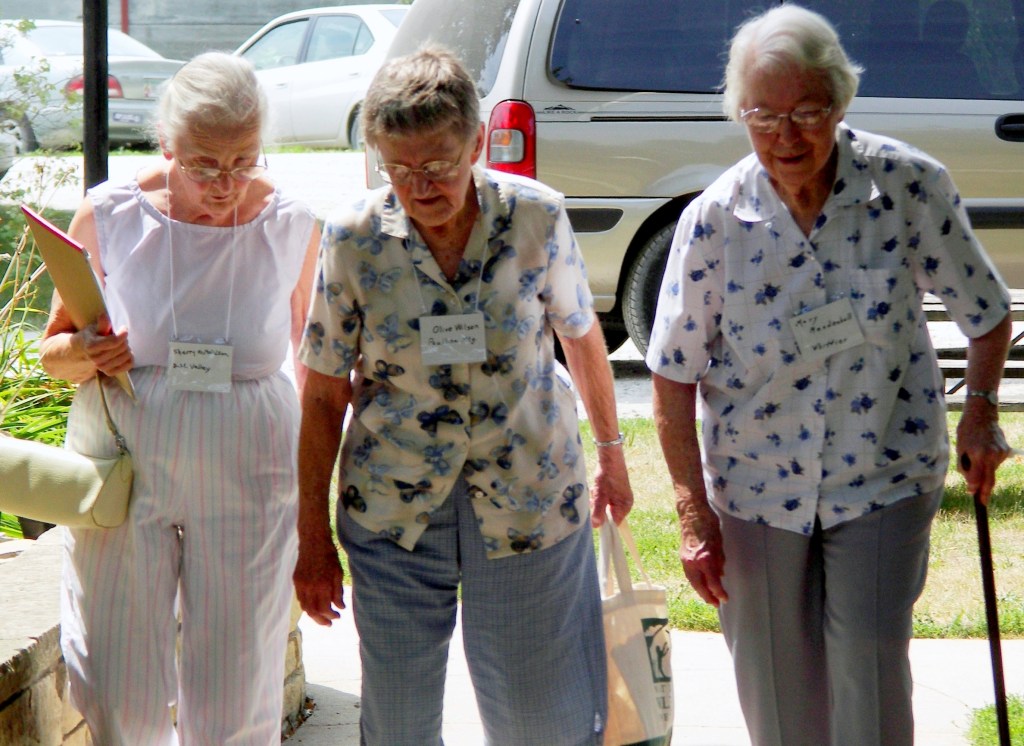
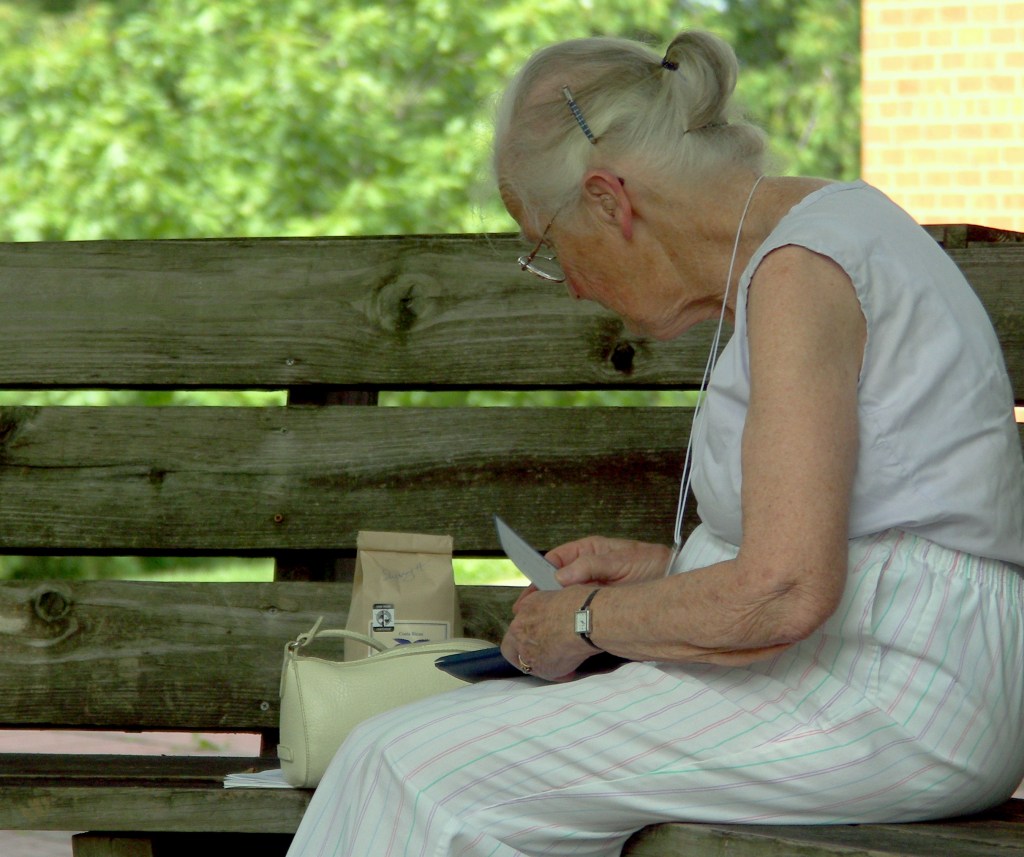
Chris Gaunt, mentioned above is a family friend. Another person who was arrested that day was the late Sherry Hutchison, who was a dear friend of mine. Sherry had long been a peace activist in many different ways. She was a member of the Des Moines Valley Friends (Quaker) meeting and clerk of Iowa Yearly Meeting (Conservative)’s Peace and Social Concerns Committee. I was blessed to be able to get to know Sherry better and work with her when she taught me how to be the clerk of that Committee. I realize we don’t often talk about these things, but it is hard to express how important and valuable it is for experienced members in leadership positions to pass their knowledge and wisdom on to those who will be taking on those roles.

My post yesterday was Sharing our Stories with Each Other. In that, I mentioned the Quaker Story Project as a way to preserve the stories of Quakers. The following story by Sherry about her arrest at the Iowa National Guard base mentioned above, is one of the stories available on the Quaker Story Project, and an example of how stories such as this survive after the authors have passed on. https://quakerstories.wordpress.com/2016/03/21/diary-of-a-jailbird/comment-page-1/


Diary of a Jailbird by Sherry Hutchison

Stop the Occupation! Bring the Iowa Guard Home 

The weekend of Nov. 15-16, 2002 started with a conference on Saturday at the Drake Olmsted Center, hosted by the Drake chapter of the National Lawyers Guild. Those who planned to do civil disobedience the next day at the army National Guard headquarters in Johnston attended a nonviolence training session in the afternoon. 

Crossing the Line 

Wendy Vasquez and I were among the ten people who planned to cross the line — a red line spray-painted on the grass on the grassy knoll opposite the entrance to the National Guard base.  

It was reassuring to see Meeting folks with the meeting’s banner which says, “Peace Is the Answer.”  

Carla Dawson, who hadn’t planned to cross the line, had been arrested even before I arrived, for stepping over it to help someone else. Several people made statements, and the Raging Grannies, from Women’s International League for Peace and Freedom, sang twice. As Wendy read the statement prepared by the group the day before, she was interrupted by the news that Jane Magers was being arrested, also unexpectedly, while trying to get out of the way of a TV camera. 

Carla was supposed to be Wendy’s support person; Jane was supposed to be mine. This left both of us without support persons, to whom you give the stuff you don’t want with you at the jail, and who expect to pick you up at the jail after your release. 

The group held hands as we started forward toward the Polk County Sheriff’s deputies, dressed in riot gear (probably to look scary; they’d been told we were nonviolent). They took us by our arms, two of them to each of us, handcuffed us with our hands behind our backs, and led us across the road toward the two paddy wagons. Our nonviolence trainers had advised us to interact with our captors, and we did. They were polite, though obviously eager to arrest as many as possible!  

Also, charges against Chris Gaunt, a protester from Grinnell who went limp seem to me to have been exaggerated. She was charged with resisting arrest (for going limp) and assault. The latter charge was added after she’d been thrown into the paddy wagon face down into a narrow space. When she complained that her wrists were hurting, she was advised to wiggle out of there. She could do that only by squirming, and unintentionally touched a trooper with a foot. (She later was my cell-mate in the Polk County jail.)

The ride to the jail was with our hands in handcuffs behind us; no seatbelts. However, the sheriff’s deputies said they’d take the interstate and freeway, to avoid the stops and starts from the shorter route. 

After we arrived there, the jailers brought bins for our clothing and all our personal items. We had to put on jail underwear, orange jump suits, socks and slippers. The men were in one glass-enclosed holding cell, the women in another.  

A young woman, Desiree, already was in the holding cell. We heard her story; she’d had a marijuana cigarette when she was arrested, but was charged with intent to manufacture and deliver drugs. She was going to plead guilty only to possession, not the additional charges.  

Being held in jail was a change of expectations. The people arrested in March for a similar protest had been released on their own recognizance after their information was taken.  

The jailers brought supper — a carton of milk, a ham and cheese sandwich on sliced white bread, and Twinkies. Two by two, most of us were told to pick up a blanket and a mat, and were led to a cell, where we were locked in for the night. The only thing that kept us from complete sensory deprivation was having a cell-mate to talk with. Mine, Chris Gaunt, had crossed the line at the School of the Americas and had served time in a county jail in Georgia. She said those jailers were contemptuous of everybody they held. At least, she said, here they were polite. 

That mat between me and the bunk didn’t provide much padding; I never could get into a position comfortable enough to go to sleep. 

In the morning, they brought us a carton of orange juice and one of milk, and some packaged sweet rolls. The most disorienting thing about being there was not knowing what time it was. I asked the jailer who led us to the courtroom what time it was; it was a little before 9 a.m. We were met there by Kathy, an attorney friend of our lawyer, Sally Frank. Kathy told us what we could expect and what our options were. We each saw the judge, pleaded not guilty, and were led back to our cells. 

After a long morning, it was time for lunch — a repeat of last night’s supper menu. A person could get malnutrition while gaining weight on jail food. It was late afternoon when a jailer came and told me to bring my mat and blanket; I was being bailed out! (Owen & D.J. Newlin were my benefactors.) The bail money had been brought that morning; it took all day for the jail & court people to labor through their paperwork. 

Wendy and Carla had spent the night in the holding tank with Desiree and another young woman who was brought in. She’d been arrested on a warrant for missing her court date; she’d been giving birth to a baby at that time. 

It was a relief to be able to change back into my own clothes, get my wrist watch back, and to be able to discipline my hair again with the clips and hair band I’d had to take off — and to see cars driven by friends ready to take us all back to our cars or home. I was thankful merely to feel like a human being again.

Posted in civil disobedience, peace, Quaker, Uncategorized | Tagged | 1 Comment

Sharing Our Stories with Each Other

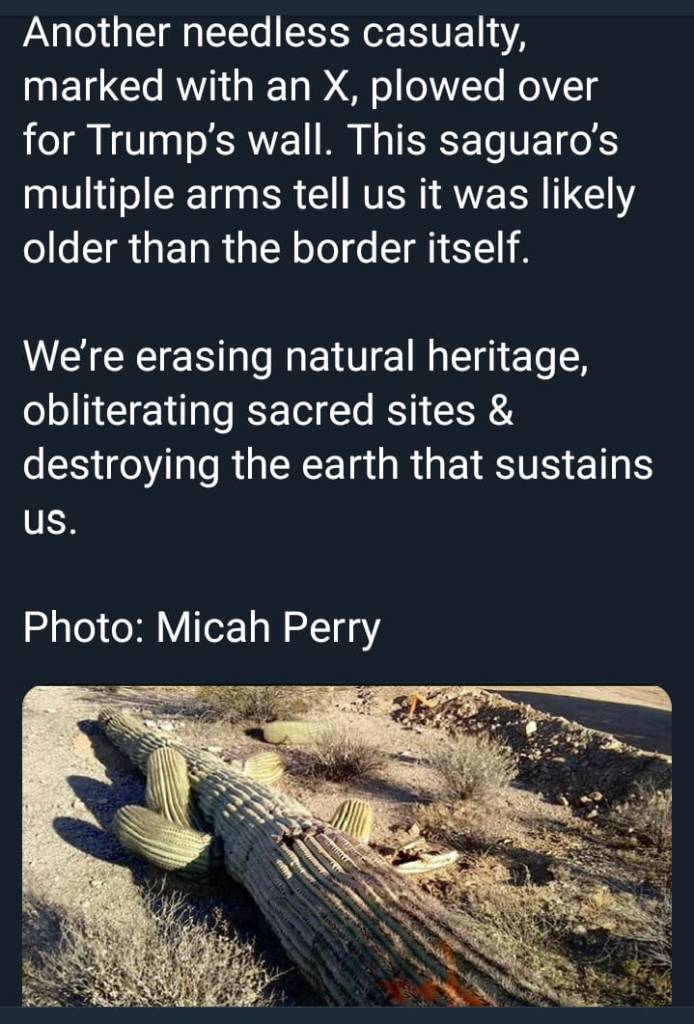
Richard Wagamese tells us “we change the world one story at a time.” I think of that as I read the story below about the destruction of the saguaros in order to build the border wall.

ALL THAT WE ARE IS STORY. From the moment we are born to the time we continue on our spirit journey, we are involved in the creation of the story of our time here. It is what we arrive with. It is all we leave behind. We are not the things we accumulate. We are not the things we deem important. We are story. All of us. What comes to matter then is the creation of the best possible story we can while we’re here; you, me, us, together. When we can do that and we take the time to share those stories with each other, we get bigger inside, we see each other, we recognize our kinship — we change the world one story at a time.

Richard Wagamese (October 14, 1955-March 10, 2017)
Ojibwe from Wabeseemoong Independent Nations, Canada

Relatives, how are you telling your stories?

Technology has made it easy to record our experiences and teachings in so many ways – videos, journaling, blogging, and sharing via so many accessible platforms. If we don’t tell our stories, someone else will do it for us. Do it for the next generation, for our little ones.

Digital Smoke Signals

If you don’t live in Arizona you might not know:

1) Tohono O’odham nation calls saguaros “aunt” and “uncle,” so that gives you an idea of what this represents aside from habitat destruction;
2) saguaros are ONLY native to the Sonoran desert;
3) it is ILLEGAL to take them down (class four felony); and
4) saguaros are vital to the Sonoran ecosystem, even after they die and fall down naturally.

Feel free to air your complaints to
@CBPArizona and @Kiewit Construction (and their subsidiary Southwest Valley Constructors) who are raking in almost $700 million destroying our beloved desert.

Digital Smoke Signals

I was led to create this blog to tell stories. Most mornings the Spirit tells me a story to tell that day. As Richard Wagamese says so eloquently above, what matters is creating the best possible stories together. This morning I am told to share these stories about the saguaros, sharing our stories with each other.

Many of my Quaker relatives have been concerned about how stories of Friends are lost when those Quakers die.  My mother in particular has tried to get Friends to write some of those stories so they are preserved, and can be shared with others.  That lead to the creation of the Quaker Stories Project, that you are encouraged to read, share with others, and add your own stories to.  (one way to do that is email jakislin@outlook.com).

As is said above, “Relatives, how are you telling your stories? Do it for the next generation, for our little ones.

Posted in #NDAPL, Indigenous, Native Americans, Quaker, Uncategorized | Leave a comment

Sea Level Rise Migration

Mathew Hauer published the article referenced below in 2017. His conclusion from modeling climate stressors is “I find that unmitigated SLR (sea level rise) is expected to reshape the US population distribution, potentially stressing landlocked areas unprepared to accommodate this wave of coastal migrants.”

Many sea-level rise (SLR) assessments focus on populations presently inhabiting vulnerable coastal communities1,2,3, but to date no studies have attempted to model the destinations of these potentially displaced persons. With millions of potential future migrants in heavily populated coastal communities, SLR scholarship focusing solely on coastal communities characterizes SLR as primarily a coastal issue, obscuring the potential impacts in landlocked communities created by SLR-induced displacement. Here I address this issue by merging projected populations at risk of SLR1 with migration systems simulations to project future destinations of SLR migrants in the United States. I find that unmitigated SLR is expected to reshape the US population distribution, potentially stressing landlocked areas unprepared to accommodate this wave of coastal migrants—even after accounting for potential adaptation. These results provide the first glimpse of how climate change will reshape future population distributions and establish a new foundation for modelling potential migration destinations from climate stressors in an era of global environmental change.

Migration induced by sea-level rise could reshape the US population landscape. Mathew E. Hauer, Nature Climate Change, volume 7, pages 321–325 (2017)
Hauer, 2017, Sea Level Rise Migration Project

Relationships between environmental stressors and migration are highly complex, as responses range from short-term, temporary migration to permanent, long-distance migration. Sea-level rise is a unique environmental stressor because it permanently converts habitable land to uninhabitable water.

“Some of the anticipated landlocked destinations, such as Las Vegas, Atlanta and Riverside, California, already struggle with water management or growth management challenges,” Hauer said. “Incorporating accommodation strategies in strategic long-range planning could help alleviate the potential future intensification of these challenges.”

Migration from sea-level rise could reshape cities inland, Science Daily, April 17, 2017

I’ve been thinking and writing about forced migration due to coastal flooding for some time, and created a Facebook Group named “Overground Railroad” (which only has a couple of members at this point). The group’s description is “A group to explore how to prepare climate refugees to migrate to the Midwest, and how to build communities for them to live in when they arrive.”

What is interesting about Hauer’s modeling is the variety of destinations people are projected to migrate to. I was thinking the Midwest would be the most likely destination because of the increasing heat and drought in the South, and flooding on both coasts. Hauer’s model shows a much greater variety of destinations.

A member of the Overground Railroad Facebook group suggested people on the West coast would more likely move to higher elevations near the coast.

The Midwest as a destination for climate refugees is problematic since we will be dealing with our own damages from climate change, many of which we’re already seeing. Those include flooding, drought, insect infestation, high temperatures, and decreasing crop yields from higher temperatures.

Despite that, I think the Midwest will see an influx of many climate refugees and we should be planning now how to deal with that, as well as our own anticipated climate impacts. This blog post provides some ideas for how to do that. https://kislingjeff.wordpress.com/2018/02/22/design-and-build-beloved-community-models/
This morning I read a fascinating article on QUARTZ (qz.com) that describes the anticipated climate changes and their effects, decade by decade, for Houston, St Louis and San Francisco. Sea level rise is, of course, one of the changes discussed.

Climate change is already here. It’s not something that can simply be ignored by cable news or dismissed by sitting US senators in a Twitter joke. Nor is it a fantastical scenario like The Day After Tomorrow or 2012 that starts with a single crack in the Arctic ice shelf or earthquake tearing through Los Angeles, and results, a few weeks or years later, in the end of life on Earth as we know it.

Instead, we are seeing its creeping effects now—with hurricanes like Maria and Harvey that caused hundreds of deaths and billions of dollars in economic damage; with the Mississippi River and its tributaries overflowing their banks this spring, leaving huge swaths of the Midwestern plains under water. Climate change is, at this very moment, taking a real toll on wildlife, ecosystems, economies, and human beings, particularly in the global south, which experts expect will be hit first and hardest. We know from the increasingly apocalyptic warnings being issued by the United Nations that it will only get worse.

What climate change will do to three major American cities by 2100, By Allegra Kirkland, Jeremy Deaton, Molly Taft, Mina Lee & Josh Landis, Quartz (qz.com) October 18, 2019

Posted in climate change, climate refugees, Uncategorized | 2 Comments

FCNL Statement on the Impeachment Inquiry of President Trump

The Friends Committee on National Legislation (FCNL) has an over 75 year history of speaking for our Quaker values. Every other year our legislative priorities are determined by a process that begins by asking Quakers across the nation to indicate what their priorities are. All of this input is collated, and then discussed and approved by FCNL’s General Committee when they meet for the annual meeting in Washington, DC. I was blessed to be a member of the General Committee for seven years, and to witness and participate in this amazing process, where a room full of about 250 Friends went through the policy priorities, line by line. Those approved priorities then become the basis for FNCL’s lobbyists and members to lobby our Congressional delegations and for us to speak about in our local communities. This process is an amazing expression of our faith.

FCNL provides many thoughtful and well researched statements and templates to help us be informed and effective as we speak with our Congressional delegations and in our home communities. Following is the recent FCNL Statement on the Impeachment Inquiry of President Trump. A PDF version of the document can be found here: https://www.fcnl.org/documents/1093


FCNL Statement on the Impeachment Inquiry of President Trump
By Diane Randall, October 3, 2019

The Friends Committee on National Legislation supports the ongoing impeachment inquiry of President Donald Trump led by the U.S. House of Representatives.

“We hold our government institutions and officials to rigorous ethical standards of fairness, honesty, openness, and avoidance of even the appearance of conflicts of interest. We expect our government to abide by the U.S. Constitution, national and international law, and international treaties. The system of checks and balances among the executive, legislative, and judicial branches is central to our form of government and must be strengthened.”

The World We Seek, FCNL Policy Statement (2013)

In September, Americans learned of a whistleblower’s complaint that outlined deeply troubling actions of the president of the United States, which presented substantive questions of abuse of power. President Trump’s own admission of his conversation with President Volodymyr Zelensky of Ukraine asking for support to investigate a political opponent; President Trump’s inability to understand the violation of law as evidenced by his vehement refutation of any wrongdoing; and President Trump’s threats aimed at the whistleblower and members of Congress — all present a cascading set of disturbing behavior that merits this impeachment investigation.

These are not the only actions that lead us to question Donald Trump’s fitness as president and support this impeachment inquiry.

The U.S. Constitution authorizes Congress to remove a president from office. If the inquiry leads to articles of impeachment, a trial will be held in the U.S. Senate.

“The President, Vice President and all Civil Officers of the United States, shall be removed from Office on Impeachment for, and Conviction of, Treason, Bribery, or other high Crimes and Misdemeanors.”

— U.S. Constitution, Article II, section 4

Congress is now performing its constitutional duty to conduct a fair and impartial inquiry to determine if President Trump’s actions in soliciting assistance from Ukraine and other foreign governments constitute high crimes and misdemeanors that would demand his impeachment.

Throughout this inquiry, we are equally concerned that the profound political rifts that divide our country could prevent Congress from completing the kind of investigation that is called for under our Constitution. This impeachment inquiry must move beyond partisanship and name-calling to ensure our constitutional process of checks and balance.

Institutional systems that assure accountability and transparency are crucial to our public life.

“Democracy does not work properly if the public does not know what its government is doing. Secrecy erodes the government’s accountability to the people. Strong protections are necessary for whistleblowers, journalists and confidential sources who expose government misconduct. Timely and free access to accurate information enables the constitutional process of checks and balances to function well and allows informed participation by individuals in government activities.”

The World We Seek, FCNL Policy Statement (2013)

The mission of the Friends Committee on National Legislation is to influence federal policies to create a world free of war and the threat of war, a society with equity and justice, communities where every person’s potential may be realized, and an earth restored. Making progress towards these goals require all of us who live in this country, especially our leaders, to conduct ourselves responsibly and courageously in the service of the greater public good and our democracy.

As people of faith, we firmly believe that this impeachment inquiry is imperative to preserve our democracy. We support this impeachment inquiry and await the full report of the House of Representatives on the possible impeachment of President Donald Trump.

Posted in Uncategorized | Leave a comment

Fifty Years Ago

October 15 of this year marks the fiftieth anniversary of one of the days of the Moratorium to End the War in Vietnam.

Millions turned out across the United States in a historic day of action. Nothing else so conveyed the breadth of the antiwar movement. Life magazine described the Moratorium as “a display without historic parallel, the largest expression of public dissent ever seen in this country.” With the Moratorium, wrote Fred Halstead, “the antiwar movement for the first time reached the level of a full-fledged mass movement.”

When October 15 came, some two million people across two hundred cities took part. There were the expected huge demonstrations — a quarter-million people each in New York City and Washington, DC, and another hundred thousand in Boston, for example. But the scope of antiwar sentiment was also reflected in the many local expressions the Moratorium took across the nation. As one historian described it:

Everywhere, black armbands; everywhere, flags at half staff; church services, film showings, teach-ins, neighbor-to-neighbor canvasses. In North Newton, Kansas, a bell tolled every four seconds, each clang memorializing a fallen soldier; in Columbia, Maryland, an electronic sign counted the day’s war deaths. Milwaukee staged a downtown noontime funeral procession. Hastings College, an 850-student Presbyterian school in Nebraska, suspended operations. Madison, Ann Arbor, and New Haven were only a few of the college towns to draw out a quarter of their populations or more.

Fifty Years Ago Today, US Soldiers Joined The Vietnam Moratorium Protests In Mass Numbers, By Derek Seidman, Jacobinmag.com, October 16, 2019

I was a student at the Quaker boarding high school, Scattergood Friends School and Farm, at that time. Our action that day was one of the “many local expressions the Moratorium took across the nation.” The School Committee was the governing body of the School, which was operated by Iowa Yearly Meeting (Conservative). It should be noted that “Conservative” referred to conserving religious practices of early Quakers, not political orientation. Most members of the Yearly Meeting have very liberal political views.

October 11, 1969  School Committee Day

From the school committee minutes:

A group of students attended Committee meeting and explained plans for their participation in the October 15 Moratorium. The Committee wholeheartedly endorses the plans. The following statement will be handed out in answer to any inquiries:

“These students and faculty of Scattergood School are undertaking the twelve mile walk from campus to Iowa City in observance of the October 15 Moratorium. In order not to detract from the purpose of the walk, we have decided to remain silent. You are welcome to join us in this expression of our sorrow and disapproval of the war and loss of life in Vietnam. Please follow the example of the group and accept any heckling or provocation in silence.”

The entire student body (sixty students) and many of the School staff walked from the School to Iowa City (about 14 miles) where Moratorium events were being held at the University of Iowa. One of the things I remember from that day were mannequins floating in the river.

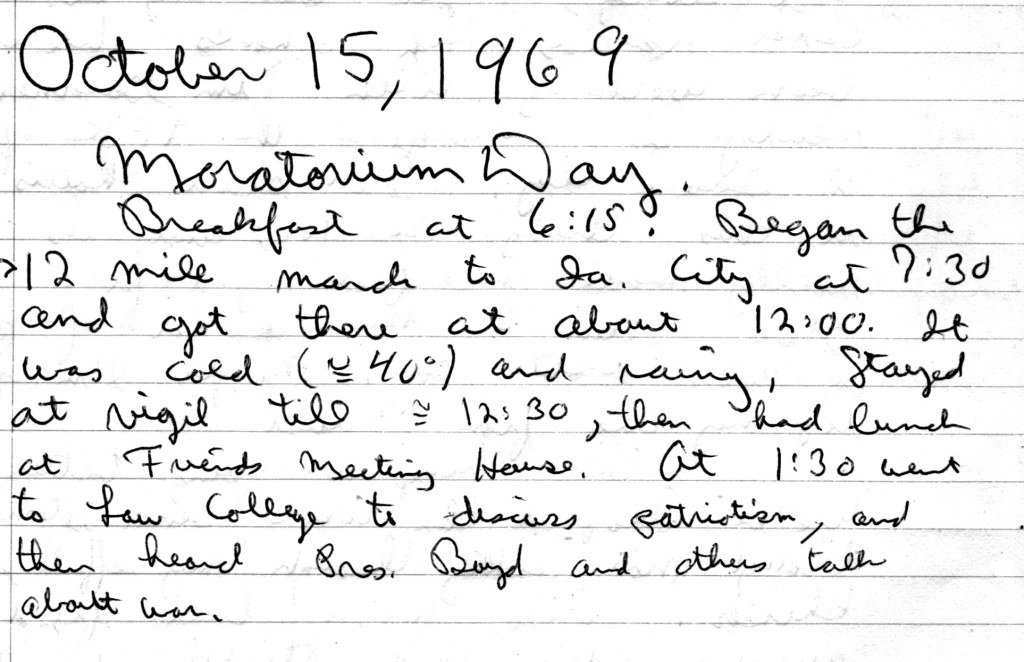
From my Journal:

Jeff Kisling’s Journal


Vietnam War Moratorium Day, October 15, 1969  Scattergood Friends School
This is one of the first photos I ever developed, using a simple darkroom in the basement of the Main building at Scattergood.
Scattergood Friends School archives

Christine Ashley, then Head of the School, organized another Peace Walk in 2012.


To this day many of us wonder “what happened”?

For Americans who grew up learning social studies, watching Jeopardy! and playing Trivial Pursuit, history is supposed to be about answering questions For documentary filmmakers Ken Burns and Lynn Novick, however, the point of history has always been to ask them.

That’s especially true with respect to their latest film series, The Vietnam War, premiering Sept. 17, 2017, on PBS. Barely a minute into the first episode, Vietnam War veteran Karl Marlantes articulates the burning question to which Burns and Novick have devoted 10 episodes and 18 hours.

“For years, nobody talked about Vietnam,” says Marlantes, a former Marine Corps officer. “It was so divisive. It’s like living in a family with an alcoholic father: ‘Shhh! We don’t talk about that.’ Our country did that with Vietnam, and it’s only been very recently that the baby boomers are finally starting to say, ‘What happened? What happened?’ ”

Why Ken Burns decided this was the time to make a Vietnam War documentary by Matt Alderton, USA Today, Sept. 11, 2017

The Vietnam War played a large role in my coming of age. The military draft was pulling thousands of young men into the armed forces, to go to Vietnam. I spent countless hours reading, thinking and praying about what I should do. I saw that decision as a fork in the road for the rest of my life.

I don’t judge anyone else for the decision they made. I was convinced from the beginning that it would not be right for me to participate in the Selective Service System. I could do two years of alternative service to satisfy my obligations. That would be one path forward. But believing it would be wrong to participate in the draft at all, I wondered if I could take the other path, knowing that imprisonment would likely be the result of my draft resistance. I was afraid of that, but in the end I was more afraid that taking the easy way out, doing alternative service, would lead to a life of compromise when it came to moral decisions. I did return my draft cards and became a draft resister. I was saved from going to prison by a Supreme Court decision that affected my situation.


Posted in Uncategorized | Leave a comment