My thinking about the holiday called Thanksgiving has changed dramatically over the past couple of years. That is because I’ve been blessed to spend time and make friends with some Native people. And I’ve been studying to learn more. One of the great things about having Native friends is they can suggest books and videos that are accurate depictions of Native life, spirituality and culture.
I like to remind myself that “you don’t know what you don’t know”. That helps me be more open to new ideas and learning from other’s experiences. Also helps me not to be (too) defensive when my ideas are challenged. I’ve shared this quotation a number of times, but this is another place I think it is useful.
ALL THAT WE ARE IS STORY
From the moment we are born to the time we continue on our spirit journey, we are involved in the creation of the story of our time here. It is what we arrive with. It is all we leave behind. We are not the things we accumulate. We are not the things we deem important. We are story. All of us. What comes to matter then is the creation of the best possible story we can while we’re here; you, me, us, together. When we can do that and we take the time to share those stories with each other, we get bigger inside, we see each other, we recognize our kinship — we change the world one story at a time.
Richard Wagamese (October 14, 1955-March 10, 2017)
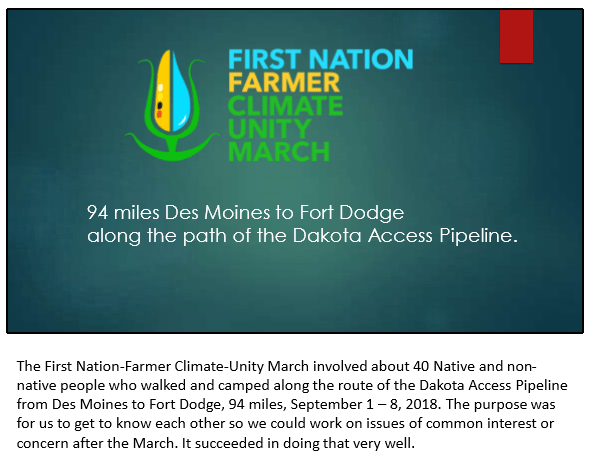
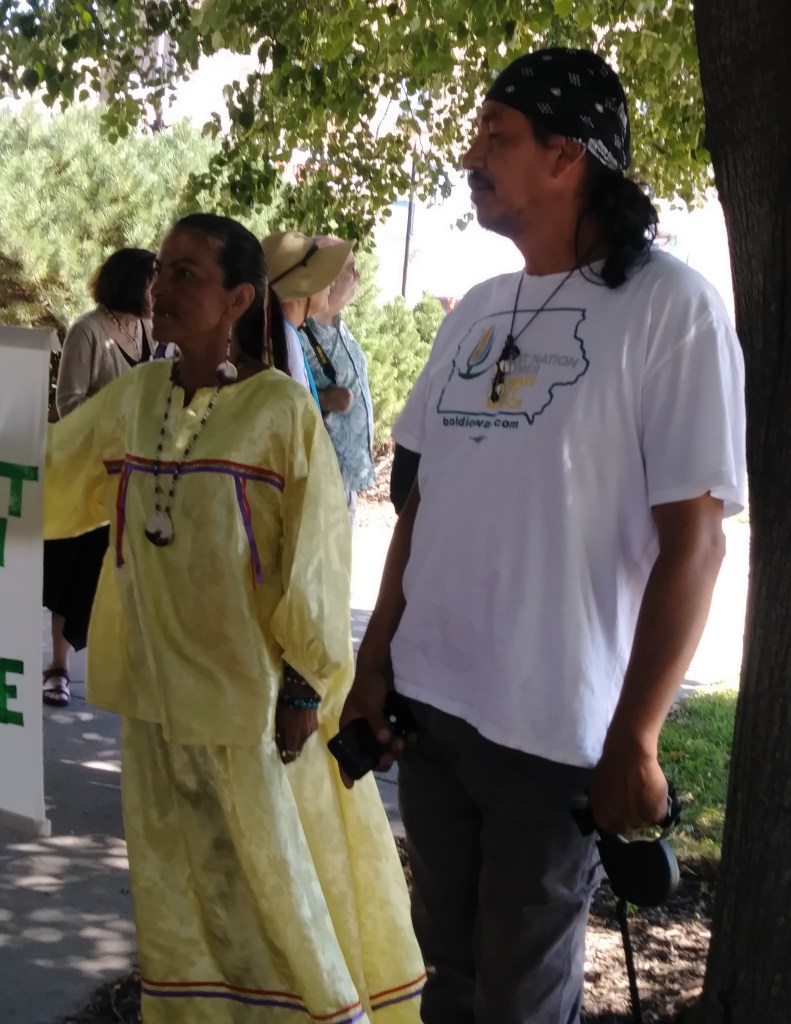
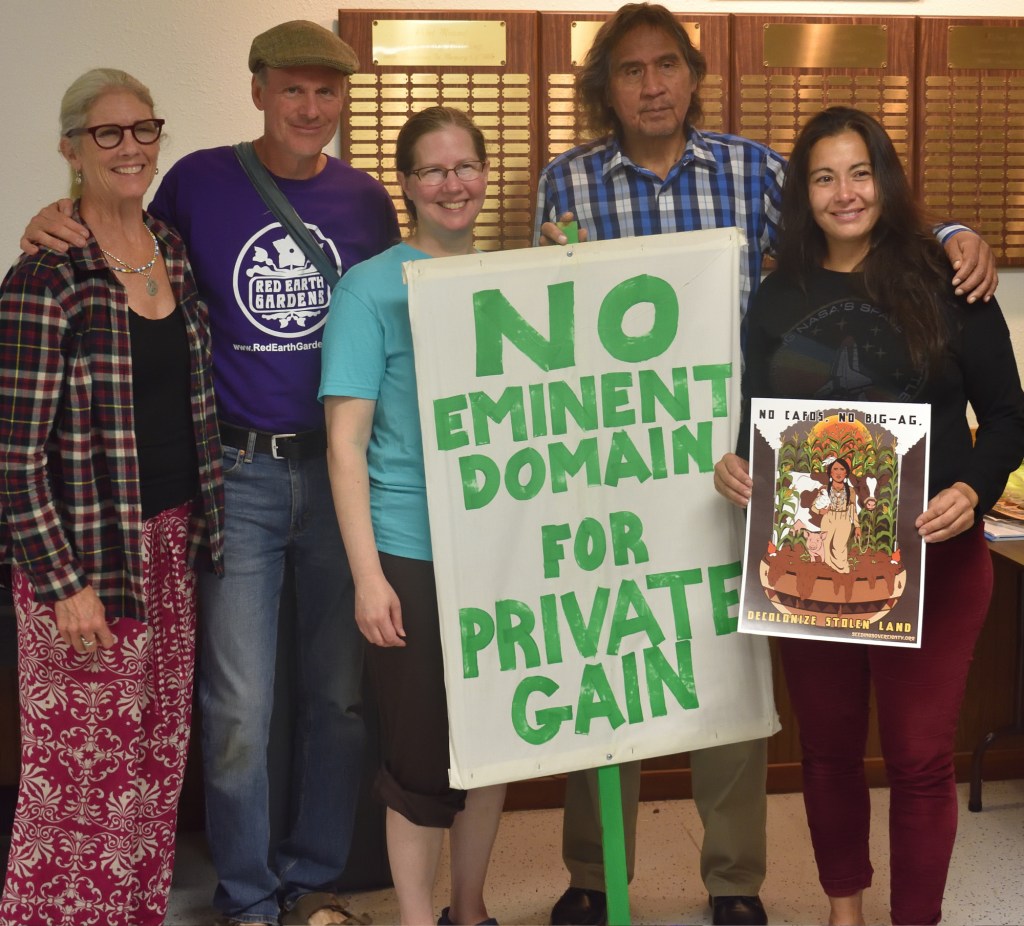
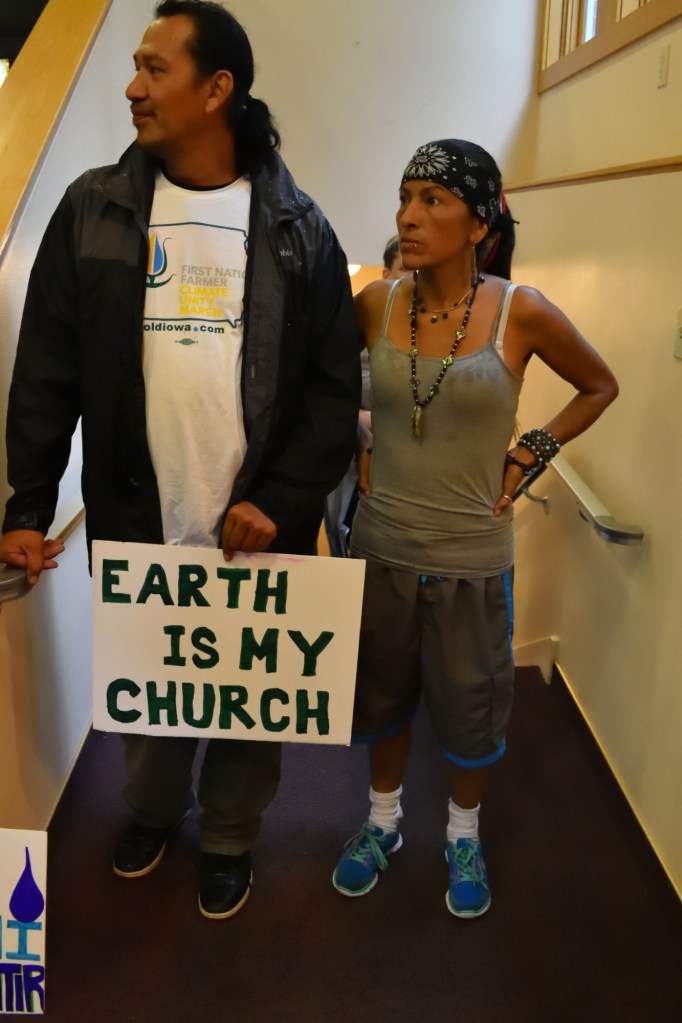
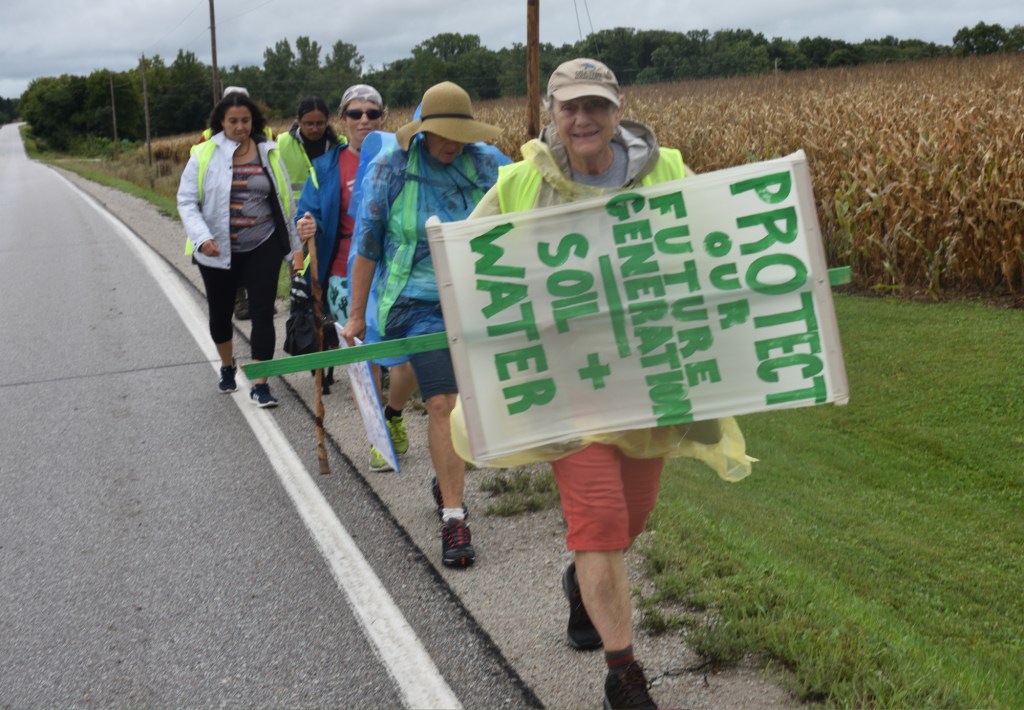
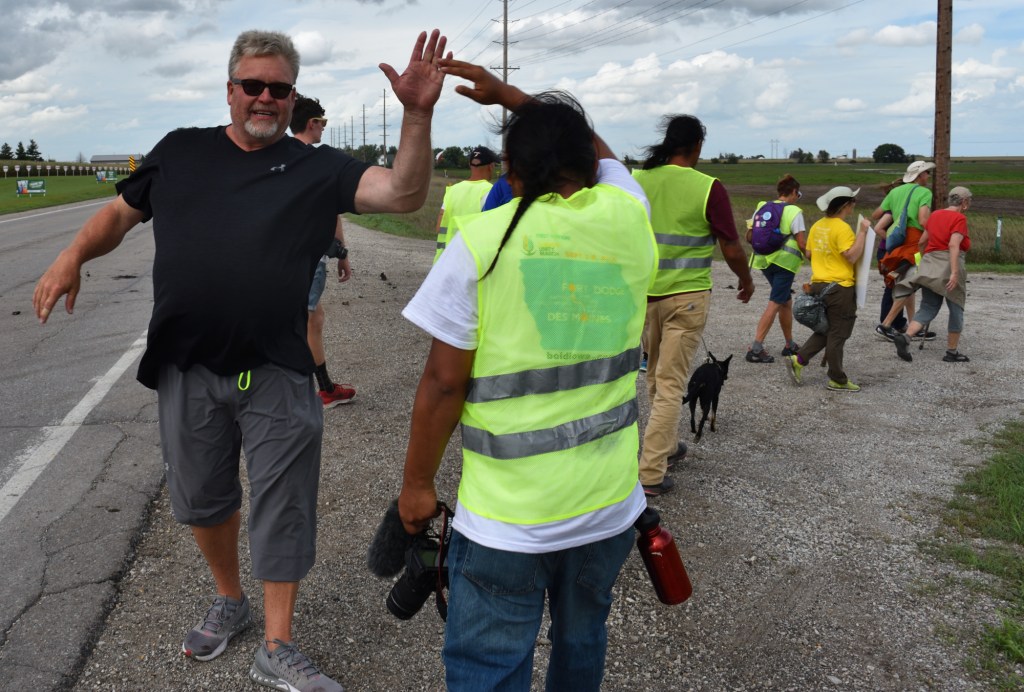
We grow when we have the opportunity to hear other’s stories, and share our own. The point of the First Nation-Farmer Climate Unity March I was blessed to be part of was to get to know each other. Sharing our stories is how we did that.
I’ve been thinking and writing about the holiday known as Thanksgiving as an opportunity to learn and teach about the actual history of the United States. I believe we can do that by sharing stories about what we ourselves have learned. The video mentioned below, Dawnland, is a powerful learning opportunity.
I think most White people have a vague idea of how settlers spread across the land. Ideas like Manifest Destiny and the Doctrine of Discovery were used to try to justify colonization.
My experience is very few White people know about the Indian boarding schools. If they have heard of the schools, they assume the schools were to help Native children learn to fit into the White society surrounding them. Forced assimilation is an accurate term. This gets to why I titled this post “you don’t know what you don’t know”. I hadn’t known about the numbers of Native children forced to attend those schools. I didn’t know how many died. I didn’t know about the widespread physical and sexual abuse. I didn’t know the children were forcibly taken from their families, and often not returned for years, if they survived. I didn’t know these children no longer fit into their communities when the did return from the schools. I didn’t know Quakers were so involved with these schools. I didn’t know that trauma is passed from generation to generation. Separation of children from their families at the US-Mexico border today is not the first time this was done.
Decolonizing involves education and healing. If you don’t know much about the Indian boarding schools, you can learn from a powerful video that is available for free viewing this month, Dawnland. The following information is from my friend, Peter Clay, who also participated on the First Nation-Farmer Climate Unity March. We worked together when Paula Palmer was in the Midwest, to setup meetings and workshops related to “toward right relationships with Native peoples.”
I hope you might help with decolonizing. As families gather for the holiday called Thanksgiving, there may be opportunities to share stories about what actually occurred during colonization of the United States. Such conversations can be difficult. If we approach these opportunities by sharing stories about what we know, that might help get past defensive feelings and conflict. Watching Dawnland can help with your own education and give you more stories to share.
As Richard Wagamese said above, “What comes to matter then is the creation of the best possible story we can while we’re here; you, me, us, together.“
I just re-watched “Dawnland.” The free streaming version available all month via PBS. It was perhaps even more powerful to watch it a second time, although I believe that the version I saw at Pendle Hill was the longer version.
Denise Altvater is the coordinator of the Wabanaki Youth Program for AFSC in Maine. https://www.afsc.org/media-kit/bios/denise-altvater Denise was at Pendle Hill last year and is in the film. Her testimony is very emotional and very disturbing.
I believe that this film needs to be very widely seen and I hope that you will mention it at the end of your presentation. I am also willing to do that, if you prefer. Here again is the link to watch it online during November, which is National American Indian and Alaska Native Heritage Month: https://www.pbs.org/video/dawnland-t0dsij/
At Thanksgiving time many people give thanks for what they have, and share something with others who have not been as fortunate.
Yesterday I mentioned my friends Foxy and Alton Onefeather live near Lower Brule, where the annual memorial ride to the site where the hanging of 38 Native men in Mankato, Minnesota, occurred in 1862.
This is a link to a story about Alton. The link includes some video he took on the First Nation-Famer Climate Unity March. He said “The land being sold is around bear butte it is a sacred place to the natives yes it will affect my heart n spirit knowing people are gonna be putting biker bars n clubs close or around it.” https://kislingjeff.wordpress.com/2019/07/08/alton-onefeather-on-bear-butte/
Yesterday I wrote about the beautiful and tragic video, “Dakota 38”. Although this annual ride occurs in December, I was led to write about it now as part of my ongoing consideration of what decolonizing means today. This time around the holiday called Thanksgiving is an opportunity to try to improve relations among White and Native peoples. I believe sharing stories or watching videos like the Dakota 38 together might facilitate conversations.
Jim’s (Miller) vision is for riders from all Dakota tribes to ride over 330 miles from Lower Brule Indian Reservation to the site of the mass hanging in Mankato, Minnesota. My friends Foxy and Alton Onefeather live near Lower Brule.
Foxy and Alton Onefeather
The ride is in December to honor the men, women, and children who were forced to march across the cold winter prairies either to the mass hanging in Mankato or to a large concentration camp of Dakota families at Fort Snelling, Minnesota. The riders finish at Reconciliation Park in Mankato on the anniversary of December 26.
We take the youth on the ride, so that they may connect with their culture in a more physical way. By being a part of the ride they are connecting themselves with their ancestors and their horse relatives. It is through the ride that they are able to see the beauty in the history and their culture.
The Dakota 38 Plus 2 Memorial Ride is a ride that honors the 38 Dakota men who were hung in Mankato in December of 1862. The ride began from the vision of a Dakota elder and warrior. In this vision riders would ride from Crow Creek, SD to Mankato, MN. Ever since then the ride has continued to happen annually from the beginning year December 2005 to present collecting supporters and new riders along the way.
My name is Winona Goodthunder. My Dakota name is Wambde Ho Waste Win, Eagle Woman with a Good Voice. I have ridden in this ride since 2006, the second year. I was in eighth grade when I started. As the years have gone by the riders that we’ve met every year have become a part of a new kind of family. We are all different even though we are all somehow related. Those of us who are from the Lower Sioux region are used to different types of living than those who come from Canada, Nebraska, South Dakota, and other parts of the world. The differences that we have are forgotten when we come to this ride. We get up early in the morning to get our horses ready together. We ride all day together, and we eat together at night. It is then that our differences merge and we teach each other. The thing that seems to bind us the most is the fact that we can laugh. Humor may not be what is expected on a memorial ride, but it is encouraged for it is stressed that this ride is for forgiveness. Although our group goes only for the last four days it is enough to establish that sense of family amongst each other. It is from these riders that I’ve learned most about my culture. I have read books, but they cannot foster the feeling that one gets when they are living in an experience such as the ride.
FORGIVE EVERYONE EVERYTHING is inscribed on a bench in Reconciliation Park, Mankato, Minnesota, where the ride ends. The photo of the memorial shows a list of the names of the 38 Dakota men who were all hanged at the same time in what is now Mankato, Minnesota. A raised wooden platform, with 38 nooses along the sides, was constructed. It is said nearly 4,000 people witnessed this, the largest execution in U.S. history, on December 26, 1862. As to who needs to be forgiven, there are many answers to that. At the heart of this is the genocide and land theft of the tribal nations by the white settler-colonialists. More specifically this history came about as the Dakota were forced into smaller and smaller land areas, to the point they could not sustain themselves.
Detailed stories and resources are available for this history, sometimes referred to as the Dakota War of 1862 here: http://www.usdakotawar.org/
I have watched this moving video, “Dakota 38”, many times. My friend and former roommate from Scattergood Friends School, Lee Tesdell, teaches in Mankato, and has spoken about this history with me. Lee also spoke at one of our evening discussions during the First Nation-Farmer Climate Unity March.
Lee Tesdell speaking during First Nation-Farmer Climate Unity March
I’m continuing to pray and write about the opportunities the upcoming holiday known as Thanksgiving offers for improving knowledge and relationships among Native and non-native peoples. Decolonizing is a process of both education and healing and the movie “Dakota 38” is about both.
I’ve written about how trauma is passed from generation to generation. The events shown in the film “Dakota 38” occurred in 1862. “Today, all the people of the region continue to be affected by this traumatic event.” SUNKTANKA
I have watched the movie “Dakota 38” many times. The photography and, especially the story, are just excellent and very moving. I love how the film grew from a dream that came to Jim Miller, a Native spiritual leader and Vietnam veteran.
This film was created in line with Native healing practices. In honoring this ceremony, we are screening and distributing “Dakota 38″ as a gift rather than for sale. This film was inspired by one individual’s dream and is not promoting any organization or affiliated with any political or religious groups. It was simply created to encourage healing and reconciliation.
In 1862 an event occurred, in what is now Minnesota, which had a dramatic impact on the subsequent history of the United States, Canada, and Dakota tribes. The event was the result of federal policy and a newly formed state to remove the Dakota people from their lands and led to the largest mass hanging in US history on December 26, 1862 and the scattering of Dakota people across a region stretching from Saskatchewan to Nebraska. Today, all the people of the region continue to be affected by this traumatic event.
We take the youth on the ride, so that they may connect with their culture in a more physical way. By being apart of the ride they are connecting themselves with their ancestors and their horse relatives. It is through the ride that they are able to see the beauty in the history and their culture.
Imagine that you have a dream that is so real you cannot chase the images from your mind. In this dream you are riding a horse through the Great Plains of South Dakota. It is one of those dreams that seem to go on forever, and just before you wake up, you find yourself and your horse at a riverbank watching 38 men being hanged. In the instant before the platform snaps open beneath them, the condemned men reach out to each other and lock hands and arms. You discover that no matter what you do, you cannot forget the dream, and as you try to find out more about the imagery, you learn that the events in your dream really happened. Your dream was not a lonely nightmare, but a window into history — the day after Christmas, Dec. 26, 1862, when President Abraham Lincoln ordered the largest execution in United States history — the hanging of 38 Dakota (Sioux) men. Dakota 38 is a film rich with imagery and important spiritual teachings. Central to this imagery is the horse. Dakota belief says that the horse represents the sacred six directions, without which healing is impossible. The front legs are west and north; the back legs, east and south. The head and ears point to the heavens, and the tail anchors all to the earth. In the film, there is a rider-less paint horse. A year after the execution of the 38, Sitting Bull rode on horseback to see the concentration camps in South Dakota. He said that his people were housed worse than animals. Miller believes that Sitting Bull and Crazy Horse were present on the journey to the hanging site, and offered the paint as their mount.
In the spring of 2005, Jim Miller, a Native spiritual leader and Vietnam veteran, found himself in a dream riding on horseback across the great plains of South Dakota. Just before he awoke, he arrived at a riverbank in Minnesota and saw 38 of his Dakota ancestors hanged. At the time, Jim knew nothing of the largest mass execution in United States history, ordered by Abraham Lincoln on December 26, 1862. “When you have dreams, you know when they come from the creator… As any recovered alcoholic, I made believe that I didn’t get it. I tried to put it out of my mind, yet it’s one of those dreams that bothers you night and day.”
Now, four years later, embracing the message of the dream, Jim and a group of riders retrace the 330-mile route of his dream on horseback from Lower Brule, South Dakota to Mankato, Minnesota to arrive at the hanging site on the anniversary of the execution. “We can’t blame the wasichus anymore. We’re doing it to ourselves. We’re selling drugs. We’re killing our own people. That’s what this ride is about, is healing.” This is the story of their journey- the blizzards they endure, the Native and Non-Native communities that house and feed them along the way, and the dark history they are beginning to wipe away.
This film was created in line with Native healing practices. In honoring this ceremony, we are screening and distributing “Dakota 38″ as a gift rather than for sale. This film was inspired by one individual’s dream and is not promoting any organization or affiliated with any political or religious groups. It was simply created to encourage healing and reconciliation.
NAMES OF THE EXECUTED INDIANS. #1 was to be TA-TAY-ME-MA but he was reprieved because of his age and questions related to his innocence
Plan-doo-ta, (Red Otter.)
Wy-a-tah-ta-wa, (His People.)
Hin-hau-shoon-ko-yag-ma-ne, (One who walks clothed in an Owl’s Tail.)
Ma-za-bom-doo, (Iron Blower.)
Wak-pa-doo-ta, (Red Leaf.)
Wa-he-hua, _.
Sua-ma-ne, (Tinkling Walker.)
Ta-tay-me-ma, (Round Wind) — respited.
Rda-in-yan-ka, (Rattling Runner.)
Doo-wau-sa, (The Singer.)
Ha-pau, (Second child of a son.)
Shoon-ka-ska, (White Dog.)
Toon-kau-e-cha-tag-ma-ne, (One who walks by his Grandfather.)
E-tay-doo-tay, (Red Face.)
Am-da-cha, (Broken to Pieces.)
Hay-pe-pau, (Third child of a son.)
Mah-pe-o-ke-na-jui, (Who stands on the Clouds.)
Harry Milord, (Half Breed.)
Chas-kay-dau, (First born of a son.)
Baptiste Campbell, _.
Ta-ta-ka-gay, (Wind Maker.)
Hay-pin-kpa, (The Tips of the Horn.)
Hypolite Auge, (Half-breed.)
Ka-pay-shue, (One who does not Flee.)
Wa-kau-tau-ka, (Great Spirit.)
Toon-kau-ko-yag-e-na-jui, (One who stands clothed with his Grandfather.)
Wa-ka-ta-e-na-jui, (One who stands on the earth.)
Pa-za-koo-tay-ma-ne, (One who walks prepared to shoot.)
Ta-tay-hde-dau, (Wind comes home.)
Wa-she-choon, (Frenchman.)
A-c-cha-ga, (To grow upon.)
Ho-tan-in-koo, (Voice that appears coming.)
Khay-tan-hoon-ka, (The Parent Hawk.)
Chau-ka-hda, (Near the Wood.)
Hda-hin-hday, (To make a rattling voice.)
O-ya-tay-a-kee, (The Coming People.)
Ma-hoo-way-ma, (He comes for me.)
Wa-kin-yan-wa, (Little Thunder.)
Composers Jay McKay and Jay Parrotta spent three years fusing sound and visuals into a cinematic experience that takes the viewer onto the Northern Plains and through a relentless pounding blizzard. Sound has the ability to transport, and the mix of chants, drums and melody is spellbinding.
As Thanksgiving approaches I continue to think and write about what a good opportunity this is to work on decolonizing ourselves and those around us. (see blog post Teachable Moment)
I’m sharing some of my stories because I think storytelling is a way to start conversations about things people tend to have strong feelings about. Instead of a confrontation between opposing sides, focusing on a story helps guide the discussion and hopefully keeps it from getting too personal.
These stories are not about the Thanksgiving holiday, but about building bridges between Native and non-native people. Thanksgiving is often the only time many White people think about Native Americans, even if in very inaccurate ways. That’s why I hope many of us might find occasions to work to correct misconceptions this Thanksgiving.
I am especially cognizant of this now that I have Native friends, and have seen some of the ways trauma moves from generation to generation.
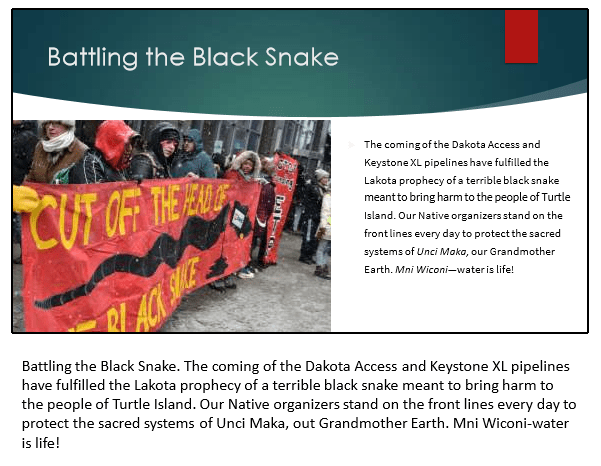
I’ve been praying and thinking about what I have learned about White settlers and Native peoples. How I came to think of fossil fuel pipelines as black snakes the Lakota prophecy warns us about. The image is more powerful to me, as a visual person, than pages of text. Thinking of pipelines as living things changes how I feel about fossil fuels. I feel the personal danger represented by snakes that I don’t feel, as much, when I think of pipelines. OK, yes, I am afraid of snakes.
There is an ancient Lakota prophecy about a black snake that would slither across the land, desecrating the sacred sites and poisoning the water before destroying the Earth.
For many Indigenous people gathered near the Standing Rock Sioux reservation, that snake has a name — the Dakota Access pipeline.
“There was a prophecy saying that there is a black snake above ground. And what do we see? We see black highways across the nation,” said Dave Archambault, chairman of the reservation, which straddles North and South Dakota. “There’s also a prophecy that when that black snake goes underground, it’s going to be devastating to the Earth.”
That belief is why hundreds of people have gathered since April to pray in camps along the Missouri River.
“‘We must kill the black snake’: Prophecy and prayer motivate Standing Rock movement, Indigenous leaders say effort to oppose Dakota Access pipeline rooted in power of prayer” by Karen Pauls, CBC News, Dec 11, 2016
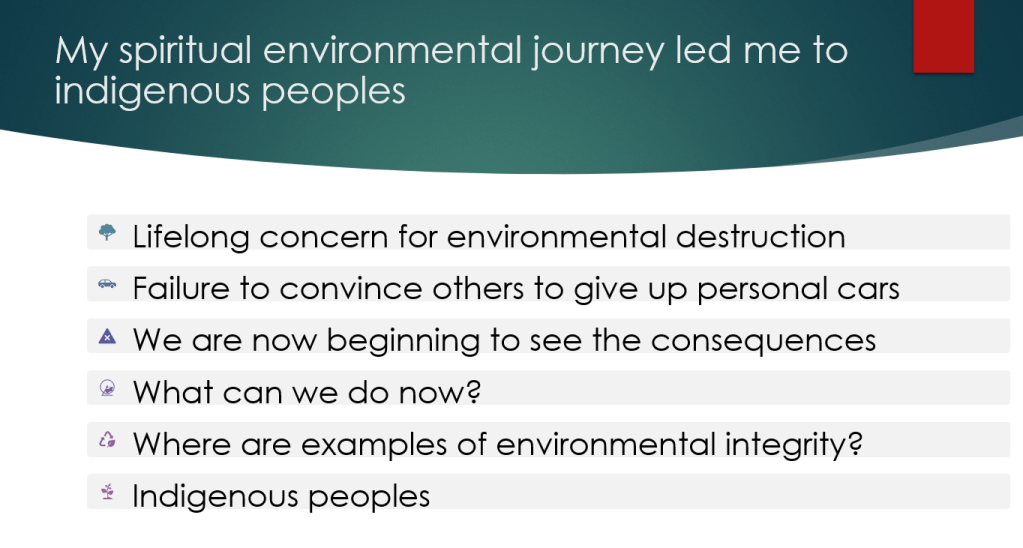
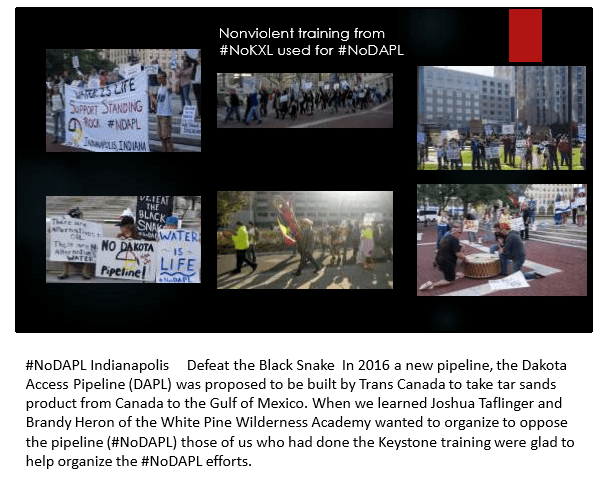
It was by working to try to stop the Keystone XL, and then the Dakota Access pipeline that I was finally able to begin to make friends with some Native people.
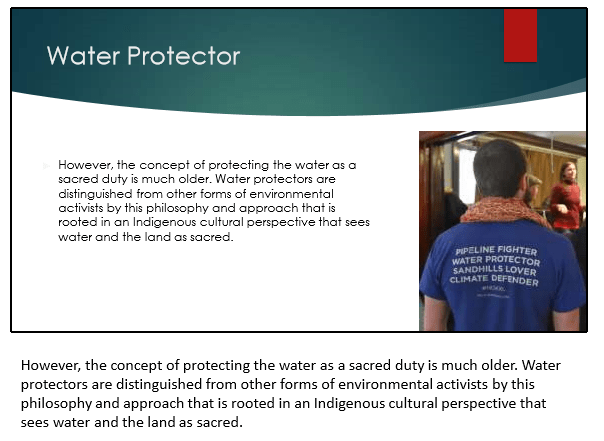
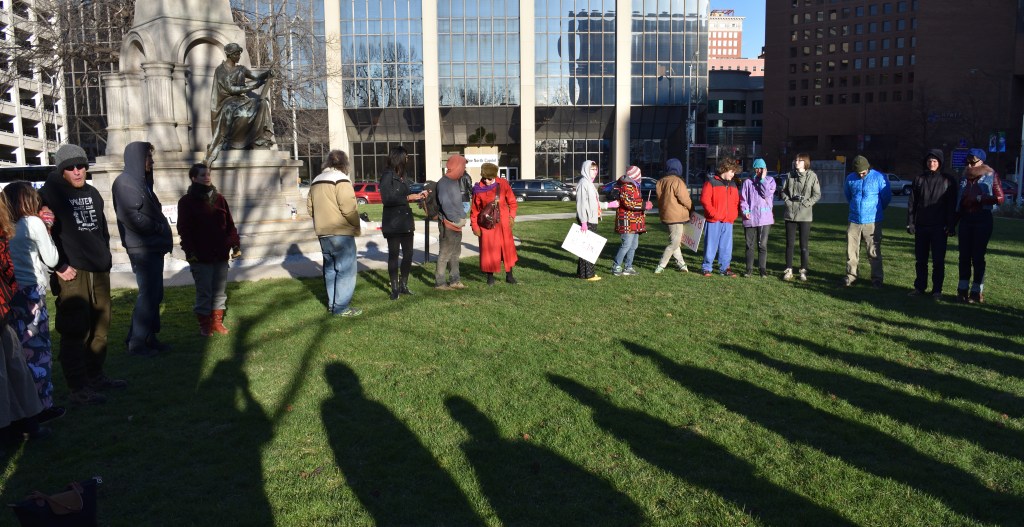
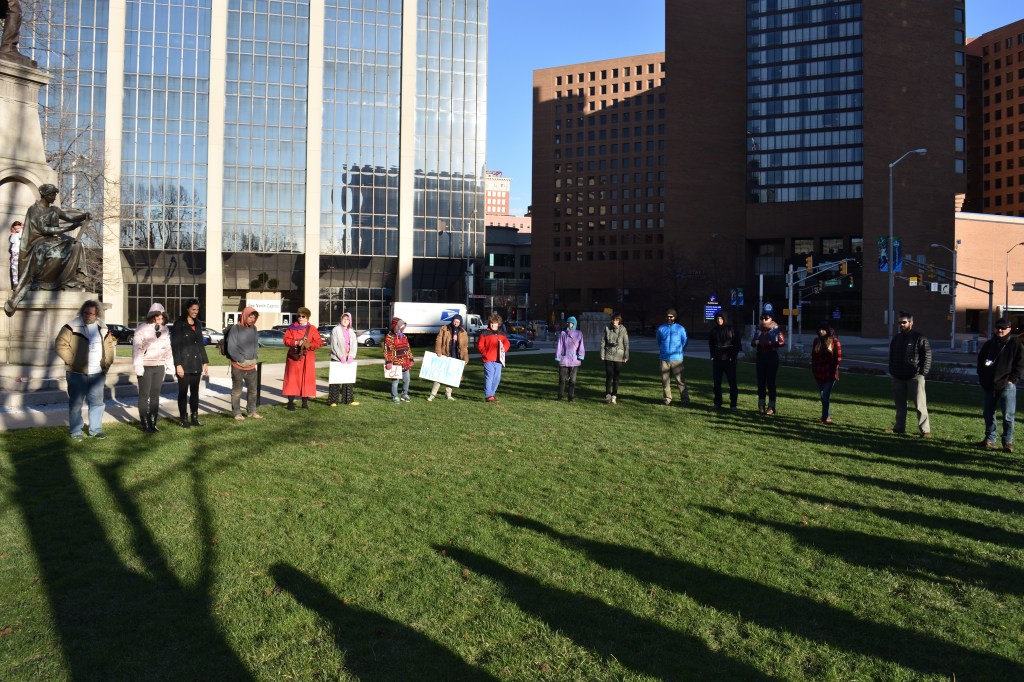
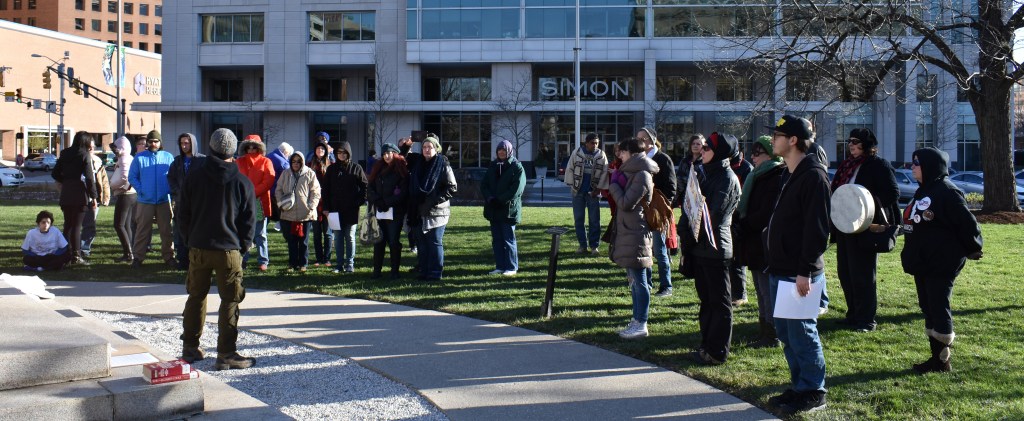
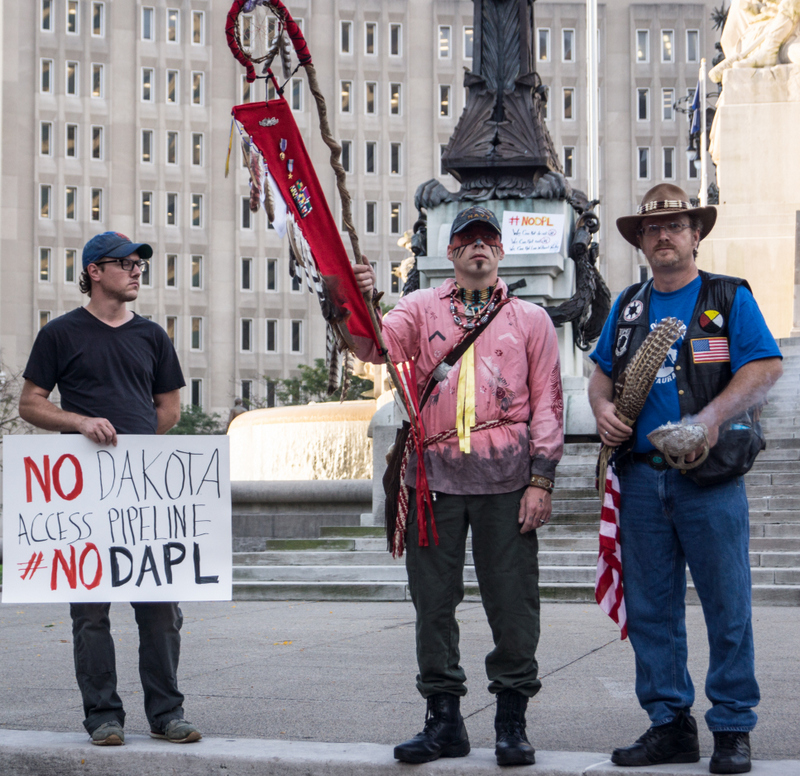
The first experiences were coming together in Indianapolis as water protectors supporting the water protectors at Standing Rock and elsewhere. At these gatherings I learned what it means to be a water protector instead of a protester.
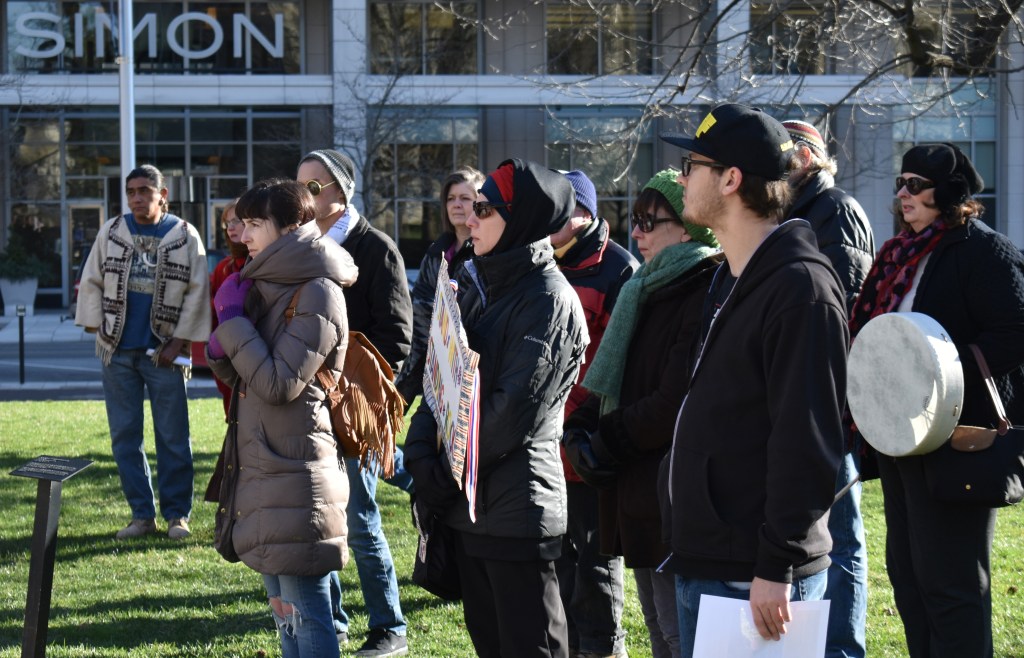
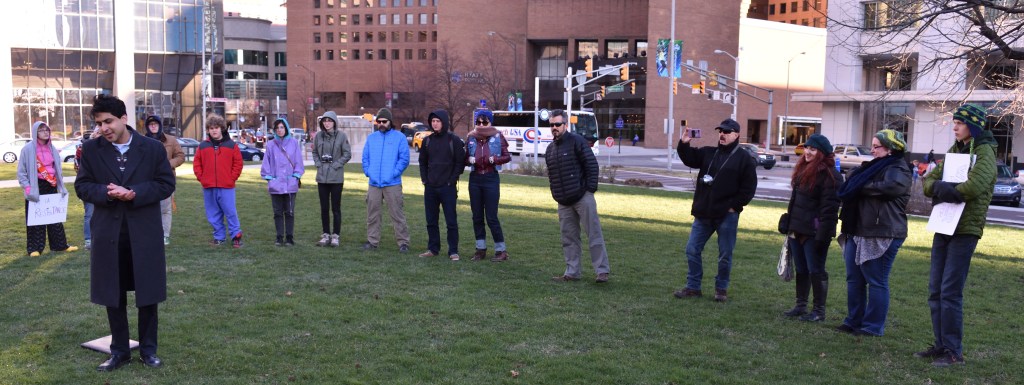
As water protectors, prayer was an important part of our gatherings in Indianapolis. One time we gathered on the Indiana State Capitol grounds just to give thanks and pray together. The photos and video below, including me speaking about the Keystone Pledge of Resistance, were from that occasion.
#NoDAPL
Jpeg
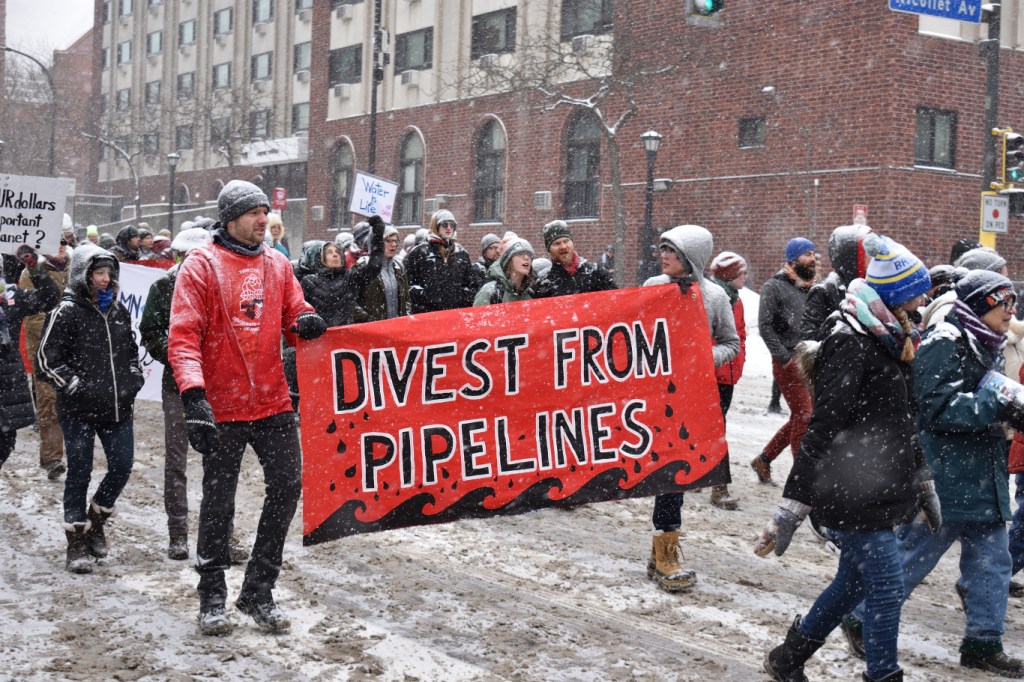
One of the most effective ways to fight the black snakes has been divestment, that is pressuring banks and investors to stop funding fossil fuel projects. There is the recent announcement that the European Investment Bank will no longer finance fossil fuel projects.
BRUSSELS (Reuters) – The European Investment Bank said on Thursday it would stop funding fossil fuel projects at the end of 2021, a landmark decision that potentially deals a blow to billions of dollars of gas projects in the pipeline.
The bank’s new energy lending policy, which it said was approved with “overwhelming” support, will bar most fossil fuel projects, including traditional use of natural gas. “This is an important first step – this is not the last step,” EIB vice president, Andrew McDowell told reporters in a call.
Under the new policy, energy projects applying for EIB funding will need to show they can produce one kilowatt hour of energy while emitting less than 250 grams of carbon dioxide, a move which bans traditional gas-burning power plants.
European Investment Bank to cease funding fossil fuel projects by end-2021, Jonas Ekblom, Reuters, Nov 14, 2019
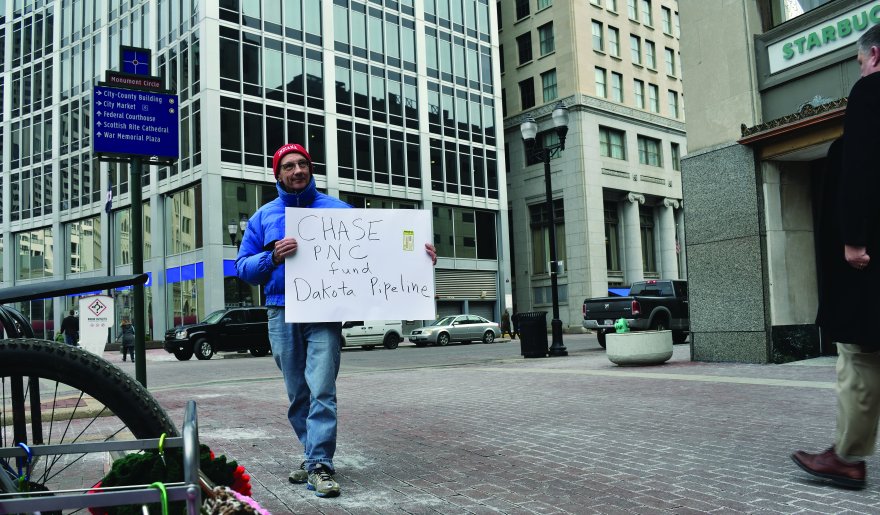
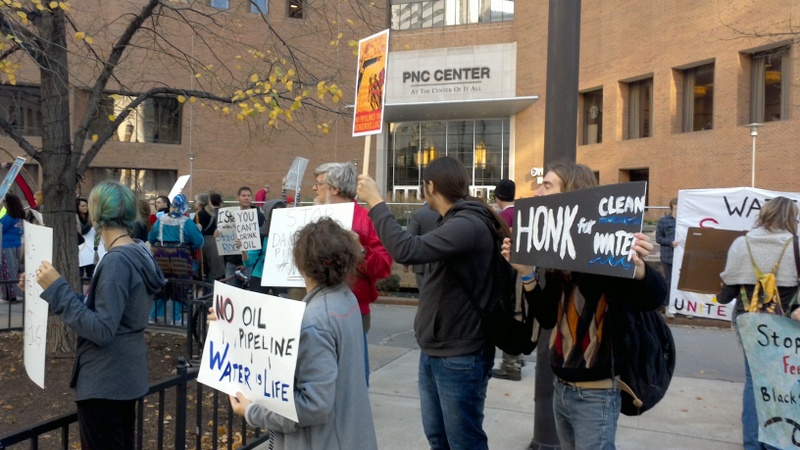
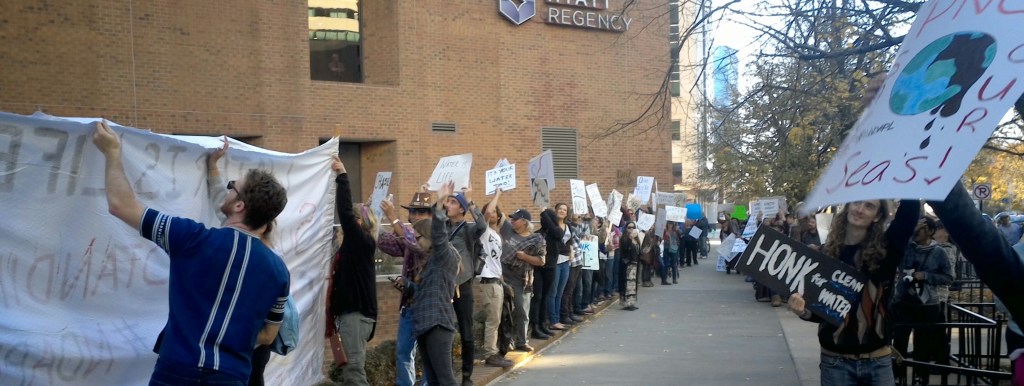
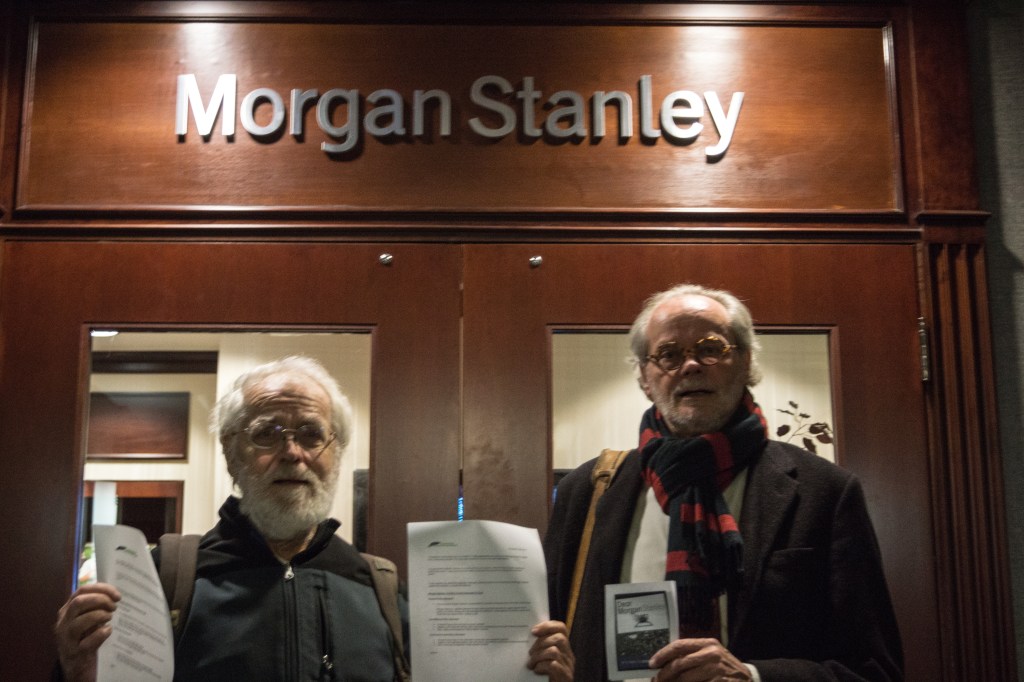
Divestment has been successful in making a number of banks change their policies related to fossil fuel projects. This slideshow includes photos from several different divestment actions. One is when we went to the local Morgan Stanley offices to ask them to stop funding fossil fuel projects. We had a very pleasant conversation with the branch manager. Another day those of us working against the Dakota Access pipeline (#NODAPL) went to the downtown Indianapolis branches of the CHASE bank, and PNC bank. At each bank we stood outside with our signs, in silence, as those who had accounts went into the banks to close them. That day $110,000 was withdrawn.
#noDAPL
#noDAPL
#NoDAPL
Jpeg
Jpeg
Jpeg
#noDAPL
Jpeg
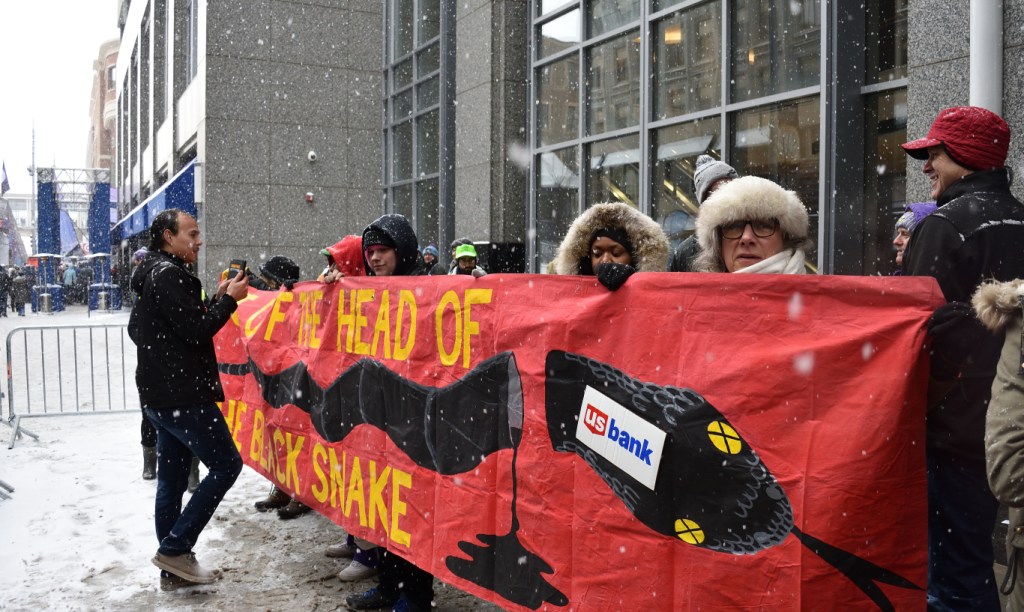
Another divestment adventure is when Ed Fallon, Bold Iowa, organized a van trip to Minneapolis the day before the Super Bowl was played there in 2018. We rallied in front of USBank headquarters downtown. The Super Bowl was played in the USBank Stadium the next day.
Christine Nobiss
water protectors
I hope there might be occasions at your family gatherings to make a little progress in decolonizing, without causing a food fight, or worse. Many people think what happened in the past doesn’t involve them, they have no responsibility. But if there is one thing I have learned, it is that trauma is handed down from generation to generation. I have seen how Native friends continue to suffer from past traumas.
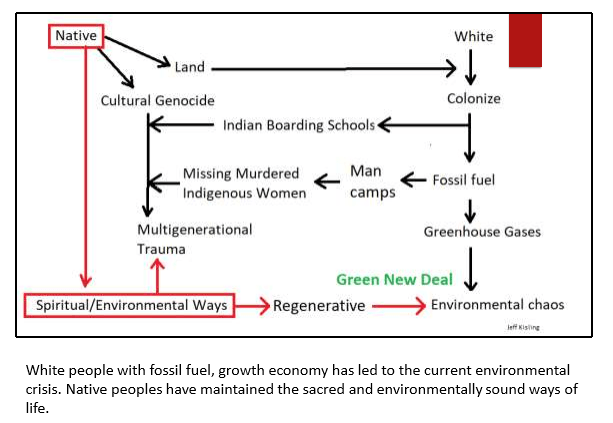
There is another reason I was led to search for ways to make friends and learn from Native people. The white, dominant culture based on an ever growing economy has gotten us into the environmental catastrophes we are seeing, and will increasingly see. I believe our only hope is to return to native, sacred, earth centered ways. This is the reason I hope you will consider ways to build bridges with Native peoples.
I’ve heard the advice not to talk about religion or politics at family gatherings, advice I have followed on numerous occasions. But the costs of that silence are missed opportunities to move along the path toward Beloved community together. As my friend Christine Nobiss writes below, change can occur as individuals awaken to the true history of White settlers and Native peoples. How can we go about that in a way that doesn’t immediately result in people shutting down, or reacting angrily, neither of which result in any progress.
This process has to begin by decolonizing ourselves.
Thanksgiving needs a complete overhaul, in the same way Columbus Day is slowly being revisioned as Indigenous Peoples’ Day. To celebrate the current Thanksgiving mythology is to celebrate the act of land expansion through ethnic cleansing and slavery — most of which happened at the point of a gun. It is masked recognition that this country was founded on the actions of generations of Europeans who depended on the joint violence of genocide of Native Americans and the enslavement of African people to conquer this land, the legacy of which is still felt today.
Generations of American values are responsible for institutionalizing the Thanksgiving mythology, but ultimately, change can occur as individuals awaken to the reality that their Thanksgiving meals celebrate a violent, whitewashed history, and begin the process of truth-telling, healing and reconciliation.
I think the following from Guy Jones in the book cited below is an example of a way to begin a conversation that doesn’t make people feel defensive and upset. So they are able to listen and respond. Stories are ways to take the focus off the individuals involved in the conversation.
Today, people say to me, “Don’t worry—those days of having another culture’s religion imposed in school will never happen again; there are laws now to keep that from happening.” As they speak to me, I remember an incident involving my youngest son when he was in kindergarten in a Midwestern, urban school. His teacher held up a sheet of paper and asked him, “What color is this?” “It’s the color of the sky, ” he answered. “Wrong,” she responded. Holding up another sheet of paper, she asked again, “What color is this?” “It’s the color of the leaves and grass,” he answered. “Wrong,” she told him again. No, she wasn’t quoting from scriptures like the teachers I had, but she was still controlling his thinking. He had responded in accord with his Native teachings, to draw relationships to the natural world he was tied to. When he didn’t give her the answer she was seeking, she essentially told him that not only was he wrong, but his traditional teachings were also wrong. So I am still concerned about the educational system today.
I’ve used the following slide when talking about connections between Native and non-native peoples, but it also applies to situations between individuals with different social or political views.
The problem with avoiding difficult conversations is we don’t make progress. Just ignoring these discussions means the underlying, unspoken tensions remain. And will not go away until we find ways to discuss them with family and friends.
The following is a lesson called Thanksgiving Mourning found on the Teaching Tolerance website. The two documents used in this lesson are included to make it easier to print or otherwise share the lesson.
In this activity, students will explore the perspectives of two Native American authors about the meaning of the Thanksgiving holiday and then write journal entries. The MATERIALS listed below can be found at the end of this blog post.
Objectives Activities will help students:
Review commentary from Indigenous writers about Thanksgiving
Make inferences and draw conclusions based on written information
Essential Questions
How and why do we celebrate Thanksgiving?
What is the story of Thanksgiving from a Native American perspective?
Copies of Thanksgiving: A Native American View by Jacqueline Keeler from the Pure Water Gazette (Editor’s note: the song referenced on this webpage should be “America”)
Framework
Much of the Thanksgiving story focuses on a peaceful, cross-cultural exchange between the “Pilgrims and Indians.” While it’s true that the Wampanoag and the planters shared in a harvest celebration, within fifty years, the Wampanoag would no longer be a free people. For some Native Americans, Thanksgiving is no cause for celebration, but rather serves as a reminder of colonization’s devastating impact on Indigenous peoples.
In this activity, students will review two written works by Native American authors. The first—speech written by Wamsutta James in 1970—gave birth to the National Day of Mourning, which is observed on Thanksgiving by some Indigenous people. To them, Thanksgiving is “a reminder of the genocide of millions of their people, the theft of their lands, and the relentless assault on their culture.” The Day of Mourning, on the other hand, is a day of remembrance and spiritual connection, as well as a protest of the racism and oppression that Native Americans continue to experience.
The second document is an essay by Jacqueline Keeler, a member of the Dineh Nation and the Yankton Dakota Sioux; she works with the American Indian Child Resource Center in Oakland, Calif. Unlike some of her Native peers, Keeler celebrates Thanksgiving. And unlike most non-Native Americans, she does so through a distinctly Indigenous lens.
Suppressed Speech
THE SUPPRESSED SPEECH OF WAMSUTTA (FRANK B.) JAMES, WAMPANOAG To have been delivered at Plymouth, Massachusetts, 1970
ABOUT THE DOCUMENT:
Three hundred fifty years after the Pilgrims began their invasion of the land of the Wampanoag, their “American” descendants planned an anniversary celebration. Still clinging to the white schoolbook myth of friendly relations between their forefathers and the Wampanoag, the anniversary planners thought it would be nice to have an Indian make an appreciative and complimentary speech at their state dinner. Frank James was asked to speak at the celebration. He accepted. The planners, however , asked to see his speech in advance of the occasion, and it turned out that Frank James’ views — based on history rather than mythology — were not what the Pilgrims’ descendants wanted to hear. Frank James refused to deliver a speech written by a public relations person. Frank James did not speak at the anniversary celebration. If he had spoken, this is what he would have said:
I speak to you as a man — a Wampanoag Man. I am a proud man, proud of my ancestry, my accomplishments won by a strict parental direction (“You must succeed – your face is a different color in this small Cape Cod community!”). I am a product of poverty and discrimination from these two social and economic diseases. I, and my brothers and sisters, have painfully overcome, and to some extent we have earned the respect of our community. We are Indians first – but we are termed “good citizens.” Sometimes we are arrogant but only because society has pressured us to be so.
It is with mixed emotion that I stand here to share my thoughts. This is a time of celebration for you – celebrating an anniversary of a beginning for the white man in America. A time of looking back, of reflection. It is with a heavy heart that I look back upon what happened to my People. Even before the Pilgrims landed it was common practice for explorers to capture Indians, take them to Europe and sell them as slaves for 220 shillings apiece. The Pilgrims had hardly explored the shores of Cape Cod for four days before they had robbed the graves of my ancestors and stolen their corn and beans. Mourt’s Relation describes a searching party of sixteen men. Mourt goes on to say that this party took as much of the Indians’ winter provisions as they were able to carry. Massasoit, the great Sachem of the Wampanoag, knew these facts, yet he and his People welcomed and befriended the settlers of the Plymouth Plantation. Perhaps he did this because his Tribe had been depleted by an epidemic. Or his knowledge of the harsh oncoming winter was the reason for his peaceful acceptance of these acts. This action by Massasoit was perhaps our biggest mistake. We, the Wampanoag, welcomed you, the white man, with open arms, little knowing that it was the beginning of the end; that before 50 years were to pass, the Wampanoag would no longer be a free people.
What happened in those short 50 years? What has happened in the last 300 years?
History gives us facts and there were atrocities; there were broken promises – and most of these centered around land ownership. Among ourselves we understood that there were boundaries, but never before had we had to deal with fences and stone walls. But the white man had a need to prove his worth by the amount of land that he owned. Only ten years later, when the Puritans came, they treated the Wampanoag with even less kindness in converting the souls of the so-called “savages.” Although the Puritans were harsh to members of their own society, the Indian was pressed between stone slabs and hanged as quickly as any other “witch.” And so down through the years there is record after record of Indian lands taken and, in token, reservations set up for him upon which to live. The Indian, having been stripped of his power, could only stand by and watch while the white man took his land and used it for his personal gain. This the Indian could not understand; for to him, land was survival, to farm, to hunt, to be enjoyed. It was not to be abused. We see incident after incident, where the white man sought to tame the “savage” and convert him to the Christian ways of life. The early Pilgrim settlers led the Indian to believe that if he did not behave, they would dig up the ground and unleash the great epidemic again. The white man used the Indian’s nautical skills and abilities. They let him be only a seaman — but never a captain. Time and time again, in the white man’s society, we Indians have been termed “low man on the totem pole.”
Has the Wampanoag really disappeared? There is still an aura of mystery. We know there was an epidemic that took many Indian lives – some Wampanoags moved west and joined the Cherokee and Cheyenne. They were forced to move. Some even went north to Canada! Many Wampanoag put aside their Indian heritage and accepted the white man’s way for their own survival. There are some Wampanoag who do not wish it known they are Indian for social or economic reasons. What happened to those Wampanoags who chose to remain and live among the early settlers? What kind of existence did they live as “civilized” people? True, living was not as complex as life today, but they dealt with the confusion and the change. Honesty, trust, concern, pride, and politics wove themselves in and out of their [the Wampanoags’] daily living. Hence, he was termed crafty, cunning, rapacious, and dirty.
History wants us to believe that the Indian was a savage, illiterate, uncivilized animal. A history that was written by an organized, disciplined people, to expose us as an unorganized and undisciplined entity. Two distinctly different cultures met. One thought they must control life; the other believed life was to be enjoyed, because nature decreed it. Let us remember, the Indian is and was just as human as the white man. The Indian feels pain, gets hurt, and becomes defensive, has dreams, bears tragedy and failure, suffers from loneliness, needs to cry as well as laugh. He, too, is often misunderstood.
The white man in the presence of the Indian is still mystified by his uncanny ability to make him feel uncomfortable. This may be the image the white man has created of the Indian; his “savageness” has boomeranged and isn’t a mystery; it is fear; fear of the Indian’s temperament!
High on a hill, overlooking the famed Plymouth Rock, stands the statue of our great Sachem, Massasoit. Massasoit has stood there many years in silence. We the descendants of this great Sachem have been a silent people. The necessity of making a living in this materialistic society of the white man caused us to be silent. Today, I and many of my people are choosing to face the truth. We ARE Indians!
Although time has drained our culture, and our language is almost extinct, we the Wampanoags still walk the lands of Massachusetts. We may be fragmented, we may be confused. Many years have passed since we have been a people together. Our lands were invaded. We fought as hard to keep our land as you the whites did to take our land away from us. We were conquered, we became the American prisoners of war in many cases, and wards of the United States Government, until only recently.
Our spirit refuses to die. Yesterday we walked the woodland paths and sandy trails. Today we must walk the macadam highways and roads. We are uniting We’re standing not in our wigwams but in your concrete tent. We stand tall and proud, and before too many moons pass we’ll right the wrongs we have allowed to happen to us. We forfeited our country. Our lands have fallen into the hands of the aggressor. We have allowed the white man to keep us on our knees. What has happened cannot be changed, but today we must work towards a more humane America, a more Indian America, where men and nature once again are important; where the Indian values of honor, truth, and brotherhood prevail. You the white man are celebrating an anniversary. We the Wampanoags will help you celebrate in the concept of a beginning. It was the beginning of a new life for the Pilgrims. Now, 350 years later it is a beginning of a new determination for the original American: the American Indian.
There are some factors concerning the Wampanoags and other Indians across this vast nation. We now have 350 years of experience living amongst the white man. We can now speak his language. We can now think as a white man thinks. We can now compete with him for the top jobs. We’re being heard; we are now being listened to. The important point is that along with these necessities of everyday living, we still have the spirit, we still have the unique culture, we still have the will and, most important of all, the determination to remain as Indians. We are determined, and our presence here this evening is living testimony that this is only the beginning of the American Indian, particularly the Wampanoag, to regain the position in this country that is rightfully ours.
Wamsutta September 10, 1970
Thanksgiving: A Native American View by Jacqueline Keeler
I celebrate the holiday of Thanksgiving.This may surprise those people who wonder what Native Americans think of this official U.S. celebration of the survival of early arrivals in a European invasion that culminated in the death of 10 to 30 million native people.
Thanksgiving to me has never been about Pilgrims. When I was six, my mother, a woman of the Dineh nation, told my sister and me not to sing “Land of the Pilgrim’s pride” in “America the Beautiful.” Our people, she said, had been here much longer and taken much better care of the land. We were to sing “Land of the Indian’s pride” instead.
I was proud to sing the new lyrics in school, but I sang softly. It was enough for me to know the difference. At six, I felt I had learned something very important. As a child of a Native American family, you are part of a very select group of survivors, and I learned that my family possessed some “inside” knowledge of what really happened when those poor, tired masses came to our homes.
When the Pilgrims came to Plymouth Rock, they were poor and hungry — half of them died within a few months from disease and hunger. When Squanto, a Wampanoag man, found them, they were in a pitiful state. He spoke English, having traveled to Europe, and took pity on them. Their English crops had failed. The native people fed them through the winter and taught them how to grow their food.
These were not merely “friendly Indians.” They had already experienced European slave traders raiding their villages for a hundred years or so, and they were wary — but it was their way to give freely to those who had nothing. Among many of our peoples, showing that you can give without holding back is the way to earn respect. Among the Dakota, my father’s people, they say, when asked to give, “Are we not Dakota and alive?” It was believed that by giving there would be enough for all — the exact opposite of the system we live in now, which is based on selling, not giving.
To the Pilgrims, and most English and European peoples, the Wampanoags were heathens, and of the Devil. They saw Squanto not as an equal but as an instrument of their God to help his chosen people, themselves.
Since that initial sharing, Native American food has spread around the world. Nearly 70 percent of all crops grown today were originally cultivated by Native American peoples. I sometimes wonder what they ate in Europe before they met us. Spaghetti without tomatoes? Meat and potatoes without potatoes? And at the “first Thanksgiving” the Wampanoags provided most of the food — and signed a treaty granting Pilgrims the right to the land at Plymouth, the real reason for the first Thanksgiving.
What did the Europeans give in return? Within 20 years European disease and treachery had decimated the Wampanoags. Most diseases then came from animals that Europeans had domesticated. Cowpox from cows led to smallpox, one of the great killers of our people, spread through gifts of blankets used by infected Europeans. Some estimate that diseases accounted for a death toll reaching 90 percent in some Native American communities. By 1623, Mather the elder, a Pilgrim leader, was giving thanks to his God for destroying the heathen savages to make way “for a better growth,” meaning his people.
In stories told by the Dakota people, an evil person always keeps his or her heart in a secret place separate from the body. The hero must find that secret place and destroy the heart in order to stop the evil.
I see, in the “First Thanksgiving” story, a hidden Pilgrim heart. The story of that heart is the real tale than needs to be told. What did it hold? Bigotry, hatred, greed, self-righteousness? We have seen the evil that it caused in the 350 years since. Genocide, environmental devastation, poverty, world wars, racism.
Where is the hero who will destroy that heart of evil? I believe it must be each of us. Indeed, when I give thanks this Thursday and I cook my native food, I will be thinking of this hidden heart and how my ancestors survived the evil it caused.
Because if we can survive, with our ability to share and to give intact, then the evil and the good will that met that Thanksgiving day in the land of the Wampanoag will have come full circle.
And the healing can begin.
Jacqueline Keeler, a member of the Dineh Nation and the Yankton Dakota Sioux works with the American Indian Child Resource Center in Oakland, California. Her work has appeared in Winds of Change, an American Indian journal.
At the Friends Committee on National Legislation (FCNL) Washington DC
It’s past time to honor the Indigenous resistance, tell our story as it really happened, and undo romanticized notions of the holiday that have long suppressed our perspective. As an Indigenous decolonizer, I call this time of year the Season of Resistance. With Thanksgiving fast approaching, I ask you to please take the time to educate your peers about Thanksgiving’s real history; to support Native people as they resist the narrative of the holiday; and to organize or host alternatives to this holiday.
By taking a decolonizing approach to teaching about Thanksgiving, teachers and families reject the myths of Thanksgiving and harmful stereotypes about Native peoples. Instead, teachers and families can de-romanticize this holiday, by engaging Native perspectives that recognize the diversity of Indigenous peoples and their contemporary presence in 21st-century America. With children’s books like Sally Hunter’s “Four Seasons of Corn: A Winnebago Tradition,” educators can examine historical methods of subsistence and show how these traditions still exist today.
Decolonizing Thanksgiving: A Toolkit for Combating Racism in Schools by Lindsey Passenger Wieck, Medium.com, Nov 11, 2018
What I like about what is written above is the idea that learning and sharing about Native perspectives is a chance to recognize the presence and influence of Indigenous peoples today. I was so blessed to be able to make Native friends when we walked together along the path of the Dakota Access Pipeline last year on the First Nation-Farmer Climate Unity March. I enjoyed learning about their good work in the world today.
Gary Clague and Matt Lone Bear
ABOUT THE FOLLOWING: Three hundred fifty years after the Pilgrims began their invasion of the land of the Wampanoag, their “American” descendants planned an anniversary celebration. Still clinging to the white schoolbook myth of friendly relations between their forefathers and the Wampanoag, the anniversary planners thought it would be nice to have an Indian make an appreciative and complimentary speech at their state dinner. Frank James was asked to speak at the celebration. He accepted. The planners, however , asked to see his speech in advance of the occasion, and it turned out that Frank James’ views — based on history rather than mythology — were not what the Pilgrims’ descendants wanted to hear. Frank James refused to deliver a speech written by a public relations person. Frank James did not speak at the anniversary celebration. If he had spoken, this is what he would have said:
I speak to you as a man — a Wampanoag Man. I am a proud man, proud of my ancestry, my accomplishments won by a strict parental direction (“You must succeed – your face is a different color in this small Cape Cod community!”). I am a product of poverty and discrimination from these two social and economic diseases. I, and my brothers and sisters, have painfully overcome, and to some extent we have earned the respect of our community. We are Indians first – but we are termed “good citizens.” Sometimes we are arrogant but only because society has pressured us to be so.
It is with mixed emotion that I stand here to share my thoughts. This is a time of celebration for you – celebrating an anniversary of a beginning for the white man in America. A time of looking back, of reflection. It is with a heavy heart that I look back upon what happened to my People. Even before the Pilgrims landed it was common practice for explorers to capture Indians, take them to Europe and sell them as slaves for 220 shillings apiece. The Pilgrims had hardly explored the shores of Cape Cod for four days before they had robbed the graves of my ancestors and stolen their corn and beans. Mourt’s Relation describes a searching party of sixteen men. Mourt goes on to say that this party took as much of the Indians’ winter provisions as they were able to carry. Massasoit, the great Sachem of the Wampanoag, knew these facts, yet he and his People welcomed and befriended the settlers of the Plymouth Plantation. Perhaps he did this because his Tribe had been depleted by an epidemic. Or his knowledge of the harsh oncoming winter was the reason for his peaceful acceptance of these acts. This action by Massasoit was perhaps our biggest mistake. We, the Wampanoag, welcomed you, the white man, with open arms, little knowing that it was the beginning of the end; that before 50 years were to pass, the Wampanoag would no longer be a free people.
THE SUPPRESSED SPEECH OF WAMSUTTA (FRANK B.) JAMES, WAMPANOAG To have been delivered at Plymouth, Massachusetts, 1970
The speech continues for a while, and ends with this:
Our spirit refuses to die. Yesterday we walked the woodland paths and sandy trails. Today we must walk the macadam highways and roads. We are uniting We’re standing not in our wigwams but in your concrete tent. We stand tall and proud, and before too many moons pass we’ll right the wrongs we have allowed to happen to us. We forfeited our country. Our lands have fallen into the hands of the aggressor. We have allowed the white man to keep us on our knees. What has happened cannot be changed, but today we must work towards a more humane America, a more Indian America, where men and nature once again are important; where the Indian values of honor, truth, and brotherhood prevail. You the white man are celebrating an anniversary. We the Wampanoags will help you celebrate in the concept of a beginning. It was the beginning of a new life for the Pilgrims. Now, 350 years later it is a beginning of a new determination for the original American: the American Indian.
There are some factors concerning the Wampanoags and other Indians across this vast nation. We now have 350 years of experience living amongst the white man. We can now speak his language. We can now think as a white man thinks. We can now compete with him for the top jobs. We’re being heard; we are now being listened to. The important point is that along with these necessities of everyday living, we still have the spirit, we still have the unique culture, we still have the will and, most important of all, the determination to remain as Indians. We are determined, and our presence here this evening is living testimony that this is only the beginning of the American Indian, particularly the Wampanoag, to regain the position in this country that is rightfully ours.
THE SUPPRESSED SPEECH OF WAMSUTTA (FRANK B.) JAMES, WAMPANOAG. To have been delivered at Plymouth, Massachusetts, 1970
If your Thanksgiving holiday involves sharing what you’re thankful for, or reflecting on those who couldn’t be with you, spend some time acknowledging the people who suffered thanks to European settlement that the Thanksgiving myth venerates. It’s possible to observe the holiday in a spirit of gratefulness, but don’t ignore the very real pain of the indigenous people who were here before any other Americans. Whether it’s a prayer or a moment of silence, add a moment of reflection to your holiday to remember the lives lost because of colonization.
How To Observe Thanksgiving While Acknowledging The Holiday’s Messed Up History by AYANA LAGE, Bustle, Nov 15, 2017
“A moment of reflection” could include appreciating the history of who was connected to the land we are on now. Land acknowledgement statements, like the following for Iowa, can be used to make people aware of who was on the land where they are gathering. To do this before every meeting throughout the year can keep reminding us of the true history of the land.
Iowa Land Acknowledgement
We begin by acknowledging that the Land between Two Rivers, where we sit and stand today, has been the traditional homeland for many independent nations. These include the Ioway and the Otoe, who were here since before recorded time. The Omaha and the Ponca were here, moving to new lands before white settlers arrived. The Pawnee used this land for hunting grounds. The Sioux, Sauk and Meskwaki were here long before European settlers came. Members of many different Indigenous nations have lived on these plains. Let us remember that we occupy their homeland and that this land was taken by force. Today, only the Meskwaki Nation, the Red Earth People, maintain their sovereignty on their land in the state of Iowa. They persevered and refused to be dispossessed of their home. Place names all over our state recognize famous Meskwaki chiefs of the 1800s like Poweshiek, Wapello, Appanoose, and Taiomah or Tama. We honor the Meskwaki Nation for their courage, and for maintaining their language, culture and spirituality. May our time together bring respectful new openings for right relationship to grow.
teachable moment: an event or experience which presents a good opportunity for learning something about a particular aspect of life.
The upcoming celebration of Thanksgiving provides teachable moments, opportunities to learn more ourselves, and teach our children the authentic history of this country.
In his lectures and his new book, In the Light of Justice: The Rise of Human Rights in Native America and the U.N. Declaration on the Rights of Indigenous Peoples, the Pawnee attorney, Walter Echo-Hawk, draws on many wisdom traditions to offer these five steps toward healing when wrongdoing has occurred and people have been injured by it:
Recognize that harm has been done: acknowledge that injury or harm has taken place
A real apology is sincerely made and forgiveness requested: the person or institution that harmed another apologizes in a sincere and appropriate way, admits the specific harmful actions they have committed, and asks for forgiveness
Accepting the apology and forgiving the wrongdoer: the harmed person or community accepts the apology and forgives
Acts of atonement; the process of making things right: the parties agree on voluntary acts of atonement by the wrongdoer that will wipe the slate clean
Healing and reconciliation: the atonement acts are carried out in a process that fosters justice and compassion and genuine friendship
The first step above is to recognize that harm has been done. I recognize, and ask you to recognize that White myths taught to children about Thanksgiving are an example of colonization and wrongdoing. I myself apologize for this and would like to request forgiveness, although this must really be done when we are in each other’s presence.
… historical trauma impacts us on the individual and collective level. We cannot decolonize without centering the impact of trauma in our organizing. Rather than privatize our traumas, how can we rearticulate trauma as place from which to develop what Million calls “felt theory” – a place from which to understand our social and political conditions?
…when we center healing, we remember that our struggles for social justice are not just about opposing things we do not like, but building the world we would actually like to live in.
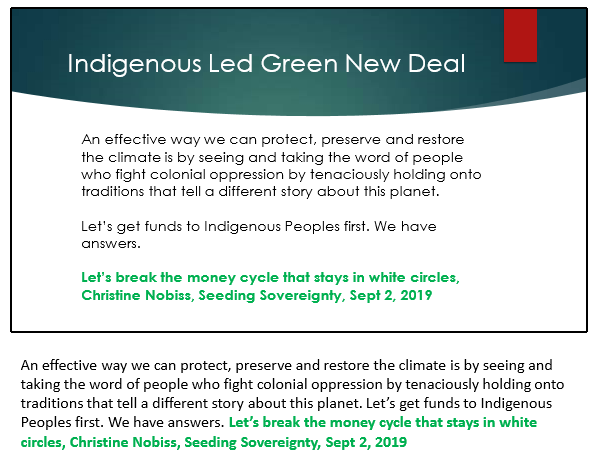
It is my hope that sharing these blog posts might be a step of atonement, and part of a process of making things right. Following is an excerpt from my friend, Christine Nobiss’s blog post cited below.
An essential part of decolonizing Thanksgiving is to start educating our children with the authentic history of this country. A book that re-examines basic “truths” about Thanksgiving in an educational context is Rethinking Columbus: The Next 500 Years. Considering that much of the Thanksgiving mythology is based on sharing food, it is ideal to discuss the importance of Indigenous first foods or food sovereignty with our children as well. The book Four Seasons of Corn: A Winnebago Tradition discusses the traditional process of growing and harvesting corn, de-commercializing what we eat, and promoting culturally appropriate foods and agricultural systems of North America. Decolonizing Thanksgiving: A Toolkit for Combatting Racism in Schools is a quick read where more resources are listed; it even has sample letters that can be sent to your children’s school concerning problematic Thanksgiving activities.
In response to yesterday’s blog post, my friend and Bear Creek Meeting attender, Shazi Knight, shared some of her experiences related to Thanksgiving and the public school her child attends.
Thanks for your email regarding Thanksgiving, Truth giving. Prairie came home with some library books on the current Euro America Thanksgiving story. I read one story and I had to stop right there. We had a discussion about the different versions of Thanksgiving. We have had many talks about native Americans and the truth of history. I told her I would get some other books to illustrate the whole truth, and I instantly thought of you and Christine N. I’ll be looking into the books she suggested.
I have found it a fun and hopeful challenge to create the new narrative and tradition in my budding family unit within the larger circle of society, especially that of small town Iowa. Being a part of Bear Creek and our open minded truth centered family helps me do this greatly.
I usually have centered our holy day traditions around Nature. Thanksgiving being about the abundance of the fall harvest, Christmas about the returning of the Light and lengthening of days, Easter the spring equinox and the rebirth of Nature. Culture and Nature share such a wonderful interplay.
Improve housing for millions of low-income residents
Create 240,000 jobs
Cut carbon emissions as much as taking 1.2 million cars off the road
The bill from the two progressive firebrands places a sharp focus on decarbonizing the nation’s public housing units.
The proposal calls for an investment of $180 billion over 10 years to sustainably retrofit and repair public housing with the goal of eliminating all carbon emissions. The housing units would meet the zero-emissions goal through the use of solar panels and renewable energy sources.
The lawmakers say the legislation would not only cut the carbon footprint of the country’s fleet of housing units but enrich the lives of their inhabitants.
Energy consumption in residential and commercial buildings make up nearly 40 percent of all energy use in the U.S. Shrinking the footprint of buildings has been a big area of focus for those seeking to eliminate greenhouse gas emissions.
The bill, dubbed the Green New Deal for Public Housing Act, would use seven grant programs to upgrade housing units into carbon-neutral communities with organic grocery stores, on-site child care and community gardens. Residents of public housing would be given preference in hiring to renovate those units.
The country hasn’t added new public housing in decades, and 42 percent of the current stock hasn’t been updated since 1975, according to the Urban Institute. About 15 percent of the stock is in 100- or 500-year floodplains, making it vulnerable to severe weather events, according to the D.C.-based think tank.
“Public housing is one area of our infrastructure that’s in immediate crisis that is actually threatening people’s lives,” Ocasio-Cortez said. “It’s a perfect place for us to reimagine what a progressive economic agenda can do, particularly with a Green New Deal context.”
Ocasio-Cortez, Sanders pitch Green New Deal bill for public housing.The $100 billion plan would overhaul 1 million public housing units, making them energy-independent within 10 years.By Renae Merle and David Weigel, The Washington Post, 11/14/2019
The so-called Green New Deal for Public Housing Act marks one of the boldest efforts yet to legislate the Green New Deal movement that, since its debut in mainstream politics with a series of protests a year ago, has reframed the global climate policy debate, providing a popular alternative to the market-friendly dogma that’s dominated Western politics for decades.
To: US Senate and House From: [Your Name] Dear Members of Congress, We are in the midst of a climate emergency and an affordable housing crisis. The Green New Deal for Public Housing Act, introduced by Rep. Alexandria Ocasio-Cortez and Sen. Bernie Sanders, presents a once in a generation opportunity to address both of these issues at once. Safe and affordable homes are the foundation for prosperity. When we weatherize, electrify and modernize our public housing, it will serve as a model of efficiency, sustainability and resiliency for the rest of the country. We are calling on you to cosponsor Rep. Alexandria Ocasio-Cortez and Sen. Bernie Sanders’ Green New Deal for Public Housing Act to guarantee quality, affordable housing and a stable climate for Americans. Retrofitting these buildings will save money by boosting energy efficiency and improve the quality of life for residents. While we bail out banks, fight endless wars, and give massive subsidies to the oil and gas industry, hundreds of thousands of low-income Americans are living in public housing buildings that expose them to toxic, inhumane conditions. In the richest country in the world, no one should have to choose between a home that is giving their kids asthma or cancer and no home at all. We’re asking you to cosponsor this new Public Housing Bill and take the first step to begin the decade of the Green New Deal.













































 Quakers, social justice and revolution