Apache Stronghold

The sacred ancestral lands of Oak Flat in Arizona have rich deposits of copper. Legislation buried in the National Defense Authorization Act in 2015 allows Resolution Copper to begin mining that copper in 2020. In the video below Former Chairman Wendsler Nosie Sr. eloquently describes this situation, this spiritual struggle. Calling on people of faith to support efforts to prevent the theft of the land and mining.

The Poor Peoples Campaign is supporting the efforts of the San Carlos Apache Tribe to retain their sacred land. “Join us in Oak Flat next week on Friday December 13th-14th in solidarity and support of the Apache. We will begin at 6:30 pm on Friday in Oak Flat and end on Saturday at 11:00 am.”

This is a modern day example of the disenfranchisement of indigenous people when their land is found to have something of value that White people want.

The greatest sin of the World has been enacted by Arizona Senator McCain, Senator Flake, and Representatives Kirkpatrick and Gosar of Arizona by including the Southeast Arizona Land Exchange in the National Defense Authorization Act (2015). We are calling on all religious faiths, & military veterans, for this country was founded on freedom of speech, religion and worship, which has been given away to a foreign mining company. 

http://apache-stronghold.com/

Elder/Councilman Wendsler Nosie Sr. was born on July 10th 1959, on the San Carlos Apache Indian Reservation, in Gila County, in San Carlos, Arizona and was raised in a traditional Apache way of life.

The San Carlos Apache Tribe, is comprised of nearly 15,000 tribal members on the San Carlos Apache Indian Reservation, in San Carlos, Arizona, ranging within the Gila, Graham and Pinal Counties, totaling 1.8 million acres, situated in the southeastern portion of the State of Arizona.


From the Poor Peoples Campaign

Former Chairman Wendsler Nosie Sr. and the Apache Stronghold are in a significant struggle for their sacred ancestral lands of Oak Flat. Located 1 1/2 hours outside of Phoenix, Arizona, Oak Flat is the site where ancestors are buried, where young girls have their sunrise service, and where the acorns are gathered for core rituals in the Apache religion. In Apache teaching, Oak Flat is the birthplace of all life.

Oak Flat is under threat of destruction by Resolution Copper, a joint venture owned in part by Rio Tinto, one of the largest metal and mining companies in the world. Because of a congressional act under the leadership of Senator John McCain, Rio Tinto is set to begin mining in 2020. Their plans would devastate the area by leaving a 2 mile crater where Oak Flat is now and contaminating the water and air.

Wendsler, with the blessings of the Apache Stronghold, has decided that he will not leave the sacred site until it is protected, and his tribe’s Constitutional and moral rights to religious freedom are respected, even if it means losing his life.

Join us in Oak Flat next week on Friday December 13th-14th in solidarity and support of the Apache. We will begin at 6:30 pm on Friday in Oak Flat and end on Saturday at 11:00 am.

In the Spirit of Love and Justice,
Rev. Dr. William Barber II, Rev. Dr. Liz Theoharis, Rev. Dr. John Mendez, and Rev. Dr. Robin Tanner


The following is from the transcript of parts of the video above. The transcript was auto generated so the punctuation and spelling is sometimes not quite right.


First of all I wanna say thank you to everyone that’s out there and able to hear this message you know my name is Winston Rosie and the San Carlos Apache Tribe Called Apache and so today we’re here at Oak Flats, a very special holy place to not only the Apache people but people who have come here and have visit and most importantly to learn and to feel inside that there’s something happening in the world that we have to pay attention.

Coming here today as you can see the water in the canyon now this is where the people before us we knew the Creator as the way we should know the Creator had come daily and did their spiritual rituals so that they can be in balance of life.

Well here is our water this is the giver of life which I know everyone understand the value of life to this this is what gives us tomorrow and if this is all gone then there is no
tomorrow and so the Indian people the native the indigenous in a which is when
we are the creator gave us that responsibility.

But he gave it to us in a way that we have to handle this in a spiritual way because spirituality and if it’s done in that format we’ll achieve the most precious blessing
and that’s our children all those yet to come and that’s what brings me here.
That’s what gives me this life, that’s what gives me the hope for what tomorrow
is gonna be because it’s really important that we come together, we share
that information with our children, we help give direction to our children.
Because those children’s who have bear children that we say today that’s yet to
come. And this is a place of special healing. This is a place of where you
listen to the Creator and all the things that it brings here, brings here for us.
It’s a time to retouch the mother and the mother will speak to you give you
that vision, that mission for you in that direction and most importantly to give
of that give us the strength of all what tomorrow’s gonna be.

Tell me how important the UN declaration is for your tribe.

Well it’s very important only because like I was saying, was trying to say there was that you know we’ve been through the system and the system has failed us. And the United States had a lot of opportunities to really help correct those things but right now we’re fighting mining, mining except in in Arizona plus fighting for the aquifers that involve land swap between the United States and Resolution Copper and so going through the steps from the very bottom up. It’s really annoying because it seems like nobody listens to us when we have trust responsibilities, when we have supposedly consultation and not only that from the first intrusion they have all information but also patches of how sacred and holy these places are, and then the promises that they made all the way up to 1872 and even beyond that, and so you know where do we go with this fight? You know we’ve been to the White House number of times. You know we’ve been to the Hill number of times you know over and over and over but the same thing who’s cutting a deal with who who’s helping who and so there’s got to be a third alternative and that’s where I’m hoping with this decoration that is that the third one is that the one that’s been really going to help Indian tribes because as I mentioned in there you know the United States victimized all the tribes and they probably needs to be a third party to say who was wrong and who was right and how what should be the remedy from them and so I’m hoping that this would be important that if the United States does take a look at it and do sign you know but again is to be political so we’ll see what the out come is gonna be like I was saying in there many tribes have been good I’m gonna have that follow the law they’ve followed everything so you know right now it’s gonna be embarrassing if they don’t let me get to that point in supporting the tribes so we’ll see.

First just give thanks to my creator for allow me to speak here on the first
peoples land you know when we come to the bottom talks is to assure that we
give the blessings to speak here of this man to the first people because we’re
we’re the creator gave me life was in the mountains and so that’s almost the
respect that we give I guess with those of us you know we still see that like
first before we see the American state we see what we see first and so that’s
important and then the second part of that is given thanks to all of you
you’re all God’s children you’re all under the Creator like we don’t and just
the fact that we come together tonight I’m oh I’m really stunned tonight I’m
really emotional I guess you could say it’s what scaring me right now because
years ago we talked about Nene we talked about the greatest sin the greatest
devastation that took place here in America and to add with that we’re like
great victims that the victims have never been cured and causes social
illness.
Posted in decolonize, Indigenous, Native Americans, Poor Peoples Campaign, Spiritual Warrior, Uncategorized | Leave a comment

How it came to be

I’ve been writing about Joy Harjo’s book, Conflict Resolution for Holy Beings: Poems, lately, most recently about the steps for conflict resolution. The book begins with this quotation:

How it came to be

Only the Indian people are the original people of America. Our roots are buried deep in the soils of America. We are the only people who have continued with the oldest beliefs of this country. We are the people who still yet speak the languages given to us by the Creator.

This is our homeland. We came from no other country.

We have always looked at ourselves as human beings …

Every tribe has a trail of tears. We wonder when it is going to end.

PHILLIP DEERE (1929–1985)

Many have pointed out the irony of the current Republican administration’s callous and often inhumane policies regarding immigration and asylum coming from those who are themselves immigrants, or from families of immigrants. The writing above reminds that “Indian people are the original people of America.”

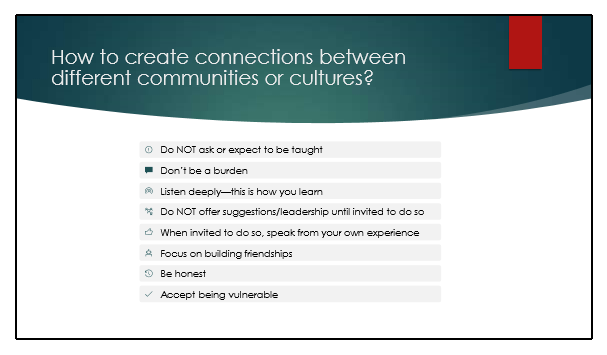
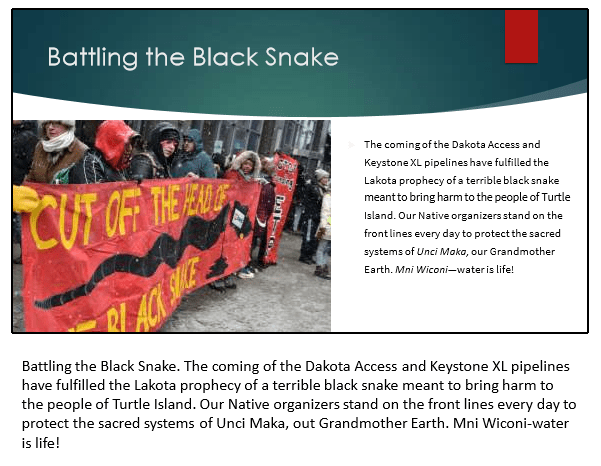
It also expresses why I have been led for the past several years to make connections with Native Americans. Others (White people) have warned me not to idealize Native Americans and their cultures. Have pointed out that some native nations are engaged with fossil fuels, when I say we should look to the leadership of native peoples regarding our environment.

But as I have been blessed to make friends with some Native people, I have found their relationship with the land, their commitment to Mother Earth and to each other have much to teach us White people. “We are the people who still yet speak the languages given to us by the Creator.”

John Woolman (Quaker) wrote (in the late 1700’s): “having many Years felt Love in my Heart towards the Natives of this Land, who dwell far back in the Wilderness, whose Ancestors were the Owners and Possessors of the Land where we dwell”. A land acknowledgement statement from more than 200 years ago.

Also from the quote above, “Every tribe has a trail of tears. We wonder when it is going to end.” One way to begin to work to end the trail of tears is for White people to acknowledge and respect what Indigenous peoples can teach us. And to help other White people do so, too. This is increasingly urgent as we look for ways to decrease the rate of environmental chaos and collapse.

We can also work to stop the epidemic of Missing and Murdered Indigenous Women (MMIW). Quakers can work with the Friends Committee on National Legislation to support bills related to Native affairs.

As we engage to do this work, we should keep the following conflict resolution ground rules in mind:

Set conflict resolution ground rules:

  • Recognize whose lands these are on which we stand.
  • Ask the deer, turtle, and the crane.
  • Make sure the spirits of these lands are respected and treated with goodwill.
  • The land is a being who remembers everything.
  • You will have to answer to your children, and their children, and theirs—
  • The red shimmer of remembering will compel you up the night to walk the perimeter of truth for understanding.
  • As I brushed my hair over the hotel sink to get ready I heard:
  • By listening we will understand who we are in this holy realm of words.
  • Do not parade, pleased with yourself.
  • You must speak in the language of justice

Harjo, Joy. Conflict Resolution for Holy Beings: Poems. W. W. Norton & Company. Kindle Edition.

As I’ve been studying and writing about “Conflict Resolution for Holy Beings: Poems”, I’ve been wondering just what conflict(s) Joy Harjo is talking about. Now that I’ve finished reading the six parts about conflict resolution, I’m still wondering what conflicts she has written about. The sixth (final) part is “use what you learn to resolve your own conflicts and to mediate others’ conflicts”.

So the conflict resolution steps she writes about can be used to resolve our own conflicts. But it seems to me she is also speaking about conflicts between Mother Earth and human beings, and conflicts of the cultures of Native peoples and non-native people.

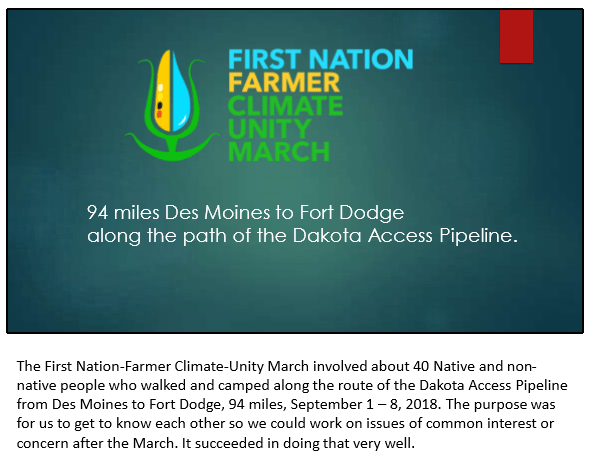
I’m reminded of my friend Donnielle Wanatee’s prayers during our First Nation-Farmer Climate Unity March, in which she often said “we are all just pitiful people”. She also said “we are all Indigenous, we all came from somewhere.” And she said, “we are a tribe.”


Having many Years felt Love in my Heart towards the Natives of this Land, who dwell far back in the Wilderness, whose Ancestors were the Owners and Possessors of the Land where we dwell; and who, for a very small Consideration, assigned their Inheritance to us; and, being at Philadelphia, in the eighth Month, 1761, in a Visit to some Friends who had Slaves, I fell in Company with some of those Natives who lived on the East Branch of the River Susquehanna, at an Indian Town called Wehaloosjng, two hundred Miles from Philadelphia, and, in Conversation with them by an Interpreter, as also by Observation their Countenances and Conduct, I believed some of them were measurably acquainted with that divine Power which subjects the rough and forward Will of the Creature.

Woolman, John. The Journal, with Other Writings of John Woolman . Good Press. Kindle Edition.
Posted in #NDAPL, climate change, First Nation-Farmer Climate Unity March, Indigenous, Native Americans, Quaker, Uncategorized | Leave a comment

Conflict Resolution for Holy Beings 6

This is the final part about conflict resolution outlined in Joy Harjo’s book, Conflict Resolution for Holy Beings: Poems

6. AND, USE WHAT YOU LEARN TO RESOLVE YOUR OWN CONFLICTS AND TO MEDIATE OTHERS’ CONFLICTS:

When we made it back home, back over those curved roads that wind through the city of peace, we stopped at the doorway of dusk as it opened to our homelands.

We gave thanks for the story, for all parts of the story because it was by the light of those challenges we knew ourselves— We asked for forgiveness.

We laid down our burdens next to each other.

Harjo, Joy. Conflict Resolution for Holy Beings: Poems. W. W. Norton & Company. Kindle Edition

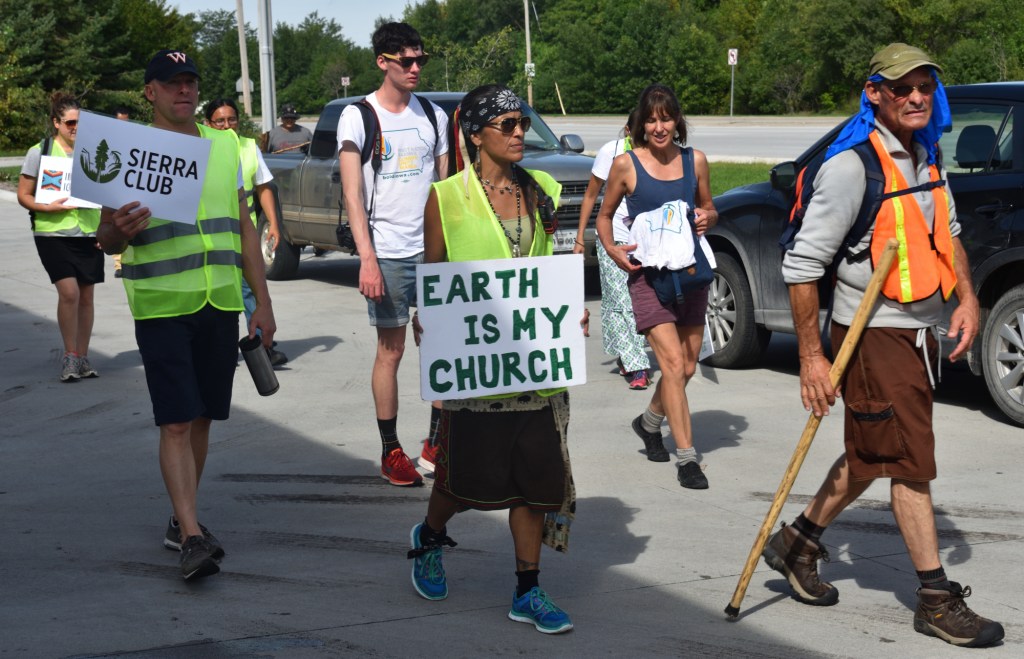
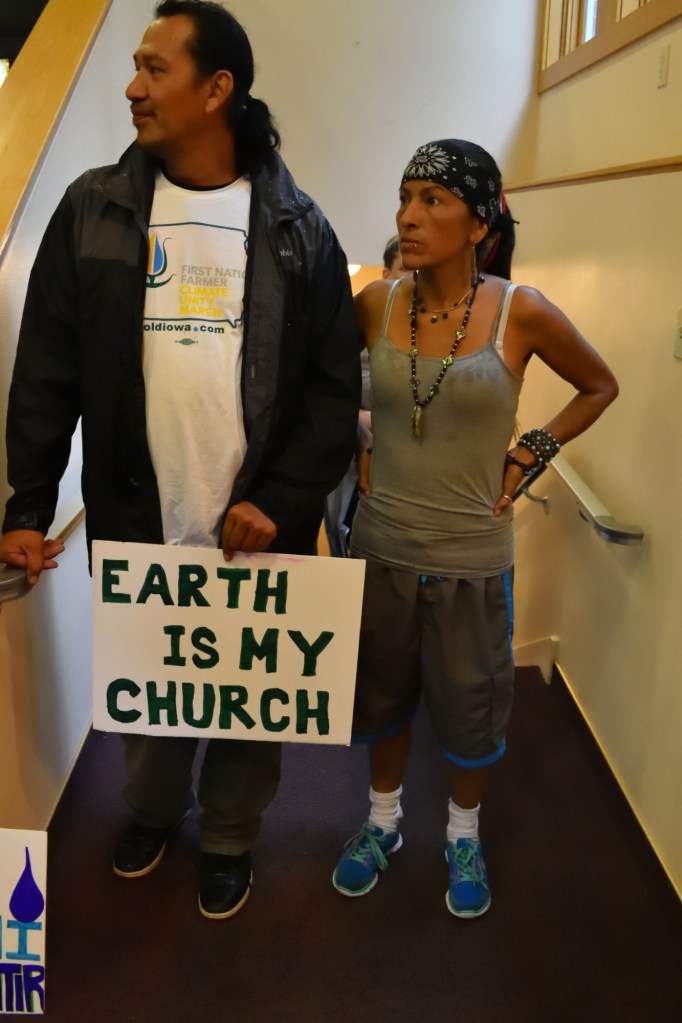
As with the other parts of this series, I relate these writings to my experiences on the First Nation-Farmer Climate Unity March. That is probably in part because Joy Harjo is a member of the Muscogee Creek Nation and often draws on Native American stories, languages and myths. The friends I made and what we did together, the hardships we went through and the joy we shared, had profound effects on me. My spiritual life has broadened and deepened. I love the sign below, “Earth is my Church”, that Alton and Foxy Onefeather carried during the March.

Alton and Foxy Onefeather

When we made it back home, back over those curved roads that wind through the city of peace” might not be meant to be taken literally, but I think of this as coming home at the end of the March, although they were very straight roads we traveled upon.

we stopped at the doorway of dusk as it opened to our homelands.” It was great to experience dusk in natural surroundings as we ate together and prepared our tents for the night.

We gave thanks for the story, for all parts of the story because it was by the light of those challenges we knew ourselves— We asked for forgiveness.” Whenever I think, or talk about the March, it is always about stories. The stories of our experiences during the March are fundamental to what the March was intended to, and did, accomplish. To help us get to know and trust each other. Following is one of my favorite quotations that beautifully expresses this.

ALL THAT WE ARE IS STORY.

From the moment we are born to the time we continue on our spirit journey, we are involved in the creation of the story of our time here. It is what we arrive with. It is all we leave behind. We are not the things we accumulate. We are not the things we deem important. We are story. All of us. What comes to matter then is the creation of the best possible story we can while we’re here; you, me, us, together. When we can do that and we take the time to share those stories with each other, we get bigger inside, we see each other, we recognize our kinship — we change the world one story at a time.

Richard Wagamese (October 14, 1955-March 10, 2017)
Ojibwe from Wabeseemoong Independent Nations, Canada

We asked for forgiveness.” I don’t know whether Joy Harjo was prescient, i.e. knowing things or events before they exist or happen, or whether part of “we knew ourselves” always reveals things we need to ask forgiveness for. But one of the most consequential events of the March for me was asking a friend for forgiveness for my ancestors’ involvement with the Indian boarding schools. Even though I’m sure most of them had the best of intentions. This is especially problematic for me because of what I have learned from my experiences with my friends, people of color, at the Kheprw Institute in Indianapolis. That it is fundamental to learn from oppressed communities, what they know their needs are. Not to try to come up with what I think are solutions.

We laid down our burdens next to each other.” After I sought forgiveness about the Indian boarding schools from my friend, he later told his family’s story related to forced assimilation. Months later there was another opportunity to thank him for sharing his story, and he said “thank you for listening.” I like to think of this as laying down our burdens next to each other.

Posted in #NDAPL, decolonize, First Nation-Farmer Climate Unity March, Indigenous, Native Americans, Uncategorized | Leave a comment

Conflict Resolution for Holy Beings 5

This is a continuation of a series of steps for conflict resolution outlined in Joy Harjo’s book, Conflict Resolution for Holy Beings: Poems

5. ELIMINATE NEGATIVE ATTITUDES DURING CONFLICT

  • A panther poised in the cypress tree about to jump is a panther poised in a cypress tree about to jump.
  • The panther is a poem of fire green eyes and a heart charged by four winds of four directions.
  • The panther hears everything in the dark: the unspoken tears of a few hundred human years, storms that will break what has broken his world, a bluebird swaying on a branch a few miles away.
  • He hears the death song of his approaching prey:
    I will always love you, sunrise.
    I belong to the black cat with fire green eyes.
    There, in the cypress tree near the morning star.


    Harjo, Joy. Conflict Resolution for Holy Beings: Poems. W. W. Norton & Company. Kindle Edition.

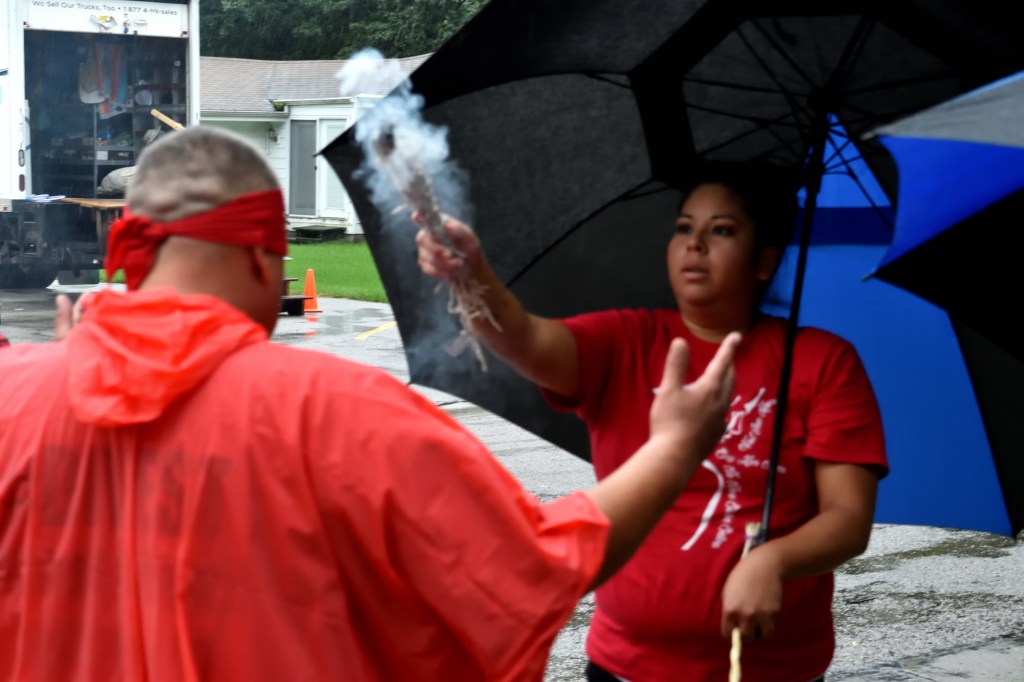
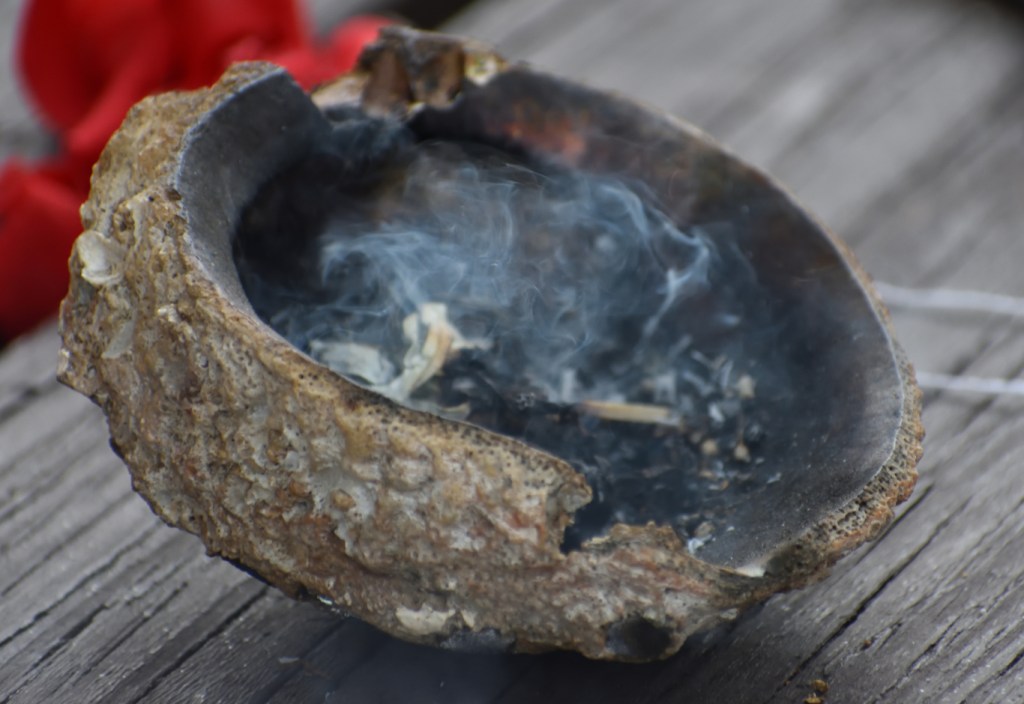
To eliminate negative attitudes makes me think of what little I know about burning sage.

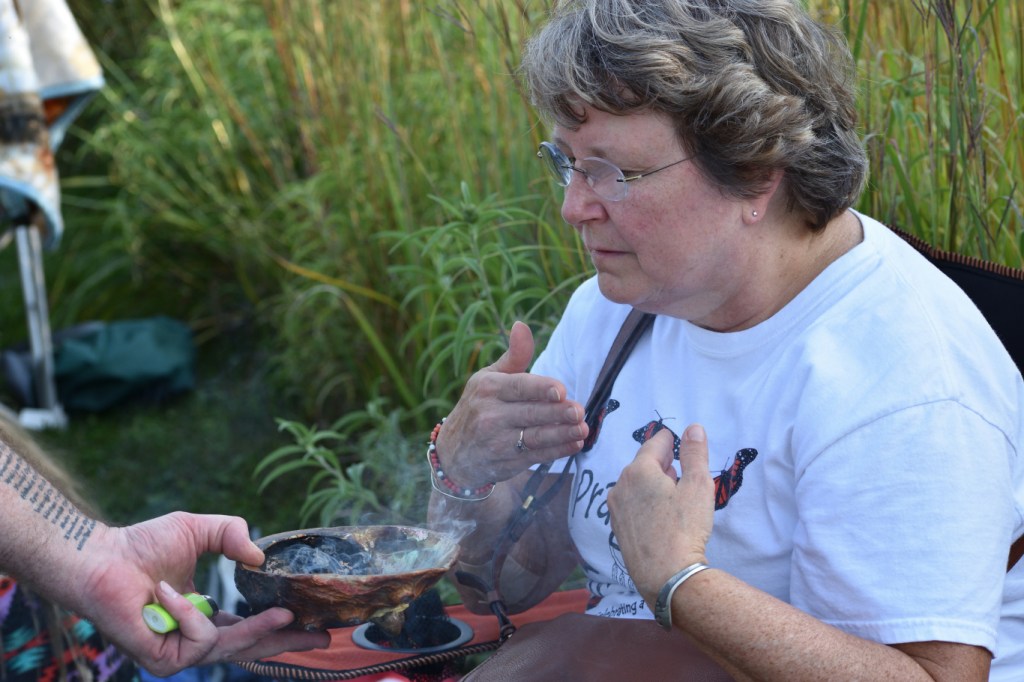
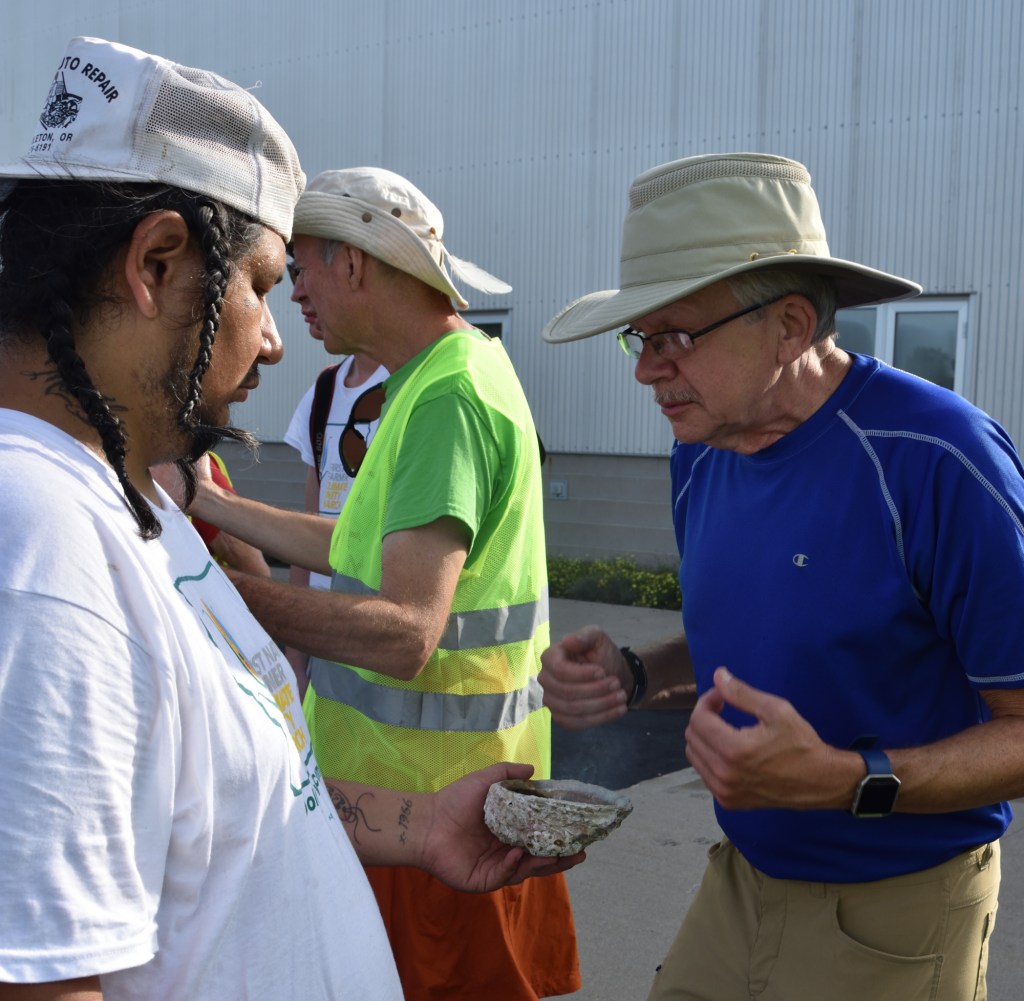
The practice of burning sage may be employed to rid a person, place, or thing of negative or harmful energies. Sage burns very hot, so most people use a ceramic container or abalone shell to contain it. In fact, most practitioners have a sacred container that is used specifically and solely for burning sage.  A bundle may last through several burnings and is commonly stored in the container. A large feather is usually used in the ceremony as well.

What is the purpose of burning sage?

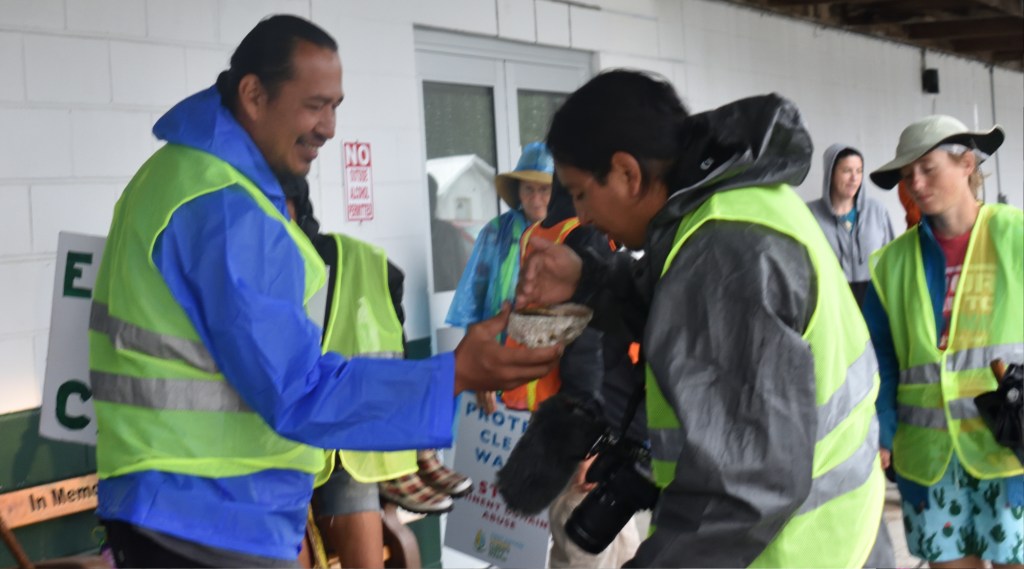
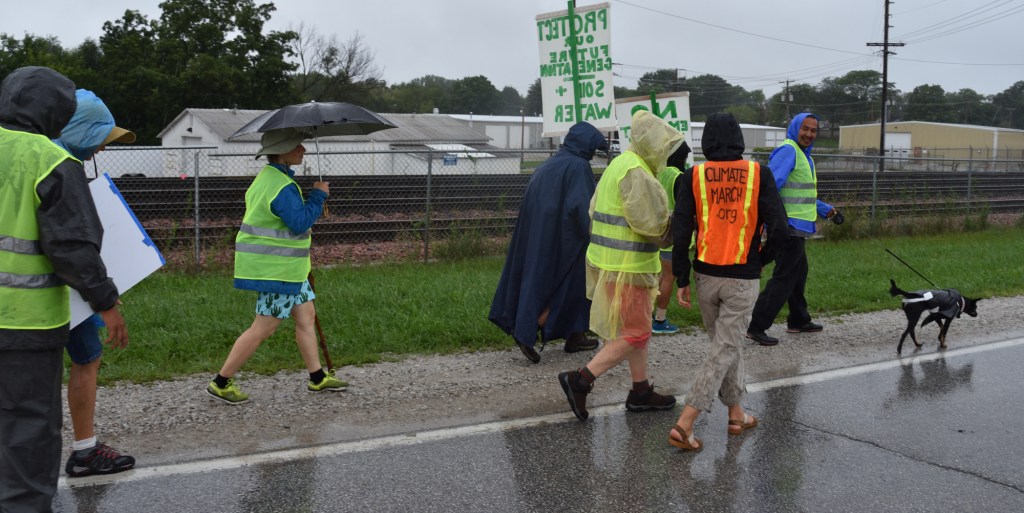
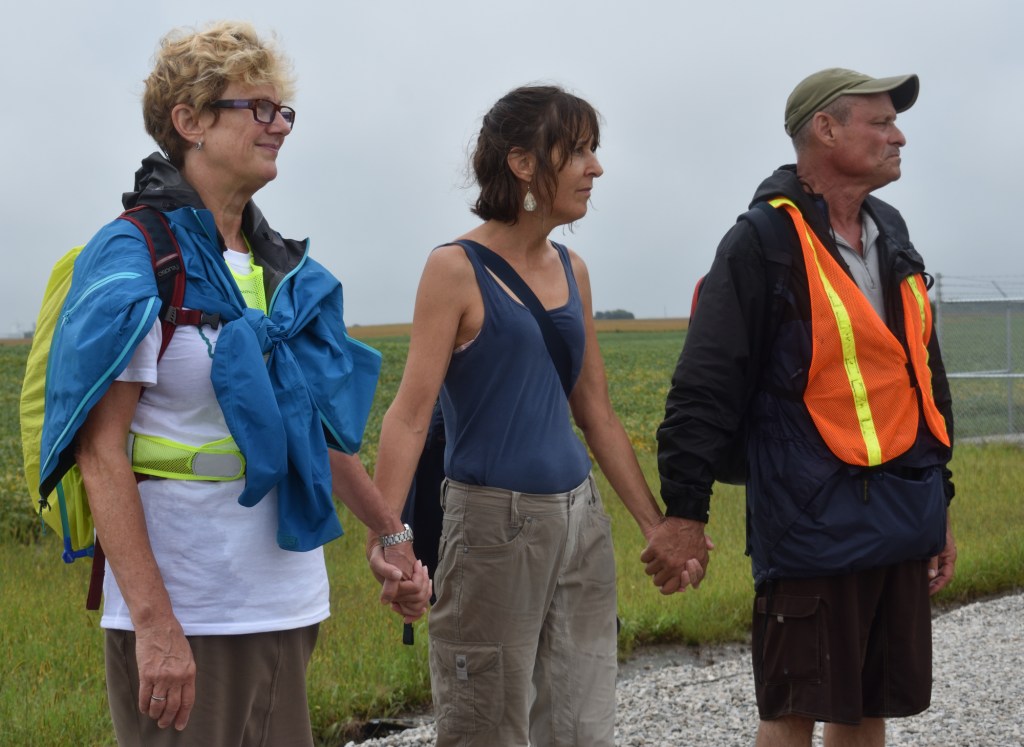
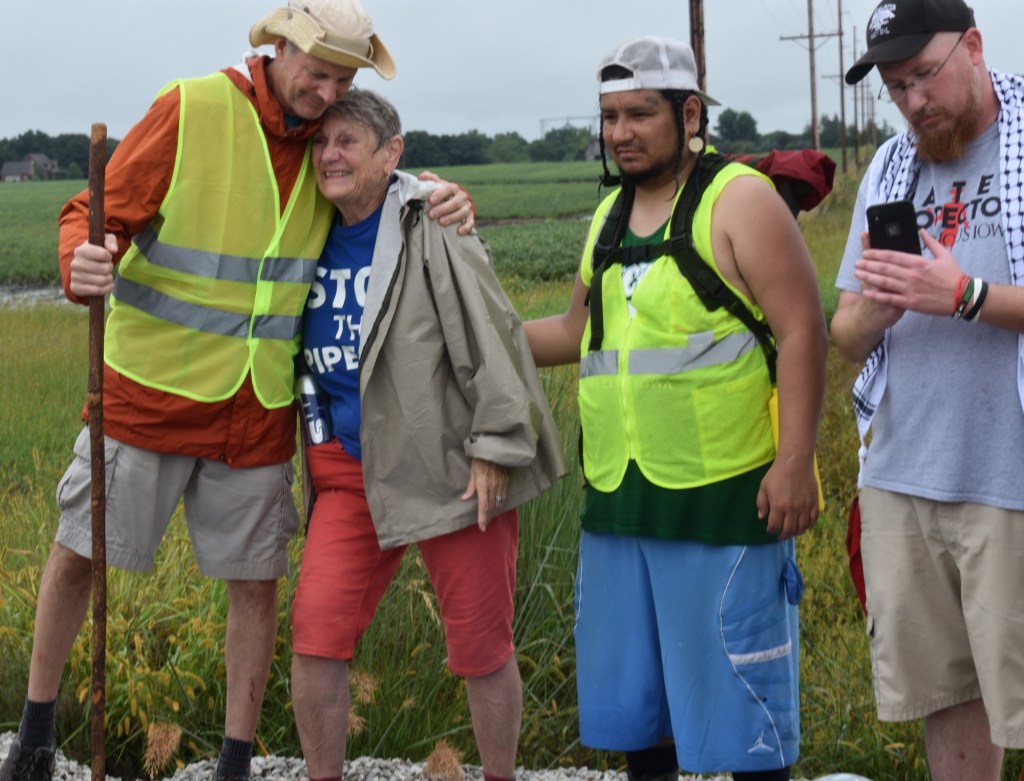
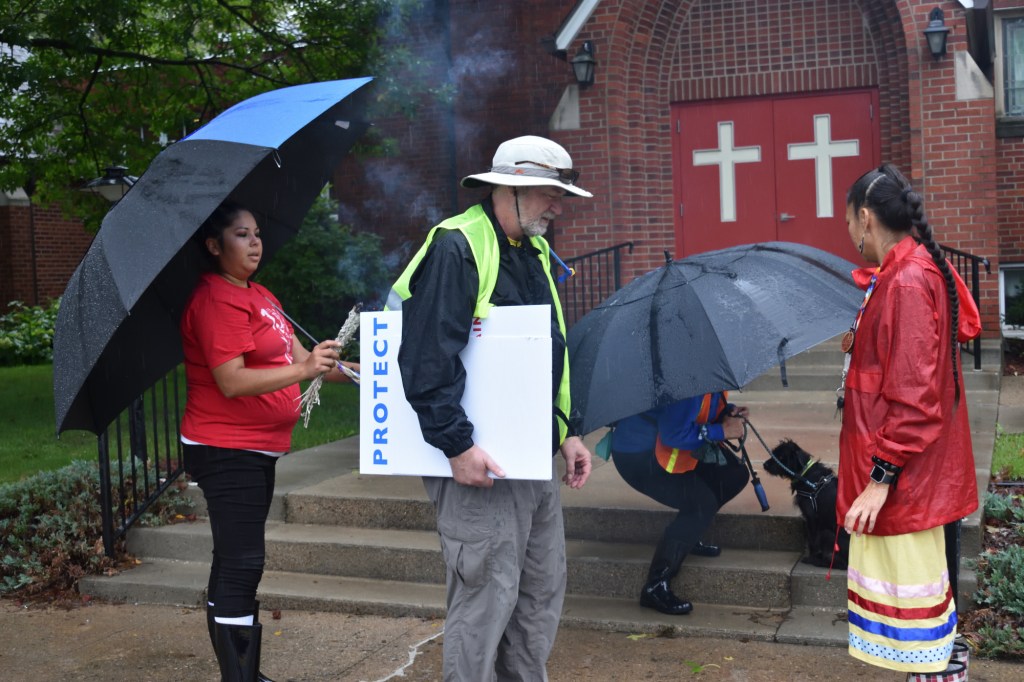
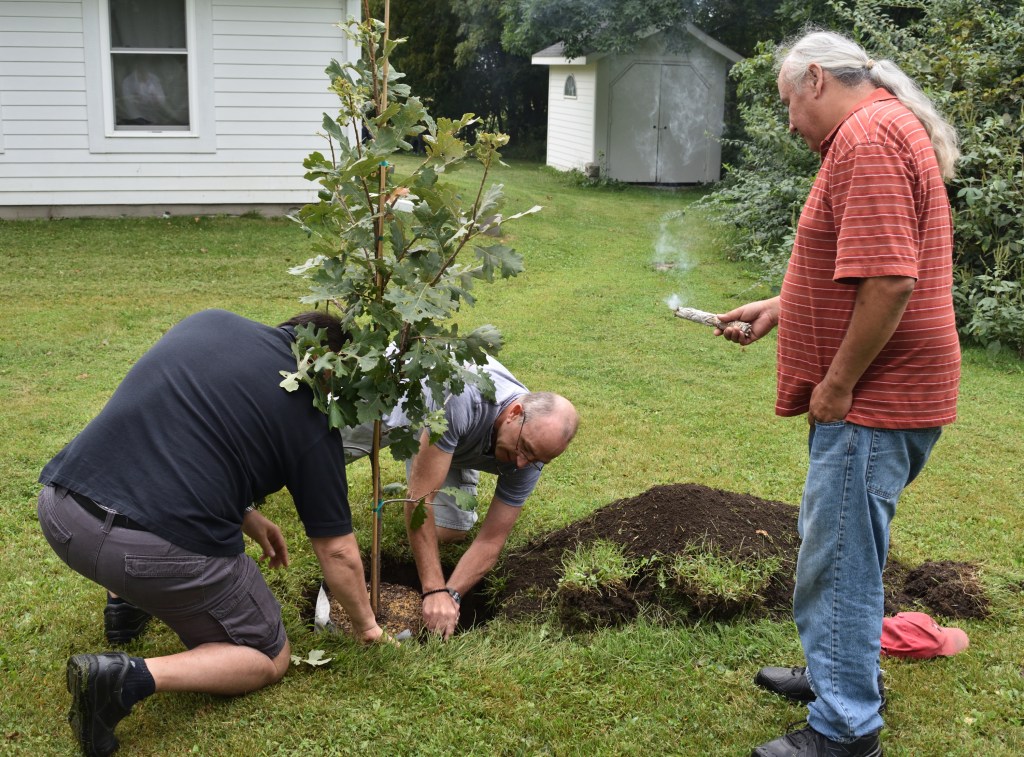
One of the things that helped bring us together during the First Nation-Farmer Climate Unity March was sharing the burning of sage with everyone on the March. These photos also show the burning of sage (smudging) during the ceremony of planting two trees at Bear Creek Friends Meeting to honor the memory of Roy and Wanda Knight. There are also a couple of photos of smudging taken at the Prairie Awakening/Prairie Awoke celebration at the Kuehn Conservation Area near Bear Creek Friends Meeting. The Meeting has been involved with Prairie Awakening for many years.

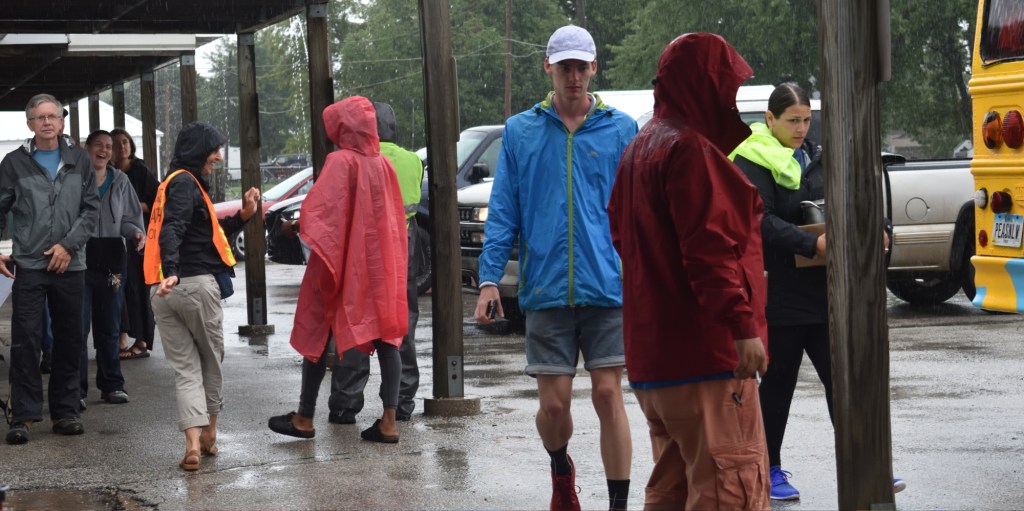
The morning of the third day of the March I awoke to find my feet sore. I was also tired, as I had slept on the floor of the church that allowed us to spend the night there, since the site we had planned to use was under water from the large amounts of rainfall in previous days. I didn’t have a watch or cell phone with me, so I wasn’t sure what time it was when I awoke. It continued to rain as we gathered to begin that day’s march.

I had some negative energies. But I felt better after Trisha CaxSep GuWign Etringer smudged me before we began walking.

Posted in First Nation-Farmer Climate Unity March, Indigenous, Native Americans, Uncategorized | Tagged , | Leave a comment

Conflict Resolution for Holy Beings 3 and 4

The past couple of blog posts have been about the first two parts of conflict resolution outlined in Joy Harjo’s book, Conflict Resolution for Holy Beings: Poems.  The third part is “give constructive feedback”. I’m having trouble understanding this section. One reason is feedback is a response to a statement or event, and I don’t see what the feedback is in response to. Maybe the point is the feedback below is not constructive. Please leave any comments that would help me understand.

3. GIVE CONSTRUCTIVE FEEDBACK:

  • We speak together with this trade language of English. This trade language enables us to speak across many language boundaries. These languages have given us the poets:
  • Ortiz, Silko, Momaday, Alexie, Diaz, Bird, Woody, Kane, Bitsui, Long Soldier, White, Erdrich, Tapahonso, Howe, Louis, Brings Plenty, okpik, Hill, Wood, Maracle, Cisneros, Trask, Hogan, Dunn, Welch, Gould
  • The 1957 Chevy is unbeatable in style. My broken-down one-eyed Ford will have to do. It holds everyone: Grandma and grandpa, aunties and uncles, the children and the babies, and all my boyfriends. That’s what she said, anyway, as she drove off for the Forty-Nine with all of us in that shimmying wreck.
  • This would be no place to be without blues, jazz—Thank you/mvto to the Africans, the Europeans sitting in, especially Adolphe Sax with his saxophones … Don’t forget that at the center is the Mvskoke ceremonial circles. We know how to swing. We keep the heartbeat of the earth in our stomp dance feet.
  • You might try dancing theory with a bustle, or a jingle dress, or with turtles strapped around your legs. You might try wearing colonization like a heavy gold chain around a pimp’s neck.

Harjo, Joy. Conflict Resolution for Holy Beings: Poems. W. W. Norton & Company. Kindle Edition.


The fourth part, “reduce defensiveness and break the defensiveness chain”, does make sense to me. Has some beautiful ideas and expressions.

4. REDUCE DEFENSIVENESS AND BREAK THE DEFENSIVENESS CHAIN

  • I could hear the light beings as they entered every cell. Every cell is a house of the god of light, they said. I could hear the spirits who love us stomp dancing. They were dancing as if they were here, and then another level of here, and then another, until the whole earth and sky was dancing.
  • We are here dancing, they said. There was no there.
  • There was no “I” or “you.”
  • There was us; there was “we.”
  • There we were as if we were the music.
  • You cannot legislate music to lockstep nor can you legislate the spirit of the music to stop at political boundaries—
  • —Or poetry, or art, or anything that is of value or matters in this world, and the next worlds.
  • This is about getting to know each other.
  • We will wind up back at the blues standing on the edge of the flatted fifth about to jump into a fierce understanding together.

Harjo, Joy. Conflict Resolution for Holy Beings: Poems. W. W. Norton & Company. Kindle Edition.

“Every cell is a house of the god of light” is a new way to think about the Inner Light. “I could hear the spirits who love us stomp dancing.” The spirits who love us. “Until the whole earth and sky was dancing”.

One of the first lessons I learned about justice work is that it is not about you. You have to learn to step out of yourself to get a better view of what is going on. There is no “I” or “you”. There was us; there was “we”. That is how to break the defensiveness chain.

I was talking with my friend Matthew Lone Bear several months after the First Nation-Farmer Climate Unity March and the subject turned to walking some distance. He said, “man, we can walk anywhere”. We.

“There we were as if we were the music”.

“You cannot legislate the spirit of the music”.

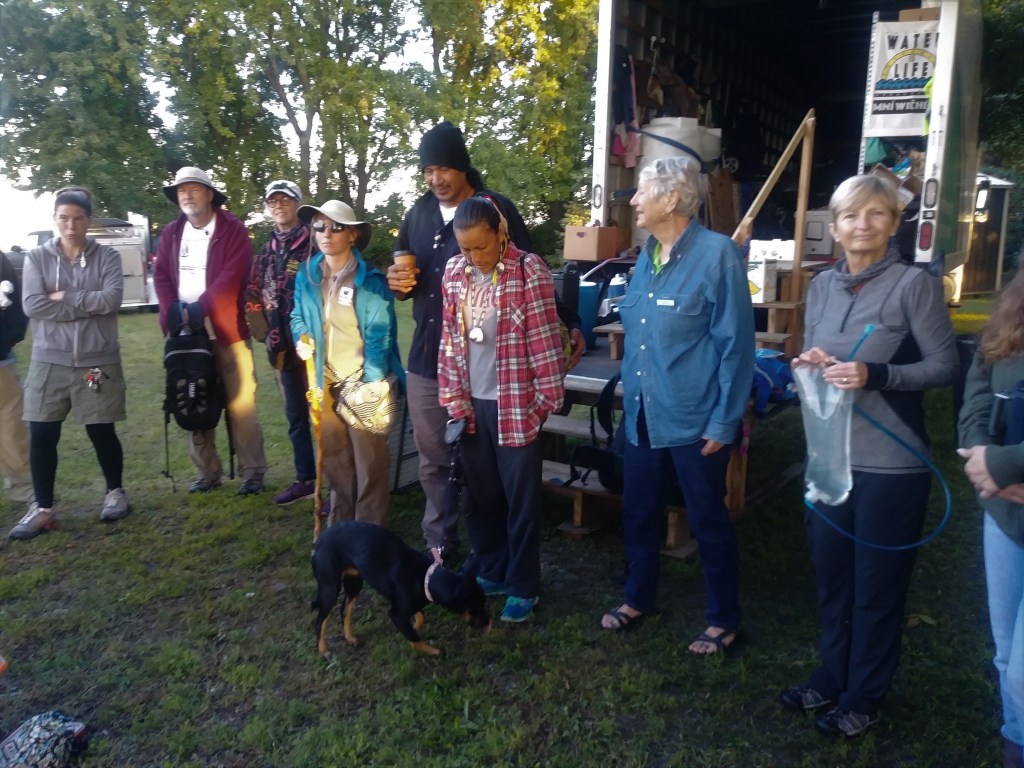
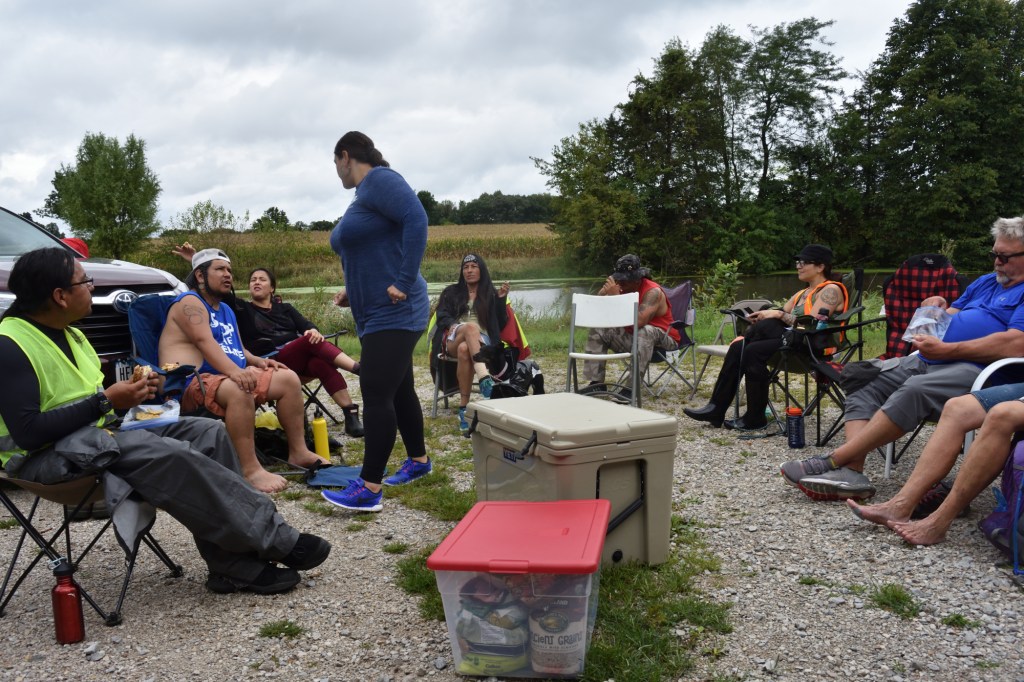
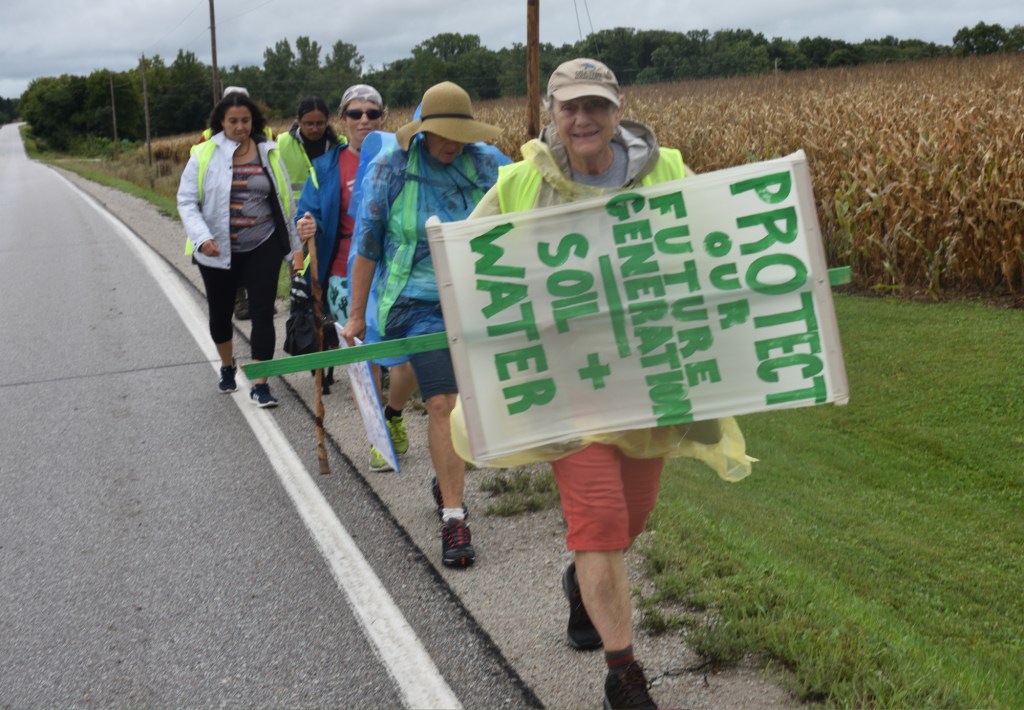
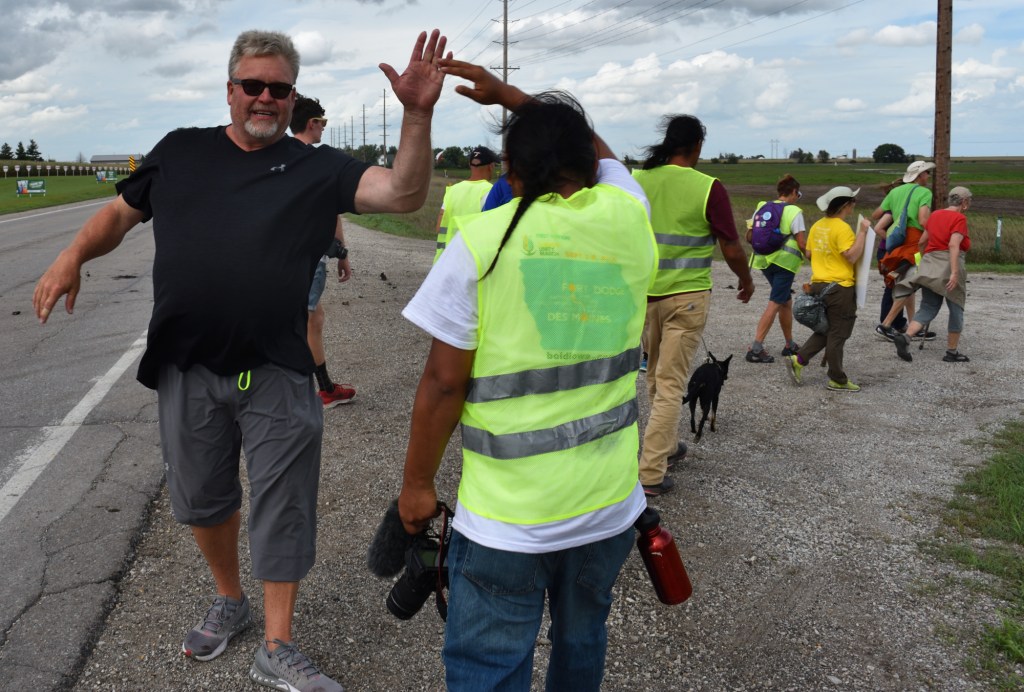
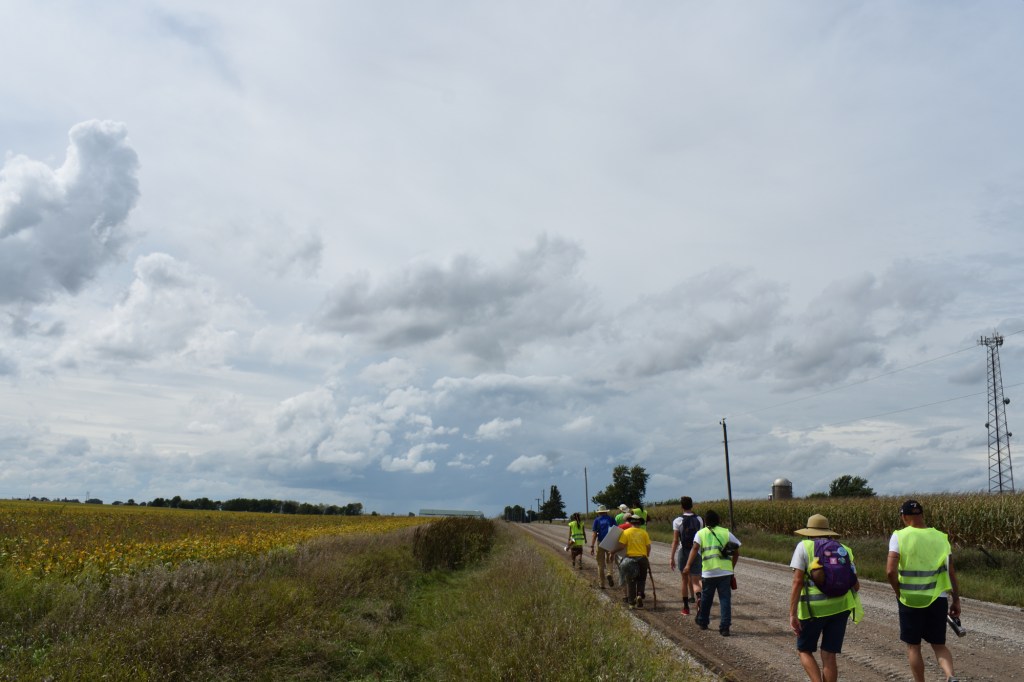
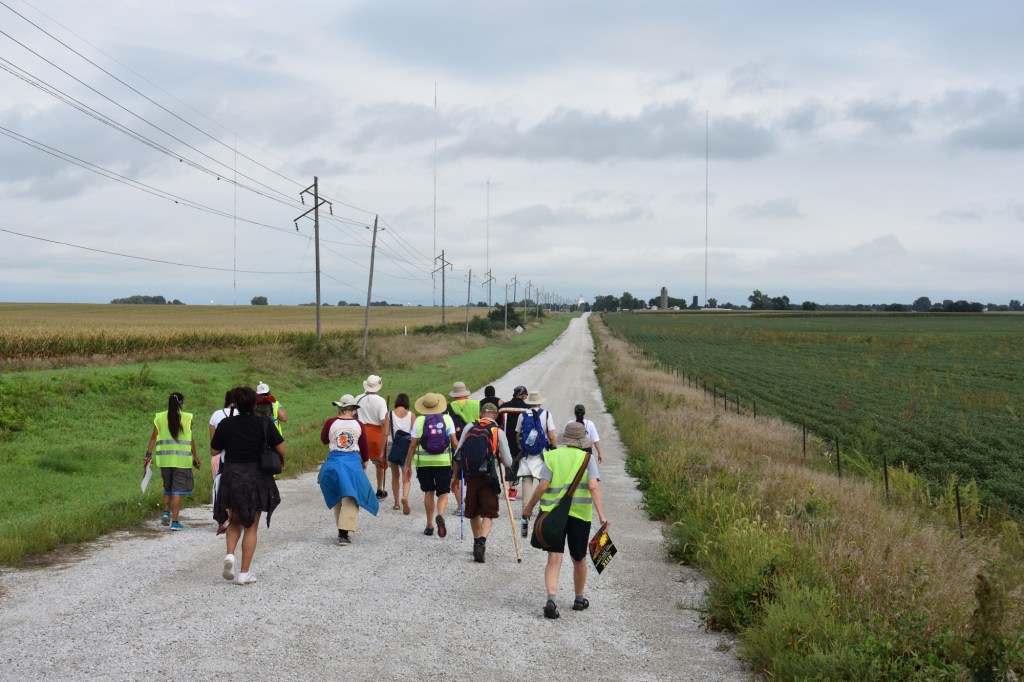
“This is about getting to know each other”. Getting to know each other was the point of walking 94 miles over 8 days along empty country roads. That gift of time, place and space allowed us to share our stories, story after story, getting deeper and deeper.

“Jump into a fierce understanding together”.

What a beautiful concept. And the defensiveness chain is broken.

Posted in #NDAPL, climate change, decolonize, First Nation-Farmer Climate Unity March, Indigenous, Native Americans, Uncategorized | Leave a comment

Going Beyond Local Boundaries

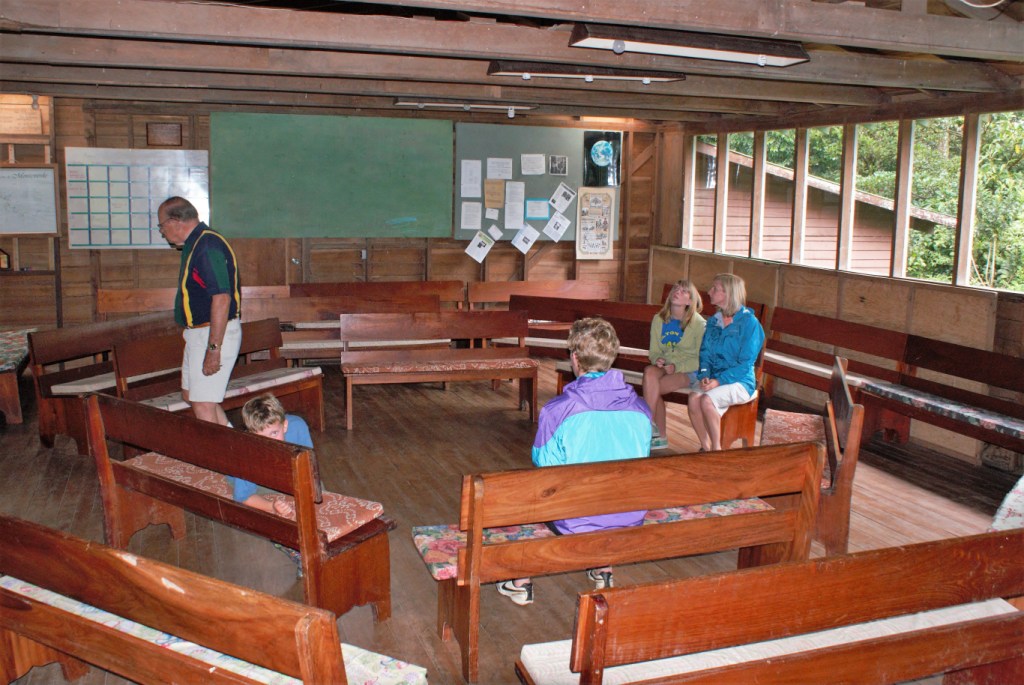
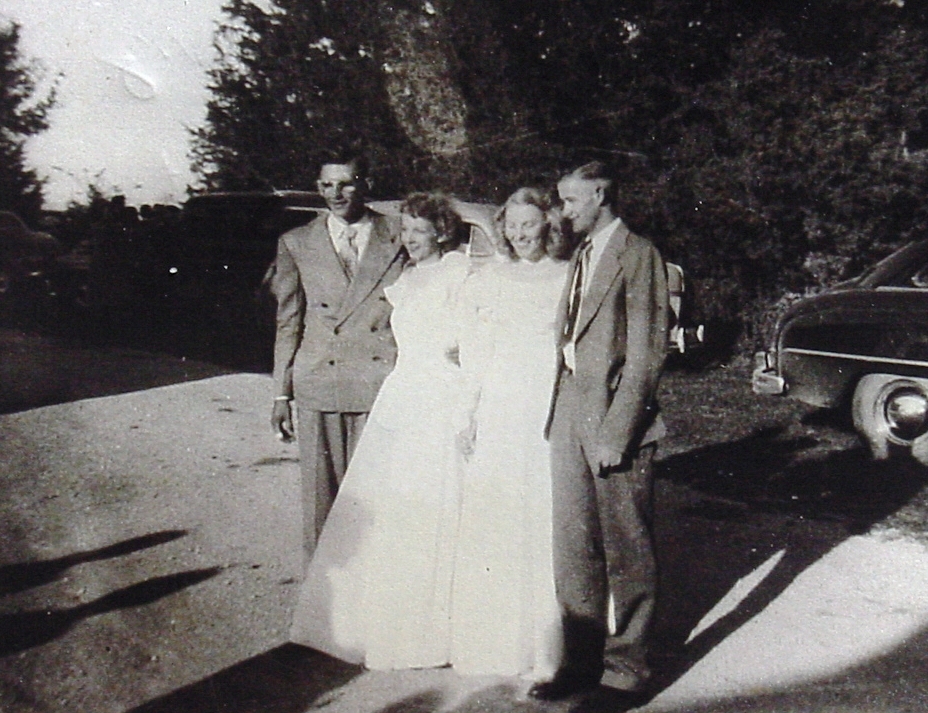
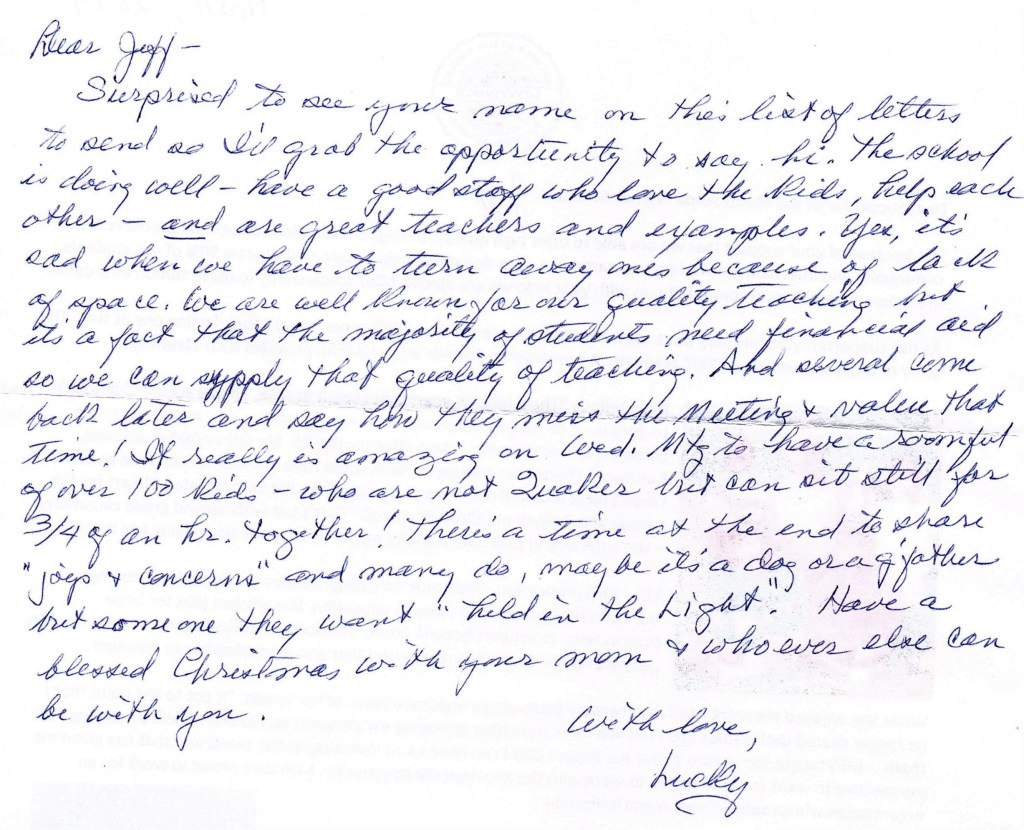
My family, and many others in Iowa Yearly Meeting (Conservative) have close ties with Monteverde Friends.  Lucky (Standing) Guindon, my mother’s cousin and constant companion during their childhood, was one of the original group of Quakers who moved to Monteverde, Costa Rica, and live there today.  Prior to going there, on October 14, 1950, she and Wolf Guindon had a double wedding with my mother and father at Bear Creek Meeting.

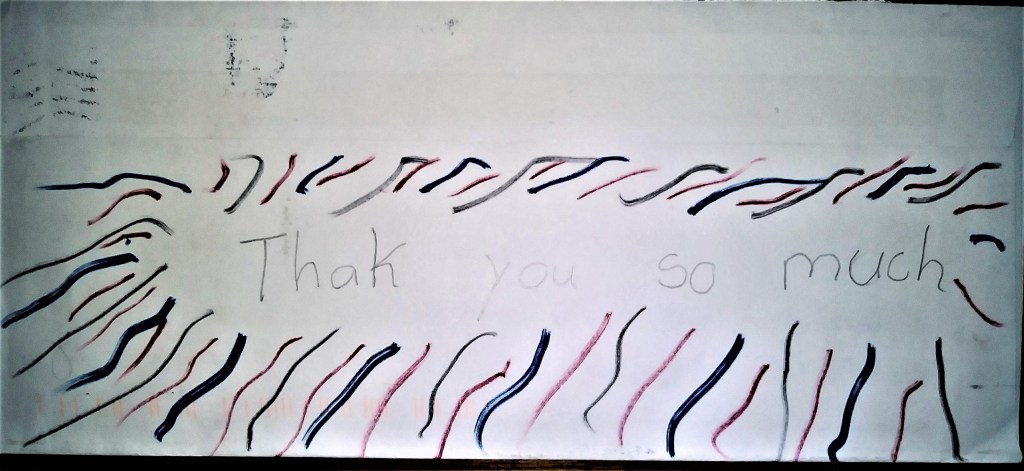
Last year students at Monteverde Friends School began to draw pictures on the envelops that contained the financial appeal letters. https://kislingjeff.wordpress.com/2018/11/29/giving-friends-schools/

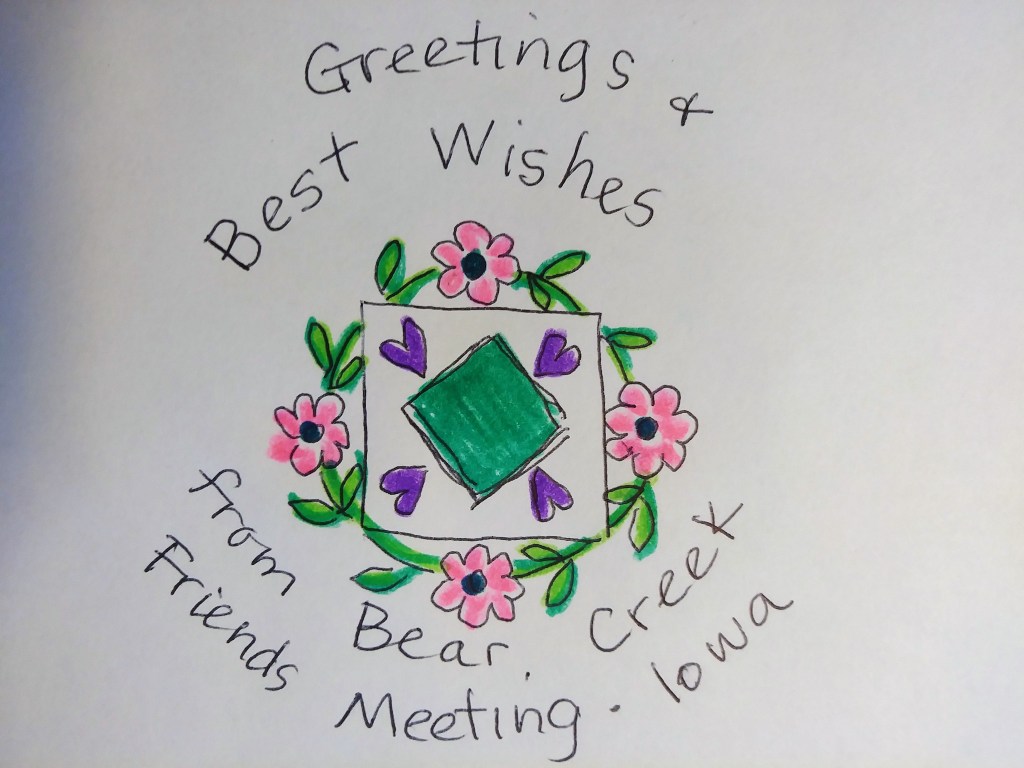
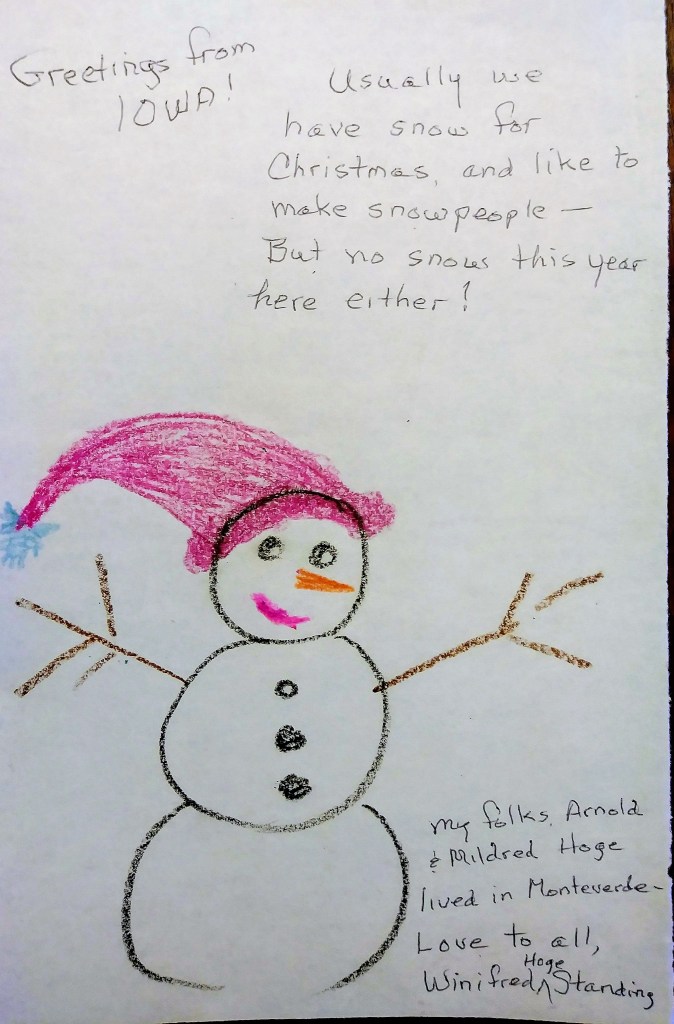
Bear Creek Friends Meeting returned the favor, and sent drawings from the meeting to the Monteverde students.

This year, besides the financial appeal letter and drawing on the envelopes again, students, staff and Monteverde community members wrote a letter on the back of each letter. I was really glad to receive this letter from Lucky Guindon, who was in the double wedding with my parents at Bear Creek Meeting in 1950.

Then yesterday I received the most recent Monteverde Friends School newsletter. Part of the newsletter included a paragraph about the exchanges with Bear Creek Meeting, as well as a link to my blog post: https://kislingjeff.wordpress.com/2019/11/26/bear-creek-friends-and-monteverde-friends-school-2/

Donations to Monteverde Friends School can be sent to Eliza Beardslee, MFUS, P.O. Box 1308, Greenfield, MA 01302

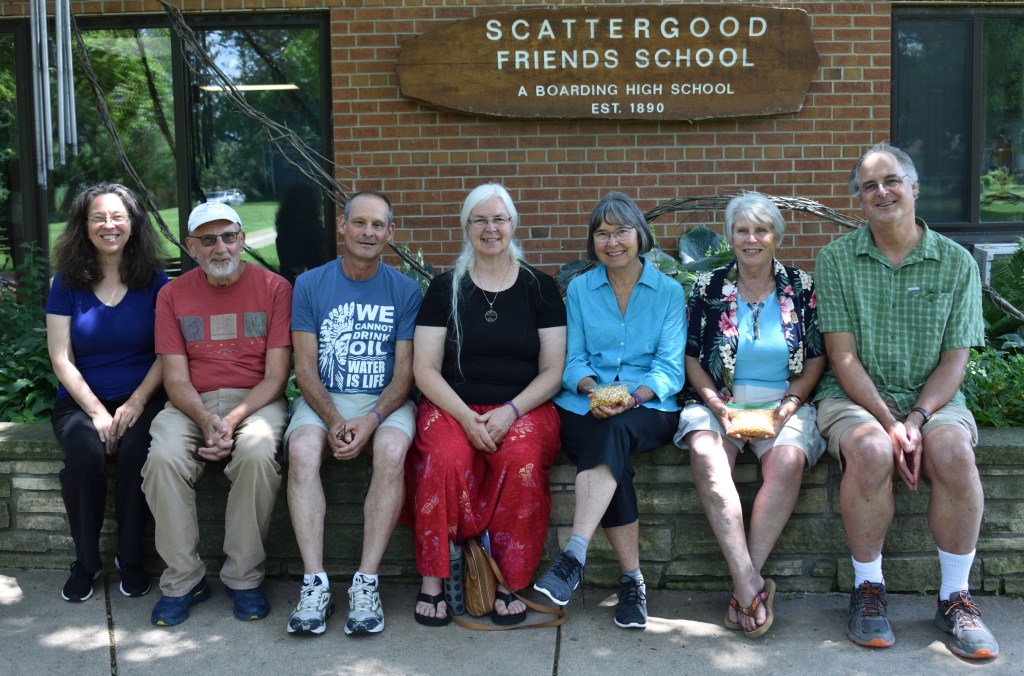
My grandparents, mother, brothers and sister, and I remained in the United States, and attended Scattergood Friends School and Farm, near West Branch Iowa. Donations to Scattergood can be made at: https://scattergood.org/donate-online/

Posted in Quaker, Quaker Meetings, Uncategorized | Tagged , | Leave a comment

Conflict Resolution for Holy Beings 2

Yesterday I wrote about the first step of what Joy Harjo outlines for conflict resolution in her book Conflict Resolution for Holy Beings: Poems. I wrote about that because she says the first step is to create conflict resolution ground rules. Those rules are about land acknowledgement, something I’ve been studying lately. She writes “make sure the spirits of these lands are respected and treated with goodwill. The land is a being who remembers everything.”

Following is what she wrote about the second step for conflict resolution for holy beings.

2. USE EFFECTIVE COMMUNICATION SKILLS THAT DISPLAY AND ENHANCE MUTUAL TRUST AND RESPECT:

  • If you sign this paper we will become brothers. We will no longer fight. We will give you this land and these waters “as long as the grass shall grow and the rivers run.”
  • The lands and waters they gave us did not belong to them to give. Under false pretenses we signed. After drugging by drink, we signed. With a mass of gunpower pointed at us, we signed. With a flotilla of war ships at our shores, we signed. We are still signing.We have found no peace in this act of signing.
  • A casino was raised up over the gravesite of our ancestors. Our own distant cousins pulled up the bones of grandparents, parents, and grandchildren from their last sleeping place. They had forgotten how to be human beings. Restless winds emerged from the earth when the graves were open and the winds went looking for justice.
  • If you raise this white flag of peace, we will honor it.
  • At Sand Creek several hundred women, children, and men were slaughtered in an unspeakable massacre, after a white flag was raised. The American soldiers trampled the white flag in the blood of the peacemakers.
  • There is a suicide epidemic among native children. It is triple the rate of the rest of America. “It feels like wartime,” said a child welfare worker in South Dakota.
  • If you send your children to our schools we will train them to get along in this changing world. We will educate them.
  • We had no choice. They took our children. Some ran away and froze to death. If they were found they were dragged back to the school and punished. They cut their hair, took away their language, until they became as strangers to themselves even as they became strangers to us.
  • If you sign this paper we will become brothers. We will no longer fight. We will give you this land and these waters in exchange “as long as the grass shall grow and the rivers run.”
  • Put your hand on this bible, this blade, this pen, this oil derrick, this gun and you will gain trust and respect with us. Now we can speak together as one.
  • We say, put down your papers, your tools of coercion, your false promises, your posture of superiority and sit with us before the fire. We will share food, songs, and stories. We will gather beneath starlight and dance, and rise together at sunrise.
  • White House, or Chogo Hvtke, means the house of the peacekeeper, the keepers of justice. We have crossed this river to speak to the white leader for peace many times since these settlers first arrived in our territory and made this their place of governance.
  • These streets are our old trails, curved to fit around trees.

Harjo, Joy. Conflict Resolution for Holy Beings: Poems. W. W. Norton & Company. Kindle Edition.

That list, of course, is a devastating litany of the history of broken promises to native people by the white settler colonists. (Settler colonialism is a form of colonialism which seeks to replace the original population of the colonized territory with a new society of settlers.)

Mutual trust can only be built by complete honesty. This includes not only acts of commission, but also acts of omission. For example, the primary purpose of the First Nation-Farmer Climate Unity March was to provide opportunities for white and native people to get to know each other to build mutual trust. As I was preparing for the March, I wondered if there might be an opportunity to talk about the history of Quakers’ involvement with the Indian Boarding Schools. (Other religious groups were also involved with Indian Boarding Schools.) The more I learned about forced assimilation, the more I realized how terrible that situation was. I also learned about multigenerational trauma. I wondered if, and how, I could/should raise the topic of forced assimilation.

Walking and camping together over eight days afforded opportunities to share our stories with each other. As we got to know each other, we shared more intimate stories. Early in our time together, I began to feel very uncomfortable with not bringing up the subject of the Indian Boarding Schools. Not doing so felt like an act of omission. Felt dishonest.

I was apprehensive about what might happen when I brought up the subject.

A spiritual leading made me feel the time was right to talk about this. So I said to a new friend, “I know about Quakers’ involvement with the Indian Boarding Schools. And I’m sorry that happened.” He just nodded his head, and we kept walking. Later that day, though, he told me his family’s experience related to white men coming to forcibly take Indian children away. This experience involved his mother, even though the actual incident took place several generations earlier.

That felt like we reached a new, deeper level of trust and I really appreciated his sensitivity and willingness to engage with me. Looking back on it, I don’t believe we would have gotten to know and begin to trust each other nearly as much if I hadn’t brought up the subject.

I realized every native person knew about the Indian boarding schools. What would they think if we non-natives never brought that up?

Posted in #NDAPL, climate change, decolonize, First Nation-Farmer Climate Unity March, Indigenous, Native Americans, Toward Right Relationship with Native Peoples, Uncategorized | Leave a comment

Conflict Resolution for Holy Beings 1

I am the holy being of my mother’s prayer and my father’s song.

—NORMAN PATRICK BROWN, DINEH POET AND SPEAKER

Poet, writer and musician Joy Harjo has been named the country’s 23rd poet laureate. She is a member of the Muscogee Creek Nation and often draws on Native American stories, languages and myths. But she says that she’s not self-consciously trying to bring that material into her work. If anything, it’s the other way around.

“I think the culture is bringing me into it with poetry — that it’s part of me,” Harjo says in an interview with NPR’s Lynn Neary. “I don’t think about it … And so it doesn’t necessarily become a self-conscious thing — it’s just there … When you grow up as a person in your culture, you have your culture and you’re in it, but you’re also in this American culture, and that’s another layer.”

Joy Harjo Becomes The First Native American U.S. Poet Laureate
June 19, 2019. Heard on All Things Considered, Lynn Neary and Patrick Jarenwattananon at NPR headquarters in Washington, D.C., May 21, 2019

In her book Conflict Resolution for Holy Beings: Poems, Joy Harjo presents steps for conflict resolution. Following is the first step, setting conflict resolution ground rules.


1 . SET CONFLICT RESOLUTION GROUND RULES:

  • Recognize whose lands these are on which we stand.
  • Ask the deer, turtle, and the crane.
  • Make sure the spirits of these lands are respected and treated with goodwill.
  • The land is a being who remembers everything.
  • You will have to answer to your children, and their children, and theirs—
  • The red shimmer of remembering will compel you up the night to walk the perimeter of truth for understanding.
  • As I brushed my hair over the hotel sink to get ready I heard:
  • By listening we will understand who we are in this holy realm of words.
  • Do not parade, pleased with yourself.
  • You must speak in the language of justice.

Harjo, Joy. Conflict Resolution for Holy Beings: Poems. W. W. Norton & Company. Kindle Edition.


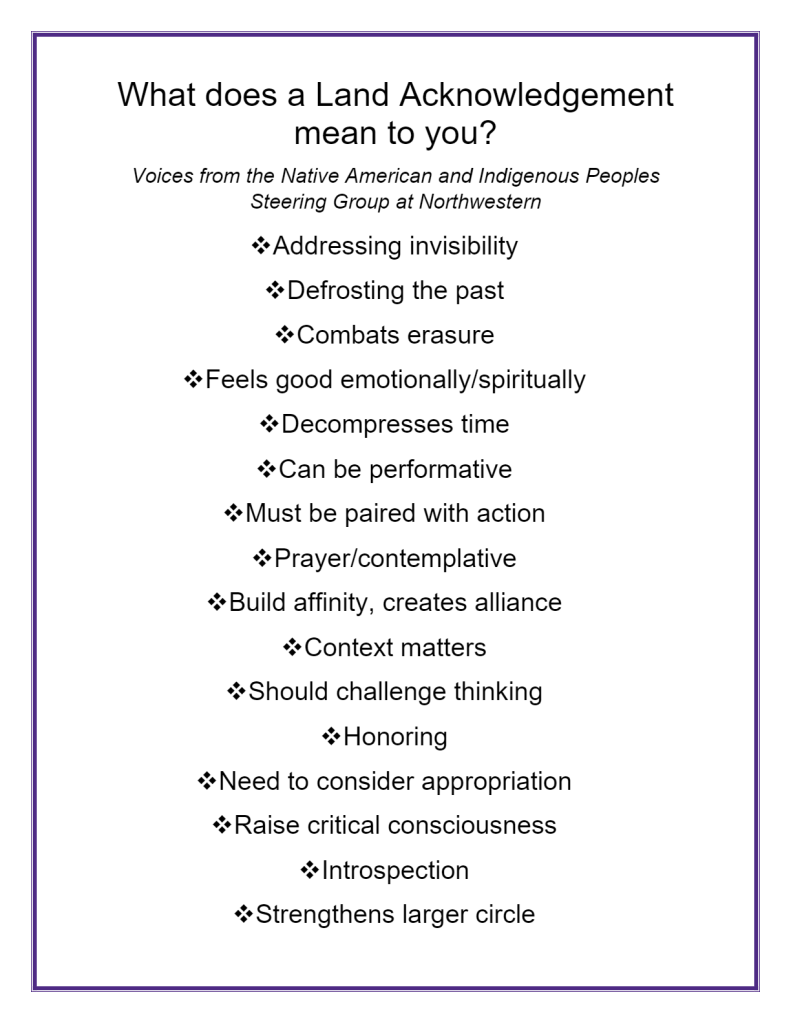
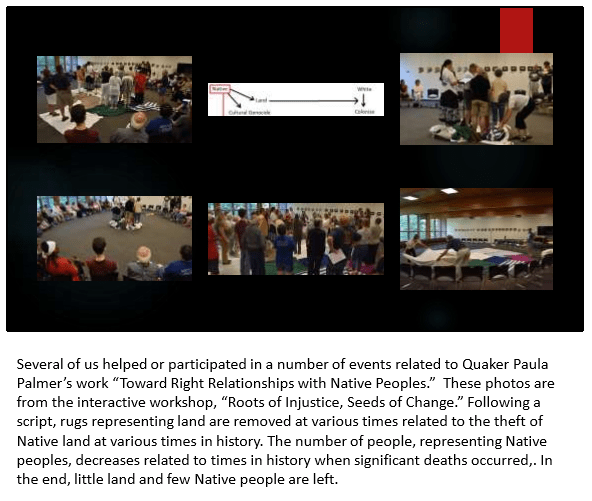
I was not familiar with land acknowledgement until this summer when I was blessed to work with Paula Palmer and others to present “Toward Right Relationships with Native Peoples” workshops. She taught us we needed to have a land acknowledgement statement which would be read at the beginning of each workshop. As you can see conflict resolution ground rules above are about land acknowledgement.

https://www.northwestern.edu/native-american-and-indigenous-peoples/about/what-does-a-land-acknowledgement-mean-to-you.pdf

Following is from an Action Guide from Amnesty International.

This is a guide on how to acknowledge Indigenous territories at public events and meetings. Acknowledging the land is the process of deliberately naming that this is Indigenous land and Indigenous people have rights to this land. It provides an opportunity for us to reflect on our relationship with the land and the continuous process of colonization that deeply impacts activist work. As Amnesty International calls upon the Canadian government to uphold its obligations under the UN Declaration on the of Rights of Indigenous Peoples, we must recognize that those rights were stripped and denied using centuries of laws and policies based on legal doctrines such as “terra nullius”, which declared this land empty despite the presence of Indigenous peoples. Acknowledging the land becomes a small act of resistance against this continued erasure of Indigenous people and their rights.

https://www.amnesty.ca/blog/activism-skills-land-and-territory-acknowledgement

Also from that Guide is the process for land acknowledgements. The Guide includes details about each step.

  • Name which Indigenous territories you are currently on
  • Explain why you are acknowledging the land. 
  • Address the relevance of Indigenous rights to the subject matter of your event or meeting or to your activist work in general. 
  • Put the answers for the above questions together as a statement.

NOTE: You and your group may know an elder or Indigenous person from the territory that your event is taking place on who would be happy to be invited to your event to conduct a Territory Welcome. Unless it is explicitly said not to, it’s important to pay folks for their time and work, and traditional protocol of that Nation might mean offering them a gift i.e. tobacco or sage.

Written by Ayendri Ishani Perera, Regional Activism Coordinator for Western Canada and the Territories
https://www.amnesty.ca/blog/activism-skills-land-and-territory-acknowledgement

The following is from the Peace and Social Concerns Committee Report of Iowa Yearly Meeting (Conservative) that was approved this past summer.

To this day we have not come to grips with fundamental injustices our country was built on, the cultural genocide and theft of land from Native Americans, the enslavement of African Americans and the legal justifications of bestowing rights and privileges on white land-owning men. The consequences of these injustices continue to plague our society today. And will continue to impact us until we do what is necessary to bring these injustices to light and find ways to heal these wounds.

Several Friends recently assisted Boulder Meeting Friend, Paula Palmer, to lead workshops and discussions as part of her ministry “toward right relationships with Native people.” Part of the tragedy of the theft of Native land is that some Native people don’t have the concept of land as property, belonging to a landowner. Rather they have a spiritual connection to Mother Earth, that the land is sacred and not something that can be claimed as property by anyone. Being forced to leave their land broke their spiritual bonds with the land.

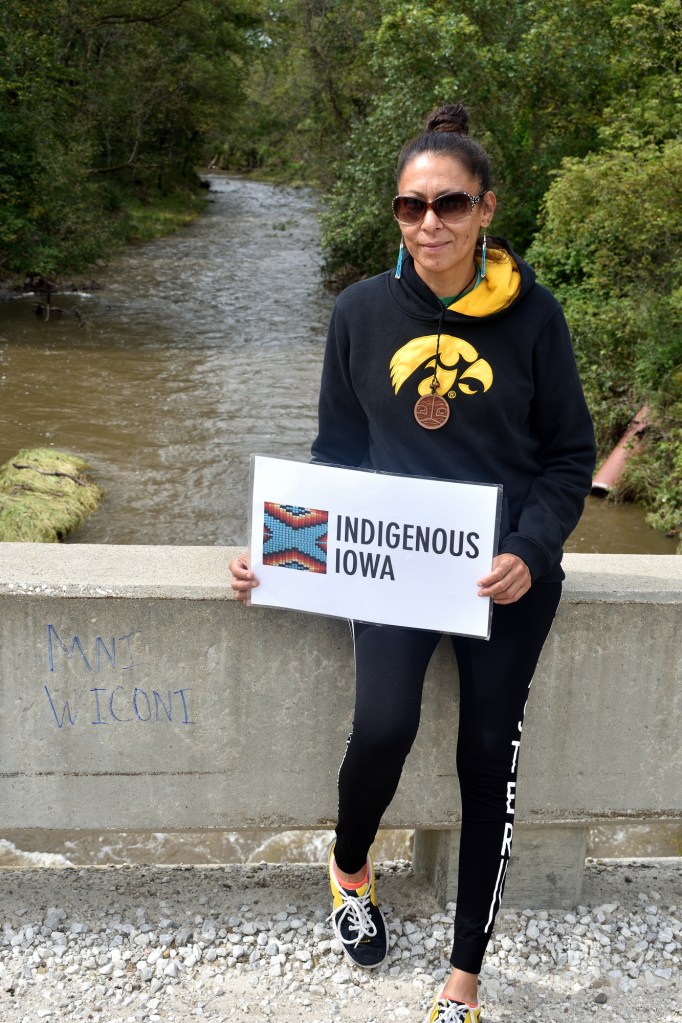
Native people have asked us to begin work toward reconciliation and healing. The first step needed is truth telling, recognizing that injury or harm has taken place. One of the important parts of holding “right relationship” workshops is to determine which Native nations were on the land before white settlers arrived. The following Land Acknowledgement for Iowa was approved by the Meskwaki Nation. We encourage Friends to read this acknowledgement statement when meetings take place on the land called Iowa.

Iowa Yearly Meeting (Conservative) 2019

Below is the Iowa Land Acknowledgement that was written for the “Toward Right Relationships with Native Peoples” workshops held in Iowa and Nebraska this past summer. David Wanatee of the Meskwaki Nation reviewed this statement for us.

Iowa Land Acknowledgement

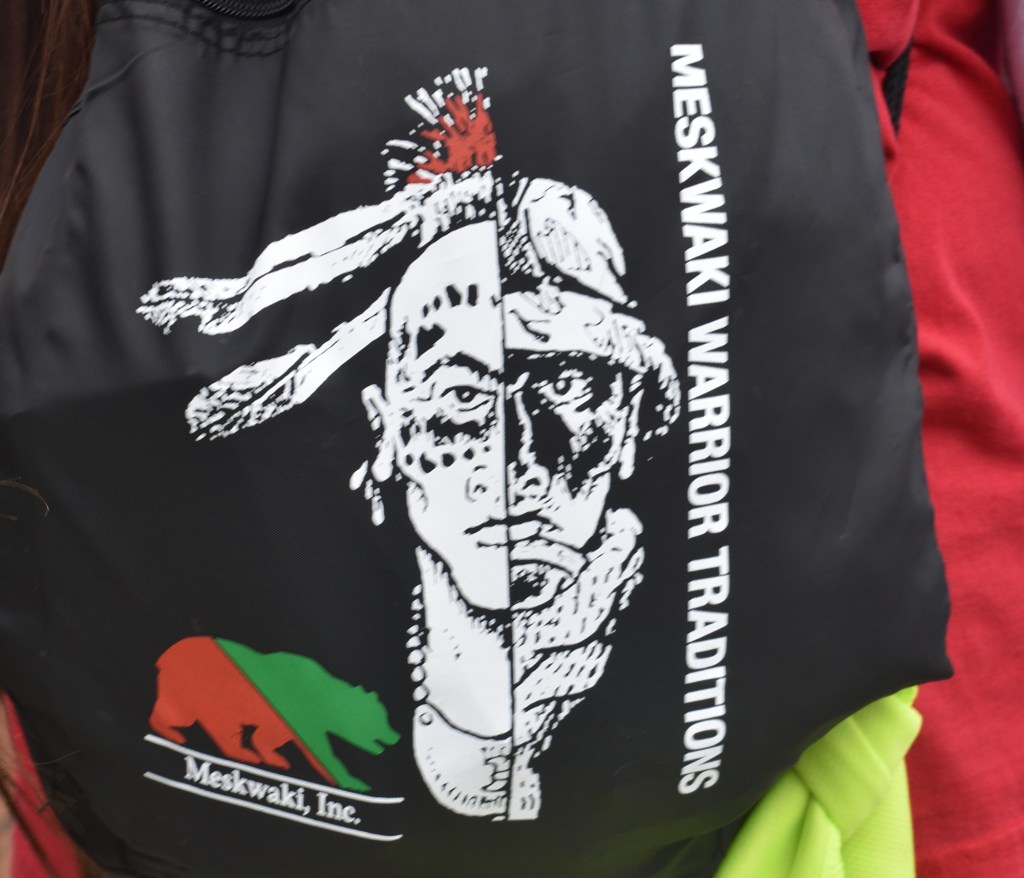
We begin by acknowledging that the Land between Two Rivers, where we sit and stand today, has been the traditional homeland for many independent nations. These include the Ioway and the Otoe, who were here since before recorded time. The Omaha and the Ponca were here, moving to new lands before white settlers arrived. The Pawnee used this land for hunting grounds. The Sioux, Sauk and Meskwaki were here long before European settlers came. Members of many different Indigenous nations have lived on these plains. Let us remember that we occupy their homeland and that this land was taken by force. Today, only the Meskwaki Nation, the Red Earth People, maintain their sovereignty on their land in the state of Iowa. They persevered and refused to be dispossessed of their home. Place names all over our state recognize famous Meskwaki chiefs of the 1800s like Poweshiek, Wapello, Appanoose, and Taiomah or Tama. We honor the Meskwaki Nation for their courage, and for maintaining their language, culture and spirituality. May our time together bring respectful new openings for right relationship to grow.

Posted in decolonize, Indigenous, Native Americans, Quaker, Toward Right Relationship with Native Peoples, Uncategorized | Leave a comment

The Grand Illusion

Besides the joy of gathering together for the Truthsgiving holiday, I looked forward to learning what my younger relatives think and feel about political issues, and especially climate change. This year I find they feel discouraged, with little hope for a good future. My niece says she is very careful about her use of plastic, for example. But she and her generation don’t have money to invest in green practices and technologies, such as solar panels. They know what needs to be done but are frustrated because they don’t have the financial resources to do those things.

I was struck by the depressed and helpless manner with which she expressed these things. It is hard to put myself in their position knowing, as they do, the deepening climate chaos coming.

My nephew has studied and thought a great deal about the future, but didn’t seem convinced by my belief that as political and social structures collapse under the pressures of increasing environmental chaos, we will have opportunities, indeed will be forced to build communities with our relatives and neighbors to support each other. I wrote about this yesterday in Imagine a Future. I’d like to see more people respond to James Allen’s assertion that “most of us lack the stories that help imagine a future where we thrive in the midst of unstoppable ecological catastrophe.

As the ecological crisis deepens, nearing the infamous Tipping Point – taking us closer to planetary catastrophe – we are being led to believe that an imminent “greening” of the world economy will deliver us from a very dark future. Somehow, against all logic, we have adopted a collective faith in the willingness of ruling governments and corporations to do the right thing. Carbon footprints will be drastically reduced thanks to a combination of market stratagems and technological magic. While greenhouse mitigation seamlessly advances, the ruling forces can return to what they do best – indulge their religion of endless accumulation and growth.

Amid fashionable pleas to “save the planet” and recent surge in “climate activism”, few countries have embraced a program of serious carbon mitigation. For government and corporate elites, it is continued business-as-usual. Writing in Climate Leviathan, British Marxists Geoff Mann and Jonathan Wainwright lament: “The possibility of rapid global carbon mitigation as climate-change abatement has passed. The world’s elites, at least, appear to have abandoned it – if they ever took it seriously.” Instead, the real plan going forward is one of adaptation to a continuously heating planet.

The Grand Illusion by Carl Boggs, Counterpunch, Nov 29, 2019

Posted in #NDAPL, climate change, Uncategorized | 1 Comment

Imagine a Future

Most of us lack the stories that help imagine a future where we thrive in the midst of unstoppable ecological catastrophe.

James Allen

Families gathering together this holiday reminds us of what is really important. The joy of being with children makes us think of their future. The indigenous way is to consider how what we do now will affect the next seven generations. Much of our current situation comes from lack of consideration for future generations. The increasingly visible signs of climate chaos finally force widespread attention to our perilous situation. Those affected directly are bewildered, wanting solutions now.

As James Allen asks, can we imagine a future where we thrive? To do so we have to begin by acknowledging what has led to our condition, in order to identify what the problems are now that need to be addressed. I’ve continued to expand the following diagram to help me organize my own thinking. What has been added lately are:

  • the Doctrine of Discovery which was used as justification to subjugate indigenous peoples around the world
  • eminent domain, which steals land from mainly White landowners, just as the Doctrine of Discovery did to indigenous peoples
  • Capitalism, built on a fossil fuel based economy, has been a driving force for environmental destruction and the theft of more land where fossil fuels are found
  • the Green New Deal is one idea for a way forward
  • it is essential to stop using fossil fuels now, which will require BOTH expanding renewable energy sources and a radical change of how we use energy
  • building community is the basis for these changes

Some ideas for imagining a future where we thrive:

  • Community hub with housing and other structures
    • Simple housing
      • Straw bale houses
      • Passive solar and solar panels
      • No kitchens, bathrooms or showers (community ones instead)
    • Stores, school, meetinghouse
    • Central kitchen, bathrooms and showers
  • Surrounding fields for food and straw
  • Water supply
    • Wells, cisterns and/or rain barrels
  • Power
    • Solar, wind, hydro, horse
  • Manufacturing
    • 3 D printing
    • Pottery
    • Sawmill
  • Communication
    • Radio, local networks
  • Transportation
    • Bicycles
    • Horses
    • Pedal powered vehicles
  • Medical
    • Stockpile common medications
    • Essential diagnostic and treatment equipment
    • Medical personnel adapt to work in community
  • Spiritual
    • Meeting for worship
    • Meeting for business
    • Religious education

https://kislingjeff.wordpress.com/2018/02/22/design-and-build-beloved-community-models/

Posted in climate change, decolonize, Green New Deal, Indigenous, Native Americans, renewable energy, Uncategorized | Leave a comment