Beauty Destroyed

I have been blessed to have seen the awesome beauty of nature, especially our National Parks. It is sad to think of the contrast between that time of visionaries who set aside those wonders for the enjoyment of all, and the current Administration’s efforts to despoil that beauty solely for corporate greed.

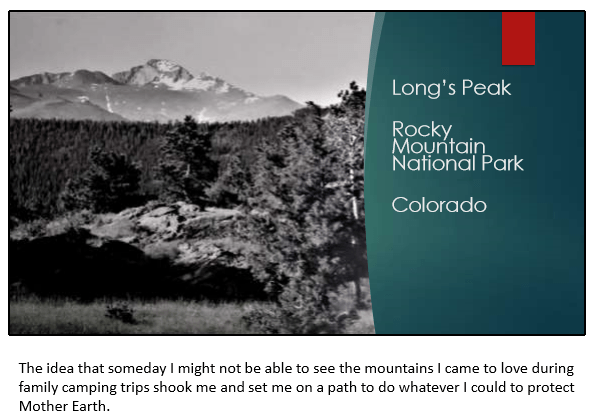
It was the vision of my beloved Rocky Mountains hidden in smog that changed the course of my life. I had to do what I could to protect Mother Earth which included giving up owning a car myself. This became a spiritual journey for me ever since (circa 1975).

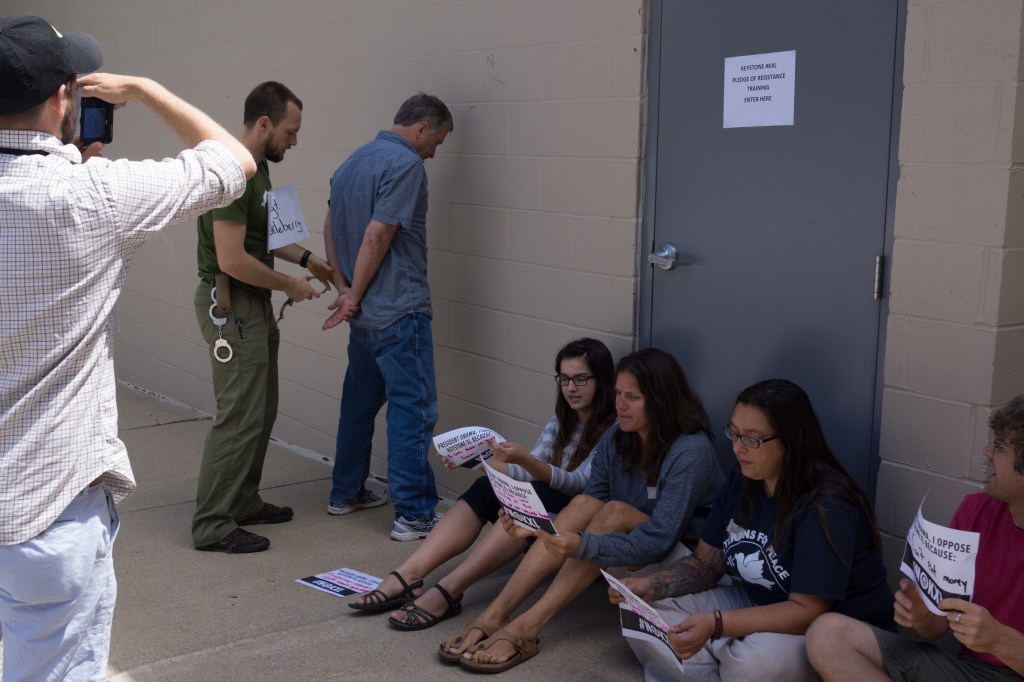
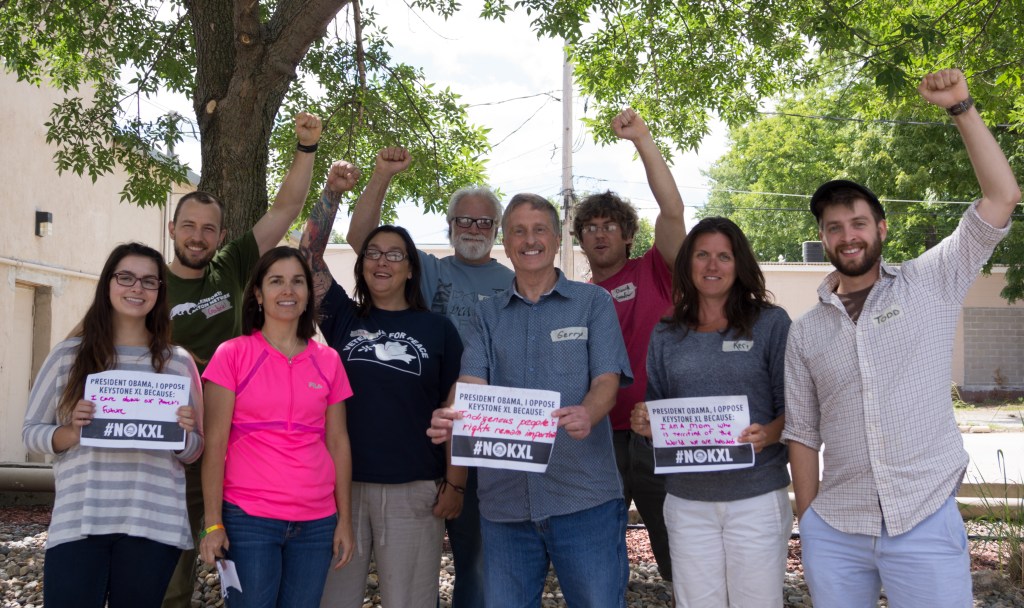
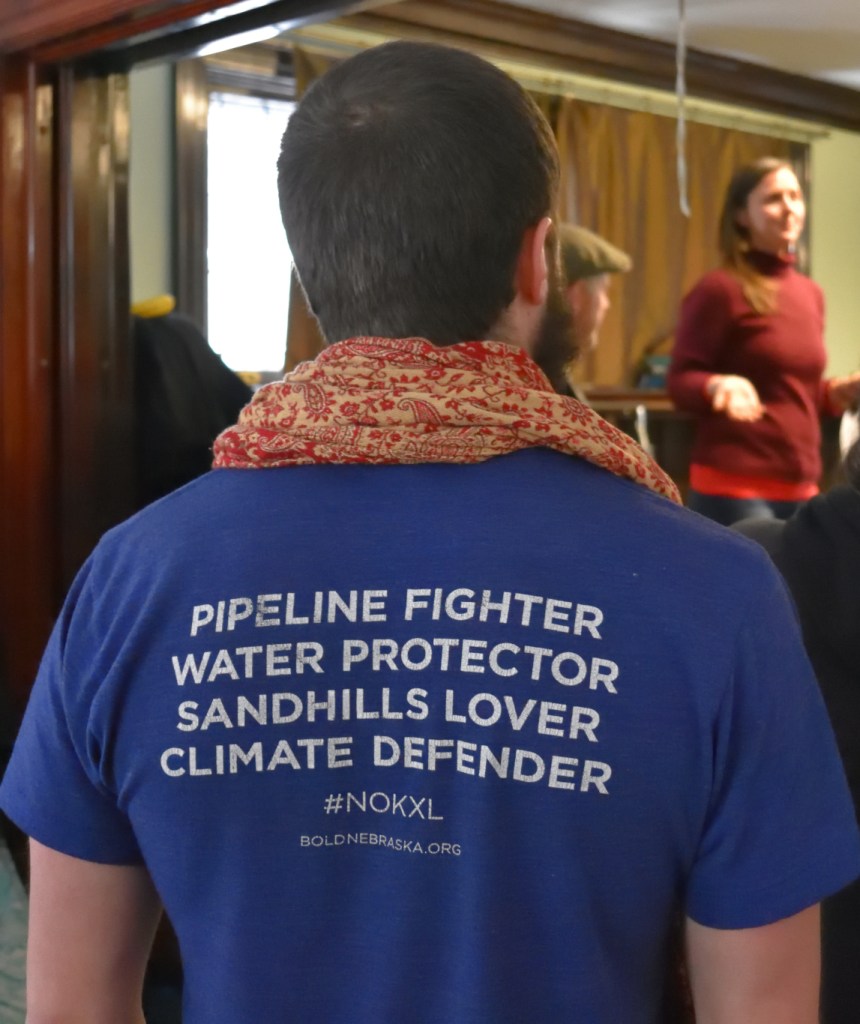
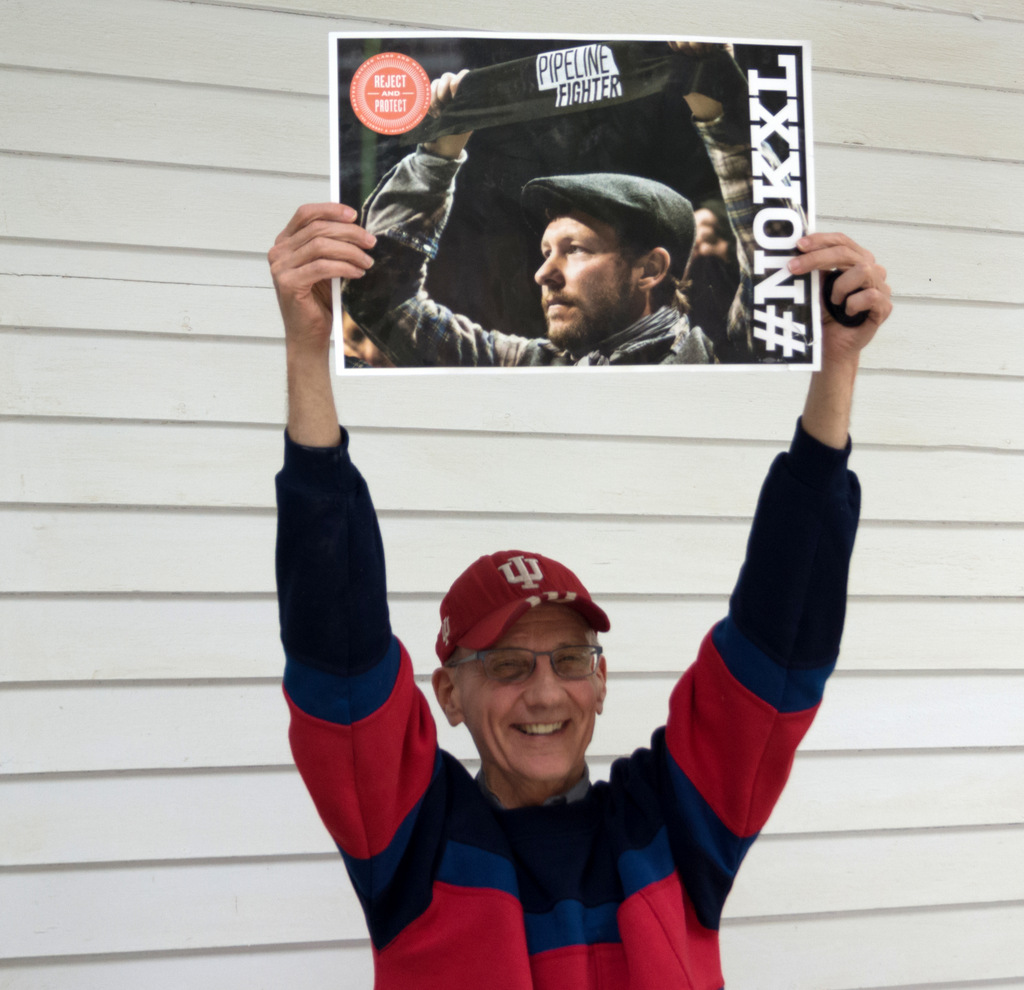
Then I saw the terrible images of tar sands mining, which added to both my sorrow and resolve. First by being trained by the Rainforest Action Network (RAN) to plan and execute nonviolent direct actions to try to stop the approval of the Keystone XL pipeline. Later engaging in efforts to bring attention to and stop the Dakota Access pipeline.

It occurs to me few people have seen the nauseating images of the tar sands mines because of efforts to keep them from view. The link below is to aerial photos of the tar sands mining from the book Beautiful Destruction.

Canada’s tar sands landscape from the air – in pictures.

A new book of aerial photographs, Beautiful Destruction, captures the awesome scale and devastating impact of Alberta’s oil sands with stunning colours, contrasts and patterns. The book also includes 15 essays by prominent individuals from environment and industry, sharing their insights, ideas and opinions. Photographs by Louis Helbig.

Louis Helbig, The Guardian, August 2015

These years of efforts against pipelines, especially with little success, are often discouraging. On the positive side, there are wonderful communities of water and land protectors supporting each other. The Wet’suwet’en people I’m learning about are part of the fight against this new threat, the Teck Frontier Mine.

January 20, 2020, Vancouver, BC, Coast Salish Territories – Indigenous Climate Action (ICA) gathered Indigenous leaders and land defenders outside Minister Wilkinson’s office in North Vancouver to raise alarm about the impacts of the Teck Frontier Mine proposal – the largest proposed open-pit tar sands mine. Members from the Union of BC Indian Chiefs (UBCIC), Tiny House Warriors, Smith’s Landing First Nation, and Wet’suwet’en Solidarity Network came together to assert inherent Indigenous rights and put the Federal Minister of Environment and Climate Change, Jonathan Wilkinson, on watch for his decision on the project proposal and Joint Review Panel’s (JRP) recommendations. The leaders tied together climate change and Indigenous rights impacts created from tar sands extraction, pipelines, refinery and energy infrastructure, citing this project would set the country back on its commitments to the climate and Indigenous Peoples.

The Teck Resources Frontier Mine would be over 29,000 hectares in size and create 6Mt of GHG emission annually, while also impacting local wildlife, waterways and Indigneous communities. Findings from the 2019 Joint Review Panel report stated, “there will be significant adverse project and cumulative effects on certain environmental components and Indigenous communities,” including “use of lands and resources, and cultural practices of Indigenous communities.”

For years Indigenous communities in the region have been working tirelessly to address the legacy of harms from tar sands expansion through regulatory participation, legal challenges, and direct negotiations with government, yet no project has ever been denied approval.

Public support to reject the Teck Frontier Mine has been increasing, with celebrities such as Jane Fonda and Joaquin Phoenix endorsing the #RejectTeck campaign at a recent Firedrill Friday event in Washington, D.C.

INDIGENOUS LEADERS CALL ON MINISTER WILKINSON TO REJECT THE TECK FRONTIER MINE By Staff, Indigenousclimateaction.com, January 22, 2020 | RESIST!

I hope you will look at the article about the photos of the tar sands by Louis Helbig, and share it with others. Louis Helbig, The Guardian, August 2015

#RejectTeck
Posted in #NDAPL, decolonize, Indigenous, Keystone Pledge of Resistance, Native Americans, Uncategorized | Leave a comment

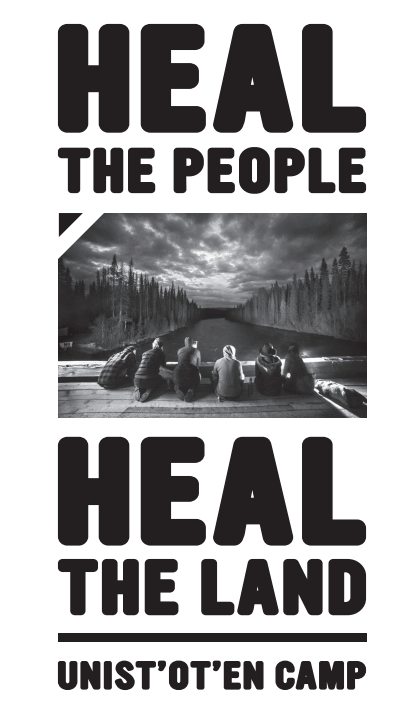
Unist’ot’en Healing Centre

The Unist’ot’en Healing Centre is described below. As important as it is in its own right, the Healing Centre is now the focus of attention regarding the approval of the Coastal Gaslink (CGL) pipeline.

FOR IMMEDIATE RELEASE (excerpts)
Tues, January 21, 2020

CGL is required to submit a report to the Environmental Assessment Office (EAO) addressing the impacts of the project and its proposed mitigation measures. The report is incomplete, as CGL failed to consider or even mention the Unist’ot’en Healing Centre. As a result, Unist’ot’en has requested that the EAO continue to withhold final permits for construction.
CGL failed to include any mention of the Unist’ot’en Healing Center, the most significant economic, social and health related institution within the study boundary, in their report.
Coastal Gaslink (CGL) Pipeline Lacks BC EAO Final Permits For Construction In Wet’suwet’en Territory


“We have faced centuries of colonial oppression, racism and traumatic experiences as Indigenous people. Our connection to land and the cultural practices that extend from this connection are the most effective source of resilience and healing for our people. The Unist’ot’en Healing Centre was built with the assistance of settler supporters working hand in hand with us to fund and construct the infrastructure that allows us to provide self-determined culturally rooted, land-based healing programming by, and for, Indigenous Peoples. It is the fruition of decades of planning and de-colonizing work. This vision of healing through cultural revitalization and reconnection to the land is the foundation of our land use plan, and it depends on healthy, intact land. It requires uninhibited access to our territory which contains all the relatives (aka, resources) necessary to comprehensively practice our culture including a pristine water source, plants, medicines and animals to sustain us, physically, mentally, emotionally and spiritually. Within the remaining intact Unist’ot’en territory, Talbitz Kwa, the location of the Centre, is uniquely suited to support this vision.”
– Karla Tait, Ph.D. Clinical Director of Unist’ot’en Healing Centre, Unist’ot’en House Member
Media contact: Tsewedielh@gmail.com


The safety and wellbeing of Unist’ot’en territory is under threat from TransCanada’s injunction application, which asks police to force a fracked gas pipeline through our home. We have hosted youth and womens’ gatherings, and the centre is currently home to serveral of our Wet’suwet’en people who are receiving treatment for addiction.

https://youtu.be/MQ2fr0ot6CQ


So many indigenous people and reporters have come out to Unist’ot’en land and found it to be healing experience, to live on the land and have a connection with the natural world and our teachings.

We saw the healing lodge as an opportunity to expand and offer this to our community members. We envision holding healing camps there. It is a chance to return to some of our traditional teachings and land-based wellness practices of our ancestors.

Our people have been impacted by intergenerational trauma, and disconnected from those practices.

We are part of something bigger than ourselves. I am hoping we can emphasize how those traditional ways relate to current healing practices, leading to more holistic ways of achieving physical, psychological, and spiritual balance.

Karla Tait http://unistoten.camp/come-to-camp/healing/

Transcript

We’ve decided to build a Healing Center to bring our own people out here and bring healing to them spiritually, mentally, physically and use the space to make our people strong. Like the residential schools were used to take out Indian as a child we want to use this facility to put the Indian back in our children. Meaning our culture before people have our culture they’ll be strong and they’ll be able to stand on their own two feet and we’ll have a strong nation to learn to take care of ourselves and take care of our resources, take care of the land. If we take care of our land, then the land will take care of us. It’s an opportunity for us to use our values and our teachings and our conceptions of wellness and how to achieve that to support our community members and the Western system does an inadequate job.
We’re over-represented as indigenous people as children as adults in the correctional systems, with mental health disorders with higher rates of suicidal ideation and behavior we’re at risk because of those legacies of colonization and that disconnect from who we are as indigenous people.
I think one of the most powerful things about the potential with this Healing Center is that we can design the programming from an indigenous perspective on what wellness.  We don’t have many spaces that are our own for healing.

There’s a lot of incentives for our communities to look at these in industry partnerships for things like LNG or tar sands. It comes at a huge cost and it’s a cultural cost, it’s an identity crop cost. Essentially, it’s asking communities who are at a disadvantage really to sign on for short-term opportunities to feed their children without allowing them to consider the impacts on their grandchildren and the next generations.

To really have those opportunities to embrace their identity and who they are because so much of that for us is based on our land and our connection to the land and all the teachings.  In short, I would see those projects especially the ones proposed to run through this territory as a threat to us reclaiming and self-determining our own health.

Unist’ot’en Healing Centre video transcript

#WetsuwetenStrong #NoTrespass #DefendTheYintah #LandDefenders #WaterProtectors #RiseUp #LightYourSacredFires #AllEyesOnWetsuweten

Posted in #NDAPL, climate change, decolonize, Indigenous, race, Uncategorized | Leave a comment

Listen

Different cultures have different practices and language for the prayerful state of listening for and sharing spiritual messages. Many groups are guided by people who are identified as spiritual leaders.

Weekly Quaker meetings for worship are a gathering of people listening for the Spirit together. Sometimes we feel we have a spiritual message that should be shared with those gathered. Often others in the meeting find that spoken message relates to them as well.

I am thinking about listening now because of this article about Martin Luther King, Jr. The one thing about Martin Luther King Jr.’s greatness everyone keeps missing By John Blake, CNN, Mon January 20, 2020. The article has quite a few stories about King and listening. But the following story is a beautiful expression of hearing the Spirit.


King’s ability to listen led to one of the most transcendent moments in his life. Some call it his “kitchen-table conversion.”

It took place in 1956 when he was considering quitting the civil rights movement. He was dozing off in his bedroom around midnight when the phone rang.

“”Listen, n***er, we’ve taken all we want from you,” the caller hissed. “Before next week, you’ll be sorry you ever came to Montgomery.”

What happened next is recounted in “The Autobiography of Martin Luther King Jr.,” edited by Clayborne Carson.

King hung up and went to his kitchen to heat a pot of coffee. He had been receiving death threats for weeks since he had accepted a request to lead the bus boycott in Montgomery, Alabama. He was afraid for himself, his wife Coretta and their infant daughter, Yolanda. He wondered how he could step down without appearing to be a coward.

With his head in his hands, King bowed over his kitchen table and prayed aloud in desperation. He told God he was weak and had nothing left. Then he listened.

King described what happened next:

“It seemed as though I could hear the quiet assurance of an inner voice saying: ‘Martin Luther, stand up for righteousness. Stand up for justice. Stand up for truth. And lo, I will be with you. Even until the end of the world,'” he later described.

“At that moment I experienced the presence of the Divine as I had never experienced Him before. Almost at once my fears began to go. My uncertainty disappeared. I was ready to face anything.”

King may not have stood before a cheering crowd at the Lincoln Memorial that day if hadn’t already developed a life-long habit of listening.

It’s always good to remember King’s speeches, but we should also remember this:

He didn’t just talk his way to greatness.

He listened his way to it as well.

The one thing about Martin Luther King Jr.’s greatness everyone keeps missing By John Blake, CNN, Mon January 20, 2020.

Following is one of my own experiences of listening for the Inner Light .

I had long been struggling with the knowledge that simply through the circumstances of the family I was born into, my life was significantly more comfortable in many ways than that of a great many others in America and the world.   This was a spiritual problem for me.

God (finally) provided me with a way to begin to learn about that. A number of years ago, around 2013, the environmental group 350.org organized a national day for environmental education/actions. Only one event was listed in Indiana that day, and it was at the KI Eco Center, which I wasn’t familiar with.   The day of the event, I arrived at the run down building that had once been a convenience store.  But it was full of kids excited to show us the work they were doing, including their aquaponics system, and the rain barrels they created and sold.

I was intrigued, and wanted to see if I could become involved with this community.  So we arranged a meeting.  On a dark, rainy night I rode my bicycle to the KI building.  The adult leaders, Imhotep, Pambana, Paulette and Alvin, and about a dozen young people from the Eco Center were here.  I had thought we were going to discuss working on some computer software projects together, which is another area KI works with the youth in.

But Imhotep began asking me a series of questions about myself. I don’t talk a lot about myself, but Imhotep, I’ve come to learn, is very good at drawing stories out of people.   I should have anticipated this, but I soon realized I was basically being interviewed so they could determine if I was someone they felt comfortable working with.

I began by briefly discussing growing up on farms in Iowa. And my work at Riley Hospital for Children.

Imhotep asked me to share more.

So I began to talk about Quakerism. When I mentioned that I was a Quaker, Paulette enthusiastically spoke about Quakers and the underground railroad, which was really welcome.  But when she stopped speaking, everyone looked at me…

I had thought of this many times over the years.  I greatly admired the work of Friends who helped with the underground railroad, as I likewise admired those who worked to help address any injustice or need.  I responded that while I was really glad my ancestors been involved with the underground railroad, and it was the right thing to do, that was obviously not something I had done. 

There is a danger here.  Sometimes Friends point to this work of other Friends to illustrate the work of Quakers.  Noah Baker Merrill wrote a wonderful piece entitled “Prophets, Midwives and Thieves” discussing this very thing, warning us not to claim the work of others as our own.

When Imhotep asked me to share some more, I felt a bit panicked, not knowing what to say beyond “Quakers believe there is that of God in everyone.”

But as I said that, I knew it was too abstract. That was when I heard the Spirit tell me to say: “and that includes you, and you…” as I indicated each person around me. The very first time, I think I hesitated slightly as I was asking myself, “OK, we Friends always say this, but do you really believe this of a group that is different from you?”

And I’m really glad the answer was an immediate and emphatic yes, but it also seemed to reaffirm that by exploring it consciously and publicly. At that point I remember smiling at the thought, and the young person whose eyes I was looking into saw it, too, I think. Each person smiled at me as I said that to them, and I had the impression they were thinking, “of course”.   I strongly felt the presence of the Spirit.

Imhotep asked, again, for more.

Which left me at the point where I felt I needed to provide some example from my own life.  Since KI is built on concern for the environment, I spoke of how I had reluctantly purchased a used car for $50 when I moved to Indianapolis, mainly for trips home to Iowa.  Car rental was not common in the early 1970’s. 

When my car was totaled several years after that, I heard a clear message that I should give up owning a car. A learning process followed, but I have gladly lived without a car since then.  I was hoping that would show how Quakers try to translate what they believe, what they feel God is telling them, into how they actually live their lives.

At that point Imhotep, with a smile on his face, said something like “Thirty years without a car?  You are a warrior.”   I had never been called a warrior before.  It seemed a humorous term to use for a pacifist, but I liked it.

Then everyone looked at me…

Somewhat embarrassed at that point, what popped out of my mouth without much thought, or perhaps again the Spirit led me to say “well…yes, I am really old!”, at which everyone laughed, and our meeting concluded.

That seemed to satisfy the questions for the evening, and they have welcomed me into their community ever since.

The best part of the evening was that then several of the kids came up to me to shake my hand.

I was not used to speaking about faith in public outside Quaker circles, and this was a lesson that it is important to do so. From the beginning, my experience at the Eco Center has been a shared, spiritual one.

One final thing it took me a while to realize was by asking myself if I what I was trying to say was true in a “different” group was yet another example of unintended racism.

Posted in Black Lives, Kheprw Institute, Quaker, race, Uncategorized | Leave a comment

Wet’suwet’en Call for Legal Observers

Planning and executing a nonviolent direct action needs careful planning ahead of the event. An important part is to teach the significance of not responding to provocation. This is so important that training almost always uses role playing, so participants get a feeling of what provocation is like. After the exercise, people share how that felt, and trainer might point out mistakes made, or good things they saw during the exercise.

The Student Nonviolent Coordinating Committee (SNCC) did a lot of training during the Civil Rights era of the 1960’s. Those of us who lived then saw students at segregated lunch counters sitting calmly as food was dumped on them. Young people bravely rode on buses into the South to draw attention to the continued segregation of interstate travel. One bus was set on fire. Fortunately everyone escaped. In Birmingham, Alabama, children left school to march. Over 1,000 were arrested. During the second march the children faced fire hoses and police dogs.

In 2013 three environmental action organizations, the Rainforest Action Network (RAN), CREDO, and the Other 98% organized a nonviolent campaign to try to stop the approval of the Keystone XL pipeline permit. The Keystone Pledge of Resistance was posted online. Those who signed the Pledge entered their contact information, so they could be updated with news about Keystone’s approval.

“I pledge, if necessary, to join others in my community, and engage in acts of dignified, peaceful civil disobedience that could result in my arrest in order to send the message to President Obama and his administration that they must reject the Keystone XL pipeline.”

97,236 activists signed the Pledge.

Those who signed the Pledge could also indicate if they wanted to learn to train people in their communities how to organize peaceful civil disobedience actions, which I did. I received extensive training from the Rainforest Action Network. Nearly 400 Action Leads were trained, who in turn trained about 4,000 people in their local communities. After months of public rallies against Keystone, President Obama decided to reject the Keystone permit.

One of the important things we were taught were the various roles that needed to be filled and trained for.

Gidimt’en and Unist’ot’en are looking for people to be legal observers, which looks like the “police observer” role above.

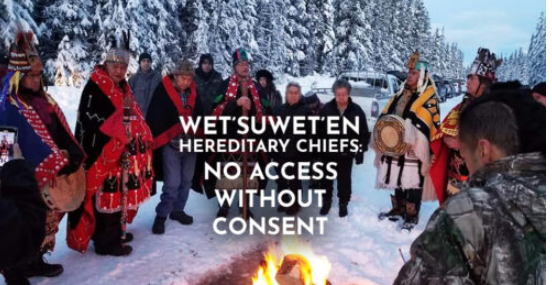
Gidimt’en and Unist’ot’en are seeking legal observers. Our unceded Wet’suwet’en lands are under attack, with police enforcement of a colonial court injunction possible at any time. Hereditary Chiefs of all five Wet’suwet’en clans have rejected the injunction decision, which criminalizes Anuk ‘nu’at’en (Wet’suwet’en law), and have made clear that no access to Wet’suwet’en territories will be granted without free, prior, and informed consent. The UN Committee on the Elimination of Racial Discrimination (CERD) has also called upon Canada to immediately halt the construction of the Coastal GasLink pipeline and urged Canada to withdraw RCMP from our territories. Instead of the RCMP standing down, a recent RCMP exclusion zone has further escalated police occupation of our territories.

If you are our neighbor and want to support us meaningfully but haven’t been sure how, this is your chance!

http://unistoten.camp/legalobservers/

CLICK HERE TO SIGN UP

What are legal observers?

A Legal Observer witnesses and monitors the actions of law enforcement agencies and security forces and collects information for the purposes of legal defense. You do not require any legal background at all and, ideally, are actually not a practicing lawyer.

  • Do not participate in protest or risk arrest.
  • Do not provide legal advice.
  • Do not speak to media.
  • Do not interfere with police activity.
  • Remain “neutral” while observing.

You must commit to:

  • Affirming the jurisdiction, leadership, and legal order of the Wet’suwet’en.
  • Being available approximately 8-10 hours per week. Legal observers will be observing at a number of possible sites within the territories.
  • Completing a training session, currently scheduled for either Monday January 20th or the evening of Thursday January 23rd in Smithers (other workshops are also being scheduled at other locations, over the coming weeks).
  • Working collaboratively with your Legal Observer partner on shift, and Legal Observer Team as a whole.
  • Safeguarding and keeping confidential any information you collect.
  • Being as self-sufficient as possible on the land and terrain, including transport to and from your shift. We are primarily recruiting from surrounding areas, including Smithers, Houston etc, so as to ensure consistency and long-term presence.
  • Barring emergencies, being punctual and responsible, with the understanding that the team and our community is relying on you.

We require a team of 50-60 legal observers. Your time and ethical commitment are the most useful assets; all supplies and a comprehensive training will be provided by experienced movement lawyers and/or legal support organizers. Details about legal observer training will be sent to you after you fully complete the form and are approved by Wet’suwet’en spokespeople.

http://unistoten.camp/legalobservers/

For any questions, contact:

Irina Ceric: irina.ceric@gmail.com
Noah Ross: noah.ross.j@gmail.com
Harsha Walia: hwalia8@gmail.com

CLICK HERE TO SIGN UP

#WetsuwetenStrong #NoTrespass #DefendTheYintah #LandDefenders #WaterProtectors #RiseUp #LightYourSacredFires #AllEyesOnWetsuweten

Posted in Uncategorized | Leave a comment

Imagining what Martin Luther King, Jr, might do today

As we pause to honor the life and work of Martin Luther King I am reflecting on what he might think and do if he were alive today. As I am doing that now, I hear John Lennon’s song “Imagine” in my head.

As Cornel West wrote, “If King were alive today, his words and witness against drone strikes, invasions, occupations, police murders, caste in Asia, Roma oppression in Europe, as well as capitalist wealth inequality and poverty, would threaten most of those who now sing his praises.Martin Luther King Jr was a radical. We must not sterilize his legacy. Cornel West, The Guardian, April 4, 2018.

There are so many people and conditions of oppression and suffering around the world today. Mother Earth herself is suffering. So many situations that would benefit from a leader such as Martin Luther King.

This morning I’m envisioning what King might do among the people, and in the places I’ve found myself over the course of my life.

Actually, King was alive at the time I was dealing with my first spiritual and justice struggles which related to war and peace. I came of age during the Vietnam War, eventually deciding to resist the draft. Martin Luther King was criticized by some in his own movement when he took a stand against the war himself. It meant a lot to me that he did so.

Recently there was an attempt to build a new Poor People’s Campaign. Martin Luther King announced the idea of a Poor People’s Campaign in November, 1967, but was assassinated before the march on Washington occurred.

After King’s assassination in April 1968, SCLC decided to go on with the campaign under the leadership of Ralph Abernathy, SCLC’s new president. On Mother’s Day, 12 May 1968, thousands of women, led by Coretta Scott King, formed the first wave of demonstrators. The following day, Resurrection City, a temporary settlement of tents and shacks, was built on the Mall in Washington, D.C. Braving rain, mud, and summer heat, protesters stayed for over a month.

Stanford University. The Martin Luther King, Jr.Research and Education Institute. Poor People’s Campaign, May 12, 1968 to June 24, 1968

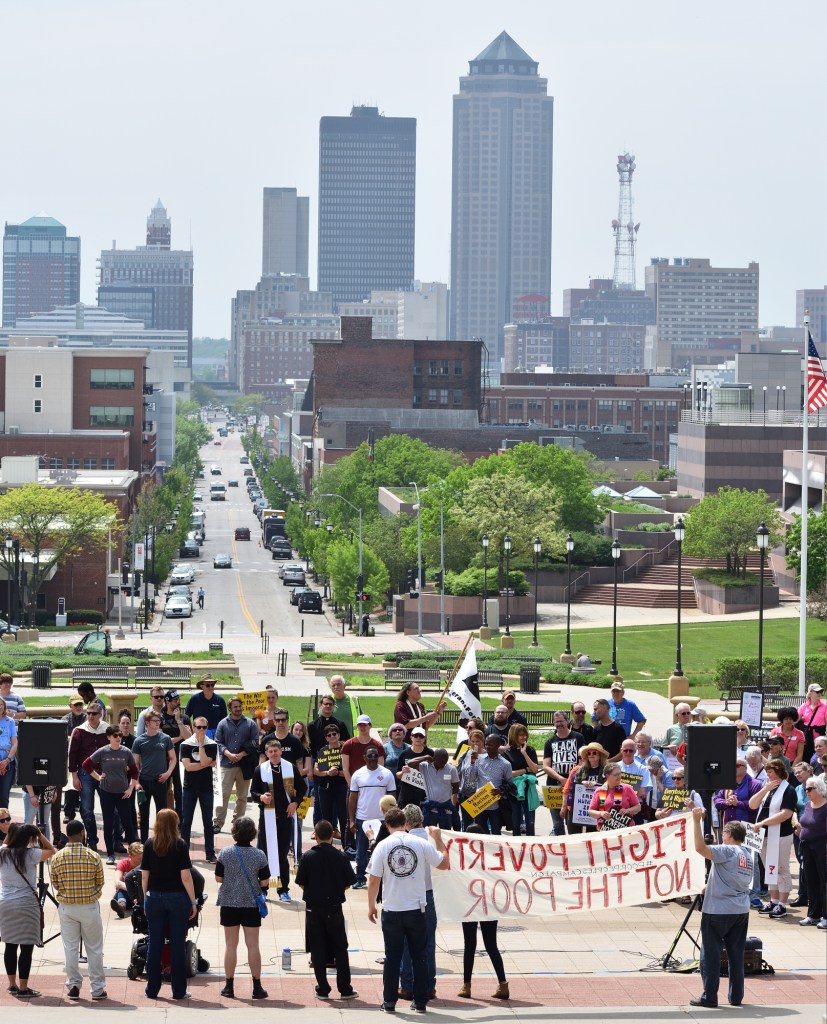
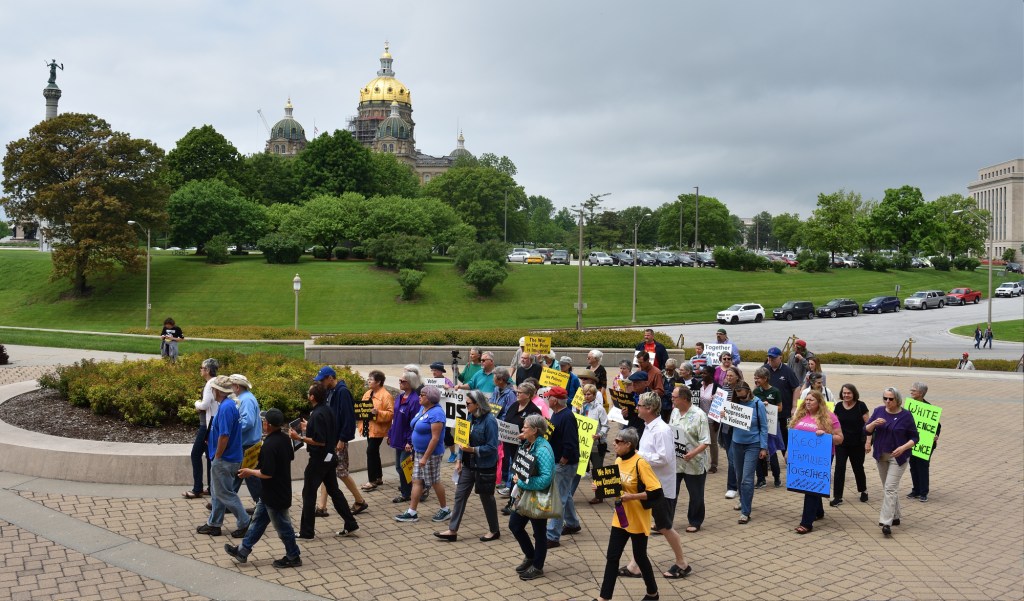
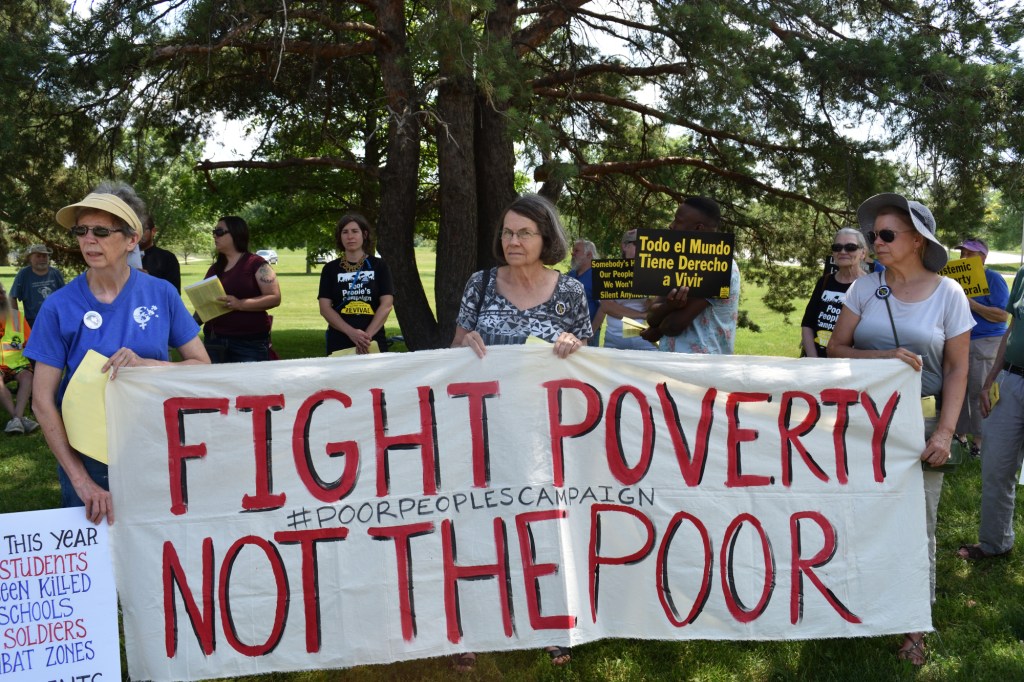
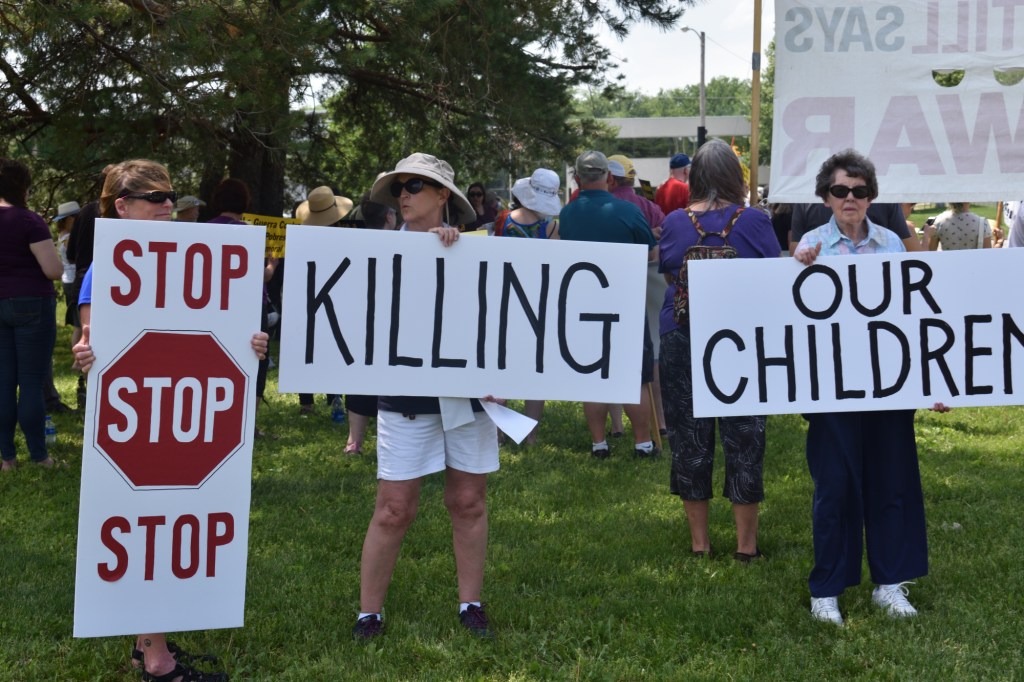
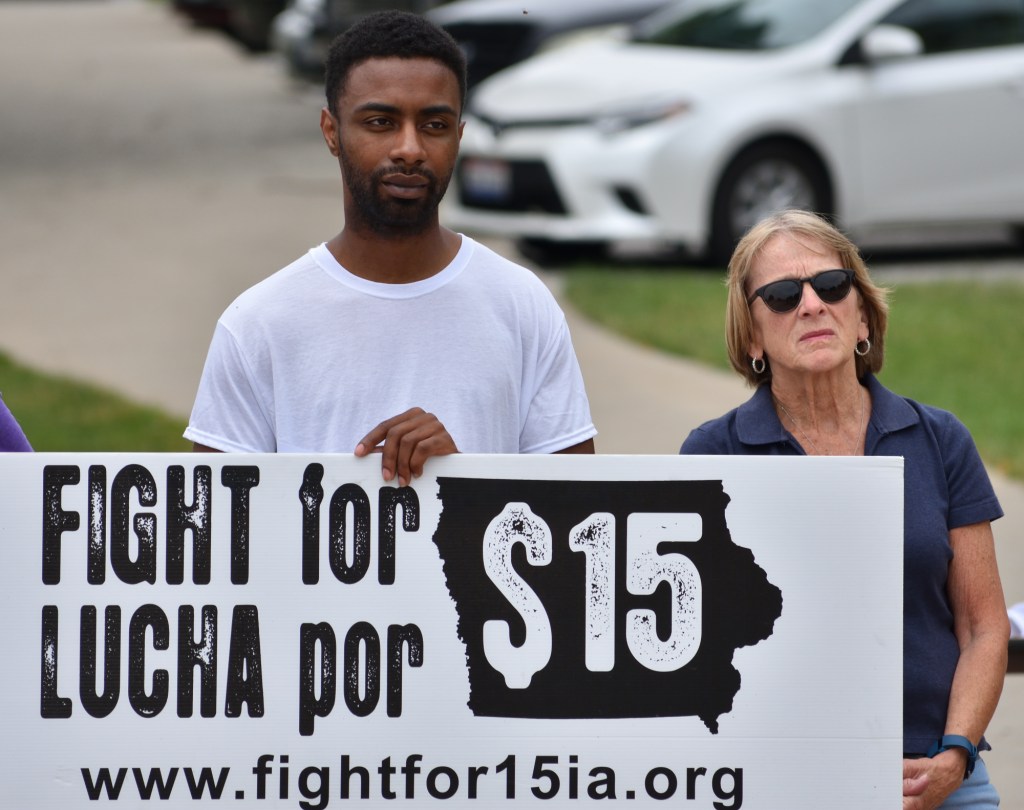
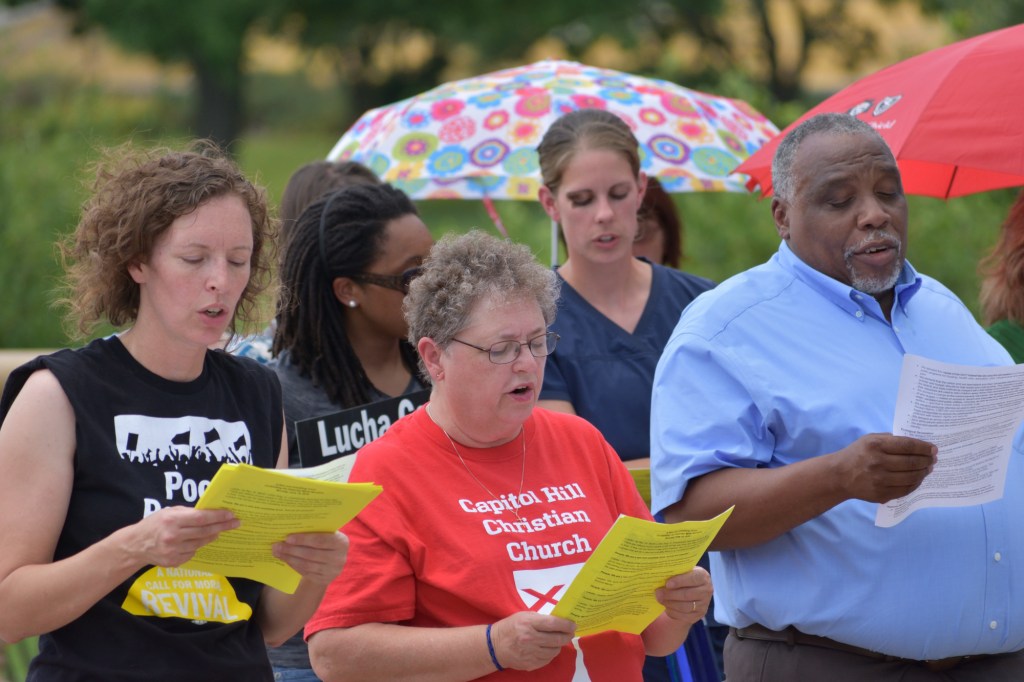
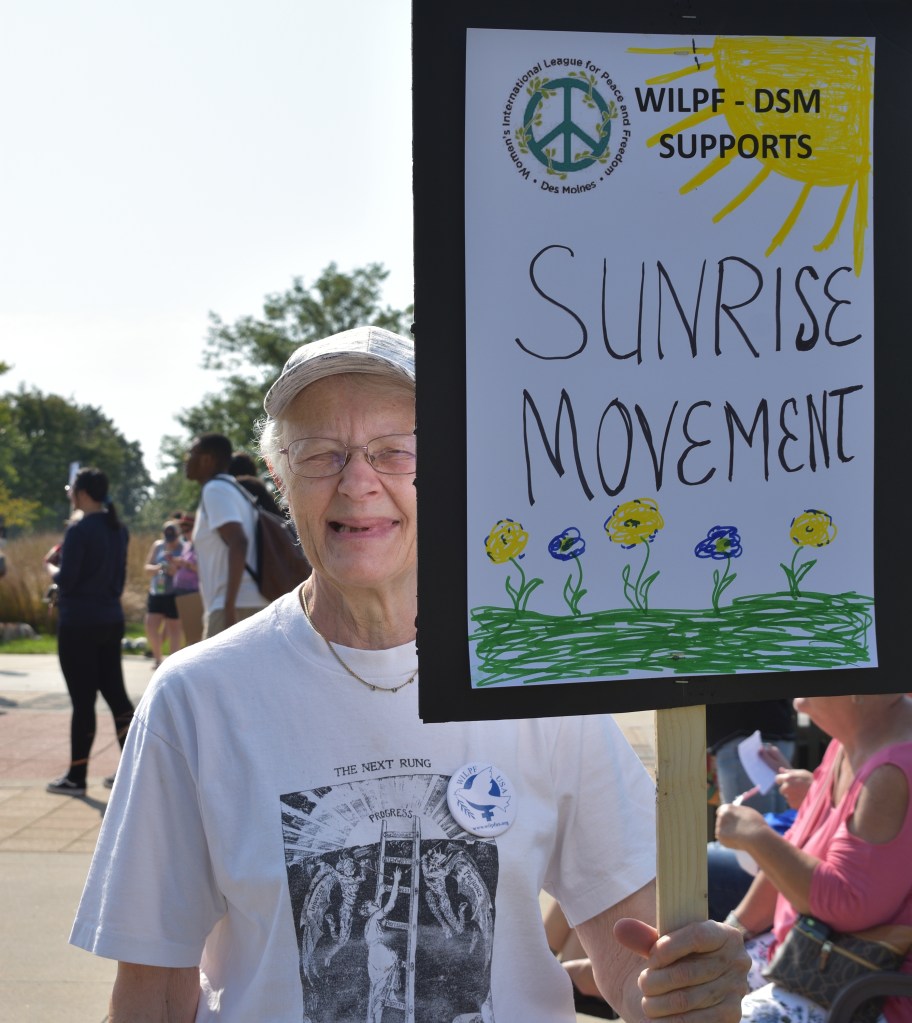
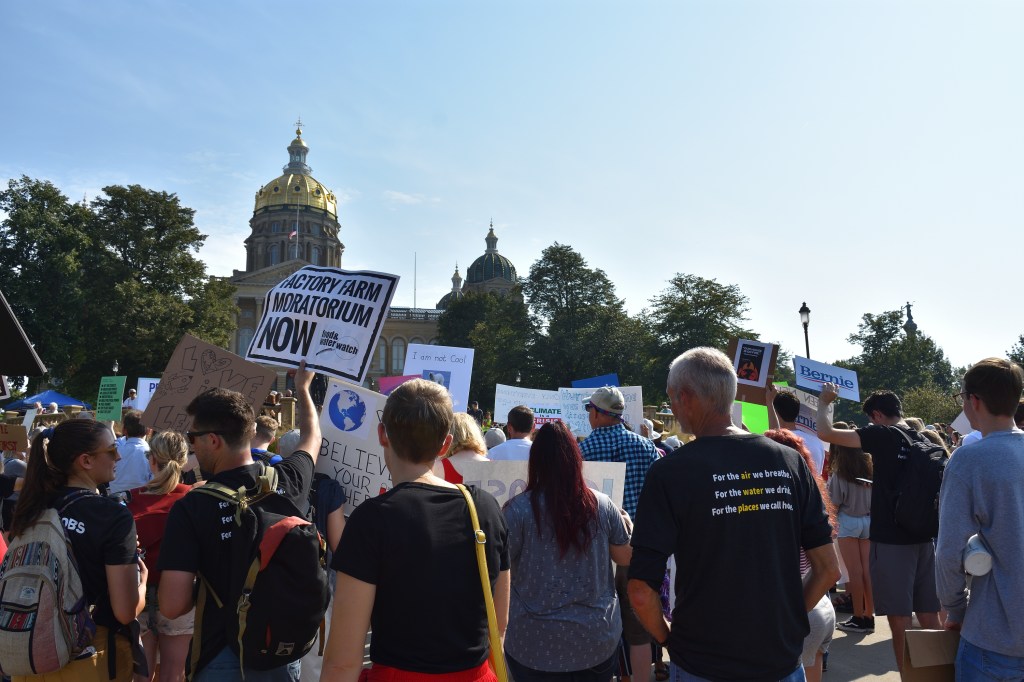
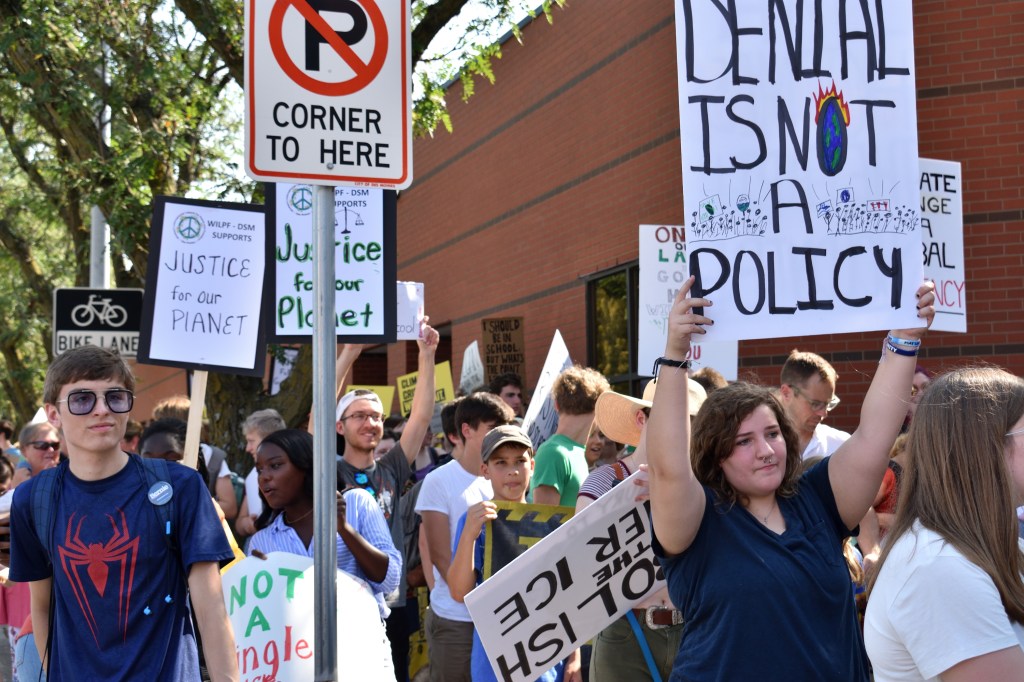
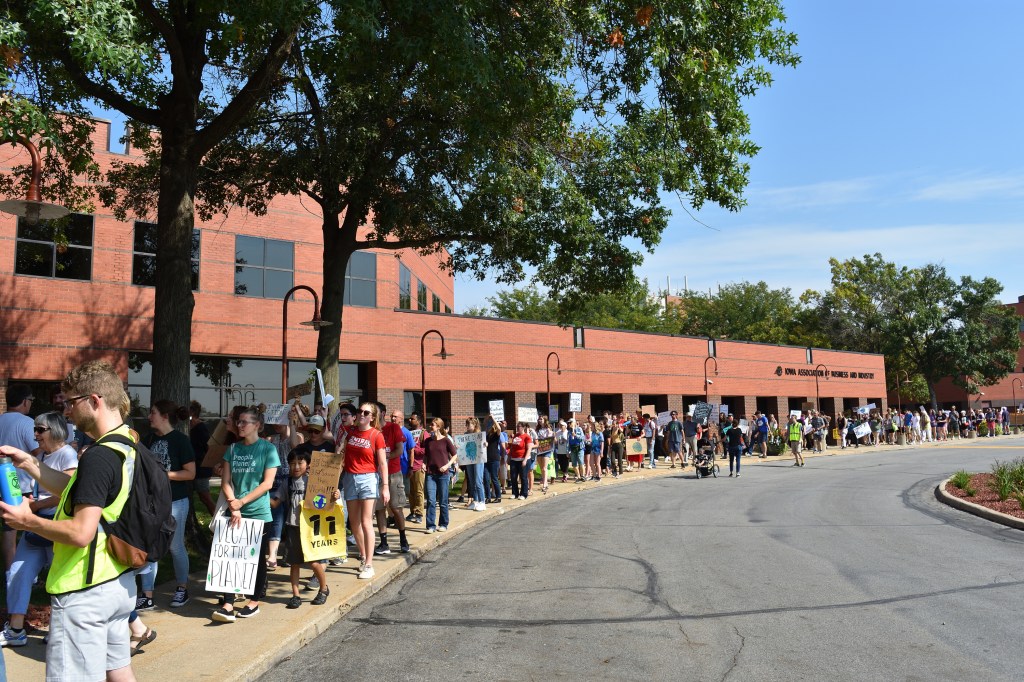
Rev. William Barber and others organized a number of events as part of the new Poor People’s Campaign. That effort is struggling to continue, at least locally. Below are photos from some of those events I attended in Des Moines, Iowa.

I imagine Martin Luther King at Standing Rock. Being part of the prayers and nonviolent resistance there. I think what Nahko Bear says below while performing at the Water Protectors Youth Concert at Standing Rock, Sept 8, 2016, evokes the history of nonviolent action by indigenous peoples.

“Remember that nonviolent direct action is the way to a successful revolution.  And that is a hard one, because they are so bad (chuckles).  When they come at us you just want to hit ’em, you know?  Just sit with that.  I know it’s tough.  They’re going to try to do everything they can to instigate you.  But remember what we’re here for.  We’re here to create peace for our Mother.  We’re not here to create more violence.”

Nahko Bear #NODAPL   #MniWiconi #RezpectOurWater #AllNationsYouth

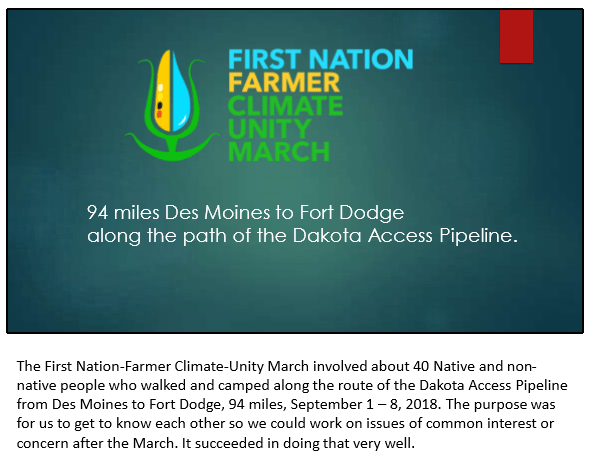
I imagine Martin Luther King walking with us on the First Nation-Farmer Climate Unity March from Des Moines to Fort Dodge, Iowa, along the path of the Dakota Access Pipeline.

I imagine Martin Luther King supporting the Wet’suwet’en people in their years of struggle against fossil fuel pipelines, most recently the Coastal Gas Link Project.

In this era of “reconciliation”, Indigenous land is still being taken at gunpoint. INVASION is a new film about the Unist’ot’en Camp, Gidimt’en checkpoint and the larger Wet’suwet’en Nation standing up to the Canadian government and corporations who continue colonial violence against Indigenous people.

The Unist’ot’en Camp has been a beacon of resistance for nearly 10 years. It is a healing space for Indigenous people and settlers alike, and an active example of decolonization. The violence, environmental destruction, and disregard for human rights following TC Energy (formerly TransCanada) / Coastal GasLink’s interim injunction has been devastating to bear, but this fight is far from over.

#unistoten / #wetsuwetenstrong / #wedzinkwa / #nopipelines / #invasion / #thetimeisnow / #waterislife

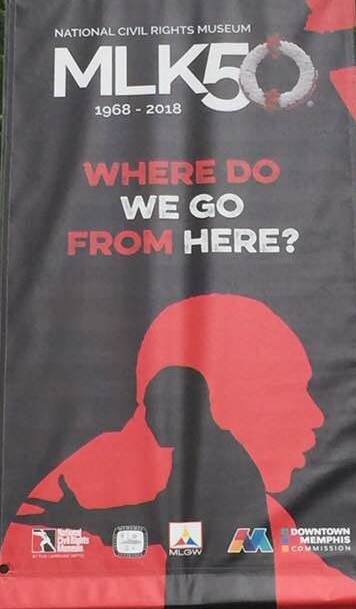
As I’ve been creating this list, I’m realizing, again, there is so much work we have to do. So many people oppressed, so many assaults on Mother Earth. Where do we go from here?

I’m reminded of what Rabbi Michael Lerner said at the memorial for Muhammad Ali because I feel it also applies to Martin Luther King, Jr. The way to honor Martin Luther King is to BE Martin Luther King TODAY.

“So I want to say how do we honor Muhammad Ali? And the answer is the way to Honor Muhammad Ali is to   BE   Muhammad Ali   TODAY.  That means us, everyone here and everyone listening. It’s up to us to continue that ability to speak truth to power. We must speak out, refuse to follow a path of conformity to the rules of the game in life.”

Rabbi Michael Lerner at the memorial for Muhammad Ali

Posted in #NDAPL, civil disobedience, integral nonviolence, peace, race, Uncategorized | Tagged | 2 Comments

#LANDBACK Update from Gidimt’en Territory

Gidimt’en Access Point exists at the direction of our Hereditary House Chiefs in support of their long standing position against oil and gas pipelines.

We stand strong and continue to protect our territories. We can breathe again with industry off our lands! Day 13 of freedom for the yintah!

Gidimt’en camp is liberated and spirits are high as we reflect on the magnitude of what we’ve accomplished.

Wet’suwet’en Access Point on Gidimt’en Territory January 17, 2020

Our culture and our tradition is the land. We are directly connected to the land. It’s our spirituality. We cannot be forced to be away from our land.

Nine days since we took the land back.

It feels like something you don’t normally do. (laughter) Its revolutionary, right?

I don’t think anyone’s ever really evicted like a 6 billion dollar pipeline before.
People get confused about what we want as Native people. Like “what do you want?”

Just like, “land back!”. Don’t need any reconciliation, don’t want money, like I don’t want programs or funding or whatever.

(whispers “land back”)

Funny though, when I said that to my Dad, Wet’suwet’en people, if you tell them about LANDBACK, they’re like “we never lost the land, anyway.” Which is true.

Wet’suwet’en have never given up title to their 22,000 square kilometer territory.

wetsu-territory-map_orig.jpg

#WetsuwetenStrong #NoTrespass #WedzinKwa #DefendTheYintah #RCMPAreMercenaries #WouldYouShootMeToo #LandDefenders #WaterProtectors #RiseUp #LightYourSacredFires #AllEyesOnWetsuweten

Posted in decolonize, Indigenous, Uncategorized | Tagged | 1 Comment

Martin Luther King, Jr

The major threat of Martin Luther King Jr to us is a spiritual and moral one.

Martin Luther King Jr turned away from popularity in his quest for spiritual and moral greatness – a greatness measured by what he was willing to give up and sacrifice due to his deep love of everyday people, especially vulnerable and precious black people. Neoliberal soul craft avoids risk and evades the cost of prophetic witness, even as it poses as “progressive”.

If King were alive today, his words and witness against drone strikes, invasions, occupations, police murders, caste in Asia, Roma oppression in Europe, as well as capitalist wealth inequality and poverty, would threaten most of those who now sing his praises.

Today, 50 years later the US imperial meltdown deepens. And King’s radical legacy remains primarily among the awakening youth and militant citizens who choose to be extremists of love, justice, courage and freedom, even if our chances to win are that of a snowball in hell! This kind of unstoppable King-like extremism is a threat to every status quo!

Martin Luther King Jr was a radical. We must not sterilize his legacy. Cornel West, The Guardian, April 4, 2018.

The Letter from Birmingham Jail was written in 1963. King was in solitary confinement, arrested for not having a permit for a peaceful anti-segregation march. Segregation laws were part of the Jim Crow system. The letter was partly written to respond to criticism by some in the civil rights movement about his tactics of using nonviolence and civil disobedience. You can find copies of the letter multiple places online.  While searching for that, I came across the audio of King reading the speech himself.

I think of those times when I have had occasions to travel south, through the cities of Birmingham, Montgomery and Atlanta.

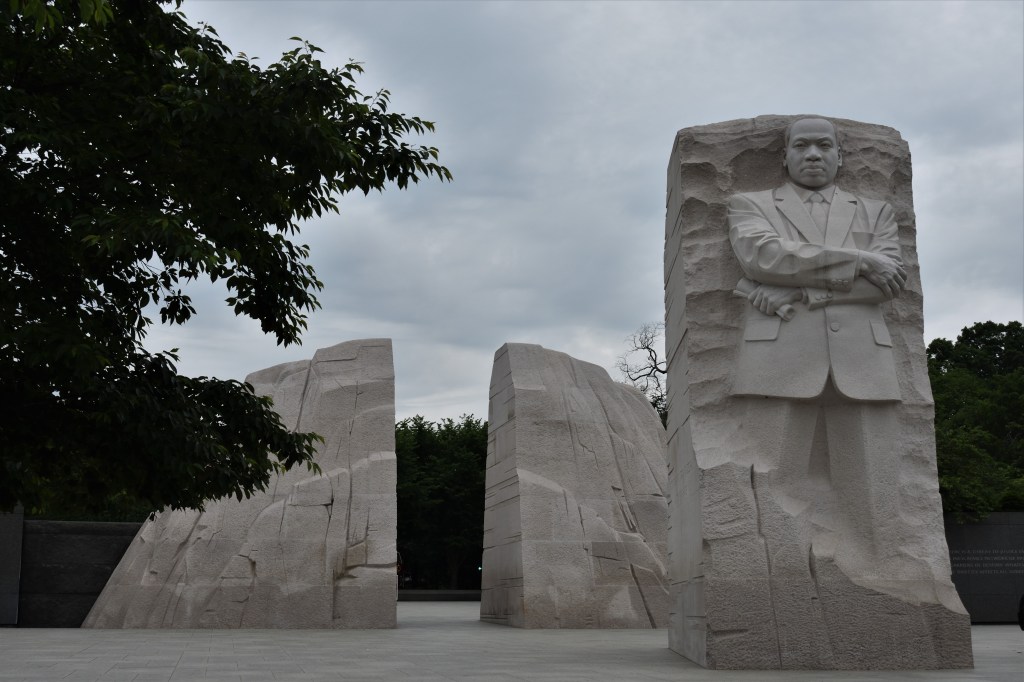
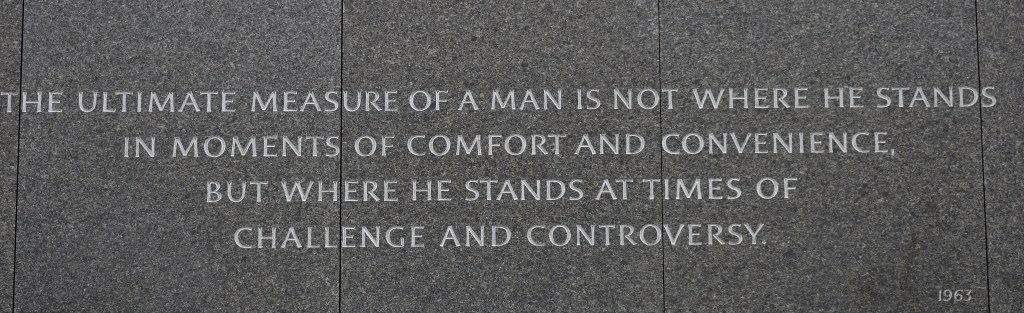
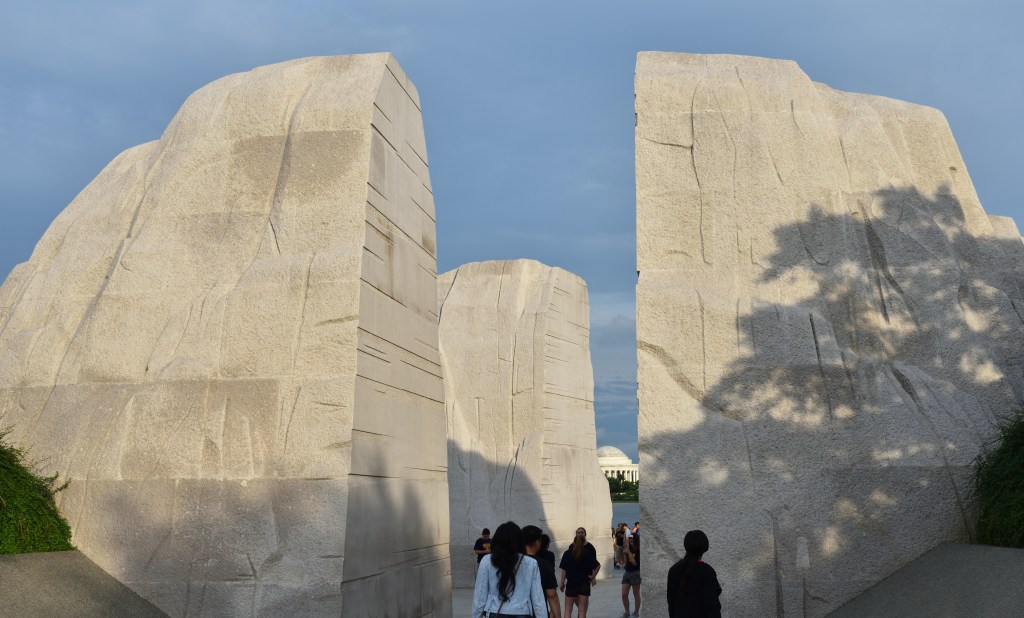
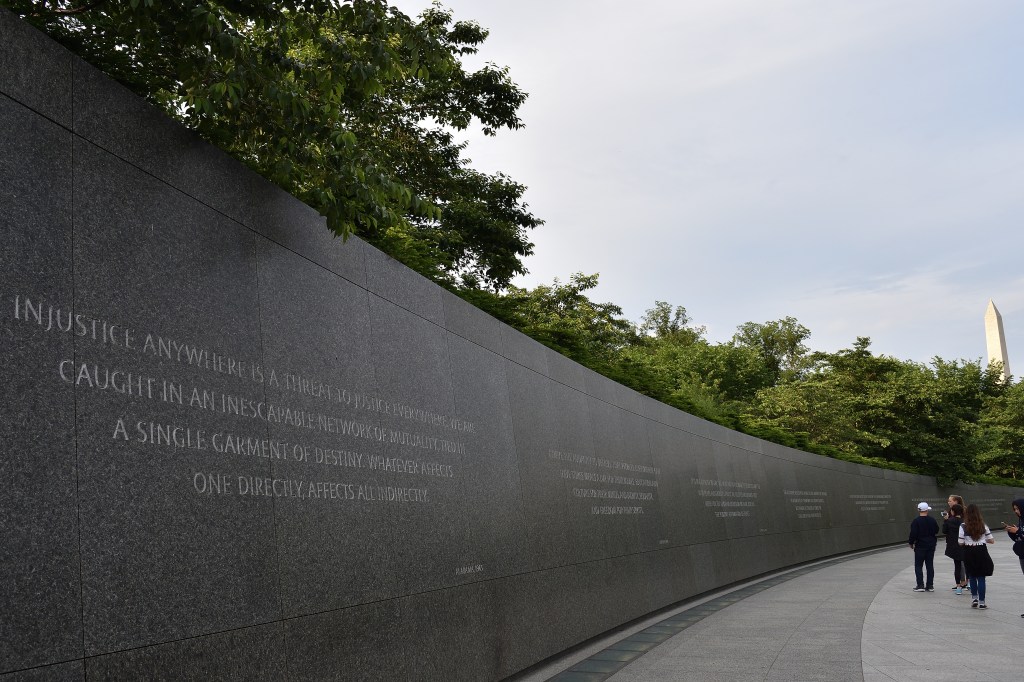
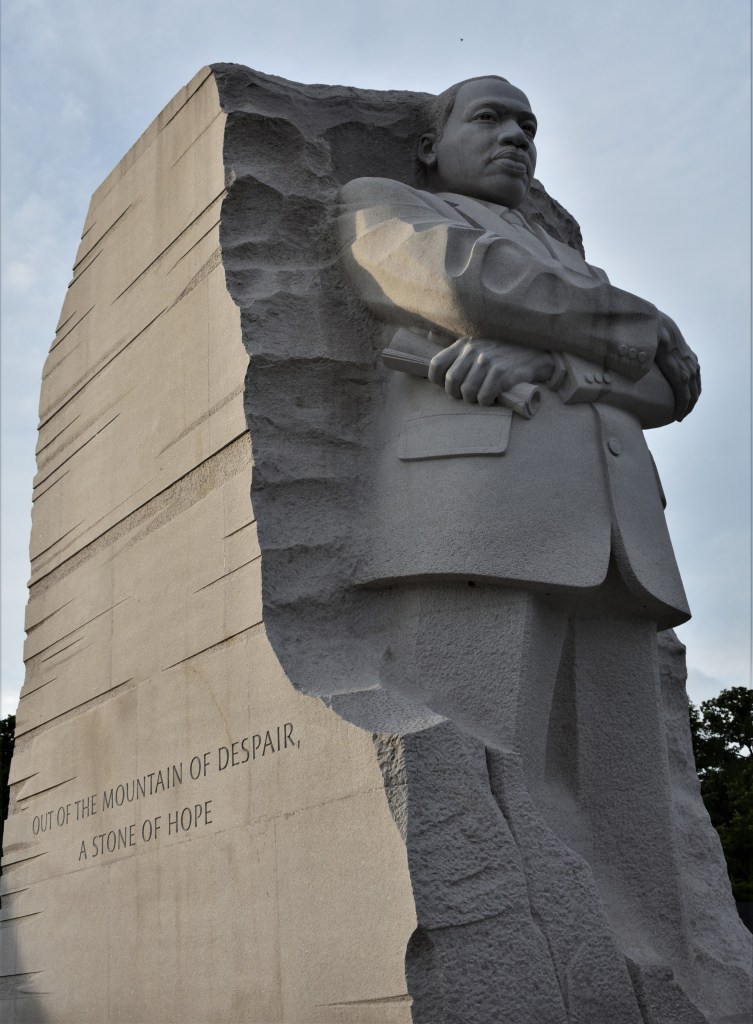
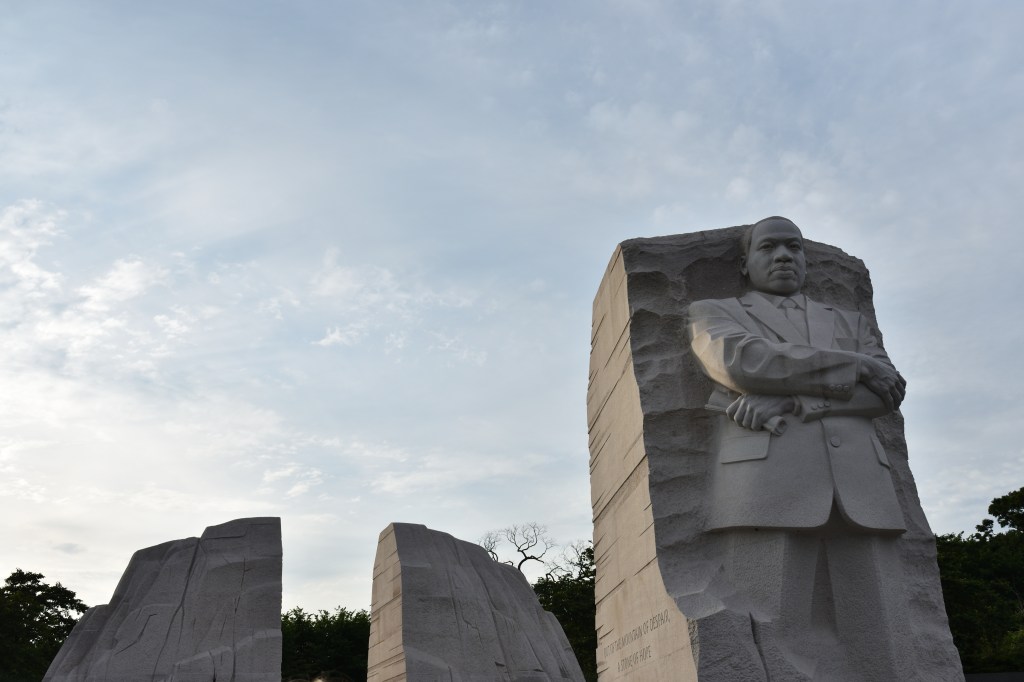
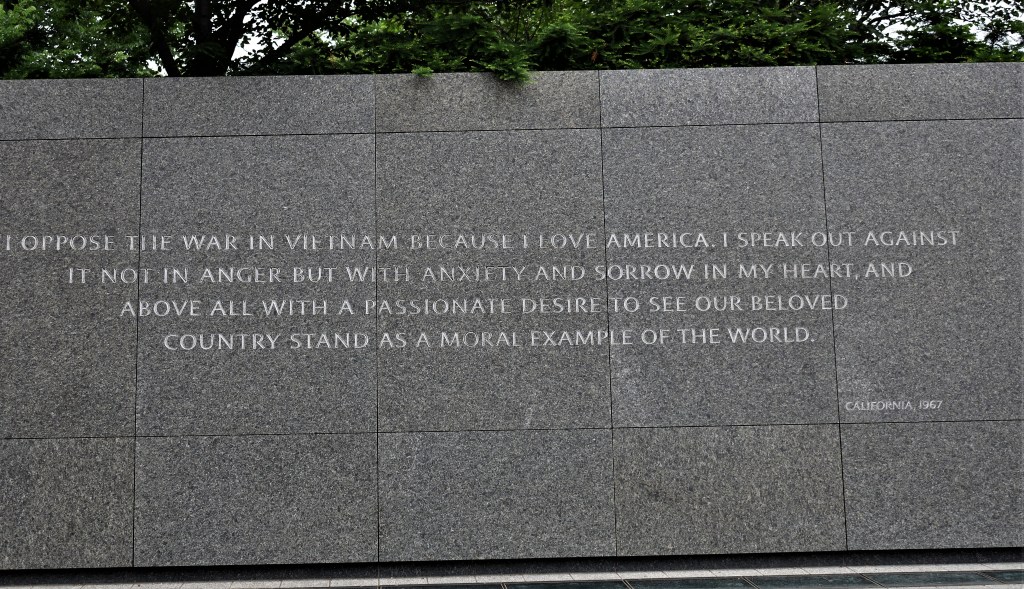
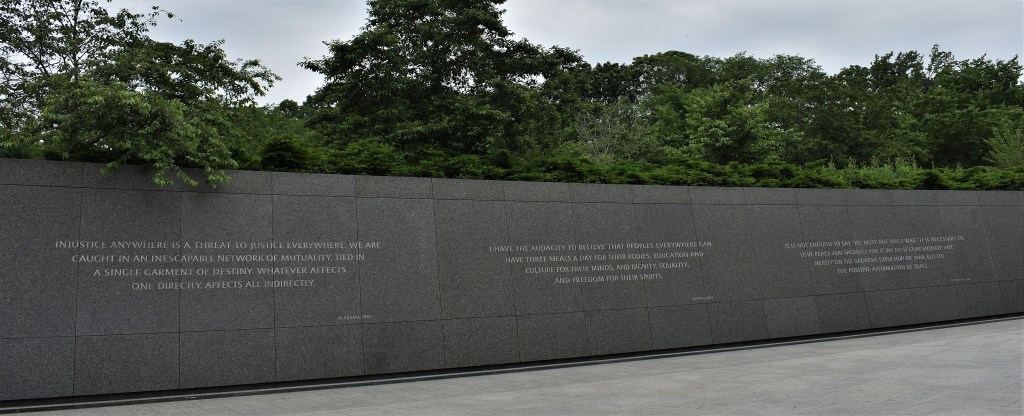
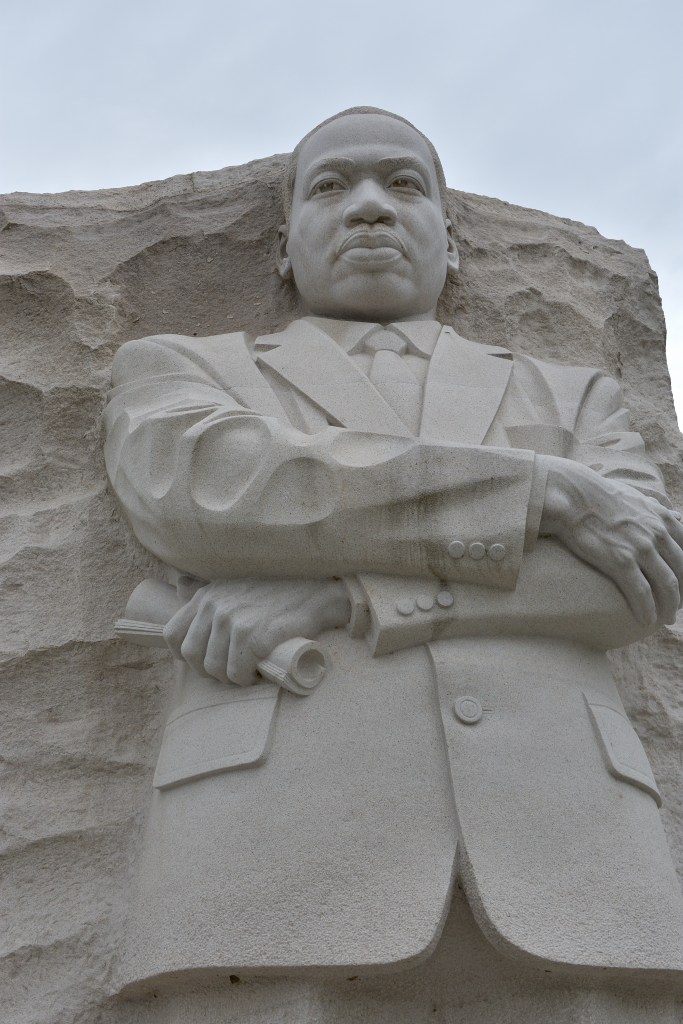
I was finally able to visit the Martin Luther King, Jr, Memorial during my last visit to Washington, DC, in 2017 when I was attending meetings of the American Thoracic Society.


Martin Luther King: His Own Words

It is not enough to say we must not wage war. It is necessary to love peace and sacrifice for it.

Every man must decide whether he will walk in the light of creative altruism or in the darkness of destructive selfishness.

We must use time creatively, in the knowledge that the time is always ripe to do right

An individual has not started living until he can rise above the narrow confines of his individualistic concerns to the broader concerns of all humanity.

Every man lives in two realms: the internal and the external. The internal is that realm of spiritual ends expressed in art, literature, morals, and religion. The external is that complex of devices, techniques, mechanisms, and instrumentalities by means of which we live.

The quality, not the longevity, of one’s life is what is important.

The past is prophetic in that it asserts loudly that wars are poor chisels for carving out peaceful tomorrows.

A lie cannot live.

Love is the only force capable of transforming an enemy into friend.

We must develop and maintain the capacity to forgive. He who is devoid of the power to forgive is devoid of the power to love. There is some good in the worst of us and some evil in the best of us. When we discover this, we are less prone to hate our enemies

Nonviolence is absolute commitment to the way of love. Love is not emotional bash; it is not empty sentimentalism. It is the active outpouring of one’s whole being into the being of another.

If you can’t fly then run, if you can’t run then walk, if you can’t walk then crawl, but whatever you do you have to keep moving forward.

Only in the darkness can you see the stars.

There comes a time when one must take a position that is neither safe nor politic nor popular, but he must take it because his conscience tells him it is right.

Everybody can be great … because anybody can serve. You don’t have to have a college degree to serve. You don’t have to make your subject and verb agree to serve. You only need a heart full of grace. A soul generated by love.

No one really knows why they are alive until they know what they’d die for.

A man who won’t die for something is not fit to live.

We must accept finite disappointment, but never lose infinite hope.

We must build dikes of courage to hold back the flood of fear.

Those who are not looking for happiness are the most likely to find it, because those who are searching forget that the surest way to be happy is to seek happiness for others.

Lightning makes no sound until it strikes.

No person has the right to rain on your dreams.

Posted in civil disobedience, race, Uncategorized | Tagged | Leave a comment

Sunrise Movement 2020

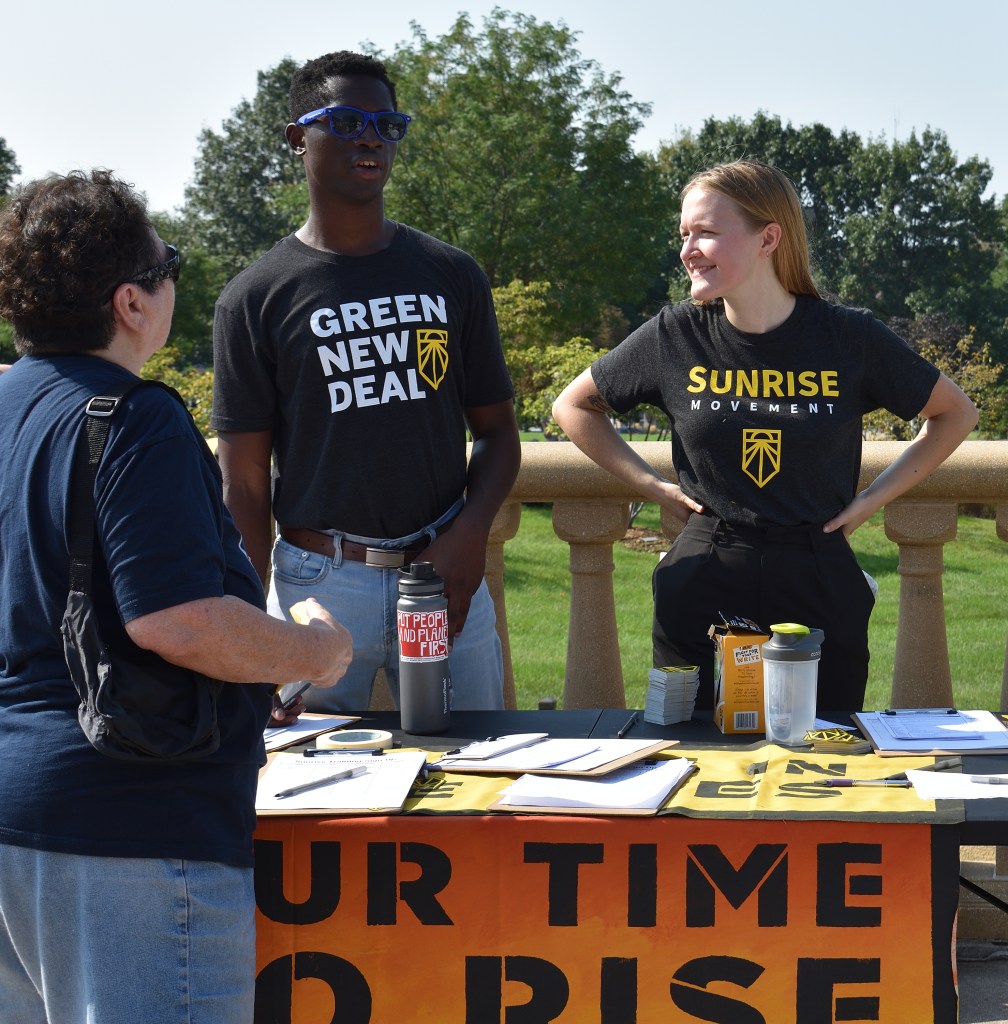
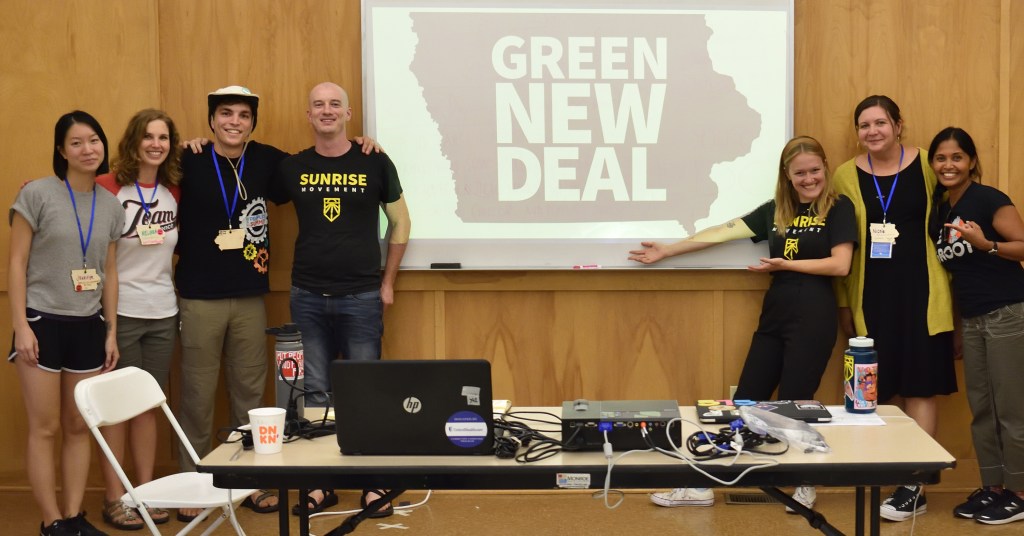
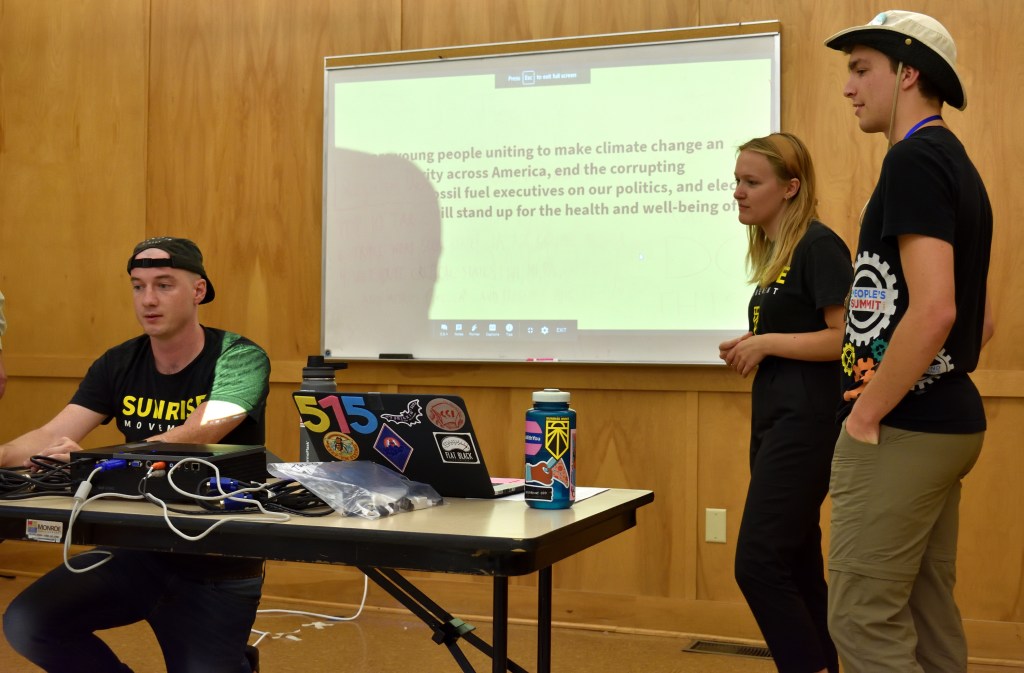
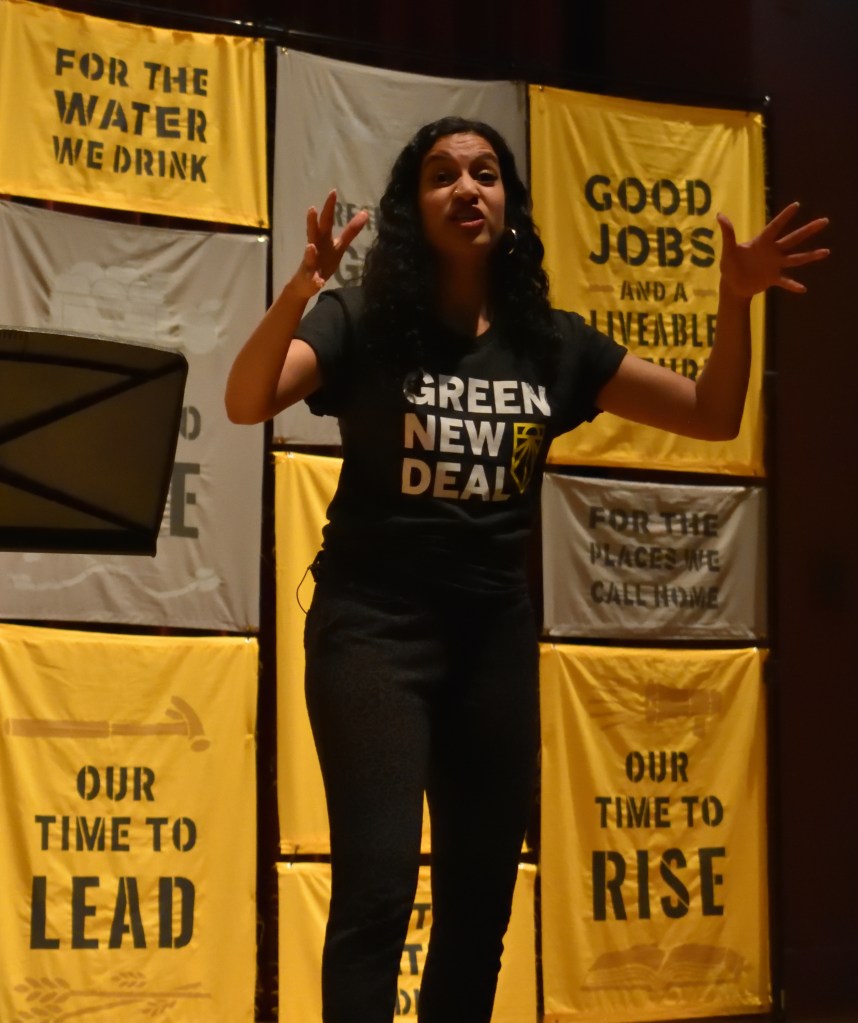
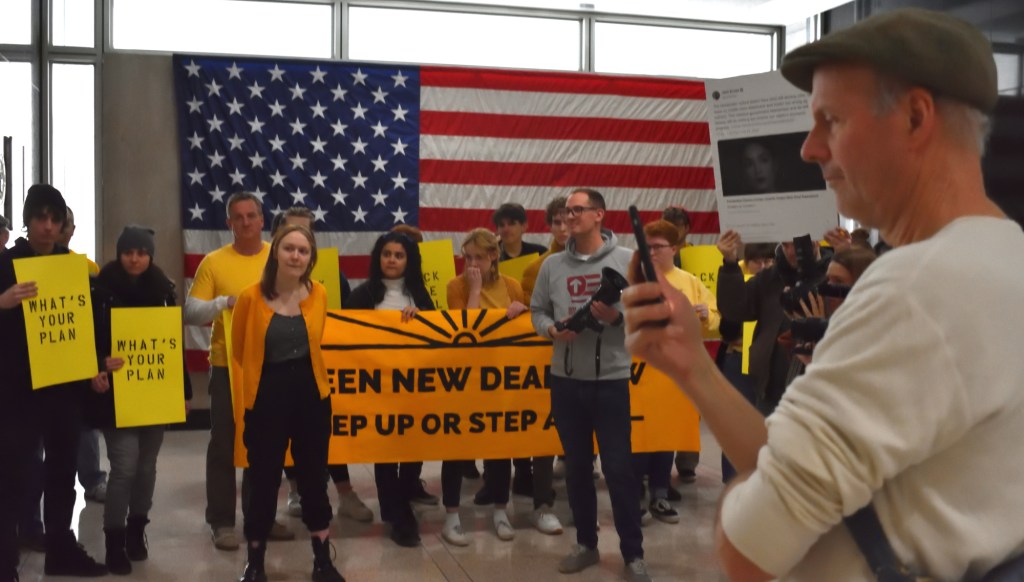
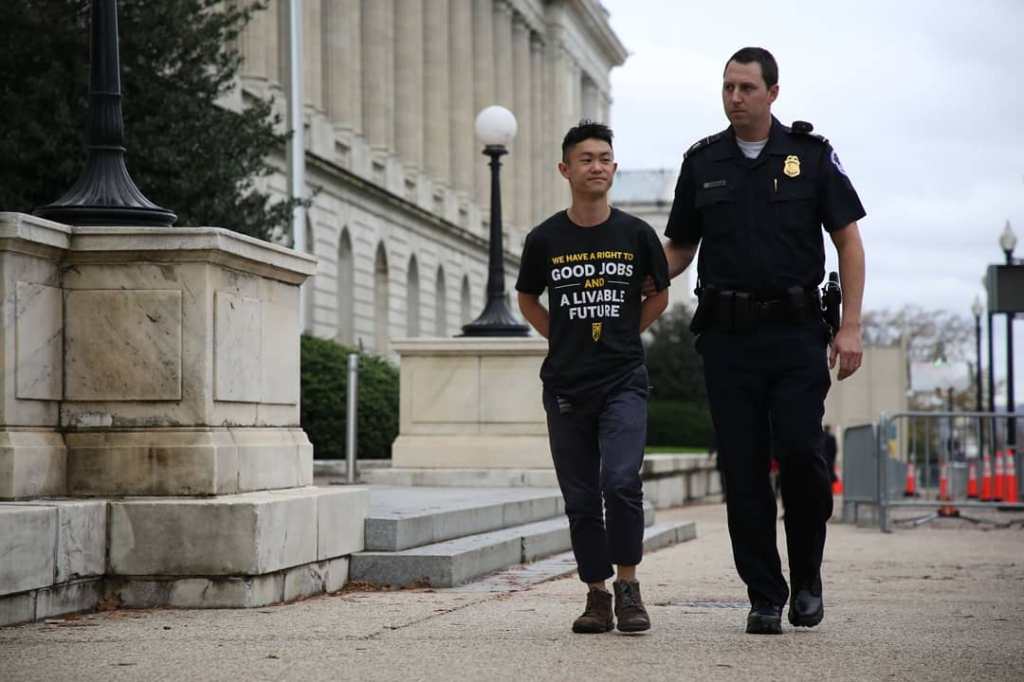
I recently summarized my involvement with the Sunrise Movement, beginning when the Movement made national news in November, 2018, and the Sunrise youth staged a sit-in at Speaker Pelosi’s office, some arrested for nonviolent direct action. One of Alexandria Ocasio-Cortez’s first acts as a new Congresswoman was to join these young people during the sit-in. The goal of Sunrise is to elect people to Congress who will pass legislation to build a Green New Deal. That can mean campaigning against an incumbent Democrat who does not support a Green New Deal.

There are strategic reasons the Sunrise Movement is led by young people less than 35 years of age:

Sunrise’s decision to be youth-led and youth-centered is both a strategic and cultural one. In the climate crisis, young people face an unfortunate reality: every one of us will see the devastating effects of climate change in our lifetime. We have inherited a crisis that we did not create— and there is a story to tell about a new generation of Americans who are standing up to protect their future. Throughout history, we have seen that youth voices hold a unique moral clarity, and the climate crisis is no exception. Choosing to focus on young people is a key part of our strategy to reach millions.

And although I have never heard anyone say this, I also see this as “you adults had your chance and failed. Now its up to us.” It took bit to adjust from one who leads to one who follows, but I’ve made the transition.

If you are an adult who has been an activist, this is your chance to invite young people you know into an organization focused on youth.

I can’t say enough how much I respect how well organized the Sunrise Movement is. One reason is the focus on sharing stories. During the online Zoom meetings I have participated in, almost every one includes at least one breakout session. This is when those on the call are divided into small groups, so those in the group can see and talk with each other. This is a highly effective way to make everyone feel they are part of the meeting.

The purpose of this post is to make more young people aware of the Sunrise Movement, especially now that plans for this year are about to begin with nationwide Launch Parties January 29. Wednesday I joined an online Zoom meeting to learn about the plans.

The Sunrise Movement has always been predicated on the idea of mobilizing masses of people. Currently 1,554 Launch Parties are planned for January 29th in cities and towns across the country.

https://www.sunrisemovement.org/2020-launch-parties

Together, we will change this country and this world, sure as the sun rises each morning.

https://www.sunrisemovement.org/

Posted in civil disobedience, climate change, Green New Deal, Sunrise Movement, Uncategorized | Leave a comment

Mni Wiconi: water threatened again!

Following is from Chase Iron Eyes, Legal Counsel, The Lakota People’s Law Project:

In 2016 and ‘17, you stood with Standing Rock because you knew the importance of the Lakota maxim: Mni Wiconi — water is life. Decades back, a liberal Congress understood that, too, which is why a conduit that carries fresh water from the Missouri River to the Pine Ridge Indian Reservation is named the Mni Wiconi Rural Water Supply System.

As described here by the Guardian, the Oglala Lakota Nation gets about half of our water through the Mni Wiconi. The other half comes from private wells and the deeper Ogallala and Arikaree aquifers. If the Keystone XL oil pipeline (KXL) is completed, it will traverse the Mni Wiconi in two locations, cross tributaries that flow into the Missouri River, and endanger both our aquifers. There literally isn’t a drop of our water supply that isn’t threatened by KXL.

If that isn’t scary enough, uranium mining — licensed by the Eisenhower and Nixon administrations in the 1950s and ‘60s and tied to nuclear weapons manufacturing — has, at times, contaminated water near Pine Ridge. Extraction looms over us in multiple ways, threatening our water and threatening our health.

“Hot Water,” a powerful documentary available on Amazon, talks about the tragic effects of contamination on our people. The filmmakers have generously allowed us to share a special excerpt with you here.

Oglala Lakota President Julian Bear Runner and I were both unlawfully arrested in 2017 for trying to stop the Dakota Access pipeline from traversing our Oceti Sakowin Oyate — with all charges now dismissed.

In 2020, we pledge to keep fighting to safeguard water by attending to contamination issues and by doing all we can to stop KXL in its tracks.

I wish a happy New Year to you and yours, and I ask that you stay active with me in this battle. By holding our coalition together, we water protectors can and will continue to make a tremendous difference.

Wopila — Our gratitude for your attention.

Chase Iron Eyes

It is frustrating that the Keystone XL pipeline never seems to go away. I became involved when I attended training sessions to become an Action Leader in the Keystone Pledge of Resistance campaign, in the summer of 2013.

The Keystone Pledge of Resistance was a successful campaign to draw people into a nationwide movement. This Pledge was on the Internet, where people could sign it. This created a pool of people across the country. Eventually over 90,000 people signed it. Of course not nearly that many people became actively involved. Around 400 people were trained as Action Leaders, who in turn trained about 4,000 people locally to participate in nonviolent direct actions.

“I pledge, if necessary, to join others in my community, and engage in acts of dignified, peaceful civil disobedience that could result in my arrest in order to send the message to President Obama and his administration that they must reject the Keystone XL pipeline.”

Rainforest Action Network (RAN), CREDO, and The Other 98% developed the Keystone Pledge of Resistance, March 6, 2013. 

Along with three other Action Leaders in Indianapolis, we designed a nonviolent direct action, which was to block the doors of the Federal building, if it appeared the Obama administration was about to approved the Keystone permit. President Obama eventually decided not to approve that permit.

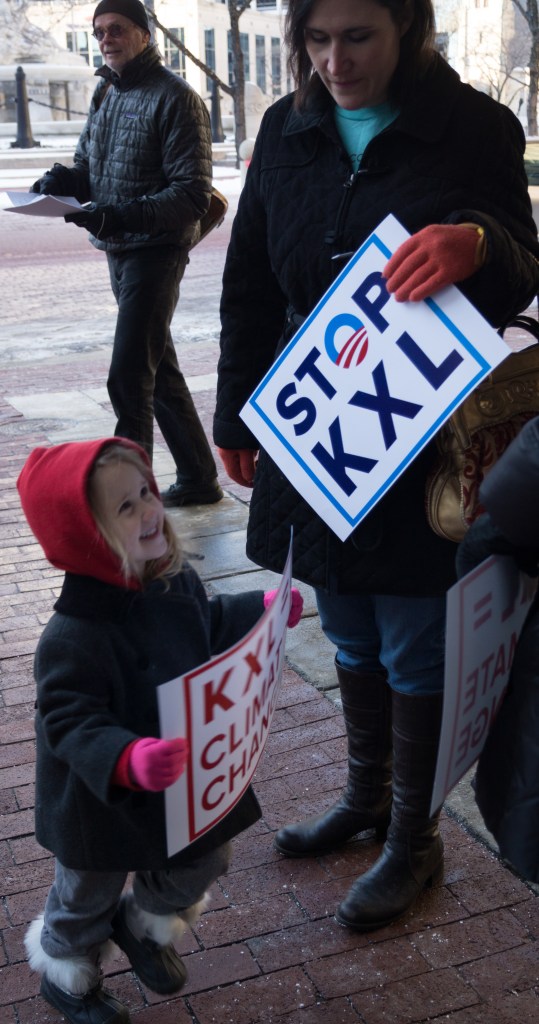
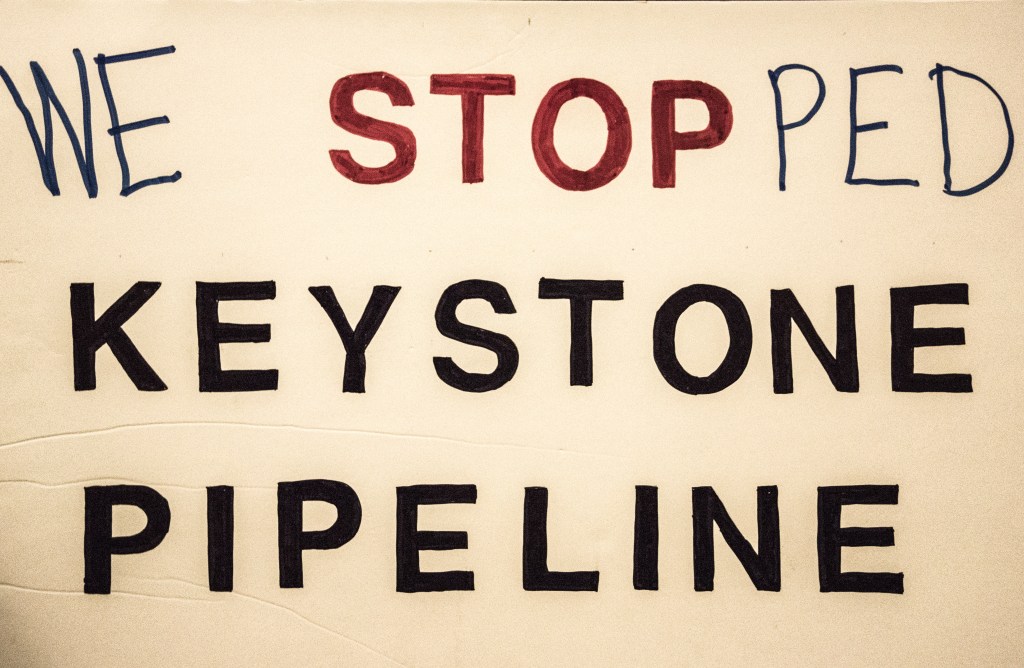
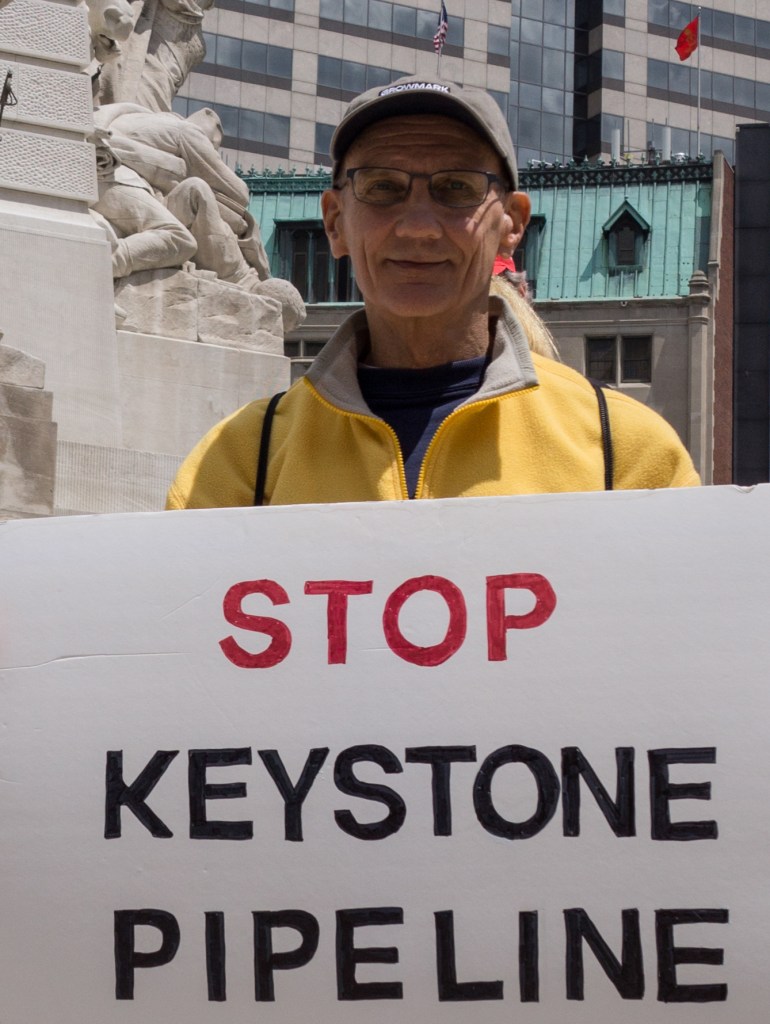
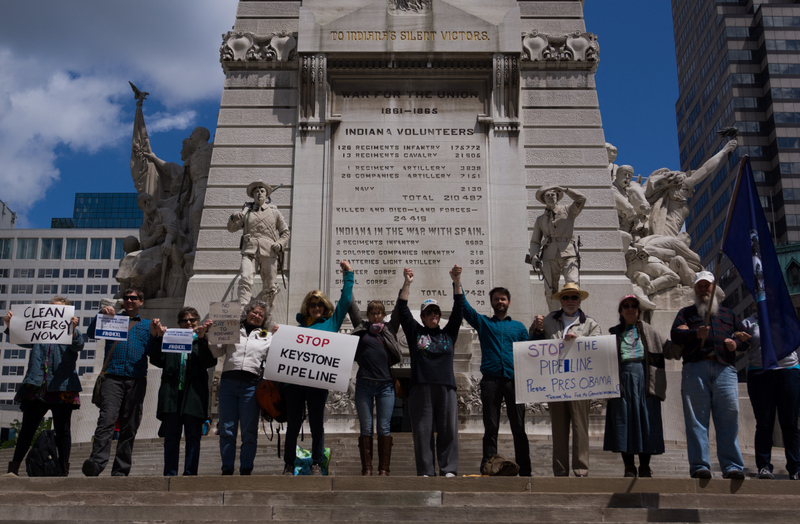
We held multiple events to try to raise public awareness about the pipeline. There was a weekly peace vigil in downtown Indianapolis that was held in front of the very building, the Federal building where our action would occur. Each week I held a sign saying Stop Keystone Pipeline.

One project my friends Derek Glass, Andrew Burger and I did to raise awareness about Keystone was to create this video.

Posted in civil disobedience, Keystone Pledge of Resistance, Uncategorized | Leave a comment

Sample Letter to John Horgan

Judy Todd has graciously given permission for us to use her letter below as a template for our own letters to British Columbia Premier, John Horgan, regarding the threatening situation in the unceded Wet’suwet’en territories.


John Horgan,

I am sad and appalled at the prospect that as the Premier of British Columbia, you are not honoring the tribal rights and unceded Wet’suwet’en territories and are threatening a raid instead. It is clear that history, past and future, is not on your side, and that this action in support of the Coastal Gas Link Project is mis-guided, wrong-headed and doomed for failure sooner or later.

I ask you to call off your militarized police and meet with the Wet’suwet’en Hereditary Chiefs, working out agreements and understandings. It is the right action now. People such as myself throughout the whole world are watching you and your government’s actions. We will remember and hold you to account, as will future generations.  

Meet with the Chiefs and hear their demands: 

  • That the province cease construction of the Coastal Gaslink Pipeline project and suspend permits.
  • That the UNDRIP and tribal rights to free, prior and informed consent (FPIC) are respected by the state and RCMP.
  • That the RCMP and associated security and policing services be withdrawn from Wet’suwet’en lands, in agreement with the most recent letter provided by the United Nations Committee on the Elimination of Racial Discrimiation’s (CERD) request.
  • That the provincial and federal government, RCMP and private industry employed by CGL respect Wet’suwet’en laws and governance system, and refrain from using any force to access tribal lands or remove people.

Thank you for your attention. I pray for your right action. 


Wet’suwet’en Hereditary Chiefs Urge Diplomacy From Premier Horgan In Coastal GasLink Dispute

FOR IMMEDIATE RELEASE – Wet’suwet’en Hereditary Chiefs Urge Diplomacy From Premier Horgan In Coastal Gaslink Dispute:

January 15, 2020, Smithers, (B.C.) – Wet’suwet’en Hereditary Chiefs are collectively calling for diplomacy in light of B.C. Premier John Horgan’s recent statements in relation to the Coastal GasLink pipeline project on unceded Wet’suwet’en territory in northern B.C.

We urge Premier Horgan to meet with the Wet’suwet’en Hereditary Chiefs, rather than rely on a B.C. Supreme Court injunction order to justify infringement of our title and the forcible or violent removal of our peaceful members from our unceded territories.

On Monday, Horgan stated publicly that the “rule of law” applies in B.C., and that the project will proceed despite the longstanding opposition of Wet’suwet’en Hereditary Chiefs. Horgan argued that BC’s legislation to implement the United Nations Declaration on the Rights of Indigenous Peoples is forward-looking and does not apply to Coastal GasLink.

These comments are contrary to his March 16th, 2019 address at a balhats (potlatch) hosted in Witset, where Wet’suwet’en people collectively witnessed Horgan’s commitment to “genuinely work together with hope and optimism for a better future not just for ourselves but for the generation after us and the generation after that.” Horgan stated that the feast marked the start “of a great, great beginning for the Province of British Columbia and the Wet’suwet’en People.” Our teachings expect that leaders show integrity and honour their words.

As plaintiffs in the landmark Delgamuukw-Gisday’wa proceeding, the Supreme Court of Canada held that our title to our lands has never been extinguished. Canadian courts have subsequently confirmed that governments and companies must seek the consent of Indigenous titleholders before proceeding with the development of our lands. The Province has undermined the Hereditary Chief’s authority throughout this entire project by funding and supporting new entities, and consulting those who lack jurisdiction over our territories.

Premier Horgan’s statement that all permits are in place for the project is also misleading. In 2019 Dark House filed an application for judicial review challenging the Province’s decision to allow work on the project to proceed without consultation after artifacts were discovered in the project area. That proceeding is still before the courts.

In addition, BC EAO is currently reviewing CGL’s final report on environmental, economic, social and community effects of the pipeline within Unist’ot’en and Gidimt’en territories. CGL’s report failed to mention the Unist’ot’en Healing Center, a permanent institution inside the study area boundary, valued at $2.5 million dollars and operating with a $400,000 grant from the First Nations Health Authority to expand land-based trauma and addictions treatment programming. By BC EAO guidelines, CGL’s report should be rejected and authorization denied for construction in this highly contested zone.

Premier Horgan’s comments came on the same day the RCMP established a police barricade in Wet’suwet’en territory restricting individuals from entering or leaving the area without authorization, initiating their enforcement of the injunction order.

“The problem we are faced with is that the Horgan government has invested billions of dollars of taxpayer’s money to subsidize the CGL project. This investment is being used to undermine Wet’suwet’en authority and empower CGL to proceed using the full force of the RCMP and judicial system,” asserts Hereditary Chief Dsta’hyl.

“Premier Horgan’s [recent] statements are deeply misleading and disrespectful.” They disregard our authority to grant free prior informed consent for projects on our lands, and “make a mockery of the Province’s commitment to reconciliation and implementing the UN Declaration” says Chief Namoks. “We have been asking the Premier to meet with us since the beginning of this conflict. Premier Horgan has a responsibility and a moral obligation to come to the table. He shouldn’t be hiding behind the RCMP or the company. He should be talking to us directly about how we can work together to protect our lands and maintain public safety.”

For information contact:

Media Coordinator, Jennifer Wickham, Gidimt’en Clan:
yintahaccess@gmail.com

Chief Namox, John Ridsdale, Tsayu Clan:
tsayu2@yahoo.ca

Posted in decolonize, Indigenous, Uncategorized | 1 Comment