Coronavirus Effects

We all hope the coronavirus runs its course as quickly as possible. In the meantime, many people are noting a variety of positive effects that responses to the virus are having. The question is whether these effects will persist after the virus is gone. What can we do to retain the positive effects?

Most noticeable effects are related to significantly reducing interactions with others.

  • The use of fossil fuel is decreasing dramatically because of reduced transportation by airplanes, trains and cars.
  • One adaptation to minimize contacts with others is to work from home. Many employers and employees now see this works. See that driving to work isn’t necessary for many types of jobs. In many cases it would be great to continue to work from home. Benefits obviously include decreased use of fossil fuels, but also not facing the stress of the daily commute, and having more time to spend with family.
  • Many educational institutions are implementing or expanding online learning. Besides reducing fossil fuel use, think of the tremendous savings of not having to maintain classrooms and libraries. This could break the burden of high tuition and student debt. My favorite is getting away from lectures, not the way I like to learn. Collaborative online educational projects can be more effective and enjoyable.
  • Many medical clinics are encouraging people to connect first by phone, to avoid the spread of the virus. Telemedicine can help beyond the initial contact with the clinic. Physicians can see patients with online video. People can take advantage of getting prescription drugs by mail.

The following is from an email from my friend Ed Fallon of Bold Iowa.

Coronavirus and Climate

In all seriousness, the coronavirus, as well as the implied risk of a global pandemic, is not to be taken lightly. For details, check out the 1918 global influenza outbreak that sickened 500 million people and killed 50 million.

That said, it’s astounding that so much ink, airtime, and bandwidth are spent on the coronavirus while the present danger of climate chaos is mostly ignored as it wrecks havoc across the globe — particularly in poor communities and the world’s most vulnerable nations.

As this article in The Guardian points out, the coronavirus scare has “disrupted several events linked to the fossil fuel industry. In the past few weeks, the Geneva Motor Show was cancelled, after Switzerland banned all public gatherings of more than 1,000 people. In Houston, the giant annual CeraWeek gathering of oil and gas executives was called off, as was the Formula One grand prix in Shanghai.”

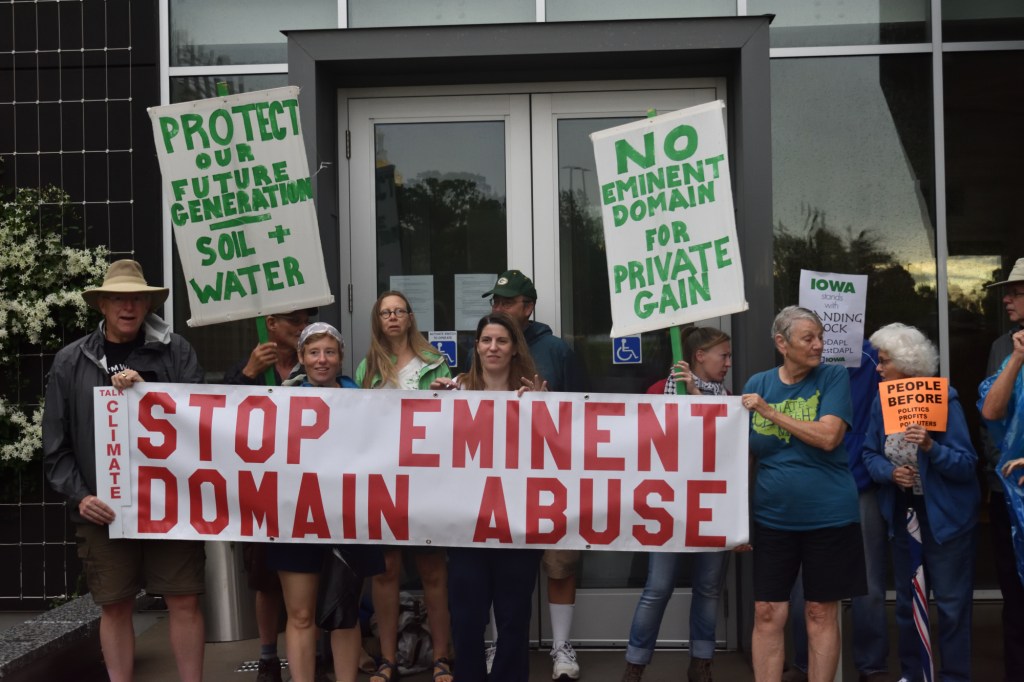
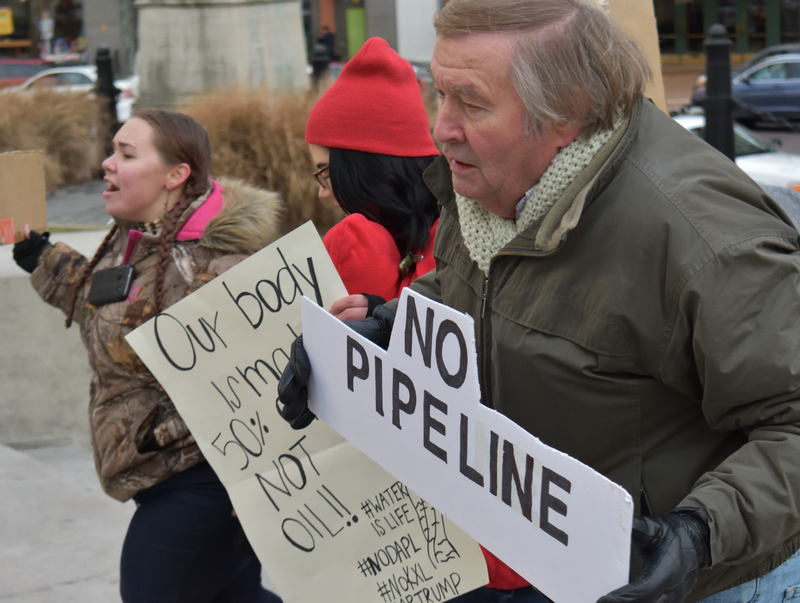
Closer to home, this past week saw Energy Transfer’s (ET) stock drop 30.82 percent. That’s a huge hit at a time when ET hopes to convince regulators in Iowa and Illinois to let it double the flow of oil through the Dakota Access Pipeline. Authorities in both North Dakota and South Dakota have, alas, already given ET the green light. But the Iowa Utilities Board and Illinois Commerce Commission have expressed reservations about the proposal. Perhaps this week’s stock shock will give regulators further reason to say “no.” (See photo at right from protest organized by Save Our Illinois Land and other groups prior to last week’s Illinois Commerce Commission hearing.)

Back to The Guardian story, which nicely sums up what the response to the climate crisis oughta be: “Governments should act with the same urgency on climate as on the coronavirus, leading campaigners say, as evidence mounts that the health crisis is reducing carbon emissions more than any policy.”

It’s too early to tell, but perhaps the coronavirus will do more to curtail greenhouse gas emissions than the goals agreed to at the 2015 Paris Climate Accord — which most of the world’s nations, especially the biggest emitters, have done little or nothing to meet. See this story in The Guardian for details.

Coronavirus and Climate, Ed Fallon


Global air traffic decreased by 4.3% in February with cancellations of tens of thousands of flights to affected areas. But Rob Jackson, the chair of Global Carbon Project, said this would only be meaningful if it led to long-term behavioural change, particularly in aviation, which is one of the fastest growing source of emissions.

“If this could change the way we travel, it could lead to more virtual meetings,” he said. Otherwise, “I see no silver lining to the coronavirus. If gas emissions drop temporarily then great, but it won’t be a meaningful change in the long term unless it shocks us in a global recession. Nobody wanted that in 2008 and nobody wants it now.”

Coronavirus could cause fall in global CO2 emissions. Responses to outbreak also show how government policy and behavioural changes can have impact by Jonathan Watts, The Guardian, March 10, 2020


The dramatic fall of oil prices could upend the American fracking industry, analysts said Monday, as panic over the coronavirus outbreak lessened global demand and Saudi Arabia and Russia flooded the market with new supply.

Now the fracking industry, which President Donald Trump sought to expand with hard-line support for increased fossil fuel production, faces potential ruin. The spread of the coronavirus, which causes the disease known as COVID-19, is grounding flights and halting factory production in China, while rival producers oversupply the market to defend their share. Fracking, a ballyhooed but financially fragile sector, struggled to stay afloat with crude selling at $50 per barrel. If prices stay around $30, or even fall as low as $20, U.S. frackers simply might be unable to keep up.

“It’s a financial bloodbath,” said Clark Williams-Derry, an analyst at the Institute for Energy Economics and Financial Analysis. “With oil prices at the current level, there’s a real risk many of them will simply go bankrupt.”

Plummeting Oil Prices Could Force A Reckoning For The American Fracking Boom. A price war led by Saudi Arabia and Russia is crushing the price per barrel just as the coronavirus is hurting demand By Alexander C. Kaufman, HUFFPOST, Mar 9, 2020


At a time when the energy sector is weighed down by debt and reeling from low commodity prices, American energy producers are now bracing for the biggest demand shock to hit the markets in decades: the effects of the coronavirus outbreak in China and beyond.

The outbreak has already claimed more than 2,600 casualties and infected nearly 80,000 globally, including 3,000 medical staff in China. 

While the outbreak may not sweep the globe as swine flu did in 2009, the fear of a global epidemic managed to shave 975 points off the Dow Monday morning, and experts seem to agree that the economic effects of the fallout are likely to be more severe. 

UBS recently warned that it could drag global economic growth to near negative levels during the first quarter of the year and cause the worst growth slowdown since the 2008 crash.

Here are the three energy sectors that are likely to be hardest hit by the coronavirus epidemic, and why:

#1 Oil, Grounded by Demand

Oil and natural gas prices have remained low for the past year and could remain that way with the biggest oil importer now grounded. 

China, the world’s top oil importer, bought 41.24 million tonnes of crude in 2019, equivalent to 10.04 million barrels per day (bpd). But just two months after the outbreak of the virus, Chinese oil demand is down sharply because of dwindling air travel, road transportation and manufacturing. 

#2 Natural Gas, Already A Wreck

Natural gas prices recently tumbled to historical lows and are down nearly 15% since the start of 2020 with excess supply and inventory build up pressuring prices. The coronavirus outbreak is not helping the situation, either. 

The global LNG leader Royal Dutch Shell has warned that the coronavirus outbreak is already hurting LNG demand and forcing it to reroute supplies previously earmarked for mainland China.

#3 Battery and Energy Storage

Last week, Utility Dive—which covers news and trends in the utility industry—warned that the coronavirus epidemic “… is going to be a very big deal” with respect to Chinese manufacturing.

Eight provinces in the country have already announced work stoppages as a result of the outbreak, which has negatively impacted multiple solar manufacturing campuses. This is highly significant considering that most of the world’s solar panels are made in China.

China also happens to be home to most of the world’s lithium-ion battery manufacturing. Utility Dive has warned that the country’s battery storage production capacity could contract by 10%–or 26 GWh–compared to earlier forecasts.

3 Energy Sectors Most Threatened By The Coronavirus By Alex Kimani, Oilprice.com – Feb 24, 2020


But the most recent drop in gas prices is a result—at least in big part—of the reduced economic activity in China due to Covid-19. Economic activity and consumption of oil in China are down significantly. The International Energy Agency has cut its demand outlook by 30% in response. Prices are dropping like a stone and have already reached the point where new fracking is barely profitable, if at all.

Coronavirus may be the straw that breaks the back of oil fracking, pribizco, Finance Market House, Feb 16, 2020

Posted in Uncategorized | Tagged | 2 Comments

Canada and U.S. – Banks, Corporations and Railroads

The following stories show the variety of ways being used to try to stop fossil fuel projects in both the U.S. and Canada.

A federal appeals court affirmed on Wednesday a lower court ruling that held it could order a freight railroad company to stop running 100-car trains packed with crude oil through tribal land in Washington state.

There have been actions against the banks funding fossil fuel projects. And against the company, TC Energy, behind the Coastal GasLink (CGL) and other pipelines.

And there are a variety of reasons for these actions: Indigenous land and political rights, to bring attention to the epidemic of Missing and Murdered Indigenous Women (MMIW), to stop the pollution of waters with cancer causing chemicals, to cut greenhouse gas emissions and to protect Mother Earth, now and for future generations.

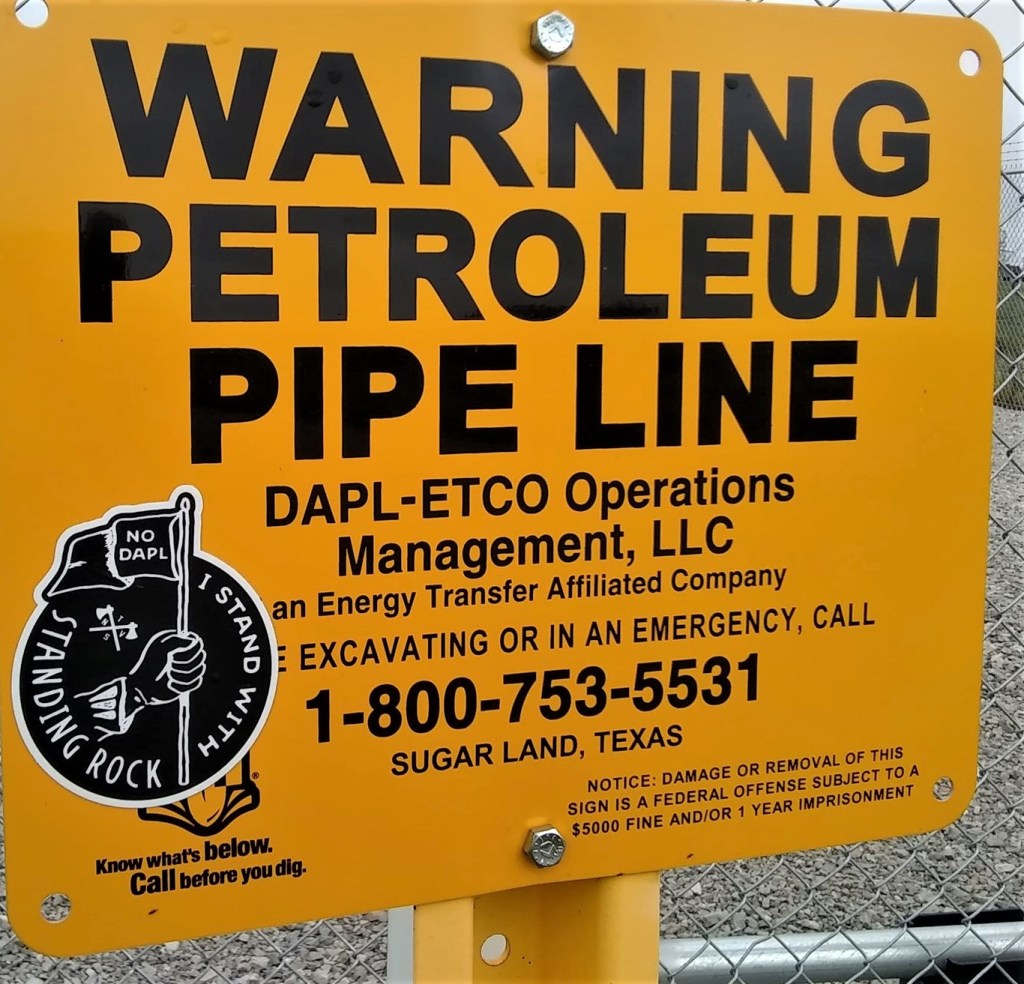
It is interesting to read, but not surprising, that the alternate route of the CGL pipeline proposed by the Wet’suwet’en was rejected because that would be too close to the urban British Columbia communities of Smithers, Houston, Terrace and Kitimat. The original route of the Dakota Access pipeline (DAPL) was near Bismark, N.D. When people there heard about that, they forced the route to be moved. Which is why the DAPL ended up being build next to the Standing Rock Reservation.


Protesters have blocked railways and barricaded ports in wave of dissent – and the pressure on Justin Trudeau has increased

As armed Canadian police officers advanced through snow towards their camp, the group of Indigenous women was absorbed in a drumming ceremony to honour the spirits of missing and murdered Indigenous women across the country.

Rows of red dresses hung from a fishing line slung across the road, and from pine and spruce trees in the surrounding forest – each one a memorial to the thousands of Indigenous women killed or disappeared in recent years.

A pair of helicopters buzzed overhead, but on the ground, the women’s voices and drums drowned out the officers as they warned them to leave or face arrest.
“We remained in ceremony – even as the tactical officers surrounded us and began pick off individuals,” said one of the women, Dr Karla Tait.

Set amid dense evergreen forests near the bank of the Wedzin Kwah, or Morice River, the remote cabins at Unist’ot’en camp have become a place of healing for Indigenous youth, who take lessons on trapping and traditional medicines.

But the camp in north-western British Columbia is also the last line of defence in the Wet’suwet’en nation’s fight against a controversial natural gas pipeline.

The long-simmering conflict came to a head this week, as Canada’s national police force deployed helicopters, armed officers and dogs to enforce a court injunction and clear Indigenous activists who had been blocking work crews from the route of the C$6.6bn (US$5bn) Coastal GasLink project.

Twenty-eight people were arrested by the Royal Canadian Mounted Police, including three Wet’suwet’en matriarchs – Tait, Freda Huson and Brenda Michell

Canada: protests go mainstream as support for Wet’suwet’en pipeline fight widens by Amber Bracken at Unist’ot’en Camp and Leyland Cecco in Toronto, The Guardian, 2.14.20


March 10, 2020.
Over 70 of water protectors shut down the TC Energy (TransCanada) building in Charleston, WV in solidarity with Unist’ot’en! 4 people locked down together as part of the blockade, and a warrior flag symbolizing Indigenous power was raised, replacing the US flag outside of the building. Banners on site included, “SOLIDARITY WITH WET’SUWET’EN,” and “JUSTICE FOR MMIW [MISSING AND MURDERED INDIGENOUS WOMEN].”

Despite the peaceful nature of the action, DOZENS of cops (primarily from the City of Charleston) responded in force, screaming and violently shoving protesters out of the lobby. They dragged the people whose necks were locked together outside, piling people on top of one another. Folks were repeatedly pushed around and roughed up, but luckily no one was seriously injured. After cops cut the locks around the necks of those locked down, the group dispersed. No arrests were made.

Today’s action was a response to Unist’ot’en Camp’s call for solidarity with the Wet’suwet’en struggle to defend their unceded territory in so-called British Columbia, Canada, from TC Energy’s Coastal GasLink pipeline and the Canadian government. Indigenous people, Appalachian people, and all land defenders stand in solidarity to say WET’SUWET’EN STRONG. SHUT DOWN CANADA. SHUT DOWN TC ENERGY.

Additional statements from folks who locked down today:

“I am here in solidarity with every missing Indigenous woman, with all of the earth and its peoples who have been pillaged and destroyed by the vicious and relentless systems of capitalist extraction and colonialism. I’m here because there is everything to lose — our means of survival and that of all other life on the planet, and because there has been so much loss. Because there is hope in the tiny rebellions. Unending solidarity with the Unist’ot’en fight, and the Wet’suwet’en people, now and forever.”

“The enclosure of land and extraction of its resources is an age old arm of settler colonial violence. I am here because colonialism is ongoing, because our lives and the lives of generations to come depend upon the liberation of the earth and all of its inhabitants. I am here because indigenous women are being disappeared, and that too is an arm of settler colonialism — the one that assaults the bodies of women, queer people, the vulnerable. We all need to fight together to win.”

Appalachians Against Pipelines 3.10.2020

Image may contain: night
Photo credit to Dave Parry outsidetheimage.com
No photo description available.
Photo: Appalachians Against Pipelines

Christopher Francisco Portland, Oregon, March 5, 2020. CHASE Bank closed when land protectors came.


Image may contain: 1 person, sky and outdoor

#ShutDownCanada !!
We are going to continue with the blockade on Highway 6 because what the Canadian RCMP is doing to the Salish on Wet’suwet’en Land is wrong and effects and Disrespects all of our indigenous rights, Canada is going to suffer real consequences because it was their own idea too put Highways and Rail Roads through indigenous territory’s and we will block it off so these corperate industries suffer the real consequences. As indigenous people we are Reclaiming our power ✊🏾 #Landback
Photo credits too Summer Leigh 📸


In the United States 9th Circuit U.S. Court of Appeals

A federal appeals court affirmed on Wednesday a lower court ruling that held it could order a freight railroad company to stop running 100-car trains packed with crude oil through tribal land in Washington state.

A three-judge panel of the 9th Circuit U.S. Court of Appeals found that a district court could force BNSF Railway Company not to use tracks on Swinomish Indian Tribal Community reservation land to carry crude oil from North Dakota’s Bakken formation, saying the transport violated a long-standing agreement reached under the 1948 Indian Right of Way Act (IRWA) that limits the number of railcars that can use the tracks daily.

9th Circuit says Indian tribe may stop oil train traffic on reservation
by Sebastien Malo, Reuters, 3.5.2020


As rallies spring up across Canada to support Wet’suwet’en hereditary chiefs fighting the Coastal GasLink pipeline in northern B.C., an increasing number of people are wondering: Why doesn’t the company use an alternate route to avoid opposition?

Former NDP MP Nathan Cullen raised the idea several times when he was still an elected representative for the region. More recently, Green Party MP Paul Manly returned from a January visit to the region with the idea — one he said came from the hereditary chiefs themselves.

“The Wet’suwet’en hereditary chiefs provided alternative routes to Coastal GasLink that would have been acceptable to them as a pipeline corridor,” he said in a statement last month.

“Coastal GasLink decided that it did not want to take those acceptable options and instead insisted on a route that drives the pipeline through ecologically pristine and culturally important areas.”

The $6-billion, 670-kilometre Coastal GasLink pipeline would move natural gas from near Dawson Creek, in northeastern B.C., to a coastal LNG Canada export terminal in Kitimat. It is a key component of a $40-billion project announced by the federal and provincial governments last fall.

Why it was rejected
In a letter provided to CBC by the Office of Wet’swuwet’en, Coastal GasLink says it explored the possibility of using the McDonnell Lake route through aerial and computer reviews, and by meeting with representatives of Pacific Northern Gas.

The letter — dated Aug. 21, 2014 — also outlines reasons Coastal GasLink rejected the route, including:

It would increase the pipeline’s length by as much as 89 kilometres, upping both the environmental impact and as much as $800 million in capital costs.

The pipeline’s diameter, at 48 inches (121 cm), is too large to safely be installed along the route. (Pacific Northern’s pipeline is between 10 and 12 inches (25-30 cm), and the proposed upgrade would be 24 inches or 60 cm.)

The McDonnell Lake route would be closer to the urban B.C. communities of Smithers, Houston, Terrace and Kitimat.

Re-routing the pipeline would impact an additional four First Nations who had not already been consulted by Coastal GasLink, which would add up to one year of delays to the construction process.
Why Coastal GasLink says it rejected a pipeline route endorsed by Wet’suwet’en hereditary chiefs. Alternate route was too costly and posed greater environmental risks, company says by Andrew Kurjata · CBC News · Feb 16, 2020


Posted in civil disobedience, climate change, decolonize, Indigenous, Native Americans, Uncategorized, Unist'ot'en, Wet’suwet’en | Leave a comment

Wet’suwet’en Land Re-occupations and Likhts’amisyu

Wet’suwet’en Land Re-occupations:

Several Wet’suwet’en clans have re-occupied their traditional territories (outside of the reservations alloted by alloted by Canada), in order to revitalize their culture, traditional harvesting practices, and generations of storytelling embedded in the land. These re-occupations include:

Unist’ot’en Village: Gilseyhu clan, Dark House
Talbits Kwa territory, which belongs to Dark House
Head Hereditary Chief Knedebeas
Spokesperson: Hawilhkat / Freda Huson

Unist’ot’en Village is an Indigenous re-occupation of traditional territory. Over the past 10 years, Dark House members and supporters have built a series of cabins, a permaculture garden, greenhouse, and a Healing Center to support members of the Wet’suwet’en community who are healing from addiction and colonial trauma. Unist’ot’en has implemented a Free Prior and Informed Consent protocol in accordance with UNDRIP and Wet’suwet’en law that requires any visitors to the territory to seek the consent of Dark House Hereditary Chiefs. This protocol was in place until the Coastal Gaslink Pipeline company, with support from the RCMP, forcibly entered the territory without consent to begin work on the Coastal GasLink Pipeline in January 2019. Unist’ot’en village is located 66km along the Morice River West forest service road, across the Morice River (Wedzin Kwah) Bridge. Dark House continues to run healing programs for clients at the Healing Center, despite continued industry destruction and police harassment. 
Gidimt’en Access Point: Gidimt’en clan, Cas Yikh (Grizzly) House
Lhudis Bin territory, which belongs to Cas Yikh house
Head Hereditary Chief Woos
Spokesperson: Sleydo / Molly Wickham

In Dec. 2018, in the Witset feast hall, the Gidimt’en clan announced their intention to set up a checkpoint at 44 km along the Morice River forest service road. The checkpoint would serve to protect Cas Yikh territory, as well as Dark House’s neighbouring territory (Talbits Kwa), including the Unist’ot’en Healing Center. The access point includes a number of canvas tents, a yurt, an outdoor kitchen, timber frame cabin, children’s play areas and gathering places. They host cultural events, hunting and berry picking workshops, and provide a space for Wet’suwet’en families, elders and children to access the land for cultural practices. The camp is located beside Ts’el Ka’i’ kwe (Lamprey creek), which is a traditional campsite, fishing site, and gathering place. On January 7, 2019, the camp was violently raided by heavily militarized RCMP in order to enforce Coastal GasLink’s interim injunction and ensure CGL’s access to Dark House territory for pipeline construction. After the raid, CGL demolished a number of camp structures to make room for construction equipment, and the RCMP temporarily occupied the site as a surveillance post until it was reclaimed by Gidimt’en clan members. It continues to operate as a gathering place for Wet’suwet’en people and the revitalization of their culture. 

Likhts’amisyu – Parrot Lake Village
The Sovereign Likhts’amisyu Village is an Indigenous reoccupation of a former Wet’suwet’en village site at Parrot Lakes. Since mid-2019, Likhts’amisyu members and supporters have built an outdoor kitchen and a series of log cabins, with the long-term vision of creating an environmentally sustainable community, interpretive trails, building a climate research facility, and protecting sacred sites on unceded Likhts’amisyu territory. 

Wet’suwet’en – RCMP Continue to Enforce Court Injunction by James Murray, NetNewLedger, Feb 9, 2020


The Likhts’amisyu are one of the 5 Wet’suwet’en Clan Groups. Since the last Ice Age we have governed ourselves on the ancestral territories without the influence of other Wet’suwet’en Clans or other Nations. For thousands of generations the protection and occupation of our lands have been central to how we derived our authority and sustained ourselves.

We are made up of three Houses: the Sun House; the Owl House; and the Twisted House. The Houses are lead by the Head Chief Smogelgem of the Sun House, the Head Chief Kloum Kuhn of the Owl House, and the Twisted House continues to be vacant of a Head Chief since the devastating disease epidemics which wiped out about 80% of our entire Wet’suwet’en population.

Today, the Likhts’amisyu are publicly mobilizing to reassert our authority on our lands. We have shown unwavering support to the Unist’ot’en since they’ve started their campaigns to stop Pipelines and Mining on their lands. When the Gidimt’en started their Access Point Occupation we showed up to lend our unwavering support.

We will be entering a path of litigation and occupation on our Yintahs. A law firm has been retained to assist us with the litigation front. Costs for the litigation path will quickly accumulate. A prefabricated cabin is packaged and ready to move onto our territories.

We need to ensure that corporate and state plans do not infringe and threaten our ability to govern and sustain ourselves. We are looking for people who can assist us with our goals of fundraising for this endeavor.

Our mission is to slow the acceleration of Climate Change and to restore and protect the Biodiversity of our Region. We strive to continue to educate and alert people about the effects of oil and gas extraction on our biosphere. Our litigation team is poised to help us take the lead in enforcing and changing Environmental Laws so that it reflects the crisis in which we are all in today.

To support financially:
https://paypal.me/pools/c/8bymlqo0Og
E-transfers: likhtsamisyu@gmail.com


Image may contain: cloud and sky
Image may contain: text
Posted in decolonize, Indigenous, Uncategorized, Unist'ot'en, Wet’suwet’en | Leave a comment

Asking the right question

This morning I’m thinking about my experiences as an old White man with Native people. Perhaps something said here might be useful to other White people who have been, or want to be in solidarity with the Wet’suwet’en or other Native people. I believe we need the leadership of Indigenous peoples to guide us through our deepening environmental chaos.

The central question of my life has been “why can’t people see and act on the damage we are doing to Mother Earth?” Although it often felt like it, I’m not the only one who has been asking that question. Indigenous peoples have watched this unfold for centuries.

For a long time people could ignore the massive amounts of greenhouse gases coming from their automobiles, especially after the advent of catalytic converters in the mid 1970’s. That meant auto exhaust/smog was no longer visible but the gases continued to pour out.

Perhaps a reason we have not made significant progress on climate change is because we have not asked the right question. I was blessed to hear the Indigenous leader Arkan Lushwala speak.

“Everywhere people ask, “what can we do?”
The question, what can we do, is the second question.
The first question is “what can we be?”
Because what you can do is a consequence of who you are.
Once you know what you can be, you know what you can do”

Arkan Lushwala
Arkan Lushwala

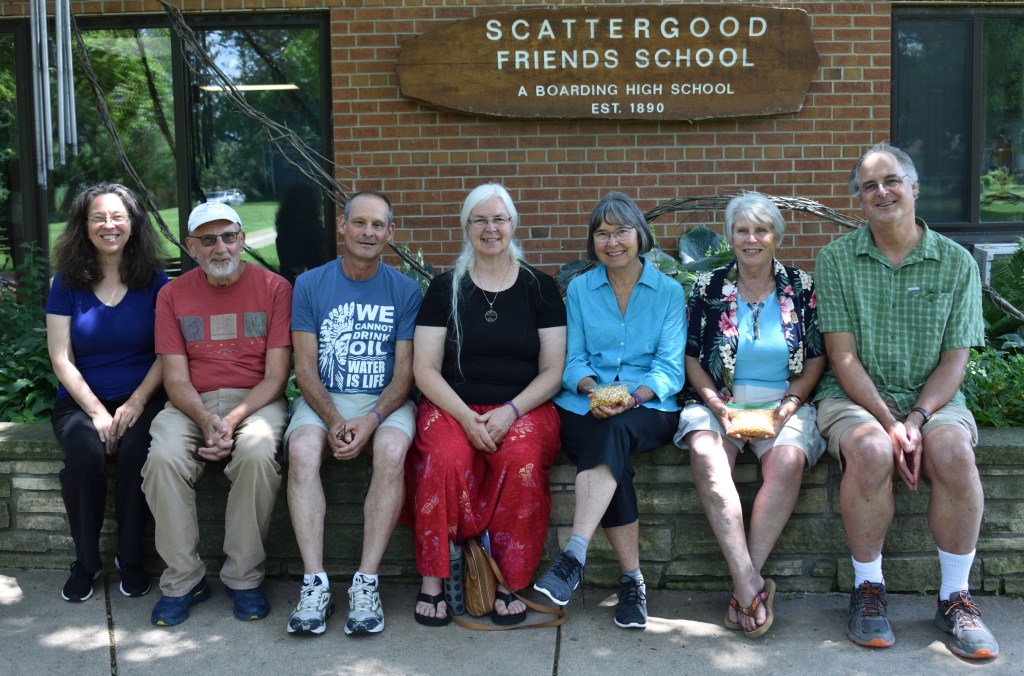
I was raised as a Quaker and attended Scattergood Friends School and Farm, a Quaker boarding high school. I was challenged to develop my spiritual life as the way for me to learn who I am.

Recently I have been blessed with opportunities to become friends with some Indigenous people. My spiritual life helped me make connections with these friends whose lives are their spirituality.

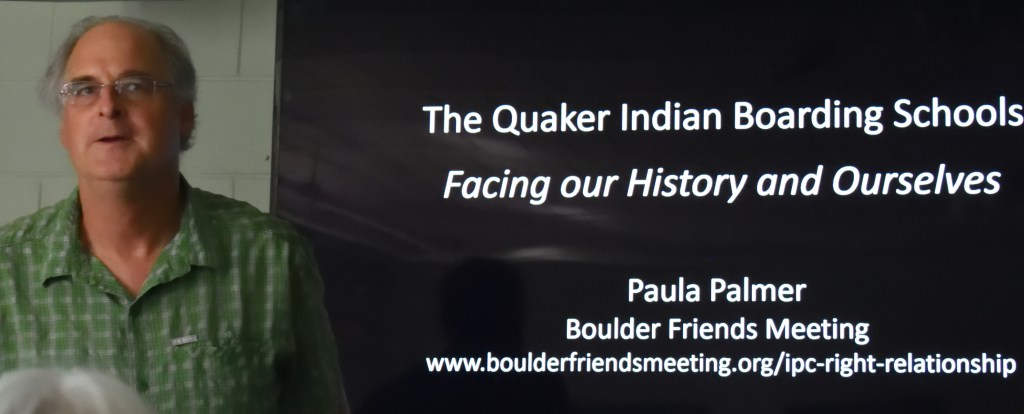
There was one thing I had to do, though, as I began to develop these relationships. I had to confront, within myself and then with my new friends, Quaker history related to Native peoples. Quakers were among those who taught at the Indian boarding schools that were created to assimilate native children into White culture. Forced assimilation, since these children were often forcibly removed from their families. All kinds of significant trauma occurred. Trauma to the children and to their families and communities. And that trauma has been passed from generation to generation.

“The past is never dead. It’s not even past.” William Faulkner, Requiem for a Nun

Many Quakers are very uncomfortable about examining this history. One reason is it doesn’t fit with the idea of Quakers doing good in the world. But that is one of the reasons I’m bringing this up now. Too many times Quakers and other social justice people have used the approach of implementing a solution they have come up with. And they think they should lead the implementation their solution.

That approach never works.

If you want to help, you must not try to assert any leadership. The affected community understands their situation and usually knows what the solution is. You should spend a significant amount of time in the community, in a way that fits with that community. The best thing you can do is listening deeply. After the community has begun to know and trust you, they will let you know what they need from you.

As I began to become friends with Native people, I became aware of this barrier about the Indian boarding schools between us. At first I wasn’t sure how much they knew about the Indian boarding schools. It was tempting hope they didn’t know, and to not bring this up.

Which shows my ignorance because they not only knew about those schools, but had their own experiences today related to the trauma that originated in the past. So there was no way we could get to know and trust each other if I didn’t bring this up.

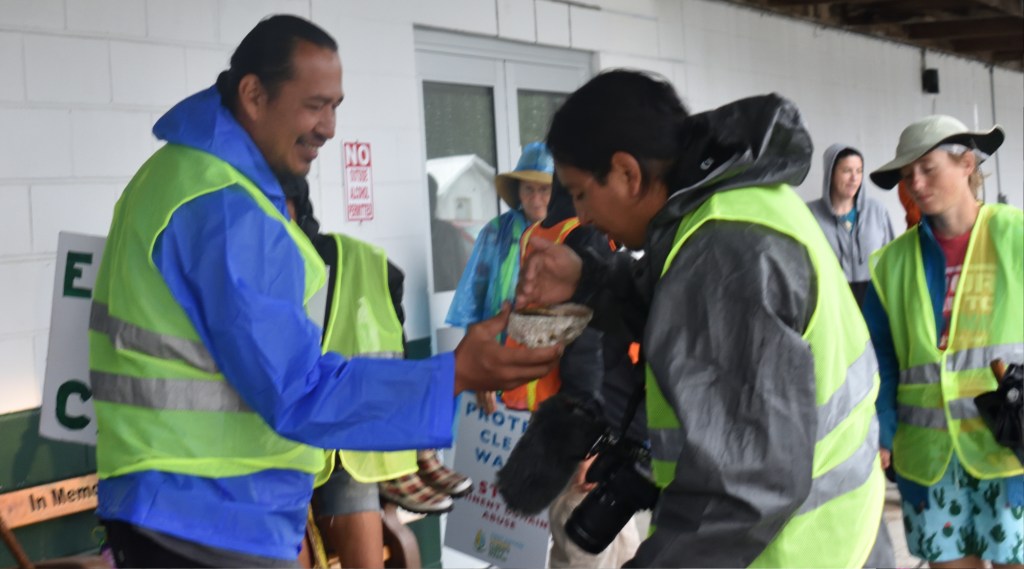
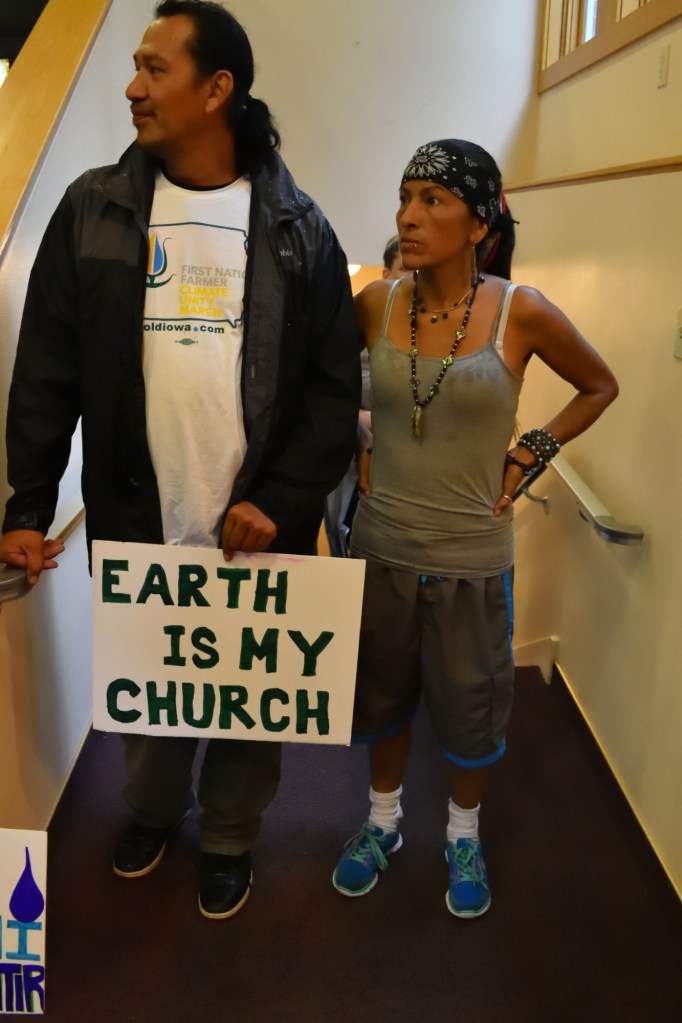
The following story occurred during the First Nation-Farmer Climate Unity March when a small group of Native and non native people walked and camped together along the path of the Dakota Access pipeline in Iowa.

It didn’t take too many hours of getting to know Matthew when the Spirit led me to say to him, “I know about Quakers’ involvement in the Indian boarding schools. I’m sorry they did that.” I was apprehensive about whether I should have said that, whether that was appropriate or could pull up bad memories. We continued to walk side by side. All I noticed was a slight nod of his head. He always smiles, and that didn’t change.

One of the next times we walked together, Matthew shared a story with me. He had been living at Standing Rock for about six months, when he learned a new rope was needed to ferry people back and forth across a short channel of water. He offered a rope so the ferry’s operation could continue. He went on to say his mother called him after she recognized the rope while watching a TV news story. She was very upset because that brought back terrifying memories of how the Native families would try to help their children escape when white men came to kidnap them and take them to a boarding school.


To return to what Arkan Lushwala said above, we have to know who we are before we know what we can be, what we can do. One way I am learning who I am involves confronting my connection to White settler colonialism. I needed to learn this about my history. And acknowledge and apologize for this history with people who were harmed by it.


We are our stories, stories that can be both prison and the crowbar to break open the door of that prison; we make stories to save ourselves or to trap ourselves or others, stories that lift us up or smash us against the stone wall of our own limits and fears. Liberation is always in part a storytelling process: breaking stories, breaking silences, making new stories.’”   

Rebecca Solnit, ‘Silence Is Broken’, in ‘The Mother of All Questions’ (07/03/2017).

From the moment we are born to the time we continue on our spirit journey, we are involved in the creation of the story of our time here. It is what we arrive with. It is all we leave behind. We are not the things we accumulate. We are not the things we deem important. We are story. All of us. What comes to matter then is the creation of the best possible story we can while we’re here; you, me, us, together. When we can do that and we take the time to share those stories with each other, we get bigger inside, we see each other, we recognize our kinship — we change the world one story at a time.  

Richard Wagamese (October 14, 1955-March 10, 2017)   Ojibwe from Wabeseemoong Independent Nations, Canada

Posted in civil disobedience, climate change, decolonize, Indigenous, Quaker, Uncategorized | Leave a comment

Listen to what the kids tell you

Every once in a while you hear someone speak and immediately know you are being given a gift of wisdom. That is what I feel when I hear Athabasca Chipewyan Nation citizen Mike Mercred speak about the Keystone XL pipeline. I wrote some excepts from what he said below.

Athabasca Chipewyan Nation citizen Mike Mercredi’s public comment against the KXL pipeline. Jun 3, 2019. Indigenous Rising
Athabasca Chipewyan First Nation citizen Mike Mercredi traveled from Fort Chipewyan in Alberta, Canada to submit public comment to the Rosebud Sioux Tribal Utilities Commission against the KXL pipeline.
Video courtesy of the Rosebud Sioux Tribe.

One of the things that I can bring from back home to state it in a way that it’s gonna affect your thinking, maybe your heart. If you have children, if you have grandchildren, if there’s kids in your life, sit with them. Watch them. Let that feeling of love you have for your own loved ones make your decision.

Don’t go on what you’re being told. Go on what you feel. I’m up here speaking on what I feel. These words are coming from my heart.

Sit with those children. Think about what it is in the future that we’re gonna have to face. Nothing to do with you, me. My time here and all this, we’re done. Our time has come and gone. The children’s time is coming up and that’s who we should be thinking about. Those kids. Their rights right now trump yours.

Their rights right now are greater than everybody else’s in this room except for the kids. That’s what this is about.

If they can’t have a world in the future where they can drink clean water, breathe fresh air, then you’ve taken that from them. Then that’s your fault. That’s my fault. And I’m willing to take that responsibility and say otherwise which is why I’m here.

I have kids. It’s their futures that I think about. Why I came all the way down to this reserve South Dakota and risking coming across the border to be here to speak.

I can I can speak on and on and on about what’s going on up north and the impacts but you guys already see it you guys already know. The knowledge is right here. You guys have the information. Just make the right choices with that and listen to your people.

Listen to what the kids tell you because the kids are twice as smart as they were in 1980.

Mike Mercredi’s public comment against the KXL pipeline. Jun 3, 2019 (excerpts)

“The eyes of the future are looking back at us and they are praying for us to see beyond our own time. They are kneeling with hands clasped that we might act with restraint, that we might leave room for the life that is destined to come. To protect what is wild is to protect what is gentle. Perhaps the wilderness we fear is the pause between our own heartbeats, the silent space that says we live only by grace. Wilderness lives by this same grace. Wild mercy is in our hands.”

Terry Tempest Williams, Refuge: An Unnatural History of Family and Place

Posted in climate change, Indigenous, Uncategorized | Leave a comment

A Win and It’s Not Over

WOW!! From the article below, “foreign investors are becoming nervous because of the ‘instability’ in the country, caused by the ongoing anti-pipelines blockages.” Congratulations to everyone involved in the Wet’suwet’en movement.

It looks like this is just the first of many victories to come. Investors in fossil fuel projects are beginning to panic as they realize the fossil fuel sources they are “banking” on may never be extracted. Resistance to fossil fuel extraction continues globally, with increasing effectiveness. Banks that fund fossil fuel projects find themselves the targets of increasingly frequent and creative resistance.

The cost of electricity from renewable energy sources continues to fall below that produced by fossil fuels. Perhaps more importantly, the future of fossil fuel extraction is increasingly problematic, while the future of renewable energy sources is “bright” 🙂

The fossil fuel industry is taking another hit as the use of fossil fuel is decreasing dramatically because transportation by airplanes, trains and cars grinds to a halt because of fears of spreading the Coronavirus.

Berkshire Hathaway has pulled out of a proposed large investment in the liquid natural gas pipeline near Quebec’s Saguenay port. Warren Buffetts’s investment company had been planning to invest $4 billion in the project.

The $9.5 billion LNG project is meant to be built about 230 kilometers northeast of Quebec City, according to CBC News. The marine terminal will be used to ship LNG overseas from the Saguenay port.

GNL Quebec’s head of communication Stephanie Fortin previously noted that the company had lost a major potential investor, but did not specify who.

She said that the reason the investor backed out was due to the “current Canadian political context.”

Fortin added that foreign investors are becoming nervous because of the “instability” in the country, caused by the ongoing anti-pipeline blockades.

Warren Buffett’s company backs out of Quebec energy project due to anti-pipeline blockades by Sam McGriskin, The Post Millennial, March 7, 2020

Wet’suwet’en Access Point on Gidimt’en Territory 6 hrs · March 7, 2020

In the wake of limited talks between the Wet’suwet’en hereditary chiefs and representatives of the Canadian state, a sense of confusion has set in. State and corporate media outfits have added to this confusion by portraying these talks as an endpoint to the protests that have been taking place for weeks in support of Wet’suwet’en and against the Coastal GasLink pipeline.

But the fact remains that there’s been no agreement to allow for the pipeline to be built, and no calls have been made for people to take down their blockades. Despite what they want you to think… it’s not over.

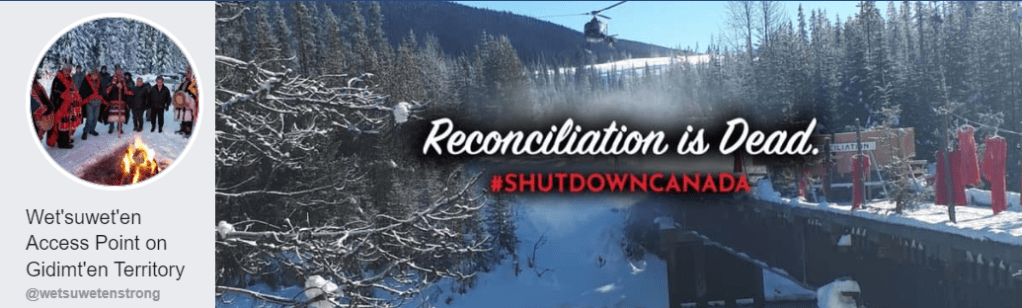
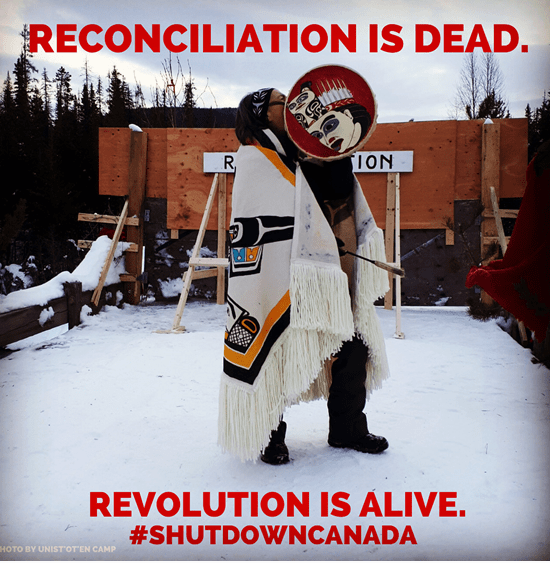
#ShutDownCanada #WetsuwetenStrong #ReconciliationIsDead


Call out for supporters at Unist’ot’en Village

Right now the Unist’ot’en Camp is calling for supporters who can spend at least two weeks at camp. People who can help with cooking, dishes, splitting wood, and other camp chores with a good attitude while following Indigenous leadership are needed to help relieve folks who have been on the frontline for a long time. Learn more and apply here today

Drivers Needed

Not free for two weeks but want to help? Many people who can go to camp don’t have rides. If you can make the journey from Vancouver to Houston and back please send us an email with your availability. 

In it for the long haul

This has always been a long term struggle, with the first infrastructure built at the Unist’ot’en village over a decade ago. In the last two months we have seen an explosive growth in people participating in this movement. For many these ongoing demonstrations have been their first experience with direct action or organizing. 

As we continue to take action and organize in our communities, let us all be sure to make time to build relationships, share skills, and educate for long term fight. While many people have been doing this sort of work for a long time, a whole new layer of people are coming out of the woodwork to join this movement. 

With these kinds of numbers and energy we are powerful, and we can win! But for many new people figuring out how to stay plugged in can be a challenge, and the lack of immediate results can be discouraging. Folks across the country are doing awesome work to build capacity and plug people in for the long term fight while they mobilize and take action.

Are you doing things like this in your community that others can replicate? Do you have organizing resources that you think others would find useful?

Send us an email and we will aggregate materials and ideas that can be reashared with this list to support the struggle moving forward! 
Wet’suwet’en Access Point on Gidimt’en Territory Yesterday at 9:11 PM · 

“We say to you: you can not walk on our people anymore… you can’t do that. Those days are gone. Long gone. They should be buried.

“I’m not a big fan of canadian history. I know what history is before Canada became a country. How many of you know that there was a price on the heads of our people? $25 for the scalp of a man. $15 for the scalp of a woman. And $5 for the scalp of teenagers and babies. That’s what canadian history says to me.”

Dr Joseph Gosnell gave this speech at Hobiyee this year. As he says Hobiyee is the rising of the crescent moon. Our coastal neighbours traded with us. We would meet on the grease trail. As you can see in this video, and if you look up #Hobiyee #Hobiyee2020 their cultures are still strong – their ancestors still with them today. Much like ours. Our connections to the lands are still strong.

We drove along the river the other day, and witnessed hundreds of eagles sitting along the waters edge (and thousands of seagulls), waiting to feast on oolichan. Coastal neighbours waded out, and dipped their nets in, harvesting sustenance after a long winter… just as they did thousands of years ago.

The colonial system tried to strip Indigenous peoples of our way of life. They ripped children away and attempted forced assimilation. They criminalized us. Much like they still do today. As Dr Gosnell says though “we are not going anywhere… we are still here”. As the government attempts to portray the message that everything is peachy-keen – CGL still causes mass destruction on our territories. The BC RCMP still patrol and harass us.

Those who have decided to #RiseUp with us, have done so in a most amazing way…. Everyone has been building larger communities along the way. We recognize how important this is. We sometimes had disputes (and even more intense battles) with our coastal neighbours, but mostly, we built bonds. The bonds that were built, kept us strong. The same can be said for today. We are all in this fight to assure a viable future, for our youth, and those yet to be born.

We will keep pushing for a better tomorrow… and we are grateful for all those who stand with us.

#ShutDownCanada


Posted in civil disobedience, decolonize, Indigenous, Indigenous Youth for Wet'suwet'en, Uncategorized, Unist'ot'en, Wet’suwet’en | Leave a comment

Your Chance to Show Solidarity for Wet’suwet’en

I’ve been trying to think of ways I can support the Wet’suwet’en peoples and their supporters in Canada. A few of us held a vigil in Des Moines, Iowa, a few weeks ago. But living in a small town, I’ve had trouble getting people together for another vigil.

So I was very interested to see the article quoted below making the connection that Canada, like Israel, was founded on the theft of lands, and the genocide and displacement of Indigenous peoples. And calls on Wet’suwet’en supporters to show their solidarity by posting photos of themselves with a message of support.

Of course the land called the United States was also founded on the theft of lands, and the genocide and displacement of Indigenous peoples who we should support however we can (more information about that below). And those of us who are White are on the “other side” of the Indigenous/White settler colonialist divide. But we can still show our support.

“As the Wet’suwet’en and their supporters face mounting arrests, state violence, and repression, it becomes ever more important that we form a transnational voice of opposition.”

As it says below, this idea is in response to a call for international support from the Wet’suwet’en Nation. There are concerns about cultural appropriation in situations like this. Many times, in videos and writings, I’ve heard pleas from Wet’suwet’en spokespersons to spread the word about what is going on. I’ve been writing posts about the Wet’suwet’en peoples and their struggles for several months now, and have received a few notes of appreciation from people involved in Canada.


The following comes from the Wet’suwet’en Supports Toolkit. 2020
http://unistoten.camp/supportertoolkit2020/
There is a great deal of useful information in the toolkit.

BUILD SOLIDARITY


An example of a different way to support is to make a direct contribution to the Wet’suwet’en people (links above). Or contribute to Indigenous people in the U.S. who are connected to the Wet’suwet’en. My friends at Seeding Sovereignty are collecting money so their storyteller can go to the Wet’suwet’en territory. You can contribute here: https://secure.acceptiva.com/?cst=66aaa5
In the field that says Questions/Comments indicate “storyteller“.

So I am asking those of you who support the Wet’suwet’en and feel comfortable doing so to post your own photo on the social media platforms you use. To share your photo by sending email to your friends. And encourage your friends to take their photos, too. In addition, I would love to build a gallery of these photos. I invite you to send me your photos, or links to your photos. One way is to email them to jakislin@outlook.com Thank you!

I am still trying to figure out how to take a selfie, as seen here. Obviously any photo will be greatly appreciated, selfie or not.

Support for Wet’suwet’en from Des Moines, Iowa

In response to a call for international support from the Wet’suwet’en Nation, a Palestinian collective for Indigenous sovereignty are asking fellow Palestinians everywhere to voice their solidarity and commitment to Indigenous sovereignty and resistance.

Like much of the territory that Canada today claims sovereignty over, Wet’suwet’en land was never ceded or surrendered. The current invasion of their land by the RCMP (Canada’s federal police) and Coastal GasLink Pipeline amounts to an illegal occupation by Canada.

We call on fellow Palestinians living across Palestine and the diaspora to post selfies with a declaration of your solidarity with the Wet’suwet’en and all struggles for Indigenous sovereignty.

Tag with #palestiniansforwetsuweten and #wetsuwetenstrong

Wet’suwet’en land defenders have set up camps and checkpoints to reclaim their territories and stop the multibillion-dollar CGL pipeline project from moving ahead. They have also demanded that the RCMP and CGL leave the area and halt all construction. Learn more here

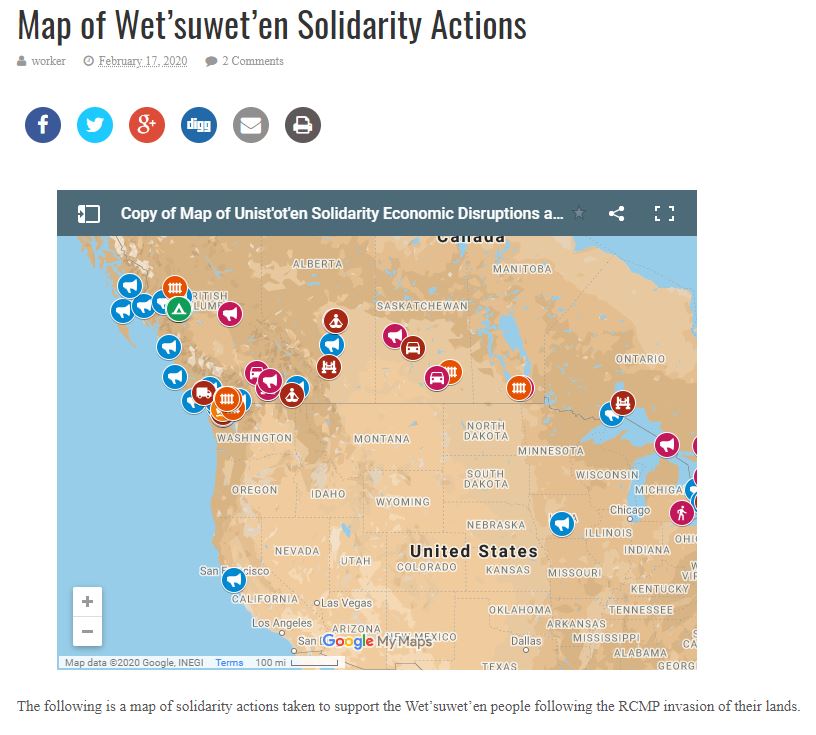
Hundreds of rallies, railway and highway blockades, and direct actions have emerged across the world in solidarity. As the Wet’suwet’en and their supporters face mounting arrests, state violence, and repression, it becomes ever more important that we form a transnational voice of opposition.

Post your selfie and a personalized message, or copy one of our sample messages:

As a Palestinian, I want to voice my solidarity with the Wet’suwet’en Nation in their struggle against Canadian colonialism and illegal occupation

#PalestiniansforWetsuweten #WetsuwetenStrong

I stand with the Wet’suwet’en. From Palestine to Turtle Island, we stand together against colonialism #PalestiniansforWetsuweten #WetsuwetenStrong

Land theft, invasion, and illegal occupation? Wrong in Wet’suwet’en and wrong in Palestine. Decolonize from Palestine to Turtle Island 

#PalestiniansforWetsuweten #WetsuwetenStrong

Adalah Justice Project March 4, 2020

Canada, like Israel, was founded on the theft of lands, and the genocide and displacement of Indigenous peoples. Restriction of movement, dispossession and theft of land and water, and the creation of open-air prisons and bantustans have been strategies central to both Canadian and Israeli colonialism.

55ec16b0-504b-45b2-95de-112dbcd4a094.JPG
EC969CDF-5169-402B-B290-6294F932F7E5.jpg

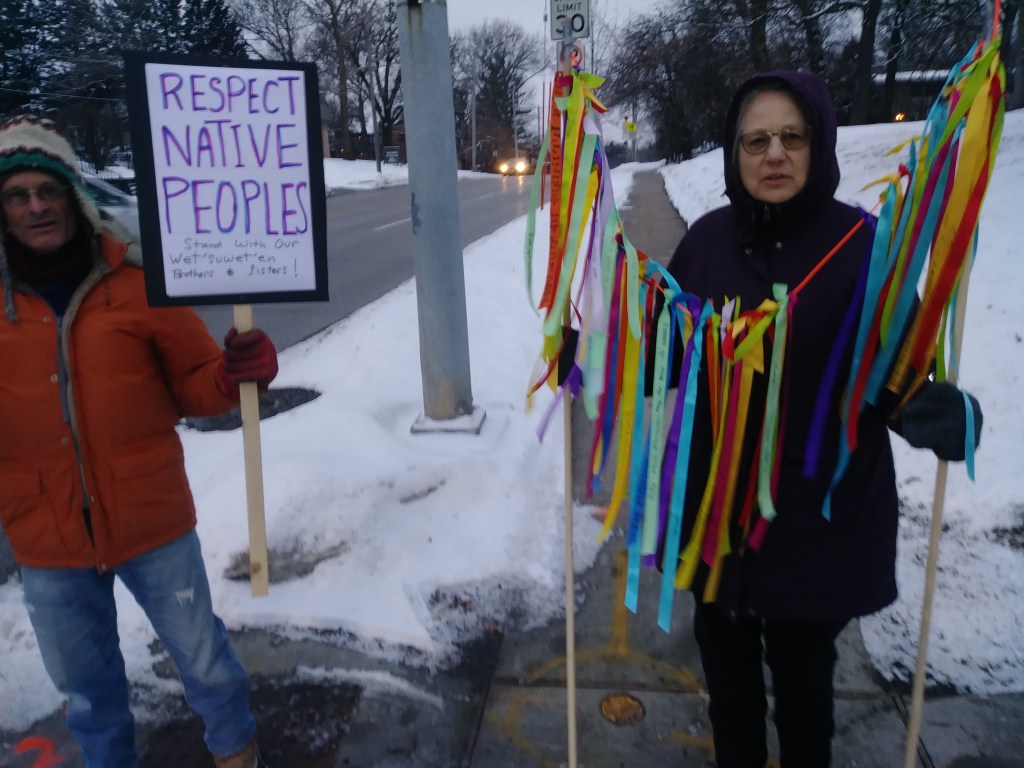
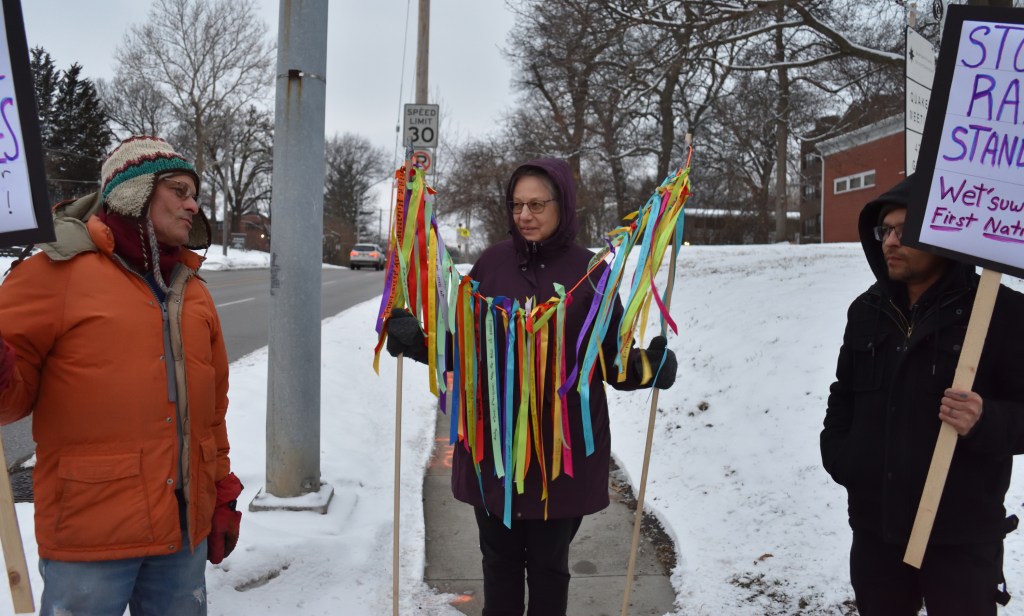
Our vigil in Des Moines, Iowa, Feb 7, 2020

Posted in decolonize, Indigenous, Native Americans, Quaker, social media, Uncategorized, Unist'ot'en, Wet’suwet’en | 3 Comments

Who’s banking the Coastal GasLink pipeline?

These banks are funding a threat to Wet’suwet’en land and abuse of Indigenous rights, The Understudy, Rainforest Action Network (RAN), by Elana Sulakshana, Feb 19, 2020

Across Canada, protests have erupted in solidarity with the Wet’suwet’en struggle against the Coastal GasLink pipeline. Indigenous peoples and allies are gathering at government buildings throughout the country, blockading the offices of Coastal GasLink and its financial backers, and shutting down ports, railways, streets, and bridges. 

This Indigenous-led uprising was prompted on February 6, when the Royal Canadian Mounted Police used assault rifles, snipers, dogs, sound cannons and helicopters to carry out a five-day militarized police raid and remove peaceful Indigenous land defenders from their homes on unceded Wet’suwet’en territory.

For the past ten years, the Wet’suwet’en have asserted their sovereignty to stop fossil fuel companies from trespassing on their lands. Under ‘Anuc niwh’it’en (Wet’suwet’en law), the five clans of the Wet’suwet’en have not provided the free, prior, and informed consent to Coastal Gaslink and its parent company TC Energy to do work on Wet’suwet’en territory. 

And yet, the Canadian government is trying to ram through the 420-mile Coastal GasLink pipeline, which would carry fracked gas from northeast British Columbia to a massive proposed liquefied natural gas (LNG) terminal on the coast. 

The banks and investors supporting the Coastal GasLink pipeline are contributing to this clear abuse of Indigenous rights, even though many of them have stated policies acknowledging the right to free, prior, and informed consent of Indigenous communities.


Who’s banking the pipeline? February 2020 Update

1) JPMorgan Chase

JPMorgan Chase remains the primary banker of Coastal GasLink. JPMorgan Chase is the lead agent on the majority of TransCanada Pipelines Ltd.’s loans. The company currently has three loans worth a total of about USD$7.8 billion. Two of those, totaling USD$5.5 billion, were signed in December 2018 and extended by JPMorgan Chase and other banks just this past December 2019. JPMorgan Chase was the lead agent — the bank responsible for arranging the deal and coordinating between TC Energy and its lenders — on both of those new loans. That makes it the lead agent on more than half of TransCanada Pipeline Ltd.’s current credit. In fact, JPMorgan Chase’s infamous position as the world’s biggest banker of fossil fuels is in part due to its close relationship with TC Energy: Chase’s biggest fossil fuel client from 2016-2018 was TC Energy.

JPMorgan Chase is the #1 banker of TransCanada Pipelines Ltd., and therefore of the Coastal GasLink pipeline, despite an Environmental and Social Policy (see p. 17) that expects clients to obtain free, prior and informed consent of Indigenous Peoples.

2) Bank of Montreal

Bank of Montreal is the lead agent on a CAD$3 billion loan to TransCanada Pipelines Ltd. It’s also a lender on the two more recent loans and was a co-manager of the most recent bond issued by TransCanada Pipelines Ltd. in September 2019. 

3) Canadian Imperial Bank of Commerce

The Canadian Imperial Bank of Commerce (CIBC) was the sole manager on the most recent bond issued by TransCanada Pipelines Ltd. in September 2019, and also is a lender to all three current loans.

CIBC also advised TC Energy on a November 2018 deal that sums up the company’s backwards direction: the sale of its stake in wind energy facilities in Quebec, to the tune of CAD$630 million, in order to fund Coastal GasLink pre-development costs.

5) 17 other banks

At least 17 other global banks are also supporting TransCanada Pipelines Ltd. in a range of roles on its current lines of credit and recent bond sales. These include: 

  • Canada: Alberta Treasury Branches, Desjardins, Export Development Canada, National Bank of Canada, Royal Bank of Canada, Scotiabank, TD
  • U.S.: Bank of America, Citi, Wells Fargo
  • Europe: Barclays, Credit Suisse, Deutsche Bank, HSBC
  • Japan: Mizuho, MUFG, SMBC Group

How to Support

Donate: We encourage everyone to support the Wet’suwet’en by donating to the Unist’ot’en Camp and to the Wet’suwet’en Access Point on Gidimt’en Territory.

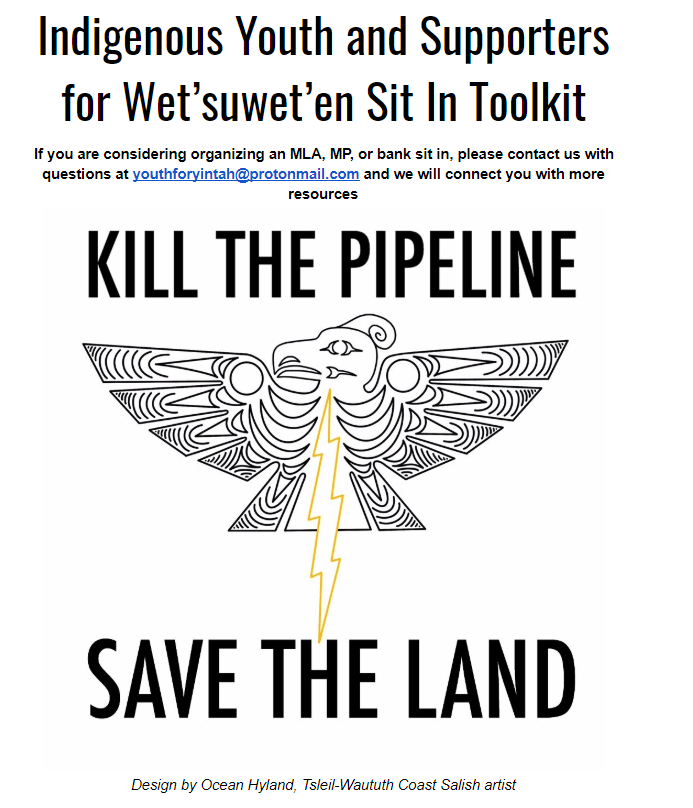
Take action: Actions and events in support are continuing! Find one near you in the “When Justice Fails: Wet’suwet’en Strong Solidarity Actions” Facebook event, or organize your own in response to the call for international solidarity. For more resources, check out the 2020 Wet’suwet’en Strong: Supporter Toolkit

Sign the pledge: Join thousands of organizations and individuals in signing the pledge in support of Unist’ot’en. If you are part of a labour union, academic department, or community group, organize to write a Solidarity Statement in support of Wet’suwet’en jurisdiction and governance.

Flood the phone lines: Take one minute to call relevant politicians and demand that the Canadian government revoke this fracked gas pipeline and respect Wet’suwet’en jurisdiction. The following links connect you directly to their phone lines and provide sample scripts: click here to call British Columbia ministers and here for federal ministers

Join RAN’s Year of Climate Action: Sign up to join our monthly actions to pressure JPMorgan Chase and other institutions to stop financing fossil fuel projects and human rights abuses. 

Join Stop the Money Pipeline: Sign up for the growing movement calling on JPMorgan Chase, plus companies like Liberty Mutual and BlackRock, to stop fueling climate change.


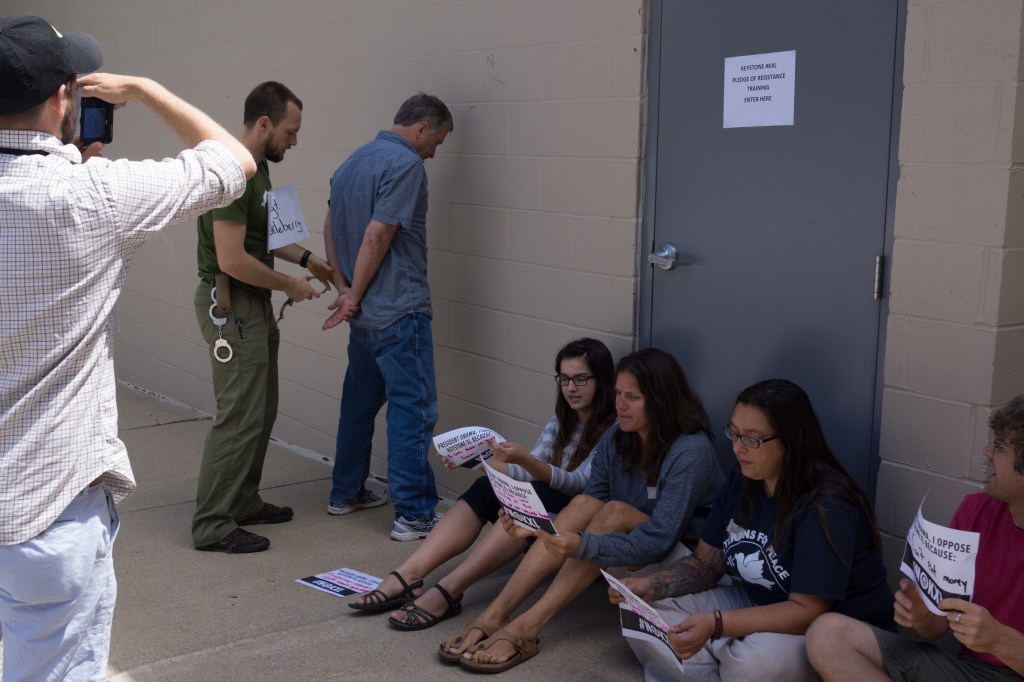
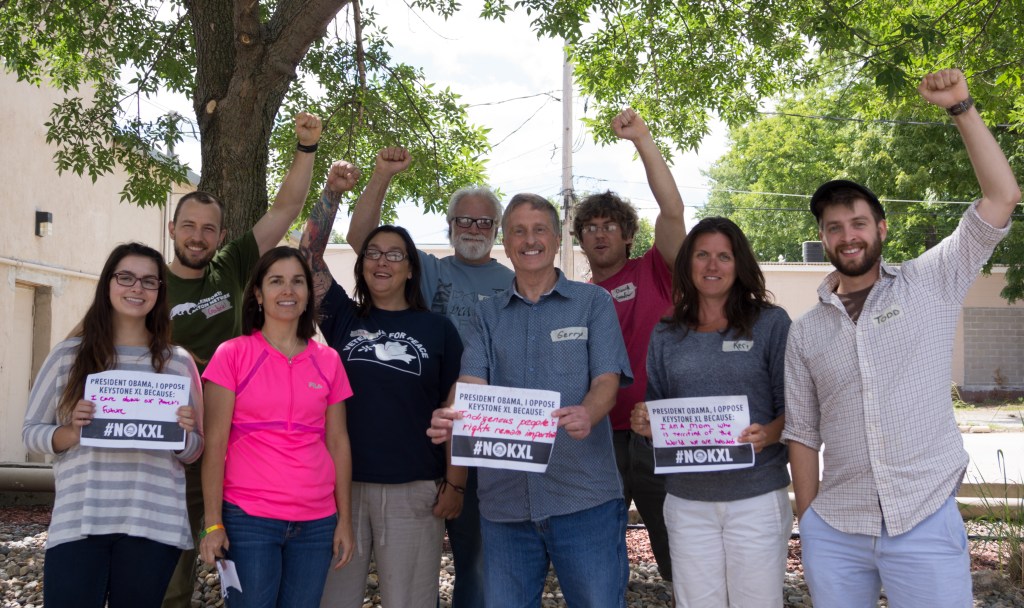
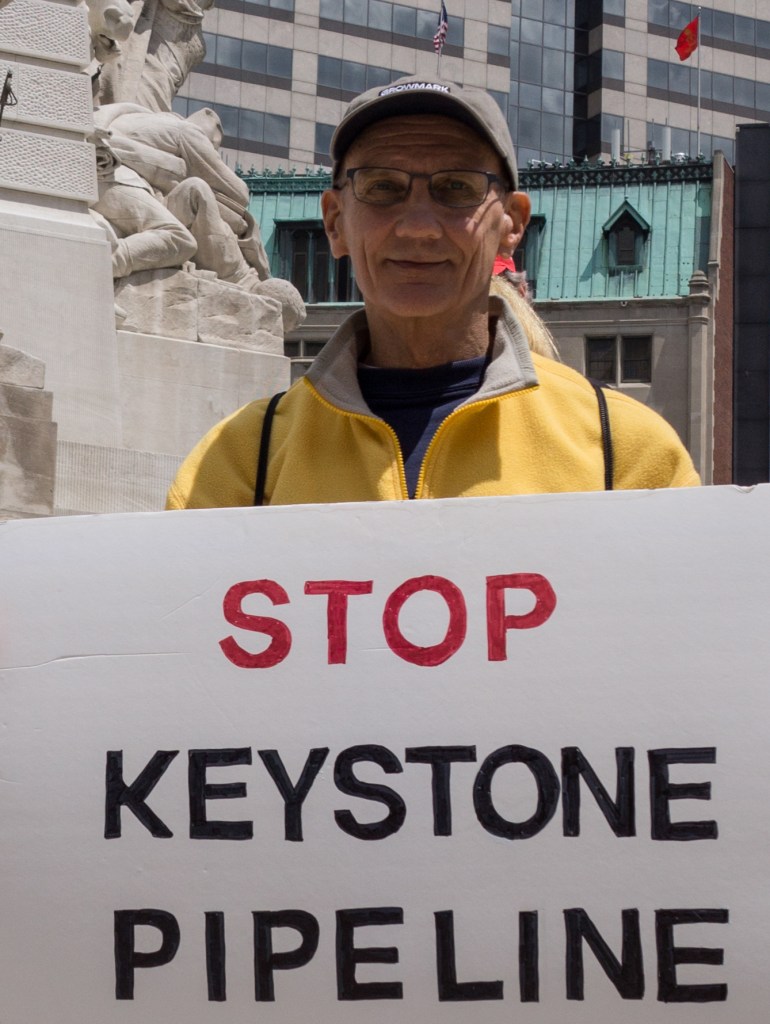
I normally don’t copy as much of an article as I did with this one. But one of my proudest credentials is “@ran activist @jakislin”. I was trained by the Rainforest Action Network (RAN) in 2013 to organize and train people for nonviolent direct action as part of the Keystone Pledge of Resistance. The tweets below are related to a letter to the editor I had published in the Indianapolis Star, criticizing Indiana Senator Donnelly for his support of the Keystone XL pipeline. I don’t think my friends at RAN mind me copying this article so extensively.


Posted in Uncategorized | Leave a comment

BC Solicitor General Authorizes RCMP Deployment

VANCOUVER/ (Xʷməθkʷəy̓əm (Musqueam), Sḵwx̱wú7mesh (Squamish) and səl̓ilwətaʔɬ/sel̓ílwitulh (Tsleil-Waututh) territories, March 6, 2020 – Wet’suwet’en Hereditary Chiefs, BC Civil Liberties Association and Union of BC Indian Chiefs are releasing a letter dated January 27, 2020 from BC Minister of Public Safety and Solicitor General Mike Farnworth to RCMP Deputy Commissioner Jennifer Strachan.

In the letter, Farnworth declared a “provincial emergency” under the Provincial Police Service Agreement and explicitly authorized the “internal redeployment of resources within the Provincial Police Service.” Article 9 of the Provincial Police Service Agreement stipulates that, if in the opinion of the Provincial Minister an Emergency in an area of provincial responsibility exists, then the Provincial Police Service will be redeployed at the written request of the Provincial Minister and the Province will pay the costs of the redeployment.

This explosive revelation of the BC Solicitor General authorizing additional RCMP resources and redeployment comes on the heels of repeated statements by the provincial government that they lacked jurisdiction or authority over RCMP actions in Wet’suwet’en territories. On January 20, Premier John Horgan was reported as saying “Our government has no authority to vary that injunction, nor to direct the RCMP in the fulfillment of its responsibilities.” On February 10, Horgan again stated, “Governments do not direct the courts, nor do we direct the RCMP.”

According to Wet’suwet’en Hereditary Chief Na’Moks, “The province bears responsibility for the heavy RCMP deployment and for the policing of our people on our own territories. In many of our discussions, the province was passing the buck for RCMP operations but this letter spells it out in black and white. The provincial government can no longer deny responsibility for the Indigenous rights and human rights violations happening on our territories. We have come to the table with respect and truth but the province is not demonstrating respectful or truthful conduct. We have always asserted our laws and presence peacefully, yet the province authorized the extra deployment of RCMP against us. Canada and BC must answer to this mistruth and absolutely must change its ways.”

“It is incredibly troubling and shocking that the provincial government would declare the peaceful assertion of Wet’suwet’en law and jurisdiction as a provincial policing emergency. The Wet’suwet’en people and the people of British Columbia have a right to know on what basis this unprecedented authorization was made. It is inconsistent for the provincial government to, on the one hand, legislate the UN Declaration on the Rights of Indigenous Peoples as well as state non-interference in policing operations and, on the other hand, authorize a RCMP deployment aimed at over-policing and criminalizing Indigenous peoples on their own territories,” says Harsha Walia, Executive Director of the BC Civil Liberties Association.

Grand Chief Stewart Phillip of the Union of BC Indian Chiefs stated, “This letter by Mike Farnworth reveals the blatant hypocrisy and lies of the provincial NDP government on the Wet’suwet’en crisis. Farnworth sat silently while Premier Horgan unabashedly lied that the Province did not direct RCMP actions. This is an act of government deceit not only against the Wet’suwet’en but of the public at-large. The province’s rhetoric about reconciliation rings even hollower. We call for the immediate resignation of Mike Farnworth for dishonourable conduct and for declaring the Wet’suwet’en people a policing emergency and a threat on their own territories.”

Media inquiries:

Chief Na’Moks: 250-643-0771
Grand Chief Stewart Phillip, President of UBCIC: 250-490-5314
Harsha Walia, Executive Director, BCCLA: 778-885-0040


You can view this letter online:
https://bccla.org/wp-content/uploads/2020/03/Letter-Farnworth-to-Strachan.pdf


Posted in decolonize, Indigenous, Uncategorized, Wet’suwet’en | Leave a comment

Defund the Coastal GasLink pipeline

Defunding has long been used as a way to put economic pressure on companies whose policies we don’t agree with. Boycotts are a similar idea, one of the most well known in modern times being the Montgomery Bus Boycott. Besides the economic impact on the bus lines, there were powerful images of people walking instead.


Now, here is a call to sign a petition to defund the Coastal GasLink pipeline in support of the Wet’suwet’en peoples in Canada.

Right now in British Columbia, Canada, Indigenous Wet’suwet’en Hereditary Chiefs and land defenders are resisting the construction of the TC Energy Coastal GasLink pipeline slated to cut through their territories.

The Wet’suwet’en have been fighting to stop this pipeline for just over five years. The Hereditary Chiefs have re-asserted their right to jurisdiction over their own lands, their right to determine access and prevent trespass under Wet’suwet’en law, and the right to Free Prior and Informed Consent as guaranteed by the United Nations Declaration on the Rights of Indigenous Peoples — but TC Energy will not listen.

On February 6, militarized police conducted a five-day military raid of the resistance camps on Wet’suwet’en land and illegally evicted hereditary chiefs, land defenders, and matriarchs. The police came with assault rifles, snipers, dogs, sound cannons, and helicopters while Indigenous elders and youth stood by.

Protests against the Coastal GasLink project have since spread and have included: rail blockades, port shutdowns, government office occupations, and sit ins at banks investing in the illegal pipeline project. Now, the fight is coming to the U.S., right to the doorstep of the largest banker and investor of the Coastal GasLink pipeline — JPMorgan Chase and KKR.

JPMorgan Chase, the world’s biggest banker of fossil fuels, is helping funnel more than $5 billion in loans to the company behind Coastal GasLink. Kohlberg Kravis Roberts & Co. (KKR), a New York City based investment firm with over $200 billion in assets, has plans to purchase 65% of the pipeline with Alberta Investment Management Corp (AIMCo). Companies like Chase and KKR actively perpetuate the destruction of stolen Indigenous lands to fuel the climate crisis.

The upside is KKR’s plans to invest in the pipeline aren’t final. There’s still time to interrupt their plans. We must hold them accountable before it’s too late.

Participating Organizations:
198 methods
Climate Hawks Vote
Corporate Accountability
Daily Kos
Endangered Species Coalition
Greenpeace USA
Rainforest Action Network
Rising Tide North America
Seeding Sovereignty
Stand.earth

Sign the petition and rise up with the Wet’suwet’en people: Demand Chase and KKR defund the Coastal GasLink pipeline.

This is as much of a fight for Indigenous rights as it is for the future of the planet. The Wet’suwet’en First Nation never signed a treaty to cede their land. Pipeline funders must be held accountable for their role in stealing Indigenous lands and fueling the climate crisis.

There is no climate justice without Indigenous sovereignty,

Support Wet’suwet’en Hereditary Chiefs and land defenders

Our Message to JPMorgan Chase and Kohlberg Kravis Roberts & Co:

As a climate and human rights activist, I demand you defund the illegal Coastal GasLink pipeline, which is slated to run through and destroy unceded Wet’suwet’en land.


Sign the petition to protect Indigenous Sovereignty: Demand fossil fuel profiteers JPMorgan Chase and Kohlberg Kravis Roberts & Co. defund the Coastal GasLink pipeline.
Sign here


SAN FRANCISCO, CA, January 31, 2020 —Dozens of local activists launched the ‘Stop the Money Pipeline ‘campaign in Bay Area today with creative disruption at Chase Bank at [location to be disclosed]. These citizens are demanding that JPMorgan Chase – the largest funder of fossil fuels worldwide  – defund fossil fuels immediately to protect the planet. The action was coordinated by the Bay Area Climate Coalition, which includes Extinction Rebellion SFBay Area, Rainforest Action Network, 350 Bay Area, 350 Silicon Valley, XR Youth, Wet’suwet’en Solidarity Front Bay Area, and Diablo Rising Tide.

According to the “fossil fuel finance report card” published by a coalition of environmental organizations, JPMorgan Chase is the world’s top banker of fossil fuels. The bank has provided over $195 billion in financing to fossil fuel companies since the Paris Agreement was signed in 2015. Activist and actress Jane Fonda is helping to lead the call to JP Morgan Chase CEO Jamie Dimon to stop funding the destruction of the planet.

Chase customers are cutting up their credit cards as part of the #CutTheChaseChallenge. The Bay Area Climate Coalition recommends investing with socially and environmentally responsible banks or local credit unions. “A lot of people don’t know where their money sleeps at night. Moving your investments to align with your values is one of the biggest things you can do for the planet,” said Extinction Rebellion activist Sandra (last name omitted for privacy). 


The Stop the Money Pipeline mentioned above posted this interesting coordinated action. Bill McKibben and others stage a sit-in at a branch of the CHASE bank in the Bay Area. He is connected by phone to Jane Fonda who leads a rally close to the CHASE bank McKibben’s group is sitting-in. Jane Fonda’s group then goes to the bank in support of those inside.

Stop the Money Pipeline

Posted in #NDAPL, climate change, Extinction Rebellion, Uncategorized, Wet’suwet’en | Leave a comment