Yesterday I wrote about the dangers the Keystone XL and Coastal GasLink pipelines posed to native people’s health. Pandemic and the pipeline about the Coastal GasLink pipeline construction in British Columbia. It’s like bringing smallpox blankets in about the Keystone XL pipeline construction.
The mancamps of pipeline construction workers not only pose the threat of bringing COVID-19 to the native and non native people near the construction sites, but in addition bring the risk of the violence and death of Missing and Murdered Indigenous Women (MMIW).
New Mexico Gov. Michelle Lujan Grisham raised alarms with President Donald Trump Monday about “incredible spikes” in coronavirus cases in Navajo Nation, warning that the virus could “wipe out” some tribal nations, according to a recording of a call between Trump and the nation’s governors obtained by ABC News.
“I’m very worried, Mr. President,” Governor Lujan Grisham said, as she followed up on a request she made to the Department of Defense last Wednesday for a 248-bed U.S. Army combat support hospital (CSH) in Albuquerque, New Mexico. Grisham told Trump she had not yet received a response.
“We’re seeing incredible spikes in the Navajo Nation, and this is going to be an issue where we’re going to have to figure that out and think about maybe testing and surveillance opportunities,” Grisham said.
“The rate of infection, at least on the New Mexico side — although we’ve got several Arizona residents in our hospitals — we’re seeing a much higher hospital rate, a much younger hospital rate, a much quicker go-right-to-the-vent rate for this population. And we’re seeing doubling in every day-and-a-half,” she said.
As of Sunday, there were at least 128 cases and 2 deaths reported on the reservation, which has a population of over 250,000 and spans three states, according to the Navajo Department of Health and Navajo Area Indian Health Service.
BILLINGS, Mont. (AP) — Major construction projects moving forward along the U.S. borders with Canada and Mexico are raising fears the coronavirus could race through temporary work camps and spread to rural communities unable to handle an outbreak.
Despite a clampdown on people’s movements in much of the country, groups of workers travel every day from camps in New Mexico to build President Donald Trump’s border wall.
Along the northern border, a Canadian company says it will start work this month on the disputed Keystone XL oil pipeline, another Trump-supported project that could bring thousands of workers to rural communities in Montana, South Dakota and Nebraska.
Residents, tribal leaders and state officials have warned that the influx of outsiders could make problems worse in rural areas with little or no medical infrastructure capable of dealing with a surge of infections. The border wall and pipeline are exempt from stay-at-home restrictions intended to reduce the virus’s spread.
That’s a fear in tiny Columbus, New Mexico, where residents worry about border wall workers who often gather outside the town’s few restaurants despite an order to stay home and keep away from others.
In the town of less than 1,500 people, about 30 construction workers are living in tightly packed trailers, residents say. Others are staying at two small hotels while they put up bollard-style fencing along the scrub desert — a small piece of about 200 miles (320 kilometers) of barrier being built at the U.S.-Mexico border.
Just south of the Canadian border, workers began arriving last month in the small Montana town of Glasgow where they’ll stay during the 1,200-mile (1,930-kilometer) pipeline project. Keystone would carry up to 830,000 barrels (35 million gallons) of crude daily to a Nebraska terminal for refining or export through the Gulf of Mexico.
With US border work on track, rural towns fear virus spread. By MATTHEW BROWN, STEPHEN GROVES and CEDAR ATTANASIO, Associated Press, Apr 2, 2020
Please sign and share this petition to shut down man camps throughout the province that are endangering entire northern communities with the spread of COVID-19
While people are warned to remain at home and take precautions due to COVID 19, the oil and gas industry is continuing work along pipeline routes, and industry is pushing forward with mega-projects across Canada.
Workers on these projects are living in man camps by the hundreds in tight quarters, sharing meals and housing, and are unable to quarantine, increasing the risk posed to both communities and workers.
The COVID-19 pandemic has affected at least 590,000 people and claimed tens of thousands of lives — and yet politicians and fossil fuel CEOs are continuing to put thousands of workers, and people in the northern and rural communities they are working in, at severe risk for oil and gas profits.
We say no more. This is atrocious. Canada needs to respect Indigenous health.
Use your voice now and rise up in solidarity with Wet’suwet’en hereditary chiefs, communities in Fort St John impacted by Site C construction, and Tiny House Warriors along the Trans Mountain pipeline route, as well as all communities impacted by man camps on their territories. Sign the letter demanding that Canadian politicians and companies stop this immense risk to public health.
The Tiny House Warriors in Secwepmec territories are calling for an end to construction and man camps by TransMountain.
And the Union of BC Indian Chiefs sent an open letter demanding that “immediate action be taken to compel BC Hydro to halt all construction at Site C Dam due to the risk COVID-19 now poses to vulnerable workers and nearby Indigenous and non-Indigenous communities in northeast B.C.”
Join these powerful warriors and add to the pressure. Call for a halt to all construction in Wet’suwet’en territories, in Secwepmec territories, and at the Site C Dam immediately, in order to protect vulnerable communities and workers immediately.
OPEN LETTER: Coastal GasLink Pipeline Project Must be Halted Due to the COVID-19 Outbreak
Prime Minister Justin Trudeau
Honourable Patty Hajdu Minister of Health
Honourable John Horgan Premier of Executive Council
Honourable Adrian Dix Minster of Health
OPEN LETTER: Coastal GasLink Pipeline Project Must be Halted Due to the COVID-19 Outbreak
Dear Prime Minister Trudeau, Minister Hajdu, Premier Horgan, and Minister Dix,
We urge you to act swiftly to protect the public’s health from the heightened risks of COVID-19 transmission posed by ongoing construction of the Coastal GasLink Pipeline Project. Most vulnerable to the spread will be frontline healthcare workers, project workers, and local Indigenous and non-Indigenous communities forced to shoulder the consequences for any disregard for health and safety.
Directed by Resolution 2019-07, the Union of BC Indian Chiefs has called on Canada and B.C. to honour Wet’suwet’en Title and Rights that have never been extinguished and are confirmed by the S.C.C. in Delgamuukw. Under the standards enshrined in the United Nations Declaration on the Rights of Indigenous Peoples, legislated in BC and affirmed by Canada, free, prior, and informed consent of proper Title and Rights holders impacted must be achieved before any approval of any project affecting their land, territories, and other resources.
The risks posed by continued work on the Coastal GasLink project are ones that were not consented to, and ones that leaders and officials raised warnings about in advance of the project’s approval. Although B.C. is in a State of Emergency, Coastal GasLink days ago announced the successful completion of their winter construction. The B.C. Government has enabled this with overbroad classifications of “essential services” that allow the work to continue. In 2014, while project applications were under review, Northern Health officials flagged that the region’s primary care resources for resident populations were at capacity, and they had concerns about the pressure that project workers could put on the healthcare system.
At time of writing, Northern Health region has the fewest confirmed cases of COVID-19 in the province. As Coastal GasLink continues their spring work, the “critical activities” they are undertaking include pipe delivery and stockpiling, in addition to site preparation and maintenance. With the urgency to move materials comes the associated movement of people and spillover risks to every person and community they interact with delivering supplies to the project. Corporate exceptionalism cannot become a pandemic response strategy for the Governments of B.C. and Canada.
B.C. and Canadian health officials have urged the public to stay home. The expansion of economic enterprises cannot be considered essential when it directly endangers the health and wellbeing of every one of us. The threat is too great to Northern communities, Indigenous and non-Indigenous, whose access to healthcare and necessary resources for containing COVID-19 are already limited. We urge you to tell Coastal GasLink to stay home.
Right now, TC Energy, with the backing of Homeland Security, is moving forward with construction of Keystone XL amidst the Covid-19 Pandemic. As a Dakota elder who has been fighting Keystone XL for 12 years, I firmly continue to protect my community and uphold our Treaty rights, like we successfully did against Dakota Access last week.
TC Energy (TransCanada) is trying to take advantage of the crisis we are in right now. Trump’s “Homeland Security” just classified Keystone XL “essential work” and they are rushing to start construction, putting Indigenous and rural communities at risk of the COVID-19 pandemic.
I ask you to remember whose Homeland this is.
Our elders and youth are the treasures of our culture and they are at risk – that’s why I’m asking you to help us stop construction activity immediately.
Our communities are already extremely vulnerable to the increased violence against women and girls when worker “man camps” are built near our reservations. And now we’re also being put at a greater risk of getting the coronavirus with an influx of workers coming to our territories. Hospitals and Indian Health Services along the proposed Keystone XL route are already ill-equipped to deal with the coronavirus public health threat. It is imperative that we are not further marginalized in this desecration of our humanity.
This is exactly what it felt like when the US Military brought smallpox blankets to our villages in an attempt to decimate us. But, we are still here standing strong.
I found the March 27, 2020 article by Kevin Williamson in the National Review, Goodbye, Green New Deal fascinating. He writes about the many sacrifices we are being forced to make because of the Covid-19 pandemic.
I had to convince myself the article wasn’t satire. I agree with his analysis of our current crises. They are the changes I’ve been writing about, too. But my conclusions are diametrically opposed to his.
The current crisis in the U.S. economy is, in miniature but concentrated form, precisely what the Left has in mind in response to climate change: shutting down large sectors of the domestic and global economies through official writ, social pressure, and indirect means, in response to a crisis with potentially devastating and wide-ranging consequences for human life and human flourishing.
What is under way right now in response to the epidemic is in substance much like the Green New Deal and lesser versions of the same climate-change agenda: massive new government spending, political control of critical industries, emergency protocols modeled on wartime practice, etc.
As a fervent supporter of the Green New Deal, I believe the changes he is so alarmed about are precisely the changes we will have to make if we are to have any chance of slowing down our evolving environmental catastrophe.
Set aside, for the moment, any reservations you might have about the coronavirus-emergency regime, and set aside your views on climate change, too, whatever they may be. Instead, ask yourself this: If Americans are this resistant to paying a large economic price to enable measures meant to prevent a public-health catastrophe in the here and now — one that threatens the lives of people they know and love — then how much less likely are they to bear not weeks or months but decades of disruption and economic dislocation and a permanently diminished standard of living in order to prevent possibly severe consequences to people in Bangladesh or Indonesia 80 or 100 years from now?
He says people will not make changes in their own lives to prevent “possibly severe consequences” of climate change. The fact is, we’ve been seeing increasingly frequent and severe consequences of climate change for years already, not “80 or 100 years from now.” And despite the ethical considerations of not caring about the consequences of climate change to the people of Bangladesh or Indonesia, climate chaos cannot, of course, be confined to particular geographic locations, but will instead have global impact. And it is the industrial economies that are producing the greenhouse gases and polluting the air in Bangladesh, Indonesia, everywhere. And the changes needed will have to result in a “permanently diminished standard of living“.
Not mentioned are many examples of improved water and air quality that are now occurring as a result of this decreased economic activity worldwide. This is a key part of the Green New Deal, to transition away from extractive, fossil fuel mining and usage.
“After a couple of weeks of great economic sacrifice, it’s already proving hard for Americans to take. No one will sign up for a lifetime of it.” Kevin Williamson
One suspects that the people who are missing their paychecks right now, and the ones who worry that they may be missing them soon, are going to need some convincing. The adverse effects of climate change are likely to be significant and may prove severe — as noted, many of our progressive friends insist that they already are. But we have a new point of comparison, and those challenges feel relatively manageable if the alternative is an extended version of the coronavirus shutdown — and no amount of marketing will change the fact that that is precisely what is being advocated.
A couple of months of this is going to be very hard to take. Nobody is signing up for a lifetime of it.
I agree with his assessment of the public’s refusal to upset the status quo. For my entire adult life I have been trying to get people to give up their cars, as I had done. I’m not aware of a single person who did so. I came to the conclusion that people don’t give up their conveniences voluntarily. Michael James calls this the complicity of the privileged.
The arm-chair theorizers and spiritually exhausted tell us that ‘politics is dead’, or that praxis is a fools game. Meanwhile, the very same people continue to make excuses for continuing to live in ways extensively captured by pathological consumption patterns, and believing it nobler to suffer the slings and arrows of capitalist degradation than to risk their WiFi access by participating in an illegal occupation or some civil disobedience campaign.
UNNERVING REALITIES OF THE WET’SUWET’EN by michael james, Synthetic Zero, January 7, 2020
I had an experience related to change that nearly crushed me. I thought the apocalyptic scenes of the ferocious wildfires in California last year would, at a minimum, get people to acknowledge them as a consequence of climate change. Finally get them to get behind making changes to protect Mother Earth. Instead, what someone told me was, “yes those fires are a result of greenhouse gas emissions, but people have to drive cars to get to work”.
The fundamental problem with Kevin Williamson’s article is the assumption we have the choice of returning to business as usual when the pandemic falls to a manageable scope, if it ever does. There will be some success in reopening businesses and hiring people. Politics might return somewhat to where it was before the pandemic, assuming people aren’t too outraged by how the government mismanaged the crises and contributed to so much death.
The problem is, prior to the pandemic we were already experiencing increasingly frequent and severe climate chaos, which had begun to overwhelm our political and economic systems. And now the pandemic is intensifying that, and breaking down our healthcare and educational systems as well. Food and water insecurity is accelerating. Millions of additional climate refugees are being created.
It is discouraging to see the government putting tremendous amounts of money toward attempts to prop up these failing institutions and policies. To support corporations instead of people. That money and those resources could have instead been used to implement the policies of a Green New Deal. Ramping up renewable energy sources and expanding social safety nets. Supporting green industries and jobs to build for the future.
This time of fear and confusion is an opportunity to decide to build for the future. For our children’s future. People were not moved to be inconvenienced, and decrease their carbon footprint prior to the pandemic. The consequences of the coronavirus have forced the changes that we were not able to make voluntarily. We need to build on those changes, and resist returning to a corporate, fossil fuel based economy and society.
What if your friend was gone tomorrow and you never told them how you felt? What if you never again heard their voice, never saw their face or felt their warm embrace?
I just want to say that you are special to me and you’ve made a difference in my life, I care for you, I respect you and I cherish our friendship.
I want you to know that you are in my thoughts and in my prayers during this crucial time in our lives.
Take care & Be well my friend!
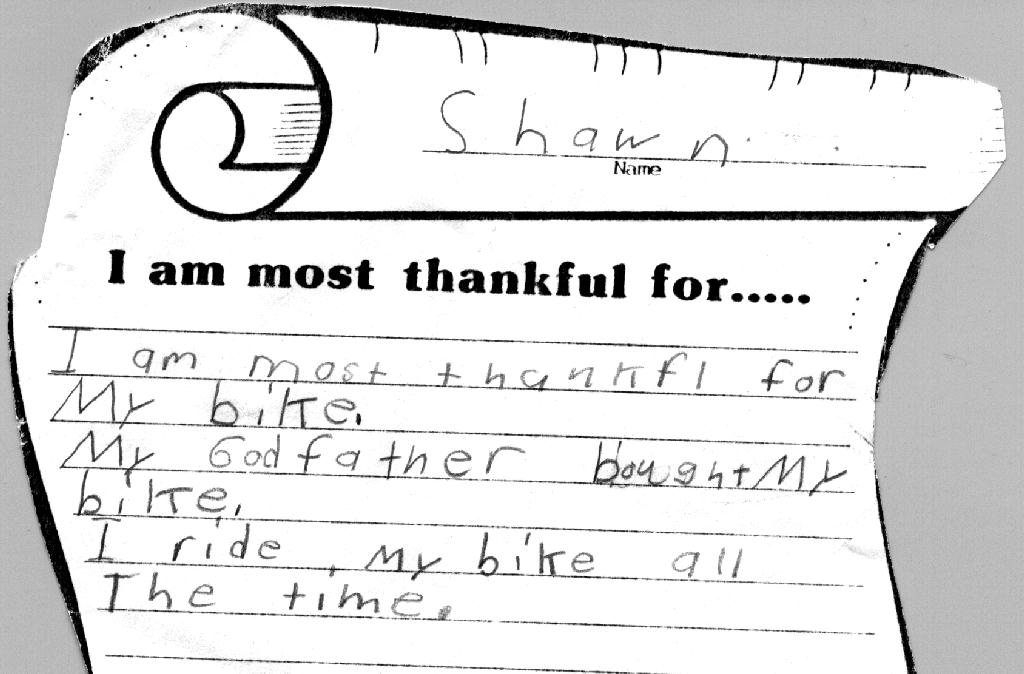
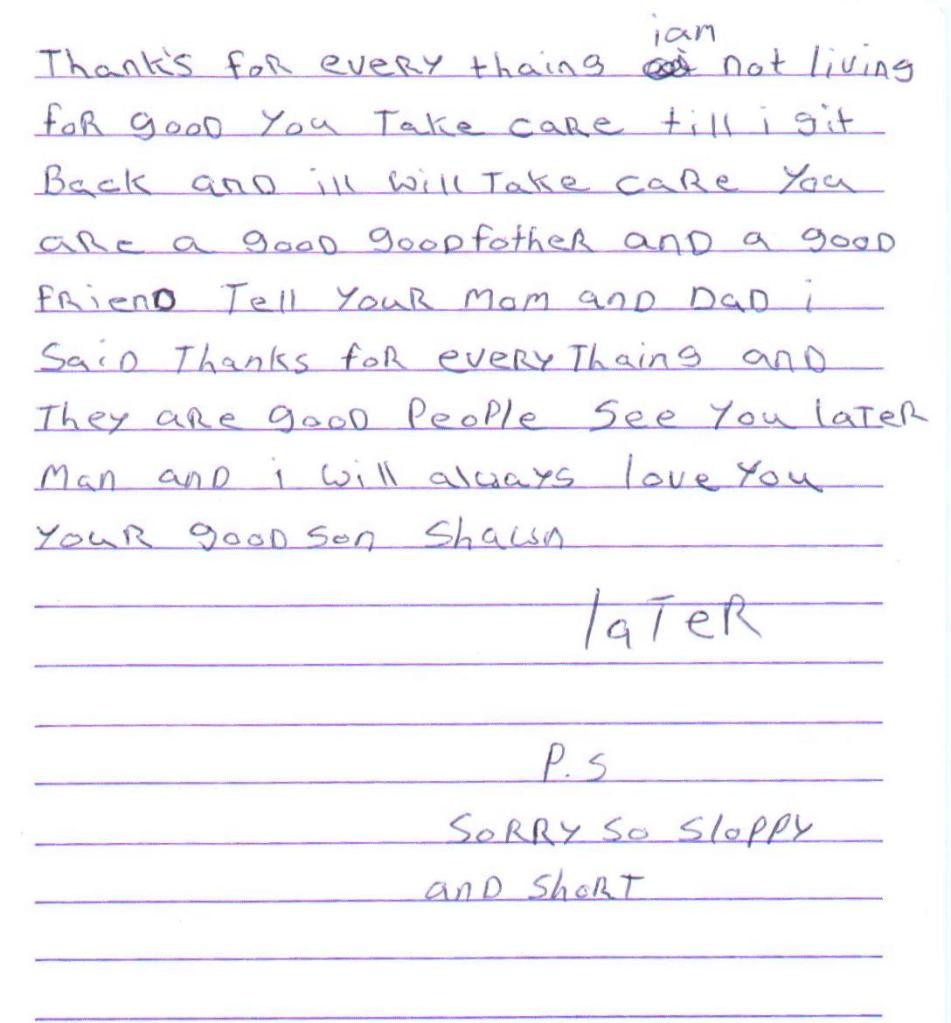
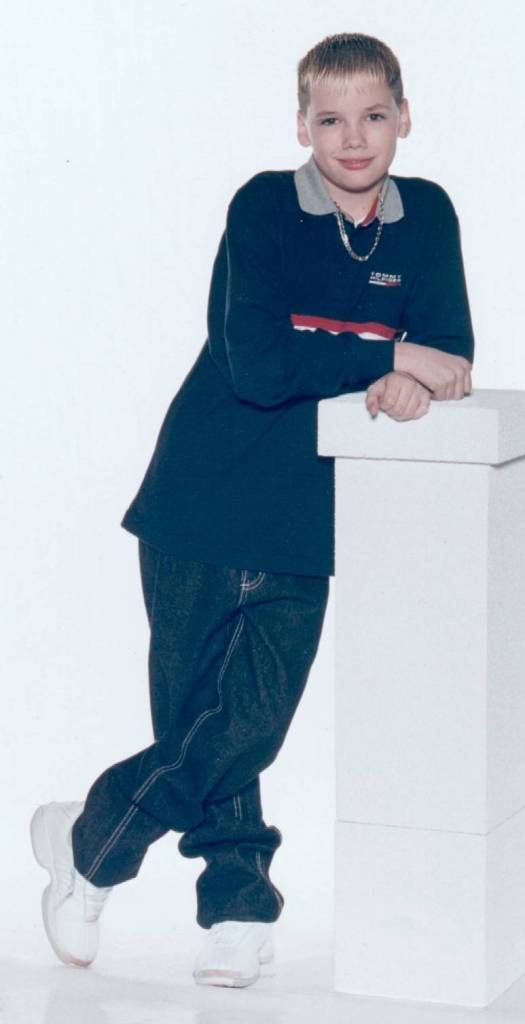
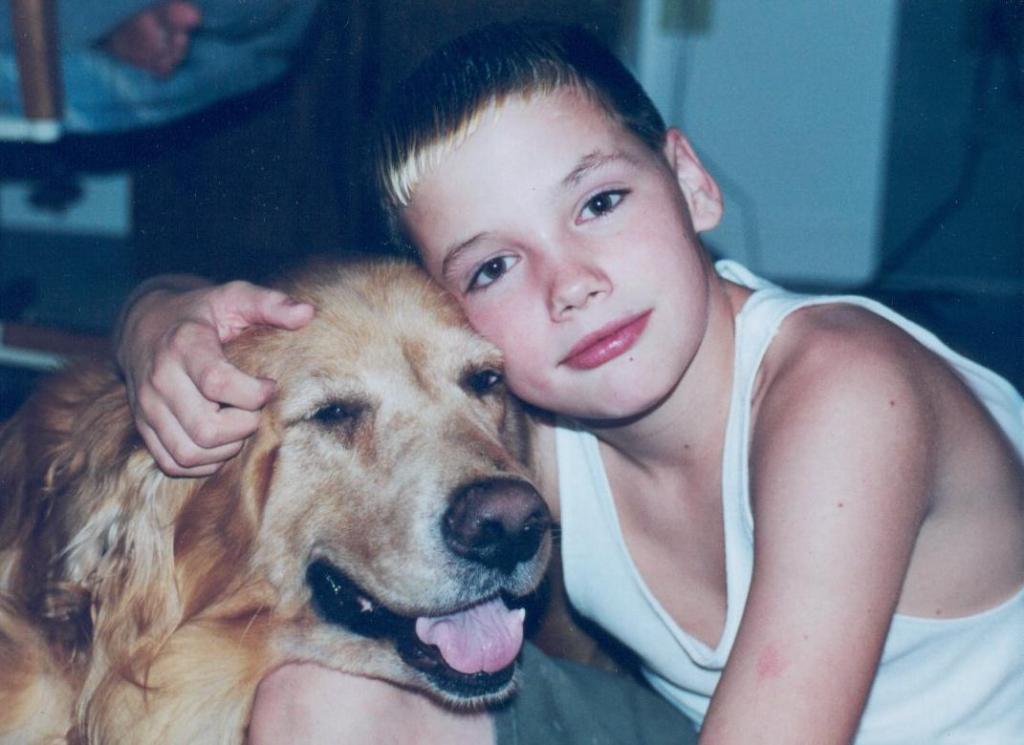
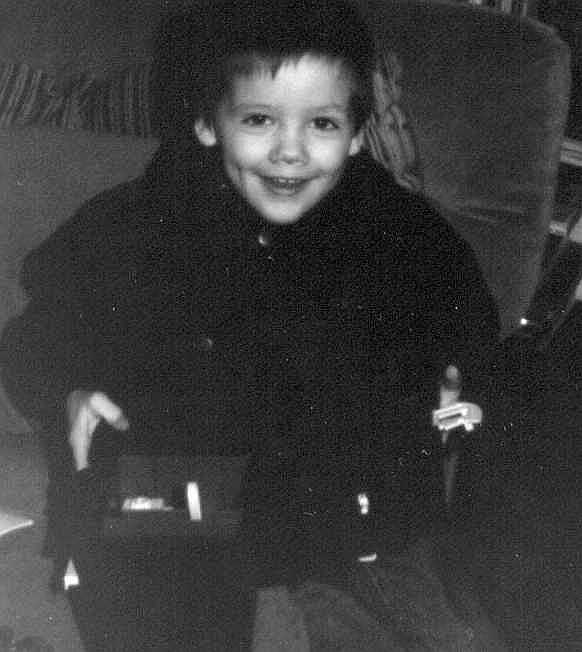
My godson, Shawn Porter, died yesterday. It really hurts to write that. I rarely cry, but…
I was touched when a close friend of mine sent the above.
When I awoke this morning, this new, sad reality was my first thought. You’ve probably had experiences like that. When you first wake up you assume it will be another normal day. And then it hits you hard, that it is not.
Many of you know of my compulsion to write. For years I’ve been led by the Spirit to listen, and try to put into words what the voice of God is trying to tell me. I don’t always succeed in converting that interpretation into words. Sometimes I don’t hear anything.
But right now I really want to share a few stories about Shawn. I really believe the following is true. “What comes to matter then is the creation of the best possible story we can while we’re here; you, me, us, together.” Thinking about these stories helps me cope.
ALL THAT WE ARE IS STORY From the moment we are born to the time we continue on our spirit journey, we are involved in the creation of the story of our time here. It is what we arrive with. It is all we leave behind. We are not the things we accumulate. We are not the things we deem important. We are story. All of us. What comes to matter then is the creation of the best possible story we can while we’re here; you, me, us, together. When we can do that and we take the time to share those stories with each other, we get bigger inside, we see each other, we recognize our kinship — we change the world one story at a time.
Richard Wagamese (October 14, 1955-March 10, 2017) Ojibwe from Wabeseemoong Independent Nations, Canada
In my present state of sorrow, I thought it unlikely that I would even try to write today. But an awareness of the Spirit is more profoundly felt at this time. I feel Shawn’s love from where he is now. Though we were separated by physical distance these last few years, he in Indianapolis and I in Iowa, he made sure we were connected every day, several times a day, by calling me. I can’t think of a day he called less than 3 times. A few times I’d say I was trying to write, or something similar, and gently suggest he might wait to call for a couple of hours. And he’d always say, “but you have to answer for me”, and I always did. We would tell each other we loved each other.
That separation, when I retired and moved to Iowa, was one of the most difficult things I’ve ever faced. I’ve lived close to Brandon, Shonda, and Shawn all their lives. Because their father, Randy Porter, was my lifelong best friend. When they lived on Lynhurst street, I lived in the garage, converted to an apartment, behind their house. When they lived on Livingston Street, I lived in an upstairs bedroom.
Randy fiercely loved his children and was the largest influence in their lives. On several occasions Randy asked me to be the children’s godfather which I was honored to be asked, glad to accept, although we both knew I would do anything I could for the kids anyway. Shawn’s death brings reminders of the death of Randy, over eight years ago. So the godfather thing really kicked in then.
This photo was taken when Shawn wanted to build a snowman. Fortunately it was that wet snow that held together well. It took a bit of effort and time to get the three round parts. This is the only snowman I remember seeing that also had ears. But that was just the beginning. We had to find parts for the eyes, nose and mouth. He knew what he wanted to use for each of those. He had a plastic bucket for the hat.
Shawn can be persistent. We couldn’t stop until the entire snowman was complete. I wondered why this was so important to him. When we were done he said, “will he come alive now?” Then I understood. There was a 7-Up commercial that showed a snowman coming alive. It broke my heart to have to tell him no, this snowman wouldn’t come alive.
For many years Shawn wore cowboy boots. He liked country music. I came to like country music, also, because Melody Skateland would alternate a country song with a rock song. The kids loved both and I began to appreciate country music, too. For many years Shawn, Brandon and Shonda would go to Melody at least every Friday and Saturday, and often Tuesday and Thursday evenings as well. I stayed there the whole time they were skating.
One time we went to the Old Indiana amusement park north of Indianapolis. Somehow Shawn disappeared. When we found him a short time later, the person who found him said he asked Shawn what his name was, and he said “Achy Breaky Heart”. For those who don’t know, that is a song by Billy Ray Cyrus.
We often talked about his Dad. One of Shawn’s favorite memories was of Randy buying him breakfast at McDonald’s every day on the way to school.
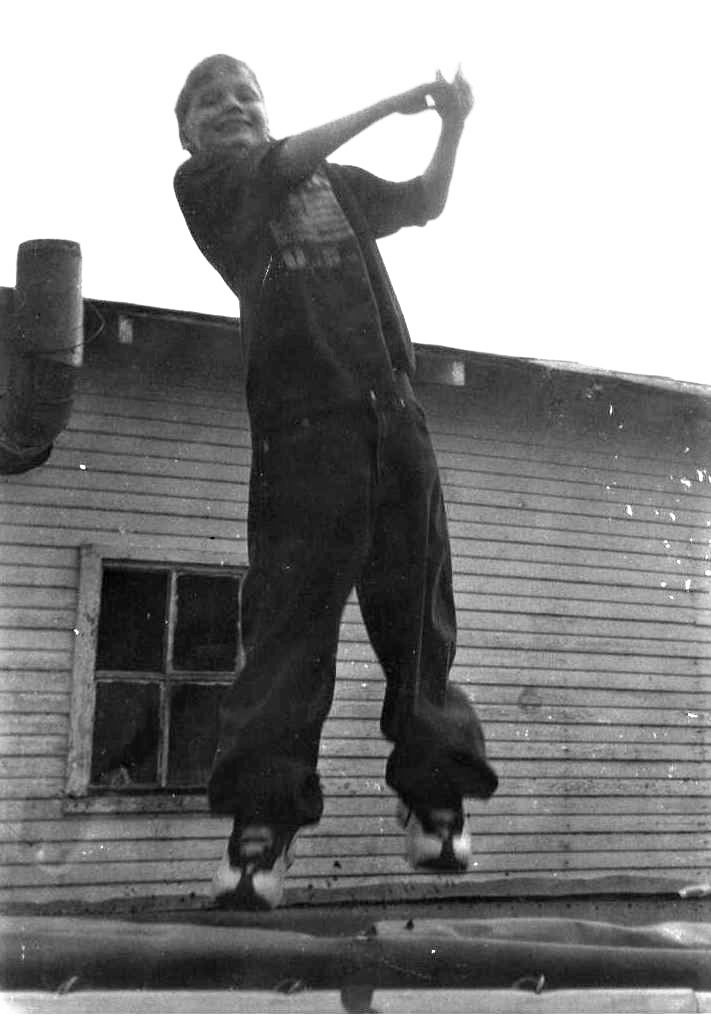
And of course he loved Brandon and Shonda. For a while there was a trampoline in the back yard. We decided to get it for Shawn’s birthday one year. At first he was disappointed, but after he got used to it, he loved jumping on it. He was both thrilled and a bit scared when Brandon would bounce him high in the air.
Shawn was pretty quiet. But he always knew what was going on around him. I remember many times when Randy would get in the car to go somewhere and it seemed every time Shawn flew across the driveway and jumped into the car with him. Randy would look over at me and shake his head, but with a smile on his face. Shawn would be staring straight ahead, wanting to make sure Randy didn’t look at him and possibly say he couldn’t go on that trip. Actually Randy did try to say that a couple of times but Shawn “won” every time.
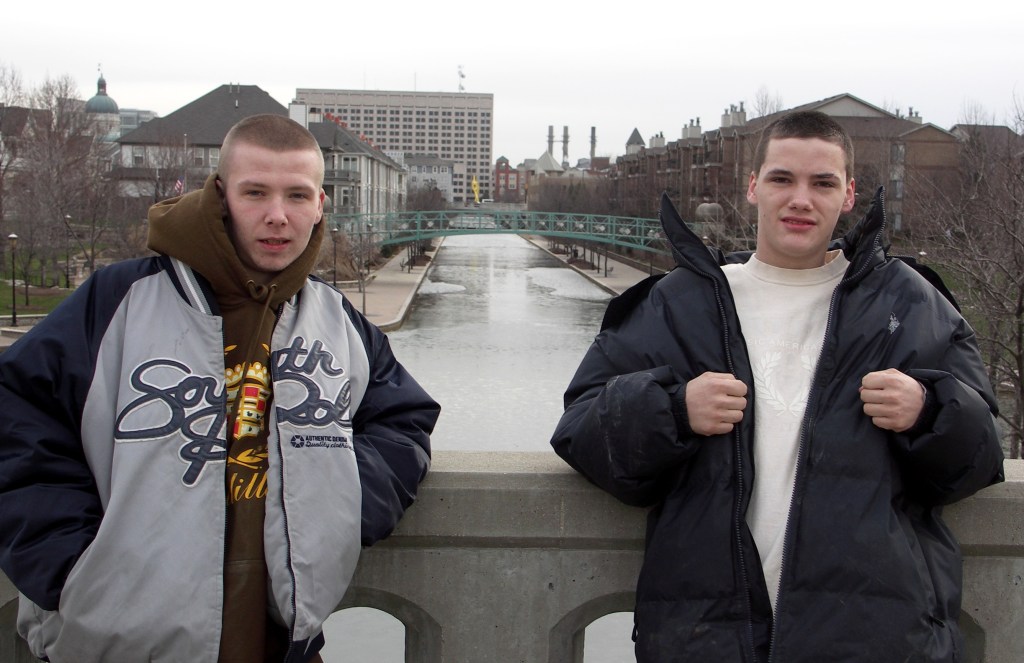
This photo is another memory. Shawn and Brandon were going to the local gas station for something. They later told us there was a man asking them questions about the arrival of spring. This was in a more innocent time. It turned out he was a photographer/reporter for the Indianapolis newspaper. The next day this photo of Shawn was on the front page. Brandon wasn’t happy because he was in the store at the time.
Shawn deeply loved his girls, Carrie and later, Tryniti. There are of course many stories there, but for another time.
It has been a long, difficult struggle to attempt to protect Mother Earth from the devastation of fossil fuel extraction and burning. Indigenous peoples have been doing this work for centuries.
“The coronavirus is telling the world what Indigenous Peoples have been saying for thousands of years — if we do not help protect biodiversity and nature, we will face this and even worse threats,” said Levi Sucre Romero, a BriBri Indigenous person from Costa Rica and co-coordinator of the Mesoamerican Alliance of Peoples and Forests (AMPB).
A growing body of scientific research supports the claims that Indigenous Peoples and knowledge systems have raised for thousands of years around the damaging effects of deforestation, loss of biodiversity and expansion of large-scale industrial development.
“The cure for the next pandemic, and even for this one, can be found in the biodiversity of our Indigenous lands. This is why we need to protect our lands and rights, because the future of life depends on it,” said Tuxá, who traveled across Europe last year with a delegation of Indigenous leaders, encouraging investors to boycott companies who benefit from exploitation of Indigenous lands.
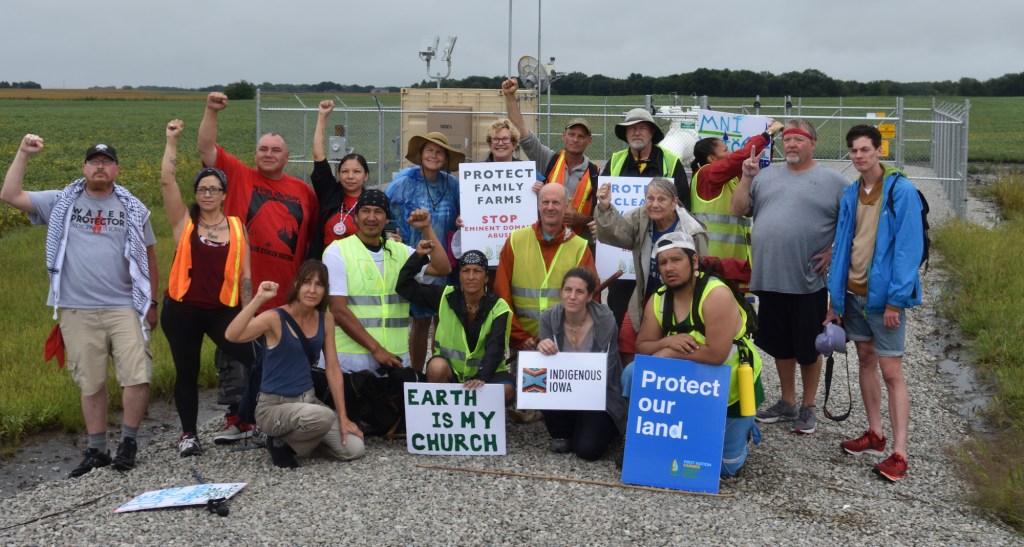
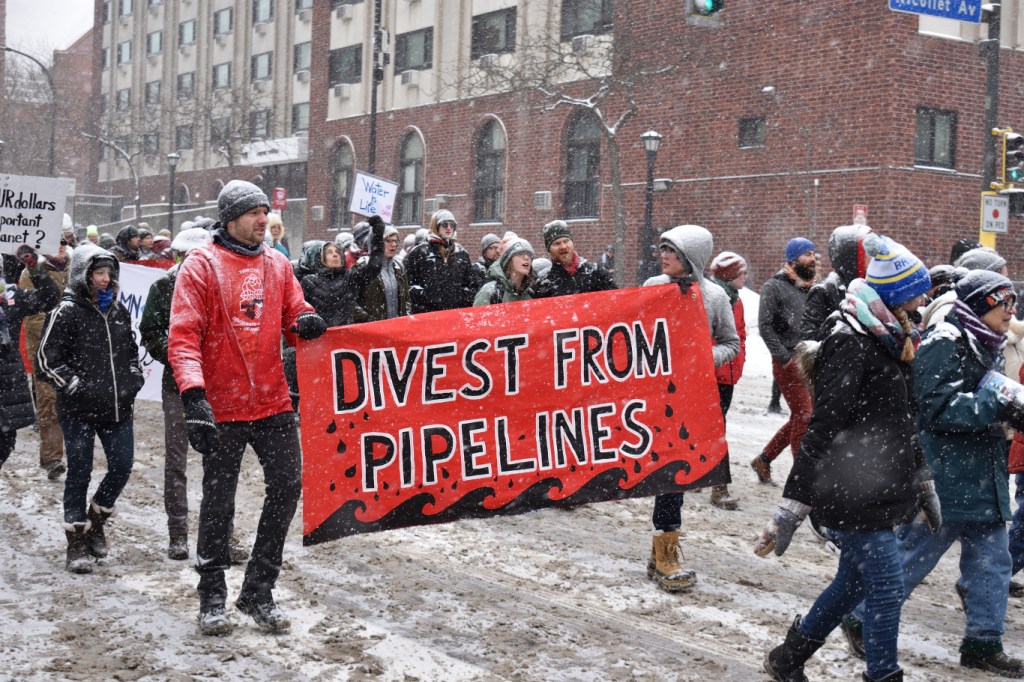
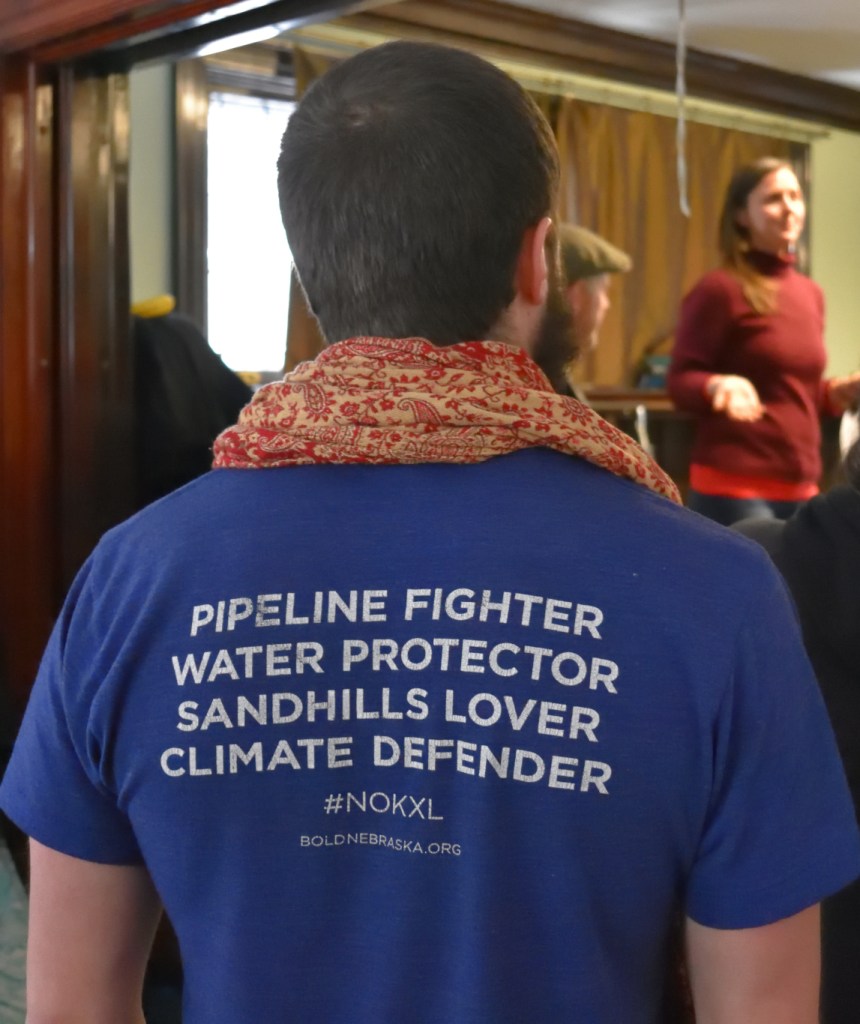
My small part was to stop owning a personal automobile some forty years ago. And organizing and training for nonviolent resistance with the Keystone Pledge of Resistance, No Dakota Access pipeline (#NoDAPL) and working in solidarity with the Wet’suwet’en to block the construction of the Coastal GasLink pipeline in British Columbia. I always feel uncomfortable writing about my experiences but as those who know me know, I don’t do so to call attention to myself. Rather, it is by sharing our own stories that we might change people’s minds. I believe what Richard Wagamese wrote below. This is also why I encourage others to share their own stories, you to share your stories.
ALL THAT WE ARE IS STORY
From the moment we are born to the time we continue on our spirit journey, we are involved in the creation of the story of our time here. It is what we arrive with. It is all we leave behind. We are not the things we accumulate. We are not the things we deem important. We are story. All of us. What comes to matter then is the creation of the best possible story we can while we’re here; you, me, us, together. When we can do that and we take the time to share those stories with each other, we get bigger inside, we see each other, we recognize our kinship — we change the world one story at a time.
Richard Wagamese (October 14, 1955-March 10, 2017) Ojibwe from Wabeseemoong Independent Nations, Canada
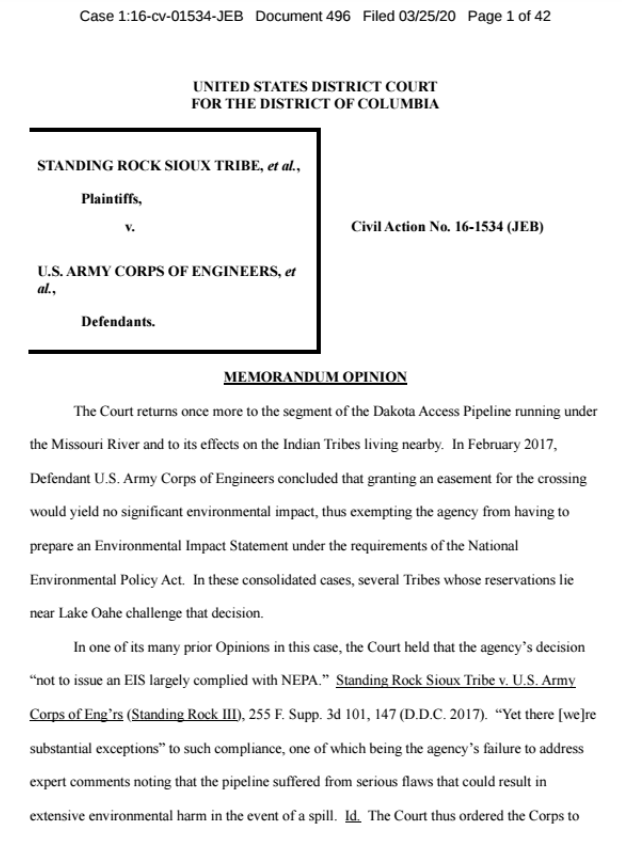
A federal judge handed down a major victory for the Standing Rock Sioux tribe of North Dakota on Wednesday, ruling that the U.S. Army Corps of Engineers violated the National Environmental Policy Act by approving federal permits for the Dakota Access Pipeline.
The USACE must complete a full environmental impact study of the pipeline, including full consideration of concerns presented by the Standing Rock Tribe, the judge ruled. The tribe has asked the court to ultimately shut the pipeline down.
As the oilpatch awaits a bailout from the federal government, the price of Canadian crude plunged to a new historic low of US$5 per barrel Friday.
The industry has been left staggering in recent weeks thanks to the double whammy of the COVID-19 pandemic, which has sent global markets into a tailspin, and a price war between Saudi Arabia and Russia. Now a barrel of Western Canadian Select (WCS), the Canadian benchmark, is going for roughly the same price as a Big Mac.
“This is really unknown territory,” said Warren Mabee, the director of the Institute for Energy and Environmental Policy at Queen’s University.
The abrupt spiral of the oil and gas sector, which contributed 11 per cent of Canada’s gross domestic product in 2018, has broad and dire consequences for the federal and Alberta economies. Already, oil producers are cutting spending plans and analysts are forecasting that production will need to be slashed, with WCS closing at US$5.06 per barrel Friday.
Canadian crude plummets to US$5 a barrel as oilpatch awaits federal bailout By Emma McIntosh, Canada’s National Observer, March 27th 2020
Fortunately that bailout for the oil industry didn’t make it into the stimulus bill that was just passed.
WASHINGTON – A planned purchase of 30 million barrels of crude for the Strategic Petroleum Reserve does not appear to be funded under the $2 trillion stimulus package agreed to by Republicans and Democrats Wednesday.
Senate Minority Leader Chuck Schumer said in a letter to senators Wednesday Democrats had eliminated from the legislation a, “$3 billion bailout for big oil.”
Last week Energy Secretary Dan Brouillette said he talking to Congress about getting $3 billion in funding to buy crude from small and medium-sized U.S. producers, with hope of starting to fill the reserve within weeks.
In the days leading up to this near-final bill, much of the debate centered around Democrats’ attempts to include certain green provisions, like support for the struggling renewable energy industry, and a requirement that a bailout for airlines be contingent on emission reduction promises.
The fight broke down into a sandbox tussle on Monday when Mitch McConnell accused Democrats of delaying relief for hospitals and struggling Americans in their pursuit of the Green New Deal, while Democrats argued that if the government was going to bail out the oil industry by purchasing $3 billion of oil for the Strategic Petroleum Reserve, why not help other hurting energy industries, too? The clash seems to have ended in a draw, as neither the oil bailout nor any clean energy or emissions reduction measures are in the most recent version of the bill. The only thing that stuck was $32 billion for the airline industry — no strings attached.
“While we applaud this first step, there is still much more that Congress can do in the long term to uplift people and the planet. Along with immediate relief, we need a long-term, climate-resilient recovery plan that charts a bold path forward to a livable future for all. There is no going back to ‘business-as-usual’ after this pandemic. We need a reboot. Congress must prioritize real climate action that creates millions of jobs, sustains families, responds to systemic inequity, and directly invests in Black, Indigenous, and communities of color facing economic insecurity. The climate crisis is already here, and it is already compounding threats to our economy and health. Let’s learn from the wake up call of this pandemic and act boldly. We must make a downpayment on a regenerative economy to prevent future crises.”
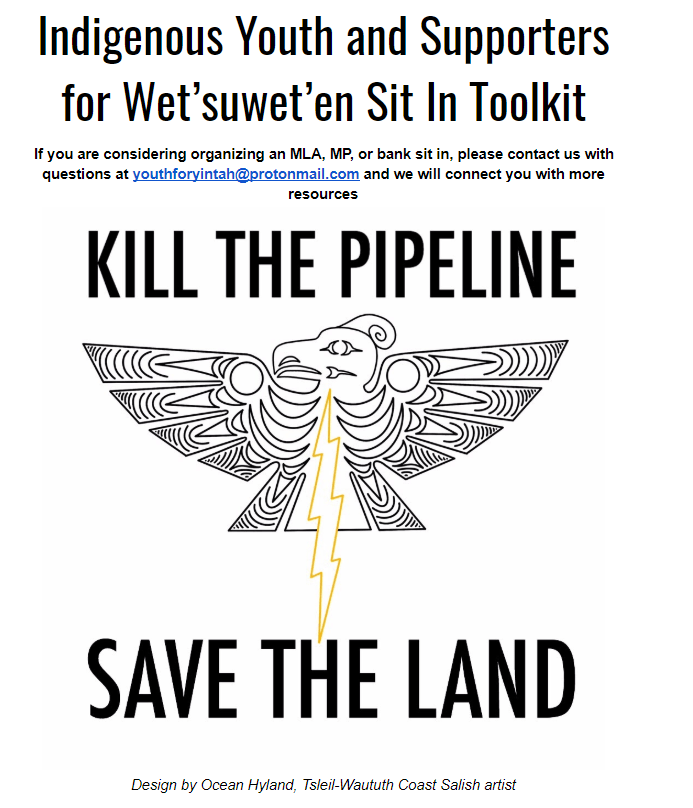
Recently the efforts of the Wet’suwet’en peoples to stop the construction of the Coastal GasLink (CGL) pipeline from being built on their territory have gained international attention and support. Solidarity actions across Canada stopped most rail shipments and shipping operations at the Port of Vancouver, shutting down Canada’s economy in ways similar to the COVID-19 pandemic now.
Because of the global economic slowdown there have been numerous signs of decreased air and water pollution. The coronavirus has accomplished what decades of pleading from Indigenous peoples and other environmentalists to reduce greenhouse gas emissions have not.
The question is whether we can find ways to continue methods of conservation and move away from fossil fuels, move to renewable energy when we begin to recover from this pandemic.
We need to create and share our stories for a better way forward. Many years ago there was a photographic practice called previsualization. That basically involved a number of steps to calibrate what your film and paper processing would look like under standard conditions. That made it more possible to set you camera and paper exposures to make the photo as close to what you wanted, ahead of time. These days your digital camera shows you your image before you click the shutter. (Back in the old days…)
The challenge for us is to previsualize the world we want to see post pandemic.
A natural gas company with a $6.6 billion plan to build a pipeline through northern British Columbia is continuing to clear forest and deliver pipe despite an Indigenous community’s calls to shut down in response to the coronavirus pandemic.
This week pipeline opponents launched a letter-writing campaign aimed at suspending construction on Wet’suwet’en territory. “In addition to ongoing and unjustified infringements on protected Indigenous rights, the work now brings to Wet’suwet’en people an unacceptable heightened risk of COVID-19, as potentially infected outside workers are being permitted to come and go through the territory,” reads one letter circulated on social media.
The threat of COVID-19 spread has suspended all Wet’suwet’en meetings, including talks on a proposed deal between hereditary chiefs, B.C., and Canada.
“We are not doing any public meetings currently and do not have a date set when we will continue with our clan meetings,” Wet’suwet’en Chief Na’moks, who also goes by John Risdale, said in an email Monday. “We have to consider the safety of our people and all who reside on our territory.”
Demonstrations continued into early March, from the steps of the B.C. legislature to Quebec rail lines. Five more protesters who occupied a government office in Victoria were arrested on March 5. By the following week, when Canada’s chief medical officer advised against group gatherings, most blockades had come down.
Jennifer Wickham, who works as a media coordinator for Gidimt’en camp on Wet’suwet’en territory, said that RCMP have increased their presence near the work camps since the proposed deal was announced. She said that RCMP or private security have been following anyone who leaves the camps on the main service road.
Please consider taking a moment to write BC, Canada, CoastalGas Link and the RCMP and tell them to call off construction during the pandemic, to protect Wet’suwet’en lives and rights. Contacts to follow. 2/ pic.twitter.com/NnFvF7JK18
— anti-genocidal killjoy 🇵🇸 (@Plateaupia) March 23, 2020
The honour song for the health care nurturers..
As the global coronavirus pandemic spreads into communities worldwide, there are those who are concerned that governments might take this opportunity to overextend their authority. National declarations of emergency are all well and good for moving funds to crisis response, but marginalized communities are well aware and vigilant about the potential for abuse of power.
In Canada, Wet’suwet’en First Nations communities have spent over a year opposing the construction of a gas pipeline through their ancestral lands. NPQ has been following the story, as the Canadian government backs TC Energy’s (formerly TransCanada’s) Coastal GasLink pipeline over the wishes of indigenous communities living on unceded sovereign land.
Hereditary chiefs have been meeting about a draft agreement reached last month between Wet’suwet’en hereditary leaders, British Columbia provincial leaders, and the federal government to expedite the nation’s rights and title process. Concerns about coronavirus and its impact on vulnerable indigenous communities drove the community to move meetings online or push them back. One community member told The Narwhal, “I have no idea when we’re going to reschedule.”
That wouldn’t be an issue, except that TC Energy does not seem to share their health concerns. Work on the pipeline route continues, which means that workers who are not part of the community are being brought into the territory with limited screening or protection protocols in place. Coastal GasLink’s own website confirms that they had some protections in place for their workers, such as onside medics, but none for the communities those workers (illegally in this case) entered.
The Canadian Association for Conservation of Cultural Property issued a public letter expressing respect and solidarity to the Wet’suwet’en people, “who, in conformity with their own laws and on their own land, express their right to protect the natural world and their cultural patrimony, which to them are inextricable.”
— (Re)conciliation Working Group for CAC-ACCR (@rwg_gtr) March 22, 2020
Health officials warned six years ago that thousands of workers brought to northern B.C. to build pipelines and dams and operate mines could overwhelm the region’s medical system.
Now the COVID-19 crisis has raised serious concerns about the increased risks of industry activity, especially from employees housed in work camps who frequently rotate in and out of the region.
The BC Building Trades Council has called on companies to scale down operations to reduce the number of workers housed in camps. “We are calling for remote-camp megaprojects in B.C. to be tooled down to all but essential or critical-path work,” Andrew Mercier, executive director of the union umbrella organization, said last week. “We need to flatten the curve and alleviate pressure on the rural health care systems.”
The council, which represents 35,000 unionized construction workers including members at Site C and the LNG Canada project in Kitimat, said health and safety come first.
And on Monday, mayors in southeastern B.C. expressed concerns that mining giant Teck Resources’ operations — including a camp housing hundreds of workers — created a major risk that COVID-19 would spread in the region.
Northern Health’s response to Coastal GasLink’s 2014 project application warned the region’s “shadow population” of transient workers could easily overwhelm the local health care system.
Less clear is how the pandemic will impact construction on the TC Energy’s Coastal GasLink pipeline, opposed by Wet’suwet’en hereditary chiefs. Last month the RCMP arrested 28 people and removed camps on the Morice Forest Service Road that had prevented pipeline workers from entering the area.
On its website, Coastal GasLink names construction as one of its “critical” operations that will continue along the route. The company says it will implement protocols to stem the spread of COVID-19, such as working primarily with local operators, enhanced health screening and restricting business travel. Regional offices will remain open, while urban offices will be closed, it says.
According to its website, 1,100 workers were on the job along the pipeline route at the end of February. The site said the number would be reduced “significantly” due to spring breakup, when construction and transport are more difficult.*
BC’s Work Camps Stay Open Despite Pandemic Risks. Workers spreading virus could swamp health system, say experts. ‘Tool down’ megaprojects, urges labour. by Amanda Follett Hosgood 24 Mar 2020 | TheTyee.ca
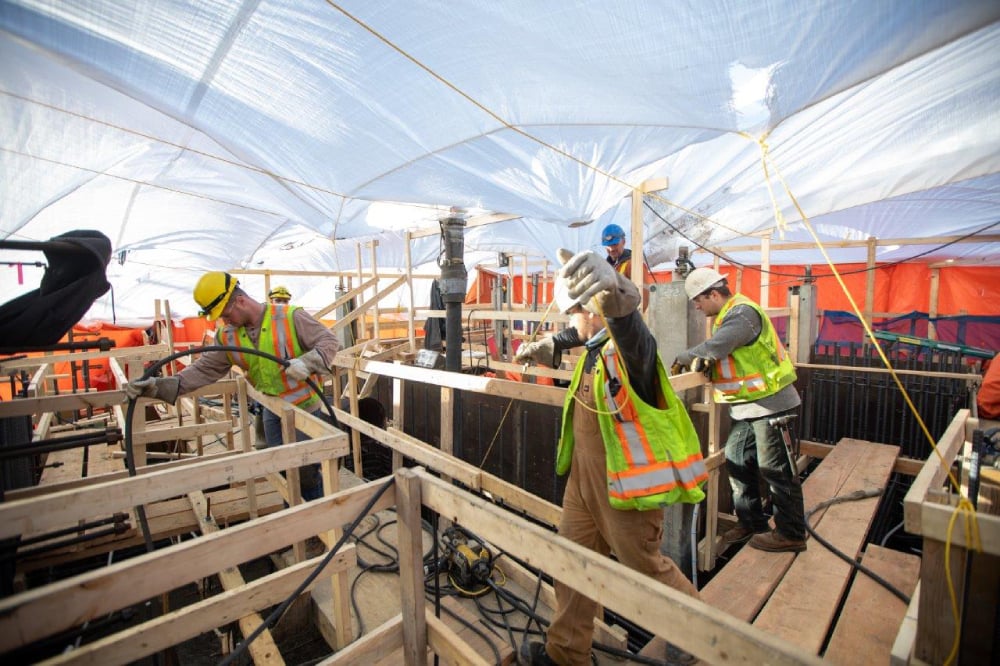
Workers laying a concrete slab at BC Hydro’s Site C earlier this month. Sixteen workers were in isolation with COVID-19 symptoms at the Site C work camp Monday. Photos from BC Hydro.
As the COVID-19 pandemic continues to spread throughout the nation, we’re aware that it could have an outsized impact on Indian Country. Relief programs may not provide needed tests and medical supplies for us — or anyone — on an appropriate scale. Please know we are monitoring this, and as my colleague Chase Iron Eyes mentioned a few days ago, we’ll keep you updated on developments. May we all stay safe and healthy.
In the meantime, I write with some wonderful news. Just yesterday, Standing Rock won a big victory in the ongoing legal battle against the Dakota Access pipeline when a federal judge granted the tribe’s request to strike down DAPL’s federal permits!
The judge ruled that Trump’s Army Corps of Engineers must complete a full Environmental Impact Statement (EIS) — the much more comprehensive review we’ve all been demanding since the beginning of this movement (and that President Obama required, only to be reversed by Trump). The Corps fell short in three specific ways, according to the judge.
First, the Corps failed to respond adequately to claims by the tribe’s experts that DAPL’s leak detection system is wholly inadequate. Second, the company’s dreadful history of oil spills wasn’t properly addressed. Finally, the oil company failed to account for the adverse repercussions a “worst case discharge” might have on our treaty rights — our ability to hunt, fish, and perform traditional religious ceremonies near Lake Oahe, which the pipeline crosses under.
I was asked by the tribal chairman to represent Standing Rock’s interests at the hearing in Washington, D.C., but I couldn’t go because of Coronavirus travel restrictions. I’m gratified that, despite our troubles, we have been victorious, at least for now.
The logic of the judge’s ruling suggests the pipeline should not remain operational without a federal permit. The ruling actually references both the Titanic and Chernobyl concerning the possibility of human error, and I’m hopeful shutting down the flow will be the judge’s next step. He has now requested legal briefs on that issue.
Please stay tuned, as we hope to share more good news soon. In the meantime, stay safe and please listen to the medical professionals with knowledge about the requirements of this pandemic. We’re all in this together.
Wopila tanka — as always, we’re so grateful to you for standing with Standing Rock and Mother Earth.
Phyllis Young Standing Rock Organizer The Lakota People’s Law Project
A federal judge handed down a major victory for the Standing Rock Sioux tribe of North Dakota on Wednesday, ruling that the U.S. Army Corps of Engineers violated the National Environmental Policy Act by approving federal permits for the Dakota Access Pipeline.
The USACE must complete a full environmental impact study of the pipeline, including full consideration of concerns presented by the Standing Rock Tribe, the judge ruled. The tribe has asked the court to ultimately shut the pipeline down.
Thousands of water protectors and allies spent weeks at the Oceti Sakowin camp in North Dakota in 2016 to protest the construction of the Dakota Access Pipeline. (Photo: Reuters)
The Court ordered the Corps to prepare a full environmental impact statement on the pipeline, something that the Tribe has sought from the beginning of this controversy. The Court asked the parties to submit additional briefing on the question of whether to shut down the pipeline in the interim.
“After years of commitment to defending our water and earth, we welcome this news of a significant legal win,” said Standing Rock Sioux Tribe Chairman Mike Faith. “It’s humbling to see how actions we took four years ago to defend our ancestral homeland continue to inspire national conversations about how our choices ultimately affect this planet. Perhaps in the wake of this court ruling the federal government will begin to catch on, too, starting by actually listening to us when we voice our concerns.”
“This validates everything the Tribe has been saying all along about the risk of oil spills to the people of Standing Rock,” said Earthjustice attorney Jan Hasselman. “The Obama administration had it right when it moved to deny the permits in 2016, and this is the second time the Court has ruled that the government ran afoul of environmental laws when it permitted this pipeline. We will continue to see this through until DAPL has finally been shut down.”
STANDING ROCK SIOUX TRIBE PREVAILS AS FEDERAL JUDGE STRIKES DOWN DAPL PERMITS, Victory: Decision cites risks of pipeline spills to Standing Rock Sioux Tribe, Earth Justice, March 25, 2020
Holy heck! In huge victory for Standing Rock Sioux, federal judge orders review of Dakota Access Pipeline. Such thanks to all who fight!https://t.co/miZ7wVHwlm
In December of 2016, the Obama administration denied permits for DAPL to cross the Missouri River, and ordered a full environmental impact statement to analyze alternative pipeline routes and impacts on the Tribe’s treaty rights. Yet on his second day in office, Trump reversed that order, directing that permits be issued. Pipeline construction was completed by June of 2017.
The Standing Rock Sioux Tribe challenged the permits in court and won. The Court ruled then that the environmental analysis had been insufficient because it failed to account for consequences facing the Tribe, and ordered the U.S. Army Corps of Engineers to redo it. However, the judge declined to shut down the pipeline in the interim.
The massive 2016 gathering of Tribes and allies defending Standing Rock Sioux territory from DAPL captured the world’s attention and attracted international media coverage. It helped give rise to a global movement of indigenous resistance to fossil-fuel infrastructure projects.
Thanks to massive pressure from indigenous resistance movements, a federal judge struck down the permit for the Dakota Access Pipeline!https://t.co/oLCLecdal7
The massive gathering of tribes and allies at the Standing Rock Sioux Reservation in 2016 brought international attention to the struggle to stop the construction of the Dakota Access Pipeline (NoDAPL).
Many people all over the country and internationally worked in many different ways to bring attention to DAPL. Of course we know this most recent court order is not the end of the struggles. It is encouraging that the court asked both sides for submissions regarding shutting down the pipeline. An Iowa court case was heard in 2018 regarding the abuse of eminent domain to seize property for the pipeline in Iowa. We were hoping that might shut down the pipeline but the decision went against us.
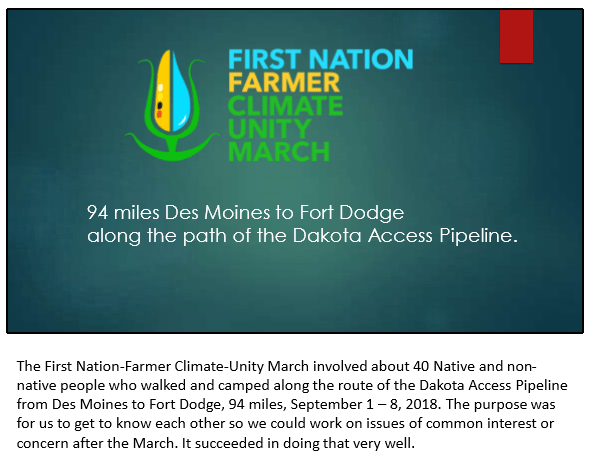
My friend and fellow Quaker, Peter Clay, went to Standing Rock several times. Several friends I made during the First Nation-Farmer Climate Unity March also spent time at Standing Rock.
My friends Joshua Taflinger (who also went to Standing Rock) and Brandi Herron organized solidarity gatherings, and our campaign to defund the DAPL by closing accounts with two of the banks invested in the pipeline, CHASE and PNC Bank. The Quaker meeting I attended in Indianapolis, North Meadow Circle of Friends, closed their CHASE bank account.
My friends Ra Wyse and Aghilah Nadaraj from the Kheprw Institute and I created the following video to help make others aware of the Dakota Access Pipeline in Indianapolis..
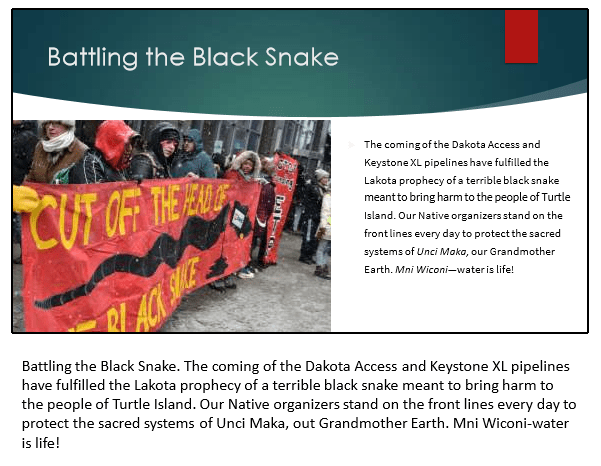
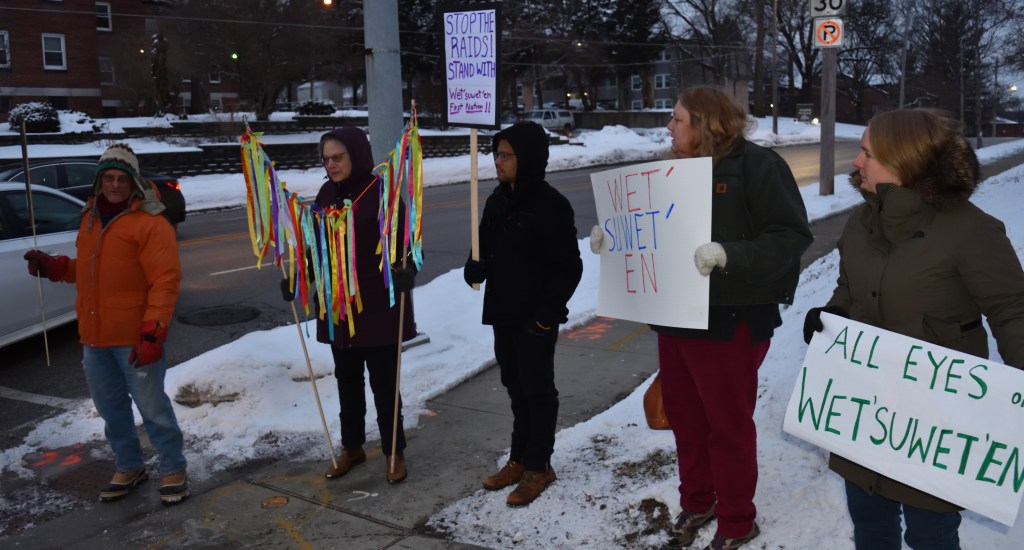
Many of us learned skills when we organized nonviolent direct actions against the Keystone XL pipeline that were very useful for #NoDAPL. And we have used what we have learned, and our networks, in our present solidarity efforts for the Wet’suwet’en peoples fight against the Coastal GasLink pipeline in Canada.
More of us are realizing many of effects of the COVID-19 pandemic will continue for a long time, some permanently.
A recent (3/19/2020) article in POLITICO, “Coronavirus Will Change the World Permanently. Here’s How. A crisis on this scale can reorder society in dramatic ways, for better or worse. Here are 34 big thinkers’ predictions for what’s to come” presents a number of interesting ideas.
But crisis moments also present opportunity: more sophisticated and flexible use of technology, less polarization, a revived appreciation for the outdoors and life’s other simple pleasures. No one knows exactly what will come, but here is our best stab at a guide to the unknown ways that society—government, healthcare, the economy, our lifestyles and more—will change.
For a many years I’ve been praying, thinking and writing about how our near and long term future might look. This began in 1970, when an Iowa farm boy moved to Indianapolis and was traumatized by seeing thousands of cars, and how they were polluting the air we all breathed. This was before catalytic converters, so smog was blocking out the sun. I couldn’t be part of that, so have lived without a car since then. That triggered a life long study of climate science.
The point is, this focus on our environment made me aware of how our environment was being damaged, and anticipating the changes to come. I anticipated the breakdown of our social, economic and political systems as pollution of our air, water and land overwhelm Mother Earth’s ability to somewhat mitigate the damage.
Increasing food and water insecurity and physical devastation from flooding, strong storms, desertification and massive, fierce wildfires are rapidly adding to the millions of climate refugees that already exist. Conflicts will continue to break out over access to water, food, shelter, energy and healthcare. Between countries over resources. Between climate refugees and those living where refugees are forced to flee.
I thought these social, economic and political changes would accelerate in the coming years. But now, the COVID-19 pandemic has brought about many of those changes in just a matter of months!
The rules we’ve lived by won’t all apply.
America’s response to coronavirus pandemic has revealed a simple truth: So many policies that our elected officials have long told us were impossible and impractical were eminently possible and practical all along It’s clear that in a crisis, the rules don’t apply—which makes you wonder why they are rules in the first place. This is an unprecedented opportunity to not just hit the pause button and temporarily ease the pain, but to permanently change the rules so that untold millions of people aren’t so vulnerable to begin with.
Astra Taylor is a filmmaker and author of Democracy May Not Exist, but We’ll Miss It When It’s Gone.
This is playing out right now as Congress is considering a temporary guaranteed income, somewhat universal heath care, etc. And Congress has somehow found trillions of dollars to spend now, after saying for decades millions of dollars had to be cut from social safety nets.
Expect a political uprising.
The aftermath of the coronavirus is likely to include a new political uprising—an Occupy Wall Street 2.0, but this time much more massive and angrier. Once the health emergency is over, we will see the extent to which rich, well-connected and well-resourced communities will have been taken care of, while contingent, poor and stigmatized communities will have been thoroughly destroyed. Moreover, we will have seen how political action is possible—multitrillion dollar bailouts and projects can be mobilized quickly—but only if the cause is considered urgent. This mismatch of long-disregarded populations finally getting the message that their needs are not only chronically unattended, but also chronically dismissed as politically required, will likely have drastic, pitchfork consequences.
Cathy O’Neil is founder and CEO of the algorithmic auditing company ORCAA and author of Weapons of Math Destruction: How Big Data Increases Inequality and Threatens Democracy.
For some time this uprising has been occurring as Indigenous peoples around the world are rising up to protect Mother Earth. Protect water and demand honoring treaties, Indigenous rights and respecting unceded lands. #LandBack. UN Declaration on the Rights of Indigenous Peoples. Standing Rock. Wet’suwet’en.
A change in our understanding of ‘change.’
“Paradigm shift” is among the most overused phrases in journalism. Yet the coronavirus pandemic may be one case where it applies. American society is familiar with a specific model of change, operating within the existing parameters of our liberal democratic institutions, mostly free market and society of expressive individualism. But the coronavirus doesn’t just attack the immune system. Like the Civil War, Great Depression and World War II, it has the potential to infect the foundations of free society
Matthew Continetti is a resident fellow at the American Enterprise Institute.
The current Republican administration seems to delight in punishing non-White people, inflicting damage on Mother Earth and promoting authoritarianism at home and around the world. But the ineptitude of their response to the coronavirus pandemic, the suppression of civil liberties and the ever increasing income gap has many feeling change within the system is not possible. A friend of mine recently put it this way:
I’m of the firm opinion that a system that was built by stolen bodies on stolen land for the benefit of a few is a system that is not repairable. It is operating as designed, and small changes (which are the result of huge efforts) to lessen the blow on those it was not designed for are merely half measures that can’t ever fully succeed.
Ronnie James
Less individualism.
The coronavirus pandemic marks the end of our romance with market society and hyper-individualism. We could turn toward authoritarianism. Imagine President Donald Trump trying to suspend the November election. Consider the prospect of a military crackdown. The dystopian scenario is real. But I believe we will go in the other direction. We’re now seeing the market-based models for social organization fail, catastrophically, as self-seeking behavior (from Trump down) makes this crisis so much more dangerous than it needed to be. When this ends, we will reorient our politics and make substantial new investments in public goods—for health, especially—and public services.
Eric Klinenberg is professor of sociology and director of the Institute for Public Knowledge at New York University. He is the author, most recently, of Palaces for the People: How Social Infrastructure Can Help Fight Inequality, Polarization, and the Decline of Civic Life.
The remarkable responses of people and small business to COVID-19 markedly contrast the failure of the government to do what needs to be done. These public responses remind us of the times when we, the people, rose to the occasion.
Religious worship will look different.
All faiths have dealt with the challenge of keeping faith alive under the adverse conditions of war or diaspora or persecution—but never all faiths at the same time. Religion in the time of quarantine will challenge conceptions of what it means to minister and to fellowship. But it will also expand the opportunities for those who have no local congregation to sample sermons from afar. Contemplative practices may gain popularity. And maybe—just maybe—the culture war that has branded those who preach about the common good with the epithet “Social Justice Warriors” may ease amid the very present reminder of our interconnected humanity.
Amy Sullivan is director of strategy for Vote Common Good.
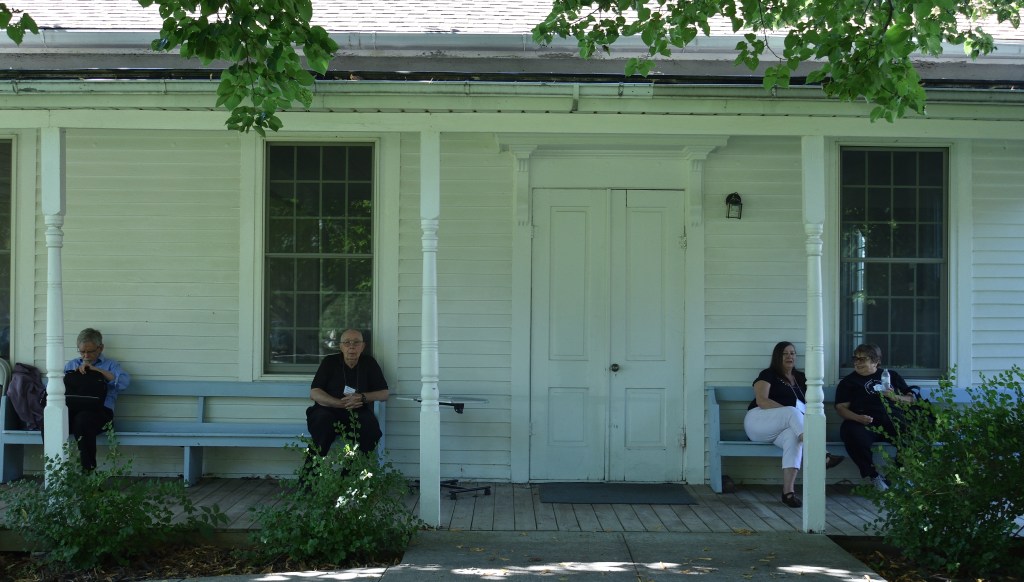
The challenges of the coronovirus have definitely affected the Quaker meetings I know of. Since we don’t use ministers, and worship in silence for about an hour, some Friends do this in their own homes at the scheduled time. Several meetings are using ZOOM to connect with each other remotely.
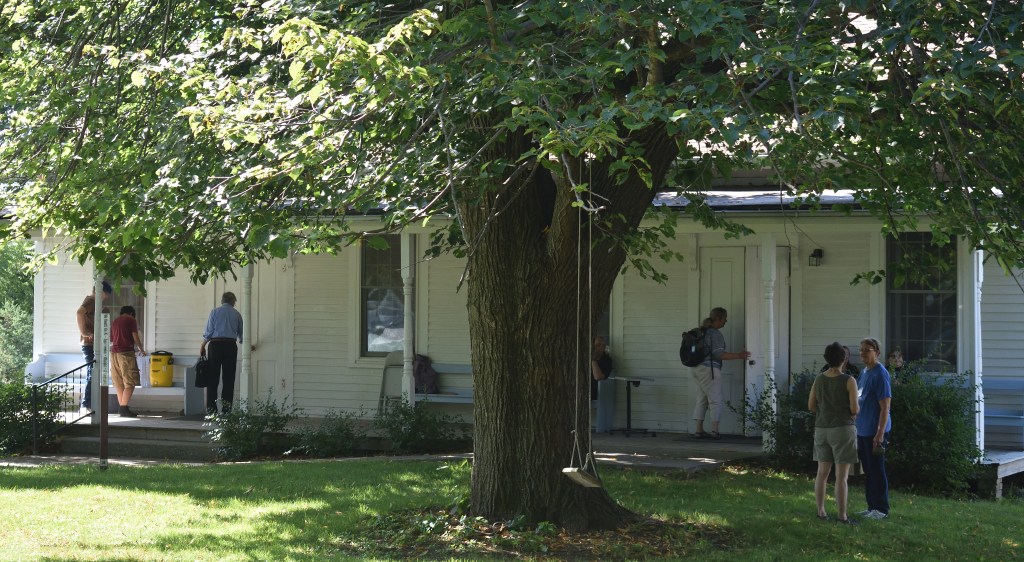
My Quaker meeting, Bear Creek, is in the Iowa countryside. On any given Sunday there are usually around a dozen who gather. But other meeting members strive to stay in touch with the meeting even though they live far away. One of our practices is to consider Queries once a month. There are twelve sets of queries, so a different one is worked on each month. Here are the queries about Outreach:
Do we encourage intervisitation within the Yearly Meeting and with other Friends?
What are we doing to share our faith with others outside our Friends community? How do we speak truth as we know it and yet remain open to truth as understood by others?
In what ways do we cooperate with persons and groups with whom we share concerns? How do we reach out to those with whom we disagree?
How do we make the presence of our meeting known to the larger community? Do we invite others to share in our Meetings for Worship and other meeting activities? Do we welcome everyone and appreciate the gifts that differences such as race, creed, economic status, disability, age, gender or sexual orientation may bring to us?
Several years ago we began the practice we call “long distance queries”. That month’s queries are emailed to distant Friends, who can send there responses back to the meeting. When the Quakers gather at the meetinghouse, these emailed responses are included in the query discussion.
Now that we don’t gather physically due to the coronavirus we have tried to use ZOOM for our pre-meeting discussions. Some aren’t comfortable with that format of gathering. But as time under the threat of the virus goes on, I think more of us will become comfortable.
Recently a ZOOM meeting was set up for the hour of silent worship. A small number of Quakers, from Iowa, Nebraska, Minnesota and South Dakota were on that call and everyone seemed to appreciate it.
There are more ideas in the article the quotations above came from. Coronavirus Will Change the World Permanently. Here’s How. A crisis on this scale can reorder society in dramatic ways, for better or worse. Here are 34 big thinkers’ predictions for what’s to come. By POLITICO MAGAZINE 03/19/2020











































 Quakers, social justice and revolution