Brutally Honest

I’m going to try to give myself permission to be brutally honest about what I believe about Easter and other religious stories.

I often don’t know what I’ll be writing about until I sit before this laptop, center myself and try to discern what I’m supposed to write. I say supposed instead of want to write because I try to figure out what my Inner Light is telling me. Of course, I’m not always successful in being led. If nothing comes to me I might go to option two, to write about something that interests me, anyway.

This morning I’m feeling led to write about some cultural stories, this being triggered because this is Easter Sunday, the most important Christian observance.

Before I could get started, I was led on a detour away from what I thought was going to be the main topic, but might turn out to be the central idea. I started to write about brutal honesty. That sounded a bit harsh, so I looked up the term. The most helpful is summarized below:

  1. Be Brutally Honest with Yourself
  2. Check Your Motives
    So ask yourself this classic trio of questions about your message:
    Is it true?
    Is it necessary?
    Is it kind (or helpful)?
    If the answer to all three isn’t yes, it’s time to reevaluate.
  3. Be More Honest than Brutal
  4. Prepare Them for What’s Coming
  5. Reveal Your Intentions
  6. Be Short and Sweet
    You’re a coward.
    If you can’t be brutally honest with people, especially when you know it’s in their best interest, you’re a coward.
  7. Stick to the Facts
  8. Conclude with a Solution
    Don’t leave them feeling bad because of the truth bomb you just dropped on them. Help them figure out a solution. Give them a way forward.
    Most of all, tell them how you’re going to help them, and commit to helping them tackle the issue.
    How you end the discussion can make all the difference.
    Do you want them to feel defeated, beat down, and discouraged? Or do you want them to feel hopeful that there are concrete ways that they can address the issue?

    THE BRUTALLY HONEST GUIDE TO BEING BRUTALLY HONEST by Josh Tucker, SmartBlogger,Jan 30, 2019
    https://smartblogger.com/brutally-honest/

Number 2. Check Your Motives is troublesome today.

  • Is it true? That is the question that started my questioning, i.e. what is the ‘truth’? How true are stories like the resurrection of Jesus? How true is what I’m writing going to be?
  • Is it necessary? I’m not sure about this answer, either. If I’m faithful to what I think I should be writing about this morning, I guess I believe what I’m being told to write it is necessary. On a personal level, I believe it is necessary for me to explore these ideas this morning. If I think this is only helpful for me, I probably won’t ‘publish’ this.
  • Is it kind or helpful? The main purpose of my writing is to try to address what I think of as spiritual poverty today. With many people turning away from ‘organized’ religious services, I wonder where they turn for their spiritual needs. So I hope this might be helpful to some.

My motives today are not to suggest anyone’s religious beliefs are wrong, or that they should accept my beliefs. I do think the way organized religions emphasize the literal interpretations of many religious stories drives people away.

One of the best parts about our Quaker spiritual practices are what we call the Queries. A set of questions we talk about together as a way to trigger how we are interpreting our beliefs. I think this is a good practice because it helps us think about our spiritual life. And is more engaging than many church services, which are more of a passive exercise, of listening to someone else’s sermon.

Here is an example of queries related to social and economic justice.

  • How are we beneficiaries of inequity and exploitation? How are we victims of inequity and exploitation? In what ways can we address these problems?
  • What can we do to improve the conditions in our correctional institutions and to address the mental and social problems of those confined there?
  • How can we improve our understanding of those who are driven to violence by subjection to racial, economic or political injustice? In what ways do we oppose prejudice and injustice based on gender, sexual orientation, class, race, age, and physical, mental and emotional conditions? How would individuals benefit from a society that values everyone? How would society benefit?

This feels a little like I’ve been procrastinating the discussion of religious stories. I am feeling a bit cowardly because people have strong feelings about their beliefs, which is as it should be. Also, there are so many people I know who are much more knowledgeable about these subjects than I.

In one sense, as a medical professional, it is hard to believe a human body can come back from being dead for three days. But I’ve been involved in hundreds of resuscitations of babies whose hearts started to beat again. Who began to breathe on their own again. But that was after a very short time of arrest.

People might say the key thing in the above is human body, that the son of God was more than human.

I’ve believed religious stories were not necessarily to be viewed literally, but as illustrations of ideas.

More recently I’ve found what I’ve been learning about Indigenous spirituality very helpful. Again I’m just beginning to learn. And I don’t want to tread into the area of cultural appropriation.

I’ve read some beautiful creation stories that are further removed from human representations than the stories I grew up with. But in some ways seem even more true. Following is an excerpt from a story in Robin Wall Kimmerer’s book, Braiding Sweetgrass.


Skywoman Falling

In winter, when the green earth lies resting beneath a blanket of snow,
this is the time for storytelling. The storytellers begin by calling upon
those who came before who passed the stories down to us, for we are
only messengers.

In the beginning there was the Skyworld.

She fell like a maple seed, pirouetting on an autumn breeze.* A column of

light streamed from a hole in the Skyworld, marking her path where only

darkness had been before. It took her a long time to fall. In fear, or maybe

hope, she clutched a bundle tightly in her hand.

Hurtling downward, she saw only dark water below. But in that

emptiness there were many eyes gazing up at the sudden shaft of light.

They saw there a small object, a mere dust mote in the beam. As it grew

closer, they could see that it was a woman, arms outstretched, long black

hair billowing behind as she spiraled toward them. (continues…)

Braiding Sweetgrass, Robin Wall Kimmerer

In the end, I believe this is all about sharing stories.

ALL THAT WE ARE IS STORY

From the moment we are born to the time we continue on our spirit journey, we are involved in the creation of the story of our time here. It is what we arrive with. It is all we leave behind. We are not the things we accumulate. We are not the things we deem important. We are story. All of us. What comes to matter then is the creation of the best possible story we can while we’re here; you, me, us, together. When we can do that and we take the time to share those stories with each other, we get bigger inside, we see each other, we recognize our kinship — we change the world one story at a time.

Richard Wagamese (October 14, 1955-March 10, 2017)
Ojibwe from Wabeseemoong Independent Nations, Canada

Returning to the items about being brutally honest above:

#6 be short and sweet, I might not have done so well on.
#7 stick to facts. Well there aren’t many facts here but that is basically what this was supposed to be about. The literal versus the story.
#8 conclude with a solution. This isn’t for me to tell you. The solution, for me, is to ask, and try to answer the right questions, like the queries above. And to be still and listen to my Inner Light.

Posted in Indigenous, Quaker, Uncategorized | Leave a comment

Where are you now?

Not in the literal sense of longitude and latitude. How do you feel now? What are you thinking? How have your routines changed as a result of this pandemic?

We like to have a routine, for things to be predictable. That gives us a sense of security, a feeling of safety. A sense of hope for the future.

I don’t think most of us feel that any longer.

The consequences of the virus have destroyed our routines. We feel insecure, that we are in danger and are afraid. Not only for ourselves but also for those we love. Those we gladly sacrifice for. Those we might feel helpless to help now.

Many people have expressed this in many ways. That we aren’t really in control of our future. The many consequences of the COVID-19 pandemic are forcing us to face this.

Do you have a sense of how your future might look? What future generations might be like? Whether there will be future generations? Do you have hope?

Our societies are increasingly polarized. A stark choice divides us. You either do anything you can to try to maintain the status quo. Or you try to adapt to a new reality. I hope we can find peacemakers, healers to bring us together. So we can move forward together.

Something holy moves here on the land
It is my brothers’ and my sisters’ hands
It is the way we make our plans
We don’t make them
.

Well this is it, what is this?
This is Eden, Eden is
Where I live and where I give
My whole being to the Great Spirit
We’re not waiting and we’re on our way

Aho Mitakuye Oyasin, Nahko Bear

Aho Mitakuye Oyasin is a simple yet profound statement. It comes from the Lakota Nation and means all my relations. It is spoken during prayer and ceremony to invite and acknowledge all relatives to the moment. To most of us today, relative means a blood relation or another human in the family lineage.

Wolfwalker Collections

I love this song. In the midst of the chaos of the virus we see “something holy moves here on the land. It is my brothers’ and my sisters’ hands.” The first responders and medical personnel, those who have found so many ways to help their friends and neighbors cope. All who stay home to help stop the spread of the disease.

“It is the way we make our plans. We don’t make them.” If we ever thought we could make plans, the pandemic has demonstrated otherwise.

“Where I give my whole being to the Great Spirit.” I’ve heard Nahko speak and sing so many times and appreciate the way he expresses spirituality. I feel the authenticity of his spirituality because it is embodied in his whole being. Its not a separate thing. I believe listening to the Great Spirit, however you do that, is the way we navigate these uncharted territories we are now in.


And those who know and those who seek
Amidst the chaos, find your peace

Nahko

Posted in Uncategorized | Leave a comment

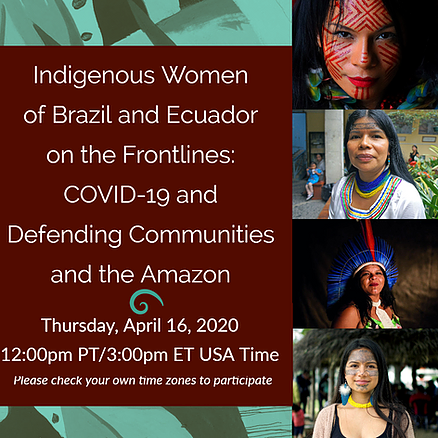
Indigenous Women on the Frontlines

PROMO Webinar - FF + Covid-19 .png

REGISTER HERE

At this moment, Indigenous communities are experiencing the devastating impact of the COVID-19 pandemic, while also facing ongoing fossil fuel extraction and pipeline struggles. Across North America, Turtle Island, tribes, as well as communities of color, are at higher risk of contracting COVID-19 due to a lack of resources and health disparities brought on by centuries of colonial policies and environmental racism. As Indigenous communities come together to protect those most vulnerable, governments and fossil fuel companies are grossly taking advantage of this time to push forward with pipelines and extractive projects that will only further exacerbate the issues Indigenous communities are already facing. ​

During the webinar, Indigenous women leaders will discuss how COVID-19 is impacting their communities and how oil and gas pipelines are being fast-tracked in their lands— violating Indigenous rights and further putting Indigenous women at risk. In this wide-ranging discussion, presenters will share calls to action, stories and wisdom, immediate needs of their communities, community-care practices, and the latest updates from various campaigns and resistance movements, focusing on Keystone XL, Line 3 and Coastal GasLink pipelines, and tar sands extraction. Share this event with your networks via Facebook here.​

Speakers include Freda Huson (Chief Howihkat), Unist’ot’en – Wet’suwet’en People, Leader and spokesperson for the Unist’ot’en camps resisting the Coastal GasLink Pipeline; Faith Spotted Eagle (Tunkan Inajin Win), Dakota and Nakota Nations within the Oceti Sakowinan, Keystone XL and Dakota Access pipelines Resistance Leader; Tara Houska, Couchiching First Nation Anishinaabe, Tribal Attorney and Founder of Giniw Collective, Line 3 pipeline Resistance Leader; and Eriel Tchekwie Deranger, Athabasca Chipewyan First Nation, Executive Director of Indigenous Climate Action, Tar Sands extraction Resistance Leader. Moderation and comments by Osprey Orielle Lake, Executive Director of the Women’s Earth and Climate Action Network (WECAN). Full bios can be found here.


PROMO Webinar - Amazon + Covid19.png

REGISTER HERE

During this webinar, Indigenous women leaders of the Ecuadorian and Brazilian Amazon will unite to discuss how the devastating coronavirus pandemic is impacting their communities, as they face ongoing deforestation, oil extraction, and Indigenous rights violations in their territories. As is the case across Turtle Island, Indigenous peoples of the Global South are at higher risk of contracting COVID-19 due to a lack of resources and health disparities brought on by centuries of colonial policies and environmental racism. Indigenous women leaders will share their stories, analysis, wisdom, and advocacy for Indigenous rights, protection of forests, water, communities, and the global climate. They will also address the ongoing political and economic struggles affecting their Amazonian territories.​

Scientists have stated that destroyed and diminishing natural habitats create the conditions for animal/human virus crossovers, such as COVID-19, and that further pandemics will emerge if we continue to exploit biodiverse regions, making it even more vital for us to stand with land defenders in the Amazon. We need to protect the Amazon because first and foremost, Indigenous peoples have the right to live their traditional ways in their own lands, and we must also understand that there is no protecting forests for climate mitigation and healthy global communities without standing in solidarity with the defenders of the land. We have much to learn from the women’s calls to action, their immediate needs, and their vision for living in respect and well-being with Mother Earth. Share this event with your networks via Facebook here.​

Speakers include Patricia Gualinga, Kichwa leader from Sarayaku, Ecuador, Spokeswoman for Mujeres Amazónicas Defensoras de la Selva (Amazon Women in Defense of the Jungle); Sônia Bone Guajajara, Indigenous leader from Brazil, Executive Coordinator for the Articulation of Indigenous Peoples of Brazil (APIB) with translation by Maria Paula, Founder of the NGO “A Drop in the Ocean; Daiara Tukano, Indigenous activist from Brazil, independent communicator and coordinator of Radio Yandê; and Helena Gualinga, Kichwa youth activist from Sarayaku, Ecuador. Moderation and comments by Osprey Orielle Lake, Executive Director of the Women’s Earth and Climate Action Network (WECAN). Full bios can be found here.


Image may contain: 3 people
Image may contain: 6 people, people smiling
Posted in Indigenous, Uncategorized | Leave a comment

Seeing Mountains and Visions

It is a revelation (pun intended) to hear the Himalayas have become visible from 125 miles away for the first time in 30 years because of reduced air pollution. The decreased air pollution is the result of decreased fossil fuel use as people shelter in place due to the COVID-19 pandemic.

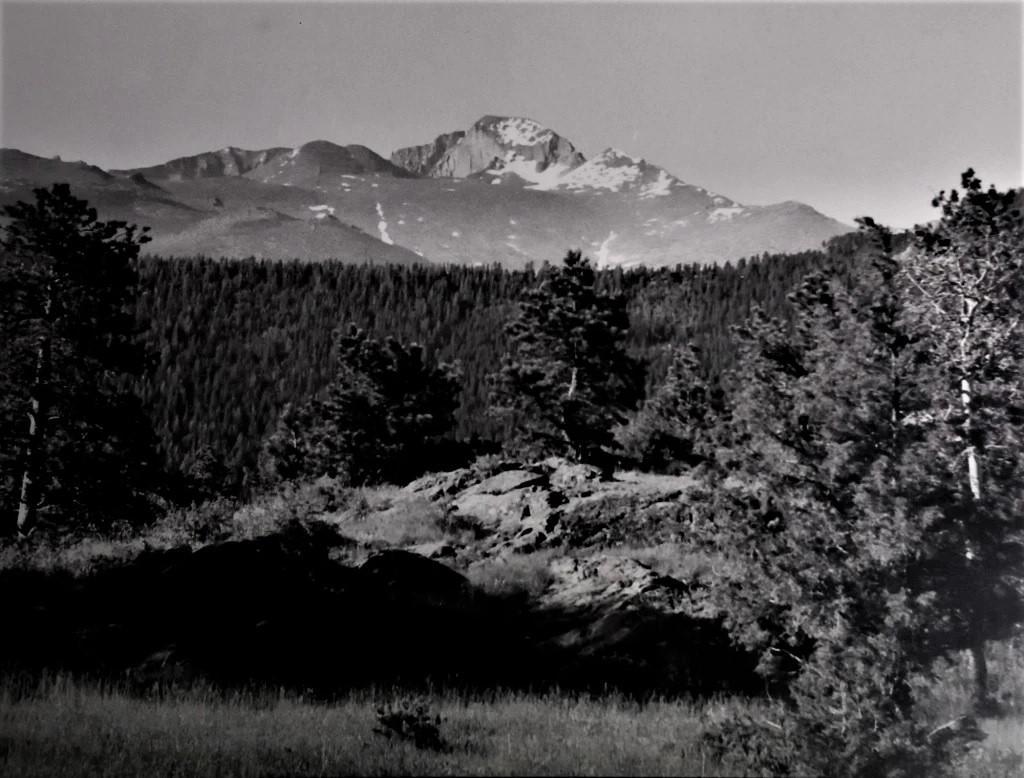
Closer to fifty years ago I had a life changing vision related to mountains and air pollution. A horrific vision of my beloved Rocky Mountains hidden in clouds of smog, the very thing that did happen to the Himalayas. I couldn’t contribute to that pollution so I haven’t owned a car since then.

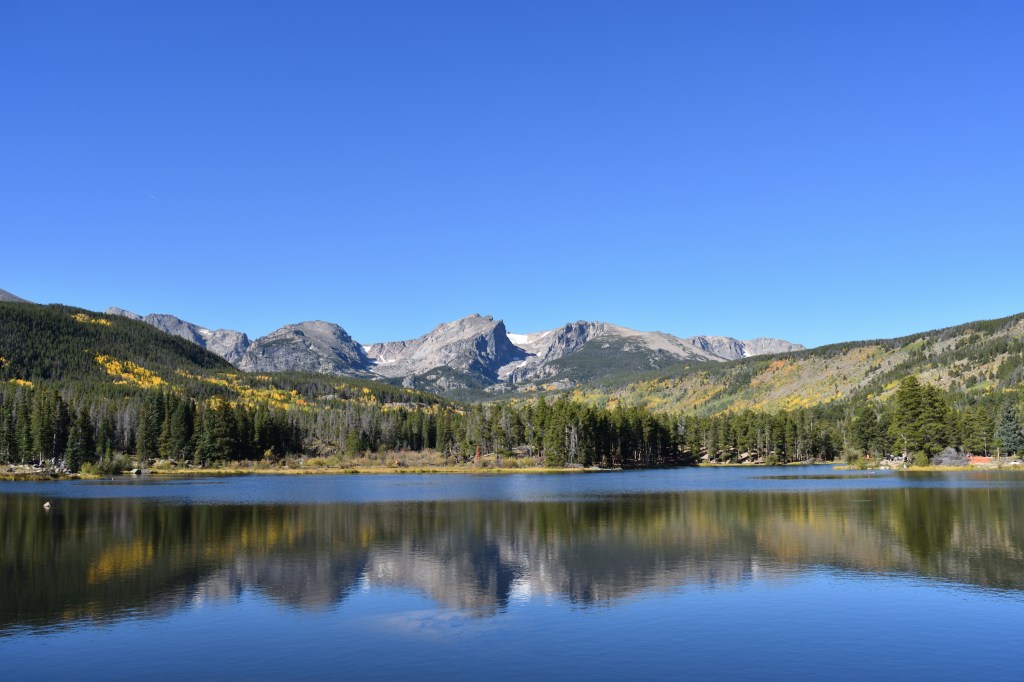
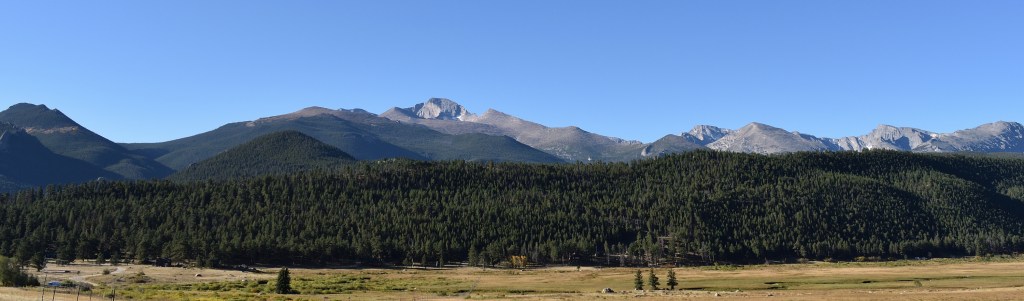
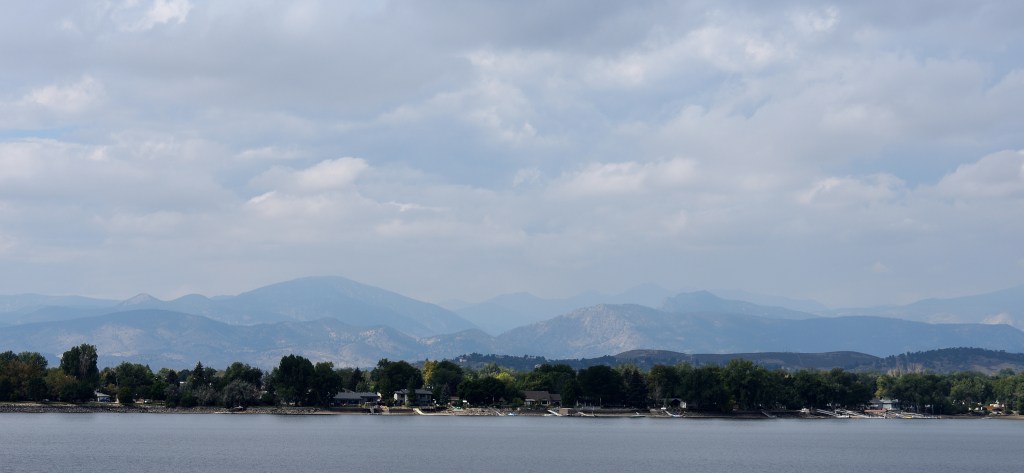
My vision was related to this photo of Long’s Peak rising above Moraine Park in Rocky Mountain National Park, Colorado. I developed this film and print in an actual darkroom, back in the day. The reason my vision is related to this photo is because I see it so often, hanging on my wall. It is a poor substitute for actually being there, but serves as a reminder.

Long’s Peak, Rocky Mountain National Park, Colorado

I am very grateful my parents chose to take us on camping trips across the United States for our summer family vacations, specifically selecting National Parks to camp in.  Actually camping in the Parks was key to the whole experience.  Our first camper was a King camper, which was an aluminum trailer with a canvas covered framework that unfolded to form the top half when we stopped at the campsite.  Being in the woods, hearing the sounds of the wind and wildlife, the glacier streams rushing over the boulders, feeling the clear, crisp, cold at night, smelling the pine trees made the experience so much better than traveling into the park during the day and returning to a motel at night. Immersive.

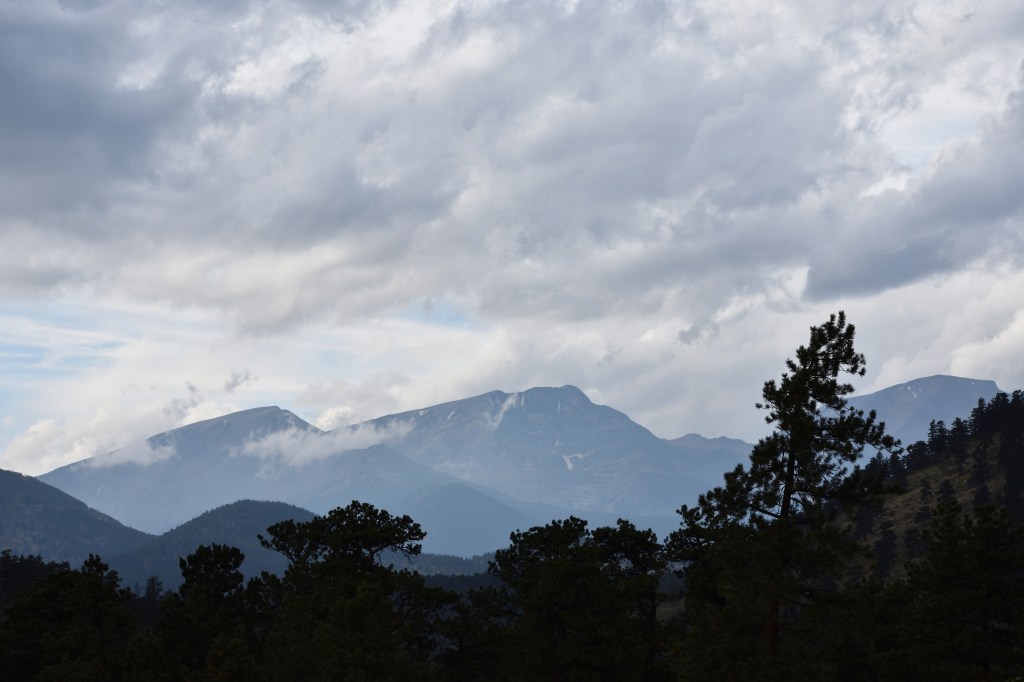
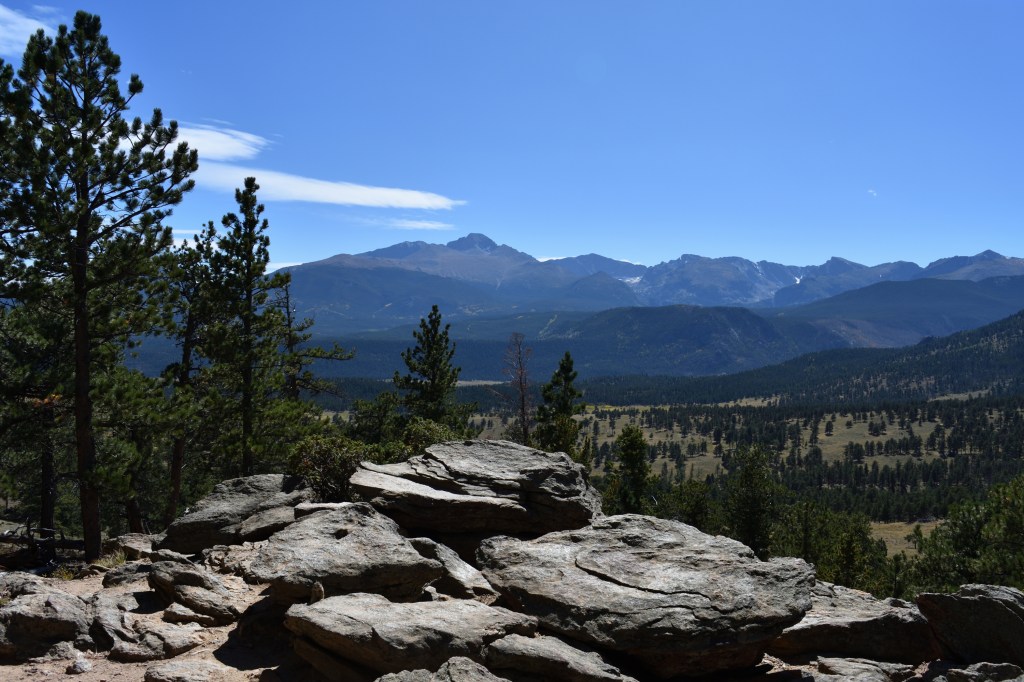
Hiking through the meadows and forests and upon mountainsides with countless, stunning vistas, were life changing experiences for me.  I was overwhelmed by the intense beauty.  Rocky Mountain National Park was our favorite, and we returned there time and again as we were growing up. We quickly found not many people traveled too far from the parking areas. So with even a short hike we were practically alone in the woods.  Hikes of just a mile or two brought us to lakes, canyons, waterfalls, cliffs, meadows, snowfields, boulder fields, and rock walls to climb. Places we were able to appreciate in relative isolation.

I hadn’t reflected much on why we sought opportunities to be by ourselves in the mountains. It just seemed a much better experience that way. Now I think it was related to feeling closer to God when we were deep in the quiet of the forests. Having grown up in Quaker communities, I was used to worshiping in silence, as we do so we can hear the whisper of the Spirit. Being enveloped in the silence of the mountains was a natural relation to Quaker worship. Or as I think of this now, Quaker worship is a natural extension of the silence of the mountains. Silence in the sense of quiet, but at times loud with the voice of the Spirit.

This was a reciprocal relationship. I was always challenged to find ways to share my spiritual experiences with others. These experiences are ineffable, that is they can’t be adequately expressed with words. I’ve found art can often better express spirituality. So I hoped some of my photographs might evoke glimpses of the Spirit.

From Robert Reid’s book, Because It Is So Beautiful:

The writer’s lonely, harrowing struggle to give shape to his or her elusive vision of the world—to complete a book, to discover among the fragments of a thought or a dream the precise image needed to breathe life into a poem—is a familiar chapter in the annals of pain and grief.

How can we save the wilderness? I was a mountain climber whose affection for the high peaks had evolved gradually into political commitment to the cause of preservation. I was, too, a fledgling writer searching for direction. I knew the importance of craft, experience, doggedness, and the other familiar requisites for literary success, but I lacked vision—an understanding of my relationship to the world.

How could we convince lawmakers to pass laws to protect wilderness? (Barry) Lopez argued that wilderness activists will never achieve the success they seek until they can go before a panel of legislators and testify that a certain river or butterfly or mountain or tree must be saved, not because of its economic importance, not because it has recreational or historical or scientific value, but because it is so beautiful.

I left the room a changed person, one who suddenly knew exactly what he wanted to do and how to do it. I had known that love is a powerful weapon, but until that moment I had not understood how to use it. What I learned on that long-ago evening, and what I have counted on ever since, is that to save a wilderness, or to be a writer or a cab driver or a homemaker—to live one’s life—one must reach deep into one’s heart and find what is there, then speak it plainly and without shame.

Reid, Robert Leonard. Because It Is So Beautiful: Unraveling the Mystique of the American West . Counterpoint. Kindle Edition

Although I just said spiritual experiences can’t adequately be expressed in words, two phrases come close. Above, “one must reach deep into one’s heart and find what is there And to travel deep into the mind of the heart below.


We are asking you:

To travel deep into the mind of the heart;

To look up into the sky, streaked with fewer planes, and see it, to notice its condition: clear, smoky, smoggy, rainy? How much do you need it to be healthy so that you may also be healthy?

To look at a tree, and see it, to notice its condition: how does its health contribute to the health of the sky, to the air you need to be healthy?

To visit a river, and see it, to notice its condition: clear, clean, murky, polluted? How much do you need it to be healthy so that you may also be healthy?

How does its health contribute to the health of the tree, who contributes to the health of the sky, so that you may also be healthy?

 “An Imagined Letter from Covid-19 to Humans” by K. Flyntz.

The Himalayas are visible in parts of India 125 miles away for the first time in 30 years after coronavirus saw pollution levels drop across the country
The Asian mountain range can now be seen more than 125 miles away in the Jalandhar district of Punjab
Residents say the air has cleared because of the country’s 21-day lockdown, which was imposed on March 24
They flocked to social media and posted pictures of the snow-topped mountains taken from their rooftops

By ALICE CACHIA FOR MAILONLINE, Daily Mail, April 8, 2020
The snowy mountain rang can be seen clearly among billowing clouds as the India's pollution levels drop
https://www.dailymail.co.uk/news/article-8199955/Himalayas-visible-India-time-30-years-coronavirus-sees-pollution-levels-drop.html#i-40792730ae3bb18


Posted in Quaker, spiritual seekers, Uncategorized | Tagged | 2 Comments

Colonization 2020

#StandWithMashpee:
Trump administration revokes tribe’s reservation status.

Aƞpétu wašté (Good day)! I hope you are staying well, and I want you to know that we’re praying for all our relations impacted by the ongoing COVID-19 outbreak. One benefit of sheltering in place is that we’re able to keep our eyes peeled for important news. In case you missed it, I wanted to highlight a recent attack on Indigenous sovereignty and ask for your solidarity for our Mashpee relatives.

At the end of last month, the Department of Interior announced that 321 acres of land will be taken out of trust, effectively revoking the reservation status of the Mashpee Wampanoag people of Massachusetts. For those who learned the Thanksgiving story in elementary school, the Wampanoag people broke bread with the Pilgrims in Plymouth colony, and it was Wampanoag land that the Pilgrims took. And now, in the middle of an unprecedented global pandemic, President Trump’s cabinet is moving to rescind the sovereign status of these people.

President Obama placed the land in question into trust in 2015, but that decision has been reversed under Trump. A reinterpretation by our executive branch of a 2009 Supreme Court decision now only grants trust status to tribes recognized before 1934, when the Indian Reorganization Act was signed. Because the Mashpee weren’t federally recognized until 2007, they’ve now lost their status. As Jessie Little Doe Baird, vice chair of the tribe, said “they came for our children and took them to Carlisle because we were ‘too Indian.’ Today, they tell us we are not Indian enough.”

The Mashpee, who have lived in the Massachusetts area for over 12,000 years, are being denied their right to autonomy. With federal trust status comes the right to manage, develop, and tax a parcel of land. This “disestablishment” of the Mashpee reservation will likely force the closure of the tribal court and police department; it will cost Native people their livelihoods in an already barren economic landscape.

This blatant land-grab isn’t even court-ordered — the directive came from Trump’s Department of the Interior. Now, the Mashpee have asked a D.C. court to issue an emergency restraining order to prevent the dissolution of trust status, and Massachusetts senators Elizabeth Warren and Ed Markey have vowed to combat this assault on the tribe’s self-determination, saying “We will not allow the Mashpee Wampanoag to lose their homeland.”

We Native people have struggled to retain less than 2.5 percent of our lands since European contact. The Indian Wars, in essence, have never truly ended. The United States’ long history of systemically suppressing Native rights continues, and in 2020, land trust removal is the latest iteration of that same legacy of colonialism. We are disheartened, but as Indigenous people and allies, we have each others’ backs in the face of adversity. You can stand for sovereignty by standing with the Mashpee people in their time of need.

Wopila — thank you. Solidarity forever,

Chase Iron Eyes
Lead Counsel
The Lakota People’s Law Project


We want to send a word out to the Mashpee Wampanoag. They tried to put land into trust in 2015 and they succeeded under President Obama. Again, here we go with that same theme where President Trump is overturning and doing a complete 180 on something positive that President Obama did. And this time it was taking land into trust and what’s not clear is the extent to which the Mashpee Wampanoag would lose civil regulatory criminal authority over those lands over the previous jurisdiction which is Indian country or Indian lands. It also includes the authority of the Mashpee Wampanoag to conduct commercial activities on the land, to tax the land, to zone the land, to develop, to exist in pursue our destiny. And one item that needs to be brought out is that the Mashpee Wampanoag attorneys have said that what the court has done here is issue a death knell for all the tribes who were not recognized prior to 1934. And we can’t allow the Trump administration to get away with it.  We need to choose how to make a stand and we’ve got to always have each other’s backs as indigenous nations because this is colonization 2020. You know if the Indian wars have never ended, we needed to start taking command of our lives and in protecting our communities. Just being born indigenous is a political act. It’s an act of resistance. It’s an act of spiritual liberation to recognize your own divinity on indigeneity and that’s what we had as a we share that divine knowledge. So, thank you for listening.

#StandWithMashpee Chase Iron Eyes

“they came for our children and took them to Carlisle because we were ‘too Indian.’ Today, they tell us we are not Indian enough.” Jessie Little Doe Baird


I’m Wopanaak Project, a MoveOn member, and I started a petition to The United States House of Representatives and The United States Senate, which says:

The Mashpee Wampanoag Tribe, the very tribe that welcomed the Pilgrims in the 1600s, is at risk of losing what is left of their homelands due to a determination made by the Bureau of Indian Affairs.

Sign Wopanaak’s petition

The Mashpee Wampanoag, the People of the First Light, have occupied the same region for over 12,000 years and have faced diminishment of their homelands since colonization. The latest decision is a blow to Tribal sovereignty and undermines the future and sustainability of the tribal nation. The Tribe is asking Congress to protect its reservation lands and has put forth the “Mashpee Wampanoag Tribe Reservation Reaffirmation Act (HR.312).” We are asking for signatures in support of this legislation.

Thanks!

—Wopanaak Project

Thank you to 235,000 of you who signed our petition.

We continue to support the Mashpee Wampanoag Tribe, and as you can see members of Congress are listening and starting to take some action.

https://thehill.com/changing-america/respect/equality/491398-congress-knocks-trump-administrations-decision-to-remove

There are legal proceedings in the works, and while we await that frustrating yet important process we can still continue to share the petition, call members of Congress, and stay up to date on what’s happening.

Share the petition: MoveOn.org/StandWithMashpee

And stay connected with the Tribe on Facebook and the website.

Thank you,

Judi


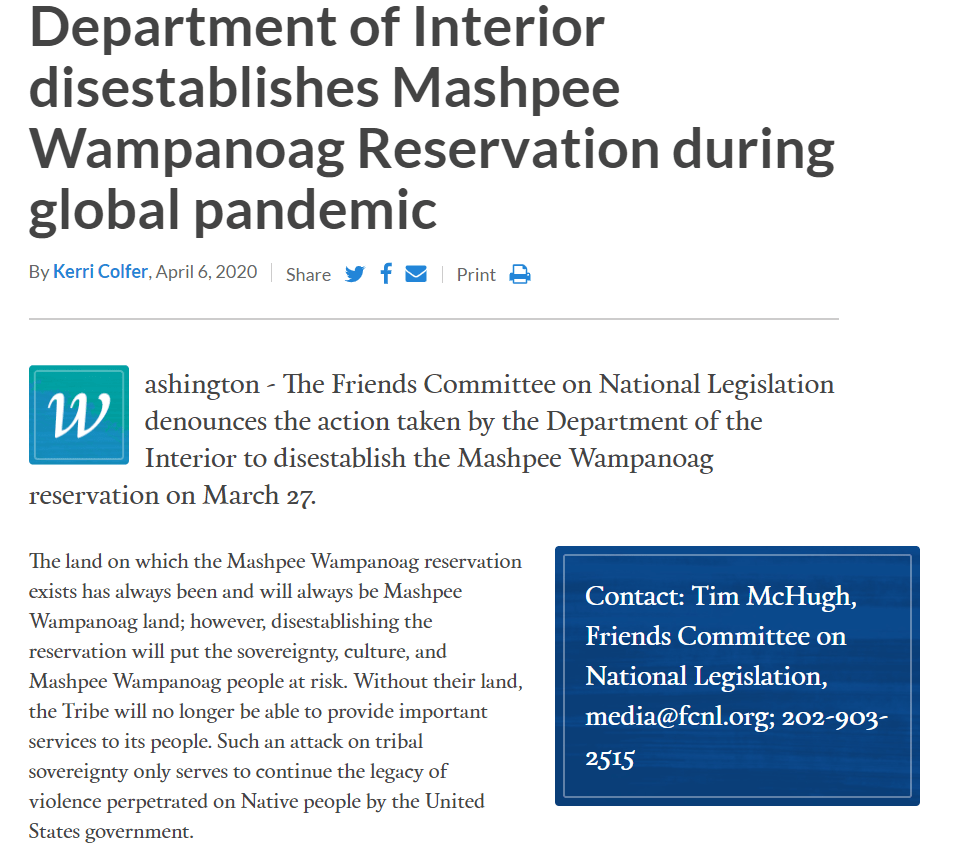
Washington – The Friends Committee on National Legislation denounces the action taken by the Department of the Interior to disestablish the Mashpee Wampanoag reservation on March 27.

Contact: Tim McHugh, Friends Committee on National Legislation, media@fcnl.org; 202-903-2515

The land on which the Mashpee Wampanoag reservation exists has always been and will always be Mashpee Wampanoag land; however, disestablishing the reservation will put the sovereignty, culture, and Mashpee Wampanoag people at risk. Without their land, the Tribe will no longer be able to provide important services to its people. Such an attack on tribal sovereignty only serves to continue the legacy of violence perpetrated on Native people by the United States government.

Land is not only essential for carrying out certain acts of sovereignty and for economic development, it is also central to the identity and community of Native people. Attempting to strip a tribe of its land in the midst of the COVID-19 pandemic is cruel and further burdens tribes during this time.

The federal government has a trust responsibility to promote and protect tribal sovereignty. Therefore, federal agencies, including the Department of Interior, should be assisting tribes and ensuring they are in the best position protect their people during the current health crisis, rather than forcing tribes to defend their land rights in addition to addressing this crisis.

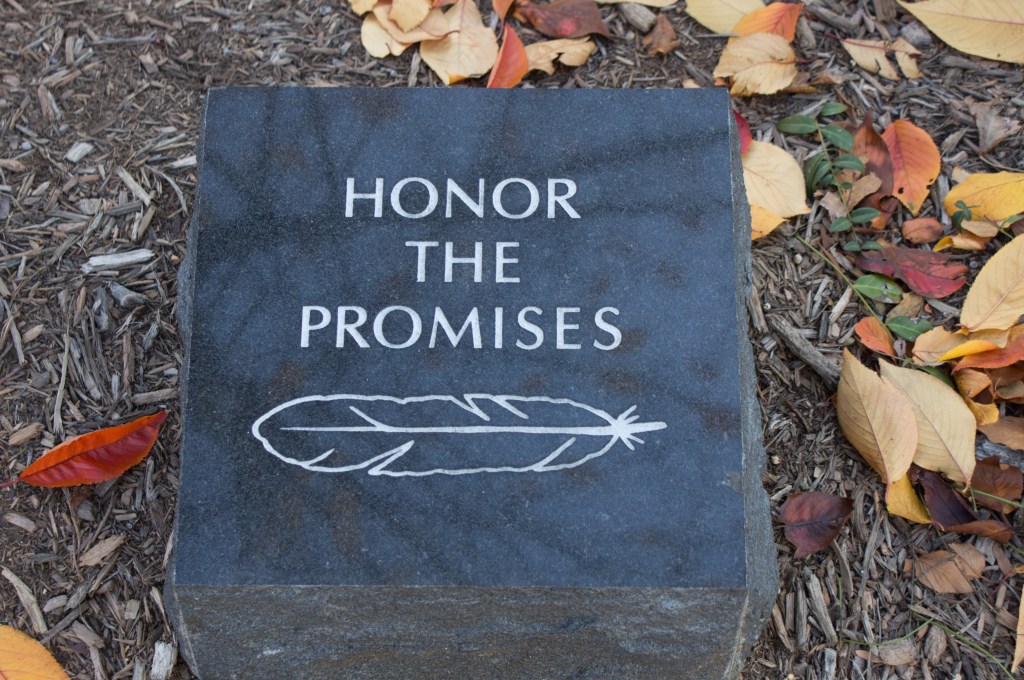
We ask that the Senate join the House of Representatives to honor the promises made to Native people by passing a clean Carcieri fix (PDF) (H.R. 375/S. 2808), which would protect tribal trust lands like the Mashpee Wampanoag Reservation, and reaffirm the status of the Mashpee Wampanoag’s reservation through H.R. 312.

To learn more, please visit www.fcnl.org.


At 4:00 pm today — on the very day that the United States has reached a record 100,000 confirmed cases of the coronavirus and our Tribe is desperately struggling with responding to this devastating pandemic — the Bureau of Indian Affairs informed me that the Secretary of the Interior has ordered that our reservation be disestablished and that our land be taken out of trust.  Not since the termination era of the mid-twentieth century has a Secretary taken action to disestablish a reservation.

Today’s action was cruel and it was unnecessary. The Secretary is under no court order to take our land out of trust.  He is fully aware that litigation to uphold our status as a tribe eligible for the benefits of the Indian Reorganization Act is ongoing.

It begs the question, what is driving our federal trustee’s crusade against our reservation?

Regardless of the answer, we the People of the First Light have lived here since before there was a Secretary of the Interior, since before there was a State of Massachusetts, since before the Pilgrims arrived 400 years ago.  We have survived, we will continue to survive.  These are our lands, these are the lands of our ancestors, and these will be the lands of our grandchildren.  This Administration has come and it will go.  But we will be here, always.  And we will not rest until we are treated equally with other federally recognized tribes and the status of our reservation is confirmed.

I will continue to provide updates on this important issue in the coming days as we take action to prevent the loss of our trust status.

Kutâputunumuw;

Chairman Cedric Cromwell
Qaqeemasq (Running Bear)
TRUMP ADMINISTRATION ORDERED LAND TAKEN OUT OF TRUST, TRIBAL CHAIRMAN SAYS by Ryan Spencer, Capenews.net, March 30, 2020

The decision to disestablish the tribe’s land-in-trust comes a month after the First US Circuit Court of Appeals upheld a federal judge’s decision that the Interior Department lacked the authority to take land into trust for the Mashpee Wampanoag Tribe.

Conner Swanson, a spokesperson for the Department of Interior, said that the tribe did not petition for a panel rehearing of the appeals court’s decision and the court issued its mandate on March 19.

The court mandate “requires the Interior to rescind its earlier decision,” Mr. Swanson said in reference to the 2015 Obama Administration decision to grant the land-in-trust.

“This decision does not affect the federal recognition status of the Tribe, only Interior’s statutory authority to accept the land in trust,” Mr. Swanson said.

The suit against the tribe, brought by residents of Taunton, argued that the Obama Administration erred when determining that the Mashpee Wampanoag qualified as “Indian” under the second definition of the Indian Reservation Act of 1934.

The Trump Administration in 2018 determined that the tribe also does not meet the first definition of “Indian” under the IRA.

The tribe has argued in litigation pending in federal court in Washington, DC, that the Trump Administration’s 2018 decision is “arbitrary, capricious, and contrary to law.”

TRUMP ADMINISTRATION ORDERED LAND TAKEN OUT OF TRUST, TRIBAL CHAIRMAN SAYS by Ryan Spencer, Capenews.net, March 30, 2020

Posted in decolonize, Indigenous, Native Americans, Uncategorized | Leave a comment

travel deep into the mind of the heart

Horrible as the COVID-19 pandemic is, it has given us a gift and a demand.
#LISTEN

Stop. Just stop.
It is no longer a request. It is a mandate.
We will help you….
Many are afraid now.
Do not demonize your fear, and also, do not let it rule you.
Instead, let it speak to you—in your stillness,
listen for its wisdom.

An Imagined Letter from Covid-19 to Humans

Times of great disruption cause great change. Changes we are all experiencing now.

The question is what do you want to happen next? Do you want life to return to “normal”, if that is even possible?

Or do you have the strength, the courage, the faith, the imagination, the love to use this disruption to leap forward instead of falling back? To forge your new vision for the future for yourself, your children, for all your relations?

To move beyond your individual concerns and consider the concerns of all;
To be with your ignorance, to find your humility, to relinquish your thinking minds and travel deep into the mind of the heart;

An Imagined Letter from Covid-19 to Humans

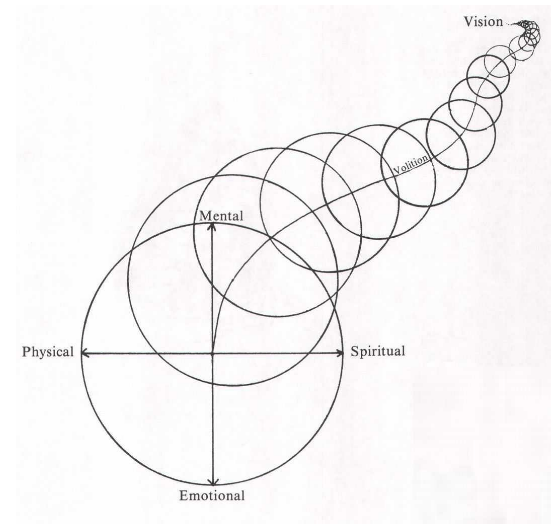
vision

We gain a vision of what our potential is from our elders and from the Teachings of the Sacred Tree. By trying to live up to that vision and by trying to live like the people we admire, we grow and develop. Our vision of what we can become is like a strong magnet pulling us toward it.  

Bopp, Judie. Sacred Tree: Reflections on Native American Spirituality (Kindle Locations 150-151). National Book Network – A. Kindle Edition.

A Letter from the Virus: #LISTEN

An Imagined Letter from Covid-19 to Humans

Stop. Just stop.
It is no longer a request. It is a mandate.
We will help you.

We will bring the supersonic, high speed merry-go-round to a halt
We will stop
the planes
the trains
the schools
the malls
the meetings
the frenetic, furied rush of illusions and “obligations” that keep you from hearing our
single and shared beating heart,
the way we breathe together, in unison.
Our obligation is to each other,
As it has always been, even if, even though, you have forgotten.

We will interrupt this broadcast, the endless cacophonous broadcast of divisions and distractions,
to bring you this long-breaking news:
We are not well.
None of us; all of us are suffering.
Last year, the firestorms that scorched the lungs of the earth
did not give you pause.
Nor the typhoons in Africa, China, Japan.
Nor the fevered climates in Japan and India.
You have not been listening.
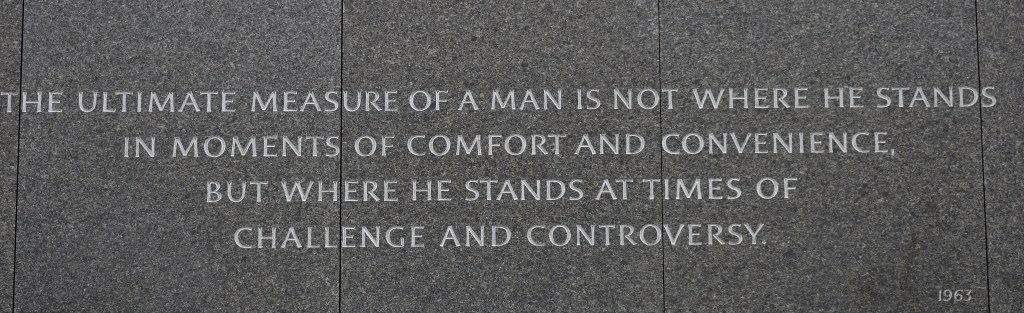
It is hard to listen when you are so busy all the time, hustling to uphold the comforts and conveniences that scaffold your lives.
But the foundation is giving way,
buckling under the weight of your needs and desires.
We will help you.
We will bring the firestorms to your body
We will bring the fever to your body
We will bring the burning, searing, and flooding to your lungs
that you might hear:
We are not well.

Despite what you might think or feel, we are not the enemy.
We are Messenger. We are Ally. We are a balancing force.
We are asking you:
To stop, to be still, to listen;
To move beyond your individual concerns and consider the concerns of all;
To be with your ignorance, to find your humility, to relinquish your thinking minds and travel deep into the mind of the heart;
To look up into the sky, streaked with fewer planes, and see it, to notice its condition: clear, smoky, smoggy, rainy? How much do you need it to be healthy so that you may also be healthy?
To look at a tree, and see it, to notice its condition: how does its health contribute to the health of the sky, to the air you need to be healthy?
To visit a river, and see it, to notice its condition: clear, clean, murky, polluted? How much do you need it to be healthy so that you may also be healthy? How does its health contribute to the health of the tree, who contributes to the health of the sky, so that you may also be healthy?

Many are afraid now.
Do not demonize your fear, and also, do not let it rule you. Instead, let it speak to you—in your stillness,
listen for its wisdom.
What might it be telling you about what is at work, at issue, at risk, beyond the threats of personal inconvenience and illness?
As the health of a tree, a river, the sky tells you about quality of your own health, what might the quality of your health tell you about the health of the rivers, the trees, the sky, and all of us who share this planet with you?

Stop.
Notice if you are resisting.
Notice what you are resisting.
Ask why.

Stop. Just stop.
Be still.
Listen.

Ask us what we might teach you about illness and healing, about what might be required so that all may be well.
We will help you, if you listen.

-Kristin Flyntz 3.12.2020

Video made by: Darinka Montico Written by: Kristin Flyntz Music: Cold Isolation · David Fesliyan

#coronovirus #planetearth #climatechange #pandemic

#LISTEN

Text adaptation and video by Darinka Montico Voice: Giulia Chianese
Inspired by “An Imagined Letter from Covid-19 to Humans” by K. Flyntz.
We don’t need to “save the planet”.
We need to save the planet from ourselves.
We are destroying the necessary conditions for human life to continue existing on earth.
Earth will outlive us.
We have a choice.
CHANGE NOW.

THE VIDEO IS OPENED FOR COMMUNITY SUBS CONTRIBUTIONS.
This video is CC BY-NC 4.0.
PLEASE SHARE!
Our voice needs to be one now, the one of silence, and understanding, the one of change.


Posted in Uncategorized | 2 Comments

Educate yourself

This morning I was getting frustrated as I tried to discern what I might write about. There are so many things going on now like the coronavirus and its consequences. About the fossil fuel industry and the stimulus package. About change and the future. The Wet’suwet’en struggles. On top of that, trying to figure out the answer to a database/software problem for the lab in Indianapolis. I was beginning to think this might be one of those days I wouldn’t have anything to write about.

Then I came across a video by Lance Foster about educating yourself. I don’t have permission to share that video, but you can find it on Lance’s Facebook page: https://www.facebook.com/lancemfoster

It seems he has been speaking about the book “30 Days to Better Thinking and Better Living Through Critical Thinking. A Guide for Improving Every Aspect of Your Life” by Linda Elder, Richard Paul.  Today he was talking about Day 29 Educate yourself.

He was talking about critical thinking and life long learning. Those of us who attended Scattergood Friends School and Farm recognize, often later in life, what a great education we got there. We learned about living in community, and making decisions as a community. We learned practical skills on our crews, like baking bread, farming, pruning trees, etc. And learned how to organize our work and cooperate with others.

We actually talked about life long learning a lot. Our teachers taught us the skills we would use after we left Scattergood to educate ourselves for the rest of our lives.

In today’s video Lance spoke of how few people were really educated. Among the things he said was how important it is to explore outside your own culture. To read widely. But beyond that, to be aware of our own framework of ideas, and integrate each new thing we learned into our own internal library. I realized that is what I’ve been doing as I write my blog posts. Critically examining what is going on around me. Creating a digital library of hundreds of blog posts and the things I quote, ideas I explore in those writings.

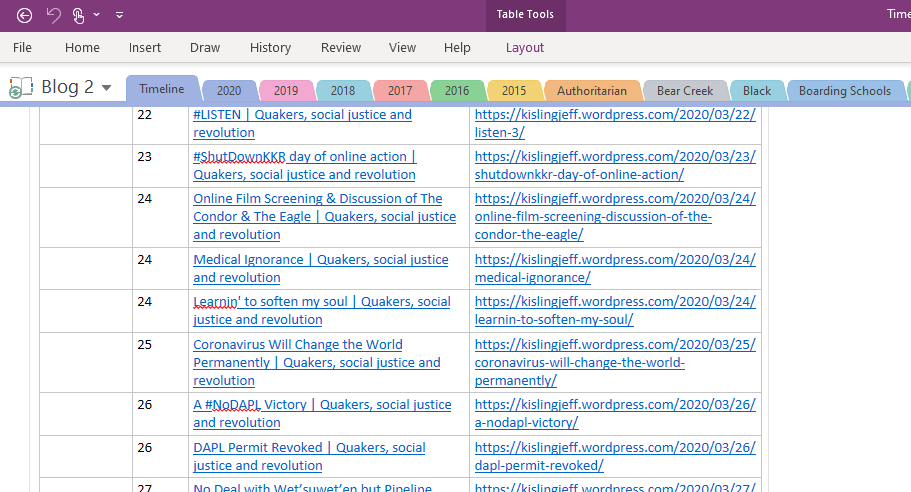
I continue to add to an actual digital library I have using the Microsoft tool OneNote. There I have a table of contents, listing each blog post and a link to the post online. The table of contents also contains a link to that blog post that is saved within One Note. As you can see above, there are tabs across the top of the notebook to allow you to organize what you save in the notebook by categories, just like a physical notebook with tabs.

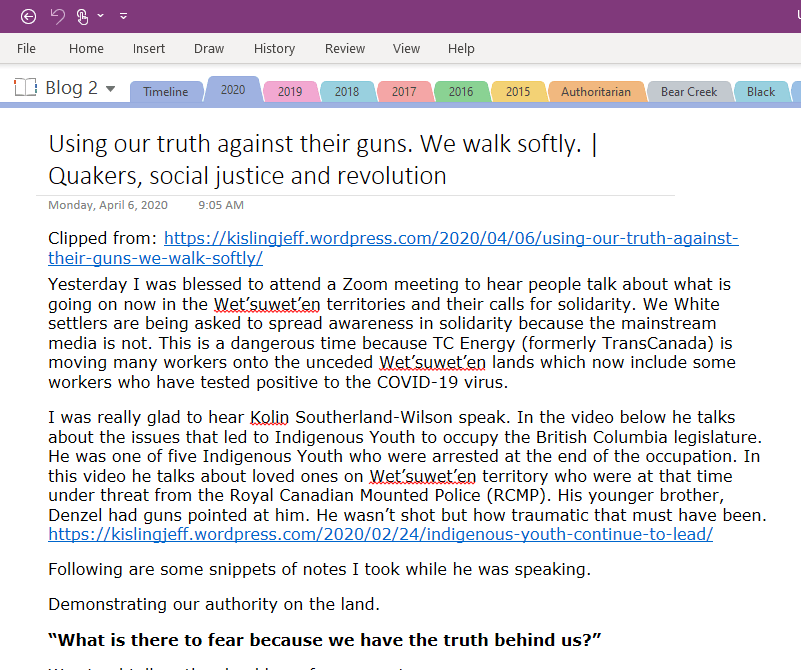
Following is an example of the OneNote page for yesterday’s blog post., “Using our truth against their guns. We walk softly.”

There is also a Clipping Tool that will capture something you want to save from an external source, like web page.

That is how I create a notebook of articles of interest to refer to when I write.


Switching topics a bit, the reason Lance’s Facebook post caught my attention this morning is because I recognized his name. He spoke at a conference I attended, the National Network Assembly. He open the assembly sessions by acknowledging the land we were meeting on (at the Des Moines Y Camp near Boone, Iowa). The last thing he said, asked us to do, was to make friends with a tree.

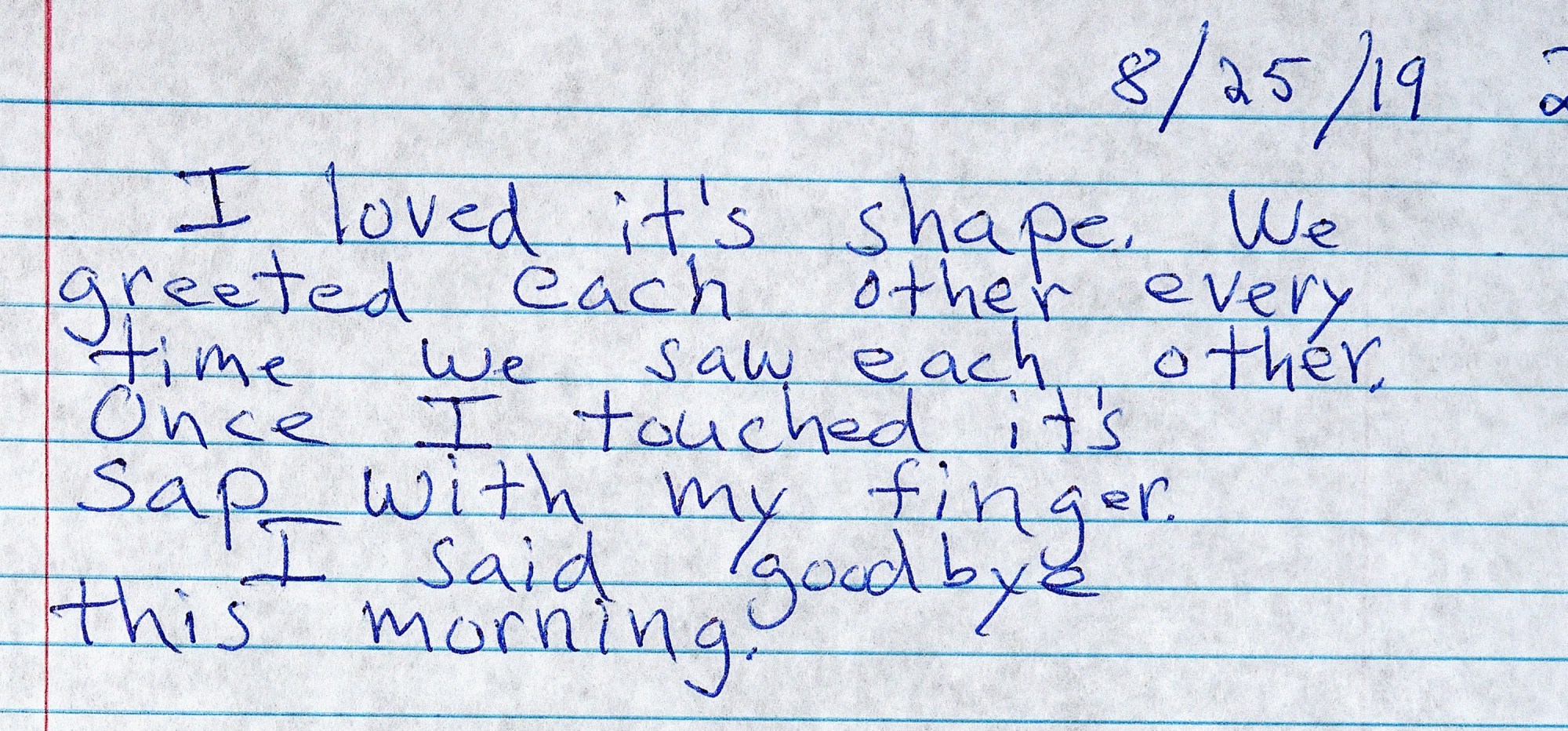
I did, and the following is what I wrote about that.


I just returned from an amazing event, the National Network Assembly, held at the Des Moines YMCA Camp near Boone, Iowa. From information about the Assembly we received ahead of time, I knew I wouldn’t have WiFi or cell phone access, so I didn’t even bring my laptop. As I mentioned in yesterday’s post though, there were so many things I wanted to write about and I was missing my (nearly) daily writing, so I wrote two blog posts by hand.

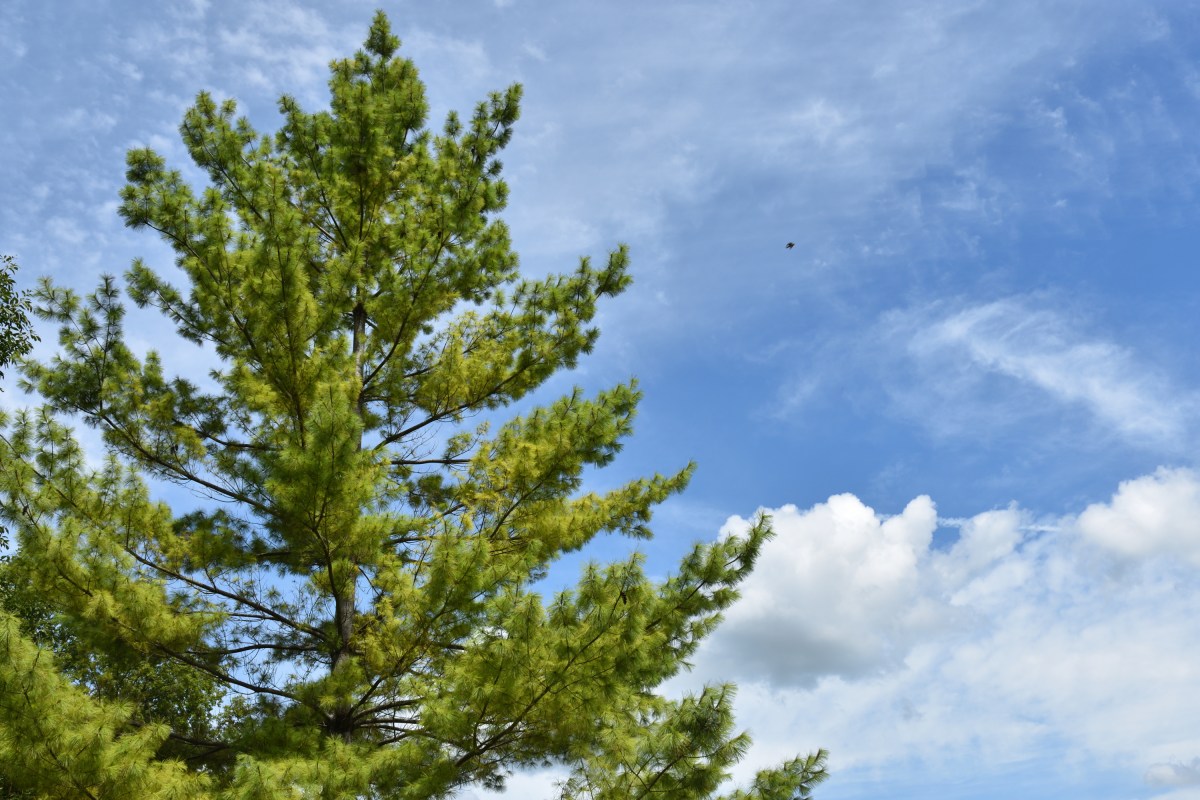
As I sat in Quaker Meeting yesterday, at Bear Creek Friends meeting, which is in a rural setting, surrounded by trees, the image of my tree friend appeared, illuminated by the Inner Light.

One thing we talked about at Meeting yesterday was the upcoming ceremony of the planting of two memorial trees on the grounds of the meetinghouse to honor the memories of a married couple who were members and elders of our community.

Bear Creek Friends Meeting

Please Note: Since I wrote this, Lance Foster told me the land was Ioway land before the Dakota or Meskwaki were there.

https://kislingjeff.wordpress.com/2019/08/26/my-tree-friend/

Posted in Indigenous, Quaker Meetings, Uncategorized | Tagged , | Leave a comment

Using our truth against their guns. We walk softly.

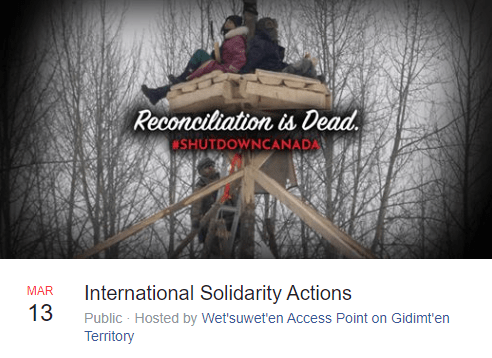
Yesterday I was blessed to attend a Zoom meeting to hear people talk about what is going on now in the Wet’suwet’en territories and their calls for solidarity. We White settlers are being asked to spread awareness in solidarity because the mainstream media is not. This is a dangerous time because TC Energy (formerly TransCanada) is moving many workers onto the unceded Wet’suwet’en lands which now include some workers who have tested positive to the COVID-19 virus.

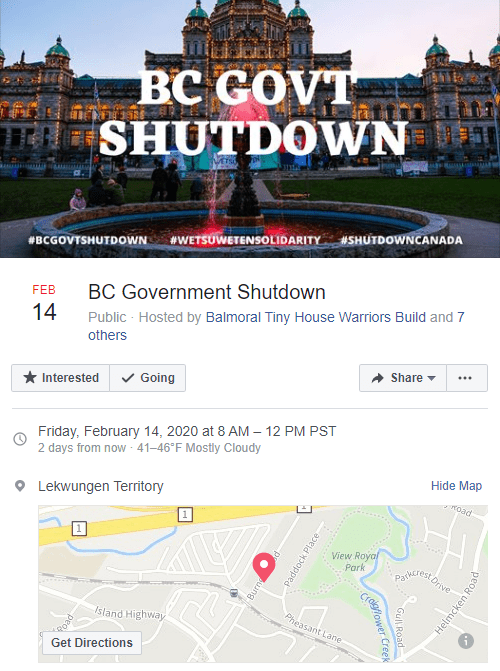
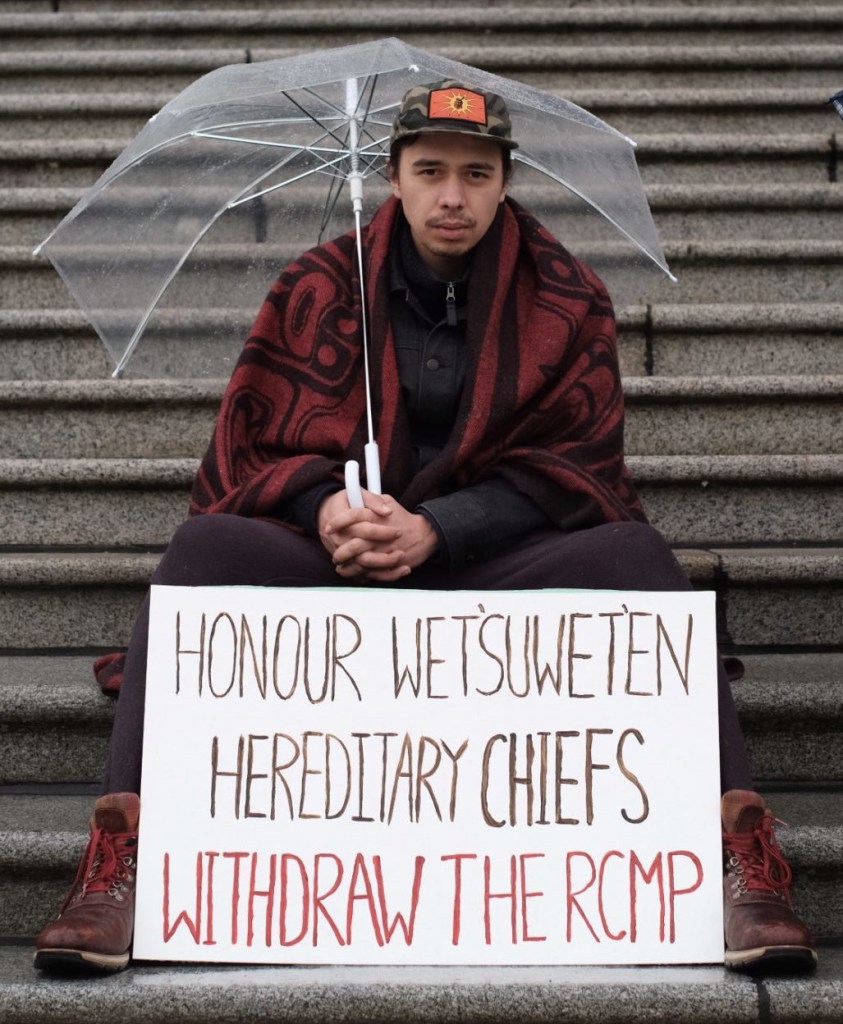
I was really glad to hear Kolin Southerland-Wilson speak. In the video below he talks about the issues that led to Indigenous Youth to occupy the British Columbia legislature. He was one of five Indigenous Youth who were arrested at the end of the occupation. In this video he talks about loved ones on Wet’suwet’en territory who were at that time under threat from the Royal Canadian Mounted Police (RCMP). His younger brother, Denzel had guns pointed at him. He wasn’t shot but how traumatic that must have been. https://kislingjeff.wordpress.com/2020/02/24/indigenous-youth-continue-to-lead/

Following are some snippets of notes I took while he was speaking.

Demonstrating our authority on the land.

“What is there to fear because we have the truth behind us?”

We stand tall on the shoulders of our ancestors.

Countless trucks moving pipes to Houston, British Columbia, taking advantage of the pandemic.

This is a great opportunity for change.

This struggle creating ripples all over the world.

Predatory consultancy process. We can’t rely on “Canadian” law, courts, politicians.

They have no moral, spiritual authority.

We need to tell our stories, truth.

“Using our truth against their guns.”

Information helps mobilize news of Wet’suwet’en.

Legislature was shut down for 17 days, for the first time in history.

“We walk softly.”

Even though many are home because of the virus, this a time for action. (which he said he couldn’t speak about, yet)

Come together as a people.

Our ancestors gave us the knowledge.

“We are strong and beautiful.”

Kolin Sutherland-Wilson

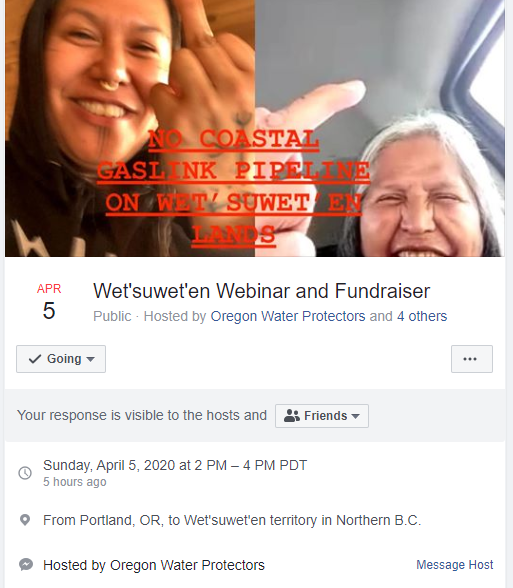
Right now, Land Defenders from the Wet’suwet’en Nation are calling for international solidarity as they continue their heroic resistance to the Coastal GasLink fracked gas pipeline crossing their unceded, traditional territory.

Join us this Sunday for a webinar and fundraiser to support the Wet’suwet’en Land Defenders and listen to firsthand accounts from frontline organizers about what the Wet’suwet’en are currently facing amidst the COVID-19 pandemic.

We are alarmed to hear that despite this pandemic, Coastal GasLink “mancamp” workers are entering Wet’suwet’en territory to begin work on the pipeline. The danger of bringing COVID-19 to the Wet’suwet’en is unacceptable. These “mancamp” workers are also buying up all the supplies in this remote region, adding more difficulties for the Wet’suwet’en.

We are honored to be joined by Rose Henry, a member of the Tla’amin Nation in B.C., and an Elder who supported the Indigenous Youth Land Defenders at the B.C. Parliament building. Rose has been a longtime advocate for Canada’s Missing and Murdered Indigenous People, and is a longtime Land Defender who has always fought for Indigenous rights and sovereignty. She is a part of B.C.’s powerful Indigenous resistance to the fossil fuel industry and fish farms. We have much to learn from Rose.

We will also be joined by Kanahus Manuel, co-founder of the Tiny House Warriors and active organizer with the Wet’suwet’en. Kanahus is a member of the Secwepemc Nation. The Tiny House Warriors movement put tiny homes in the pathway of the TransMountain Pipeline in order to block its construction. She was arrested in 2018 and again in 2019 due to this resistance. This winter she has been assisting the Wet’suwet’en and their resistance to the Coastal Gaslink Pipeline. She will be giving us updates from Wet’suwet’en territory. It is an honor to have Kanahus join us for this webinar.

We are happy to announce that Kolin Sutherland-Wilson, a member of the Gitxsan Nation, will also be joining us as a guest speaker for the webinar. He has been given permission to represent the struggle for the Wet’suwet’en. He is an Indigenous Youth Land Defender who delivered powerful speeches at the doors of the B.C. Parliament building while joining many other Land Defenders there to make the B.C. Parliament listen to the voices of the Indigenous Youth protesting the Coastal Gaslink Pipeline crossing through unceded, Wet’suwet’en lands.

Also, we are happy to announce that Rowena Jackson, a Klamath tribal member will be joining the webinar. She is a Water Protector who was at Standing Rock, has supported the Mauna Kea resistance, and has worked diligently to oppose the Pacific Connector Pipeline LNG pipeline from crossing through her tribes’ ancestral lands in Southern Oregon.

The fundraiser will be for:

1)The Unist’ot’en Legal Defense Fund
http://unistoten.camp
2)Tiny House Warriors
http://tinyhousewarriors.com
3)Wet’suwet’en Resistence Garden
Donate via Paypal : rosehenry00@gmail.com

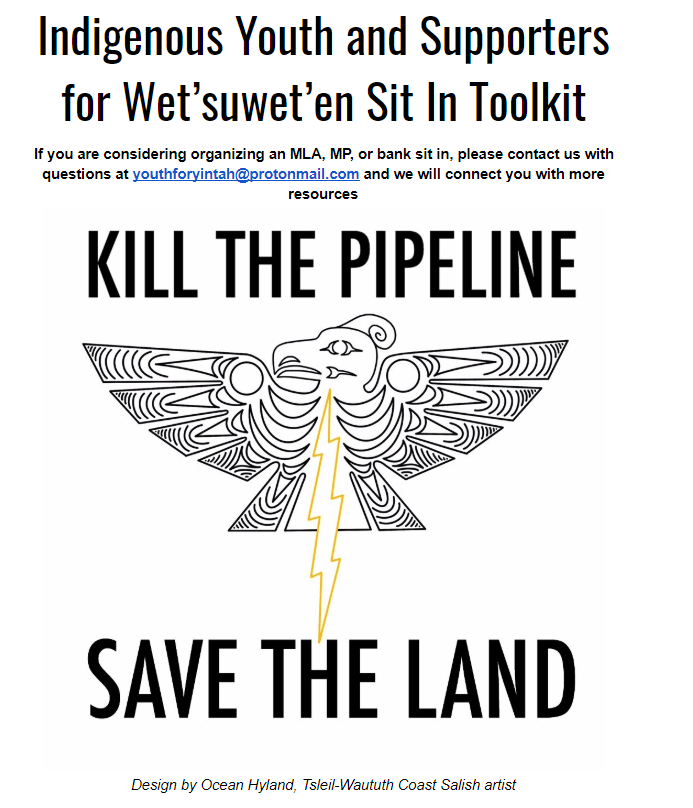
For more information on the Wet’suwet’en, please check out the Wet’suwet’en Supporter Toolkit 2020.
https://unistoten.camp/supportertoolkit2020/

Please spread the word and join us this Sunday!
#nocoastalgaslink #nomancamps #wetsuwetenstrong


Hi! I did a livestream where I compiled a lot of essential information about the ongoing situation faced by the Wet’suwet’en peoples. I hope you can share it if you feel it is useful! Much love, Ren 💗

Renata Gomez Montoya April 3, 2020

Renata speaks of the connections between the Coastal GasLink, Dakota Access and Keystone pipelines. And the connection between pipeline construction crews camps (man camps) and the hundreds of Missing and Murdered Indigenous Women. And speaking about the dangers of the ongoing construction of the pipelines on First Nations land during the Covid-19 pandemic.


Posted in civil disobedience, climate change, decolonize, Indigenous, Indigenous Youth for Wet'suwet'en, Uncategorized, Wet’suwet’en | Leave a comment

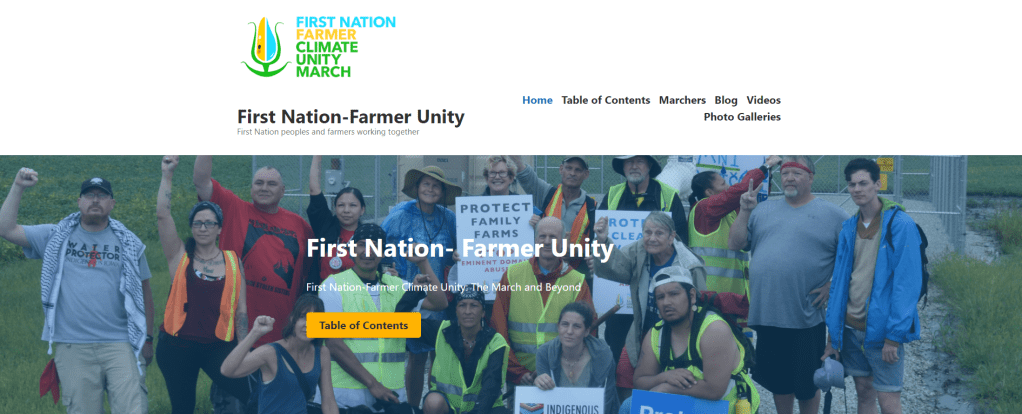
First Nation-Farmer Unity Website Just Opened

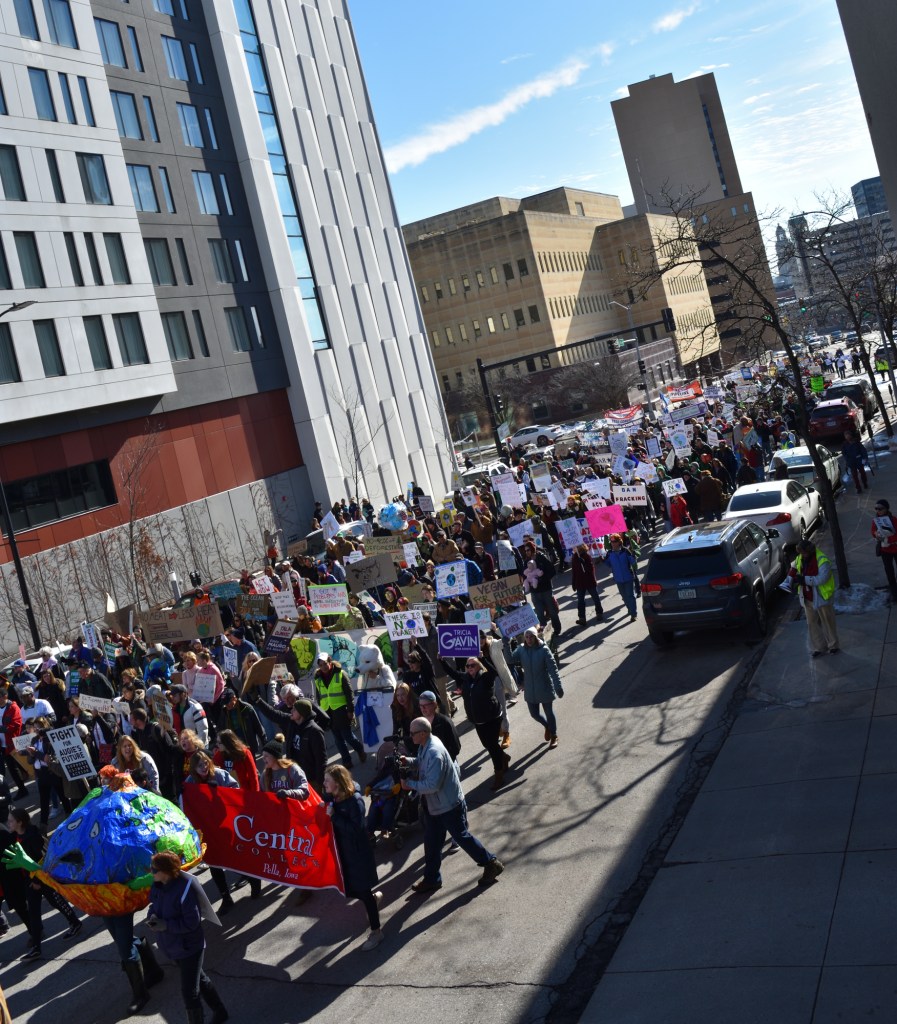
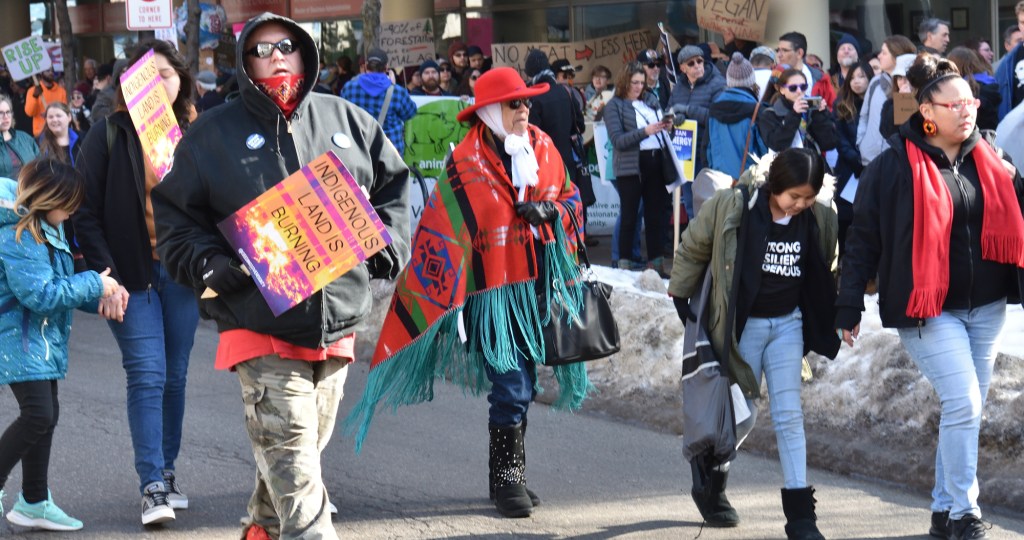
Readers of this blog are familiar with me sharing my experiences on the First Nation-Farmer Climate Unity March. Participating on the March was one of the most significant things I’ve done in my life for a number of reasons, which are explained in the many blog posts I’ve written over the years since then (September 2018).

I recently began to put all those blog posts, photos and videos in one place on the Internet, to create a kind of library, which is now available at this web address:

https://firstnationfarmer.com/

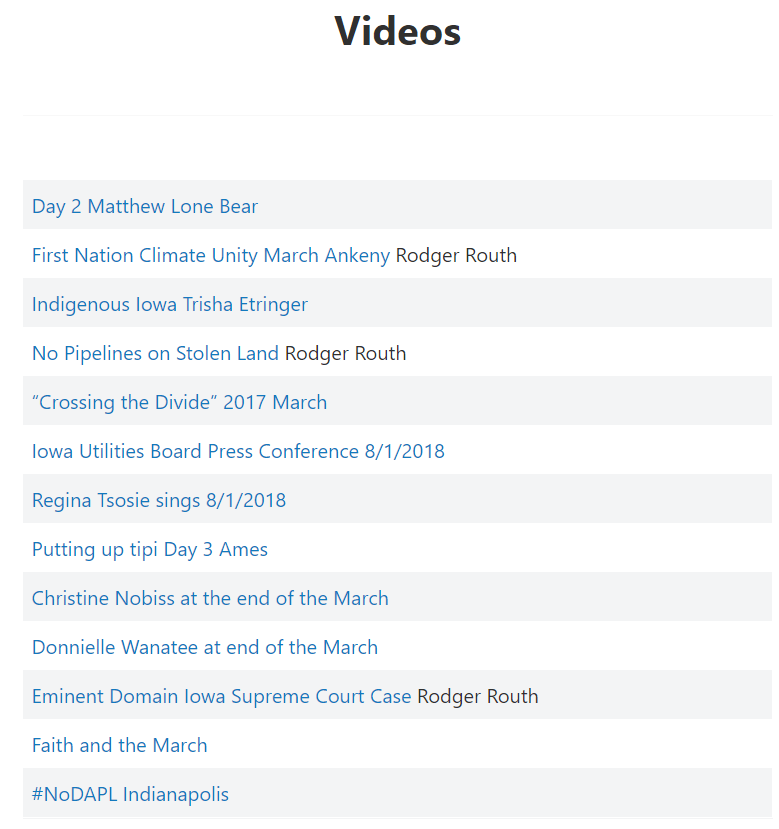
The main menu consists of a Table of Contents of all the blog posts, a Marchers link to the photo and biographies of the Marchers, the Blog link is a way to scroll through the blog posts, and the Videos and Photo Galleries have their own sections.

There are links on the Home page to the three sections below. The March and Multimedia (videos and photo galleries) sections are complete.

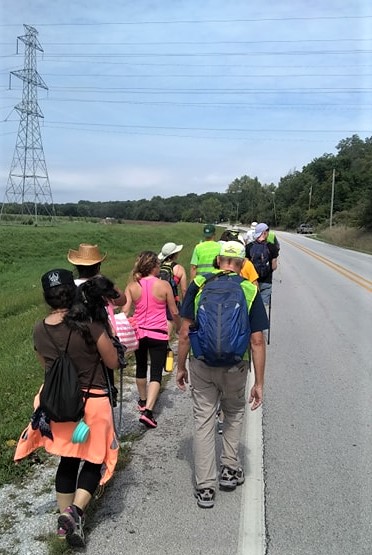
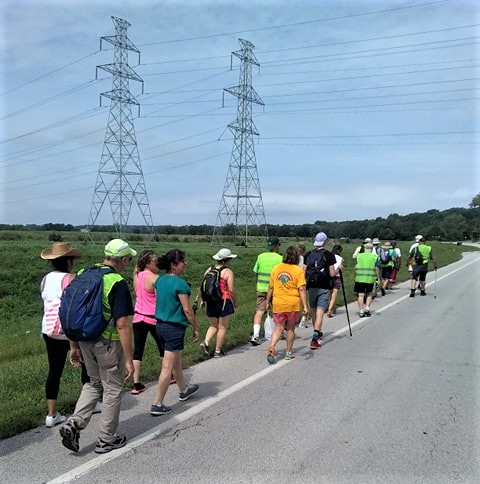
There is a photo gallery for each day of the March. The photos occur in sequence, so you can visually/virtually walk with us. There are a number of different videos from different videographers.

The Next Steps section is what I am work on “Next” which is about what we have done since the March.

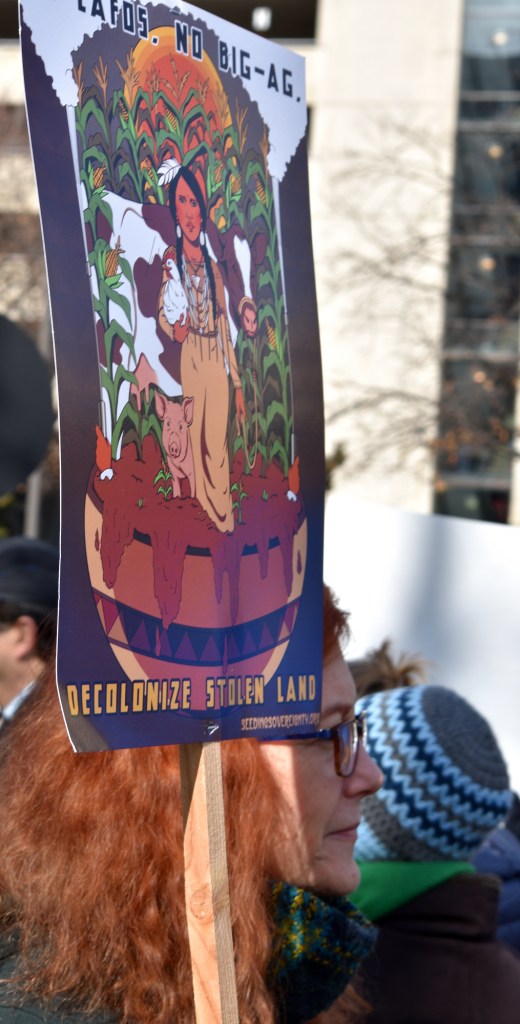
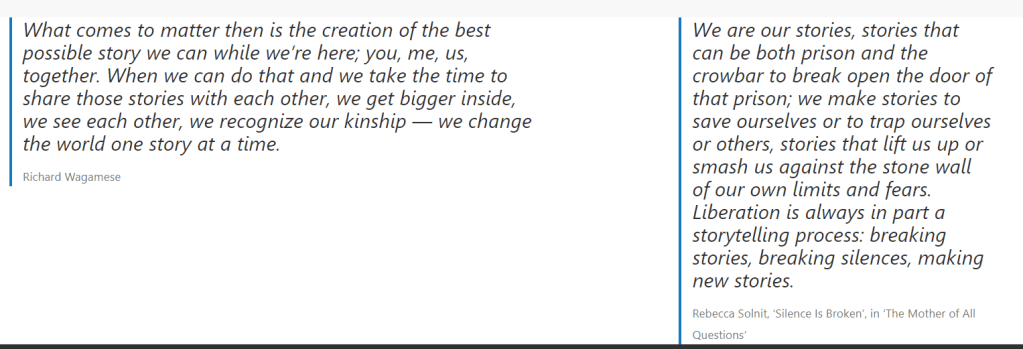
One of the reasons I’ve continued to write about the March since then is because the intention of the March was to create a community of native and nonnative people who got to know each other by sharing the physically demanding 94 mile walk from Des Moines to Fort Dodge, Iowa, along the path of the Dakota Access pipeline. Who had the unique opportunity of sharing our stories with each other, allowing us to get to know each other and begin to trust each other. It is because I am a firm believer in the importance of sharing our stories with each other, that I put the following quotations on the home page.

There were a number of obstacles we needed to confront in order to build that trust. There is the whole history of the White settlers colonizing the land known as the United States. While the vast majority of White people believe that colonization is a thing relegated to the past, I came to understand that trauma is inter-generational, described as an “open wound” in native communities even now.

As a Quaker, some of my ancestors were involved in the Indian residential/boarding schools. I spent some time in preparation for the March learning about those schools. One of the most powerful, and “scary” things for me on the March were times I brought up the subject, to discuss that history during the March. I am profoundly grateful my new friends shared their stories related to those schools with me. Each told me how that trauma affected their relatives and affects them even now.

I’m very glad a number of us have been able to work together on issues of shared concern since the March. I’ll be working on writing about those stories.

The following press release explains what the March was about.


March unites Indigenous people, farmers, others in support of precedent-setting lawsuit.

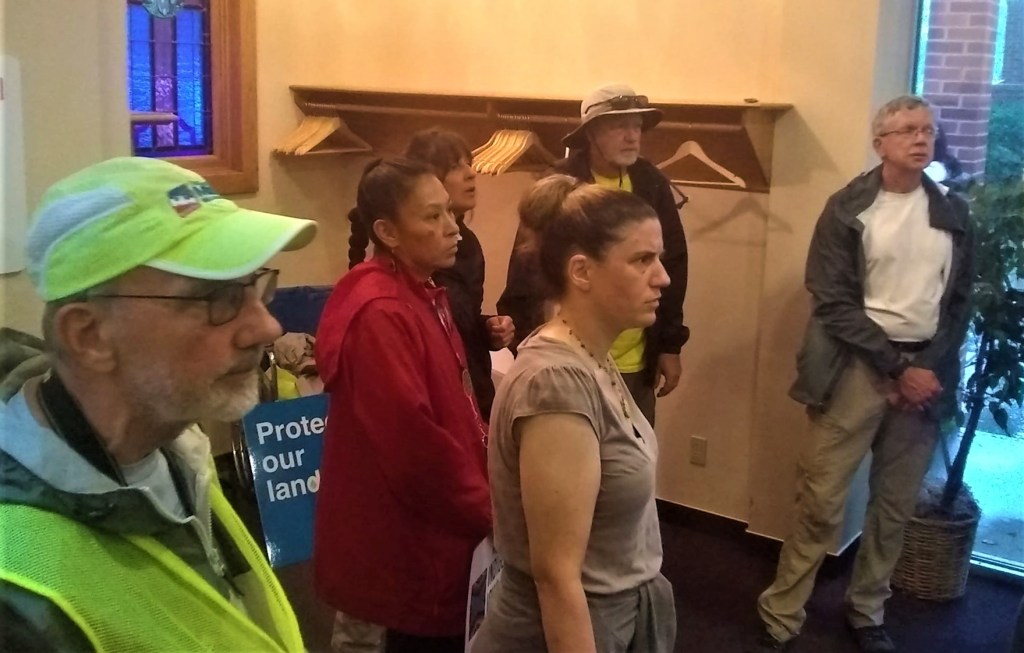
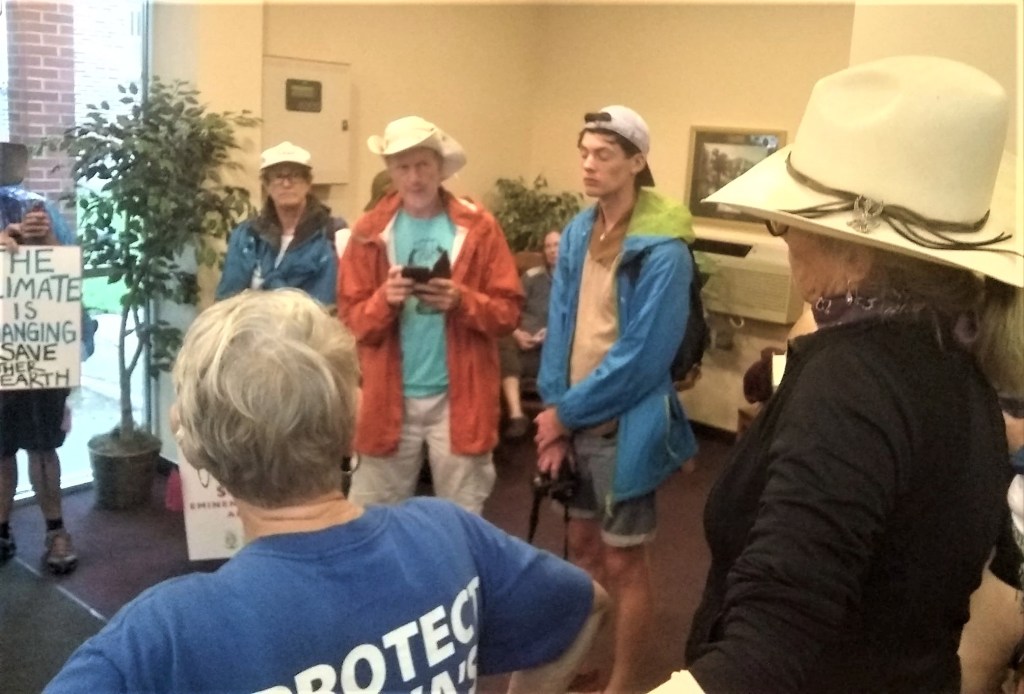
In an attempt to stop the flow of oil through the Dakota Access Pipeline in Iowa, Jeff Kisling of Indianola, will be one of nearly 50 Iowans and friends of Iowa marching from Des Moines to Fort Dodge, September 1-8, to bring awareness to the landowner/Sierra Club lawsuit scheduled to be heard by the Iowa Supreme Court on September 12.

The 90-mile First Nation – Farmer Climate Unity March, organized by Bold Iowa and Indigenous Iowa, unites Native people, farmers, environmentalists and other concerned individuals from a variety of backgrounds to highlight the historical and far-reaching implications of the lawsuit.

The lawsuit, brought by nine landowners and the Iowa Sierra Club, alleges the Iowa Utilities Board (IUB) illegally granted eminent domain to install the Dakota Access Pipeline, which carries up to 500,000 barrels per day of toxic crude oil through the state.

“I’m marching because eminent domain was not used as intended and forced this pipeline through farms of Iowans who did not want it,” said Kisling. “And it is important to keep fossil fuel in the ground if we are going to have a chance of protecting our environment, so the pipeline isn’t needed.”

The March kicks off Saturday, September 1, at 9:00 a.m. with a press conference at the IUB’s office at 1375 E. Court Ave, in Des Moines. With overnight stops in Ankeny, Huxley, Ames, Boone, Pilot Mound, Dayton, and Otho, the March will finish in Fort Dodge on Saturday, September 8, with a rally and celebration at City Square Park, 424 Central Ave, at 1:30 p.m.

The March will be a self-contained community, with participants camping on farms or in parks each night. The March has its own “bathroom trailer,” complete with environmentally-friendly commodes and solar showers. Marchers will use a solar collector for much of their power needs. The “Veggie Thumper” bus will provide food, much of it purchased from Red Earth Farms at the Meskwaki settlement. Each evening, there will be a community dialogue facilitated by a Native American leader and an Iowa farmer.

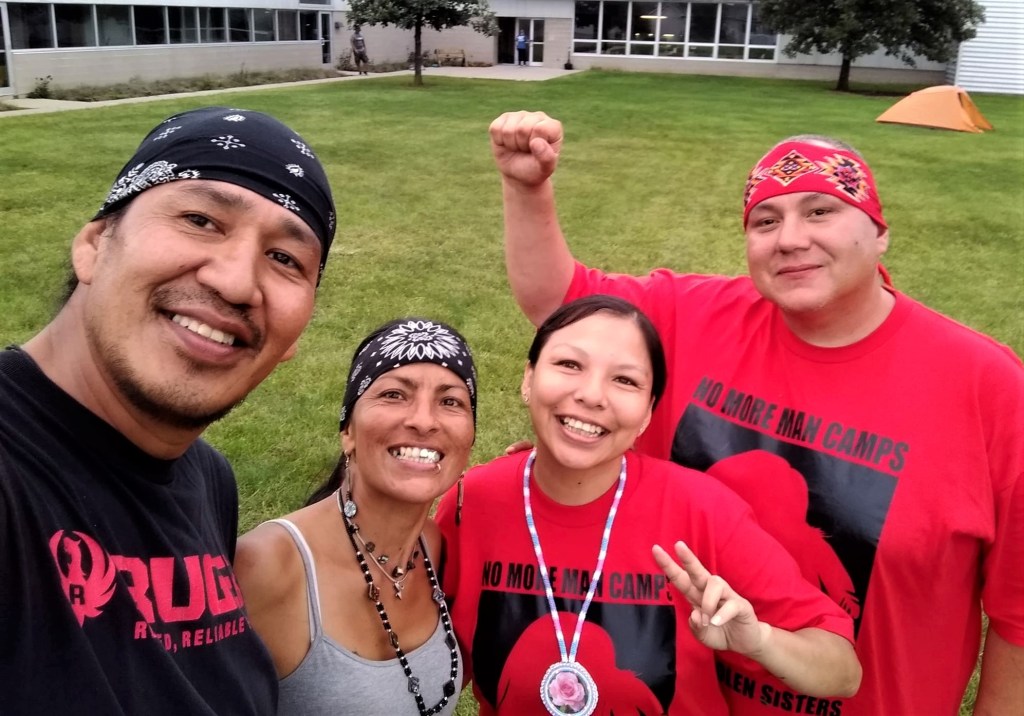
Following are sections of the First Nation-Farmer Unity website.


Posted in #NDAPL, decolonize, First Nation-Farmer Climate Unity March, Indigenous, Quaker, Uncategorized | Leave a comment

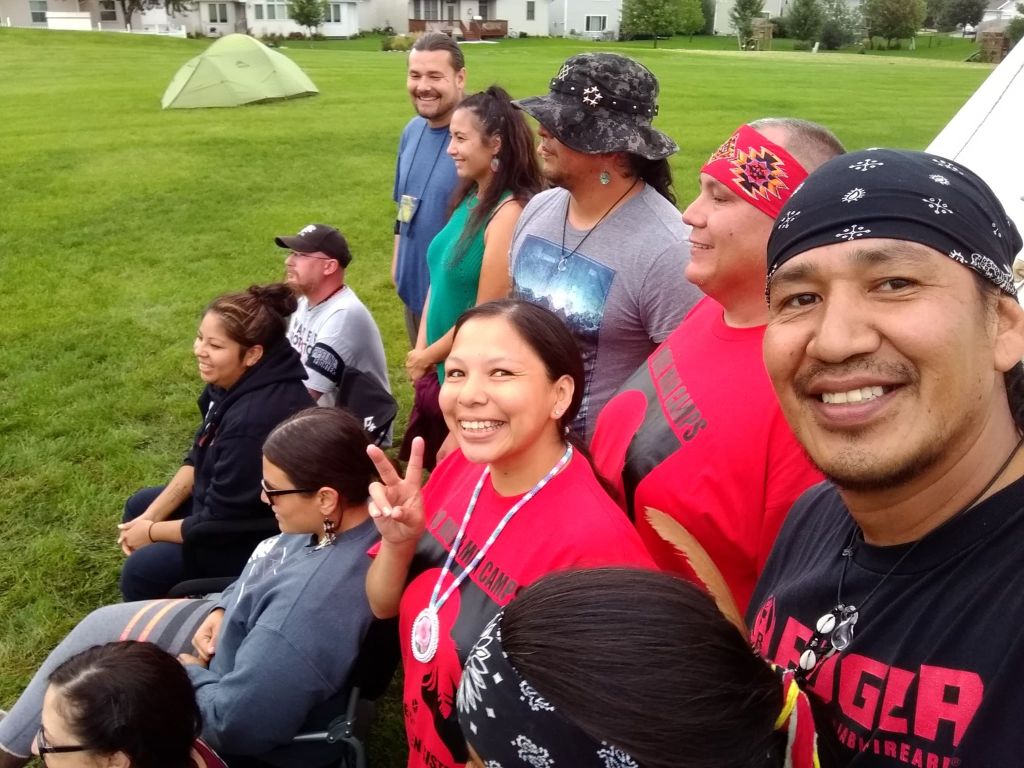
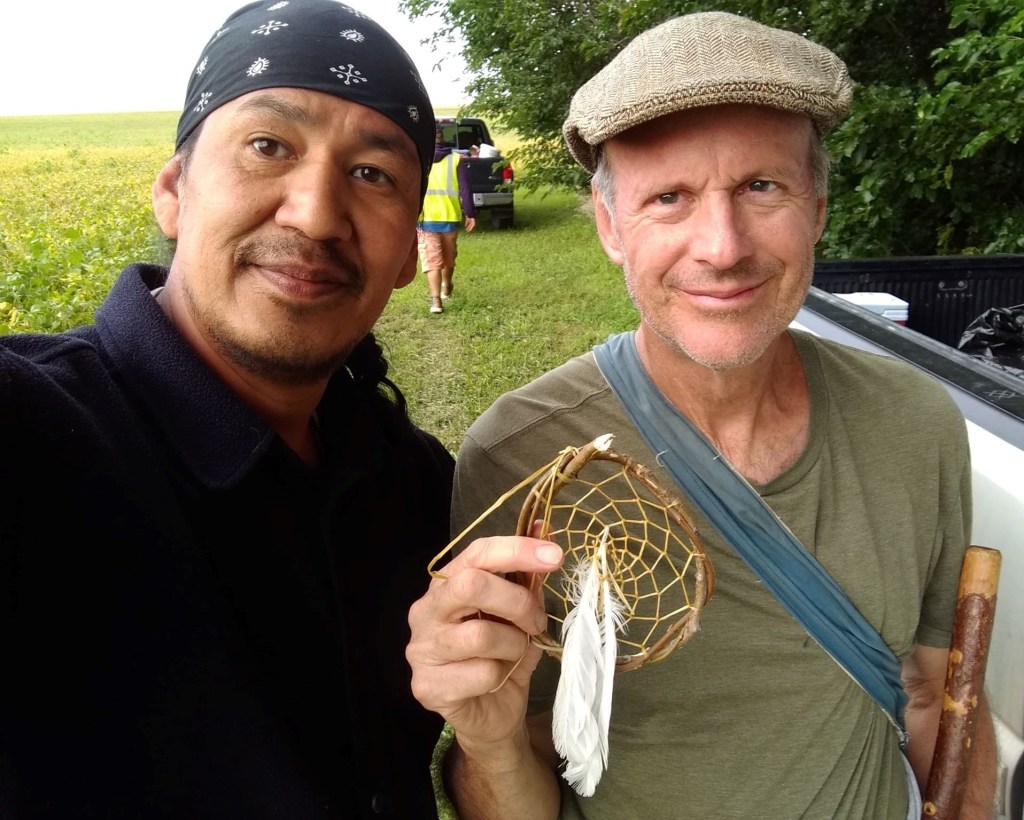
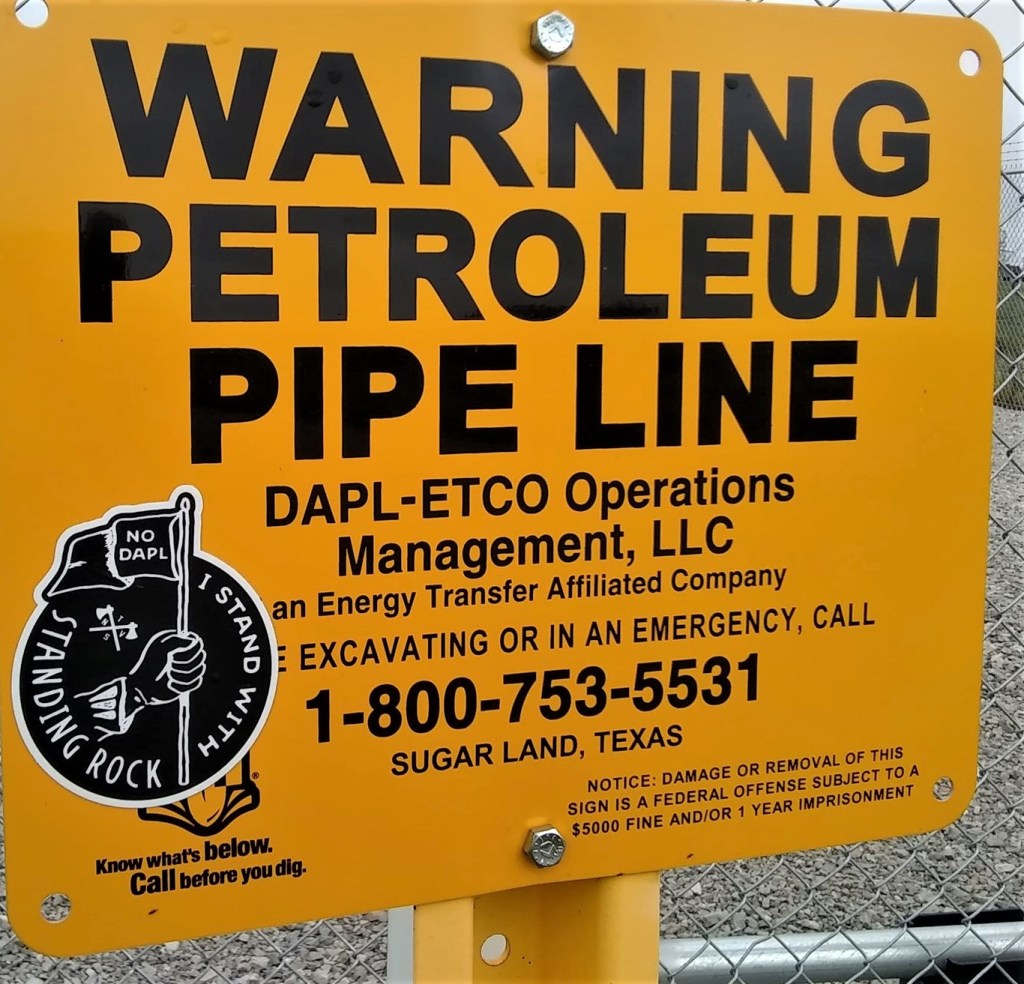
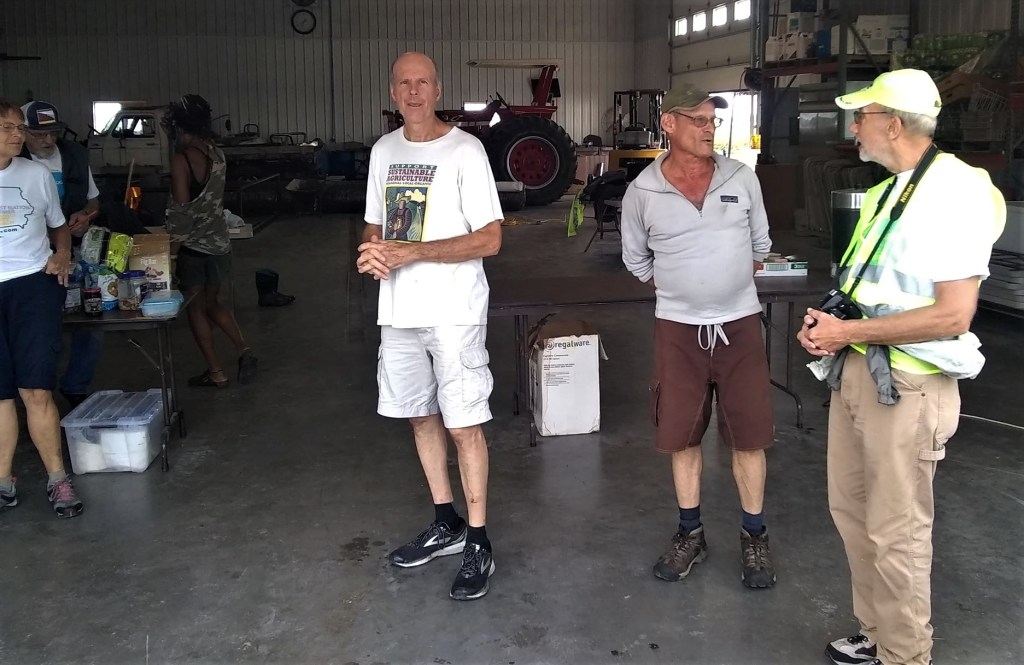
Alton’s Photos from First Nation-Farmer Climate Unity March

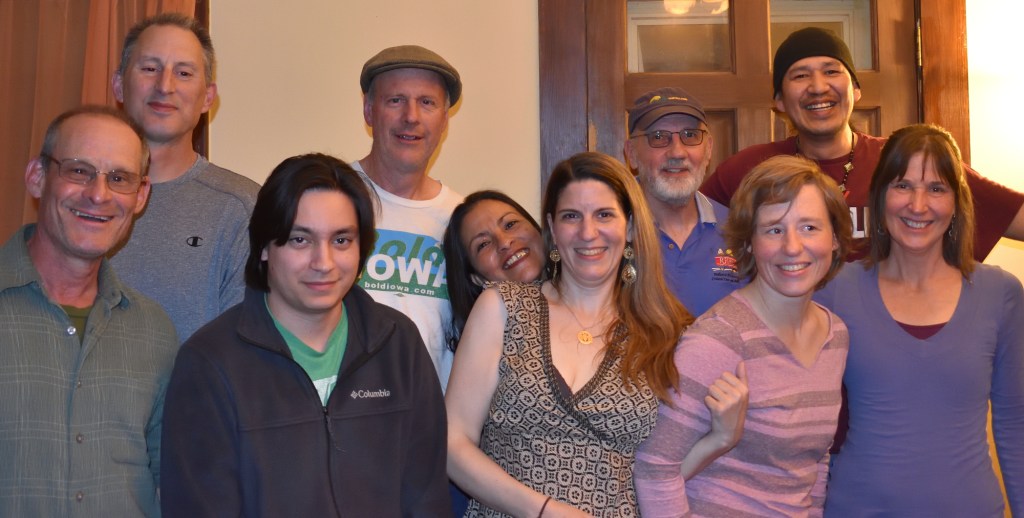
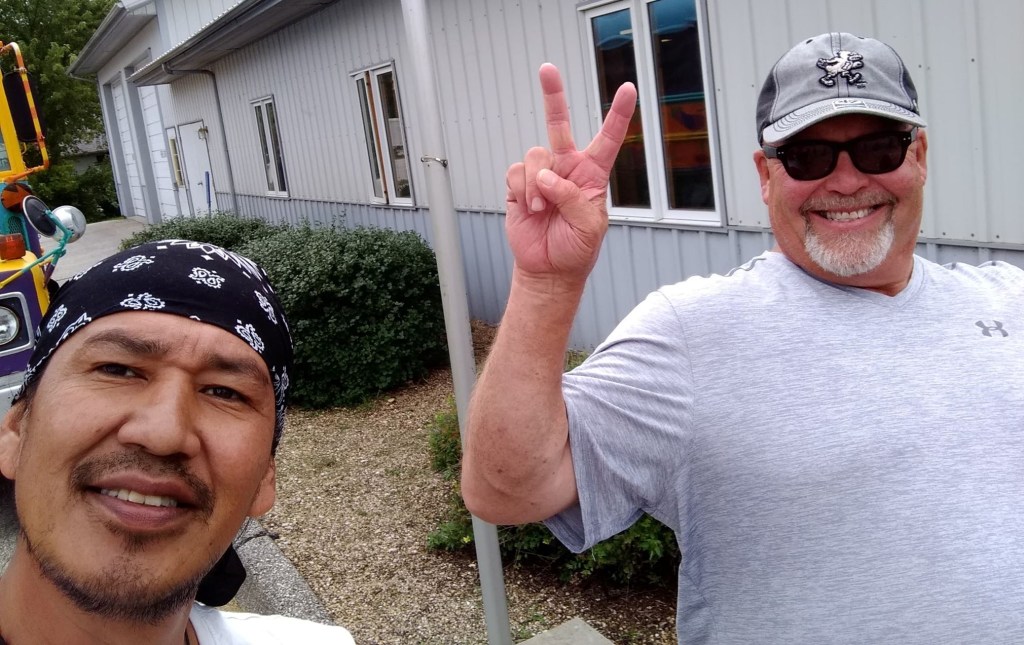
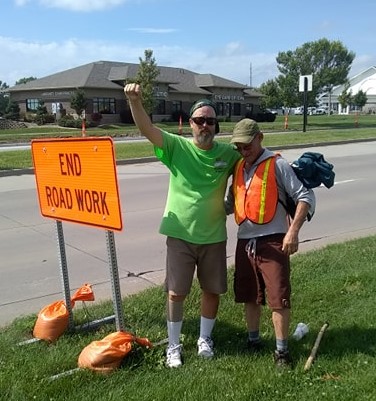
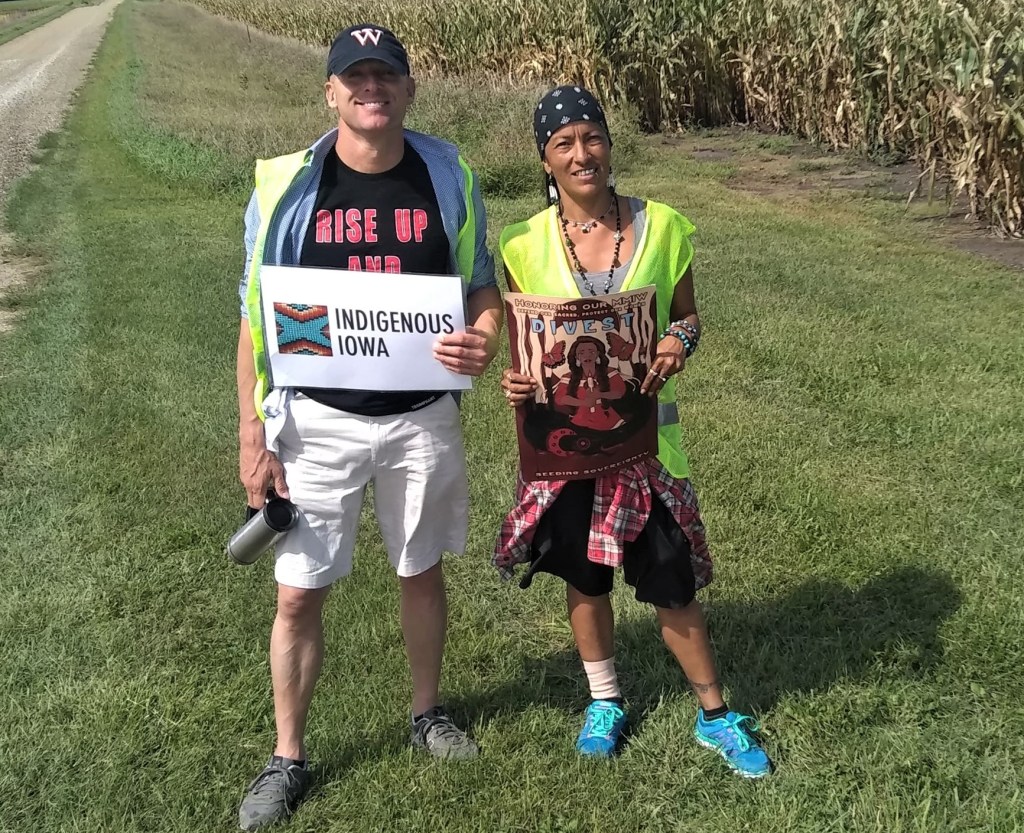
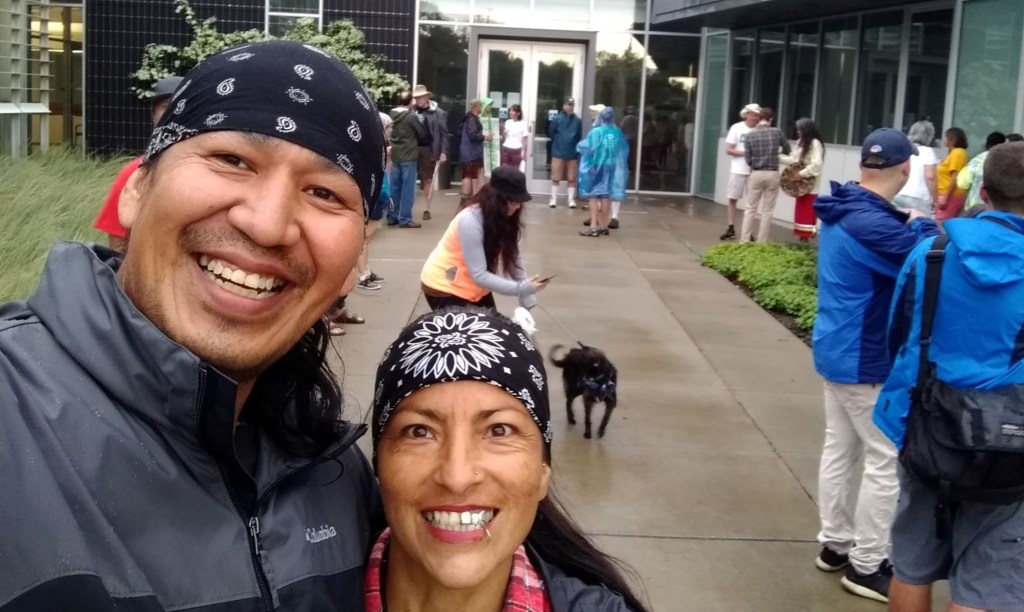
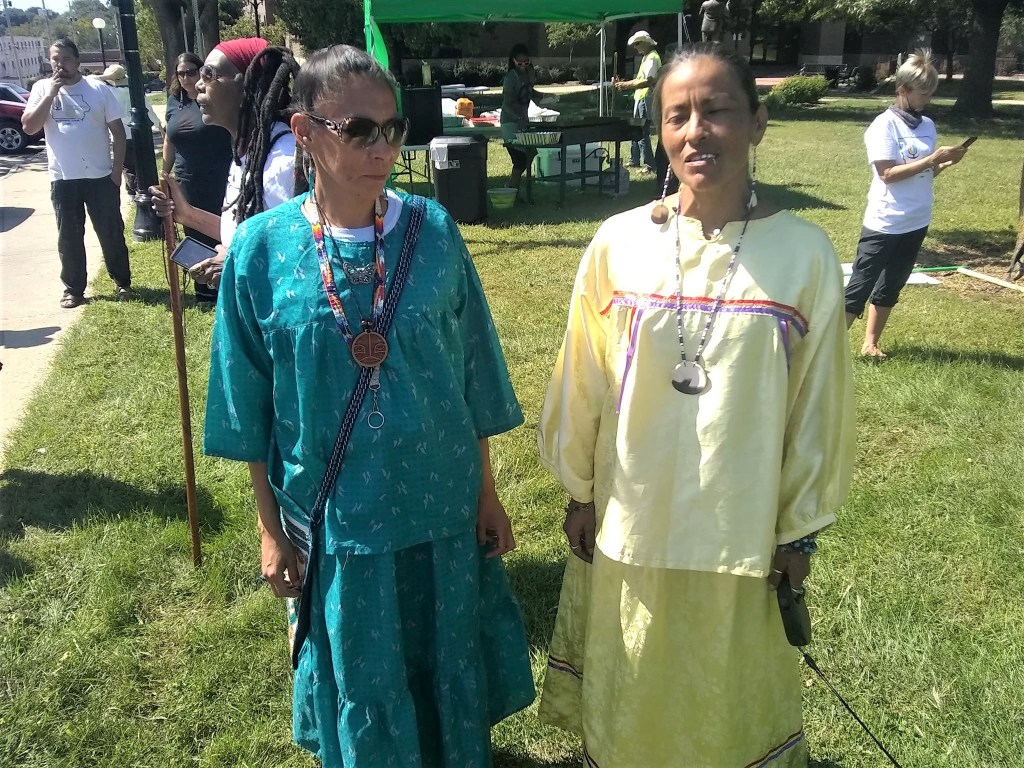
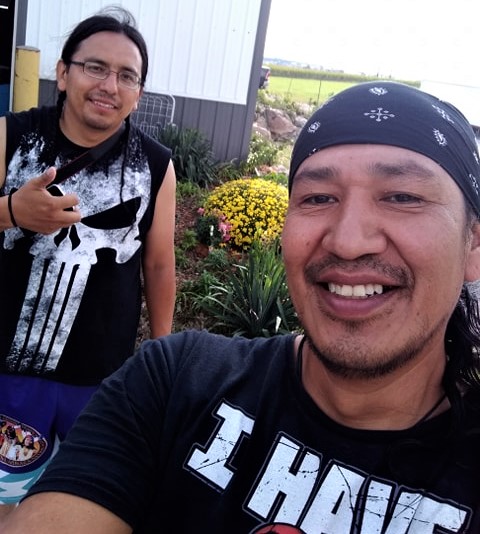
When some of us were fortunate to be able to get together in April for a reunion of the First Nation-Farmer Climate Unity Marchers, Alton and Foxy Onefeather mentioned they had photos from the March, and were willing to share them with me to add to the photo collection.

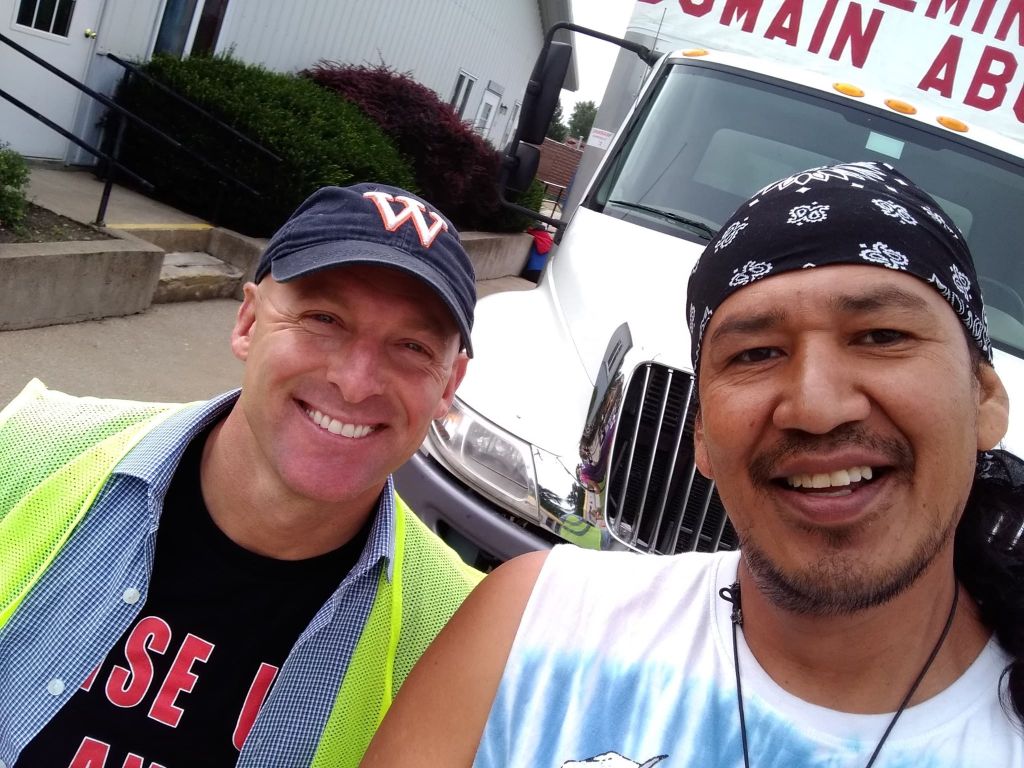
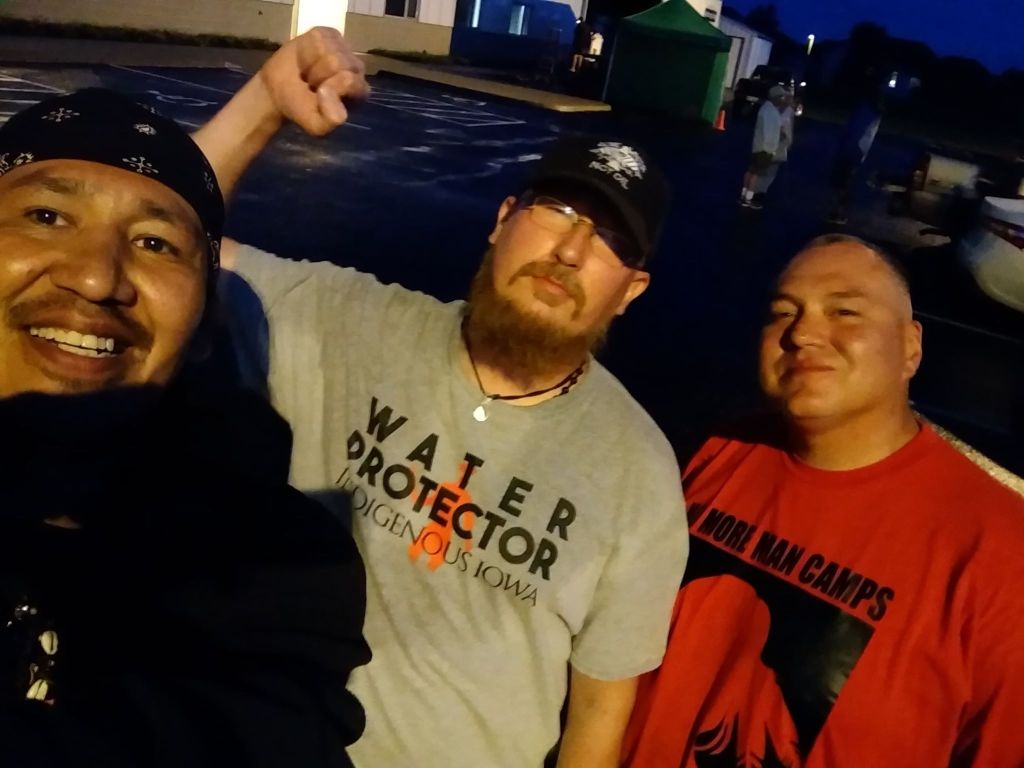
I’m really glad Alton sent me some of those photos this morning. Alton is the master of the selfie. If you have photos of the March, I’d love to add them to the collection.

Posted in #NDAPL, climate change, First Nation-Farmer Climate Unity March | Leave a comment