I’ve recently been learning and writing about land and Indigenous peoples. That is a cautionary note because this is another of those complicated issues that I am led to study on my journey as a White settler seeking ways to understand the genocide of Indigenous peoples.
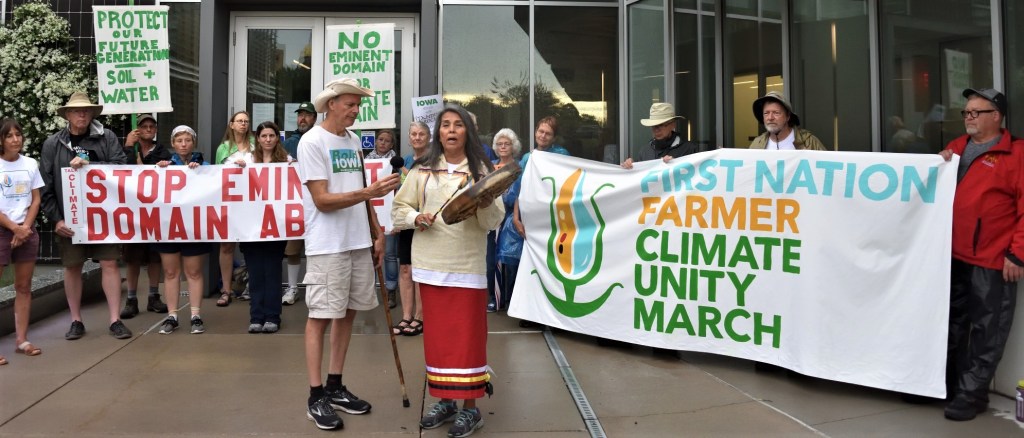
There is so much that has been written about the concepts of land. One of the many reasons for participating on the First Nation-Farmer Climate Unity March was to develop friendships with native people. In part so my new friends could help guide me, showing me what was true and what not. I say showing rather than teaching because one of the principles of justice work is those experiencing injustice should not be asked to teach others about their oppression. By showing I mean sharing our stories with each other. Walking, eating and camping together. Thus any errors are my own, since I need to be respectful about what I ask of my friends.
Issues surrounding land generate strong reactions. Native peoples have strong relationships with the land, including deep spiritual connections. The idea of private ownership of land was foreign to them. So they usually didn’t understand treaties they were forced to sign, supposedly giving ownership of the land to White settlers. Then those treaties were broken. More treaties forced the native peoples to give up more and more of their land. Then those treaties were broken.
Those who own property now often feel great anxiety about the idea of having their land taken from them. Expressing this a land theft, or stolen land evokes strong emotions. The current land owners have made their own connections with the land. Have financial connections, such as the price they paid for the land. And those who farm the land depend on what is grown for their livelihood.
There is a way that Nature speaks, that land speaks. Most of the time we are simply not patient enough, quiet enough, to pay attention to the story.
I travel in Quaker ministry with a concern for seeking right relationship with Indigenous peoples. In my workshops I ask people to think about our country’s history of genocide and colonization, which we don’t think about very much, our schools don’t teach very much, and our government never acknowledges. I ask people to think about what happened here. I then ask them about Native people in our communities today and ask what we might do to develop relationships that are based on truth, respect, justice, and our shared humanity. Many people say they don’t know any Native Americans. This might be true, or it might not be: Native people are not always recognizable. But what is true is that many of us don’t feel any connection with Indigenous people. It’s hard to start to imagine what it would mean to work toward “right relationship” with them.
I think the land can be our connective tissue. Most of us are connected to land somewhere: the land where we live today, the land of our ancestors, the land where we were born, the land where we vacation, the land we love for whatever reason. On the North American continent, all the land we know and love was known and loved first by Indigenous people. And Indigenous people say the land remembers.
If the land we love could tell us what it remembers, what would it say?
As I pray about our chaotic times, certain things have become clear. As said below, “there are moments of clarity that allow for society to challenge popular thinking and status quo solutions.” This is one of those moments of clarity. Our time for change is now. “Our” meaning all of us, globally, including all that is not human.
People who hadn’t already known this are being forced to realize we will not be able to return to the way things were before the pandemic. Many have known, and more are learning, that we don’t want to return to what was.
How do we envision the change we want now? And how do we implement these changes? As said below, listen to the frontlines!
“We understand that all of our efforts must begin with the narrative: our story and vision for the world we want and know is possible. Short, medium and long term organizing strategy—indeed, entire movements—grow and are derived from narratives.”
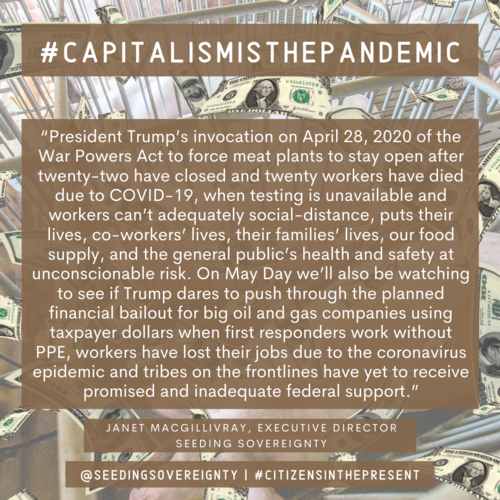
I’ve been truly blessed to be involved with two frontline communities. One group of communities are Native Americans in general, and Seeding Sovereignty, lead by my friend Christine Nobiss, in particular.
Seeding Sovereignty has many projects, one of which is “SHIFT the Narrative“, biweekly online interviews whose purpose is to change who is telling the stories. https://seedingsovereignty.org/shift-the-narrative
The other frontline community is the Kheprw Institute (KI) in Indianapolis. My friend Imhotep Adisa, one of the founders of the KI, recently published the following article related to this discussion.
Continue to push for something different
How can we create some processes and procedures to mitigate inequity in our social, legal and economic structures? How can we begin some conversations about creating a system that is equitable? What can each of us do in the present to advance equity in our society? And how do we continue to fight for equity during these difficult times?
First and foremost, all of us, every last one of us, must engage others in our work, home and play spaces to have honest, open and authentic conversations around the issue of inequity. Some of us, particularly those in positions of power, must have the courage and strength to look more deeply at the inequitable structures that exist within their own organizations and institutions.
The intersecting crises of income and wealth inequality and climate change, driven by systemic white supremacy and gender inequality, has exposed the frailty of the U.S. economy and democracy. This document was prepared during the COVID-19 pandemic which exacerbated these existing crises and underlying conditions. Democratic processes have been undermined at the expense of people’s jobs, health, safety, and dignity. Moreover, government support has disproportionately expanded and boosted the private sector through policies, including bailouts, that serve an extractive economy and not the public’s interest. Our elected leaders have chosen not to invest in deep, anti-racist democratic processes. They have chosen not to uphold public values, such as fairness and equity, not to protect human rights and the vital life cycles of nature and ecosystems. Rather, our elected leaders have chosen extraction and corporate control at the expense of the majority of the people and the well-being and rights of Mother Earth. Transforming our economy is not just about swapping out elected leaders. We also need a shift in popular consciousness.
There are moments of clarity that allow for society to challenge popular thinking and status quo solutions. Within all the challenges that this pandemic has created, it has also revealed what is wrong with the extractive economy while showcasing the innate resilience, common care, and original wisdom that we hold as people. Environmental justice and frontline communities are all too familiar with crisis and systemic injustices and have long held solutions to what is needed to not only survive, but also thrive as a people, as a community, and as a global family. We cannot go back to how things were. We must move forward. We are at a critical moment to make a down payment on a Regenerative Economy, while laying the groundwork for preventing future crises.
To do so, we say—listen to the frontlines! Indigenous Peoples, as members of their Indigenous sovereign nations, Asian and Pacific Islander, Black, Brown and poor white marginalized communities must be heard, prioritized, and invested in if we are to successfully build a thriving democracy and society in the face of intersecting climate, environmental, economic, social, and health crises.
A just and equitable society requires bottom-up processes built off of, and in concert with, existing organizing initiatives in a given community. It must be rooted in a people’s solutions lens for a healthy future and Regenerative Economy. These solutions must be inclusive—leaving no one behind in both process and outcome. Thus, frontline communities must be at the forefront as efforts grow to advance a Just Transition to a Regenerative Economy.
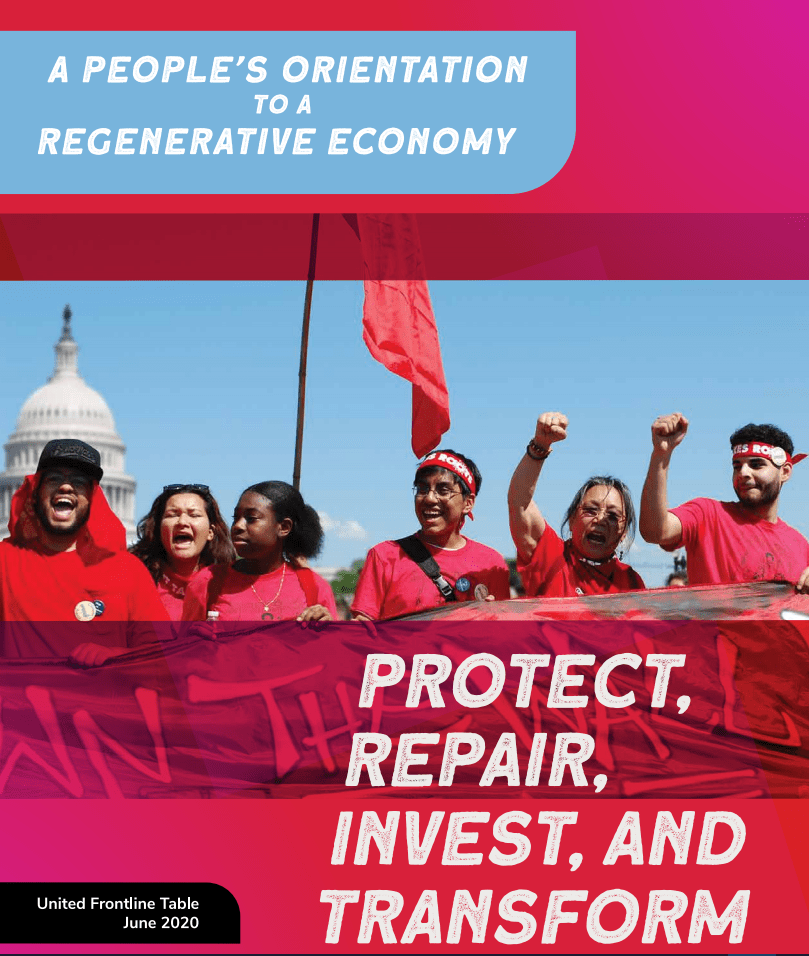
A People’s Orientation to a Regenerative Economy offers community groups, policy advocates, and policymakers a pathway to solutions that work for frontline communities and workers. These ideas have been collectively strategized by community organizations and leaders from across multiple frontline and grassroots networks and alliances to ensure that regenerative economic solutions and ecological justice—under a framework that challenges capitalism and both white supremacy and hetero-patriarchy—are core to any and all policies. These policies must be enacted, not only at the federal level, but also at the local, state, tribal, and regional levels, in US Territories, and internationally.
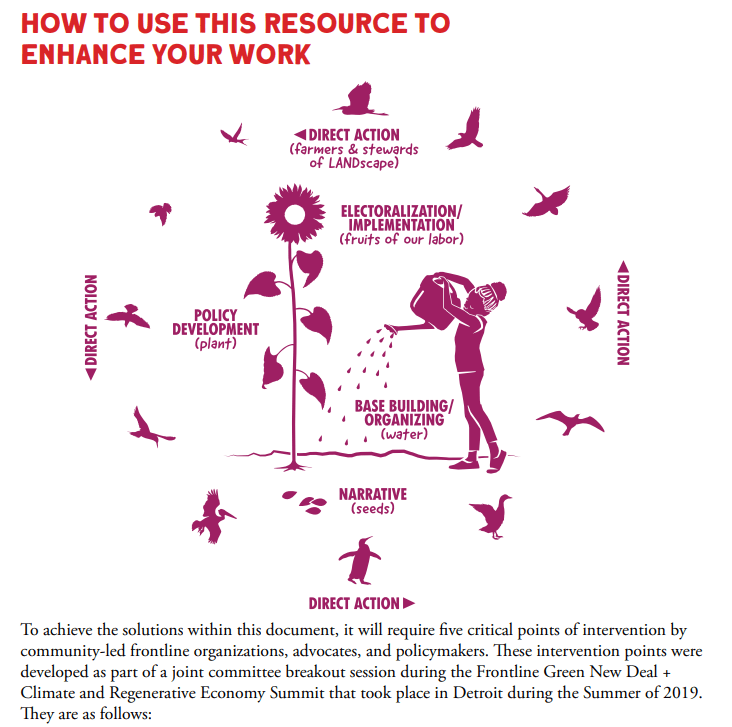
Narrative (Seeds).Represented by seeds, we understand that all of our efforts must begin with the narrative: our story and vision for the world we want and know is possible. Short, medium and long term organizing strategy—indeed, entire movements—grow and are derived from narratives. As the Center for Story Based Strategy teaches us, “The point is not to tell our own stories better. The point is to change existing stories. The currency of story is not truth, but meaning.” As we continue to craft our story of a Regenerative Economy, we understand that through greater meaning, we also establish a greater set of truths. The seeds of our narrative form the roots to weather the many storms ahead.
Base Building and Organizing (Water). Our narratives are nourished and made tangible by the strength of our organizing, the water that provides life for our stories and vision. We view organizing as the vehicle that moves us from where we are, to where we want to be, as articulated and driven by our narratives derived from our collective wisdom, vision, and power. Many Indigenous traditions tell the story of the women being the “keepers of the water,” that is rooted in the important role of women in organizing.
Policy Development (Plants). With our seeds nourished by our organizing, we are better positioned to design and develop the policies that are informed by our principles, be they Just Transition, Just Recovery, Energy Democracy, Food Sovereignty, the UNFT believes in the inexorable nexus between policy development and grassroots organizing.
Electoralization and Implementation (The Flora We Glean). Developing and introducing policies is one part of the overarching process that gets us to a regenerative economy. As organizers, we understand that the people we put in positions of power through a fair, transparent, and accessible electoral process must be beholden to the people, the workers and their communities, not the wealthy few or corporations. This is the best way to ensure that even when policies are enacted, the implementation phase serves those on the frontlines of intersecting crises first and foremost. The people we put in power must act as nourishment that increases the ability for us all to live our power as individuals and collectives.
Direct Action (The Stewards Who Bring Our Visions to Life). We hold that while transition is inevitable, justice is not. As Fredrick Douglass said, “Power concedes nothing without a demand. It never did and it never will.” Only through principled struggle in the form of organized defiance can we hold the people we put in power accountable to the masses. We all must become stewards of our movements and the struggles that guide them. It is incumbent upon us all to create critical connections that lead to critical mass to serve as a reminder that our lawmakers and our systems of governance must, and always, be by and for the people. We must struggle to fight the bad, build the new, change the story, and move the money. This is how and why we utilize direct action.
The five points of intervention serve as a guide and pathway to develop our narrative, shape our organizing, design and develop the policies required to uplift our people and communities, while ensuring that we place good actors into positions of power who will serve us through just implementation. We reserve the right to utilize and unleash our power through direct action when necessary to establish and maintain universal and bi-lateral accountability. A People’s Orientation to a Regenerative Economy offers three dynamic tools to advance these interventions. First, we offer a series of questions to inform narrative and policy development for Just Transition and Regenerative Economy. Second, to advance this transition, we provide a framework: Protect, Repair, Invest, and Transform.
Following is an example of just one part of the overall plan. This is what led to this entire blog post, as I looked for examples of how to think about land theft, and what solutions might look like.
FOOD SOVEREIGNTY and LAND SOVEREIGNTY
From seed to harvest, too many of us are disconnected from our food. We live in food apartheid, where white and wealthier communities can access healthy foods, leaving the rest of us to be held captive by corporate agriculture and chemical companies that push unhealthy food options. Our food system is so unhealthy that in this current pandemic large-scale farms have thrown away food, while over 40 million people go to bed hungry each night.18 Not only are we disconnected from our food, we are disconnected from the land on which we live. The land provides the soil for our food and the ground for our homes, yet the land has been commodified and extracted to serve our economy, rather than being held with the sacred care that it should be given. We need to reshape our society’s relationship to the land and our food for us to cultivate a Regenerative Economy.
As I’ve been learning more about Indigenous peoples, I’ve been trying to formulate what this means for me as a White person living on land that was taken from them.
We invite Quakers from across North America to seek and share ways of acknowledging and interrupting the ongoing harms stemming from Quaker individual and corporate involvement in the land theft and genocide against Indigenous Peoples on Turtle Island. With gratitude, we will be accompanied by Indigenous Peoples as planners, advisors, and presenters.
As highlighted above, there are two broad categories of wrongs against Indigenous Peoples, land theft and genocide. Until recently, I’ve studied the genocide. Researched the history and consequences of the Indian boarding/residential schools. And in particular the Quaker involvement in those schools of forced assimilation and cultural erasure.
Lately I’ve begun to concentrate on land theft, which is both complicated and simple. Complicated in terms of multiple native peoples who lived on the land at various times in history. Complicated by broken treaties between White settlers and Indigenous peoples.
But simple in the sense that the concept of owning property is a colonial tool that I don’t see as valid. If you believe that, then what now?
I think there is a great fear among White people, especially those who own property, that “their” property will be taken from them. That is one of the points in the video below. This interview was recorded at PowerShift Canada 2012, Oct 28 in Ottawa on unceded Algonquin territory.
“We acknowledge that settlers are not entitled to live on this land. We accept that decolonization means the revitalization of indigenous sovereignty, and an end to settler domination of life, lands, and peoples in all territories of the so-called “Americas.” All decisions regarding human interaction with this land base, including who lives on it, are rightfully those of the indigenous nations.”
I’m of the firm opinion that a system that was built by stolen bodies on stolen land for the benefit of a few is a system that is not repairable. It is operating as designed, and small changes (which are the result of huge efforts) to lessen the blow on those it was not designed for are merely half measures that can’t ever fully succeed.
So the question is now, where do we go from here? Do we continue to make incremental changes while the wealthy hoard more wealth and the climate crisis deepens, or do we do something drastic that has never been done before? Can we envision and create a world where a class war from above isn’t a reality anymore?”
Ronnie James
SET CONFLICT RESOLUTION GROUND RULES:
Recognize whose lands these are on which we stand. Ask the deer, turtle, and the crane. Make sure the spirits of these lands are respected and treated with goodwill. The land is a being who remembers everything. You will have to answer to your children, and their children, and theirs— The red shimmer of remembering will compel you up the night to walk the perimeter of truth for understanding.
As I brushed my hair over the hotel sink to get ready I heard: By listening we will understand who we are in this holy realm of words. Do not parade, pleased with yourself. You must speak in the language of justice.
Conflict Resolution for Holy Beings, Joy Harjo
President Donald Trump May 5th, 2020 Re: Five Asks for May 5th – Missing and Murdered Indigenous Relatives Awareness Day
Honor the treaties and recognize Indigenous land sovereignty.
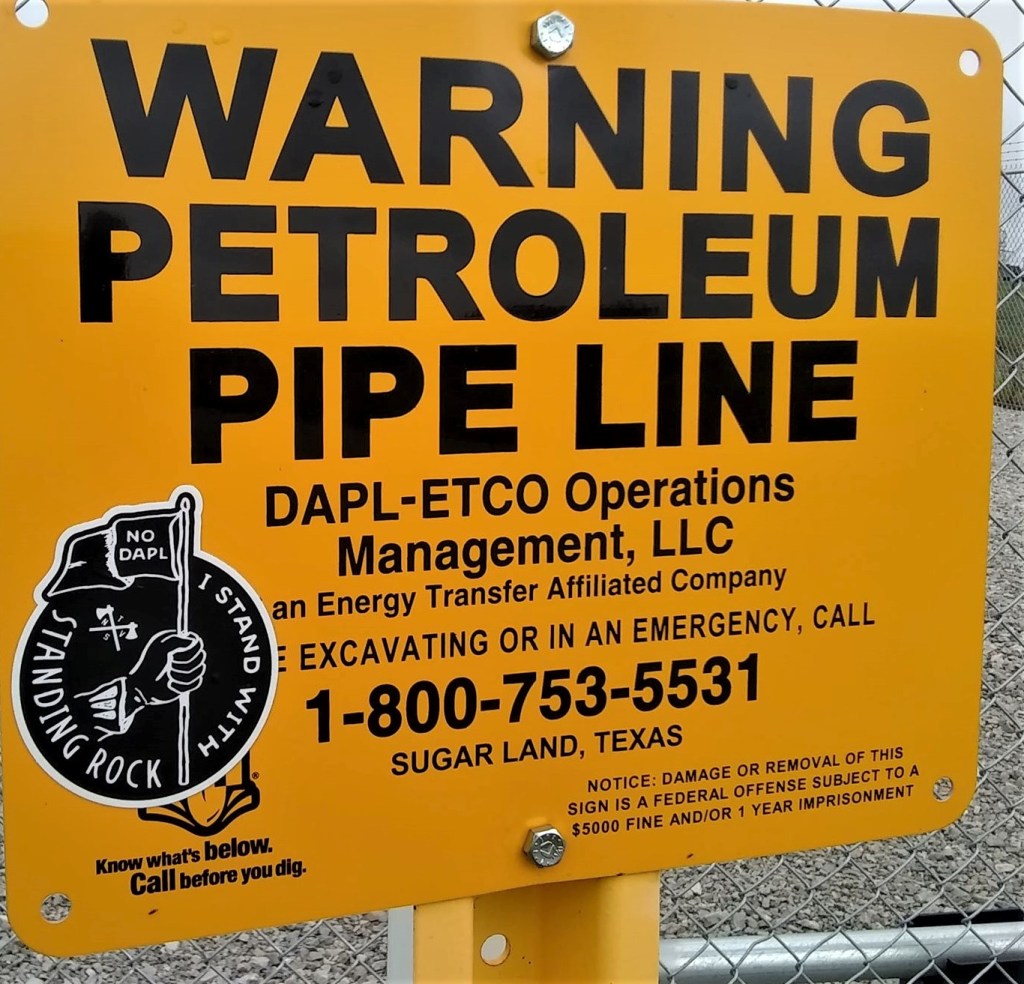
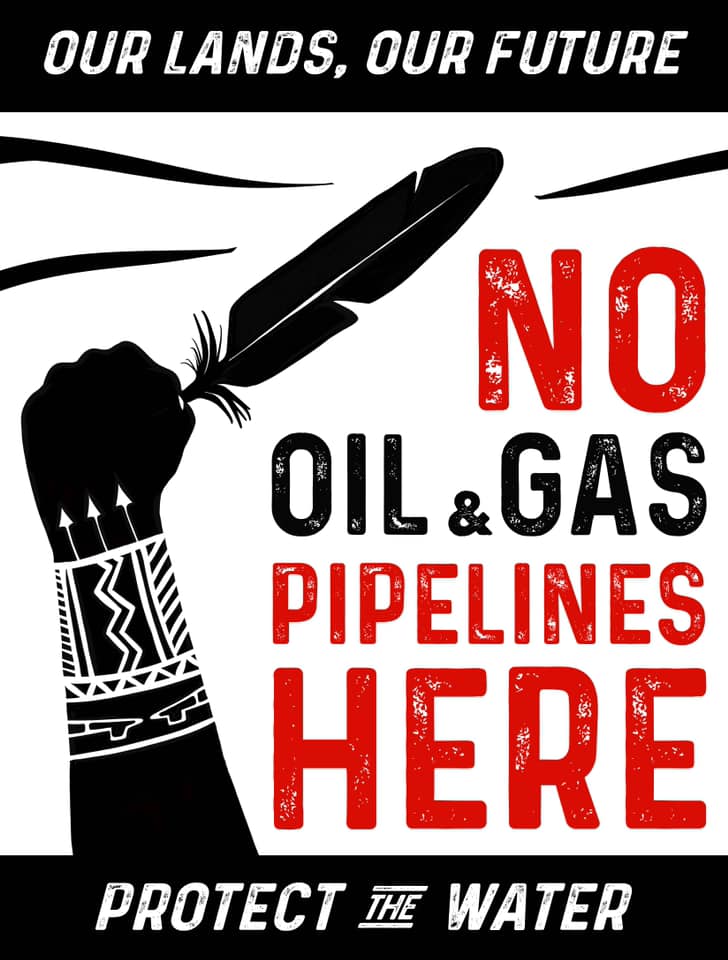
Your natural resource extraction development plan to offer loans to the tanking oil industry affects the safety of Indigenous womxn. The same is true with opening the Arctic National Wildlife Refuge and the Permian Basin to fossil fuel extraction, greenlighting pipelines like DAPL, KXL and Line 3, allowing mining at sacred sites like Bears Ears National Park and taking lands out of trust, which has devastated the Mashpee Wampanoag Tribe. With large development projects like construction, mining, or fossil fuel extraction comes one of the most violent threats to Indigenous communities, which is the creation of man-camps in close proximity. As James Anaya, former UN Special Rapporteur on the Rights of Indigenous Peoples has stated, “Indigenous women have reported that the influx of workers into Indigenous communities as a result of extractive projects also led to increased incidents of sexual harassment and violence, including rape and assault.” The relentless colonization of our territories has a direct correlation to an increased rate of violence against Indigenous Peoples–in particular womxn, children and LGBTQIA+ and Two-Spirit folx. It is no longer a “word of mouth” issue as many organizations and academics, and even the Canadian government, have recently delved into researching man-camps in Indigenous territories and have reported disturbing stories and statistics.
If we, collectively, want to fight climate crises, then we need to reclaim land-based ethics—ethical relationships to the land and the other-than-human. These ethics are earth-centered, meaning they are driven by the immediate needs of the land, not peoples. Land-based ethics in an Indigenous context can be understood through the stand-off at Standing Rock itself, particularly through the discourse of “protector, not protester.” Here, Native peoples are citing a sacred responsibility to care for the land—to act as its stewards, responsible for protecting and nurturing the life force within it. In short, the needs of the people are met through the land, so the needs of the land must be met by the people.
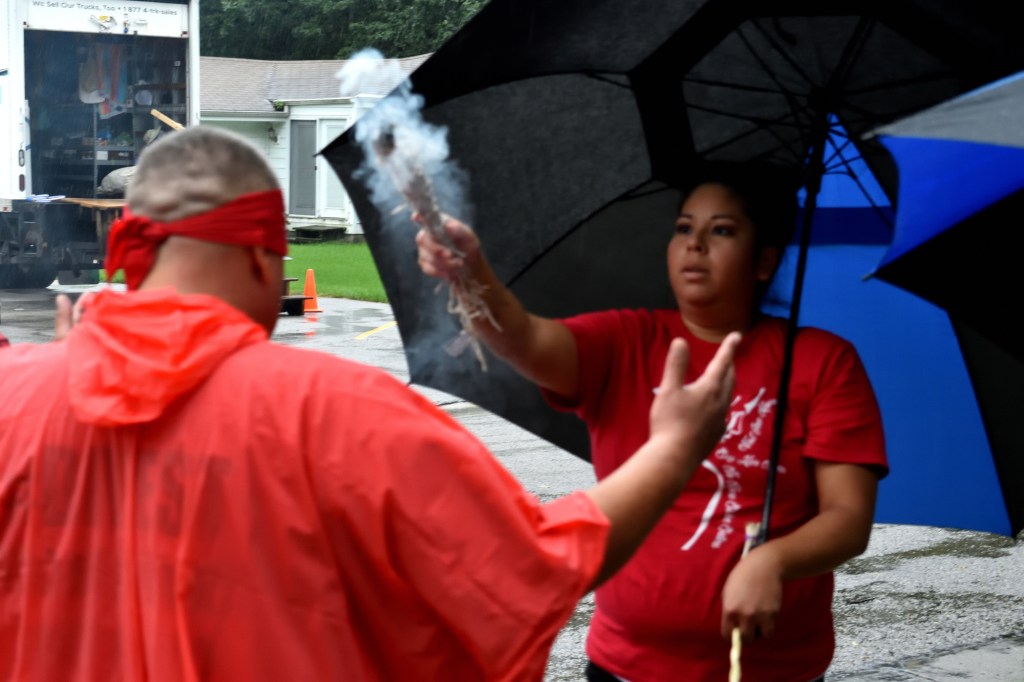
This ethic was most clearly articulated through the daily activities of the Sacred Stone Camp, the central hub of the #NoDAPL movement. Sacred Stone Camp was named for the sacred place where the pipeline would pass near what Lakota and Dakota or Oceti Sakowin peoples call “the river Inyan Wakan Kagapi Wakpa, or River Where the Sacred Stones Are Made—wakan translating as sacred or holy.”5 Historically, this had been a place of ceremony, so naturally the camp itself held ceremony around the clock, whether in the form of sweat lodges, all-night singing and prayer, or tribally specific dances; all actions, great and small, were directed at protecting the lands in their entirety were an expression of this larger ceremony.6 Here, Oceti Sakowin’s land-based ethics are communicated through praxis: Protecting the water is about ensuring the future life and wellbeing of the people and the land. The two are co-extensive, in the same way that affirming their sacred relationships to the lands and the spiritual power within them affirms Oceti Sakowin sovereignty, since it is this mutuality with the land that evinces Indigenous expressions of sovereignty.7
Inspired by these acts of refusal, Indigenous peoples from all over the Americas (and beyond) gathered at the camp to collectively honor these sacred lifeways as the source of all authority. Together, they supplicated the spirit world and coalesced their spiritual power, singing, dancing, and praying this protection into being. These expressions of ceremony were celebratory and community building, but also pedagogical: They were teaching non-Native people about Indigenous land-based ethics and protocols.
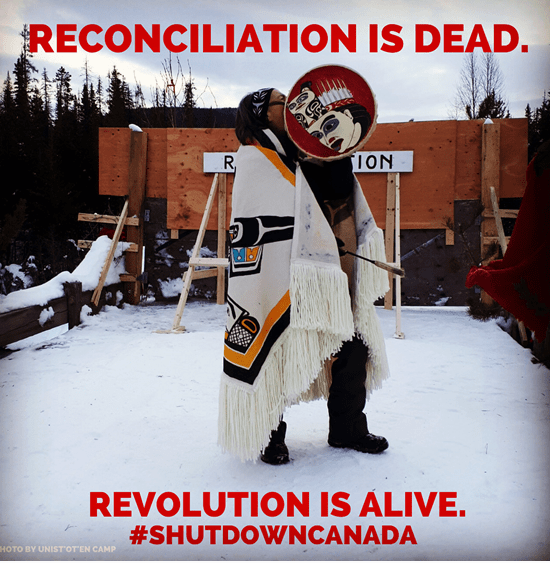
Our culture and our tradition is the land. We are directly connected to the land. It’s our spirituality. We cannot be forced to be away from our land. Nine days since we took the land back. It feels like something you don’t normally do. (laughter) Its revolutionary, right? I don’t think anyone’s ever really evicted like a 6 billion dollar pipeline before. People get confused about what we want as Native people. Like “what do you want?” Just like, “land back!”. Don’t need any reconciliation, don’t want money, like I don’t want programs or funding or whatever. (whispers “land back”) Funny though, when I said that to my Dad, Wet’suwet’en people, if you tell them about LANDBACK, they’re like “we never lost the land, anyway.” Which is true.
For just under three weeks Haudenosaunee Land Defenders, on their traditional territories, have been occupying a site slated for illegal development.
On August 5th Ontario Provincial Police (OPP) enforced an injunction against the land defenders. Eye witnesses described the officers firing rubber bullets at the land defenders and beating people as they arrested them.
In response to these violent arrests land defenders pushed police out of the territory, blocked roads, shut down railroad tracks, and have reoccupied the site.
The land in question is in the same territory that was at the heart of the 2006 blockades in Grand River, and many of the roads now blocked were also blocked this winter in solidarity with the Wet’sutwet’en.
Demonstrators retake Caledonia residential development as Premier criticizes actions. Police say rocks were thrown at officers and a rubber bullet was fired Wednesday by Dan Taekema, CBC News, Aug 06, 2020
Six Nations Land Defenders have mobilized to stop the the Mackenzie Meadows housing development project bordering the town of Caledonia. Mackenzie Meadows is one of several housing developments within the area that are directly violating the sovereignty of the Haudenosaunee. Collectively we remain firm in our stance that action must be taken to stop the ongoing development of our lands.
A Message from Chief Woos: Solidarity with Six Nations Land Defenders
Yesterday morning the OPP raided a land occupation in Six Nations, on Haudenosaunee territory using rubber bullets and tazers on unarmed Haudenosaunee land defenders.
They are a sovereign people and have the right and responsibility to occupy and defend their lands as they see fit. During the militarized raids on Gidimt’en territory in February of this year, the Mohawk people stood in solidarity with us in Six Nations, Tyendenaga, Kahnawake and urban centres across Haudenosaunee territory.
Today, we stand with the people of Six Nations and denounce the actions of the police. We stand with our brothers and sisters who have stood with us across thousands of miles who fight for justice and to reclaim their lands.
We demand the police stand down and that the province recognize Haudenosaunee ownership and control over the land in dispute. We are not criminals. We are not protestors. We are sovereign nations and we will not stand by and watch the violent oppression of our people now and into the future.
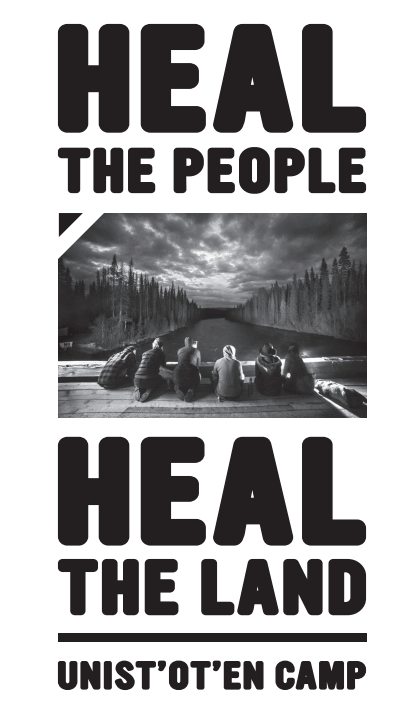
Gidimt’en Access Point exists at the direction of our Hereditary House Chiefs in support of their long standing position against oil and gas pipelines.
Ontario Provincial Police enforce injunction at protest site in Caledonia | APTN News, August 6, 2020
The Ontario Provincial Police enforced an injunction at a “land back” protest camp Wednesday that resulted in blocked roads and arrests. Two hundred and eighteen homes are set to be built at the McKenzie Meadows construction site in Caledonia. The site has formal support from Six Nations elected chief and council. But the land defenders say chief and council do not represent a majority in Six Nations. Nine people were arrested, including one of the organizers, Skyler Williams.
Eyewitness to raid describes “brawl” with OPP shooting rubber bullets, tazers, and punching people. Real Peoples Media, August 5, 2020
SIX NATIONS: AUG 5TH, 2020 – An eyewitness interviewed by Real People’s Media gave his take on what happened on the August 5th OPP raid. According to the eyewitness, the OPP called at 10am on Wednesday and said they were coming to read off the rest of the injunction. There were supposedly 100 pages of the injunction but they had only delivered 30 pages of it in their last visit.
“But instead of reading out the rest of it, they showed up with their army of goons, pulled in, blocked off our exit point, and then started walking in on us. As they got closer to the line they started shooting us with rubber bullets, everyone hid behind their vehicles, everyone’s calling for people to come help us and calling for support, they kept shooting at us.”
A brawl broke out and people fought back, and a “bunch of people got arrested, a bunch of us got away, and this is the response.”
According to the eyewitness, “people were punched in the face, tazed in the back of the head” by the OPP. The eyewitness estimated that 7 warriors were arrested, and that there were at least 100 OPP officers on site for the raid at #1492landbacklane.
The #1492LandBackLane encampment that was set up to stop the MacKenzie Meadows development across the street from Kanonhstaton on unceded Mohawk lands. As of 4pm Wednesday August 5th, warriors are now holding the bypass, 6th line, Hwy 6 (Argyle street), and the train tracks.
People are gathering at Kanonhstaton which can still be accessed through 6th line when coming through Six Nations.
Follow Real People’s Media for more information and ongoing updates. You can donate to the camp and the #bailfund for those arrested by sending an etransfer to landback6nations@gmail.com
A documentary portrait of a group of women who led their community, the largest reserve in Canada, Six Nations of the Grand River Reserve, in an historic blockade to protect their land.
Directed by Sara Roque – 2009 | 43 min
About the NFB The National Film Board of Canada produces and distributes documentary films, animation, web documentaries and fiction. Our stories explore the world we live in from a Canadian point of view.
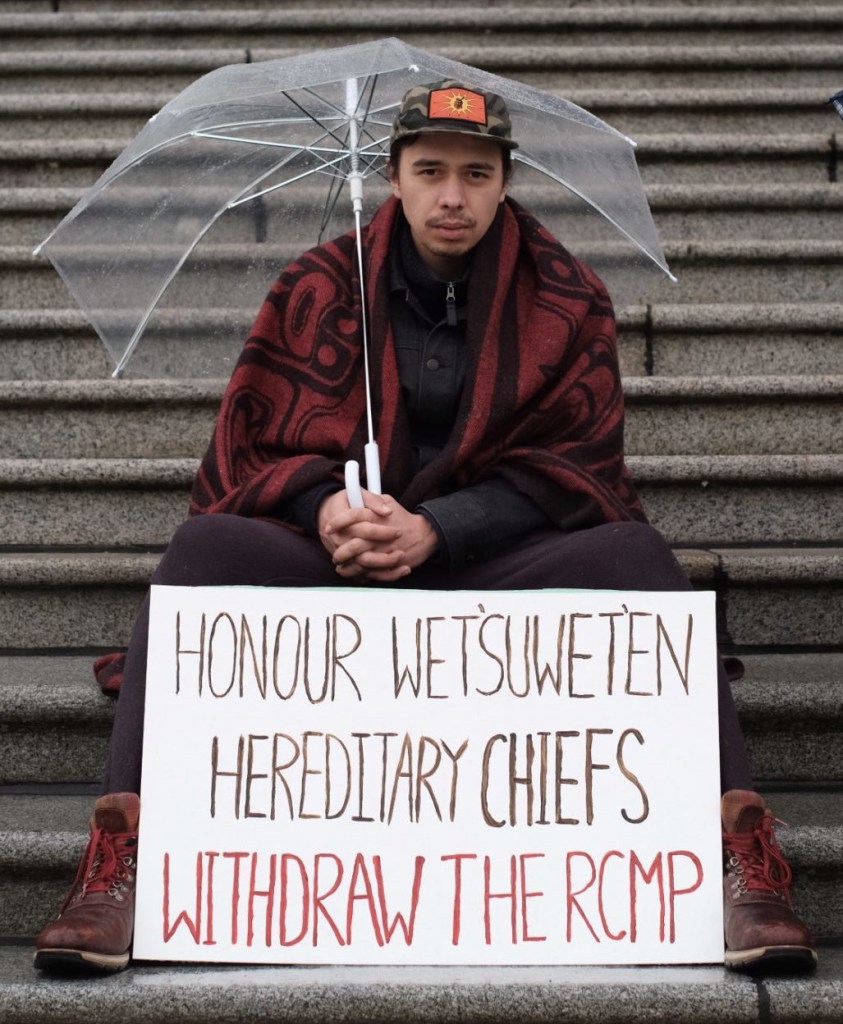
During the past week as I’ve been writing about the webinar series, “Working Toward Right Relationship with Indigenous Peoples”, I’ve continued to hear bad news about the construction of the Coastal GasLink pipeline on the Wet’suwet’en people’s territory.
July 14, 2020
The worst thing we can experience is being witness to our elders seeing our territories after mass destruction has occurred at the hands of CGL. Despite having a “cease & remedy” order, and a lack of permits for work in Gidimt’en, they have continued the destruction.
This was the first time Gisday’wa (the house chief who holds responsibility for these territories) has been allowed in to see these areas.
Feelings of helplessness, anger, heartbreak, and rage come over us as our Matriarchs and elders weep for the territories they (and we) have grown up on. Territories our ancestors protected, for us – and we must protect for the future.
Two days ago, the police criminalized us for cleansing the tower area. Yesterday the security for CGL stopped us, and then continued to follow us as we went into this man camp site. Right before this, Gisday’wa had stopped in at the rcmp “community industry safety office”… the same office they announced they were moving months ago. The same office which we saw a fuel spill at. The government & industry are not following any laws or regulations… they have been ignored, to continue with the pipeline (which the chiefs have said no to).
They don’t care about the land, the laws (hereditary & colonial), the violence these man camps will bring in, and don’t care about us. None of the workers wore masks (while travelling in from other areas), and they remained indignant when asked questions.
This is just one of the man camps that’s started. The others are blocked by their security. Security keeping us from accessing our own territories, so they can continue to destroy areas which we harvest medicines and berries from. Our people see that the law & the rcmp are out there to protect industry (and threaten us)… and yet, we have never seen them look for our women.
We are at a loss for words… however, we will remain #WetsuwetenStrong
Wet’suewet’en Chief Gisday’wa, his wife Betty, and his sister Rita visit his Yintah for the first time since CGL has built a man camp for its LNG pipeline. They were stunned. I held these Matriarch’s as they cried. CGL has lied to them, says Gisday’wa and are bulldozing Wet’suewet’en land beyond recognition. Their ancestors walked here. This land is their life.
Our amazing friend from Dogwood BC got some arial views of the right of way clearing/destruction incurred to our beautiful territories.
The wetlands are an integral part of the ecosystem, and CGL has not followed the protocol for protecting these areas – as well as not having the proper assessments, permits, and CONSENT in order to be out here.
The Hereditary Chiefs of all 5 clans maintain a strong and resounding “No pipelines” policy – for the reasons you’ll see in this footage.
Our yintah provides foods, medicines, wildlife habitat, and waterways – that have now been irreparably damaged… all for industry that has no reverence or concern for regulatory practice, or unceded Indigenous lands. The oil & gas industry is destroying the planet, and creating a perilous future for all.
The Environmental Assessment Office (of so called “B.C.”) has issued a “cease & remedy” order, yet CGL is continuing to ignore it.
We will continue to do all that we can to fight this – to ensure that the next generations are provided with a sustainable future. We are grateful for those who continue to stand with us against mass destruction for corporate greed. Together we will win.
Call the Environmental Assessment Office, and demand the cease & remedy order is complied with (see previous post). Masih cyoh.
“This is a really important time in our history. This isn’t just going to go away. I feel like this is going to be increasingly tense. I don’t think people are willing to be pacified anymore with all of the cumulative injustices that are happening, and they’re coming to a head.”-Sleydo’ Molly Wickham #WetsuwetenStrong#NoTrespass#WedzinKwah#CGLofftheYintah
After the Unist’ot’en and Gidimt’en Clans of the Wet’suwet’en Nation flagged concerns, the B.C. Environmental Assessment Office found Coastal GasLink failed to follow its wetlands management plan.
Coastal GasLink has been forced to stop pipeline construction near protected wetlands after an inspection by the B.C. Environmental Assessment Office found the company cleared areas without completing the required surveying and planning.
Coastal GasLink was issued two non-compliance orders in June and now has to complete the surveys before the project can proceed in the affected areas.
The 670-kilometre pipeline is planned to transport fracked gas from northeast B.C. to Kitimat, for shipment to markets in Asia.
Wet’suwet’en Hereditary Chiefs served Coastal GasLink with an eviction notice on Jan. 4, starting a chain of events that led to RCMP enforcing a court-ordered injunction to arrest more than 80 protesters in February, including Elders, Chiefs and matriarchs. On June 5, charges against 22 Wet’suwet’en land defenders and supporters were dropped and many others were never charged.
The first of six webinars in the series “Working Toward Right Relationship with Indigenous Peoples” will be held this Monday, August 10, 7:30-9:00 p.m. Eastern.
Sovereignty and Tribal Government Relations in the United States and Canada
With Jerilyn DeCoteau and Will David (see bios below) August 10, 2020 – 7:30 to 9:00 p.m. Eastern Time
This series of webinars seeks to involve both Canadian and United States participants. Although both the United States and Canada share some of the features of a settler-colonial history and government, there are significant differences, as well.
This first webinar is designed to familiarize participants in the series with historical and governmental differences between these nations and how they affect existing relations with Tribal Nations and the sovereignty and self-determination of Indigenous Peoples. This understanding will establish a framework for future webinars.
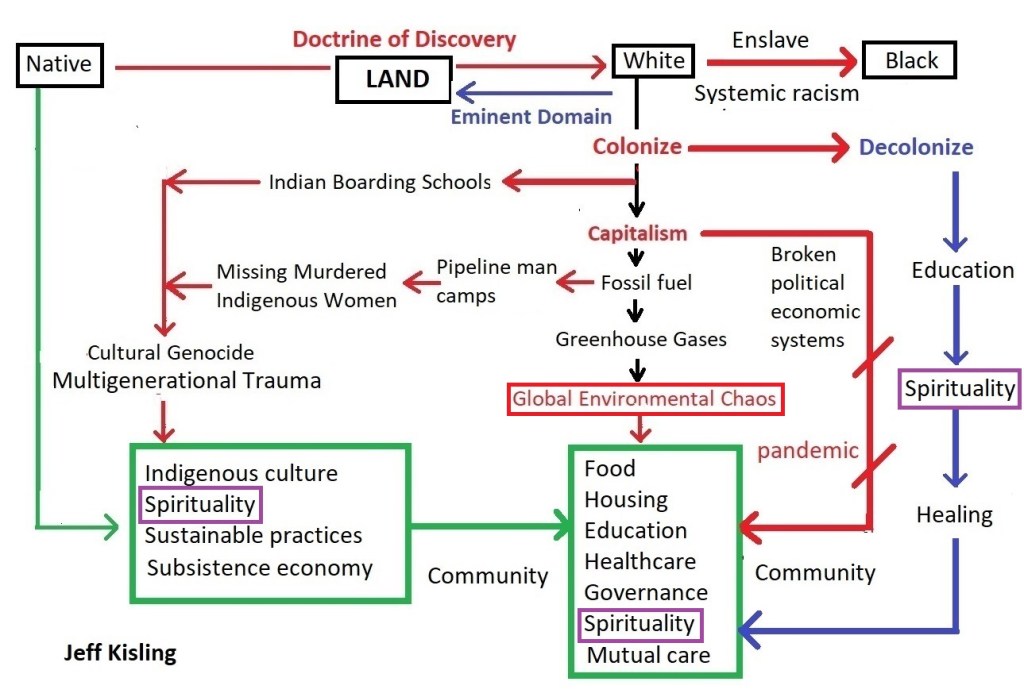
The nation states of North America are built on the so-called Christian Doctrine of Discovery, which purports to justify the theft of land and resources and the enslavement or destruction of many Nations. Quaker descendants of European settlers benefited and continue to benefit from this oppressive history. Quakers also played a direct role in the attempted cultural genocide of Indigenous Peoples. Among other things, they ran and supported Indian Boarding Schools, which were designed to “civilize” Indigenous Peoples by separating children from their families and communities and erasing their native language, customs, and culture.
A 2018 Pendle Hill conference helped broaden and deepen a conversation about the Quaker role in the genocide of Native Peoples and about ways of moving toward right relationship – awareness, acknowledgment, apology, and reparative work. At this conference, we will assess what actions we have taken, as well as bringing others into the ongoing conversation.
We invite Quakers from across North America to seek and share ways of acknowledging and interrupting the ongoing harms stemming from Quaker individual and corporate involvement in the land theft and genocide against Indigenous Peoples on Turtle Island. With gratitude, we will be accompanied by Indigenous Peoples as planners, advisors, and presenters.
In interest/working groups and plenary sessions, we will engage in deep listening and discern ways Truth and Spirit lead us to act. We will create an environment where communities of support and accountability can form for sharing stories and resources for carrying on the work in such areas as:
Acknowledging land theft and occupation and ways of making land reparations;
Identifying and ending cultural mis/appropriation;
How to be an ally, working in an ally organization;
What are Friends schools, our local schools, our First Day Schools teaching about history and the current situation of Indigenous Peoples? Local museums and historical associations?
Treaty relationships today;
How can the United Nations Declaration of the Rights of Indigenous Peoples open dialogue and provide a framework for public discourse?
What does it mean to decolonize ourselves and our institutions? and
Healing the earth through growing spiritual unification.
Come to be inspired, to become better equipped to involve Meetings and local communities in building right relationship, and to be renewed in Spirit and energy for this long-term justice journey.
Message from Chase Iron Eyes, Lakota People’s Law Project.
In case you haven’t yet heard, yesterday an appellate court dropped a big decision in the Standing Rock Sioux Tribe’s lawsuit to stop the Dakota Access pipeline (DAPL). Unfortunately, the court’s ruling did not support immediately shutting down oil flow as we hoped. However, the court also failed to reverse the lower court’s decision to vacate DAPL’s permit to pass under Lake Oahe, Standing Rock’s primary source of drinking water. DAPL’s continued operation is now officially as illegal as it is dangerous.
You likely recall that, a month ago, D.C. Circuit Court Judge James Boasberg set a 30-day deadline for Energy Transfer to stop pumping oil through DAPL. Yesterday’s appellate court decision is complex, but it essentially delays that deadline while the U.S. Army Corps of Engineers decides whether to stop the oil given the absence of a permit. The Corps can demand Energy Transfer comply with the National Environmental Policy Act, shut down the oil, and perform a full Environmental Impact Study.
If that doesn’t happen, we’ll see more arguments before Judge Boasberg. Bottom line, this fight now looks likely to stretch into 2021, when a new administration could revoke DAPL’s permits for good. I urge you to watch my video breakdown, stay tuned for more updates, and keep a positive outlook.
The struggle continues, but hope is on the horizon. We remain optimistic, and we must keep fighting with all our collective strength. We won’t stop until this pipeline is emptied and dug out of our sacred ground. I look forward to the day we can gather together at Standing Rock again — this time to celebrate the end of DAPL, once and for all.
Wopila tanka — my eternal appreciation for standing with Standing Rock!
Chase Iron Eyes Lead Counsel The Lakota People’s Law Project
Lately I’ve been writing about the group Decolonizing Quakers and the webinar series that will begin Monday titled “Working toward right relationship with Indigenous peoples”. One goal of these sessions is to help White people learn more about being allies with Indigenous peoples. https://pendlehill.org/events/working-towards-right-relationship-webinar-series/
I appreciate this quote from the “Decolonizing Quakers” website: “the decolonizing that needs to take place, both the educating and the healing, are matters of urgency to the survival of the human species and the health of the Earth as Mother of us All.”
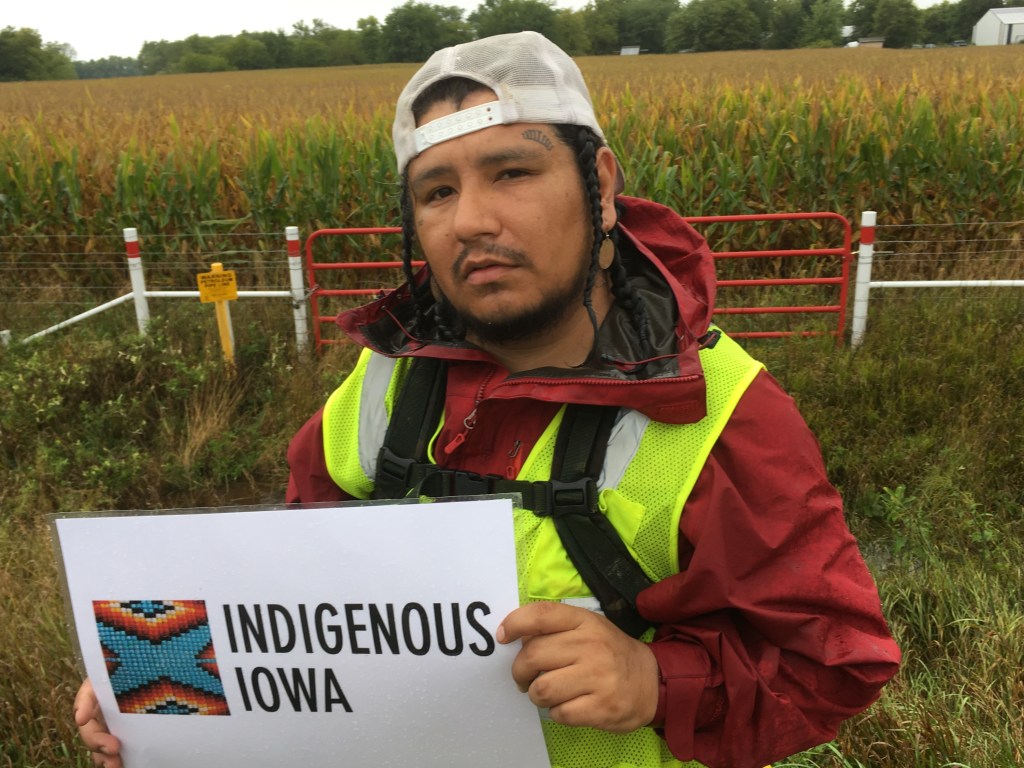
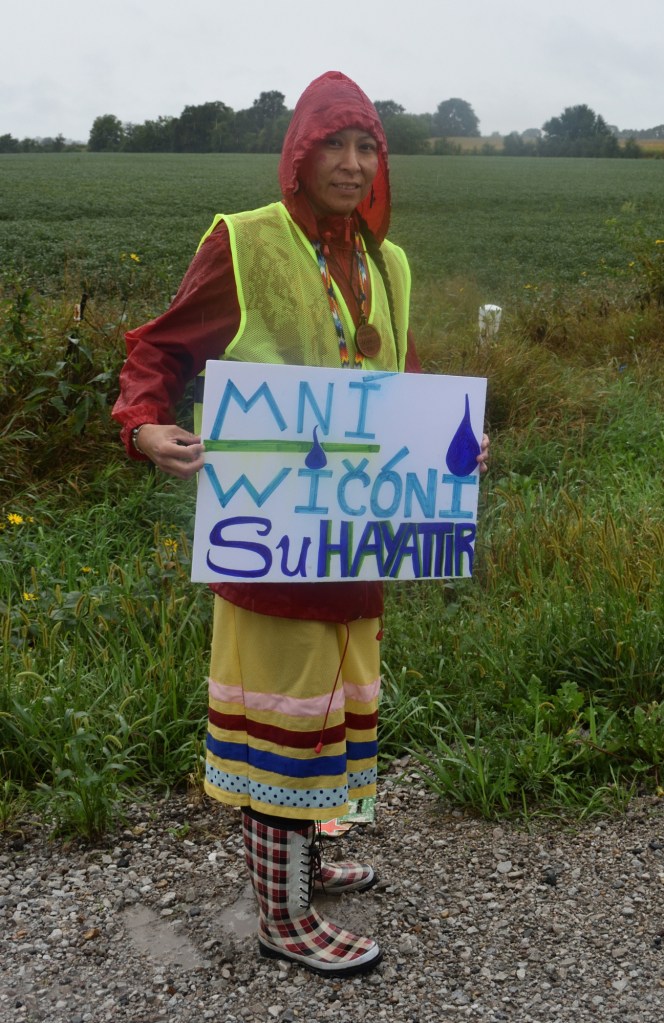
During the First Nation-Farmer Climate Unity March in 2018, we gathered together at the end of the day for discussions. The last evening of the March we sat around a bonfire where my friend Trisha CaxSep GuWiga Etringer led a very interesting discussion about decolonization. I believe that was the first time I had attended a discussion about that subject. See Seventh Day of the First Nation-Farmer Climate Unity March. Since then I’ve been sensitized to ideas related to decolonization.
I was very glad to come upon the video below and guidelines related to anti-oppression and decolonization. Interview recorded at PowerShift Canada 2012, Oct 28 in Ottawa on unceded Algonquin territory. One of the points that caught my attention was “we acknowledge that settlers are not entitled to live on this land. We accept that decolonization means the revitalization of indigenous sovereignty, and an end to settler domination of life, lands, and peoples in all territories of the so-called “Americas.” All decisions regarding human interaction with this land base, including who lives on it, are rightfully those of the indigenous nations.”
There are several points made in the video and guidelines that relate to my own experiences.
While walking on the First Nation-Farmer Climate Unity March, I thought our focus was going to be related to environmental devastation, and much of it was. But other subjects came up. There was the subject of the Quaker Indian Boarding Schools that I wrote about recently. https://kislingjeff.wordpress.com/2020/01/28/solidarity/
Also, early in the March it became clear that the epidemic of Missing and Murder Indigenous Women (MMIW) was what the Native men and women on the March were most concerned about, of course, because the women on the March might have been, or could become victims. The men on the March might lose or have lost a woman they love. One of the friends I made during the March unfortunately had experienced this.
Looking back it is obvious this would be a concern because this is an immediate and ongoing threat. Now I share that concern, but I was at first confused. I thought our focus would be on environmental devastation. Now I’m more aware of how all these things are connected. We were walking to bring attention to the damage being done to our environment, and All Our Relations are part of Mother Earth. They aren’t separate things. This is one of the points made in the video. When you want to work with people of another culture, you shouldn’t expect everyone to conform to your narrow focus. This is part of deep listening and respect.
Another part of the video discusses when White people want to engage with Indigenous peoples, we have to completely re-orient our thinking and work so we are Indigenous led. White culture of male dominance, materialism and ownership doesn’t fit with Indigenous values of protection of Mother Earth and All our Relations.
The one thing that can be in common is Spiritual worship. The Creator doesn’t differentiate among peoples.
Most of my White friends don’t understand this. Now almost everything I think and write is about what I am learning about Indigenous culture.
We share these points of unity to guide our allyship and activism:
All people not indigenous to North America who are living on this continent are settlers on stolen land. We acknowledge that Canada, the United States of America, Mexico, and Central & South America were founded through genocide and colonization of indigenous peoples–which continues today and from which settlers directly benefit.
All settlers do not benefit equally from the settler-colonial state, nor did all settlers emigrate here of their own free will. Specifically, we see slavery, hetero-patriarchy, white supremacy, market imperialism, and capitalist class structures as among the primary tools of colonization. These tools divide communities and determine peoples’ relative access to power. Therefore, anti-oppression solidarity between settler communities is necessary for decolonization. We work to build anti-colonial movements that actively combat all forms of oppression.
We acknowledge that settlers are not entitled to live on this land. We accept that decolonization means the revitalization of indigenous sovereignty, and an end to settler domination of life, lands, and peoples in all territories of the so-called “Americas.” All decisions regarding human interaction with this land base, including who lives on it, are rightfully those of the indigenous nations.
As settlers and non-native people (by which we mean non-indigenous to this hemisphere) acting in solidarity, it is our responsibility to proactively challenge and dismantle colonialist thought and behavior in the communities we identify ourselves to be part of. As people within communities that maintain and benefit from colonization, we are intimately positioned to do this work.
We understand that allies cannot be self-defined; they must be claimed by the people they seek to ally with. We organize our solidarity efforts around direct communication, responsiveness, and accountability to indigenous people fighting for decolonization and liberation.
We are committed to dismantling all systems of oppression, whether they are found in institutional power structures, interpersonal relationships, or within ourselves. Individually and as a collective, we work compassionately to support each other through these processes. Participation in struggle requires each of us to engage in both solidarity and our own liberation: to be accountable for all privileges carried, while also struggling for liberation from internalized and/or experienced oppression. We seek to build a healthy culture of resistance, accountability, and sustenance.
I’ve been writing lately about a series of webinars titled “Working Toward Right Relationship with Indigenous Peoples.” Information about the webinar topics and registration for this series can be found at the end of this blog post.
The series is co-sponsored by Pendle Hill, Decolonizing Quakers, Canadian Friends Service Committee, and Friends Peace Teams/Toward Right Relationship with Native Peoples.
I am honored to have been invited recently to join the steering committee for Decolonizing Quakers. I usually avoid joining groups and committees for a number of reasons, the most basic being I want to be free to respond to leadings of the Spirit. But I know and respect the work of some people on the committee and am glad to be introduced to the rest. And the work of this group aligns with my path over the past five or six years, as I was blessed to have many opportunities to get to know, and work with Quakers and Native Americans. Much of that was related to protecting water and working to reduce the multiple ways fossil fuels are damaging Mother Earth.
I believe a great many people feel a sense of urgency at this time of turmoil, as our economic and political structures are unraveling, and believe we have an opportunity to build a better world. These webinars and the other work of Decolonizing Quakers and Indigenous Peoples can help build beloved communities for us all. https://kislingjeff.wordpress.com/2020/08/01/urgency-to-decolonize/
We are a group of North American Quakers seeking to:
* Learn and act upon the truth of Quaker history with Indigenous Peoples, to acknowledge the wounds resulting from this history for all peoples impacted, and to engage in actions that move toward justice and recognize the dignity of all those concerned;
* Support each other and connect with other concerned Friends practically and spiritually as we work to raise awareness within our local communities and in the broader Quaker community;
* Offer support, information, and resources for non-Indigenous Quakers to help them discern and develop right relationships with Indigenous people, within and beyond the Quaker community;
* Lift up the U.N. Declaration on the Rights of Indigenous Peoples as a moral and legal framework for justice and right relationships;
* Acknowledge, honor and respect Indigenous ways of knowing that offer non-Western/ non-colonial approaches, including understandings of the environmental, social, economic and spiritual conditions that threaten us all;
* Walk respectfully in ways that increase cultural integrity and justice for Indigenous nations and communities, and for the Earth.
How “Decolonizing Quakers” Came to Be
Decolonizing Quakers is an organization that had its origins in a conference at Pendle Hill in May 2018 entitled “Truth and Healing: Quakers Seeking Right Relationship with Indigenous Peoples,” which involved Quakers of multiple ethnic identities and some Indigenous people who did not identify as Quaker. At that conference, a Friend voiced a leading to explore forming a North American organization of Quakers to continue the work that was identified as ours to do institutionally and individually as Quakers.
A steering committee formed in the months following the conference to discern a way forward. Recognizing that those initiating this effort were largely of European descent, the steering committee is making efforts to reach out to involve Indigenous and other Friends of color, Friends from the various branches of Quakerism, and Friends from across our geographical territories.
The steering committee has met monthly since July 2018 and has wrestled with a statement of purpose that has evolved as its members have acknowledged a complexity of issues:
* The North American experience shares commonalities with the dismissal and attempted erasure of Indigenous Peoples worldwide and particularly with English-colonized countries like Australia, New Zealand, and South Africa.
* Descendants of colonized peoples and colonizers alike have necessary work to do that is separate but interconnected. It involves our mindsets, cultural patterns and systems of domination.
* Some of this work needs to proceed independently without bringing about further injury on Indigenous people, by placing a burden on them to educate European-Americans. Yet the work has to proceed in relationship with and following the leadership of Indigenous peoples.
* The work of decolonizing, both the educating and the healing, intersects with the need to address the legacy of slavery, continuing racism, and the continuing oppression of women. It is also a matter of urgency to the survival of the human species and the health of the Earth as Mother of us all. Part of our struggle is to define a mission and purpose that can remain sufficiently focused to be effective and at the same time recognize that it is only a part of a broader vision of healing.
Events
A SIX-PART WEBINAR SERIES:
Working Toward Right Relationship with Indigenous Peoples
The series begins on August 10, and continues on the second and fourth Mondays in August, September, and October, at 7:30 – 9 p.m. Eastern Time (U.S. and Canada) via Zoom
1. Sovereignty and Tribal Government Relations in the United States and Canada With Jerilyn DeCoteau and Will David August 10, 2020 – 7:30 to 9:00 p.m. Eastern Time
2. Implementing the United Nations Declaration of the Rights of Indigenous Peoples With Sheryl Lightfoot and Jennifer Preston August 24, 2020 – 7:30 to 9:00 p.m. Eastern Time
3. Cultural Appreciation vs. Appropriation/Misappropriation With Dan and Mary Lou Smoke, Freida Jacques, and the Rev. Dr. J.R. Norwood September 14, 2020 – 7:30 to 9:00 p.m. Eastern Time
4. Solidarity, Guidance for Engagement With Kenneth Deer and Chief Dennis Coker September 28, 2020 – 7:30 to 9:00 p.m. Eastern Time
5. Healing from Intergenerational Trauma With Elicia Goodsoldier and Cante’ Waste Win (Good Hearted Woman) October 12, 2020 – 7:30 to 9:00 p.m. Eastern Time
6. Truth and Healing With Marie Wilson, Denise Altvater, Esther Anne, and Penthea Burns October 26, 2020 – 7:30 to 9:00 p.m. Eastern Time
People from all over Canada, the U.S., and other countries are invited participate in the webinar series via Zoom. Participants are also invited to form small group discussions (perhaps within your meeting or congregation) between the webinar sessions. Additional resource materials will be posted on the Pendle Hill website to support these discussions.
REGISTRATION
Co-sponsored by Pendle Hill, Decolonizing Quakers, Canadian Friends Service Committee, and Friends Peace Teams/Toward Right Relationship with Native Peoples.
Register for the entire series – August 10th & 24th, September 14th & 28th, and October 12th & 26th – or for each webinar separately:
Basic Fee for the whole series – $125 Fee Plus for the whole series – $140 Subsidized Fee for the whole series – $100 Individual webinars – $25 each
Indigenous persons are invited to register for this program as our guests without charge.
It is difficult for any community to deal with things our ancestors did that we would consider to be wrong today.
Many people believe our ancestors were doing the best they could under the circumstances at the time.
Are we responsibility for our ancestor’s actions?
If so, what should we do now? Reparations are defined as making of amends for a wrong one has done, by paying money to or otherwise helping those who have been wronged.
Who decides what the reparations should be?
Who should make the reparations and who should receive them?
Are there things we are doing today that will be seen as wrong when future generations look back at us? We know they will suffer because of our radical assault on our environment.
“The Eyes of the Future are looking back at us and they are praying for us to see beyond our own time.”
Quakers were among the religious groups involved in the forced assimilation of native children. The idea was to teach the children how to fit into the White society that was taking over the Indigenous lands. In a very real sense erasing Indigenous ways of life and beliefs. This was done by forcibly taking children from their families to the Indian residential/boarding schools.
In Martin Luther King, Jr.’s words, “We are perhaps the only nation which tried as a matter of national policy to wipe out its indigenous population.
There are many White people who do not believe we are responsible for what our ancestors did. They think those things are not relevant to today. But they are.
Intergenerational trauma is trauma that is passed from one generation to the next. Native people today are suffering greatly from the trauma of forced assimilation of the past, among other things. That is why I believe White people today have an obligation to learn about those traumas of the past and find ways to engage with native people today to begin to heal us all.
To find ways for Quakers in meetings corporately (and individually in their communities) to acknowledge our complicity in a white supremacist system that brought genocide on Native peoples. That collectively we see this as a part of a domination/ exploitation/ extraction and commodification of Nature and Earth’s peoples that is fundamentally and morally wrong. That despite a genocide waged against them, Indigenous Peoples have struggled to maintain and pass on their culture, traditions, and relationship with Nature as a living, breathing unity of which humankind is but a part. That the Earth cries out for healing and wholeness, and all humans are called back into right relationship with Earth and our fellow creatures if we are to survive and thrive as a species. That part of right relationship is setting aright our relationship with Indigenous Peoples, whose ancestors were killed, whose culture white people have tried to obliterate, and whose enduring values white people have desecrated, marginalized, and/or commodified. That yesterday’s wounds live on today in the form of intergenerational trauma that manifests in a variety of debilitating ways.
To own these truths and to embody them. As we own them, does not Truth require us to publish them, acknowledge them publicly? From acknowledgment, are we not moved to apologize for the harms our European ancestors and their descendants have caused and the benefits all nonNative people have reaped from the land theft, murder, and other genocidal acts against Indigenous Peoples? Beyond acknowledgment and apology, what else does Truth (Spirit) demand of us today?
Purpose:
To build a common awareness and understanding of the injuries inflicted upon Indigenous Peoples and the ongoing trauma to which Indigenous Peoples are subjected. To bring Quakers under the weight of the genocidal enterprise in which white settler Quakers actively participated, particularly in the United States as Indian agents and through Quaker-run Indian Boarding Schools. To inspire and enable Quaker conferees to carry this education and truth-telling into their meetings, Quaker organizations, and communities as a step on the road to healing justice. To consider together what the shared Truth of our history and the Truth of our common humanity calls us to do corporately toward healing justice in the various communities in which Quakers live. To imagine what next steps beyond acknowledging and apologizing might be in terms of healing justice with Indigenous Peoples. To prepare Quakers to move forward on healing steps at the local, yearly meeting, and Religious Society of Friends levels in relationship with Indigenous Peoples.
Audience:
Quakers already working under the weight of a concern for healing between Quakers and Indigenous Peoples.
Quakers awakened to a concern about our historical involvement with Indigenous Peoples but not fully informed about the harmful intergenerational traumas caused by Quakers, among others.
Quakers generally carrying a concern for racial justice and equity and increasingly aware that White Supremacy has deeper roots in our country’s history and collective consciousness stemming from the European-Christian Doctrine of Discovery and its ideology of exploitation and domination.
Outcomes:
Affective:
Fully engaged activists will feel more unified, focused, and supported.
Less involved supporters will feel clearer, better connected, and more courageous.
All feel more hopeful, connected, committed, and skilled in taking next steps in their Quaker meetings and local communities.
Cognitive:
Understand the long history and ongoing effects of the genocide of Indigenous Peoples.
Increase awareness of how our processes and assumptions – taken as truths – are reflections and projections of our own colonized minds.
Learn what steps Quakers and other religious organizations have taken/are taking towards healing their relationships with Indigenous Peoples.
Grasp the possibilities inherent in the UN Declaration on the Rights of Indigenous Peoples, including possibilities for accompanying Indigenous Peoples in their struggles and our mutual struggles.
Social/Active:
Commit to the work of “decolonizing our minds” as part of the internal transformative work that we each need to do for healing and reconciliation on a larger scale.
Connect with other Quakers similarly concerned and engaged and form informal networks for support in the work.
Connect with leaders among Indigenous Peoples’ rights advocates for further work.
Commit to take next right actions in small groups and plenary session.
Epistle to all Friends everywhere reporting on the conference and sharing right actions forward that have arisen.


























 Quakers, social justice and revolution