Declaration of State of Emergency of Suicides on the Pine Ridge Reservation

On August 22nd, President Julian Bear Runner of the Oglala Sioux Tribe declared a state of emergency on the Pine Ridge Reservation after a recent increase in suicides.

I have been studying the effects of intergenerational trauma, especially that related to taking native children from their families. For forced assimilation into White culture. This is one of the reasons for suicides, even today, as discussed below. This shows it is so important to continue to work toward healing from this trauma.

Tribal Law and Order Reauthorization Act

The Tribal Law and Order Act (TLOA), which became law in 2010, restored jurisdiction for tribal police and courts over certain crimes on Indian lands, and established a measure of accountability and transparency for the federal Department of Justice in dealing with tribal justice authorities. A precursor to the 2013 amendments to the Violence Against Women Act, the 2010 TLOA affirmed that tribal police and courts could arrest any individual for crimes committed on Indian lands, and upon conviction, tribal courts could impose sentences of up to three years.

Senator Hoeven, as chair of the Senate Committee on Indian Affairs, has introduced S. 1953, the Tribal Law and Order Act Reauthorization and Amendments Act of 2017, to amend and continue the 2010 law.

The TLOA Reauthorization bill focuses in on Native youth. The bill directs the Departments of the Interior and Justice, and the Office of Juvenile Justice and Delinquency Prevention to coordinate with and assist tribes in addressing juvenile offenses in Indian Country, and to consult with tribes on delinquency prevention. It also directs these agencies to find a way to notify tribes when a tribal youth comes in contact with federal, state, and other local juvenile justice systems. Finally, the bill directs the collection of information on Native youth, and research on topics including drug use and available services.

The bill’s attention to this concern is timely, given the increasingly disproportionate incarceration rate of Native youth – which nationally is more three times the rate for white youth, according to a recent report of the Sentencing Project.

Congressional attention to Native youth in the criminal justice system also intersects with a time when suicide is increasingly common among Native youth. The Senate Committee on Indian Affairs convened a hearing on this topic in 2015, the seventh such hearing in ten years, noting that suicide was 2 ½ times as common among Native youth as among white youth. At the junction of the two sets of numbers – incarceration rates and suicide rates — are questions that need to be shouted out: questions about loss of hope and loss of opportunity for too many Native youth.

Justice and Violence in Indian Country. Looking for Answers to Human Trafficking, Friends Committee on National Legislation. October 24, 2017

According to Congress.gov, the bill, which is now S.210, has been introduced in the Senate.

S.210 — 116th Congress (2019-2020)Tribal Law and Order Reauthorization and Amendments Act of 2019Sponsor:Sen. Hoeven, John [R-ND] (Introduced 01/24/2019) Cosponsors: (4)Committees: Senate – Indian AffairsCommittee Reports:S. Rept. 116-37Latest Action: Senate – 05/06/2019 Placed on Senate Legislative Calendar under General Orders.


DEMANDING RESULTS TO END NATIVE YOUTH SUICIDES. HEARING BEFORE THE COMMITTEE ON INDIAN AFFAIRS. UNITED STATES SENATE, ONE HUNDRED FOURTEENTH CONGRESS, FIRST SESSION, JUNE 24, 2015


PINE RIDGE, S.D. — President Julian Bear Runner of the Oglala Sioux Tribe declared a state of emergency on the Pine Ridge Reservation after a recent increase in suicides, attempts, and threats relative to years of high rates of suicides in the community.

The Pine Ridge Reservation has seen an increase in suicides over the last few weeks by younger people, with four in the last two weeks. According to the Oglala Sioux Tribe Suicide Prevention program, between January 1 and August 17, there have been nine suicides among youth and adults aged 14 to 32.

The Oglala Sioux Tribe Department of Public Safety reports 177 total suicides attempts and 168 suicide threats since the beginning of the year.

In regards to mandated solitude, Bear Runner says he understands and has experienced the struggle as he was recently released from a month-long suspension and 14-day quarantine.

“During that time, it was mentally challenging, and I experienced something I hadn’t experienced in a long time,” said President Bear Runner. “It was very trying and it was very hard mentally to separate yourself from society and from your family and to seclude yourself.” said President Julian Bear Runner, Oglala Sioux Tribe.

Oglala Sioux Tribe president declares state of emergency in response to recent suicides. NewsCenter1 Staff, August 24, 2020

Posted in decolonize, Indigenous, Uncategorized | Leave a comment

Honour Songs

The number and severity of crises seem particularly onerous this morning. The spectacle of the Republican National Convention, continued Russian influence in our electoral process, the sabotage of the postal system, the relentless killing of unarmed black men, women and children, separating children from their families and putting them in cages, hurricane Laura making landfall, California on fire and the derecho we experienced here in the Midwest, to name a few of the more recent disasters. All are contributing to a failing state.

There are several measures of a failing state that cast light on the American reality:

—functional failures: inability to respond adequately to challenges threatening the security of the society and its population against threats posed by internal and external hostile political actors, as well as by ecological instabilities, by widespread extreme poverty and hunger, and by a deficient health and disaster response system;

—normative failures: refusal to abide by systemic rules internationally as embedded in international law and the UN Charter, claiming impunity and acting on the basis of double standards to carry out its geopolitical encroachments on the wellbeing of others and its disregard of ecological dangers; patterns of normative failures include endorsements of policies and practices giving rise to genocide and ecocide, constituting the most basic violations of international criminal law and the sovereign rights of foreign countries; the wrongs are too numerous to delimit, including severe and systemic denials of human rights in domestic governance; economic and social structures that inevitably generate acute socio-economic inequalities on the basis of class, race, and gender.

Is the United States a Failing State? A Failed State? by Richard Falk, Global Justice in the 21st Century blog, July 22, 2020

What many White people actively avoid thinking about is this “state” has never worked for Black, Indigenous and people of color (BIPOC).

As my friend Ronnie James says so well:

I’m of the firm opinion that a system that was built by stolen bodies on stolen land for the benefit of a few is a system that is not repairable. It is operating as designed, and small changes (which are the result of huge efforts) to lessen the blow on those it was not designed for are merely half measures that can’t ever fully succeed.

So the question is now, where do we go from here? Do we continue to make incremental changes while the wealthy hoard more wealth and the climate crisis deepens, or do we do something drastic that has never been done before? Can we envision and create a world where a class war from above isn’t a reality anymore?”

Ronnie James

The many consequences of a failed state are breaking that system. The half measures some of us have employed in an attempt to improve that system have never fully succeeded. What we could not accomplish voluntarily is now being forced upon us by the failure of that very system.

As Ronnie asks, “where to we go from here?” We can and should look for accomplices to build a better world right now. But we must also work on ourselves. On our spiritual life. Tend our spiritual fires.

Bring these words into your life. Feel them. Sit with them. Use them.

Richard Wagamese

The words in this book are embers from the tribal fires that used to burn in our villages. They are embers from the spiritual fires burning in the hearts, minds and souls of great writers on healing and love. They are embers from every story I have ever heard. They are embers from all the relationships that have sustained and defined me. They are heart songs. They are spirit songs. And, shared with you, they become honour songs for the ritual ways that spawned them. Bring these words into your life. Feel them. Sit with them. Use them.

For this is the morning, excellent and fair . . .

Wagamese, Richard. Embers: One Ojibway’s Meditations (pp. 6-7). Douglas and McIntyre (2013) Ltd.. Kindle Edition.

I am my silence. I am not the busyness of my thoughts or the daily rhythm of my actions. I am not the stuff that constitutes my world. I am not my talk. I am not my actions. I am my silence. I am the consciousness that perceives all these things. When I go to my consciousness, to that great pool of silence that observes the intricacies of my life, I am aware that I am me. I take a little time each day to sit in silence so that I can move outward in balance into the great clamour of living.

Wagamese, Richard. Embers: One Ojibway’s Meditations (pp. 9-10). Douglas and McIntyre (2013) Ltd.. Kindle Edition.

Posted in spiritual seekers, Spiritual Warrior, Uncategorized | Leave a comment

Pence and the Religious Freedom Restoration Act in Indiana

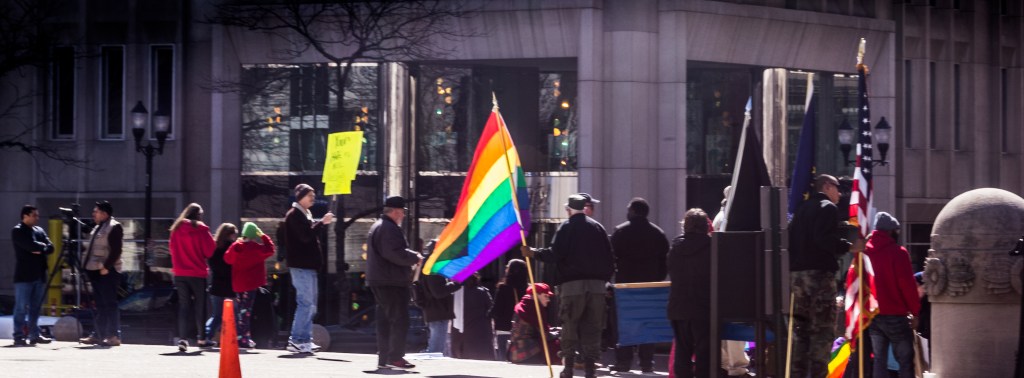
With Vice President Pence scheduled to speak at the Republican National Convention tonight, I’m reminded of how he tried to diminish the rights of the LGBT community in Indiana, in 2015, when he was Governor there. The Republicans forced the so called “Religious Freedom Restoration Act” through the state assembly. Then in the face of widespread and growing opposition and anger, he hid behind the closed doors of his office to sign the bill.

(Edited from original publication April, 2015)

Indiana is in the spotlight at the moment, with the uproar over the recently passed, and ‘fixed’, Religious Freedom Restoration Act (RFRA).

You may have heard of the Moral Mondays movement, which began several years ago in North Carolina. Like Indiana, North Carolina’s legislature and Governor’s office is under the control of one party. Rev. William Barber, who was president of the state’s NAACP organization, began to raise a moral voice against the repressive policies that were being enacted despite the objections of many. When the usual steps of letter writing, letters to the editor, and office visits proved to be futile, the movement began to use acts of nonviolent civil disobedience in the statehouse.

Eventually nearly 100,000 were arrested. The movement’s successes have resulted in similar organizations being formed in other states. The great thing about the Moral Mondays movement is that is refers to itself as a fusion movement, where many, diverse organizations and people set aside their differences, and concentrate on what they can agree to work on together.

We have just reached the one year anniversary of the Indiana Moral Mondays movement. Erin Polley, (Indianapolis’ AFSC staff person) has worked tirelessly to help build the movement here. About half a dozen members of North Meadow Circle of Friends, that I attend, are also involved. Rev. Barber joined us in October for the weekend of activities around the launch of Indiana Moral Mondays, which culminated in a one mile march through the city to the State Capitol building. Following is a video I made at that time.

We have formed working groups around our core issues and meet monthly.

This then is the first Indiana Legislative session since Indiana Moral Mondays (IMM) was formed. We’ve written many letters, had office visits, testified at committee hearings, and held rallies. Although we had a few successes, such as when the solar/renewable energy sector joined us to oppose a bad net-metering bill, more often we faced the same situation the caused Moral Mondays to be formed in North Carolina.

Then the Indiana version of the Religious Freedom Restoration Act came before the General Assembly and we saw the legislative process at its worse. The bill advanced despite the unanimous objections, eloquently stated, by the minority party. As more people became aware of the bill, alarm spread, and negative reactions began to appear from the business community.

Despite growing opposition, the Governor signed the bill in a private ceremony.

The rest has played out in a very public way.

The Governor has a long, public history of opposition on LGBT issues. Opponents of marriage equality in Indiana are not happy that the state was recently forced to recognize same sex marriage by the courts. And three of the strongest conservative lobbyists for the RFRA were present during the private signing ceremony as seen in a widely published photo. The very widely held perception was that the bill was forced through the legislature and signed based on conservative opposition to the LGBT community. This perception was feed by remarks to that effect by the bill’s supporters.

It was especially disconcerting to me when the Governor, on several occasions, purposely tried to mislead us about the language in the bill. The problem with the Indiana RFRA is that it contains significantly different language and concepts from other states’ RFRAs, but he was saying it did not. If we are to have an informed political discourse, public officials need to be honest.

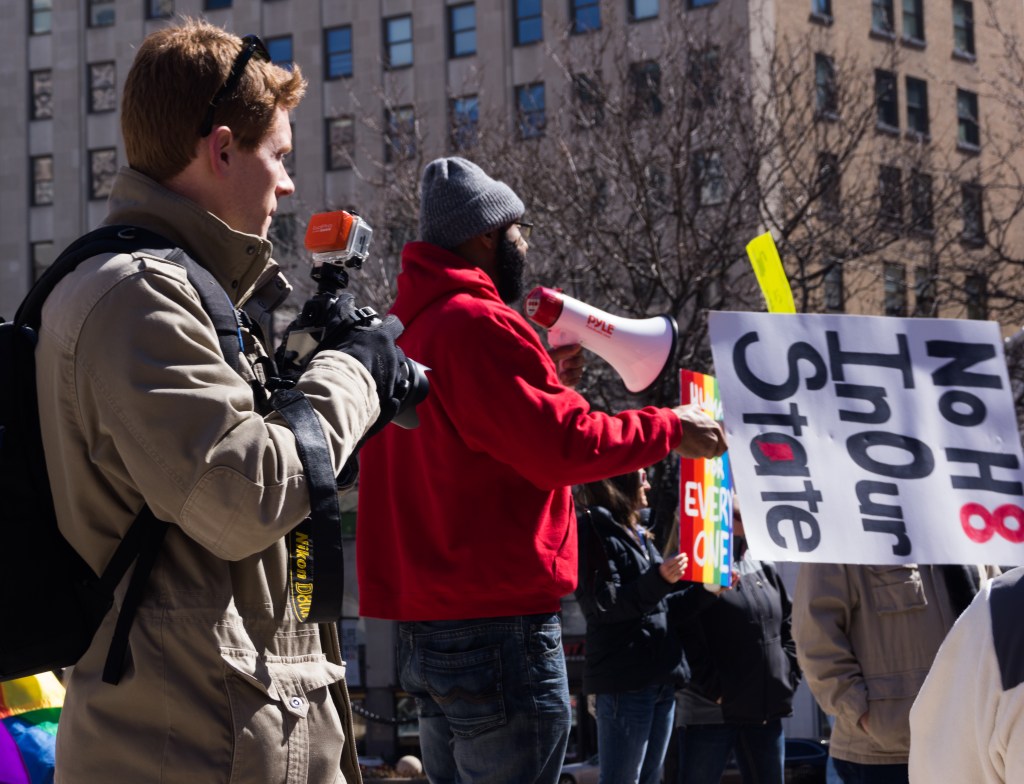
It has been so heartening to have witnessed the outpouring of support for the LGBT community, and against the RFRA. It was also amazing to witness the people of Indianapolis marching through the streets to protest

Those were major factors that resulted in the “fix”, i.e. adding language to the RFRA that appeared to prevent using it to discriminate again members of the LGBT community. But there is still bad language in the bill. And the thing that is different in regard to RFRA in Indiana is that Indiana does not have statewide protections of the civil rights of the LGBT community.

Recently Indiana Moral Mondays held an event on the grounds of the state Capitol where spokespersons from many different faiths in Indianapolis spoke of their opposition to the bill and calling for its repeal.

So here we have just the type of situation Moral Mondays was created to try to address. We continue to try to use lawful means to have the bill repealed. But we are aware that we may have reached the point where we need to employ the tactics of nonviolent civil disobedience. Which brings up the issue of training, again. Fortunately, the Keystone Pledge of Resistance is one of the coalition partners of Indiana Moral Mondays, and all of the Action Leaders are also very involved with IMM. With the enthusiastic support of the Rainforest Action Network, we rewrote their training manual to work with the IMM audience. Several weeks ago we presented the first nonviolent civil disobedience training session for the Indiana Moral Mondays movement.


Posted in civil disobedience, Keystone Pledge of Resistance, Poor Peoples Campaign, Quaker, Religious Freedom Restoration Act (RFRA), Uncategorized | Comments Off on Pence and the Religious Freedom Restoration Act in Indiana

We can and need to take care of each other

This is a continuation of the discussion of the speech my friend Ronnie James gave at a Des Moines BLM teach-in, August 22. The Police State and Why We Must Resist.

There are a number of reasons why I’m so impressed with Ronnie’s speech. Perhaps the most being he is, and has been doing what he is advocating. He has the moral authority to say these things. He has, and is, modeling how to build the Beloved communities Martin Luther King, Jr, and John Lewis worked to build.

I began to make some comments but his words speak for themselves. You can learn more about, and support the work of Des Moines Mutual Aid here.

Des Moines Mutual Aid


Following is the rest of Ronnie’s speech, that which was not covered in the previous blog posts.

What we have is each other. We can and need to take care of each other. We may have limited power on the political stage, a stage they built, but we have the power of numbers.

Those numbers represent unlimited amounts of talents and skills each community can utilize to replace the systems that fail us.  The recent past shows us that mutual aid is not only a tool of survival, but also a tool of revolution. The more we take care of each other, the less they can fracture a community with their ways of war. Organized groups like The American Indian Movement and the Black Panther Party for Self Defense showed that we can build not only aggressive security forces for our communities, but they also built many programs that directly responded to the general wellbeing of their communities. This tradition began long before them and continues to this day. Look into the Zapatistas in Southern so-called Mexico for a current and effective example.

These people’s security forces, or the “policing of the police” not only helps to minimize the abuse and trauma they can inflict on us, but it begins to shift the power balance from them to us.

Mutual Aid programs that help our most marginalized or other events that work to maintain our spirits result in stronger communities. A strong community is less vulnerable to police intrusion. 99% of our conflicts can be solved by those affected by them, but only with the support of those around them. Anytime we call on the police to mediate our problems, we are risking ourselves or a loved one from being hurt or worse.

The more we replace the police with organized community response to conflict, the safer we will be. Another powerful benefit is the removal of power from those that take their orders from those that have no interest in your well being, at least past it being useful to amass and increase wealth.

Of course, part of this fight of police abolition will be fought on the political stage, but let’s not fool ourselves that the state and the wealthy will ever give up tight control on all resources. We can lobby and vote to have police resources diverted to less dangerous organizations, but they will still be working for the same state and same class that have dispossessed and repressed us for centuries. Every election has the possibility of reversing any policy gain we may won.

Some of the fight will be in the government offices, but the majority of it will be us, in the street.

Many communities work to train amongst themselves mental and physical health workers, conflict mediators, and anything else we need, despite the state and it’s soldiers insistence that they are the sole “authority” of these skills, and always with the implied threat of violence.

As we work toward this, and this summer has proven des moines has the heart, desire, and skills to do so, we still have to deal with what’s in front of us.

We each have skills and resources we can utilize towards the abolition project. Some of us can use the halls of the system to make short term change there, others have skills that produce food, provide medical care, or care for our precious youth, some are skilled in the more confrontational tactics needed. Once we envision that world our ancestors want for us, finding our role is natural.

If we are to survive, and more importantly, thrive, we know what we will have to do.

All Power To The People.

Ronnie James, The Police State and Why We Must Resist
The Police State and Why We Must Resist

Posted in Black Lives, decolonize, Des Moines Mutual Aid, Uncategorized | Leave a comment

It does not have to stay this way

This is a continuation of the discussion of the speech my friend Ronnie James gave at a teach-in, August 22. The Police State and Why We Must Resist.
I had not known who was organizing Black Lives Matter in Des Moines. Recently I heard of some arrests of BLM protestors. So I’m glad Ronnie made me aware of the Des Moines BLM event where he spoke.

An important aspect of working for justice is knowing who you can trust. Who not only represents the causes you believe in, but also whether their actions align with your principles, how they go about doing the work to create change. And of course that goes the other way. People need to learn about you to see the same thing, whether they can trust you.

Earlier this year I helped organize a rally to support the Wet’suwet’en peoples in British Columbia as they try to stop the construction of a pipeline through their pristine territory.


Ronnie, who I hadn’t met before, joined us. He later accepted my Facebook friend request and we got to know each other via Facebook messages. This is often how people working on justice issues find each other, and build our networks.

I am deeply impressed by what I am learning about Ronnie’s work and Des Moines Mutual Aid. For example, “So I work with a dope crew called Des Moines Mutual Aid, and on Saturday mornings we do a food giveaway program that was started by the Panthers as their free breakfast program and has carried on to this day.”

…it was not always this way, which proves it does not have to stay this way. 

Ronnie James

He’s also involved with DSM BLM Rent Relief , “a collectivist response to the existing housing crisis that was exacerbated by COVID-19 and a paralyzed government. This fund was formed in the relationship between Black Liberation Movements and mutual aid actions in Des Moines.” https://www.facebook.com/DSMBLMRentRelief/

Image may contain: text that says 'MUTUAL AID: NEIGHBORS HELPING NEIGHBORS. DONATE NOW Venmo: @DSMBLMRentRelief Cash App: $DSMBLMRentRelief Paypal: paypal.me/dsmblmrentrelief DES MOINES BLACK BEIVEN MOVEMENT RENT RELIEF FUND D AID MUTUAL'

Des Moines Mutual Aid is feeding the hungry, and inviting strangers in (rent relief).

Matthew 25:35 For I was hungry and you gave me something to eat, I was thirsty and you gave me something to drink, I was a stranger and you invited me in, 36 I needed clothes and you clothed me, I was sick and you looked after me, I was in prison and you came to visit me.’ 37 “Then the righteous will answer him, ‘Lord, when did we see you hungry and feed you, or thirsty and give you something to drink? 38 When did we see you a stranger and invite you in, or needing clothes and clothe you? 39 When did we see you sick or in prison and go to visit you?’ 40 “The King will reply, ‘Truly I tell you, whatever you did for one of the least of these brothers and sisters of mine, you did for me.’

https://docs.google.com/document/d/1VeCIUdeCneIaiRt5fCigIKnpwF6-7Jz8sHvfWNO3iFA/edit

Historically, the police and other law enforcement were formed to protect the interests and property of the moneyed classes from the rest of the People. This “property” included the bodies of the enslaved, and was the justification for brutally repressing the righteous and inevitable revolts born from the atrocity of slavery. This same philosophy of endless possession was the bloodlust that fueled the “Indian Wars” and the theft of Indigenous land and bodies that continues to this day.

(Wampanoag, 2020)

Today, this same war of conquest, the repression of the many for the benefit of the few, continues. 

Currently, Des Moines Mutual Aid and it’s many accomplices have been fighting a battle with the city of des moines and it’s foot soldiers trying to repress our houseless population from utilizing unused “property”. The basic universal need of a place to rest and be safe is trumped by the need of the wealthy, and the wannabe wealthy, to control every inch they can possess. It is a war for control, and the pigs have enlisted willingly.

This same war of conquest is currently using the mass incarceration machine to instill fear in the populace, warehouse cheap labor, and destabilize communities that dare to defy a system that would rather see you dead than noncompliant. This is the same war where it’s soldiers will kill a black or brown body, basically instinctively, because our very existence reminds them of all that they have stolen and the possibility of a revolution that can create a new world where conquest is a shameful memory.

As bleak as this is, there is a significant amount of resistance and hope to turn the tide we currently suffer under. We stand on the shoulders of giants that have been doing this work for centuries, and there are many lessons we can learn from.

The first, and possibly the most important, is that it was not always this way, which proves it does not have to stay this way. 

Ronnie James, The Police State and Why We Must Resist

We have to take care of each other

Posted in Black Lives, Des Moines Black Lives Matter, Des Moines Mutual Aid, Uncategorized | Tagged | Leave a comment

Des Moines Mutual Aid and Resisting the Police State

My friend Ronnie James shared some more of his ideas and excellent writing last night. I had not been following the actions on the streets of Des Moines closely, but will now.

He generously gave me permission to share remarks he made at the Teach-In:The Police State and Why We Must Resist. Of course I’m responsible for any errors in my own comments. There is so much in his recent writings that I want to focus on one part at a time. And introduce the work of Des Moines Mutual Aid that Ronnie works with.

Following is the beginning of Ronnie’s remarks at the Des Moines BLM teach-in. (More to follow).

The Police State and Why We Must Resist

Hello all, my name is Ronnie James, and I am here representing Des Moines Mutual Aid.

I am descended from numerous peoples of so-called north america.

At this point I am supposed to do a land acknowledgment, but I don’t like what those have been distorted into.

Instead I will say you are standing on and directly benefiting from stolen land, within a nation built by stolen bodies, which is the foundation of the police state that occupies these sacred grounds of the original peoples.

If you would like to know more of who’s land you are on, there are numerous resources. We are still here, and numerous, just ask us.


Police state represents where we are today, as police continue to kill unarmed black and other people of color. As police feel they can torture and kill even in front of crowds of onlookers.

In a discussion yesterday at Bear Creek Friends Meeting I spoke of my shock at seeing army vehicles and police in combat gear on the streets of Ferguson in 2014. Outrageously, this has become standard operating procedure.

The White House has been turned into a castle surrounded by walls. Which come to think of it, isn’t surprising with the president’s obsession with border walls on the southern border of the land called the United States. It’s ironic that Canada has placed restrictions on people from the U.S. trying to get into Canada. The president forced the removal of peaceful protesters from in front of the White House recently. He has made the development of this police state something he uses in political ads.

I have been involved in efforts to create land acknowledgment statements. The intent was to be a reminder of who lived on this land before it was taken from the original peoples by force, and by one treaty after another, each being broken after the White settlers took and colonized the land.

My experience in coming up with land acknowledgement statements proved to be difficult, as the history of who was on the land changed multiple times before the White settlers arrived. Ronnie doesn’t specifically state his objections, other than he doesn’t like what they have been distorted into.

I became uncomfortable with land acknowledgement statements because it seemed like people would create these statements, and then felt reading them was the extent of what they needed to do. Or as is often stated for other issues, they only made the oppressors feel good.


In the past Ronnie has mentioned his work with Des Moines Mutual Aid.

So I work with a dope crew called Des Moines Mutual Aid, and on Saturday mornings we do a food giveaway program that was started by the Panthers as their free breakfast program and has carried on to this day. Anyways, brag, brag, blah, blah.

So I get to work and I need to call my boss, who is also a very good old friend, because there is network issues. He remembers and asks about the food giveaway which is cool and I tell him blah blah it went really well. And then he’s like, “hey, if no one tells you, I’m very proud of what you do for the community” and I’m like “hold on hold on. Just realize that everything I do is to further the replacing of the state and destroying western civilization and any remnants of it for future generations.” He says “I know and love that. Carry on.”

Ronnie James

Last night he told me more about Des Moines Mutual Aid.

It started as group of my friends working with the houseless camps some years back. It has now grown into a solid crew that runs a free food store started by the Black Panthers, still work with the camps, we organzied a bail fund that has gotten every protester out of jail the last few months, and we just started an eviction relief fund to try to get a head of the coming crisis, in cooperation with Des Moines BLM. We have raised $13,000 since Wednesday and the application to apply for the grants goes live this week.

Ronnie James

Des Moines Mutual Aid


DSM BLM Rent Relief

August 23, 2020
***** Stunning*******
The fund is up to $12,806 so far. Thank you everyone for participating! If you haven’t already, please share this page with as many people in your friend groups as possible! We need to get word out!!
Remember – stable housing = health and well being!
Every community needs this to thrive!!
Venmo @DSMBLMRentRelief
Cash app $DSMBLMRentRelief
Paypal: https://paypal.me/DSMBLMRentRelief

Evictions by the numbers in Polk County y’all-
305 – Completed evictions in August (more still coming)
70 – Scheduled for September (this number will grow)
$13,149 – Rent Relief Fund
453 – Rent Relief Page Followers
Our fund needs more page followers and money to make a difference in this unfolding tragedy!
Venmo @DSMBLMRentRelief
Cash app $DSMBLMRentRelief
Paypal: https://paypal.me/DSMBLMRentRelief

Image may contain: text that says 'DES MOINES BLACK LIBERATION MOVEMENT RENT RELLEF FUND DES MOINES MUTUAL AID'
Image may contain: text that says 'MUTUAL AID: NEIGHBORS HELPING NEIGHBORS. DONATE NOW Venmo: @DSMBLMRentRelief Cash App: $DSMBLMRentRelief Paypal: paypal.me/dsmblmrentrelief DES MOINES BLACK BEIVEN MOVEMENT RENT RELIEF FUND D AID MUTUAL'

Des Moines Mutual Aid Bail Fund

Community Service
The Des Moines Mutual Aid Bail Fund provides bail for protesters arrested in Central Iowa.
Call us or leave a voicemail to request aid!
Organized by Des Moines Mutual Aid, a group of street medics, social service providers, and community members.
https://communitybondproject.networkforgood.com/projects/101939-free-our-protesters
(515) 218-1994

Cop Myths – Cops work for the public good and support public safety
Truth – Cops protect wealthy interests.
This isn’t a new problem.
We have a some present examples.
Barrata’s owner called in the cops to stop protesters from exercising their constitutionally protected right to free speech.
Please support the bail fund!
The ability to speak about the problems around us is worth fighting for!
Venmo: @DesMoinesMutualAid-BailFund https://communitybondproject.networkforgood.com/projects/103795-protester-support

Posted in Black Lives, civil disobedience, Des Moines Black Lives Matter, solidarity, Uncategorized | Leave a comment

A Quaker and Native Peoples: Part 3

I’m somewhat surprised that what I wrote yesterday, “I believe our only hope for addressing our evolving environmental catastrophe is to follow the wisdom, spirituality, and centuries of experience of Indigenous peoples,” didn’t result in anyone, so far, challenging that. Of course no comment does not indicate agreement. And there are rarely comments anyway.

Those words surprised me, actually. Some time ago I came to that conclusion, that we needed the guidance of Indigenous peoples. But I hadn’t taken the next step, to realize White people, a lot of White people, will need to learn these native ways. I hope my writings here might be of some help. This might also help native peoples learn about our spirituality. There is precious little to see of White spirituality publicly today.

Listening to hear what I am being led to write often goes to unexpected places. Yesterday was an example. I hadn’t expected to write about Quaker rapper Sterling Duns speaking about “Dreaming of Wholeness: Quakers and the Future of Racial Healing”. But of course that is relevant to what I’ve been writing about my spirituality, and my experiences with Native peoples and their spirituality.

“It feels simple and deeply radical to just say as a group that is committed to honoring that of God in everyone, that that person of color, that Black person is deserving to have their full humanity recognized by me as a Quaker. That’s a simple thing to say and it’s a radical thing to say.”

“Quakers are equipped to have a role in the racial healing work we need today because inherent to the faith, inherent to the spiritual practice is the belief in that of God in everyone.

“I spend time dreaming about the future and really spending some deep time imagining what it would be like for us all to be free.”

Sterling Duns

I was raised in the rural Quaker community of Bear Creek Friends. Although I’m sure I was often impatient, sitting for an hour in quiet, I absorbed that idea that Sterling Duns talks about, the belief in that of God in everyone. I’m told one day when I was about 8 years old I spoke in meeting, saying “God is love.” I took the worship of Quaker meeting seriously.

I was impressed by words Friends (Quakers) spoke into the silence, which I could tell came from a spiritual place. I was also deeply impressed by the stories of the Quaker men of the meeting going to prison because they refused to participate in the military and war. They showed me that our actions must always be guided by God, even knowing what the consequences would be. It was their example that led me to become a draft resister at the time of the Vietnam War.

It matters little what men say they believe when their actions are inconsistent with their words.

An Epistle to Friends Concerning Military Conscription

What led them, and me, to refuse to participate in war was our fundamental belief in that of God in everyone. We could never kill anyone, because there is that of God in every person. Even those our government classified an enemy.

That belief made it impossible for me to consider that Black people, Indigenous people, people of color, anyone not a straight, White person, however you define White, could in any way be of less worth than me. To think that absolutely denies that of God in them.

I am aware of how I benefit from structural racism. I am certain I’m not always aware of what I might say or do comes from ingrained White superiority. I know I need to better learn to be anti-racist.

But knowing there is that of God in everyone guided my experiences with the Kheprw Institute community. Guided my experiences as I have come to know my native friends.

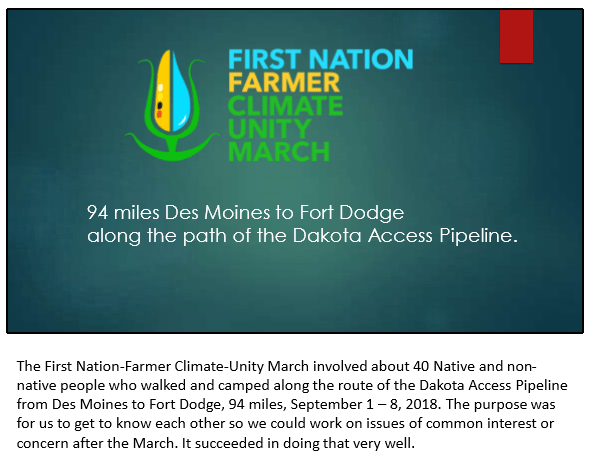
It seems this stream of consciousness has once again led me to a place I hadn’t anticipated. You might have the impression all I do is think and write. That is pretty close to the truth. I hope this might be helpful for my native friends especially, to understand my spirituality. I am anxious to learn more about theirs. This is the main reason I was so anxious to join the First Nation-Farmer Climate Unity March.

“I spend time dreaming about the future and really spending some deep time imagining what it would be like for us all to be free.”

Sterling Duns

Posted in #NDAPL, Indigenous, Quaker, spiritual seekers, Uncategorized | Leave a comment

Quakers and the Future of Racial Healing

I often write about trying to listen for and be guided by the Spirit. Quaker Sterling Duns puts it this way below. “Things just started to open up because I really started listening and being guided by this inner truth.

I wondered why I came across these videos by Sterling. They had, and still have a real impact on me when I heard what he had to say. The first time was in early 2018.

At first tonight I was almost irritated. I’ve been focused on and writing a lot about my experiences engaging with Native Americans in preparation for a Zoom presentation this coming Sunday morning.

But of course issues about Quakers and racial justice are the same with Quakers and Native peoples. This is the time to reflect on working for a future not based on White superiority and capitalism. A future of racial healing for White and Native peoples, and people of color.

Quaker rapper Sterling Duns speaks about Dreaming of Wholeness: Quakers and the Future of Racial Healing in a this QuakerSpeak video.

“It feels simple and deeply radical to just say as a group that is committed to honoring that of God in everyone, that that person of color, that Black person is deserving to have their full humanity recognized by me as a Quaker. That’s a simple thing to say and it’s a radical thing to say.”

“Quakers are equipped to have a role in the racial healing work we need today because inherent to the faith, inherent to the spiritual practice is the belief in that of God in everyone.”

“I spend time dreaming about the future and really spending some deep time imagining what it would be like for us all to be free. I think Quaker communities can spend that time and energy doing that, I think they can absolutely do that. When we talk about Quaker communities being more inclusive I think you literally have to spend time on Dream Mountain, going to Dream Mountain and looking out, and return to reality, Reality Meadows, and then Dream Mountain, then Reality Meadows, you know? I spend a lot of time oscillating between those different worlds and I think having a practice of being able to do that as a group, as multiple groups, would be really important.”

One First day morning at Bear Creek Friends meeting we listen to, and talked about the following two QuakerSpeak videos featuring Sterling Duns.

I put my life on pause, rewound, now I’m pressing play.
Then come up, grinding until the sun up,
knowing it could all be gone if one person puts their guns up.
A black Quaker no savior, I’m on my Bayard Rustin

I really feel like, in a lot of ways, that the lyrics that come to me, I really do feel like I’m just a vessel. I’m just somebody being used to spread messages of love and growth and empathy.

My name is Sterling Duns. I’m from West Philadelphia, Pennsylvania and I attend Merion Meeting in Merion, PA, so not too far from West Philly.
I went to public school for all my life up until the 9th grade. My Mom had heard about a scholarship program at Friends Central School right outside of West Philly so I went there for 4 years.

It was a very transformative experience. One of the most life changing moments was when I was 14, I went down to the American Friends Service Committee and sat down in a room, 14, and someone came in and was like, “Alright, we’re going to write holiday letters to death row inmates.” And I was like, “How do I even comprehend what I’m doing? What this means?”

And that seed was planted. It’s serendipitous, it’s the universe, but little did I know, 13 years later I’d be working on prison reform in our country and really trying to educate myself and others about the prison system in this country.

I feel like I’ve been writing hip hop verses or rapping for as long as I can remember,
but I think when I got to college I really started to hone in on rapping and crafting
my skills.

I was an English major and poetry minor. I got my masters in poetry. Definitely having the opportunity to find my voice through poetry has influenced the hip hop that I do, and it’s been such a gift. It’s so cathartic for me – hip hop specifically – it’s this way that I use to speak my truth.

I think being patient with yourself, which I learned a lot through Quaker Meeting – has
been really important in music. I’ll write something down, and want it to be finished right then and then. And I’m like, “I can’t force this.”

I think in a similar way, when sitting in Meeting, you could be grappling with something and you want resolution right then and there, knowing that it’s all about the process. It’s not about finding all the answers right in that moment. And you may come back a week later or a month later, and somebody will share a message and you’re like, “Oh, that’s exactly what I needed to hear.”

Quakers are constantly searching and re-defining what it means to really just embody Light and see that of God in everyone. You really are able to ask yourself some deep questions and be introspective and then from that introspection, I love the aspect of really dedicating yourself to social justice issues.

That’s one of the things that really drew me to Quakerism. The spirituality, but also this action. You can’t just sit in the Meeting room and think about things, and then once you get out of there, you know, “my job’s done for the day.”

I was asking myself these questions about what’s going on in the world and what’s my place in it all, and do I have a place in it all? And you know, the way was open and opportunities came up for me to put into practice things that I really felt deep in my core, and next thing I knew I was at Quaker Meeting every Sunday and I was helping to organize different learning opportunities around the prison system and doing work around education reform and playing music that had to do with social justice
issues.

Things just started to open up because I really started listening and being guided by this inner truth.

Sterling Duns

Rest in peace Walter Scott that was
somebody’s son gunned down hands closed
no palm readers many we’ve been so
blessed preachers I’m pleading to rabbis
Imams people of all faiths all creatures
and all believers denominations though
atheist may not be praying whoever you
are we need each other neither saving
with hearts Cavin something like
explorers but too many fathers won’t
ever see they door this life sentence no
shorter man we need some mortar because
when we’re to growing is it too late is
it just too late this whole thing got me
irate so much I got to pray my Quaker
ways got my spirit I’ve been in a better
place I put my life on pause rewound now
I’m pressing play to come up grinding
them to the Sun up no one that can now
be going the phone person puts the guns
up a black quick and no Savior I’m on my
bio rusting to convince all the skeptics
to give people to just trust them and
that’s my truth

I wrote part of that in response to Ferguson and stuff what’s going on and I think the most recent events in South Carolina are definitely on the hearts and minds of a lot of people and I think I feel like there’s a lot of energy in our country right now around making space to have some deep conversations we’ve never had before in our country’s history and it’s powerful, it’s amazing to be alive right now when all this is going on and you know I want to encourage people to always be rooted in love you know?

That doesn’t mean don’t be angry that doesn’t mean don’t shed tears you know but to always and everything that you’re you know the conversation that we’re having because they’re painful they’re charged they’re bringing up a lot of stuff that we’ve never had to work through as humans in this country. But to know that we’re all in it together. I think it’s important to remember it’s important for me to remember and that’s why I say it you know so when I listen to that song I remember what you said that you know you’ve literally said that but to also encourage other people to to be rooted in love. Love for each other, love for humanity and I don’t think we can fail if we do that. I really don’t.

Sterling Duns

This lead me to think about my friend Diop Adisa, from the Kheprw Institute (KI).  Diop and I share a love of photography.  During some of those conversations Diop also shared about some of the struggles he experienced, especially related to his music.  Recently a number of good things have been coming from that. Below is the video of one of my favorite songs of his.

This is funny because as I was writing this I got a message that Diop had seen this photo I recently posted of myself running in the Indianapolis Mini Marathon (13.1 miles) in 2008, in support of Barack Obama.


Following is a Minute on Racial Justice, approved at Iowa Yearly Meeting (Conservative) in 2016.

Minute on Racial Justice

Iowa Yearly Meeting (Conservative) 2016

A testimony of Quakers is that all people are beloved and equal in the eyes of God.
We live in a society that is struggling to deal with consequences of slavery, and the failure to achieve equity for all after slavery was abolished. Conditions such as discriminatory lending practices, multigenerational inequities around home ownership, and easier access to education for white people persist in our laws and culture, resulting in institutional racism.

Some Friends once owned slaves. William Penn believed that “slavery was perfectly acceptable, provided that slave owners attended to the spiritual and material needs of those they enslaved.” Penn “had a curious blind spot about slavery. Quakers were far ahead of most other Americans, but it’s surprising that people with their humanitarian views could have contemplated owning slaves at all.”

Picking up the work of colonial Quaker Anthony Benezet, who wrote an early tract opposing slavery, John Woolman traveled up and down the Atlantic coast laboring with Quaker slaveholders and testifying against the institution of slavery. It was through his years of patient dialogue that Quakers first freed their slaves then testified against slavery and over time became the backbone of the anti-slavery movement in America.

A gap in awareness exists today, which allows so many people who consider themselves white to continue practices that give them advantages over people of color.

The scope of these problems is extensive and deep. Racial tensions continue to result in violence and death. There is an increasingly militarized police response. The Black Lives Matter movement is helping raise awareness around these issues.

Many white people are still not as aware of some of these issues. But to continue to benefit from these privileges is not right.

Not having relationships with people of color often results in misunderstanding and unfortunate racial attitudes among white people. One significant consequence of that is the election of so many representatives who reflect these views to legislative bodies.

Building relationships with people of color is one way we can begin to address this, as we build Beloved Communities together.

We urge each person to take a careful look at their life, to identify where one is benefiting from this, and work to correct that. We urge Friends to speak out and take action against these systemic injustices and violence occurring today.


Posted in Black Lives, Quaker Meetings, race, Uncategorized | Leave a comment

A Quaker and Native Peoples: Part 2

[Note: I don’t think I’ve sufficiently explained the reasons I’m led to share these stories with you. As Richard Wagamese wrote, “we change the world one story at a time.” I don’t know what change might come from these stories. But I encourage you to share your stories, which will be your contributions to change. The other reason is I believe our only hope for addressing our evolving environmental catastrophe is to follow the wisdom, spirituality, and centuries of experience of Indigenous peoples. That means we have to find ways to engage massive numbers of White people to educate themselves, and follow Indigenous leadership. I hope my stories might help you make your own connections with native peoples. And learn to wait patiently for them to ask for your help. It seems counterintuitive to talk about patience for such a rapidly evolving threat. But waiting for the right path is the way to success. Not frantically engaging in efforts that will not help.]

I’ve been blessed to have been led on a journey to become friends with Native Americans. Not join committees or organizations, but to become friends.

I had tried the approach of working with organizations that had laudable goals, but never seemed to achieve them. I sought, and began to discover alternative approaches about ten years ago.

One was participating in the pilot of the American Friends Service Committee’s Quaker Social Change Ministry (QSCM). That approach involved:

  • Trying to get most of the people in a Quaker meeting involved in one social justice concern. That is a departure from the usual situation where individuals have their particular social justice work that the meeting supports. Getting the meeting to focus on one shared concern could bring in those who hadn’t been involved in justice work. And create new ways for Friends to learn about, and support each other.
  • Secondly, the meeting needed to get out of the meetinghouse and into the community. Find a group experiencing injustice, and go there, actually be physically present.
  • The most important part of becoming involved in the community the meeting wanted to partner with was to follow the lead of that community. For Friends to not make suggestions or try to give advice, until that is asked for from the community. Deeply listening was the key.

This approach was highly successful, when the Indianapolis meeting I was attending, North Meadow Circle of Friends, partnered with the black youth empowerment community, the Kheprw Institute (KI). It worked because Friends spent significant amounts of time in the KI community, and friendships developed. See more here: https://kislingjeff.wordpress.com/?s=qscm

My friend, Imhotep Adisa, one of the leaders of the KI community, recently wrote:

How can we create some processes and procedures to mitigate inequity in our social, legal and economic structures? How can we begin some conversations about creating a system that is equitable? What can each of us do in the present to advance equity in our society? And how do we continue to fight for equity during these difficult times?

First and foremost, all of us, every last one of us, must engage others in our work, home and play spaces to have honest, open and authentic conversations around the issue of inequity. Some of us, particularly those in positions of power, must have the courage and strength to look more deeply at the inequitable structures that exist within their own organizations and institutions.

Is equity possible in a world after COVID-19? By IMHOTEP ADISA, Indianapolis Recorder, May 15, 2020

Focusing on deep listening and spending much time together allowed everyone to begin to know and trust each other. We Quakers had to wait to be invited into KI’s work. Once we were, we could begin to help with what KI needed, not what we thought they needed. I have deep friendships with those at KI, and continue to be in touch after moving to Iowa.


That experience guided me in my search for ways to become friends with native people. I described the beginnings of this process in yesterday’s post.

My problem was there was not one physical location, as there is at KI, where I could go to begin to establish friendships with Native Americans.

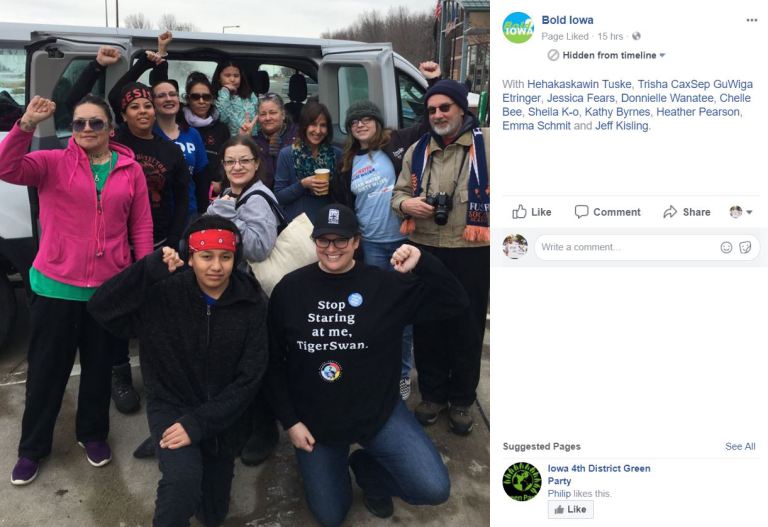
One Iowa organization I connected with was Bold Iowa. I learned about them via their website. http://boldiowa.com/ I began to get to know one of the leaders of Bold Iowa, Ed Fallon. Kathy Byrnes, who I met at the event I described yesterday, is also part of Bold Iowa.

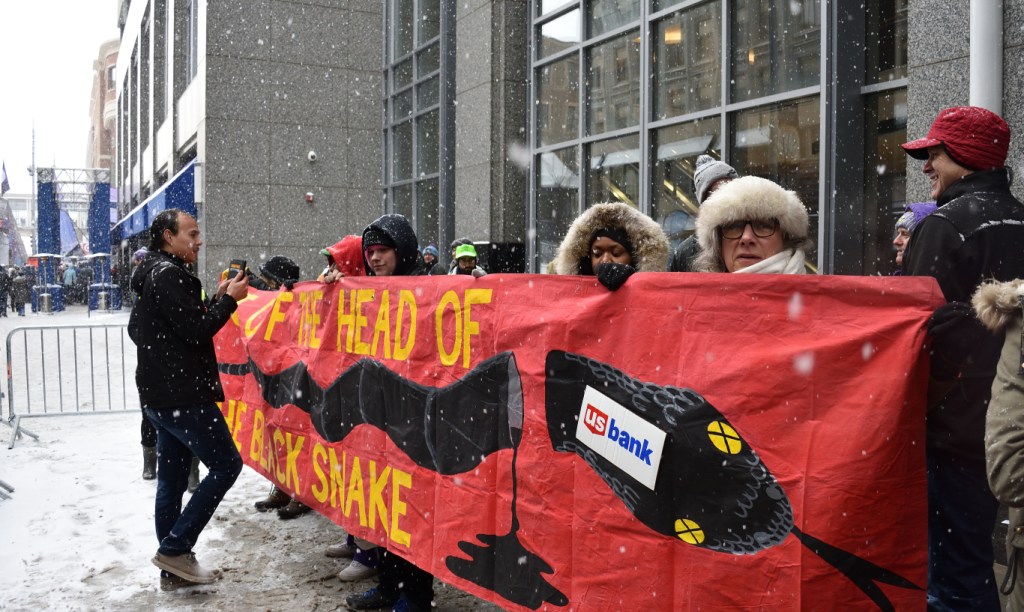
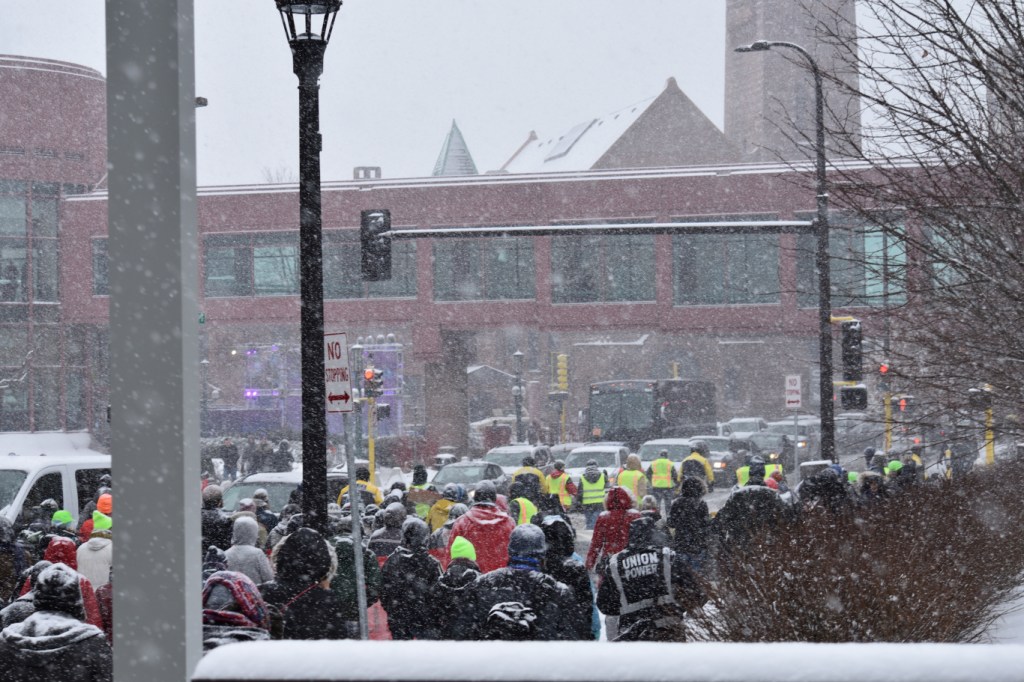
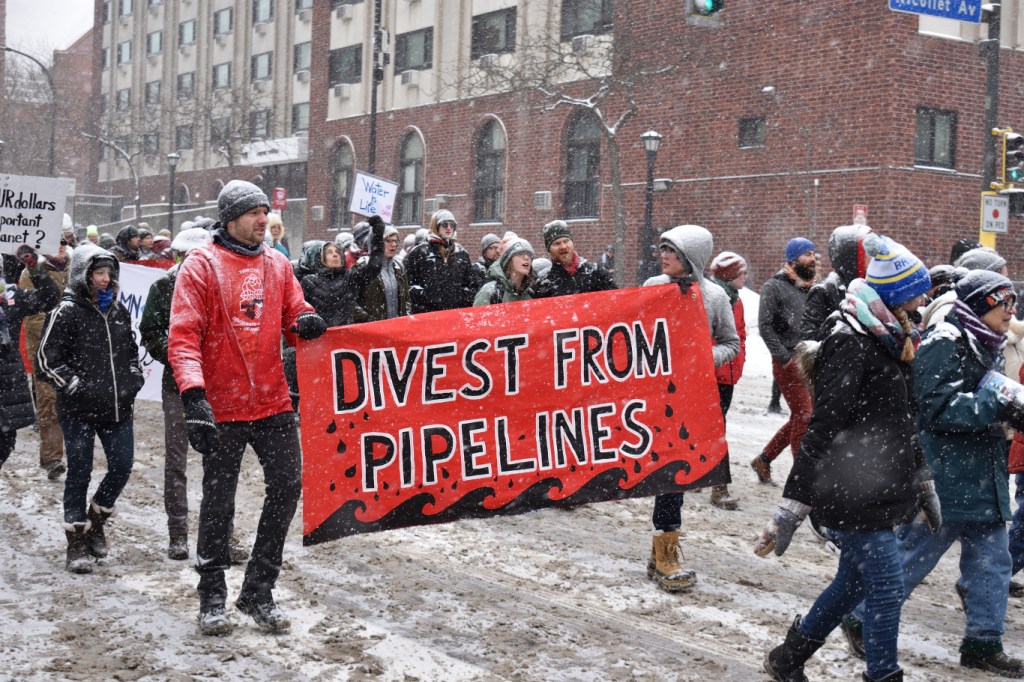
I heard Ed and Kathy were organizing a trip to Minneapolis February 4, 2018, the day before the Super Bowl would be played there, at the USBank stadium. Minneapolis is the headquarters for USBank. USBank is involved in funding the Dakota Access pipeline. You can see where this is going. We held a vigil outside the USBank headquarters.

https://kislingjeff.wordpress.com/2018/02/05/super-bowl-and-justice/

I signed up to join them. I didn’t know who would be in the van for the trip besides Ed, who I hadn’t yet met face to face. But I was sure this would be a group of activists concerned about our environment, a great opportunity to make the connections I was looking for. And that turned out to be so.

On the trip, besides Ed Fallon was his partner Kathy Byrnes, who I had seen at the action at the State Capitol I mentioned in yesterday’s post. And Donnielle Wanatee, who had spoken to us at Iowa Yearly Meeting (Conservative). I also met Trisha CaxSep GuWiga Entringer, who also became a friend, and walked on the First Nation-Farmer Climate Unity March.

Also speaking at the vigil was another person who would become my friend, Christine Nobiss.

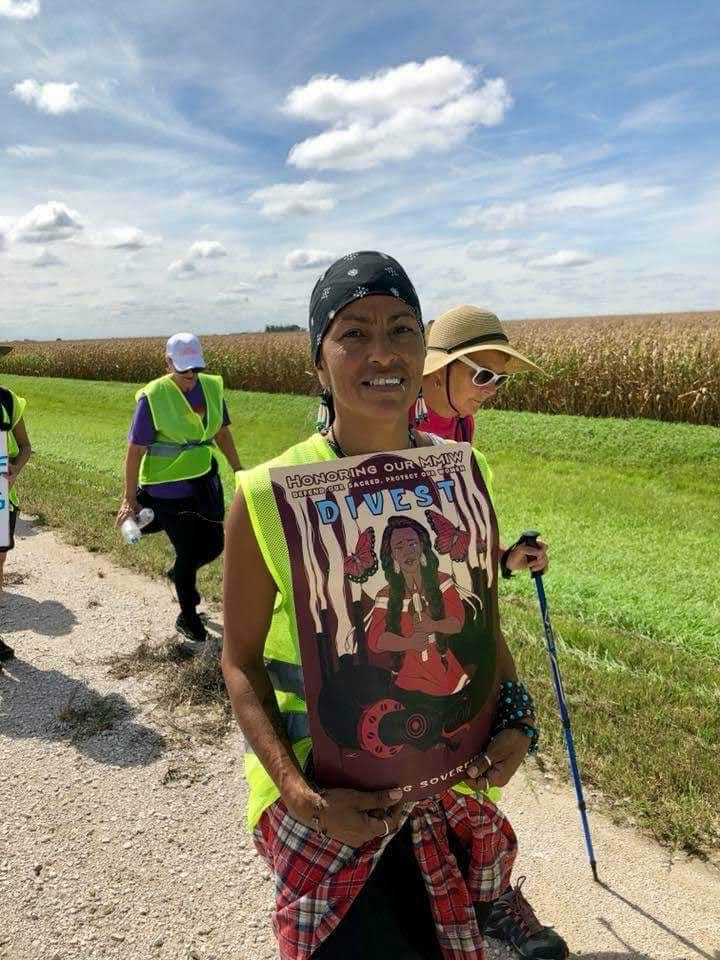
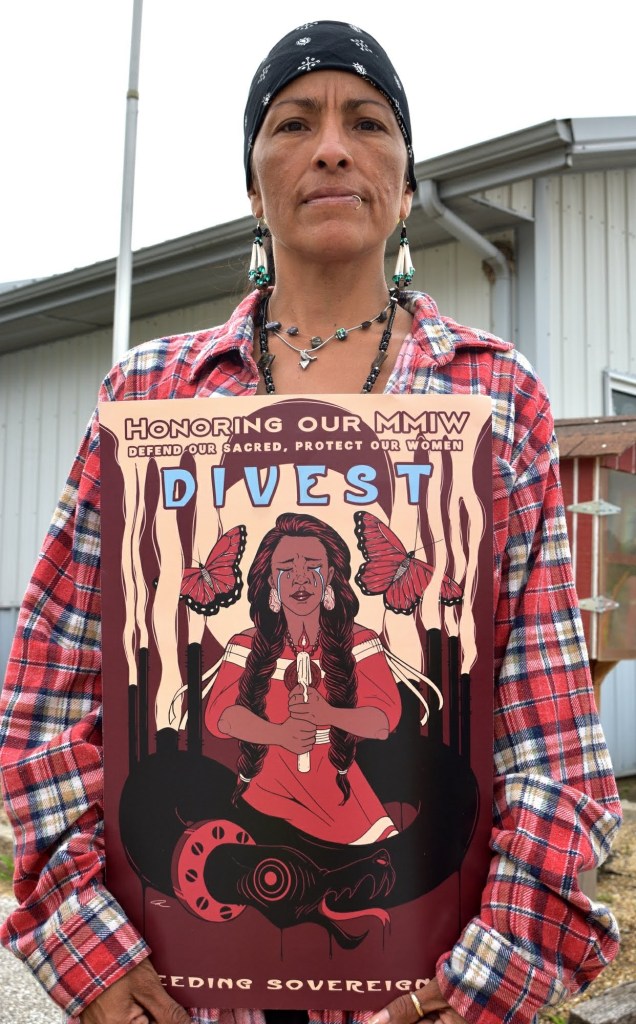
I was surprised at what Christine and Donnielle spoke about. Rather than about fossil fuels or banks divesting from companies funding fossil fuel projects, they both mainly spoke about the epidemic of missing and murdered Indigenous women (MMIW). I would soon learn these murder and assaults were perpetrated by men from the “man camps” where the pipeline workers lived during construction.

At Seeding Sovereignty this is referred to as LAND & BODY SOVEREIGNTY. MMIWGT2SR – Missing and Murdered Indigenous Women, Girls, Trans, Two-Sprits and Relatives.

Over 90 percent of Native American womxn have experienced some sort of violence in their lifetime. 86% of those womxn are sexual assaulted by a non-tribal member. Our LGBTQIA+/Two Spirit and children also experience this increased violence, as well as many of our men. Tribal courts can’t try non-Native individuals, which means non-natives can commit crimes on Native American land—including sexual assault—with virtually zero consequence. In the United States, mainstream society fails to address this crisis even though it’s at epidemic proportions. Indigenous peoples are raped, assaulted, abused, murdered, and kidnapped at rates far above the national average. This attack on our bodies is akin to attacks on our land. The health and safety of indigenous people is directly linked to the health and safety of our land. Our Indigenous people’s body sovereignty is entwined with the sovereignty of our First Nations.

There is a direct correlation between increased rates of sexual abuse, trafficking, and domestic violence against women and children in regions where fossil fuel extraction companies set up “man camps” to house workers. Our goal is to grow the network of MMIWGT2SR activists and bring light to this problem with a platform to connect people, communities, and resources across Turtle Island in the United States and Canada.

https://seedingsovereignty.org/mmiwgt2s

This is an ongoing threat to native peoples. Most, if not all, the people I came to know had direct, personal experiences related to this ongoing tragedy.

This is a demonstration of the importance of listening deeply, and not offering your own suggestions. I was ignorant of this issue that is so important to native peoples.

In summary, these are ways I began to get to know, and become friends, with Native Americans. It is about finding opportunities to show up where others will be. To build on those relationships, to become friends. This sometimes, or perhaps often, involves taking risks. It turned out joining this group of people who I didn’t know at the time, was a great way to find new partners in our work together.

I hope this shows why I believe developing friendships is how justice is advanced. One thing I’ve thought about is when is it that someone becomes a friend to you? If your main interactions are through social media, and not so much face to face time, at what point are you friends? I began to find when I use the word friend in what I write about a person, that is when I begin to see that person as a friend. But when do you know that person feels the same about you? It feels a bit awkward to refer to someone as a friend in these circumstances.

So another story is, when I first referred to one of my new friends as a friend in something I wrote, realizing it was something they would probably read, I was really touched when they wrote back, thanking me for referring to them as my friend.

Thank you for hanging in there with me so far. These two blog posts of stories are leading up to what I intend to write about next, the First Nation-Farmer Climate Unity March. A transformational sacred journey.


Posted in #NDAPL, Indigenous, Native Americans, Quaker, Quaker Social Change Ministry, Uncategorized | Leave a comment

A Quaker and Native Peoples: Part 1

The title says a Quaker, instead of Quakers, because I can only speak from my own experiences. There is a very long history related to Quakers and Indigenous peoples.

I’m blessed to have grown up on several farms in Iowa. That gave me a connection to the land, and appreciation of nature. But not as deep a connection to the land as Indigenous peoples have, who speak of Mother Earth, and all my relations, including all that is not human. Who have a deep spiritual connection to the earth, and say we are the land.

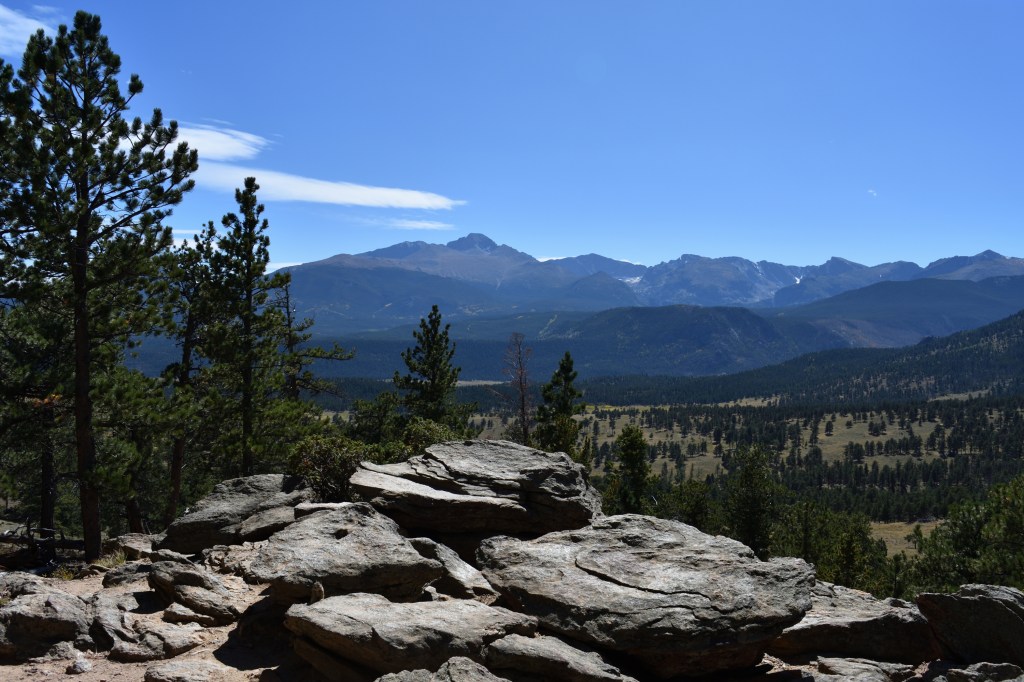
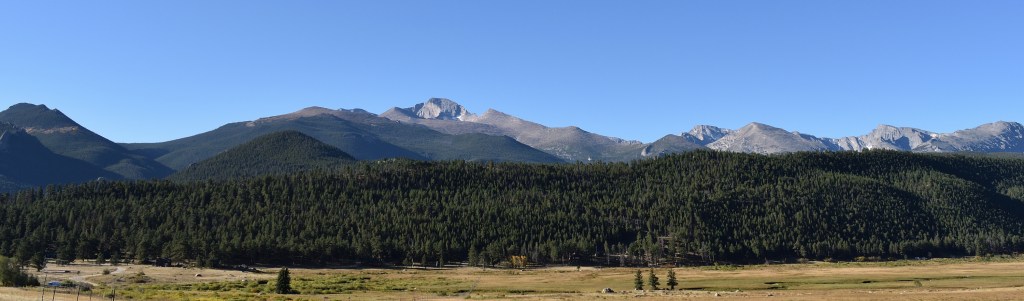
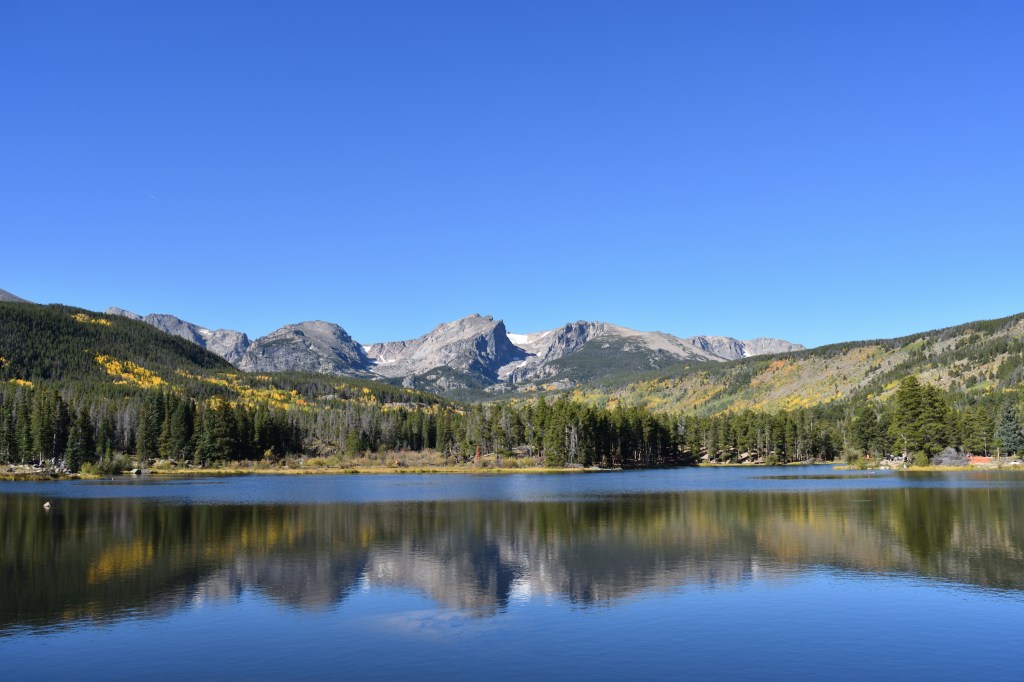
My love of the land deepened every time my family visited and camped in National Parks, especially Rocky Mountain National Park in Colorado. I grieve for the millions who have never had these opportunities, to have these experiences.

I feel closer to God there. Quakers try to be attuned to the Spirit. I felt that more often and strongly in the mountains.

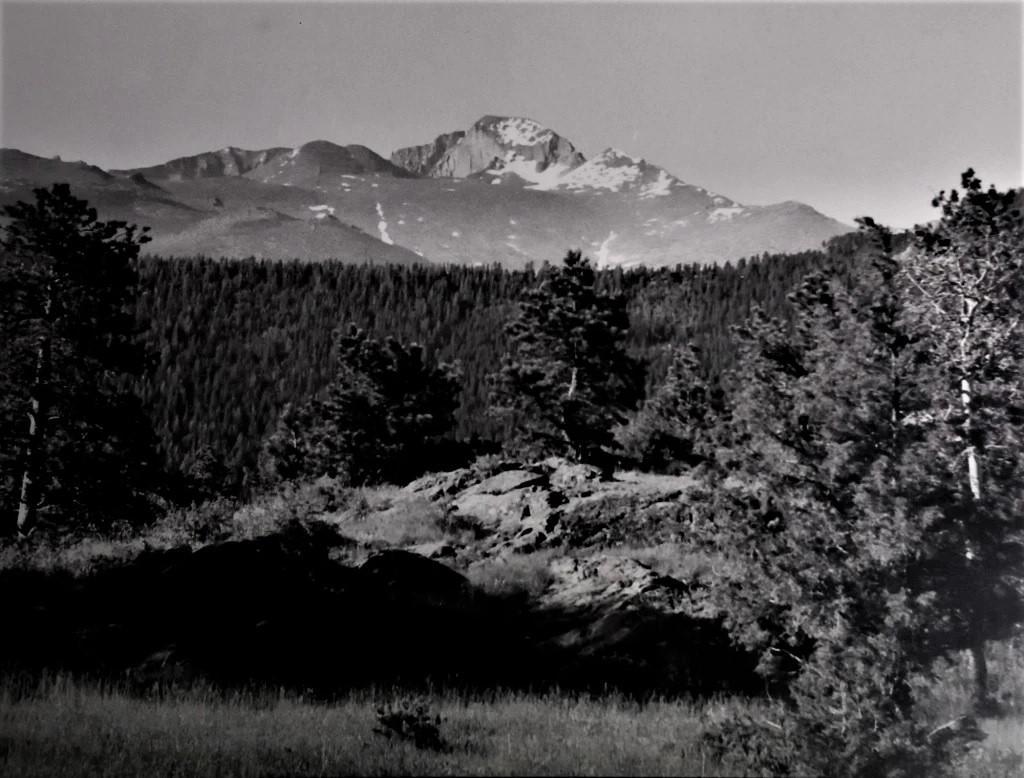
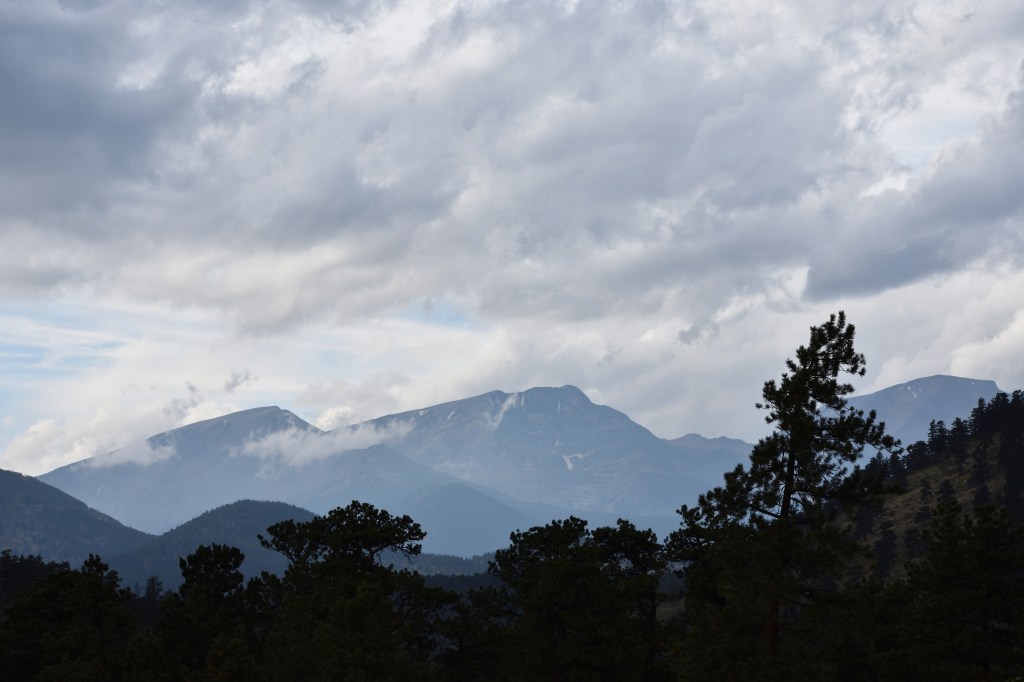
I attempted to bring a piece of that home. I studied photography so I could bring at least two dimensional images back with me. The color photos below were taken in 2017, when I returned after a 7 year absence. Not knowing if or when I would return, I took 1,094 photos over the four days we were there. I guess that reveals something about me.

The black and white photo was from the old days. I developed the film and printed the photo. That photo changed my life. (You can see the snow on Long’s Peak, that is no longer there in the 2017 photos).

When the Iowa farm boy came to the city (Indianapolis) I was horrified by the foul air, the clouds of smog. This was in 1971, before catalytic converters. My nightmare was a vision of my beloved mountains hidden behind clouds of smog. I would look at that black and white photo and imagine no longer being able to see that scene. That led me to give up having a car of my own.

Not having a car meant I spent significant time in nature, such as it is in the city, as I walked to work, rode my bicycle, and ran. All these gave me time to see and photograph the natural environment I was moving through. The more I looked, the more I saw. Nature taught me how to see her beauty, even in the city.

The following is a slide from a PowerPoint presentation I’m working on.

This is how I was led to look for opportunities to know and learn from native people. How was I going to do that? As the slide indicates, it was our mutual appreciation of and concern for Mother Earth that brought us together.

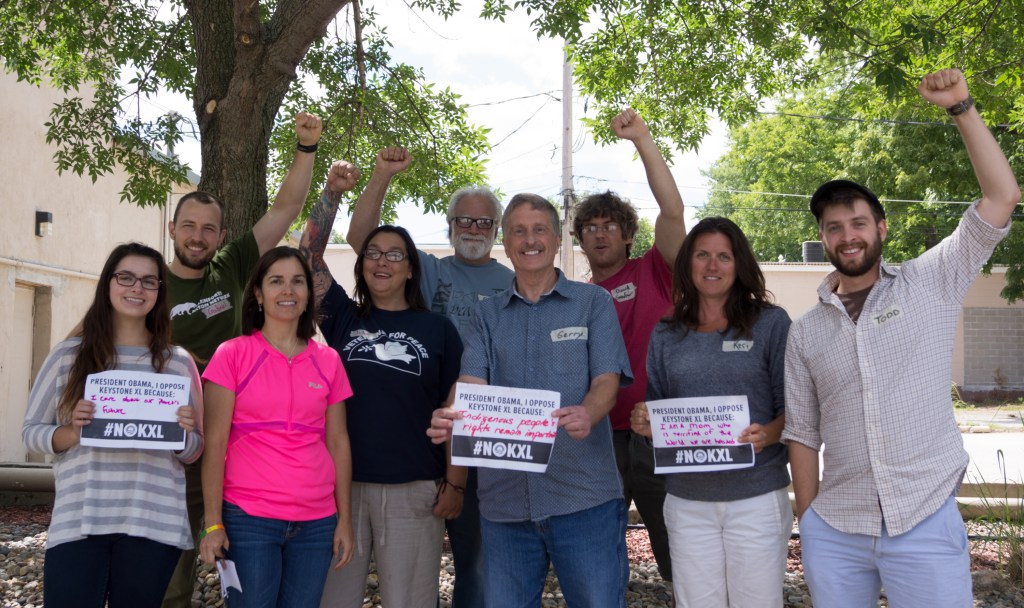
I was trained by the Rainforest Action Network (RAN) to organize direct actions as part of the Keystone Pledge of Resistance, against the Keystone XL pipeline, in 2013. I had hoped some native people would join us, but didn’t know how to make those connections.

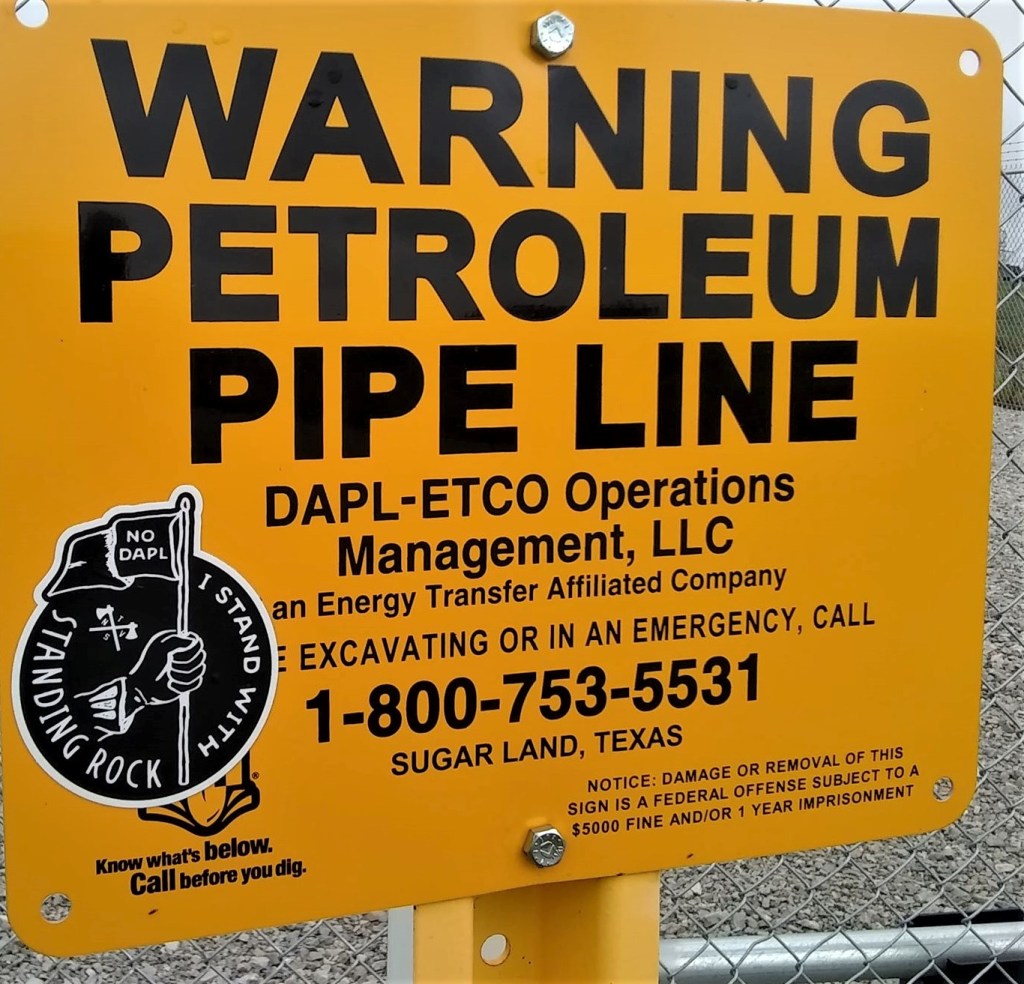
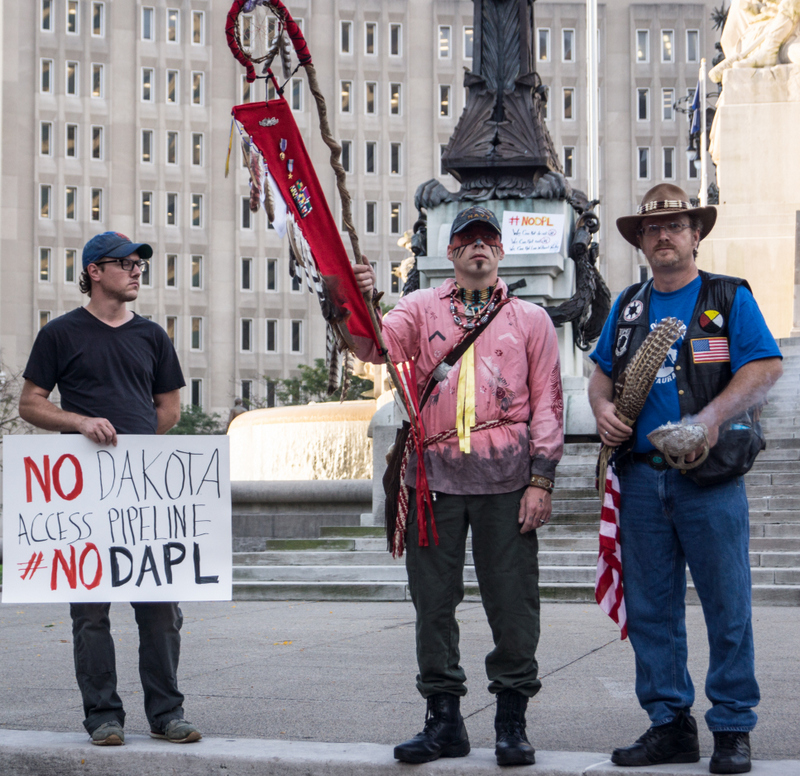
In 2016, I was able to use the Keystone training to help organizing gatherings in Indianapolis to oppose to the Dakota Access pipeline (DAPL). This time American Indians did join, and help lead us. I learned the concept of water protector, rather than protestor. And all of our gatherings included prayers. My favorite was when those involved in the work held prayers for ourselves. We gathered in a circle on the grounds of the Indiana State Capitol.

But these brief gatherings together did not allow for the formation of relationships.

The summer of 2017, I retired from my career of research related to infant lung disease at Riley Hospital for Children. I wondered how I could connect with activists in central Iowa. Internet searches revealed environmental events, which I began to show up at, even though I didn’t think I would know anyone.

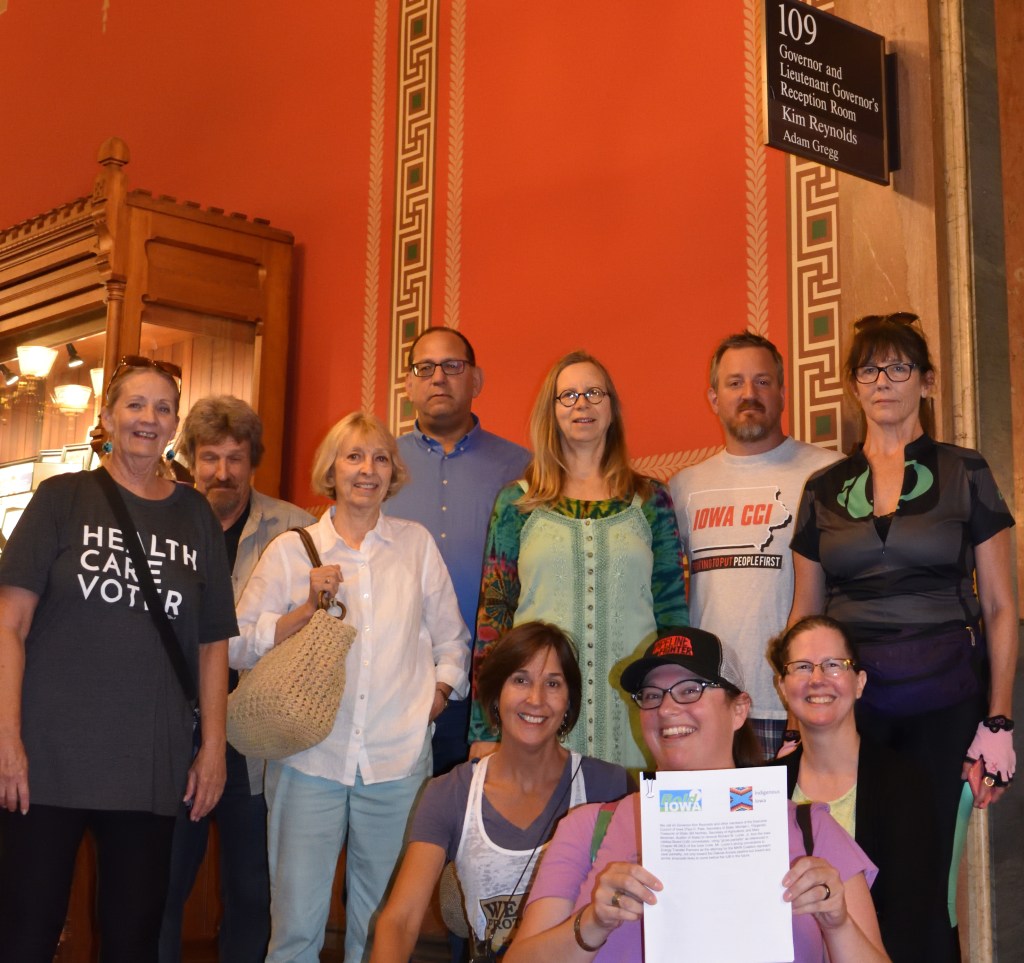
The first was a rally at the Iowa State Capitol building to deliver a petition to the Governor asking for the removal of a member of the Iowa Utilities Board, who had a conflict of interest with the fossil fuel industry. The IUB is the agency that approves pipeline projects.

But someone I knew, Patti McKee, was there. Her partner is Jon Krieg who works with the American Friends Service Committee (AFSC), who I knew, also. Also present was Christine Nobiss of Indigenous Iowa, and Seeding Sovereignty. I had only seen Christine when she spoke at Iowa Yearly Meeting (Conservative) earlier that summer. She was part of a panel discussion about building bridges with Native peoples. Also on that panel was Donnielle Wanatee who I was soon to meet again, and become friends with.

Also there was Adam Mason, on the staff of Iowa Citizens for Community Improvement (ICCI). He was at the ICCI offices when I attended the Keystone Pledge of Resistance training in 2013.

I also met Heather Pearson and Kathy Byrnes there, both of whom I would meet at other environmental events.

I was able to share the photos of that meeting at the Governor’s office with those who attended. I’ve found photography to be a useful useful way to become engage with activists. It is good to be aware of ways you can contribute but it is important to ask for permission. It is also important to be aware of the concept of cultural appropriation.

What happens next will be the subject of a future blog post. But you can see how an activist can connect with others in a new community.


There is actually a lot more related to the story of this gathering in Des Moines. Part of which involved a 40 mile bicycle trip to Bear Creek Meeting after the meeting in the Governor’s office.
Reflections on September Journey

Posted in #NDAPL, climate change, Indigenous, Native Americans, Quaker, Uncategorized | Leave a comment