In these days of multiple, ongoing crises, it is easy to loose our focus. To be distracted by the chaos. We must work harder to strengthen our connections with and care for all living things. How many love their neighbor as themselves these days?
Haudenosaunee Thanksgiving address says “we have been given the duty to live in balance and harmony with each other and all living things. So now, we bring our minds together as one as we give greetings and thanks to each other as People.”
There are many reasons why I’ve been led to make connections with Native peoples. Being “led” means I received Spiritual messages to do this. Its not like God speaks in words, but rather nudges us along a path. My grandmother, Lorene Standing, used to say God’s will is revealed in a series of small steps. Each step reinforces the ones before. Things begin to happen that reinforce these steps. This may occur over a short time, or years.
We have been given the duty to live in balance and harmony with each other and all living things. So now, we bring our minds together as one as we give greetings and thanks to each other as People.
Interestingly, Dallas Chief Eagle spoke about this for quite a while around the bonfire at the end of the Prairie Awakening celebration. He told us to empty our mind. When thoughts enter, say “no”. To be completely still. He then had us do this together. Afterward he asked the children what they felt, and they said “good, “peaceful” and “happy”. He said to practice this, and that we would also learn to recognize the spirit in others. [This story is from a blog post I wrote, Reflections on September Journey]
The following outlines how my Spiritual environmental journey led me to Indigenous peoples.
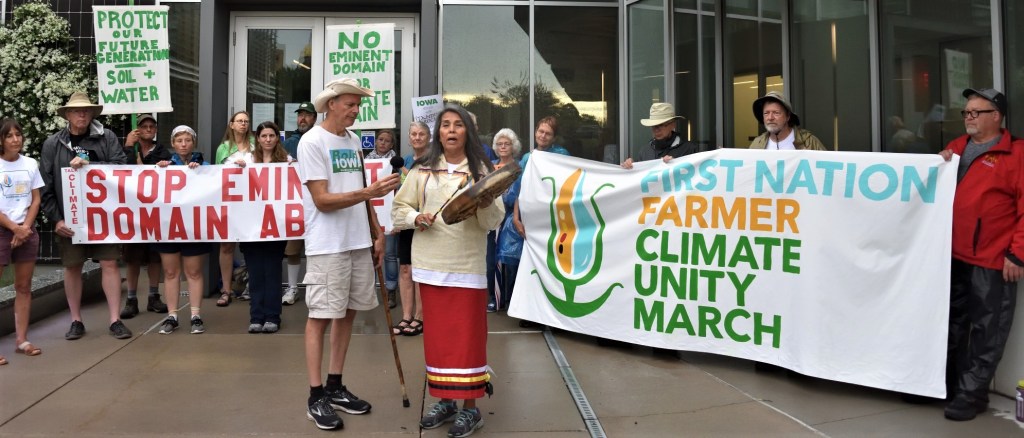
One of the most meaningful events of my life was walking on the First Nation-Farmer Climate Unity March during the first week of September, 2018. This website has many blog posts, photos and videos about the March. https://firstnationfarmer.com/
One of the main goals of what one of us called our Sacred Journey, was for this small group of native and non native people to get to know, and begin to trust each other as we walked 94 miles over eight days along the path of the Dakota Access pipeline in central Iowa. That was extremely successful, for me anyway. I am so blessed to have native friends now. There have been numerous occasions since when we have worked together.
Which finally gets to the point of this post, about an event happening tonight that many of my friends are involved with, “Native Voices for Votes, an Evening of speaking, singing, and drumming to uplift the BIPOC (black, indigenous, people of color) vote in Iowa and Nebraska.”
Iowa and Nebraska Friends,
Please join @greatplainsactionsociety and @fieldteam6 for “Native Voices for Votes,” a cultivation event to highlight the voices of the Indigenous communities living in Iowa and Nebraska! The online event will include musician Regina Tsosie (Diné), drummer Kristofor Marrufo (Winnebago) as well as speakers @sikowis, aka, Christine Nobiss (Plains Cree/Saulteaux) and @trishacaxsep (Winnebago) and other speakers and performers. “Native Voices for Votes” will take place on Thursday September 24th from 7-8 pm CT. RSVP by purchasing a General Admission ticket at: bit.ly/NativeVotes
My friend, Regina Tsosie, will be on the “Native Voices for Votes” program tonight. Here she sings as we begin the First Nation-Farmer Climate Unity March (2018).
The first time I read this quote by Richard Wagamese I saw its truth, felt it brighten my Inner Light.
All that we are is story
From the moment we are born to the time we continue on our spirit journey, we are involved in the creation of the story of our time here. It is what we arrive with. It is all we leave behind. We are not the things we accumulate. We are not the things we deem important. We are story. All of us. What comes to matter then is the creation of the best possible story we can while we’re here; you, me, us, together. When we can do that and we take the time to share those stories with each other, we get bigger inside, we see each other, we recognize our kinship — we change the world one story at a time.
Richard Wagamese (October 14, 1955-March 10, 2017) Ojibwe from Wabeseemoong Independent Nations, Canada
Believing “we change the world one story at a time” has influenced my approach to peace and justice work. I now tend to put what I think and do into the form of a story. Hence all these blog posts. I also treat what others share with me in the context of stories. “What comes to matter then is the creation of the best possible story we can while we’re here; you, me, us, together.”
Now when I find myself being led to do something, I also find myself thinking, I should do this because it will be a good story.
It is often difficult for me to express Spiritual matters in particular, in words. I think of “ineffable”, which is the inability to express in words. Stories can be a way to express a Spiritual matter indirectly. As an illustration of the underlying Spiritual message. A kind of pantomime. The Bible, and other religious works, are collections of stories.
I often find myself thinking, I should do this because it will be a good story.
While someone might just tell their story, the idea of stories is related to the sharing of stories with each other. This is especially true when people, or groups have different attitudes or beliefs. Sharing stories is an opportunity for each side to express their view more clearly.
The act of listening, deeply, to the story being shared with you, is important. You might learn, or be changed by the story if you are open to that possibility as you listen. And it is meaningful to the storyteller, knowing they are being listened to. Which might make them more willing to consider your story.
Sharing our stories with those who agree with us is good entertainment, and perhaps teaching/learning. But if we believe “we change the world one story at a time”, we need to be sharing our stories with those who disagree with us. Arlie Hochschild expresses this as “crossing the empathy wall.”
An empathy wall is an obstacle to deep understanding of another person, one that can make us feel indifferent or even hostile to those who hold different beliefs or whose childhood is rooted in different circumstances
Arlie Hochschild, author of Strangers in Their Own Land
“Everyone has a deep story,” says Arlie Hochschild. “Our job is to respect and try to understand these stories.”
Often I wake up thinking about something moving that a person told me in a recent interview and figuring out what I’m learning from it or how to write about it. And I’m connecting that to a little “lookout” in my mind that tells me what’s on the horizon.
Pivotal turning point in your life?
I was 12, and had been freshly plucked from an American middle class girlhood in Kensington, Maryland to move with my parents to Tel Aviv, Israel where my dad had just been posted in the US embassy.One weekend my father drove my mother and I in a large American car to visit the “old city” — the Arab sector– of Jerusalem to see it and shop in the bizarre. On arriving, my dad parked the car in a parking lot. Getting out of the back of the car, I saw along the edge of the edge of the lot, approaching us child beggars, one blind, another. nearly bald. A third was crippled and moved on a little cart with wheels. While I was looking around in shock, a man paid to watch the foreigner’s cars, approached me and said in English, “are you Americans? Why does America give alot of money to Israel but none to us?” It was said in a minute, but my life has never been quite the same since.
An Act of Kindness You’ll Never Forget?
I was on the playground, age 12, alone, not speaking the language of the kids in my new school. A girl my age smiled at me and tagged me on the shoulder. I didn’t understand and I didn’t respond. She waited, smiled, and came back to tag me again. She was inviting me to a game of tag.
The increasing environmental chaos has forced even the mainstream media to talk about ‘climate change’. But they’re very careful not to say anything that would frighten their viewers too much. Don’t talk about the web of interrelated problems that give a realistic view of the danger we are in. Don’t talk about the accelerating breadth and rate of change, and how the future, near and far, will look.
Similarly, the devastation of COVID-19 brings a whole new path of destruction to our families and communities. Has shown the failure of the capitalist economy.
And more recently, the terrifying rise of police states and authoritarianism in this country and around the world.
Is it all too much, too late to fix? Increasingly, it looks like the answer to many of these things is ‘yes’.
True or not, we have choices about what to do now. How to mitigate the damage. How we can leave the best possible world for our children.
For how many decades have we said, or heard, we must change [BLANK] now? And when has [BLANK] ever changed?
The pursuit of consumerism and an obsession with productivity have led us to deny the value of life itself : that of plants, that of animals, and that of a great number of human beings. Pollution, climate change, and the destruction of our remaining natural zones has brought the world to a breaking point.
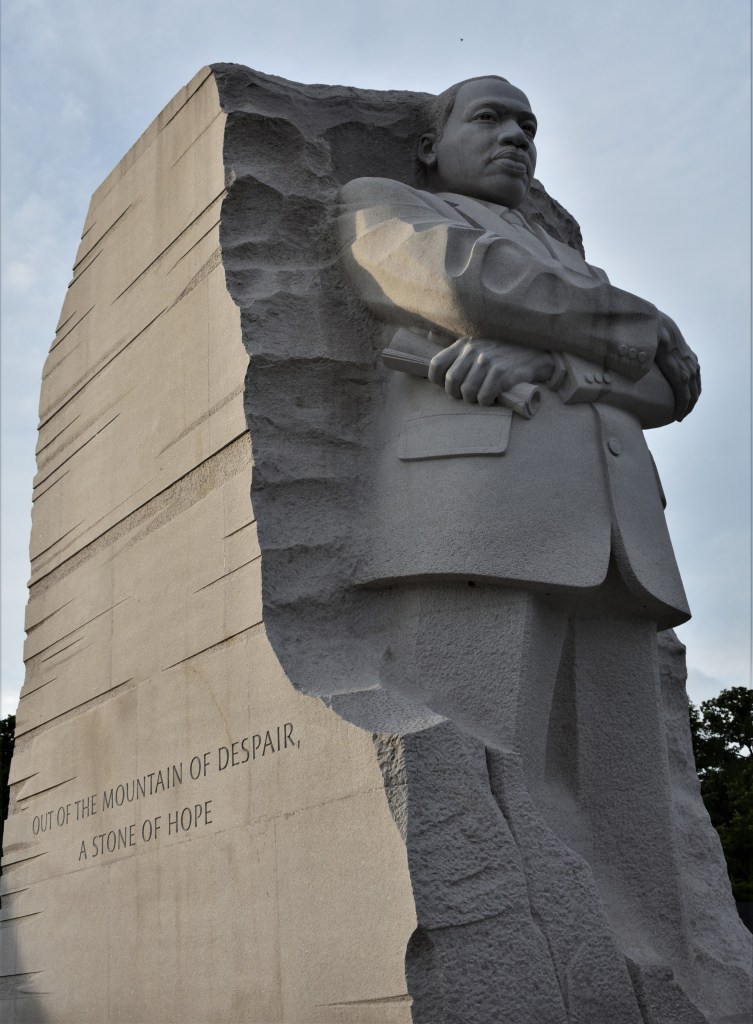
Martin Luther King, Jr, said we need to “undergo a radical revolution of values”, “from a thing-oriented society to a person-oriented society.” Only through such a revolution, he declared, would we be able to overcome “the giant triplets of racism, extreme materialism, and militarism.”
We need to “undergo a radical revolution of values”, “from a thing-oriented society to a person-oriented society.” Only through such a revolution would we be able to overcome “the giant triplets of racism, extreme materialism, and militarism.”
Martin Luther King, Jr
The future will be determined by our values. How do we live more consistently with our values? How do we encourage others to examine their own values? Why haven’t we been successful in bringing about a radical revolution of values?
“The direction and harmony of these global changes depend on upon the values that are inspiring the change. When these values are life- preserving and life-enhancing, we will move forward to a new, just global civilization. If these values continue to be about short-term, materialistic gains solely, we will continue to experience a deepening cycle of death and destruction.
It is becoming clearer and clearer, with every passing day, that walking a prayerful, peaceful spiritual path is the only way forward to a just, sustainable, and harmonious world.”
I was blessed to hear Arkan Lushwala speak about “Indigenous Ways of Restoring the World” during a call sponsored by the Pachamama Alliance. “Arkan Lushwala is a rare indigenous bridge of the global north and south, carrying spiritual traditions from the Andes in his native Peru as well as being adopted and initiated by the Lakota people of North America.”
“everywhere people ask, “what can we do?” The question, what can we do, is the second question. The first question is “what can we be?” Because what you can do is a consequence of who you are. Once you know what you can be, you know what you can do”
Arkan says we are facing life threatening situations related to environmental damage. We are facing such severe challenges that we cannot solve them only by ourselves.
We must move beyond thinking and talking. Action now is essential.
Action is spiritual.
We need to practice trying to reach our sacred space. We need a higher universal intelligence to help solve these problems.
We must open a sacred space for prayer so we may be open to the warrior spirit.
The importance of prayer.
We pray as a form of connecting to other forms of communication
We need to be aware of what is happening in the moment, elevate ourselves, move closer to the sacred
I first have to reach deep into my own heart
You start praying while you are also listening. I become aware of, remembering, what I pray about at that moment. We need to rely on our own ancient indigenous memory. Stop being isolated. Fully become part of the earth and water and plants and air. This is an immense source of knowledge about these problems.
I am in front of the sacred fire of all who are listening. Let’s say that I am thinking now. I am remembering. The notion of intelligence and to understand refers to memory. Intelligence means learning, but also achieving that state in your mind when you are remembering. The air that we are breathing carries the memories of the ages, the movement of energy. Deepest intelligence in our culture is memory. There are always memories of the ages in all that surrounds us.
The state of being, the prayer, makes us open to receiving. If we are really open, and not blocking ourselves, and connected to what is around us, with our eyes, breath, sensations, and feeling that arrive in our heart, through our antenna, if we are open in this way while we are doing something, our action is being infused with guidance or instructions. There is something there that is watching what you are doing and helping guide you. Sometimes we need the help of the elders or others to understand these experiences.
We ask for help. When we put ourselves in that elevated space, that makes it much easier for us to receive help. Help is always there but we often miss the messages.
If I am open and receptive to other frequencies and the higher state of my being, I’ll have much more help in my work.
The correct way is not to take credit, but the joy is the moment itself, by feeling integrated to life while you are doing the action.
When we sit with others in a circle, when we all change the state of our being together, we move up to the sacred together. Working with others in community, much, much more can be accomplished.
If a person expresses an experience that is from a sacred space of high resonance, I am activated by that. It resonates in my own heart and mind and spirit, and it triggers my memory, too. by the presence of something sacred.
We sit in a circle and witness someone remembering. We receive the same spirit together. Our individual self and agenda slips away. Joining our hearts. Mother Earth is the One, all of us become the One together. A lot of wisdom comes south. We are all impressed by the presence of something sacred.
I’ve often written about the vision that set the course of my life. Friends tell me I repeat myself in these writings. I know that. But there are many facets to some of the things I write and pray about. New lessons I learn as I look from a different angle, or different time. A new perspective that is unveiled, influenced by unfolding experiences. Spiritual and otherwise.
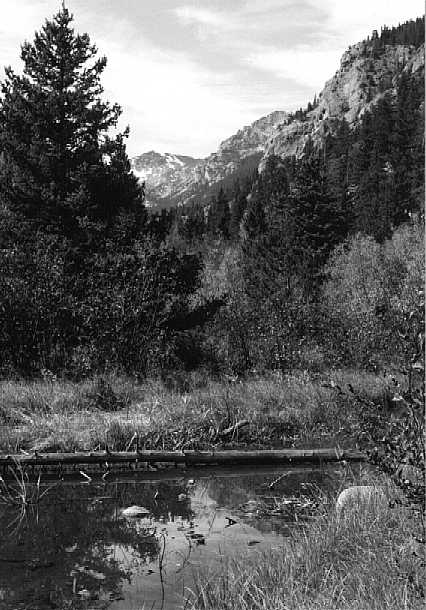
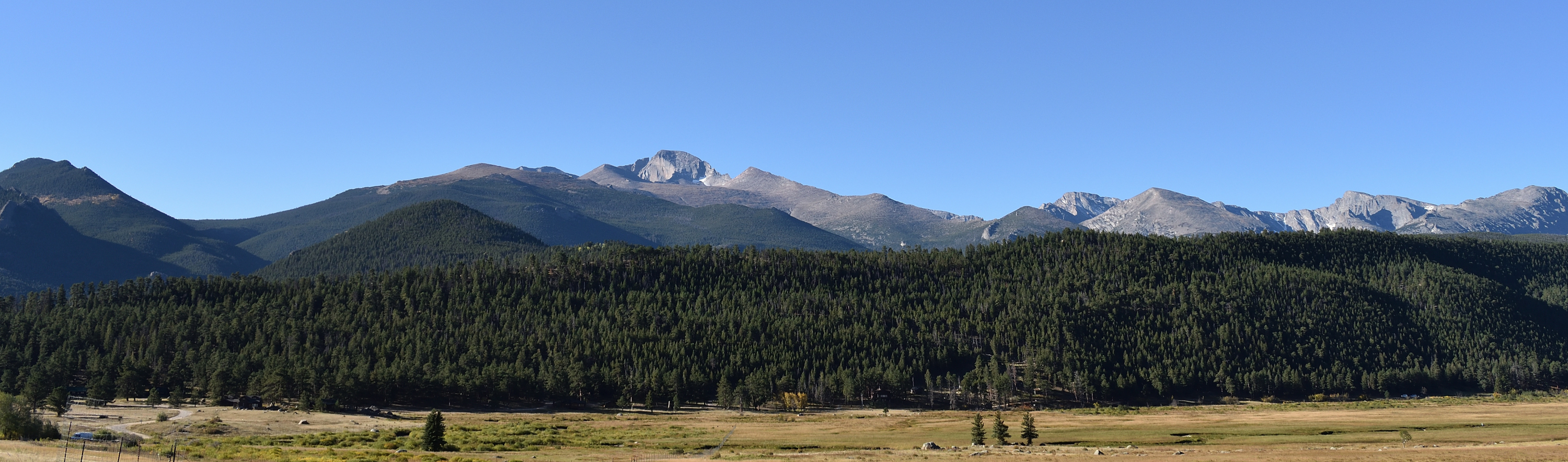
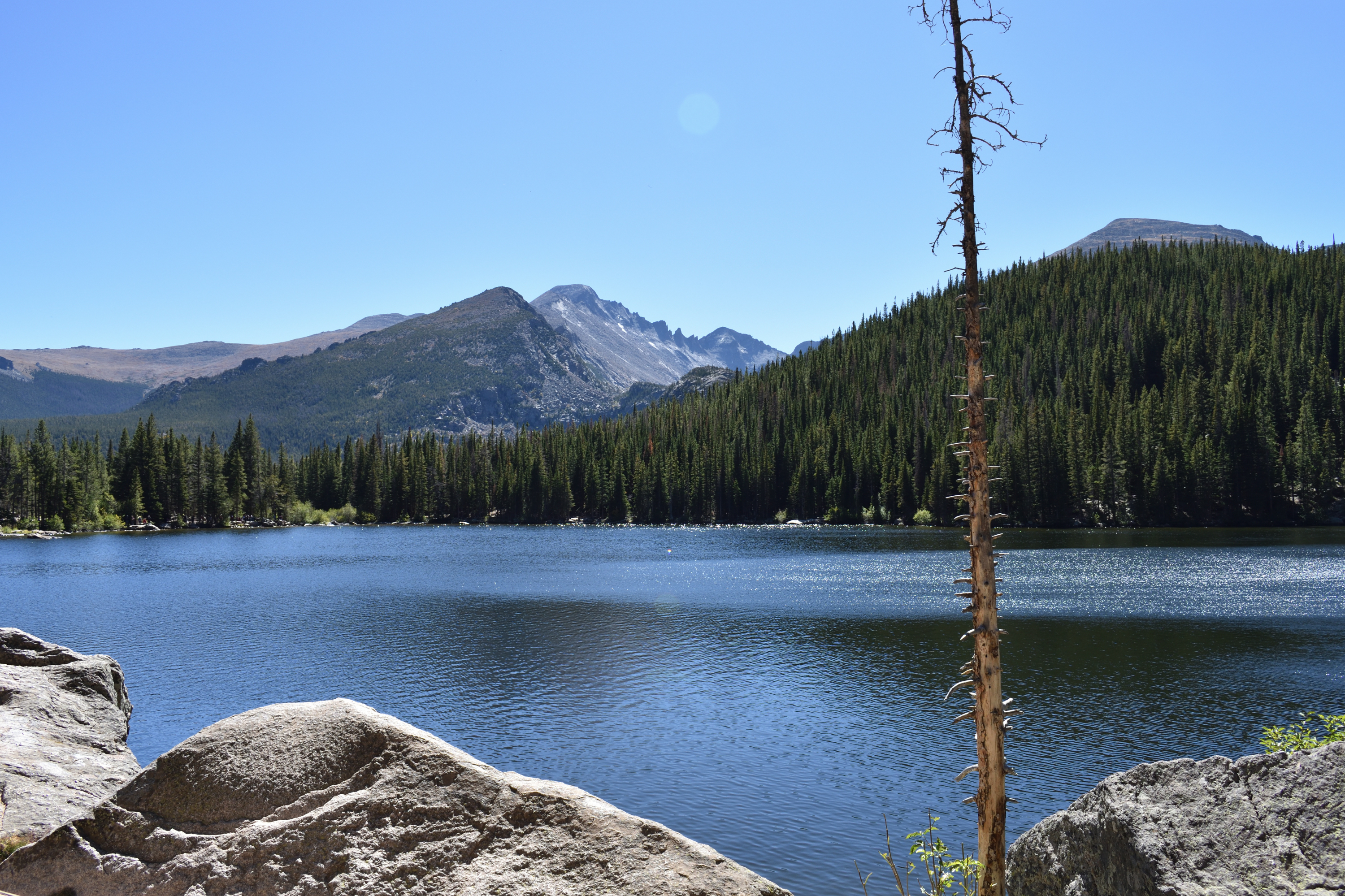
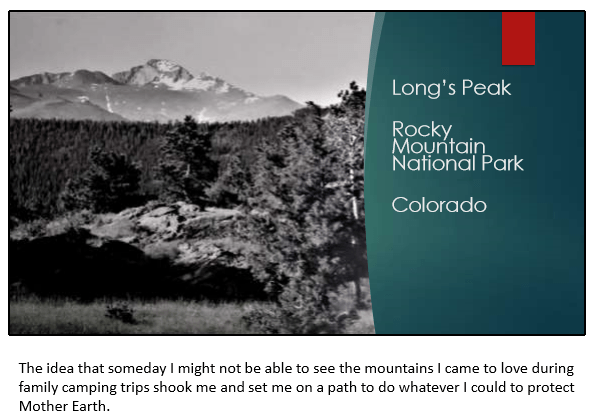
This photo was taken around 1970. when I would have been about 20 years of age. Taken during one of our many family camping trips to Rocky Mountain National Park, Colorado. This is Long’s Peak, taken from Moraine Park.
Long’s Peak, Rocky Mountain National Park, Colorado
You probably notice this is not a digital image. I developed the film, then printed the negative on photo paper in a darkroom. Here are two other images from that time. Developing film and prints in a darkroom was exacting and time consuming. I’m grateful for the advent of digital photography.
My original vision occurred when I first moved to Indianapolis in 1971. I was horrified by the foul air, the clouds of smog. This was before catalytic converters came into use in 1975. I had a ‘clear’ vision of my beloved mountains hidden behind clouds of smog. It was the photo of Long’s Peak above that I saw in that vision. Imagined the mountains in the photo hidden in a gray fog. The photo reminds me of my vision every time I look at it.
That set me on the path of living without a car. I couldn’t bear to so directly add to the smog. Even though I did so via less direct means. None of us have a carbon footprint anywhere close to zero. The catalytic converters took care of the visible parts of auto exhaust, but not the greenhouse gases and heat that continued to pour from unbelievable numbers of automobiles.
As my vision morphs into new form, what am I led to do now?
It became common for each household to have a car, and then for every adult in a house to have their own. Such a waste of steel and rubber for machines that sit idle over 90% of the time. And traveling everywhere sealed in a car contributes to our separateness. Separateness has all kinds of negative consequences.
It is traumatic every time I see cars, trucks and airplanes. I have had to become somewhat inured to this constant stress over time. As I write this, I wondered if there was such a thing as Continuous Traumatic Stress Disorder (CTSD), and discovered there is.
Another consequence of not having a car was the significant amount of time I spent in nature. Walking to and from work and other places. I developed the habit of always carrying my (digital) camera when I began to be more aware of the beauty I was walking through, even in the city. The more I looked, the more beauty was revealed.
Now, some fifty years later, I am having nightmares about of my original vision coming true. This time of mountains hidden in smoke from the vast wildfires. It is also possible that more haze will occur as the warmer temperatures result in more water vapor in the air.
My original vision led me to do what I could to reduce pollution and protect land, air and water. I can’t help but feel there was more I could have done. But we are each called to do what the Spirit asks of us. The consequences of which may not be known to us.
Another consequence of my original vision was an intense commitment to running as an alternate means of transportation. Running becomes a drug we are addicted to. There are feelings of joy, running with feet barely touching the ground. Feeling powerful, and in intimate touch with our bodies as all parts synchronize to meet the tremendous demands. Forging ahead through rain, snow, heat, cold and recently a derecho.
Many runners write about the running experience. About the spiritual aspect of the experience.
But I must wait. Wait and listen. That inner stillness is the only way to reach these inner marvels, these inner miracles all of us possess.
“Running & Being: The Total Experience” by George Sheehan, Kenny Moore
“What running does is allow it to happen. Creativity must be spontaneous. It cannot be forced. Cannot be produced on demand. Running frees me from that urgency, that ambition, those goals. There I can escape from time and passively await the revelation of the way things are.
There, in a lightning flash, I can see truth apprehended whole without thought or reason. There I experience the sudden understanding that comes unmasked, unbidden. I simply rest, rest within myself, rest within the pure rhythm of my running, rest like a hunter in a blind. And wait.
Sometimes it is all fruitless. I lack the patience, the submission, the letting go. There are, after all, things to be done. People waiting. Projects uncompleted. Letters to be answered. Paperwork to do. Planes to be caught. A man can waste just so much time and no more waiting for inspiration.
But I must wait. Wait and listen. That inner stillness is the only way to reach these inner marvels, these inner miracles all of us possess. And when truth strikes, that brief, blinding illumination tells me what every writer comes to know. If you would write the truth, you must first become the truth.
The mystery of all this is that I must let it come to me. If I seek it, it will not be found. If I grasp it, it will escape. Only in not caring and in complete nonattachment, only by existing purely in the present will I find truth. And where truth is will also be the sublime and the beautiful, laughter and tears, joy and happiness. All there waiting also.”
“Running & Being: The Total Experience” by George Sheehan, Kenny Moore
As my vision morphs into new form, what am I led to do now?
Am I to be led in new ways to visualize and respond to the threats to the view of Long’s Peak? The root problem of pollution is the same. But the smoke coming from the wildfires adds new dimensions, a different path. Perhaps a different way to interdict on Mother Earth’s behalf. Which is on behalf of us all, human and non human.
Now my being is sensitized to seek what the responses to this new version of my vision will be. In the past, I didn’t know my vision would lead to photography, running, and writing.
Now the Inner Light is burning with new intensity, fueled by a new awareness. What new perspectives will be revealed as this new version of my vision unfolds?
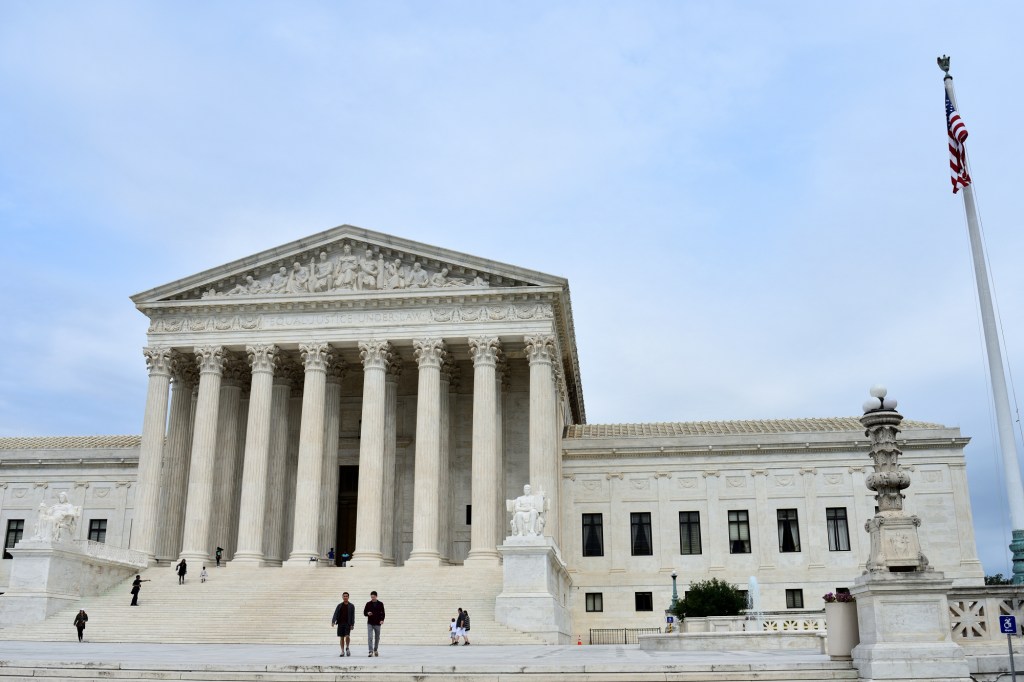
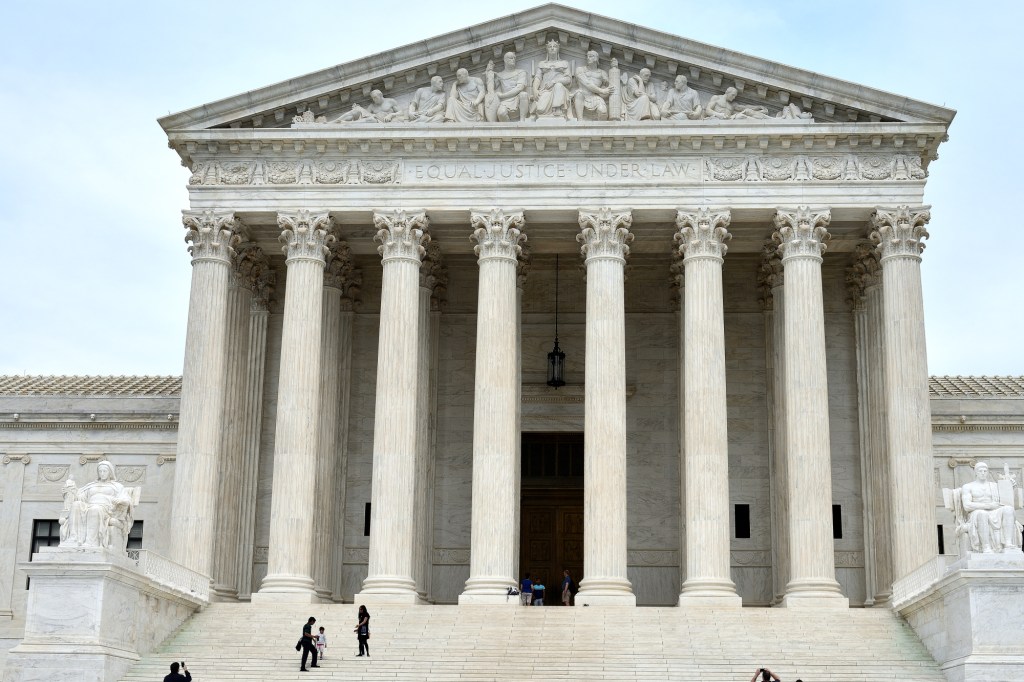
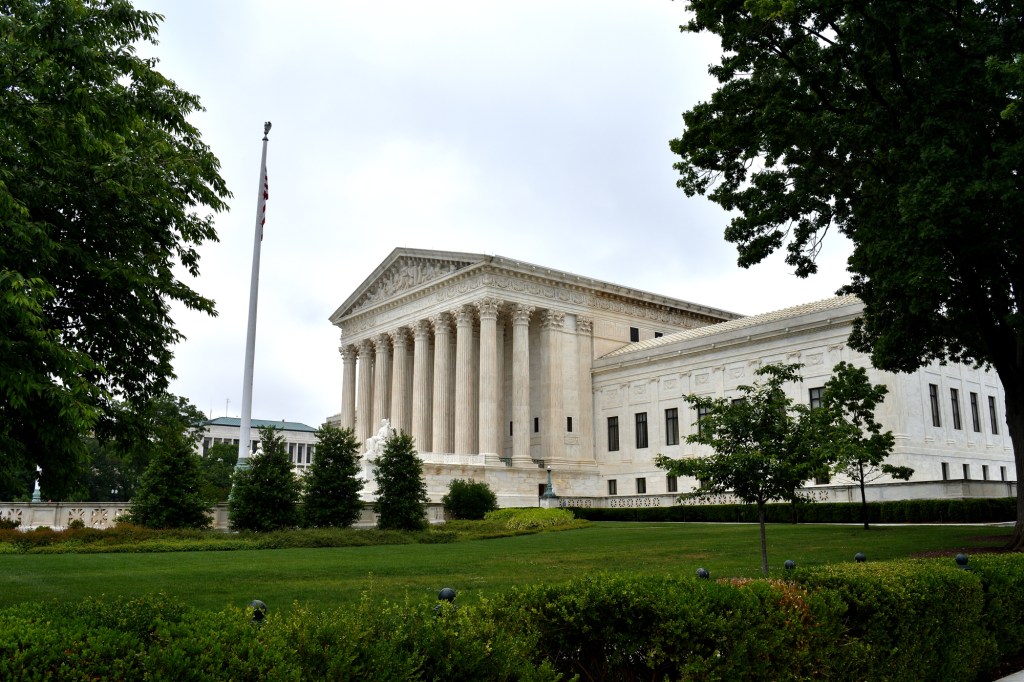
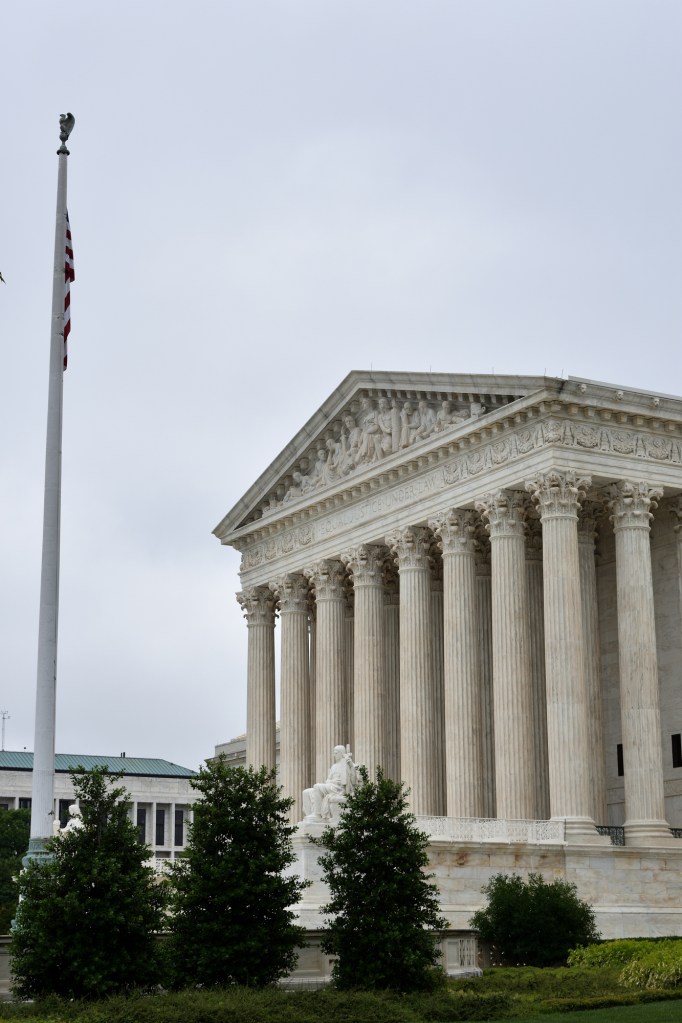
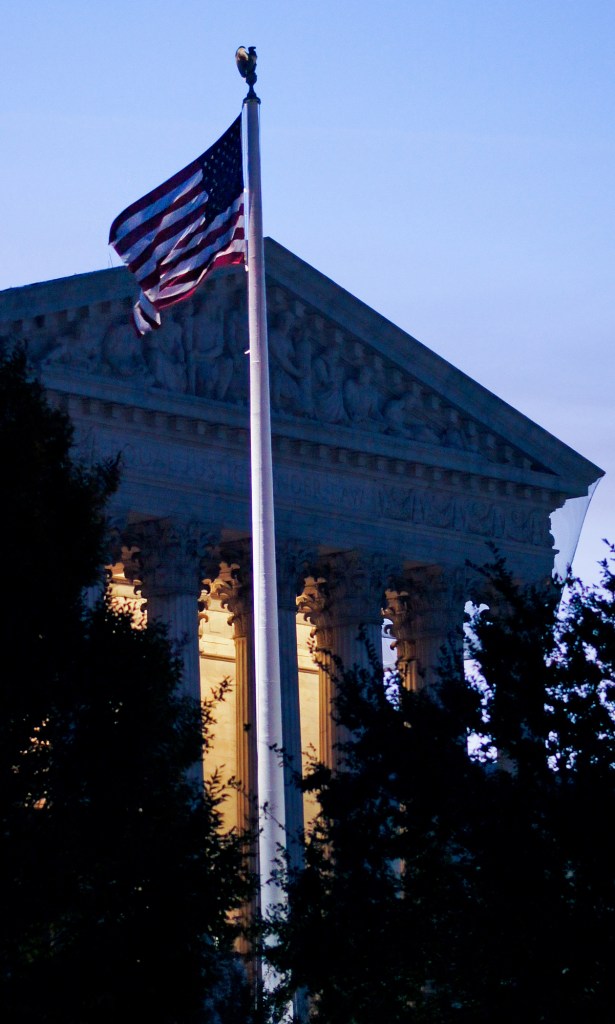
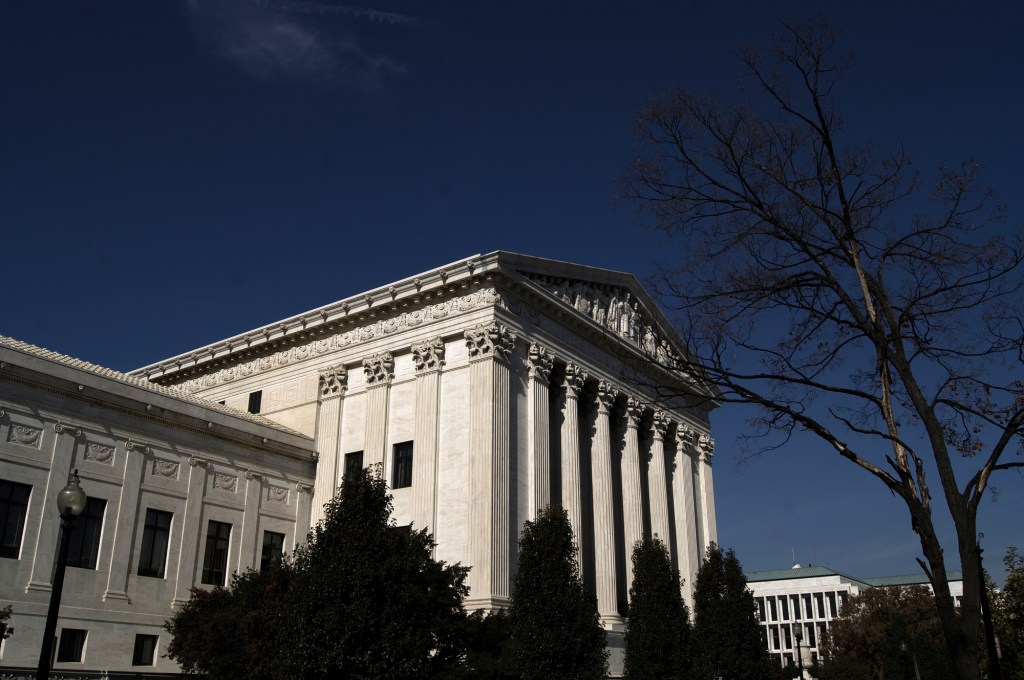
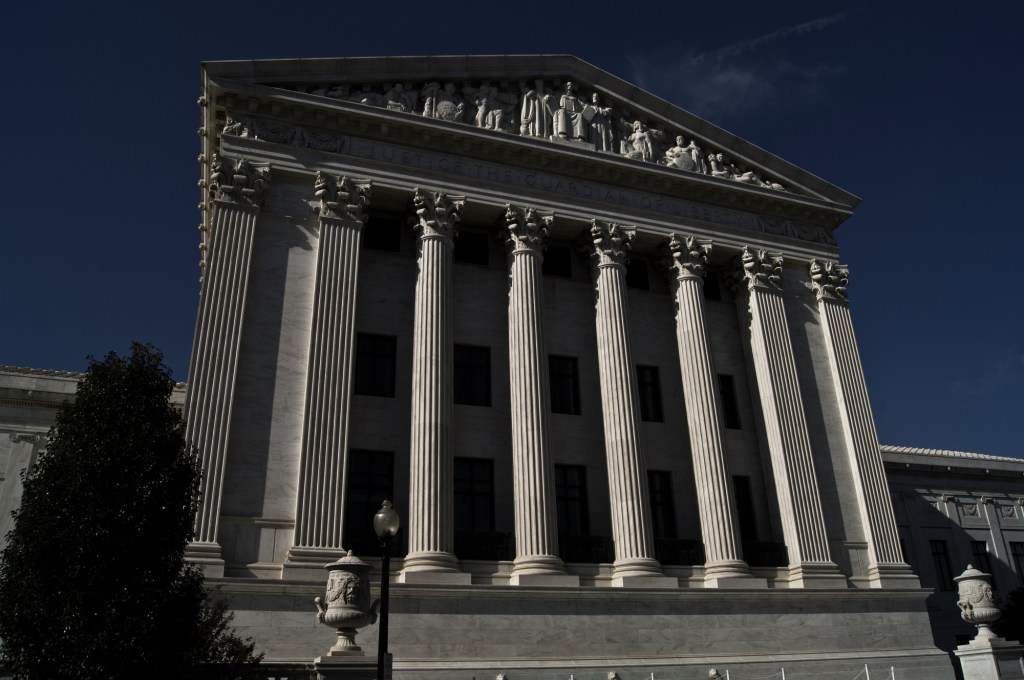
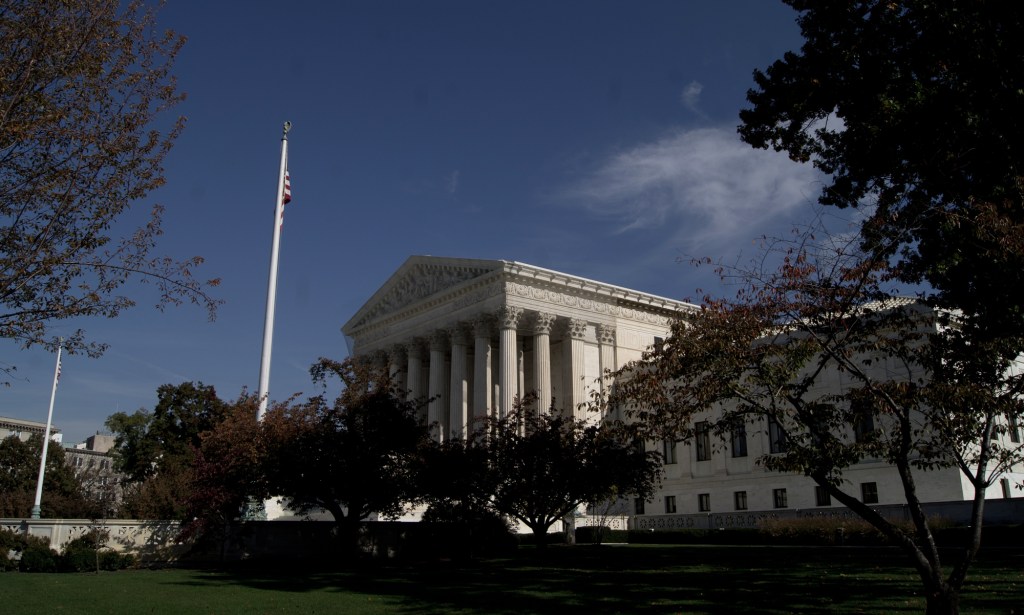
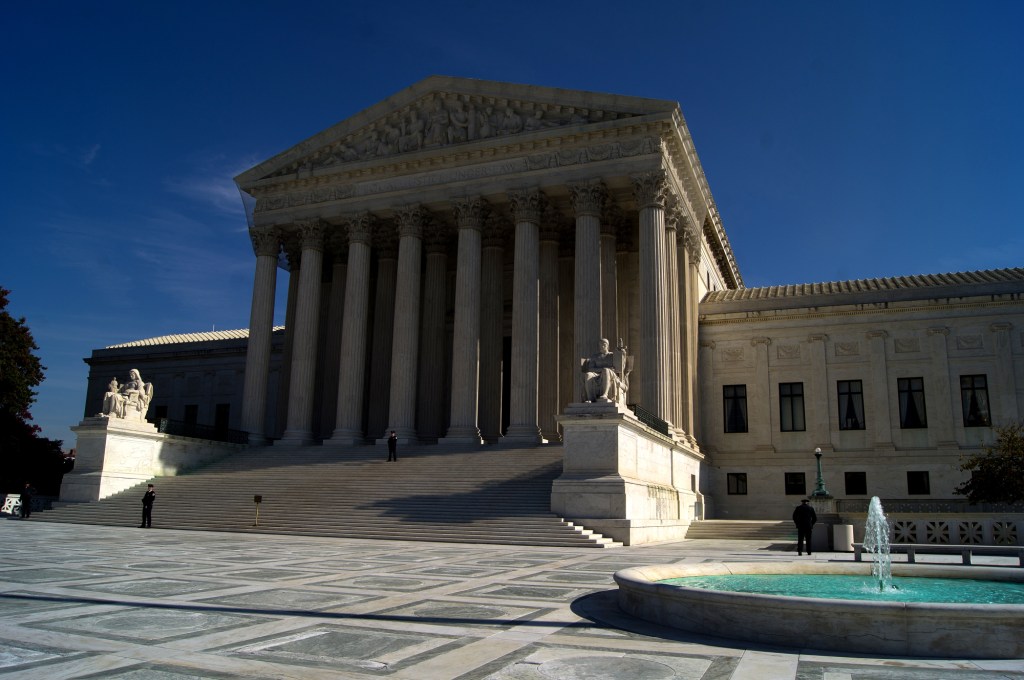
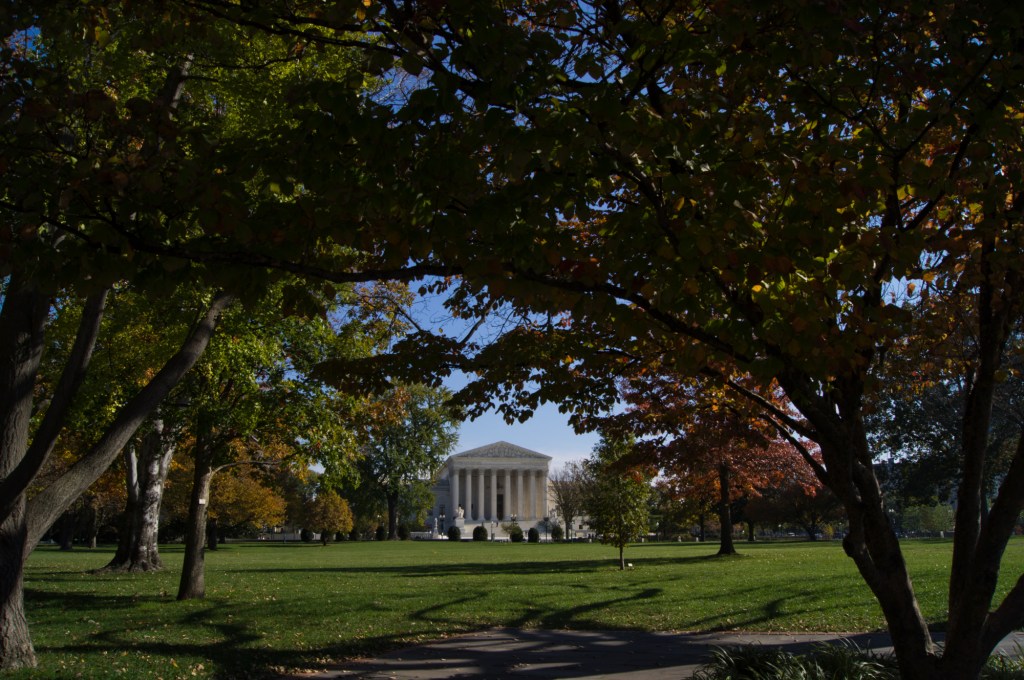
Saddened to hear of the death of Justice Ruth Bader Ginsburg, I’m reminded of a few stories of mine related to the Supreme Court. As a friend says, “brag, brag, blah, blah”. I believe sharing our stories is an important part of life.
When I attended Scattergood Friends School, a Quaker college preparatory school in rural Iowa, the Senior class would travel to Washington, DC, and New York City to learn about our Federal government, and the United Nations.
Our class was able to get into the Court to hear the rulings. I remember we were told over and over again that we needed to be absolutely quiet. It was definitely an impressive occasion.
I took my 35 mm camera on the trip. I had a couple of rolls of black and white film, each of which had room for 36 exposures. So I had to be careful about how many photos I took. I took a couple of photos of the Supreme Court. When I returned to Scattergood, I couldn’t wait to develop the negatives and print the photos on paper. As this will indicate, I was just beginning to learn how to work in a darkroom. A teacher had given me about a 10 minute lesson. It became obvious that wasn’t enough, when I ended up scratching the negatives.
I became eighteen years of age in 1969, during the Vietnam War. I was a Senior at Scattergood at the time. During the Senior trip mentioned above, one thing I did while in Washington was visit the Central Coordinating Committee for Conscientious Objectors. I was struggling to decide whether to apply for conscientious objector status. In the end, I decided that I could not participate even to that extent, and decided to be a draft resister. For more about that, see Fifty Years Ago, and Richmond Declaration on the Draft.
I expected to be arrested for that, as happened to many Quakers, whose example helped me make my own decision.
At the time I turned in my draft cards, men/boys were assigned a lottery number. Men with the number 1 were sent induction notices first, then 2, 3, etc. My number was 35 which meant I was sent an induction notice. I expected to be arrested when I did not appear at the induction center. But I was not.
The reason I was not arrested was because of a decision of the US Supreme Court. During the year my lottery number came up, there was a brief period when no one was being inducted into the armed forces. During that interval, another draft resister was arrested. He said he should not have been arrested, because his lottery number came up during this moratorium period. The Supreme Court agreed. That applied to my situation. The Supreme Court saved me from arrest, for which I was and am very grateful.
My other connection to the Court were the many photos I took of the building. For a number of years I was on the General Committee of the Friends Committee on National Legislation (FCNL). Quakers from all over the country would attend the FCNL annual meetings, which were held in Washington, DC. One reason I looked forward to those trips were the opportunities to take photos there.
We need a vision to navigate the changes that are being forced upon us by rapidly evolving environmental, economic and political chaos and a global pandemic. I’ve gone back through the many blog posts I’ve written about change and my vision of the future and try to blend them together here. We need a vision to guide us through the ongoing chaos. I hope parts of the following might help.
It is undeniable that we are experiencing environmental catastrophe, the effects of which will be increasingly destructive. Continuously climbing carbon dioxide levels are alarming. Much of the increasing heat from increasing greenhouse gas emissions has been absorbed by the oceans. But they are basically heat saturated, so air temperatures will begin to increase more rapidly. The warming waters fuel more powerful hurricanes. Rising temperatures also cause the release of methane, a much more potent greenhouse gas than carbon dioxide, as permafrost melts in the artic regions. And glaciers are rapidly melting, raising sea levels. As the ice melts, rather than their white surface reflecting the sunlight, the dark water absorbs it. These feedback loops will accelerate climate changes.
This deepening environmental chaos is causing failures of our social, economic, energy, health, education, safety, production and distribution systems. This already has, and will continue to result in millions of climate refugees. People without stable sources of food, water, shelter, healthcare, education, power, spiritual community, or security. Just this summer we have seen thousand within this country become climate refugees overnight as their communities were destroyed by wildfires.
Many don’t realize capitalism is one of the main factors responsible for our current conditions. Capitalism has not only been responsible for the unconscionable consumption of fossil fuels, but also artificially created classes based on wealth. The immoral accumulation of unbelievable wealth of just a few people and the worsening economic situation of the the rest of us.
This time of crisis is an opportunity to “do something drastic that has never been done before.” as my friend Ronnie James writes.
I’m of the firm opinion that a system that was built by stolen bodies on stolen land for the benefit of a few is a system that is not repairable. It is operating as designed, and small changes (which are the result of huge efforts) to lessen the blow on those it was not designed for are merely half measures that can’t ever fully succeed.
So the question is now, where do we go from here? Do we continue to make incremental changes while the wealthy hoard more wealth and the climate crisis deepens, or do we do something drastic that has never been done before? Can we envision and create a world where a class war from above isn’t a reality anymore?”
Ronnie James
We should not try to prop up this capitalist system. We need a radical revolution of values based upon caring for each other as Martin Luther King, Jr. told us. We need to build beloved communities. Recently I’ve been learning about Mutual Aid as one model that demonstrates how to do some of this now.
It (Des Moines Mutual Aid) started as group of my friends working with the houseless camps some years back. It has now grown into a solid crew that runs a free food store started by the Black Panthers, still work with the camps, we organized a bail fund that has gotten every protester out of jail the last few months, and we just started an eviction relief fund to try to get a head of the coming crisis, in cooperation with Des Moines BLM. We have raised $13,000 since Wednesday and the application to apply for the grants goes live this week.
Ronnie James
In an article in Friends Journal, Donald McCormick asks “why is there no vision for the future of Quakerism?” That, and Ronnie’s question, and the increasing threats from environmental destruction lead me to share my vision, which has been evolving over the past several decades.
Besides environmental disasters, there are other compelling reasons to design and build new communities. Our economic system has not adapted to the loss of jobs overseas and automation. Has not adapted to the change to a service economy. There are simply not enough paying jobs for millions of people. Many of those who do have work are paid at poverty levels. Many of us are forced to depend upon increasingly diminishing social safety nets.
To build a system that requires money to pay for everything, and then take away the ability to earn that money is immoral.
Building small communities in rural areas, or around urban farming, will give people fulfilling work to do, food to eat, shelter, and a caring community to belong to, restoring their dignity. These communities can work without requiring money in exchange for these things.
Following is a draft of how I see us creating such communities, with the intention of creating a model that can be rapidly replicated all over our country. So the flood of climate refugees have a template to build their own self sufficient communities when they are forced to migrate.
…with the intention of creating a model that can be rapidly replicated all over our country. So the flood of climate refugees have a template to build their own self sufficient communities when they are forced to migrate.
How do we speak to our current and approaching challenges?
People of faith try to pay attention to the Spirit at all times, so we don’t miss messages being given to us, telling us what we need to do next. Although we try to be attentive, we are often distracted by the demands of everyday life.
For those who have faith in a greater power, spirit, God, or however you express your spirituality, this moment is an opportunity to delve more deeply into your faith. This is also an opportunity to share your spirituality with those who don’t have faith or hope, as long as they are open to what you have to offer.
The way that has worked, in my experience, is to first offer the space for others to express their doubts, fears, or concerns to you. And really listen to what they are saying. Have the attitude that you can learn from this listening, because you can. Once someone else finds you are really listening, they often eventually reach the point where they begin to ask questions of you and to listen to your responses.
I wrote a post titled “Spiritual Depth” that tells a story about an indigenous man who changed the weather. That story made me realize my faith is sometimes too constrained, and I have work to do to deepen my own faith.
As an example, one recent vision led me to ride in a van full of people I didn’t know to Minneapolis to protect the water. When I heard of the opportunity, the Inner Light said, “do this.” That vision then led me to participate in the First Nation-Farmer Climate Unity March. The experiences on that March, and the friendships I made have brought me much closer to putting my visions into action.
Urgency
Environmental disasters
Weather extremes
Widespread and persistent drought, rising seas and more intense storms and fires
Destroyed homes, cities, land
Destroyed infrastructure
Water, food and energy scarcity
Resource wars
Collapsing social/political order
Climate refugees
Militarism and police states
Decreasing availability of complex health care and medications
Spiritual poverty
This year we have seen devastating wildfires, powerful tornados and hurricanes, derechos, flooding, draught, shrinking glaciers and rising, extreme temperatures. Thousands of people have become instant climate refugees when their homes were destroyed by fire or flooding. Climate changes continue to occur much more rapidly than predicted. Feedback mechanisms are accelerating changes.
The UN Refugee Agency estimates that by 2050, up to 250 million people will be displaced by climate change.
The Midwest
Here in the Midwest we are faced with two broad problems. How to adapt our own lives to deal with these changes, and what to do about the flood of people who will be migrating to the Midwest.
“Along America’s most fragile shorelines, [thousands] will embark on a great migration inland as their homes disappear beneath the water’s surface.” LA Times, Victoria Herrmann Jan 25, 2016
Since we will soon not be able to depend on municipal water and power, transport of food from distances, schools and hospitals, many will be forced to move to rural areas or create urban gardens and farms, where they can live and grow their own food.
The Choice
I think we have two choices.
One is to narrowly focus on the best we can do to prepare ourselves and immediate community to adapt to the coming changes.
The other is to also work on ways we can help the many climate refugees who will likely be migrating to the Midwest. Help them learn to adapt and thrive.
Disaster Preparedness
Many of us will make the second choice, to care for those who will be displaced. This will be like disaster relief work, only on a scale never seen before.
We first need to learn how to adapt to this uncertain future ourselves. Part of that will be to network with others, both to learn from, and to build a network to coordinate the response to the needs of the climate refugees.
We clearly need to find ways to learn from native peoples, who lived for thousands of years with respect for Mother Earth and all our relations. Need to find ways to show non native people why we need indigenous people’s leadership.
Building Communities-The Vision
We need to model how to build sustainable communities. There have been numerous such experiments in intentional community. But the model needed now must be created with the intention of being replicated many times over with minimal complexity, using locally available materials—a pre-fab community.
Pre-fab Community
Community hub with housing and other structures
Simple housing
Straw bale houses
Passive solar and solar panels
No kitchens, bathrooms or showers (community ones instead)
Stores, school, meetinghouse
Central kitchen, bathrooms and showers
Surrounding fields for food and straw
Water supply
Wells, cisterns and/or rain barrels
Power
Solar, wind, hydro, horse
Manufacturing
3 D printing
Pottery
Sawmill
Communication
Radio, local networks
Transportation
Bicycles
Horses
Pedal powered vehicles
Medical
Stockpile common medications
Essential diagnostic and treatment equipment
Medical personnel adapt to work in community
Spiritual
Meeting for worship
Meeting for business
Religious education
What follows are ideas I had written some time ago (2015) of how our communities of the future might begin to be built now. Reviewing this now, it is encouraging to see that many of these ideas are being put into practice.
I believe we are called to be out in the communities, in the streets, actually working side by side with those suffering. Or as we are suffering ourselves. That involves accepting others and their differences. We have a debt to pay for the privileges we have been given, and the only way to begin to pay that off is by actually working side by side. We need to do this for our own spiritual health. We need to turn away from focusing on ourselves, and work to build the beloved community that Martin Luther King envisioned. From <https://kislingjeff.wordpress.com/2015/10/03/vision-and-the-future/>
What if we had photographers, musicians, poets and other writers, podcasters, painters, sculptors, dancers, faith leaders, politicians, children, students, teachers, retirees, business owners, police and firemen, etc. all create how they see the same subject, in their own medium?
And then all the various works that were produced were exhibited all together in the same place, to the extent possible.
Taking this idea further, I was thinking the focus of the work described above could be symbolic of our present situation, maybe a run-down neighborhood. A combined vision like that above of a specific block of the city might show how various people see that. This could show what the present looks like, and provide the starting point from which to begin to build the future we would like to see.
That could then be followed by having the same artists and people repeat the exercise, only this time producing their vision of how they would like to see this city block transformed in the near future.
Maybe a store owner would work with an artist to paint a mural on the wall of the store. Maybe a local business would sell the music or other artwork of local artists. Maybe a community space for telling stories, playing chess, creating artwork could be created. A community garden would be a great part of the new neighborhood.
An array of solar panels could provide basically free electricity to residents and businesses.
Rain barrels for every home in the neighborhood could help water a garden in every yard.
A 3D printer could produce needed products.
Local internet service could be created.
Computer/cell phone applications could be created to address community issues.
Emergency medical technicians and other health care providers could have a space in the neighborhood to provide basic medical care.
Policemen could have a community space and presence, for community policing, getting to know the neighbors.
Retirees and those unemployed could provide child care and education. Community schools and classes would provide an opportunity to provide quality education, including spending much time in the community, learning about, and providing leadership opportunities.
What does the future look like to you?
So here’s to expanding beyond our initial beliefs. To opening our minds to higher reasoning, to fields of toroidal blossoms where we can lay in stacks of dimensional light and turn off the oppressive broadcasting station of the patriarch and tune our dials to the matriarchal podcast within nature, human and non-human. Here’s to taking our power back.
In love and service,Bear (Nahko Bear)
We are asking you: To travel deep into the mind of the heart; To look up into the sky, streaked with fewer planes, and see it, to notice its condition: clear, smoky, smoggy, rainy? How much do you need it to be healthy so that you may also be healthy? To look at a tree, and see it, to notice its condition: how does its health contribute to the health of the sky, to the air you need to be healthy? To visit a river, and see it, to notice its condition: clear, clean, murky, polluted? How much do you need it to be healthy so that you may also be healthy? How does its health contribute to the health of the tree, who contributes to the health of the sky, so that you may also be healthy?
“An Imagined Letter from Covid-19 to Humans” by K. Flyntz.
“Throughout my life, it has been an honor to watch my elders make medicine in their mouths and feed the world with their tender sacred speech. Following their example, I want to share the words that make waterfalls, lakes and rivers, and offer some medicine to those who are wondering how we will continue living when the Earth that sustains our lives is so damaged. What I share here, far from being my own creation, is ancient memory that belongs to all of us.
Deer and Thunder; Indigenous Ways of Restoring the World, Arkan Lushwala
“Fear is not real. The only place that fear can exist is in our thoughts of the future. It is a product of our imagination, causing us to fear things that do not at present and may not ever exist. That is near insanity. Do not misunderstand me, danger is very real but fear is a choice.”
from the movie After Life
People often mistake hope for a feeling, but it’s not. It’s a mental discipline, an attentional practice that you can learn. Like any such discipline, it’s work that takes time, which you fail at, succeed, improve, fail at again, and build over years inside yourself.
Hope isn’t just looking at the positive things in this world, or expecting the best. That’s a fragile kind of cheerfulness, something that breaks under the weight of a normal human life.
To practice hope is to face hard truths, harder truths than you can face without the practice of hope. You can’t navigate dark places without a light, and hope is that light for humanity’s dark places.
Hope lets you study environmental destruction, war, genocide, exploitative relations between peoples. It lets you look into the darkest parts of human history, and even the callous entropy of a universe hell bent on heat death no matter what we do. When you are disciplined in hope, you can face these things because you have learned to put them in context, you have learned to swallow joy and grief together, and wait for peace.
Most of us lack the stories that help imagine a future where we thrive in the midst of unstoppable ecological catastrophe. We have been propelled to this point by the myths of progress, limitless growth, our separateness from nature and god-like dominion over it.
If we are to find a new kind of good life amid the catastrophes these myths have spawned, then we need to radically rethink the stories we tell ourselves. We need to dig deep into old stories and reveal their wisdom, as well as lovingly nurture the emergence of new stories into being. This will not be easy. The myths of this age are deeply rooted in our culture.
My young children need me to be an adult. They are the reason I feel despair so profoundly. Yet they are also the reason I cannot wallow in it, acquiesce to it, or turn away from the horror. This is the reason I have sought to imagine another way, and to find and focus on that which I might do to usher that vision into existence, and to behave as if what I do really matters for their future. They are the reason I have directed my imagination to the multitude of paths only visible once I looked beyond the myths that have clouded much of my thinking. It is up to me show them a way beyond grief to a way of life truly worth living for, even if it isn’t the path I had expected to be showing them.
All that is needed is to cross the threshold with ready hands and a sense, even a vague one, of what might be yours to do.
All that is needed is to cross the threshold with ready hands and a sense, even a vague one, of what might be yours to do.
James Allen
We gain a vision of what our potential is from our elders and from the Teachings of the Sacred Tree. By trying to live up to that vision and by trying to live like the people we admire, we grow and develop. Our vision of what we can become is like a strong magnet pulling us toward it.
Bopp, Judie. Sacred Tree: Reflections on Native American Spirituality (Kindle Locations 150-151). National Book Network – A. Kindle Edition.
Each Warrior of the Light contains within him the spark of God. His destiny is to be with other Warriors , but sometimes he will need to practice the art of the sword alone; this is why, when he is apart from his companions, he behaves like a star. He lights up his allotted part of the Universe and tries to point out galaxies and worlds to all those who gaze up at the sky. The Warrior’s persistence will soon be rewarded. Gradually, other Warriors approach , and they join together to form constellations, each with their own symbols and mysteries.
Coelho, Paulo. Warrior of the Light: A Manual (p. 89). HarperCollins. Kindle Edition.
For us, warriors are not what you think of as warriors. The warrior is not someone who fights, because no one has the right to take another’s life. The warrior, for us, is one who sacrifices himself for the good of others. His task is to take care of the elderly, the defenseless, those who cannot provide for themselves and above all, the children, the future of humanity.
[Note: with multiple disasters occurring now, and since environmental devastation has been a focus of my life, its hard not to write about these unfolding disasters. But what is important to me, what I am led to think about now, is how we can live through these difficult times. Can make the changes necessary to build the best future we can for our children. I am discovering Mutual Aid organizations offer an example.]
As my friend Ronnie James says below, “what we have is each other. We can and need to take care of each other.” It is as simple and yet complicated as that.
Earlier I wrote about the ways those working for justice discover each other, because that is often a challenge.
But the first step is to discern from the Spirit what you are being led to do. That is the critical foundation so many fail to do. The term “good intentions” is when someone wants to do good, but was not successful. I suspect they did not have a spiritual foundation.
The path forward must be a new way, something we cannot do on our own. Requires the leading of the Spirit, and connection with those who are similarly led and are implementing that new path.
We need to find the strength and will to begin this work. You may have heard or read that you need to be prepared to be vulnerable. We have all experienced vulnerable occasions; beginning a job, beginning a relationship, etc.
Looking back, every significant venture I’ve been led to, required a willingness to be vulnerable. Being led down a new path by definition means we will not know exactly what to expect. Means we will have to take risks, and will make mistakes, as we make our way into what is not known to us when we begin our journey. Making mistakes is so valuable because it teaches what doesn’t work. Moves us closer to what does.
I started to list below some of the times I’ve felt vulnerable and was surprised at the length of it.
I read in the talk he recently gave at a Black Lives Matter teach-in, The Police State and Why We Must Resist, included below, that he represented Des Moines Mutual Aid. So I asked him to tell me about that.
It started as group of my friends working with the houseless camps some years back. It has now grown into a solid crew that runs a free food store started by the Black Panthers, still work with the camps, we organized a bail fund that has gotten every protester out of jail the last few months, and we just started an eviction relief fund to try to get a head of the coming crisis, in cooperation with Des Moines BLM. We have raised $13,000 since Wednesday and the application to apply for the grants goes live this week.
Ronnie James
Then I was intrigued when I read something else he wrote recently:
So I work with a dope crew called Des Moines Mutual Aid, and on Saturday mornings we do a food giveaway program that was started by the Panthers as their free breakfast program and has carried on to this day. Anyways, brag, brag, blah, blah.
So I get to work and I need to call my boss, who is also a very good old friend, because there is network issues. He remembers and asks about the food giveaway which is cool and I tell him blah blah it went really well. And then he’s like, “hey, if no one tells you, I’m very proud of what you do for the community” and I’m like “hold on hold on. Just realize that everything I do is to further the replacing of the state and destroying western civilization and any remnants of it for future generations.” He says “I know and love that. Carry on.”
Ronnie James
My Spirit lit up when I read that. This was just the kind of opportunity I was looking for since returning to Iowa after my retirement. My experiences in Indianapolis showed me time and again that building relationships in communities is the way justice work needs to be done.
We need to be careful about inviting ourselves to join certain projects. I felt I was getting to know Ronnie well enough to ask if I it would be appropriate for me to participate in the food giveaway. He said “definitely”, so I prepared myself to head into Des Moines last Saturday morning. Feeling a bit vulnerable. Which I didn’t think I needed to feel because the people I would meet are people who show up to do actual justice work. Just the kind of people I wanted to get to know. And yet, I was a little uncomfortable. My experiences are anytime I’m feeling that way, I am doing something that I will look back on as an excellent adventure. And so it was, again.
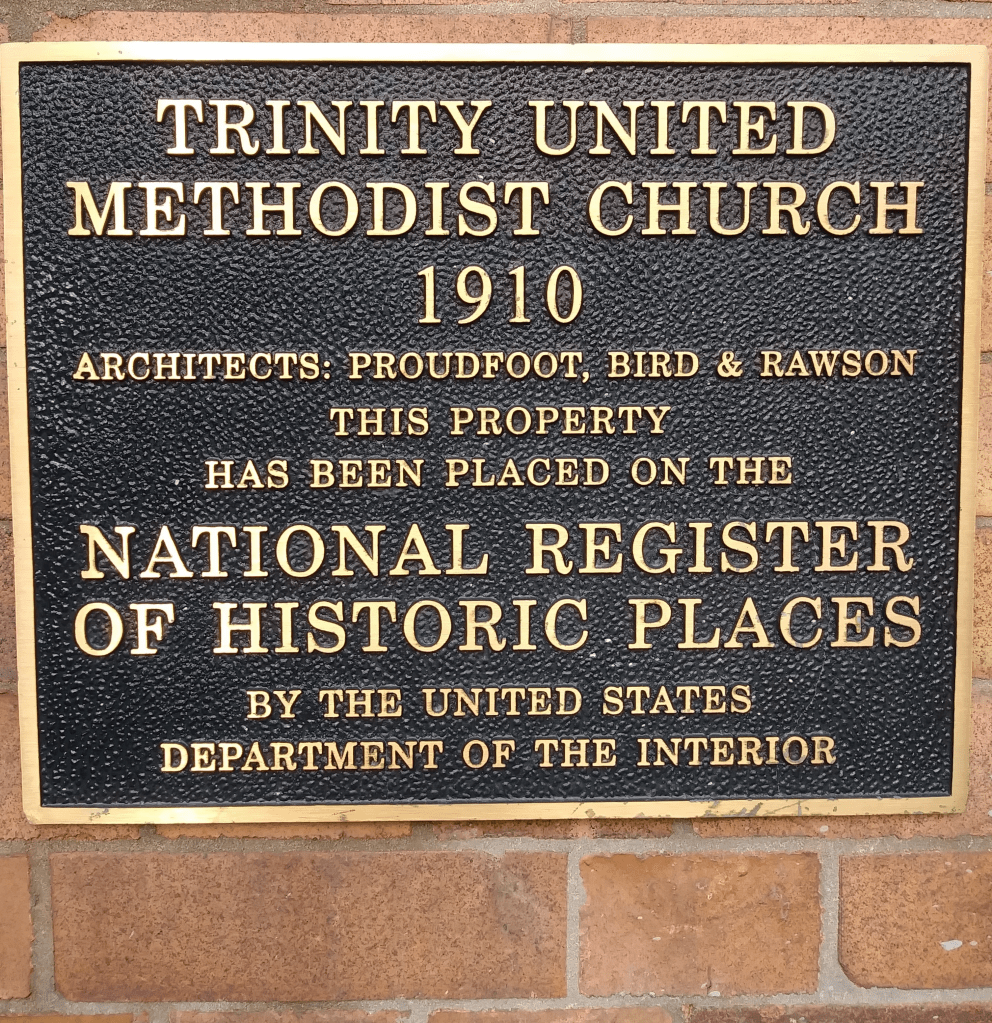
Last Saturday found me driving to Trinity United Methodist Church in Des Moines. I was glad to see Ronnie face to face for just the second time, even though it felt we had been friends for awhile, with all the messages back and forth.
Eventually there were about a dozen of us gathered in the church basement. Forty empty boxes were set out on tables. (When I shared this story with my Quaker meeting, Bear Creek, I learned some tables had been donated to this church when the mental health center Bear Creek supported was closed).
I was surprised at the amount of food that had been donated. Bread and cookies that were taken off the shelves when past their due date. But there were also a lot of vegetables.
Patrick told me, in a friendly way, “we don’t do a lot of telling people what to do.” So I jumped in, grabbed an armful of food and went around distributing it in the boxes. The hills of food rose higher and higher. That took about an hour.
Then these boxes of food were carried outside and placed on tables. People waiting for the food had parked in a nearby lot. One of us directed the cars to drive to the tables, where we put in the boxes. People smiled and said thanks.
Hello all, my name is Ronnie James, and I am here representing Des Moines Mutual Aid.
I am descended from numerous peoples of so-called north america.
At this point I am supposed to do a land acknowledgment, but I don’t like what those have been distorted into. Instead I will say you are standing on and directly benefiting from stolen land, within a nation built by stolen bodies, which is the foundation of the police state that occupies these sacred grounds of the original peoples. If you would like to know more of who’s land you are on, there are numerous resources. We are still here, and numerous, just ask us.
Historically, the police and other law enforcement were formed to protect the interests and property of the moneyed classes from the rest of the People. This “property” included the bodies of the enslaved and was the justification for brutally repressing the righteous and inevitable revolts born from the atrocity of slavery. This same philosophy of endless possession was the bloodlust that fueled the “Indian Wars” and the theft of Indigenous land and bodies that continues to this day. (Wampanoag, 2020)
Today, this same war of conquest, the repression of the many for the benefit of the few, continues.
Currently, Des Moines Mutual Aid and its many accomplices have been fighting a battle with the city of des moines and it’s foot soldiers trying to repress our houseless population from utilizing unused “property”. The basic universal need of a place to rest and be safe is trumped by the need of the wealthy, and the wannabe wealthy, to control every inch they can possess. It is a war for control, and the pigs have enlisted willingly.
This same war of conquest is currently using the mass incarceration machine to instill fear in the populace, warehouse cheap labor, and destabilize communities that dare to defy a system that would rather see you dead than noncompliant. This is the same war where it’s soldiers will kill a black or brown body, basically instinctively, because our very existence reminds them of all that they have stolen and the possibility of a revolution that can create a new world where conquest is a shameful memory.
As bleak as this is, there is a significant amount of resistance and hope to turn the tide we currently suffer under. We stand on the shoulders of giants that have been doing this work for centuries, and there are many lessons we can learn from.
The first, and possibly the most important, is that it was not always this way, which proves it does not have to stay this way.
What we have is each other. We can and need to take care of each other. We may have limited power on the political stage, a stage they built, but we have the power of numbers.
Those numbers represent unlimited amounts of talents and skills each community can utilize to replace the systems that fail us. The recent past shows us that mutual aid is not only a tool of survival, but also a tool of revolution. The more we take care of each other, the less they can fracture a community with their ways of war. Organized groups like The American Indian Movement and the Black Panther Party for Self Defense showed that we can build not only aggressive security forces for our communities, but they also built many programs that directly responded to the general wellbeing of their communities. This tradition began long before them and continues to this day. Look into the Zapatistas in Southern so-called Mexico for a current and effective example.
These people’s security forces, or the “policing of the police” not only helps to minimize the abuse and trauma they can inflict on us, but it begins to shift the power balance from them to us.
Mutual Aid programs that help our most marginalized or other events that work to maintain our spirits result in stronger communities. A strong community is less vulnerable to police intrusion. 99% of our conflicts can be solved by those affected by them, but only with the support of those around them. Anytime we call on the police to mediate our problems, we are risking ourselves or a loved one from being hurt or worse.
The more we replace the police with organized community response to conflict, the safer we will be. Another powerful benefit is the removal of power from those that take their orders from those that have no interest in your well-being, at least past it being useful to amass and increase wealth.
Of course, part of this fight of police abolition will be fought on the political stage, but let’s not fool ourselves that the state and the wealthy will ever give up tight control on all resources. We can lobby and vote to have police resources diverted to less dangerous organizations, but they will still be working for the same state and same class that have dispossessed and repressed us for centuries. Every election has the possibility of reversing any policy gain we may won. Some of the fight will be in the government offices, but the majority of it will be us, in the street.
Many communities work to train amongst themselves mental and physical health workers, conflict mediators, and anything else we need, despite the state and it’s soldiers insistence that they are the sole “authority” of these skills, and always with the implied threat of violence.
As we work toward this, and this summer has proven des moines has the heart, desire, and skills to do so, we still have to deal with what’s in front of us.
We each have skills and resources we can utilize towards the abolition project. Some of us can use the halls of the system to make short term change there, others have skills that produce food, provide medical care, or care for our precious youth, some are skilled in the more confrontational tactics needed. Once we envision that world our ancestors want for us, finding our role is natural.
All Power To The People.
Ronnie James
If we are to survive, and more importantly, thrive, we know what we will have to do.
Some experiences when I felt vulnerable:
Turning in my draft card at the Selective Service office
Deciding to live without a car
Joining the Friends Volunteer Service Mission, where it was up to me to create my own plan to work in an inner city neighborhood I went to live in
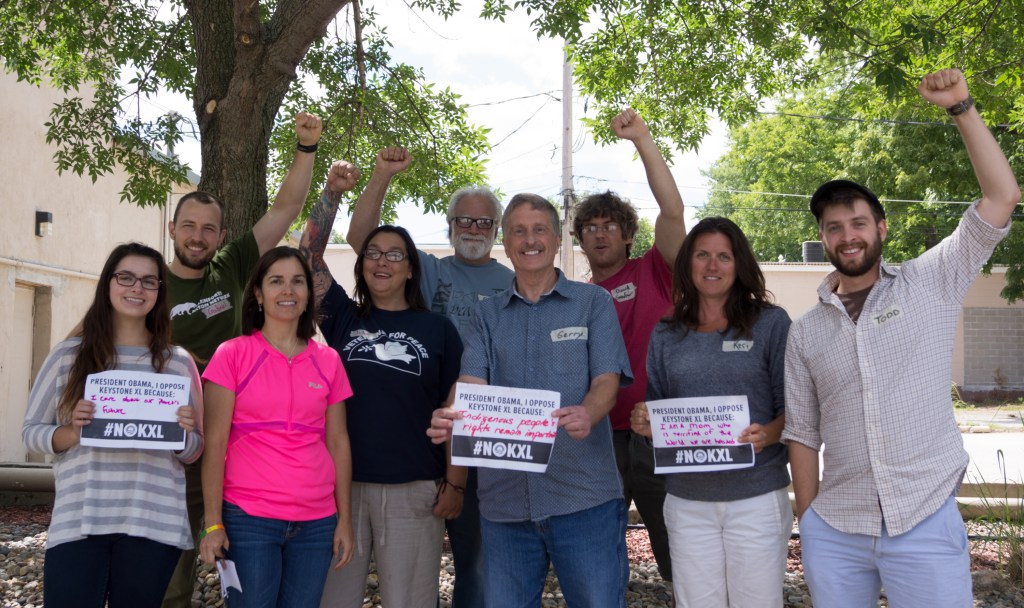
Join the Keystone Pledge of Resistance to learn to design nonviolent direct actions, and train others to participate in them
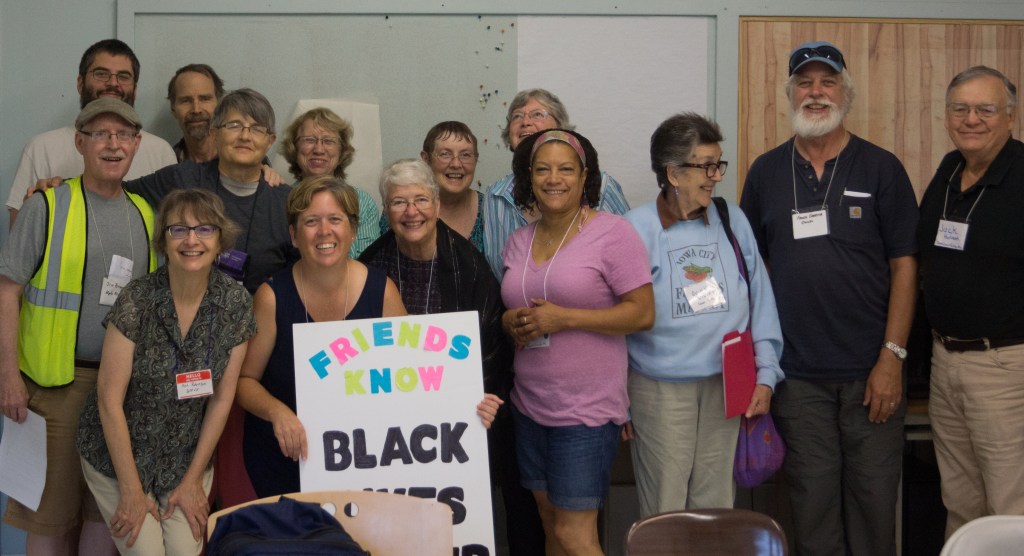
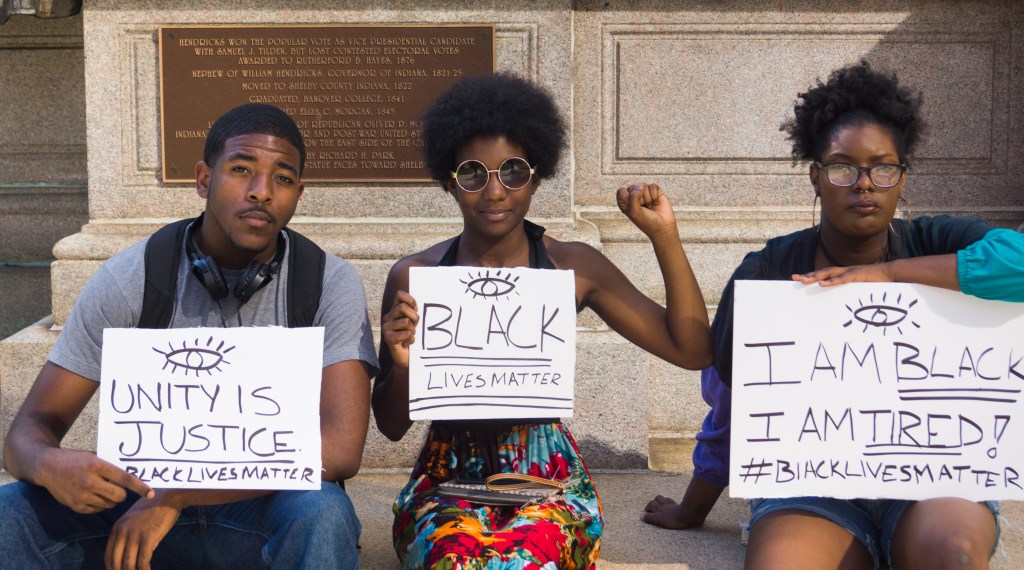
Hold a sign saying “Quakers Know Black Lives Matter” during vigils on the streets of downtown Indianapolis
Leave working in the neonatal ICU, which I loved, to go into research
Take on complex computer software projects I had no idea how to do when I started them. One of which took three years to complete
Engage with the Kheprw Institute, a black youth mentoring and empowerment community
Implement the Quaker Social Change Ministry model with North Meadow Circle of Friends
Agree to be clerk of the Peace and Social Concerns Committee of Iowa Yearly Meeting (Conservative). At our first meeting my hands were shaking so badly I couldn’t take notes
Going into the Chase bank in downtown Indianapolis to close my account. While holding a sign saying “Chase funds Dakota Access Pipeline”
Join a van full of people I didn’t know to go to Minneapolis to hold a vigil at the headquarters of USBank, which funds fossil fuel projects
Participate in the First Nation-Farmer Climate Unity March as a way to learn about Indigenous peoples. Having no idea whether I could walk the 94 miles of the March
Raise the issue of Quaker residential schools and the damage done there with my new native friends
I know the Spirit leads us to what we are supposed to do. Resist the draft. Don’t own a car. Work in a children’s hospital.
The Spirit also leads us to people, to each other.
Raised in the Bear Creek community, I didn’t think about how all these people came to be there. As a child I just thought things had always been the way they were. But attending Scattergood Friends School, community was the major part of our education. We were taught to pay attention to our own community, most powerfully because the school functioned as a community. And, because of that, we developed deep bonds with each other that we carried throughout our lives.
Then we began to create our own families, biological and/or not. The most intimate communities, besides the families we grew up in.
Many of us became involved with university and workplace communities. Each not as organized and focused, because those communities usually involved many more people, few of which we spent significant time with. I was blessed to experience an exception to that rule, because I was able to work for decades with the same people in our Infant Pulmonary Function Lab at Riley Hospital for Children.
Beyond our family and workplace, we often created communities related to our interests.
Those who are led to have Spirit led lives join or develop faith communities. And/or expand the faith communities they were raised in.
My experience is faith calls us to engage with other people and communities. But there is often a struggle to find those people and communities. Part of the reason is there are usually small numbers of people doing this kind of work. That is in part because this work can be so frustrating that people too often give up trying. I’ve often found myself to be impatient and frustrated by the difficulty, and the length of time this can take.
But if we pay close attention to the Spirit, we will, eventually, be led to these people, and/or they will be led to us. Finding such people and communities is hampered because there usually isn’t a specific place to find them.
Whatever you think about social media, it has been very helpful in my search for people and communities. I first learned about the Kheprw Institute community I was blessed to become part of via the Internet. I learned about the Keystone Pledge of Resistance via the Internet, and in turn used the Internet to recruit people to join us in the Resistance. And similarly for the Dakota Access pipeline gatherings.
It was via the Internet that I learned of the work of my now good friend, Reza Mohammadi. He posted a video he had created related to his work with the American Friends Service Committee. I contacted him about that via Facebook, and we wrote back and forth. I am really glad that he is now living here in Indianola where he attends Simpson College. I believe the Spirit had something to do with that.
One of the reasons it was so difficult to move back to Iowa three years ago was leaving the friends I had worked so hard with on justice and faith issues. I had to basically start over to develop a network of activist friends and organizations. I primarily used social media to do that. I did have my Quaker faith community in Iowa to help with these efforts as well.
I faced another hurdle when I was led to learn about Indigenous ways to live and protect Mother Earth. That wasn’t something that could happen via social media. There are large barriers of distrust between Indigenous and White peoples. Somewhat ironically, there were additional barriers because of Quaker’s efforts to forcibly assimilate native children into White culture, which thereby erased their own culture. That is ironic because Quakers and those of other faith communities, were doing what they thought would be helpful to native peoples. Instead, tremendous damage was done, the traumas from that have been passed from generation to generation. What has been called “an open wound” among native peoples today.
The way things developed for opportunities for me to connect with Native Americans over the past three years is another story, or series of stories. I’ve written about all of that on many blog posts. https://kislingjeff.wordpress.com/?s=first+nation+farmer
My intention today is to share how Ronnie James and I were led to meet and become friends with each other. I wanted to share this in hopes it might be useful to you to make similar connections you are led to look for. And to share about the very good work he does. Work that I have been led to do begin to do as well.
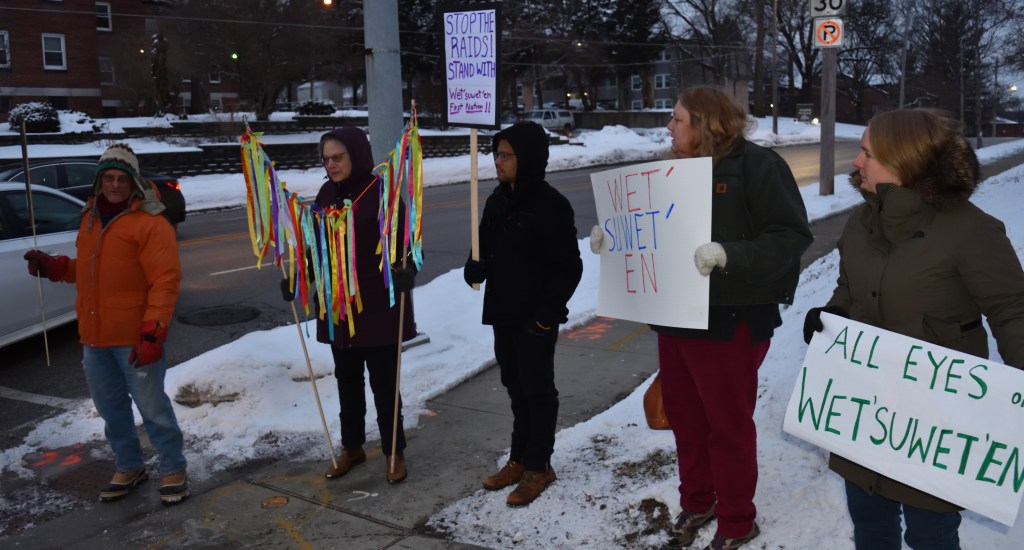
At the beginning of this year I had begun to learn about the struggles of the Wet’suwet’en peoples to stop the construction of a natural gas pipeline (Coastal GasLink) through their pristine lands in British Columbia. Bear Creek Friends meeting sent a letter to the BC premier in support of the Wet’suwet’en and donated money.
Several of us, including Peter Clay and Linda Lemons, were led to hold a vigil in support of the Wet’suwet’en on February 7, 2020. I posted the event on Facebook, but doubted anyone else would come, because the Wet’suwet’en were never in the news here. But Ronnie James did, saying he was surprised anyone else had heard of the Wet’suwet’en.
We became Facebook friends, and have had many conversations via Facebook. I began to learn of the things he is involved in, and also found him to be an excellent writer. He wrote, for example:
“I’m of the firm opinion that a system that was built by stolen bodies on stolen land for the benefit of a few is a system that is not repairable. It is operating as designed, and small changes (which are the result of huge efforts) to lessen the blow on those it was not designed for are merely half measures that can’t ever fully succeed.
So the question is now, where do we go from here? Do we continue to make incremental changes while the wealthy hoard more wealth and the climate crisis deepens, or do we do something drastic that has never been done before? Can we envision and create a world where a class war from above isn’t a reality anymore?”
Ronnie James
I asked, and he gave me permission to use that in a few blog posts. Another time he wrote:.
So I work with a dope crew called Des Moines Mutual Aid, and on Saturday mornings we do a food giveaway program that was started by the Panthers as their free breakfast program and has carried on to this day. Anyways, brag, brag, blah, blah.
So I get to work and I need to call my boss, who is also a very good old friend, because there is network issues. He remembers and asks about the food giveaway which is cool and I tell him blah blah it went really well. And then he’s like, “hey, if no one tells you, I’m very proud of what you do for the community” and I’m like “hold on hold on. Just realize that everything I do is to further the replacing of the state and destroying western civilization and any remnants of it for future generations.” He says “I know and love that. Carry on.”
Ronnie James
When I shared this recently, a question made me realize some might think “Just realize that everything I do is to further the replacing of the state and destroying western civilization and any remnants of it for future generations” might think this is about violence, when it is not. It’s about supporting Indigenous ways to help build a better future for our children, for us all.
Ronnie was just who I had been looking for, to help me begin to understand Indigenous ways of living. And to show me how to begin to engage with these efforts locally. I am blessed to have a number of native friends now, from whom I am also learning many of these things.
Athletes are once again demonstrating leadership to call attention to, and demand change to stop injustice. It has been amazing to see kneeling during the national anthem, for which Colin Kaepernick was vilified, now supported by athletes and supporters of all sports.
We are being reminded of how Muhammad Ali was similarly treated when he refused to participate with the military draft during the Vietnam War. His courage in doing so. The example he set that continues to inspire us today.
In the national memory of the Vietnam War, anyone who violated draft laws is typically seen as selfish, cowardly and unpatriotic. It was one thing for civil rights activists to confront the government by breaking the law; by 1967, many of them were regarded as among the nation’s finest citizens. But if a citizen defied the draft laws to take a similar stand, few saw it as the resisters did: as a desperate appeal to the nation’s highest ideals.
A loose coalition of “Resistance” organizers planned the national draft card turn-in. They were inspired by the civil rights movement, the Berkeley Free Speech Movement (during which one of its leaders, Mario Savio, described having to “put your bodies upon the gears, and upon the wheels, and upon the levers” in order to stop the operation of an odious “machine”) and the precedent of resisters such as Muhammad Ali. By risking indictment, they thought that they could put the Johnson administration — and the war itself — on trial in court proceedings all over the country.
“There was something of the flying trapeze in these maneuvers now,” Norman Mailer reported when the draft cards were returned to the Justice Department. The commitment to an uncertain future that might involve a prison sentence was like a “moral leap which the acrobat must know when he flies off into space,” he wrote. “One has to have faith in one’s ability to react with grace en route, one has,” he concluded, “to believe in some kind of grace.”
Muhammad Ali was one of the most significant influences in my life, at a difficult time in my life (late 1960’s). Approaching my 18th birthday, when I would have to decide what I was going to do about registering with the Selective Service System, I saw Muhammad Ali take a very public, very unpopular stand against the Vietnam War.
He said:
“Under no conditions do we take part in war and take the lives of other humans.”
“It is in the light of my consciousness as a Muslim minister and my own personal convictions that I take my stand in rejecting the call to be inducted. I do so with the full realization of its implications. I have searched my conscience.”
“Man, I ain’t got no quarrel with them Vietcong…they never called me _______ ” (a racial epitaph).
It was very clear what the consequences of that decision could be, and yet he would not be persuaded to change his position, despite knowing he was jeopardizing his boxing career.
I was impressed by his clear vision of the responsibility of every person to stand for peace and freedom, and every person’s responsibility to the world community, no matter their religion, race or country.
He helped me make my own decision to refuse to participate with the draft, and the Vietnam War. And continued to be an inspiration in the days that followed.
The way to honor Ali is be be Ali today.
Rabbi Michael Lerner
Rabbi Michael Lerner delivered a powerful speech about Muhammad Ali and his moral power at Ali’s funeral. He said the way to honor Ali is to be Ali today.
An anniversary is a chance to remind ourselves of something important to us. This is especially interesting when that event has continued to impact our lives. Looking back is an opportunity to put that in perspective, to recognize things that we might not have realized at the time, focused as we were on living those experiences. If the intention was to build on that experience, we can see how successful we have been. And determine if there is work that still needs to be done.
Two years ago this week, I was walking down rural gravel roads, along the route of the Dakota Access pipeline (DAPL) with a small group of around thirty native and nonnative people. One of us called it a sacred journey.
We began in Des Moines, Iowa, and walked, camped, and shared stories from September 1 to September 8, 2018. We walked ninety four miles over those eight days to reach our destination in Fort Dodge.
This was the First Nation-Farmer Climate Unity March. The application form to participate on the March is still online, and can be seen here: http://boldiowa.com/2018-marcher-application/. That provides a lot of detail related to the March.
This video was used to promote the March, to recruit people to join. Fintan Rowan Mason, who was one of the Marchers, created it.
As the video indicates, at the time of the March, the pipeline had already been built, and oil was flowing through it. So why were we walking along it? One of the goals of the March was to bring attention to the abuse of eminent domain to force landowners to allow pipeline construction on their land. Even if they did not want to do so. A case before the Iowa Supreme Court related to this was held the week after the March. The case was decided against the landowners.
And yet there is still hope to stop the flow of oil through the pipeline. A Federal judge ordered a new, complete and accurate environmental impact study be done, especially taking into account the impact on native peoples. These continued roadblocks cost the pipeline company, Energy Transfer, a great deal. This is an especially bad time for oil companies, with the dramatic decrease in oil consumption related to the coronavirus pandemic. And the rapid expansion, and decreased cost of renewable energy sources.
This video by my friend Matthew Lone Bear, one of the Marchers, gives a good sense of our marching experiences.
We walked 9 miles on this day after a tireless night of thunderstorms and flash floods. The Iowa State football game was cancelled due to the storm. Total mileage 22.2 miles down.
But as the name of the March indicates, another goal, the most important for me, was to create a community of native and nonnative people who came to know, and begin to trust each other, so we could work together on issues of common concern. I feel truly blessed to have become friends with those I shared this sacred journey with. And am grateful for the many things we have done together since. And look forward to what we will continue to do.
What comes to matter then is the creation of the best possible story we can while we’re here; you, me, us, together. When we can do that and we take the time to share those stories with each other, we get bigger inside, we see each other, we recognize our kinship — we change the world one story at a time.
Richard Wagamese
So on this two year anniversary of the March, it is a pleasure to look back on how we overcame the adversities of walking that distance, often in pouring rain, and shared our stories with each other. To remember the many ways we have worked together since the March. And look forward to what we will continue to do.




















































 Quakers, social justice and revolution