The reason I’ve been writing so much about Mutual Aid recently is because I have seen this concept in action. It has been amazing to join a group that is literally sharing food with those who need it.
Mutual Aid has a fundamentally different approach compared to relief agencies I’m familiar with. Just now I had to change that sentence, because I wrote “compared to OTHER relief agencies.” Those agencies work from the model of “us” helping “them”.
Mutual Aid, instead, is all about how we can help each other. One of the things the Free Food Store of Des Moines Mutual Aid does is take away the stigma and guilt of those who need food. It is the system that has failed them. When the car door is opened and we begin to put in the boxes of food, I’ve noticed we all greet those in the car cheerfully. I especially like those cars that have children, because they always greet me with a big smile. But it also makes me feel badly that these children and their families might go hungry if not for the food we share.
As stated below, our country is deeply divided. Even if the president is defeated, there are still many who support his ideas. This is another benefit of Mutual Aid. We can break down the political barriers if we work together to help each other.
In the weeks leading up to Election Day, some Biden supporters began to see a Biden election landslide as a necessary outcome to rebuke Donald Trump. However, this swift rebuke of Trump did not arrive as we watched the race turn into a battle of attrition overnight.
Anti-Trumpers’ desires for a repudiation of Trump is understandable. This administration has traumatized many and people desperately want to see this president held accountable and repudiated.
However, as some activists and observers have suggested on social media and in opinion pieces, this country is deeply polarized, and defeating Trump would not marginalize Trumpism, nor eradicate the structures that his brand of politics exploited and deepened — structural racism, settler colonialism, sexism, classism and policing.
No Matter Who Wins This Election, We Still Have to Defeat Trumpism, BY Austin C. McCoy, Truthout, November 5, 2020
What is Mutual Aid?
Mutual Aid is…
Getting people together in your community to provide material support to each other
Building relationships with your neighbors based on trust and common interest
Making decisions by consensus rather than relying on authority or hierarchy
Sharing things rather than hoarding things
Treating no one as disposable
Providing all kinds of support, ranging from food prep to childcare to translation to emotional support, and recognizing the value of all of them
A political education opportunity, where we build the relationships and analysis to understand why we are in the conditions that we’re in
Preparation for the next disaster (natural or economic). Next time around we’ll already have relationships with each other and know who is vulnerable and needs support
A great jumping off point for other kinds of organizing and movement work
The election results aren’t final, yet, but things are looking much better for the current president than I expected. I could wait for the final tabulation, but am being led to begin the search for what the president’s re-election might mean. I’m shocked at the possibility of another four years of this administration.
It is not a partisan statement to say this administration has completely failed to respond to the COVID-19 pandemic. As of today, over 230,000 people have died from the virus. To this day, the administration has no plan for response to the pandemic, other than hope a vaccine will be available soon. After months of tireless work, healthcare workers are exhausted. Some have died, many have tested positive. There is no quick fix to generate more doctors, nurses and respiratory therapists. Especially those trained to work in intensive care units. Hospital capacities have been reached, and makeshift hospitals are being built. Infections and deaths will only continue to grow. Increasing numbers of people who are infected will accelerate the rate of the spread of the disease.
Of course, millions of people have suffered for centuries under leaders who didn’t care about them. In conditions where they struggle to meet basic needs, and often aren’t even able to do that.
For years I’ve been writing about capitalism as the root cause of so much suffering. And how increasing environmental chaos will destroy the capitalist system and the political system built on it. Just these past several days we are breaking high temperature records in Iowa. Rather than seeing the danger, people act like it is a good thing to have milder temperatures.
The contemporary political moment is defined by emergency. Acute crises, like the COVID-19 pandemic and climate change– induced fires, floods, and storms, as well as the ongoing crises of racist criminalization, brutal immigration enforcement, endemic gender violence, and severe wealth inequality, threaten the survival of people around the globe. Government policies actively produce and exacerbate the harm, inadequately respond to crises, and ensure that certain populations bear the brunt of pollution, poverty, disease, and violence. In the face of this, more and more ordinary people are feeling called to respond in their communities, creating bold and innovative ways to share resources and support vulnerable neighbors. This survival work, when done in conjunction with social movements demanding transformative change, is called mutual aid.
Disasters are pivotal times in the competition between political programs, moments when much can be lost or won. Winning the world we want is far from guaranteed. Our opponents, those who currently control the most of the land, work, food, housing, transportation, weapons, water, energy, and media, are feverishly working to maintain the status quo of maldistribution and targeted violence, and worsen it to increase profits and power for themselves. Our capacity to win is possible to the extent that we can collectively realize what they do not control— us— and collectively disobey and disrupt their systems, retaking control of our ways of sustaining life. If we want as many people as possible to survive, and to win in the short and long term, we have to use moments of disaster to help and mobilize people. Mutual aid is the way to do that. During the COVID-19 pandemic, mutual aid groups have proliferated and more people are learning how to organize mutual aid than have in decades. This is a big chance for us to make a lot of change.
We need mutual aid groups and networks capable of bringing millions of new people into work that deepens their understanding of the root causes of the crises and inequalities they are fired up about and that builds their capacity for bold collective action. We need groups and networks that do not disappear after the peak of the crisis, but instead become part of an ongoing, sustained mobilization with the capacity to support people and keep building pressure for bigger wins.
Dean Spade. Mutual Aid: Building Solidarity During This Crisis (and the Next) (Kindle Locations 364-367). Verso
.I look at this past year with a sense of wonder. I am so grateful for the kindness and patience of new friends who are teaching me about mutual aid. I’ve been learning how we can feed our neighbors and ourselves, for example, with Des Moines Mutual Aid’s Free Food Store. I’ve been writing a lot about Mutual Aid recently. https://kislingjeff.wordpress.com/?s=mutual+aid
I chose the title, “the audacity to believe”, not because I believe the Democrats will win the presidency. Rather, I have the audacity to believe our expanding Mutual Aid networks will allow us to help each other with food, shelter, education, dignity, equality and freedom.
I have the audacity to believe that peoples everywhere can have three meals a day for their bodies, education and culture for their minds, and dignity, equality, and freedom for their spirits.
I still believe that we shall overcome.
Martin Luther King, Jr. in his Nobel Prize Acceptance Speech (10 Dec, 1964)
Today, November 3, 2020, is election day in what is called the United States.
First, everyone should vote. “I have said this before, and I will say it again, the vote is precious. It is almost sacred. It is the most powerful nonviolent tool we have in a democracy.” John Lewis
Second, we are living in a failed state. The COVID-19 pandemic is overwhelming our healthcare system. The capitalist economic system that failed so many of us for so many years, is collapsing. The political system built on capitalism is unraveling. And almost everyone continues to refuse to even think, let alone do anything about the greatest threat of all, climate catastrophe.
Third, the concept of mutual aid is how we can respond to these failed systems, no matter who wins the election.
The contemporary political moment is defined by emergency. Acute crises, like the COVID-19 pandemic and climate change– induced fires, floods, and storms, as well as the ongoing crises of racist criminalization, brutal immigration enforcement, endemic gender violence, and severe wealth inequality, threaten the survival of people around the globe. Government policies actively produce and exacerbate the harm, inadequately respond to crises, and ensure that certain populations bear the brunt of pollution, poverty, disease, and violence. In the face of this, more and more ordinary people are feeling called to respond in their communities, creating bold and innovative ways to share resources and support vulnerable neighbors. This survival work, when done in conjunction with social movements demanding transformative change, is called mutual aid.
Dean Spade. Mutual Aid: Building Solidarity During This Crisis (and the Next) (Kindle Locations 53-59). Verso.
I don’t advocate for things I don’t have experience with. I think of how “God works in mysterious ways” when I look back on this year in wonder. How the Spirit led me to the joy of working with my accomplices (a term I enjoy that has been used when I’ve been with my mutual aid friends).
Mutual aid projects work to meet survival needs and build shared understanding about why people do not have what they need. Mutual aid projects expose the reality that people do not have what they need and propose that we can address this injustice together. The most famous example in the United States is the Black Panther Party’s survival programs, which ran throughout the 1960s and 1970s, including a free breakfast program, free ambulance program, free medical clinics, a service offering rides to elderly people doing errands, and a school aimed at providing a rigorous liberation curriculum to children. The Black Panther programs welcomed people into the liberation struggle by creating spaces where they could meet basic needs and build a shared analysis about the conditions they were facing
Dean Spade. Mutual Aid: Building Solidarity During This Crisis (and the Next) (Kindle Locations 53-59). Verso.
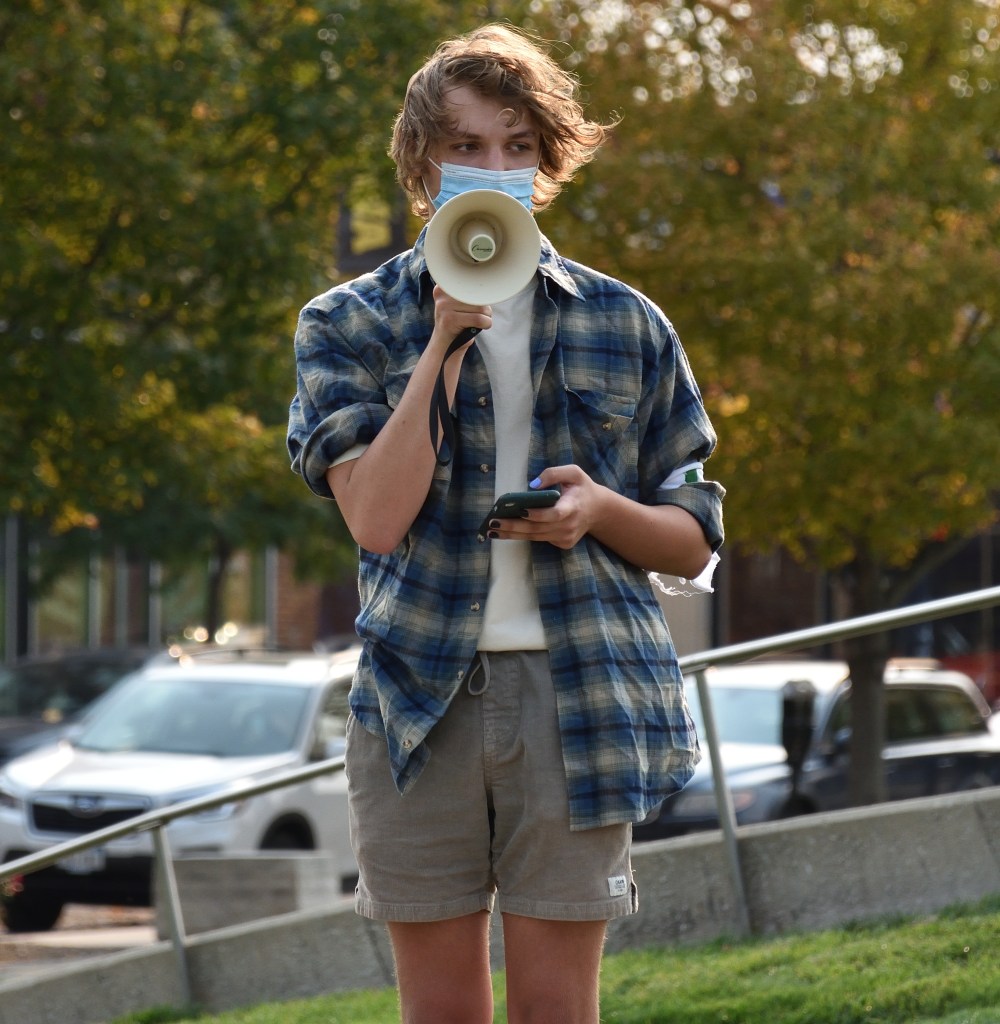
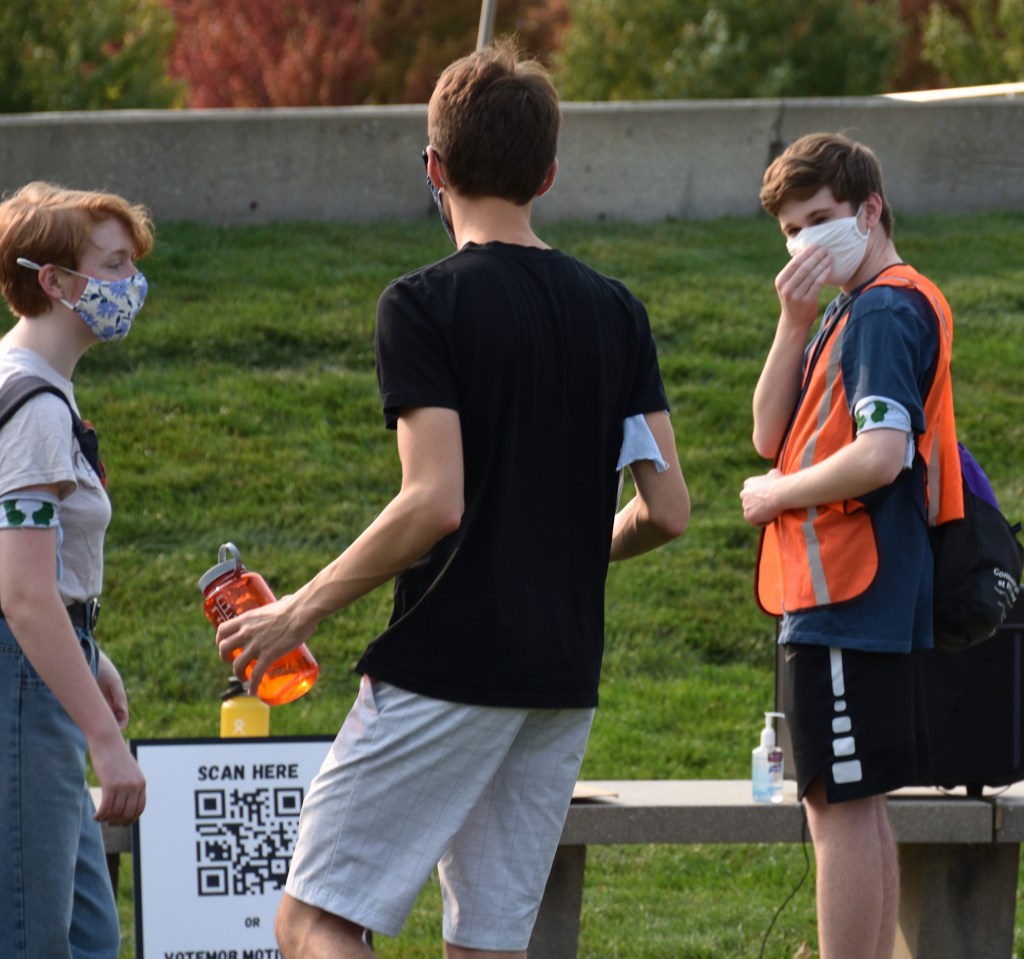
One of the things this past year led me to is to participate in Des Moines Mutual Aid’s free food store. This continues the work of the Black Panther program in Des Moines, that began many years ago. It has been a revelation to see people come together, even during this pandemic, to fill and distribute fifty boxes full of food. To experience the joy as we do this together. And to see this is mutual aid, as we are also encouraged to take food.
I see there is no leadership hierarchy. There are people who have taken on the role of working with grocers and farmers to donate the food. But on Saturday morning the work flows effortlessly. There was one “team huddle” where we each determined what our role would be as the cars came by one at a time. Someone opened the car door, someone put in a food box, another put in a gallon of milk. Everyone greeted those in the cars (I especially liked it when there were children. They always gave big smiles).
One of the concepts of mutual aid is to help everyone see how the system has failed, that those in need shouldn’t be stigmatized because of that failure.
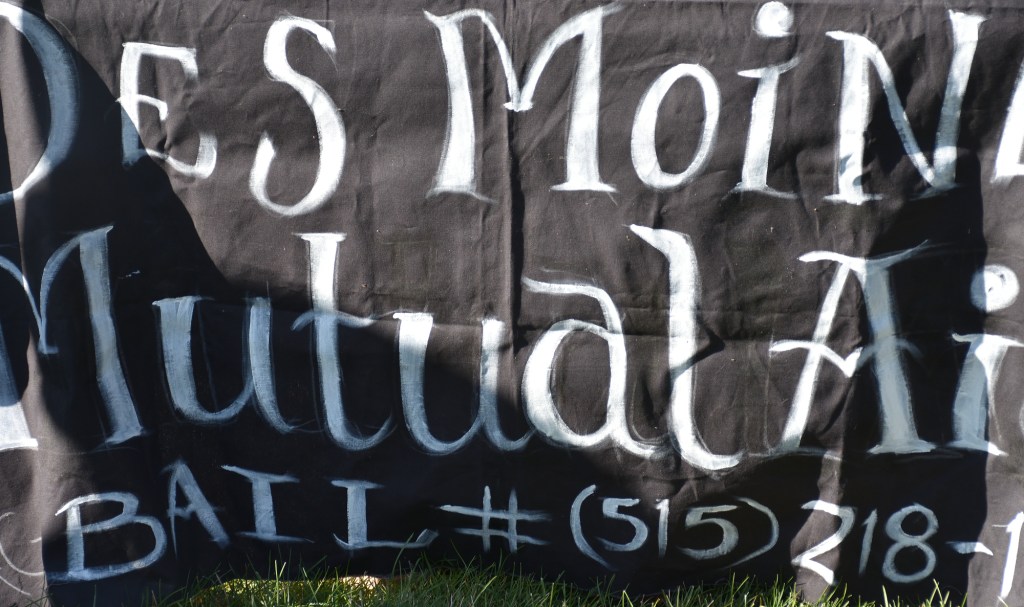
Another great thing about mutual aid is people don’t restrict themselves to just one issue. Relationships are built. Des Moines Mutual Aid actually has three projects at the moment: the free food store, help with rent relief, evictions and houselessness, and a bail fund for those who are arrested because they were agitating for change.
Another connection I recently made was last weekend when I took some winter clothes to Des Moines Black Lives Matter when they asked for donations. The next day the person I met at Black Lives Matter was at the free food store.
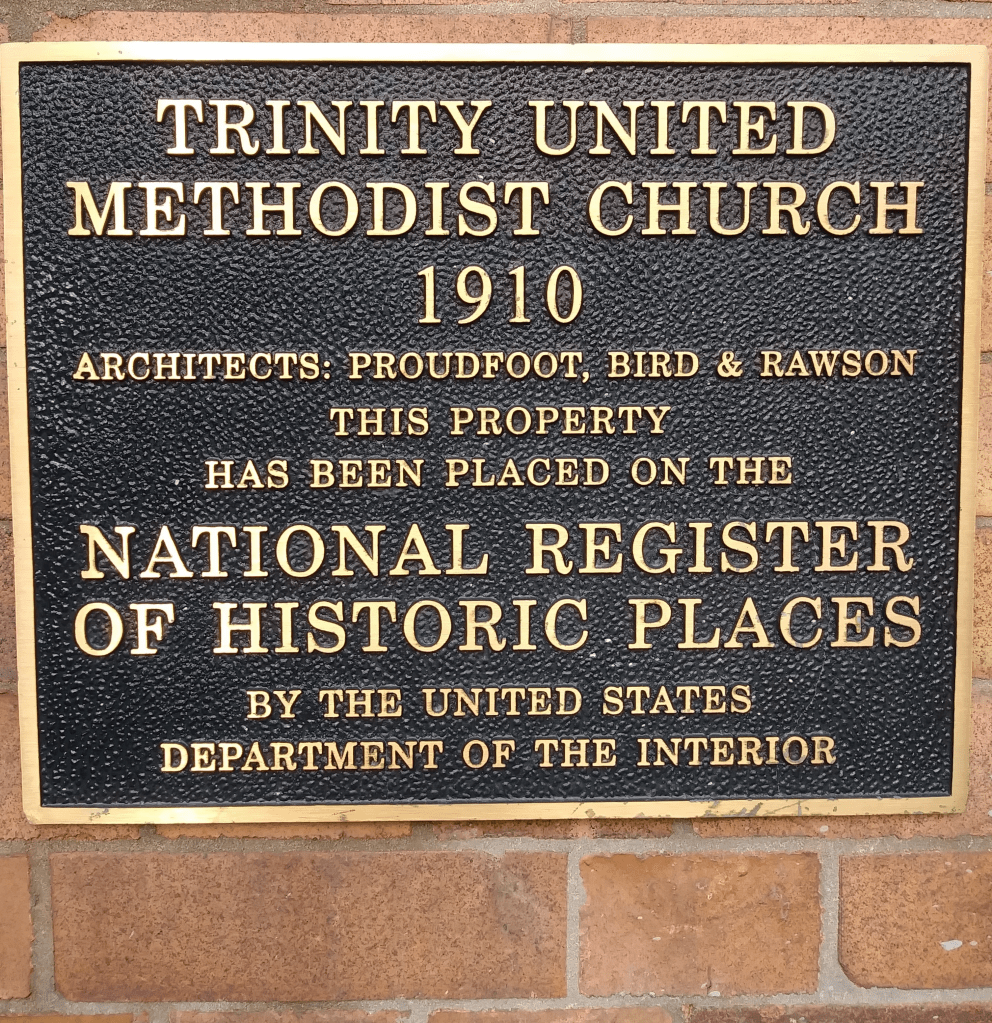
Earlier this year, Ronnie James found office space at Friends House in Des Moines. And the Des Moines Valley Friends meeting, where Friends House is located, is working with Des Moines Mutual Aid, allowing the kitchen to be used to cook food for those in need.
Even if the Democrats win this election, it will take time for incremental changes to occur. And even successful efforts will be bogged down with bureaucracy. Not to say such things shouldn’t be encouraged. But mutual aid is the way we can directly help each other even without government help.
These are perilous times. This election has become a focal point for a growing mountain of danger and stress. What is the way forward, whether there is chaos after this election, or not? As we continue to be threatened by the out of control pandemic, economic collapse, and environmental chaos?
Working with Joy
It is not surprising that most of us have distorted relationships to work, including work in mutual aid groups. The conditions and systems we live under make work coercive, create severe imbalances in who does which kind of work and for what kind of compensation and recognition, and make it hard to feel like we have choices when it comes to work. Working to change the world is extremely hard because the conditions we are up against are severe. We cannot blame ourselves for having a difficult relationship to our work, even though we understand that learning to work differently is vital for our movements and for our own well-being and survival. We must be compassionate to ourselves and each other as we practice transforming our ways of working together.
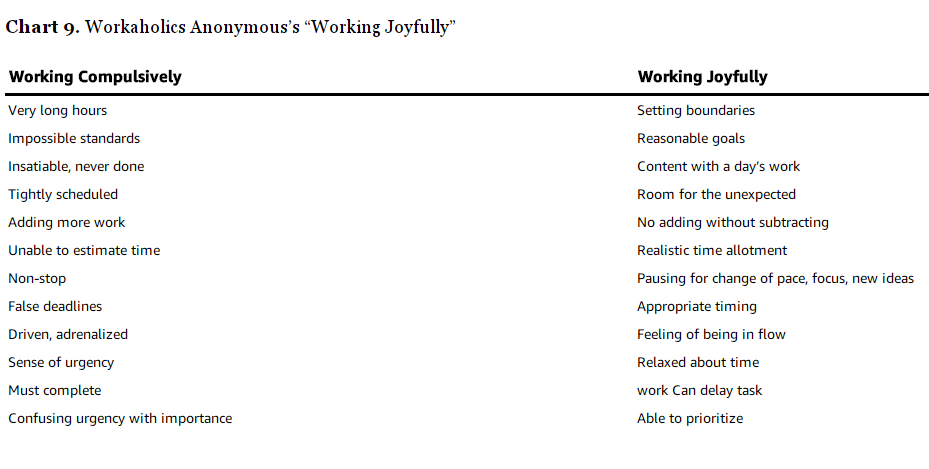
We need each other badly to share what is hard about the overwhelming suffering in the world and the challenge of doing work for change in dangerous conditions. Even in the face of the pain that being awakened to contemporary conditions causes, all of our work for change can be rooted in the comfort and joy of being connected to one another, accompanying one another, and sometimes being inspired by each other. Reflecting deeply about our own orientations toward work— what it feels like to participate in groups, what ideas we are carrying around about leadership and productivity— is crucial to building a practice of working from a place of connection, inspiration, and joy.This means intentionally creating ways to practice a new relationship to work, and diving into the psychic structures underlying our wounds from living and working in brutal, coercive hiearchies. The following chart may be a useful reflection tool for individuals and groups trying to change harmful cultures and practices of work.
Dean Spade. Mutual Aid: Building Solidarity During This Crisis (and the Next) (Kindle Locations 1469-1481). Verso.
We are experiencing the end stage of capitalism and the political system built on it. As my friend Ronnie James puts it:
I’m of the firm opinion that a system that was built by stolen bodies on stolen land for the benefit of a few is a system that is not repairable. It is operating as designed, and small changes (which are the result of huge efforts) to lessen the blow on those it was not designed for are merely half measures that can’t ever fully succeed.
So the question is now, where do we go from here? Do we continue to make incremental changes while the wealthy hoard more wealth and the climate crisis deepens, or do we do something drastic that has never been done before? Can we envision and create a world where a class war from above isn’t a reality anymore?
Ronnie James
So the point is, I think it would be better to work by means of the mutual aid model, since capitalism is not something we want to perpetuate, anyway.
Through Ronnie I have been blessed to learn about, and participate in Des Moines Mutual Aid. When he told me about the Free Food Store, I thought it sounded like a great project, and that might have been the end of it. But I was led to see if I could join in this work. Thankfully, that came about.
And I found it was about much more than distributing food to those in need. As quoted above, “even in the face of the pain that being awakened to contemporary conditions causes, all of our work for change can be rooted in the comfort and joy of being connected to one another, accompanying one another, and sometimes being inspired by each other.“
As I’ve shared these experiences, I noticed I was using joy to express how it feels to be part of the free food store work. On several occasions different people I’m getting to know told me these Saturday mornings when we distribute food, are the highlight of their week. And I find that’s true for me, too.
So, especially in these dark and stressful times, I would like you to know there are ways to work for change that have an immediate impact, on those who are hungry, for example. And besides that, can feed your soul as you engage with this work with new friends. This is mutual aid, that I’ve been writing about recently. https://atomic-temporary-82209146.wpcomstaging.com/?s=mutual+aid
Following is part of a table that compares working compulsively to working joyfully. If you click on this image, a readable version of it will appear.
As a software engineer I’ve used diagrams most of my life to help me understand the process I’m trying to create a computer program for. Those diagrams at times reveal an idea or relationship I hadn’t thought of.
As an example of how our experiences often coalesce, the first presentation I heard about Decolonization was given by my friend Trisha Cax-Sep-Gu-Wiga Etringer, as we sat around the fire one night during the First Nation-Farmer Climate Unity March (September, 2018). Following is the first diagram I created (September, 2019) as I studied more about colonization,
I began to learn more about colonization from workshops and presentations regarding “toward right relationship with native peoples” when Paula Palmer came to the Midwest. https://friendspeaceteams.org/trr/ And learning from the website, Decolonizing Quakers. https://www.decolonizingquakers.org/
That diagram has gone through many revisions, this being one of the latest.
I’ve been learning so much lately about the concept of mutual aid, and have been blessed to join a working model as my friend Ronnie James taught me about Des Moines Mutual Aid (DMMA). As I continue to learn and write about mutual aid, I am able to speak from my own experiences.
It started as group of my friends working with the houseless camps some years back. It has now grown into a solid crew that runs a free food store started by the Black Panthers, still work with the camps, we organzied a bail fund that has gotten every protester out of jail the last few months, and we just started an eviction relief fund to try to get a head of the coming crisis, in cooperation with Des Moines BLM. We have raised $13,000 since wednesday and the application to apply for the grants goes live this week.
Ronnie James
I see mutual aid as an implementation of the concept of “Beloved community” which I’ve prayed about and studied for years. As Eva and I were waiting for Ronnie to arrive to open the church yesterday morning, I mentioned mutual aid as Beloved community, and it was obvious this wasn’t a new idea to her.
This is the current version of the diagram with Mutual Aid added.
Getting to the title of this post, what this diagram revealed to me is there is no path for white people to arrive at community and mutual aid except through the process of decolonization. It also shows what I already know, that capitalism is the root cause of so much injustice, including environmental chaos. Another key aspect of mutual aid is that it is an alternative to capitalism.
there is no path for white people to arrive at community and mutual aid except through the process of decolonization.
Jeff Kisling
Following is another example of experiences coalescing, informing each other. Back in my days in Indianapolis, circa 2015, when I spent time at the Kheprw Institute, we once had a discussion related to the work activist Grace Lee Boggs, author of The Next American Revolution. Her work in Detroit, and how she expresses it below, is mutual aid.
The next American Revolution, at this stage in our history, is not principally about jobs or health insurance or making it possible for more people to realize the American Dream of upward mobility. It is about acknowledging that we Americans have enjoyed middle-class comforts at the expense of other peoples all over the world. It is about living the kind of lives that will not only slow down global warming but also end the galloping inequality both inside this country and between the Global North and the Global South. It is about creating a new American Dream whose goal is a higher Humanity instead of the higher standard of living dependent on Empire. It is about practicing a new, more active, global, and participatory concept of citizenship. It is about becoming the change we wish to see in the world.
The courage, commitment, and strategies required for this kind of revolution are very different from those required to storm the Winter Palace or the White House. Instead of viewing the U.S. people as masses to be mobilized in increasingly aggressive struggles for higher wages, better jobs, or guaranteed health care, we must have the courage to challenge ourselves to engage in activities that build a new and better world by improving the physical, psychological, political, and spiritual health of ourselves, our families, our communities, our cities, our world, and our planet.
Grace Lee Boggs, The Next American Revolution
Randomly passing an accomplice on the street and throwing up a fist at each other as we go our separate ways to destroy all that is rotten in this world will never fail to give me extra energy and a single tear of gratitude for what this city is creating.
Ronnie James
Around the globe, people are faced with a spiraling succession of crises, from the Covid-19 pandemic and climate change-induced fires, floods, and storms to the ongoing horrors of mass incarceration, racist policing, brutal immigration enforcement, endemic gender violence, and severe wealth inequality. As governments fail to respond to—or actively engineer—each crisis, ordinary people are finding bold and innovative ways to share resources and support the vulnerable.
Mutual aid is the radical act of caring for each other while working to change the world. Survival work, when done alongside social movement demands for transformative change, is called mutual aid.
Dean Spade, Building Solidarity During This Crisis (and the Next)
Early this year I began following the news about the Wet’suwet’en peoples and their struggles to prevent the Coastal GasLink natural gas pipeline from being built on their lands. The situation is complicated because there is a conflict regarding who has the authority to represent the Wet’suwet’en people. The elected band councils or the hereditary chiefs. I was glad to make connections with the Canadian Friends Service Committee (CFSC), a Quaker organization, to help me understand many things going on with the First Nations people.
Tensions have been escalating for some time, between fishing rights of the Sipek’nekatik people and commercial fishermen. On October 16, 2020. one Mi’kmaw lobster fishing compound burnt to the ground. Now there are questions concerning the lack of action by the Royal Canadian Mounted Police who have been present during clashes between the two groups.
Public statement October 29, 2020
Coalition for the Human Rights of Indigenous peoples calls on federal and provincial governments to honour and uphold Mi’kmaw fishing rights.
The members of our coalition are appalled by acts of violence and intimidation against Mi’kmaw fishers exercising their Constitutionally protected, legally affirmed, inherent and Treaty rights. The federal and provincial governments bear responsibility for their long-standing failure to ensure that rights affirmed by the Supreme Court 21 years ago are protected and respected.
It is our hope that the shocking events of recent weeks can still lead to a positive outcome for the Mi’kmaw people and their Treaty partners. This is a test of Canada’s commitment to implement the UN Declaration on the Rights of Indigenous Peoples. The Declaration, adopted as a global standard eight years after the Supreme Court 1999 Marshall decision, provides important guidance for moving forward in what the Declaration calls “a spirit of partnership and mutual respect”.
Mi’kmaw fishers must be able to exercise their inherent and Treaty rights to catch and sell lobster free from threats to their own safety and to their property. These rights must be interpreted and applied in a manner consistent with Canada’s obligations under the Declaration and the Constitution of Canada, to uphold the rights of Indigenous peoples – and not be used as an excuse to further entrench poverty and economic marginalization.
It must be emphasized that the Mi’kmaw fishery is miniscule in comparison to the nonindigenous lobster fishery, and faces ongoing racist opposition in other forms, such as the collusion by lobster buyers to refuse the purchase of Mi’kmaw caught lobster. The federal and provincial governments should support Mi’kmaw governments in instituting their own livelihood fishery systems based on their traditions, values, legal orders, and ecological knowledge. Any limitations must be strictly justified by clear conservation purposes and should be developed jointly with the Mi’kmaw people. In the meantime, the failure to support and implement a livelihood fishery by government for the Mi’kmaw lobster fishery cannot be an excuse for the recent and ongoing lawless acts against the Mi’kmaw.
While the Declaration should always be read as a whole, the following provisions are important to highlight in the current context.
The Declaration states that Indigenous peoples have the right to “the recognition, observance and enforcement” of Treaties (article 37).
The Declaration affirms that Indigenous Peoples have the right to self-determination (article 3), including the right to participate in decisions affecting their rights (article 18), to grant or withhold consent for “legislative or administrative measures that may affect them” (article 19), and to “determine and develop priorities and strategies” for exercising the right to development (article 23) and how their lands, territories and resources may be used (article 32).
The Declaration affirms that Indigenous peoples have the right to be “secure” in the enjoyment of their own means of subsistence and their own means of development “and to engage freely in all their traditional and other economic activities” (article 20). The same article states that Indigenous peoples “deprived of their means of subsistence and development” have the right to just and fair redress.
The Declaration also affirms that Indigenous peoples “have the right, without discrimination, to the improvement of their economic and social conditions” (article 21).
The Declaration also states that Indigenous peoples have the right to “live in freedom, peace and security as distinct peoples and shall not be subjected to any act of …violence” (article 7).
The Declaration calls on all governments to take effective measures, in collaboration with Indigenous peoples, “to combat prejudice and eliminate discrimination and to promote tolerance, understanding and good relations among Indigenous peoples and all other segments of society” (article 15).
Articles 27 and 40 call for prompt and fair resolution of disputes, with “due consideration to the customs, traditions, rules and legal systems of the indigenous peoples concerned and international human rights.”
The provisions set forth in the Declaration “shall be interpreted in accordance with the principles of justice, democracy, respect for human rights, equality, non-discrimination, good governance, and good faith” (article 46).
These provisions of the UN Declaration are reinforced by the fact that similar human rights protections are also affirmed in the American Declaration on the Rights of Indigenous Peoples, adopted by the Organization of American States as the minimum standards for the hemisphere.
The Truth and Reconciliation Commission of Canada called the UN Declaration on the Rights of Indigenous Peoples “the framework for reconciliation at all levels and across all sectors of society.” Our coalition encourages the federal and provincial governments to apply this framework as they work with the Sipekne’katik First Nation and other Mik’maw governments to ensure that their rights are respected and can be exercised in peace and security.
The Coalition for the Human Rights of Indigenous Peoples
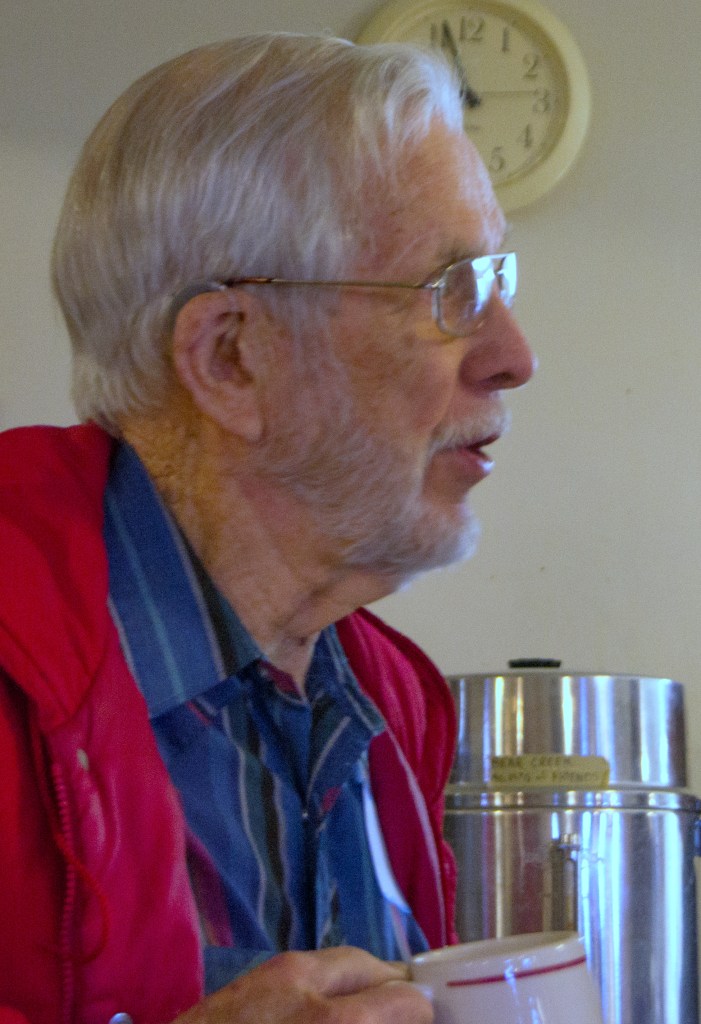
Don Laughlin was a mentor to me. He and his wife Lois lived just a few miles from Scattergood Friends School and Farm, a Quaker co-ed, boarding High School just East of West Branch, Iowa. Following is part of his obituary.
Donald Eugene Laughlin, 93, died August 19, 2016 following a recent hip fracture and subsequent stroke during surgery. Don was born in New Providence, IA on Dec. 6, 1922 to Melvin and Edna Laughlin. In 1945 he married Lois Wood of Berkeley, CA, his wife of 63 years.
Both birthright Quakers, Don and Lois started a life together committed to social justice, world peace, and environmental concerns. They were life long members of the West Branch Conservative Friends Meeting. Don earned a Bachelor’s degree in Electrical Engineering from Iowa State University. He later returned to school to earn a Master’s degree in Biomedical Engineering at the University of Iowa while supporting his young family by managing the farm at Scattergood Friends School.
Both Don and Lois devoted many years to Scattergood School where, in addition to being the farm manager, Don taught science and math.
Don worked for more than 30 years in the Cardiology Department at the University of Iowa Hospital. While there, he repaired and invented medical instruments to assist doctors in such things as doppler use during heart surgery and monitoring patients’ pacemakers by telephone.
True to his Quaker belief in non-violence, Don was a Conscientious Objector during WWII and later refused to register for the peacetime military draft. As a consequence of his beliefs, Don was prosecuted and imprisoned for 6 months. Years later he was formally pardoned by then President John F. Kennedy. For many years, Don stood with others in a weekly silent vigil in downtown Iowa City to protest the Vietnam War.
Don and Lois were familiar to me as I grew up in Iowa Yearly Meeting (Conservative), but my first memories of them were from my days as a student at Scattergood Friends School (1966-70), when Lois was the librarian, and Don was the farm manager. Scattergood is a co-ed Quaker boarding High School near West Branch, Iowa.
I spent the summer of 1969 in Iowa City with a group of students who had received grants from the National Science Foundation. My project was to work with Don in his medical engineering lab at the University of Iowa Hospitals. The pulmonary function lab had just purchased one of the first commercially available desktop computers, and I wrote the software to use it to calculate pulmonary function test values, which were being done by hand. This was before even electronic calculators were widely available. I remember purchasing a slide rule for calculations that summer. (Yes, I even had a pocket protector).
Next we used a new computer program from IBM, the Electronic Circuit Analysis Program, to design a sensor to be placed on a patient’s chest to detect heart movement, for use in the field in emergency situations. Each time we wanted to analyze a circuit, I had to carry three boxes full of punched computer cards to the computer center, and then come back for the results several hours later. He taught me how to solder components under a microscope as part of that project.
I also remember going to the weekly peace vigil with him, standing on the street in front of the old Capitol building. Don was a draft resister, and his example, and that of many Iowa Friends, helped me make my own decision to resist the draft.
Since I spent my adult life in Indianapolis we didn’t see each other that often, but I always looked forward to those opportunities when we could. We did exchange many email messages.
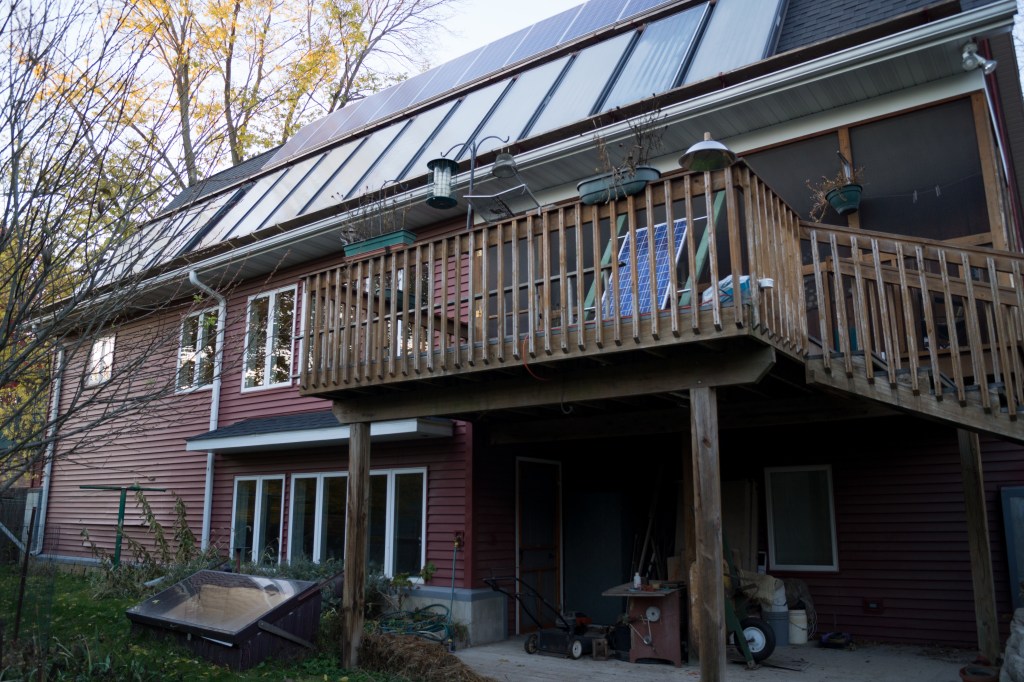
We both shared a deep interest in environmental science, which unavoidably led to profound concerns about increasingly extensive and severe environmental deterioration. I was finally able to see his environmentally designed home when I attended the climate conference sponsored by the Yearly Meeting and FCNL at Scattergood in 2013. We stayed up late into the night working on his project related to using LEDs for lighting.
He was very interested in my involvement with the Kheprw Institute (KI) community in Indianapolis, whose work is mentoring Black youth, and which has a strong environmental focus, with aquaponics, rain barrel production, etc. We explored the possibility of the KI community producing the solar hot water heating system he had developed, but didn’t get that accomplished in time. He offered to allow them to keep all of the revenue that would have been generated, another example of his generous heart. His death leaves a large hole in mine.
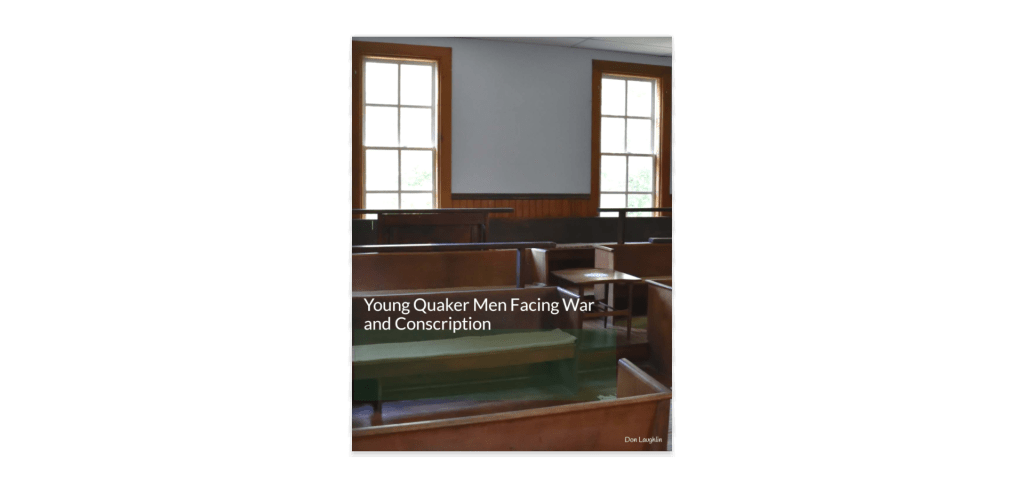
We were in the middle of our last collaboration when he broke his hip. He had been collecting the stories of (mainly) Quakers who had been conscientious objectors and draft resisters, including one about one of his ancestors, Seth Laughlin, during the Civil War. I was helping put them into form for publication. We both felt these were important stories that shouldn’t be lost. I’m very grateful that Marcia Shaffer was willing and able to work with us to get me some stories Don hadn’t yet sent before his stroke occurred.
You can download the collection of those stories that Don called Young Quaker Men Facing War and Conscription in various formats below.
“Mutual Aid is essential to our survival” by Dean Spade, Truthout, October 28, 2020, is a primer about the concept of Mutual Aid. I recommend reading the entire article. I’ll be quoting it more extensively than I usually like to do but it is not hyperbole to say Mutual Aid is essential to our survival, and this article explains this well.
For good reason, many people feel scared right now. We face terrifying unknowns about the worsening economic crisis, climate change-induced disasters, rising COVID-19 infections and long-term health problems facing people who survive being infected, ongoing racism and violence at the hands of law enforcement of all kinds, and increasing mobilization of armed white supremacist right-wing people and organizations. It is difficult to have any faith that, no matter who is in the White House, we will see a massive redistribution of wealth, immediate action to stop climate change, an end to policing, borders and war, and universal housing, health care or child care. Under these conditions, we need mutual aid to survive and to build resistance movements of hundreds of millions of people who can fight to stop the systems of extraction that govern our lives and build a world we can survive.
There is nothing new about mutual aid — people have worked together to survive for all of human history. But capitalism and colonialism created structures that have disrupted how people have historically connected with each other and shared everything they needed to survive. As people were forced into systems of wage labor and private property, and wealth became increasinglyconcentrated, our ways of caring for each other have become more and more tenuous.
“Mutual aid” is one term used to describe collective coordination to meet each other’s needs, usually stemming from an awareness that the systems we have in place are not going to meet them. Those systems, in fact, have often created the crisis, or are making things worse. We see examples of mutual aid in every single social movement, whether it’s people raising money for workers on strike, setting up a car pooling system during the Montgomery Bus Boycott, putting drinking water in the desert for migrants crossing the border, training each other in emergency medicine because ambulance response time in poor neighborhoods is too slow, raising money to pay for abortions for those who can’t afford them, or coordinating letter-writing to prisoners. These are mutual aid projects. They directly meet people’s survival needs, and are based on a shared understanding that the conditions in which we are made to live are unjust.
In this context of social isolation and forced dependency on hostile systems, mutual aid — where we choose to help each other out, share things, and put time and resources into caring for the most vulnerable — is a radical act.
As I highlighted above, “capitalism and colonialism created structures that have disrupted how people have historically connected with each other and shared every everything they needed to survive.”
I’ve been working on the following diagram to illustrate these ideas. In this most recent version I added MUTUAL AID.
Mutual Aid has been around since the beginning of human communities. I wasn’t aware of using the idea of Mutual Aid as an organizing concept until I met Ronnie James. As I think about how to characterize his role, I remember one of the important aspects of Mutual Aid is there isn’t a hierarchy with some people in leadership positions. In Mutual Aid, we all take care of each other, and all have an equal say in what we do.
You might notice I say “we” because I have been blessed to join in some of the work of Des Moines Mutual Aid (DMMA). Saturday mornings I look forward to gathering with my new friends to make boxes of food to distribute at the Free Food Store.
Three Key Elements Of Mutual Aid
One: Mutual aid projects work to meet survival needs and build shared understanding about why people do not have what they need.
Mutual aid projects expose the reality that people do not have what they need and propose that we can address this injustice together. The most famous example in the United States is the Black Panther Party’s survival programs, which ran throughout the 1960s and 1970s, including a free breakfast program, free ambulance program, free medical clinics, a service offering rides to elderly people doing errands, and a school aimed at providing a rigorous liberation curriculum to children. The Black Panther programs welcomed people into the liberation struggle by creating spaces where they could meet basic needs and build a shared analysis about the conditions they were facing. Instead of feeling ashamed about not being able to feed their kids in a culture that blames poor people (especially poor Black people) for their poverty, people attending the Panthers’ free breakfast program got food and a chance to build shared analysis about Black poverty. It broke stigma and isolation, met material needs and got people fired up to work together for change.
As I began to get to know Ronnie James, I first learned about the Black Panther connection to Des Moines Mutual Aid when he told me how DMMA started:
It started as group of my friends working with the houseless camps some years back. It has now grown into a solid crew that runs a free food store started by the Black Panthers, still work with the camps, we organized a bail fund that has gotten every protester out of jail the last few months, and we just started an eviction relief fund to try to get a head of the coming crisis, in cooperation with Des Moines BLM. We have raised $13,000 since Wednesday and the application to apply for the grants goes live this week.
Ronnie James
Just a few days ago he wrote:
Happy 54th Birthday to the Black Panther Party for Self Defense. The Panthers have been a lifelong inspiration and one of the major influences on how I act in this world. The Free Food Store that Des Moines Mutual Aid helps coordinate was founded by the Des Moines chapter of the Panthers and has continued to this day. I deeply value that we get to carry on that legacy. All Power To The People.
Ronnie James
As a result, I’ve been studying about the Black Panther Party for Self Defense.
Two. Mutual aid projects mobilize people, expand solidarity and build movements.
Mutual aid is essential to building social movements. People often come to social movement groups because they need something: eviction defense, child care, social connection, health care, or help in a fight with the government about something like welfare benefits, disability services, immigration status or custody of their children. Being able to get help in a crisis is often a condition for being politically active, because it’s very difficult to organize when you are also struggling to survive. Getting support through a mutual aid project that has a political analysis of the conditions that produced your crisis also helps to break stigma, shame and isolation. Under capitalism, social problems resulting from exploitation and the maldistribution of resources are understood as individual moral failings, not systemic problems. Getting support at a place that sees the systems, not the people suffering in them, as the problem can help people move from shame to anger and defiance. Mutual aid exposes the failures of the current system and shows an alternative. This work is based in a belief that those on the front lines of a crisis have the best wisdom to solve the problems, and that collective action is the way forward.
Mutual aid projects also build solidarity. By working together, members of mutual aid projects learn about experiences different from theirs and build solidarity across those differences. Solidarity is what builds and connects large-scale movements. In the context of professionalized nonprofit organizations, groups are urged to be single-issue oriented, framing their message around “deserving” people within the population they serve, and using tactics palatable to elites.
Three. Mutual aid projects are participatory, solving problems through collective action rather than waiting for saviors.
Mutual aid projects help people develop skills for collaboration, participation and decision-making. For example, people engaged in a project to help deliver prescriptions to vulnerable people in their neighborhoods who can risk COVID exposure going to the pharmacy will learn about COVID delivery safety protocols, but they will also learn about meeting facilitation, working across differences, retaining volunteers, addressing conflict, giving and receiving feedback, following through, and coordinating schedules and transportation. They may also learn that it is not nonprofits or social service agencies who can directly support people, and that many people — including themselves! — have something to offer. This departs from expertise-based social services that tell us we need to have a social worker, licensed therapist, lawyer or some other person with an advanced degree to get things done.
Mutual aid is inherently anti-authoritarian, demonstrating how we can do things together in ways we were told not to imagine, and that we can organize human activity without coercion. Most people have never been to a meeting where there was not a boss or authority figure with decision-making power. Most people work or go to school inside hierarchies where disobedience leads to punishment or exclusion. We bring our learned practices of hierarchy with us even when no paycheck or punishment enforces our participation, so even in volunteer groups we often find ourselves in conflicts stemming from learned dominance behaviors. But collective spaces, like mutual aid organizing, can give us opportunities to unlearn conditioning and build new skills and capacities.
By participating in groups in new ways and practicing new ways of being together, we are both building the world we want and becoming the kind of people who could live in such a world together.
That describes my experiences with the Free Food Store. I wanted to help with the effort, but also knew this was something I would like to do in my own community. So I saw joining the Free Food Store would teach me how to organize Free Food Stores elsewhere.
From my experiences I have concluded that the way for people of different communities or cultures to understand and trust each other is to spend significant time together. Times where ideas are shared during book discussions, or when working on physical projects, building things together. I often share this quote that expresses this idea:
ALL THAT WE ARE IS STORY
From the moment we are born to the time we continue on our spirit journey, we are involved in the creation of the story of our time here. It is what we arrive with. It is all we leave behind. We are not the things we accumulate. We are not the things we deem important. We are story. All of us. What comes to matter then is the creation of the best possible story we can while we’re here; you, me, us, together. When we can do that and we take the time to share those stories with each other, we get bigger inside, we see each other, we recognize our kinship — we change the world one story at a time.
Richard Wagamese (October 14, 1955-March 10, 2017) Ojibwe from Wabeseemoong Independent Nations, Canada
Before I knew about Mutual Aid, I wrote I was truly blessed to have become involved with the Kheprw Institute (KI) in Indianapolis. Monthly, mainly white Quakers from the meeting I attended would participate in book discussions at KI. Once Imhotep Adisa, one of the leaders of KI, said, “these conversations are revolutionary.” I was surprised, but saw that was true. People of color and White people sharing their stories with each other, getting to know each other. Becoming friends.
There is a lot more discussion about Mutual Aid in this article, which I recommend you read if you want to learn more about these ideas.
It is said that democracy is on the ballot in this election. The current administration and Republican Party have been successful in destroying democratic norms and policies. Another four years of this administration would be disastrous, since the restraints on power have been removed, and it would be even easier to continue down the authoritarian path. Concern about Fascism is rising.
Fascism (/ˈfæʃɪzəm/) is a form of far-right, authoritarian ultranationalism[1][2] characterized by dictatorial power, forcible suppression of opposition and strong regimentation of society and of the economy[3] which came to prominence in early 20th-century Europe.[4]
Fascists saw World War I as a revolution that brought massive changes to the nature of war, society, the state, and technology. The advent of total war and the total mass mobilization of society had broken down the distinction between civilians and combatants
I hadn’t understood that regimentation of the economy was central to Fascism. But that makes sense since the collapse of the capitalist economic system in this country, and elsewhere, is fueling social collapse, and increasing authoritarianism.
As many are saying, even if the Democrats win, governance based upon capitalism will continue. A significant minority of the country will continue to press for authoritarian measures. The increasing rhetoric promoting violence, and presence of guns in public will be added pressure to move toward authoritarianism. I’ve been praying, studying, and wondering what we can do in response.
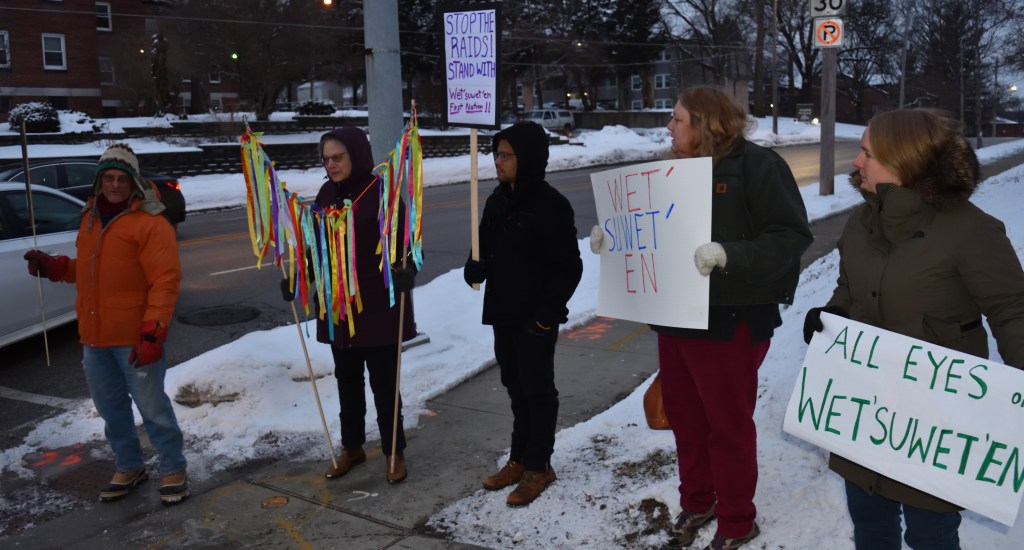
Recently I’ve been blessed to have found new friends, and am learning a lot from them. I met Ronnie James at a vigil for the struggles of the Wet’suwet’en peoples and their efforts to prevent the construction of a natural gas pipeline through their pristine lands. https://kislingjeff.wordpress.com/2020/02/07/wetsuweten-updates-2-7-2020-evening/
Since that meeting last February, Ronnie and I have exchanged many messages, mainly related to his work with Des Moines Mutual Aid (DMMA). Recently he posted this:
Happy 54th Birthday to the Black Panther Party for Self Defense. The Panthers have been a lifelong inspiration and one of the major influences on how I act in this world. The Free Food Store that Des Moines Mutual Aid helps coordinate was founded by the Des Moines chapter of the Panthers and has continued to this day. I deeply value that we get to carry on that legacy. All Power To The People.
Ronnie James
I was really impressed to hear about his work with Des Moines Mutual Aid (DMMA) and the Free Food Store. After we had gotten to know each other well enough, I asked if it would be appropriate for me to help with The Free Food Store. For the past several weeks I’ve been blessed to spend Saturday mornings there, as we prepared and distributed about fifty boxes of food. On several occasions people told me these Saturday mornings are the best part of their week, and now mine, too.
When Ronnie first told me about the Free Food Store he said (as above) it was the continuation of the work of the Black Panther Party for Self Defense. Since then, I’ve been studying to learn more about the Black Panther Party. The Party was active in the late 1960’s when I was a student at Scattergood Friends School, a Quaker boarding high school. I was active in the antiwar movement, but also aware of a few stories about the Black Panthers. I obviously didn’t know much because my impression was they were a threatening, violent group. I didn’t know the violence was on the part of the State, that included assassinating several leaders.
My purpose here is to provide some background related to the Black Panther Party for Self Defense, and Des Moines Mutual Aid. In part, because as I’ve been wondering what might happen as a result of this election, the worsening impact of COVID-19, and the increasing chaos from environmental devastation. So, I’ve been studying authoritarianism and Fascism, trying to see what could be done in response to that.
As I began to research this, when I saw information related to the Black Panthers, that caught my attention. “By 1969, the Panthers began to use fascism a a theoretical framework to critique US political economy.”
By 1969, the Panthers began to use fascism as a theoretical framework to critique US political economy. They defined fascism as “the power of finance capital” which “manifests itself not only as banks, trusts and monopolies but also as the human property of FINANCE CAPITAL – the avaricious businessman, the demagogic politician, and the racist pig cop.” The Black Panther newspaper began to feature excerpts from Dimitroff’s writings and articles with titles such as “Fascist Pigs must withdraw their troops from our communities or face the wrath of the armed people,” “Students Struggle Against Fascism,” and “Medicine and Fascism.” The Panthers advertised local showings of films like Z about fascism in Greece and used their iconic artwork as a cultural tool to visually demonstrate anti-fascist resistance.
In July 1969 close to 5,000 activists from organizations like the Black Students Union, Communist Party USA, Los Siete de la Raza, Southern Christian Leadership Conference, Students for a Democratic Society, Third World Liberation Front, Young Lords, Young Patriots, Youth Against War and Fascism, and the Progressive Labor Party flocked to Oakland, California’s Municipal auditorium in response to the Black Panther Party’s call for allies to gather and strategize against fascist conditions in the United States. This United Front Against Fascism (UFAF) conference was an important moment in the history of the Black Freedom movement and the New Left. The Panthers hoped to create a “national force” with a “common revolutionary ideology and political program which answers the basic desires and needs of all people in fascist, capitalist, racist America.” At the opening session, Seale called for unity of action arguing that “we will not be free until Brown, Red, Yellow, Black, and all other peoples of color are unchained.”
The Black Panther Party, the International Liberation School, and the National Committees to Combat Fascism, “Poster for the National Conference for a United Front Against Fascism,” Student Digital Gallery, accessed January 23, 2017, https://digitalgallery.bgsu.edu/student/items/show/6582
KPIX Eyewitness news report from the Oakland Auditorium on July 19th, 1969, at the Black Panthers’ first national conference on anti-fascism. Reporter Ben Williams discusses the second day’s proceedings at the National Revolutionary Conference for a United Front Against Fascism, and describes a schism among the delegates that erupted the previous evening when members of Students for a Democratic Society (SDS) were ejected from the conference for “disruptive behavior.” Williams claims that the desired result of the conference is, “the creation of a national committee, a coalition of militant leaders” who will “direct a solid front in future encounters with the establishment.” Bob Avakian is seen declaring that: “the primary ideological content of American fascism is racist white supremacist genocide.” Also features silent footage of a Black Panthers publications for sale on display; conference attendees being patted down before entering the conference; brief shots of confiscated weapons and sharp objects; establishing shots outside the Oakland Auditorium and footage of the auditorium filled with conference attendees.
Former Vice president Biden is using an effective technique, pointing out character, democracy, science, compassion, and decency are all on the ballot.
What’s important, though, is what is not on the ballot: Capitalism
With the presidential election coming up, there is a lot of focus on how the election will go and who will win. One thing is certain, no matter which corporate candidate wins, the people and the planet will lose. To understand where we are and how we got here, I speak with Gabriel Rockhill, a philosopher, author and activist. He explains the connections between our governance structure and capitalism and how both liberal democracy and fascism in a sort of good cop/bad cop relationship are used to protect the profits of the few while exploiting the many.
So much has been written about, I guess the word would be, “evils” of capitalism. It’s easy to say why. All exchanges for goods and services are based upon exchange of money, currency produced and controlled by the government. For many years those who earned a little were able to pay for the basic necessities. Those who didn’t have employment might get some government aid.
When increasing numbers of jobs were eliminated by automation or moved overseas, more and more people did not have enough money for those basic needs. How do we let people go hungry when there is plenty of food in stores? How do we let people become houseless when there are so many empty buildings? How do we deny medical help for those who are sick, especially with the catastrophe of COVID-19? Why do we incarcerate vastly more people than any other country? With ridiculously long sentences even for nonviolent crimes? So many for crimes related to capitalism?
What does it say about us, our spiritual condition, when we are supposed to love our neighbor as ourselves? Who is helping those left behind nurture their spiritual life?
Clearly our government and economy, governments and economies worldwide, have increasingly failed us.
The unbelievable maldistribution of wealth is proof.
The refusal to even consider legislation that doesn’t further enrich and empower the elite is proof.
Control of the mainstream media
The subversion of the independence of the Department of Justice and the Courts
The endless wars to guard oil fields
The relentless encroachment on our civil liberties
The rampant corruption of the administration with no restraint from Congress.
As my friend Ronnie James put it:
I’m of the firm opinion that a system that was built by stolen bodies on stolen land for the benefit of a few is a system that is not repairable. It is operating as designed, and small changes (which are the result of huge efforts) to lessen the blow on those it was not designed for are merely half measures that can’t ever fully succeed.
So the question is now, where do we go from here? Do we continue to make incremental changes while the wealthy hoard more wealth and the climate crisis deepens, or do we do something drastic that has never been done before? Can we envision and create a world where a class war from above isn’t a reality anymore?”
Ronnie James
As friends of mine say, “capitalism is the pandemic”.
According to Christine Nobiss, Decolonizer with Seeding Sovereignty, “Capitalism is the pandemic because, though we face COVID-19 together, the heightened economic imbalance is further exposing the deep racial divide in this country. Black, Latino/Latina, Indigenous, and immigrant communities are experiencing higher morbidity rates of COVID-19 due to pre-existing conditions created by the long-term global pandemic of colonial-capitalism.” These communities face strained and genocidal relationships with the American government and live with elevated rates of poverty, violence, unemployment, chronic illness, incarceration, deportation, water crises, inadequate housing, and food deserts—creating a perfect storm for mass infection.
Janet MacGillivray, Seeding Sovereignty Executive Director, states, “President Trump’s invocation on April 28, 2020 of the War Powers Act to force meat plants to stay open after twenty-two have closed and twenty workers have died due to COVID-19, when testing is unavailable and workers can’t adequately social-distance, puts their lives, co-workers’ lives, their families’ lives, our food supply, and the general public’s health and safety at unconscionable risk. On May Day we’ll also be watching to see if Trump dares to push through the planned financial bailout for big oil and gas companies using taxpayer dollars when first responders work without PPE, workers have lost their jobs due to the coronavirus epidemic and tribes on the frontlines have yet to receive promised and inadequate federal support.”
We demand an end the colonial-capitalist economy supported by institutionalized white supremacist and heteropatriarchal systems that have devastated our lands, climate, and peoples through ceaseless resource extraction, land occupation, border imperialism, misogyny, homophobia, enslavement, and genocide. This viral pandemic is part of a much larger problem as explained by Buffalo-based media artist, Jason Livingston, who conceived this action, “The crisis began before the virus, and the crisis will continue beyond the vaccine.”
[Note: my friend Christine Nobiss is no longer at Seeding Sovereignty]
Of course it is important to vote. Democratic victories at all levels should result in some relief for us. As said above though, “One thing is certain, no matter which corporate candidate wins, the people and the planet will lose.“
The solution will have to come from outside the corporate, capitalist system. Actually is coming as people come together to meet their common needs themselves. As I’ve been writing a lot about lately, Mutual Aid is a concept that does just that.
I’ve integrated Mutual Aid into this diagram I’ve been working on.







































 Quakers, social justice and revolution