
In recent discussions about social change and working with others, I often found I was having trouble expressing how I see things because who I’m talking with often doesn’t know the context of what I’m trying to say. Here I try to express how I’ve tried to learn about and practice nonviolence in my life.
I was born into, and spent my early childhood in the Quaker Bear Creek meeting community near Earlham, Iowa, which defined our spiritual lives. Our family rented several different farms, and farm work defined the rest our lives. I think I was about eight years old when I had a significant spiritual experience during meeting for worship, which made real the beliefs that had been more in my head prior to that. It was some time before I realized how fortunate I was, to have that experience to draw upon for my faith ever since.

Bear Creek meeting
Attending Scattergood Friends School was also significant. Each student and staff member is part of an academic and religious community that functions by using Quaker practices for everything. The reason I was so involved with the Quaker parts, especially, of Scattergood, was because I had that previous spiritual experience to work with. One lesson I didn’t realize I had learned until later was that whatever you are confronted with, you always ask–“What is the solution”, never–“Is there a solution?” And it is to God that you ask the question.
I was at Scattergood during the last half of the 1960s, when our country was rocked by the Vietnam war and the antiwar movement that took to the streets to stop it, as well as the civil rights struggle at the same time. I deeply studied Quaker history, nonviolence, and struggles for justice. Being at Scattergood we got a priceless education in how to respond to these dramatic global struggles from our own Quaker beliefs and experiences. We held a draft conference at the School. We also went into the small neighboring town of West Branch (Scattergood is on a farm) and knocked on people’s doors to see how they felt about the War, and were surprised to find how deeply people felt against it. During the October, 1969, National Moratorium against the Vietnam War, the entire School marched 12 miles into Iowa City to participate in the protests going on at the University of Iowa, where we saw mannequins representing Vietnamese bodies floating in the river, and the University shut down.
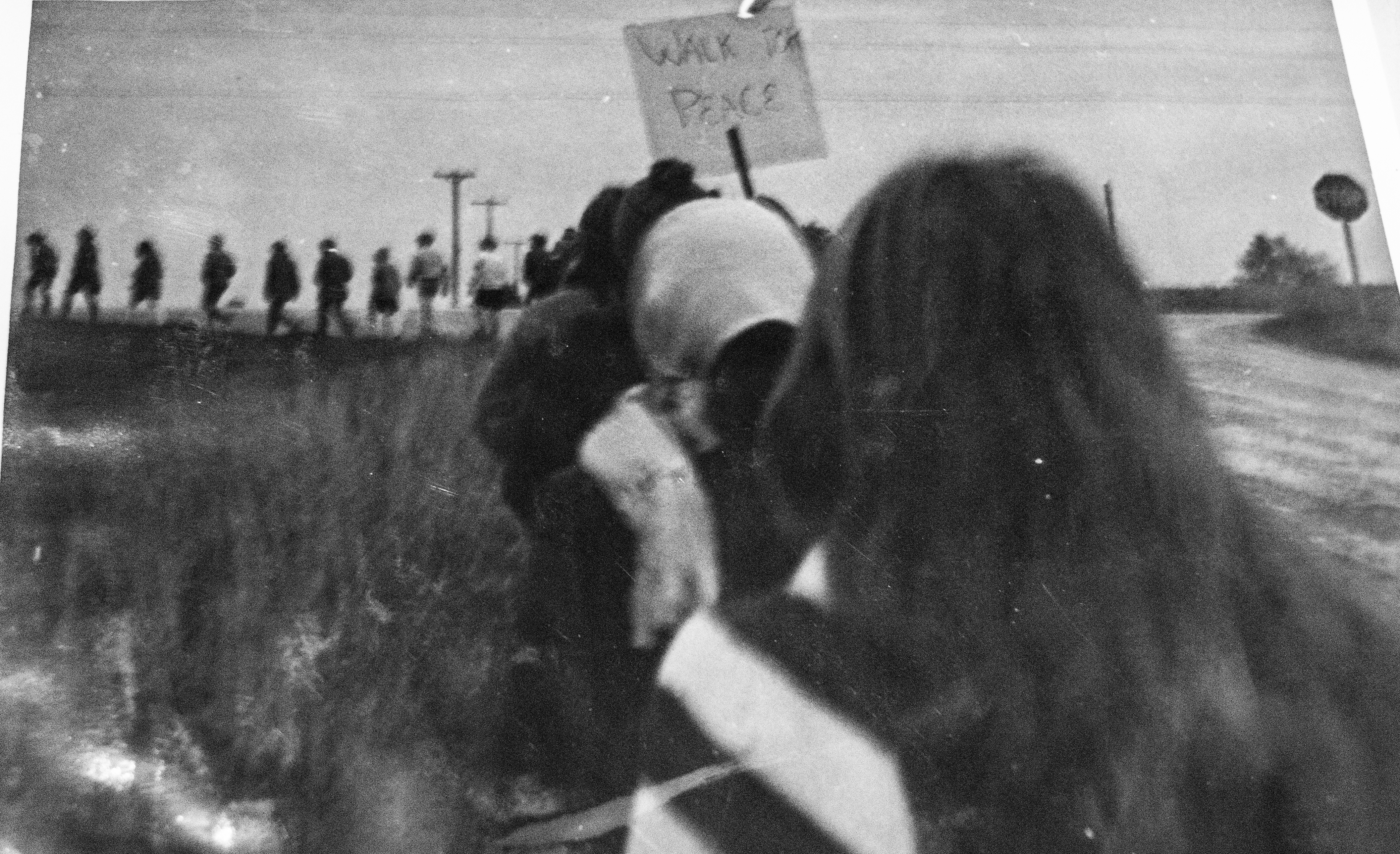
Entire Scattergood Friends School marching 12 miles to Iowa City to protest Vietnam War
I left Earlham College after one year and joined the Friends Volunteer Service Mission (VSM), a program of the Friends United Meeting to offer opportunities for young Friends to do meaningful community service as their alternative service for the draft. The country was still in an uproar, and I didn’t feel right about having a student deferment from the draft. I had been granted conscientious objector status, but struggled with the cooperation with the Selective Service System that doing alternative service represented. Many Iowa Quaker families had to deal with the consequences of the men being imprisoned for refusing to cooperate with the Selective Service System during previous wars. That had a profound effect on me–seeing how these families chose that path as an expression of their faith. I did turn in my draft card and became a draft resister. A Supreme Court case meant, in the end, I didn’t have to serve jail time.
But while I was trying to figure that out, I joined the VSM project in an economically depressed neighborhood on the southwest side of the city. It was a culture shock for an Iowa farm boy to find himself trying to figure out how to live in the city. This was before both bicycle helmets, and catalytic converters, and the image of me riding my bicycle through traffic (no bicycle lanes, of course), wearing a motorcycle helmet, enveloped in a dense fog of exhaust might help explain why I became even more of an environmental radical.
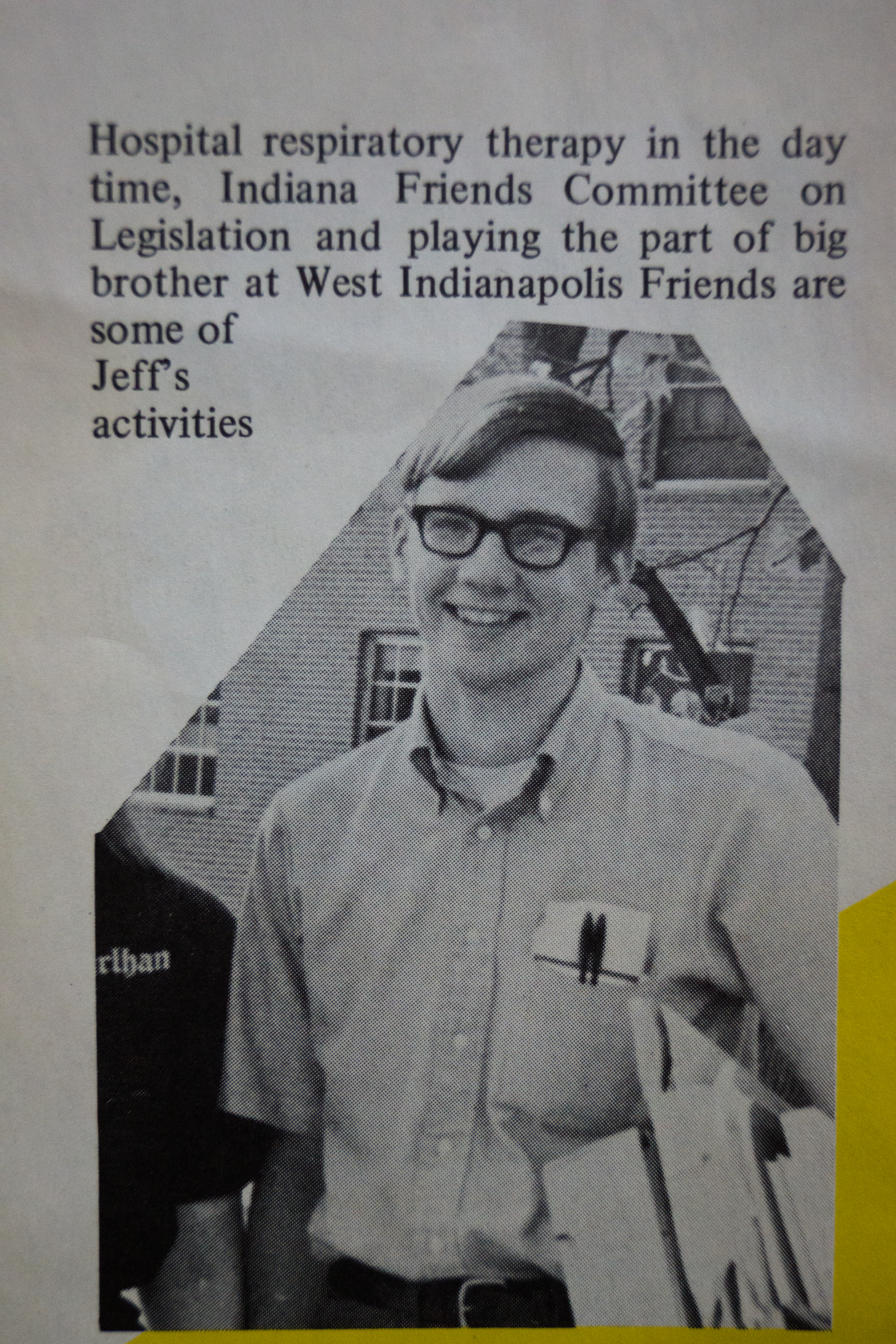
Friends Volunteer Service Mission
The idea of VSM was to find an alternative service type of job for the first year, and save enough money to support yourself to work fulltime in the community during the second year. I found there were no youth programs at all, so I spent my second year working with the neighborhood kids. We organized a 4H club, played soccer, went swimming, and went on bicycle explorations around the city with a couple of cameras. And then developed the film and prints in a darkroom I setup in the bathroom. Although I moved home to Iowa after that, I missed the kids so much that I returned to Indianapolis.
This was in the days before car rental was common, so I did buy an old car from a neighbor for $50 to drive to Iowa. When my best friend, Randy, wrecked my car, having been uncomfortable about having one, I decided that was an opportunity to see if I could get along without. The experience of living without a car had a profound effect on my life and spiritual outlook and practices. As you can probably relate from your own experience, whenever you take a chance, take a leap of faith, so many unexpected things happen as a result, almost all contributing to your further, deeper spiritual and other development. Three things that emerged from not having a car were that I became much more in-tune with the environment on personal level, I became a much better runner, and it was also helpful for my photography to be able to stop and take a photo instead of driving past, or not even able to see the image from a car.
The past forty years have been a really bad time for environmentalists. It has been so frustrating to know the science, and to come to the realization that those in power are truly corrupt, doing anything they could to keep the truth from the general public in order to protect their profits. And to realize that even when people do learn the facts, personal convenience would win out over environmental principles. This was especially disappointing from Friends.
Nearly three years ago, when I saw the Keystone Pledge of Resistance, a pledge to use nonviolent civil disobedience to try to confront the fossil fuel industry and the American people, to try to stop the reckless extraction and consumption of fossil fuels, I believed this was a campaign that would allow me to put my Quaker beliefs into practice for our environment, and that became my focus. A commitment to nonviolence is a commitment for all parts of your life. I had been there to participate and to see nonviolence work for the civil rights and anti-war movements, and I believed it was exactly what was needed now, for our environment.

Stop extreme fossil fuel extraction
The Pledge became one of my main focuses. I attended the action leader training sessions in Des Moines, since they weren’t offered in Indianapolis. Together with Ted (Muncie) and Wayne (Indianapolis), who were trained in Cincinnati and St. Louis, we selected and scouted our target (the Federal building) and held six, so far, training sessions to prepare local activists for nonviolent civil disobedience actions. There have also been national vigils that we participated in.

Keystone Pipeline Fighter
It has been fascinating, for me, to watch this group of people being engaged with all kinds of groups and events, and not all related to our environment. And we have grown into a community as we have come to have a history of being engaged on the streets and in the Statehouse together. We know and trust each other, and call upon each other to support new things we get involved with (all the time). So I’ve been learning about organizing.
But there was always this awareness of the racial, social and economic problems that people tried to ignore despite how many of their friends, neighbors, and themselves are affected. And the knowledge that simply through the circumstances of the family I was born into, my life was significantly better in many ways than that of a great many others in America and the world. This was a spiritual problem for me.
God (finally) provided me with a way to begin to learn about that. About three years ago the environmental group 350.org organized a national day for environmental education/actions. Only one event was listed in Indiana that day, and it was at the KI Eco Center, which was how I found out about it. When I was with a group of mainly young people from the Eco Center for our first time together, Imhotep, one of the community leaders, asked me a series of questions about myself. I don’t talk a lot about myself, but Imhotep, I’ve come to learn, is very good at drawing stories out of people. So I began to talk about Quakerism. When Imhotep asked me to talk more about that, I said something like, “Quakers believe there is that of God in everyone, and that includes you, and you…” The very first time, I think I hesitated slightly as I was asking myself, “Ok, we Friends always say this, but do you really believe this of a group that is different from you?” And I’m really glad the answer was an immediate and emphatic YES, but it also seemed to reaffirm that by exploring it consciously and publicly. At that point I remember smiling at the thought, and the young person whose eyes I was looking into saw it, too, I think. Each person smiled at me as I said that to them. That seemed to satisfy the questions for the evening. I was not used to speaking about faith in public outside Quaker circles, and this was a lesson that it is important to do so. From the beginning, my experience at the Eco Center has been a shared, spiritual one.

KI community discussion
My spirit was so glad to have this community to learn from and try to contribute to. I really enjoyed getting to know the community there. And I was very impressed (and reminded of Scattergood School) by the young people leading open community discussions about such things as The New Jim Crow. When there was an opening in the schedule, I asked if we could hold a community discussion about nonviolent civil disobedience and social change, and they graciously agreed to do so. I thought there would be sharing of past experiences, and an interest in using direct actions now. A number of the Keystone Pledge of Resistance people came and spoke about why nonviolent action was so important to them. But this was one of the first occasions where I was to learn that I made an incorrect assumption. What the discussion revealed was that bad experiences and mistrust between people of color and the police meant there isn’t the willingness to take that risk, on the part of many. It was I lesson I was glad to learn.
We all seemed to be learning how to work together as we went along. There wasn’t a structured program to plug into necessarily. As various events, mainly community discussions or technology offerings occurred, I would look forward to attending as further opportunities to spend time in that community, learning and getting to know people. There are all sorts of things related to care of our environment going on–building rain barrels, aquaponics, composting, and gardening. I was really happy to have the opportunity to teach photography during summer camp last year. I later learned that this process is called accompaniment, the idea being to not try to jump into helping lead, but instead listening and waiting to hear what it is that the community needs that you could help with.
Then last year, a group began organizing a Moral Mondays movement here in Indiana. Several years ago Rev. William Barber, then President of North Carolina’s NAACP, organized a series of nonviolent civil disobedience actions in the State Capitol building during the legislative sessions, to protest the repressive policies being enacted. That movement grew to the point that eventually 100,000 people were arrested.

Indiana Moral Mondays
We are very fortunate that Erin Polley and the American Friends Service Committee (AFSC) she works for made this a big focus for her work. It has seemed something of a miracle to see so many diverse groups (NAACP, labor unions, education, faith , healthcare, women’s issues, peace, and environmental groups) all coming together to speak and act with a moral voice in the state. A number of North Meadow Friends have been very involved with Indiana Moral Mondays (IMM) in a variety of ways. Also, my friends at the Kheprw Institute (KI Eco Center) have been involved as well, including helping to lead an environmental panel discussion during the launch of IMM last September. It is so good to see people engaged in so many different ways. I am on the media committee, the photographer, and the environmental working group. One thing our environmental group is working on is making renewable energy available in economically depressed neighborhoods. Once the equipment is paid for, solar and wind continue to produce electricity, for free. I’ve met my state representative, and have described this, and asked if he would be interested in helping create legislation to make this happen.
A lot was accomplished this first year of IMM. We attended lots of committee hearings and held numerous public events related to justice issues and the state legislature. Others are beginning to see IMM as both a moral voice and a broad coalition of justice organizations that are finding ways to work together effectively.
I am also very fortunate that North Meadow Circle of Friends meets just a few blocks from where I live. This unprogrammed meeting reminds me a lot of meetings in Iowa Yearly Meeting (Conservative). There is a lot of interest in activism. And there are a lot of kids in the meeting, too.

North Meadow Friends
Presently, North Meadow Friends are discussing what our relationship might be with IMM and KI (Kheprw Institute-Eco Center). Many North Meadow Friends are involved with both communities, and things could continue that way. But those of us already involved, would like others in the meeting to share the joy of also being involved. It would be mutually beneficial in many ways.
A concern has been raised about what it means to be involved with non Quaker groups in work like this. There is concern about what it means to work with others that share many of our beliefs, but not all. There is a group of Friends (not just at North Meadow) who feel their lives should reflect their beliefs, and take care not to act in ways inconsistent with their beliefs. I think all Friends share this. But this group also feels they should not associate with others who have some beliefs Friends oppose. I disagree with that feeling for a number of reasons.
“Judge not, that you be not judged.” Matthew 7:1
What we have here are several great opportunities to put our faith into action, and an evolving community of like-minded activists to work with. The key to making this work is to put our differences aside, and find which things we can agree on, and work on those things together. The Moral Mondays movement refers to this as “fusion” politics, and that is what has been the key to working together and getting things done.
After many years of oppressive politics combined with a dis-engaged public, there is now an awakening social unrest. So many people have been oppressed in so many ways. The events in Ferguson last year shocked the nation, both the initial killing of yet another unarmed young black man, and the excessive, military style response. These tragedies continue to occur.

Black Lives Matter
I return to the question of how we put our faith into action. I see decades when Friends declined to respond to the moral and practical issues related to our treatment of the earth. I see Friends struggling to respond to injustice. Our Peace and Social Concerns committees seem to lack focus, and not produce effective responses. There is still a lack of diversity in many of our meetings.
At the same time more and more people around the world are pushed further into poverty. Millions go without adequate food, water, shelter, education, healthcare, respect and love. Every day thousands die from starvation and preventable disease. This is not acceptable.
What is the purpose of our life? Is it to be a pure example of not associating with what we disagree with, when that prevents us from addressing these urgent conditions? I believe we are called to be out in the communities, in the streets, actually working side by side with those suffering. That involves accepting others and their differences. I think we have a debt to pay for the privileges we have been given, and the only way to begin to pay it off is by actually working side by side with others. We need to do this for our own spiritual health.

Peaceful protest
Sometimes it helps to look at things from a different perspective. I think of a hungry child looking at us. Suppose there is an organization willing to provide food, but which also believes in something we don’t. I don’t think there is any doubt on the child’s part as to whether he or she hopes we will work with the food organization, or not.


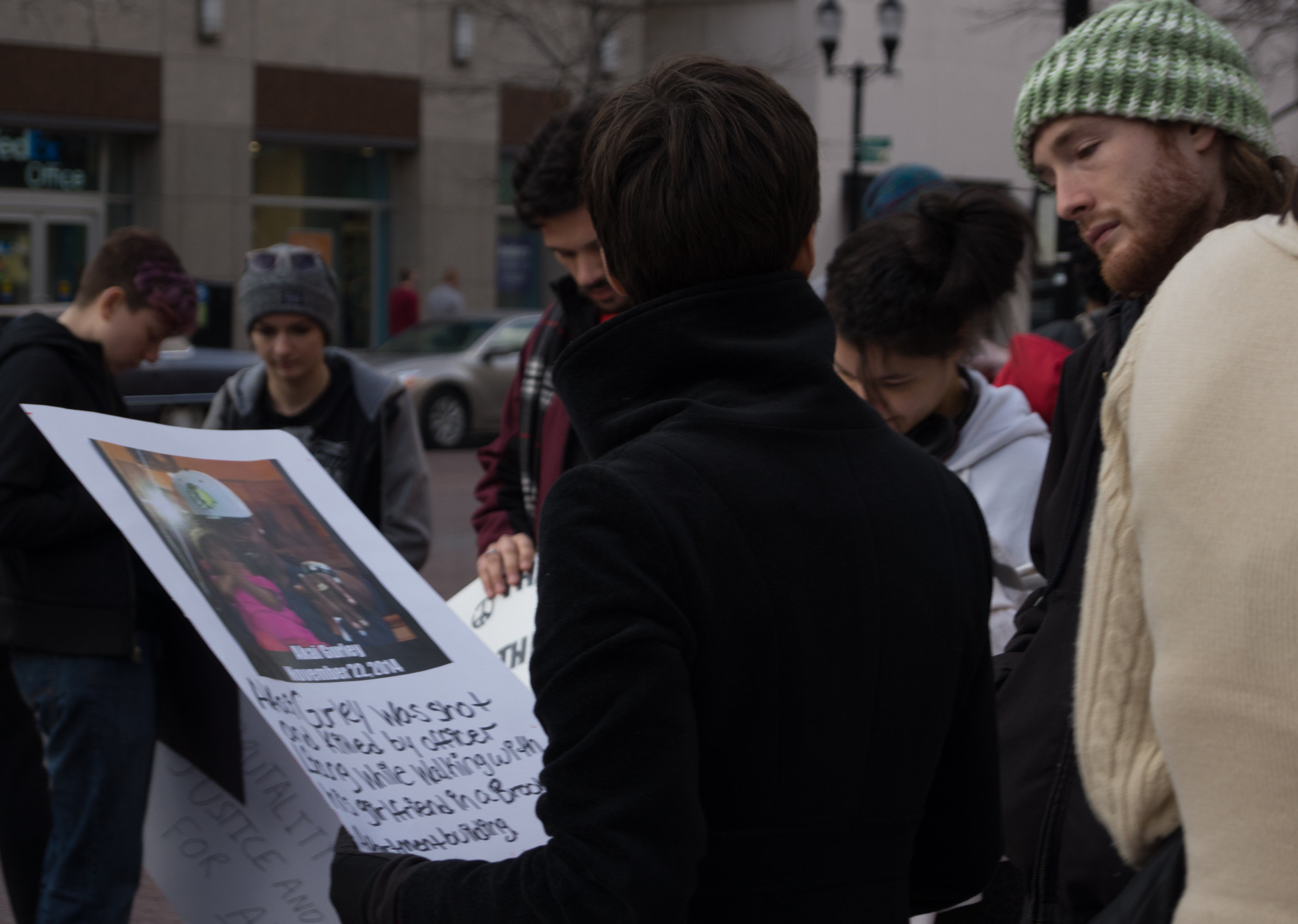


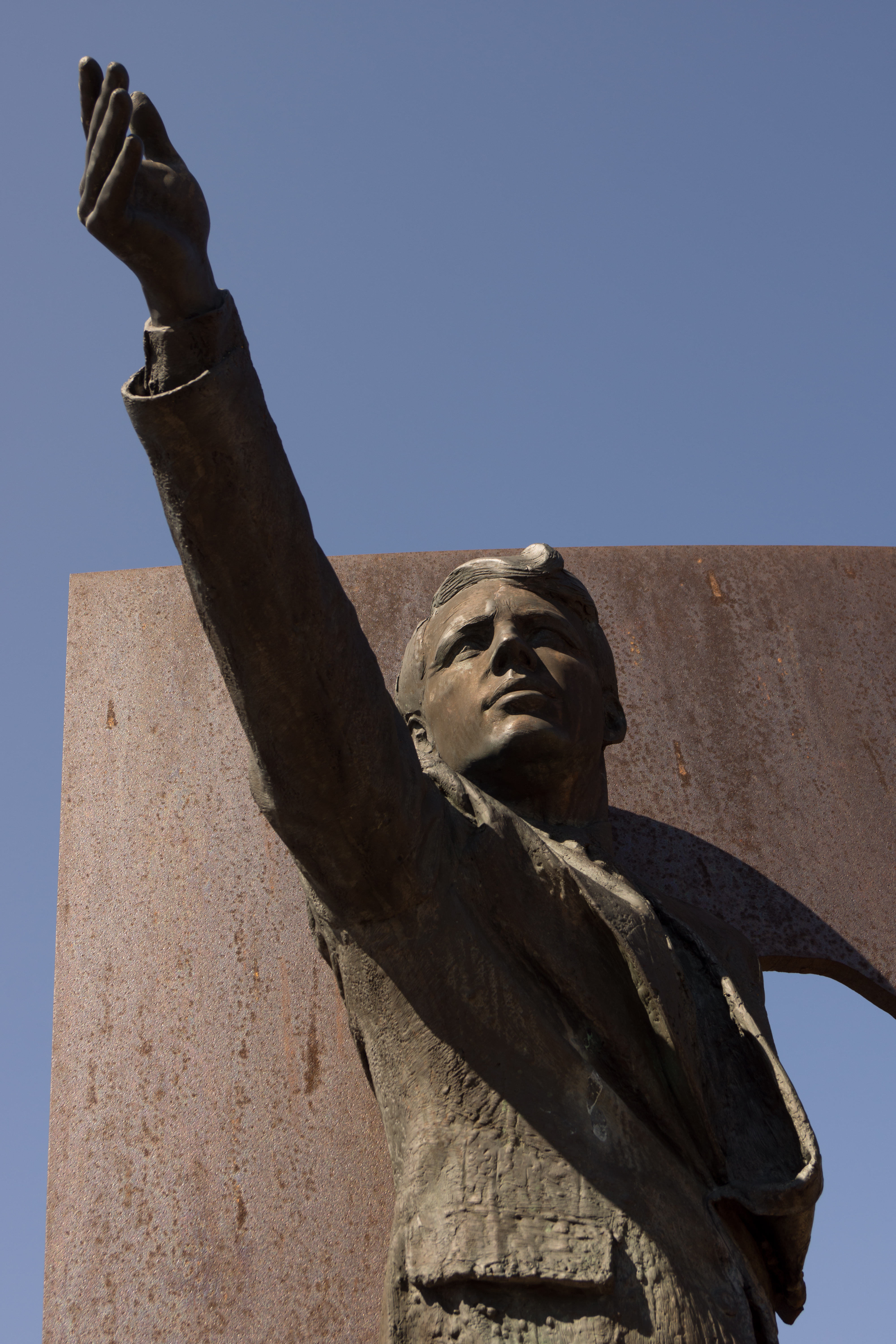


 Quakers, social justice and revolution