A Journey to Today

This day means many different things to those of us living in this country called the United States. It is difficult to imagine anyone believes the stories of a gathering where white colonizers expressed their gratitude to the Native peoples. Most nonnative people today just look forward to the gatherings of family and sharing meals.

Much as most white people don’t want to think about the realities of the genocide of native peoples as their lands were stolen and colonized, and the history of the forced assimilation of their children into white culture, it is important for many reasons to tell the truth of this history. My friends are working hard to do so, and to show us a way to move forward together.

The truth is that real history has been whitewashed and that Thanksgiving perpetuates white supremacy and romanticized notions about Indigenous Peoples. To celebrate the current Thanksgiving mythology is to celebrate the theft of land through ethnic cleansing and enslavement. It is a lie that overlooks the genocide of Native American Indigenous Peoples and the enslavement of African Indigenous Peoples in order for settler-vigilantes and colonial militias to steal land and labor–the legacy of which is still felt today.

https://www.truthsgiving.org/


The main reason for my interest and years of study about Indigenous peoples is because of my deep, lifelong concern about the destruction of our environment from the profligate use of fossil fuels in our industrial, and post industrial society. Even as a teenager (1960’s) it was obvious that would not be sustainable, and led me to refuse to have a personal automobile for most of my life.

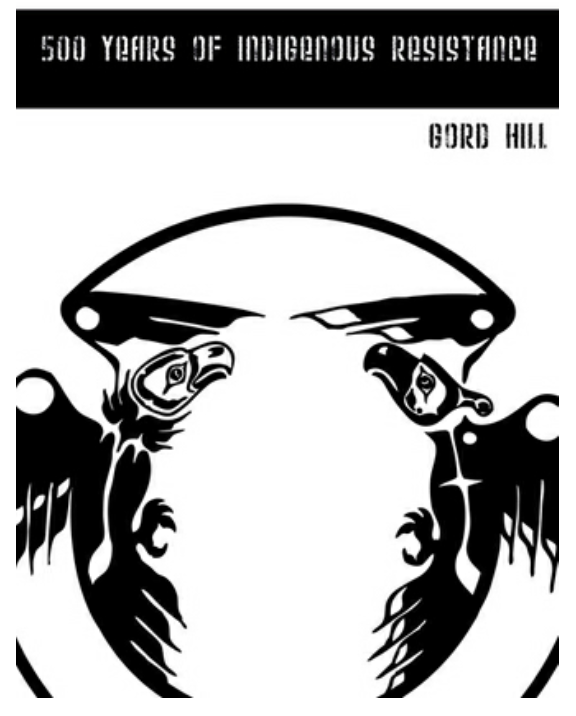
It was obvious to me that we would have to return to the subsistent lifestyles that continue to be practiced by Indigenous peoples. As Gord Hill wrote, “the First Peoples inhabited every region of the Americas, living within the diversity of the land and developing cultural lifeways dependent on the land.

THE PRE-COLUMBIAN WORLD

Before the European colonization of the Americas, in that time of life scholars refer to as “Pre-history” or “Pre-Columbian”, the Western hemisphere was a densely populated land. A land with its own peoples and ways of life, as varied and diverse as any of the other lands in the world. In fact, it was not even called “America” by those peoples. If there was any reference to the land as a whole it was as Turtle Island, or Cuscatlan, or Abya-Yala. The First Peoples inhabited every region of the Americas, living within the diversity of the land and developing cultural lifeways dependent on the land. Their numbers approached 70–100 million peoples prior to the European colonization.*

Generally, the hundreds of different nations can be summarized within the various geographical regions they lived in. The commonality of cultures within these regions is in fact a natural development of people building lifeways dependent on the land. As well, there was extensive interaction and interrelation between the people in these regions, and they all knew each other as nations.

With a few exceptions, the First Nations were classless and communitarian societies, with strong matrilineal features. The political sphere of Indigenous life was not dominated by men, but was in many cases the responsibility of women. Elders held a position of importance and honour for their knowledge. There were no prisons, for the First Nations peoples had well developed methods of resolving community problems, and there was—from the accounts of elders—very little in anti-social crime. Community decisions were most frequently made by consensus and discussions amongst the people.

Hill, Gord. 500 Years of Indigenous Resistance. PM Press. Kindle Edition.

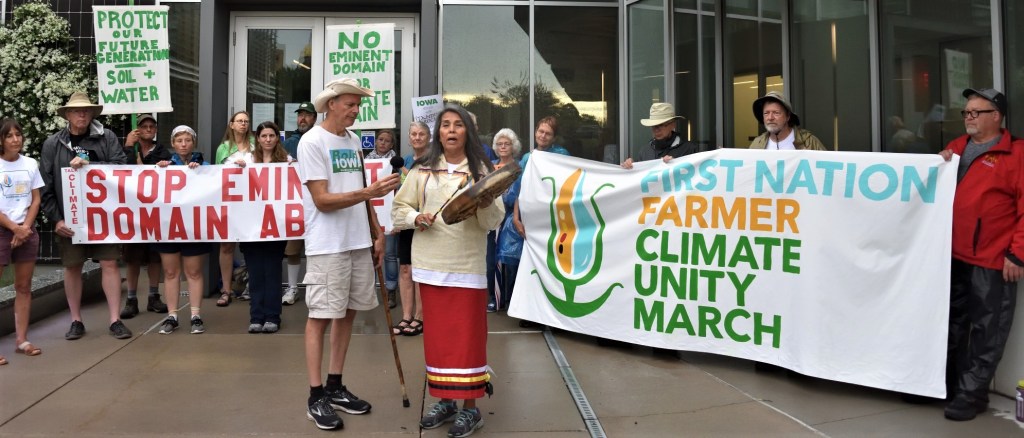
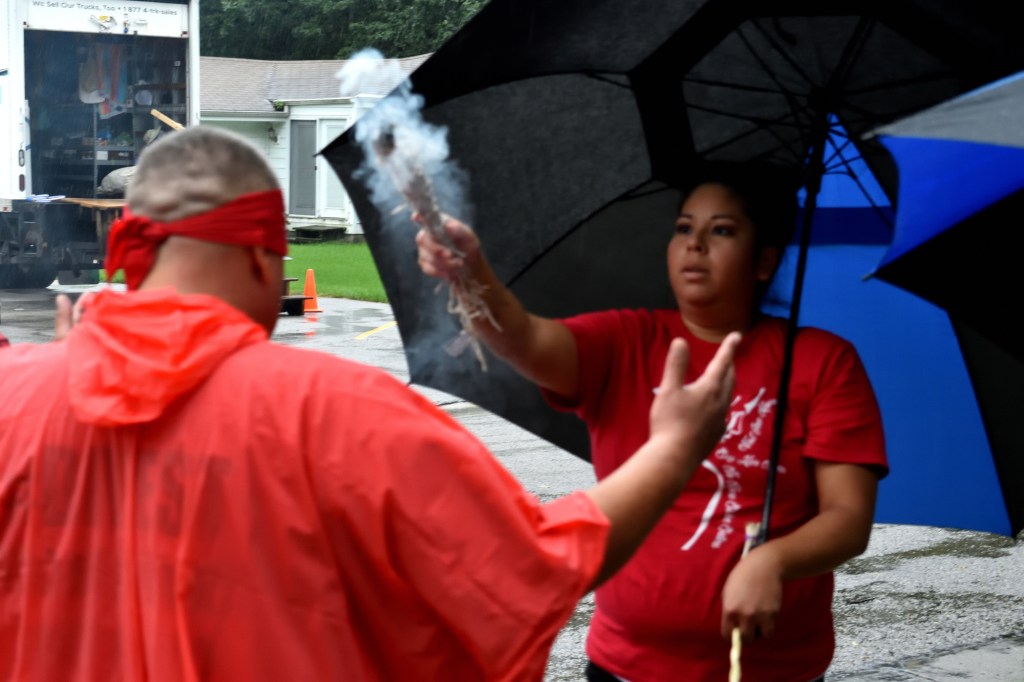
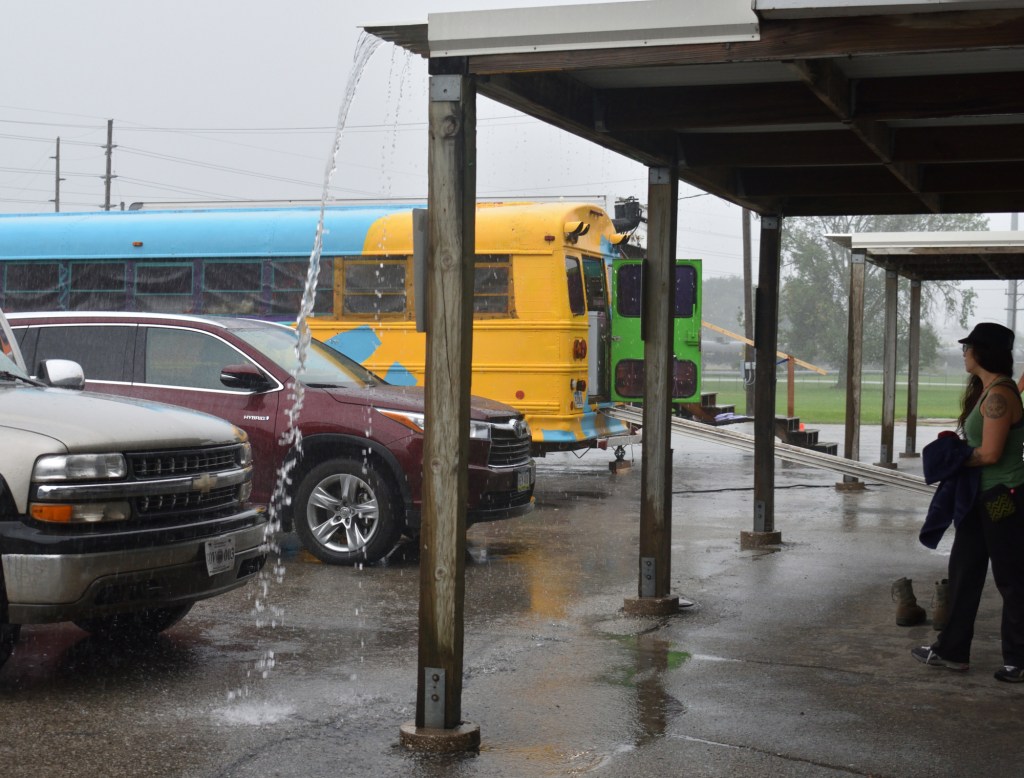
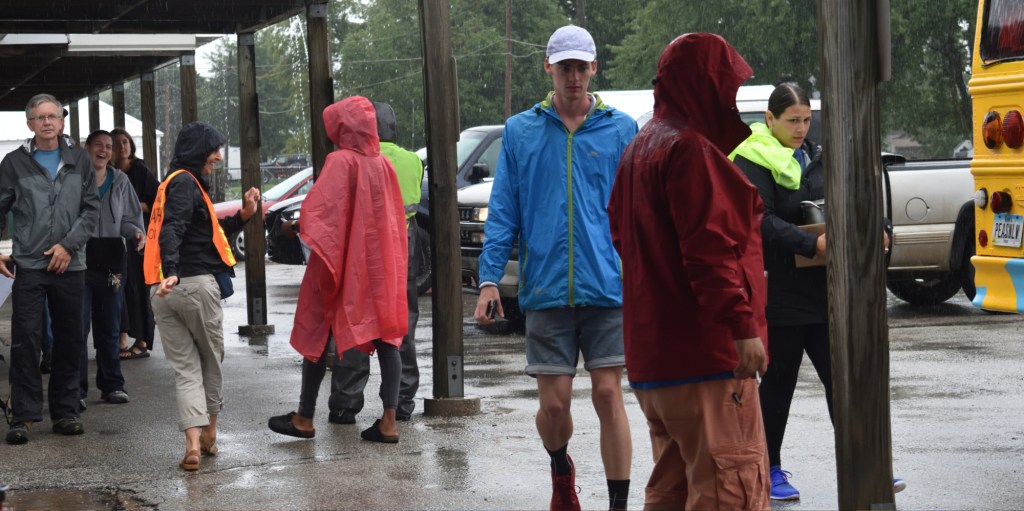
Trying to follow the leadings of the Spirit, my life took many paths along the way to this day. One of the most significant was to be blessed to have walked and camped along the route of the Dakota Access Pipeline through central Iowa, September 1-8, 2018. During this week of “suffering” together as we often walked through pouring rain, about 10 miles a day, our small group of about a dozen native and a dozen nonnative people shared our stories with each other. Began to know each other, with the beginnings of trust. Which was a remarkable thing considering the terrible history between these two cultures. Many stories, photos and videos of that First Nation-Farmer Climate Unity March can be found here: https://firstnationfarmer.com/ It is a great joy that these friendships have deepened with time.

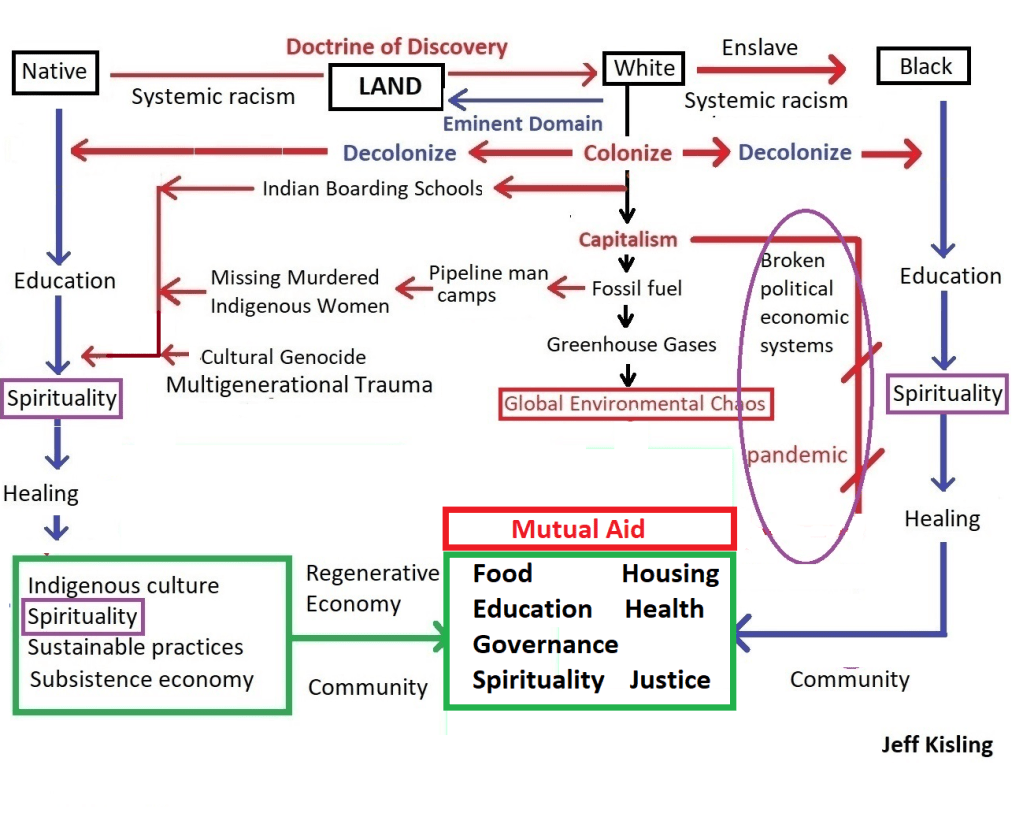
Now we come to this day. How can we begin to heal the trauma from the colonization of native lands, the genocide and the forced assimilation of native children? What do we do in response to rapidly evolving environmental chaos? How do we hasten the ongoing collapse of the capitalist system? As my friend Ronnie James writes:

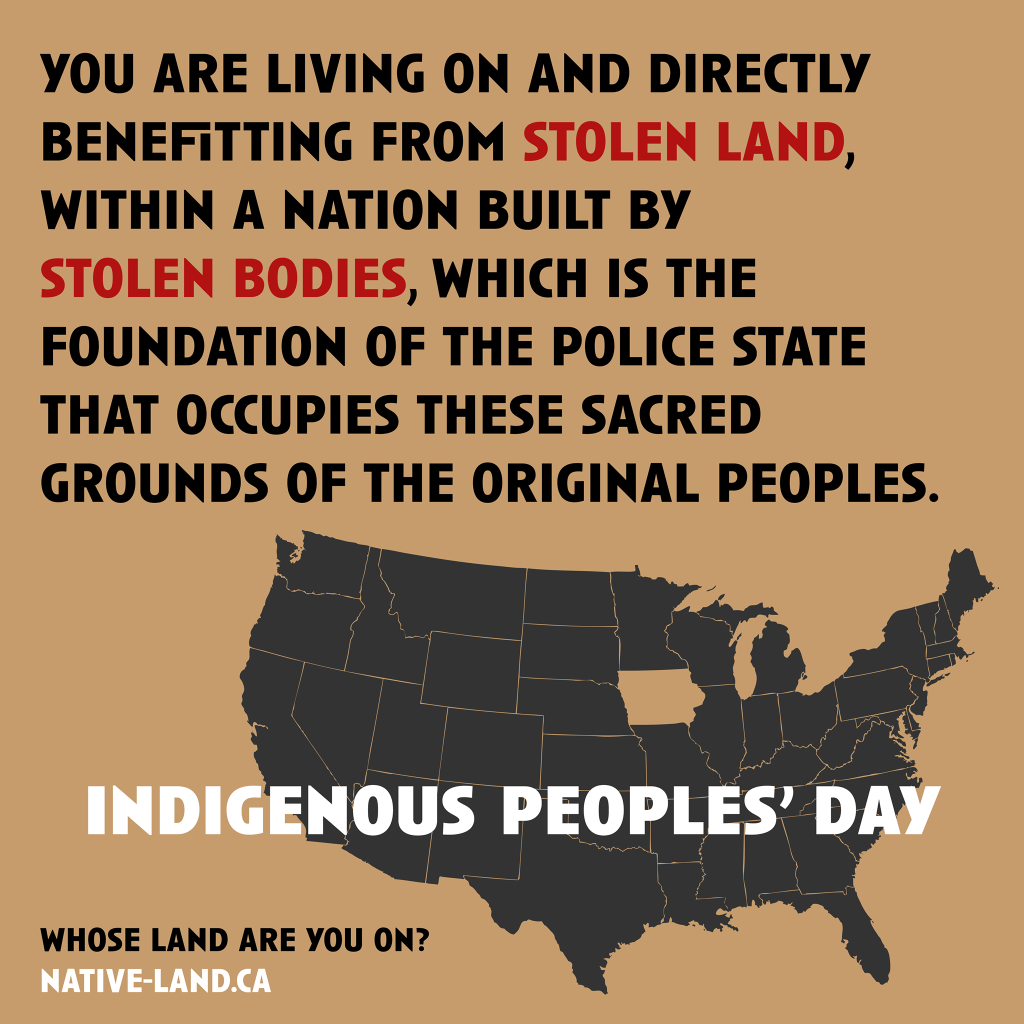
“I’m of the firm opinion that a system that was built by stolen bodies on stolen land for the benefit of a few is a system that is not repairable. It is operating as designed, and small changes (which are the result of huge efforts) to lessen the blow on those it was not designed for are merely half measures that can’t ever fully succeed.

So the question is now, where do we go from here? Do we continue to make incremental changes while the wealthy hoard more wealth and the climate crisis deepens, or do we do something drastic that has never been done before? Can we envision and create a world where a class war from above isn’t a reality anymore?”

Ronnie James

Following is a diagram I’ve been working on for some time that incorporates what Ronnie is talking about.

Ronnie has been working on an answer to his question, “Can we envision and create a world where a class war from above isn’t a reality anymore?” A large piece of the answer is Mutual Aid. Mutual Aid is a radically different approach to working for justice, and living together. Instead of the long used but ineffective model of “us” helping “them”, Mutual Aid defines itself. Mutual means we are all in this together. Aid means finding solutions that help all of us.

Ronnie has been working with Des Moines Mutual Aid (DMMA) or some form of it, for a long time. DMMA currently has three branches. One that helps with food insecurity with a weekly food giveaway. Another branch works with the houseless or those facing eviction. And the third branch is a bail fund, to support those arrested for advocating for justice and change. Ronnie has been mentoring me regarding DMMA. I’ve been blessed to be able to participate in the food giveaway effort.

Yesterday I wrote about an online event that will occur from 2-3 pm today, where Ronnie and other friends of mine will be talking about these ideas. https://atomic-temporary-82209146.wpcomstaging.com/2020/11/25/truthsgiving-event-11-26-2020/

Register at http://bit.ly/Truthsgiving2020


#TruthsGiving

Posted in #NDAPL, decolonize, Des Moines Mutual Aid, First Nation-Farmer Climate Unity March, First Nations, Indigenous, Mutual Aid, Native Americans, Uncategorized | 2 Comments

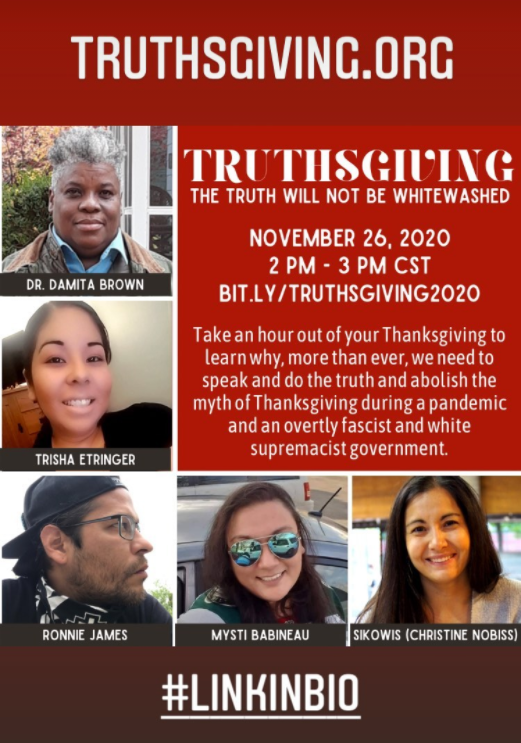
Truthsgiving Event 11/26/2020

Tomorrow being the colonial version of Thanksgiving with family gatherings you might not be thinking about attending an online Zoom meeting like the one below.

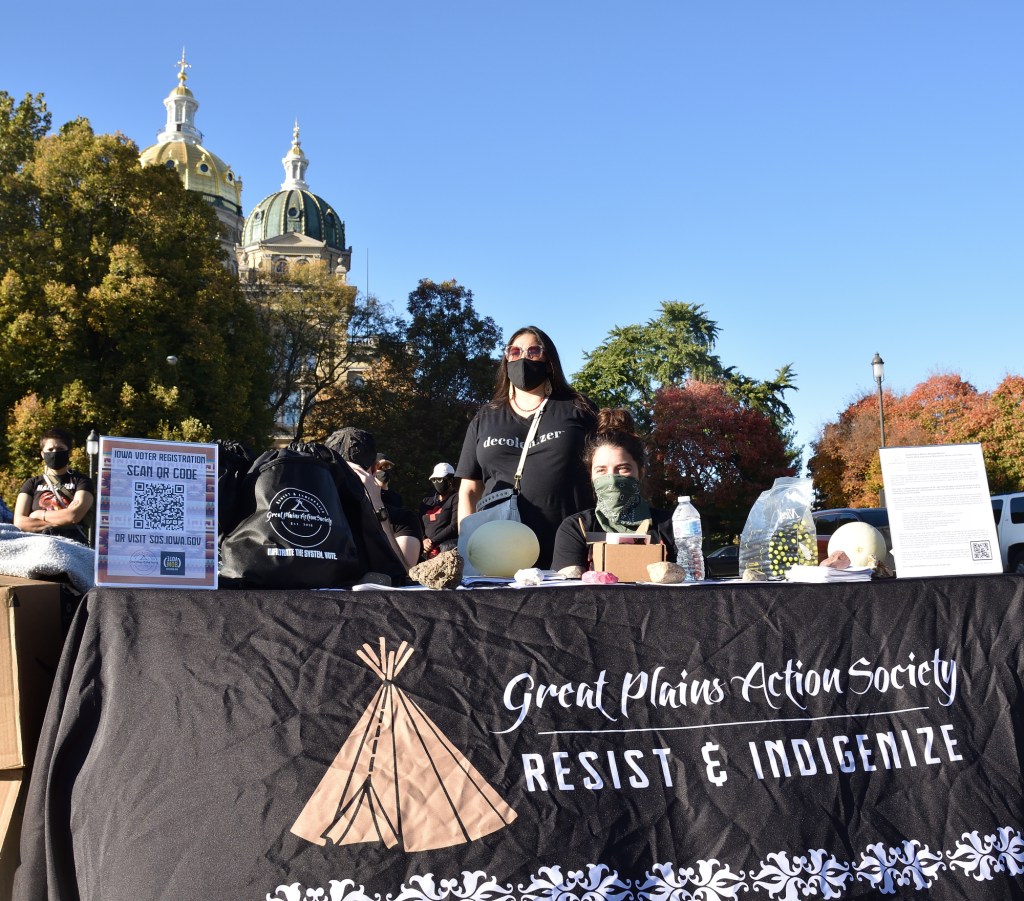
If you can make the time, I’d love for you to get to know some of the friends I’ve been working with. Following are the bios of some of the speakers. I’ve often written about my friend, Sikowis (Christine Nobiss). Recently I’ve been writing a lot about what I’m learning from my friend Ronnie James. Also speaking will be my friend Trisha Entringer who was on the First Nation-Farmer Climate Unity March and does a lot of organizing in the Sioux City area.

November 26, 2020, 2-3 PM CST
Register at http://bit.ly/Truthsgiving2020

Webinar Speakers

Sikowis

Founder of Truthsgiving @Great Plains Action Society

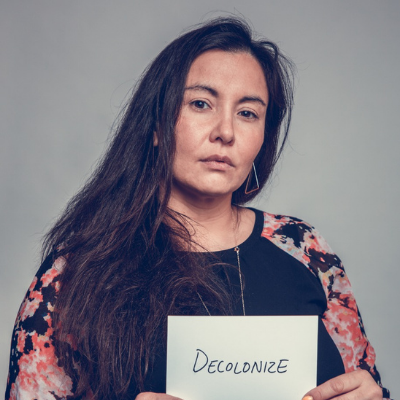
Sikowis is is Plains Cree-Saulteaux of the George Gordon First Nation in Saskatchewan and grew up in Winnipeg, Manitoba. She is a mother of three, and the founder of Great Plains Action Society and Little Creek Camp and has titled herself a Decolonizer. She has a MA in Native American Religious Studies and a graduate minor in Native American Indian Studies from the University of Iowa and has been living in Iowa City for 15 years. Sikowis believes that Indigenous sovereignty and knowledge are ways to decolonize both people and the colonial-capitalist economy. She has spearheaded many actions, events, and campaigns such as a resistance camp to the Dakota Access Pipeline (Little Creek Camp), Indigenous@SOCAP, the first Iowa based Indigenous political engagement summit, the removal of white supremacist monuments in Iowa, and the concept of Truthsgiving.
Ronnie James, Indigenous Organizer

Law Student @Great Plains Action Society and Des Moines Mutual Aid

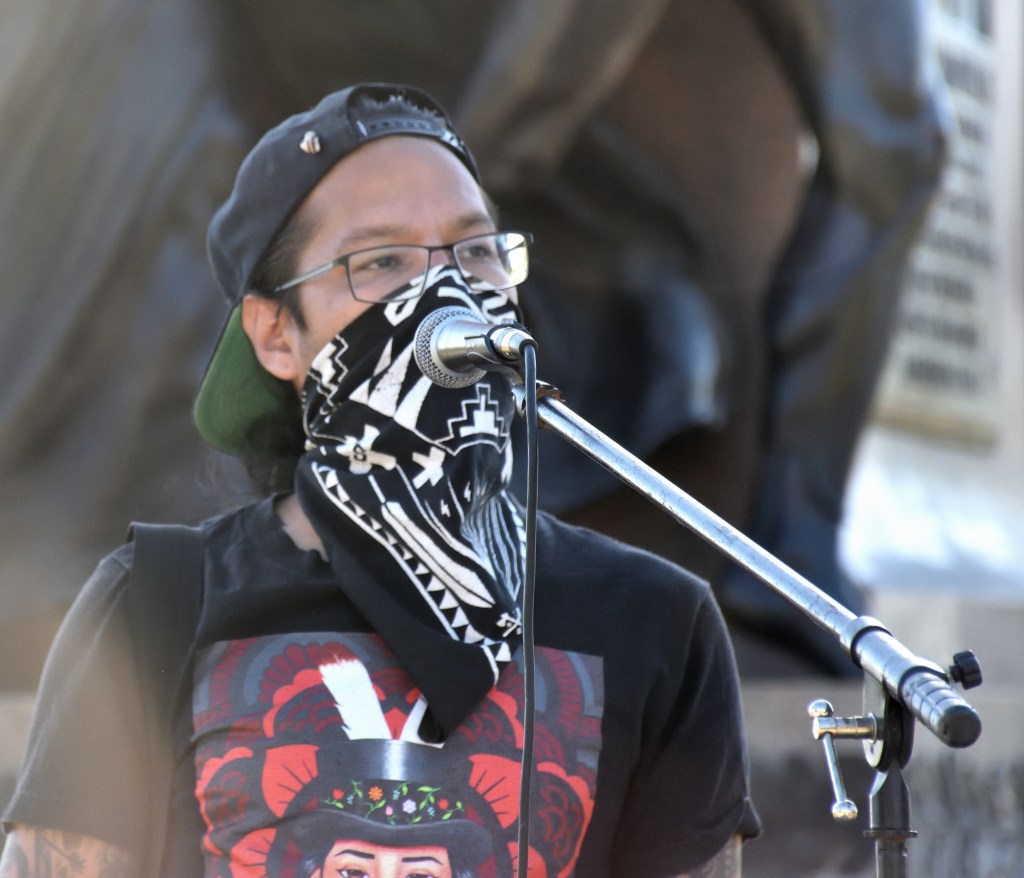
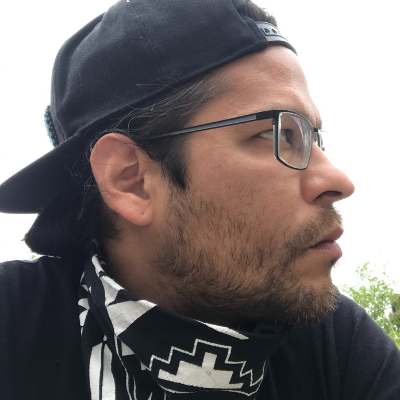
Ronnie James is an Indigenous activist and organizer in Des Moines, Iowa. He currently organizes with The Great Plains Action Society and Des Moines Mutual Aid, in addition to being a father and a pre-law student. He is involved in many Mutual Aid projects centered around food insecurity, racial and economic justice, and our houseless relatives. He has many years of boots on the ground grassroots organizing experience, all informed from an Indigenous and anti-capitalist perspective. Ronnie is pursuing a law degree to further these goals and believes that by having a law license he will be able to effectively protect the vulnerable and support the courageous.
Dr. Damita Brown

Organizer @Dane County Timebank

Dr. Damita Brown is a community based educator specializing in racial justice work who has been teaching leadership, anti-racism and allyship workshops for over 12 years. She holds a doctorate in History of Consciousness and has taught youth who are incarcerated as well as at the college level. Using contemplative practices, creative process work and transformative justice, her approach addresses deep patterns of harm at the institutional, interpersonal and personal levels. Currently Dr. Brown serves as the Restorative Justice Director at the Dane County TimeBank. She is the lead teacher for the Community Lab for Intentional Practice, a space where people interested in unlearning racism can connect with others for resources, practice space and instruction in techniques for dismantling oppression in a supportive and compassionate environment.


Reject colonial holidays that perpetuate dangerous stereotypes and whitewashed history. Celebrate Truthsgiving with Indigenous Peoples and allies across the midwest and join us for an online webinar to celebrate the truth–real history and real solutions for issues we face today.

There are many colonial mythologies about Indigenous Peoples and the founding of America. Thanksgiving is one of them, however, in the words of Wamsutta Frank James, Wampanoag, “the Pilgrims had hardly explored the shores of Cape Cod four days before they had robbed the graves of my ancestors, and stolen their corn, wheat, and beans.” The truth is that real history has been whitewashed and that Thanksgiving perpetuates white supremacy and romanticized notions about North American Indigenous Peoples.

To celebrate the current Thanksgiving mythology is to celebrate land theft through ethnic cleansing and enslavement. It is masked recognition that this country was founded on the actions of generations of settler-vigilantes and colonial-militias who depended on the genocide of Native American Indigenous Peoples and the enslavement of African Peoples to steal land, the legacy of which is still felt today.

REGISTER AT: bit.ly/Truthsgiving2020


Posted in decolonize, Des Moines Mutual Aid, First Nations, Indigenous, Mutual Aid, Uncategorized | Leave a comment

Resources to help us tell the truth

My friends at Truthsgiving.org urge us to take the TRUTHSGIVING 2020 PLEDGE, that involves educating ourselves, and our families and friends why the nonnative story of Thanksgiving not only whitewashes the truth, but promotes dangerous stereotypes.

  • Educating ourselves What do you know about Native American Indigenous Peoples past and present, and about Indigenous resistance to Thanksgiving? See the list of resources here to get you started.
  • Educating others Tell at least three people what you’ve learned and encourage them to take the pledge to discuss the truth at their thanksgiving event.
  • Give back Tell the truth at your thanksgiving gathering or abolish it in your own life and celebrate Truthsgiving by giving back to your community during this day or hosting an event that celebrates Indigenous resistance and honors historical truth.

This Zine, TRUTHSGIVING, contains much useful information to help us with our efforts, to educate ourselves and others.


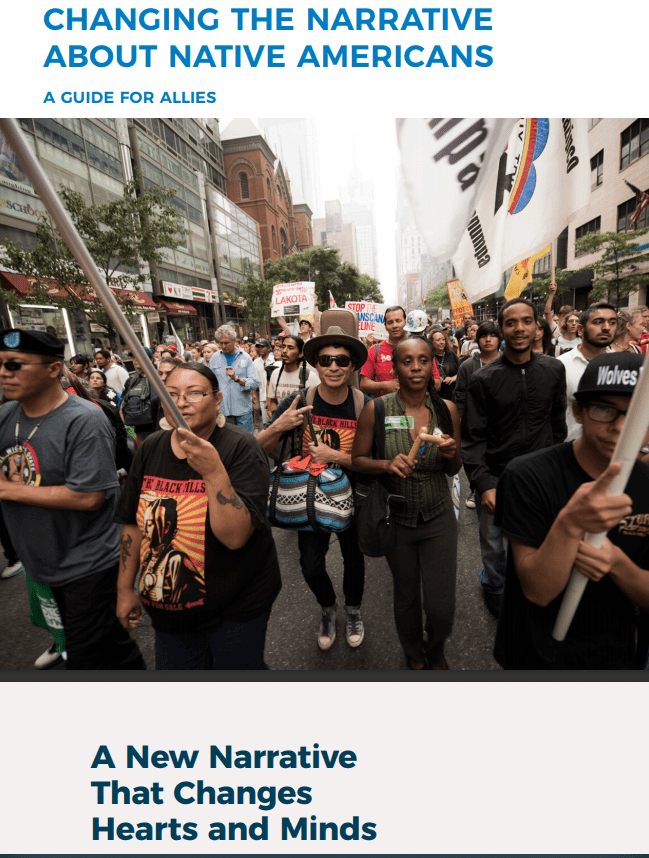
Following is a link to another Zine, “Changing the Narrative about Native Americans, A Guide for Allies.”

https://rnt.firstnations.org/wp-content/uploads/2018/06/MessageGuide-Allies-screen.pdf

The third step of the Truthsgiving Pledge is to tell the truth at our thanksgiving gathering or abolish it in our own life and celebrate Truthsgiving by giving back to our community during this day or hosting an event that celebrates Indigenous resistance and honors historical truth.

One of my ideas for this third step is to encourage you to visit an online resource, a website full of stories, videos and photographs of the First Nation-Farmer Climate Unity March that I was blessed to be part of in September, 2018. The purpose of the March was for a small group of native and nonnative people to spend a week together as we walked and camped along the path of the Dakota Access Pipeline. Walking around 10 miles per day on rural Iowa roads was ideal for sharing our stories with each other. This was in part a healing journey. Many friendships were created, that continue well beyond the March, to this day.

https://firstnationfarmer.com/

Posted in #NDAPL, decolonize, First Nation-Farmer Climate Unity March, Indigenous, Uncategorized | Leave a comment

Why We Must Honor the Lost Children of Turtle Island

An important of part of Truthsgiving is educating ourselves and others. One of the worst things inflicted on native peoples was forced assimilation. Native children were forcibly removed from their families and taken long distances to residential schools. The schools intended to erase the children’s indigenous culture and replace it with that of the colonizers’. Cultural genocide. There was widespread physical, emotional and sexual abuse, and death.

For years now I’ve been doing research related to the Indian boarding/residential schools in this country and Canada. This has been a spiritual leading, to try to understand why Quakers, some of my ancestors, participated in this forced assimilation.

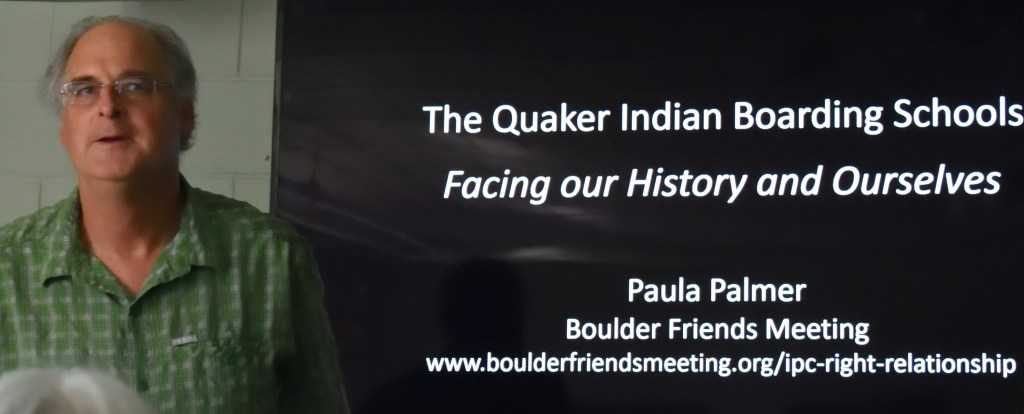
I’ve learned a lot from my friend Paula Palmer’s research and writings. In 2016 her article, Quaker Indian Boarding Schools, Facing our History and Ourselves, was published in Friends Journal. Last year I was among those who helped her give her presentations and workshops related to “Toward Right Relationship with Native Peoples” in Iowa and Nebraska.

But I discovered there was much I didn’t know when I read the article quoted below, Why We Must Honor the Lost Children of Turtle Island written my friend Christine Nobiss.

I’ve been led to talk with each of my native friends, at one time or another, to say I was aware of the Quakers’ role in forced assimilation and the boarding schools. I told each one I was sorry the Quakers had done that. In almost every case, my friend would tell me stories of how they and their families had been impacted. Christine told me some of her family’s history.

Sikowis (Christine Nobiss), MA (Religious Studies), Plains Cree/Saulteaux of the George Gordon First Nation and Founder of Great Plains Action Society, is adding to the collective voice of Indigenous people all over the country fighting to keep their children within their own families and communities.

Every year, for the past sixteen years, the day before Thanksgiving, the community of Sioux City, Iowa comes together to march the streets in honor of Indigenous children that have been taken from their families and placed into settler imposed institutions. It is called the March for Lost Children where hundreds gather to memorialize Native American youth who have been taken from their families and placed in the country’s child-welfare system. The goal is to “raise awareness and ultimately reunite displaced Native American children with their home tribes and families.”

The history of how we have so many lost children of Turtle Island is harsh and disturbing but still largely whitewashed from settler descendant society. Countless Native American children were initially lost during the first wave of invasion known as bio-warfare. Disease brought from Europe by invaders swept across the land and decimated the Indigenous population before actual contact. Afterward, invasion continued with war (16th – 19th centuries), treaties (1608-1830), removal (1830-1850), reservations (1850-1871), assimilation (1871-1928), reorganization (1928-1942) and, termination (1943-1968). All these periods of enforced assimilation through government and ecclesiastical policy had a direct effect on the health and safety of Indigenous children. Again, countless numbers of Indigenous children were lost forever directly from war, the loss of their homeland and brutal assimilation tactics. Not to mention, “frontier-culture” emerged as a result of westward expansion where settler vigilantes and colonial militias maniacally and indiscriminately tortured and killed Indigenous children. There are stories of men ripping unborn babies out of their mothers stomachs or torturing children to death in front of their parents. Indigenous children were considered less than human and not held sacred in any way in the mass consciousness of the settler invaders.

Boarding schools played a massive role in the process of assimilation, “beginning in 1887, the federal government attempted to “Americanize” Native Americans, largely through the education of Native youth. By 1900, thousands of Native Americans were studying at almost 150 boarding schools around the United States.” (History Matters) Richard Pratt, founder of Carlisle Boarding School, clearly portrayed this American sentiment in his famous 1892 paper. He wrote, “A great general has said that the only good Indian is a dead one, and that high sanction of his destruction has been an enormous factor in promoting Indian massacres. In a sense, I agree with the sentiment, but only in this: that all the Indian there is in the race should be dead. Kill the Indian in him, and save the man.” (History Matters) Due to such “insight” and motivated by the ideology of manifest destiny or the doctrine of discovery, children were torn from their homes and forced into horrifically abusive situations where they were beaten, molested, and even murdered while being reshaped into the image of European Christians.

By the 1930’s, the era of Native American self-determination began to emerge with the eventual rise of the Red Power social movement of the 1960’s and 70’s that led to the “restoration of tribal community, self-government, cultural renewal, reservation development, educational control, and equal or controlling input into federal government decisions concerning policies and programs.” (Native American Self-Determination). Out of this era, to combat the the high number of children being taken, Native Americans pushed for ICWA which was written into law in 1978. The National Indian Child Welfare Association has stated that:

“the Indian Child Welfare Act (ICWA) was enacted in 1978 in response to a crisis affecting American Indian and Alaska Native children, families, and tribes. Studies revealed that large numbers of Native children were being separated from their parents, extended families, and communities by state child welfare and private adoption agencies. In fact, research found that 25%–35% of all Native children were being removed; of these, 85% were placed outside of their families and communities—even when fit and willing relatives were available.” (NICWA)

Why We Must Honor the Lost Children of Turtle Island

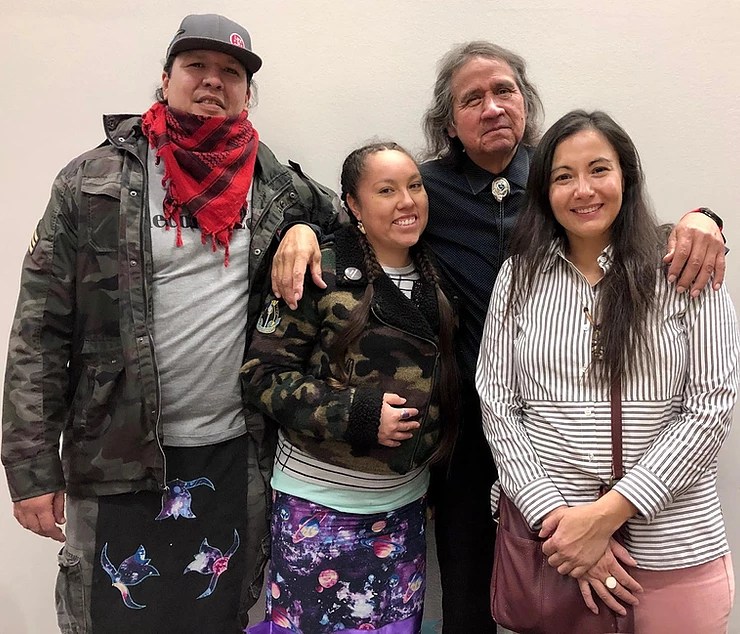
Manape LaMere (Sioux Nation of Indians), Sunrose Ironshell (Sicangu & Oglala Lakota), Frank LaMere (Winnebago) and Sikowis (Plains Cree/Saulteaux) gather for a photo during the feast after the March to Honor Lost Children. Frank LaMere, a long time activist and community leader, is one of the co-founders of the march.

Christine and Manape were on the First Nation-Farmer Climate Unity March that I also participated in September, 2018. It was a great honor to hear Manape’s father, Frank LaMere speak with us one evening.


Posted in decolonize, First Nation-Farmer Climate Unity March, Uncategorized | Tagged | Leave a comment

Thanksgiving is a Day of Mourning for Some Native Tribes

Yesterday I wrote about the Truthsgiving Pledge. The first step of the Pledge is to educate ourselves. The second step is to educate others. The Truthsgiving.org website has many resources to help us do that.

One way to get the attention of your nonnative friends is to tell them Thanksgiving is a Day of Mourning for some native tribes. Putting it that way helps teach how deeply traumatic colonization was not only historically, but continues to be today. Trauma is passed from generation to generation.

It is good to talk with our friends. And these days of social media provide powerful platforms we can use to spread the Truthsgiving message (step 2 of the Pledge). You can write about Truthsgiving in your own words. And/or share this link to the Truthsgiving website: https://www.truthsgiving.org/

Truthsgiving Pledge cropped.png

Thanksgiving Is a Day of Mourning for Some Native Tribes

It’s important to know that for many Native Americans, Thanksgiving is a day of mourning and protest since it commemorates the arrival of settlers in North America and the centuries of oppression and genocide that followed after.

For the last 51 years, the United American Indians of New England have organized a rally and day of mourning on  Thanksgiving. Here’s what they have to say about this choice to mourn:

“Thanksgiving day is a reminder of the genocide of millions of Native people, the theft of Native lands, and the relentless assault on Native culture. Participants in National Day of Mourning honor Native ancestors and the struggles of Native peoples to survive today. It is a day of remembrance and spiritual connection as well as a protest of the racism and oppression which Native Americans continue to experience.”

Some Native Americans mourn publicly and openly, while some simply refrain from participating in this national holiday.

This Thanksgiving, Join Us in Remembrance

Here at Native Hope, we hope that this Thanksgiving, the hearts of all people, Native and non-Native, are filled with hope, healing, and a desire to dismantle the barriers—physical, economic, educational, psychological, and spiritual— that divide us and oppress us.

This time of year, and these two holidays, Thanksgiving and Native American Heritage Day, give us the opportunity to reflect on our collective history and to celebrate the beauty, strength, and resilience of the Native tribes of North America.

We remember the generosity of the Wampanoag tribe to the helpless settlers.

We remember the hundreds of thousands of Native Americans who lost their lives at the hands of colonialists and the genocide of whole tribes.

We remember the vibrant and powerful Native descendants, families, and communities that persist to this day throughout the culture and the country.

We remember people like Sharice Davids and Debra Haaland who in 2018 became the first Native American women elected to Congress.

What Does Thanksgiving Mean to Native Americans?


Every year on Thanksgiving, the United American Indians of New England holds its own commemoration — a protest and march known as the National Day of Mourning in Plymouth, MA. Kisha James, a 17-year-old high school student of Lakota and Wampanoag descent, has been attending the Thanksgiving Day protests her whole life. She shared her story and what it means to her to be a Native American woman on Thanksgiving with Refinery29

I remember vividly my first Thanksgiving in elementary school. The teacher sat the entire kindergarten class down and asked us to share what we were thankful for and talk about what we were going to do to celebrate that Thursday. Everybody else before me was like, “Oh, I’m going to be traveling to see my family,” or “I’m going to be eating this amazing Thanksgiving dinner.” When it got to me, of course, I didn’t have those traditions to share. Instead, I was attending a protest.

For Me, Thanksgiving Is A “Day Of Mourning” by KISHA JAMES, Refinery29, NOVEMBER 21, 2016

Decolonizing Thanksgiving: A Toolkit for Combatting Racism in Schools by Lindsey Passenger Wieck, Medium, Nov 11, 2018


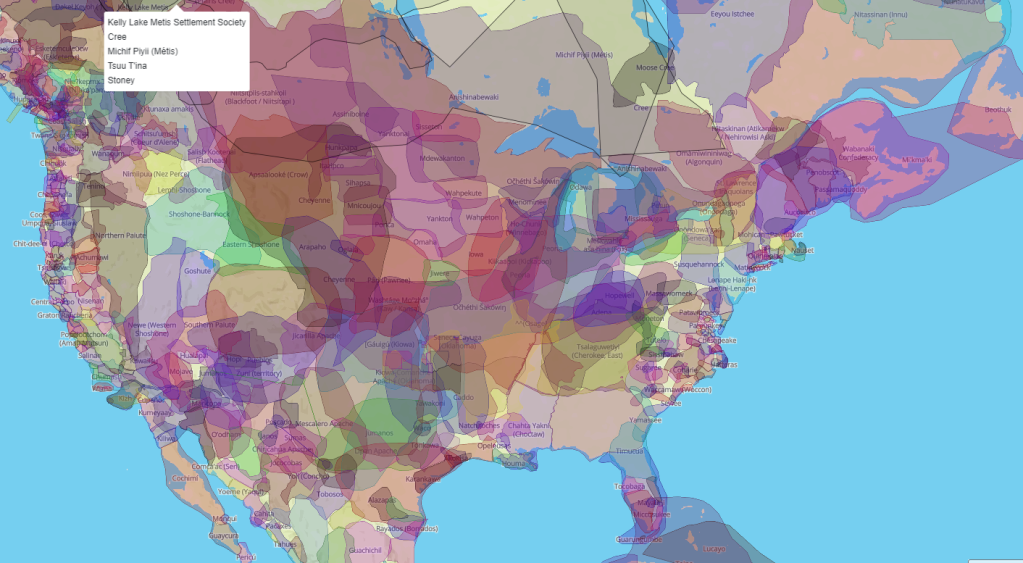
Native Land Map

Native Land Map: A map showing the traditional homelands of Indigenous peoples of North America and Australia.

Our Mission

We strive to map Indigenous lands in a way that changes, challenges, and improves the way people see the history of their countries and peoples. We hope to strengthen the spiritual bonds that people have with the land, its people, and its meaning.

We strive to map Indigenous territories, treaties, and languages across the world in a way that goes beyond colonial ways of thinking in order to better represent how Indigenous people want to see themselves.

We provide educational resources to correct the way that people speak about colonialism and indigeneity, and to encourage territory awareness in everyday speech and action.


Posted in decolonize, First Nations, Indigenous, Native Americans, Uncategorized | Leave a comment

The Truthsgiving Pledge

So often we don’t know what to do about things that bother us, things we know are not right.

I’m so glad my friends have created the Truthsgiving website that teaches us many ways to learn the truth about Thanksgiving, and ways for us to do the work of decolonizing ourselves.

Generations of American values are responsible for institutionalizing the Thanksgiving mythology, but ultimately, change can occur as individuals awaken to the reality that their Thanksgiving meals celebrate a violent, whitewashed history, and begin the process of truth-telling, healing, and reconciliation.

“Thanksgiving Promotes Whitewashed History, So I Organized Truthsgiving Instead” By Sikowis, aka, Christine Nobiss, Bustle, November 16, 2018

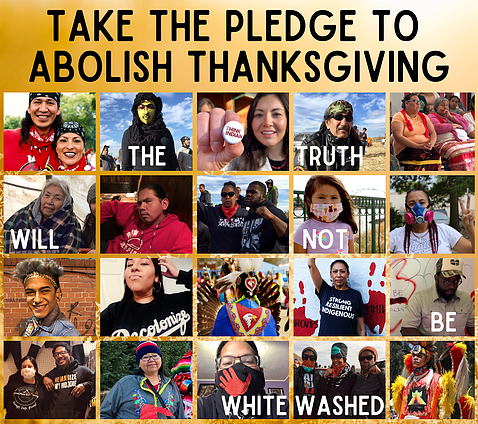
Take the pledge to reject colonial holidays that perpetuate dangerous stereotypes and whitewashed history. 

Truthsgiving Pledge Banner cropped.png
https://www.truthsgiving.org/take-the-pledge

The Pledge has Three Easy Steps

STEP 1

Educate Yourself

What do you know about Native American Indigenous Peoples past and present, and about Indigenous resistance to Thanksgiving? See the list of resources here to get you started.

The greatest opportunity I’ve had to learn about Native American Indigenous Peoples was to walk with a small group of native and nonnative people along the path of the Dakota Access pipeline in 2018. This eight day adventure provided a great deal of time to share our stories with each other. I’m so grateful for the friendships I was blessed to make during that journey. And happy those friendships have continued and deepened since.

I was also glad to help organize workshops and presentations related to Paula Palmer’s ministry “Toward Right Relationship with Native Peoples” when she came to Iowa and Nebraska last year.

I’ve also been learning from my Quaker meeting’s years long engagement with the annual Prairie Awakening ceremony held at the Kuehn Conservation Area, which is just a few miles away from our meetinghouse.


STEP 2

Educate Others

Tell at least three people what you’ve learned and encourage them to take the pledge to discuss the truth at their thanksgiving event.

For the past several years I’ve been writing and speaking about what I’ve been learning about settler colonization and indigenous peoples. This is often a subject of my blog posts https://kislingjeff.wordpress.com/. Blog posts that are often related to things my native friends have spoken, or written about, and events they have organized. I’ve been sharing what I have learned with my Quaker meeting, Bear Creek Friends and Iowa Yearly Meeting (Conservative).

I’m glad to have recently become involved with Decolonizing Quakers, which, as the name says, is about ways to help Quakers learn about and address our colonial history.


STEP 3

Give Back

Tell the truth at your thanksgiving gathering or abolish it in your own life and celebrate Truthsgiving by giving back to your community during this day or hosting an event that celebrates Indigenous resistance and honors historical truth.


Traditionally Thanksgiving is related to food. One way I’ve been giving back to my community also relates to food. I’m so glad I met Ronnie James, who is very involved in Des Moines Mutual Aid (DMMA). I’ve been participating in one of DMMA’s projects, a free food store. Each Saturday morning we gather in a church basement to fill about 50 boxes of food, that we then distribute to those who come to the church.

I would be very glad to hear how you have engaged with these three steps of the Truthsgiving Pledge. jakislin@outlook.com


Posted in Uncategorized | Leave a comment

TRUTHSGIVING

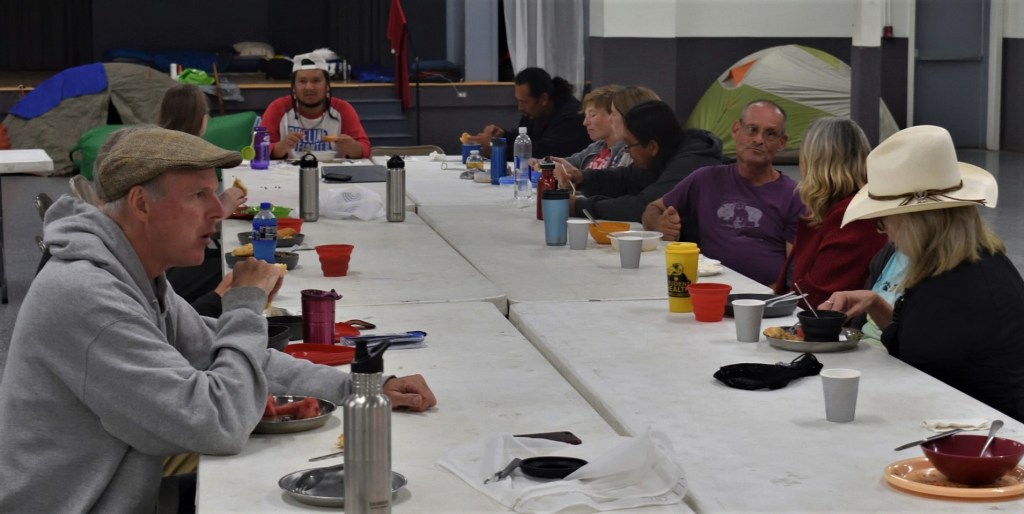
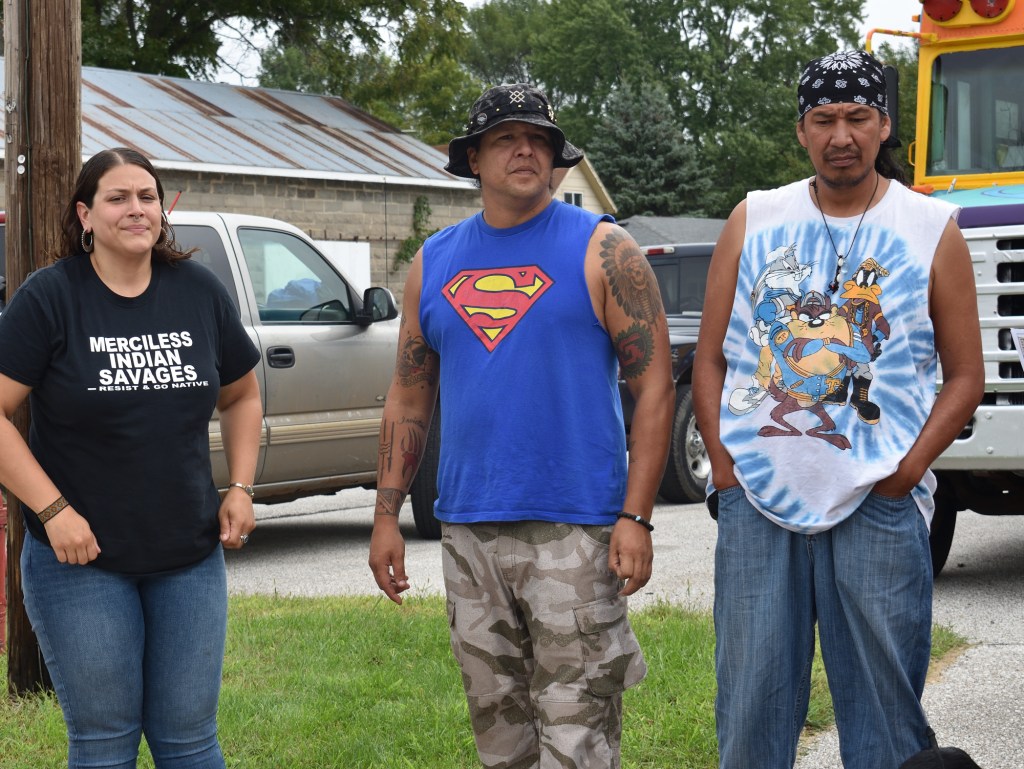
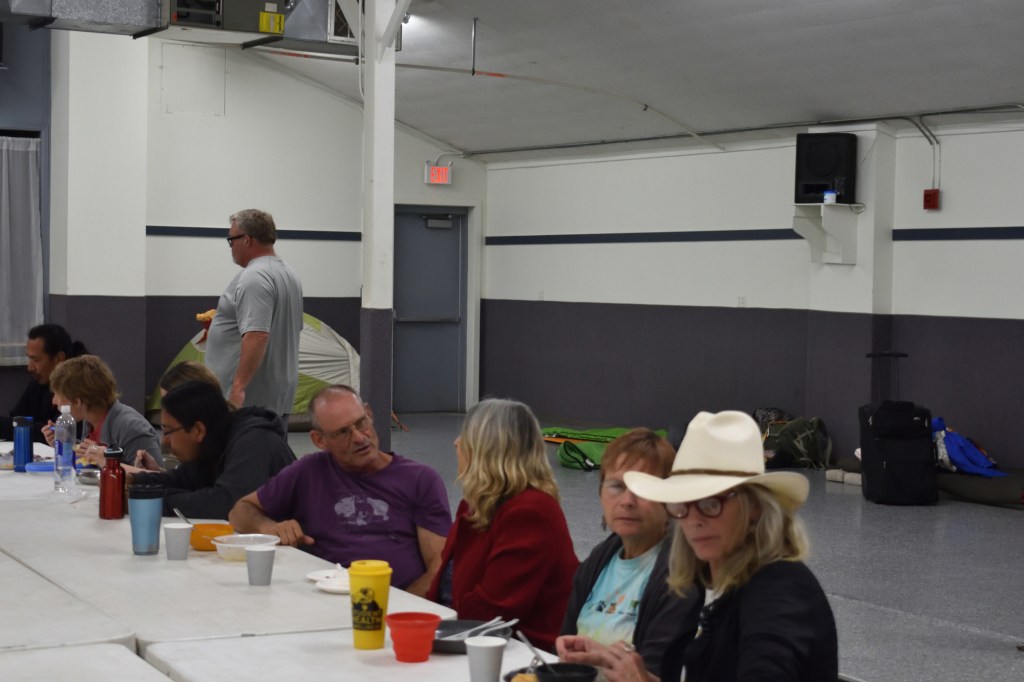
I only recently heard about Truthsgiving, one of many things I learned from my new friends as we walked during the First Nation-Farmer Climate Unity March in September, 2018. The subject came up as we were eating dinner together in Boone, Iowa. The other pictures are from the next morning as we were leaving Boone. (see photos below).

Today most of us White people know the traditional story of Thanksgiving is a lie. But people continue to celebrate Thanksgiving with family gatherings, saying that is what Thanksgiving means to them now. But the truth is that real history has been whitewashed and that Thanksgiving perpetuates white supremacy and romanticized notions about Indigenous Peoples. To celebrate the current Thanksgiving mythology is to celebrate the theft of land through ethnic cleansing and enslavement.”

I’m so glad my friends have created a website of resources to teach us about Truthsgiving. There are many resources there. https://www.truthsgiving.org/

Truthsgiving is an ideology that must be enacted through truth telling and mutual aid to discourage colonized ideas about the thanksgiving mythology

https://www.truthsgiving.org/about

Truthsgiving is enacted through truth telling. I’ve always said stories are so important, especially for trying to create change. That’s what I try to do on this blog.

ALL THAT WE ARE IS STORY.

From the moment we are born to the time we continue on our spirit journey, we are involved in the creation of the story of our time here. It is what we arrive with. It is all we leave behind. We are not the things we accumulate. We are not the things we deem important. We are story. All of us. What comes to matter then is the creation of the best possible story we can while we’re here; you, me, us, together. When we can do that and we take the time to share those stories with each other, we get bigger inside, we see each other, we recognize our kinship — we change the world one story at a time

Richard Wagamese (October 14, 1955-March 10, 2017)
Ojibwe from Wabeseemoong Independent Nations, Canada

I also love reading the quote above, that Truthsgiving must be enacted through mutual aid. Mutual aid is a wonderful concept my friend Ronnie James has been teaching me about. Teaching by example as we and other friends put together boxes of food to give away each Saturday morning. https://atomic-temporary-82209146.wpcomstaging.com/?s=mutual+aid Des Moines Mutual Aid is a partner of the Truthsgiving Collective.


https://www.truthsgiving.org/

There are many colonial mythologies about Indigenous Peoples and the founding of the US and Canada. Thanksgiving is one of them, however, in the words of Wamsutta Frank James, Wampanoag, “the Pilgrims had hardly explored the shores of Cape Cod four days before they had robbed the graves of my ancestors, and stolen their corn, wheat, and beans.” The truth is that real history has been whitewashed and that Thanksgiving perpetuates white supremacy and romanticized notions about Indigenous Peoples. To celebrate the current Thanksgiving mythology is to celebrate the theft of land through ethnic cleansing and enslavement. It is a lie that overlooks the genocide of Native American Indigenous Peoples and the enslavement of African Indigenous Peoples in order for settler-vigilantes and colonial militias to steal land and labor–the legacy of which is still felt today.

TRUTHSGIVING The Truth Will Not be Whitewashed

Truthsgiving is an ideology that must be enacted through truth telling and mutual aid to discourage colonized ideas about the thanksgiving mythology—not a name switch so we can keep doing the same thing. It’s about telling and doing the truth on this day so we can stop dangerous stereotypes and whitewashed history from continuing to harm Indigenous lands and Peoples, as well as Black, Latinx, Asian-American and all oppressed folks on Turtle Island.

https://www.truthsgiving.org/about

This website was created to uplift the collective efforts of Tribal Nations, Indigenous-led organizations and Indigenous Persons that are attempting to abolish institutionalized and aggrandized white supremacy that is supported through the thanksgiving mythology

TRUTHSGIVING The Truth Will Not be Whitewashed

The idea of Truthsgiving did not emerge from anything new. Indigenous Peoples across Turtle Island have been resisting this mythology since its inception, even when they did not know about it, simply because we have resisted colonization and genocide since Columbus set foot on the lands of the Lucayan People (now known as the Bahamas). 

Modern resistance to the holiday began during the rise of the Red Power movement during the civil rights era. According to Sikowis, “In 1970, the National Day of Mourning was instituted by James, the United American Indians of New England, and the local Wampanoag community as a resistance to Thanksgiving. This alternative holiday is held at Plymouth Rock and has occurred annually for almost 50 years. The National Day of Mourning also coincides with an event on the other side of the country that takes place on Alcatraz Island (an important Native American site). Unthanksgiving Day, also known as The Indigenous Peoples Sunrise Ceremony, is a large cultural event that has been held annually since 1975 and commemorates the Alcatraz-Red Power Movement occupation of 1969. There are, in fact, many anti-Thanksgiving events that occur around the country each year — one of which I have co-organized, called Truthsgiving.”

There are also many other resistance events held all over Turtle Island every year through Indigenous-led organizations and family gatherings where the mythology is overridden. That is how Truthsgiving emerged–as a family gathering to resist Thanksgiving that then turned into local celebrations in Iowa City, organized by Great Plains Action Society founder, Sikowis.

This website was created to uplift the collective efforts of Tribal Nations, Indigenous-led organizations and Indigenous Persons that are attempting to abolish institutionalized and aggrandized white supremacy that is supported through the thanksgiving mythology. It is, so far, a collective effort by organizations in the Midwest. 

https://www.truthsgiving.org/about

https://www.truthsgiving.org/

#Truthsgiving

Posted in Black Lives, decolonize, Des Moines Mutual Aid, First Nation-Farmer Climate Unity March, Great Plains Action Society, Indigenous, Mutual Aid, Uncategorized | 1 Comment

Racism as a Public Health Threat

I’m not sure what the impact will be, but I’m hopeful this recognition of racism as a public health threat by the American Medical Association might help focus attention on systemic racism in this country. Bring attention to racism as a public health matter to health professionals. Result in study, research and education.

The American Medical Association has officially defined racism as a public health threat that has created substantial health inequality.

Racism, both systemic and structural, has historically perpetuated health inequality and cut short the lives of many Black, indigenous, and people of color (BIPOC) in the US and around the world.

  • The American Medical Association has officially defined racism as a public health threat.
  • “Racism negatively impacts and exacerbates health inequities among historically marginalized communities,” Willarda Edwards, an AMA board member, said in a statement Monday.
  • The AMA said it would enact new policies to address the injustice and work to support research in the area. 
  • Racism has historically perpetuated health inequality and cut short the lives of many Black, indigenous, and people of color in the US.
  • For example, Black Americans and Hispanic Americans are dying in greater numbers than any other ethnic group from COVID-19.

Dr. Jessica Shepherd, a Black OG-GYN in Dallas, told Business Insider AMA’s move is critical to address racial disparities in healthcare from the top down. 

“We fail to realize that there are so many things that occur at the systemic part of healthcare that if we don’t make changes such as the one we’re discussing now, then we’ll never really get to the heart of the problem,” Shepherd said.  

On Monday, the association said it would enact several new policies, including:

  • To “encourage governmental agencies and nongovernmental organizations to increase funding for research into the epidemiology of risks and damages related to racism and how to prevent or repair them.”
  • To “encourage the development, implementation and evaluation of undergraduate, graduate and continuing medical education programs and curricula that engender greater understanding of the causes, influences, and effects of systemic, cultural, institutional and interpersonal racism.”

The American Medical Association officially recognized racism as a public-health threat, saying it creates and entrenches health inequality by Bill Bostock and Anna Medaris Miller, Business Insider, Nov 17, 2020


Recognizing race as social construct

In an additional move to promote anti-racist practices, the AMA discussed the use of race as a proxy for ancestry, genetics and biology in medical research and health care delivery. Delegates adopted new policy to:

  • Recognize that race is a social construct and is distinct from ethnicity, genetic ancestry or biology.
  • Support ending the practice of using race as a proxy for biology or genetics in medical education, research and clinical practice.

The AMA also will encourage undergraduate medical education, graduate medical education and continuing medical education programs to recognize the harmful effects of presenting race as biology in medical education and that they work to mitigate these effects through curriculum change that:

  • Demonstrates how the category of “race” can influence health outcomes.
  • Supports race as a social construct and not a biological determinant.
  • Presents race within a socioecological model of individual, community and society to explain how racism and systemic oppression result in racial health disparities.

AMA: Racism is a threat to public health by Kevin B. O’Reilly, AMA, NOV 16, 2020


In Iowa, Des Moines Black Liberation Movement has declared a Black State of Emergency.

Luana Nelson-Brown, executive director of Iowa Coalition for Collective Change, said Blacks make up 4% of Iowa’s population, but 31% of gun violence. State money for victim services goes toward sexual assault and domestic abuse, not homicide and other violent crimes, she said. The state has a responsibility to provide resources for the families of homicide victims — especially since a third of them are Black, she said.

Other disparities plague Blacks, Nelson-Brown said, including:

  • Blacks make up 4% of Iowa’s population, but 6% of COVID-19 cases and 4% of COVID-19 deaths, according to the COVID Racial Data Tracker.
  • Black women in Iowa are more likely to have low-birth-weight babies and experience maternal mortality at 3 times the rate of whites. She also said there is a need for data disaggregated by race and for more Doulas.
  • “Black communities were disproportionately affected by the derecho storm, not only in exposure to damage but in the stark difference in relief efforts between black communities and other communities in Iowa. We want to specifically highlight the African refugee community in Cedar Rapids whose housing was completely destroyed, and who were abandoned by their state government without power, running water, food, or shelter for days on end,” she said.

Des Moines Black Lives Matter clarified why it’s now known as the Des Moines Black Liberation Movement. Matthew Bruce, an organizer with BLM, said the group wanted to make sure that “we reflected that not only are we valuing our lives, but we are dismantling the systems that keep us oppressed.”

Black Iowa in ‘State of Emergency’. Activists sound the alarm about the dire longstanding racial disparities harming Black lives by Dana Jamesitor, Black Iowa News, Oct. 14, 2020


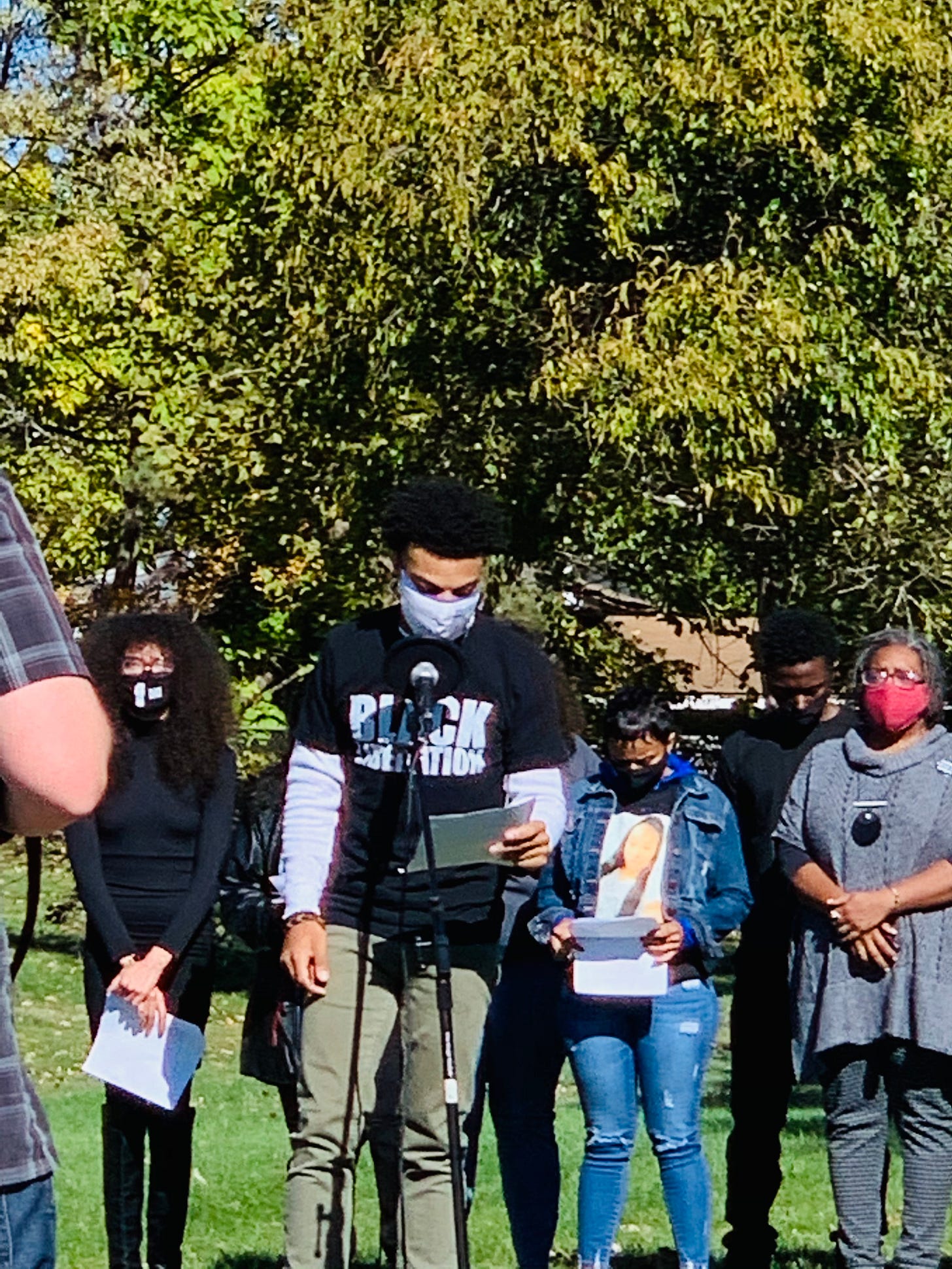
Photo: Matthew Bruce, an organizer with the Des Moines Black Liberation Movement, speaks during a Tuesday press conference at Cheatom Park in Des Moines about the ‘state of emergency’ experienced by Black Iowans. Watch the video.

Posted in race, Uncategorized | Leave a comment

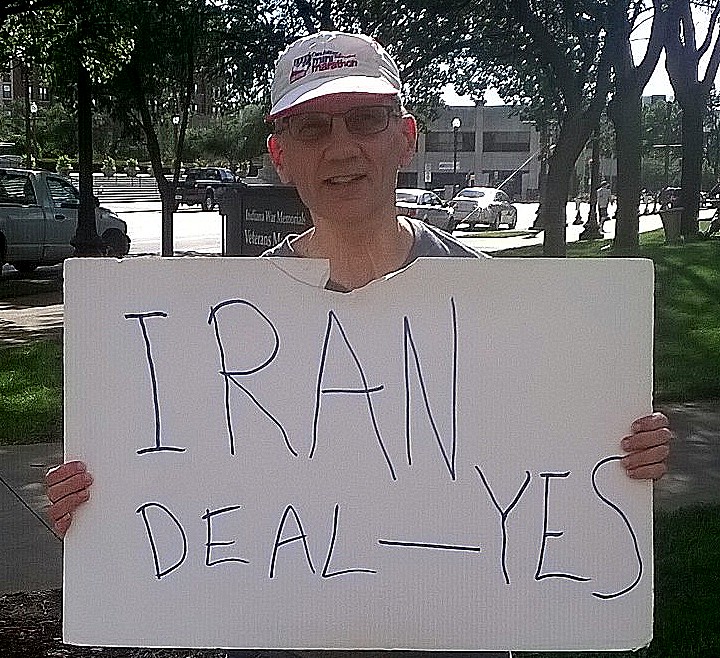
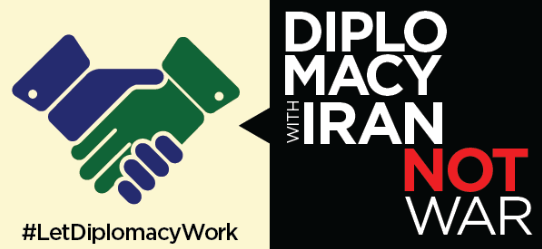
Leaving Iran Nuclear Deal and War

It was just a matter of time before we heard the current administration would be considering military attacks against Iran. Knowledgeable people warned this would happen if the US left the Iran Nuclear Deal, and here we are.

In 2019 I wrote “increasing tensions with Iran now remind me of the work we did in 2015 to get the Iran Nuclear Deal approved. Tensions today are the direct result of the withdrawal of the United States from that deal.”

It was clear it would be a very close vote in Congress to approve the deal.

“While Durbin and Nancy Pelosi were tracking the votes in their respective chambers, the president took a larger part and also played rougher in this fight than had been his custom. He accused Republicans of “making common cause” with Iran’s hard-liners. He stated that the alternatives were the deal or war.  Even some of his allies thought he’d gone a bit overboard with these statements, potentially alienating some undecided Democrats, and he pulled back from them. Obama responded to the requests by Pelosi and Durbin to make calls to wavering Democrats, more calls than he’d made on any previous legislation. He held special briefings in the White House for members of Congress; he participated in a conference call with the outside groups on his side.”

How They Failed to Block the Iran Deal, New York Times, 10/22/2015

In the absence of your voices, you are going to see the same array of voices that got us into the Iraq war, leading to a situation in which we forgo a historic opportunity and we are back on the path of potential military conflict

President Barack Obama

Our work in Indiana to support the Iran deal began with the only time I have been on a conference call with President Barack Obama. The Friends Committee on National Legislation (FCNL) helped make that call possible.

July 31, 2015

Last night President Obama spoke for half an hour by phone to activists who support him. He described how the Iran deal is a good deal for the United States and all the countries that joined in the negotiations in good faith that they would all agree to the deal. This is the agreement that the international community hammered out and supports. If Congress defeats this bill, that will likely end any influence the United States could have in the Middle East. Opponents of the bill only offer that we need a “better deal”, but have nothing to offer as to what that could possibly be. Those who say we should continue with sanctions don’t understand that is not possible now. Sanctions only work when the international community supports and enforces them. That won’t happen if they see the U.S. cannot agree on a foreign policy, as would be evident if this bill is defeated. There is also the question of who the sanctions hurt, which is the people of Iran, not their leaders. This feeds the movement to join terrorist organizations. An improved standard of living for the Iranian people should help mitigate that. The President specifically asked us to speak out to support this deal. “In the absence of your voices, you are going to see the same array of voices that got us into the Iraq war, leading to a situation in which we forgo a historic opportunity and we are back on the path of potential military conflict,” he said.

August 27, 2015

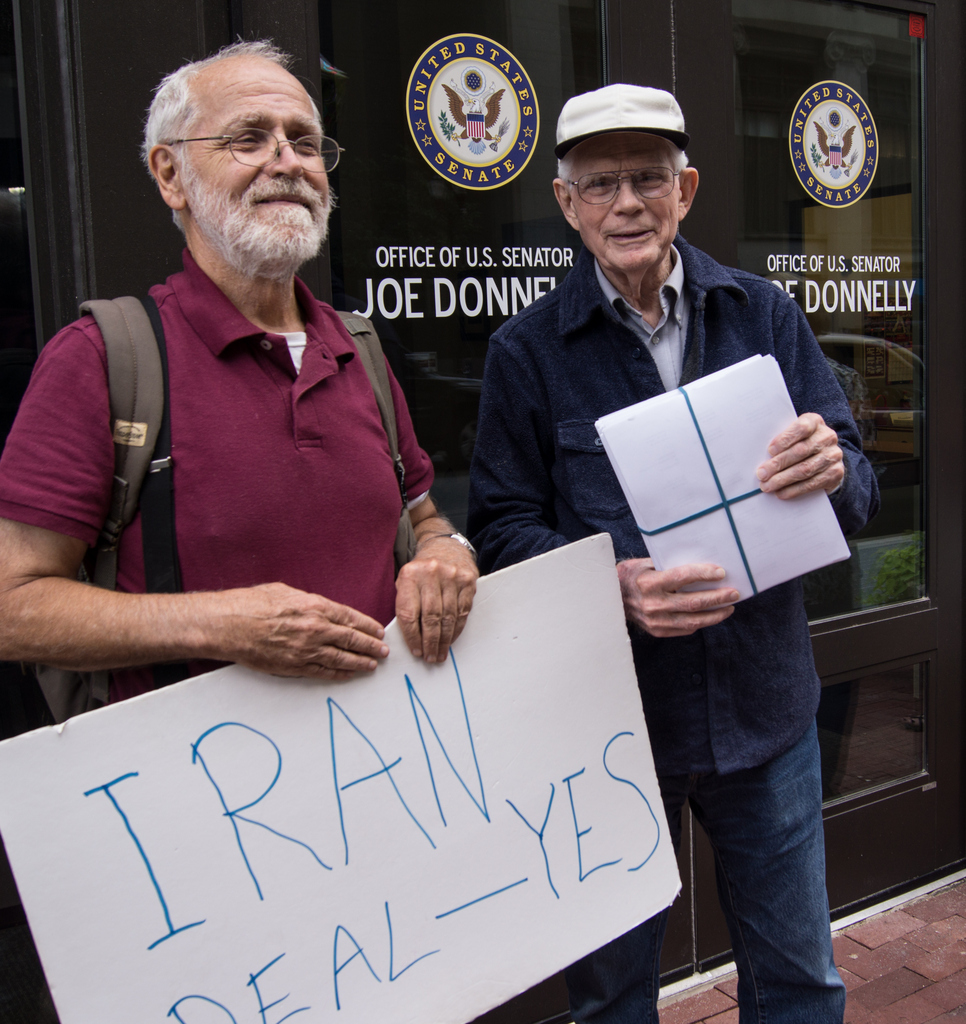
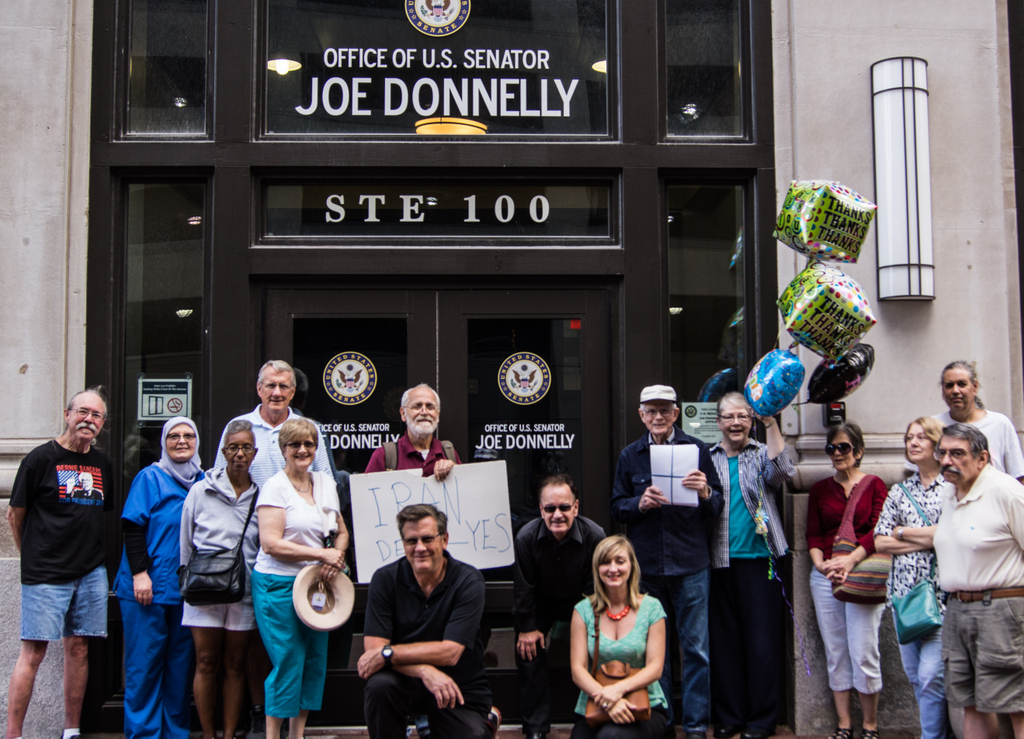
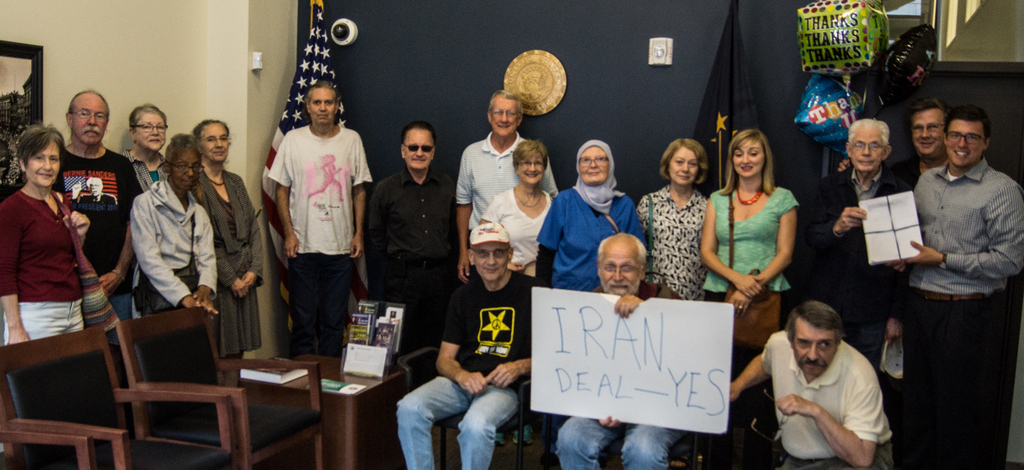
As a direct result of that call with President Obama, I’ve spent the past week, with the help of Erin Polley, AFSC, organizing the delivery of a petition with over 10,000 Indiana signatures supporting the Iran nuclear deal.  Members of North Meadow Circle of Friends, Indiana Moral Mondays, and MoveOn met with staff of Senator Joe Donnelly’s Indianapolis office yesterday.  Senator Donnelly now supports the deal, so this was a ‘thank you’ event, which the Senator’s staff indicated didn’t happen very often.

The following Minute was approved by Iowa Yearly Meeting (Conservative) the summer of 2015.

Iowa Yearly Meeting (Conservative) supports the peaceable agreement among world powers, including the United States and Iran, to dramatically curb Iran’s nuclear program in exchange for easing international sanctions against Iran. We hope this will be the beginning of many more peaceful negotiations.


But in May, 2019, the current administration chose to, unilaterally, withdraw from the deal.

The United States announced its withdrawal from the Joint Comprehensive Plan of Action (JCPOA), also known as the “Iran nuclear deal” or the “Iran deal”, on May 8, 2018.[1][2][3][4] The JCPOA is an agreement on Iran’s nuclear program reached in July 2015 by Iran, the P5+1 (the five permanent members of the United Nations Security CouncilChinaFranceRussiaUnited Kingdom, United States—plus Germany)[5][6] also called E3/EU+3.

In a joint statement responding to the U.S. withdrawal, the leaders of France, Germany and the United Kingdom stated that United Nations Security Council resolution endorsing the nuclear deal remained the “binding international legal framework for the resolution of the dispute”.[7]

United States withdrawal from the Joint Comprehensive Plan of Action

As predicted, Iran has increased its nuclear production, and the current administration is considering an act of war against the country.

When will they ever learn?

Where Have All the Flowers Gone? Pete Seeger
Posted in Friends Committee on National Legislation, peace, Quaker, Uncategorized | Tagged | Leave a comment

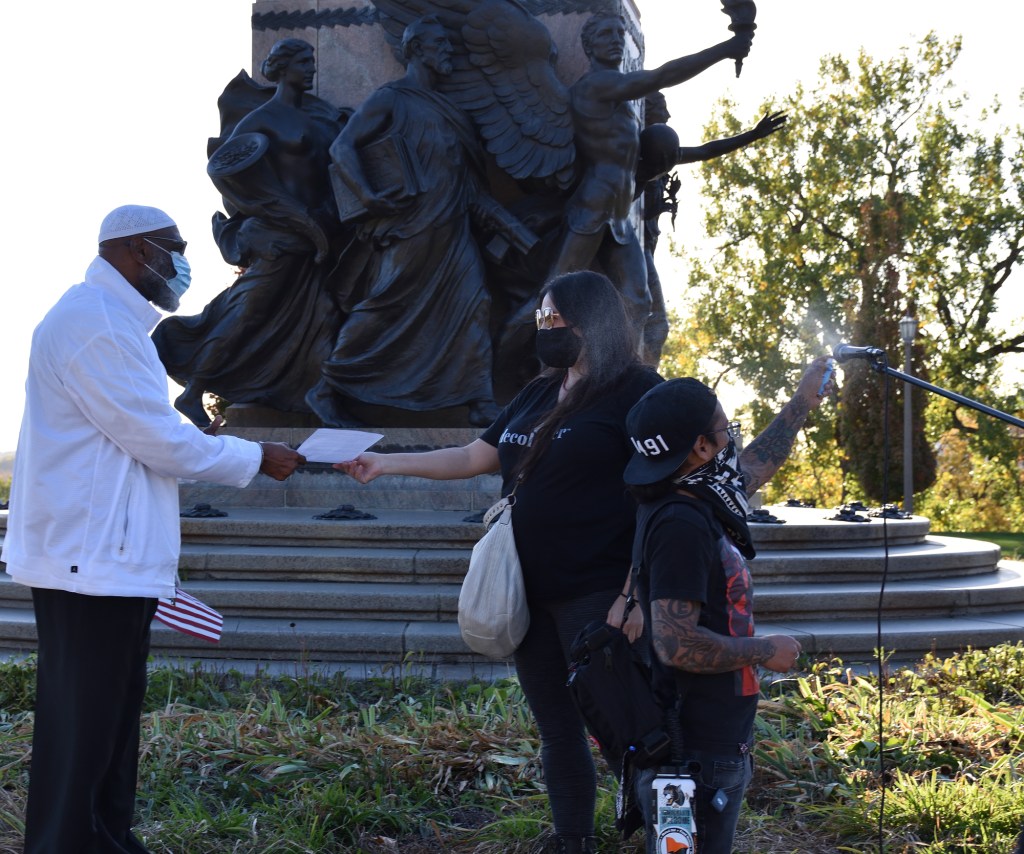
Defending Protestors

Last night Drake University’s National Lawyers Guild held a Zoom panel discussion about Defending Protestors. The panel explored the role the legal community plays in defending activists and their rights to protest and organize.

I found out about the event from an announcement on the Facebook page of my friend Ronnie James, who was on the panel. I was really impressed that there was such an event. I’ve been involved in many vigils and protests and don’t remember there being lawyers present at any of them. Although none of them had any real police presence, or need for there to be any.

One of the roles we did fill when we were organizing our local direct action in Indianapolis related to the Keystone Pledge of Resistance was legal observer. That action wasn’t triggered because President Obama denied the permit to build the pipeline.

There were several legal observers on the panel last night. Legal observers are really helpful resources to have during demonstrations. They can answer protester’s questions, and monitor the legality of what police are doing.

One of the most powerful experiences of the Keystone Resistance was when we took a statement of what we intended to do, to law enforcement officers at the Federal building where our direct action was planned to occur, should the actions nationwide be triggered. We actually had an interesting discussion. Not surprisingly, we learned law enforcement in Federal buildings all over the country already knew about these potential actions.

I was especially interested in this panel discussion because I know one of the projects of Des Moines Mutual Aid (DMMA) is a bail fund. The other two DMMA projects are the free food store, and work to help those who are houseless or facing eviction. So DMMA works on providing basic necessities of food and shelter, and supporting those who are arrested for agitating for change.

During the panel discussion Ronnie spoke about Mutual Aid as a framework for multiple, diverse organizations and people to come together to help the most marginalized people in our communities.

The panel discussion began with the question “why now”? related to the escalation of police brutality in the country in general, and in Des Moines specifically, this year.

The discussion was about how the death of George Floyd in Minneapolis triggered protests, and police responses all over the country, and in Des Moines. It was about the extreme grotesqueness and length of time it took to kill him, all transmitted all over the world via social media.

And social unrest was triggered in relation to the crash of the economy, with millions more becoming unemployed, and struggling to find basic necessities.

It was also the prolonged and varied response of those in Minneapolis, transmitted in real time, that influenced the prolonged protests in Des Moines, which triggered the police response here.

The Des Moines police, showing up in riot gear and aggressively responding escalated tensions. Tear gas and pepper spray were used when they weren’t called for. It was also the false depictions, by the police, of what was going on that was reported in the media.

Police body cam videos were so chaotic that charges against many individual protesters had to be dropped.

Warnings, that I had heard from Ronnie, were made about the dangers of people supporting the protestors, live streaming what was going on. Because the police can use those videos to bring charges. Police were actually scanning the crowd to grab individuals from prior videos from the local news media. Days after protests police went to people’s homes to arrest those they had identified from videos.

State Police also banned individuals who were protest leaders, from the grounds of the State Capitol, in clear violations of constitutional rights.

Some people on the panel felt that police were intentionally bringing multiple, and more severe charges against protestors, in order to try to deplete Des Moines Mutual Aid’s Bail Fund. Ronnie has told me the bail fund has paid the bail for every protestor in central Iowa.

Someone said police actions were the best fundraisers for the bail fund. Another person mentioned that was especially true when police turned their guns on white youth.

There was a heartfelt statement about the difficulty of white people, who grew up believing police are the good guys, finding out they are not always. Most Black, indigenous, and other people of color (BIPOC) never had those delusions.

The discussion ended by expressing this was all about community, and supporting those who are most marginalized.


Posted in civil disobedience, decolonize, Des Moines Mutual Aid, Indigenous, Mutual Aid | Leave a comment