This Changes Everything

This afternoon at KI (Kheprw Institute) we will be having an open community discussion about Naomi Klein’s book, This Changes Everything:  Capitalism vs the Climate.

Having been connected with KI for several years now, I know how important these community discussions are.  They provide opportunities to the KI Interns to lead discussions on important topics, giving the youth experience in critical thinking, organizing, and public speaking.

They also serve as a way for the wider community to learn about, and participate in the work of KI.  KI is a “safe” place to engage in discussion about social injustice and change.  People know they can express themselves and have what they say be considered with respect.  That is important because there aren’t many places where everyone is welcome and encouraged to participate, although that seems to be slowly changing, and that is a hopeful sign.

Naomi Klein speaks about that very thing in this book:

“Indeed a great deal of the work of deep social change involves having debates during which new stories can be told to replace the ones that have failed us. Because if we are to have any hope of making the kind of civilizational leap required of this fateful decade, we will need to start believing, once again, that humanity is not hopelessly selfish and greedy”

Denise Abdul-Rahman, Chairperson of Indiana NAACP’s Environmental Justice Committee arranged for the showing of the movie based on the book that was just released this past week.  KI and others helped buy tickets to support the movie showing.  Then, to further promote the discussion of this book and its ideas, Denise suggested, and KI agreed to host a community discussion about it.

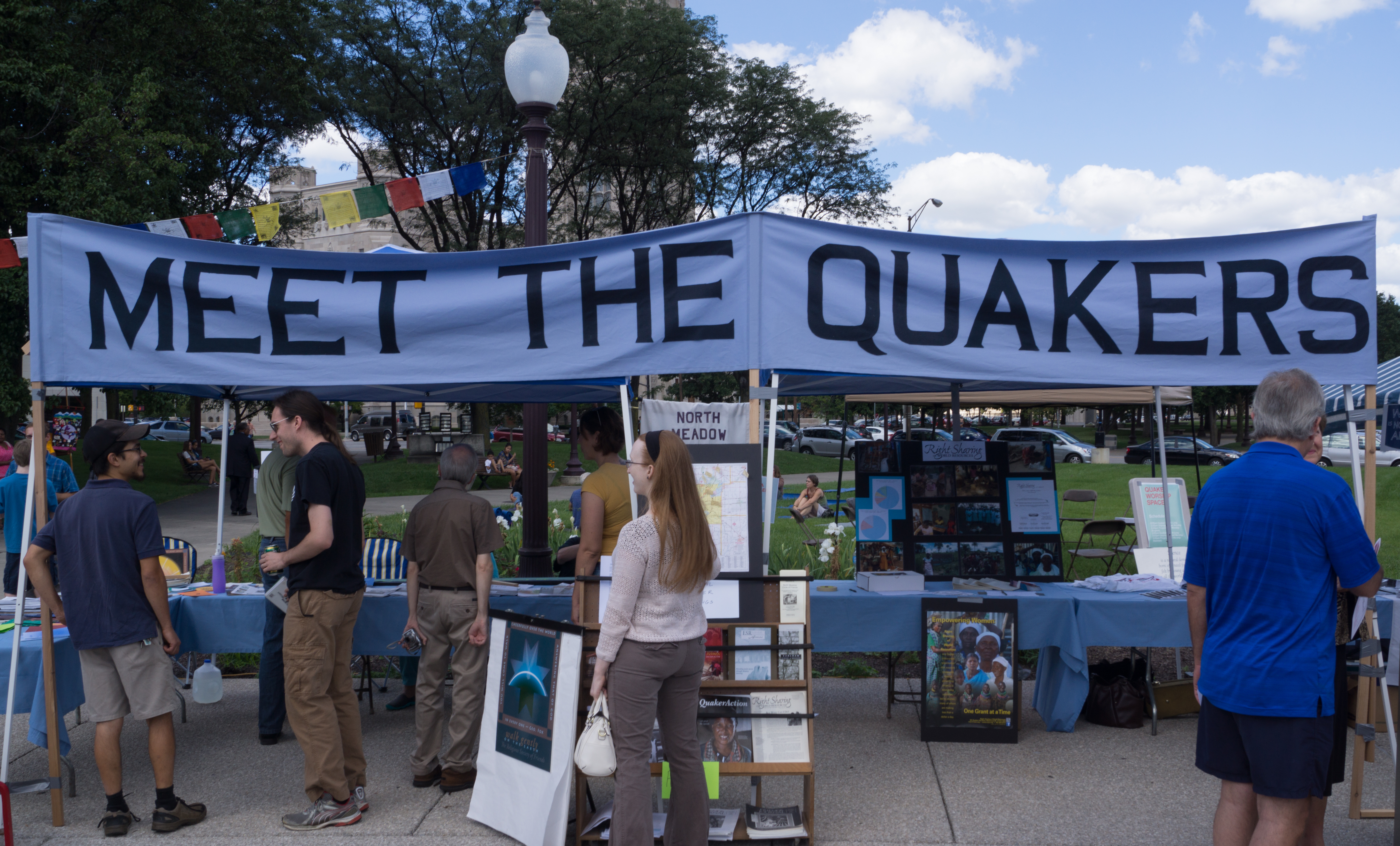
Finally, a number of Friends (Quakers) at the Quaker meeting (which is how we refer to our worship services and our group) have been involved with KI in a variety of ways over the past several years, having a great deal of respect for the work being done there.  Recently the American Friends Service Committee (AFSC) has introduced a new program called Quaker Social  Change Ministry (QSCM).  As the name implies, the idea is to get Quaker meetings more involved in social justice work.  The core concept of this program is to find an organization representing those who are being impacted by injustice, and see how we can work with them.  There is a strong emphasis on avoiding the errors of the past, where those wanting to help actually more often got in the way by trying to take the lead, instead of listening to those who are experiencing injustice.

When we talked with KI about this program and asked if they would work with us on it, they graciously agreed.  Several weeks ago we had our first combined meeting with KI and North Meadow Friends, to talk about the program, and how each of us felt about the possibilities of working together.  One of the first steps identified was for Friends from North Meadow to participate in these community discussions.  This is how we learn about each other, and each other’s experiences, and provides a way for us to explore how we might move forward, together.

I personally am grateful for these monthly book discussions also because they force me to read things that tend to get put off.  I had purchased this particular book when it came out last year, but only completed the first half of it.  One of the great things about electronic books are the ability to save sections that you highlight.  Amazon stores those highlights for you online if you are reading a Kindle book, so I was able to quickly review those notes when I picked up the book again to prepare for this discussion.

As Imhotep Adisa, Director of KI often says, “conversation is undervalued.”  These conversations at KI are priceless.

KI community discussion

KI community discussion

KI community discussion

KI community discussion

DSC08062 DSC08641 DSC08281 DSC08295

Posted in Uncategorized | Leave a comment

Terror

One  the worst terrorist attacks in modern times occurred in Paris yesterday.  As usual, the focus is on eliminating those responsible.  Little time is spent considering what the reasons behind such acts might be.  And the reasons that are advanced are superficial and don’t get at the root causes.

There is absolutely no justification for such acts, which are against the most fundamental beliefs a Quaker has, including the sanctity of all life and the presence of that of God in every single person.

But if we don’t understand what is causing this transnational surge in terrorism, it will only continue to spread.  I don’t believe terror organizations can grow significantly simply by subjecting people to their violence.  That might work for small groups of people for a short period of time.  But the size and durability of the terror groups today indicate they are filling some significant needs.  When people become desperate for the essentials for life, they will turn to whoever will help them.  The recent history of Syria is a clear example.  Several years of severe draught combined with the repressive response by the Syrian government to the food crisis led to both the mass migrations of people out of Syria, and swelling of the ranks of terror groups.

There are two possible responses.  One is to expand the military response, including more spying (including more domestic spying and attacks on civil liberties) and drone and other military attacks.  That just feeds the terrorists’ narrative of the United States being the aggressor/repressor because it is the truth.  Our use of drones on civilian populations is reprehensible.  Reports indicate over 90% of those killed by drones are not the target.  The civilian population is terrified by the buzz of drones circling overhead, knowing at any moment a missile might be launched.  Yes, our drones by definition make US terrorists.  Just imagine yourself in that situation, with drones buzzing above your head, and launching attacks in downtown Indianapolis that take out a few of your friends as collateral damage.  We will not make any progress in addressing terrorism as long as we employ the terror tactics of drones.

The other possible response is to address the root causes.  Addressing the needs for food, water and shelter are how to both do the right thing, and keep people out of terror groups.

Quakers emphasize looking at our own lives, to see what we are doing that might be contributing to injustice.  We need to do the same thing on a national level if we ever hope to begin to address terrorism.  Much of that comes down to materialism.  The current situation in the Middle East is the direct result of the United States, for the first time in its history, attacking, unprovoked, another country, Iraq, for its oil (materialism).  And the result of our use of torture during those wars.  Fortunately, the first thing President Obama did on taking office was to state the truth about the United States’ use of torture, and acted to stop that.

Now the drone strikes have to stop.  And we have to do a better job of addressing these humanitarian crises.  At the moment two ways to do that are  (1) to ask your Senators to co-sponsor and support Senator Chris Murphey’s bill for emergency appropriations to provide humanitarian relief to Syrian refugees, Senate Bill 2145, the Middle East Refugee Emergency Supplemental Appropriations Act, and (2) support Sen. Cardin’s forthcoming Genocide and Atrocities Prevention Act that permanently authorizes the Atrocities Prevention Board. This legislation would, according to the Friends Committee on National Legislation (FCNL)  coordinate prevention and response across the U.S. government.  The Atrocities Prevention Board is a high-level working group to ensure coordination between the Pentagon, State, Treasury, Homeland Security, Justice, USAID, U.S. Mission to the United Nations, CIA, Director of National Intelligence, FBI, and National Security Council. And help prevent violence: the Atrocities Prevention Board has mobilized staff and funding for violence prevention and mitigation in the Central African Republic and Burundi. It continues to do long-term prevention work in other countries.

IranLetDiplomacyWork DSC05258 DSC05233 DSC04941 DSC04947

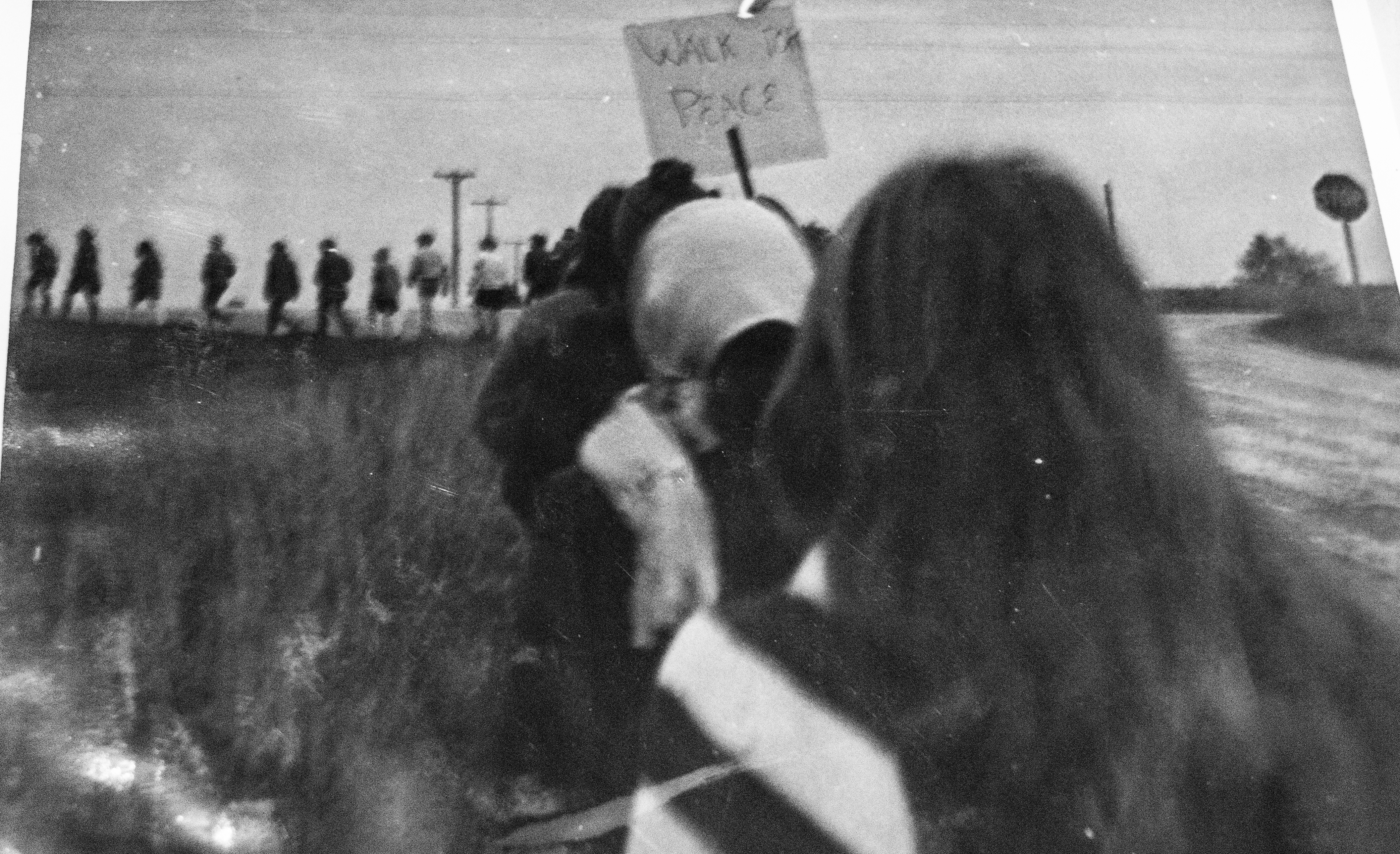
Entire Scattergood Friends School marching 12 miles to Iowa City to protest Vietnam War

Entire Scattergood Friends School marching 12 miles to Iowa City to protest Vietnam War


Posted in Uncategorized | Leave a comment

Leaders Discuss the Keystone Movement

Keystone Victory Web Panel Presentation

Last night (11/12/2015) 350.org sponsored a panel discussion where leaders of the opposition to the Keystone Pipeline spoke eloquently about how the movement brought us all together, and what the significant of the movement is.  This is your best chance to understand the significance of the Keystone resistance.  Speakers include Bill McKibben (350.org), Mike Brune (Sierra Club), Jane Kleeb (Bold Nebraska), Dallas Goldtooth (Indigenous Environmental Network), Melina Laboucan-Massimo (Lubicon Cree First Nation), as well as representatives from National Nurses United and the student movement.

Keystone Victory Web Panel Presentation

ObamaKeystone DSC00132-3 todd1

Keystone Pipeline Fighter

Keystone Pipeline Fighter

Stop extreme fossil fuel extraction

Stop extreme fossil fuel extraction

Stop Keystone Pipeline

Stop Keystone Pipeline

DSC04424

Posted in Uncategorized | Leave a comment

Syrian Refugee Crisis

Senator Chris Murphy just sent an email with this quote:

“We are a VERY generous nation, always have been, but there is a double standard in our foreign policy today.  When America sets a military objective, we allocate every single dollar we need to accomplish that mission. But when it’s a humanitarian objective, we only put in a share and expect others to fill the gap. That approach comes at a very real human cost in the region, and ultimately, to our credibility around the world.”

He is asking us to contact our senators to support and co-sponsor a bill for emergency appropriations to provide humanitarian relief to Syrian refugees, Senate Bill 2145, the Middle East Refugee Emergency Supplemental Appropriations Act.

DSC03754

Posted in Uncategorized | Leave a comment

An Evolving View of Climate Change

I’m thinking about how different the social and political landscape is compared to just a little over two years ago when the Keystone Pledge of Resistance came into being.  Climate change was a forbidden topic in the halls of the U.S. Congress.  The fossil fuel industry was spending millions of dollars on misinformation campaigns.  The New York’s Attorney General is now investigating Exxon to see if fraud can be proven, when the company used various ways to hide what it knew related to the damage from fossil fuels from investors and the public in order to protect its profits.

Most of us had not heard of tar sands and the extensive damage done by tar sands extraction.  No one, not even those of us involved in the Resistance, thought we had a chance against the richest companies in the world.  Now multiple surveys show increasing majorities of people in all demographics believe the climate is changing as a result of greenhouse gas emissions.  Most of this has occurred in response to new patterns of extreme weather resulting from pollution.

Now the President has the power to reject the Keystone XL pipeline because of the people behind him, and despite majorities in both houses of Congress.  And significantly he is now able to talk about “keeping it in the ground”, which extends the Keystone work to include other sources of fossil fuel and the pipelines related to them.  Bills are now being introduced to support renewable energy.

It was telling that politicians initially claimed that Keystone would be important for job creation, despite information from TransCanada itself that there would only be around 35 permanent jobs. The following shows the renewable energy sector is where real job creation is occurring:

“This is because $1 million dollars worth of oil and natural gas output directly creates 0.8 jobs, and $1 million of coal produces 1.9 jobs. Compare that to building retrofits for energy efficiency (7 jobs per million), mass transit services (11 jobs), building the smart grid (4.3), wind (4.6), solar (5.4), and biomass power generation (7.4)”  Robertson, Joseph. “Building a Green Economy” 2010. The Citizens Climate Lobby. p. 18.

WindTurbines1

Posted in Uncategorized | Leave a comment

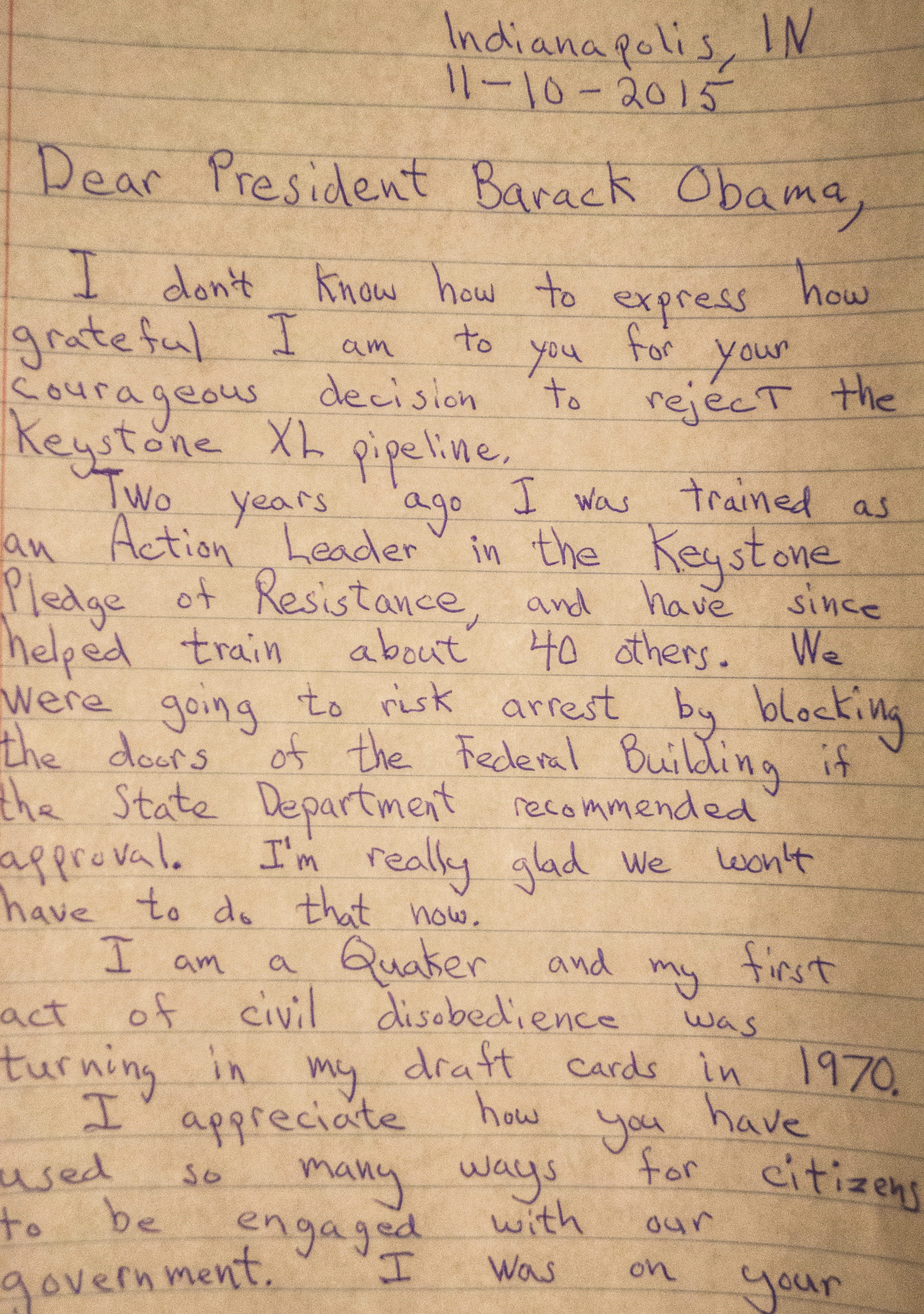
Dear President Barack Obama

DSC00500

DSC00501

DSC00132-3

Posted in Uncategorized | Leave a comment

University of Missouri protests

This articles explains some of the story behind the current protests at the University of Missouri:

University of Missouri Student Council president verbally assaulted

Now the University’s football team, including the coaching staff, is boycotting athletic activities until the University President is replaced.

Missouri Student Association President Payton Head (right) with students Phillip Nguyen, Vincent Su  - (Payton Head Facebook)

Posted in Uncategorized | 1 Comment

Great Idea — Sustainability Scout

Derek Glass and his team at Glass Web Projects, has just launched a new website they have been working on for the past several months.  Called Sustainability Scout, this website aggregates the blog posts from a number of environmental sites that post articles regularly:   Sustainability Scout Indiana

Regular blog contributors included “Ask Renee of Indiana Green Living”, Indiana Moral Mondays, Sustainable Indiana 2016, “The Climate Chronicles” from Earth Charter Indiana, NAACP Environmental Justice Committee, and my blog, “Quakers, Social Justice and Revolution”

sustainabilityscout

Sustainability Scout Indiana

Posted in Uncategorized | 2 Comments

Thanking President Obama

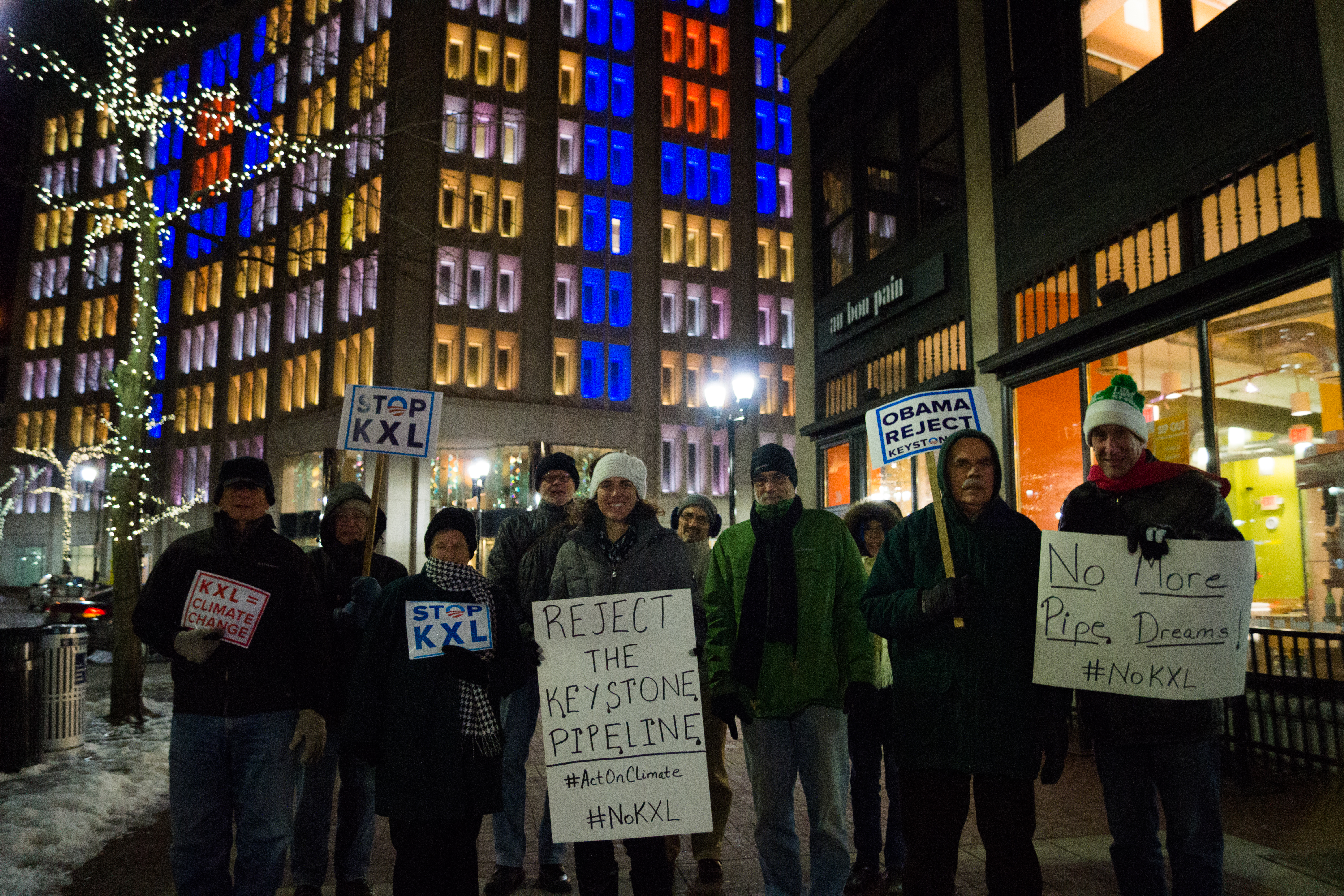
Especially now that President Obama has taken the courageous step of rejecting the Keystone XL Pipeline application, despite the bipartisan opposition in the U.S. Congress, I think it is important for the environmental movement to demonstrate public support for this decision.  Fossil fuel politicians were quick to attack him.  Recently retired IU Law Professor Sheila Kenney discusses new research she has done showing dramatic shifts in the public’s views on climate change and environmental damage:  http://sheilakennedy.net/2015/11/the-electoral-climate/

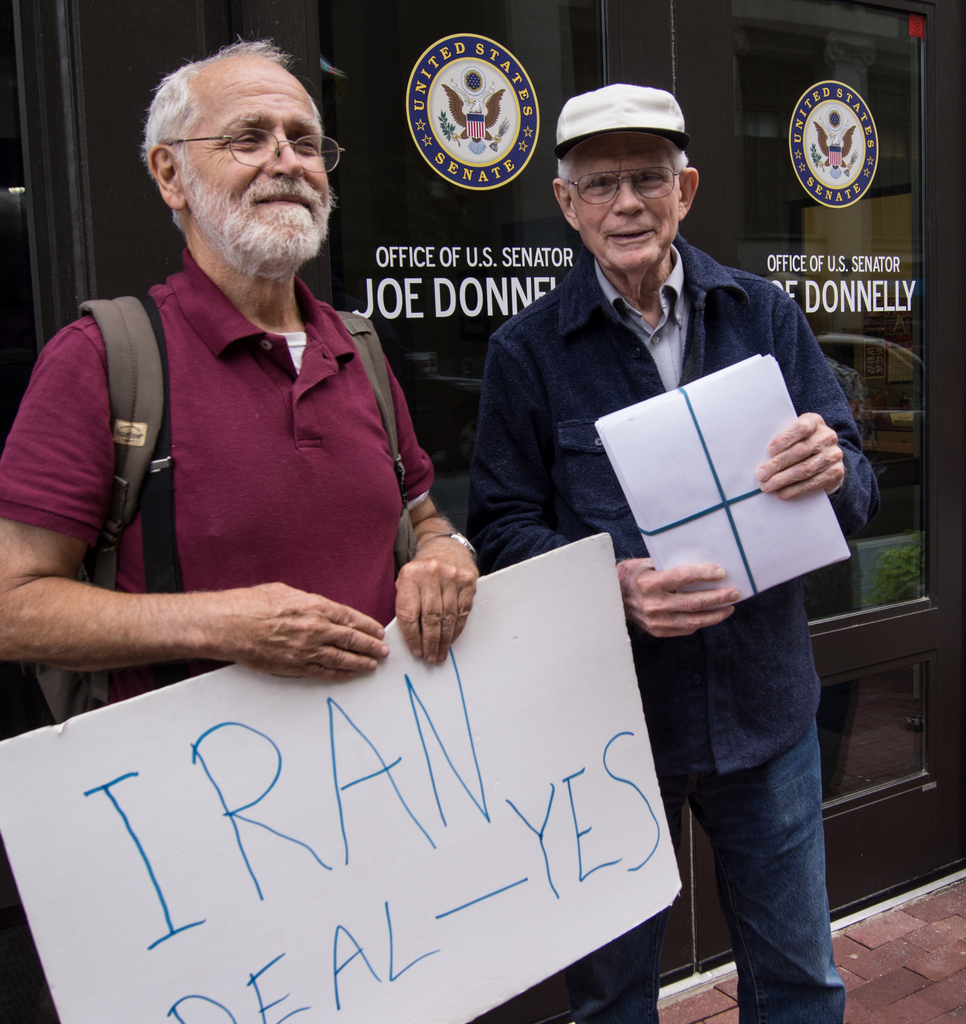
Here in Indianapolis we are planning a rally downtown today at 1:00 pm (with the Indianapolis Colts playing at home) to do that.  This is especially important in Indiana, where the coal industry has great influence in our state legislature and Governor’s office.  Even our Democratic Senator Joe Donnelly is opposing the Clean Power Plan and Clean Air Act.  During the 12 days of the Paris climate talks we will be “occupying” his local Senate office because of his opposition.

Your letters to your congressional representatives and the White House supporting the President’s environmental initiatives (Keystone rejection, increased fuel efficiency standards, coal plant regulations, clean water, clean power plan) are especially important at this moment.

Obviously there is still a great deal of work to do to begin to address our environmental crisis.  We will soon be delivering petitions to the local Morgan Stanley offices, opposing their continued financing of mountain top removal and coal mining, for example.

DSC00132-3 DSC00134-2 ObamaKeystone todd1 DSC04424

Stop Keystone Pipeline

Stop Keystone Pipeline

Thank President Obama

November 08, 2015 1:00 PM
Monument Circle 1 Monument Circle, Downtown Indianapolis, Indianapolis, IN 46202
Host Contact Info: jakislin@outlook.com
Today is a momentous day. It marks the beginning of a new paradigm: the day the President of the United States affirmed that the only way to stop the worst impacts of climate change is to leave fossil fuels in the ground.

We did this, all of us. Together with years of effort and activists across the continent we stopped this pipeline from being built. The movement brought us to this point. People power beat out the money of Big Oil.

This will not be our last fight, but for a moment, one golden well-deserved moment, we should celebrate. Because without our sacrifice, without our passion this would not have happened. And now, President Obama rejected the Keystone XL Pipeline.

Posted in Uncategorized | Leave a comment

Significance of President Obama’s Keystone Decision

Yesterday’s announcement by United States President Barack Obama successfully concludes the most extensive grassroots campaign since the civil rights and antiwar movements of the 1960s.
DSC00132-3DSC05598-2

According to the New York Times yesterday, “Both sides saw the Keystone rejection as a major symbolic step, a sign that the president was willing to risk angering a bipartisan majority of lawmakers in the pursuit of his environmental agenda.  And both supporters and critics of Mr. Obama saw the surprisingly powerful influence of environmental activists in the decision.”

In 2011 when this campaign began most of us had never heard about tar sands.  First Nations people in Canada unfortunately began to experience the effects of tar sands mining because the people lived near the open pit mines and the lakes built to hold the toxic water produced in the process.  Environmentalists also became alarmed when the extent of the tar sands deposits became known.

Efforts to address these concerns were ignored.  The network of indigenous peoples in Canada organized, provided training in nonviolent civil disobedience, and were often successful in stopping the pipelines and massive trucks from traversing their lands.  But the massive mines continued to expand.

Environmental leaders in the United States recognized this as an opportunity to do something similar, and launched an Internet campaign to organize the movement here.  This has been controversial within the environmental community, as many thought the focus on the Keystone XL pipeline was too narrow, and even if Keystone was stopped there were other pipelines and issues.  But others recognized the symbolic value, and an opportunity to build a nonviolence resistance movement, and to educate the public.  A movement has to have a very clear statement of the problem and a very specific goal if it is to have a chance of success.

Thus the Rainforest Action Network (RAN), CREDO, and the Other 98% formed The Keystone Pledge of Resistance.  A website was created to spread the word, and allow anyone to sign the following Pledge:

“I pledge, if necessary, to join others in my community, and engage in acts of dignified, peaceful civil disobedience that could result in my arrest in order to send the message to President Obama and his administration that they must reject the Keystone XL pipeline”
Stop Keystone Pipeline

Stop Keystone Pipeline

Over 97,000 signed the Pledge.  This was how people were able to join the movement–when they signed the Pledge, they were given the opportunity to provide their contact information, so organizers could form local groups and train these new activists.  As a Quakers I was fascinated by these ideas.

Also on the Pledge signup page was a way to indicate that you were interested in being trained to be a local Action Leader, which I did.  Based upon those responses, the Rainforest Action Network (RAN) selected 25 cities in the US that had the most interest in Action Leader training, and during the summer of 2013, RAN activists held two day training sessions in each of those cities.  Indianapolis was not one, so I was trained in Des Moines, and it was really excellent training.  We were trained how to train others for nonviolent civil disobedience actions, and all of the things needed to organize those actions.

Returning to Indianapolis, I was put in touch with others from Indianapolis who had been trained in Cincinnati and St. Louis.  Over the past two years we’ve held six training sessions, and have trained about forty activists.  The Federal Building downtown was our target, and we had all of the roles filled, such as police liaison, press and media roles, and having a lawyer on board.

Everyone was also involved with any number of other environmental and social justice organizations, but because of the way we, the local Keystone Pledge of Resistance was organized, we were able to respond to a number of requests for national organizing days of action from groups like 350.org, etc.  We not only participated, but we organized many of their local events.  I’ve spent this much time on this to try to show that one of the most significant results of the Keystone issue has been the creation of a tightly connected network of people trained to organize and execute nonviolent civil disobedience actions.  I don’t believe that network will disappear just because this particular campaign has just come to its successful conclusion.

DSC00134-2

The ultimate decision, though, was President Obama’s to make, and I have the deepest respect for his decision to reject the Keystone pipeline application against the wishes of a bipartisan majority of Congress.  He explains his decision below.  It is clear he is using this symbolically, as a way to begin to assert some leadership by the United States in addressing our environmental crisis.  This is the real significance of his brave choice.

Jeff

Video describing Keystone Pledge of Resistance

President Barack Obama, White House, November 6, 2015

Good morning, everybody.

Several years ago, the State Department began a review process for the proposed pipeline that would carry Canadian crude oil through our heartland to ports in the Gulf of Mexico and out into the world market.

This morning, Senator Kerry informed me that after extensive public outreach and consultation with other cabinet agencies, the State Department has decided that a Keystone XL Pipeline would not serve the national interest of the United States. I agree with that decision.

This morning, I also had the opportunity to speak with Prime Minister Trudeau of Canada. And while he expressed his disappointment, given Canada’s position on this issue, we both agreed that are close friendship on a whole range of issues, including energy and climate change, should provide the basis for even closer coordination between our countries going forward.

And in the coming weeks, senior members of my team will be engaging with theirs in order to help deepen that cooperation.

Now for years, the Keystone Pipeline has occupied what I, frankly, consider and overinflated role in our political discourse. It became a symbol too often used as a campaign cudgel by both parties rather than a serious policy matter.

And all of this obscured the fact that this pipeline would neither be a silver bullet for the economy, as was promised by some, nor the express lane to climate disaster proclaimed by others.

To illustrate this, let me briefly comment on some of the reasons why the State Department rejected this pipeline.

First, the pipeline would not make a meaningful long-term contribution to our economy. So if Congress is serious about wanting to create jobs, this was not the way to do it. If they want to do it, what we should be doing is passed bipartisan infrastructure plan that in the short term to create more than 30 times jobs per you than the pipeline would and in the long run, would benefit our economy and our workers for decades to come.

Our business has created 262,000 new jobs last month. They created 13.5 million new jobs over the past 68 straight months, the longest streak on record. The unemployment rate fell to 5 percent. This Congress should pass a serious infrastructure plan and keep those jobs coming. That would make a difference. The pipeline would not have made a serious impact on those numbers and on the American people’s prospects for the future.

Second, the pipeline would not lower gas prices for American consumers. In fact, gas prices have already been falling steadily. The national average gas price is down to about $0.77 over a year ago. It is down a dollar over two years ago. It is down $1.27 over three years ago.

Today in 41 states, drivers can find at least one gas station selling gas for less than two dollars a gallon. So while our politics have been consumed by debate over whether or not this pipeline would create jobs and lower gas prices, we have gone ahead and created jobs and lowered gas prices.

Third, shipping dirtier crude oil into our country would not increase America’s energy security. What has increased America’s energy security is our strategy over the past several years to reduce our reliance on dirty fossil fuels from unstable parts of the world. Three years ago, I set a goal to cut our oil imports in half by 2020. Between producing more oil here and home and using less oil throughout our economy, we met that goal last year. Five years early. In fact, for the first time in two decades, the United States of America now produces more oil than we buy from other countries.

Now the truth is the United States will continue to rely on oil and gas as we transition, as we must transition, to a clean energy economy. That transition will take some time. But it is also going more quickly than many anticipated. Think about it. Since I took office, we have doubled the distance our cars will go on a gallon of gas by 2025. Tripled the power we generate from the wind, multiplied the power we generate from the sun 20 times over. Our biggest and most successful businesses are going all in on clean energy. And thanks in part to the investments we have made, there are already parts of America were clean power from the wind or the sun is finally cheaper than dirtier conventional power. The point is, the old rule said we couldn’t promote economic growth and protect our environment at the same time. The old rule said we couldn’t transition to clean energy without squeezing businesses and consumers.

But this is America and we have come up with new ways and new technologies to break down the old rules so today, homegrown energy is booming and energy prices are falling. And over the past decade, even as our economy has continued to grow, America has cut our total carbon pollution more than any other country on earth. Today, the United States of America is leading on climate change with our investments in clean energy and energy efficiency.

America is leading on climate change with new rules on power plants that will protect our air so that our kids can breathe. America is leading on climate change by working with other big emitters like China to encourage and announce new commitments to reduce harmful greenhouse gas emissions. In part, because of that American leadership, more than 150 nations representing nearly 90 percent of global emissions, have put forward plans to cut global pollution.

America is now a global leader when it comes to taking serious action to fight climate change. Frankly, approving this project would have undercut that global leadership and that is the biggest risk that we face. Not acting.

Today, we’re continuing to lead by example, because ultimately, if we’re gonna prevent large parts of this Earth from becoming not only inhospitable but uninhabitable in our lifetimes, we’re gonna have to keep some fossil fuels in the ground rather than burn them and release more dangerous pollution into the sky.

As long as I’m president of the United States, America’s gonna hold ourselves to the same high standards to which we hold the rest of the world.

And three weeks from now, I look forward to joining my fellow world leaders in Paris, where we’ve got to come together around an ambitious framework to protect the one planet that we’ve got while we still can.

If we want to prevent the worst effects of climate change before it’s too late, the time to act is — is now. Not later, not someday. Right here, right now.

And I’m optimistic about what we can accomplish together. I’m optimistic because our own country proves every day, one step at a time, that not only do we have the power to combat this threat, we can do it while creating new jobs, while growing our economy, while saving money, while helping consumers, and most of all, leaving our kids a cleaner, safer planet at the same time.

That’s what our own ingenuity and actions can do. That’s what we can accomplish. And America’s prepared to show the rest of the world the way forward.

Thank you very much.

President Barack Obama

Posted in Uncategorized | 3 Comments