My Mutual Aid Journey Thus Far

Some friends have asked for concrete examples of Mutual Aid. Can’t see how to escape the capitalist system. I’ll try to explain as I tell you the story of how I first got involved in Mutual Aid and what has happened since.

I’ve learned that mutual aid has been practiced globally for centuries. But I was unaware of what mutual aid meant until a fortunate meeting with Ronnie James last February. Several of us were holding a vigil in support of the Wet’suwet’en peoples who were trying to stop the construction of a natural gas pipeline through their territory in British Columbia. We posted the event on Facebook. Fortunately Ronnie saw that and joined us. I learned Ronnie is an Indigenous organizer with many years of experience. And that he works with the Great Plains Action Society, along with other friends of mine, including Sikowis (Christine Nobiss), Trisha Cax-Sep-Gu-Wiga Etringer, and Alton and Foxy One Feather.
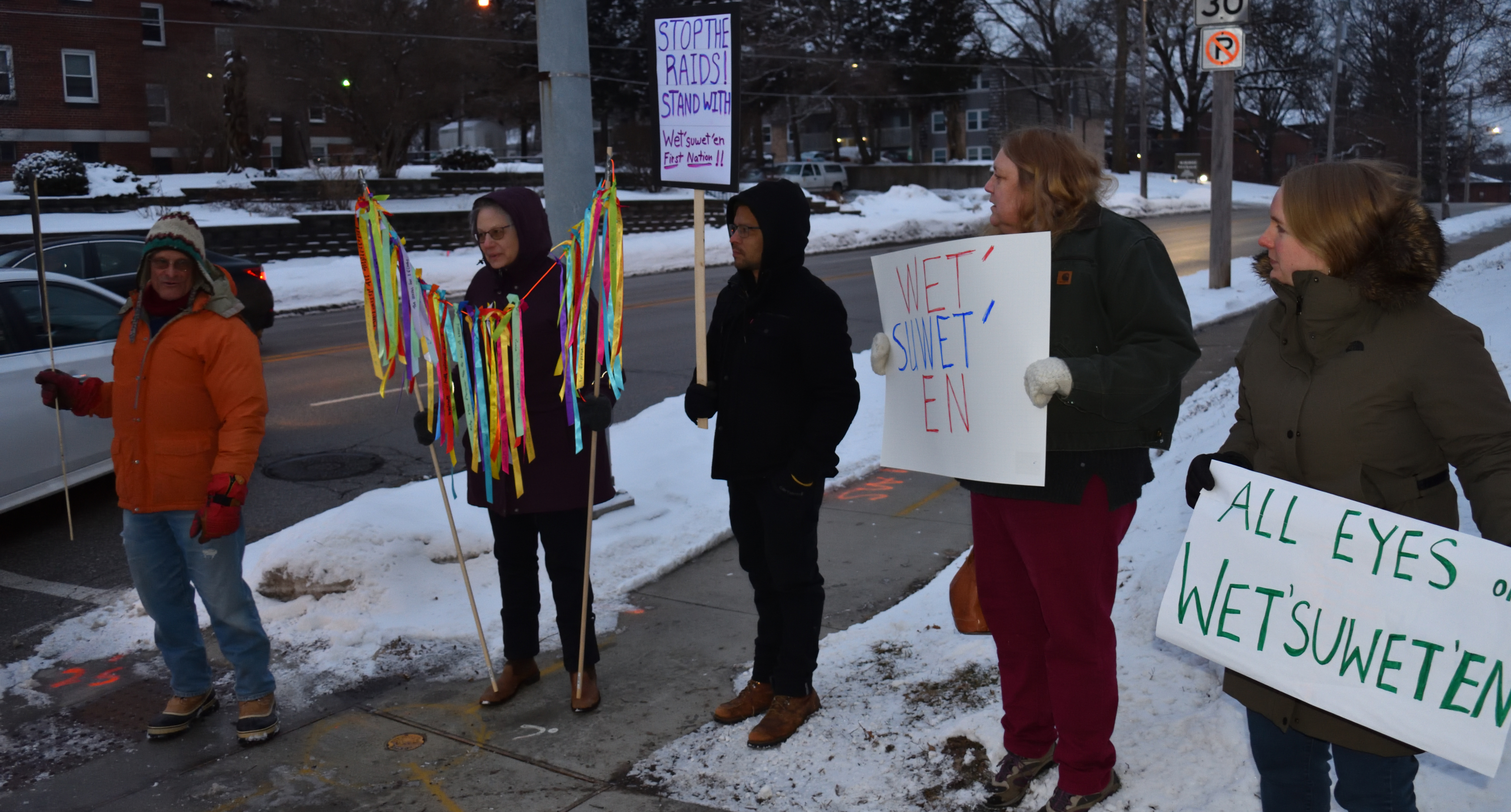
Ronnie and I didn’t get a chance to visit much at the vigil, but he accepted my Facebook friend request. And that was the beginning of our friendship, and his patient mentoring me about Mutual Aid. One of the first things he shared with me follows.

[NOTE: unless otherwise noted, all the quotes here are from Ronnie James]

I’m of the firm opinion that a system that was built by stolen bodies on stolen land for the benefit of a few is a system that is not repairable. It is operating as designed, and small changes (which are the result of huge efforts) to lessen the blow on those it was not designed for are merely half measures that can’t ever fully succeed.

So the question is now, where do we go from here? Do we continue to make incremental changes while the wealthy hoard more wealth and the climate crisis deepens, or do we do something drastic that has never been done before? Can we envision and create a world where a class war from above isn’t a reality anymore?


I was really impressed with how he expressed that. Poetic. That distilled so much of what I believe about capitalism, white supremacy and racial injustice. Capitalism is the system that can’t be repaired.

So I work with a dope crew called Des Moines Mutual Aid, and on Saturday mornings we do a food giveaway program that was started by the Panthers as their free breakfast program and has carried on to this day. Anyways, brag, brag, blah, blah.

So I get to work and I need to call my boss, who is also a very good old friend, because there is network issues. He remembers and asks about the food giveaway which is cool and I tell him blah blah it went really well. And then he’s like, “hey, if no one tells you, I’m very proud of what you do for the community” and I’m like “hold on hold on. Just realize that everything I do is to further the replacing of the state and destroying western civilization and any remnants of it for future generations.” He says “I know and love that. Carry on.”

This was how I first heard the term Mutual Aid. I also like “anyways, brag, brag, blah, blah” because I also feel a bit awkward talking about work I’ve done.

This is where you begin to see how Mutual Aid moves away from capitalism. “Just realize that everything I do is to further the replacing of the state and destroying western civilization and any remnants of it for future generations.” Seriously. But this is a nonviolent, peaceful revolution. I mean besides the state sanctioned violence against us. The more we take care of each other, the less power they have.

What we have is each other. We can and need to take care of each other. We may have limited power on the political stage, a stage they built, but we have the power of numbers.

Those numbers represent unlimited amounts of talents and skills each community can utilize to replace the systems that fail us.  The recent past shows us that mutual aid is not only a tool of survival, but also a tool of revolution. The more we take care of each other, the less they can fracture a community with their ways of war.
I began to learn what was going on in Des Moines by following the Des Moines Mutual Aid (DMMA) Facebook page. I was intrigued by the follow Ronnie wrote, impressed that DMMA was continuing the food giveaway program started by the Black Panthers so long ago.

Happy 54th Birthday to the Black Panther Party for Self Defense. The Panthers have been a lifelong inspiration and one of the major influences on how I act in this world. The Free Food Store that Des Moines Mutual Aid helps coordinate was founded by the Des Moines chapter of the Panthers and has continued to this day. I deeply value that we get to carry on that legacy. All Power To The People.

I asked Ronnie to tell me more about Des Moines Mutual Aid.

It started as group of my friends working with the houseless camps some years back. It has now grown into a solid crew that runs a free food store started by the Black Panthers, still work with the camps, we organzied a bail fund that has gotten every protester out of jail the last few months, and we just started an eviction relief fund to try to get a head of the coming crisis, in cooperation with Des Moines BLM. We have raised $13,000 since Wednesday and the application to apply for the grants goes live this week.

Besides the food giveaway program, Des Moines Mutual Aid has built a network to respond to those who are being evicted, or forced to leave the houseless camps. There is also the bail fund to support those who are arrested advocating for change. When Des Moines Black Liberation declared a black state of emergency in Iowa, Patrick spoke at the press conference, and said Des Moines Mutual Aid fully supported that. Another project involves Des Moines Valley Friends (Quaker) meeting which allows the use of their kitchen to cook food to take to the houseless camps. In Sioux City, my friend Trisha Etringer takes personal protective equipment to those in need there.

As I began writing about Mutual Aid, the Black Panthers and Black Lives Matter, Ronnie told me “connecting these dots of history to present will lay out your plan for the future.” One way Ronnie mentors me is to read some of what I write, and make comments like that, for which I am very grateful.

I’m hearing about all these things that are answers to so many of my questions and prayers. This sounds like the way to build the Beloved communities that I’ve longed for. At this point my question was, what am I going to do now? I both want to learn more, and offer my help. I’ve since learned one of the keys of mutual aid is this power to draw people in.

I’m sensitive to the need to be careful about inviting myself into new things. I could tell trust is very important in what Ronnie was sharing with me. In part because law enforcement surveilles and abuses its power against those who are agitating for change in various ways.

But as we exchanged messages we began to get to know each other better. When I felt the time was right, I asked if it would be OK for me to join in, he said “def”. He warned me things things moved pretty fast, but at the end of an hour and a half you’re tired, sweaty and feeling good. And so it was.

He told me to come to a church in downtown Des Moines at 9:00 Saturday morning. I’m not great at meeting new people, so was a little apprehensive that morning. But I also have a long history of engaging with groups working for justice, and you can always count on them being wonderful people. And so it was (again).

When I got there Ronnie greeted me and we went into the church basement where around a dozen mostly young, but very diverse people were beginning to distribute the food. Everyone is very careful about COVID precautions.

The basement was full of tables. And large quantities of various kinds of food in boxes and bags. The food that was past its freshness date came from local grocery stores. Sometimes vegetables were donated by farmers or gardens. And since schools were closed because of the COVID pandemic, arrangements were made with food banks to distribute that food.

Patrick introduced himself, and told me this really was about mutual aid, and we are all encouraged to take food ourselves. And I have seen some of us taking some food. He also said we don’t do a lot of telling anyone what to do. It would be some time before I appreciated this was an example of how mutual aid resists vertical hierarchies.

Forty or fifty empty boxes were set out, and we would grab food and deposit it in each of the boxes. The amount of food in each box increased steadily. I noticed that bread was put in last so it wasn’t squashed. When there were pork products, those were kept separate so that wouldn’t be given to families who didn’t eat pork.

We started this at 9:00 and were done around 10:00. Tables were set up near the street outside the church. Once the boxes were full, we took them out to the tables.

In the meantime those who came for the food were parking in line in the school parking lot across the street. People find out about this by word of mouth. We had to be somewhat flexible as the numbers fluctuated from time to time.

One of us went to the cars, and controlled the flow to our food tables. We sorted out who was going to open the door as the cars pulled up in front of the tables. Someone else would put a food box in the car. When we had boxes of food from the government (school lunch) someone else would one of those boxes in the car. Often there are gallons of milk, which another person put in the car.

Sometimes Patrick will call for a team huddle, and we’d all circle around and divided up the tasks by volunteering.

Everyone of us is polite and friendly toward those picking up the food, as were the people in the cars toward us. I like the cars with kids in the back seat where we put the food. They always had smiles. This is a very important part of mutual aid. Recognizing it was the failure of the capitalist system that people needed help. Not their fault.

Another important part of mutual aid is the knowledge we are in this together. At another time we might be in need of help with food. Mutual aid is not “us” helping “them”. It is definitely not charity. It is all of us being in these things together, and working to make things better for all of us.

After the last car has been loaded with food, we sanitize and take down the tables. While most of us had been loading cars, others had been cleaning the church basement. Now was the time we got to relax together. Sharing news of what others are doing. Almost everyone is involved in multiple other justice work. Someone mentions another possible source of food.

By participating in groups in new ways and practicing new ways of being together, we are both building the world we want and becoming the kind of people who could live in such a world together.

“Mutual Aid is essential to our survival” by Dean Spade, Truthout, October 28, 2020

Several times different accomplices (a term Ronnie uses that I love) have told me these Saturday mornings are the highlight of their week, as it has become for me. For the past three months I’ve only missed one Saturday morning.

Randomly passing an accomplice on the street and throwing up a fist at each other as we go our separate ways to destroy all that is rotten in this world will never fail to give me extra energy and a single tear of gratitude for what this city is creating.

Ronnie James

In his book, Mutual Aid: Building Solidarity During This Crisis (and the Next) Dean Spade says there are three key elements of mutual aid.

  1. Mutual aid projects work to meet survival needs and build shared understanding about why people do not have what they need.
  2. Mutual aid projects mobilize people, expand solidarity, and build movements.
  3. Mutual aid projects are participatory, solving problems through collective action rather than waiting for saviors.

Working to change the world is extremely hard because the conditions we are up against are severe. We cannot blame ourselves for having a difficult relationship to our work, even though we understand that learning to work differently is vital for our movements and for our own well-being and survival. We must be compassionate to ourselves and each other as we practice transforming our ways of working together.

We need each other badly to share what is hard about the overwhelming suffering in the world and the challenge of doing work for change in dangerous conditions. Even in the face of the pain that being awakened to contemporary conditions causes, all of our work for change can be rooted in the comfort and joy of being connected to one another, accompanying one another, and sometimes being inspired by each other. Reflecting deeply about our own orientations toward work— what it feels like to participate in groups, what ideas we are carrying around about leadership and productivity— is crucial to building a practice of working from a place of connection, inspiration, and joy. This means intentionally creating ways to practice a new relationship to work, and diving into the psychic structures underlying our wounds from living and working in brutal, coercive hiearchies. 

Dean Spade. Mutual Aid: Building Solidarity During This Crisis (and the Next) (Kindle Locations 1469-1481). Verso.

It is really significant that Mutual Aid is how justice groups are beginning to organize our work and invite others to work with us.

mutual aid is the new economy. mutual aid is community. it is making sure your elderly neighbor down the street has a ride to their doctor’s appointment. mutual aid is making sure the children in your neighborhood have dinner, or a warm coat for the upcoming winter. mutual aid is planting community gardens.

capitalism has violated the communities of marginalized folks. capitalism is about the value of people, property and the people who own property. those who have wealth and property control the decisions that are made. the government comes second to capitalism when it comes to power.

in the name of liberation, capitalism must be reversed and dismantled. meaning that capitalistic practices must be reprogrammed with mutual aid practices.

Des Moines Black Liberation

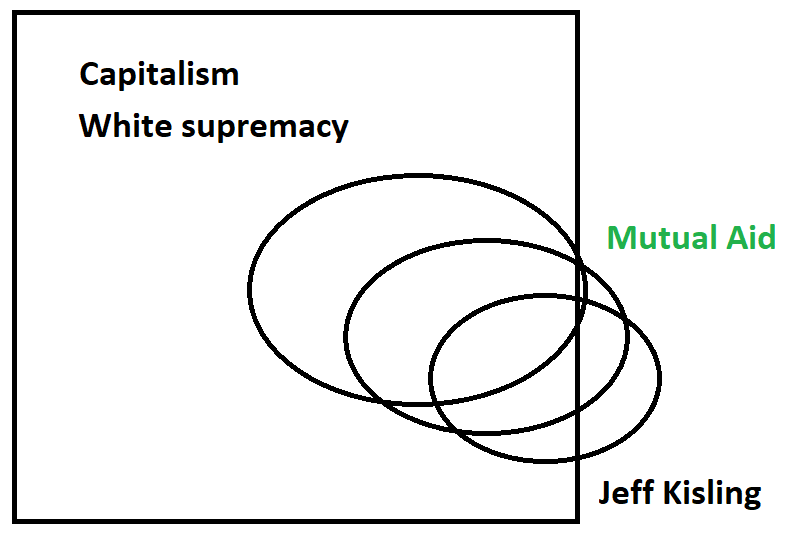
I’ve tried to illustrate some of these things in this diagram that I’ve been working on for over a year.

Returning to the questions Ronnie posed at the beginning of this:

So the question is now, where do we go from here? Do we continue to make incremental changes while the wealthy hoard more wealth and the climate crisis deepens, or do we do something drastic that has never been done before? Can we envision and create a world where a class war from above isn’t a reality anymore?

Never doubt that a small group of thoughtful, committed citizens can change the world; indeed, it’s the only thing that ever has.

Margaret Mead

I’ve been asked how we can engage huge numbers of people to affect change. First, I believe the Margaret Mead quote, “never doubt that a small group of thoughtful, committed citizens can change the world; indeed, it’s the only thing hat ever has.” I believe, and have experienced that.

And I have witnessed what Dean Spade called one of the key elements of mutual aid, “Mutual aid projects mobilize people, expand solidarity, and build movements.”

A Google document was recently created for people to sign up for roles needed for the food giveaway each Saturday morning. That was partly done for social distancing related to the virus, and because the number of people coming to help was rapidly growing. Mutual aid projects do mobilize people. I think an analogy is going to be how the civil rights struggles of the 60’s exploded with national participation.

And as noted previously, frontline justice movements are calling for creation and participation in mutual aid groups.

The greatest driver to build networks of mutual aid groups is we have no choice. It is increasingly clear our political system has failed us. Capitalism has failed us. And most of all, environmental chaos will rapidly worsen. So many tipping points have been triggered. Air temperatures will increase rapidly, resulting in severe drought, crop failures, more ferocious wildfires, stronger storms and rising sea levels.

For those friends I mentioned at the beginning who are wondering how to become involved in mutual aid, I hope this has been helpful. I think the most important thing know is to you have to be present with those you are working with. Participatory. Mutual aid can’t be done from a distance. This is necessary because you have to learn new ways of being with others. You have to learn to abandon vertical hierarchies. You have to show your commitment that we are all in this together.


“Quakers will only be truly prophetic when they risk a great deal of their accumulated privilege and access to wealth. Prophets cannot have a stake in maintaining the status quo. Any attempt to change a system while benefiting and protecting the benefits received from the system reinforces the system. Quakers as much as anyone not only refuse to reject their white privilege, they fail to reject the benefits they receive from institutionalized racism, trying to make an unjust economy and institutionalized racism and patriarch more fair and equitable in its ability to exploit. One can not simultaneously attack racist and patriarchal institutions and benefit from them at the same time without becoming more reliant upon the benefits and further entrenching the system. Liberalism at its laziest.”    

Scott Miller
https://friendlyfirecollective.wordpress.com/2018/06/05/scott-miller-on-why-quakerism-is-not-prophetic/

The next American Revolution, at this stage in our history, is not principally about jobs or health insurance or making it possible for more people to realize the American Dream of upward mobility. It is about acknowledging that we Americans have enjoyed middle-class comforts at the expense of other peoples all over the world. It is about living the kind of lives that will not only slow down global warming but also end the galloping inequality both inside this country and between the Global North and the Global South. It is about creating a new American Dream whose goal is a higher Humanity instead of the higher standard of living dependent on Empire. It is about practicing a new, more active, global, and participatory concept of citizenship. It is about becoming the change we wish to see in the world.

The courage, commitment, and strategies required for this kind of revolution are very different from those required to storm the Winter Palace or the White House. Instead of viewing the U.S. people as masses to be mobilized in increasingly aggressive struggles for higher wages, better jobs, or guaranteed health care, we must have the courage to challenge ourselves to engage in activities that build a new and better world by improving the physical, psychological, political, and spiritual health of ourselves, our families, our communities, our cities, our world, and our planet.

The Next American Revolution, Grace Lee Boggs

Posted in Black Lives, Des Moines Black Lives Matter, Des Moines Mutual Aid, Indigenous, Mutual Aid, Quaker, social media, solidarity, Uncategorized | Leave a comment

Des Moines BLM Statement and press conference on overnight raids on 11/18/2020

As a white male, I’ve learned a lot over the past years about White privilege and supremacy. I haven’t been learning by attending conferences or reading books. Instead I’ve sought and found opportunities to be with non white people. With black, indigenous and other people of color (BIPOC).

I’ve learned how easy it is for White people, over and over again, to simply refuse to acknowledge the structural racism that maintains our comfortable lives. Comfortable not only in the material sense, but the generally safe environment we live and work in. Unlike being a target for so many things just because of our skin color.

The more I learn, the more disgusted I am with White society. A society that I am part of, but wish I could escape. But of course I can’t. Can’t change the color of my skin. That reminded me of the book Black Like Me, first published in 1961, a nonfiction book by white journalist John Howard Griffin.

You don’t know what it is you don’t know. So you have a couple of choices. You can try to maintain your status quo. Try to avoid going beneath the surface of what you think you know. I say ‘try’ because too often you see or hear or experience things that penetrate your armor. Then you have to work really hard to try to unlearn your new knowledge. You really can’t do it. You can try to ignore this new knowledge. But it’s different now. Now you know what you’re trying to forget.

I am very grateful I was able to hear this Zoom meeting. Several of my new friends were involved.


DSM BLM FOUNDATION
DSM BLM  COLLECTIVE
Des Moines BLM
comms@desmoinesblm.org
@DesMoinesBLM

FOR IMMEDIATE RELEASE:

DECEMBER 14, 2020

DES MOINES BLM STATEMENT ON OVERNIGHT DES MOINES RAIDS

On Wednesday, November 18, a joint federal and state investigation, spanning over a year-long, resulted in an overnight violent military style raid which terrorized the entire Des Moines metro area. This investigation and raid included 19 city, county, state and federal law enforcement agencies including the Polk County Sheriff’s Office, DMPD, Iowa State Patrol, Homeland Security Investigations, ATF and the FBI. Des Moines BLM wants to make it clear that the use of public resources to create state sanctioned military-style occupations is an absolute misuse and abuse of power that all agencies, particularly DMPD, should be ashamed of their role in facilitating.

On November 18, over 500 officers were dressed in full military outfits, as if heading into combat, and ordered to occupy communities which they themselves do not live or frequent in their day to day lives. Armed operations such as these are not acts of violence against dangerous individuals, as the DMPD would like to have us think, but against entire communities which are already made vulnerable due to systemic social injustice. In this raid, over 40 search warrants were issued, yet only 25 arrests were made. This means that for all taxpayer resources used, arrests were only made in about 60% of cases. In all of these cases, the individuals taken captive are innocent until proven guilty. These points alone should lead us to question whether or not this was a useful appropriation of such a massive amount of public resources not only in one night, but for the past calendar year during planning stages.

The human cost of the November 18 raid on innocent family members, community members and bystanders was and is incalculable. Des Moines BLM has received first hand accounts and evidence of community members being exposed to and terrorized by flash bangs and concussion grenades, being held at gunpoint by law enforcement officers, watching their homes and private property be destroyed, the seizure of private assets as “evidence” and fierce intimidation and harassment.

Despite Chief Wingert’s claims, in no way can the Des Moines Police Department describe the “safe environment” which this raid was supposed to result in with material or empirical evidence. All claims, stories, accounts and experiences point to the undeniable fact that armed military occupations are harmful for the communities who are forced to endure them. There is nothing safe about organized violence.

We are calling upon the people of Des Moines, who experienced this summer the power of their unified voices in challenging police violence, to once again take action against the constant abuse of the Des Moines Police Department. We are also calling on all people of Des Moines to create mutual aid projects for those who were impacted by the November 18 raid.

Those directly impacted can contact the Iowa Coalition for Collective Change.

Black Lives Matter


December 7, 2020
Statement read by community members at the Des Moines City Council meeting.

Des Moines City Council, please take notes during the next 30 minutes of agenda items submitted by the public. It should come as no surprise to you all to hear that DMPD and the City of Des Moines are once again being sued for racial profiling and discriminatory policing practices. This is a damning trend that is on display for all to see. For any of you who haven’t paid attention, I’ll give you a quick recap of some of DMPD’s documented harassment and violence toward Black folks in just the last few years: Montray Little and Jared Clinton were paid $75,000 after DMPD racially profiled and harassed them in 2019, Lonnie Porter received a $25,000 settlement after being unlawfully pulled over in 2019, and just this year the city paid a $75,000 settlement to Kimberly Williams after an officer assaulted her 17 year old daughter. 

All of the officers implicated in these cases of misconduct are still employed by DMPD and some of them are being litigated once again in ongoing cases. Can you imagine not once, but twice or three times, flagrantly breaking the code of conduct at your job and not being fired by your employer? Josh Mandelbaum, would your law firm continue to employ you if you were found to be bribing judges on not one but multiple occasions? Joe Gatto, would Baratta’s stay open if multiple former employees came forward accusing you of violence toward them? Connie Boesen, would the Iowa State Fair continue to permit your food stand to operate every August if they learned you had been responsible for multiple E. coli outbreaks? I don’t think so. 

How is it then that DMPD repeatedly shrugs off these officer violations and refuses to remove the transgressors from their payroll? The truth is, they realize that Iowa law doesn’t require them to have any transparency with the disciplinary actions they take. And, most importantly, the police force has a culture of no accountability for wrongdoing. In fact, history has proven that racial profiling and excessive use of force are actually built into the way DMPD chooses to operate.

Currently, there are cases being brought against DMPD officers and the City of Des Moines by Jared Clinton, Courtney Saunders, as well as Domeco Fugenschuh. All three of them are Black citizens of Des Moines who were stopped by DMPD officers without proper legal justification and were further victims of the racist pretextual stop system that officers in Des Moines have used to pin fabricated charges on Black folks in our communities for decades. 

Jared Clinton already was made to endure a traumatic run-in with repeat offender Officer Kyle Thies back in 2018 that went viral and cost the city $75,000. In October of 2019, Officers Brian Minnehan, Ryan Steinkamp, and Ryan Garrett pulled Jared over again because they claimed they couldn’t read his temporary tag that was placed in his rear window where it needed to be. This is not a valid reason to stop a motorist. These officers then manipulated the situation, claiming they smelled marijuana, searching Clinton’s car, and charging him with possession of a controlled substance. They later dropped this charge, begging the question why those officers charged him with marijuana possession in the first place. In short, three White officers racially profiled Jared Clinton, again, carried out another discriminatory pretextual stop, and took Jared to jail without any legitimate cause to do so. 

Unfortunately, you’ll have to get used to hearing these officers’ names. Domeco Fugenschuh is currently bringing a lawsuit against the very same Officer Ryan Steinkamp and Officer Brian Minnehan involved in Jared’s unjust arrest and there are striking similarities between the suits. In 2018, Officers Steinkamp and Minnehan pulled over Domeco, claiming he had cut off another driver. As body cam footage reveals, they violently pulled him from his car without explanation, handcuffed him, and knocked his head into the door frame as they put him in the police vehicle. And, how do you think they justified this arrest, given it is not legal to arrest someone for a mere traffic violation? That’s right, these two decided to fabricate the presence of a controlled substance again, charging Domeco with possession of weed. The issue is, there was no marijuana shake on the floor of Domeco’s car and the scale that Officers Steinkamp and Minnehan put in their report was in fact just a portable phone charger, leading the Polk County prosecutors to drop the possession charge a few months later. Not only are Steinkamp and Minnehan racist, not only are they liars, but they are exceptionally inept liars. 

 It’s important to note that in 2015, it was discovered that two Des Moines Police Officers planted methamphetamine on an individual in order to make an arrest. There is a precedent at DMPD for lying about the presence of drugs and even planting drugs in order to achieve an arrest.

The last ongoing case I have to share with you tonight is against the very same Officer Kyle Thies who was responsible for harassing Jared Clinton and Montray Little in 2019. This time, Courtney Saunders was the victim of Officer Thies’ racial profiling habits. Again, a white DMPD officer stopped a Black male without proper reasoning. In Officer Thies’ words, the turn Courtney made in his car “didn’t feel right”. Of course, after Thies and his partner detained Courtney and prepared to issue him a ticket for parking too near a fire hydrant, they decided to look around and see if they could allege any more severe violations of the law. They settled on writing Courtney a ticket for an open liquor bottle in his backseat, despite the fact that he was completely sober when tested on the scene.

 Though Officer Thies attempted to once again burden a young, innocent Black man with unfounded charges, Judge Heather Dickinson found Courtney Saunders not guilty of both the traffic violation and the open liquor bottle violation. It’s almost as if the police officer was searching for ways to incriminate Saunders. Food for thought. Judge Dickinson described her decision on Courtney’s case with these words, “The court did not find Officer Thies’ testimony credible, and numerous times during his testimony the court observed that he appeared to be smirking.”

City Council members, do you remember earlier this year when you all were presented with an opportunity to completely prohibit pretextual stops and you chose instead to leave it up to the police officers to use their own discretion on what discrimination looks like? Are you all starting to notice how your decisions have dire consequences for the citizens you’re supposed to be representing? These are stories of your community members’ lives being permanently damaged, not trivial anecdotes to go in one ear and out the other. You need to pass a complete ban on pretextual stops so that Black folks in the Des Moines community won’t continue to be subjected to the racist pastimes of bored and hyper-aggressive Des Moines police officers. 

Since you all neglected to create a Citizen Oversight Committee that has the power to investigate and adjudicate on complaints of racial profiling this summer, all accountability falls to Chief Wingert and DMPD in instances like these when members of our community like Jared, Domeco, and Courtney have their rights violated. It seems, given many of your statements and actions throughout the last year, that you all have quite the idealized impression of what our police department is in this city. You seem to think DMPD is the one police department in the nation that is free of bias and functions to protect more than just wealthy White property owners. If those presumptions were true, Chief Wingert would have terminated his officers when they repeatedly and blatantly profiled members of the Des Moines community based on their race. 

Rather, he and his media mouthpiece, Paul Parizek, have heaped praise on the guilty officers. After Sgt. Greg Wessels pepper sprayed and assaulted Khy’La Williams, a 17 year old Black girl, Parizek had this to say, “Sgt. Wessels is a respected 31 year veteran of the Des Moines Police Department, having served in nearly every unit within the department.” And, Wessels continues to hold his position with the Department. This is despite his unconscionable actions toward a teenager and the nearly $900,000 he has cost the city collectively between the Williams lawsuit and a previous case brought against him for another disturbing assault on a man in 2013. 

In addition to the two cases I’ve already mentioned that are presently being brought against Officers Steinkamp and Minnehan, they also were the subjects of a racial profiling lawsuit that was filed in 2018. When Paul Parizek was asked to comment at the time he said, “They’re great cops who have served our neighborhoods professionally.” These same two officers were responsible for the fatal shooting of Luke Swann last year. Swann, a 36 year old Black resident of the Indianola Hills neighborhood, was thought to have been armed. Yet, there are no eyewitnesses to corroborate when or why Officers Steinkamp, Minnehan, and their partner began shooting. These were the comments of Parizek following the killing, ““They’re three of the people that we know we can count on to serve the community well.” 

Which community does Parizek continue to refer to that these officers are apparently serving? Is community exclusive to those who wear badges and holster a gun every morning in this case? I don’t normally associate assaulting a 17 year old girl, repeated demonstrations of racism, and the killing of a community member with the concept of service. What does it tell us that even those officers who have so obviously neglected their supposed duty to serve by abusing their post are still lauded by their superiors and kept on the force? It seems only logical to assume that this is the case because none of the actions in question are in any way antithetical to how DMPD operates across the board. 

The only conclusion that can be drawn is that Chief Dana Wingert and his cronies are well aware that their simple existence as a police department is dependent upon perpetuating racism. In fact, they make it quite clear that they intend to continue peddling hate from East to West across the city, unless a certain city council that has jurisdiction over them were to take serious action to put an end to the terror they represent for People of Color throughout Des Moines. 

This is exactly why this council has heard demands for months on end that steps are taken now to “Defund DMPD”. This is not a plea that officers with despicable track records like Thies, Minnehan, Steinkamp, Wessels, and Grimes are terminated, though that is also necessary. This is a call for the complete defunding of a police department which places targets on Black folks in Des Moines. It’s a call to completely defund a police department whose leaders have made it abundantly clear that they tolerate and even incentivize the consistent violation of Black community members’ civil rights. It is also a call to Decriminalize Marijuana. This drug is regularly weaponized by the Des Moines Police Department against People of Color throughout the city. Marijuana should no longer represent criminal charges or the threat of incarceration.  

During just the last few years, over $1,000,000 has been doled out by the city as a consequence of lawsuits that demonstrated the racism and incompetence of DMPD officers. Yet, the Des Moines City Council has turned a blind eye. In the middle of a crippling pandemic, the three ongoing cases against DMPD and the city also pose a potential sacrifice of funds that could be aiding healthcare centers, those with vulnerable housing realities, and unemployed members of our community. Instead, that money will serve as a meager compensation for yet another wave of victims of our violently prejudiced police department. 

Last year, you all approved a bloated budget of $70,000,000 for this police department that employs, arms, and protects proven racists. That is 39% of the entire City budget and by far the largest police budget in the state. On December 22nd, the conversation will begin again on what portion of the city’s budget will go to DMPD. We are calling upon you to Defund the Des Moines Police Department as you finalize the 2021 Budget. Don’t be mistaken, a decision to continue financing DMPD will not be a simple expression of your difference of opinion. It will be an erasure of Jared, Montray, Khy’La, Lonnie, Domeco, and Courtney’s stories and an investment in hate. 


Posted in Black Lives, decolonize, Des Moines Black Lives Matter, Des Moines Mutual Aid, Uncategorized | Leave a comment

Prophetic Vision

Friends in my Quaker meeting in rural Iowa have been praying and discussing what we are being led to do at this time, when there is so much suffering in the world. “Being led” means discerning what the inner light, or spirit, or God is saying to us.

During these discussions the concept of prophetic vision came up when we considered whether we had a shared vision. It seemed we didn’t have much of an understanding of what prophetic vision meant.

Quakers have always identified themselves as being a prophetic community, asserting that their faith is ‘not a notion, but a way’. Typically, Friends see action as being the primary response to their deepest spiritual experiences. In this blog post, Martin Layton explores the significance of this aspect of Quaker witness.

Truth is our guide

Prophets are sometimes misrepresented as fortune-tellers, but it is more accurate to think of them as truth-tellers. As Old Testament scholar, Walter Brueggemann explains,

The prophetic tasks of the church are to tell the truth in a society that lives in illusion, grieve in a society that practices denial, and express hope in a society that lives in despair.

In the seventeenth century, Friends proclaimed themselves as the ‘Publishers of the Truth’. ‘The Lord opened my mouth,’ wrote George Fox, ‘and the everlasting truth was declared amongst them, and the power of the Lord was over them all.

As Robert Lawrence Smith  reminds us, from their beginnings Quakers have held that truth ‘restores our souls and empowers our actions. Truth is our guide and truth is our liberator.’

Quaker Testimony

This links back to the idea of ‘testimony’,  the name we give to Friends’ shared behaviours, located in the sphere of everyday life, which are usually seen to be a challenge to conventional ways of behaving or are reflective of their experience of personal transformation. Individually and collectively, Friends’ testimony asks them to seek out the truth in their lives and to uncover destructive falsehoods. Crucially, they have always recognised that although this can be a cause of discomfort, it often leads to a more meaningful life or deeper sense of inner peace.

George Fox understood how the Spirit, in whose presence Quakers wait in worship, can empower people to work for this more just and compassionate world. In his Journal, he wrote:

The Lord had said unto me that if but one man or woman were raised by His power to stand and live in the same Spirit that the prophets and apostles were in who gave forth the scriptures, that man or woman should shake all the country in their profession for ten miles around.

THE PUBLISHERS OF TRUTH, Woodbrooke, 24 January 2019

The following is from a blog post I wrote several years ago. Why Quakerism is not prophetic | Quakers, social justice and revolution (jeffkisling.com)

“Quakers will only be truly prophetic when they risk a great deal of their accumulated privilege and access to wealth. Prophets cannot have a stake in maintaining the status quo. Any attempt to change a system while benefiting and protecting the benefits received from the system reinforces the system. Quakers as much as anyone not only refuse to reject their white privilege, they fail to reject the benefits they receive from institutionalized racism, trying to make an unjust economy and institutionalized racism and patriarch more fair and equitable in its ability to exploit. One can not simultaneously attack racist and patriarchal institutions and benefit from them at the same time without becoming more reliant upon the benefits and further entrenching the system. Liberalism at its laziest.”     

Scott Miller https://friendlyfirecollective.wordpress.com/2018/06/05/scott-miller-on-why-quakerism-is-not-prophetic/

That is another way of expressing what I’ve been trying to say lately. For example in A Radical Turning, that our capitalist economy and the political and policing/military systems that enforce it are inherently unjust. Placing little value on resources, including human labor, and siphoning vast wealth to those already rich, leaving millions impoverished. Consuming resources at rates many times greater than they can be replenished. Polluting our land, air and water. Built on white supremacy, militarism, and systemic racism. The triple threats that Martin Luther King, Jr, warned against; racism, militarism and materialism.

As Albert Einstein stated, “We cannot solve our problems with the same thinking we used when we created them.” Think about how profoundly true that is. That is why incremental changes have not worked. We MUST “think outside the box.”

An example is the failure of Quakers to address environmental chaos because most continue to drive cars, fly in airplanes, have homes with air conditioning, and include red meat in their diet. My decision forty years ago to give up having a personal automobile was my attempt to be more true to my environmental concerns. To obey what the Inner Light clearly said to me. Time and time again when I got into discussions about our environment, the first thing someone would say would be along the lines of “well you drive a car, don’t you?” If you can’t say “no I don’t”, you have lost any authority to try to get others to care about our environment. As Scott Miller puts it in the quote above, “Any attempt to change a system while benefiting and protecting the benefits received from the system reinforces the system. “

My vision of creating diverse, self-sufficient communities with simple living structures, communal kitchens, growing food in surrounding fields is a way to escape the capitalist system. And if everyone is truly welcome to live and work in these communities, which will require much physical labor and energy to create and maintain, that has the potential to avoid systemic racism. A commitment to nonviolence could create more just and peaceful communities without police abuse.

In years past it was easy for people to dismiss these ideas, and believe they would never come about. They would point to the eventual failure of the vast majority of intentional communities. The difference at this point in time is that climate chaos is beginning to overwhelm our economic and political systems. And will increasingly do so in more ways. Many thresholds are being crossed, which trigger destructive feedback mechanisms, that even more severely stress and break these systems.

We will soon be forced to find alternatives to our existing social and political systems. Now is the time to figure out the best alternatives, before environmental and social chaos catches us unprepared. We can also be addressing systemic racism, militarism and materialism in the process. This article discusses ideas for designing and building such communities. https://kislingjeff.wordpress.com/2018/02/22/design-and-build-beloved-community-models/

As Scott Miller says above, “Quakers will only be truly prophetic when they risk a great deal of their accumulated privilege and access to wealth. Prophets cannot have a stake in maintaining the status quo.”

I would contend the reason our Quaker meetings are getting smaller is because most of us are too entrenched in the current, unjust economic and political systems. But I also believe we could speak to these times if we build alternative, Beloved communities. This year I’ve been learning about and involved in the concept of Mutual Aid. This is how I believe we can build such communities today.
“mutual aid” | Search Results | Quakers, social justice and revolution (jeffkisling.com)

Practicing hope.


Posted in climate change, Ethical Transportation, Quaker Meetings, Uncategorized | Tagged , | 2 Comments

Building Resilient Communities: A Moral Responsibility

Recently I wrote about the arrest of Nick Tilsen during peaceful demonstration related to the president’s event at Mount Rushmore on July 4th. (Native News Online about that protest). This is personal because two of my friends were there. They were pepper sprayed, but not arrested, thankfully.

As I was doing research related to this, I came across this TEDx presentation given by Nick, “Building Resilient Communities: A Moral Responsibility”.

Building Resilient Communities: A Moral Responsibility, Nick Tilsen, TEDxRapidCity, July 14, 2015

For years I’ve been working on the idea of how to build sustainable communities from local materials. Because I believe our current infrastructure and social and political systems are going to continue to collapse because of the rapid advance of environmental chaos. That will mean we will have to build such communities for ourselves. And for climate refugees who will have to flee coastal areas due to increasingly violent storms and rising sea levels. Climate refugees that are forced to flee from more ferocious wildfires. And because of severe drought.

I’ve been thinking about the idea of pre-fab communities for years. At the end of this is an outline of this idea. (see Design and Build Beloved Community Models)

In the TEDx video above, Nick explains how the Thunder Valley community development corporation idea developed, and how far along this project is now. What is fascinating to me is how this vision is based upon the idea of Mutual Aid that I’ve been studying, writing about and participating in locally. (see https://atomic-temporary-82209146.wpcomstaging.com/?s=%22mutual+aid%22 )

I should note I don’t have direct knowledge about this project. But the ideas in the TED talk and from the Thunder Valley website describe many ideas of building communities I’ve been writing about for years.

His presentation begins by explaining what I’ve been writing about, that Indigenous peoples lived in sustainable ways.

As a community, in order for us to figure out how we get out of poverty as a people and how we’re going to build sustainable communities we look to our past and realize that we lived in sustainable communities built around sustainable economies not that long ago.

In fact, Indian people living on the Great Plains were sustainable economies. We had a whole lifestyle that was surrounded around the Buffalo. It provided food, it provided shelter, provided societal roles for people and we built our cultural and governance structures around it. This wasn’t that long ago that we did that.

It’s also really, really important to understand that we came from a people of leaders who took leadership, that living on the Great Plains in the way that we did a long time ago. Although it’s romanticized by Hollywood and other places, it was a hard lifestyle. It was a really hard way to live. But we had leadership. That same leadership that existed long ago is the kind of leadership that we need to have today.

We’re in a place where conflict and a view of different resources created a challenging history for America where we believe, as indigenous peoples our view of resources was very different and that that led to challenges for the West. It led to challenges of how this country was built and it led to a lot of disconnect between people in the natural environment. To really understand. the challenges that exist in Indian country today you have to really understand our connection to land.

Indigenous peoples have a connection to all surrounding especially land. So the stealing of our land and the industrialization of America was directly related to the plight of indigenous people in America.

Building Resilient Communities: A Moral Responsibility, Nick Tilsen, TEDxRapidCity, July 14, 2015


My vision to build sustainable communities

We need to build model sustainable communities. There have been numerous such experiments in intentional community. But this model must be created with the intention of being replicated many times over with minimal complexity, using locally available materials—a pre-fab community.

Pre-fab components

  • Community hub with housing and other structures
    • Simple housing
      • Straw bale houses
      • Passive solar and solar panels
      • No kitchens, bathrooms or showers (community ones instead)
    • Stores, school, meetinghouse
    • Central kitchen, bathrooms and showers
  • Surrounding fields for food and straw
  • Water supply
    • Wells, cisterns and/or rain barrels
  • Power
    • Solar, wind, hydro, horse
  • Manufacturing
    • 3 D printing
    • Pottery
    • Sawmill
  • Communication
    • Radio, local networks
  • Transportation
    • Bicycles
    • Horses
    • Pedal powered vehicles
  • Medical
    • Stockpile common medications
    • Essential diagnostic and treatment equipment
    • Medical personnel adapt to work in community
  • Spiritual
    • Meeting for worship
    • Meeting for business
    • Religious education

Design and Build Beloved Community Models 2/22/2018

Posted in climate change, climate refugees, Indigenous, Native Americans, Uncategorized | Leave a comment

Mutual Aid 2020

NOTE: I’m pleased that Andy Piascik gave me permission to publish the following story he wrote about Mutual Aid 2020, including Bridgeport Mutual Aid (BMA) http://bridgeportmutualaid.org/

Andy is an award-winning author whose most recent book is the novel In Motion. He can be reached at andypiascik@aol.com.

Mutual Aid 2020 by Andy Piascik

Mutual aid has been around a long time. For many people who practice mutual aid, it is not known by that name. Rather, it is simply a common sense activity essential to the survival of human communities. When you see members of your village or tribe or city or even a faraway community suffering because of a lack of food or health care or shelter, you do what you can to provide them with whatever it is they need.

Through such practices, people come to see mutual aid as a better way to organize collective life than the hierarchical societies most of the world lives in. For some, mutual aid puts into practice the precept that “I am my brother and sister’s keeper.” For others, the labor ideal of “an injury to one is an injury to all” applies. Whatever the inspiration, mutual aid serves as an alternative to social organization where most power rests in the hands of a small number of people and where profits, self-interest and the accumulation of wealth are propagated as the highest goals to which one can aspire.

Mutual aid is in direct contrast to charity. Charity is carried out by the better-off who believe they know what’s best for those in need, with no recognition that injustice is the essence of a society like ours. Charity is doled out by people who have no interest in transforming society and charitable organizations operate to keep people powerless and dependent.

The Black Panthers

Mutual aid has manifested itself in many ways throughout the history of this country. The work of the Black Panthers in the 1960s is one example. Based on their experiences and the expressed needs of Black people, the Panthers established a broad spectrum of community survival programs in cities throughout the country. The Free Breakfast for Children program is the best-known and thousands of children from poor families were served free breakfast, in some cases for years. In response to requests from the people, the Panthers also established mobile health clinics that provided testing and treatment for a wide array of health problems as well as schools for people of all ages with classes on subjects ranging from basic literacy to African-American history. Over time, new people became involved in these activities and initiated new ones.

Food Not Bombs       

Another mutual aid organization in the United States that dates to the 1970s is Food Not Bombs. The idea is a simple one: provide healthy meals to hungry people. To do so, a core of people set up outdoors soup kitchens in a park or common area in cities and towns around the country. Food was collected from stores and individuals, and volunteers set up a basic cooking operation at a set time and place. Once a regular schedule is established, as many as several hundred hungry people come to eat once and sometimes twice a day. Vegetarian food was served to encourage better health and living harmoniously within the natural world. And naming the effort Food Not Bombs underscored that the meals were being provided in a society whose priorities were seriously askew, one where trillions of dollars are spent on weaponry while millions go hungry for lack of work and government assistance.   

Bridgeport Mutual Aid

The COVID-19 pandemic has resulted in an increase in mutual aid activity and organizations. In Bridgeport, Connecticut where I live, a dozen or so people came together in March of 2020 to form Bridgeport Mutual Aid (BMA). A large percentage of Bridgeport’s residents are poor and many others who are not categorized as such were nonetheless struggling even before the pandemic. Their situations became more precarious when the state ordered many businesses to close, jobs were lost and people were advised not to socialize even with relatives living nearby. The elderly who are most vulnerable found themselves cut off from their usual social network of sons and daughters and grandchildren. When Bridgeport officials also suspended the city’s bus service, those without cars found it much more difficult to shop for groceries and other essentials.

BMA decided to provide food and other items like toilet paper, diapers and sanitary napkins to as many of those in need as possible. Most members had contacts of all kinds throughout the city, especially in poor and working class neighborhoods, and drew on those contacts to spread the word about the project. Because of social distancing requirements and restrictions on travel, a decision was made to deliver the food since it was too dangerous to set up a central gathering place for people to come and pick up whatever they needed.          

Since the Spring, BMA members have gathered four afternoons a week. The cars of those making deliveries are loaded, updated lists that include the names and addresses of the newest recipients are printed, and people disperse throughout the city to bring a large box of goods to each household on the list. Members make about 20-25 deliveries each and several hundred people receive groceries and other goods on those four days.    

Anyone who requests aid gets it. New people have joined the effort and stores and retailers contribute food and other goods. Supporters contribute money that is used to buy any items that aren’t contributed and BMA also secured a small grant. People work whenever they can, whether it’s four times a week every week or once every four weeks. BMA members belong to the Bridgeport chapter of the Democratic Socialists of America and other organizations and participate in the work those and other groups in the area are doing.

One prime example of organizational overlap occurred in June when activists working to end police brutality established an encampment in front of police headquarters for ten days and nights. BMA folks have also been involved in the organizing against police brutality so it was only natural that BMA participated in both the encampment and in making sure the 50 or so people who were camping out every night had sufficient food. BMA members also helped to ensure that the encampment included portable bathrooms, a first aid tent, a library and entry points where face masks were given to anyone not wearing one.

 BMA hopes to expand as the advent of colder weather makes it more difficult for people to travel. COVID cases are on the rise in Bridgeport and health experts are warning about the possibility of very dramatic increases if no significant preventive measures are taken by the federal government. With some experts warning of a winter that will be the worst of our lives, it’s possible stores and other businesses will again close down in which case the work of BMA will become more important.

Expanding the Circle

Some food recipients have become BMA members, expanding the circle. New members without activist experience have in this way gotten to know people and organizations working on other important issues like rent relief and police brutality that they did not previously know about. The circle expands further when they tell friends, family members and neighbors about BMA and these other organizations and their projects.

BMA’s work is one small example of mutual aid activities happening all around the country. The need for such efforts grows as ruling elites increasingly show themselves to be completely opposed to the needs of the people. Mutual aid can take whatever form people in a particular place decide.   

The practice of mutual aid is antithetical to the predominant social ideology put forward by ruling elites. The idea of a society where people look out for each other is ridiculed at every turn by those who see profits and empire as the highest callings in life. We in this society are bombarded from birth by propaganda that everyone is an isolated individual in competition with every other isolated individual. People know both from their own experience and intuitively that that is wrong, though it is sometimes difficult to know how to live otherwise and then to have the ability to do so. Mutual aid efforts are one piece of how it can be done.

In a society as highly individualistic and atomized as ours where there is often little organizational support for mutual aid projects, such projects are often initiated by people with some degree of collective activist experience. It is one form of political participation among many in the larger effort to create a society based on human and planetary needs. Most everyone in BMA also attends demonstrations, protests, lobbying efforts and meetings of all kinds to pressure institutions of power to act to meet human needs until such time as those institutions can be reformed or done away with.

Human freedom will come about only when people on a massive scale come to see their own actions as central to such efforts and act accordingly. Alongside of and in combination with the essential work of Black Lives Matter and others organizing in workplaces, campuses, prisons and communities everywhere, mutual aid activities help create the possibility for both large-scale participation in all aspects of social life as well as our collective liberation.

Andy Piascik is an award-winning author whose most recent book is the novel In Motion. He can be reached at andypiascik@aol.com.

Posted in Mutual Aid, Uncategorized | Leave a comment

UN experts raise concern over charges against US indigenous leader and rights defender

A perfect storm is brewing today. Nicholas Tilsen, human rights defender of the Oglala-Lakȟóta Sioux Nation and president of the indigenous-led NDN Collective (see video below), is due in court today. He is facing felony charges related to peaceful demonstrations by blocking a road to Mount Rushmore, where the current president was to hold a July 4th rally and celebration.

This is ironic, but painful, for so many reasons. Mount Rushmore is located on treaty lands of the Great Sioux Nation. The president should have asked for permission to hold a rally there. If he had asked, he would not have been given permission because his administration disregards COVID 19 protections. Indeed, some 7,500 people attended the rally, and did not wear masks or practice social distancing.

It is tragic that the United Nations feels the need to express concern about these human rights violations in this country.

Independent UN human rights experts expressed serious concern on Friday over the arrest and charges brought against an indigenous leader, for peacefully protesting a political rally held last July at Mount Rushmore National Memorial, located on treaty lands of the Great Sioux Nation. 

Nicholas Tilsen, human rights defender of the Oglala-Lakȟóta Sioux Nation and president of the indigenous-led NDN Collective, is due in court on 18 December, charged with four felonies and three misdemeanours after he and others blocked a road leading to a fireworks celebration event, led by President Donald Trump, which was held on 4 July at the South Dakota site in the Black Hills region.  

“Obviously we cannot pre-judge the outcome of the case against Nicholas Tilsen, but we are seriously concerned about his arrest and the charges brought against him in connection with the exercise of his rights as an indigenous person, particularly the right to assembly”, the five UN Special Rapporteurs said.  

UN experts raise concern over charges against US indigenous leader and rights defender, UN News, 12/15/2020


Rights of U.S. indigenous leader must be respected – UN experts

GENEVA (15 December 2020) – UN human rights experts* today expressed concerns about charges brought against a U.S. indigenous leader and human rights defender who will appear in court later this week in connection with peaceful demonstrations against President Donald Trump’s political rally at the iconic Mount Rushmore earlier this year.

“Obviously we cannot pre-judge the outcome of the case against Nicholas Tilsen, but we are seriously concerned about his arrest and the charges brought against him in connection with the exercise of his rights as an indigenous person, particularly the right to assembly,” the experts said. “We call on the U.S. to ensure that Mr. Tilsen’s due process rights are respected during the criminal prosecution and recall the obligation to ensure equal protection of the law without discrimination.”

Tilsen, a human rights defender of the Oglala-Lakȟóta Sioux Nation and president of the indigenous-led NDN Collective, was one of 15 peaceful protesters arrested when a political rally was organised – without the consent of the indigenous peoples concerned – to celebrate U.S. Independence Day in July. Mount Rushmore National Memorial, with its colossal sculptures of former presidents, is located on treaty lands of the Great Sioux Nation.

Tilsen is due in court on 18 December on four felony charges and three misdemeanour charges after he and others blocked a road leading to the rally site. If convicted of all charges, he could face 17 years in prison.

“We are also concerned at allegations of excessive use of force by law enforcement agents against indigenous defenders, and recent reports of surveillance and intimidation by local police officers following the arrests,” the experts said.

Trump’s rally, held without the consent of the Great Sioux Nation, attracted some 7,500 people who did not wear masks or practice social distancing. South Dakota is one of the states worst hit by the COVID-19 pandemic.

“It is absolutely essential that the authorities do more to support and protect indigenous communities that have been disproportionately affected by the COVID-19 pandemic,” the experts said. “We also call on authorities to initiate dialogue with the Great Sioux Nation for the resolution of treaty violations.”

Rights of U.S. indigenous leader must be respected – UN experts


Mr. Trump’s rally in South Dakota, one of the states worst hit by the COVID-19 pandemic, was held without the consent of the Great Sioux Nation. 

It attracted some 7,500 people who did not wear masks or practice social distancing, according to a news release from the UN human rights office (OHCHR).  

“It is absolutely essential that the authorities do more to support and protect indigenous communities that have been disproportionately affected by the COVID-19 pandemic”, the experts stressed.  

“We also call on authorities to initiate dialogue with the Great Sioux Nation for the resolution of treaty violations”. 

The experts who raised their concerns were José Francisco Calí Tzay, Special Rapporteur on the rights of indigenous peoples; Mary Lawlor, Special Rapporteur on the situation of human rights defenders; Clément Nyaletsossi Voule, Special Rapporteur on the rights to freedom of peaceful assembly and of association; E. Tendayi Achiume, Special Rapporteur on contemporary forms of racism; and Karima Bennoune, Special Rapporteur in the field of cultural rights. 

Special Rapporteurs and independent experts are appointed by the Geneva-based UN Human Rights Council to examine and report back on a specific human rights theme or a country situation. The positions are honorary and the experts are not UN staff, nor are they paid for their work. 

UN experts raise concern over charges against US indigenous leader and rights defender, UN News, 12/15/2020


In June, Oglala Sioux President Julian Bear Runner said Mt. Rushmore is a “great sign of disrespect,” noting he believes it should be “removed.

“Both the Oglala and the Cheyenne River Sioux Tribe — which is home to four bands of Sioux Natives — are part of the Great Sioux Nation.

Mt. Rushmore is carved into the Black Hills, which had been occupied by Lakota Sioux Natives. In the Fort Laramie Treaty of 1868, signed amidst ongoing conflicts between Natives and Western expansion settlers, the US recognized Black Hills as part of the Great Sioux Reservation, according to US National Archives.

But once gold was discovered in the Black Hills, that all changed. Miners moved into the area, and the US Army began to move against the Native people in the mid to late 1870s. In 1876, the Great Sioux War was fought between the US and local Natives over ownership of the Black Hills. In 1877, the US confiscated the Hills through the “Sell or Starve” Act, which cut off rations to the Sioux people if they did not cede the land.

Native tribal leaders are calling for the removal of Mount Rushmore By Leah Asmelash, CNN, Thu July 2, 2020


Defend. Develop. Decolonize. | NDN Collective
Posted in decolonize, First Nations, Indigenous, Native Americans, Uncategorized | Leave a comment

FCNL and Arctic National Wildlife Refuge

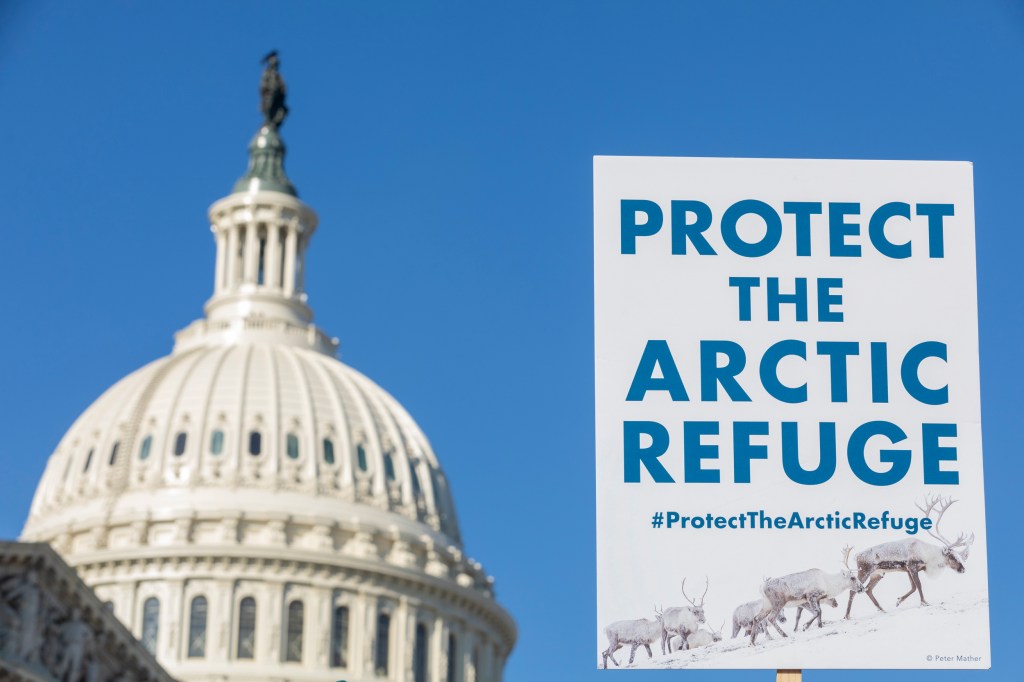
Attempting to open the Arctic National Wildlife Refuge in Alaska to oil drilling is the latest threat by the current Federal administration to choose profits over people and the protection of Mother Earth. Just the latest outrage from the capitalist system that is based on the belief that anything can be exploited for money.

Following is information from Friends Committee on National Legislation (FCNL).

According to (Alaska Senator) Murkowski, removing the protections that prevent drilling will lead to “tens of billions of dollars in revenue over the life of the fields. Revenues reduce our debt and simultaneously creat[e] growth needed to reduce it on a greater scale.” Senator Murkowski assures that the “environmental impacts will be minimal.”

But it is not at all clear that the impacts on the traditional livelihood of the Gwich’in people were taken into consideration.

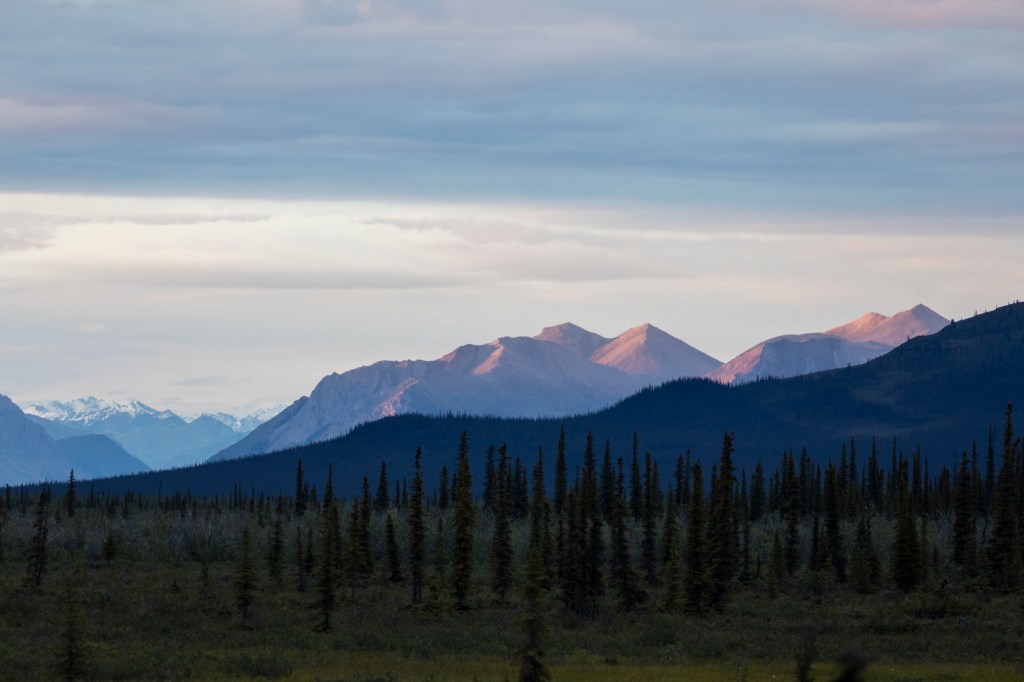
The Gwich’in people have been the stewards of the lands within the Arctic National Wildlife Refuge since time immemorial. Their traditional livelihood depends upon access to the porcupine caribou, whose breeding grounds are part of the land designated for drilling. The disruptions to the land could impact the porcupine caribou population and thus alter the Gwich’in people’s ability to hunt the caribou.

In the past few decades, Native people and others have begun to acknowledge the intergenerational effects of historical trauma. The trauma results from the forced assimilation, relocation, and cultural decimation of Native people. Tribes have been fighting to reclaim the cultural and spiritual ties lost as a result of colonization. Having access to ancestral lands and the continuation of traditional practices are integral to the healing of historical trauma. It is therefore all the more important that the U.S. government honor its promises and protect the lands of the Gwich’in people.

Drilling within the Arctic National Wildlife Refuge threatens the Gwich’in culture, their traditional way of life, and the spiritual wellness that is deeply inherent within the land. We must continue to tell Congress to keep its promises to Native Americans by upholding the environmental protections of the Arctic National Wildlife Refuge.

Update: The Arctic National Wildlife Refuge By Lacina Tangnaqudo Onco, Friends Committee on National Legislation, December 1, 2017


Over the past several years I’ve been devastated when I’ve heard stories from my native friends of the intergenerational trauma from forced assimilation and cultural decimation. This is especially painful because my ancestors participated in the Indian boarding schools.


Washington, DC – The Friends Committee on National Legislation (FCNL) reiterates its opposition to the Interior Department’s decision to open the Arctic National Wildlife Refuge (ANWR) to oil and gas leasing, the first step toward drilling in one of the last pieces of untouched land in the United States.

FCNL’s long-held opposition to the opening of ANWR to development comes from its Quaker calling that the sanctity of land, water, air, and all forms of indigenous land should be respected.

The Gwich’in people, who have lived in northeast Alaska and western Canada for millennia, have been at the forefront of efforts to protect ANWR from drilling for decades. The Gwich’in Steering Committee, formed in 1988 by Gwich’in activists, has testified in Congress and the UN about the dangers drilling would present to the people and animals who live in the Article National Wildlife Refuge.

Current polls indicate bipartisan support for protecting ANWR with roughly 67% opposed to drilling in the refuge.

Amelia Kegan, FCNL’s legislative director of domestic policy says “Fossil fuels are not the energy choice of the future. We should not start the costly adventure of opening ANWR up as we shift to a clean energy economy and reduce our greenhouse gas emissions.”

Quaker Lobby Continues to Oppose Opening ANWR to Development By Timothy McHugh, FCNL, August 28, 2020


I wrote about this in yesterday’s post, which includes information about prayer meetings to support the Gwich’in people and protect ANWR.

Alaskan Friends invite you to join us in 30 minutes of Worship and prayer for Protection of “Iizhik Gwats’an Gwandaii Goodlit” (The Sacred Place Where Life Begins) on Monday, Wednesday and Friday beginning at 7:30am AK time  via zoom.  Any vocal and silent prayers during this time are most welcome.

Topic: Morning Worship for Protection of Iizhik Gwats’an Gwandaii Goodlit (The Sacred Place Where Life Begins)
Time: 07:30 AM Alaska
        Every week on Mon, Wed, Fri, 18 occurrence(s)

Please download and import the following iCalendar (.ics) files to your calendar system.
Weekly: https://us02web.zoom.us/meeting/tZEufuirpzwjE9E3CPbUAahK6HltAcsrBY3Z/ics?icsToken=98tyKuGtrTIrGd2SuRCCRpwMA4r4d-nxmGZEj_p4zzzVARVyYwvdYMpOJpN8A8ry

Those calendar events include the Zoom link.


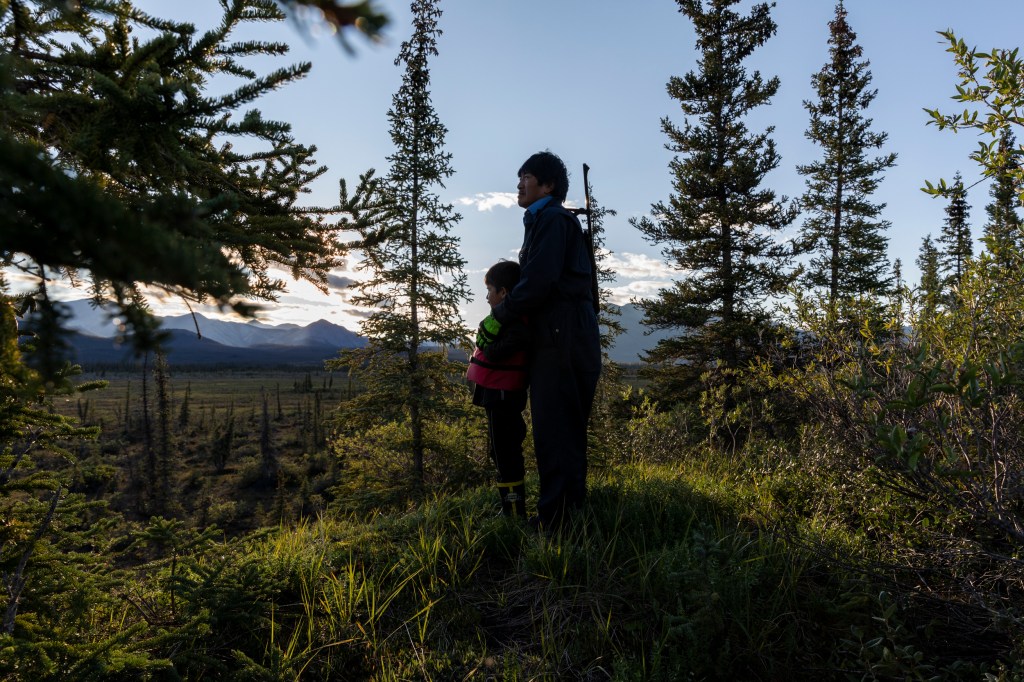
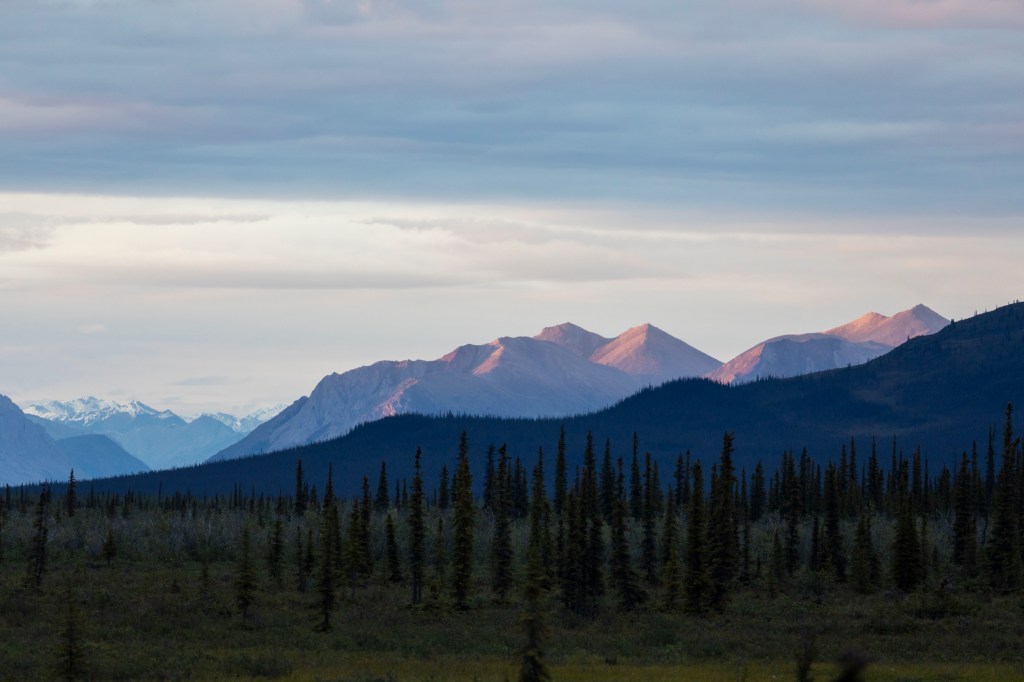
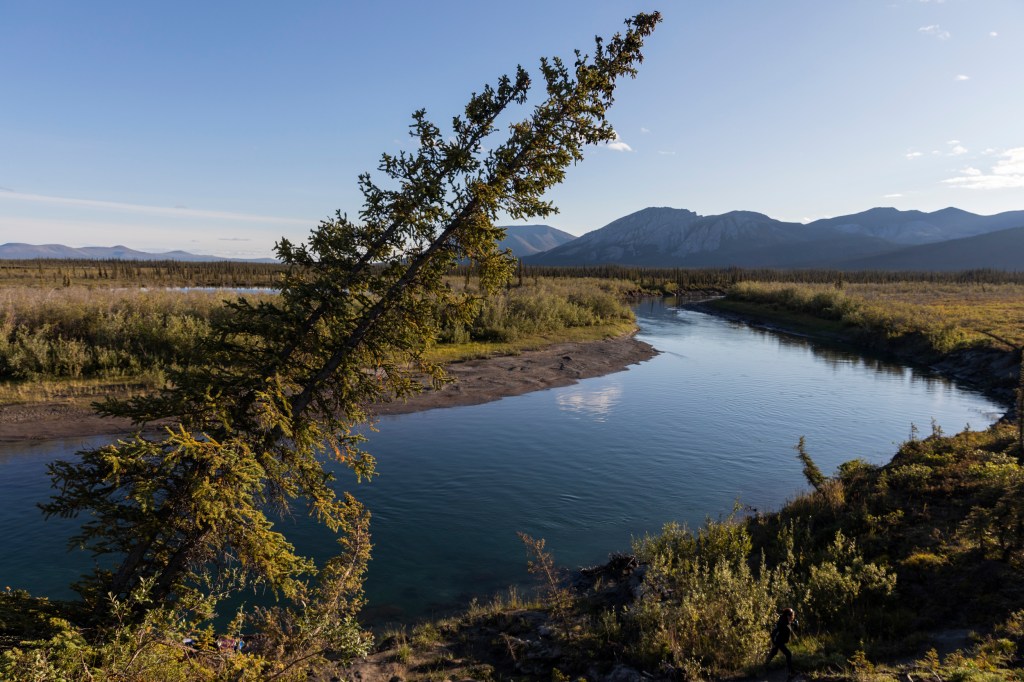
Photo credit: Keri Oberly

30 Days of Action Official Toolkit (google.com)

#ProtectTheArctic
#StandWithTheGwichin
#InupiatGwichinSolidarity 
#DefendTheSacredAK
#NativeMovement

Posted in Arctic National Wildlife Refuge (ANWR), decolonize, Friends Committee on National Legislation, Native Americans, Quaker, Uncategorized | 2 Comments

Iizhik Gwats’an Gwandaii Goodlit

Worship and prayer for Protection of “Iizhik Gwats’an Gwandaii Goodlit” (The Sacred Place Where Life Begins)

I’ve been making new friends as the Decolonizing Quakers steering committee meets monthly. At our last meeting Cathy Walling, of Alaska Friends spoke movingly about the administration’s plans to open the Arctic National Wildlife Refuge (ANWR) to oil drilling.

The following is from an email message from Cathy. I have often said protection of Mother Earth flows from spirituality.

In these 30 days prior to the proposed lease sales on the Arctic National Wildlife Refuge Coastal Plain, Gwich’in and Iñupiat peoples are calling upon protectors to join in prayer and advocacy for protection of their sacred place. (link for advocacy:  Defend The Sacred AK (defendthesacredalaska.org)

In solidarity with this request, Alaskan Friends invite you to join us in 30 minutes of Worship and prayer for Protection of “Iizhik Gwats’an Gwandaii Goodlit” (The Sacred Place Where Life Begins) on Monday, Wednesday and Friday beginning at 7:30am AK time  via zoom.  Any vocal and silent prayers during this time are most welcome. Please share with all who will appreciate the invitation to join in prayer and advocacy to Protect the Arctic National Wildlife Refuge!

The Gwich’in people are a tribe in the northern part of Alaska and Canada.  The Gwich’in people have relied on the Porcupine Caribou Herd for thousands of years, for food, cultural and spiritual needs. The Porcupine Caribou Herd migrates to the Arctic National Wildlife Refuge coastal plain every year to give birth. The Coastal Plain is sacred to the Gwich’in, it has been passed down from generation to generation that we must protect the special place for future generations, so that all the animals that live and migrate to this area will always be protected. This area is known to the Gwich’in as “Iizhik Gwats’an Gwandaii Goodlit” (The Sacred Place Where Life Begins).

Will you stand with us to permanently protect the Arctic National Wildlife Refuge-Coastal Plain, the Porcupine Caribou Herd and the Gwich’in Way of life?  Mashii’ choo!   –from the Gwich’in Steering Committee’s website homepage https://ourarcticrefuge.org

In  hope and gratitude for this prayer opportunity to connect our hearts and spirits,

Cathy Walling and Jan Bronson


Topic: Morning Worship for Protection of Iizhik Gwats’an Gwandaii Goodlit (The Sacred Place Where Life Begins)
Time: 07:30 AM Alaska
        Every week on Mon, Wed, Fri, 18 occurrence(s)

Please download and import the following iCalendar (.ics) files to your calendar system.
Weekly: https://us02web.zoom.us/meeting/tZEufuirpzwjE9E3CPbUAahK6HltAcsrBY3Z/ics?icsToken=98tyKuGtrTIrGd2SuRCCRpwMA4r4d-nxmGZEj_p4zzzVARVyYwvdYMpOJpN8A8ry

Those calendar events include the Zoom link.


11/27/17

“Let Love be the first motion.” – John Woolman

“It is essential to show special care for indigenous communities and their cultural traditions. They are not merely one minority among others, but should be the principal dialogue partners, especially when large projects affecting their land are proposed. For them, land is not a commodity but rather a gift from God and from their ancestors who rest there, a sacred space with which they need to interact if they are to maintain their identity and values. When they remain on their land, they themselves care for it best. Nevertheless, in various parts of the world, pressure is being put on them to abandon their homelands to make room for agricultural or mining projects which are undertaken without regard for the degradation of nature and culture.”– Pope Francis in his message from the Encyclical Laudato Si’ “On care for our common home,” #146

Urgent Greetings to Friends Everywhere,

In the spirit of love for this land called Alaska and sensitivity to the interconnected web of all life that live here, we of the Alaska Friends Conference (Quakers), invite you to stand with us in solidarity with the Gwich’in people (see http://ourarcticrefuge.org/take-action/,) the Episcopal Church  and other faith groups in opposition to proposed oil exploration and development in the Coastal Plain of the Arctic National Wildlife Refuge, a region known as the “1002 Area” in our nation’s current legislative discussions. Our call rises out of respect and deep concern:

–  For the Sacred and vital sources of life.

–  For traditional cultures and people who strive to live in harmony with their natural surroundings.

–  For the negative impacts that our continued dependency on fossil fuels is having on our climate, our peoples (and native cultures disproportionately,) our life forms and our lands.

We ask Friends around the world to join us in prayerful support and urgent acts of advocacy.

Unlike other areas of the North Slope currently developed for oil extraction, the Arctic National Wildlife Reserve (ANWR) lies within an area known as ““Iizhik Gwats’an Gwandaii Goodlit, “ (“The Sacred Place Where Life Begins”) to the Gwich’in People who have subsisted on the areas’ resources for thousands of years. The Porcupine Caribou Herd, the foundation of the Gwich’ins’ subsistence culture and way of life, uses this area for birthing and nursing their young. For the Gwich’in People, the Arctic National Wildlife Refuge was created in part because this area is Sacred.

We live in challenging times in Alaska; acutely aware of the devastating instability of our climate yet largely dependent on the fossil fuel development that drives it. In Alaska Friends Conference we see the injustice and unsustainability in this balance. We seek examples for living in harmony with our surroundings, to develop ties and traditions in keeping with this place.  We are moved by the deeply rooted knowledge, respect and reverence the Gwich’in people hold for the places where they strive to live. In keeping with Pope Francis’ message above, when Gwich’in people express grave concerns for human impacts on the sensitive ecosystem of the Arctic Refuge Coastal Plain, we receive their concerns with no less weight than we would hear Catholics speak of the Vatican, or Jews of Jerusalem, or Muslims of Mecca or any other people with regard to their sacred, tradition- and culture-bearing sites.  We are moved to accompany them.

We recognize that not all Alaska Native groups are of a single mind on this issue. In the absence of clear consensus, we are ultimately left to discern a path forward based on our own principles and understanding of Truth. In discouraging further oil extraction, in protecting the Arctic Coastal Plain and the Porcupine Caribou Herd that is dependent on this area, in standing with the Gwich’in Nation, which encompasses both Alaskan and Canadian villages and other Alaska Natives and residents who have deep spiritual and cultural ties to this same area, this call reflects our understanding of Love in the Greater Good.

Please, join us in prayer and advocacy. We would be happy to answer questions, or for further information, contact the Gwich’in Steering Committee directly at http://ourarcticrefuge.org/.

On behalf of Alaska Friends Conference (Quakers),

Taylor Brelsford (clerk)

brelsfot@alaska.net


Photo credit: Keri Oberly

30 Days of Action Official Toolkit (google.com)

#ProtectTheArctic
#StandWithTheGwichin
#InupiatGwichinSolidarity 
#DefendTheSacredAK
#NativeMovement

Posted in Uncategorized | Leave a comment

Cups of Light

Writing about Harold Feinstein and flowers yesterday reminded me of the following story about the Glick Public Art Project, and the photo of tulips I submitted.

At the time I was working at Riley Hospital for Children, part of Indiana University Medical Center in Indianapolis. The Glick Eye Institute was located near Riley.

Someone once said these tulips looked like cups of light. I really like that expression.

The booklet containing all of the selected art that year can be found here: https://1drv.ms/b/s!Avb9bFhezZpPhb9SzMdjP5yI6W2c3w

KISLING_5
Tulips

Glick Public Art Project

Public Art for the Eugene and Marilyn Glick Eye Institute – 2012 Request for Proposals

Deadline: October 31, 2012

The Eugene and Marilyn Glick Eye Institute Public Art Committee seeks proposals from artists with a connection to Indiana for art to be displayed in the Eugene and Marilyn Glick Eye Institute. The Glick Eye Institute is home to the IU Health Ophthalmology Center, the Department of Ophthalmology’s Optical Shop, research labs, conference space and ophthalmology administrative offices. All kinds of art will be considered for the building, which is nearly 80,000 square feet on four floors. 

Why is public art being sought for the Eugene and Marilyn Glick Eye Institute?

It is important to have visual stimulation in a building dedicated to preserving eyesight and reducing vision impairments. Public art is being considered because a limited budget is available for purchased art. While an anonymous donation provided seed funding to purchase some art, and while fundraising to purchase new art continues, we must rely on the generosity of Indiana artists and artists who trained in Indiana to exhibit their works in the Glick Eye Institute.

We seek art that depicts or expresses vision, light, color, perspective and/or reflection.

My Submission

I still remember how astonished I was when I put on my first pair of eyeglasses and the world suddenly came into focus in incredible detail.  It was like magic.  I loved to read, and was aware of how important the eyeglasses were in making reading much easier and more enjoyable.  I’d always been interested in science, so I learned the basics of optics.  And I’ve had a lifelong, intense interest in photography, learning the theory and application of techniques to capture images.  With photography I try to paint a picture with light in its many intensities, colors, and contrasts.  I try to use novel perspectives and compositions to both better define three dimensional objects with a two dimensional medium, and to catch the viewer’s attention so he/she might look at something a little differently.  I learned to do darkroom work in both high school and college, but am grateful for the digital revolution, which provides much greater control of almost all aspects of photography.

As a Quaker, and having been raised on working farms in Iowa, I have always had great interest in and concern for our environment.   I use photography to try to promote appreciation for our natural world.

EUGENE AND MARILYN GLICK
EYE INSTITUTE

 INDIANA UNIVERSITY
School of Medicine

December 4, 2012

Dear Jeff,

Thank you for submitting your photography for consideration to the Eugene and Marilyn Glick Eye Institute’s Public Art Project.

We were fortunate to receive 123 submissions; all of the art was thoroughly reviewed by a committee comprised of IU School of Medicine faculty and staff, and artists from the Indianapolis community.

The committee is interested in exhibiting the photograph titled “Tulips” in the Glick Eye Institute for the calendar year 2013. We will accept the art for exhibition in January and will be in touch to arrange a mutually convenient date for delivery. Your pieces must be ready to hang; our facilities services employees and the IU art curator will oversee the installation.

Additionally, we wish to continue to incorporate your photography of “Open Eyes” in the institute’s printed materials and website. We thank you for allowing us to use those images.

Again, thank you for submitting your work. We appreciate your participation.

Sincerely,
Jeff Rothenberg, M.D.
Chair of the Glick Eye Institute Public Art Committee Eugene and Marilyn Glick Eye Institute


Following are some of the ways my “Open Eyes” photos were used by the Glick Eye Institute, as reference in the letter above.


eyes1
eyes2
eyes3
Posted in Arts, Uncategorized | Tagged | Leave a comment

To call out in a moment of awe

Some time ago my sister suggested I share one photo a day on social media. I wasn’t sure about that, at first. For years I’ve been writing almost daily on my blog. The blog is a spiritual practice for me. Setting aside the time at the beginning of the day to listen for what I am led to say is a sacred time. Times when time disappeared. It’s usually like waking up when I finish that day’s work.

I realized I would be doing this even if I didn’t make these writings public. But I have a strong spiritual leading to do so. I believe we live in times of great spiritual poverty. Although I don’t know of a way to measure that.

There has been a trend of people leaving organized religion for many years. Some turning to other spiritual practices. I believe one reason I’ve been led to share my writing is in hope that something might be helpful for those spiritual seekers. Most of what I write relates to spirituality, directly or indirectly.

After finishing the day’s blog post, my camera and I usually go for a walk for an hour or two. This practice came about as a result of another spiritual leading. I was twenty years old when I moved to Indianapolis, and was horrified to see and smell the foul air from car exhaust. This was in 1971, before catalytic converters came into use. It was an undeniable spiritual leading to not contribute to this pollution and I lived without a personal automobile since that time.

During my walks to and from work, I became more aware of the beauty I was walking through. This created one of those cycles. As I became aware of this beauty, I was able to see more beauty. What was once hidden became revealed, even though it was there all the time.

I began to bring my camera on my walks to record this. I routinely took over twenty photos a day. With the wonder of digital photography, I would edit and save each day’s images later in the day. In part to keep up with the incoming photos, but more because I was anxious to see them.

When I first began writing blog posts, a friend suggested I include photos with the writing. Excellent advice that I began immediately. It often seemed the photos were the best part of a given blog post.

There’s something happening here
But what it is ain’t exactly clear

Buffalo Springfield, For What It’s Worth

But lately I’ve begun to notice something changing. My sister specifically suggested I share just one photo daily. I haven’t been able to do that, yet. Because I have trouble restraining myself to limit the daily offerings to just four or five photos.

It seems that more people see and respond to the photos I share on Facebook than to my blog posts. There is something to the adage that a picture is worth a thousand words. I have wondered why I take so many photos, especially when no one is likely to see them once I’m gone. As with my writing, taking and looking at the photos are enough in itself. There is a deep spiritual aspect to the process of seeing and capturing the images. And another way to express and share spirituality.

Unfortunately, as environmental chaos deepens, I’m beginning to wonder if images of these times might be viewed in the future as how Mother Earth once looked.

“I did not consider myself religious when I was younger, but in this journey with the flowers  — which I truly believe to be messengers from God — I began to see God’s work all over. Looking at a flower closely, no matter how wild or wondrous your imagination is, just what exists in the flowers we see is such a miracle. It’s a gift…and honoring the gift with your work is your responsibility or the way of showing your gratitude.

And so the simple technique that I teach my students is: “When your mouth drops open, click the shutter!” And it is this shock of recognition, this joy,  this wonder that shows itself in great art. To me photography is a way to do just that;  to call out in a moment of awe: “Will you look at that! Will you look at that!”

Harold Feinstein, A Garden of Psalms

Posted in spiritual seekers, Uncategorized | 4 Comments