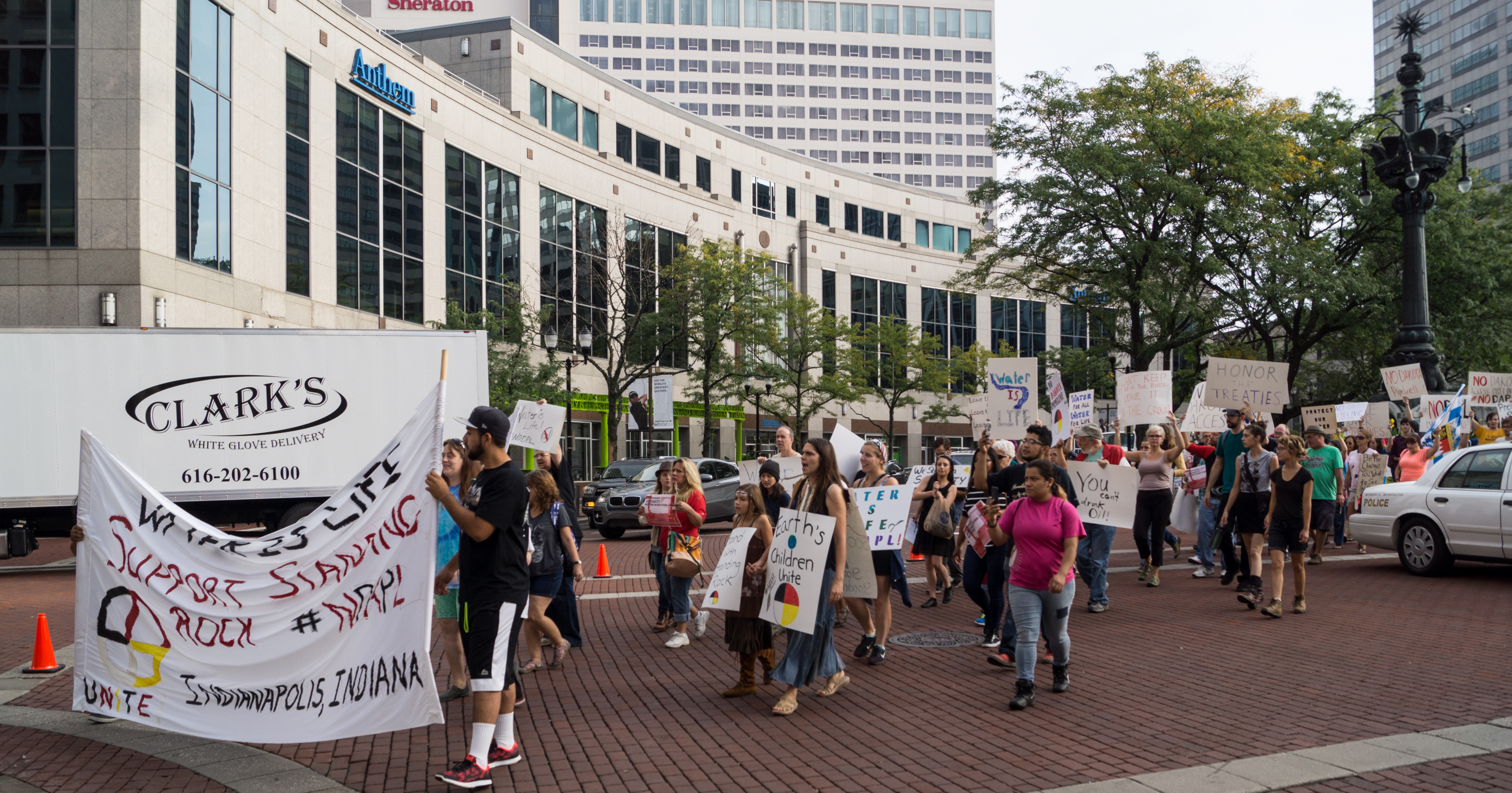
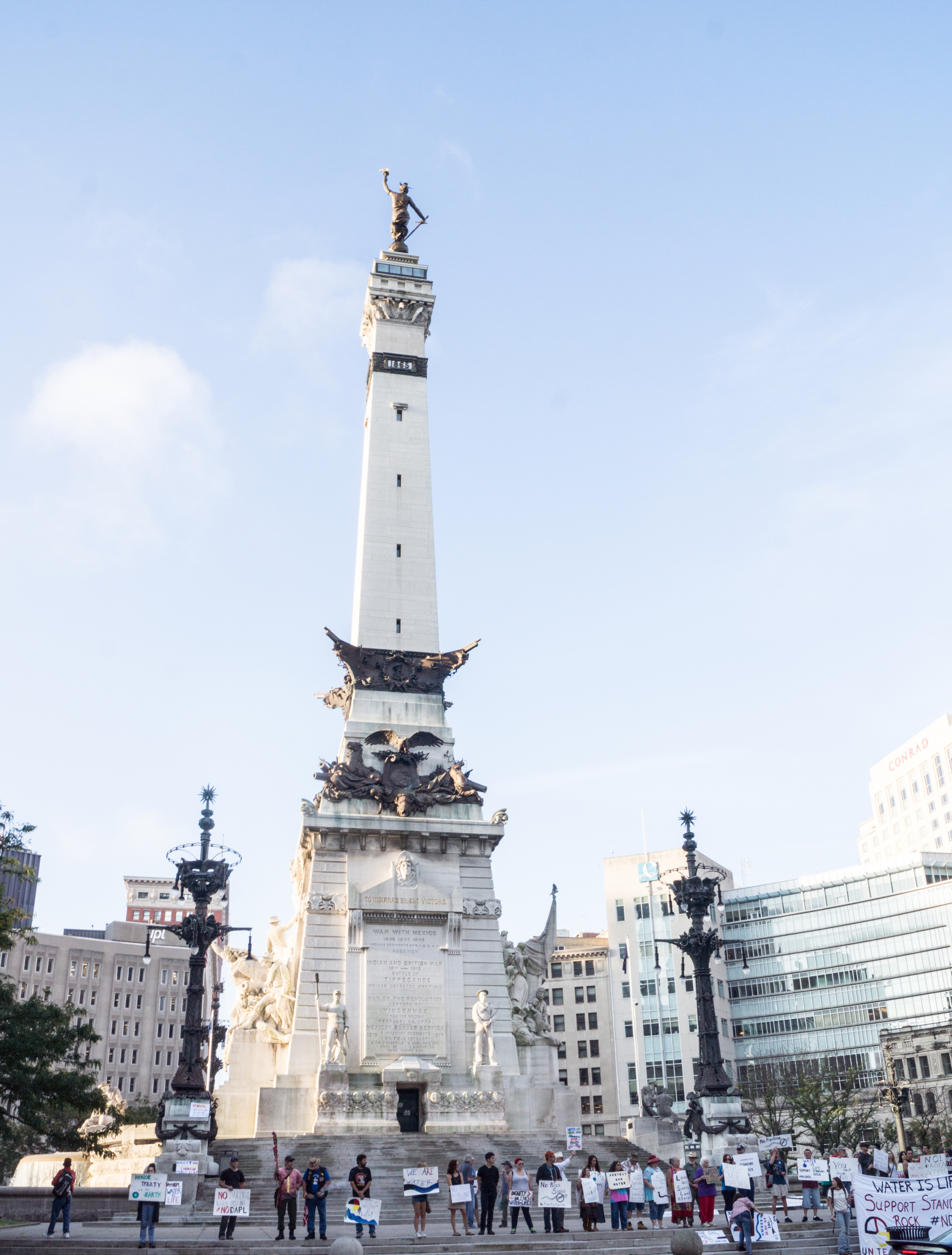
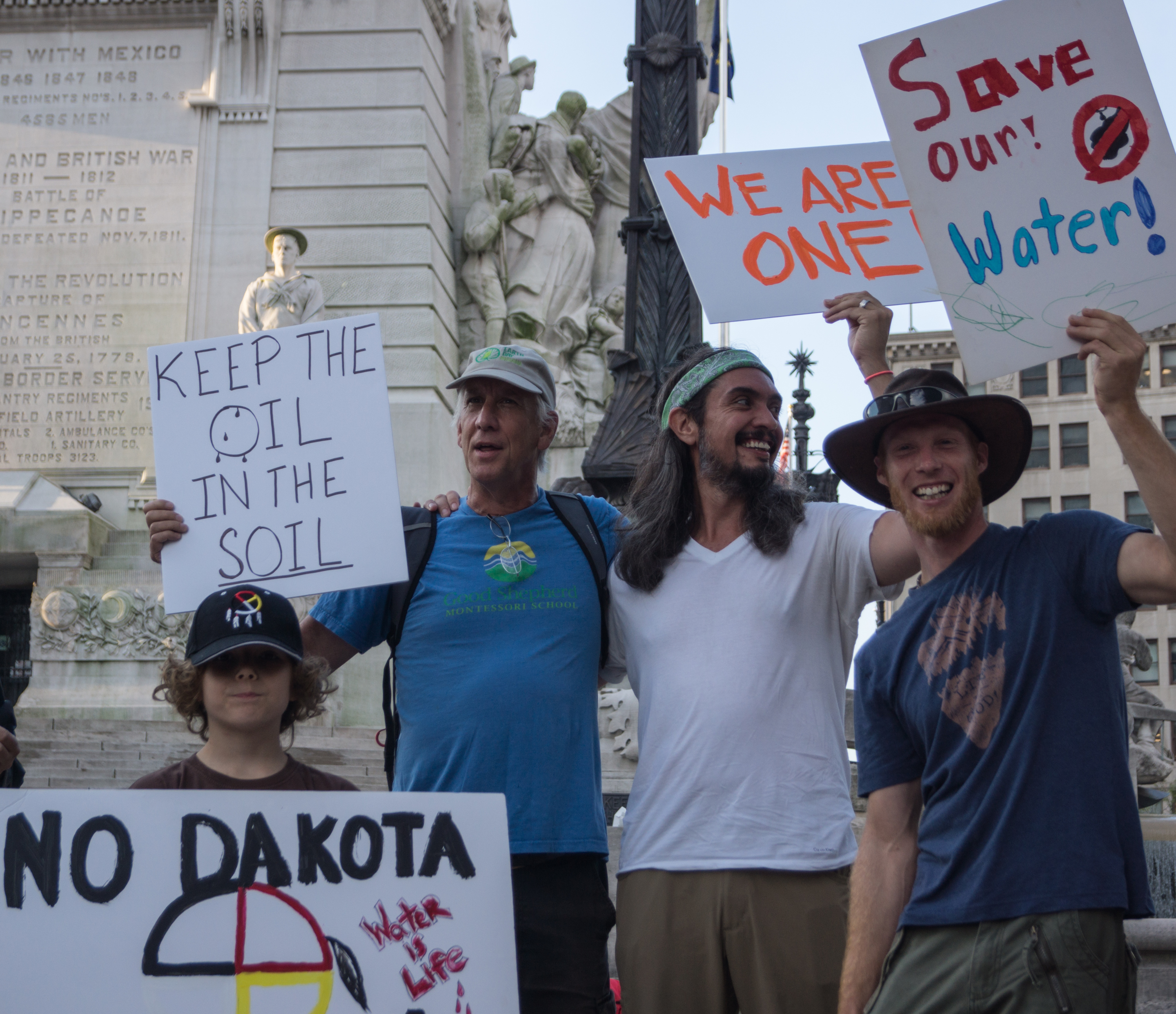
NoDAPL Fight Moves From Courts to White House

It was very welcome news when President Biden cancelled the permit for the Keystone XL pipeline.

There are several developments related to the Dakota Access pipeline (DAPL). At a February 10 hearing the US Army Corps of Engineers will have to explain how it plans to proceed in response to a US Court of Appeals ruling that it had not conducted a full environmental impact review, which invalidated the federal permit to cross beneath the Missouri River. And last month the Westchester Fire Insurance Company notified Energy Transfer Partners that it was cancelling a bond for the Dakota Access Pipeline (DAPL) segment in Iowa.

U.S. District Judge James Boasberg had set a status hearing for Feb. 10 to discuss the impact of an April 2020 order that the Corps had not adequately considered how an oil spill under the Missouri River might affect Standing Rock’s fishing and hunting rights, or whether it might disproportionately affect the tribal community.

BISMARCK, N.D. — The U.S. Army Corps of Engineers must outline its plans for the Dakota Access oil pipeline after an appeals court confirmed the line is operating without a key permit, a federal judge said Wednesday. 

U.S. District Judge James Boasberg has set a status hearing for Feb. 10 to discuss the impact of Tuesday’s opinion by the D.C. Circuit of the U.S. Court of Appeals that upheld Boasberg’s ruling ordering the Corps to conduct a full environmental impact review. Opponents of the pipeline want it shut down immediately. 

Boasberg said in his one-sentence order that the Corps needs to show how it “expects to proceed” without a federal permit granting easement for the $3.8 billion, 1,172-mile (1,886 kilometer) pipeline to cross beneath Lake Oahe, a reservoir along the Missouri River, which is maintained by the Corps. 

Judge: Corps must decide next move on Dakota Access pipeline
By Associated Press Jan. 27, 2021

WASHINGTON – On January 7th, 2021 the Westchester Fire Insurance Company, a subsidiary of international insurance corporation Chubb, notified Energy Transfer Partners that it was cancelling a crucial $250,000 bond for the Dakota Access Pipeline (DAPL) segment in Iowa. Publication of this bond cancellation comes just days after a federal appeals court largely sided with the Standing Rock Sioux Tribe upholding lower court decisions that revoked a key permit for the line and required a federal agency to conduct a lengthy environmental review. 

Surety bonds are used to protect the public from having to pay for any damages or pollution created by existing projects. 

The following is a statement from Indigenous Environmental Network:  

“Dakota Access Pipeline has no federal easement. It’s now losing insurance coverage on the state-level which is a requirement for Iowa’s state permit. It is time for President Biden to take action and shut down the Dakota Access Pipeline. This project is a danger to all communities along its path, including the Standing Rock and Cheyenne River Sioux Nations. It’s time to end this saga and do what’s right. Shut down DAPL.” 

Critical Dakota Access Pipeline Bond Cancelled in Iowa

Date: 02/04/2021 NoDAPL Fight Moves From Courts to White House.

The Lakota People’s Law Project is mounting a massive advocacy campaign directed to the president to shut down the Dakota Access pipeline.

On Jan. 26, 2021, a D.C. Circuit Court of Appeals upheld an earlier, lower-court decision to vacate the federal permits for the Dakota Access pipeline (DAPL). The first ruling, handed down by a D.C. District Court in March 2020, ordered the Army Corps of Engineers to conduct a full Environmental Impact Statement under the National Environmental Policy Act (NEPA). Notably, despite multiple legal rulings mandating further environmental review, none had the effect of stopping DAPL’s operations. These hard-fought legal victories for the Standing Rock Sioux Tribe are therefore somewhat hollow. It has become clear that the grassroots must mount a comprehensive public pressure campaign and inspire President Joe Biden to take executive action.

NoDAPL Fight Moves From Courts to White House, Lakota People’s Law Project

On Jan. 19, Standing Rock Tribal Chairman Mike Faith was joined by three additional Lakota tribal leaders in signing a letter to then-president elect Biden demanding that oil flow through DAPL be shut off pending a full environmental impact assessment. Another letter, signed by more than 75 Indigenous women leaders, also asked Biden to stop DAPL and other pipelines, including KXL and Line 3.

So, with all of these requests by Indigenous leaders, why hasn’t Biden taken action?

The legal and political issues surrounding DAPL are complex. To summarize, the Army Corps of Engineers is under the purview of the Department of Defense which, in turn, is under the purview of the Executive Branch. The head of the Executive Branch is, of course, the president, and therefore, the current administration holds much sway over the Corps’s activities. The bottom line is that the recent change in administration means a big opportunity for activists to have a bigger impact.

In Dec. 2016 (the last full month of Obama’s presidency), the Army Corps denied DAPL’s permit to cross the Missouri River. This halted construction and mandated a full Environmental Impact Statement — a process that usually takes years. Unfortunately, right after taking office, Trump reversed that decision, issuing an executive order and presidential permits to continue construction and operation. Then, in June of 2017, when given the chance, D.C. District Court Judge James Boasberg failed to stop the oil despite ruling that DAPL’s permits violated certain aspects of NEPA.

The upshot is that, after years of additional wrangling in court — which led to the various court rulings against DAPL’s permits — the pipeline still continues to operate. The next court hearing is scheduled for Feb. 10, 2021. But before then, the courts have requested that the Army Corps make a political decision concerning whether oil should continue to flow through DAPL. In other words, the judicial branch has tasked an executive branch agency with deciding whether a pipeline without a permit ought to be allowed to operate as an “encroachment” on federal land.

For justice activists, it’s not enough to wait and see if the Corps will make the right decision. It’s incumbent upon us to work together from every corner of the Earth, to be the change we want to see. Biden has the power to assert executive power and stop this pipeline. When he canceled the Keystone XL pipeline, he showed his commitment to environmental action and respect for Indigenous voices. Now he must take the next step by ending DAPL. If you have not already done so, please join our movement at this critical moment. Show your support for the people of the Standing Rock Sioux Tribe. Tell Biden to take executive action, and share our call widely. Let’s stop the illegal flow of oil, once and for all.

NoDAPL Fight Moves From Courts to White House, Lakota People’s Law Project

A powerful video from our friends at the Standing Rock Sioux Tribe and Earthjustice, written and directed by Josué Rivas. Our pipeline fight won’t end until we end the Dakota Access pipeline and win justice for Standing Rock Nation.

Tȟokáta He Miyé – My Name Is Future (Produced by Standing Rock & Earthjustice)

Tell Biden: End DAPL Now! (lakotalaw.org)

Dear President Biden,

Thank you, sincerely, for keeping your campaign promise to revoke the permit for the Keystone XL pipeline (KXL). You’ve taken a necessary step in stopping the desecration of sacred lands with unwanted, unneeded pipelines which endanger critical, life-giving water systems in Lakota Country.

But please don’t stop there. It’s also time to end the illegal Dakota Access pipeline (DAPL) once and for all.

DAPL poses a critical threat to Lake Oahe and the Missouri River, the primary source of fresh drinking water for the Standing Rock Sioux Tribe and millions of others. DAPL’s oil continues to flow even as its environmental approval process has been ruled insufficient by a U.S. District Court.

Please continue to use the power of your office to work closely with Native American tribes and show that you take Indigenous concerns seriously. Appointing Deb Haaland as Secretary of the Interior was a perfect start, and canceling KXL was an excellent follow-up. Now, please listen to the leaders of tribal nations and to people the world over when we say: DAPL must be next. Respect our water and our lives.

It’s time to replace outdated, dangerous fossil fuel infrastructure with renewable energy. You can build the world of tomorrow and a sustainable future for the generations to come.

With respect and in hope for a better future,


A rise of more than 5°C could happen within a decade, possibly by 2026. Humans will likely go extinct with a 3°C rise and most life on Earth will disappear with a 5°C rise. In the light of this, we should act with integrity.

From the post ‘When Will We Die?’, at:
https://arctic-news.blogspot.com/…/when-will-we-die.html
Posted in #NDAPL, Uncategorized | Leave a comment

We Must “Think Again”

I’m very concerned the white middle class in this country will continue to ignore the fundamental injustices of the colonial capitalist economic system. It will be in their self-interest to work on alternatives now since capitalism is collapsing.
We will increasingly experience the collapse of systems taken for granted. Increasing destruction from environmental degradation will overwhelm economic and political systems. What surprised me is the current collapse of the political system not directly related to environmental collapse.

Those things and the COVID pandemic have exposed to white people how fragile these systems are. Black, Indigenous and other people of color (BIPOC) are not surprised because these systems never worked for them.

For years the white middle class lived in relative comfort. Many felt they could ignore the injustices experienced by those who weren’t like them. But now, millions of the white middle class find themselves facing the same problems BIPOC people always have.

I greatly fear white people will not be able to adapt to these changing circumstances. Will continue to ignore the deep injustices of the capitalist economic system. Will not be able to “rethink and unlearn” as Adam Grant writes below.

When people reflect on what it takes to be mentally fit , the first idea that comes to mind is usually intelligence . The smarter you are , the more complex the problems you can solve — and the faster you can solve them . Intelligence is traditionally viewed as the ability to think and learn . Yet in a turbulent world , there’s another set of cognitive skills that might matter more : the ability to rethink and unlearn .

But recent studies point to a different explanation : it’s not so much changing your answer that improves your score as considering whether you should change it . We don’t just hesitate to rethink our answers . We hesitate at the very idea of rethinking . Take an experiment where hundreds of college students were randomly assigned to learn about the first – instinct fallacy . The speaker taught them about the value of changing their minds and gave them advice about when it made sense to do so . On their next two tests , they still weren’t any more likely to revise their answers . Part of the problem is cognitive laziness . Some psychologists point out that we’re mental misers : we often prefer the ease of hanging on to old views over the difficulty of grappling with new ones . Yet there are also deeper forces behind our resistance to rethinking . Questioning ourselves makes the world more unpredictable . It requires us to admit that the facts may have changed , that what was once right may now be wrong . Reconsidering something we believe deeply can threaten our identities , making it feel as if we’re losing a part of ourselves .

We favor the comfort of conviction over the discomfort of doubt, and we let our beliefs get brittle long before our bones. We laugh at people who still use Windows 95, yet we still cling to opinions that we formed in 1995. We listen to views that make us feel good, instead of ideas that make us think hard.

Think Again: The Power of Knowing What You Don’t Know by Adam Grant. Penguin Publishing Group. Kindle Edition.

My entire life I’ve experienced this unwillingness of people to rethink the transportation system. Refuse to consider the grave environmental destruction created as a result of nearly every family, even every adult in the family, having a personal automobile. I tried to provide an example by not having a car most of my adult life. I don’t think I persuaded a single other person to give up cars.

I appreciate what Adam Grant wrote above about resistance to rethinking. People in recent generations grew up in families that had cars. As they came of age, it was a given they would also need a car. Unfortunately the sprawling way our cities were built require mass transit or personal automobile.

Cities would not have been built that way if not for the ubiquitousness of cars. Those who could afford a car acquired one since mass transit systems often didn’t access where many people lived, and where they worked. There were the inconveniences of the need to plan around the bus schedule.

The impact of the car culture extends well beyond the fossil fuels burned. There are all the materials used to build cars. And the graveyards of discarded cars. There are the vast highway systems. The parking lots and garages. The gas stations and repair shops.

I am deeply disappointed that members of my Quaker faith community chose convenience over care of Mother Earth. The consequences of which we are seeing increasingly now. We are supposed to have a testimony of living simply.

There are moral questions. What right do we have to extract resources at an unsustainable rate? What right do we have to steal resources from others? What right do we have to destroy our children’s futures? What right do we have to assert white supremacy?

In a similar way I’m having trouble getting people to rethink the capitalist economic system. As I’ve been writing, Mutual Aid is the alternative. I hope we can “rethink and unlearn” colonial capitalism. And embrace Mutual Aid. “mutual aid” | Search Results | Quakers, social justice and revolution (jeffkisling.com)


Posted in #NDAPL, capitalism, climate change, Indigenous, Keystone XL pipeline (KXL), Mutual Aid, Native Americans, Quaker, renewable energy, Uncategorized | Leave a comment

Quakers and the Future of Racial Healing

I often write about trying to listen for and be guided by the Spirit. Quaker Sterling Duns puts it this way below. “Things just started to open up because I really started listening and being guided by this inner truth.” It was by listening and being guided that I came across these videos by Sterling. They had, and still have a real impact on me when I heard what he had to say. The first time was in early 2018.

Quaker rapper Sterling Duns speaks about Dreaming of Wholeness: Quakers and the Future of Racial Healing in this QuakerSpeak video.

“It feels simple and deeply radical to just say as a group that is committed to honoring that of God in everyone, that that person of color, that Black person is deserving to have their full humanity recognized by me as a Quaker. That’s a simple thing to say and it’s a radical thing to say.”

Over the years I’ve learned more about the history of Quakers, knowing that some Quakers were abolitionists, knowing that some Quakers owned slaves. Sometimes I imagine what old school Quakers were like and these Quakers who had this powerful revelation about the slave trade or enslaving Africans.

But I like to think that it was a continuum where people examined over and over again an idea they had and eventually let it go.

Quakers are equipped to have a role in the racial healing work that we need in the world today because inherent to the faith, inherent to the spiritual practice, is a belief that there is that of God in everyone.

When I think about some of the ways that folks of color, black folks, have been traumatized and targeted in our country, the source of the targeting comes from this belief that’s embedded into our country’s history, that somehow black people aren’t worthy of their full humanity being recognized.

We’re saying the direct opposite. We’re in direct opposition to systems that helped to build everything we see around us. That feels deep and radical, and also it feels right in line with what Quakers were doing from the jump.

You know, walking around the city doing wild stuff, butt naked or going into religious services and standing up and you know—Quakers have always had a sense of going against the grain. So it feels right in line to actually say “No, I’m going to honor this human being’s full humanity.”

For me, I’m a big dreamer. Shout out to Pisces. Shout out to the creatives. Shout out to artists. I’m a big dreamer. Shout out to the Afro-futurists, you know? As an Afro-futurist, I spend time thinking about the future, and really spending some deep time imagining what it looks like for us all to be free.

“Quakers are equipped to have a role in the racial healing work we need today because inherent to the faith, inherent to the spiritual practice is the belief in that of God in everyone.”

“I spend time dreaming about the future and really spending some deep time imagining what it would be like for us all to be free.

I think Quaker communities can spend that time and energy doing that, I think they can absolutely do that. When we talk about Quaker communities being more inclusive I think you literally have to spend time on Dream Mountain, going to Dream Mountain and looking out, and return to reality, Reality Meadows, and then Dream Mountain, then Reality Meadows, you know? I spend a lot of time oscillating between those different worlds and I think having a practice of being able to do that as a group, as multiple groups, would be really important.”

Sterling Duns

One First day morning at Bear Creek Friends meeting we listen to, and talked about the following two QuakerSpeak videos featuring Sterling Duns.

I put my life on pause, rewound, now I’m pressing play.
Then come up, grinding until the sun up,
knowing it could all be gone if one person puts their guns up.
A black Quaker no savior, I’m on my Bayard Rustin

I really feel like, in a lot of ways, that the lyrics that come to me, I really do feel like I’m just a vessel. I’m just somebody being used to spread messages of love and growth and empathy.

My name is Sterling Duns. I’m from West Philadelphia, Pennsylvania and I attend Merion Meeting in Merion, PA, so not too far from West Philly.
I went to public school for all my life up until the 9th grade. My Mom had heard about a scholarship program at Friends Central School right outside of West Philly so I went there for 4 years.

It was a very transformative experience. One of the most life changing moments was when I was 14, I went down to the American Friends Service Committee and sat down in a room, 14, and someone came in and was like, “Alright, we’re going to write holiday letters to death row inmates.” And I was like, “How do I even comprehend what I’m doing? What this means?”

And that seed was planted. It’s serendipitous, it’s the universe, but little did I know, 13 years later I’d be working on prison reform in our country and really trying to educate myself and others about the prison system in this country.

I feel like I’ve been writing hip hop verses or rapping for as long as I can remember, but I think when I got to college I really started to hone in on rapping and crafting my skills.

I was an English major and poetry minor. I got my masters in poetry. Definitely having the opportunity to find my voice through poetry has influenced the hip hop that I do, and it’s been such a gift. It’s so cathartic for me – hip hop specifically – it’s this way that I use to speak my truth.

I think being patient with yourself, which I learned a lot through Quaker Meeting – has been really important in music. I’ll write something down, and want it to be finished right then and then. And I’m like, “I can’t force this.”

I think in a similar way, when sitting in Meeting, you could be grappling with something and you want resolution right then and there, knowing that it’s all about the process. It’s not about finding all the answers right in that moment. And you may come back a week later or a month later, and somebody will share a message and you’re like, “Oh, that’s exactly what I needed to hear.”

Quakers are constantly searching and re-defining what it means to really just embody Light and see that of God in everyone. You really are able to ask yourself some deep questions and be introspective and then from that introspection, I love the aspect of really dedicating yourself to social justice issues.

That’s one of the things that really drew me to Quakerism. The spirituality, but also this action. You can’t just sit in the Meeting room and think about things, and then once you get out of there, you know, “my job’s done for the day.”

I was asking myself these questions about what’s going on in the world and what’s my place in it all, and do I have a place in it all? And you know, the way was open and opportunities came up for me to put into practice things that I really felt deep in my core, and next thing I knew I was at Quaker Meeting every Sunday and I was helping to organize different learning opportunities around the prison system and doing work around education reform and playing music that had to do with social justice issues.

Things just started to open up because I really started listening and being guided by this inner truth.

Sterling Duns

Rest in peace Walter Scott

that was somebody’s son gunned down hands closed no palm readers many we’ve been so blessed preachers I’m pleading to rabbis Imams people of all faiths all creatures and all believers denominations though atheist may not be praying whoever you are we need each other neither saving with hearts caving something like explorers but too many fathers won’t ever see their daughters
this life sentence no shorter man we need some mortar because when we’re to growing is it too late is it just too late this whole thing got me irate so much I got to pray my Quaker ways got my spirit I’ve been in a better place I put my life on pause rewound now I’m pressing play to come up grinding them to the Sun up no one that can now be going the phone person puts the guns up a black quick and no Savior I’m on my Bayard Rustin to convince all the skeptics to give people to just trust them and that’s my truth

R.I.P. Walter Scott by Sterling Duns

I wrote part of that in response to Ferguson and stuff what’s going on and I think the most recent events in South Carolina are definitely on the hearts and minds of a lot of people and I think I feel like there’s a lot of energy in our country right now around making space to have some deep conversations we’ve never had before in our country’s history and it’s powerful, it’s amazing to be alive right now when all this is going on and you know I want to encourage people to always be rooted in love you know?

That doesn’t mean don’t be angry, that doesn’t mean don’t shed tears you know but to always and everything that you’re you know the conversation that we’re having because they’re painful, they’re charged they’re bringing up a lot of stuff that we’ve never had to work through as humans in this country. But to know that we’re all in it together. I think it’s important to remember, it’s important for me to remember, and that’s why I say it you know, so when I listen to that song I remember what you said that you know you’ve literally said that but to also encourage other people to to be rooted in love. Love for each other, love for humanity and I don’t think we can fail if we do that. I really don’t.

Sterling Duns

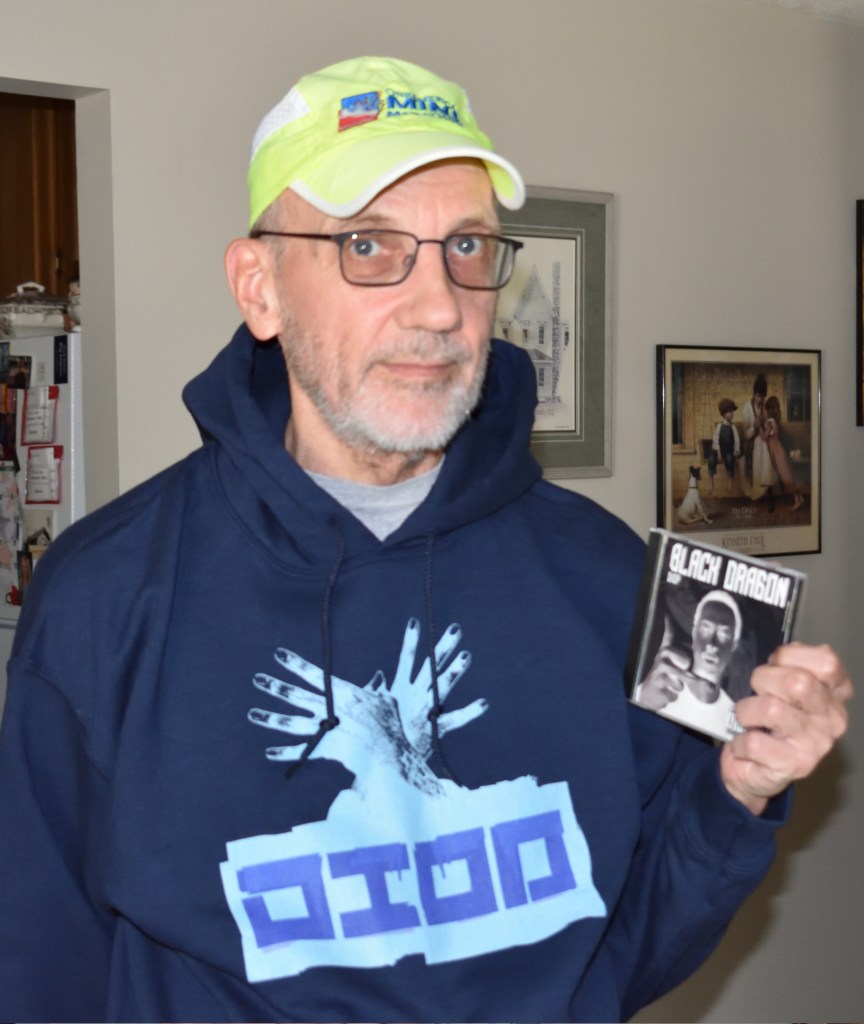
This lead me to think about my friend Diop Adisa, from the Kheprw Institute (KI).  Diop is a hip hop artist. He and I share a love of photography.  During some of those conversations Diop also shared about some of the struggles he experienced, especially related to his music.  Recently a number of good things have been coming from that. Below is the video of one of my favorite songs of his.

It was funny that as I was writing this I got a message from Diop that he had seen this photo I recently posted of myself running in the Indianapolis Mini Marathon (13.1 miles) in 2008, in support of Barack Obama.

Running in the Indianapolis Mini (Half) marathon in 2018. 13.1 miles


Following is a Minute on Racial Justice, approved at Iowa Yearly Meeting (Conservative) in 2016.

A testimony of Quakers is that all people are beloved and equal in the eyes of God.
We live in a society that is struggling to deal with consequences of slavery, and the failure to achieve equity for all after slavery was abolished. Conditions such as discriminatory lending practices, multigenerational inequities around home ownership, and easier access to education for white people persist in our laws and culture, resulting in institutional racism.

Some Friends once owned slaves. William Penn believed that “slavery was perfectly acceptable, provided that slave owners attended to the spiritual and material needs of those they enslaved.” Penn “had a curious blind spot about slavery. Quakers were far ahead of most other Americans, but it’s surprising that people with their humanitarian views could have contemplated owning slaves at all.”

Picking up the work of colonial Quaker Anthony Benezet, who wrote an early tract opposing slavery, John Woolman traveled up and down the Atlantic coast laboring with Quaker slaveholders and testifying against the institution of slavery. It was through his years of patient dialogue that Quakers first freed their slaves then testified against slavery and over time became the backbone of the anti-slavery movement in America.

A gap in awareness exists today, which allows so many people who consider themselves white to continue practices that give them advantages over people of color.

The scope of these problems is extensive and deep. Racial tensions continue to result in violence and death. There is an increasingly militarized police response. The Black Lives Matter movement is helping raise awareness around these issues.

Many white people are still not as aware of some of these issues. But to continue to benefit from these privileges is not right.

Not having relationships with people of color often results in misunderstanding and unfortunate racial attitudes among white people. One significant consequence of that is the election of so many representatives who reflect these views to legislative bodies.

Building relationships with people of color is one way we can begin to address this, as we build Beloved Communities together.

We urge each person to take a careful look at their life, to identify where one is benefiting from this, and work to correct that. We urge Friends to speak out and take action against these systemic injustices and violence occurring today.

Minute on Racial Justice
Iowa Yearly Meeting (Conservative) 2016


Posted in Black Lives, Quaker Meetings, race, Uncategorized | Leave a comment

Black History Month in Iowa

Black History Month is observed in February in the US and Canada. It is good to see events related to Black History.

I feel it is important for those who don’t know, to learn a Black State of Emergency in Iowa has been declared. Information about a travel advisory and white supremacist hotline can be found at the end of this blog post.

#BlackEmergencyIA

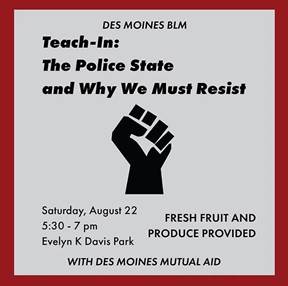
I’ve been learning about Black Lives Matter/Black Liberation in Iowa as a result of being involved with Des Moines Mutual Aid. These two organizations are closely linked in a number of ways. At the end of this post are remarks by Patrick Stahl who I know from Des Moines Mutual Aid. Patrick speaks about Mutual Aid’s support for Des Moines Black Liberation.

mutual aid is the new economy. mutual aid is community. it is making sure your elderly neighbor down the street has a ride to their doctor’s appointment. mutual aid is making sure the children in your neighborhood have dinner, or a warm coat for the upcoming winter. mutual aid is planting community gardens.

capitalism has violated the communities of marginalized folks. capitalism is about the value of people, property and the people who own property. those who have wealth and property control the decisions that are made. the government comes second to capitalism when it comes to power.

in the name of liberation, capitalism must be reversed and dismantled. meaning that capitalistic practices must be reprogrammed with mutual aid practices.

Des Moines Black Liberation

Meeting banner
Image may contain: text

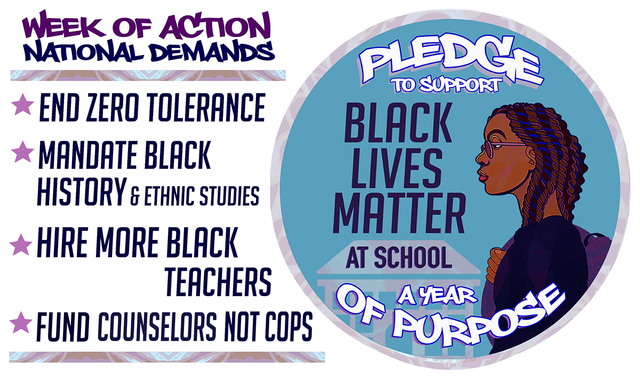
Links to register for the events above: @blmatschooliowa | Linktree

2021 Week of Action Event Registration: What is BLM at SchooL- Iowa? 2/1@5PM
2021 Week of Action Event Registration: Community Forums 2/2@5pm
2021 Week of Action Event Registration: Fund Counselors Not Cops: Why Black Mental Health Matters 2/3 @5pm
2021 Week of Action Event Registration Teach In: Schooling in the age of BLM 2/4@130pm
2021 Week of Action Event Registration – Career Day 2/4@5pm
2021 Week of Action Event Registration – Book Discussion 2/5 @5pm
First Saturdays – Black History Saturday School – Next Class 2/6 @1-3PM


Image may contain: text that says 'BLMigus BLM yarg BLACK LIVES MATTER @DesMoinesBLM $15 Contact makenna. makenna.chapman@hotmail.com chapma to order your yard sign!'
BLM yard signs now available, email makenna.chapman@hotmail.com to order! Profits benefit the DSM Rent Relief Fund.

BLM yard signs now available, email makenna.chapman@hotmail.com to order! Profits benefit the DSM Rent Relief Fund.


Image may contain: text that says 'SUPPORTING PEOPLE INCARCERATED IN IOWA SIGN THE PETITION BIT.LY/IOWACOVIDDEMANDS EMAIL ELECTED OFFICIALS BIT.LY/COVIDDEMANDSLETTER'

ICYMI: We are uplifting demands from people incarcerated in Iowa.
View demands/sign petition at bit.ly/iowacoviddemands
Email elected officials at bit.ly/coviddemandsletter
Please help us to SHARE SHARE SHARE! Conditions in jails/prisons are dangerous, especially during COVID.

Image may contain: text that says 'GREEDY MI MANAGEMENT & ENTERTAINMENT PRESENTS FREE CHILDREN'S HAIR HAIR CARE, FEB. 21ST 11 AM 4 PM WILLKIE HOUSE (900 17TH ST, DES MOINES, IA) DSM BLM BL COLLECTIVE SUPPLY FOOD FOR OUR FIGHTERS DSM,IA BLM HIVE 200'

Des Moines Black Lives Matter

January 28 at 9:05 AM  · BARBERS NEEDED!! We’re hosting a free children’s hair care event on Feb 21, and are looking for local barbers willing to donate their time & talent. DM us if you can help!


Des Moines Black Lives Matter

January 18 at 2:11 PM  · #MLKDay
Today, the world joins in a chorus of praise for the legacy of our dear brother and fellow freedom fighter Dr. Mr Luther King Jr.
We, as the Des Moines Black Liberation Movement Collective, would like to recognize that the foundation of his vision- the demilitarization of the West, the eradication of global poverty and the eternal struggle against racial oppression- is rooted in a dedication to justice and radical truth-telling, above all things.
We, as a collective, believe that to honor Dr. King’s legacy is to honor the legacy of ALL freedom fighters, which is to recognize the unity in our sacrifice, selflessness and solidarity. We must embody these traits ceaselessly.
Peace and All Power to the All People.

Image may contain: text

Image may contain: text that says '1 #BlackEmergencylA We declare lowa a sundown state. It is not safe for Black residents to travel alone, especially at night. Recommendations for Black lowans: Do your best to travel in parties of two or more. Always tell somebody where you are going and when you plan to return. Be prepared to escape, hide, or defend yourself in a worst-case scenario.'
Image may contain: text that says '#BlackEmergencylA 2 Know your rights. At home, in the car, when filming the police, and when carrying a registered firearm. Recommendations for Black lowans: You have the right to remain silent. Ask if you are under arrest; ask if you are free to go. DÓNOT NOT RESIST ARREST. If you plan to carry a registered firearm, seek out proper weapons training and education.'
Image may contain: text that says '#BlackEmergencylA 3 Get involved. We urge Black residents to get involved with their communities. Recommendations for Black lowans: Register to vote. Join and support Black organizations. Shop at -owned ousinesses (ShopBlackDSM.com). Start mutual aid projects & support direct actions which defend the livelihoods of Black people.'

Iowa Coalition for Collective Change


No photo description available.

Des Moines Black Lives Matter October 13 at 11:20 AM  · Black Iowans are not safe. We’re joining with a number of other community organizations to implement strategies and policies to protect one another. #BlackEmergencyIA 


Key Points:

  • A coalition of 10 organizations working to end police brutality, violence and enact a host of other reforms declared a ‘state of emergency’ for Black Iowans and also warned them not to travel alone — especially at night.
  • Learn more about the coalition’s efforts by following the social media hashtag #BlackEmergencyIA.
  • Des Moines Black Lives Matter clarified why it’s now known as the Des Moines Black Liberation Movement. Matthew Bruce, an organizer with BLM, said the group wanted to make sure that “we reflected that not only are we valuing our lives, but we are dismantling the systems that keep us oppressed.”

Blacks Iowans exist in a “state of emergency” and need resources to fight longstanding racial disparities and violence, said a coalition of 10 community organizations from across central and eastern Iowa.

“With this declaration of a state of emergency for Black Iowans, we are also calling on all local elected officials — from city elected officials to state representatives — to Governor Reynolds to our federal elected officials in the congress and the senate — to join with us in recognizing the state of emergency for Black Iowans and reacting with the resources that are necessary to help combat this,” said Jaylen Cavil, an organizer with the Des Moines Black Liberation Movement (BLM).

The coalition of groups include:

Black Iowa in ‘State of Emergency’. Activists sound the alarm about the dire longstanding racial disparities harming Black lives by Dana James, Black Iowa News, October 14, 2020


Following is part of the transcript of the video. It begins with Matthew Bruce speaking.

Matthew: All right everybody, I want to thank everyone that’s come out, especially those that have supported BLM – Des Moines BLM – all summer.
Just to run down some of the things we’ve accomplished:
we’ve accomplished getting the curfew ended – a racist curfew ended –
we accomplished getting all of our protesters out of the Polk County Jail
we accomplished a racial profiling ban here in Des Moines
we accomplished a plan for a more perfect union statewide
we got 60,000 people their rights to vote back, and
we’ve established also – Iowa City has done a lot of work on police accountability. The only city, the only city council to force their police department to release body [camera] footage of tear gassing people, the only people to get that level of accountability.
And we have institutionalized a direct action movement, and that is bigger than any of those one things, is that the tools that got us those amendments to the system is gonna sit here and exist indefinitely. And that’s the most – yeah that’s some claps – that’s the most important part of what we’ve built so far.


Those remarks were followed with more people speaking. I’m including what Patrick Stahl said. He is one of the people I’m getting to know from my work with Des Moines Mutual Aid’s food giveaway program.


Patrick: Hi, I’m Patrick Stahl with Des Moines Mutual Aid.

Des Moines Mutual Aid is a collective that does outreach for homeless folks in our community, houseless folks in our community. We also assist BLM with their rent relief fund, and most of the work we’ve done is running the bail fund for the protests over the summer. In the course of that work, we have witnessed firsthand the violence that is done upon people of color, Black people specifically, by the white supremacist forces of the state – in this state, in this city, in this county. There is absolutely a state of emergency for people of color and Black people in Iowa. The state of emergency has been a long time coming. We will support – DMMA will absolutely support any and all efforts of this community – BLM, and the people of color community more generally- to keep themselves safe. Power to the people.

Posted in abolition, Black Lives, Des Moines Black Lives Matter, Des Moines Mutual Aid, Mutual Aid, Uncategorized | Leave a comment

Isn’t ‘change the system’ the answer to systemic racism?

I really hesitate to write about racism because I know the strong emotions this bring up. And the errors a white person like me often commits in trying to do so. I’m thinking about this now because my Quaker meeting will be discussing race this morning in preparation for a Quaker gathering at the end of March. Vanessa Julye will speak with Friends about this question: How Is White Supremacy Keeping Us from Hearing God’s Voice?

I have been blessed to learn about and join in the work of Des Moines Mutual Aid. I’ve really enjoyed getting to know the people in this very diverse and growing group. To see the enthusiasm of every person as we put together boxes of food and distribute them to people in need. Mutual aid groups focus on survival needs like food giveaways and helping with shelter for people who are houseless or about to be evicted. The joy of addressing an immediate need keeps us coming back to do this work. And attracts new people to it. Several times I heard people express working on the food giveaway is the highlight of their week (mine, too).

Many Mutual Aid groups, including in Des Moines, also have a bail fund to support those who are arrested as they agitate for change.

Another key to the success of Mutual Aid is referred to as the “flat hierarchy”. Everyone has an equal say in the work. There aren’t bosses or supervisors, that is, no “vertical hierarchy”. You can imagine the conflicts that avoids. And that is so in practice.

All that has led me to consider that to address systemic racism we need to change the system. White supremacy is by definition a vertical hierarchy. By changing to Mutual Aid, that hierarchy is eliminated. Isn’t ‘change the system’ the answer to systemic racism?

I know there will be a lot of questioning about this idea. I like what I read this morning in a review of the book Think Again: The Power of Knowing What You Don’t Know which says “intelligence is usually seen as the ability to think and learn, but in a rapidly changing world, there’s another set of cognitive skills that might matter more: the ability to rethink and unlearn.”

In the following diagram white supremacy is indicated by the box labeled “White” on the top line. The goal of Mutual Aid is reached by decolonizing white supremacy.


What we have is each other. We can and need to take care of each other. We may have limited power on the political stage, a stage they built, but we have the power of numbers.

Those numbers represent unlimited amounts of talents and skills each community can utilize to replace the systems that fail us.  The recent past shows us that mutual aid is not only a tool of survival, but also a tool of revolution. The more we take care of each other, the less they can fracture a community with their ways of war. Organized groups like The American Indian Movement and the Black Panther Party for Self Defense showed that we can build not only aggressive security forces for our communities, but they also built many programs that directly responded to the general wellbeing of their communities. This tradition began long before them and continues to this day. Look into the Zapatistas in Southern so-called Mexico for a current and effective example.

my friend Ronnie James

The challenge: rethinking

The bestselling author of Give and Take and Originals examines the critical art of rethinking: learning to question your opinions and open other people’s minds, which can position you for excellence at work and wisdom in life.

Intelligence is usually seen as the ability to think and learn, but in a rapidly changing world, there’s another set of cognitive skills that might matter more: the ability to rethink and unlearn. In our daily lives, too many of us favor the comfort of conviction over the discomfort of doubt. We listen to opinions that make us feel good, instead of ideas that make us think hard. We see disagreement as a threat to our egos, rather than an opportunity to learn. We surround ourselves with people who agree with our conclusions, when we should be gravitating toward those who challenge our thought process. 

Review of Think Again: The Power of Knowing What You Don’t Know by Adam Grant

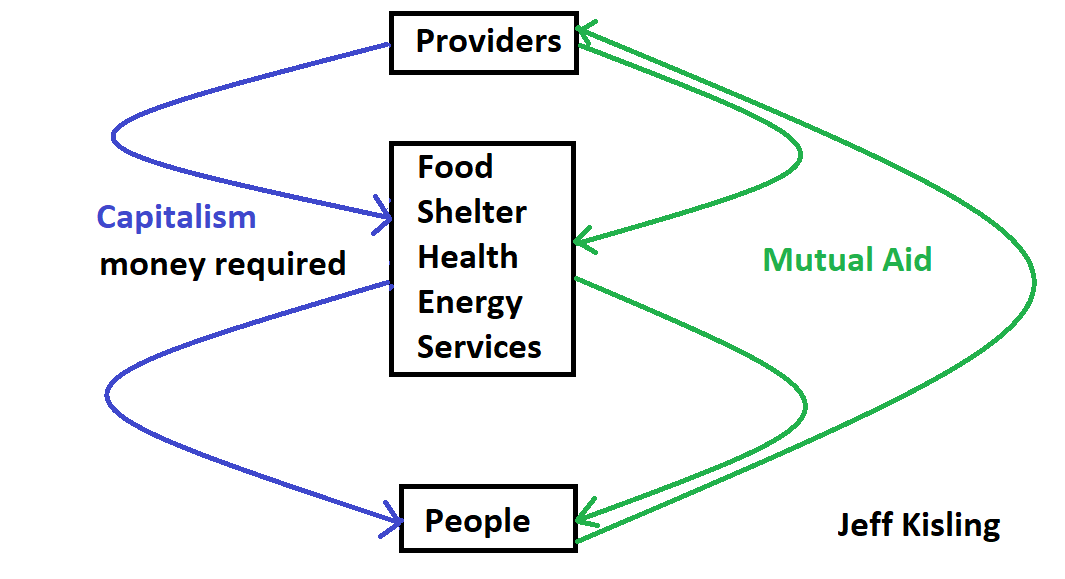
In organization theorymutual aid is a voluntary reciprocal exchange of resources and services for mutual benefit. Mutual aid projects are a form of political participation in which people take responsibility for caring for one another and changing political conditions.

Mutual aid is arguably as ancient as human culture. People in every society in every time period have worked together to ensure their communities can survive.[1] Mutual aid has been practiced extensively in marginalized communities, notably in Black communities, working-class neighborhoods, migrant groups, LGBT communities, and others.

The term “mutual aid” was popularised by the anarchist philosopher Peter Kropotkin in his essay collection Mutual Aid: A Factor of Evolution, which argued that cooperation, not competition, was the driving mechanism behind evolution.[6] [1] Kropotkin argued that mutual aid has pragmatic advantages for the survival of humans and animals and has been promoted through natural selection. This recognition of the widespread character and individual benefit of mutual aid stood in contrast to the theories of social Darwinism that emphasized individual competition and survival of the fittest, and against the ideas of liberals such as Jean-Jacques Rousseau, who thought that cooperation was motivated by universal love.[7]

Mutual Aid (organization theory)

“Abolitionists have a lot to learn from Dr. King,” Kaba said. “If King were alive today… I have no doubt that what he would be addressing in our current historical moment is the violence and destruction of the prison-industrial complex.”

The prison-industrial complex abolition movement hinges on two key principles, Kaba explained: the belief that police perpetuate — not mitigate — harm and the practice of mutual aid

Mutual aid — or the extension of community-based assistance, services, funds and care with no requirements or expectations of the recipients — was a core tenant of the Montgomery Bus Boycott, she said. In order to provide boycotters a viable transportation alternative, the community coalesced to create an elaborate rideshare system and provide parking, funds and other forms of support. 

Activist Mariame Kaba talks abolition and mutual aid, condemns campus police in Dream Week keynote by Binah Schatsky, The Daily Northwestern, January 13, 2021
Posted in abolition, decolonize, Des Moines Mutual Aid, Mutual Aid, Quaker, Uncategorized | Leave a comment

Epistles

Epistle: a poem or other literary work in the form of a letter or series of letters

My intention in starting this blog five years ago was to learn to write about matters of the Spirit. I feel we are living in a time of great spiritual poverty. Perhaps something I write might be useful to someone seeking. The process of discerning what to write about, and how to express that, is a spiritual practice for me.

But lately I’ve wondered if I write too much. The messages might get lost in the volume of words.

For the past year I’ve been learning and writing about the concept of Mutual Aid. The more I’ve learned and experienced about Mutual Aid, the further I have traveled away from the thinking and experiences of other Quakers and friends. Which isn’t surprising because Mutual Aid is a rejection of, a replacement for capitalism, as I try to explain in the epistle below.

As I wondered about a different way to express what Mutual Aid is, and the reasons why I believe Friends should embrace it, I was reminded of a powerful epistle I read at a time when I needed guidance. An Epistle to Friends Concerning Military Conscription was written around the time I was praying about resisting the draft (Selective Service System). At the time of the Vietnam War. I was about to turn 18 years of age, when registration with the SSS was required for all young men in this country. That epistle eloquently expresses the reasons why they felt Quakers should not participate in military conscription. Iowa Quakers Don Laughlin and Roy Knight were among the signatories of that epistle (see below).

I decided to write an epistle related to Mutual Aid, the draft of which is found at the end of this.

But first I wanted to share another epistle, Iowa Young Friends’ Giving Voice Epistle.

Iowa Young Friends’ Giving Voice Epistle

Dear Friends of Iowa Yearly Meeting Conservative and beyond,

We began our Young Friends program talking about the theme of this year’s annual sessions, Accompaniment and Giving Voice. In the spirit of this theme, we have decided to “give voice” ourselves, and share more deeply with the greater Yearly Meeting through an epistle expressing our perspective as Young Friends. We spent almost an hour and a half in a worshipful discussion on Fourth Day morning, sharing deeply about our concerns for the world, what gives us hope, and what it means to accompany someone.

Accompaniment is, to us, a type of listening, and being there for those in need of care. We shared who we feel compelled to accompany, including racial and religious minorities, refugees, undocumented immigrants, victims of sexual assault and child abuse, people who choose to get abortions, LGBTQ people, and even people who may share different beliefs than us. We noted that it is still possible to listen and accompany people, while actively disagreeing with what they believe.

We spoke about many of our concerns with the modern world. The two that we kept returning to throughout the discussion was polarization in our society, and our clear concern on the changing climate and how it will affect our lives. We see the polarization in our society furthering a pattern of not listening to one another and encouraging a culture of hatred. We noted that by listening, we can often understand the struggles behind an opinion with which we disagree. We are also very concerned with the changing climate, and the displacement of people and wildlife that comes consequently. We recognize that a lot of the issues we care about are related to the environment, and that there will be an increase in poverty and war worldwide if we don’t actively try and reverse climate change.

We also have a lot of hope for the future. We understand that we are living in an age of technological advancement, and while there are some negatives to this, we also see a lot of hope in what that might bring. We see that technology can be used as a tool to share ideas, connect with people across the globe, and find helpful information. We see that more medical advancements can be made, and that innovations could improve access to food, clean water, and quality of life for many worldwide. We find hope, often with the help of the internet and social media, in seeing people speaking their truth to power all over the world. This includes people speaking out for women’s rights, resisting ICE raids, being stewards to our planet, and our fellow young people leading the movement on gun reform. 

We appreciate the space IYMC gives us, to accompany and give our own voice.

Love and light to all,

IYMC Young Friends 2019


An Epistle to Friends Concerning Military Conscription

Dear Friends,

It has long been clear to most of us who are called Friends that war is contrary to the spirit of Christ and that we cannot participate in it.  The refusal to participate in war begins with a refusal to bear arms.  Some Friends choose to serve as noncombatants within the military.  For most of us, however, refusal to participate in war also involves refusal to be part of the military itself, as an institution set up to wage war.  Many, therefore, become conscientious objectors doing alternative service as civilians, or are deferred as students and workers in essential occupations.

Those of us who are joining in this epistle believe that cooperating with the draft, even as a recognized conscientious objector, makes one part of the power which forces our brothers into the military and into war.  If we Friends believe that we are special beings and alone deserve to be exempted from war, we find that doing civilian service with conscription or keeping deferments as we pursue our professional careers are acceptable courses of action.   But if we Friends really believe that war is wrong, that no man should become the executioner or victim of his brothers, then we will find it impossible to collaborate with the Selective Service System.  We will risk being put in prison before we help turn men into murderers.

It matters little what men say they believe when their actions are inconsistent with their words.  Thus we Friends may say that all war is wrong, but as long as Friends continue to collaborate in a system that forces men into war, our Peace Testimony will fail to speak to mankind.

Let our lives speak for our convictions.  Let our lives show that we oppose not only our own participation in war, but any man’s participation in it.  We can stop seeking deferments and exemptions, we can stop filling out Selective Service forms, we can refuse to obey induction and civilian work orders.  We can refuse to register, or send back draft cards if we’ve already registered.

In our early history we Friends were known for our courage in living according to our convictions.  At times during the 1600’s thousands of Quakers were in jails for refusing to pay any special respect to those in power, for worshiping in their own way, and for following the leadings of conscience.  But we Friends need not fear we are alone today in our refusal to support mass murder.  Up to three thousand Americans severed their relations with the draft at nation-wide draft card turn-ins during 1967 and 1968.  There may still be other mass returns of cards, and we can always set our own dates.

We may not be able to change our government’s terrifying policy in Vietnam.  But we can try to change our own lives.  We must be ready to accept the sacrifices involved if we hope to make a real testimony for Peace.  We must make Pacifism a way of life in a violent world.

We remain, in love of the Spirit, your Friends and brothers,

Don Laughlin
Roy Knight
Jeremy Mott
Ross Flanagan
Richard Boardman
James Brostol
George Lakey 
Stephen Tatum
Herbert Nichols
Christopher Hodgkin
Jay Harker
Bob Eaton
Bill Medlin
Alan & Peter Blood


Finally, following is a DRAFT (not the Selective Service System draft) of the epistle I’ve been working on related to Mutual Aid, community and capitalism. It has not been approved by any group. I welcome any comments. jakislin@outlook.com


DRAFT: An Epistle to Friends Regarding Community

Dear Friends,

The measure of a community is how the essential needs of its people are met. No one should go hungry, or without shelter. Yet in this country known as the United States millions struggle to survive. The capitalist economic system creates hunger and houselessness. A system that requires money for goods and services denies basic needs to anyone who does not have money. Black, Indigenous, and other people of color are disproportionately affected. A form of structural racism. The capitalist system that supports our material lifestyle is built on stolen land and the labor of those who were enslaved in the past or are forced to live on poverty wages today.

It has become clear to some of us who are called Friends that the capitalist economic system is contrary to the Spirit and we must find a better way. We conscientiously object to capitalism. Capitalism is an unjust, untenable system, when there is plenty of food in the grocery stores, but men, women and children are going hungry, living on the streets outside.

How do we resist? We rebuild our communities in ways not based upon money. Such communities thrive all over the world. Indigenous peoples have always lived this way. Generations before our own did so in this country. Mutual Aid is a framework that can help us do this today.

The concept of Mutual Aid Mutual is simple to explain but can result in transformative change. Mutual Aid involves everyone coming together to find a solution for a problem we all face. This is a radical departure from “us” helping “them”. Instead, we are all working together to find and implement solutions.  To work together means we must be physically present with each other. Mutual Aid cannot be done by committee or only with donations. We build Beloved communities as we get to know each other. Build solidarity. An important part of Mutual Aid is creating these networks of people who know and trust each other. When new challenges arise, these networks are in place and ready.

Commonly there are several Mutual Aid projects in a community. The initial projects usually relate to survival needs. One might be a food giveaway. Another helping those who need shelter.

Many Mutual Aid groups also have a bail fund, to support those arrested for agitating for change. And accompany those arrested when they go to court.

It matters little what people say they believe when their actions are inconsistent with their words.  Thus, we Friends may say there should not be hunger and poverty, but as long as Friends continue to collaborate in a system that leaves many without food and shelter, our example will fail to speak to mankind.

Let our lives speak for our convictions.  Let our lives show that we oppose the capitalist system and the damages that result.  We can engage in efforts, such as Mutual Aid, to build and live in Beloved community. To reach out to our neighbors to join us.

We must begin by changing our own lives if we hope to make a real testimony for peace and justice.

We remain, in love of the Spirit, your Friends and sisters and brothers. 

Note: Modeled from ‘An Epistle to Friends Concerning Military Conscription’

capitalism has violated the communities of marginalized folks. capitalism is about the value of people, property and the people who own property. those who have wealth and property control the decisions that are made. the government comes second to capitalism when it comes to power.

in the name of liberation, capitalism must be reversed and dismantled. meaning that capitalistic practices must be reprogrammed with mutual aid practices.  

Des Moines Black Lives Matter

“Quakers will only be truly prophetic when they risk a great deal of their accumulated privilege and access to wealth. Prophets cannot have a stake in maintaining the status quo. Any attempt to change a system while benefiting and protecting the benefits received from the system reinforces the system. Quakers as much as anyone not only refuse to reject their white privilege, they fail to reject the benefits they receive from institutionalized racism, trying to make an unjust economy and institutionalized racism and patriarch more fair and equitable in its ability to exploit. One can not simultaneously attack racist and patriarchal institutions and benefit from them at the same time without becoming more reliant upon the benefits and further entrenching the system.

Scott Miller

Posted in capitalism, Des Moines Black Lives Matter, Des Moines Mutual Aid, Mutual Aid, Quaker, Uncategorized | Leave a comment

Capitalism must be reversed and dismantled

Capitalism is the engine that powers white supremacy and the astounding transfer of wealth to the few ultra rich. Is the engine that powers authoritarianism and the police state, destroying human rights. Is the engine destroying Mother Earth.

Capitalisms the system of systemic racism. Racism and white supremacy cannot be dealt with as long as work for change is done within the capitalist system.

Any attempt to change a system while benefiting and protecting the benefits received from the system reinforces the system. Quakers as much as anyone not only refuse to reject their white privilege, they fail to reject the benefits they receive from institutionalized racism, trying to make an unjust economy and institutionalized racism and patriarch more fair and equitable in its ability to exploit. One can not simultaneously attack racist and patriarchal institutions and benefit from them at the same time without becoming more reliant upon the benefits and further entrenching the system.

Scott Miller

What should replace the capitalist system? Mutual Aid is beginning to replace capitalism now.

mutual aid is the new economy. mutual aid is community. it is making sure your elderly neighbor down the street has a ride to their doctor’s appointment. mutual aid is making sure the children in your neighborhood have dinner, or a warm coat for the upcoming winter. mutual aid is planting community gardens.

capitalism has violated the communities of marginalized folks. capitalism is about the value of people, property and the people who own property. those who have wealth and property control the decisions that are made. the government comes second to capitalism when it comes to power.

in the name of liberation, capitalism must be reversed and dismantled. meaning that capitalistic practices must be reprogrammed with mutual aid practices.

Des Moines Black Liberation

Along with direct action and other forms of resistance, a transformational movement must also have a constructive program that builds new institutions based on the values that the movement aspires to achieve. These may eventually replace the old systems. From small, worker-owned cooperatives to national advocacy groups, hundreds of thousands of people around the country are working to create democratic and sustainable systems that meet the basic needs of all people.

Popular Resistance / Create

The fires of rage and righteous indignation swept like a tidal wave across the continent. Fire is cleansing. It burns the detritus that smothers the land, allowing for rebirth; allowing for sunlight to reach the earth. The ashes that remain nourish the new life. And the cycle continues…

But rage and wildfire are unsustainable. They must be followed by regeneration and time for growth. What grows now is up to us. We are the caretakers of the land; we are the farmers. Time and history have shown that what creates crisis cannot solve it. The solutions and answers we seek exist with we, the people. A new President in Washington is not the answer. Replacing one anachronistic administration with another will not save us. A Native woman as Secretary of the Interior will not heal the earth. In order for our planet to live, capitalism must die. This nation, founded on genocide, created on stolen land, must be laid to rest. And we must build a new reality, based on indigenous values and principles.

As COVID-19 swept across Turtle Island, it laid bare the systemic environmental racism and inequity which has long plagued reservation lands. Our Diné and Pueblo relatives suffered higher rates of infection and higher mortality rates than any other population in the Southwest. In August of 2020, the CDC found that in 23 selected states, the cumulative incidence of confirmed COVID-19 cases among Native people was 3.5 times that of non-Hispanic whites. Multi-generational households, lack of running water and access to both food and healthcare contributed to the spread that devasted communities from Chinle to Zia Pueblo. But in the midst of all of that suffering, light still shone. It came from women, youth and LGBTQ-led organizations who stepped up to supply aid and assistance. Albuquerque Mutual Aid, Fight for Our Lives, McKinley Mutual Aid, Santa Fe Mutual Aid, YUCCA, The Red Nation, K’é Infoshop, Navajo & Hopi COVID-19 Relief, Three Sisters Collective, Santa Fe Indigenous Center, to name only a few, have worked tirelessly to show support and solidarity to relatives in hard hit areas. This is how we will survive. When the people move, we must move with them. The government did not save us, will not save us, has never saved us. The government has only ever tried to destroy us. Our existence is resistance.

THE SOLUTIONS WE SEEK EXIST WITH WE, THE PEOPLE
By Elena Ortiz, Green Fire Times.
January 24, 2021 | CREATE!

My friend Ronnie James says something very similar.

I’m of the firm opinion that a system that was built by stolen bodies on stolen land for the benefit of a few is a system that is not repairable. It is operating as designed, and small changes (which are the result of huge efforts) to lessen the blow on those it was not designed for are merely half measures that can’t ever fully succeed.

So the question is now, where do we go from here? Do we continue to make incremental changes while the wealthy hoard more wealth and the climate crisis deepens, or do we do something drastic that has never been done before? Can we envision and create a world where a class war from above isn’t a reality anymore?”

Ronnie James

In the last few years, we have seen environmental depredation, economic ruin, devastation of our public education system, and large-scale homicide by government neglect. White-supremacy and racism have become further emboldened and normalized. Science has been relegated to the shadows. People are going hungry and unsheltered in higher numbers than ever before in the history of this colonial project. We are standing on the edge of the abyss. And we are tottering.

But there is also beauty and hope for the future. The love and support for community evidenced by so many during the pandemic was a joy to experience. 

The toppling of statues; burning of police departments; creation of autonomous zones; renaming part of the street outside of the White House Black Lives Matter Plaza and many other actions that took place this last summer are evidence of a changing paradigm, a new narrative.

This new narrative will be framed by just two words: Land Back.

THE SOLUTIONS WE SEEK EXIST WITH WE, THE PEOPLE
By Elena Ortiz, Green Fire Times.
January 24, 2021 | CREATE!

Posted in abolition, Black Lives, capitalism, Des Moines Black Lives Matter, Des Moines Mutual Aid, Indigenous, Mutual Aid, Uncategorized | Leave a comment

Unlearning Capitalism

The more I learn about Mutual Aid and capitalism, the clearer it is that we must build alternatives to replace the capitalist system. Mutual Aid is emerging as that alternative .

“Unlearning racism” refers to teaching people who believe they are white about thoughts, beliefs, attitudes and actions which they are not aware of, which support racism. Racism is so deeply embedded in our culture that most white people uncritically accept any number of norms in our society that are actually discriminatory and unjust.  The first thing white people have to do when they want to engage with people of color or address race is to learn about their own racial biases.  This is a life long process in our society.

Similarly, I believe it is urgent today that we “unlearn capitalism“.  As discussed in the post about Capitalocene, capitalism has evolved into a system that values profit over people and that has pursued extractive practices that consume resources far beyond the ability of Mother Earth to replenish them.  Capitalocene is powered by fossil fuel energy and is overwhelming our environment with toxic methods of extracting these fuels, the consumption of vast amounts of water in the process, and production of greenhouse gases that result from burning them. And those countries with the greatest industrialization consume vastly disproportionate amounts of these fuels, thus producing the bulk of the resulting pollution.

“Jason Moore in Capitalism in the Web of Life proposes that the Anthropocene be renamed the ‘Capitalocene’, since ‘the rise of capitalism after 1450 marked a turning point in the history of humanity’s relation with the rest of nature, greater than any watershed since the rise of agriculture.’”

Capitalocene points to the ways capitalism—the particular tendencies and dynamics associated with the appropriation and distribution of surplus-value, the accumulation of capital, and much else—has both made the despoiling of the natural environment (e.g., through the use of fossil fuels) central to the production and distribution of commodities and shifted its effects onto poor people and minorities, who bear higher levels of water, air, and other kinds of pollution than anyone else.

Finally, the term Capitalocene carries with it the possibility of imagining the end of capitalism, and therefore a radical change in the way human beings relate to the natural environment. To be clear, I am not suggesting that global warming and other environmental problems would be automatically eliminated with a radical transformation of the way the economy is currently organized.

Environmental concerns will require particular changes in thinking to be made central to whatever noncapitalist economies are imagined and enacted as we move forward.

I do, however, maintain that eliminating capitalism will be an important step in setting aside and overcoming many of the obstacles to creating a different, better relationship in and with the natural environment.”

David F. Ruccio Occasional Links and Commentary.

These are not a new concepts among Quakers.

At the World Conference of Friends held at Guilford College in North Carolina in 1967, some young Friends crossed over from a concurrently running young Friends conference to raise a concern that became known as Right Sharing of World Resources. The new concern recognized poverty in the world economic system as in part a systemic problem, and as a legacy of colonialism.

Finally, Quakers should become political economists because capitalism—especially industrial capitalism—is itself partly our responsibility. Just as we helped to create the modern prison system with the innovation of the penitentiary, so Quakers were the driving force behind the industries and economic structures that shaped emerging industrial capitalism. Industrial capitalism would have happened without Friends—but it didn’t. Just as we feel called to reform a penal system that has lost its way, so I hope we will be called to reform an economic system we did much to create and which has become carcinomic, an engine of unlimited consumption and growth, not to mention the blood on its hands, from the Western Front in World War I to the streets of Baghdad.

Quakers and Capitalism, Steven Dale Davison, Friends Journal,  July 1, 2006

The organization Right Sharing of World Resources is devoted to addressing global economic and energy inequalities.

I’m re-posting the following comments that were made recently after Quaker midweek meeting for worship in Indianola, Iowa.  These Quakers were describing the life they lived as children in the early 1900’s.  It is clear that people once lived and thrived in what seem to be primitive conditions compared to our lives today. We need to quickly return to a similar lifestyle.

  • We didn’t have electricity or running water.  (I might add we had a party line telephone, no television, and an outhouse for the bathroom)
  • We broke a lot of glasses that we had taken upstairs during the night (as the water turned to ice)
  • There was no heat upstairs
  • We wrapped the kids in a cocoon of multiple blankets with only their arms outside
  • We heated stones on the stove, and put them in the beds before we got into them
  • We used bottles of warm water for the same purpose
  • The first thing we did in the morning was open, and sit on the door of the stove to warm up
  • Sometimes we had to be picked up by someone in a horse and buggy when the school bus was stuck on the muddy roads
  • (There was also mention of mud-ball fights)

Quakers will only be truly prophetic when they risk a great deal of their accumulated privilege and access to wealth. Prophets cannot have a stake in maintaining the status quo. Any attempt to change a system while benefiting and protecting the benefits received from the system reinforces the system. Quakers as much as anyone not only refuse to reject their white privilege, they fail to reject the benefits they receive from institutionalized racism, trying to make an unjust economy and institutionalized racism and patriarch more fair and equitable in its ability to exploit. One can not simultaneously attack racist and patriarchal institutions and benefit from them at the same time without becoming more reliant upon the benefits and further entrenching the system. Liberalism at its laziest.

Scott Miller
https://friendlyfirecollective.wordpress.com/2018/06/05/scott-miller-on-why-quakerism-is-not-prophetic/

I’m of the firm opinion that a system that was built by stolen bodies on stolen land for the benefit of a few is a system that is not repairable. It is operating as designed, and small changes (which are the result of huge efforts) to lessen the blow on those it was not designed for are merely half measures that can’t ever fully succeed.

So the question is now, where do we go from here? Do we continue to make incremental changes while the wealthy hoard more wealth and the climate crisis deepens, or do we do something drastic that has never been done before? Can we envision and create a world where a class war from above isn’t a reality anymore?”

Ronnie James

Posted in capitalism, climate change, Des Moines Mutual Aid, Quaker, Quaker Meetings, Uncategorized | Tagged , , , | Leave a comment

Alleviate Hardship

The new Biden administration has been releasing proposals to bring relief to the millions who are suffering in so many ways today. It remains to be seen how much of this is actually approved by Congress. These proposals would be welcome and would provide some short term relief.

But a growing number of us are speaking out, calling attention to the fundamental problems of capitalism. The following statement by Scot Miller concisely explains why we must work to replace the capitalist system. This is a matter of white privilege and institutional racism, and a moral obligation.

“Quakers will only be truly prophetic when they risk a great deal of their accumulated privilege and access to wealth. Prophets cannot have a stake in maintaining the status quo. Any attempt to change a system while benefiting and protecting the benefits received from the system reinforces the system. Quakers as much as anyone not only refuse to reject their white privilege, they fail to reject the benefits they receive from institutionalized racism, trying to make an unjust economy and institutionalized racism and patriarch more fair and equitable in its ability to exploit. One can not simultaneously attack racist and patriarchal institutions and benefit from them at the same time without becoming more reliant upon the benefits and further entrenching the system. Liberalism at its laziest.”   

Scot Miller on why Quakerism is not prophetic. Friendly Fire Collective, June 5, 2018

I’ve been blessed to be learning about Mutual Aid as an alternative to capitalism. (I’m going to participate in the Des Moines food giveaway this morning.)
“mutual aid” | Search Results | Quakers, social justice and revolution (jeffkisling.com)


The First 100 Days: FCNL’s Recommendations to the Biden Administration. Executive Action to Advance Peace and Justice

Alleviate hardship for millions of struggling families:

The First 100 Days: FCNL’s Recommendations to the Biden Administration
Executive Action to Advance Peace and Justice, Friends Committee on National Legislation (FCNL), January 13, 2021


Biden Relief Proposal Seeks to Address Health and Economic Crisis

President-elect Biden and Vice President-elect Harris have introduced their American Rescue Plan in response. The proposal outlines strong relief to give the country the tools it needs to address the health and economic crises.

The American Rescue Plan would extend enhanced food, unemployment, housing, and child care assistance, and raise the minimum wage. It would provide aid to state and local governments, and robust funding for vaccine production and distribution. It includes another round of stimulus checks and much more.

Yet, the package goes even further, including one of FCNL’s top priorities, a policy that would dramatically reduce poverty, particularly child poverty. The plan expands the Earned Income Tax Credit and Child Tax Credit.

Together, the EITC and Child Tax Credit are the largest anti-poverty programs in the U.S., aside from Social Security. Administered through the tax code, these refundable tax credits provide millions of low-income families a check that can cover basic living and emergency expenses, or help build wealth essential to weathering crises. However, these two programs exclude millions of people in their current form. For example, workers under age 25 cannot claim the EITC, and adults not raising children can claim only a minimal EITC benefit. The American Rescue Plan would expand the EITC for adults not raising children from $530 to close to $1,500, and makes the credit available to younger and older workers.

Biden Relief Proposal Seeks to Address Health and Economic Crisis by Amelia Kegan, Friends Committee on National Legislation, January 15, 2021


RELIGIOUS SOCIALISM ACTIVIST COLLEEN SHADDOX PUBLISHES NEW BOOK ON POVERTY IN THE U.S.

“Poverty is simply not having enough money to meet your needs,” Goldblum says. “There is nothing more complicated about it than that. And we live in the richest nation in the world, where there is plenty of money. So if we have the political will, we could end poverty.

“There are lots of different ways to do it. A living wage is necessary, and a universal basic income can help. We talk in the book about universal health care, housing supports, about making water and electricity and heat a public good. Other countries do all this, and there is no reason we could not do so as well. If we just tax people appropriately, we can have the money to do all this.”


Posted in abolition, decolonize, Democratic Socialists of America, Des Moines Mutual Aid, Friends Committee on National Legislation, Mutual Aid, Quaker, socialism, Uncategorized | Leave a comment

Now Stop Dakota Access Pipeline

It is great news that President Biden canceled the permit for construction of the Keystone XL pipeline. For the same reasons, he should stop the Dakota Access Pipeline (DAPL). Oil is flowing through DAPL now.

Biden has revoked the permit for KXL, taking a huge step to eliminate threats to climate, tribal sovereignty, and the safety of Indigenous women and girls. DAPL must come next!

Tell president-elect Joe Biden to stop DAPL once and for all. Protect the planet and the Lakota people. No destruction of the earth. No endangering our water. Mni wiconi — water is life.

Stop Keystone XL (lakotalaw.org)

I got my future back.

2016 was a victory and we had to celebrate that because they’re hard to come by out there. I would say that we just won the right to struggle and we will continue to put pressure on Biden to push on and to create the kind of world that we want to leave for our children

Chase Iron Eyes

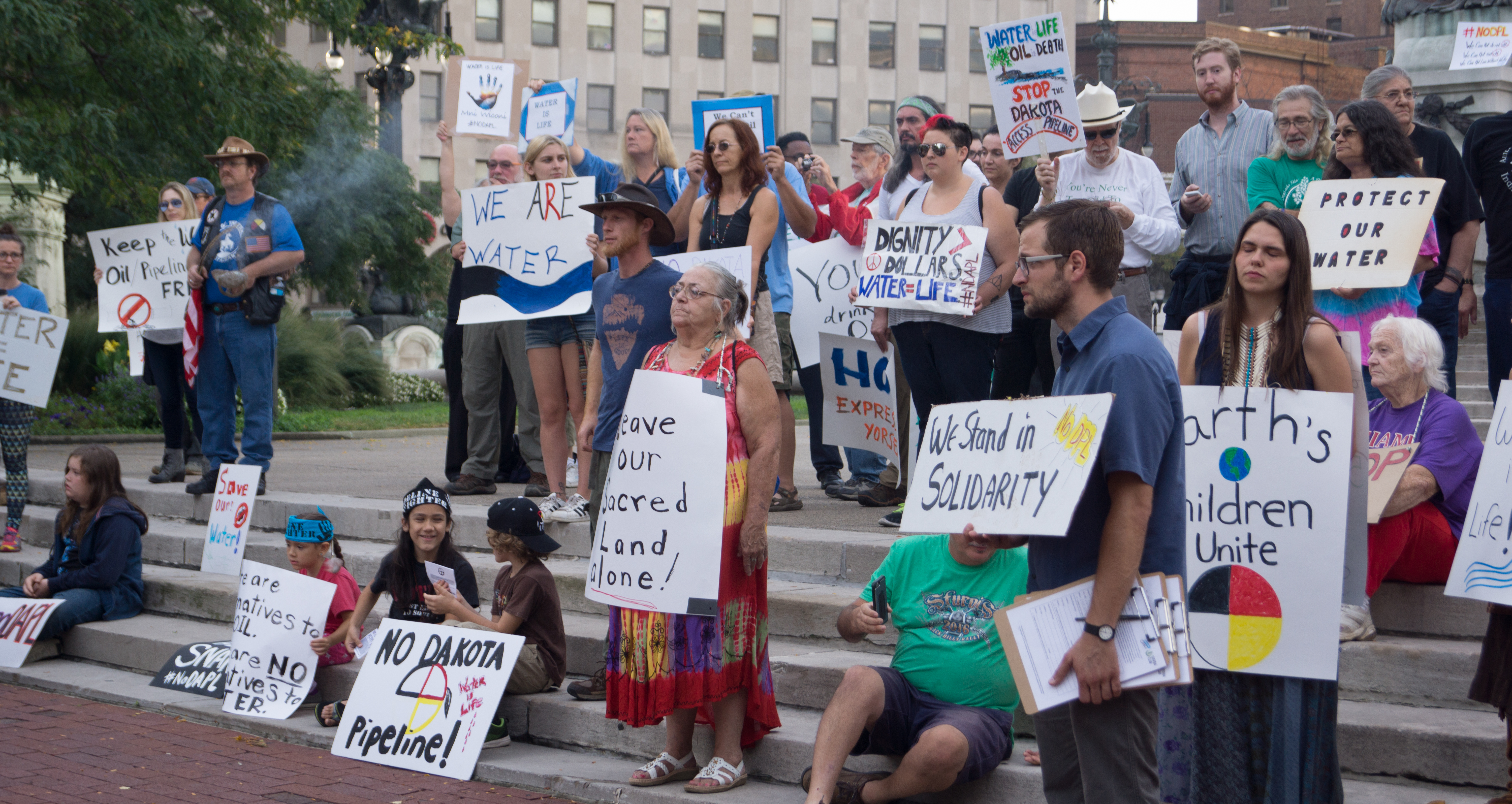
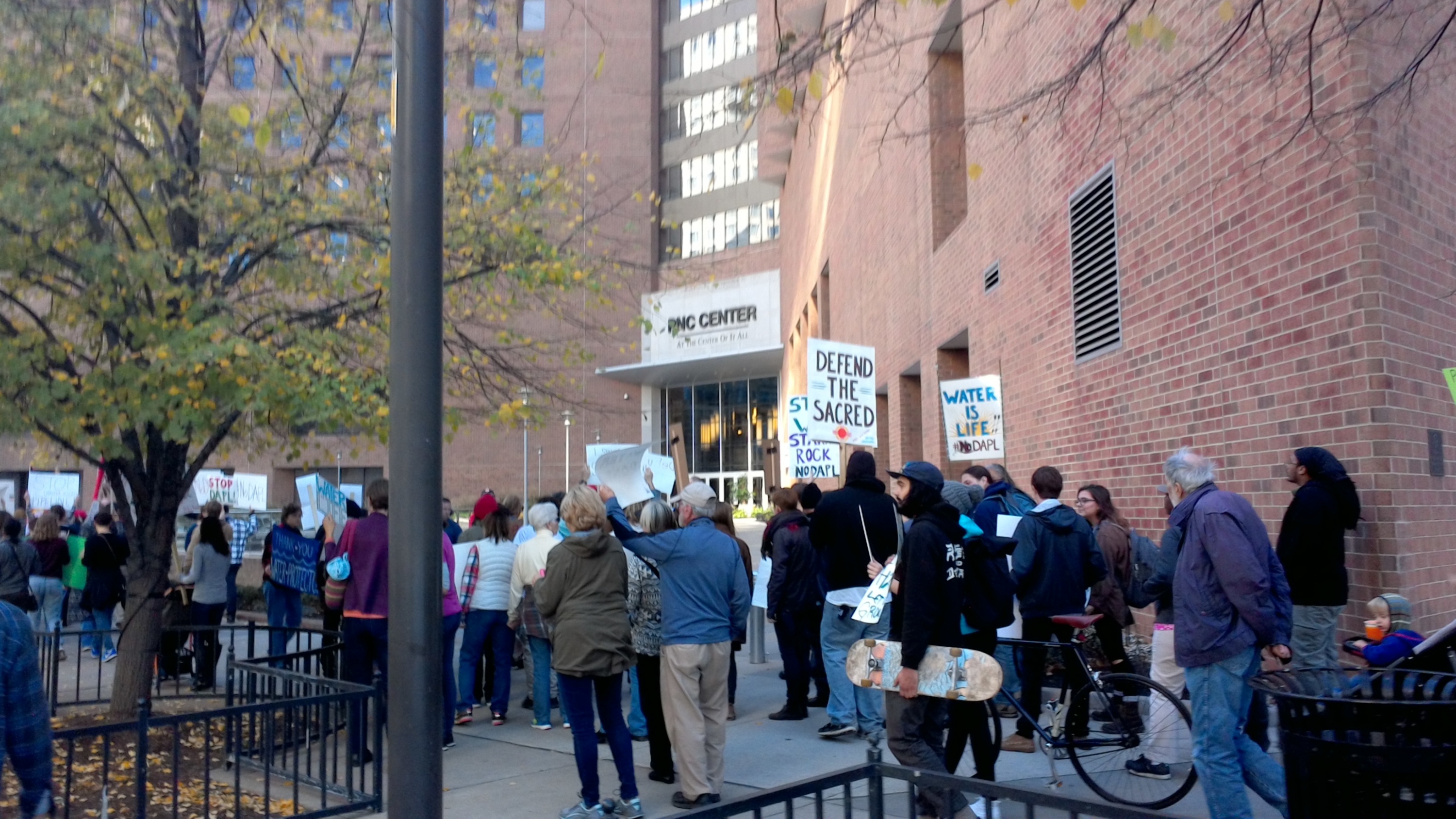
Yesterday I wrote about the years long efforts to stop the Keystone XL pipeline. When the Dakota Access pipeline construction began in 2016, we worked to stop that pipeline as well. The amazing gathering of indigenous peoples and environmental activists at the construction site at Standing Rock brought national attention in ways that had not occurred related to the Keystone XL pipeline.

Following are stories and videos of the work done to try to stop DAPL.


Amy Goodman, Democracy Now, was present during the security dog attacks on the peaceful men, women and children at Standing Rock in September, 2016.


Nahko and Medicine for the People created this powerful and disturbing video about the struggles at Standing Rock, titled “Love Letters to God”.


Below is an amazing video of Nahko Bear performing solo at the Water Protectors Youth Concert Sept 8, 2016. This was just 5 days after security forces used attack dogs against the water protectors.  He was speaking to these young people while they were in the middle of their nonviolent resistance.

He says the resounding message he hears during his travels is:

“Remember that nonviolent direct action is the way to a successful revolution.  And that is a hard one, because they are so bad (chuckles).  When they come at us you just want to hit ’em, you know?  Just sit with that.  I know it’s tough.  They’re going to try to do everything they can to instigate you.  But remember what we’re here for.  We’re here to create peace for our Mother.  We’re not here to create more violence.”

This isn’t over.  These messages are also meant for you and me.  The struggles continue, While indigenous peoples will continue to lead, the support of everyone is needed now more than even.  Please take this to heart.  Your spirit will soar.

When you’re feeling bad, when you’re feeling frustrated, put all your prayer into your palms, put them to the ground, put them back to the sky, honor the Father, the Mother, just know it will be alright.

Are you guys feeling proud, are you proud of yourselves?  Because the whole world is watching.  The whole world is watching.  So whatcha gonna do?  Gonna show love?  Are you gonna be smart?  You gonna think before you act?  Take care of each other?  Your gonna show ‘em what family does.  They don’t know what that’s like.

You gotta put down the weight, gotta get out of your way.

Get out of your way and just look around the corner at your real self and look at all the potential that this beautiful Earth and love has to offer you.

It’s crazy being out in front of you guys.  I had a moment there.  I was like, I like started spacing out and I’m like oh god they’re looking at me aren’t they?  I was thinking about how much happened before any of us were here.  You know?  There is a lot of history here.   We gotta hold that when we’re standing out there.  You gotta hold that when you’re on that line out there, too.  You’re here for a lot more than just this pipeline.

It’s about rejoicing, it’s about laughter right now.  We’ve got a big day ahead of us tomorrow folks.  So, I just want to say I’m so grateful and I’m really proud of you guys.  I’m really proud of you.  (and then he turned away with obvious emotion).

Ra Wyse, Wyse Radio, interviewed me about local (Indianapolis) #NoDAPL actions.


Here is a link to my photos related to DAPL. NODAPL – OneDrive (live.com)

Rescinding KXL’s permit is a promising early signal that the new administration is listening to our concerns and will take issues of climate and Indigenous justice seriously. We have to insist that it not stop there. It’s also high time to shut down the Dakota Access pipeline (DAPL) once and for all.

Nearly 13,000 of you have already signed onto our petition telling the Biden-Harris administration to end KXL and DAPL. Once the KXL decision is official, we’ll adjust the petition to thank our new leadership in D.C. for its action while remaining insistent that DAPL come next. We stand in solidarity with our relatives at Standing Rock and allied organizations like Earthjustice, which represents Standing Rock in its legal battle to stop DAPL. The two co-produced this powerful new video and asked us to share it. Please take a moment to watch.

In this hour, victory is undeniably sweet. I think it’s safe to say we needed some good news! But, as the actions of many over the past days and years have demonstrated, we must not let down our guard. Our mission to end the devastation wrought by pipelines on our Grandmother Earth — and on our Lakota families — won’t be finished until we dig DAPL out of our sacred lands. We will stay ever vigilant, and I thank you for supporting us every step of the way.

Wopila tanka — our enduring gratitude for helping us fight and win!

Madonna Thunder Hawk
Cheyenne River Organizer
The Lakota People’s Law Project

#NODAPL   #MniWiconi #RezpectOurWater #AllNationsYouth


Posted in #NDAPL, climate change, Dakota Access Pipeline, Indigenous, Keystone XL pipeline (KXL), Native Americans, Uncategorized | Leave a comment