Moral Injury

I recently came across a discussion of moral injury, and immediately recognized how that applied to a number of situations in my life, past and present. Much of what is written about moral injury relates to war. Unsurprisingly as combatants are trained to, and sometimes actually do harm and kill people in combat. And/or may fail to be protected by leaders.

Moral injury is the social, psychological, and spiritual harm that arises from a betrayal of one’s core values, such as justice, fairness, and loyalty. Harming others, whether in military or civilian life; failing to protect others, through error or inaction; and failure to be protected by leaders, especially in combat—can all wound a person’s conscience, leading to lasting angerguilt, and shame, and can fundamentally alter one’s world view and impair the ability to trust others.

Moral Injury, Psychology Today

Moral injury refers to an injury to an individual’s moral conscience and values resulting from an act of perceived moral transgression, which produces profound emotional guilt and shame, and in some cases also a sense of betrayal, anger and profound “moral disorientation”.

Definition

The concept of moral injury emphasizes the psychological, social, cultural, and spiritual aspects of trauma. Distinct from psychopathology, moral injury is a normal human response to an abnormal traumatic event. According to the U.S. Department of Veterans Affairs, the concept is used in literature with regard to the mental health of military veterans who have witnessed or perpetrated an act in combat that transgressed their deeply held moral beliefs and expectations. Among healthcare professionals, moral injury refers to unaddressed moral distress leading to the accumulation of serious inner conflict that may overwhelm one’s sense of goodness and humanity. It is important to note that, despite the identification of moral traumas among both veterans and healthcare professionals, research has remained oddly independent between these two groups, and as such, the terminology is not uniform.

Moral injury – Wikipedia

I’m just learning about this, and may get some of it wrong. I have felt/do feel anger and guilt related to a number of instances in my life.

There has been an almost constant feeling of moral injury related to my faith community (Quaker). This is paradoxical because I deeply respect and value so many aspects of Quakers, both as a group and exhibited by individuals.

But I have felt “failure to be protected by leaders” in the sense that I want my faith community to agree with and support my spiritual beliefs and practices. There is always the possibility that I might be mistaken in some of my beliefs. And perhaps I should constrain my sense of morality to myself. Perhaps it is not right to be judgmental of others.

However, my beliefs are basically consistent with Quakers’ stated beliefs. My problem occurs in those times when I don’t believe others are putting certain professed beliefs into practice. That’s when I experience moral injury.


Enslavement, colonization and forced assimilation

Quakers were among those involved in enslavement. There were also Quakers among the white settlers who colonized native lands. In addition, Friends were involved in the forced assimilation, the cultural genocide, of native children. There are many who don’t want to deal with this today. Suggesting this was in the past, or we don’t have a responsibility for what our ancestors did.

Unfortunately those traumas are passed from generation to generation. Influence both those who experienced the trauma, and those who caused it, today.


Fossil fuel and pollution

In my pre-teen years I had experiences that showed me consequences of burning fossil fuel and destruction of our environment. Throughout my life I studied and saw ever increasing damage to Mother Earth being done in ever expanding ways. Early on I gave up having a personal automobile.

But I had anger and guilt that despite my best efforts, my carbon footprint was many times greater than that of people in non industrialized communities. And I felt betrayed when my perception was Quakers as a whole were not doing nearly enough to limit their fossil fuel use. Specifically by buying and using personal automobiles. I learned this needed to be tempered when Friends lived in rural areas, or places without adequate mass transit.


Economic injustice and Mutual Aid

The moral injury I’ve been experiencing for the past several years.is related to economic injustice. I believe it is immoral for an economic system to deny access to basic necessities for those who don’t have money to pay for food, shelter, clothing, medical care and/or education. Those who don’t have money through no fault of their own. The COVID pandemic and it’s economic impact have resulted millions more falling into economic insecurity.

I’ve been blessed to learn about and participate in Mutual Aid. The concept that everyone in a community can work together to find solutions to problems that affect the whole community. With Mutual Aid there is no vertical hierarchy. Rather a flat hierarchy where every contributes to the work. Where survival needs are addressed immediately. Work that helps satisfy people’s desire to be involved in meaningful work.

Des Moines Mutual Aid is working now, in these extremely cold conditions, to provide food and shelter to those in need.

I feel disappointment and anger that Quakers as a whole do not see the urgency to create Mutual Aid projects. Do not see the moral imperative to leave an unjust system, and create one that is just.


I am just beginning to learn about this concept of moral injury. But anxious to learn more, especially from the references I see to spiritual treatment of moral injuries.


Posted in capitalism, decolonize, Des Moines Mutual Aid, enslavement, Indigenous, Mutual Aid, Quaker, spiritual seekers, Uncategorized | Leave a comment

Civilian Climate Corps

[NOTE: I’m glad someone called me out on referring to economic concentration camps and apologize for writing that.]

I have written a lot about economic injustice in our society. Many who would like to work cannot find jobs. Many of the jobs that are available pay poverty level wages, and are very unfulfilling. Our economic system worked pretty well at times of nearly full employment and good wages. But jobs have long been disappearing because of either automation or moving jobs to other countries for cheap labor.

I’ve been frustrated for years that something like the Civilian Conservation Corps (CCC) wasn’t created for these times of unemployment and crumbling infrastructure. And that was before the pandemic and its economic impact made millions more unemployed.

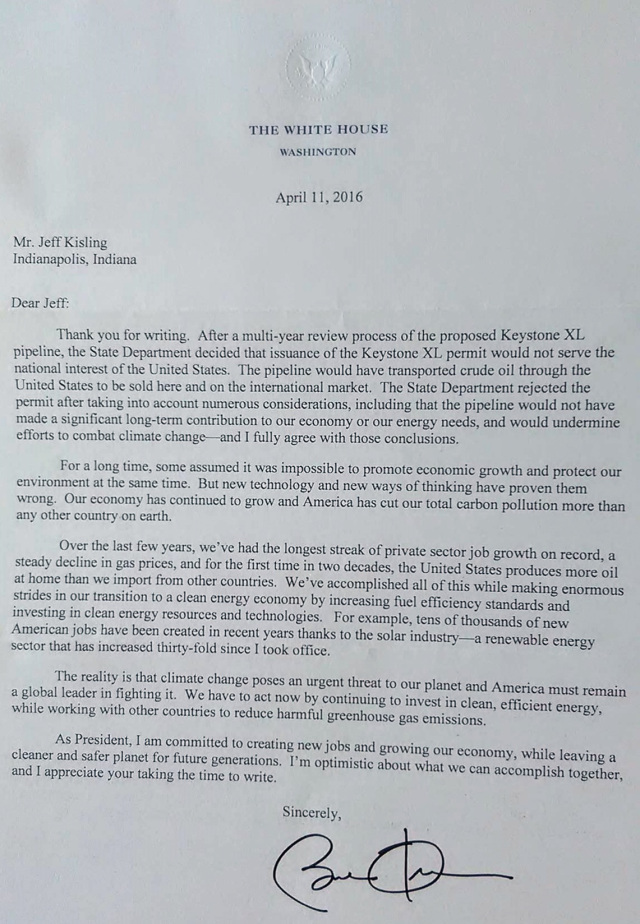
I had written to my congressional representatives, suggesting the creation of a modern day Civilian Conservation Corps, the highly successful public work program of the 1930’s.  But didn’t get any response. https://kislingjeff.wordpress.com/2018/05/18/guaranteed-jobs/

So I’m delighted to learn that part of President Biden’s Executive Order on Tackling the Climate Crisis at Home and Abroad includes the development of a Civilian Climate Corps.

One of the most popular programs from the New Deal is making a comeback, nearly 90 years later.

President Joe Biden recently signed an executive order to create a Civilian Climate Corps. The initiative, he wrote, will provide “good jobs” for young people and train them for environmentally friendly careers, putting them to work restoring public lands and waters, planting trees, improving access to parks, and of course, tackling climate change.

It’s inspired by the original Civilian Conservation Corps, one of President Franklin D. Roosevelt’s signature New Deal programs launched to take on the Great Depression.
Climate advocates celebrated Biden’s move. Naomi Klein, the activist and author of This Changes Everything, said Biden’s announcement was a “hard won victory.”

Representative Alexandria Ocasio-Cortez of New York had reportedly sold Secretary of State John Kerry on the idea of a climate corps. The resemblance to the New Deal program — it even has the same acronym, CCC — may explain why the proposal sounds like part of a Green New Deal.

“The Green New Deal is all about a jobs and justice approach to climate policies, so I think that the new climate corps proposal really encapsulates that,” said Danielle Deiseroth, a climate analyst at Data for Progress, a progressive think tank. Not that you’ll hear Biden saying much about a Green New Deal, since commentators on Fox News have turned the slogan into a synonym for “socialist plot that’ll take away your hamburgers.”

Biden’s Civilian Climate Corps comes straight out of the New Deal by  Kate Yoder , Grist, Feb 8, 2021

The United States and the world face a profound climate crisis.  We have a narrow moment to pursue action at home and abroad in order to avoid the most catastrophic impacts of that crisis and to seize the opportunity that tackling climate change presents.  Domestic action must go hand in hand with United States international leadership, aimed at significantly enhancing global action.  Together, we must listen to science and meet the moment.

By the authority vested in me as President by the Constitution and the laws of the United States of America, it is hereby ordered as follows:

EMPOWERING WORKERS BY ADVANCING CONSERVATION, AGRICULTURE, AND REFORESTATION

Sec. 214.  Policy.  It is the policy of my Administration to put a new generation of Americans to work conserving our public lands and waters.  The Federal Government must protect America’s natural treasures, increase reforestation, improve access to recreation, and increase resilience to wildfires and storms, while creating well-paying union jobs for more Americans, including more opportunities for women and people of color in occupations where they are underrepresented.  America’s farmers, ranchers, and forest landowners have an important role to play in combating the climate crisis and reducing greenhouse gas emissions, by sequestering carbon in soils, grasses, trees, and other vegetation and sourcing sustainable bioproducts and fuels.  Coastal communities have an essential role to play in mitigating climate change and strengthening resilience by protecting and restoring coastal ecosystems, such as wetlands, seagrasses, coral and oyster reefs, and mangrove and kelp forests, to protect vulnerable coastlines, sequester carbon, and support biodiversity and fisheries.
Sec. 215.  Civilian Climate Corps.In furtherance of the policy set forth in section 214 of this order, the Secretary of the Interior, in collaboration with the Secretary of Agriculture and the heads of other relevant agencies, shall submit a strategy to the Task Force within 90 days of the date of this order for creating a Civilian Climate Corps Initiative, within existing appropriations, to mobilize the next generation of conservation and resilience workers and maximize the creation of accessible training opportunities and good jobs.  The initiative shall aim to conserve and restore public lands and waters, bolster community resilience, increase reforestation, increase carbon sequestration in the agricultural sector, protect biodiversity, improve access to recreation, and address the changing climate.


The following is from the Civilian Conservation Corps Legacy website that has a great deal of information about the Civilian Conservation Corp.

“Enrollees of the CCC planted nearly 3 billion trees to help reforest America; constructed trails, lodges, and related facilities in more than 800 parks nationwide; and upgraded most state parks, updated forest fire fighting methods, and built a network of service buildings and public roadways in remote areas.” 

America was in the grip of the Great Depression when Franklin Delano Roosevelt was inaugurated in March of 1933.  More than twenty-five percent of the population was unemployed, hungry and without hope.  The New Deal programs instituted bold changes in the federal government that energized the economy and created an equilibrium that helped to bolster the needs of citizens.  

 Out of the economic chaos emerged the Civilian Conservation Corps (CCC).  The goal was two-fold:  conservation of our natural resources and the salvage of our young men.  The CCC is recognized as the single greatest conservation program in America and it served as a catalyst to develop the very tenets of modern conservation.  The work of America’s young men dramatically changed the future and today we still enjoy a legacy of natural resource treasures that dot the American landscape.

http://www.ccclegacy.org/


The predominantly recognized accomplishments of the CCC are vast.  

  • Nearly Three Billion trees were planted to help reforest America 
  • Modern tenets of conservation are an outgrowth of the conservation work begun by the CCC.
  • Forest fire fighting methods were developed under the CCC program to meet the needs of controlling wild fires that kept the land from healing and naturally restoring the watersheds.  
  • The modern service corps movement in America today is founded on the  Corps concept of the CCC.  Nurtured by CCC alumni and their supporters, modern conservation corps are expanding and contributing to American youth and culture. 
  • Constructed public roadways and buildings. Today citizens still drive on roadways built by the men of the CCC.  Vast expanses of public land are connected through scenic byways and fire trails.  Lodges, cabins, picnic pavilions, and many other recreational structures still stand as a testament to the craftsmanship and design of the CCC program.  One of the most recognizable examples of a scenic road in the central eastern United States is the Blue Ridge Parkway and Shenandoah National Park. 
  • Soil conservation was taught to private citizen as well as implemented on government land. The dust bowl of the Great Plains hampered agricultural output for many years.
  • The development of the infrastructure of the outdoor recreational system is attributed to the CCC program.  Most state park systems we started through the CCC program with an estimated 800 parks constructed across the nation.  The National Parks and the National Forest systems received great benefit and still proclaim the vast legacy of CCC labor.  
  • Built and operated fish hatcheries which replenished the species killed by unfavorable conservation practices.
  • Reintroduced wildlife to depleted area. In many areas wildlife was hard hit due to the devastation of their habitat.  Some camps we involved in  research and many more were tasked with the reintroduction and monitoring of wildlife.
  • Military style camp life developed citizens that supported the WWII manpower effort.
  • The boys supported their families by earning $30 monthly through the distribution of a $25 financial allotment to home.
  • Advanced the standard of living in surrounding communities due to the infusion of revenue amounting to as much as $5,000 a month.

Posted in Uncategorized | Leave a comment

#ShutDownDAPL #NoLine3 #NoKXL

It’s hard to keep up with the news about pipelines these days. Long gone are the days when pipeline permits and construction were unquestionably approved. Following is news about current resistance to three pipelines. Keystone XL (#NoKXL), Dakota Access Pipeline (#NoDAPL, #ShutDownDAPL) and Line 3 (#NoLine3).

Dakota Access Pipeline

Thanks to those who sent photos supporting the Lakota youth runners who ran 93 miles, asking President Biden to shut down the Dakota Access Pipeline (see below).

FARGO, N.D. (AP) — A federal judge on Tuesday agreed to push back a hearing about whether the Dakota Access oil pipeline should be allowed to continue operating without a key permit while the U.S. Army Corps of Engineers conducts an environmental review on the project.https://www.dianomi.com/smartads.epl?id=3533

The Corps filed a motion Monday to postpone the Wednesday hearing in order to allow Biden administration officials more time to familiarize themselves with the case, including the 2016 lawsuit filed by the Standing Rock Sioux Reservation in an attempt to stop construction. The pipeline began operating in 2017 after Donald Trump took office.

U.S. District Judge James Boasberg reset the hearing for April 9. Neither the tribes nor Texas-based Energy Transfer, which owns the pipeline, objected to the delay.

Judge delays hearing on permit for Dakota Access pipeline, Associated Press, 2/11/2021


It’s been a busy and inspiring two weeks at Standing Rock. As an ally of the tribe, you’ve helped us serve as a key part of a coalition of nonprofits telling President Biden to use his executive authority to shut down the Dakota Access pipeline (DAPL). The courts have not made a definitive decision to that effect, but the pressure on Biden seems to be working. The Army Corps, under his direction, has now asked for a 58-day delay to get the new administration up to speed on DAPL. A hearing is scheduled for Wednesday.

Bottom line, it’s increasingly likely that the timeline for a decision will be extended beyond this week, and victory is now more likely than it was just a few days ago. With your continued support, we’ll keep up our breakneck pace for the long haul. We’re in it to win it, no matter how long it takes. That’s why I urge you to become a Lakota Law member now. Your monthly gift will keep us going strong — and give you access to member benefits such as informative and fun online events with me and our other Lakota Law leaders!

Over the past two weeks, we haven’t stopped moving. So far, nearly 22,000 of you have signed our NoDAPL petition to the president and, in coordination with allied organizations, we’ll present Biden with a mountain of signatures. And a host of Hollywood celebrities have now also submitted a NoDAPL letter to the president.
 
Your support propelled us forward on the ground at Standing Rock. In the past 10 days, our organizing and media teams quickly produced an effective series of videos and educational content, shared with our sister orgs, that helped us reach tens of thousands via key social media channels.

It’s vitally important that you continue to stand with us over the days and months to come. In addition to confronting DAPL’s threat to our sacred water and lands, we’re improving our Native-run Standing Rock foster home, mounting a legal defense for a KXL water protector, continuing to support health and safety measures in Lakota Country, and so much more. Thank you, as ever, for making this work possible!

Wopila tanka — my deep gratitude for your sustained support.

Madonna Thunder Hawk
Cheyenne River Organizer
The Lakota People’s Law Project


On Tuesday, my colleague Madonna Thunder Hawk reported to you that President Biden had requested a 58-day delay for the hearing on the Dakota Access pipeline (DAPL), originally scheduled for Feb. 10. According to multiple reports, that hearing has now been moved to Apr. 9. Perhaps more importantly, the president will meet with Standing Rock Chairman Mike Faith and three other South Dakota tribal leaders this Friday.

From my perspective, this is all good news — but any joy we feel should be tempered with renewed vigor. As you’re likely aware by now, we’ve joined a host of other organizations and influencers in supporting the Standing Rock Sioux Tribe’s efforts to shut down DAPL through both legal and political means. So, while I am happy that the president appears to be listening and taking the issue seriously, I’m also aware that every day of delay means another 24 hours the pipeline could fail and contaminate Standing Rock’s water.

One thing is clear: we have time to grow our movement and increase the heat on the president. Once again, I ask that you sign (if you have not already done so) and share widely our NoDAPL petition to Biden.

Chase Iron Eyes
Lead Counsel
Lakota People’s Law Project


Line 3

Line 3 is a proposed pipeline expansion to bring nearly a million barrels of tar sands per day from Alberta, Canada to Superior, Wisconsin. It was proposed in 2014 by Enbridge, a Canadian pipeline company responsible for the largest inland oil spill in the US. Enbridge seeks to build a new pipeline corridor through untouched wetlands and the treaty territory of Anishinaabe peoples, through the Mississippi River headwaters to the shore of Lake Superior.

Stop the Line 3 Pipeline


Honor The Earth

Winona LaDuke explains Enbridge’s proposal for a new tar sands crude oil pipeline called Line 3, which would pierce the heart of Anishinaabe territory in the Great Lakes and endanger our precious fresh water, wild rice, and way of life.

Enbridge already has a Line 3 pipeline and claims that this is a “replacement” line. But don’t be fooled – it’s a bigger pipe that would carry double the volume of oil, and Enbridge wants a new route through the lake country of the north. That’s not a replacement line.

We call on Enbridge to clean up their old crumbling line and the contamination around it, rather than abandon it and leave that liability for landowners and tribes.

And they will have no new corridor! The Ojibwe tribes stand united in opposition, and the people of Minnesota have already said no once to Sandpiper. We are ready for the next battle.

This interview with Waabigonikwe Raven is going to be livestreamed at 1:00 pm Central todayhttps://fb.me/e/yC9Gly5h here https://fb.me/e/yC9Gly5h


Keystone XL Pipeline

UPDATED photos in support of Lakota youth runners calling President Biden to shut down the Dakota Access Pipeline.


#NoKXL #NoDAPL #ShutDownDAPL #NoLine3

Posted in #NDAPL, civil disobedience, climate change, Dakota Access Pipeline, Great Plains Action Society, Indigenous, Keystone XL pipeline (KXL), Native Americans, Uncategorized | Leave a comment

How Defeating Keystone XL Built a Bolder, Savvier Climate Movement

Yesterday’s article, How Defeating Keystone XL Built a Bolder, Savvier Climate Movement by Nick Engelfried in Waging Nonviolence is a well written history of the struggles over the past decade to defeat the Keystone XL pipeline.

A lot is being written now that President Biden has rescinded the pipeline’s permit. We hope this will finally be the end for Keystone XL. But in this article Keystone is referred to as the “zombie” pipeline.

As usual, I feel awkward talking about work I have done. I appreciate what Noah Baker Merrill wrote in Prophets, Midwives and Thieves. “We need to be careful when we talk about humility. The kind of humility this work brings isn’t the kind that would have us reject or repress our gifts. This kind of false humility leads us to oppress each other in the name of preventing pridefulness. This happens far too often.” Or as my friend Ronnie James says, “anyways, brag, brag, blah, blah.”

I first became aware of the terrible damage we were doing to our environment when visiting California one summer vacation, sometime around 1965. We drove into a land enveloped in air so dirty we could actually see it (this being before catalytic converters). Our first several days we coughed and our eyes watered. We were told we’d get used to it.

When I moved to Indianapolis in 1970 I found the same foul air. I decided I couldn’t contribute to that, which began my life of living without a car. My Quaker faith said others might follow my example, but I don’t know of a single person who did.

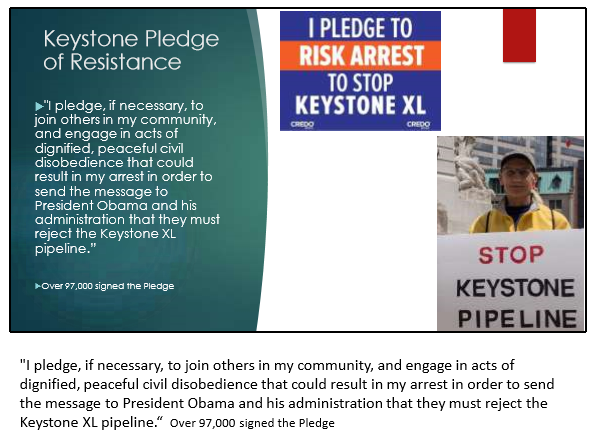
I was frustrated because there didn’t seem to be any way to stop the pollution. When I explored these issues on the Internet, I came across the Keystone Pledge of Resistance. People were invited to sign a statement saying they would engage in acts of nonviolent civil disobedience if it looked like President Obama was going to approve the permit for construction of the Keystone XL pipeline. Nearly 100,000 people signed and submitted their contact information. This was a brilliant way to build a database of climate activists. And looked like finally a way to take on the fossil fuel industry.

“I pledge, if necessary, to join others in my community, and engage in acts of dignified, peaceful civil disobedience that could result in my arrest in order to send the message to President Obama and his administration that they must reject the Keystone XL pipeline.”

The summer of 2013, I was trained as an Action Lead in the Keystone Pledge of Resistance. About 400 of us were taught how to organize and execute nonviolent direct actions. And how to organize and train people in our local communities. Nationwide around 4,000 people were trained to engage in civil disobedience if it became clear President Obama was going to approve the pipeline permit. Fortunately, he denied the permit. Then Trump approved the permit, and now President Biden has rescinded the permit.


Overwhelming Odds, Unexpected Alliances And Tough Losses. From frontline battles to large national mobilizations, tar sands resistance developed new tactics and organizing strategies for the larger climate struggles ahead.
When President Biden rescinded a crucial permit for the Keystone XL pipeline last week, it marked the culmination of one of the longest, highest-profile campaigns in the North American climate movement. The opposition to Keystone XL included large environmental organizations, grassroots climate activist networks, Nebraska farmers, Texas landowners, Indigenous rights groups and tribal governments. Few environmental campaigns have touched so many people over such large swaths of the continent.
The Keystone XL resistance was part of the ongoing opposition to the Canadian tar sands, one of the most carbon-intensive industrial projects on the planet. Yet, it came to symbolize something even bigger. Many activists saw stopping Keystone XL as a measure of success for the climate movement itself.

“Keystone XL isn’t just any project,” said longtime activist Matt Leonard, who coordinated several major protests against the pipeline. “Its defeat is a testament to what movement building and direct action can accomplish.”

Yet, resistance to the Keystone XL’s northern leg succeeded against overwhelming odds. While there is always a possibility it could be resurrected someday, chances of that happening anytime soon seem slim. Understanding how this victory happened — and what it means for the climate movement — requires examining how 10-plus years of tar sands resistance played out in far-flung parts of North America.

How Defeating Keystone XL Built a Bolder, Savvier Climate Movement

I recommend reading the article as it reviews the history of the climate movement.


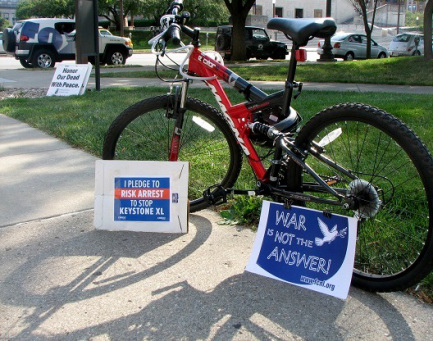
April 22, 2015. I was in Iowa this past weekend, attending Midyear Meeting of Iowa Yearly Meeting (Conservative) at my home (Quaker) meeting, Bear Creek, north of Earlham.  First Day morning Russ Leckband handed me this sign, which is from the concert Willie Nelson and Neal Young gave in Nebraska last year to raise money to stop the Keystone XL Pipeline. From the video below: Who’s going to stand up a save the earth? This all begins with you and me.


Who’s going to stand up a save the earth? This all begins with you and me.

I don’t know why that made me so happy.  I think partly because the Keystone Resistance has been a long, hard struggle, and it felt nice to be able to celebrate the work. It also feels good to feel the support of your faith community.

It also brought home once again how important the arts are in these struggles. The Neil Young/Willie Nelson concert is one example. Additionally, this sign resulted in a chance for me to talk with Scattergood Friends School students who saw it, and engaged me in a conversation about pipelines and civil disobedience. They are aware of Iowa’s Bakkan pipeline proposal and Ed Fallon’s walk related to that. Bakkan Pipeline

It’s also amazing that three years after what was assumed to be an almost automatic approval of the Keystone Pipeline, it is still stalled. President Obama echoed the charge from Franklin Roosevelt “make me do it”, referring to the need for public support for the policies we want. This long Keystone Pledge of Resistance campaign has been an effort to do that. We know the President has been aware of the Pledge since the early days.

The other priceless benefit of the Pledge of Resistance is the national network of activists trained to train others in the practice of, and implementation of nonviolent civil disobedience for social change. In Indianapolis, the Keystone Pledge of Resistance Action Leaders have been involved in all kinds of actions over the past couple of years, not just limited to environmental concerns. We have been involved with issues such as homelessness in Indianapolis

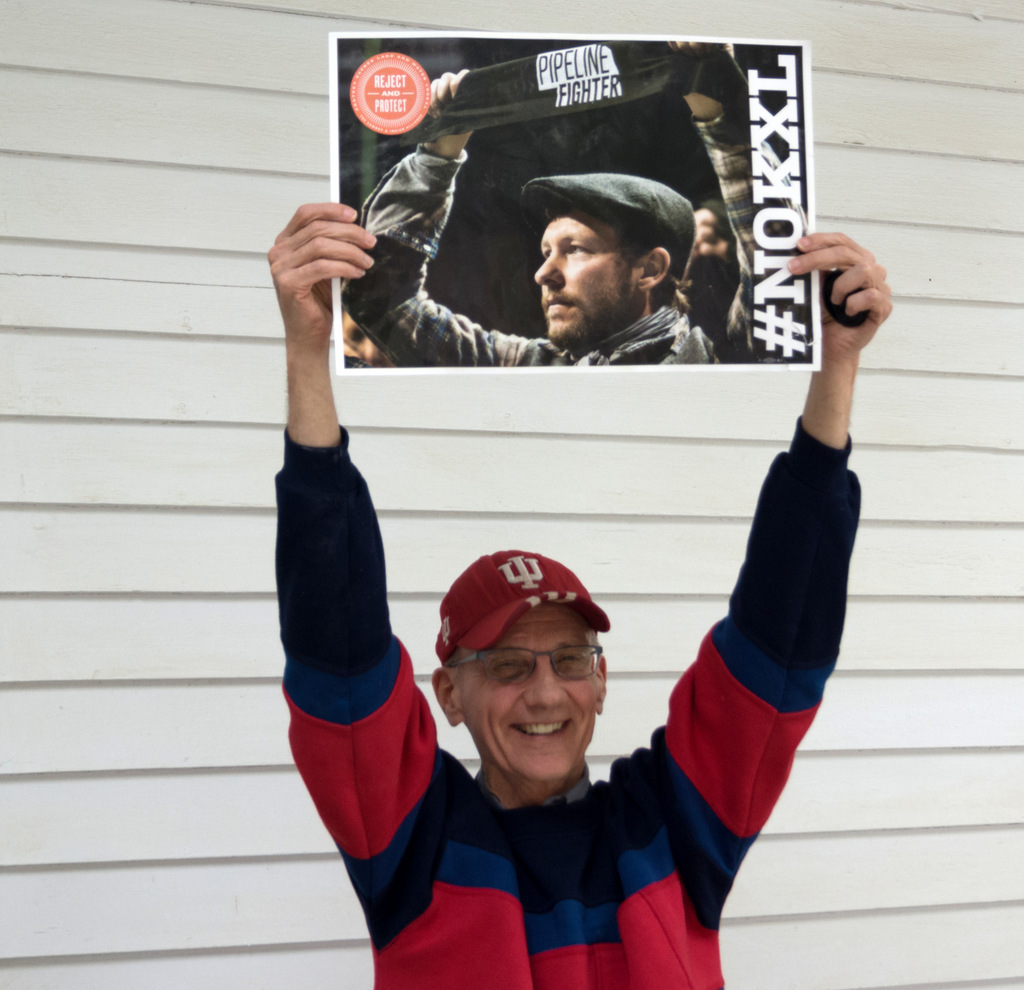
Pipeline Fighter


BarackKeystone
Posted in climate change, Keystone Pledge of Resistance, Keystone XL pipeline (KXL), Quaker, Uncategorized | Leave a comment

Des Moines Mutual Aid and Black Lives Matter ask for help from faith communities

In this dangerous, bitter cold I think about those who are houseless. Des Moines Mutual Aid and other Mutual Aid groups in Des Moines, and Des Moines Black Lives Matter are responding in many ways as you can see below.

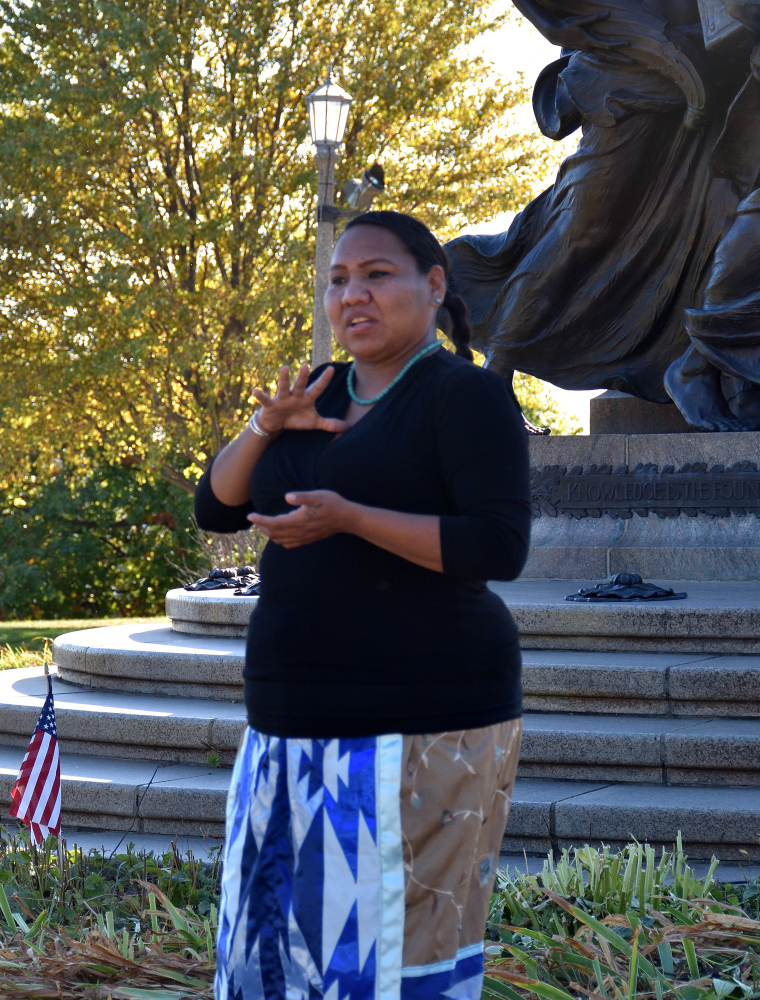
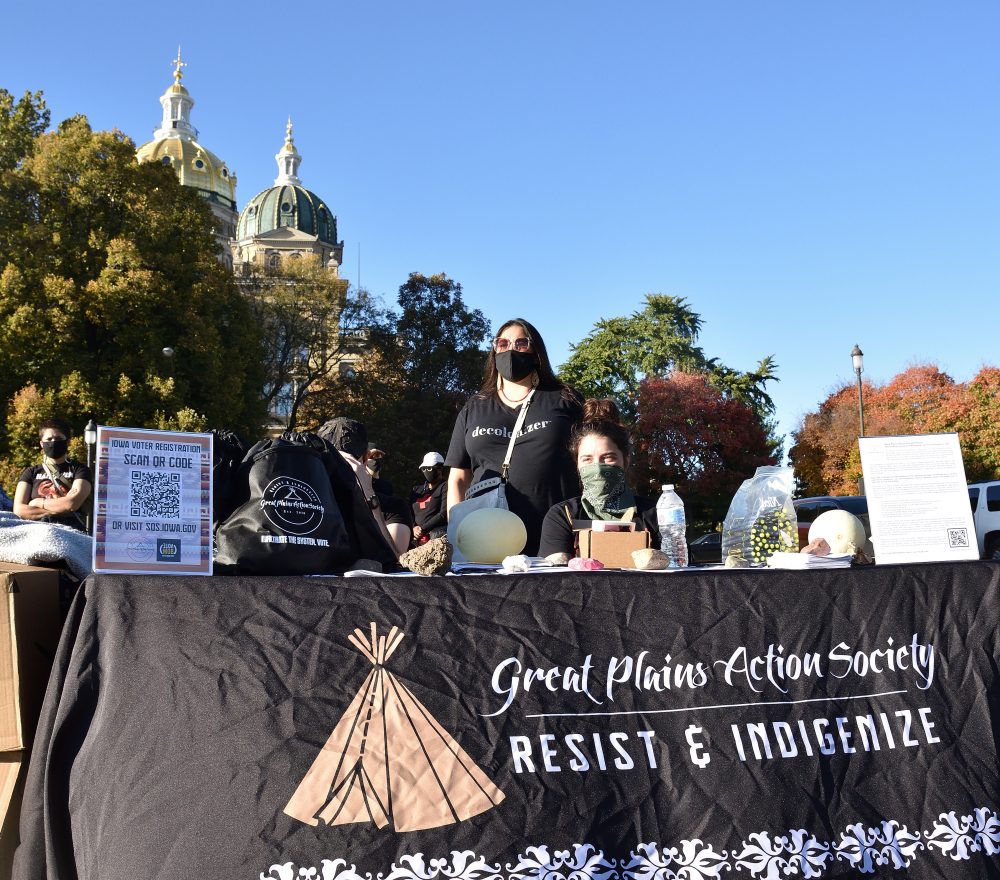
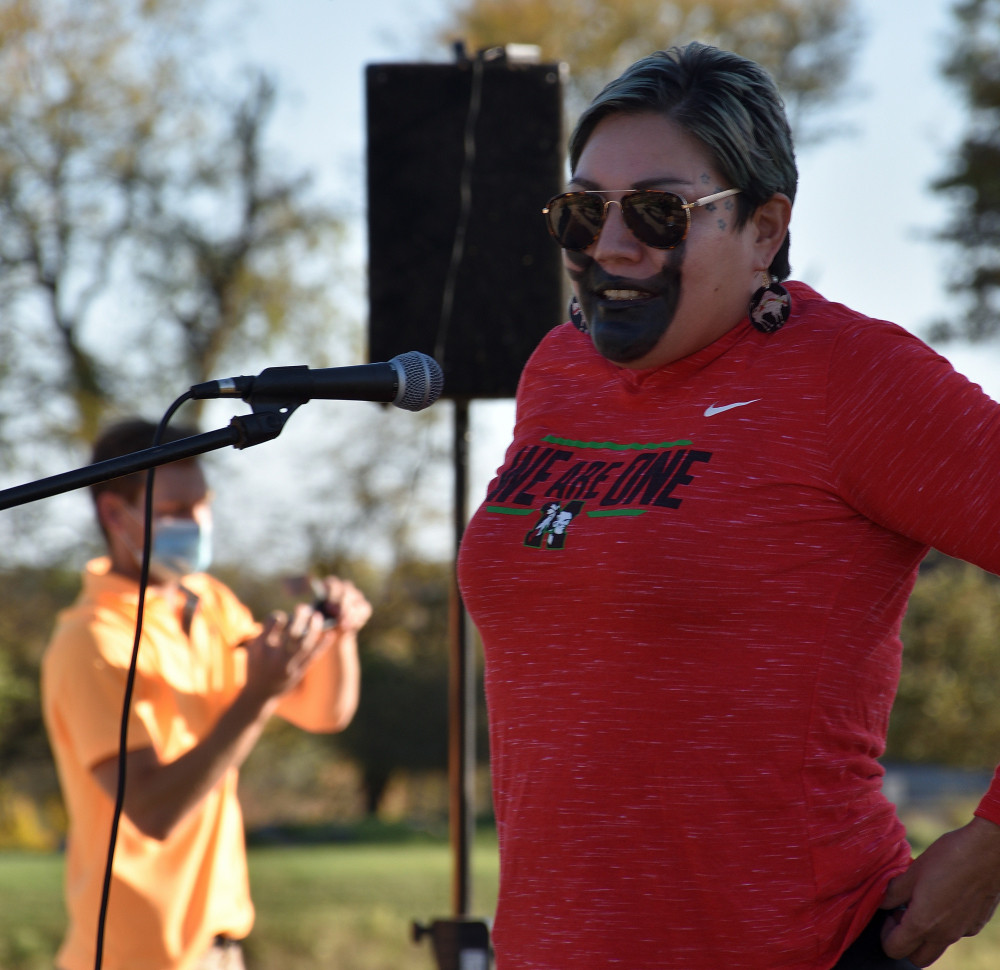
As it says here, “ask your place of worship to open their doors.” Des Moines Valley Friends Meeting supports this by offering their kitchen for food preparation. And I’ve been blessed to help with DM Mutual Aid’s food giveaway. One of those situations where you receive much more than you give. And I’ve been pleased to be able to take and contribute photos, such as those seen below related to Indigenous Peoples Day.
“mutual aid” | Search Results | Quakers, social justice and revolution (jeffkisling.com)

So many people are showing what it looks like when we take care of each other!
Thanks to everyone whose donated to help houseless folks survive the extreme weather! Let’s keep this going!!
Des Moines Mutual Aid – Camp/General aid
Venmo: @DesMoines-MutualAid
https://tinyurl.com/DSMCampAID


Funds needed for winter survival. Donate to these mutual aid groups to support our houseless neighbors!!
Then, think of how you can create mutual aid!
Call upon the city council.
Ask your place of worship to open their doors.
Ask friends to donate.
Des Moines Black Lives Matter


Des Moines Mutual Aid
https://www.facebook.com/Des-Moines-Mutual-Aid-108955753983592/
Des Moines Black Lives Matter
https://www.facebook.com/desmoinesblm/
Des Moines Rent Relief
https://www.facebook.com/DSMBLMRentRelief/
Des Moines Bail Fund
https://www.facebook.com/dsmbailfund
Edna Griffin Mutual Aid
https://www.facebook.com/Edna-Griffin-Mutual-Aid-104364828102971
North Des Moines Mutual Aid
https://www.facebook.com/NorthDesMoinesMutualAid/


I’m so glad to see Mutual Aid in Iowa growing.
You can create your own Mutual Aid community in your neighborhood.
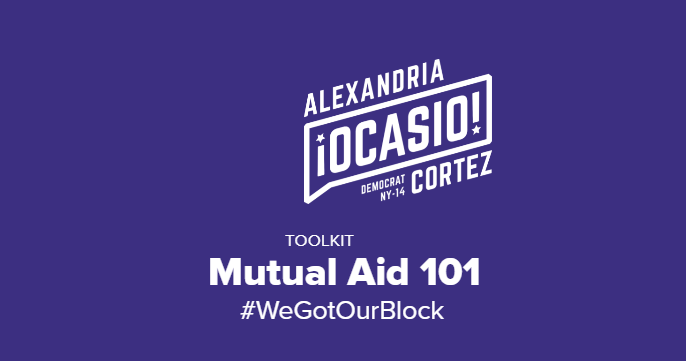
Mutual Aid 101 Toolkit here:
09a653b0-7545-11ea-be6b-9f10a20c6f68-Mutual-Aid-101-Toolkit.pdf (cosmicjs.com)


Funds needed for winter survival. Donate to these mutual aid groups to support our houseless neighbors!!

Then, think of how you can create mutual aid! Call upon the city council. Ask your place of worship to open their doors. Ask friends to donate.

Des Moines Black Lives Matter


Des Moines Mutual Aid

January 5  · One year ago today Des Moines Mutual Aid participated in a march protesting the potential for war or increased hostilities with Iran that followed the fallout of the assassination of Qassem Soleimani by drone strike in Baghdad.

This was our first “public” event since adopting the name Des Moines Mutual Aid, a name we gave our crew during our growing work with our relatives at the houseless camps throughout the city and our help with coordinating a weekly free grocery store that has a 50 year history, founded by the Des Moines Chapter of The Black Panther Party For Self Defense.

A year ago we started laying the foundation for work we had no idea what was coming. As we were adjusting our work with the camps and grocery re-distribution in response to the Covid-19 pandemic, both that continued to grow in need and importance, the police continued their jobs and legacy of brutality and murder. This nation exploded in righteous rage in response to the pig murders of Breonna Taylor and George Floyd. DMMA realized we were in a position to organize a bail fund to keep our fighters out of jail, both to keep the streets alive as a new phase of The Movement was being born, and because jails are a hotspot of Covid-19 spread. Not to mention the racial and economic oppression that is the cash bail system.

In the past year DMMA has expanded its work in multiple directions and gained many partners and allies. We partnered with the Des Moines Black Liberation Movement to create the DSM BLM Rent Relief initiative to help keep families in their homes in the midst of a pandemic and the winter.

The camp work has grown exponentially, but is being managed with our collaboration with Edna Griffin Mutual Aid, DSM Black Liberation Movement, and The Great Plains Action Society.

The bail fund remains successful because of desire from the public and a partnership with Prairielands Freedom Fund (formerly The Eastern Iowa Community Bond Project).

The weekly free food store has maintained itself, carrying on the legacy it inherited.

Every one of our accomplishments are directly tied to the support of so many people donating time, talent, and funds to the work. We are overwhelmed with all of your support and hope you feel we are honoring what we promised. All of these Mutual Aid projects are just a few of many that this city has created in the last year in response to the many crises we face, not only confronting the problems and fulfilling the needs directly in front of us, but creating a sustainable movement that will be capable of responding to what’s next and shaping our collective futures as we replace the systems that fail us.

These last 12 months have been wild and a real test of all of our capabilities to collectively organize. But it is clear that we as a city have what it takes to do what is needed in 2021, no matter what crisis is next.

Much gratitude to you all. In love and rage,

Des Moines Mutual Aid


Posted in Black Lives, Des Moines Black Lives Matter, Des Moines Mutual Aid, Mutual Aid, Quaker Meetings, Uncategorized | Leave a comment

Supporting Standing Rock Youth Run to #shutdownDAPL

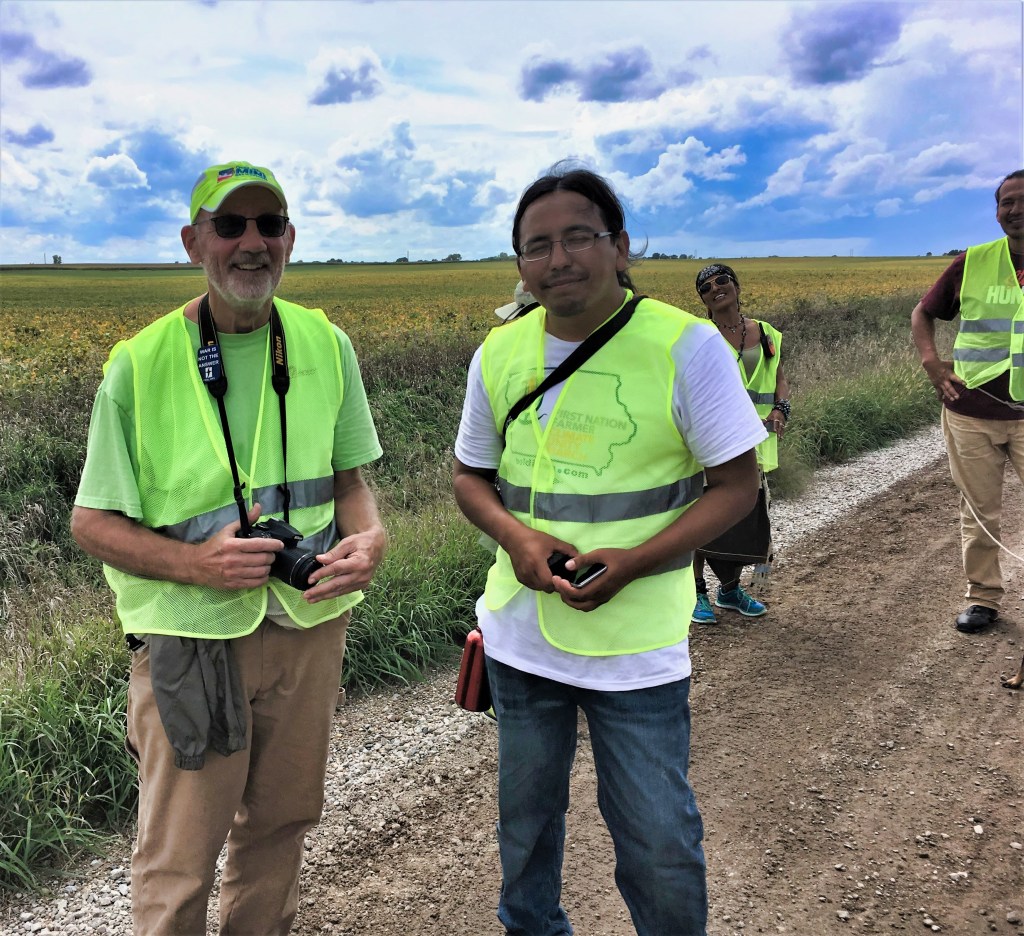
This is an Update of today’s post. Standing Rock Lakota Youth Runners Say #ShutDownDAPL | Quakers, social justice and revolution (jeffkisling.com) This run of the Lakota youth of 93 miles is the same distance we walked and camped on the First Nation-Farmer Climate Unity March in 2018. We traveled along the path of the Dakota Access Pipeline, from Des Moines to Fort Dodge Iowa. First Nation-Farmer Unity – First Nation peoples and farmers working together. A couple of photos below are from the March.

This the day Standing Rock Lakota youth runners will begin a run of over 93 miles back to the Oceti Sakowin Camp. They run to call Biden to shut down the Dakota Access Pipeline (DAPL).

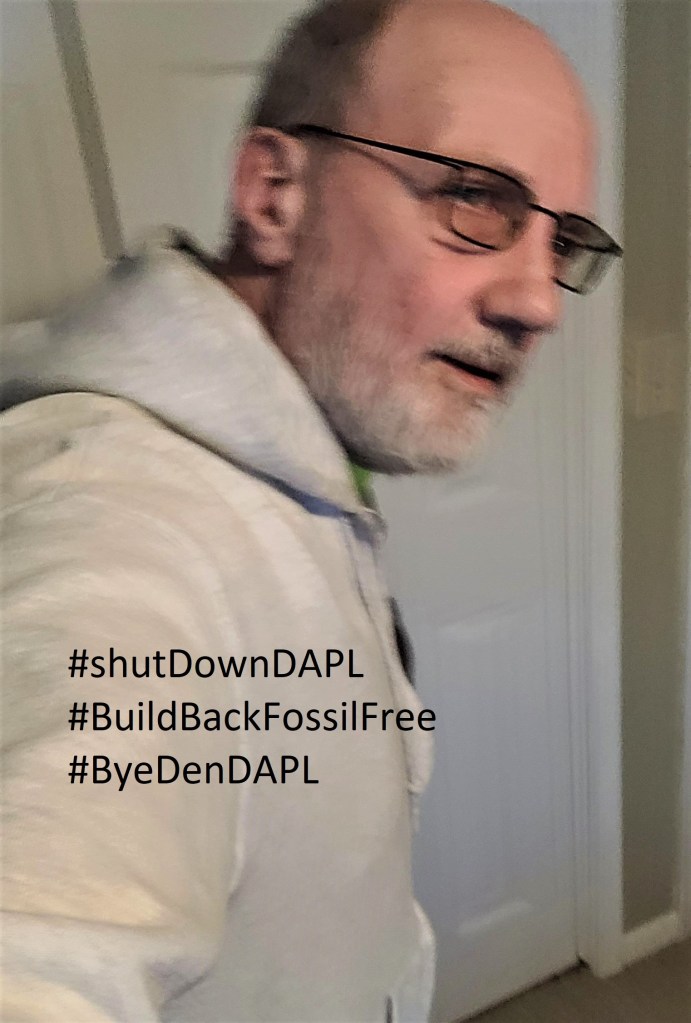
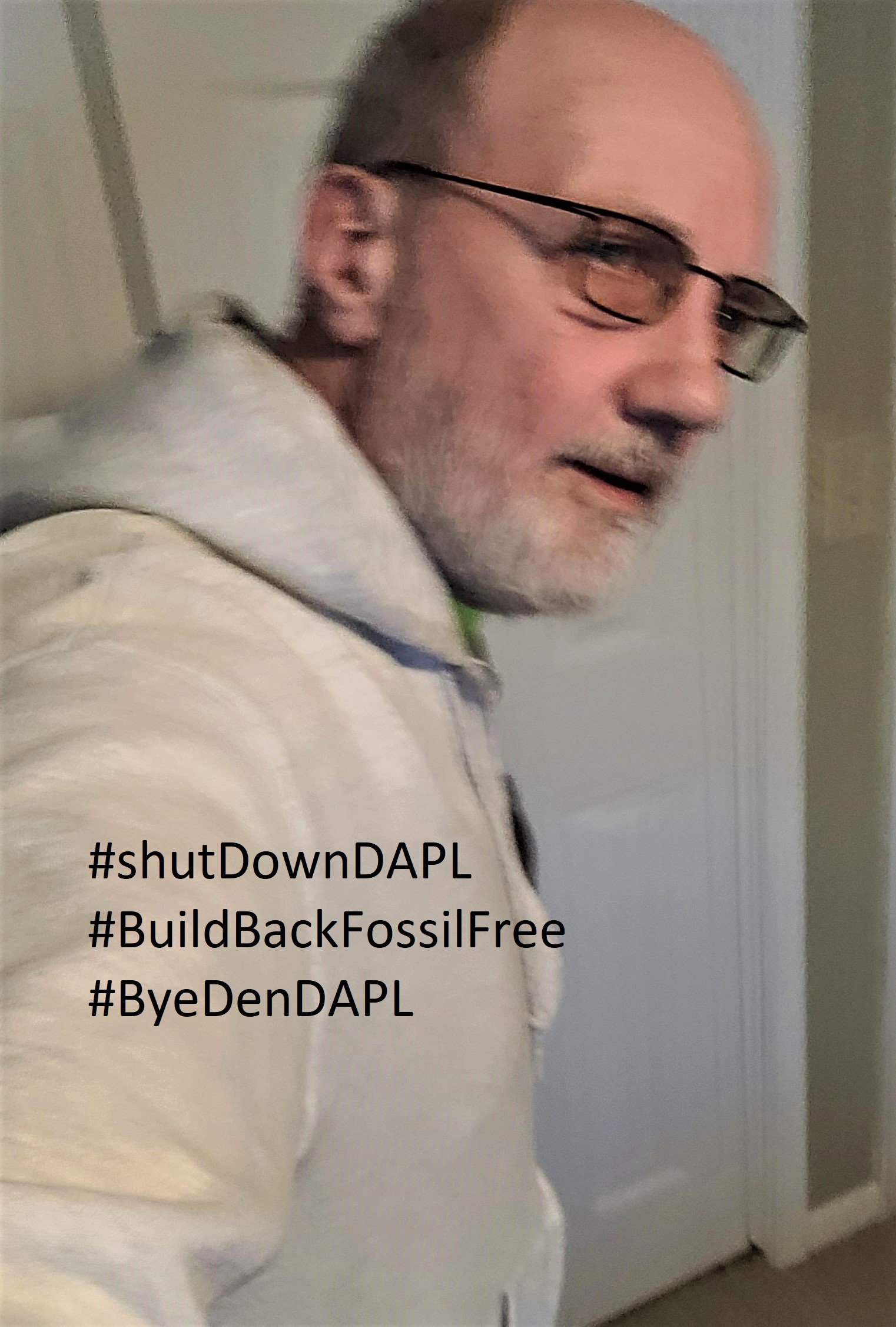
They are asking us to support them in this effort by sharing a photo of ourselves as we run or walk, and save it to social media with the hashtags #ShutDownDAPL, #BuildBackFossilFree, #ByeDenDAPL. We are asked to do this when their run begins on February 9, 2021.

#ShutDownDAPL #BuildBackFossilFree #ByeDenDAPL

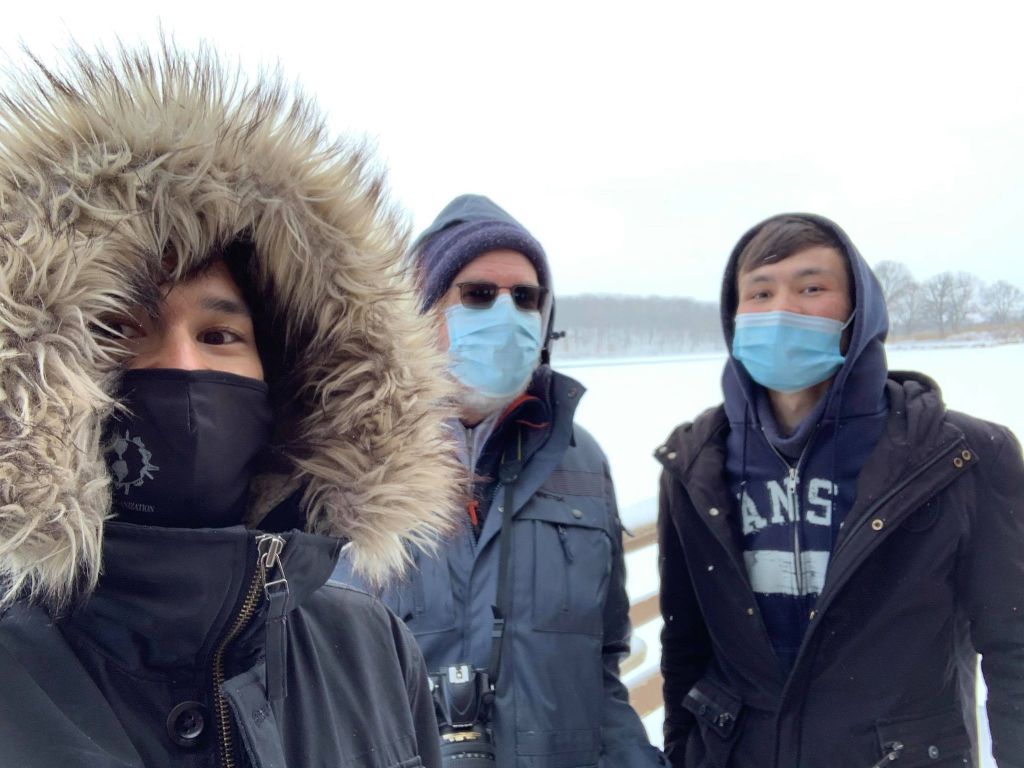
I asked my friends to share their photos and selfies to show support for these youth and their run and they came up with some good ones. Thanks!!

My friend Trisha CaxSep GuWiga Etringer of Great Plains Action Society talks about the Standing Rock Youth Council run. She mentions they are at the Missouri River, which would be contaminated when the pipeline leaks.

Today, Great Plains Action Society stands in solidarity with the Standing Rock Youth Council and supports all allies who are taking action. Youth will run in below zero degree temperature from the Cheyenne River Sioux Tribe to Cannonball to urge PresidentJoeBiden @POTUS to shut down the ILLEGAL and HAZARDOUS #dakotaaccesspipeline.

Here is how you can support their day of action:

Call President Joe Biden at 1-202-456-111 (White House) and use the following script:

“Hello! My name is __________ and I live in ____________. I’m calling to urge President Joe Biden to stand with Standing Rock and shut the down the Dakota Access Pipeline. Currently, DAPL is operating illegally without the needed permits while putting at risk the communities, land, and water of the Standing Rock and Cheyenne River Sioux Nations. Thank you.”

Post a video of running in your area via TikTok, Facebook, IG, and Snapchat. Make it creative in your own way. Use music. Make sure to tag and use the appropriate hashtags. Here is a sample:

Hey @POTUS @PresidentJoeBiden! Shut down the illegal #DAPL now! You are putting #standingrock and #cheyenneriversiouxtribe communities, waters, and land at risk! I support the action of Standing Rock Youth Council and all allies running today!

#ByeDenDAPL #RezpectOurWater #shutdownDAPL #MniWiconi #NoDAPL

Can’t run or walk today? Take a selfie! Use the sample from above. It’s just as effective. Share livestreams, posts, and pictures of this day of action via Facebook, IG, Twitter, and other platforms if available. We suggest Standing Rock Youth Council Indigenous Rising Media Joye Braun Waniya Locke Cheyenne River Grassroots Collective

Don’t forget to use these hashtags: 

#NoDAPL#ByeDenDAPL#MniWiconi#RezpectOurWater#shutdownDAPL#IStandWithStandingRock#BuildBackBetter#BuildBackBetterFossilFree#BlackSnakeKillaz#WaterProtectors


Posted in #NDAPL, Dakota Access Pipeline, Indigenous, Uncategorized | Leave a comment

Standing Rock Lakota Youth Runners Say #ShutDownDAPL

Today is the day Standing Rock Lakota youth runners will begin a run of over 93 miles back to the Oceti Sakowin Camp. They run to call Biden to shut down the Dakota Access Pipeline (DAPL).

They are asking us to support them in this effort by sharing a photo of ourselves as we run or walk, and save it to social media with the hashtags #ShutDownDAPL, #BuildBackFossilFree, #ByeDenDAPL. We are asked to do this when their run begins on February 9, 2021.

#ShutDownDAPL, #BuildBackFossilFree, #ByeDenDAPL

Standing Rock Lakota Youth Announce 93-mile Relay Run Calling for Biden to Shut Down Dakota Access Pipeline

Standing Rock (Feb. 5, 2021)– Today, Lakota youth from the Standing Rock and Cheyenne River tribal nations announced a plan to run over 93 miles back to the Oceti Sakowin Camp site to call on President Biden to shut down the Dakota Access Pipeline (DAPL). The youth are asking for everyone who stood with Standing Rock four years ago to participate by uploading their own #NoDAPL

The oil pipeline poses a grave threat to the safety and sanctity of the tribes’ water, hunting and fishing rights, and cultural and religious practices. Federal courts have sided with the tribes on the years-long litigation and have revoked DAPL’s federal easement required by the Mineral Leasing Act. The tribes have demanded that the United States Army Corps of Engineers (Corps) stop the continued operation of DAPL given that it has no easement. President Biden has made no comment on the issue since taking office.

“In 2016 a group of us youth from the Standing Rock and Cheyenne River Nations had the courage and were brave enough to stand up to the Dakota Access Pipeline that was going to cross our lands, threatening not only our drinking water supply but the land we have called home for generations. People from all walks of life stood with Standing Rock. Mr. President Joe Biden you have the opportunity to be brave and take courage; shut down the Dakota Access Pipeline.” Annalee Rain Yellowhammer, Standing Rock Sioux Youth Council Vice President

On January 7th, 2021 the Westchester Fire Insurance Company, a subsidiary of international insurance corporation Chubb, notified Energy Transfer Partners that it was cancelling a crucial $250,000 bond for the Dakota Access Pipeline (DAPL) segment in Iowa. Publication of this bond cancellation comes just days after a federal appeals court largely sided with the Standing Rock Sioux Tribe upholding lower court decisions that revoked a key permit for the line and required a federal agency to conduct a lengthy environmental review.

Surety bonds are used to protect the public from having to pay for any damages or pollution created by existing projects.

“We as the four bands of Lakota on the Cheyenne River Sioux Tribe will always stand up for our relatives to the west, north, east and south. We have stood with the grassroots people of Standing Rock in 2016 against the Dakota Access Pipeline and today we still stand by them today.” said Joseph White Eyes, Cheyenne River Grassroots Collective.” We cannot let Oil Corporations continue to attack our people on our doorstep. We demand that President Biden shut it down!”

Standing Rock Lakota Youth Announce 93-mile Relay Run Calling for Biden to Shut Down Dakota Access Pipeline, Last Real Indians, Feb 5, 2021


Posted in #NDAPL, climate change, Dakota Access Pipeline, Indigenous, social media, solidarity, Uncategorized | Leave a comment

Mutual Aid and Colonialism

Over the past several years I’ve observed and experienced a powerful confluence of Mutual Aid as a tool to work toward decolonization and antiracism.

In the following I write about what I have learned about Mutual Aid. My objective is to explain how those of us who are white can learn to work with black, indigenous and other people of color (BIPOC) in ways that must be enacted through truth telling and Mutual Aid to discourage colonized ideas. (see TRUTHSGIVING below).

A core concept of Mutual Aid is a flat hierarchy of working together where everyone in a group is working for a solution to a problem that might affect everyone in the group. This is the opposite of vertical hierarchies commonly seen today. White supremacy can only occur with a vertical organizing hierarchy where white people try to enforce their superiority.

In its simplest form, mutual aid is the motivation at play any time two or more people work together to solve a problem for the shared benefit of everyone involved. In other words, it means co-operation for the sake of the common good. Understood in this way, mutual aid is obviously not a new idea. In fact, the very earliest human societies practiced mutual aid as a matter of survival, and to this day there are countless examples of its logic found within the plant and animal kingdoms.

To understand the specific embrace of Mutual Aid as applied to justice work today (which I indicate by capitalizing the term), we need to go back over 100 years, to the writings of the Russian Pyotr Kropotkin, who happened to also be an accomplished zoologist and evolutionary biologist.

Back in Kropotkin’s day, the field of evolutionary biology was heavily dominated by the ideas of Social Darwinists such as Thomas H. Huxley. By ruthlessly applying Charles Darwin’s famous dictum “survival of the fittest” to human societies, Huxley and his peers had concluded that existing social hierarchies were the result of natural selection, or competition between free sovereign individuals, and were thus an important and inevitable factor in human evolution.

Not too surprisingly, these ideas were particularly popular among rich and politically powerful white men, as it offered them a pseudo-scientific justification for their privileged positions in society, in addition to providing a racist rationalization of the European colonization of Asia, Africa and the Americas.

Kropotkin attacked this conventional wisdom, when in 1902 he published a book called Mutual Aid: A Factor in Evolution, in which he proved that there was something beyond blind, individual competition at work in evolution. Kropotkin demonstrated that species that were able to work together, or who formed symbiotic arrangements with other species based on mutual benefit, were able to better adapt to their environment, and were granted a competitive edge over those species who didn’t, or couldn’t.

In today’s metropolitan societies, people are socialized to see themselves as independent, self-sufficient individuals, equipped with our own condos, bank accounts, smartphones and Facebook profiles.

However, this notion of human independence is a myth, promoted by corporations and states seeking to mold us into atomized, and easily controlled consumers, concerned primarily with our own short-term well-being.

The truth is that human beings are incredibly interdependent.

In fact, that’s the key to our success as a species.

What Is Mutual Aid?


“Survival of the fittest” was used by wealthy white men as justification for their privilege, for white supremacy. Justification for the colonization of this country and control of our political and capitalist economic systems. For structural racism.

The false premise of white supremacy is increasingly clear, as those political and economic systems are collapsing today. The COVID-19 pandemic has made it impossible to ignore the failure of the capitalist economic system. The weakness of our healthcare systems and social safety nets are exposed. Suddenly millions are struggling to find basic necessities and to deal with added burdens related to health and with their children at home and needing schooling.

That is an example of the strength of Mutual Aid, that many who might not be affected by a common concern related to food insecurity, for example, may sometime find they themselves needing that help.

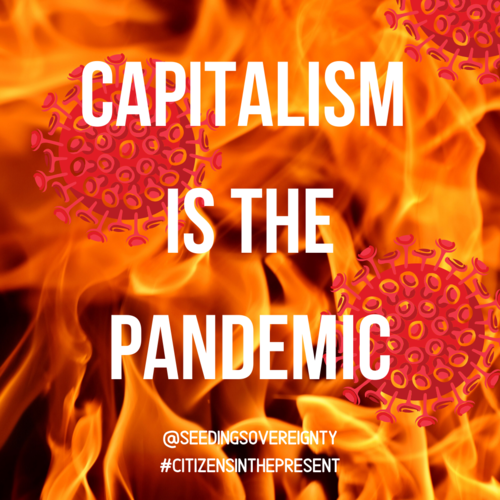
As capitalism continues to “fray around the edges” as Ronnie James puts it, we will continue to see greatly accelerating social collapse. The alternative to capitalism and structural racism is Mutual Aid.  We can and should begin our own work with Mutual Aid now.

I’ve been researching the concept of Mutual Aid for most of this year, beginning in February when Ronnie James came to Friends House to join us for a vigil for the Wet’suwet’en peoples. Since then, Ronnie, of Des Moines Mutual Aid and the Great Plains Action Society has moved his office to Friends House. Des Moines Valley Friends Meeting has graciously allowed Des Moines Mutual Aid (DMMA) to use their kitchen to prepare food that is then distributed to the houseless community.

Since that time Ronnie has graciously taken a lot of time to mentor me about Mutual Aid.  This education has been augmented by my participation in DMMA’s food giveaway program. Ronnie is an Indigenous Organizer, and his main work is DMMA. It is also significant that Ronnie and Mutual Aid are fully supported by Christine Nobiss and Great Plains Action Society.

Truthsgiving

Truthsgiving is an ideology that must be enacted through truth telling and mutual aid to discourage colonized ideas about the thanksgiving mythology—not a name switch so we can keep doing the same thing. It’s about telling and doing the truth on this day so we can stop dangerous stereotypes and whitewashed history from continuing to harm Indigenous lands and Peoples, as well as Black, Latinx, Asian-American and all oppressed folks on Turtle Island.

https://www.truthsgiving.org/about

You can view a video of the TRUTHSGIVING event here, where Ronnie, Christine and Trisha Etringer discuss their decolonizing work. 
 https://fb.watch/2669vqdfrG/


It is also significant that Des Moines Black Lives Matter/Liberation embraces the concept of Mutual Aid. Which means there has been and will continue to be significant interaction between DMMA and Des Moines BLM.

From the Des Moines Black Lives Matter Facebook page:

mutual aid is the new economy. mutual aid is community. it is making sure your elderly neighbor down the street has a ride to their doctor’s appointment. mutual aid is making sure the children in your neighborhood have dinner, or a warm coat for the upcoming winter. mutual aid is planting community gardens.

capitalism has violated the communities of marginalized folks. capitalism is about the value of people, property and the people who own property. those who have wealth and property control the decisions that are made. the government comes second to capitalism when it comes to power.

in the name of liberation, capitalism must be reversed and dismantled. meaning that capitalistic practices must be reprogrammed with mutual aid practices.


Without a doubt, when we get to the other side, it won’t be thanks to our government or those tasked with cleaning up the messes of their own oppression. It’ll be thanks to mutual aid. It’ll be because folks like Black Trans Blessings are working with, protecting and providing for black and brown TGNC folks in NYC. It’ll be because STL Covid Mutual Aid are making their own hand-washing stations, taping information pamphlets to them and sourcing tents and no-contact thermometers. It’ll be because folks in Florida, DC, LA and elsewhere are taking on the requests from closed-down food banks. It’ll be because our networks are building relationships with local organizations – from farmers to faith-based groups – in order to address the changing and growing needs of our communities. It will be because we do what our system has never done and will never do: work with and for people.

DISUNITED STATES: GOVERNMENT FAILURE TO ADDRESS CORONAVIRUS IS SPARKING A MUTUAL AID REVOLUTION By Eleanor Goldfield, intpress News. April 14, 2020

If poor and working people see within the coronavirus not only a pandemic that will possibly leave in its wake a massive death count, but also the very real crisis that is modern industrial capitalism, then we must mobilize for our own interests, push back, and actually fight. This means demanding not only bread and butter: free housing, access to food, an end to evictions, and clean water: but also building new human relationships, new forms of actual life. This means creating ways of meeting our needs, making decisions, and organizing ourselves and solving problems outside of the State structure and the capitalist system.

Autonomous Groups Are Mobilizing Mutual Aid Initiatives To Combat The Coronavirus, It’s Going Down, March 20, 2020

Posted in decolonize, Des Moines Black Lives Matter, Des Moines Mutual Aid, Indigenous, Mutual Aid, Uncategorized | Leave a comment

Standing Rock Lakota Youth Runners Say #ShutDownDAPL

Standing Rock Lakota youth runners will begin a run of over 93 miles back to the Oceti Sakowin Camp site on Tuesday, February 9, 2021. They run to call Biden to shut down the Dakota Access Pipeline (DAPL).

They are asking us to support them in this effort by sharing a photo of ourselves as we run or walk, and save it to social media with the hashtags #ShutDownDAPL, #BuildBackFossilFree, #ByeDenDAPL. We are asked to do this when their run begins on February 9, 2021.

Standing Rock Lakota Youth Announce 93-mile Relay Run Calling for Biden to Shut Down Dakota Access Pipeline

Standing Rock (Feb. 5, 2021)– Today, Lakota youth from the Standing Rock and Cheyenne River tribal nations announced a plan to run over 93 miles back to the Oceti Sakowin Camp site to call on President Biden to shut down the Dakota Access Pipeline (DAPL). The youth are asking for everyone who stood with Standing Rock four years ago to participate by uploading their own #NoDAPL

The oil pipeline poses a grave threat to the safety and sanctity of the tribes’ water, hunting and fishing rights, and cultural and religious practices. Federal courts have sided with the tribes on the years-long litigation and have revoked DAPL’s federal easement required by the Mineral Leasing Act. The tribes have demanded that the United States Army Corps of Engineers (Corps) stop the continued operation of DAPL given that it has no easement. President Biden has made no comment on the issue since taking office.

“In 2016 a group of us youth from the Standing Rock and Cheyenne River Nations had the courage and were brave enough to stand up to the Dakota Access Pipeline that was going to cross our lands, threatening not only our drinking water supply but the land we have called home for generations. People from all walks of life stood with Standing Rock. Mr. President Joe Biden you have the opportunity to be brave and take courage; shut down the Dakota Access Pipeline.” Annalee Rain Yellowhammer, Standing Rock Sioux Youth Council Vice President

On January 7th, 2021 the Westchester Fire Insurance Company, a subsidiary of international insurance corporation Chubb, notified Energy Transfer Partners that it was cancelling a crucial $250,000 bond for the Dakota Access Pipeline (DAPL) segment in Iowa. Publication of this bond cancellation comes just days after a federal appeals court largely sided with the Standing Rock Sioux Tribe upholding lower court decisions that revoked a key permit for the line and required a federal agency to conduct a lengthy environmental review.

Surety bonds are used to protect the public from having to pay for any damages or pollution created by existing projects.

“We as the four bands of Lakota on the Cheyenne River Sioux Tribe will always stand up for our relatives to the west, north, east and south. We have stood with the grassroots people of Standing Rock in 2016 against the Dakota Access Pipeline and today we still stand by them today.” said Joseph White Eyes, Cheyenne River Grassroots Collective.” We cannot let Oil Corporations continue to attack our people on our doorstep. We demand that President Biden shut it down!”

Standing Rock Lakota Youth Announce 93-mile Relay Run Calling for Biden to Shut Down Dakota Access Pipeline, Last Real Indians, Feb 5, 2021


Posted in #NDAPL, climate change, Dakota Access Pipeline, Indigenous, social media, solidarity, Uncategorized | Leave a comment

More related to Black History Month

You can follow local information on the Des Moines Black Lives Matter Facebook page: (2) Des Moines Black Lives Matter | Facebook

No photo description available.
Des Moines Black Lives Matter | Facebook

You can follow and support Des Moines Black Lives Matter leader Mate Farrakhan Muhammad (Matthew Bruce) TheBlackArtivist


In overlooking, denying, evading this complexity–which is nothing more than the disquieting complexity of ourselves–we are diminished and we perish; only within this web of ambiguity, paradox, this hunger, danger, darkness, can we find at once ourselves and the power that will free us from ourselves.

– James Baldwin –

Youth Undoing Institutional Racism Presents:

#TRWBT “Lean On Me” Virtual Watch Party Registration

Y.U.I.R. Present’s “The Revolution Will Be Televised”! Every Saturday of the month of February we will be showcasing a series of movies based around the theme of Racism and Education.

Starting off February 6th from 2-5pm with the film “Lean on Me” which is based on the story of Joe Louis Clark, a real life inner city high school principal in Paterson, New Jersey, whose school is at risk of being taken over by the New Jersey state government unless students improve their test scores on the New Jersey Minimum Basic Skills Test.

We will be having a short discussion of the themes in the movie and how they relate to systemic racism afterwards along with special guests!! Get your POPCORN READY!!!

This movie is rated PG13 and does not require parental consent.

Please share this registration link with youth anywhere ages 14-24.


Following is information about the 56th anniversary of the Selma Bridge crossing. This is a free, VIRTUAL event. Register at: https://hopin.com/events/56th-anniversary-selma-bridge-crossing-jubilee

The 56th Anniversary Selma Bridge Crossing Jubilee, the largest annual civil rights event in the nation, is scheduled to take place March 5-7 as we honor the past, examine the present and look forward to the future of the fight for equity and justice. This year’s theme is:

Beyond the Bridge: People Power, Political Power, Economic Power

This epic undertaking is making history in a brand new way by going global and virtual for the first time ever! The Jubilee will be a time of celebration, education, and commemoration, with activities for people of all ages — and the entire weekend is designed for you to stay engaged, stay safe, and log in from anywhere in the world. 

You won’t want to miss:

  • Special appearances by legendary civil rights leaders, Ambassador Andrew Young and Dolores Huerta
  • A tribute to the late Congressman John Lewis
  • Powerful stories of Foot Soldiers in the movement, in their own words
  • Step Show and Battle of the Bands Competitions
  • A soul-stirring Gospel Concert
  • Virtual Music and Film Festivals
  • The Virtual Crossing Reenactment across the Edmund Pettus Bridge,
  • and so much more!

Posted in American Friends Service Committee, Black Lives, civil disobedience, Des Moines Black Lives Matter, race, Uncategorized | Leave a comment