Property

I continue to struggle to convince others that we cannot make progress toward justice as long as we are content to remain in systems that continue to cause injustice. Racism is built into the social, economic and political structures of the land called the United States. All the work that so many do to try to improve these systems is doomed to failure because the systems remain.

I’m of the firm opinion that a system that was built by stolen bodies on stolen land for the benefit of a few is a system that is not repairable. It is operating as designed, and small changes (which are the result of huge efforts) to lessen the blow on those it was not designed for are merely half measures that can’t ever fully succeed.

So the question is now, where do we go from here? Do we continue to make incremental changes while the wealthy hoard more wealth and the climate crisis deepens, or do we do something drastic that has never been done before? Can we envision and create a world where a class war from above isn’t a reality anymore?”

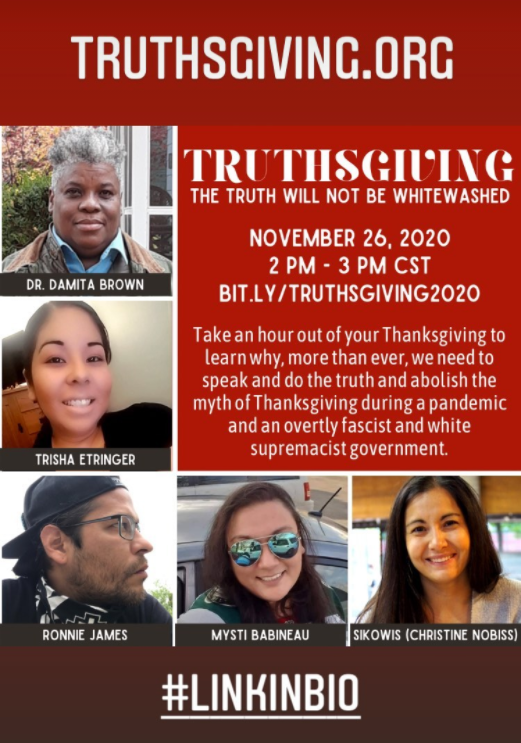
Ronnie James

Quakers will only be truly prophetic when they risk a great deal of their accumulated privilege and access to wealth. Prophets cannot have a stake in maintaining the status quo. Any attempt to change a system while benefiting and protecting the benefits received from the system reinforces the system. Quakers as much as anyone not only refuse to reject their white privilege, they fail to reject the benefits they receive from institutionalized racism, trying to make an unjust economy and institutionalized racism and patriarch more fair and equitable in its ability to exploit. One can not simultaneously attack racist and patriarchal institutions and benefit from them at the same time without becoming more reliant upon the benefits and further entrenching the system. Liberalism at its laziest.

Scott Miller

This morning I was led to consider the concept of property.


The colonization of America was built on the idea of people and land as property. “The exclusive right to possess, enjoy, and dispose of a thing: ownership”. Exclusive is key, because it suggests that the property owner can do anything they want with the property, be that land or people.

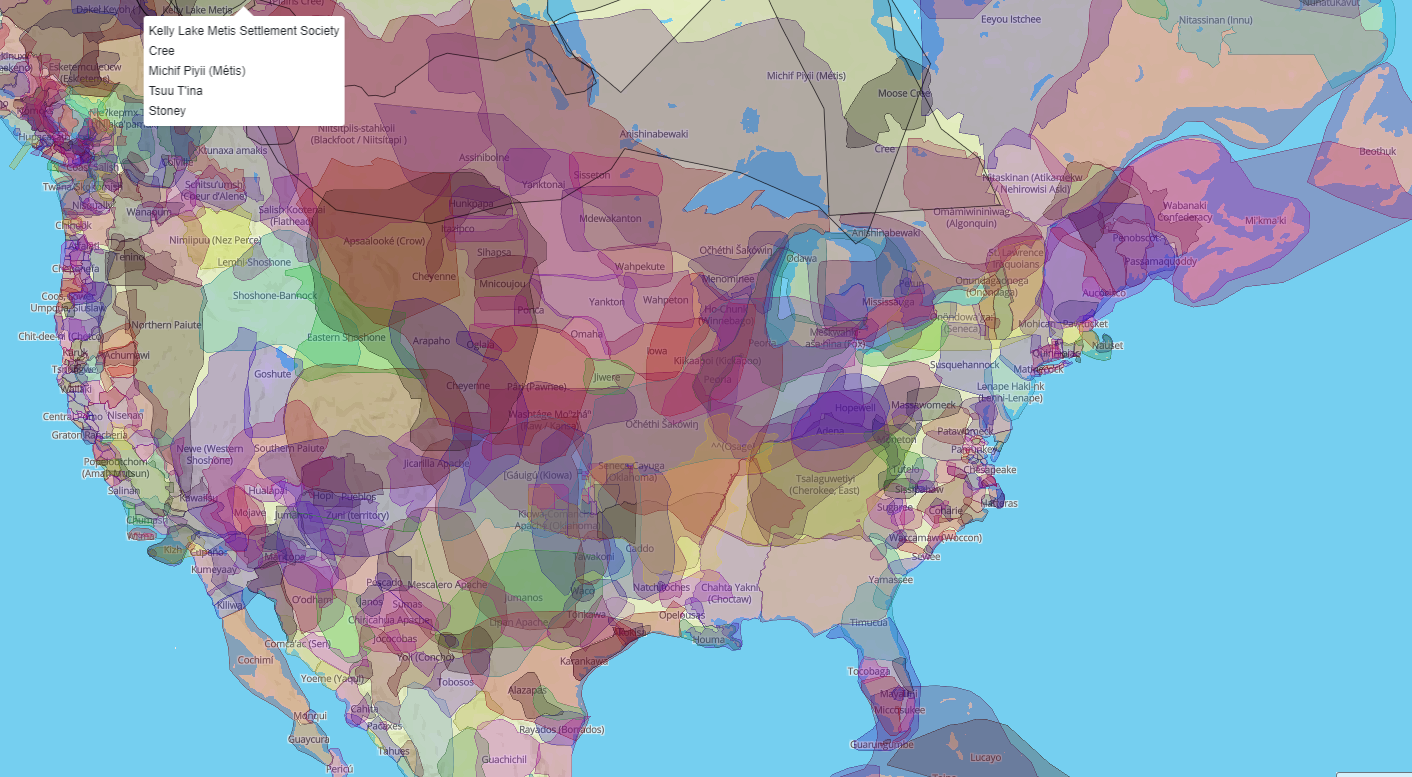
Indigenous peoples were swindled out of their land because they did/do not think of land as property, as being owned. And believed in sacred promises, such as honoring treaties. Colonists violently seized all the land, and broke every treaty.

Incredible as it seems, people and their labor were/are designated as property. People from Africa and other places were captured and enslaved. Families separated. Native land was stolen by classifying it as property. Millions of people are essentially enslaved today as they work for poverty wages, if they are able to find a job.

As I’ve been participating in and writing about for the past year, Mutual Aid is how to get out of the current social, political and economic systems the continue to promulgate injustice.

“mutual aid” | Search Results | Quakers, social justice and revolution (jeffkisling.com)

The greatest driver to build mutual aid groups is we will soon have no choice. It is increasingly clear our political system has failed us. Capitalism has failed us. Our healthcare industry is failing despite the valiant efforts of front line health workers. And most of all, environmental chaos will rapidly worsen.

Posted in abolition, capitalism, decolonize, enslavement, Indigenous, Mutual Aid, race, Uncategorized | Leave a comment

M-Muhammad / Matt Bruce talks about the BLM Movement in Iowa

I’m just beginning to learn about abolishing police and prisons.
abolition | Search Results | Quakers, social justice and revolution (jeffkisling.com)

I’m aware, as a white person, that I need to be careful that I don’t write about things that aren’t my story to tell. I’ll probably make mistakes about that.

Yesterday’s blog post included video and remarks Matt Bruce made at the press conference to announce the Black State of Emergency in Iowa. #BlackEmergencyIA Mutual Aid and Black Liberation.

I’m glad to have found the following podcast, so you can hear M-Muhammad / Matt Bruce speak for himself. I haven’t met Matt, yet, but look forward to doing so. Also, yesterday’s post tells some of the ways Des Moines Mutual Aid supports Des Moines Black Lives Matter.

Matt’s stories show why abolition is so important.


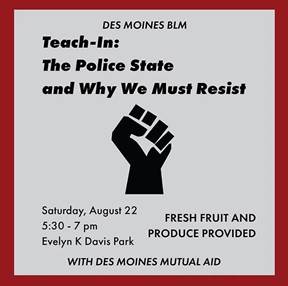
Des Moines Black Lives Matter Facebook


Posted in abolition, Black Lives, Des Moines Black Lives Matter, Des Moines Mutual Aid, race, Uncategorized | Leave a comment

Mutual Aid and Black Liberation

As I was learning about Mutual Aid over the past year, one of the things that impressed me was in addition to work related to food and shelter, Des Moines Mutual Aid also manages a bail fund. I was glad to see support for those who agitated for change. Mutual Aid is about meeting survival needs, and working for system change. The system that failed to provide food and shelter, that often was the cause of food insecurity and people losing their homes by eviction.

The bail fund supported those who were arrested in Iowa during demonstrations related to police violence and racial injustice.

The situation in Iowa was/is so bad that Des Moines Black Liberation declared a Black State of Emergency #BlackEmergencyIA.

In the following video, Matt Bruce discussed these issues.

Matthew: All right everybody, I want to thank everyone that’s come out, especially those that have supported BLM – Des Moines BLM – all summer.
Just to run down some of the things we’ve accomplished:
we’ve accomplished getting the curfew ended – a racist curfew ended –
we accomplished getting all of our protesters out of the Polk County Jail
we accomplished a racial profiling ban here in Des Moines
we accomplished a plan for a more perfect union statewide
we got 60,000 people their rights to vote back, and
we’ve established also – Iowa City has done a lot of work on police accountability. The only city, the only city council to force their police department to release body [camera] footage of tear gassing people, the only people to get that level of accountability.
And we have institutionalized a direct action movement, and that is bigger than any of those one things, is that the tools that got us those amendments to the system is gonna sit here and exist indefinitely. And that’s the most – yeah that’s some claps – that’s the most important part of what we’ve built so far.


Those remarks were followed with more people speaking. I’m including what Patrick Stahl said, because he is one of the people I know from my recent engagement with Des Moines Mutual Aid’s food giveaway program.

Patrick: Hi, I’m Patrick Stahl with Des Moines Mutual Aid.

Des Moines Mutual Aid is a collective that does outreach for homeless folks in our community, houseless folks in our community. We also assist BLM with their rent relief fund, and most of the work we’ve done is running the bail fund for the protests over the summer. In the course of that work, we have witnessed firsthand the violence that is done upon people of color, Black people specifically, by the white supremacist forces of the state – in this state, in this city, in this county. There is absolutely a state of emergency for people of color and Black people in Iowa. The state of emergency has been a long time coming. We will support – DMMA will absolutely support any and all efforts of this community – BLM, and the people of color community more generally- to keep themselves safe. Power to the people.


From the Des Moines Black Lives Matter Facebook page:

mutual aid is the new economy. mutual aid is community. it is making sure your elderly neighbor down the street has a ride to their doctor’s appointment. mutual aid is making sure the children in your neighborhood have dinner, or a warm coat for the upcoming winter. mutual aid is planting community gardens.

capitalism has violated the communities of marginalized folks. capitalism is about the value of people, property and the people who own property. those who have wealth and property control the decisions that are made. the government comes second to capitalism when it comes to power.

in the name of liberation, capitalism must be reversed and dismantled. meaning that capitalistic practices must be reprogrammed with mutual aid practices.


So you can see how Des Moines Mutual Aid and Des Moines Black Liberation work together, to support each other. The following post describes these relationships in more detail.

January 5  · One year ago today Des Moines Mutual Aid participated in a march protesting the potential for war or increased hostilities with Iran that followed the fallout of the assassination of Qassem Soleimani by drone strike in Baghdad.

This was our first “public” event since adopting the name Des Moines Mutual Aid, a name we gave our crew during our growing work with our relatives at the houseless camps throughout the city and our help with coordinating a weekly free grocery store that has a 50 year history, founded by the Des Moines Chapter of The Black Panther Party For Self Defense.

A year ago we started laying the foundation for work we had no idea what was coming. As we were adjusting our work with the camps and grocery re-distribution in response to the Covid-19 pandemic, both that continued to grow in need and importance, the police continued their jobs and legacy of brutality and murder. This nation exploded in righteous rage in response to the pig murders of Breonna Taylor and George Floyd. DMMA realized we were in a position to organize a bail fund to keep our fighters out of jail, both to keep the streets alive as a new phase of The Movement was being born, and because jails are a hotspot of Covid-19 spread. Not to mention the racial and economic oppression that is the cash bail system.

In the past year DMMA has expanded its work in multiple directions and gained many partners and allies. We partnered with the Des Moines Black Liberation Movement to create the DSM BLM Rent Relief initiative to help keep families in their homes in the midst of a pandemic and the winter.

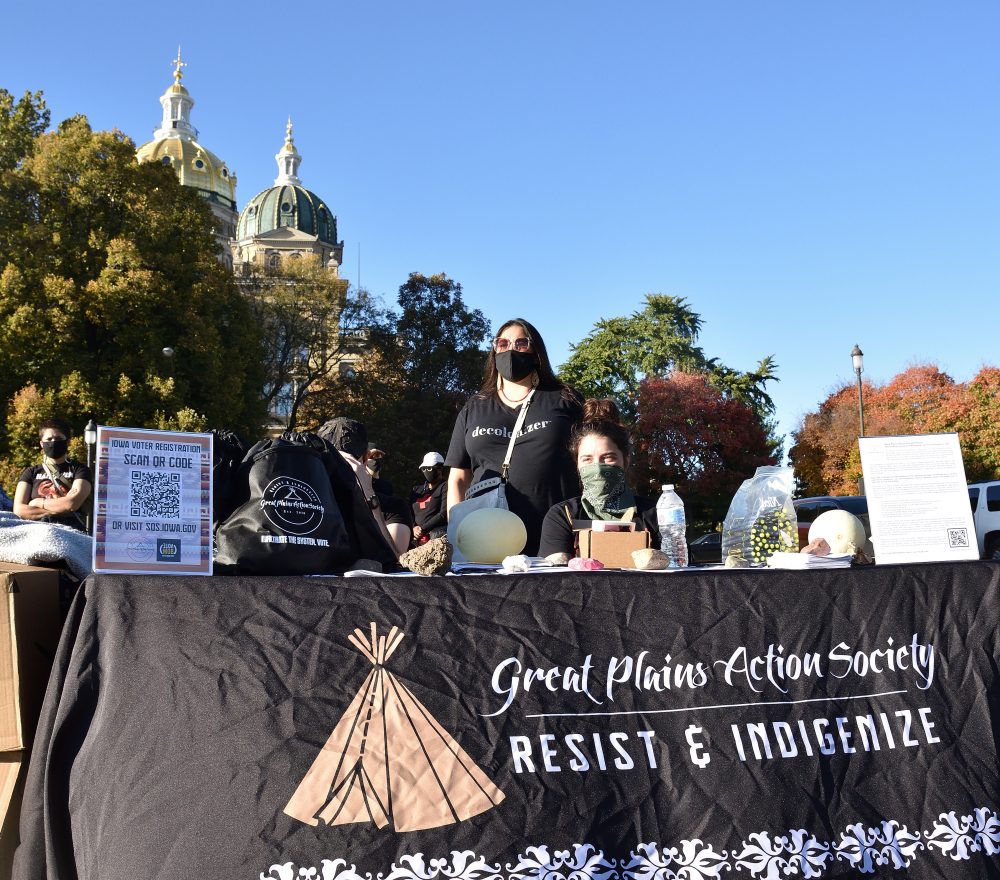
The camp work has grown exponentially, but is being managed with our collaboration with Edna Griffin Mutual Aid, DSM Black Liberation Movement, and The Great Plains Action Society.

The bail fund remains successful because of desire from the public and a partnership with Prairielands Freedom Fund (formerly The Eastern Iowa Community Bond Project).

The weekly free food store has maintained itself, carrying on the legacy it inherited.

Every one of our accomplishments are directly tied to the support of so many people donating time, talent, and funds to the work. We are overwhelmed with all of your support and hope you feel we are honoring what we promised. All of these Mutual Aid projects are just a few of many that this city has created in the last year in response to the many crises we face, not only confronting the problems and fulfilling the needs directly in front of us, but creating a sustainable movement that will be capable of responding to what’s next and shaping our collective futures as we replace the systems that fail us.

These last 12 months have been wild and a real test of all of our capabilities to collectively organize. But it is clear that we as a city have what it takes to do what is needed in 2021, no matter what crisis is next.

Much gratitude to you all. In love and rage,

Des Moines Mutual Aid

Posted in abolition, Black Lives, Des Moines Black Lives Matter, Des Moines Mutual Aid, Mutual Aid, police, race, Uncategorized | Leave a comment

Introduction to abolition and Quakers today

I used to think of abolition in terms of slavery, or the death penalty, or nuclear weapons.

Today discussions about abolition are more commonly about abolishing police and prisons. I’m just beginning to learn how that might come about. This week was my first meeting with a group of Friends who are interested in abolishing police and prisons, organized by Mackenzie Barton-Rowledge and Jed Walsh. This is an open group, so if you are interested, email me: jakislin@outlook.com

The following is from an article they wrote for Western Friend. You need a subscription to view the article online but following are some excerpts.

Mackenzie: Let’s start with: What does being a police and prison abolitionist mean to you?

Jed: The way I think about abolition is first, rejecting the idea that anyone belongs in prison and that police make us safe. The second, and larger, part of abolition is the
process of figuring out how to build a society that doesn’t require police or prisons.

M: Yes! The next layer of complexity, in my opinion, is looking at systems of control and oppression. Who ends up in jail and prison? Under what circumstances do the police use violence?

As you start exploring these questions, it becomes painfully clear that police and prisons exist to maintain the white supremacist, heteronormative, capitalist status quo.

Abolish the Police by Mackenzie Barton-Rowledge and Jed Walsh, Western Friend, November December, 2020

Abolitionist Futures Why Abolition?

The criminal justice system is violent and harmful: The UK’s prison population has risen by 90% in the last two decades, bringing the number to over 90,000. At the time of writing we are 156 days into 2018 and already we have seen at least 129 deaths in prison, immigration detention centres and at the hands of the police. As the effects of neoliberalism and austerity deepen each day, increasing numbers of people find themselves made disposable by our economic system and structural inequality, targeted by the agencies of the criminal justice system simply for being homeless, experiencing poor mental health or being born in a different country.

The criminal justice system does not reduce social harm: Policing, courts and the prison system are presented to us by politicians and the media as solutions to social problems. Yet, as the prison population has soared, we have continued to seen violence and harm in our society on a massive scale. Violence against women and girls is endemic, racism and the far right are on the rise in Britain and rates of murder and violent assaults are beginning to increase again. As politicians continue to scapegoat those with the least power in society, the conditions of structural violence that so often precede interpersonal violence remain in place.

We can build a world based on social justice, not criminal justice: All over the world, communities are coming together to build real solutions to societal problems. These solutions lie outside of the criminal justice system, in preventing harm through building a better society. By bringing together groups and organisations working for social justice, we want to demonstrate and strengthen the links between prison abolition and wider struggles for housing, health, education, and environment; and for economic, racial, gender, sexual and disability justice.

Abolitionist Futures, Why Abolition?


Posted in abolition, police, prison, Quaker, Uncategorized | Leave a comment

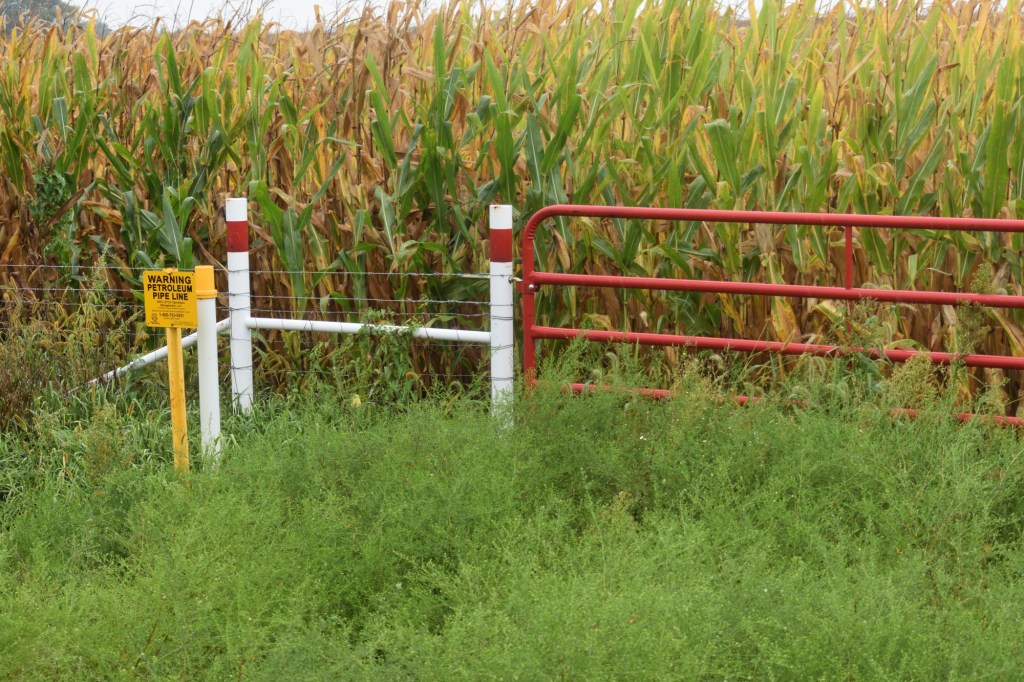
Divided by Pipelines

A Pipeline Runs Through It. Part one of an ongoing series by Indian Country Today

Divided by pipelines. Demand for jobs clash with traditional teachings, split families and friends along the Line 3 pipeline route. Mary Annette Pember, Indian Country Today, Feb 19, 2021
Part 1 of an ongoing series.

Jason Goward was overjoyed to get a high-paying job on Enbridge’s Line 3 pipeline project.

The job, clearing ground with a contractor for the Canadian energy company, meant he could at last pay child support for his two young sons. He could buy groceries, pay for heat.

And maybe, just maybe, he could dig his way out of poverty.

“I thought if I worked for a couple of years at this, I could finally get ahead a little bit,” said Goward, 37, a citizen of the Fond du Lac Band of Ojibwe. “I didn’t think about the impact of the pipeline on our lands and way of life.”

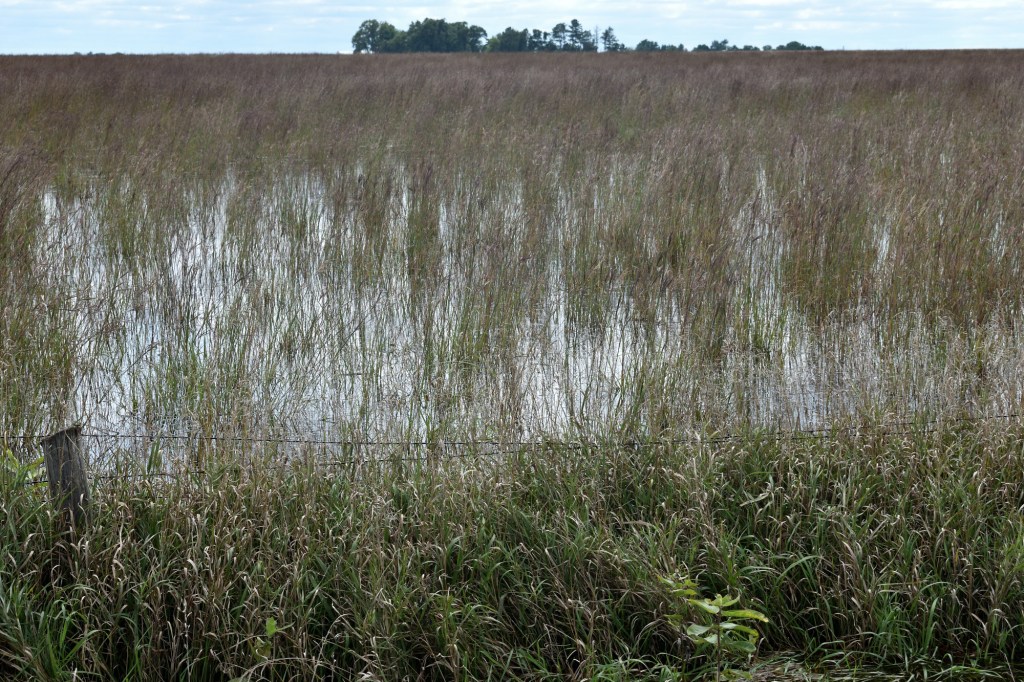
As he worked along the pipeline, however, he watched sandhill cranes fly over his job site. One of the Ojibwe leadership clans is named after the crane — ajijaak, the ones who speak on behalf of the people. The cranes were frantically fleeing the wetlands at the sound and disturbance of the heavy machinery he operated.

Protesters gathered to oppose the pipeline, shouting at Goward and demanding to know why he was destroying his homelands. He recognized friends among the water protectors, as they are known, friends with whom he has worked on past community projects. One was crying.

And he thought of his young sons, who might one day want to hunt, gather medicines and harvest rice as part of their Ojibwe birthright.

“I had kind of an epiphany,” he said. “Maybe I’m not on the right side of this. I began to think of the pipeline’s impact on our water and wild rice; that rice is part of the reason Ojibwe came to this area so long ago.”

Abruptly, he walked off the job.

“I feel so relieved,” he told Indian Country Today. “I had so much guilt, embarrassment and shame hurting my ancestral lands.”

A Pipeline Runs Through It.

The guilt and shame Jason Goward felt was because of the moral injury he suffered when working for the pipeline company. Leaving the job allowed him to begin his soul repair.

This video of stories demonstrates how the seven teachings of the Anishinaabe are applied in the context of pipeline resistance. It shows how pipeline resistance is about so much more than concern about pollution when pipelines leak.

Among the Anishinaabe people, the Teachings of the Seven Grandfathers, also known simply as either the Seven Teachings or Seven Grandfathers, is a set of teachings on human conduct towards others. Originating from traditional Anishinaabe teachings from elders, Edward Benton-Banai describes an in-depth understanding of what each means, in his novel “The Mishomis Book”. Benton-Banai’s book is an example of contemporary Anishinaabe teachings to be used in contemporary situations.

Nibwaakaawin—Wisdom: To cherish knowledge is to know Wisdom. Wisdom is given by the Creator to be used for the good of the people. In the Anishinaabe language, this word expresses not only “wisdom,” but also means “prudence,” or “intelligence.” In some communities, Gikendaasowin is used; in addition to “wisdom,” this word can also mean “intelligence” or “knowledge.”

Zaagi’idiwin—Love: To know peace is to know Love. Love must be unconditional. When people are weak they need love the most. In the Anishinaabe language, this word with the reciprocal theme /idi/ indicates that this form of love is mutual. In some communities, Gizhaawenidiwin is used, which in most context means “jealousy” but in this context is translated as either “love” or “zeal”. Again, the reciprocal theme /idi/ indicates that this form of love is mutual.

Minaadendamowin—Respect: To honor all creation is to have Respect. All of creation should be treated with respect. You must give respect if you wish to be respected. Some communities instead use Ozhibwaadenindiwin or Manazoonidiwin.

Aakode’ewin—Bravery: Bravery is to face the foe with integrity. In the Anishinaabe language, this word literally means “state of having a fearless heart.” To do what is right even when the consequences are unpleasant. Some communities instead use either Zoongadikiwin (“state of having a strong casing”) or Zoongide’ewin (“state of having a strong heart”).

Gwayakwaadiziwin—Honesty: Honesty in facing a situation is to be brave. Always be honest in word and action. Be honest first with yourself, and you will more easily be able to be honest with others. In the Anishinaabe language, this word can also mean “righteousness.”

Dabaadendiziwin—Humility: Humility is to know yourself as a sacred part of Creation. In the Anishinaabe language, this word can also mean “compassion.” You are equal to others, but you are not better. Some communities instead express this with Bekaadiziwin, which in addition to “humility” can also be translated as “calmness,” “meekness,” “gentility” or “patience.”

Debwewin—Truth: Truth is to know all of these things. Speak the truth. Do not deceive yourself or others.

Teachings of the Seven Grandfathers

Posted in #NDAPL, Dakota Access Pipeline, Indigenous, Keystone XL pipeline (KXL), moral injury, Uncategorized | Leave a comment

Moral injury, soul repair and Quaker Indian residential schools

Syracuse University. The Moral Injury Project

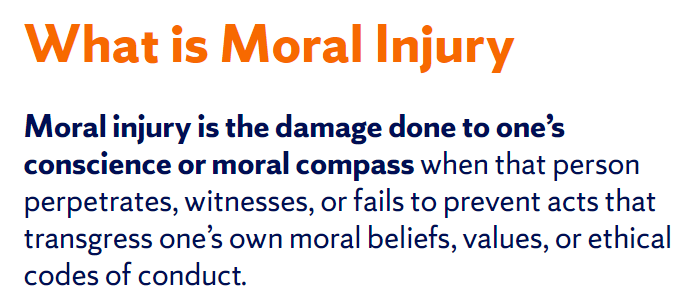
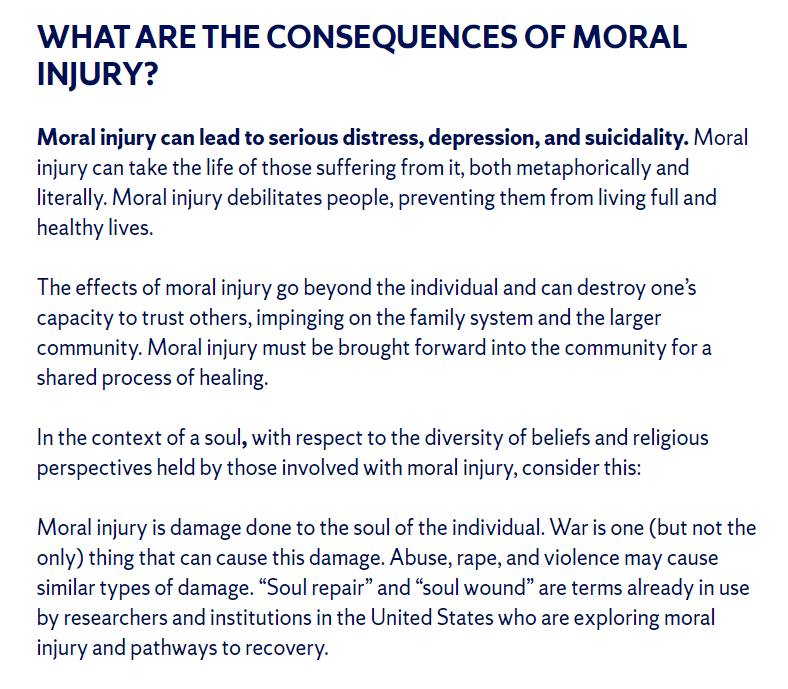
I’ve just learned of the concepts of moral injury and soul repair. The vast majority of the literature is related to soldiers and war. Unsurprising as there is a profound disconnect between religion’s commandment not to kill, and soldiers experiencing forceful training to condition them to be able to kill in conflict. And deeper injury when a soldier does kill, or observes others killing. It is sobering to realize the vast number of men and women who have been morally injured this way. Why so many soldiers cannot function when they return from conflict. Why so many commit suicide.


Syracuse University. The Moral Injury Project

Spirituality is related to moral beliefs and values, and thus related to moral injury. Thus the concept of soul repair.

I’ve been thinking about moral injury and soul repair in one specific case, the Quaker Indian boarding schools.


Quakers and Indian boarding schools

One specific example of moral injury is the Quaker involvement in the Indian residential schools. We (Quakers) would like to think the Quakers involved had the best of intentions, believing it was important that native children learn how to fit into the white society that was taking over their lands. Today we are horrified by the idea and implementation of the cultural genocide that occurred there. If we see that today, you would think Friends at those schools would have at times questioned what they were doing.

It is difficult to imagine the tremendous moral injury done to the native children, their families and their tribes. Those children were forced to behave in ways that were intended to supplant their beliefs and ways of being.

And that moral injury was passed from each generation to the next. Each new generation, seeing what had been done to those children, suffer their own moral injury. Besides that, each generation is forced themselves to similarly betray their beliefs and values as they try to live in white settler society.

Those who inflict moral injury are themselves injured. The Quakers involved with the Indian boarding schools must have had some moral injury. Though nowhere near what the Indian children and their families did.

And I believe the Quakers’ trauma has been passed from generation to generation as well.

I think this has a lot to do with Quakers’ strong avoidance of discussing the Quaker Indian boarding schools. Once we learn some of what happened in those schools, we experience our own moral injury. And you can’t “unlearn” that, even though many try very had to do so. We feel guilt and shame.

What should Quakers do? There aren’t easy answers. The moral injury must be acknowledged. And ways have to be found to bring those who inflicted the moral injury, and those who experienced the injury to come together. Truth and reconciliation processes have occurred, and model how this soul repair can be done. Likely the only way it can be done.

In the following video my friend Paula Palmer talks about the Quaker Indian boarding schools, and the need for Quakers to acknowledge what was done, how we can begin to heal. Soul repair.

Native people say that for healing to occur—and I think what Quakers are looking for when thinking about what the world needs is healing of many kinds… for healing to occur, the first thing that needs to happen is for us to acknowledge the harm that was done.

Seeking Right Relationship With Native Americans

My name is Paula Palmer. I live in Louisville, Colorado, which is the territory of the Arapaho people. They call themselves the Hinono’eino. My meeting is the Boulder Monthly Meeting and the Intermountain Yearly Meeting.

About 8 years ago, I experienced a leading to educate—myself first, and others—about the real history of what happened here in this country, the real history of the colonization of this country and the genocide of the indigenous peoples and the ongoing consequences for indigenous people here in this country and for all of us, really. For all of us as a nation and as communities.

Seeking the Truth

The first step toward reconciliation is truth telling. This is something that’s been important to Quakers since the beginning. We were called “seekers of the truth.” We need now to be seekers of the truth. I think one of the main problems is that we as a country are in such denial about the history of this land. We just so rarely mention genocide and colonization as foundational sins of our society, and—along with slavery—these are the foundational sins of our country and we continue to be wounded by these crimes against humanity.

A young Tohono Oʼodham man said in one of our workshops, “No one here today made these things happen, but we are the ones who are living now. And we’re all in this together.” And I think that’s what we need to hear. No one here today made all of these things happen, but we are the ones who are living now. So what are our opportunities to work with indigenous peoples, to engage them, to ask them, “What would right relationship look like?”

Paula Palmer, Seeking Right Relationship With Native Americans

Quaker Indian Boarding Schools, Facing Our History and Ourselves by Paula Palmer, Friends Journal, Oct 1, 2016


Syracuse University. The Moral Injury Project

 Treatment based on increasing willingness to experience painful emotions, developing greater psychological flexibility, and understanding and working toward personal values, which may have been violated during service, has demonstrated preliminary benefits to suffers of moral injury. A basic tenant of all treatment programs, however, appears to be a willingness of the therapist to facilitate the experience of the patients’ guilt- and shame-based feelings in an exploratory and nonjudgmental fashion without displacing or delegitimizing their presence.

Treating “Moral” Injuries. A potentially debilitating condition in veterans, distinct from PTSD, results from crossing moral lines By Anna Harwood-Gross, Scientific American, March 24, 2020

Posted in Indigenous, moral injury, Native Americans, Quaker, Toward Right Relationship with Native Peoples, Uncategorized | Leave a comment

Soul Repair

I’ve recently been writing about the concept of moral injury and how I immediately recognized that as a way to express many spiritual struggles in my life. (see below). Specifically, moral injury is a perspective for understanding the damages done by racism and colonization.

I’ve been anxious to explore how moral injury might be healed. I’m realizing this helps me understand why I’m so drawn to Mutual Aid. Mutual Aid is a mechanism for treating moral injury. Mutual Aid is “soul repair”. Mutual Aid, with its emphasis on horizontal structure, where everyone has a voice in the work, provides “integration into a culture where one is accepted, valued and respected, has a sense of place, purpose, and social support.”


Treating moral injury has been described as “soul repair” due to the nature of moral anguish.[17] 

According to Jonathan Shay, the process of recovery should consist of “purification” through the “communalization of trauma.” Shay places special importance on communication through artistic means of expression. Moral injury could only be absolved when “the trauma survivor… [is] permitted and empowered to voice their experience….”. Fully coming “home” would mean integration into a culture where one is accepted, valued and respected, has a sense of place, purpose, and social support.[10]

https://en.wikipedia.org/wiki/Moral_injury

The responsibility to acknowledge, accept, and heal from moral injury doesn’t just belong to those suffering from moral injury. When we send our youth into battle on our behalf, we are complicit in their actions. We are responsible for bearing our portion of the pain those actions cause. And in taking re­sponsibility, we are empowered to help these women and men rebuild their moral scaffolding, reclaim their place in the soci­ety they volunteered to protect, and remember what it means to be human — and to belong.

Experiencing Moral Injury In The Face of Violence, Indifference, and Confusion by Tom Voss, InnerSelf, Excerpted from the book Where War Ends. © 2019 by Tom Voss and Rebecca Anne Nguyen. Reprinted with permission from NewWorldLibrary.com

Moral Injury | Quakers, social justice and revolution (jeffkisling.com)
Naming Historical Moral Injuries Committed in Quaker Colonizing | Quakers, social justice and revolution (jeffkisling.com)
Moral Injury 2 | Quakers, social justice and revolution (jeffkisling.com)

Posted in decolonize, Des Moines Mutual Aid, moral injury, Mutual Aid, soul repair, Uncategorized | Leave a comment

Moral Injury 2

I became interested in the concept of moral injury, especially when I learned of the inclusion of spiritual aspects of trauma and how that might be treated or repaired. When I learned moral injury was described as “souls in anguish” and the treatment “soul repair”.

These ideas triggered flashes of inward light in different locations, like lightning bugs in the night. Personal experiences of moral injury related to war and conscription, to fossil fuels, to Quaker involvement in forced assimilation of native children and so many other things related to white supremacy, racism and colonization.

Moral injury and souls in anguish is about both the moral injury inflicted upon other peoples and to those who inflict the injury. More directly, we are responsible for bearing the pain from our participation in systems we benefit from at the moral cost to others.


The concept of moral injury emphasizes the psychological, social, cultural, and spiritual aspects of trauma.

Rita Nakashima Brock and Gabriella Lettini emphasize moral injury as “…souls in anguish, not a psychological disorder.”[4] This occurs when veterans struggle with a lost sense of humanity after transgressing deeply held moral beliefs.[4] The Soul Repair Center at Brite Divinity School is dedicated to addressing moral injury from this spiritual perspective.[33]

Treating moral injury has been described as “soul repair” due to the nature of moral anguish.[17] 

https://en.wikipedia.org/wiki/Moral_injury

Moral injury is a wound to the soul. It happens when you participate in or witness things that transgress your deepest beliefs about right and wrong. It is extreme trauma that mani­fests as grief, sorrow, shame, guilt, or any combination of those things. It shows up as negative thoughts, self-hatred, hatred of others, feelings of regret, obsessive behaviors, destructive ten­dencies, suicidal ideation, and all-consuming isolation.

You may experience moral injury if you’ve survived abuse, witnessed violence, participated in the chaos of combat, or ex­perienced any form of trauma that’s changed your understand­ing of what you, or other human beings, are morally capable of. For many combat veterans, moral injury is inflicted during war, when they are split into two different versions of them­selves: the person they were before war, whose morality was ingrained in them by their parents, religion, culture, and so­ciety, and the person they became during war, whose morality was replaced with a sense of right and wrong that helped them survive in a war zone.

Moral injury is emotional, psychological, and spiritual. This makes it different from post-traumatic stress disorder, which is more of a physiological reaction — the brain and body’s responses to extreme, prolonged stress or fear. Some of the symptoms of PTSD — nightmares, flashbacks, insomnia, disassociation — can be stabilized with medication. But moral injury doesn’t seem to respond to medication, at least not per­manently. Not at the soul level.

Experiencing Moral Injury In The Face of Violence, Indifference, and Confusion by Tom Voss, InnerSelf, Excerpted from the book Where War Ends. © 2019 by Tom Voss and Rebecca Anne Nguyen. Reprinted with permission from NewWorldLibrary.com

Posted in decolonize, moral injury, Uncategorized | Leave a comment

Mutual Aid, Survival, Polar Vortex and the fierce urgency of now

“We are now faced with the fact that tomorrow is today. We are confronted with the fierce urgency of now. In this unfolding conundrum of life and history, there “is” such a thing as being too late. This is no time for apathy or complacency. This is a time for vigorous and positive action.”

Martin Luther King, Jr

I feel blessed that a seemingly chance meeting a year ago connected me to Mutual Aid. Des Moines Mutual Aid (DMMA). I know it wasn’t by chance, but a path I was led to by the Spirit.
[see “mutual aid” | Search Results | Quakers, social justice and revolution (jeffkisling.com) for posts I’ve written about Mutual Aid]

One of the many gifts of Mutual Aid is the ability to quickly and effectively respond to survival crises. Providing shelter during this time of incredible cold from a prolonged polar vortex is yet another example.

Des Moines Mutual Aid

February 11 at 2:05 PM  · 50+ folks are set to sleep inside, away from the extreme cold for the next week because the community responded. There’s still more that need shelter. Please keep sharing your resources. This is mutual aid!
Venmo: @DesMoines-MutualAid
Tinyurl: https://tinyurl.com/DSMCampAID


May be an image of text that says '50+ folks are set to sleep inside, away from the extreme cold, for the next week because the community responded. There are still many more folks that need shelter. Please keep sharing your resources. This is mutual aid. VENMO: @DESMOINES-MUTUALAID PAYPAL:TINYUR.COM/DSMCAMPAID'

As my friend Ronnie James wrote today,

“The work the Des Moines radical community has put in these last few years has been nothing short than amazing. Time and time again they prove the immense power of The People.
We all have a list of how the ruling authorities have failed us.
The people here are creating solutions.
All Power To The People.
Our lives depend on it.

Ronnie James

The scope and depth of the failure of the ruling authorities will continue in the face of collapsing economic and political systems. In the face of rapidly accelerating environmental chaos. The work and success of Mutual Aid will grow.


Your local Anarchists, 
Communists, and Black 
Liberationists organized a 
mass evacuation of the 
houseless camps to hotel 
rooms paid for by the 
community. We have turned 
no one away in this polar 
vortex. We keep us safe, the 
government is incapable of 
doing so.
https://www.facebook.com/108955753983592/photos/a.160676455478188/279548743590958/

Today my friend Matthew Lone Bear wrote

You know living at the Standing Rock camps. For as long as I did. Experiencing, and seeing the things I did while there was tough. But it made it easier when at night you look over camp and see fires and people talking, music, and sharing ideas. That we where all in it together. People from all over the world sitting in an open prairie in North Dakota checking on each other. Making sure they where warm, if they where hungry, or needed help. People where fed no money exchanged. It really opened your eyes to what colonization has brought to these lands. People where taking Ls in life leaving school, family lives, jobs… but it is an experience none of us would ever forget.

For better or worse. I miss that energy that filled that prairie. What a ride to experience that then 4 years of racist crap and injustices. Where a country can hide its history and suppress proper justice by forming commissions and invoking grand juries where they can form their own narrative and lose truths in courts. Corruption gets a pass and off the hook. Next day business as usual.

It was in those fields I first learned of MMIW from native relatives north of the Canadian border. When Olivia went missing I felt a sense of emergency to fire off on all cylinders to get as much done as possible and to not let up. Oiy I don’t stop to think of where I have been often. But since 2016 life has been an unforgiving ride.


Des Moines Mutual Aid

January 5  · One year ago today Des Moines Mutual Aid participated in a march protesting the potential for war or increased hostilities with Iran that followed the fallout of the assassination of Qassem Soleimani by drone strike in Baghdad.

This was our first “public” event since adopting the name Des Moines Mutual Aid, a name we gave our crew during our growing work with our relatives at the houseless camps throughout the city and our help with coordinating a weekly free grocery store that has a 50 year history, founded by the Des Moines Chapter of The Black Panther Party For Self Defense.

A year ago we started laying the foundation for work we had no idea what was coming. As we were adjusting our work with the camps and grocery re-distribution in response to the Covid-19 pandemic, both that continued to grow in need and importance, the police continued their jobs and legacy of brutality and murder. This nation exploded in righteous rage in response to the pig murders of Breonna Taylor and George Floyd. DMMA realized we were in a position to organize a bail fund to keep our fighters out of jail, both to keep the streets alive as a new phase of The Movement was being born, and because jails are a hotspot of Covid-19 spread. Not to mention the racial and economic oppression that is the cash bail system.

In the past year DMMA has expanded its work in multiple directions and gained many partners and allies. We partnered with the Des Moines Black Liberation Movement to create the DSM BLM Rent Relief initiative to help keep families in their homes in the midst of a pandemic and the winter.

The camp work has grown exponentially, but is being managed with our collaboration with Edna Griffin Mutual Aid, DSM Black Liberation Movement, and The Great Plains Action Society.

The bail fund remains successful because of desire from the public and a partnership with Prairielands Freedom Fund (formerly The Eastern Iowa Community Bond Project).

The weekly free food store has maintained itself, carrying on the legacy it inherited.

Every one of our accomplishments are directly tied to the support of so many people donating time, talent, and funds to the work. We are overwhelmed with all of your support and hope you feel we are honoring what we promised. All of these Mutual Aid projects are just a few of many that this city has created in the last year in response to the many crises we face, not only confronting the problems and fulfilling the needs directly in front of us, but creating a sustainable movement that will be capable of responding to what’s next and shaping our collective futures as we replace the systems that fail us.

These last 12 months have been wild and a real test of all of our capabilities to collectively organize. But it is clear that we as a city have what it takes to do what is needed in 2021, no matter what crisis is next.

Much gratitude to you all. In love and rage,

Des Moines Mutual Aid

Posted in abolition, climate change, decolonize, Des Moines Mutual Aid, Mutual Aid, Uncategorized | Leave a comment

Naming Historical Moral Injuries Committed in Quaker Colonizing

In response to today’s blog post, Moral Injury, Tom Kunesh sent the following response that I found very helpful. I am just getting to know Tom through our work on the Decolonizing Quakers steering committee. Decolonizing Quakers

Jeff –  thanks for bringing up ‘moral injury’.  in decolonizing – where we are at (north America), & in the context of Quakerism, am most concerned about the historic moral injury done to nativeamericans by Quakers and the Christian ideology that they participated in, as both Christian european colonists and specifically as Quaker settlers, forcing upon eastern seaboard ‘colonial’ tribes 1500-1850, and then in the midwest 1850-1900. 

if we want to decolonize Quakerism, the first step is to bring up just what you’re pointing out – the betrayal of Quakerism’s own core values when/as it took native land for an english colony, settled native land, spoke english on native land, missionized & converted & judged natives to be inferior & lacking & needing improvement to european standards.  the moral injury done to quakerism in assuming it had ‘Light’ and natives did not.  and then the injury done to all the tribes it came in contact with, injury done with all the tax revenues Quakers contributed to the acculturation & settlement efforts, over & above Christian general and Quaker specific missionizing. both the moral injury to natives and the moral injury to Quakerism itself that i have never heard Quakers address. 

if we are to _work_ on ‘decolonizing quakers’, on ourselves, we should name the historical moral injuries committed in quaker colonizing. 

tom kunesh, Standing Rock & settler descendant

Tom also sent a link to this PDF:
Missions of the Society of Friends Among the lndian Tribes of the Sac and Fox Agency [1868-1955], Hobert Ragland, Oklahoma 1955


If you have a response to name the historical moral injuries committed in quaker colonizing please put that in the comments


Posted in decolonize, Indigenous, Native Americans, Quaker, Uncategorized | 1 Comment