White Quakers and spiritual connections with the Kheprw Institute

This is the fourth in a series of articles related to White Quakers, such as myself, and new and perhaps more effective ways we can work for peace and justice. My goal is to convince White Friends (Quakers) that we need to not only identify the injustices of our economic, political, and justice systems, but act to change them. Need to confront systemic racism in our culture. My recent experiences convince me the concepts of Mutual Aid provide a way to do that.

One foundational principle of Mutual Aid is people in a local community must come together to work together, spend a lot of time getting to know each other. Build trust with each other.

There are several things we (“we” refers to White Quakers) need to be aware of as we consider engaging with Mutual Aid.

  • Our neighbors likely include Black, Indigenous and/or other people of color (BIPOC). Even in states such as Iowa, where I live, that have so little diversity, there are, of course, BIPOC people. White Quakers may not have a lot of direct contact with these neighbors. Making these contacts might mean getting out of your comfort zone.
  • You should learn as much as you can about the history and current conditions of those you are going to work together with. But there is a cautionary note here. It is NOT appropriate for us to expect those who have been oppressed to educate us. Our education will come from getting to know each other, spending time with each other.
  • There will very likely be mistrust at first.
    • BIPOC folks will be aware of historic injustices involving white people in general, and probably white Quakers specifically. Trust cannot begin to occur until these injustices are acknowledged by Friends.
    • The greatest injustice related to Quakers and native peoples is related to the Quaker boarding schools. (Which will be discussed another time).
    • White Quakers may be surprised by what is most important in BIPOC communities.
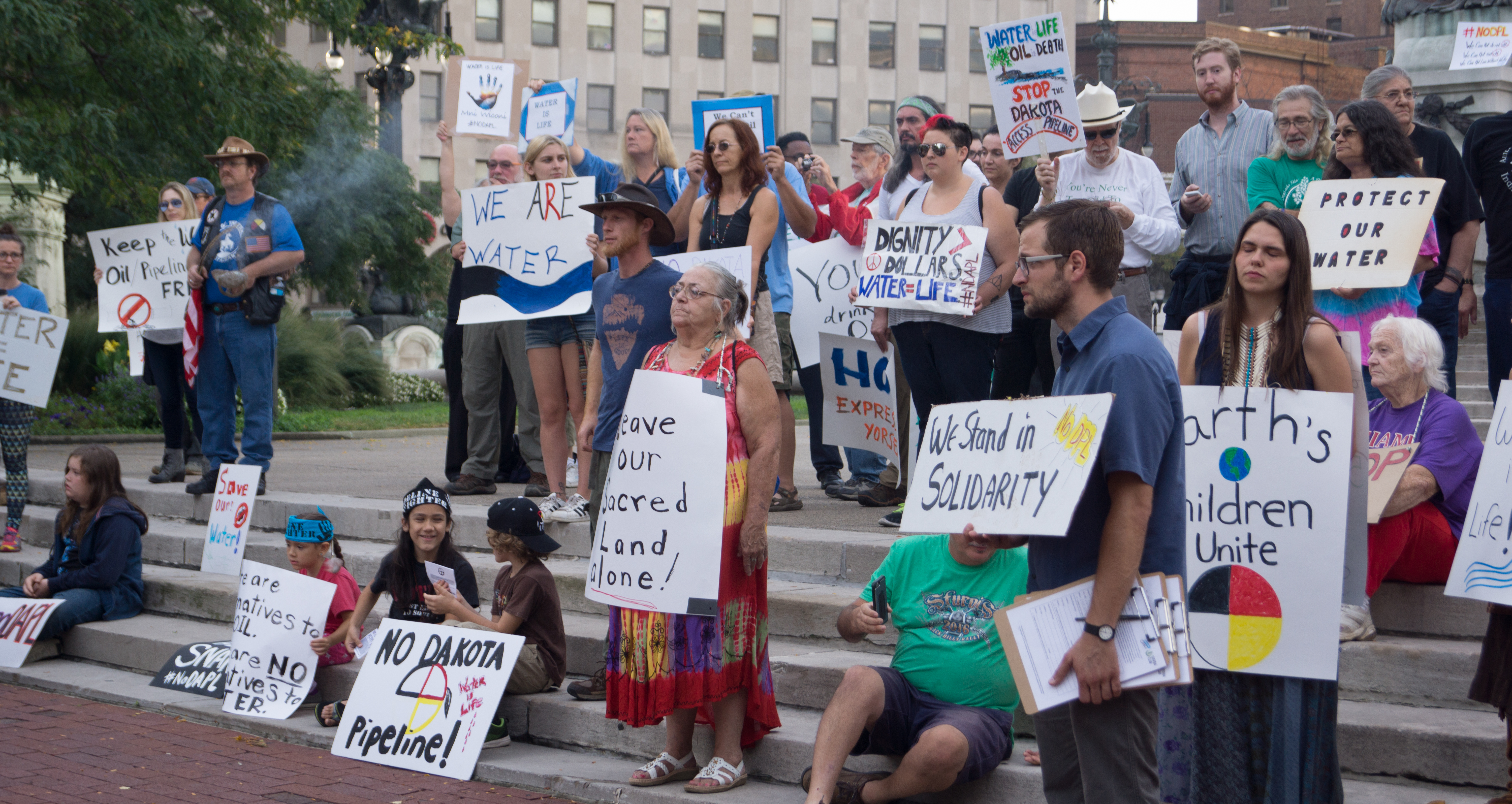
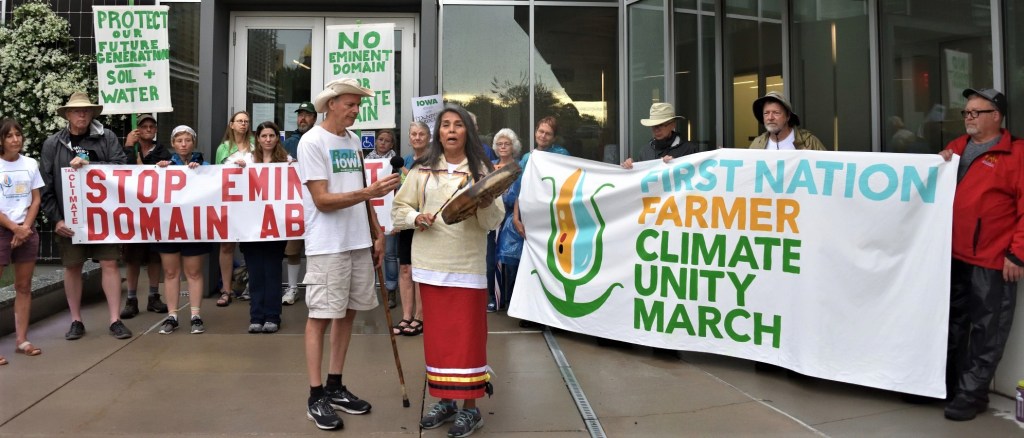
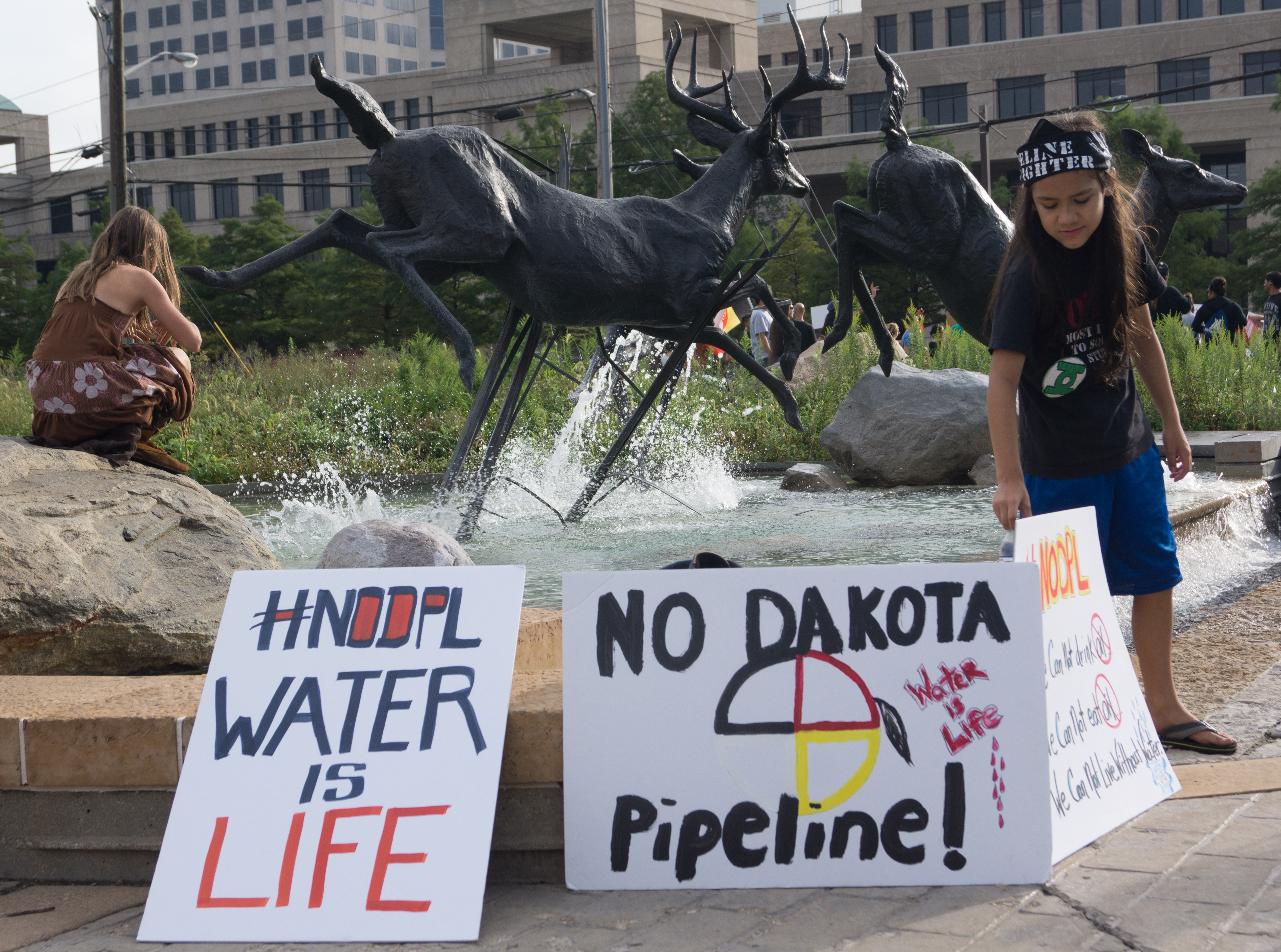
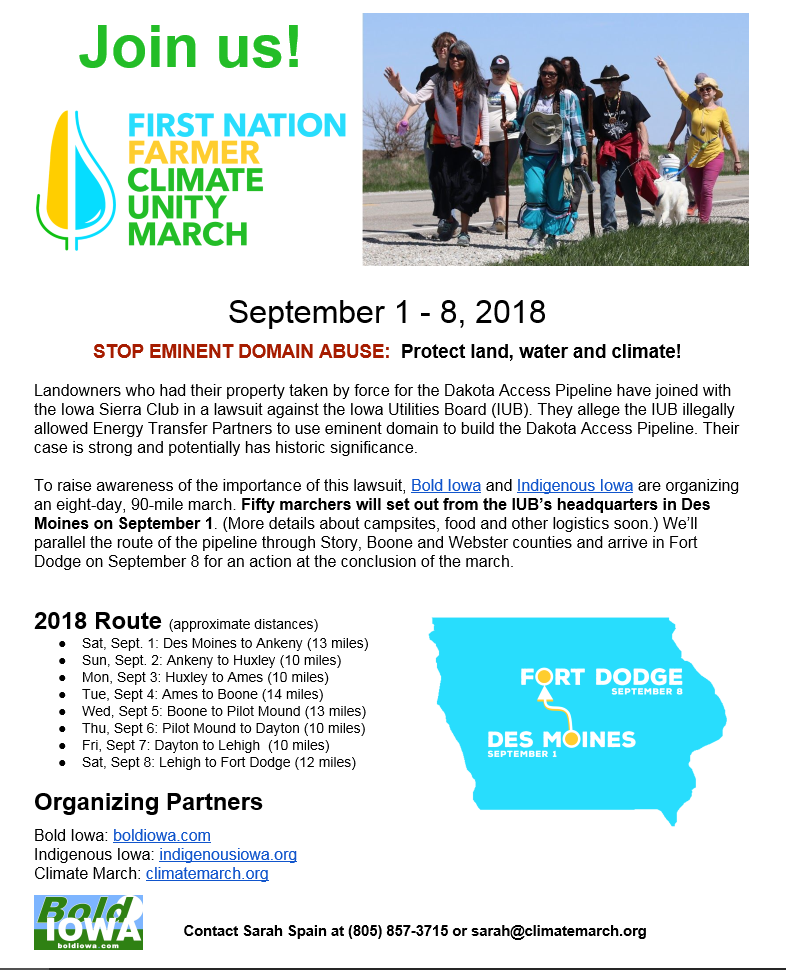
      • A recent example was when I was participating on the First Nation-Farmer Climate Unity March. I thought we would be talking about our environment. We were walking along the path of the Dakota Access pipeline for that reason. But it quickly became apparent that the epidemic of missing and murdered Indigenous women, which is related to the man camps of the pipeline construction workers, was first on the minds of my native friends. I was to learn every native person on the March had direct and often tragic experiences related to that. And the dangers continued now. This is an example of how we Friends need to listen carefully to learn about BIPOC people’s conditions.
  • One of the hallmarks of Mutual Aid is there is not a vertical hierarchy. When that is maintained, despite times when a little vertical hierarchy creeps in, you, as a White Quaker, will be treated as a member of the Mutual Aid community. Once trust has begun to be developed.
  • When I first began to engage with Des Moines Mutual Aid, I wondered whether I would ever be trusted. There are many BIPOC people there. I felt I didn’t deserve their trust. From the beginning, everyone was polite. But I could tell I was on probation. But after weeks of showing up I could sense I was beginning to earn trust. I would guess this process might be true for anyone new. But probably more so for white people.

What follows is not directly related to Mutual Aid, but are some of my experiences related to establishing trust. I think it is very important that I only speak from my own experiences, as reluctant as I am to do. I was taught we should not call attention to ourselves. I like what Noah Baker Merrill said in a presentation he titled “Prophets, Midwives, and Thieves: Reclaiming the Ministry of the Whole.”

“We need to be careful when we talk about humility. The kind of humility this work brings isn’t the kind that would have us reject or repress our gifts. This kind of false humility leads us to oppress each other in the name of preventing pridefulness. This happens far too often.” Noah Baker Merrill

Or as my friend Ronnie James says, “anyways, blah, blah, brag, brag”.

What follows is the story of how I (a White Quaker) first met with the people of the Kheprw Institute in Indianapolis. I hope this might give you some ideas that could be useful when you begin your engagement with Black, Indigenous and other people of color (BIPOC). The Kheprw Institute is a small Black youth mentoring and empowerment community. There are the four adult leaders mentioned below, and around a dozen youth.

I had long been struggling with the knowledge that simply through the circumstances of the family I was born into, my life was significantly better in many ways than that of a great many others in America and the world. This was a spiritual problem for me.

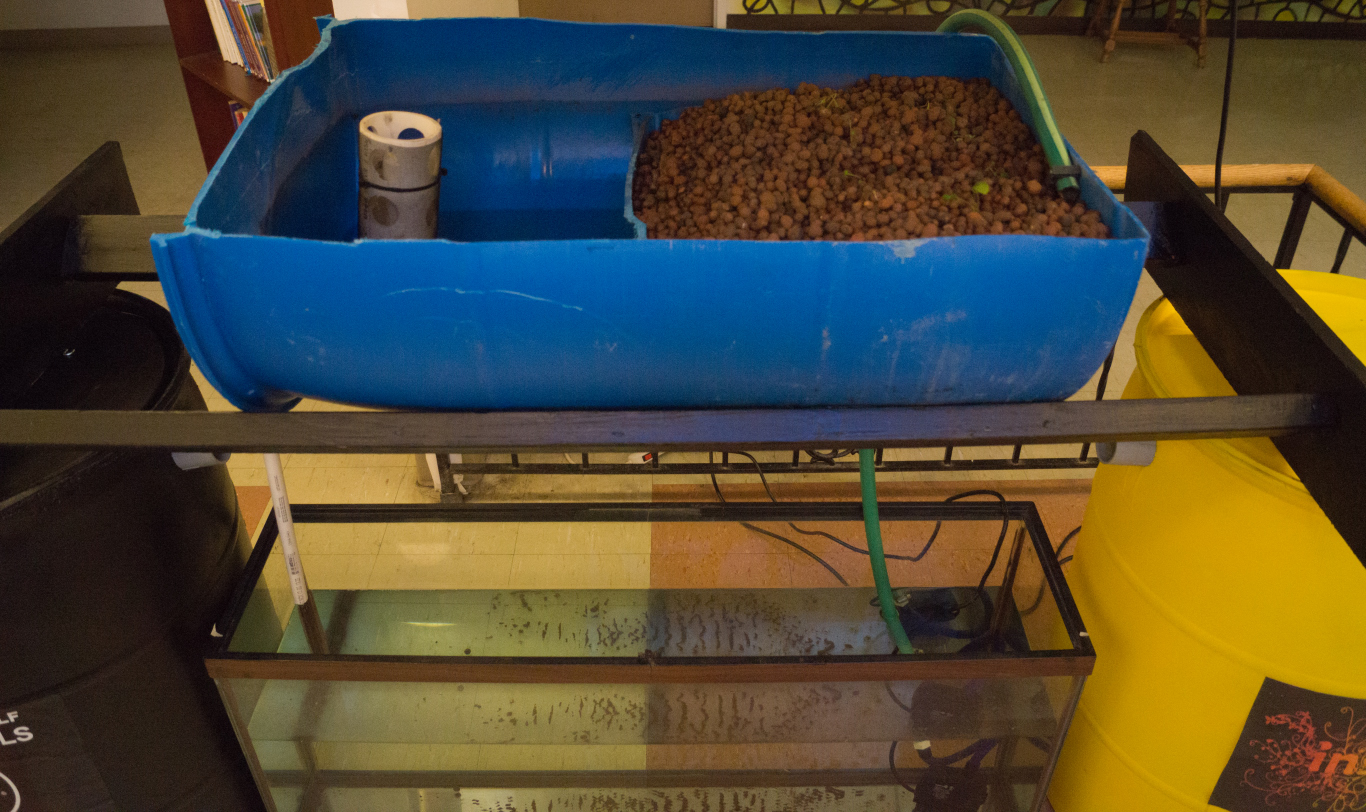
God (finally) provided me with a way to begin to learn about that. Nearly three years ago the environmental group 350.org organized a national day for environmental education/actions. Only one event was listed in Indiana that day, and it was at the Kheprw Institute (KI), which was how I found out about KI. The day of the event, I arrived at the run down building that had once been a convenience store.  But it was full of kids excited to show us the work they were doing, including their aquaponics system, and the rain barrels they created and sold.

I was intrigued, and wanted to see if I could become involved with this group.  So we arranged a meeting.  On a dark, rainy night I rode my bicycle to the KI building.  The adult leaders, Imhotep, Pambana, Paulette and Alvin, and about a dozen young people from the Kheprw Institute were here.  I had thought we were going to discuss working on some computer software projects together, which is another area KI works with the youth in.

But Imhotep began asking me a series of questions about myself. I don’t talk a lot about myself, but Imhotep, I’ve come to learn, is very good at drawing stories out of people. I should have anticipated this, but I soon realized I was basically being interviewed so they could determine if I was someone they felt comfortable working with, or not.  So I began to talk about living in Indianapolis and my work at Riley Hospital for Children.

When he asked for more, I talked about my environmental concerns. Imhotep said OK, and asked me for more.

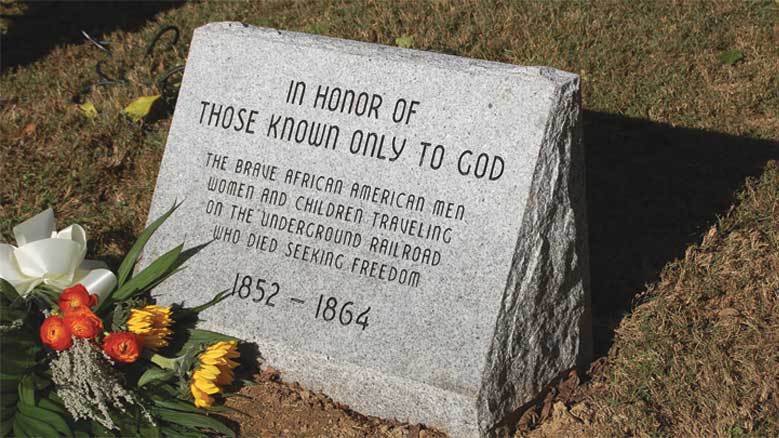
When I mentioned that I was a Quaker, Paulette enthusiastically spoke about Quakers and the underground railroad, which was really welcome.  But when she stopped speaking, everyone looked at me…

I had thought of this many times over the years.  I greatly admired the work of Friends who helped with the underground railroad, as I likewise admired those who worked to help address any injustice or need.  These situations should be a challenge to us. Where is the need today, and what am I called to do about it?

There is also a danger here.  Sometimes Friends point to this work of other Friends to illustrate the work of Quakers.  Noah Baker Merrill also warned us not to claim the work of others as our own. 

This was also instilled in me during my upbringing.  So I could immediately respond that while I was really glad my ancestors had done that, and it was the right thing to do, I didn’t do it.  Which led me to talk more about how Quakers didn’t see religion as something only involving listening to a sermon once a week.

When Imhotep asked me to talk more about that, I said something like, “Quakers believe there is that of God in everyone, and that includes you, and you…” The very first time, I think I hesitated slightly as I was asking myself, “Ok, we Friends always say this, but do you really believe this of a group that is different from you?” And I’m really glad the answer was an immediate and emphatic YES, but it also seemed to reaffirm that by exploring it consciously and publicly. At that point I remember smiling at the thought, and the young person whose eyes I was looking into saw it, too, I think. Each person smiled at me as I said that to them, and I had the impression they were thinking, “of course”.   I strongly felt the presence of the Spirit.

This left me at the point where I needed to provide an example from my own life.  Since KI is built on concern for the environment, I spoke of how I had reluctantly purchased a used car for $50 when I moved to Indianapolis, mainly for trips home to Iowa.  Car rental was not common in the early 1970’s.  When my car was totaled several years after that, I decided to see if I could live in the city without a car, and have since then.  I was hoping that would show how Quakers try to translate what they believe, what they feel the Spirit is telling them, into how they actually live their lives.

At that point Imhotep, with a smile on his face, said something like “Thirty years?  You are a warrior.”   I had never been called a warrior before.  It seemed a humorous term to use for a pacifist, but I liked it. As I got to know Imhotep better, I think he said that intentionally. Humor is a great tool to help build relationships.

Then everyone looked at me…

Somewhat embarrassed at that point, what popped out of my mouth without much thought was “well…yes, I am really old!”, at which everyone laughed.

That seemed to satisfy the questions for the evening, and they have welcomed me into their community ever since. The best part of the evening was that then several of the kids came up to me to shake my hand.

Looking back on that story, I recognize my unintentional racial bias. Why should I have even stopped to ask myself about the people at KI being different from me?

I was not used to speaking about faith in public outside Quaker circles, and this was a lesson that it when it is appropriate, it is important to do so. I’m glad Imhotep continued to probe me about my life experiences and beliefs.

From the beginning, my experience at the Kheprw Institute has been a shared, spiritual one.

As I mentioned above, I was hoping to demonstrate how Quakers try to translate what they believe, what they feel God is telling them, into how they actually live their lives. I came to know my black and indigenous friends feel and act the same way. There have been very few occasions when the topic of spirituality came up. But their lives demonstrate their deep spirituality and its influence in their daily lives.

Posted in #NDAPL, Black Lives, climate change, Dakota Access Pipeline, Des Moines Mutual Aid, First Nation-Farmer Climate Unity March, Indigenous, Kheprw Institute, Native Americans, Quaker, race, Uncategorized | Leave a comment

COVID-19 Ceremony. Casket of flowers delivered to Kim Reynolds

Iowa Governor Kim Reynolds was among the Republican Governors who refused to follow CDC guidelines. Iowa suffered among the highest positivity rates of COVID infection.

The following link from the story in the Des Moines Register has great photos and the story of the event.

I’m sorry I missed this event Tuesday, March 9, 2021, in honor of those who have died from COVID-19. The following story is from my friends at the Great Plains Action Society.

My friend Trisha Etringer is quoted below. She has worked to get personal protective equipment to those who didn’t have it in Sioux City. I saw a video of her doing that on her birthday!

Great Plains Action Society

Trisha Etringer (Ho-Chunk), Great Plains Action Society, read a powerful speech as people gather on the steps of the Iowa State Capitol to speak, lay flowers and ring bells in honor of those who have died from COVID-19 on Tuesday, March 9. This action was a coalition effort with organizations across the state. 

Christine Nobiss

Yesterday at 1:23 PM  · Trisha Etringer (Ho-Chunk), Great Plains Action Society, read a powerful speech as people gather on the steps of the Iowa State Capitol to speak, lay flowers and ring bells in honor of those who have died from COVID-19 on Tuesday, March 9. This action was a coalition effort with organizations across the state. She concluded by saying,

“Governor Kim Reynolds – you had a choice to protect and save lives. You’ve pledged to be pro-life. However, when it concerns communities of color during this pandemic, you did just the opposite. You never enforced an adequate COVID-19 response such as a strict stay-at-home order, mask mandate, and proper testing. AND you continuously defied medical advice!
You left it up to Iowans to choose for themselves without giving any special consideration to how that affected BIPOC communities and elderly folks. You proudly claim to be pro-life, but are you really? What about the heart beats of those members of society? What about the countless medical workers who worked overtime while risking their personal lives and sacrificing their mental and physical health because you failed to follow what science has proven in the past?

Governor Kim Reynolds, If you are pro-life, then act accordingly. Otherwise, get the hell out and let someone else do the job.”

#COVID19
#greatplainsactionsociety

Posted in Great Plains Action Society, Uncategorized | Leave a comment

White Quakers’ downfall

I’ve been praying how to present what I believe is the way for White Quakers such as myself, to re-engage with Quakers’ tradition of working for peace and justice. I believe many Friends share my feelings that we are not living up to the examples of our predecessors, that we have lost our way in justice work.

[Note: In the following when I say “we” or “us” I am referring to White Quakers. This distinction is necessary because what I am trying to say here stems from the concept of “whiteness”.]

Whiteness is a forced group membership that originated by oppressing people of color (Williams, 2020).  And, it causes psychological and spiritual damage to White people just as it damages non-Whites. White Americans are imbued with Whiteness from infancy, they do not choose it for themselves. 

What Is Whiteness? Should people be proud of membership in a group marked by power and privilege? by Monnica Williams, Psychology Today, Jun 13, 2020

In many instances our White Quaker ancestors modeled spirit led lives. But what does it mean when they did things that were wrong. Mistakes like being involved in enslavement? Like settling on Indigenous lands? Removing native children from their families? When they did things they thought were helping others, that actually did not help. In some instances caused harm, a great deal of harm instead.

Those are not things the Spirit would lead us to do. So either

  • spiritual guidance was not sought
  • or was misinterpreted.

Are we making mistakes ourselves. Are we truly living Spirit-led lives now?

I believe we are making mistakes today. For example, we should not have participated in the profligate use of fossil fuels. We are experiencing accelerating environmental chaos as a result. I was led to refuse to have an automobile in my life.

Another mistake relates to a pernicious system that none of us can easily escape; the capitalist economic system. The reason I’m led to write this series of articles is to try to show the evils of capitalism. I believe evil is the appropriate term, as I will be trying to explain. Briefly, capitalism is a system controlled by wealthy White people that intentionally impoverishes people of color.

I have been blessed to have been led to engage with a number of communities of Black, Indigenous and other people of color (BIPOC). This has given me opportunities to see their suffering under the system of capitalism, which has been highlighted as a consequence of the COVID pandemic. To see how unjust capitalism is, and who benefits from it. To understand how they see those, including White Quakers, who benefit from capitalism at their expense.

White Quakers’ continued support of capitalism as a way of life is our downfall.

Downfall (See also FAILURE.) To fail badly in any undertaking, particularly after its apparent initial success; to encounter a sudden setback after an auspicious beginning.
The Free Dictionary

My intention in this series of articles is to show how we can learn from mistakes and use that analysis as a way to regain our focus on peace and justice work. We (White Quakers) can not do that until we understand what our condition is today, and how we got here. How those outside the Society of Friends view us.

Mistake An error or fault resulting from defective judgment, deficient knowledge, or carelessness.
The Free Dictionary

  • Learning from our mistakes is the opportunity to grow and change. We don’t want to make the same mistakes again.
  • We need to discover what we are doing now that is causing harm.
  • When our mistakes have harmed others we need to publicly acknowledge that.
    • Doing so shows those we harmed that we are aware of and accept our mistakes.
    • Is required before we can begin to make amends for those mistakes. We have to know what went wrong before we can fix it.
    • Is the first step in the process of re-establishing relationships with those we harmed.

Thus this series of articles is intended to explain why it is necessary to reject the capitalist economic system. That can be done, is being done, by creating Mutual Aid communities.

Posted in capitalism, Mutual Aid, Quaker, Uncategorized | Leave a comment

White Quakers Part 2

This is the second in a series of articles I plan to write about White Quakers. Yesterday I began by writing about White Quakers and Native Peoples, specifically about land theft and settler colonization.

I strongly feel there is an urgent need to change the way we live. For one thing, climate change will force changes to our lives. But also because our economic and political systems are not only unjust, but also failing. I’m going to try to explain why I believe we need to reject the capitalist system, abolish police and prisons, and embrace the concepts of Mutual Aid.
It is not my intention to denigrate anyone. But instead to look back at the history of this country, and the many ways White Quakers were involved. I use the term White Quakers because I am one. And because there are Black, Indigenous and other people of color (BIPOC) who are Quakers, and they were not involved in things I am writing about. When I use the term “we” I am referring to White Quakers.

You might rightly wonder what gives me the right to write about these matters. The following is intended to give you a summary of some of my experiences. Quakers believe we should speak from what we have done in our own lives.

I have been blessed to have been led to engage with several BIPOC communities including the Kheprw Institute, a Black youth mentoring and empowerment community in Indianapolis.

And with Indigenous people who oppose the Keystone XL, Dakota Access, and other pipelines.
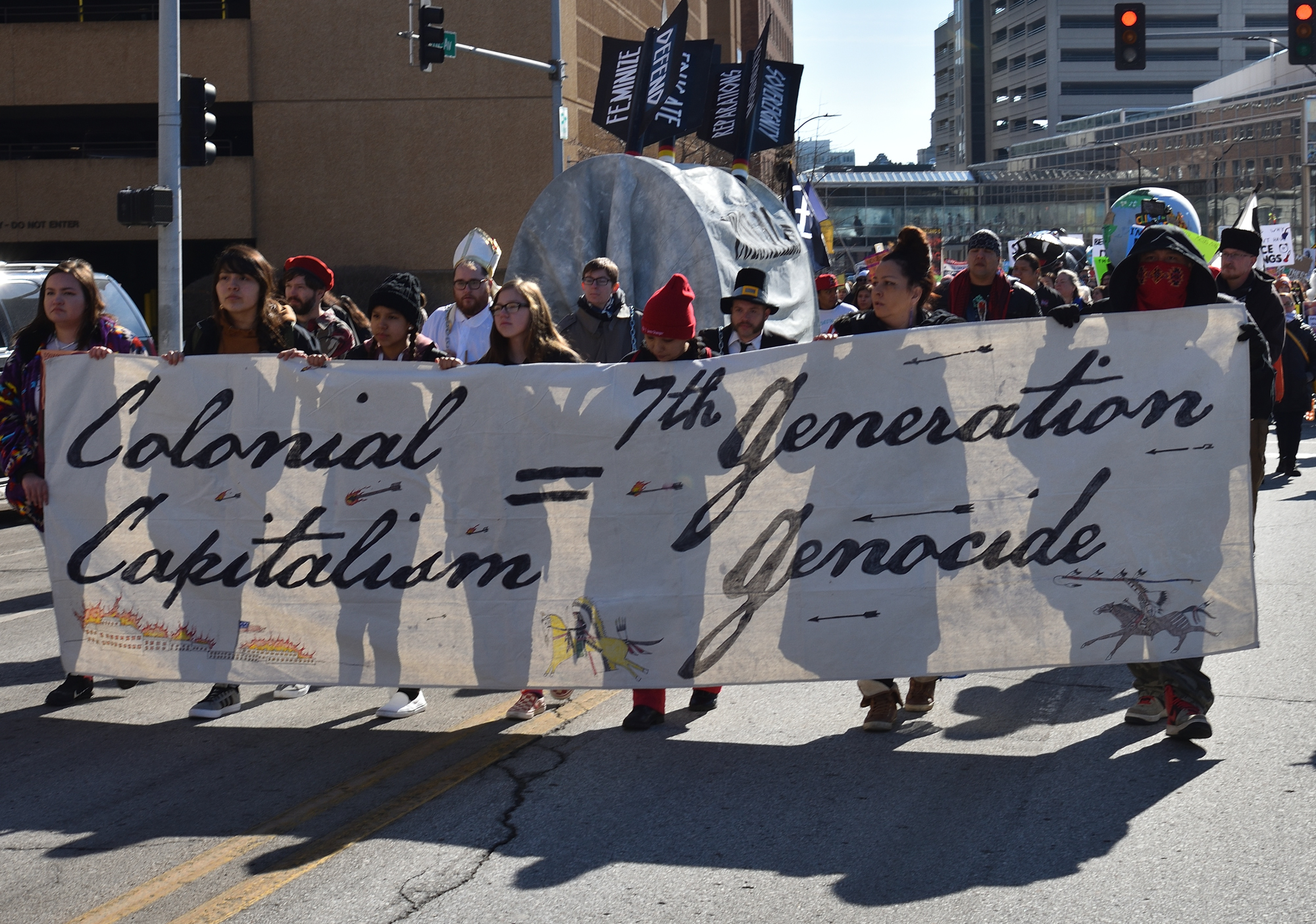
I had a transformative, community building experience in 2018 on the First Nation Farmer Climate Unity March. A small group of about a dozen native and a dozen non native people walked and camped for eight days and 94 miles along the path of the Dakota Access pipeline in central Iowa. That was organized by Ed Fallon (Bold Iowa) and Christine Nobiss (Indigenous Iowa/Seeding Sovereignty, and now Great Plains Action Society).

The intention was to build a community of people who began to know and trust each other, so we could work together on issues of common concern. I am glad to say that sacred journey was a success, and many of us have worked together since the March.

For example, a number of us rode in a van to Minneapolis the weekend the Super Bowl was played there to bring attention the USBank’s funding of fossil fuel projects. USBank’s headquarters are in Minneapolis, the the Super Bowl was played in the USBank stadium.

Trisha, Lakasha, Donnielle and Ed spoke about the epidemic of Missing and Murdered Indigenous Women (MMIW) which is the result of pipeline construction sites near native lands.

Several of us attended the Des Moines meeting of the Green New Deal Tour. Trisha and Lakasha spoke about the importance of the Green New Deal to be Indigenous led.

Several of us met with Iowa Senator Grassley’s staff in Des Moines to discuss several bills related to native affairs.

Another occasion when we came together was for the Climate Crisis Parade in Des Moines on Feb. 1, 2020. Organized by Bold Iowa’s Ed Fallon and Christine Nobiss of the Great Plains Action Society. Many of us from the First Nation Climate Unity March participated.

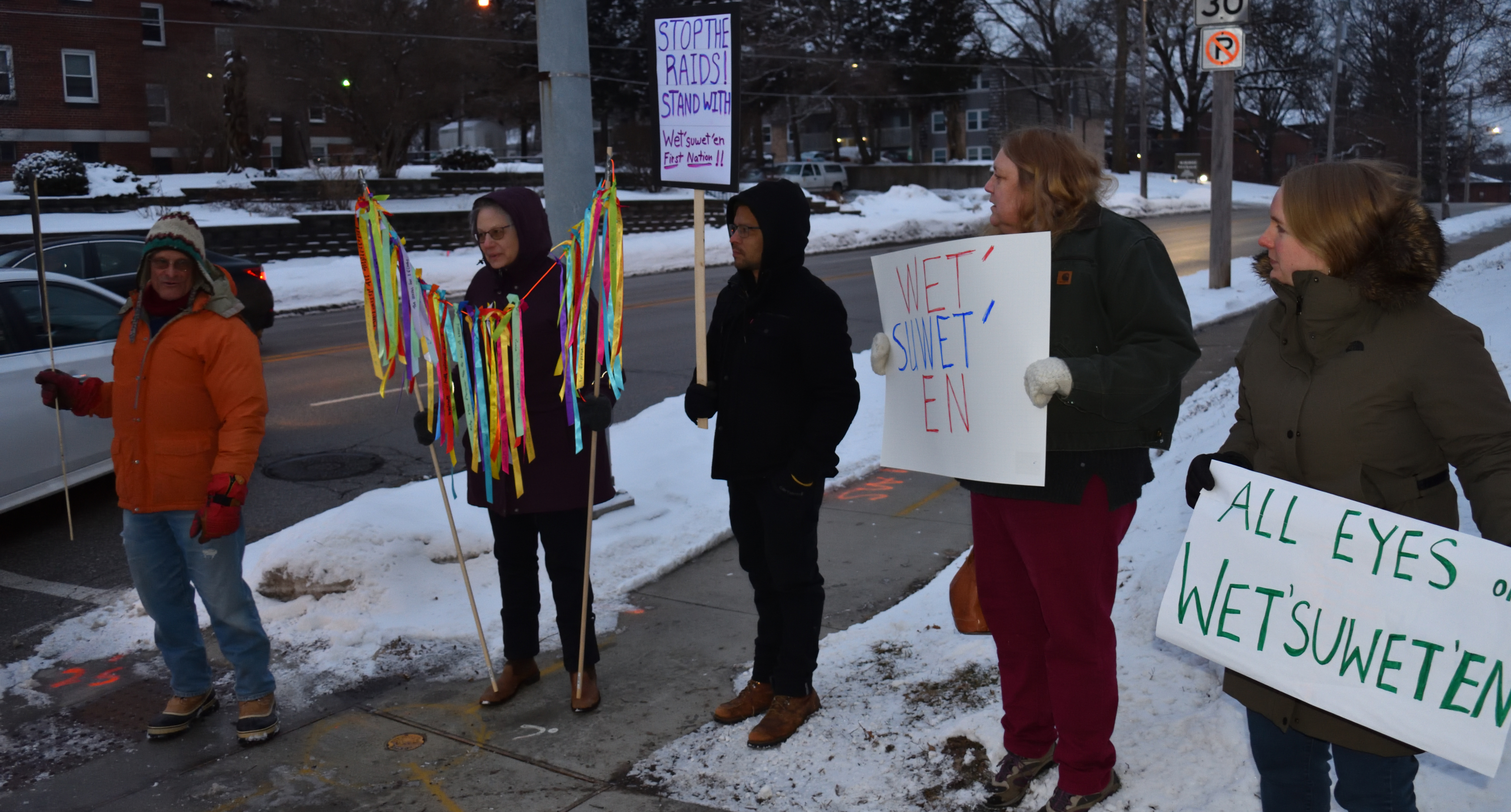
In 2020 I began to closely follow the struggles of the Wet’swet’en peoples in British Columbia, as they are trying to prevent a pipeline from being built through their pristine territory. The year before Royal Canadian Mounted Police violently attacked the Wet’suwet’en in order to break their resistance. Things calmed down until this year when the RCMP again began to try to clear the way for the pipeline construction.

Peter Clay, who was on the March, and I organized a vigil in support of the Wet’suwet’en in Des Moines in February, 2020. We posted the event on Facebook and were surprised when Ronnie James joined us. He was surprised anyone in Iowa knew about the Wet’suwet’en.

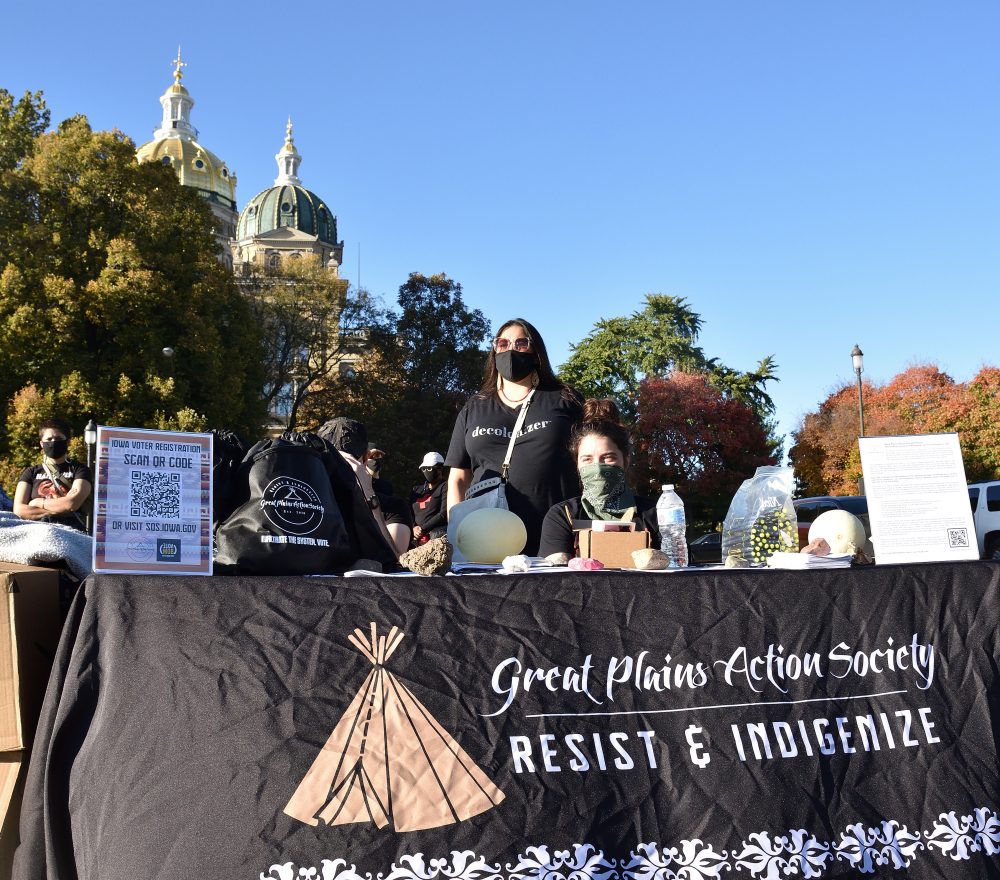
Ronnie is an Indigenous organizer with many years of experience. He accepted my Facebook friend request, and we have been in frequent contact since. Ronnie works with Christine in a new organization they have created, the Great Plains Action Society, along with a number of others who walked on the March.

Discussing Mutual Aid is the reason I have embarked on this series of articles

That meeting changed the direction of my work. I don’t know why I had not heard of Mutual Aid as an approach to justice work and community. That is what Ronnie has been teaching me for the past year and one of the main reasons I have embarked on this series of articles about White Quakers. For many reasons, I believe Mutual Aid is what Friends should become involved in. I’ll continue to write about Mutual Aid in this series.
“mutual aid” | Search Results | Quakers, social justice and revolution (jeffkisling.com)

I am so happy these conversations with Ronnie have led me to participate in Des Moines Mutual Aid’s work myself. I’ll be writing more about that in this series.

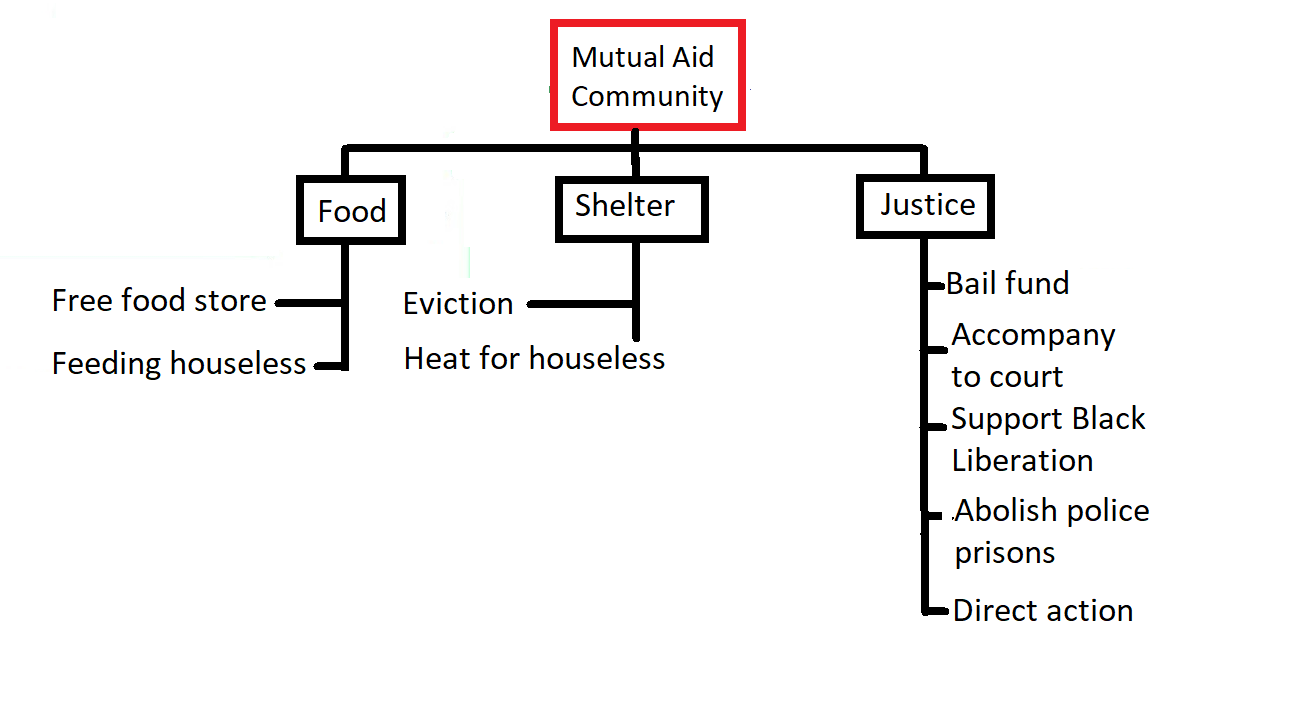
As this image indicates, abolition of police and prisons is a major focus of Des Moines Black Liberation Movement and Des Moines Mutual Aid. Des Moines Mutual Aid and Black Liberation Movement work closely together.

Great Plains Action Society (GPAS) was established a few years ago, at a time when Christine Nobiss and others left the Seeding Sovereignty organization. Ronnie James is among several of my friends from the First Nation Farmer Climate Unity March who are involved in GPAS. GPAS supports Ronnie and his work with Des Moines Mutual Aid.

One focus of the work of GPAS is the removal of of white supremacist monuments in Iowa.
monuments | Search Results | Quakers, social justice and revolution (jeffkisling.com)

I strongly believe there is an urgent need to embrace Mutual Aid communities

As I said at the beginning, I strongly believe there is an urgent need to embrace Mutual Aid communities. To create our own. I’m afraid it will be difficult to convince my white Quaker community that this must be done.

Posted in #NDAPL, abolition, Black Lives, capitalism, climate change, Dakota Access Pipeline, Des Moines Black Lives Matter, Des Moines Mutual Aid, First Nation-Farmer Climate Unity March, Great Plains Action Society, Green New Deal, Indigenous, Kheprw Institute, monuments, Native Americans, police, prison, Quaker, Quaker Meetings, Seeding Sovereignty, Uncategorized | Leave a comment

White Quakers and Native Peoples

Recently I find myself wondering more often, thinking more deeply about what white Quakers, such as myself, were, are and might become. This questioning comes from a variety of experiences over the past fifty years. Being blessed to have become engaged with several communities. Communities of Black, Indigenous and other people of color (BIPOC). Communities where white Quakers don’t generally have a presence. Any presence. Those experiences expanded both my views and wonderment.

In the following, when I say “we” I am referring to white Quakers. I appreciated it when it was pointed out that I was inferring “white” Quakers when I used the term Quaker. There are more Quakers in Africa, black Friends, than there are white Friends in the land known as North America. There are some native people who are Quakers, but the number is very small as far as I know.

It has been disconcerting to be involved in a process over my lifetime that has revolutionized the relationships of white Quakers, particularly white Quaker males, to non white communities. I grew up in white Quaker communities, attended a Quaker high school and college. I was a draft resister. My first work after college was a two year Quaker volunteer project in inner city Indianapolis. Was on the General Committee of Friends Committee on National Legislation. I organized to resist fossil fuel pipelines.

Importantly, these things are not unusual for many white Quakers. Those experiences reflected what had been my/our white Quaker worldview. That we had skills we could, should offer to support peace and justice work. Work that was supposed to be informed by spiritual guidance.

The revolutionary changes now stem from the growing realization that this viewpoint was not only not helpful in most cases, but actually harmful. A viewpoint consistent with white privilege and supremacy. This realization is informed by what are now known as tragic consequences of white Quaker participation in settler colonization, forced assimilation of native children, and enslavement. This must mean spiritual guidance was either not sought, or was misinterpreted.

Both white Quakers and those we sought to engage with have recognized these tragic mistakes. Mistakes from the past, and in too many cases continue to this day. A grand awakening has been occurring for years. Black, Indigenous and other people of color (BIPOC) have mobilized globally to do what is needed in their own communities. Do what is necessary to protect Mother Earth.

There are at least two consequences of this for white Quakers. One is we are no longer invited to provide leadership in those communities. In some instances our very presence is unwanted. If we can be present, it must be as observers. Learning and waiting for the community to ask what they need from us, if anything. Our work becomes teaching our white Quaker communities what we have learned, what is being asked of us. That includes discouraging white Quakers from continuing to work as white supremacists.

The second consequence is to consider what we are led to do for the process of reparation?

It is difficult to determine what happened in the past. Written and photographic material is scarce or non existent. Even with such documentation, the motivations behind the history may be unknown, or there may be conflicting versions. Future generations may have the opposite problem of far too much documentation, too many stories about our times now.

These historical stories of what white Quakers were are essential to understanding what white Quakers are now. As a continuum. Traumas from the past are passed from generation to generation. Both for those who experienced the trauma, and those who contributed to causing the trauma.

I plan to write a series of articles about white Quakers and these various examples of engagement with non white communities. What follows today is part of the history of white Quakers related to Indigenous peoples; those who have lived for centuries on the lands referred to as North America.

Land theft and settler colonization

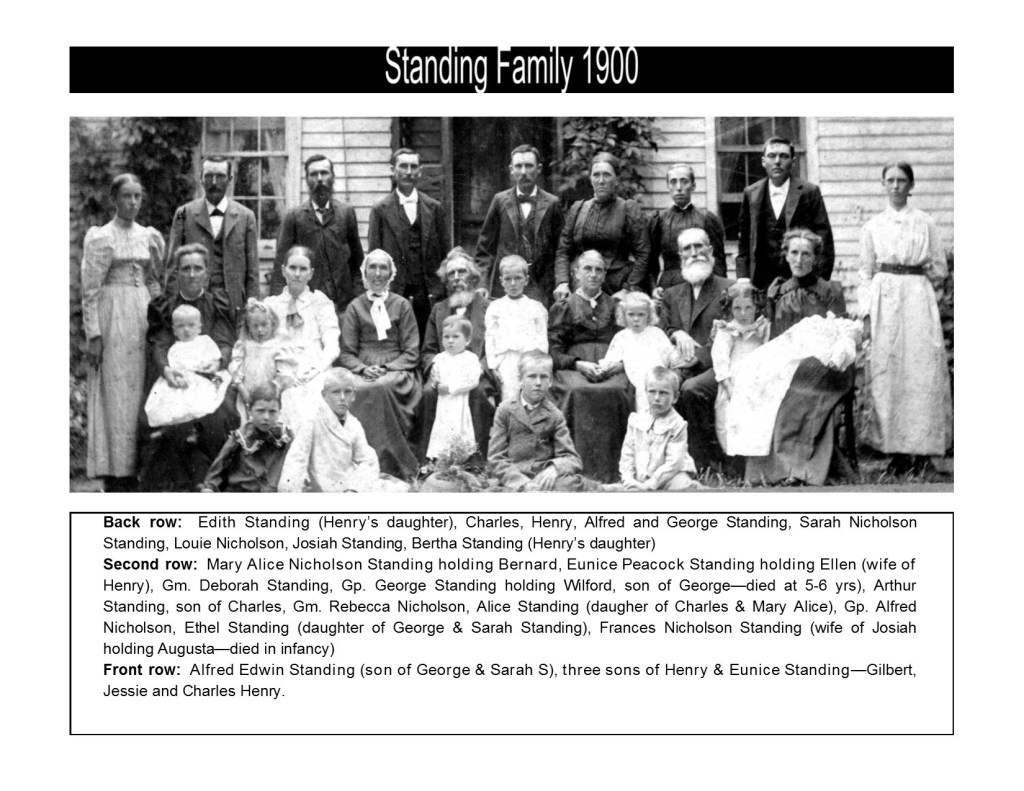
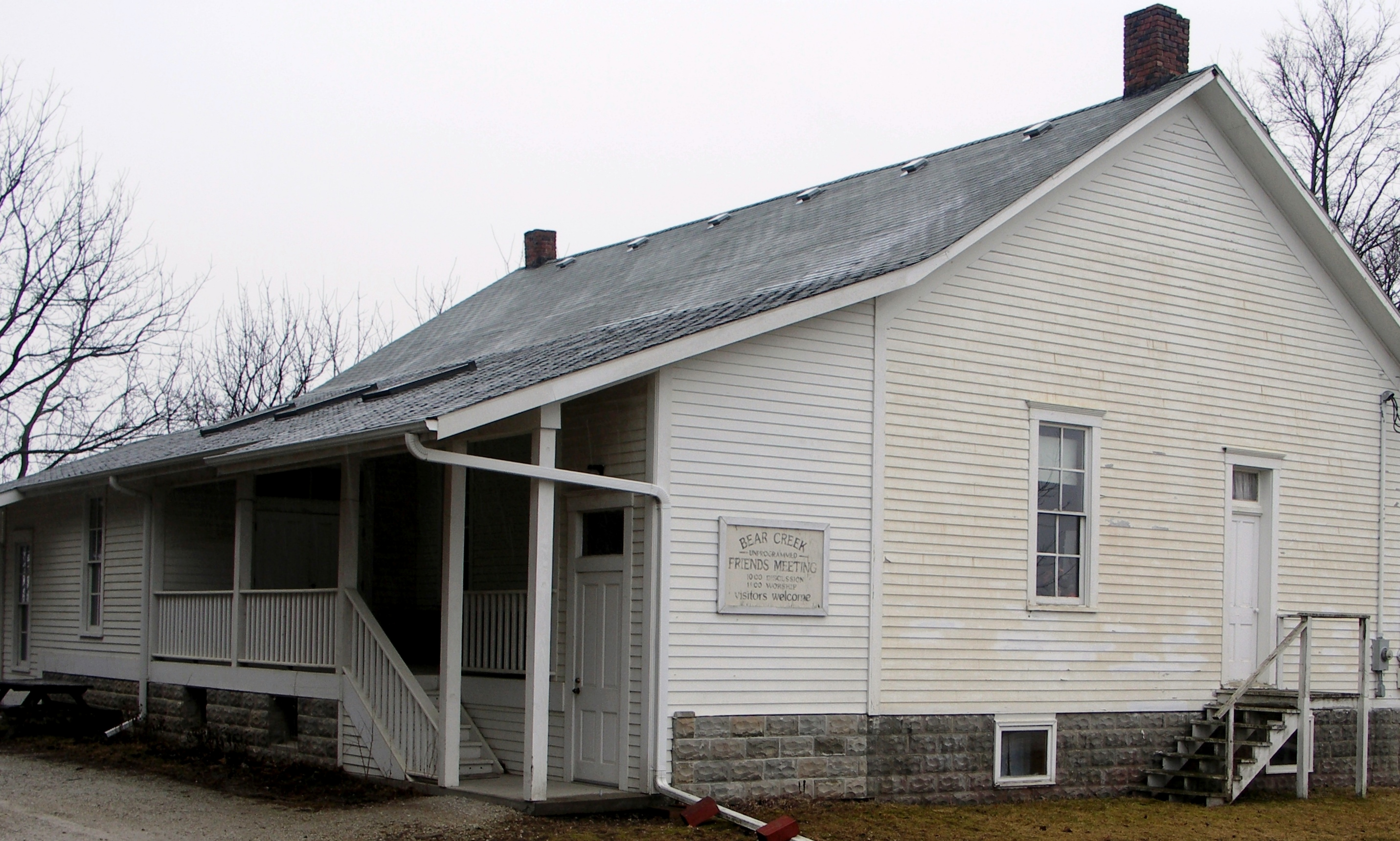
At first I wrote many white Quakers settled on Indigenous land when actually all white Quakers settled on Indigenous land. This photo, circa 1900, is of my ancestors, who settled on the traditional lands of the Báxoje (Ioway), Osakiwaki (Sauk) and Meskwaki (Fox) Peoples. Many other Indigenous Nations also lived in and traveled through what is now called Iowa. Where a number of descendants of white Quakers live to this day. Where relatives and friends of mine live now. The Quaker meetinghouse I attend, Bear Creek, is in this area.

This image has an empty alt attribute; its file name is Standing-1900-1024x791.jpg
This image has an empty alt attribute; its file name is bearcreek26.jpg
Bear Creek Friends Meeting, Iowa Yearly Meeting (Conservative)

Part of what draws me to Quakerism is our commitment to seeking the Truth collectively. We do not hide from the Light that can be painful in its revealing work. It is painful to me as I look on our history, and can easily choose to focus on or lift up the gems of things we, as Friends, “got right” along the way, without acknowledging the deep harm that was also caused, and still undermines our connection to Spirit today. Quakers have complicated histories with Quaker Boarding Schools, colonization, white supremacy culture, and the prison industrial complex to name a few. It is harmful to ignore these challenging pieces of our shared history, and I see it very clearly as part of my work, as a Quaker committed to the future of this community, to recognize these places, and not hide from them.

We need to continually acknowledge the harm the Religious Society of Friends has done in the past as we work towards the Continuing Revolution we believe in, which looks to me like what Dr. Martin Luther King Jr. would call the Beloved Community. The work is made manifest when we listen deeply to movement of the Spirit inwardly, and amongst Friends. This is not going to be comfortable, and shall be taken on with humility and openness. Quakers are Colonizers, on this land and in other lands.  What is our work in decolonizing our meetings, communities, and institutions?

Quakers are Colonizers by Liz Nicholson, Quaker Voluntary Service, Nov 22, 2018

Bear Creek Friends have long been aware of some of the native history of the lands the meetinghouse is on. Friends have been engaged with the annual Prairie Awakening/Prairie Awoke celebration, held at the Kuehn Conservation Area just a few miles from the meetinghouse.

See: “prairie awakening” | Search Results | Quakers, social justice and revolution (jeffkisling.com)

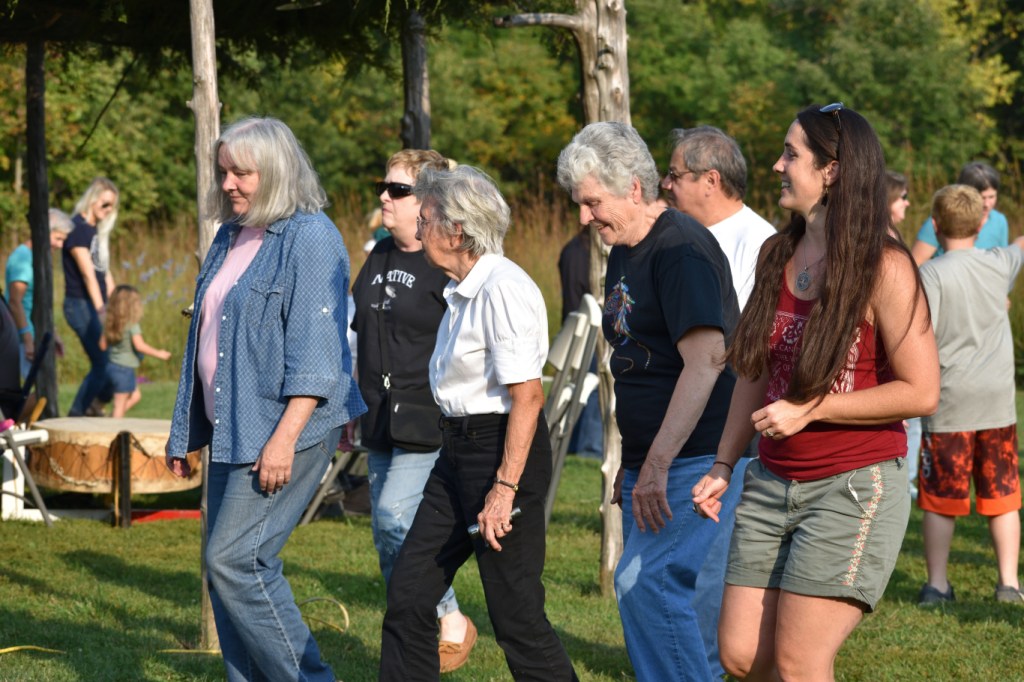
The following are some photos of Bear Creek Friends and the Prairie Awakening/Prairie Awoke celebration.

Posted in decolonize, enslavement, Indigenous, Native Americans, Quaker, revolution, Toward Right Relationship with Native Peoples, Uncategorized | Leave a comment

Abolish White Supremacist Monuments in Iowa

Yesterday I saw some of my friends speaking in an online conversation about removing monuments to white supremacy in the state of Iowa. This is something they have been teaching me about over the past year. Links to those posts can be found at the end of this.

Abolish White Supremacist Monuments, etc. in Iowa

Great Plains Action Society started this petition to Iowa Governor and Iowa State Senate.

We demand that all white supremacist, misogynistic and, homo/transphobic historical monuments, names, and holidays be removed from all Iowa state grounds and facilities. By removing these monuments, we are not erasing history—we are correcting it. These depictions fall into the realm of hate propaganda and human rights violations because they make specific segments of the population feel unwelcome in public spaces. 

This propaganda is everywhere but many do not realize it depicts enslavement, land theft, violence, and genocide. Indigenous, Black, Latinx, and many other oppressed folks in this country must face these images every day in their neighborhoods, commutes, or at their places of work. It is important that Iowans demand that their government carry out a genuine act of truth and reconciliation on stolen land by removing all depictions of white supremacy.

Sign today to demand that Iowa legislators do the right thing and pass a bill that will remove all white supremacist, misogynistic and, homo/transphobic historical depictions, names, and holidays from all Iowa state grounds and facilities. 

These monuments, names, and holidays clearly celebrate white supremacy as they whitewash the history of colonization, genocide, slavery, and Jim Crow in this county. They are an overt act of institutionalized racism. For instance, when referring to a statue of “Johnny Reb” in a recent speech, Jay Jones, a black Democratic delegate from Virginia said, “Every time I drive past it — which is every day to get to my law office — my heart breaks a little bit,” It is time for Iowa to accept responsibility for the past and for the continued retraumatization of BIPOC and LGBTQIA+ folks through these public displays of white supremacy and the heteropatriarchy. 

If there is a monument, mural, or any other celebration of White supremacy in your neighborhood, we ask that you take the time to learn more about it and take action. Write to your local legislator, organize a rally, or start an online campaign. There is a lot that we all can do to clear the social landscape of a false history told only by white men.

To learn more about Great Plains Action Society, go to greatplainsaction.org

Decapitating Colonialism

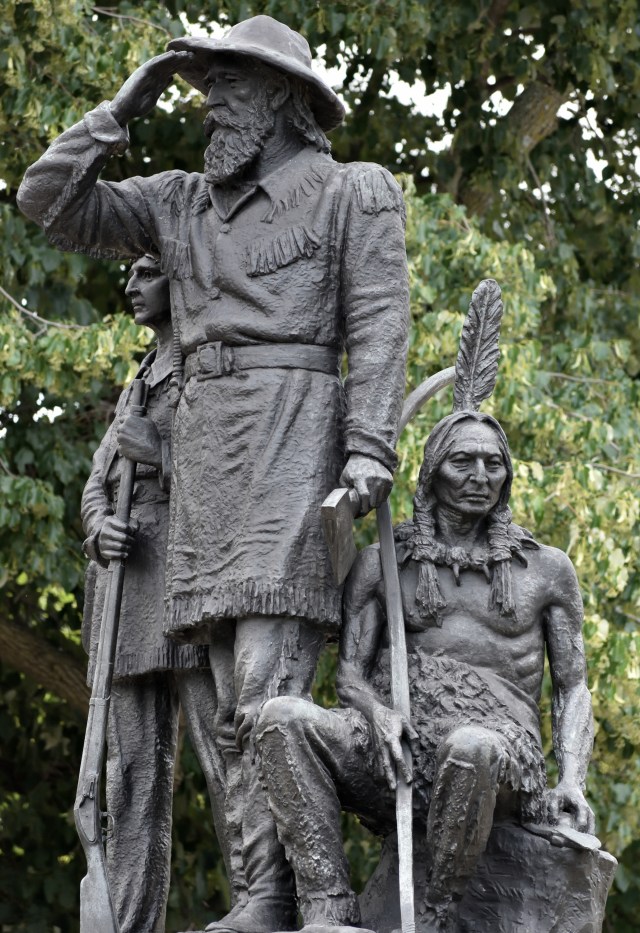
Early last year, I was invited to support my best friend, Rogue LaMere, deliver a fiery speech at the Climate Crisis Parade in Des Moines, Iowa. This would be the first time in my life where I traveled to Des Moines, Iowa. The Climate Crisis Parade was a success. However, the event that followed afterwards is what got my heart pumping. It was an event to denounce white supremacy at the Iowa State Capitol building. Erected in front of the Iowa State Capitol stands a settler, his son, and a “friendly Indian” who appear to be looking off into the distance. The statue is titled, “Pioneers of the Territory.” The Iowa Legislature explains, as if proudly, further into the making of the statue and what it represents:

“The design for this grouping called for: ‘The Pioneer of the former territory, a group consisting of father and son guided by a friendly Indian in search of a home.’ The pioneer depicted was to be hardy, capable of overcoming the hardships of territorial days to make Iowa his home…Originally designed to be a lion’s head, this bronze buffalo head was determined more appropriate to Iowa’s prairie environment.”

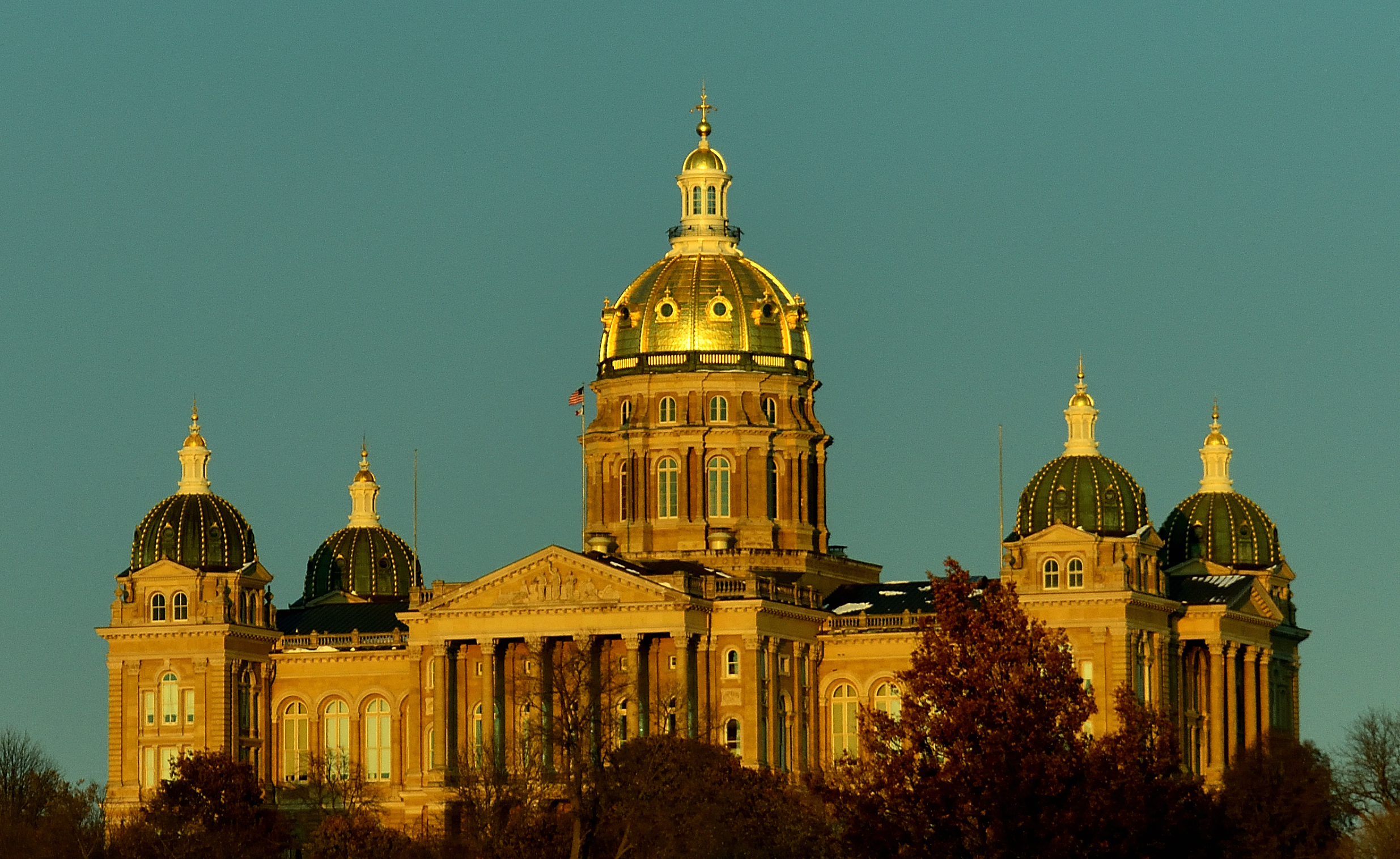
Signs of Racism and MMIWG2S (Missing Murdered Indigenous Women and Girls, Two-Spirit) and In Search of Stolen Land were held that day. While we stood before the capitol building, Christine Nobiss (Plains-Cree Saulteaux), Michelle Free-LaMere (Ho-Chunk), and Donnielle Wanatee (Meswaki) stood in front of this statue and delivered an urgent call-to-action to take all problematic statues down at the Iowa State Capitol as well as nationally. It was a powerful day. Quite often we are told that when moments like that happen, everyone that is supposed to be there – will be there. Each of us either feel that call or we don’t. I left that day feeling like I needed to do more. I was no longer going to sit by and witness our history being taken away like everything else was.

Decapitating Colonialism: White Supremacist Statues, Monuments, & Symbolism Written by Alexandrea Flanders, Great Plains Action Society

#statues
#whitesupremacy
#takeitdown
#greatplainsactionsociety

The earliest pioneer monuments were put up in midwestern and western cities such as Des Moines, Iowa and San Francisco, California. They date from the 1890s and early 1900s, as whites settled the frontier and pushed American Indians onto reservations.

Those statues showed white men claiming land and building farms and cities in the West. They explicitly celebrated the dominant white view of the Wild West progressing from American Indian “savagery” to white “civilization.”Think Confederate monuments are racist? Consider pioneer monuments by Cynthia Prescott, The Conversation.

Pioneer statue, Iowa State Capitol grounds, Des Moines, Iowa Jeff Kisling

Following are previous posts related to monuments to white supremacy in Iowa.

My friends Christine Nobiss and Donnielle Wanatee organized the event at the Iowa State Capitol on July 4th, 2020, regarding removing the Pioneer statue on the grounds there.

I was blessed to be able to attend this ceremony. Sometimes things we get involved with don’t seem to impact us directly. But they might in ways we may not be aware of at the time. This July 4th ceremony with the voices of Christine and Donnielle helped me see the effects of these statues in a new way. See these with my heart and not just my mind. That illumination came from the story Christine shared.

This land is stolen land. Where we are standing it’s the land of the Ioway and the Meskwaki and the Dakota.

I am tired as an Indigenous person coming to these spaces and seeing these because it does trigger historical trauma. And it does make me feel unwelcome here. And I should not feel unwelcome here, especially as an indigenous person of Turtle Island.

I think this is hate speech. Iowa doesn’t have any laws per se against hate speech, but it does have laws against discrimination. So I feel discriminated when I come here and I look at this or when I go inside and I have to look at that awful mural of westward expansion that tells the story of bringing proper farming practices to Iowa. Like the people here didn’t know what they were frickin’ doing, And especially the Columbus statue, which is over there somewhere, but it’s being protected right now.

Christine Nobiss, Seeding Sovereignty

Indigenous People’s Day, Des Moines, 2020 | Quakers, social justice and revolution (jeffkisling.com)

I Don’t Feel Welcome | Quakers, social justice and revolution (jeffkisling.com)

HEY! Come Get Your Racist Uncle | Quakers, social justice and revolution (jeffkisling.com)

Posted in decolonize, Great Plains Action Society, Indigenous, monuments, Uncategorized, white supremacy | Leave a comment

Combating State Repression

The title of the article, Defending Standing Rock, Combating State Repression, caught my attention this morning. I remember how shocking it was to see police in full riot gear and military vehicles facing nonviolent, often praying people at Standing Rock. As it was also shocking to see militarized personnel and vehicles deployed in 2014 on the streets of St. Louis after Michael Brown was murdered by law enforcement.

Most of us have become numb to those sights and tactics in cities across the country by militarized police. To see this in response to Black Lives Matter protests against police brutality, which often creates a vicious cycle.

Then to have commentators and legislators brazenly use the BLM protests as justification for the presence of armed civilians in the Michigan capitol, armed and violent insurrectionists in the US capitol.

Rather than condemning these violent acts, large numbers of elected officials publicly condone them. It is hard to see how this will not continue to escalate. That we will see increasingly predatory militaristic responses to justice protests.

Ryan Fatica: There’s been years of legal battles and all sorts of repressive tactics that law enforcement has used to respond to and to shut down the movement that emerged in response to the Dakota Access Pipeline. You’ve been involved in much of those efforts. Can you help us understand better what kind of tactics law enforcement used there and what the outcome of some of those cases have been?

Lauren Regan: Yeah, I think it’s actually kind of timely and important to be having these conversations as things in Minnesota begin to also heat up, because like I just said: history does repeat itself. And especially with regard to the fossil fuel industry–they have a limited playbook that they continue to repeat over and over again. And so what happened in Standing Rock is important for activists to learn about and consider so that we do not repeat the same situations the next time around and so that we can be better prepared and more aware to strategically dance around the obstacles that we know the state will–once again–put in our way. When I used the word “the state,” I am referring to government, including law enforcement, but also corporations, especially fossil fuel corporations. 

And so with Standing Rock, the first thing that I will say is that the whole playbook of standard activist repression was present. CLDC actually does really lengthy trainings on what is repression and how can you resist it. But one thing that’s important to know is that every social justice movement has faced repression and will face repression. Repression is nothing new. It is expected that when we challenge the status quo, when we push against capitalism and the profit sharing mechanisms of the state, that they’re going to come at us with everything they’ve got, and they’ve got quite an arsenal to fight back against us. We have people power, we have the mass movement, we have passion and commitment and all of those good things, and they have things like guns and prisons–that whole litany of stuff.

Then, of course, we also had the form of state repression that is excessive force and police violence. So many different examples of police, police working with security, using illegal excessive force, sicking dogs on water protectors, shooting them up using tear gas and water cannons for the first time since the 1960s. And, of course, using explosive devices. They shot the eye out of a water protector. Dozens of non-violent water protectors were indiscriminately, permanently, and seriously injured as a result of police violence being used against them for the exercise of their constitutional rights.

Ryan Fatica: Lauren, what advice would you give to activists today? Particularly young people who may have gotten involved in social movements for the first time this summer. A lot of people may have seen these protests as very powerful, as they were, and were very enamored and are now dealing with some disillusionment with all the repression that we’re facing. What advice do you have for them?

Lauren Regan: The first thing I would say is: if you are going to engage in direct action, you have to take yourself seriously. And that means knowing what you’re getting into before you get into it. That’s not only regarding knowing your rights, which I do think are important. On our website since the pandemic started, we’ve been doing these weekly webinars for activists on all sorts of topics, including security culture, state repression, police misconduct, “know your rights” for climate activists, digital security, all these different topics. If you’re going to engage in activism that involves property damage, for instance, you are basically offering yourself up to the state if you are not prepared for that level of risk. The amount of discovery that I have had to watch of people wearing very distinct costumes and clothing, breaking windows, walking into stores, that are obviously filming, and have video cameras everywhere, and they’re not masked up or they’re in very distinct clothing. And, even in Eugene, where I am, the cops just posted like 60 pages worth of screenshot photos of people who were breaking windows and walking into stores and taking things or just walking around. And now there’s warrants out for their arrest and the state is hunting them.

Defending Standing Rock, Combating State Repression: An Interview with Lauren Regan by Ryan Fatica, Perilous, March 1, 2021

Posted in #NDAPL, Black Lives, Dakota Access Pipeline, Indigenous, police, social media, Uncategorized | Leave a comment

Crossing the Divide

My friend Ed Fallon, and Bold Iowa are engaged in an important project to bridge the extreme polarization in this country today.

“Crossing the Divide” was filmed in 2017 and is immensely relevant to Bold Iowa’s signature 2021 initiative:  52 Conversations with Iowa Trump Voters.

Fifty-two Conversations With Iowa Trump Voters is a collaboration between the Fallon Forum and Bold Iowa. Each week from January 1 through December 31, 2021, I’ll have an hour-long conversation with a fellow Iowan who voted for Donald Trump. I’ll publish a summary of that conversation in my weekly blog and interview that voter on my radio talk show.

I’ve got four goals with these conversations:

1. Dispel the myth that all Trump voters are bad people;
2. Identify our common ground;
3. Dialogue about solutions to the existential threat of climate change;
4. Understand why so few rural and blue-collar Iowans vote Democrat.

I reject the rhetoric that most Trump voters are racists, misogynists, and “deplorable” — as Hillary Clinton so memorably referred to half of Trump’s supporters in 2016. There are good people who, for various reasons, voted for Donald Trump. We need to understand why. We need to listen. We need to figure out our shared interests, especially regarding the climate emergency.

A film crew captured this story from the 2017 Climate Justice Unity March.

A reactionary Iowa farmer has a change of heart when climate activists march into his tiny town.

Disrespect is poisoning American society, jeopardizing informed debate and destabilizing democracy. This is a story about how two groups on either side of the political divide get caught up in a firestorm of disrespect, sparked by a Confederate flag and an attack video funded by a pipeline company. Then, almost miraculously, they find common ground. Their unlikely alliance shows how hard it is to change entrenched beliefs yet how important it is to try.

Ralph King is producer and co-director of the PBS documentary Extreme By Design, about Stanford University students who make low-cost products for the developing world. The film premiered on primetime nationally in December 2013. King worked as a print journalist for 25 years and was twice nominated by Wall Street Journal editors for the Pulitzer Prize.

Posted on  by Ed Fallon


Relevant to the fourth goal listed above, I’ll wrap up by quoting Andrew Yang:

“When I was running for president, I spoke with many of the people who hold some of our most common jobs in America — truck drivers, retail clerks, waitresses and more.

“When I told them I was running as a Democrat, a lot of them tended to flinch.

“We have to acknowledge that there’s something wrong when working class Americans have that response to a major party that is supposed to be fighting for them.

“So, you have to ask yourself in that situation, what is the Democratic Party standing for in their minds?”

I hope you’ll sign up to receive my weekly blogs — CLICK HERE TO SUBSCRIBE.

I hope you’ll listen to this series of interviews, either on our podcast or one of the stations that rebroadcast the program. CLICK HERE TO LISTEN.

Most important, I hope you’ll make an effort to talk with Trump voters you know. It takes effort, patience, an open mind, and a loving heart to build bridges, to identify common ground with people often demonized by politicians and the media. When the powers-that-be divide us, we all lose. Let’s change that. — Ed Fallon


NOTE: The following is from a blog post related to this I wrote in 2018.

I’m thinking more about what resist not evil means today. Yesterday’s post related to what Henry Cadbury said during the time of Hitler:

“By hating Hitler and trying to fight back,” Cadbury said, “Jews are only increasing the severity of his policies against them.” He went on: “If Jews throughout the world try to instill into the minds of Hitler and his supporters recognition of the ideals for which the race stands, and if Jews appeal to the German sense of justice and the German national conscience, I am sure the problem will be solved more effectively and earlier than otherwise.” 

Looking back on those days, most people believe Hitler and the Nazi’s were only able to do what they did because the citizenry did not speak out against what was happening. It is assumed people remained silent for one of two reasons, or both. One being they feared the consequences. They saw what happened to those who did speak out, which included being ostracized, losing their jobs or businesses, and/or being imprisoned or sent to the death camps. The other reason might have been they believed Jewish people were a threat and deserved to be punished.

Henry Cadbury believed the Jewish people should have appealed to the German sense of justice and national conscience. Then those Germans would have stood up for the Jewish people, and prevented the Nazis from acquiring power.  The death camps would not have happened.

Many probably think that is naive and could not have worked. But that is what nonviolence is about, connecting with those you are hoping to change. Listening deeply and being willing to change yourself. This is also what faith is about, believing in the presence of God today. Believing that as you listen closely you will be guided by the Inner Light. Believing somehow God will find a way.

“People often mistake hope for a feeling, but it’s not. It’s a mental discipline, an attentional practice that you can learn. Like any such discipline, it’s work that takes time, which you fail at, succeed, improve, fail at again, and build over years inside yourself.

Hope isn’t just looking at the positive things in this world, or expecting the best. That’s a fragile kind of cheerfulness, something that breaks under the weight of a normal human life. To practice hope is to face hard truths, harder truths than you can face without the practice of hope. You can’t navigate dark places without a light, and hope is that light for humanity’s dark places.Hope lets you study environmental destruction, war, genocide, exploitative relations between peoples. It lets you look into the darkest parts of human history, and even the callous entropy of a universe hell bent on heat death no matter what we do. When you are disciplined in hope, you can face these things because you have learned to put them in context, you have learned to swallow joy and grief together, and wait for peace.

IT IS BITTER TEA THAT INVOLVES YOU SO: A SERMON ON HOPE  April 30, 2018 by Quinn Norton

There a many disturbing signs that the current Republican administration is trying to acquire similar power, moving steadily along an increasingly authoritarian path. The core supporters, like the Germans of the time of the Nazis, feel they are victims and are looking at President Trump as the leader who will help them get back what they feel has been taken from them. They want to see those who they feel are responsible for their worsening conditions, punished.  They applaud his destruction of the norms of our society.

Do we have the faith and courage to engage with Trump’s supporters? Can we find creative ways to get past the blind support they have for their leader?

One of the main divides today seems to be between those who live in urban areas versus those who live in rural parts of the country. One of the reasons I want to participate in the First Nation-Farmer Climate Unity March is that one of the goals is to try to bridge that divide. That march has since occurred. Many photos and blog posts about that sacred journey can be found here:
First Nation-Farmer Unity – First Nation peoples and farmers working together

“The First Nation – Farmer Climate Unity March will connect people from urban centers with rural residents to share stories and concerns regarding the abuse of eminent domain, climate change and a range of other issues. With the polarization in our country, it is more important than ever that these opportunities to meet and talk happen. Our  allies are eager to share stories that may be unfamiliar to people in rural communities. Similarly, we want to give people in the towns we walk through a chance to share their stories, not just about how climate change is affecting them but stories about challenges facing farmers and others who live and work in rural Iowa.”   http://boldiowa.com/2018-march-faq/

climate march poster
Posted in #NDAPL, climate change, decolonize, First Nations, Indigenous, Uncategorized | Tagged | Leave a comment

Hear My Plea

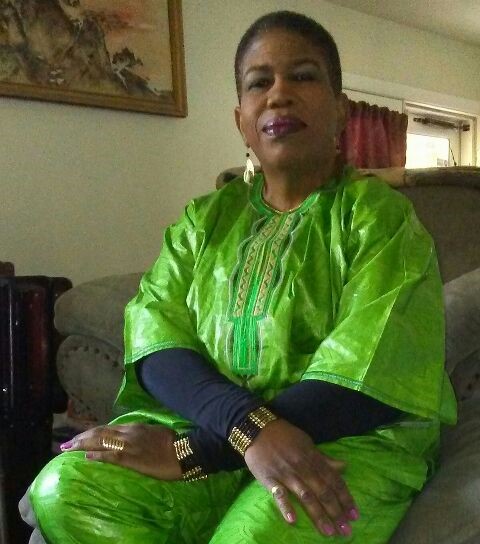
My friend, Avis Wanda McClinton continues to challenge and educate us about both the history of enslavement and the continued oppression of black, Indigenous, and other people of color (BIPOC).

She shared some of her experiences in the Friends Journal article, My Experience as an African American Quaker.

Avis Wanda recently spoke at an NAACP Zoom meeting. This is a video of the visual aids she created and spoke about:


She gave me permission to share that video, and sent the following:

Hear my plea,

Dear descendants of slave owning families,

I’d like to ask you to share your records about the people that were enslaved by your ancestors.

Slavery produced many records, such as ” master bills of lading”. These are thorough and clear receipts with pertinent information about the cargo of human beings being transported, including shipping instructions about ports of entry and ports of discharge. There are bills of sale and lease contracts that were left behind.

The legal documentation of the disbursement of the enslaved men, women and children that your families held in bondage, are in wills, marriage records, household inventories, deeds and probate records.

Exploitative, wealthy European families kept exact records of their trafficking in dark skinned humans. These early Quakers accrued great wealth, which has been passed down from generation to generation, and now to you.

The letters, correspondence, and photographs that are selected and stored for permanent preservation in your archives at Swarthmore and Haverford colleges are historical materials.

They provide evidence and memories and tell stories of American’s history from long ago.

They help us today to understand and interpret the past and help us to learn from it, so that we all can have a better future.

Here is a related blog post: https://kislingjeff.wordpress.com/2018/04/28/avis-wanda-mcclinton/

Queries from Avis Wanda:

Query: Does your faith community face the need of having honest and open discussions about the legacy of slavery with all its hurtful facets? Can we accept the strong feelings that will arise from these discussions?
Query: Is your faith community prepared to work with your local community to create a racially diverse and equal society?
Query: As a Friend would you allow another individual to insult, demean, hurt, or exclude another from his or her worship? How can people just stand there and let bad things happen?

My hope in researching the American slavery era is for a more humane world and a better existence for everyone. We are all God’s children.

We are in this together, folks. 

                    Avis Wanda McClinton

                    A child of God’s


Posted in Black Lives, enslavement, Quaker, Quaker Meetings, Uncategorized | Leave a comment

Settler Colonialism as Structure

This morning my Quaker meeting will be discussing resources in preparation for upcoming meetings related to the question, How Is White Supremacy Keeping Us From Hearing God’s Voice? Following is the abstract of one of those resources.

Abstract
Understanding settler colonialism as an ongoing structure rather than a past historical event serves as the basis for an historically grounded and inclusive analysis of U.S. race and gender formation. The settler goal of seizing and establishing property rights over land and resources required the removal of indigenes, which was accomplished by various forms of direct and indirect violence, including militarized genocide. Settlers sought to control space, resources, and people not only by occupying land but also by establishing an exclusionary private property regime and coercive labor systems, including chattel slavery to work the land, extract resources, and build infrastructure.

Settler Colonialism as Structure: A Framework for Comparative Studies of U.S. Race and Gender Formation by Evelyn Nakano Glenn, Sociology of Race and Ethnicity, 2015, Vol 1(1) 54-74

This happens to be what I wrote about yesterday in the post “Property”.

I continue to struggle to convince others that we cannot make progress toward justice as long as we are content to remain in systems that continue to cause injustice. Racism is built into the social, economic and political structures of the land called the United States. All the work that so many do to try to improve these systems is doomed to failure because the systems remain.

Property, Quakers, Social Justice and Revolution, Jeff Kisling, 2/27/2021

Yesterday I also worked on another version of a diagram of relationships flowing from settler colonialism.

This diagram is consistent with the Settler Colonialism as Structure abstract citied above. “Settlers sought to control space, resources, and people not only by occupying land but also by establishing an exclusionary private property regime and coercive labor systems, including chattel slavery to work the land, extract resources, and build infrastructure.”

The following is from the summary and conclusions Settler Colonialism as Structure.

I have offered the concept of “settler colonialism as structure,” as a framework that encourages and facilitates comparativity within and across regions and time. I believe that a settler colonial structural analysis reveals the underlying systems of beliefs, practices, and institutional systems that undergird and link the racialization and management of Native Americans, blacks, Mexicans and other Latinos, and Chinese and other Asian Americans that I have described herein. What are these underlying systems/structures?

First, the defining characteristic of settler colonialism is its intention to acquire and occupy land on which to settle permanently, instead of merely to exploit resources. In order to realize this goal, the indigenous people who occupy the land have to be eliminated. Thus, one logic of settler colonial policy has been the ultimate erasure of Native Americans. This goal was pursued through various forms of genocide, ranging from military violence to biological and cultural assimilation. British settler colonialism in what became the United States was particularly effective because it promoted family settlement right from the beginning. Thus, the growth of the settler population and its westward movement was continuous and relentless.

Settler ideology justified elimination via the belief that the savage, heathen, uncivilized indigenes were not making productive use of the land or its resources. Thus, they inevitably had to give way to enlightened and civilized Europeans. The difference between indigenes and settlers was simultaneously racialized and gendered. While racializing Native ways of life and Native Americans as “other,” settlers developed their selfidentities as “white,” equating civilization and democracy with whiteness. Indian masculinity was viewed as primitive and violent, while Indian women were viewed as lacking feminine modesty and restraint. With independence from the metropole, the founders imagined the new nation as a white republic governed by and for white men.

Second, in order to realize a profitable return from the land, settlers sought to intensively cultivate it for agriculture, extract resources, and build the infrastructure for both cultivation and extraction. For this purpose, especially on large-scale holdings that were available in the New World, extensive labor power was needed. As we have seen, settlers in all regions enslaved Native Americans, and the transnational trade in Native slaves helped to finance the building of Southern plantations.

However, in the long run, settlers could not amass a large enough Indigenous slave workforce both because indigenes died in large numbers from European diseases and because they could sometimes escape and then survive in the wilderness. Settlers thus turned to African slave labor. Slave labor power could generate profit for the owner in a variety of ways: by performing field labor, processing raw materials, and producing goods for use or sale and by being leased out to others to earn money for the owner.

Settler Colonialism as Structure: A Framework for Comparative Studies of U.S. Race and Gender Formation by Evelyn Nakano Glenn, Sociology of Race and Ethnicity, 2015, Vol 1(1) 54-74

As I wrote yesterday, “The colonization of America was built on the idea of people and land as property. “The exclusive right to possess, enjoy, and dispose of a thing: ownership”. Exclusive is key, because it suggests that the property owner can do anything they want with the property, be that land or people.

Indigenous peoples were swindled out of their land because they did/do not think of land as property, as being owned. And believed in sacred promises, such as honoring treaties. Colonists violently seized all the land, and broke every treaty.

Incredible as it seems, people and their labor were/are designated as property. People from Africa and other places were captured and enslaved. Families separated. Native land was stolen by classifying it as property. Millions of people are essentially enslaved today as they work for poverty wages, if they are able to find a job.


What linked land taking from indigenes and black chattel slavery was a private property regime that converted people, ideas, and things into property that could be bought, owned, and sold. The purchase, ownership, and sale of property, whether inanimate or human, were regularized by property law or in the case of chattel slaves, by slave law. Generally, ownership entails the right to do whatever one wants with one’s property—to sell, lend, or rent it and to seize the profits extracted from its use.

Settler Colonialism as Structure: A Framework for Comparative Studies of U.S. Race and Gender Formation by Evelyn Nakano Glenn, Sociology of Race and Ethnicity, 2015, Vol 1(1) 54-74

As my friend Ronnie James writes,

“I’m of the firm opinion that a system that was built by stolen bodies on stolen land for the benefit of a few is a system that is not repairable. It is operating as designed, and small changes (which are the result of huge efforts) to lessen the blow on those it was not designed for are merely half measures that can’t ever fully succeed.

So the question is now, where do we go from here? Do we continue to make incremental changes while the wealthy hoard more wealth and the climate crisis deepens, or do we do something drastic that has never been done before? Can we envision and create a world where a class war from above isn’t a reality anymore?”

Ronnie James

Ronnie and I and our accomplices have been working on such vision, which is Mutual Aid.
“mutual aid” | Search Results | Quakers, social justice and revolution (jeffkisling.com)

Posted in capitalism, decolonize, Des Moines Mutual Aid, enslavement, Indigenous, Mutual Aid, Native Americans, Quaker, Quaker Meetings, Uncategorized | Leave a comment