Flatlands

Below is a link to the first series of photos from my recent trip to Rocky Mountain National Park with my parents a couple of weeks ago.  I took so many that I needed to organize them by subject so I could keep track of which had been edited.  More series to follow, if interested.

After a bus trip to Des Moines, we started out August 30, in dense fog.  Then in Nebraska it warmed up to the upper 90’s, and the air was very smoky, so many of these photos have a softened, almost painting-like appearance.
Flatlands

DSC00140

Posted in Uncategorized | Leave a comment

Cars as weapons of mass destruction

It was in 1913 when the Ford Motor Company’s moving assembly line first started. At the time I’m sure a personal automobile was seen as a luxury item, for the rich only. Curious as to whether there were initial Quaker reactions against automobiles, Internet searches only revealed articles about Quaker State Motor Oil, and various Quaker auto sales companies!

Think of what has happened in just the 100 years since.

How could we think it was reasonable for every family to have at least one of these massive, complicated machines?  How can we justify the tons of material needed to make each car?  For a machine that sits idle such a large percentage of the time?
In the 1970’s it was easy to see some of the effects of the use of millions of automobiles in the form of smog in high population areas.  Although catalytic converters have since helped with the visible smog, they actually helped add even more carbon dioxide (CO2) into the atmosphere when they converted carbon monoxide (CO) to CO2.   Carbon dioxide is a greenhouse gas, which means it helps trap the heat rising from the earth’s surface, preventing its escape into space.  This is why we have a planet with temperatures that support life.  But burning all of that gasoline and dumping TONS of CO2 into the air is resulting in higher atmospheric and ocean temperatures.  The hotter air holds more water vapor, resulting in droughts and changing, more severe, weather patterns.  The oceans have also absorbed a great deal of CO2, which combines with water to form carbonic acid.  The more acidic water kills marine life.  The hotter ocean waters add more water to the atmosphere, resulting in more intense rainfall.

The fact that CO2 is invisible has made it so easy to ignore until recently, when the resulting effects can no longer be ignored.  When some of us began to question the burning all that gasoline, the fossil fuel industry invested millions of dollars to try to convince the general public otherwise, with notable success.

But the damages from this ill considered mass accumulation of personal automobiles extend far beyond the pollution of our air, land and water.  Death and mortality from respiratory illnesses and cancers are widespread.  And the assumption that most people have access to personal automobiles has lead to the paving of so much of the earth’s surface, parking lots and garages, and bridges.

Also, the assumption of personal transportation has created very poorly designed cities and neighborhoods, and fractured communities, which has led to violence and contributed to poverty.

The insatiable demand for oil also led to the first United States invasion of another country, and continuous war and terrorism on our part.  George Fox admonished us to look for the seeds of war in our own lives.  Is there any doubt about what he would say about personal automobiles?  Do you really have any doubt?

Many of you know I decided it was wrong to own a personal automobile about 30 years ago, and have not owned one since.  I had hoped that my example might lead others to consider their use of automobiles, but that did not happen, and I feel I should have been more assertive.  I think we as Friends would have, and should have made a statement that could have had significant consequences if we had chosen to make this our witness back then.

It is now painfully obvious that we must stop burning fossil fuel now if we are to avoid the extinction of the human race.  We are out of time.  We have to stop using personal transportation now.  We have to lead the movement to embrace mass transit now.  Cars are the seeds of war.  I ask you to join me in rejecting personal automobiles.  I’m not really comfortable being this assertive now, but I regret not being assertive enough thirty years ago.  Now is the time.
car2

car5


Posted in Uncategorized | 3 Comments

Keystone Pledge of Resistance video project

Derek Glass, Glass Web Projects, has helped our Keystone Pledge of Resistance efforts tremendously by engaging one of his interns, Andrew Burger, to help me create this video animation which explains what the Keystone Pledge of Resistance is all about, free of charge.  Great contribution to social activism.

http://glasswebprojects.com/portfolio/view/Keystone+Pledge+of+Resistance

DSC04424

Keystone Pipeline Fighter

Keystone Pipeline Fighter

Posted in Uncategorized | Comments Off on Keystone Pledge of Resistance video project

FCNL and Indianapolis

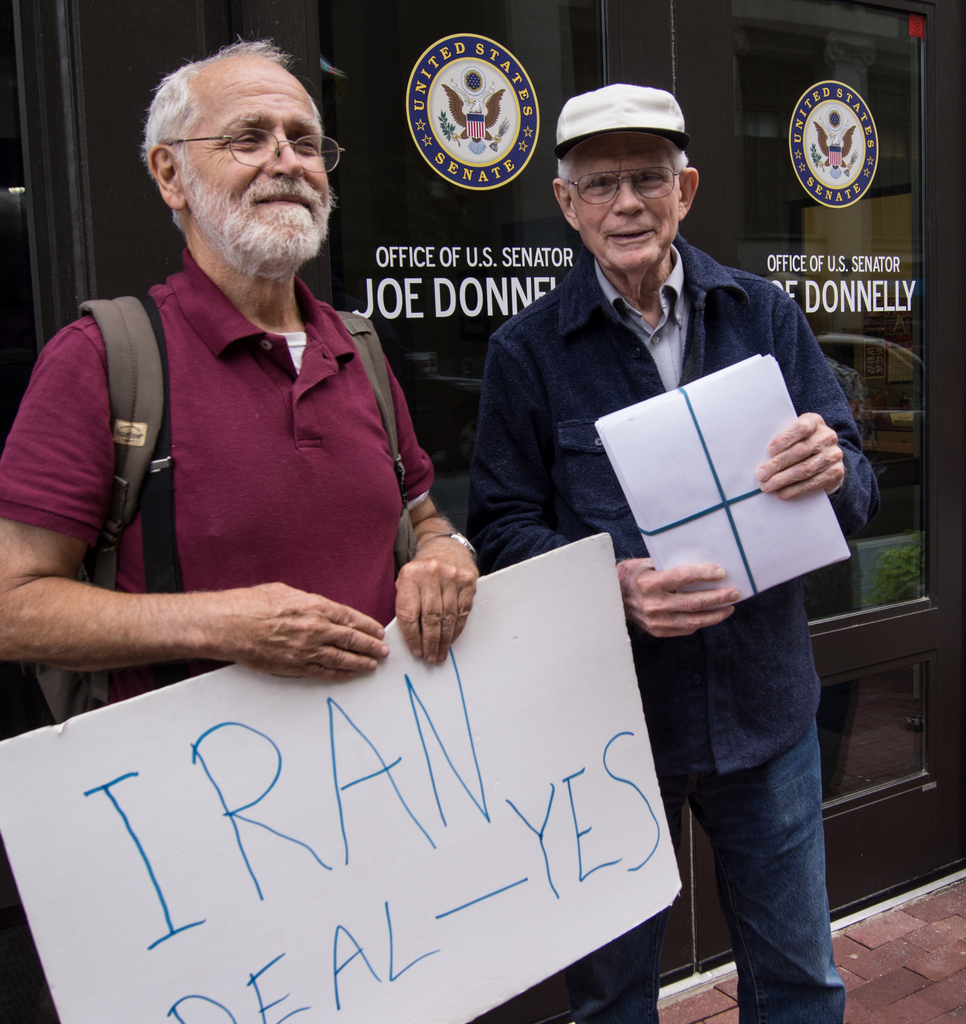
Kate Gould and Jim Cason from FCNL ‘like’ our Facebook post related to the delivery of over 10,000 Hoosier signatures on a petition supporting the Iran nuclear deal to Senator Joe Donnelly’s Indianapolis office.

IranPetitionFCNL

Posted in Uncategorized | Comments Off on FCNL and Indianapolis

Iran petition to Senator Donnelly

IranLetDiplomacyWork

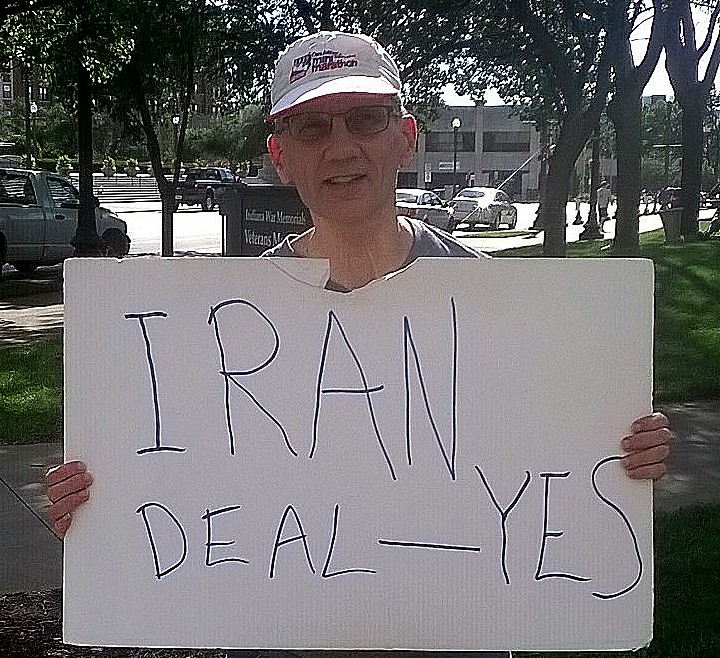
When MoveOn couldn’t find anyone else to do it, I’ve spent the past week, with the help of Erin Polley, AFSC, organizing the delivery of a petition with over 10,000 Indiana signatures supporting the Iran nuclear deal.  Members of North Meadow Circle of Friends, Indiana Moral Mondays, and MoveOn met with staff of Senator Joe Donnelly’s Indianapolis office yesterday.  Senator Donnelly now supports the deal, so this was a ‘thank you’ event, which the Senator’s staff indicated didn’t happen very often.

DSC05233 DSC05246 DSC05258

Posted in Uncategorized | Comments Off on Iran petition to Senator Donnelly

Little feet

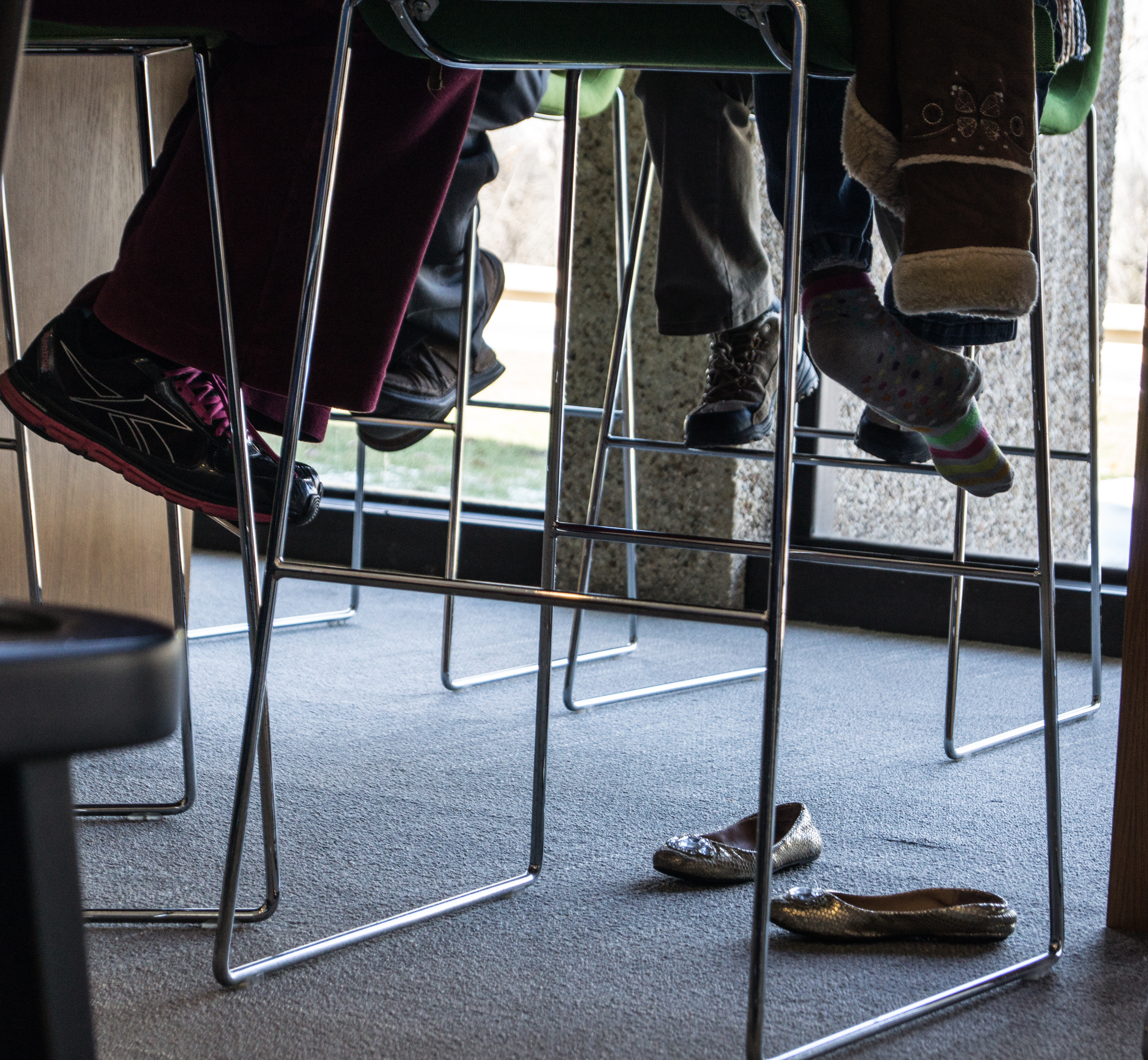
I rediscovered this, one of my favorite photos, recently. It was taken of some kids’ feet as they were eating lunch at the Martin Luther King Day celebration this year, 2015, here in Indianapolis at the Christian Theological Seminary. Notice not only does someone not like shoes, but also likes variety in socks.

Martin Luther King memorial event

Martin Luther King memorial event

Posted in Uncategorized | Comments Off on Little feet

Agricultural apprenticeships to address environmental injustice

DSC07620
Years of structural racism and the economic and governance policies from that have resulted in large urban areas characterized by no economic development, substandard schools, high unemployment and crime, food deserts, few parks and public gathering places, and contaminated air, land and water.  Economic, political and environmental injustices have created these toxic neighborhoods.

Some are trying to respond with efforts like community gardens, aquaponics systems, and community building discussions and events in these difficult circumstances.

Those who have benefited from these economic and environmental policies need to work to correct these injustices.

Global changes are occurring that will force dramatic changes in all our lives.   Although knowing for many years that curtailing burning fossil fuels was the right thing to do, that was ignored.  The only reason that is changing now is because fossil fuel sources are being used up.

But we are going to be increasingly affected by the consequences of burning all that fossil fuel in such a short period of time.  Increasing air and ocean temperatures and concentrations of carbon dioxide will result in more extreme weather and changing precipitation patterns, with more drought and flooding.  That is decreasing food production.  The acidification of the oceans is destroying fish and other marine life.  Food and water supplies for cities will become an increasing problem.

The political system that once worked fairly well at least for the upper and middle classes has been corrupted by the influence of money.   So our system of government is no longer an effective way to try to address these problems.  The mainstream media is controlled by the wealthy, so these problems are covered up there.  Law enforcement has become increasingly aggressive at protecting wealth and property by squashing dissent.  Mass incarceration is used to control disaffected populations.

Large concentrations of people in cities, dependent on transportation and farms for food, will be increasingly fragile.  People will migrate to smaller towns and communities to be closer to available sources of food and water, and where communities are of a size that can work for those living in them.

Now is the time for us to both prepare for the future and begin to correct these injustices.

People living in these toxic neighborhoods deserve a better physical, political and social environment.  Instead of trying to create gardens in areas of contaminated soil, water and air, people could be doing that in rural areas or small communities outside cities.

A first step could be the development of agricultural apprenticeships.  Several people from the city could live and work on a farm to learn farming practices.  These people would then be able to begin to farm their own small plots of land for food, and be the leaders for more people who come from the city.

There is a relatively new term now called regenerative agriculture, which refers to agricultural practices that increase CO2 absorption, which is to basically grow more plants (which absorb CO2).  All of these new, small gardens and fields will contribute that this.
DSC07814

Posted in Uncategorized | Comments Off on Agricultural apprenticeships to address environmental injustice

Good News

The following was written in response to a message from my Aunt and Uncle, Win and Ellis Standing.

Thanks for this interesting news, Aunt Win!  Your ‘good news’ reminds me of the Biblical use of the term.

We had a Moral Mondays meeting yesterday, oriented at welcoming new people.  The meeting started by showing the video I made of the march to the statehouse held when William Barber was in Indianapolis last September to launch Indiana Moral Mondays  http://bit.ly/inmoralmondaysmarch

Evidently I’m getting more into the media business.  After working with Glass Web Projects to produce the Keystone Resistance story http://bit.ly/keystoneresistance    Derek Glass asked if I had another project in mind.

We’re pretty excited about the AFSC Small Group Social Change Ministry program.  We had another meeting that about a dozen Friends attended last Thursday evening, which was the first time we followed the suggested agenda.  That included someone sharing a spiritual practice, which this time was to reflect on the best thing, and the worst thing that happened that day.  We also went over a sample Covenant, line by line (see below) to see how we might modify that for our group.  Then someone shared their story, which was a great one but something I can’t share because the group decided to respect individual confidentiality.  We did discuss and agree that it would be OK to share about the process of the meetings.  Then the meeting purposely worshipped and shared related to that story.  We were all pretty excited by how well the evening went–it really adds so much when we purposely look at things from different perspectives.

I shared this with Lucy Duncan  “Wow, Jeff, so great to hear!” and Greg Elliott from AFSC  ” Sounds like a great meeting. Thank you for keeping us in the loop. Looking forward to seeing this unfold. Blessings!”

Bear Creek might begin thinking about using this program, too.  We might be able to adopt the ‘long distance query’ idea to work with this program–sharing our social concerns stories via conference calls, for example.

All along AFSC has mentioned that one of the possibilities for those meetings that pilot this program might be to share their experience with others as the program expands.  So I thought this might be a good subject for another project with Derek and Glass Web Projects.  He and I will be meeting about this next month.

I had not heard the John Mellencamp stories–thanks.  I first heard his music when Randy Kisling played an album by John COUGAR when I visited him in Wisconsin many years ago.  He always seemed like a very down to earth person and I like his music.

Love,

Jeff

Covenant

Be as fully present as possible, with your doubts, fears and failings as well as your joys and successes. When we offer attentive presence, we nurture love and respect.

Assume positive intent on the part of fellow participants.

Listen with resilience, “hanging in there” when hearing something that is hard to hear.

Refrain from interrupting others.

Set your own boundaries for personal sharing; ask yourself, “what parts of my life story, if any, am I comfortable sharing?” “Pass” or “pass for now”

if you are not ready or willing to respond to a question -no explanation required.

Speak personal truths in ways that respect other people’s truth. Speak using “I” statements, assuming others can deduce the meaning as it applies to them.

No fixing, no saving, no advising, and no setting each other straight. Avoid telling others how they should be. Ask questions from the standpoint of curiosity, rather than arguing or debating.

When the going gets rough, turn to wonder. If you feel judgmental, or defensive, ask yourself, “I wonder what brought her to this belief?” “I wonder what he’s feeling right now?” “I wonder what my reaction teaches me about myself?” Set aside judgment so you can listen to others-and to yourself-more deeply.

Observe deep confidentiality. Nothing said in this circle will ever be repeated to other people.

Commit to regular attendance.

*Adapted from Parker Palmer’s “Touchstones for Circles of Trust”

Bear Creek meeting

Bear Creek meeting

DSC01875-47

Posted in Uncategorized | Comments Off on Good News

AFSC on Iowa Yearly Meeting (Conservative)

AFSC report on Iowa Yearly Meeting (Conservative) annual sessions

IranDeal2

DSC04632

Posted in Uncategorized | Comments Off on AFSC on Iowa Yearly Meeting (Conservative)

Social media affected attitudes on racial equality

A new report from PEW Research indicates social media is one reason for significant changes in attitudes on racial equality.
Attitudes on racial equality
DSC04792 DSC04793 DSC04794

Posted in Uncategorized | Comments Off on Social media affected attitudes on racial equality