

What is education? How and where do our youth learn? What responsibility should youth have in the world today?
I spent my High School years at Scattergood Friends (Quaker) School and Farm just east of West Branch, Iowa. The work at the school and farm is done by the students, with adult supervision. Doing dishes, cooking meals, pruning trees in the orchard, taking care of pigs, and baking bread were often more effective educational experiences than lectures in classrooms (although that was also part of the curriculum). This is an experiential education. Besides learning life skills, we also learned how to solve problems that came up while working. We learned how to cooperate with each other to get the work done.
We learned how to throw pots in the pottery. Each year we participated in a play (theater). We attended meeting for worship every week. Soccer and field hockey were the sports we played.
I was there in the late 1960’s, during the Vietnam War and civil rights struggles. The entire school marched 14 miles from the School into Iowa City, and the University of Iowa, to participate in the anti-war activities there. We organized a draft conference at the school.

Scattergood Peace Walk 1969 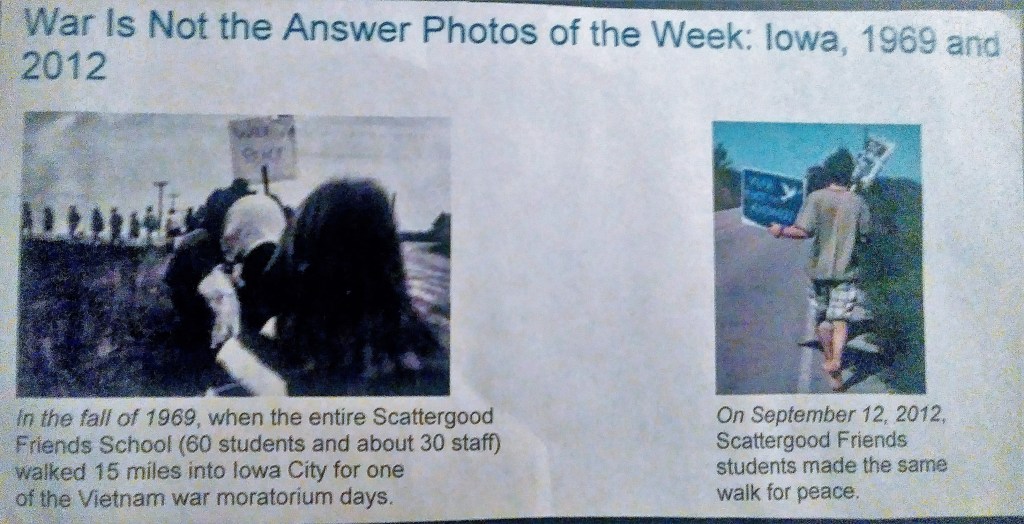
FCNL: Scattergood Peace Marches 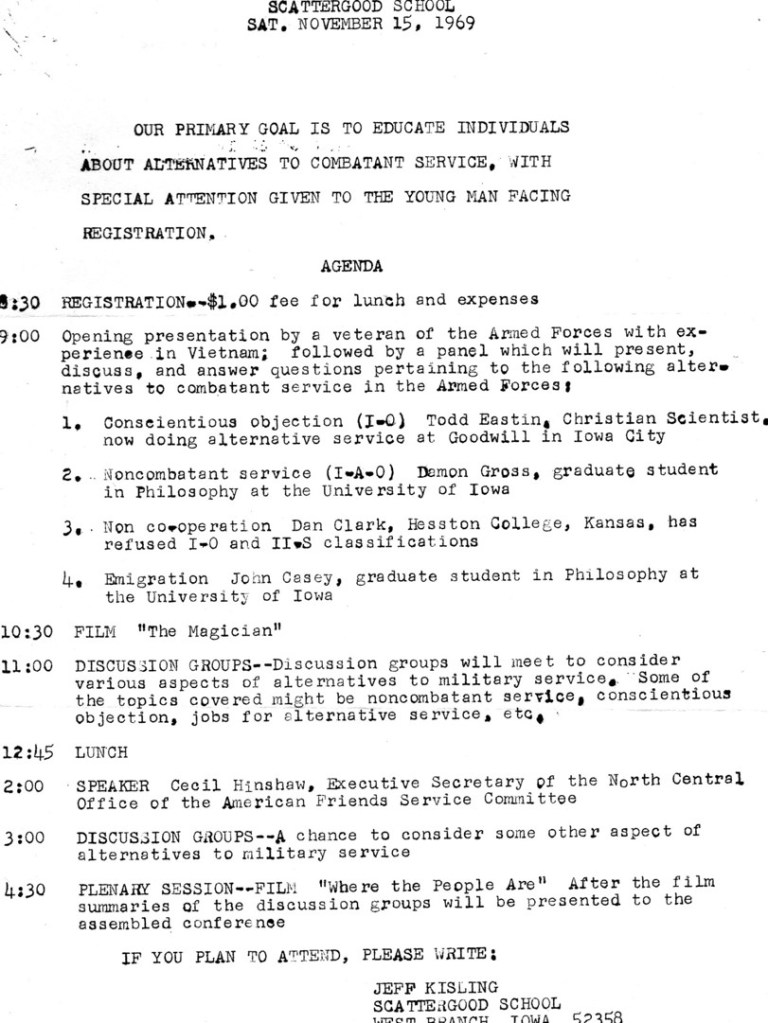
Draft conference, Scattergood 1969 
SONY DSC 
KONICA MINOLTA DIGITAL CAMERA 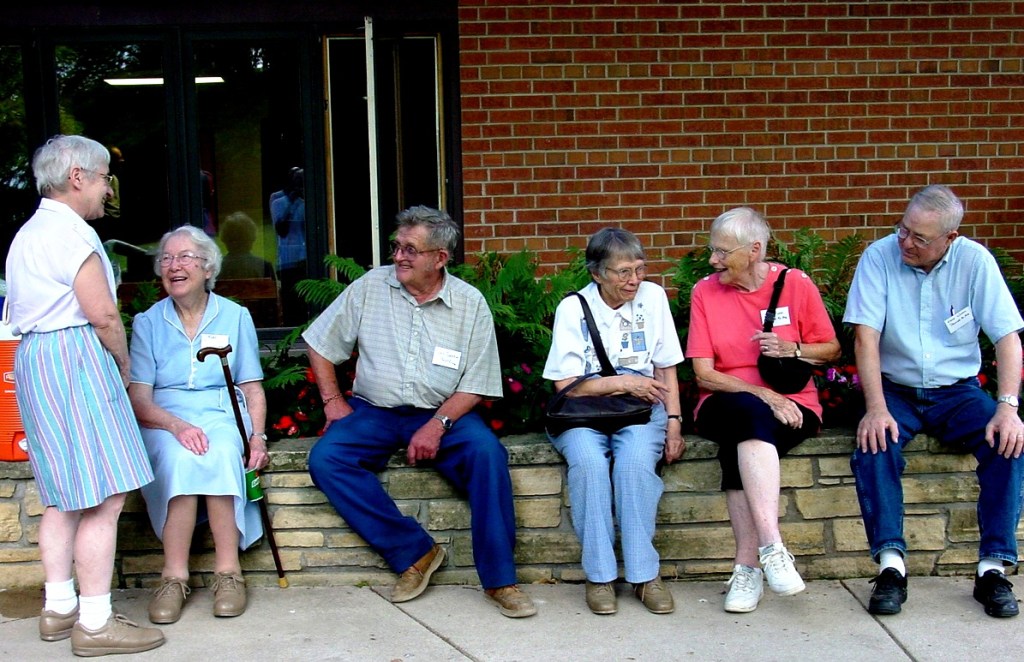
Muriel Bivens Mary Mendenhall Owen Crosby Helen Fawcett Ernie Beth Wilson 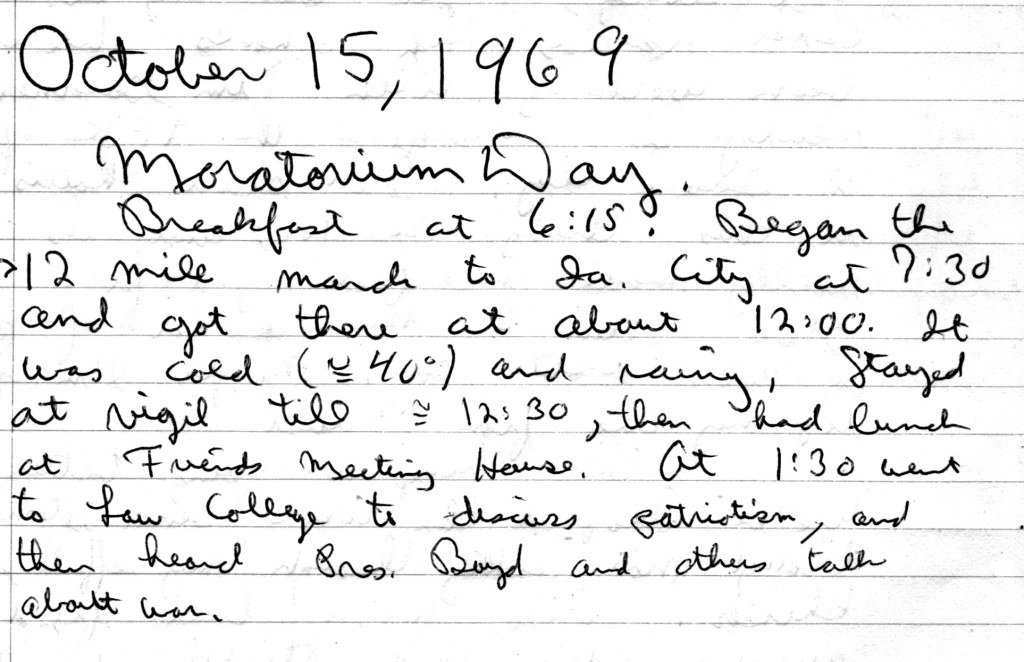
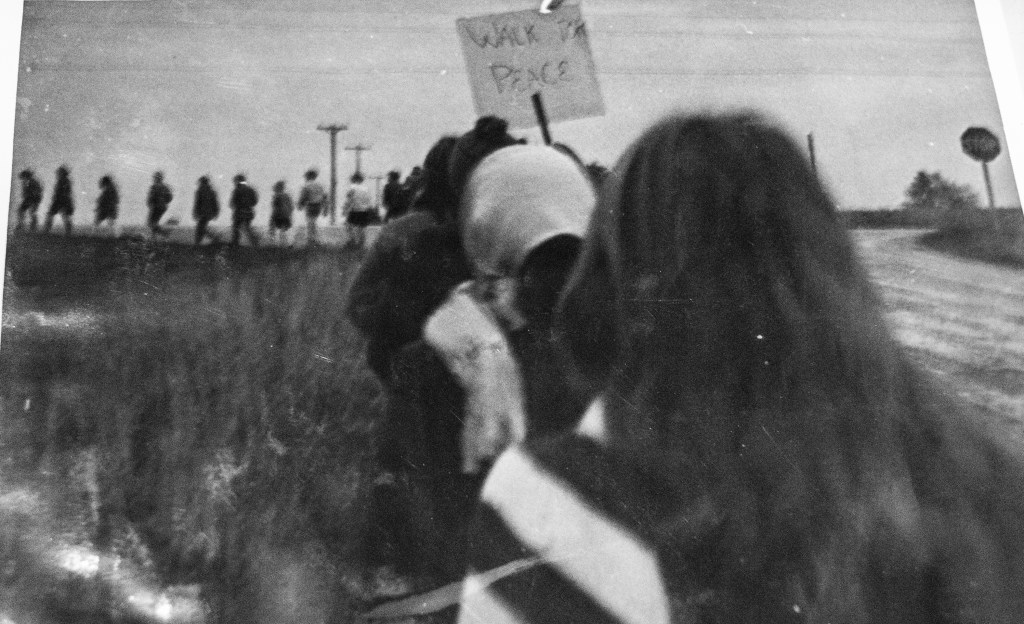
All these are educational experiences. Youth today are leaving classrooms to demonstrate on the streets about climate change. More educational experiences.
Shouldn’t we encourage students to participate in the #SchoolStrikes?
These are not only educational experiences, but they bring attention to the environmental emergency we face now. And these youth are getting the attention of government policy makers.
Our Mission
We, the youth of America, are striking because decades of inaction has left us with just 11 years to change the trajectory of the worst effects of climate change, according to the Oct 2018 UN IPCC Report. We are striking because our world leaders have yet to acknowledge, prioritize, or properly address our climate crisis. We are striking because marginalized communities across our nation —especially communities of color, disabled communities, and low- income communities— are already disproportionately impacted by climate change. We are striking because if the social order is disrupted by our refusal to attend school, then the system is forced to face the climate crisis and enact change. With our futures at stake, we call for radical legislative action to combat climate change and its countless detrimental effects on the American people. We are striking for the Green New Deal, for a fair and just transition to a 100% renewable economy, and for ending the creation of additional fossil fuel infrastructure. Additionally, we believe the climate crisis should be declared a national emergency because we are running out of time.
https://www.youthclimatestrikeus.org/platform

Find where Climate Strike actions are occurring this March 15th. https://actionnetwork.org/event_campaigns/youth-climate-strike

 Quakers, social justice and revolution